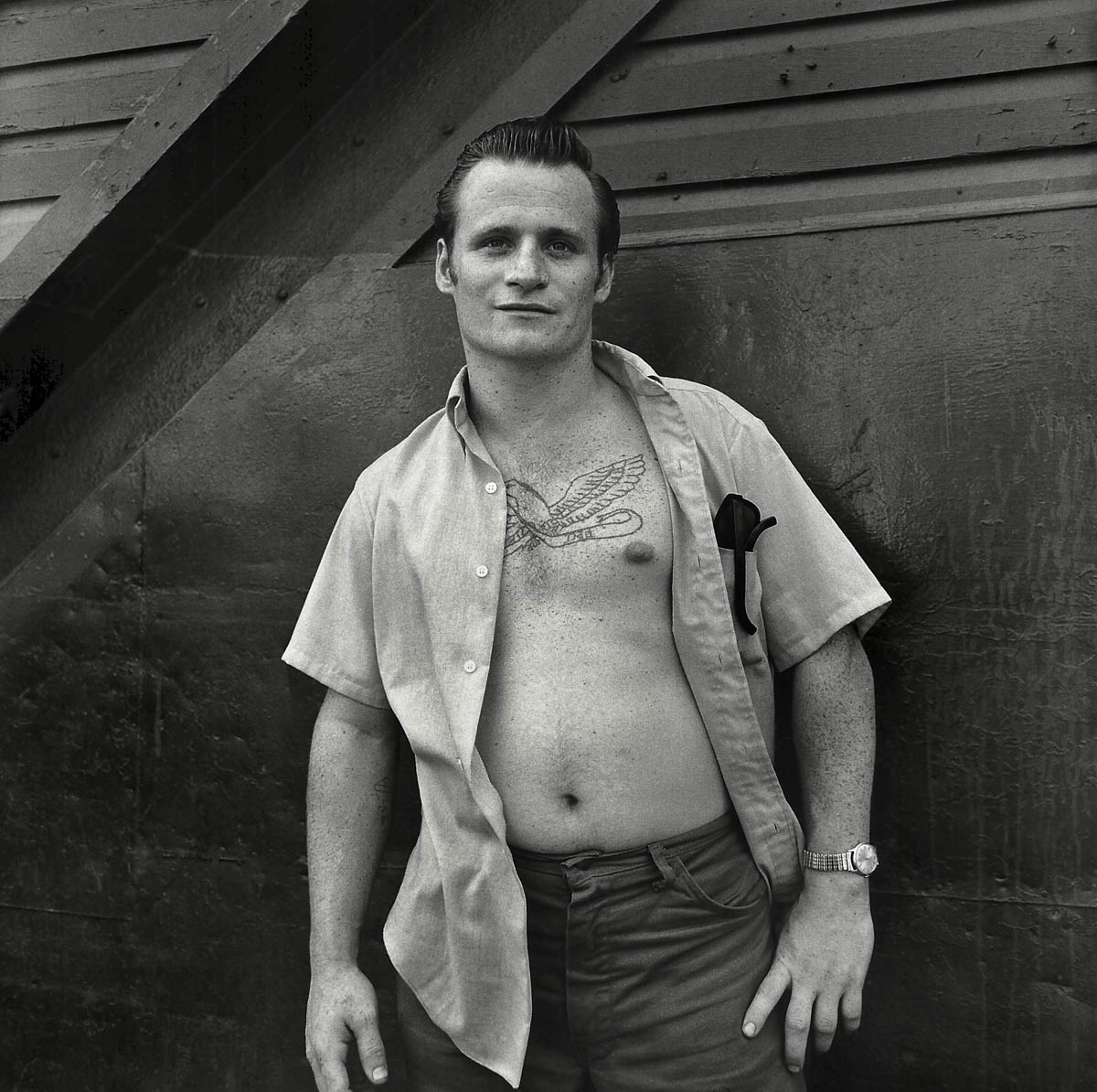
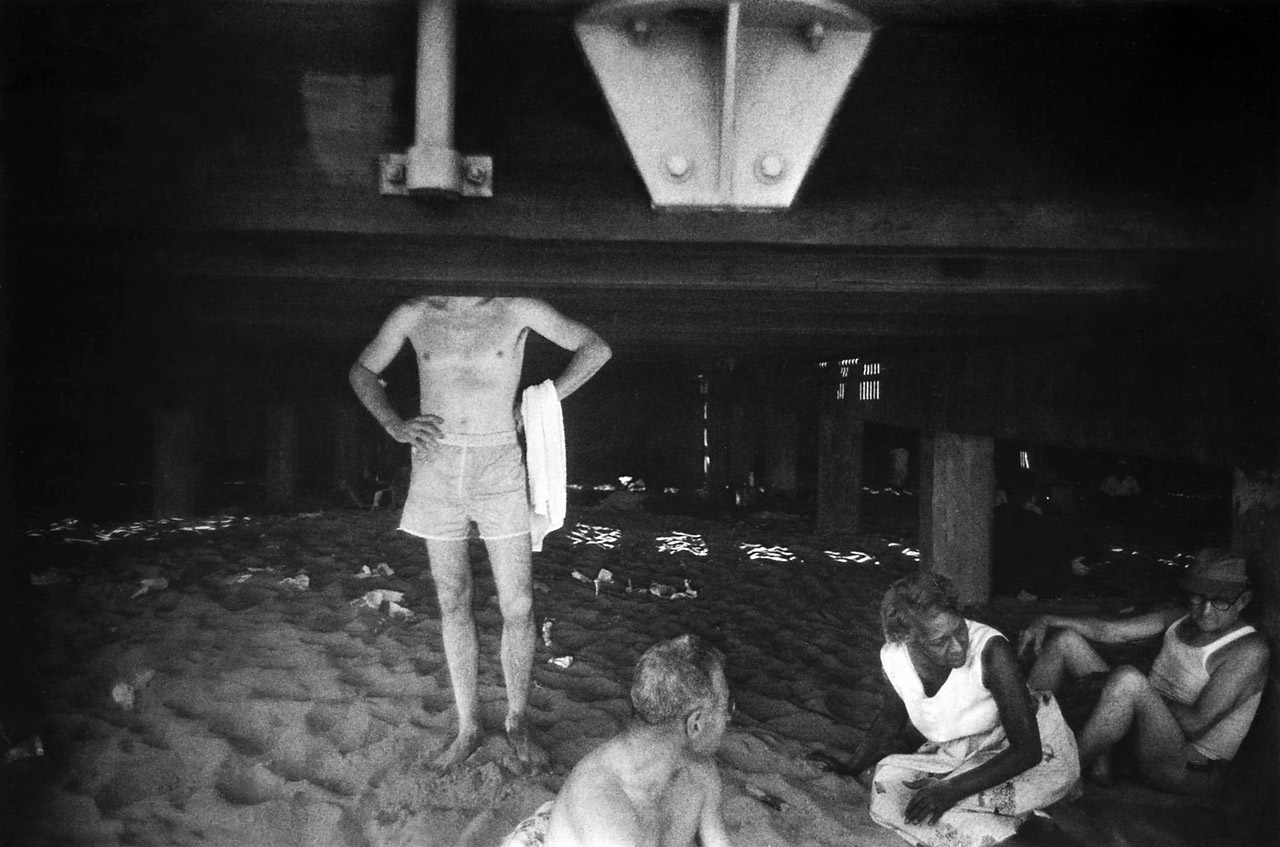
Stephen Salmieri (American, b. 1945) Coney Island 1968 Vintage gelatin silver print
I love these photographs!
What’s not to like… generously sympathetic photographs that exhibit no pretension, containing interesting backgrounds and wonderful characters. The incongruity of a muscle man in leopard skin bathers in a snowy landscape at Coney Island … no worries!
“In the images, storefront booths, midway games, carnival architecture, and the shoreline provide the backdrop to Salmieri’s descriptive and engaging portraits.”
I particularly like the wonderful photograph of the large gentleman with tattoos in a white singlet sitting at a table surrounded by a halo of light bulbs. I also like how Salmieri gives some of his portraits context by including background information in his photographs.
The artist joins a rite of passage for many American photographers in taking photographs at Coney Island – that is, to capture the magic and mystique of this theatrical, carnivalesque place – one full of history, ceremony, community, tradition, fun, drama, people, sun and sand.1
Luminaries to have photographed there include Diane Arbus, Robert Frank, Weegee, Garry Winogrand, Bruce Davidson, Lisette Model, Walker Evans, Leon Levinstein, Arlene Gottfried, Harold Feinstein and Edward J. Kelty to name just a few.
Stephen Salmieri’s charismatic photographs are strong enough to join this pantheon of stars and the “vaunted tradition” of picturing Coney Island.
Dr Marcus Bunyan
1/ Bakhtin’s idea of the carnivalesque and the carnival paradigm accords to certain patterns of play where “the social hierarchies of everyday life… are profaned and overturned by normally suppressed voices and energies.”
“The carnival offers the chance to have a new outlook on the world, to realise the relative nature of all that exists, and to enter a completely new order of things.”
Bakhtin, Mikhail. Rabelais and his World (trans. Hélène Iswolsky). Bloomington: Indiana University Press, 1984, p. 34.
Many thankx to the Joseph Bellows Gallery for allowing me to publish the photographs in the posting. Please click on the photographs for a larger version of the image.
“These spare and emotional first images of a forgotten community, now lost in time, allowed me to forge a vision at a pivotal moment in my young life.”
Stephen Salmieri
Stephen Salmieri (American, b. 1945) Coney Island 1968 Vintage gelatin silver print
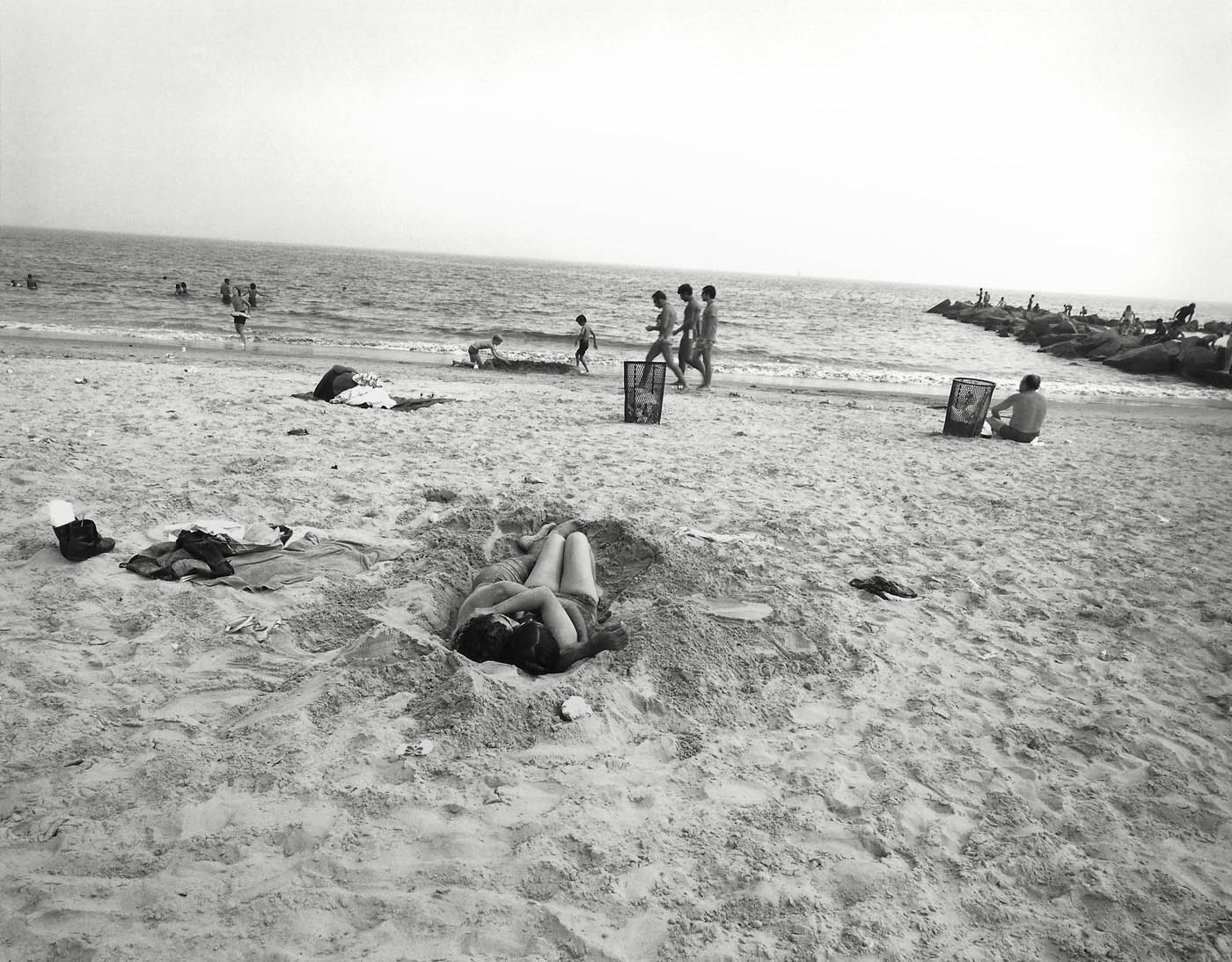
Stephen Salmieri (American, b. 1945) Coney Island 1971 Vintage gelatin silver print
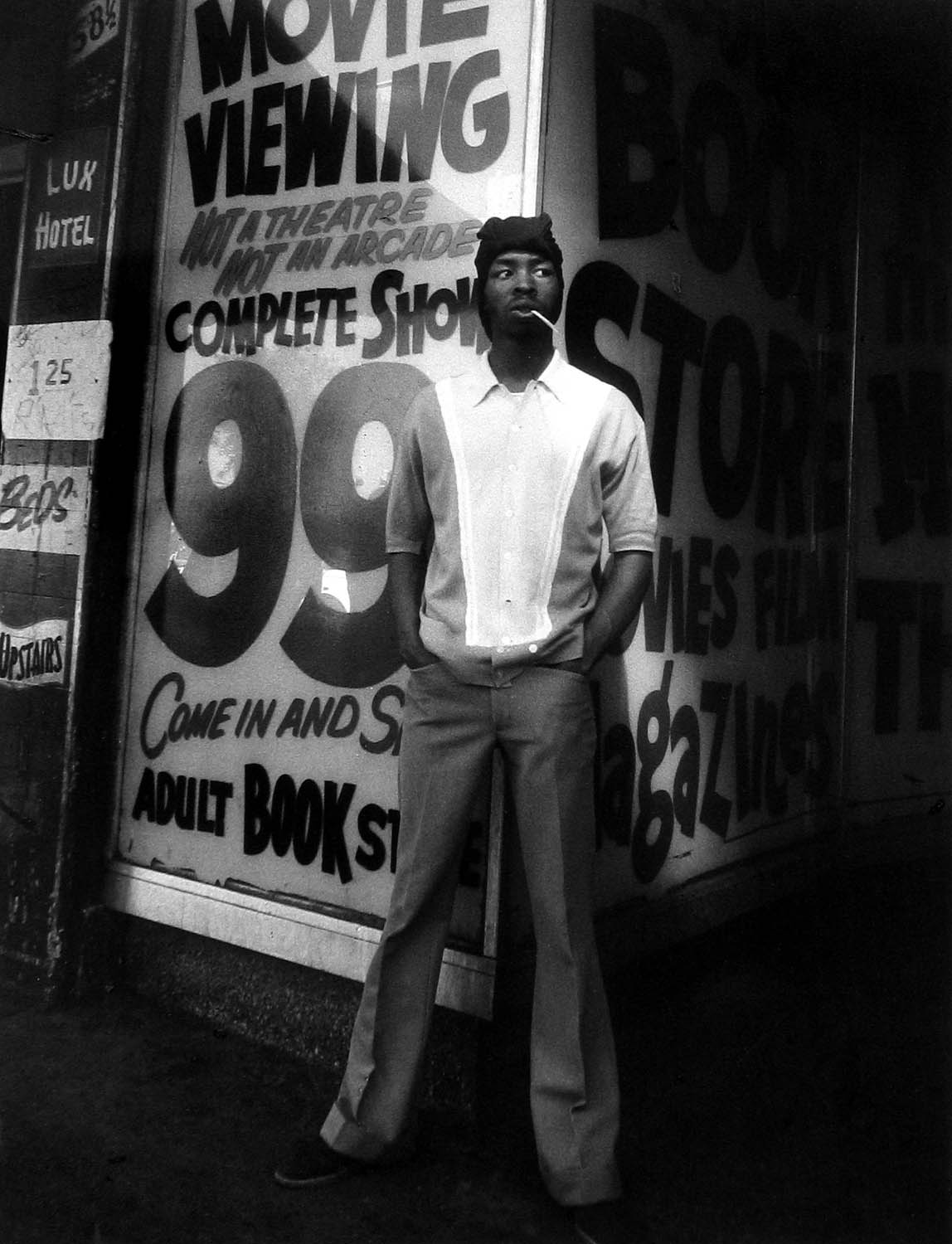
Stephen Salmieri (American, b. 1945) Coney Island 1968 Vintage gelatin silver print
Stephen Salmieri (American, b. 1945) Coney Island 1969 Vintage gelatin silver print
Stephen Salmieri (American, b. 1945) Coney Island 1969 Vintage gelatin silver print
Stephen Salmieri (American, b. 1945) Coney Island 1969 Vintage gelatin silver print
Stephen Salmieri (American, b. 1945) Coney Island 1969 Vintage gelatin silver print
Stephen Salmieri (American, b. 1945) Coney Island 1969 Vintage gelatin silver print
Stephen Salmieri (American, b. 1945) Coney Island 1969 Vintage gelatin silver print
Stephen Salmieri (American, b. 1945) Coney Island 1969 Vintage gelatin silver print
Joseph Bellows Gallery is pleased to present an online exhibition of Stephen Salmieri’s photographs of Coney Island. Made between 1967 and 1972 with an array of cameras and black and white film, these images portray a cast of beachgoers and amusement park locals within the surrounding environment of one of America’s earliest and most illustrious seashore amusement parks.
The exhibition showcases Salmieri’s finely crafted vintage black and white prints. In the images, storefront booths, midway games, carnival architecture, and the shoreline provide the backdrop to Salmieri’s descriptive and engaging portraits. In a published statement on the photographs, the artist explains his process and motivation:
“The world of Coney Island has changed dramatically since I made these photographs. It was my first self-assigned project at twenty years of age, having just graduated from the School of Visual Arts. In choosing my subject I gravitated naturally to the familiar destination of my adolescent bike adventures.
I made the hour ride to Coney Island with all my cameras in tow all year round. I carried a 4 x 5 field camera, a 6 x 6 cm and a 35 mm format, and lots of Tri-X film.
In 1969, CAMERA magazine approached me at my first exhibition at the Underground Gallery. In my naivety, I did not realise that Coney Island was also the choice territory for such luminaries as Robert Frank, Lisette Model, Leon Levinstein, and Weegee. It wasn’t until the magazine published these photographs as part of their seminal Coney Island issue in 1971 that I realised I had become part of a vaunted tradition.
These spare and emotional first images of a forgotten community, now lost in time, allowed me to forge a vision at a pivotal moment in my young life.”
Salmieri’s photographs from this body of work were also featured in the exhibition Forever Coney: Photographs from the Brooklyn Museum Collection.
Salmieri’s work is included in the collections of the Museum of Modern Art, New York, Brooklyn Museum, New York, Smithsonian Institute, Washington D.C., Cooper-Hewitt National Design Museum, New York, Flint Institute, Michigan, the Museum of the City of New York, the Nelson-Atkins Museum, and the J. Paul Getty Museum. Publications include “American Grilles” (1978, Hartcourt-Brace) and “Cadillac: An American Icon” (1985, Rizzoli).
Text from the Joseph Bellows Gallery website
Stephen Salmieri (American, b. 1945) Coney Island 1970 Vintage gelatin silver print
Stephen Salmieri (American, b. 1945) Coney Island 1971 Vintage gelatin silver print
Stephen Salmieri (American, b. 1945) Coney Island 1971 Vintage gelatin silver print
Stephen Salmieri (American, b. 1945) Coney Island 1972 Vintage gelatin silver print
Stephen Salmieri (American, b. 1945) Coney Island 1967-1972 Vintage gelatin silver print
Robert Frank (American, 1924-2019) Coney Island 4th of July, 1958 Gelatin silver print
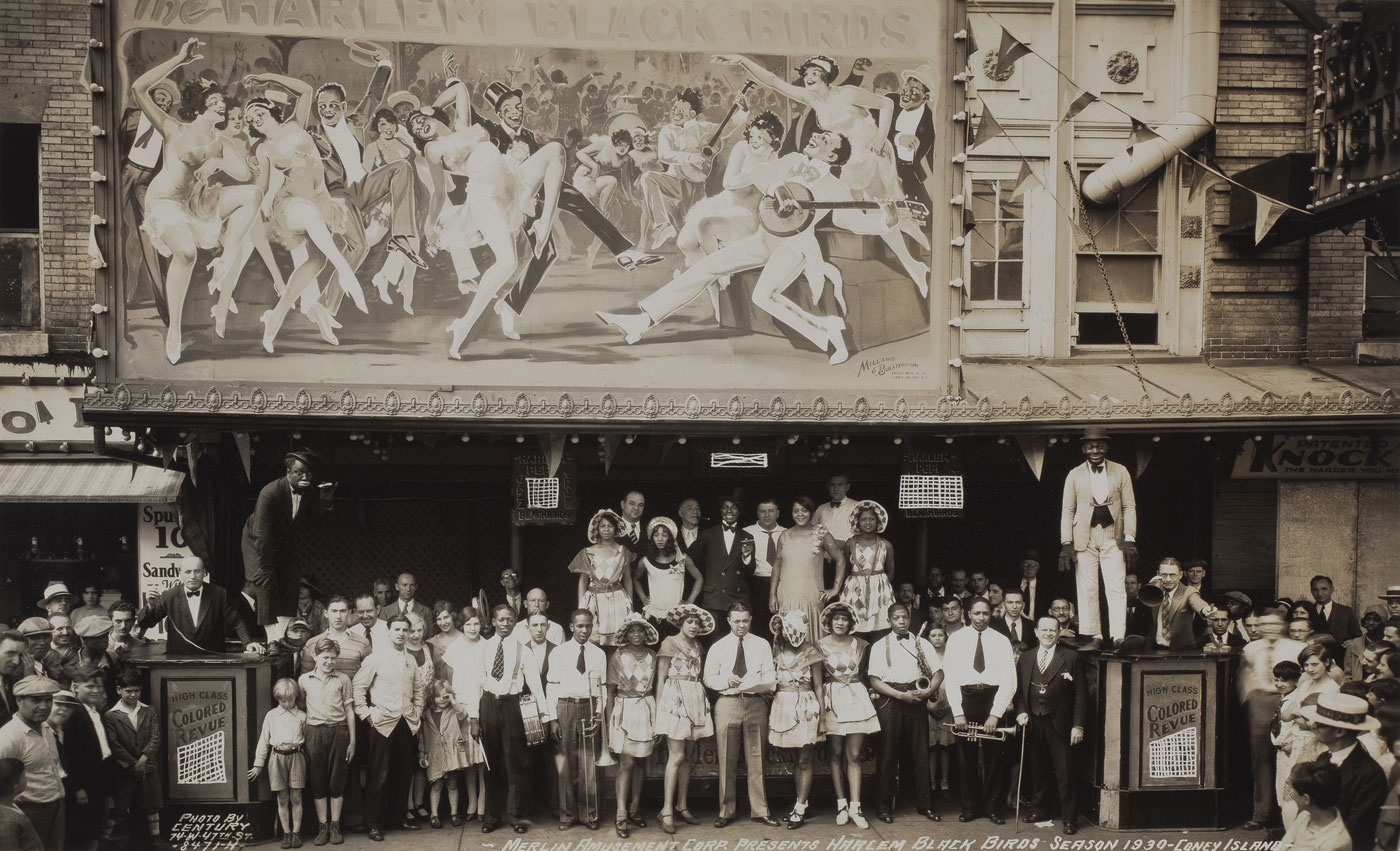
Edward J. Kelty (American, 1888-1967) Harlem Black Birds, Coney Island 1930
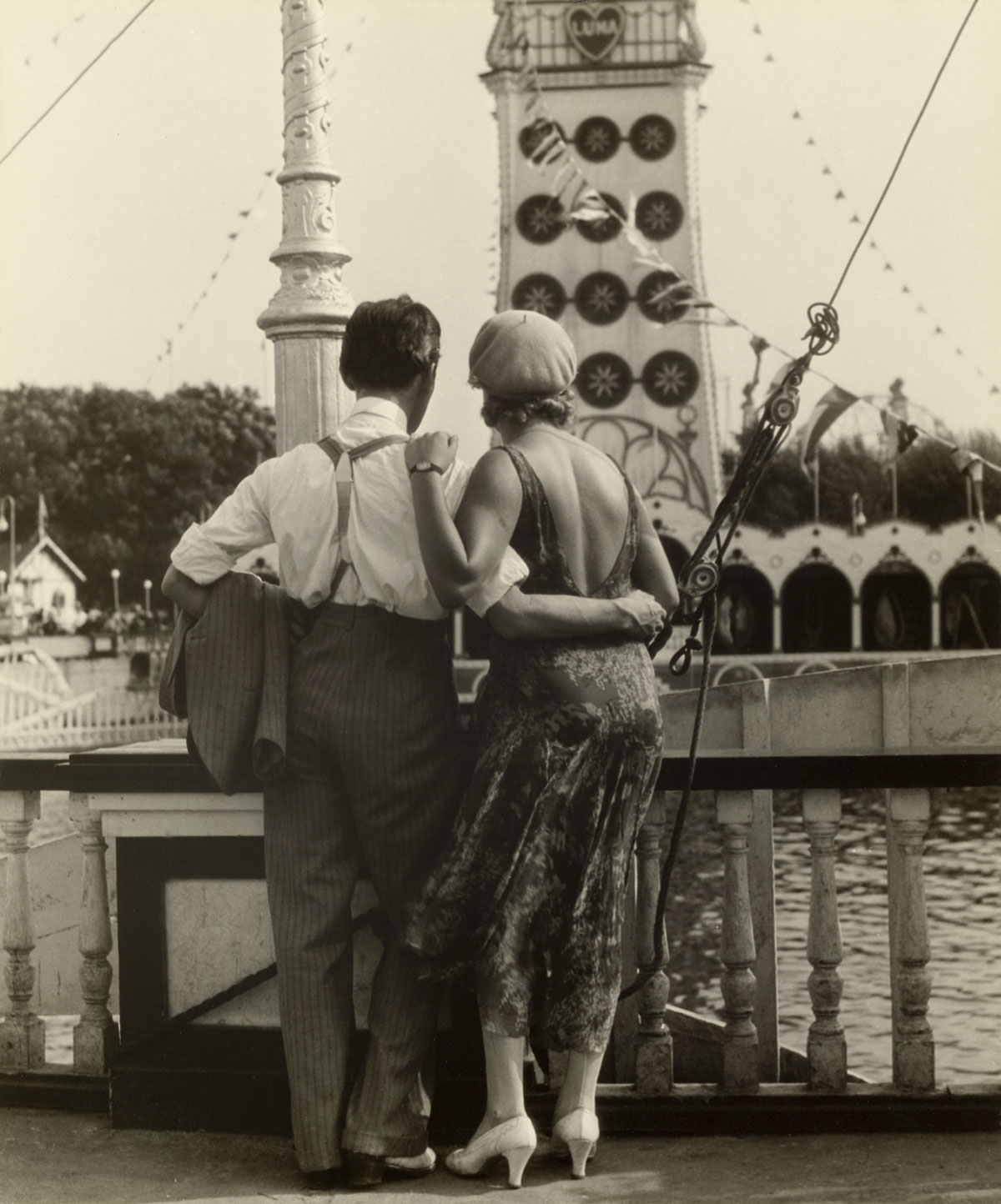
Walker Evans (American, 1903-1975) Couple at Coney Island, New York 1928 Gelatin silver print
Weegee (Arthur Fellig) (American born Ukraine, 1899-1968) Afternoon Crowd at Coney Island July 21st 1940
Garry Winogrand (American, 1928-1984) Coney Island, New York City, N.Y. 1952 Gelatin silver print
Leon Levinstein (American, 1910-1988) Coney Island 1955 Gelatin silver print
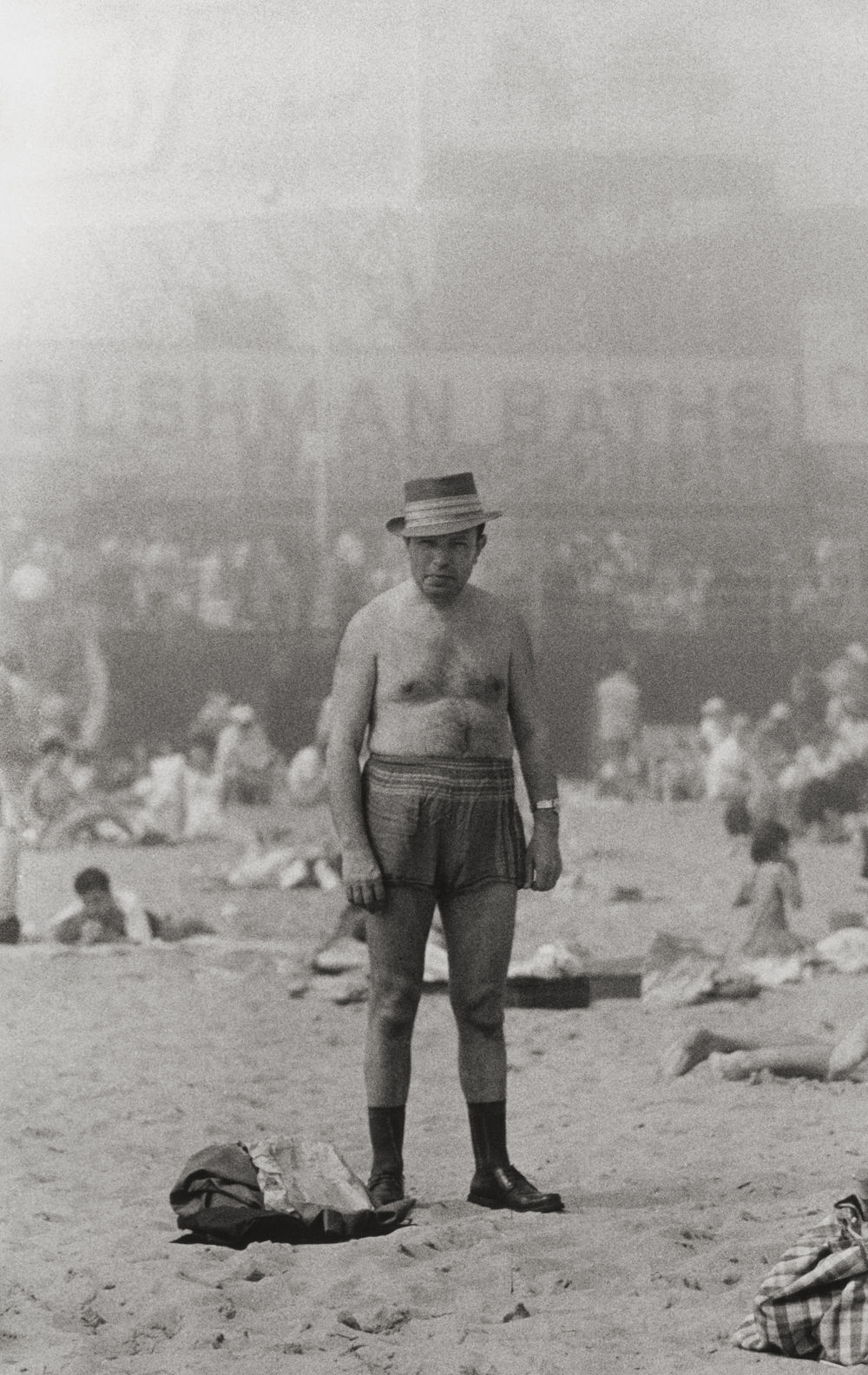
Diane Arbus (American, 1923-1971) Man in hat, trunks, socks and shoes, Coney Island, N.Y. 1960 1960 Gelatin silver print
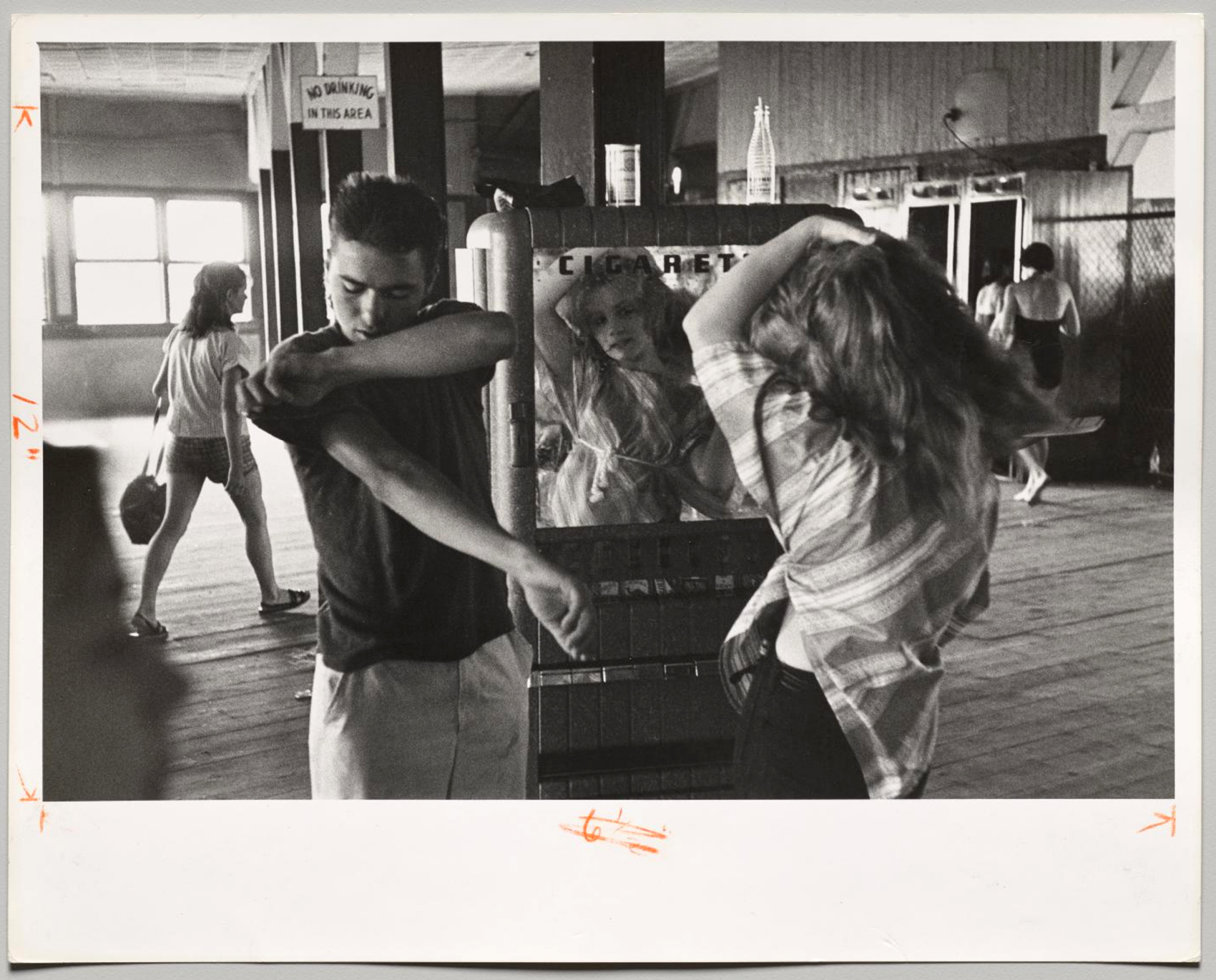
Bruce Davidson (American, b. 1933) Two Youths, Coney Island 1958 From the series Brooklyn Gang
Joseph Bellows Gallery 7661 Girrard Avenue La Jolla, California Phone: 858 456 5620
Opening hours: Tuesday – Saturday 11am – 5pm and by appointment
Exhibition dates: 13th March – 28th September, 2025
Curator: Patricia Sorroche, Head of Exhibitions at the Museu Tàpies
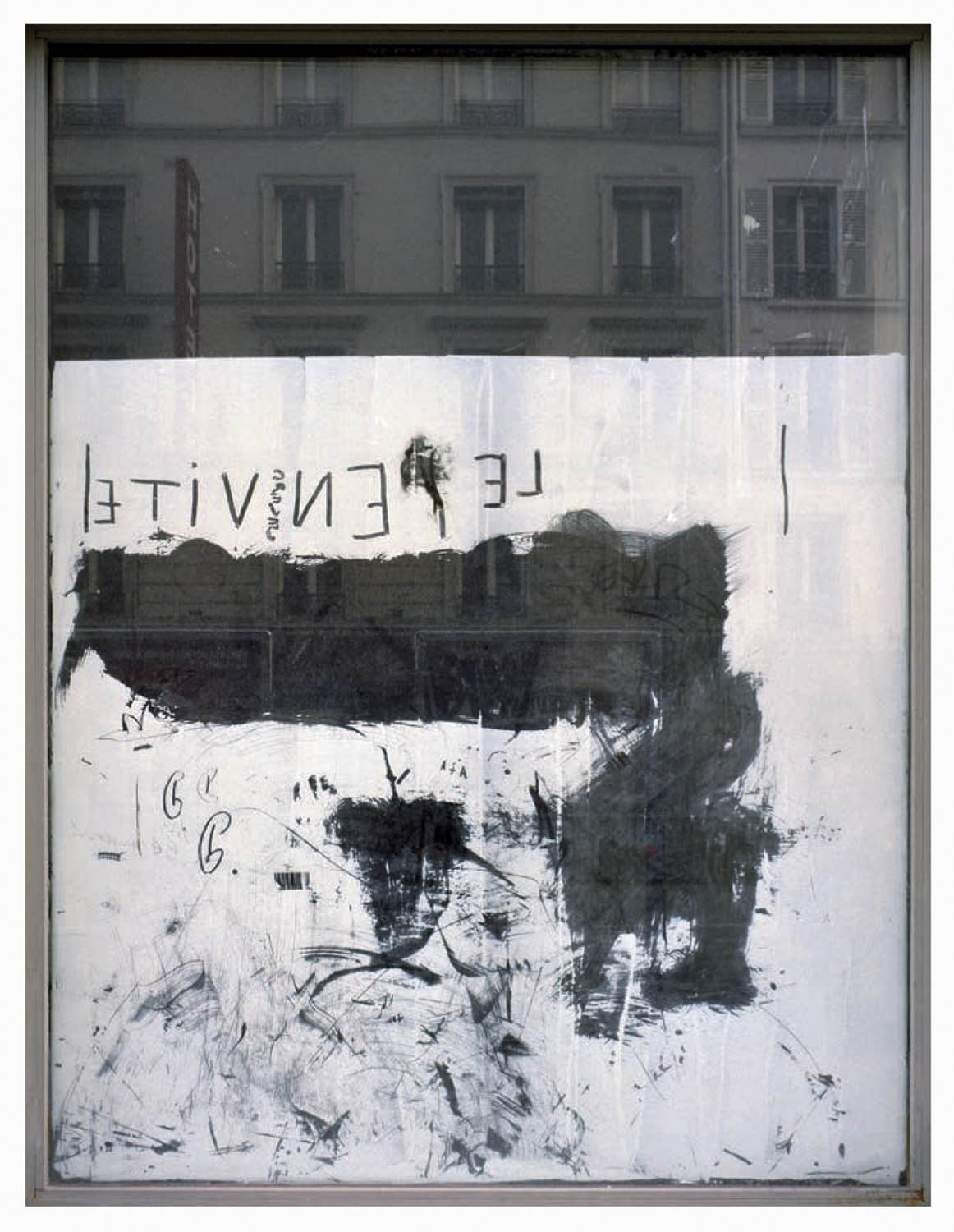
Anna Malagrida (Spanish, b. 1970) Rue de Charenton 2008-2009 Photographic print on Dibond
Contradicting the hobgoblin of little minds
I love the conceptualisation of these photographs: interstitial spaces of the city, liminal spaces that ‘stand between’ one place and another.1
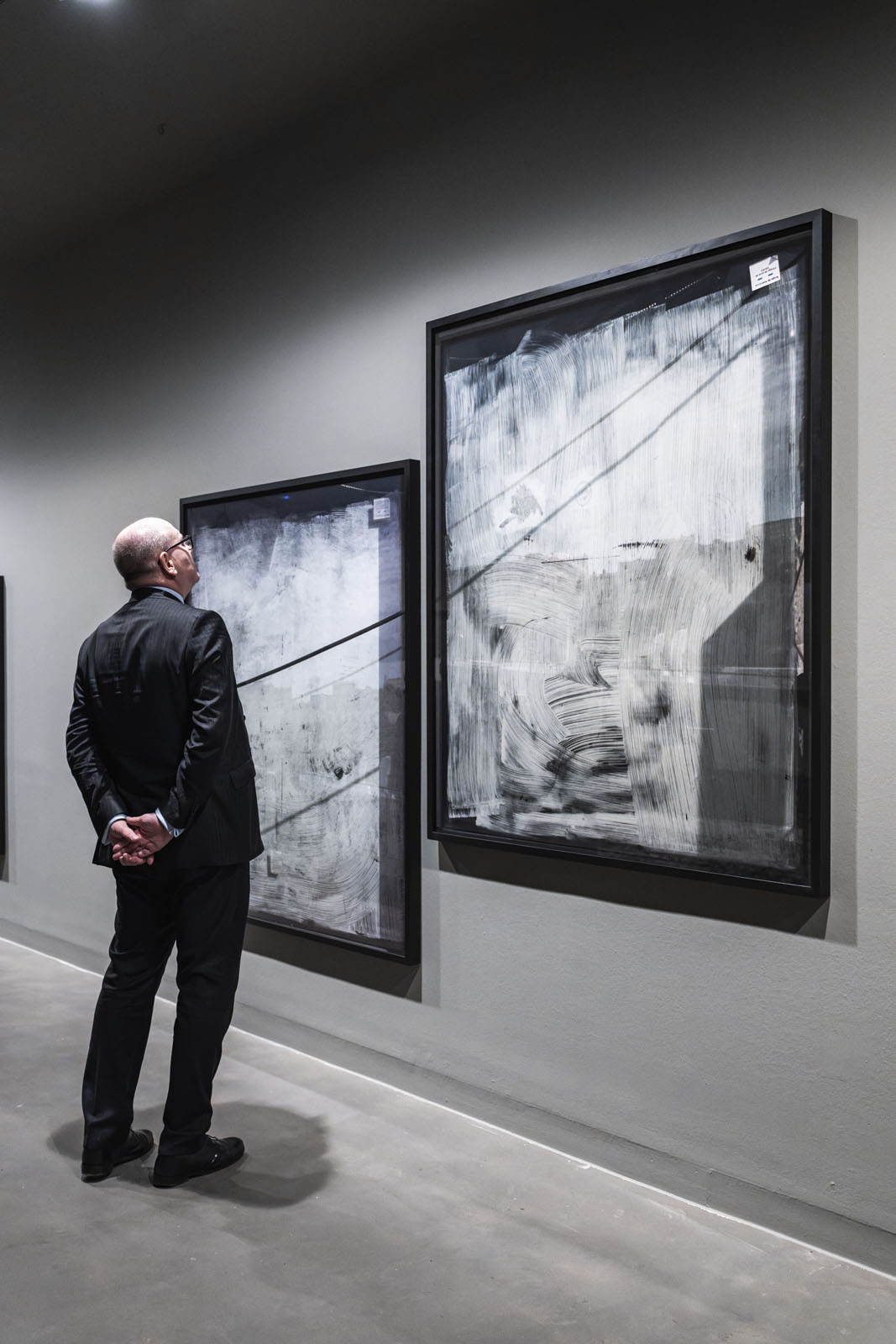
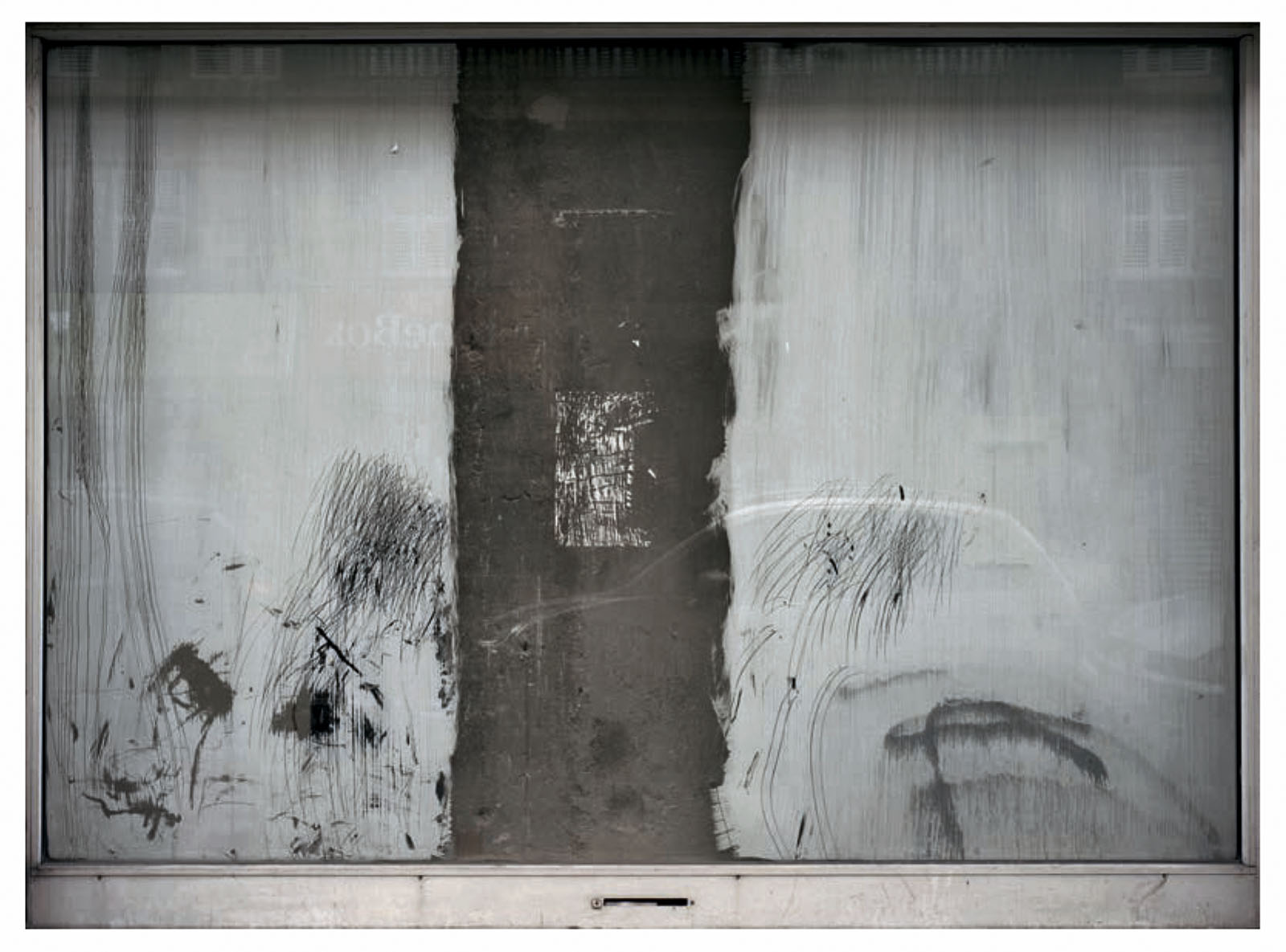
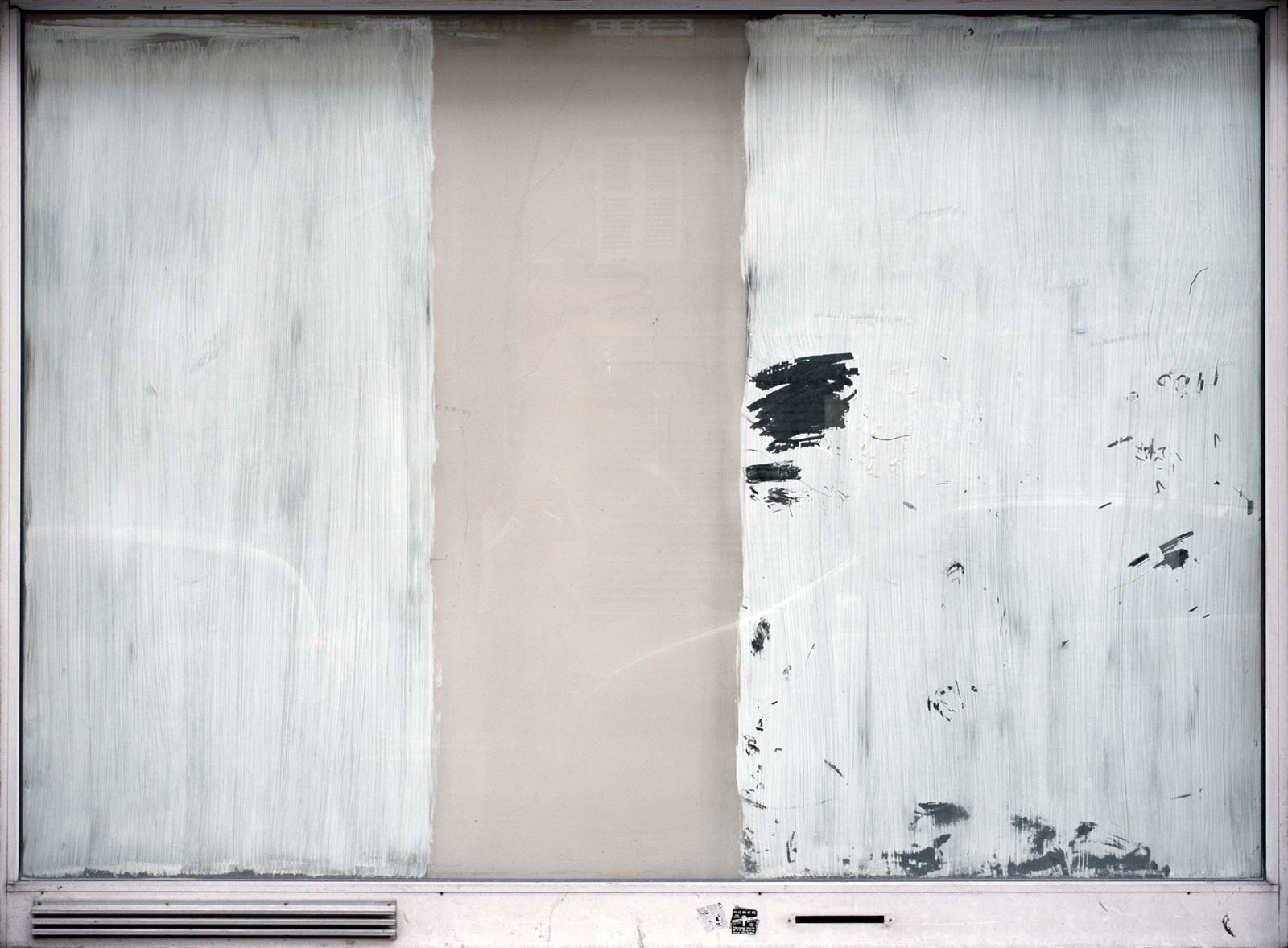
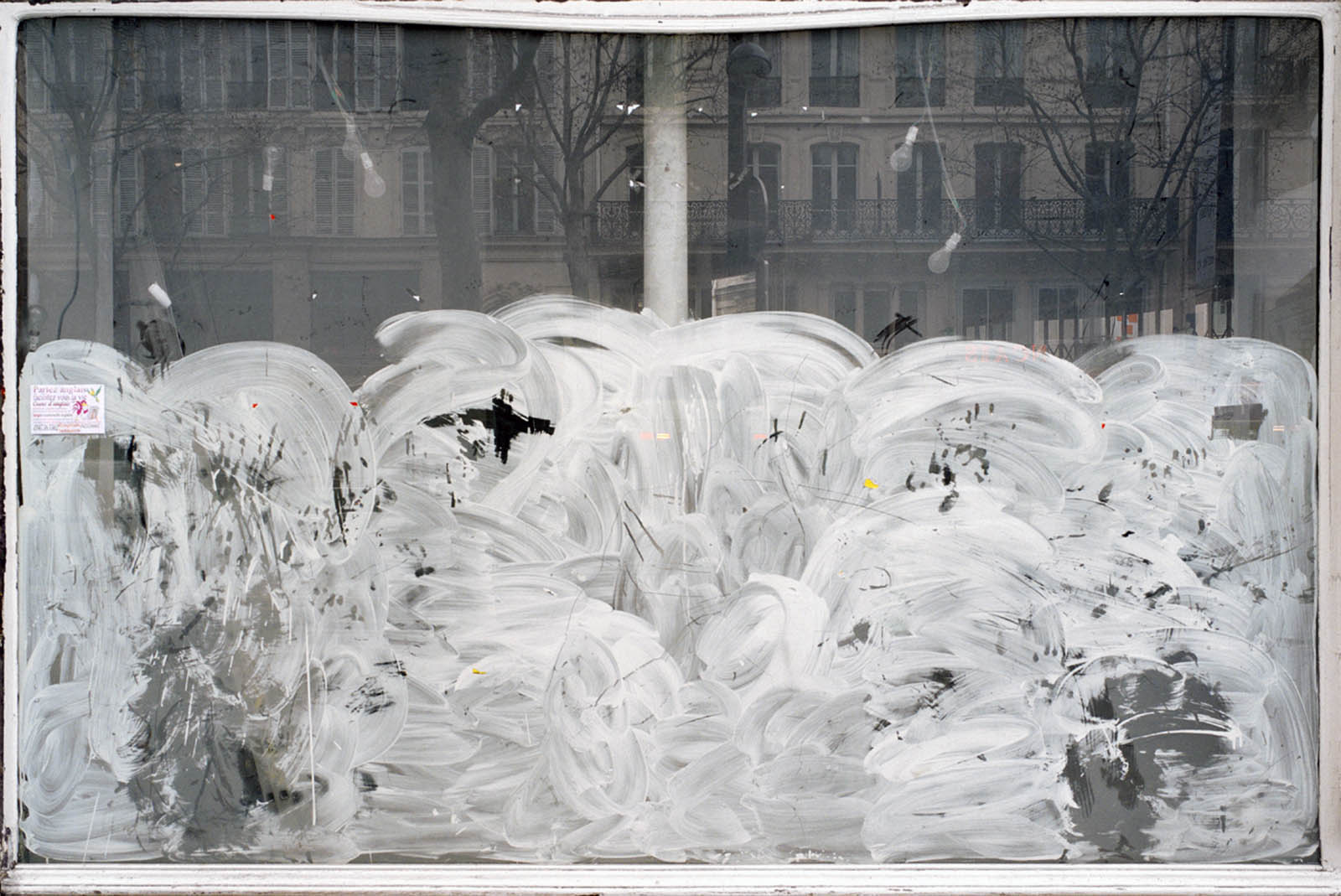
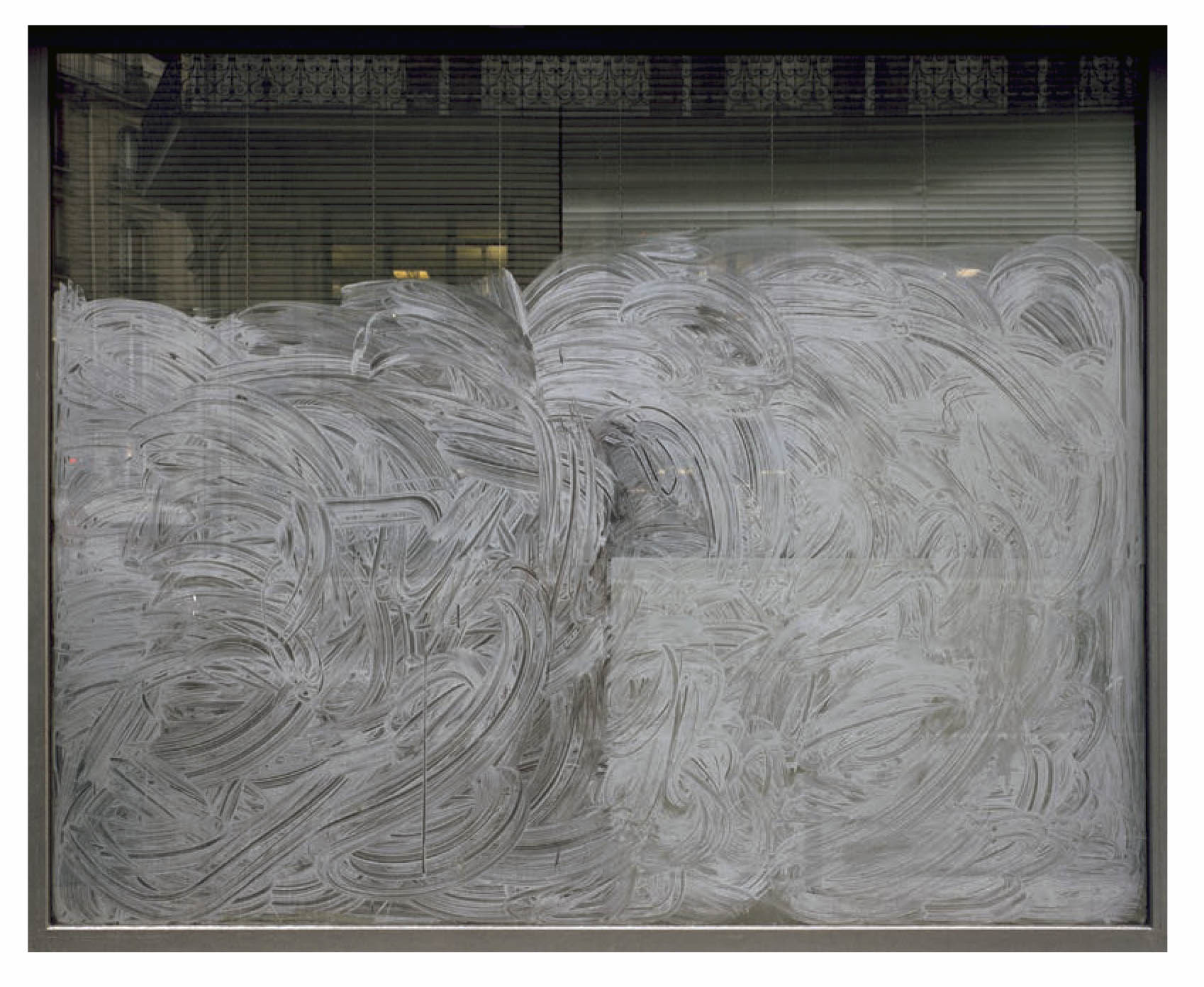
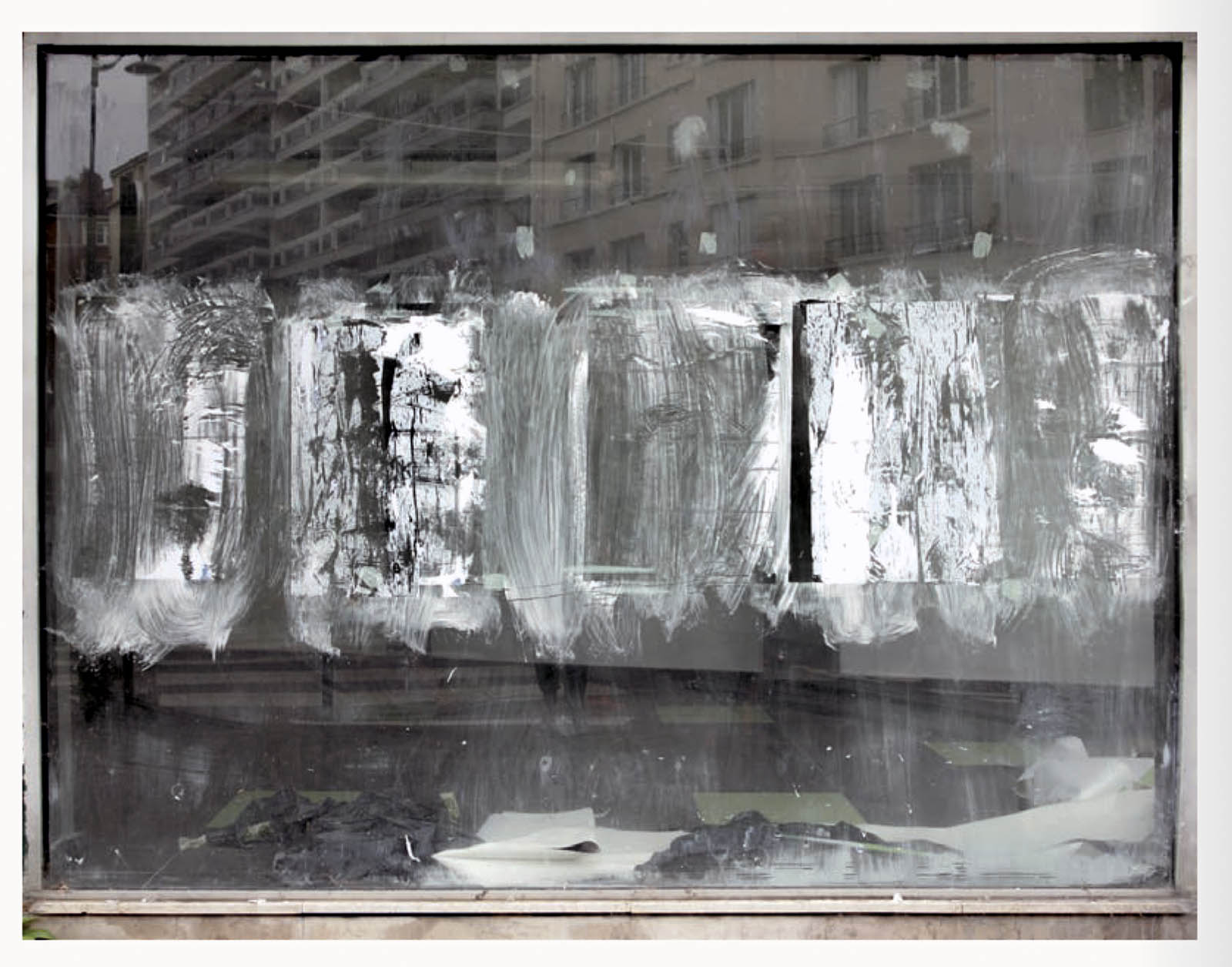
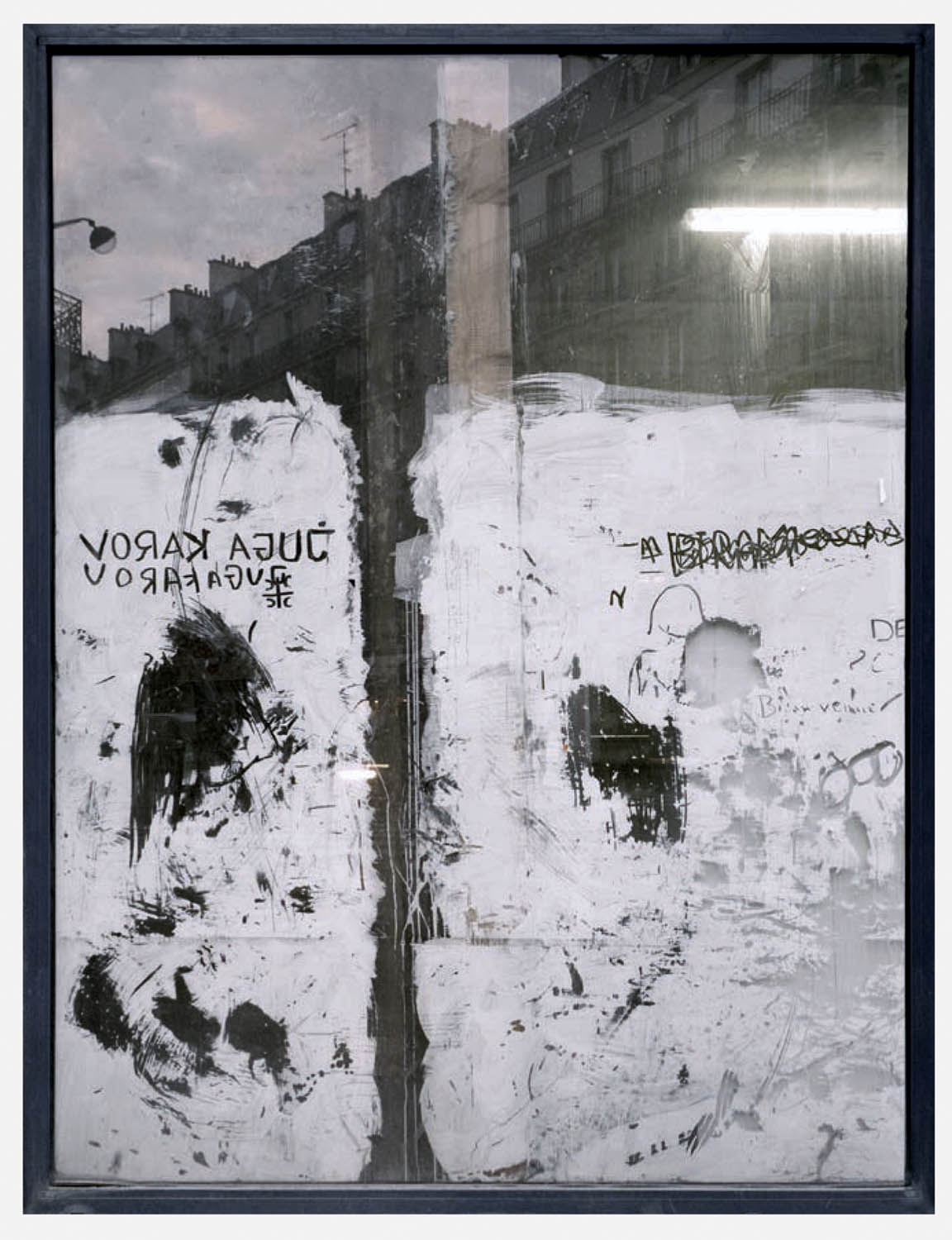
I love the abstract nature of these photographs, abstract paintings of the city which occlude symbols and signs, capture traces and gestures, where nothing is fixed and everything is fluid, up for interpretation through the imagination.
Unfortunately, the digital online reproductions make the spaces seem very flat and one-dimensional, in a liminal and spiritual sense.
I would have loved to have stood in the gallery to breathe in the presences of the photographs, their energy and spirit. Would they have held me? Is there enough for me to hang my hat on? Would they have reverberated in my soul. I don’t know. I can’t feel them through the digital reproductions.
I think of sitting in front of Monet’s massive curved paintings of Water Lillies at the Musée de l’Orangerie in Paris and being surrounded by these beautiful, shifting, elemental / alchemical abstract works of art. And being spell bound.
How would I feel surrounded by these representations, surfaces, depths of the city, these whitewashed absences (with all the connotations of race, power, money, and coverups that the name implies) that proffer different ways of seeing the world, places of the visible and the invisible.
“Her work forces us to confront our social and political condition of being, but from a poetic, liminal space, where contradiction is a symbol of the dualities of the human condition in the postmodern world.”2
Contradiction is NEVER a symbol for that would mean contradiction becomes a conventional representation of an object, function, or process. And the human condition in the postmodern world is far more than a duality … it is an intertextual multiplicity of points of view and nexus (the nexus between industry and political power, the nexus between business and government, the nexus between public space and private space, etc…)
“Do I contradict myself? Very well then I contradict myself, (I am large, I contain multitudes.)”
~ Walt Whitman from Leaves of Grass
Dr Marcus Bunyan
1/ A liminal space is a transitional place or state, like a hallway or adolescence, that is “in-between” two distinct stages or locations, creating a sense of unease or disorientation. The word comes from the Latin for “threshold,” and these spaces, often devoid of people and eerily familiar yet subtly wrong, can evoke feelings of nostalgia, anxiety, and the potential for creativity or personal growth during periods of uncertainty.
AI summary from Google
2/ Patricia Sorroche. Anna Malagrida. (Trans)gazes of the sensible. Curatorial statement, 2025
Many thankx to Colin Vickery for alerting me to this exhibition. Many thankx to Museu Tàpies for allowing me to publish the photographs in the posting. Please click on the photographs for a larger version of the image.
“I’m interested in the intuited spaces on the other side, what isn’t in the image, but is imagined. What lies beyond, outside the frame, is the place that activates the imagination, inventing a story or imagining a space. The things we intuit, which are on the other side, belong to the story or to the space itself. Through the metaphor of the window, I’m trying to create a space of in-betweenness and uncertainty.”
Anna Malagrida in Álvaro de la Rica, “Las fronteras transparentes. A propósito de las fotos de Anna Malagrida,” published in Revisiones, No. 7, 2011, p. 129.
Opacitas: Veiling Transparency takes us on a journey through the work of Anna Malagrida (Barcelona, 1970) and presents a project that explores photography, video and installation. Her gaze focuses on the liminal spaces that unite and separate, bringing opposites into conversation.
Malagrida mainly situates us in the city and in a few constructed natural spaces. Through a play of perspectives, from the interior to the exterior and vice versa, her photographs and video installations become windows that reveal and conceal the tensions that run through society. Her polysemic gaze escapes a univocal interpretation of images in order to inhabit certain entropic spaces that she invites us to discover through her work.
Malagrida’s images capture the remnants and the infralight traces, indexes, signs that refer to previous moments, social tensions or simple anonymous gestures. The visual ambiguity in her work is revealed through the texture of her images, which evoke pictorial references and dissolve the limits between appearance and reality. Images of closed shop windows painted with characteristic whitewash, an opaque veil that prevents us from looking inside and transforms these spaces into abstract surfaces, resembling large pictorial canvases. Poetic actions operate in her works with a multiplicity of meanings: the painter’s gesture is also that of the working body, and the city and the landscape are revealed from within. Said gestures are erased, cleansed or simply fixed by the passage of time, cyclical and mutable.
Her work, which transcends photography and painting, immerses the viewer in a visual experience with multiple meanings and invites them to look at the city and natural surroundings from a new perspective, one that reveals the vestiges of a landscape affected by social and economic change. Her practice is a space for reflecting on vulnerability, resistance and the possibility of reconstruction, both of the individual and the environment they inhabit.
Text from the Museu Tàpies website
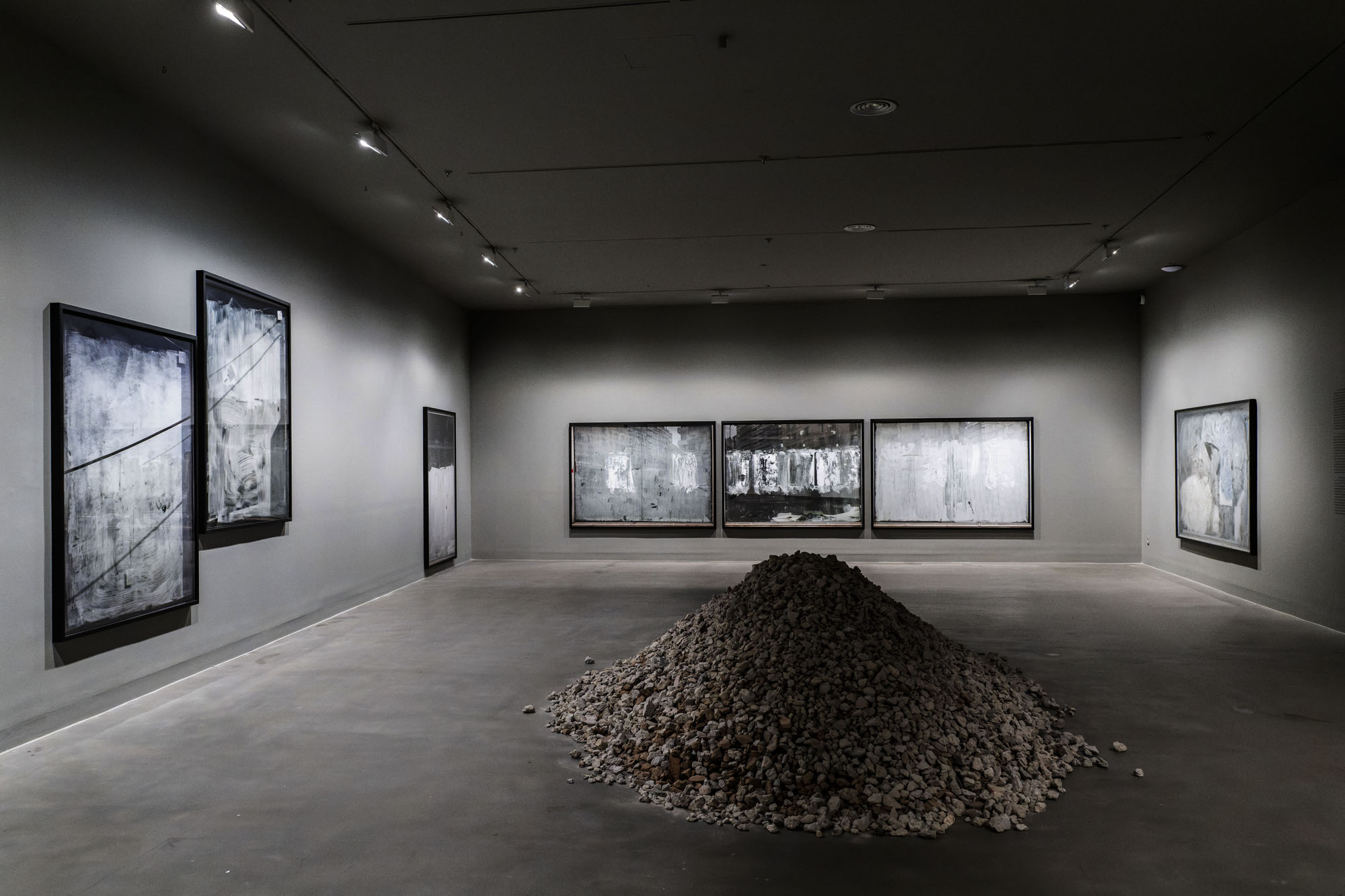
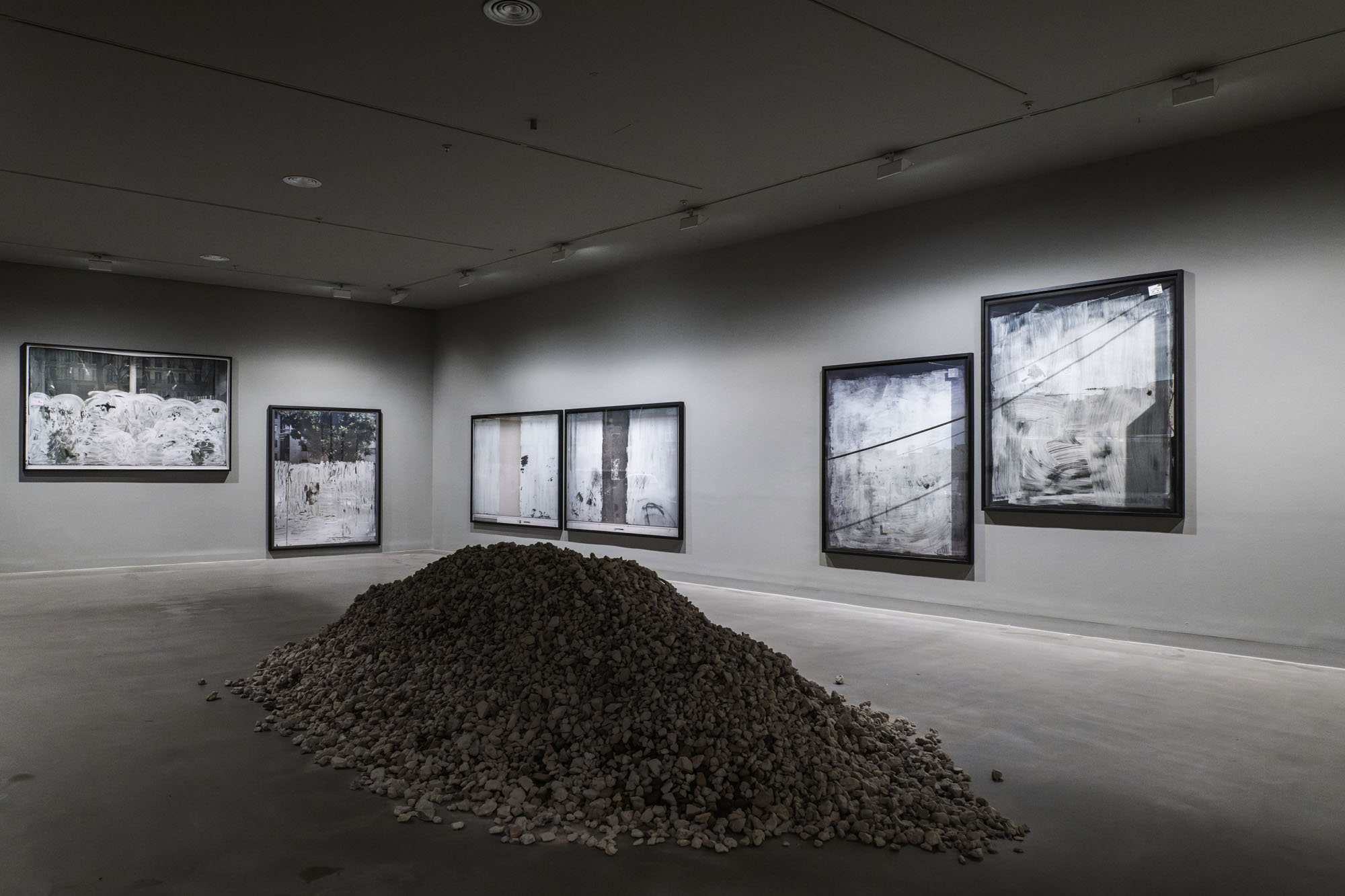
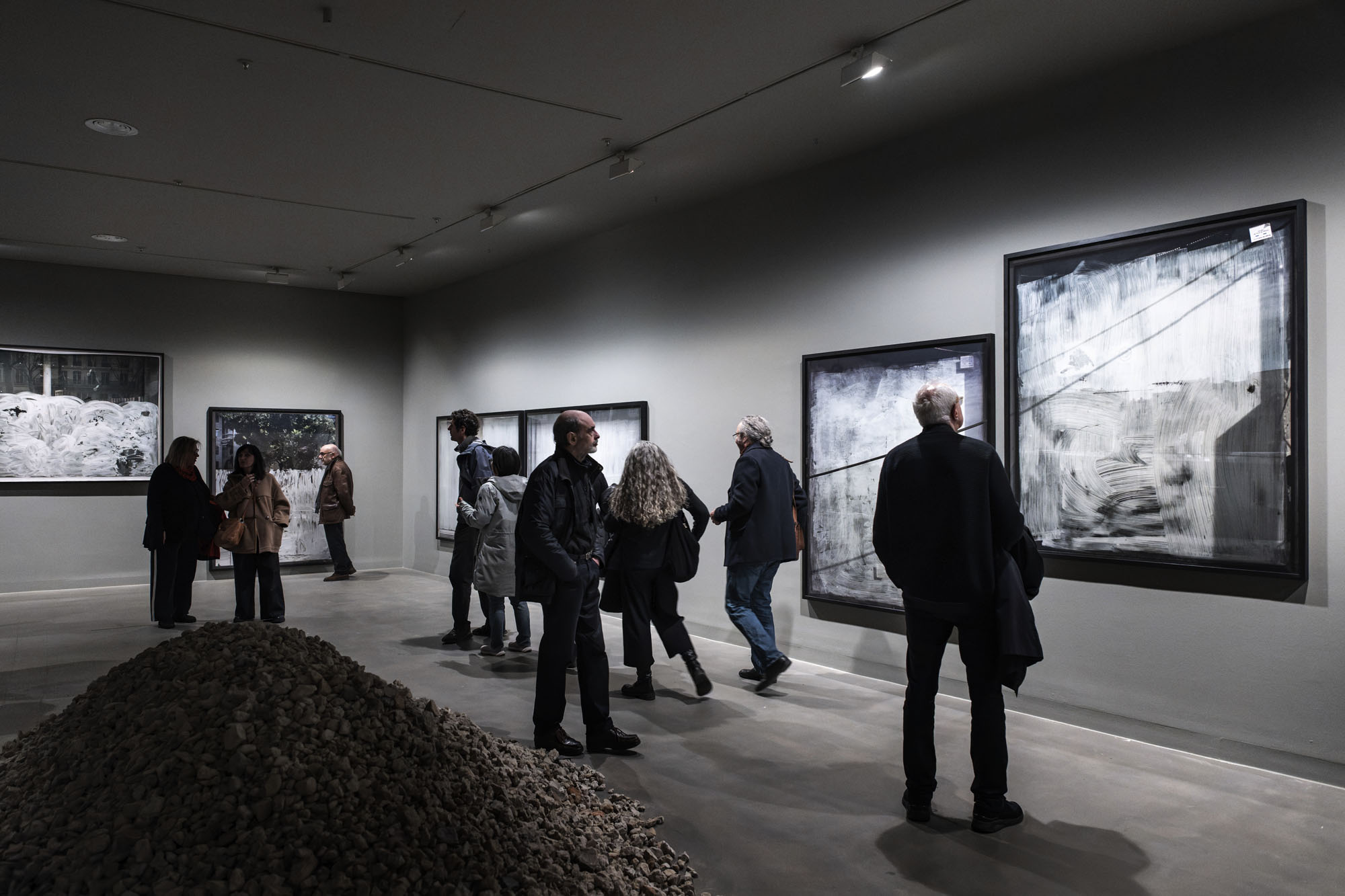
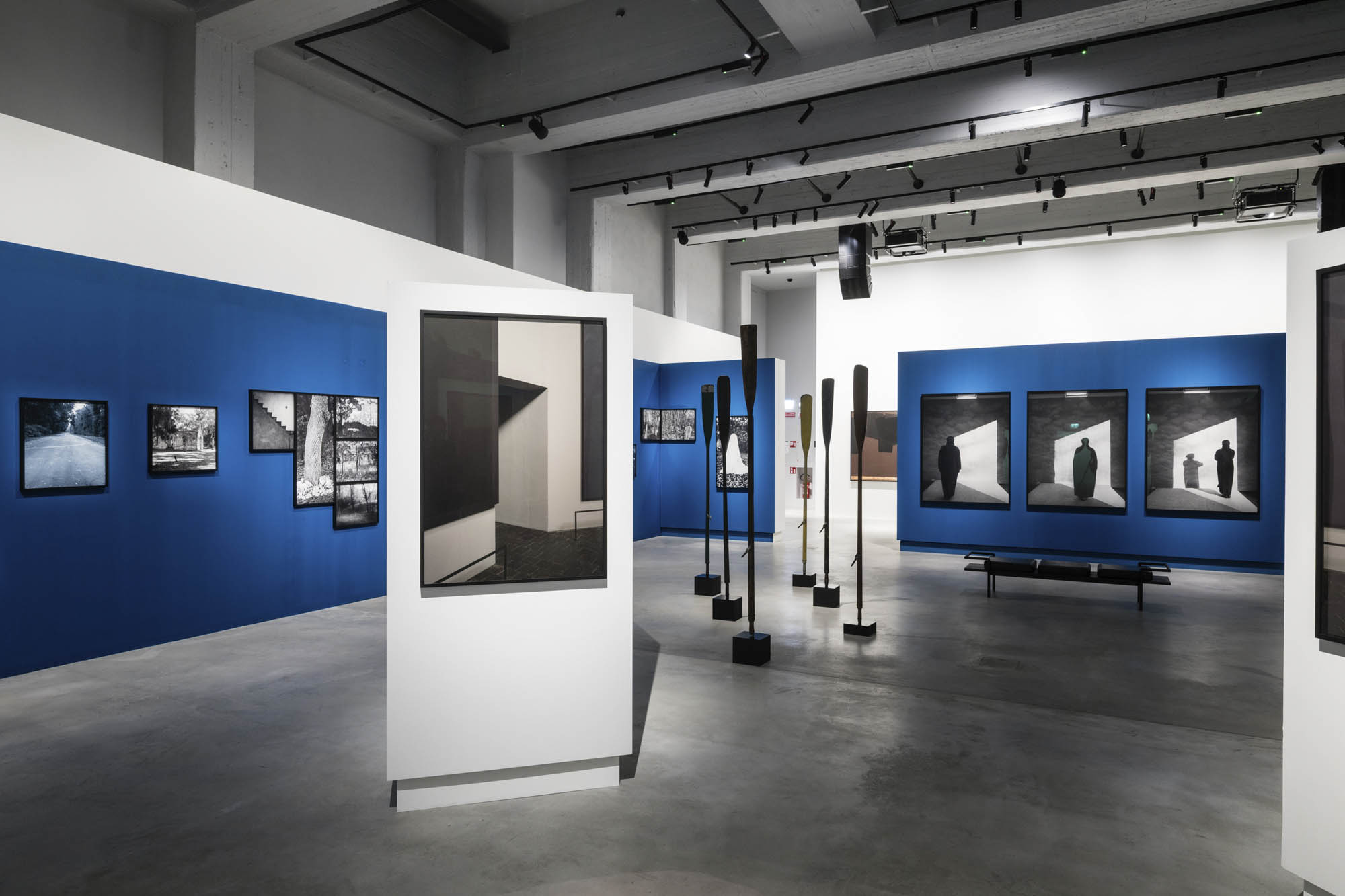
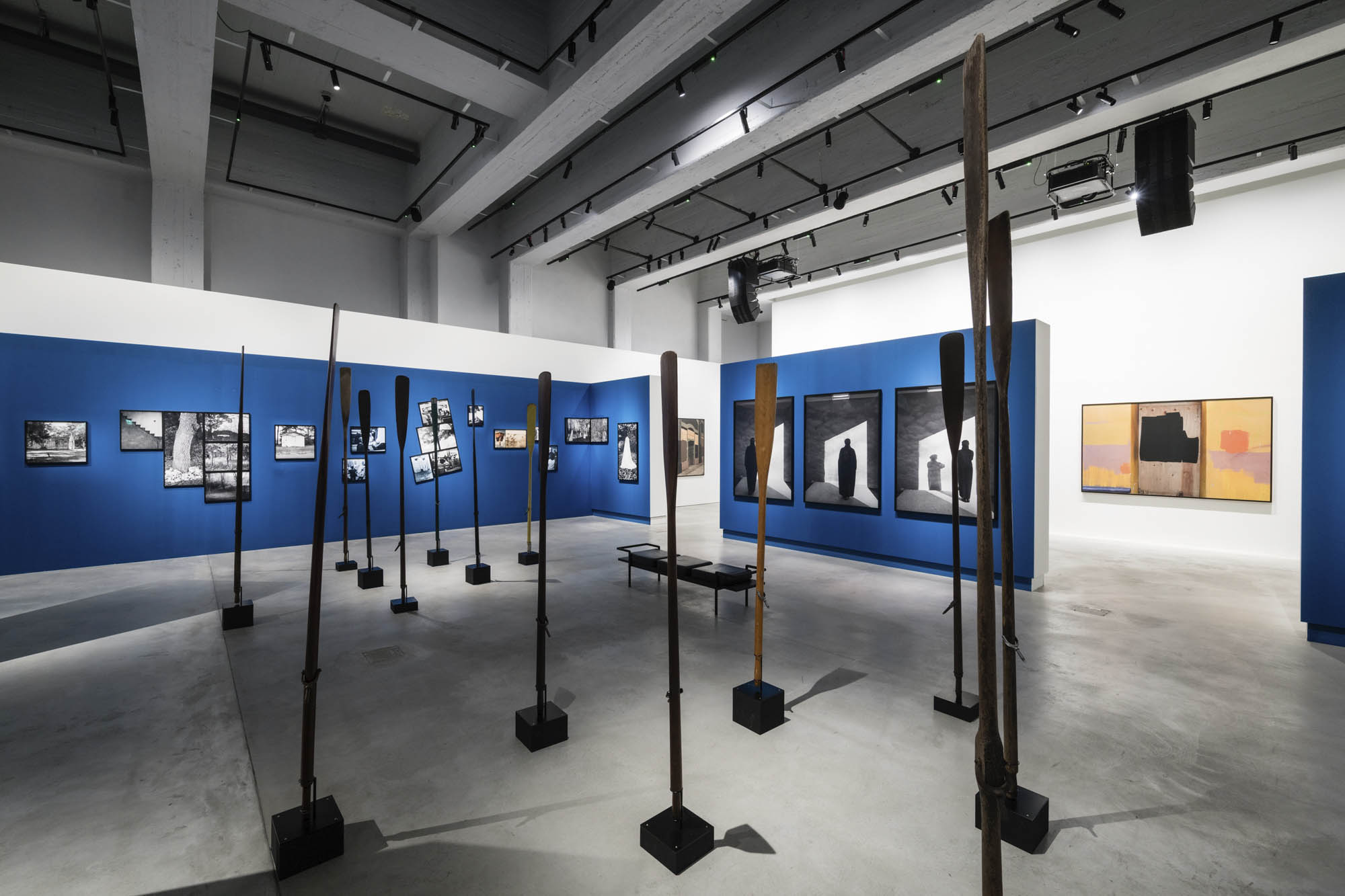
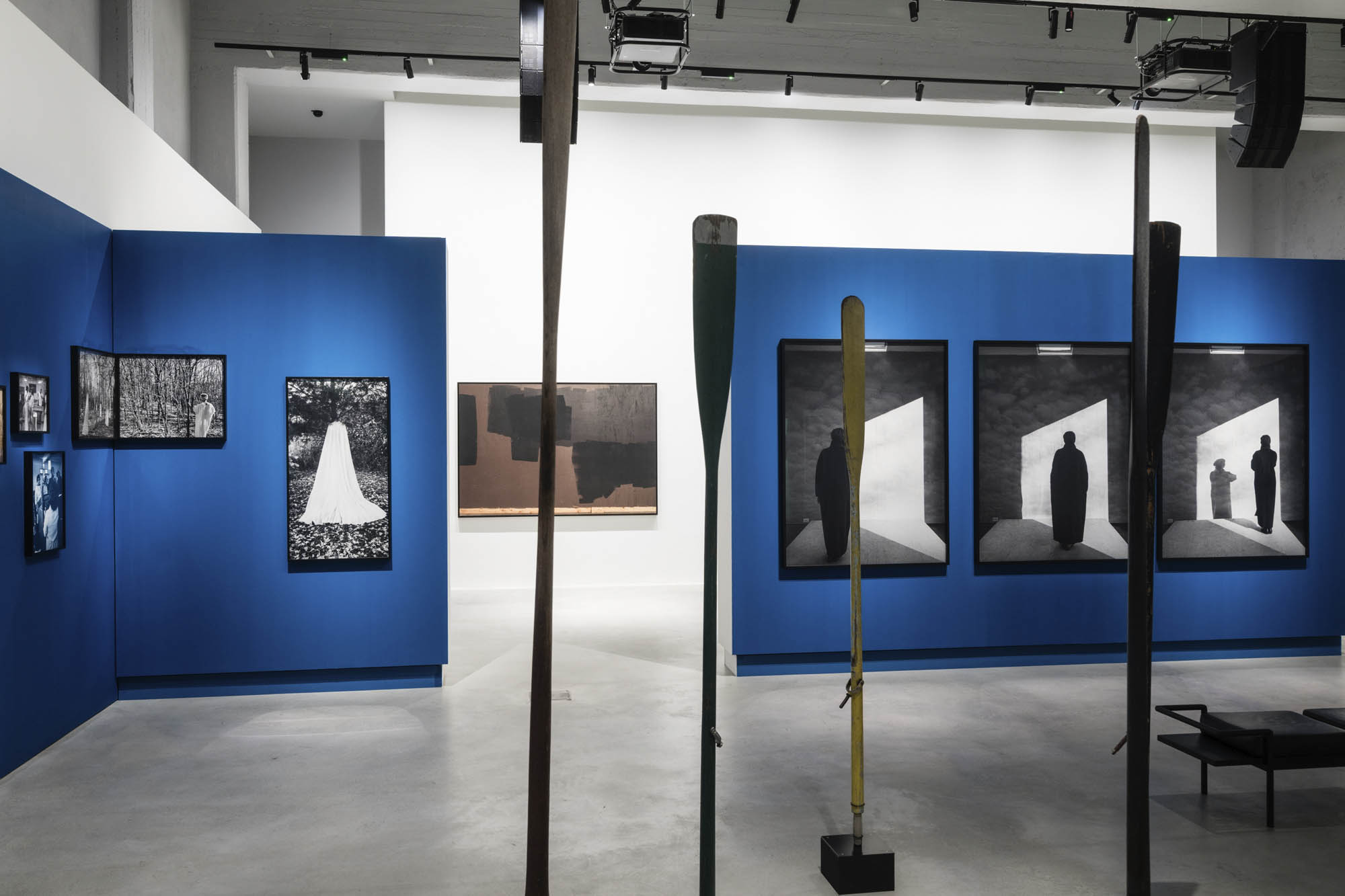
Installation views of the exhibition Anna Malagrida. Opacitas: Veiling Transparency at Museu Tàpies, Barcelona, March – September, 2025
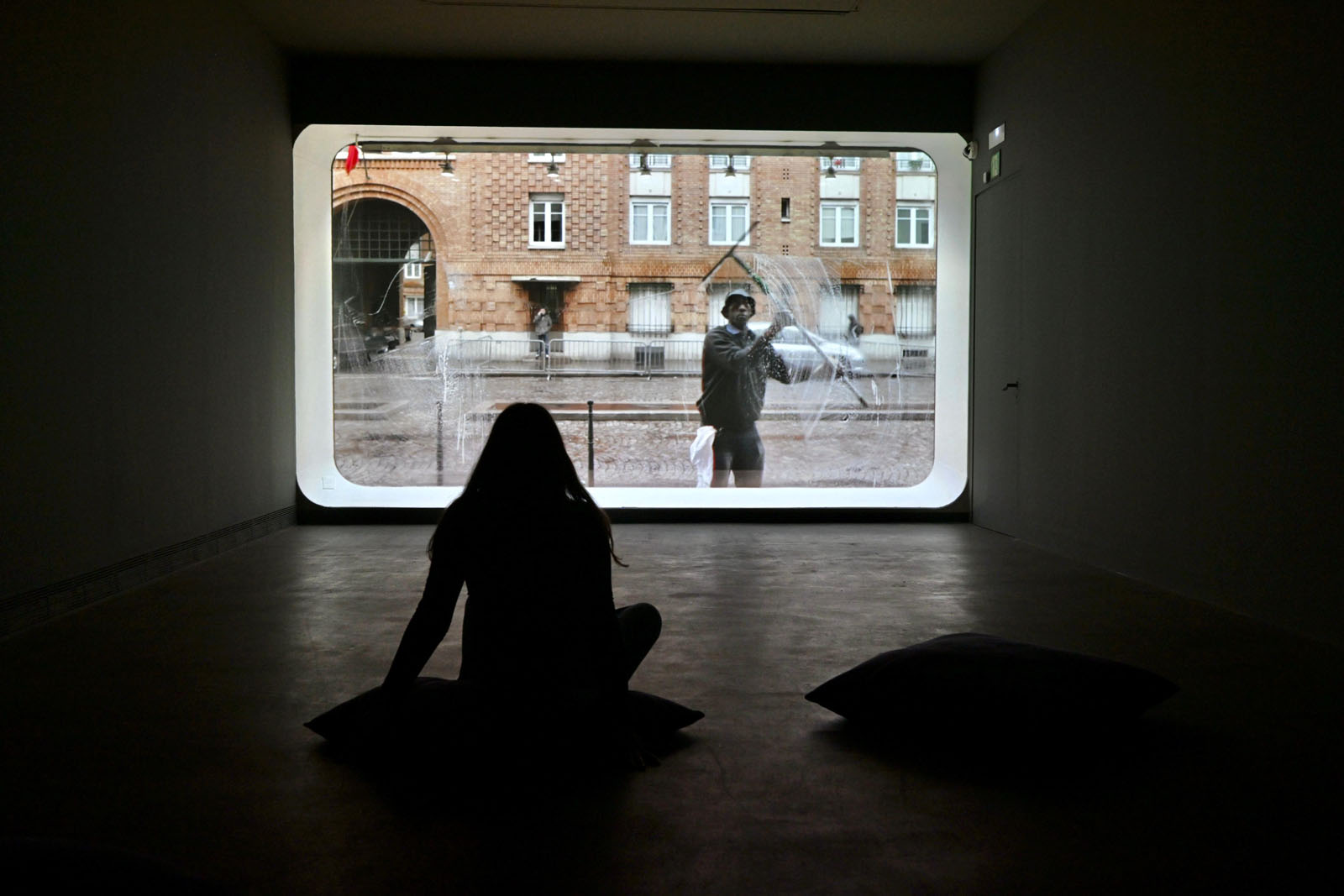
Installation view of the exhibition Anna Malagrida. Opacitas: Veiling Transparency at Museu Tàpies, Barcelona, March – September, 2025 showing La laveur du carreau 2010 (video still)
The Museu Tàpies presents Anna Malagrida’s exhibition Opacitas. Veiling Transparency. Curated by Patricia Sorroche, Head of Exhibitions at the Museu Tàpies, the exhibition offers a survey of the artist’s work through photography, video and installation.
This exhibition provides an opportunity to see, for the first time in Barcelona, the work of this artist, who was born in the city, but has spent most of her career in France.
Anna Malagrida’s project responds to the Museu Tàpies’ current aim of enabling discourses that institutions have left out and that have not found a space for representation in our most immediate reality.
Anna Malagrida (Barcelona, 1970) works with photography to navigate between that which is public and private, based on a play of perspectives and visions that shuns the realistic image to draw us into a game of collective imaginaries. The idea of the city and its significance as a social agent are present in her photographs, which function as archaeological vestiges of the social crises of contemporary city life.
The exhibition Opacitas. Veiling Transparency, curated by Patricia Sorroche, Head of Exhibitions at the Museu Tàpies, offers a survey of Anna Malagrida’s work through projects that explore photography, video and installation. Focusing on the liminal spaces that unite and separate, her gaze brings opposites into conversation.
Malagrida mainly situates us in the city and in a few constructed natural spaces. Through a play of perspectives, from the interior to the exterior and vice versa, her photographs and video installations become windows that reveal and conceal the tensions that run through society. Her gaze escapes a univocal interpretation of images, in order to inhabit certain spaces that she invites us to discover through her work.
Her images capture remnants and traces, signs that refer to previous moments, social tensions or simple anonymous gestures. The visual ambiguity in her work is revealed through the texture of her photographs and videos, which evoke pictorial references and dissolve the limits between appearance and reality. This can be seen, for example, in the images of closed shop windows painted with characteristic whitewash, an opaque veil that prevents us from looking inside and transforms these spaces into abstract surfaces, resembling large pictorial canvases. Poetic actions operate in her works with a multiplicity of meanings: the painter’s gesture is also that of the working body, and the city and the landscape are revealed from within. These gestures are erased, cleaned or simply fixed by the passage of time, cyclical and mutable.
Malagrida’s work, which transcends photography and painting, immerses the spectator in a visual experience with multiple meanings and invites us to look at the city and natural surroundings from a new perspective, one that reveals the vestiges of a landscape affected by social and economic change. Her practice is a space for reflecting on vulnerability, resistance and the possibility of reconstruction, both of the individual and the environment they inhabit.
The exhibition Opacitas. Veiling Transparency allows visitors to explore and delve into Anna Malagrida’s career through a selection of her works. The itinerary of the exhibition begins with the piece Vitrines (Shop Windows, 2008-2009), in which the artist photographs the windows of shops on the streets of Paris that had to close down due to the economic crisis and concealed their interiors by coating their windows with whitewash. The exercise of gazing through shop windows is also present in Le laveur du carreau (The Window Cleaner, 2010), an audiovisual piece that allows us to observe how a worker lathers and cleans the windows, in a visual play between opacity and transparency that also situates us in the intermediate zones.
In Danza de mujer (Woman Dance, 2017), filmed in the Jordanian desert, ‘Malagrida puts into question, through the movement of the veil, certain social policies in relation to specific groups, and how narrow perspectives promote ways of seeing the world that exclude a large part of it,’ in the words of the exhibition’s curator, Patricia Sorroche. Finally, Point de vue (2006), produced in the architectural complex that housed the Club Med tourist resort inaugurated in 1962 in the protected natural area of Cap de Creus, presents the traces of the economic systems that defied sustainability.
Sorroche concludes that ‘operating through opposites, through the decategorisation of traditional forms of representation and the overlapping of different languages, makes Anna Malagrida’s work move between textures, between the places of the visible and the invisible, to immerse us in a dialogue of opposites’. And she continues: ‘Her work multiplies our gazes, our ways of seeing the world, making it more porous, while at the same time enabling other ways of understanding, transmuting and transcending it. Her work forces us to confront our social and political condition of being, but from a poetic, liminal place, where contradiction is a symbol of the dualities of the human condition in a post-modern world. A space where we can come together to understand each other in possible societies of the common, based on a collective and communal view.’
The project Anna Malagrida. Opacitas. Veiling Transparency is completed with an exhibition booklet featuring texts by the curator and by art critic Marta Gili, as well as an interview with the artist. Malagrida and Gili will take part in the inaugural conversation of the exhibition, on 13 March at 6 pm, in an event that forms part of the project’s public programme, along with the talk by Morena Hanbury. Over the next few months, the Museu Tàpies’ Education Department will be offering a programme of tours and activities for all audiences.
Press release from Museu Tàpies
Anna Malagrida (Spanish, b. 1970) Rue Laffitte I 2008-2009 Photographic print on Dibond
Anna Malagrida (Spanish, b. 1970) Rue Laffitte II 2008-2009 Photographic print on Dibond
Anna Malagrida (Spanish, b. 1970) Vitrines. Boulevard Sébastopol. Aparadors. Boulevard Sébastopol 2008-2009 Photographic print on Dibond
Curatorial statement
Anna Malagrida. (Trans)gazes of the sensible
Patricia Sorroche
“Photography is, above all, a way of looking, it is not the same look. It is a way of seeing that has become conscious of itself, that has become reflexive.”
~ Susan Sontag, On Photography, 1977
What happens when we place ourselves in that intermediate space where the visible and the invisible intertwine? Anna Malagrida invites us to explore this question by delving into the dichotomy of opposites in her work, and by directing our gaze toward the space in-between, where our way of looking is amplified, expanded and transformed, blurring the boundaries between the perceptible and the imperceptible. Revisiting some of Malagrida’s works opens a path, a transmutation of our bodies and our drives as we move around her pieces. Like palimpsests, her works hold layers of memory for us to rewrite. Time, memory and narrative intertwine to confront us with a new perspective from which to observe the world.
Opacitas. Veiling Transparency takes as its starting point an apriorism where the poetic gesture reveals the political gesture. When Jacques Rancière speaks of the ‘distribution of the sensible’, what he offers us is the possibility of the gesture to modify and transform what is seen, felt or said within a society from a poetic space. Along the same lines, Martha Rosler maintains that poetry and art are spaces of resistance, as well as political and social reconfiguration. Based on this axiom, we can understand Malagrida’s photographs and works as a space where the poetic and the political intersect in a subtlety of visual nuances, allowing us to recodify ways of inhabiting space and time.
The journey begins with a hypallage, where the city is transformed into a text that is written and rewritten as we move forward. An accumulation of memories and desires, where each street, each wall, seems to tell a story waiting to be read. In the series Vitrines (Shop Windows, 2008-09), the city is highlighted as a place of tension, wherein Malagrida works on ‘the epidermal space of the city’.1 The financial crisis that devastated the economies of a global north during the early twenty-first century led to the bankruptcy of many businesses. The artist photographed and immortalised the shop windows of Parisian businesses forced to close as a consequence of the economic collapse. To conceal the view, the windows were painted or whitewashed, veiling the interior, creating absences. The photographs of these places, now hidden from view, place the postmodern subject in a liminal space, where the gaze is para-actional: we cannot see, but we can reinterpret the void. Here, the painted and erased surfaces invite us to draw upon the unconscious in order to activate these new visual paraphrases. Walking through those streets highlights the fragilities of being, the contemporary narratives marked by the strong tensions of a system alien to our daily lives.
An enormous pile of rubble in the middle of the gallery prevents the body from moving freely through the space. A ruin activated to challenge us directly, to make us reflect and think about our condition. It questions what remains as a memory of a past that projects us into the future; and it questions a present, as Andreas Huyssen recounted.2 In this way, the ruin takes on a double dimension: both of a past with its scars and wounds, and of a future that is being built, which rises and walks, opening up as a space that enables a society continually emerging and re-emerging.
Continuing with the idea of opposites and dualities, our path takes us to the next space, more intimate, more enclosed, darker. As if we were entering a camera obscura or a lens shutter, the viewer is immersed in darkness; but this is a darkness that reveals a transparency, opening windows and walls to the outside, and placing us in the active condition of looking out.
Danza de mujer (Woman Dance, 2007) invites us to enter into an experience where the body is exposed in its fragile condition, ‘reincorporating a sensitive look at that dialectical movement that, in part, the photographic device itself already deploys without imposing a reification of the world’.3 From a subtle artefact transporting us to a refuge in the Jordanian desert, a veil is swayed by the breeze entering through a small window. This simple poetic action condenses part of the characteristic axioms of Malagrida’s works. The darkness of the refuge, with the light filtering from the desert outside, the black veil fluttering synchronously and asynchronously. These opposites operate with determination, reminding us that what prevents us from looking transparently limits our ways of interpreting and thinking about the world.
The piece was made at a time of tension, when in France the veil was banned in all public places, and thus, Arab women were rendered invisible and blurred in a system that did not recognise the singularities of certain communities. Through the dance of the veil, Malagrida questions and puts into crisis the politics of the social in relation to certain specific groups, and how these narrow visions propose ways of seeing the world while excluding an important part of it.
From the symbolic and the poetic, Malagrida’s work opens up to the post-human condition of being, understood as a relational and concentric existence with its environment and communities. To understand this relational condition, Édouard Glissant referred to the poetics of relation, where the idea of time is cyclical, and societies can only be conceived in a structure of continuous relationships.
Another work encountered by the viewer is Le laveur de carreau (The Window Cleaner, 2010), where Malagrida draws a ‘parallel between the gesture of a sublimated painter and that of a worker carrying out an entrusted task’.4 Here, the idea permeating the artist’s work is established: the gesture becomes the subject of the action, the idea of genius as addressed by Walter Benjamin is made evident. The cleaner is a metaphor for the painter, who becomes blurred in his condition as a worker, in his social condition of being. In this video work, we find ourselves looking from inside a shop, while a worker lathers the window and then proceeds to remove the remains of water and soap with a squeegee. From the passive condition of the onlooker, we attend to the action happening before our eyes. In this way, we witness the moment of creation and also of destruction. The soapy water our cleaner spreads over the glass surface is a metonymy of the act of painting; a fleeting work, which disappearing shortly after, returns to the transparency of glass. As in previous works, Malagrida again operates from opposites, from the concepts of opacity and transparency. Just for an instant, she places us in an intermediate place, just as Marcel Broodthaers did in some of his most renowned films (for instance, in Abb. 1. Projection d’un film du Musée d’Art Moderne, 1971), where the camera was placed at the midpoint between the inside and the outside, in his case the gallery, but aiming at the same idea, at the place where art is conceived as a process in constant movement, a flow transcending the static to become transmutable.
Both the Vitrines series and Le laveur de carreau can be read as trompe l’oeil references to large Informalist canvases. As both John Berger and Antoni Tàpies remarked, art should allow us to discover the unknown, to enter into places where the tangible, the visible, cannot go. Art is the place of transformation, a place where the unknown emerges in its multiple and polysemic condition.
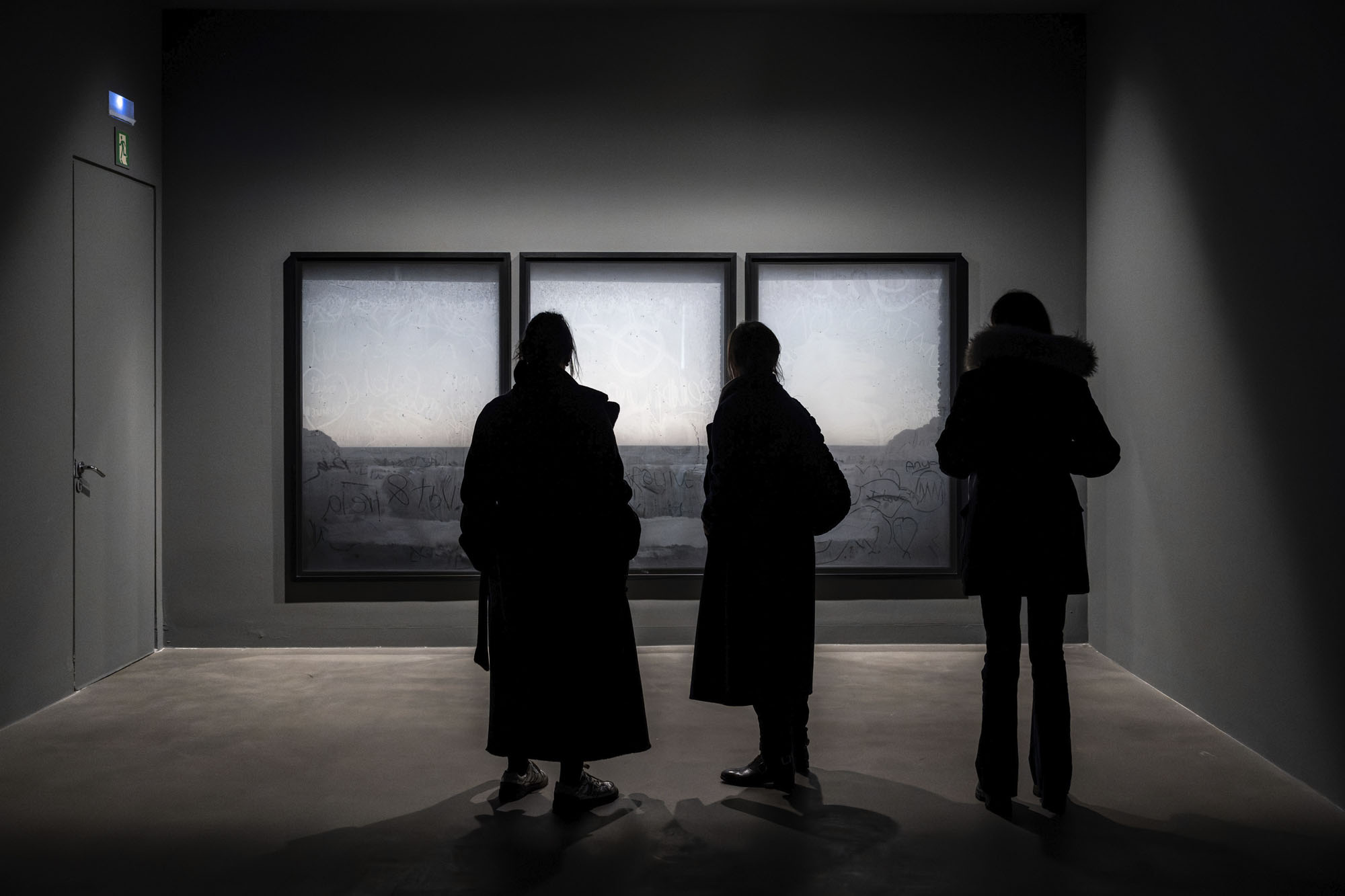
Although there is no set itinerary for the viewer to follow, the last of the pieces in this exhibition is Point de vue (2006), where new agents appear in dialogue with those we have encountered before. This installation was made in Cap de Creus, in the north of Catalonia, in a protected natural area, close to the border with France. Thanks to the Law of Natural Heritage and Biodiversity, after a few decades the tourist complex built here by Club Med was forced to close. Malagrida installed her camera inside this architectural complex, which remained standing as a vestige and trace of economic systems that try to evade certain norms and sustainability policies. In so doing, Malagrida returns us to the intermediate and intersectional space, since we encounter the traces people have left on the windows, full of dust and sand; scratched phrases proclaiming their condition as the poetics of social archaeology. The dust becomes a ‘residue’5 containing the possibility of the new, of what is to come, and of the passage of time.
The piece is also an allusion, a synecdoche where perspective plays a leading role. Composed of three large photographs, the piece reveals a landscape behind the dust, a perspective revealing our form of representation, whose signs are linked to society’s power and knowledge structures. A theory influenced by Erwin Panofsky,6 who studied Renaissance perspective as a structure for representing time, place and society at a certain moment in history: something which structures the worldview. In this way, perspective becomes a space for representing socio-political systems, while in the Renaissance it adopted a homogeneous, infinite and ordered character, in contrast to the medieval or Romanesque vision where space was hierarchical. The classical and orthodox perspective proposed by this work invites us to think about how the forms of representation are ways of making the world visible and reproducing it. This idea points to the manner in which the telling of history is based on a structure, on a certain perspective that determines what is to be highlighted and ignores other events or facts running counter to historical hegemonies. It is also interesting to notice how the different layers are discovered to the viewer: first the dust, then the inscriptions and finally the landscape. And how, returning to the notion of distance and horizon, by way of passing through the glass we are led to reimagine the possibilities of the outside.
In conclusion, operating from opposites, from the decategorisation of traditional forms of representation and the overlapping of different languages, makes Malagrida’s work move between textures, between places of the visible and the invisible, to immerse us in a dialogue of opposites. This dialogical premise with which we enter her works does not seek to block our view or interpretation, but rather opens up the multiplicity of discourse, of the image. Her work leads us to multiply our views, our ways of seeing the world, to make it more porous, while enabling other ways of understanding it, of transmuting it and traversing it. Her work forces us to confront our social and political condition of being, but from a poetic, liminal space, where contradiction is a symbol of the dualities of the human condition in the postmodern world. A place where we can meet and understand each other in possible societies of the common, from a collective and community-based place.
Footnotes
1/ Muriel Barthou, “Entretien à Anna Malagrida,” in L’invisible photographique ; pour une histoire de la photographie, Paris: La lettre volée, 2019.
2/ Andreas Huyssen, Present Pasts: Urban Palimpsests and the Politics of the Memory. Stanford: Stanford University Press, 2003.
3/ Marta Dahó, “Espacio de la continuidad. Lugares de la intersección. Algunas notas en torno a los trabajos de Anna Malagrida,” in (In)visibilidad (ex. cat.). La Coruña: Museo de Arte Contemporáneo Gas Natural Fenosa, 2016.
4/ Étienne Hat, “Entretien. Anna Malagrida,” in Anna Malagrida, Vitrines, Paris: Éditions Filigranes, 2025; Paris barricadé, Paris: Éditions Filigranes, 2025; and Los muros hablan, Paris: Éditions Filigranes, 2025. (Author’s translation.)
5/ Nicolas Bourriaud, Estética relacional. Buenos Aires: Adriana Hidalgo, 2006.
6/ Erwin Panofsky, La perspectiva como forma simbólica. Barcelona: Tusquets, 1999 (1927).
Anna Malagrida (Spanish, b. 1970) Rue Bleue 2008-2009 Photographic print on Dibond
Anna Malagrida (Spanish, b. 1970) Rue Lecourbe I 2008-2009 Photographic print on Dibond
Anna Malagrida (Spanish, b. 1970) Rue Riboutté 2008-2009 Photographic print on Dibond
Anna Malagrida (Spanish, b. 1970) Rue de Châteaudun 2008-2009 Photographic print on Dibond
My apologies that I haven’t been writing that much in recent postings, but I am still recovering from my hip replacement operation and the pain is still ongoing over 6 weeks after the operation. I’m a little exhausted to put it mildly…
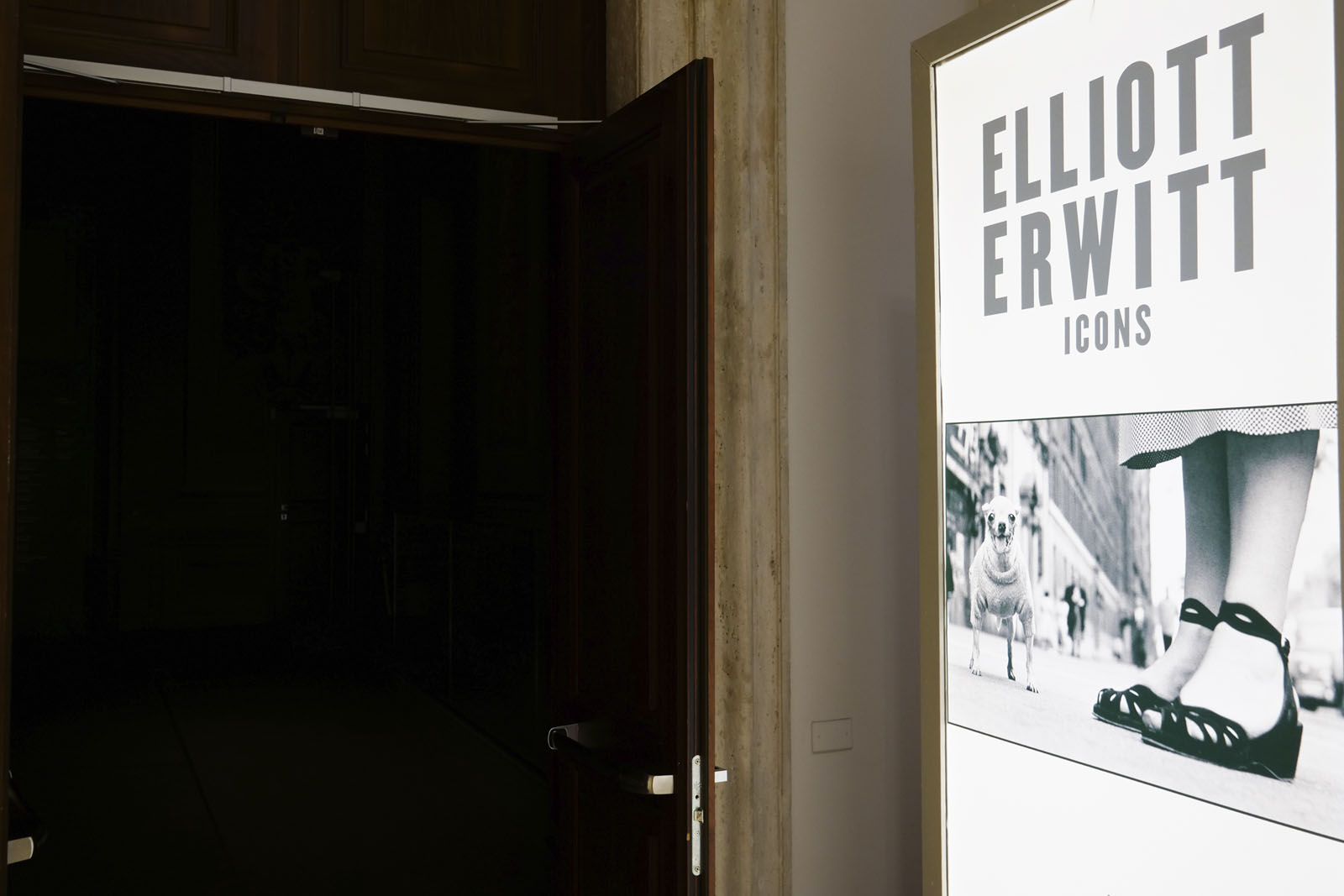
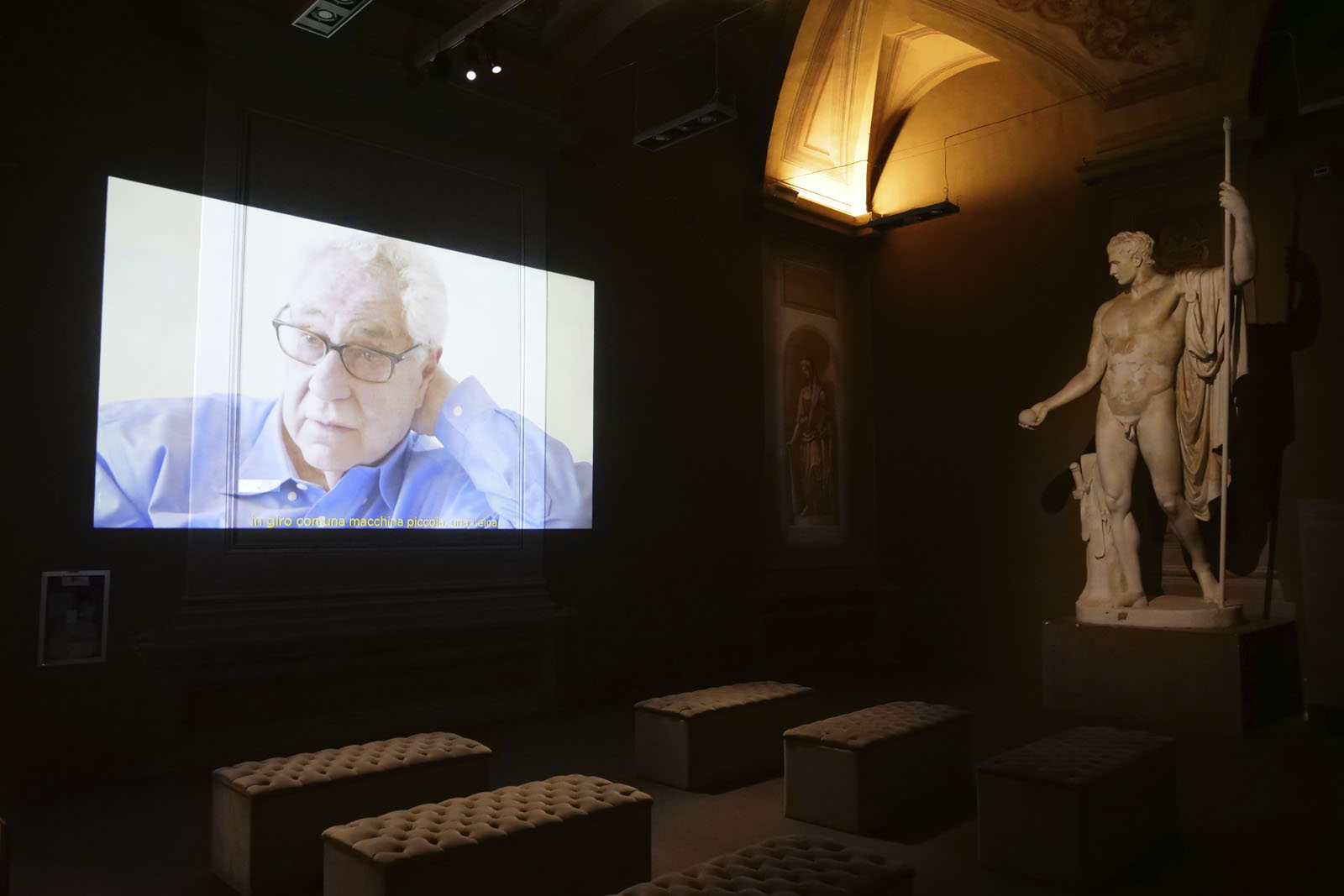
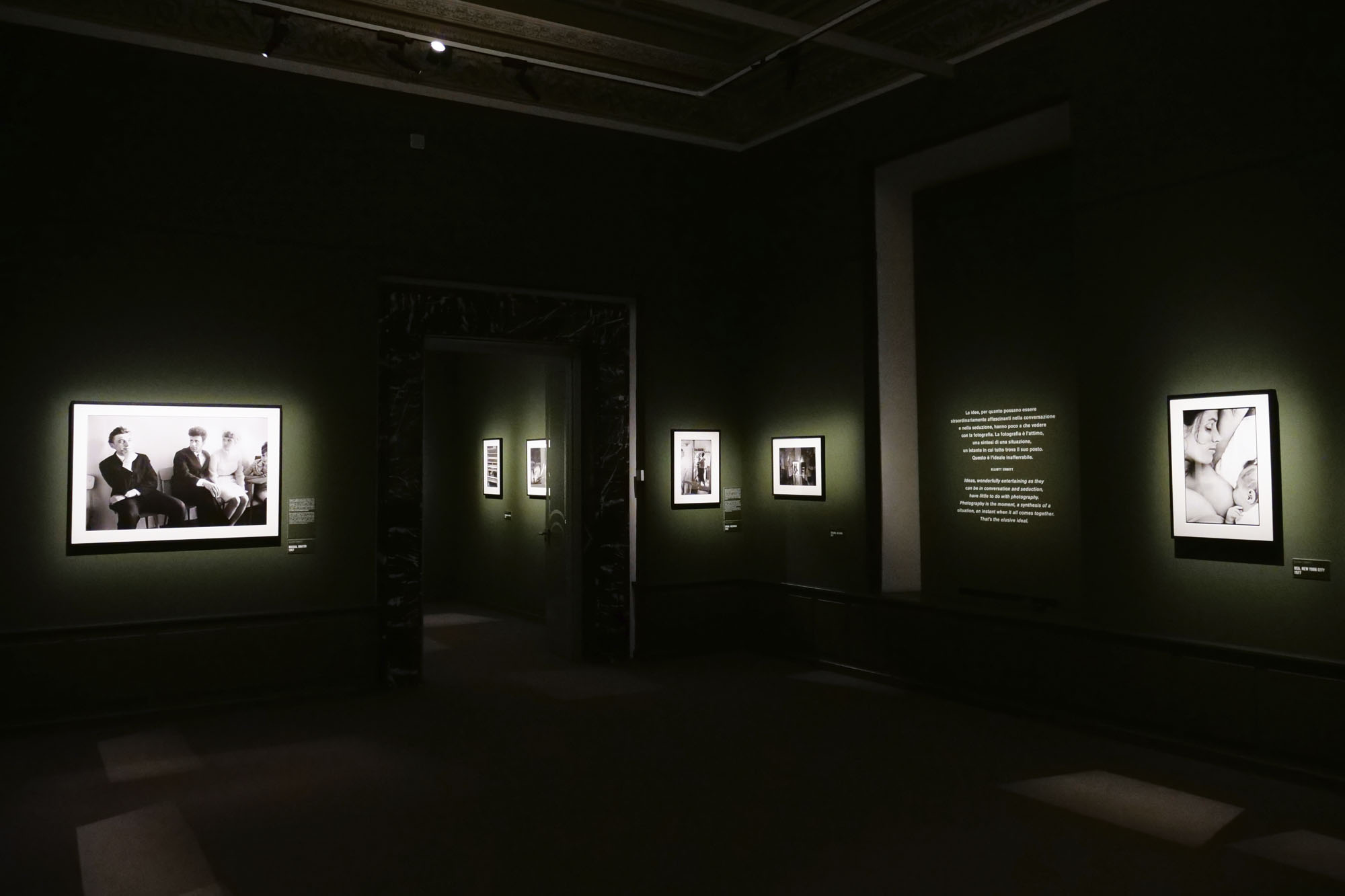
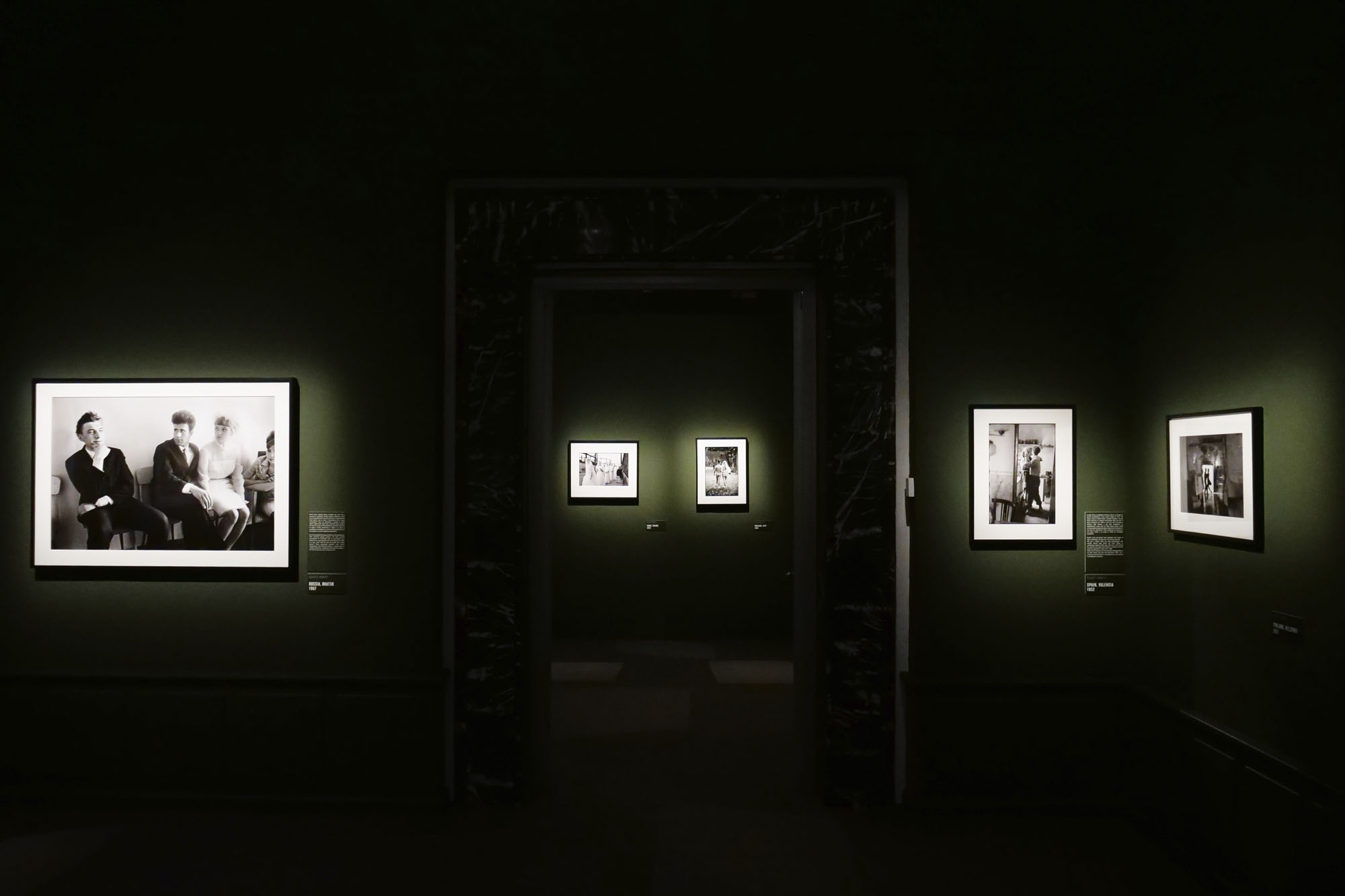
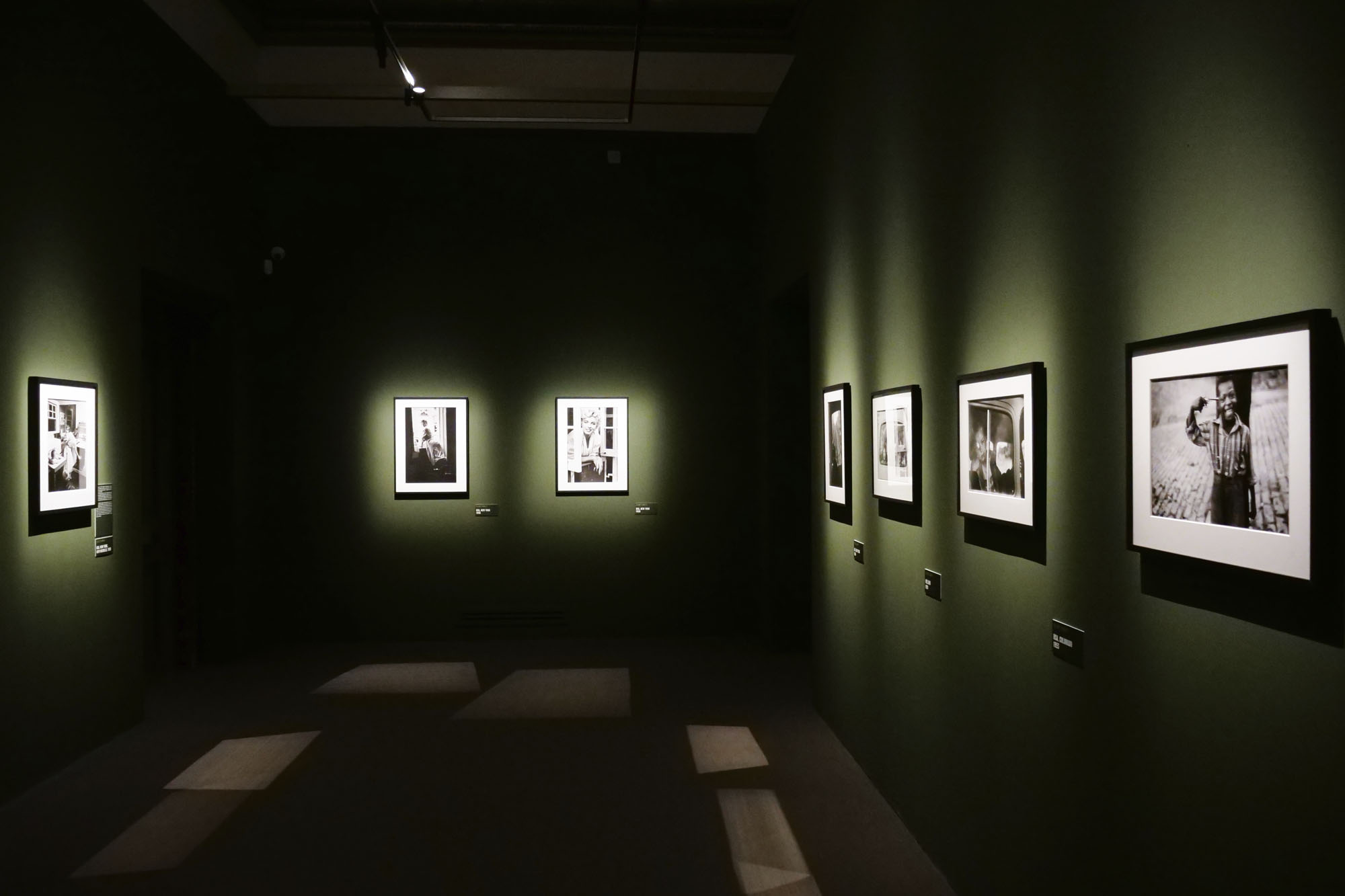
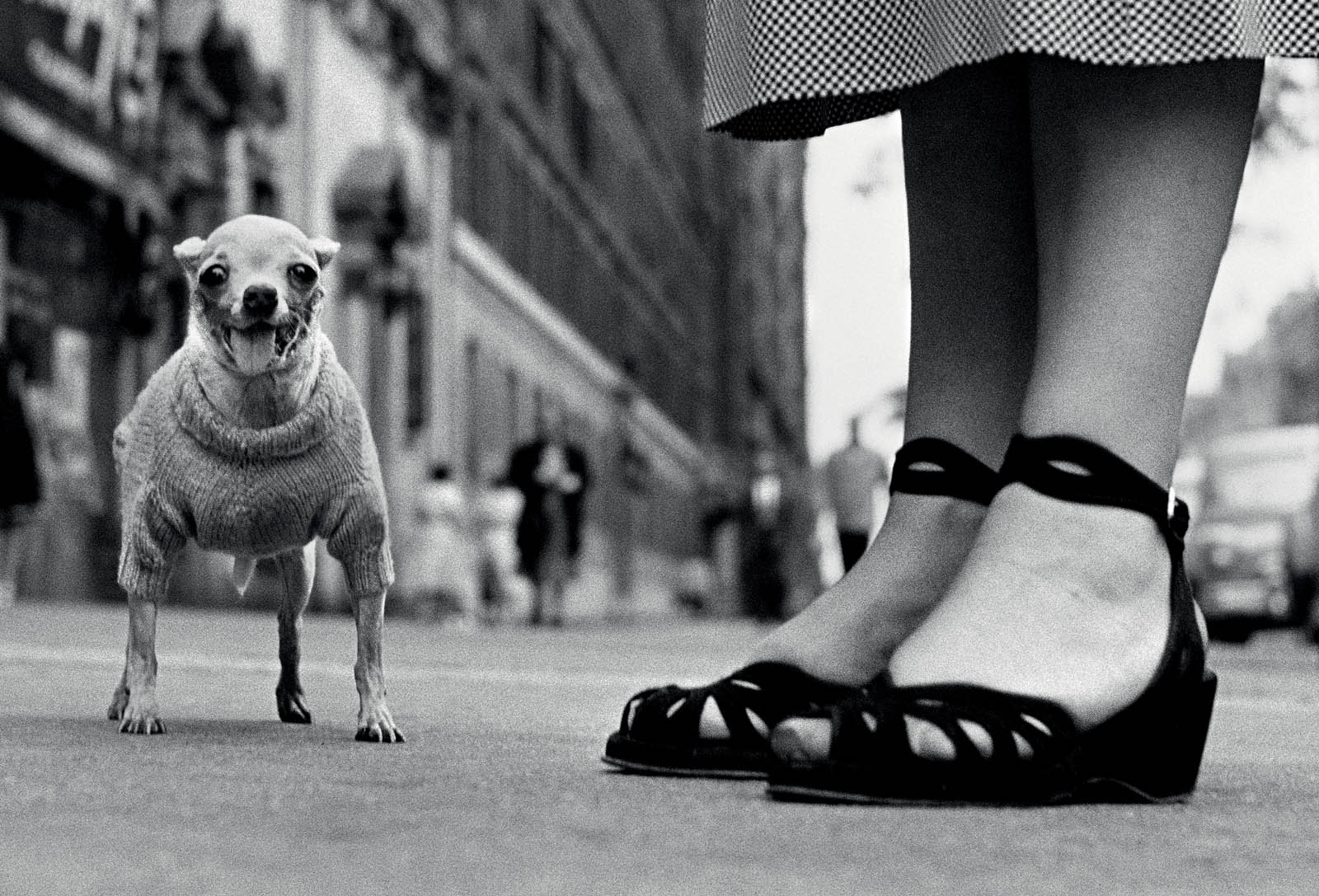
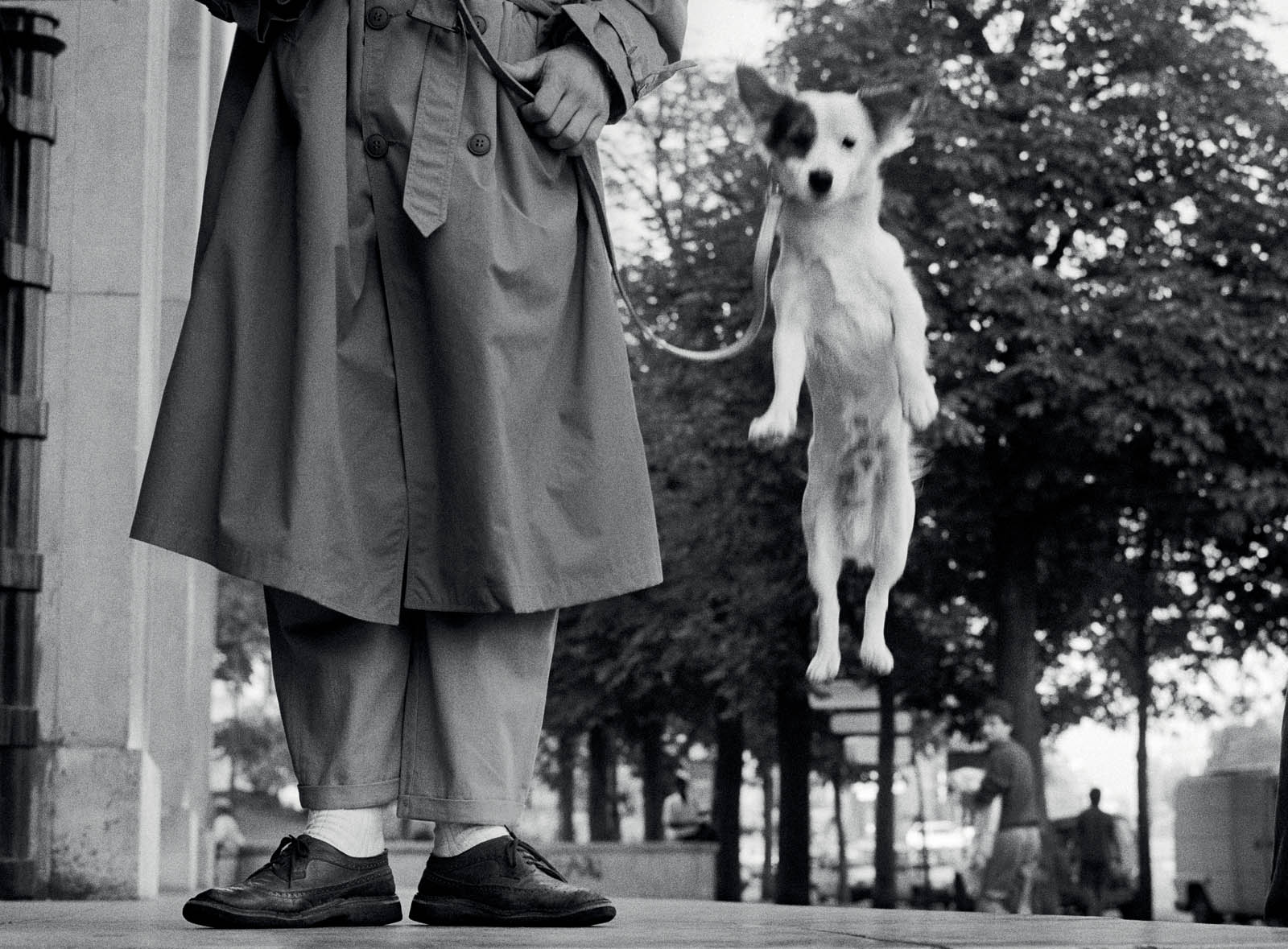
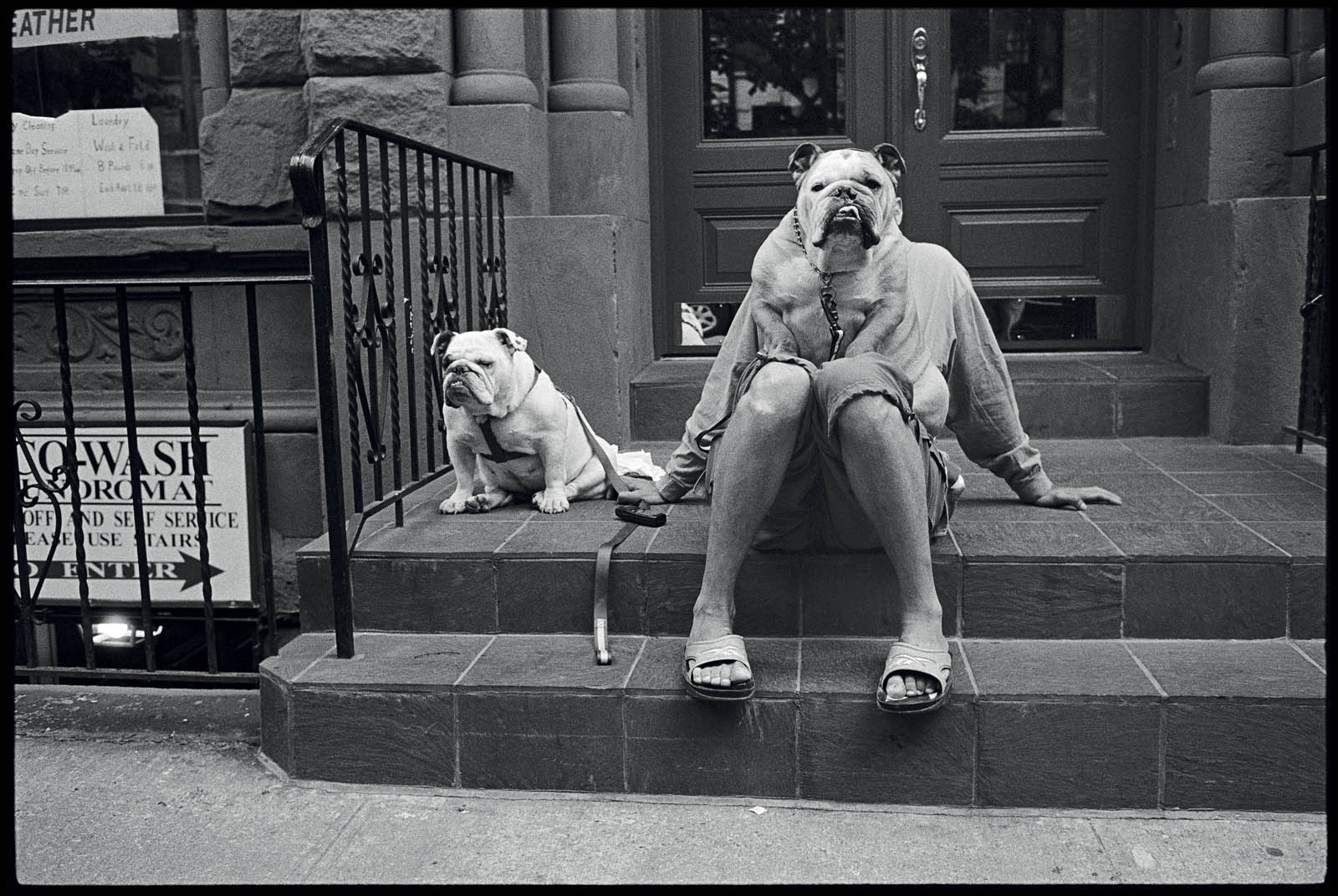
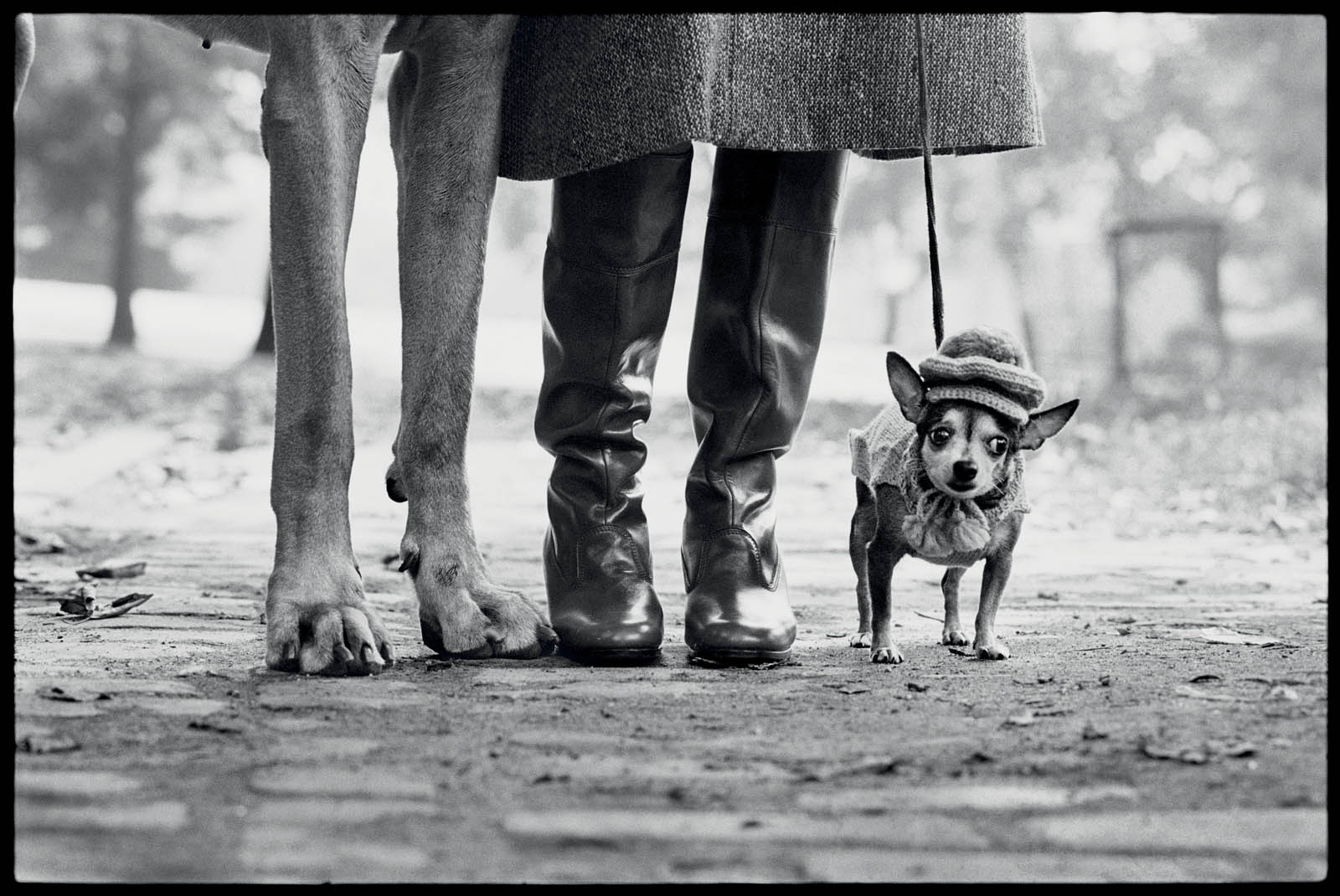
With this sumptuous exhibition of photographs by Elliott Erwitt – in a beautiful palazzo with painted ceilings and classical sculptures with the walls painted a glorious colour of green – you get what is says on the tin: Erwitt’s iconic and humanist photographs of dogs, children and celebrities, “visual double-takes and finely tuned one-liners.”
That is all the media images consisted of, his famous photographs.
I know that the exhibition, and the artist’s reputation, rests on his “icons” but I just wish we could see past these to his other photographs, photographs of everyday people, captured in the midst of their ordinary lives; photographs that contain a little more gravitas, a little more depth of poignancy / spirit / energy, revealing small intimacies not readily seen and acknowledged.
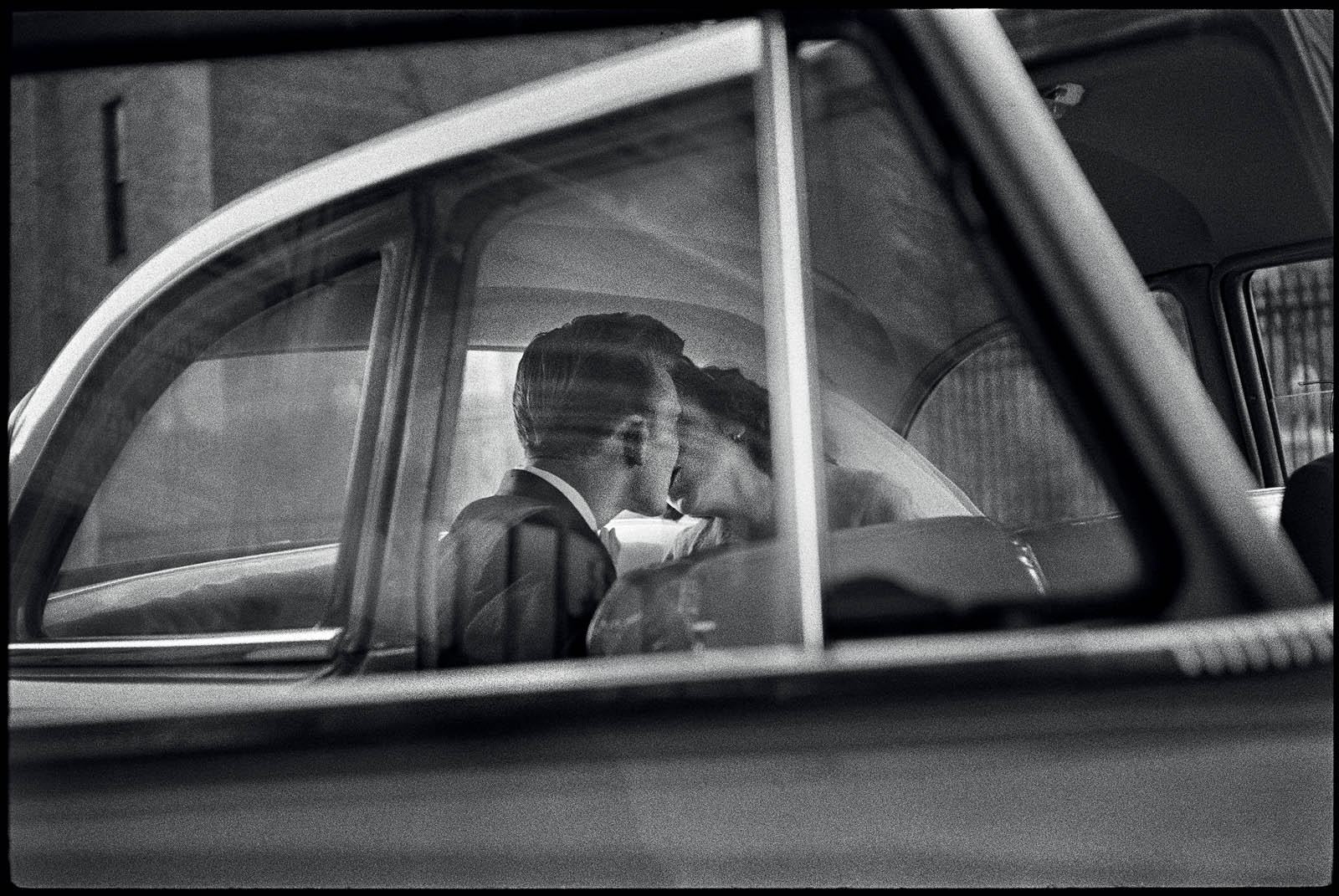
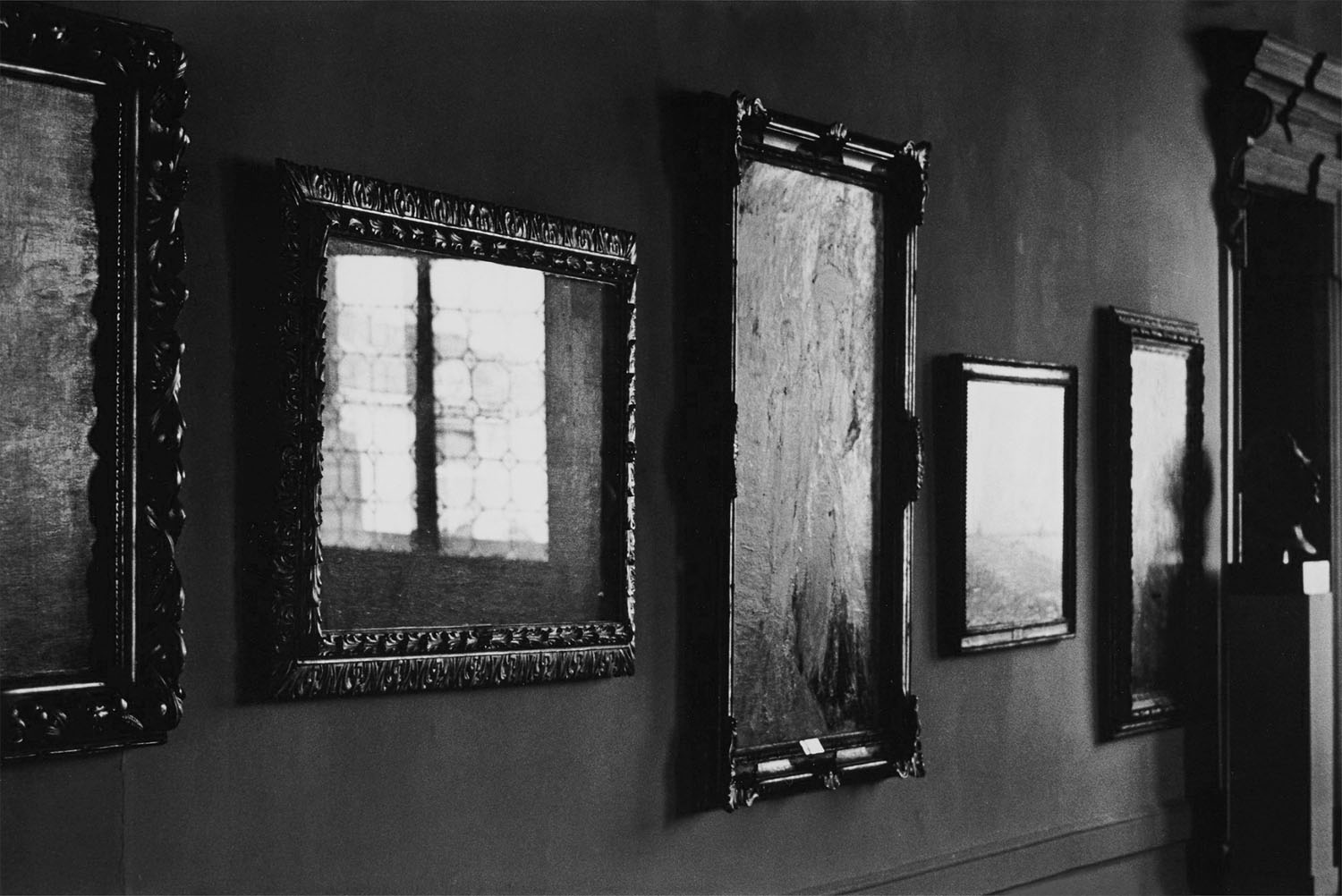
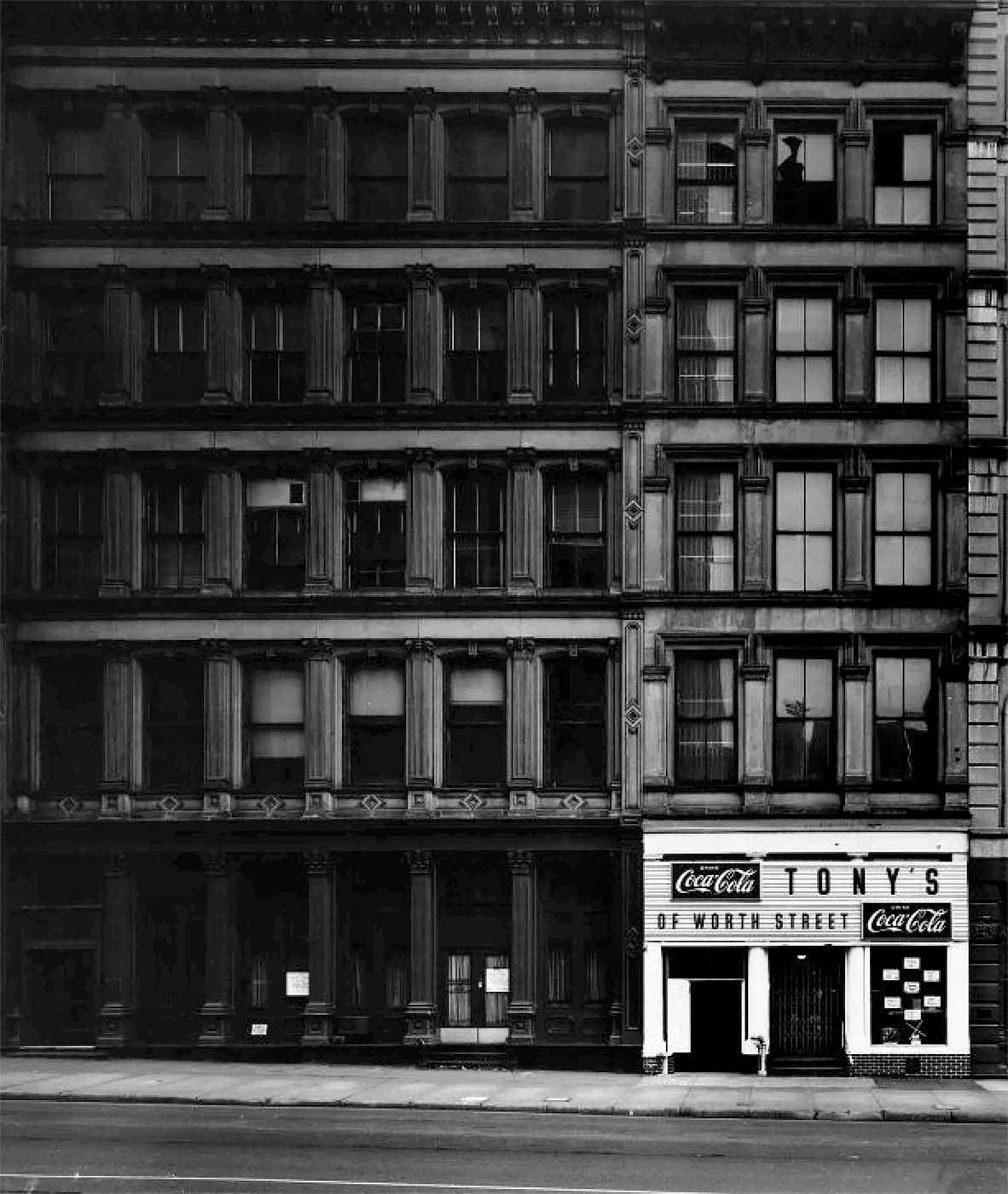
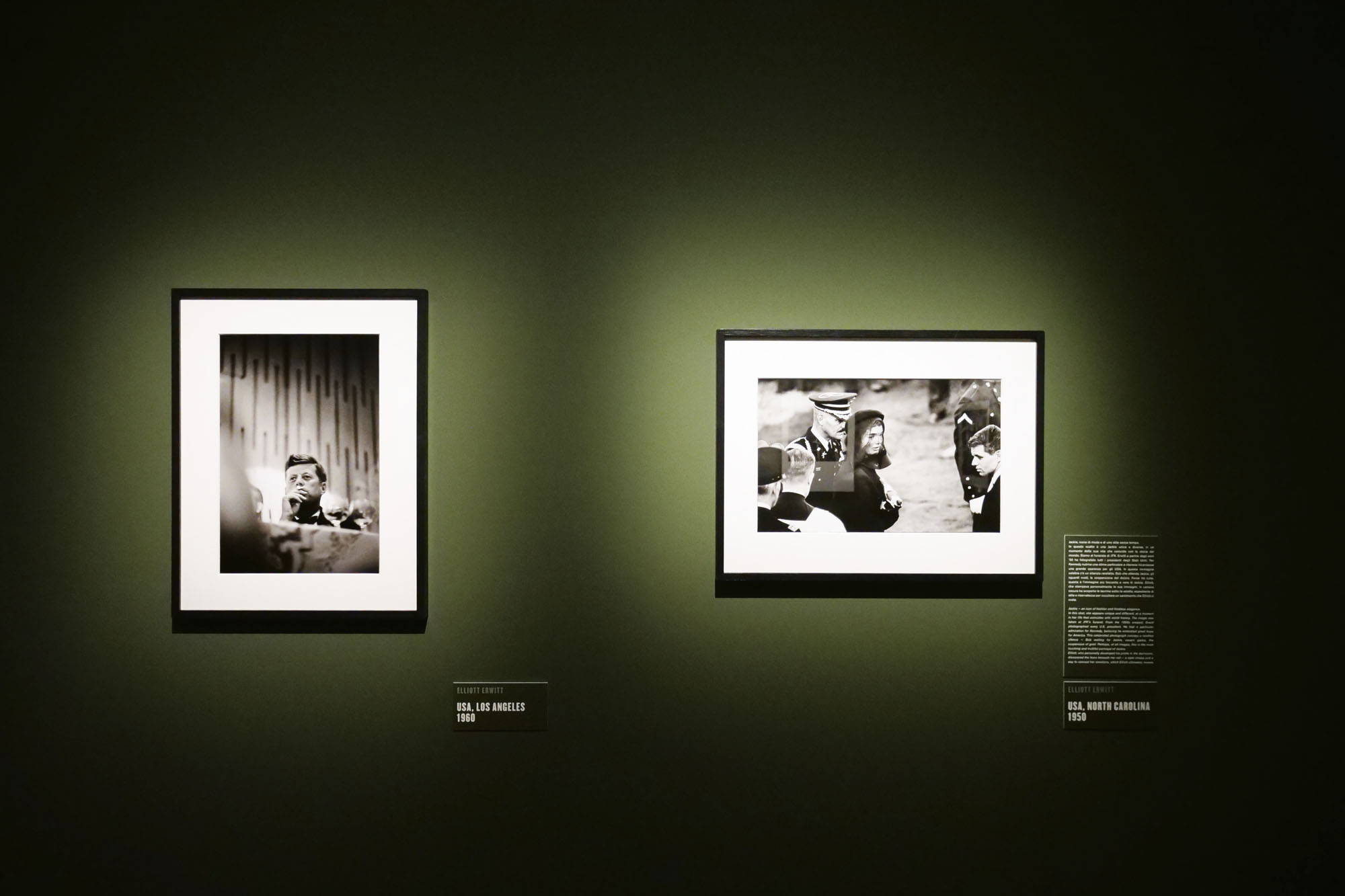
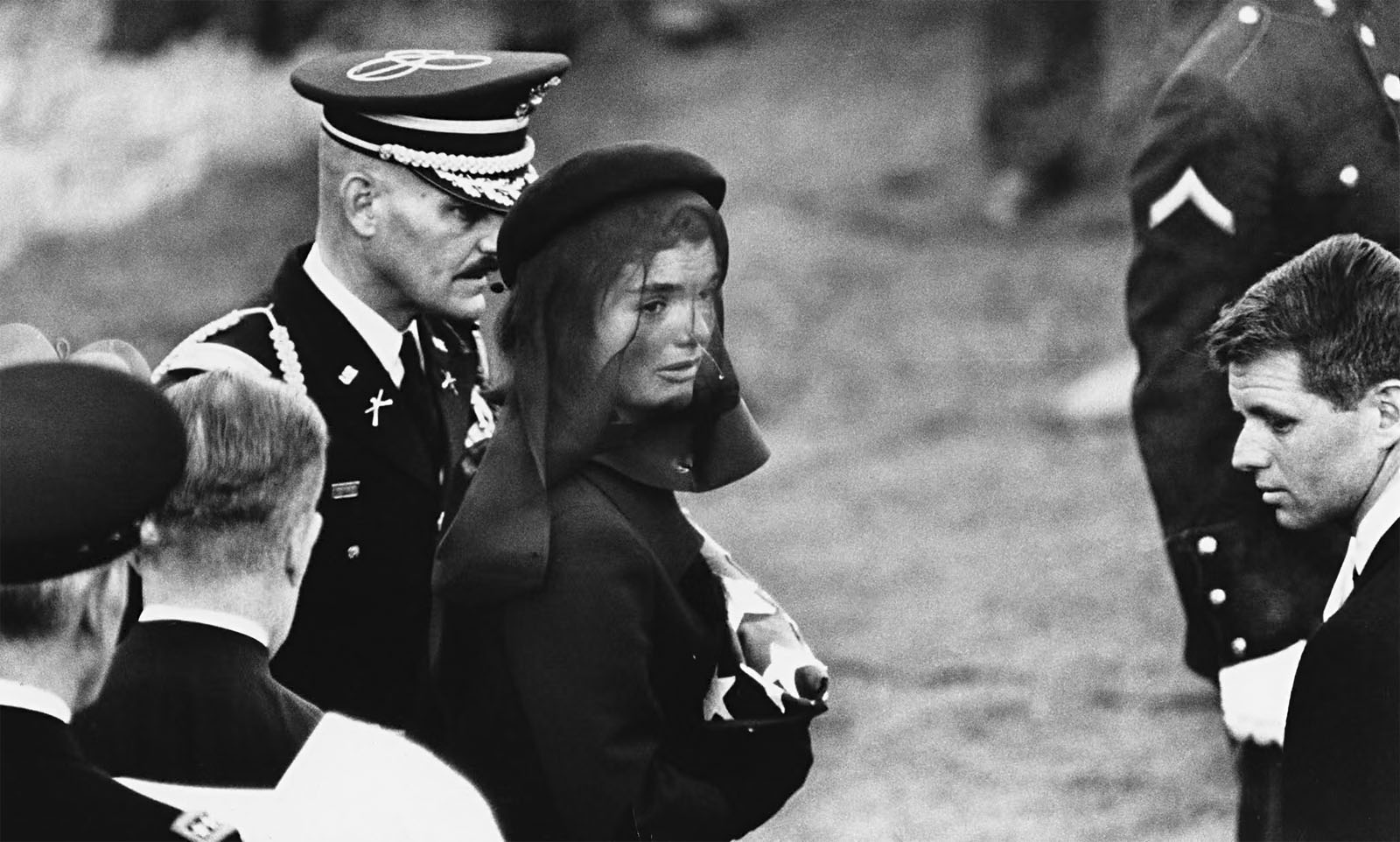
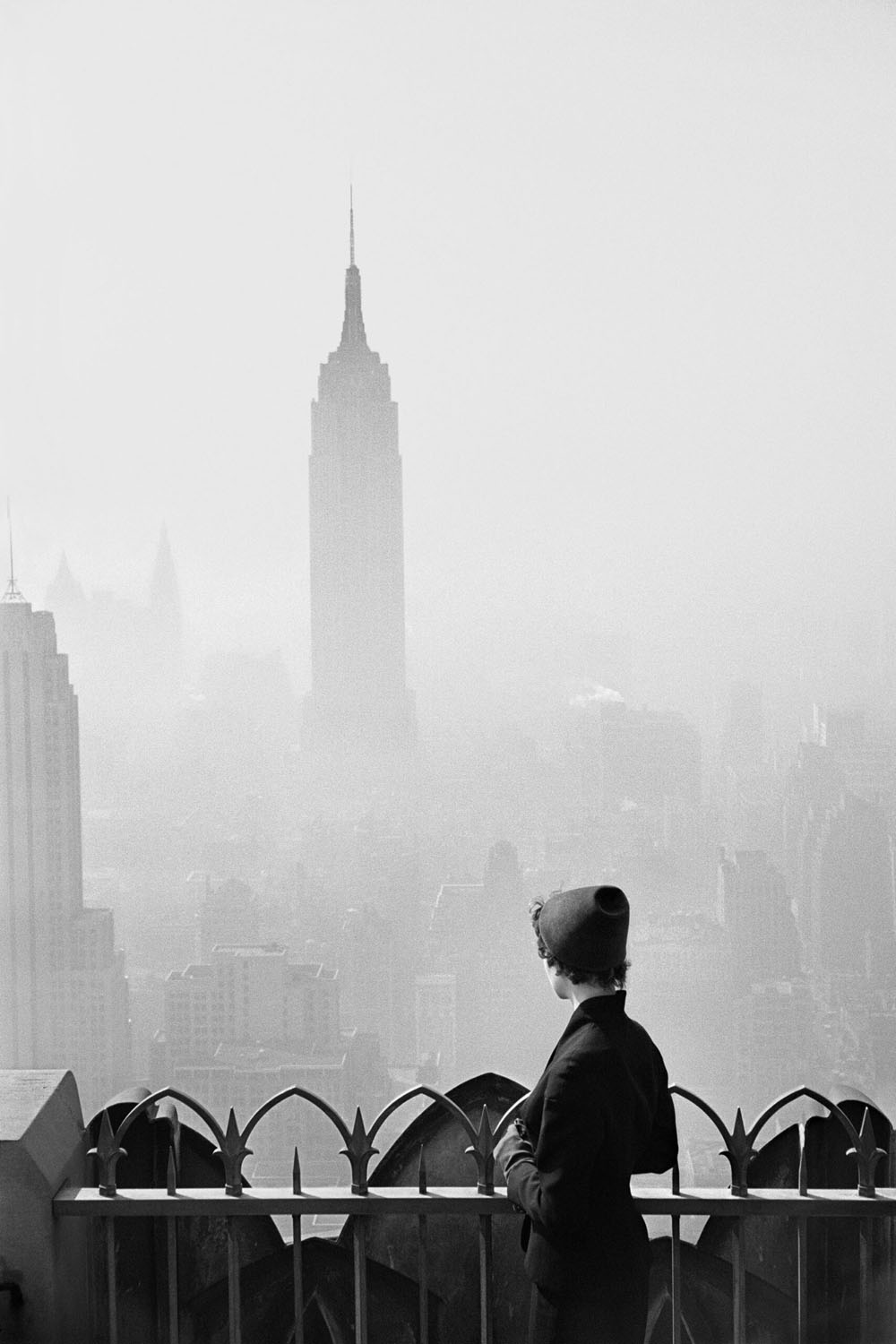
That Erwitt is capable of such images can be see in photographs such as Italy, Venice, Gallerie dell’Accademia, 1965 (below), USA, New York City, 1969 (below) and that most gut wrenching, heart breaking of images, USA, Arlington, Virginia, Jacqueline Kennedy at John F. Kennedy’s funeral, November 25, 1963 (below) – where Erwitt reveals the grief of loss and finally touches the marrow of what it is to be human.
Dr Marcus Bunyan
Many thankx of the Palazzo Bonaparte for allowing me to publish the photographs and video in the posting. Please click on the photographs for a larger version of the image.
Elliott Erwitt. Icons at Palazzo Bonaparte, Rome, Italy
Installation walk through of the exhibition “Elliott Erwitt. Icons,” dedicated to the late master of visual irony and empathy, Elliott Erwitt. This major show offers an intimate look into the universe of one of contemporary photography’s most significant figures, whose work transformed everyday life into profound visual poetry.
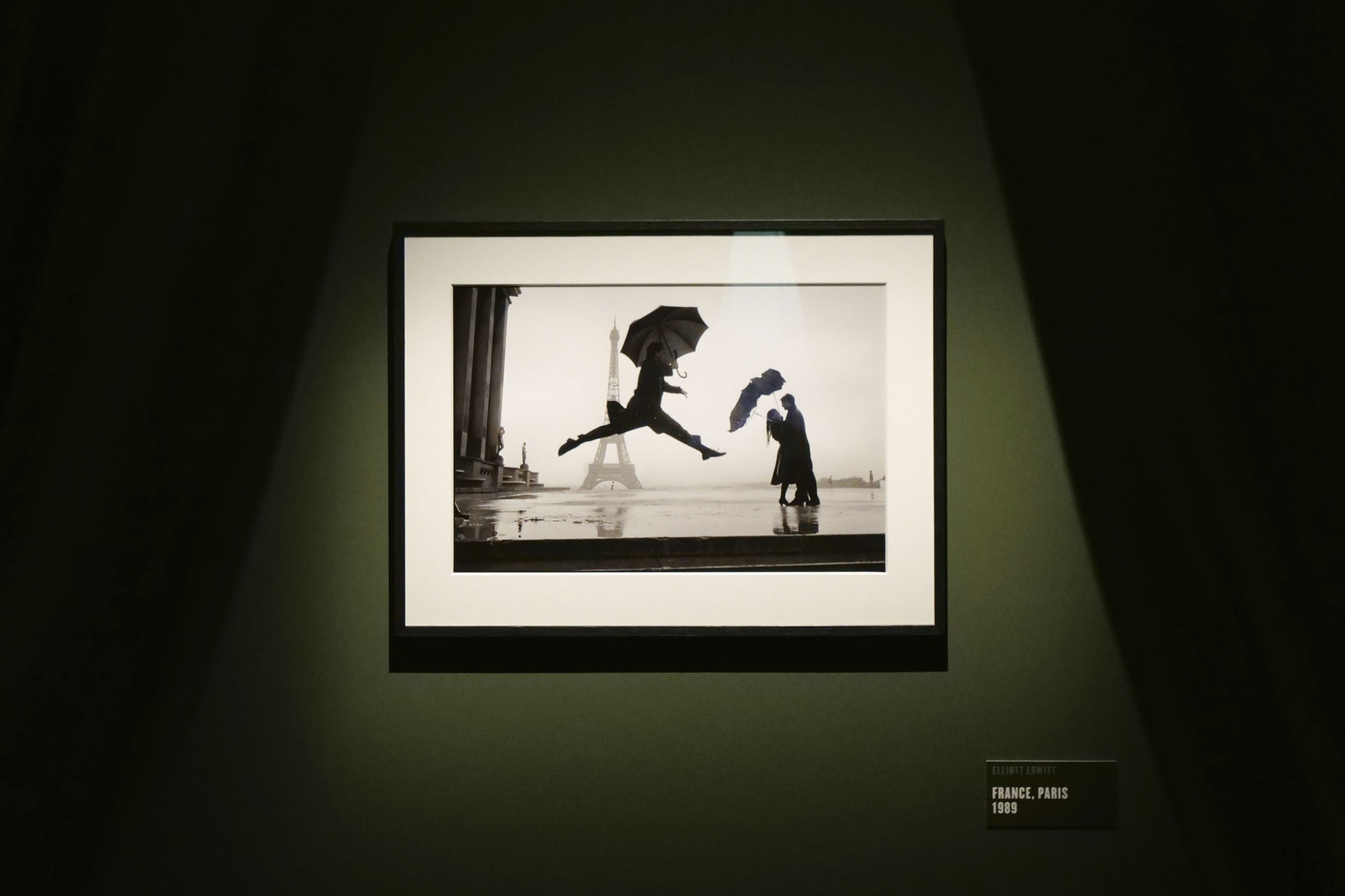
Installation views of the exhibition Elliott Erwitt. Icons at Palazzo Bonaparte, Rome, Italy showing in the bottom image, the Erwitt’s photograph France, Paris, 1989
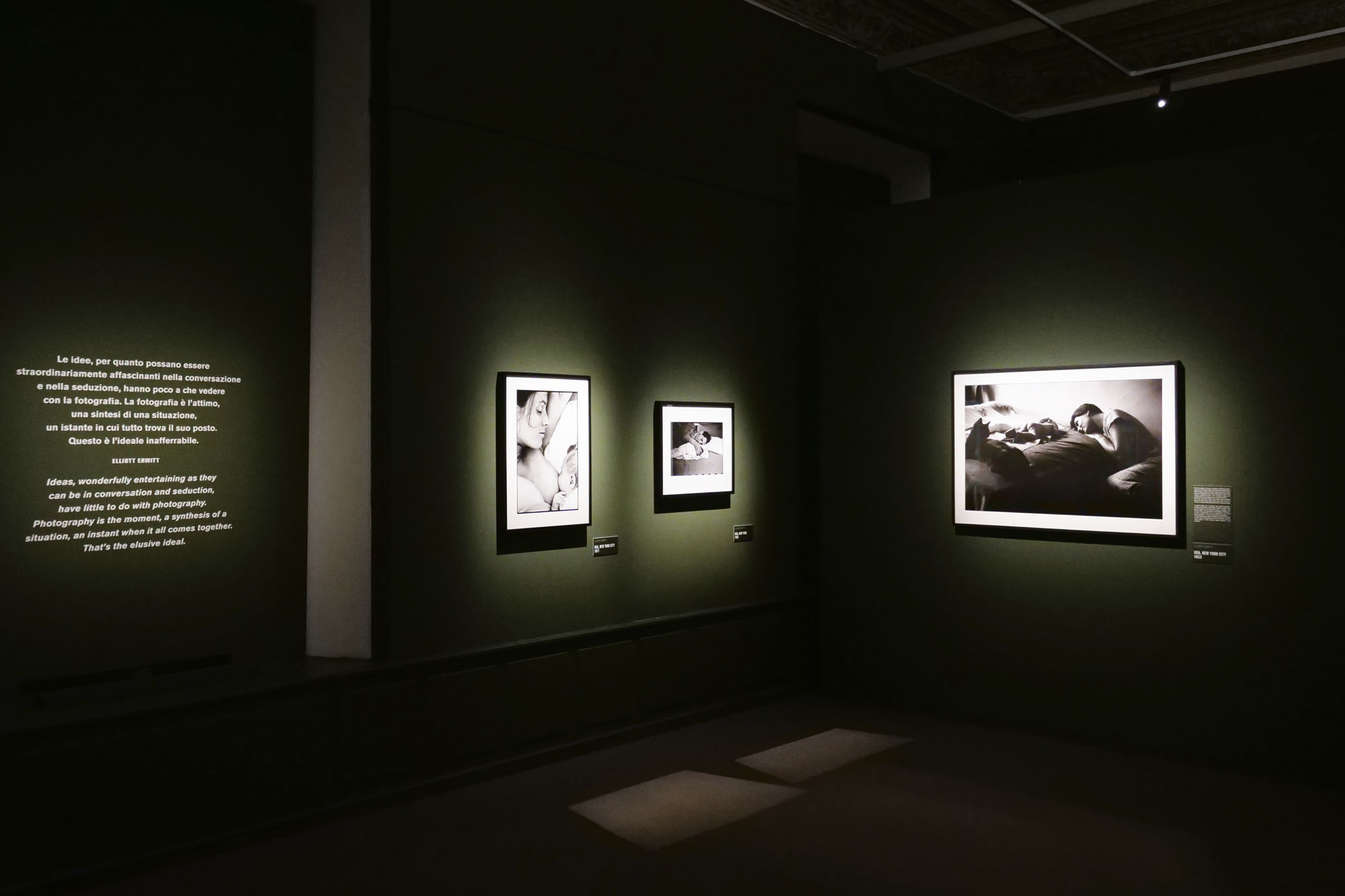
Installation view of the exhibition Elliott Erwitt. Icons at Palazzo Bonaparte, Rome, Italy showing at right Erwitt’s photograph USA, New York City, 1953
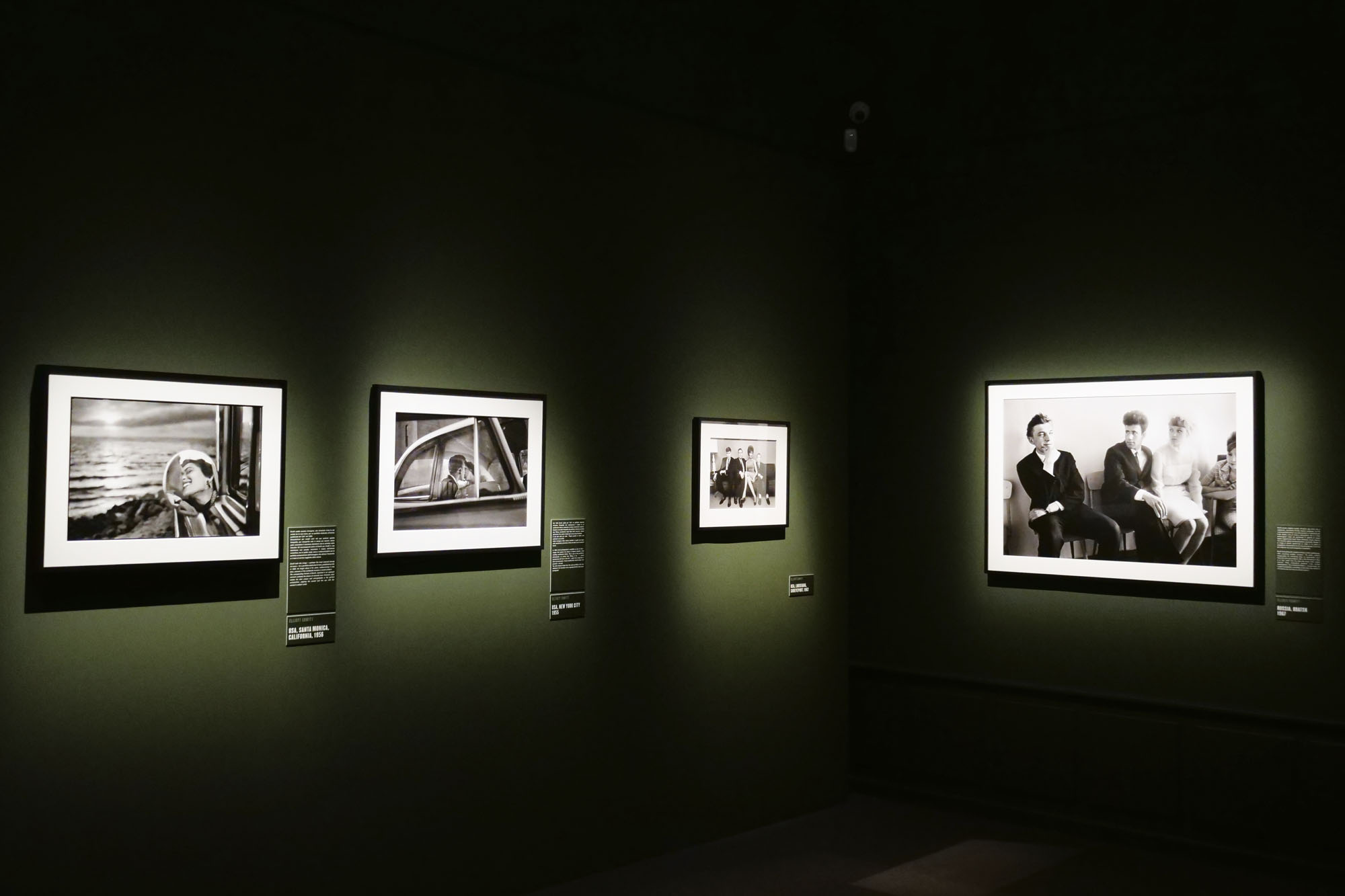
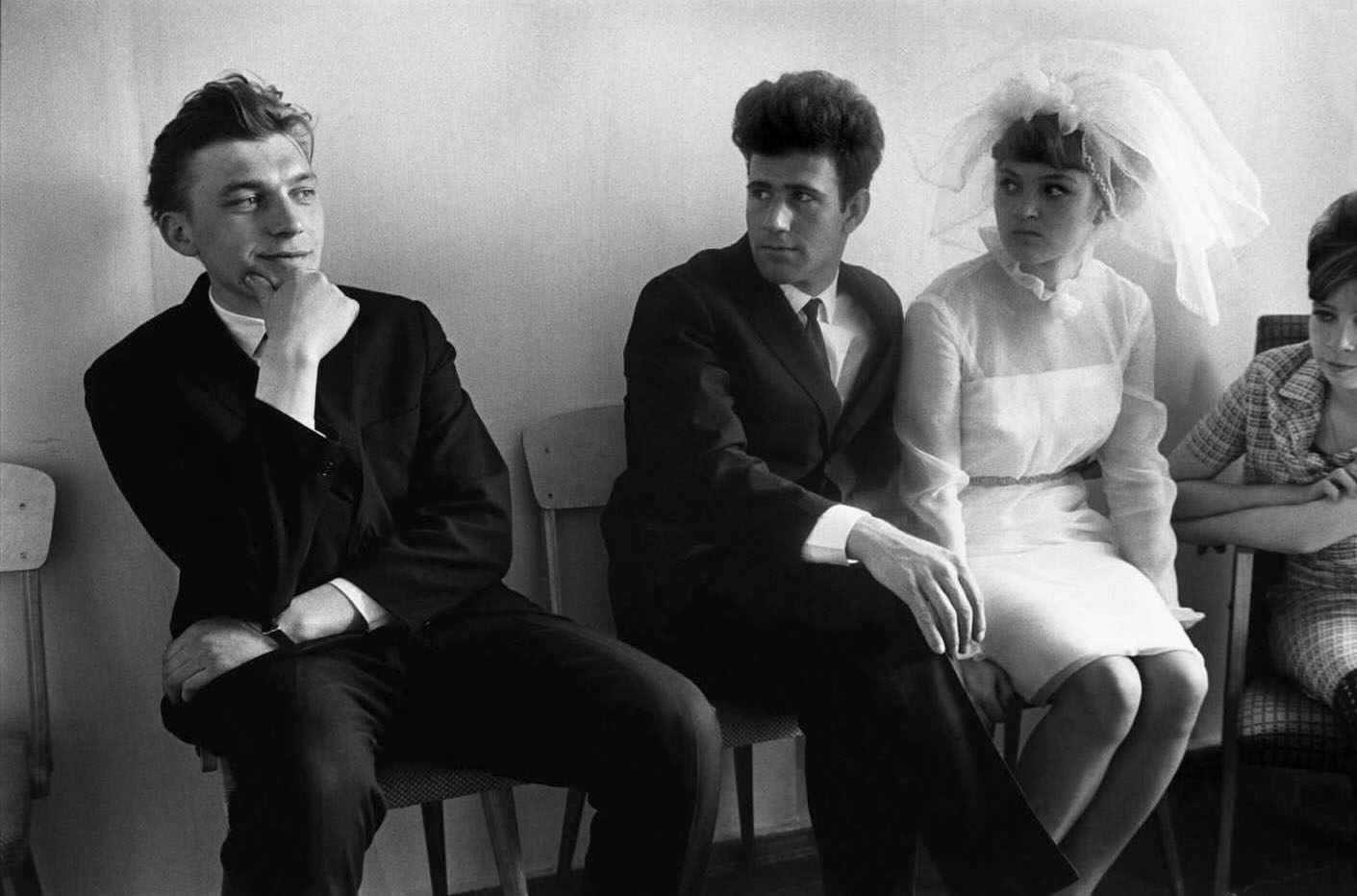
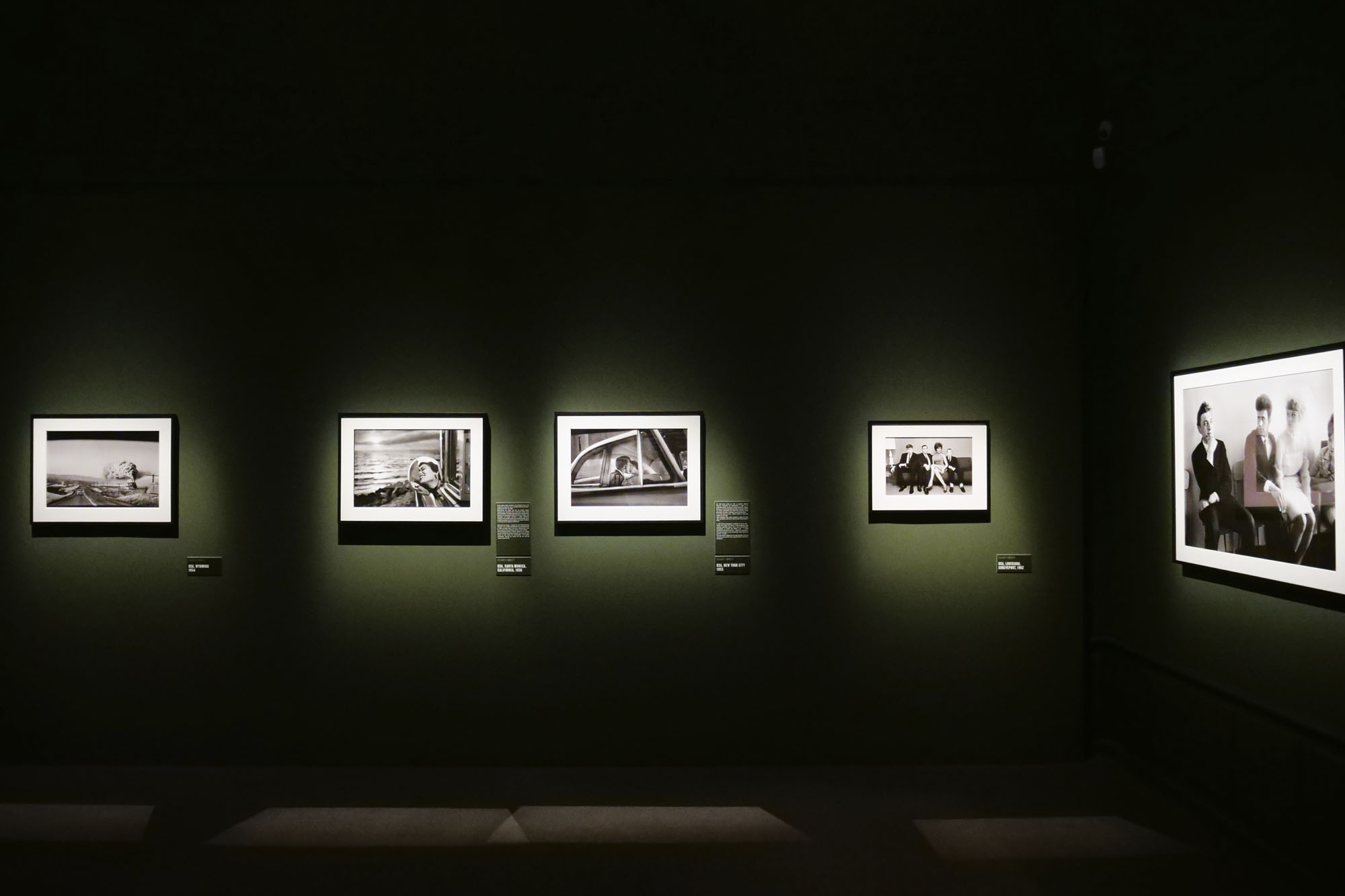
Installation view of the exhibition Elliott Erwitt. Icons at Palazzo Bonaparte, Rome, Italy showing at left, USA, Santa Monica, California, 1956 (below); at second left, USA, New York City, 1955 (below); at third left, USA, Louisiana, Shreveport, 1962; and at right, USSR, Bratsk, Siberia, 1967 (below)
Starting June 28th, 2025, Palazzo Bonaparte will open its doors to an extraordinary exhibition, “Elliott Erwitt. Icons,” dedicated to the late master of visual irony and empathy, Elliott Erwitt. This major show offers an intimate look into the universe of one of contemporary photography’s most significant figures, whose work transformed everyday life into profound visual poetry.
With over 80 celebrated photographs, “Elliott Erwitt. Icons” invites visitors to experience Erwitt’s distinctive style – irreverent, poetic, and deeply human. He possessed a remarkable ability to capture the lightness of the joy of living, becoming the most insightful and moving chronicler of the human comedy. His lens made us smile, reflect, and feel, turning fleeting moments into unforgettable images.
A Glimpse into Erwitt’s Vision
Erwitt, who passed away in November 2023 at the age of 95, was a master at transforming the ordinary into the extraordinary. His “Icons” are not just photographs; they are symbols of his unique perspective and our shared collective memory. As he once put it, “In the saddest and most wintry moments of life… suddenly the sight of something wonderful can change the aspect of things, your state of mind. The type of photography I like, the one where the instant is caught, is very similar to this break in the clouds. In a flash, a wonderful photo seems to come out of nowhere.”
This exhibition, curated by Biba Giacchetti, a leading international Erwitt expert, along with technical assistance from Gabriele Accornero, offers a comprehensive yet concise overview of his genius. From his anthropomorphic dogs to powerful world leaders, from iconic movie stars like Marilyn Monroe to intimate family moments, Erwitt’s gaze was both incisive and empathetic. He captured not only the irony of daily life but also its underlying complexity.
Beyond the Famous Faces
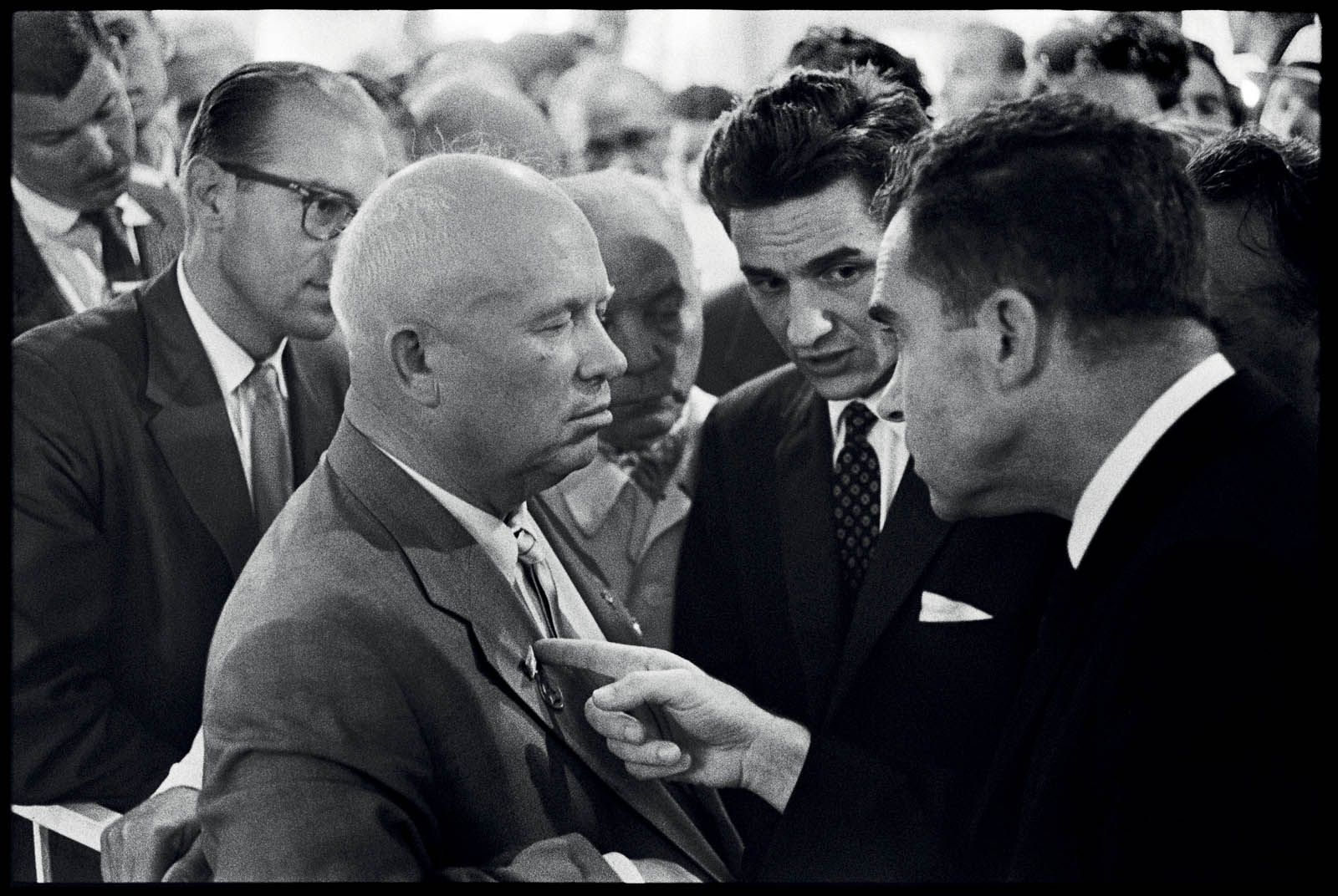
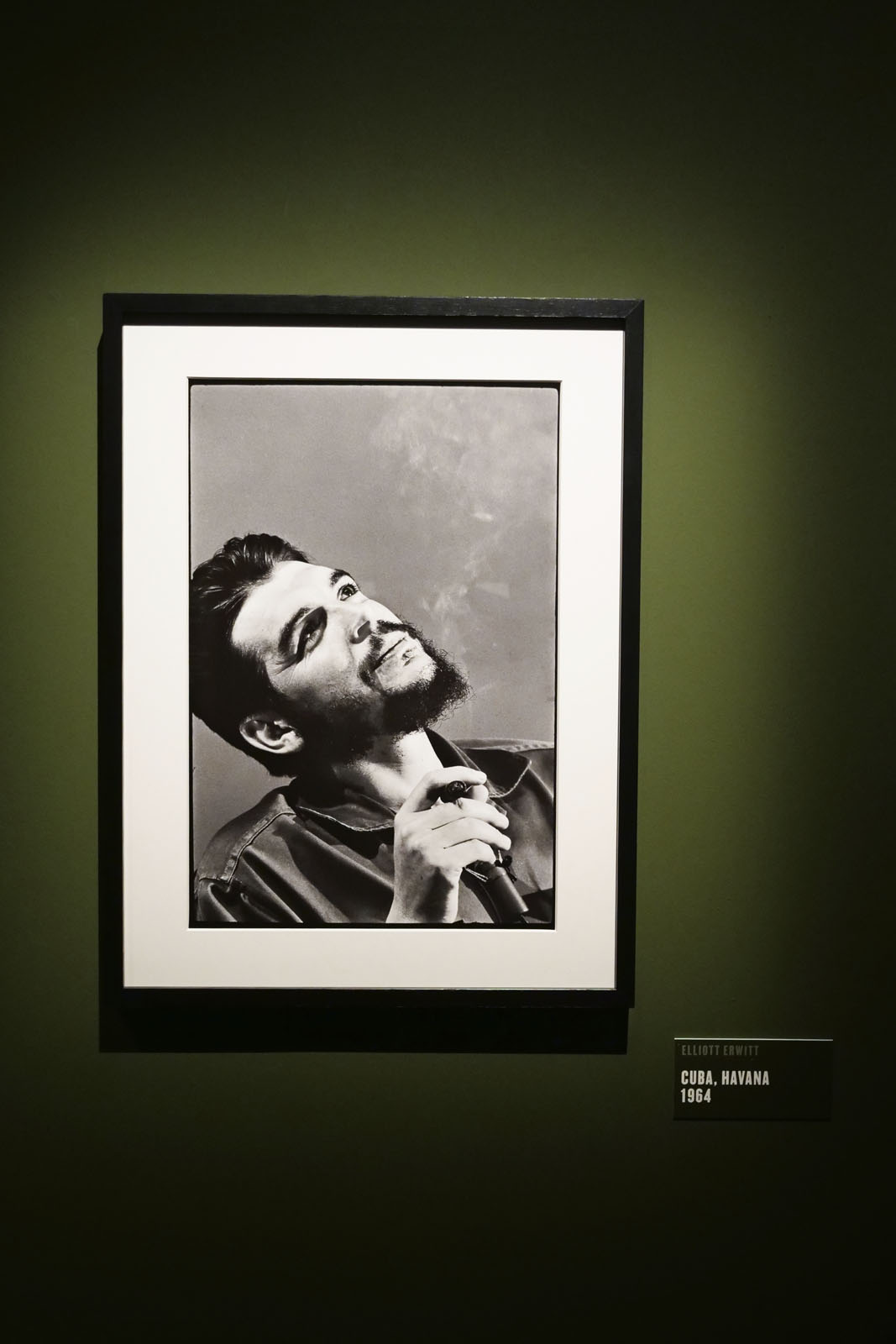
While the exhibition features renowned portraits of figures such as Che Guevara, Jack Kerouac, Marlene Dietrich, Fidel Castro, and Sophia Loren, it also highlights historical moments like the Nixon-Khrushchev dispute, Kennedy’s funeral, and the Frazier-Ali fight. Yet, Erwitt’s democratic approach to his medium shines through in his focus on everyday people, captured in the midst of their ordinary lives.
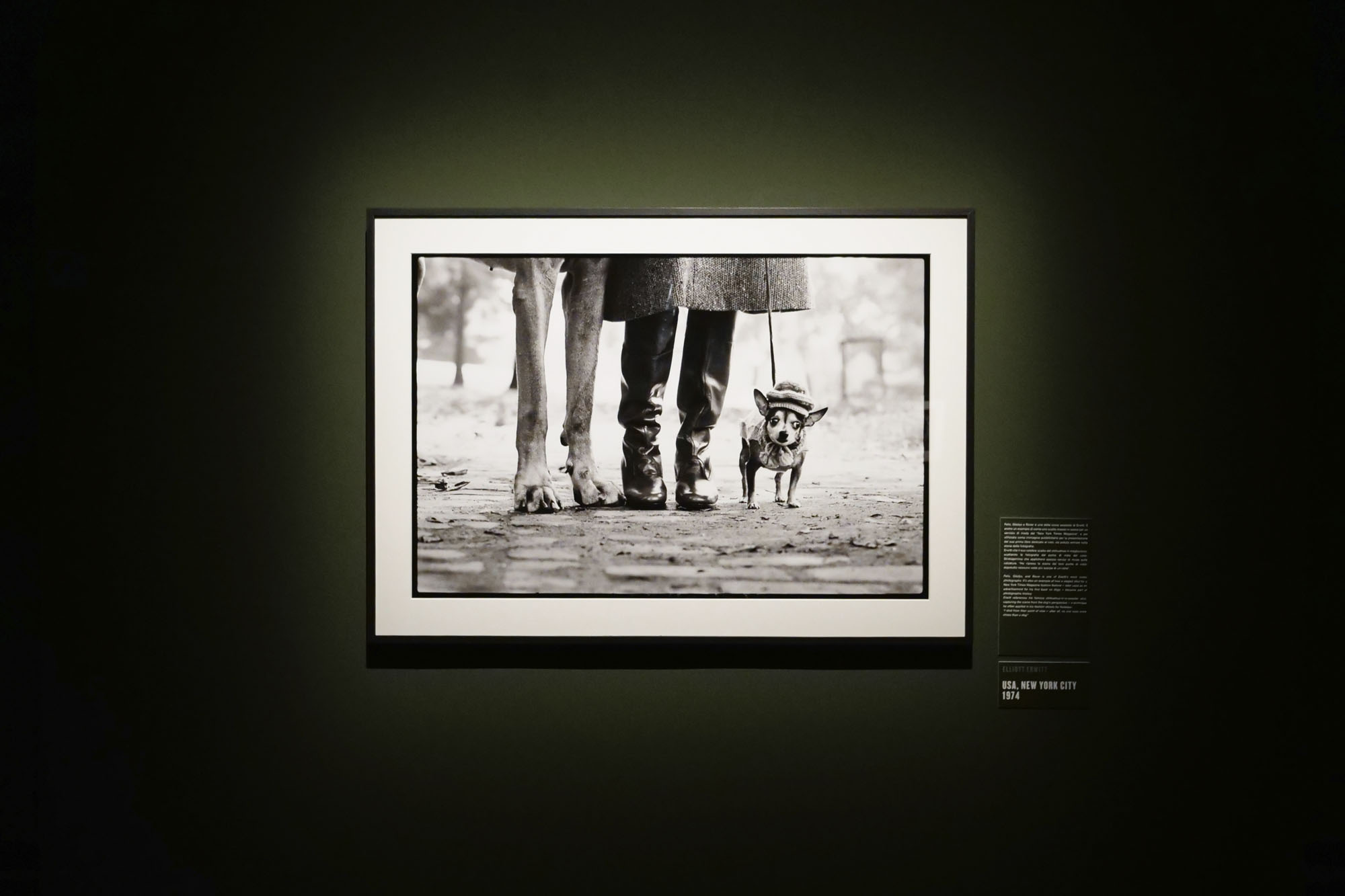
A significant portion of Erwitt’s work showcased his love for dogs, whose free-spirited nature he admired. Many photographs are taken from a dog’s-eye view, often revealing only the feet or legs of their owners. Erwitt ingeniously employed playful tactics, like sounding a horn or mimicking a bark, to elicit natural reactions from the animals, resulting in humorous and endearing compositions.
An Unmissable Summer Event
The “Elliott Erwitt. Icons” exhibition, running until September 21st, 2025, marks the opening of Palazzo Bonaparte’s summer exhibition season. Following the success of the recent Edvard Munch retrospective, this show pays homage to a globally beloved master of photography. Visitors will have the unique opportunity to journey through Erwitt’s surreal, romantic, and playful vision of the world, always capable of grasping the essence of things.
Press release from Palazzo Bonaparte
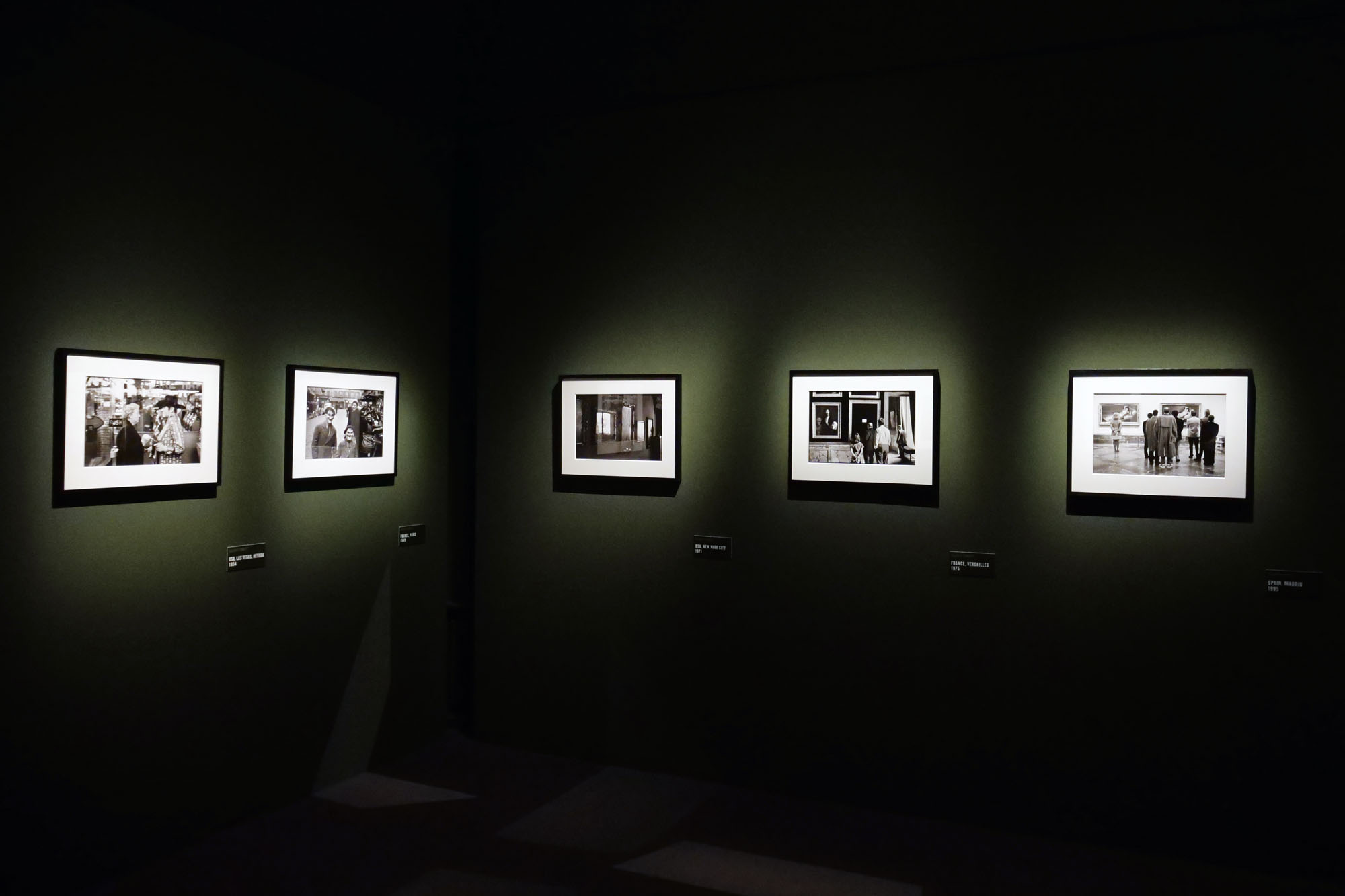
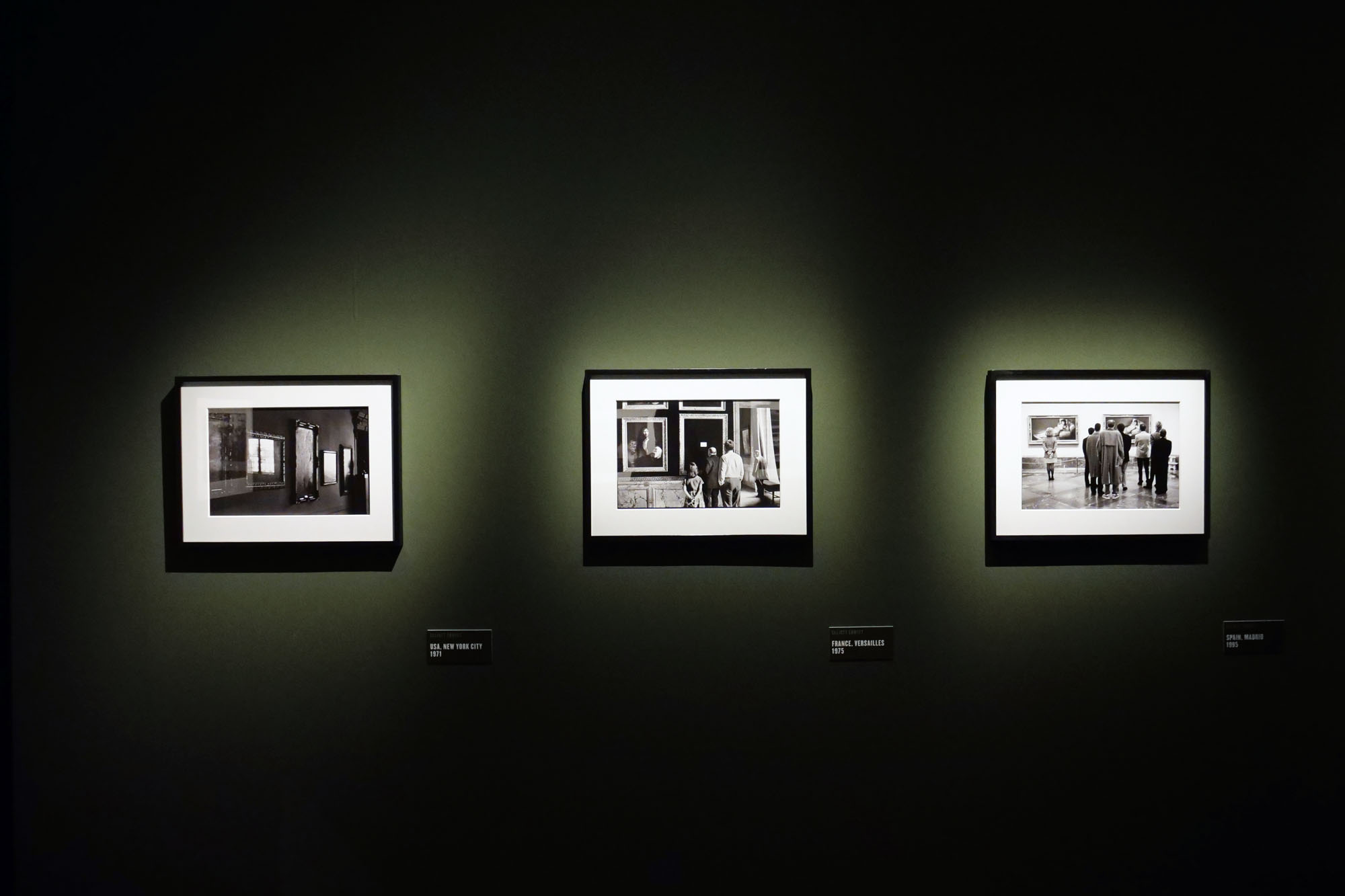
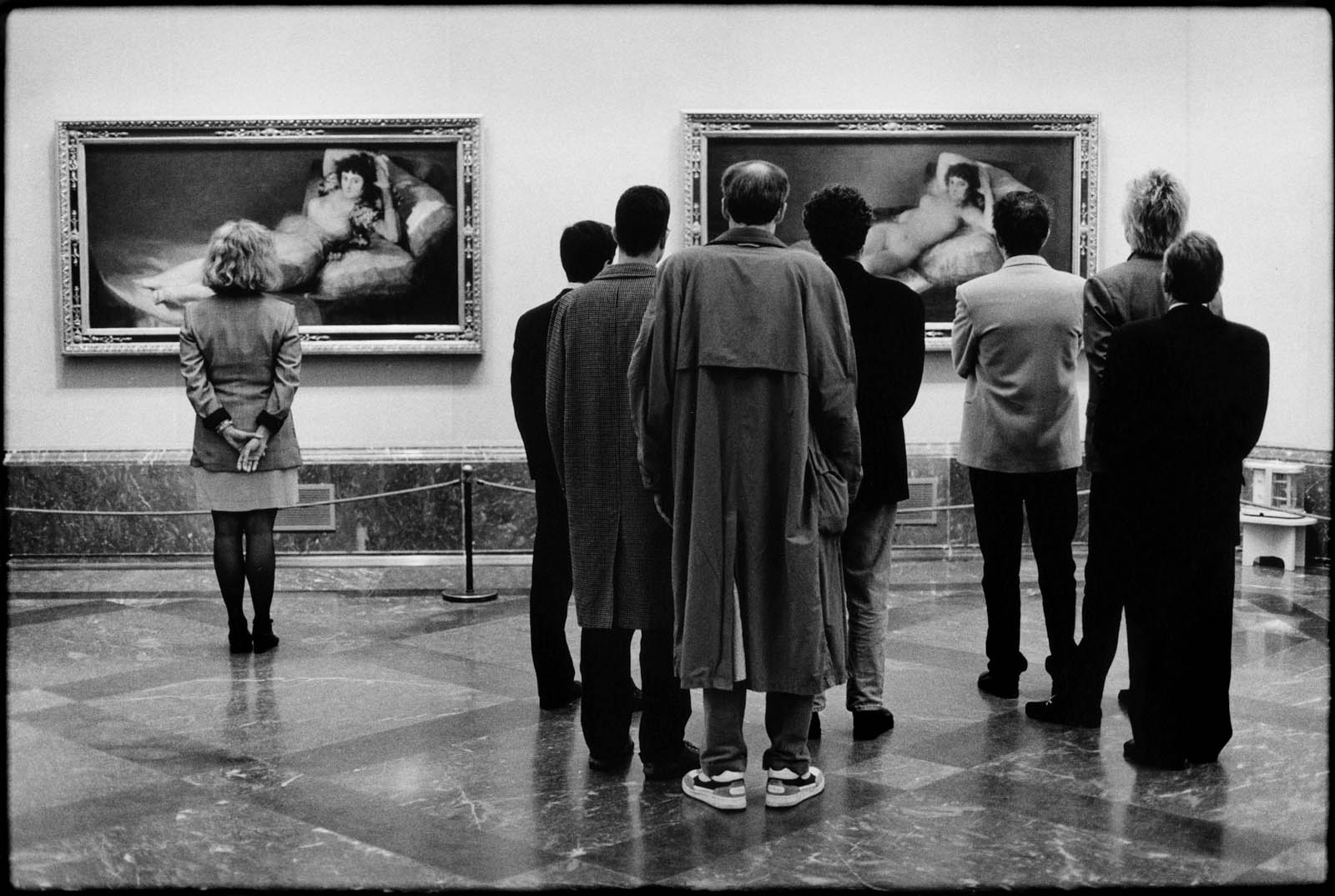
Installation views of the exhibition Elliott Erwitt. Icons at Palazzo Bonaparte, Rome, Italy showing in the bottom image from left to right, Italy, Venice, Gallerie dell’Accademia, 1965; France, Versailles, 1975; and Spain, Madrid, 1995 (below)
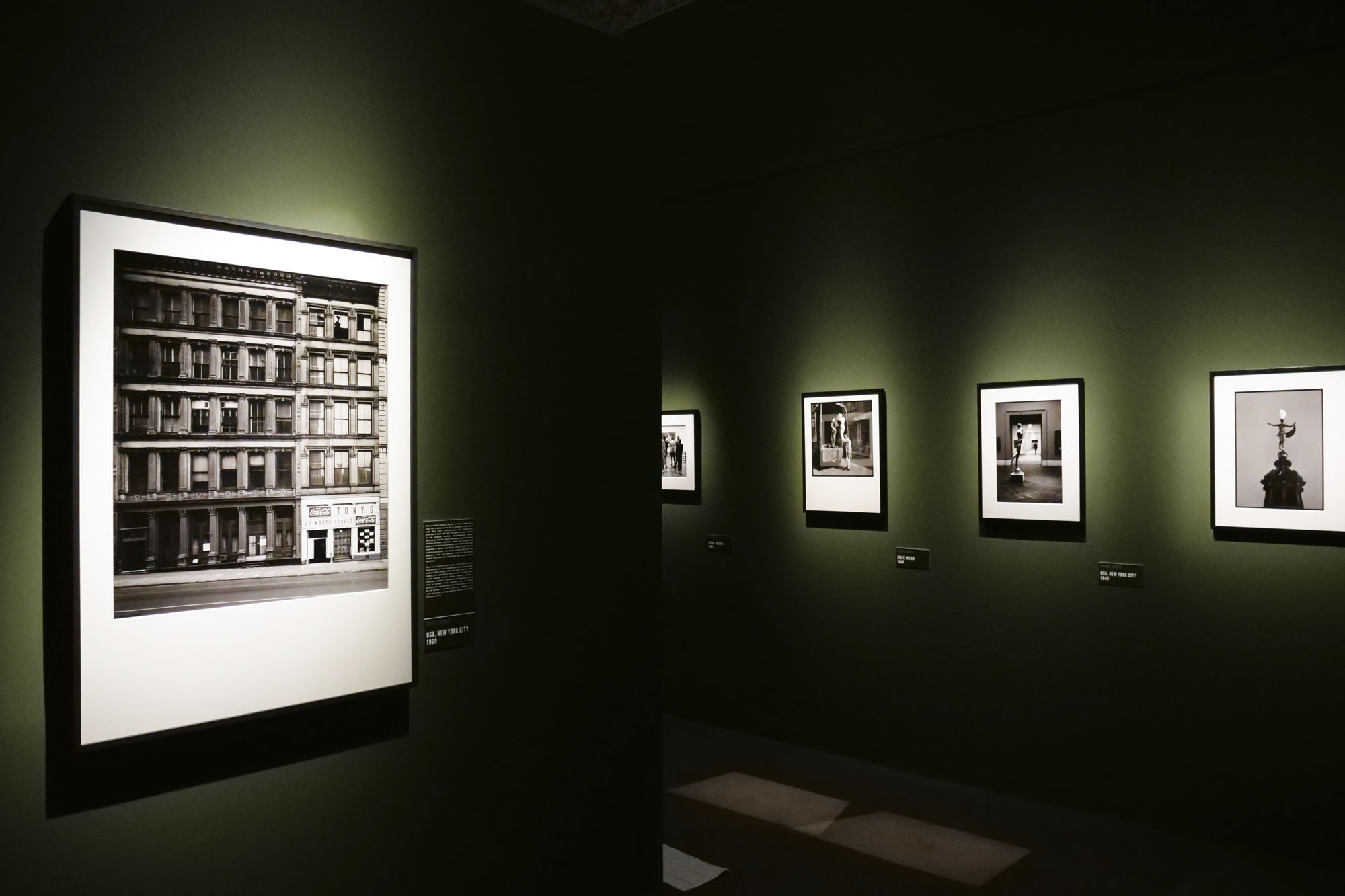
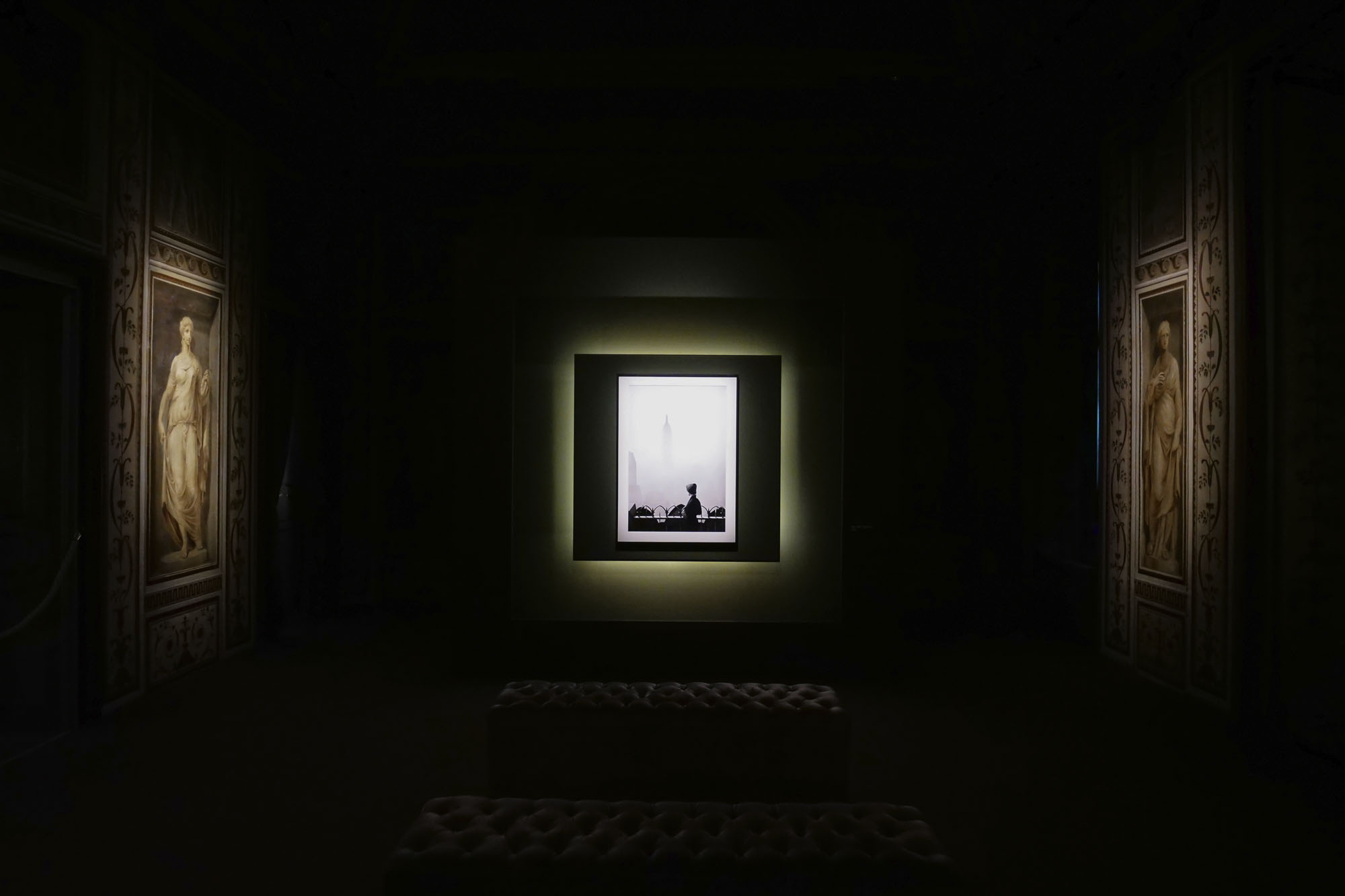
Installation view of the exhibition Elliott Erwitt. Icons at Palazzo Bonaparte, Rome, Italy showing at left, Erwitt’s photograph USA, New York City, 1969 (below)
“A 1969 scene in Amagansett, New York – a sober, soot-stained Victorian office block with a single storefront whose sign (“Tony’s of Worth Street”) is written in cheerful white paint – somehow combines the austerity of Atget with the irreverent glee of Weegee.”
From June 28 to September 21, 2025, Palazzo Bonaparte welcomes the most ironic and disarming gaze in twentieth-century photography: Elliott Erwitt. An exhibition that is much more than an exhibition: it is an invitation to observe the world with lightness, empathy, and wonder.
An unmissable event, which recounts – through over 80 iconic shots – the long and brilliant career of an artist capable of capturing the soul of the twentieth century and transforming ordinary moments into unforgettable images, with a profoundly human yet always surprising gaze.
On display in Rome are icons of an era, of a way of looking at the world with lightness and intelligence. “Icons” because each of Erwitt’s shots has become a symbol of his poetics and of our collective memory.
Erwitt is more than just a photographer: he is the poet of human comedy, the unerring witness to life’s small and large absurdities, which he recounts with disarming irony, subtle poetry, and timeless grace. His images – famous, unforgettable, often dazzling – manage to be simultaneously light and profound, intimate and universal. They are shots that make you smile, reflect, and move you.
Elliott Erwitt was – and is – a key figure in the visual culture of our time. His images, books, reportages, illustrations, and advertising campaigns have spanned the decades, appearing in international publications and influencing generations of photographers and artists. This exhibition is a journey through his work and an invitation to look at the world with new eyes: with lightness, empathy, and wonder.
A member since 1953 of the historic Magnum agency – founded by Henri Cartier-Bresson and Robert Capa, among others – Erwitt has chronicled the last sixty years of history and contemporary civilisation with journalistic flair, capturing the most dramatic yet humorous aspects of the life that has passed before his lens.
“In life’s saddest, wintry moments, when a cloud has enveloped you for weeks, suddenly the sight of something wonderful can change the face of things, your state of mind. The kind of photography I like, the one that captures the moment, is very similar to this break in the clouds. In a flash, a wonderful photo seems to come out of nowhere.”
With these words, Erwitt sums up the spirit and poetics with which he filters reality, representing it with his mastery, capturing its sometimes playful, sometimes irreverent, or almost surreal aspects, which make him an undisputed master of the human comedy.
Curated by Biba Giacchetti, one of Erwitt’s leading international experts, with technical assistance from Gabriele Accornero, Elliott Erwitt. Icons is a snapshot of history and customs, a concise and comprehensive journey through his genius and his perspective on the world, from his anthropomorphic dogs to the world’s powerful figures, from the great movie stars – Marilyn Monroe above all – to his children. But it is also a tribute to the man who, with a gentle and disenchanted gaze, was able to portray the world for what it is: tragicomic, tender, absurd, unique.
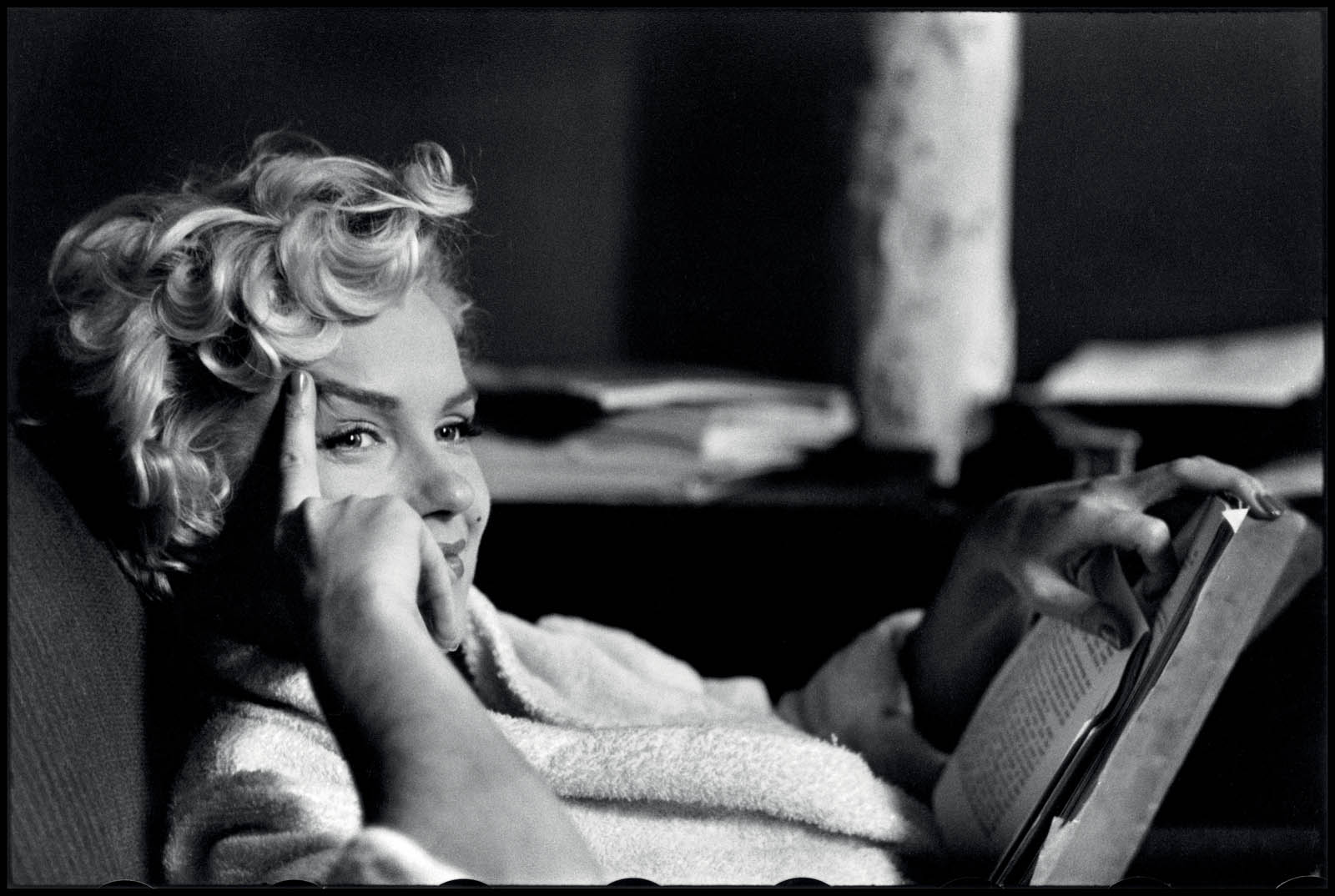
The exhibition features famous portraits of Marilyn Monroe, Che Guevara, Kerouac, Marlene Dietrich, Fidel Castro, Sophia Loren, Arnold Schwarzenegger, and photographs that have made history, such as the Nixon-Khrushchev quarrel, Kennedy’s funeral, and the great fight between Frazier and Ali. Other iconic photographs, beloved by the public for their romantic power, such as the California Kiss, include more intimate and private ones, such as the snapshot of his newborn firstborn, observed by her mother on the bed.
Above all, Erwitt casts an incisive yet empathetic gaze, revealing not only the irony of everyday life, but also its complexity.
With the same attitude, Erwitt reserves his attention for any other subject, pushing the democratic quality that is typical of his medium to the extreme. His imagery is populated predominantly by ordinary people, men and women, captured in the midst of the normality of their lives.
From portraits of famous people to more ironic and sometimes irreverent images, we move on to some self-portraits where Erwitt no longer leaves anything to chance or intuition, but constructs a self-other, where eccentricity for its own sake is metaphor and pure surreal fun.
Special attention is paid to dogs, whose irreverent, free-spirited attitude Erwitt appreciated, unfettered by the common rules that condition humans, is what Erwitt appreciated.
Many of his shots are “from the dog’s point of view,” allowing only the shoes or parts of their owners’ legs to appear in his compositions. Erwitt wanted these photographs to be comical, and for this reason he employed ingenious strategies, such as blowing a trumpet or emitting a kind of bark, to elicit the most natural reaction from the animals.
The exhibition – on view until September 21st – marks the opening of Palazzo Bonaparte’s summer exhibition season, following the recent resounding success of the Edvard Munch retrospective and paying tribute to one of the world’s most beloved masters of photography. Visitors will have the opportunity to retrace his vision of the world: surreal, romantic, playful, always capable of capturing the essence of things.
The exhibition, “Elliott Erwitt. Icons,” is produced and organised by Arthemisia, in collaboration with Orion57 and Bridgeconsultingpro. The exhibition’s main partner is the Fondazione Terzo Pilastro – Internazionale with Fondazione Cultura e Arte and Poema.
The exhibition’s special partner is Ricola, mobility partner Frecciarossa Treno Ufficiale, and technical sponsor Ferrari Trento.
Text translated from the Italian by Google Translate from the Palazzo Bonaparte website
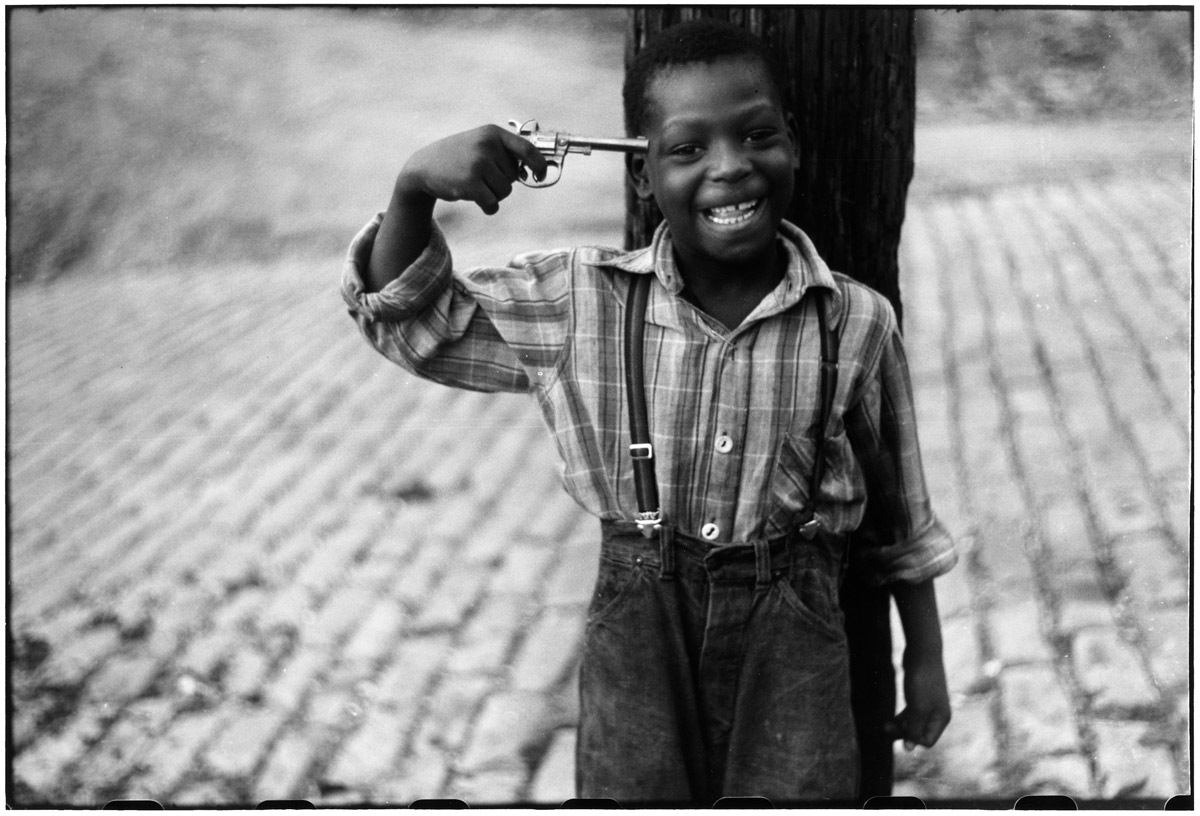
Installation view of the exhibition Elliott Erwitt. Icons at Palazzo Bonaparte, Rome, Italy showing at right, Erwitt’s photograph USA, Pittsburgh, 1950 (below)
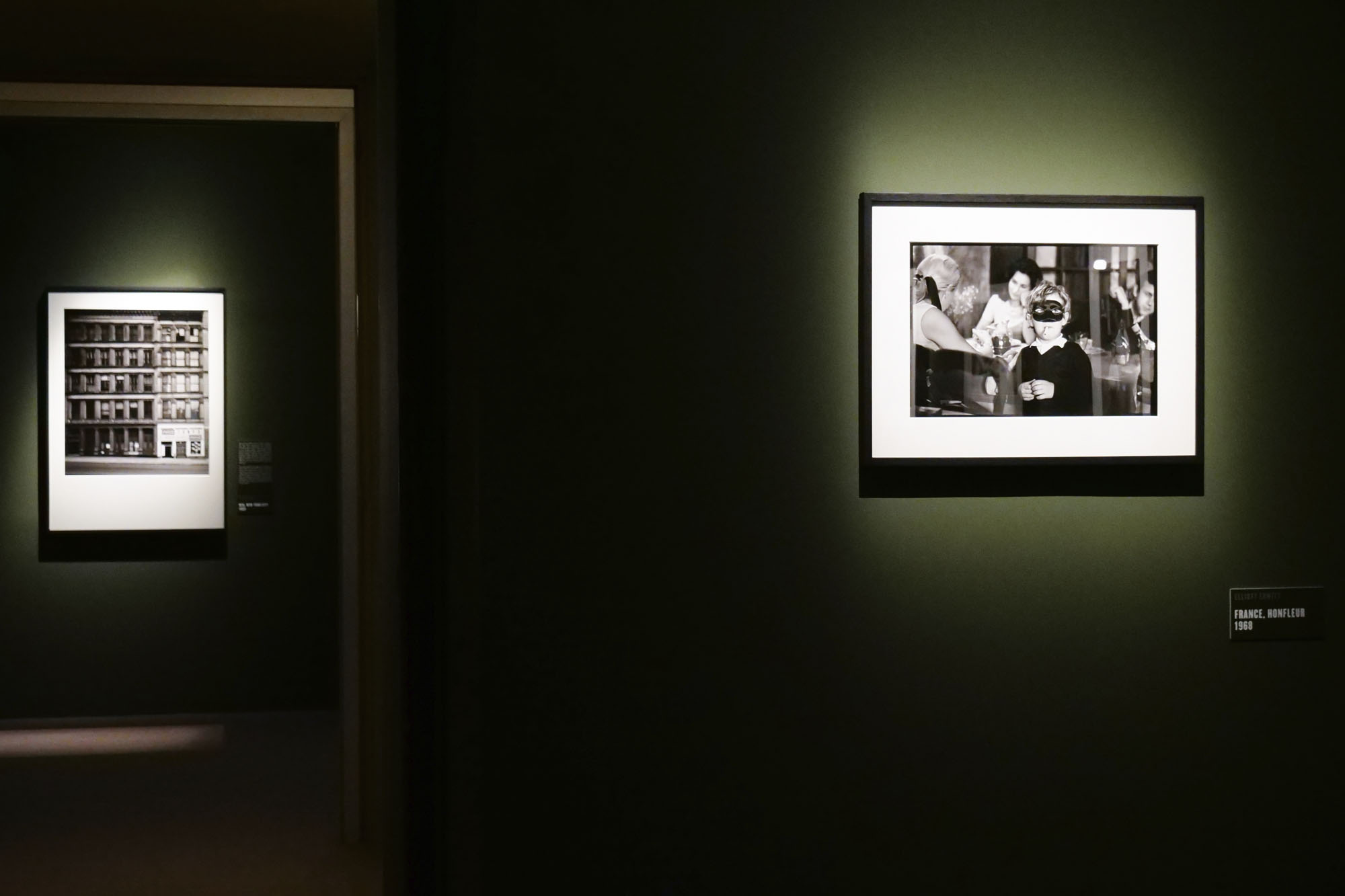
Installation view of the exhibition Elliott Erwitt. Icons at Palazzo Bonaparte, Rome, Italy showing at right, Erwitt’s photograph France, Honfleur, 1968
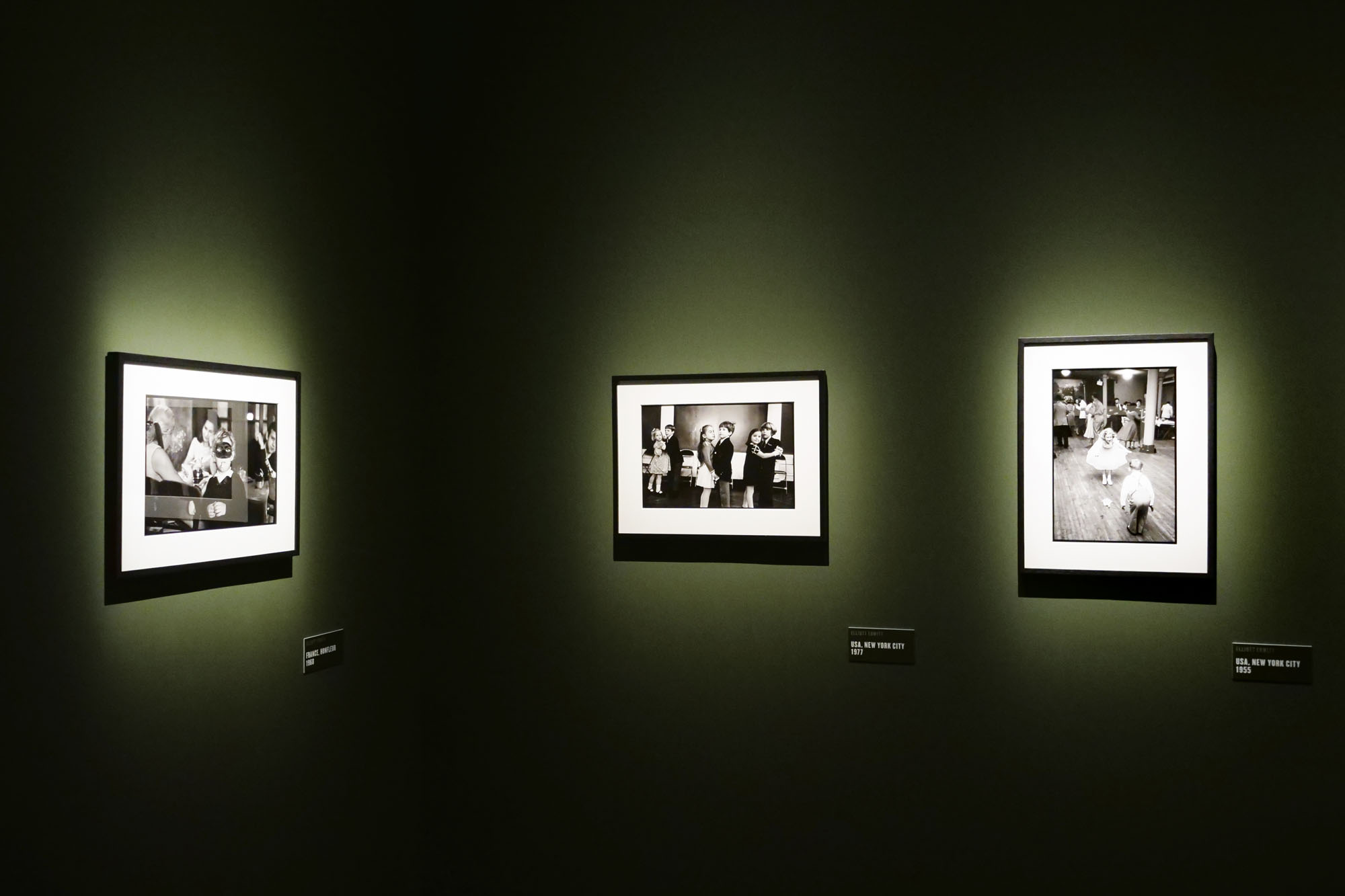
Installation view of the exhibition Elliott Erwitt. Icons at Palazzo Bonaparte, Rome, Italy showing from left to right, France, Honfleur, 1968; USA, New York City, 1977; and USA, New York City, 1955
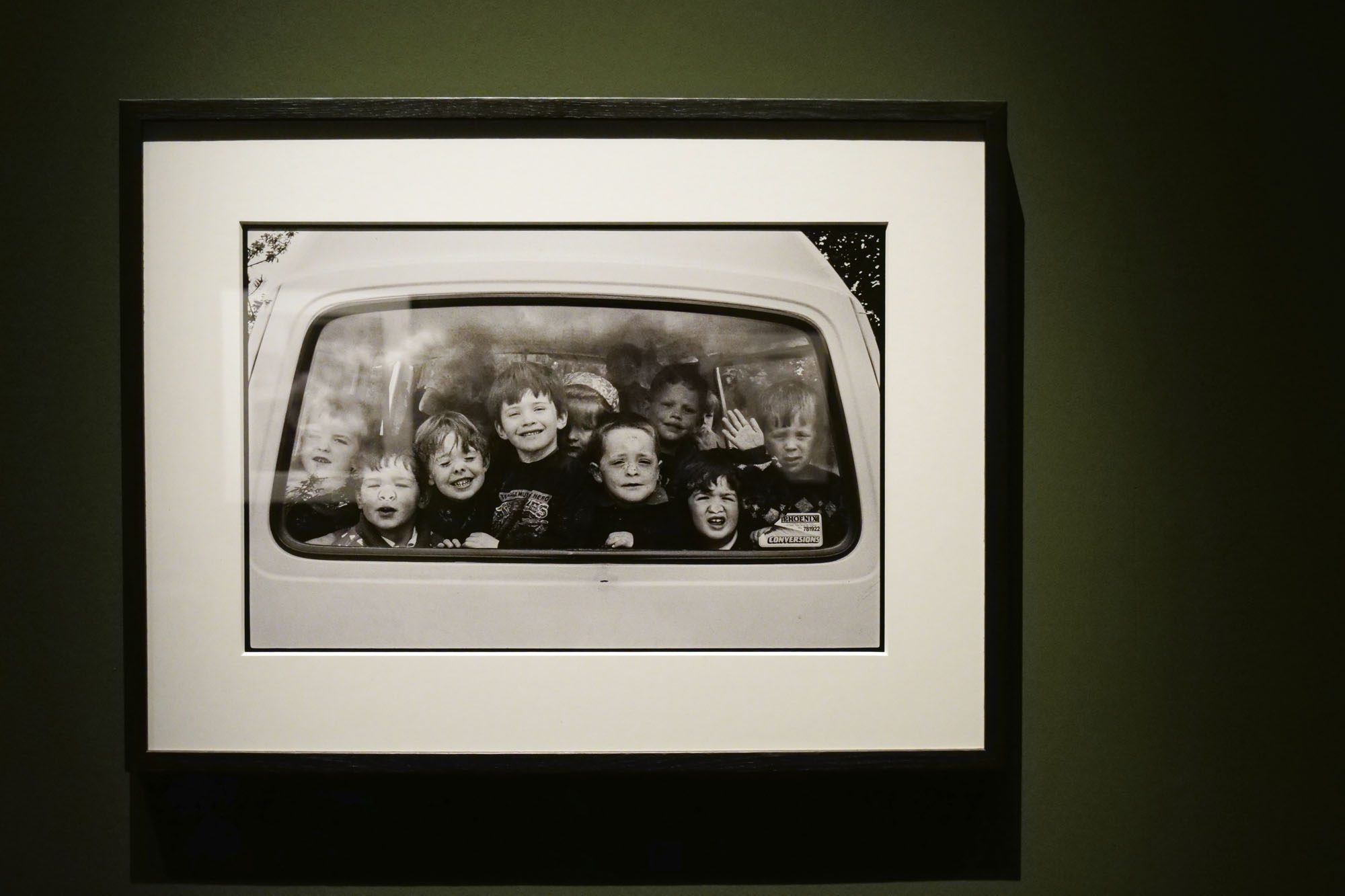
Installation view of the exhibition Elliott Erwitt. Icons at Palazzo Bonaparte, Rome, Italy showing Erwitt’s photograph Ireland, Ballycotton, 1991
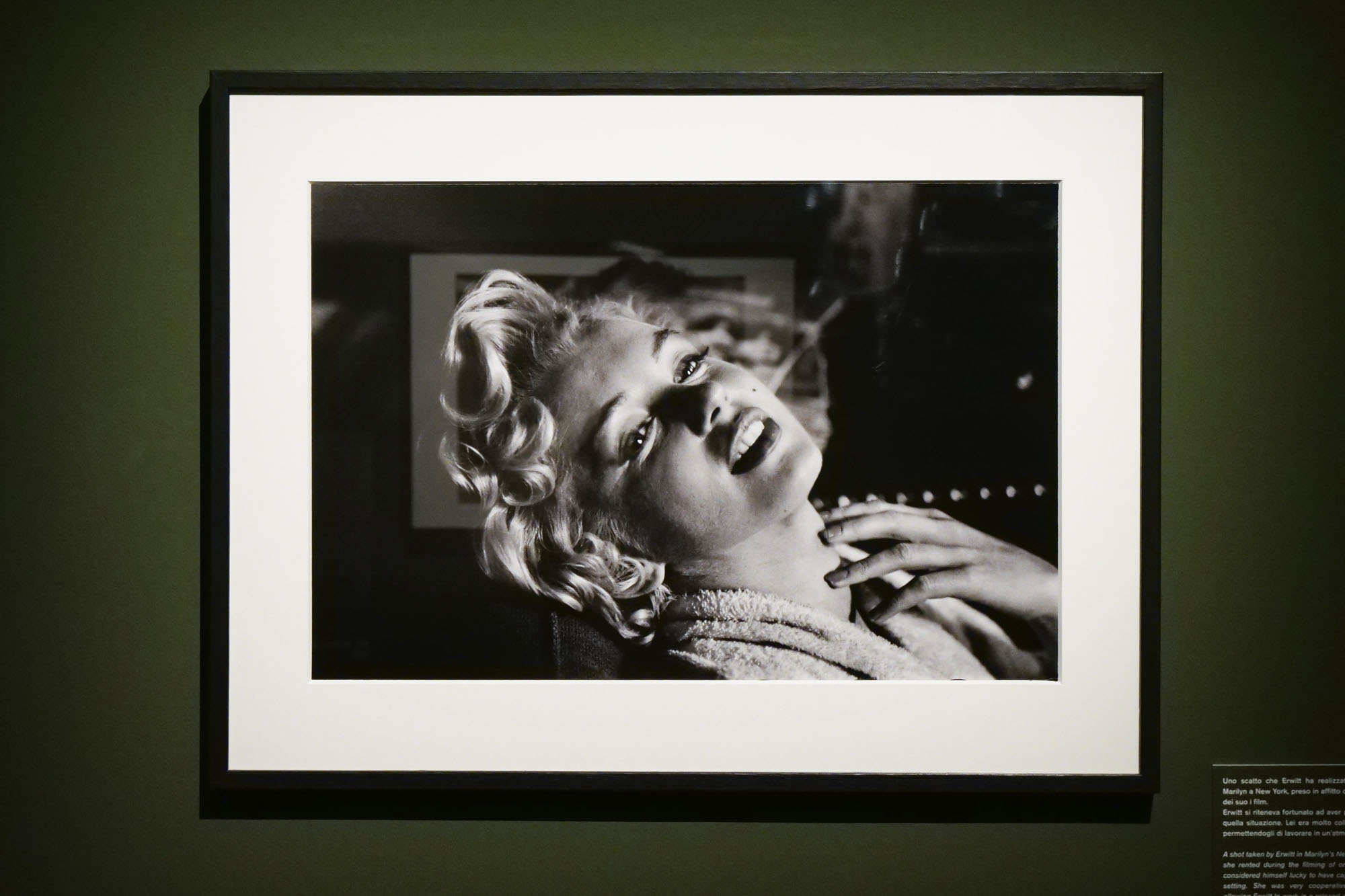
Installation view of the exhibition Elliott Erwitt. Icons at Palazzo Bonaparte, Rome, Italy showing Erwitt’s photograph USA, New York City, Marilyn Monroe (with hand), 1956
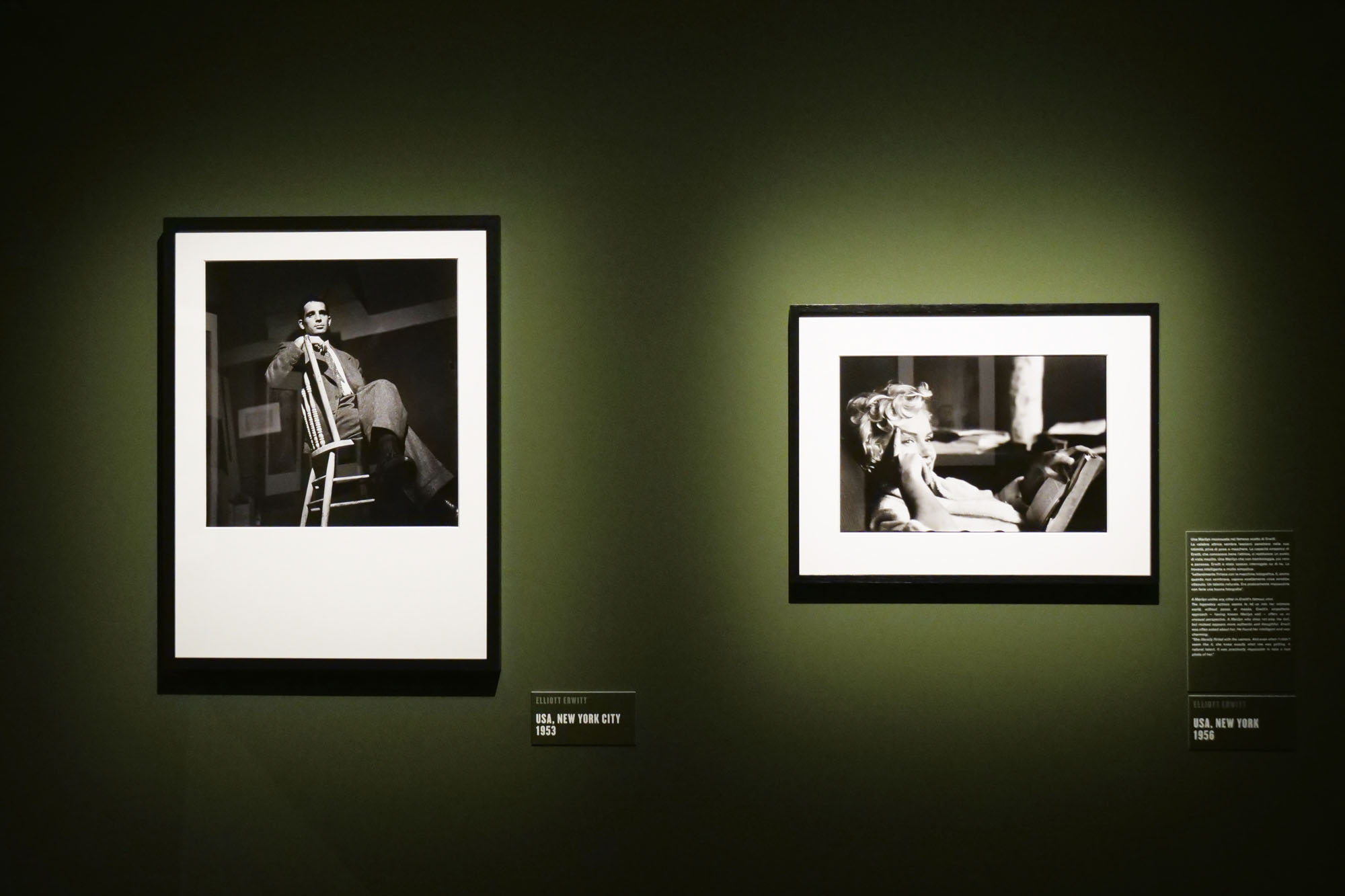
Installation view of the exhibition Elliott Erwitt. Icons at Palazzo Bonaparte, Rome, Italy showing at left, USA, New York City, 1953; and at right, USA, NewYork, 1956 (below)
Installation view of the exhibition Elliott Erwitt. Icons at Palazzo Bonaparte, Rome, Italy showing at left, USA, Los Angeles, 1960; and at right, USA, Arlington, Virginia, Jacqueline Kennedy at John F. Kennedy’s funeral, November 25, 1963 (below)
Note: wrong title and date underneath the photograph on the right-hand side
Elliott Erwitt was not just a photographer, but an unparalleled visual storyteller, capable of transforming the moment into history, the everyday into art, irony into poetry. His images evoke in the viewer emotions that move on different registers, from emotion to laughter, to the most spontaneous amusing. Having passed away in November 2023 at the age of 95, he left us an immense legacy: an archive of photographs that span eras, cultures, and feelings with a universal language, inviting us to look at the world with greater indulgence and wonder, always standing by our side in that profound lightness that he himself defined as “The Art of Observation.”
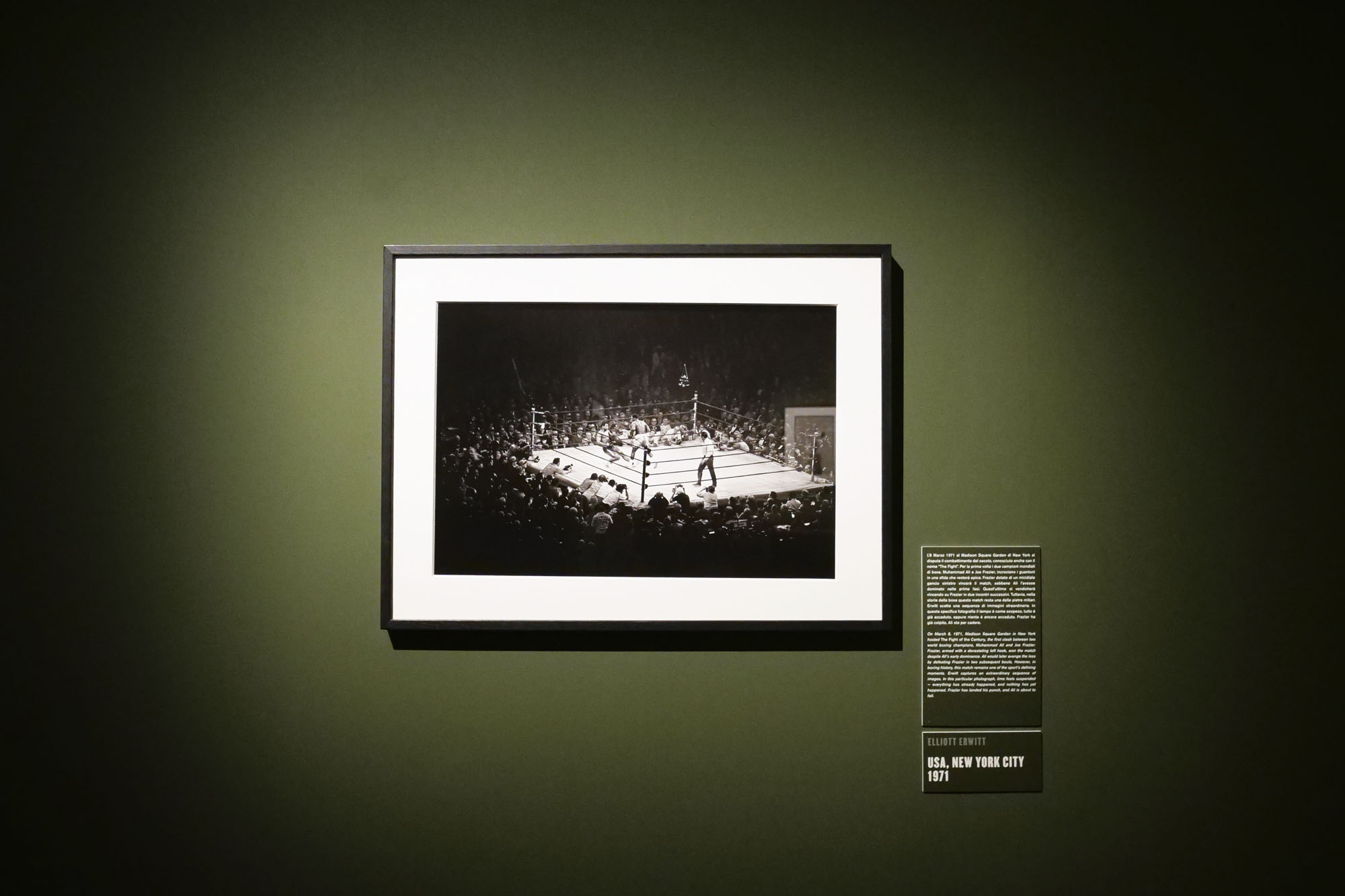
His lens captured iconic moments in history: the tense confrontation between Nixon and Khrushchev, Kennedy’s funeral, the legendary fight between Frazier and Ali. He portrayed legends of our imagination – Marilyn Monroe, Che Guevara, Marlene Dietrich – but he also captured moments of extraordinary intimacy and summarised universal feelings in a single shot: a stolen kiss in the rearview mirror, the gaze of a mother on her newborn baby, a dog lost in thought. Images that transcend time to become iconic.
What makes Erwitt unique is his ability to intertwine emotion and intelligence, making us laugh and moved, surprising us with his irony and his ability to grasp the profound meaning of existence. He has captured the absurd and the surreal with a sharp and light-hearted gaze, always finding in every scene a spark capable of making it memorable.
His anthropomorphic dogs, the protagonists of entire photographic series, are not just amusing images: they are mirrors of the human condition, ironic and melancholic at the same time, sometimes proud and surprising. His children, portrayed with the most authentic spontaneity, convey the wonder of discovery and freedom, still intact, expressing already defined personalities, still unconstrained. His self-portraits, where he pokes fun at himself, remind us that art – like life – should never take itself too seriously.
Elliott Erwitt was all of this: a master of photography, an interpreter of the human comedy, an artist who left an indelible mark on the history of the image. This exhibition is our homage to his vision of the world: a journey through irony, tenderness, depth, and lightness, just as his art has always been able to convey.
Welcome to the world of this great artist. My master.
Biba Giacchetti Exhibition curator
Text translated from the Italian by Google Translate
Installation view of the exhibition Elliott Erwitt. Icons at Palazzo Bonaparte, Rome, Italy showing Erwitt’s photograph USA, New York City, 1971 (Muhammad Ali vs Joe Frazier)
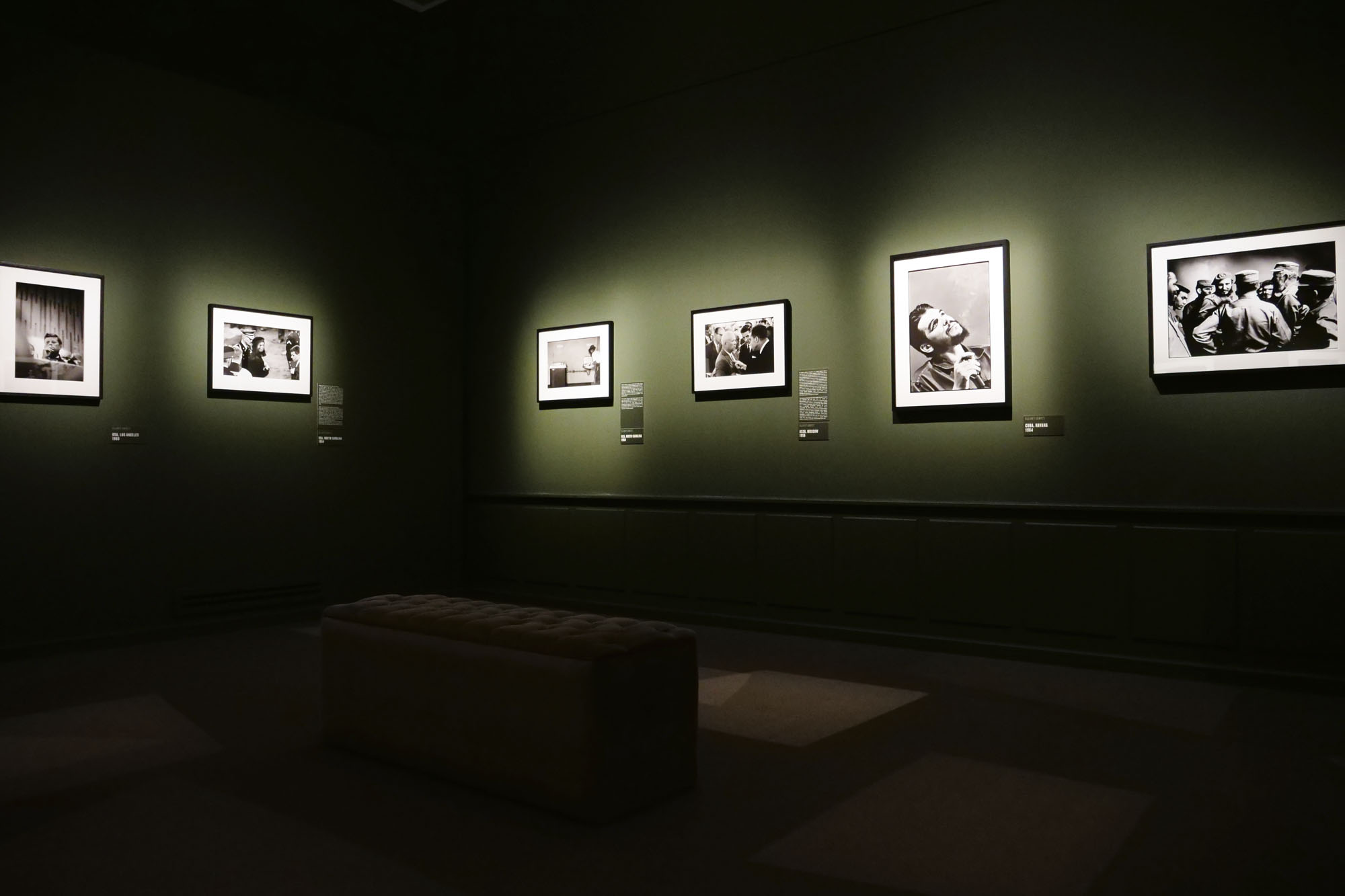
Installation view of the exhibition Elliott Erwitt. Icons at Palazzo Bonaparte, Rome, Italy showing at left, USA, Los Angeles, 1960; and at second left, USA, Arlington, Virginia, Jacqueline Kennedy at John F. Kennedy’s funeral, November 25, 1963; at third right, USSR, Moscow, 1959 (below); and at second right, Cuba, Havana, 1964 (below)
Installation view of the exhibition Elliott Erwitt. Icons at Palazzo Bonaparte, Rome, Italy showing Erwitt’s photograph USSR, Moscow, 1959 (below)
Installation view of the exhibition Elliott Erwitt. Icons at Palazzo Bonaparte, Rome, Italy showing Erwitt’s photograph Cuba, Havana, 1964 (Che Guevara)
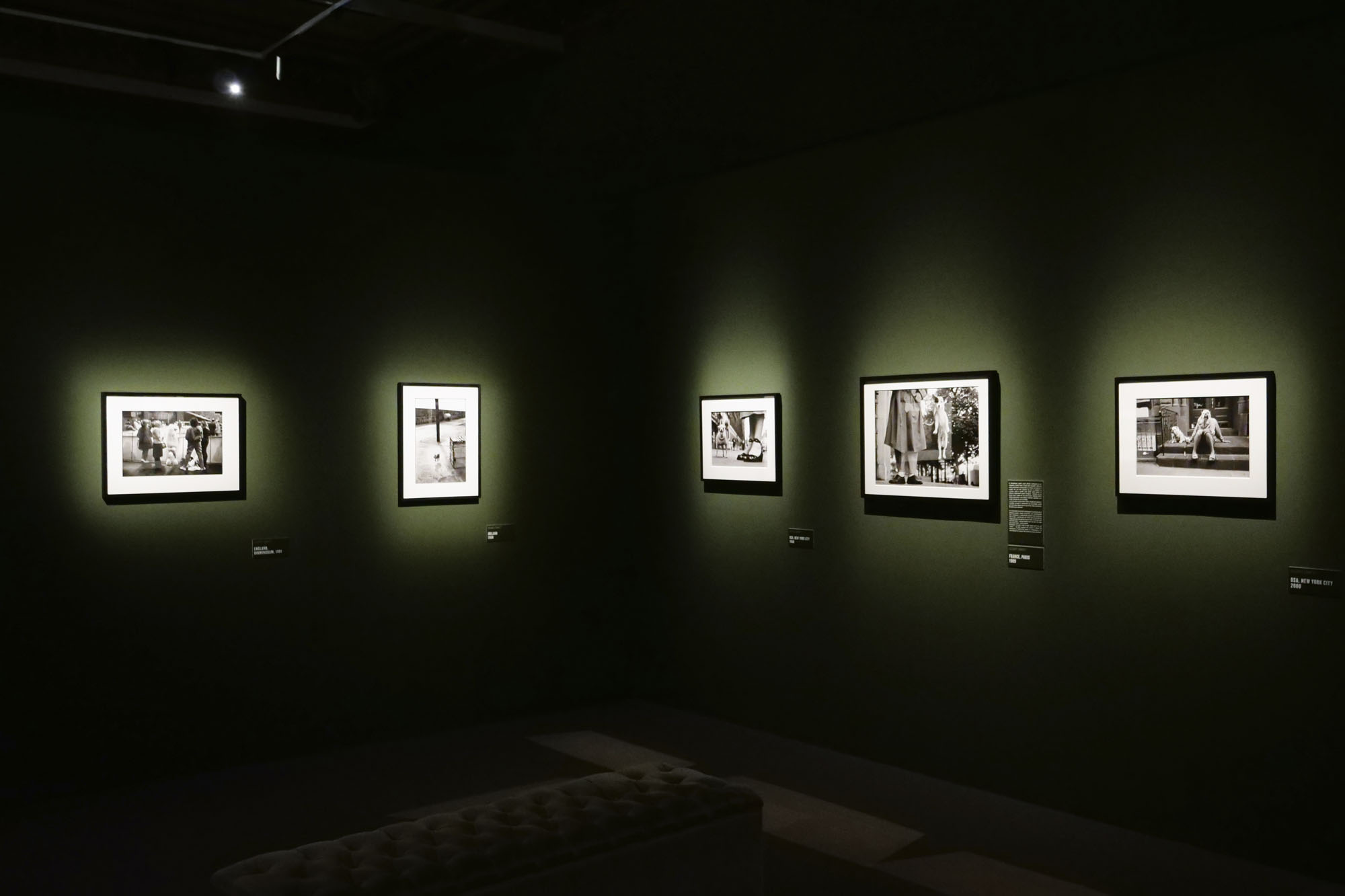
Installation view of the exhibition Elliott Erwitt. Icons at Palazzo Bonaparte, Rome, Italy showing at left, England, Birmingham, 1991 (top); at third right, USA, New York City, 1946 (below); at second right, France, Paris, 1989 (below); and at right, USA, New York City, 2000 (below)
Installation view of the exhibition Elliott Erwitt. Icons at Palazzo Bonaparte, Rome, Italy showing Erwitt’s photograph USA, New York City, 1974 (below)
Installation view of the exhibition Elliott Erwitt. Icons at Palazzo Bonaparte, Rome, Italy showing Erwitt’s photograph USA, New York City, 1955 (below)
I love artist’s that challenge your point of view, knowledge of the world, prejudices and biases – which we all have.
I love artist’s who make you think about the stories they tell, and how you relate to their intimate, constructed and memorable worlds.
Carrie Mae Weems is one such generational artist.
Weems blends the poetic and conceptual in photographs and bodies of work which investigate history, identity, racism, executive and patriarchal power from the perspectives of female / Black American.
What a fabulous artist, a guide into circumstances seldom seen, now revealed.
Dr Marcus Bunyan
Many thankx to Gallerie d’Italia, Turin for allowing me to publish the photographs in the posting. Please click on the photographs for a larger version of the image.
“I discovered that I was the reference point, and the point of view, pointing the viewer toward the likes of me in history. Later, I understood this photographic self to be a muse and a guide into the unknown.”
Carrie Mae Weems
“My work endlessly explodes the limits of tradition.”
“Weems was trained as both a dancer and a photographer before enrolling in the folklore studies program at the University of California, Berkeley, in the mid-1980s, where she became interested in the observation methods used in the social sciences. In the early 1990s, she began placing herself in her photographic compositions in an “attempt to create in the work the simultaneous feeling of being in it and of it.”2 She has since called this recurring figure an “alter-ego,” “muse,” and “witness to history” who can stand in for both the artist and audience. “I think it’s very important that as a Black woman she’s engaged with the world around her,” Weems has said, “she’s engaged with history, she’s engaged with looking, with being. She’s a guide into circumstances seldom seen.”3
Carrie Mae Weems: The Heart of the Matter at Gallerie d’Italia, Turin
Installation walk through of the exhibition 17th April – 7th September, 2025
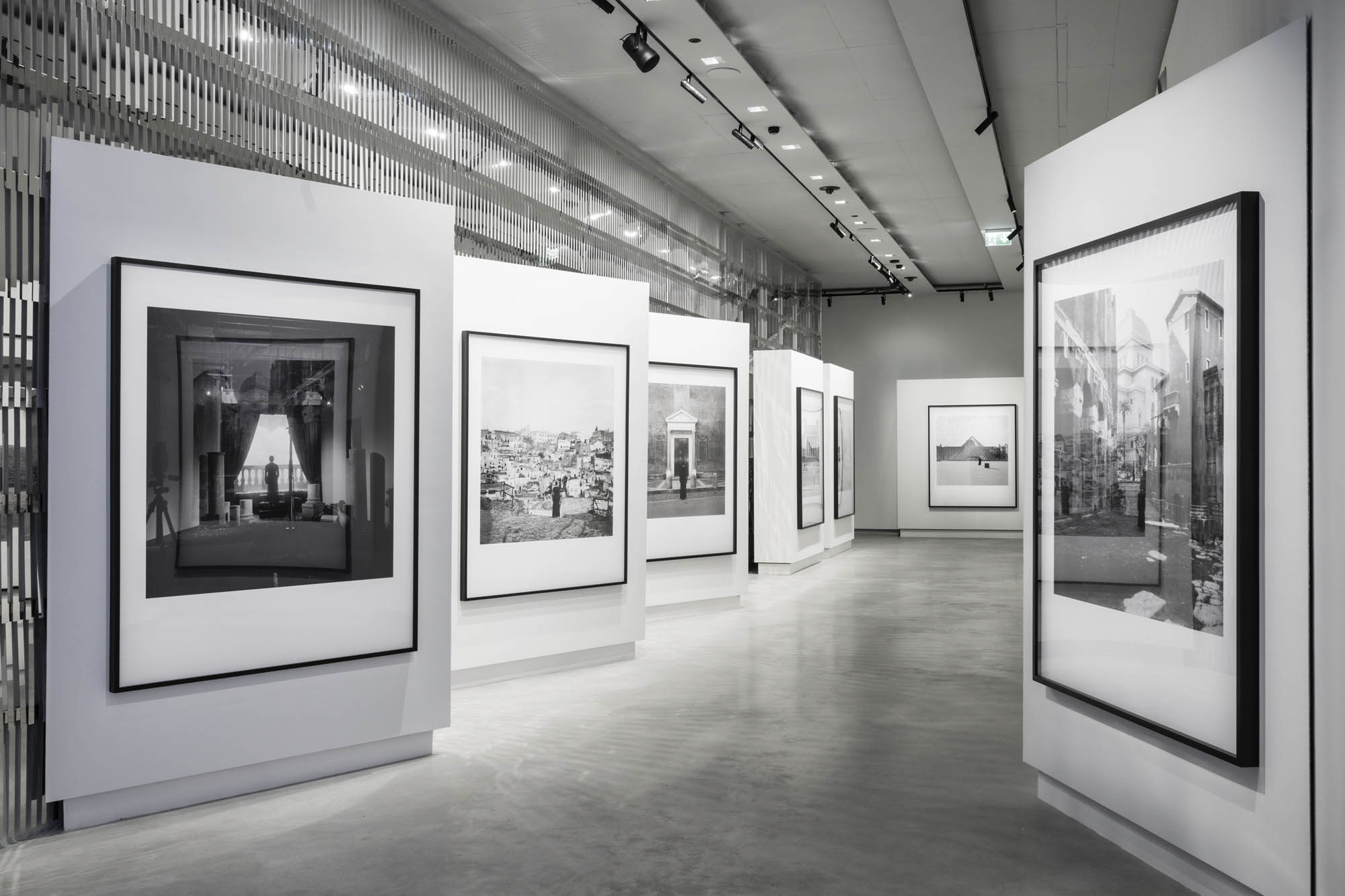
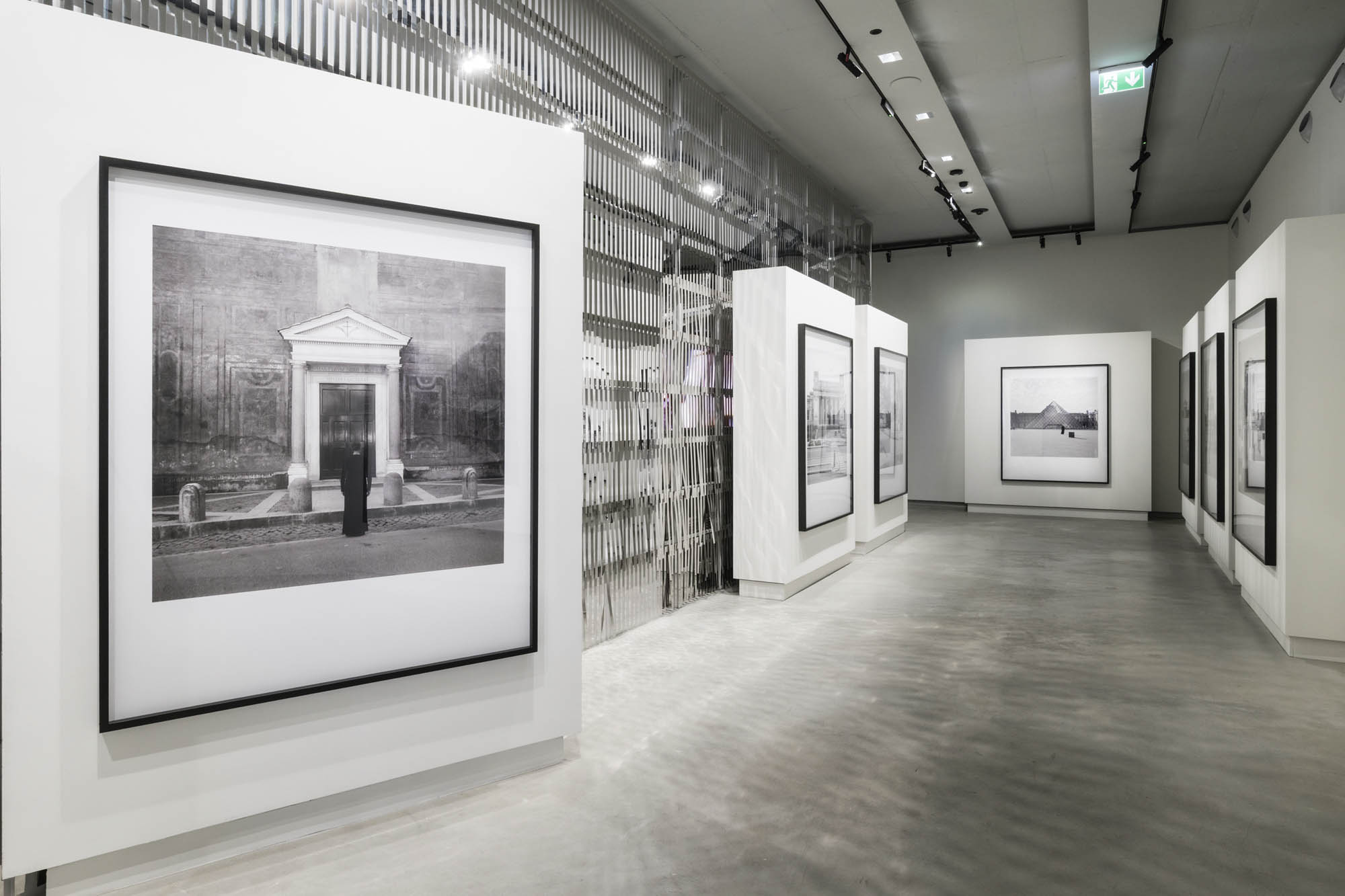
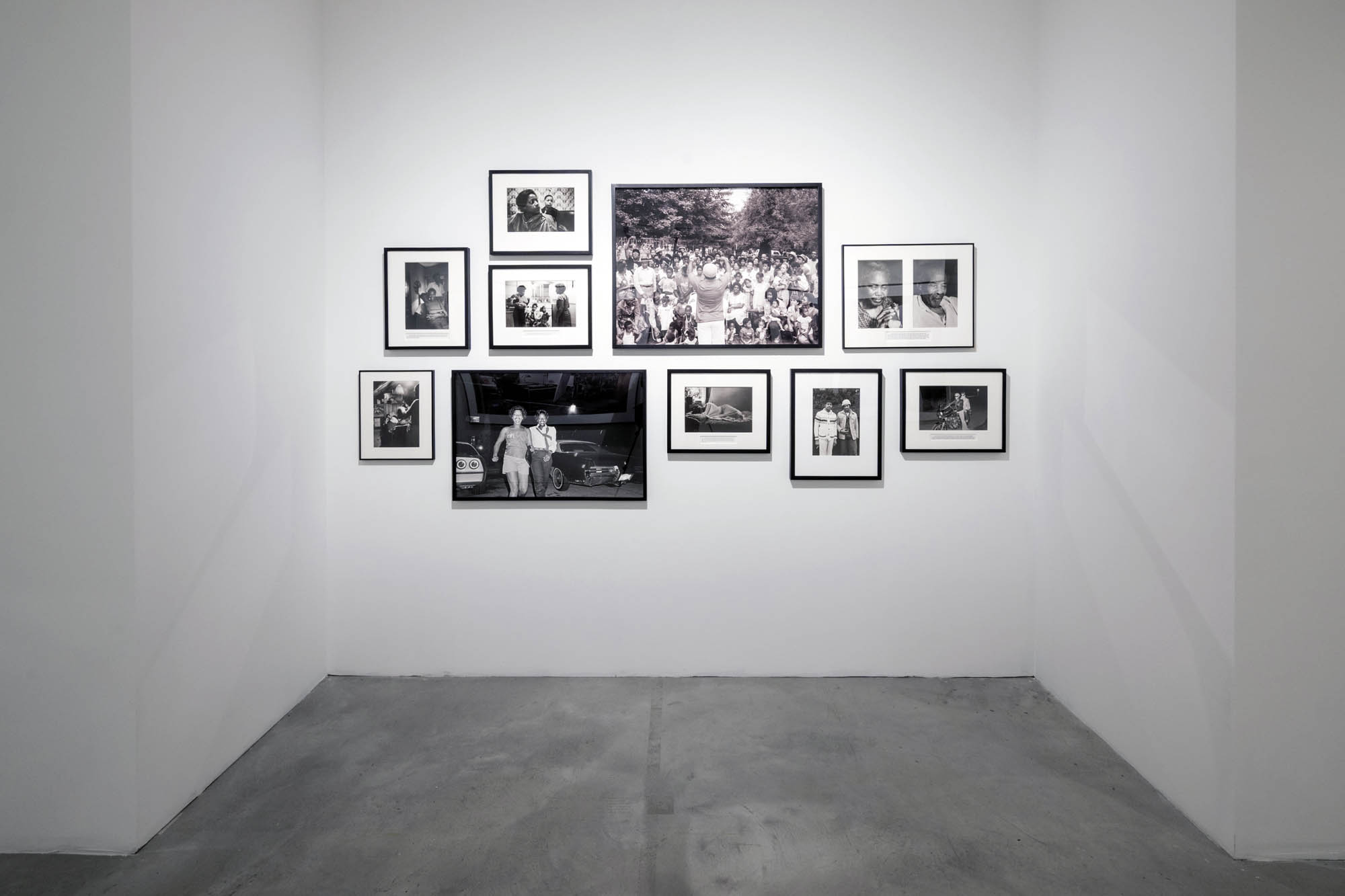
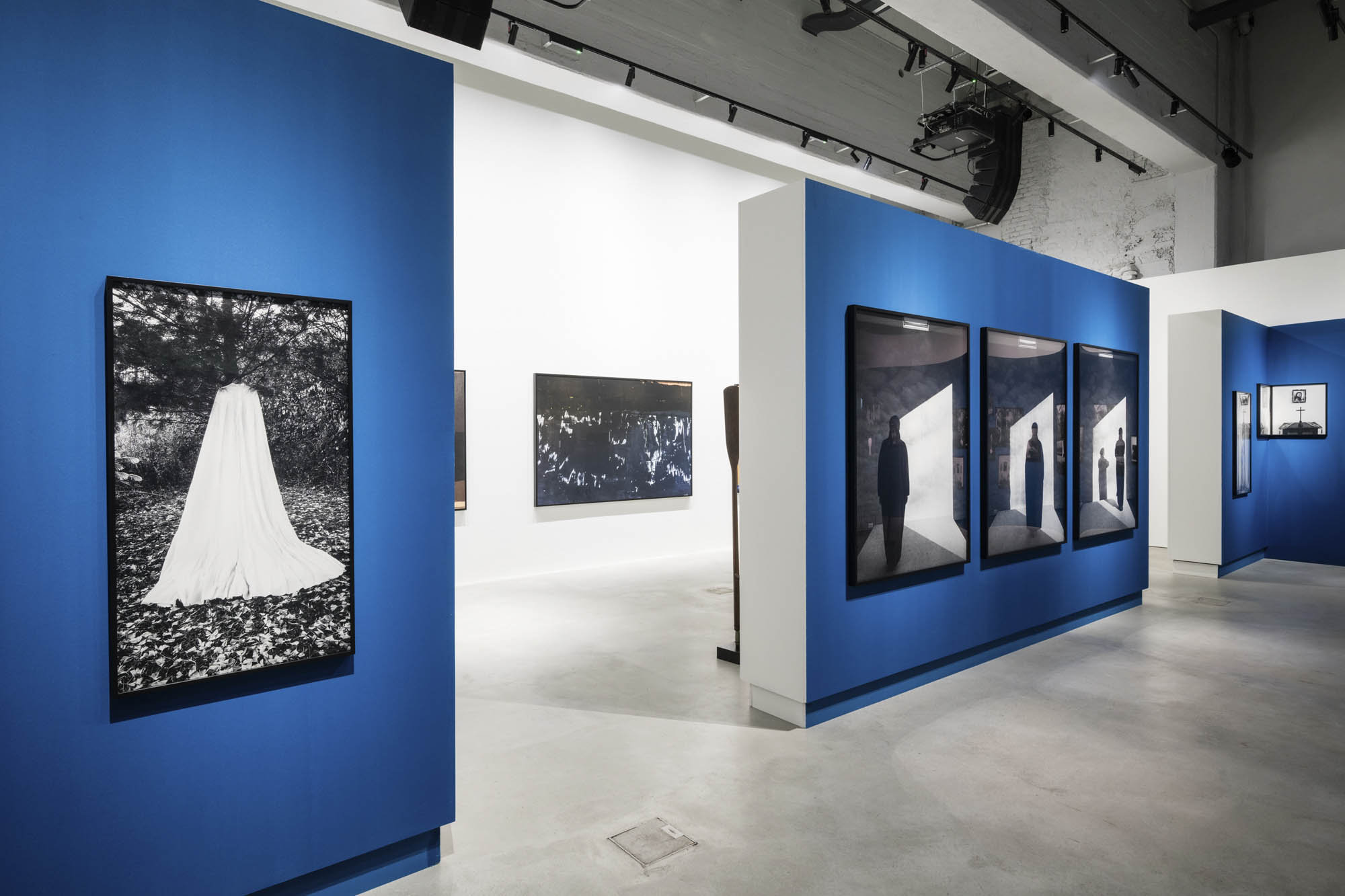
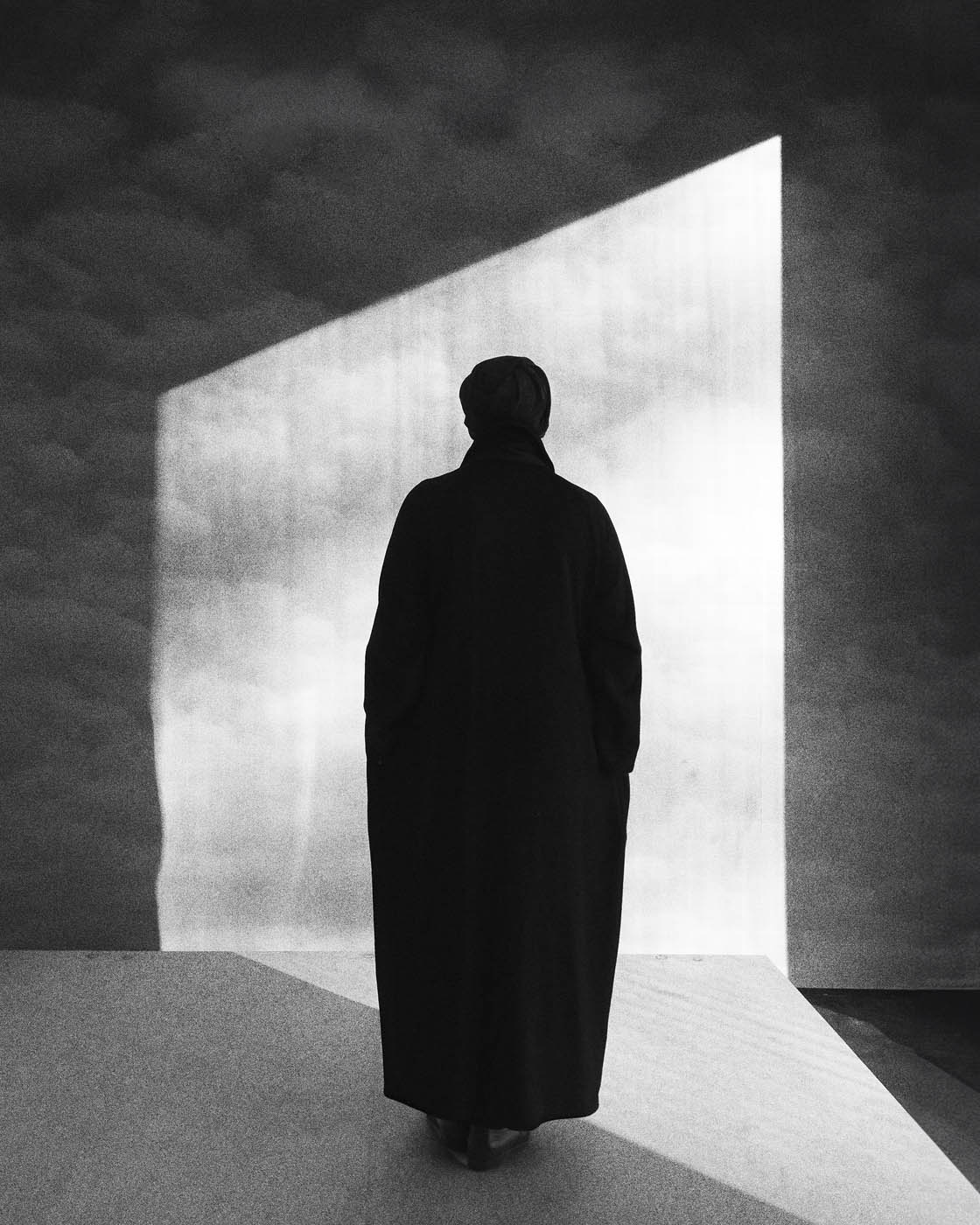
Installation views of the exhibition Carrie Mae Weems: The Heart of the Matter at Gallerie d’Italia, Turin showing work from the series Roaming, 2006
Transcending medium, chronology, and geography, Carrie Mae Weems: The Heart of the Matter puts the artist – as well as her spiritual and philosophical journeys – at the center of the discourse. Weems is a touchstone artist, renowned for her work investigating history, identity, and power. A comprehensive survey, The Heart of the Matter features generous presentations of landmark bodies of work, from Family Pictures and Stories (1978-1984) to her most recent series on the Black church. Throughout the exhibition and accompanying book, the artist’s spiritual musings provide critical insight into the iconic artist’s mind and eye. Newly commissioned essays and additional contributions from esteemed thinkers and scholars across generations underscore the singular value of Weems’s vision in grappling with the complexities and injustices of the world around us.
Text from the Aperture website
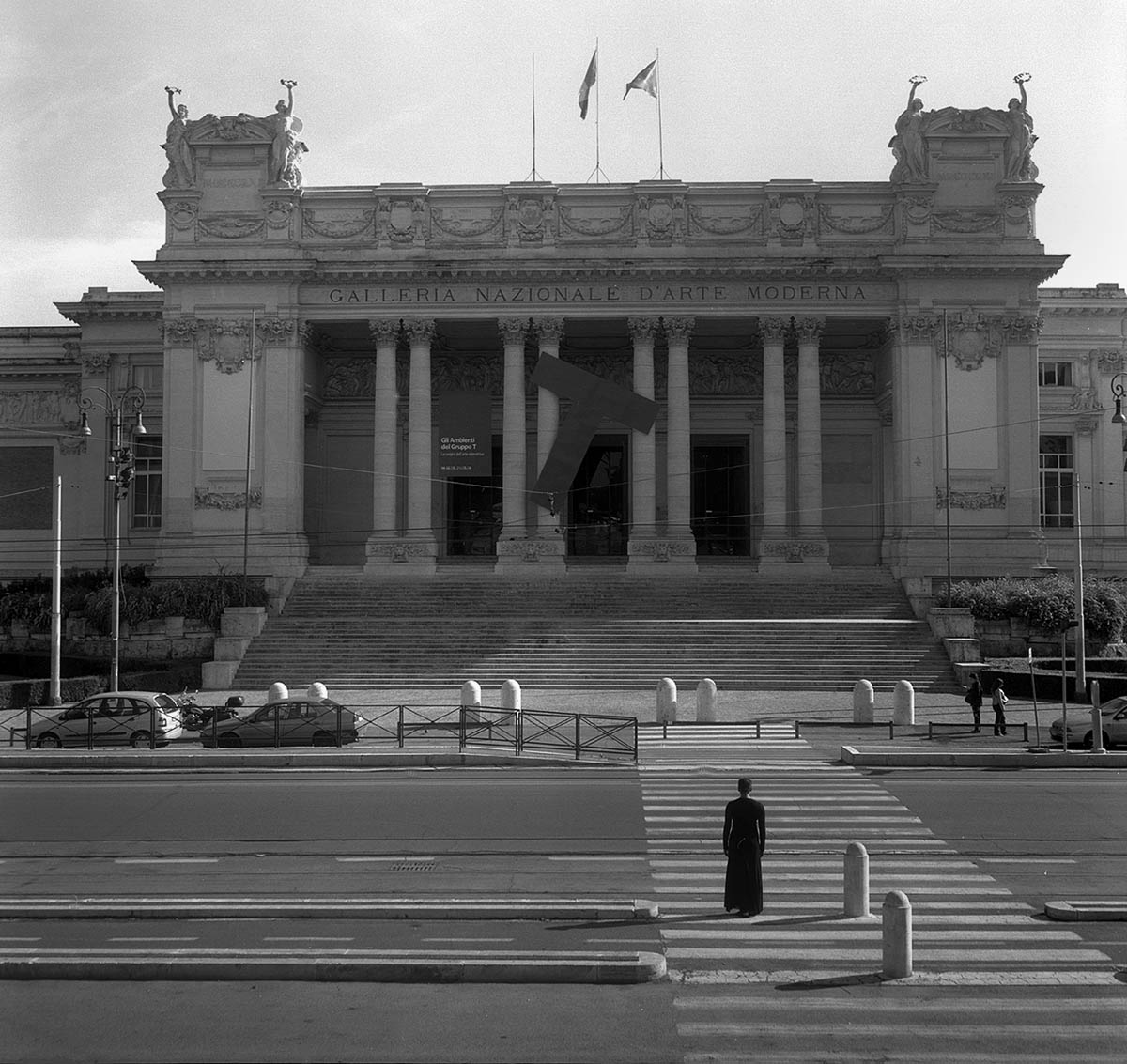
Carrie Mae Weems (American, b. 1953) The Edge of Time – Ancient Rome 2006 From the series Roaming
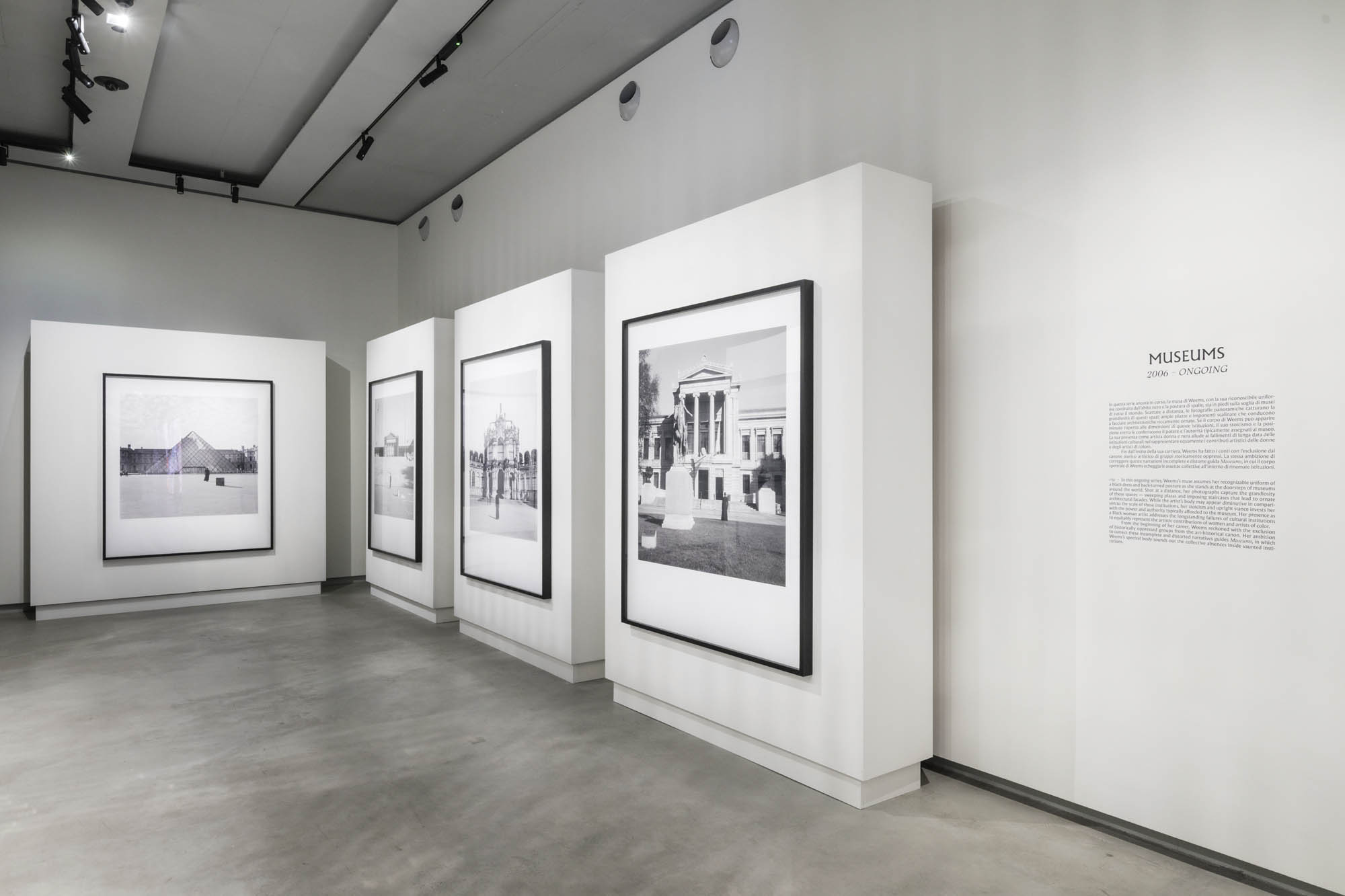
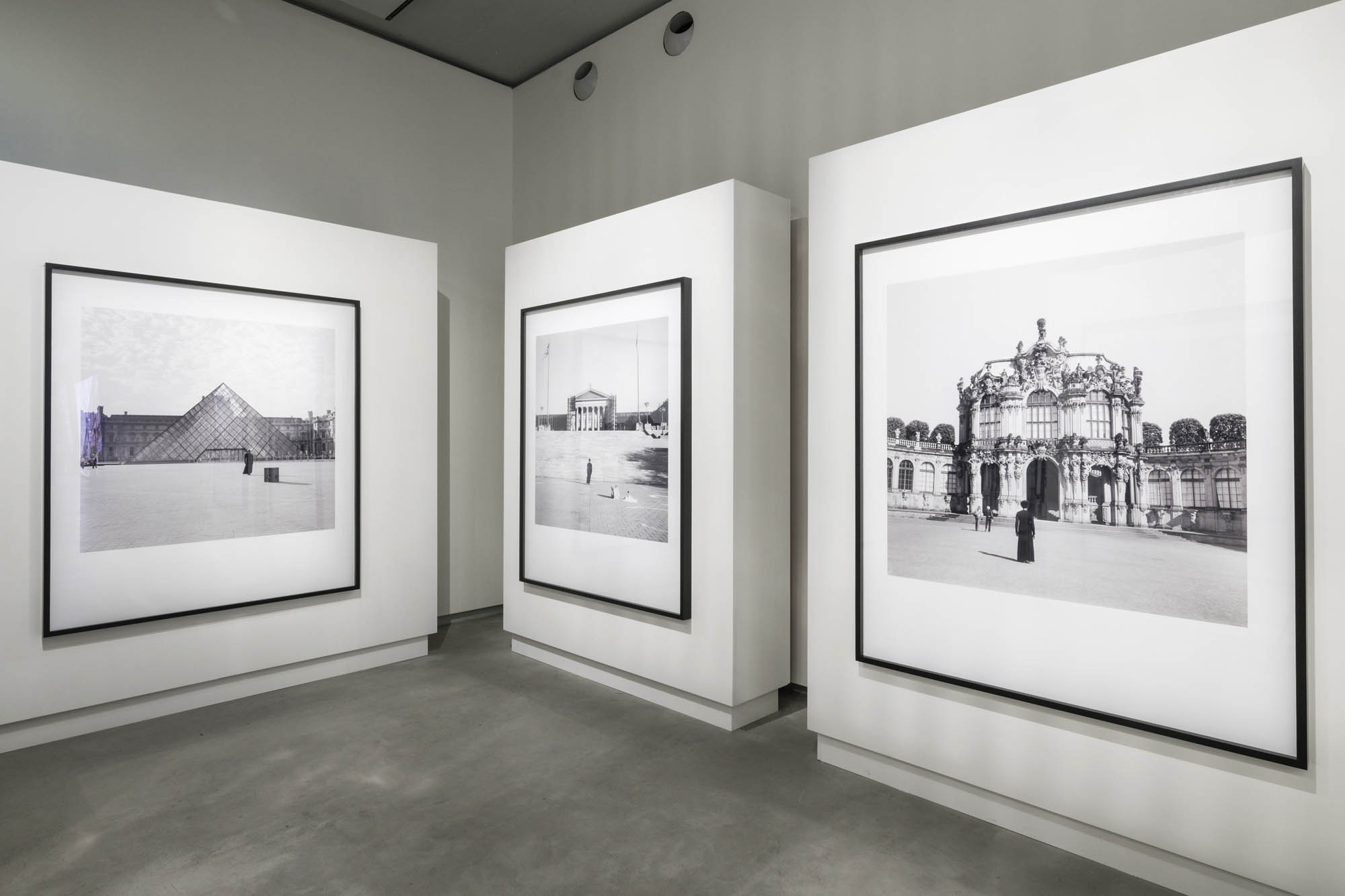
Carrie Mae Weems’s “Rome Series,” titled ” Roaming” (2006), features photographs taken during her residency at the American Academy in Rome where she performed “photographic actions” contrasting her presence with grand architecture and monumental surroundings. In these works, Weems, often in her signature long black dress with her back to the camera, challenges viewers to confront power structures and historical contexts associated with the sites of Rome. The series explores themes of history, power, and the individual’s relationship to imposing edifices of authority.
AI generated text from Google
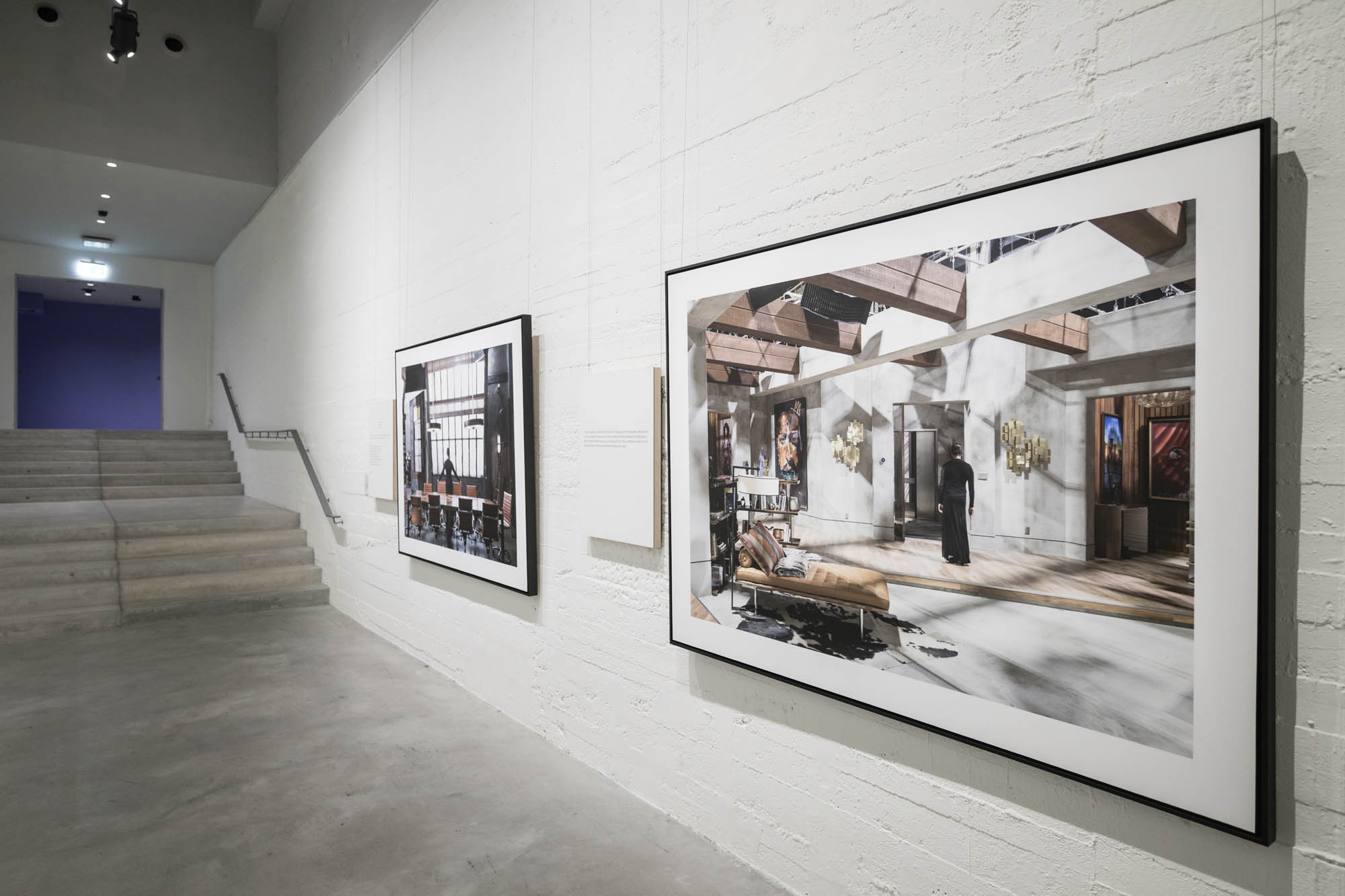
Installation views of the exhibition Carrie Mae Weems: The Heart of the Matter at Gallerie d’Italia, Turin showing work from the series Museums, 2006-ongoing
Installation views of the exhibition Carrie Mae Weems: The Heart of the Matter at Gallerie d’Italia, Turin
Gallerie d’Italia – Torino presents the exhibition by American artist Carrie Mae Weems, open to the public from April 17 to September 7, 2025. The exhibition is organised in collaboration with Aperture and curated by Sarah Meister, former curator of the photography department at MoMA in New York. It is part of the main program of the second edition of EXPOSED Torino Foto Festival, titled Beneath The Surface, curated by Menno Liauw and Salvatore Vitale.
A major new exhibition dedicated to the internationally renowned artist Carrie Mae Weems, known for her photographic explorations of cultural identity, sexism, and class belonging.
The exhibition will feature a world premiere of a project commissioned by Intesa Sanpaolo specifically for this occasion, integrated into a powerful retrospective showcasing works from Weems’ most famous photographic series. Visitors will be guided through the artist’s entire career, following a deeply personal and spiritual journey.
The selected works highlight Carrie Mae Weems’ unique ability to address the complexities and injustices of the world around us. Her photography is rooted in spaces often excluded from mainstream narratives: artists’ studios, Southern U.S. plantations, domestic interiors, and the “invisible institutions” that emerged as places of worship for Black communities during times of oppression, juxtaposed with images of monuments and museums that have historically been sites of exclusion.
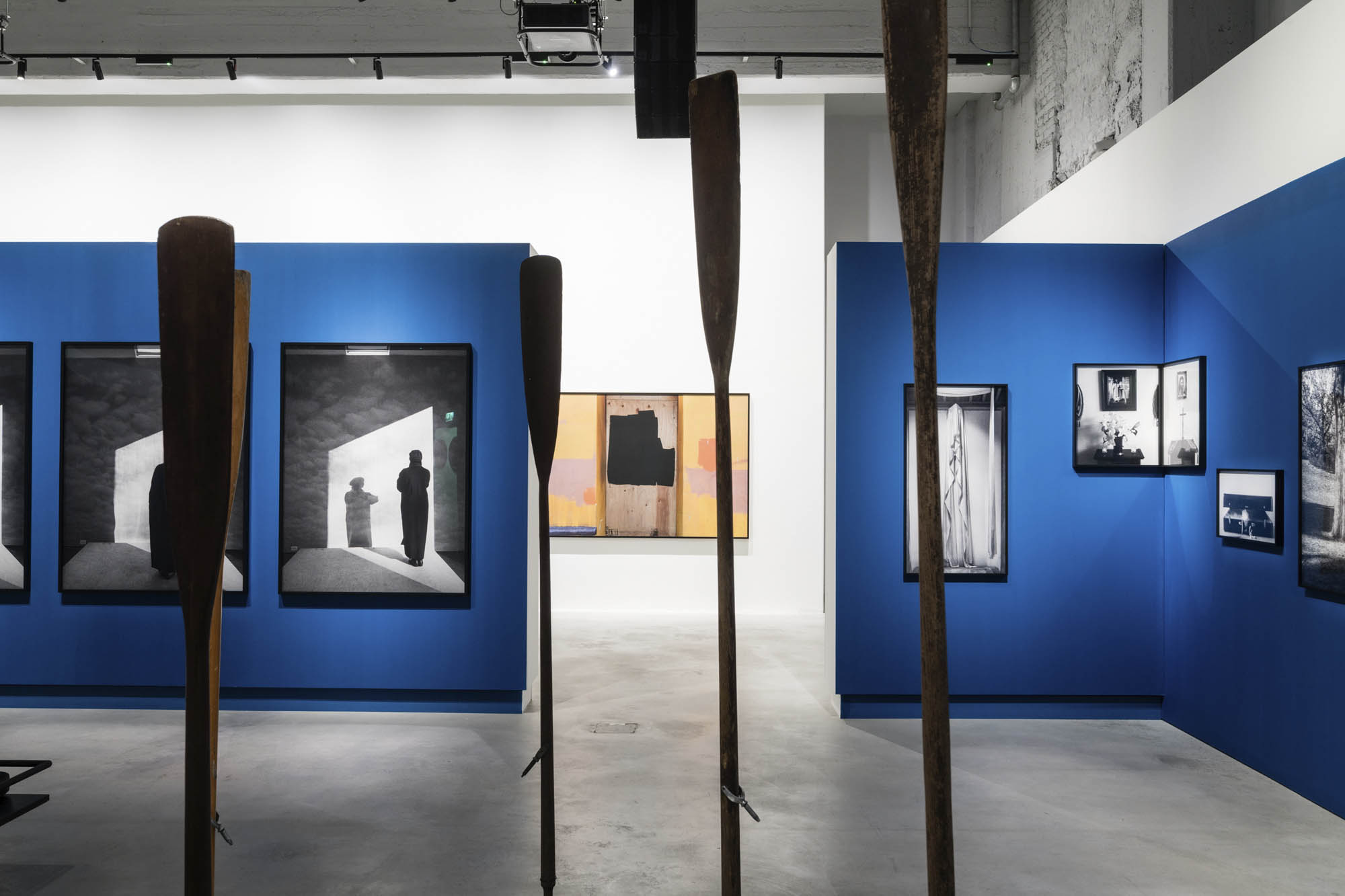
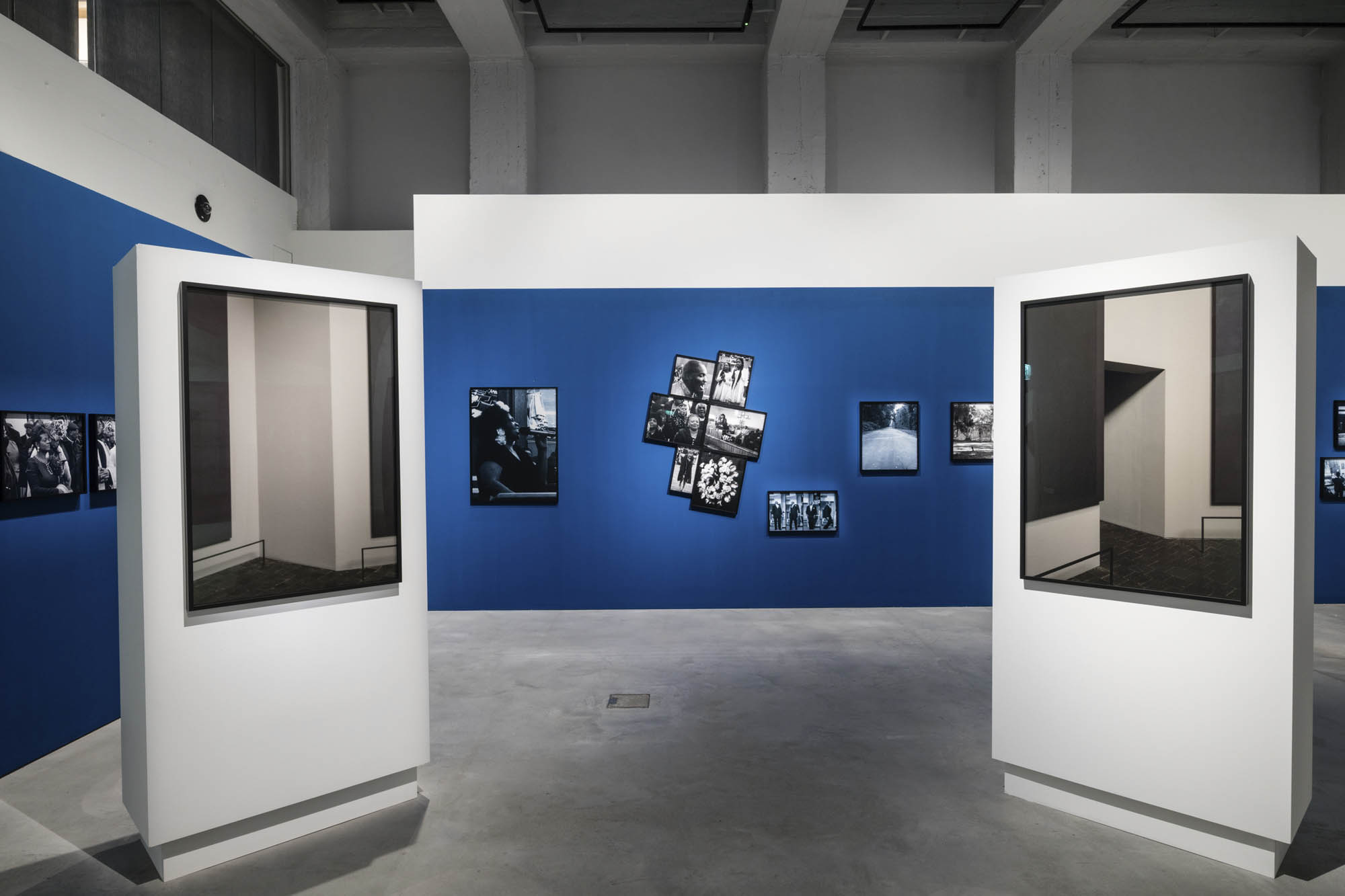
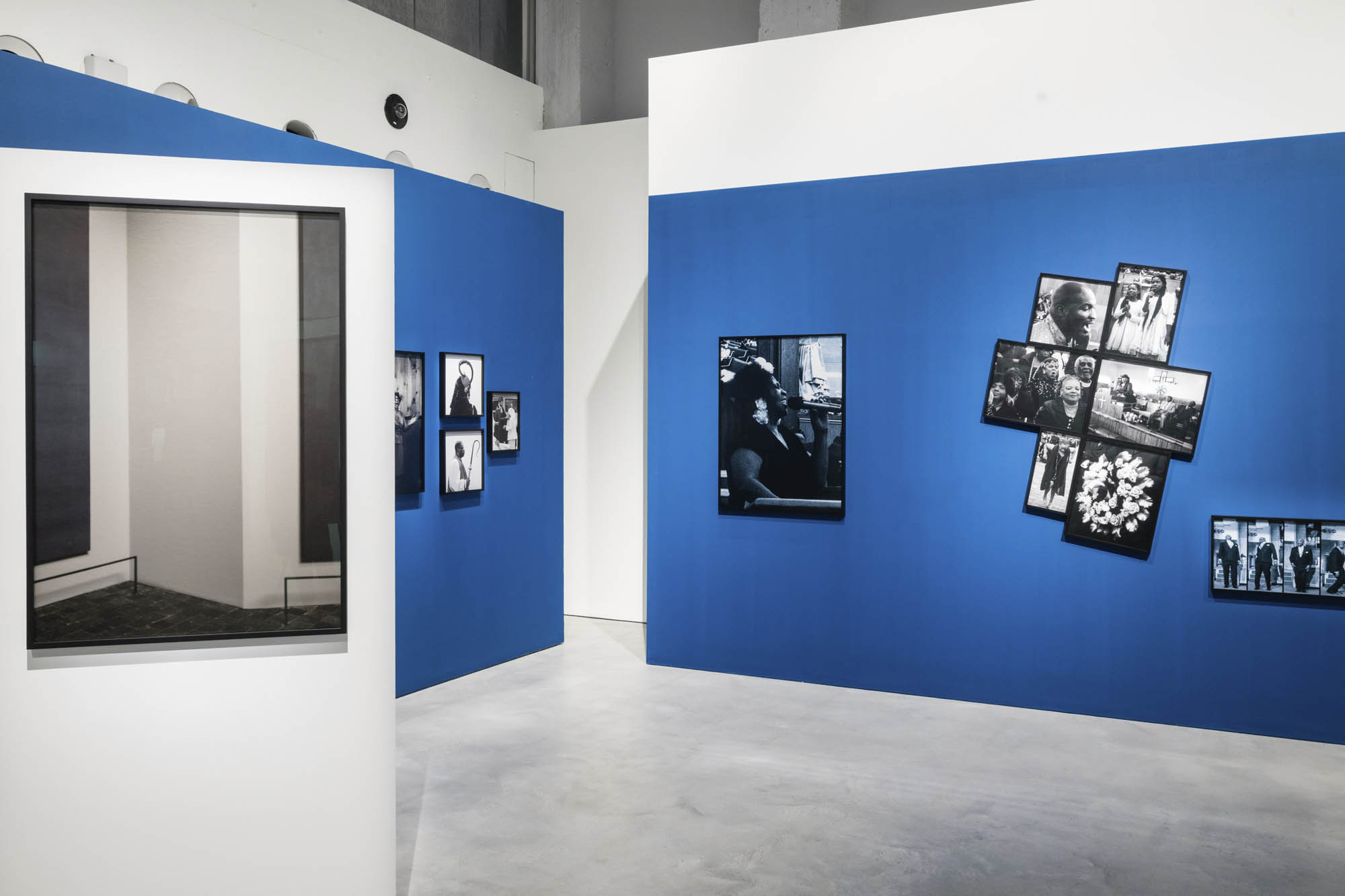
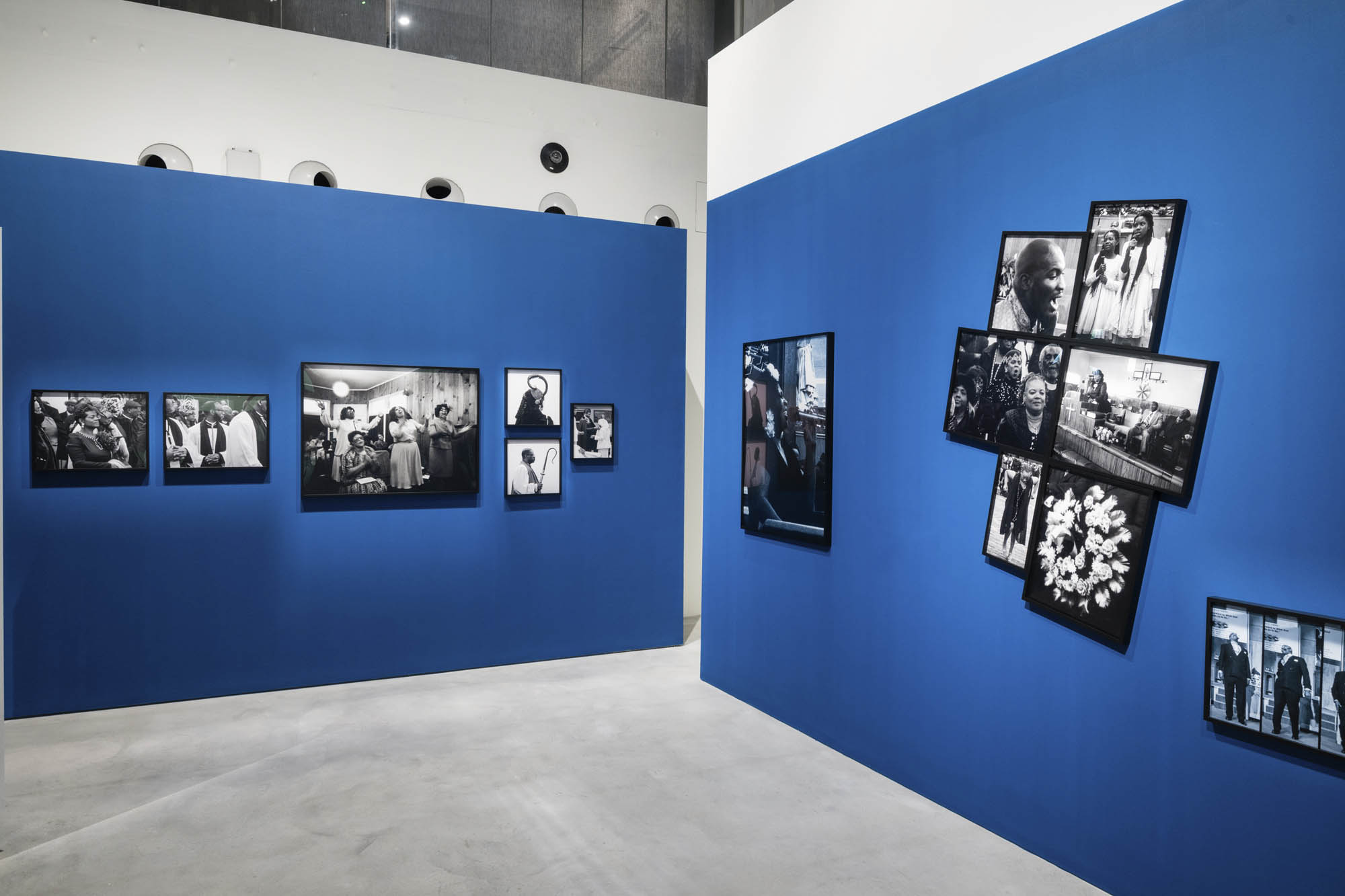
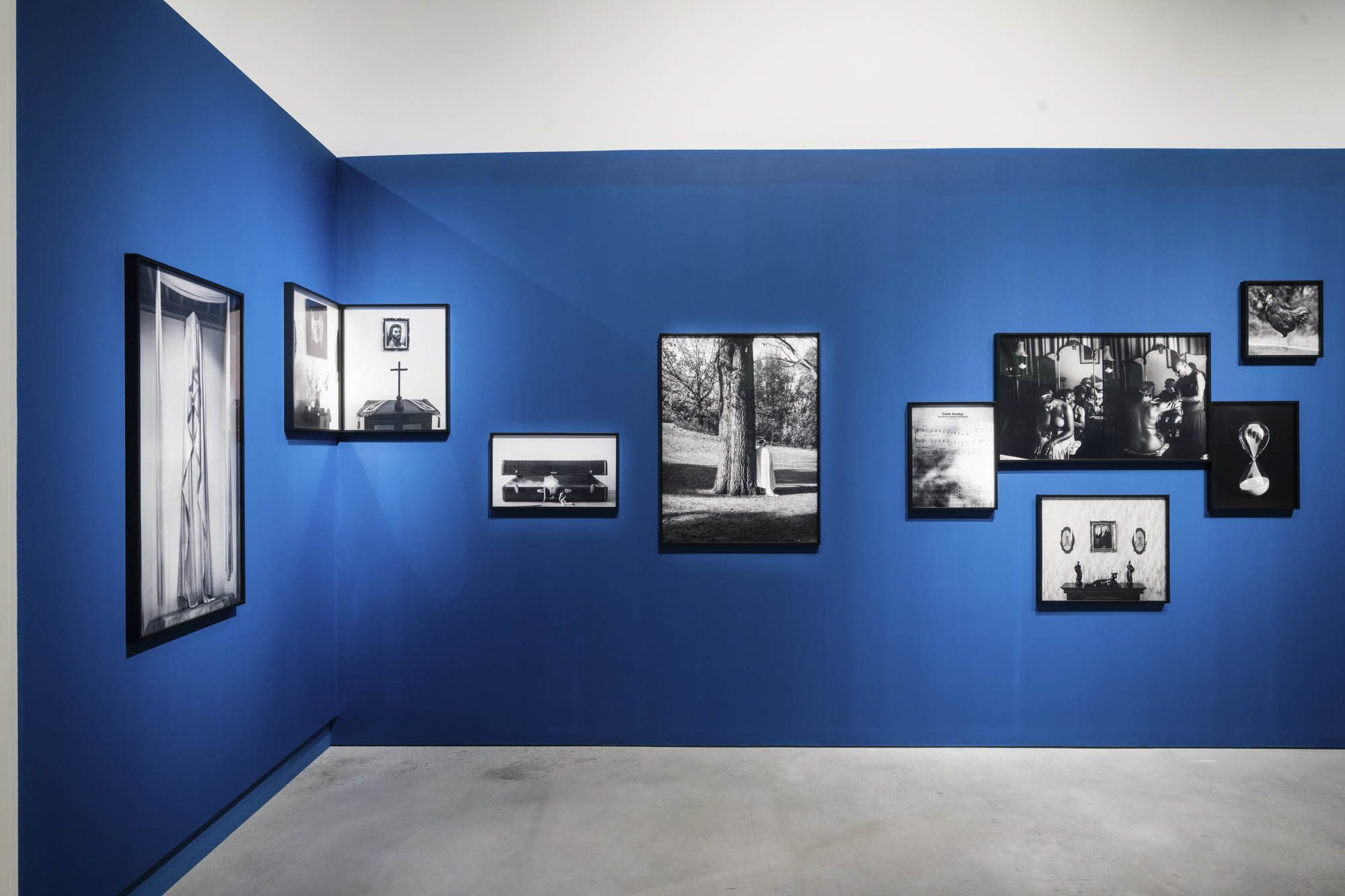
At the heart of the exhibition is Preach, a new project created specifically for this event as an original commission. This ambitious and intense installation explores religion and spirituality among African American communities across generations. The series celebrates the profound, passionate, and joyful forms of worship that define Weems’ Black Church experience while simultaneously confronting the violence and oppression that are inseparable from this history. In the new poetic text accompanying the installation, Weems writes: “Through flames and bombs, pray wherever and whenever you can, in ports and cabins, in palaces and basements, in theaters and clubs. From your secret hiding place, you have discovered new forms of worship…”. Using herself as both muse and guide, Weems invites us to join in this spiritual awakening and to condemn the persecution that has turned these sacred spaces into sites of refuge and activism. Preach intertwines early images from Harlem, San Diego, and Sea Island, Georgia, with a vast collection of new works that evoke the transcendental and secular realities of Black religious expression today.
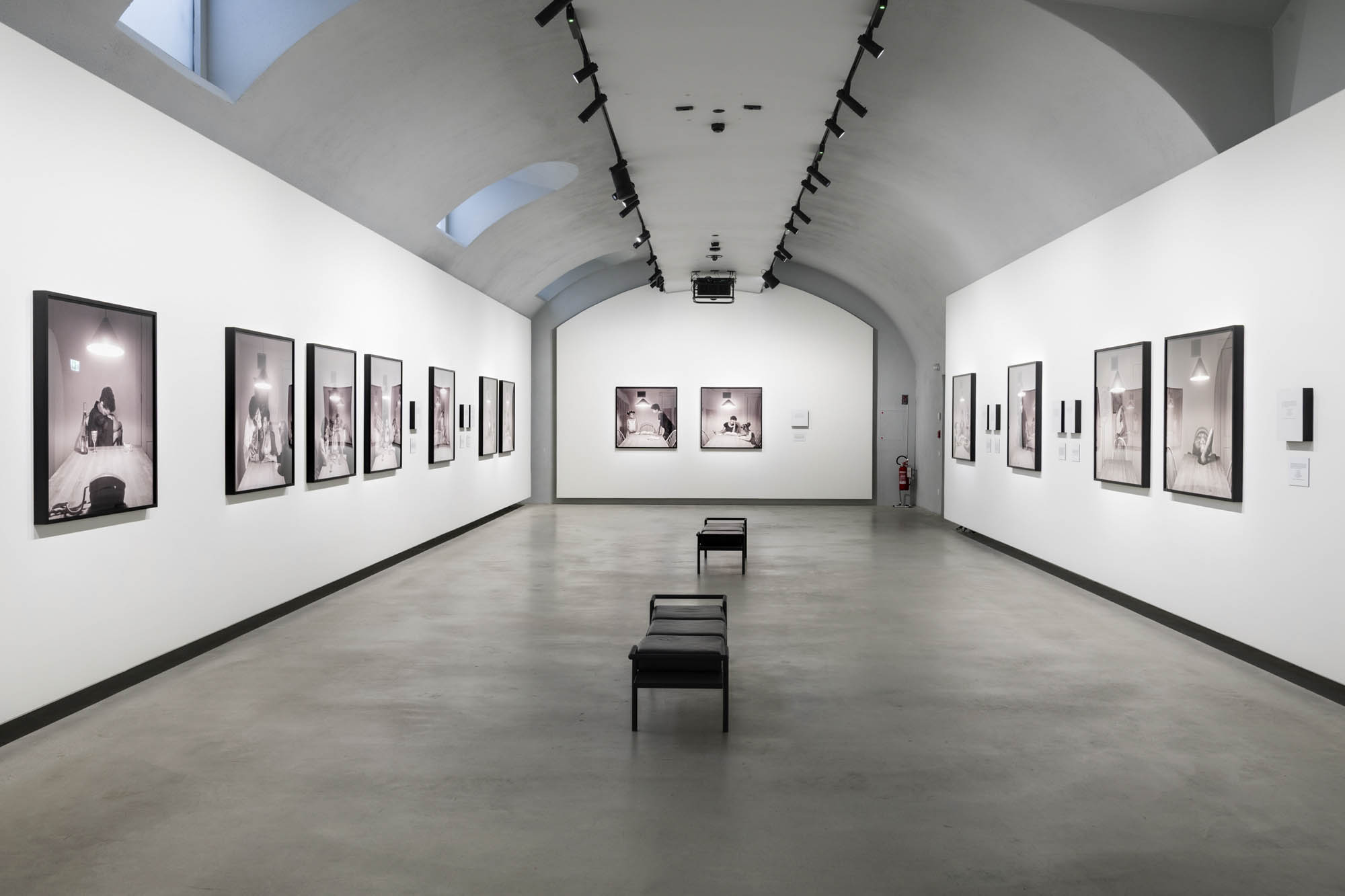
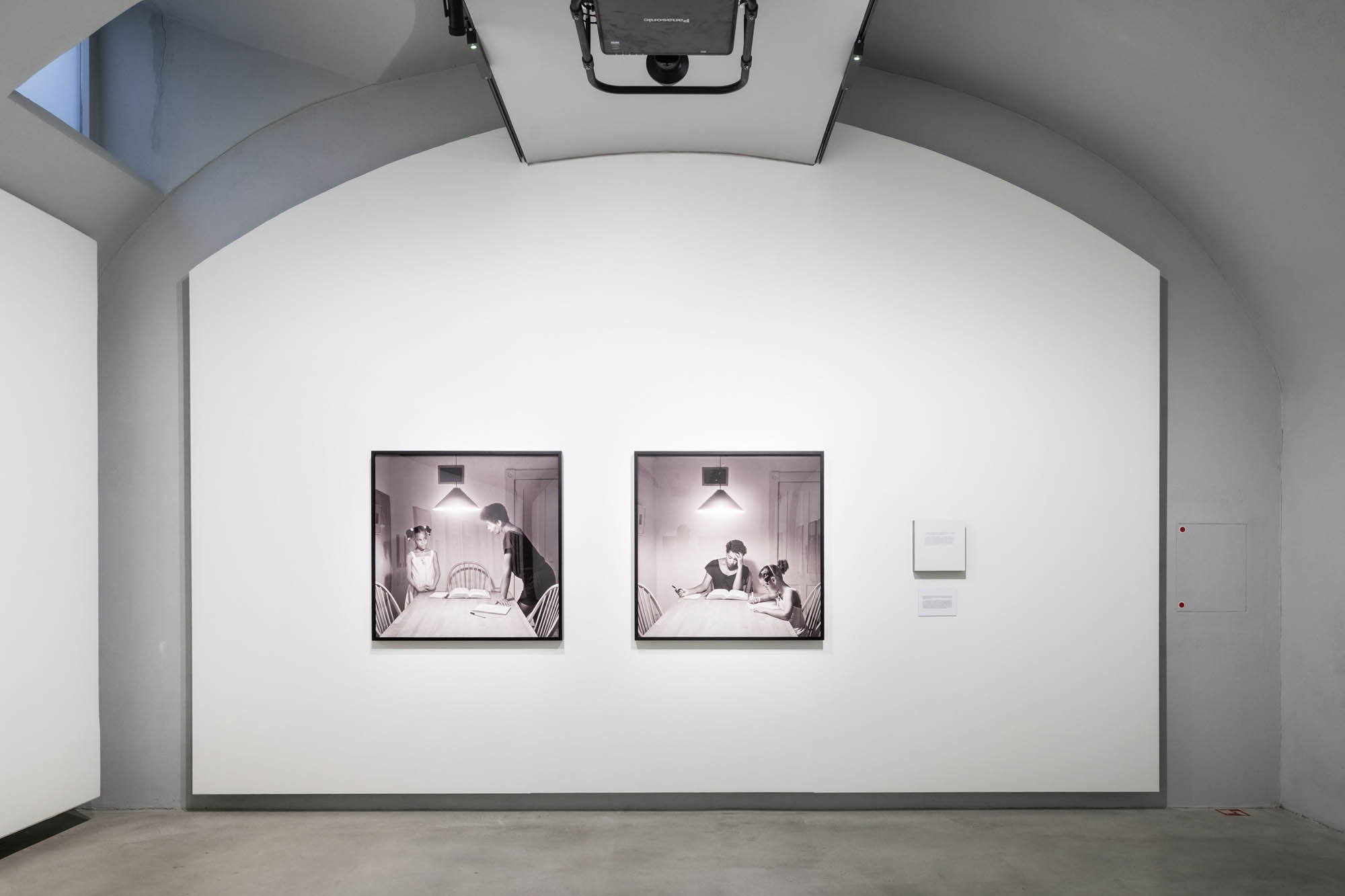
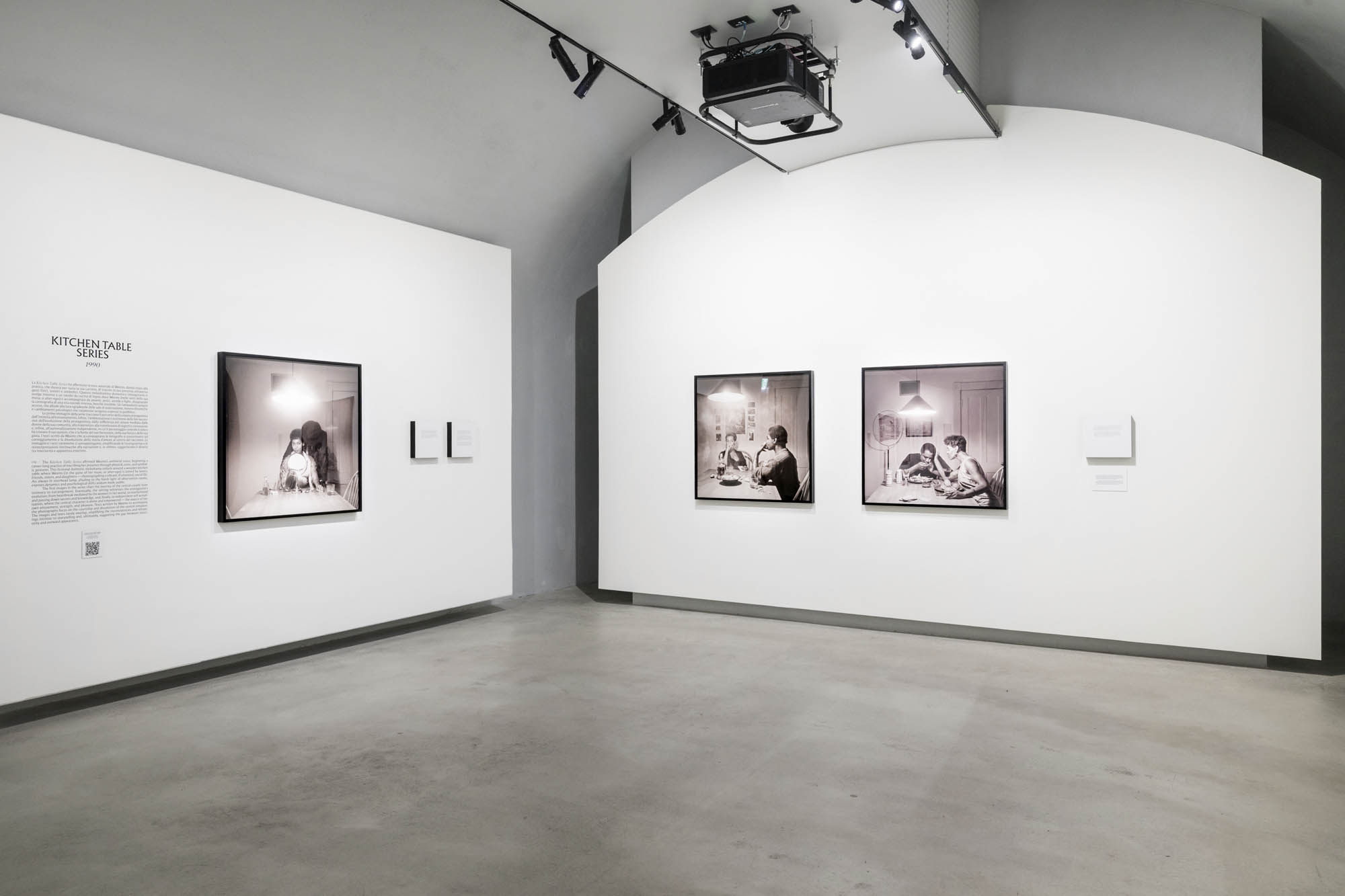
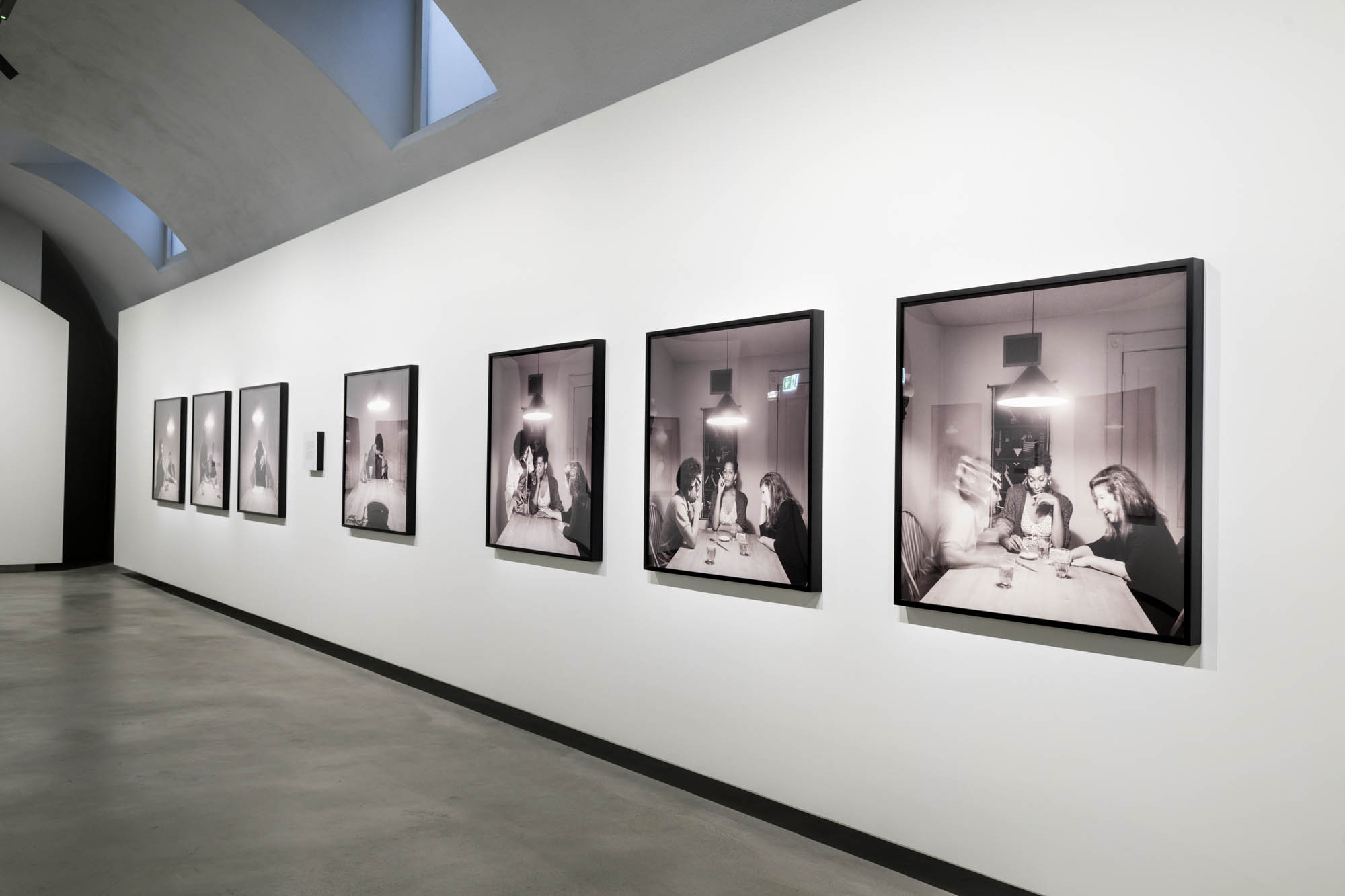
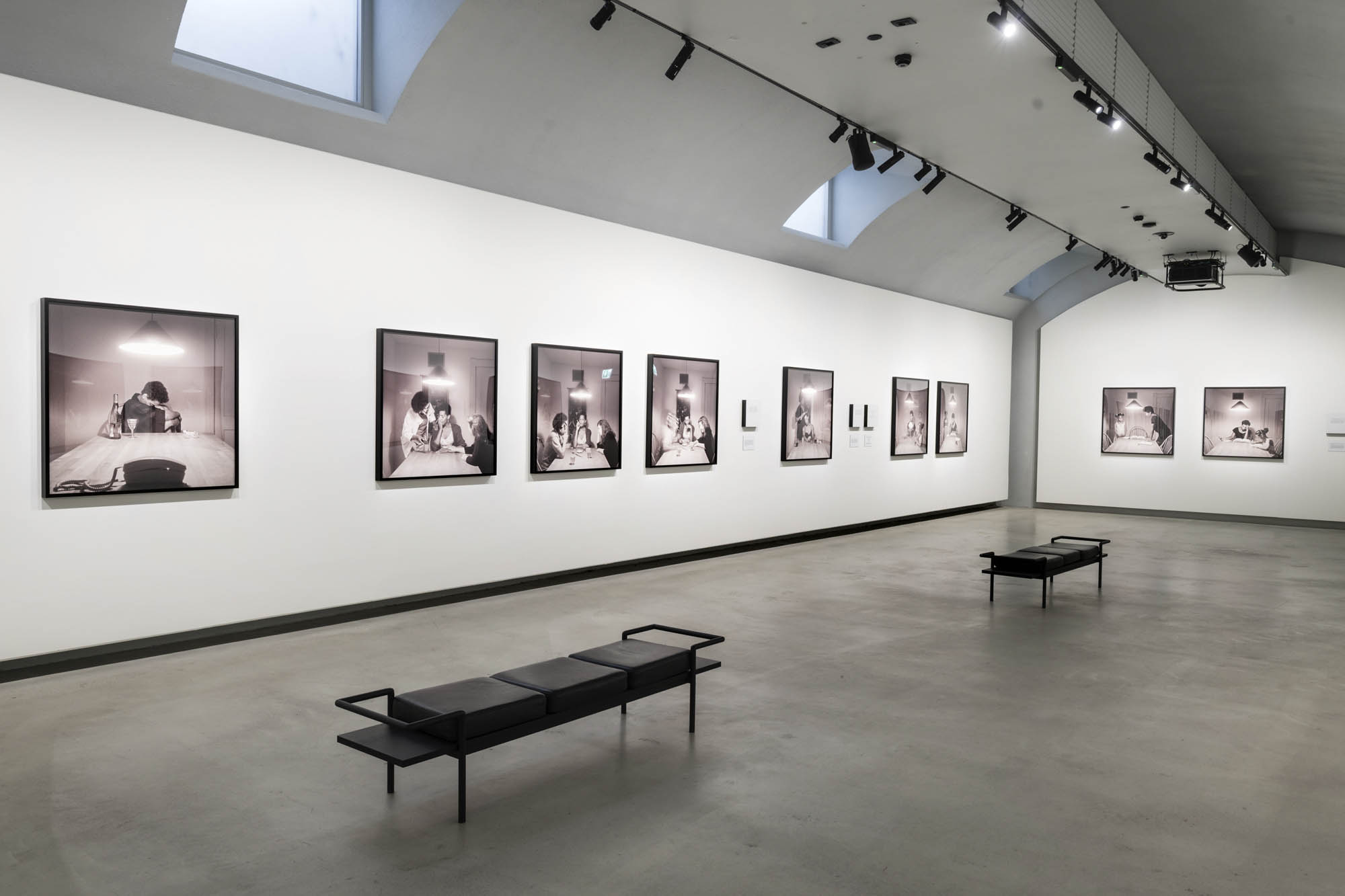
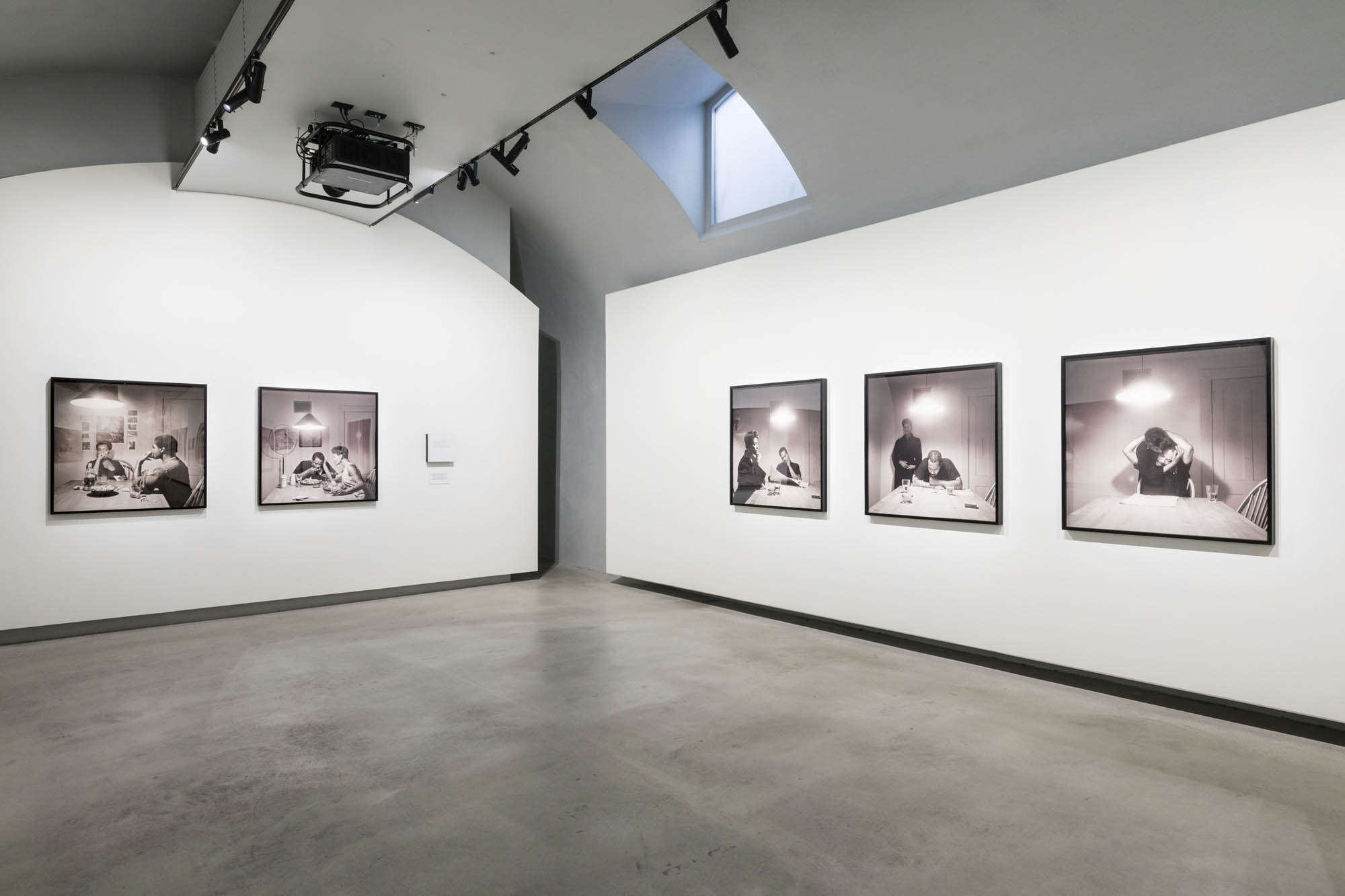
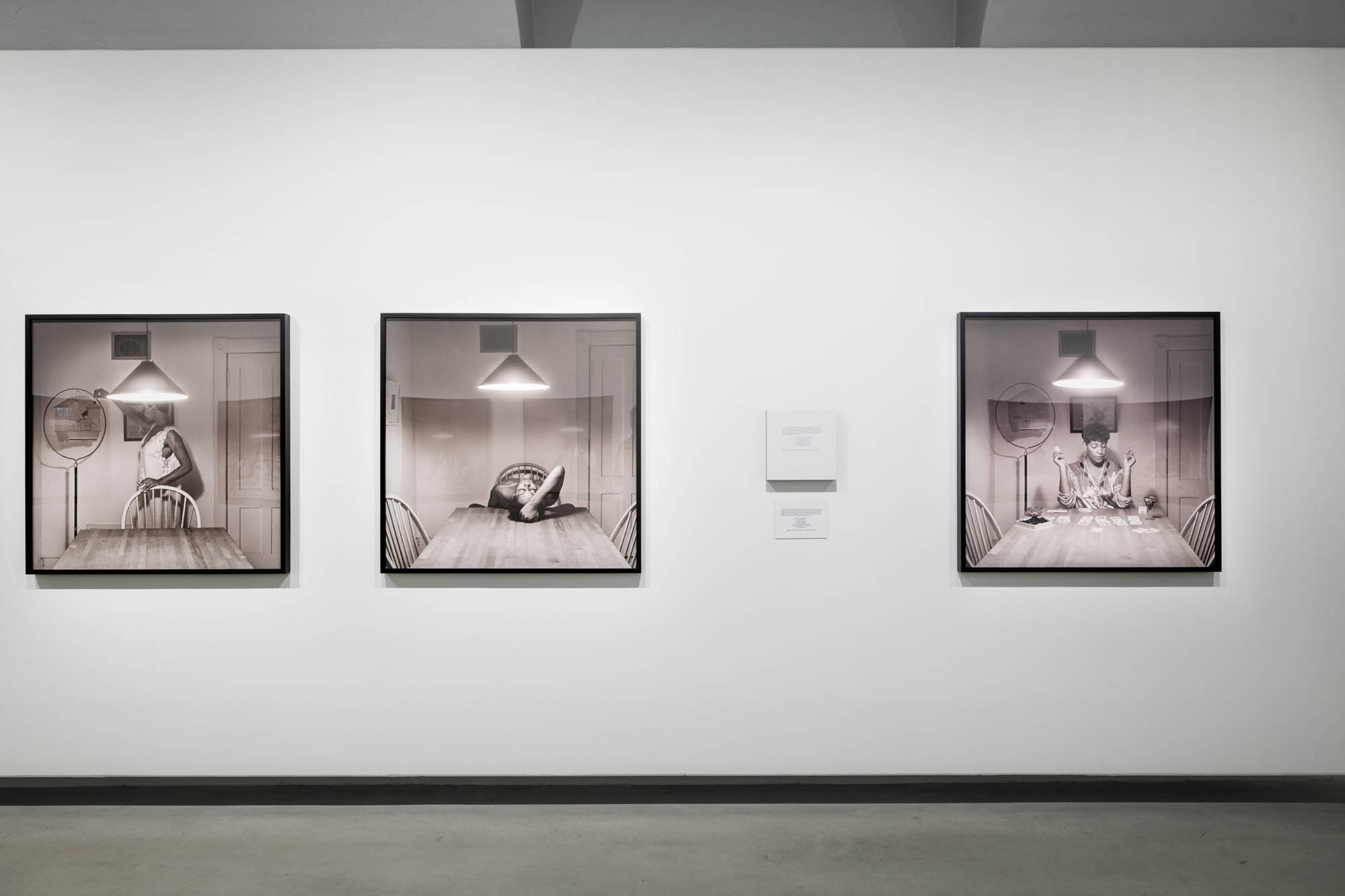
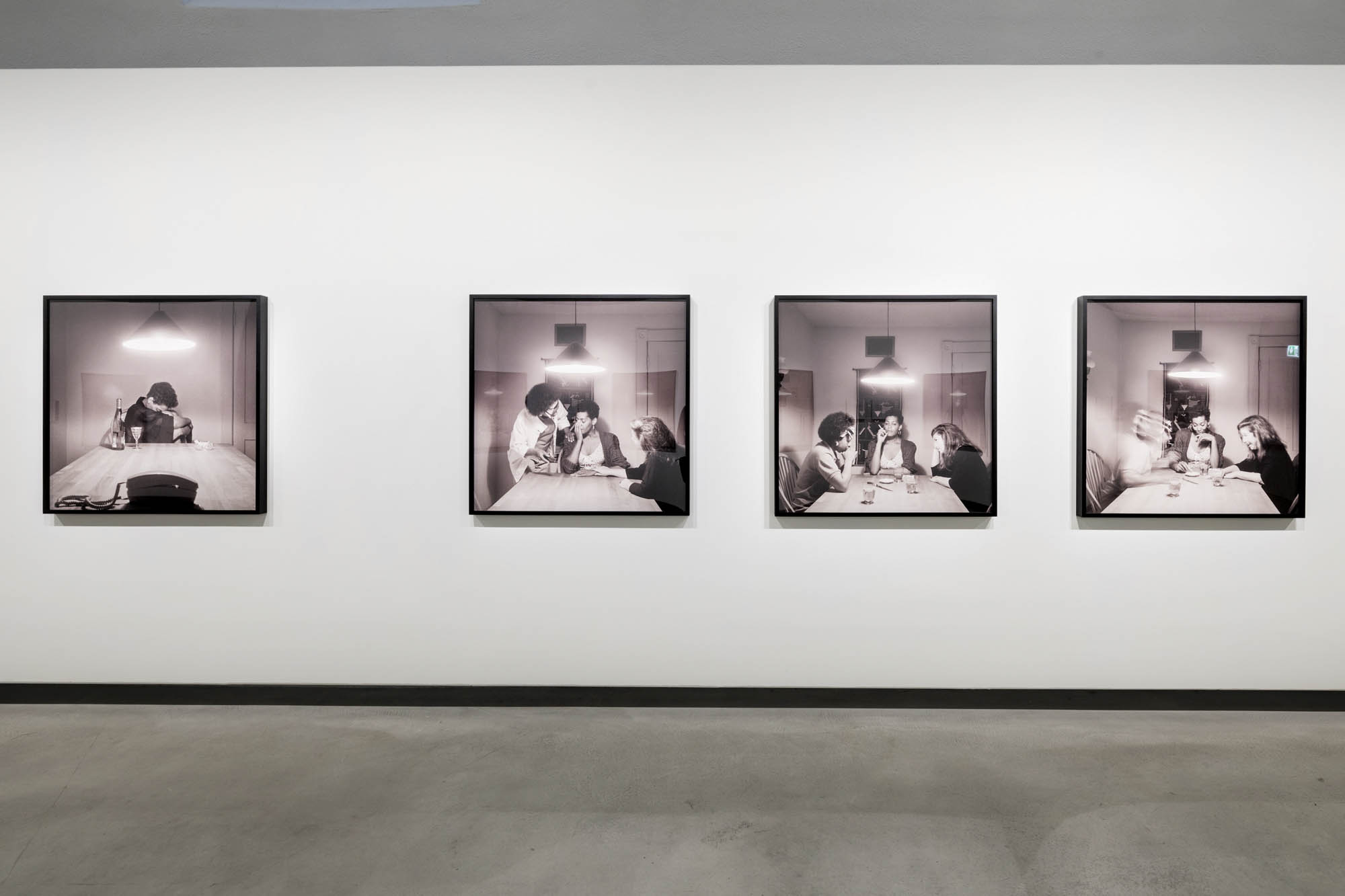
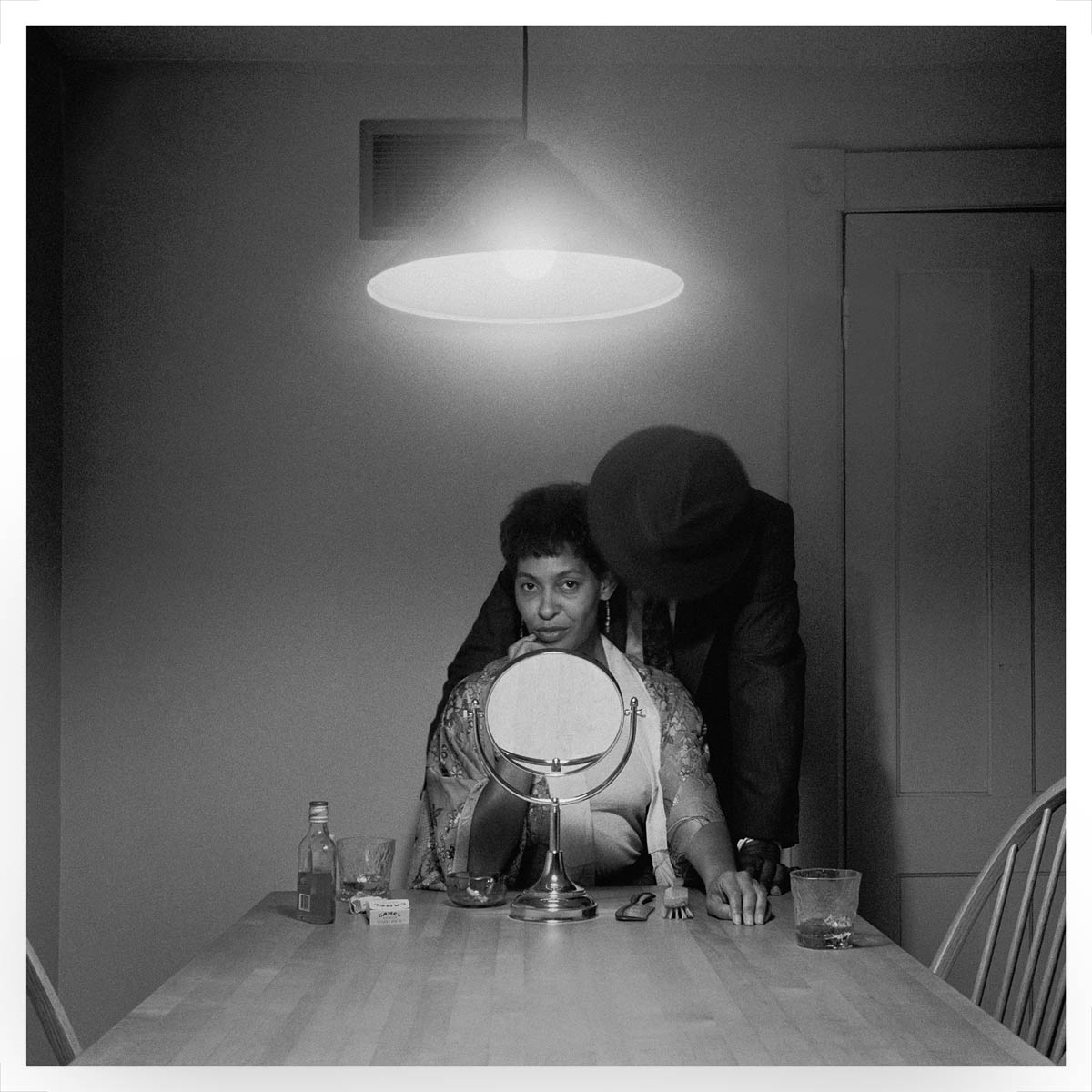
The retrospective also includes many of Weems’ early works, such as the historic Kitchen Table Series (1990) and Museums (2006-ongoing); a selection of more recent projects, such as Scenes and Takes (2016) and Painting the Town (2021); as well as significant video installations, including The Shape of Things (2021) and Leave Now! (2022). Together, these works take visitors on a journey spanning Weems’ entire career, showcasing the depth and diversity of her artistic language.
The exhibition also benefits from the collaboration of Fondazione Compagnia di San Paolo, which has developed activities inspired by the values of inclusion and the appreciation of diversity as a source of enrichment, themes that resonate with the exhibition’s content and align with the foundation’s strategic challenges. Photography serves as a tool for storytelling, documentation, and identity-building, contributing to inclusion and community formation. Through widespread urban communication campaigns and collaboration with the public program #Inside, the foundation’s initiatives aim to promote participation and extend the exhibition’s themes to increasingly diverse audiences, particularly in light of the simultaneous presence of the EXPOSED Torino Foto Festival 2025 in the city.
The exhibition Carrie Mae Weems: The Heart of the Matter will be accompanied by a catalogue co-published by Società Editrice Allemandi / Aperture. In addition to numerous images of the American artist’s works, the catalog will feature contributions from scholars of different generations, underscoring the unique value of Weems’ vision in addressing these themes.
Aperture
Aperture is a nonprofit publisher that leads conversations around photography worldwide. From its base in New York, Aperture connects global audiences and supports artists through the acclaimed quarterly magazine, books, exhibitions, digital platforms, public programs, limited-edition prints, and awards. Established in 1952 to advance “creative thinking, significantly expressed in words and photographs,” Aperture champions photography’s vital role in nurturing curiosity and encouraging a more just, tolerant society.
Carrie Mae Weems. Biography
Carrie Mae Weems, a conceptual artist, examines and challenges perceptions of race and femininity in search of new models of life. Rooted in the specificity of her experience as a Black woman yet universal in its exploration of family relationships, cultural identity, power structures, and social hierarchy, her artistic practice is primarily photographic but also incorporates text, textiles, audio, installations, and video.
Informed by storytelling, folklore traditions, and the observational methodologies of social sciences, her approach to image-making ranges from staged and serialised narratives to the appropriation and adaptation of archival and ethnographic imagery. Weems critically addresses photography’s complicity in perpetuating dehumanising representations and the historical omission of Black women from institutions and art canons.
Weems lives in Syracuse, New York, with her husband, Jeffrey Hoone. She is currently an Artist in Residence at Syracuse University.
Text from the Gallerie d’Italia website
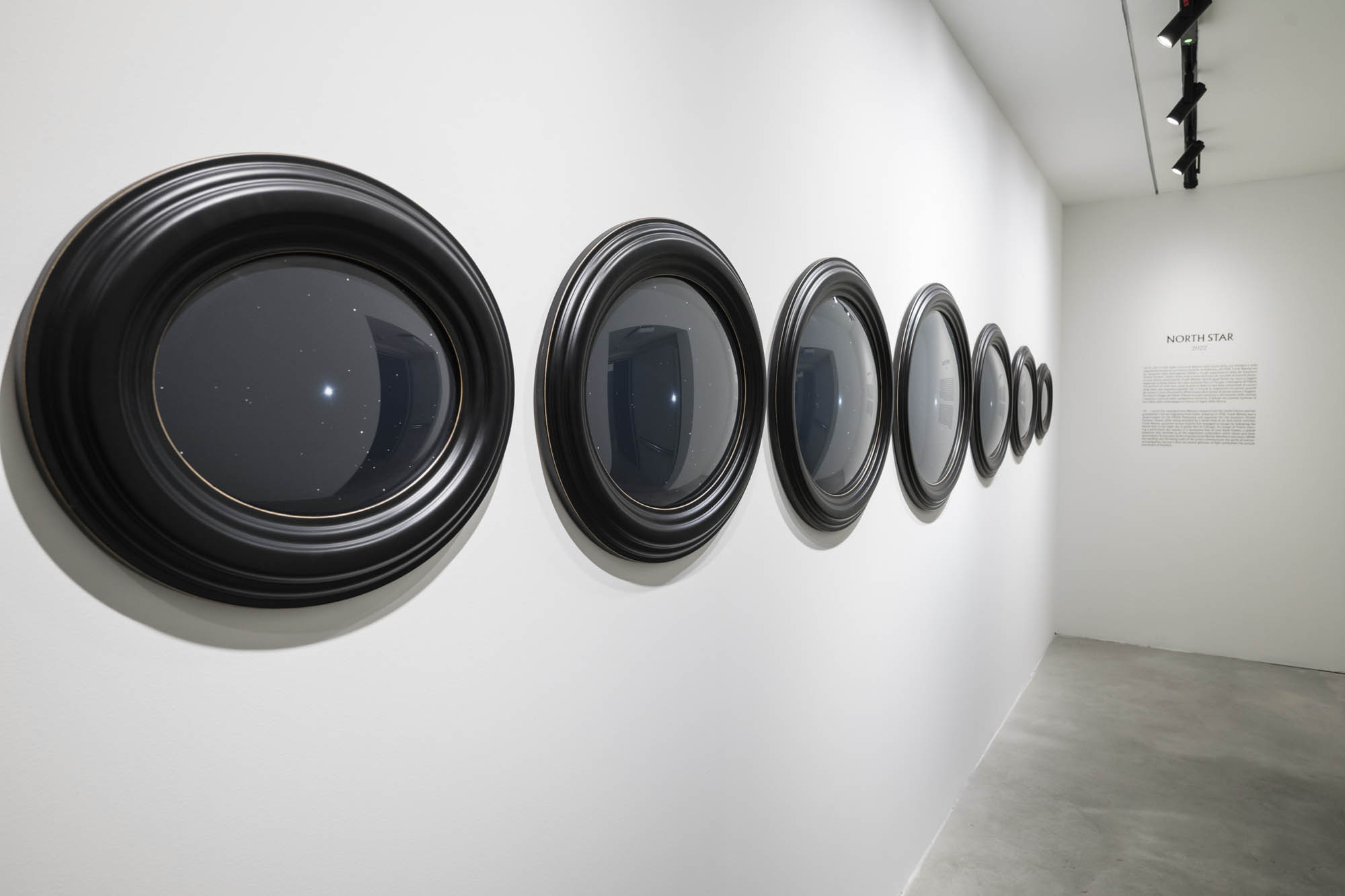
Installation view of the exhibition Carrie Mae Weems: The Heart of the Matter at Gallerie d’Italia, Turin showing the work North Star, 2022
In 1936 Carrie Mae Weems’s grandfather Frank Weems traveled 550 miles to Chicago on foot from Earle, Arkansas, partly with the aid of the North Star, which appears in these seven oval photographs as a cold and abstract promise. Frank Weems had been beaten after organising a labour strike to protest abysmal wages and working conditions in the cotton fields. For the artist, the abstracted world holds a tremendous yet distant possibility that her grandfather seized step by step.
Text from the Art Institute of Chicago website
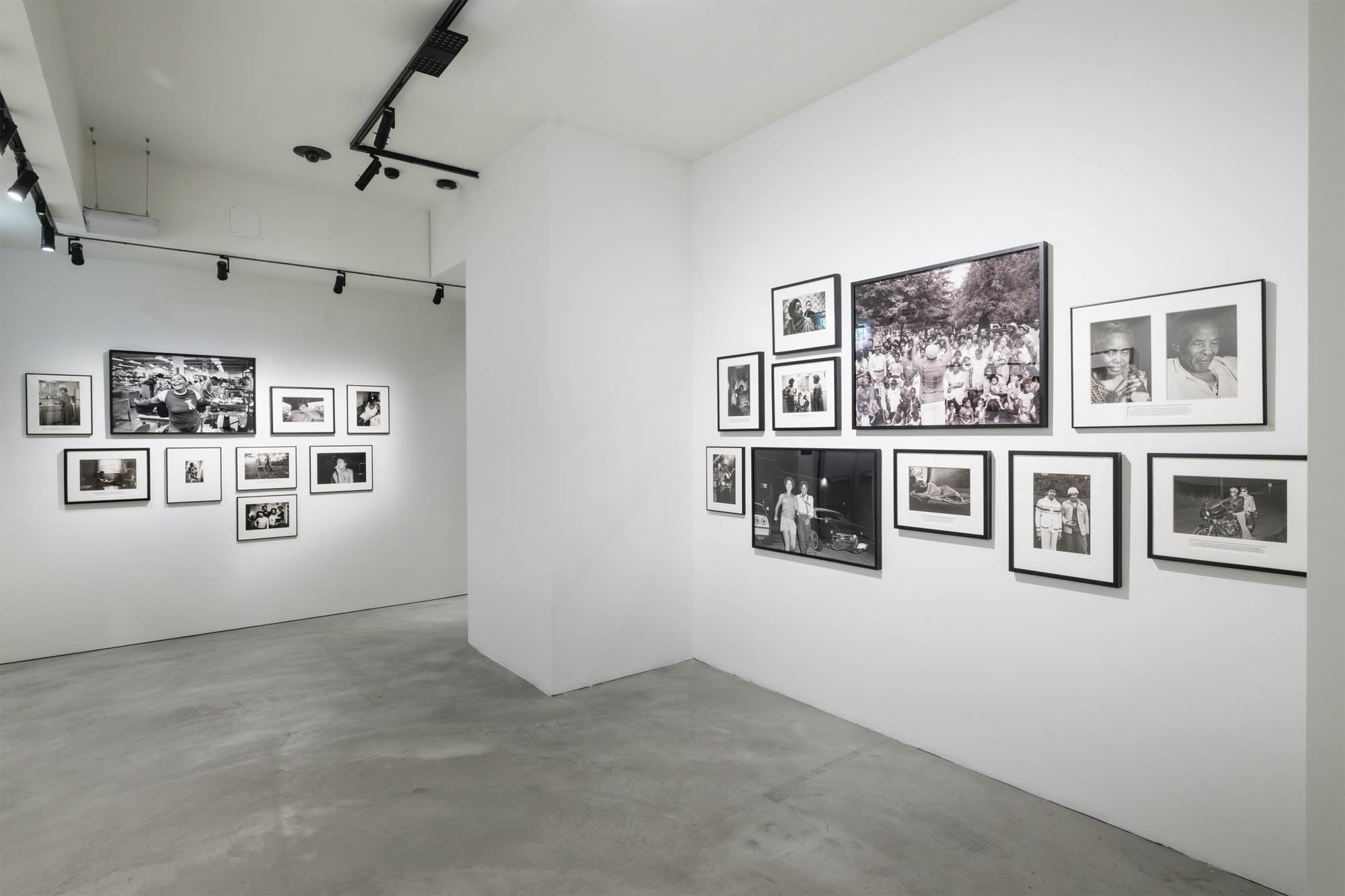
Installation view of the exhibition Carrie Mae Weems: The Heart of the Matter at Gallerie d’Italia, Turin showing at left, work from the series Family Pictures and Stories 1978-1984
Installation view of the exhibition Carrie Mae Weems: The Heart of the Matter at Gallerie d’Italia, Turin showing the installation Preach, 2025
At the heart of the exhibition is Preach… this ambitious and intense installation explores religion and spirituality among African American communities across generations. The series celebrates the profound, passionate, and joyful forms of worship that define Weems’ Black Church experience while simultaneously confronting the violence and oppression that are inseparable from this history.
In the new poetic text accompanying the installation, Weems writes: “Through flames and bombs, pray wherever and whenever you can, in ports and cabins, in palaces and basements, in theaters and clubs. From your secret hiding place, you have discovered new forms of worship…”. Using herself as both muse and guide, Weems invites us to join in this spiritual awakening and to condemn the persecution that has turned these sacred spaces into sites of refuge and activism.
Preach intertwines early images from Harlem, San Diego, and Sea Island, Georgia, with a vast collection of new works that evoke the transcendental and secular realities of Black religious expression today.
Text from the Gallerie d’Italia Instagram web page
Installation view of the exhibition Carrie Mae Weems: The Heart of the Matter at Gallerie d’Italia, Turin showing work from the Kitchen Table Series, 1990























 Art Blart _ art and cultural memory archive
You must be logged in to post a comment.