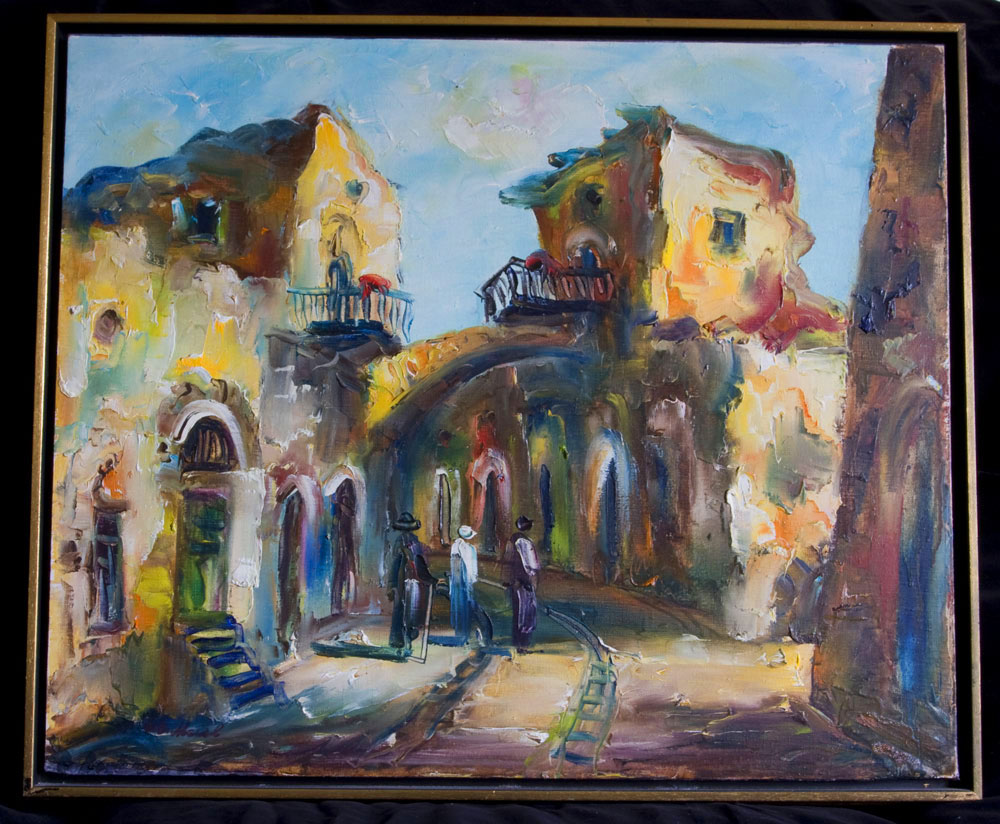
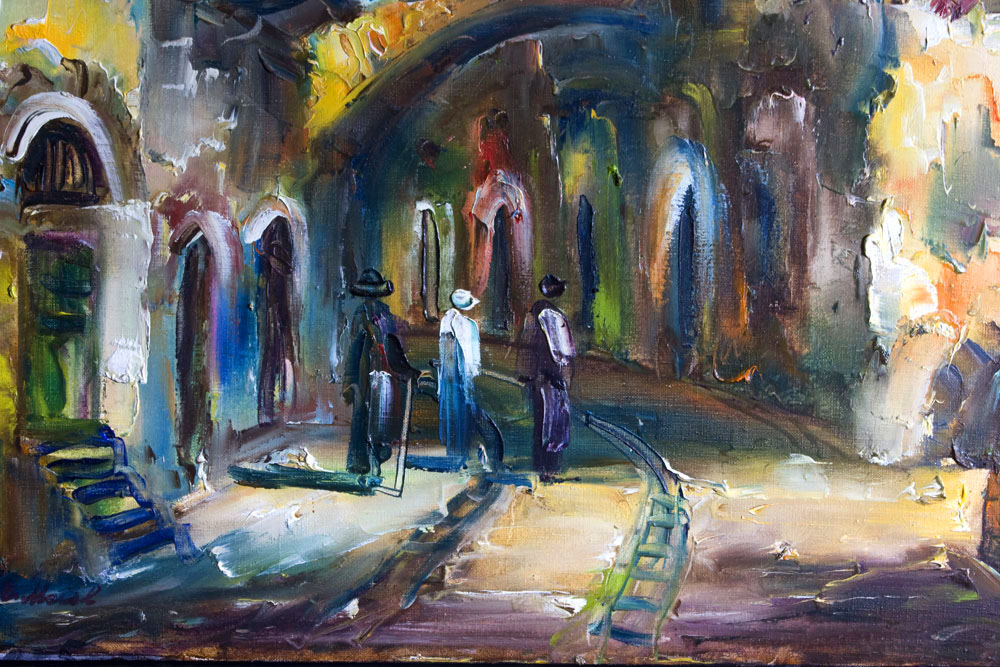
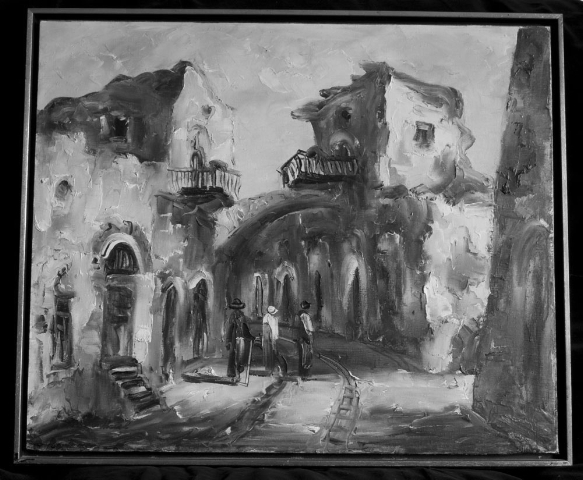
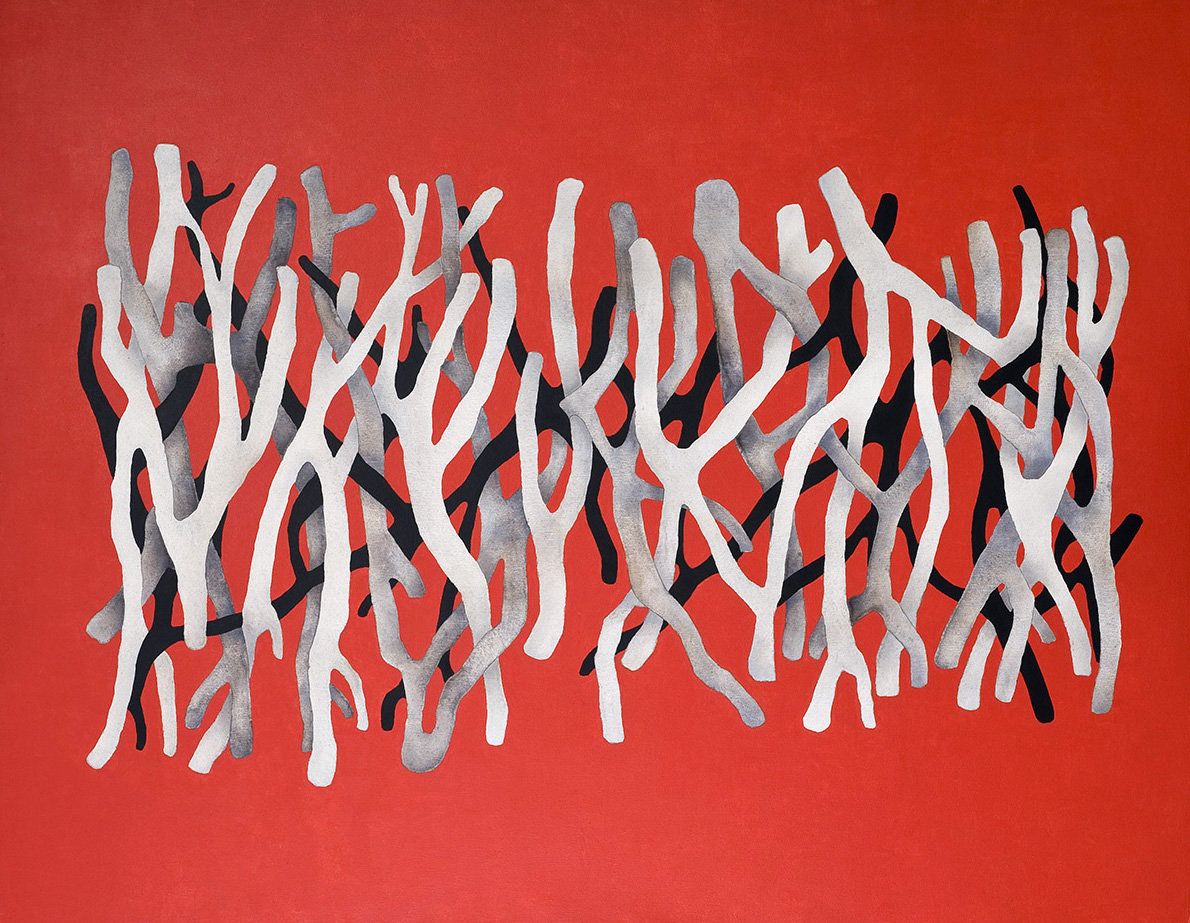
Edith Meisl-Bernhard Untitled 1965(?) Oil on canvas
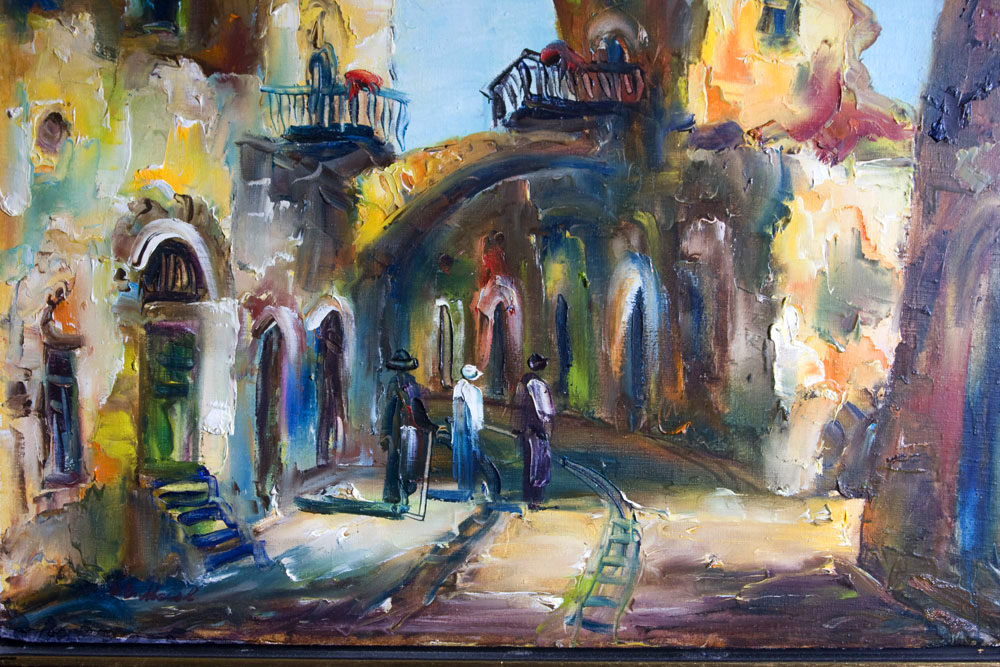
I bought this luminous painting from Camberwell Market many years ago.
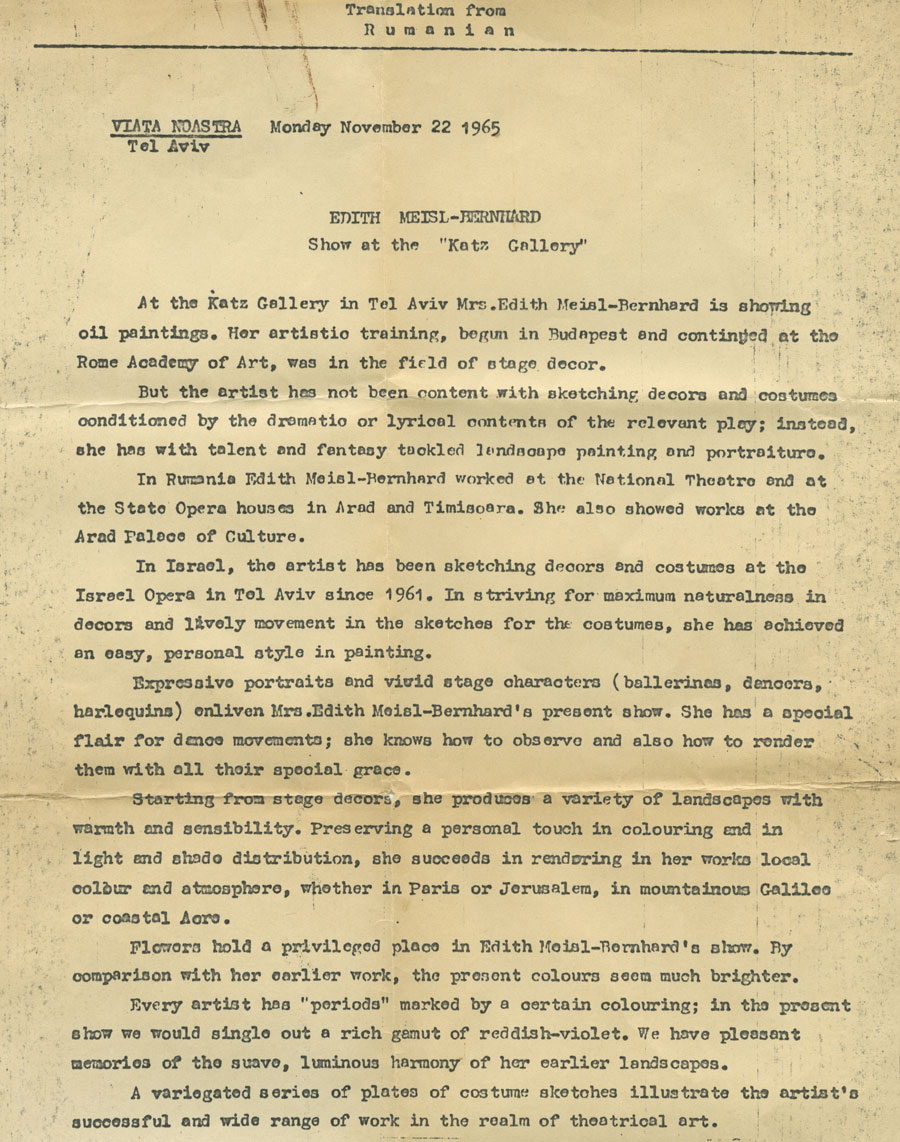
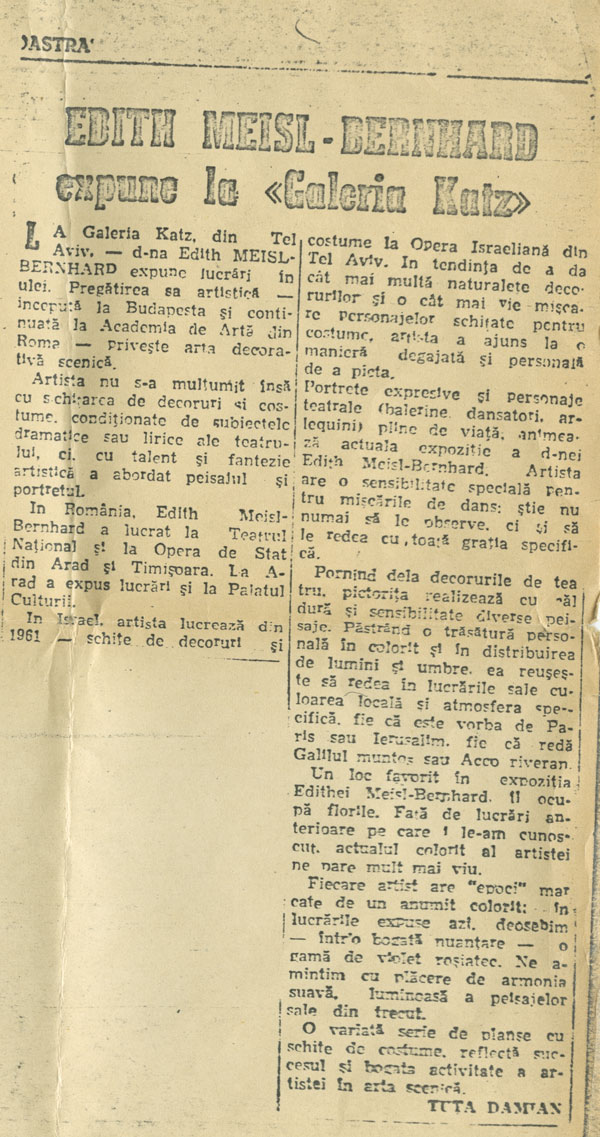
Tucked into the back of the canvas was the photostat review of an exhibition by Edith Meisl-Bernhard at the Katz Gallery in Tel Aviv in 1965, from which this painting presumably comes. It is the only thing that I can find out about the artist but what a life it seems: art training in Budapest and at the Rome Academy of Art; set design at the National Theatre and State Opera houses in Arad and Timisoara, Rumania; set design and costumes at the Israel Opera, Tel Aviv; and exhibiting artist. I have always treasured this painting – for the light, the colours and the atmosphere the artist creates within the picture frame. If anyone knows more about the artist could you please contact me. Thank you.
Dr Marcus Bunyan
Please click on the images for a larger version.
“Starting from stage decors, she produces a variety of landscapes with warmth and sensibility. Preserving a personal touch in colouring and in light and shade distribution, she succeeds in rendering in her works local colour and atmosphere, whether in Paris or Jerusalem, in mountainous Galileo or coastal Acre.”
Edith Meisl-Bernhard Untitled (detail) 1965(?) Oil on canvas
Edith Meisl-Bernhard exhibition at the Katz Gallery
Edith Meisl-Bernhard Untitled (detail) 1965(?)
Edith Meisl-Bernhard Untitled (detail) 1965(?)
Thankx to my friend Ian Lobb, here is the luminosity of the painting – without the colour you can easily see the tonal structure!!
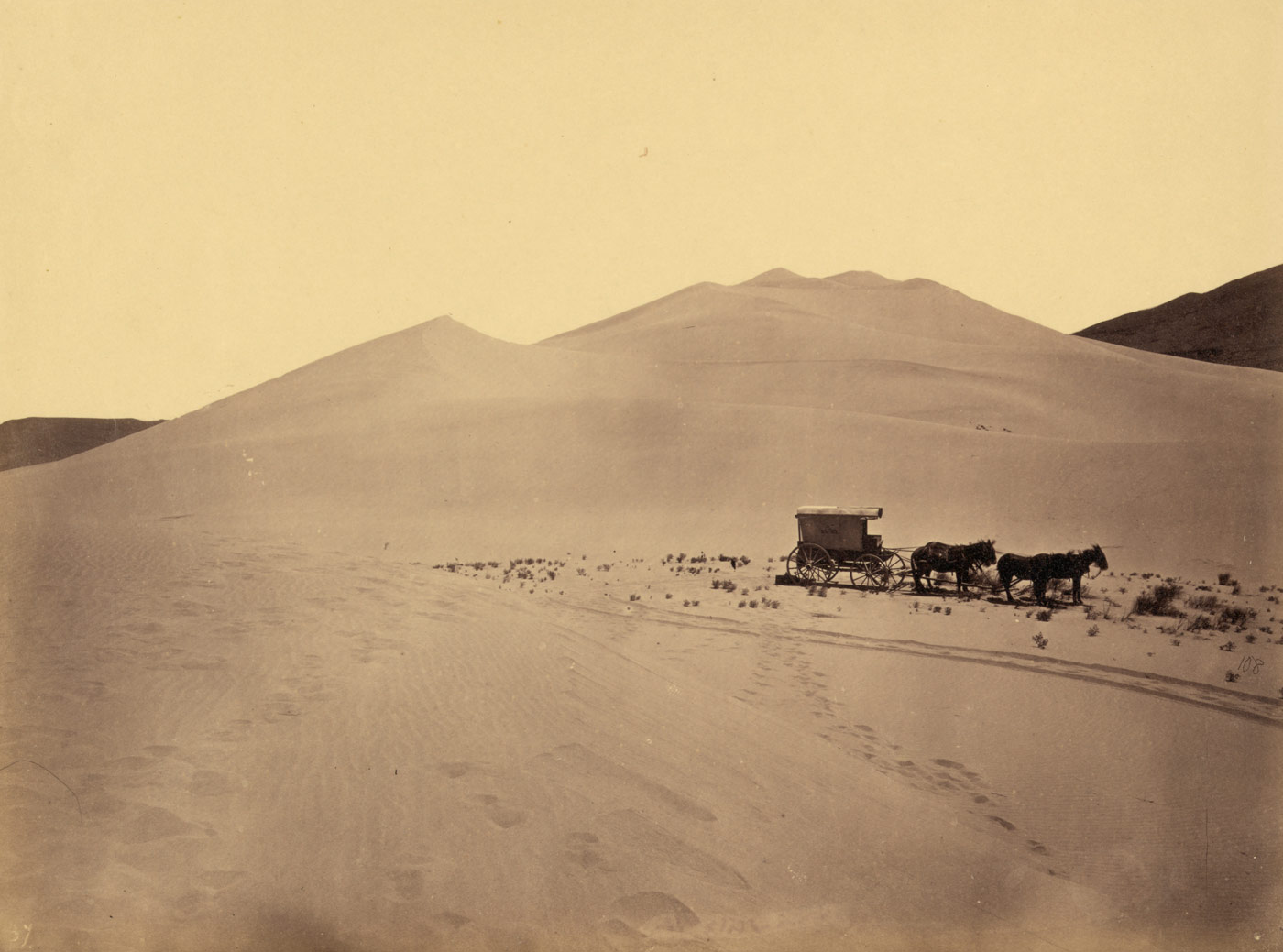
Timothy H. O’Sullivan (American, 1840-1882) Sand Dunes, Carson Desert, Nevada 1867 Albumen print Library of Congress, Prints and Photographs Division
The photograph shows O’Sullivan’s photographic wagon in which he developed his glass plates.
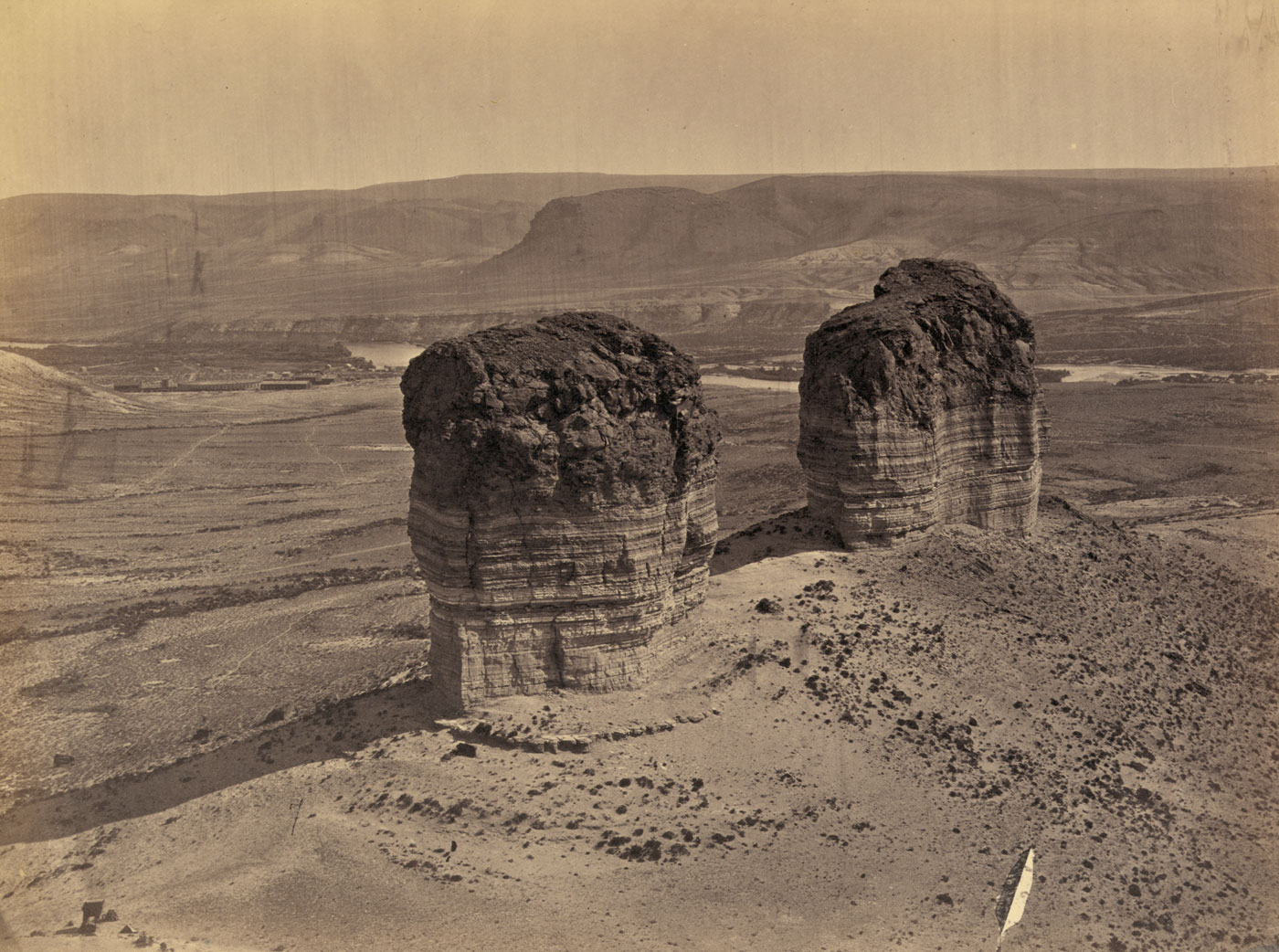
O’Sullivan died at the age of forty two but what photographs he left us! The human scales the sublime, literally; figures in the descriptive landscape. The last photograph is, if you will forgive the colloquialism, a doozy.
Marcus
“If the world is unfair or beyond our understanding, sublime places suggest it is not surprising things should be thus. We are the playthings of the forces that laid out the oceans and chiselled the mountains. Sublime places acknowledge limitations that we might otherwise encounter with anxiety or anger in the ordinary flow of events. It is not just nature that defies us. Human life is as overwhelming, but it is the vast spaces of nature that perhaps provide us with the finest, the most respectful reminder of all that exceeds us. If we spend time with them, they may help us to accept more graciously the great unfathomable events that molest our lives and will inevitably return us to dust.”
Alain de Botton. The Art of Travel. London: Penguin, 2002, pp. 178-179.
Many thankx to Laura Baptiste and the Smithsonian American Art Museum for allowing me to publish the photographs in the posting. Please click on the photographs for a larger version of the image.
Timothy H. O’Sullivan (American, 1840-1882) Lake in Conejos Cañon, Colorado 1874 Albumen print Library of Congress, Prints and Photographs Division
Timothy H. O’Sullivan (American, 1840-1882) Black Cañon, Colorado River, From Camp 8, Looking Above 1871 Albumen print Library of Congress, Prints and Photographs Division
Timothy H. O’Sullivan (American, 1840-1882) Buttes near Green River City, Wyoming 1872 Albumen print Library of Congress, Prints and Photographs Division
Timothy H. O’Sullivan (American, 1840-1882) Cañon de Chelle, Walls of the Grand Canon about 1200 feet in height 1873 Albumen print Smithsonian American Art Museum, Museum purchase from the Charles Isaacs Collection made possible in part by the Luisita L. and Franz H. Denghausen Endowment
Framing the West: The Survey Photographs of Timothy H. O’Sullivan is the first major exhibition devoted to this remarkable photographer in three decades. The exhibition is on view at the Smithsonian American Art Museum in Washington, D.C., from Feb. 12 through May 9. The museum is the only venue for the exhibition.
Marcus
“Framing the West” – a collaboration between the Smithsonian American Art Museum and the Library of Congress – offers a critical reevaluation of O’Sullivan’s images and the conditions under which they were made, as well as an examination of their continued importance in the photographic canon. It features more than 120 photographs and stereo cards by O’Sullivan, including a notable group of King Survey photographs from the Library of Congress that have rarely been on public display since 1876. The installation also includes images and observations by six contemporary landscape photographers that comment on the continuing influence of O’Sullivan’s photographs. Toby Jurovics, curator of photography, is the exhibition curator.
“Timothy H. O’Sullivan is widely recognised as an influential figure in the development of photography in America, so I am delighted that we have partnered with our colleagues at the Library of Congress to present this new assessment of his work and to expose a new generation to his forceful images,” said Elizabeth Broun, The Margaret and Terry Stent Director of the Smithsonian American Art Museum.
“In the years following the Civil War, the West was fertile ground for American photographers, but Timothy H. O’Sullivan has always stood apart in his powerful and direct engagement with the landscape,” said Jurovics. “Almost a century and a half after their making, his photographs still speak with an unparalleled presence and immediacy.”
O’Sullivan was part of a group of critically acclaimed 19th-century photographers – including A.J. Russell, J.K. Hillers and William Bell – who went west in the 1860s and 1870s. O’Sullivan was a photographer for two of the most ambitious geographical surveys of the 19th century. He accompanied geologist Clarence King on the Geologic and Geographic Survey of the Fortieth Parallel and Lt. George M. Wheeler on the Geographical and Geological Surveys West of the 100th Meridian. During his seven seasons (1867-1874) traversing the mountain and desert regions of the Western United States, he created one of the most influential visual accounts of the American interior.
His assignments with the King and Wheeler surveys gave O’Sullivan the freedom to record the Western landscape with a visual and emotional complexity that was without precedent. His photographs illustrated geologic theories and provided information useful to those settling in the West, but they also were a personal record of his encounter with a landscape that was challenging and inspiring.
Of all his colleagues, O’Sullivan has maintained the strongest influence on contemporary practice. The formal directness and lack of picturesque elements in his work appealed to a later generation of photographers who, beginning in the 1970s, turned away from a romanticised view of nature to once again embrace a clear, unsentimental approach to the landscape. Observations about his images by Thomas Joshua Cooper, Eric Paddock, Edward Ranney, Mark Ruwedel, Martin Stupich and Terry Toedtemeier appear in the exhibition and the catalog.
O’Sullivan (1840-1882) was born in Ireland. He emigrated to the United States with his family at the age of two, eventually settling in Staten Island, N.Y. Biographical details about O’Sullivan are spare, yet he is thought to have had his earliest photographic training in the New York studio of portrait photographer Mathew Brady. He is believed to have accompanied Alexander Gardner to Washington, D.C., to assist in opening a branch of the Brady studio in 1858, and when Gardner opened his own studio in Washington in 1863, O’Sullivan followed. O’Sullivan first gained recognition for images made during the Civil War, particularly those from the Battle of Gettysburg, and 41 of his images were published in Gardner’s Photographic Sketch Book of the War. O’Sullivan’s experience photographing in the field helped earn him the position as photographer for King’s survey. After his survey work, he held brief assignments in Washington with the U.S. Geological Survey and the U.S. Treasury. O’Sullivan died of tuberculosis on Staten Island at the age of 42.
Timothy H. O’Sullivan (American, 1840-1882) Green River Cañon, Colorado 1872 Albumen print Library of Congress, Prints and Photographs Division
Timothy H. O’Sullivan (American, 1840-1882) Horse Shoe Cañon, Green River, Wyoming 1872 Albumen print Library of Congress, Prints and Photographs Division
Timothy H. O’Sullivan (American, 1840-1882) Summit of Wahsatch Range, Utah (Lone Peak) 1869 Albumen print Library of Congress, Prints and Photographs Division
Timothy H. O’Sullivan (American, 1840-1882) Shoshone Falls, Snake River, Idaho, View Across Top of Falls 1874 Albumen print Library of Congress, Prints and Photographs Division
Timothy H. O’Sullivan (American, 1840-1882) The Pyramid & Domes, Pyramid Lake, Nevada 1867 Albumen print Library of Congress, Prints and Photographs Division
Smithsonian American Art Museum 8th and F Streets, N.W. Washington, D.C. 20004
Featuring Museum Highlights: A Gallery Talk by Andrea Fraser (USA) as well as works from the collections of Hany Armanious, Liv Barrett, Polly Borland (UK), Steve Carr (NZ), Lane Cormick, Chantal Faust, Marco Fusinato, Tony Garifalakis, Matthew Griffin, Irene Hanenbergh, Christopher Hanrahan, Hotham Street Ladies, the Kingpins, Paul Knight, Andrew Liversidge, Rob McLeish, Callum Morton, Nat & Ali, Geoff Newton, Martin Parr (UK), Stuart Ringholt, David Rosetzky, Darren Sylvester, Christian Thompson, Lyndal Walker and Caroline Williams.
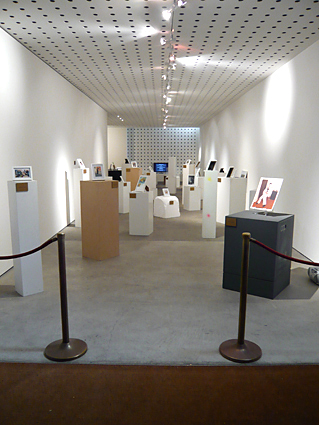
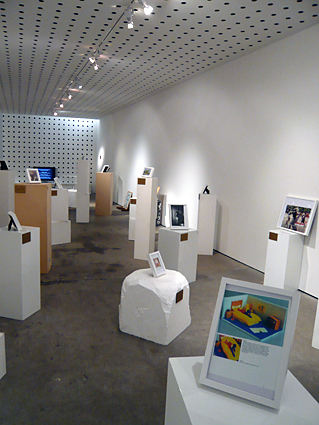
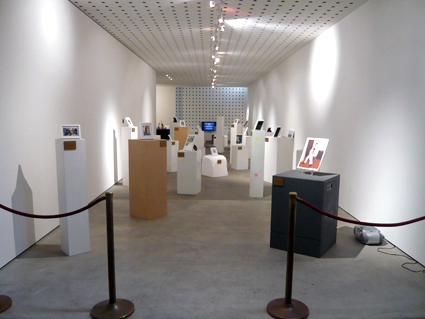
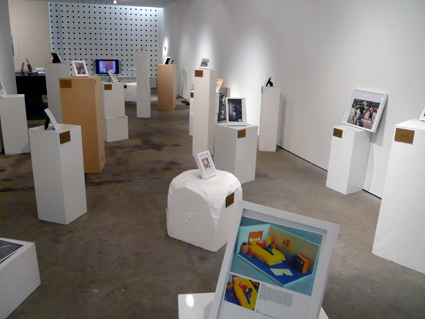
Curated by Mark Feary, this is a deliciously ironic exhibition that asks the audience to question the social and political construction of the blockbuster exhibitions regularly held by large museums around Australia; to question the role of the curator in assembling such exhibitions; and to question the cultural value of permanent collections of ‘Masterpieces’. Autumn Masterpieces displays work that is anything but permanent and undermines the process whereby museums construct frameworks for social understanding. The work, displayed in a roped off space on plinths of various heights, in cheap frames and at skew-whiff angles, seems ephemeral and transitory all the more to contradict both main tenants of the title of the exhibition: masterpiece and permanence.
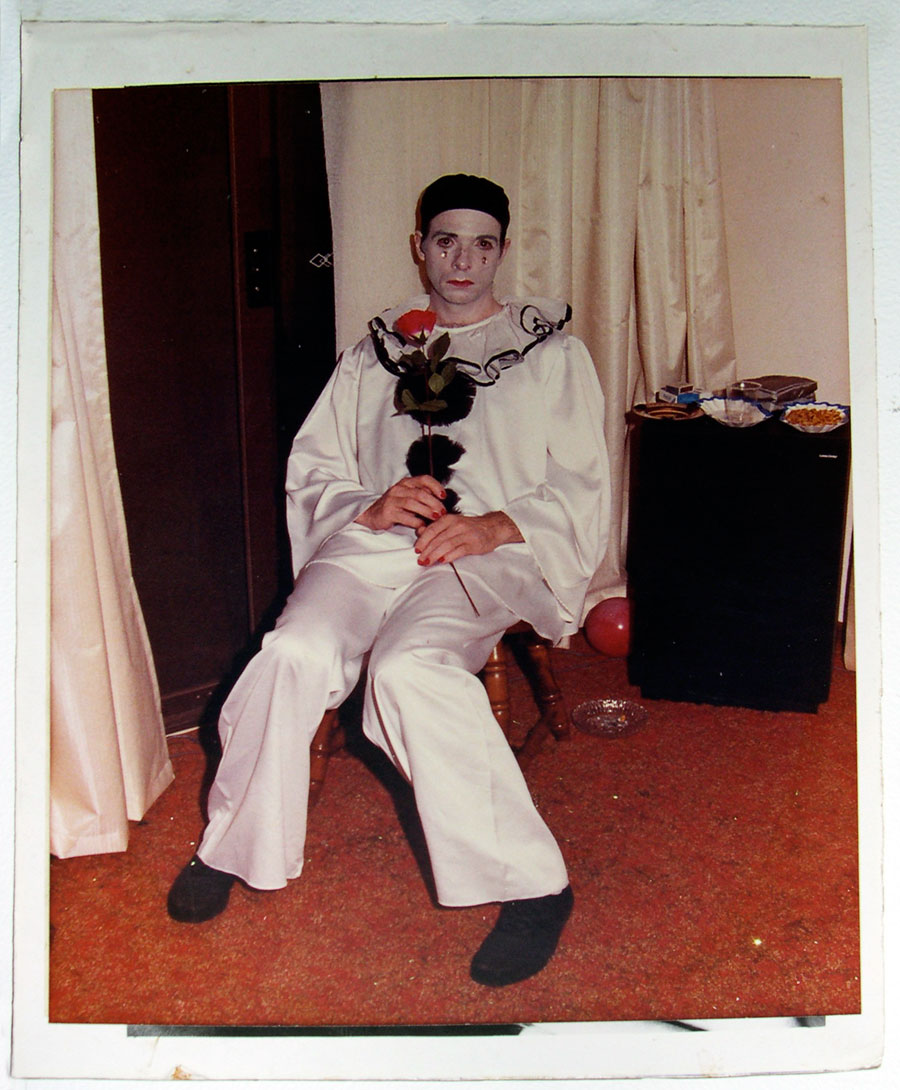
Sitting on plinths that are adorned with plastic gold name plaques emblazoned with the condition of the possibility of the works existence, “From the collection of …” , the untitled works reinforce the conceptual thrust of the exhibition. In one sense the content of the specific images seemed almost irrelevant; in another the collective dialectical argument of the images deconstructs normative interpretations of the masterpiece. ‘Instructions for the Tourist’ and ‘Rules for How to use the playground’ sit next to photographs of dejected clowns; ‘Confusion & Reversals’ sit next to ambiguous photographs of events and actions: people doing ‘normal’ things displayed though Polaroids, newspaper clippings, snapshots, photographs from albums, black and white and colour, framed and in museological glass cases.
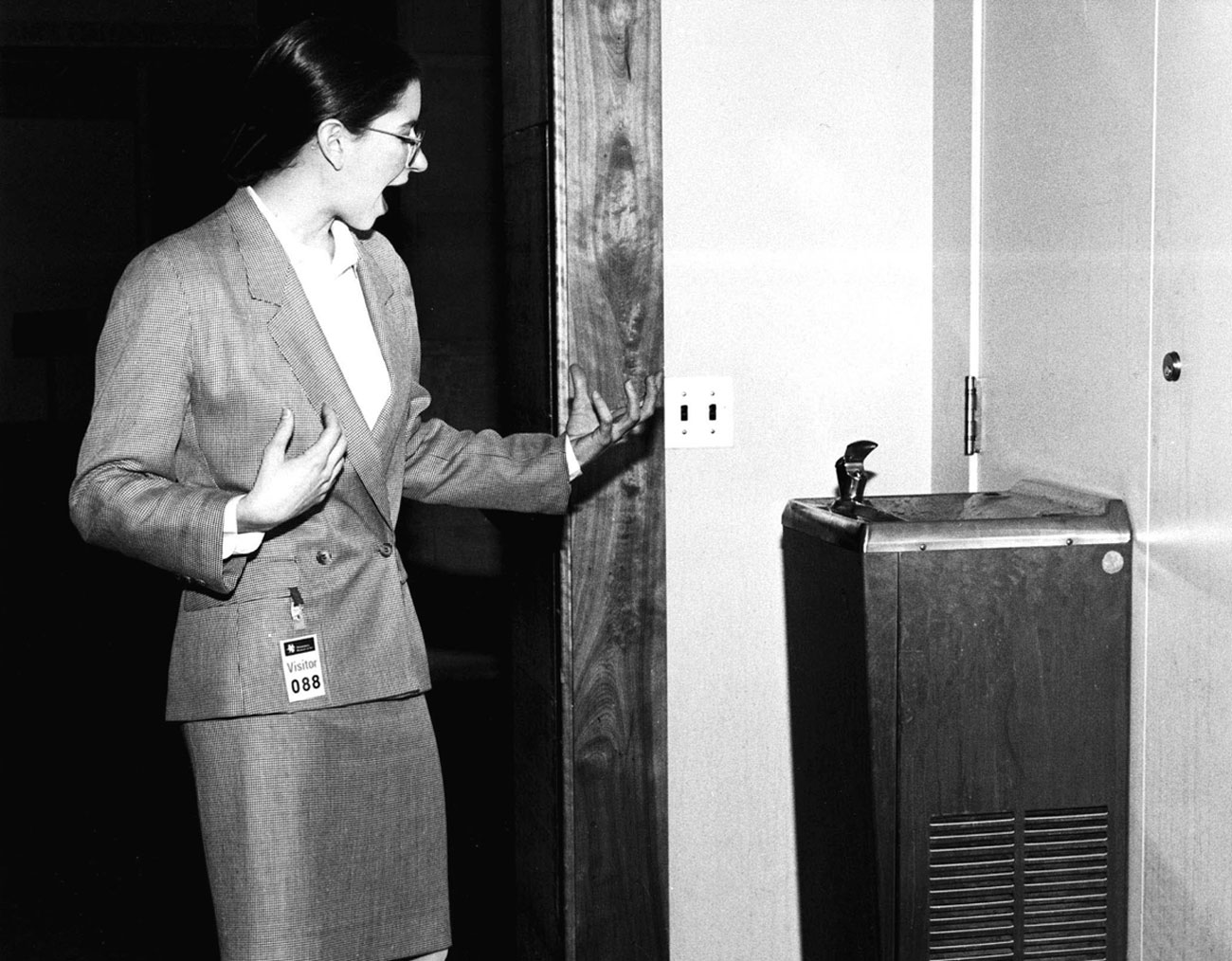
The highlight of the exhibition for me was the guffaw inducing DVD Museum Highlights: A Gallery Talk (1989) by American artist Andrea Fraser. Where Mark Feary found this post-cultural gem is beyond me but I am so glad he did! I stood transfixed as the narrator / curator takes us on a virtual tour of the Philadelphia Museum of Art, along the way pointing out the magnificence and subliminal beauty of the objects in the museum. She stresses the decorum of the institution, it’s tradition in measured, ordered, dignified arrangements that are fine and simple while addressing a water fountain. Oh the deliciousness! She continues with the exultation of the institution, that is to develop an appreciation of values – true / false, better / worse, right / wrong, what is good for you / what is good for society – standards that should be adopted by a discriminating public, while addressing a broom cupboard. The piece subverts an approach “in which visitors’ individual meanings are only validated by the extent to which they concord with the conclusions intended by exhibition-makers or to which they conform to some predetermined and fixed standard truth.”1 And so it goes in an ever so serious, side-splitting soliloquy, critiquing the functions of art, linking the aspirations of humanity with the highest privileges of wealth and leisure. Wonderful!
Dr Marcus Bunyan
1/ Hein, George E. Learning in the Museum. London: Routledge, 1998 quoted in Sandell, Richard. “Reframing conversations,” in Museums, Prejudice and the Reframing of Difference. London and New York: Routledge, p. 179.
Installation views of the exhibition Autumn Masterpieces: Highlights from the Permanent Collection at the Centre for Contemporary Photography, Melbourne Photos: Marcus Bunyan
Courtesy of the collection of Tony Garifalakis
Courtesy of the collection of Irene Hanenbergh
Courtesy of the collection of Hany Armanious
Andrea Fraser (American, b. 1965) Museum Highlights: A Gallery Talk 1989 DVD (colour video with sound. 29′) Courtesy of the artist and Friedrich Petzel Gallery, New York
Many thankx to the Blanton Museum of Art for allowing me to reproduce images from the exhibition in the post. Please click on the photographs for a larger version of the image.
Marcus
Olaf Breuning (Swiss, b. 1970) Brian 2008 C-print 60 x 70 inches Courtesy the artist and Metro Pictures, New York
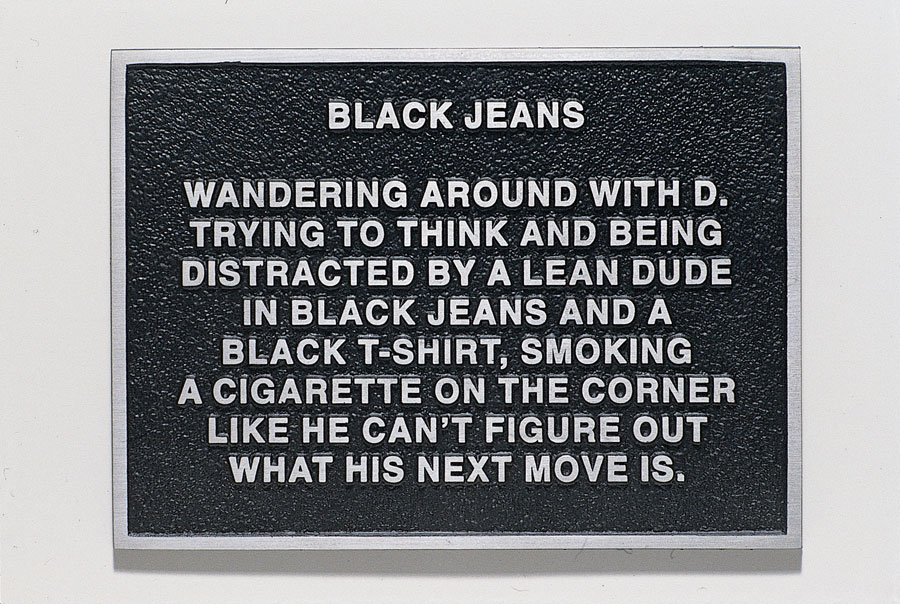
Glenn Ligon (American, b. 1960) Lest We Forget 1998 Series including cast aluminium or bronze plaques, colour photographs of plaques on site Courtesy the artist and Luhring Augustine Gallery, New York
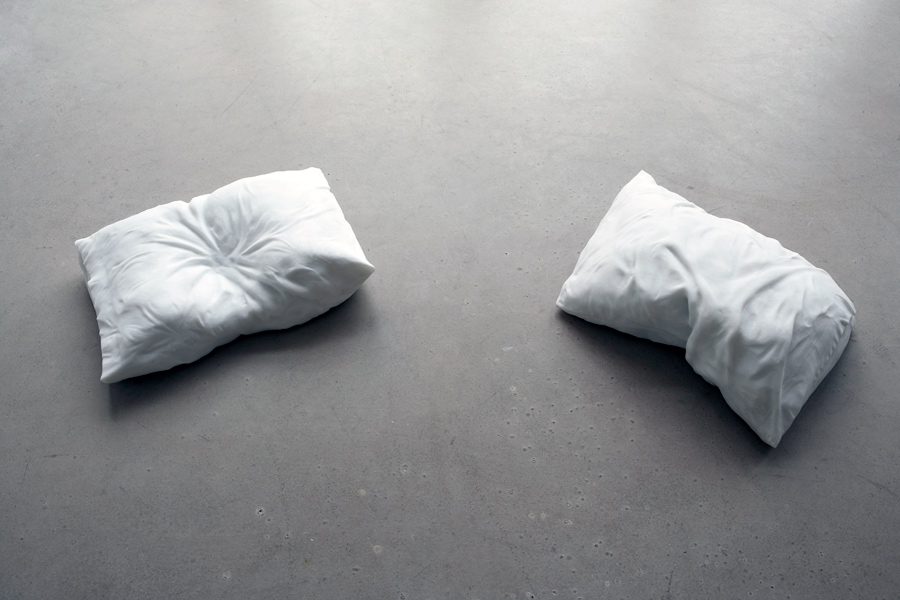
Valeska Soares (Brazilian, b. 1957) Duet 2008 Hand-carved white marble Installation dimensions variable Private Collection
Tracey Emin (English, b. 1963) You Should Have Loved Me 2008 Warm white neon Courtesy of Lehmann Maupin Gallery, New York
This February, The Blanton Museum of Art at The University of Texas at Austin investigates the notion of desire in an exhibition of the same name. Curated by Annette DiMeo Carlozzi, Blanton curator of American and contemporary art and director of curatorial affairs, the exhibition features over fifty works from an international group of contemporary artists working in all media, including Glenn Ligon, Marilyn Minter, Petah Coyne, Bill Viola, Tracey Emin, Isaac Julien and many others. The accompanying illustrated catalogue will contain texts by art critics, fiction writers, poets, performing and visual artists, all written in direct response to the works of art in the exhibition.
Carlozzi states, “”Desire” is a complex human emotion and a driving force in our lives from childhood through old age. We all can recall examples of literature, film, and music that are rife with expressions of physical desire, but how do contemporary visual artists portray it, and all its attendant psychological states – anticipation, arousal, longing, regret, and so on? “Desire” assembles a really broad range of compelling works that together present a surprisingly diverse portrait of the experience.”
One provocative aspect of the exhibition is not its imagery, per se, but the manner by which many of the works translate intimate experiences into art a public expression. Marilyn Minter’s Crystal Swallow would seem to capture a private moment of visceral response, yet in such detail and exaggerated scale that it becomes a grotesque advertisement for arousal. Glenn Ligon’s series, Lest We Forget, commemorates those flickers of romantic fantasy that sometimes occur while people watching. And Tracey Emin’s You Should Have Loved Me is an accusation from a lover scorned, created with the neon light of public signage as if to broadcast raw feeling to an uncaring world.
Works by Kalup Linzy, William Villalongo, Olaf Breuning, James Drake, Petah Coyne, Gajin Fugita, Georganne Deen, Adam Pendleton, Peter Saul, Valeska Soares, Danica Phelps, Miguel Angel Rojas, Mads Lynnerup, Rochelle Feinstein, Richard Prince, Laurel Nakadate, Jesse Amado, Isabell Heimerdinger, Alejandro Cesarco, Eve Sussman, Robert Kushner, Luisa Lambri, Chris Doyle, and a dozen others, provide an engaging multi-generational exploration of desire. In addition, an informed selection of works of art from The Blanton’s print collection will add a historic counterpoint to the contemporary works on view.
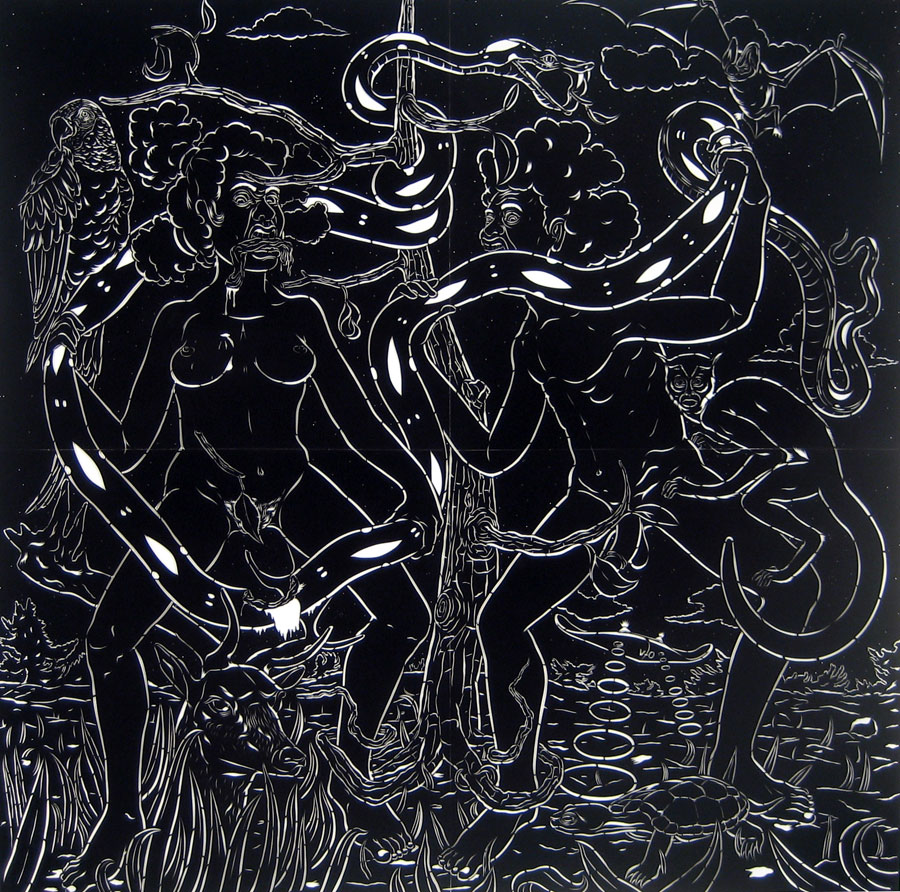
Will Villalongo (American, b. 1975) The Last Days of Eden 2009 Cut velour paper Courtesy the artist and Susan Inglett Gallery, New York
William Villalongo (born December 14, 1975 in Hollywood, Florida) is an American artist working in painting, printmaking, sculpture, and installation. Currently based in Brooklyn, New York, Villalongo is also a professor at the Cooper Union School of Art in New York.
Villalongo typically focuses in his works on the politics of historical erasure, with a particular focus on the artistic reassessment of Western, American, and African Art histories. The artist states that his intention toward these reassessments evolves in part from the West’s histories of “taking African art objects and placing them on the side of the sofa to decorate, although that is not their purpose. We are obsessed with fitting a narrative, a story.”
His works engage with the black body, examining the influences of socialisation, history, occupation, dress, and speech on it. In many of his portraits, bodies emerge from “a tumult of white negative space cut out of black velour paper,” in ways that evoke leaves, branches, feathers, or slashes.
Villalongo is also influenced by Pablo Picasso, who incorporated African masks into his primitivist works, and Aaron Douglas who he credits as inspiring him. Villalongo reexamines the power dynamics of history and representation in his own pieces. “It’s problematic and interesting, and I wanted to think about how to use it and tell a story.”
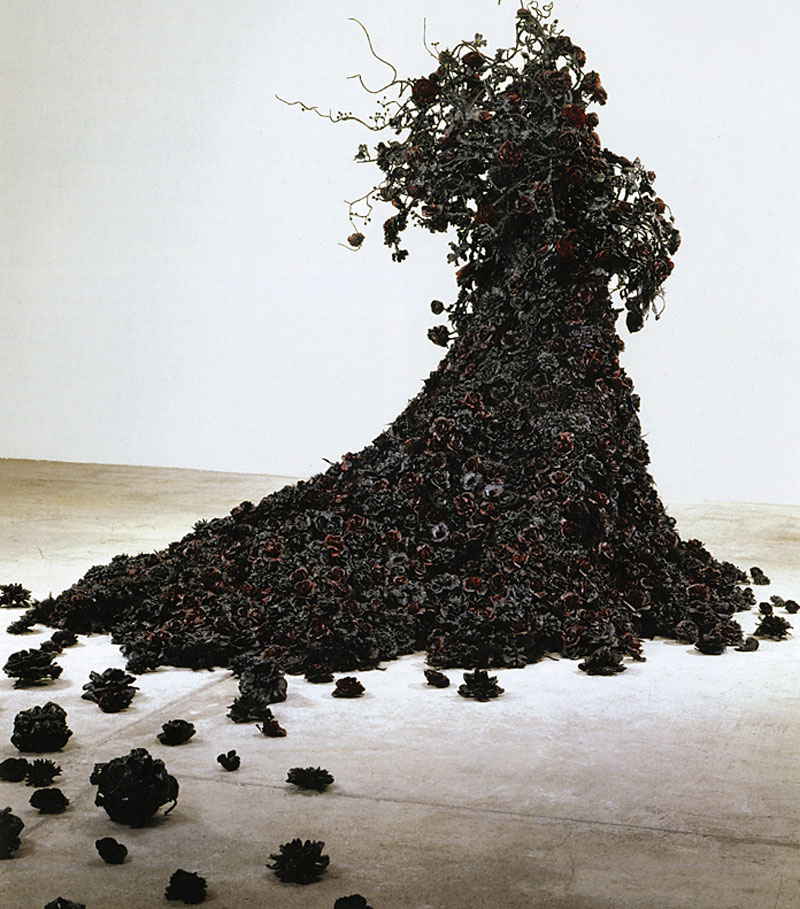
Petah Coyne (American, b. 1953) Untitled #1103 (Daphne) 2002-2003 Mixed media 77 x 83 x 86 inches Collection of Julie and John Thornton
Petah Coyne (born 1953) is an American sculptor and photographer. She is known for her large-scale sculptures composed of unconventional, and often organic, materials, such as clay, silk, wax, and hair.
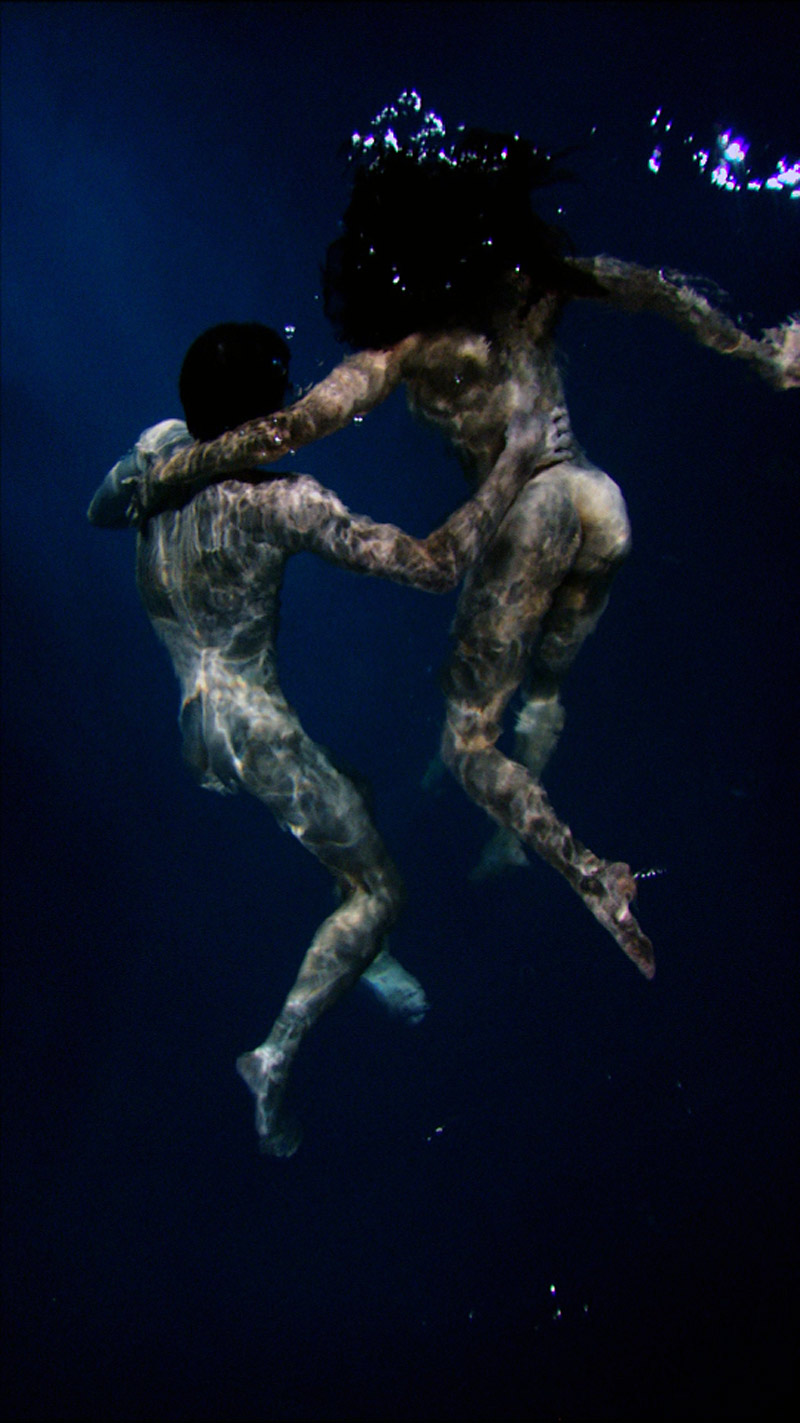
Bill Viola (American, 1951-2024) Becoming Light (still) 2005 Colour High-Definition video on plasma display mounted on wall 47.6 in x 28.5 in x 4 in (121 x 72.5 x 10.2cm) Performers: John Hay, Sarah Steben Photo: Kira Perov Courtesy Bill Viola Studio
Marilyn Minter (American, b. 1948) Crystal Swallow 2006 Enamel on metal Promised gift of Jeanne and Michael Klein, 2007
Blanton Museum of Art MLK at Congress (200 East MLK) Austin, Texas 78701
Many thankx to the MKG for allowing me to publish the photographs in this post. Please click on the photographs for a larger version of the image.
Marcus
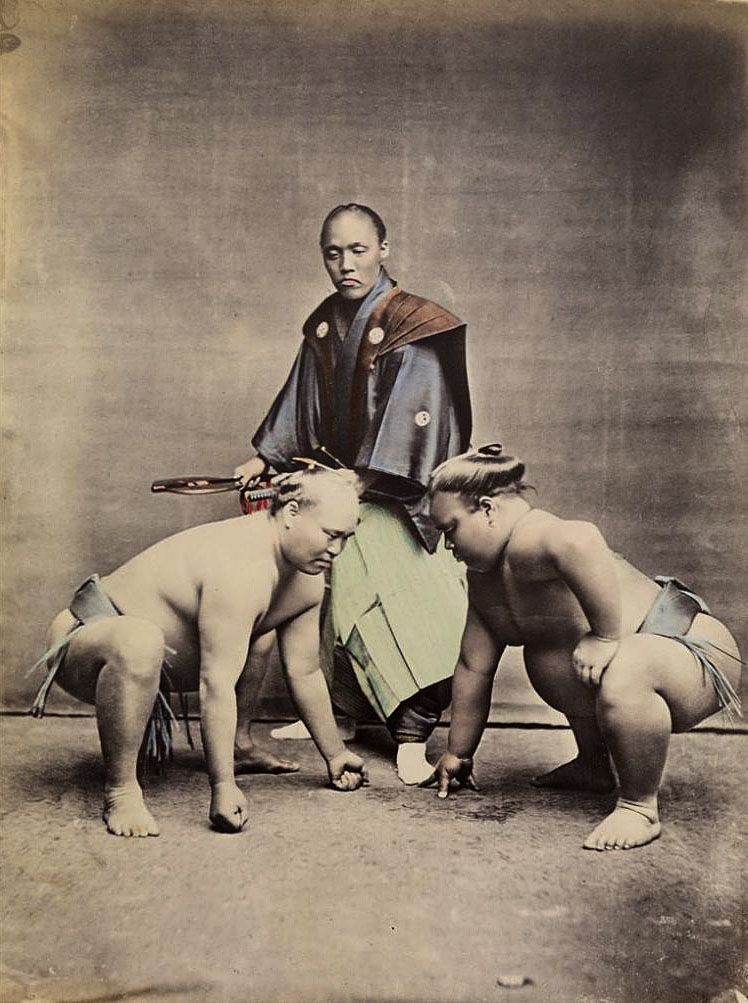
Kusakabe Kimbei (Japanese, 1841-1934) Sumo wrestlers c. 1880
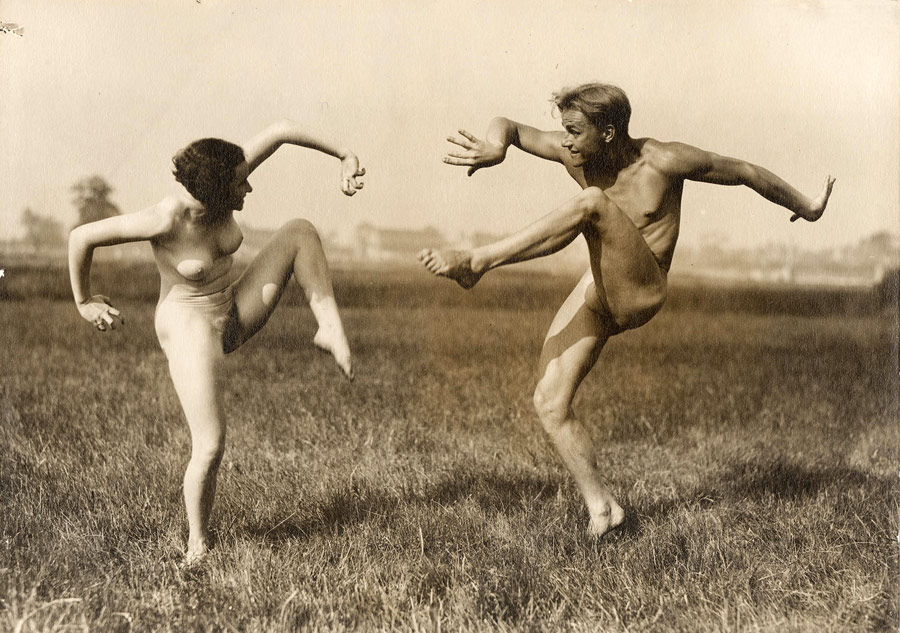
Gerhard Riebicke (German, 1878-1957) Couple Performing German Dance c. 1930 Gelatin silver print 11.6 x 16.2 cm Bodo Niemann and Münchner Stadtmuseum
Gerhard Riebicke spent his childhood in Switzerland. He studied in Tübingen, worked as a tutor in Poznan, and appropriated the technique of self taught photographer. In 1909 he was a press photographer in Berlin. Gradually, his focus shifted to the sports and nudity culture photography (ball games, jumps, dance or bathing scenes).
As a friend of Adolf Koch, he documented his school for physical education and nude culture. As a chronicler of the reform movement, he also maintained contacts with the Laban School of Hertha Feist and other dance and gymnastics schools Hedwig Hagemann, Berte Trümpi and Mary Wigman. He was represented in Hans Surén’s “The Man and the Sun” in 1924. After 1933 he concentrated on sports photography.
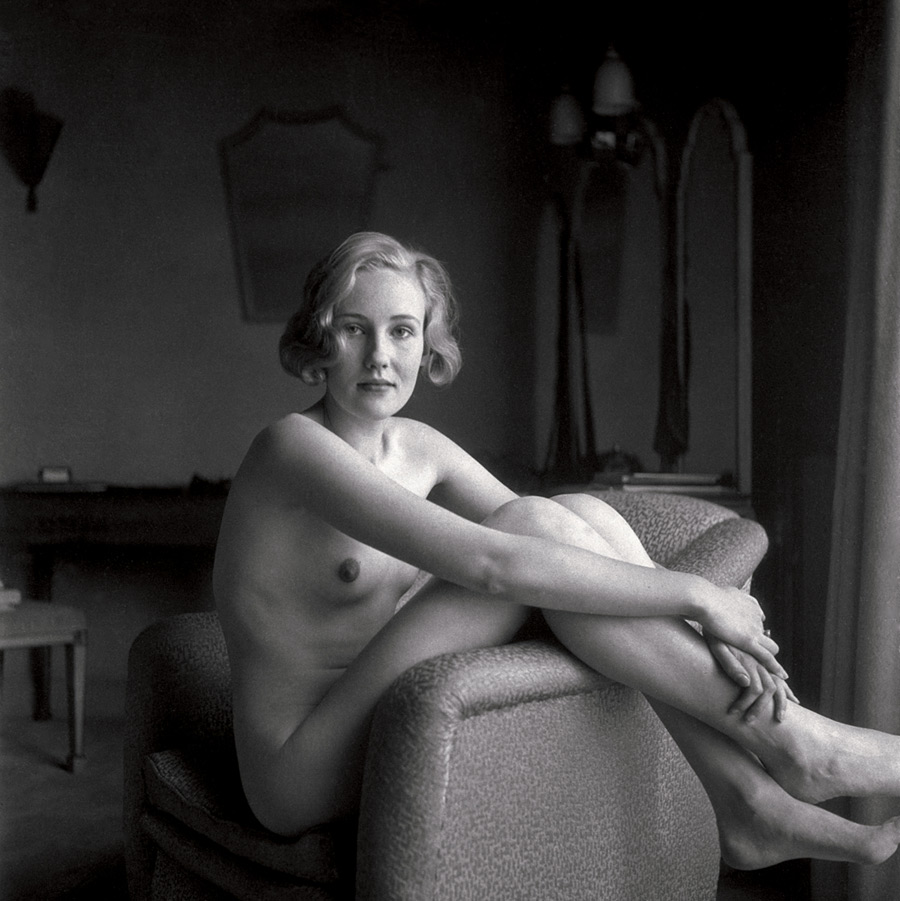
T.W. Salomon (attributed) Female Nude in Armchair c. 1935 Gelatin silver print 27.5 x 27.4cm Münchner Stadtmuseum
T.W. Salomon was a notable German photographer best known for his “Revuegirls” series from 1935. He was a contemporary of Erich Salomon, another influential German photographer, but there is no direct connection between the two.
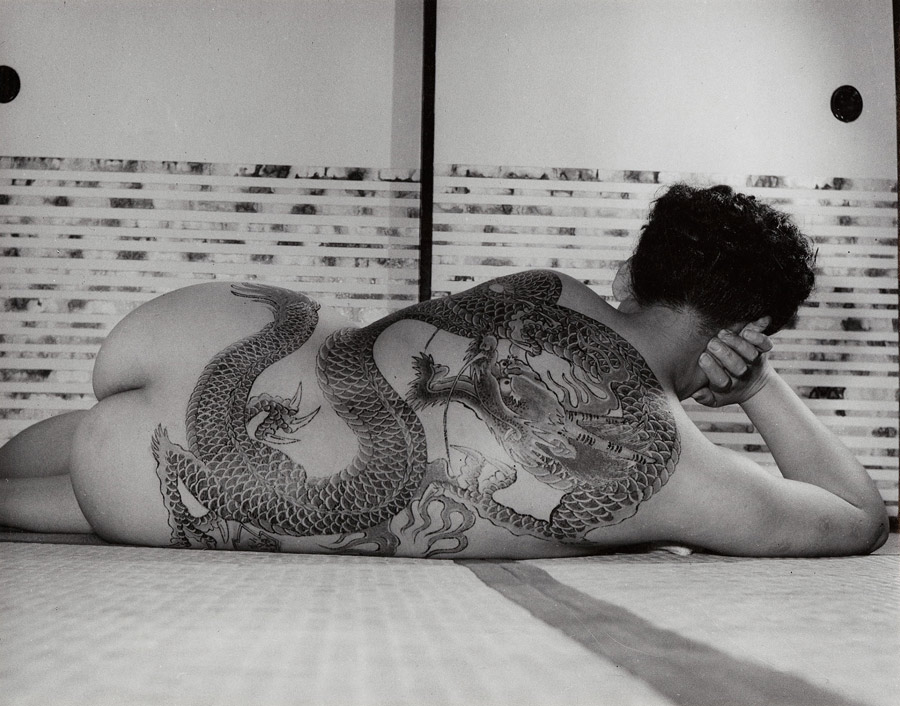
Jan Mutsu Japanese Man with Tattoo c. 1955 Gelatin silver print 20.2 x 25.7cm Münchner Stadtmuseum
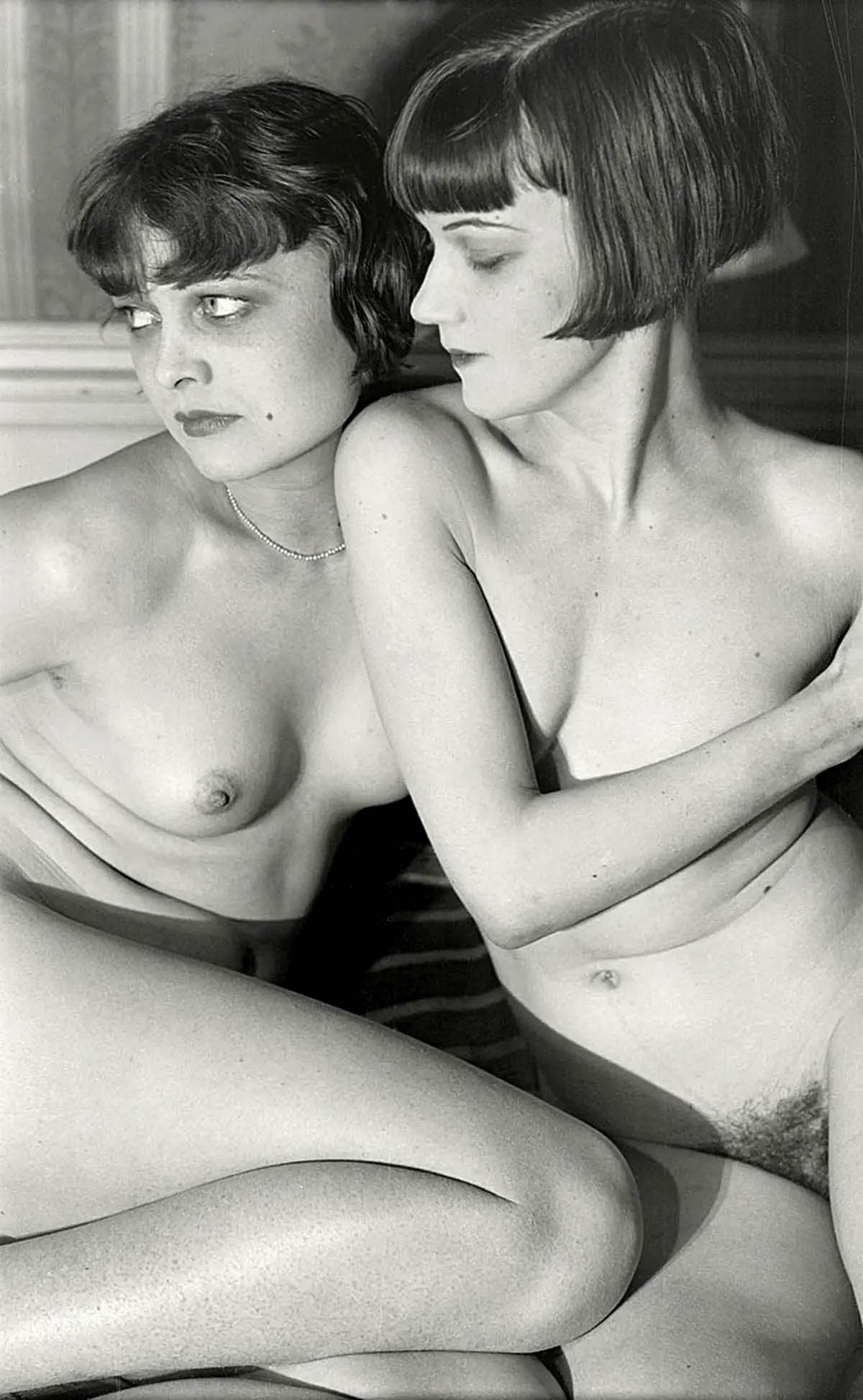
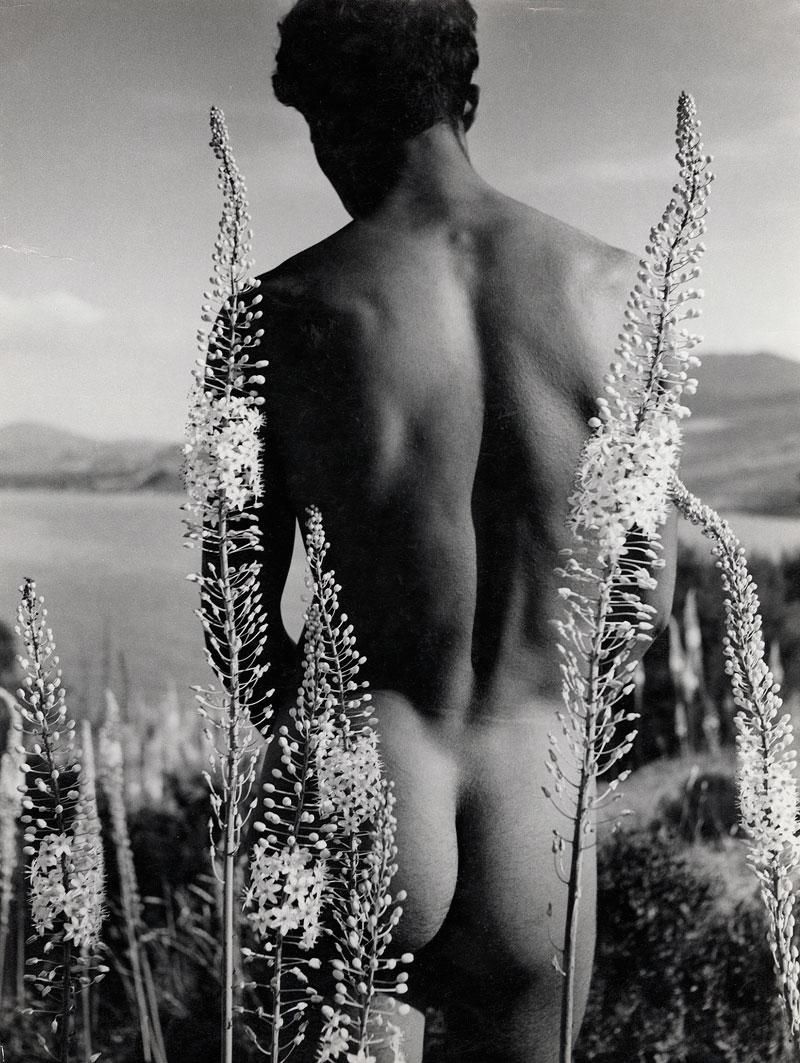
Josef Breitenbach (German-American, 1896-1984) Nude from the series This beautiful landscape 1963 Gelatin silver print 27.5 x 35.3cm Breitenbach Trust USA and Munchner Stadtmuseum
An exhibition with more than 250 original photos, books and folders with studies from the nude, including masterpieces from each period.
The representation of the unclothed human body has exuded a great fascination ever since time began. The exhibition Nude Visions invites visitors to embark on a journey through a collection of depictions of the human body spanning 150 years. More than 250 original photos, books and folders with studies from the nude will be on view, including masterpieces from each period: from photographs dating from the 19th century which seek their models in Classical Antiquity and the Renaissance, up to Surrealistic experiments and fashion and lifestyle photography. The exhibition illustrates changing ideals of beauty and moral perceptions, and reveals once again the constant attempt to balance between educational openness, titillation and curiosity.
“Without any doubt, there is nothing which draws the attention of the observer to it so much as the naked human body.” This comment of the journalist and photographer Kurt Freytag in1909 is as true today as it was then. The exhibition turns this fact to its advantage and deals with the historical, aesthetic and ideological development of images of the human body in photography. The show is divided into seven chapters devoted to the meaning and function of the unclothed human body in photography, and tracing the history of the medium: “Academies and Exotic Pictures in the 19th century,” “Art photography around 1900 (Pictorialism),” “Avant-gardes of the 20s and 30s,” “Artistic positions after 1945,” “Naturism,” “The Male Nude” and “Glamourous Nudes.” The first coloured Daguerreotypes of curvaceous ladies with blushing cheeks dating from 1855 meet the unflatteringly in-your-face and voyeuristic self-portrait of the photographer Frank Stürmer from 2004. These two photos mark the two ends of the spectrum covered by the exhibition, which illustrates the evolution of nude photography over sixteen decades by the example of more than 250 eminent works.
Nude photography is always, too, a process of negotiation between revealing and concealing. This exhibition makes clear the ambivalence of what is visible and what is unseen, of shame and curiosity, of legitimation and provocativeness. How nakedness is treated is closely bound up with the specific social context in which it occurs, the ideas of morality and the aesthetic ideal of an era. The motif of the nude is always influenced here both by the historical artistic tradition and reactions to contemporary impulses, which are interpreted by the photographer. Thus the movement for women’s emancipation, for instance, led to new ways of looking at both the female and the male body, as seen for example in the work of Herlinde Koelbl. Images which were still regarded as being scandalous at the beginning of the 20th century, triggering moral misgivings and controversy about a subject perceived as being delicate, would hardly bring a blush to the face of anyone living today. It is not only the motifs which have moved on, but also the reproducibility of the images and the extent of their media coverage impact on the awareness and significance of nakedness in society.
The origins of the history of nude photography lie in the so-called “academies,” which provided painters, graphic artists and sculptors with study objects in the 19th century and which followed the historical artistic models of Classical Antiquity and the Renaissance. Nude photography soon increasingly became emancipated from being a mere model for painting and sculpture, and developed artistic ambitions of its own: photographers discovered in the art of the fin de siècle, with its debt to Symbolism, the nude as a reflection of emotional states and yearnings. In the outgoing 19th century, with its bias towards the exact sciences, the human body served as an object for the study of movement, such as in the celebrated series shots by Eadweard Muybridge showing the sequence of motions in human movement.
Whereas historically staged scenes and compositions are still created in the sheltered environment of the atelier at the beginnings of photography, we find the first open-air nudes after 1870. Wilhelm von Gloeden, Guglielmo Plüschow and others took advantage of the light in the Mediterranean South to stage their visions of an earthly Arcadia. As a feature of the Lebensreform back-to-nature movement which gained ground from the turn of the century onwards, especially in Germany, nude photography became a torchbearer of the Naturist movement. The ornamentally arranged groupings of naked dancers which Gerhard Riebicke for example photographs, mainly in the German countryside, became a symbol for the liberation from the moral constraints of civilisation and industrialisation. The aesthetic of athletic bodies engaged in sporting activities or dancers in motion was taken up in the heroic physical ideal of the National Socialists and can later still be found in the cult of bodybuilding.
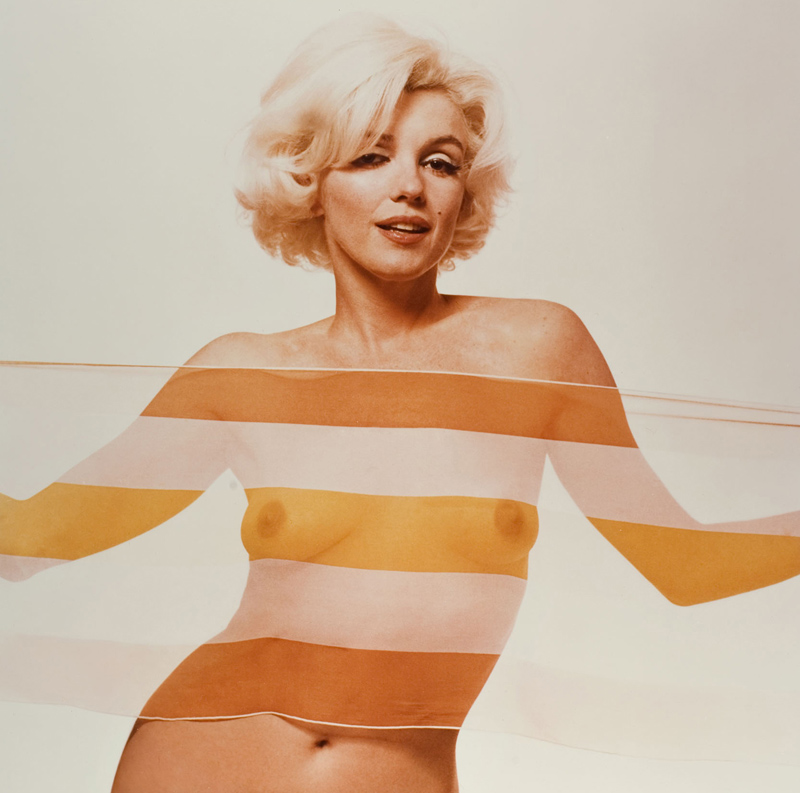
A new, more radical vision was developed by the Avant-garde movements after the 1920s, with their abstract and surrealistic experiments, such as the stories narrated in a play of light and shadow by František Drtikol or the deformed bodies in the works of Hans List. The theme of “glamour” plays a crucial role above all in fashion photography. That chapter poses the question as to what role is played in the debate on fashion by the way of showing the unclothed female body, by male desire and how perceptions change in the course of cultural history. Glamour can be seen in the erotic images from the Atelier Manassé, shown in soft focus, in Bert Stern’s portraits from the “last sitting” of Marilyn Monroe, up to and including Helmut Newton’s photos. In addition to these, selected works by amateurs as well as the male nude as an expression of gay emancipation will also be presented in pictures, particularly by Will McBride or Herbert Roettgen, who placed the representation of the naked male body in the focus of their work as an expression of their homosexuality, an emblem of their coming-out.
The depiction of the naked torso is shrouded in an aura of scandal and has always been a political bone of contention, whereby images of the bare human body send signals which differ according to their historical context: the photographic artists of the 1970s, working within the framework of body art and performance events, declared the directness of their own physical experience to be a political necessity. In retrospect, their work can be seen as a last desperate attempt to grapple with the vanishing concept of the subjective personality before the transition to the post-modern age. The private spaces of life too are meanwhile also illuminated in a quite different way than 25 years ago. The photographer Thomas Ruff deals in his works, which he imbues with a diffuse haziness by digital means, with the theme of the exhibitionism which can go as far as pornographic exposure of one’s own and others’ nakedness in internet forums. Nude Visions shows that the representation of the naked human body always also has something to do with the quest for insight into what human beings (and one’s own self) really are and what role they play in society.
Press release from the MKG website [Online] Cited 15/04/2010. No longer available online
Lehnert & Landrock was a photographic studio run by Rudolf Franz Lehnert and Ernst Heinrich Landrock active in Tunisia and Egypt in the early 20th century, noted for producing Orientalist images. Rudolf Franz Lehnert and Ernst Heinrich Landrock produced images of North African people, landscapes, and architecture for a primarily European audience. These images were mainly distributed in monographs, though also as original prints, photogravures, and lithographic postcards.
Around 1900, photography increasingly established itself as an artistic medium, with proponents like Frank Eugene attempting to conceal its true character through soft-focus lenses, gauze curtains, and post-processing of the image.
Herbert List (German, 1903-1975) Arab Boy with Desert Candles 1935 Gelatin silver print 29.7 x 22.5cm Herbert List-inheritance, Hamburg and Munchner Stadtmuseum
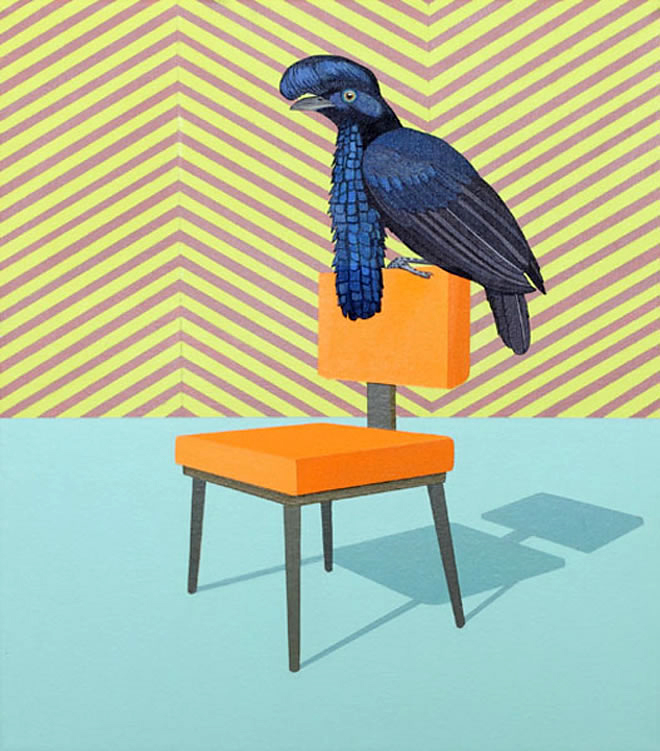
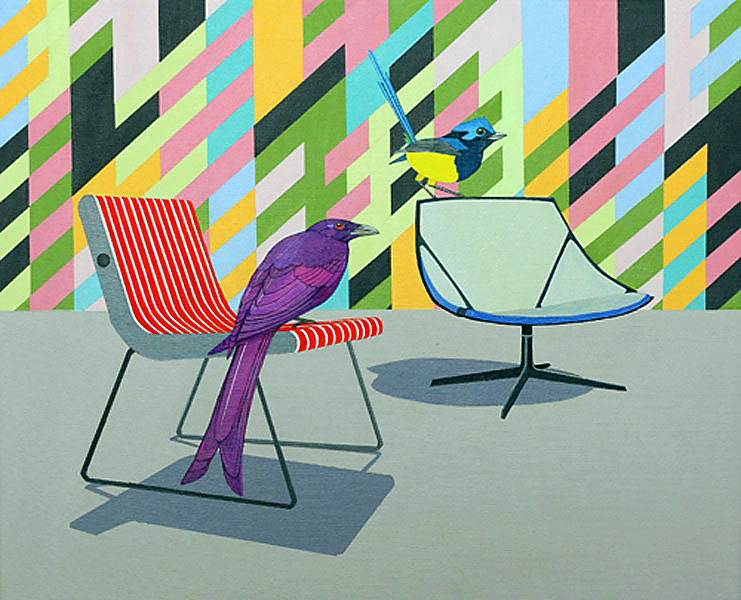
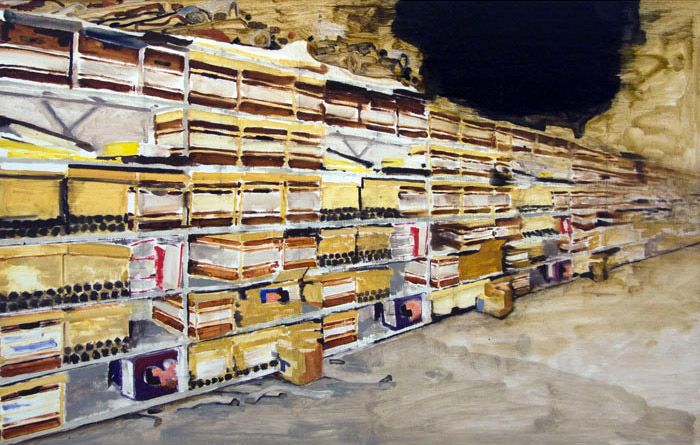
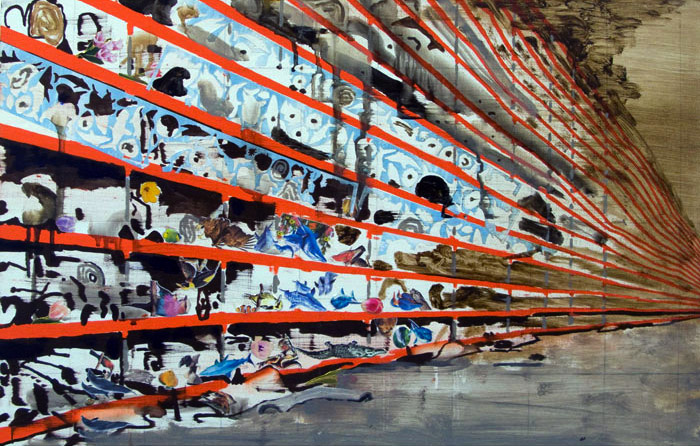
Four interesting exhibitions in Albert Street, Richmond – from the beautiful, formed leather sculptures of Pamela Rataj to the wonderfully vibrant tropical bird, chair and decorative pattern paintings of Claudia Damichi; from the intensely observed canvas environments of Steve Randall to the post-photographic silk-screen textualisations of Robert Boynes. Well worth a visit on a Saturday afternoon!
As always, many thankx to the galleries for allowing me to publish the images in this posting. Please click on the images for a larger version.
~ Pamela Rataj. The Morphology of Forgetting at Anita Traverso Gallery. 7th April – 1st May 2010
~ Claudia Damichi. The Bitter Sweet at Sophie Gannon Gallery. 30th March – 25th April 2010
~ Steve Rendall. Security, Storage and Recreation at John Buckley Gallery. 8th April – 1st May 2010
~ Robert Boynes. Postscript at Karen Woodbury Gallery. 7th April – 1st May 2010
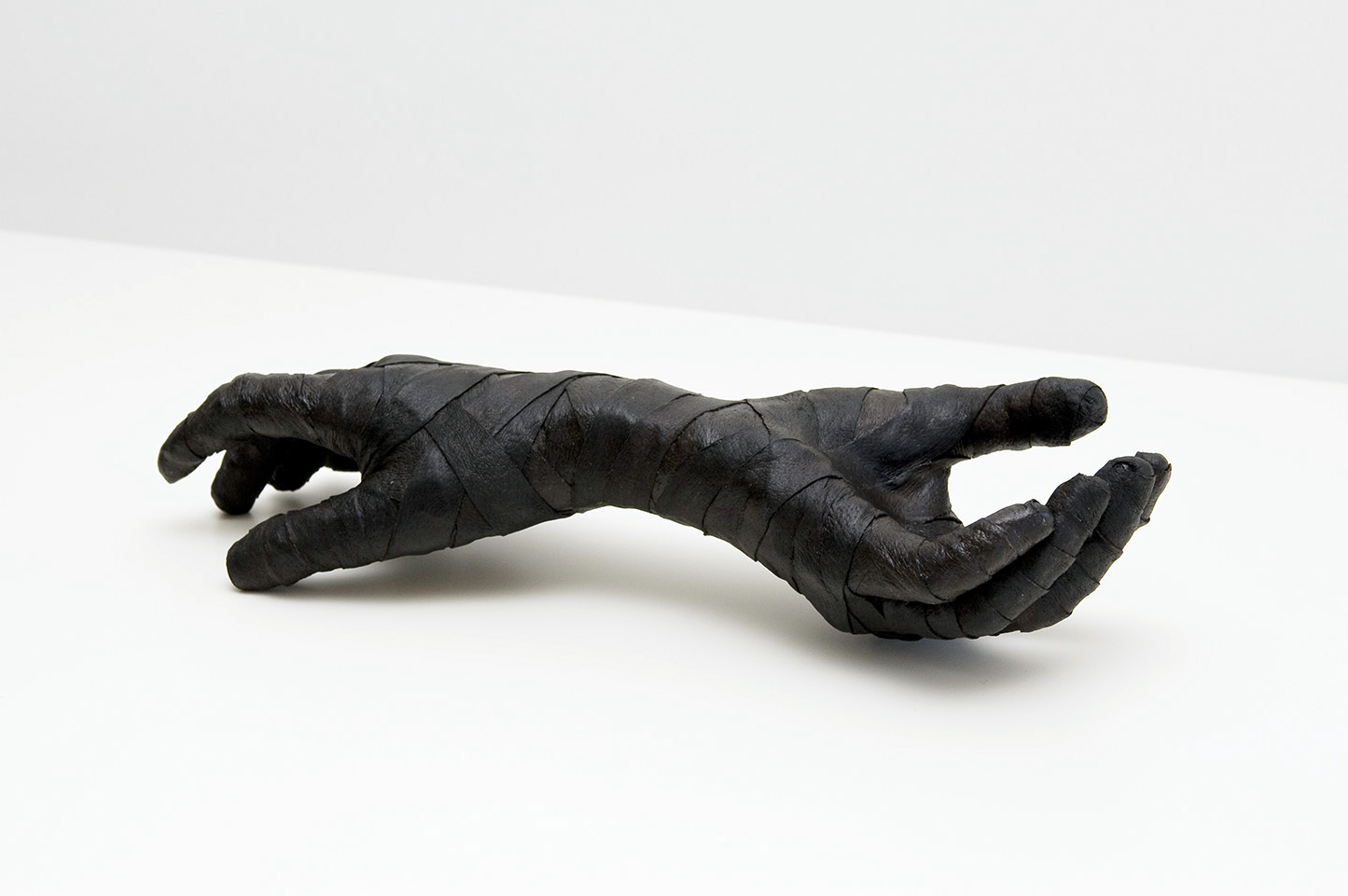
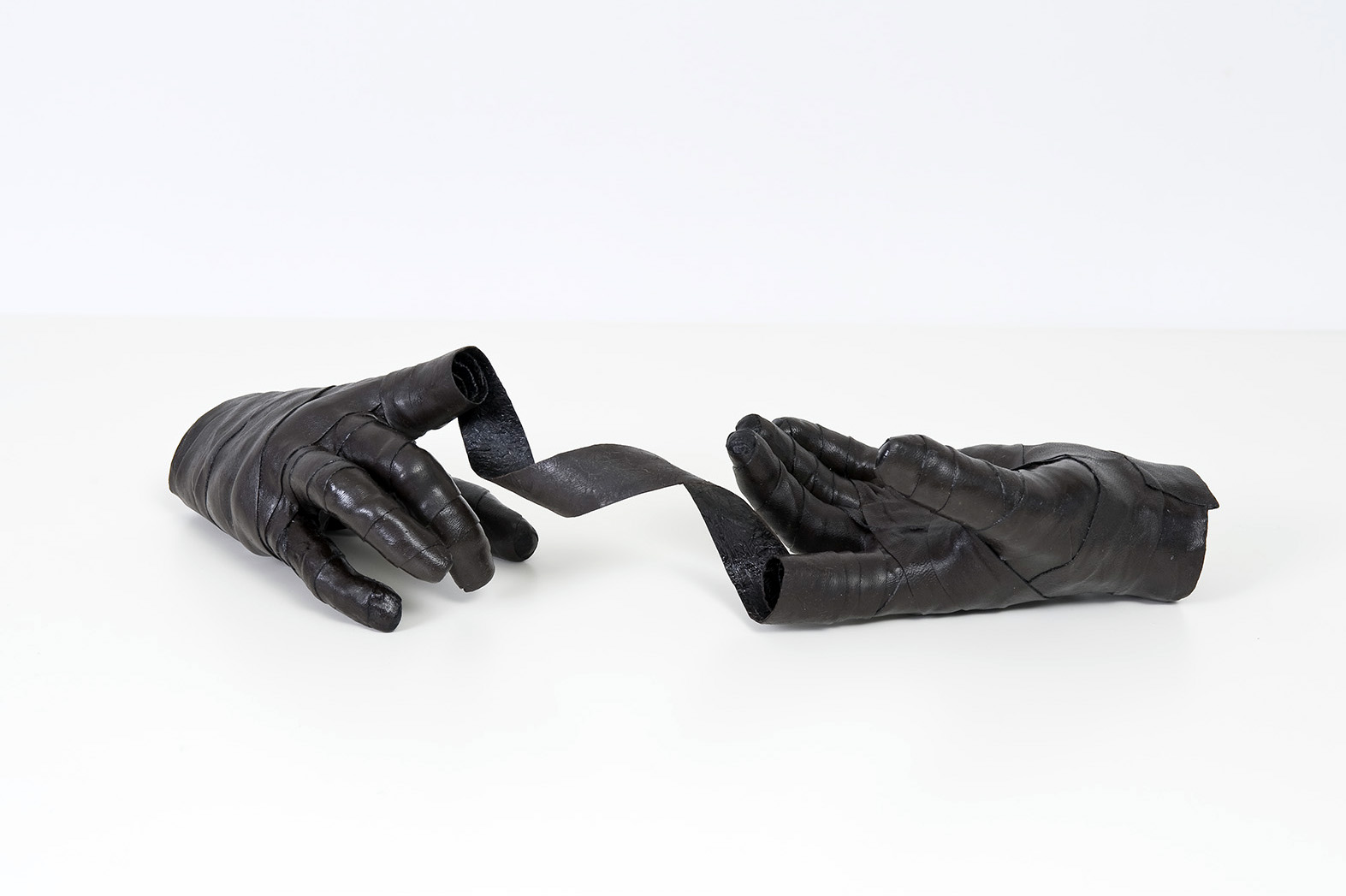
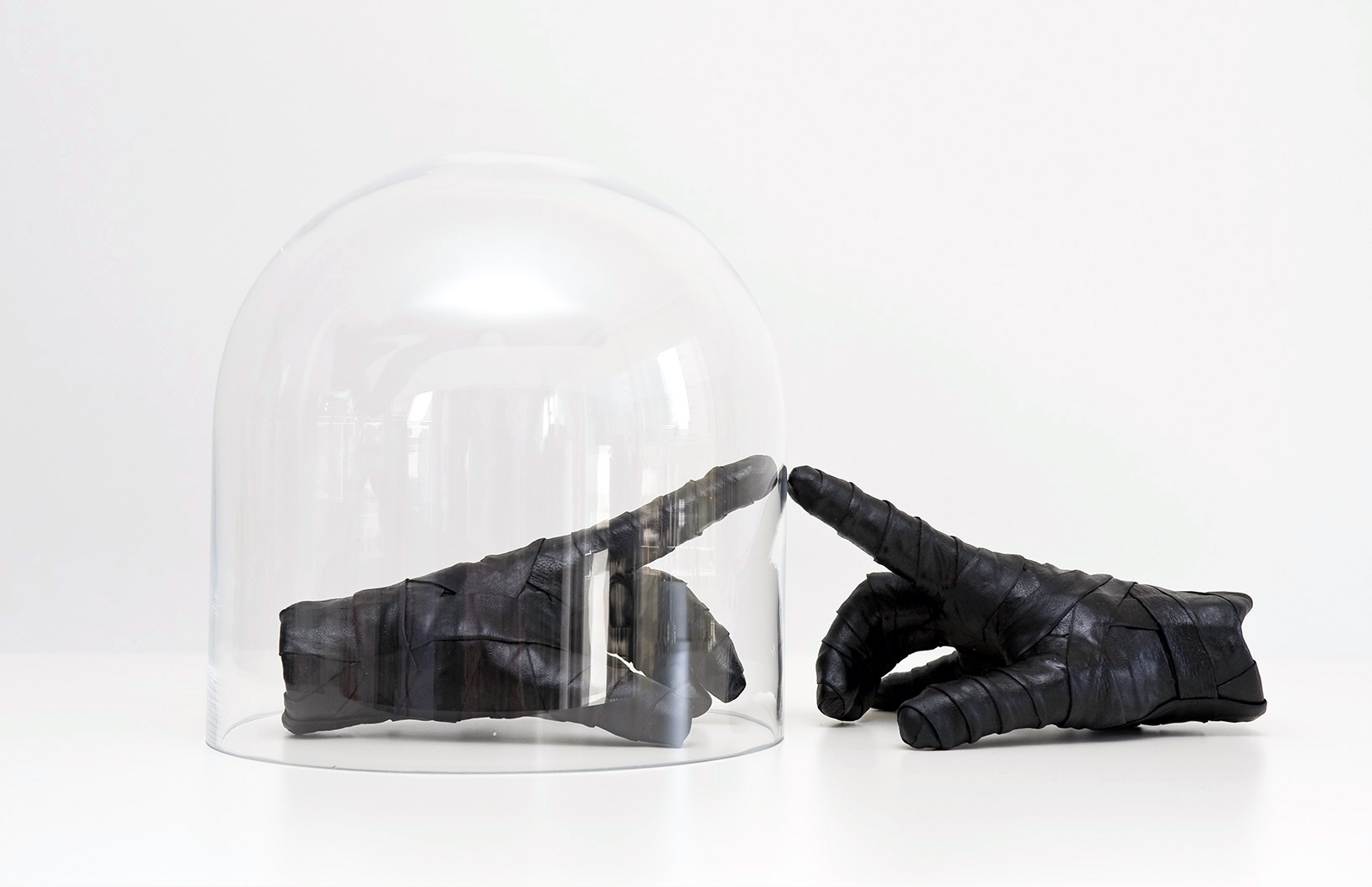
Pamela Rataj. The Morphology of Forgetting at Anita Traverso Gallery
7th April – 1st May 2010
Pamela Rataj (Australian) Tangent Bundle 2009
Pamela Rataj (Australian) Ravel 2009
Pamela Rataj (Australian) Kairos 2009
How to draw a boundary between self and other, past time and today?
Patterns and forms in nature often resemble one another, connecting life forms in unexpected ways. Tide lines left in the sand resemble the grains found in a piece of wood, and the veins in a leaf or those in a hand.
The age lines in the trunk of a tree form as each outer layer covers the one preceding it and echoes its shape. This makes me think of the way past experience resurfaces as memory, receding or becoming more important at different times in our lives, as each new experience envelopes our previous states of being and yet is shaped by them.
The wrapped and layered forms in The Morphology of Forgetting explore coexistence and connection.
I dedicate this exhibition to my parents, whose recent deaths have helped me appreciate memory as a way to connect through time.
Pamela Rataj 2010
Press release from the Anita Traverso Gallery website [Online] Cited 10/04/2010. No longer available online
Pamela Rataj (Australian) Faisceaux 1 2009
Pamela Rataj (Australian) Faisceaux 4 2009
Claudia Damichi. The Bitter Sweet at Sophie Gannon Gallery
30th March – 25th April 2010
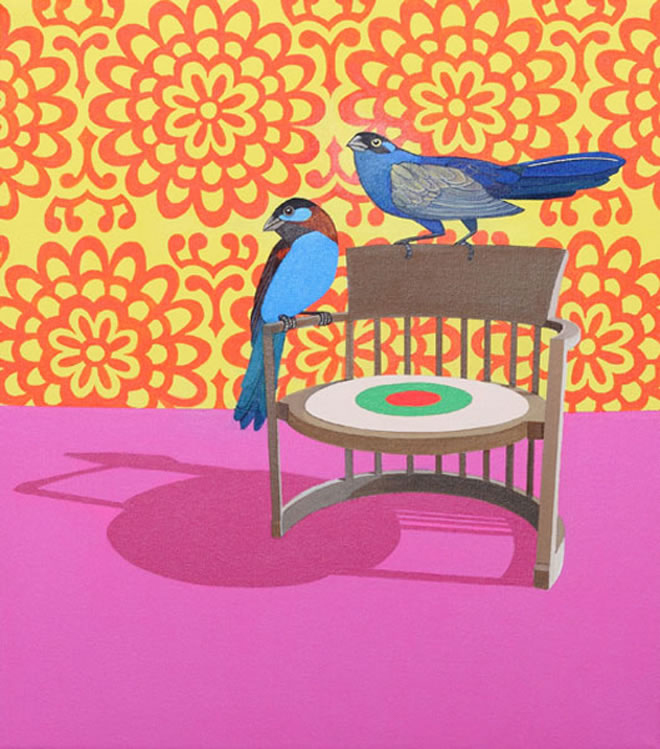
Claudia Damichi (Australian, b. 1972) Birds eye 2010 Acrylic on canvas 46 x 41cm
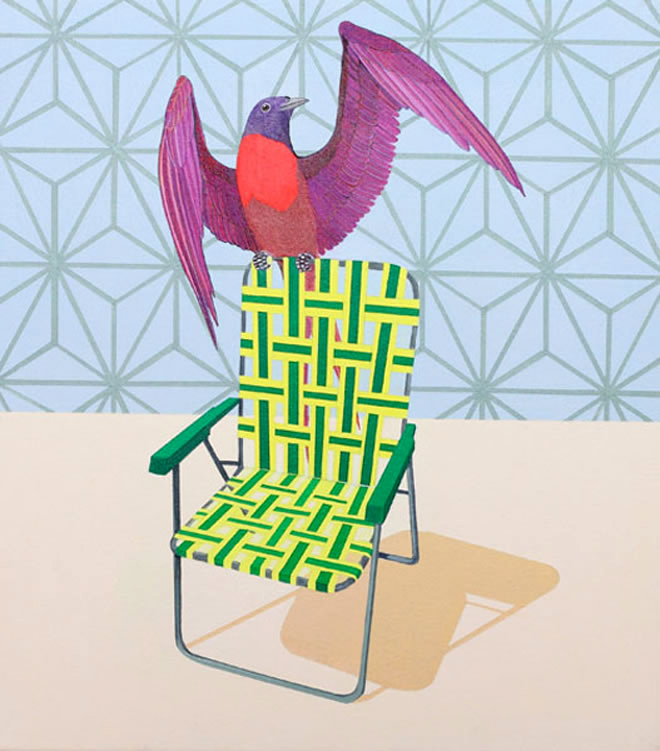
Claudia Damichi (Australian, b. 1972) Star Gazer 2009 Acrylic on canvas 46 x 41cm
Claudia Damichi (Australian, b. 1972) Gridlock 2010 Acrylic on canvas 41 x 46cm
Claudia Damichi (Australian, b. 1972) Reading between the lines 2010 Acrylic on canvas 46 x 41cm
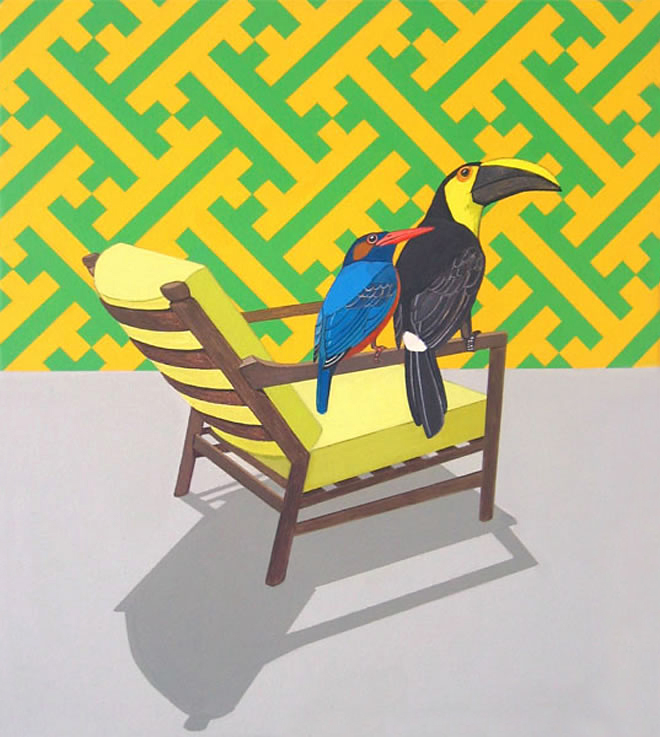
Claudia Damichi’s surrealist still life paintings are characterised by vivid colours, elaborate patterns and distorted spatial proportions. In her paintings of domestic interiors, flowers, birds and furniture, colour is inflated and scale is playfully manipulated – solitary domestic interiors are reconfigured into places of fantasy and illusion. Inspired by the enduring aesthetic of modern industrial design, her surreal and theatrically staged scenarios self-consciously conjure a sense of the absurd. Graphic patterning, high-croma colour and whimsical compositions foster worlds that are at once playful and claustrophobic, satirical and real, tapping into an ambiguous nostalgia that leaves the viewer feeling that anything is possible.
Claudia Damichi (Australian, b. 1972) Look out 2010 Acrylic on canvas 46 x 56cm
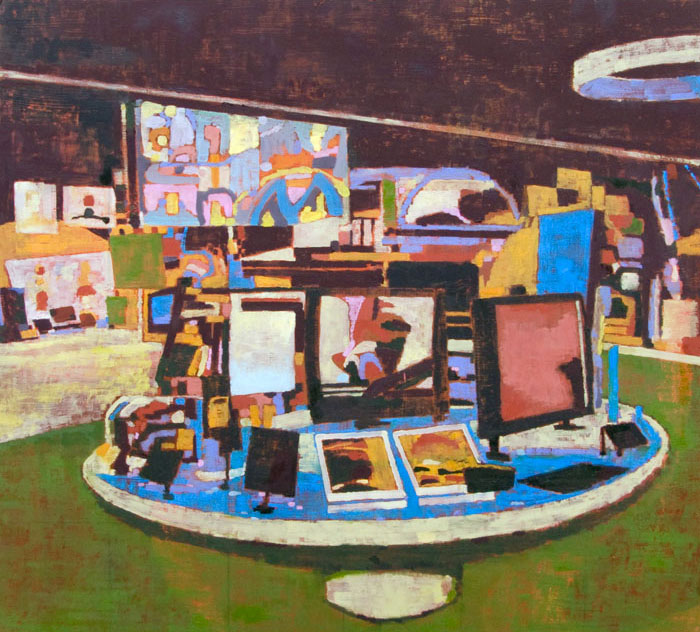
Steve Rendall. Security, Storage and Recreation at John Buckley Gallery
8th April – 1st May 2010
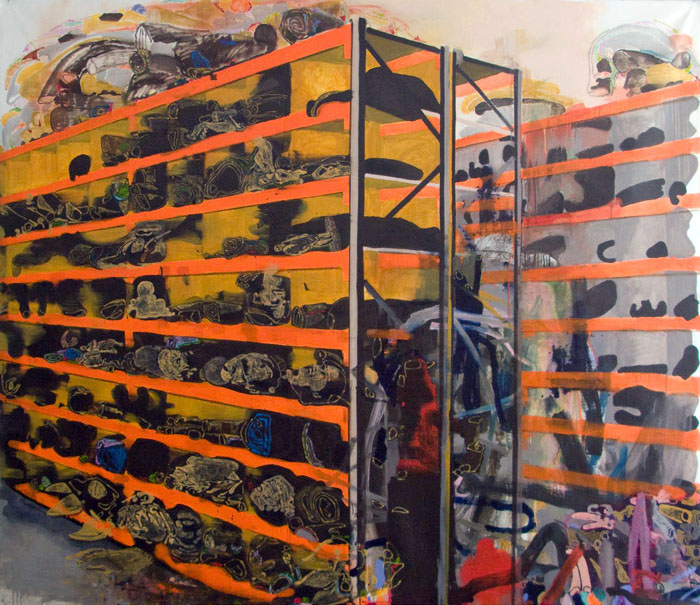
Steven Rendall (Australian born Britain, b. 1969; Australia from 2000) Archive 1 2010 Oil on linen
Steven Rendall (Australian born Britain, b. 1969; Australia from 2000) Archive 2 2010 Oil on linen
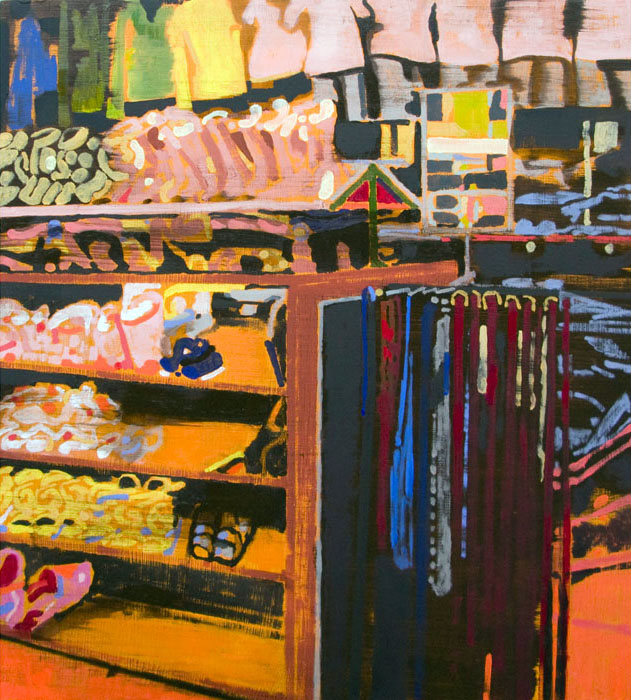
Citing the British artist Walter Sickert as an important influence on his painterly style, Rendall’s work displays a form and content that has attracted the attention of both critics and collectors. A key work in the exhibition is a large-scale painting on un-stretched linen titled Fountain (Rosemary’s Baby) that sprawls across 4.5m. Certain fountains, along with other apparently arbitrary images of television monitors, speedboats, clothing racks, shelving units and museum interiors are recurring motifs in Rendall’s paintings.
Rendall aims to ‘collect and synthesise’ images from around his home and en route to and from his Brunswick studio. Passing observations of window displays, charity shops and various light industrial warehouses are registered and recorded in conjunction with the accumulation of promotional flyers spruiking leisure activities and museum experiences. This shambolic collection of images is transcribed into an array of compositions in Rendall’s paintings. Images occasionally materialise in unlikely places, such as the spectral diver’s head that is resting on a warehouse shelf in the appropriately titled Storage.
In the exhibition Security, Storage and Recreation, you are invited to enter the image bank of Steven Rendall; a ‘wake in fright’ experience where one can become immersed and caught up in the maelstrom of the artist’s visual language – a sequence of painterly dreams each similar yet different to the last.”
Press release from the John Buckley Gallery website [Online] Cited 10/04/2010 no longer available online
Steven Rendall (Australian born Britain, b. 1969; Australia from 2000) Flat Screens (Green) 2010 Oil on linen
Steven Rendall (Australian born Britain, b. 1969; Australia from 2000) Pipes 2010 Oil on linen
Steven Rendall (Australian born Britain, b. 1969; Australia from 2000) Claustrophobia 2010 Oil on linen
Steven Rendall (Australian born Britain, b. 1969; Australia from 2000) Redacted 2 2010 Oil on linen
Robert Boynes. Postscript at Karen Woodbury Gallery
7th April – 1st May 2010
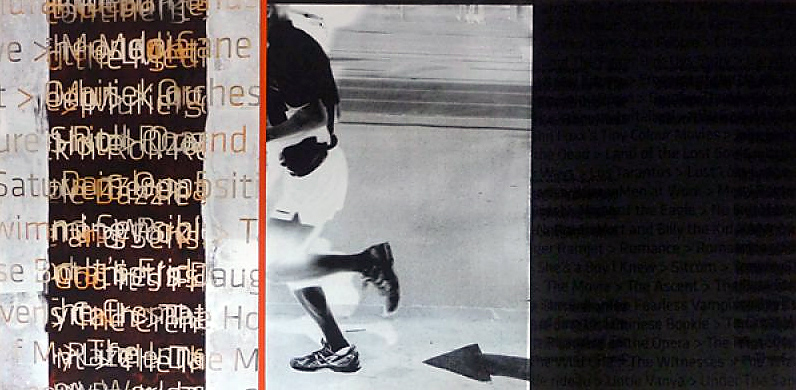
Robert Boynes (Australian, b. 1942) Street Runner 2010 Acrylic on canvas and velvet 120 x 242cm
Robert Boynes (Australian, b. 1942) Days that we forgot 2010 Acrylic on canvas
Robert Boynes (Australian, b. 1942) Signal Driver 2010 Acrylic on canvas and velvet 120 x 190cm
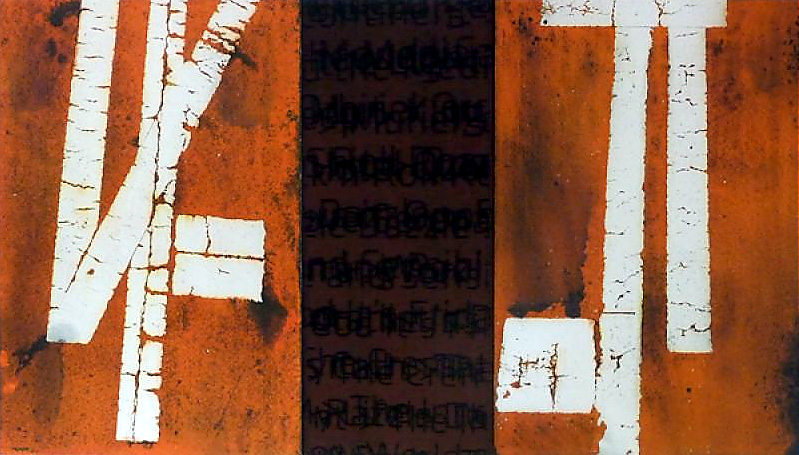
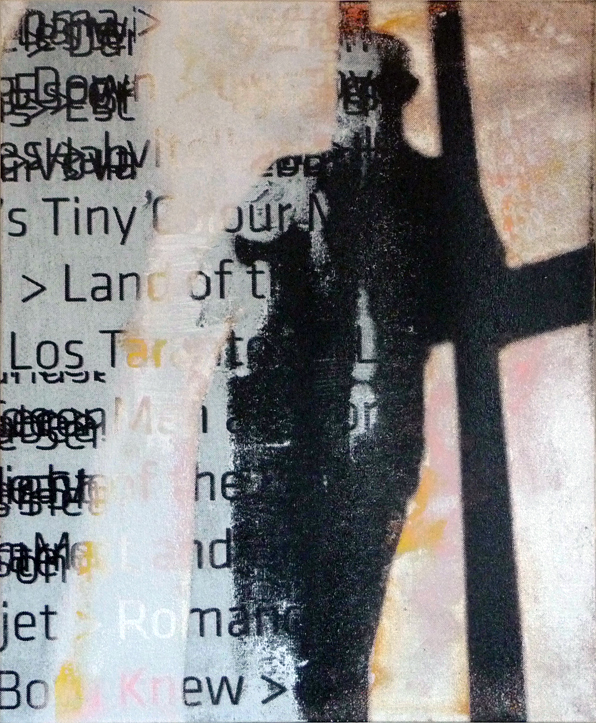
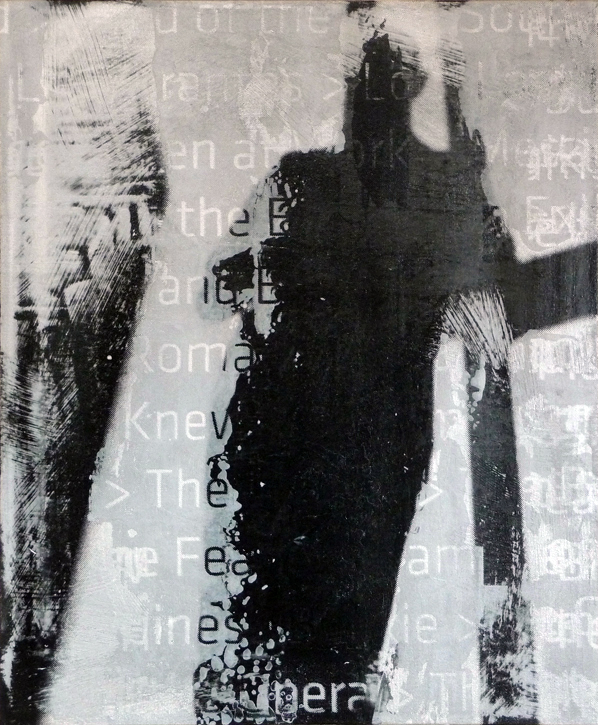
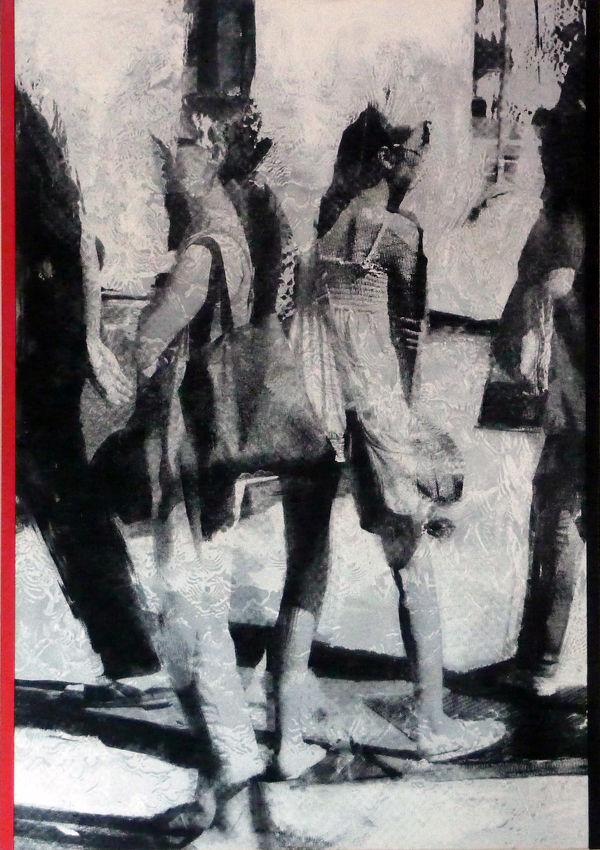
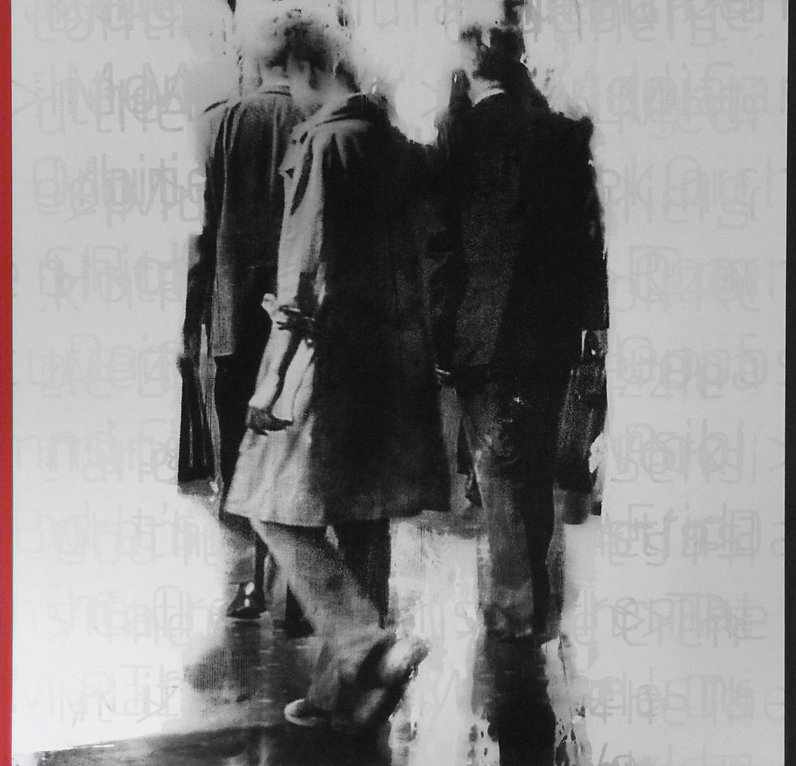
Postscript is Robert Boynes’ second solo exhibition with Karen Woodbury Gallery. This series continues with his exploration of urban themes, contemporary experience and experimentation into ways of using paint. In this most recent body of work Robert has employed the use of text in juxtaposition to various materials such as wood and velvet. The text conveys a feeling of noise and urban clatter, acting as a context and environment for the figures within the work.
His technique involves transferring photographic images to large silk screens and dragging paint through the mesh onto canvas. Robert thus has control in the manipulation of colour, density and translucency of the images. This process results in still moments that magnify and investigate everyday observable reality. The anonymous figures are juxtaposed with text and layering of saturated, contrasting colours, appearing objectified and ghostly.
These works embody a filmic quality, the multi-panelled paintings signify fragmented narratives and enquire into perceptions of time and space.
Text from the Karen Woodbury Gallery website [Online] Cited 10/04/2010 no longer available online
Robert Boynes (Australian, b. 1942) Body Type 2 2010 Acrylic on canvas
Robert Boynes (Australian, b. 1942) Body Type 3 2010 Acrylic on canvas
Robert Boynes (Australian, b. 1942) Things we leave behind 2009 Acrylic on canvas 120 x 180cm
Robert Boynes (Australian, b. 1942) The layered moment 2009 Acrylic on canvas
Robert Boynes (Australian, b. 1942) Postscript 2009 Acrylic on canvas 120 x 124cm
All galleries have closed except for Sophie Gannon Gallery, Richmond.
Sophie Gannon Gallery 2 Albert Street Richmond VIC 3121 Australia Phone: +61 3 9421 0857
Exhibition dates: 11th February – 24th April, 2010
Alexey Titarenko (American born Soviet Union, b. 1962) #1 Untitled (Boy) 1993 Gelatin silver print
Many thankx to the Nailya Alexander Gallery for allowing me to reproduce the images in the posting. Please click on the photographs for a larger version of the image.
Dr Marcus Bunyan
Alexey Titarenko (American born Soviet Union, b. 1962) #3 Untitled (Crowd 1) 1992 Gelatin silver print
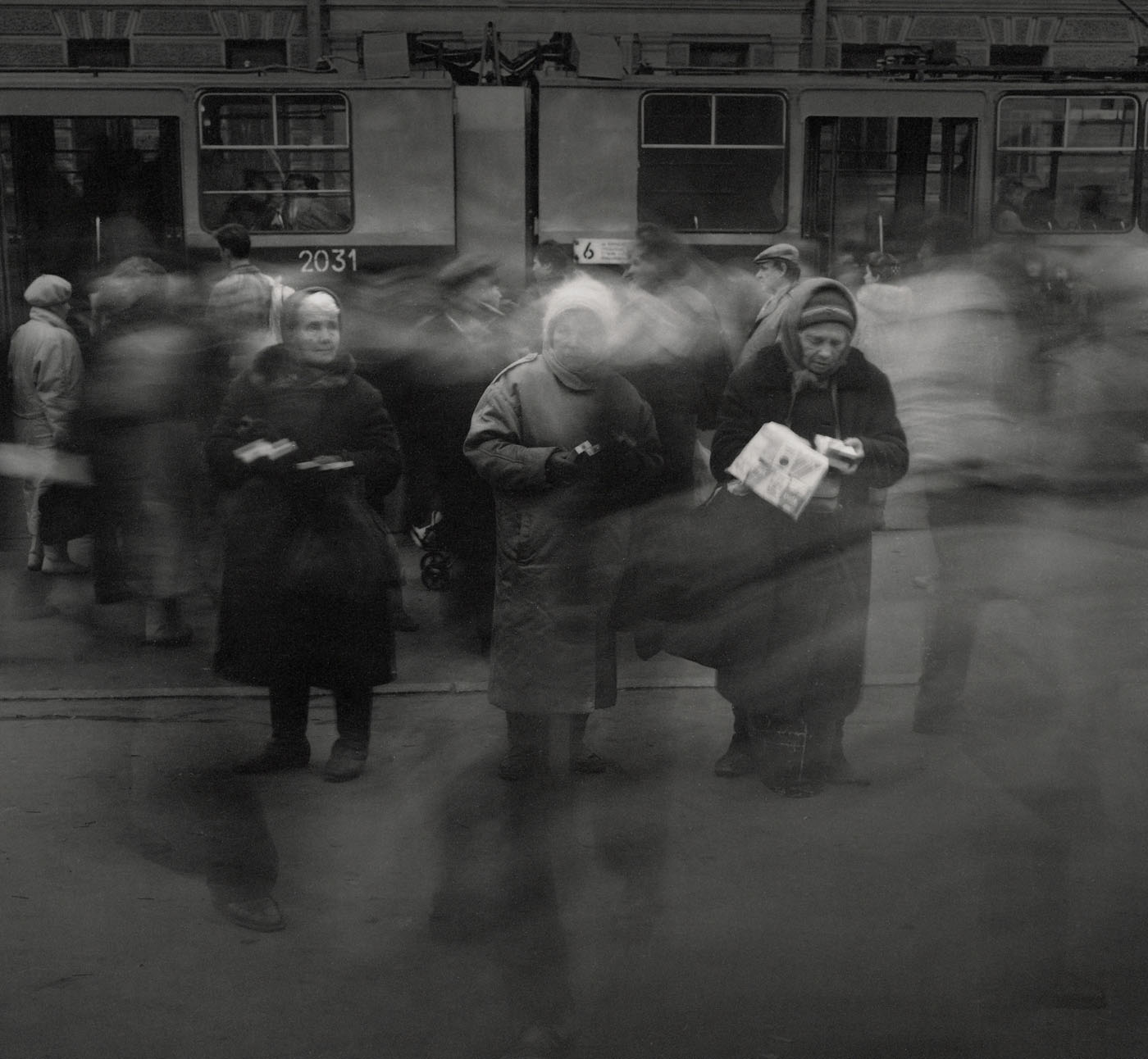
Alexey Titarenko (American born Soviet Union, b. 1962) #7 Untitled (Three Women Selling Cigarettes) 1992 Gelatin silver print
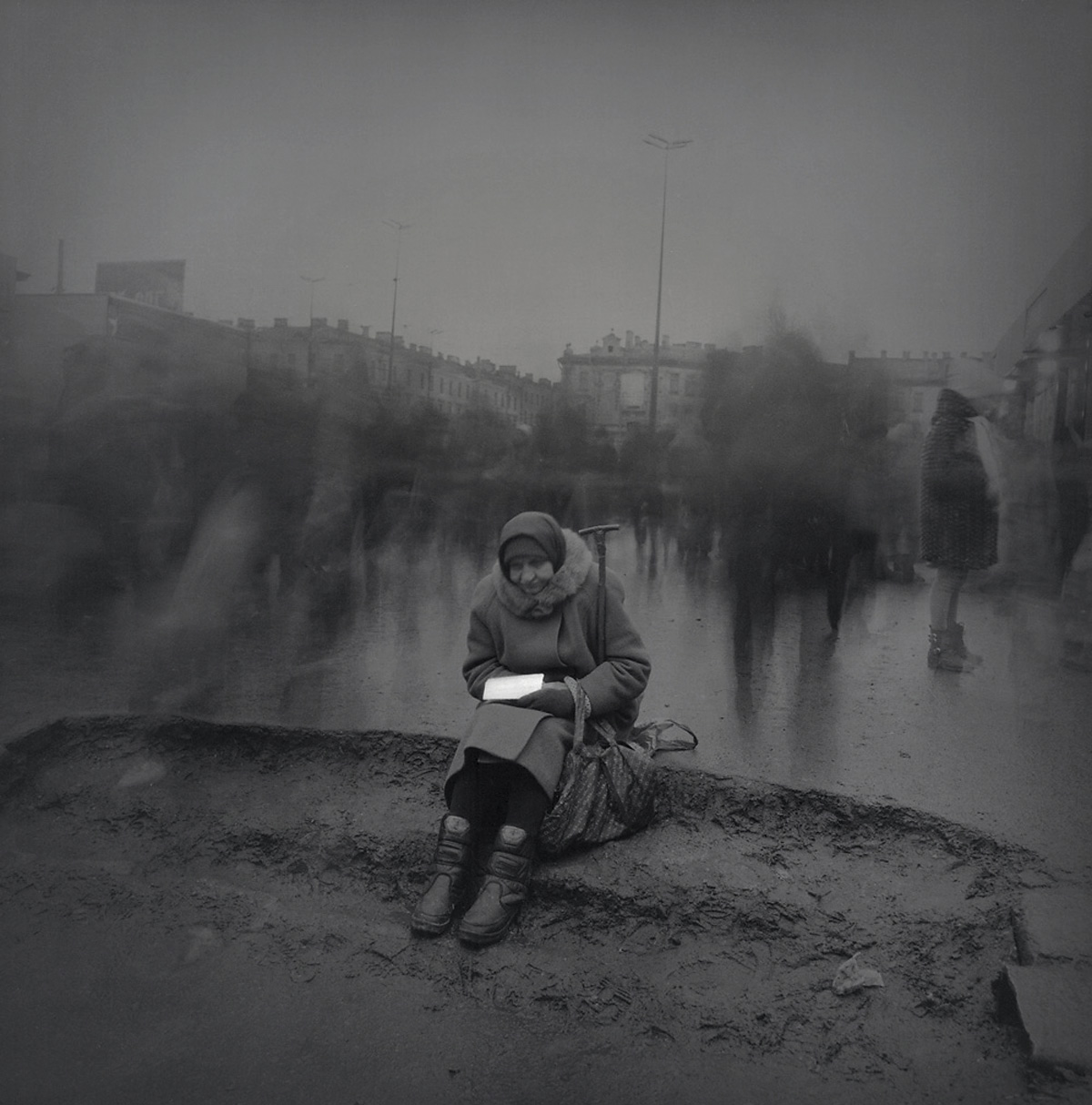
Alexey Titarenko (American born Soviet Union, b. 1962) #11 Untitled (Begging Woman) 1999 Gelatin silver print
Nailya Alexander Gallery is pleased to announce Alexey Titarenko: Saint Petersburg in Four Movements opening on February 11th, in her new space at the Fuller Building, 41 E 57th Street, Suite 704. The reception for the artist will be from 6-8pm. Gallery hours are Tuesday through Saturday, 10am-6pm and by appointment.
This will be Alexey Titarenko’s first major exhibition in New York that features his entire St. Petersburg series (1991-2009). The four underlying sequences, or movements – to borrow a term from the vocabulary of music, which features prominently in the artist’s mind, are The City of Shadows, The Anonymous, The Light of Saint Petersburg and Unfinished time. Like music, the expression of time is a presence in Titarenko’s art, associated with literature and in particular, the works of Marcel Proust.
This majestic and history-laden city, where Titarenko was born in 1962, is the central subject of his photography, or to be more accurate it is the soul of the city and therefore that of Russia. As the artist himself explains:
“It would be en error to consider my photographs within the context of the values now fashionable in the arts in general and photography in particular. To align them with such and such a trend, without taking into account that their very purpose in existing is defined by the past. Even the most factual of them are not reportage, but a novel. The principal motivation for their creation is, in fact, always the same: Russia’s history throughout the 20th century, which is an unending series of tragedies of ever more baffling dimensions, whether you consider the wars, the famines or the so-called times of peace. The history of Russia … but in the form of rather contemporary images, made in a single location, a single city – St. Petersburg. Rather than the city (which is mostly only vaguely visible), these images represent emotion – the range of emotions forming the deep inner character of the people who lived in this country and endured all these disasters, people who were usually only represented from outside. And it is therefore these emotions which, in themselves, are quite general and have remained unchanged in the course of the century, like the emotions aroused by the music of Shostakovich, for example, or by the novels of Solzhenitsyn, which are the true subject of my photographs, and my goal would be to convey them to the viewer, to make him or her feel them … understand, to feel compassion and love.”
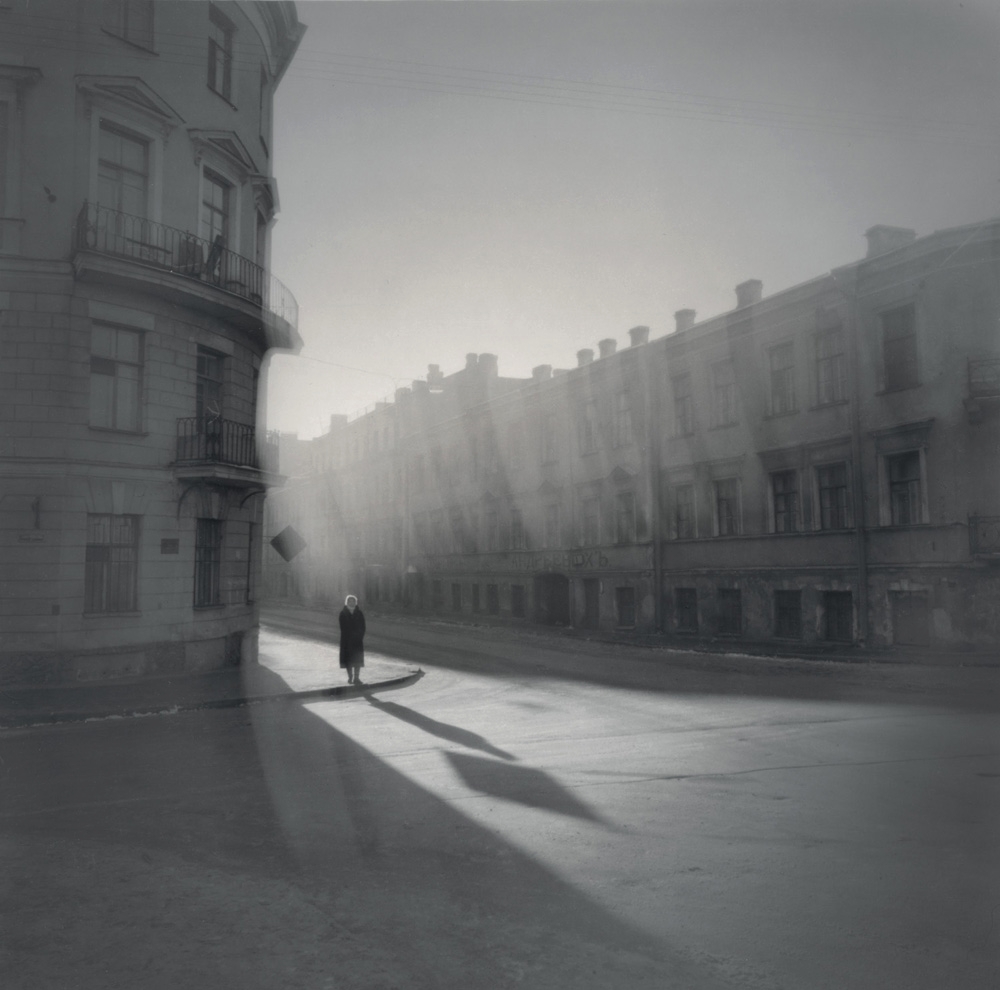
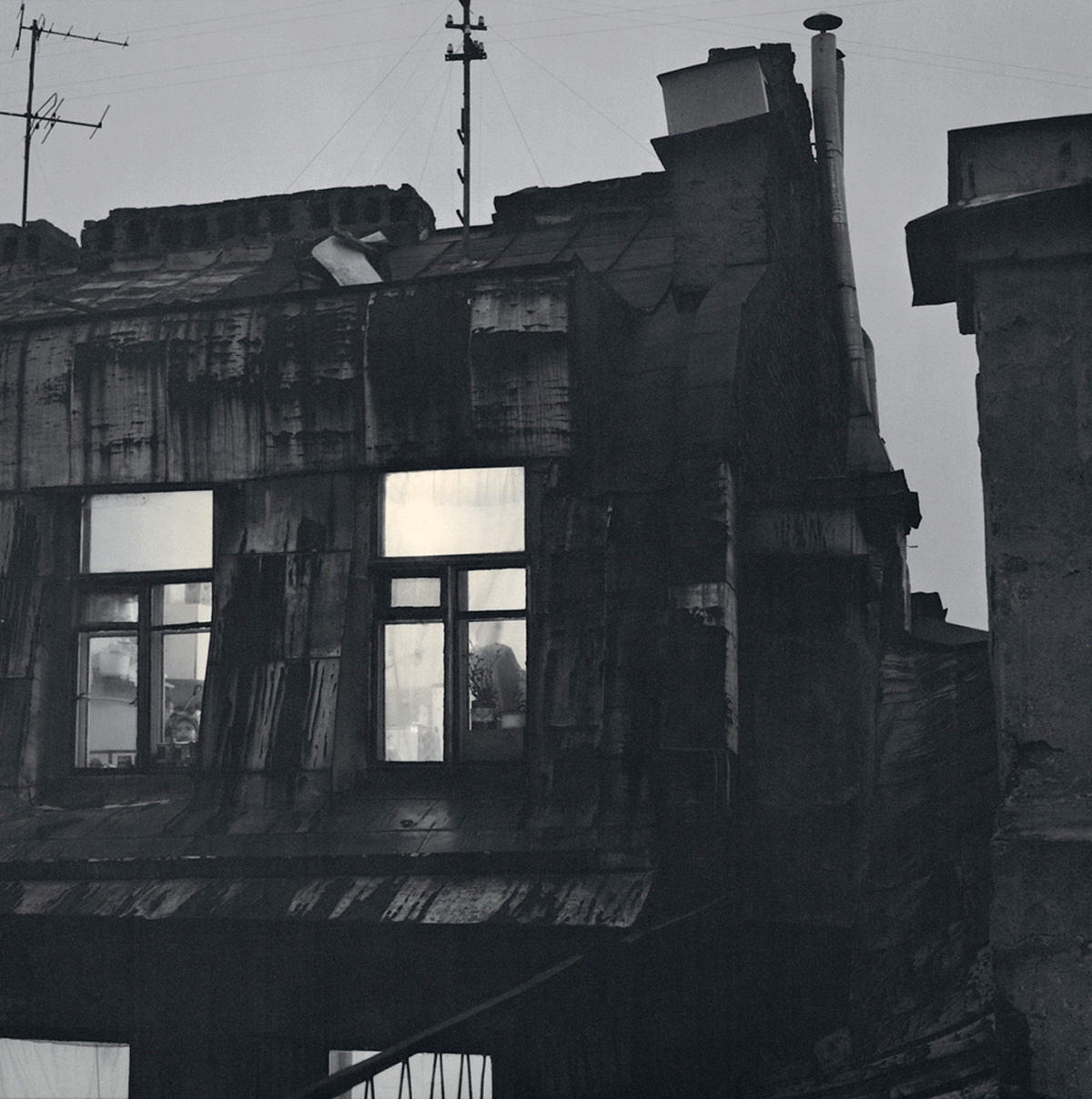
Titarenko was able to develop a form of expression reminiscent of Dostoyevsky’s stories, inspired by the moods and rhythms of the music of Shostakovich. Often, the city, veiled in winter’s shadows or bright with summer’s dazzle, is inhabited by nearly transparent phantoms. They dwell in its streets, cross its courtyards: crowds on the move, spreading over a vast square like a wave, their individual identities blurred and indistinct. Nevertheless, sometimes a few isolated, improbable figures emerge from the crowd. This photographic technique, involving relatively slow shutter speeds, confirms a taste for randomness and makes each image a unique adventure, a potential source of surprise. The approach also bespeaks Titarenko’s long-standing interest in 19th-century landscape photographers, especially those who operated in cities. In addition to this style of representation, which eschews any temptation to be objective and is finally quite impressionistic, the darkroom technique Titarenko uses transforms the black-and-white print into a composition endowed with subtle, suggestive hues and ever-differing nuances of gray. Titarenko never reproduces exactly the same rendering of light and shadow from one print to the next.
Many thankx to Kicken Berlin for allowing me to publish the photographs in this post. Please click on the photographs for a larger version of the image.
Mahler was born in 1949 in Bad Berka, Thuringia. She studied at the School for Graphic and Book Arts in Leipzig and has been a professor at the University of Applied Sciences in Hamburg since 2000. She lives in Hamburg and Lehnitz, near Berlin
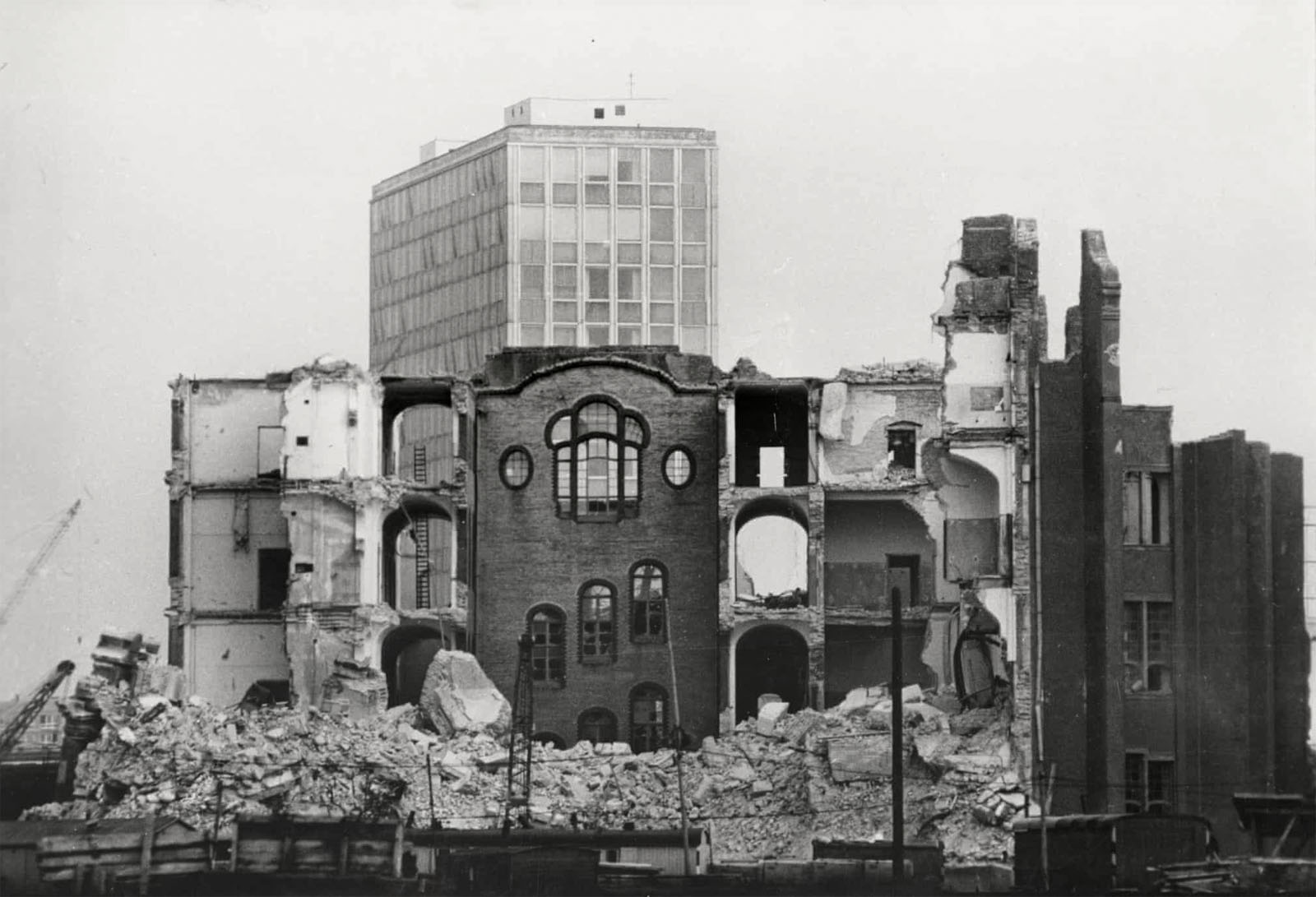
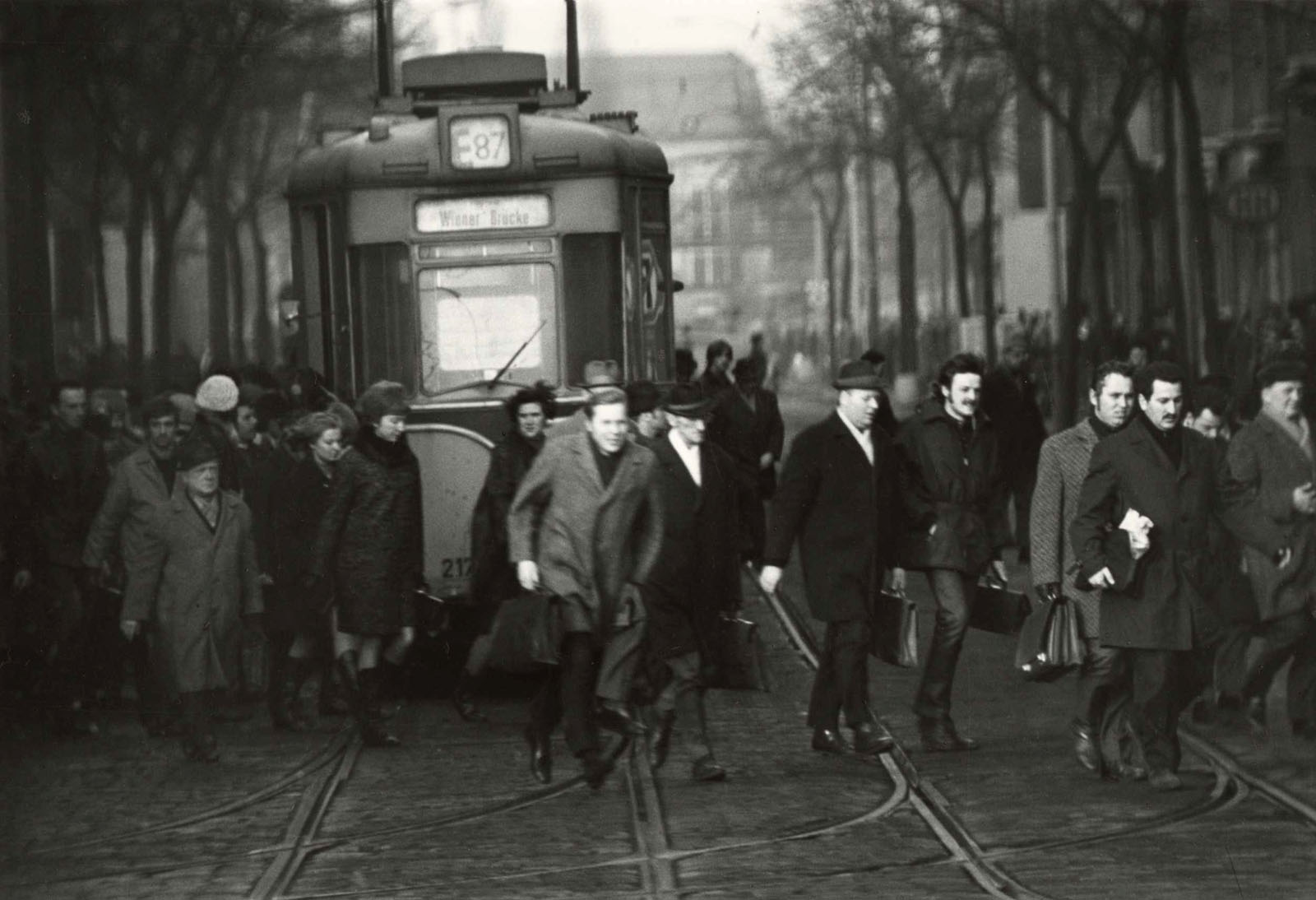
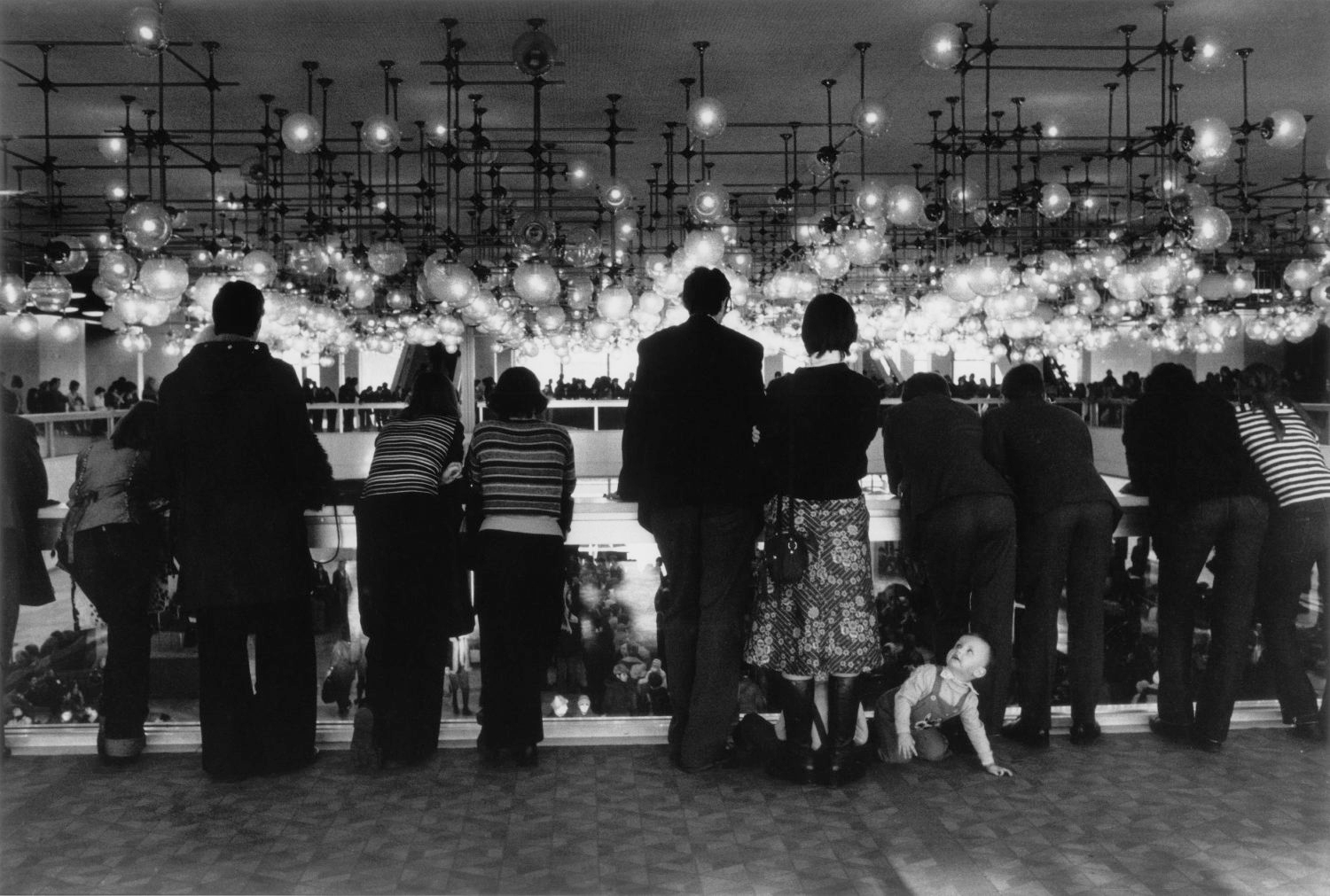
Kicken Berlin will devote its first exhibition of 2010 to a selection of East German photographers. Represented in East Side Stories: German Photographs 1950s-1980s are Ursula Arnold, Sibylle Bergemann, Arno Fischer, Ute und Werner Mahler, Roger Melis, Helga Paris, Evelyn Richter as well as Gundula Schulze Eldowy – committed art photographers who achieved their own modes of expression outside the official aesthetic. F.C. Gundlach’s fashion photography from 1950s and 1960s West Berlin will be on view in the exhibition space Kicken II.
Up until the early 1970s, the cultural officers of the German Democratic Republic viewed photography not as an art medium but rather as a means of providing affirmative and idealised images of life. Personal viewpoints were not welcome. Photography that forcefully “grew out of the self-assigned task of documenting what (one) felt was worth capturing,” as Evelyn Richter put it, had to remain secret.
Arno Fischer (1927-2011) and Evelyn Richter (1930-2021) belong to those who pointed the way toward a subjective-narrative, human-centered photography in the 1950s. Key figures in the East German art photography scene, opinion shapers, and teachers at Leipzig’s Hochschule für Grafik und Buchkunst / Academy of Visual Arts, they influenced a form of art photography oriented toward the social-documentary “human interest” tradition. Their stance combined social participation with a commitment to critical observation from a personal point of view – as in Fischer’s series Situation Berlin (1953-1960), with its symbolically dense snapshots of the divided city.
Important influences on the development of independent photography in East Germany included the work of the Magnum agency (from 1947 on), Edward Steichen’s exhibition The Family of Man (1955) as well as Robert Frank’s radically subjective street photography.
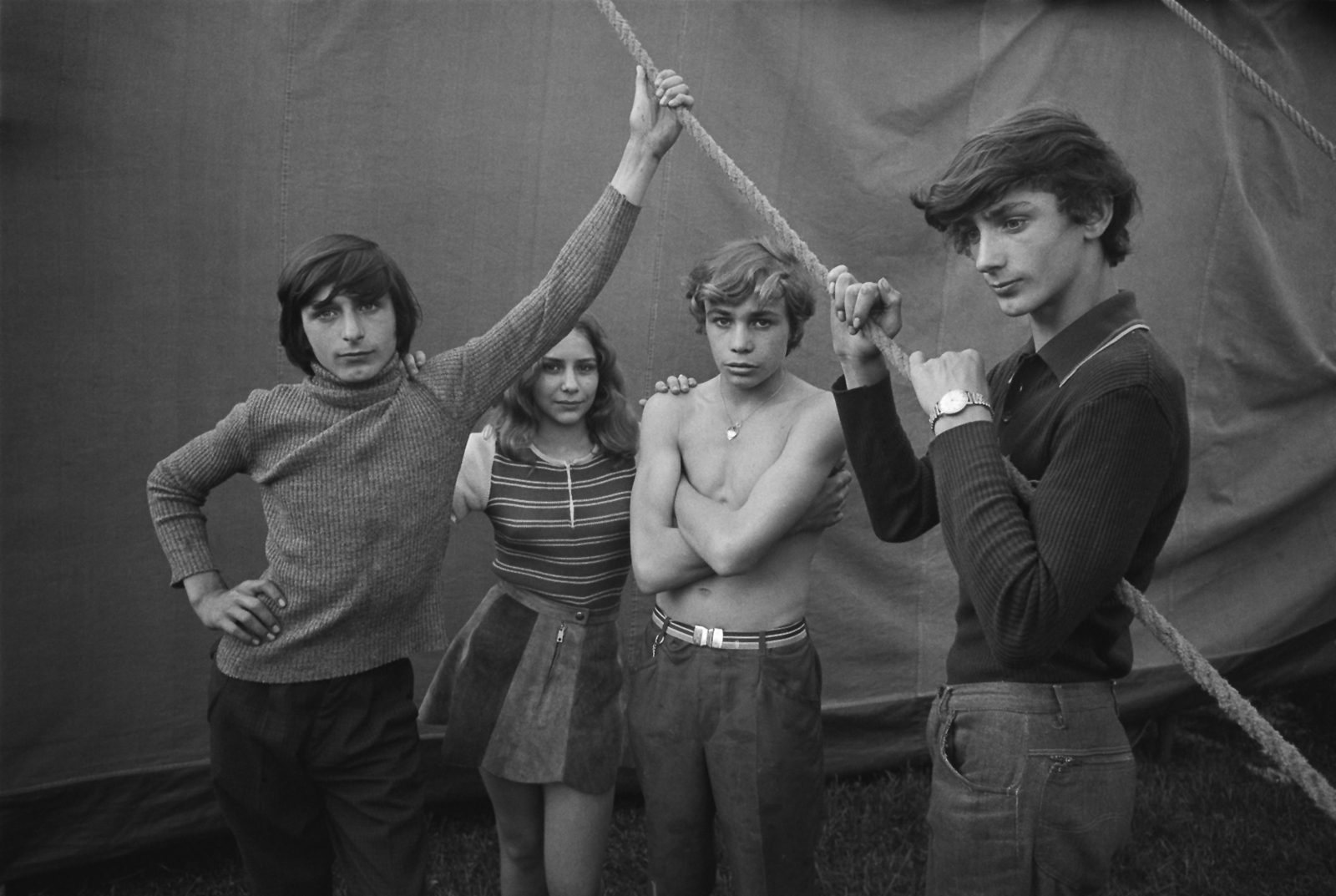
Pictures of people and portraits are at the exhibition’s core. Ursula Arnold (1929-2012) observed her sometimes melancholy, sometimes odd contemporaries on the streets of Berlin and Leipzig, and on Berlin’s S-Bahn. She gave up working as a photojournalist early in order to avoid having to make concessions to the dictates for enthusiasm imposed from above. Helga Paris (b. 1938) took portraits of rebellious Berliner Jugendliche / Berlin Youths (1981-1982), approaching her subjects with seriousness and thoughtfulness, and concentrating fully on them as individuals. She, too, had the self-professed goal of depicting people authentically in their everyday contexts.
Sibylle Bergemann (1941-2010) made a name for herself as a sensitive portraitist, fashion photographer, and observer of the urban landscape. Das Denkmal / The Monument (1977-1986), her long-term study of the assembly of the Marx-Engels sculpture, appears, with its hovering, headless sculptural fragments to emblematically anticipate the collapse of communism.
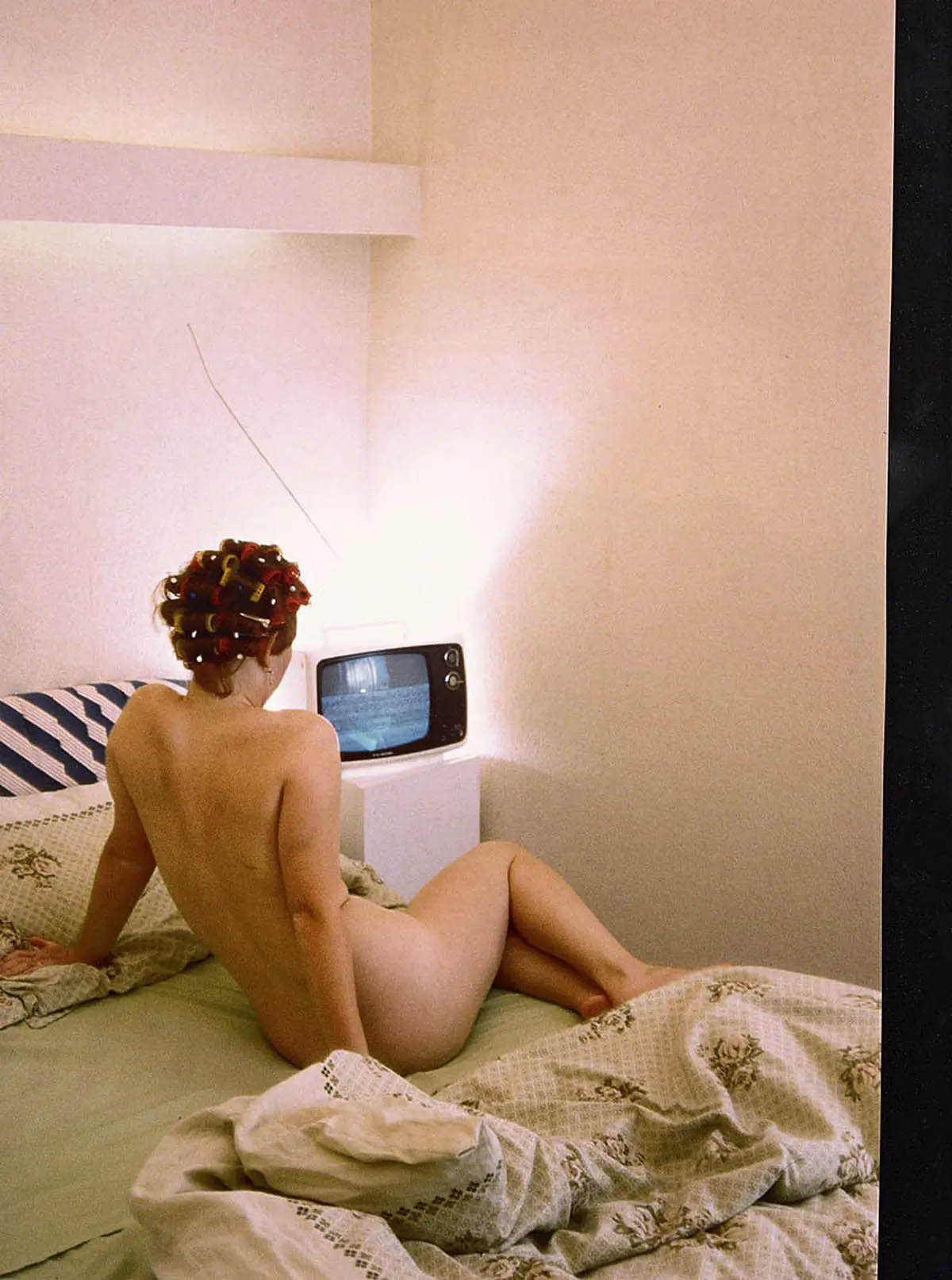
In the Berlin of the late 1970s and early 1980s Gundula Schulze Eldowy (b. 1954) found the setting for scenes that are as drastic as they are quotidian in the series Berlin. In einer Hundenacht / Berlin: in a Dog’s Night (1977-1989) and Aktportraits / Nude Portraits (1983-1986), as no other East German photographer before her, she shows with unsparing frankness the loneliness and vulnerability of her subjects but also their dignity and self confidence. Her early photographs reveal an aesthetic and thematic debt to the work of Diane Arbus.
Independent of each other, Ute and Werner Mahler turned their unpretentious gazes on the East German way of life. Ute Mahler (b. 1949) thematised family arrangements and group dynamics in her series Zusammen Leben / Living Together (1972-1986). Werner Mahler (b. 1950) documented a year in the Thuringian village Berka (1977) – and repeated his studies in the late 1990s after reunification. An additional focus of both photographers was fashion photography (published for the most part in the magazine for fashion and culture Sibylle) that offered opportunities for “productively expanding the genre” (Bernd Lindner).
In the 1950s and 1960s in Berlin and Hamburg, F.C. Gundlach achieved a modern way to stage fashion in pictures. A small selection from the great fashion photographer’s oeuvre, F.C. Gundlach, will be on view in the exhibition space Kicken II and coincides with the comprehensive retrospective at the Martin Gropius Bau.
Press release from the Kicken Berlin website [Online] Cited 04/04/2010 no longer available online
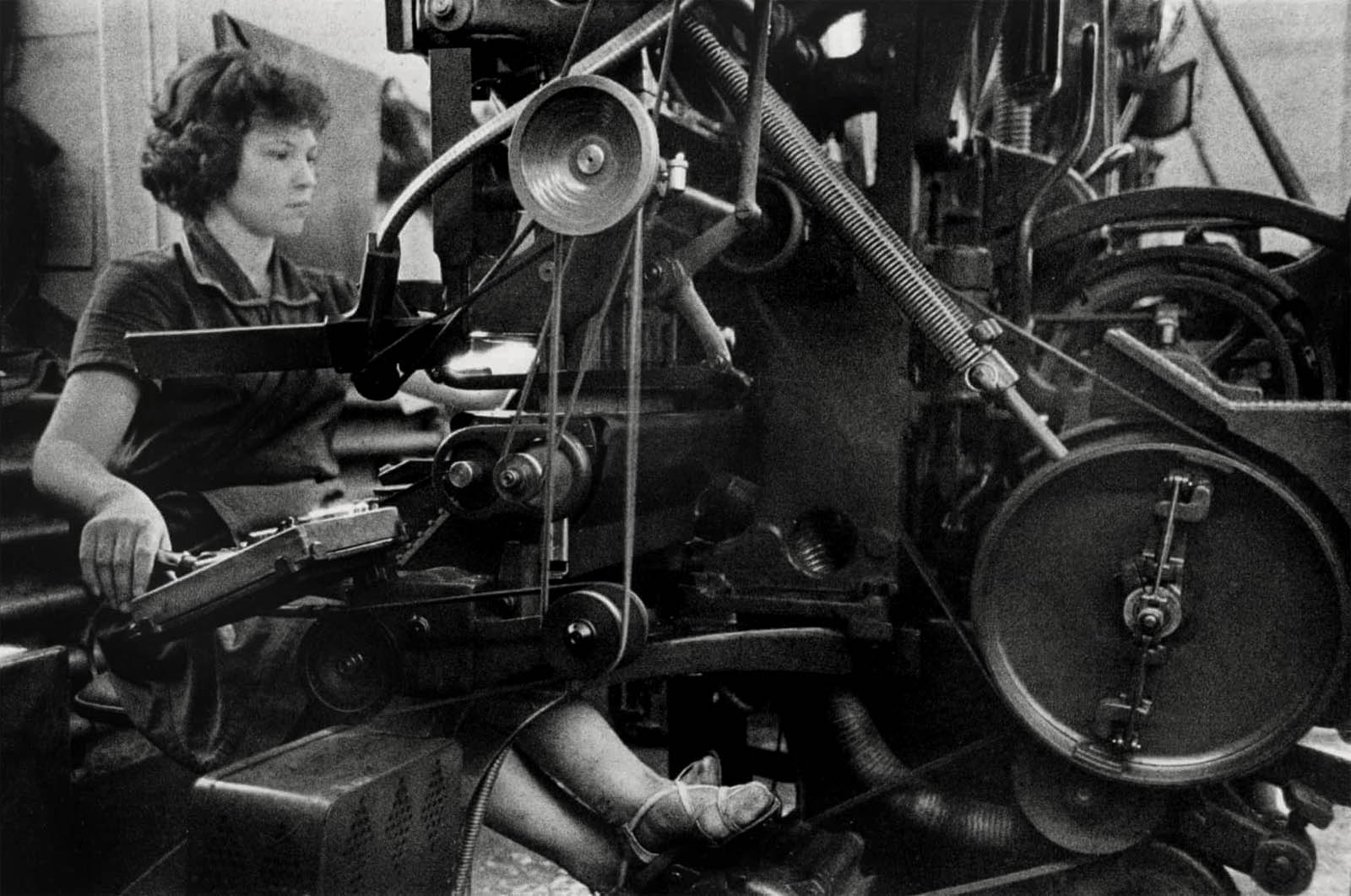
Evelyn Richter (German, 1930-2021) ND (Neues Deutschland) print shop c. 1960-1962 Gelatin silver print Evelyn Richter Archiv der Ostdeutschen
Ursula Arnold (German, 1929-2012) Berlin, S-Bahn 1965 Gelatin silver print
Sibylle Bergemann (German, 1941-2010) Alexanderplatz, Berlin 1967 Gelatin silver print
Sibylle Bergemann (German, 1941-2010) Schöneweide, Berlin 1972 Gelatin silver print, printed c. 1972 22.8 x 34cm
Mahler started her project Zusammenleben (‘living together’) to move away from set photography. She said: ‘I carried out this work freely, at liberty; it was very personal in nature and not commissioned’.
Zusammenleben was started more than 45 years ago. Through it, Mahler intended to depict the unsaid in a subtle way. Zusammenleben subtly depicted the reality of everyday life in the communist state of East Germany.
Evelyn Richter (German, 1930-2021) Pförtnerin im Rathaus, Leipzig (Receptionist in the Town Hall, Leipzig) c. 1975 Gelatin silver print
Sibylle Bergemann (German, 1941-2010) Berlin, Palast der Republik 1978 Gelatin silver print
Gundula Schulze Eldowy (German, b. 1954) Berlin 1989 Gelatin silver print
Exhibition dates: 13th February – 11th April, 2010
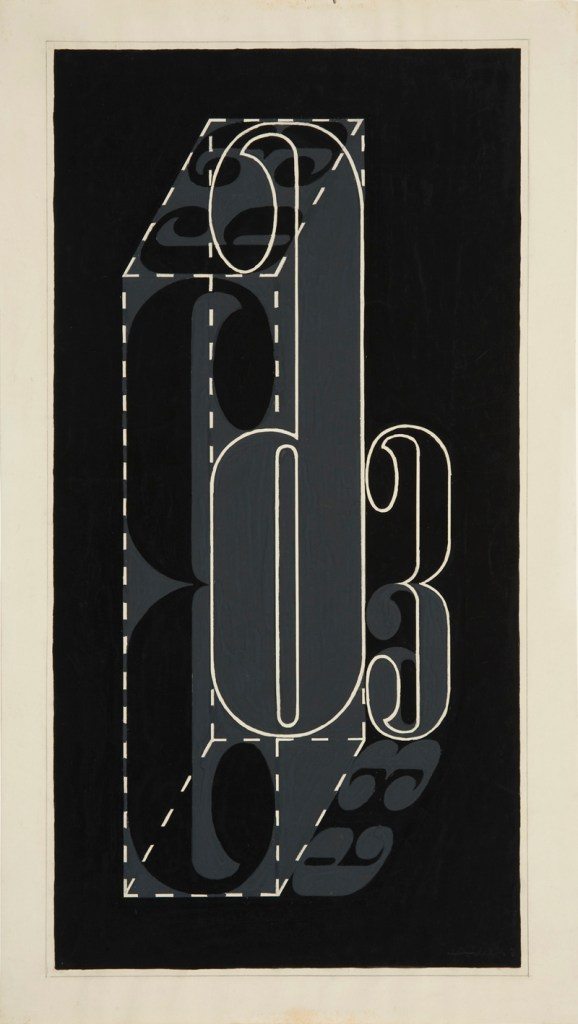
Josef Albers (German, 1888-1976) 6 and 3 1931
One of my favourite artists – what a genius!
His exploration of colour and form is exquisite, sensitive and very moving – despite his belief that colours have no inherent emotional associations.
Marcus
Many thankx to the Hirshhorn Museum for allowing me to publish the images in the posting. Please click on the photographs for a larger version of the image.
Josef Albers (German, 1888-1976) Rolling After 1925-28
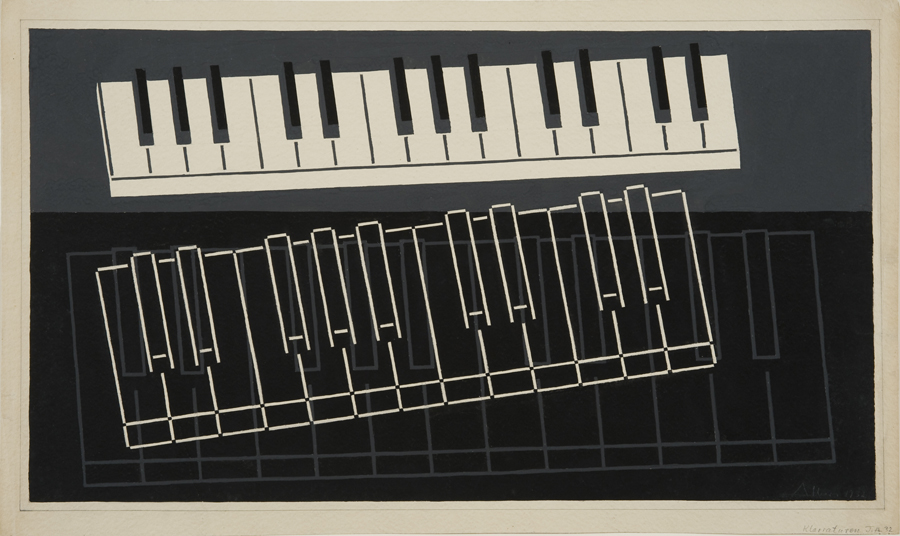
Josef Albers (German, 1888-1976) Piano Keys 1932
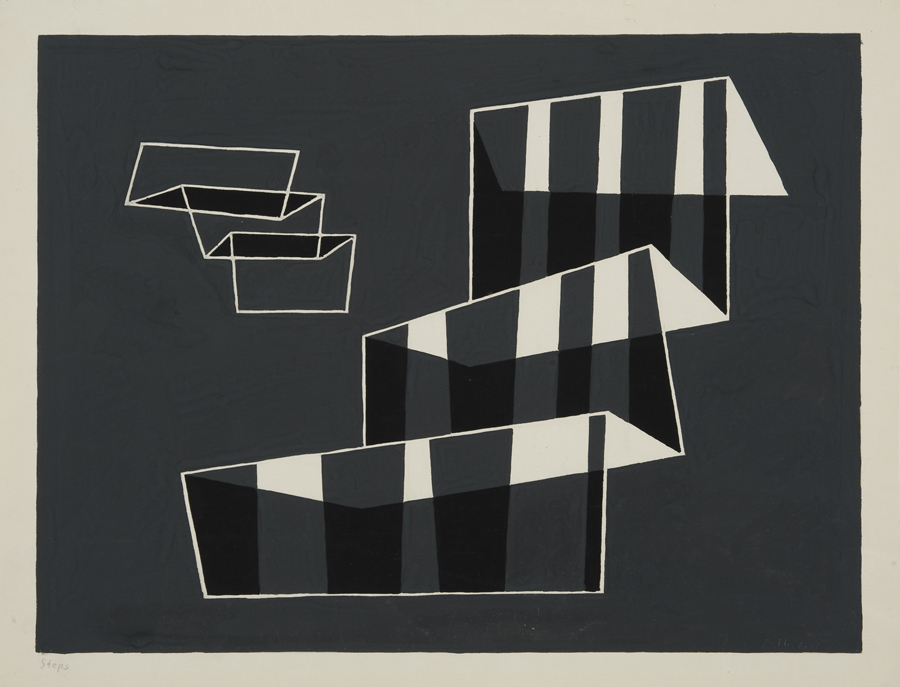
Josef Albers (German, 1888-1976) Steps 1932
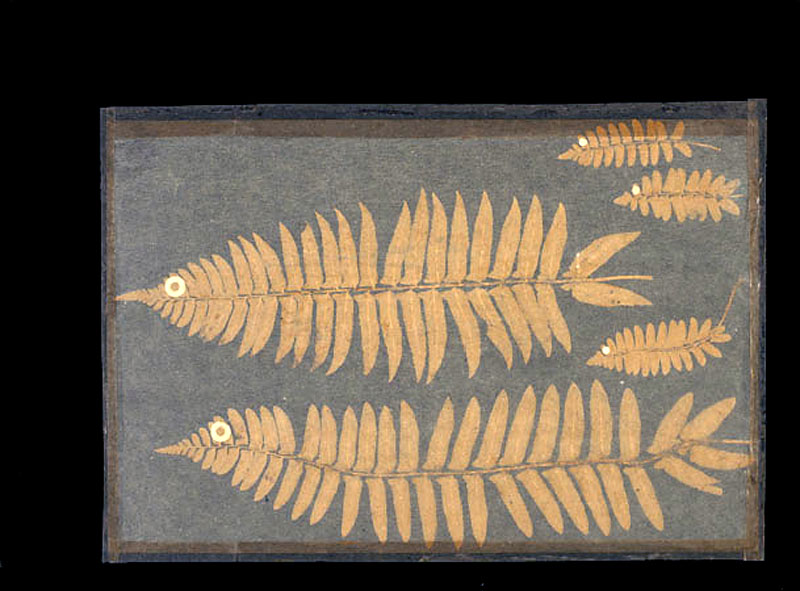
Josef Albers (German, 1888-1976) Untitled (Leaf Study) c. 1940
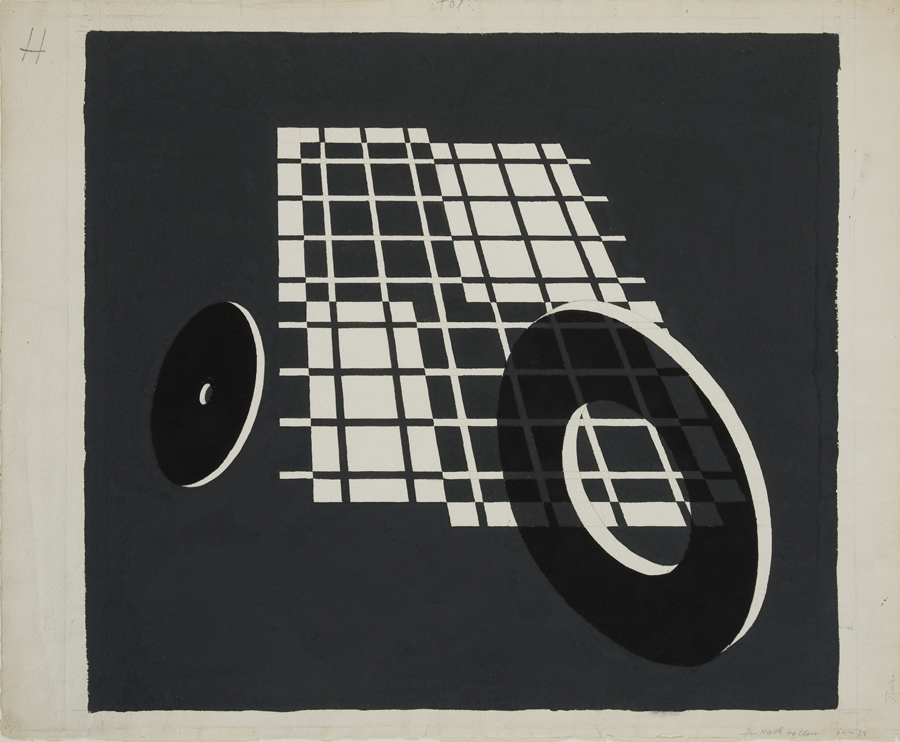
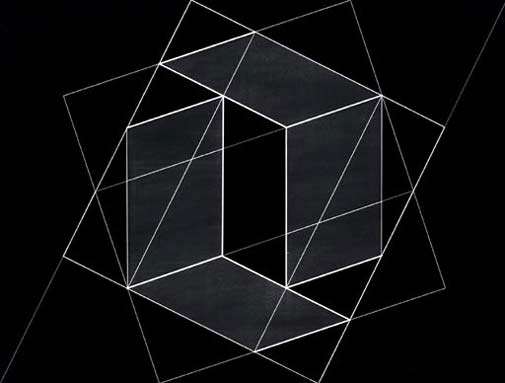
Josef Albers (German, 1888-1976) Structural Constellation, Transformation of a Scheme No.12 1950 Machine engraving on black vinylite mounted on board
Josef Albers (German, 1888-1976) Structural Constellation, Transformation of a Scheme No.23 1951 Machine engraving on black vinylite mounted on board
Josef Albers (German, 1888-1976) Structural Constellation, Transformation of a Scheme No.10 1950-51 Machine engraving on black vinylite mounted on board
Exhibition Illustrates Albers’ Sphere of Influence
The Hirshhorn possesses one of the world’s largest and most comprehensive collections of work by Josef Albers (b. Bottrop, Germany, 1888; d. New Haven, Connecticut, 1976). “Josef Albers: Innovation and Inspiration” presents nearly 70 works spanning the artist’s 55-year career, many on view for the first time. Supplementing pieces from the museum’s holdings are key objects on loan from the Josef and Anni Albers Foundation. Organised by senior curator Valerie Fletcher, the exhibition also includes documentary photographs and examples of Albers’ teaching aids, and concludes with a display of works by artists who knew, worked with, studied under or openly admired Albers. The exhibition opens on February 11 and runs through April 11, 2010.
Josef Albers: Innovation and Inspiration encompasses the artist’s distinguished career from 1917 to 1973. The exhibition begins with four early self-portrait prints dating from the years of World War I, followed by a group of boldly abstract compositions from Albers’ tenure at Germany’s revolutionary Bauhaus, where he taught alongside such remarkable modernists as Wassily Kandinsky, Paul Klee, László Moholy-Nagy, Walter Gropius and Mies van der Rohe. Albers participated in the school’s utopian aspiration to improve modern life through manufacturing and design-ideas that resonated throughout Albers’ career. The Hirshhorn’s show includes a series of black-and-white designs intended for mass production in glass, such as “6 and 3” (1931, see above), and an illuminated display of eight glass panels, in which the artist modernised and transformed the medieval tradition of stained-glass windows, best characterised by “Fugue (B)” (1925-1928).
Following the Nazi party’s rise to power, the Bauhaus was forced to close in 1933. Albers fled to the United States, where he was recruited to head the art program at the new Black Mountain College in North Carolina. There, Albers introduced a modified Bauhaus curriculum and hired vanguard modernists as teachers. He enthusiastically taught his students how art could be made from virtually any material, which he demonstrated in some of his own works, such as three “Leaf Study” collages (c. 1940, see above). Albers continued to advocate the clear structures of geometric abstraction, still mostly in black, white and primary colours, but was open to different stylistic approaches. He also briefly adopted the biomorphic forms associated with surrealism, as seen in the work “Proto-Form (B)” (1938).
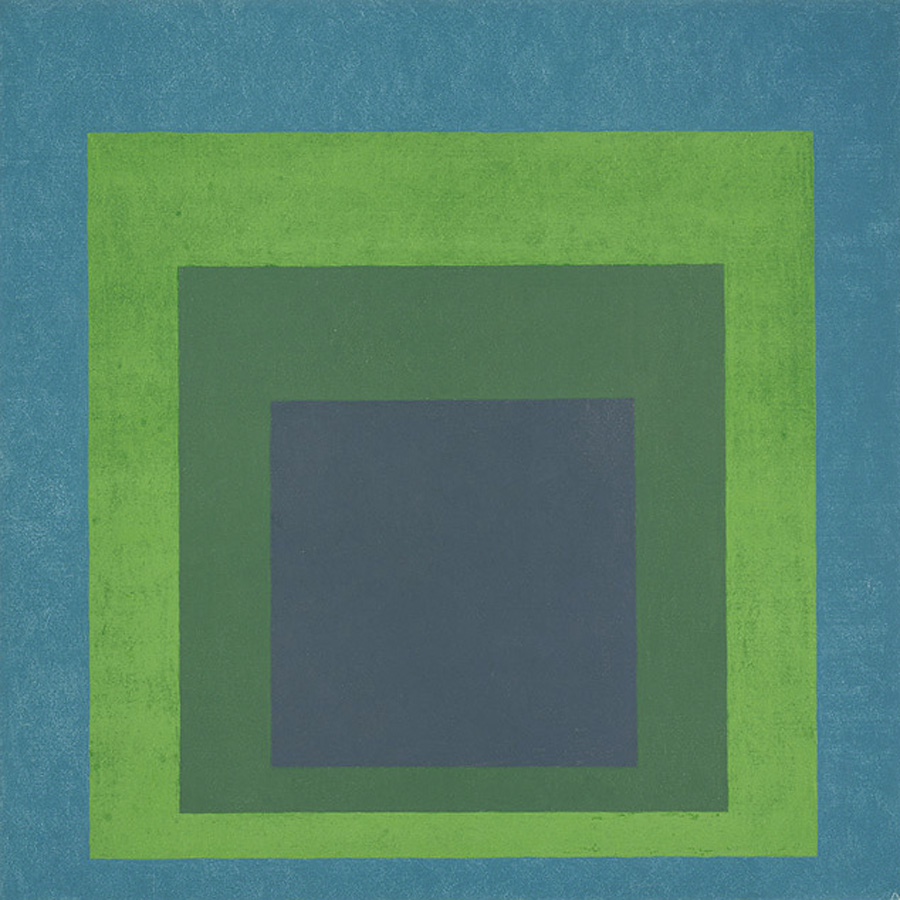
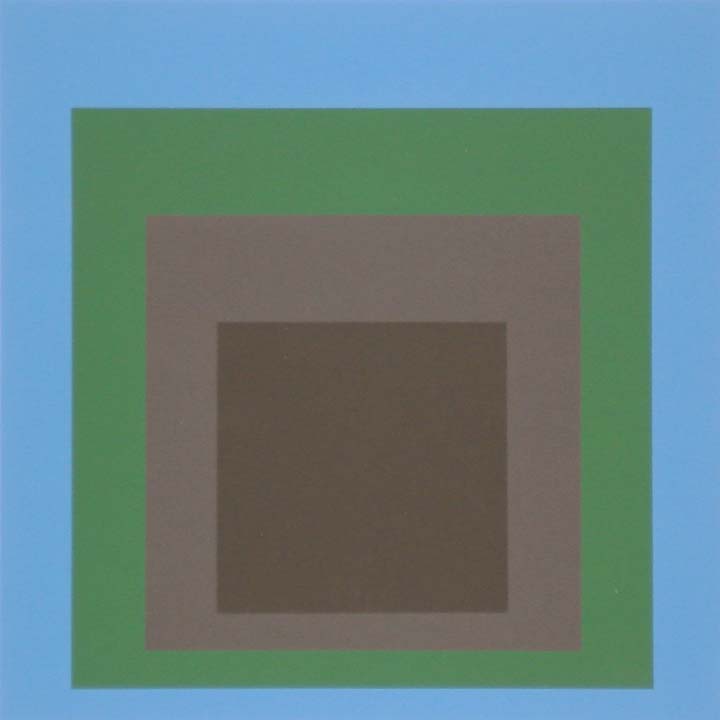
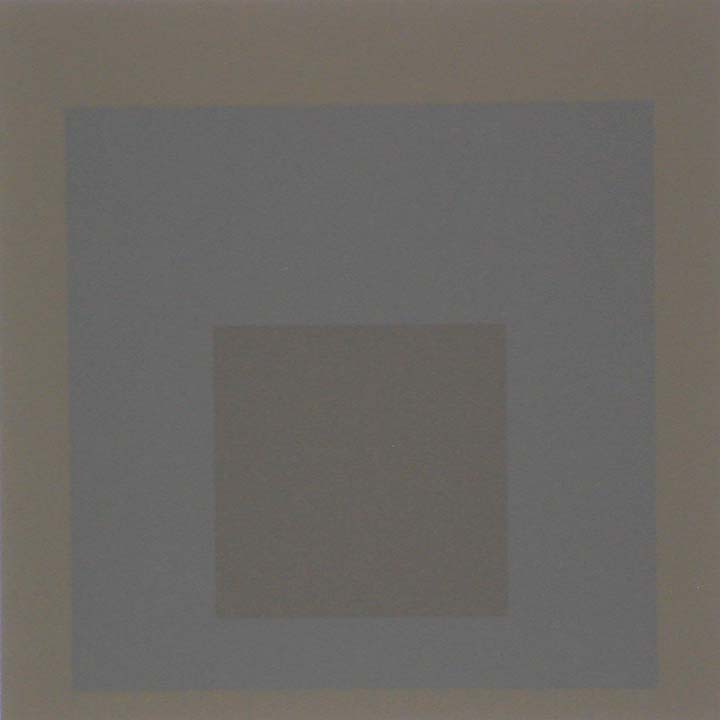
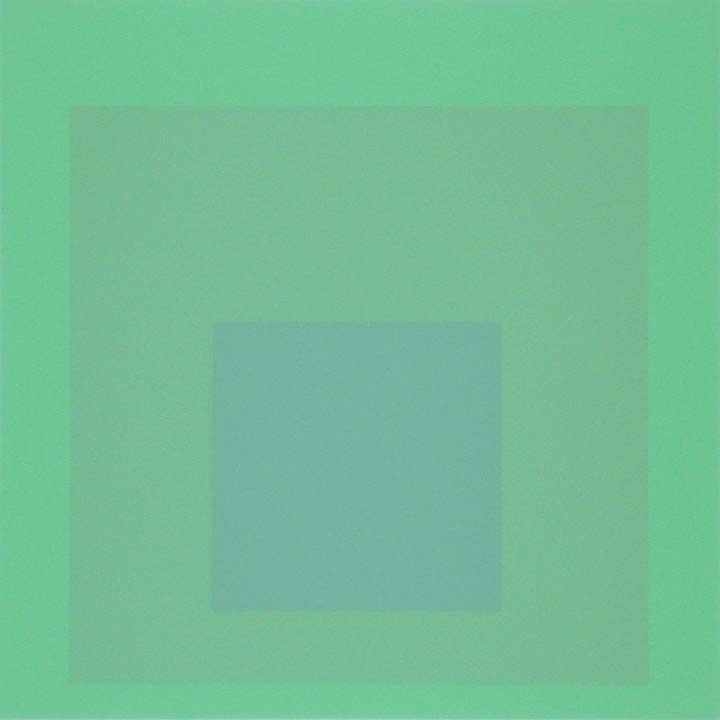
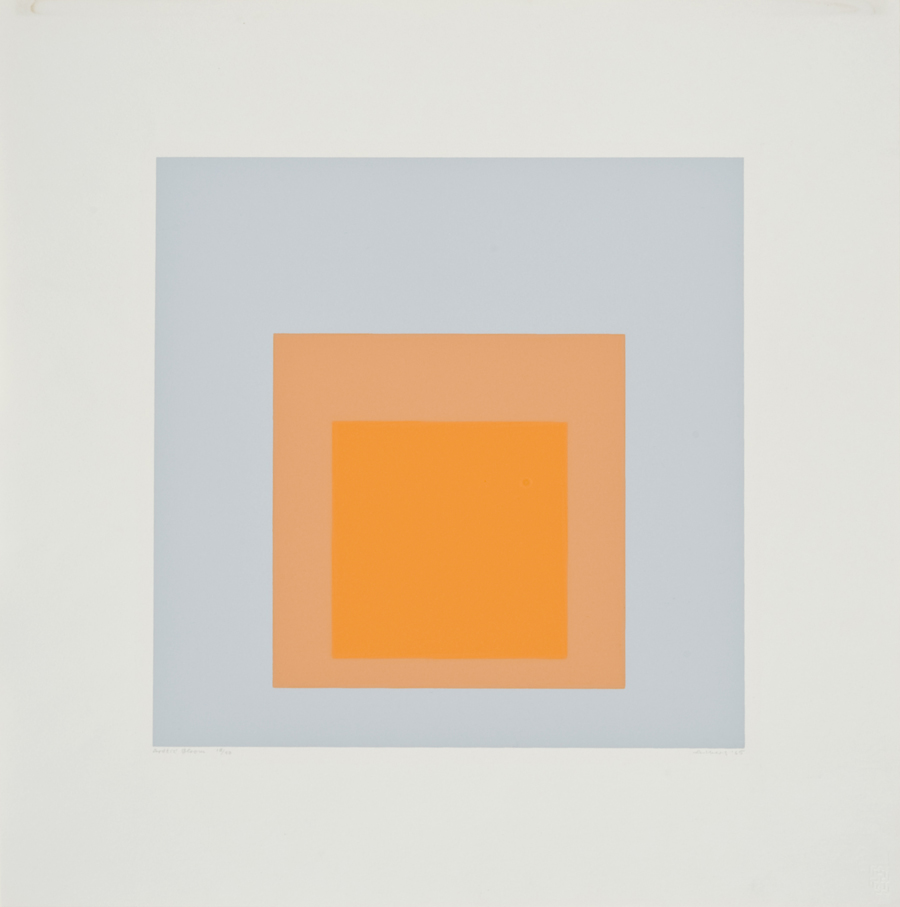
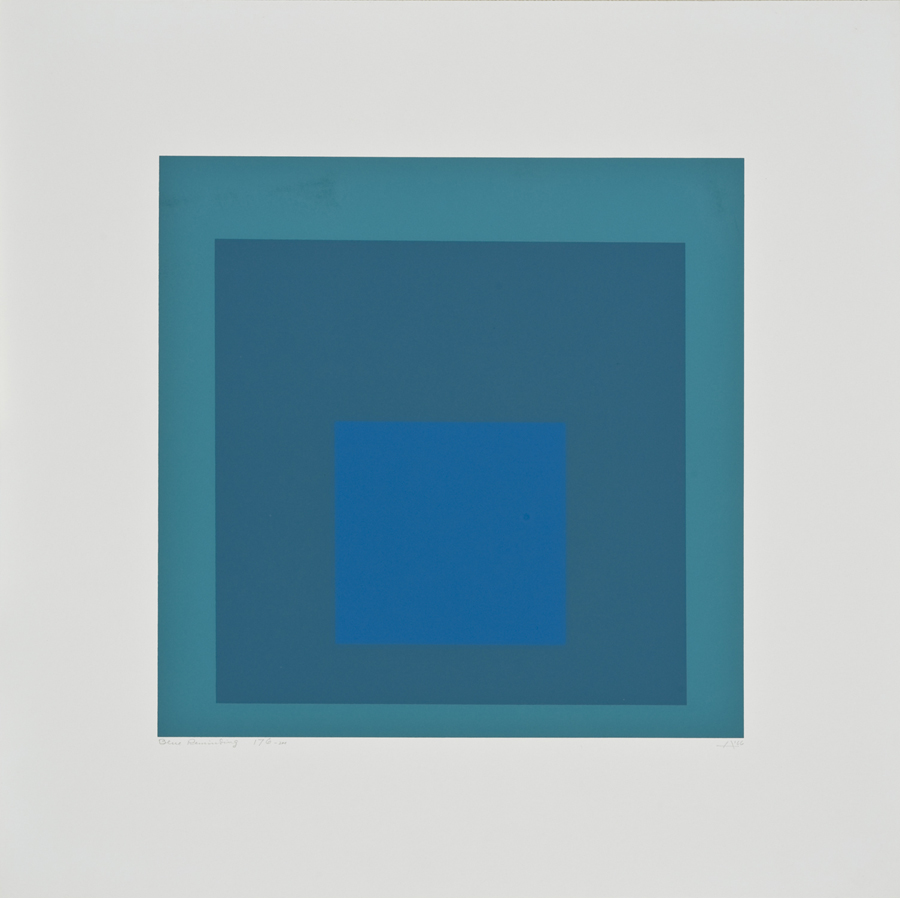
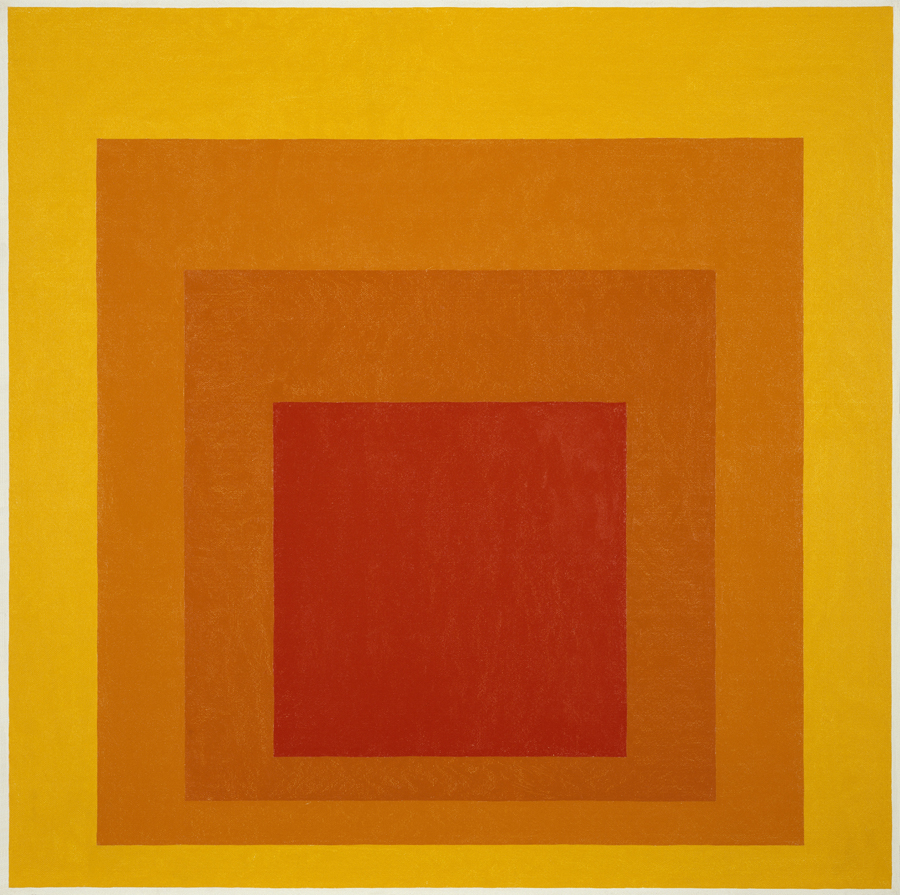
In 1949, at the age of 62, Albers became chairman of the art school at Yale University, with a mandate to transform it from a conservative academic program to a proponent of modern concepts and applications. Believing firmly that colours have no inherent emotional associations, he meticulously explored their nuances and combinations in his work. He eventually limited the shape and number of his forms, which resulted in a standardised format that he called “Homage to the Square,” for which he is best known. Two dozen “Homage to the Square” compositions fill the central gallery in the exhibition, inviting viewers to examine the subtle complexities of their perceptions. The vivid yellow-orange-reds of “Glow” (1966, see below) startle the eye, while the pale grays of “Nacre” (1965, see below) suggest cool neutrality. These images create optical illusions, challenging viewers’ visual acuity. This series concludes with the artist’s vivid red-print duo, “In Honor of the Hirshhorn Museum,” on view for the first time since the museum opened in 1974.
In addition, this exhibition includes examples from Albers’ “Structural Constellation” series of reliefs (1954-1964, see above), which anticipated op art with their linear patterns. The reliefs’ commonplace material-laminated plastic-also fulfils the utopian goal of making art affordable to everyone. The two largest paintings on view, both titled “Variant” (1973), were donated by the artist’s wife and foundation in 1979.
Albers remained active and influential until his death in 1976, and many of his pedagogical innovations have become standard methodology in art schools across the country. His explorations of abstract form and colour also inspired and stimulated generations of artists and designers. Shortly after his arrival in America, he became a co-founder of the American Abstract Artists group and participated in exhibitions across the country, from New York to Michigan and beyond. The Hirshhorn’s exhibition ends with an array of works by colleagues, students and admirers, among them: weavings by the artist’s wife, Anni Albers; abstract constructions by Burgoyne Diller; streamlined images of labor by Jacob Lawrence; a large op art painting by Richard Anuskiewicz; textured creations by Eva Hesse and Robert Rauschenberg; and a minimalist stacked wall sculpture by Donald Judd.”




























 Art Blart _ art and cultural memory archive
You must be logged in to post a comment.