Review: ‘Turning Points: Contemporary Photography from China’ at the National Gallery of Victoria, Melbourne

Exhibition dates: 22nd June, 2019 – 27th January, 2020


Installation view of the exhibition 'Turning Points: Contemporary Photography from China' at the National Gallery of Victoria, Melbourne


Installation view of the exhibition Turning Points: Contemporary Photography from China at the National Gallery of Victoria, Melbourne
Photo: Marcus Bunyan


Writing the body politic / broken

Ho hum, ho hum.

The exhibition Turning Points: Contemporary Photography from China at the National Gallery of Victoria is an extension of the 2008 exhibition Body Language: Contemporary Chinese Photography with many of the same photographs being shown again, with new additions to the collection.

Nothing much seems to have changed in the last 12 years. Contemporary Chinese photography still concentrates on limited narratives based around the performing body, the body positioned in time and space in relation to history, memory, tradition, culture and consumerism. What the “turning points” are in the title of this exhibition remains unclear. Turning points for who? The art, the artists, the stories they tell, or the restrictive nature of contemporary Chinese culture.

Certain things remain constant: an emphasis on the performing body, (its) theatrical style, (in) elaborate tableaux, contemporary consumer society, urban reconstruction, and tradition and change. The body is usually isolated against contextless backgrounds, free floating, paired with a rather stilted iconography derived from Chinese culture – coins, calligraphy, statues, spirits, tattoos as traditional historical painting, calligraphy, buildings, revolution – focusing on “the dismantling of tradition during a period of rampant consumerism and modernisation.”

Even while these artists apparently possess, “an urgent desire to explore individual and social identity in a time of unprecedented change … that reflect the tensions in Chinese society as the processes of social change meet traditional culture and expectations head-on”, no/body mentions the elephant in the room – the repressive and aggressive nature of the Chinese government, it’s suppression of dissent both internally and externally, its appalling human rights record and its expansionist policy in the South China Sea. The paradox is that while, “Hai Bo’s paired portraits illustrate the cultural shifts that have occurred over forty years as people in China have become increasingly able to show their individuality”, that individuality is closely controlled by the State. Step out of line, as many artists have found to their peril, and you are soon done for.

No mention here of the 1989 Tiananmen Square protests, the current democracy protests in Hong Kong, or the recently released report by Human Rights Watch (HRW) which contains a damning essay on China’s “global threat” to human rights. No other government “flexes its political muscles with such vigour and determination to undermine the international human rights standards and institutions that could hold it to account.” The HRW report cites a slew of violations ranging from the mass detention of Uyghur Muslims in the far-western autonomous region of Xinjiang, to increased censorship, to the use of technologies for mass surveillance and social control. Nothing to see here!

The work of most of the artists in this exhibition seems insular, inward looking – chained to the country’s past and present, memory and history, culture and its re/constitution. Addressing its constitution through supplication. Addressing the representation of institutional power in socialist regimes through images with heroic overtones. It’s almost as if these artists are painting symbols, painting a monosyllabic mythology of how their country was and is now with no turning point in sight. Parsing on ancient and modern to no great effect.

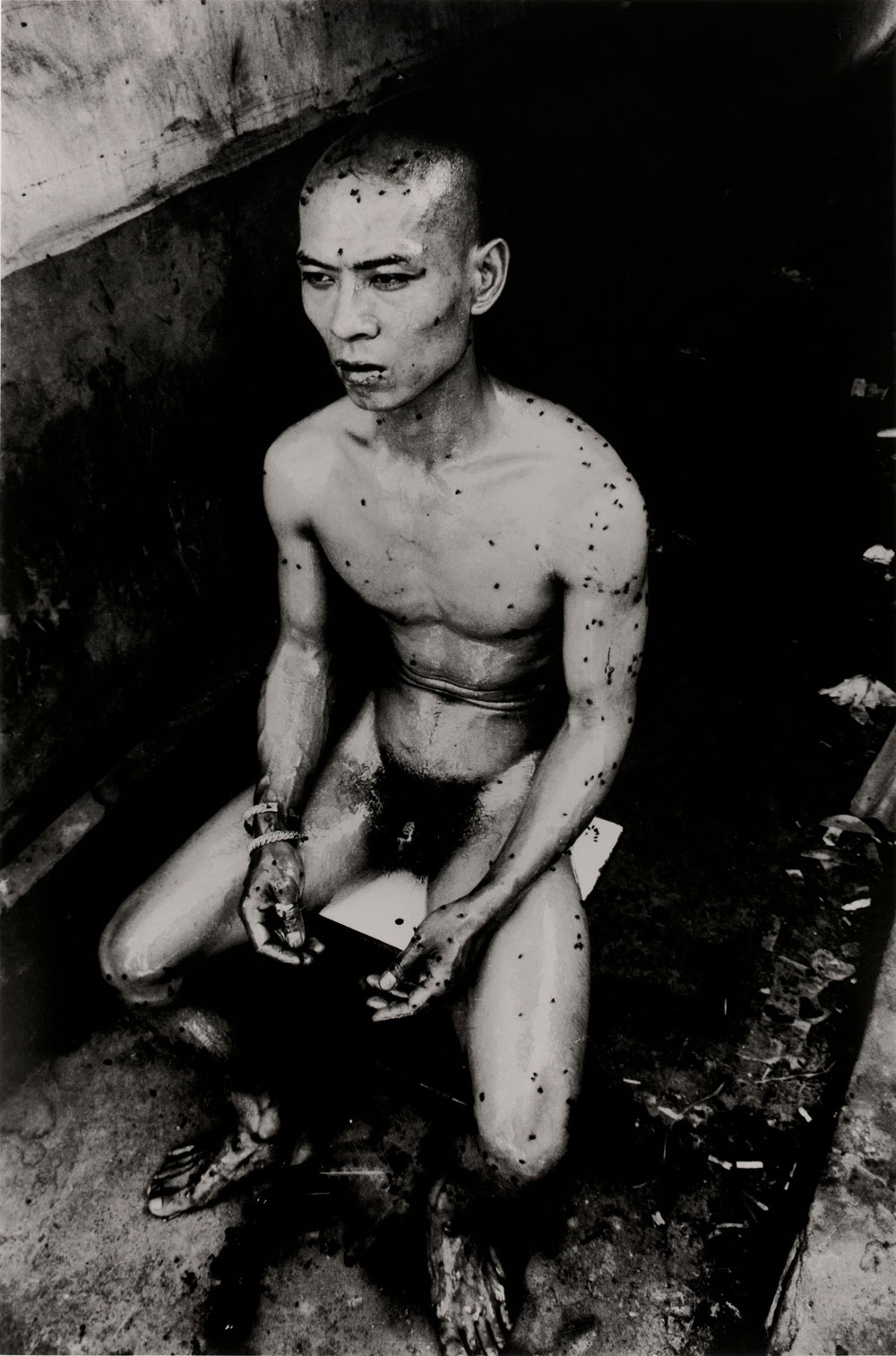
The only two artists who really lay it on the line, who confront the dragon, are Rong Rong’s photographs of a performance by artist Zhang Huan titled 12 square metres (1994, below) in which the artist sat naked, smeared in honey and fish oil in a local public toilet for an hour before cleansing himself in a polluted pond; and Sheng Qi’s Memories (Mother), Memories (Me) and Memories (Mao) (2000, below) in which the artist was deeply affected by the changed political climate following the Tiananmen Square protests of 1989 and uses his disfigurement “as the backdrop for a series of self-portraits that juxtapose his past and present.”

These are the photographs that I will remember. The others, stolid, prosaic, are lost.

Dr Marcus Bunyan


Many thankx to the National Gallery of Victoria for allowing me to publish the images in the posting. All installation images are © Dr Marcus Bunyan and the National Gallery of Victoria and proceed in a clockwise direction around the exhibition. Please click on the photographs for a larger version of the image.


Installation view of the exhibition 'Turning Points: Contemporary Photography from China' at the National Gallery of Victoria, Melbourne showing Cang Xin (Chinese, b. 1967) 'Six photographs from the Communication' series (1996-2006)


Installation view of the exhibition Turning Points: Contemporary Photography from China at the National Gallery of Victoria, Melbourne showing Cang Xin (Chinese, b. 1967) Six photographs from the Communication series (1996-2006)
Photo: Marcus Bunyan


Cang Xin (Chinese, b. 1967) 'Communication' 1996-2006 from the exhibition 'Turning Points: Contemporary Photography from China' at the National Gallery of Victoria, Melbourne, June 2019 - January 2020


Cang Xin (Chinese, b. 1967)
Communication
1996-2006
Type C photograph ed. 10/10
Gift of Larry Warsh, 2016
National Gallery of Victoria, Melbourne
© Courtesy of the artist


Cang Xin (Chinese, b. 1967) 'Communication' 1996-2006 from the exhibition 'Turning Points: Contemporary Photography from China' at the National Gallery of Victoria, Melbourne, June 2019 - January 2020


Cang Xin (Chinese, b. 1967)
Communication
1996-2006
Type C photograph ed. 10/10
Gift of Larry Warsh, 2016
National Gallery of Victoria, Melbourne
© Courtesy of the artist


Cang Xin is a celebrated performance artist who uses photography as an adjunct to his practice. In these photographs he is documenting a ritualistic performance in which he licks various objects that have a symbolic resonance for him. Each object has a link to China and its history, although those meanings remain intentionally obscured and subjective. The artist literally experiences the objects through a sense of taste and a physical action; the intimate act of licking becomes a gesture of communication or communion with the past.
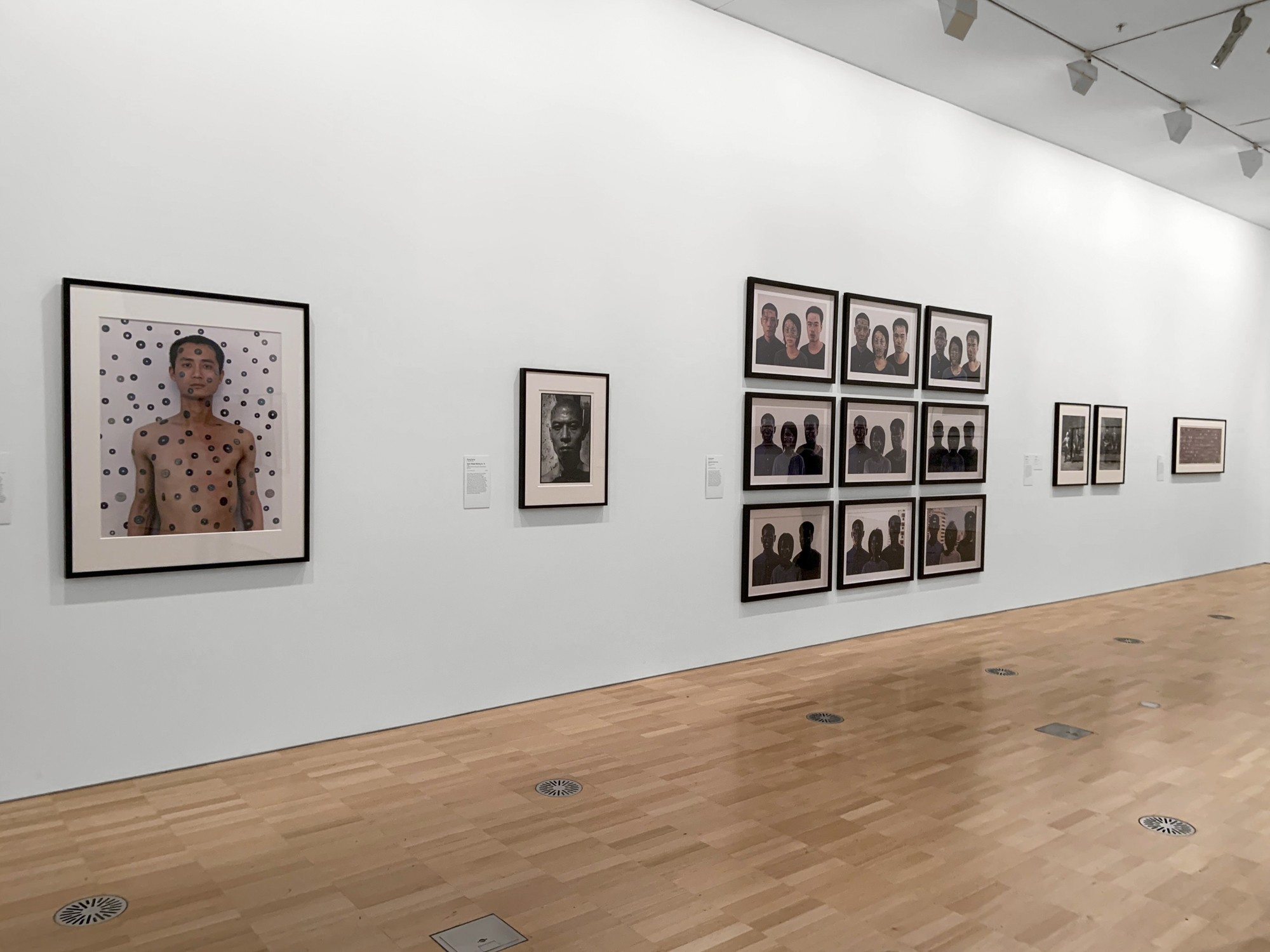
 

Installation view of the exhibition 'Turning Points: Contemporary Photography from China' at the National Gallery of Victoria, Melbourne showing at left, Qiu Zhijie (Chinese, b. 1969) 'Tattoo no. 7' (1994); at second left, Rong Rong (Chinese, b. 1968) 'East Village Beijing no. 15' (1994); and at middle right, Zhang Huan (Chinese, b. 1965) 'Shanghai family tree' (2001)


Installation view of the exhibition Turning Points: Contemporary Photography from China at the National Gallery of Victoria, Melbourne showing at left, Qiu Zhijie (Chinese, b. 1969) Tattoo no. 7 (1994); at second left, Rong Rong (Chinese, b. 1968) East Village Beijing no. 15 (1994); and at middle right, Zhang Huan (Chinese, b. 1965) Shanghai family tree (2001)
Photo: Marcus Bunyan


Qiu Zhijie (Chinese, b. 1969) 'Tattoo no. 7' 1994


Qiu Zhijie (Chinese, b. 1969)
Tattoo no. 7
1994
From the Tattoo series 1994
Type C photograph, ed. 8/10
101.6 x 76.2cm
National Gallery of Victoria, Melbourne
Gift of Larry Warsh, 2016
© Courtesy of the artist


In his Tattoo series, Qui Zhijie overlays self-portraits with drawings, images and objects, such as the coins shown here. Discussing this series, he writes, ‘The Tattoo series focuses on the problematic relationship between an image and its background … In this series the two find common ground. The substance of the subject, the weight of the person, and the physicality of the figure all dissolve … This series is a response to the futility and drowning of the individual brought about by the onslaught of the Chinese media culture which began to develop during the 1990s’.


Rong Rong (Chinese, b. 1968) 'East Village Beijing no. 15' 1994


Rong Rong (Chinese, b. 1968)
East Village Beijing no. 15
1994
Gelatin silver photograph, coloured dyes
National Gallery of Victoria, Melbourne
Gift of Larry Warsh, 2016


Rong Rong is well known for his images that show the lives and activities of the avant-garde Beijing East Village artistic community during the 1990s. This photograph is one of a series created to document a famous performance by fellow artist Zhang Huan, during which Zhang covered his naked body with honey and fish oil and sat on a stool in a public toilet, allowing flies to swarm over his body. Rong Rong’s photographs, made throughout the performance, form a crucial record of this performative action that was intended to comment on the squalid conditions in which the artists were living.


Installation view of the exhibition 'Turning Points: Contemporary Photography from China' at the National Gallery of Victoria, Melbourne showing Zhang Huan (Chinese, b. 1965) 'Shanghai family tree' (2001)

Installation view of the exhibition 'Turning Points: Contemporary Photography from China' at the National Gallery of Victoria, Melbourne showing Zhang Huan (Chinese, b. 1965) 'Shanghai family tree' (2001)


Installation views of the exhibition Turning Points: Contemporary Photography from China at the National Gallery of Victoria, Melbourne showing Zhang Huan (Chinese, b. 1965) Shanghai family tree (2001)
Photos: Marcus Bunyan
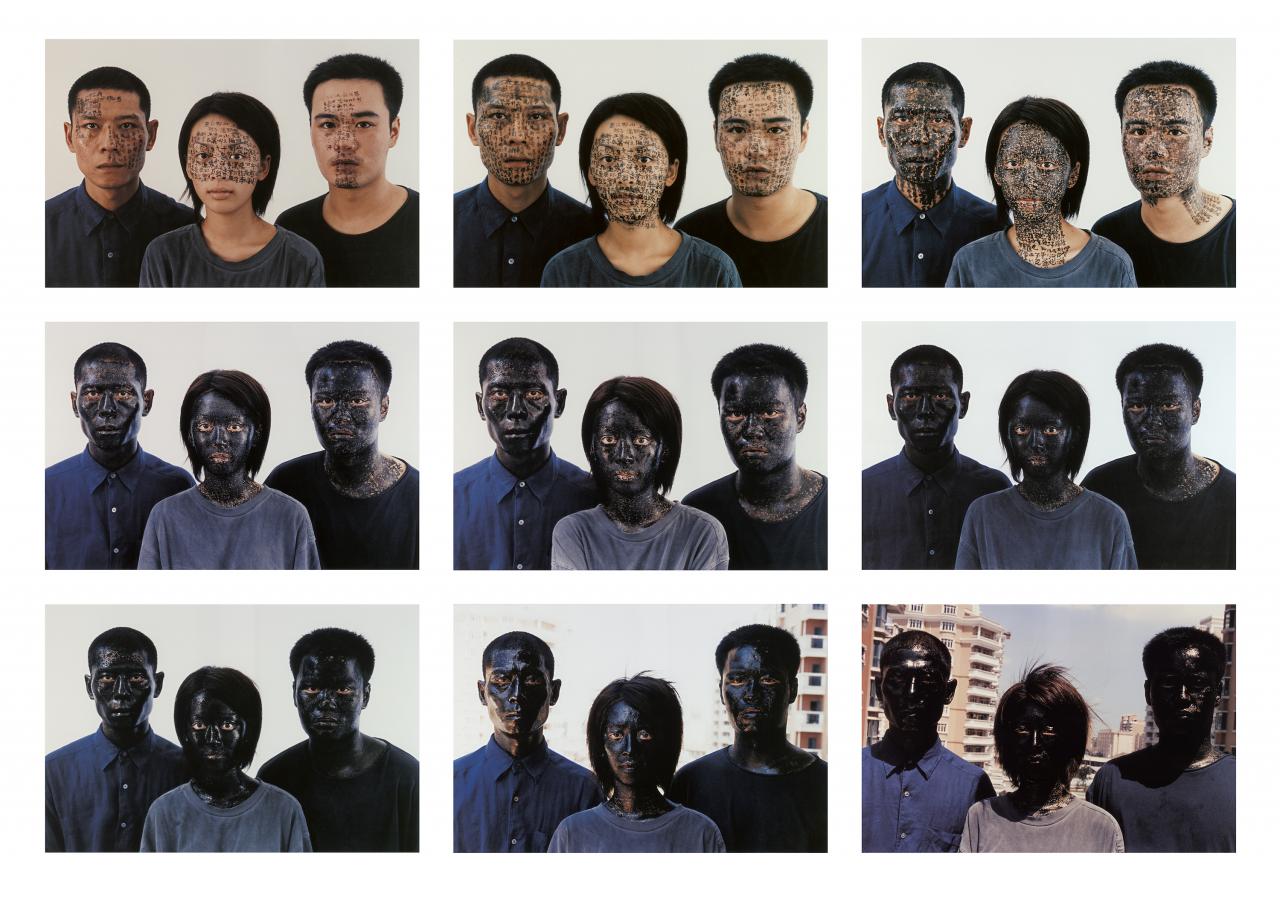
 

Zhang Huan (Chinese, b. 1965) 'Shanghai family tree' 2001


Zhang Huan (Chinese, b. 1965)
Shanghai family tree
2001
Type C photographs ed. 25/25
National Gallery of Victoria, Melbourne
Purchased with funds donated by Jason Yeap and Min Lee Wong, 2008
© Zhang Huan Studio


The faces of the two young men and the young woman in Zhang Huan’s suite of nine photographs are used like the blank pages in a book carrying an increasingly oppressive weight of words. The Chinese characters inscribed on their faces gradually obliterate their features and identities. In the final photograph, the trio are shown in front of a new housing development in Shanghai. Their features are totally obscured, suggesting a parallel between the loss of personal identity and the rapid pace of development that is rendering the city unrecognisable.

In 1999 the internationally renowned Chinese performance and video artist, sculptor and photographer Zhang Huan wrote of his distinctive approach to his practice: ‘The body is the only direct way through which I come to know society and society comes to know me. The body is proof of identity. The body is language’. The complex tangle of history and tradition that can override the individual appears as a theme in much of Zhang Huan’s avant-garde performances and photographs and, as seen in this work, is frequently expressed through the use of language. In Shanghai family tree Zhang Huan (to the left) poses with a man and woman, their faces becoming increasingly obscured by Chinese characters. This work seems to suggest the importance of language which, while it can overwhelm the individual, undoubtedly also helps define a person’s relationship to society.

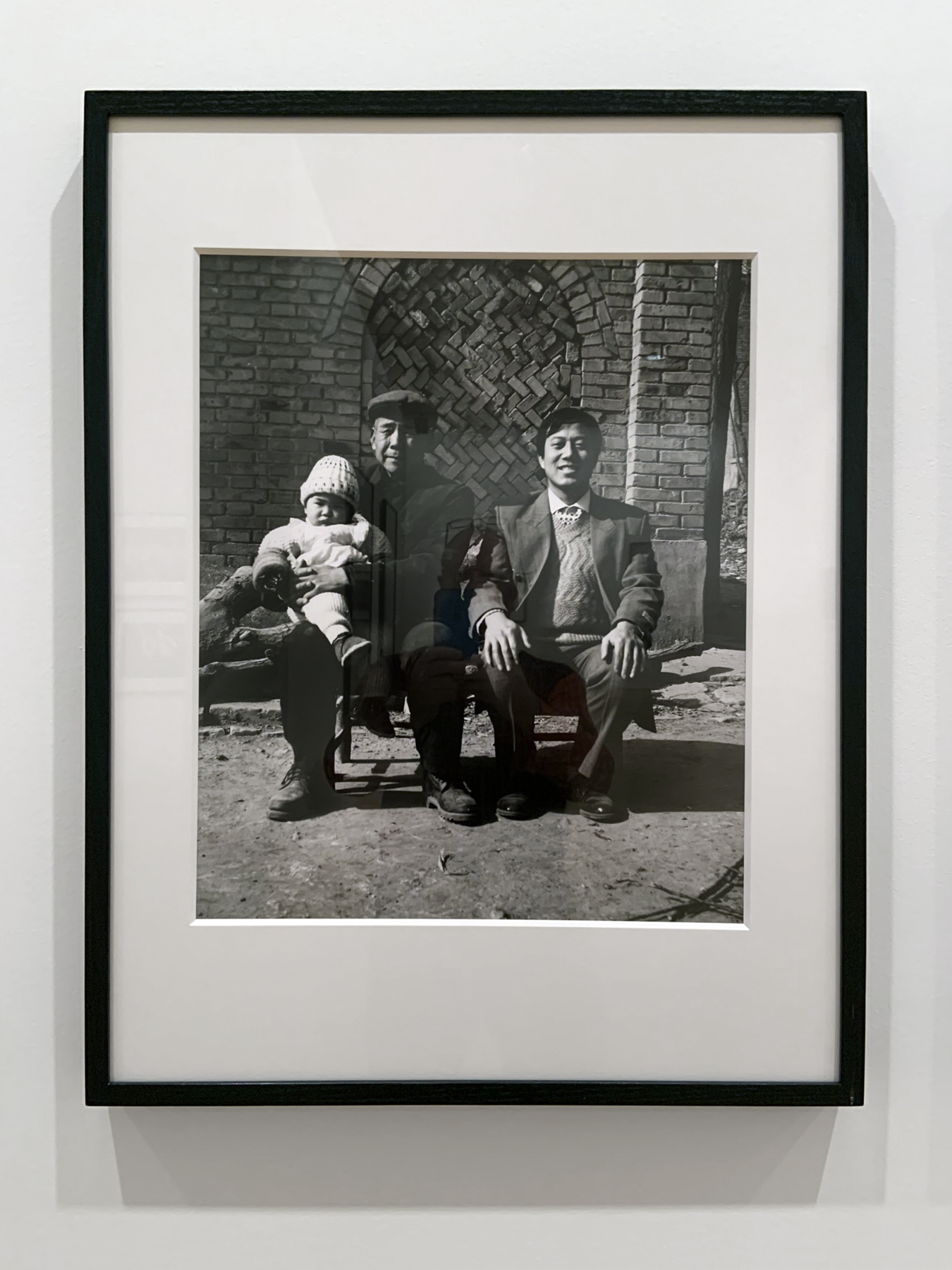
 

Installation view of the exhibition 'Turning Points: Contemporary Photography from China' at the National Gallery of Victoria, Melbourne showing two photographs from Zhuang Hui's 'One and Thirty' series (1996)

Installation view of the exhibition 'Turning Points: Contemporary Photography from China' at the National Gallery of Victoria, Melbourne Installation view of the exhibition 'Turning Points: Contemporary Photography from China' at the National Gallery of Victoria, Melbourne showing a photograph from Zhuang Hui's 'One and Thirty' series (1996)


Installation views of the exhibition Turning Points: Contemporary Photography from China at the National Gallery of Victoria, Melbourne showing two photographs from Zhuang Hui’s One and Thirty series (1996)
Photos: Marcus Bunyan


Zhuang Hui (Chinese, b. 1963) 'Untitled' 1996


Zhuang Hui (Chinese, b. 1963)
Untitled
1996
From the One and Thirty
Type C photograph, ed. 3/3
61.0 x 51.0cm
National Gallery of Victoria, Melbourne
Gift of Larry Warsh in honour of Tony Ellwood, Director NGV, 2018
© Courtesy of the artist


The series title of these photographs, One and Thirty, is didactic. There are ‘thirty’ portraits in the sequence and ‘one’ figure who appears in each image, the ever-smiling figure of the artist. Each photograph shows Zhuang Hui posed with an individual he has selected as the representative of a particular vocational or social group. In one of the works shown here Zhuang is photographed seated beside an older man holding a baby on his knee, a classic doting grandfather; in the other image he is photographed with a smartly dressed, young professional woman.


Wang Qingsong (Chinese, b. 1966) 'Standard family' 1996


Wang Qingsong (Chinese, b. 1966)
Standard family
1996
Type C photograph, ed. 8/30
48.2 x 124.4cm
National Gallery of Victoria, Melbourne
Gift of Larry Warsh, 2017
© Courtesy of the artist


Wang Jinsong’s Standard family project investigates contemporary Chinese culture and the effects of the one-child policy, which was introduced in China in the 1970s as a means of curbing population growth. Without any clear agenda or critical stance, Wang invited families to participate in photo shoots where the parents invariably elected to pose flanking their lone child. When the images are repeated and presented in a grid, the ‘standard’ nature of the family unit becomes evident, allowing for a reading of generic poses and expressions across the various families, and inviting speculation and commentary on the effects of collectivism when imposed on social structures.
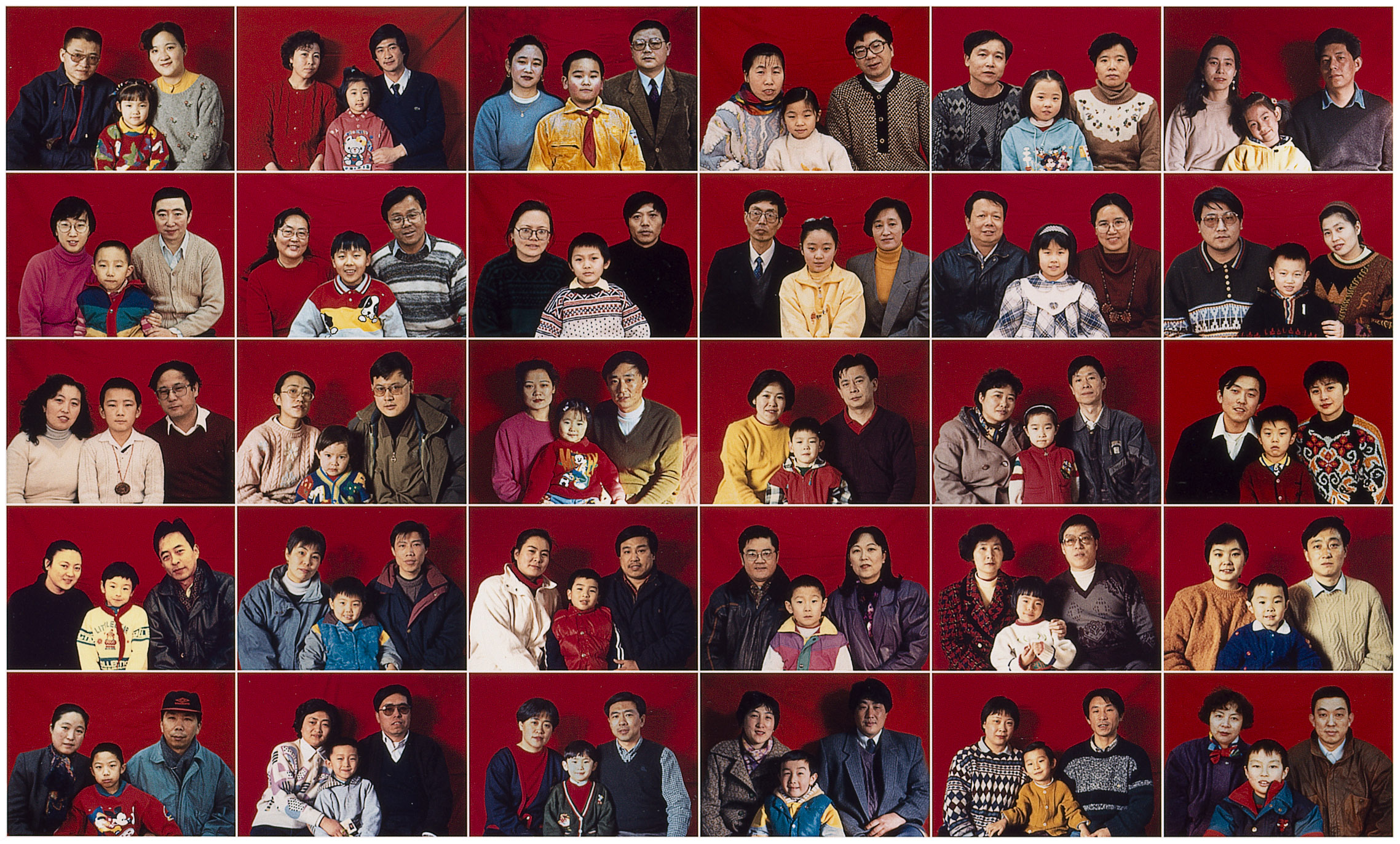
 

Wang Qingsong (Chinese, b. 1966) 'Standard family' 1996 (detail)


Wang Qingsong (Chinese, b. 1966)
Standard family (detail)
1996
Type C photograph, ed. 8/30
48.2 x 124.4cm
National Gallery of Victoria, Melbourne
Gift of Larry Warsh, 2017
© Courtesy of the artist


Installation view of the exhibition 'Turning Points: Contemporary Photography from China' at the National Gallery of Victoria, Melbourne showing Qiu Zhijie's 'Standard Pose' series (1996-1998)

Installation view of the exhibition 'Turning Points: Contemporary Photography from China' at the National Gallery of Victoria, Melbourne showing Qiu Zhijie's 'Standard Pose' series (1996-1998)

Installation view of the exhibition 'Turning Points: Contemporary Photography from China' at the National Gallery of Victoria, Melbourne showing Qiu Zhijie's 'Standard Pose' series (1996-1998)


Installation views of the exhibition Turning Points: Contemporary Photography from China at the National Gallery of Victoria, Melbourne showing Qiu Zhijie’s Standard Pose series (1996-1998)
Photos: Marcus Bunyan


Qiu Zhijie (Chinese b. 1969) 'Fine series A' 1996-1998


Qiu Zhijie (Chinese b. 1969)
Fine series A
1996-1998
From the Standard Pose series 1996-1998
Type C photograph, ed. 9/10
58 x 61cm
National Gallery of Victoria, Melbourne Gift of Larry Warsh, 2016
© Courtesy of the artist


In common with many photographers working in China in the 1990s, Qiu Zhijie uses the performing body in his images. Throughout his career he has combined performance, video and photography to create works that explore ideas of history, individuality and identity in contemporary China. The four photographs from the Standard Pose series reference propaganda images produced during the Cultural Revolution and consider the failure of the future that they promised. Photographed in a simple studio setting and wearing contemporary clothes, the models, with their overly dramatic poses and facial expressions, appear comical rather than heroic.


Qiu Zhijie (Chinese b. 1969) 'Fine series C' 1996-1998


Qiu Zhijie (Chinese b. 1969)
Fine series C
1996-1998
From the Standard Pose series 1996-1998
Type C photograph, ed. 9/10
58 x 61cm
National Gallery of Victoria, Melbourne Gift of Larry Warsh, 2016
© Courtesy of the artist
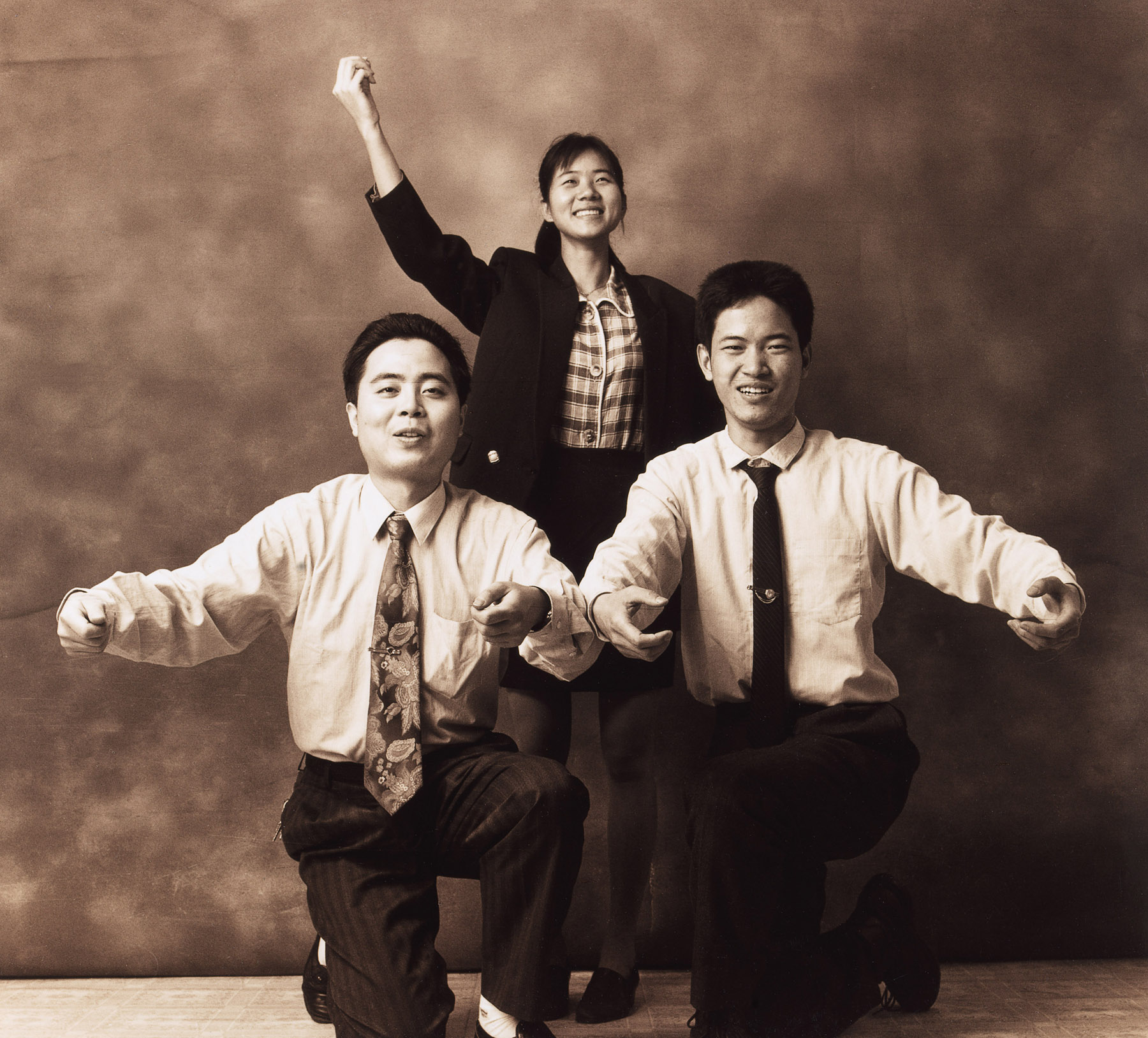
 

Qiu Zhijie (Chinese b. 1969) 'Fine series C' 1996-1998


Qiu Zhijie (Chinese b. 1969)
Fine series D
1996-1998
From the Standard Pose series 1996-1998
Type C photograph, ed. 9/10
58 x 61cm
National Gallery of Victoria, Melbourne Gift of Larry Warsh, 2016
© Courtesy of the artist


Turning Points: Contemporary Photography from China explores the work of established and emerging photo-artists working in a time of rapid social and economic change.

In the 1990s, Chinese photography became one of the most dynamic and exciting areas in contemporary international art. Artists in China increasingly began to use photography to not only to document their lives but to question and challenge the status quo. The ‘first generation’ of contemporary Chinese artists included here – those born in the 1960s – examined the societal impact of the Cultural Revolution, and reflected on their own and their families’ personal experiences. The next generation of photographers, born in the 1980s and later, bring not only different life experience, having come of age in the twenty-first century, but are actively engaged with the global community in ways that were not possible in previous decades.

The works included in this exhibition offer commentaries on individuality and identity, cultural change, the transformation of Chinese cities, and the impact of consumerism and globalisation on contemporary society.

The National Gallery of Victoria began to collect contemporary Chinese photography in 2004, and in 2008 presented the exhibition Body Language: Contemporary Chinese Photography. Since that time the Gallery has continued to build this aspect of the collection.

More recently, in 2016 and 2017, the NGV photography collection was transformed through the generosity of Larry Warsh. An American collector, publisher and founder of AW Asia, a private organisation and exhibition space in New York, Warsh presented a suite of twenty-nine contemporary Chinese photographs as a gift to the Gallery. His donation comprises works by some of the most important Chinese photographic artists working in the 1990s and early 2000s, including Hong Lei, Rong Rong and Wang Qingsong. Warsh’s presentation effectively doubled the NGV’s holdings of contemporary Chinese photography, and this exhibition, which includes a number of works from this important gift, was made possible because of his generosity.

Text from the National Gallery of Victoria website [Online] Cited 23/12/2019


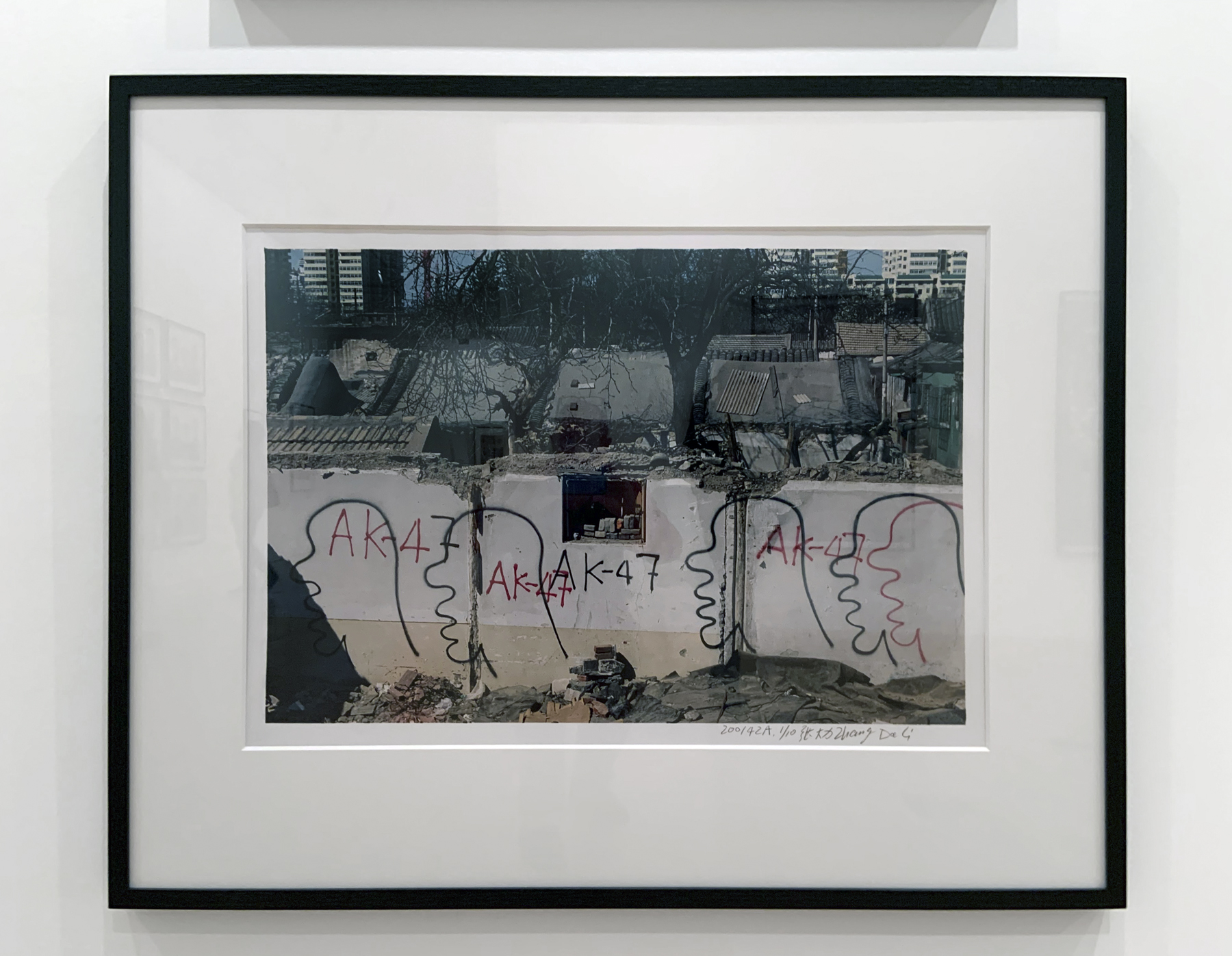
Installation view of the exhibition 'Turning Points: Contemporary Photography from China' at the National Gallery of Victoria, Melbourne showing at left, Wang Qingsong's 'City walls' (2002); at second left bottom Zhang Dali's '2001 42A' (2001) from the 'Demolition and Dialogue' series; at centre, Chi Peng's 'Apollo in transit' (2005); at centre right, Yang Yongliang's 'Eclipse' (2008); and at right Huang Yan's 'Chinese landscape – Tattoo' (1999)


Installation view of the exhibition Turning Points: Contemporary Photography from China at the National Gallery of Victoria, Melbourne showing at left, Wang Qingsong’s City walls (2002); at second left bottom Zhang Dali’s 2001 42A (2001) from the Demolition and Dialogue series; at centre, Chi Peng’s Apollo in transit (2005); at centre right, Yang Yongliang’s Eclipse (2008); and at right Huang Yan’s Chinese landscape – Tattoo (1999)
Photo: Marcus Bunyan

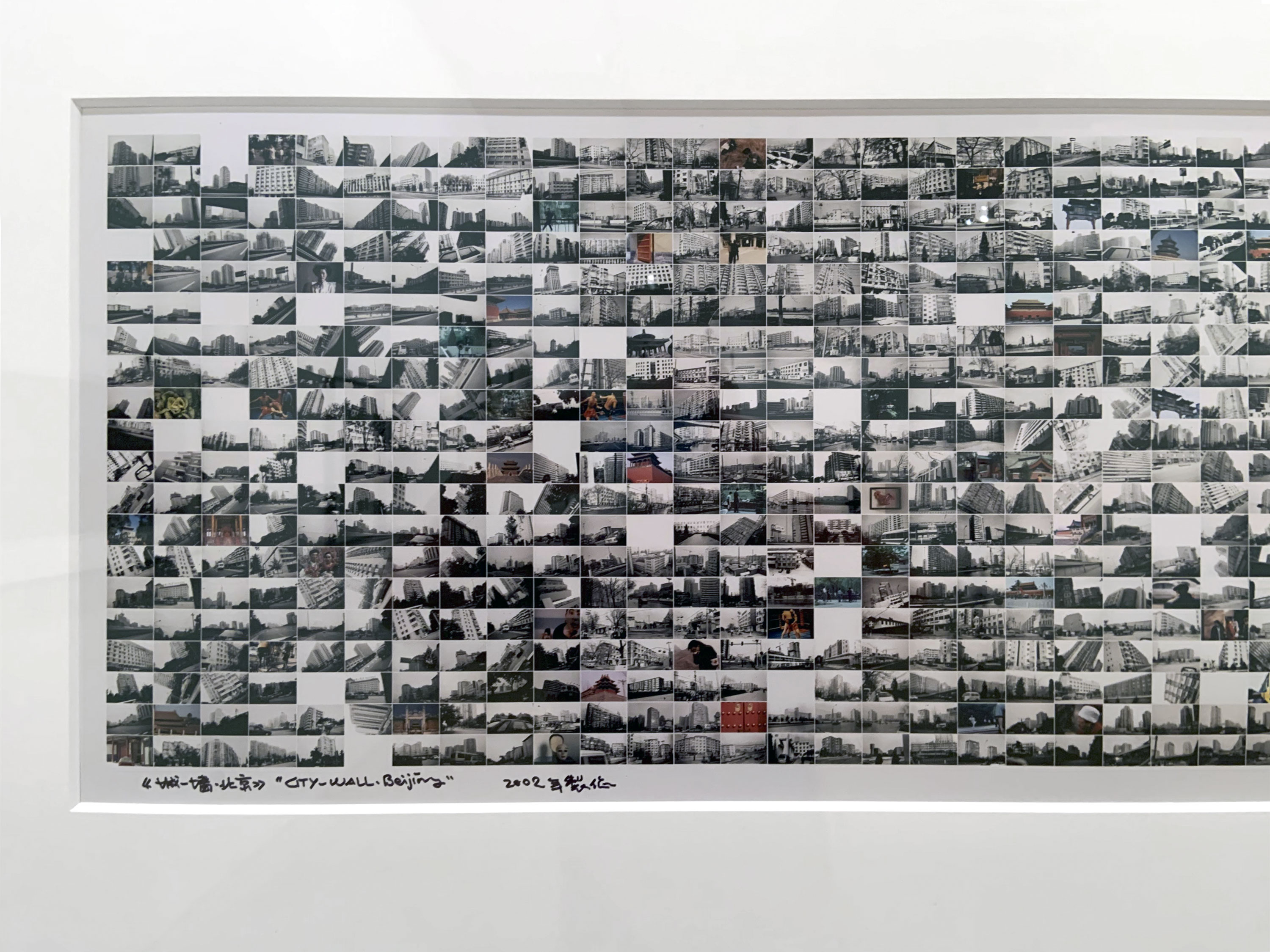
 

Installation view of the exhibition 'Turning Points: Contemporary Photography from China' at the National Gallery of Victoria, Melbourne showing Wang Qingsong's 'City walls' (2002)

Installation view of the exhibition 'Turning Points: Contemporary Photography from China' at the National Gallery of Victoria, Melbourne showing Wang Qingsong's 'City walls' (2002)


Installation views of the exhibition Turning Points: Contemporary Photography from China at the National Gallery of Victoria, Melbourne showing Wang Qingsong’s City walls (2002)
Photos: Marcus Bunyan


Wang Jinsong’s photograph shows aspects of the architecture and history of Beijing, drawing attention to the abandonment of time-honoured buildings, homes and ways of living. City walls comprises a grid of 360 images of buildings in Beijing. The great majority of the photographs are of generic concrete constructions, printed in a grey monotone. Interspersed among these are richly coloured images showing traditional architecture. The placement of the photographs in a grid creates an immediate visual link to the idiosyncratic brick construction of the older buildings, which are rapidly being replaced by new, uniform reinforced concrete structures.


Installation view of the exhibition 'Turning Points: Contemporary Photography from China' at the National Gallery of Victoria, Melbourne showing at top, Weng Fen's 'On the wall: Guangzhou (4)' (2002) and at bottom, Zhang Dali's '2001 42A' (2001)

Installation view of the exhibition 'Turning Points: Contemporary Photography from China' at the National Gallery of Victoria, Melbourne showing Weng Fen's 'On the wall: Guangzhou (4)' (2002)

Installation view of the exhibition 'Turning Points: Contemporary Photography from China' at the National Gallery of Victoria, Melbourne showing Zhang Dali's '2001 42A' (2001)


Installation views of the exhibition Turning Points: Contemporary Photography from China at the National Gallery of Victoria, Melbourne showing at top, Weng Fen’s On the wall: Guangzhou (4) (2002) and at bottom, Zhang Dali’s 2001 42A (2001)
Photos: Marcus Bunyan
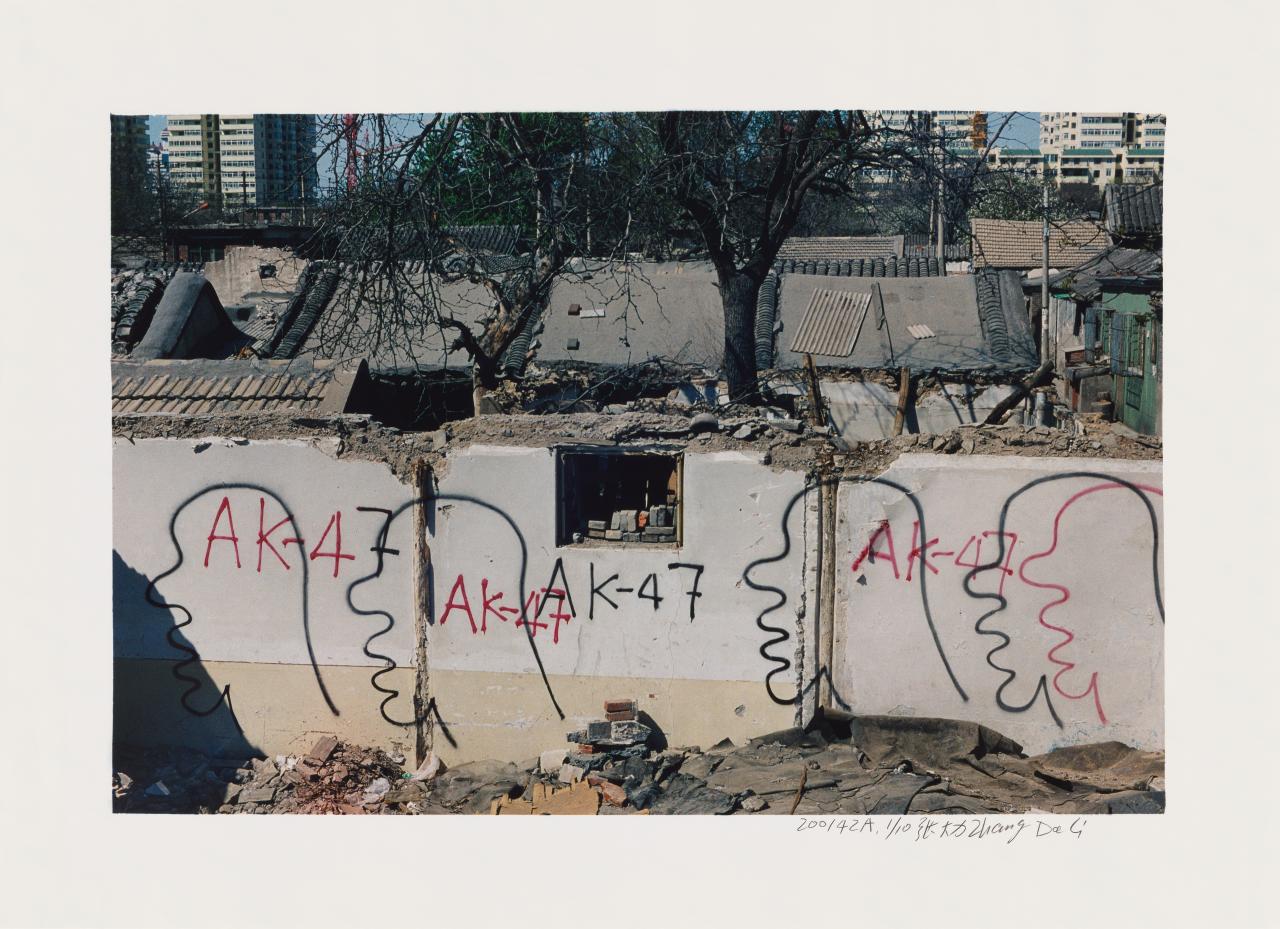
 

Zhang Dali (Chinese, b. 1963) '2001 42A' 2001


Zhang Dali (Chinese, b. 1963)
2001 42A
2001
from the Demolition and dialogue series
type C photograph
63.5 × 114.0cm
National Gallery of Victoria, Melbourne
Gift of Larry Warsh, 2016
© Courtesy of the artist


This photograph, showing a partially demolished wall emblazoned with a large-scale painted outline of the artist’s head and his pseudonym, AK-47, brings together several aspects of the practice of multidisciplinary artist Zhang Dali. Zhang went into self-imposed exile from China in 1989 and when he returned to Beijing six years later, he found his home was in the midst of rapid change. Zhang wanted to protest the loss of traditional buildings, document the ruined remnants before they were swept away, and convey his sense of the loss of history and identity that was a consequence of those changes.
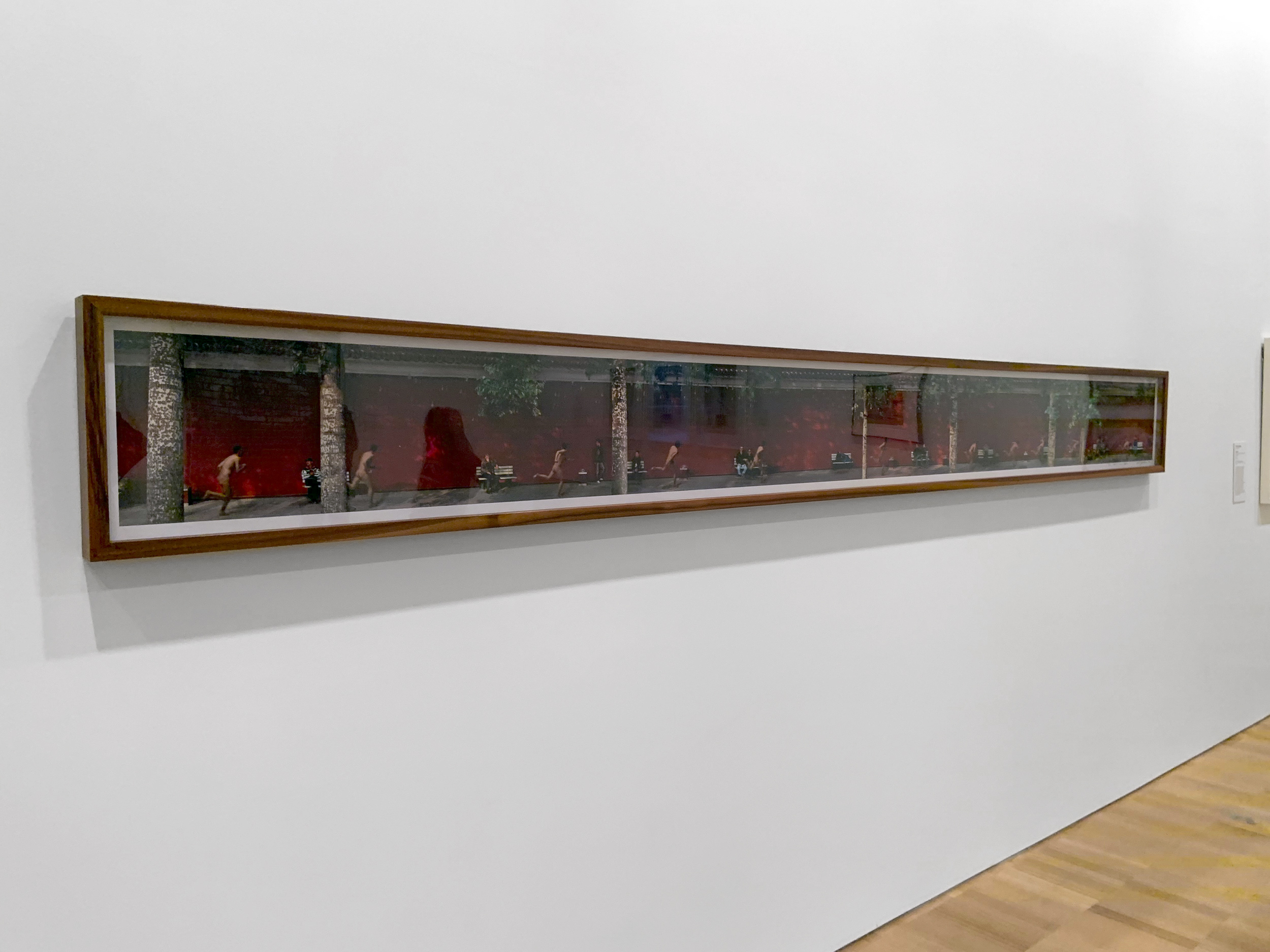
 

Installation view of the exhibition 'Turning Points: Contemporary Photography from China' at the National Gallery of Victoria, Melbourne showing Chi Peng's 'Apollo in transit' (2005)

Installation view of the exhibition 'Turning Points: Contemporary Photography from China' at the National Gallery of Victoria, Melbourne showing Chi Peng's 'Apollo in transit' (2005) (detail)


Installation views of the exhibition Turning Points: Contemporary Photography from China at the National Gallery of Victoria, Melbourne showing Chi Peng’s Apollo in transit (2005)
Photos: Marcus Bunyan


Chi Peng’s works often contain naked figures spiriting or running through ‘history’, while refusing any start or ending of their visual narrative. Unravelling like a traditional Chinese scroll, the red brick wall surrounding the Forbidden City extends the length of this digitally altered panoramic image. The artist has inserted repeat images of himself running left to right alongside the wall, in front of a variety of onlookers. A metaphor for East / West relations, this theatrical image brings together potent symbols of traditional and contemporary life in China.


Yongliang Yang (Chinese, b. 1980) 'Eclipse' 2008


Yongliang Yang (Chinese, b. 1980)
Eclipse
2008
From the On the quiet water, heavenly city series 2008
Inkjet print 73.0 x 200.0cm (image) 81.6 x 208.2cm (sheet)
National Gallery of Victoria, Melbourne
Presented by the Mering Corporation Pty Ltd through the Australian Government’s Cultural Gifts Program, 2012
© Yang Yongliang


Yongliang Yang (Chinese, b. 1980) 'Eclipse' 2008 (detail)


Yongliang Yang (Chinese, b. 1980)
Eclipse (detail)
2008
From the On the quiet water, heavenly city series 2008
Inkjet print 73.0 x 200.0cm (image) 81.6 x 208.2cm (sheet)
National Gallery of Victoria, Melbourne
Presented by the Mering Corporation Pty Ltd through the Australian Government’s Cultural Gifts Program, 2012
© Yang Yongliang


Yang Yongliang creates an optical illusion by combining elements of a traditional Chinese shānshuǐ (mountain-water) landscape painting with imagery from modern Shanghai life. From afar, the work appears to be a watercolour on paper, representing misty mountains and an ethereal sea stretching to the horizon. Upon closer inspection, the ghostly formations are revealed as digitally constructed collages of apartment blocks, buildings, construction sites and giant cranes. The built metropolis becomes indistinguishable from the natural landscape, highlighting the insidious modernisation, construction and environmental degradation characteristic of contemporary existence.

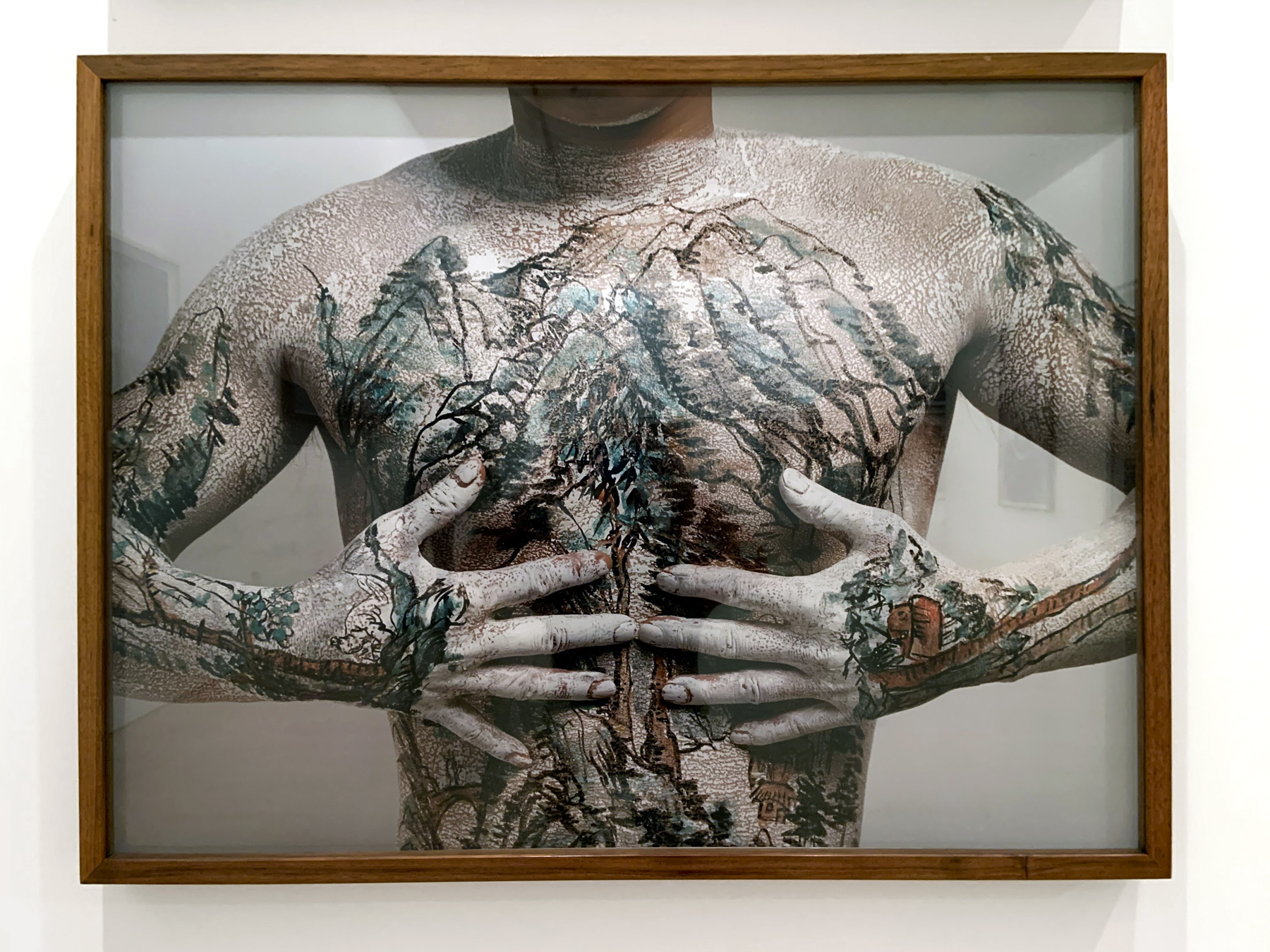
 

Installation view of the exhibition 'Turning Points: Contemporary Photography from China' at the National Gallery of Victoria, Melbourne showing Huang Yan's 'Chinese landscape – Tattoo No. 4' and 'Chinese landscape – Tattoo No. 1' (1999)

Installation view of the exhibition 'Turning Points: Contemporary Photography from China' at the National Gallery of Victoria, Melbourne showing Huang Yan's 'Chinese landscape – Tattoo No. 1' (1999)


Installation views of the exhibition Turning Points: Contemporary Photography from China at the National Gallery of Victoria, Melbourne showing Huang Yan’s Chinese landscape – Tattoo No. 4 and Chinese landscape – Tattoo No. 1 (1999)
Photos: Marcus Bunyan
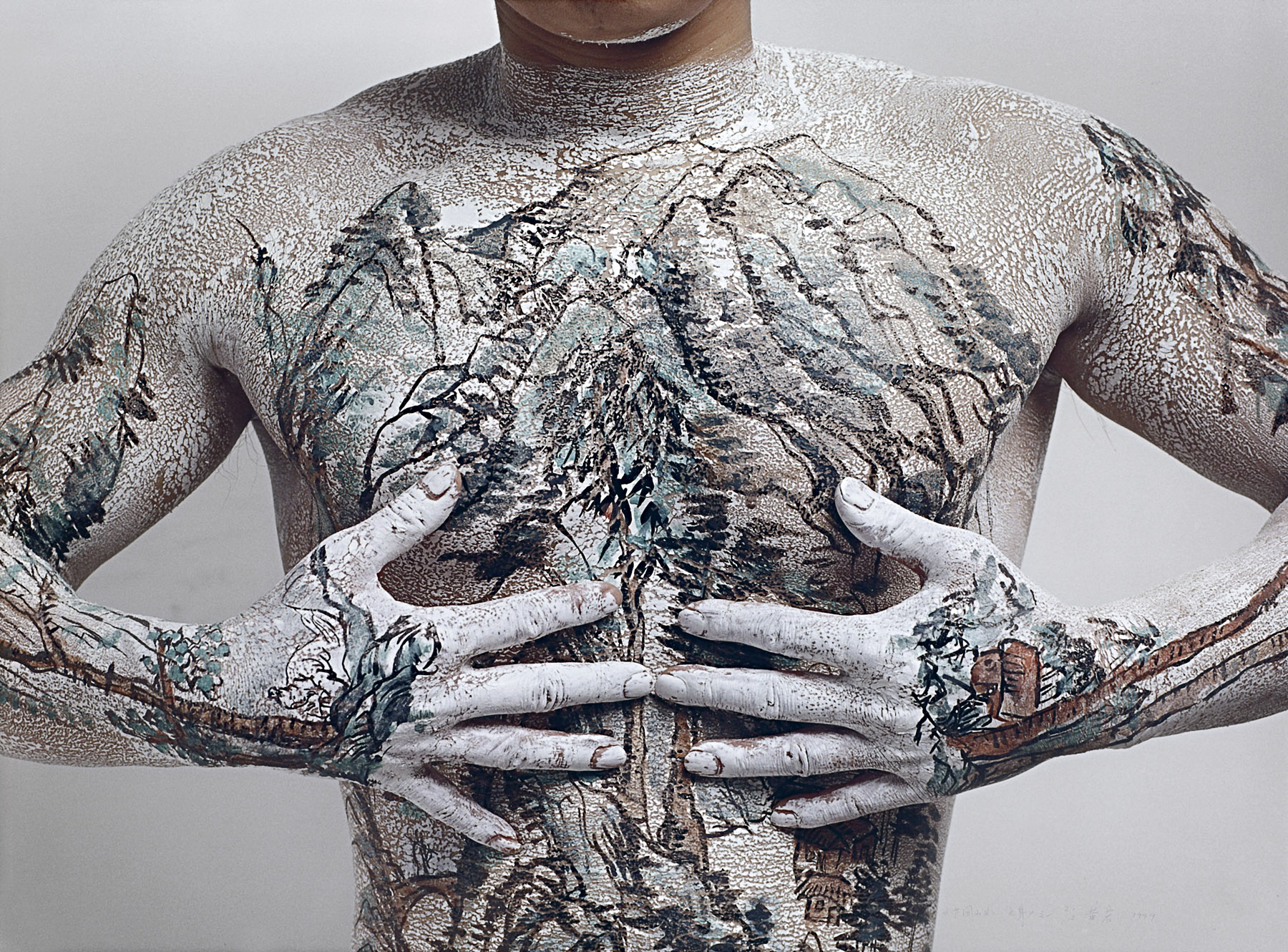
 

Huang Yan (Chinese, b. 1966) 'Chinese landscape - Tattoo (Number 1)' 1999, printed 2004


Huang Yan (Chinese, b. 1966)
Chinese landscape – Tattoo (Number 1)
1999, printed 2004
Type C photograph, ed. 2/12
80.1 x 108.0cm irreg. (image and sheet)
National Gallery of Victoria, Melbourne
Purchased, 2004
© Huang Yan, courtesy of Red Gate Gallery, Beijing


Prior to commencing his photography practice in the 1990s, Huang Yan trained as a painter. His recent work combines the centuries-old, traditional style of landscape painting with new technology; the images are contemporary while also affirming traditional Chinese culture and values. The artist alludes to complex traditions in this ‘self-portrait’ in which his bare chest is painted with a traditional shānshuǐ (mountain-water) landscape painting. The title of the work implies permanence, yet the scenes painted on the body are ephemeral, suggesting the fragility of the natural environment and the transience of the body.


Hong Lei (Chinese, b. 1960) 'After Zhao Ji's loquat and birds (Song dynasty)' 1999


Hong Lei (Chinese, b. 1960)
After Zhao Ji’s loquat and birds (Song dynasty)
1999
Type C photograph, ed. 9/10
60.9 x 76.2cm
National Gallery of Victoria, Melbourne
Gift of Larry Warsh, 2016
© Courtesy of the artist


Hong Lei (Chinese, b. 1960) 'Autumn in the Forbidden City' 1998


Hong Lei (Chinese, b. 1960)
Autumn in the Forbidden City
1998
Type C photograph, ed. 7/10
60.9 x 76.2cm
National Gallery of Victoria, Melbourne
Gift of Larry Warsh, 2016
© Courtesy of the artist
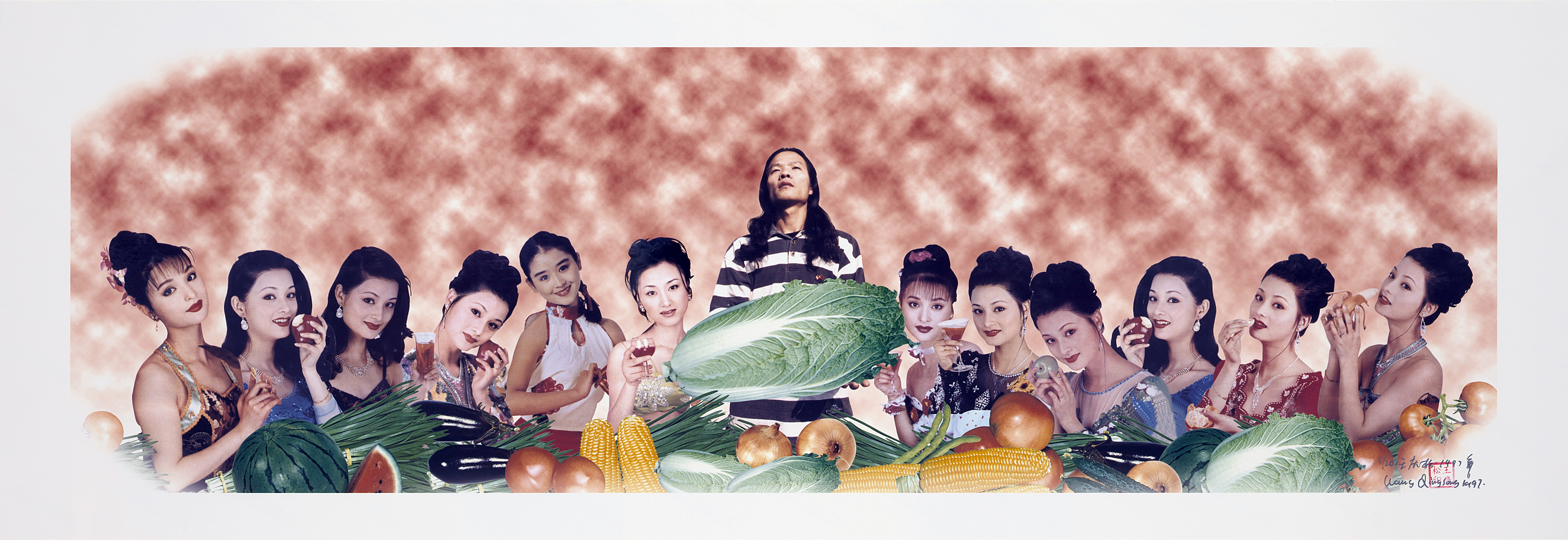
 

Wang Qingsong (Chinese, b. 1966) 'Last supper' 1997


Wang Qingsong (Chinese, b. 1966)
Last supper
1997
Type C photograph, ed. 3/20
30.5 x 100.0cm
National Gallery of Victoria, Melbourne
Gift of Larry Warsh, 2016
© Courtesy of the artist


Last supper was one of a number of photographs commissioned for the exhibition Christian Dior and Chinese Artists that opened at the Ullens Center for Contemporary Art (UCCA), Beijing, in 2008. The work references the iconography of Western paintings of Christian subjects, in particular depictions of the Last Supper; however, in place of the twelve disciples Wang presents fashion models, and the simple meal traditionally depicted in Western art has been replaced with a feast of digitally enhanced, oversized, unnaturally perfect fruit and vegetables. The result is an image of affluence and excess.


Installation view of the exhibition 'Turning Points: Contemporary Photography from China' at the National Gallery of Victoria, Melbourne showing at centre, Wang Qingsong's 'Preincarnation' (2002) and at right, Shi Guowei's 'Cactus garden' (2016)


Installation view of the exhibition Turning Points: Contemporary Photography from China at the National Gallery of Victoria, Melbourne showing at centre, Wang Qingsong’s Preincarnation (2002) and at right, Shi Guowei’s Cactus garden (2016)
Photo: Marcus Bunyan
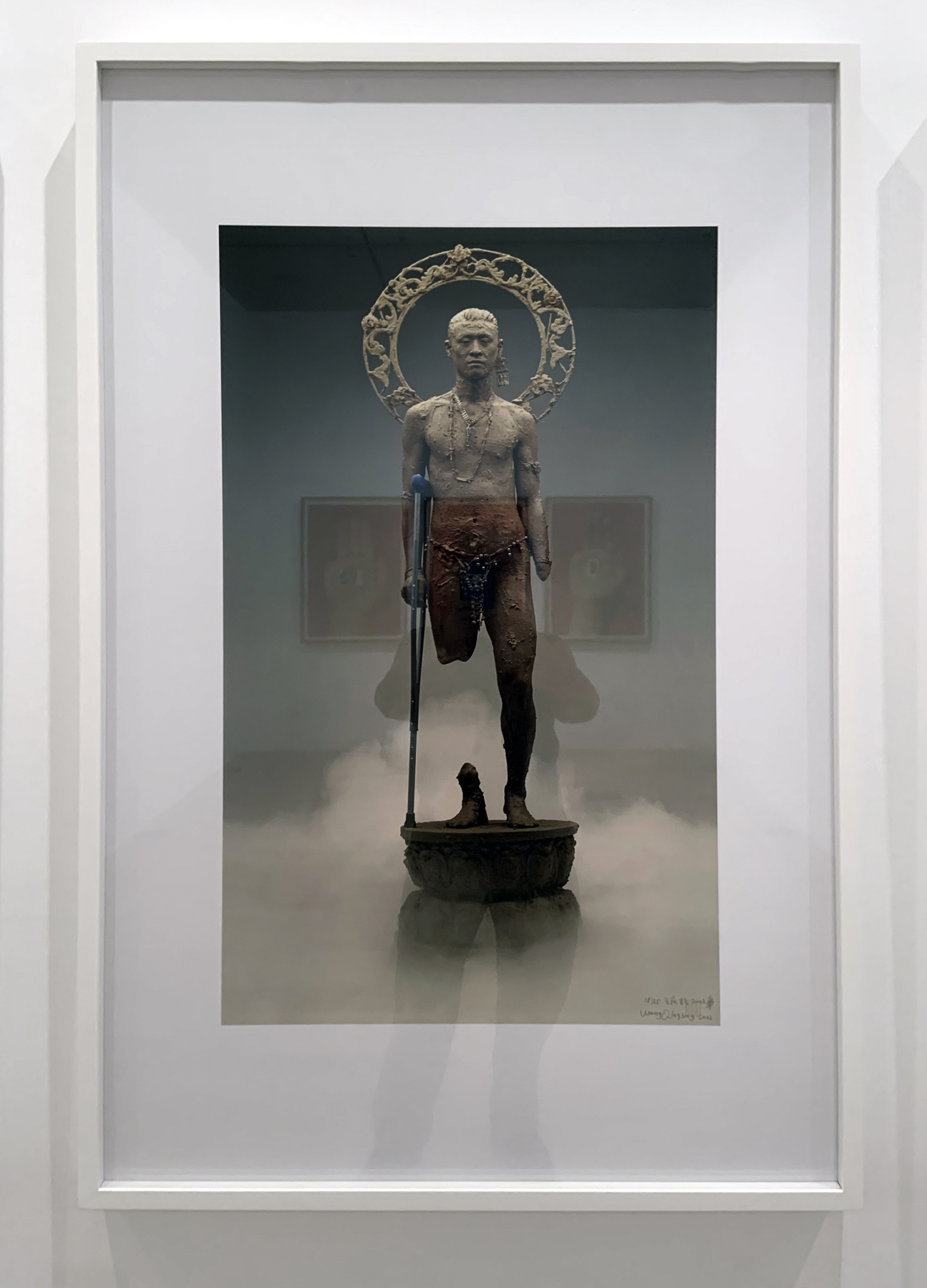
 

Installation view of the exhibition 'Turning Points: Contemporary Photography from China' at the National Gallery of Victoria, Melbourne showing one image from Wang Qingsong's 'Preincarnation' (2002)


Installation view of the exhibition Turning Points: Contemporary Photography from China at the National Gallery of Victoria, Melbourne showing one image from Wang Qingsong’s Preincarnation (2002)
Photo: Marcus Bunyan


Wang Qingsong works in a theatrical style, constructing and photographing elaborate tableaux in which his models play the roles of characters from traditional Chinese stories and paintings, popular culture and Western historical painting. In the foreground of this work, men carry tools to vandalise or disassemble giant sacred ‘sculptures’ standing atop lotus thrones. The title suggests that the man has been reborn into the past, and upon arriving in Chinese pre-history, is set to destroy it in his relentless pursuit of materialism. This work alludes to China’s relationship with its early history, and the dismantling of tradition during a period of rampant consumerism and modernisation.


Installation view of the exhibition 'Turning Points: Contemporary Photography from China' at the National Gallery of Victoria, Melbourne showing Shi Guowei's 'Cactus garden' (2016)


Installation view of the exhibition Turning Points: Contemporary Photography from China at the National Gallery of Victoria, Melbourne showing Shi Guowei’s Cactus garden (2016)
Photo: Marcus Bunyan


Shi Guowei (Chinese, b. 1977) 'Cactus garden' 2016


Shi Guowei (Chinese, b. 1977)
Cactus garden
2016
Gelatin silver photograph, colour dyes
Purchased NGV Foundation, 2017


Shi Guowei’s subtly coloured image is created through the application of layered pigment to the surface of the photograph. In some areas of the work, the colour is applied with lifelike precision, in others it registers as being ‘not quite right’. His palette recalls that of early colour photographs in which the colour fades or shifts over time, creating a nostalgic quality; however, it also creates an awareness of the artificiality inherent in the scene. Although the planting in this cactus garden is ‘naturalistic’, it is clearly a constructed landscape, and not the wild arid landscape it would seem at first glance.


Installation view of the exhibition 'Turning Points: Contemporary Photography from China' at the National Gallery of Victoria, Melbourne showing Sheng Qi's 'Memories (Mother)', 'Memories (Me)' and 'Memories (Mao)' (2000)

Installation view of the exhibition 'Turning Points: Contemporary Photography from China' at the National Gallery of Victoria, Melbourne showing Sheng Qi's 'Memories (Mother)', 'Memories (Me)' and 'Memories (Mao)' (2000)

Installation view of the exhibition 'Turning Points: Contemporary Photography from China' at the National Gallery of Victoria, Melbourne

Installation view of the exhibition 'Turning Points: Contemporary Photography from China' at the National Gallery of Victoria, Melbourne


Installation view of the exhibition Turning Points: Contemporary Photography from China at the National Gallery of Victoria, Melbourne showing at top, Sheng Qi’s Memories (Mother), Memories (Me) and Memories (Mao) (2000)
Photos: Marcus Bunyan


Sheng Qi was a key member of the ’85 New Wave art movement in China that championed freedom of expression in the arts over state-approved Social Realism. He was deeply affected by the changed political climate following the Tiananmen Square protests of 1989, and responded in a physically direct and shocking way. He cut off the little finger of his left hand, buried it in a flowerpot, and went into self-imposed exile in Rome. When he returned to Beijing a decade later, he used his disfigured hand as the backdrop for a series of self-portraits that juxtapose his past and present.
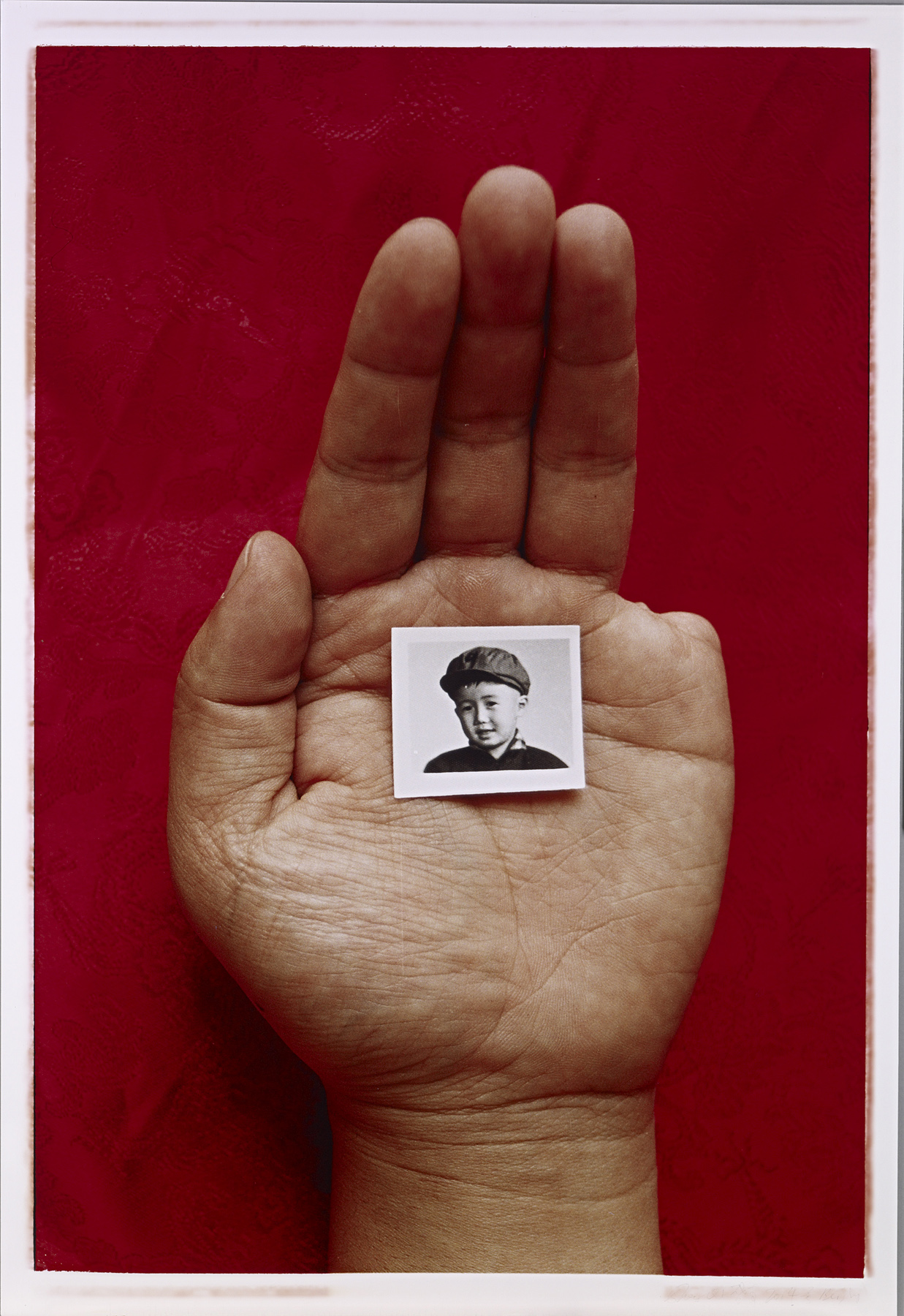
 

Sheng Qi (Chinese, b. 1965) 'Memories (Me)' 2000, printed 2004


Sheng Qi (Chinese, b. 1965)
Memories (Me)
2000, printed 2004
Type C photograph, ed. 2/5
119.1 x 80.5cm irreg. (image) 126.9 x 86.9cm irreg. (sheet)
National Gallery of Victoria, Melbourne
Purchased, 2004
© Sheng Qi, courtesy of Red Gate Gallery, Beijing


Installation view of the exhibition 'Turning Points: Contemporary Photography from China' at the National Gallery of Victoria, Melbourne showing at left Wang Qingsong's 'Another battle no. 3' (2001) and at right, Hong Hao's 'My things no. 2' (2001-2002)

Installation view of the exhibition 'Turning Points: Contemporary Photography from China' at the National Gallery of Victoria, Melbourne showing Wang Qingsong's 'Another battle no. 3' (2001)


Installation view of the exhibition Turning Points: Contemporary Photography from China at the National Gallery of Victoria, Melbourne showing at left in the top image, Wang Qingsong’s Another battle no. 3 (2001) and at right, Hong Hao’s My things no. 2 (2001-2002)
Photos: Marcus Bunyan


Zhuang Hui (Chinese, b. 1963) 'Untitled' 1996


Wang Qingsong (Chinese, b. 1966)
Another battle no. 3
2001
Type C photograph, ed. 1/20
100 x 66cm
National Gallery of Victoria, Melbourne Gift of Larry Warsh, 2016
© Wang Qingsong


Wang Qingsong works in a theatrical style, constructing and photographing elaborate tableaux in which his models play the roles of characters from traditional Chinese stories and paintings, contemporary life, popular culture, and Western historical painting. In this work he shows a wounded soldier, trapped behind the battlelines, caught between gunfire and razor wire that is littered with soft-drink cans, one of the most common forms of litter found globally. In this highly theatrical image Wang has taken imagery from popular cinema and used it to highlight the challenges presented by Western-style consumerism.
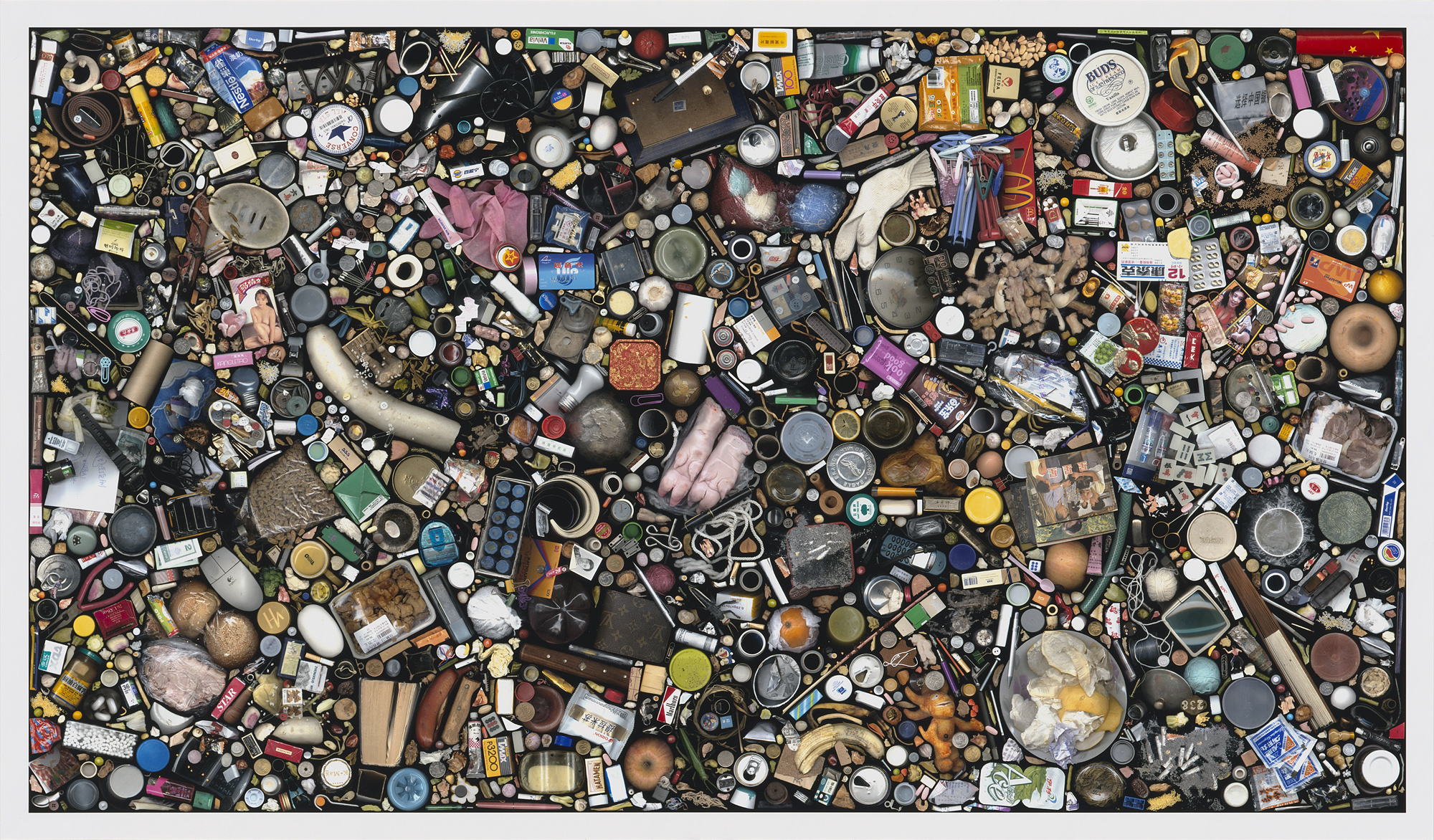
 

Hong Hao (Chinese, b. 1965) 'My things no. 2' 2001-2002


Hong Hao (Chinese, b. 1965)
My things no. 2
2001-02
Type C photograph, ed. 6/15
59.6 x 101.6cm
National Gallery of Victoria, Melbourne
Gift of Larry Warsh, 2016
© Courtesy of the artist


Completely filled from edge to edge with ordinary, domestic objects, this image is a visual archive of things used by the artist in everyday life. Describing his creative process, Hong Hao writes, ‘Day by day, I put my daily consumed objects into a scanner piece by piece, like keeping a visual diary. After scanning the original objects, I’ll save them in digital forms and categorise these digital files into different folders [on] my PC, in order to make a collage of them later on. This task, like a yogi’s daily practice, has become a habit in my day-to-day life as well as a tool to observe the human condition in contemporary consumer society’.


Installation view of the exhibition 'Turning Points: Contemporary Photography from China' at the National Gallery of Victoria, Melbourne showing Wang Jinsong's 'One hundred signs of demolition #1980' (1998)


Installation view of the exhibition Turning Points: Contemporary Photography from China at the National Gallery of Victoria, Melbourne showing Wang Jinsong’s One hundred signs of demolition #1980 (1998)
Photo: Marcus Bunyan


Wang Jinsong (Chinese, 1963) 'One hundred signs of demolition #1980' 1998


Wang Jinsong (Chinese, 1963)
One hundred signs of demolition #1980
1998
Type C photograph ed. 22/30
National Gallery of Victoria, Melbourne
Gift of Larry Warsh, 2016
© Courtesy of the artist


Wang Jinsong (Chinese, 1963) 'One hundred signs of demolition #1995' 1998


Wang Jinsong (Chinese, 1963)
One hundred signs of demolition #1995
1998
Type C photograph ed. 22/30
National Gallery of Victoria, Melbourne
Gift of Larry Warsh, 2016
© Courtesy of the artist


The two photographs from the series One Hundred Signs of Demolition show the Chinese character ‘chai’, meaning ‘demolition’, that is commonly painted on the walls of buildings earmarked for destruction. For Wang Jinsong it has become a symbol of the inexorable push for urban reconstruction. In his photographs ‘chai’ came to stand for the loss of the ancient city, where buildings were once on a domestic scale and constructed to facilitate interaction in communal space, and their replacement with more socially isolating multistorey tower blocks.


Hai Bo (Chinese, b. 1962) 'I am Chairman Mao's Red Guard' 2000


Hai Bo (Chinese, b. 1962)
I am Chairman Mao’s Red Guard
2000
Type C photograph, ed. 9/18
40.6 x 60.9cm
National Gallery of Victoria, Melbourne
Gift of Larry Warsh, 2016
© Courtesy of the artist


Hai Bo’s paired portraits illustrate the cultural shifts that have occurred over forty years as people in China have become increasingly able to show their individuality. In this image, a photograph of a young woman proudly wearing the uniform of the student paramilitary movement, known as the Red Guard, and holding Mao’s Quotations from Chairman Mao Zedong (commonly known as the Little Red Book) is shown counterpointed by a contemporary picture of the same person, now a smiling middle-aged woman wearing a floral dress. Such a garment would have been unthinkable – and unattainable – forty years earlier.

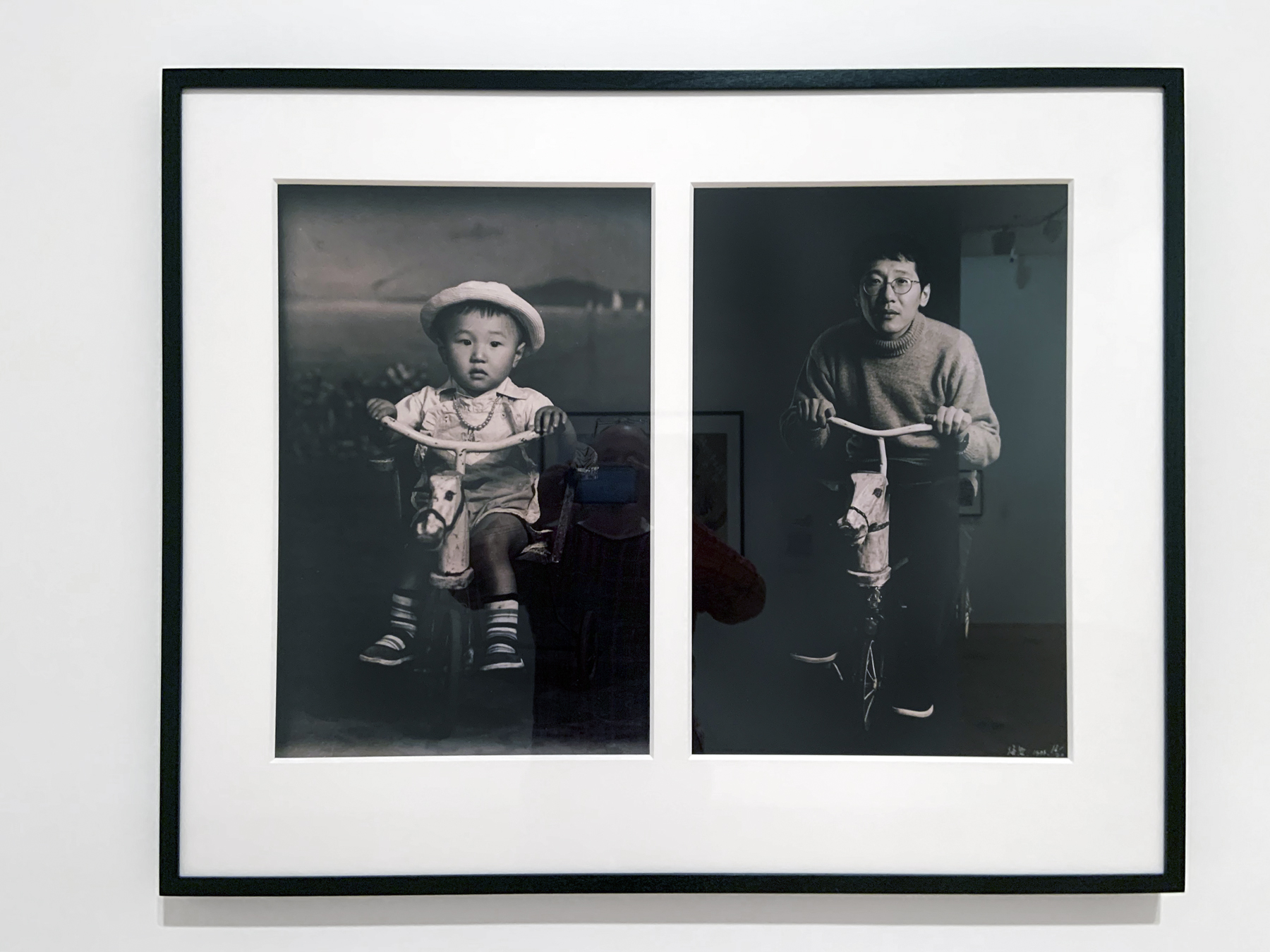
 

Installation view of the exhibition 'Turning Points: Contemporary Photography from China' at the National Gallery of Victoria, Melbourne showing Hai Bo's 'Wood horse' (1999)

Installation view of the exhibition 'Turning Points: Contemporary Photography from China' at the National Gallery of Victoria, Melbourne showing Hai Bo's 'Wood horse' (1999)


Installation view of the exhibition Turning Points: Contemporary Photography from China at the National Gallery of Victoria, Melbourne showing Hai Bo’s Wood horse (1999)
Photos: Marcus Bunyan


Hai Bo (Chinese, 1962) 'Wood horse' 1999


Hai Bo (Chinese, 1962)
Wood horse
1999
Gelatin silver photograph ed. 16/20
National Gallery of Victoria, Melbourne
Gift of Larry Warsh, 2016
© Courtesy of the artist


NGV International
180 St Kilda Road

Opening hours:
Daily 10am – 5pm
National Gallery of Victoria website

LIKE ART BLART ON FACEBOOK

Back to top

Exhibition: ‘Haunted: Contemporary Photography / Video / Performance’ at Solomon R. Guggenheim Museum, New York

Exhibition dates: 26th March – 6th September, 2010


Looks like a great exhibition – wish I was there to see it!


Many thankx to Claire Laporte and the Solomon R. Guggenheim Museum for allowing me to publish the photographs in the posting. Please click on the photographs for a larger version of the image.


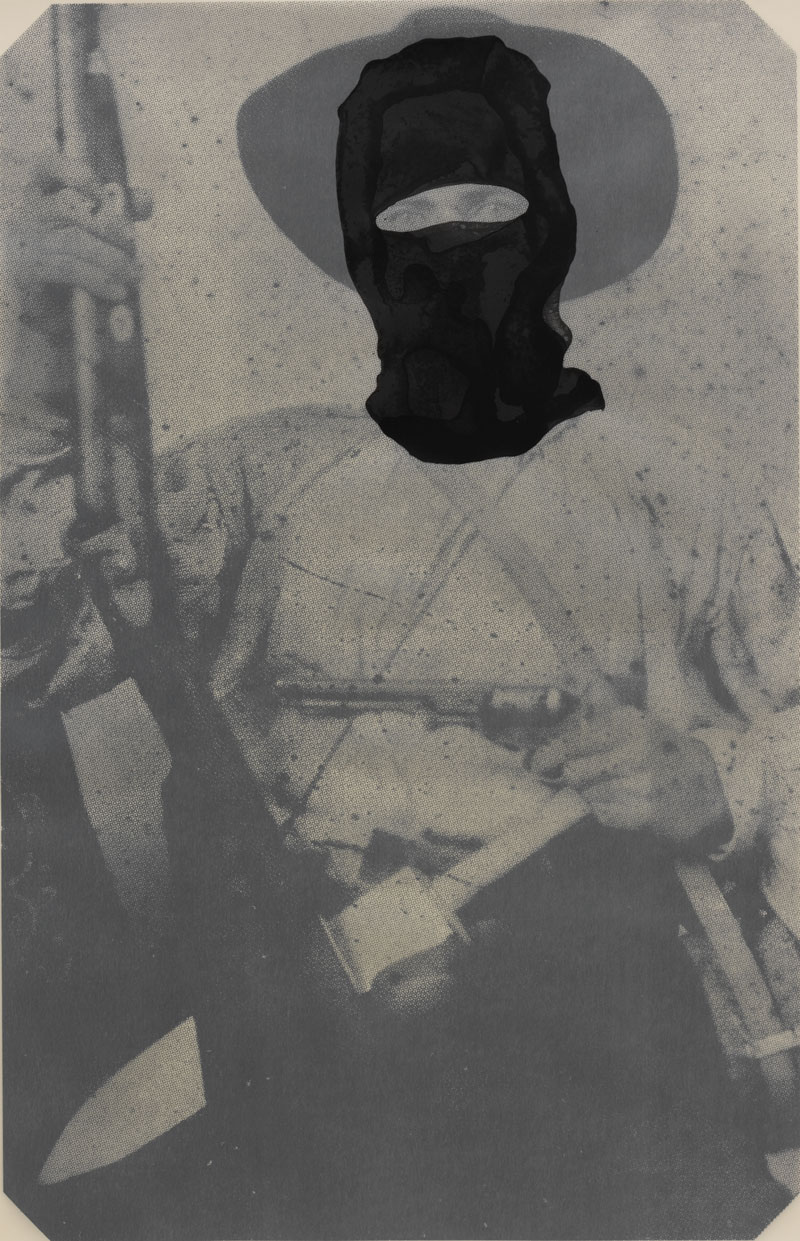
Adam Helms (American, b. 1974) 'Untitled Portrait (Santa Fe Trail)' 2007 from the exhibition 'Haunted: Contemporary Photography / Video / Performance' Guggenheim Museum, March - Sept, 2010


Adam Helms (American, b. 1974)
Untitled Portrait (Santa Fe Trail)
2007
Double-sided screenprint on paper vellum edition 2/2
101.3 x 65.7cm
Solomon R. Guggenheim Museum, New York, Purchased with funds contributed by the Photography Committee 2007.131


Idris Khan (British, b. 1978) 'Homage to Bernd Becher' 2007 from the exhibition 'Haunted: Contemporary Photography / Video / Performance' Guggenheim Museum, March - Sept, 2010


Idris Khan (British, b. 1978)
Homage to Bernd Becher
2007
Bromide print edition 1/6
49.8 x 39.7cm
Solomon R. Guggenheim Museum, New York, Purchased with funds contributed by the Photography Committee


Bernd Becher (German, 1931-2007) and Hilla Becher (German, 1934-2015) 'Water Towers' 1980 from the exhibition 'Haunted: Contemporary Photography / Video / Performance' Guggenheim Museum, March - Sept, 2010


Bernd Becher (German, 1931-2007) and Hilla Becher (German, 1934-2015)
Water Towers
1980
Nine gelatin silver prints
155.6 x 125.1cm
Solomon R. Guggenheim Museum, New York, Purchased with funds contributed by Mr. and Mrs. Donald Jonas


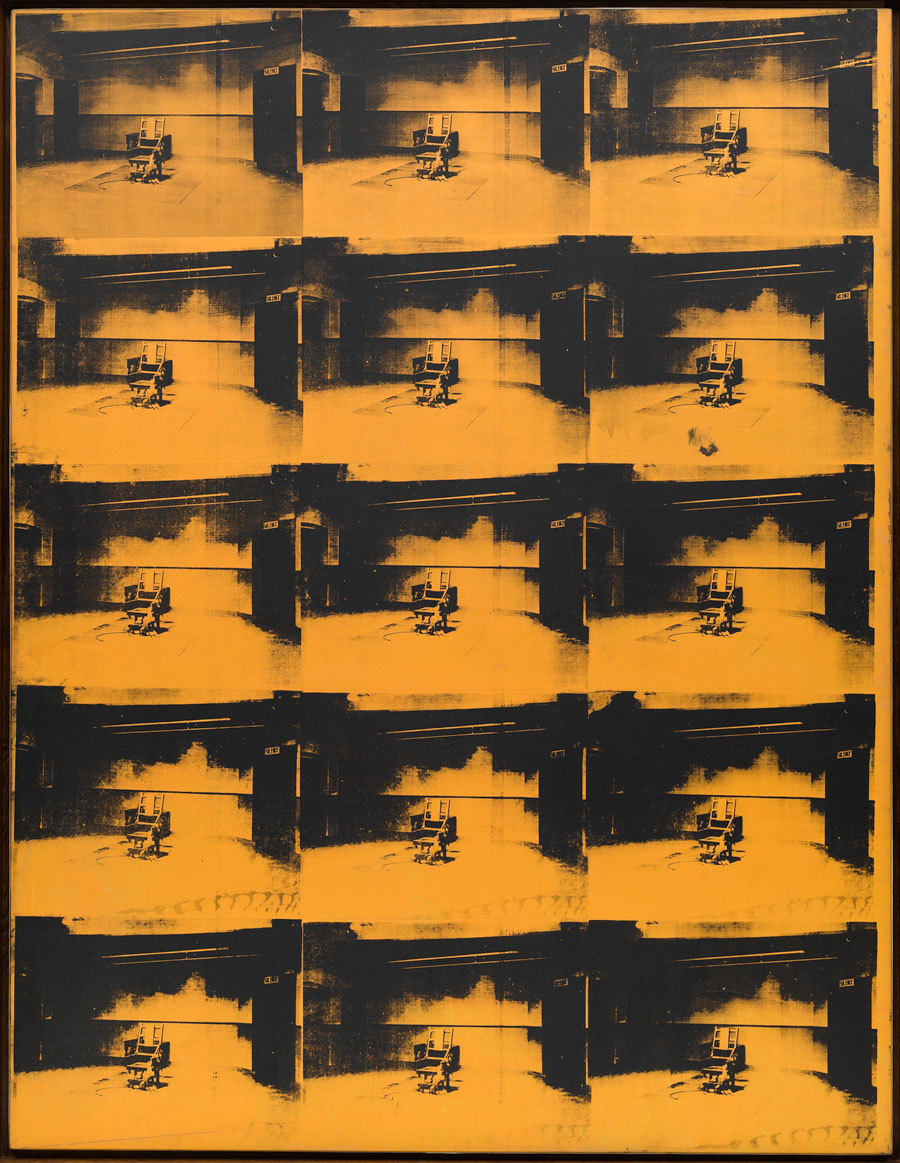
Andy Warhol (American, 1928-1987) 'Orange Disaster #5' 1963


Andy Warhol (American, 1928-1987)
Orange Disaster #5
1963
Acrylic and silkscreen enamel on canvas
269.2 x 207cm
Solomon R. Guggenheim Museum, New York, Gift, Harry N. Abrams Family Collection 74.2118


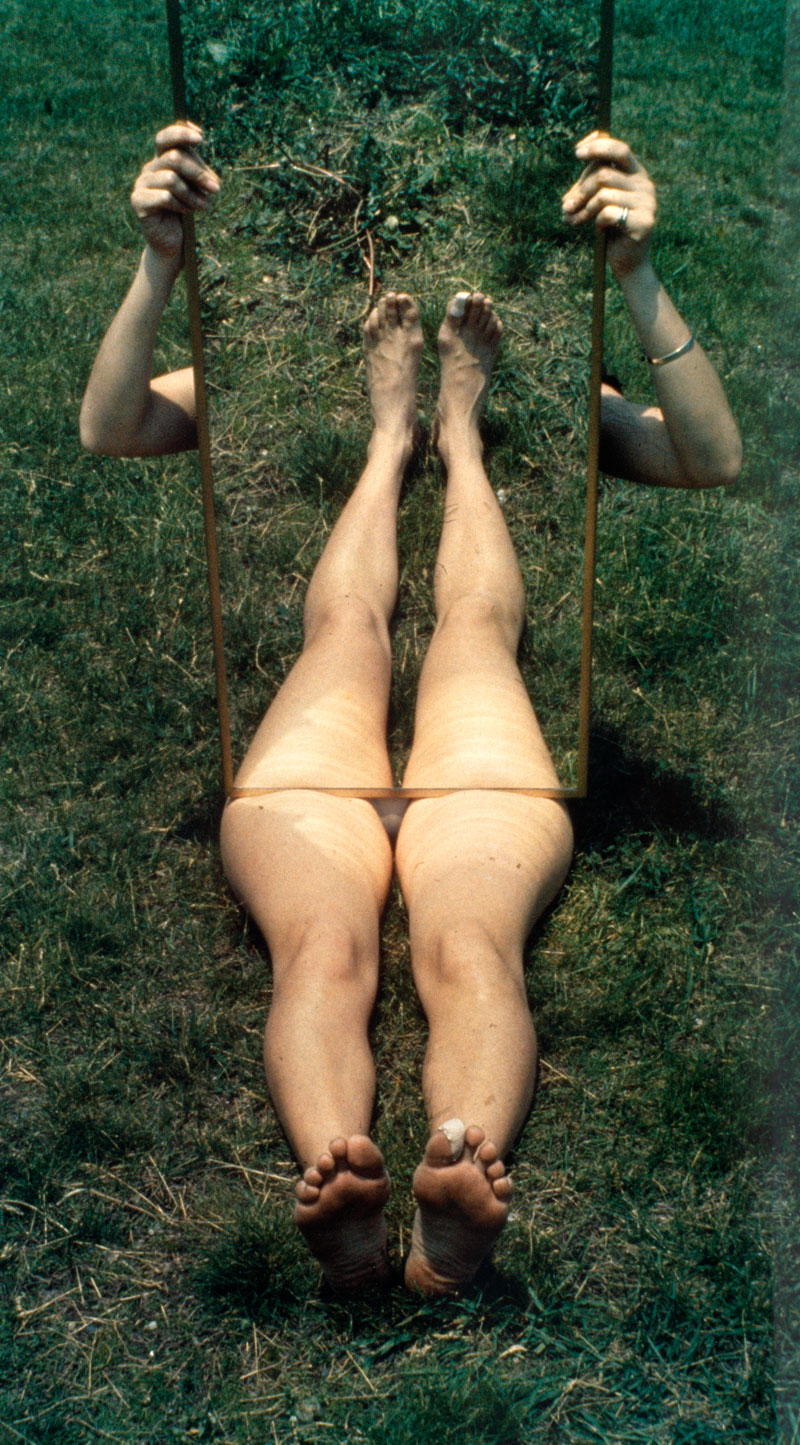
Joan Jonas (American, b. 1936) 'Mirror Piece I' 1969


Joan Jonas (American, b. 1936)
Mirror Piece I
1969
Chromogenic print
101 x 55.6cm
Solomon R. Guggenheim Museum, New York, Purchased with funds contributed by the Photography Committee


Zhang Huan (Chinese, b. 1965) '12 Square Meters' 1994


Zhang Huan (Chinese, b. 1965)
12 Square Meters
1994
Chromogenic print A.P. 3/5, edition of 15
149.9 x 99.7cm
Solomon R. Guggenheim Museum, New York, Purchased with funds contributed by Manuel de Santaren and Jennifer and David Stockman


Much of contemporary photography and video seems haunted by the past, by the history of art, by apparitions that are reanimated in reproductive mediums, live performance, and the virtual world. By using dated, passé, or quasi-extinct stylistic devices, subject matter, and technologies, such art embodies a longing for an otherwise unrecuperable past.

From March 26 to September 6, 2010, the Solomon R. Guggenheim Museum presents Haunted: Contemporary Photography / Video / Performance, an exhibition that documents this obsession, examining myriad ways photographic imagery is incorporated into recent practice. Drawn largely from the Guggenheim’s extensive photography and video collections, Haunted features some 100 works by nearly 60 artists, including many recent acquisitions that will be on view at the museum for the first time. The exhibition is installed throughout the rotunda and its spiralling ramps, with two additional galleries on view from June 4 to September 1, featuring works by two pairs of artists to complete Haunted’s presentation.

The works in Haunted: Contemporary Photography / Video / Performance range from individual photographs and photographic series to sculptures and paintings that incorporate photographic elements; projected videos; films; performances; and site-specific installations, including a new sound work created by Susan Philips for the museum’s rotunda. While the show traces the extensive incorporation of photography into contemporary art since the 1960s, a significant part of the exhibition will be dedicated to work created since 2001 by younger artists.

Haunted is organised around a series of formal and conceptual threads that weave themselves through the artworks on view:

Appropriation and the Archive

In the early 1960s, Robert Rauschenberg and Andy Warhol began to incorporate photographic images into their paintings, establishing a new mode of visual production that relied not on the then-dominant tradition of gestural abstraction but rather on mechanical processes such as screenprinting. In so doing, they challenged the notion of art as the expression of a singular, heroic author, recasting their works as repositories for autobiographical, cultural, and historical information. This archival impulse revolutionised art production over the ensuing decades, paving the way for a conceptually driven use of photography as a means of absorbing the world at large into a new aesthetic realm. Since then, a number of artists, including Bernd and Hilla Becher, Sarah Charlesworth, Douglas Gordon, Luis Jacob, Sherrie Levine, Richard Prince, Cindy Sherman, and Sara VanDerBeek, have pursued this archival impulse, amassing fragments of reality either by creating new photographs or by appropriating existing ones.


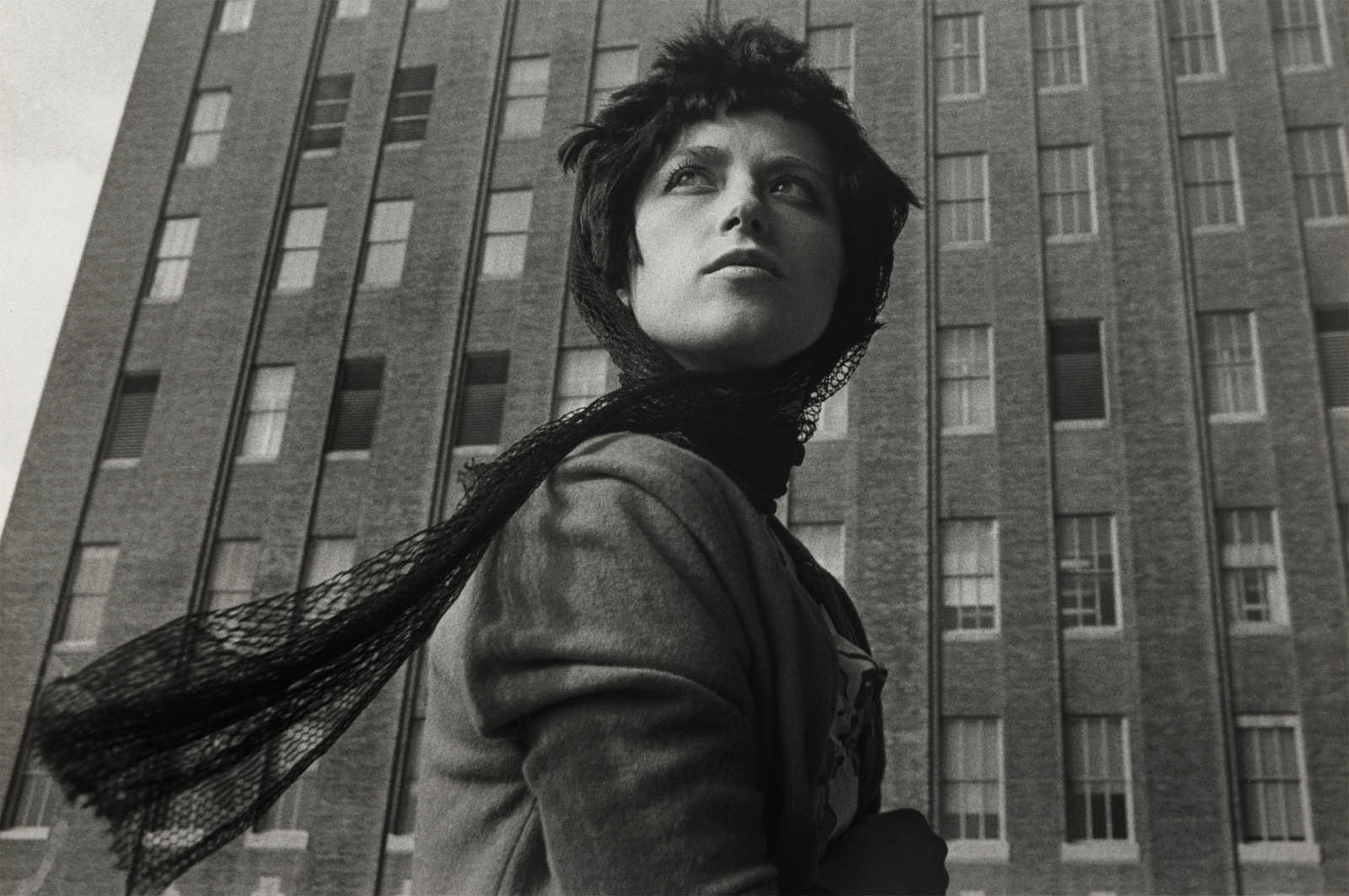
Cindy Sherman (American, b. 1954)
'Untitled Film Still #58' 1980


Cindy Sherman (American, b. 1954)
Untitled Film Still #58
1980
Gelatin silver print
20.3 x 25.4cm
Solomon R. Guggenheim Museum, Gift, Ginny Williams


“I’ve always played with make-up to transform myself, but everything, including the lighting, was self taught. I just learned things as I needed to use them. I absorbed my ideas for the women in these photos from every cultural source that I’ve ever had access to, including film, TV, advertisements, magazines, as well as any adult role models from my youth.”1

Cindy Sherman (b. 1954, Glen Ridge, N.J.) emerged onto the New York art scene in the early 1980s as part of a new generation of artists concerned with the codes of representation in a media-saturated era. Along with many artists working in the 1980s, Sherman explored photography as a way to reveal and examine the cultural constructions we designate as truth. Confronting the belief that photographs are truthful documents, Sherman’s fictional narratives suggested that photographs, like all forms of representation, are ideologically motivated. She is aware that the camera is not a neutral device but rather a tool that frames a particular viewpoint.

Sherman’s reputation was established early on with her Untitled Film Stills, a series of 69 black-and-white photographs that she began making in 1977, when she was twenty-three. In this series, the artist depicted herself dressed in the various melodramatic guises of clichéd B-movie heroines presented in 8 x 10 publicity stills from the 1950s and 1960s. In photograph after photograph, Sherman both acts in and documents her own productions. Although Sherman is both model and photographer, these images are not autobiographical. Rather, they memorialise absence and leave us searching for a narrative and clues to what may exist beyond the frame of the camera.

By the time Sherman made the Untitled Film Stills, black-and-white photography was already recognised as belonging to the past, and the styles she replicated were taken not from her own generation but from that of her mother’s. Sherman used wigs and makeup as well as vintage clothing to create a range of female characters. She sets her photos in a variety of locations, including rural landscapes, cities, and her own apartment. Although many of the pictures are taken by Sherman herself using an extended shutter release, for others she required help, sometimes enlisting friends and family. The characters she created include an ingénue finding her way in the big city, a party girl, a housewife, a woman in distress, a dancer, and an actress. In 1980 she completed the series and has said that she stopped when she ran out of clichés to depict. Unlike the media images they refer to, Sherman’s stills have a deliberate artifice that is heightened by the often-visible camera cord, slightly eccentric props, unusual camera angles, and by the fact that each image includes the artist rather than a recognisable actress or model. Sherman remains an important figure, with works in major collections around the globe, and continues to create striking, imaginative art.

Text from the Teacher’s Guide to the exhibition

1/ Cindy Sherman, quoted in Monique Beudert and Sean Rainbird, eds., Contemporary Art: The Janet Wolfson de Botton Gift, p. 99.


Landscape, Architecture, and the Passage of Time

Historically, one of photography’s primary functions has been to document sites where significant, often traumatic events have taken place. During the Civil War, which erupted not long after the medium was invented, a new generation of reporters sought to photograph battles, but due to the long exposure times required by early cameras, they could only capture the aftermath of the conflicts. These landscapes, strewn with the dead, now seem doubly arresting, for they capture past spaces where something has already occurred. Their state of anteriority, witnessed at such an early stage in the medium’s development, speaks to the very nature of a photograph, which possesses physical and chemical bonds to a past that disappears as soon as it is taken. As viewers, we are left with only traces from which we hope to reconstruct the absent occurrences in the fields, forests, homes, and offices depicted in the works in the exhibition. With this condition in mind, many artists, among them James Casebere, Spencer Finch, Ori Gersht, Roni Horn, Luisa Lambri, An-My Lê, Sally Mann, and Hiroshi Sugimoto, have turned to empty spaces in landscape and architecture, creating poetic reflections on time’s inexorable passing and insisting on the importance of remembrance and memorialisation.


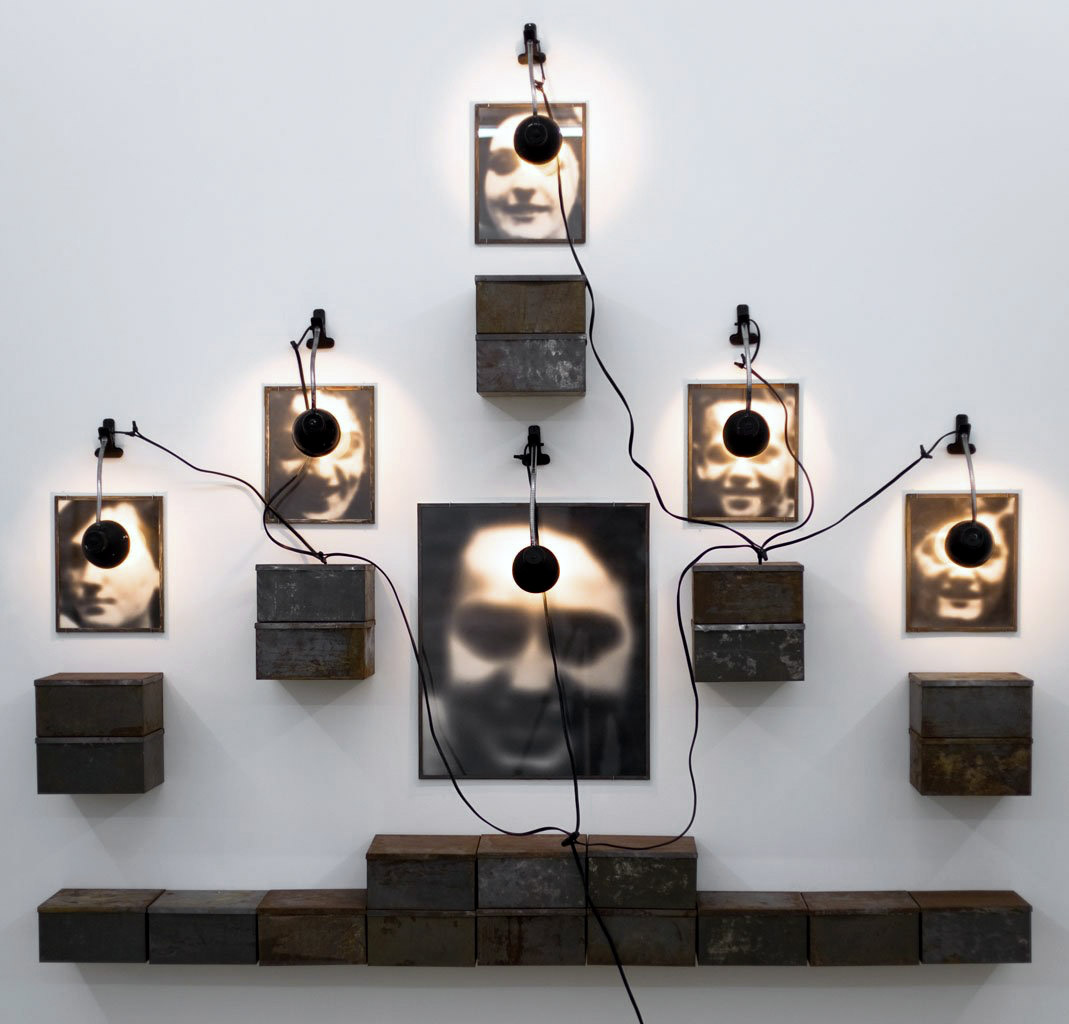
Christian Boltanski (French, 1944-2021) 'Autel de Lycée Chases' 1986-1987


Christian Boltanski (French, 1944-2021)
Autel de Lycée Chases
1986-1987
Six photographs, six desk lamps, and twenty-two tin boxes
170.2 x 214.6 x 24.1cm
Rubell Family Collection, Miami
© 2010 Artists Rights Society (ARS), New York/ADAGP, Paris


“A good work of art can never be read in one way. My work is full of contradictions. An artwork is open – it is the spectators looking at the work who make the piece, using their own background. A lamp in my work might make you think of a police interrogation, but it’s also religious, like a candle. At the same time it alludes to a precious painting, with a single light shining on it. There are many way of looking at the work. It has to be ‘unfocused’ somehow so that everyone can recognize something of their own self when viewing it.”1

The power of photography to recall the past has inspired many contemporary artists to use photographs to revisit the experience of historical events. In so doing, artists reconsider the photograph itself as an object imbued with history. They became aware that using the medium of photography would lend the elements of specificity and truth to their work.

Since the late 1960s, Christian Boltanski (b. 1944, Paris) has worked with photographs collected from ordinary and often ephemeral sources, endowing the commonplace with significance. Rather than taking original photographs to use in his installations, he often finds and rephotographs everyday documents – passport photographs, school portraits, newspaper pictures, and family albums – to memorialise everyday people. Boltanski seeks to create an art that is indistinguishable from life and has said, “The fascinating moment for me is when the spectator hasn’t registered the art connection, and the longer I can delay this association the better.”2 By appropriating mementos of other people’s lives and placing them in an art context, Boltanski explores the power of photography to transcend individual identity and to function instead as a witness to collective rituals and shared cultural memories.

In Boltanski’s 1986-1987 work Autel de Lycée Chases (which means “Altar to the Chases High School”) enlarged photographs of children are hung over a platform constructed from stacked tin biscuit boxes, which are rusted as if they have been ravaged by time. The black-and-white photographs look like artefacts from another era. An electric light illuminates each face while at the same time obscuring it. The arrangement gives no way to identify or connect the unnamed individuals.

The photos used in Autel de Lycée Chases were taken from a real-world source, the school photograph of the graduating class of 1931 from a Viennese high school for Jewish students. These students were coming of age in a world dominated by war and persecution, and it is likely that many perished over the next decade.

At once personal and universal in reference, Boltanski’s work serves as a monument to the dead, hinting at the Holocaust without naming it. Within this haunting environment, Boltanski intermingles emotion and history, sentimentality and profundity.

Text from the Teacher’s Guide to the exhibition

1/ Christian Boltanski, “Tamar Garb in conversation with Christian Boltanski,” in Christian Boltanski (London: Phaidon Press, 1997), p. 24.
2/ “Christian Boltanski: Lessons of Darkness”


Documentation and Reiteration

Since at least the early 1970s, photographic documentation, including film and video, has served as an important complement to the art of live performance, often setting the conditions by which performances are staged and sometimes obviating the need for a live audience altogether. Through an ironic reversal, artworks that revolved around singular moments in time have often come to rely on the permanence of images to transmit their meaning and sometimes even the very fact of their existence. For many artists, these documents take on the function of relics-objects whose meaning is deeply bound to an experience that is always already lost in the past. Works by artists such as Marina Abramović, Christian Boltanski, Sophie Calle, Tacita Dean, Joan Jonas, Christian Marclay, Robert Mapplethorpe, Ana Mendieta, and Gina Pane examine various aesthetic approaches inspired by the reiterative power of the photograph. Using photography not only to restage their own (and others’) performances but to revisit the bodily experience of past events, these artists have reconsidered the document itself as an object embedded in time, closely attending to its material specificity in their works.


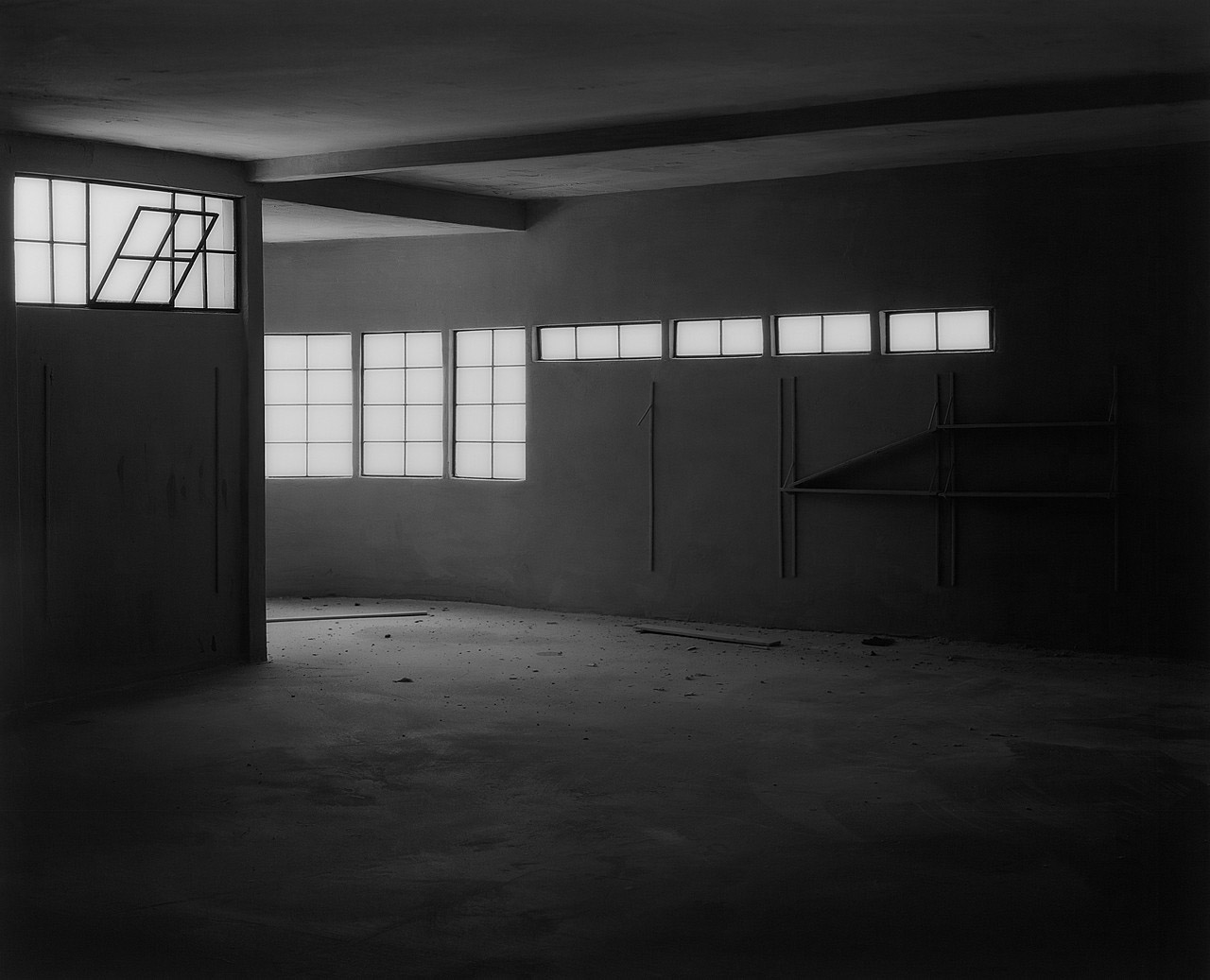
James Casebere (American, b. 1953) 'Garage' 2003


James Casebere (American, b. 1953)
Garage
2003
Chromogenic print, face-mounted to acrylic
181.6 x 223.5cm
Solomon R. Guggenheim Museum, New York
Anonymous gift


“Black and white had more to do with memory and the past. Color was too much about the present, I associated it with color TV, which was not a part of my past. I wanted the images to be related to a sense of history, let’s say, whether personal or social. And I think black and white adds a certain level of abstraction.”1

Since the mid-1970s James Casebere (b. 1953, Lansing, Michigan) has been carefully constructing architectural models and photographing them, yielding images somewhere between realism and obvious fabrication. His photographs are stripped of color and detail to evoke a sense of emotional place rather than the physicality of a place’s forms. Casebere is interested in the memories and feelings that are brought to mind by the architectural spaces he represents. The resulting works are dramatic, surreal, and remarkably true to life, embracing qualities of photography, architecture, and sculpture.

His tabletop models imitate the appearance of architectural institutions (home, school, library, prison) or common sites (tunnel, corridor, archway), representing the structures that occupy our everyday world. These models, made from such featureless materials as Foamcore, museum board, plaster, and Styrofoam, remain empty of detail and human figures. It is only when Casebere casts light on their bland surfaces and spartan interiors that the models are transformed. By eliminating the details, and taking advantage of dramatic lighting effects and the camera’s ability to flatten space, Casebere is able to transform familiar domestic spaces to find the extraordinary in the everyday. He asks viewers to rely on their memory to fill in the gaps and to create a context in which to understand his images.

Casebere stages his photographs to construct realities inspired by contemporary American visual culture that blur the line between fiction and fact. In this way, his images suggest psychologically charged spaces and have an otherworldly quality. The notion that these may be actual places seems plausible, but the lack of human presence leads us to wonder what has happened here. The viewer may imagine a human story within the abandoned spaces. Without people or colour, the photographs are about our own associations with these spaces and what they may represent.

Text from the Teacher’s Guide to the exhibition

1/ Roberto Juarez, “James Casebere,” Bomb 77 (Fall 2001)


Trauma and the Uncanny

When Andy Warhol created his silkscreen paintings of Marilyn Monroe in the wake of her death, he touched on the darker side of a burgeoning media culture that, during the Vietnam War, became an integral part of everyday life. Today, with vastly expanded channels for the propagation of images, events as varied as the terrorist attack on the World Trade Center and the deaths of celebrities such as Princess Diana and Michael Jackson have the ability to become traumatic on a global scale. Many artists, including Adam Helms, Nate Lowman, Adam McEwen, Cady Noland, and Anri Sala, have reexamined the strategy of image appropriation Warhol pioneered, attending closely to the ways political conflict can take on global significance. At the same time, photography has altered, or as some theorists argue, completely reconfigured our sense of personal memory. From birth to death, all aspects of our lives are reconstituted as images alongside our own experience of them. This repetition, which is mirrored in the very technology of the photographic medium, effectively produces an alternate reality in representation that, especially when coping with traumatic events, can take on the force of the uncanny. Artists such as Stan Douglas, Anthony Goicolea, Sarah Anne Johnson, Jeff Wall, and Gillian Wearing exploit this effect, constructing fictional scenarios in which the pains and pleasures of personal experience return with eerie and foreboding qualities.

Press release from the Solomon R. Guggenheim Museum website [Online] Cited 22/08/2010 no longer available online


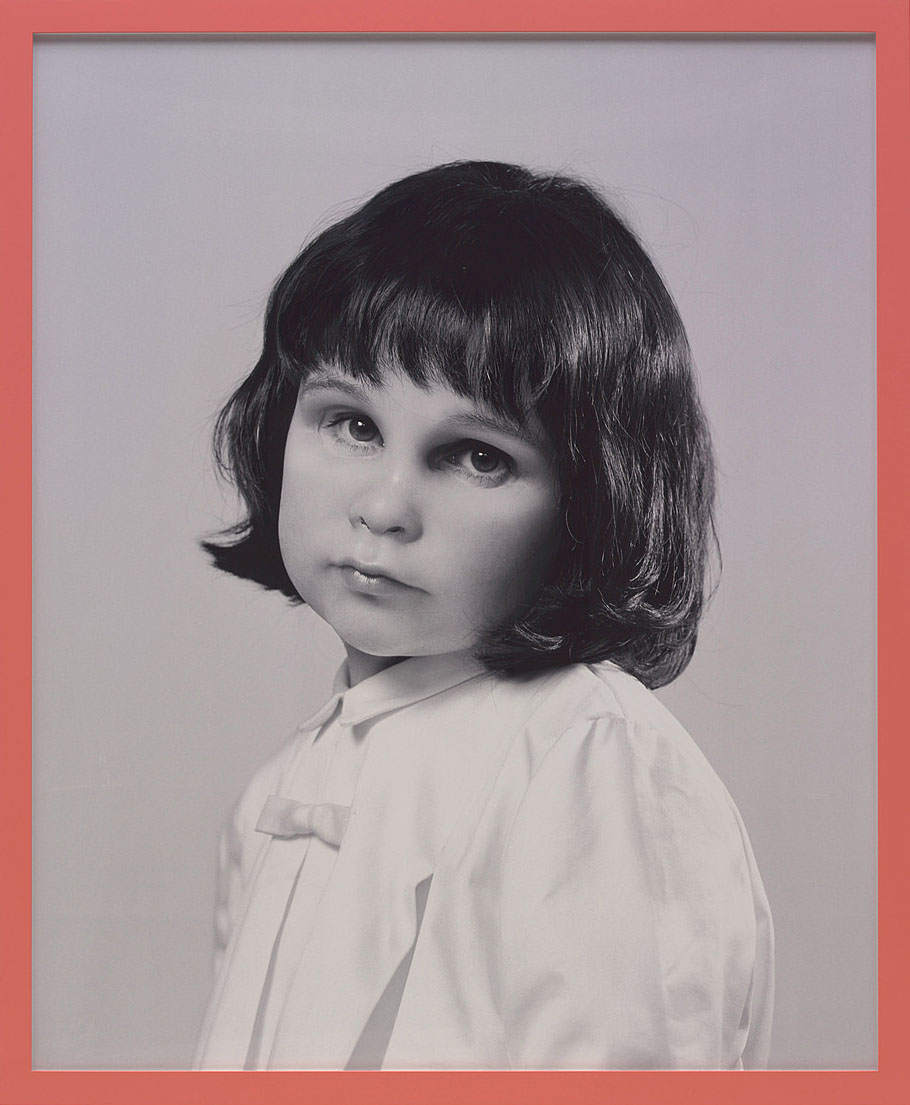
Gillian Wearing (British, b. 1963) 'Self-Portrait at Three Years Old' 2004


Gillian Wearing (British, b. 1963)
Self-Portrait at Three Years Old
2004
Chromogenic print
182 x 122cm
Solomon R. Guggenheim Museum, New York
Purchased with funds contributed by the International Directors Council and Executive Committee Members: Ruth Baum, Edythe Broad, Elaine Terner Cooper, Dimitris Daskalopoulos, Harry David, Gail May Engelberg, Shirley Fiterman, Nicki Harris, Dakis Joannou, Rachel Lehmann, Linda Macklowe, Peter Norton, Tonino Perna, Elizabeth Richebourg Rea, Mortim


“I taught myself to use a camera – it’s not very difficult to use a camera, but I never bothered looking at any textbooks on how to make a picture. I had a much more casual relation to it. For me at the time it was much more about the process rather than the results.”1

Photography has not only profoundly impacted our understanding of historical events, it has also changed the way we remember our personal histories. Beginning at birth, all aspects of our lives are recorded as images alongside our own experiences of them. These parallel recording devices, the camera and personal memory, produce alternate realities that may sometimes be synchronised but at other times are askew.

Gillian Wearing (b. 1963, Birmingham, England) uses masks as a central theme in her videos and photographs. The masks, which range from literal disguises to voice dubbing, conceal the identities of her subjects and free them to reveal intimate secrets. For her 2003 series of photographs Album, Wearing used this strategy to create an autobiographical work. Donning silicon prosthetics, she carefully reconstructed old family snapshots, transforming herself into her mother, father, uncle, and brother as young adults or adolescents. In one of the works, Wearing recreated her own self-portrait as a teenager – and in fact the artist considers all the photographs in this series as self-portraits. She explains: “I was interested in the idea of being genetically connected to someone but being very different. There is something of me, literally, in all those people – we are connected, but we are each very different.”2

To make the Album series, Wearing collaborated with a talented team (some of whom have worked for Madame Tussaud’s wax works) who sculpted, cast, painted, and applied hair to create the masks, wigs, and body suits used in these photographs. The elaborate disguises the artist wears, when combined with the snapshot “realism” of the original images on which they are based, create an eerie fascination that serves to reveal aspects of her identity rather than conceal it.

Self-Portrait at Three Years Old (2004) carries this role-playing further back in time. Confronting the viewer with her adult gaze through the eyeholes of the toddler’s mask, Wearing plays on the rift between interior and exterior and raises a multitude of provocative questions about identity, memory, and the truthfulness of the photographic medium. Wearing says, “What I love about photographs is that they give you a lot and also they withhold a lot.”3

Text from the Teacher’s Guide to the exhibition

1/ “Gillian Wearing,” interview by Leo Edelstein, Journal of Contemporary Art
2/ Quoted in Jennifer Bayles, “Acquisitions: Gillian Wearing,” Albright-Knox Art Gallery, Buffalo, NY (accessed January 25, 2010)
3/ Sebastian Smee, “Gillian Wearing: The art of the matter,” The Independent (London), October 18, 2003


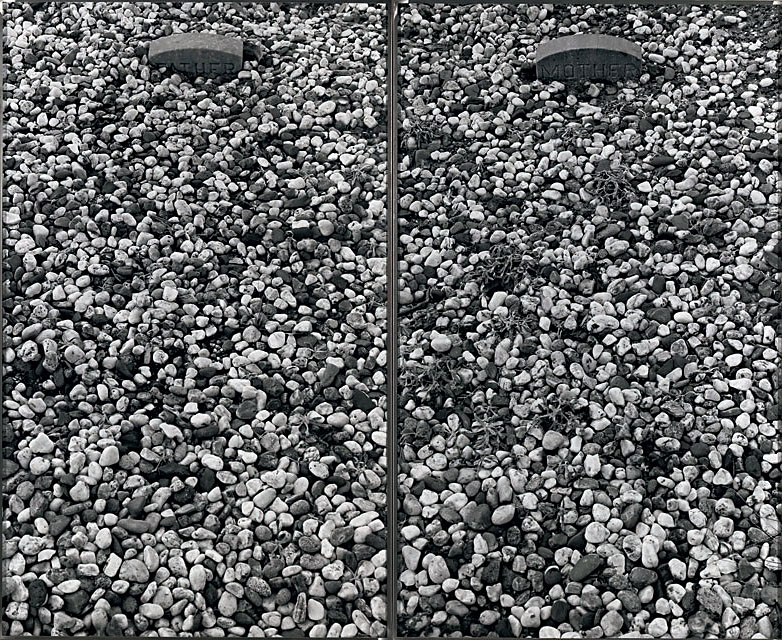
Sophie Calle (French, b. 1953) 'Father Mother (The Graves, #17)' 1990


Sophie Calle (French, b. 1953)
Father Mother (The Graves, #17)
1990
Two gelatin silver prints in artist’s frames edition 2/2
181.0 x 111.1cm each
Solomon R. Guggenheim Museum, New York, Gift, The Bohen Foundation


Ana Mendieta (Cuban American, 1948-1985) 'Untitled (Silueta Series)' 1978


Ana Mendieta (Cuban American, 1948-1985)
Untitled (Silueta series)
1978
Gelatin silver print
20.3 x 25.4cm
Solomon R. Guggenheim Museum, New York, Purchased with funds contributed by the Photography Committee


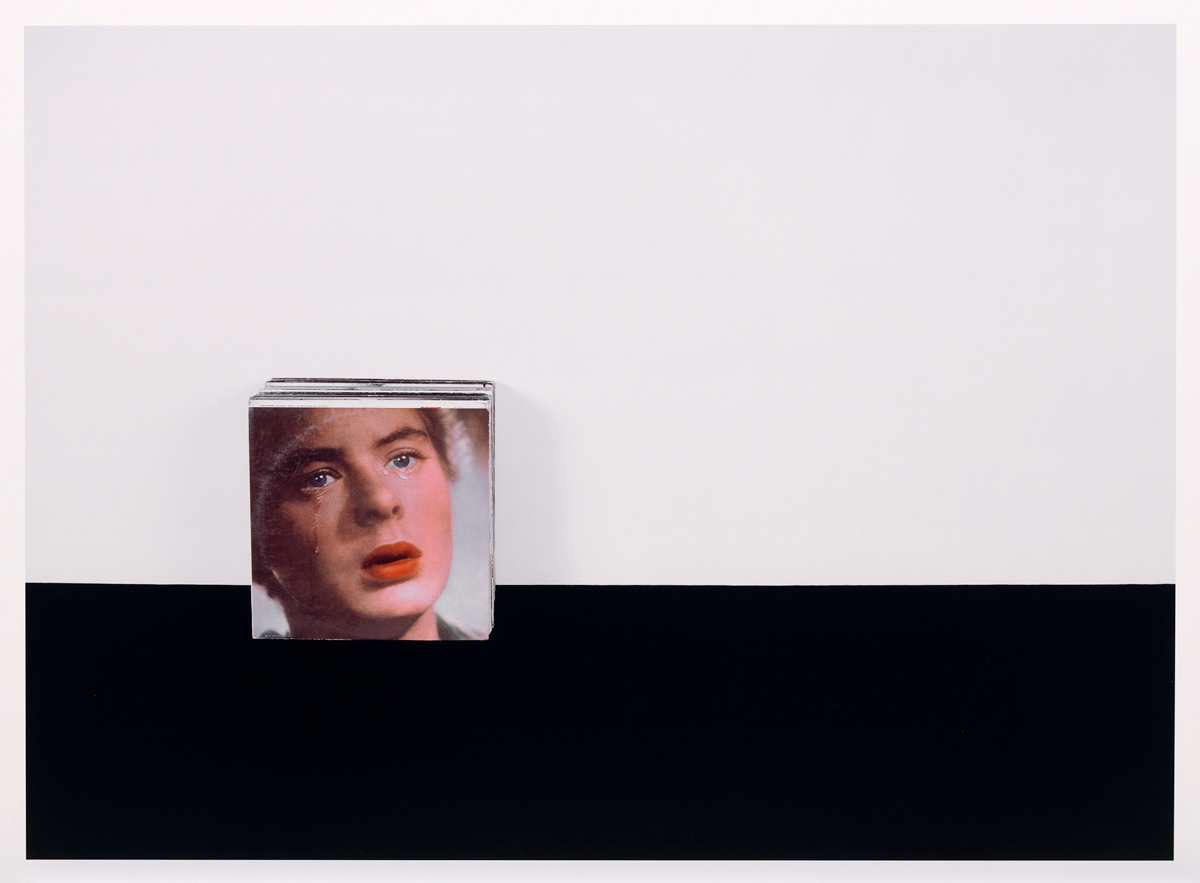
Anne Collier (American, b. 1970) 'Crying' 2005


Anne Collier (American, b. 1970)
Crying
2005
Chromogenic print edition 1/5
99.1 x 134 x 0.6cm
Solomon R. Guggenheim Museum, New York, Purchased with funds contributed by Mr. and Mrs. Aaron M. Tighe


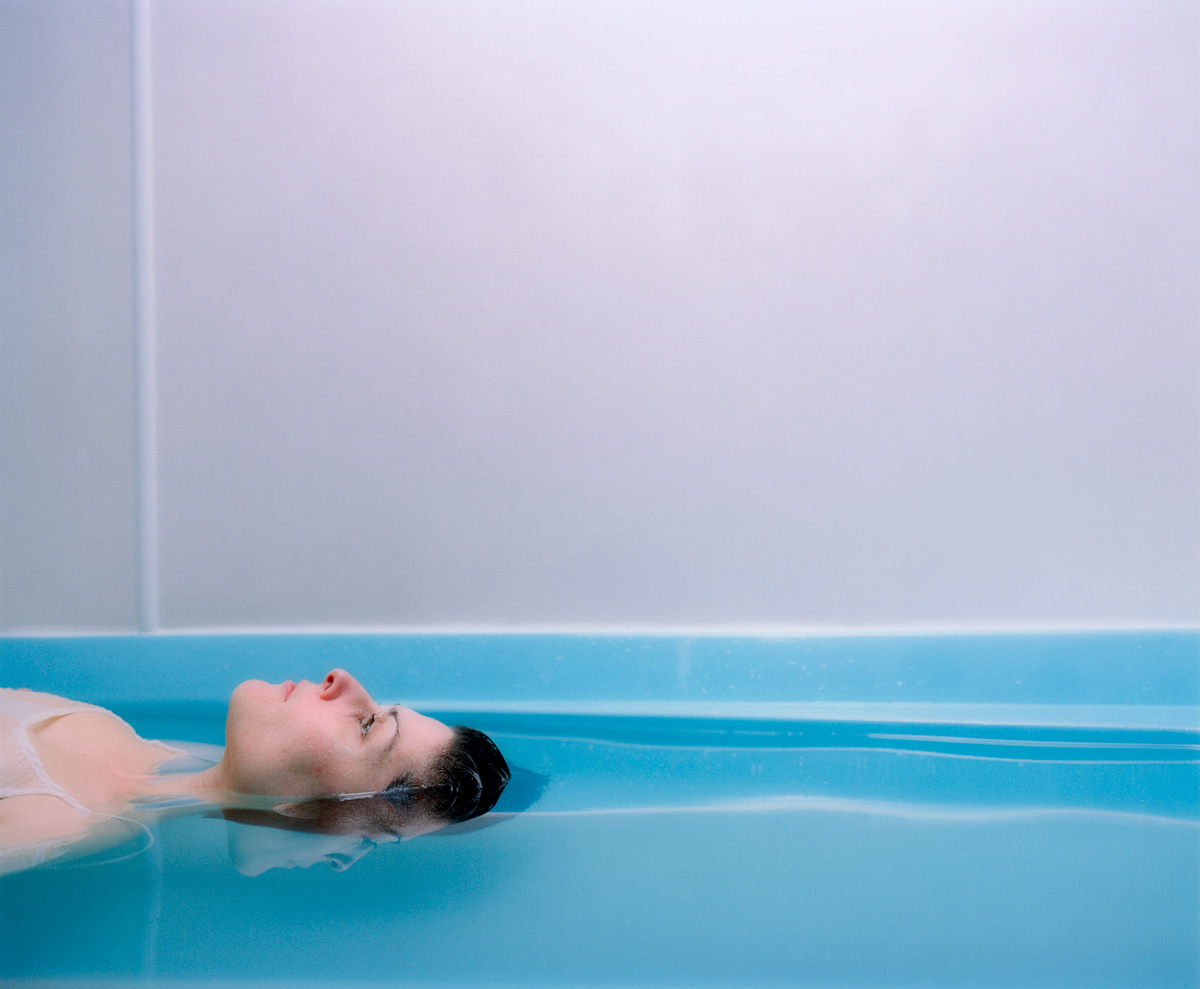
Miranda Lichtenstein (American, b. 1969) 'Floater' 2004


Miranda Lichtenstein (American, b. 1969)
Floater
2004
Chromogenic print edition 5/5
104.1 x 127cm
Solomon R. Guggenheim Museum, New York, Purchased with funds contributed by the Photography Committee


Sarah Anne Johnson (Canadian, b. 1976) 'Morning Meeting (from Tree Planting)' 2003


Sarah Anne Johnson (Canadian, b. 1976)
Morning Meeting (from Tree Planting)
2003
Chromogenic print edition
73.7 x 79.7cm
Solomon R. Guggenheim Museum, New York, Purchased with funds contributed by Pamela and Arthur Sanders; the Harriett Ames
Charitable Trust; Henry Buhl; the Heather and Tony Podesta Collection; Ann and Mel Schaffer; Shelley Harrison; and the Photography Committee


Sally Mann (American, b. 1951) 'Virginia' from the 'Mother Land' series 1992


Sally Mann (American, b. 1951)
Virginia from the Mother Land series
1992
Gelatin silver print
76.2 x 96.5cm
Solomon R. Guggenheim Museum, New York, Gift, The Bohen Foundation


Solomon R. Guggenheim Museum
1071 5th Avenue (at 89th Street)
New York

Opening hours:
Sunday – Monday, 11am – 6pm
Closed Tuesday
Wednesday – Friday 11am – 6pm
Saturday 11am – 8pm

Solomon R. Guggenheim Museum website

LIKE ART BLART ON FACEBOOK

Back to top