
Exhibition dates: 3rd – 25th August, 2017

Joel-Peter Witkin (American, b. 1939)
Arms Broken By A Window, New Mexico
1980
Tirage argentique
64 x 64cm
Courtesy Baudoin Lebon and William Mora Galleries
© Joel-Peter Witkin
“I think this whole conversation can be compressed into one thing. It’s that life is joyous and wonderful and it’s meant for us to grow as individuals, as citizens, as human beings and spirits. The terrible thing is that we have a choice and usually the negative choice is the easy way. That’s what we regret because we know we’ve harmed and we’re not meant to harm. We’re meant to heal and grow and share and if I had a knife at my neck or a gun to my head I’d say the same thing.”
Joel-Peter Witkin
Magical momenti mori
This will be short and sweet because I am on holiday in Europe.
It was a privilege to visit William Mora Galleries to see the first ever exhibition in Australia of the work of the renowned American photographer Joel-Peter Witkin. To be able to spend time with these photographic constructions in such a tranquil space truly was a blessing.
While it is possible to read all sorts of influences into the work – running from Diane Arbus (masks) through Surrealism, collage and homages to still-life “Vanitas” style paintings from the 1600s, the ‘Storyville’ prostitue photos of E.J. Bellocq, carte-de-visite and the conversant arched form of the window cut-outs of Victorian photo albums, mythological themes, ars moriendi (“The Art of Dying”), post-mortem photography, et al – what makes Witkin’s photographs so unique is that they could only, ever, be the work of this artist. When you look at these beautiful photographs they bear his unmistakable signature.
Witkin is able to construct in a performative space placed before the lens, engaging narratives which often have an allusive mystery embedded in them. I for one do not pretend to understand all that is going on within the images in terms of their symbolism – but this is not necessary. What I can feel is the profound love and affection that the artist has towards his subjects and his craft. Witkin is not afraid: of life, of death, of ambiguities of sexuality, identity and disability, that confront each and every one of us throughout life. He is not afraid to make bold moves in his art, scratching into the surface of the negative, bleaching into the print, collaging over the top of the base print, never afraid of high key moments in the mise-en-scène, all to create the affect that he wants in order to tell the story. He directs his imagination through the presence and physicality of the final print.
Witkin’s allegories, his mediations on the universality of death as memento mori, or meme/n/to (a meme is an element of a culture or system of behaviour passed from one individual to another, as in the multiple rituals of death) mori, remind people of the fragility of their lives and how vain are the glories of earthly life. His imaginative renditions posit this: no matter one’s station in life, the Dance of Death unites us all.
Dr Marcus Bunyan
Many thankx to Anna and William Mora for allowing me to publish the photographs in the posting. All installation photographs © Dr Marcus Bunyan, William Mora Galleries, Melbourne and the artist. Please click on the photographs for a larger version of the image.
A sudden blow: the great wings beating still
Above the staggering girl, her thighs caressed
By the dark webs, her nape caught in his bill,
He holds her helpless breast upon his breast.How can those terrified vague fingers push
The feathered glory from her loosening thighs?
And how can body, laid in that white rush,
But feel the strange heart beating where it lies?A shudder in the loins engenders there
The broken wall, the burning roof and tower
And Agamemnon dead.
Being so caught up,
So mastered by the brute blood of the air,
Did she put on his knowledge with his power
Before the indifferent beak could let her drop?
W. B. Yeats (1865-1939)
‘Leda and the Swan’
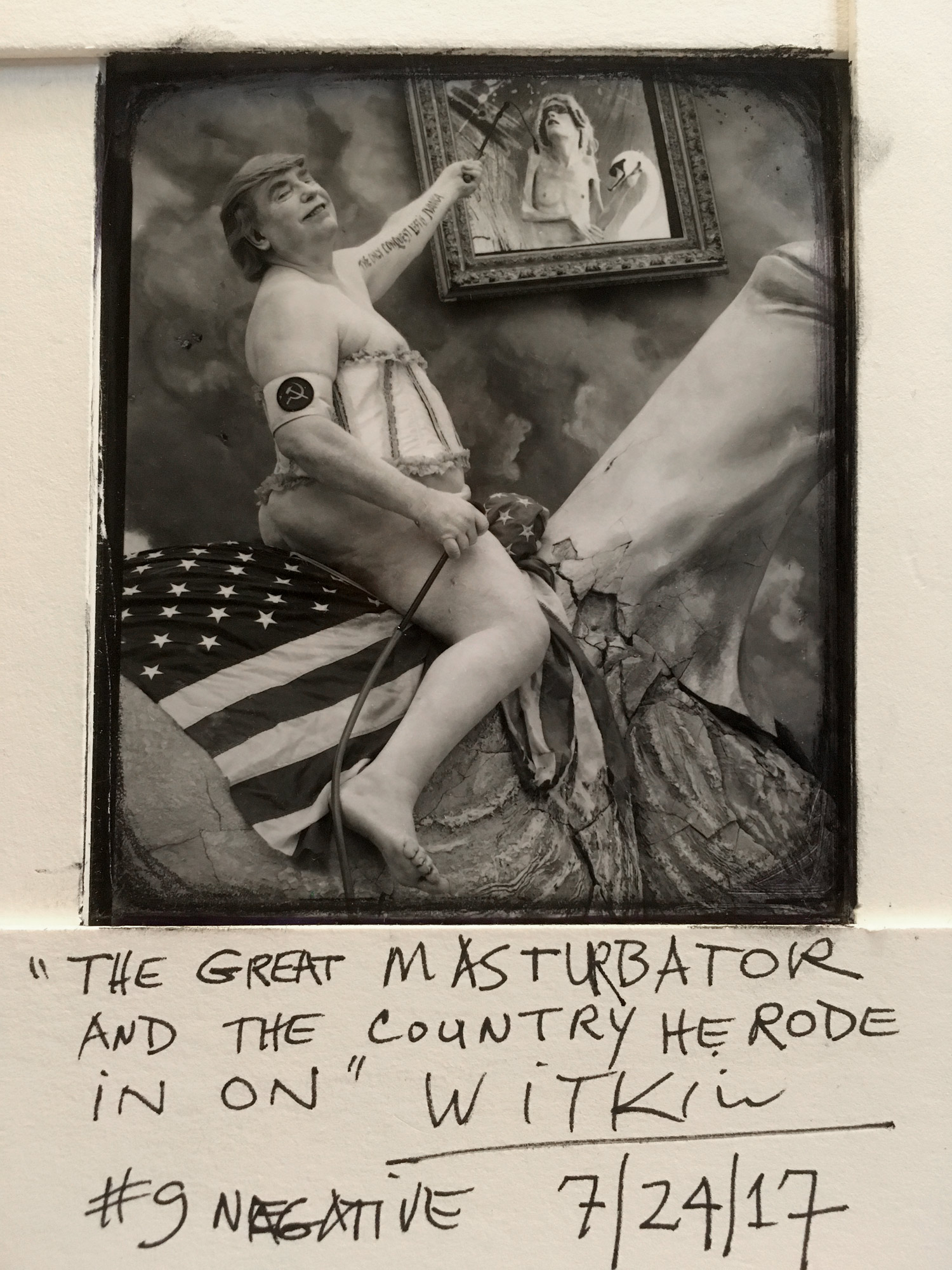
Joel-Peter Witkin (American, b. 1939)
The Great Masturbator And The Country He Rode In On, New Mexico
2017
Tirage argentique
35 x 32cm
Courtesy Baudoin Lebon and William Mora Galleries
© Joel-Peter Witkin
“Trump is a child living in a narcissistic hollow man – with the power to destroy the world…
Trump is not qualified to be President. His election to that office represents the ignorance of the American electorate and the corruption of our political representatives. Ours is not an intellectual culture in which thought and reason are unselfishly presented. It is a “Pop Culture” of materialistic escapism which has elected an autocratic, draft dodging, corrupt business man, who has made this country the laughing stock of the world.
The Great Masturbator And The Country He Rode In On took several months to create. The Trump model was willing to pose nude. In his right hand is the nuclear button. On his extended left arm is written: “The Only Conquest Left Is Ivanka.” On his right arm, he is wearing the symbol of Communism, the secret agenda Russia is promoting today under Putin. And for reasons yet unknown, all of us look forward to know why Trump is Putin’s marionette.
I made this photograph because I am involved in mankind. As a citizen of this formally great country, and as an artist, I made this photograph to help defeat the Republican party in the 2018 elections for its cowardice in putting their party ahead of their country. Where are our elected leaders, the Lincoln’s, the Kennedy’s of today? Where are our citizen’s hero’s, the César Chávez’s, the Martin Luther King’s, the Rosa Parks of today?
What ever happened to morality, courage and integrity?”
Joel-Peter Witkin
Installation photographs
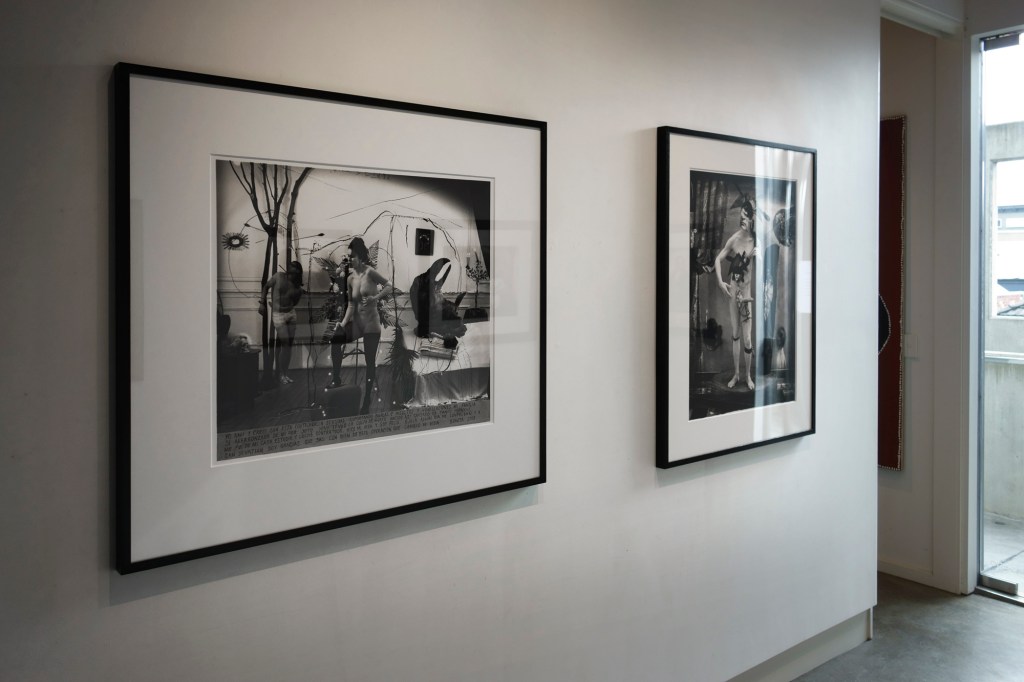
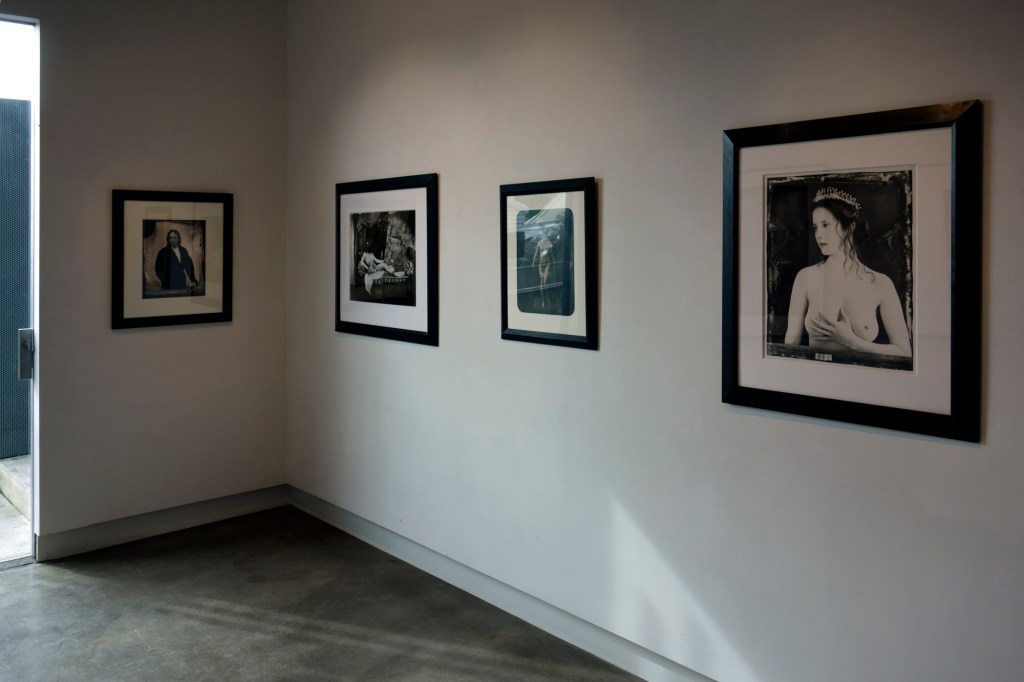
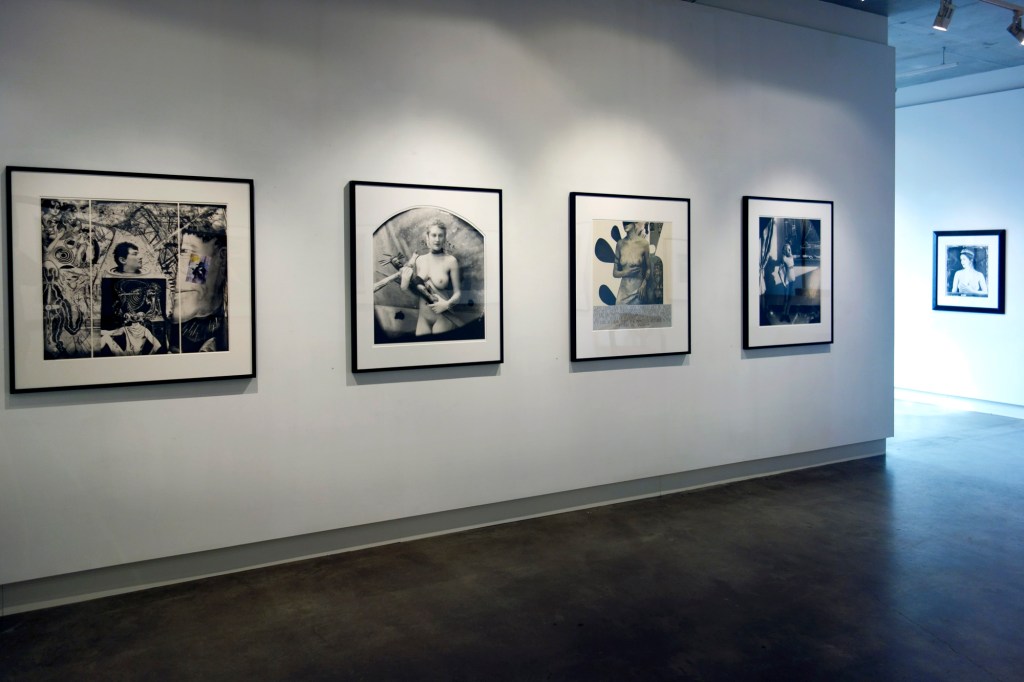
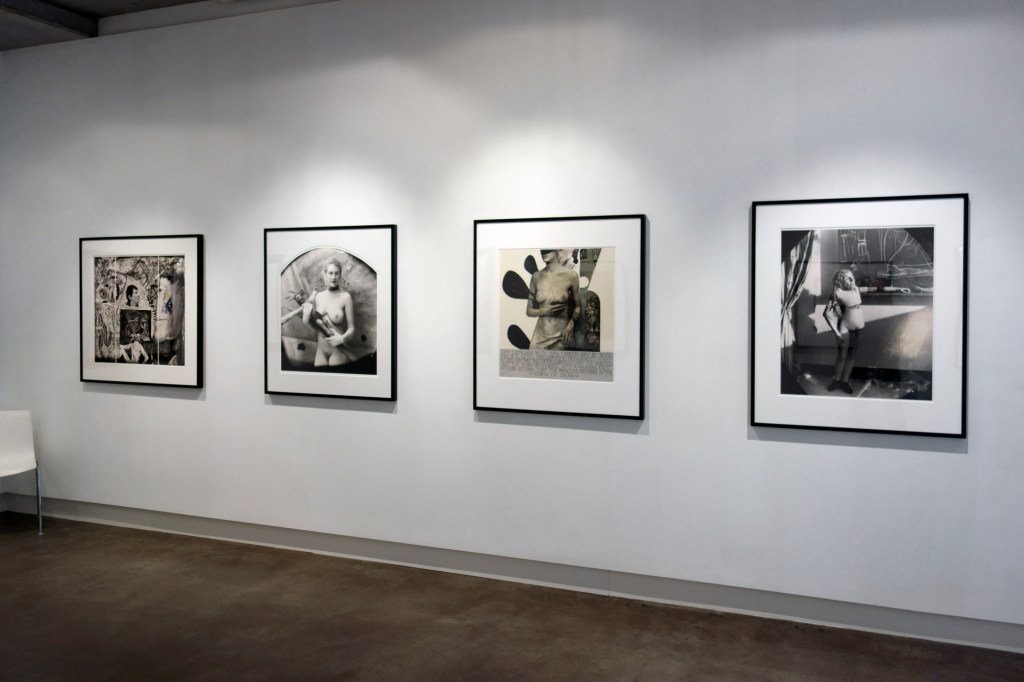
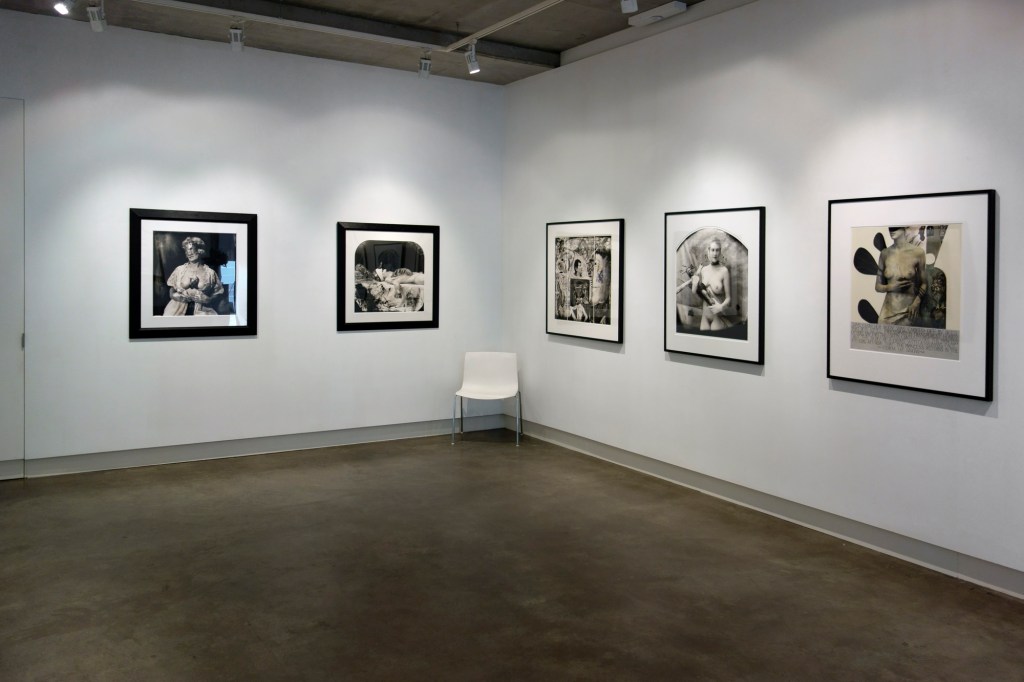

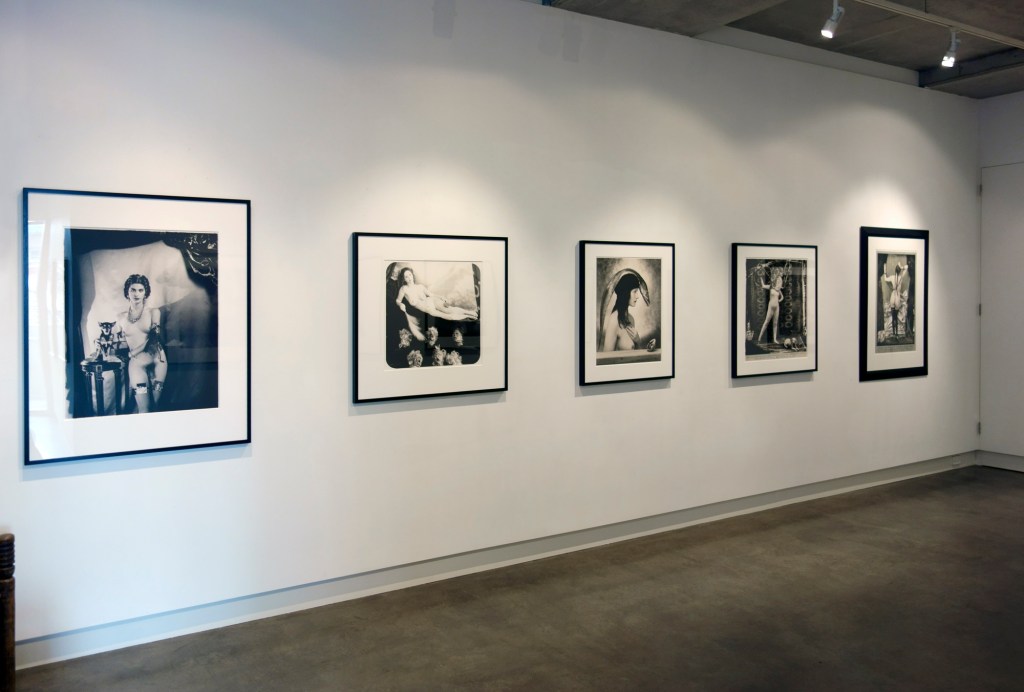
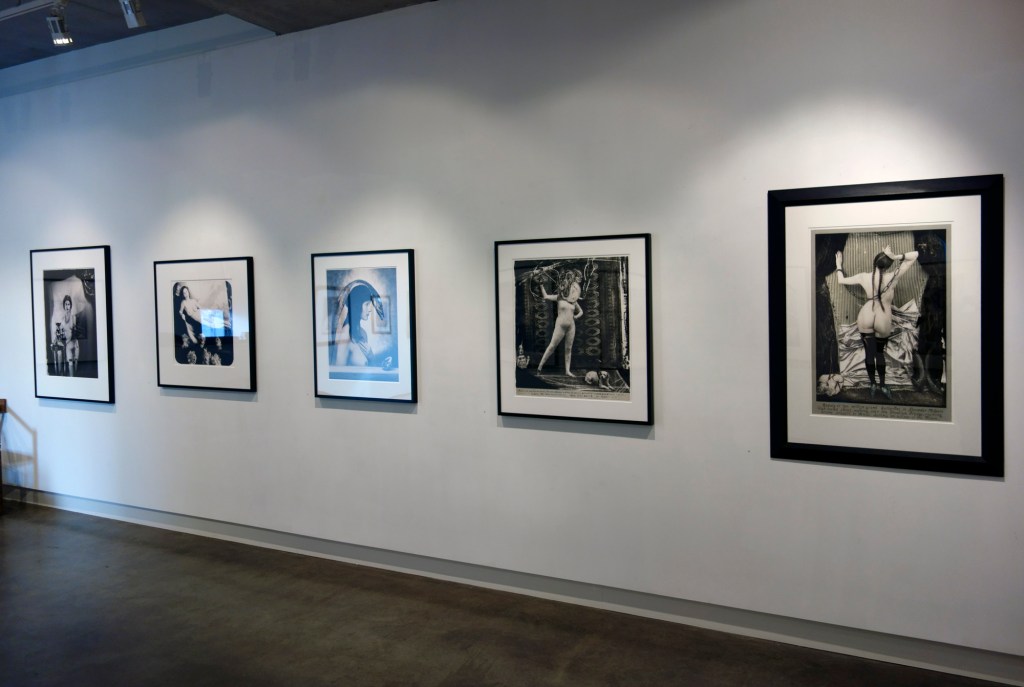

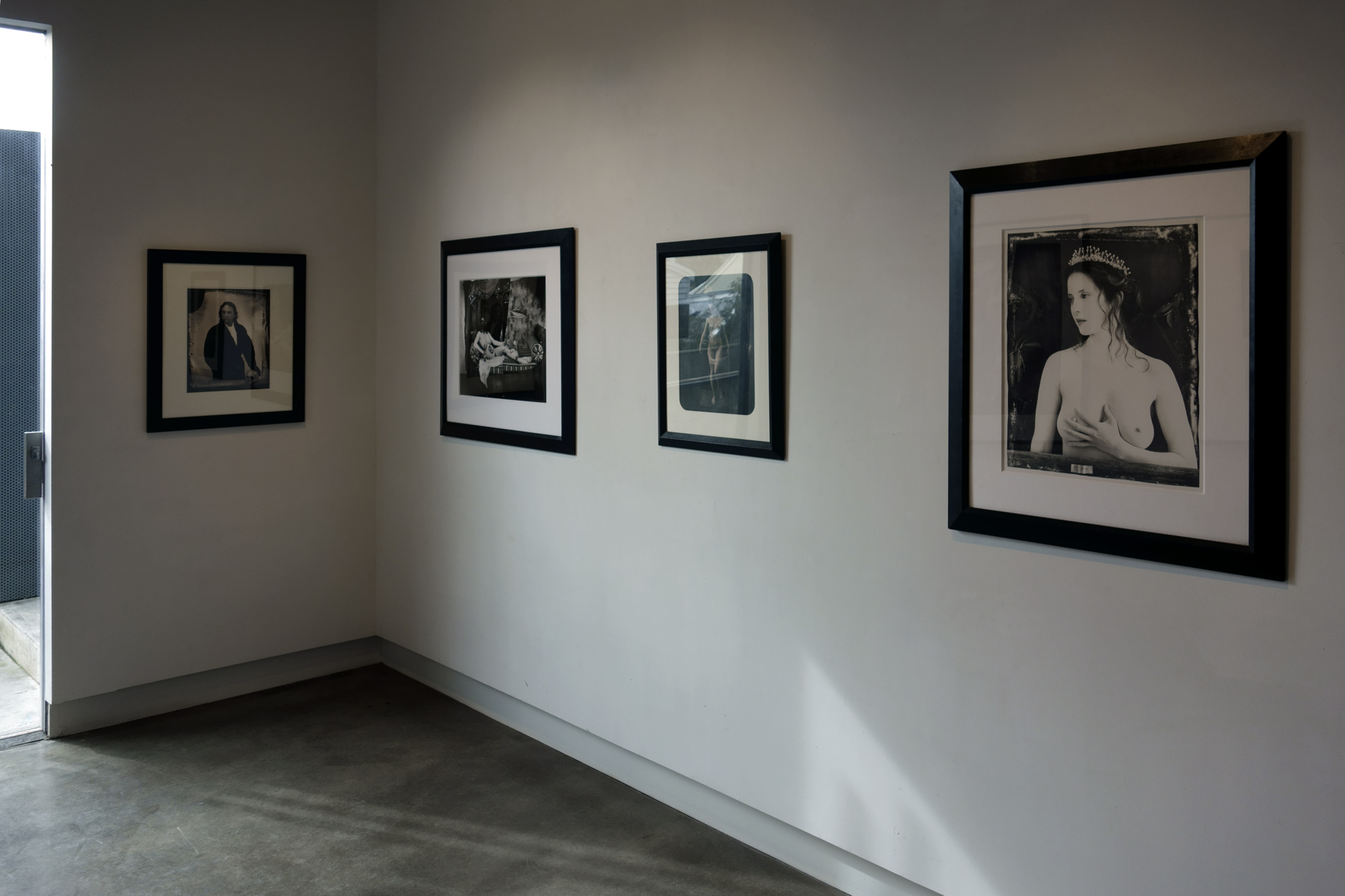
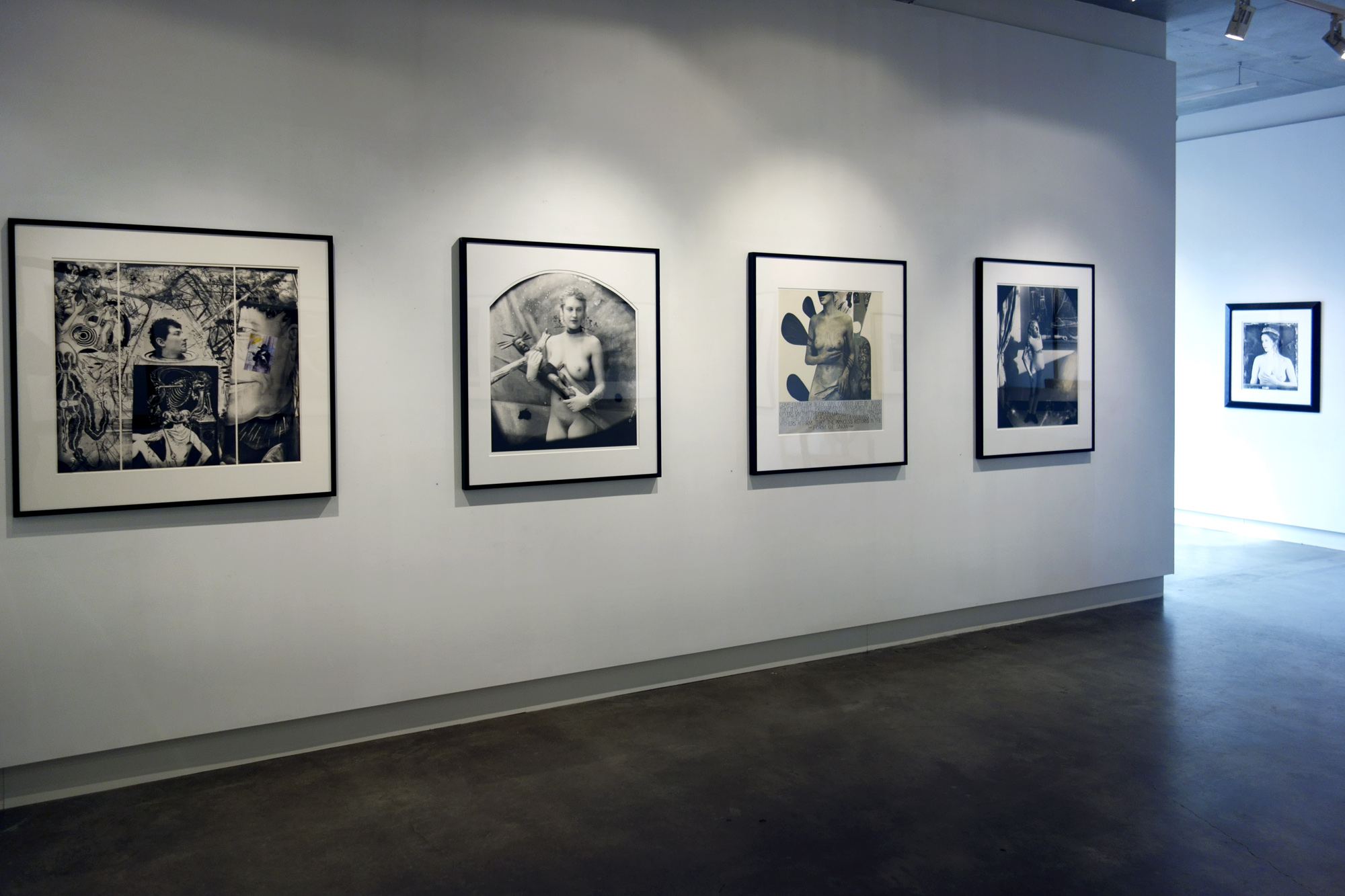

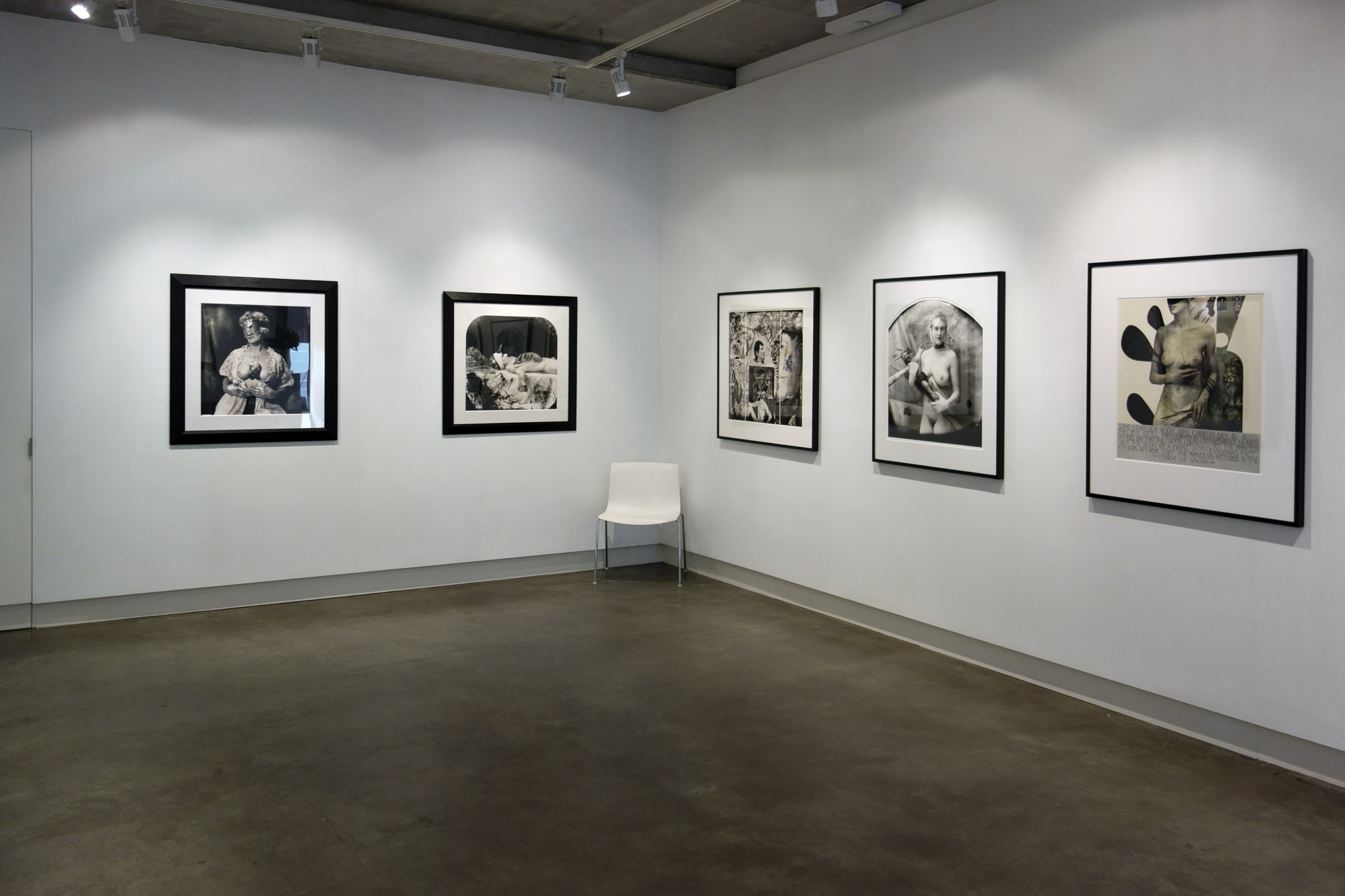
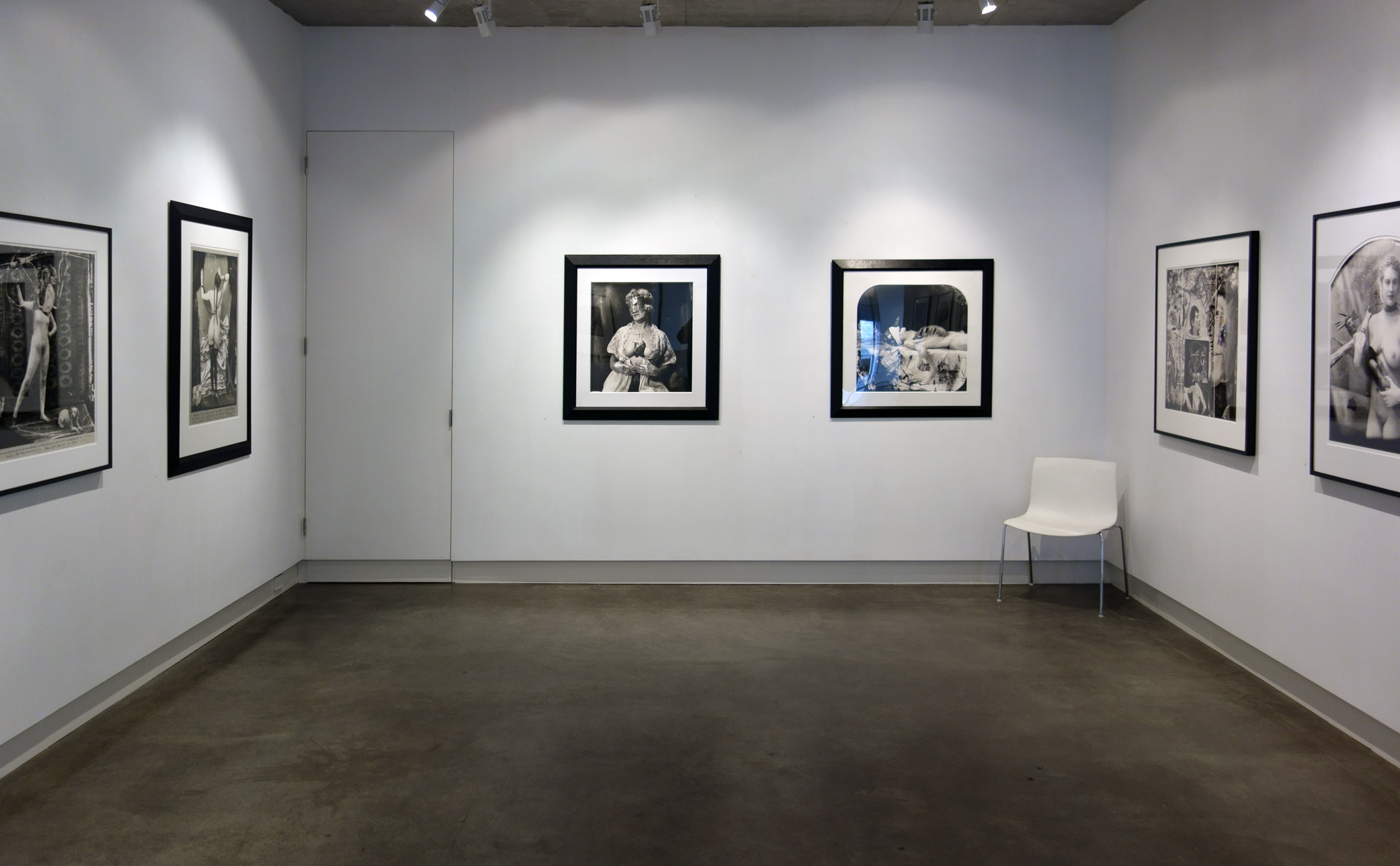
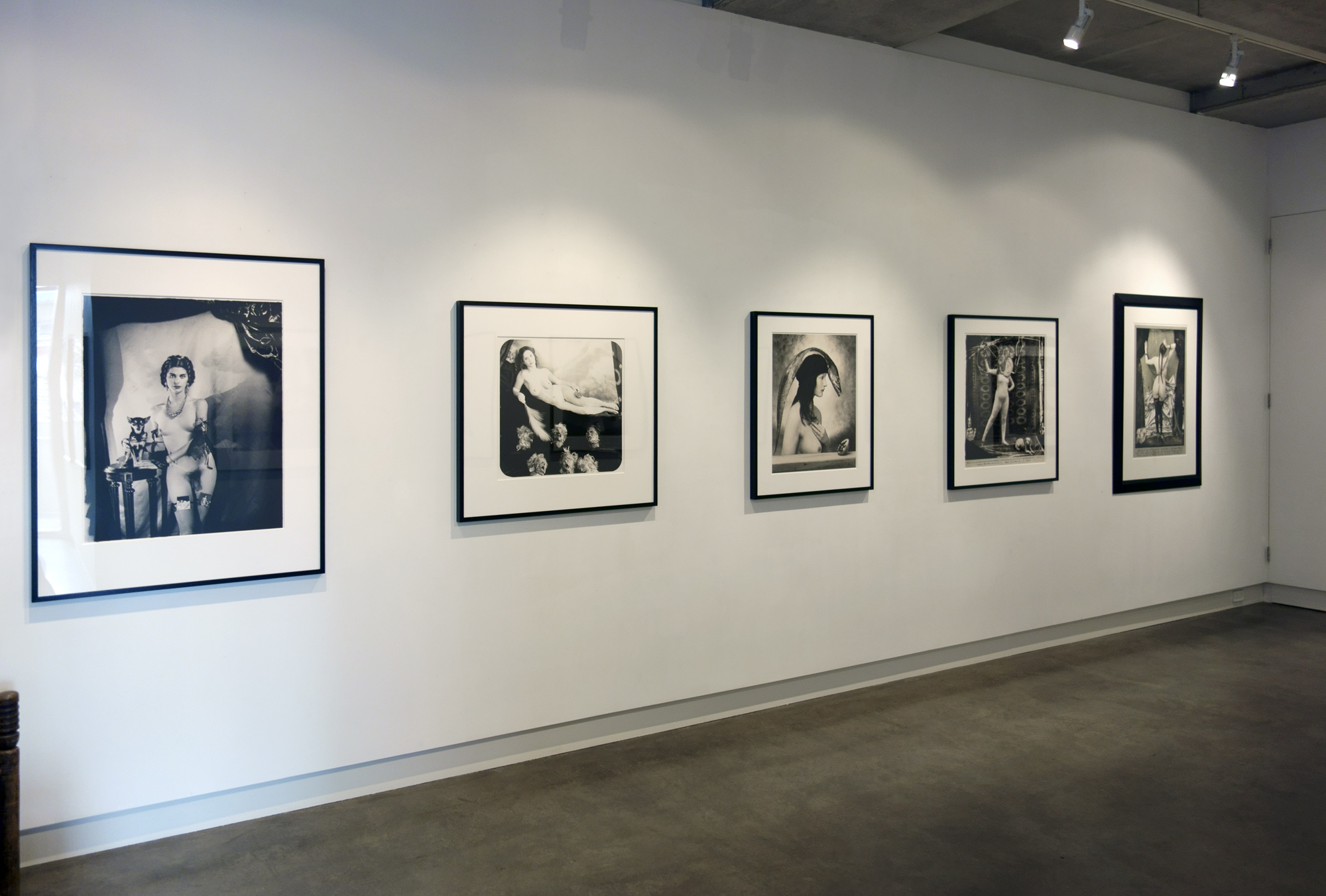
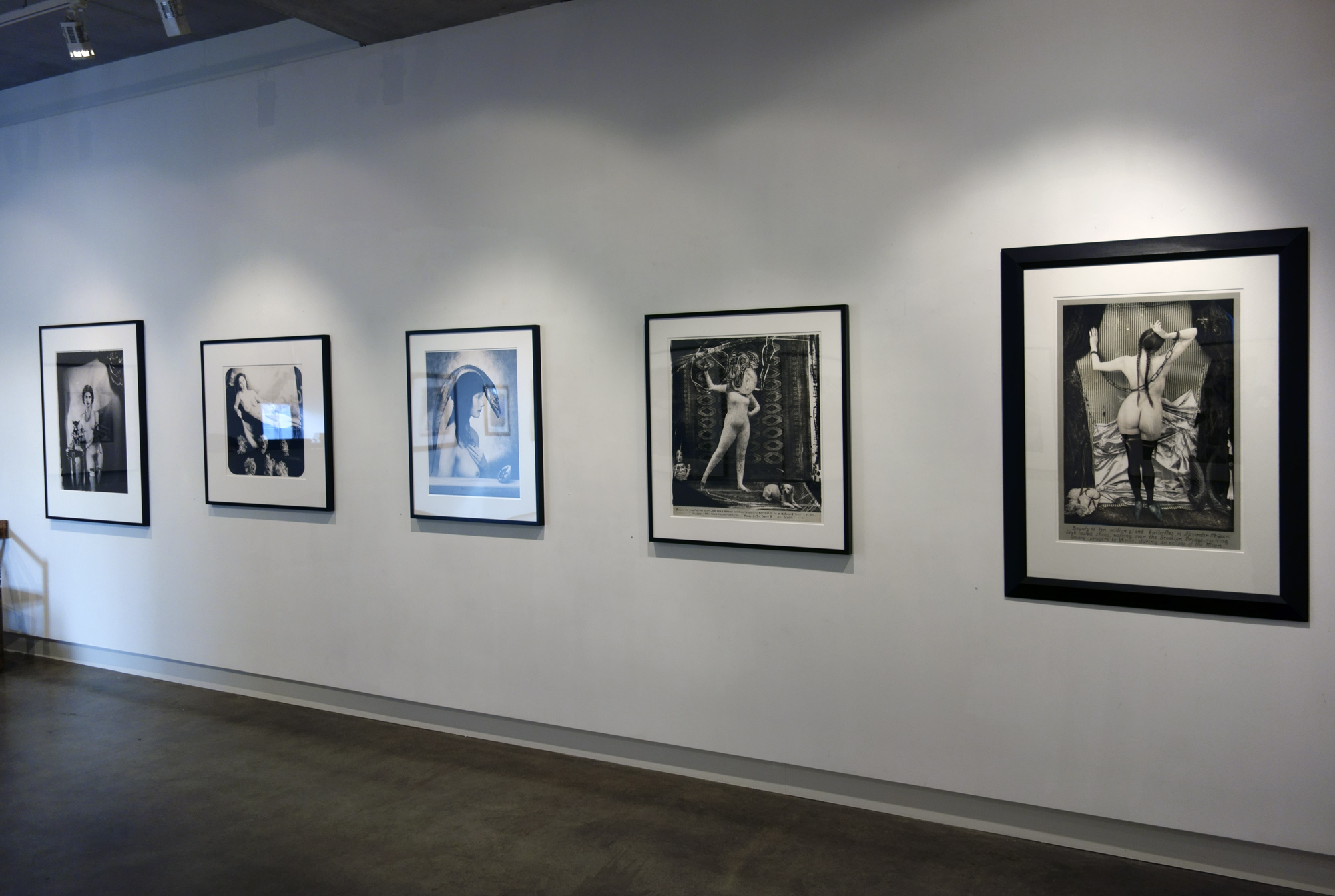
Installation views of the exhibition Joel-Peter Witkin – Photographs 1980-2016 at William Mora Galleries, Melbourne
© Dr Marcus Bunyan, William Mora Galleries, Melbourne and the artist
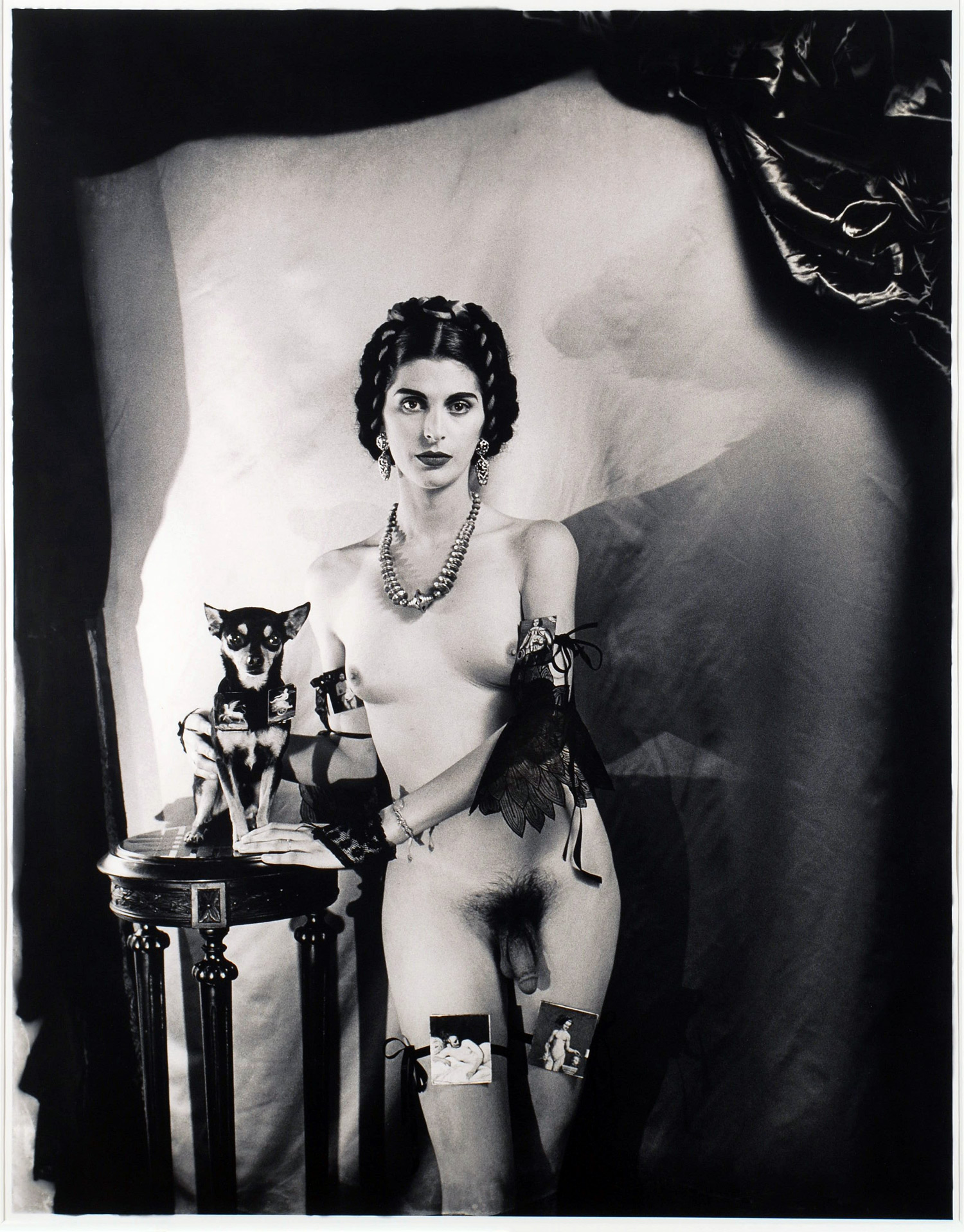
Joel-Peter Witkin (American, b. 1939)
Man With Dog, Mexico
1990
Tirage argentique
95 x 72cm
Courtesy Baudoin Lebon and William Mora Galleries
© Joel-Peter Witkin

Joel-Peter Witkin (American, b. 1939)
Self Portrait Reminiscent As A Self Portrait As A Vanity
1995
Tirage argentique
42 x 34cm
Courtesy Baudoin Lebon and William Mora Galleries
© Joel-Peter Witkin
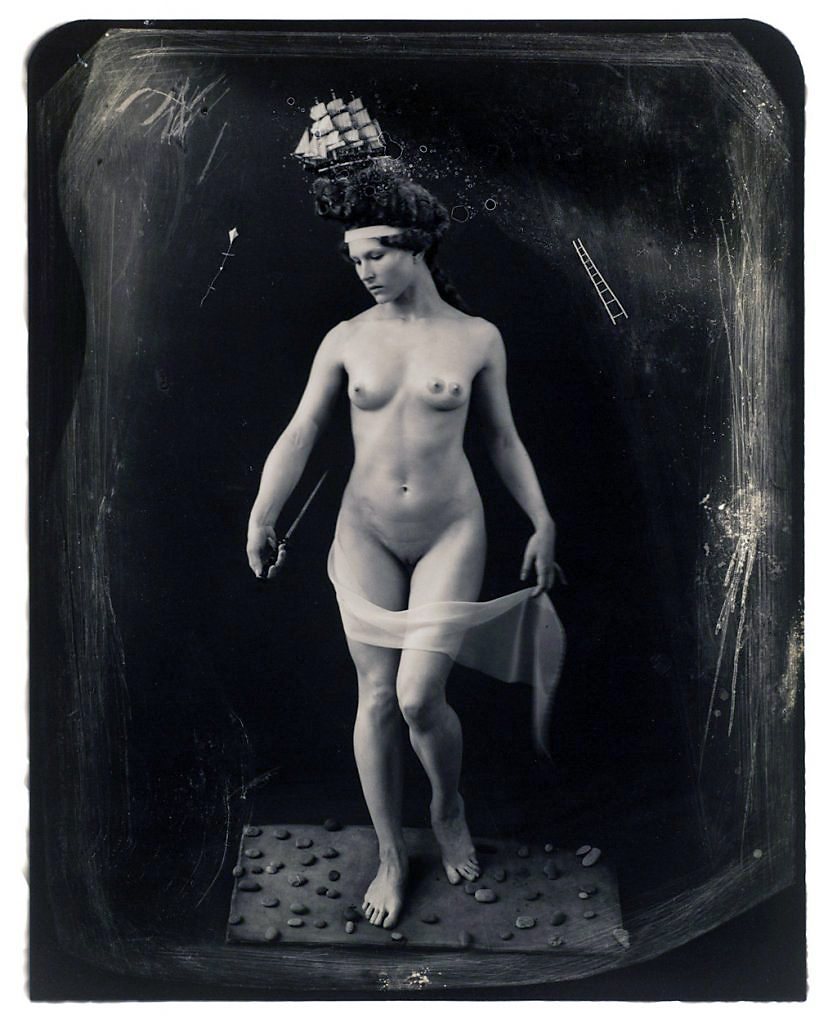
Joel-Peter Witkin (American, b. 1939)
Beauty Had Three Nipples
1998
Tirage argentique
55 x 63cm
Courtesy Baudoin Lebon and William Mora Galleries
© Joel-Peter Witkin
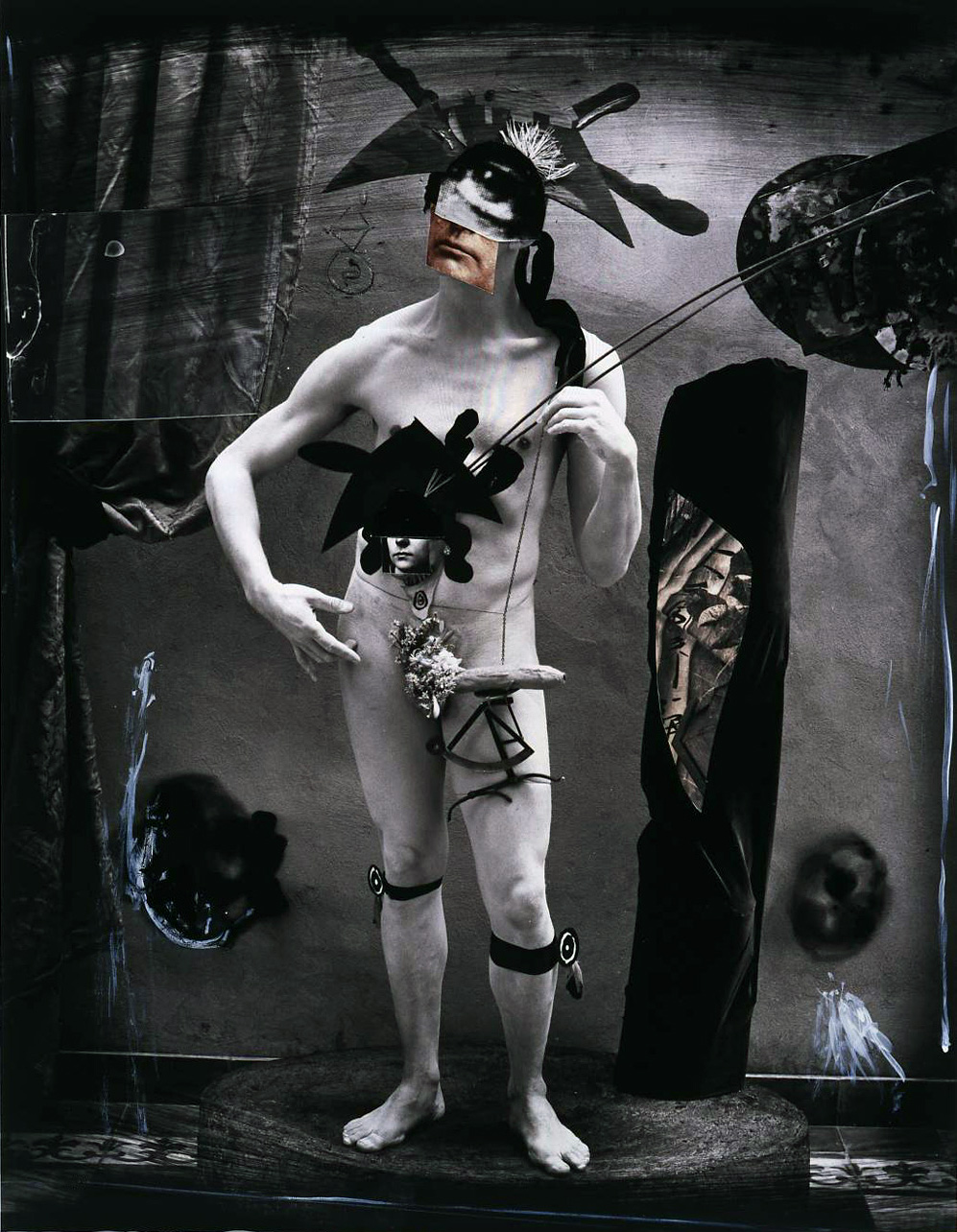
Joel-Peter Witkin (American, b. 1939)
Monsieur Baguette As Orpheo
2004
Tirage argentique
72 x 65cm
Courtesy Baudoin Lebon and William Mora Galleries
© Joel-Peter Witkin
Orpheus is a legendary musician, poet, and prophet in ancient Greek religion and myth. The major stories about him are centred on his ability to charm all living things and even stones with his music, his attempt to retrieve his wife, Eurydice, from the underworld, and his death at the hands of those who could not hear his divine music. As an archetype of the inspired singer, Orpheus is one of the most significant figures in the reception of classical mythology in Western culture, portrayed or alluded to in countless forms of art and popular culture including poetry, film, opera, music, and painting.

Joel-Peter Witkin (American, b. 1939)
Mother Of The Future
2004
Tirage argentique
67 x 76cm
Courtesy Baudoin Lebon and William Mora Galleries
© Joel-Peter Witkin
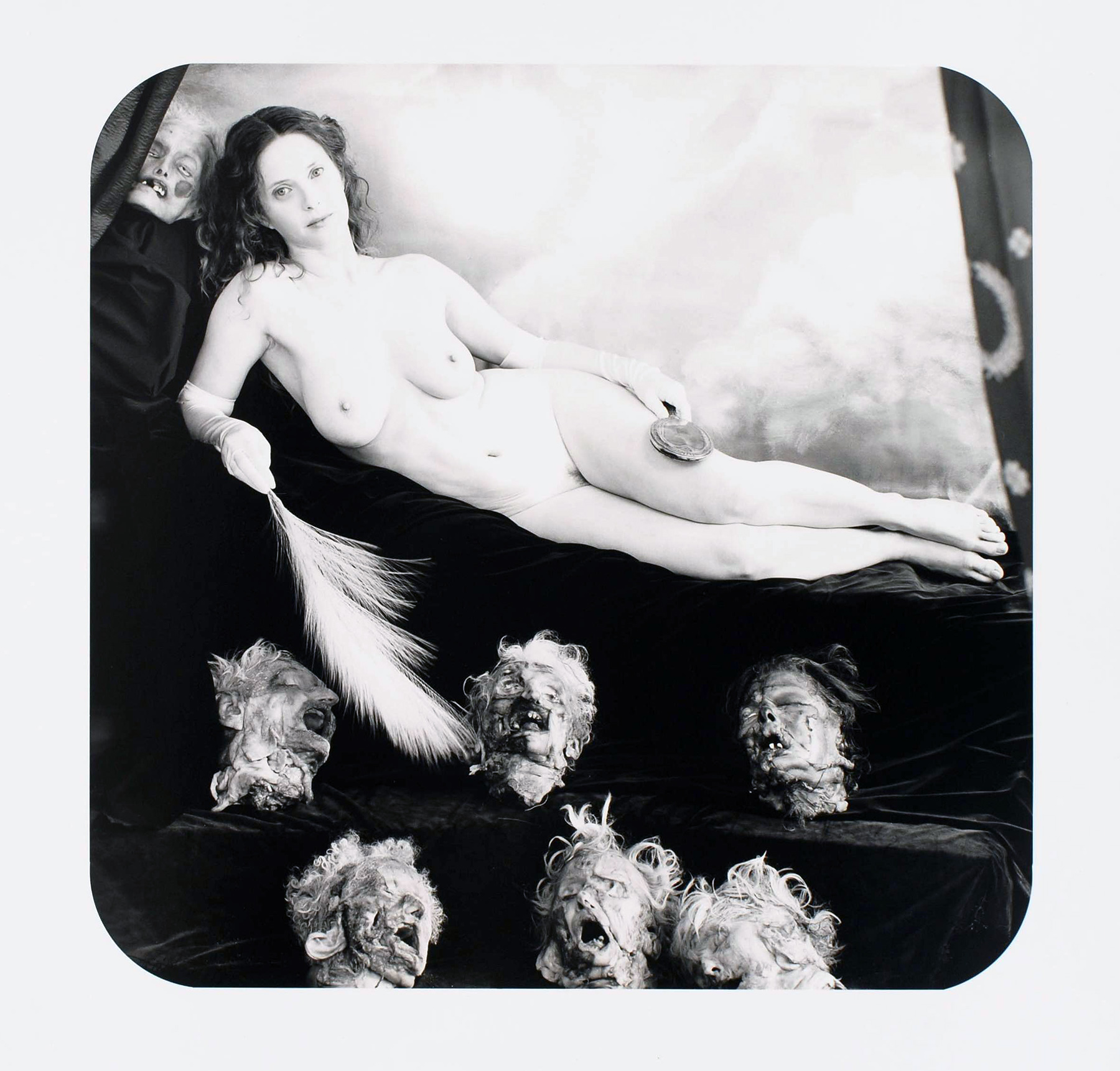
Joel-Peter Witkin (American, b. 1939)
Ars Moriendi
2007
Tirage argentique
66 x 71cm
Courtesy Baudoin Lebon and William Mora Galleries
© Joel-Peter Witkin
“It happened on a Sunday when my mother was escorting my twin brother and me down the steps of the tenement where we lived. We were going to church. While walking down the hallway to the entrance of the building, we heard an incredible crash mixed with screaming and cries for help. The accident involved three cars, all with families in them. Somehow, in the confusion, I was no longer holding my mother’s hand. At the place where I stood at the curb, I could see something rolling from one of the overturned cars. It stopped at the curb where I stood. It was the head of a little girl. I bent down to touch the face, to speak to it – but before I could touch it someone carried me away.”
Joel-Peter Witkin
Ars Moriendi
The Ars moriendi (“The Art of Dying”) are two related Latin texts dating from about 1415 and 1450 which offer advice on the protocols and procedures of a good death, explaining how to “die well” according to Christian precepts of the late Middle Ages. It was written within the historical context of the effects of the macabre horrors of the Black Death 60 years earlier and consequent social upheavals of the 15th century. It was very popular, translated into most West European languages, and was the first in a western literary tradition of guides to death and dying. There was originally a “long version” and a later “short version” containing eleven woodcut pictures as instructive images which could be easily explained and memorised. …
Ars moriendi consists of six chapters:
1/ The first chapter explains that dying has a good side, and serves to console the dying man that death is not something to be afraid of
2/ The second chapter outlines the five temptations that beset a dying man, and how to avoid them. These are lack of faith, despair, impatience, spiritual pride and avarice
3/ The third chapter lists the seven questions to ask a dying man, along with consolation available to him through the redemptive powers of Christ’s love
4/ The fourth chapter expresses the need to imitate Christ’s life
5/ The fifth chapter addresses the friends and family, outlining the general rules of behaviour at the deathbed
6/ The sixth chapter includes appropriate prayers to be said for a dying man
…
Allegorically the images depicted the contest between angels and demons over the fate of the dying man. In his dying agony his soul emerges from his mouth to be received by one of a band of angels. Common themes portrayed by illustrators include skeletons, the Last Judgement, corpses, and the forces of good and evil battling over souls.
Text from Wikipedia website
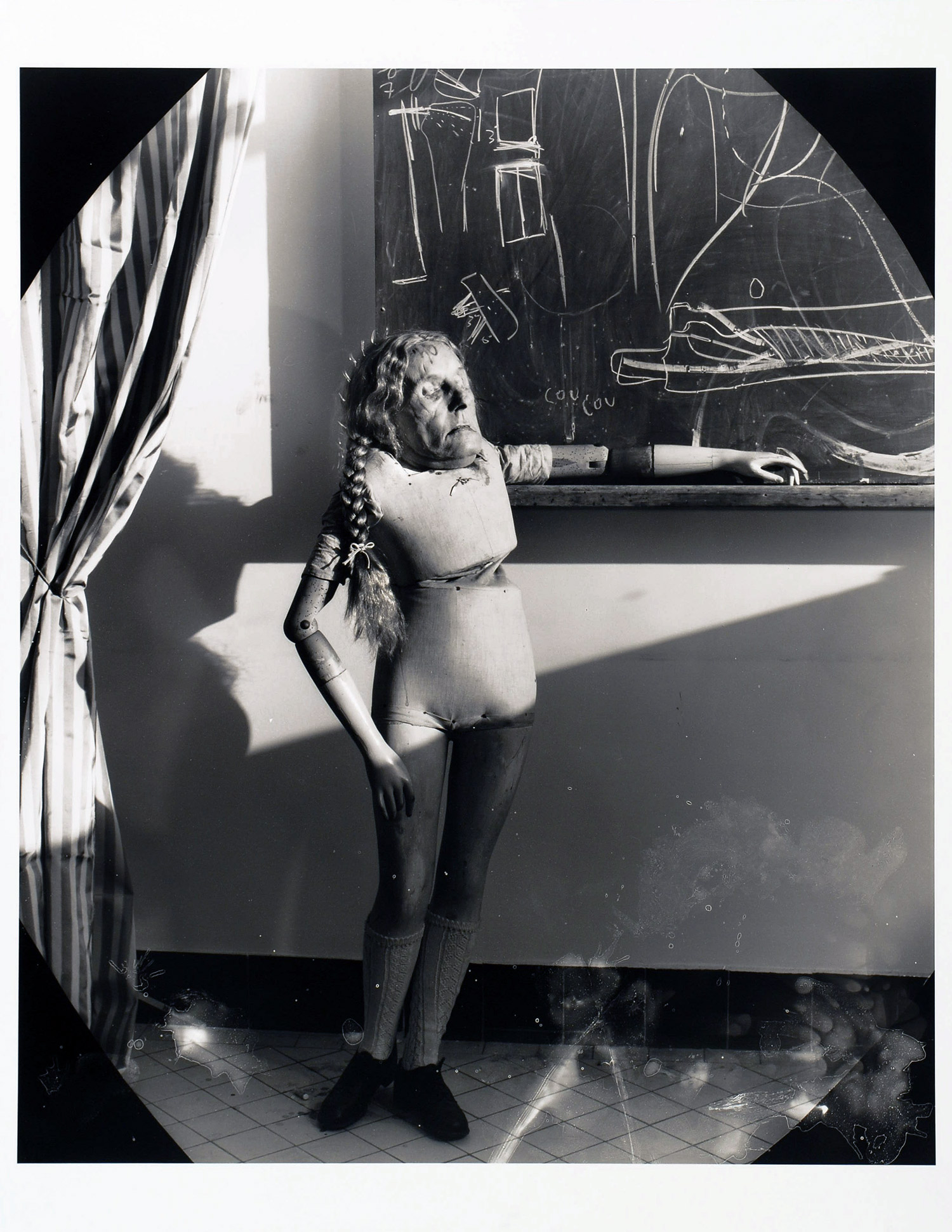
Joel-Peter Witkin (American, b. 1939)
Bad Student
2007
Tirage argentique
86 x 70cm
Courtesy Baudoin Lebon and William Mora Galleries
© Joel-Peter Witkin

Joel-Peter Witkin (American, b. 1939)
Myself As A Dead Clown
2007
Tirage argentique
93 x 99cm
Courtesy Baudoin Lebon and William Mora Galleries
© Joel-Peter Witkin

Joel-Peter Witkin (American, b. 1939)
La Giovanissima
2007
Tirage argentique
87 x 76cm
Courtesy Baudoin Lebon and William Mora Galleries
© Joel-Peter Witkin
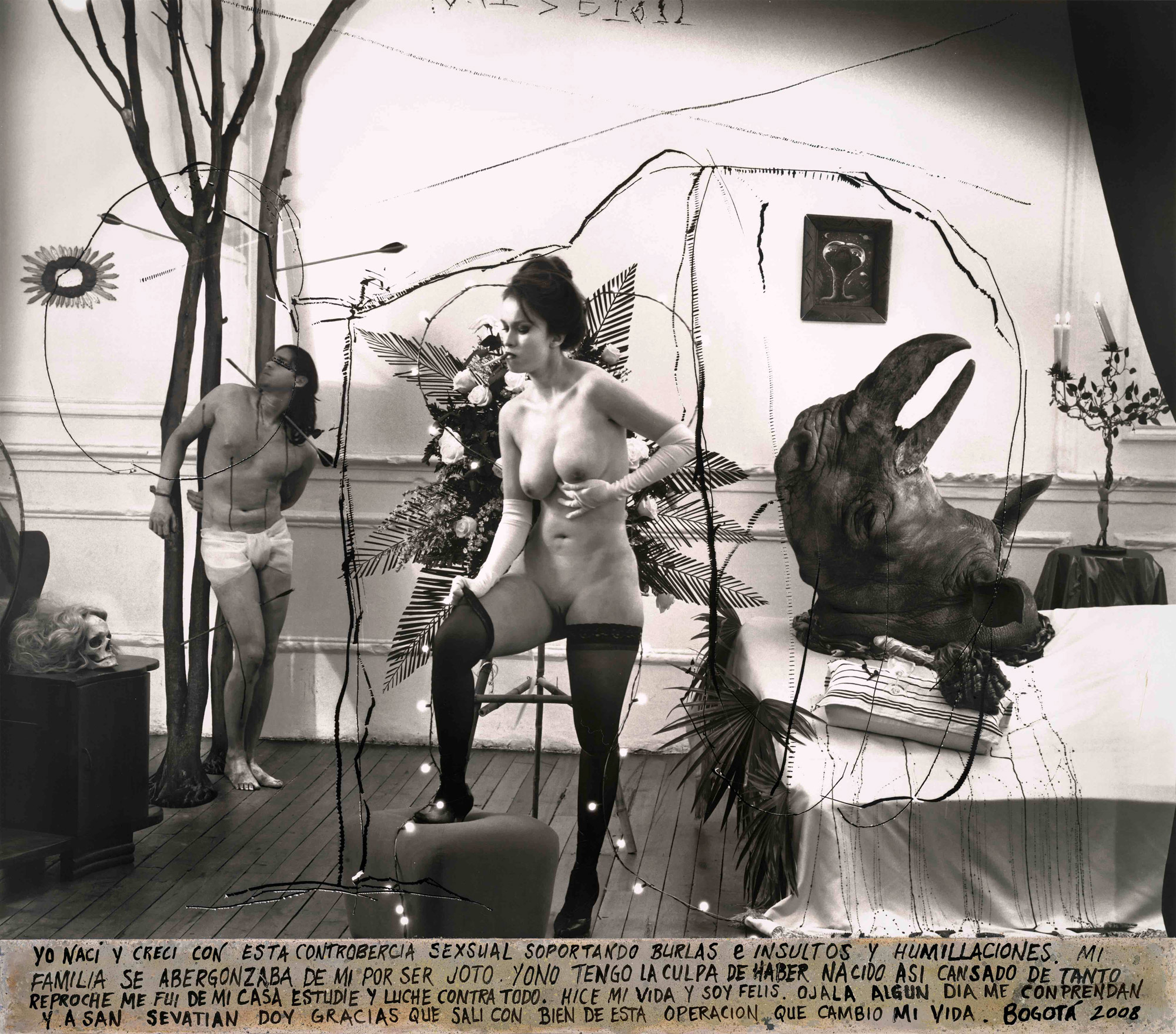
Joel-Peter Witkin (American, b. 1939)
The Scale, Bogota
2008
Tirage argentique
77 x 88cm
Courtesy Baudoin Lebon and William Mora Galleries
© Joel-Peter Witkin
I was born and grew up with this sexual controversy enduring ridicule and insults and humiliations. My family took advantage of me for being joto. And I’m not to blame for being born so tired of so much reproach I left my house to study and fight against everything. I made my life and I’m happy. I hope you catch me sometime and to Saint Sebastian I thank that I left with the good of this operation that changed my life. Bogota 2008
Joel-Peter Witkin (American, b. 1939)
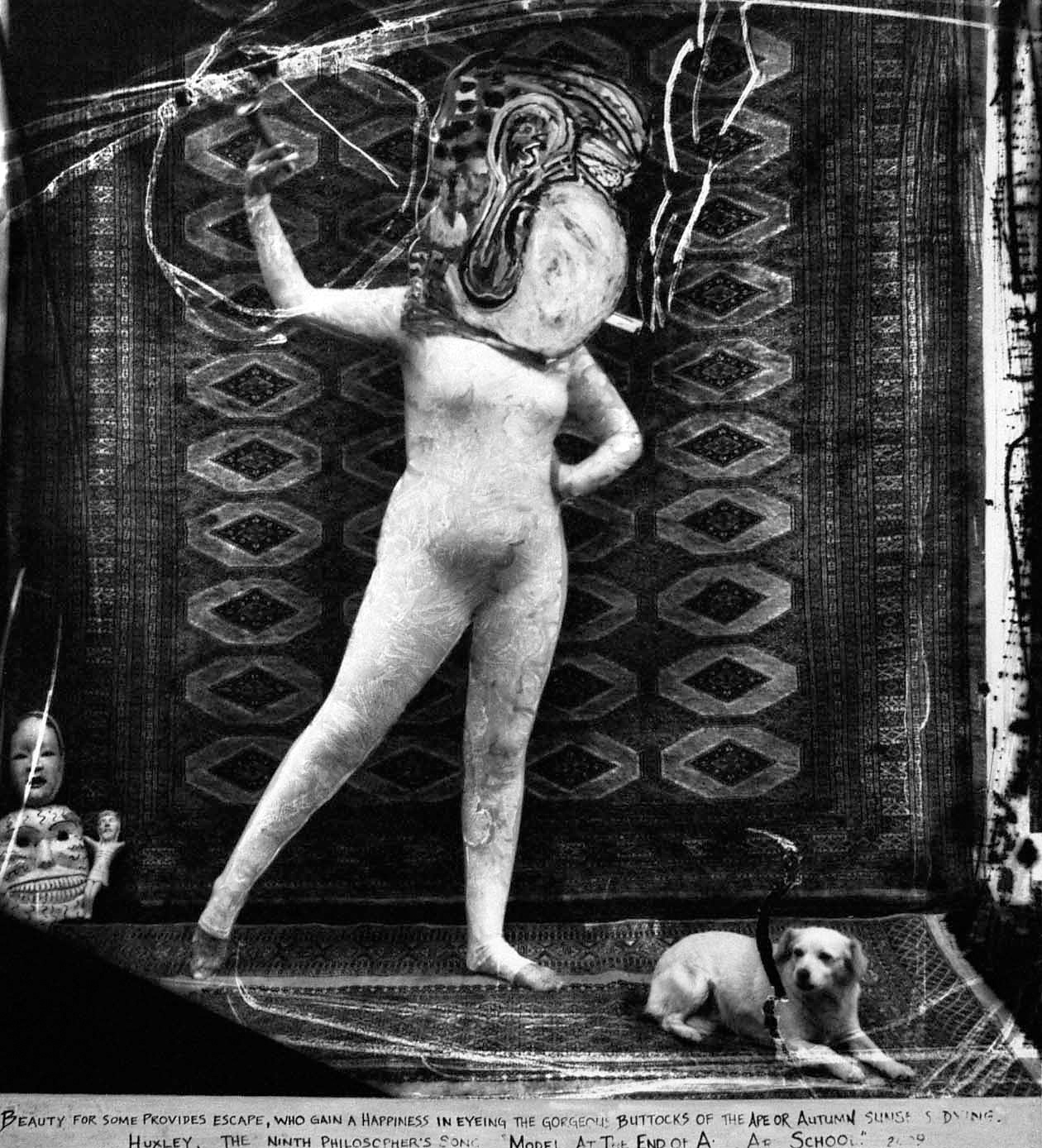
Model At The End Of Art School
2009
Tirage argentique
72 x 65cm
Courtesy Baudoin Lebon and William Mora Galleries
© Joel-Peter Witkin
Beauty for some provides escape,
Who gain a happiness in eyeing
The gorgeous buttocks of the ape
Or Autumn sunsets exquisitely dying.
Julian Huxley (1887-1975)
Ninth Philosopher’s Song (1920)
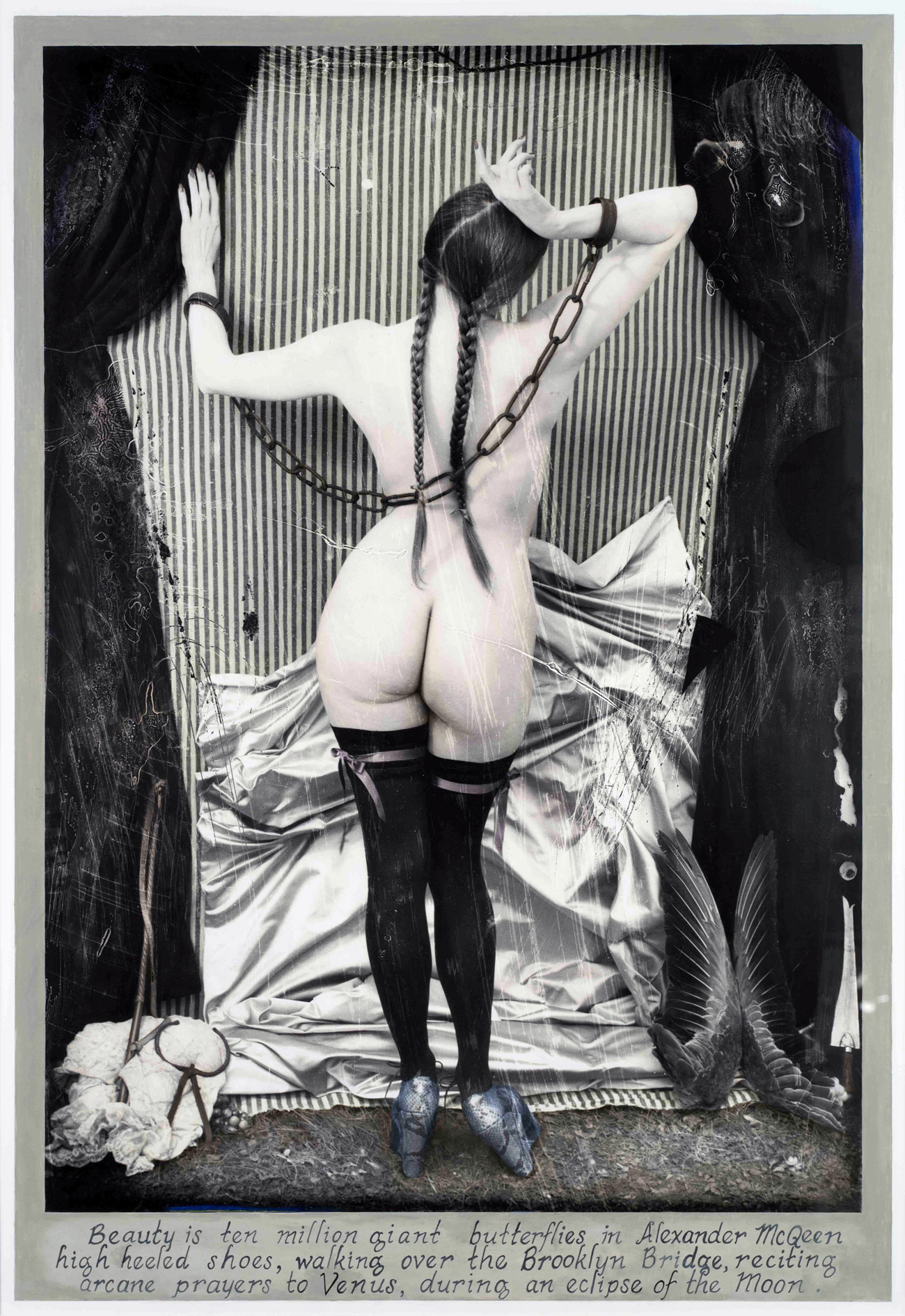
Joel-Peter Witkin (American, b. 1939)
The Paris Triad: Venus in Chains, Paris
2010
Tirage argentique
123 x 95cm
Courtesy Baudoin Lebon and William Mora Galleries
© Joel-Peter Witkin

Joel-Peter Witkin (American, b. 1939)
The Green Princess, Paris
2011
Tirage argentique
82 x 73cm
Courtesy Baudoin Lebon and William Mora Galleries
© Joel-Peter Witkin
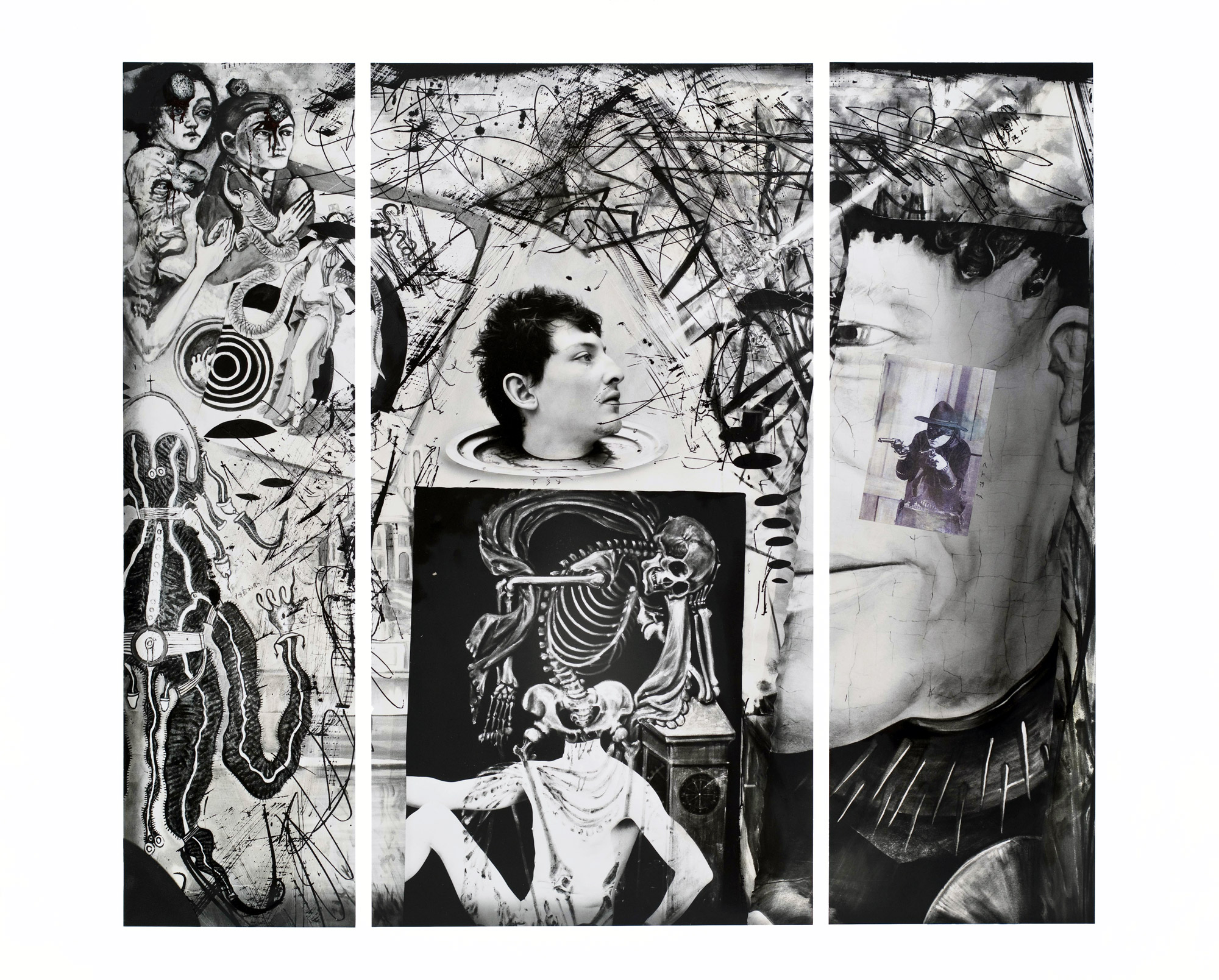
Joel-Peter Witkin (American, b. 1939)
A History Of The White World
2011
Tirage argentique
67 x 76cm
Courtesy Baudoin Lebon and William Mora Galleries
© Joel-Peter Witkin
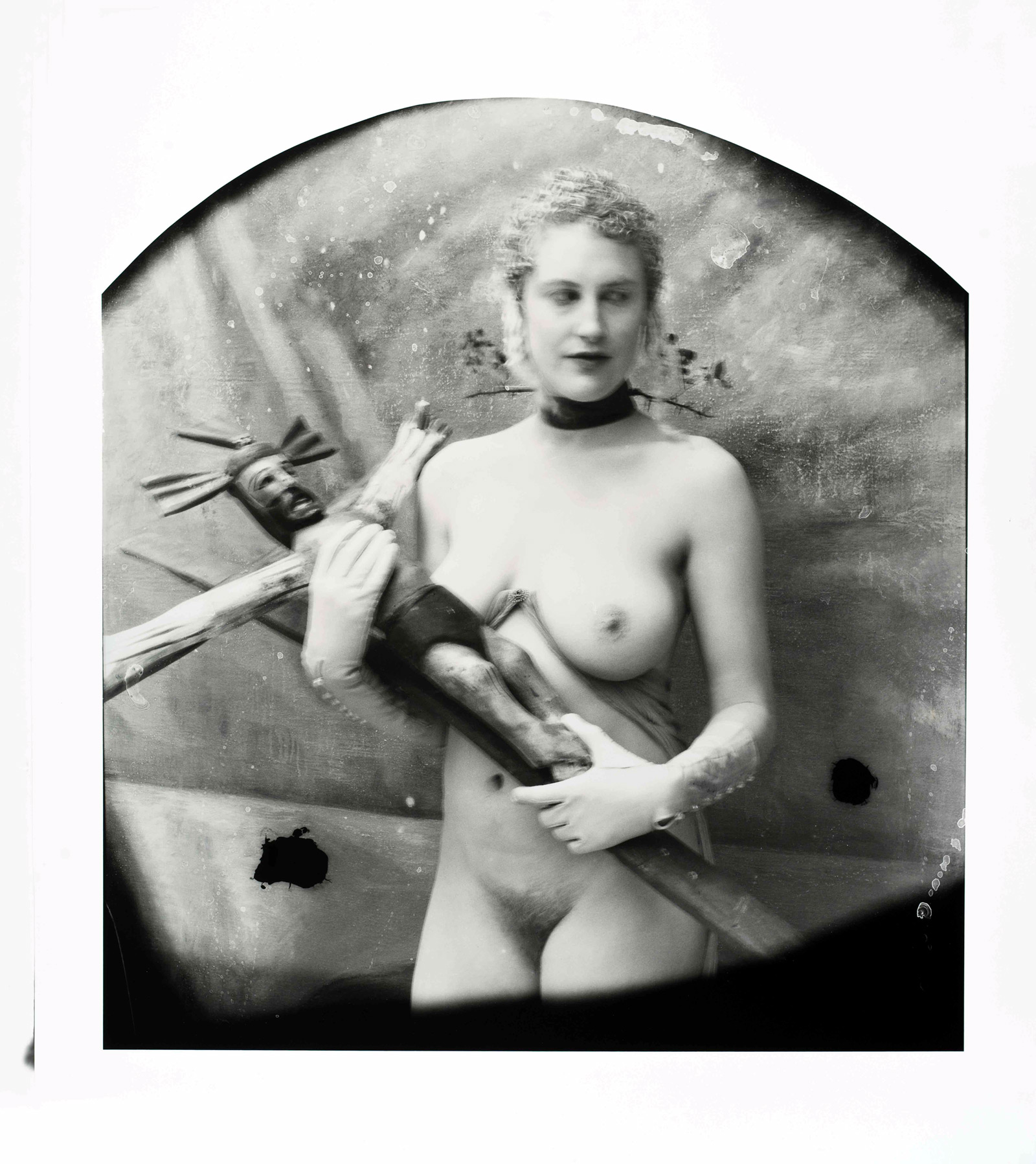
Joel-Peter Witkin (American, b. 1939)
Presenter Of The End Of Time Award
2013
Tirage argentique
113 x 103cm
Courtesy Baudoin Lebon and William Mora Galleries
© Joel-Peter Witkin

Joel-Peter Witkin (American, b. 1939)
Imperfect Thirst
2016
Tirage argentique
67 x 54cm
Courtesy Baudoin Lebon and William Mora Galleries
© Joel-Peter Witkin
The symbolism of food and drink [in European painting 1400-1800] has roots in classical literature. Fruits, nuts, herbs, and grain are discussed in treatises on farming and natural history, and appear widely in mythology as attributes of gods and goddesses – grapes for Bacchus, god of wine; a sheaf of corn or wheat for Ceres, the grain goddess – and in metaphors for virtue and vice. Early religious writings such as the Bible and the Apocrypha, and Christian texts of the Middle Ages and Renaissance are also rich in this imagery, often borrowing from pagan symbolism and occasionally supplanting it. The pomegranate, for example, is depicted in mythological paintings as an attribute of Venus and a symbol of desire, fertility – because of its many seeds – and marriage, but appears as frequently in sacred images of the Virgin and Child. There are several legends of the pomegranate’s creation, contributing to its symbolic potency; according to one, it grew out of blood streaming from the wounded genitals of the lustful Acdestis. The pomegranate is perhaps best known, however, for its fateful role in the myth of Proserpina. Ovid tells in the Metamorphoses of Proserpina’s abduction by Pluto, ruler of the Underworld. Proserpina’s mother, Ceres, secured her release from Hades, but, before leaving Proserpina, ate the seeds from a pomegranate and, because she had consumed food in the Underworld, was compelled to spend part of every year there. Proserpina’s cyclical descent to Hades and rise to Earth was believed to bring about the changing of seasons, and the pomegranate was thus seen as a symbol of resurrection and immortality.
Jennifer Meagher. “Food and Drink in European Painting, 1400-1800,” on The Met website [Online] Cited 06/08/2017
William Mora Galleries
60 Tanner Street, Richmond
Victoria, Australia 3121
Opening hours:
Wednesday – Friday 10am – 4pm




 Art Blart _ art and cultural memory archive
You must be logged in to post a comment.