Film: ‘All This Can Happen’

February 2014


Siobhan Davies and David Hinton
Trailer from All This Can Happen
2012


“The highest and the lowest, the most serious and the most hilarious things are to the walker equally beloved, beautiful and valuable…”


Dislocation
Displacement
Discontinuity
Death
Dance
Despair
Documentary

Scene
Seen
Single
Multiple
Surreal
Mundane
Storyline

Sound
Subject
Space

Encounters
Engagements
Negotiations

Time
Memory
Location
Voice
Touch

Walking
Flaneur

Body
Soul

Life itself!


Dr
Marcus Bunyan


Created by Siobhan Davies and filmmaker David Hinton in 2012, All This Can Happen is a film constructed entirely from archive photographs and footage from the earliest days of cinema.

Based on Robert Walser’s novella The Walk (1917), the film follows the footsteps of the protagonist as series of small adventures and chance encounters take the walker from idiosyncratic observations of ordinary events towards a deeper pondering on the comedy, heartbreak and ceaseless variety of life. A flickering dance of intriguing imagery brings to light the possibilities of ordinary movements from the everyday which appear, evolve and freeze before your eyes. Juxtapositions, different speeds and split frame techniques convey the walker’s state of mind as he encounters a world of hilarity, despair and ceaseless variety.


“To walk in the city is to experience the disjuncture of partial vision/partial consciousness. The narrativity of this walking is belied by a simultaneity we know and yet cannot experience. As we turn a corner, our object disappears around the next corner. The sides of the street conspire against us; each attention suppresses a field of possibilities. The discourse of the city is a syncretic discourse, political in its untranslatability. Hence the language of the state elides. Unable to speak all the city’s languages, unable to speak all at once, the state’s language become monumental, the silence of headquarters, the silence of the bank. In this transcendent and anonymous silence is the miming of corporate relations. Between the night workers and the day workers lies the interface of light; in the rotating shift, the disembodiment of lived time. The walkers of the city travel at different speeds, their steps like handwriting of a personal mobility. In the milling of the crowd is the choking of class relations, the interruption of speed, and the machine. Hence the barbarism of police on horses, the sudden terror of the risen animal.”


Stewart, Susan. On Longing: Narratives of the Miniature, the Gigantic, the Souvenir, the Collection. Durham: Duke University Press, 1993, p. 2. Prologue.
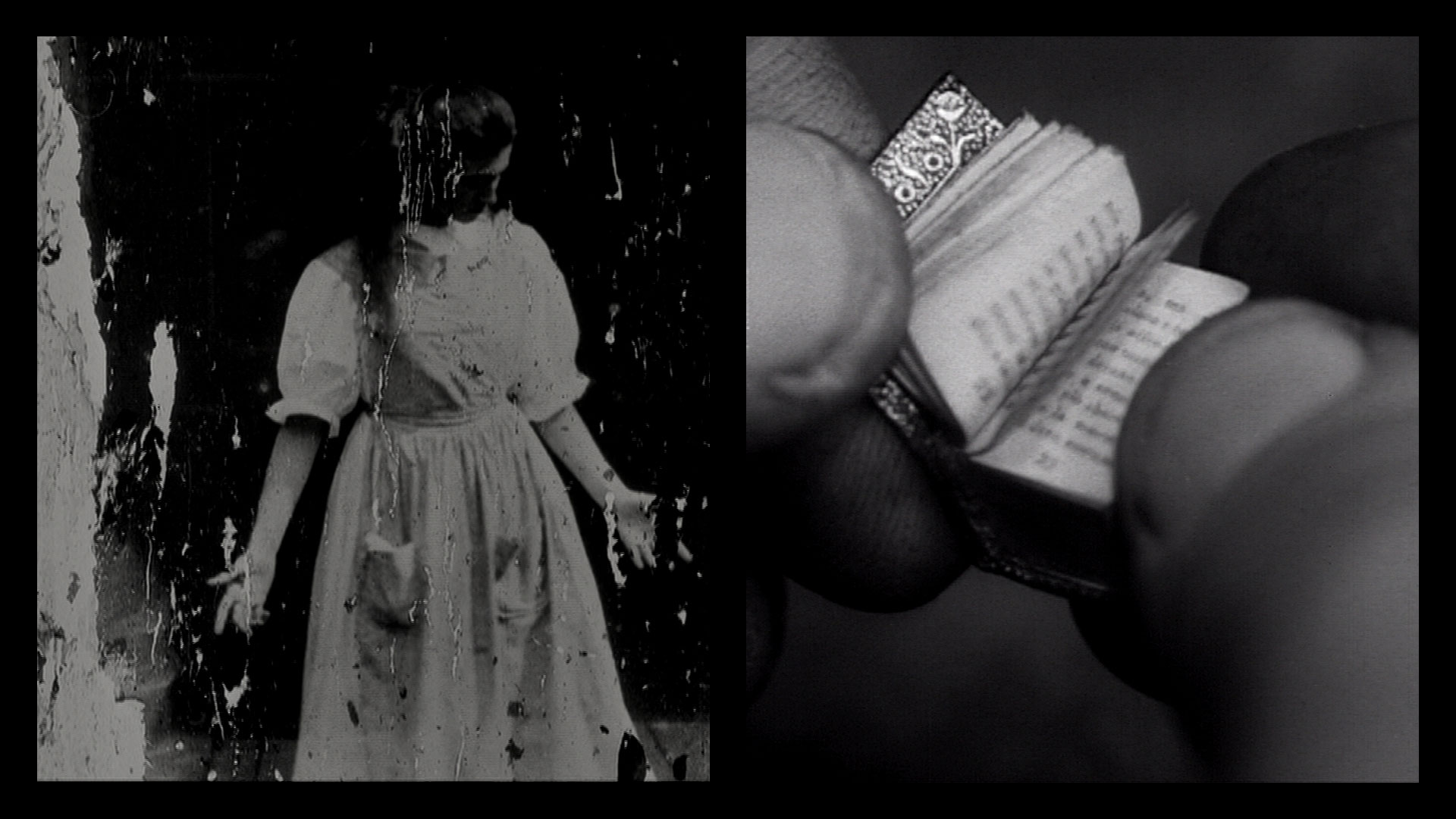


Siobhan Davies and David Hinton. 'Alice in Wonderland' 2012


Siobhan Davies and David Hinton
Alice in Wonderland
2012
Still from All This Can Happen
Courtesy of BFI National Archive
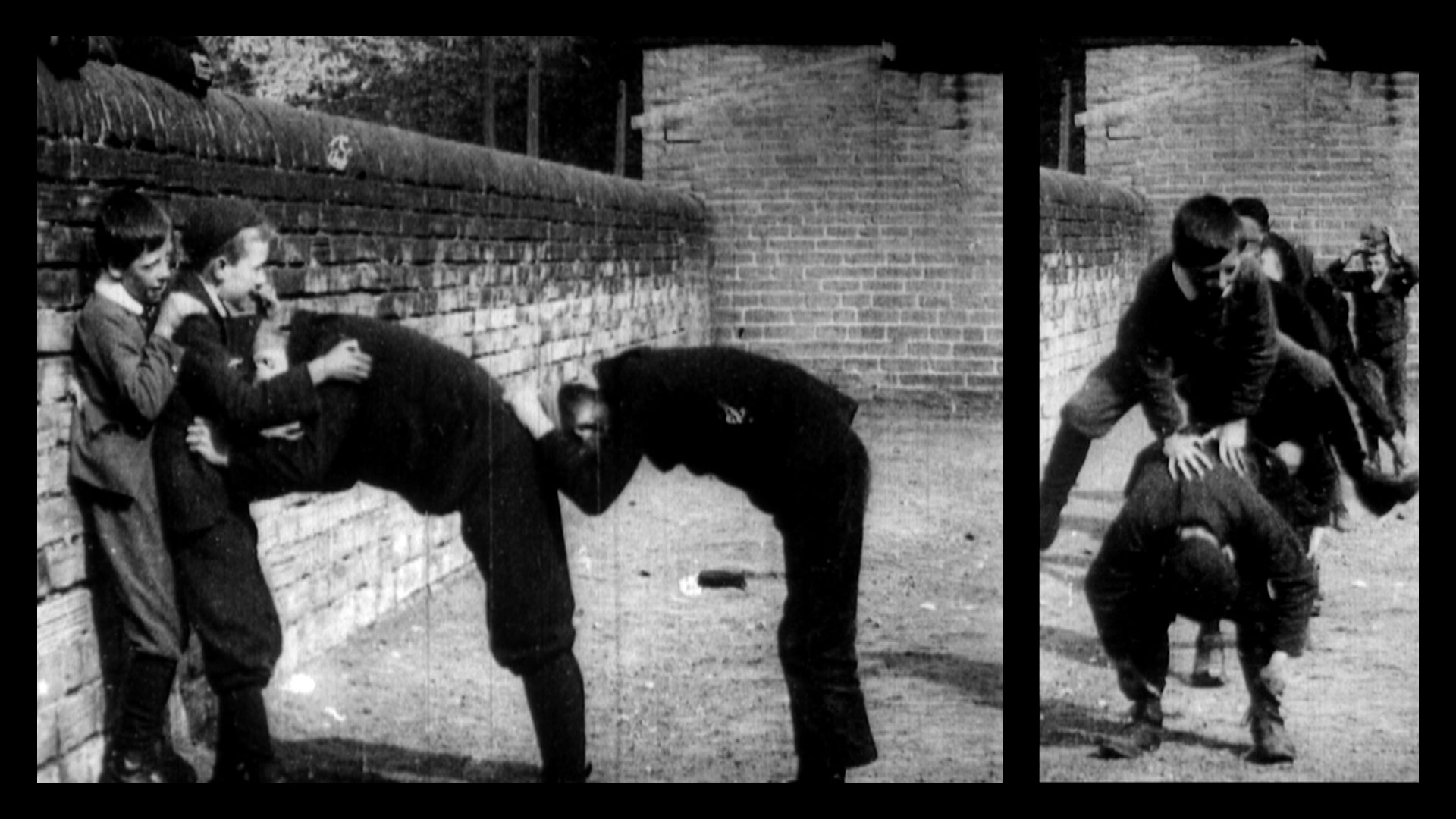
 

Siobhan Davies and David Hinton. 'Leap Frog' 2012


Siobhan Davies and David Hinton
Leap Frog
2012
Still from All This Can Happen
Courtesy of BFI National Archive
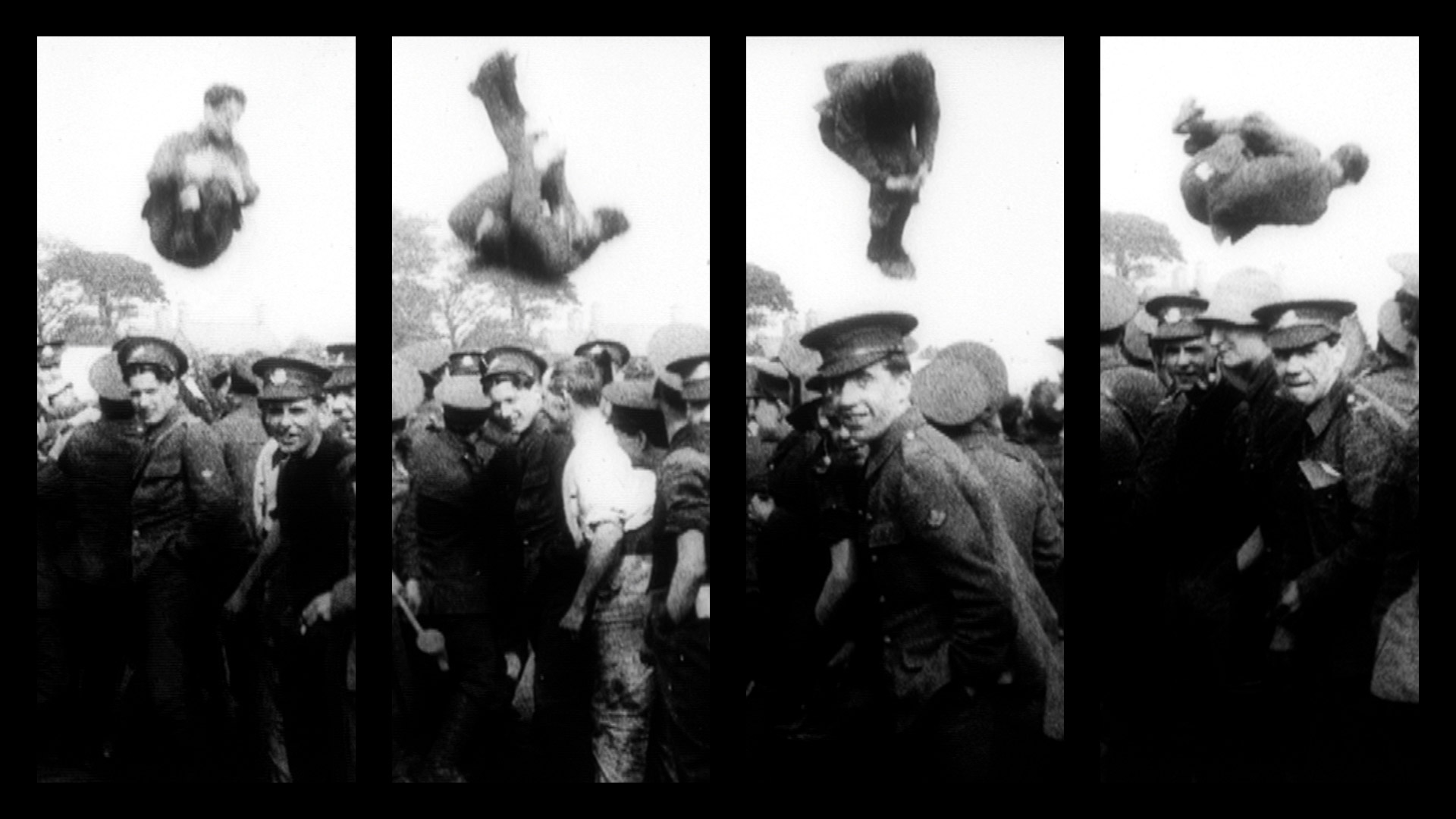
 

Siobhan Davies and David Hinton. 'Cheshire Territorials' 2012


Siobhan Davies and David Hinton
Cheshire Territorials
2012
Still from All This Can Happen
Courtesy of BFI National Archive


Siobhan Davies and David Hinton. 'Otto the Giant' 2012


Siobhan Davies and David Hinton
Otto the Giant
2012
Still from All This Can Happen
Courtesy of British Pathé


All This Can Happen, a 50-minute film by David Hinton and choreographer Siobhan Davies, opens with images of men who cannot walk. One lies immobile in a hospital bed, his head trembling, eyes vacant with torment. Another, also institutionalised, tries to walk but fails. He falls, scrambles and falls again, his whole body stiff with malfunction.

All this did happen. Every frame of this remarkable film comes from old, mostly black and white archive footage, complete with scratches and fingerprints. It is neither documentary nor constructed reality, but rather a wholly unexpected film adaptation of a short story by Swiss writer Robert Walser (1878-1956), about a man going for a walk.

The story, to which those opening images serve as a prologue, recounts the sights, sounds, encounters and musings of a day’s meandering: children playing in a school, a visit to the tax office, a display of women’s hats, a stroll through a forest, an argument with a tailor. Lovingly voiced by John Heffernan, the narration treats each moment, each thought and perception, with equal consideration, whether it is a gripe about automobiles, a memory of unbearable anguish, the sound of sublime music, or a chat with a dog. “The highest and the lowest, the most serious and the most hilarious things,” he explains, “are to the walker equally beloved, beautiful and valuable…

… the narration establishes a supple continuity, yet though the imagery follows the story devotedly, it has no continuity. It leaps between locations, splices scenes, switches subjects, and roams freely between poetic and literal modes, between the fantastic, the scientific, the surreal and the mundane. It seems able to let the whole world in, and still stay true to a singular storyline.

The imagery is discontinuous in other senses too. The screen is often split into multiple frames so that we notice how highly composed the film is. The frames themselves often freeze fleetingly, arresting the flow of time. Such stops literally give us pause; they let us take a moment. In fact, the whole film could be seen as the encounter between continuity – the story, the voice, time itself – and composition, or indeed choreography: the framing of action, the placement of sound, the arrangement of subjects and space.

But the reason to watch this film is not because it is artful and thoughtful, though it is that. It is because it restores us to our senses, because it touches – gently – both body and soul. To walk, it suggests, is to be in the world. A world that is physical, full of texture and sound and sensation; that is abstract, a matrix of space and time; that is imaginary, teeming with fantasies and terrors, desires, hopes and regrets; that is social, marked by encounters, engagements, negotiations; a world that is human. As a walk of life, All This Can Happen is, quite naturally, also shadowed by death, by not-walking, by not moving in space and time. “Where would I be,” asks the walker, “if I was not here? Here, I have everything. And elsewhere, I would have nothing.” All this it finds equally beloved, beautiful and valuable.

Sanjoy Roy. Excerpt of “Review of All This Can Happen, by Siobhan Davies and David Hinton” on the Aesthetica Magazine Blog website 5 November 2013 [Online] Cited 17/10/2022


Siobhan Davies and David Hinton. 'Miniature Writer' 2012


Siobhan Davies and David Hinton
Miniature Writer
2012
Still from All This Can Happen
Courtesy of British Pathé


Siobhan Davies and David Hinton. 'Hints and Hobbies' 2012


Siobhan Davies and David Hinton
Hints and Hobbies
2012
Still from All This Can Happen
Courtesy of AP Archive  British Movietone
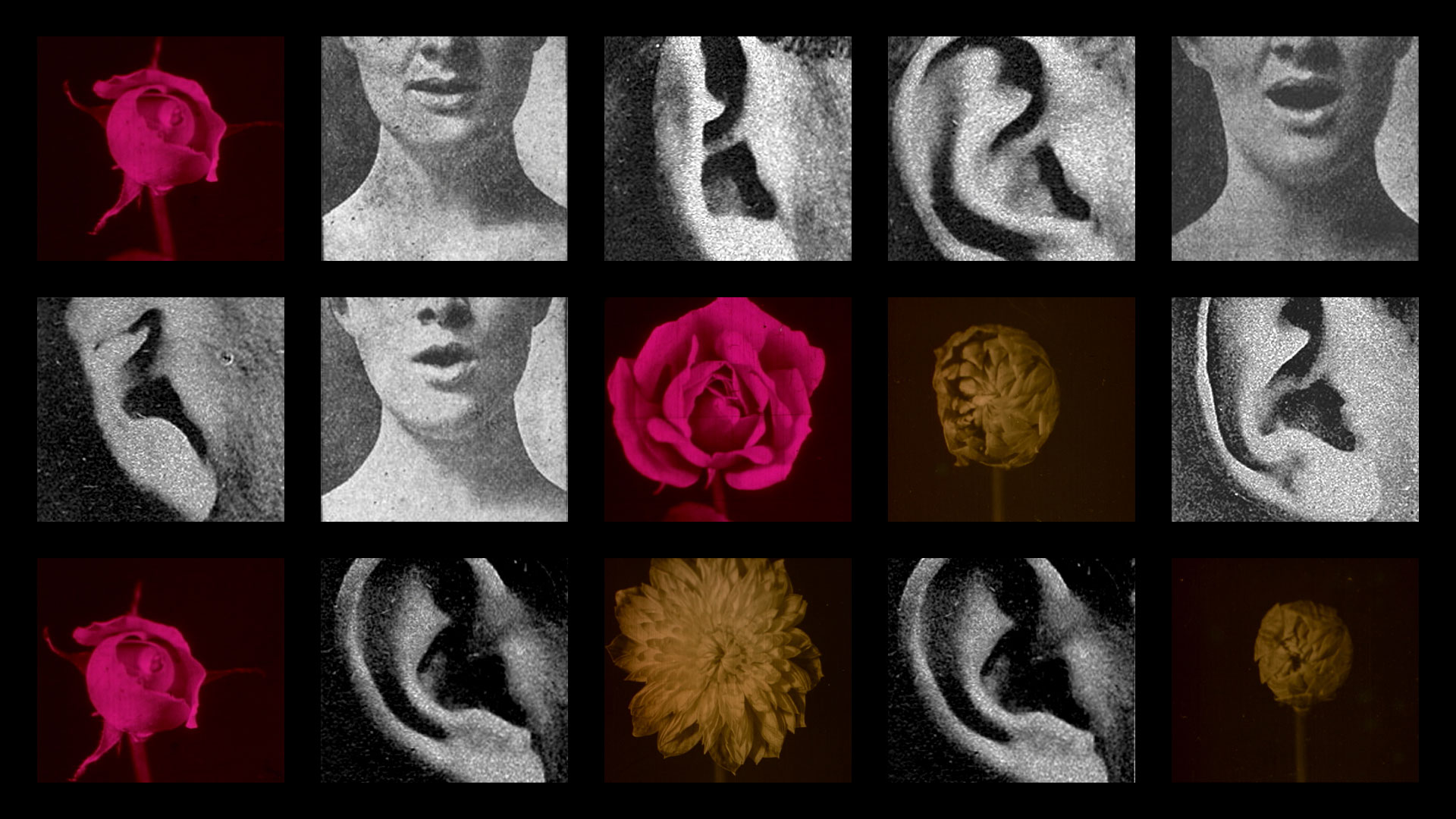
 

Siobhan Davies and David Hinton. 'Ears' and 'Birth of a Flower' 2012


Siobhan Davies and David Hinton
Ears and Birth of a Flower
2012
Still from All This Can Happen
Courtesy of Wellcome Library, London and AP Archive British Movietone


Siobhan Davies and David Hinton. 'Banff Scotland' and 'I Saw This' 2012


Siobhan Davies and David Hinton
Banff Scotland and I Saw This
2012
Still from All This Can Happen
Courtesy of Library of Congress, Prints & Photographs Division and Yorkshire Film Archive


Siobhan Davies Dance website

LIKE ART BLART ON FACEBOOK

Back to top

Notes from the lecture ‘Anti-Entropy: A natural History of the Studio’ by William Kentridge at the Australian Centre for the Moving Image (ACMI), Melbourne

Date: 8th March 2012


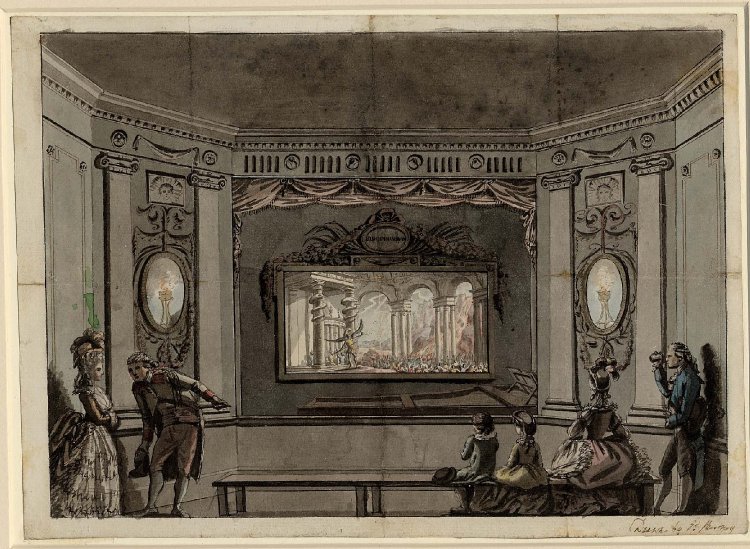
Edward Francis Burney (English, 1760-1848) 'A view of Philip James de Loutherbourg's Eidophusikon' c. 1782


Edward Francis Burney (English, 1760-1848)
A view of Philip James de Loutherbourg’s Eidophusikon
c. 1782
At left a man bowing to a woman, to right figures seated on a bench in the foreground, watching a scene titled ‘Satan Arraying his Troops on the Banks of a Fiery Lake, with the Raising of the Palace of Pandemonium’ during a performance of Milton’s “Paradise Lost” on a stage labelled EIDOPHUSIKON in a cartouche above
Pen and grey ink and grey wash, with watercolour
© The Trustees of the British Museum


A munificence of Minor White and the revelation of the object through contemplation could be found in the lecture by William Kentridge. As an artist you must keep repeating and constructively playing and something else, some new idea, some new way of looking at the world may emerge. As a glimpse into the working methodology of one of the worlds great artists the lecture was fascinating stuff!

Images in this posting are used under fair use for commentary and illustration of the lecture notes. No copyright breach is intended. © All rights remain with the copyright holder. My additions to the text can be found in [ ] brackets.


On self-doubt as an artist

“At four in the morning there are no lack of branches for the crow of doubt to land upon.”


On Memory

“Memory – both memory and the forgetting of memory. For example, the building of monuments [monuments to the Holocaust, to wars] takes the responsibility of remembering away.”


On Play

“We absolutely want to make sense of the world in that way. That’s one of the principles of play – that however much you distort and break things apart, in the end we will try to reconstruct them in some way to make sense of the world. I think that every child does it. It’s fundamental.”


On Looking

“It’s the capacity for recognition that makes a difference between order and disorder in looking at visual images. And it’s the vocabulary of recognisable images that we have inside us, which is completely vital to what it is to see. I don’t really buy the idea that order and disorder are the same.”


William Kentridge


First History of the Cinema

Performances of Transformation

~ Cinema
~ Shadow dancing
~ Eidophusikon (The Eidophusikon was a piece of art, no longer extant, created by 18th century English painter Philip James de Loutherbourg. It opened in Leicester Square in February 1781.Described by the media of his day as “Moving Pictures, representing Phenomena of Nature,” the Eidophusikon can be considered an early form of movie making. The effect was achieved by mirrors and pulleys.
~ Quick change artist
~ Stage magicians


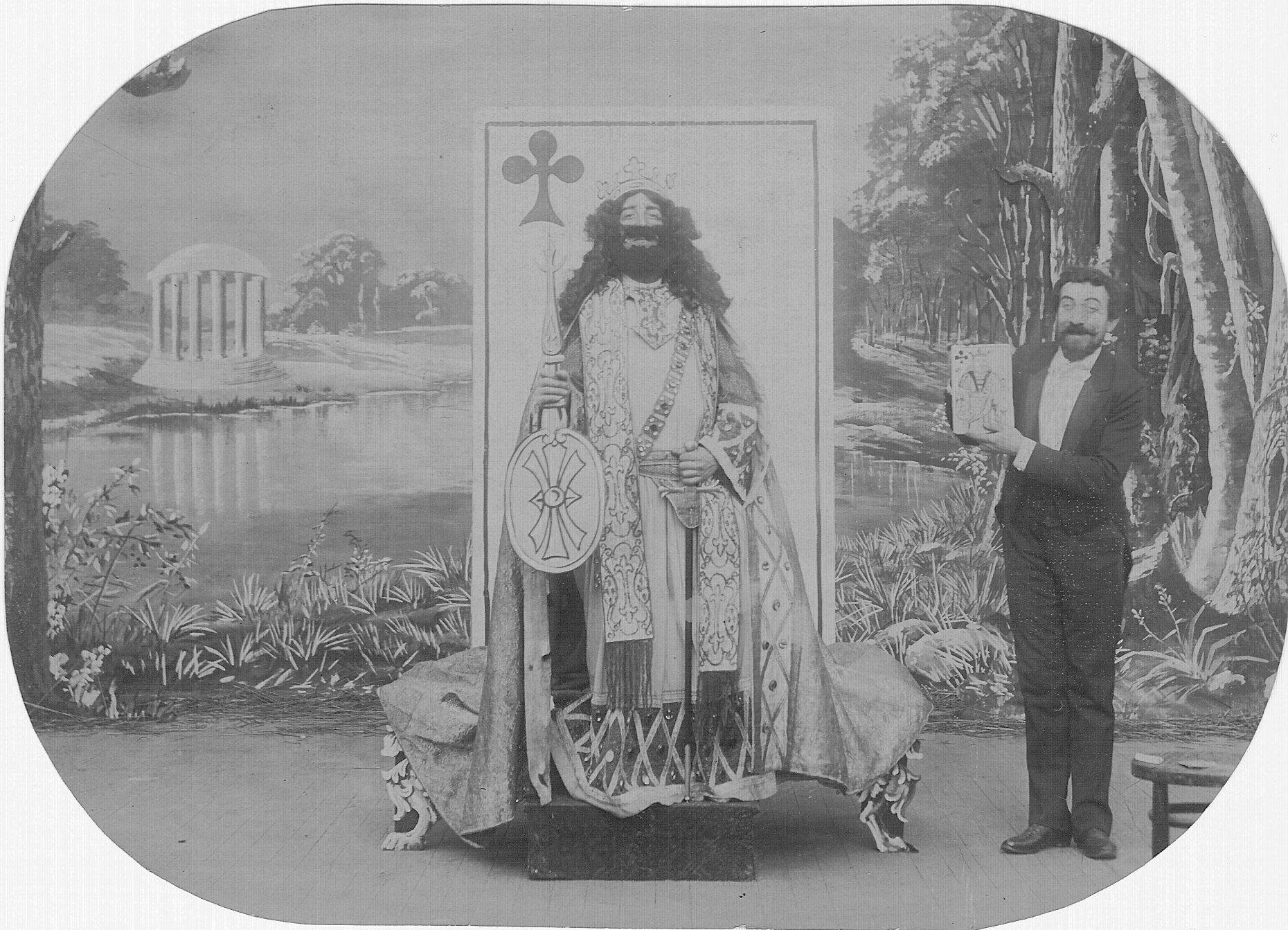
All work against the time of the audience e.g. the quick change artist may take 3 seconds, the sunset in a Georges Méliès film may take 2 minutes instead of 2 hours. The technology / scrims / screens happen at different speeds but the different times become one in the finished film. There is an elision of time: appearances / disappearances. Stopping time [changing a scene, changing clothing etc…], starting time again.


Méliès starring in 'The Living Playing Cards' 1904


George Méliès starring in The Living Playing Cards (1904)


Second History of the Cinema

The sedimented gaze of the early camera. The slow chemicals meant that the object had to wait under the camera’s gaze for minutes. People were held in place by stiff neck braces to capture the trace of their likeness. Congealed time.

On the other hand, in cinema, a tear forward becomes a repair in reverse.

By rolling the film in reverse there is a REVERSAL of time, a REMAKING of the world – the power to be more than you are – by reversing to perfection. You throw a book or smash a plate: in reverse they become perfect again, a utopian world.

YOU MUST GIVE YOURSELF OVER TO PLAY!

Giving yourself over to what the medium suggests, you follow the metaphor back to the surface. Following the activity [of play] back to its root. Projecting forwards, projecting backwards. There is endless rehearsal, constant repetition, then discovering the nature of the final shot or drawing to be made. New ideas get thrown around: leaning into the experience, the experiment, the repetition, the rehearsal.

Four elements

1/ something to be seen

2/ the utopian perfection: perfectibility

3/ the grammar of learning that action

4/ Greater ideas, further ideas and thoughts; potentiality and its LOSS
Further meanings arise


How is this achieved?
Rehearsal, repetition

New thoughts will arise being led by the body in the studio NOT in the mind. Not conceptual but the feeling of the body walking in the studio.

The physical action as the starting point not the concept.

Six different degrees of tension

1/ Least tension in the body possible: slumped

2/ Relaxed

3/ Neutral

4/ Purpose: an impulse to make things happen – desire

5/ Insistence: listen to me, this is very important

6/ Manic: Noh theatre with its rictus of the body


What the body suggests is the construction of an image.

There are different degrees of tension in these performances. What do they suggest? This reverse osmosis from one state to another?


Third History of Cinema

Technologies of Looking

Pre-cinematic devices – a process of seeing in the world, of looking. Produces a reconfigured seeing, the invisible made [moving] visible.

Stereoscope

3D world made into a 2D image put back into 3D by our brains. The nature of binocularity, of depth perception. We see an illusion of depth, a construction by the eyes. Our brain is a muscle combining the two images. Depth of Field (DOF): focusing at different distances, we are inside the field of the image. Peripheral vision is blanked off; we look through a magnifying glass. A machine for demonstrating seeing.

Text from the Wikipedia website


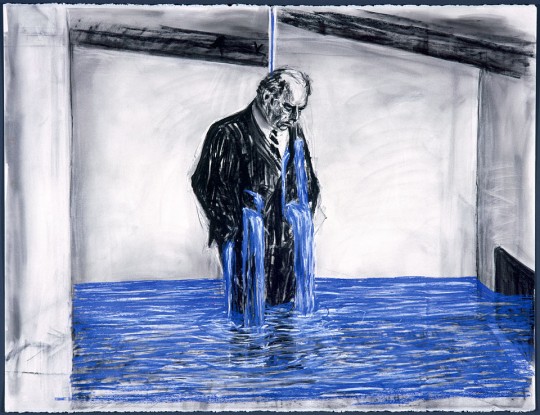
William Kentridge (South African, b. 1955) Drawing for the film 'Stereoscope' 1998-1999


William Kentridge (South African, b. 1955)
Drawing for the film Stereoscope
1998-1999
Charcoal, pastel, and coloured pencil on paper
The Museum of Modern Art, New York
© 2008 William Kentridge


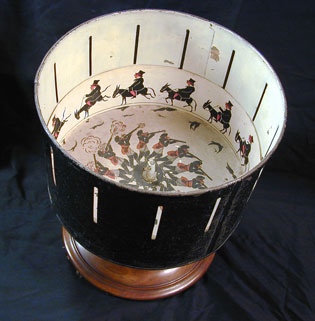
Zoetrope by William George Horner, 1834


Zoetrope by William George Horner, 1834


Zoetrope

An illusion of movement not depth. Double revelation:

A/ the brain constructed illusion of movement
B/ Caught in time [as the action goes around and around] and wanting to get out of it!

THIS IS CRITICAL – THE ACTION OF REPETITION IS IMPORTANT!

In the reordering, in the crack, something else may emerge, some new idea may eventuate. The tearing of time. 

[Marcus: the cleft in time]

Text from the Wikipedia website

The Etching Press

There are erotics built into the language of the etching, but there is also a logic built into the machine used for etching. The Proof print, arriving at the first state. Going on the journey from artist as maker to artist as viewer through the mechanism of the etching press.


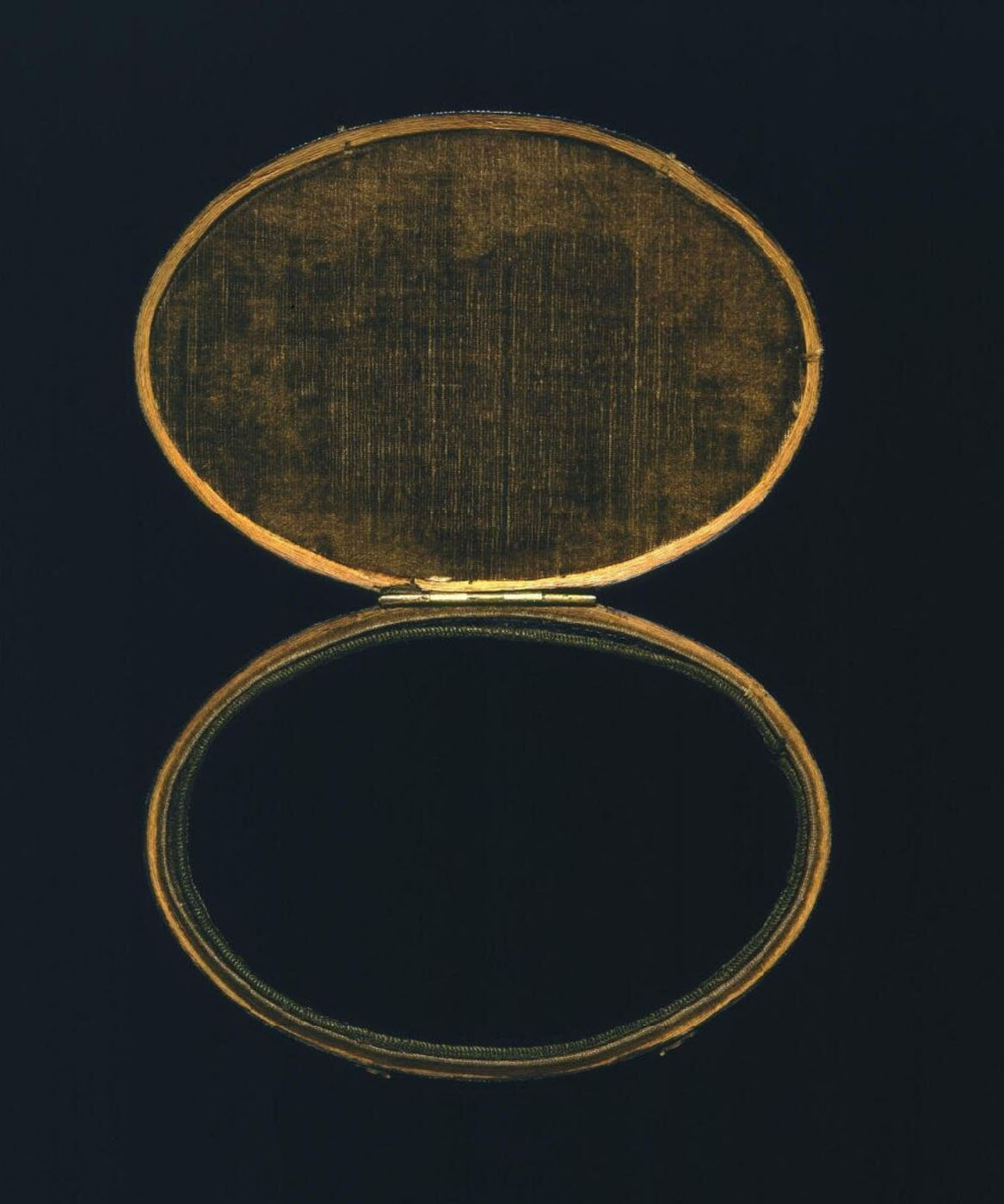
Artist/Maker unknown. 'Claude Glass' manufactured in England, 18th century


Artist / Maker unknown
Claude Glass, manufactured in England
18th century
V & A


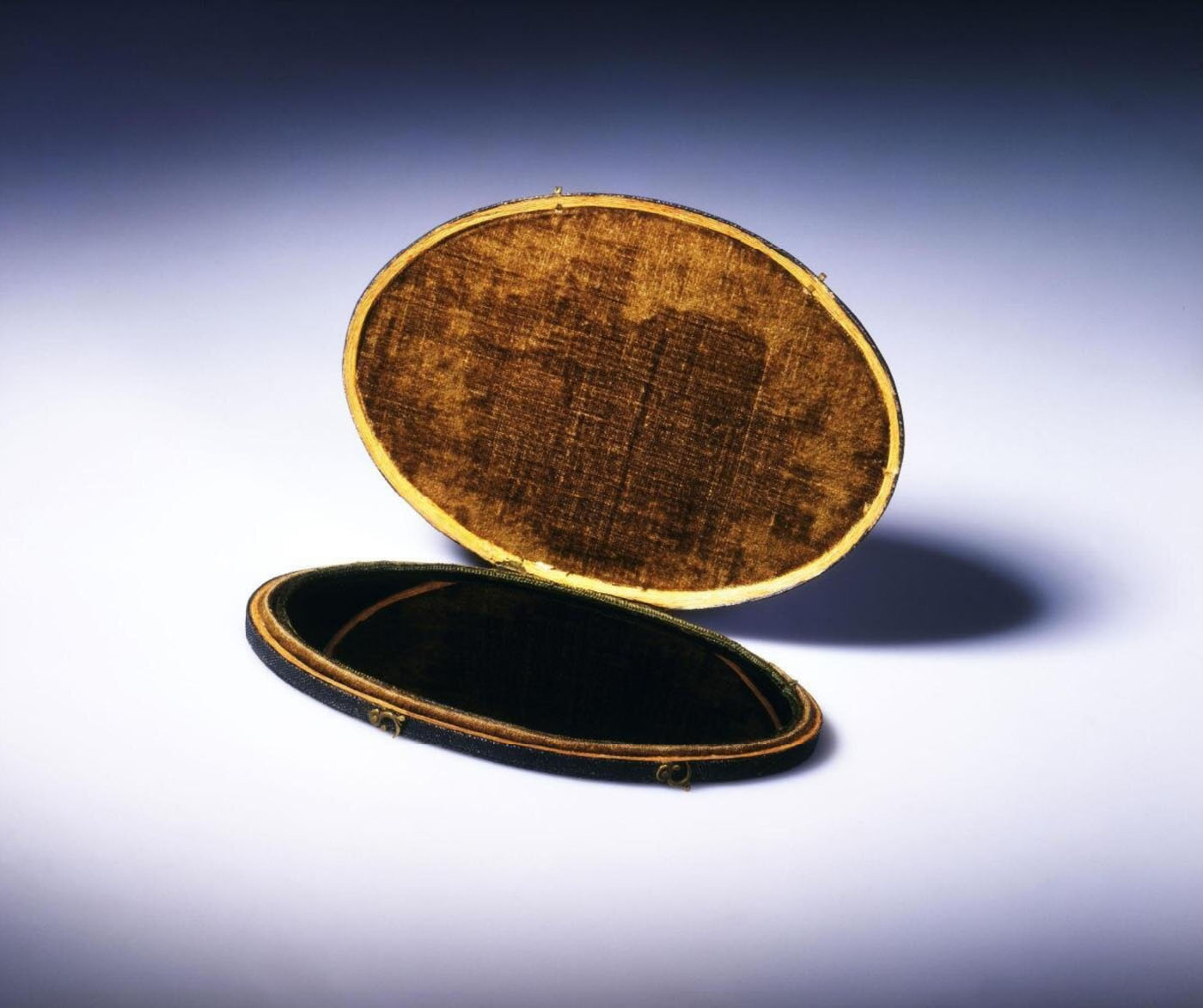
Claude Glass

“A Claude glass (or black mirror) is a small mirror, slightly convex in shape, with its surface tinted a dark colour. Bound up like a pocket-book or in a carrying case, black mirrors were used by artists, travellers and connoisseurs of landscape and landscape painting. Black Mirrors have the effect of abstracting the subject reflected in it from its surroundings, reducing and simplifying the colour and tonal range of scenes and scenery to give them a painterly quality).”

Text from the Wikipedia website


“The Claude glass was standard equipment for Picturesque tourists, producing instant tonal images that supposedly resembled works by Claude. “The person using it ought always to turn his back to the object that he views,” Thomas West explained in his Guide to the Lakes. “It should be suspended by the upper part of the case… holding it a little to the right or the left (as the position of the parts to be viewed require) and the face screened from the sun.”

Object Type

A Claude Glass – essentially a small, treated mirror contained in a box – is a portable drawing and painting aid that was widely used in the later 18th century by amateur artists on sketching tours. The reflections in it of surrounding scenery were supposed to resemble some of the characteristics of Italian landscapes by the famous 17th-century painter and sketcher Claude Lorrain, hence the name.

Materials & Use

The ‘glass’ consists of a slightly convex blackened mirror, which was carried in the hand and held up to the eye. The image thus seen was the scenery behind – rather than in front of – the user. The mirror’s convexity reduced extensive views to the dimensions of a small drawing. The use of a blackened rather than an ordinary silvered mirror resulted in a somewhat weakened reflection, which stressed the prominent features in the landscape at the expense of detail. It also lowered the colour key. A larger version of this device is said on occasion to have been fixed to the windows of horse-drawn carriages in order to reflect the passing scenery.”

From the V & A website


Artist/Maker unknown. 'Claude Glass' manufactured in England, 18th century


Artist / Maker unknown
Claude Glass, manufactured in England
18th century
V & A


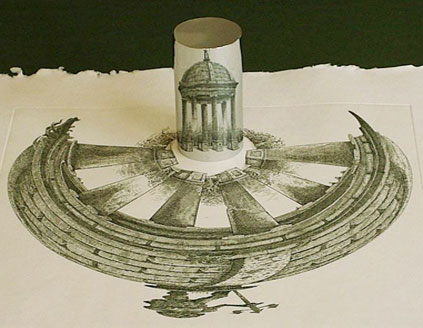
Anamorphic Mirror

A counter intuitive way of drawing; turning 2D into 3D. The landscape has no edge, like a carrousel.

A LINK TO THE ENDLESS CIRCLING AND WALKING AROUND THE STUDIO!


Anamorphic drawing and cone shaped mirror


Anamorphic drawing and cone shaped mirror


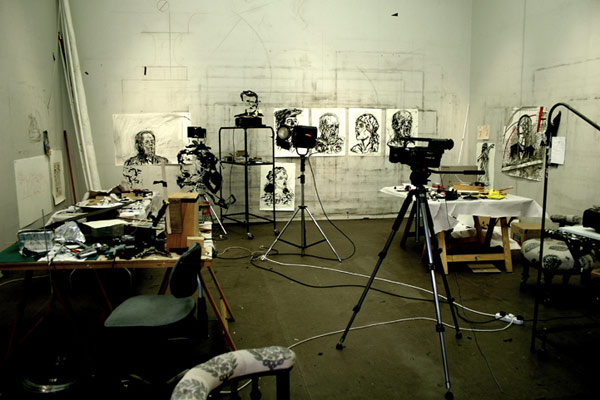
William Kentridge studio


William Kentridge studio
Photo by John Hodgkiss
Art Tatler


The Studio

In the studio you gather the pieces together like a kind of Zoetrope. You may arrive at a new idea, a new starting point. Repetition, going around and around your head (at four in the morning!). There must be a truce between the artist as maker and the artist as viewer. As in earlier times, you walk the cloisters, you promenade.

You find the walk that is the prehistory of the drawing, that is the prehistory to the work.

A multiple, fragmented, layered performance of walking. You are trying to find the grammar of the studio – the necessary stupidity. Making a space for uncertainty. The conscious suppression of rationality. At some point, emerging, escaping the Zoetrope, from the physical making, something will be revealed. The spaces open up by the stupidities. Something new emerges.

THIS IS THE SPACE OF THE STUDIO.


Australian Centre for the Moving Image (ACMI)
Federation Square, Melbourne, Australia

William Kentridge: Five Themes

Thursday 8 March – Sunday 27 May 2012
Exhibition open daily 10am – 6pm

ACMI website

LIKE ART BLART ON FACEBOOK

Back to top