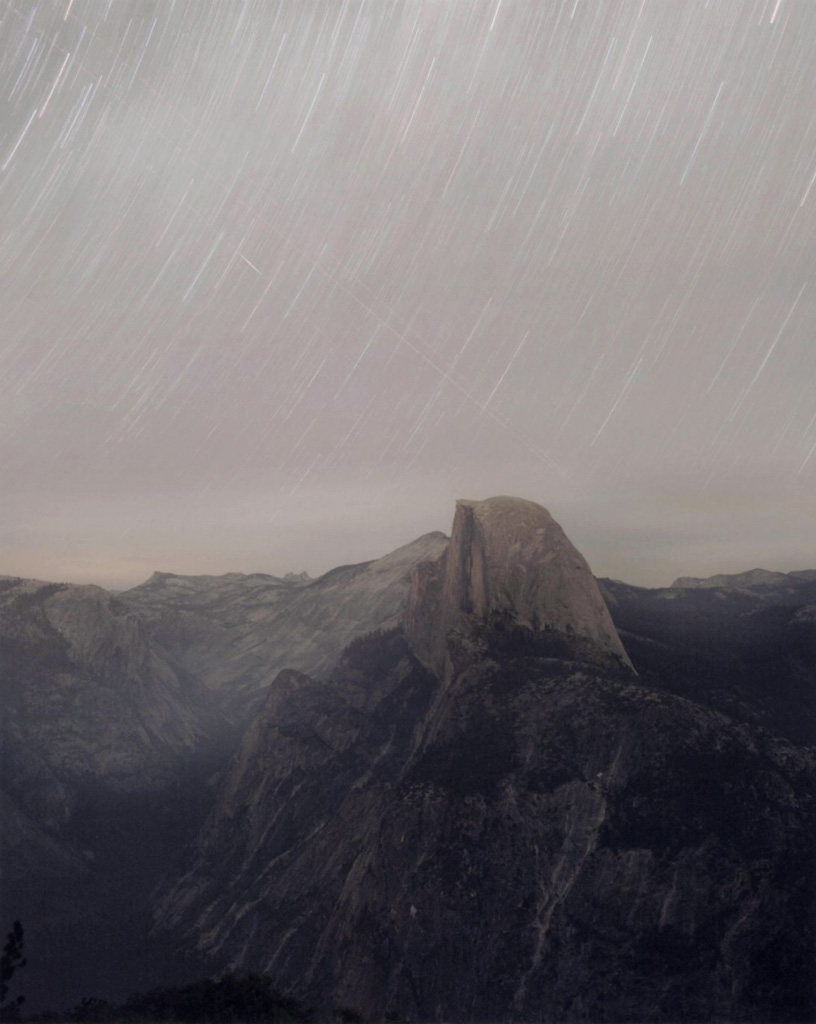
Review: ‘Jeff Wall Photographs’ at The Ian Potter Centre: NGVA, National Gallery of Victoria, Melbourne

Exhibition dates: 30th November 2012 – 17th March 2013


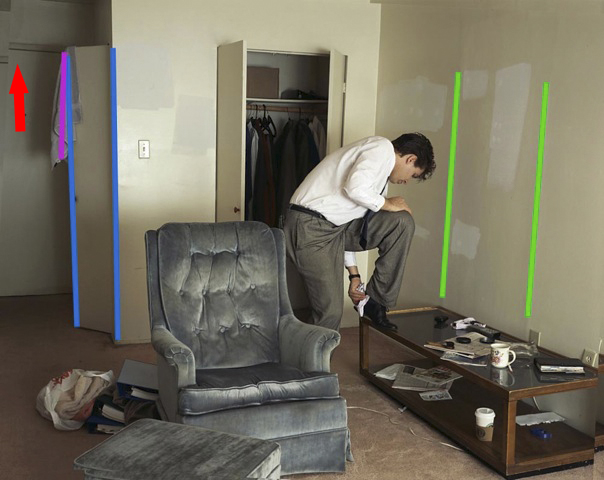
Jeff Wall. 'A view from an apartment' 2004-2005


Jeff Wall (Canadian, b. 1946)
A view from an apartment
2004-2005
Transparency in light box 1/2
167 x 244cm
Tate, London Purchased with assistance from the American Fund for the Tate Gallery and Tate Members, 2006
© Jeff Wall


“My work is a reconstruction and reconstruction is a philosophical activity. If I can create a drama that has philosophical meaning, that’s fine, or sometimes, it is not from meaning but a reconstruction of a feeling. It is best to capture in a photograph a feeling, an emotion, a look, a memory, a perception or a relationship.”


Jeff Wall


Stressed at the seams

The excruciating “conversation” between Jeff Wall and Thomas Demand in The Great Hall at the National Gallery of Victoria on November 28th 2012 seemed to run on interminably, yielding a couple of tiny gems but also a lot of leaden debate. I had higher hopes of the solo exhibition by Jeff Wall at NGV Australia. In some ways I was not disappointed, in other ways Wall’s calculating fields of existence certainly didn’t move my soul with any great conviction.

Initially, I was impressed perhaps even a little overwhelmed by the spacious hang, the placement of the mainly large, light box illuminated photographs and non light box photographs dotted amongst the galleries emphasising the inter-relationship between the images. The work in the exhibition includes large set-piece constructions, outdoor photographs of found environments, small, intimate conceptual works full of angles and colour and more recent ink jet print work. These “installations that happen to have photos in them” (Wall’s description) reflect the gigantism prevalent in much contemporary photography. In these large mise-en-scène you cannot fail to be impressed by the control the artist displays in the formal nature of their construction, the still-life tableaux representing the artist’s intention in a rather cold and remote way. As can be seen from the structural analysis of Polishing (1988) by Dr James McArdle and J.S.B. below, Wall is very clever in how he structures his shape-shifting photographs, how he seduces the eye into believing that everything is plausible within the formalist pictorial plane. But as McArdle observes,

“[His] formalism remains empty of connection to the subject, Wall denying any narrative representation… His distancing of the subject, his leaning on typecast (such as in the chicken plucking image) can be summed up in his method: staging, directing, controlling that sucks the real life out of the imagery and re-inflates it with bombast.”1

From his early, prissy double self-portrait to his laughing at, not with, the menial labourers in Dressing poultry (2007, below), the set-piece work does seem full of bombast (possessing a pompous and grandiloquent language; an obsolete material used for padding), but perhaps bombast is related to that standard postmodern language, irony. It certainly is a language where Wall denies any inherent narrative, where there is a “dis-identification of the figures in the pictures which becomes part of the aesthetic of the picture.”2 Wall says he is just depicting the figures, that they just become an effect of depiction (or representation, in other words). In this way Wall conditions our awareness of [this particular] space due only in part to their scale (McArdle). This grandiloquence, coupled with the luminance of the light box which creates the luminescence of the image, dazzles the eye but on closer inspection is a perhaps a psychological hall of mirrors. The shattering of this constructed illusion can be seen in the “seaminess” of the photographs. The media image of A view from an apartment (2004-2005, below) gives it away: all trace of the join that is present in most of Wall’s large transparencies has been removed, when compared to my detail photograph of the image in the actual exhibition. The join gives lie, line, to the truth that here are photographs that we can believe in. The illusion becomes stressed at the seams but again, perhaps this join is just a trope that Wall has developed to compliment his visual language. Certainly, there is no reason why such large transparencies could not be printed in one piece and at a million dollars a pop he could surely talk to the manufacturer.

Scholars have noted that the phrase ‘Emperor’s new clothes’ has become a standard metaphor for anything that smacks of pretentiousness, pomposity, social hypocrisy, or hollow ostentatiousness and this is the case here. These photographs are like the Emperor’s new clothes, so caught up are we in the brilliance of their display we fail to notice that there is not much going on in terms of the actual “life” of the image (other than subsuming the life of up to 70 digital images to make one still, cold image). Wall’s photographs as performance, his theatre of disruption where the artist seeks to upset the veneer of the ordinary to blur the boundaries between what is probable or improbable, are undone by their existential isolation. I felt little empathy for any of the people in Wall’s tableaux vivants or for their imagined, non-narrative realities as Wall would have it. Perhaps I wasn’t meant to or, to be kinder, perhaps this is the strategy.

There was one exception: Untangling (1994, below) which is a cracker of an image. All the psychological and existential meaning comes pouring out here: an underground cave (Jung’s cave archetype, symbol of the unconscious), the male sitters profound mood of introspection, the skein of tangled rope which may represent the source of the Gordian Knot, used as a metaphor for an intractable problem (disentangling an “impossible” knot) – although I prefer the analogy of the Ouroboros, the snake devouring its own tail which often represents self-reflexivity or cyclicality, especially in the sense of something constantly re-creating itself, the eternal return, which emphasises the relationship between a person’s mind and their experience of reality, how the psyche shapes the environment in which they act, and the untangling of consciousness.


While his work was cutting edge in the late 1980s-1990s, containing something in the work that brought him to notice, today it evidences a cultural and visual aesthetic that already seems completely outdated (the Pet Shop Boys on a bad hair day). Through staring at a constructed atemporal reality – like a man dreaming, caught in a no-time – Wall has created a form of look but don’t touch voyeurism, a slightly bombastic narcissism based on the photographers’ own power. But perhaps this is the point. Perhaps the qualities that I have criticised in the artist’s work are the very qualities the he is pursuing. Wall might want a don’t touch voyeurism for example – possibly deny it even exists or give it another name – so that the work interrogates some aspect of alienation without ever naming it. This can be seen in his construction of the photograph Polishing where he represents a mundane act in a cheap hotel room, raising the performance up to the altar of high art while hiding its anomalous philosophical and physical distortions.

I think Wall is a clever person wanting to be contradictory and clever.

To some people the qualities evidenced in Wall’s photographs can be seen to be quite admirable: today we shouldn’t (always) have to seek resolution or meaning. But when Wall says in the quote at the top of this posting that his work is a “reconstruction of a feeling” then I wonder where this feeling has gone, or whether it existed in the first place, for reconstruction is a very strange word to use with regard to feelings.

While the artist can control the uniqueness of a particular image seen from the point of view of production, intention and encounter3 what he cannot control is the interpretation of his images by the viewer. With this in mind (very apt) this is what I don’t get from these images: they lack for me is the quality of being lyrical, an artist’s expression of emotion in an imaginative and beautiful way. The stress seams present in his photographs, be they physical (the actual print) or psychological (photographs like Doorpusher or A view from an apartment) don’t allow me emotional access to the work. Aiming for an investigation into the existential nature of being and the philosophical reconstruction of a feeling, Wall ends up stressed at the seams (even un/seamed, un/scene, un/seen) and leaves me spatially and emotionally unmoved.

Dr Marcus Bunyan

See my installation photographs of the exhibition


1/ McArdle, James. Email to the author 22/01/2013

2/ Wall, Jeff and Crombie, Isobel. “Jeff Wall Photographs: Knife Throw,” video on the NGV website Cited 03/03/2013. No longer available online

3/ Howarth, Sophie. “Introduction,” in Singular Images: essays on Remarkable Photographs. New York: Aperture, 2006, p. 7


Many thankx to the National Gallery of Victoria for allowing me to publish the photographs in the posting. Please click on the photographs for a larger version of the image.


Jeff Wall (Canadian, b. 1946) 'A view from an apartment' 2004-2005 (detail)


Jeff Wall (Canadian, b. 1946)
A view from an apartment (detail)
2004-2005
Photo: Marcus Bunyan


Jeff Wall (Canadian, b. 1946) 'Polishing' 1998


Jeff Wall (Canadian, b. 1946)
Polishing
1998
Transparency in light box, 1/2
162 x 207cm
State Art Collection, Art Gallery of Western Australia Purchased with assistance from the Art Gallery of Western Australia Foundation, 1999
© Jeff Wall
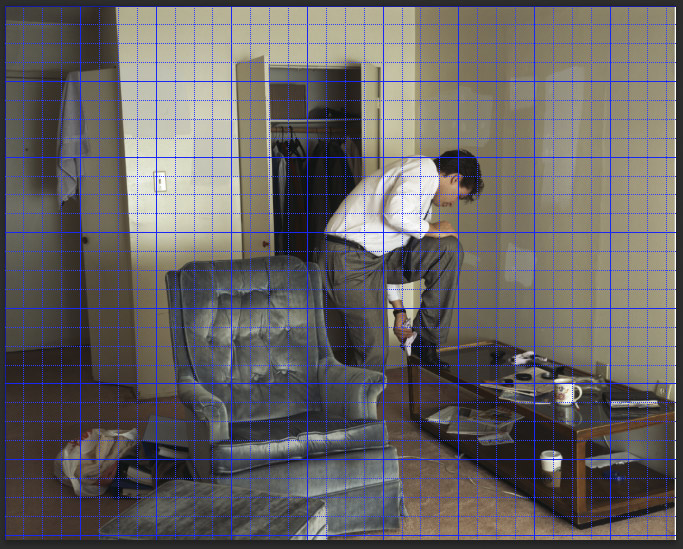
 

Jeff Wall 'Polishing' skewing

Image Dr James McArdle


Jeff Wall 'Polishing' skewing

Image Ian Lobb


Many thankx to Dr James McArdle for the initial gridded image from the posting “Perspective blow up,” on his Camera/Eye blog (January 21st, 2013) where he argues that the skewing is all done with tilting and shifting of an 8 x 10 image view camera and the analysis by Ian Lobb in which he argues that the skewing is partially done through the architecture (the set), the camera and some Photoshop tweeking.


Structural analysis of Jeff Wall’s Polishing (1998)

“There is a perceptual discomfort in viewing this image on the wall that is not apparent in the desk-top experience of it. I’m referring to a weird skewing of the perspective of the room. Wall has tilted the monorail of his 8×10 camera down toward the corner of the room, making the left hand wall of the bathroom lean uncomfortably, more than does the patched join of the wall panels to the right. He has then shifted the lens left, thus positioning the one vertical (right behind the figure) to the right of centre. The bathroom door, draped with a towel, looks as if it is hanging off its hinges, at variance with the top of the entrance door which remains horizontal. Conventionally, an architectural photographer would square everything and Wall does that in Doorpusher which though shot from an extremely oblique angle employs a radical drop-front to correct the verticals.”

Dr James McArdle


“”Firstly, the floor is not straight in the image. You can see how in my edit, I have rotated the image a little to make the floor straight: (you can see how much by the break in the picture rail see red arrow). JW being tricky and skilled. Now the amount of lean in wall could almost be achieved just by a camera pointing down. No weird camera movements – this is almost familiar. But the door leans more than the wall! Next, note the degree of convergence in blue lines compared to green lines. Therefore the blue angle is emphasised – somehow. Note different hang of towel in magenta compared to blue – therefore edited ~ somehow!

The grid is good because as an initial observation it shows how much distortion we are viewing. But it makes it difficult to see that the floor is not level. When the floor is straightened the lean on the left wall is not as much as it seemed. Wait! Things do splay out when the camera is pointed down – so maybe there is no Photoshop in this at all? But there is – the angles have been emphasised a bit (I believe digitally) and there are puns in the angle of the towel (sloping at a different angle) and the buttons on the couch (not sloping out at all).

Lets play with this a bit more. So just tilt the camera to slope the floor and emphasise the lean by using the tilt to straighten the verticals on one side – and now make this a bit stronger in Photoshop. And by judicious use of the furniture placement the slope of the floor can be partly hidden. I can imagine Jeff Wall saying to a crowd that there is no Photoshop in this – it’s just camera placement (including a tilt in the whole camera) and without duplicating the scene I can’t be sure – but I think he has stressed in Photoshop some things that are already there. Digital enhancement.

Finally we can say that the formal qualities of this image are a play upon what has been initially offered by the camera. Initially: The walls are sloping! So is it just optics, or camera angle or Photoshop? It’s all three but not as much Photoshop as initially thought. The floor is not straight, the camera angle has been changed and there has been some digital emphasis.”

Ian Lobb (author of The Well Tempered View Camera)


Jeff Wall (Canadian, b. 1946) 'Double Self-Portrait' 1979


Jeff Wall (Canadian, b. 1946)
Double Self-Portrait
1979
Transparency in light box AP
172 x 229cm
Collection of the artist
© Jeff Wall


Jeff Wall (Canadian, b. 1946) 'Untangling' 1994, printed 2006


Jeff Wall (Canadian, b. 1946)
Untangling
1994, printed 2006
Transparency in light box, AP
189 x 223.5cm
National Gallery of Victoria, Melbourne Purchased NGV Foundation and with the assistance of NGV Contemporary, 2006
© Jeff Wall


Jeff Wall (Canadian, b. 1946) 'Dressing poultry' 2007


Jeff Wall (Canadian, b. 1946)
Dressing poultry
2007
Transparency in light box, 1/2
201.5 x 252cm
Cranford Collection, London
© Jeff Wall


Jeff Wall (Canadian, b. 1946) 'Adrian Walker, artist, drawing from a specimen in a laboratory in the Dept. of Anatomy at the University of British Columbia, Vancouver' 1992


Jeff Wall (Canadian, b. 1946)
Adrian Walker, artist, drawing from a specimen in a laboratory in the Dept. of Anatomy at the University of British Columbia, Vancouver
1992
Transparency in light box, AP
119 x 164cm
Collection of the artist
© Jeff Wall


Jeff Wall (Canadian, b. 1946) 'A sudden gust of wind (after Hokusai)' 1993


Jeff Wall (Canadian, b. 1946)
A sudden gust of wind (after Hokusai)
1993
Transparency in light box, unique state
229 x 377cm
Tate, London Purchased with the assistance from the Patrons of New Art through the Tate Gallery Foundation and from the National Art Collections Fund, 1995
© Jeff Wall


Jeff Wall (Canadian, b. 1946) 'After 'Invisible Man' by Ralph Ellison, the Prologue' 1999-2000


Jeff Wall (Canadian, b. 1946)
After ‘Invisible Man’ by Ralph Ellison, the Prologue
1999-2000
Transparency in light box, AP
174 x 250.5cm
Collection of the artist
© Jeff Wall
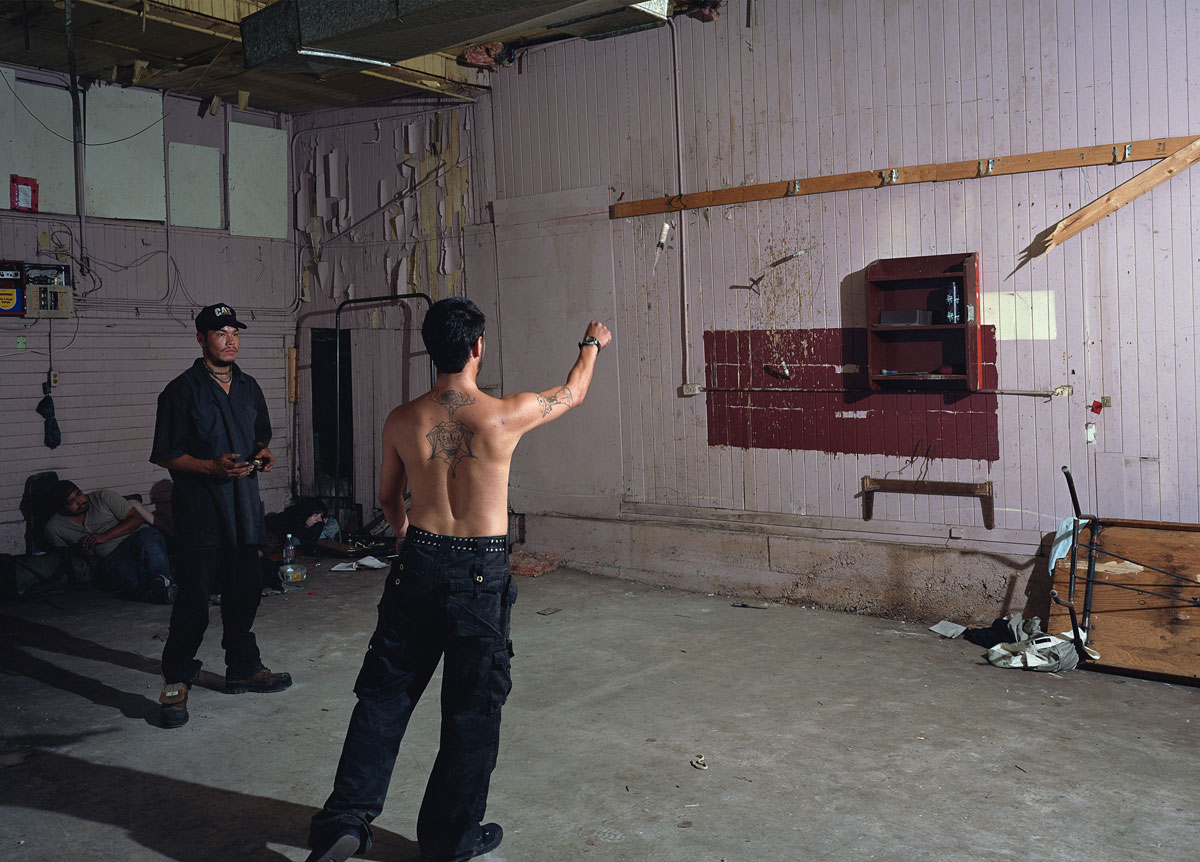
 

Jeff Wall (Canadian, b. 1946) 'Knife throw' 2008


Jeff Wall (Canadian, b. 1946)
Knife throw
2008
Colour photograph, AP
184 x 256cm
Collection of the artist
© Jeff Wall


Jeff Wall (Canadian, b. 1946) 'The Destroyed Room' 1978


Jeff Wall (Canadian, b. 1946)
The Destroyed Room
1978
Transparency in light box, AP
159 x 234cm
Collection of the artist
© Jeff Wall


Jeff Wall (Canadian, b. 1946) 'Clipped branches, East Cordova St., Vancouver' 1999


Jeff Wall (Canadian, b. 1946)
Clipped branches, East Cordova St., Vancouver
1999
Transparency in light box, AP
72 x 89cm
Collection of the artist
© Jeff Wall
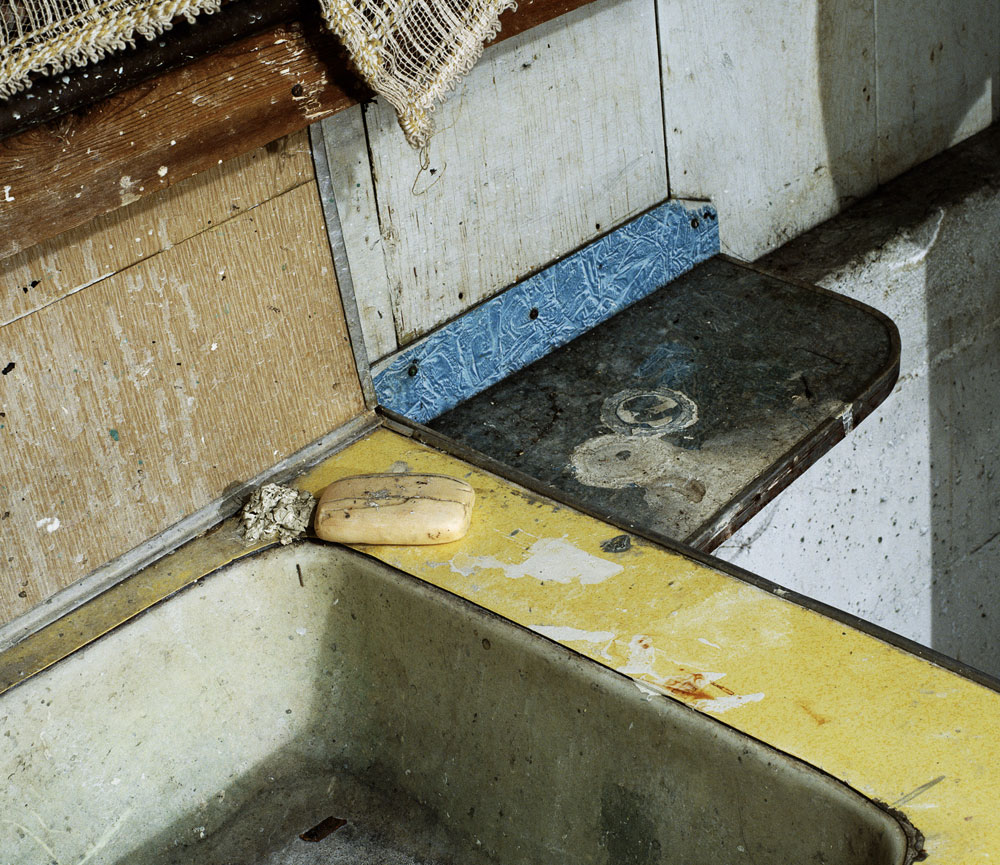
 

Jeff Wall (Canadian, b. 1946) 'Diagonal Composition' 1993


Jeff Wall (Canadian, b. 1946)
Diagonal Composition
1993
Transparency in light box, AP
40 x 46cm
Collection of the artist
© Jeff Wall
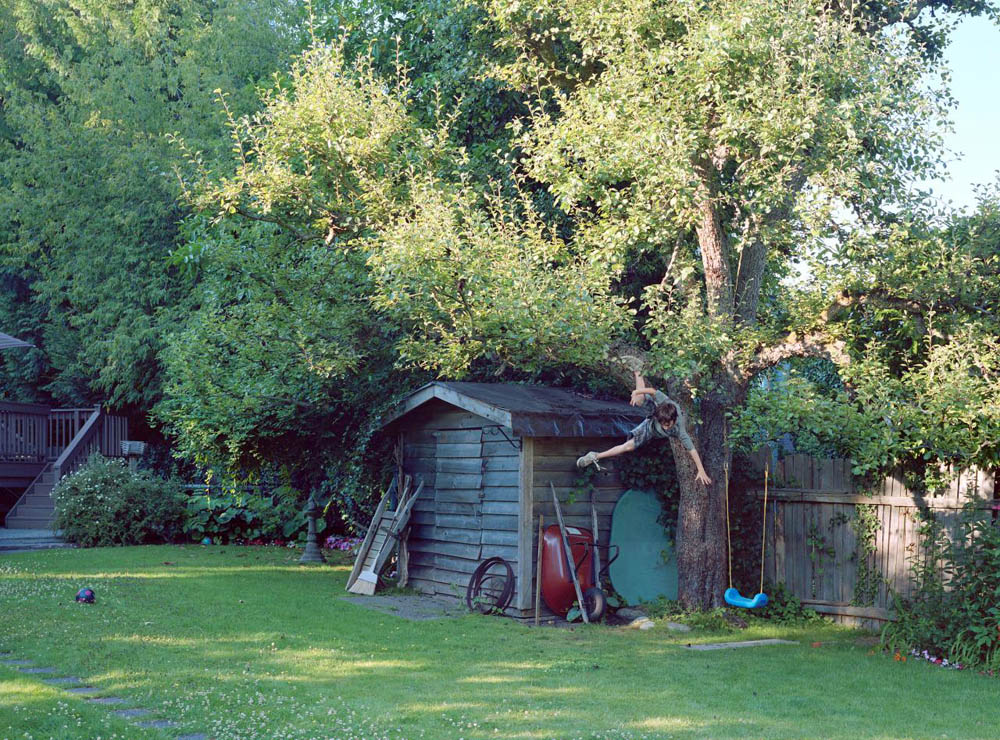
 

Jeff Wall (Canadian, b. 1946) 'Boy falls from tree' 2010


Jeff Wall (Canadian, b. 1946)
Boy falls from tree
2010
Colour photograph, AP
226 x 305.3cm
Collection of the artist
© Jeff Wall


The Ian Potter Centre: NGV Australia
Federation Square
Corner of Russell and 
Flinders Streets, Melbourne

Opening hours:
Daily 10am – 5pm

National Gallery of Victoria website

LIKE ART BLART ON FACEBOOK

Back to top

Exhibition: ‘Painting Canada: Tom Thomson and the Group of Seven’ at the Dulwich Picture Gallery, London

Exhibition dates: 19th October 2011 – 8th January 2012


Frederick Horsman Varley (Canadian born United Kingdom, 1881-1969) 'Stormy Weather, Georgian Bay' 1921


Frederick Horsman Varley (Canadian born United Kingdom, 1881-1969)
Stormy Weather, Georgian Bay
1921
Oil on canvas
132.6 x 162.8cm
National Gallery of Canada, Ottawa
© Varley Art Gallery, Town of Markham
Photo © NGC


What a wonderful posting to end 2011. I had no idea how magnificent Tom Thomson and the Group of Seven was. The paintings are sublime, full of light, colour and texture: they perfectly capture the atmosphere of outback Canada. As the curator observes, ‘These artists produced some of the most vibrant and beautiful landscapes of the twentieth century’. I couldn’t agree more. A joy to see, these impressions leave one spellbound. Finally, something delicious in landscape painting!

Dr Marcus Bunyan


Many thankx to the Dulwich Picture Gallery for allowing me to publish the artwork in the posting. Please click on the photographs for a larger version of the image.


Franklin Carmichael (Canadian, 1890-1945) 'Autumn Hillside' 1920


Franklin Carmichael (Canadian, 1890-1945)
Autumn Hillside
1920
Oil on canvas
76 x 91.4cm
© Art Gallery of Ontario,
Gift from the J.S. McLean Collection, Toronto
© Courtesy of the Estate of Franklin Carmichael


Frederick Horsman Varley (Canadian, born United Kingdom 1881-1969) 'Peter Sandiford at Split Rock, Georgian Bay' 1922


Frederick Horsman Varley (Canadian, born United Kingdom 1881-1969)
Peter Sandiford at Split Rock, Georgian Bay
1922
Oil on wood panel
21 x 26.7cm
© Art Gallery of Ontario
© Varley Art Gallery, Town of Markham


Frederick Horsman Varley (Canadian, born United Kingdom 1881-1969) 'Cloud, Red Mountain' 1927-1928


Frederick Horsman Varley (Canadian, born United Kingdom 1881-1969)
Cloud, Red Mountain
1927-1928
Oil on canvas
87 x 102.2cm
© Art Gallery of Ontario
© Varley Art Gallery, Town of Markham


Frederick Horsman Varley (Canadian, born United Kingdom 1881-1969) 'West Coast Sunset, Vancouver' c. 1926


Frederick Horsman Varley (Canadian, born United Kingdom 1881-1969)
West Coast Sunset, Vancouver
c. 1926
Oil on wood
30.4 x 38.1cm
The Thomson Collection
© Art Gallery of Ontario


Lawren Harris (Canadian, 1885-1970) 'Lake Superior, Sketch XLVII' c. 1923


Lawren Harris (Canadian, 1885-1970)
Lake Superior, Sketch XLVII
c. 1923
Oil on panel
30 x 37.5cm
Collection: A. K. Prakash
© Family of Lawren S. Harris


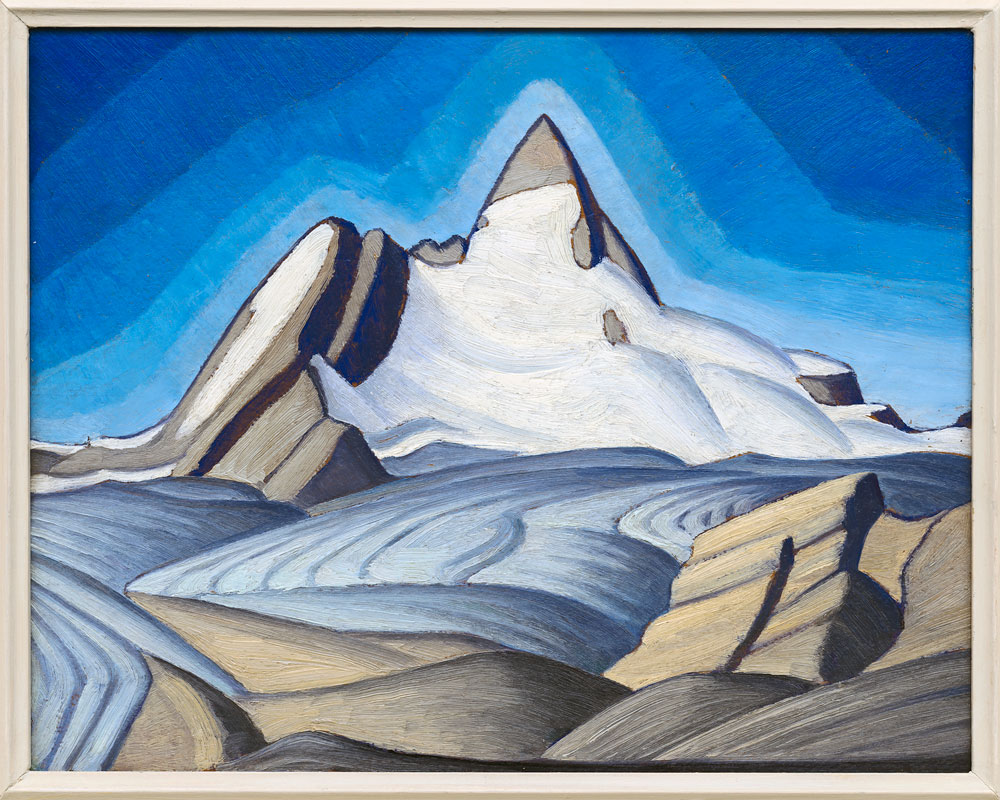
Lawren Harris (Canadian, 1885-1970) 'Isolation Peak' c. 1939


Lawren Harris (Canadian, 1885-1970)
Isolation Peak
c. 1939
Oil on panel
30 x 37.5cm
Collection: A. K. Prakash
© Family of Lawren S. Harris


Lawren Harris (Canadian, 1885-1970) Untitled Mountain Landscape' c. 1927-1928


Lawren Harris (Canadian, 1885-1970)
Untitled Mountain Landscape
c. 1927-1928
Oil on canvas
122.3 x 152.7cm
Thomson Collection, AGO
© Art Gallery of Ontario
© Family of Lawren S. Harris


Lawren Harris (Canadian, 1885-1970) 'Tamaracks and Blue Hill' c. 1919


Lawren Harris (Canadian, 1885-1970)
Tamaracks and Blue Hill
c. 1919
Oil on panel
26.7 x 34.7cm
Art Gallery of Ontario
© Family of Lawren S. Harris


Lawren Harris (Canadian, 1885-1970) 'Trees and Pool' c. 1920


Lawren Harris (Canadian, 1885-1970)
Trees and Pool
c. 1920
Oil on panel
26.7 x 35.6cm
© Art Gallery of Ontario
© Family of Lawren S. Harris


Dulwich Picture Gallery’s Bicentenary year of momentous exhibition firsts is to continue in October with Painting Canada: Tom Thomson and the Group of Seven. The exhibition forms part of Dulwich Picture Gallery’s North American series showcasing the work of artists rarely seen in the UK.

Painting Canada will feature some of Canada’s most iconic landscape paintings. These bold and exciting works were first celebrated not in Canada, but in London, at the British Empire exhibitions at Wembley in 1924 and 1925. Since then, despite becoming greatly revered in Canada, the work of Thomson and the Group of Seven has been virtually unknown on the international stage. This major exhibition will reintroduce them to the British public, with an astonishing 122 paintings on display as well as Tom Thomson’s sketchbox.

Tom Thomson and J. E. H. MacDonald, Arthur Lismer, Frederick Varley, Frank Johnston and Franklin Carmichael met as employees of the design firm Grip Ltd. in Toronto. The other two members of the Group were A. Y. (Alexander Young) Jackson from Montreal and Lawren Harris, effectively the Group’s leader, and a man of considerable personal wealth. They often met at the Arts and Letters Club of Toronto to discuss their opinions and share their art.

The artists, sometimes known as the ‘Algonquin Park School’ at this stage, received indirect monetary support from Harris (heir to the Massey-Harris farm machinery fortune) and direct support from Dr. James MacCallum a wealthy Toronto ophthalmologist and collector. Harris and MacCallum collaborated to build a studio building that opened in 1914 to serve as a meeting and working place for the proposed new Canadian art movement.

The progress of this informal group of artists was interrupted by the outbreak of World War I and a further severe blow came in 1917 when Thomson died while canoeing in Algonquin Park. The circumstances of his death and subsequent burial have remained mysterious, the source to this day of myriad conspiracy theories.

Thomson’s seven artist friends reunited after the war. They continued to travel throughout Canada, sketching the landscape and developing techniques to represent such wild and diverse terrain in their art. In 1920 they finally came together as the Group of Seven and held their first exhibition under that name. Prior to this, the art establishment’s view of the Canadian landscape was that it was either unpaintable or too wild and uncouth to be worthy of being painted. Reviews for the 1920 exhibition were mixed, but as the decade progressed the Group came to be recognised as pioneers of a new, Canadian, school of art. Nowadays, the Group and Tom Thomson are iconic in their native country; every schoolchild is familiar with masterpieces such as Thomson’s The Jack Pine, arguably the most famous and beloved painting in Canada.

Dulwich Picture Gallery is proud to partner with the National Gallery of Canada on this exhibition, with generous support of loans also coming from the McMichael Canadian Art Collection, the Art Gallery of Ontario and other lenders. These institutions are lending some of the most famous paintings in Canada. Additionally, a special revelation of the show is provided by the rich group of works to be found in private collections.

Painting Canada has been planned as a journey through Canada, framed by two grand rooms dedicated individually to Tom Thomson’s electrifying sketches and paintings of Algonquin Park and Lawren Harris’s other-worldly paintings of the Arctic and the Rocky Mountains. Between these two ‘poles’, a selection of the very best work of Thomson and the Group of Seven will be on display. A special feature of the show will be the juxtaposition, wherever possible, of the initial sketch with the finished canvas. One room will in fact be devoted entirely to a display of these vibrant sketches, which represent one of the most impressive contributions of Canada to twentieth-century art.

Ian Dejardin said: “These artists produced some of the most vibrant and beautiful landscapes of the twentieth century. The Canadians have kept this particular light under a bushel for far too long – I am proud, and frankly amazed, that this is to be the very first major exhibition of their work to be held in this country since the sensation of their first showing here in 1924. As for Tom Thomson – what he achieved in his tragically short career (just 4 or 5 years) is extraordinary. He is Canada’s very own Van Gogh – prepare to be dazzled.”


A. Y. Jackson (Canadian, 1882-1974) 'Totem Poles, Kitwanga' 1926


A. Y. Jackson (Canadian, 1882-1974)
Totem Poles, Kitwanga
1926
Oil on panel
21.25 x 26.25cm
© Collection: A. K. Prakash


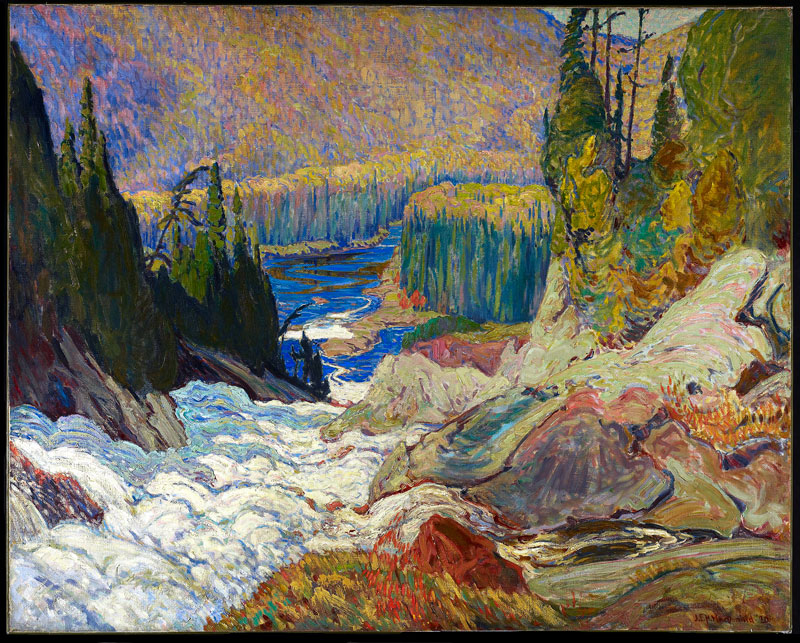
J. E. H. MacDonald (Canadian born United Kingdom, 1873-1932) 'Falls, Montreal River' 1920


J. E. H. MacDonald (Canadian born United Kingdom, 1873-1932)
Falls, Montreal River
1920
Oil on canvas
121.9 x 153cm
© Art Gallery of Ontario


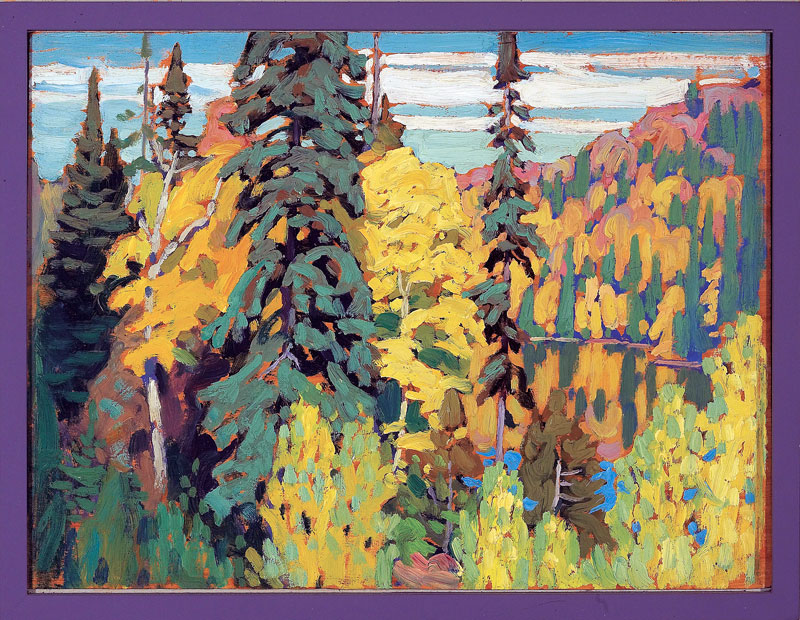
J. E. H. MacDonald (Canadian born United Kingdom, 1873-1932) 'Autumn Leaves, Batchewana Woods, Algoma' c. 1919


J. E. H. MacDonald (Canadian born United Kingdom, 1873-1932)
Autumn Leaves, Batchewana Woods, Algoma
c. 1919
Oil on composite woodboard
21.6 x 26.7cm
© Art Gallery of Ontario


J. E. H. MacDonald (Canadian born United Kingdom, 1873-1932) 'The Little Falls' 1918


J. E. H. MacDonald (Canadian born United Kingdom, 1873-1932)
The Little Falls
1918
Oil on composite woodboard
21.6 x 26.7cm
© Art Gallery of Ontario


J. E. H. MacDonald (Canadian born United Kingdom, 1873-1932) 'Mount Oderay' 1930


J. E. H. MacDonald (Canadian born United Kingdom, 1873-1932)
Mount Oderay
1930
Oil on canvas
40 x 52.5cm
© Collection: Ash K. Prakash


J. E. H. MacDonald (Canadian born United Kingdom, 1873-1932) 'Mount Biddle' 1930


J. E. H. MacDonald (Canadian born United Kingdom, 1873-1932)
Mount Biddle
1930
Oil on composite woodboard
21.5 x 26.7cm
© Art Gallery of Ontario


Tom Thomson (1877-1917)

Tom Thomson was born near Claremont, Ontario on 5 August, 1877. A turning point in his life came in 1909 when he joined the staff of Grip Ltd., a prominent Toronto photo-engraving house. The firm’s head designer, artist-poet J.E.H. MacDonald, contributed much to Thomson’s artistic development, sharpening his sense of design. However, Thomson’s career as a fine artist lasted barely four or five years; it was cut short in July 1917, when his canoe was found floating on Canoe Lake, empty. His body surfaced days later, triggering decades of speculation as to his fate. More sensational than these stories, however, was the burst of creativity that had preceded his death. In his last two years, Thomson had developed an artistic language that seemed to capture the unique qualities of the Canadian landscape – painterly, vibrant in colour, in tune with the subtle change of the seasons. The Canadian wilderness had been previously considered too wild and untamed  to inspire ‘true’ art.

His fellow employees at Grip Ltd. included Arthur Lismer, F.H. Varley, Franklin Carmichael and Frank Johnston – all adventurous young painters who often organised weekend painting trips to the countryside around Toronto. After Tom’s death, a memorial exhibition was arranged and these men, together with Lawren Harris and A. Y. Jackson, would go on to form in 1920 the Group of Seven, probably the most famous artistic force in Canadian art history. Along with Thomson they created a landscape style that to this day infl uences the way Canadians visualise their own country and their best paintings have become national icons.

Lawren Harris (1885-1970)

Lawren Harris was born on 23 October 1885, in Brantford, Ontario. He attended St. Andrew’s College in Toronto before studying art in Berlin, Germany, from 1904 to 1908. He then returned to Toronto, where he began painting post-impressionist street scenes of its older and poorer areas. By 1919 Harris’s landscapes had become increasingly sombre and his brush stroke more expressive. His affection for Scandinavian landscape painting was one of the key factors in the formulation of the Group of Seven’s approach to the Ontario woods, which Harris himself painted with gusto and attention. His later style was grandly beautiful and austere, finding its most characteristic subject matter in the awesome landscapes of Lake Superior, the Rockies and the Canadian Arctic.

A. Y. Jackson (1882-1974)

Alexander Young Jackson, or “A. Y.” as he was fondly known, was born in Montreal on 3 October, 1882. Like other members of the Group of Seven he was trained as a commercial artist and for many years made his living by that means. He apprenticed to a Montreal lithographer at the age of 12, and though he later spent two and a half years in France studying painting, he was soon back in Canada paying his rent by designing cigar labels. In the following years after the formation of the Group of Seven he painted the Arctic, the West Coast, the Prairies, and Ontario’s north woods, as well as his beloved St. Lawrence, where his countless sketching expeditions earned him the nickname Père Raquette-Pappa Snowshoe.

Arthur Lismer (1885-1969)

Arthur Lismer celebrated the powerful beauty of the Canadian landscape in his own expressionist style. His paintings are characterised by vivid colour, deliberately coarse brushwork and a simplified form. Lismer was born in Sheffield, England. At the age of 26, he immigrated to Canada seeking work as a commercial illustrator. It was at Grip Ltd. in Toronto that he met a group of other talented young artists who were to become the Group of Seven. Together, they organised trips to explore and sketch the wilderness – capturing the spirit of Canada in their work, and setting Canadian art on a bold and original new course. Although Lismer painted throughout his life, he devoted the majority of his time to art education. A gifted teacher, Lismer pioneered the field of child art education across Canada and around the world.

Frederick Horsman Varley (1881-1969)

Varley was born in 1881 in Sheffield, England. He studied painting at Sheffield and Antwerp and went to work in London as a commercial illustrator. In 1912 he came to Canada, where he found himself working in the same commercial studio as Tom Thomson. With Thomson and the others he took to painting Northern Ontario landscapes, and also began to do considerable work as a portrait painter. In 1926 Varley moved to Vancouver to become Head of Drawing, Painting & Composition at the newly formed Vancouver School of Decorative & Applied Arts. In 1933 he founded his own school, the British Columbia College of Arts, but this venture led to his bankruptcy in 1935 and by then his marriage had also collapsed. The next years were difficult for Varley, most of them spent suffering from alcoholism in Montreal. In 1945, however, he returned to Toronto and slowly began to work again. He died in Toronto in 1969.

Franklin Carmichael (1890-1945)

Carmichael, the son of a carriage maker, was born in Orillia, Ontario on 4 May, 1890. He arrived in Toronto in 1911 with some training in commercial art, and soon found himself the associate of Tom Thomson and a number of other commercial artists who were teaching themselves to be serious painters. In 1913 he went to Antwerp to study painting but was soon back in Ontario to participate in the founding of the Group of Seven, of which he was the youngest member. In 1932 he was appointed Head of Graphic and Commercial Art at the Ontario College of Art. He died in Toronto in 1945.

Frank (Franz) Johnston (1888-1949)

Johnston was an original member but only showed in the Group’s first exhibition. Johnston’s style and technique – he very often  painted in tempera – differed from that of the other Group of Seven members. His work was extremely decorative, and sold well – a fact that led to his early departure from the Group, since he felt he could earn more disassociated from the initial critical outrage that greeted the first Group exhibitions.

J. E. H. MacDonald (1873-1932)

John Edward Hervey MacDonald challenged and vastly broadened the scope of Canadian Art. MacDonald believed that art should express the “mood and character and spirit of the country”, and he portrayed his vision in vast panoramas using dark, rich colours and a turbulent patterned style. MacDonald was born in Durham, England, and moved to Canada at the age of fourteen. He trained as an artist in Hamilton and Toronto, pursuing a career in commercial art. In 1895 he joined Grip Ltd. in Toronto where he met and encouraged other staff members, including Tom Thomson, Frank Carmichael, Arthur Lismer and Fred Varley, to paint with him on weekends – laying the groundwork for what would later become Canada’s famous Group of Seven. He was the oldest member of the Group. His early death led directly to the disbanding of the Group in 1933.


Tom Thomson (Canadian, 1877-1917) 'The Jack Pine' 1916-1917


Tom Thomson (Canadian, 1877-1917)
The Jack Pine
1916-1917
Oil on canvas
127.9 x 139.8cm
© National Gallery of Canada, Ottawa
Photo © NGC


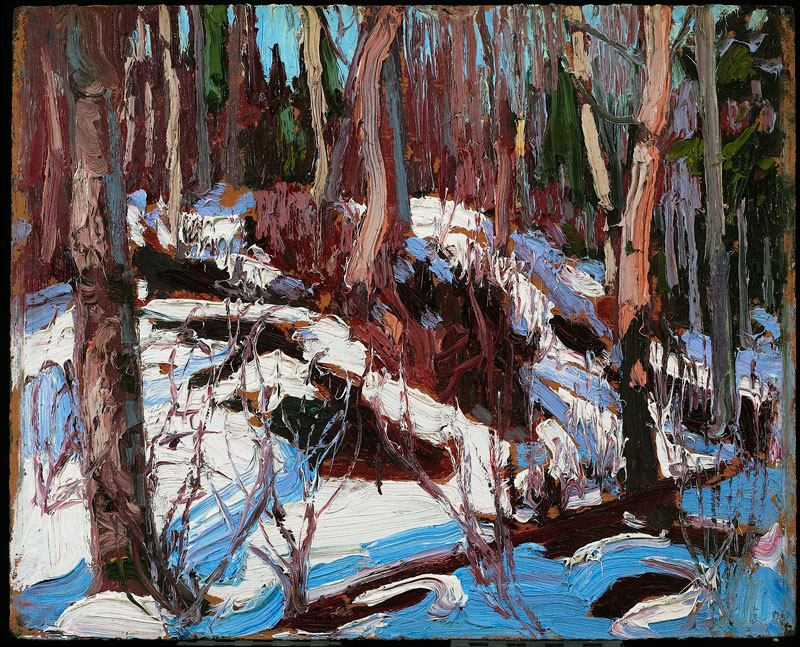
Tom Thomson (Canadian, 1877-1917) 'Winter Thaw in the Woods' 1917


Tom Thomson (Canadian, 1877-1917)
Winter Thaw in the Woods
1917
Oil on composite woodpulp board
21.6 x 26.8cm
Thomson Collection, AGO
© Art Gallery of Ontario


Tom Thomson (Canadian, 1877-1917) 'A Northern Lake' c. 1916


Tom Thomson (Canadian, 1877-1917)
A Northern Lake
c. 1916
Oil on composite wood-pulp board
21.6 x 26.7cm
© Art Gallery of Ontario


Tom Thomson (Canadian, 1877-1917) 'Path behind Mowat Lodge' 1917


Tom Thomson (Canadian, 1877-1917)
Path behind Mowat Lodge
1917
Oil on wood
26.8 x 21.4cm
Thomson Collection, AGO
© Art Gallery of Ontario


Dulwich Picture Gallery
Gallery Road, London
SE21 7AD
Phone: 020 8693 5254

Opening hours:
Tuesday – Sunday 10am – 5pm
Closed Mondays (except Bank Holiday Mondays)

Dulwich Picture Gallery website

LIKE ART BLART ON FACEBOOK

Back to top

Exhibition: ‘After the Gold Rush: Contemporary Photographs from the Collection’ at The Metropolitan Museum of Art, New York

Exhibition dates: 22nd March, 2011 – 2nd January, 2012


Many thankx to The Metropolitan Museum of Art, New York for allowing me to publish the photographs in the posting. Please click on the photographs for a larger version of the image.


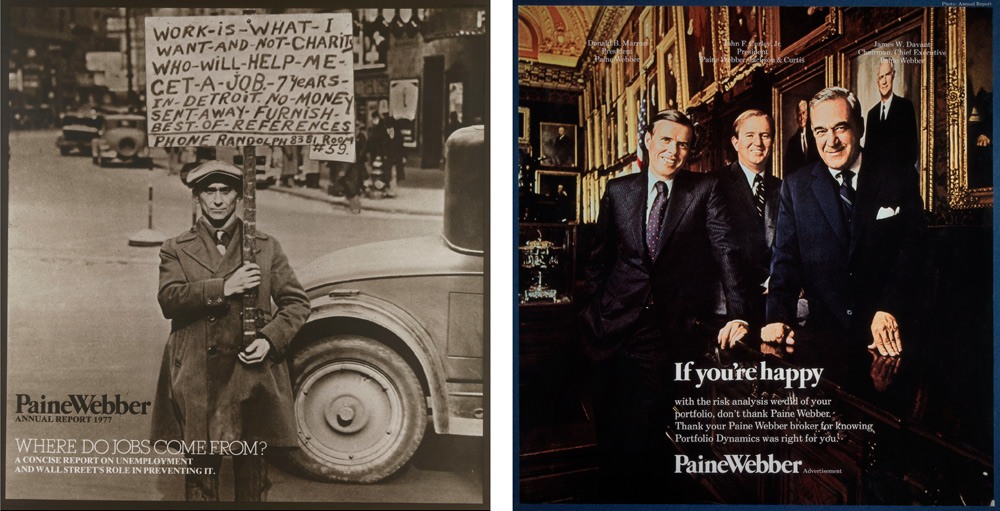
Hans Haacke (German, born 1936). 'Thank You, Paine Webber' 1979


Hans Haacke (German, b. 1936)
Thank You, Paine Webber
1979
Gelatin silver print and chromogenic print
The Metropolitan Museum of Art
Purchase, Vital Projects Fund Inc. Gift, through Joyce and Robert Menschel, 2010
© Hans Haacke


Since the early 1970s Haacke has taken on the intertwined political and corporate forces that use cultural patronage as a smokescreen to advance interests that are often antithetical to the vitality of free speech and expression in democracies. Haacke made this work just as the strategy of appropriation – lifting an image out of its original context and re-presenting it in critical fashion – began to make waves in the New York art world of the late 1970s. Like all effective appropriation, it exposes a prior instance of borrowing – in this case, how the investment firm Paine Webber used a documentary photograph to give its annual report the veneer of social concern. The artist then pointedly contrasted it with an image from the same annual report of a beaming trio of executives in a painting-lined gallery. As a counterpoint to the protestor’s signboard, Haacke dropped in text from a different Paine Webber ad campaign to show on whose backs the “risk management” is taking place – a biting indictment, the relevance of which has only increased since the recent economic downturn.

Wall text


Jeff Wall (Canadian, born 1946). 'The Storyteller' 1986


Jeff Wall (Canadian, b. 1946)
The Storyteller
1986
Silver dye bleach transparency in light box
The Metropolitan Museum of Art
Purchase, Charlene and David Howe, Henry Nias Foundation Inc., Jennifer and Robert Yaffa, Harriet Ames Charitable Trust, and Gary and Sarah Wolkowitz Gifts, 2006
Image courtesy of the artist
© Jeff Wall


Wall’s staged tableaux straddle the worlds of the museum and the street. His subjects are scenes of urban and suburban disarray that he witnessed firsthand – the kinds of things anyone might see while wandering around a city and its outskirts. Working like a movie director, he restages the scene using nonprofessionals as actors and presents his photographs as colour transparencies in light boxes such as those of large-scale public advertisements found at airports and bus stops. The scale and ambition of his pictures – scenes of everyday life shot through with larger intimations of political struggle – equally evoke the Salon paintings of nineteenth century French painters such as Gustave Courbet and Édouard Manet, which were themselves brazen combinations of canonical and contemporary subjects.

The Storyteller is set in a barren, leftover slice of land next to a highway overpass in Vancouver, where the artist lives. Various groupings of modern urban castaways – perhaps descendants of the Native Americans who occupied the land before the arrival of Europeans – are dispersed around the hillside, a mini-catalogue of art-historical reference. Like the upside-down, half-submerged figure of Icarus in the background of Brueghel’s Landscape with the Fall of Icarus, the woman speaking and gesticulating to the two men listening at the lower left becomes the key to unifying the fractured and alienating environment from which Wall’s picture is constructed.

Wall text


Laurie Simmons (American, b. 1949). 'Walking Gun' 1991


Laurie Simmons (American, b. 1949)
Walking Gun
1991
Gelatin silver print
The Metropolitan Museum of Art
Purchase, Anonymous Gift, 1998
© Laurie Simmons


The early 1990s marked the last moment when a wide swath of women artists responded to the sexism they saw as pervasive in the culture – from the rape trial of William Kennedy Smith to the Supreme Court nomination hearings for Clarence Thomas. A pioneer of set-up photography, Simmons dramatically expanded the scale of her constructed tableaux for a series of spotlighted puppet-like objects perched atop doll legs: revolvers, houses, cameras, and cakes. This armed and dangerous example refers to the old-movie cliché where a man carrying a gun is shown in shadow profile. Here, Simmons offers instead the death-dealing seductress – also familiar from film noir – in monumental miniature, a doll capable of turning on its master at a moment’s notice.

Wall text


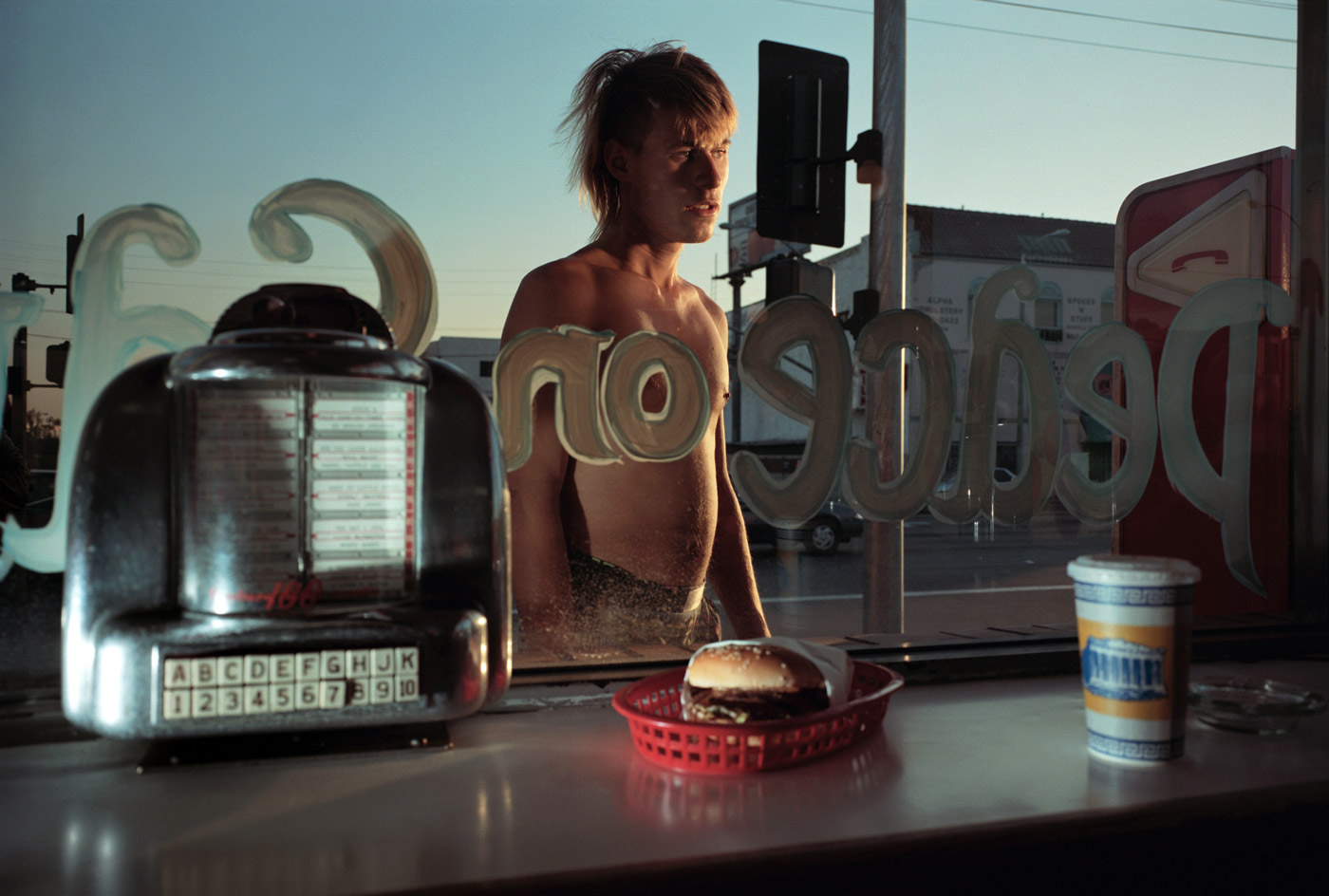
Philip-Lorca diCorcia (American, b. 1953). 'Todd M. Brooks, 22 Years Old, from Denver, Colorado, $40' 1991


Philip-Lorca diCorcia (American, b. 1953)
Todd M. Brooks, 22 Years Old, from Denver, Colorado, $40
1991
Chromogenic print
The Metropolitan Museum of Art
Purchase, The Horace W. Goldsmith Foundation Gift, through Joyce and Robert Menschel, 1991
Image courtesy the artist and David Zwirner, New York
© Philip-Lorca diCorcia


In the middle of the 1990’s, diCorcia gained international recognition for his large color photographs of street scenes and passersby. For an earlier series, he traveled to Los Angeles on a fellowship from the National Endowment for the Arts, and worked on a part of Santa Monica Boulevard frequented by male prostitutes and drug addicts. For each picture he made there, he carefully composed his setting, then asked young men to pose for him, giving them a small fee (from twenty to fifty dollars) that was negotiated each time.

At that time, NEA support of artists such as Robert Mapplethorpe was highly controversial, and diCorcia had to sign a document stating that he would not produce any “obscene” work while on his fellowship. He set up the whole negotiating procedure as a symbolic way of sharing his grant with people whose behavior would surely have been condemned by the censors. The titles always mention the name, the age and the origin of the model, as well as the amount paid. The staged situation interacts with the raw reality of the exchange of money, blurring the boundaries between documentary and fiction, yet preserving an authentic emotional charge.

Text from The Metropolitan Museum of Art website


Philip-Lorca diCorcia (American, b. 1953) 'Eddie Anderson, 21 Years Old, from Houston, Texas, $20' 1991


Philip-Lorca diCorcia (American, b. 1953)
Eddie Anderson, 21 Years Old, from Houston, Texas, $20
1991
Chromogenic print
Image: 39.2 x 57.8 cm (15 7/16 x 22 3/4 in.)
The Metropolitan Museum of Art
Purchase, The Horace W. Goldsmith Foundation Gift, through Joyce and Robert Menschel, 1991
Image courtesy the artist and David Zwirner, New York
© Philip-Lorca diCorcia


The Metropolitan Museum of Art will present After the Gold Rush: Contemporary Photographs from the Collection from March 22, 2011, through January 2, 2012, in the Joyce and Robert Menschel Hall for Modern Photography. Drawn entirely from the Museum’s permanent collection, the exhibition features 25 photographs dating from 1979 to the present by 15 contemporary artists.

The exhibition’s title, After the Gold Rush, is taken from a classic 1970 song by Neil Young, whose verses contrast a romanticised past with a present of squandered plenty and an uncertain future. Inspired by the recent political and economic upheavals in America and abroad, this selection juxtaposes new photographs that take the long view of the world’s current condition with prescient works from the 1980s and 1990s that remain startlingly relevant today.

This is the first occasion for the Museum to present recently acquired works by: Gretchen Bender, James Casebere, Moyra Davey, Katy Grannan, Hans Haacke, An-My Lê, Curtis Mann, Trevor Paglen, and Wolfgang Tillmans. Also featured are photographs by: Philip-Lorca diCorcia, Robert Gober, Adrian Piper, Laurie Simmons, Jeff Wall, and Christopher Williams.

After the Gold Rush begins with Hans Haacke’s Thank You, Paine Webber (1979) – the first work by this legendary provocateur of Conceptual art to enter the Metropolitan’s collection. Haacke’s biting photo-diptych is so pertinent to the recent economic downturn that it seems as if it could have been made yesterday. In this work, the artist appropriated images from the investment firm’s annual report to convey his viewpoint that big business provides a veneer of social concern to mask the brutal effects of the “risk management” they offer their clients.

Other works in After the Gold Rush use varying degrees of artifice and photographic realism to reflect on marginalised and repressed voices. Measuring over 14 feet long and presented as a backlit transparency in a light box, The Storyteller (1986) is Jeff Wall’s signature image and is typical of his method. Working from memory, the artist uses nonprofessional actors and real locations to meticulously restage a scene of urban blight that he witnessed in his native Vancouver. Wall plays this photographic verisimilitude against compositions and figural poses indebted to French painters such as Gustave Courbet, Edouard Manet, and Georges Seurat. A comparison of Wall’s Storyteller with Courbet’s Young Ladies of the Village (1852), on view in the Museum’s galleries for Nineteenth and Early Twentieth-Century European Paintings and Sculpture, reveals parallels: in both, a keenly observed moment of telling social interaction taking place on a sloping landscape. Each artist has combined a daringly modern subject with references to earlier art.

Philip-Lorca diCorcia is another key figure in the development of staged photography. In the early 1990s, the artist created a series of works in response to the political attacks on gays and federal funding of the arts in the U.S. DiCorcia hired male hustlers to pose for their portraits out on the streets – and paid them with grant money he received from the National Endowment for the Arts. At the same moment, a wide swath of women artists addressed issues of sexism and racism: examples of this politically pointed art are represented by Laurie Simmons’ Walking Gun (1991) – a spotlighted puppet of doll legs and a revolver that seems capable of turning on its master at a moment’s notice – and Adrian Piper’s 1992 work Decide Who You Are #24 (A Moving Target), which includes a childhood image of Anita Hill as part of a blistering meditation in word and image on racial politics. Such works are missives from a time not so long ago when artists regularly commented on present-day politics and culture through their art. (Because of light sensitivity, this work by Adrian Piper will be on view through Sunday, September 26.)

Although the recently made photographs in After the Gold Rush seem at first glance to be less overtly political than their predecessors, they nevertheless address vital issues about contemporary society. James Casebere’s epic vision of America, Landscape with Houses (Dutchess County, NY) #1, (2009), is based on a tabletop model that the artist spent 18 months building. The photograph shows a suburban subdivision of the kind recently ravaged by the foreclosure crisis, and its sunny sense of “Morning in America” comments ironically on the country’s future prospects. An-My Lê’s similarly sweeping five-part photographic piece Suez Canal Transit, USS Dwight Eisenhower, Egypt (2009) will also be featured. Lê is interested in the way in which U.S. armed forces come into contact with the rest of the world. This major new work – which seems at first to be a straightforward panorama of military might overseas – subtly undercuts the viewer’s expectations to question the current position of the U.S. on the global stage.

Trevor Paglen is a young artist whose works plot the “black world” of covert military operations, from telephoto images of predator drones taken from miles away, to software that follows planes used for the extraordinary rendition of suspected terrorists. Paglen’s 2008 photograph KEYHOLE IMPROVED CRYSTAL from Glacier Point (Optical Reconnaissance Satellite; USA 186) shows the ghostly white streak of an American reconnaissance satellite bisecting star trails above Yosemite’s Half Dome, a rock formation photographed in the 1860s by artists including Carleton Watkins. To make these and other photographs, Paglen collaborated with amateur astronomers who were originally trained by the U.S. government to look out for Soviet satellites during the Cold War, but turned their attention to American surveillance in recent years.

The final piece in After the Gold Rush is a suite of five recently acquired photographs from 2007-2009 by the celebrated photographer Wolfgang Tillmans. The grouping shifts focus from macro to micro: from expansive aerial views of Shanghai and Dubai to close ups that suggest the smallest increments of sustenance and regeneration. Taken together, they evoke the interconnectedness of all things and a grounding of the political in the personal as a way for an engaged yet expressive art.

Press release from The Metropolitan Museum of Art website


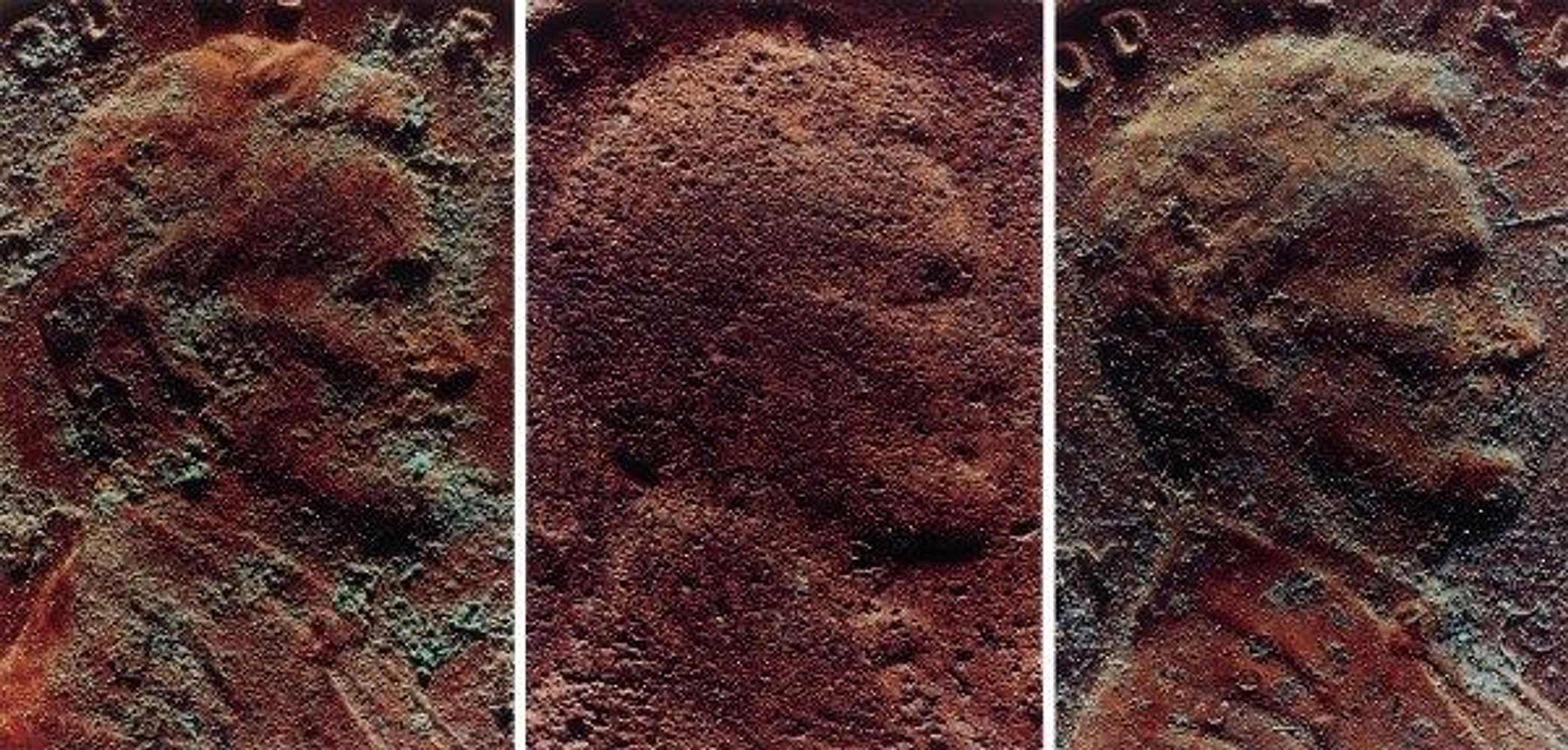
Moyra Davey (American born Canada, b. 1958) 'Copperhead Grid' 1990 (detail)


Moyra Davey (American born Canada, b. 1958)
Copperhead Grid (detail)
1990
Chromogenic prints
Image: 8 3/4 in. × 6 in. (22.3 × 15.3cm) each
Sheet: 10 × 8 in. (25.4 × 20.3cm) each
The Metropolitan Museum of Art
Purchase, Vital Projects Fund Inc. Gift, through Joyce and Robert Menschel, 2011
© Moyra Davey


It was in 1990 – at the height of a worldwide economic recession that also marked the end of the 1980s art bubble – that Davey began photographing the scratched, worn-away surfaces of pennies, the most devalued and lowest form of currency. Her accumulation of one hundred micro-photographic specimens is constructed around the readymade patterns of decay that countless anonymous owners have unconsciously wrought upon their surfaces; their base materiality is incisively contrasted with the most elevated of national symbols. As with all of Davey’s work, there is a melancholic sense of loss that connects subject and form: like pennies, photographs are objects of exchange imprinted by contact with the world around them.

Text from The Metropolitan Museum of Art website


Adrian Piper (American, born 1948). 'Decide Who You Are #24: A Moving Target' 1992


Adrian Piper (American, b. 1948)
Decide Who You Are #24: A Moving Target
1992
Photo-mechanical processes on three panels
The Metropolitan Museum of Art
Gift of Peter Norton Family Foundation, 1994
© Adrian Piper


Piper is an artist and a philosophy professor who works in a variety of media, including performance, video, sound pieces, photography, drawing, and writing. She often explores issues of autobiography, racism, and stereotyping. For her 1992 series Decide Who You Are, the artist used a triptych format in which a different appropriated photograph is flanked by an image of the “three wise monkeys” maxim advocating “See No Evil, Speak No Evil, Hear No Evil” at left, and at right a photograph of a young girl who, though not identified, is Anita Hill – who had recently been thrust into the spotlight for accusing then-nominee for Supreme Court Justice Clarence Thomas of sexual harassment. The verse in the left panel changes in each individual work in the series, while that on the right is unchanging – what the artist once described as “a comprehensive, textbook compendium of commonly invoked litanies of denial and intimidation, from the bland to the vaguely menacing” and “a must for novices and aspiring leaders in business, politics, and culture.”

Wall text


Christopher Williams (American, b. 1956). '3 White (DG's Mr. Postman) Fourth Race, Phoenix Greyhound Park, Phoenix, Arizona, August 22, 1994' 1994


Christopher Williams (American, b. 1956)
3 White (DG’s Mr. Postman) Fourth Race, Phoenix Greyhound Park, Phoenix, Arizona, August 22, 1994
1994
Gelatin silver print
The Metropolitan Museum of Art
Purchase, Charina Foundation Inc. and Jennifer and Joseph Duke Gifts, 2003
© Christopher Williams


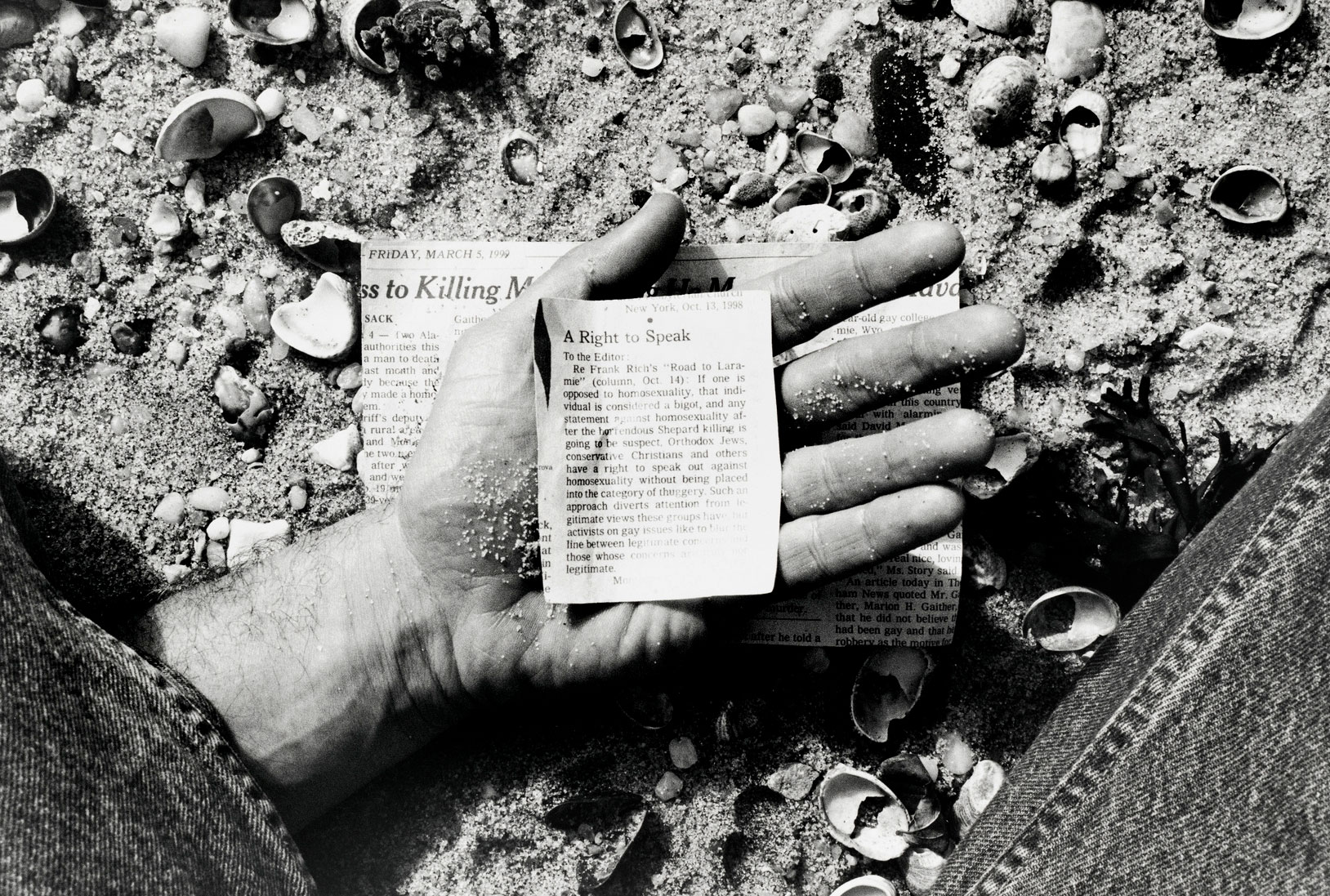
Robert Gober (American, b. 1954) 'Page 12 / Untitled (Detail from 1978-2000)' 1978-2000


Robert Gober (American, b. 1954)
Page 12 / Untitled (Detail from 1978-2000)
1978-2000
Gelatin silver print
40.6 x 50.8cm (16 x 20 in.)
The Metropolitan Museum of Art
Purchase, Charina Foundation Inc. Gift, 2002
© Robert Gober


Robert Gober works primarily in sculpture, installations, and photography. He is perhaps best known for his delicate, ghostly hand crafted versions of domestic fixtures, such as drains, beds, doors, and sinks. Through these uncanny replicas, Gober invests mass produced objects with personal meaning – the private, unruly desires and memories of the individual. This image appeared in the book (his first in the genre) that Gober created to accompany his installation representing the United States at the 2000 Venice Biennale. In it, the artist interweaves his own journey to New York in 1978 as a young gay man with the toxic fallout of homophobic recrimination that accompanied the murder of the Wyoming college student Matthew Shepard twenty years later.

Text from The Metropolitan Museum of Art website


Robert Gober superimposes a man’s hand between two newspaper articles, clipped neatly and placed on a shell-strewn beach. Below his hand, the article refers to Matthew Shepard’s death. Above it, a letter to the editor argues that “Orthodox Jews, conservative Christians and others have a right to speak out against homosexuality without being placed in the category of thuggery.” While the piece obviously precedes Jonathan Rauch’s provocative and important piece in the December issue of the Advocate arguing that gay people should tolerate a certain amount of anti-gay sentiment as a sign that they’re legally and socially secure enough to practice tolerance, it’s a useful encapsulation of the dilemma behind that argument. It’s hard to cast off past threats if you’re not entirely sure they’re past.

Alyssa Rosenberg. “Gay Americans, Censorship, And ‘After The Gold Rush’ At The Metropolitan Museum Of Art,” on the Think Progress website November 28, 2011 [Online] Cited 11/12/2024


Robert Gober (American, b. 1954). 'Untitled (Detail from "1978-2000")' 2000


Robert Gober (American, b. 1954)
Untitled (Detail from “1978-2000”)
2000
Gelatin silver print
The Metropolitan Museum of Art
Purchase, Jennifer and Joseph Duke Gift, 2002
© Robert Gober


James Casebere (American, b. 1953). 'Landscape with Houses (Dutchess County, NY) #1' 2009


James Casebere (American, b. 1953)
Landscape with Houses (Dutchess County, NY) #1
2009
Chromogenic print
The Metropolitan Museum of Art
Purchase, Alfred Stieglitz Society Gifts, 2011
© James Casebere


Trevor Paglen (American, b. 1974) 'KEYHOLE IMPROVED CRYSTAL from Glacier Point (Optical Reconnaissance Satelltte; USA 186)' 2008


Trevor Paglen (American, b. 1974)
KEYHOLE IMPROVED CRYSTAL from Glacier Point (Optical Reconnaissance Satelltte; USA 186)
2008
Chromogenic print
Image: 95.3 x 76.2cm (37 1/2 x 30 in.)
Frame: 96.5 × 77.5cm (38 × 30 1/2 in.)
The Metropolitan Museum of Art
Purchase, Vital Projects Fund Inc. Gift, through Joyce and Robert Menschel, 2011
© Trevor Paglen


Trained as a geographer, Paglen is an artist who plots the topography of a new global and celestial space – the “black world” of covert military operations. Examples of his subjects include the supposed sites used for the extraordinary rendition of prisoners, which he shoots with specially designed cameras from up to forty miles away, and the network of private planes used to transport them under the radar. This image shows the ghostly white streak of an American reconnaissance satellite bisecting star trails above Yosemite’s Half Dome, a rock formation photographed in the 1860s by the photographer Carleton Watkins when the West was still being explored. In order to track such spacecraft, Paglen uses a database created by amateur astronomers who were trained by the U.S. government to search the skies for Soviet sputniks but continued their hobby after the end of the Cold War by tracking our own satellites. In this work, the artist brings into one composition two historically disparate moments in geographic and celestial colonisation.

Text from The Metropolitan Museum of Art website


Wolfgang Tillmans (German, b. 1968).' Oriental Pearl' 2009


Wolfgang Tillmans (German, b. 1968)
Oriental Pearl
2009
Inkjet print
The Metropolitan Museum of Art
Purchase, Vital Projects Fund Inc. Gift, through Joyce and Robert Menschel, 2010
Image courtesy the artist and Andrea Rosen Gallery, New York
© Wolfgang Tillmans


The Metropolitan Museum of Art
1000 Fifth Avenue at 82nd Street
New York, New York 10028-0198
Phone: 212-535-7710

Opening hours:
Sunday – Tuesday and Thursday: 10am – 5pm
Friday and Saturday: 10am – 9pm
Closed Wednesday

The Metropolitan Museum of Art website

LIKE ART BLART ON FACEBOOK

Back to top