Exhibition: ‘Monika Tichacek, To all my relations’ at Karen Woodbury Gallery, Richmond

Exhibition dates: 4th May – 28th May 2011
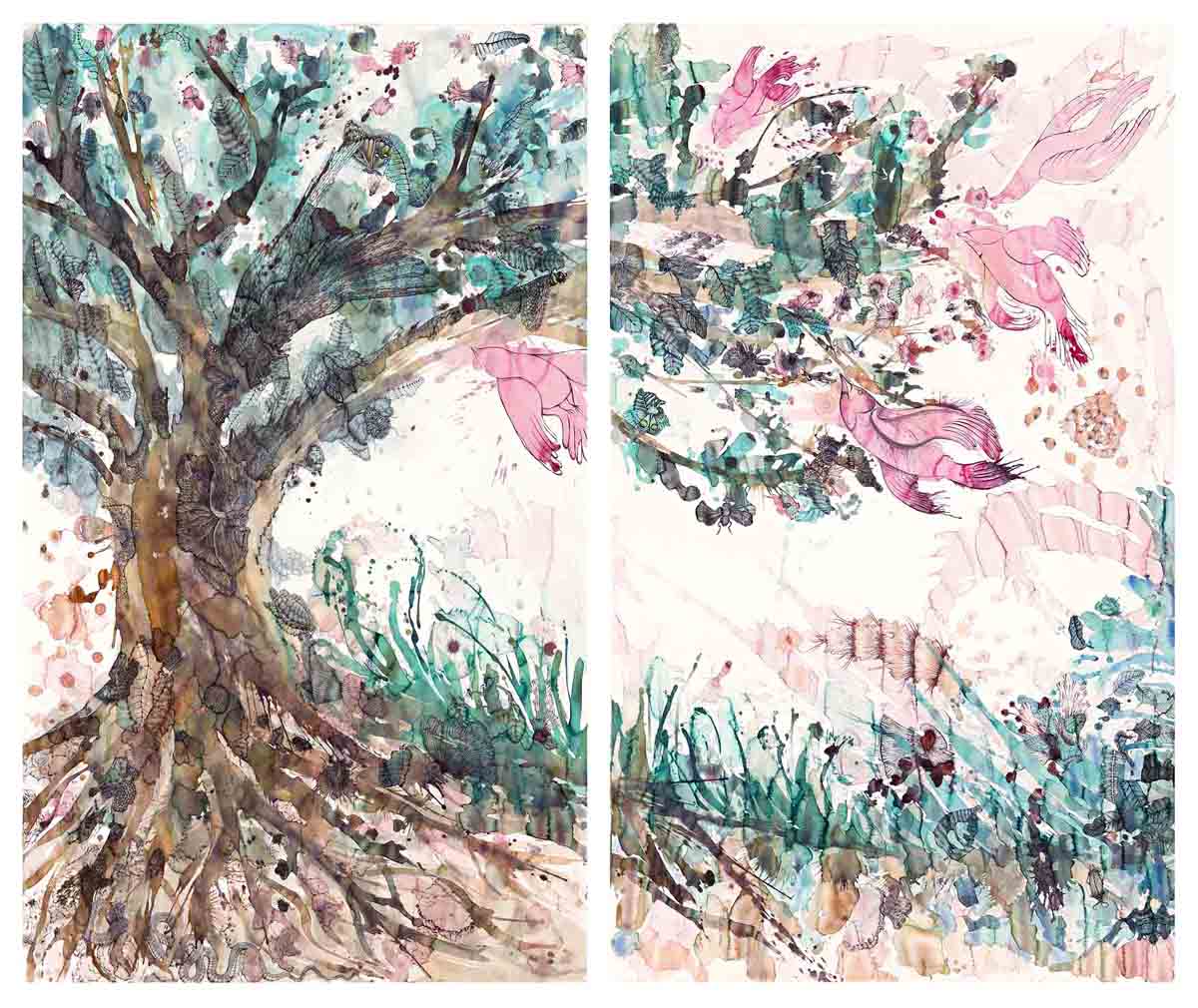
 

Monika Tichacek (Australian, b. 1975 Switzerland) 'To all my relations' 2011


Monika Tichacek (Australian, b. 1975 Switzerland)
To all my relations
2011
Diptych
Gouache, pencil and watercolour on paper
244 x 300cm overall


This is a stupendous exhibition by Monika Tichacek, at Karen Woodbury Gallery. One of the highlights of the year, this is a definite must see!

The work is glorious in it’s detail, a sensual and visual delight (make sure you click on the photographs to see the close up of the work!). The riotous, bacchanalian density of the work is balanced by a lyrical intimacy, the work exploring the life cycle and our relationship to the world in gouache, pencil & watercolour. Tichacek’s vibrant pink birds, small bugs, flowers and leaves have absolutely delicious colours. The layered and overlaid compositions show complete control by the artist: mottled, blotted, bark-like wings of butterflies meld into trees in a delicate metamorphosis; insects are blurred becoming one with the structure of flowers in a controlled effusion of life. The title of the exhibition, To all my relations,

“has inspired an understanding that all animist cultures’ peoples have who live in close relationship to the earth. We are all related, we all exist in an interdependent system. The ecosystem is such an unbelievably complex, harmonious system. Every drop of rain, every insect, every micro-organism has its place for the perfect functioning and health of nature… The title is an acknowledgement and honouring of all that is live-giving, every little element that makes up the big picture of life on earth.”1

It was very difficult to pull myself away from the beauty and intimate polyphony of voices contained within the work. I loved it!

Dr Marcus Bunyan


1/ O’Sullivan, Jane. “Artist Interview: Monika Tichacek,” on Australian Art Collector website, 19th May 2011 [Online] Cited 21/05/2010 no longer available online


Many thankx to Karen Woodbury Gallery for allowing me to publish the photographs and Art Guide Australia for allowing me to publish the text in the posting. The text by Dylan Rainforth was commissioned by Art Guide Australia and appears in the May/June 11 issue of Art Guide Australia magazine. Please click on the photographs for a larger version of the image.


Monika Tichacek (Australian, b. 1975 Switzerland) 'To all my relations' 2011 (detail)


Monika Tichacek (Australian, b. 1975 Switzerland)
To all my relations (detail)
2011
Diptych
Gouache, pencil and watercolour on paper
244 x 300cm overall


Monika Tichacek (Australian, b. 1975 Switzerland) 'To all my relations' 2011 (detail)


Monika Tichacek (Australian, b. 1975 Switzerland)
To all my relations (detail)
2011
Diptych
Gouache, pencil and watercolour on paper
244 x 300cm overall
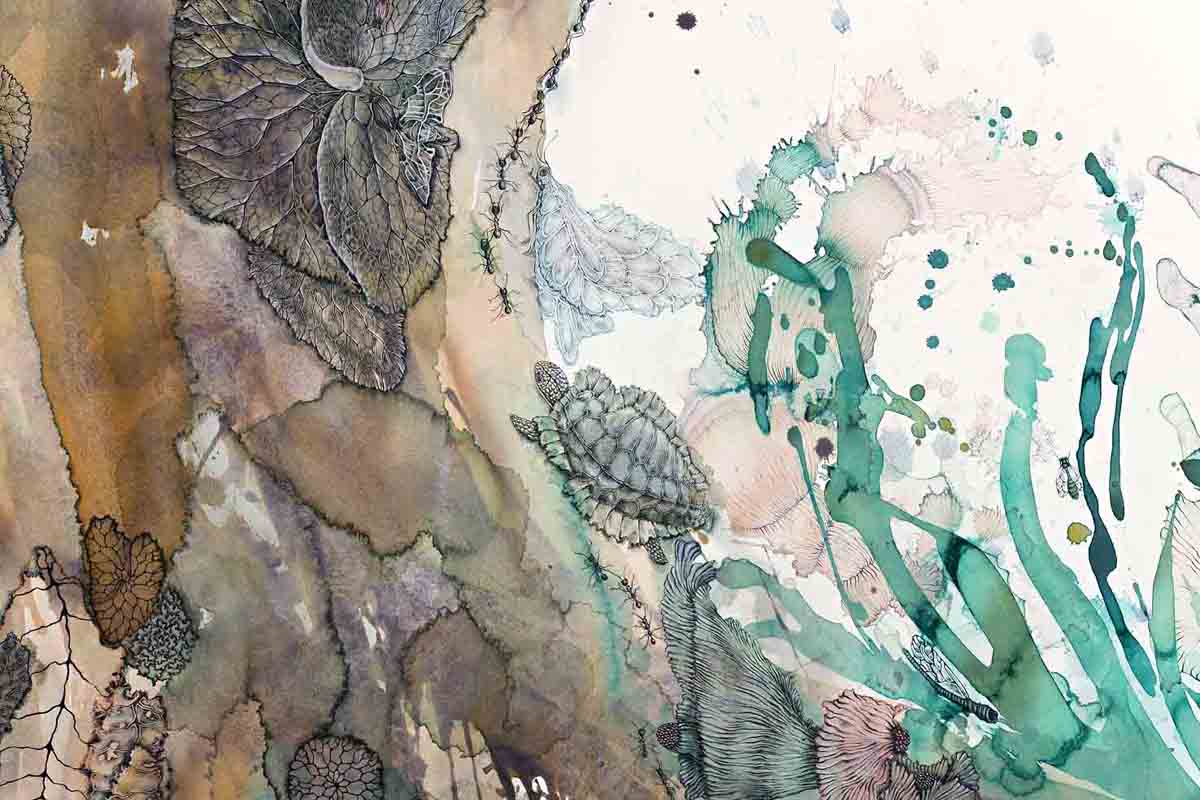
 

Monika Tichacek (Australian, b. 1975 Switzerland) 'To all my relations' 2011 (detail)


Monika Tichacek (Australian, b. 1975 Switzerland)
To all my relations (detail)
2011
Diptych
Gouache, pencil and watercolour on paper
244 x 300cm overall


The Cycle of Nature – Monika Tichacek’s To All My Relations

Dylan Rainforth

Anyone used to the immaculately controlled, exactingly lit photographic and video mise en scène that Swiss-born artist Monika Tichacek presented in such series as The Shadowers, for which she won the prestigious Anne Landa Award for Video and New Media Arts in 2007, may be surprised by the direction her work has taken in her latest exhibition. To All My Relations consists entirely of works on paper – watercolour and ink drawings that evince a tension between abstract, gestural shapes and bleeds of colour, recalling (just for convenience’s sake) Kandinsky, and intricately rendered natural forms that owe more to the scientific, zoological and botanical narratives of the Endeavour voyages of Captain Cook, Joseph Banks and the artist Sydney Parkinson.

The work has come out of an intensive period over the last few years in which Tichacek spent considerable time in the jungles of South America and the deserts of the United States, as well as time spent in the New South Wales bush and studying nature books. “I’m getting more and more interested in the cellular, microscopic imagery that you get when you enlarge something and peer deeper into the structure of how material elements are composed, and that really coincides with my interest in Eastern philosophies of Buddhism and many other things too. I guess I’m looking as deeply into the nature of something as is possible but I’m trying not to do it so much with my mind – but of course that’s very challenging,” she says, laughing lightly.

“The exploration of feeling is quite important to me – it’s quite a departure from what I used to do, which were certainly works that came from a very inner landscape but then the execution would be very conceptual, obviously – it had to be and this new work is much more intimate.”

That challenge to the rational, objective Western subject is informed by Tichacek’s exposure to indigenous traditions in South America and other places.

“In 2006 I had a research grant and I went to the Amazon because I wanted to look more deeply into animist cultures, meaning cultures that really see the land as living and as alive with energy and with spirit or ‘beingness’. So I went to the Amazon and spent quite a long time there and also in the mountains in Peru and saw a little bit of Central America and also North America in the desert. I spent time there and really learnt a lot about their indigenous ways and got to participate in a lot of things and experience a lot of things. In the Amazon shamanic tradition there is a process – they call it dieting – you spend a few months more or less alone, existing on very limited foods. You get very little, limited food and very little contact and they give you different traditional plants that, through the communion they do, they are ‘told’ to give you. And you are encouraged to connect with this plant for its healing properties to come through. So that was quite an amazing time to get quite still…”

The exhibition title comes from a Native American ceremony. According to Tichacek, “It’s always said when entering the sweat lodge and it’s an acknowledgement of being related to everything in nature, every being, the understanding that without all these other relations one wouldn’t exist. In those cultures it’s much more understood – we’ve lost that understanding because we can just buy things in the supermarket and eat them but if we lived that way we would probably remember a lot more that we are closely related to everything around us.”

From this perspective we can see that this new work is not a complete departure from Tichacek’s earlier work after all, yet its intentions are radically different. Both the natural world and shamanistic knowledge played their part in The Shadowers. Professor Anne Marsh has described Tichacek’s video, played out in a violent scene occurring between three women (one of whom Marsh characterises as a witch doctor or shaman) in a forest environment, as stretch[ing] the boundaries between body art, ritual and sado-masochism by assaulting the senses and transgressing the social realm. In psychoanalytic terms it tears at the screen of the real and immerses the viewer into the abject world of instinctual response where language has no authority.” [i]

Pain, sado-masochism, ritual and endurance certainly have their place in shamanistic traditions – one need only think of any number of initiation rites – but now Tichacek is looking for a less conflicted relationship with nature. “The work has always been very personal and I guess in The Shadowers that nature relationship was starting to come in but it was very tense and very violent and very confused. The continuation of that theme is still there – the exploration of how to understand the experience of the self and what we are doing here and how we come to exist. That’s definitely been there before but this new work is more in the realm of psychology and the previous works are more in the realm of the female body.”

To All My Relations will present several drawings, with one in particular being conceived on a massive scale that Tichacek intends to convey the sense of awe we experience when surrounded by nature. The artist will also stage a performance – something her interdisciplinary practice has always embraced – at the opening. Although she had not completely determined the details when I spoke to her the performance was inspired by a drawing she made a few years ago and will symbolically connect the artist’s body to the roots of a tree.

“I always feel like [performance serves] to bring my body into it. Although I feel like my body’s very much in these drawings there’s something about performance that’s really physically present.”

Dylan Rainforth.


Monika Tichacek (Australian, b. 1975 Switzerland) 'To all my relations' 2011 (detail)


Monika Tichacek (Australian, b. 1975 Switzerland)
To all my relations (detail)
2011
Diptych
Gouache, pencil and watercolour on paper
244 x 300cm overall


Monika Tichacek (Australian, b. 1975 Switzerland) 'To all my relations' 2011 (detail)


Monika Tichacek (Australian, b. 1975 Switzerland)
To all my relations (detail)
2011
Diptych
Gouache, pencil and watercolour on paper
244 x 300cm overall
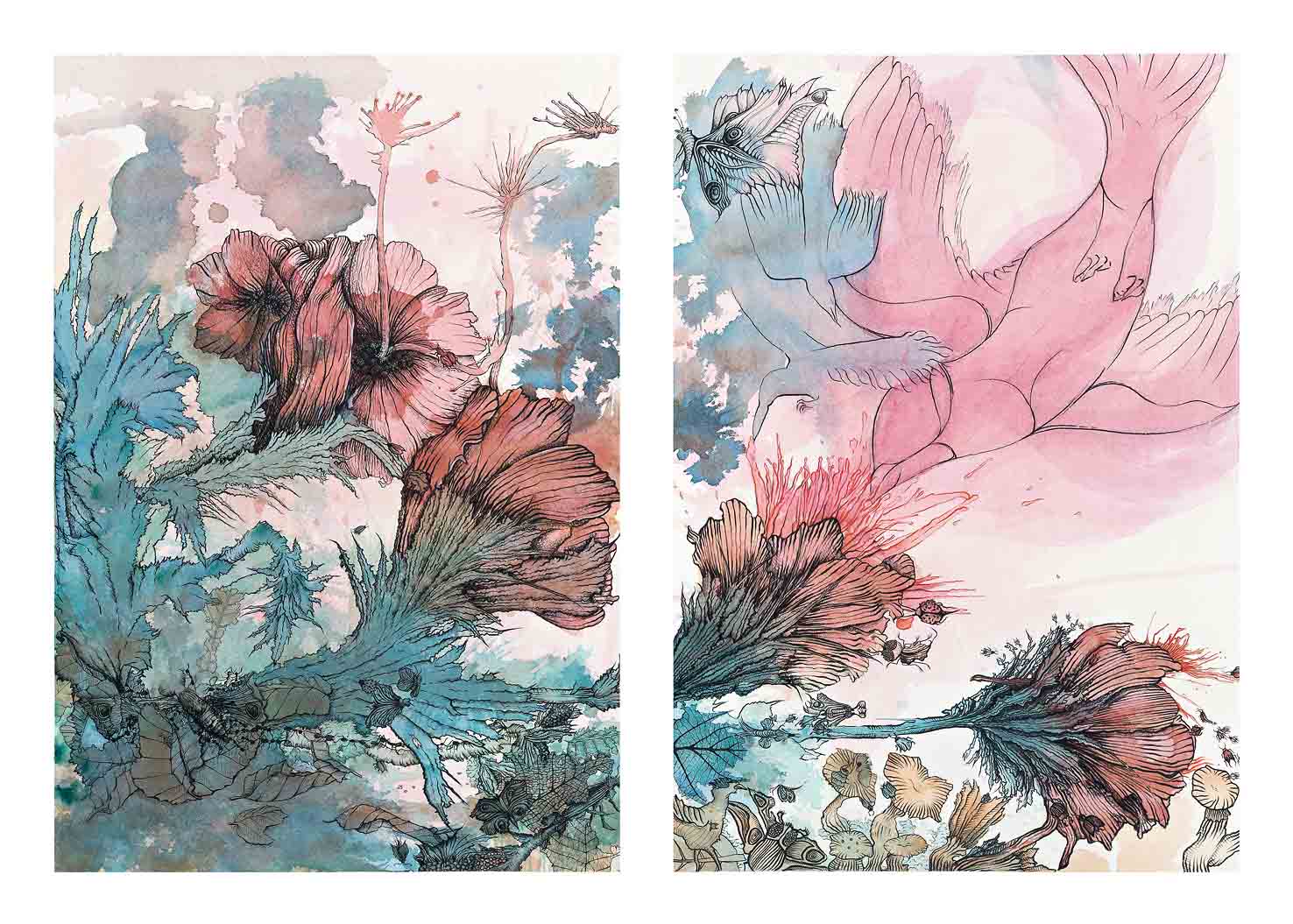
 

Monika Tichacek (Australian, b. 1975 Switzerland) 'Birth of generosity' 2011


Monika Tichacek (Australian, b. 1975 Switzerland)
Birth of generosity
2011
Diptych
Pencil and watercolour on paper
70 x 114cm overall
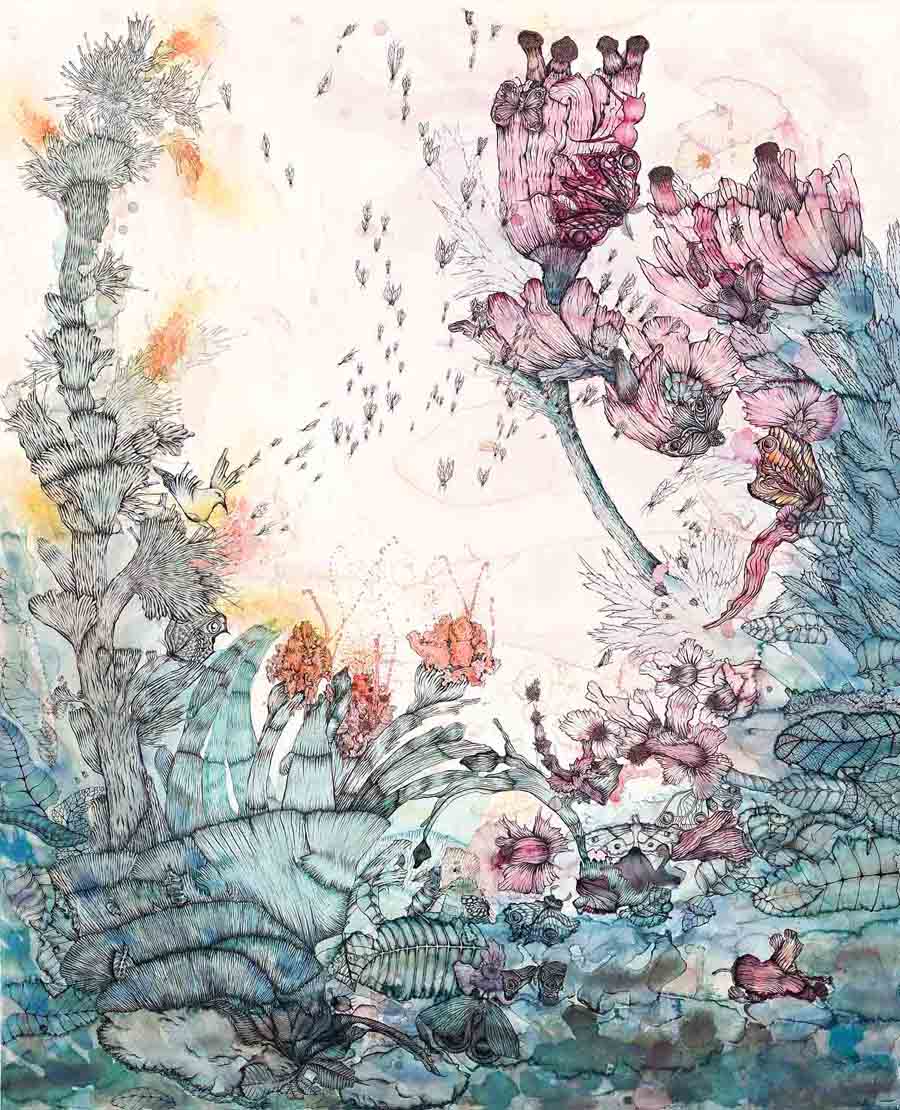
 

Monika Tichacek (Australian, b. 1975 Switzerland) 'Transmission' 2011


Monika Tichacek (Australian, b. 1975 Switzerland)
Transmission
2011
Pencil and watercolour on paper
150 x 125cm


Karen Woodbury Gallery

This gallery has now closed

LIKE ART BLART ON FACEBOOK

Back to top

Exhibition: ‘Alberto Giacometti. The Origin of Space: Retrospective of the mature work’ at Kunstmuseum Wolfsburg

Exhibition dates: 20th November 2010 – 6th March 2011


Many thankx to the Kunstmuseum Wolfsburg for allowing me to publish the photographs in the posting. Please click on the photographs for a larger version of the image.


Alberto Giacometti (Swiss, 1901-1966) 'La Cage/The Cage' 1950


Alberto Giacometti (Swiss, 1901-1966)
La Cage/The Cage
1950
Bronze
175.6 x 37 x 39.6cm
Collection Fondation Giacometti, Paris (Inv. Nr. : 1994-0177)
Photo: Jean-Pierre Lagiewski
© ADAGP / Fondation Giacometti, Paris / VG Bild-Kunst, Bonn 2010


Alberto Giacometti (Swiss, 1901-1966) 'Walking Man I' 1960


Alberto Giacometti (Swiss, 1901-1966)
Homme qui marche I/Walking Man I
1960
Bronze
180.5 x 27 x 97cm
Collection Fondation Giacometti, Paris (Inv. Nr.: 1994-0186)
Photo: Jean-Pierre Lagiewski
© ADAGP / Fondation Giacometti, Paris / VG Bild-Kunst, Bonn 2010


Alberto Giacometti (Swiss, 1901-1966) 'Falling Man' 1950


Alberto Giacometti (Swiss, 1901-1966)
Homme qui chavire/Falling Man
1950
Bronze, 60 x 22 x 36cm
Avignon, Musée Calvet (Depot Musée d’Orsay); Gift of Philippe Meyer, 2000 (Inv. Nr.: RF 4655)
Photo: © bpk/RMN/Aix-en-Provence, Musée Granet/Michèle Bellot
© ADAGP / Succession Giacometti / VG Bild-Kunst, Bonn 2010


“Space does not exist, it has to be created… Every sculpture based on the assumption that space exists is wrong; there is only the illusion of space.”


Alberto Giacometti, Notes, circa 1949


For the first time in 12 years, the Kunstmuseum Wolfsburg is presenting a comprehensive overview of Alberto Giacometti’s mature work in Germany. Around 60 sculptures will be displayed alongside more than 30 paintings and several drawings in the circa 2000 square meter exhibition space. The exhibition offers unique insights into the fascinating oeuvre of one of the most important artists of the twentieth century.

Giacometti’s vision of situating his figures within their own space and temporality will be realised for the first time in Wolfsburg as the exhibition architecture has been specially designed and constructed around the sculptures on display. Each of the carefully chosen works is provided with the space it requires to unfurl its true strengths. The exhibition clearly demonstrates the continued relevance of the work of Giacometti, who died in 1966, and its lasting influence on subsequent generations of artists. With his completely new conception of the human figure in relation to space and time, Giacometti can literally be considered – and this is one of the exhibition’s key theses – the inventor of virtual space.

Organised in cooperation with the Museum der Moderne Salzburg, the exhibition juxtaposes major works from Giacometti’s oeuvre with selected pieces from private collections and the artist’s estate. The works on show in Wolfsburg are drawn in large part from the estate holdings of the Alberto and Annette Giacometti Foundation in Paris; this is the first time they have been presented on this scale in Germany. The display also includes important loans from the Alberto Giacometti Foundation in Zurich, as well as works from leading museums and private collections in Europe and the United States.

Press release from the Kunstmuseum Wolfsburg website


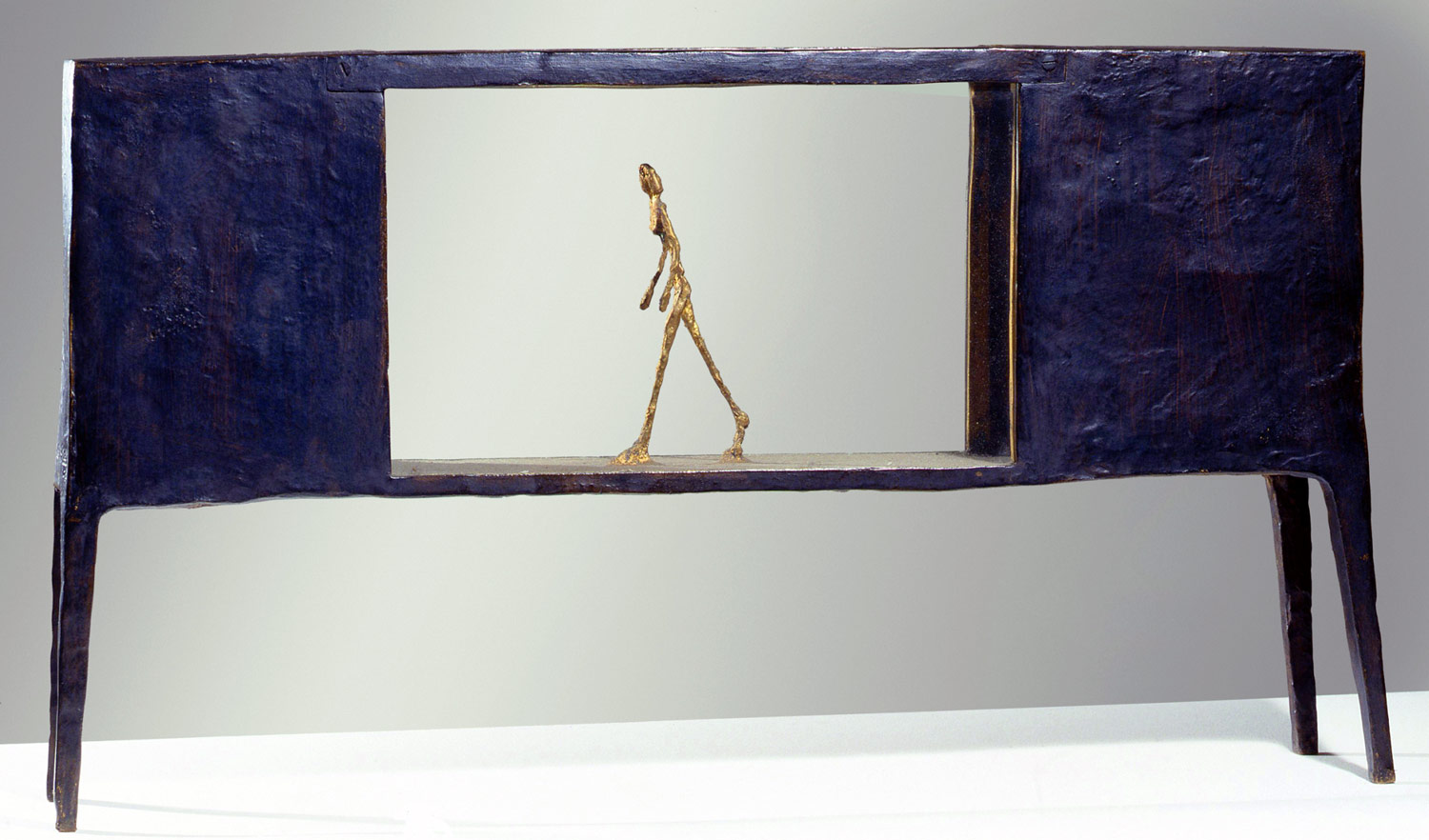
Alberto Giacometti (Swiss, 1901-1966) 'Figure in a Box between Two Boxes which are Houses' 1950


Alberto Giacometti (Swiss, 1901-1966)
Figurine dans une boîte entre deux boîtes qui sont des maisons/Figure in a Box between Two Boxes which are Houses
1950
Bronze, glass, figurine painted white, 29.5 x 53.5 x 9.4cm
Private collection (Inv. Nr.: GS 45)
© ADAGP / Succession Giacometti / VG Bild-Kunst, Bonn 2010


Alberto Giacometti (Swiss, 1901-1966) 'Man walking in the Rain' 1948


Alberto Giacometti (Swiss, 1901-1966)
Homme qui marche sous la pluie/Man walking in the Rain
1948
Bronze
46.5 x 77 x 15cm
Kunsthaus Zürich, Alberto Giacometti-Stiftung (Inv. Nr.: GS 35)
© ADAGP / Succession Giacometti / VG Bild-Kunst, Bonn 2010


Alberto Giacometti (Swiss, 1901-1966) 'Small Man on a Base' 1940-41


Alberto Giacometti (Swiss, 1901-1966)
Petit homme sur socle/Small Man on a Base
1940-1941
Bronze, 8/8
Height: 8.4cm
Louisiana Museum of Modern Art, Humlebæk, Dänemark
Photo: Brøndum & Co. Poul Buchart/Louisiana Museum of Modern Art, Humlebaek, Dänemark
© ADAGP / Succession Giacometti / VG Bild-Kunst, Bonn 2010


Alberto Giacometti (Swiss, 1901-1966) 'Large Narrow Head' 1954


Alberto Giacometti (Swiss, 1901-1966)
Grande tête mince/Large Narrow Head
1954
Bronze, 4/6
64.5 x 38.1 x 24.4cm
Collection Fondation Giacometti, Paris (Inv. Nr.: 1994-0175)
Photo: Marc Domage
© ADAGP / Fondation Giacometti, Paris / VG Bild-Kunst, Bonn 2010


Alberto Giacometti (Swiss, 1901-1966) 'Three Men Walking' 1948
Screenshot


Alberto Giacometti (Swiss, 1901-1966)
Three Men Walking
1948
Bronze
28 3/10 × 12 9/10 × 13 2/5 in | 72 × 32.7 × 34.1cm


Kunstmuseum Wolfsburg
Abteilung Kommunikation
Hollerplatz 1
38440 Wolfsburg
Phone: +49 (0)5361 2669 69

Opening hours:
Tuesday – Sunday 11am – 6pm
Monday closed

Kunstmuseum Wolfsburg website

LIKE ART BLART ON FACEBOOK

Back to top

Review: ‘To hold and be held’ by Kiko Gianocca at Gallery Funaki, Melbourne

Exhibition dates: 20th April – 15th May 2010


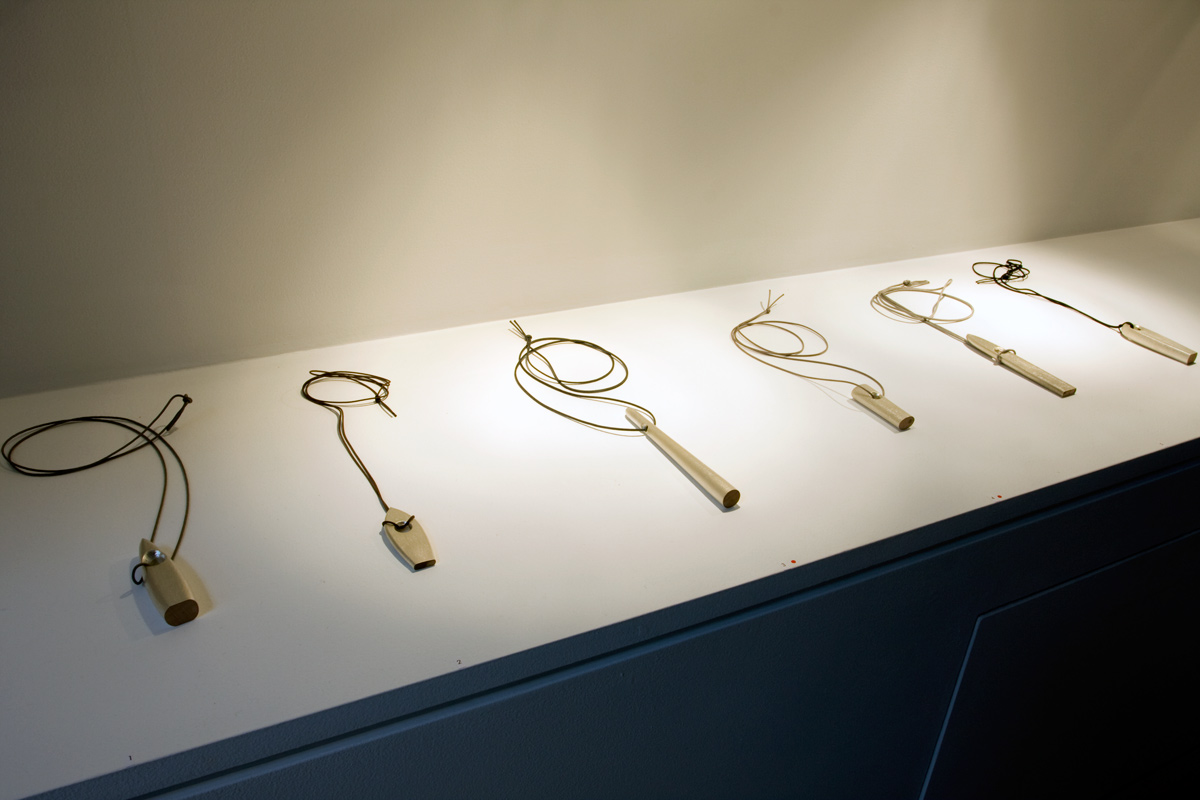
Kiko Gianocca (Swiss, b. 1974) 'Untitled (touch wood)' multiples 2009 (installation view) from the exhibition 'To hold and be held' by Kiko Gianocca at Gallery Funaki, Melbourne, April - May, 2010


Kiko Gianocca (Swiss, b. 1974)
Untitled (touch wood) multiples (installation view)
2009
Burnt wood, resin
Photo: Marcus Bunyan


A beautiful exhibition of objects by Swiss/Italian artist Kiko Gianocca at Gallery Funaki, Melbourne, one full of delicate resonances and remembrances.

Obelisk pendants in blackened and silvered wood, Neolithic standing stones, totemic, silent;
The hole through the object akin to ‘seeing’ through time.
Exposed wood on base (touch wood) as grounding.

The standing stone installation an altar piece, a dark reliquary (see image above)


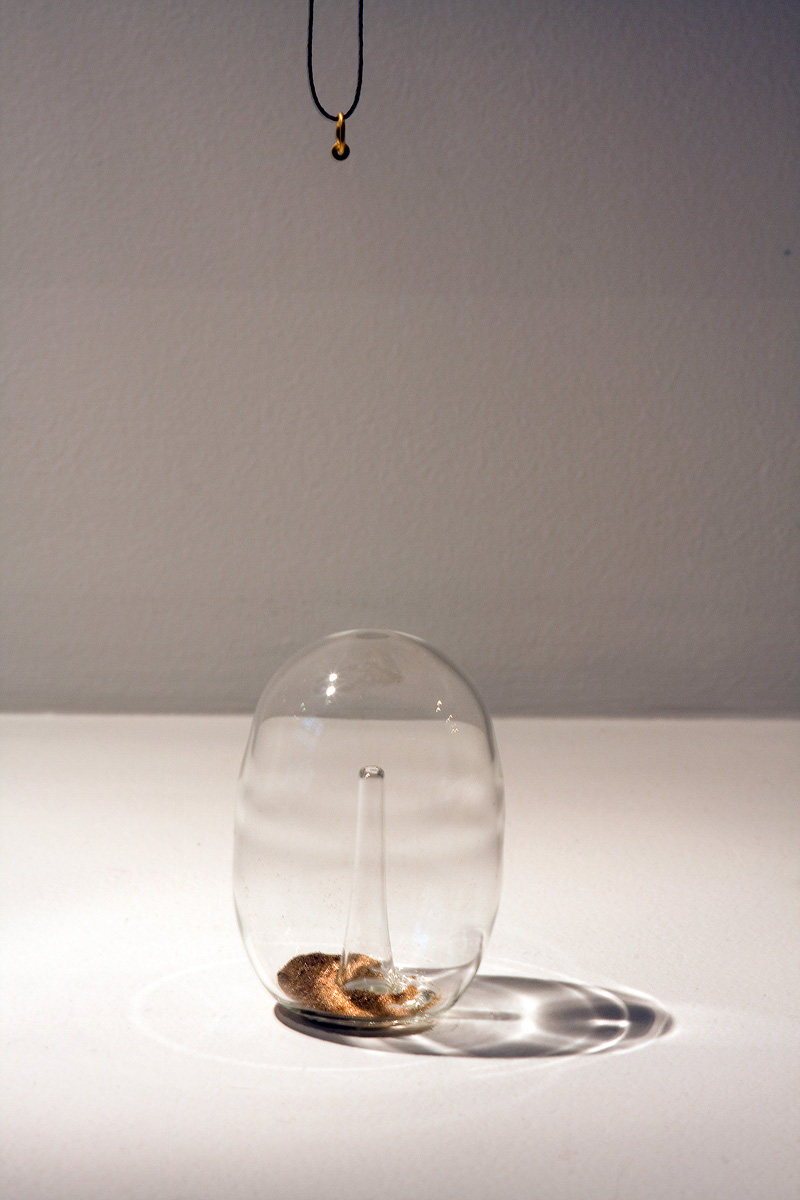
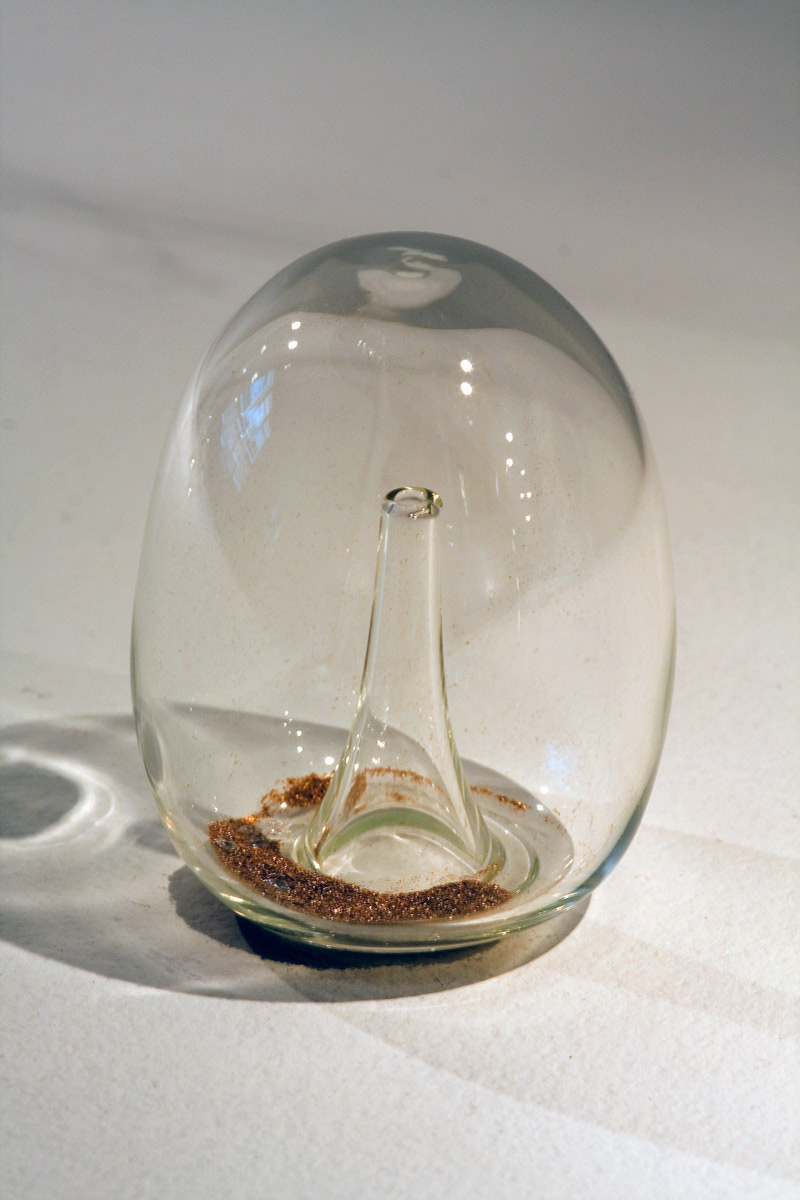
Glass vessels with internal funnels filled with the gold detritus of disassembled objects, found pendants:
Horse, Anchor, Four leaf clover, Swan, Hammer & sickle (see images below)

The distance between the bail – the finding that attaches the pendant to the necklace – and the remainder/reminder of the vessel itself. What a distance!

As Sally Mann would articulate, ‘What remains’1 …

Lives previous to this incarnation; jewels embedded in dust.
The captured potency of displaced objects.
Personal and yet anonymous at one and the same time.


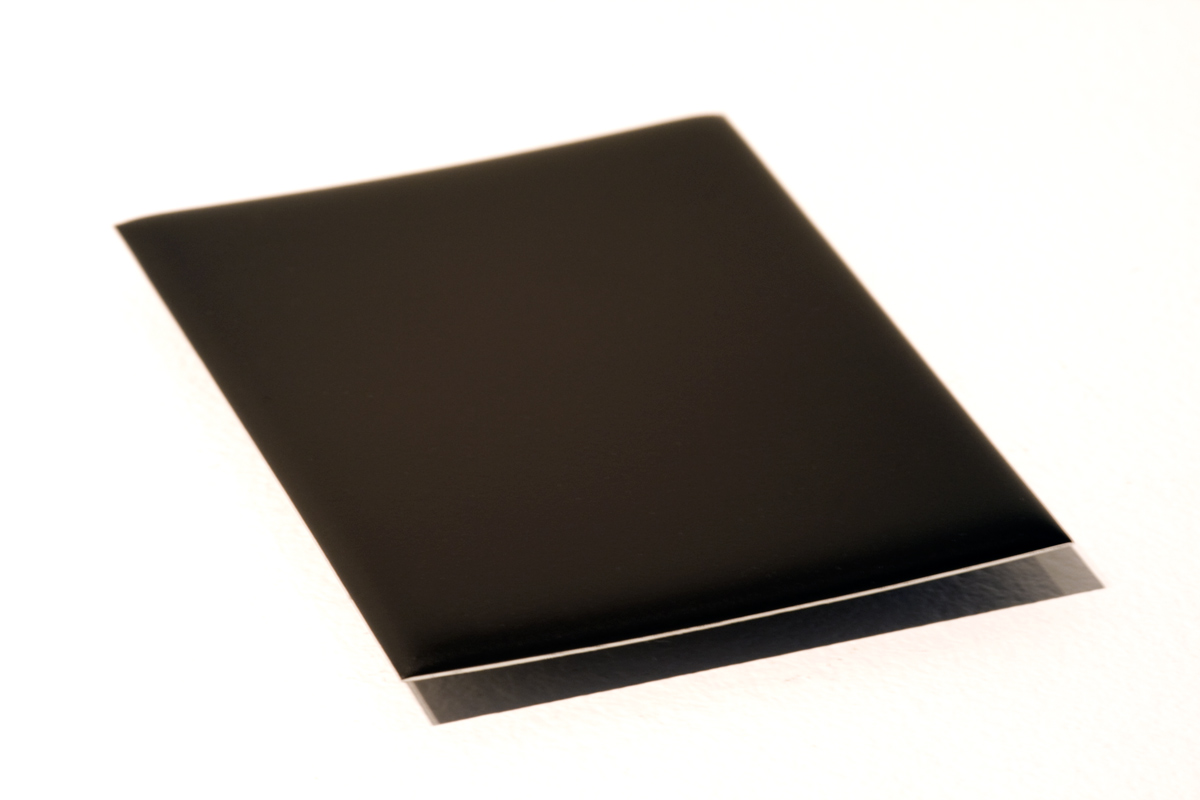
Brooches of gloss and matt black resin plates. A plastic black, almost Rembrandt-esque.

On the reverse images exposed like a photographic plate, found images solidified in resin.

The front: the depths of the universe, navigating the dazzling darkness
The back: memories, forgotten, then remade, worn like a secret against the beating chest. Only the wearer knows!

Here is a territorialization, “a double movement, where something accumulates meanings (re-territorialization), but does so co-extensively with a de-territorialization where the same thing is disinvested of meanings.”2

As Kiki Gianocca asks, “I am not sure if I grasp the memories that sometimes come to mind.
I start to think they hold me instead of me holding them.”

 
Time is the distance between objects. No objects.
Space is the distance between events. No events.

Dr Marcus Bunyan


1/ “Mann’s fifth book, What Remains, published in 2003, is based on the show of the same name at the Corcoran Museum in Washington, DC and is in five parts. The first section contains photographs of the remains of Eva, her greyhound, after decomposition. The second part has the photographs of dead and decomposing bodies at a federal Forensic Anthropology Facility (known as the ‘body farm’). The third part details the site on her property where an armed escaped convict was killed. The fourth part is a study of the grounds of Antietam (the site of the bloodiest single day battle in American history during the Civil War. The last part is a study of close-ups of the faces of her children. Thus, this study of mortality, decay and death ends with hope and love.”
Sally Mann. Wikipedia [Online] Cited 02/05/2010

2/ “For them (Deleuze and Guattari), assemblages are the processes by which various configurations of linked components function in an intersection with each other, a process that can be both productive and disruptive. Any such process involves a territorialization; there is a double movement where something accumulates meanings (re-territorialization), but does so co-extensively with a de-territorialization where the same thing is disinvested of meanings. The organization of a territory is characterized by such a double movement … An assemblage is an extension of this process, and can be thought of as constituted by an intensification of these processes around a particular site through a multiplicity of intersections of such territorializations.”
Wood, Aylish. “Fresh Kill: Information technologies as sites of resistance ” in Munt, Sally (ed.,). Technospaces: Inside the New Media. London: Continuum, 2001, p. 166.


    Many thankx to Katie and Gallery Funaki for allowing me to take the photographs in the gallery and post them online. Please click on the photographs for a larger version of the image. All photographs © Marcus Bunyan except The waterfall.


    “I own a stone that a friend passed to me, and a shackle that Michael gave me.

    I found a curious object in Lisbon at the fleamarket, I paid one euro for it and I still don’t know what it is.

    Yesterday I had a look again at the picture you shot. I am not sure if I grasp the memories that sometimes come to mind.

    I start to think they hold me instead of me holding them.”


    Kiko Gianocca, April 2010


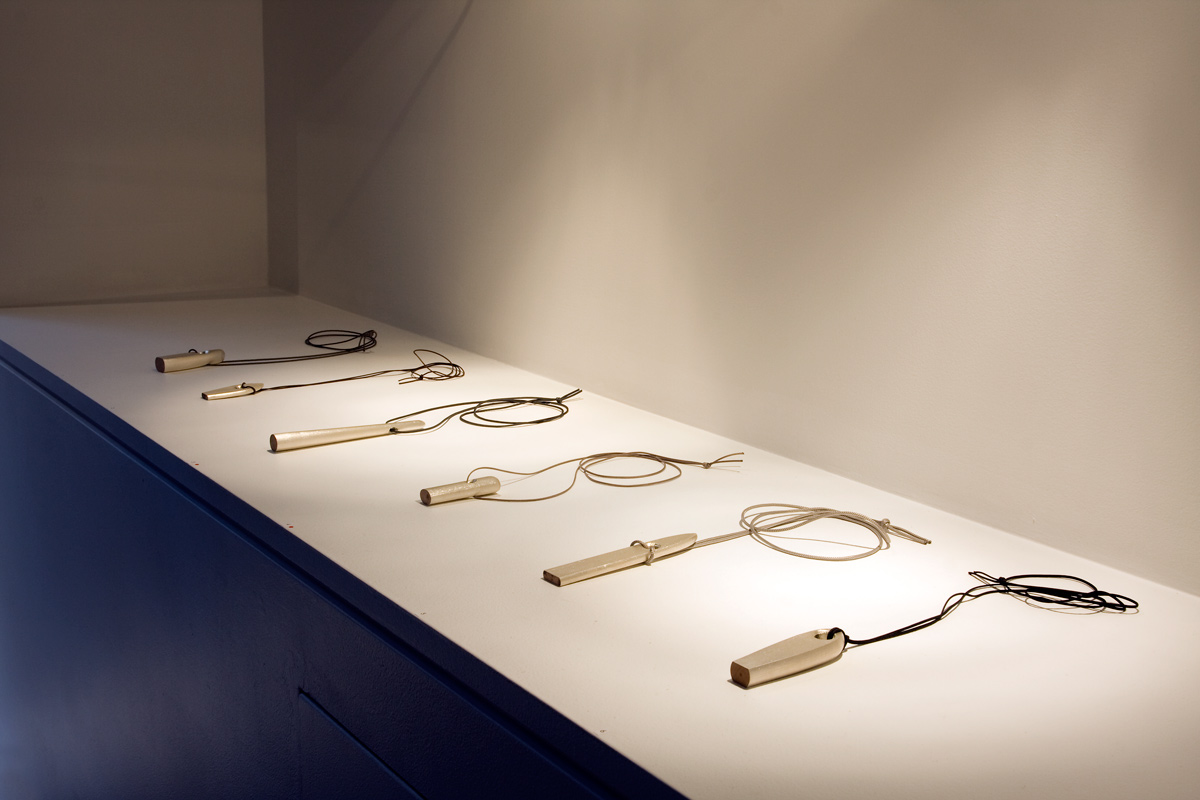
    Installation view of the exhibition 'To hold and be held' by Kiko Gianocca at Gallery Funaki, Melbourne showing 'Untitled (touch wood)' multiples (installation view)

    Installation view of the exhibition 'To hold and be held' by Kiko Gianocca at Gallery Funaki, Melbourne showing 'Untitled (touch wood)' multiples (installation view)


    Kiko Gianocca (Swiss, b. 1974)
    Untitled (touch wood) multiples (installation views)
    2009
    Wood, silver
    Photos: Marcus Bunyan


    Kiko Gianocca (Swiss, b. 1974)
'Horse, Anchor, Four leaf clover and Swan' (left to right) 2009 (installation view)


    Kiko Gianocca (Swiss, b. 1974)
    Horse, Anchor, Four leaf clover and Swan (left to right) (installation view)
    2009
    18k gold, glass
    Photo: Marcus Bunyan


    Kiko Gianocca. 'Horse' 2009 (installation view)


    Kiko Gianocca (Swiss, b. 1974)
    Horse (installation view)
    2009
    18k gold, glass
    Photo: Marcus Bunyan


    Kiko Gianocca (Swiss, b. 1974) 'Anchor' 2009 (installation view) from the exhibition 'To hold and be held' by Kiko Gianocca at Gallery Funaki, Melbourne, April - May, 2010


    Kiko Gianocca (Swiss, b. 1974)
    Anchor (installation view)
    2009
    18k gold, glass
    Photo: Marcus Bunyan


    Kiko Gianocca (Swiss, b. 1974) 'Swan' 2009 (installation view)


    Kiko Gianocca (Swiss, b. 1974)
    Swan (installation view)
    2009
    18k gold, glass
    Photo: Marcus Bunyan


    Installation view of the exhibition 'To hold and be held' by Kiko Gianocca at Gallery Funaki, Melbourne with 'Untitled (touch wood)' burnt wood multiples in distance


    Installation view of exhibition with Untitled (touch wood) burnt wood multiples in distance
    Photo: Marcus Bunyan


    Kiko Gianocca (Swiss, b. 1974) 'Man & dog' 2009 (installation view)


    Kiko Gianocca (Swiss, b. 1974)
    Man & dog (installation view)
    2009
    Found image, resin, silver
    Photo: Marcus Bunyan


    Kiko Gianocca (Swiss, b. 1974) 'The waterfall' 2009 from the exhibition 'To hold and be held' by Kiko Gianocca at Gallery Funaki, Melbourne, April - May, 2010


    Kiko Gianocca (Swiss, b. 1974)
    The waterfall
    2009
    Found image, resin, silver


    Kiko Gianocca (Swiss, b. 1974) 'The dog' 2009 (installation view)


    Kiko Gianocca (Swiss, b. 1974)
    The dog (installation view)
    2009
    Found image, resin, silver
    Photo: Marcus Bunyan


    Kiko Gianocca (Swiss, b. 1974) 'The kiss' (reverse) 2009 (installation view)


    Kiko Gianocca (Swiss, b. 1974)
    The kiss (reverse) (installation view)
    2009
    Found image, resin, silver
    Photo: Marcus Bunyan


    Kiko Gianocca (Swiss, b. 1974) 'The way up' (reverse) 2009 (installation view)


    Kiko Gianocca (Swiss, b. 1974)
    The way up (reverse) (installation view)
    2009
    Found image, resin, silver
    Photo: Marcus Bunyan


    Kiko Gianocca (Swiss, b. 1974) 'The beast' (reverse) 2009 (installation view)


    Kiko Gianocca (Swiss, b. 1974)
    The beast (reverse) (installation view)
    2009
    Found image, resin, silver
    Photo: Marcus Bunyan


    Gallery Funaki
    Sackville House
    Apartment 33
    27 Flinders Lane
    Melbourne 3000
    Australia

    Opening hours:
    Wednesday – Friday 12 – 5pm
    Saturday on occasion (check our socials) or by appointment

    Gallery Funaki website

    LIKE ART BLART ON FACEBOOK

    Back to top

    Exhibition: ‘René Burri: A Retrospective’ at Flo Peters Gallery, Hamburg

    Exhibition dates: 4th November, 2009 – 15th January, 2010


    Many thankx to the Flo Peters Gallery for allowing me to publish the photographs in the posting. Please click on the photographs for a larger version of the image.

    Dr Marcus Bunyan


    René Burri (Swiss, 1933-2014) 'Tae Soe Dong, Sud Korea' 1961


    René Burri (Swiss, 1933-2014)
    Tae Soe Dong, Sud Korea
    1961
    Gelatin silver print


    René Burri (Swiss, 1933-2014) 'Bilbao, Spain' 1957


    René Burri (Swiss, 1933-2014)
    Bilbao, Spain
    1957
    Gelatin silver print


    René Burri (Swiss, 1933-2014)
'Training, Fort Lauderdale, Florida'
1966


    René Burri (Swiss, 1933-2014)
    Training, Fort Lauderdale, Florida
    1966
    Gelatin silver print


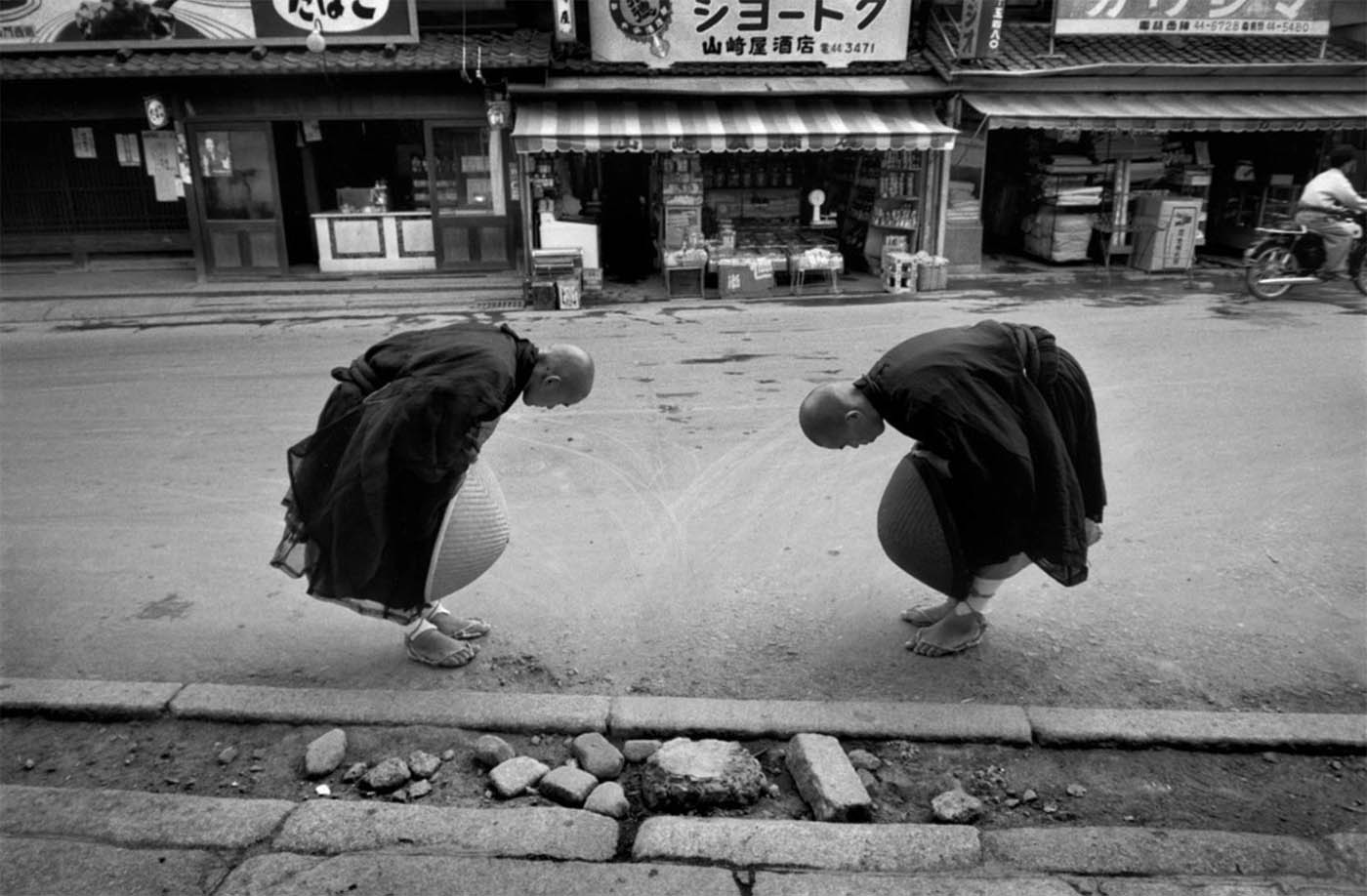
    René Burri (Swiss, 1933-2014) 'Two Monks, Kyoto, Japan' 1961


    René Burri (Swiss, 1933-2014)
    Two Monks, Kyoto, Japan
    1961
    Gelatin silver print


    René Burri (Swiss, 1933-2014) 'Che Guevara, Havana' 1963


    René Burri (Swiss, 1933-2014)
    Che Guevara, Havana
    1963
    Gelatin silver print


    René Burri (Swiss, 1933-2014) 'Men On A Rooftop, Sao Paulo' 1960


    René Burri (Swiss, 1933-2014)
    Men On A Rooftop, Sao Paulo
    1960
    Gelatin silver print


    René Burri likes to see his career as a series of happy accidents, which is often just another way of editing out all the downtime and boring bits, the months of no work. But you have to admit it did start with a bang. There he was, 24 years old, mooching around in northern Spain, when he read in a newspaper that Picasso was expected at a bullfight in Nimes the next day. He drove through the night, checked into a hotel early the next morning – and to his surprise was ushered straight into Picasso’s bedroom.

    A party was in full swing, and the artist was sitting up in bed, directing a small group of musicians and friends. He nodded at Burri – yes, he could take pictures – and the result is a wonderfully vivid sequence of portraits, Picasso laughing and clapping and betraying not the tiniest sign that a private party has just been interrupted. Burri, of course, took it as a sign from God: with luck like this, he was a born photographer.

    So, right from the start, he has had a knack for being in the right place at the right time – and for not making a nuisance of himself once he gets there. He photographed Che Guevara in Havana in 1963, just a few months before the revolutionary disappeared from public life. He got stuck in a lift with President Nasser of Egypt, and took a funny picture of him laughing while a bodyguard looks on murderously.

    Of course, for every picture Burri took, there was another he didn’t. He is now 71 and semi-retired (photographers never stop), and says that you could fill volumes with the stories he didn’t get, the places he didn’t go.

    The first time he was commissioned to go to Cuba, in 1958 at the height of the revolution, he got drunk the night before he was due to fly, cried off, and went skiing at home in Switzerland instead. He once saw Greta Garbo coming down the road towards him in New York, wearing dark glasses, and at the very last moment put away his camera; she was just too forbidding. In the desert in Egypt, he saw the blackened hand of a corpse reaching up through the sand, and he didn’t take that picture, either. Burri believes in a notion of tact, or what he calls dignity.

    Other people might call it cowardice, but he feels strongly that there are some lines you just don’t cross. “I have incredible respect for [war photographers] Don McCullin and Larry Burrows, but you pay a price. What does Don photograph now? Landscapes, pictures of flowers.” This is partly a moral position – photographers can get addicted to war, he says, and he met a lot of them in Vietnam – but it is also a simple instinct for self-preservation. Three of Burri’s great mentors at Magnum – Robert Capa, Werner Bischof, Chim (David Seymour) – lived dangerously and died young, and he always felt it was a tremendous waste of their talent.

    For all that, Burri has seen a lot of war. Since joining Magnum in 1959, he has covered conflicts in Cambodia, Korea, Vietnam, Egypt, Syria, Lebanon and China. He says he prefers to photograph the build-up to war, or its aftermath, rather than the violence itself. One of the first big projects he undertook was a portrait of postwar Germany, starting in the bleak mid-1950s and published in book form in 1962.

    Of all his photographs, those that most nearly capture the atmosphere of combat are, in fact, of a training exercise in the Swiss Jura. Burri undertook compulsory military service in the 1950s, while still at art school, but with the permission of his training officer ended up shooting more film than anything else; he developed the pictures in his bath tub at the end of the day. At the age of 21, he came to see the camera as a way of removing himself from actual conflict; it also, he says, forced him to look for metaphors about battle, rather than relying on the action picture. (This is a rule of his – don’t be too literal. He once saw Castro standing in a doorway underneath a big exit sign, which was tempting for a second, but then just too obvious.)

    Burri’s most powerful war pictures are the ones with no one in them. During the Six Day War between Egypt and Israel in 1967, he took a series of stark, graphic photographs, many of them from the air, which said something about the conflict that any single explosion or corpse might not have. In one, the wreckage of an Egyptian helicopter lies sprawled on a concrete landing pad, looking like a bug squashed on patio paving; in another, a burned-out convoy snakes through the desert like a collection of children’s toys left out in a sand pit.

    A third photograph, an extreme close-up of a helmeted soldier with helicopters swarming at his shoulder like mosquitoes, taken in 1974, after the Yom Kippur war, has someone in it, it’s true, but he is silhouetted and faceless – an emblematic soldier, not a real one. In person, Burri is not a man given to big political statements, but on film he has captured the futility of war, the mess and wastefulness of human aggression.

    Burri now lives in Paris, which is currently honouring him with a retrospective, and on the opening weekend he rushes around the gallery with his publisher, a TV director, several friends, his wife and 11-year-old son in tow. (He has grown-up children from his first marriage to Rosellina Bischof, who died in 1986.) He is every inch the European photojournalist – battered black fedora, cravat, a thick cloud of cigar smoke; when we move to a cafe to talk and the Americans at the next table complain about the cigar, he points out, in a very genial way, that the pollution is marginally worse outside.

    At art school in Zurich, Burri was initially more interested in film. He had a rather off-putting photography teacher who started class with gymnastics and breathing exercises, and was a keen proponent of the “new objectivity” – there was an emphasis on still lifes and form, and what Burri refers to as “coffee cups in light.”

    The American photographer Edward Steichen once came to the school looking for work he might include in an exhibition, The Family Of Man, at the Museum of Modern Art in New York – where were the pictures of people, he wanted to know, and left disappointed. It wasn’t until after he graduated that Burri felt free to pursue the more spontaneous, subjective kind of photography that Steichen had come looking for. “I suddenly had to chase after my pictures … Pictures are like taxis during rush hour – if you’re not fast enough, someone else will get there first.”

    He started in Paris, as everyone did in the 1950s. Henri Cartier-Bresson had just published his influential book The Decisive Moment, and Robert Doisneau and Willy Ronis were photographing the city’s streets and cafes. At Magnum, they took an interest in a story Burri had published about a school for deaf-mute children, selling it on to Life magazine. He was in – Cartier-Bresson approved, Capa was enthusiastic, so Burri became a part of the greatest photographers’ cooperative in the world.

    For the next two decades, he travelled almost incessantly, working on commissions for the New York Times, Vogue, Paris-Match, Time, Der Stern. He has kept every boarding card and press pass; a cabinet in the Paris exhibition is full of them. But although Burri worked constantly throughout the 1950s and 1960s, his photographs were always considered the lesser part of a story; as far as magazine editors were concerned, it was the words that mattered. After Burri accompanied an American journalist on a two-hour interview with Che Guevara, Look magazine ran pages of dense text, cropping his extraordinary portraits and running them very small at the bottom of the page.

    One of the chief pleasures of this retrospective stage in life, says Burri, is being able to go back through all that work and decide for himself what was important and what was not. In Phaidon’s new monograph of his work, the portrait of Che is not 2in square but blown up across two pages. He has hung magazine stories in the new exhibition, signing the uncredited ones in red crayon. And as well as the reportage, there are hundreds of portraits of artists and writers and architects – Patricia Highsmith, Alberto Giacometti, Le Corbusier – and of cities: Tokyo, Havana, New York in a blackout, Rio de Janeiro, São Paolo, Brasilia.

    Burri fell in love with modern architecture as a student and went on to form close friendships with Le Corbusier, Luis Barragan and Oscar Niemeyer. Some of his best work draws on this innate feel for the form and volume of a building, and of a person’s place within it. A photograph called In The Ministry Of Health, Rio de Janeiro 1960, is so full of light and shadow, it looks at first like a street scene, two young women striding through thick bars of sunlight; in fact, the photograph was taken indoors, in the lobby of a building designed by two of Burri’s favourite architects, Niemeyer and Le Corbusier. Burri’s best known photograph, of four suited men crossing a rooftop in São Paolo, captures all the drama, glamour and vertigo of life in a giant city: the flat roof floats high above the street, dotted with tiny, improbable people.

    When Burri left Zurich in the 1950s, he set out to discover the world and some sense of man’s smallness within it. Switzerland was landlocked, bordered by mountains; a camera was a way out. Even then, he worried about what he could do that was new – “when shutters rattle from morning to night in every corner of the world … when every continent is lit with the flash of cameras.” His job, he believes, has been to “trace the enormous social changes taking place in our age, conveying my thoughts and images of them.” And, more poetically, “to put the intensity that you yourself have experienced into the picture – otherwise it is just a document.” He retired from reporting once that intensity, that sense of the bigness of the world, was gone. In 1989, he went to Moscow to photograph Ronald Reagan and Mikhail Gorbachev, but so did 6,500 others, and in the scrum it seemed impossible to take a meaningful picture. He now prefers to paint and take pictures of his wife and son. Of course, he’d start all over again if the world ever became less crowded – if you could walk into Picasso’s bedroom at six in the morning, and be welcome.

    Saturday February 7, 2004
    The Guardian
    Text on the Art Daily website [Online] Cited 19/05/2019


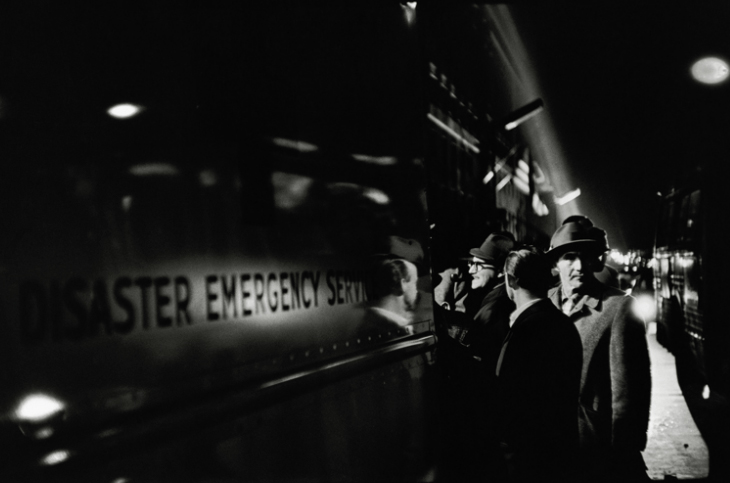
    René Burri (Swiss, 1933-2014) 'Blackout New York' November 9, 1965

    René Burri (Swiss, 1933-2014) 'Blackout New York' November 9, 1965

    René Burri (Swiss, 1933-2014) 'Blackout New York' November 9, 1965

    René Burri (Swiss, 1933-2014) 'Blackout New York' November 9, 1965


    René Burri (Swiss, 1933-2014)
    Four photographs from the series Blackout New York
    November 9, 1965
    Gelatin silver print


    Flo Peters Gallery
    Burchardstraße 13
    Chilehaus C
    20095 Hamburg, Germany

    Gallery hours:
    Tuesday – Friday 12 – 4pm
    Saturday 11 – 3pm

    Flo Peters Gallery website

    LIKE ART BLART ON FACEBOOK

    Back to top