Exhibition: ‘Photography in Mexico: Selected Works from the Collections of SFMOMA and Daniel Greenberg and Susan Steinhauser’ at the San Francisco Museum of Modern Art (SFMOMA)

Exhibition dates: 10th March – 8th July 2012

List of Photographers Included: Katya Brailovsky, Lola Alvarez Bravo, Manuel Alvarez Bravo, Manuel Carrillo, Alejandro Cartagena, Eduardo del Valle and Mirta Gomez, Pia Elizondo, Dave Gatley, Oscar Fernando Gomez, Héctor Garcia, Lourdes Grobet, Graciela Iturbide, Geoffrey James, Mark Klett, Pablo Lopez Luz, Elsa Medina, Susan Meiselas, Enrique Metinides, Pedro Meyer, Tina Modotti, Rodrigo Moya, Pablo Ortiz Monasterio, Paolo Pellegrin, Antonio Reynoso, Daniela Rossell, Mark Ruwedel, Victoria Sambunaris, Alec Soth, Paul Strand, Yvonne Venegas, Brett Weston, Edward Weston, and Mariana Yampolsky.
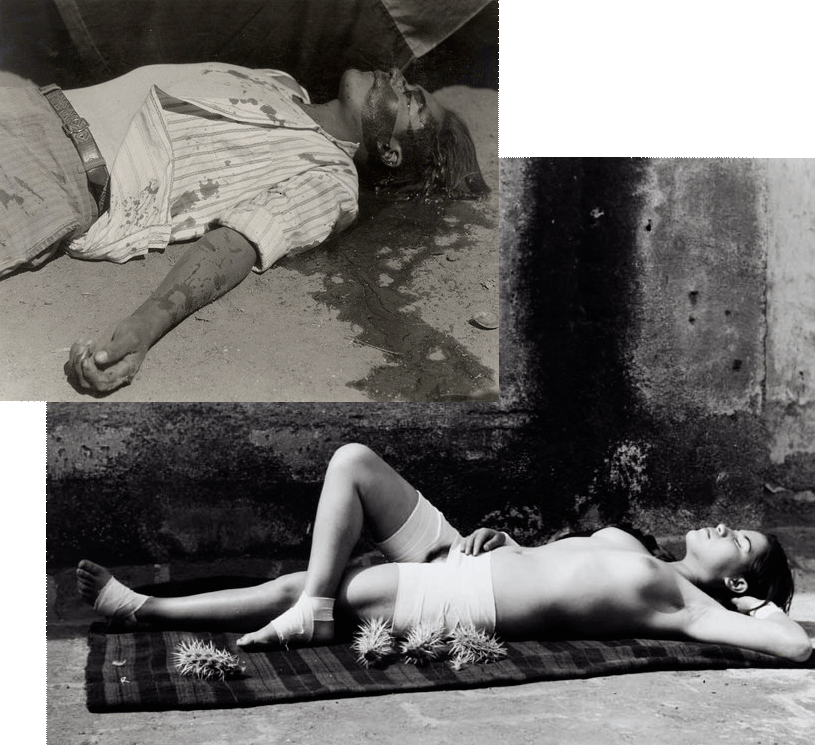
 

Manuel Alvarez Bravo (Mexican, 1902-2002) 'Obrero en huelga, asesinado' (Striking Worker, Assassinated) 1934 and 'La buena fama durmiendo' (The Good Reputation Sleeping) 1939


Manuel Alvarez Bravo (Mexican, 1902-2002)
Obrero en huelga, asesinado (Striking Worker, Assassinated)
1934
Gelatin silver print
19.2 x 23.8cm

Manuel Alvarez Bravo (Mexican, 1902-2002)
La buena fama durmiendo (The Good Reputation Sleeping)
1939
Gelatin silver print
20.3 x 25.4cm

Compilation by Dr Marcus Bunyan


“There is no one ‘Mexican photography,’ but one strand that runs throughout is a synthesis of aesthetics and politics. We see that with Manuel Alvarez Bravo, and we still see it in work made decades later.”


Jessica S. McDonald


One of my early heroes in photography was Manuel Alvarez Bravo whom I rate as one of the best photographers that has ever lived, up there with Atget and Sudek. His photograph Parabola optica (Optical Parable, 1931, below) lays the foundation for an inherent language of Mexican photography: that of a parable, a short allegorical story designed to illustrate or teach some truth, religious principle, or moral lesson. Many Mexican photographs tell such stories based on the mythology of the country: there are elements of the absurd, surrealism, macabre, revolution, political and socio-economic issues, also of death, violence, beauty, youth, sexuality and religion to name but a few – a search for national identity that is balanced in the photographs of Bravo by a sense of inner peace and redemption. This potent mix of issues and emotions is what makes Mexican photography so powerful and substantive. In the “presence” (or present, the awareness of the here and now) of Mexican photography there is a definite calligraphy of the body in space in most of the work. This handwriting is idiosyncratic and emotive; it draws the viewer into an intimate narrative embrace.

Two famous photographs by Bravo illustrate some of these themes (Apollonian / Dionysian; utopian / dystopian). When placed together they seem to have a strange attraction one to the other (see photographs above).

Unlike most Australian documentary photography where there is an observational distance present in the photographs – a physical space between the camera/photographer and the subject – Mexican documentary photography is imbued with a revolutionary spirit and validated by the investment of the photographer in the subject itself, as though the image is the country is the photographer. There is an essence and energy to the Mexican photographs that seems to turn narrative on its head, unlike the closed loop present in the tradition of Australian story telling. The intimate, swirling narratives of Mexican photography could almost be termed lyrical socio-realist. The halo of the golden child of Yvonne Venegas’ Nirvana (2006, below) menaced by the upturned forks is a perfect example.

Some of the themes mentioned above are evidenced in the photographs in this posting. Not the placid nude or heroic pyramid of Weston but the howl of the masked animal and surrealism of Our Lady of the Iguanas demands our close engagement. I only wish Australian photographers could be as forthright in their investigation of the morals and ethics of this country and our seemingly never ending search for a national identity (other than war, mateship, the beach, sport and the appropriation of Aboriginal painting exported as the Australian art “identity”).

Dr Marcus Bunyan


Many thankx to SFMoMA for allowing me to publish the photographs in the posting. Please click on the photographs for a larger version of the image.
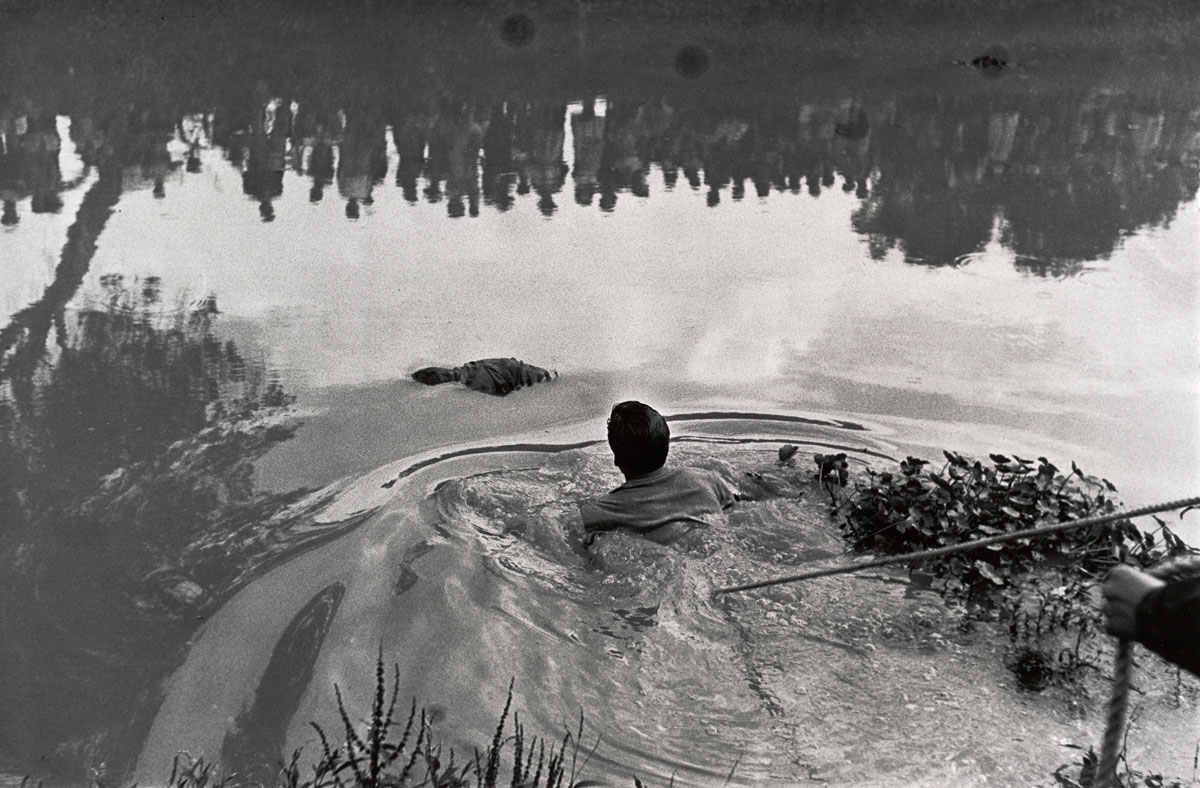


Enrique Metinides (Mexican, 1934-2022) 'Retrieval of a drowned body from Lake Xochimilco with the public reflected in the water' 1960


Enrique Metinides (Mexican, 1934-2022)
Rescate de un ahogado en Xochimilco con público reflejado en el agua (Retrieval of a drowned body from Lake Xochimilco with the public reflected in the water)
1960
Gelatin silver print
13 3/4 x 20 3/4 in
San Francisco Museum of Modern Art, Anonymous Fund purchase
© Enrique Metinides
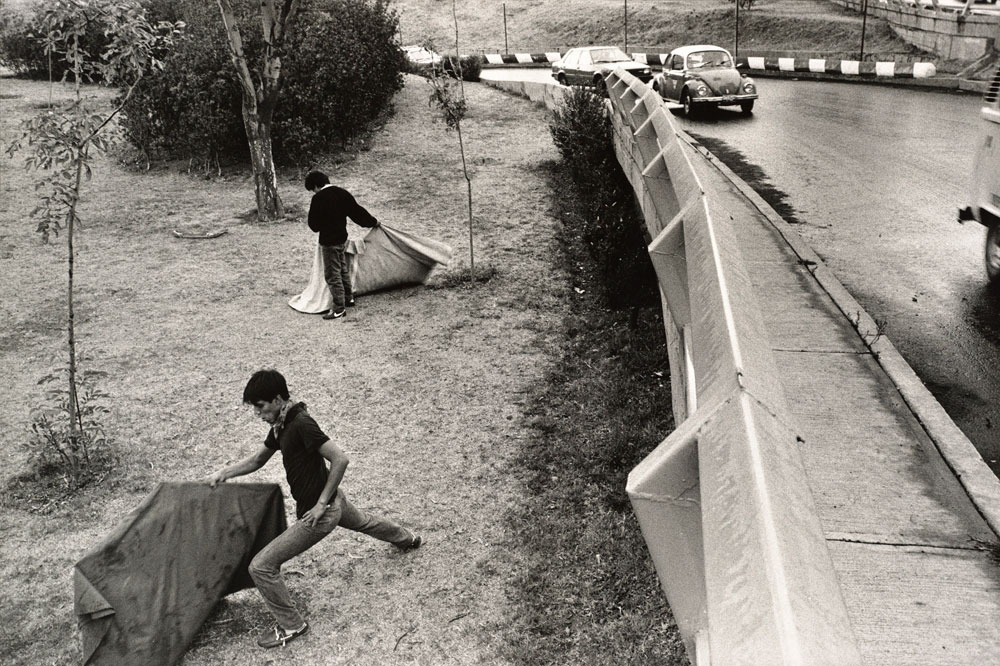
 

Pablo Ortiz Monasterio (Mexican, b. 1952) 'Y es plata, cemento o brisa' c. 1985


Pablo Ortiz Monasterio (Mexican, b. 1952)
Y es plata, cemento o brisa
c. 1985
Gelatin silver print
8 9/16 x 12 3/4 in (21.75 cm x 32.39cm)
Collection of Daniel Greenberg and Susan Steinhauser
© Pablo Ortiz Monasterio

Yvonne Venegas (American, b. 1970) 'Nirvana' from the series 'Maria Elvia De Hank' 2006


Yvonne Venegas (American, b. 1970)
Nirvana from the series Maria Elvia De Hank
2006
Inkjet print
19 1/2 x 24 in (49.53 cm x 60.96cm)
Collection of the San Francisco Museum of Modern Art
© Yvonne Venegas


Oscar Fernando Gómez (Mexican, b. 1970) 'Untitled' from 'The Windows Series' 2008-2010


Oscar Fernando Gómez (Mexican, b. 1970)
Untitled from the series The Windows
2008-2010
Inkjet print
17 1/4 x 24 in (43.82 cm x 60.96cm)
Collection of the San Francisco Museum of Modern Art
© Oscar Fernando Gómez


Paolo Pellegrin (Italian, b. 1964) 'USA. El Paso, Texas. May 17, 2011. Two men, who illegally attempted to enter the U.S., run across the dry Rio Grande river back to Juarez, Mexico after being spotted by the US Border Patrol' 2011


Paolo Pellegrin (Italian, b. 1964)
USA. El Paso, Texas. May 17, 2011. Two men, who illegally attempted to enter the U.S., run across the dry Rio Grande river back to Juarez, Mexico after being spotted by the US Border Patrol
2011
Inkjet print
15 3/16 x 22 3/4 in (38.58 cm x 57.79cm)
Collection of the San Francisco Museum of Modern Art
© Paolo Pellegrin


From March 10 through July 8, 2012, the San Francisco Museum of Modern Art (SFMOMA) will present the exhibition Photography in Mexico: Selected Works from the Collections of SFMOMA and Daniel Greenberg and Susan Steinhauser. Exploring the distinctively rich and diverse tradition of photography in Mexico from the 1920s to the present, the exhibition showcases works by important Mexican photographers as well as major American and European artists who found Mexico to be a place of great artistic inspiration.

Organised by SFMOMA Assistant Curator of Photography Jessica S. McDonald, the selection of more than 150 works draws from SFMOMA’s world-class photography holdings and highlights recent major gifts and loans from collectors Daniel Greenberg and Susan Steinhauser. The presentation reflects the collections’ particular strengths, featuring photographs made in Mexico by Tina Modotti, Paul Strand, and Edward Weston, along with works by key Mexican photographers including Lola Alvarez Bravo, Manuel Alvarez Bravo, Manuel Carrillo, Héctor Garcia, Lourdes Grobet, Graciela Iturbide, Enrique Metinides, Pedro Meyer, Pablo Ortiz Monasterio, and Mariana Yampolsky.

The exhibition begins with the first artistic flowering of photography in Mexico after the Mexican Revolution (1910-1920) and goes on to look at the explosion of the illustrated press at midcentury; the documentary investigations of cultural traditions and urban politics that emerged in the 1970s and 1980s; and more recent considerations of urban life, globalisation, and issues particular to the U.S.-Mexico border region. Rather than attempting to define a national style, the exhibition considers the range of approaches and concerns that photographers in Mexico have pursued over time. As McDonald notes, “There is no one ‘Mexican photography,’ but one strand that runs throughout is a synthesis of aesthetics and politics. We see that with Manuel Alvarez Bravo, and we still see it in work made decades later.”

As arts and culture flourished in Mexico after the Revolution, many European and American artists were drawn to the country. Among them were Edward Weston and Tina Modotti, who arrived in Mexico in 1923. Inspired by what they saw there, Weston and Modotti in turn motivated Mexican photographers to pursue the medium’s artistic possibilities; their influence helped “give Mexican photographers confidence that art photography was a viable path,” says McDonald. Hence, the exhibition opens with a selection of works made in Mexico by Modotti, Weston, his son Brett Weston, and Paul Strand during the 1920s and 1930s.

One of the Mexican photographers encouraged by Modotti and Weston was Manuel Alvarez Bravo, who went on to become one of the most influential photographers and teachers in the country’s history as well as a key figure in the broader international history of the medium. The exhibition features a substantial number of major works by the photographer, many of them donated or loaned to SFMOMA by Daniel Greenberg and Susan Steinhauser. In considering Alvarez Bravo’s career, the exhibition illuminates the birth and development of a tradition of art photography in Mexico. The presentation also includes a selection of works by Alvarez Bravo’s first wife, Lola Alvarez Bravo, an important photographer in her own right who established a successful commercial and artistic practice.

In mid-20th-century Mexico, as in the United States and Europe, earning an adequate income as an art photographer was an unlikely proposition. Instead, many photographers made a living through photojournalism, contributing to the numerous illustrated publications in circulation during this period. In the decades following the Revolution, there was great interest in traditional ways of life and in defining what it meant to be Mexican. Some photographers, such as Manuel Carrillo, created images documenting the nation’s traditions and celebrating its common people. Others, like Hector Garcia and Rodrigo Moya, rejected this sentimental approach, focusing instead on contemporary concerns and the political and social turbulence that continued to influence post-revolutionary Mexican life.

The late 1960s and 1970s saw the rise of critical theory and a new interest in investigating the nature of photography as a medium; in Mexico as elsewhere, there were more opportunities to study photography and to pursue noncommercial projects. A number of Mexican photographers, such as Lourdes Grobet, Graciela Iturbide, Pedro Meyer, and Pablo Ortiz Monasterio, created extended documentary series. Iturbide lived among indigenous people and recorded the details of their daily lives; Grobet focused on wrestling and the cultural concept of the mask; Ortiz Monasterio captured gritty, dystopian views of Mexico City. The exhibition draws extensively on gifts from Daniel Greenberg and Susan Steinhauser to represent directions in Mexican photography of the 1970s and 1980s.

Since the 1990s, the attention of many Mexican photographers has turned away from cultural traditions and rural landscapes and toward the cities and suburbs where many Mexicans now live. Works by Katya Brailovsky, Alejandro Cartagena, Pablo Lopez Luz, Daniela Rossell, and Yvonne Venegas reflect this interest in the changing social landscape, looking at issues of wealth and class, urbanization and land use, and the effects of the globalised economy. The exhibition closes with contemporary international photographers’ perspectives on U.S.-Mexico border issues. Images by Mark Klett, Victoria Sambunaris, and Alec Soth consider the border as landscape, while works by Elsa Medina, Susan Meiselas, and Paolo Pellegrin document the experiences of migrant workers and people trying, successfully or unsuccessfully, to cross into the United States.

About Daniel Greenberg and Susan Steinhauser

Based in Los Angeles, Daniel Greenberg and Susan Steinhauser have a deep and longstanding interest in Mexican photography, which they have been collecting since 1995. The photography department at SFMOMA has benefited greatly from their generosity: they have donated more than 175 works to the museum over the last six years. Their recent major gift of Mexican work, including over 50 photographs by Manuel Alvarez Bravo, Graciela Iturbide, and others, has created an ideal opportunity for SFMOMA to present this exhibition exploring photography in Mexico.

Press release from SFMOMA website


Edward Weston (American, 1886-1958) 'Pirámide del Sol, Teotihuacán' 1923


Edward Weston (American, 1886-1958)
Pirámide del Sol, Teotihuacán
1923
Gelatin silver print
7 9/16 x 9 1/2 in
San Francisco Museum of Modern art, gift of Brett Weston
© 1981 Center for Creative Photography, Arizona Board of Regents


Edward Weston (American, 1886-1958) 'Tina Modotti, Half-Nude in Kimono' 1924


Edward Weston (American, 1886-1958)
Tina Modotti, Half-Nude in Kimono
1924
Gelatin silver print
9 5/8 x 4 11/16 in
San Francisco Museum of Modern Art, Albert M. Bender Collection, Albert M. Bender Bequest Fund purchase
© 1981 Center for Creative Photography, Arizona Board of Regents


Manuel Alvarez Bravo (Mexican, 1902-2002) 'Parabola optica (Optical Parable)' 1931


Manuel Alvarez Bravo (Mexican, 1902-2002)
Parabola optica (Optical Parable)
1931
Gelatin silver print
9 3/4 x 7 1/4 in. (24.77 x 18.42cm)
Collection of Daniel Greenberg and Susan Steinhauser
© Colette Urbajtel / Asociación Manuel Álvarez Bravo
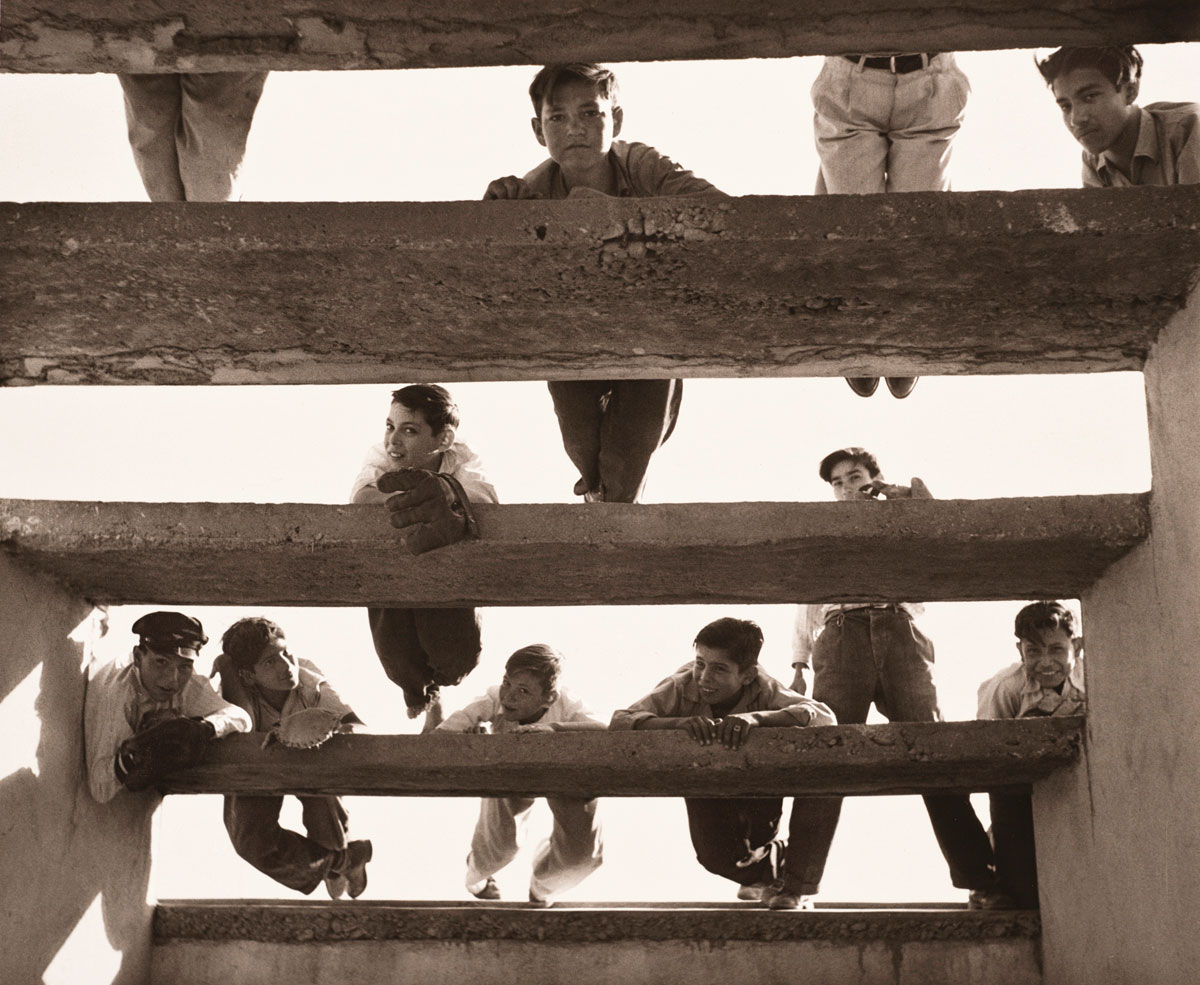
 

Lola Álvarez Bravo (Mexican, 1907-1993) 'Los gorrones' c. 1955


Lola Álvarez Bravo (Mexican, 1907-1993)
Los gorrones
c. 1955, printed later
Gelatin silver print
9 5/8 x 11 3/4 in (24.45 cm x 29.85cm)
Collection of Daniel Greenberg and Susan Steinhauser
© 1995 Center for Creative Photography, The University of Arizona Foundation
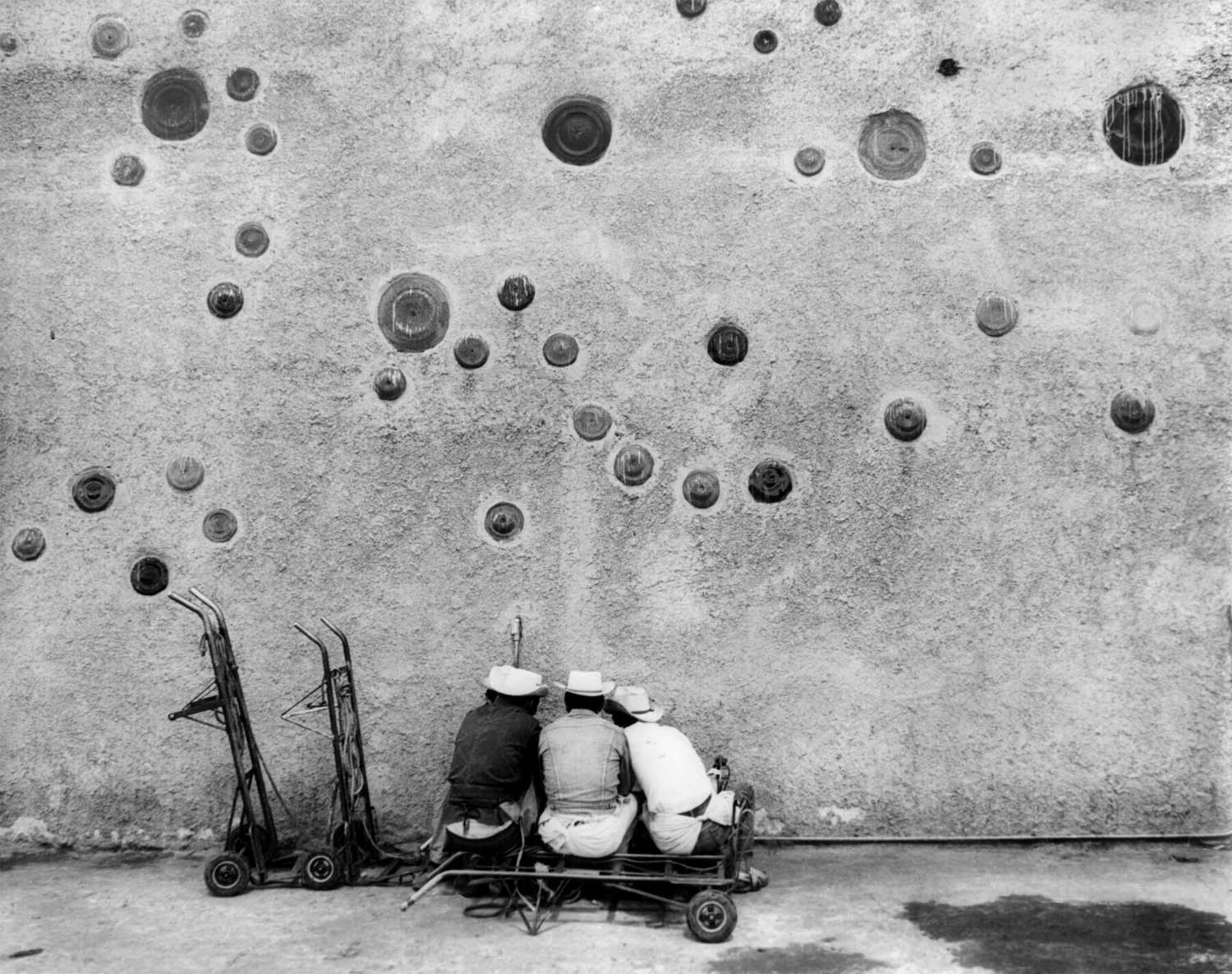
 

Hector Garcia (Mexican, 1923-2012) 'Aquelarre Cargadores con Diablos' 1971


Hector Garcia (Mexican, 1923-2012)
Aquelarre Cargadores con Diablos
1971
Gelatin silver print


Hector Garcia Cobo (August 23, 1923 – June 2, 2012) was a Mexican photographer and photojournalist who had a sixty-year career chronicling Mexico’s social classes, Mexico City and various events of the 20th century, such as the 1968 student uprising. He was born poor but discovered photography in his teens and early 20s, deciding to study it seriously after his attempt to photograph the death of a co-worker failed. He was sent to the Academia Mexicana de Artes y Ciencias Cinematográficas by magazine director Edmundo Valdés who recognised García’s talent. Most of García’s career was related to photojournalism, working with publications both inside and outside of Mexico. However, a substantial amount of his work had more artistic and critical qualities. Many of these were exhibited in galleries and museums, with sixty five individual exhibitions during his lifetime. This not only included portraits of artists and intellectuals (including a famous portrait of David Alfaro Siqueiros at Lecumberri Prison) but also portraits of common and poor people. He was also the first photojournalist to explicitly criticise Mexico’s elite, either making fun of them or contrasting them to the very poor.

Text from the Wikipedia website


Lourdes Grobet (Mexican, 1940-2022) 'Ponzoña, Arena Coliseo' c. 1983


Lourdes Grobet (Mexican, 1940-2022)
Ponzoña, Arena Coliseo
c. 1983
Gelatin silver print
14 x 11 in
San Francisco Museum of Modern Art, gift of Jane and Larry Reed
© Lourdes Grobet


Lourdes Grobet Argüelles (1940-2022)

Lourdes Grobet Argüelles (25 July 1940 – 15 July 2022) was a Mexican contemporary photographer, known for her photographs of Mexican lucha libre wrestlers.

Grobet spent some time as a painter before focussing on photography. Her photography led her to explore lucha libre, and she spent a lot of time getting to know the luchadores (wrestlers). Grobet did some theatre and video, and published several books. Grobet’s work has been the subject of numerous exhibitions, and she received many grants and awards for her work.

Career

Kati Horna introduced Grobet to the world of photography, though the main influences in her early career were Mathias Goeritz, Gilberto Aceves Navarro, El Santo and others. Grobet studied as a painter in Mexico for some time and then took a trip to Paris in 1968; it changed her life and the way that she viewed the art world.

While she was in Paris, Grobet visited many art galleries and discovered kinetic art; because of this, she liked working with multimedia. She spent some time working at a jazz concert, controlling lighting and kinetic projections. When Grobet returned to Mexico, she decided that she wanted to focus on photography; after she got back home, she decided to burn all of her old work and start over.

In 1981 Grobet released her first set of photographs. At the beginning of her career in photography, she was part of a group called Consejo Mexicano de Fotografía (Mexican Council of Photography), formed by Pedro Meyer in 1977. With her participation in this group, she was able to revitalise photography in Mexico,[citation needed] which led to a movement called the Grupos. Grobet was focused on establishing a community-based perspective.

Grobet spent some time with indigenous people during a time of great struggle for them. She took the time to learn more about them and photograph them in a theatrical way. She wanted to relate to indigenous people using her artistic initiative, so they made costumes and scenery of their own and she then took their photos. Later on, Grobet took interest in the Mayan culture. Wanting to learn more about the Mayans she went to the suburbs; while this was not a common thing to do, she wanted to steer clear of any tourists. She wanted to get accurate information about the people she documented and explore an area less traveled. She discovered temples that were made by an unknown civilisation and she decided they were to be called the Olmayazetec.

After her education and her travels, Grobet came back to México City. She once again started to explore her childhood interest of luchadores. She found that there was very little information pertaining to the luchadores, and so she decided that she wanted to make them more known to the world.

Grobet spent thirty years devoted to taking pictures of the luchadores and studying their way of life. She spent time photographing lucha libre wrestlers inside and outside of the ring, both in their masks, but also in their own homes. Grobet wanted to show that they lived normal lives, just like everyone else. She got very close with well known Lucha Libre wrestlers such as: El Santo, Blue Demon, Mil Mascaras, Sagrada, Octagon, Misioneros de la Muerte, Los Perros del Mal, and Los Brazos. Influenced greatly by Mathias Goeritz, the Polish sculptor from Gdańsk, and by Gilberto Aceves Navarro, a Mexican master of art murals, who were her teachers, Grobet worked on pictures of El Santo, one of the most important Mexican wrestlers, and a hero of lucha libre who starred in more than 50 films. Since 1975, she has published more than 11,000 photographs of the sport, including those on the sport in the United States since the 1930s, and as an important part of Mexican popular culture, adopting a sociological attitude. The sport involves many costumes and masks, leading it to a sport-carnival air which is much appreciated by Mexicans.

She also ventured into cinema. In her 2013 movie Bering. Balance and Resistance, Grobet questions the political separation between the Big Diomede Island (Russia) and the Little Diomede Island (USA) in the Bering Strait, a border between the United States and Russia. Showing the consequences of the separation between both Islands. After the American-Soviet conflict of the 21st century, the Beringia region was divided in two, which caused the separation of complete Nanook families and also, paradoxically, separated the place where the first human beings that populated the American continent crossed.

Grobet has had over one hundred exhibitions of her photographs, both group and solo exhibitions. She had her work exhibited at the London Mexfest festival in 2012. She won an award at the Second Biennal in Fine Art Photography. In 1975, for the exhibition Hora y media, she transformed a gallery into a photographic laboratory. She developed the photographs, but without fixing them, and displayed them on three walls. While the public looked at the photographs, the lights from the gallery made it look like they disappeared.

In 1977, Grobet presented Travelling, an exhibition of photography on an escalator. Among her other works were Paisajes pintados, Teatro campesino, Strip Tease.

Text from the Wikipedia website


Graciela Iturbide (Mexican, b. 1942) 'La Nuestra Senora de las Iguanas, Juchitan, Oaxaca, Mexico' (Our Lady of the Iguanas, Juchitan, Oxaca, Mexico) 1979


Graciela Iturbide (Mexican, b. 1942)
La Nuestra Senora de las Iguanas, Juchitan, Oaxaca, Mexico (Our Lady of the Iguanas, Juchitan, Oxaca, Mexico)
1979
Gelatin silver print
17 5/16 x 14 7/16 in
San Francisco Museum of Modern Art, gift of the artist
© Graciela Iturbide
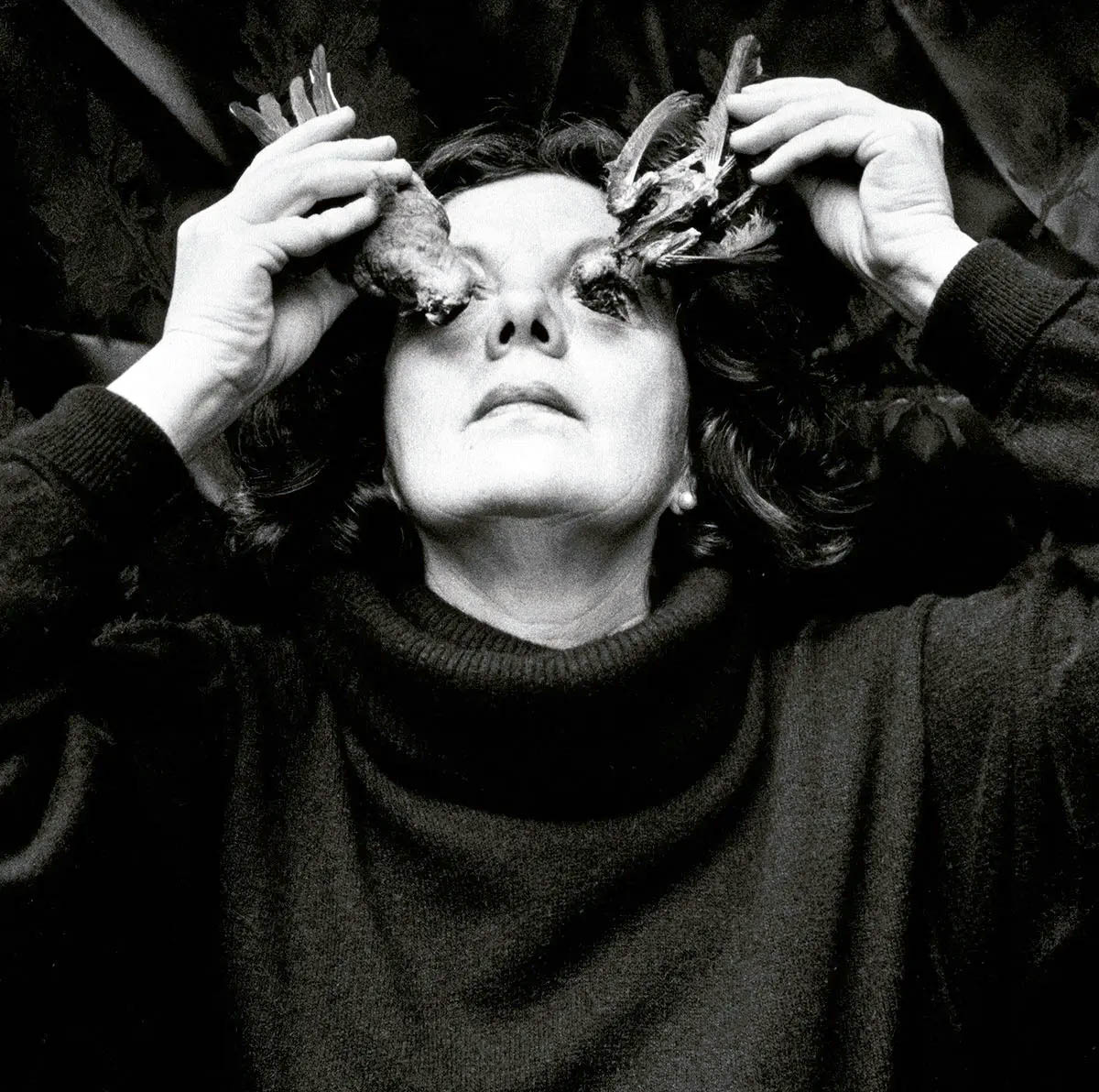
 

Graciela Iturbide (Mexican, b. 1942) '¿Ojos para volar?, Coyoacán, Ciudad de México' (Eyes to Fly With?, Coyoacan, Mexico City) 1991


Graciela Iturbide (Mexican, b. 1942)
¿Ojos para volar?, Coyoacán, Ciudad de México (Eyes to Fly With?, Coyoacan, Mexico City)
1991
Platinum print
19.5 × 19.5cm
© Graciela Iturbide
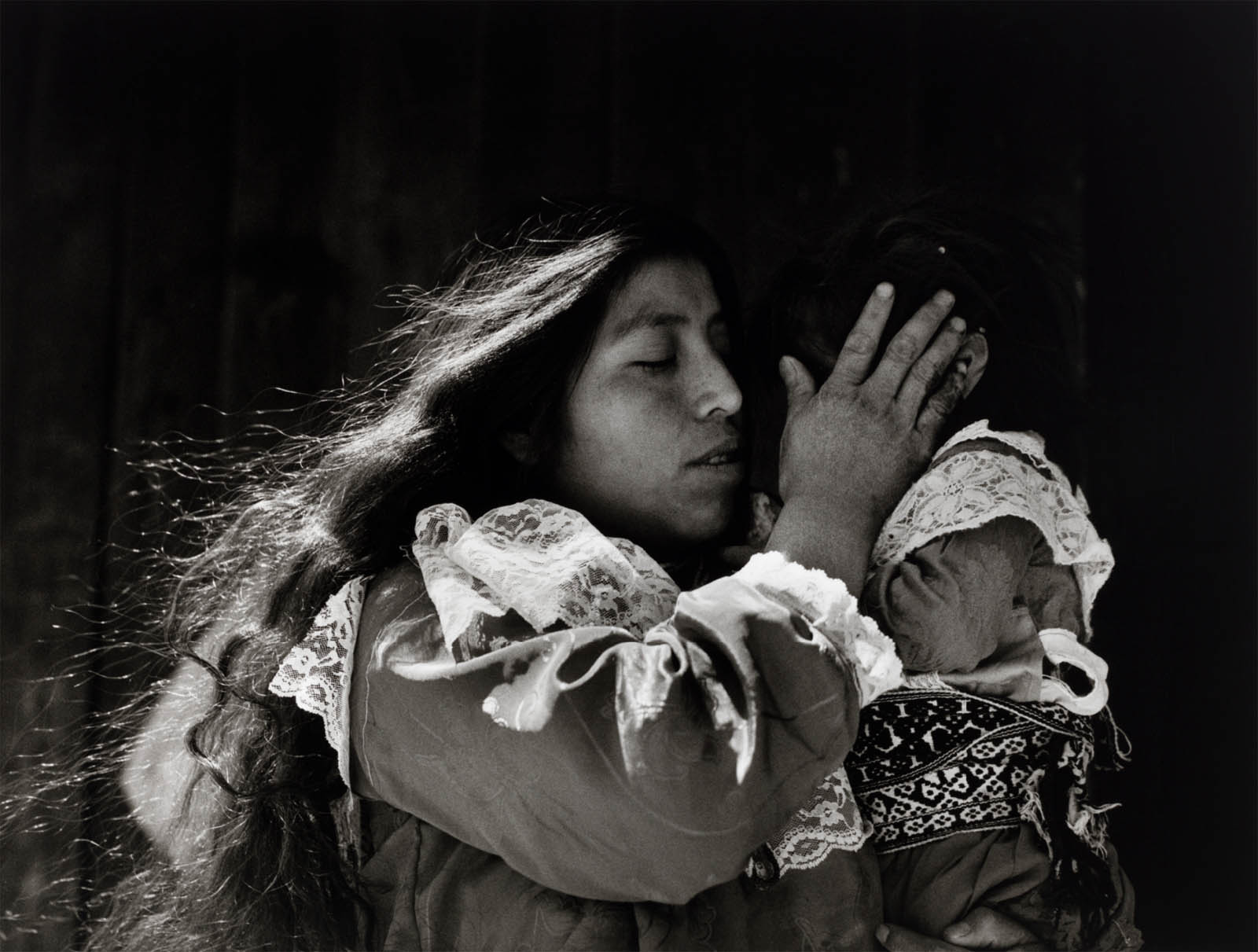
 

Mariana Yampolsky (Mexican, 1925–2002) 'Caricia' (Caress) 1989


Mariana Yampolsky (Mexican, 1925–2002)
Caricia (Caress)
1989
Gelatin silver print
13 3/8 × 17 1/2 in (34 × 44.5cm)
San Francisco Museum of Modern Art
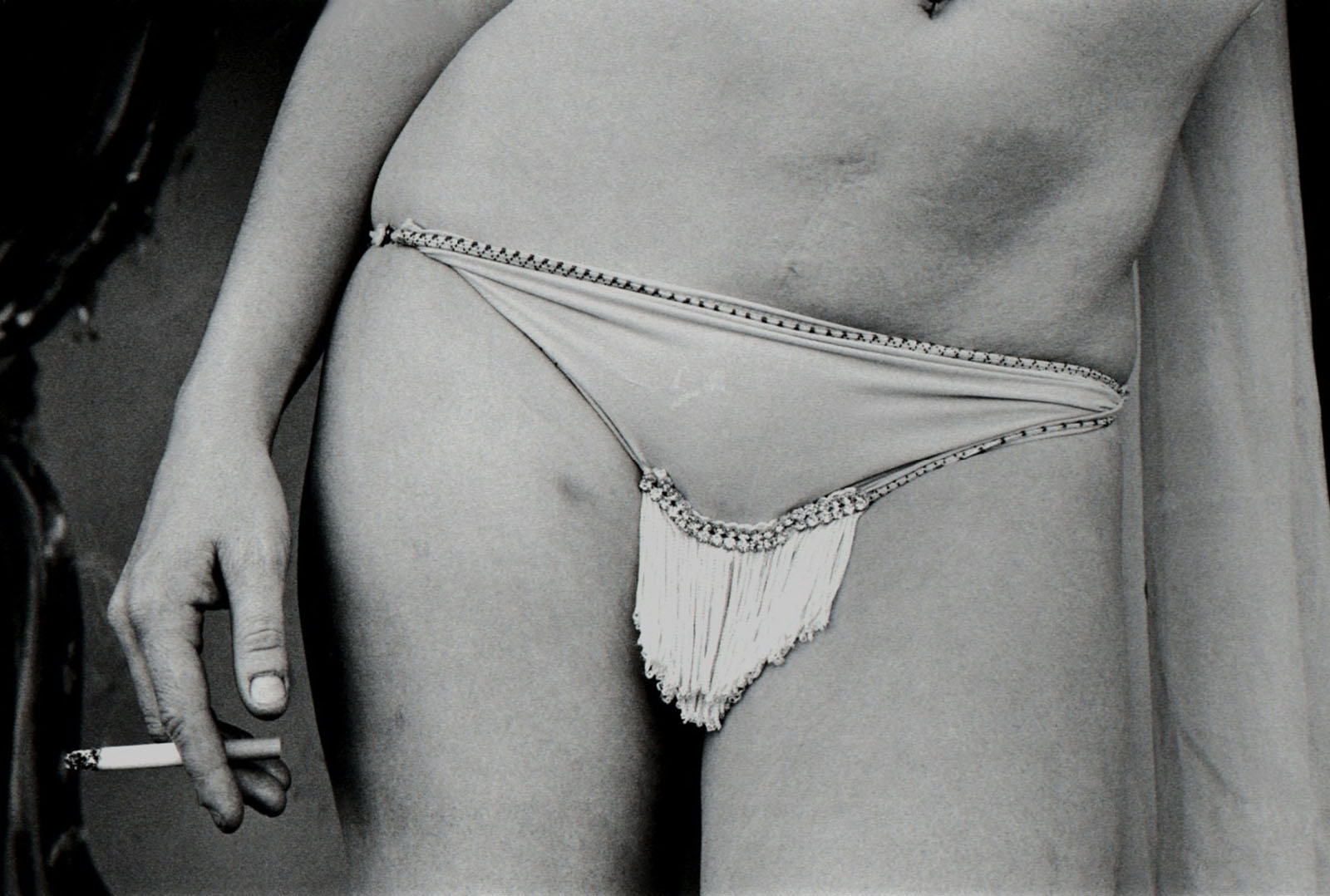
 

Susan Meiselas (American, b. 1948) 'Shortie on the Bally, Barton, VT' 1974


Susan Meiselas (American, b. 1948)
Shortie on the Bally, Barton, VT
1974
Gelatin silver print


The exhibition closes with contemporary international photographers’ perspectives on U.S.-Mexico border issues. Images by Mark Klett, Victoria Sambunaris, and Alec Soth consider the border as landscape, while works by Elsa Medina, Susan Meiselas, and Paolo Pellegrin document the experiences of migrant workers and people trying, successfully or unsuccessfully, to cross into the United States.

Anonymous. “Major Mexican Photographers at the SFMOMA,” on the Literal, Latin American Voices magazine website 15th November 2011 [Online] Cited 18/09/2024


Alejandro Cartagena (Mexican, b. 1977) 'Fragmented Cities, Juarez #2' from the series 'Suburbia Mexicana' 2007


Alejandro Cartagena (Mexican, b. 1977)
Fragmented Cities, Juarez #2
2007
From the series Suburbia Mexicana
Inkjet print
20 x 24 in
San Francisco Museum of Modern Art, Accessions Committee Fund purchase
© Alejandro Cartagena


San Francisco Museum of Modern Art (SFMOMA)
151 Third Street (between Mission + Howard)
San Francisco CA 94103

Opening hours:
Monday – Tuesday: 10am – 5pm
Wednesday: Closed
Thursday: 1 – 8pm
Fri – Sun: 10am – 5pm

San Francisco Museum of Modern Art website

LIKE ART BLART ON FACEBOOK

Back to top

Exhibition: ‘Engaged Observers: Documentary Photography since the Sixties’ at The J. Paul Getty Museum, Los Angeles

Exhibition dates: 29th June – 14th November 2010


Many thankx to the The J. Paul Getty Museum for allowing me to publish the photographs in the posting.


Leonard Freed (American, 1929-2006) 'New York City' 1963


Leonard Freed (American, 1929-2006)
New York City
1963
Gelatin silver print
24.6 x 16.4cm (9 11/16 x 6 7/16 in.)
The J. Paul Getty Museum, Los Angeles
© Leonard Freed / Magnum Photos, Inc.


W. Eugene Smith (American, 1918-1978) 'Industrial Waste from the Chisso Chemical Company' 1972


W. Eugene Smith (American, 1918-1978)
Industrial Waste from the Chisso Chemical Company
1972
Gelatin silver print
24.4 x 34cm (9 5/8 x 13 3/8 in.)
Minamata photographs by W. Eugene Smith & Aileen M. Smith
Courtesy of Robert Mann Gallery, New York, New York
© Aileen Smith H. Christopher Luce


In the decades following World War II, an independently minded and critically engaged form of photography began to gather momentum. Situated between journalism and art, its practitioners created extended photographic essays that delved deeply into topics of social concern and presented distinct personal visions of the world. On view at the J. Paul Getty Museum, the Getty Center, June 29 – November 14, 2010, Engaged Observers: Documentary Photography since the Sixties looks in depth at projects by a selection of the most vital photographers who have contributed to the development of this documentary approach. Passionately committed to their subjects, these photographers have captured both meditative and searing images, from the deep south in the civil rights era to the war in Iraq in 2006. Their powerful visual reports, often published extensively as books, explore aspects of life that are sometimes difficult and troubling but are worthy of attention.

“This exhibition focuses on the tradition of socially engaged photographic essays since the 1960s,” explains Brett Abbott, associate curator of photographs and curator of the exhibition. “Working beyond traditional media outlets, these photographers have authored evocative bodies of work that transcend the realm of traditional photojournalism.”

Engaged Observers is structured around suites of photographs from the following projects: “Girl Culture” by Lauren Greenfield, “The Mennonites” by Larry Towell, “Streetwise” by Mary Ellen Mark, “Black in White America” by Leonard Freed, “Nicaragua, June 1978 – July 1979” by Susan Meiselas, “Vietnam Inc.” by Philip Jones Griffiths, “The Sacrifice” by James Nachtwey, “Migrations: Humanity in Transition” by Sebastião Salgado, and “Minamata” by W. Eugene and Aileen M. Smith.

Although one does not always associate style with photojournalism, where objectivity and neutrality are traditionally valued, aesthetics have been an important consideration for all of the photographers represented in the exhibition. One of the strengths of this tradition has been its ability to harness artistic decisions in reporting on the world. Meiselas chose colour film for her Nicaragua project because she felt it better conveyed the spirit of the revolution as she experienced it. Salgado noted that the solemn beauty so characteristic of his approach is important in conjuring a persistent grace among his migrant subjects, allowing him to present them in a dignified way while calling attention to their plight. Nachtwey used tight framing of messy conglomerations of tubes, instruments, and arms in The Sacrifice as a way of conjuring the atmosphere of controlled chaos that he experienced in trauma centres in Iraq. In this kind of work, subject and style, message and delivery, are deliberately intertwined.

All of the photographers in this exhibition use a series of images to address conceptual issues. For instance, Freed was concerned with bridging cultural divides to engender support of basic civil rights, while Griffiths denounced violent commercialisation; Salgado pointed to the effects of globalisation, while the Smiths addressed the related issue of industrial pollution; Meiselas engaged and countered the fragmented process by which we receive news and understand history, while Towell challenged the meaning of “newsworthy” and explored, as did Greenfield, how cultural values affect life; Nachtwey found the human toll of war unacceptable, and Mark, the idea of homeless street kids in one of the wealthiest nations in the world.

Many of the photographers have published books to further convey their socially engaged messages. Books allow for a greater depth of reporting than magazine articles since their length can be tailored to the needs of a particular project. And because they can be read in private, books are conducive to extended contemplation and the slow absorption of ideas, both of which are important to understanding projects that are broad in scope and have layers of meaning that, in many cases, were developed over the course of years. Moreover, they provide photographers authorial control over the presentation of their work. Each artist has the ability to decide how pictures are captioned and with what information.

A final section of the exhibition is devoted to tracing the origins of the documentary photography tradition, touching on American Civil War photographs by Alexander Gardner, turn-of-the-century activism by Lewis Hine, Depression-era photography, and photojournalism in pre-World War II picture magazines. This section also looks closely at the formation of Magnum Photos. Founded in 1947 by Robert Capa, Henri Cartier-Besson, and several other photographers, Magnum provided a new platform for an independent documentary approach to photojournalism and became one of the world’s most prestigious photographic organisations. Magnum was structured to allow its members to pursue stories of their own choosing, spend as much time as they wanted on a particular topic, and be as involved as they desired in the editing, captioning, and publication of their work. The organisation was meant to harness commercial assignments as a base from which to pursue independent work, and the concept has given rise to generations of independent photographers, including many of those in Engaged Observers.

Press release from The J. Paul Getty Museum website [Online] Cited 28/12/2019


Lewis W. Hine (American, 1874-1940)
'[Crowd of Newsies, Including One Girl]' 1910


Lewis W. Hine (American, 1874-1940)
[Crowd of Newsies, Including One Girl]
1910
Gelatin silver print
Sheet: 11.4 × 16.5cm (4 1/2 × 6 1/2 in.)
The J. Paul Getty Museum


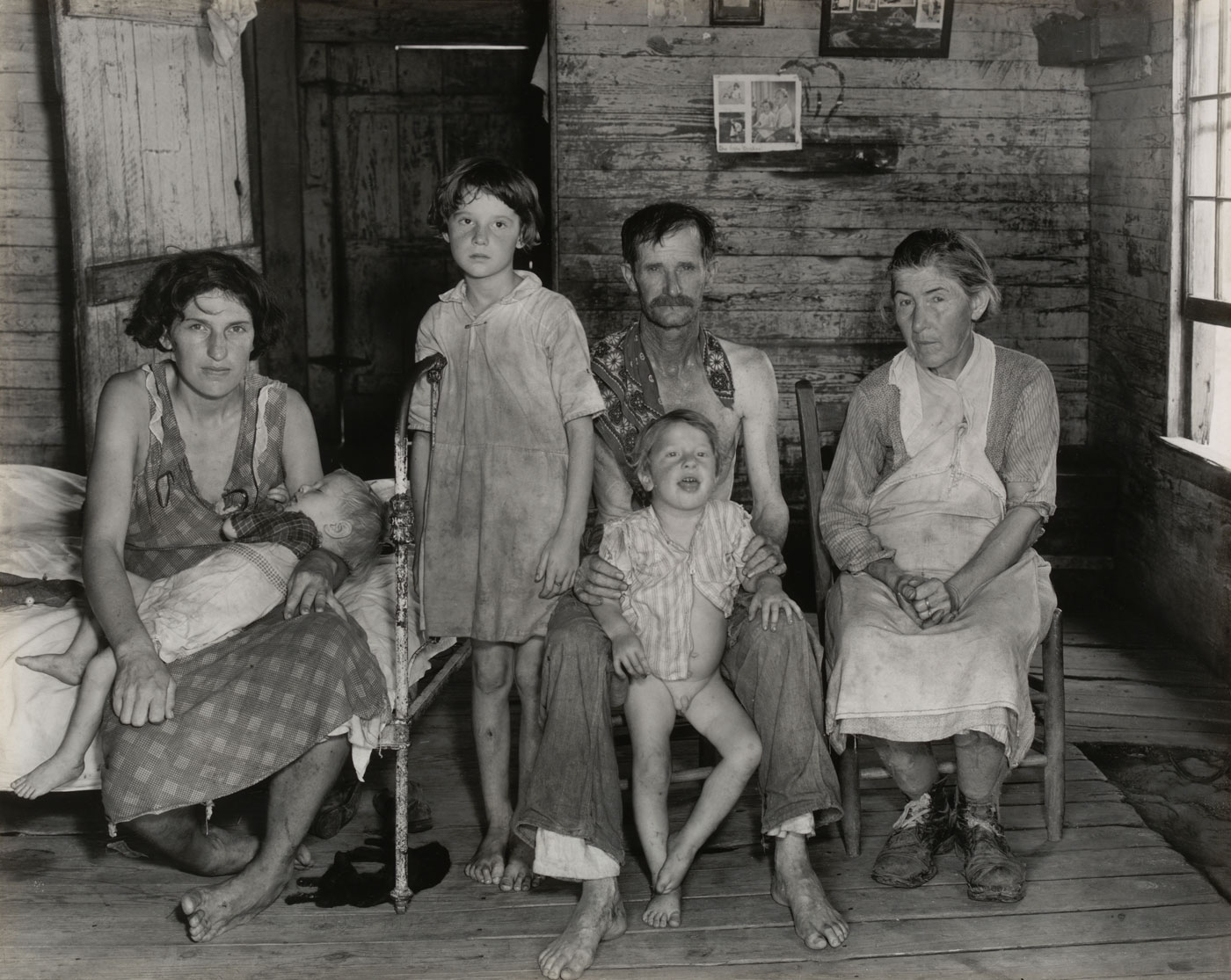
Walker Evans (American, 1903-1975) 'Sharecropper's Family, Hale County, Alabama / Bud Fields and His Family, Hale County, Alabama / Bud Woods and His Family' 1936


Walker Evans (American, 1903-1975)
Sharecropper’s Family, Hale County, Alabama / Bud Fields and His Family, Hale County, Alabama / Bud Woods and His Family
1936
Gelatin silver print
19.4 x 24.3cm (7 5/8 x 9 9/16 in.)
© The J. Paul Getty Museum, Los Angeles


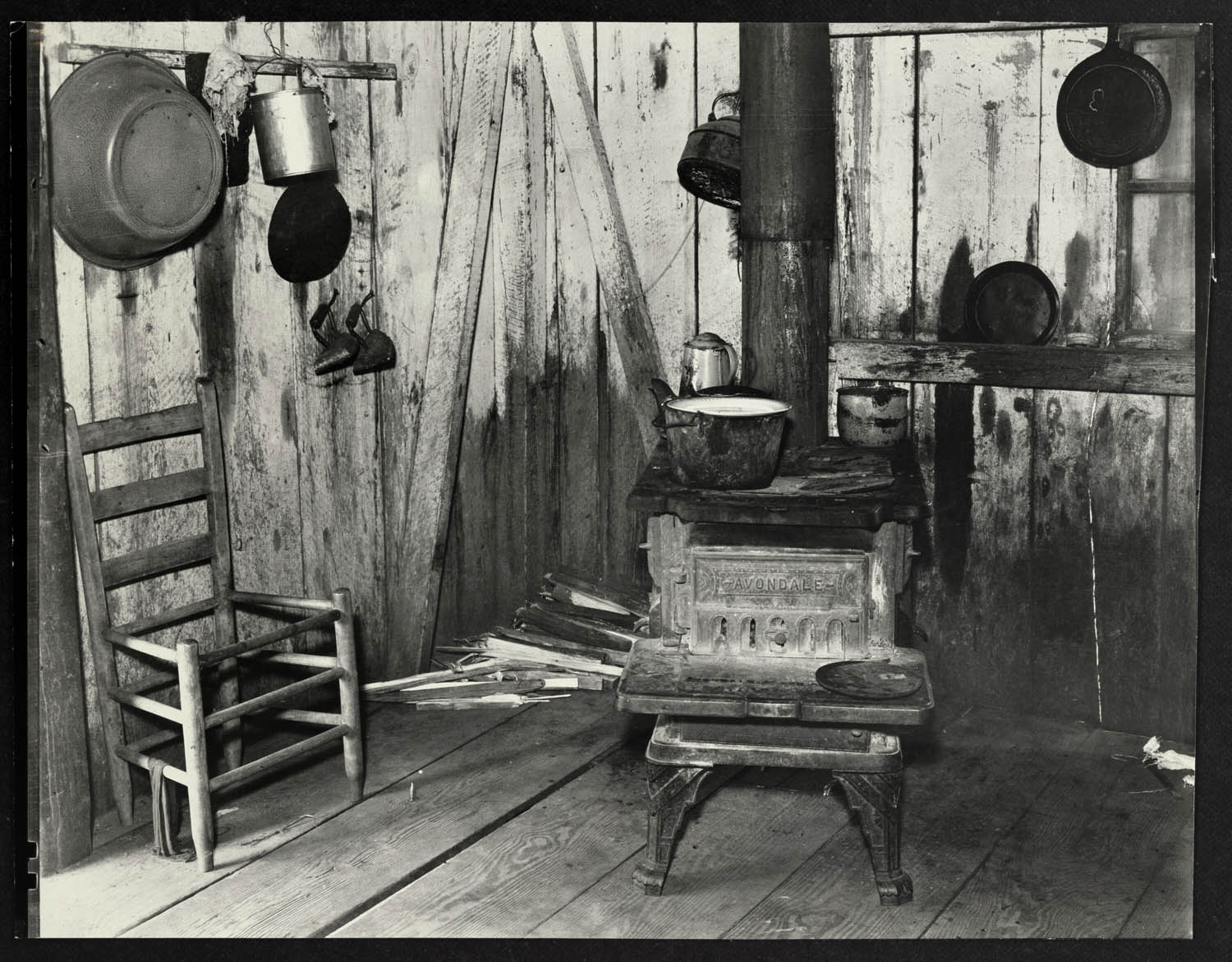
Walker Evans (American, 1903-1975) 'Alabama Tenant Farmer's Kitchen Near Moundville' 1936


Walker Evans (American, 1903-1975)
Alabama Tenant Farmer’s Kitchen Near Moundville
1936
Gelatin silver print
21.7 × 24.1cm (8 9/16 × 9 1/2 in.)
The J. Paul Getty Museum, Los Angeles


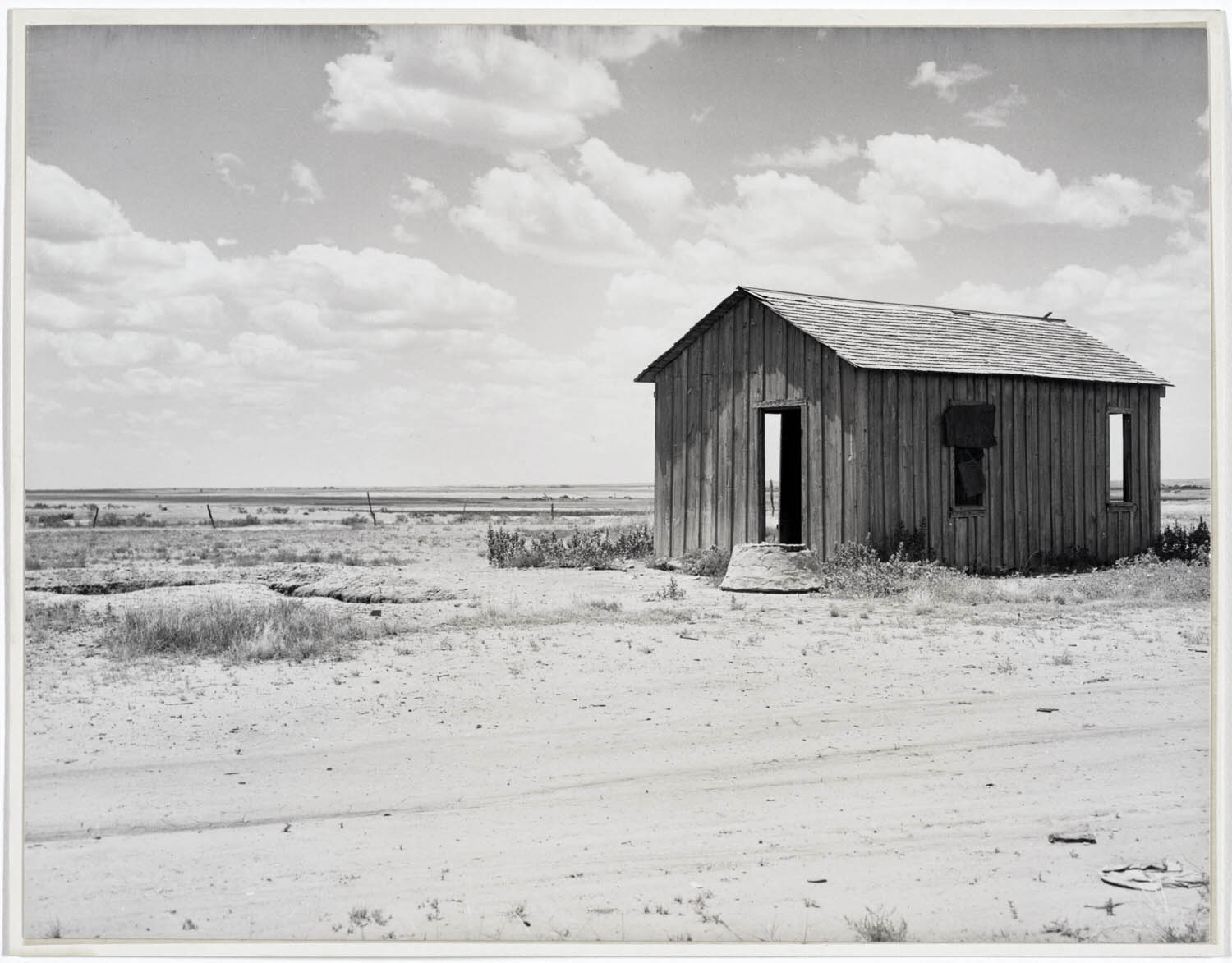
Dorothea Lange (American, 1895-1965) 'Abandoned Dust Bowl Home'
About 1935-1940


Dorothea Lange (American, 1895-1965)
Abandoned Dust Bowl Home
About 1935-1940
Gelatin silver print
18.9 × 24.4cm (7 7/16 × 9 5/8 in.)
The J. Paul Getty Museum, Los Angeles


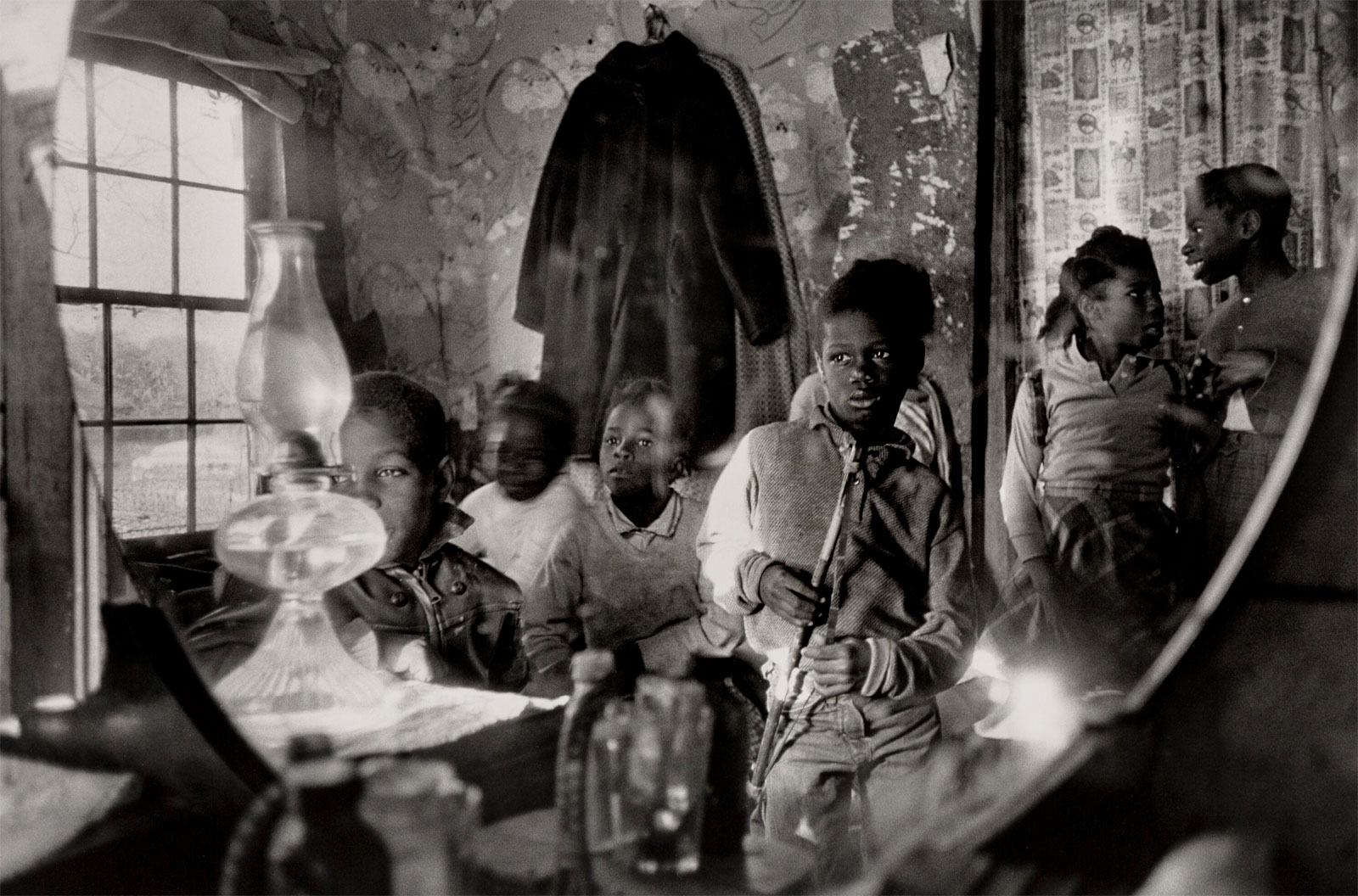
Leonard Freed (American, 1929-2006) 'Johns Island, South Carolina' 1964


Leonard Freed (American, 1929-2006)
Johns Island, South Carolina
1964, printed later
Gelatin silver print
16 × 24 cm (6 5/16 × 9 7/16 in.)
The J. Paul Getty Museum, Los Angeles
© Leonard Freed / Magnum Photos


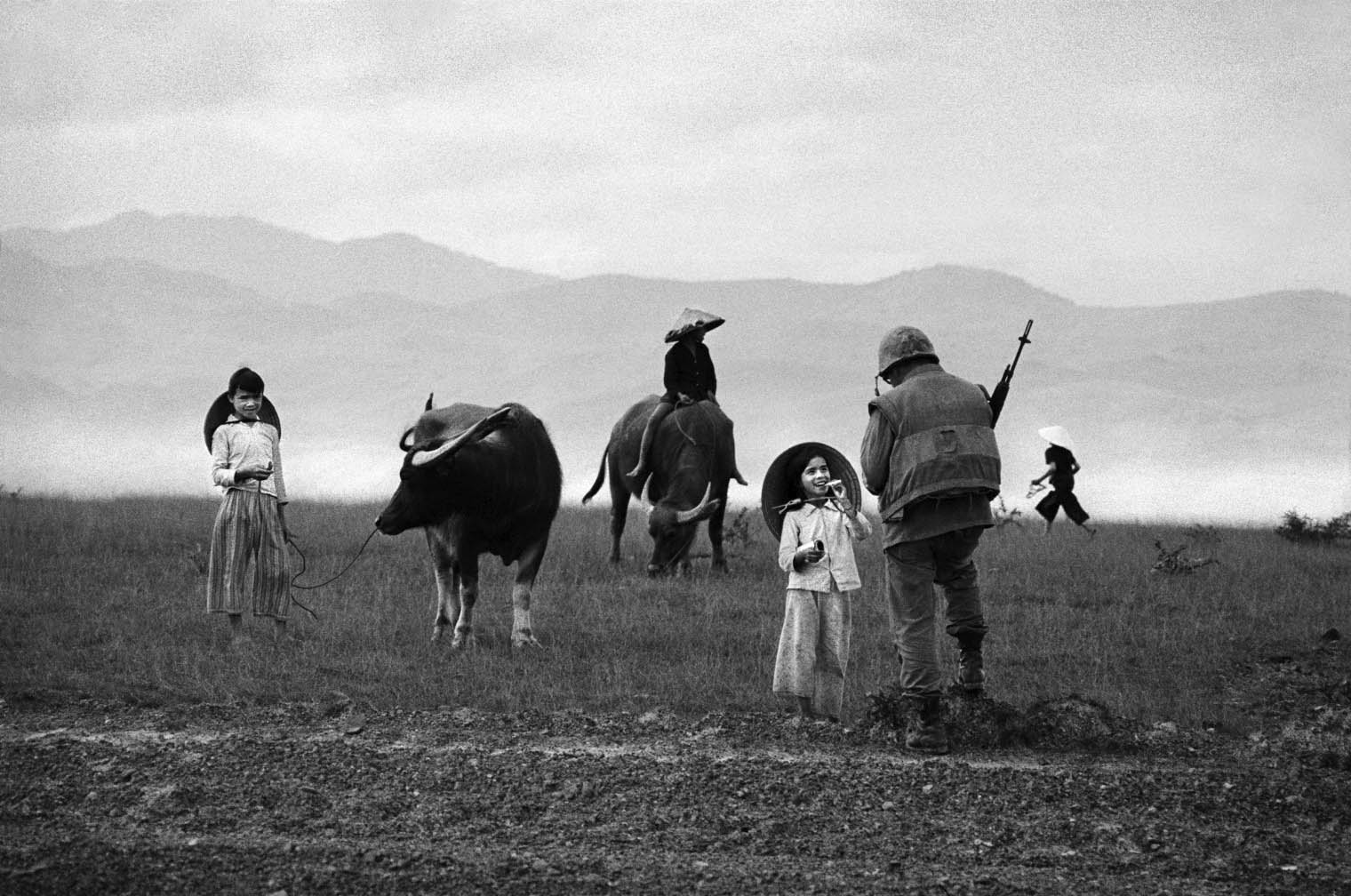
Philip Jones Griffiths (Welsh, 1936-2008) 'Vietnam' 1967


Philip Jones Griffiths (Welsh, 1936-2008)
Vietnam
1967
Gelatin silver print
21.3 x 31.8cm (8 3/8 x 12 1/2 in.)
The J. Paul Getty Museum, Los Angeles
© The Philip Jones Griffiths Foundation / Magnum Photos


Limits of friendship. A Marine introduces a peasant girl to king-sized filter-tips. Of all the U.S. forces in Vietnam, it was the Marines that approached Civic Action with gusto. From their barrage of handouts, one discovers that, in the month of January1967 alone, they gave away to the Vietnamese 101,535 pounds of food, 4,810 pounds of soap, 14,662 books and magazines, 106 pounds of candy, 1,215 toys, and 1 midwifery kit. In the same month they gave the Vietnamese 530 free haircuts.


James Nachtwey (American, b. 1948) "The Sacrifice" negative 2006-2007; print 2010


James Nachtwey (American, b. 1948)
The Sacrifice
negative 2006-2007; print 2010
Inkjet print
111.8 x 983cm (44 x 387 in.)
James Nachtwey, New York, New York
© James Nachtwey


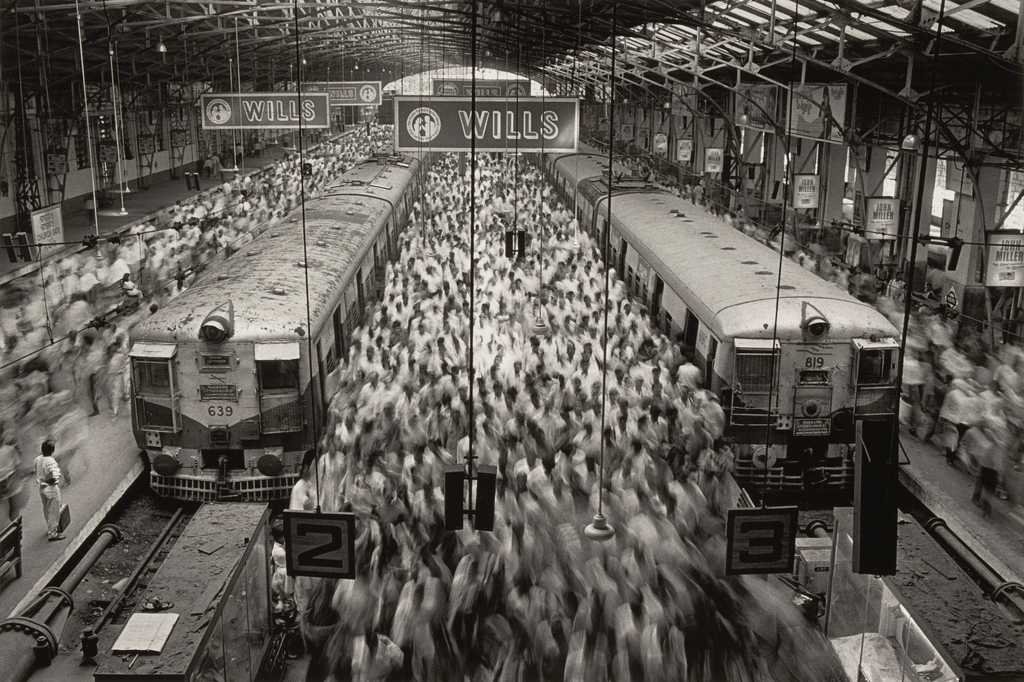
Sebastião Salgado (Brazilian, b. 1944) "Church Gate Station, Western Railroad Line, Bombay, India" negative 1995; print 2009


Sebastião Salgado (Brazilian, b. 1944)
Church Gate Station, Western Railroad Line, Bombay, India
negative 1995; print 2009
Gelatin silver print
34.3 x 51.4cm (13 1/2 x 20 1/4 in.)
The J. Paul Getty Museum, Los Angeles
© Sebastião Salgado


Photographic essays

Leonard Freed

BLACK IN WHITE AMERICA

“Photography shows the connection between things, how they relate. Photography is not entertaining, this is not decoration, this is not advertising. Photographing is an emotional thing, a graceful thing. Photography allows me to wander with a purpose.”

Leonard Freed (American, 1923-2006), interview in Worldview, 2007


While working in Germany in 1962, photographer Leonard Freed happened to notice a black American soldier guarding the divide between East and West as the Berlin Wall was being erected. It was not the partition between the forces of Communism and Capitalism that captured Freed’s imagination, however. Instead, he was haunted by the idea of a man standing in defence of a country in which his own rights were in question. The experience ignited the young photographer’s interest in the American civil rights movement raging on the other side of the globe. In June 1963 Freed headed back to the United States to embark on a multiyear documentary project, published in about 1968 as Black in White America, that would become the signature work of his career.

The Black in White America series is a kind of visual diary with a moralising purpose. It is highly personal and socially engaged with an implicit goal of effecting change through communication. While Freed made pictures of important events in the civil rights struggle, including the 1963 March on Washington, he quickly found that his interests lay not in recording the progress of the civil rights movement per se but in exploring the diverse, everyday lives of a community that had been marginalised for so long. Penetrating the fabric of daily existence, his work portrays the common humanity of a people persevering in unjust circumstances. His sensitive and empathetic approach sought not to stimulate outrage but to foster understanding and bridge cultural divides as a means of transcending racial antipathy.

Lauren Greenfield

FAST FORWARD and GIRL CULTURE

“Girl Culture has been my journey as a photographer, as an observer of culture, as part of the media, as a media critic, as a woman, as a girl… I was… thinking about my chronic teenage dieting, my gravitation toward good-looking and thin friends for as long as I can remember, and the importance of clothes and status symbols in the highly materialistic, image-oriented Los Angeles milieu in which I grew up.”

Lauren Greenfield (American, born 1966), Girl Culture, 2002


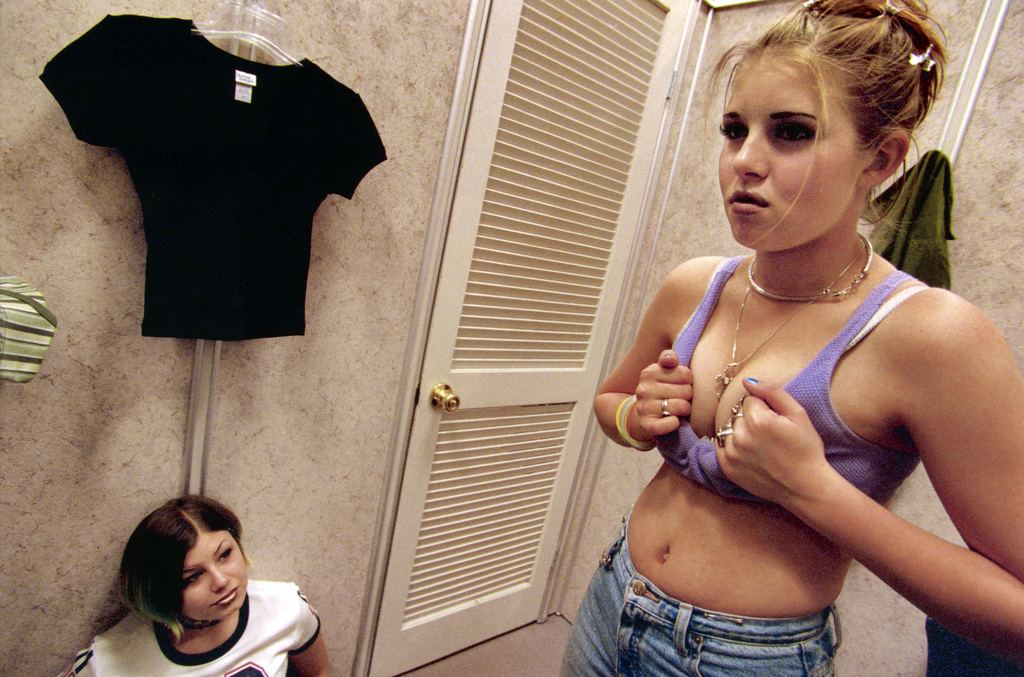
Photographer and documentary filmmaker Lauren Greenfield has built her reputation as a chronicler of mainstream American culture. In 2002 she published a photographic project, Girl Culture, that delves into the ways consumer society affects the lives of women in America. Of central concern to Greenfield was the exhibitionist tendencies of contemporary American femininity. Visiting girls of all ages at home, in doctors’ offices, and out with friends,

Greenfield examined personal issues of public consequence, providing an intense and intimate exploration of girls’ relationships to their bodies and the effects of popular culture on self-image.

Many of her pictures and accompanying interviews focus on what she refers to as “body projects,” the daily grooming rituals undertaken in an effort to express identity through appearance. Others look at the social and consumerist influences from which these young women take their cues as well as the difficulty of living up to such expectations.

Girl Culture grew out of an earlier study, Fast Forward, that critically surveyed what life is like for children growing up in Los Angeles. The work revolves around her perception of an early loss of innocence among her young subjects and traces Hollywood’s role as a homogenising force in their lives.

Greenfield’s lens becomes a mirror in which to reflect upon ourselves. Together Fast Forward and Girl Culture sensitively explore how culture leaves its imprint on individuals.

Philip Jones Griffiths

VIETNAM INC.

“The “bang-bang” aspect of any war is the least likely to offer any explanation of the underlying causes. My task is to discover the why, so it’s the actions surrounding the battlefields that present the best clues.”

Philip Jones Griffiths (Welsh, 1936-2008), Aperture, spring 2008


A lifelong desire to leave the world a better place drove Philip Jones Griffiths, whose work is marked by a fiercely independent approach, deep engagement with his subjects, and a skeptical view of authority. Vietnam Inc., the photographer’s critical 1971 account of America’s armed intervention in Southeast Asia, is one of the most detailed photographic stories of a war published by a single photographer. The project’s exploration of the why, and not just the what, behind the war’s failures made it a particularly engaging and ambitious work of advocacy journalism and a model to which many photographers still aspire.

Griffiths’s independent approach is remarkable because of its sensitivity to the people of Vietnam and its eschewing of a Western point of view. In Vietnam Inc. there are few photographs documenting American troops and the might of their military prowess. Instead, his primary focus was on Vietnamese civilians and a culture in crisis. His book put the conflict in the context of Vietnam’s history and culture, showing the ways in which the Capitalist values that America promoted in its efforts to contain the spread of Communism were out of sync with Vietnam’s predominantly communal and agrarian way of life.

Vietnam, for Griffiths, became a “goldfish bowl where the values of Americans and Vietnamese can be observed, studied, and, because of their contrasting nature, more easily appraised.” And in Griffiths’s appraisal, it was America’s “misplaced confidence in the universal goodness” of its own values that would ultimately lead to an imperialist failure and, more importantly, the unjust devastation of a people.

Mary Ellen Mark

STREETWISE

“One of the reasons we chose Seattle was because it is known as “America’s most liveable city.” Los Angeles, San Francisco, and New York were well known for their street kids. By choosing America’s ideal city we were making the point “If street kids exist in a city like Seattle then they can be found everywhere in America, and we are therefore facing a major social problem of runaways in this country.””

Mary Ellen Mark (American, 1940-2015), Streetwise, 1988


Mary Ellen Mark has reported on the state of our social environment for more than four decades. Far removed from the immediacy of war and conflict, her work plumbs the basic commonality of human experience.

In 1983 Mark traveled to Seattle to do an article for Life magazine on runaway children. Focusing on a set of streets in the city’s downtown area, she began building a sense of trust with the community of runaways and learning about their survival methods. Her pictures showed teenagers who managed to survive on the tough streets through petty crime, prostitution, foraging in dumpsters, and panhandling. She presented the abandoned buildings and underpasses they inhabited and the bonds they built with one another in the absence of family. Mark’s compositions are striking and uncomfortable, emphasising her subjects’ youth while capturing them engaged in activities beyond their years.

Following publication of an article in Life, she continued to develop the story as both a documentary film and still photographic project with her husband, filmmaker Martin Bell, and reporter Cheryl McCall. The film, titled Streetwise, was released the following year and was nominated for an Academy Award. Mark published her still photographs from the project in a book of the same title in 1988.

The Streetwise project provided dimension to an important issue of its day. In giving specific shape, individuality, and visibility to the problem of runaway children, it called for greater social and political commitment to addressing America’s epidemic of broken families.

Susan Meiselas

NICARAGUA, JUNE 1978 – JULY 1979

“We all cross histories, and the ones that we cross shape us as much as we shape them.”

Susan Meiselas (American, born 1948), in conversation with the curator, 2010


In 1978 Magnum photographer Susan Meiselas traveled to Nicaragua. Tensions were high following the assassination of Pedro Joaquín Chamorro, the editor of an opposition newspaper critical of the repressive, hard-line government. Meiselas witnessed the eruption of a full-scale revolution in August of that year. Aware that a momentous process was taking place, she stayed to record its unfolding, including the celebration of the revolutionaries’ victory in the central plaza of Managua in July 1979.

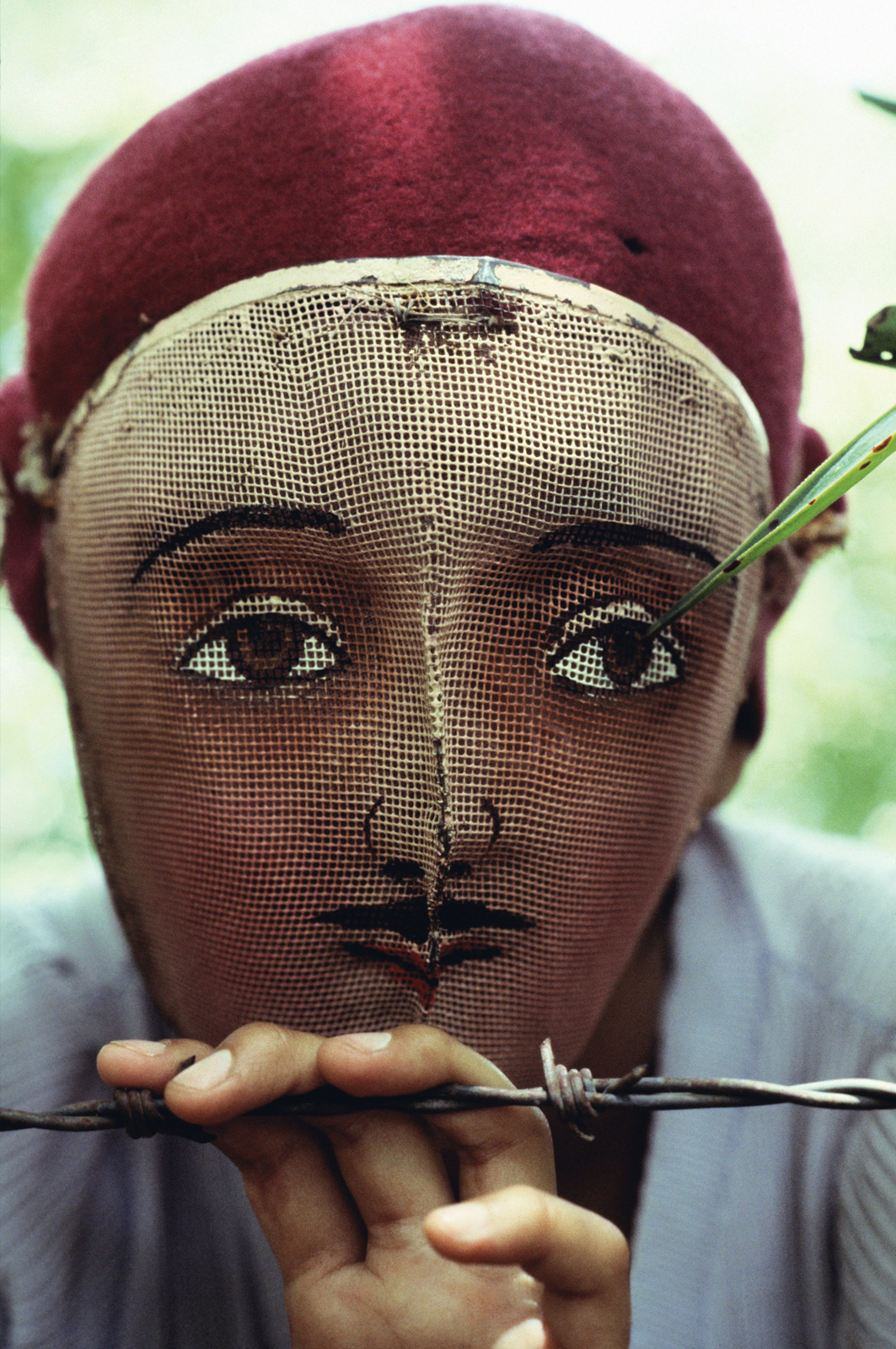
Meiselas was taken by the bravery of those who were willing to risk their lives against the dictatorship for the promise of a better future, and she took pains to photograph the action from the perspective of those involved in it. The record of her movements around the country formed a narrative about the progress of their insurrection. She made a decision, which at the time was still considered somewhat unusual in serious war reportage, to record the revolution on colour film, seeing it as a more appropriate medium for capturing the vibrancy and optimism of the resistance.

The photographer’s compelling pictures were picked up by major newspapers and magazines around the world, giving individual images a public life, but one that was beyond her immediate control with regard to captioning and that was fragmented from the context of her larger body of pictures. In collecting seventy-one of her photo-graphs into a book, first published in 1981 as Nicaragua, June 1978 – July 1979, Meiselas reasserted the narrative of the revolution as she experienced it and gave greater permanence and coherence to her documentary endeavour.

James Nachtwey

THE SACRIFICE

“For me, the strength of photography lies in its ability to evoke a sense of humanity. If war is an attempt to negate humanity, then photography can be perceived as the opposite of war. And if it is used well, it can be a powerful ingredient in the antidote to war.”

James Nachtwey (American, born 1948), from the film The War Photographer, 2001


For nearly thirty years James Nachtwey has dedicated himself to delivering an antiwar message by documenting those around the world affected by conflict. Traveling with emergency medical units in Iraq in 2006, the photographer began a photo essay, The Sacrifice, that documents the struggle to save and rebuild lives. The series depicts the helicopter transfers from battle sites to treatment centers, the emergency rooms where lives hang in the balance, and the difficult process of recovery.

In anticipation of showing the work, Nachtwey created a monumental installation print, consisting of sixty individual trauma-center images, tightly framed and digitally collaged into a grid. The work stands as a grim reminder of the human costs of war. The object’s sheer size, in which one picture gives way to the next in a seemingly endless stream of torn flesh, metal instruments, snaking tubes, and bloodied hands, effectively conveys a sense of the controlled chaos that permeates these medical centres as well as the overwhelming volume of casualties flowing through the medics’ hands on a daily basis.

While it may be easy to contemplate and even support war in abstract, strategic terms, it is difficult to face Nachtwey’s portrayal of its inevitable results. In its aggressive scale, his intentionally unsettling work demands that we reconcile the goals and achievements of armed conflict with its human costs, that we be prepared to acknowledge in particular visual terms the sacrifice it entails and the valiant work of those who do their best to mend its path of destruction.

Sebastião Salgado

MIGRATIONS: HUMANITY IN TRANSITION

“My hope is that, as individuals, as groups, as societies, we can pause and reflect on the human condition at the turn of the millennium. Can we claim “compassion fatigue” when we show no sign of consumption fatigue?”

Sebastião Salgado (Brazilian, born 1944), Migrations, 2000


Trained in economics before taking up photography, Sebastião Salgado has used his camera to raise awareness of the world’s economic disparities and provoke discussion about the state of our international social environment. Between 1994 and 1999 Salgado pursued an enormous project to document migrant populations around the world. Published in 2000 as Migrations: Humanity in Transition, this epic work of twentieth-century photojournalism documents people across forty-three countries who have been uprooted by globalisation, persecution, or war. The pictures in this exhibition represent several themes in Salgado’s study, including the effects of population surges in cities of developing countries, the conditions of refugees fleeing war in Africa, and the process of migration from Latin America to the United States.

Salgado’s work is marked by a heightened attention to aesthetic grace that attempts to endow his subjects with dignity even as it communicates the discomfort of their circumstances. His photographs are constructed with careful attention to dramatic lighting, elegant contours, and striking visual impact. Ultimately, Salgado sees himself as a storyteller and a communicator, a bridge between the fortunate and the unfortunate, the developed and the undeveloped, the stable and the uprooted. Portrayed lyrically and sensitively, his subjects are transformed into metaphors for complex inequities that exist in the world – problems that must be recognised and acknowledged before they can be addressed.

W. Eugene Smith and Aileen M. Smith

MINAMATA

“[Pollution] is closing more tightly upon us each day… After reflecting on the rights and wrongs of the situation in Minamata, we hope through this book to raise our small voices of words and photographs in a warning to the world. To cause awareness is our only strength.”

W. Eugene Smith (American, 1918-1978) and Aileen M. Smith (American, born 1950), Minamata, 1975


In 1971 W. Eugene Smith, a major figure in the history of socially concerned photography, and his wife, Aileen M. Smith, were told of a controversy over industrial pollution taking place in the small Japanese fishing village of Minamata. Beginning in the 1950s, thousands of people in the area were severely affected by mercury poisoning, brought about by eating fish contaminated with chemical waste dumped in the bay by the Chisso Corporation. Victims were afflicted with brain damage, paralysis, and convulsions. The ailment, which came to be known as Minamata Disease, is not reversible.

When the Smiths arrived in Minamata, lawsuits had already begun, and the couple set out to document the progress of the claims. They spent three years on the project, calling attention to the victims’ cause. Aileen acted as an equal collaborator, making pictures and writing texts with W. Eugene. The work resulted in numerous magazine publications, exhibitions, and a coauthored book, Minamata, published in 1975.

The Smiths’ study records the course of the trial through the court’s ruling in favour of the plaintiffs in 1973. The essay relates the importance of the sea and fishing to the town’s culture, reports on the company’s drainage pipes into the sea, chronicles the lives transformed by the disease, and depicts the demonstrations that took place in opposition to Chisso. As a tale of the dangers of industrial pollution, the project gained traction within the political atmosphere of the 1970s, when the environmental movement was taking off.

Larry Towell

THE MENNONITES

“When a Mennonite loses his land, a bit of his human dignity is forfeited; so is his financial solvency. He becomes a migrant worker, an exile who will spend the rest of his life drifting among fruit trees and vegetable vines, dreaming of owning his own farm some day. But for these who struggle with God at the end of a hoe, the refuge of land, Church, and community may be at least a generation away.”

Larry Towell (Canadian, born 1953), The Mennonites, 2000


Wary of the media’s commitment to speed, photographer Larry Towell insists on the integrity of extended-coverage reporting. In 1989 he came into contact with members of a Mennonite community near his home in Canada. The Old Colony Mennonites are a nonconformist Protestant sect related to the Amish that originated in Europe in the 1500s.

Over the centuries, they have migrated between countries to preserve their way of life, living in colonies where faith and tradition are intertwined and modern amenities, such as cars, rubber tires, and electricity, are not welcome.

The Mennonites Towell befriended had migrated to Canada from colonies in Mexico in search of seasonal work. Due to shrinking water tables in Mexico, the effects of international trade, and a rising population in the colonies, many Mennonites have found themselves landless and economically marginalised, forced to compromise their beliefs in order to survive. Towell was eventually invited to join them in their treks back to Mexico for the winter. With his unique and intimate access, he spent the next ten years photographing their activities, capturing their struggle to preserve a lifestyle incongruent with the larger world on which they have become interdependent.

Towell’s work documented the Mennonites’ way of life for the historical record and inspires greater understanding today for a group whose attempts to embrace life could be easily overlooked. In spending a decade on a subject that would be of only passing interest to mainstream media, he asserts a form of visual reporting in which reflection takes precedence over profitability and immediacy.

Text from the J. Paul Getty Museum


Sebastião Salgado (Brazilian, b. 1944) 'Mexico Border, desert of San Ysidro, California' negative 1997; print 2009


Sebastião Salgado (Brazilian, b. 1944)
U.S. – Mexico Border, desert of San Ysidro, California
Negative 1997; print 2009
Gelatin silver print
34.4 x 51.4cm (13 9/16 x 20 1/4 in.)
The J. Paul Getty Museum, Los Angeles
© Sebastião Salgado


Mary Ellen Mark (American, 1940-2015) 'Lillie with Her Rag Doll, Seattle' 1983


Mary Ellen Mark (American, 1940-2015)
Lillie with Her Rag Doll, Seattle
1983
Gelatin silver print
22.6 x 34cm (8 7/8 x 13 3/8 in.)
The J. Paul Getty Museum, Los Angeles
© Mary Ellen Mark


Mary Ellen Mark (American, 1940-2015) '"Rat" and Mike with a Gun, Seattle' 1983


Mary Ellen Mark (American, 1940-2015)
“Rat” and Mike with a Gun, Seattle
1983
Gelatin silver print
22.8 x 34.2cm (9 x 13 7/16 in.)
The J. Paul Getty Museum, Los Angeles
© Mary Ellen Mark


Susan Meiselas (American, b. 1948)
'Muchachos attendant la riposte de la Garde nationale, Matagalpa, Nicaragua' (Awaiting counterattack by the Guard in Matagalpa, Nicaragua) 1978, printed 1980s


Susan Meiselas (American, b. 1948)
Muchachos attendant la riposte de la Garde nationale, Matagalpa, Nicaragua (Awaiting counterattack by the Guard in Matagalpa, Nicaragua)
1978, printed 1980s
Silver-dyer bleach print
22.4 × 34.3cm (8 13/16 × 13 1/2 in.)
The J. Paul Getty Museum, Los Angeles
© Susan Meiselas / Magnum Photos


Susan Meiselas (American, b. 1948)
'Traditional Indian dance mask adopted by the rebels during the fight against Somoza, Nicaragua'
1978, printed 1980s


Susan Meiselas (American, b. 1948)
Traditional Indian dance mask adopted by the rebels during the fight against Somoza, Nicaragua
1978, printed 1980s
Silver-dye bleach print
49.5 × 33cm (19 1/2 × 13 in.)
The J. Paul Getty Museum, Los Angeles
© Susan Meiselas / Magnum Photos


Lauren Greenfield (American, b. 1966) 'Sheena tries on clothes with Amber, 15, in a department store dressing room, San Jose, California' negative 1999; print 2002


Lauren Greenfield (American, b. 1966)
Sheena tries on clothes with Amber, 15, in a department store dressing room, San Jose, California
Negative 1999; print 2002
Dye destruction print
32.5 x 49.1cm (12 13/16 x 19 5/16 in.)
The J. Paul Getty Museum, Los Angeles
© Lauren Greenfield/INSTITUTE


Lauren Greenfield (American, b. 1966) 'Erin, 24, is blind-weighed at an eating-disorder clinic, Coconut Creek, Florida. She has asked to mount the scale backward so as not to see her weight gain' negative 2001; print 2002


Lauren Greenfield (American, b. 1966)
Erin, 24, is blind-weighed at an eating-disorder clinic, Coconut Creek, Florida. She has asked to mount the scale backward so as not to see her weight gain
Negative 2001; print 2002
Dye destruction print
32.5 x 49.1cm (12 13/16 x 19 5/16 in.)
The J. Paul Getty Museum, Los Angeles
© Lauren Greenfield/INSTITUTE


The J. Paul Getty Museum
1200 Getty Center Drive
Los Angeles, California 90049

Opening hours:
Open 10am – 5.30pm
Saturday 10am – 8pm
Closed Mondays

The J. Paul Getty Museum website

LIKE ART BLART ON FACEBOOK

Back to top