Exhibition: ‘Masterpieces from the Hermitage: The Legacy of Catherine the Great’ at NGV International, Melbourne

Exhibition dates: 31th July 2015 – 8th November 2015

Melbourne Winter Masterpieces 2015


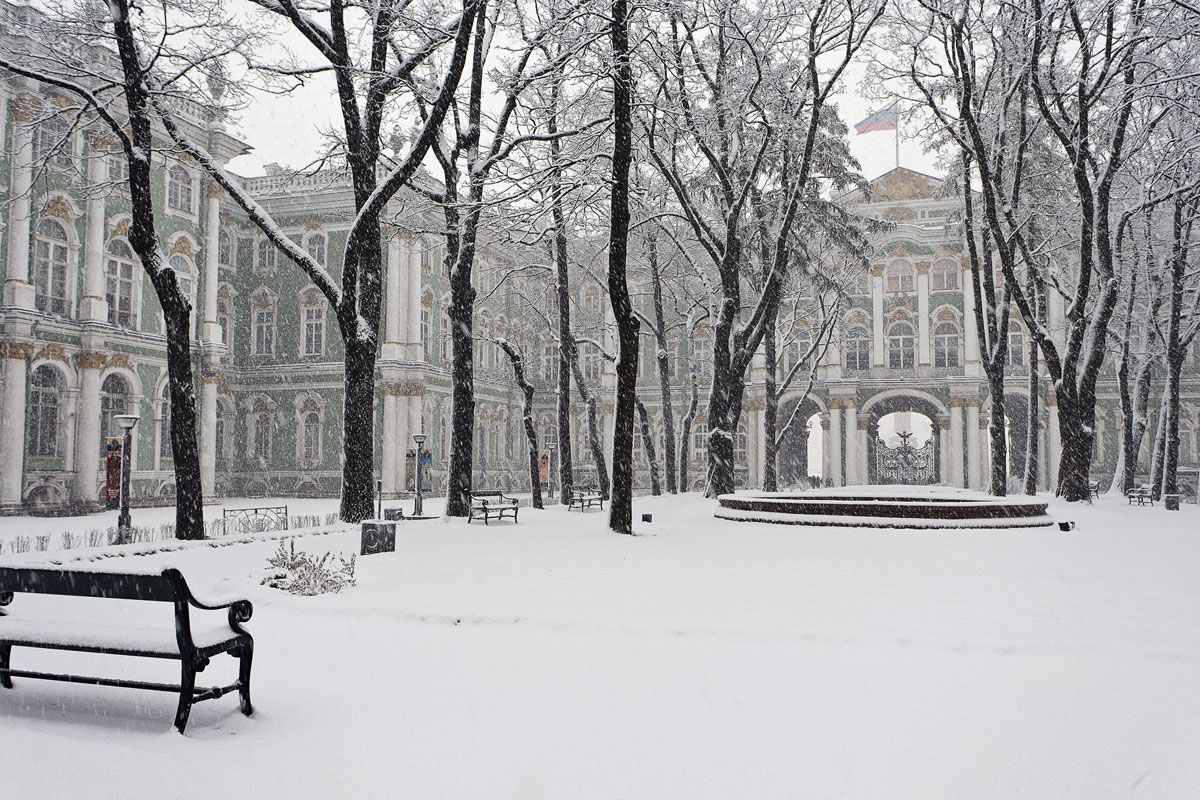
Hermitage Museum, the Winter Palace in Winter, St Petersburg Photo: Pavel Demidov


Hermitage Museum, the Winter Palace in Winter, St Petersburg 
Photo: Pavel Demidov


Some beauty to cheer me up from my sickbed.

These are the official press photographs for the exhibition Masterpieces from the Hermitage: The Legacy of Catherine the Great. To see my installation photographs of the exhibition go to this posting.

The paintings look as fresh today as when they were first painted, some of them in the early 1500s. To see the thumbs up gesture in Diego Velázquez’s Luncheon (c. 1617-1618, below) echoing down the centuries, is worth the price of admission alone. We cannot imagine what life would have been like back then… no medication, rampant disease and malnutrition, little law enforcement with danger lurking around each turn (see Matthew Beaumont. Night Walking: A Nocturnal History of London, Chaucer to Dickens. London and New York: Verso, 2015).

And yet these talented artists, supported by the elite, produced work which still touches us today.

Dr Marcus Bunyan


Many thankx to the National Gallery of Victoria for allowing me to publish the art works in the posting. Please click on the photographs for a larger version of the art works.


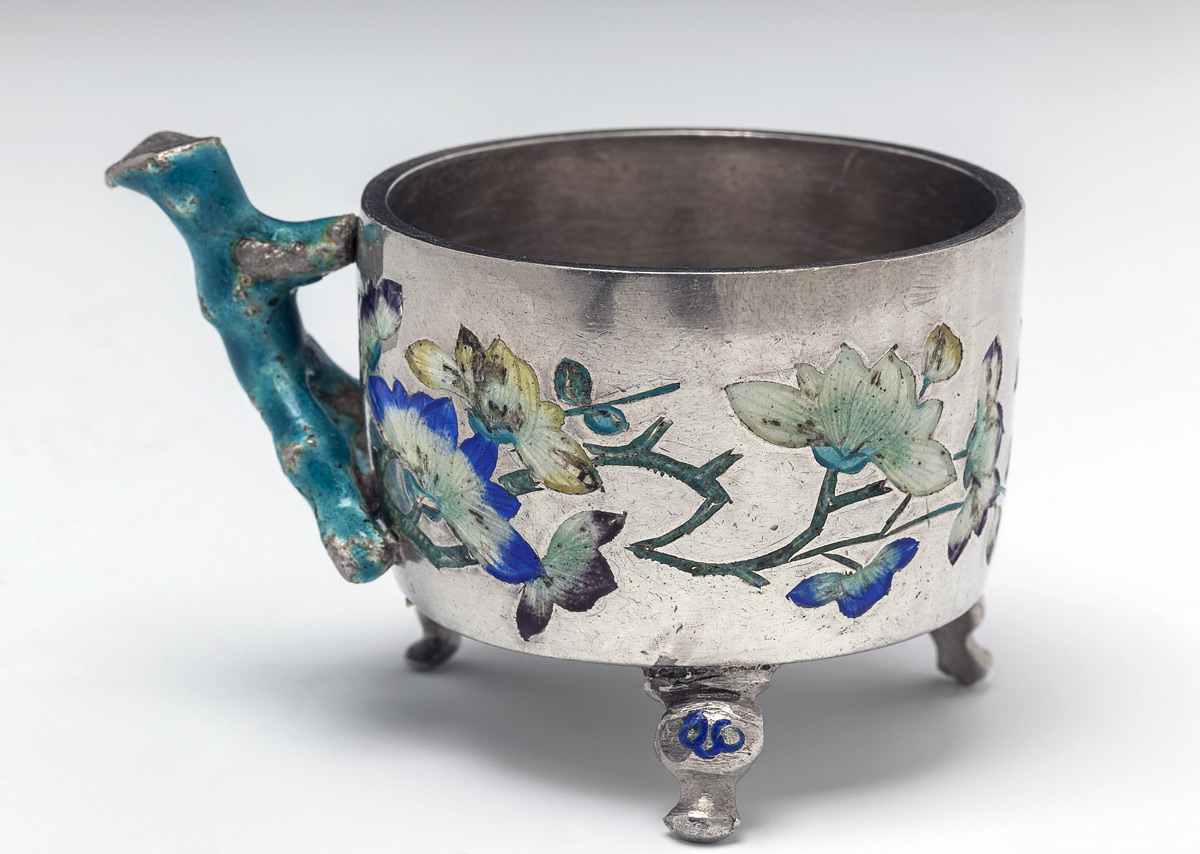
Chinese. 'Cup' early 17th century


Chinese
Cup
early 17th century
Silver, enamel
4 x 3 x 7cm
The State Hermitage Museum, St Petersburg (Inv. no. ЛС-133, ВВс-250)
Acquired before 1789


Chinese. 'Teapot with lid' 17th century


Chinese
Teapot with lid
17th century
Silver, enamel
18.0 x 5.5cm
The State Hermitage Museum, St Petersburg (Inv. no. ЛС-80 а, б, ВВс-219)
Acquired before 1789


Sevres Porcelain Factory Sèvres (manufacturer) France est. 1756 'Cameo Service' 1778-1779


Sèvres Porcelain Factory
Sèvres (manufacturer) France est. 1756
Cameo Service
1778-1779
Porcelain (soft-paste), gilt
The State Hermitage Museum, St Petersburg Commissioned by Catherine ll as a gift for Prince Grigory Potemkin in 1777; Potemkin’s Taurida Palace, St Petersburg from 1779; transferred to the Hofmarshal’s Office of the Winter Palace after his death; 1922 transferred to the State Hermitage Museum


Grand Duchess Maria Fyodorovna (Russian, 1795-1828) (engraver)
Russia (manufacturer) 'Catherine the Great as Minerva' cameo 1789


Grand Duchess Maria Fyodorovna (Russian, 1795-1828) (engraver)
Russia (manufacturer)
Catherine the Great as Minerva
1789
Cameo
Jasper, gold
6.5 x 4.7cm
The State Hermitage Museum, St Petersburg (Inv. no. К 1077)
Acquired 1789


James Tassie, London (England, 1735-1799) (workshop of) 'Head of Medusa' 1780s


James Tassie, London (England, 1735-1799) (workshop of)
Head of Medusa
1780s
Coloured glass, gilded paper
7.6 x 9.2cm
The State Hermitage Museum, St Petersburg (Inv. no. R-T, 3296 a)
Purchased from James Tassie 1783-88


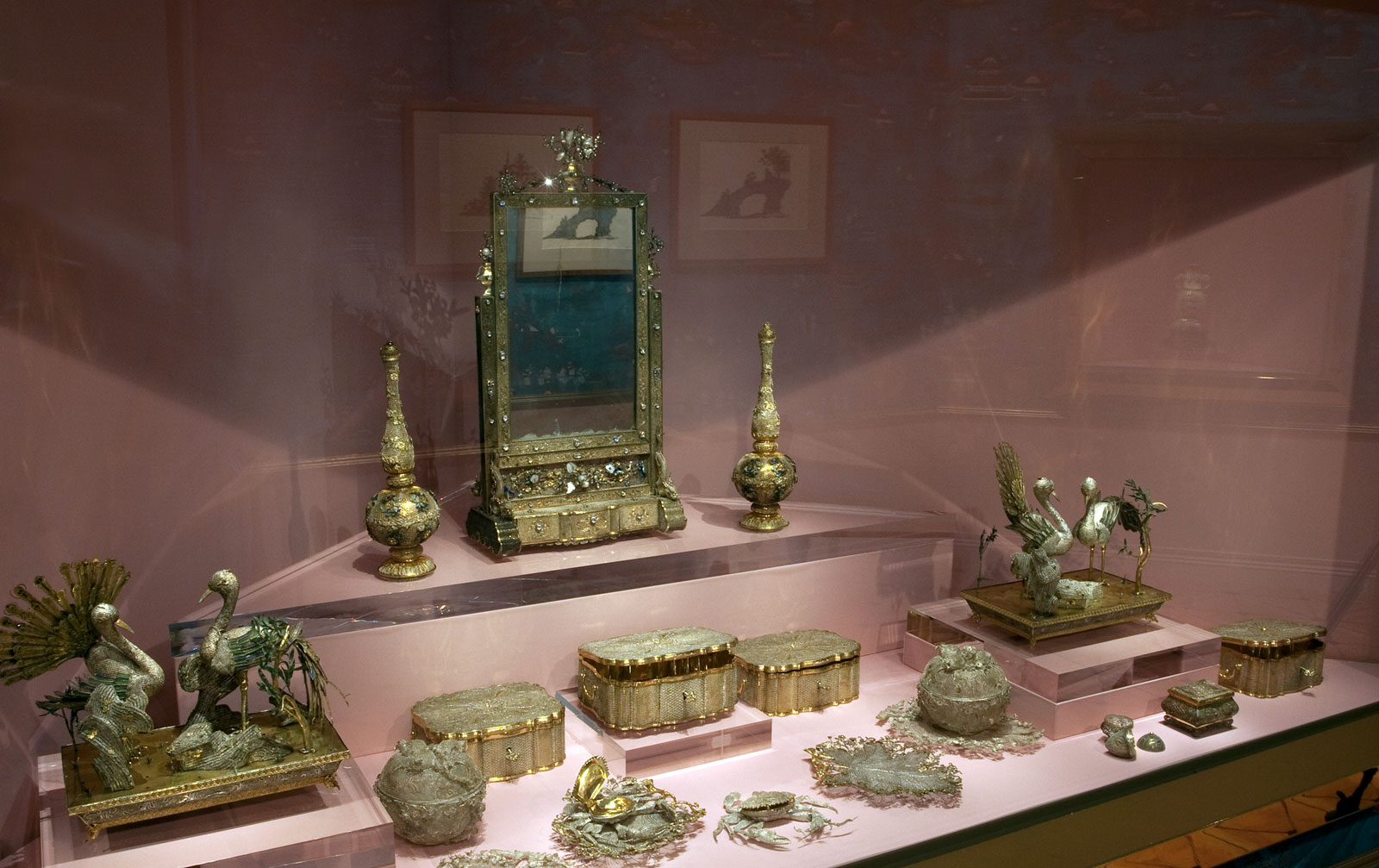
Chinese. 'Toilet service' early 18th century


Chinese
Toilet service
early 18th century
Glass, mercury amalgam, paper, silver, filigree, parcel-gilt, wood, velvet, peacock and king-fisher feathers, mother-of-pearl, crystals
The State Hermitage Museum, St Petersburg (Inv. no. ЛС-472/ 1,2, ВВс-373)
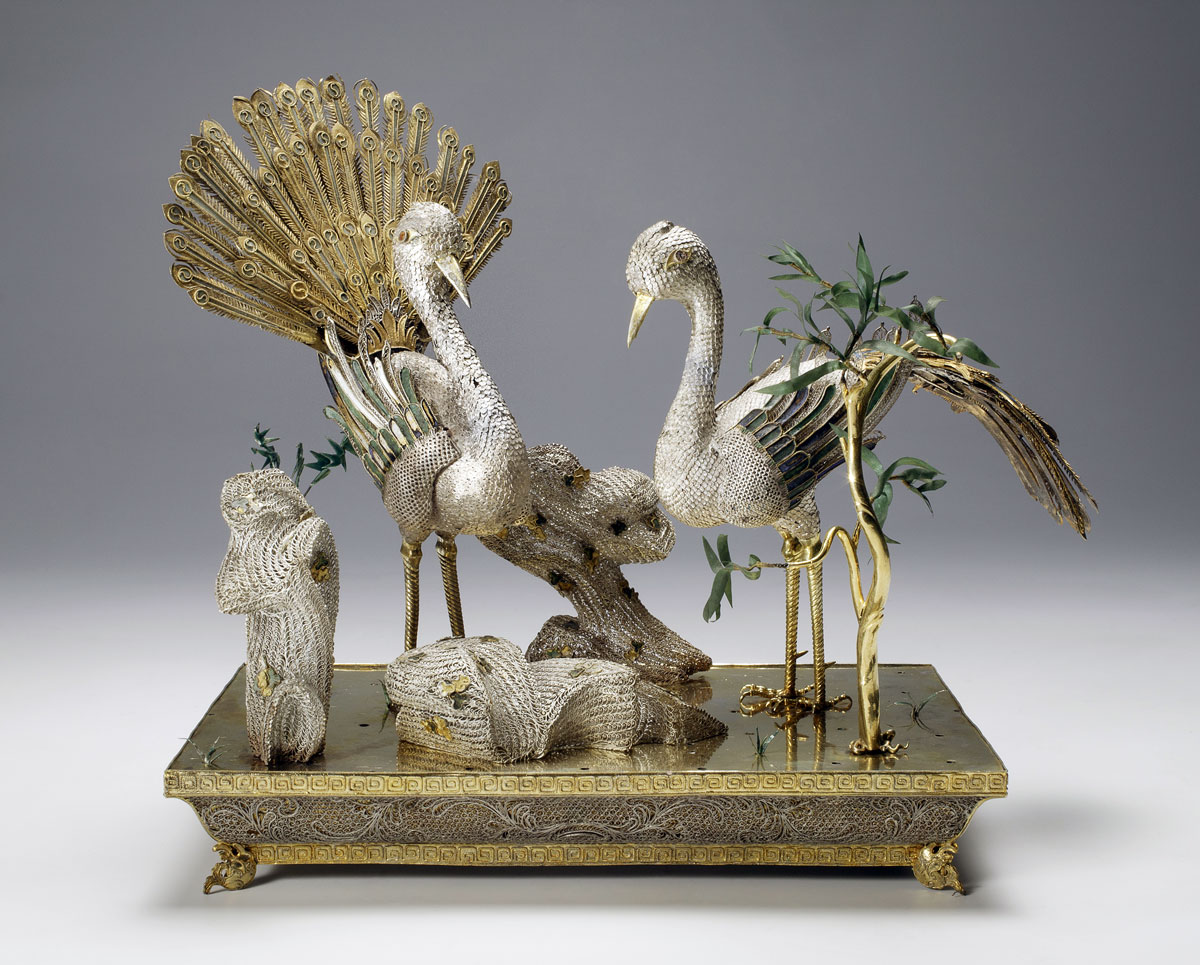
 

Chinese. 'Table decoration in the form of a pair of birds' 1740s-50s


Chinese
Table decoration in the form of a pair of birds
1740s-50s
Silver, enamel, silver-gilt
26.0 x 26.0 x 15.0cm
The State Hermitage Museum, St Petersburg (Inv. no. ЛС-26, ВВс-189)
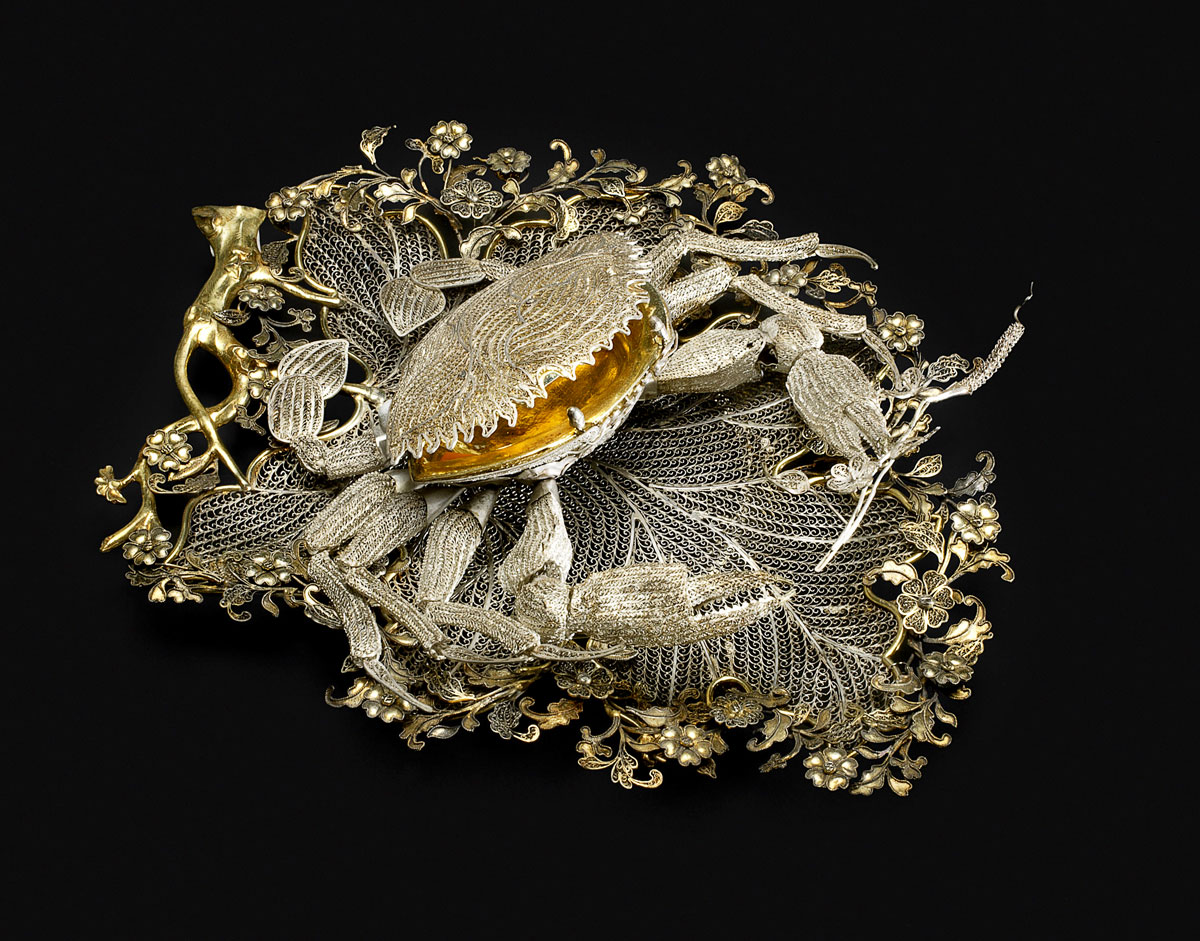
 

Chinese. 'Crab-shaped box on a leaf tray' 1740s-50s


Chinese
Crab-shaped box on a leaf tray
1740s-50s
Silver, enamel, silver-gilt
(a) 4.0 x 14.0 x 13.0cm (box)
(b) 3.0 x 22.0 x 17.0cm (stand)
The State Hermitage Museum, St Petersburg (Inv. no. ЛС-9 а,б, ВВс-186)


Marie-Anne Collot (French, 1748-1821) 'Voltaire' 1770s


Marie-Anne Collot (French, 1748-1821)
Voltaire
1770s
Marble
49 x 30 x 28cm
The State Hermitage Museum, St Petersburg (Inv. no. Н.ск. 3)
Acquired from the artist, 1778


Jean-Antoine Houdon (French, 1741-1828) 'Catherine II' 1773


Jean-Antoine Houdon (French, 1741-1828)
Catherine II
1773
Marble
90 x 50 x 32cm
The State Hermitage Museum, St Petersburg (Inv. no. Н.ск. 1676)
Transferred from the Stroganov Palace, Leningrad, 1928


Jean-Baptiste Greuze (French, 1725-1805) 'Head of an old man. Study for The paralytic' 1760s


Jean-Baptiste Greuze (French, 1725-1805)
Head of an old man. Study for The paralytic
1760s
Red and black chalk
49.3 x 40cm (sheet)
The State Hermitage Museum, St Petersburg (Inv. no. ОР-14727)
Acquired from the artist in 1769 for the Museum of the Academy of Arts. Transferred to the Hermitage in 1924
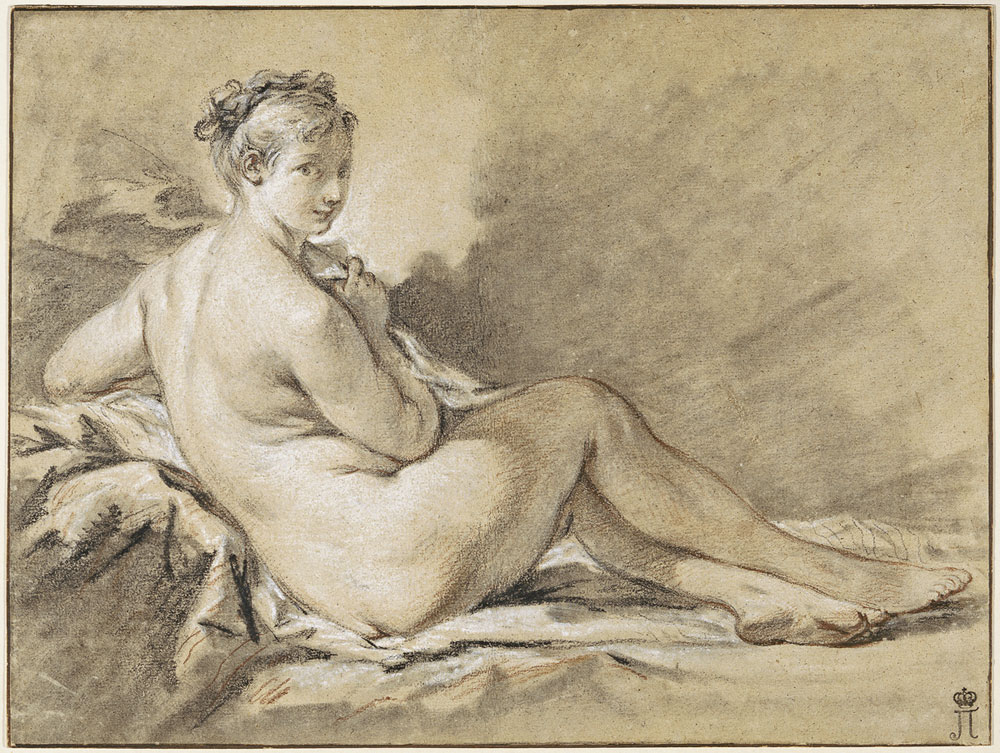
 

François Boucher (French, 1703-1770) 'Study of a female nude' 1740


François Boucher (French, 1703-1770)
Study of a female nude
1740
Red, black and white chalk on brown paper
26.2 x 34.6cm
The State Hermitage Museum, St Petersburg (Inv. no. ОР-382)
Acquired from the collection of Count Cobenzl, Brussels, 1768


Charles-Louis Clérisseau (French, 1721-1820) 'Design for the paintings in the cell of Father Lesueur in the Monastery of Santissima Trinità dei Monti in Rome' 1766-1768


Charles-Louis Clérisseau (French, 1721-1820)
Design for the paintings in the cell of Father Lesueur in the Monastery of Santissima Trinità dei Monti in Rome
1766-1768
Pen and black and brown ink, brown and grey wash
36.9 x 53cm (sheet)
The State Hermitage Museum, St Petersburg (Inv. no. ОР-2597)
Acquired from the artist by Catherine II on 5 May 1780, Provenance: before 1797


Carlo Galli-Bibiena (Austrian, 1728-87) 'Design for the interior decoration of a library' 1770s


Carlo Galli-Bibiena (Austrian, 1728-1787)
Design for the interior decoration of a library
1770s
Pen and ink, grey wash and watercolour over pencil
32 х 44cm (sheet)
The State Hermitage Museum, St Petersburg (Inv. no. ОР-231)
Acquired before 1797


Giacomo Quarenghi (Italian, 1744-1817) 'Façade of the Hermitage Theatre' 1780s


Giacomo Quarenghi (Italian, 1744-1817)
Façade of the Hermitage Theatre
1780s
Pen and ink, watercolour
33 х 47cm (sheet)
The State Hermitage Museum, St Petersburg (Inv. no. ОР-9626)
Acquired from Giulio Quarenghi in 1818
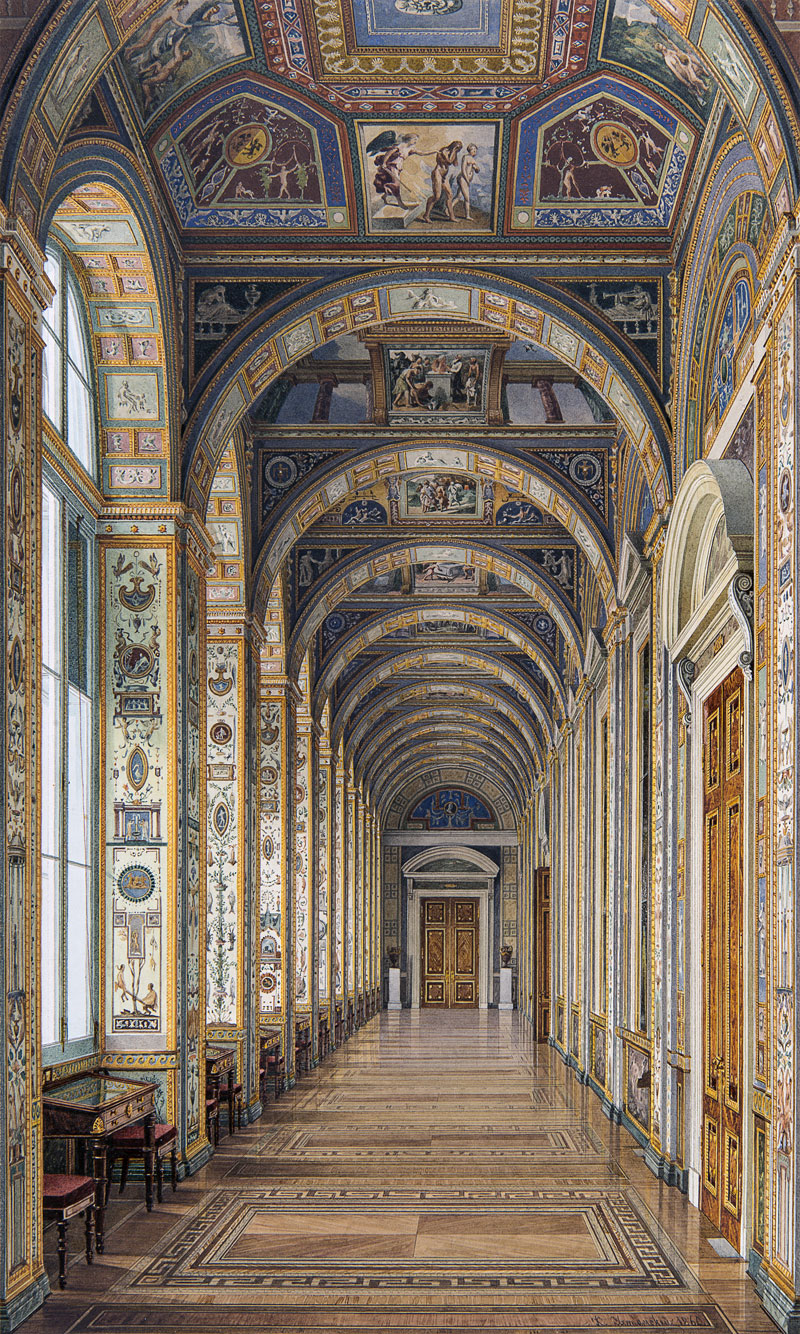
 

Konstantin Ukhtomsky (Russian, 1818-1881) 'The Raphael Loggia' 1860


Konstantin Ukhtomsky (Russian, 1818-1881)
The Raphael Loggia
1860
Watercolour
42 х 25cm
The State Hermitage Museum, St Petersburg (Inv. no. ОР-11741)
Acquired from the artist, 1860


Over 500 works from the personal collection of Catherine the Great will travel to Australia in July. Gathered over a 34-year period, the exhibition represents the foundation of the Hermitage’s collection and includes outstanding works from artists such as Rembrandt, Velasquez, Rubens and Titian. Exemplary works from Van Dyck, Snyders, Teniers and Hals will also travel, collectively offering some of the finest Dutch and Flemish art to come to Australia. The exhibition, presented by the Hermitage Museum, National Gallery of Victoria and Art Exhibitions Australia, is exclusive to Melbourne as part of the Melbourne Winter Masterpieces series.

The Premier of Victoria, the Hon. Daniel Andrews MP said: “Masterpieces from the Hermitage: The Legacy of Catherine the Great will showcase treasures from one of the largest, oldest and most visited museums in the world. Another major event for Melbourne, this exhibition will provide visitors with a once-in-a-lifetime opportunity to see first-hand the extraordinary personal collection of Catherine the Great, drawn from the Hermitage Museum, St Petersburg.”

NGV Director, Tony Ellwood said, “This exhibition celebrates the tenacity and vision of a true innovator in the arts. Catherine the Great’s inexhaustible passion for the arts, education and culture heralded a renaissance, leading to the formation of one of the world’s great museums, the Hermitage.”

“We are delighted that we have the good fortune of bringing one of the world’s most important collections to Australian audiences. The exhibition is a rare opportunity to be immersed in the world of Catherine the Great and her magnificent collection of art,” Tony Ellwood said.

Catherine the Great’s reign from 1762 to 1796 was known as the golden age and is remembered for her exceptional patronage of the arts, literature and education. Of German heritage, Catherine the Great was well connected in European art and literature circles. She saw herself as a reine-philosophe (Philosopher Queen), a new kind of ruler in the Age of Enlightenment. Guided by Europe’s leading intellectuals, such as the French philosophers Voltaire and Diderot, she sought to modernise Russia’s economy, industry and government, drawing inspiration both from classical antiquity and contemporary cultural and political developments in Western Europe.

A prolific acquirer of art of the period, Catherine the Great’s collection reflects the finest contemporary art of the 18th century as well as the world’s best old masters of the time, with great works by French, German, Chinese, British, Dutch and Flemish artists. Notable in this exhibition are entire groups of works acquired from renowned collections from France, Germany and England representing the best collections offered for sale at the time. The exhibition will feature four Rembrandts, including the notable Young woman with earrings, known as one of most intimate images Rembrandt ever created. The exhibition will also include 80 particularly fine drawings by artists including Poussin, Rubens, Clouet and Greuze.

Exquisite decorative arts will be brought to Australia for this exhibition, including 60 items from the Cameo Service of striking enamel-painted porcelain made by the Sèvres Porcelain Manufactory in Paris. Commissioned by Catherine the Great for her former lover and military commander, Prince Grigory Potemkin, the dinner service features carved and painted imitation cameos, miniature works of art, based on motifs from the French Royal collection.

Director of the Hermitage Museum, Mikhail Piotrovsky said, “These outstanding works from the personal collection of Catherine the Great represent the crown jewels of the Museum. It was through the collection of these works and Catherine the Great’s exceptional vision that the Hermitage was founded. Today it is one of the most visited museums in the world. We are very pleased to be able to share these precious works with Australian audiences at the 250-year anniversary of this important institution.”

Catherine the Great’s love of education, art and culture inspired a period of enlightenment and architectural renaissance that saw the construction of the Hermitage complex. This construction includes six historic buildings along the Palace Embankment as well as the spectacular Winter Palace, a former residence of Russian emperors. On view in the exhibition will be remarkable drawings by the Hermitage’s first architects Georg Velten and Giacomo Quarenghi, complemented by excellent painted views of the new Hermitage by Benjamin Patersen. These, along with Alexander Roslin’s majestic life-size portrait of Catherine, set the scene for a truly spectacular exhibition.

Visitors to the exhibition will be able to immerse themselves in Catherine the Great’s world evoking a sensory experience of a visit to the Hermitage Museum in St Petersburg. The exhibition design will have rich treatments of architectural details, interior furnishings, wallpapers and a colour palette directly inspired by the Hermitage’s gallery spaces. Enveloping multimedia elements will give visitors a sense of being inside the Hermitage, evoking the lush and opulent interiors.

The Hermitage Museum was founded in 1764 by Catherine the Great and has been open to the public since 1852. With 3 million items in its holdings, the Hermitage is often regarded as having the finest collection of paintings in the world today. In 2014, The Hermitage celebrated its 250-year anniversary and opened a new wing of the museum with 800 rooms dedicated to art from the 19th to 21st centuries. The exhibition is organised by The Hermitage Museum, St Petersburg in association with the National Gallery of Victoria and Art Exhibitions Australia.

Masterpieces from the Hermitage: The Legacy of Catherine the Great will be at NGV International from 31 July – 8 November 2015 and will be presented alongside the David Bowie is exhibition at the Australian Centre for the Moving Image as part of the 2015 Melbourne Winter Masterpieces series.

Press release from the National Gallery of Victoria
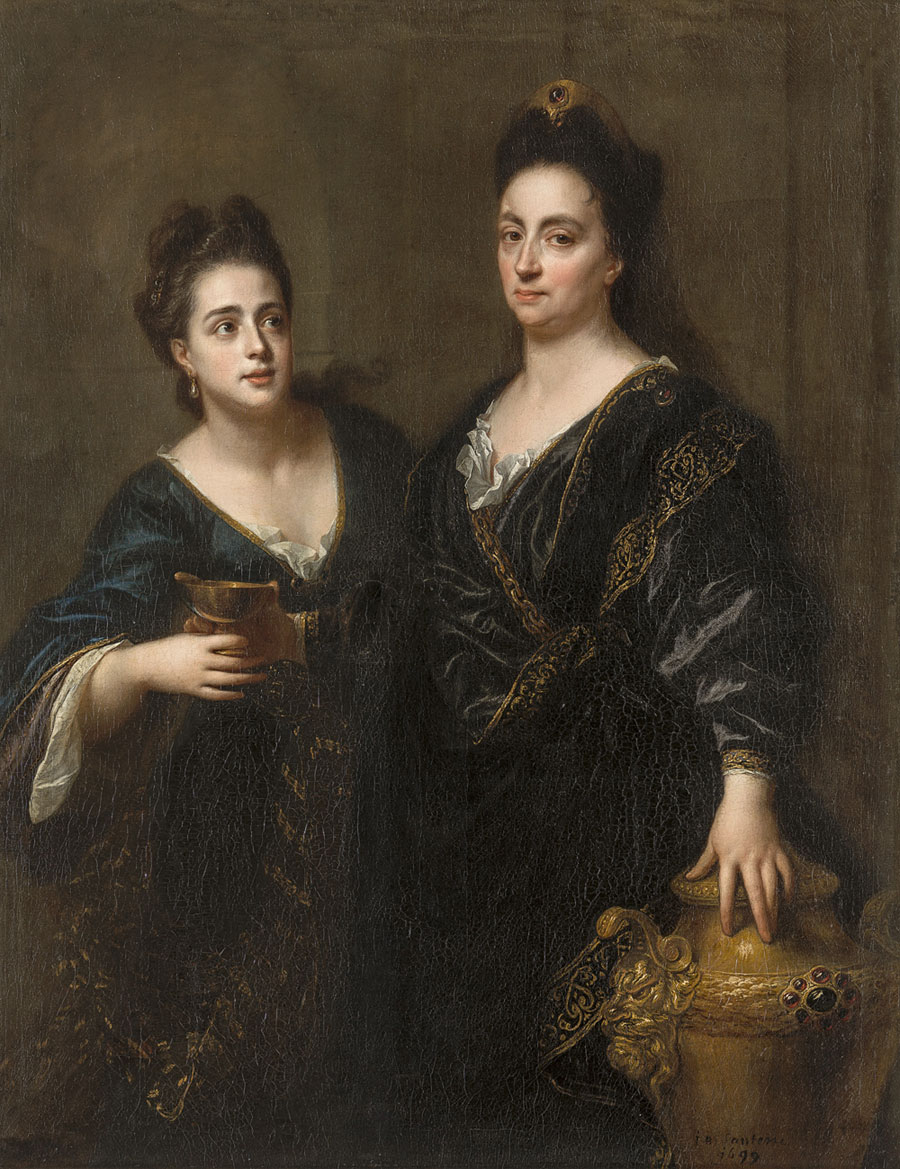
 

Jean-Baptiste Santerre (French, 1651-1717) 'Two actresses' 1699


Jean-Baptiste Santerre (French, 1651-1717)
Two actresses
1699
Oil on canvas
146 х 114cm
The State Hermitage Museum, St Petersburg (Inv. no. ГЭ-1284)
Acquired 1768


Anthony van Dyck (Flemish, 1599-1641) 'Portrait of Philadelphia and Elizabeth Wharton' 1640


Anthony van Dyck (Flemish, 1599-1641)
Portrait of Philadelphia and Elizabeth Wharton
1640
Oil on canvas
162 х 130cm
The State Hermitage Museum, St Petersburg (Inv. no. ГЭ-533)
Acquired from the collection of Sir Robert Walpole, Houghton Hall, 1779
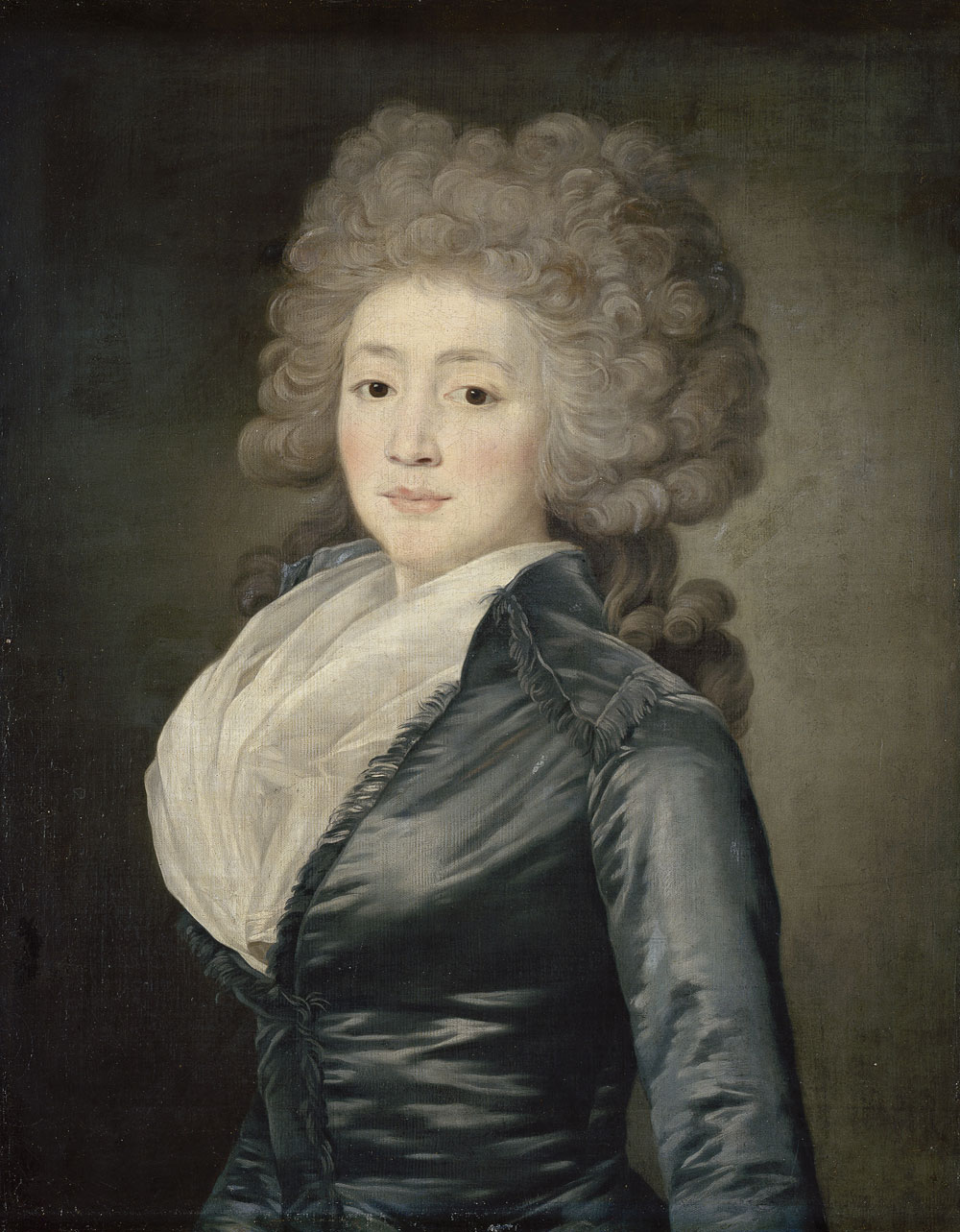
 

Jean Louis Voille (French, 1744-1804) 'Portrait of Olga Zherebtsova' 1790s


Jean Louis Voille (French, 1744-1804)
Portrait of Olga Zherebtsova
1790s
Oil on canvas
73.5 х 58cm
The State Hermitage Museum, St Petersburg (Inv. no. ГЭ-5654)
Acquired from the collection of E. P. Oliv, Petrograd, 1923
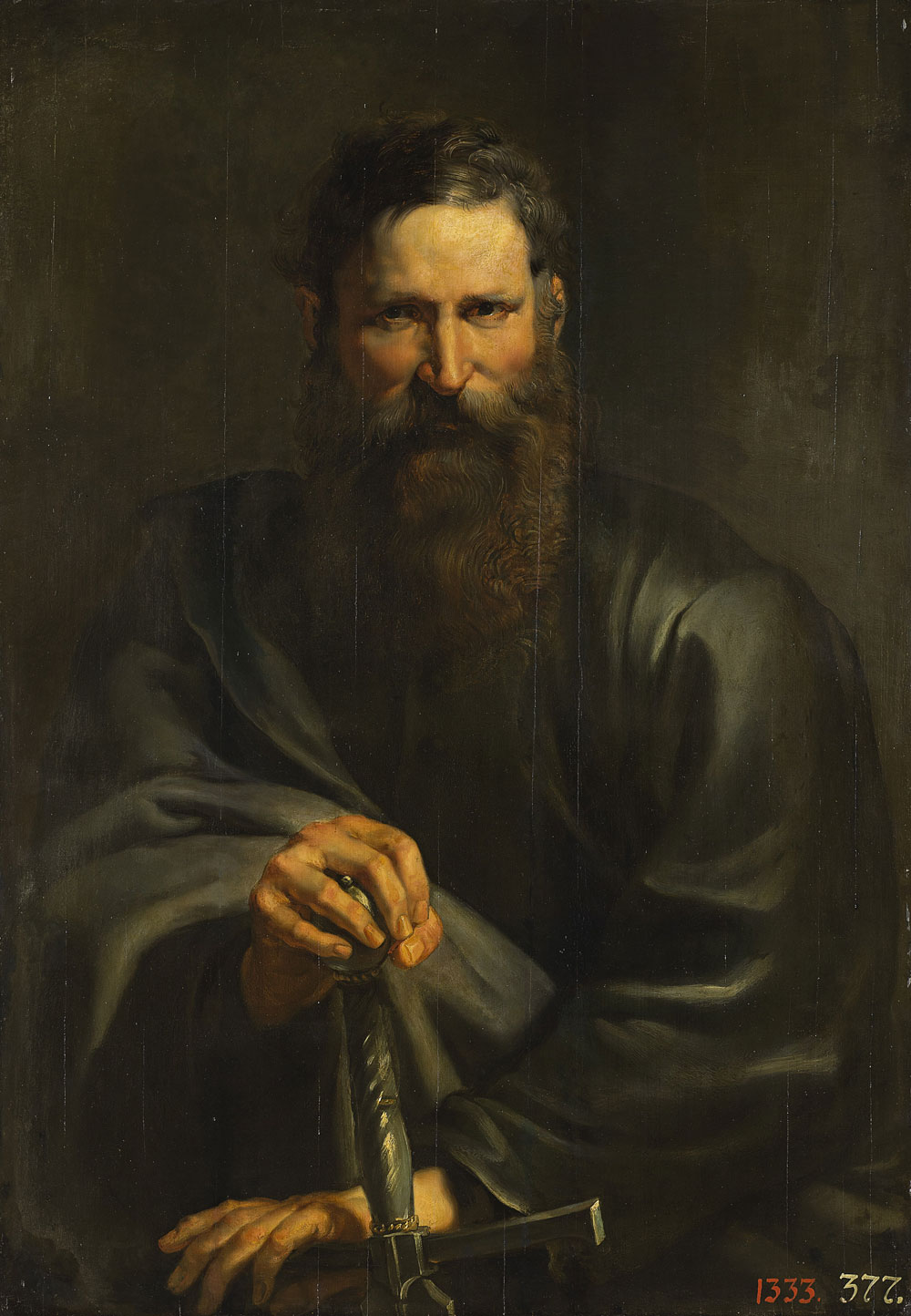
 

Peter Paul Rubens and workshop (Flemish, 1577-1640) 'The Apostle Paul' c. 1615


Peter Paul Rubens and workshop (Flemish, 1577-1640)
The Apostle Paul
c. 1615
Oil on wood panel
105.6 х 74cm
The State Hermitage Museum, St Petersburg (Inv. no. ГЭ-489)
Acquired before 1774


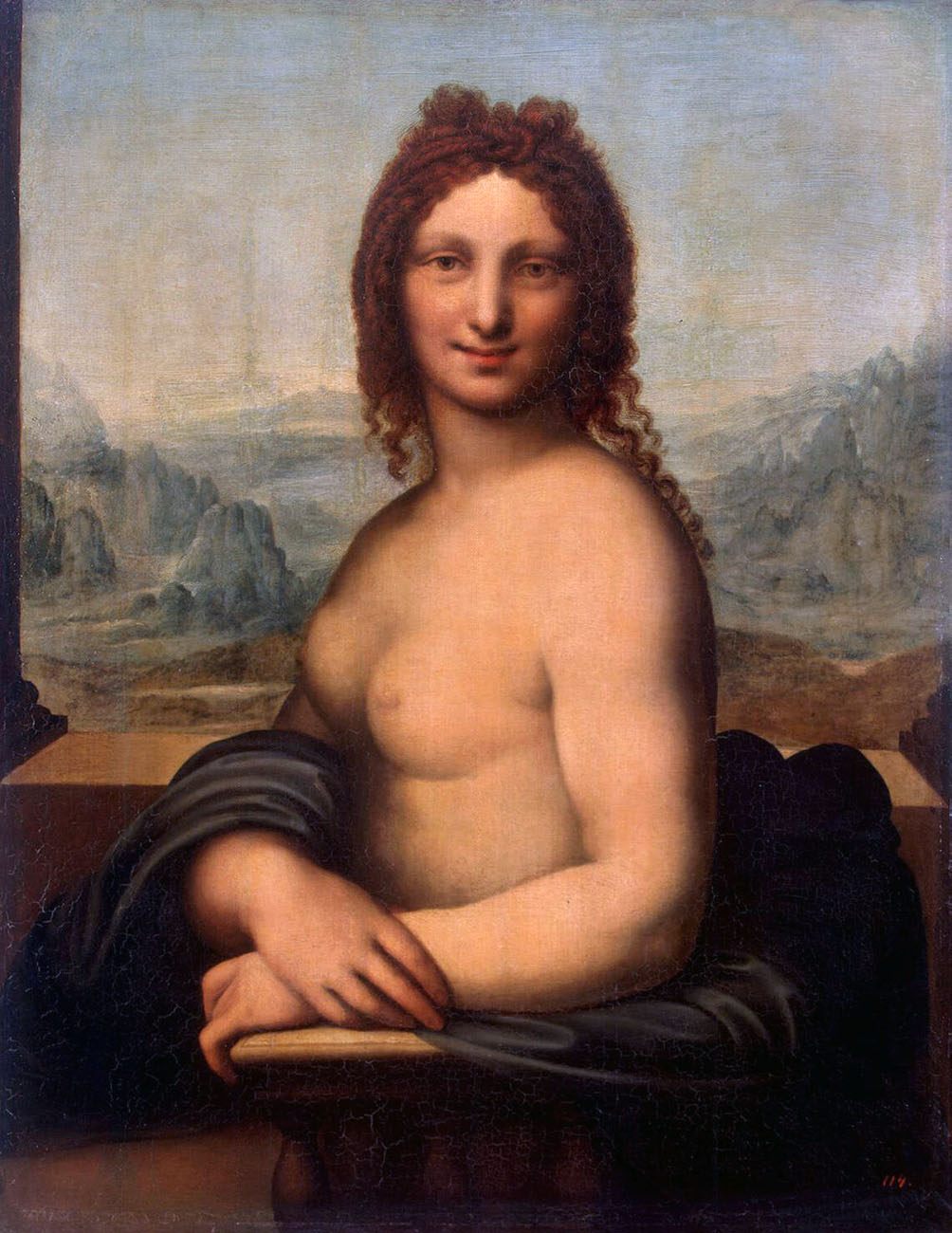
Leonardo Da Vinci (school of) 'Female nude (Donna Nuda)' early 16th century


Leonardo Da Vinci (school of)
Female nude (Donna Nuda)
Early 16th century
Oil on canvas
86.5 х 66.5cm
The State Hermitage Museum, St Petersburg (Inv. no. ГЭ-110)
Acquired from the collection of Sir Robert Walpole, Houghton Hall, 1779
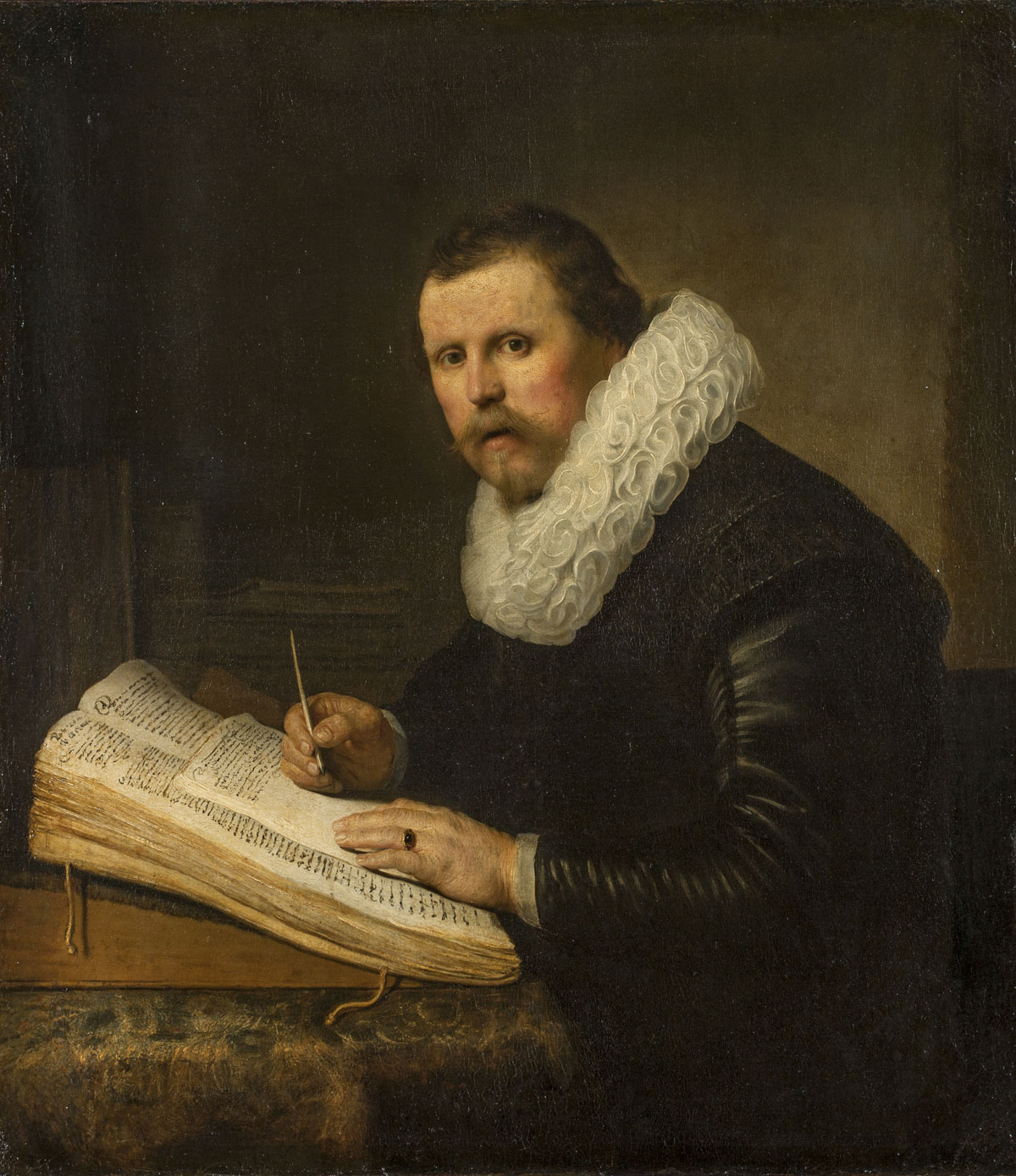
 

Rembrandt Harmensz. van Rijn (Dutch, 1606-69) 'Portrait of a scholar' 1631


Rembrandt Harmensz. van Rijn (Dutch, 1606-1669)
Portrait of a scholar
1631
Oil on canvas
104.5 х 92cm
The State Hermitage Museum, St Petersburg (Inv. no. ГЭ-744)
Acquired from the collection of Count Heinrich von Brühl, Dresden, 1769


Jean-Baptiste Perronneau (French, 1715–83) 'Portrait of a boy with a book' 1740s


Jean-Baptiste Perronneau (French, 1715-1783)
Portrait of a boy with a book
1740s
Oil on canvas
63.0 х 52cm
The State Hermitage Museum, St Petersburg (Inv. no. ГЭ-1270)
Acquired from the collection of A. G. Teplov, St Petersburg, 1781
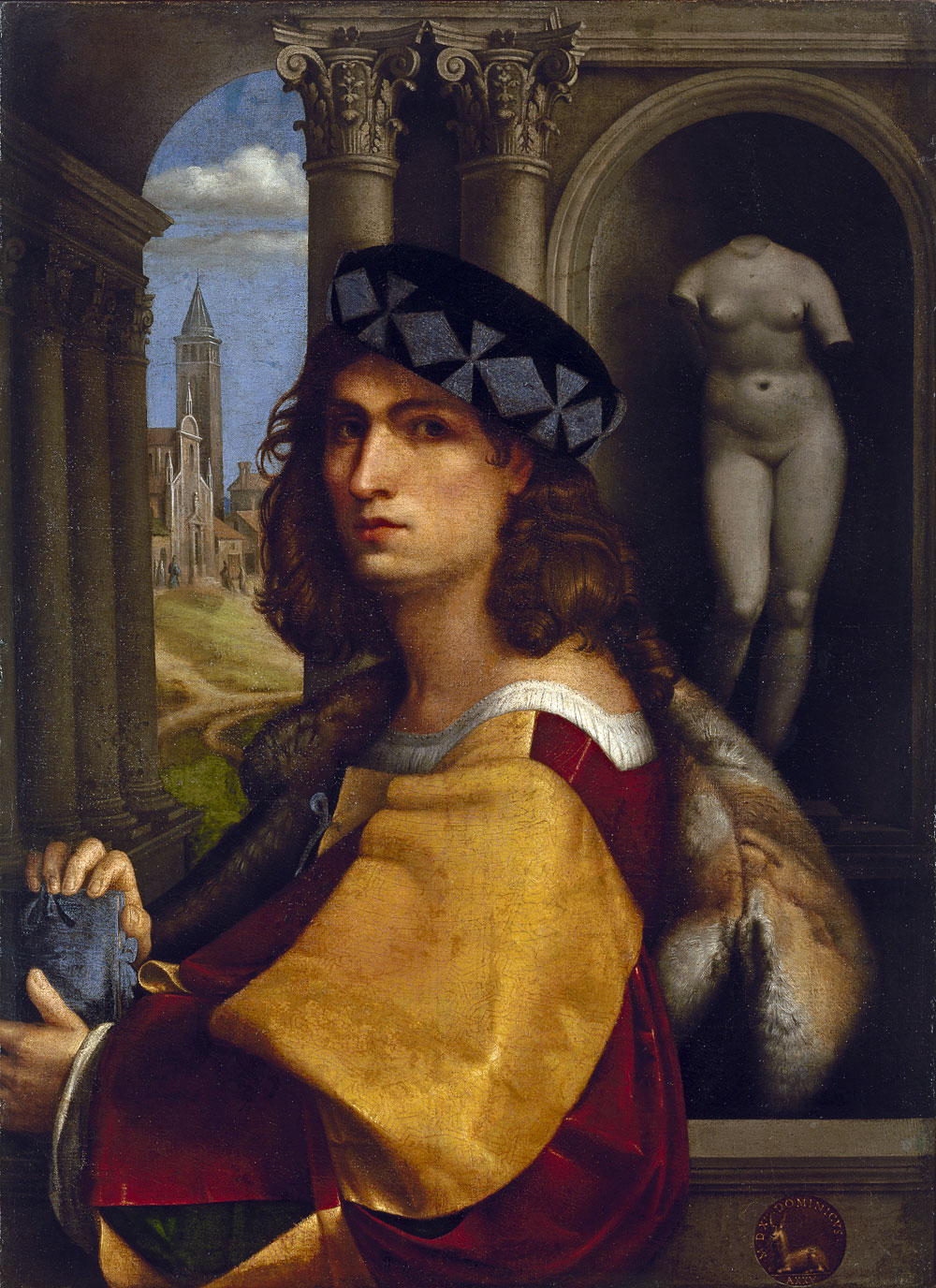
 

Domenico Capriolo (Italian, c. 1494-1528) 'Portrait of a young man' 1512


Domenico Capriolo (Italian, c. 1494-1528)
Portrait of a young man
1512
Oil on canvas
117 х 85cm
The State Hermitage Museum, St Petersburg (Inv. no. ГЭ-21)
Acquired from the collection of Baron Louis-Antoine Crozat de Thiers, Paris, 1772


Alexander Roslin (Swedish, 1718-93) 'Portrait of Catherine II' 1776-1777


Alexander Roslin (Swedish, 1718-1793)
Portrait of Catherine II
1776-1777
Oil on canvas
271 х 189.5cm
The State Hermitage Museum, St Petersburg (Inv. no. ГЭ-1316)
Acquired from the artist, 1777
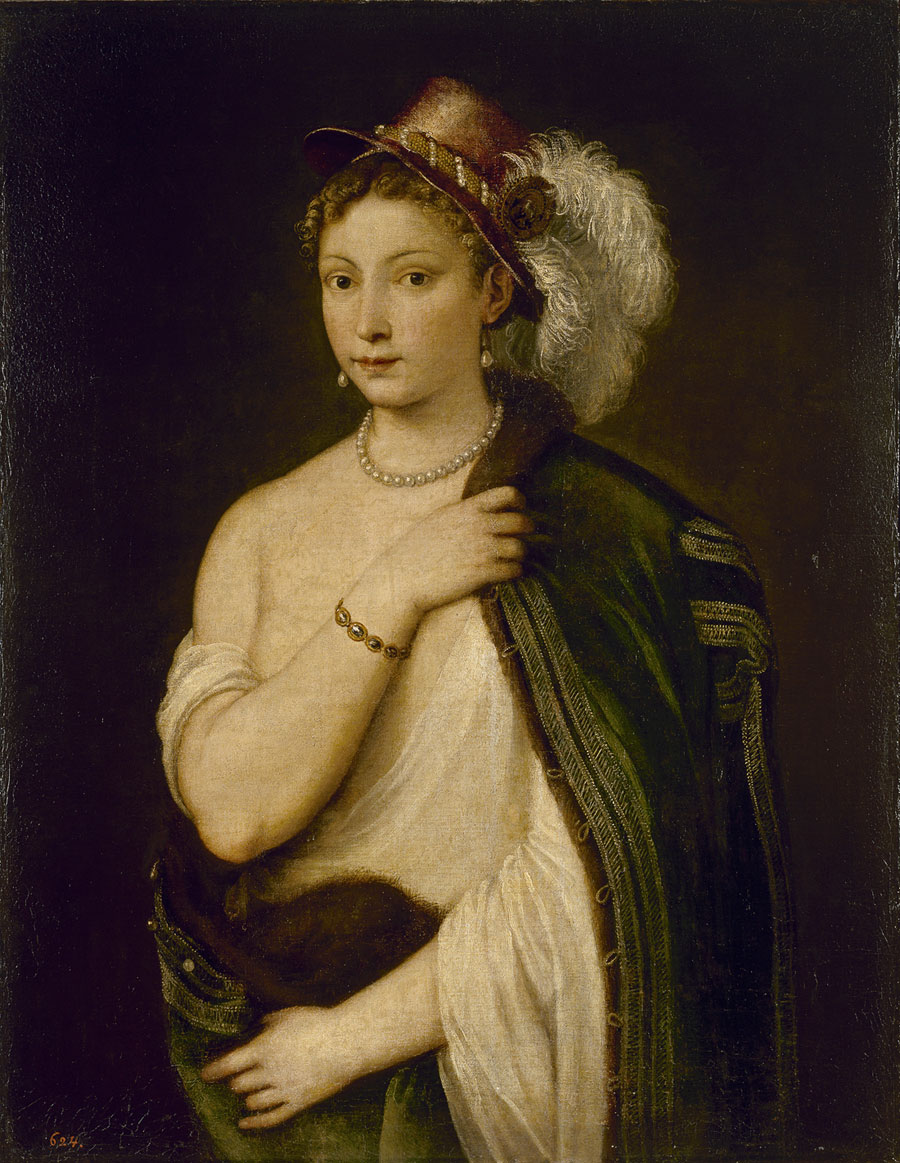
 

Titian (Italian, 1485-90 - 1576) 'Portrait of a young woman' c. 1536


Titian (Italian, 1485-1490 – 1576)
Portrait of a young woman
c. 1536
Oil on canvas
96 х 75cm
The State Hermitage Museum, St Petersburg (Inv. no. ГЭ-71)
Acquired from the collection of Baron Louis-Antoine Crozat de Thiers, Paris, 1772


Rembrandt Harmensz. van Rijn (Dutch, 1606-69) 'Young woman trying on earrings' 1657


Rembrandt Harmensz. van Rijn (Dutch, 1606-1669)
Young woman trying on earrings
1657
Oil on wood panel
39.5 х 32.5cm
The State Hermitage Museum, St Petersburg (Inv. no. ГЭ-784)
Acquired from the collection of the Comte de Baudouin, Paris, 1781


Francois Clouet (French, c. 1516-1572) 'Portrait of Charles IX' 1566


Francois Clouet (French, c. 1516-1572)
Portrait of Charles IX
1566
Black and red chalk
33.1 x 22.5cm (sheet)
The State Hermitage Museum, St Petersburg (Inv. no. OР-2893)
Acquired from the collection of Count Cobenzl, Brussels, 1768


David Teniers II (Flemish, 1610-1690) 'Kitchen' 1646


David Teniers II (Flemish, 1610-1690)
Kitchen
1646
Oil on canvas
171 х 237cm
The State Hermitage Museum, St Petersburg (Inv. no. ГЭ-586)
Acquired from the collection of Sir Robert Walpole, Houghton Hall, 1779


Cornelis de Vos (Dutch/Flemish, c. 1584-1651) 'Self-portrait of the artist with his wife Suzanne Cock and their children' c. 1634


Cornelis de Vos (Dutch/Flemish, c. 1584-1651)
Self-portrait of the artist with his wife Suzanne Cock and their children
c. 1634
Oil on canvas
185.5 х 221cm
The State Hermitage Museum, St Petersburg (Inv. no. ГЭ-623)
Donated by Prince G. A. Potemkin, 1780s
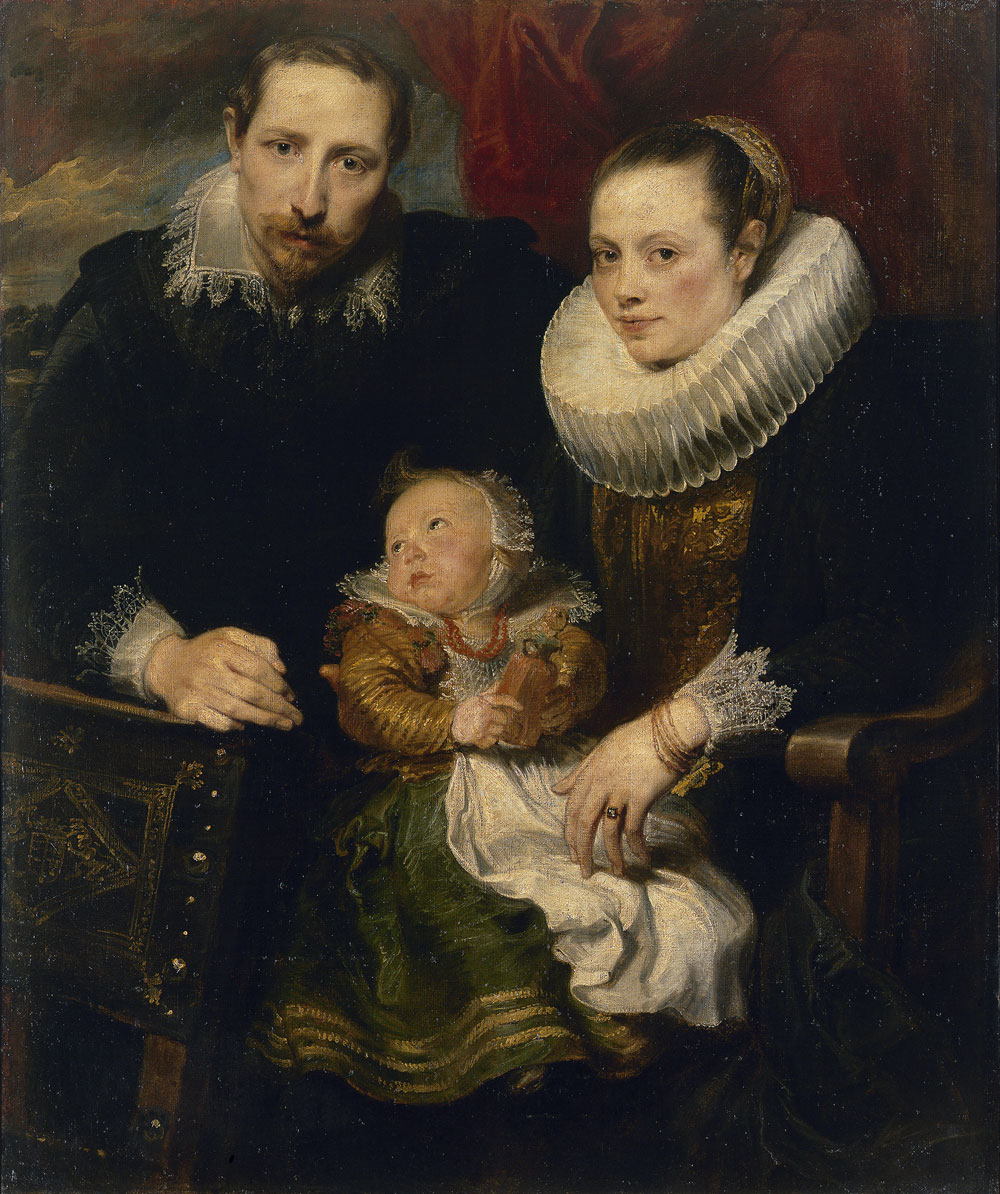
 

Anthony van Dyck (Flemish, 1599-1641) 'Family portrait' c. 1619


Anthony van Dyck (Flemish, 1599-1641)
Family portrait
c. 1619
Oil on canvas
113.5 х 93.5cm
The State Hermitage Museum, St Petersburg (Inv. no. ГЭ-534)
Acquired from a private collection, Brussels, 1774


Charles Vanloo (French, 1705-1765) 'Sultan's wife drinking coffee' 1750s


Charles Vanloo (French, 1705-1765)
Sultan’s wife drinking coffee
1750s
Oil on canvas
120 х 127cm
The State Hermitage Museum, St Petersburg (Inv. no. ГЭ-7489)
Acquired from the collection of Madame Marie-Thérèse Geoffrin, Paris, 1772


Peter Paul Rubens and workshop (Flemish, 1577-1640) 'The Adoration of the Magi' c. 1620


Peter Paul Rubens and workshop (Flemish, 1577-1640)
The Adoration of the Magi
c. 1620
Oil on canvas
235 х 277.5cm
The State Hermitage Museum, St Petersburg (Inv. № ГЭ-494)
Acquired from the collection of Dufresne, Amsterdam, 1770


Diego Velazquez (Spanish, 1599-1660) 'Luncheon' c. 1617-1618


Diego Velázquez (Spanish, 1599-1660)
Luncheon
c. 1617-1618
Oil on canvas
108.5 х 102cm
The State Hermitage Museum, St Petersburg (Inv. no. ГЭ-389)
Acquired 1763-1774


Melchior d'Hondecoeter (Dutch, 1636-1695) 'Birds in a park' 1686


Melchior d’Hondecoeter (Dutch, 1636-1695)
Birds in a park
1686
Oil on canvas
136 х 164cm
The State Hermitage Museum, St Petersburg (Inv. no. ГЭ-1042)
Acquired from the collection of Jacques Aved, Paris, 1766


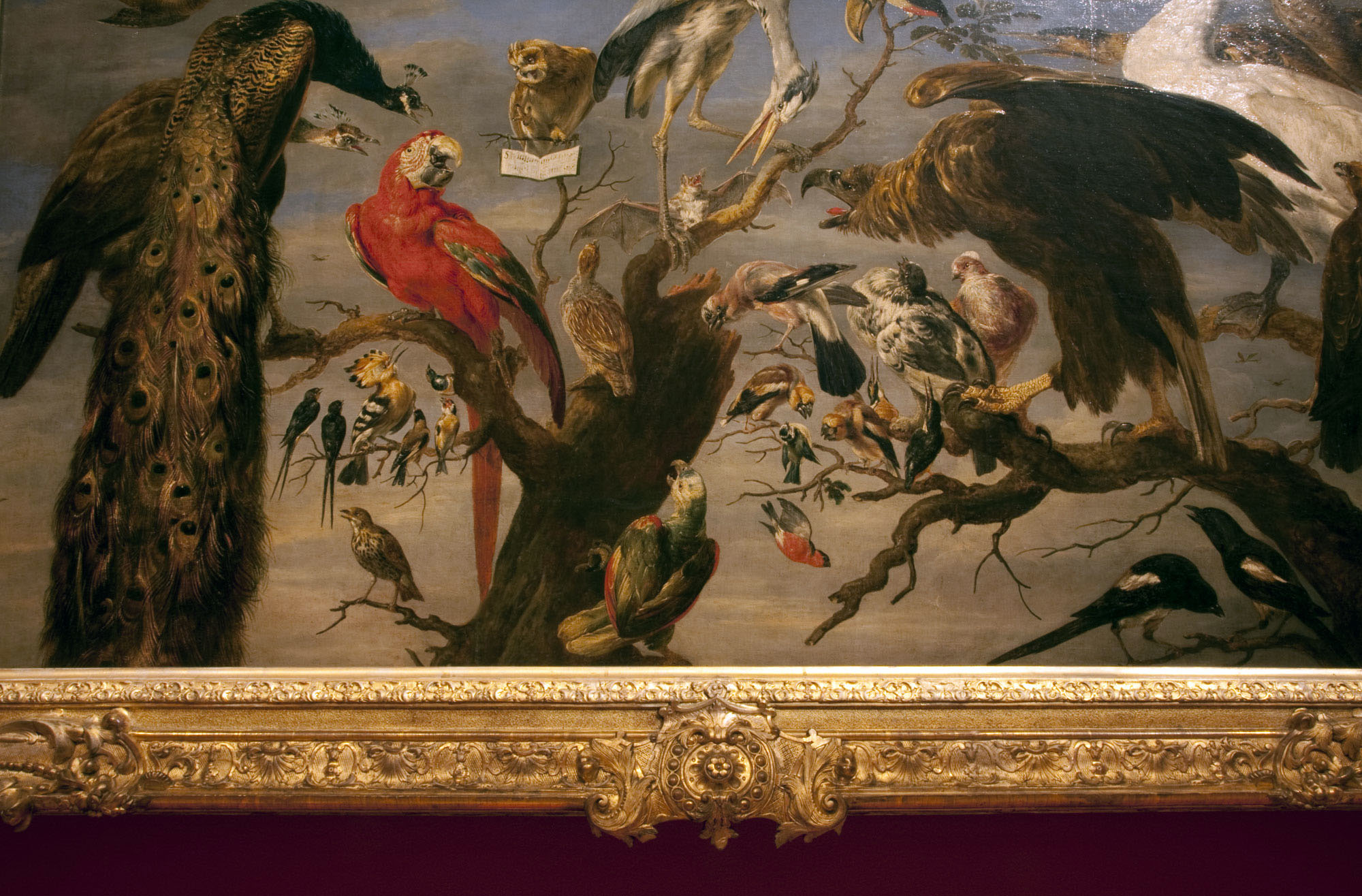
Frans Snyders (Flemish 1579-1657) 'Concert of birds' 1630-1640


Frans Snyders (Flemish, 1579-1657)
Concert of birds
1630-1640
Oil on canvas
136.5 х 240cm
The State Hermitage Museum, St Petersburg (Inv. no. ГЭ-607)
Acquired from the collection of Sir Robert Walpole, Houghton Hall, 1779


NGV International
180 St Kilda Road

Opening hours for exhibition
10am – 5pm daily

National Gallery of Victoria website

LIKE ART BLART ON FACEBOOK

Back to top

Exhibition: ‘Masterpieces from the Hermitage: The Legacy of Catherine the Great’ at NGV International, Melbourne

Exhibition dates: 31st July – 8th November 2015


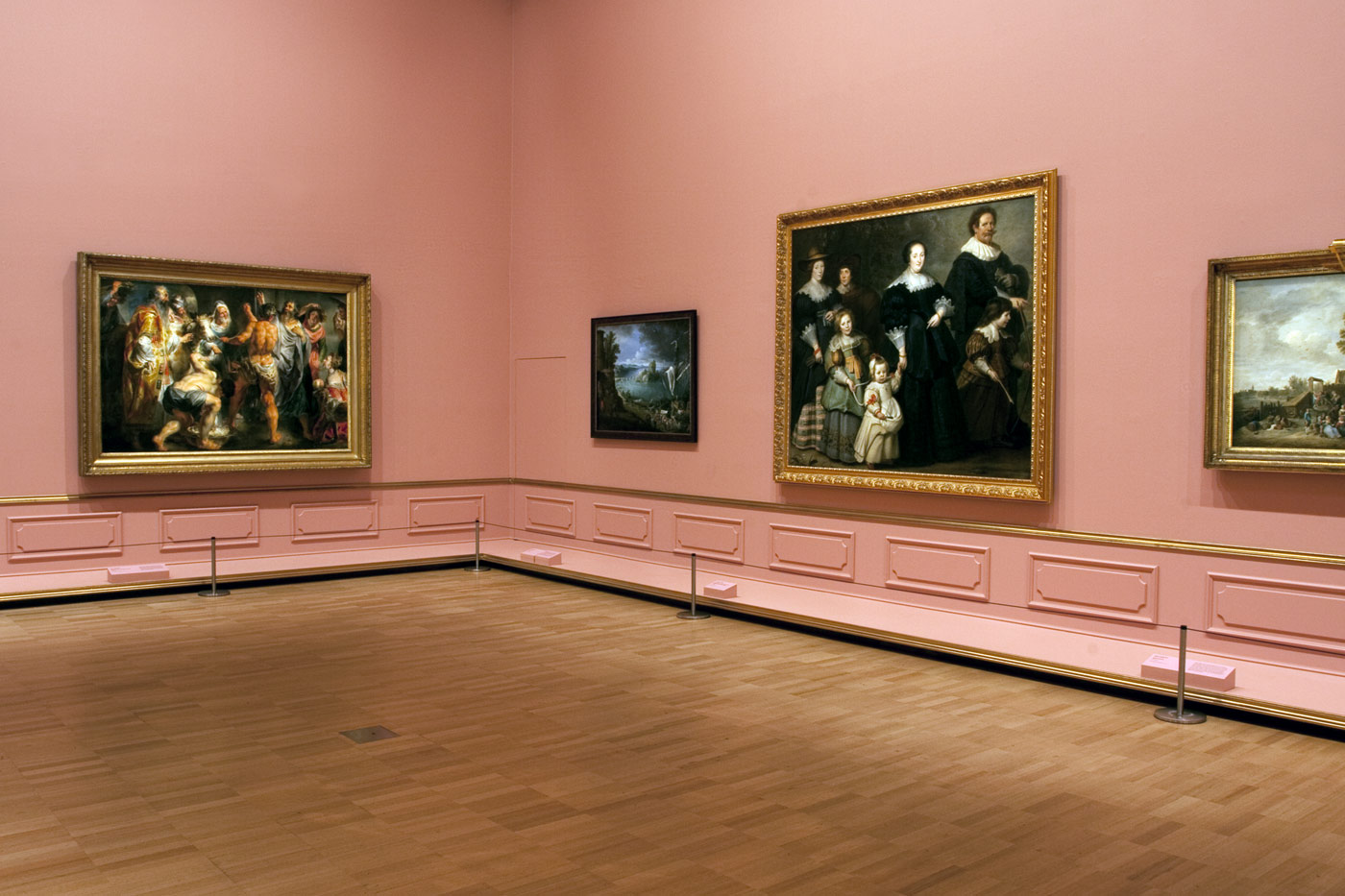
Installation view of room 1 of the exhibition 'Masterpieces from the Hermitage: The Legacy of Catherine the Great' featuring Alexander Roslin (Swedish 1718-1793) 'Portrait of Catherine II' 1776-1777


Installation view of room 1 of the exhibition Masterpieces from the Hermitage: The Legacy of Catherine the Great at NGV International, Melbourne featuring Alexander Roslin (Swedish 1718-93) Portrait of Catherine II 1776-77
Photo: Marcus Bunyan


A scintillating exhibition at NGV International which showcases one of the world’s greatest art collections. Exhibition design is outstanding (particularly the floor tiling), as are the Da Vinci, Titian, Rembrandt, van Dyck, Rubens and Flemish still life. Among my favourites is a small Watteau Savoyard with a Marmot (1716) which is absolutely still, delicate and exquisite: I thought of the photographs of Atget, his street sellers, when I saw this painting; and Frans Snyders’ tour-de-force Concert of birds (1630-40) which has such presence.

Well done to the curators, the Hermitage Museum and the NGV for staging such a magnificent exhibition.

Marcus


Many thankx to the National Gallery of Victoria for allowing me to publish the photographs in the posting. Please click on the photographs for a larger version of the image. All photographs © Dr Marcus Bunyan and the National Gallery of Victoria.


Masterpieces from the Hermitage: The Legacy of Catherine the Great showcases one of the world’s greatest art collections. Featuring works by artists including Rembrandt, Rubens, Velázquez and Van Dyck, the exhibition offers a dazzling array of works including the finest group of Dutch and Flemish art to come to Australia.

This exclusive Melbourne exhibition will also highlight the innovation and vision of Catherine the Great, whose inexhaustible passion for education, the arts and culture heralded a period of enlightenment in the region. The extraordinary works sourced and commissioned by Catherine during her thirty-four year reign, created the foundations for the Hermitage today – considered to be one of the world’s greatest treasure houses of art and decorative arts. The exhibition will offer audiences an immersive experience, recreating the rich atmosphere of the Hermitage to showcase these exquisite works.

German-born Catherine the Great (Catherine II) came to power in 1762, aged thirty-three, and ruled Russia for the next thirty-four years, until her death in 1796. She saw herself as a Philosopher Queen, a new kind of ruler in the Age of Enlightenment. Guided by Europe’s leading intellectuals, she modernised Russia’s economy, industry and government, drawing inspiration both from Antiquity and contemporary cultural and political developments in Western Europe. A fluent speaker of Russian, French and German, Catherine was largely self-educated, independent, idealistic and visionary.

While her reign was not always peaceful, Catherine sought to bring order, stability and prosperity to the vast Russian Empire. Her ideals of abolishing serfdom and ensuring the equality of all citizens under the law were ahead of her time, and strongly resisted by the nobility of the day; however, she achieved numerous other reforms, including the introduction of paper money and modernisation of Russia’s education system. French philosopher Denis Diderot, who visited St Petersburg in 1773, described an audience with Catherine as being ‘more like study than anything else: she is a stranger to no subject; there is no man in the Empire who knows her nation as well as she’.

Room 1 Catherine the collector

Between 1762 and 1796, the years of her reign, Catherine the Great oversaw a period of cultural renaissance in Russia. The world of ideas in which she was deeply involved from an early age found tangible expression in the material world the Empress later created around herself. The great complexes of imperial buildings Catherine constructed reflected her informed interest in both Classical and Chinese culture.

Catherine not only assembled a collection of Old Master paintings equal in scale and quality to leading European collections, but also paid considerable attention to the acquisition of contemporary art. While the richness and technical perfection of her diverse collections of decorative arts aimed to dazzle and please, they also had the more practical purpose of raising standards of artistic production in Russia. The fact that more than 400 exemplary works of art from her personal collection, including paintings, sculptures, drawings, porcelain, silver and precious gems, are seen here for the first time in Australia is cause for celebration.


Installation view of room 1 of the exhibition 'Masterpieces from the Hermitage: The Legacy of Catherine the Great' featuring Alexander Roslin (Swedish 1718-1793) 'Portrait of Catherine II' 1776-1777

Installation view of room 1 of the exhibition 'Masterpieces from the Hermitage: The Legacy of Catherine the Great' featuring Alexander Roslin (Swedish 1718-1793) 'Portrait of Catherine II' 1776-1777


Installation views of room 1 of the exhibition Masterpieces from the Hermitage: The Legacy of Catherine the Great at NGV International, Melbourne featuring Alexander Roslin (Swedish 1718-1793) Portrait of Catherine II 1776-1777
Photos: Marcus Bunyan


Installation view of room 1 of the exhibition 'Masterpieces from the Hermitage: The Legacy of Catherine the Great' at NGV International, Melbourne

Installation view of room 1 of the exhibition 'Masterpieces from the Hermitage: The Legacy of Catherine the Great' at NGV International, Melbourne

Installation view of room 1 of the exhibition 'Masterpieces from the Hermitage: The Legacy of Catherine the Great' at NGV International, Melbourne

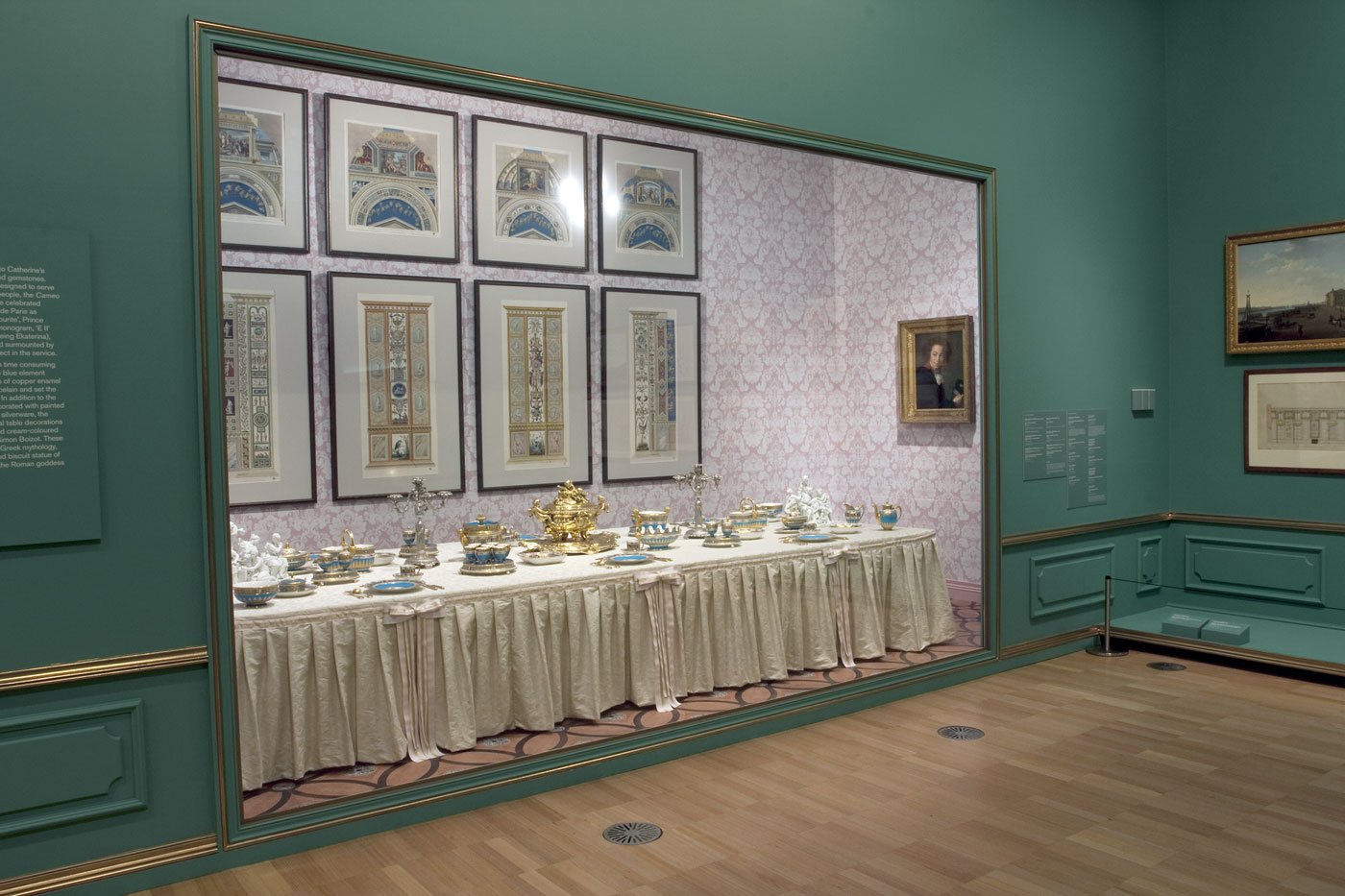
Installation view of room 1 of the exhibition 'Masterpieces from the Hermitage: The Legacy of Catherine the Great' at NGV International, Melbourne featuring the Sèvres Cameo Service. Cameo Service 1778-1779. Sevres Porcelain Factory (manufacturer) France, est. 1756. The State Hermitage Museum, St. Petersburg


Installation views of room 1 of the exhibition Masterpieces from the Hermitage: The Legacy of Catherine the Great at NGV International, Melbourne featuring in the last three photographs, the Sèvres Cameo Service. Cameo Service 1778-1779. Sevres Porcelain Factory (manufacturer) France, est. 1756. The State Hermitage Museum, St. Petersburg.
Photos: Marcus Bunyan


Sèvres Cameo Service

The Sèvres Cameo Service (1778-1779) relates to Catherine’s great passion for collecting engraved gemstones. Comprising 797 individual pieces designed to serve dinner, dessert and coffee to sixty people, the Cameo Service was commissioned from the celebrated Sèvres porcelain manufactory outside Paris as a present for Catherine’s court ‘favourite’, Prince Grigory Potemkin. The Empress’s monogram, ‘E II’ (the Russian version of her name being Ekaterina), woven from garlands of flowers and surmounted by a crown, adorned almost every object in the service.

Production of the service was both time consuming and labour-intensive. The exquisite blue element alone – made from separate layers of copper enamel that gradually seeped into the porcelain and set the pure colour – required five firings. In addition to the hundreds of porcelain objects decorated with painted and sculpted cameos and related silverware, the service also included grand central table decorations fashioned from biscuit, or unglazed cream-coloured porcelain, by the sculptor Louis-Simon Boizot. These decorations illustrated tales from Greek mythology, and were presided over by a grand biscuit statue of Catherine the Great as Minerva, the Roman goddess of wisdom and the arts.


Installation view of room 1 of the exhibition 'Masterpieces from the Hermitage: The Legacy of Catherine the Great' at NGV International, Melbourne

Installation view of room 1 of the exhibition 'Masterpieces from the Hermitage: The Legacy of Catherine the Great' at NGV International, Melbourne


Installation views of room 1 of the exhibition Masterpieces from the Hermitage: The Legacy of Catherine the Great at NGV International, Melbourne
Photos: Marcus Bunyan


Exhibition passageway


Installation view of passageway video of the exhibition 'Masterpieces from the Hermitage: The Legacy of Catherine the Great' at NGV International, Melbourne


Installation view of passageway video of the exhibition Masterpieces from the Hermitage: The Legacy of Catherine the Great at NGV International, Melbourne
Photo: Marcus Bunyan


Room 2 Italian art

When Catherine the Great began collecting European art, opportunities to acquire fine Italian Old Master paintings were already severely limited. Demand from wealthy collectors was high and the marketplace was saturated with misattributed works, some of which inevitably made their way to the Hermitage and other great collections.

Despite this, Catherine achieved great success collecting sixteenth and seventeenth century paintings, particularly from Venice, including great paintings by Titian, Paris Bordone and the enigmatic Lorenzo Lotto. These are complemented by fine examples of Roman and Florentine paintings, such as the famous Female nude (Donna nuda), by an artist very close to Leonardo da Vinci. This select group of paintings beautifully illustrate developments in figurative art, portraiture and religious art in Italy from the sixteenth to the eighteenth century.

In the early years of her reign, Catherine the Great acquired en masse several large collections of drawings representing all the main European schools. This set the foundations for the current Hermitage Museum’s outstanding Cabinet of Drawings. In terms of quality, Catherine’s acquisitions of Italian drawings were of the highest standard. The majority of these date from the mid sixteenth to late eighteenth centuries and include many rare and precious works.


Installation view of room 2 of the exhibition 'Masterpieces from the Hermitage: The Legacy of Catherine the Great' at NGV International, Melbourne showing at centre, Domenico Fetti (Italian 1589-1623) 'Portrait of an actor' 1620s


Installation view of room 2 of the exhibition Masterpieces from the Hermitage: The Legacy of Catherine the Great at NGV International, Melbourne showing at centre, Domenico Fetti (Italian 1589-1623) Portrait of an actor 1620s
Photo: Marcus Bunyan


Domenico Fetti (Italian, 1589-1623) 'Portrait of an actor' 1620s (installation view)


Domenico Fetti (Italian, 1589-1623)
Portrait of an actor (installation view)
1620s
Oil on canvas
The State Hermitage Museum, St. Petersburg
Photo: Marcus Bunyan


Domenico Fetti was court painter to Gerdinand II Gonzaga, Duke of Mantua, when he made this striking portrait of an actor. It is though to be Tristano Martinelli who made his fame working in the commedia dell’arte tradition. It is believe that Marinelli created and popularised the standard roll of the Harlequin in theatre. Fetti himself was involved with the theatre in both Mantua and Venice.


Installation view of room 2 of the exhibition 'Masterpieces from the Hermitage: The Legacy of Catherine the Great' at NGV International, Melbourne featuring at centre, Paris Bordone (Italian 1500-71) 'Portrait of a lady with a boy' Mid 1530s


Installation view of room 2 of the exhibition Masterpieces from the Hermitage: The Legacy of Catherine the Great at NGV International, Melbourne featuring at centre, Paris Bordone (Italian 1500-1571) Portrait of a lady with a boy Mid 1530s
Photo: Marcus Bunyan


Paris Bordone (Italian, 1500-1571) 'Portrait of a lady with a boy' Mid 1530s (installation view)


Paris Bordone (Italian, 1500-1571)
Portrait of a lady with a boy (installation view)
Mid 1530s
Oil on canvas
97cm (38.1 in) x 77cm (30.3 in)
The State Hermitage Museum, St. Petersburg
Photo: Marcus Bunyan


This work by Venetian artist Paris Bordone is a typical example of formal Renaissance portraiture. Bordone’s main aim was to show the high social standing of the sitters, so he painted their luxurious costumes in great detail. He draws our attention to the sumptuous sleeves of this woman’s dress, the headgear resembling a turban, as well as her opulent jewellery. Bordone was one of Titian’s most talented pupils whose work is characterised by a level of precision not often present in his master’s work. This painting entered the Hermitage as a work by Giorgione.


Paris Bordone (Italian, 1500-1571) 'Portrait of a lady with a boy' Mid 1530s


Paris Bordone (Italian 1500-1571)
Portrait of a lady with a boy
Mid 1530s
Oil on canvas
97cm (38.1 in) x 77cm (30.3 in)
The State Hermitage Museum, St. Petersburg
Public domain


Installation view of room 2 of the exhibition 'Masterpieces from the Hermitage: The Legacy of Catherine the Great' at NGV International, Melbourne

Installation view of room 2 of the exhibition 'Masterpieces from the Hermitage: The Legacy of Catherine the Great' at NGV International, Melbourne showing at left, Domenico Capriolo (Italian c. 1494-1528) 'Portrait of a young man' 1512 and to the right, Lorenzo Lotto (Italian c. 1480-1556) 'The Rest on the Flight into Egypt with Saint Justine' 1529-1530


Installation view of room 2 of the exhibition Masterpieces from the Hermitage: The Legacy of Catherine the Great at NGV International, Melbourne showing at left in the bottom image, Domenico Capriolo (Italian c. 1494-1528) Portrait of a young man 1512 and to the right, Lorenzo Lotto (Italian c. 1480-1556) The Rest on the Flight into Egypt with Saint Justine 1529-1530
Photos: Marcus Bunyan


Portrait of a young man by the Venetian master Domenico Capriolo captures the intellectual values of Renaissance art. Everything that surrounds this youth speaks of his interests, such as the church that indicates his piety; the statue of Venus that reveals his passion for Antiquity; and the folder (containing verses or drawings) that illustrates the richness of his inner world. The painting is dated 1512 and the artist’s name symbolised by a medallion containing a Capreolus, or deer, which is a play on his name. Such allusions were common in Renaissance art and would have been readily understood by his contemporaries.


Lorenzo Lotto (Italian c. 1480-1556) 'The Rest on the Flight into Egypt with Saint Justine' 1529-1530 (installation view)

Lorenzo Lotto (Italian c. 1480-1556) 'The Rest on the Flight into Egypt with Saint Justine' 1529-1530 (installation view)


Lorenzo Lotto (Italian c. 1480-1556)
The Rest on the Flight into Egypt with Saint Justine (installation views)
1529-1530
Oil on canvas
82cm (32.2 in) x 133cm (52.3 in)
The State Hermitage Museum, St. Petersburg
Photos: Marcus Bunyan


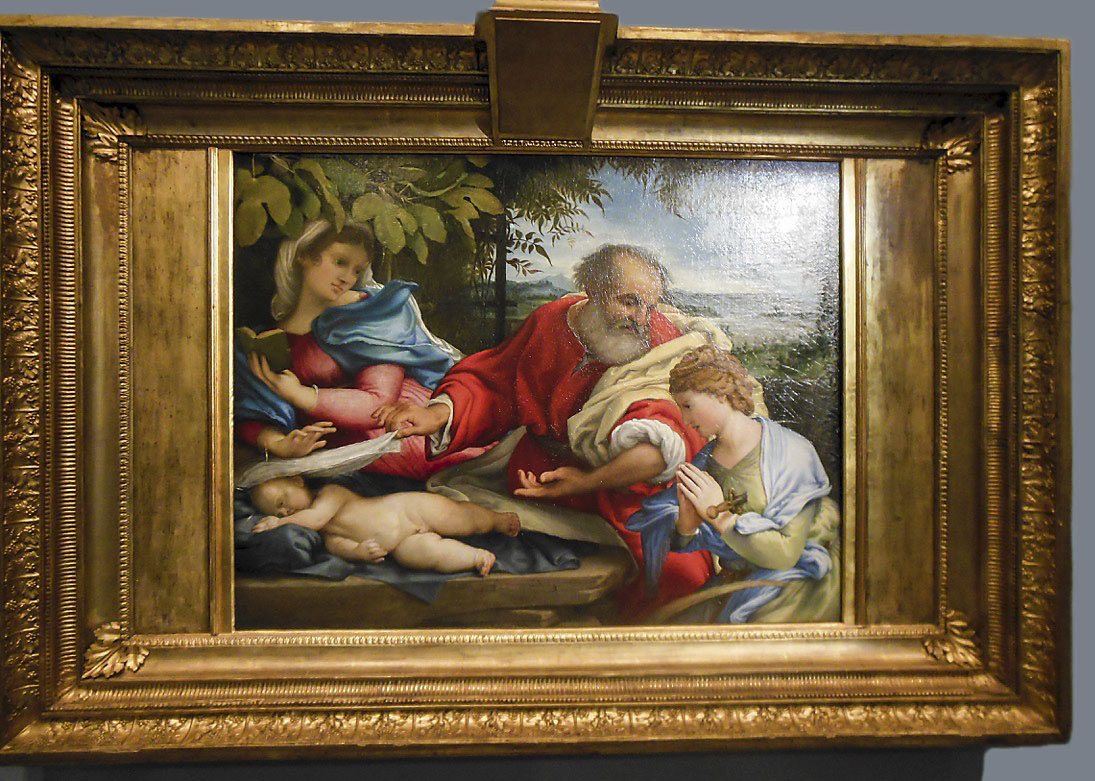
Lorenzo Lotto is a much admired sixteenth-century Venetian artist. The Rest on the Flight into Egypt with Saint Justine has the typical dynamism of Lotto’s work, achieved not only through the poses, gestures and movement of the foliage, but also through his intense colour palette and the juxtaposition of resonant blues with red and yellow tones. Here, the Holy Family has been joined by Saint Justine of Padua, martyred in 304 AD, identifiable through her attribute of a sword piercing her breast. Justine was a very popular subject for artists of Northern Italy.


Lorenzo Lotto (Italian c. 1480-1556) 'The Rest on the Flight into Egypt with Saint Justine' 1529-1530


Lorenzo Lotto (Italian c. 1480-1556)
The Rest on the Flight into Egypt with Saint Justine
1529-1530
Oil on canvas
82cm (32.2 in) x 133cm (52.3 in)
The State Hermitage Museum, St. Petersburg
Public domain


Installation view of room 2 of the exhibition 'Masterpieces from the Hermitage: The Legacy of Catherine the Great' at NGV International, Melbourne showing Leonardo da Vinci (school of) 'Female nude (Donna Nuda)' Early 16th century


Installation view of room 2 of the exhibition Masterpieces from the Hermitage: The Legacy of Catherine the Great at NGV International, Melbourne showing Leonardo da Vinci (school of) Female nude (Donna Nuda) Early 16th century
Photo: Marcus Bunyan


Leonardo da Vinci (school of) 'Female nude (Donna Nuda)' Early 16th century (installation view)


Leonardo da Vinci (school of)
Female nude (Donna Nuda) (installation view)
Early 16th century
Oil on canvas
86.5cm (34 in) x 66.5cm (26.1 in)
The State Hermitage Museum, St. Petersburg
Photo: Marcus Bunyan


This painting entered the Hermitage collection as a work by Leonardo da Vinci, but is now widely accepted to be by one of his close followers, possibly his pupil Salai. Perhaps more important is that it may be a close copy of a lost painting by Leonardo. Female nude (Donna Nuda) also shares some of the qualities of the famous Mona Lisa c. 1503-1519, in the Louvre Museum, Paris; namely the repetition of the pose, the position of the hands and the landscape setting seen behind a stone ledge in front of which the figure is set. This is the most refined of numerous variants of this composition in existence.


Leonardo da Vinci (school of) 'Female nude (Donna Nuda)' Early 16th century


Leonardo da Vinci (school of)
Female nude (Donna Nuda)
Early 16th century
Oil on canvas
86.5cm (34 in) x 66.5cm (26.1 in)
The State Hermitage Museum, St. Petersburg
Public domain


Room 3 Flemish art

In the seventeenth century, Flanders comprised the Catholic-dominated Southern Netherlands or ‘Spanish’ Austrian Netherlands, an area larger than modern Belgium. Thanks in large part to the talents of artist Peter Paul Rubens, the Flanders or ‘Flemish’ school in this era became very prestigious. While chiefly a painter, Rubens had far-reaching stylistic influence on many visual art forms, from prints to silverware and architecture. Every leading artist of seventeenth-century Flanders studied in, passed through or was connected with Rubens’s studio.

A diplomat and court insider, Rubens operated on an international stage. His art was correspondingly monumental; characterised by large forms modelled with loose brushstrokes in glowing, brilliant colours. Rubens’s pupil Anthony van Dyck and collaborator Cornelis de Vos led the way in bringing new naturalism to portraiture. While they catered to different markets (van Dyck to the nobility and de Vos to a rich merchant class) their mutual influence is apparent.

Flanders was a nation built on trade, and Flemish artists travelled widely, especially to Italy. From Italy they brought back new pictorial trends, such as the theatrical naturalism of Caravaggio. Flemish artists excelled in naturalistic effects, which they applied even to traditionally humble subjects, such as still lifes and animal pictures, seen to brilliant effect in the art of Frans Snyders and David Teniers II.


Installation view of room 3 of the exhibition 'Masterpieces from the Hermitage: The Legacy of Catherine the Great' at NGV International, Melbourne

Installation view of room 3 of the exhibition 'Masterpieces from the Hermitage: The Legacy of Catherine the Great' at NGV International, Melbourne

Installation view of room 3 of the exhibition 'Masterpieces from the Hermitage: The Legacy of Catherine the Great' at NGV International, Melbourne

Installation view of room 3 of the exhibition 'Masterpieces from the Hermitage: The Legacy of Catherine the Great' at NGV International, Melbourne

Installation view of room 3 of the exhibition 'Masterpieces from the Hermitage: The Legacy of Catherine the Great' at NGV International, Melbourne showing at centre, Peter Paul Rubens and workshop (Flemish 1577-1640) 'The Adoration of the Magi' c. 1620


Installation views of room 3 of the exhibition Masterpieces from the Hermitage: The Legacy of Catherine the Great at NGV International, Melbourne showing in the centre in the bottom photograph, Peter Paul Rubens and workshop (Flemish 1577-1640) The Adoration of the Magi, c. 1620 at centre
Photos: Marcus Bunyan


Rubens painted the subject of the Adoration of the Magi (Matthew 2:1) more often than any other episode from Christ’s life. Rendered at life-sized scale, this painting combines the humility of Christ’s birth with splendid, worldly pageantry. Three Kings from the East are shown crowding into Christ’s stable (portrayed as a cave, in an allusion to Christ’s later interment) wearing gold- embroidered silks and satins, and offering gifts. The eldest king, Caspar, kneels before Christ with gold; behind him is Melchior, with frankincense; and Balthazar with myrrh, used for embalming. With the help of his studio, Rubens produced more than sixty altarpieces during his career.


Installation view of room 3 of the exhibition 'Masterpieces from the Hermitage: The Legacy of Catherine the Great' at NGV International, Melbourne

Installation view of room 3 of the exhibition 'Masterpieces from the Hermitage: The Legacy of Catherine the Great' at NGV International, Melbourne


Installation views of room 3 of the exhibition Masterpieces from the Hermitage: The Legacy of Catherine the Great at NGV International, Melbourne
Photos: Marcus Bunyan


Peter Paul Rubens (Flemish 1577–1640) 'Roman Charity (Cimon and Pero)' c. 1612 (installation view)


Peter Paul Rubens (Flemish 1577-1640)
Roman Charity (Cimon and Pero) (installation view)
c. 1612
Oil on canvas
141cm (55.5 in) x 180cm (70.8 in)
The State Hermitage Museum, St Petersburg
Acquired from the collection of Count Cobenzl, Brussels, 1768
Photo: Marcus Bunyan


Roman Charity (Cimon and Pero) depicts a story told by the Roman historian Valerius Maximus in his Factorum ac dictorum memorabilium libri IX (Nine Books of Memorable Deeds and Sayings), written around 30 AD. The story involves Cimon, an old man awaiting execution in prison who was not given food. Cimon’s daughter Pero visited him, and suckled him at her breast like a child. Pero’s nourishing of Cimon was considered an outstanding example of paying honour to one’s parents.


Peter Paul Rubens (Flemish 1577-1640) 'Roman Charity (Cimon and Pero)' c. 1612


Peter Paul Rubens (Flemish 1577-1640)
Roman Charity (Cimon and Pero)
c. 1612
Oil on canvas
141cm (55.5 in) x 180cm (70.8 in)
The State Hermitage Museum, St Petersburg
Acquired from the collection of Count Cobenzl, Brussels, 1768
Public domain


Room 4 Dutch art

The Hermitage holds the finest collection of Dutch art outside the Netherlands. While Peter the Great (1672-1725) had a passion for Dutch art and acquired some notable masterpieces, Catherine the Great established the depth and breadth of this extraordinary collection, beginning in 1764 with her first acquisitions. In that year Catherine purchased 317 paintings that had been assembled for Frederick II of Prussia by the German merchant Johann Ernst Gotzkowsky. Among this substantial group were more than 100 Dutch paintings by the most notable masters.

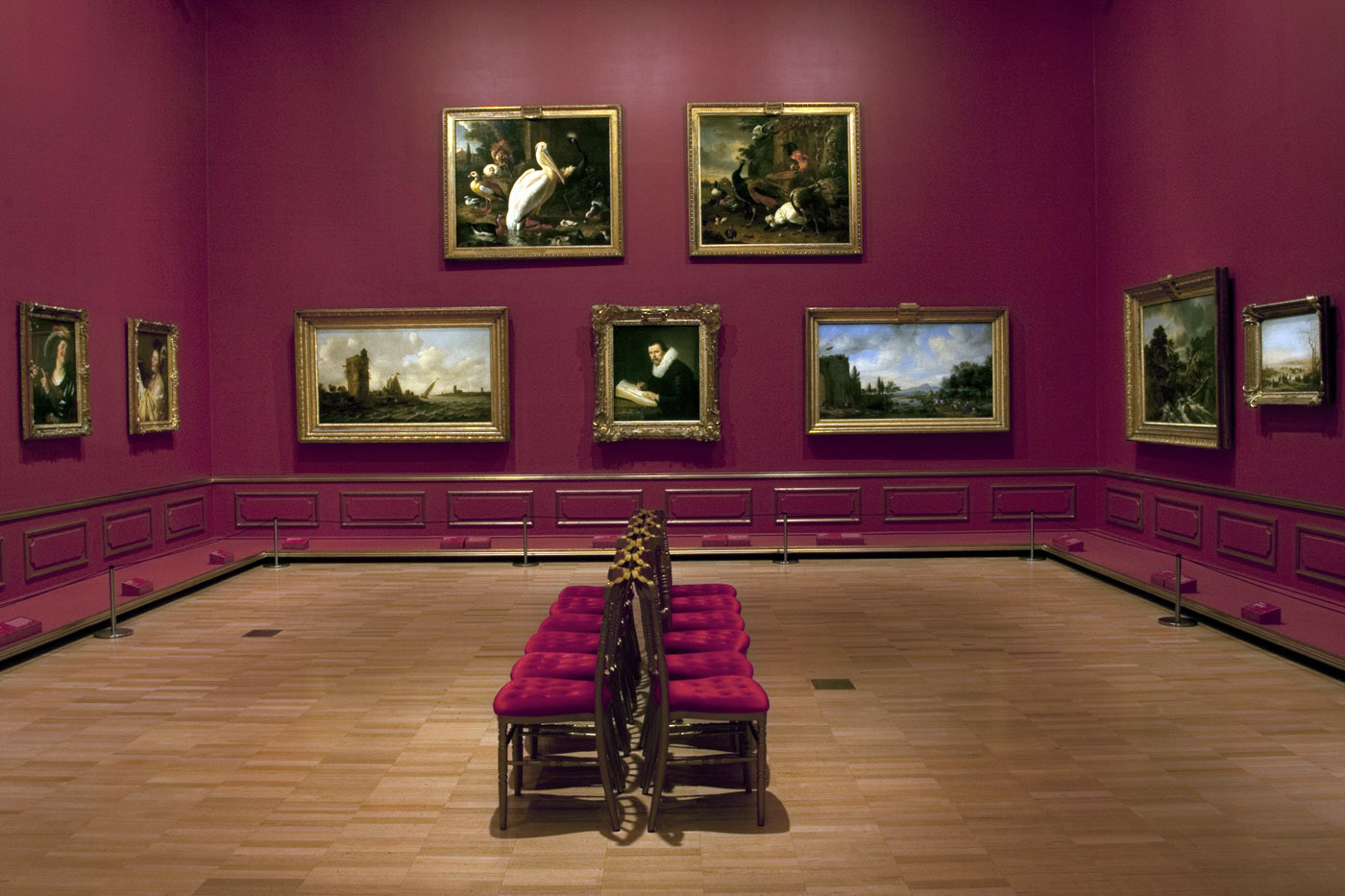
In 1769 Catherine purchased the collection of Count Heinrich von Brühl, which included spectacular landscapes by Jacob van Ruisdael, Isaack Jansz. van Ostade and Aert van der Neer, as well as four Rembrandt portraits, including the wonderful Portrait of a scholar, 1631. For the rest of her life Catherine continued to add outstanding Dutch works to her rich collection.Although the paintings and drawings from the Dutch school included here are only a fragment of the extensive and diverse collection assembled by Catherine the Great, they reveal her artistic preferences and taste.


Installation view of room 4 of the exhibition 'Masterpieces from the Hermitage: The Legacy of Catherine the Great' at NGV International, Melbourne

Installation view of room 4 of the exhibition 'Masterpieces from the Hermitage: The Legacy of Catherine the Great' at NGV International, Melbourne


Installation views of room 4 of the exhibition Masterpieces from the Hermitage: The Legacy of Catherine the Great at NGV International, Melbourne with Rembrandt Harmensz van Rijn (Dutch 1606-1669) Portrait of a scholar 1631 at centre
Photos: Marcus Bunyan


Rembrandt painted Portrait of a scholar shortly after moving from his native Leiden to Amsterdam in 1630. He had already established a growing reputation in Leiden and was enticed to the capital by the art dealer Hendrick van Uylenburgh, father of his future wife Saskia. Once completing the move, Rembrandt rapidly became the city’s leading artist, mainly on account of dazzling portraits such as this early masterpiece. He then secured the most prestigious commissions from wealthy and powerful citizens of Amsterdam.


Room 5 French taste

The Russian aristocracy spoke French and modelled their manners and style on those of the French Court. Catherine followed the vast intellectual strides of the French philosophes with passionate interest. She also embraced the arts, luring French artists, architects and craftsmen to St Petersburg.

Catherine relied on agents and advisors in France and Germany to identify and acquire works of art on her behalf. In this way she acquired the collection of Paris banker Louis Antoine Crozat, Baron de Thiers and other important bodies of work in France. Her holdings of French art came to encompass works by Renaissance masters as well as seventeenth-century landscapes and history paintings.

Catherine also acquired examples of work of her own century by Rococo artists such as Antoine Watteau. The playful, erotic and at times wistful art of Watteau’s generation gave rise to the intimate and worldly art of François Boucher, whose pictures Catherine also purchased. The Empress collected modern masterpieces created in reaction to French courtly and decadent styles. Her paintings by Jean-Baptiste Siméon Chardin are premier examples of a new, moralising directness in ambitious French art.

Catherine’s buying in France was not limited to French art. Also in this room are paintings by great German, Spanish and Italian masters that were acquired in Paris from prestigious collections under the direction of Catherine’s French advisors.


Installation view of room 5 of the exhibition 'Masterpieces from the Hermitage: The Legacy of Catherine the Great' at NGV International, Melbourne

Installation view of room 5 of the exhibition 'Masterpieces from the Hermitage: The Legacy of Catherine the Great' at NGV International, Melbourne


Installation views of room 5 of the exhibition Masterpieces from the Hermitage: The Legacy of Catherine the Great at NGV International, Melbourne
Photos: Marcus Bunyan


Room 6 Catherine and the world

For Catherine the Great, collecting art was part of a wider economic and diplomatic program designed to stimulate economic and cultural activity at home and abroad. At a meeting in December 1762 with the Moscow Senate, Catherine suggested that consuls be stationed in Spain, Holland and England not only to promote maritime trade but also to source luxury goods and works of art as examples for Russian artists and manufacturers to aspire to.

Through Catherine’s consuls and agents, such items began to flow into St Petersburg, steadily elevating that city into a vibrant centre of European culture. While her cultural sympathies were French, Catherine was also very curious about Britain – the economic success story of the age. She informed herself about Britain’s trade, commerce, manufacturing, philosophy and political system, and purchased works by modern British neoclassical masters, such as Joseph Wright of Derby and Joshua Reynolds. Examples of Spanish, Italian and German art were often not sourced in their own countries of origin but acquired as a part of larger collections.


Installation view of room 6 of the exhibition 'Masterpieces from the Hermitage: The Legacy of Catherine the Great' at NGV International, Melbourne

Installation view of room 6 of the exhibition 'Masterpieces from the Hermitage: The Legacy of Catherine the Great' at NGV International, Melbourne

Installation view of room 6 of the exhibition 'Masterpieces from the Hermitage: The Legacy of Catherine the Great' at NGV International, Melbourne

Installation view of room 6 of the exhibition 'Masterpieces from the Hermitage: The Legacy of Catherine the Great' at NGV International, Melbourne

Installation view of room 6 of the exhibition 'Masterpieces from the Hermitage: The Legacy of Catherine the Great' at NGV International, Melbourne

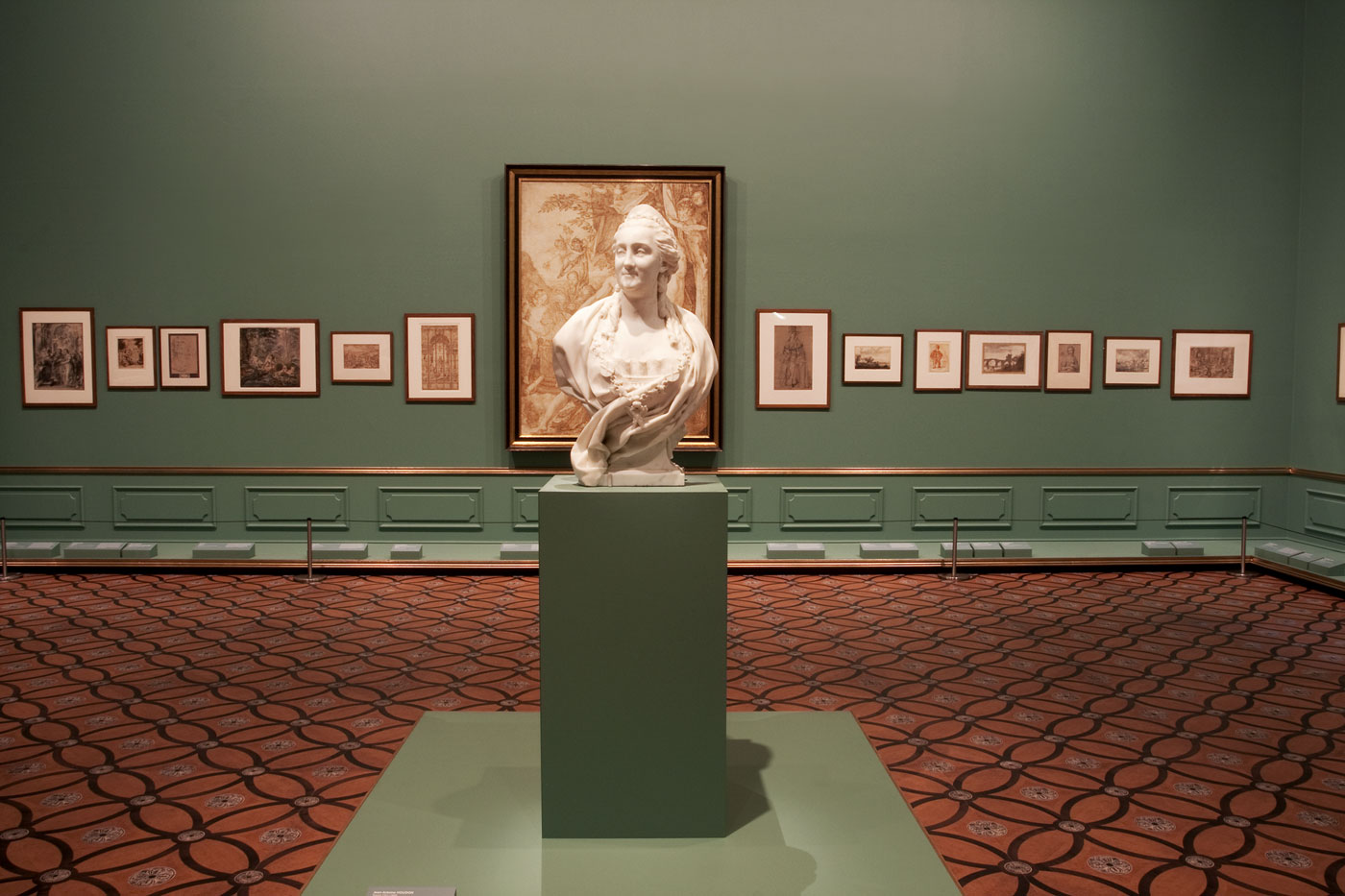
Installation view of room 6 of the exhibition 'Masterpieces from the Hermitage: The Legacy of Catherine the Great' at NGV International, Melbourne with the 1773 sculpture 'Catherine II' by Jean-Antoine Houdon (French 1741-1826) at left


Installation views of room 6 of the exhibition Masterpieces from the Hermitage: The Legacy of Catherine the Great at NGV International, Melbourne with the 1773 sculpture Catherine II by Jean-Antoine Houdon (French 1741-1826) at centre
Photos: Marcus Bunyan


Room 7 The Walpole collection

In 1779 Catherine the Great acquired 198 paintings from a celebrated collection formed by Sir Robert Walpole, 1st Earl of Orford, Britain’s first prime minister. They were bought from the family estate, Houghton Hall, and sold by Walpole’s grandson, George Walpole, 3rd Earl of Orford, who approached the Russian ambassador to Britain directly about the sale. At more than £40,000, the price was high, but the transaction was concluded in only two months. Attempts were made to keep this famous collection in Britain, to no avail.

The Walpole collection was outstanding in quality, and significantly enhanced the Hermitage’s range of Flemish and Italian works. The Russian ambassador to Great Britain, Alexey Musin-Pushkin, who organised the valuable purchase, wrote to Catherine the Great: ‘The greater part of the nobility here are displaying general dissatisfaction and regret that these paintings are being allowed out of this country, and are setting in train various projects to keep them here … No little assistance comes from Lord Orford’s zealous desire to unite [the collection for] the gallery of Your Imperial Majesty, rather than to sell it to parliament itself or, least of all, to divide it through sale to different individuals’.


Installation view of room 7 of the exhibition 'Masterpieces from the Hermitage: The Legacy of Catherine the Great' at NGV International, Melbourne

Installation view of room 7 of the exhibition 'Masterpieces from the Hermitage: The Legacy of Catherine the Great' at NGV International, Melbourne showing Frans Snyders (Flemish 1579-1657) Concert of birds, 1630-1640 at right and Frans Snyders (Flemish 1579-1657) Cook at a kitchen table with dead game, c. 1636-1637 at second left


Installation views of room 7 of the exhibition Masterpieces from the Hermitage: The Legacy of Catherine the Great at NGV International, Melbourne showing in the bottom image, Frans Snyders (Flemish 1579-1657) Concert of birds, 1630-1640 at right and Frans Snyders (Flemish 1579-1657) Cook at a kitchen table with dead game, c. 1636-1637 at second left
Photos: Marcus Bunyan


Frans Snyders (Flemish 1579-1657) 'Concert of birds' 1630-1640 (installation view)


Frans Snyders (Flemish 1579-1657)
Concert of birds (installation view)
1630-1640
Oil on canvas
137cm (53.9 in) x 240cm (94.4 in)
The State Hermitage Museum, St Petersburg
Acquired from the collection of Sir Robert Walpole, Houghton Hall, 1779
Photo: Marcus Bunyan


An important place in Flemish seventeenth-century painting is occupied by two specific genres: animal painting and the still life. One of the most important animal and still-life painters was Frans Snyders, a very close collaborator of Peter Paul Rubens who often painted still-life details and animals on the master’s canvases. Snyders’s superb skill as a painter of animals is revealed by Concert of birds, based on a subject from Aesop’s Fables. It shows a gathering of feathered creatures screeching and singing under the direction of an owl seated on a dried branch in front of an open music score.


Frans Snyders (Flemish 1579-1657) 'Concert of birds' 1630-1640


Frans Snyders (Flemish 1579-1657)
Concert of birds
1630-1640
Oil on canvas
137cm (53.9 in) x 240cm (94.4 in)
The State Hermitage Museum, St Petersburg
Acquired from the collection of Sir Robert Walpole, Houghton Hall, 1779
Public domain


Frans Snyders (Flemish 1579-1657) 'Concert of birds' 1630-1640 (installation view detail)


Frans Snyders (Flemish 1579-1657)
Concert of birds (installation view detail)
1630-1640
Oil on canvas
137cm (53.9 in) x 240cm (94.4 in)
The State Hermitage Museum, St Petersburg
Acquired from the collection of Sir Robert Walpole, Houghton Hall, 1779
Photo: Marcus Bunyan


Frans Snyders (Flemish 1579-1657) 'Cook at a kitchen table with dead game' c. 1636-1637 (installation view detail)


Frans Snyders (Flemish 1579-1657)
Cook at a kitchen table with dead game (installation view detail)
c. 1636-1637
Oil on canvas
The State Hermitage Museum, St. Petersburg
Photo: Marcus Bunyan


Frans Snyders was the son of the owner of one of Antwerp’s largest wine and eating houses. His dramatically realistic still lifes celebrate the exotic variety of rare fowls available at Antwerp’s markets. Images of dead animals being prepared for a banquet were understood in Snyder’s time as lessons in Christian morality. Many Dutch and Flemish still lifes featuring the sacrifice of an animal for the table functioned as allusions to Christ’s Passion and the transience of the flesh.


Frans Snyders (Flemish 1579-1657) 'Cook at a kitchen table with dead game' c. 1636-1637


Frans Snyders (Flemish 1579-1657)
Cook at a kitchen table with dead game
c. 1636-1637
Oil on canvas
171cm (67.3 in) x 173cm (68.1 in)
The State Hermitage Museum, St. Petersburg
Public domain


Installation view of room 7 of the exhibition 'Masterpieces from the Hermitage: The Legacy of Catherine the Great' at NGV International, Melbourne

Installation view of room 7 of the exhibition 'Masterpieces from the Hermitage: The Legacy of Catherine the Great' at NGV International, Melbourne showing at left, Anthony van Dyck (Flemish 1599-1641) 'Portrait of Philadelphia and Elizabeth Wharton' 1640


Installation views of room 7 of the exhibition Masterpieces from the Hermitage: The Legacy of Catherine the Great at NGV International, Melbourne showing at left in the bottom image, Anthony van Dyck (Flemish 1599-1641) Portrait of Philadelphia and Elizabeth Wharton, 1640
Photos: Marcus Bunyan


This is one of the most charming portraits of children paint by van Dyck, who had particular talent for such works. It is one of a group of family portraits commissioned from can Dyck by Philip, Lord Wharton in the late 1630s. Van Dyck worked in England for approximately ten ears and brought a new standard of elegance and style to English portraiture. He largely conveyed this through his flair for painting lavish costumes and sumptuous fabrics, a sensibility he carried through to his portraits of children.


Anthony van Dyck (Flemish 1599-1641) 'Portrait of Philadelphia and Elizabeth Wharton' 1640


Anthony van Dyck (Flemish 1599-1641)
Portrait of Philadelphia and Elizabeth Wharton
1640
Oil on canvas
162cm (63.7 in) x 130cm (51.1 in)
Hermitage Museum
Public domain


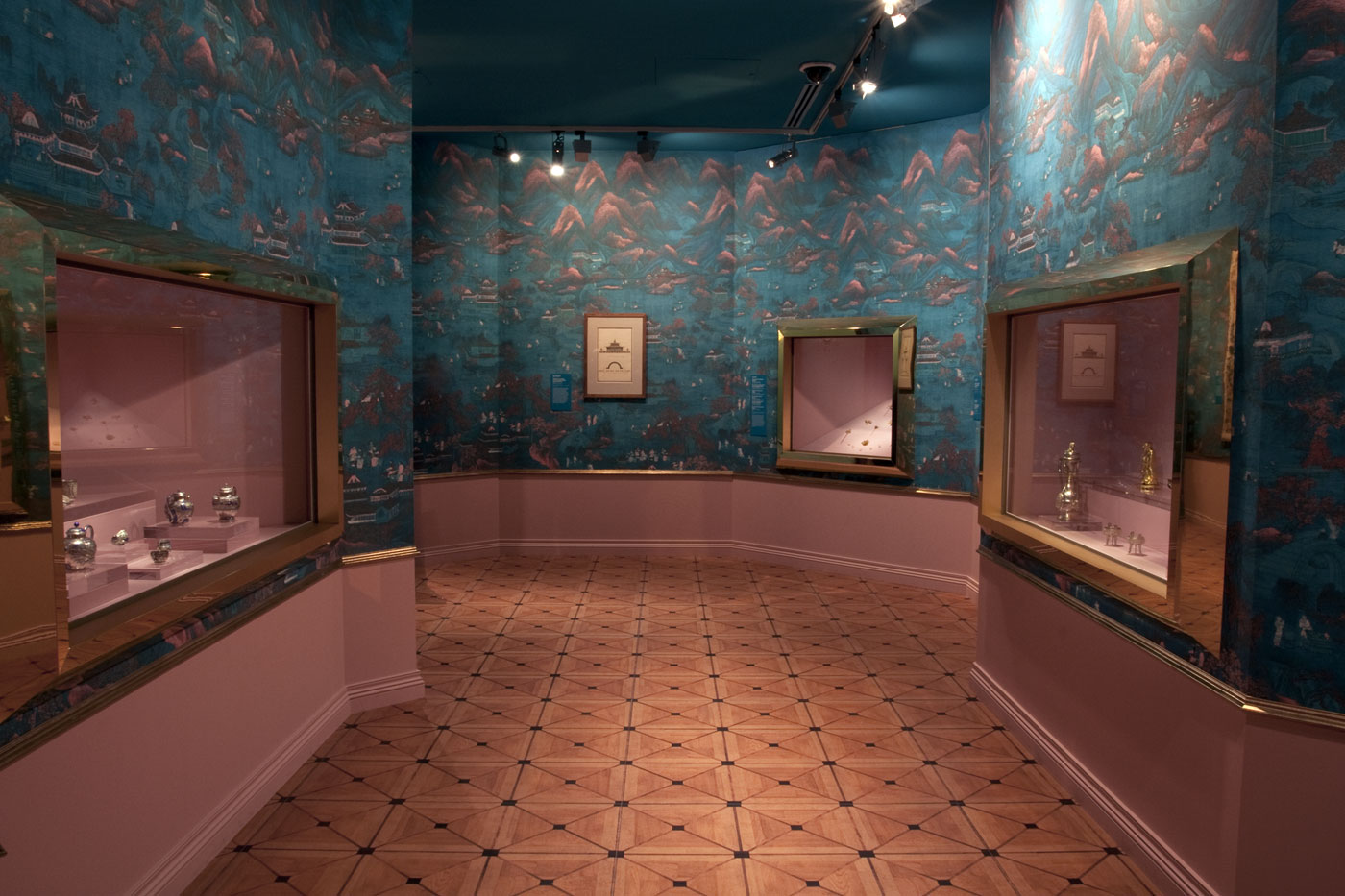
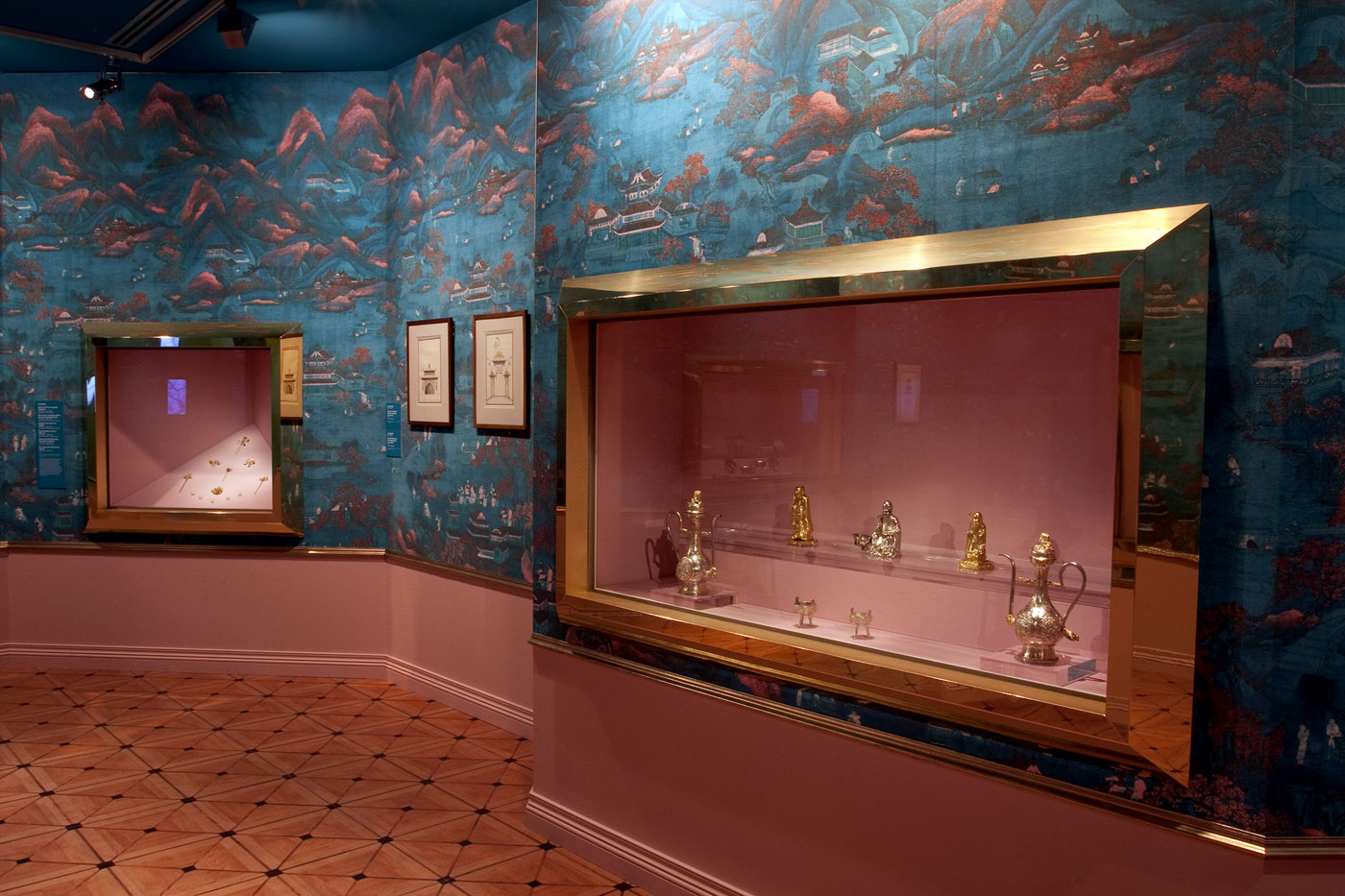
Room 8 China

Eighteenth-century Enlightenment fascination with the East, particularly China, is reflected by Catherine the Great’s architectural and landscaping works completed in St Petersburg and at her summer and winter palaces, as well as by her collecting of Oriental curiosities and philosophical texts. Russian interest in China can be traced to the reign of the Romanov tsars in the seventeenth century, when several missions brought back Chinese treasures and goods to the Russian Court. Importantly, in 1689 the first treaty between Russia and China was signed at Nerchinsk, outlining the border between the countries and rules about caravan trade.

Like many educated people of her time, Catherine was fascinated by the concept of the enlightened ruler thought to be found in China, such as the Kangxi Emperor (reigned 1662-1722), Yongzhèng Emperor (reigned 1723-35), and Qianlong Emperor (reigned 1736-95). One of her regular and most influential correspondents was French philosopher Voltaire, who praised the Celestial Kingdom, its monarchs and men of wisdom; only in China, he thought, was a man’s life, honour and property truly protected by law. Such a clear link between Catherine’s desire for justice and order in Russia and general perceptions of good Chinese government, combined with the Enlightenment fashion for curiosities of all kinds, led to great Russian interest in China in the second half of the eighteenth century.


Installation view of room 8 of the exhibition 'Masterpieces from the Hermitage: The Legacy of Catherine the Great' at NGV International, Melbourne

Installation view of room 8 of the exhibition 'Masterpieces from the Hermitage: The Legacy of Catherine the Great' at NGV International, Melbourne

Installation view of room 8 of the exhibition 'Masterpieces from the Hermitage: The Legacy of Catherine the Great' at NGV International, Melbourne

Installation view of room 8 of the exhibition 'Masterpieces from the Hermitage: The Legacy of Catherine the Great' at NGV International, Melbourne

Installation view of room 8 of the exhibition 'Masterpieces from the Hermitage: The Legacy of Catherine the Great' at NGV International, Melbourne

Installation view of room 8 of the exhibition 'Masterpieces from the Hermitage: The Legacy of Catherine the Great' at NGV International, Melbourne

Installation view of room 8 of the exhibition 'Masterpieces from the Hermitage: The Legacy of Catherine the Great' at NGV International, Melbourne


Installation views of room 8 of the exhibition Masterpieces from the Hermitage: The Legacy of Catherine the Great at NGV International, Melbourne
Photos: Marcus Bunyan


NGV International
180 St Kilda Road

Opening hours for exhibition
10am – 5pm daily

NGV Masterpieces from the Hermitage website

LIKE ART BLART ON FACEBOOK

Back to top

Exhibition: ‘Fabergé: Jeweler to the Tsars’ at the Oklahoma City Museum of Art, Oklahoma City

Exhibition dates: 20th June – 27th September 2015


Russian. 'Imperial Diamond Brooch' 1890–1910


Russian
Imperial Diamond Brooch
1890-1910
Virginia Museum of Fine Arts, Richmond. Bequest of Lillian Thomas Pratt
Photo: Travis Fullerton
© Virginia Museum of Fine Arts


Even after nearly six years of making this website, I still get a thrill bringing you the next posting.

And what a posting it is.

Even as their countrymen lay starving in the cities and dying on the fields of battle in World War One, the Romanov’s still kept spending. Oh how the once mighty fell in a heap of their own making. But sometimes you just need a bit of dynastic, debauched (and beautiful) bling to brighten your capitalist day … and to remind you that nothing lasts forever and karma will always have its way.

As a t-shirt in an op-shop that I saw today said, “Workers … possess the power.” And that is why governments, tyrants and despotic royalty will always be afraid of them.

Marcus


Many thankx to the Oklahoma City Museum of Art for allowing me to publish the photographs in the posting. Please click on the photographs for a larger version of the image.


Pavel Ovchinnikov (Russian, 1830-1888) 'The Holy Virgin of Kazan, Saint Prince Aleksandr Nevskii, Saint Mary Magdalene' 1891


Pavel Ovchinnikov (Russian, 1830-1888)
The Holy Virgin of Kazan, Saint Prince Aleksandr Nevskii, Saint Mary Magdalene
1891
Virginia Museum of Fine Arts, Richmond. Bequest of Lillian Thomas Pratt.
Photo: Katherine Wetzel
© Virginia Museum of Fine Arts


Pavel Ovchinnikov (1830-1888), Russian jeweller, silversmith, goldsmith, enameller, merchant, industrialist. Hallmark: П.О. or П.Овчинниковъ in a rectangle. Trained in his brother’s workshop and opened a factory in Moscow, where he revived the art of enamelling and worked in the Neo-Russian style. Official purveyor to Tsar Alexander III, Grand Duke Mikhail Nikolaevich, King Victor Emmanuel II of Italy and King Christian IX of Denmark. Awarded the Légion d’honneur and the Order of the Iron Crown. Member of the Moscow City Duma.

Alexander Yaroslavich Nevsky (Russian: Алекса́ндр Яросла́вич Не́вский; pronounced [ɐlʲɪˈksandr jɪrɐˈslavʲɪtɕ ˈnʲɛfskʲɪj] Ukrainian: Олександр Ярославович Не́вський); 13 May 1221 – 14 November 1263) served as Prince of Novgorod, Grand Prince of Kiev and Grand Prince of Vladimir during some of the most difficult times in Kievan Rus’ history.

Commonly regarded as a key figure of medieval Rus’, Alexander – the grandson of Vsevolod the Big Nest – rose to legendary status on account of his military victories over German and Swedish invaders while agreeing to pay tribute to the powerful Golden Horde. He was proclaimed as a saint of the Russian Orthodox Church by Metropolite Macarius in 1547. Popular polls rank Alexander Nevsky as the greatest Russian hero in history.


Russian. 'Crown Brooch' 1890-1910


Russian
Crown Brooch
1890-1910
Virginia Museum of Fine Arts, Richmond. Bequest of Lillian Thomas Pratt
Photo: Travis Fullerton
© Virginia Museum of Fine Arts


Peter Karl Fabergé (Russian, 1846-1920) 'Elephant Box' before 1899


Peter Karl Fabergé (Russian, 1846-1920)
Elephant Box
before 1899
Nephrite, ivory, gold, rubies, diamonds
3.75 x 4 (diameter) in. (9.53 x 10.16cm)
Virginia Museum of Fine Arts, Richmond. Bequest of Lillian Thomas Pratt
Photo: Travis Fullerton
© Virginia Museum of Fine Arts


Peter Karl Fabergé (Russian, 1846-1920)

Upon the death of Hiskias Pendin in 1882, Carl Fabergé took sole responsibility for running the company. Carl was awarded the title Master Goldsmith, which permitted him to use his own hallmark in addition to that of the firm. Carl Fabergé’s reputation was so high that the normal three-day examination was waived. For several years, Carl Faberge’s main assistant in the designing of jewellery was his younger brother, Agathon Faberge (1862-1895), who had also trained in Dresden.

Carl and Agathon were a sensation at the Pan-Russian Exhibition held in Moscow in 1882. Carl was awarded a gold medal and the St. Stanisias Medal. One of the Fabergé pieces displayed was a replica of a 4th-century BC gold bangle from the Scythian Treasure in the Hermitage. The Tsar declared that he could not distinguish the Fabergé’s work from the original and ordered that objects by the House of Fabergé should be displayed in the Hermitage as examples of superb contemporary Russian craftsmanship. The House of Fabergé with its range of jewels was now within the focus of Russia’s Imperial Court.

When Peter Carl took over the House, there was a move from producing jewellery in the then fashionable French 18th century style, to becoming artist-jewellers. Having acquired the title of Supplier to the Court from Tsar Alexander III on May 1, 1885, Fabergé had full access to the important Hermitage Collection, where he was able not only to study but also to find inspiration for developing his unique style. Influenced by the jewelled bouquets created by the eighteenth century goldsmiths, Jean-Jacques Duval and Jérémie Pauzié, Fabergé re-worked their ideas, combining them with his accurate observations and fascination for Japanese art. This resulted in reviving the lost art of enamelling and concentrating on setting every single stone in a piece to its best advantage. Indeed, it was not unusual for Agathon to make ten or more wax models so that all possibilities could be exhausted before deciding on a final design. Shortly after Agathon joined the firm, the House introduced objects deluxe: gold bejewelled items embellished with enamel ranging from electric bell pushes to cigarette cases, including objects de fantaisie.

In 1885, Tsar Alexander III gave the House of Fabergé the title; ‘Goldsmith by special appointment to the Imperial Crown’.

Text from the Wikipedia website


Peter Karl Fabergé (Russian, 1846-1920) 'Elephant Box' before 1899 (detail)


Peter Karl Fabergé (Russian, 1846-1920)
Elephant Box (detail)
before 1899
Nephrite, ivory, gold, rubies, diamonds
3.75 x 4 (diameter) in. (9.53 x 10.16cm)
Virginia Museum of Fine Arts, Richmond. Bequest of Lillian Thomas Pratt
Photo: Travis Fullerton
© Virginia Museum of Fine Arts


Peter Karl Fabergé (Russian, 1846-1920). 'Monumental Kovsh' 1899-1908


Peter Karl Fabergé (Russian, 1846-1920)
Monumental Kovsh
1899-1908
Silver, chrysoprase, amethyst
15 x 27.5 x 12.25 in. (38.10 x 69.85 x 31.12cm)
Virginia Museum of Fine Arts, Richmond. Jerome and Rita Gans Collection of Silver
Photo: Katherine Wetzel
© Virginia Museum of Fine Arts


Peter Karl Fabergé (Russian, 1846-1920) 'Monumental Kovsh' 1899-1908 (detail)


Peter Karl Fabergé (Russian, 1846-1920)
Monumental Kovsh (detail)
1899-1908
Silver, chrysoprase, amethyst
15 x 27.5 x 12.25 in. (38.10 x 69.85 x 31.12cm)
Virginia Museum of Fine Arts, Richmond. Jerome and Rita Gans Collection of Silver
Photo: Katherine Wetzel
© Virginia Museum of Fine Arts


The Kovsh is a traditional drinking vessel or ladle from Russia. It was oval-shaped like a boat with a single handle and may be shaped like a water bird or a norse longship. Originally the Kovsh made from wood and used to serve and drink mead, with specimens excavated from as early as the tenth century. Metal Kovsh began to appear around the 14th century, although it also continued to be carved out of wood and was frequently brightly painted in peasant motifs. By the 17th century, the Kovsh was often an ornament rather than a practical vessel, and in the 19th century it was elaborately cast in precious metals for presentation as an official gift of the tsarist government.


Peter Karl Fabergé (Russian, 1846-1920). 'Star Frame' before 1899


Peter Karl Fabergé (Russian, 1846-1920)
Star Frame
before 1899
Gold, enamel, pearls, glass, ivory
3 x 2.625 x 3.5625 (diameter) in (7.62 x 6.67 x 9.05cm)
Virginia Museum of Fine Arts, Richmond. Bequest of Lillian Thomas Pratt
Photo: Katherine Wetzel
© Virginia Museum of Fine Arts


Peter Karl Fabergé (Russian, 1846-1920) 'Star Frame' before 1899 (detail)


Peter Karl Fabergé (Russian, 1846-1920)
Star Frame (detail)
before 1899
Gold, enamel, pearls, glass, ivory
3 x 2.625 x 3.5625 (diameter) in (7.62 x 6.67 x 9.05cm)
Virginia Museum of Fine Arts, Richmond. Bequest of Lillian Thomas Pratt
Photo: Katherine Wetzel
© Virginia Museum of Fine Arts


Fedor Rückert (Russian, 1840–1917) 'Plate' 1899-1908


Fedor Rückert (Russian, 1840-1917)
Plate
1899-1908
Virginia Museum of Fine Arts, Richmond. Jerome and Rita Gans Collection of Silver
Photo: Travis Fullerton
© Virginia Museum of Fine Arts


Feodor Ivanovich Rückert, Russian silver- and goldsmith of German origin, Fabergé workmaster. Born in Moscow in 1840. Worked with Carl Fabergé from 1887. His mark Ф.Р. (F.R. in Russian Cyrillic) can be found on cloisonné enamel objects made in Moscow, sold independently or by Fabergé.


Fedor Rückert (Russian, 1840–1917) 'Plate' 1899–1908 (detail)


Fedor Rückert (Russian, 1840-1917)
Plate (detail)
1899-1908
Virginia Museum of Fine Arts, Richmond. Jerome and Rita Gans Collection of Silver
Photo: Travis Fullerton
© Virginia Museum of Fine Arts


More than 230 rare and storied treasures created by the House of Fabergé will be celebrated in a new exhibition at the Oklahoma City Museum of Art. Fabergé: Jeweler to the Tsars will be on view from June 20 through September 27, 2015. The exhibition, drawn from the Collection of the Virginia Museum of Fine Arts, Richmond, will showcase Karl Fabergé’s fine craftsmanship in pieces of jewellery and adornments once belonging to the Russian Imperial family.

“This exhibition represents a double honour for the Oklahoma City Museum of Art – the opportunity to collaborate with the Virginia Museum of Fine Arts and to showcase the largest Fabergé collection outside of Russia,” said E. Michael Whittington, OKCMOA President and CEO. “The technical and artistic virtuosity of the Fabergé workshop is without parallel. Individually, these objects are breathtaking. Collectively, they represent a unique window into an empire and subsequent revolution that dramatically altered 20th century history. We are proud to present such an extraordinary collection of treasures to our community.”

From dazzling Imperial Easter eggs to delicate flower ornaments and from enchanting animal sculptures to cigarette cases, photograph frames and desk clocks, Fabergé often turned the most mundane objects into miniature works of art. The vast majority of his designs were never repeated, and most pieces were made entirely by hand. The success of his business was inextricably linked to the patronage of the Romanov dynasty and the close ties among the British, Danish and Russian royal families, who often exchanged works by Fabergé as personal gifts.

The Imperial Tsesarevich Easter Egg of 1912, which will be on view at OKCMOA, was a gift to Empress Alexandra from her husband, Emperor Nicholas II. The egg commemorates their son, Alexsei, who nearly died the previous year of haemophilia. For the shell, craftsmen joined six wedges of highly prized lapis lazuli and hid the seams with an elaborate gold filigree encasement. Inside the egg, a diamond encrusted Romanov family crest frames a two-sided portrait of the young child.

These objects were associated with refinement and luxury because the House of Fabergé was known for accepting nothing less than perfection as well as for being business savvy. Beyond the elegant showrooms in Moscow and Saint Petersburg, hundreds of the country’s finest goldsmiths, enamellers, stone carvers, gem cutters and jewellers were at work creating innovative and complex designs that could not be readily imitated.

The presence of the Romanov family – Emperor Nicholas II, Empress Alexandra and their five children – is most intimately felt in the exhibition through the display of more than 40 family photographs held in enamelled Fabergé frames. These family photographs and jewels were some of the only possessions the Romanovs took with them when they were forced out of St. Petersburg during the Revolution. In an effort to preserve their wealth, the Romanov daughters are said to have sewn Fabergé jewels into their undergarments. In the end, their diamond-lined corsets managed to prolong their execution and sealed the fate for the inevitable fall of the dynasty.

Press release from the Oklahoma City Museum of Art


Peter Karl Fabergé (Russian, 1846-1920) 'Christ Pantocrator,' 1914-1917


Peter Karl Fabergé (Russian, 1846-1920)
Christ Pantocrator
1914-1917
Oil on panel, silver gilt, filigree silver, precious and semiprecious stones, seed pearls
11.875 x 10.125 in. (30.16 x 25.72cm)
Virginia Museum of Fine Arts, Richmond. Bequest of Lillian Thomas Pratt
Photo: Katherine Wetzel
© Virginia Museum of Fine Arts


In Christian iconography, Christ Pantocrator refers to a specific depiction of Christ. Pantocrator or Pantokrator (Greek: Παντοκράτωρ) is, used in this context, a translation of one of many names of God in Judaism. When the Hebrew Bible was translated into Greek as the Septuagint, Pantokrator was used both for YHWH Sabaoth “Lord of Hosts” and for El Shaddai “God Almighty”. In the New Testament, Pantokrator is used once by Paul (2 Cor 6:18). Aside from that one occurrence, the author of the Book of Revelation is the only New Testament author to use the word Pantokrator. The author of Revelation uses the word nine times, and while the references to God and Christ in Revelation are at times interchangeable, Pantokrator appears to be reserved for God alone.


Peter Karl Fabergé (Russian, 1846-1920) Mikhail Perkhin (Russian, 1860-1903), Workmaster Vasilii Zuiev (Russian, 1870-1941), Painter of miniatures. 'Imperial Peter the Great Easter Egg'
1903


Peter Karl Fabergé (Russian, 1846-1920)
Mikhail Perkhin (Russian, 1860-1903), Workmaster
Vasilii Zuiev (Russian, 1870-1941), Painter of miniatures
Imperial Peter the Great Easter Egg
1903
Virginia Museum of Fine Arts, Richmond. Bequest of Lillian Thomas Pratt
Photo: Katherine Wetzel
© Virginia Museum of Fine Arts


Peter, the Great Egg, is a jewelled Easter egg made under the supervision of the Russian jeweller Peter Carl Fabergé in 1903, for the last Tsar of Russia, Nicholas II. Tsar Nicholas presented the egg to his wife, the Czarina Alexandra Fyodorovna. Made in the Rococo style, the Peter the Great Egg celebrated the two-hundredth anniversary of the founding of St. Petersburg in 1703.

Executed in gold, the curves are set with diamonds and rubies. The body of the egg is covered in laurel leaves and bulrushes that are chased in 14-carat green gold. These symbolise the source of the “living waters”. The spiky heads are set with square rubies. White enamel ribbons inscribed with historical details encircle the egg. On the top of the egg is an enamelled wreath which encircles Nicholas II’s monogram. The bottom of the egg is adorned with the double-headed imperial eagle, made of black enamel and crowned with two diamonds.

The paintings representing the “before” and “after” of St. Petersburg in 1703 and 1903. The front painting features the extravagant Winter Palace, the official residence of Nicholas II two hundred years after the founding of St. Petersburg. Opposite this, on the back of the egg, is a painting of the log cabin believed to be built by Peter the Great himself, representative of the founding of St. Petersburg on the banks of the Neva River. On the sides of the egg are portraits of Peter the Great in 1703 and Nicholas II in 1903. Each of the miniatures is covered by rock crystal. The dates 1703 and 1903, worked in diamonds, appear on either side of the lid above the paintings of the log cabin and Winter Palace, respectively.

Below each painting are fluttering enamel ribbons with inscriptions in black Cyrillic letters. The inscriptions include: “The Emperor Peter the Great, born in 1672, founding St. Petersburg in 1703”, “The first little house of the Emperor Peter the Great in 1703”, “The Emperor Nicholas II born in the 1868 ascended the throne in 1894” and “The Winter Palace of His Imperial Majesty in 1903.”

The surprise is that when the egg is opened, a mechanism within raises a miniature gold model of Peter the Great’s monument on the Neva, resting on a base of sapphire. The model was made by Gerogii Malychevin. The reason for this choice of surprise is the story of a legend from the 19th century that says enemy forces will never take St. Petersburg while the “Bronze Horseman” stands in the middle of the city.

Text from the Wikipedia website


Peter Karl Fabergé (Russian, 1846-1920) Mikhail Perkhin (Russian, 1860-1903), Workmaster Vasilii Zuiev (Russian, 1870-1941) Painter of miniatures. 'Imperial Peter the Great Easter Egg' 1903 (detail)


Peter Karl Fabergé (Russian, 1846-1920)
Mikhail Perkhin (Russian, 1860-1903), Workmaster
Vasilii Zuiev (Russian, 1870-1941), Painter of miniatures
Imperial Peter the Great Easter Egg (detail)
1903
Gold, platinum, diamonds, rubies, enamel, bronze, sapphire, watercolour on ivory, rock crystal
4.25 x 3.125 (diameter) in. (10.80 x 7.94cm)
Virginia Museum of Fine Arts, Richmond. Bequest of Lillian Thomas Pratt
Photo: Katherine Wetzel
© Virginia Museum of Fine Arts


Peter Karl Fabergé (Russian, 1846-1920) Henrik Wigström (Russian, 1862-1923) 'Imperial Tsesarevich Easter Egg' 1912


Peter Karl Fabergé (Russian, 1846-1920)
Henrik Wigström (Russian, 1862-1923)
Imperial Tsesarevich Easter Egg
1912
Lapis lazuli, gold, diamonds, platinum or silver
5.75 x 4 (diameter) in. (on stand) (14.61 x 10.16cm)
Virginia Museum of Fine Arts, Richmond. Bequest of Lillian Thomas Pratt
Photo: Katherine Wetzel
© Virginia Museum of Fine Arts


The Imperial Tsesarevich Easter Egg, created by workmaster Henrik Wigström, has six lapis lazuli segments with double-headed eagles, winged caryatids, hanging canopies, scrolls, flower baskets, and sprays that conceal the joints. It is set with a large solitaire diamond at the base, and a table diamond (a thin, flat diamond) on top over the Cyrillic monogram AF (for Alexandra Feodorovna) and the date 1912. The surprise found inside is a portrait painted on ivory, front and back, of the tsesarevich in a diamond-set, double-headed eagle standing on a lapis lazuli pedestal. In addition to assisting Perkhin with 26 imperial eggs, Henrik Wigström produced 20 to 21 additional eggs between 1906 and 1916, including this masterpiece.

Henrik Immanuel Wigström (1862-1923) was one of the most important Fabergé workmasters along with Michael Perchin. Perchin was the head workmaster from 1886 until his death in 1903, when he was succeeded by his chief assistant Henrik Wigstrom. These two workmasters were responsible for almost all the imperial Easter eggs.

Once in Madsén’s employment, his master’s trade with Russia, as well as his numerous business contacts here, brought him to work in St. Petersburg. It is unknown who employed Wigström on his arrival in the capital, but Wigström became assistant in 1884, at the age of 22, to Perchin, whose shop at that time was already working exclusively for Fabergé. Wigström became head workmaster at Fabergé after Perchin’s death in 1903. The number of craftsmen in Wigström’s workshop diminished drastically with the outbreak of World War I. By 1918, the Revolution forced the complete closing of the House of Fabergé. Aged 56, Wigström retreated almost empty-handed to his summer house, on Finnish territory, and died there in 1923.

His art is similar to Perchin’s but tends to be in the Louis XVI, Empire, or neo-classical style. Nearly all the Fabergé hardstone animals, figures and flowers from that time period were produced under his supervision.


Imperial Tsesarevich Easter Egg


Peter Karl Fabergé (Russian, 1846-1920) Mikhail Perkhin (Russian, 1860-1903), Workmaster Johannes Zehngraf (Russian, 1857-1908), Painter of miniatures. 'Imperial Pelican Easter Egg' 1897


Peter Karl Fabergé (Russian, 1846-1920)
Mikhail Perkhin (Russian, 1860-1903), Workmaster
Johannes Zehngraf (Russian, 1857-1908), Painter of miniatures
Imperial Pelican Easter Egg
1897
Gold, diamonds, enamel, pearls, watercolour on ivory
4 x 2.125 (diameter) in. (10.16 x 5.40cm)
Virginia Museum of Fine Arts, Richmond. Bequest of Lillian Thomas Pratt
Photo: Katherine Wetzel
© Virginia Museum of Fine Arts


Michael Evlampievich Perchin (Russian: Михаил Евлампьевич Перхин) (1860-1903) was born in Okulovskaya in Olonets Governorate (now Republic of Karelia) and died in St. Petersburg. He was one of the most important Fabergé workmasters along with Henrik Wigström. Perchin became the leading workmaster in the House of Fabergé in 1886 and supervised production of the eggs until his death in 1903. The eggs he was responsible for were marked with his initials.

He worked initially as a journeyman in the workshop of Erik August Kollin. In 1884 he qualified as a master craftsman and his artistic potential must have been obvious to Fabergé who appointed him head workmaster in 1886. His workshop produced all types of objets de fantasie in gold, enamel and hard stones. All the important commissions of the time, including some of the Imperial Easter Eggs, the renowned “Fabergé eggs”, were made in his workshop. His period as head Fabergé workmaster is generally acknowledged to be the most artistically innovative, with a huge range of styles from neo-Rococo to Renaissance.


Peter Karl Fabergé (Russian, 1846-1920) Mikhail Perkhin (Russian, 1860-1903), Workmaster Johannes Zehngraf (Russian, 1857-1908), Painter of miniatures. 'Imperial Pelican Easter Egg' 1897 (detail)


Peter Karl Fabergé (Russian, 1846-1920)
Mikhail Perkhin (Russian, 1860-1903), Workmaster
Johannes Zehngraf (Russian, 1857-1908), Painter of miniatures
Imperial Pelican Easter Egg (detail)
1897
Gold, diamonds, enamel, pearls, watercolour on ivory
4 x 2.125 (diameter) in. (10.16 x 5.40 cm)
Virginia Museum of Fine Arts, Richmond. Bequest of Lillian Thomas Pratt
Photo: Katherine Wetzel
© Virginia Museum of Fine Arts


Johannes Zehngraf (born April 18, 1857 in Nykøbing Falster, Denmark; † February 7, 1908 in Berlin) was a Danish painter of miniatures and chief miniaturist in the house of Carl Peter Fabergé in St. Petersburg. He was the son of painter and photographer Christian Antoni Zehngraf  and Rebecca de Lemos and married on January 27, 1880 in Aalborg Caroline Ludovica Lund (* June 30, 1856; † after 1908), the daughter of Carl Ludvig Lund and Pouline Elisabeth Poulsen.

Zehngraf  learned in Aalborg with his father the art of photography and worked at first as a photographer, later in Aarhus, Odense and Malmö (1886-1889). The small-scale retouching his photographs led him then to miniature painting. As a miniaturist he settled down in 1889 in Berlin and counted the European royal houses to its customers. He led the photographic realism with their richness of detail in his painting. Portraits of the Russian Emperor Alexander III., His wife, the Empress Maria Feodorovna, the Danish Princess Thyra and a series of portraits of eleven miniature effigies of the Danish King Christian IX family testify to his skill. He painted, among others, the thumbnails on the Lily of the Valley Faberge Egg (1898)


Peter Karl Fabergé (Russian, 1846-1920) Henrik Wigström (Russian, 1862-1923) Workmaster. 'Imperial Red Cross Easter Egg with Portraits' 1915


Peter Karl Fabergé (Russian, 1846-1920)
Henrik Wigström (Russian, 1862-1923) Workmaster
Imperial Red Cross Easter Egg with Portraits
1915
Silver, enamel, gold, mother-of-pearl, watercolour on ivory, velvet lining
3 x 2.375 (diameter) in. (7.62 x 6.03cm)
Virginia Museum of Fine Arts, Richmond. Bequest of Lillian Thomas Pratt
Photo: Katherine Wetzel
© Virginia Museum of Fine Arts


Peter Karl Fabergé (Russian, 1846-1920) Henrik Wigström (Russian, 1862-1923) Workmaster. 'Imperial Red Cross Easter Egg with Portraits' 1915 (detail)


Peter Karl Fabergé (Russian, 1846-1920)
Henrik Wigström (Russian, 1862-1923) Workmaster
Imperial Red Cross Easter Egg with Portraits (detail)
1915
Silver, enamel, gold, mother-of-pearl, watercolour on ivory, velvet lining
3 x 2.375 (diameter) in. (7.62 x 6.03cm)
Virginia Museum of Fine Arts, Richmond. Bequest of Lillian Thomas Pratt
Photo: Katherine Wetzel
© Virginia Museum of Fine Arts


Peter Karl Fabergé (Russian, 1846-1920) 'Ring Box' before 1899


Peter Karl Fabergé (Russian, 1846-1920)
Ring Box
before 1899
Gold, ruby, silk
1 (height) in. (2.54cm)
Virginia Museum of Fine Arts, Richmond. Bequest of Lillian Thomas Pratt
Photo: Katherine Wetzel
© Virginia Museum of Fine Arts


Peter Karl Fabergé (Russian, 1846-1920) 'Rooster' c. 1900


Peter Karl Fabergé (Russian, 1846-1920)
Rooster
c. 1900
Carnelian, diamonds, gold
1.5 x 0.5 x 1.25 in. (3.81 x 1.27 x 3.18cm)
Virginia Museum of Fine Arts, Richmond. Bequest of Lillian Thomas Pratt
Photo: Katherine Wetzel
© Virginia Museum of Fine Arts


Peter Karl Fabergé (Russian, 1846-1920) 'Rooster' c. 1900 (detail)


Peter Karl Fabergé (Russian, 1846-1920)
Rooster (detail)
c. 1900
Carnelian, diamonds, gold
1.5 x 0.5 x 1.25 in. (3.81 x 1.27 x 3.18cm)
Virginia Museum of Fine Arts, Richmond. Bequest of Lillian Thomas Pratt
Photo: Katherine Wetzel
© Virginia Museum of Fine Arts


Peter Karl Fabergé (Russian, 1846-1920) 'Miniature Easter Egg Pendant' c. 1900


Peter Karl Fabergé (Russian, 1846-1920)
Miniature Easter Egg Pendant
c. 1900
Gold, enamel, diamonds, sapphires
0.75 (height) x 0.5 (diameter) in. (1.91 x 1.27cm)
Virginia Museum of Fine Arts, Richmond. Bequest of Lillian Thomas Pratt
Photo: Travis Fullerton
© Virginia Museum of Fine Arts


Peter Karl Fabergé (Russian, 1846-1920). 'Miniature Easter Egg Pendant' c. 1900


Peter Karl Fabergé (Russian, 1846-1920)
Miniature Easter Egg Pendant
c. 1900
Chalcedony, gold, diamonds
1.35 x 0.875 (diameter) in. (3.18 x 2.22cm)
Virginia Museum of Fine Arts, Richmond. Bequest of Lillian Thomas Pratt
Photo: Travis Fullerton
© Virginia Museum of Fine Arts


Peter Karl Fabergé (Russian, 1846-1920). 'Cane Handle' before 1899


Peter Karl Fabergé (Russian, 1846-1920)
Parasol Handle
before 1899
Bowenite, gold, diamonds, pearls, enamel
3 1/4 H x 1 1/2 W (8.26 cm x 3.81cm)
Virginia Museum of Fine Arts, Richmond. Bequest of Lillian Thomas Pratt
Photo: Travis Fullerton
© Virginia Museum of Fine Arts


Peter Karl Fabergé (Russian, 1846-1920). 'Cane Handle' before 1899 (detail)


Peter Karl Fabergé (Russian, 1846-1920)
Parasol Handle (detail)
before 1899
Bowenite, gold, diamonds, pearls, enamel
3 1/4 H x 1 1/2 W (8.26 cm x 3.81cm)
Virginia Museum of Fine Arts, Richmond. Bequest of Lillian Thomas Pratt
Photo: Travis Fullerton
© Virginia Museum of Fine Arts


The tapering, pentagonal parasol handle has panels of pink guilloché enamel painted with dendritic motifs within opaque-white enamel borders. A diamond is centered on each panel and Louis XVI-style floral decorations are set between the panels. Atop the handle is a brilliant-cut diamond finial in a rose-cut diamond surround with diamond-set fillets.

Marks: Early initials of workmaster Mikhail Perkhin, assay mark of St. Petersburg before 1899, 56 zolotnik


Peter Karl Fabergé (Russian, 1846-1920). 'Statuette of a Sailor' c. 1900


Peter Karl Fabergé (Russian, 1846-1920)
Statuette of a Sailor
c. 1900
Agate, obsidian, aventurine quartz, lapis lazuli, sapphire
4.625 x 2.5 in. (11.75 x 6.35cm)
Virginia Museum of Fine Arts, Richmond. Bequest of Lillian Thomas Pratt
Photo: Travis Fullerton
© Virginia Museum of Fine Arts


Fedor Rückert (Russian, 1840–1917). 'Loving Cup' 1899-1908


Fedor Rückert (Russian, 1840-1917)
Loving Cup
1899-1908
Virginia Museum of Fine Arts, Richmond. Jerome and Rita Gans Collection of Silver
Photo: Travis Fullerton
© Virginia Museum of Fine Arts


Fedor Rückert (Russian, 1840-1917) 'Loving Cup' 1899-1908


Fedor Rückert (Russian, 1840-1917)
Loving Cup
1899-1908
Virginia Museum of Fine Arts, Richmond. Jerome and Rita Gans Collection of Silver
Photo: Travis Fullerton
© Virginia Museum of Fine Arts


Fedor Rückert (Russian, 1840-1917) 'Loving Cup' 1899-1908 (detail)


Fedor Rückert (Russian, 1840-1917)
Loving Cup (detail)
1899-1908
Virginia Museum of Fine Arts, Richmond. Jerome and Rita Gans Collection of Silver
Photo: Travis Fullerton
© Virginia Museum of Fine Arts


Oklahoma City Museum of Art
415 Couch Drive
Oklahoma City, OK 73102

Opening hours:
Wednesday – Saturday: 10am – 5pm
Friday: 10am – 8pm
Sunday: noon – 5pm
Closed: Monday, Tuesday and Major Holidays

Oklahoma City Museum of Art website

LIKE ART BLART ON FACEBOOK

Back to top

Exhibition: ‘Hans-Christian Schink: Photographs 1980 to 2010’ at MKM Küppersmühle Museum of Modern Art, Duisburg

Exhibition dates:  1st July – 3rd October 2011


Many thankx to MKM Küppersmühle Museum of Modern Art for allowing me to publish the photographs in the posting. Please click on the photographs for a larger version of the image.


Hans-Christian Schink (German, b. 1961) 'St Petersburg (3)' 1989


Hans-Christian Schink (German, b. 1961)
St Petersburg (3)
1989
Series St Petersburg
C-print
© Hans-Christian Schink


Hans-Christian Schink (German, b. 1961) 'Seehausen' 1996


Hans-Christian Schink (German, b. 1961)
Seehausen
1996
Series Walls
C-print
© Hans-Christian Schink


Hans-Christian Schink (German, b. 1961) 'Sanitz' 2003


Hans-Christian Schink (German, b. 1961)
Sanitz
2003
Series Walls
C-print
Hans-Christian Schink
MKM Museum Küppersmühle für Moderne Kunst, Sammlung Ströher
© Hans-Christian Schink


Hans-Christian Schink (German, b. 1961) 'Bärwalde' 1997


Hans-Christian Schink (German, b. 1961)
Bärwalde
1997
C-Print
59 x 68 cm
© Hans-Christian Schink


Hans-Christian Schink (German, b. 1961) 'Plötzetal rest area' 1995-2003


Hans-Christian Schink (German, b. 1961)
Plötzetal rest area
1995-2003
Series Traffic Projects for German Unity
C-Print
© Hans-Christian Schink


Hans-Christian Schink (German, b. 1961) 'A20 - Peenebrücke Jarmen' 2002


Hans-Christian Schink (German, b. 1961)
A20 – Peenebrücke Jarmen
2002
Series Traffic Projects for German Unity
C-Print
Privatsammlung Berlin
© Hans-Christian Schink


Hans-Christian Schink (German, b. 1961) 'A2 - Elbebrücke bei Magdeburg' 2003


Hans-Christian Schink (German, b. 1961)
A2 – Elbebrücke bei Magdeburg
2003
Serie Traffic Projects for German Unity
C-Print
Klassik Stiftung Weimar, Neues Museum
© Hans-Christian Schink


Hans-Christian Schink (German, b. 1961) 'LA Night #9' 2003


Hans-Christian Schink (German, b. 1961)
LA Night #9
2003
Series LA Night
C-print
Galerie Rothamel Erfurt/Frankfurt a.M.
© Hans-Christian Schink


Hans-Christian Schink (German, b. 1961) 'LA Night #10' 2003


Hans-Christian Schink (German, b. 1961)
LA Night #10
2003
Series LA Night
C-print
Galerie Rothamel Erfurt/Frankfurt a.M.
© Hans-Christian Schink


The best present of my life was most probably the simple role-film camera I received for my seventh birthday”, recalls Hans-Christian Schink, one of Germany’s leading contemporary photographers. The works by the Erfurt-born photographer, who today lives in Leipzig and who regularly travels the globe to create his photo-series, are represented in public and private collections worldwide. His photographs are also on view in the MKM’s presentation of the Ströher Collection since many years.

The MKM is now showing the most comprehensive exhibition to date of works by Hans-Christian Schink whose oeuvre has wielded a crucial impact on German photography. Approximately 100 large-format works afford an illuminating insight into his output until the present day, and impressively chart the development of his own distinct artistic signature.

Schink began his study of photography at the renowned Academy of Visual Arts in Leipzig where he was a master-class student from 1991 to 1993. From the very outset Schink worked with series. A key thrust of his oeuvre is his exploration of the transition between the urban and the rural, nature and culture and architectural intervention in the landscape. He finds his motifs both in his immediate environs, initially in eastern Germany, and also on his carefully planned journeys across the world, from North Korea, via the USA to the Antarctic. A further pre-occupation is the photographic rendering of light phenomena and moods.

For the first time, the MKM is exhibiting a selection of small-format black-white photos from the early1980s, together with the first colour photographs from the artist’s student days. Schink initially focused both on daily scenes in the cities of Leipzig, Erfurt and Halle, and on the abstract visual quality of architectural detail. During his studies he discovered colour photography and began working with a large-format camera, initially in the series Leipziger Bäder (Leipzig Baths, 1988), whose empty, dilapidated interiors bear poignant witness to a by-gone age. Since this time, people in his pictures exist merely as traces of their intervention in the environment.
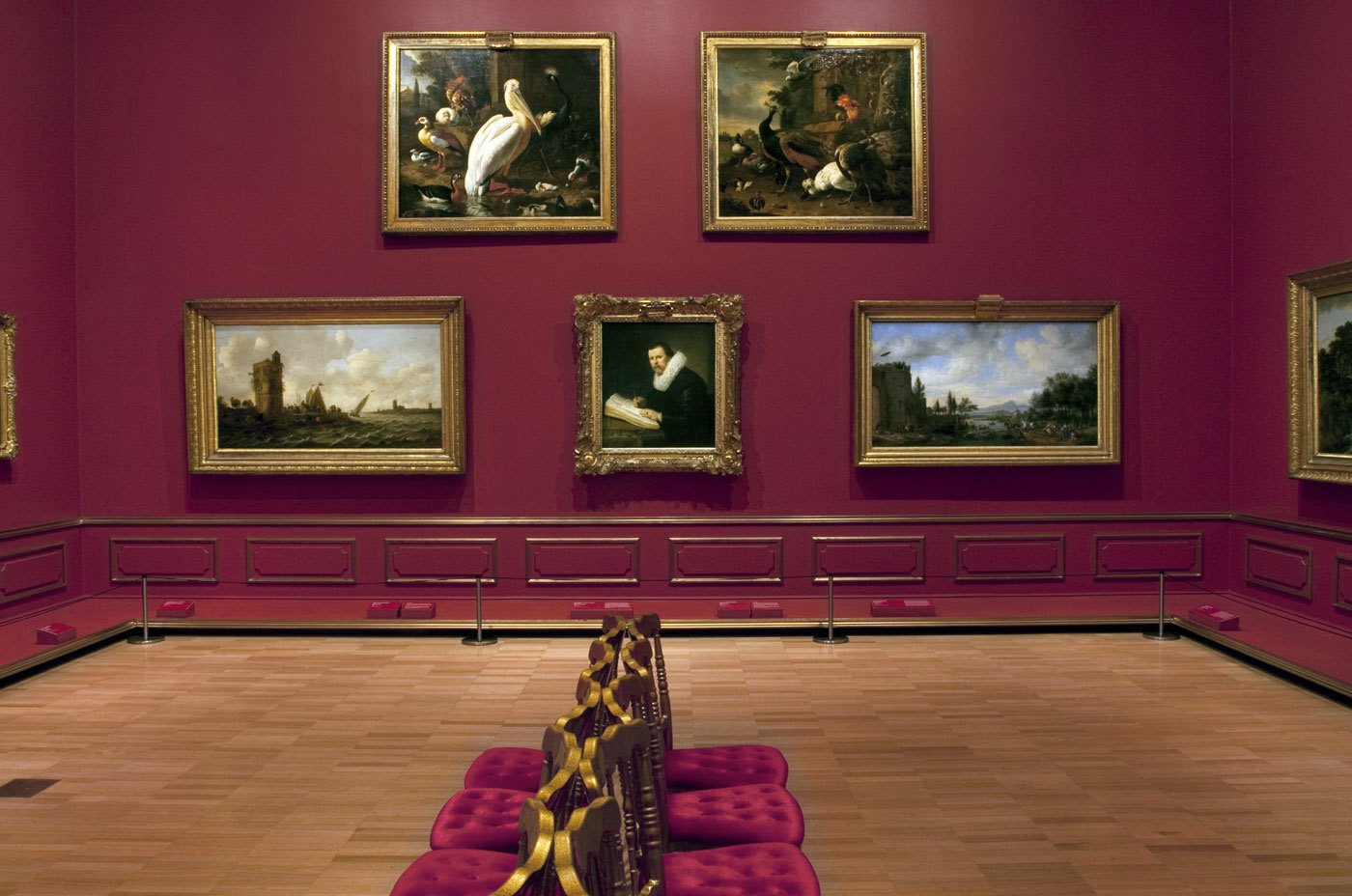
The artist first commanded worldwide attention with the series Verkehrsprojekte Deutsche Einheit (Traffic Projects German Unity, 1995-2003). Here he addressed the radical transformation of the landscape through the expansion of the motorway and rail network in eastern Germany.

The series Wände (Walls, 1995-2003) explored the question of how authentic the representation of reality is. Schink took frontal shots of the prefabricated architecture of unpretentious commercial buildings and melded them into almost abstract colour-fields. Merely the narrow borders adumbrate what we are seeing. To find his motifs, the artist embarks on journeys beyond the confines of Europe, taking him to countries such as Brazil, Japan, Cambodia, North Korea, Peru, the USA or Vietnam. His main objective is not the representation of exotic motifs, but the portrayal of the interface and the dialogue between anthropogenic structures and the natural landscape.

The award-winning series 1h (2002-2010) unites diverse aspects of his oeuvre: the interest in natural phenomena and light situations and his reflection on the possibilities of depicting reality through the medium of photography. Schink photographs the sun at various locations throughout the world, using exposure times of one hour. Together, the over-exposure and light intensity conjure a spectre which cannot be perceived by the human eye and which only becomes visible as a solarisation when captured by analogue photography: a black sunbeam, surrounded by a glowing corona. The resulting images render visible an unreal depiction of reality and confront the viewer with a Nature suspended between imagination and representation.

Press release from the MKM Küppersmühle Museum of Modern Art website


Hans-Christian Schink (German, b. 1961) 'Ba Be (1)' 2005


Hans-Christian Schink (German, b. 1961)
Ba Be (1)
2005
Series Vietnam
C-print
© Hans-Christian Schink


Hans-Christian Schink (German, b. 1961) 'Bach Ma (2A)' 2005


Hans-Christian Schink (German, b. 1961)
Bach Ma (2A)
2005
Series Vietnam
C-print
© Hans-Christian Schink


Hans-Christian Schink (German, b. 1961) 'Ba Be' 2005


Hans-Christian Schink (German, b. 1961)
Ba Be
2005
Series Vietnam
C-print
© Hans-Christian Schink


Hans-Christian Schink (German, b. 1961) '9/17/2006, 8:45 am-9:45 am, N 78°13.370' E 015°40.024' 2006


Hans-Christian Schink (German, b. 1961)
9/17/2006, 8:45 am – 9:45 am, N 78°13.370′ E 015°40.024′
2006
Serie 1h
Gelatin silver print on barite paper
© Hans-Christian Schink
MKM Museum Küppersmühle für Moderne Kunst, Sammlung Ströher


Hans-Christian Schink (German, b. 1961) '4/05/2009, 6:48 am - 7:48 am, S 24°43.399' E 015°28.310'' 2009


Hans-Christian Schink (German, b. 1961)
4/05/2009, 6:48 am – 7:48 am, S 24°43.399′ E 015°28.310′
2009
Serie 1h
Gelatin silver print on barite paper
© Hans-Christian Schink
MKM Museum Küppersmühle für Moderne Kunst, Sammlung Ströher


Hans-Christian Schink (German, b. 1961) '4/10/2009, 4:11 pm - 5:11 pm, S 26°28.034' E 018°16.142'' 2009


Hans-Christian Schink (German, b. 1961)
4/10/2009, 4:11 pm – 5:11 pm, S 26°28.034′ E 018°16.142′
2009
Serie 1h
Gelatin silver print on barite paper
© Hans-Christian Schink
MKM Museum Küppersmühle für Moderne Kunst, Sammlung Ströher


Hans-Christian Schink (German, b. 1961) '2/26/2010, 7:54 am – 8:54 am, S36° 49.622' E 175° 47.340'' 2010


Hans-Christian Schink (German, b. 1961)
2/26/2010, 7:54 am – 8:54 am, S36° 49.622′ E 175° 47.340′
2010
Serie 1h
© Hans-Christian Schink, courtesy Galerie Rothamel Erfurt/Frankfurt a.M. and Kicken Berlin


Hans-Christian Schink (German, b. 1961) 'Antartica 2' 2010


Hans-Christian Schink (German, b. 1961)
Antartica 2
2010
C-print
121 x 145cm


MKM Küppersmühle Museum of Modern Art
Inner Harbour, Duisburg
Philosophenweg 55
D – 47051 Duisburg, Germany

Opening hours:
Wed: 2 – 6pm
Thu – Sun: 11am – 6pm
Public holidays: 11am – 6pm
Mondays and Tuesdays closed

MKM Küppersmühle Museum of Modern Art website

LIKE ART BLART ON FACEBOOK

Back to top

Exhibition: ‘The Immortal Alexander the Great: The myth, the reality, his journey, his legacy’ at Hermitage Amsterdam

Exhibition dates: 18th September 2010 – 18th March 2011


Black-figure hydria: Achilles with Hector's body
 c. 510 BC


Black-figure hydria: Achilles with Hector’s body
Attica, Leagros group, Antiopa Painter
c. 510 BC
Earthenware
h 49cm
© State Hermitage Museum, St Petersburg


What beautiful artefacts!

Marcus


Many thankx to the Hermitage Amsterdam for allowing me to publish the photographs in the posting. Please click on the photographs for a larger version of the image.


Head of Alexander (fragment of a figure)
 175-150 BC


Head of Alexander (fragment of a figure)
Asia Minor, Bithynia (?)
Roman copy, 1st century BC, after Greek original
175-150 BC
Fine-grained marble
h 6cm
© State Hermitage Museum, St Petersburg


Cameo. Twin portrait of Ptolemy II Philadelphos and Arsinoe II (Gonzaga Cameo) 3rd century BC


Cameo. Twin portrait of Ptolemy II Philadelphos and Arsinoe II (Gonzaga Cameo)
Alexandria
3rd century BC
Three-layer sardonyx
15.7 x 11.8cm
© State Hermitage Museum, St Petersburg


Figure of Cleopatra VII 51-30 BC


Figure of Cleopatra VII
Egypt
51-30 BC
Basalt
h 104cm
© State Hermitage Museum, St Petersburg


Cuirass breastplate Italy Late 16th century


Cuirass breastplate
Italy
Late 16th century
Steel, bone, wrought and carved
h 42cm
© State Hermitage Museum, St Petersburg


No other king from antiquity has such a powerful appeal to the imagination as Alexander the Great (356-323 BC). Nor other king has been so often cited and depicted as an example.

The exhibition The Immortal Alexander the Great will be on view from 18 September 2010 until 18 March 2011 in the Hermitage Amsterdam, with over 350 masterpieces, including the famous Gonzaga cameo from the State Museum the Hermitage in St Petersburg. This is the first time that any Dutch museum has devoted an exhibition to Alexander the Great, his journey to the East, and the influence of Hellenism. The exhibition spans a period of almost 2500 years. In the Hermitage Amsterdam, the ‘immortal’ Alexander will be brought to life for six months.

Alexander was born in 356 BC as the son of King Philip II of Macedonia. In boyhood he was taught by Aristotle, who would be an abiding influence on him. At twenty years of age Alexander succeeded to the throne, following his father’s assassination. Two years later he embarked on the great expedition that would seal his fame. His conquests brought him into contact with numerous countries and cultures: Syria, Egypt, Persia, Bactria, and India. He founded new cities wherever he went, naming many of them Alexandria. His arrival had a lasting impact on local architecture, art, language, and ways of life: in the course of time they assimilated and displayed Greek influence, a process that became known as Hellenism.

The Greek sphere of influence was vast: it extended from Asia Minor to India, from Egypt to Mongolia. Alexander’s name and fame has endured down to the present day.

The exhibition in the Hermitage Amsterdam gives a picture of Alexander himself and of the great cultural and artistic changes that followed in the train of his conquests.

The exhibition begins with the myth of Alexander. Images in paintings dating from the seventeenth to the nineteenth centuries, tapestries, and decorative arts display his heroic deeds and conquests. Impressive examples include paintings by Pietro Antonio Rotari (Alexander the Great and Roxana) and Sebastiano Ricci (Apelles painting Campaspe), and a tapestry depicting The Family of Darius before Alexander the Great.

The exhibition then moves on to Alexander’s reality, his native Macedonia, his teachers, his heroes Achilles and Heracles, and his ideals. The lion’s share of this reality consists of his journey, the Great Expedition to the East: an unparalleled campaign of conquest lasting over ten years, with an army that was more than 50,000 strong. Objects from Egypt and Persia, from the nomads and the Babylonians, attest to the rich cultures that he encountered on his travels. Visitors can follow the route of his celebrated journey on interactive maps and computers.

This part of the exhibition also highlights the Greek influence on those other cultures. Terracotta figurines depicting men and women, gods and satyrs, musicians and Eros, and stone fragments of architecture, testify to the artistic wealth that characterised the Hellenistic territories from the fourth century BC to the first few centuries AD. While many of these works reflect the Greek spirit of cheerfulness and playfulness, the Greeks also took an interest in the atypical, such as disabilities and deformities.

Finally, the exhibition dwells on Alexander’s heritage. Fourth-century reliefs from Palmyra demonstrate the endurance of Greek traditions outside Greece, as do papyruses bearing texts in Greek, which were still being produced in the ninth century. In the fifteenth and sixteenth centuries, Alexander played a prominent role in Persian literature, in which he is known as Iskander. He is recognisable in finely executed miniatures.

Alexander the Great is still a topical figure in our own times. Very recently (2004) a broad international public became better acquainted with him thanks to Oliver Stone’s film of his life. Alexander is a phenomenon. He is immortal. And the exhibition on show at the Hermitage Amsterdam makes this abundantly clear.

Erwin Olaf was asked to make photographic interpretations of Alexander, which he did in a photographic series and a short film. By interlacing objects from the exhibition with photographs of an actual model, Olaf has succeeded in skilfully conveying Alexander’s character traits and his handsome features.

Press release from the Hermitage Amsterdam website [Online] Cited 13/03/2011 no longer available online


Figure of Bacchus/Dionysus Late 4th-early 3rd century BC


Figure of Bacchus/Dionysus
Roman copy, 2nd century AD, after Greek original
Late 4th-early 3rd century BC
Marble
h 207cm
© State Hermitage Museum, St Petersburg


Heracles fighting the Nemaean lion Rome, 2nd-3rd century AD fragments with possible Italian additions 16th-17th century


Heracles fighting the Nemaean lion
Rome
2nd-3rd century AD fragments with possible Italian additions 16th-17th century
Marble
h 65cm
© State Hermitage Museum, St Petersburg


Bronze leg-protectors Greece 4th century BC


Bronze leg-protectors
Greece
4th century BC
Bronze
h right protector 41, h left protector 40cm
© State Hermitage Museum, St Petersburg


Table clock: the vigil of Alexander the Great Russia, St Petersburg (?), after original by Pierre Philippe Thomire 1830-40 (?)


Table clock: the vigil of Alexander the Great
Russia, St Petersburg (?), after original by Pierre Philippe Thomire
1830-40 (?)
Bronze, cast, chased and gilded
70 x 30 x 70cm
© State Hermitage Museum, St Petersburg


Cameo: triumph of Dionysus Alexandria 1st century BC


Cameo: triumph of Dionysus
Alexandria
1st century BC
Sardonyx (on carnelian plaque)
4.2 x 2.7cm
© State Hermitage Museum, St Petersburg


'Dove-shaped pendant earrings' Greek goldsmithing, Alexandria (?), 2nd century BC


Dove-shaped pendant earrings
Greek goldsmithing, Alexandria (?), 2nd century BC
Gold, hessonite, glass
H 6.3/6.5cm
© State Hermitage Museum, St Petersburg


'Plaque: Combat between two warriors'
Northern Black Sea region. 4th century BC


Plaque: Combat between two warriors
Northern Black Sea region. 4th century BC
Gold
14 x 19cm
© State Hermitage Museum, St Petersburg


'Olive Wreath' Greek goldsmithing, Northern Black Sea region, Bosporus Kingdom. Mid-4th century BC


Olive Wreath
Greek goldsmithing, Northern Black Sea region, Bosporus Kingdom. Mid-4th century BC
Gold
Ø approx. 32cm
© State Hermitage Museum, St Petersburg


'Earrings depicting Nike, goddess of victory' Greek goldsmithing. Mid-4th century BC


Earrings depicting Nike, goddess of victory
Greek goldsmithing. Mid-4th century BC
Gold
H4.8cm
© State Hermitage Museum, St Petersburg


Tapestry: Alexander the Great and the Family of Darius, from the cycle Stories of Alexander the Great, after cartoons by Charles Le Brun


Tapestry: Alexander the Great and the Family of Darius, from the cycle Stories of Alexander the Great, after cartoons by Charles Le Brun
Flanders, Brussels, atelier of Jan Frans van den Hecke
1661-1695
Wool, silk, silver thread
451 x 690cm
© State Hermitage Museum, St Petersburg


'Statuette of a horseman with a bow' Iran. 5th-4th century BC


Statuette of a horseman with a bow
Iran. 5th-4th century BC
Gold
H 3.6cm
© State Hermitage Museum, St Petersburg


Pietro Rotari (Italian, 1707-1762) 'Alexander the Great and Roxane' 1756


Pietro Rotari (Italian, 1707-1762)
Alexander the Great and Roxane
1756
Oil on canvas
Height: 243cm (95.6 in)
Width: 202cm (79.5 in)


Pietro Antonio Rotari (30 September 1707 – 31 August 1762) was an Italian painter of the Baroque period. Born in Verona, he led a peripatetic career, and died in Saint Petersburg, where he had traveled to paint for the Russian court. His portraits, mostly of women, are renowned for being beautiful and realistic. Rotari’s works were generally limited to royal portraits held by notables such as emperors and court ladies.

Text from the Wikipedia website


Bernard Picart (French, 1673-1733), from Charles Le Brun 'The Courage of Porus' 1700-1733


Bernard Picart (French, 1673-1733), from Charles Le Brun
The Courage of Porus
1700-1733
Etching and engraving, 70.6 x 55 cm (second sheet of a series of three)
© State Hermitage Museum, St Petersburg


'Ring: Athena Nicephora' Greek goldsmithing, Northern Black Sea region, Pantikapeion (?). Late 4th century BC


Ring: Athena Nicephora
Greek goldsmithing, Northern Black Sea region, Pantikapeion (?). Late 4th century BC
Gold
Ring Ø 2.3cm
© State Hermitage Museum, St Petersburg


Richard Brompton (English, 1734–1783) 'Portrait of Grand Dukes Alexander Pavlovich and Constantin Pavlovich' 1781


Richard Brompton (English, 1734–1783)
Portrait of Grand Dukes Alexander Pavlovich and Constantin Pavlovich
1781
Oil on canvas
210 х 146.5см
© State Hermitage Museum, St Petersburg


Brompton was a pupil of Benjamin Wilson. He then went to Italy, and spent some time in Rome, where he had lessons with Raphael Mengs. He was also introduced to the patronage of the Earl of Northampton, and accompanied the earl to Venice when he was appointed ambassador to the republic. At Venice Brompton painted a conversation-piece, in which he introduced the portraits of the Duke of York and several English gentlemen then on their travels. The picture was afterwards exhibited at the rooms in Spring Gardens in 1763, at which time he returned to England, and for some years practised portrait painting. Extravagant living and debtors brought him to the King’s Bench, but he was rescued by the Empress of Russia, at whose request he went to St. Petersburg, where he was appointed portrait painter to the empress, and where he met with much employment. During this time he was patronized by the empress favorite, Grigory Potemkin. He died in that city in 1783.

Text from the Wikipedia website


'Statue of Heracles with the apples of the Hesperides' Roman copy, 2nd century AD, from a Greek original from the mid-4th century BC


Statue of Heracles with the apples of the Hesperides
Roman copy, 2nd century AD, from a Greek original from the mid-4th century BC
Marble
H 201cm
© State Hermitage Museum, St Petersburg


The Hermitage Amsterdam
Amstel 51, Amsterdam

Opening hours:
Daily from 10am – 5pm

Hermitage Amsterdam website

LIKE ART BLART ON FACEBOOK

Back to top