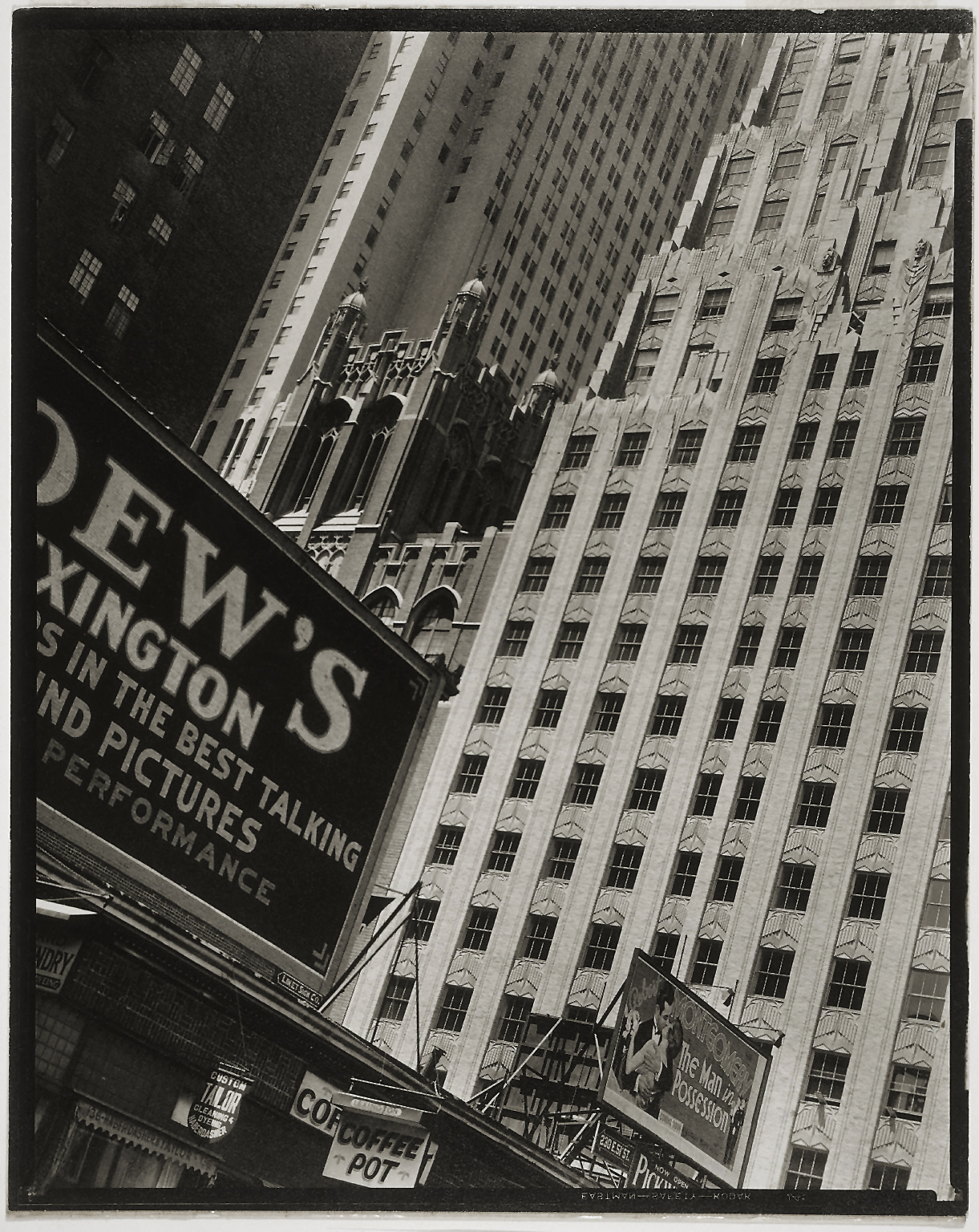
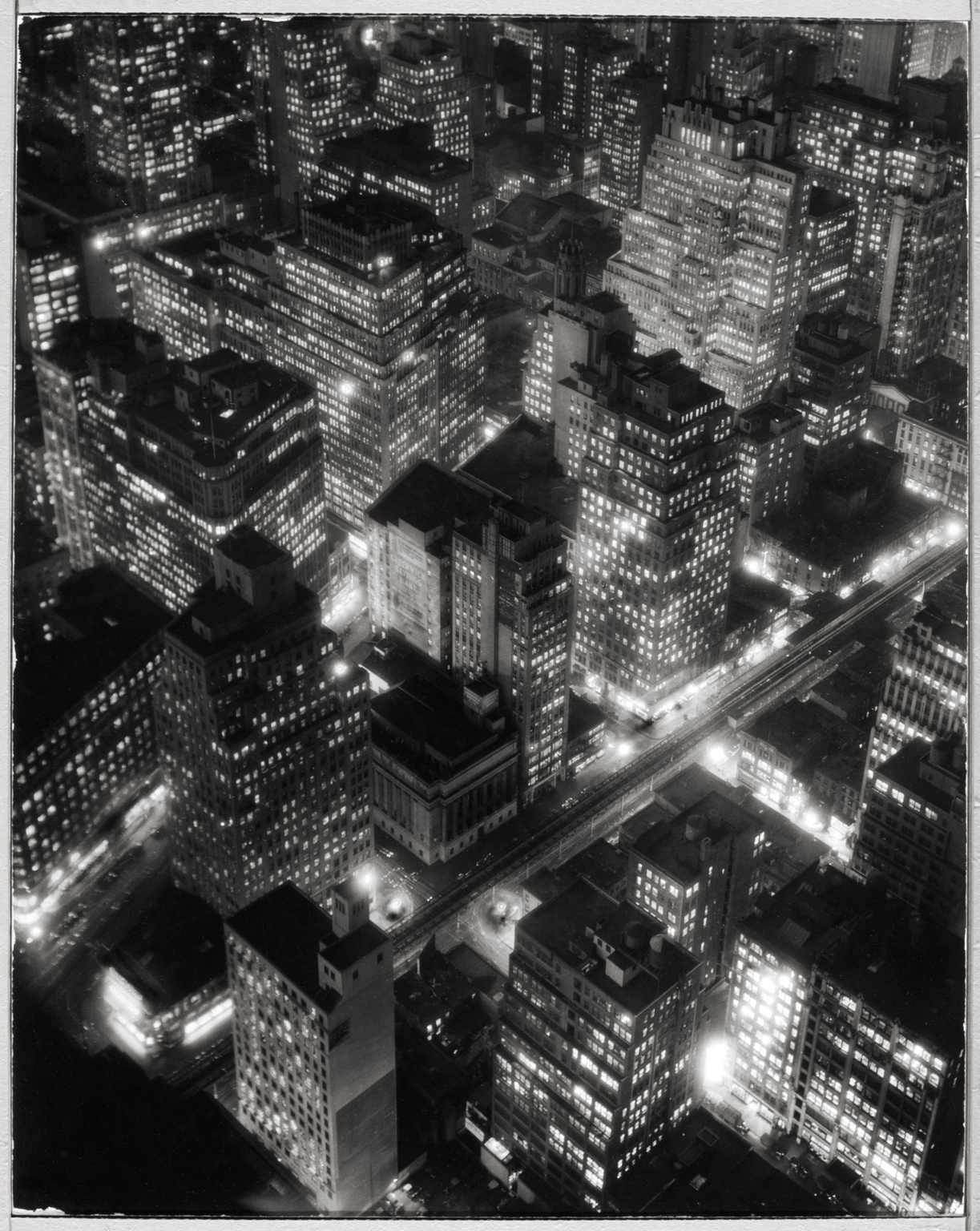
Exhibition: ‘The Prints of Martin Lewis: From the Collection of Dr. Dorrance Kelly’ at the Bruce Museum, Greenwich, CT

Exhibition dates: 2nd October 2011 – 26th February 2012
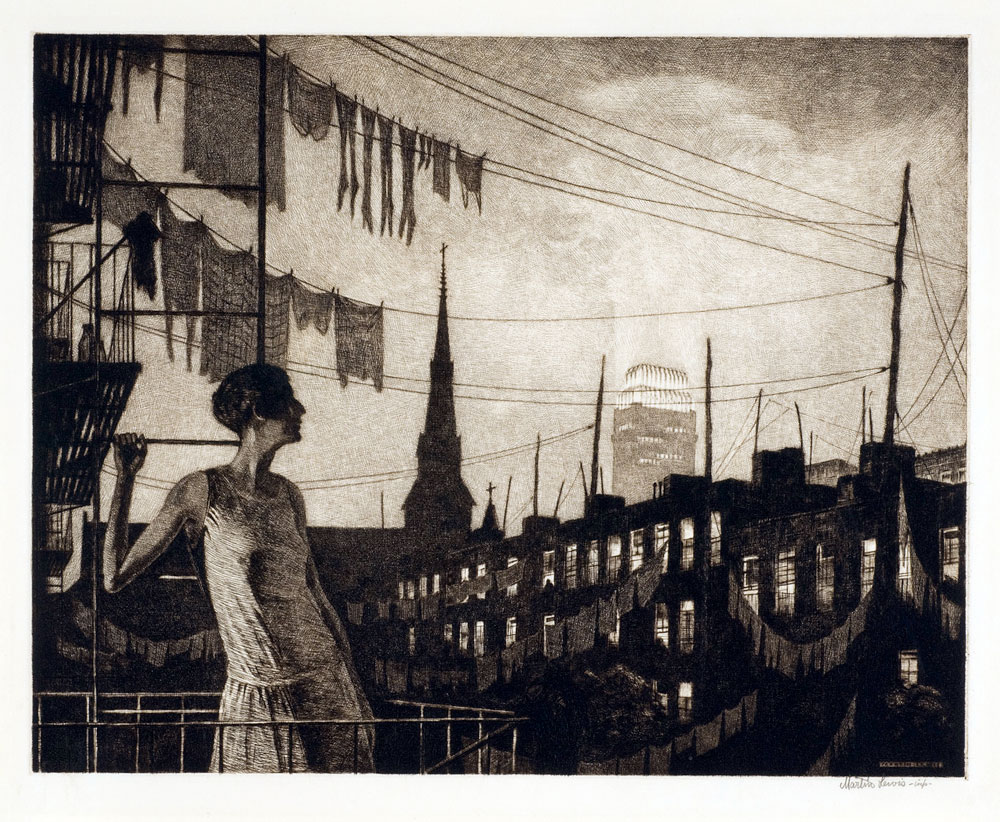
 

Martin Lewis (Australian, 1881-1962) 'Glow of the City' 1929


Martin Lewis (Australian, 1881-1962)
Glow of the City
1929 
Drypoint
11 1/4 x 14 1/4 in
Collection of Dr. Dorrance T. Kelly
© Estate of Martin Lewis


One of the great pleasures of presenting this blog is introducing myself and my readers to forgotten artists. Here we have a dazzling Australian artist who died largely forgotten, especially, it seems, in his native country. He does not deserve this fate!


How many works does the National Gallery of Australia hold in its collection?

6

Count them … 1, 2, 3, 4, 5, 6

(and none displayed online)


AGNSW 5, NGV 0

(and none displayed online)


Tell me, is there something wrong with this picture?

Dr Marcus Bunyan


Many thankx to the Bruce Museum for allowing me to publish the images in the posting. Please click on the images for a larger version.


Martin Lewis (Australian, 1881-1962). 'Late Traveler' 1949


Martin Lewis (Australian, 1881-1962)
Late Traveler
1949 
Drypoint
9 7/8 x 11 7/8 in
Collection of Dr. Dorrance T. Kelly
© Estate of Martin Lewis


Martin Lewis (1881-1962) was born in Castlemaine, Victoria, Australia on June 7, 1881. He was the second of eight children and had a passion for drawing. At the age of 15, he left home and traveled in New South Wales, Australia, and in New Zealand, working as a pothole digger and a merchant seaman. He returned to Sydney and settled into a Bohemian community outside Sydney. Two of his drawings were published in the radical Sydney newspaper, The Bulletin. He studied with Julian Ashton at the Art Society’s School in Sydney. Ashton, a famous painter, was also one of the first Australian artists to take up printmaking.

In 1900, Lewis left Australia for the United States. His first job was in San Francisco, painting stage decorations for William McKinley’s presidential campaign of 1900. By 1909, Lewis was living in New York, where he found work in commercial illustration. His earliest known etching is dated 1915. However, the level of skill in this piece suggests he had been working in the medium for some time previously. It was during this period that he helped Edward Hopper learn the basics of etching. In 1920, after the break up of a romance, Lewis traveled to Japan, where for two years he drew and painted and studied Japanese art. The influence of Japanese prints is very evident in Lewis’s prints after that period. In 1925, he returned to etching and produced most of his well-known works between 1925 and 1935 Lewis’s first solo exhibition in 1929 was successful enough for him to give up commercial work and concentrate entirely on printmaking. Lewis is most famous for his black and white prints, mostly of night scenes of non tourist, real life street scenes of New York City. During the Depression, however, he was forced to leave the city for four years between 1932 and 1936 and move to Connecticut. When Lewis was able to return to the New York City in 1936, there was no longer a market interested in his work. He died largely forgotten.

Text from the Wikipedia website


Martin Lewis (Australian, 1881-1962). 'Fifth Ave Bridge' 1928


Martin Lewis (Australian, 1881-1962)
Fifth Ave Bridge
1928
Drypoint
9 7/8 x 12 in
Collection of Dr. Dorrance T. Kelly
© Estate of Martin Lewis
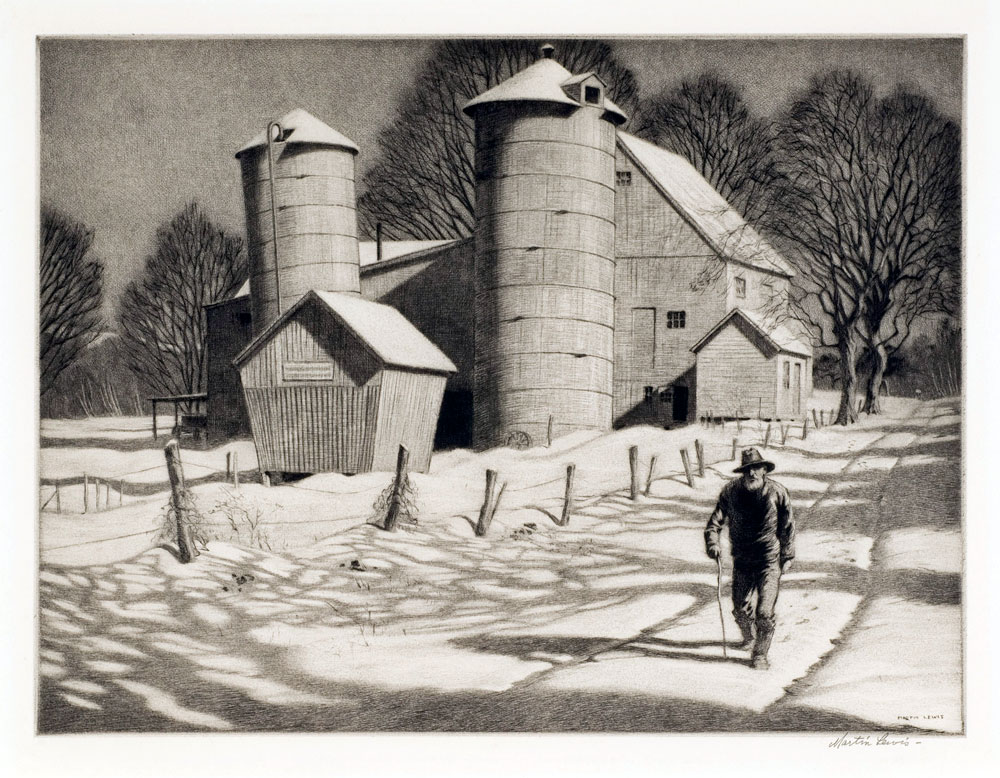
 

Martin Lewis (Australian, 1881-1962). 'Grandpa Takes a Walk' 1935


Martin Lewis (Australian, 1881-1962)
Grandpa Takes a Walk
1935 
Drypoint and sand ground
8 7/8 x 11 3/4 in
Collection of Dr. Dorrance T. Kelly
© Estate of Martin Lewis


Martin Lewis (Australian, 1881-1962). 'Quarter of Nine, Saturday's Children' 1929


Martin Lewis (Australian, 1881-1962)
Quarter of Nine, Saturday’s Children
1929 
Drypoint
9 7/8 x 12 7/8 in
Collection of Dr. Dorrance T. Kelly
© Estate of Martin Lewis


Martin Lewis (Australian, 1881-1962). 'Shadow Dance' 1930


Martin Lewis (Australian, 1881-1962)
Shadow Dance
1930 
Drypoint and sandpaper ground
9 1/2 x 10 7/8 in
Collection of Dr. Dorrance T. Kelly
© Estate of Martin Lewis


The Bruce Museum in Greenwich, Connecticut, presents the new exhibition The Prints of Martin Lewis: From the Collection of Dr. Dorrance Kelly from October 2, 2011, through February 19, 2012. Recognised as one of the premier American printmakers of the first half of the 20th-century, Martin Lewis (1881-1962) left an indelible mark on the landscape of the art world. Although not as publicly well known as some of his contemporaries such as Edward Hopper, Lewis was a highly skilled printer who was greatly involved in the artistic scene of New York City during the 1920s and ’30s. This exhibition features more than thirty etchings and several canceled plates by the artist from the private collection of Dr. Dorrance Kelly of West Redding, Connecticut.

The exhibition The Prints of Martin Lewis: From the Collection of Dr. Dorrance Kelly provides a brief biographical account of Lewis and showcases some of the artist’s best technical prints. Lewis was an acknowledged master of the intaglio techniques of printmaking, experimenting with multiple processes including etching, aquatint, engraving, mezzotint, and dry point.

In 1915 he produced his first documented etching, Smoke Pillar, Weehawken. Images like this one documented the scenes of everyday life as they played out in the thriving metropolis around New York City. Lewis portrayed all aspects of city life including dockworkers, skyscrapers, tugboats, and pedestrians – mostly the ladies. He produced magnificent prints that captured the energy, bustle, and occasional solitude of New York. With his move to Connecticut in 1932, Lewis investigated another topic through his printmaking: country life. This firmly entrenched Lewis as a prominent American scene artist, as his prints captured the intersection between the urban and rural environments and shed light on the slowly emerging suburban culture.

Press release from the Bruce Museum website


Martin Lewis (Australian, 1881-1962). 'Windy Day' 1932


Martin Lewis (Australian, 1881-1962)
Windy Day
1932 
Drypoint
9 7/8 x 12 in
Collection of Dr. Dorrance T. Kelly
© Estate of Martin Lewis


Martin Lewis (Australian, 1881-1962). 'Politics' 1936


Martin Lewis (Australian, 1881-1962)
Politics
1936 
Drypoint and sand ground
9 3/4 x 10 5/8 in
Collection of Dr. Dorrance T. Kelly
© Estate of Martin Lewis


Martin Lewis (Australian, 1881-1962). 'Little Penthouse' 1931


Martin Lewis (Australian, 1881-1962)
Little Penthouse
1931 
Drypoint
9 7/8 x 6 3/4 in
Collection of Dr. Dorrance T. Kelly
© Estate of Martin Lewis


Martin Lewis (Australian, 1881-1962). 'Bay Windows' 1929


Martin Lewis (Australian, 1881-1962)
Bay Windows
1929 
Drypoint and sandpaper ground
11 3/4 x 7 7/8 in
Collection of Dr. Dorrance T. Kelly
© Estate of Martin Lewis


Martin Lewis (Australian, 1881-1962). 'Chance Meeting' 1940-1941


Martin Lewis (Australian, 1881-1962)
Chance Meeting
1940-1941 
Drypoint
10 1/2 x 7 1/2 in
Collection of Dr. Dorrance T. Kelly
© Estate of Martin Lewis


Martin Lewis (Australian, 1881-1962). 'Relics (Speakeasy Corner)' 1928


Martin Lewis (Australian, 1881-1962)
Relics (Speakeasy Corner)
1928 
Drypoint
11 7/8 x 9 7/8 in
Collection of Dr. Dorrance T. Kelly
© Estate of Martin Lewis
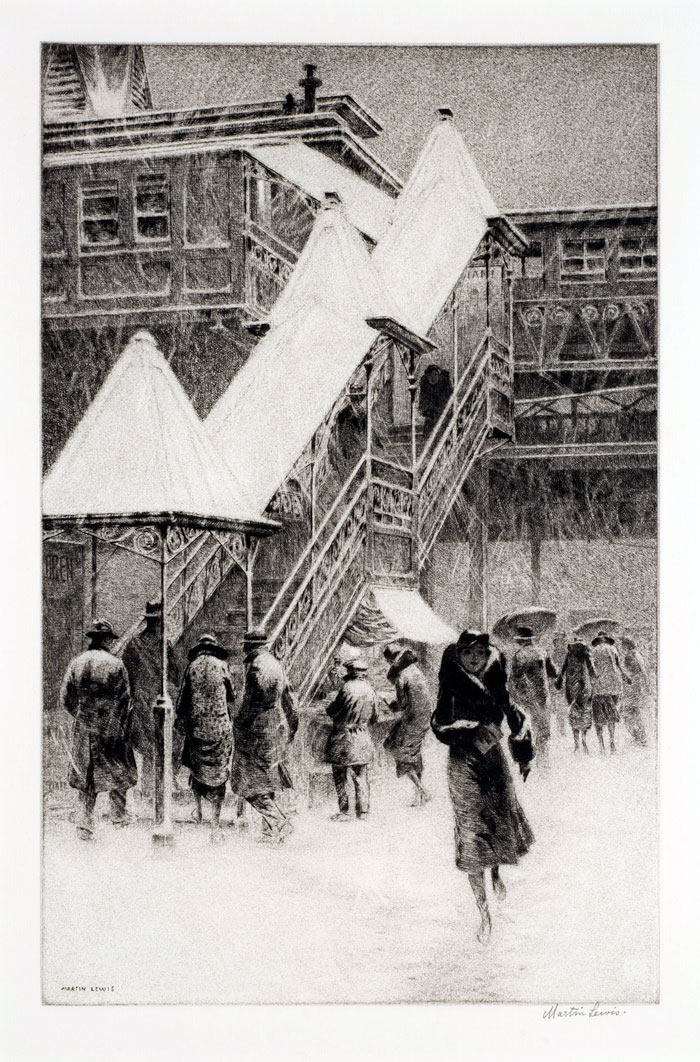
 

Martin Lewis (Australian, 1881-1962). 'Snow on the "El"' 1931


Martin Lewis (Australian, 1881-1962)
Snow on the “El”
1931 
Drypoint and sand ground
14 x 9 in
Collection of Dr. Dorrance T. Kelly
© Estate of Martin Lewis


Bruce Museum
1 Museum Drive
Greenwich, CT
Phone: 203.869.0376

Opening hours:
Tuesday – Saturday 10am – 5pm
Sunday 1pm – 5pm
Closed Mondays
Bruce Museum website

LIKE ART BLART ON FACEBOOK

Back to top

Exhibition: ‘Skyscrapers: Prints, Drawings, and Photographs of the Early Twentieth Century’ at the Philadelphia Museum of Art

Exhibition dates: 6th June – 1st November, 2009


Berenice Abbott (American, 1898-1991) 'Untitled (New York City)' 1929-1933


Berenice Abbott (American, 1898-1991)
Untitled (New York City)
1929-1933
Gelatin silver print
6 1/2 x 4 7/16 inches
Philadelphia Museum of Art
The Lynne and Harold Honickman Gift of the Julien Levy Collection, 2001


What a fantastic exhibition! Thank you to the Philadelphia Museum of Art for allowing me to reproduce the wonderful photographs below, many from photographers that I have never heard of before.


Please click on the photographs for a larger version of the image. All photographs © the Philadelphia Museum of Modern Art.


Lloyd Ullberg (American, 1904-1996). 'PSFS Building, Philadelphia' c. 1932-1933


Lloyd Ullberg (American, 1904-1996)
PSFS Building, Philadelphia
c. 1932-1933
Gelatin silver print
Image and sheet: 10 x 7 3/8 inches
Philadelphia Museum of Art
Purchased with the Lola Downin Peck Fund, 1999


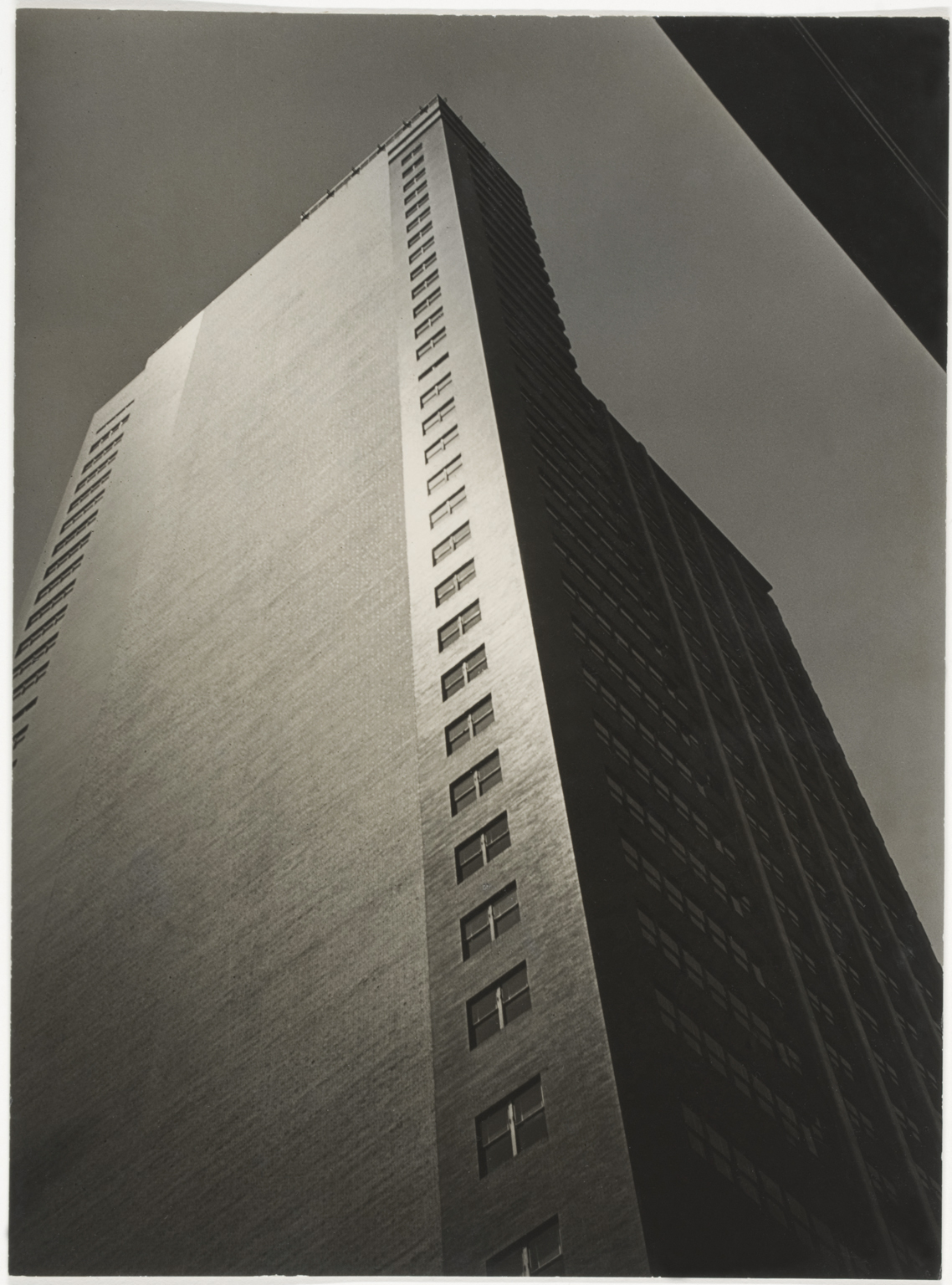
At the turn of the 20th century when they first began to appear, skyscrapers were seen as symbols of modernity and testaments to human achievement. Stretching the limits of popular imagination, they captured the attention of visual artists working in a variety of mediums. This summer the Philadelphia Museum of Art presents Skyscrapers: Prints, Drawings, and Photographs of the Early Twentieth Century, an exhibition that traces the rise of the American skyscraper as an iconic image. The exhibition will feature more than 50 works from the Museum’s collection, dating from 1908 to 1941, which demonstrate the many ways artists chose to portray the new giants in their landscape.

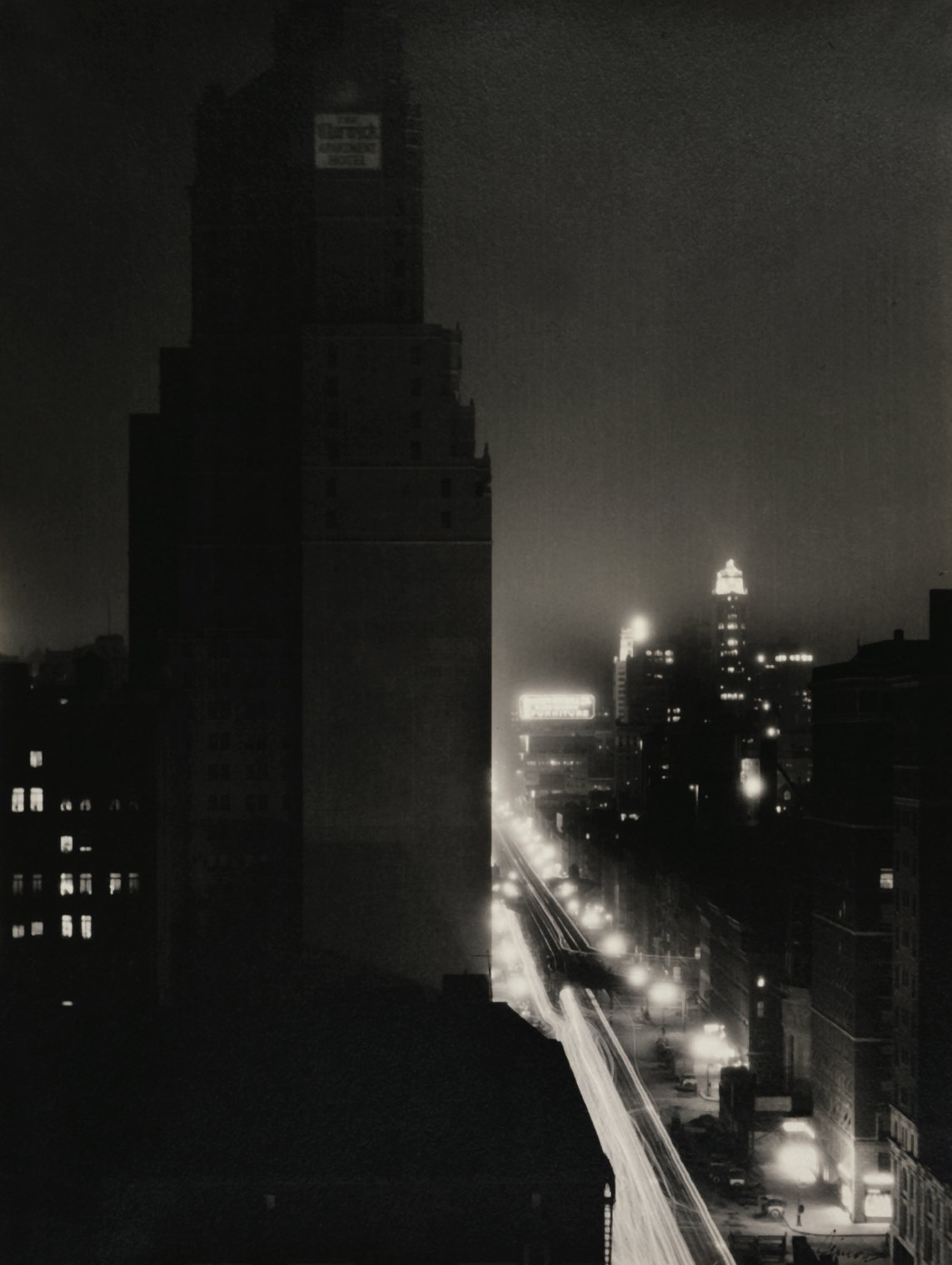
Skyscrapers includes prints by John Marin and Charles Sheeler, photographs by Berenice Abbott and Alfred Stieglitz, and drawings by Earl Horter and Abraham Walkowitz. The works in Skyscrapers reflect a wide range of styles and practices, from Walkowitz’s loosely drawn “New York Improvisations” (1910) to Abbott’s luminous photograph “New York at Night” (c. 1932), which captures the dazzling allure of the city’s glowing evening skyline. The combination of mediums included in the show allows the viewer to consider the relationship between drawing, printmaking, and photography in this dynamic period.

“The visual impact of skyscrapers on the modern urban landscape is unmistakable, and for more than a century artists have been engaging with this theme,” John Vick, The Margaret R. Mainwaring Curatorial Fellow in the Department of Prints, Drawings, and Photographs and the exhibition’s organiser, said, noting that the Museum’s collection includes well over 500 works related to skyscrapers. Vick added that “their distinctive contours and exaggerated scale offered artists both a chance to experiment with modernist aesthetics and a subject on which to project personal or collective ideas and emotions.”

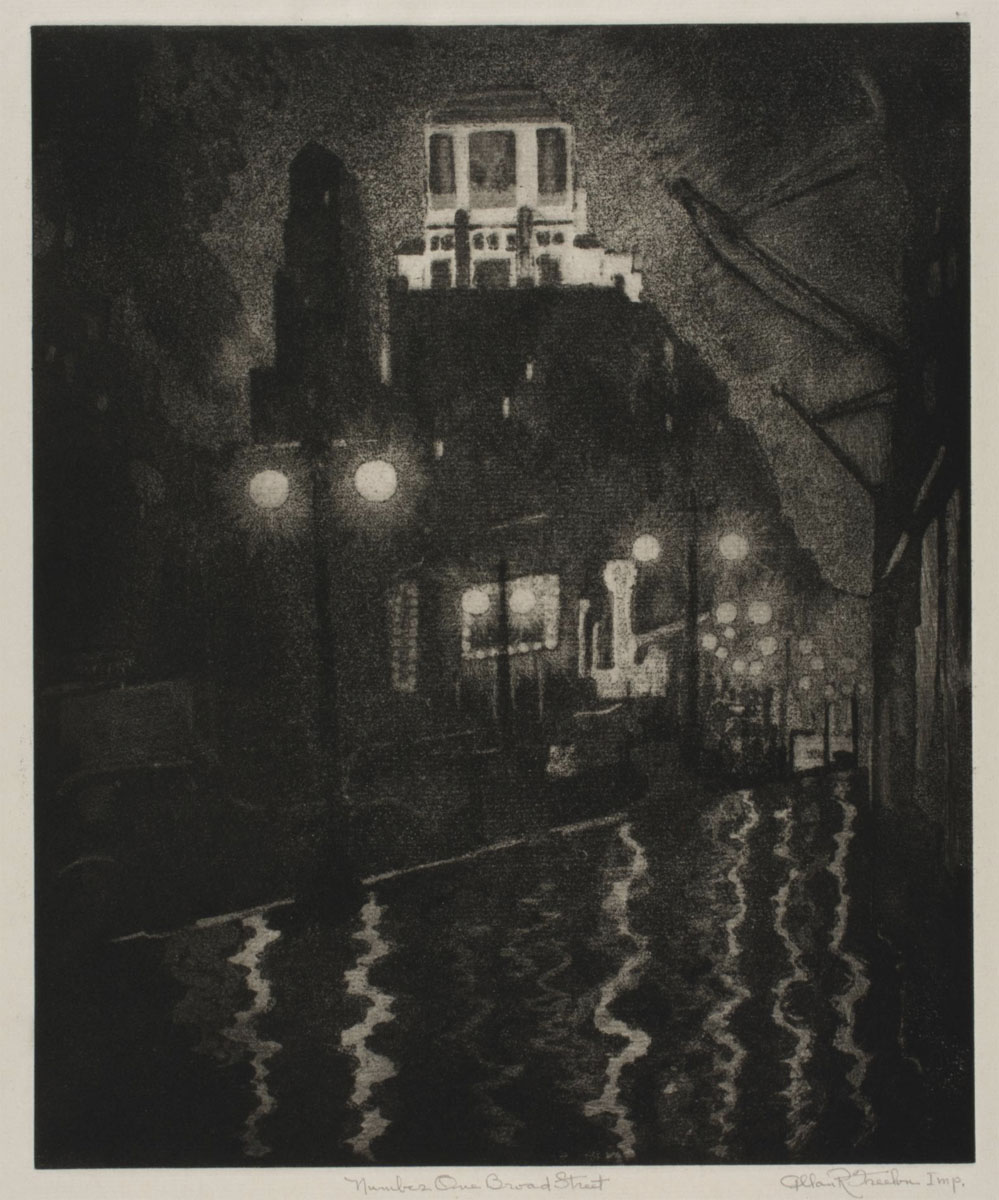
The exhibition also offers a view into the interaction of architecture and urban development with art’s role as a form of documentation. Among the famous buildings featured are Chicago’s gothic-ornamented Tribune Tower, New York City’s Art Deco Empire State Building, and Philadelphia’s modernist PSFS Building. An atmospheric etching of a rainy nighttime scene at One Broad Street in Philadelphia by artist Allan Randall Freelon (American, 1895-1960) shows how this important intersection at the heart of the city would have appeared in the 1930s.

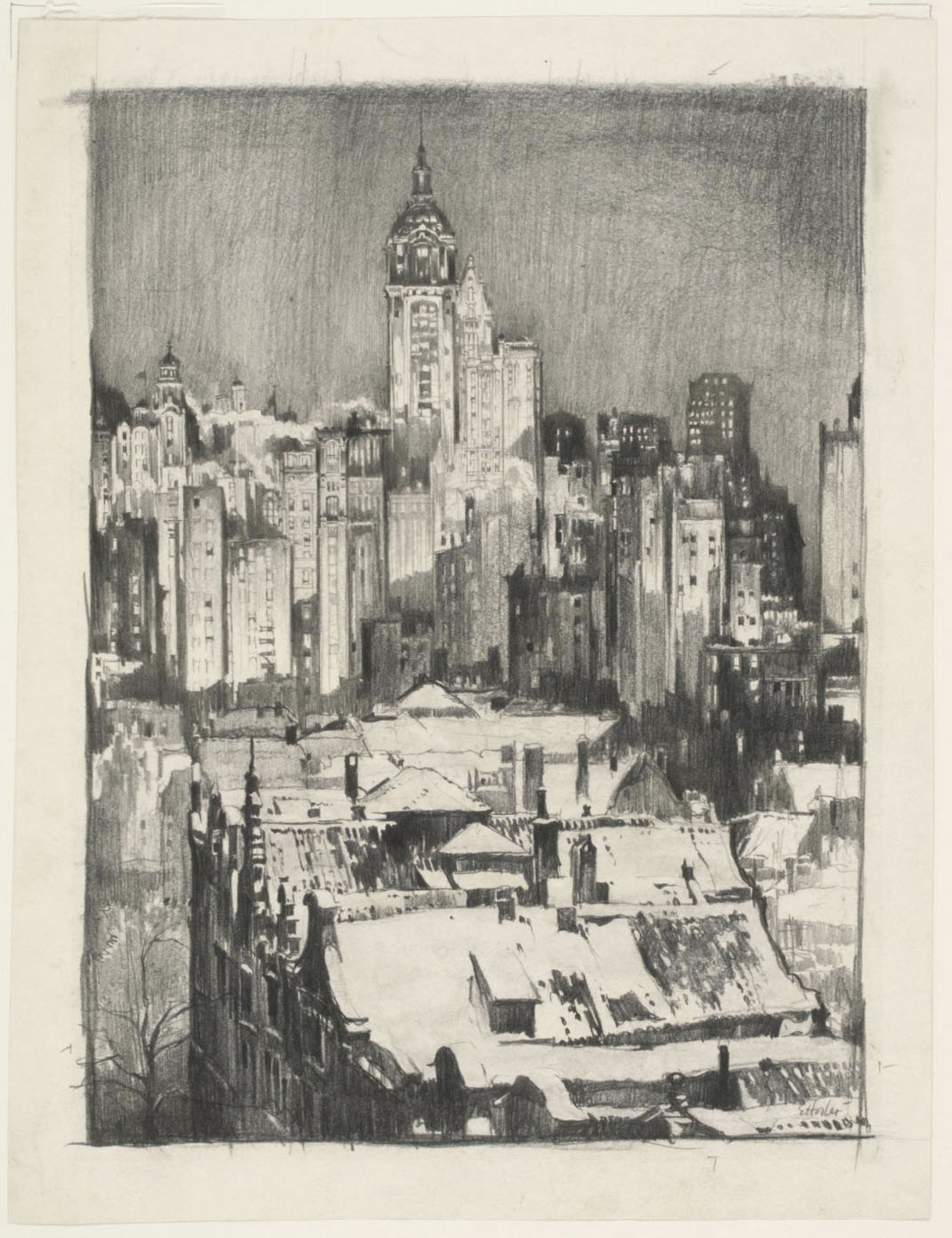
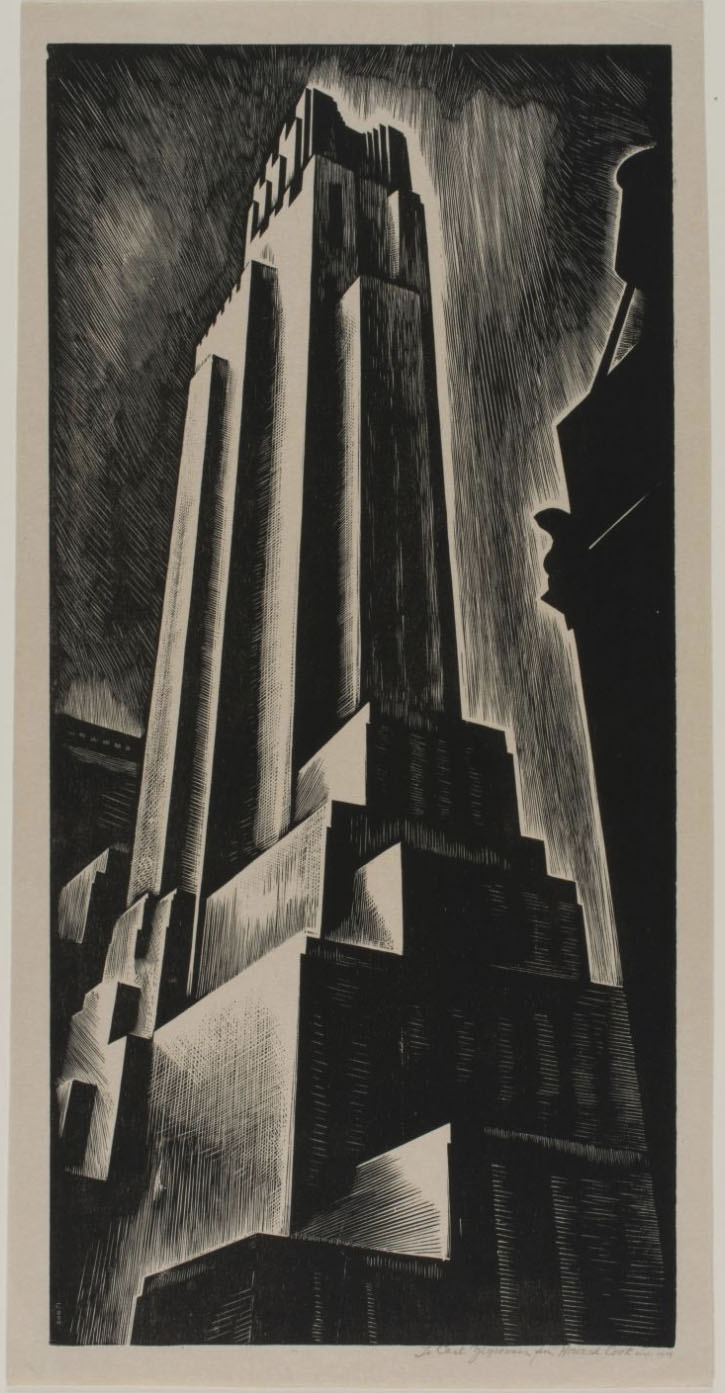
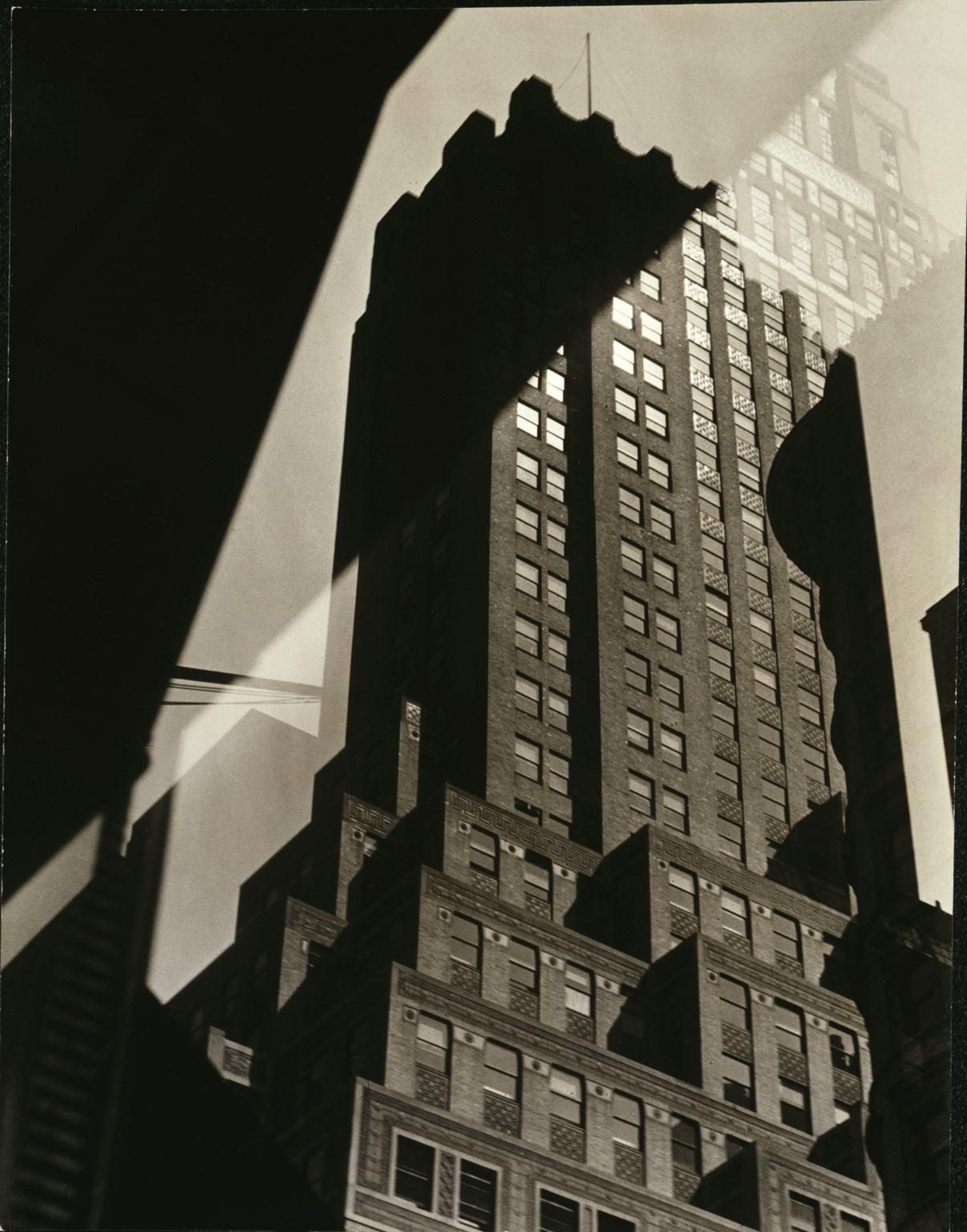
The towering, occasionally menacing, physical presence of these structures is a frequent visual theme in the works – whether in Howard Norton Cook’s woodcut “Skyscraper” (1929, below) or Sherril Schell’s photograph “Window Reflection – French Building” dating from 1930-1932. Horter’s graphite drawing “Manhattan Skyline” (1916) shows a row of newly-built towers thrusting skyward in strong, vertical lines and overshadowing the residential rooftops in the foreground, an image that suggests the city’s emergence as a financial and commercial giant.

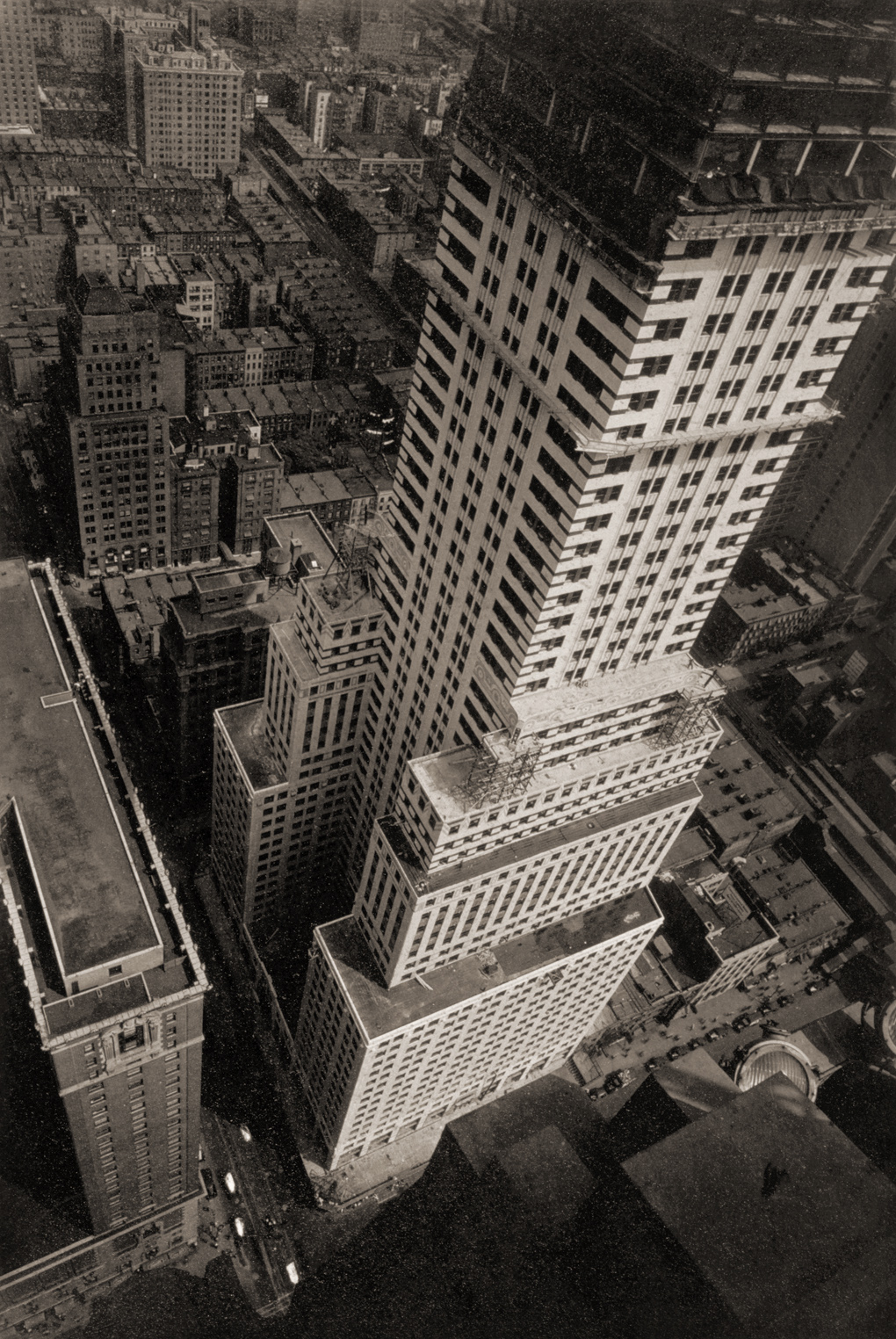
Other works take a more abstract approach, exploring the visual exciting patterns created by these massive new structures. Such works include Marin’s 1913 and 1917 prints of the Woolworth Building and Herbert Johnson’s aerial photograph of building rooftops from c. 1930-1932.

Philadelphia Museum of Art press release [Online] Cited 19/06/2009. No longer available online


Earl Horter (American, 1880-1940) 'Manhattan Skyline' c. 1916


Earl Horter (American, 1880-1940)
Manhattan Skyline
c. 1916
Graphite on cream wove paper
Sheet: 11 7/16 x 8 3/4 inches (29.1 x 22.2cm)
Philadelphia Museum of Art
Gift of Carl Zigrosser, 1953


Like many of the drawings and etchings of New York made by Horter while he lived in the city during the first two decades of this century, this view of the Manhattan skyline was shown in his first one-man exhibition at the New York gallery of Frederick Keppel and Company in 1916. It was organised by Carl Zigrosser, research librarian at Keppel, who later became this Museum’s first curator of prints and drawings. Zigrosser bought the drawing from the exhibition and donated it to the Philadelphia Museum of Art thirty-seven years later.

Text from the Philadelphia Museum of Art website


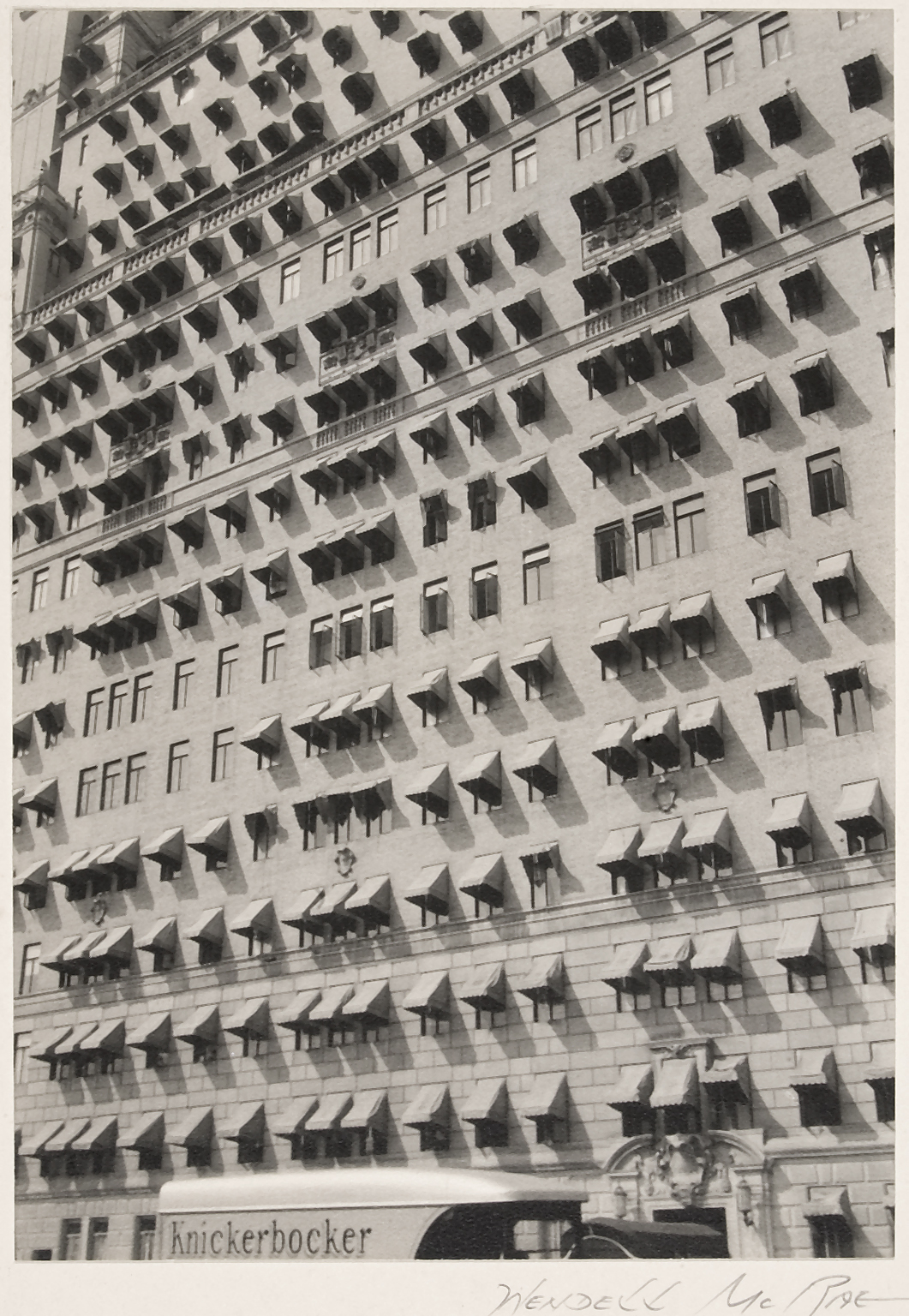
Wendell MacRae (American, 1896-1980) 'Summer 'c. 1930-1932


Wendell MacRae (American, 1896-1980)
Summer
c. 1930-1932
Gelatin silver print
Image and sheet: 6 9/16 x 4 5/8 inches
Philadelphia Museum of Art
The Lynne and Harold Honickman Gift of the Julien Levy Collection, 2001


Stella Simon (American, 1878-1973) '6th Avenue' c. 1930-1932


Stella Simon (American, 1878-1973)
6th Avenue
c. 1930-1932
Gelatin silver print
Image and sheet: 9 1/2 x 7 3/16 inches
Philadelphia Museum of Art
The Lynne and Harold Honickman Gift of the Julien Levy Collection, 2001


Allan Randall Freelon (American, 1895-1960) 'Number One Broad Street' c. 1934


Allan Randall Freelon (American, 1895-1960)
Number One Broad Street
c. 1934
Aquatint with roulette and burnishing
Plate: 11 7/8 × 9 13/16 inches (30.2 × 24.9cm)
Sheet: 15 1/8 × 12 1/16 inches (38.4 × 30.6cm)
Philadelphia Museum of Art
Purchased with the Thomas Skelton Harrison Fund, 1943


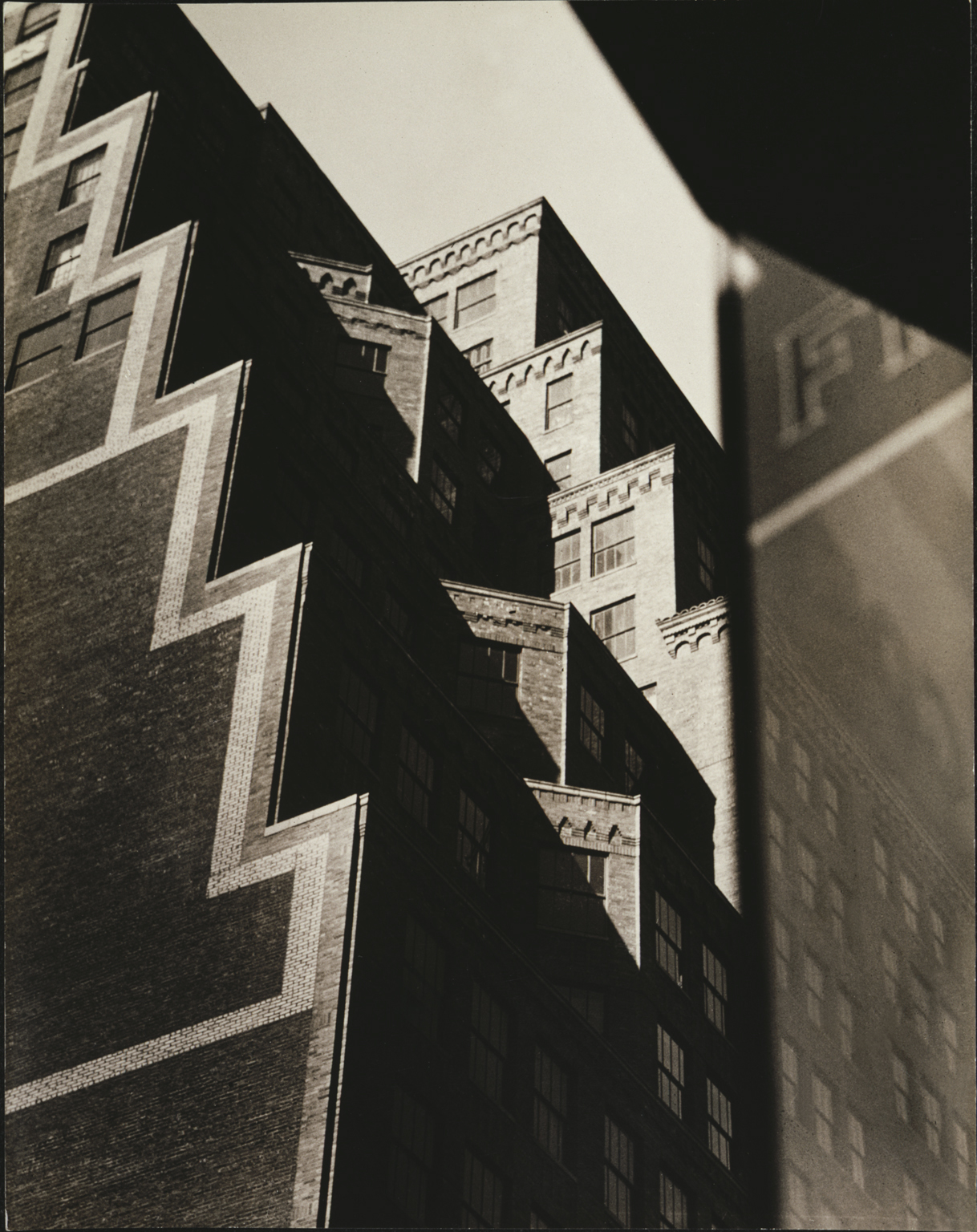
Sherril Schell (American, 1877-1964)' Buildings on West 35th Street' c. 1930-1932


Sherril Schell (American, 1877-1964)
Buildings on West 35th Street
c. 1930-1932
Gelatin silver print
Image and sheet: 8 x 6 5/16 inches
Philadelphia Museum of Art
The Lynne and Harold Honickman Gift of the Julien Levy Collection, 2001


Howard Norton Cook (American, 1901-1980) 'Skyscraper' 1929


Howard Norton Cook (American, 1901-1980)
Skyscraper
1929
Woodcut
Image: 17 15/16 x 8 5/8 inches (45.6 x 21.9cm)
Sheet: 19 1/16 x 9 3/4 inches (48.4 x 24.8cm)
Philadelphia Museum of Art
Gift of Carl Zigrosser, 1960


Sherril Schell (American, 1877-1964) 'Window Reflection - French Building' c. 1930-1932


Sherril Schell (American, 1877-1964)
Window Reflection – French Building
c. 1930-1932
Gelatin silver print
Image and sheet: 7 15/16 x 6 1/8 inches
Philadelphia Museum of Art
The Lynne and Harold Honickman Gift of the Julien Levy Collection, 2001


Ralph Steiner (American, 1899-1986) 'Untitled (New York City)' 1931


Ralph Steiner (American, 1899-1986)
Untitled (New York City)
1931
Gelatin silver print
Image/Sheet/Mount (With Black Border from Negative): 9 15/16 x 7 15/16 inches
Philadelphia Museum of Art
The Lynne and Harold Honickman Gift of the Julien Levy Collection, 2001


Berenice Abbott (American, 1898-1991) 'New York at Night' c. 1932


Berenice Abbott (American, 1898-1991)
New York at Night
c. 1932
Gelatin silver print
Image and sheet: 13 3/8 x 10 5/8 inches
Philadelphia Museum of Art
Gift of Theodore T. Newbold in memory of Lee Witkin, 1984


Philadelphia Museum of Art
26th Street and the Benjamin Franklin Parkway
Philadelphia, PA 19130

Opening hours
Thursday – Monday 10.00am – 5.00pm
Closed Tuesdays and Wednesdays

Philadelphia Museum of Art website

LIKE ART BLART ON FACEBOOK

Back to top