
Survey dates: 21 November 2010 – 17 July 2011

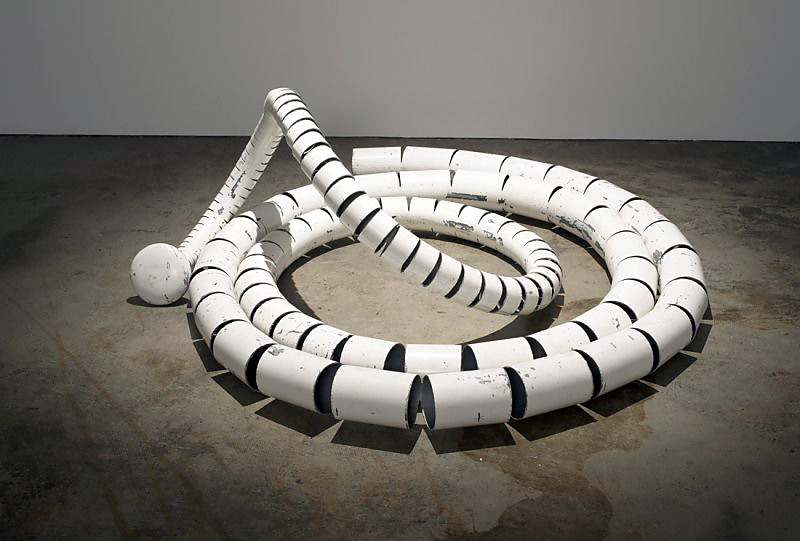
Adrian Mauriks (Australian, 1942-2020)
Strange fruit
2010
Epoxy resin, steel, paint
“[Massumi] posits ‘a physiology of perception’ in which he analyses sensory forms of knowledge as being driven by affect. Massumi understands affect as a moment of confrontation in which there are many possibilities, a moment embedded with potential responses, reactions and directions which is characterised by a sense of openness … narratives produced through affect are the result of the tensions and interplays between form and content or space and objects and the viewer.”
Kate Gregory and Andrea Witcomb1
Meandering around the trails of the McClelland Sculpture Park is a wonderful experience; the meandering provides the suspense and excitement of a treasure hunt. Unfortunately, viewing most of the sculptures of the McCelland Sculpture Survey Award 2010 that are the prize of such a treasure hunt left me a little disappointed. I had little feeling for most of the sculptures dotted around the landscape. As conceptual ideas I understood their rationale but most left me cold and emotionally unengaged – they had little affect upon me.
Embodied forms of knowledge production apprehended by the senses, such as affect, produce new forms of understanding. Emotional responses open up possibilities for interpretation. In this sense, affect is important for the maintenance and production of memory as well as social and cultural understanding. For the historian Dipesh Chakrabarty, it is the subjective, felt response that is the most relevant for contemporary forms of political, social and cultural engagement – how emotional responses open up possibilities for interpretation.2
“Narratives produced through affect are the result of the tensions and interplays between form and content or space and objects and the viewer.” I felt little of that tension and interplay when viewing most of these works.
While understanding that, for an award of this nature, the work has to be self-contained, has to sit in a particular environment that the artist has only a general idea of (not a particular position) when proposing the work – on the evidence of this survey it would seem that contemporary Australian sculpture tends towards one shot statements that lack nuance and layering in composition and meaning. An understanding of how the work inhabits space and the aura that the work projects is notably absent from most of the works. Most are exercises in design rather than aesthetically pleasing artworks, the design aspect of making art works for these competitions having taken over from making work that has an emotional connection to the viewer and relevance to the world in which we live. As evidence see the photographs below and note how many are seemingly masculine, square / oblong / totemic / monolithic structures, compositions that assume the viewer cannot decipher sensual, layered narratives that are revealed over time, through space. There is little music and pleasure to be had here!
Notable exceptions include the primordial, reflective eggs of Matthew Harding (Primordial, 2010, below); the wonderfully tactile, sensual, stitched bronze dogs of Caroline Rothwell (Tygers I, II, III, 2010, below); and the incongruously placed, limpid, distorted, rusting Holden HQ Kingswood Station Wagon by Jason Waterhouse (Glory Days, 2010, below) covered in pine needles that delighted, surprised and made me feel something (about the work, myself and the world we inhabit). This was my winner, hands down. The most unedifying experience of the afternoon was walking under the black table of the winner, Louise Paramor’s Top shelf (2010). While the “brilliant assemblage” looks acceptable from a distance, “the oversized table acts as an altar upon which the saccharine paraphernalia of a modern, disposable age sit as objects that have been elevated for aesthetic contemplation,”3 the underside through which the viewer walks was the most emotionally dead space I have had to endure when viewing contemporary art over the past few years.
Gregory and Witcomb observe, “sculpture gives shape to emptiness, to space, as much as to material form.” The space to produce new forms of understanding that offer the viewer fresh perspectives, that allow the viewer to have a openness and receptiveness to the sensuality of the work and it’s placement in and relationship to, the world. The space to breathe, to touch, to explore, to be excited, to create and bring forth memory, to bear witness to the engagement with our senses. We are the product of numerous interactions with our environment; this survey, rather than leaving me feeling uplifted and informed through these interactions, left me feeling rather dead and deflated.
In this sense I loved the landscape but I didn’t feel most of the art.
Dr Marcus Bunyan
1/ Gregory, K. and Witcomb, A. “Beyond Nostalgia: the Role of Affect in Generating Historical Understanding at Heritage Sites,” in, Knell, S.J., Macleod, S. and Watson, S. (eds.,). Museum Revolutions: How Museums Change and are Changed. New York: Routledge, 2007, pp. 264-265
2/ Ibid., p. 263
3/ Lindsay, Robert. Art and Nature/Nature and Art. [Online] Cited 15/05/2011. No longer available online
All photographs © Marcus Bunyan. Please click on the photographs for a larger version of the image.

Adrian Mauriks (Australian, 1942-2020)
Strange fruit
2010
Epoxy resin, steel, paint
Photo: Marcus Bunyan

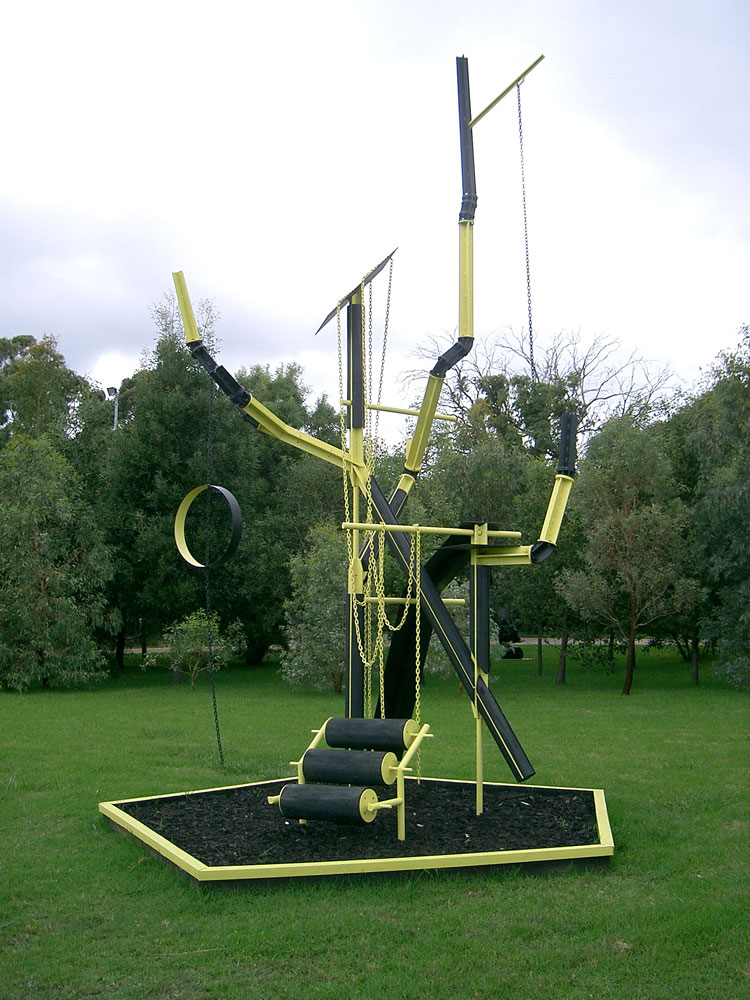
Alexander Knox (Australian, b. 1966)
The mill
2010
Galvanised steel, paint, timber
Photos: Marcus Bunyan
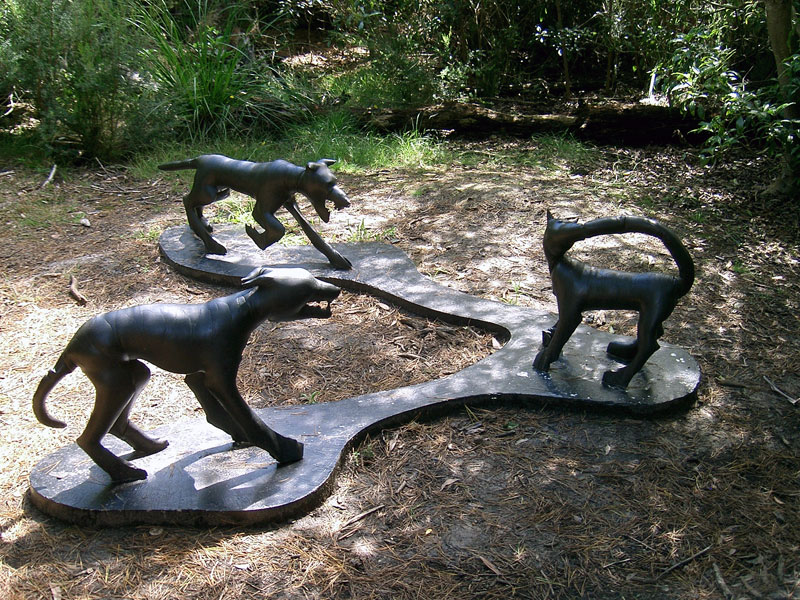

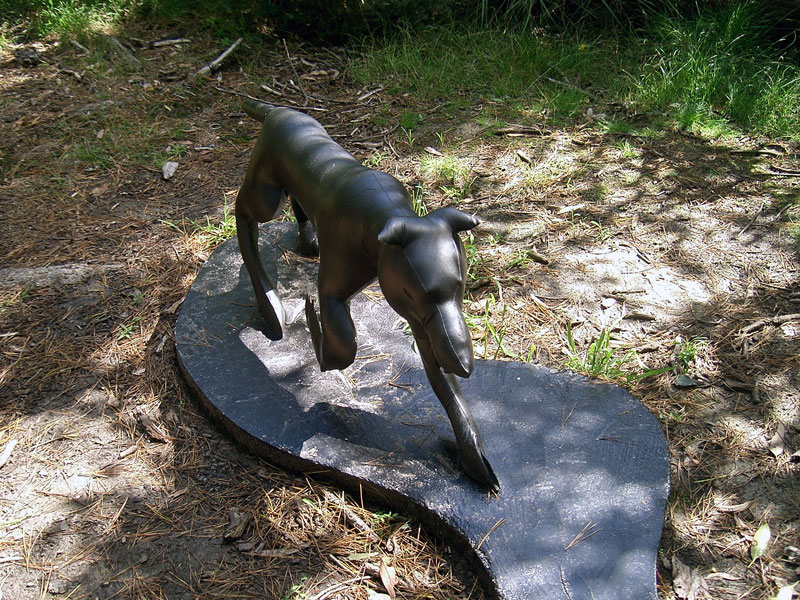
Caroline Rothwell (Australian born England, b. 1967)
Tygers I, II, III
2010
Bronze
Photos: Marcus Bunyan


Chaco Kato (Australian born Japan)
A white nest: 2010
2010
Yarn, steel pegs
Photos: Marcus Bunyan


Colin Suggett (Australian, b. 1945)
National Anxiety Index
2010
Steel, aluminium, fibreglass, paint, plastic
Photos: Marcus Bunyan


Daniel Clemmett (Australian)
Development
2010
Recycled steel
Photos: Marcus Bunyan

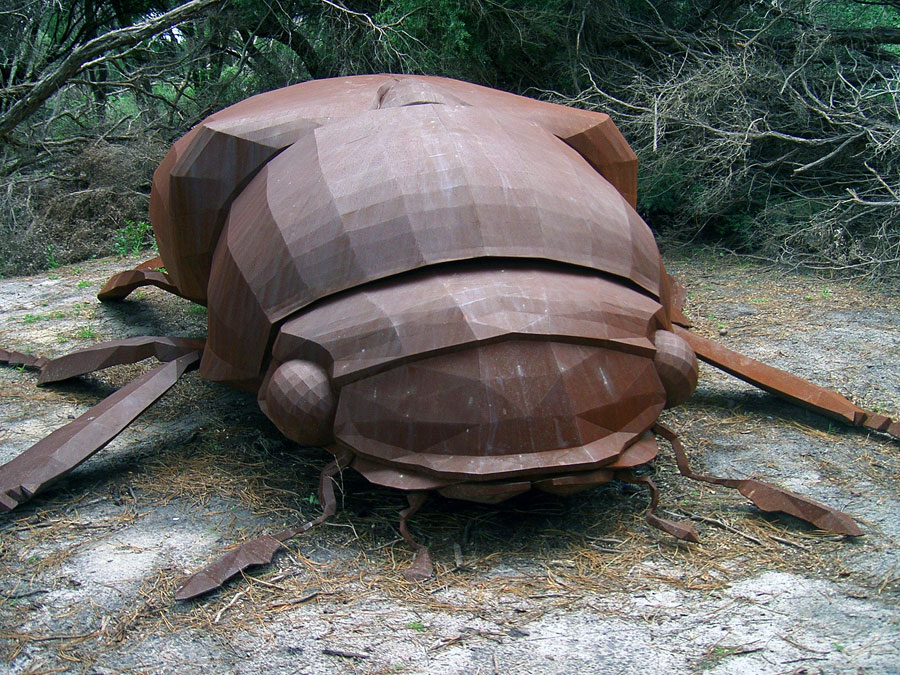
Dean Colls (Australian, b. 1968)
Alexander the Great
2010
Corten steel
Photos: Marcus Bunyan


Greg Johns (Australian, b. 1953)
To the centre II
2007
Corten steel
Photos: Marcus Bunyan
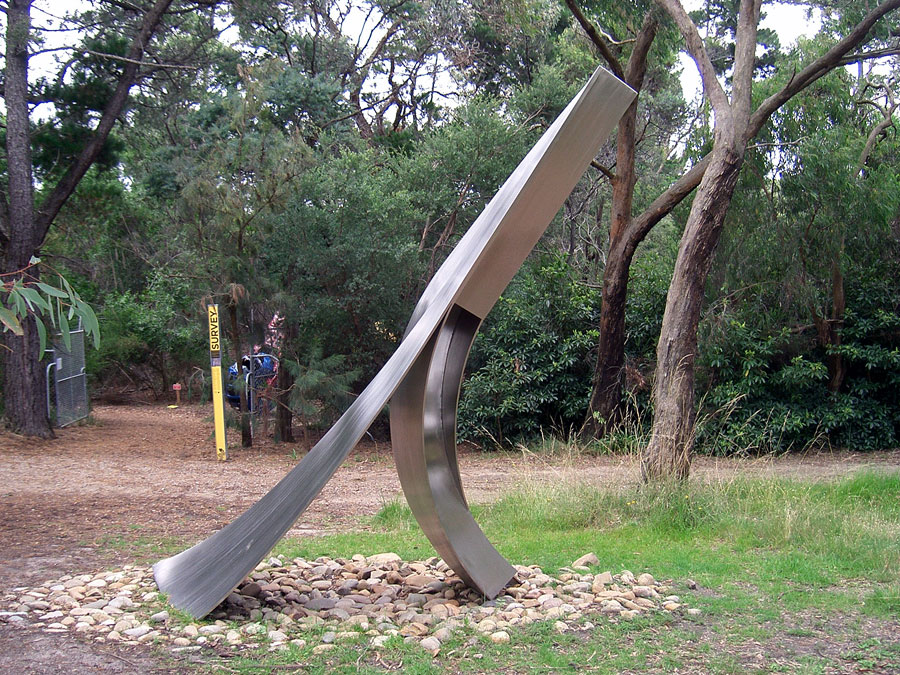
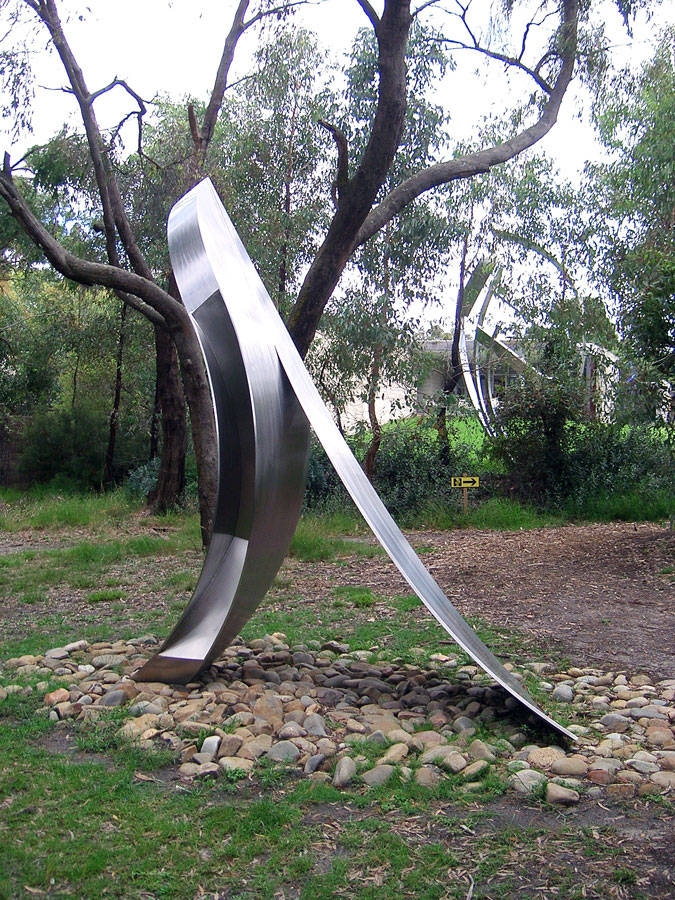
James Parrett (Australian, b. 1976)
M-fifteen
2010
Stainless steel
Photos: Marcus Bunyan

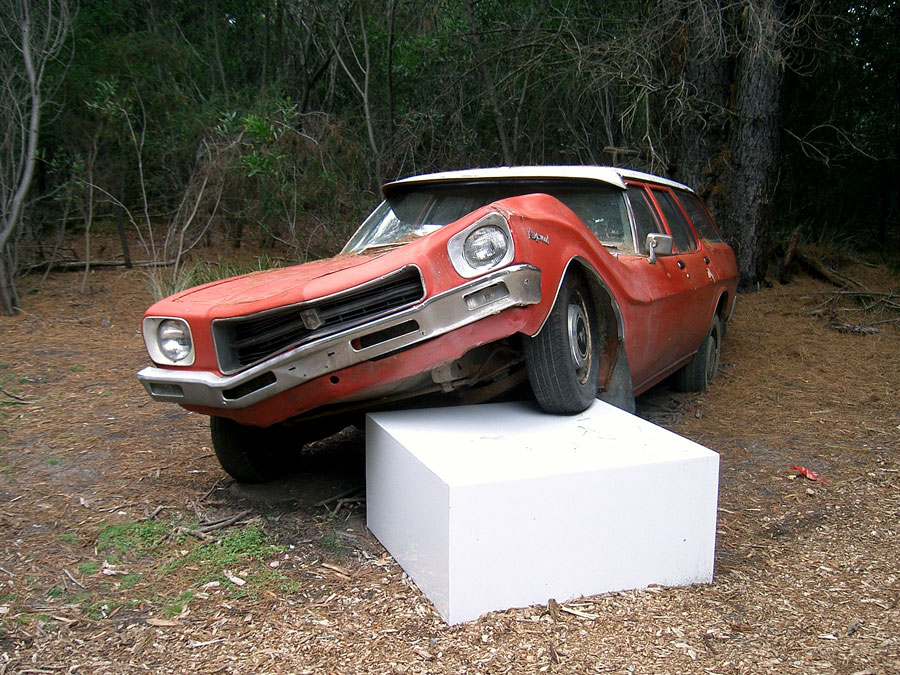
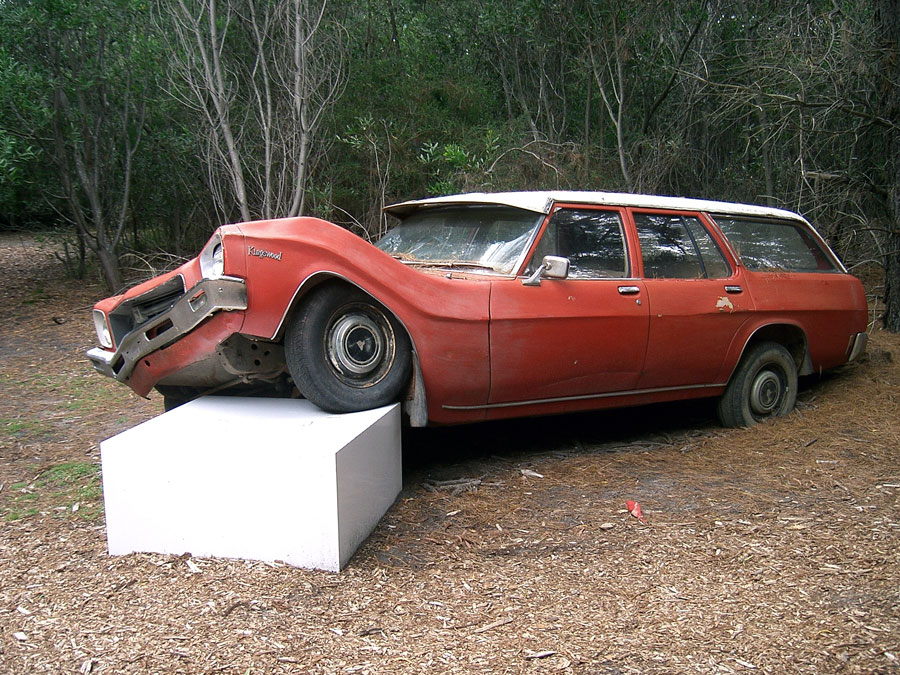
Jason Waterhouse (Australian)
Glory days
2010
1972 Holden HQ Kingswood Station Wagon, acrylic filler, steel, paint
Photos: Marcus Bunyan
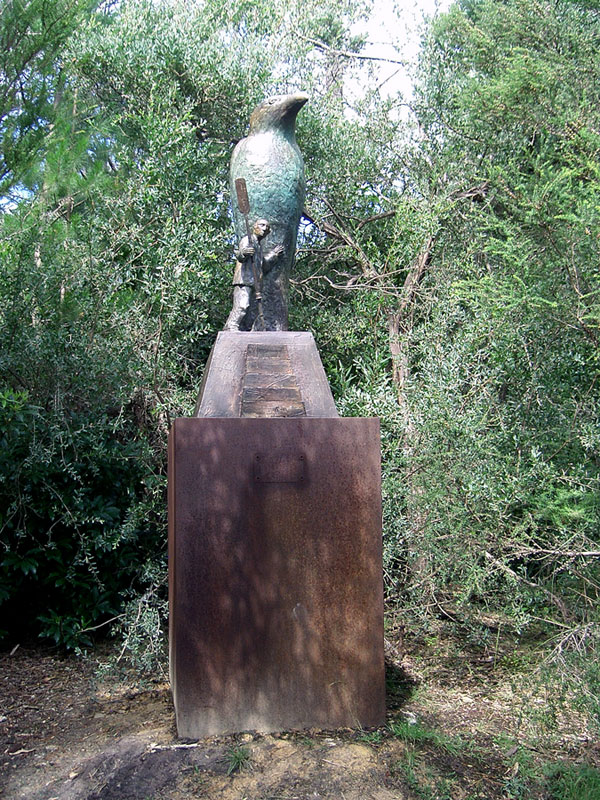
John Eiseman (Australian, b. 1994)
Watching and waiting
2010
Bronze
Photo: Marcus Bunyan
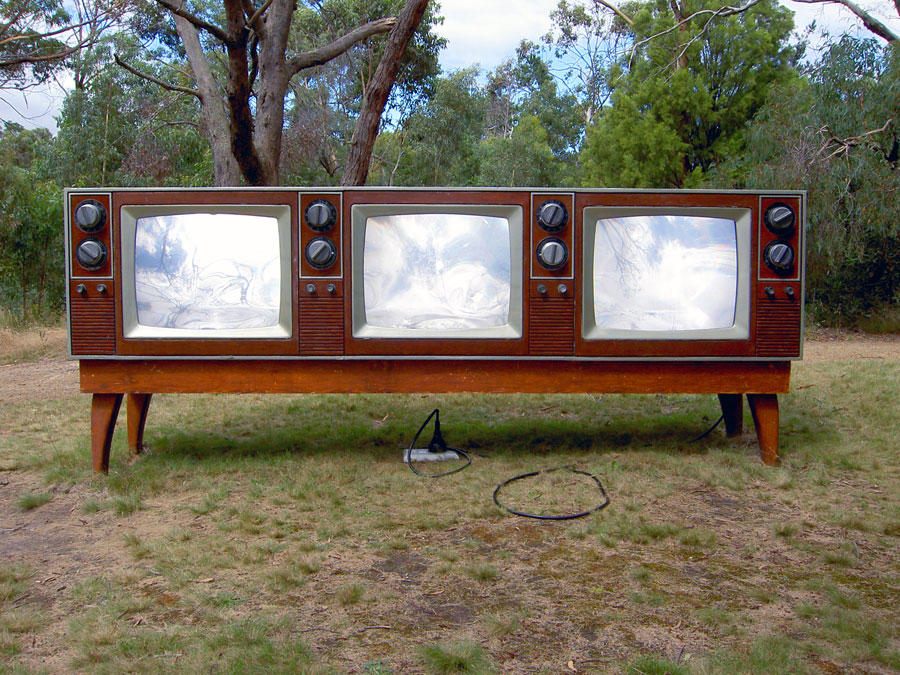
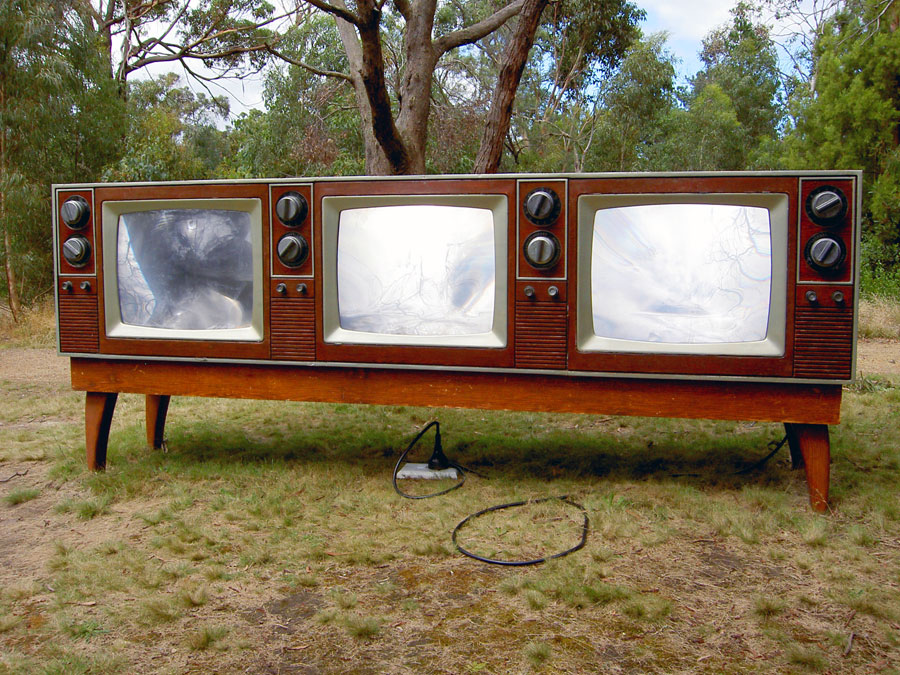
Jud Wimhurst (Australian, b. 1974)
A moment of media-tation
2010
Wood, plywood, acrylic lacquers, 2 pac paint, mirror, polycarbonate, polyurethane resin, polyester resin, epoxy resin, fibreglass, acrylic fresnel lenses
Photos: Marcus Bunyan
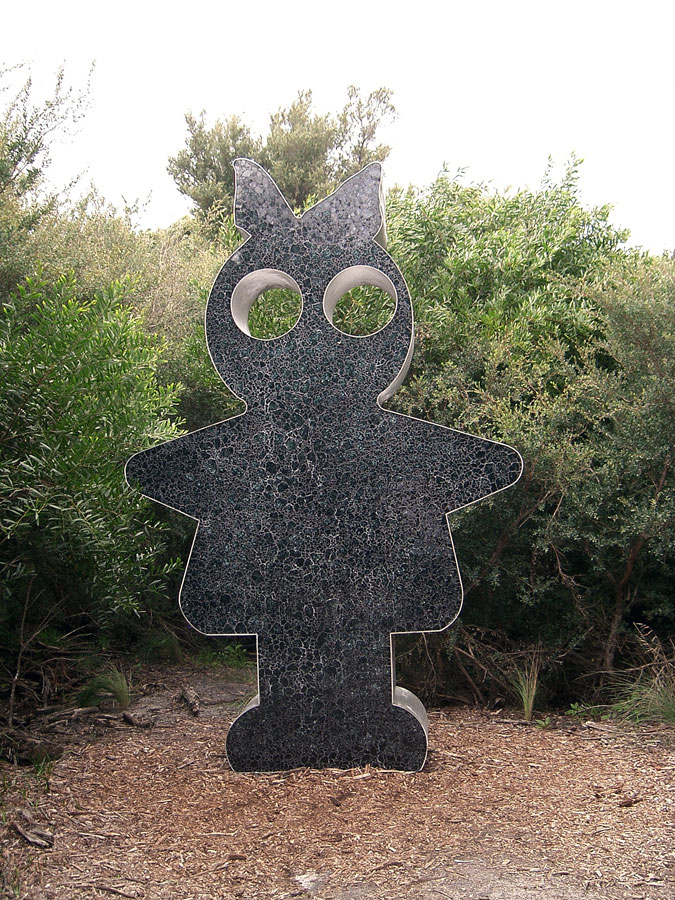

Matt Calvert (Australian, b. 1969)
Night imp
2010
Aluminium, toughened glass
Photos: Marcus Bunyan


Matthew Harding (Australian, 1964-2018)
Primordial
2010
Mirror polished stainless steel
Photos: Marcus Bunyan


Robbie Rowlands (Australian, b. 1968)
Fell for silo
2010
Felled pine tree, decommissioned steel grain silo
Photos: Marcus Bunyan


William Eicholtz (Australian, b. 1962)
At the altar of Terspichore
2010
Polymer cement, synthetic glaze
Photos: Marcus Bunyan
McClelland Gallery & Sculpture Park
390 McClelland Drive
Langwarrin, Victoria
3910 Australia
Gallery opening hours:
Wed to Sun 10am – 4pm
Closed on Mon, Tues
 Art Blart _ art and cultural memory archive
You must be logged in to post a comment.