Exhibition: ‘Boris Mikhailov: Ukrainian Diary’ at The Photographers’ Gallery, London

Exhibition dates: 10th October, 2025 – 22nd February, 2026

Curators: Laurie Hurwitz and Shoair Mavlian in collaboration with Boris and Vita Mikhailov
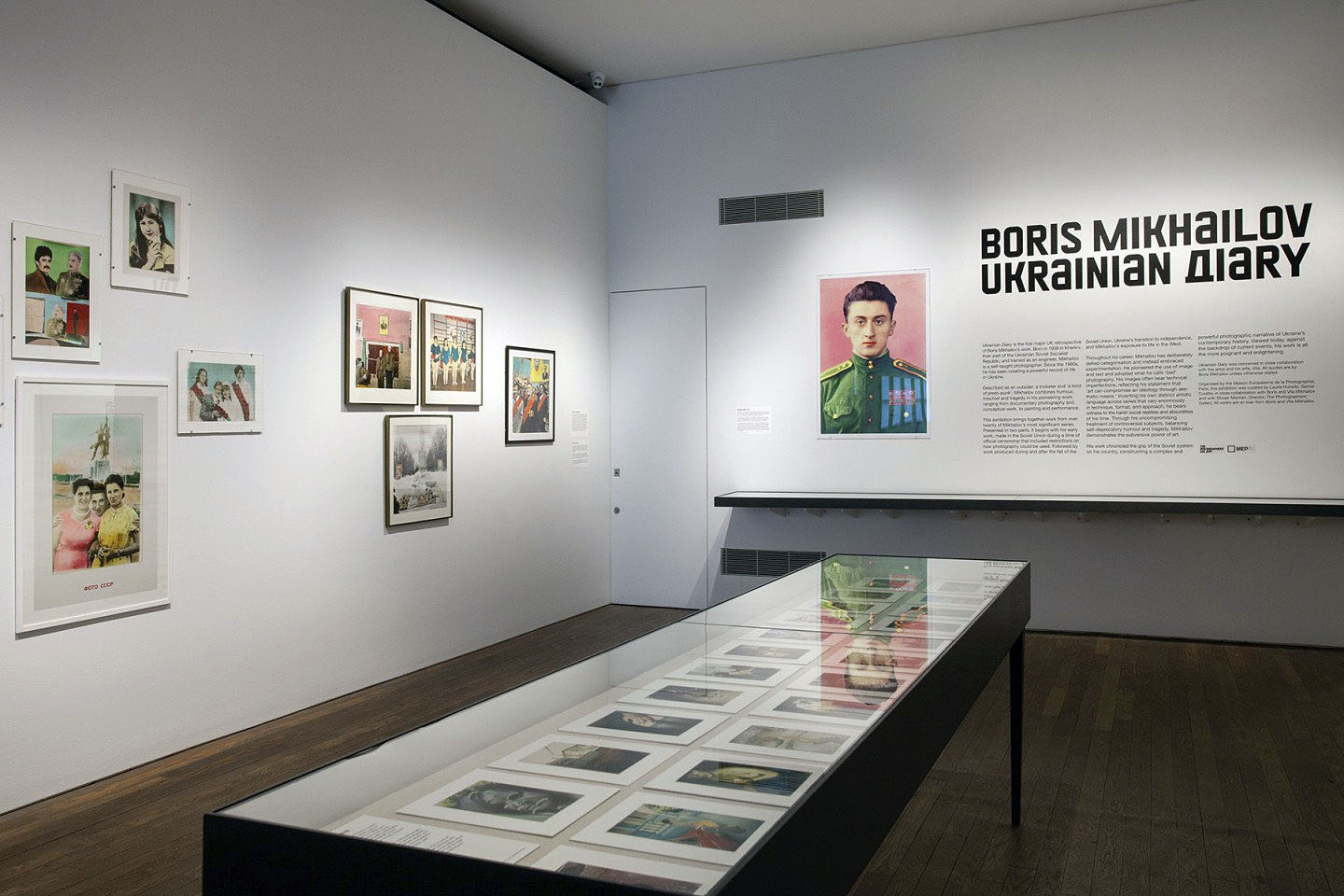
 

Installation view of the exhibition 'Boris Mikhailov: Ukrainian Diary' at The Photographers' Gallery, London showing at left, photographs from his series 'Luriki' (1971-1985) and 'Sots Art' (c. 1975-1986); and at right, a photograph from the series 'National Hero' (1991)


Installation view of the exhibition Boris Mikhailov: Ukrainian Diary at The Photographers’ Gallery, London showing at left, photographs from his series Luriki (1971-1985, below) and Sots Art (c. 1975-1986, below); and at right, a photograph from the series National Hero (1991, below)


“The world is made up of many worlds. Some are connected and some are not.”

From the film Perfect Days, 2023 directed by Wim Wenders


I love this man’s work. I feel very connected to his worlds. His constructed discontinuities. His ruptures, compressions, ambiguities. His social codifications of rich, poor, haves and have nots, and, as someone said, his portrayal of “the overlooked, the uncomfortable, and the unabashedly human.”

“Mikhailov’s visual pairings deliver unambiguous messages, almost violent in their straightforwardness. Multiple juxtapositions of unconsciously drunk men prostrating under passers-by feet to that of stray dogs, dead or alive, explicitly comment on human’s life disintegration to the state of an animal, its reduction to bare bones – and yes, an animal carcass, a metaphoric sign of abject poverty, is also present in this visual narrative in a scene with two men dragging a piece of spinal vertebrae of a large creature, a cow or, perhaps, a horse. Rotten banana peels sit across the page from infected flaccid limbs and genitalia. A posture of a naked woman reclining on a sullied mattress echoes that of a rubber sex doll staring from the next page. A close-up of a bruised woman’s breast with a crude stitches over a wound parallels gaping cracks of a damaged mail box. Thus the physical body of a homeless person starts speaking about the city as an organism, equally abused and dismembered. Wounds inflected upon flesh are surface manifestations of wounds inflected upon the city and the society at large.”1

“By subverting idealised Soviet imagery, he proposed a raw, ironic, and unremarkable version of reality, always seeking to capture the spirit of his times through the everyday. Or, better yet, to condense that spirit for others, not through words but through a visual semantics of his own making.”2

Experimental, conceptual, staged, performative, his photographs appeal to my subversive nature, prodding as they do at the status quo. His “rebellious visual language” takes us on a journey – his journey, Ukraine’s journey – “a journey through time, loss, and transformation.”

I wrote of his work in an earlier posting on this exhibition when it was at the Maison Européenne de la Photographie (MEP), Paris:

“Mikhailov’s photographs are emotionally powerful, politically astute and uncannily effective conversations with the world… about subjects that should matter to all of us: war, destitution, poverty, oppression, and the power of an authoritarian state to control the thoughts and actions of human beings under its control. They are about the freedom of individual people to live their lives as they choose; and they are about the freedom of a group of people which form a country to not be subjugated under the rule of another country to which they are historically linked.

His photographs are about choice and difference, they are about life.

They perform a task, that is, they bring into consciousness … the ground on which we stand together, against oppression, for freedom. Of course, no country is without its problems, its historical traumas, prejudices and corruption but the alternative is being ruled over without a choice, which is totally unacceptable.

Against the “failed promises of both communism and capitalism” and the “economic history that is written on the flesh” of the poor, Boris Mikhaïlov’s Ukrainian diary documents day after day the dis-ease and fragility, but also resilience, of his subjects and the world in which they live. He uses his art as a visual tool for cultural resistance. And the thing about his images is: you remember them. They are unlike so much bland, conceptual contemporary photography because these are powerful, emotional images. In their being, in their presence, they resonate within you.”

In this earlier posting you will find a longer text that I wrote, descriptions of the each of the artist’s series and more images. I hope you can view the posting.

Dr Marcus Bunyan


 1/ Extract from Olena Chervonik, “Urban Opera of Boris Mikhailov,” on the MOKSOP website, 9th April 2020 [Online] Cited 27/01/2026

2/ Kateryna Filyuk. “Recalcitrant Diarist of the Everyday,” on The Photographers’ Gallery website Nd [Online] Cited 05/02/2026


Many thankx to The Photographers’ Gallery, London for allowing me to publish the photographs in the posting. Please click on the photographs for a larger version of the image.


“I chose to focus on ordinary, everyday scenes and the search for formal solutions to translate this mundaneness into photography.”


Boris Mikhailov, “Everyone has became more circumspect…,” in Tea Coffee Cappuccino. Köln: König, 2011, p. 230


“Central themes – heroism, failure, power, the body, identity, absurdity, ideology – recur throughout, not as definitive conclusions but as open-ended provocations that invite sustained contemplation. In this way, the exhibition operates as both a temporal sequence and a constellation of moments – fragmented yet interconnected – that collectively evoke the complexity, contradictions, and richness of Mikhailov’s visionary practice.”


Laurie Hurwitz curator


“The explicit, dramatic and total power of the absolute monarch had given place to what Michel Foucault has called a diffuse and pervasive ‘microphysics of power’, operating unremarked in the smallest duties and gestures of everyday life. The seat of this capillary power was a new ‘technology’: that constellation of institutions – including the hospital, the asylum, the school, the prison, the police force – whose disciplinary methods and techniques of regulated examination produced, trained and positioned a hierarchy of docile social subjects in the form required by the capitalist division of labour for the orderly conduct of social and economic life.”


John Tagg. The Burden of Representation. Essays on Photographies and Histories. Minneapolis: University of Minnesota Press, 1993


From the beginning, we conceived two video works as conceptual bookends. At the entrance, Yesterday’s Sandwich – a seminal project from the late 1960s – presents a hallucinatory sequence of double exposures set to music by Pink Floyd. These psychedelic, surreal images, rejecting Soviet visual orthodoxy, open up a new, rebellious visual language. At the exit, Temptation of Death (2019) offers a quieter, meditative counterpoint. Combining images from a crematorium in Ukraine with intimate portraits and cityscapes, it evokes the myth of Charon, ferryman of the dead, and a journey through time, loss, and transformation. Together, these two works, created nearly fifty years apart, frame the exhibition with a meditation on mortality, reinvention, and the fragile persistence of life.


Lucile Brizard. “”Where are we now?”: An Exclusive Interview with Photographer Boris Mikhailov on Ukraine’s Past and Present,” on the United 24 Media website, October 29, 2015 [Online] Cited 27/01/2026


Luriki, 1971-1985
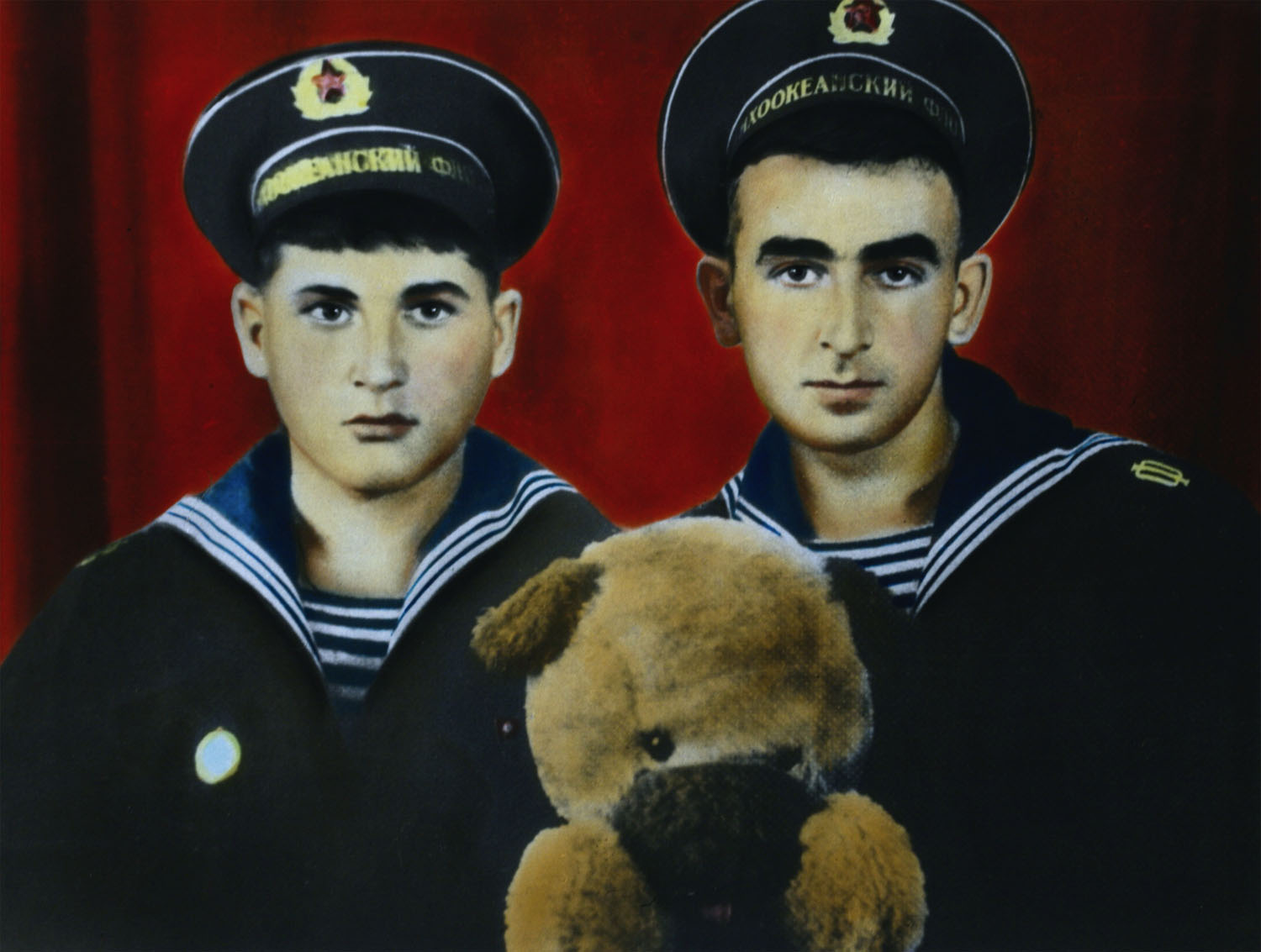
Boris Mikhaïlov (Ukrainian, b. 1938) from the series 'Luriki' (Coloured Soviet Portrait) 1971-1985


Boris Mikhaïlov (Ukrainian, b. 1938)
From the series Luriki (Coloured Soviet Portrait)
1971-1985
Hand-coloured gelatin silver print
© Boris Mikhailov, VG Bild-Kunst, Bonn
Courtesy Boris and Vita Mikhailov
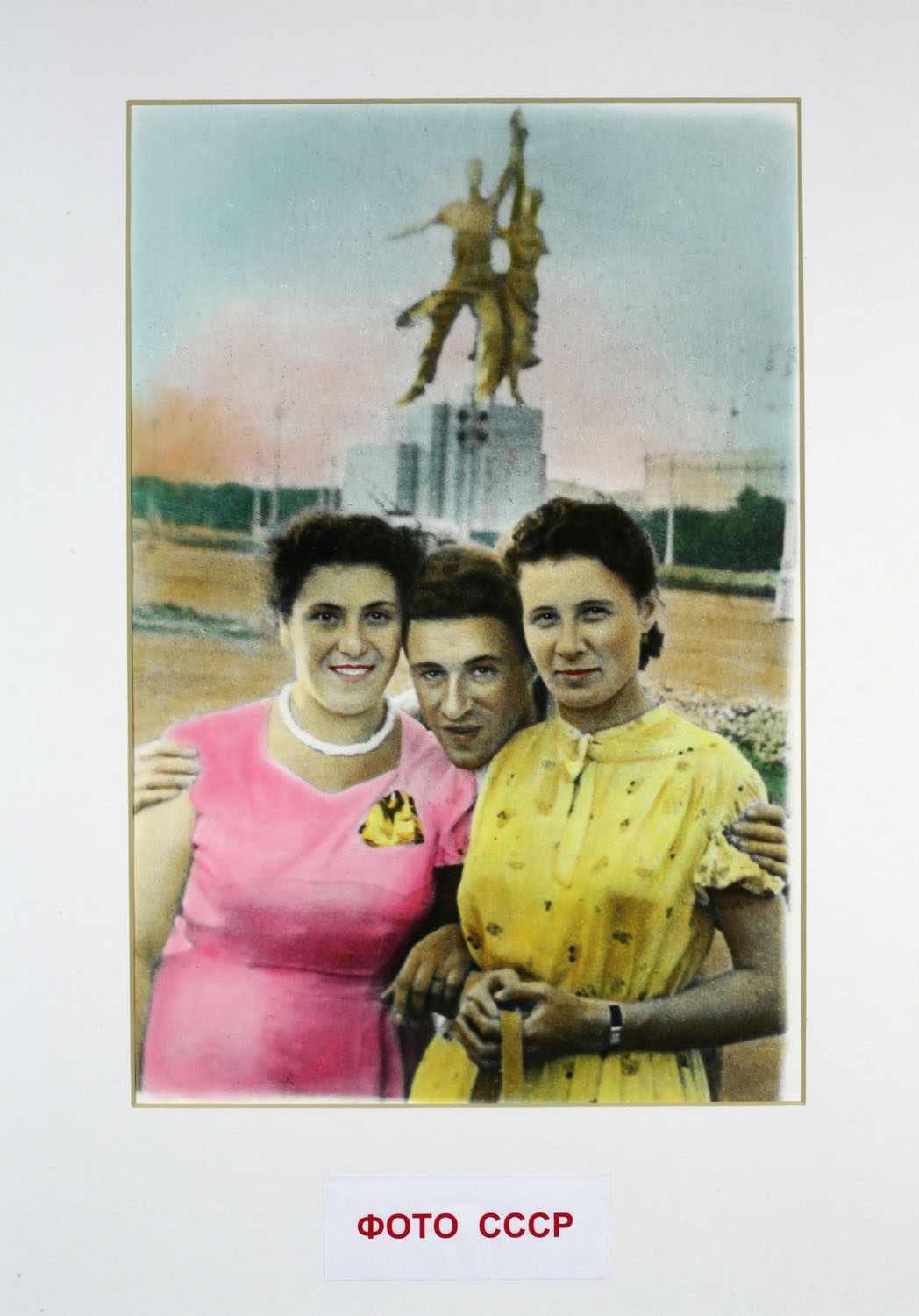
 

Boris Mikhaïlov (Ukrainian, b. 1938) from the series 'Luriki' (Coloured Soviet Portrait) 1971-1985


Boris Mikhaïlov (Ukrainian, b. 1938)
From the series Luriki (Coloured Soviet Portrait)
1971-1985
Hand-coloured gelatin silver print
© Boris Mikhailov, VG Bild-Kunst, Bonn
Courtesy Boris and Vita Mikhailov


Sots Art, 1975-1986
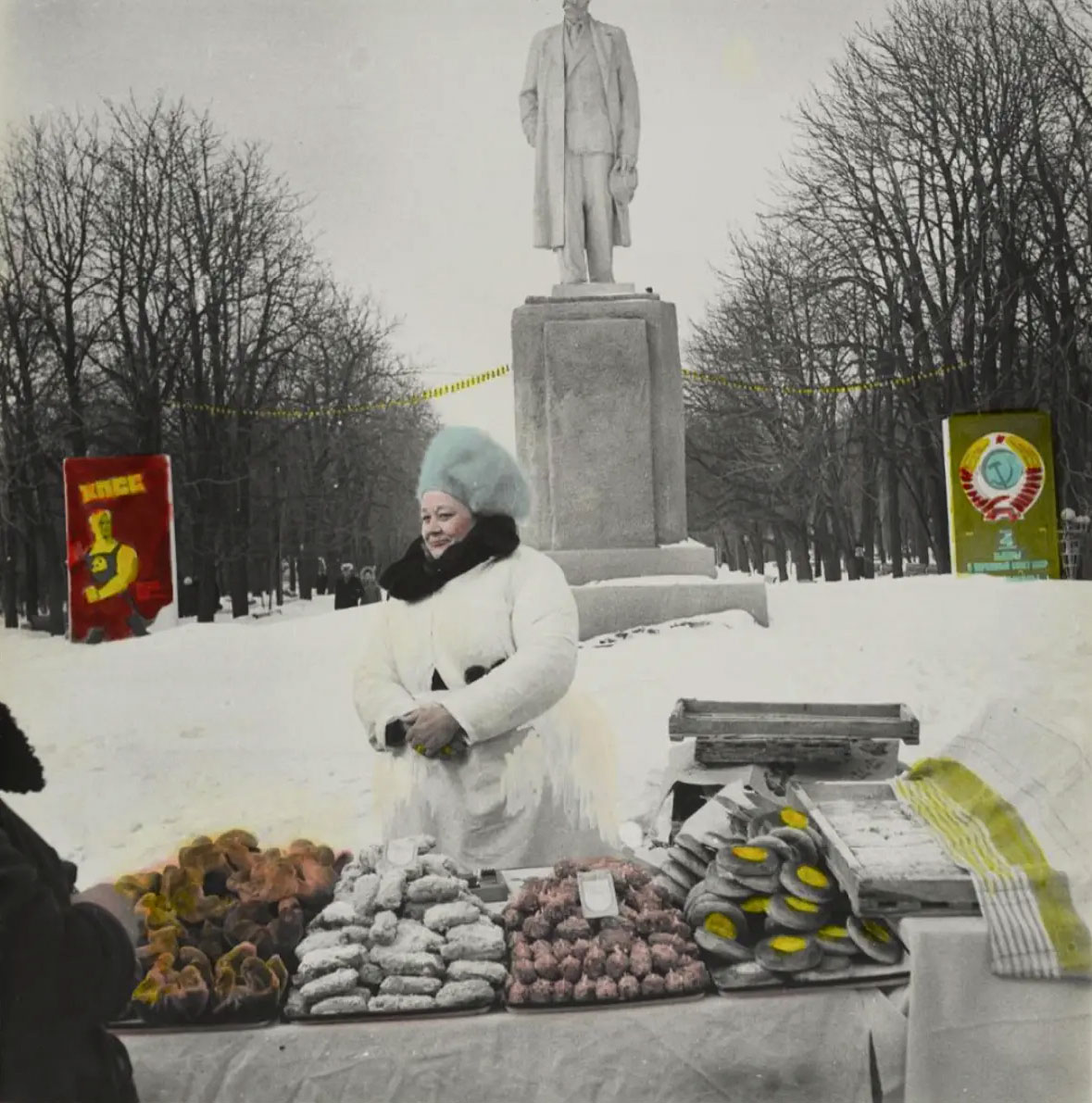
Boris Mikhaïlov (Ukrainian, b. 1938) from the series 'Sots Art' 1982-1983


Boris Mikhaïlov (Ukrainian, b. 1938)
From the series Sots Art
1982-1983
© Boris Mikhailov, VG Bild-Kunst, Bonn
Courtesy Boris and Vita Mikhailov


National Hero, 1992
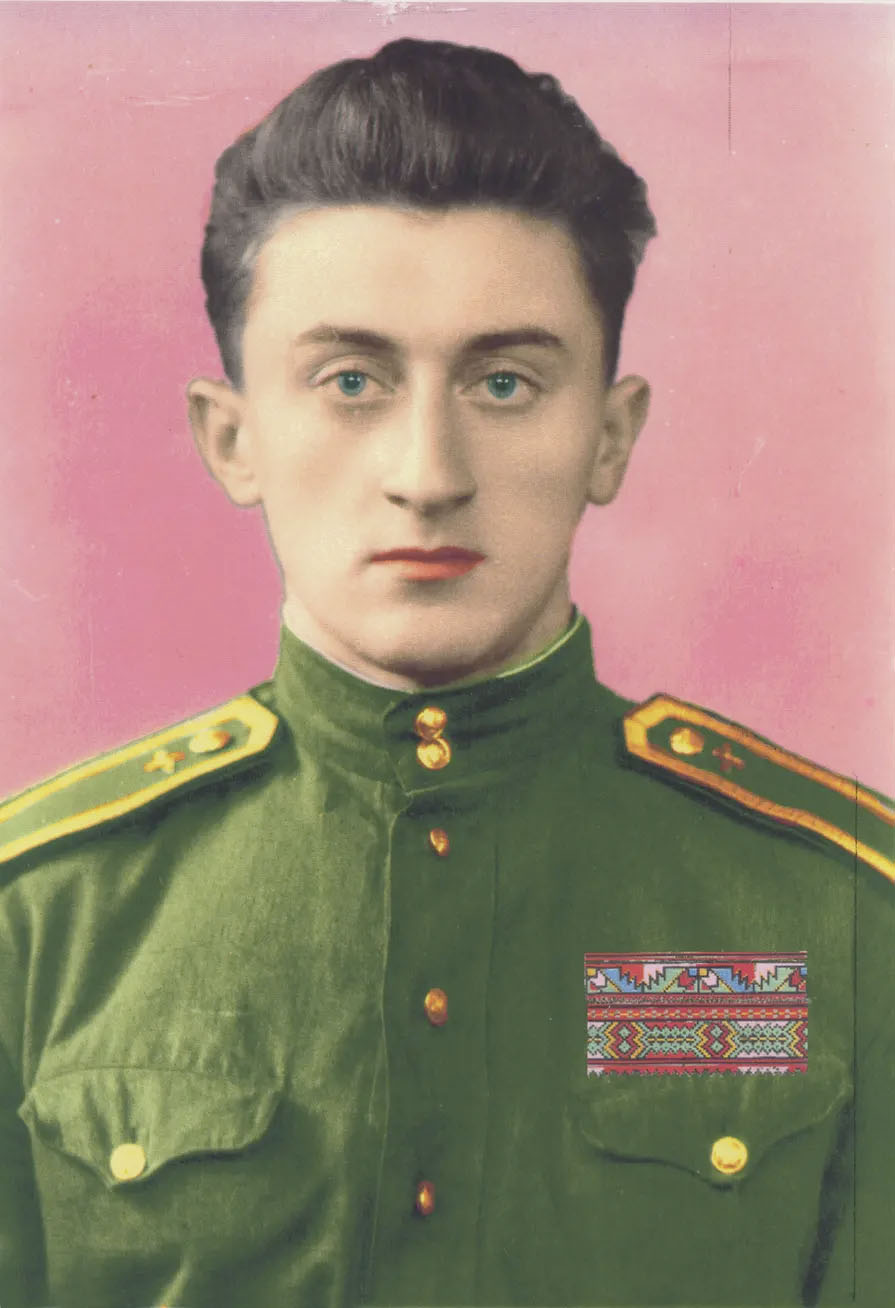
Boris Mikhaïlov (Ukrainian, b. 1938) from the series 'National Hero' 1991


Boris Mikhaïlov (Russian, b. 1938)
From the series National Hero
1991
Chromogenic print
120 x 81cm
© Boris Mikhailov, VG Bild-Kunst, Bonn
Courtesy Boris and Vita Mikhailov
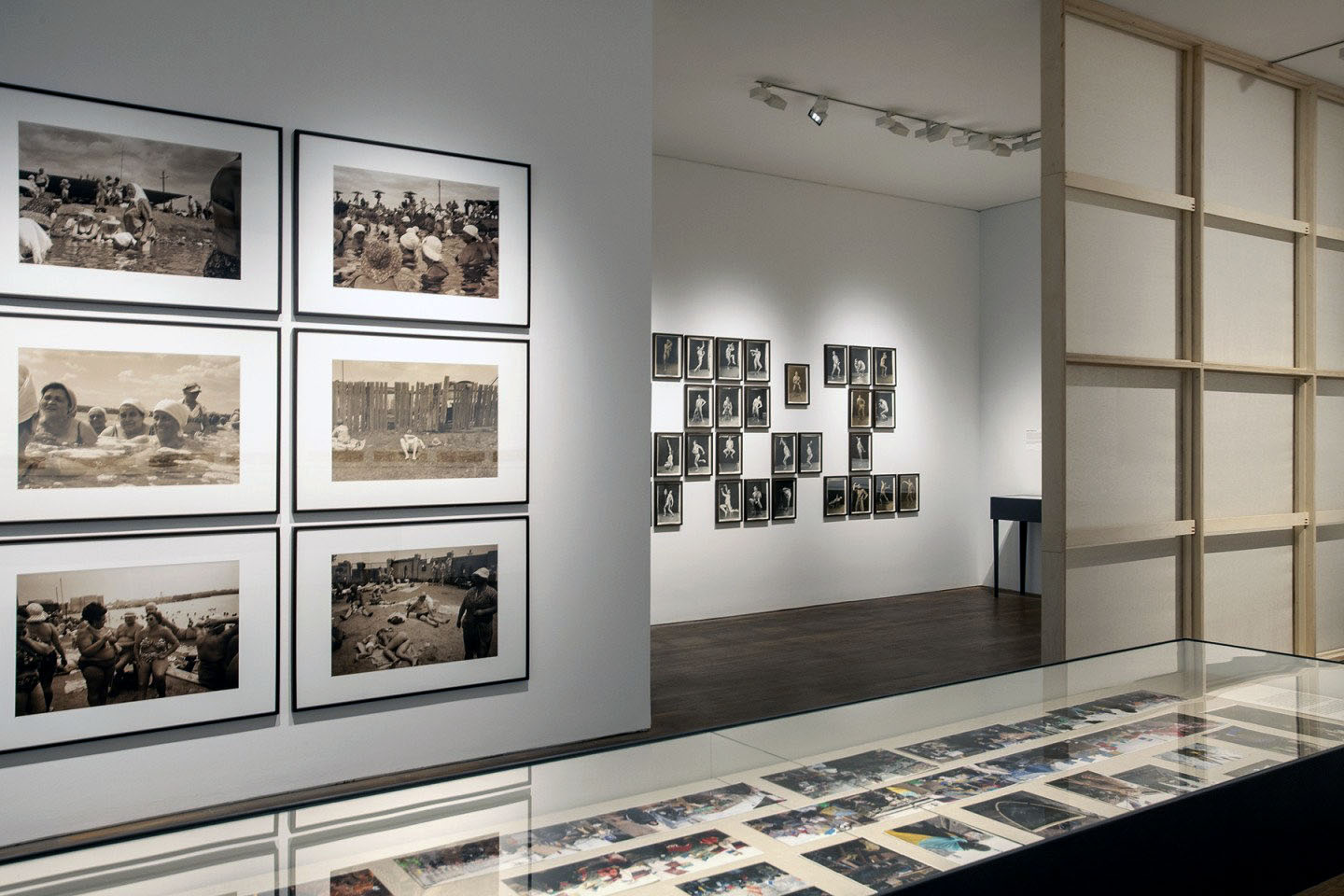
 

Installation view of the exhibition 'Boris Mikhailov: Ukrainian Diary' at The Photographers' Gallery, London showing at left, photographs from his series 'Salt Lake' (1986); at at right in the background, photographs from his series 'I am not I' (1992)


Installation view of the exhibition Boris Mikhailov: Ukrainian Diary at The Photographers’ Gallery, London showing at left, photographs from his series Salt Lake (1986, below); at at right in the background, photographs from his series I am not I (1992, below)


Salt Lake, 1986
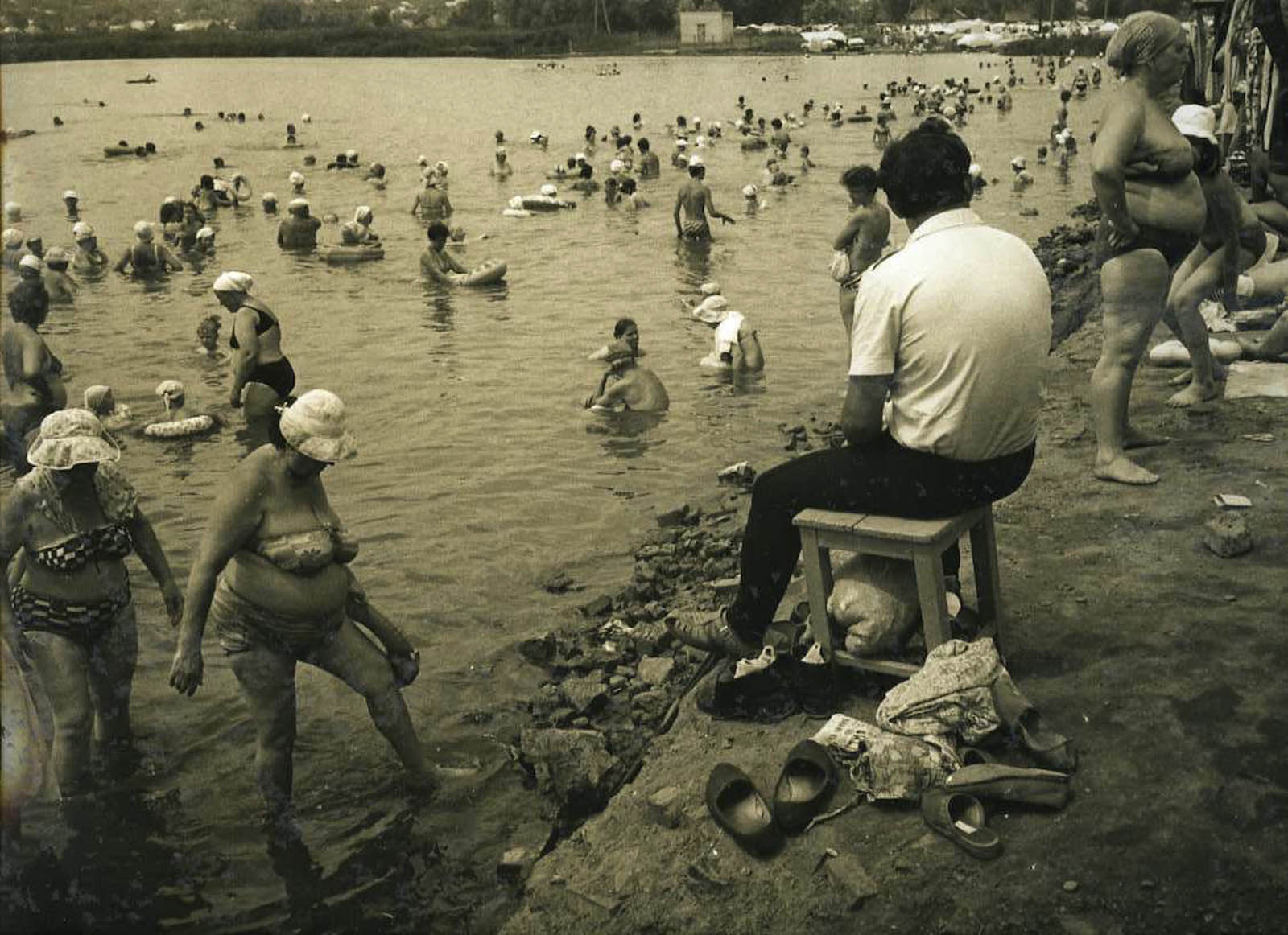
Boris Mikhaïlov (Ukrainian, b. 1938) from the series 'Salt Lake' 1986


Boris Mikhaïlov (Russian, b. 1938)
From the series Salt Lake
1986
Chromogenic print toned sepia
75.5 x 104.5cm
© Boris Mikhailov, VG Bild-Kunst, Bonn
Courtesy Boris and Vita Mikhailov


I Am Not I, 1992
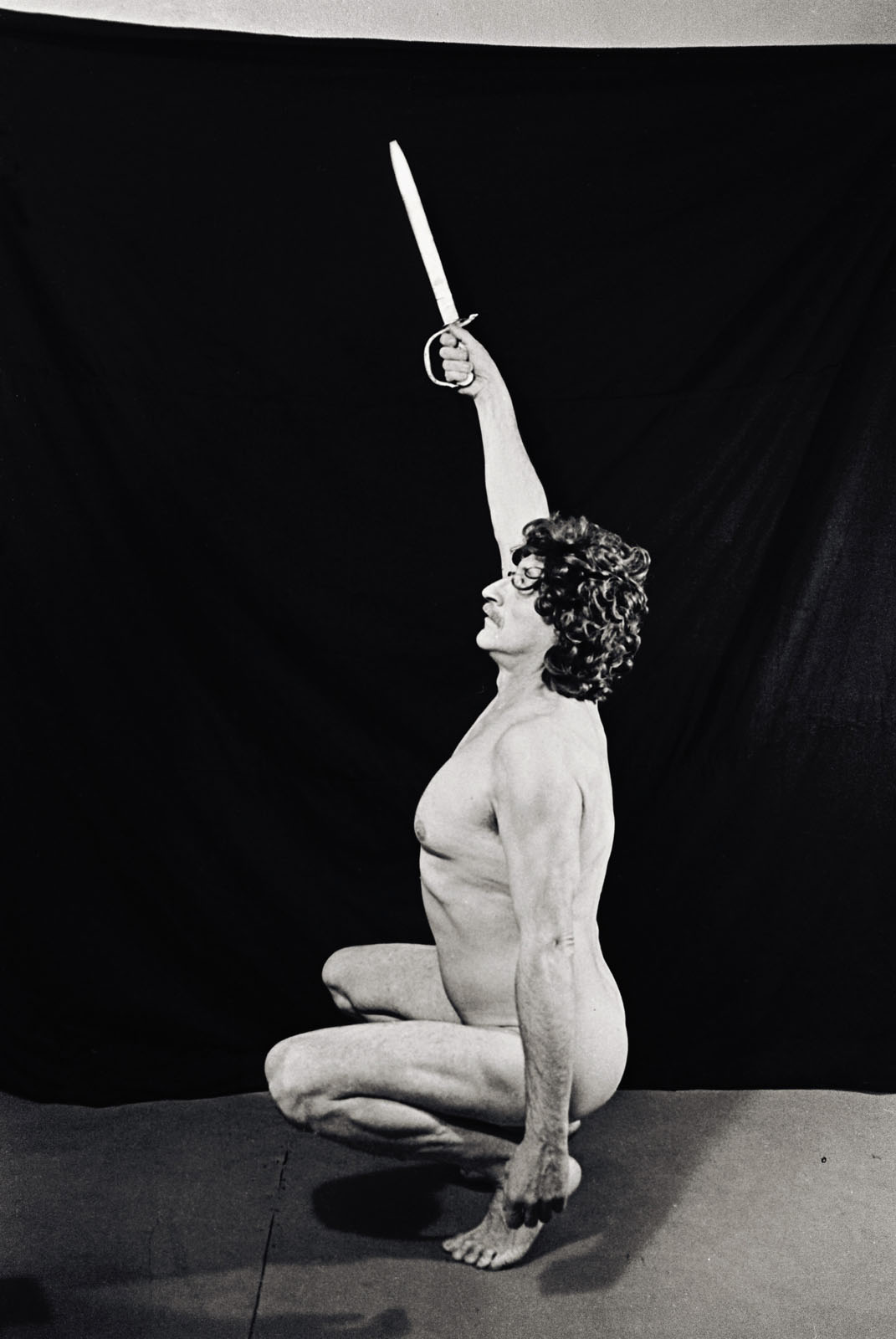
Boris Mikhaïlov (Ukrainian, b. 1938) from the series 'I am not I' 1992


Boris Mikhaïlov (Russian, b. 1938)
From the series I am not I
1992
Sepia silver print
30 x 20cm
© Boris Mikhailov, VG Bild-Kunst, Bonn
Courtesy Boris and Vita Mikhailov


A major retrospective of work by influential Ukrainian artist Boris Mikhailov (b. 1938, Kharkiv, Ukraine).

Ukrainian Diary is the first major UK retrospective of work by Boris Mikhailov, one of the most influential contemporary artists from Eastern Europe. Mikhailov has explored social and political subjects for more than fifty years through his experimental photographic work. 

Described as an outsider, a trickster and ‘a kind of proto-punk’, Mikhailov combines humour, mischief and tragedy in his pioneering practice, ranging from documentary photography and conceptual work, to painting and performance. Since the 1960s, he has been creating a powerful record of the tumultuous changes in Ukraine that accompanied the collapse of the Soviet Union. 

Ukrainian Diary brings together work from over twenty of his most important series, up to his more recent projects. Viewed today, against the backdrop of current events and ongoing war in Ukraine, Mikhailov’s work is all the more poignant and enlightening.

Text from The Photographers’ Gallery website


Red, 1965-1978
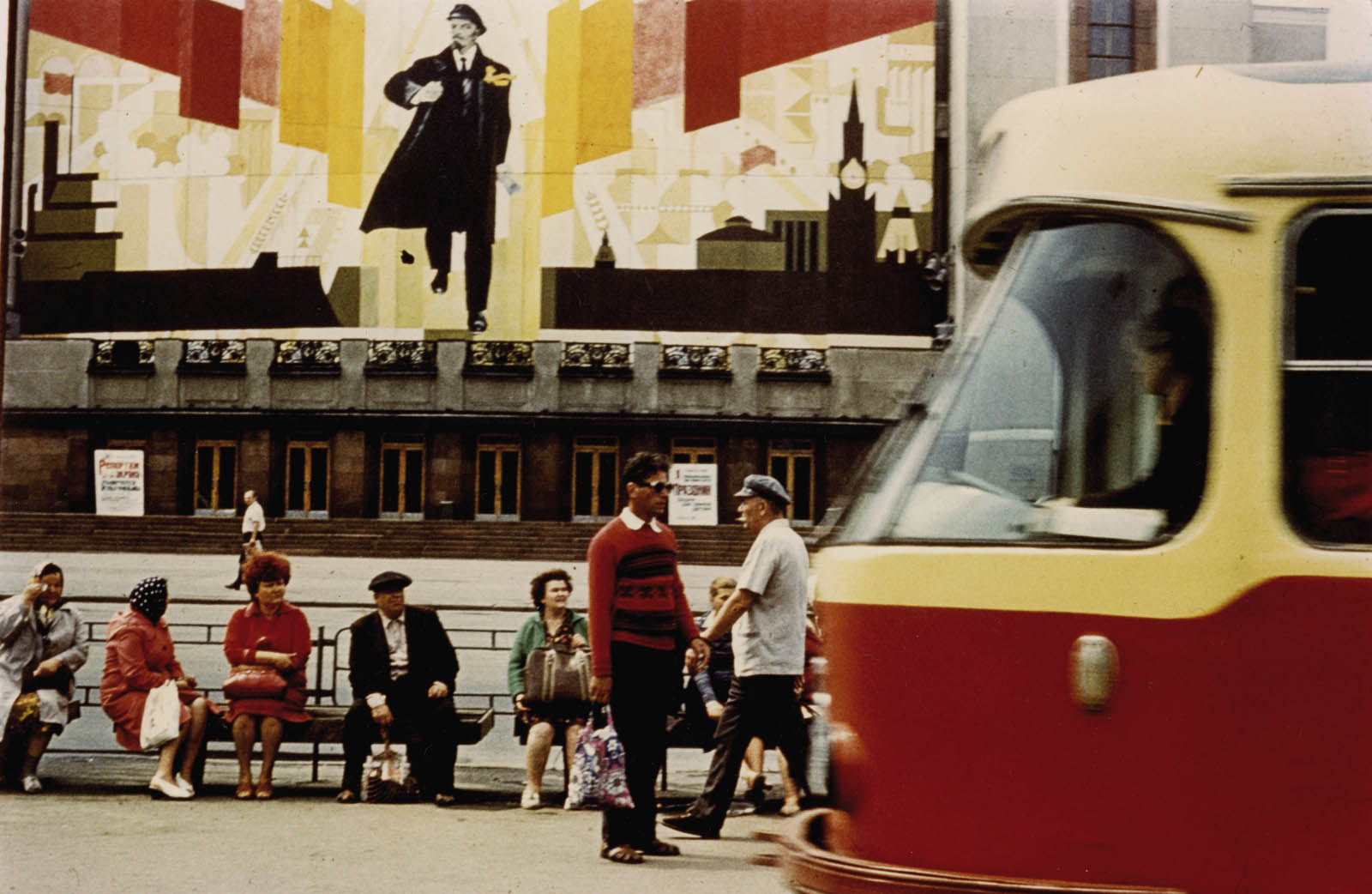
Boris Mikhaïlov (Ukrainian, b. 1938) from the series 'Red' 1968-1975


Boris Mikhaïlov (Russian, b. 1938)
From the series Red
1968-1975
Digital chromogenic print
© Boris Mikhailov, VG Bild-Kunst, Bonn
Courtesy Boris and Vita Mikhailov


“The word ‘red’ in Russian contains the root of the word for beauty. It also means the Revolution and evokes blood and the red flag. Everyone associates red with Communism. Maybe that’s enough. But few people know that red suffused all our lives, at all levels.”


Boris Mikhailov
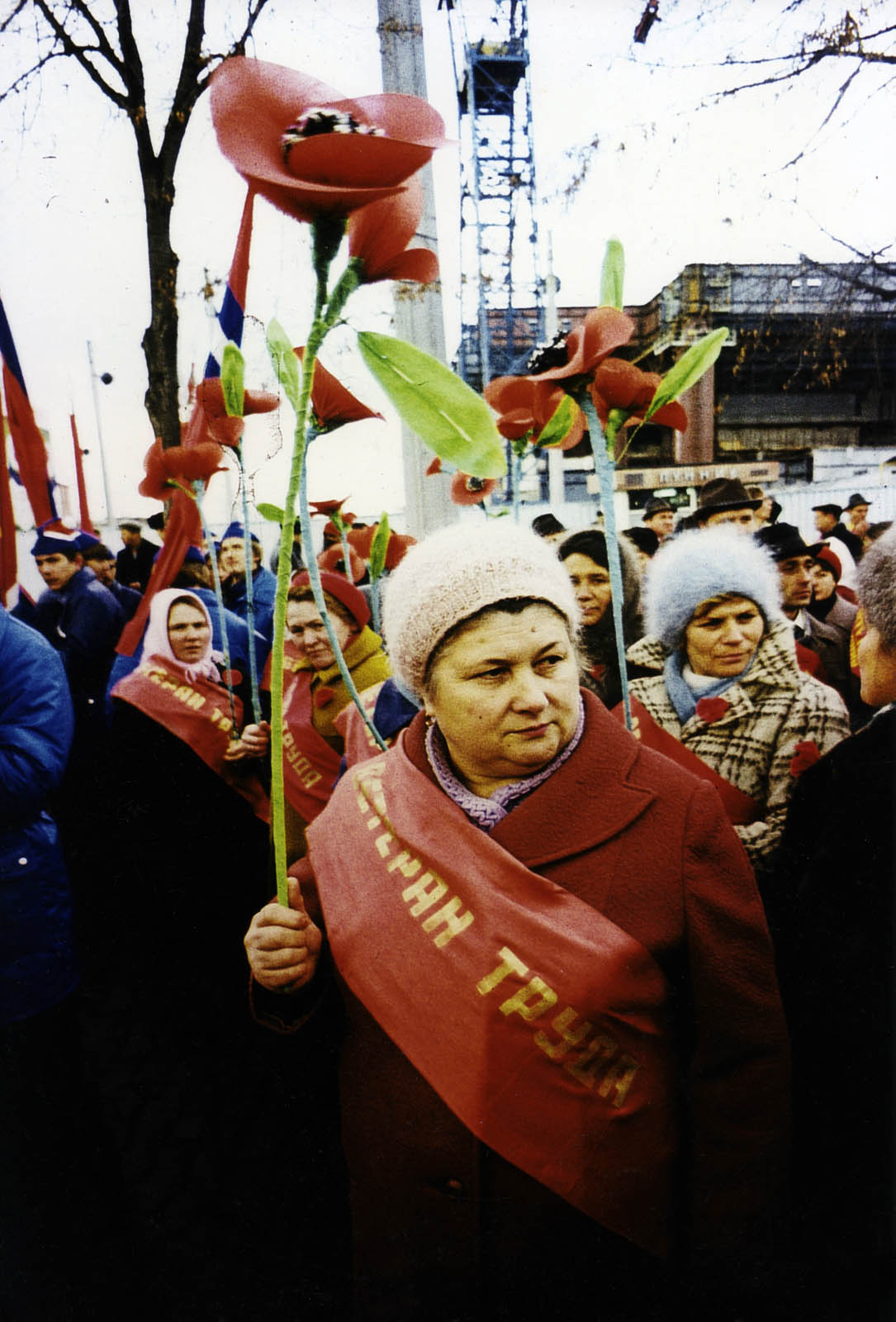


Boris Mikhaïlov (Ukrainian, b. 1938) from the series 'Red' 1968-1975


Boris Mikhaïlov (Russian, b. 1938)
From the series Red
1968-1975
Digital chromogenic print
© Boris Mikhailov, VG Bild-Kunst, Bonn
Courtesy Boris and Vita Mikhailov
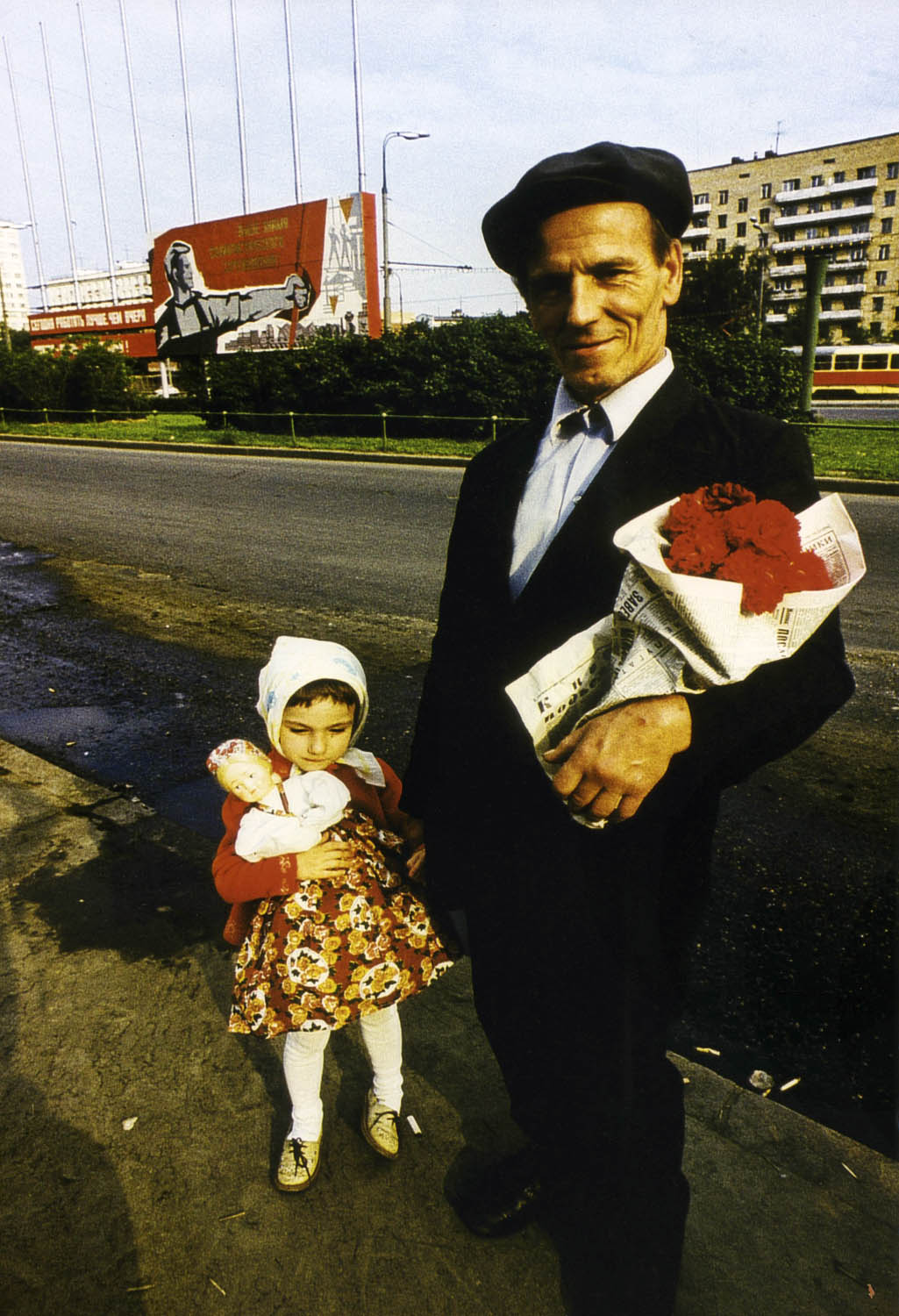
 

Boris Mikhaïlov (Ukrainian, b. 1938) from the series 'Red' 1968-1975


Boris Mikhaïlov (Russian, b. 1938)
From the series Red
1968-1975
Digital chromogenic print
© Boris Mikhailov, VG Bild-Kunst, Bonn
Courtesy Boris and Vita Mikhailov


Yesterday’s Sandwich, 1960s-1970s
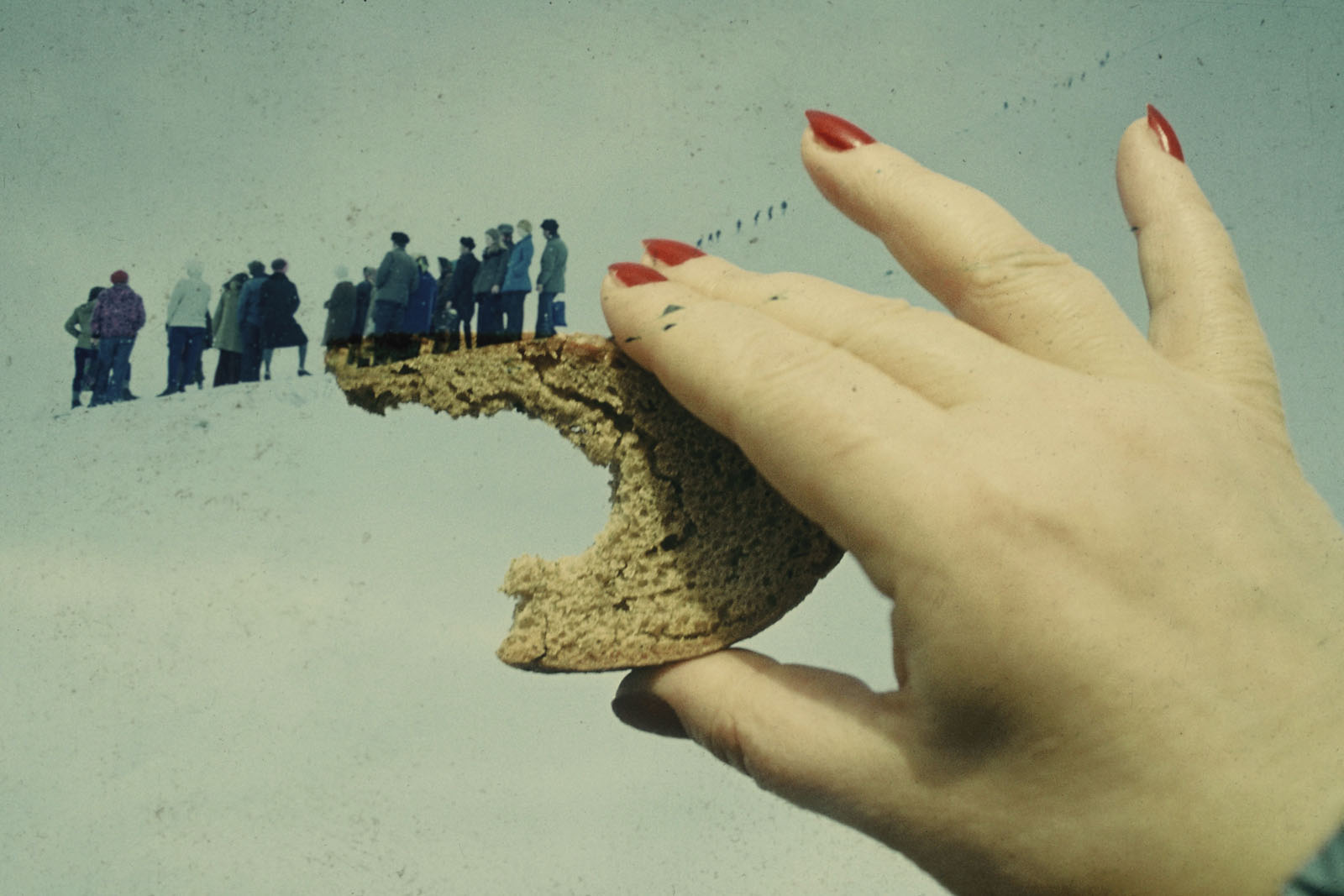
Boris Mikhaïlov (Ukrainian, b. 1938) from the series 'Yesterday's Sandwich' 1960s-1970s


Boris Mikhaïlov (Ukrainian, b. 1938)
From the series Yesterday’s Sandwich
1960s-1970s
© Boris Mikhailov, VG Bild-Kunst, Bonn
Courtesy Boris and Vita Mikhailov
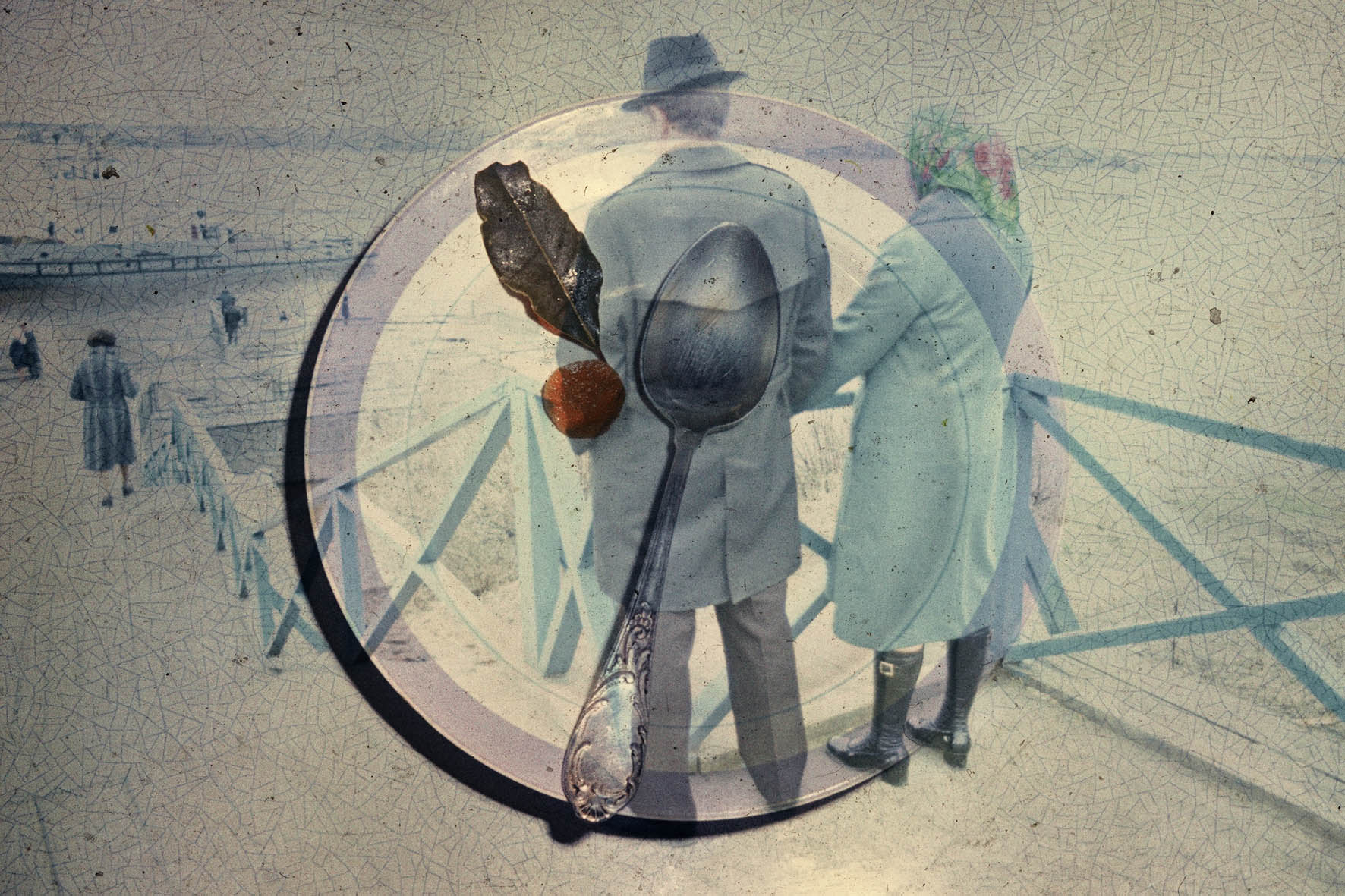
 

Boris Mikhaïlov (Ukrainian, b. 1938) from the series 'Yesterday's Sandwich' 1960s-1970s

Boris Mikhaïlov (Ukrainian, b. 1938)
From the series Yesterday’s Sandwich
1966-1968
© Boris Mikhailov, VG Bild-Kunst, Bonn
Courtesy Boris and Vita Mikhailov
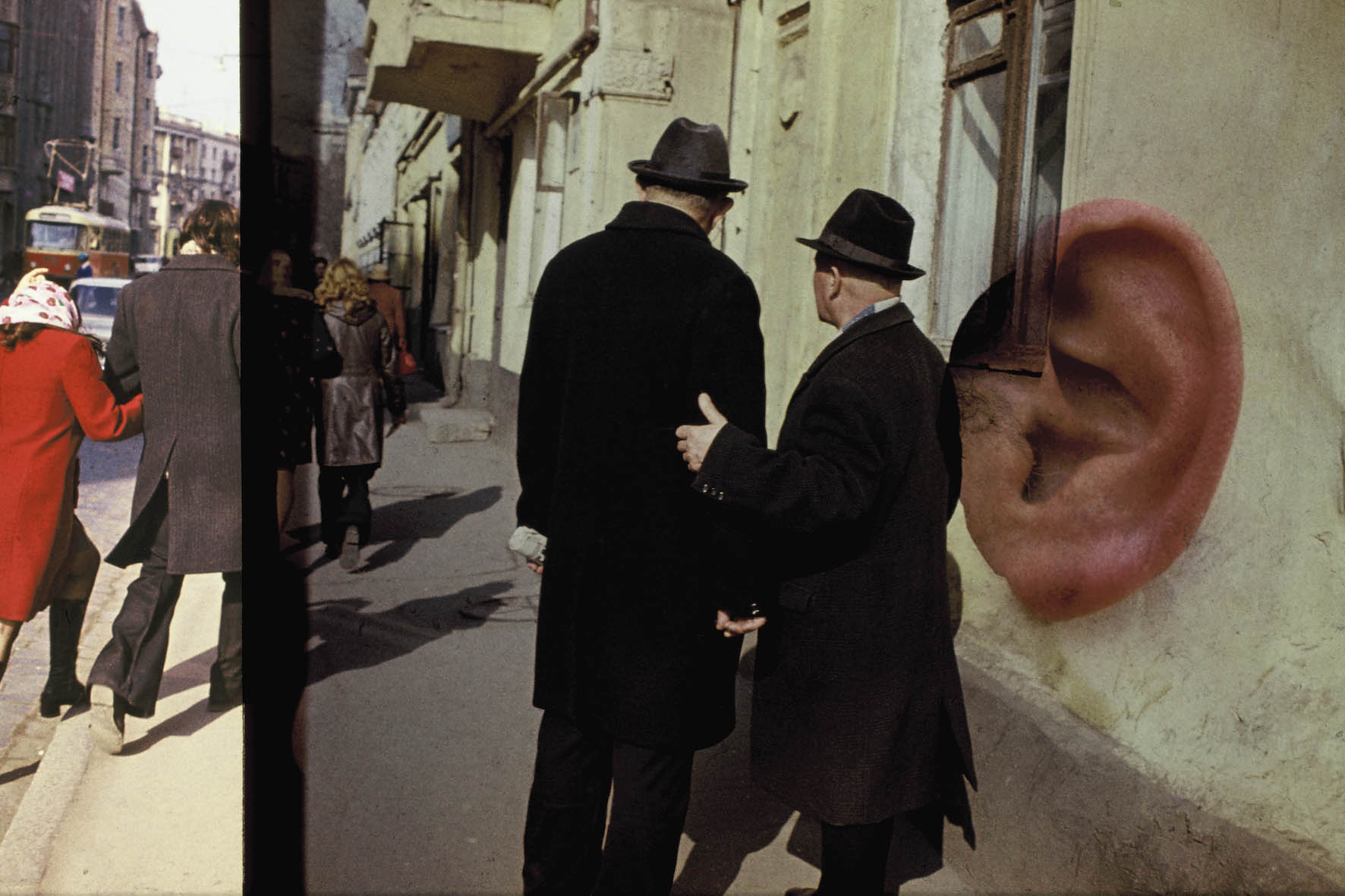
 

Boris Mikhaïlov (Ukrainian, b. 1938) from the series 'Yesterday's Sandwich' 1960s-1970s


Boris Mikhaïlov (Ukrainian, b. 1938)
From the series Yesterday’s Sandwich
1966-1968
© Boris Mikhailov, VG Bild-Kunst, Bonn
Courtesy Boris and Vita Mikhailov
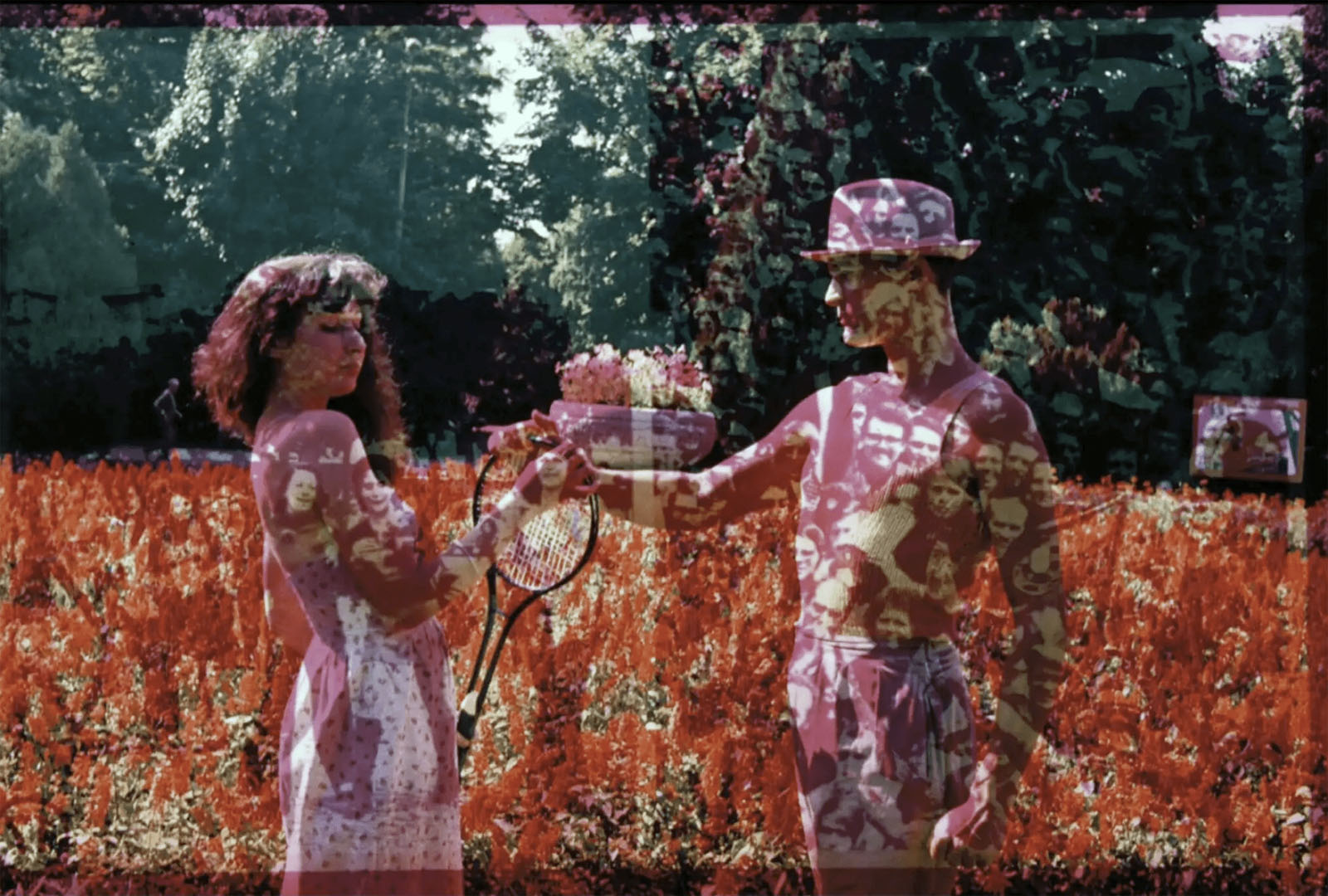
 

Boris Mikhaïlov (Ukrainian, b. 1938) from the series 'Yesterday's Sandwich' 1966-1968


Boris Mikhaïlov (Ukrainian, b. 1938)
From the series Yesterday’s Sandwich
1966-1968
© Boris Mikhailov, VG Bild-Kunst, Bonn
Courtesy Boris and Vita Mikhailov
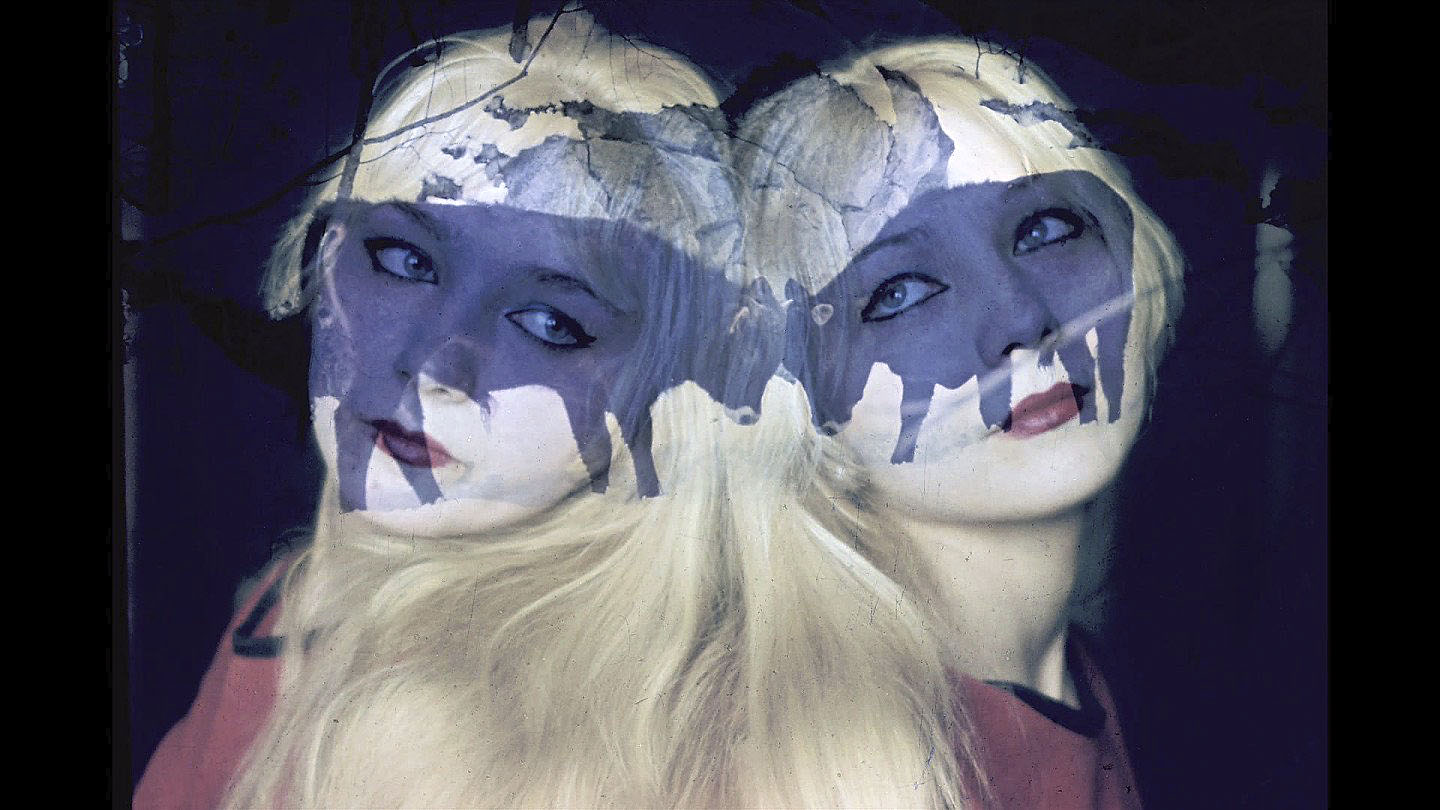
 

Boris Mikhaïlov (Ukrainian, b. 1938) from the series 'Yesterday's Sandwich' 1966-1968


Boris Mikhaïlov (Ukrainian, b. 1938)
From the series Yesterday’s Sandwich
1960s-1970s
© Boris Mikhailov, VG Bild-Kunst, Bonn
Courtesy Boris and Vita Mikhailov
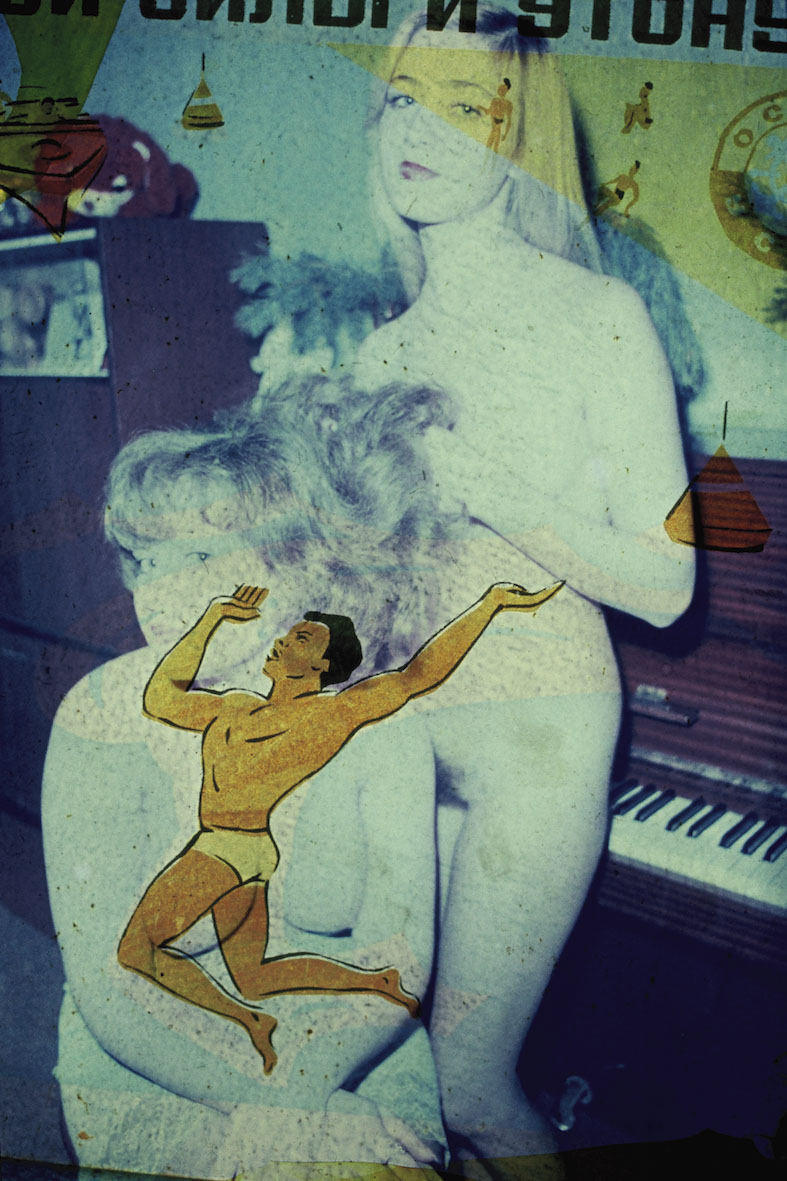
 

Boris Mikhaïlov (Ukrainian, b. 1938) from the series 'Yesterday's Sandwich' 1960s-1970s


Boris Mikhaïlov (Ukrainian, b. 1938)
From the series Yesterday’s Sandwich
1966-1968
© Boris Mikhailov, VG Bild-Kunst, Bonn
Courtesy Boris and Vita Mikhailov


Ukrainian Diary is the first major UK retrospective of work by Boris Mikhailov (b. 1938, Kharkiv). One of the most influential contemporary artists from Eastern Europe, Mikhailov has explored social and political subjects for more than fifty years through his experimental photographic work.

Described as an outsider, a trickster and ‘a kind of proto-punk’, Mikhailov combines humour, mischief and tragedy in his pioneering work, ranging from documentary photography and conceptual work, to painting and performance. Since the 1960s, he has been creating a powerful record of life in the Ukraine and the tumultuous changes that accompanied the collapse of the Soviet Union.

From early underground works and images of everyday life in Kharkiv, to his self-depreciating self-portraits which mock traditional Soviet masculine stereotypes, Mikhailov creates an ambiguous, fragmented view of a world in constant flux. His photographs contradict the onesideness of Soviet ideology, especially during the time when photography was heavily controlled and censored in the Soviet Union.

Ukrainian Diary brings together work from over twenty of Mikhailov’s most important series, including Yesterday’s Sandwich, I am not I, Salt Lake, Red, Sots Art, Luriki, Case History and Theatre of War.

Self-taught and ‘somewhat careless’ (in his words), Yesterday’s Sandwich (1960s-1970s), one of his most important series, began as an accident when a handful of slides stuck together. He was fascinated by the result and continued to randomly layer slides, creating new combinations which ‘reflected the dualism and contradictions of Soviet Society’.

Mikhailov created ‘bad photography’ as a way to undermine official Soviet aesthetics, as introduced in the series Black Archive (1968-1979). Badly printed, damaged or poor-quality productions were an artistic device that Mikhailov described as ‘lousy photography for a lousy reality’.

The series Red (1965-1978) bridges documentary photography and conceptual art – over 70 images taken in the late 1960s and 1970s highlighting the colour red in everyday objects and scenes. His documenting of red reveals the extent to which communist ideology saturated daily life.

Together his uncompromising, subversive work is a powerful photographic narrative on Ukraine’s contemporary history.

The exhibition is organised in collaboration with the MEP – Maison Européenne de la Photographie, Paris.

About Boris Mikhailov

Born in Kharkiv, Ukraine in 1938, Boris Mikhailov is a self-taught photographer. Having trained as an engineer, he was first introduced to photography when he was given a camera to document the state-owned factory where he worked. With access to a camera, he took advantage of this opportunity to take nude photographs of his first wife – an act forbidden under Soviet norms – which he developed and printed in the factory’s laboratory. He was fired when the photographs were found by KGB agents. From then he pursued photography full time, using it as a subversive tool and operating as part of the underground art scene. His work first gained international exposure in the 1990s with the series Case History, a shockingly direct portrayal of the realities of post-Soviet life in the Ukraine.

Press release from The Photographers’ Gallery


Series of Four, early 1980s

Boris Mikhaïlov (Russian, b. 1938) From the series 'Series of four' 1982-1983


Boris Mikhaïlov (Russian, b. 1938)
From the series Series of four
1982-1983
Silver gelatin print, unique copy
From a 20-part series
Each 18 x 23.80cm
© Boris Mikhailov, VG Bild-Kunst, Bonn
Courtesy Boris and Vita Mikhailov


At Dusk, 1993
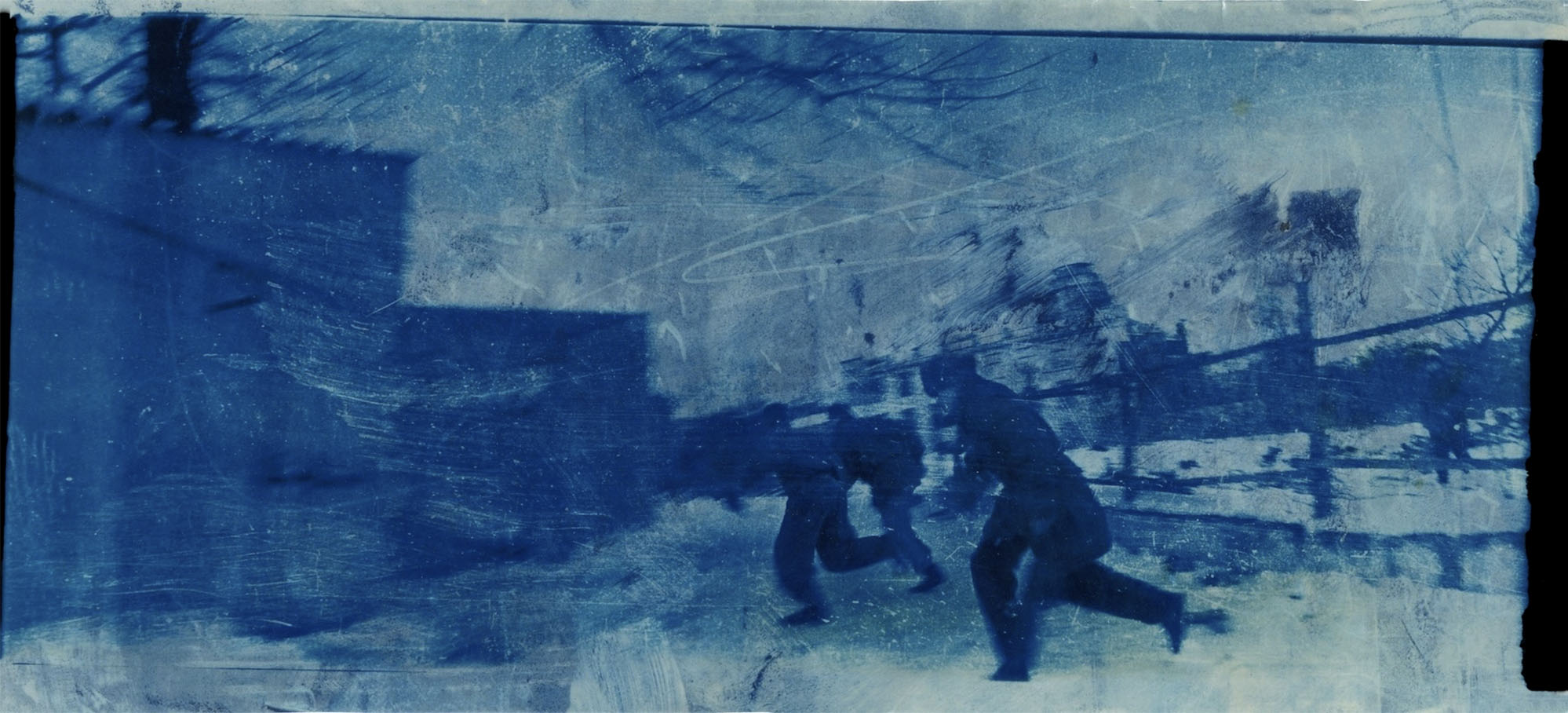
Boris Mikhaïlov (Ukrainian, b. 1938) from the series 'At Dusk' 1993


Boris Mikhaïlov (Russian, b. 1938)
From the series At Dusk
1993
Chromogenic print
© Boris Mikhailov, VG Bild-Kunst, Bonn
Courtesy Boris and Vita Mikhailov
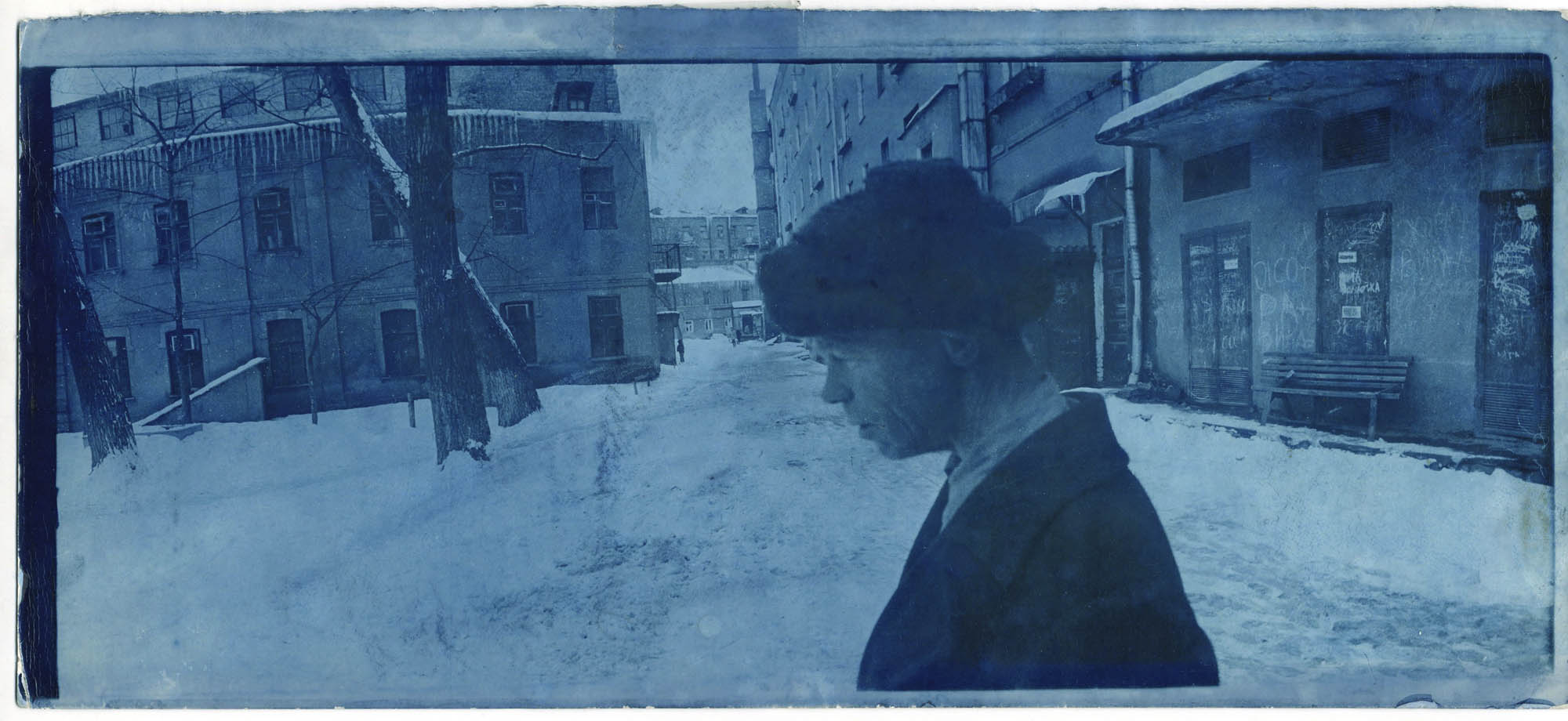
 

Boris Mikhaïlov (Ukrainian, b. 1938) from the series 'At Dusk' 1993


Boris Mikhaïlov (Russian, b. 1938)
From the series At Dusk
1993
Chromogenic print
© Boris Mikhailov, VG Bild-Kunst, Bonn
Courtesy Boris and Vita Mikhailov


Recalcitrant Diarist of the Everyday

Curator and researcher, Kateryna Filyuk, explores the intimate diaristic qualities of Boris Mikhailov’s subversive body of work.

Even before seeing Ukrainian Diary at The Photographers’ Gallery, I found myself thinking about its title. The idea of a diary fits naturally with Mikhailov’s work: instead of creating a grand, official narrative inherent to Soviet photography, he developed an intimate and fragmented way of seeing. The term Ukrainian, however, is less straightforward. Some of his more recent bodies of work that directly address Ukrainian events: Parliament  (2015-17); and Temptation of Death â€¯(2014-19), which adopts the Kyiv Crematorium as its binding motif, are not included in the exhibition.

Mikhailov began challenging Soviet photographic norms as early as the mid-1960s, working with a circle of like-minded friends. At the time, photographing “for no reason” could be equated with spying; showing Soviet life as anything less than ideal was seen as an attack on communist values; and photographing the naked body could result in prison. Mikhailov did all of this and more. He turned his camera toward mundane subjects, mixed genres freely and questioned photography’s claim to present an ultimate truth. By subverting idealised Soviet imagery, he proposed a raw, ironic, and unremarkable version of reality, always seeking to capture the spirit of his times through the everyday. Or, better yet, to condense that spirit for others, not through words but through a visual semantics of his own making.  

Art historian Nadiia Bernard-Kovalchuk reflects on whether Ukrainian is an appropriate label for the Kharkiv School of Photography, of which Mikhailov is a founding figure. She writes that ”the school’s activities stretch between two heterogeneous historical realities: on the one hand, Brezhnev’s ‘stagnation’ and the perestroika fatal to the USSR, and on the other, the economically brutal birth of the Ukrainian state.” [2] This dramatic time span, during which Ukrainians experienced long-awaited yet destabilising transformation, offers a more fitting temporality for understanding Mikhailov’s work in Ukrainian Diary. Geographically, most of his projects take place in what was first Soviet Ukraine and later became independent Ukraine. Temporally, however, they exist within a landscape marked by ruptures, discontinuities, and perpetual new beginnings.

In the preface to one of his most audacious works, Case History â€¯(1997-98), Mikhailov reflects on the lack of a photographic record documenting complex historical shifts in Ukraine: ”I was aware that I was not allowed to let it happen once again that some periods of life would be erased.” [3] After returning to Kharkiv from a year in Berlin, he was struck by the stark divide between the newly rich and the newly poor, a process already in full swing. Yet his aim in photographing the homeless did not follow the classic documentary model, such as the USA Farm Security Administration’s work, which sought to highlight a social problem and prompt state intervention. Instead, by showing the everyday lives of those most affected by the collapse, Mikhailov “directly assaults the onlookers’ sensitivity” [4] and “transgresses the acceptable limits of representation,” [5] His goal was not to provoke pity or shock though.

Rather, Mikhailov asserts something more fundamental: the individual’s right to exist and express themselves beyond convention. Through his unwavering attention to ordinary lives, he bears witness to massive transformations unfolding beyond any single person’s control. Ukrainian Diary, then, is not simply a national label or a chronological record. It is a testament to how one artist has persistently documented a world defined by instability, reinvention, and the fragile, but enduring presence, of everyday life.

Kateryna Filyuk

Kateryna Filyuk is a curator and researcher, who holds PhD from the University of Palermo. In 2017-2021 she served as a chief curator at Izolyatsia., a Platform for cultural initiatives in Kyiv. Before joining Izolyatsia, she was co-curator of the Festival of Young Ukrainian Artists at Mystetskyi Arsenal, Kyiv (2017). The co-founder of the publishing house 89books in Palermo, she has participated in curatorial programmes at Fondazione Sandretto Re Rebaudengo (Turin, 2017), De Appel (Amsterdam, 2015-16), the National Museum of Modern and Contemporary Art (Seoul, 2014) and the Gwangju Biennale (2012). In 2023 Filyuk was a visiting PhD student at the Central European University (Vienna) and in 2024 a visiting researcher at FOTOHOF Archiv (Salzburg) and the Predoctoral Fellow at the Bibliotheca Hertziana (Rome). Currently she develops a two-year scholarly initiative – the Methodology Seminars for Art History in Ukraine in collaboration with the Bibliotheca Hertziana and the Max Weber Foundation’s Research Centre Ukraine.

Footnotes

1/ Boris Mikhailov, “Everyone has became more circumspect…,” in Tea Coffee Cappuccino (Köln: König, 2011), 230.
2/ Nadiia Bernard-Kovalchuk, The Kharkiv School of Photography: Game Against Apparatus. Kharkiv: Museum of Kharkiv School of Photography, 2020, 17.
3/ Boris Mikhailov, Case History (Zurich: Scalo, 1999), 7.
4/ “Symbolic Bodies, Real Pain: Post-Soviet History, Boris Mikhailov and the Impasse of Documentary Photography,” in The Image and the Witness: Trauma, Memory and Visual Culture (London: Wallflower Press, 2007), 58.
5/ Olena Chervonik, “Urban Opera of Boris Mikhailov,” MOKSOP, accessed November 25, 2025

Text from The Photographers’ Gallery website
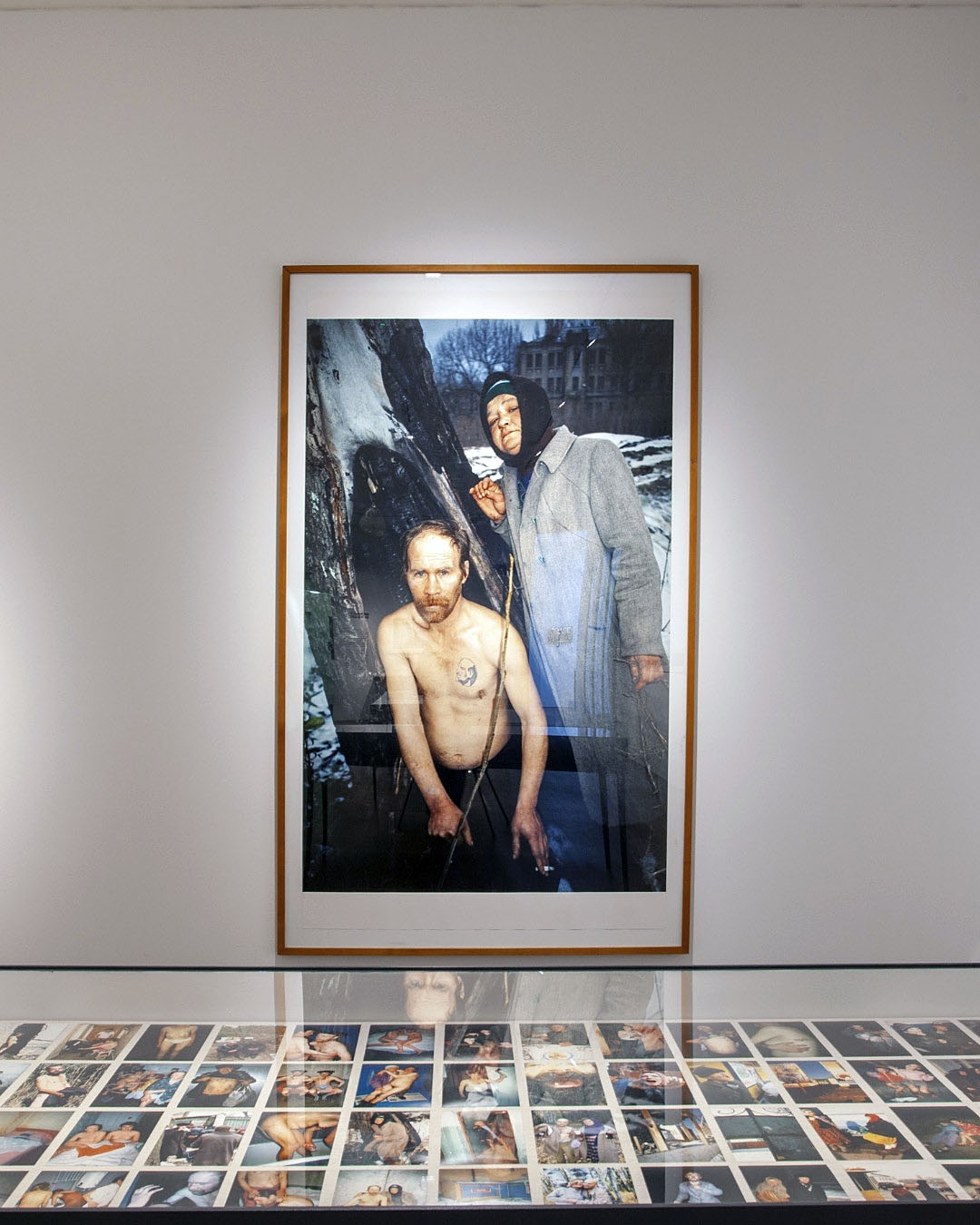
 

Installation view of the exhibition 'Boris Mikhailov: Ukrainian Diary' at The Photographers' Gallery, London showing photographs from his series 'Case History' (1997-1998)


Installation view of the exhibition Boris Mikhailov: Ukrainian Diary at The Photographers’ Gallery, London showing photographs from his series Case History (1997-1998, below)


Case History, 1997-1998

Boris Mikhailov (Ukrainian, b. 1938) From the series 'Case History' 1997-1998


Boris Mikhaïlov (Russian, b. 1938)
From the series Case History
1997-1998
Chromogenic print
© Boris Mikhailov, VG Bild-Kunst, Bonn
Courtesy Boris and Vita Mikhailov


Boris Mikhaïlov (Russian, b. 1938) From the series 'Case History' 1997-1998


Boris Mikhaïlov (Russian, b. 1938)
From the series Case History
1997-1998
Chromogenic print
© Boris Mikhailov, VG Bild-Kunst, Bonn
Courtesy Boris and Vita Mikhailov
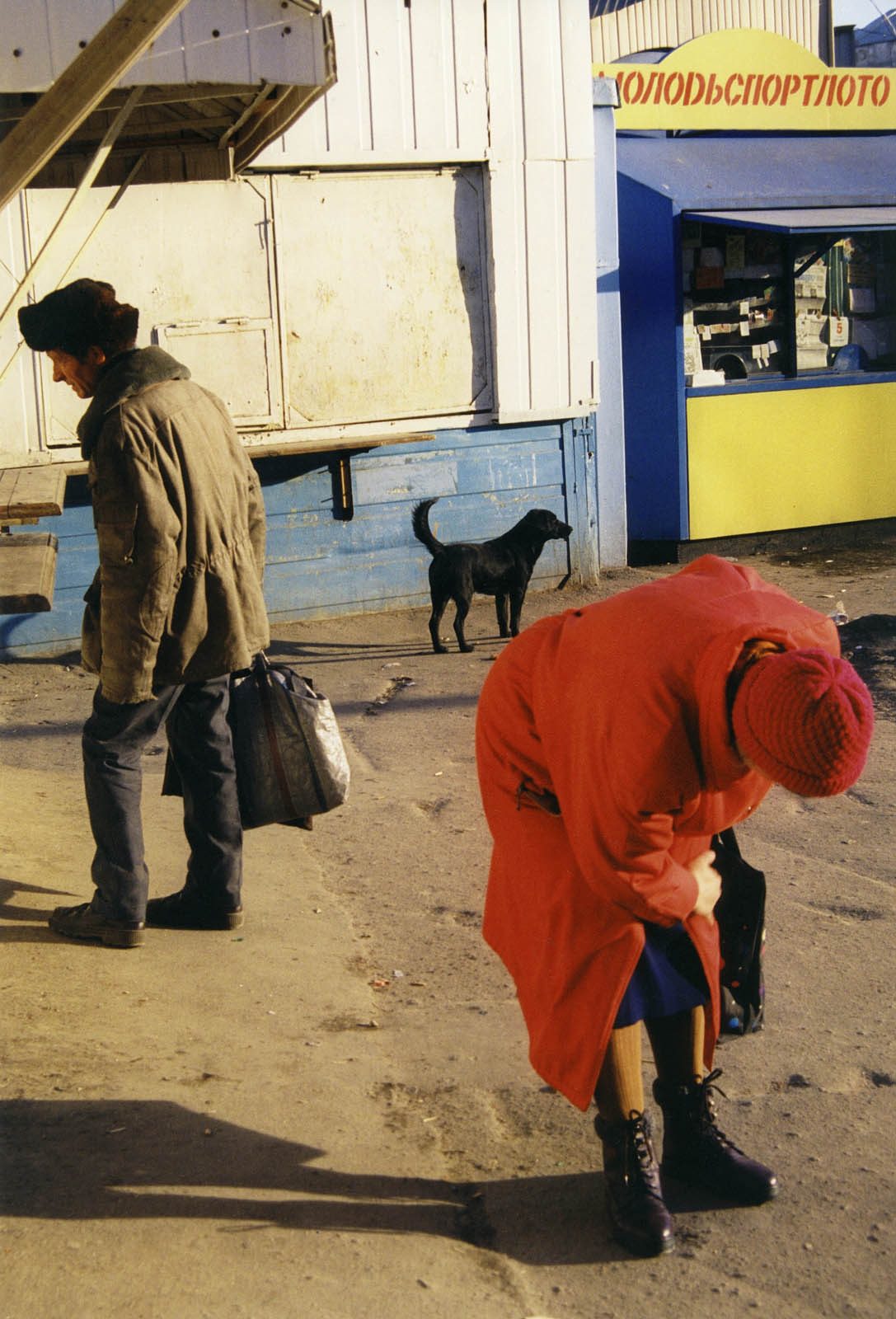
 

Boris Mikhaïlov (Ukrainian, b. 1938) from the series 'Case History' 1997-1998


Boris Mikhaïlov (Russian, b. 1938)
From the series Case History
1997-1998
Chromogenic print
© Boris Mikhailov, VG Bild-Kunst, Bonn
Courtesy Boris and Vita Mikhailov


Urban opera of Boris Mikhailov

Olena Chervonik

In the [Case History] book preface, Mikhailov explains that already in 1997 he vividly apprehended the rupture of Ukrainian society into new, burgeoning social strata, when the new rich and the new poor began to acquire features of class identities with their own psychology and behavioural modalities. The new rich were already hard to approach, protecting themselves with bodyguards and other social fences. The new poor, however, specifically the bomzhes (homeless people with no social support) could still allow an outsider in their midst – this was “a chance”, according to Mikhailov, that could only last for a short period of time. Most of the book’s protagonists had only recently lost their homes. Their rapidly deteriorating social position was still uncertain, malleable, and flickering with hope. Yet, the transformation was inevitable, which propelled the artist to act: “For me it was very important that I took their photos when they were still like “normal” people. I made a book about the people who got into trouble but didn’t manage to harden so far.” [2] …

Mikhailov’s visual pairings deliver unambiguous messages, almost violent in their straightforwardness. Multiple juxtapositions of unconsciously drunk men prostrating under passers-by feet to that of stray dogs, dead or alive, explicitly comment on human’s life disintegration to the state of an animal, its reduction to bare bones – and yes, an animal carcass, a metaphoric sign of abject poverty, is also present in this visual narrative in a scene with two men dragging a piece of spinal vertebrae of a large creature, a cow or, perhaps, a horse. Rotten banana peels sit across the page from infected flaccid limbs and genitalia. A posture of a naked woman reclining on a sullied mattress echoes that of a rubber sex doll staring from the next page. A close-up of a bruised woman’s breast with a crude stitches over a wound parallels gaping cracks of a damaged mail box. Thus the physical body of a homeless person starts speaking about the city as an organism, equally abused and dismembered. Wounds inflected upon flesh are surface manifestations of wounds inflected upon the city and the society at large. …

The majority of Mikhailov’s photographs provide no emotional crutches to lean on, no mechanism of ennobling or aestheticising infected abused flesh of the homeless. It is presented “as is”: frontal, looming large with all its detailed naturalistic vividness. If there is a visual code that Mikhailov activates in these images, it comes from a clinical rather than an art discourse, from surveilling patents for medical records. It is a discourse that John Tagg described as a nineteenth century record-keeping practice associated with certain disciplinary institutions such as an asylum or a prison that with the help of photography created a new social body of dependent subjects upon whom power could be exercised due to their newly-minted subaltern position.

Art, following Barthes’ dictum, domesticates and tames photography [21]. It generates the level of “studium”, accepted cultural knowledge that veils the trauma, renders it familiar, therefore trivial, therefore easily dismissed. Mikhailov makes his viewers constantly oscillate between images that give themselves for contemplation and images that confront with their clinical nature that can be scrutinised and observed but certainly not contemplated. Not one or the other type of image, but the switch between the two unsettles the viewing process. Mikhailov orchestrates poses and gestures of his subjects to create this visual roller-coster of plunging in and out of the aesthetic.

2/ Boris Mikhailov, Case History (Zurich: Scalo, 1985)
21/ Matthias Christen, “Symbolic Bodies, Real Pain: Post-Soviet History, Boris Mikhailov and the Impasse of Documentary Photography,” in The Image and the Witness. Trauma, Memory and Visual Culture (London: Wallflower Press, 2007), 52-66

Extract from Olena Chervonik, “Urban Opera of Boris Mikhailov,” on the MOKSOP website, 9th April 2020 [Online] Cited 27/01/2026. Used under fair use conditions for the purposes of education and research


Dance, 1978
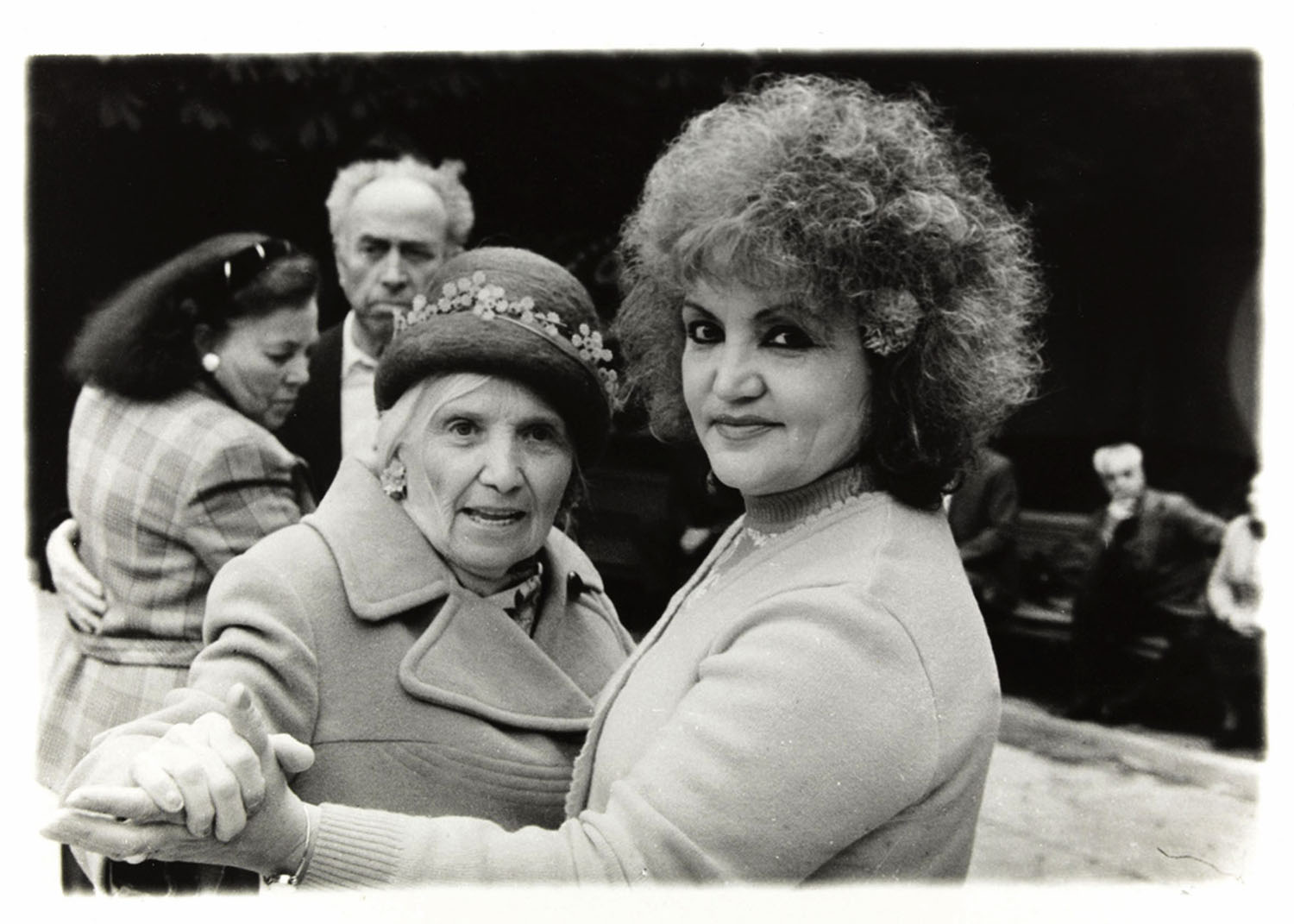
Boris Mikhaïlov (Ukrainian, b. 1938) from the series 'Dance' 1978


Boris Mikhaïlov (Ukrainian, b. 1938)
From the series Dance
1978
Chromogenic print
© Boris Mikhailov, VG Bild-Kunst, Bonn
Courtesy Boris and Vita Mikhailov


The Theater of War, Second Act, Time Out, 2013

Boris Mikhaïlov (Russian, b. 1938) From the series 'The Theater of War, Second Act, Time Out' 2013


Boris Mikhaïlov (Russian, b. 1938)
From the series The Theater of War, Second Act, Time Out
2013
Chromogenic print
© Boris Mikhailov, VG Bild-Kunst, Bonn. Collection Akademie der Künste, Berlin


 The Photographers’ Gallery
16-18 Ramillies Street
London
W1F 7LW

Opening hours:
Mon – Wed: 10.00 – 18.00
Thursday – Friday: 10.00 – 20.00
Saturday: 10.00 – 18.00
Sunday: 11.00 – 18.00

The Photographers’ Gallery website

LIKE ART BLART ON FACEBOOK

Back to top

Review: ‘Del Kathryn Barton: The Highway is a Disco’ at the Ian Potter Centre: NGV Australia at Federation Square, Melbourne

Exhibition dates: 17th November, 2017 – 12th March, 2018


Del Kathryn Barton (Australian, b. 1972) 'I’m going through changes' 2016 from the exhibition 'Del Kathryn Barton: The Highway is a Disco' at the Ian Potter Centre: NGV Australia at Federation Square, Melbourne, Nov 2017 - March 2018


Del Kathryn Barton (Australian, b. 1972)
I’m going through changes
2016
Synthetic polymer paint and fibre-tipped pen on canvas
200 x 180cm
Collection of the artist
© Del Kathryn Barton


Hocus pocus, mumbo jumbo

Meaningless talk or activity / a form of words used by a person performing conjuring tricks.
Language or ritual causing or intended to cause confusion or bewilderment.


I have never been convinced by the work Del Kathryn Barton and this medium-sized exhibition at NGV Australia does absolutely nothing to change my mind.

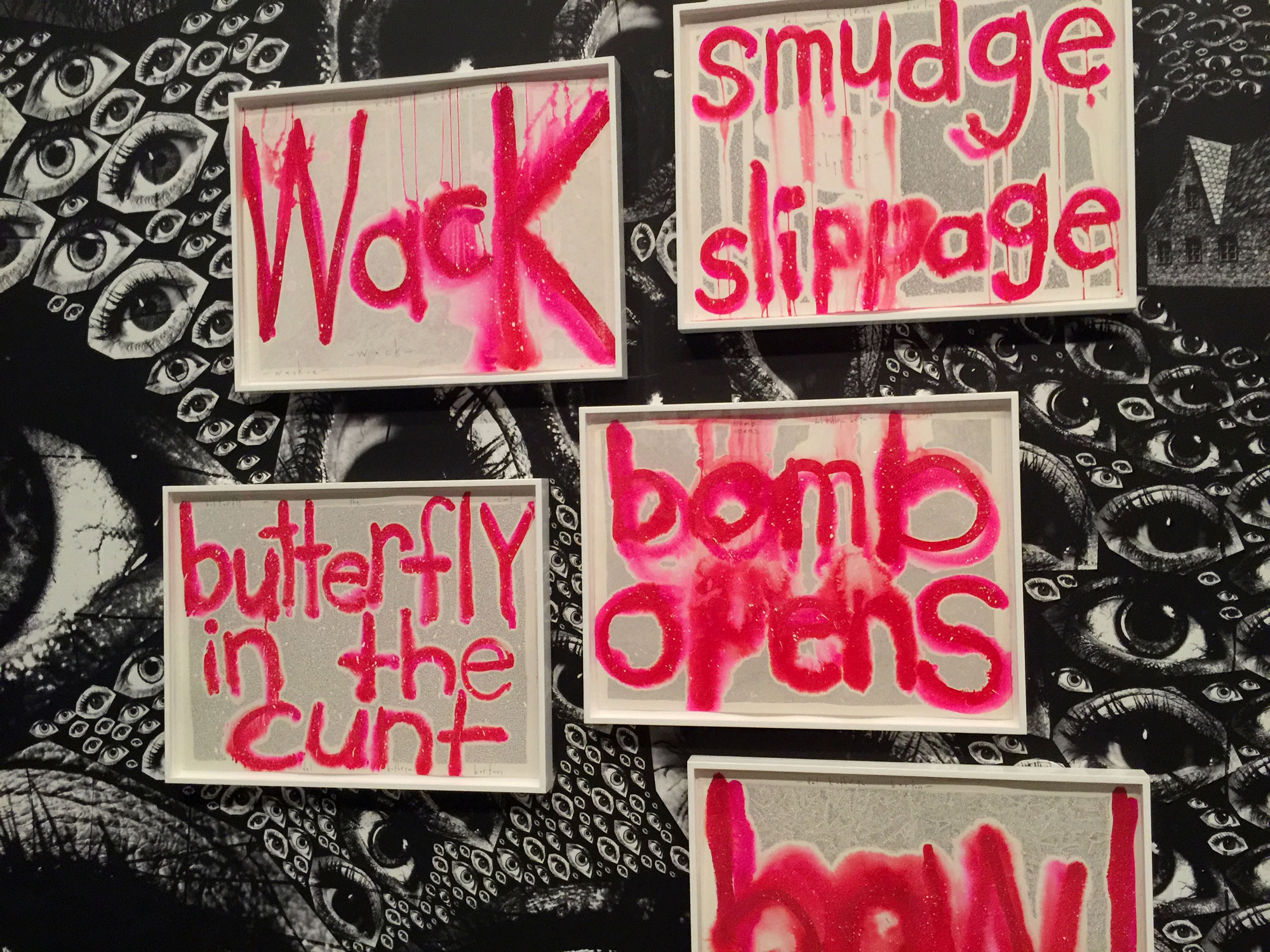
Replete with the artist’s usual cacophony of tits, vulva and penises, the works mine various forms: sculpture, drawing, painting, film and collage; have multiple influences: Louise Bourgeois, Max Ernst, Barbara Kruger to name a few; and investigate numerous concepts such as the fluidity of gender, the link between human and animal forms, women’s genitalia and the blooming of flowers, the ornate decoration of species, “the strength of women, the visceral power of female sexuality and … Barton’s multiple interests in feminism, nature and the maternal figure.” Too much she cried!

Barton has a certain facility in the drawing of line, but this is too often overwhelmed by her inability to let negative space speak for itself. Every work is filled to the brim with vacuous detail, then overlaid with multicoloured polka dots in both collages and paintings (see the detail of her work in the face of cosmic odds, 2016 below), as though this device will tie all the works together. Her signature paintings of women have surface presence, are “just so meticulously attractive”, but absolutely lack what Barton is seeking – “so inexplicably intimate, so beyond, so seemingly effortless that there can be no defence. In these moments there is an opening-up within the body, the mind, within all the senses …”

I felt nothing of that when looking at these works – no connection to an inner self or ‘the vast ocean of the collective-consciousness’.

Barton’s inability to engage the viewer in an intimate dialogue of body and mind can be seen in both text and graphic.

“today my body is feeling love
you fell into my flesh…… and we are fresh…… again
the unflesh are so clean somehow….. and their stirrings inform our smallness….. so that we are still small”

You fell into my flesh and we are fresh again. Please.

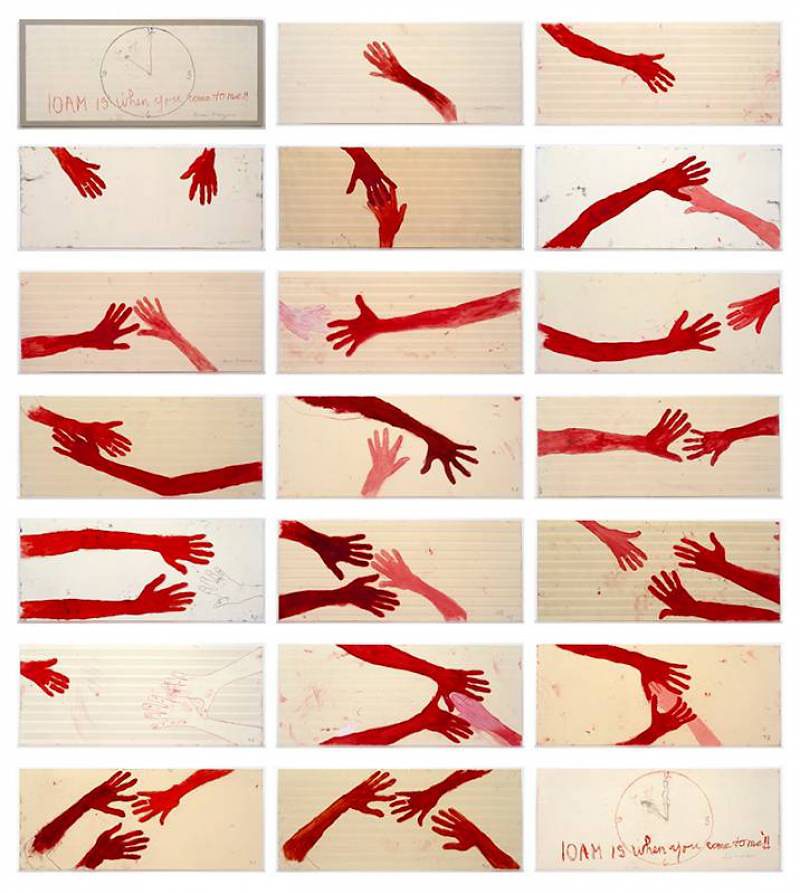
Then you look at the line work in volcanic woman (2016, below) as “these women erupt upward, as molten liquid bodies of agency. They display their genitals as though it is from their vaginas that the Earth’s energy spills forth,” and note the caricaturesque drawings lack any sense of intimacy or sensuality despite the subject matter. I think about Barton’s hero Louise Bourgeois and her work “10 AM IS WHEN YOU COME TO ME” (2006, below). Both works are displayed in a grid and produced in the same colour but the difference could not be more stark: Bourgeois’ use of negative space, the quiet sensitivity, eroticism and the superb intimacy of the work is the antithesis of Barton’s sexual megalomania. So often in art, less is more but Barton never seems to understand the adage.

To use Christopher Allen’s turn of phrase about the NGV Triennial, Barton’s works are “frenetically busy, but inherently insipid,” despite the overabundance / reliance on the display of sexual organs and excretions. While the artist desperately wants the viewer to be drawn into an intimate embrace with the supposed psychological and spiritual meanings of the work, the lack of emotional, sensual or erotic sensation negates any feeling towards it. Barton’s meaninglessness talk using confusing iconographies lays a surface trap for the viewer, taken in by decoration and sexual abundance.

But if you look beyond the psychedelic aesthetic and decorative surfaces it’s just a conjuring trick, ritual representation as pseudo-spiritual experience.

Dr Marcus Bunyan


Many thankx to the National Gallery of Victoria for allowing me to publish the photographs in the posting. Please click on the photographs for a larger version of the image.


“The creatures are so gorgeous. They’re just so meticulously attractive, I’m never repulsed. Without the darkness Barton seems to think is there, what is left? Passive psychedelia? I believe Barton feels intensely, but a second-hand trip, like a dream told to a friend, is never as emotional as the teller thinks it is.”


Victoria Perrin. “Del Kathryn Barton: The Highway is a Disco,” on the MeMO website 23 Dec 2017 [Online] Cited 10/02/2022


“I had a weak-at-the-knees, tingle-all-over moment when I saw Louise Bourgeois’ work for the first time about fifteen years ago in Los Angeles. Yes I am a CRAZY fan. And, yes, it’s true I lay under her big spider in Tokyo and cried…

These are the releases I hope for in our vast world of art. Encounters when the artwork is somehow so inexplicably intimate, so beyond, so seemingly effortless that there can be no defence. In these moments there is an opening-up within the body, the mind, within all the senses … an experience of recognition, relief and awe that informs one’s deeper creative makeup.”


Del Kathryn Barton


The NGV presents a major solo exhibition of one of Australia’s most popular artists, Del Kathryn Barton. Del Kathryn Barton: The Highway is a Disco reveals the artist’s imaginative and deeply sensuous world, where ornately decorated species – both human and animal – are rendered in seductive line and colour. Del Kathryn Barton: The Highway is a Disco is a survey of new and recent work by the two times Archibald Portrait Prize winner that reveals the breadth of Barton’s practice. Featuring comprehensive displays of recent paintings and drawings for which she is arguably best known, the exhibition also includes collage, sculpture, textiles and film, all drawn together by the artist’s exuberant and psychedelic aesthetic.


Installation view of 'Del Kathryn Barton: The Highway is a Disco' at the Ian Potter Centre: NGV Australia

Installation view of 'Del Kathryn Barton: The Highway is a Disco' at the Ian Potter Centre: NGV Australia

Installation view of 'Del Kathryn Barton: The Highway is a Disco' at the Ian Potter Centre: NGV Australia


Installation views of Del Kathryn Barton: The Highway is a Disco at the Ian Potter Centre: NGV Australia, 17 November 2017 – 12 March 2018 featuring the inside another land series (2017, detail)
Photos: © Tom Ross


In this series of seventy-five montages that combine digital collage with hand painted details, Barton creates post-human visions in which women’s bodies are both human and plant. The Dadaists used collage to access the Freudian domain of the unconscious mind, and the great Dada artist Hannah Höch was a key proponent of photomontage in her exploration of the role of women in a changing world. Like the Surrealists, Barton uses collage as a method to critique the illusion of a defined and orderly world, in favour of absurdity. The visual delirium of these works induces a kind of hallucinatory experience in which new creatures seem possible.

It is widely understood that flowers symbolise female sexuality: their physical resemblance to women’s genitalia is coupled with an associative significance in their blooming, which invokes the creation of new life in birth. The history of floral representation strongly binds femininity and flowers, from the Greek nymph Chloris and her Roman counterpart Flora, who oversaw spring and flowers, to Sigmund Freud who was very clear on the matter: ‘Blossoms and flowers represent the female genitals, or more particularly, virginity. Do not forget that the blossoms are really the genitals of the plants’.

Wall text from the exhibition


Del Kathryn Barton (Australian, b. 1972) 'inside another land' 2017 (detail)

Del Kathryn Barton (Australian, b. 1972) 'inside another land' 2017 (detail)

Del Kathryn Barton (Australian, b. 1972) 'inside another land' 2017 (detail)

Del Kathryn Barton (Australian, b. 1972) 'inside another land' 2017 (detail)

Del Kathryn Barton (Australian, b. 1972) 'inside another land' 2017 (detail)

Del Kathryn Barton (Australian, b. 1972) 'inside another land' 2017 (detail)


Del Kathryn Barton (Australian, b. 1972)
inside another land (details)
2017
Collection of the artist
© Del Kathryn Barton


Del Kathryn Barton (Australian, b. 1972) 'you’re not a bit ashamed' 2017 from the exhibition 'Del Kathryn Barton: The Highway is a Disco' at the Ian Potter Centre: NGV Australia at Federation Square, Melbourne, Nov 2017 - March 2018


Del Kathryn Barton (Australian, b. 1972)
you’re not a bit ashamed
2017
Synthetic polymer paint and ink on paper
152.0 x 194.0cm (image and sheet)
Collection of the artist
© Del Kathryn Barton


Del Kathryn Barton (Australian, b. 1972) 'to speak of anger, I will take care' 2017


Del Kathryn Barton (Australian, b. 1972)
to speak of anger, I will take care
2017
Synthetic polymer paint and ink on paper
152.0 x 194.0cm (image and sheet)
Collection of the artist
© Del Kathryn Barton


Installation view of 'Del Kathryn Barton: The Highway is a Disco' at the Ian Potter Centre: NGV Australia

Installation view of 'Del Kathryn Barton: The Highway is a Disco' at the Ian Potter Centre: NGV Australia featuring the work 'briefly turned into dreams' (2016)


Installation views of Del Kathryn Barton: The Highway is a Disco at the Ian Potter Centre: NGV Australia, 17 November 2017 – 12 March 2018 featuring the work briefly turned into dreams (2016)
Photos: © Tom Ross


Del Kathryn Barton (Australian, b. 1972) 'briefly turned into dreams' 2016 (detail)


Del Kathryn Barton (Australian, b. 1972)
briefly turned into dreams (detail)
2016
Collection of the artist
© Del Kathryn Barton


Del Kathryn Barton (Australian, b. 1972) 'come home to me' 2014-2017 (installation view)


Del Kathryn Barton (Australian, b. 1972)
come home to me (installation view)
2014-2017
Gouache and ink on hot pressed paper
Collection of the artist. Courtesy Roslyn Oxley9 Gallery and A3
Photo: © Dr Marcus Bunyan and National Gallery of Victoria


The flexibility of language is revealed in come home to me. Barton loves language but at the same time questions its ability to communicate. The floating words are a strategy for awakening us to the various, infinite and slippery meaning of words. Like poetry, Barton’s fiercely non-didactic texts are open to diverse understandings. There is no wrong or right interpretation of these texts. Without dictating the associations these words create in each of our minds, Barton evokes sensual delights and pleasures of the flesh.

Wall text from the exhibition


Installation view of 'Del Kathryn Barton: The Highway is a Disco' at the Ian Potter Centre: NGV Australia featuring a detail from the work 'come home to me' (2014-2017)


Installation view of Del Kathryn Barton: The Highway is a Disco at the Ian Potter Centre: NGV Australia, 17 November 2017 – 12 March 2018 featuring a detail from the work come home to me (2014-2017)
Photo: © Dr Marcus Bunyan and National Gallery of Victoria


Del Kathryn Barton (Australian, b. 1972) 'mud monster' 2014 (detail)

Del Kathryn Barton (Australian, b. 1972) 'mud monster' 2014 (detail)


Del Kathryn Barton (Australian, b. 1972)
mud monster (details)
2014
Collection of the artist
© Del Kathryn Barton


Installation view of 'Del Kathryn Barton: The Highway is a Disco' at the Ian Potter Centre: NGV Australia featuring the 'I am flesh again' series (2008)

Installation view of 'Del Kathryn Barton: The Highway is a Disco' at the Ian Potter Centre: NGV Australia featuring the 'I am flesh again' series (2008)


Installation views of Del Kathryn Barton: The Highway is a Disco at the Ian Potter Centre: NGV Australia, 17 November 2017 – 12 March 2018 featuring the I am flesh again series (2008)
Photos: © Tom Ross


Installation view of 'Del Kathryn Barton: The Highway is a Disco' at the Ian Potter Centre: NGV Australia featuring a detail from the 'I am flesh again' series (2008)


Installation view of Del Kathryn Barton: The Highway is a Disco at the Ian Potter Centre: NGV Australia, 17 November 2017 – 12 March 2018 featuring a detail from the I am flesh again series (2008)
Photo: © Dr Marcus Bunyan and National Gallery of Victoria


Del Kathryn Barton (Australian, b. 1972) 'I am flesh again' 2008 (detail)


Del Kathryn Barton (Australian, b. 1972)
I am flesh again (detail)
2008
Queensland Art Gallery, Brisbane
© Del Kathryn Barton


Installation view of 'Del Kathryn Barton: The Highway is a Disco' at the Ian Potter Centre: NGV Australia featuring the photogravure work 'the stars eat your body' (2009) and the bronze 'up in this' (2012)

Installation view of 'Del Kathryn Barton: The Highway is a Disco' at the Ian Potter Centre: NGV Australia featuring the bronze 'i can grow you more, drunk on its own nectar' (2017)


Installation views of Del Kathryn Barton: The Highway is a Disco at the Ian Potter Centre: NGV Australia, 17 November 2017 – 12 March 2018 featuring the photogravure work the stars eat your body (2009) and the bronze up in this (2012) top; and the bronze i can grow you more, drunk on its own nectar (2017) bottom
Photos: © Dr Marcus Bunyan and National Gallery of Victoria


Two-time Archibald prize-winner Del Kathryn Barton is being celebrated in the largest ever exhibition of her work to date at NGV Australia. Del Kathryn Barton: The Highway is a Disco features 150 new and recent works by Barton, including her famed kaleidoscopic portraits, a never-before-seen large-scale sculpture in homage to her mother and Barton’s short film RED, starring Australian actress and Academy Award-winner Cate Blanchett.

‘With a practice spanning art, fashion and film, Barton’s psychedelic images reveal her personal responses to the human experience. She is one of Australia’s most popular artists, renowned for her highly intricate and distinctive hybrid forms, that break down boundaries between humans and nature’, said Tony Ellwood, Director, NGV.

This show is deeply personal for Barton with the debut of her new sculpture, at the foot of your love, which has been created in response to her mother’s terminal illness. Completed in 2017 and comprised of printed silk and Huon pine, the sculpture is reflective of Barton’s reoccurring themes of motherhood and nature. Featuring a wooden conch shell and an enormous silk ‘handkerchief’, the work is symbolic of Barton’s grief for her own mother.

Comprised of five panels and over 10 metres in length, sing blood-wings sing is Barton’s newest and largest painting to date. The painting features a female-focused reimagining of the 1963 Peter, Paul and Mary coming-of-age song, Puff the Magic Dragon. Barton often listens to the folk tune whilst working in her studio as a symbolic reminder to maintain her childlike curiosity through her artistic practice. Barton’s interpretation of the song and its meaning is depicted by four breasted, rainbow coloured dragons. In her signature style, she blurs human, mythological and animal representations in art, encouraging her audience to see how imagination and desire can test traditional forms.

The exhibition also features Barton’s acclaimed film RED, where Cate Blanchett plays a mother re-enacting the redback spider’s deadly mating ritual, alongside actor Alex Russell, Sydney Dance Company’s Charmene Yap and Barton’s own daughter Arella. In RED Barton conveys the strength of women, the visceral power of female sexuality and encapsulates Barton’s multiple interests in feminism, nature and the maternal figure.

Born in Sydney in 1972, Barton graduated with a Bachelor of Fine Arts from the College of Fine Arts, University of New South Wales, Sydney, in 1993. She won her first Archibald prize in 2008 for her self-portrait with her two children and then again in 2013 for her portrait of Australian actor Hugo Weaving.

Del Kathryn Barton: The Highway is a Disco is one of five solo exhibitions by leading Australian artists for NGV Australia’s 2017-18 summer program. The exhibition is on display at the Ian Potter Centre: NGV Australia at Federation Square, Melbourne from 17 November 2017 – 12 March 2018.

Press release from the NGV


Installation view of 'Del Kathryn Barton: The Highway is a Disco' at the Ian Potter Centre: NGV Australia showing the work 'sing blood-wings sing' (2017)

Installation view of 'Del Kathryn Barton: The Highway is a Disco' at the Ian Potter Centre: NGV Australia showing the work 'sing blood-wings sing' (2017)

sing blood-wings sing (2017)
Installation view of 'Del Kathryn Barton: The Highway is a Disco' at the Ian Potter Centre: NGV Australia


Installation views of Del Kathryn Barton: The Highway is a Disco at the Ian Potter Centre: NGV Australia, 17 November 2017 – 12 March 2018.
Photos: © Tom Ross


Del Kathryn Barton (Australian, b. 1972) 'the highway is a disco' 2015


Del Kathryn Barton (Australian, b. 1972)
the highway is a disco
2015
Synthetic polymer paint and fibre-tipped pen on canvas
Private collection, Austria
© Del Kathryn Barton


Del Kathryn Barton (Australian, b. 1972) 'I want to love you' 2016


Del Kathryn Barton (Australian, b. 1972)
I want to love you
2016
Collection of the artist
© Del Kathryn Barton


Installation view of 'Del Kathryn Barton: The Highway is a Disco' at the Ian Potter Centre: NGV Australia featuring at left, 'I want to love you' (2016)

Installation view of 'Del Kathryn Barton: The Highway is a Disco' at the Ian Potter Centre: NGV Australia featuring at centre, the work 'at the foot of your love' (2017)

Installation view of 'Del Kathryn Barton: The Highway is a Disco' at the Ian Potter Centre: NGV Australia the work 'at the foot of your love' (2017)


Installation views of Del Kathryn Barton: The Highway is a Disco at the Ian Potter Centre: NGV Australia, 17 November 2017 – 12 March 2018 featuring the work at the foot of your love (2017)
Photos: © Tom Ross


Installation view of 'Del Kathryn Barton: The Highway is a Disco' at the Ian Potter Centre: NGV Australia the work 'at the foot of your love' (2017, detail)


Installation view of Del Kathryn Barton: The Highway is a Disco at the Ian Potter Centre: NGV Australia, 17 November 2017 – 12 March 2018 featuring the work at the foot of your love (2017)
Photo: © Dr Marcus Bunyan and National Gallery of Victoria


at the foot of your love  (2017) was made by Barton as she prepared for her mother’s death. The fabric represents a handkerchief for the tears of all children who mourn their mother’s departure. The wooden conch shell is envisaged by the artist as a boat on which to sail into the darkness of eternity and ‘the vast ocean of the collective-consciousness’. It celebrates home and place, since the Huon Pine tree, from which the work is made, is a precious and endangered timber of Australia, subject to decay.

Wall text from the exhibition


Del Kathryn Barton (Australian, b. 1972) 'of pink planets' 2014


Del Kathryn Barton (Australian, b. 1972)
of pink planets
2014
Collection of Boris Tosic, Sydney
© Del Kathryn Barton


In this work a creature with the head of a wallaby and the tail of a snake looks as though it might suckle from one of the woman’s five breasts. The breast is a dual organ, both of pleasure and sustenance, and multiple breasts suggest abundant life energy. Symbolically, the multi-breasted woman recalls the mythological icon Artemis of Ephesus, goddess of the wilderness, the hunt, wild animals and fertility. In some interpretations of the iconography, the nodes on Artemis’s chest are said to be the testes of bulls sacrificed to her. This fluidity of gender, human and animal forms is a strong current in Barton’s art.

Wall text from the exhibition


Del Kathryn Barton (Australian, b. 1972) 'openly song' 2014


Del Kathryn Barton (Australian, b. 1972)
openly song
2014
Private collection, Melbourne
© Del Kathryn Barton


Del Kathryn Barton (Australian, b. 1972) 'or fall again' 2014


Del Kathryn Barton (Australian, b. 1972)
or fall again
2014
Collection of Leonard Warson, Melbourne
© Del Kathryn Barton


The tangled and lush floral decoration of Barton’s paintings recreates the millefleur (1000 flowers) technique of late Middle Ages to early Renaissance tapestries, distinguished by a lack of uniform pattern. The medieval period is sometimes perceived as a time of pagan superstition when the mysteries of nature and humanity were still full of wonder and darkness, and the unknown and unexplained were revered. Barton’s works evoke this period and direct viewers to a mysteriously interconnected world where spirit, psyche, natural cycles and the body are interconnected in intimate, unknowable relationships.

Wall text from the exhibition


Installation view of 'Del Kathryn Barton: The Highway is a Disco' at the Ian Potter Centre: NGV Australia featuring a detail from the work 'or fall again' (2014)


Installation view of Del Kathryn Barton: The Highway is a Disco at the Ian Potter Centre: NGV Australia, 17 November 2017 – 12 March 2018 featuring a detail from the work or fall again (2014)
Photo: © Dr Marcus Bunyan and National Gallery of Victoria


Installation view of 'Del Kathryn Barton: The Highway is a Disco' at the Ian Potter Centre: NGV Australia featuring a detail from the work 'in the face of cosmic odds' (2016)


Installation view of Del Kathryn Barton: The Highway is a Disco at the Ian Potter Centre: NGV Australia, 17 November 2017 – 12 March 2018 featuring a detail from the work in the face of cosmic odds (2016)
Photo: © Dr Marcus Bunyan and National Gallery of Victoria


Del Kathryn Barton (Australian, b. 1972) 'See ya mumma' 2016


Del Kathryn Barton (Australian, b. 1972)
See ya mumma
2016
Synthetic polymer paint and fibre-tipped pen on canvas
140 x 160cm
Collection of Brooke Horne, Sydney
© Del Kathryn Barton


Del Kathryn Barton (Australian, b. 1972) 'is the energy' 2014


Del Kathryn Barton (Australian, b. 1972)
is the energy
2014
Private collection, Melbourne
© Del Kathryn Barton


Del Kathryn Barton (Australian, b. 1972) 'girl as sorcerery figure' 2005


Del Kathryn Barton (Australian, b. 1972)
girl as sorcerery figure
2005
Collection of Jane Badler, Melbourne
© Del Kathryn Barton


Del Kathryn Barton (Australian, b. 1972) 'girl #8' 2004 (installation view)


Del Kathryn Barton (Australian, b. 1972)
girl #8 (installation view)
2004
Fibre-tipped pen, gouache, watercolour and synthetic polymer paint on canvas
Art Gallery of New South Wales
© Del Kathryn Barton
Photo: Â© Dr Marcus Bunyan and National Gallery of Victoria


Louise Bourgeois (French-American, 1911-2010) '10 AM IS WHEN YOU COME TO ME' 2006 (detail)


Louise Bourgeois (French-American, 1911-2010)
“10 AM IS WHEN YOU COME TO ME” (details)
2006
Etching, ink, watercolour, pencil and gouache on paper


Installation view of 'Del Kathryn Barton: The Highway is a Disco' at the Ian Potter Centre: NGV Australia featuring 'the volcanic women' series 2016-


Installation view of Del Kathryn Barton: The Highway is a Disco at the Ian Potter Centre: NGV Australia, 17 November 2017 – 12 March 2018 featuring the volcanic women series 2016-
Photo: © Tom Ross


‘I, too, overflow; my desires have invented new desires, my body knows unheard-of songs. Time and again I, too, have felt so full of luminous torrents that I could burst.’

HÉLÈNE CIXOUS, THE LAUGH OF THE MEDUSA (1975)


In this new series of works, entitled volcanic women, Barton coaxes and melts women into and out of the Earth’s larval core. Bodies flow from the ground, emerging as hot red lines of ink. These women erupt upward, as molten liquid bodies of agency. They display their genitals as though it is from their vaginas that the Earth’s energy spills forth. Barton here celebrates the abundance and generative necessity of women’s desire and sexual vigour. The suppression of women’s sexuality by a culture of fear is melted away in these volcanic works.

Wall text from the exhibition


Del Kathryn Barton (Australian, b. 1972) 'volcanic woman' 2016


Del Kathryn Barton (Australian, b. 1972)
volcanic woman
2016
From the volcanic women series 2016-
Collection of the artist
© Del Kathryn Barton


Installation view of 'Del Kathryn Barton: The Highway is a Disco' at the Ian Potter Centre: NGV Australia featuring a detail from 'the volcanic woman' series (2016)


Installation view of Del Kathryn Barton: The Highway is a Disco at the Ian Potter Centre: NGV Australia, 17 November 2017 – 12 March 2018 featuring a detail from the volcanic woman series (2016)
Photo: © Dr Marcus Bunyan and National Gallery of Victoria


RED | Del Kathryn Barton

“The film is split into sections titled MOTHER, FATHER, LIFE, DEATH and DAUGHTER. When it comes time for the father to feature, he is accompanied by a shot of a car revving. When the spider arrives (in a wonderful dance performed by Charmene Yap), she moves in an incredibly enthralling manner, but she’s writhing on a muscle car. The performance of gender isn’t twisted, it moves straight past the iconic and into the parodic. But it’s not supposed to be a parody of the deadly spider that eats its mate, it’s dead serious. Barton has no intimation of the taboo and genuinely titillating danger that Bourgeois could reproduce in spades. Then it hits me, everything in Barton’s world is conventionally beautiful, yet we’re supposed to find it shocking. I don’t see women reflected in her vision of “hyper-women”, I see great beauties, I see movie stars and high-fashion models.”

Victoria Perrin. “Del Kathryn Barton: The Highway is a Disco,” on the MeMO website 23 Dec 2017 [Online] Cited 10/02/2022


Del Kathryn Barton (Australian, b. 1972) Still from 'RED' 2016

Del Kathryn Barton (Australian, b. 1972) Still from 'RED' 2016

Del Kathryn Barton (Australian, b. 1972) Still from 'RED' 2016

Del Kathryn Barton (Australian, b. 1972) Still from 'RED' 2016


Del Kathryn Barton (Australian, b. 1972)
Stills from RED
2016
Collection of the artist
© Del Kathryn Barton


‘Mother of otherness Eat me’

SYLVIA PLATH, POEMS FOR A BIRTHDAY (1960)


Sylvia Plath’s words open Barton’s first short film, RED. The human maternal figure at the heart of this work (played by Cate Blanchett) is interchangeable with a red-back spider. Alongside Blanchett, Barton’s daughter, Arella Plater, and actor Alex Russell portray the nuclear family, and Sydney Dance Company’s Charmene Yap is the arching, writhing spider. The film explores women’s desire and maternal experience. In the realm of recent art history, the mother-spider recalls American sculptor Louise Bourgeois’s massive, looming arachnids. Bourgeois is one of Barton’s greatest influences and represented spiders in a renowned series begun in 1994 and continued until the end of her life in 2010. Like Plath and Bourgeois before her, in this work Barton has rendered the overwhelming complexities and contradictions of motherhood.

Wall text from the exhibition


The Ian Potter Centre: NGV Australia
Federation Square
Corner of Russell and 
Flinders Streets, Melbourne

Opening hours:
Daily 10am – 5pm

National Gallery of Victoria website

LIKE ART BLART ON FACEBOOK

Back to top