Exhibition: ‘Karl Blossfeldt – Photography in the Light of Art’ at the Die Photographische Sammlung / SK Stiftung Kultur, Cologne

Exhibition dates: 6th September, 2024 – 2nd February, 2025


Karl Blossfeldt (German, 1865-1932) 'Lichtnelke' Before 1932 from the exhibition 'Karl Blossfeldt – Photography in the Light of Art' at the Die Photographische Sammlung / SK Stiftung Kultur, Cologne


Karl Blossfeldt (German, 1865-1932)
Lichtnelke
Before 1932
Gelatin silver print
Courtesy Universität der Künste, Berlin, Universitätsarchiv, in Zusammenarbeit mit der Photographischen Sammlung/SK Stiftung Kultur, Köln


Karl Blossfeldt’s photographs have been associated with Modernism, Surrealism and New Objectivity / New Vision.

“Hailed as a master for discovering a hitherto ‘unknown universe’ and for his exemplary technical feats as a photographer Blossfeldt’s work is, nevertheless, decidedly subjective as author Hanako Murata notes in her excellent essay on the artist Material Forms in Nature: The Photographs of Karl Blossfeldt (2014). “Not only did he carefully select, arrange, and in some cases physically modify his specimens, but his meticulous attention to detail and image refinement continued throughout each step of production, beginning with his negatives.” Blossfeldt uses the logic of the plant and the logic of his mind to achieve his final vision. A/symmetry as art form.” (MB 2015)

Love them or hate them there are still few photographs like them in the history of photography. Magnificent photographs.

Dr Marcus Bunyan


Many thankx to the Die Photographische Sammlung / SK Stiftung Kultur, Cologne for allowing me to publish the photographs in the posting. Please click on the photographs for a larger version of the image.


“In contrast to sketched enlargements, which always contain a subjective element, these images present pure nature, so they are likely to provide inspiring material for students. In many cases, these photographs were made by enlarging small details that students could not easily make out in evening light. This considerably facilitates projects. I probably have more than a thousand of such photographs, from which, however, I can only slowly make prints.” ~ Karl Blossfeldt

 This was written by Karl Blossfeldt in a letter dated April 11, 1906, to the administration of the educational institution of the art school where he taught from 1899 to 1930. The original letter is displayed in the current exhibition, along with other documents and publications, in a showcase. The quote provides insight into Blossfeldt’s pedagogical practice and highlights his appreciation for documentary photography and its potential for enlargement.


Press release from Die Photographische Sammlung


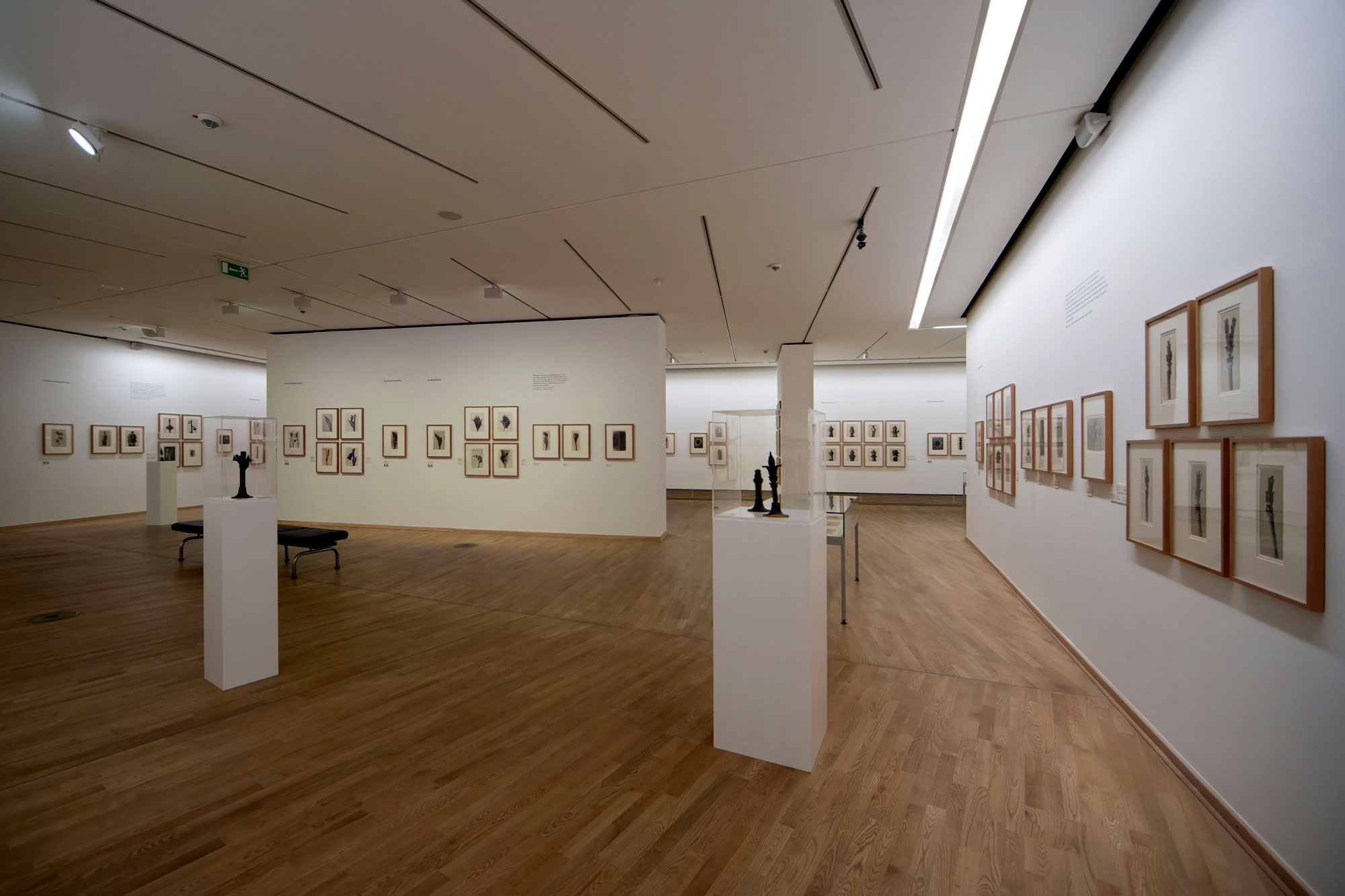
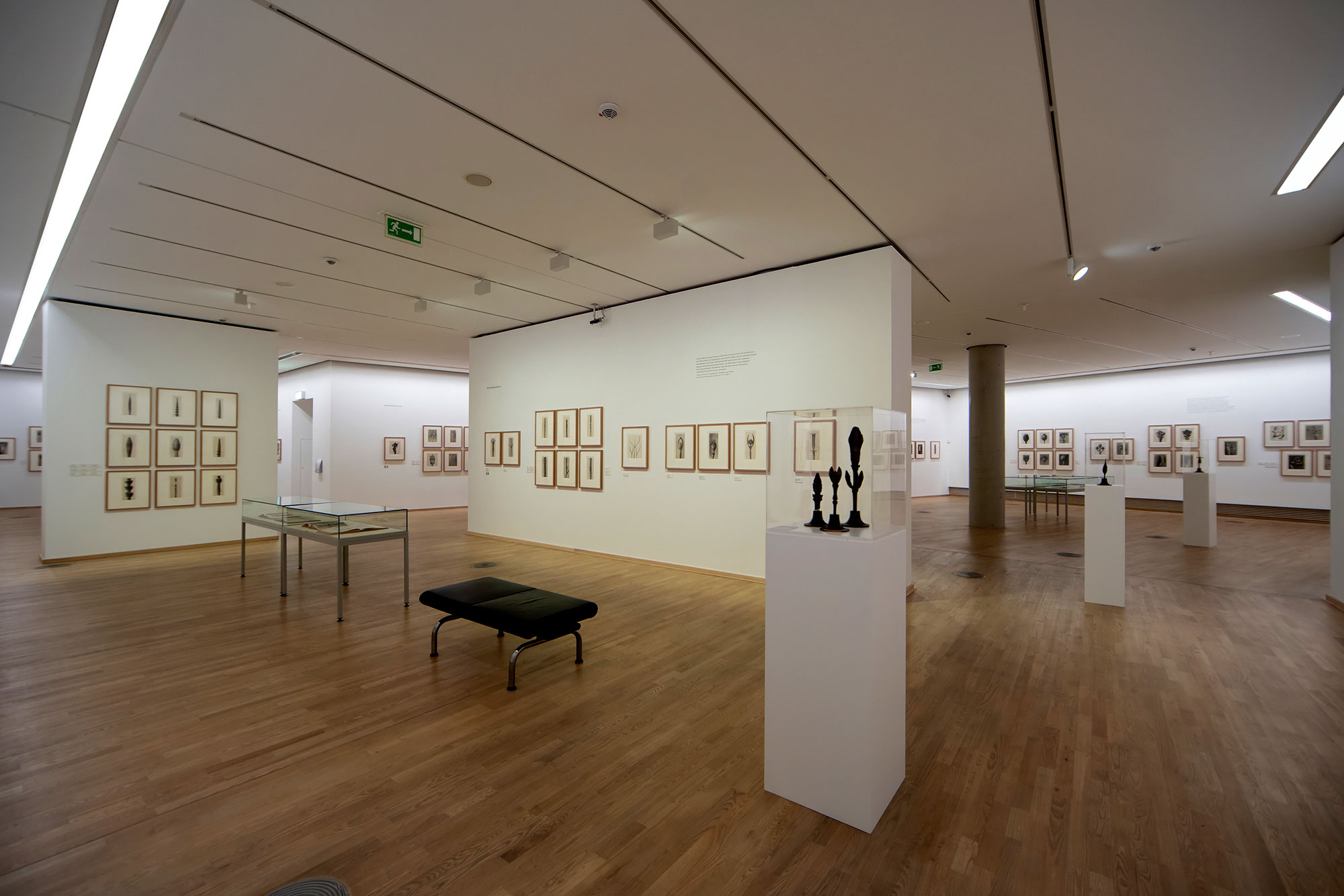
Installation view of the exhibition 'Karl Blossfeldt – Photography in the Light of Art' at the Die Photographische Sammlung / SK Stiftung Kultur, Cologne

Installation view of the exhibition 'Karl Blossfeldt – Photography in the Light of Art' at the Die Photographische Sammlung / SK Stiftung Kultur, Cologne

Installation view of the exhibition 'Karl Blossfeldt – Photography in the Light of Art' at the Die Photographische Sammlung / SK Stiftung Kultur, Cologne


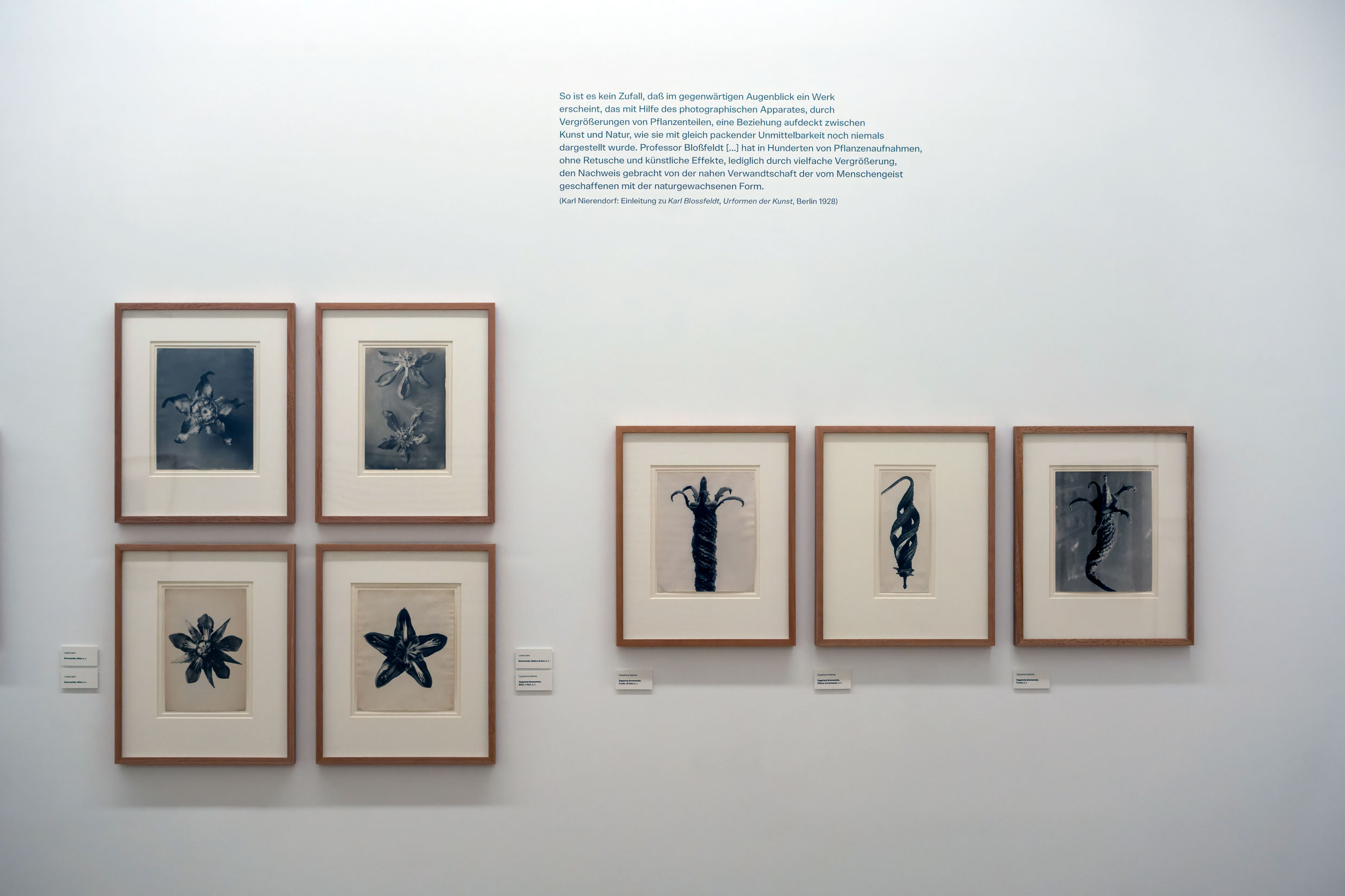
Installation views of the exhibition Karl Blossfeldt – Photography in the Light of Art at the Die Photographische Sammlung / SK Stiftung Kultur, Cologne


Installation view of the exhibition 'Karl Blossfeldt – Photography in the Light of Art' at the Die Photographische Sammlung / SK Stiftung Kultur, Cologne

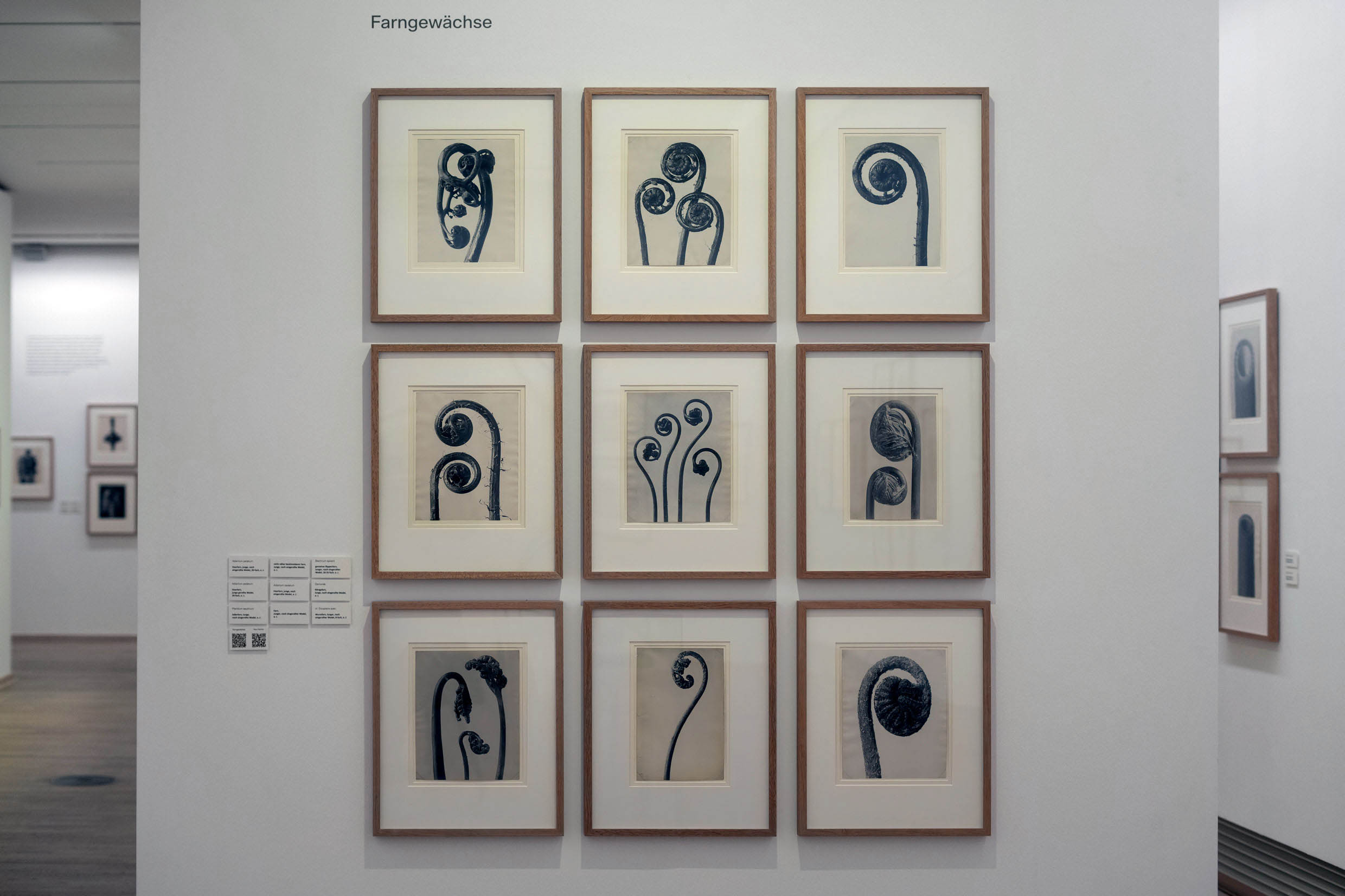
Installation view of the exhibition 'Karl Blossfeldt – Photography in the Light of Art' at the Die Photographische Sammlung / SK Stiftung Kultur, Cologne showing Farngewächse (Ferns)


Installation views of the exhibition Karl Blossfeldt – Photography in the Light of Art at the Die Photographische Sammlung / SK Stiftung Kultur, Cologne showing in the bottom image, Farngewächse (Ferns)


With 271 original prints, the oeuvre of Karl Blossfeldt (1865-1932) is being presented in this scope for the first time in two decades. A consistent photographic oeuvre unfolds impressively, which emerged in the context of art education and was only discovered as an independent artistic approach a few years before Blossfeldt’s death. Today it ranks among the classics of photographic history and is mentioned in the same breath as August Sander and Albert Renger-Patzsch. In terms of reception, Blossfeldt’s photographs are regarded above all as prototypical of the artistic movements of New Objectivity and New Vision.

The exhibition is based on the holdings of the Berlin University of the Arts, the institution at whose predecessor school Blossfeldt himself trained as a sculptor and where he taught the subject of “modelling from living plants” for three decades from 1899. It was there that he created his plant photographs, which he used as illustrative models to teach his students about the variety of forms and details of the botanical world. The precise observation and artistic realisation of the vegetal forms were to serve as creative inspiration for designs in the field of applied art and architecture. In addition to photographs, Blossfeldt also made bronze casts of plant forms as teaching aids – albeit in much smaller numbers – and used them in class. Exemplary pieces are included in the presentation as well as handwritten letters, which provide insights into school procedures and contain statements on the relationship between natural and artistic forms.

Photography was an elementary means of expression for Karl Blossfeldt, which he used specifically for his own purposes. He photographed the heavily processed plant material in multiple enlargements and against a neutral background of light or dark tones. The photographs are of great formal power and concentration, which, beyond their function as teaching pieces, formulate a pictorial language that departs from the representational and leads to abstraction. In particular, Blossfeldt’s two publications “Urformen der Kunst” (1928) and “Wundergarten der Natur” (1932), which appeared during his lifetime, illustrate his own artistic interest in the photographic image. They impressively show how intensively he researched his subject area and how much he appreciated the aesthetic expressive possibilities of the plant as well as its mysteriously magical aura.

A comprehensive catalog presenting the Berlin Blossfeldt collection will be published by Schirmer / Mosel. The publication and exhibition are based on many years of cooperation with the Photographische Sammlung / SK Stiftung Kultur.

Text from the Die Photographische Sammlung website


Karl Blossfeldt (German, 1865-1932) 'Osmundaceae - Königsfarngewächse' (Osmundaceae - Royal fern family) Nd 'Karl Blossfeldt – Photography in the Light of Art' at the Die Photographische Sammlung / SK Stiftung Kultur, Cologne


Karl Blossfeldt (German, 1865-1932)
Osmundaceae – Königsfarngewächse (Osmundaceae – Royal fern family)
Nd
Gelatin silver print
20.0 x 28.4cm
Courtesy Universität der Künste, Berlin, Universitätsarchiv, in Zusammenarbeit mit der Photographischen Sammlung/SK Stiftung Kultur, Köln


Karl Blossfeldt (German, 1865-1932) 'Adiantum pedatum' (Northern maidenhair fern – young rolled up fronds) Nd 'Karl Blossfeldt – Photography in the Light of Art' at the Die Photographische Sammlung / SK Stiftung Kultur, Cologne


Karl Blossfeldt (German, 1865-1932)
Adiantum pedatum (Northern maidenhair fern – young rolled up fronds)
Nd
Gelatin silver print
Courtesy Universität der Künste, Berlin, Universitätsarchiv, in Zusammenarbeit mit der Photographischen Sammlung/SK Stiftung Kultur, Köln


Karl Blossfeldt (German, 1865-1932) 'Haarfarn (Adiantum pedatum), Junge gerollte Wedel, 20-fach' (Hair fern (Adiantum pedatum), young rolled fronds, 20x) Nd 'Karl Blossfeldt – Photography in the Light of Art' at the Die Photographische Sammlung / SK Stiftung Kultur, Cologne


Karl Blossfeldt (German, 1865-1932)
Haarfarn (Adiantum pedatum), Junge gerollte Wedel, 20-fach (Hair fern (Adiantum pedatum), young rolled fronds, 20x)
Nd
Gelatin silver print
Courtesy Universität der Künste, Berlin, Universitätsarchiv, in Zusammenarbeit mit der Photographischen Sammlung/SK Stiftung Kultur, Köln


Karl Blossfeldt (German, 1865-1932) 'Akelei (Aquilegia chrysantha), Blüte' (Columbine (Aquilegia chrysantha), flower) Nd 'Karl Blossfeldt – Photography in the Light of Art' at the Die Photographische Sammlung / SK Stiftung Kultur, Cologne


Karl Blossfeldt (German, 1865-1932)
Akelei (Aquilegia chrysantha), Blüte (Columbine (Aquilegia chrysantha), flower)
Nd
Gelatin silver print
Courtesy Universität der Künste, Berlin, Universitätsarchiv, in Zusammenarbeit mit der Photographischen Sammlung/SK Stiftung Kultur, Köln


Karl Blossfeldt (German, 1865-1932) 'Ziegelrote Brennwinde (Cajophora lateritia), Frucht, 10-fach' (Brick-red morning glory (Cajophora lateritia), fruit, 10-fold) Nd 'Karl Blossfeldt – Photography in the Light of Art' at the Die Photographische Sammlung / SK Stiftung Kultur, Cologne


Karl Blossfeldt (German, 1865-1932)
Ziegelrote Brennwinde (Cajophora lateritia), Frucht, 10-fach (Brick-red morning glory (Cajophora lateritia), fruit, 10-fold)
Nd
Gelatin silver print
Courtesy Universität der Künste, Berlin, Universitätsarchiv, in Zusammenarbeit mit der Photographischen Sammlung/SK Stiftung Kultur, Köln


The exhibition features 271 original prints by Karl Blossfeldt and 13 corresponding bronzes, created in the context of his teaching at the educational institution of the Royal Museum of Applied Arts in Berlin. They come from a collection of over 600 original photographs from the archive of the Berlin University of the Arts, the predecessor of the named educational institution. Blossfeldt himself was trained as a sculptor there and later taught the subject “Modelling after Living Plants” at the same school. To familiarize his students with the diversity and details of the botanical world, he continuously developed new plant images. He chose his subjects based on his botanical and art historical knowledge, exploring the Berlin surroundings and the local botanical garden. The detailed observation of plant forms and their free artistic interpretation were intended to serve as inspiration for designs in applied arts and architecture.

Photography became an essential means of expression for Karl Blossfeldt, which he used with specifically crafted equipment for his purposes. He photographed the occasionally heavily modified plant material in multiple enlargements against a neutral light or dark background, producing images of great formal strength that vividly demonstrate the diversity of the plant world. Walter Benjamin’s insightful reaction to Blossfeldt’s photographs was correspondingly admiring: “The diversity of forms in nature is infinitely great. Of the approximately two billion people living on earth, there are no two who are completely alike. The same applies to the entire plant and animal world. Everywhere variations, everywhere mutations of a basic type.” (Walter Benjamin: “News from Flowers,” in: Die Literarische Welt, November 23, 1928)

Ultimately, Blossfeldt’s works have asserted themselves as independent artworks beyond their function as teaching aids. They start from the representational and lead to an abstract, typifying visual language that invites many associations. Particularly, the publications “Urformen der Kunst” (Art Forms in Nature), 1928, and “Wundergarten der Natur” (Wonders of Nature), 1932, which appeared during Blossfeldt’s lifetime, show how intensively he had explored his subject matter and how much he appreciated the aesthetic possibilities of plants and their mysteriously magical aura.

A comprehensive catalog presenting the Berlin Blossfeldt collection is published by Schirmer/Mosel Verlag (600 pages, 733 colour illustrations, €98, German/English, texts by Gabriele Conrath-Scholl, Angela Lammert, Norbert Palz, Dietmar Schenk, Claudia Schubert). The publication and exhibition are based on the long-standing cooperation between the Universität der Künste, Berlin (Berlin University of the Arts) and the Die Photographische Sammlung/SK Stiftung Kultur, Cologne.

Press release from Die Photographische Sammlung
 

Karl Blossfeldt (German, 1865-1932) 'Schönmalve (Abutilon), Samenkapseln, 6-fach' (Abutilon, seed capsules, 6-fold) Nd 'Karl Blossfeldt – Photography in the Light of Art' at the Die Photographische Sammlung / SK Stiftung Kultur, Cologne
 

Karl Blossfeldt (German, 1865-1932)
Schönmalve (Abutilon), Samenkapseln, 6-fach (Abutilon, seed capsules, 6-fold)
Nd
Gelatin silver print
Courtesy Universität der Künste, Berlin, Universitätsarchiv, in Zusammenarbeit mit der Photographischen Sammlung/SK Stiftung Kultur, Köln


Karl Blossfeldt (German, 1865-1932) 'Traubenholunder' (Elderberry) Nd 'Karl Blossfeldt – Photography in the Light of Art' at the Die Photographische Sammlung / SK Stiftung Kultur, Cologne
 

Karl Blossfeldt (German, 1865-1932)
Traubenholunder (Elderberry)
Nd
Gelatin silver print
Courtesy Universität der Künste, Berlin, Universitätsarchiv, in Zusammenarbeit mit der Photographischen Sammlung/SK Stiftung Kultur, Köln


Karl Blossfeldt (German, 1865-1932) 'Osterluzei' (Easter Lily) Before 1928 'Karl Blossfeldt – Photography in the Light of Art' at the Die Photographische Sammlung / SK Stiftung Kultur, Cologne


Karl Blossfeldt (German, 1865-1932)
Osterluzei (Easter Lily)
Before 1928
Gelatin silver print
Courtesy Universität der Künste, Berlin, Universitätsarchiv, in Zusammenarbeit mit der Photographischen Sammlung/SK Stiftung Kultur, Köln


Karl Blossfeldt (German, 1865-1932) 'Bohne (Phaseolus), Keimling' (Bean (Phaseolus), seedling) Nd 'Karl Blossfeldt – Photography in the Light of Art' at the Die Photographische Sammlung / SK Stiftung Kultur, Cologne


Karl Blossfeldt (German, 1865-1932)
Bohne (Phaseolus), Keimling (Bean (Phaseolus), seedling)
Nd
Gelatin silver print
Courtesy Universität der Künste, Berlin, Universitätsarchiv, in Zusammenarbeit mit der Photographischen Sammlung/SK Stiftung Kultur, Köln


Karl Blossfeldt (German, 1865-1932) 'Ackerschachtelhalm (Equisetum arvense), Sommertrieb' (Field horsetail (Equisetum arvense), summer shoot) Before 1926 'Karl Blossfeldt – Photography in the Light of Art' at the Die Photographische Sammlung / SK Stiftung Kultur, Cologne


Karl Blossfeldt (German, 1865-1932)
Ackerschachtelhalm (Equisetum arvense), Sommertrieb (Field horsetail (Equisetum arvense), summer shoot)
Before 1926
Gelatin silver print
Courtesy Universität der Künste, Berlin, Universitätsarchiv, in Zusammenarbeit mit der Photographischen Sammlung/SK Stiftung Kultur, Köln


Karl Blossfeldt (German, 1865-1932) 'Winterschachtelhalm' (Winter Horsetail) Before 1927 'Karl Blossfeldt – Photography in the Light of Art' at the Die Photographische Sammlung / SK Stiftung Kultur, Cologne


Karl Blossfeldt (German, 1865-1932)
Winterschachtelhalm (Winter Horsetail)
Before 1927
Gelatin silver print
Courtesy Universität der Künste, Berlin, Universitätsarchiv, in Zusammenarbeit mit der Photographischen Sammlung/SK Stiftung Kultur, Köln


Die Photographische Sammlung/SK Stiftung Kultur
Im Mediapark 7, 50670 Köln
Phone: +49 221/888 95

Opening hours:
The ongoing exhibitions are open daily from 2pm to 7pm. With the exception of being closed on Wednesdays.
Die Photographische Sammlung website

LIKE ART BLART ON FACEBOOK

Back to top

Exhibition: ‘Sophie Gabrielle: Worry For The Fruit The Birds Won’t Eat’ at the Centre for Contemporary Photography, Fitzroy, Melbourne

Exhibition dates: 15th June – 11th August, 2019


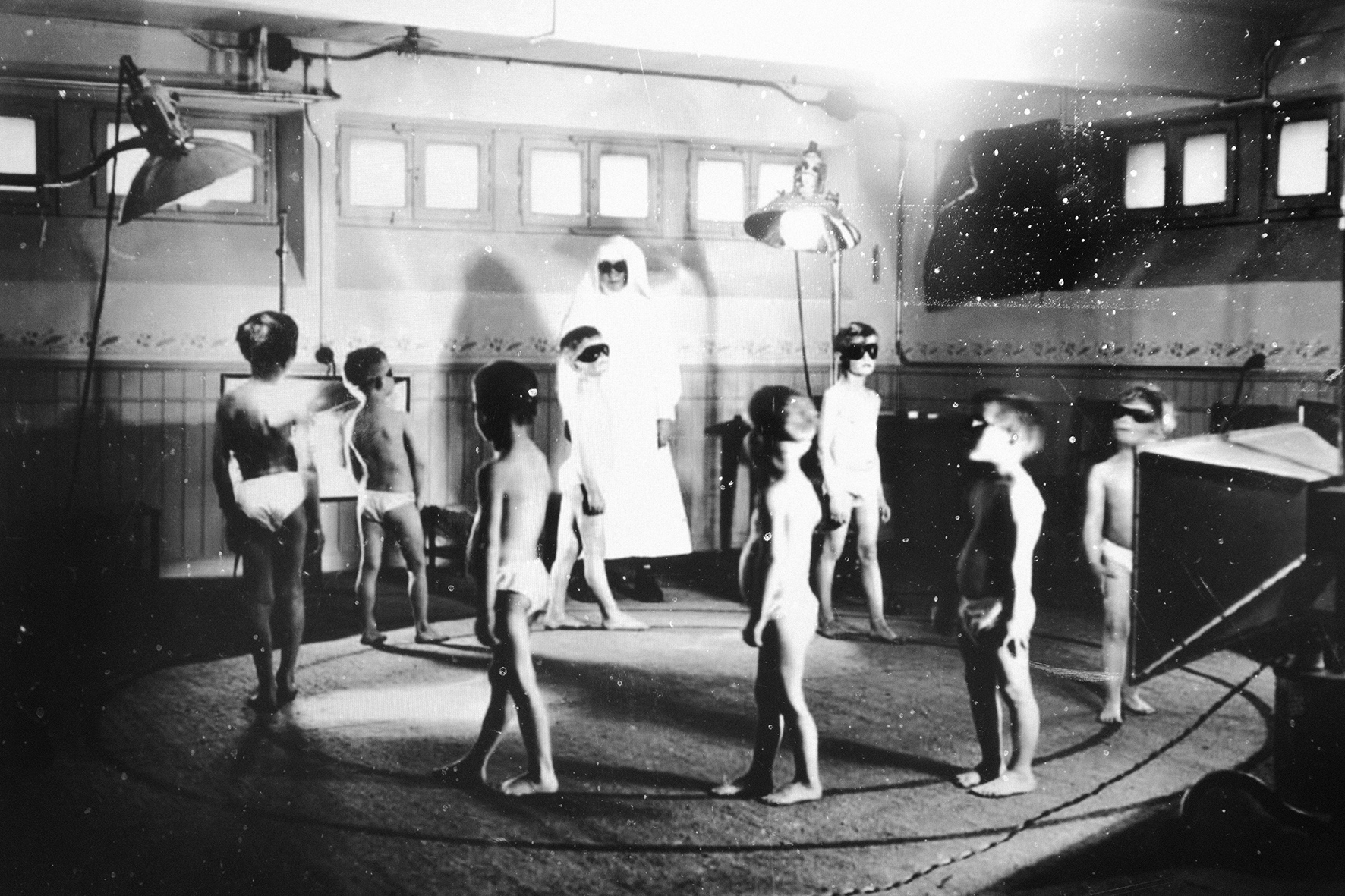
Sophie Gabrielle (Australian) 'Worry For The Fruit The Birds Won't Eat #5' 2017-2019 from the exhibition 'Sophie Gabrielle: Worry For The Fruit The Birds Won't Eat' at the Centre for Contemporary Photography, Fitzroy, Melbourne, June - August, 2019


Sophie Gabrielle (Australian)
Worry For The Fruit The Birds Won’t Eat #5
2017-2019


This is the first posting on three strong exhibitions at the Centre for Contemporary Photography, Melbourne… and my pick of the bunch.

I admire an artist who can tell a moving personal story using historic images. An artist who has the imagination, does the research, and works on the process to fulfil the conceptualisation of an idea… to tell that personal story in strong, emotive images that really engage the viewer. Sophie Gabrielle is one such artist.

Gabrielle moves these historic images into the present, and into contemporary relevance, through clear insight into the condition of their becoming. What I mean by that is, she knows her subject matter and she knows where she wants to go with the work. So much contemporary photography is so full of concept that the images are crap. They have no feeling, they have no emotion. Will they engage me a week down the track, or a month, or a year? Will they speak to me, will they reveal themselves to me over and over again? Probably not.

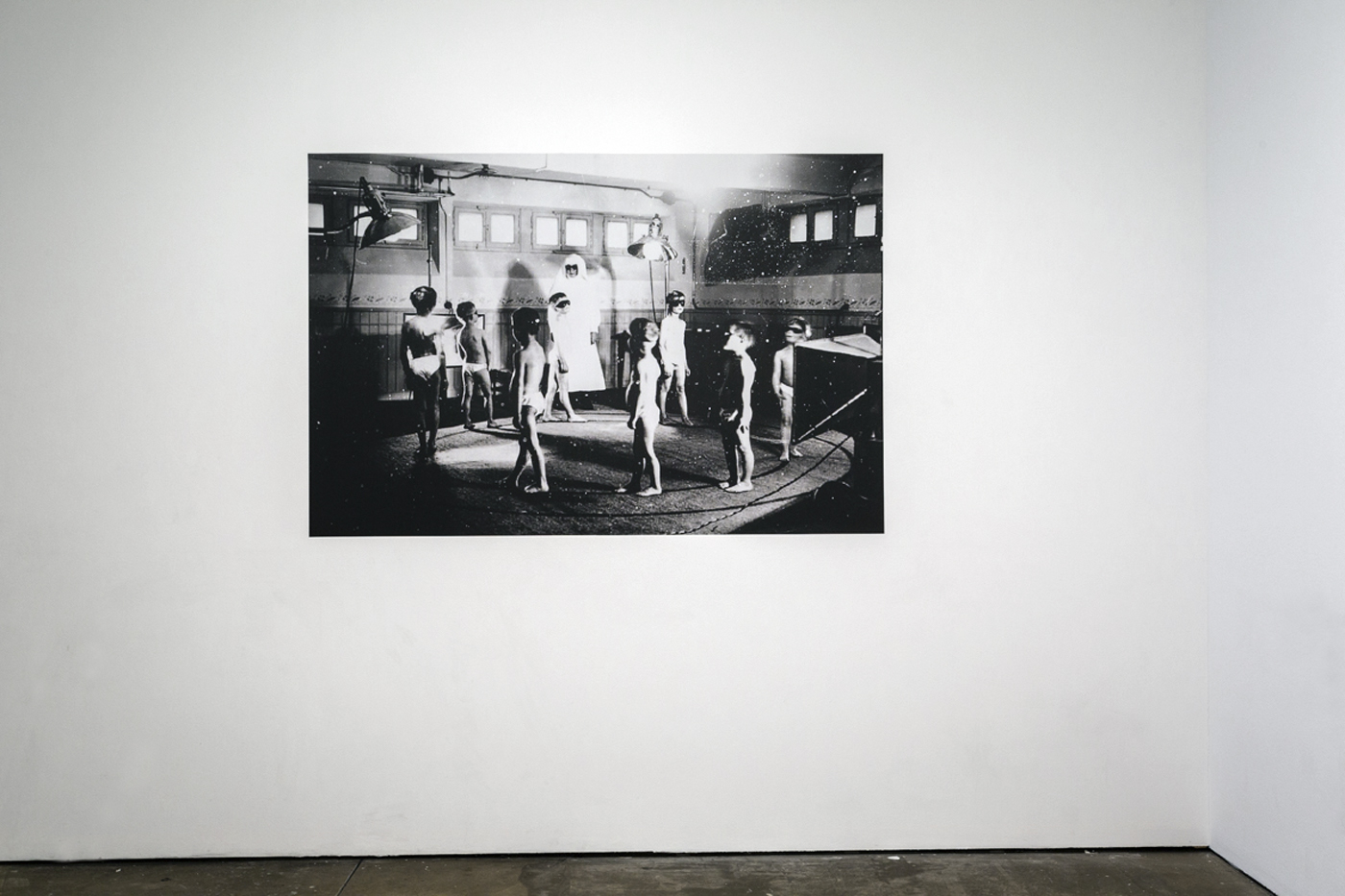
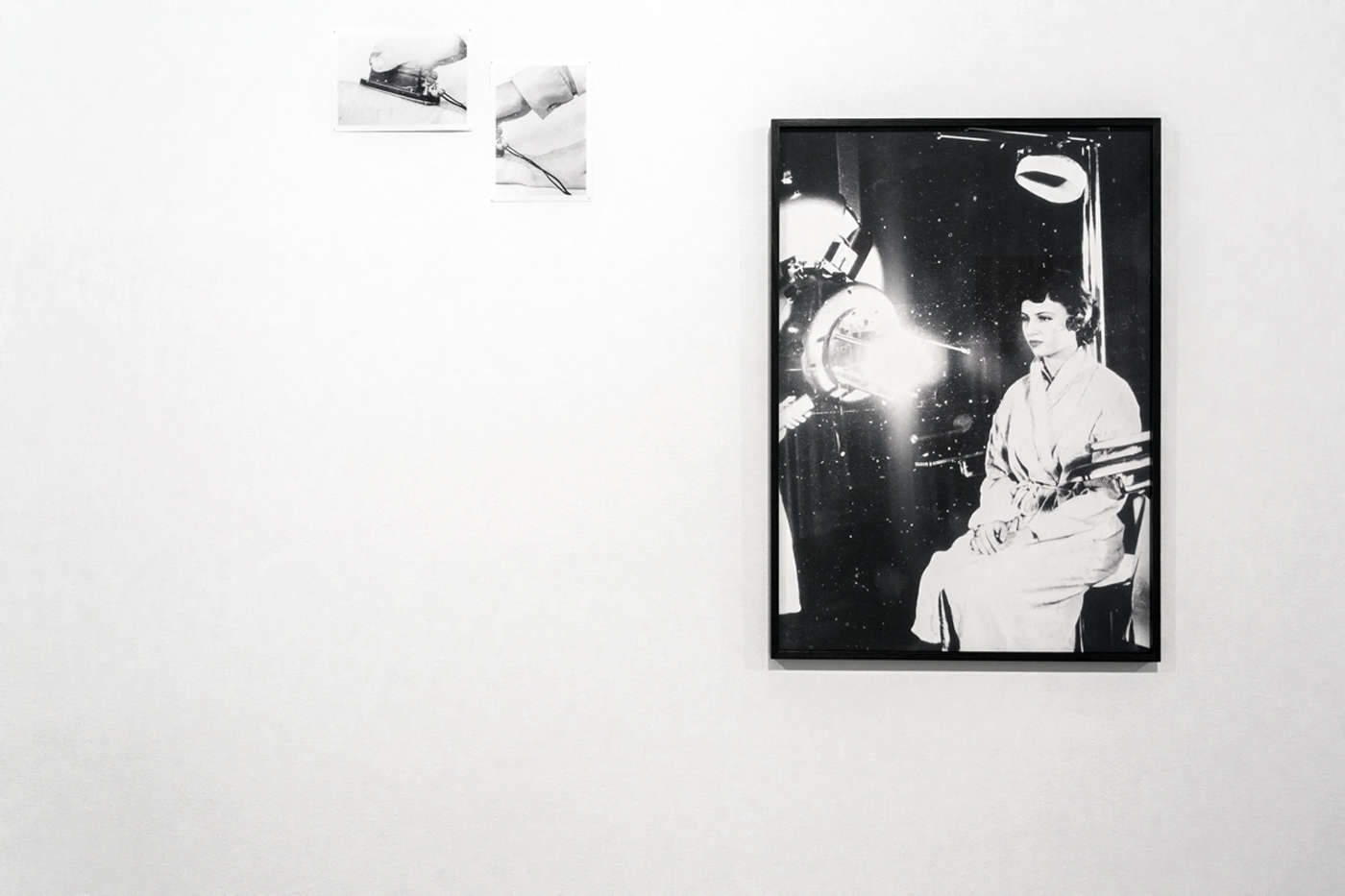
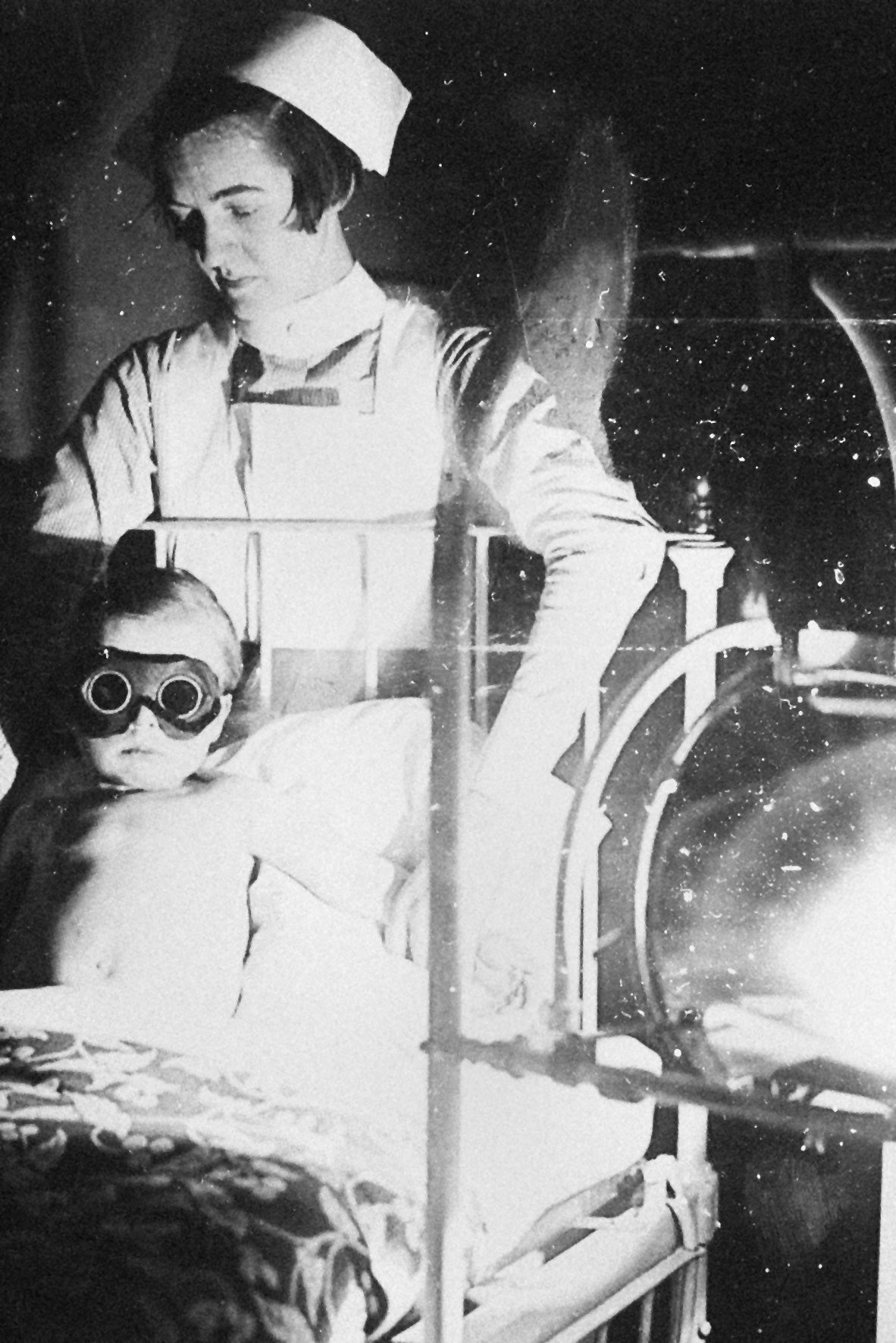
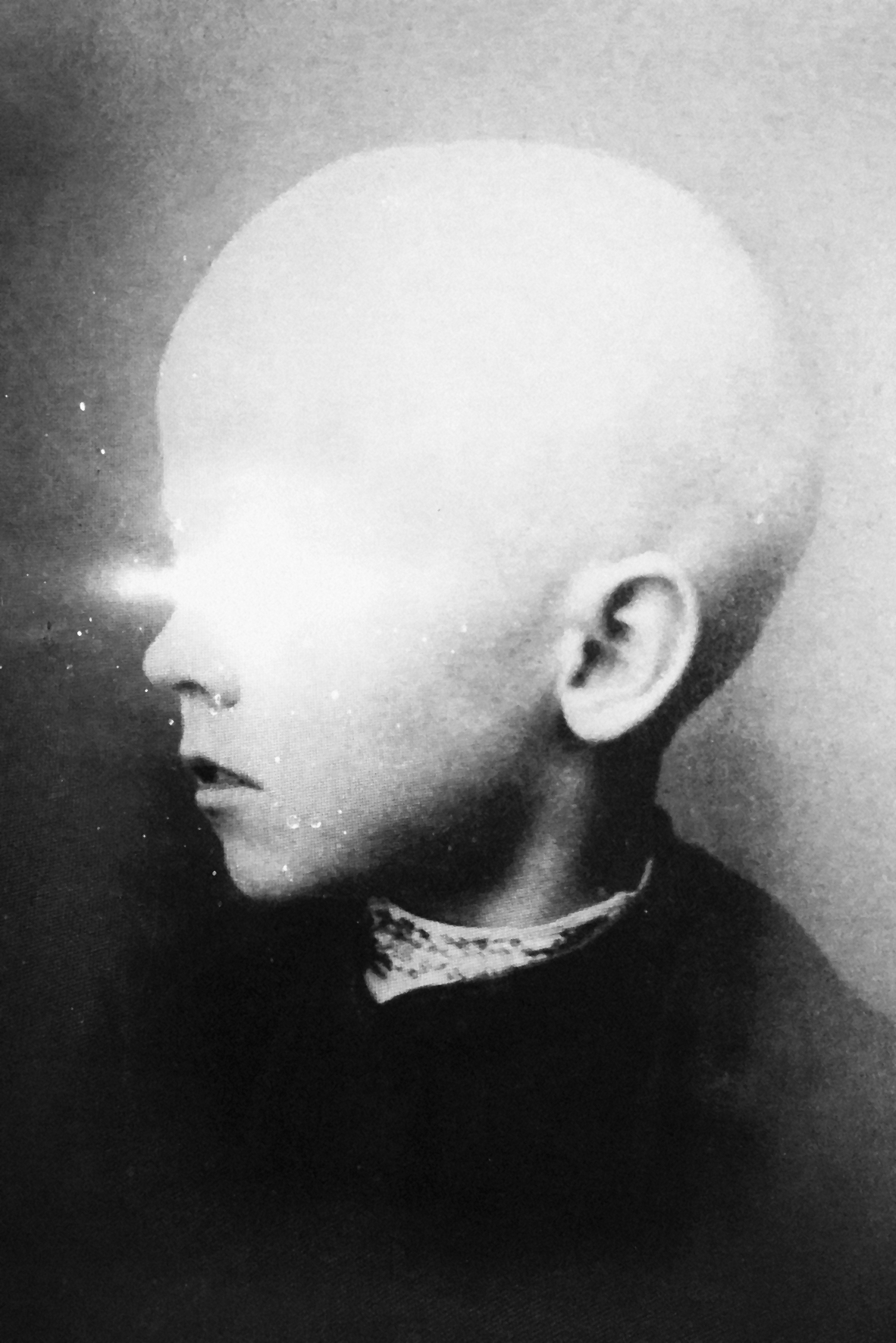
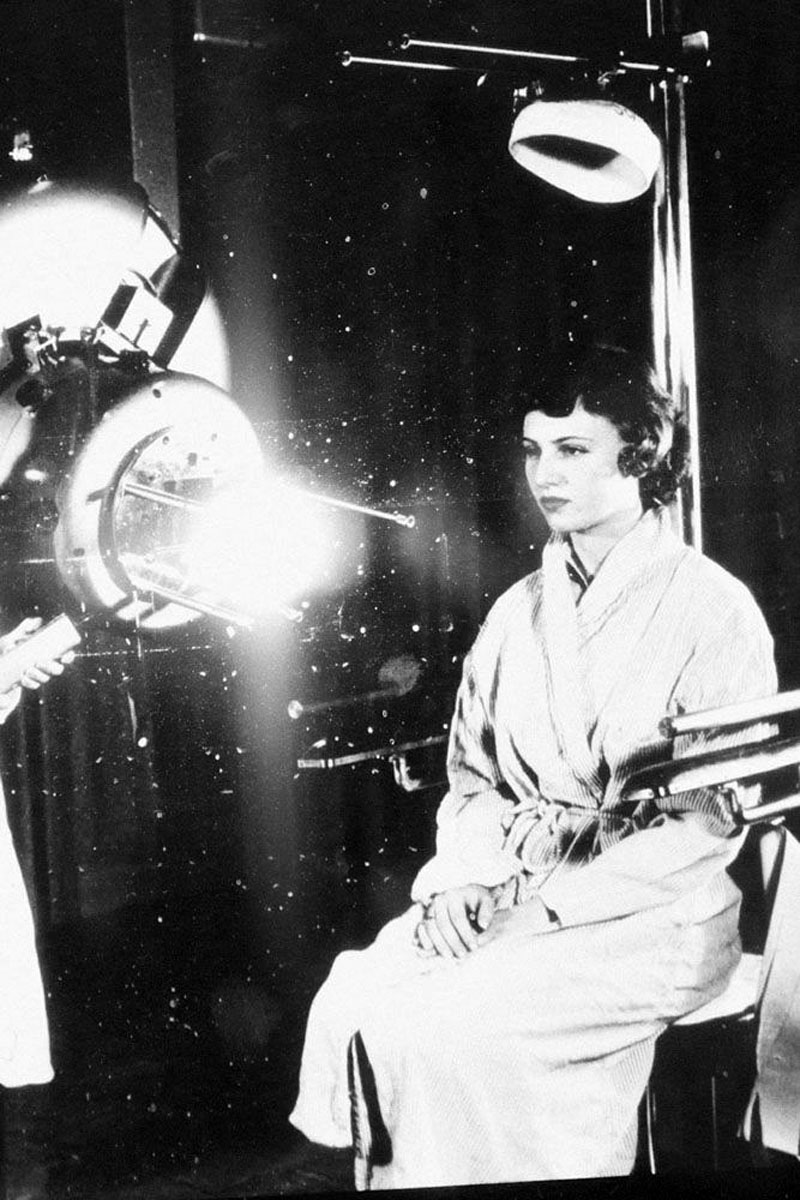
In these photographs Gabrielle combines sci-fi, Village of the Dammed photographs and images of botanicals (which are either medicinal or poisonous, a reflection of the alternate medicinal methods attributed to fighting cancer) with “traces” of her DNA, then re-photographing the image many times, and then degrading the emulsion of the negative in polluted water. In doing so, she pictures worlds in which people think that they are doing the right thing, only to later find that their world has been corrupted and has lost its moral certainty. In this case, Soviet era children blasted with ultraviolet light to cure vitamin D deficiency, or to rid them of freckles, inevitably leading to cancer down the track. The process is called heliotherapy, an archaic treatment for tuberculosis that involved UV light so the kids would produce vitamin D that would fight the bacteria. But as we now know in Australia, solarium and tanning beds have been banned because they significantly increase your risk of cancer.

And why would you want to cure someone of having freckles? Or to extrapolate further, for being left handed, or being gay, or having autism. To make them wear a yellow star or a pink triangle? According to the dictionary, a cure is a method or course of remedial treatment, as for disease. A means of correcting or relieving anything that is troublesome or detrimental. Troublesome or detrimental… or different!

Gabrielle describes Worry for the Fruit the Birds Won’t Eat as “an exploration into the world of the unseen through optics, chemical interactions, and the investigative processes used to photograph something invisible to the naked eye.” Cancer. The Big C. Death. Chemotherapy. Radiation treatment. Leukemia. Melanoma. On and on. Invisible but ever. Present. Here. Now. And then she shows us photographs that seek to dissolve, to dis-solve what is present – freckles, DNA, emulsion, reality – into light. To find an answer to, explanation for, or means of effectively dealing with (a problem or mystery). I’ll let you guess what that mystery might be.

Dr Marcus Bunyan


Many thankx to the Centre for Contemporary Photography for allowing me to publish the photographs in the posting. Please click on the photographs to view a larger version of the image.


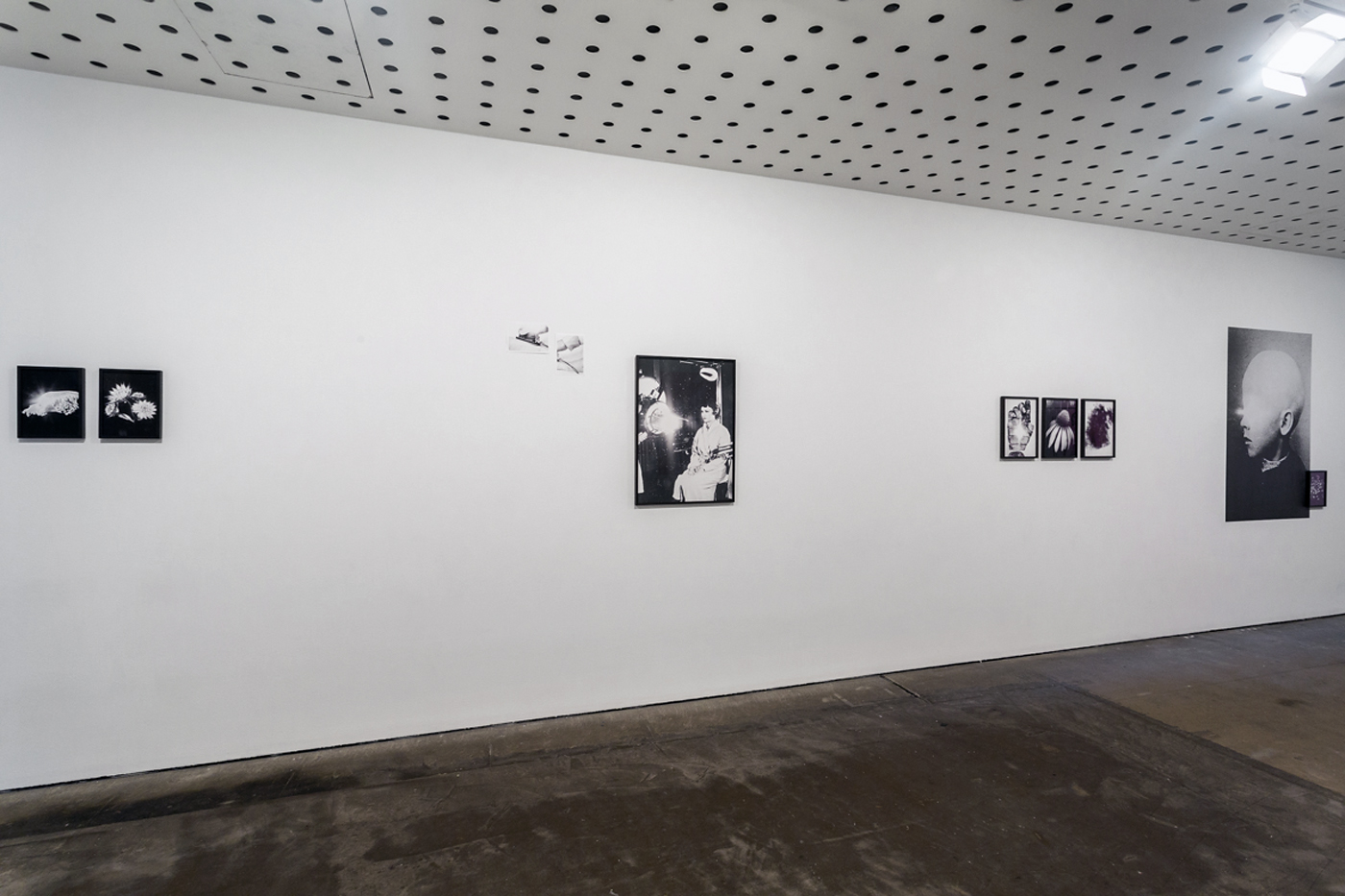
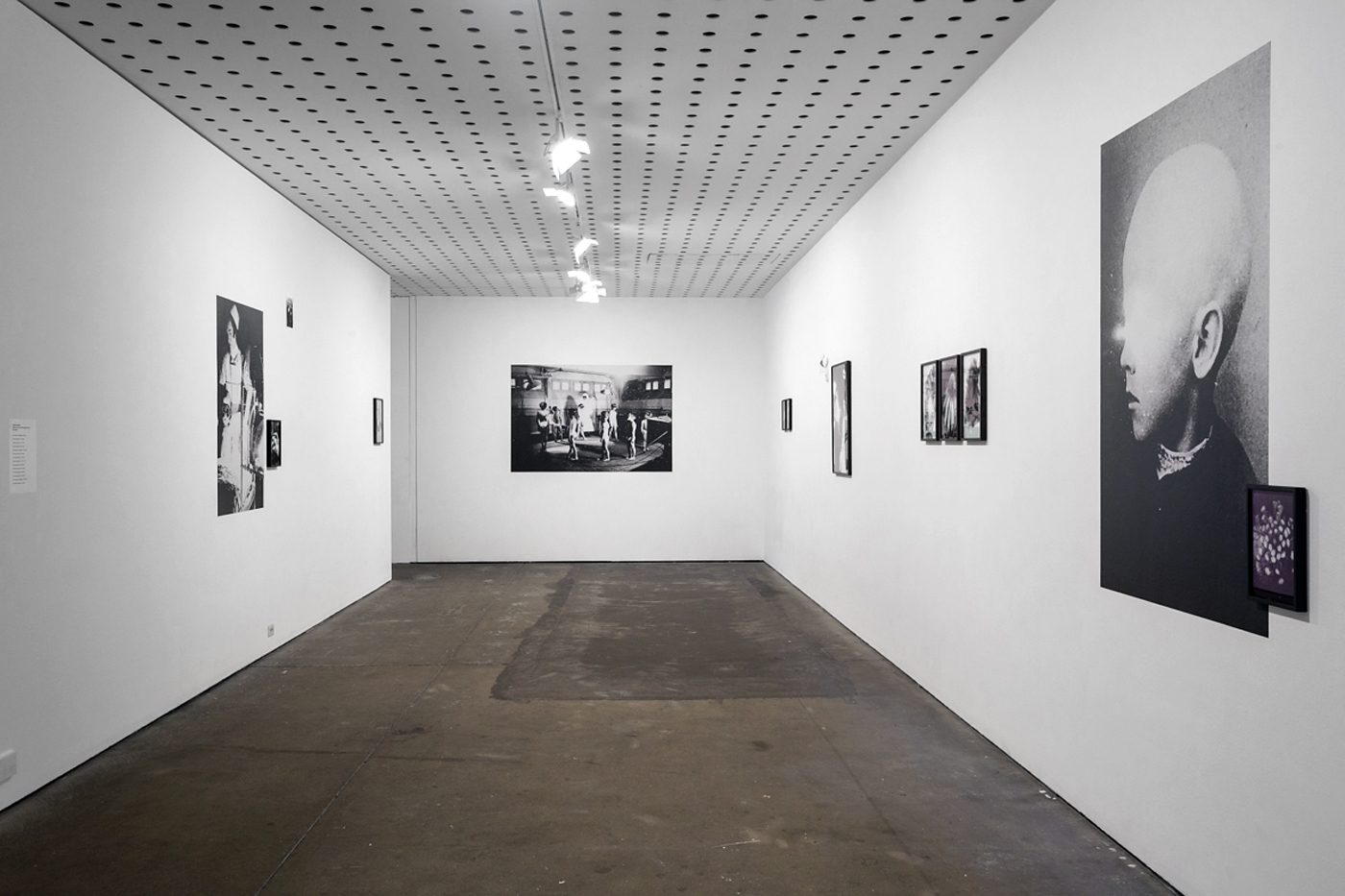
Installation view of the exhibition ‘Sophie Gabrielle: Worry For The Fruit The Birds Won’t Eat’ at the Centre for Contemporary Photography, Melbourne

Installation view of the exhibition ‘Sophie Gabrielle: Worry For The Fruit The Birds Won’t Eat’ at the Centre for Contemporary Photography, Melbourne

Installation view of the exhibition ‘Sophie Gabrielle: Worry For The Fruit The Birds Won’t Eat’ at the Centre for Contemporary Photography, Melbourne

Installation view of the exhibition ‘Sophie Gabrielle: Worry For The Fruit The Birds Won’t Eat’ at the Centre for Contemporary Photography, Melbourne

Installation view of the exhibition ‘Sophie Gabrielle: Worry For The Fruit The Birds Won’t Eat’ at the Centre for Contemporary Photography, Melbourne

Installation view of the exhibition ‘Sophie Gabrielle: Worry For The Fruit The Birds Won’t Eat’ at the Centre for Contemporary Photography, Melbourne

Installation view of the exhibition ‘Sophie Gabrielle: Worry For The Fruit The Birds Won’t Eat’ at the Centre for Contemporary Photography, Melbourne


Installation views of the exhibition Sophie Gabrielle: Worry For The Fruit The Birds Won’t Eat at the Centre for Contemporary Photography, Melbourne
Photographs: J. Forsyth


Through channelling her interest in psychology, science and perception, Sophie Gabrielle creates poetically arresting images that reflect the fragility of the human body, psyche and experience. Combining archival imagery from MRI scans, brain synaptic structures and science experiments from the 1930s and 1940s, Gabrielle creates haunting narratives that interweave the personal and clinical.

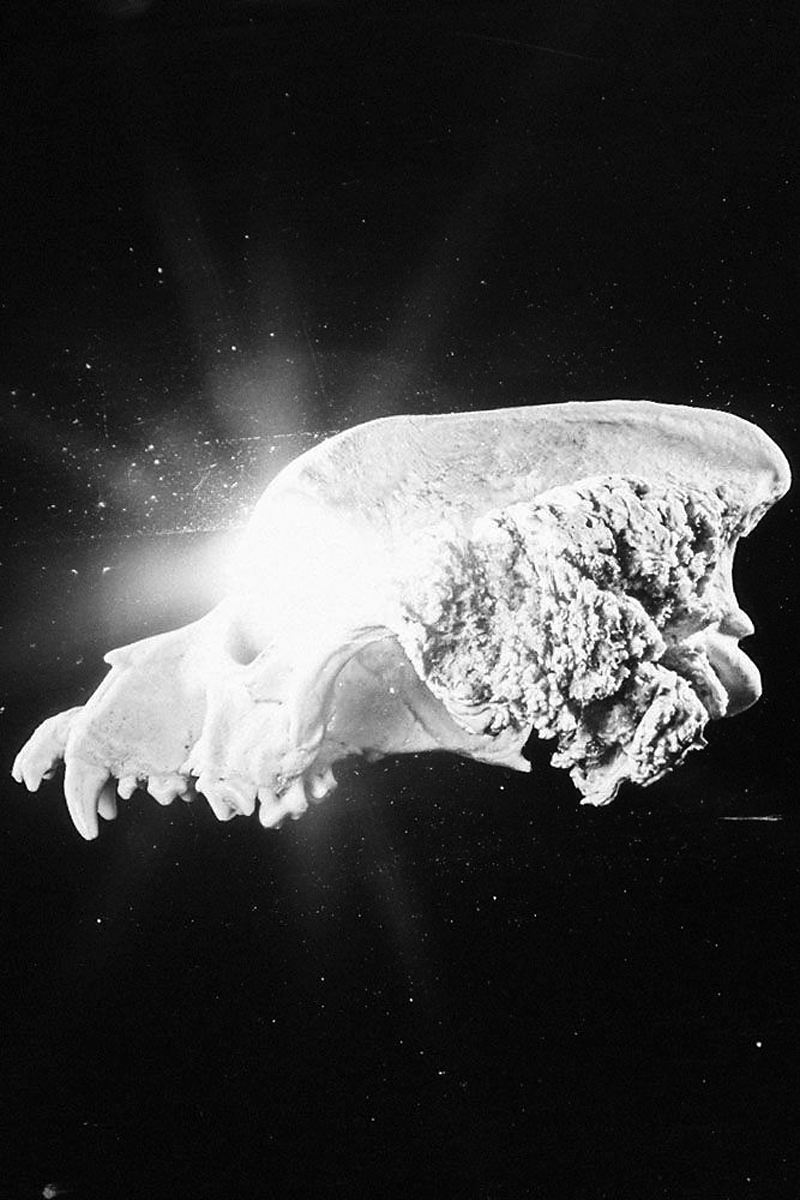
Worry For The Fruit The Birds Won’t Eat is a dreamy and deeply personal exploration of the artists’ experiences with cancer, presenting medicinal botanicals and photographic portraits, alongside archival images from obscure medical research catalogues. Photographed through plates of glass to catch minute particles of her own skin – images are overlaid with the artists’ own DNA – creating interwoven, abstract self-portraits.

Worry For The Fruit The Birds Won’t Eat is an exploration drawn from my experiences with cancer through optics and chemical interactions, and an investigative process to photograph that which is generally invisible to the naked eye.

This project started as a coping mechanism to address the impact cancer has had on my life over the past few years, after all the men in my family were diagnosed with stage four cancer. These works give a sense of the unsettled, fragile, daunting and overwhelming aspects that have culminated during this time in my life.”

~ Sophie Gabrielle, 2019

Biography

Sophie Gabrielle is a Melbourne based artist and curator working between analogue and digital photographic practices. Graduating from Photography Studies College in 2015, her work has been exhibited in Australia, Malaysia, New York, UK and Amsterdam. In 2018, Gabrielle was the first Australian chosen as a finalist for Foam Talent, Foam Fotografiemuseum, Amsterdam. In 2016, Gabrielle was a finalist for the Lensculture Emerging Talent Award.

Press release from the Centre for Contemporary Photography 21/09/2019


Sophie Gabrielle (Australian) 'Worry For The Fruit The Birds Won't Eat' 2017-2019 from the exhibition 'Sophie Gabrielle: Worry For The Fruit The Birds Won't Eat' at the Centre for Contemporary Photography, Fitzroy, Melbourne, June - August, 2019


Sophie Gabrielle (Australian)
Worry For The Fruit The Birds Won’t Eat
2017-2019


Sophie Gabrielle (Australian) 'Worry For The Fruit The Birds Won't Eat #7' 2017-2019


Sophie Gabrielle (Australian)
Worry For The Fruit The Birds Won’t Eat #7
2017-2019


After discovering a number of her close family members were ill with the disease, she searched through physical and digital scientific archives connected to the various strains associated with each loved one. “I was interested in archives that were connected to my family’s own story of diagnosis, treatment, recovery and death,” she explains. The resulting images make up her body of work Worry for the Fruit the Birds Won’t Eat, which Gabrielle describes as “an exploration into the world of the unseen through optics, chemical interactions, and the investigative processes used to photograph something invisible to the naked eye.”

As Gabrielle worked through the archives, she also worked through her own personal trauma and confusion. “It was an all-consuming process, both physically and emotionally. The images I was most drawn to ran parallel to the events happening in the lives of my family members during that painful time.” Each archival discovery pointed Gabrielle in another direction, so that she eventually found major points of comparison across multiple sets of images from a variety of different sources. “My father’s diagnosis of stage four prostate cancer made me reflect on the surgical procedures in the images, and my grandfather’s diagnosis of lung cancer drew me to x-rays, especially after seeing the dark clustered patterns of abnormal cells in the imagery. Also, the collection of botanicals are either medicinal or poisonous – a reflection of the alternate medicinal methods attributed to fighting cancer.”

Upon selecting each archival image, Gabrielle used historical processes to involve her own photographic practice in the work. After leaving each image under a glass plate to collect floating particles of dust and hair, she re-photographed each piece multiple times, creating negatives that incorporate flecks of the environment’s natural disruptions. “There was something healing about getting lost within the process of creating these images, transforming their scientific purpose into something personal and poetic. I left them to collect dust in places that were significant to me and my family.”

After re-photographing the images, Gabrielle submerged her negatives in polluted water, allowing the emulsion’s degradation to further highlight the lyrical features of illness. “I actually did it while sitting on a jetty in Penang, Malaysia,” she explains. “I was thinking about the clear water that runs from taps, and how this re-enters nature to become ill and polluted. It was this unseen danger that intrigued me, and I wanted to incorporate that into the work. The microbes in the polluted water ate away at the film, leaving their own marks upon the negatives before I made the prints.”

This incorporation of intervention and decay into her photographic process soon became an integral part of Gabrielle’s own healing process, affording her a clear state of mind to work through a number of complex emotions.

Extract from Cat Lachowskyj. “Worry for the Fruit the Birds Won’t Eat,” on the Lens Culture website [Online] Cited 21/07/2019


Sophie Gabrielle (Australian) 'Worry For The Fruit The Birds Won't Eat #1' 2017-2019


Sophie Gabrielle (Australian)
Worry For The Fruit The Birds Won’t Eat #1
2017-2019


Sophie Gabrielle (Australian) 'Worry For The Fruit The Birds Won't Eat #13' 2017-2019


Sophie Gabrielle (Australian)
Worry For The Fruit The Birds Won’t Eat #13
2017-2019


Sophie Gabrielle (Australian) 'Worry For The Fruit The Birds Won't Eat' 2017-2019


Sophie Gabrielle (Australian)
Worry For The Fruit The Birds Won’t Eat
2017-2019


Sophie Gabrielle (Australian) 'Worry For The Fruit The Birds Won't Eat' 2017-2019


Sophie Gabrielle (Australian)
Worry For The Fruit The Birds Won’t Eat
2017-2019


Centre for Contemporary Photography

No permanent exhibition space at the moment

Centre for Contemporary Photography website

LIKE ART BLART ON FACEBOOK

Back to top

Exhibition: ‘Karl Blossfeldt. From Nature’s Studio’ at Pinakothek der Moderne, Munich

Exhibition dates: 24th July – 25th October 2015

Curator: Simone Förster


Karl Blossfeldt (German, 1865-1932) 'Four Herbariums with groomed Thistels and Delphinium' undated


Karl Blossfeldt (German, 1865-1932)
Four Herbariums with groomed Thistels and Delphinium
Undated
Stiftung Ann und Jürgen Wilde, Pinakothek der Moderne, Munich


Karl Blossfeldt’s photographs have been associated with Modernism (Bauhaus), Surrealism and New Objectivity / New Vision.

“Blossfeldt’s factual yet finely detailed imagery was praised by Walter Benjamin, who declared that Karl Blossfeldt ‘has played his part in that great examination of the inventory of perception, which will have an unforeseeable effect on our conception of the world’. He compared him to Maholy-Nagy and the pioneers of New Objectivity, and ranked his achievements alongside the great photographers August Sander and Eugene Atget. The Surrealists also championed him, and George Bataille included his images in the periodical Documents in 1929.” (Wikipedia)

Hailed as a master for discovering a hitherto ‘unknown universe’ and for his exemplary technical feats as a photographer Blossfeldt’s work is, nevertheless, decidedly subjective as author Hanako Murata notes in her excellent essay on the artist Material Forms in Nature: The Photographs of Karl Blossfeldt (2014). “Not only did he carefully select, arrange, and in some cases physically modify his specimens, but his meticulous attention to detail and image refinement continued throughout each step of production, beginning with his negatives.” Blossfeldt uses the logic of the plant and the logic of his mind to achieve his final vision. A/symmetry as art form.

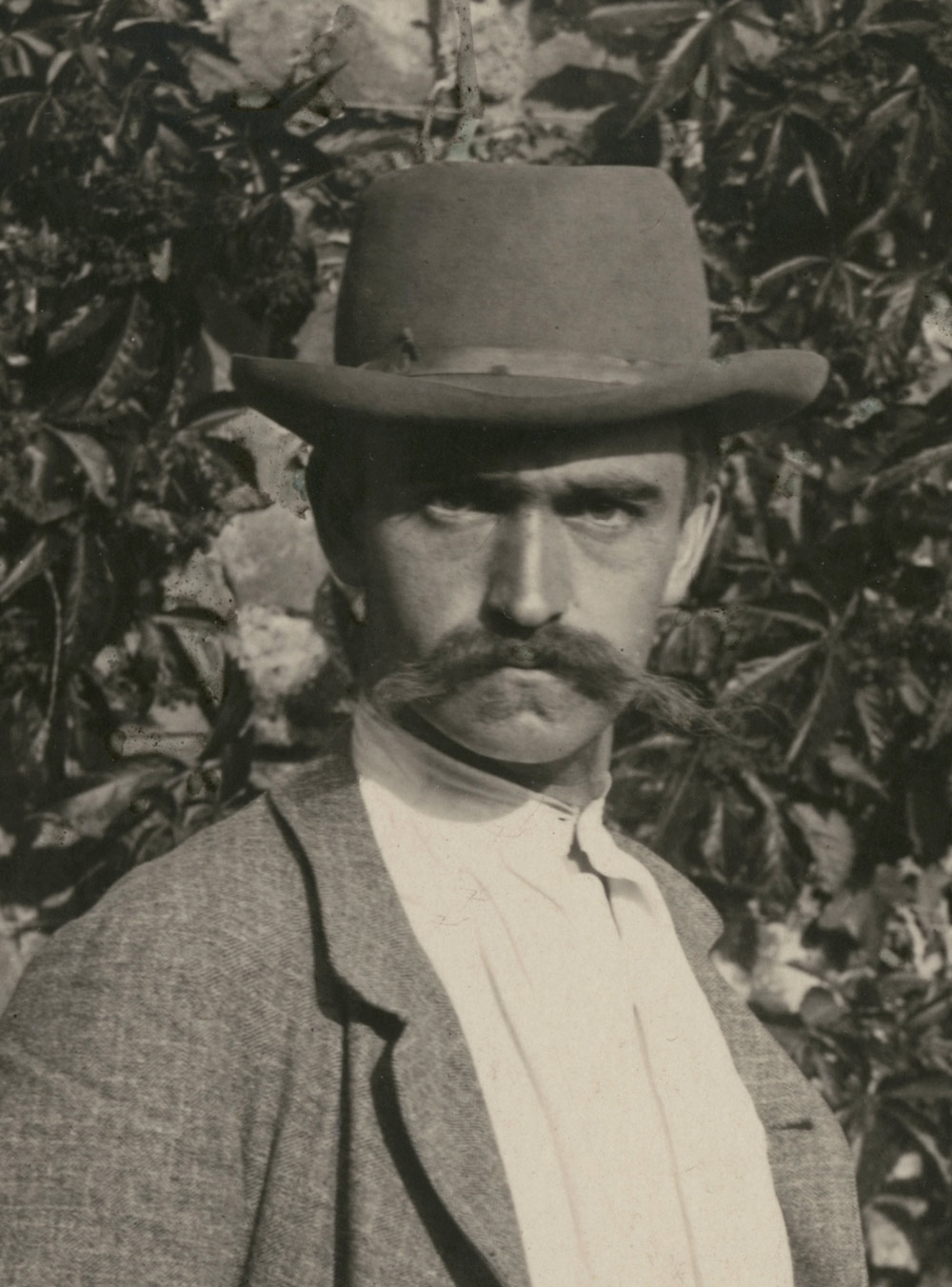
It was Blossfeldt’s conception of the world that created this inventory of perception. He was the human being who recognised these structures, who used the photographs as teaching aids, who saw them as art and a way of restoring the link between man and nature. His vision and his alone. Nothing was left to chance, everything was controlled. You only have to look at his Self portrait, Rome (1895, below) to see that here is a determined man. His body points one way in suit with braces and stiff, high collared shirt, hand clenched at waist while his head snaps towards us with the most incredible stare, almost piercing the viewer with its ferocity. You can still feel that stare after all these decades.

Ranking his photographs alongside that of Sander and Atget is a big call. Personally, too big a call. If I had to put my finger on it, what they lack for me is any form of context in relationship to an externalised nature. They rely on the form of the plant and not its relationship to the world in which it lives. To discover those forms in science and then transfer them to the field of art is a truly inspiring vision that only Blossfeldt had. He manipulated reality to achieve his beautiful, formal re/presentations. But do they take me to the places that Sander and Atget’s photographs do. No. Here is the thing itself, and not what else it can stand for. Despite their call to Surrealism, their attention to detail leaves the images little room for rumination. Perhaps he took each step of that image refinement too far. Sometimes you need a little chaos in your world order, for the world of pattern cannot exist without randomness and mutation.

Dr Marcus Bunyan


Many thankx to Pinakothek der Moderne for allowing me to publish the photographs in the posting. Please click on the photographs for a larger version of the image.

Download Hanako Murata’s essay Material Forms in Nature: The Photographs of Karl Blossfeldt (2.3Mb pdf)


“If I give someone a horsetail he will have no difficulty making a photographic enlargement of it – anyone can do that. But to observe it, to notice and discover its forms, is something that only a few are capable of.”

“My botanical documents should contribute to restoring the link with nature. They should reawaken a sense of nature, point to its teeming richness of form, and prompt the viewer to observe for himself the surrounding plant world.”

“The plant never lapses into mere arid functionalism; it fashions and shapes according to logic and suitability, and with its primeval force compels everything to attain the highest artistic form.”


Karl Blossfeldt


“The striking uniformity of Blossfeldt’s photographs suggests an excellent mastery of studio technique, and indeed, for all the prints’ subsequent associations with New Objectivity, Blossfeldt’s work was decidedly subjective, insofar as he was not shy about modifying his subjects or his images to achieve his final vision. Not only did he carefully select, arrange, and in some cases physically modify his specimens, but his meticulous attention to detail and image refinement continued throughout each step of production, beginning with his negatives.”


Hanako Murata Material Forms in Nature: The Photographs of Karl Blossfeldt 2014, p.2


Karl Blossfeldt (German, 1865-1932) 'Self portrait, Rome' 1895


Karl Blossfeldt (German, 1865-1932)
Self portrait, Rome
1895
Stiftung Ann und Jürgen Wilde, Pinakothek der Moderne, München


Karl Blossfeldt (German, 1865-1932) 'Self portrait, Rome' 1895 (detail)


Karl Blossfeldt (German, 1865-1932)
Self portrait, Rome (detail)
1895
Stiftung Ann und Jürgen Wilde, Pinakothek der Moderne, München


Karl Blossfeldt (German, 1865-1932) 'Nature study (chestnut)' 1890s


Karl Blossfeldt (German, 1865-1932)
Nature study (chestnut)
1890s
Stiftung Ann und Jürgen Wilde, Pinakothek der Moderne, München


Karl Blossfeldt (German, 1865-1932) 'Papaver orientale. Oriental Poppy' before 1928


Karl Blossfeldt (German, 1865-1932)
Papaver orientale. Oriental Poppy
Before 1928
Stiftung Ann und Jürgen Wilde, Pinakothek der Moderne, München


The photographs of plants by the university professor and amateur photographer Karl Blossfeldt (1865-1932) are among the milestones in the history of 20th-century photography. To mark the 150th anniversary of Blossfeldt’s birth, the Ann and Jürgen Wilde Foundation at the Pinakothek der Moderne, Munich is staging a comprehensive exhibition on his life and work.

Focal points of the exhibition are Blossfeldt’s early training as a modeller, his work together with the reformer Moritz Meurer, the photographer’s own handcrafted designs and his teaching at the Königliche Kunstgewerbeschule in Berlin. The preliminary works he made for his seminal publication Urformen der Kunst (Art Forms in Nature) of 1928 and the reception it received at that time, for example at the Bauhaus in Dessau in 1929, form an additional aspect.

The exhibition comprises some 120 photographs, including numerous large-format, historical exhibition prints. Collages of his work, drawings in the artist’s own hand, drafts, archival material and documents render the concept behind Blossfeldt’s teaching and work visible.

The Ann and Jürgen Wilde Foundation manages the Karl Blossfeldt Archive with its unique holdings of original photographs, negatives and documents by Karl Blossfeldt. Together with a large volume of photographs in the Bayerische Staatsgemäldesammlungen, an exceptionally high-quality presentation of Karl Blossfeldt’s photographic work can now be staged and its development shown by means of historical documents and archival material that have hardly ever been seen by the general public.

Text from the Pinakothek der Moderne website


Karl Blossfeldt (German, 1865-1932) 'Adiantum pedatum. Maidenhair Fern' before 1926


Karl Blossfeldt (German, 1865-1932)
Adiantum pedatum. Maidenhair Fern
Before 1926
Stiftung Ann und Jürgen Wilde, Pinakothek der Moderne, München


Karl Blossfeldt (German, 1865-1932) 'Eryngium bourgatii. Bourgatis Eryngo' before 1928


Karl Blossfeldt (German, 1865-1932)
Eryngium bourgatii. Bourgatis Eryngo
Before 1928
Stiftung Ann und Jürgen Wilde, Pinakothek der Moderne, München


Karl Blossfeldt (German, 1865-1932) Heracleum sphondylium. Hogweed' 1898-1932


Karl Blossfeldt (German, 1865-1932)
Heracleum sphondylium. Hogweed
1898-1932
Stiftung Ann und Jürgen Wilde, Pinakothek der Moderne, München


Karl Blossfeldt (June 13, 1865 – December 9, 1932) was a German photographer, sculptor, teacher, and artist who worked in Berlin, Germany. He is best known for his close-up photographs of plants and living things, published in 1929 as, Urformen der Kunst. He was inspired, as was his father, by nature and the way in which plants grow. He believed that ‘the plant must be valued as a totally artistic and architectural structure.’ Among his students at the Berlin Arts and Crafts School was Heinz Warneke. From 1924, he was professor at the Vereinigte Staatsschulen für freie und angewandete Kunst (United State School for Fine and Applied Art) in Berlin.

Blossfeldt made many of his photographs with a home-made camera that could magnify the subject up to thirty times its size, revealing details within a plant’s natural structure. Appointed for a teaching post at the Institute of Royal Arts Museum in 1898 (where he remained until 1930), he established an archive for his photographs. Blossfeldt never received formal training in photography. Blossfeldt developed a series of home-made cameras that allowed him to photograph plant surfaces in unprecedented magnified detail. This reflected his enduring interest in the repetitive patterns found in nature’s textures and forms.

In Berlin from the late nineteenth century until his death, Blossfeldt’s works were primarily used as teaching tools and were brought to public attention in 1928 by his first publication Urformen der Kunst (Art Forms in Nature). Published in 1928 when Blossfeldt was 63 and a professor of applied art at the Berliner Kunsthochschule (Berlin Academy of Art), Urformen der Kunst quickly became an international bestseller and in turn, made Blossfeldt famous almost overnight. His contemporaries were impressed by the abstract shapes and structures in nature that he revealed. Swiftly regarded as a seminal book on photography, Blossfeldt’s factual yet finely detailed imagery was praised by Walter Benjamin, who declared that Karl Blossfeldt ‘has played his part in that great examination of the inventory of perception, which will have an unforeseeable effect on our conception of the world’. He compared him to Maholy-Nagy and the pioneers of New Objectivity, and ranked his achievements alongside the great photographers August Sander and Eugene Atget. The Surrealists also championed him, and George Bataille included his images in the periodical Documents in 1929.

In 2001 Urformen der Kunst was included in “The Book of 101 Books” as one of the seminal photographic books of the twentieth century.

Text from the Wikipedia website


Karl Blossfeldt (German, 1865-1932) 'Blumenbachia hieronymi. Blumenbachia' 1898-1932


Karl Blossfeldt (German, 1865-1932)
Blumenbachia hieronymi. Blumenbachia
1898-1932
Stiftung Ann und Jürgen Wilde, Pinakothek der Moderne, München


Karl Blossfeldt (German, 1865-1932) 'Dipsacus laciniatus. Cutleaf Teasel' before 1927


Karl Blossfeldt (German, 1865-1932)
Dipsacus laciniatus. Cutleaf Teasel
Before 1927
Stiftung Ann und Jürgen Wilde, Pinakothek der Moderne, München


Karl Blossfeldt (German, 1865-1932) 'Equisetum hyemale. Winter Horsetail' before 1929


Karl Blossfeldt (German, 1865-1932)
Equisetum hyemale. Winter Horsetail
Before 1929
Stiftung Ann und Jürgen Wilde, Pinakothek der Moderne, München


Pinakothek der Moderne
Barer Strasse 40
Munich

Opening hours:
Daily except Monday 10am – 6pm
Thursday 10am – 8pm

Pinakothek der Moderne website

LIKE ART BLART ON FACEBOOK

Back to top