Exhibition: ‘Photo-Secession: Painterly Masterworks of Turn-of-the-Century Photography’ at the Utah Museum of Fine Arts, Salt Lake City

Exhibition dates: 24th August – 29th December 2024


Peter Henry Emerson (British born Cuba, 1856-1936) 'Poling the Marsh Hay' c. 1885 from the exhibition 'Photo-Secession: Painterly Masterworks of Turn-of-the-Century Photography' at the Utah Museum of Fine Arts, Salt Lake City, August - December 2024


Peter Henry Emerson (British born Cuba, 1856-1936)
Poling the Marsh Hay
c. 1885
Platinum print on paper


Id est / that is

Voluptuous = relating to or characterised by luxury or sensual pleasure

Sensual = late Middle English (in the sense ‘sensory’): from late Latin sensualis, from sensus (see sense)

Sense = various; including:

~ a reasonable or comprehensible rationale i.e. the latent and emerging Modernism inherent in Photo-Secession photographs

~ the way in which a situation [in this case the “reading” of a photograph] can be interpreted i.e. the interpretation of Photo-Secession photographs as either Pictorialist, Modernist or a combination of both

~ a keen intuitive awareness of or sensitivity to the presence or importance of something i.e. the feeling of the photographer towards the object of their attention, revealed in the print, whether that be a nude, a building, pears and an apple or the side of a white barn

~ to be aware of (something) without being able to define exactly how one knows i.e. to be able to detect, recognise, and feel that ineffable “something” that emanates from the object of (y)our attention… in the act of creativity, in the act of seeing

Bringing something to our senses

Thus, the older I get the more I appreciate the faculty of feeling, thought and meaning that is revealed in these revolutionary photographs.

Dr Marcus Bunyan


Many thankx to the Utah Museum of Fine Arts for allowing me to publish the photographs in the posting. Please click on the photographs for a larger version of the image.


Quotes on Walls

“Why, Mr. Stieglitz, you won’t insist that a photograph can possibly be a work of art – you are a fanatic!”


Luigi Palma de Cesnola, Director of the Metropolitan Museum of Art, reportedly said to Alfred Stieglitz, 1902


“The painter need not always paint with brushes, he can paint with light itself. Modern photography has brought light under control and made it as truly art-material as pigment or clay. … The photographer has demonstrated that his work need not be mechanical imitation. He can control the quality of his lines, the spacing of his masses, the depth of his tones and the harmony of his gradations. He can eliminate detail, keeping only the significant. More than this, he can reveal the secrets of personality. What is this but Art?”


Arthur Wesley Dow, 1921


“The photographer’s problem therefore, is to see clearly the limitations and at the same time the potential qualities of his medium… without tricks of process or manipulation, through the use of straight photographic methods. … Photography is only a new road from a different direction but moving toward the common goal, which is Life.”


Paul Strand, 1917


“Pictorial photography owes its birth to the universal dissatisfaction of artist photographers in front of the photographic errors of the straight print. Its false values, its lack of accents, its equal delineation of things important and useless, were universally recognised and deplored by a host of malcontents… I consider that, from an art point of view, the straight print of today is not a whit better than the straight print of fifteen years ago. If it was faulty then it is still faulty now.”


Robert Demachy, 1907


“Gum, diffused lenses, (ultra) glycerining, were of experimental interest once. … Most of these are of more value historically than artistically. The prints are neither painting (or its equivalents) nor photographs. Let the photographer make a perfect photograph. It will be straight and beautiful – a true photograph.”


Alfred Stieglitz, 1919


Photo-Secession: Painterly Masterworks of Turn-of-the-Century Photography celebrates an intrepid group of photographers, led by preeminent photographer Alfred Stieglitz, who fought to establish photography as fine art, coequal with painting and sculpture at the turn of the 20th century. The Photo-Secession movement took cues from European modernists – who seceded from centuries-old academic traditions – to demonstrate photographic pictures’ aesthetic, creative, and skilful value as art. An homage to Stieglitz, Photo-Secession includes some of the very images that established the appreciation of photography’s artistic merits.

The UMFA will present this exhibition concurrently with Blue Grass, Green Skies: American Impressionism and Realism from the Los Angeles County Museum of Art to draw attention to the cyclical dialogue between painting and photography in the late 19th and early 20th centuries. During this period, photographers manipulated their images at various stages of production to imitate painterly effects, while painters worked and reworked their oils to imitate the immediacy of photography, demonstrating a remarkable reciprocity between these two art forms.

Text from the Utah Museum of Fine Arts website


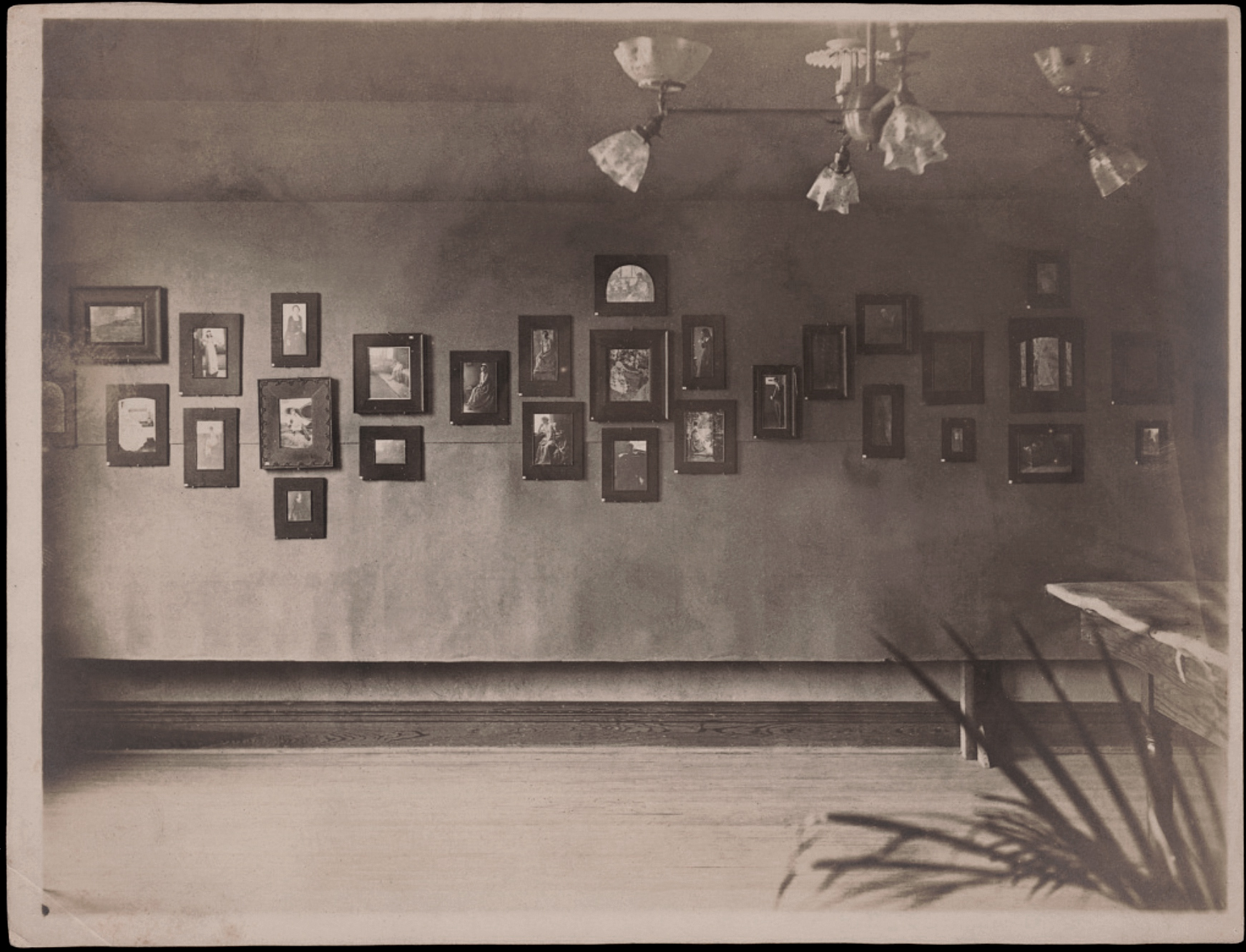
Installation view of the exhibition 'Photo-Secession: Painterly Masterworks of Turn-of-the-Century Photography' at the Utah Museum of Fine Arts showing the work of Heinrich Kühn

Installation view of the exhibition 'Photo-Secession: Painterly Masterworks of Turn-of-the-Century Photography' at the Utah Museum of Fine Arts showing the work of Heinrich Kühn


Installation view of the exhibition Photo-Secession: Painterly Masterworks of Turn-of-the-Century Photography at the Utah Museum of Fine Arts showing the work of Heinrich Kühn
Image courtesy of the Utah Museum of Fine Arts


Installation view of the exhibition 'Photo-Secession: Painterly Masterworks of Turn-of-the-Century Photography' at the Utah Museum of Fine Arts showing at centre from left to right, Bernard Shea Horne 'Doorway Abstraction'; Drahomir Josef Ruzicka 'The Arch, Pennysylvannia Station' c. 1920; Arnold Genthe 'Acoma Pueblo, New Mexico' c. 1920; William E. Dassonville 'The Great Highway, San Francisco' c. 1905


Installation view of the exhibition Photo-Secession: Painterly Masterworks of Turn-of-the-Century Photography at the Utah Museum of Fine Arts showing at centre from left to right, Bernard Shea Horne Doorway Abstraction; Drahomir Josef Ruzicka The Arch, Pennysylvannia Station c. 1920; Arnold Genthe Acoma Pueblo, New Mexico c. 1920; William E. Dassonville The Great Highway, San Francisco c. 1905


Installation view of the exhibition 'Photo-Secession: Painterly Masterworks of Turn-of-the-Century Photography' at the Utah Museum of Fine Arts showing from top left to right, Edward Steichen 'Lotus, Mount Kisco' 1915; Edward Steichen 'Calla Lily' c. 1921; Edward Steichen 'Three pears and an apple' c. 1921; Edward Steichen 'Blossom of White Fingers' c. 1923


Installation view of the exhibition Photo-Secession: Painterly Masterworks of Turn-of-the-Century Photography at the Utah Museum of Fine Arts showing from top left to right, Edward Steichen Lotus, Mount Kisco 1915; Edward Steichen Calla Lily c. 1921; Edward Steichen Three pears and an apple c. 1921; Edward Steichen Blossom of White Fingers c. 1923


Installation view of the exhibition 'Photo-Secession: Painterly Masterworks of Turn-of-the-Century Photography' at the Utah Museum of Fine Arts

Installation view of the exhibition 'Photo-Secession: Painterly Masterworks of Turn-of-the-Century Photography' at the Utah Museum of Fine Arts


Installation view of the exhibition Photo-Secession: Painterly Masterworks of Turn-of-the-Century Photography at the Utah Museum of Fine Arts


Installation view of the exhibition 'Photo-Secession: Painterly Masterworks of Turn-of-the-Century Photography' at the Utah Museum of Fine Arts showing in the display cabinet issues of the magazine 'Camera Work', 1903-1917. Edited by Alfred Stieglitz and Edward Steichen


Installation view of the exhibition Photo-Secession: Painterly Masterworks of Turn-of-the-Century Photography at the Utah Museum of Fine Arts showing in the display cabinet issues of the magazine Camera Work, 1903-1917. Edited by Alfred Stieglitz and Edward Steichen


The Role of Camera Work

One of the key platforms for the Photo-Secession movement was the influential journal Camera Work, edited by Stieglitz and Steichen. Published from 1903 to 1917, Camera Work featured the work of Photo-Secessionists alongside essays and critiques that championed the artistic potential of photography. The journal played a crucial role in shaping public and critical perceptions of photography, providing a space for photographers to showcase their work and engage in intellectual discourse.

Adelaide Ryder. “The Photo-Secession Movement: Pioneering Artistry in Early Photography,” on the UMFA website Nd [Online] Cited 22/10/2024


Introduction

This exhibition celebrates 26 intrepid artists at the turn of the 20th century who sought to establish photography as a fine art equal to long-established media like painting, sculpture, drawing, and printmaking. This movement in the United States centred on the group dubbed the Photo-Secession. While each of the Photo-Secessionists had their distinctive approaches, their works are hand-crafted photographic prints of traditional artistic subjects, such as landscape, portraiture, figure study, and still life. This combination of painterly imagery and printmaking is also known as Pictorialism.

The passionate leader and tenacious advocate of the Photo-Secession was Alfred Stieglitz, who advanced the visions of the most ambitious photographers of the time, including Heinrich Kühn, Gertrude Käsebier, Edward Steichen, Paul Strand, and Clarence White. Stieglitz tirelessly promoted art photography through his exhibition space in New York City – the Little Galleries of the Photo-Secession and later called simply 291 – as well as through the journals he edited – Camera Notes (1897-1903) and Camera Work (1903-1917).

This exhibition also covers the breakup of the Photo-Secession, as some photographers rejected Pictorialism while others remained staunchly committed to it. The Photo-Secession itself irrevocably split apart around 1917. Artists led by Stieglitz, Steichen, and Strand switched to Straight Photography, an approach involving sharp focus and direct printing of the original shot. Artists led by Käsebier and White continued to innovate through painterly approaches using soft focus and manipulated prints.

The works in this exhibition represent some of the most influential artists and iconic images of the period as well as superb examples of a variety of photographic printing techniques, including platinum, gum-bichromate, carbon, cyanotype, and bromoil.

All works of art this exhibition are from the private collection of Michael Mattis and Judith Hochberg. This exhibition is organised by art2art Circulating Exhibitions.

The Rebirth of Art Photography in Europe

In the first few decades after the invention of photography in 1839, painters played an instrumental role in the development of this new medium. Artist-photographers like D.O. Hill in Edinburgh and Gustave Le Gray in Paris exhibited their photographs alongside paintings, drawings, and prints. The novelty of the photograph led to the proliferation of portrait studios and mass-produced views of famous monuments or exotic locales for the tourist trade. By the 1860s photography was considered a bourgeois technical profession. The Kodak camera, first issued in 1888, further popularised photography with its roll film, simple controls, and reasonable cost of one dollar (about $33 today).

Even as more and more individuals could access the means to make photos, artist-photographers advocated for the status of their medium and demanded a differentiation between their work and the products of point-and-shoot cameras. In 1889 Peter Henry Emerson published the book Naturalistic Photography for Students of the Art, which proposed a role for landscape photographers equal to esteemed painters like Camille Corot and Jean-François Millet. Emerson’s publication was a clarion call for a new generation of artistic photographers, and Pictorialism was born.

Pictorialist photographers enthusiastically pursued their new movement, pioneering soft-focus lenses and manipulatable printing methods. Soon they were forming regional clubs across Europe and resumed exhibiting their prints as art. The photographers that formed the t in London were particularly active and influential, and Pictorialism spread to other cultural centres like Paris, Berlin, and Vienna.

Alfred Stieglitz and the American Pictorialist Movement

Born in Hoboken, New Jersey, but educated largely in Germany, Alfred Stieglitz (1864-1946) watched the flowering of European Pictorialism with a mixture of aesthetic appreciation and fierce competitiveness, writing in 1892:

“Every unbiased critic will grant that we [American photographers] are still many lengths in the rear, apparently content to remain there, inasmuch as we seem to lack the energy to strive forward – to push ahead with that American will-power which is so greatly admired by the whole civilised world.”

Energised by European Pictorialism, Stieglitz championed juried photographic salons in Boston, New York, and Philadelphia. He also edited a series of increasingly ambitious journals about Pictorialist photography, starting with The American Amateur Photographer in 1893, then Camera Notes in 1897, and finally Camera Work starting in 1903. He inaugurated and named the Photo-Secession movement through the landmark exhibition he curated in 1903 at the National Arts Club in New York, which comprised 162 works by 32 artists. The name “Photo-Secession” referred to European avant-garde artistic movements, and in his own words, “Photo-Secession actually means a seceding from the accepted idea of what constitutes a photograph.” Eventually European artists would also be invited to join the Photo-Secession.

In 1905 Stieglitz opened a space at 291 Fifth Avenue in New York, the Little Galleries of the Photo-Secession, later simply called 291. It was the first retail gallery devoted to photography. He supported the venture with his own resources and generous assistance from others, and Edward Steichen was his steadfast associate. By 1915 Stieglitz was also showing avant-garde painting and sculpture at 291, including works by Pablo Picasso, Henri Matisse, and Constantin Brâncuși. Thus, he sought to demonstrate the idea that all art forms were on par with and informed one another.

Close Collaborations and the Sudden End of the Photo-Secession

From 1907 to 1910 Alfred Stieglitz and Clarence White closely collaborated on photographs and a landmark photography exhibition. In 1907 they made a series of 60 nudes, Stieglitz posing the models and White focusing the camera and making most of the prints. The following year, Stieglitz devoted an entire issue of Camera Work to White. In 1910 Stieglitz and White co-curated the International Exhibition of Pictorial Photography at Buffalo’s Albright Gallery (now Albright Knox Gallery). This historic project that included over 600 prints is now regarded as the apex of the Photo-Secession. It was also the final monument of the movement, as each of the major Pictorialists, White included, broke away from Stieglitz in the years that followed.

Significant reasons for the end of the Photo-Secession were Stieglitz’s authoritarian personality and disdain for photographers who needed to earn a living rather than exclusively pursue art for art’s sake. Philosophical differences also explain the rupture. Stieglitz had come to believe that Pictorialism had run its course. The irony was that the Photo-Secession had established photography as fine art through images that imitated other art forms by manipulation at every stage of the process – from lens to negative to print. Their pictures to varying degrees used methods that denied the very essence of photography. Stieglitz asserted that it was time to abandon the “painterly photograph” and to champion photography as fine art with compelling pictures that were truly photographic.

Late Pictorialism and the Clarence White School

As the artist Georgia O’Keeffe, Alfred Stieglitz’s partner for 30 years, acknowledged, “He was either loved or hated – there wasn’t much in between.” For reasons both personal and professional, most of the leading Photo-Secessionists chose not to follow Stieglitz and Paul Strand into Straight Photography. Many clustered instead around Clarence White, who in his gentle and encouraging manner was the antithesis of Stieglitz. In 1914 White founded the Clarence White School of Photography in New York City. In 1916 White along with Gertrude Käsebier and Alvin Langdon Coburn co-founded Pictorial Photographers of America; this new society welcomed members of all backgrounds and published the new journal Photo-Graphic Art.

The Clarence White School continued to be a locus for the training of new photographers until 1940, under the guidance of White’s widow Jane White after his death in 1925. Among the most prominent students of Clarence White are Karl Struss, Anne Brigman, Laura Gilpin, and Doris Ulmann, all of whom are represented in this exhibition. Other notable pupils of White include Margaret Bourke-White, Anton Bruehl, Paul Outerbridge, and Dorothea Lange.

Straight Photography, Edward Steichen, and Paul Strand

The final section of this exhibition focuses on Straight Photography and two of Alfred Stieglitz’s most notable protégés, Edward Steichen and Paul Strand. Between them, they pioneered leading branches of 20th-century American photography.

With the entry of the United States into World War I, both Steichen and Strand were drafted into the U.S. Army. Steichen was a photographer for the Army Air Service Signal Corps in Europe, and Strand was an X-ray technician in the Army Medical Corps. In the years immediately after WWI, they each turned their attention to photographing the natural world: flowers and fruit in Steichen’s case, and toadstools, grasses, and ferns in Strand’s. Both would return to photographing their gardens in the final years of their lives.

Outside the naturalist realm, Steichen and Strand’s paths diverged.

Steichen, an extrovert, pioneered modern fashion and advertising photography for the Condé Nast magazines Vogue and Vanity Fair. Later he was named Director of the Department of Photography at the Museum of Modern Art in New York, where he organised the landmark exhibition, Family of Man, which traveled to 37 countries on six continents and was seen by an estimated nine million people.

Strand, an introvert, traveled to remote places around the world, documenting the landscape, architecture, and people, his work exuding a respect for the dignity of the labouring class, which he absorbed from his mentor, Lewis Hine. Overall, Strand’s profoundly humanist scenes of everyday life influenced a generation of socially conscious photographers who documented the 20th-century crises of the Dust Bowl, the Great Depression, World War II, and more.

Heinrich Kühn

In the late 19th century, European Pictorialism was divided into two camps. On the one side were the purist photographers who, aside from a softening of the lens, opposed extensive manipulation of the negative or the print for artistic effect. On the other side were those who derided “button-pushers” and viewed the “straight” photograph as merely the raw material from which to create an artistic print through elaborate handiwork.

The leader of this latter camp was Heinrich Kühn (1866-1944). Eschewing Modernist tendencies, he chose traditional subject matter of painting from the 17th through 19th centuries: still life, figural studies, and genre scenes. His preference for gum-bichromate and bromoil printmaking techniques, which allowed for extensive manipulation, were intended to provoke the reaction in the viewer: is that really a photograph?

Born in Dresden, Kühn moved to Innsbruck, Austria, after youthful studies in science and medicine. Thanks to a sizeable inheritance, he could devote himself to artistic photography, joining both the Linked Ring in London and Stieglitz’s Photo-Secession in the United States. A trans-Atlantic correspondence with Stieglitz began in 1899 and lasted three decades. They congratulated one another on their latest triumphs and encouraged each other through professional and personal disappointments. In 1909, with Stieglitz’s assistance, Kühn organised the International Photographic Exhibition in Dresden, one of the high points of Pictorialism.

Later in life, Kühn filed multiple patents in photochemistry and camera technology related to Pictorialist photography, but none earned him any money. Tastes had changed, and the painterly photograph had become a quaint curiosity.

Gertrude Käsebier

Gertrude Käsebier (1852-1934) was 37 years old, married, and had three children by the time she began studying art at the Pratt Institute. She had originally purchased a camera to make portraits of her children, but Pratt encouraged its women students to earn a living in the arts. By 1897 she opened a one-room commercial portrait studio in New York City. Her ambition was to make “not maps of faces, but likenesses that are biographies, to bring out in each photograph the essential personality that is variously called temperament, soul, humanity.”

Recognition for Käsebier’s talent and ability came swiftly. In 1898 the painter William Merritt Chase, judging the Philadelphia Photographic Salon, called her work “as fine as anything that [Anthony] Van Dyck has ever done.” For Stieglitz, who organised her first solo show in 1899 at the Camera Club of New York, Käsebier was “beyond dispute the leading portrait photographer in this country.” That year, she sold one of her photographs for the unheard-of sum of $100 (almost $3,800 today).

However, by the time that the Brooklyn Museum honoured Käsebier with a career retrospective in 1929, Pictorialist photography had fallen so far out of fashion that the exhibition was not even reviewed in major journals.

Clarence Hudson White

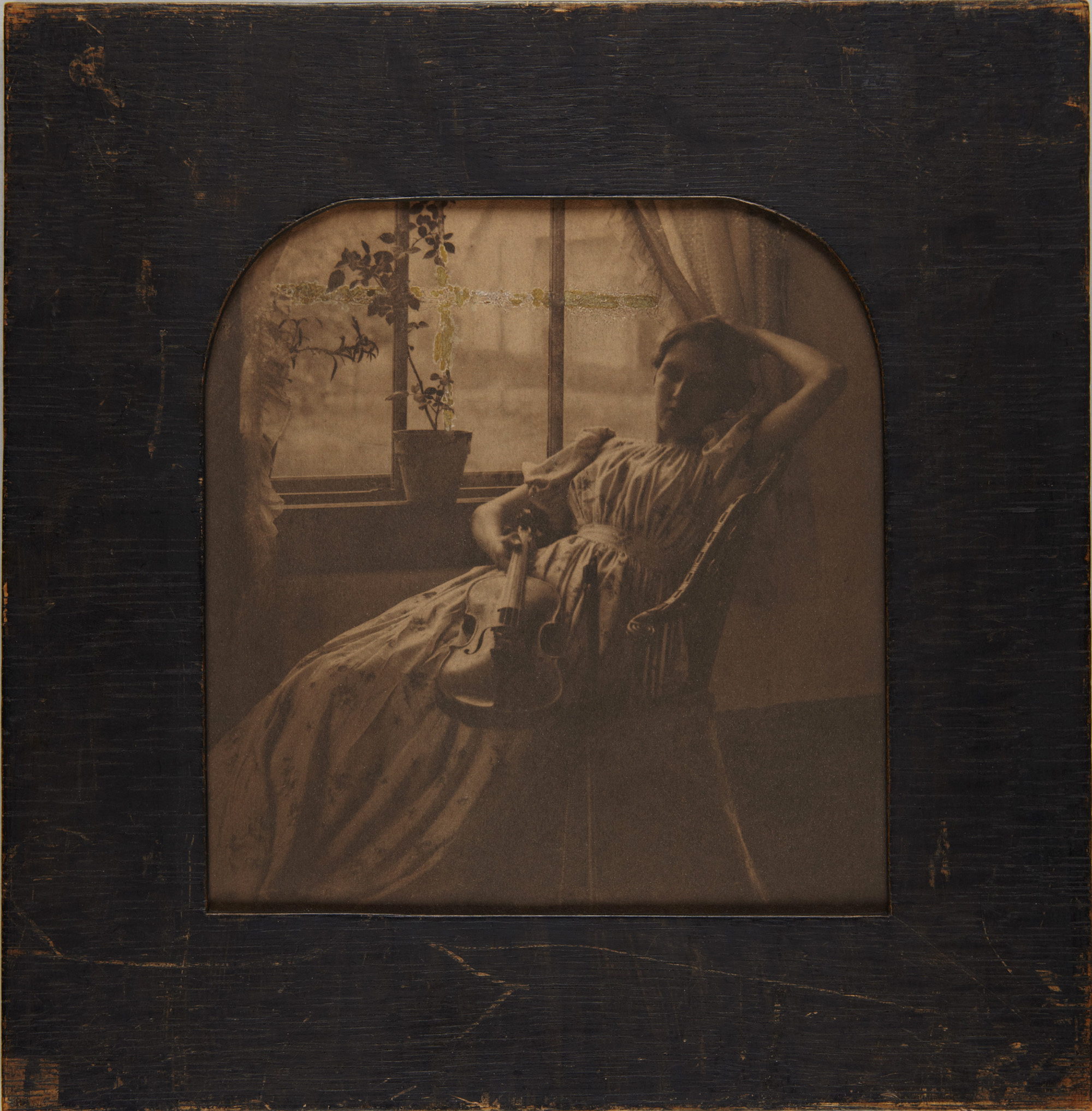
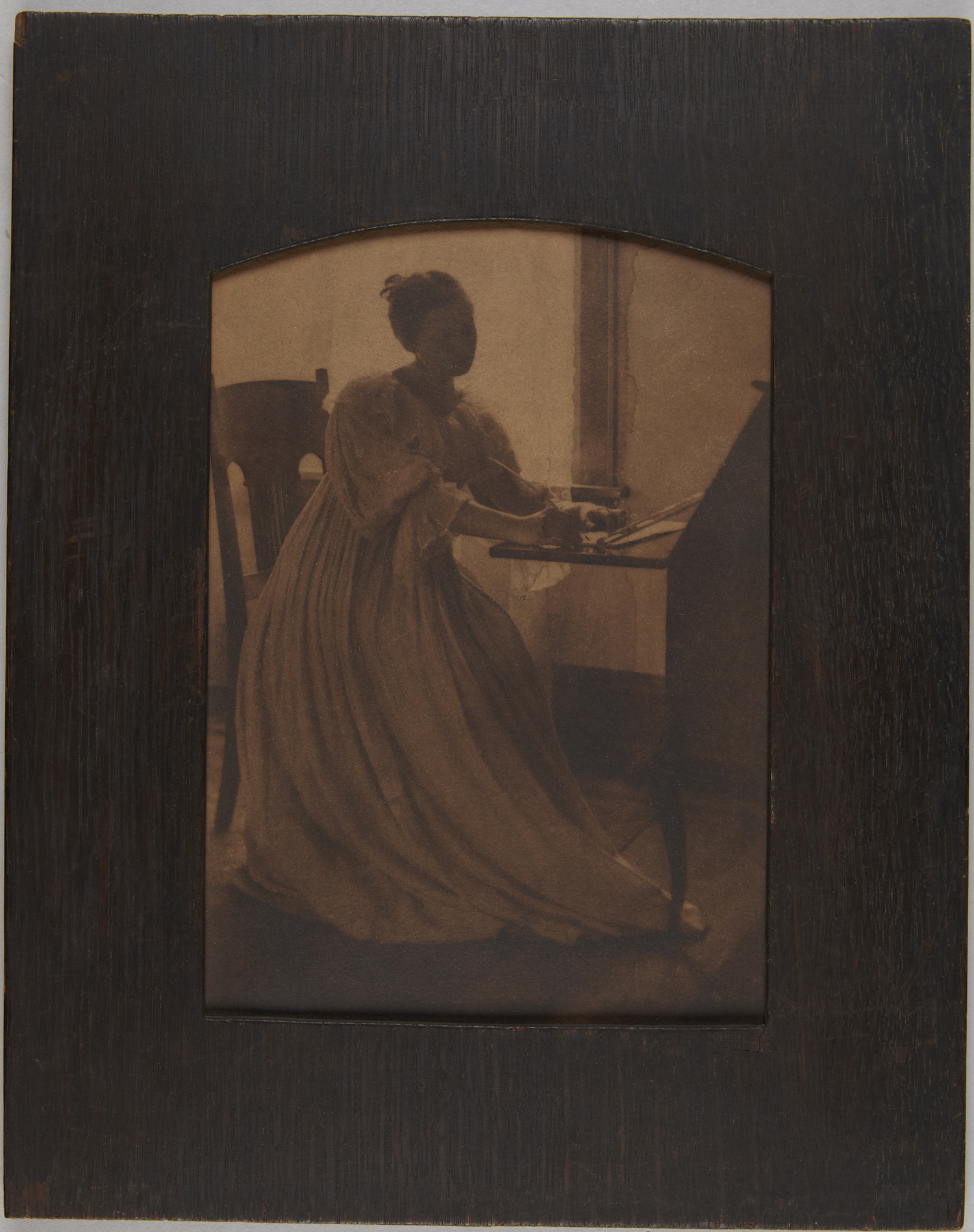
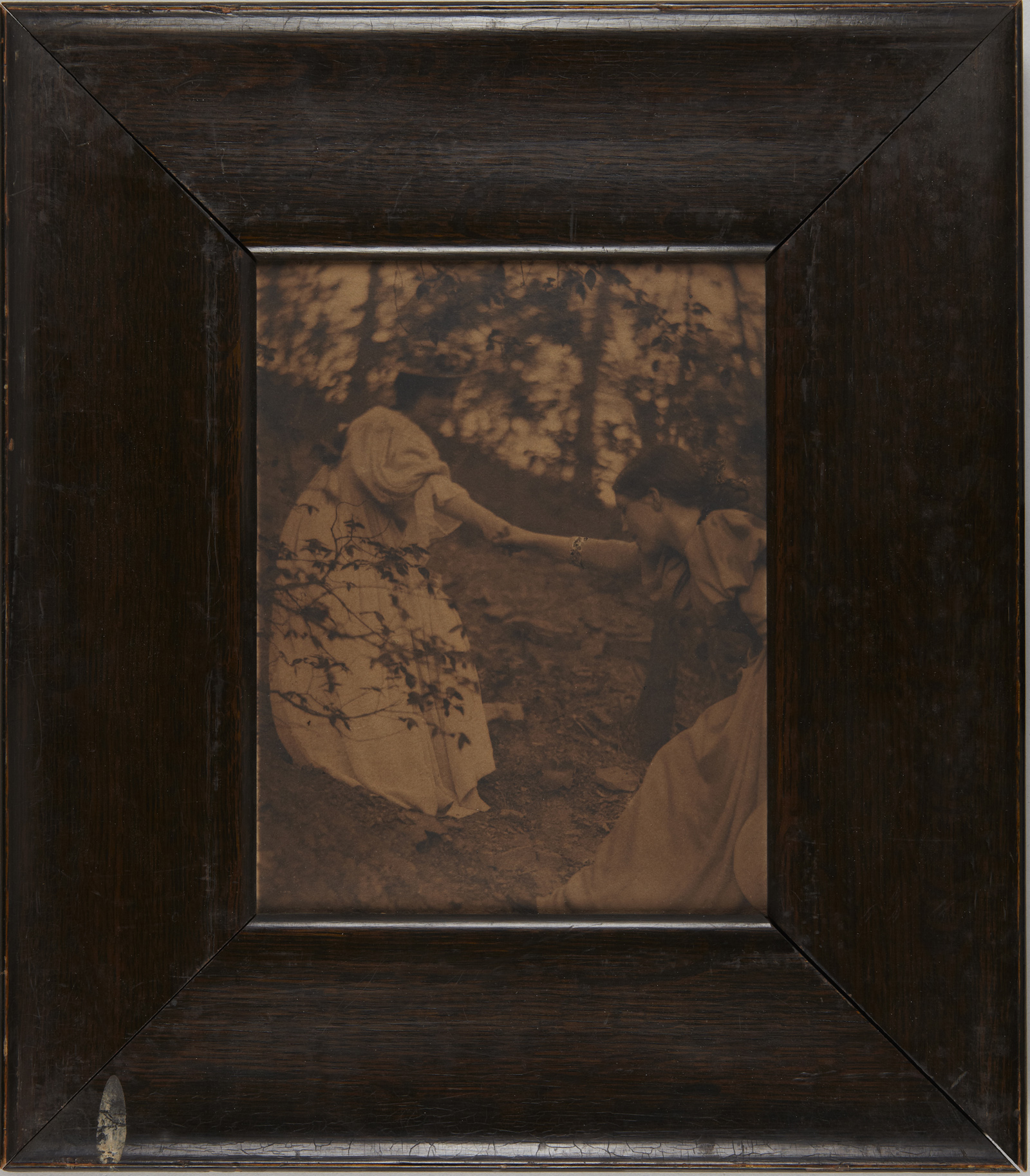
Clarence Hudson White (1871-1925) was a modest, soft-spoken, entirely self-taught genius from America’s heartland. Raised in the small town of Newark, Ohio, he eked out a living as a bookkeeper for a wholesale grocer; each week he saved enough to purchase two glass plates for his camera. He specialised in gorgeously back-lit domestic interior scenes featuring his friends and members of his close-knit extended family.

White’s contributions to the 1898 Philadelphia Photographic Salon were so highly praised that, like Gertrude Käsebier, he was appointed a judge for the following year. The annual salons of the Newark Camera Club that he organised featured the nation’s preeminent Pictorialists and were the direct precursor to Stieglitz’s Photo-Secession. Indeed, the 1900 salon featured his friend and latest discovery, Edward Steichen of Milwaukee.

From 1907 onwards, both in New York City and during summers in rural Maine, White was also America’s foremost teacher of photography. Many of the leading American photographers of the 20th century studied at the Clarence White School.

Paul Strand

In 1915 Alfred Stieglitz found in the young Paul Strand (1890-1976) the leader of a remarkable new direction in photography. Strand had been a senior at the Ethical Culture High School in 1907 when he first visited Gallery 291 on a class trip with his photography teacher, Lewis Hine, whose poignant documents of immigrants and child labor were staples of the Progressive Movement. Eight years later, after thousands of hours in the darkroom at the New York Camera Club, Strand returned to 291 with a portfolio of platinum prints that pointed the way to a new era. Stieglitz deemed them “brutally direct, devoid of all flim-flam, devoid of trickery and of any ‘ism’. These photographs are the direct expression of today.” Stieglitz not only offered Strand an exhibition at 291, but also devoted the final two issues of Camera Work exclusively to him.

What was so compelling and inspiring to Stieglitz in Strand’s photography? His portfolio contained pictures of urban street life and architecture, as well as powerful close-ups of weathered New York faces (influenced by Lewis Hine), boldly composed still lifes, and shadow abstractions taken on a porch in Twin Lakes, Connecticut.

As for photography’s future, Strand and Stieglitz saw eye to eye. In his essay in Camera Work, Strand called for the universal adoption of Straight Photography “without tricks of process or manipulation.” In a provocative lecture at the Clarence White School, Strand condemned “this so-called pictorial photography, which is nothing but an evasion of everything photographic.”


Works by Emerson, Post, Evans, and Sutcliffe
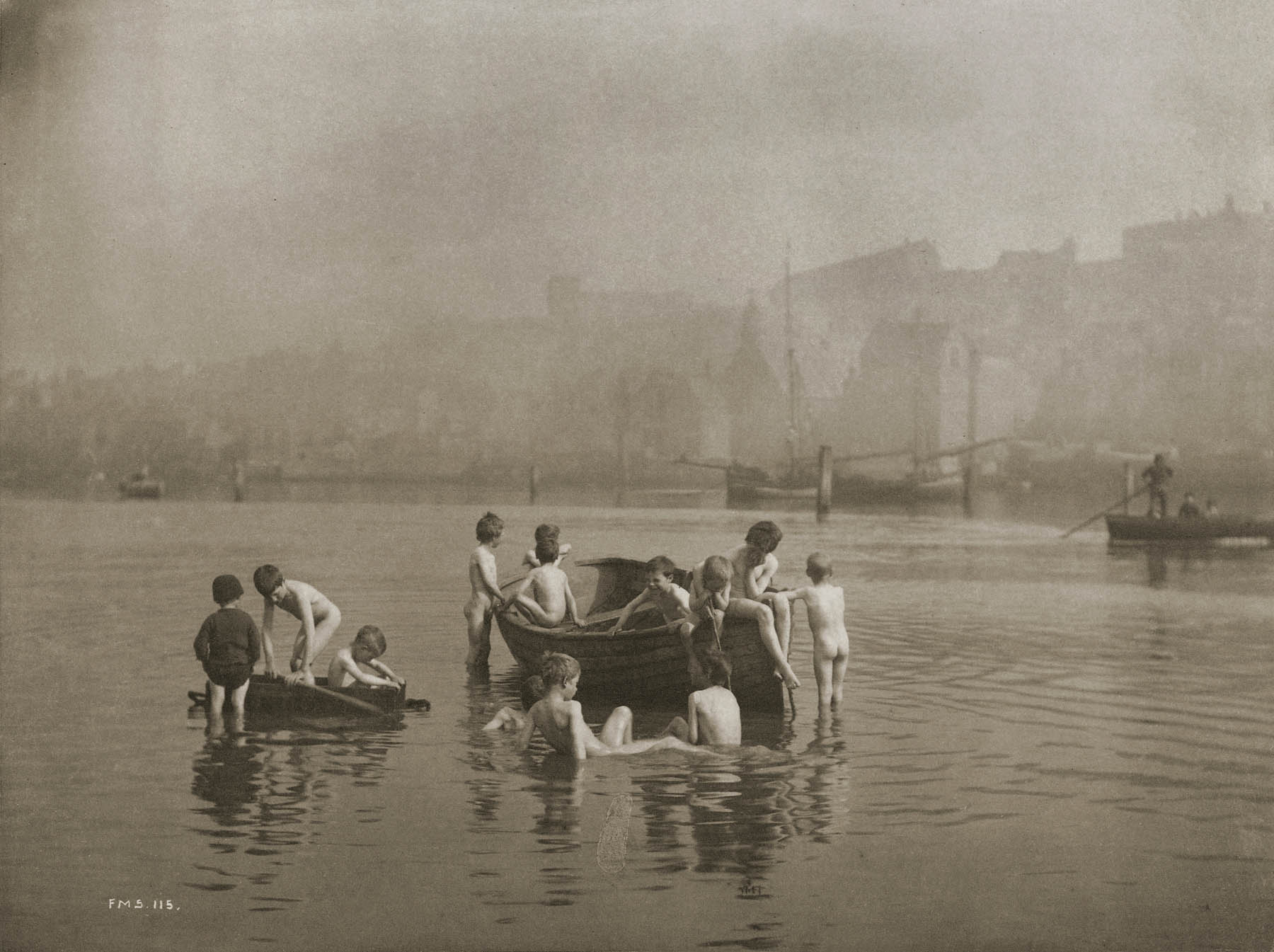
 

Frank Meadow Sutcliffe (British, 1853-1941) 'The Water Rats' 1886 from the exhibition 'Photo-Secession: Painterly Masterworks of Turn-of-the-Century Photography' at the Utah Museum of Fine Arts, Salt Lake City, August - December 2024


Frank Meadow Sutcliffe (British, 1853-1941)
The Water Rats
1886
Platinum print on paper


Sutcliffe was a member of the British photographic society the Linked Ring, which sought to make their work recognised as fine art. He operated a portrait studio in the seaside town of Whitby in North Yorkshire but is remembered for his charming, naturalistic depictions of local life. This photograph resulted in his excommunication by local clergy for its “corrupting” effects. Today this is his best-known photograph, regarded as a study of pure childhood joy.
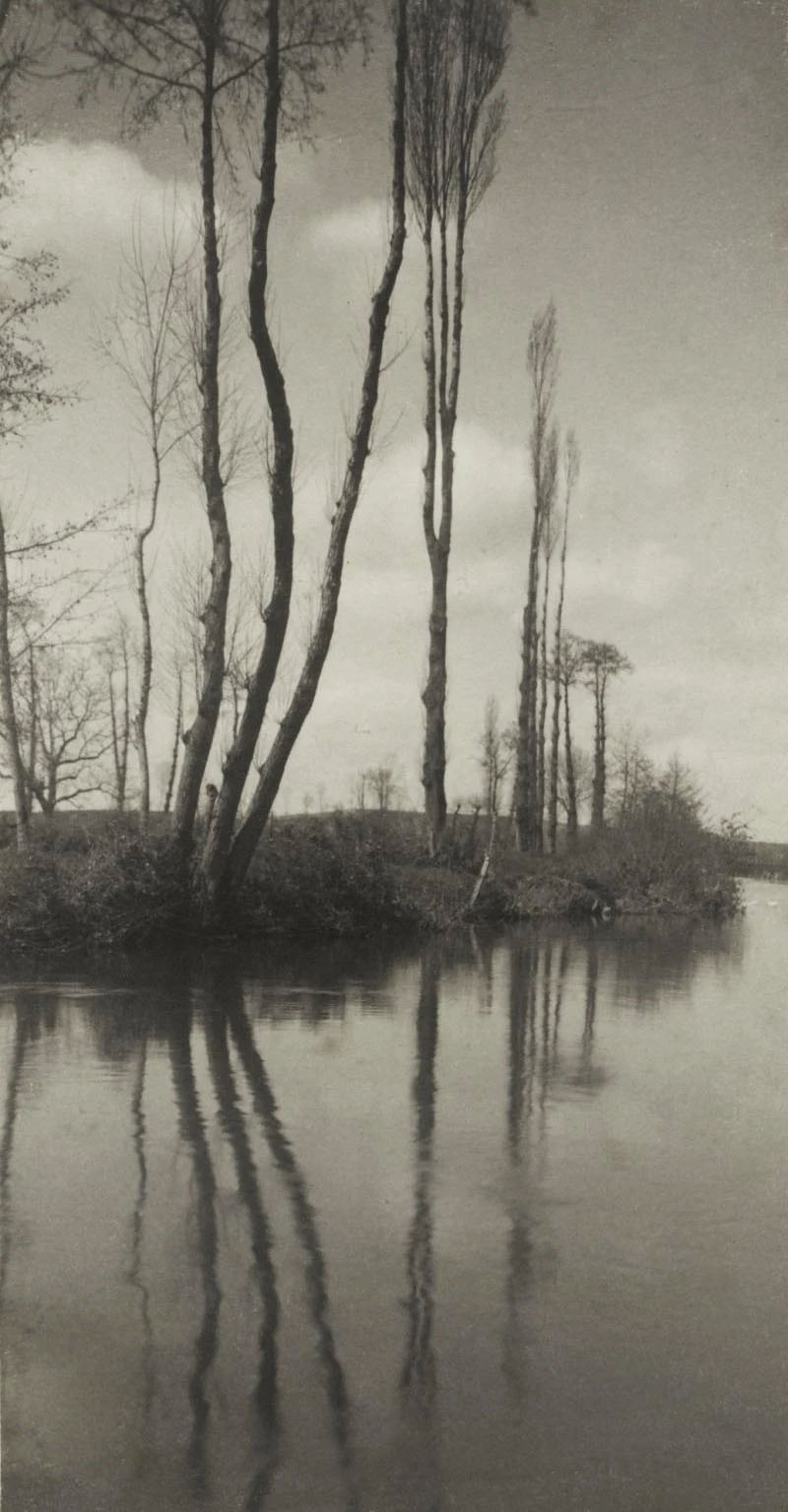
 

Frederick H. Evans (British, 1853-1943) 'Poplars on a French River' c. 1900


Frederick H. Evans (British, 1853-1943)
Poplars on a French River
c. 1900
Platinum print on paper
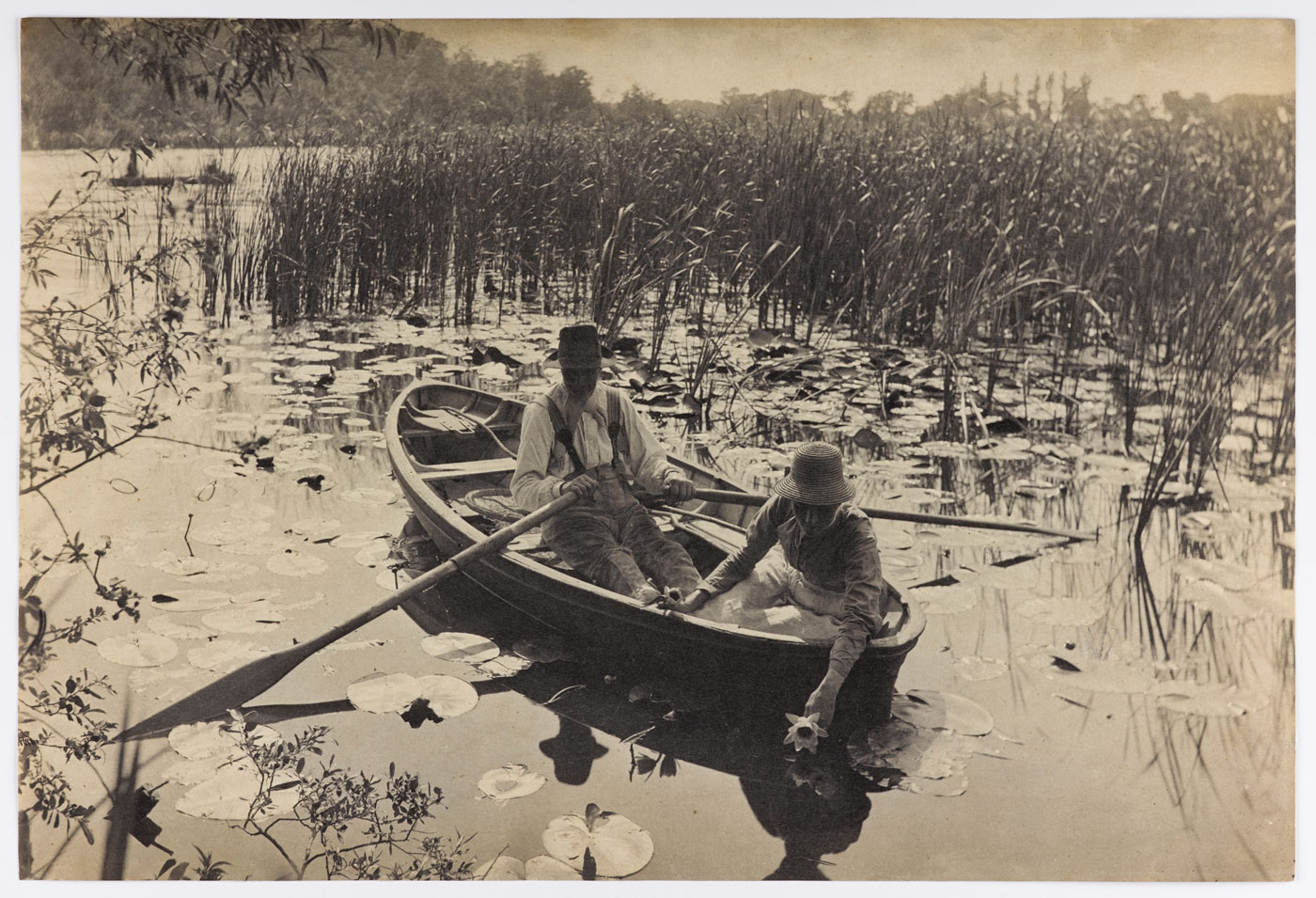
 

Peter Henry Emerson (British born Cuba, 1856-1936) 'Gathering Water Lilies' c. 1885


Peter Henry Emerson (British born Cuba, 1856-1936)
Gathering Water Lilies
c. 1885
Platinum print on paper


In addition to his photographic work, Emerson wrote persuasively that photography could match – and even surpass – painting as an emotive art form. His writings were influential to the young Alfred Stieglitz, with whom he corresponded over four decades.

All from the Collection of Michael Mattis and Judith Hochberg


Works by Thiollier
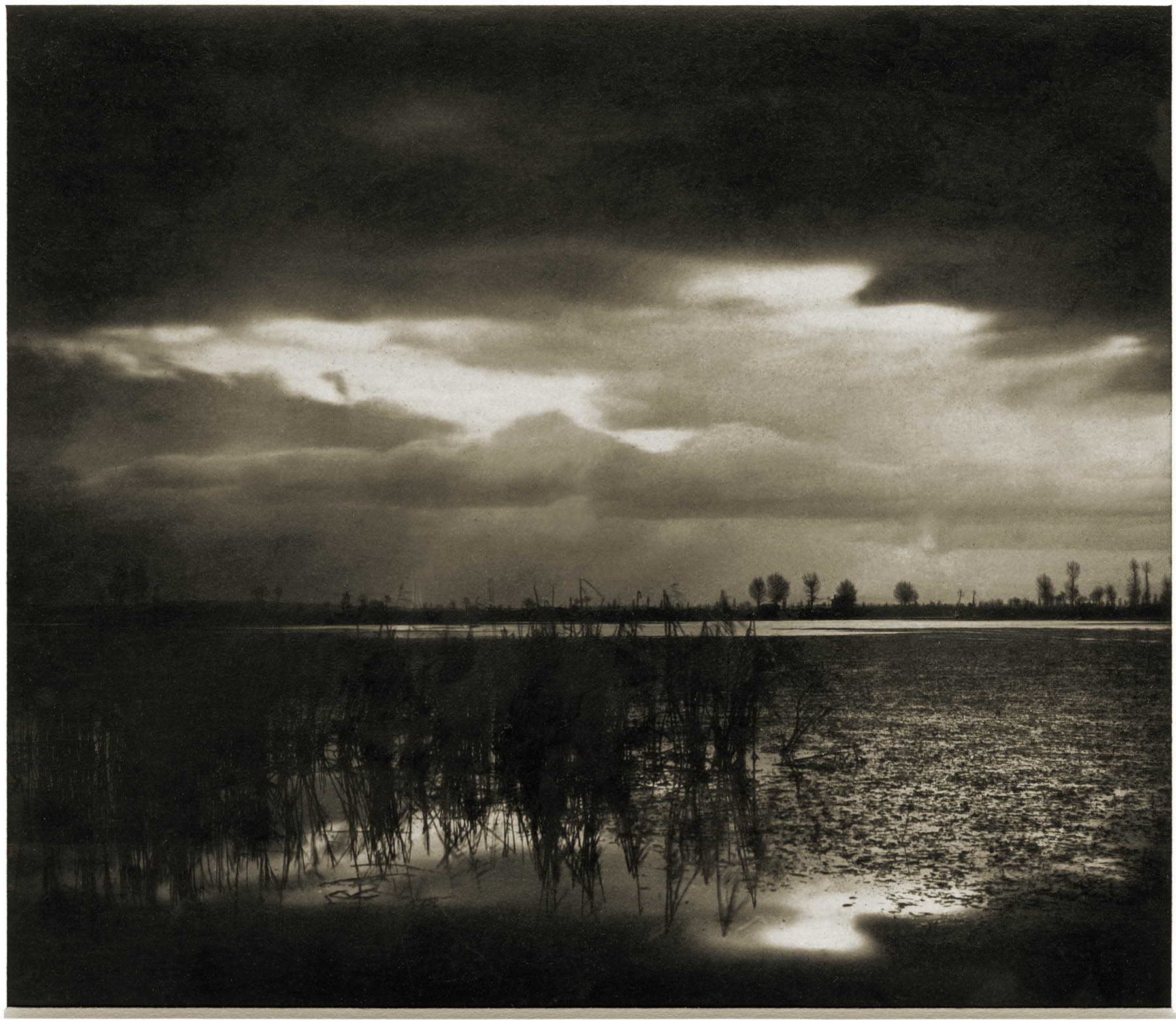
 

Félix Thiollier (French, 1842-1914) 'Landscape in Bugey' c. 1885


Félix Thiollier (French, 1842-1914)
Landscape in Bugey
c. 1885
Carbon print on paper


Thiollier’s photographic career is a fairly recent discovery, highlighted in the first ever retrospective of his career at the Musée d’Orsay in Paris in 2012.

From the Collection of Michael Mattis and Judith Hochberg


Works by Kühn


Heinrich Kühn (Austrian born Germany, 1866-1944) 'Nude in Morning Sun' c. 1920


Heinrich Kühn (Austrian born Germany, 1866-1944)
Nude in Morning Sun
c. 1920
Multiple bromoil transfer print on Japanese tissue paper


Heinrich Kühn (Austrian born Germany, 1866-1944) 'Female torso in sunlight' c. 1920


Heinrich Kühn (Austrian born Germany, 1866-1944)
Female torso in sunlight
c. 1920
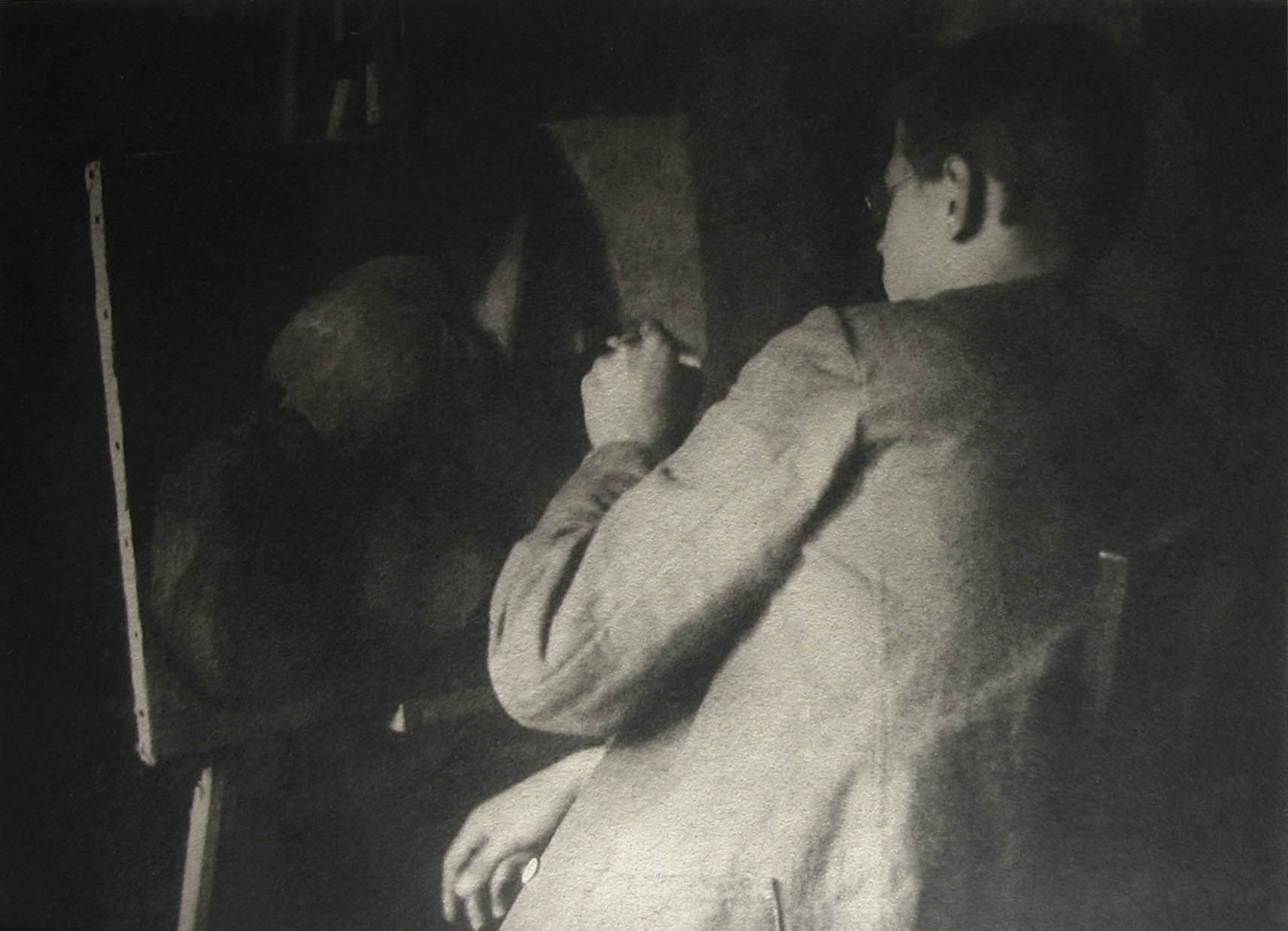
 

Heinrich Kühn (Austrian born Germany, 1866-1944) 'Walter at Easel' c. 1909


Heinrich Kühn (Austrian born Germany, 1866-1944)
Walter at Easel
c. 1909
Gum-bichromate print on paper


Heinrich Kühn (Austrian born Germany, 1866-1944) 'Still Life with Fruit and Pottery' c. 1896


Heinrich Kühn (Austrian born Germany, 1866-1944)
Still Life with Fruit and Pottery
c. 1896
Gum-bichromate print on paper with an applied watercolour wash


Kühn’s still lifes deliberately recall paintings from earlier centuries. This scene – his first published image – contains similar elements to 17th-century still-life compositions. He even included insects, which are traditional references to mortality called memento mori (reminders of death). Can you spot the housefly?

All from the Collection of Michael Mattis and Judith Hochberg


Portraits by Steichen


Edward Steichen (American born Luxembourg, 1879-1973) 'George Frederic Watts, London' 1901


Edward Steichen (American born Luxembourg, 1879-1973)
George Frederic Watts, London
1901
Varnished platinum print on paper


This dramatic profile portrait of the English Pre-Raphaelite painter was the first in what Steichen termed his “Great Men” series. Steichen wrote about his approach to portraiture, “I aim for the expression of something psychological. I am not satisfied with the mere reproduction of features and expression.”

Published in Camera Work, 14, 1906
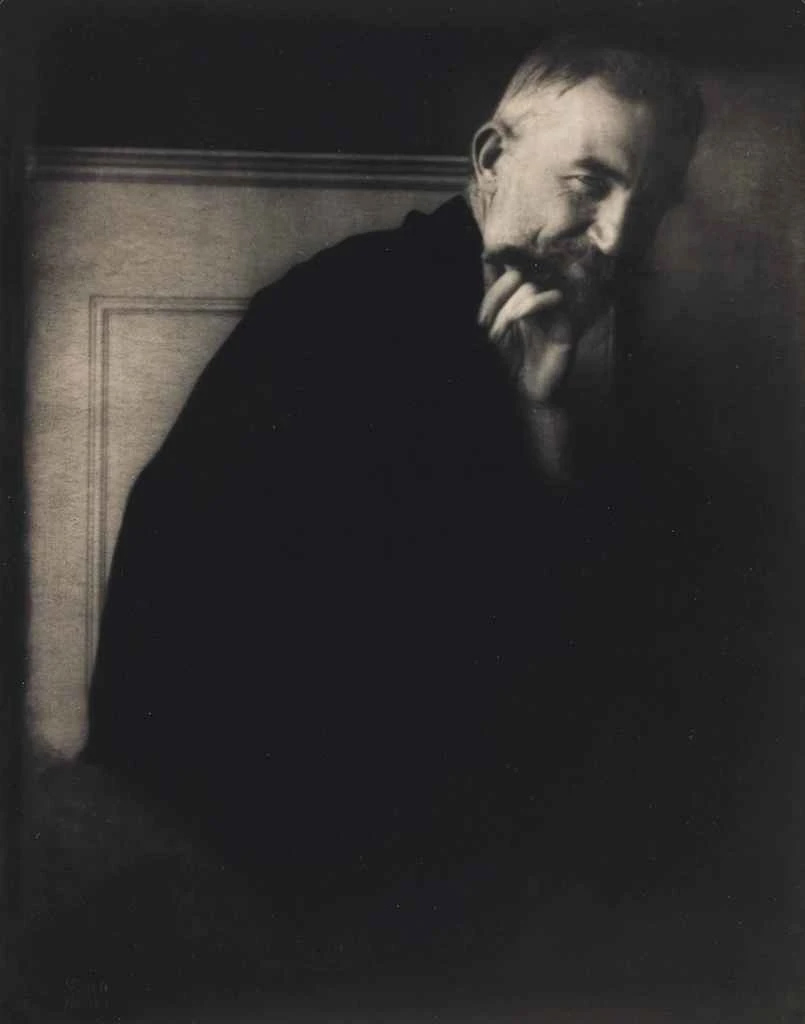
 

Edward Steichen (American born Luxembourg, 1879-1973) 'The Photographer's Best Model: George Bernard Shaw, London' 1907


Edward Steichen (American born Luxembourg, 1879-1973)
The Photographer’s Best Model: George Bernard Shaw, London
1907
Platinum print on paper


Steichen was elated after his photographic sitting with Shaw, writing to Stieglitz: “Well I’ve seen and done Shaw (photographically of course). He’s the nicest kind of fellow imaginable – genial and boyish – there is a little of the sardonic about him as you see him but when you get the camera at him you are tempted with possibilities in that way. He seems to know a lot about photography and certainly skilfully bluffs you into believing he knows it all.”

Published in Camera Work, 42/43, 1913

All from the Collection of Michael Mattis and Judith Hochberg


Glossary of Photographic Printing Methods and Terms from the History of Photography

Gelatin Silver Print

For over a century, from the 1880s until the digital era, the gelatin silver print was the most common technique for producing black-and-white photographs. The paper is coated with a binder layer of gelatin incorporating light-sensitive silver chloride or silver bromide. The paper is exposed under a negative, either by contact-printing or through an enlarger, then chemically developed, stopped, fixed, and dried. In the process, the silver salts are reduced to metallic silver, which carries the image. The overall color of the print can be altered through toning.

Cyanotype

A sheet of paper is sensitised in a solution of potassium ferricyanide and ferric ammonium citrate. After contact-printing under a negative, the iron compounds form an insoluble blue (“cyan”) dye known as Prussian blue. Apart from its occasional artistic use, the only regular use of the cyanotype was in copying architectural plans, thus called “blueprints.”

Platinum or Palladium Print

A platinum print is produced by sensitising a sheet of paper with platinum and iron salts. The sheet is then contact-printed under a negative until a faint image is visible. The print is developed in a potassium oxalate solution that dissolves unexposed iron salts and transforms the platinum salts into metallic platinum, which intensifies the image. Mercury chloride can be added to the solution to give a warmer tone. Unlike a silver print, where the image lives in a gelatin binder layer on top of the paper (akin to a watercolour), the image in a platinum print is embedded in the paper fibres (akin to an oil painting). The rich mid-tone range and matte surface made the platinum print the favoured medium for the Pictorialist photographers, from P.H. Emerson onward. When the price of platinum spiked during World War I, palladium was introduced as a more affordable (and generally warmer-toned) substitute.

Pigment Prints

The following processes are known as pigment prints, because the photographic image is carried by inks or pigments, rather than by metallic particles like silver, iron, or platinum.

Gum Bichromate Print

A sheet of paper is coated with diluted gum-arabic mixed with coloured pigment and light-sensitive potassium bichromate. During exposure under a negative, the bichromate causes the coloured gum-arabic to harden in proportion to the amount of light received. The areas not exposed to light remain soluble in water, and the print is developed by washing away the soluble areas, leaving a positive image on the paper. The prints can be exposed and reprinted numerous times with different coloured pigments, as well as manipulated by brushing away more pigmented gum during the washing stage.

Bromoil (Transfer) Print

This process does not begin with a negative, but rather with a gelatin silver print that is bleached in a solution of potassium bromide. The bleaching removes the silver-based image and selectively hardens the underlying gelatin in proportion to the image density. The sheet is then hand-coloured with an oil-based ink, which is selectively absorbed depending on the hardness of the gelatin: the softer areas contain more water, which repels the oil-based ink. An inked print is sometimes used as a kind of printing plate for transferring the image to another sheet of paper (a bromoil transfer print).

Photogravure

This is a sophisticated photomechanical process used for reproducing photographs in ink in a large edition. It is a form of intaglio printing, in which a photographic image is acid-etched into a copper plate. The relief image is then inked and printed. Alfred Stieglitz’s magazine Camera Work was largely printed in photogravure.

The Photo-Secession

This was the brief but influential artistic movement led by American Alfred Stieglitz during the years 1902–1915 that championed photography as an art form that was as aesthetic, creative, and skilful as traditional media like painting, drawing, watercolour, and printmaking. The European artistic movement Secessionism inspired the name Photo-Secession, and both movements were committed to Modernism by seceding from centuries-old academic traditions.

Pictorialism / Pictorialist

The approach to photography in which artists sought to make images that imitated the tradition of paintings through photographic prints. Pictorialist photographers used soft focus lenses and manipulated both their negatives and printing media to create their prints.

The Linked Ring

Also known as the Brotherhood of the Linked Ring, this photographic society founded in 1892 in London promoted photography as a form of art and was influential for the American society of the Photo-Secession.

Straight Photography

The approach to photography in which artists use sharp focus and print directly from their negatives with minimal or no manipulation.

Camera Notes

Camera Notes was the journal of the Camera Club of New York, edited by Alfred Stieglitz from 1897 to 1902. Under Stieglitz’s editorship, the purposes of Camera Notes were “to take cognisance also of what is going on in the photographic world at large, to review new processes and consider new instruments and agents as they come into notice; in short to keep our members in touch with everything connected with the progress and elevation of photography.”

Camera Work

Camera Work was the journal about contemporary photography that Alfred Stieglitz edited and published with the assistance of Edward Steichen from 1903 to 1917. The goal of this journal “devoted largely to the interests of pictorial photography” was “to issue quarterly an illustrated publication which will appeal to the ever-increasing ranks of those who have faith in photography as a medium of individual expression, and, in addition, to make converts of many at present ignorant of its possibilities.”

This glossary has been edited from primary sources and text by Ina Schmidt-Runke, Meike Harder, and Andreas Gruber.


The Photo-Secession Movement: Pioneering Artistry in Early Photography

By Adelaide Ryder, head photographer and digital assets manager at the UMFA

The Birth of the Photo-Secession Movement

This fall the Utah Museum of Fine Arts will exhibit Photo-Secession: Painterly Masterworks of Turn-of-the-Century Photography. This exhibition of art photography from the early 20th century will be on view from August 24 to December 29, 2024. Who were the Photo-Secessionists and why was their work so pivotal to the advancement of photography as an art form?

In the mid-19th century photography was regarded as a complex technical field that only a trained professional could do. By the 1880s, however, the hand-held camera had become affordable and easy to use, and the “snapshot” became commonplace. Smaller, easier-to-use cameras and the ability to send the film off to a lab for development gave the public accessibility to the medium in a new way. This technological advancement greatly affected the professional photography business, as people began to question the skills needed to make a photograph when “anyone could push a button.”

How did photographers respond to this shift in aesthetics and business? Many searched for ways to use photography to express abstract ideas or subjective points of view, shifting from using photography to document objective likeness to illustrating subjective conditions or the subject’s inner state. This helped elevate the photographer’s status, as the expressive ability of the person behind the camera became as important as the subject. Photographers embraced symbolism and started printing with complex techniques like gum bichromate to elevate their craft above the basic snapshot. Two significant movements were born from this struggle to gain recognition as a legitimate form of artistic expression rather than simply a means of mechanical documentation: Pictorialism and the Photo-Secession.

The camera was seen as a tool, and many felt that photographs visually lacked the “artist’s hand,” an essential factor in calling something “art.” The Photo-Secession movement, founded by Alfred Stieglitz in 1902, aimed to change this perception. Stieglitz and his contemporaries believed photography deserved the same artistic consideration as painting and sculpture. They aimed to elevate photography to fine art, emphasizing the photographer’s vision and creativity over mere technical skill. Stieglitz said the Photo-Secession was founded “loosely to hold together those Americans devoted to pictorial photography in their endeavour to compel its recognition, not as a handmaiden of art, but as a distinctive medium of individual expression.” (Camera Work, no. 6, April 1904.)

The Photo-Secession movement emerged from the broader Pictorialist movement, which dominated photographic art in the late 19th and early 20th centuries. While both movements sought to establish photography as an art form, the Photo-Secessionists emerged with their own philosophy.

Similarities

Artistic Expression: The Photo-Secession and Pictorialism emphasized the photographer’s role as an artist rather than a mere technician. They believed that photography should convey the photographer’s vision and emotional intent.

Aesthetic Quality: Both movements valued the aesthetic quality of photographs. They often employed techniques like soft focus, manipulation of light, and careful composition to create visually striking images.

Influence of Painting: Both were heavily influenced by the aesthetics of painting, particularly Impressionism and Symbolism. They sought to create images that were painterly in style, blurring the lines between photography and traditional fine arts.

Differences

Philosophical Focus: Pictorialism focused on creating images that looked like paintings, often using elaborate darkroom techniques to achieve a painterly effect. Photo-Secession, while also influenced by painting, emphasised the photographer’s personal expression and the inherent qualities of the photographic medium, sometimes even embracing the “snapshot” aesthetic if it helped to illustrate more hidden ideas and thoughts.

Technical Innovation: The Photo-Secessionists were more open to embracing the amateur artist and experimentation in techniques and technologies, whereas the Pictorialists held on to the traditional hierarchy of the European artistic schools of the time. Photo-Secessionists saw innovation as a means to expand photography’s artistic potential.

Subject Matter: Pictorialists focused on romanticized and idealized subjects, such as landscapes, portraits, and allegorical scenes. The Photo-Secessionists, on the other hand, explored a wider range of subjects, including urban scenes, modern life, and abstract forms. They embraced art movements like Cubism and Futurism, reflecting a broader and more progressive vision of art.

Exhibition and Display: The Photo-Secessionists were disenchanted with the outdated salons and gate-keeping ways of many photo schools commonly practiced in Europe. They began publications like The American Amateur Photographer, Camera Notes, and Camera Work to help give a platform to young photographers and people practicing these new ways of image making.

Adelaide Ryder. “The Photo-Secession Movement: Pioneering Artistry in Early Photography,” on the UMFA website Nd [Online] Cited 22/10/2024
 

Who were the Photo-Secessionists?

Works by Stieglitz

Alfred Stieglitz: The Visionary Leader

Alfred Stieglitz was a driving force behind the Photo-Secession movement. His passion for photography galvanized his dedication to promoting it as an art form. He saw photography as a means of personal expression. He helped catapult the idea that image-making can happen in the darkroom, during the printing process, as much as in the camera.

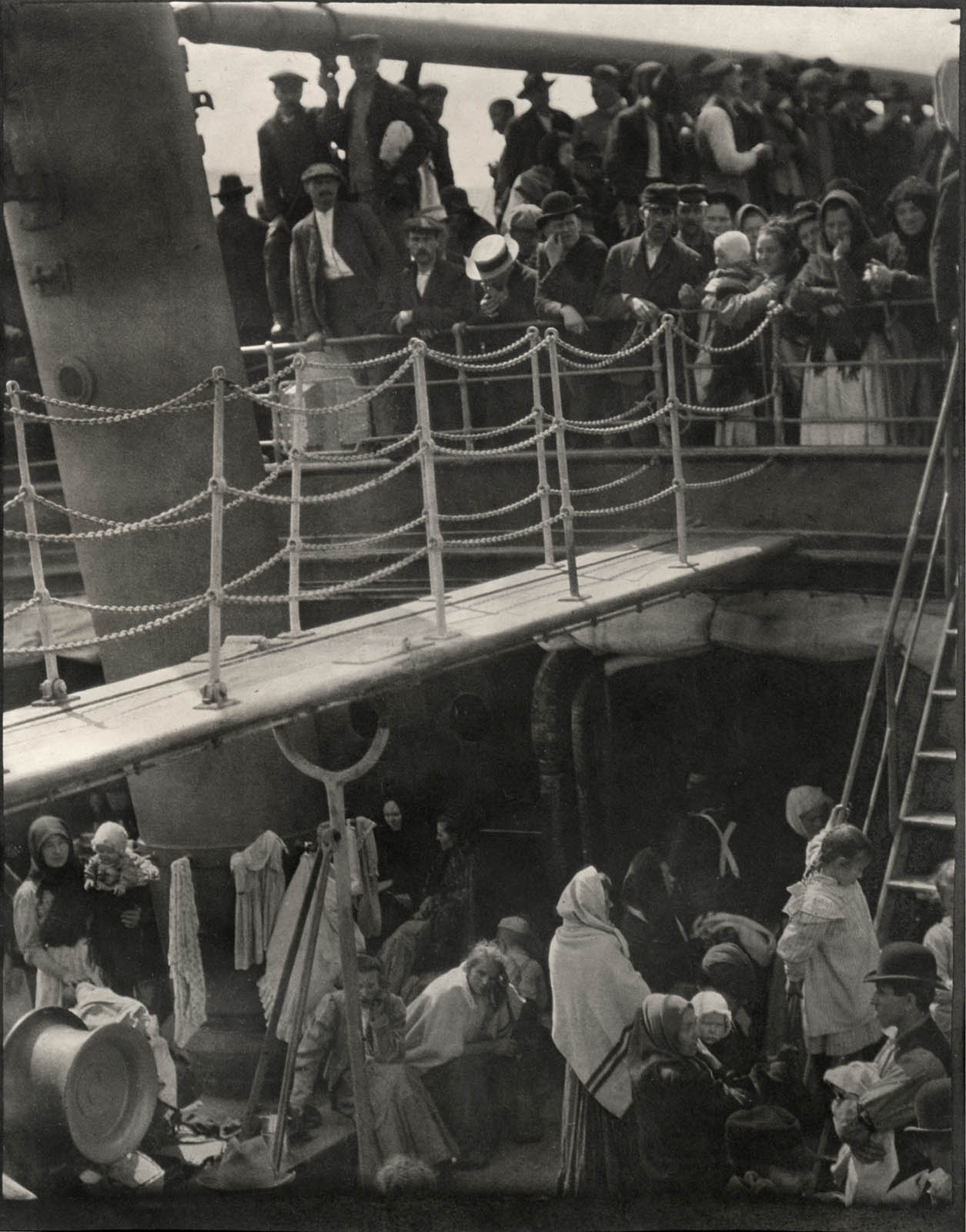
Stieglitz’s photograph The Steerage (1907, below) is one of the most iconic images in the history of photography. This powerful image captures the crowded lower deck of a transatlantic steamer, where people traveled in steerage class, the part of the ship with accommodations for those with the cheapest tickets. The Steerage is celebrated for its striking composition, which combines geometric shapes and human forms to create a dynamic and balanced visual narrative. Stieglitz considered this photograph one of his most outstanding achievements, as it encapsulated his transition to straight photography, which embraced photographs looking like photographs rather than the painterly qualities of Pictorialism. This photograph shows his ability to convey the complexity and depth of human experience through a single image. The photograph is a masterpiece of visual artistry and a compelling social document, reflecting the conditions and aspirations of early 20th century immigrants.

Adelaide Ryder. “The Photo-Secession Movement: Pioneering Artistry in Early Photography,” on the UMFA website Nd [Online] Cited 22/10/2024


Alfred Stieglitz (American, 1864-1946) 'The Steerage' 1907


Alfred Stieglitz (American, 1864-1946)
The Steerage
1907
Hand-pulled photogravure on paper


This photograph has become the iconic image of the Photo-Secession and has legendary status. In June 1907 he sailed to Europe to visit family and booked a first-class cabin. On a stroll around the ship, he encountered a bustling scene of labourers and their families traveling in steerage class, the part of the ship with accommodations for those with the cheapest tickets. With a single four-by-five-inch glass plate left in his camera, Stieglitz shot what would be regarded as a definitive masterpiece of both photography and Modernism.

About making this picture Stieglitz recalled: “There were men and women and children on the lower deck of the steerage. There was a narrow stairway leading to the upper deck of the steerage, a small deck right on the bow of the steamer. To the left was an inclining funnel and from the upper steerage deck there was fastened a gangway bridge that was glistening in its freshly painted state. It was rather long, white, and during the trip remained untouched by anyone. On the upper deck, looking over the railing, there was a young man with a straw hat. The shape of the hat was round. He was watching the men and women and children on the lower steerage deck. A round straw hat, the funnel leaning left, the stairway leaning right, the white drawbridge with its railing made of circular chains – white suspenders crossing on the back of a man in the steerage below, round shapes of iron machinery, a mast cutting into the sky, making a triangular shape. I saw shapes related to each other. I saw a picture of shapes and underlying that the feeling I had about life.”


Alfred Stieglitz (American, 1864-1946) 'The Hand of Man' 1902


Alfred Stieglitz (American, 1864-1946)
The Hand of Man
1902
Hand-pulled photogravure on paper

All from the Collection of Michael Mattis and Judith Hochberg


Works by Käsebier

Gertrude Käsebier: The Master of Portraiture

Gertrude Käsebier was known for her compelling portraits and allegorical imagery. Käsebier’s work transcended traditional portrait photography by infusing her images with a deep sense of intimacy and character. She believed that a photograph should reveal the inner essence of its subject, and her portraits are renowned for capturing the personality and spirit of the people she photographed.

Käsebier’s approach to portraiture was both innovative and empathetic. This image from the UMFA’s permanent collection is a perfect example of how she photographed women and children, presenting them with dignity and respect at a time when they were not the usual subjects of portraiture. Her work challenged conventional representations and highlighted her subjects’ emotional depth and individuality.

Adelaide Ryder. “The Photo-Secession Movement: Pioneering Artistry in Early Photography,” on the UMFA website Nd [Online] Cited 22/10/2024
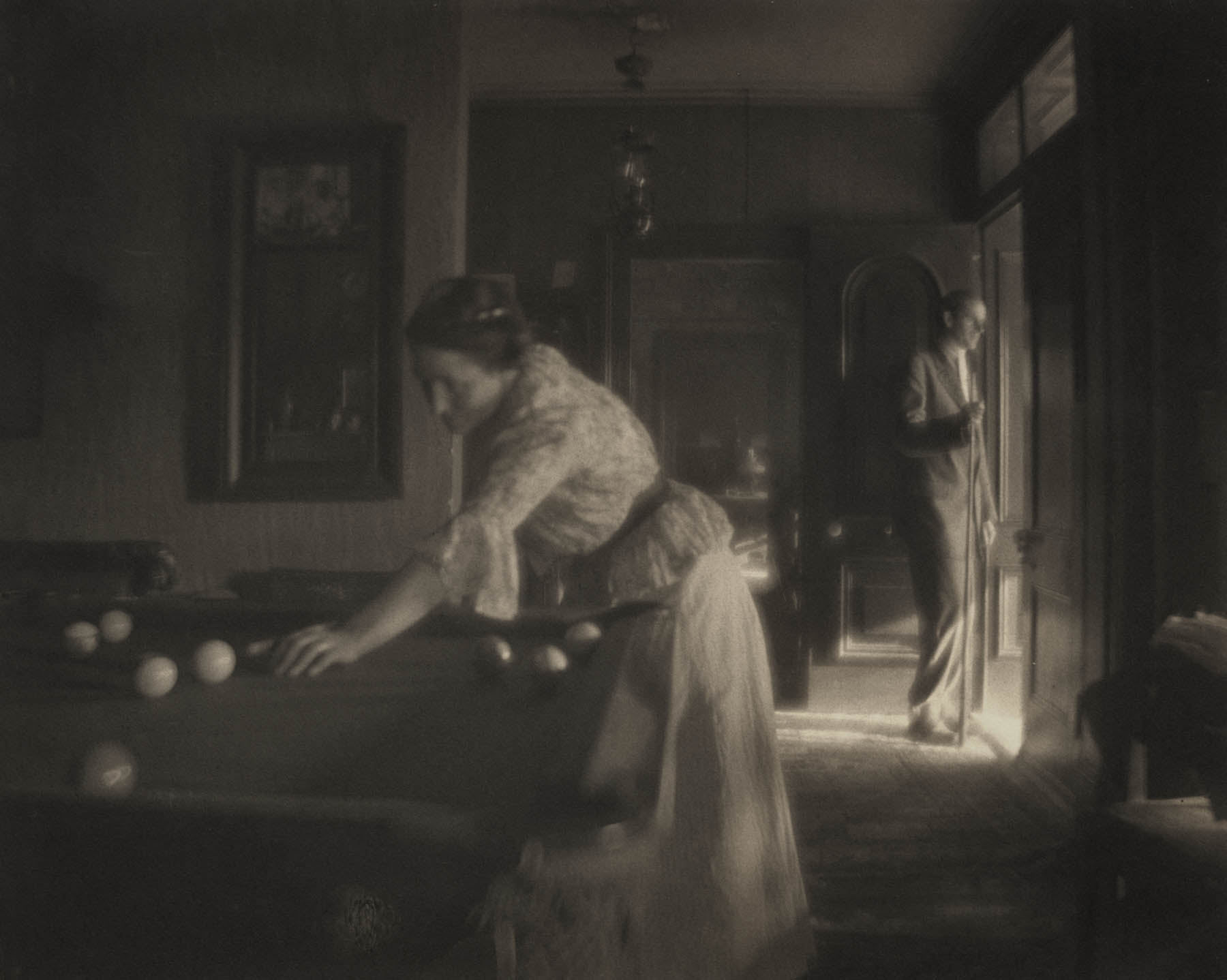
 

Gertrude Käsebier (American, 1852-1934) 'Untitled (Billiard Game)' c. 1909


Gertrude Käsebier (American, 1852-1934)
Untitled (Billiard Game)
c. 1909
Platinum print on paper
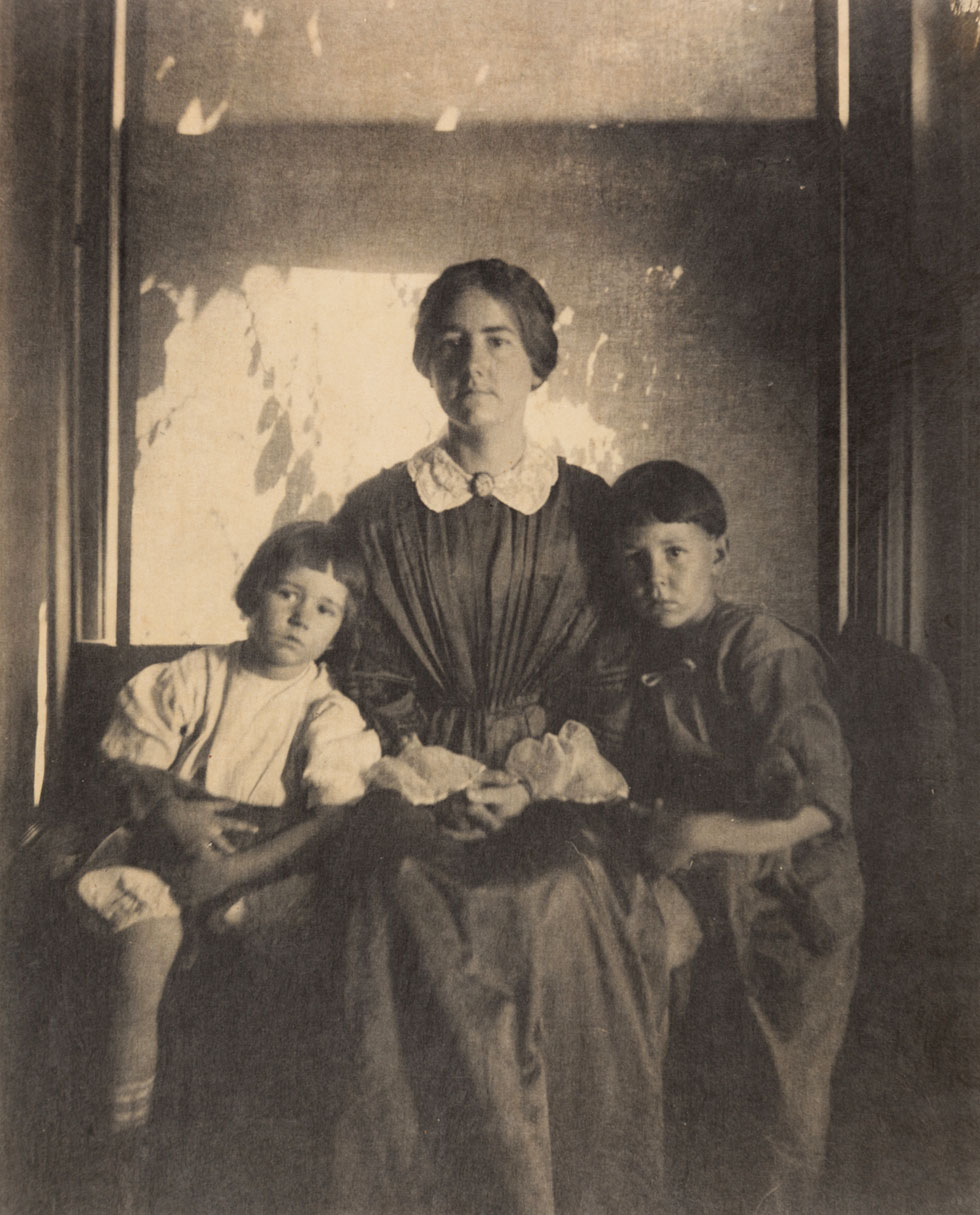
 

Gertrude Käsebier (American, 1852-1934) 'Mother and Two Children' 1899


Gertrude Käsebier (American, 1852-1934)
Mother and Two Children
1899
Platinum print on paper


Gertrude Käsebier (American, 1852-1934) 'Serbonne (A Day in France)' 1901


Gertrude Käsebier (American, 1852-1934)
Serbonne (A Day in France)
1901
Platinum print on paper


Both Pumpkin Pie, Voulangis and Serbonne (A Day in France) were set in France in 1901, when the artist was chaperoning art students. The young man in both scenes is Edward Steichen at age 22, whose interest in photography was then budding.

Serbonne is Käsebier’s chaste reference to Édouard Manet’s famous painting Le Déjeuner sur l’herbe (The Luncheon on the Grass) of 1863. An example of ultra-soft focus, this photo was reproduced in the inaugural issue of Camera Work, which was devoted to Käsebier.

Published in Camera Work, 1, 1903
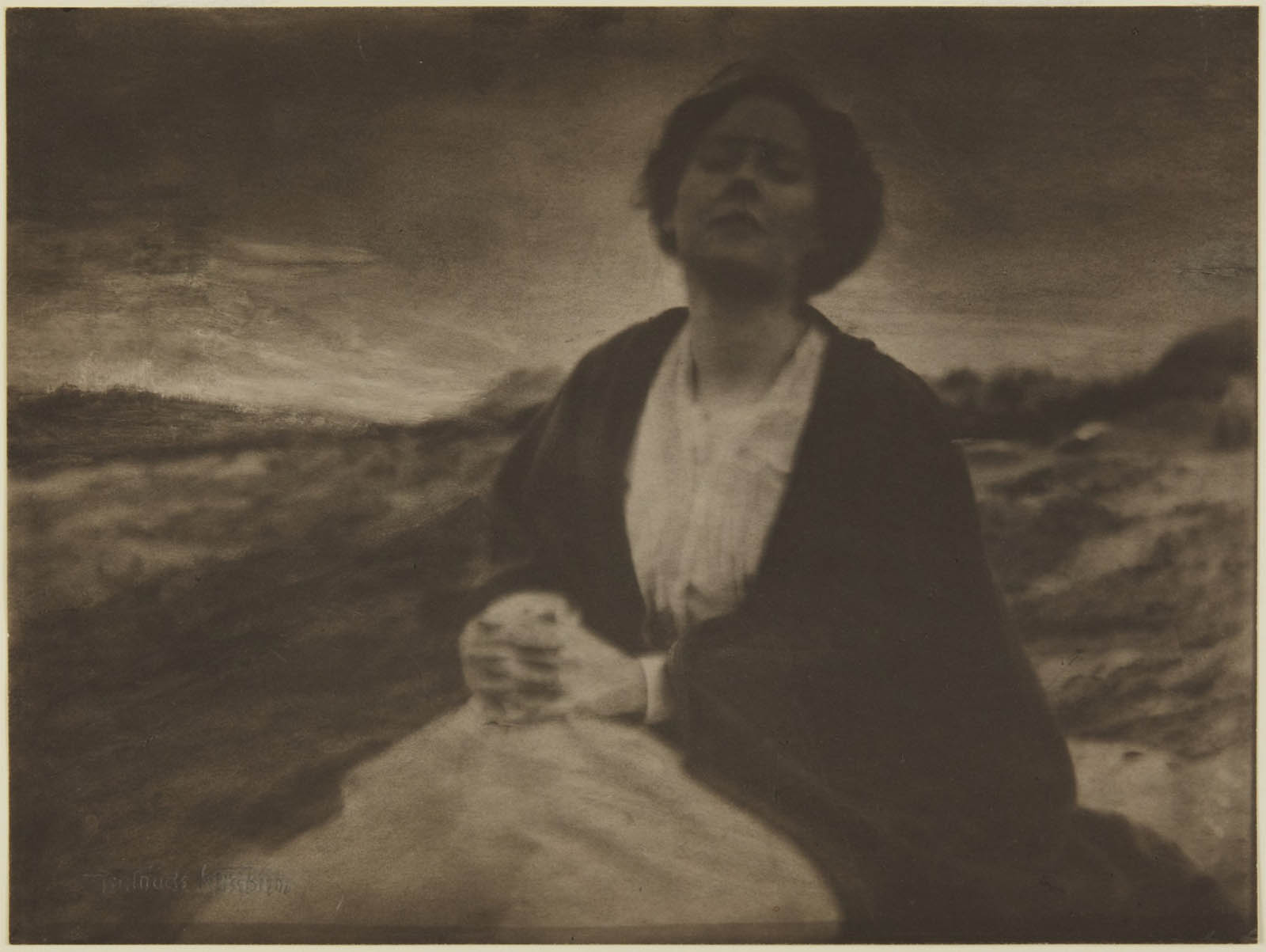
 

Gertrude Käsebier (American, 1852-1934) 'The Heritage of Motherhood' 1904


Gertrude Käsebier (American, 1852-1934)
The Heritage of Motherhood
1904
Gum-bichromate print on paper


This portrays the children’s book author Agnes Rand Lee in mourning after the sudden death of her daughter from illness. A contemporary photographer and critic deemed this image “one of the strongest things that Käsebier has ever done, and one of the saddest and most touching that I have ever seen.” Käsebier extensively manipulated the gum-bichromate process to make this print appear like a charcoal drawing.
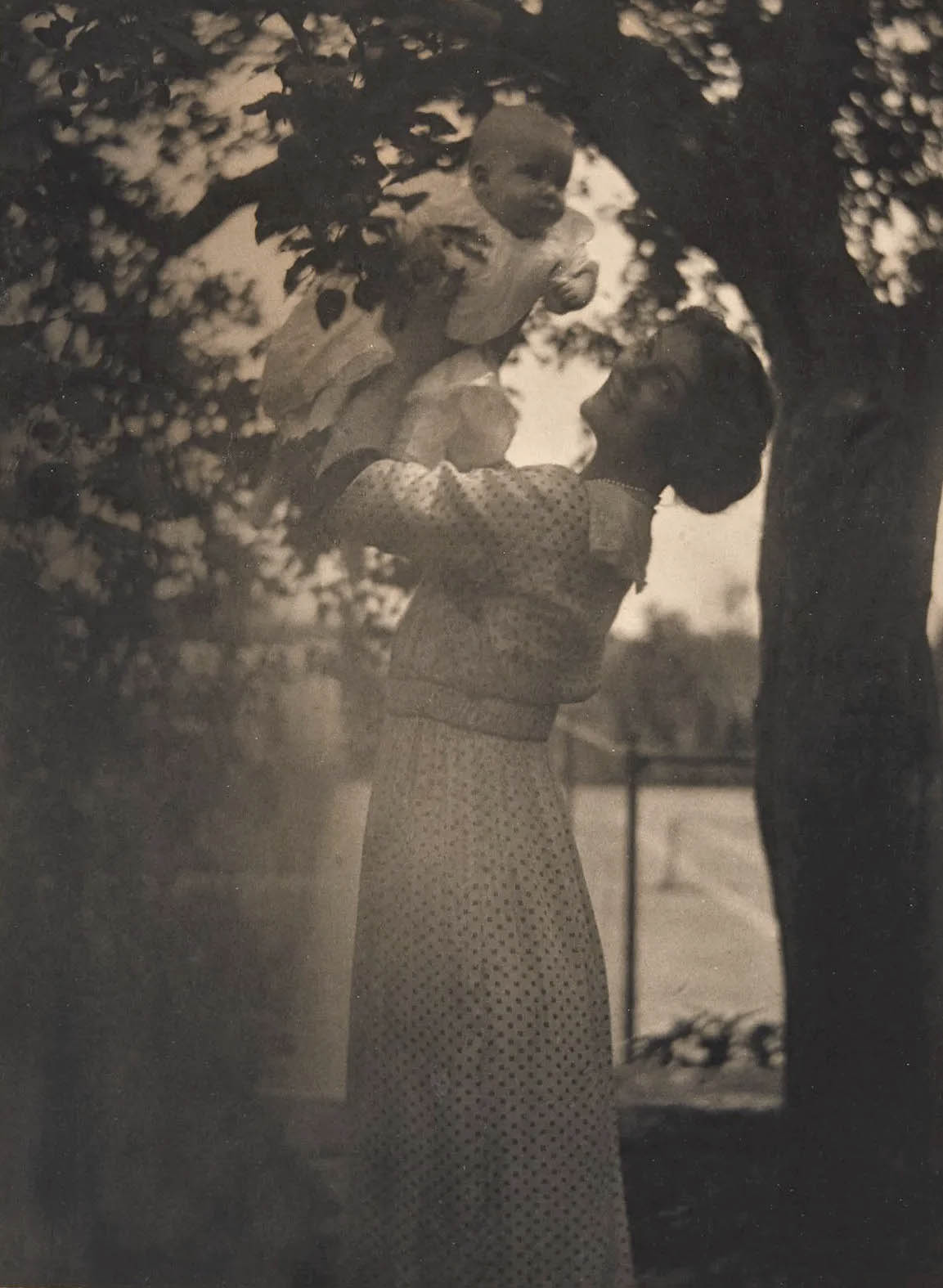
 

Gertrude Käsebier (American, 1852-1934) 'Mother and Child' c. 1900


Gertrude Käsebier (American, 1852-1934)
Mother and Child
c. 1900
Multiple gum-bichromate print on paper


The subject of mother and child was a frequent one for Pictorialists, especially Käsebier and Clarence White. The contrast between the tiny infant and the mighty tree gives this image additional symbolic meaning.


Gertrude Käsebier (American, 1852-1934) 'The Picture Book' 1903


Gertrude Käsebier (American, 1852-1934)
The Picture Book
1903
Platinum print on paper


Alfred Stieglitz had a print of this photograph in his personal collection, which he bequeathed to the Metropolitan Museum of Art in New York.

Published in Camera Work, 10, 1905

All from the Collection of Michael Mattis and Judith Hochberg


Works by Evans


Frederick Evans (British, 1853-1943) 'Aubrey Beardsley' 1893


Frederick H. Evans (British, 1853-1943)
Aubrey Beardsley
1893
Platinum print on paper


Evans, a member of the British art photography group the Linked Ring, was close friends with prominent authors and artists, such as George Bernard Shaw and Aubrey Beardsley. Portrayed here around age 20, Beardsley was a talented artist, designer, and illustrator, whose promising career was cut short by tuberculosis just five years after this photo was made.
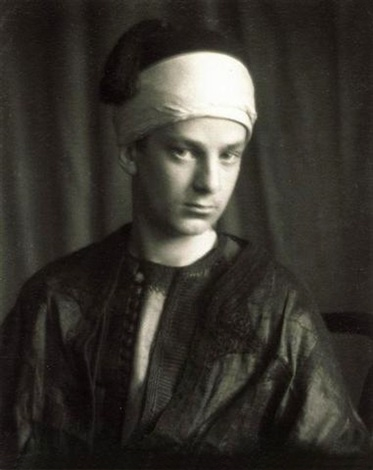
 

Frederick H. Evans (British, 1853-1943) 'Alvin Langdon Coburn in Eastern Clothing' 1901


Frederick H. Evans (British, 1853-1943)
Alvin Langdon Coburn in Eastern Clothing
1901
Platinum print on paper


Coburn was a precocious young American artist. An eighth birthday gift of a Kodak camera sparked his interest in photography. By age 16 Coburn had moved to London to work with his cousin the photographer F. Holland Day, whose portrait by Gertrude Käsebier is in this exhibition. After being included in a landmark exhibition at the Royal Photographic Society, Coburn returned to New York and apprenticed with Käsebier. By the tender age of 20, he became a founding member of the Photo-Secession and launched an international career dividing his time between New York, London, and Paris.

All from the Collection of Michael Mattis and Judith Hochberg


Works by Dow


Arthur Wesley Dow (American, 1857-1922) 'Silhouetted Trees' c. 1910


Arthur Wesley Dow (American, 1857-1922)
Silhouetted Trees
c. 1910
Cyanotype print on paper


A painter, printmaker, and photographer, Dow is mainly remembered today as a pioneering educator who taught in New York at the Pratt Institute, Art Students League, and Teacher’s College of Columbia University. Among Dow’s students were Gertrude Käsebier, Alvin Langdon Coburn, Charles Sheeler, and Georgia O’Keeffe. Dow also hired Clarence White to teach photography at Columbia, thereby launching White’s important teaching career.

From the Collection of Michael Mattis and Judith Hochberg


Works by Haviland
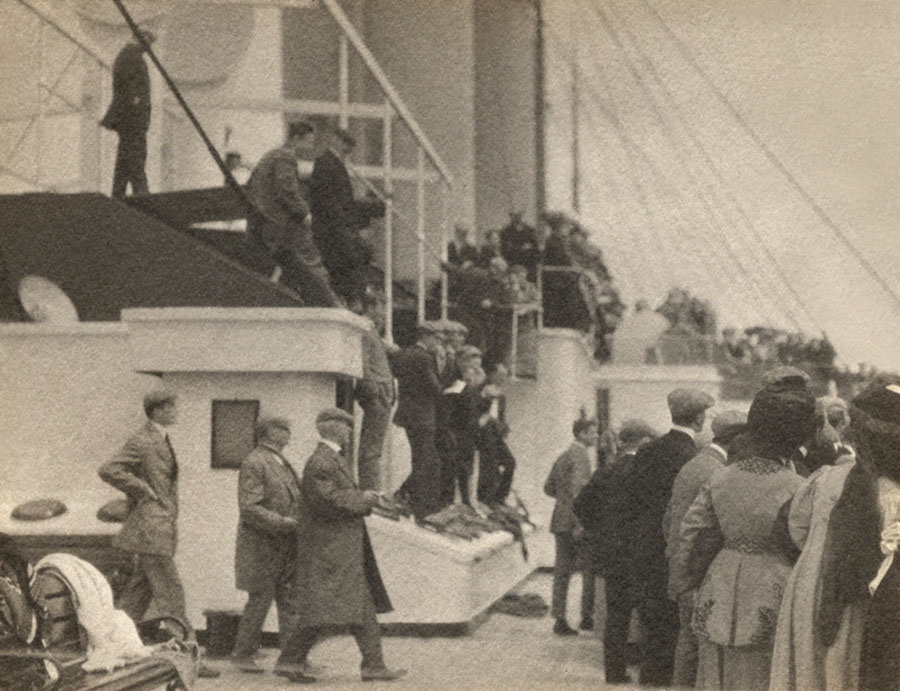
 

Paul Burty Haviland (American, 1880-1950) 'Ship Deck' 1910


Paul Burty Haviland (American, 1880-1950)
Ship Deck
1910
Platinum print on paper


Haviland was an amateur photographer from a young age and grew up immersed in the arts. His grandfather was an early photography critic in Paris, and his father owned Haviland porcelain factory in Limoges, France. As the New York representative of the family business, Haviland happened to meet Alfred Stieglitz in 1908. Just two years later he became associate editor of Camera Work and helped financially support Stieglitz’s gallery 291.

All from the Collection of Michael Mattis and Judith Hochberg


Works by Struss
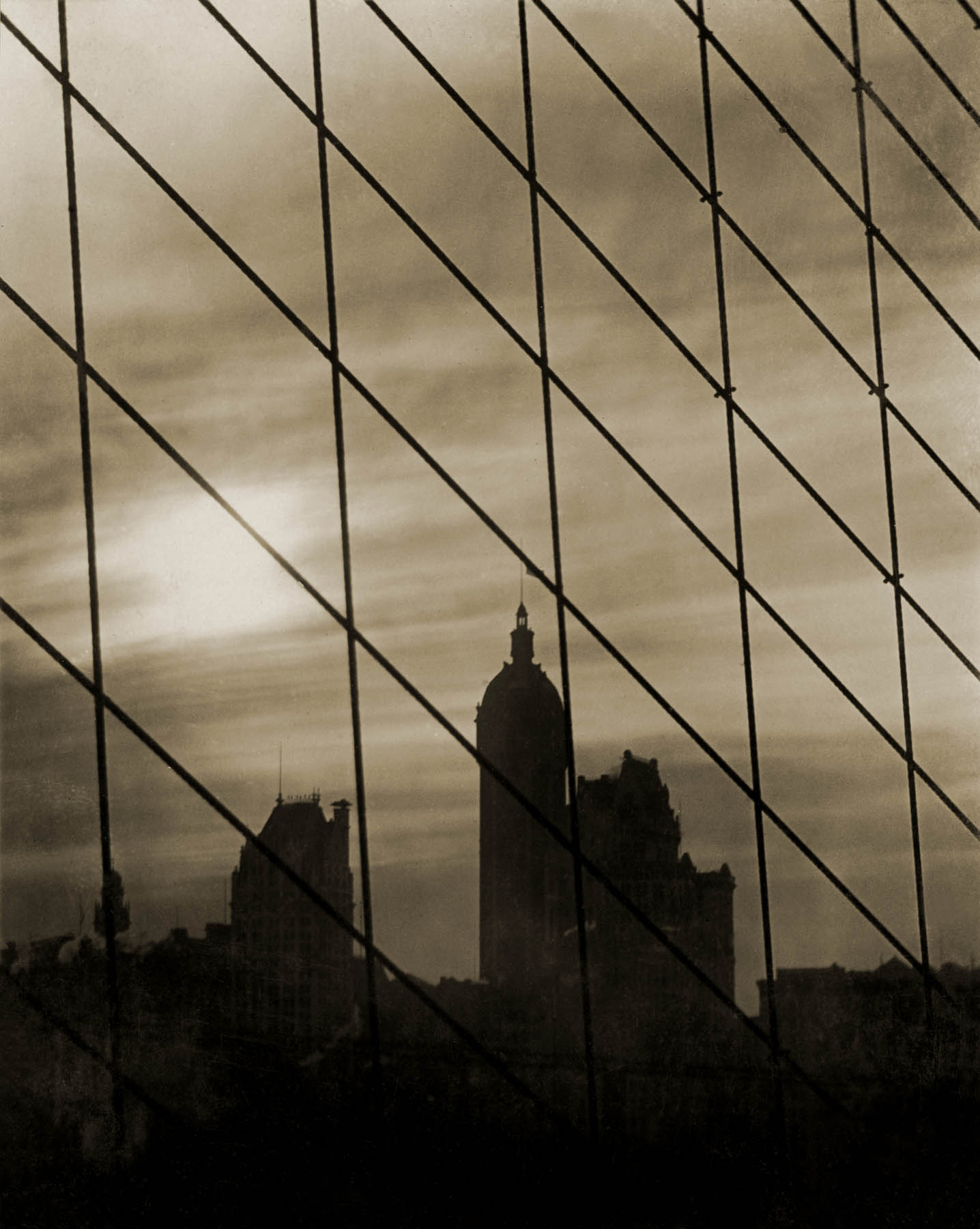
 

Karl Struss (American, 1886-1981) 'Cables' 1912


Karl Struss (American, 1886-1981)
Cables
1912
Gelatin silver print on paper


Struss was a star pupil of Clarence White and became a favourite of Alfred Stieglitz and the youngest member of the Photo-Secession. He is best known for his compelling cityscapes of New York, including the view of the Singer Building through the cables of the Brooklyn Bridge and the dramatic Flatiron Building, Twilight.


Karl Struss (American, 1886-1981) 'Flatiron Building, Twilight' c. 1915


Karl Struss (American, 1886-1981)
Flatiron Building, Twilight
c. 1915
Gelatin silver print on paper


Struss eventually broke away from Stieglitz and cofounded the society of the Pictorial Photographers of America along with Clarence White and Gertrude Käsebier in 1916. He … accepted a job as a cameraman for filmmaker Cecil B. DeMille. Struss would become one of the most prolific Hollywood cinematographers with 150 films, an Academy Award, and three Academy nominations to his credit.

All from the Collection of Michael Mattis and Judith Hochberg


Nudes by Stieglitz and White


Clarence Hudson White (American, 1871-1925) 'Reflected Nude' 1909


Clarence Hudson White (American, 1871-1925)
Reflected Nude
1909
Platinum print on paper
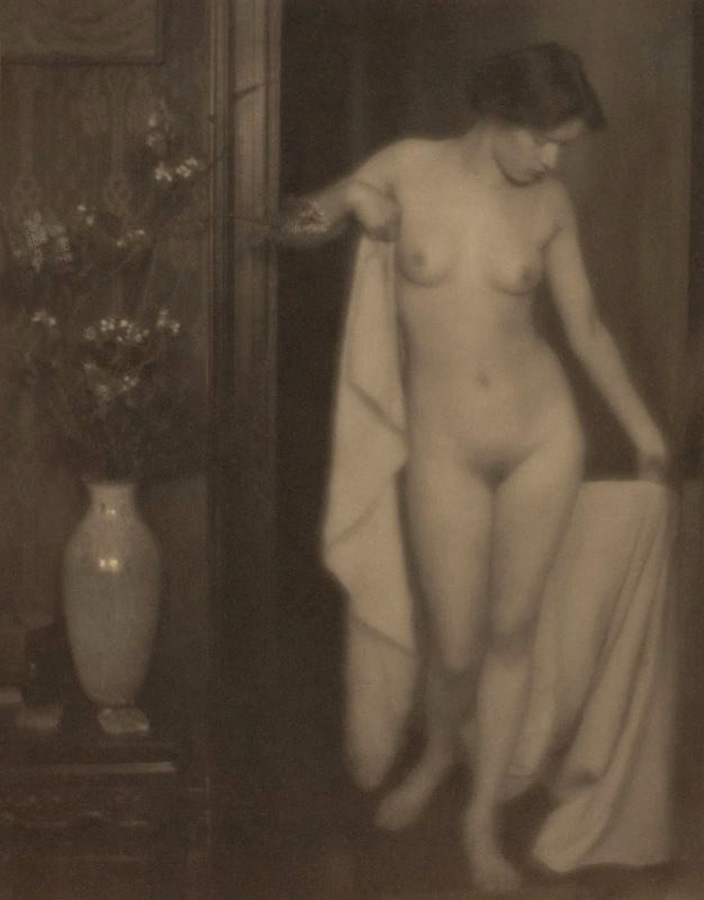
 

Alfred Stieglitz (American, 1864-1946) and Clarence Hudson White (American, 1871-1925) 'Nude Posed in Doorway (Miss Thompson)' 1907


Alfred Stieglitz (American, 1864-1946) and Clarence Hudson White (American, 1871-1925)
Nude Posed in Doorway (Miss Thompson)
1907
Platinum print on paper


Alfred Stieglitz (American, 1864-1946) and Clarence Hudson White (American, 1871-1925) 'The Torso' 1907


Alfred Stieglitz (American, 1864-1946) and Clarence Hudson White (American, 1871-1925)
The Torso
1907
Palladium print on paper


This is likely the most widely reproduced nude by Photo-Secession artists.

After their personal and professional rupture, Stieglitz wrote White a letter that specifically referred to their collaboration in 1907. Stieglitz insisted “that my name be not mentioned by you in connection with either the prints or the negatives” and further instructed White to erase his name from any prints they had jointly signed. Despite this vitriol, Stieglitz retained in his personal collection two prints of The Torso, one of them jointly signed in pencil.

Published in Camera Work, 27, 1909

All from the Collection of Michael Mattis and Judith Hochberg


Images of O’Keeffe by Stieglitz
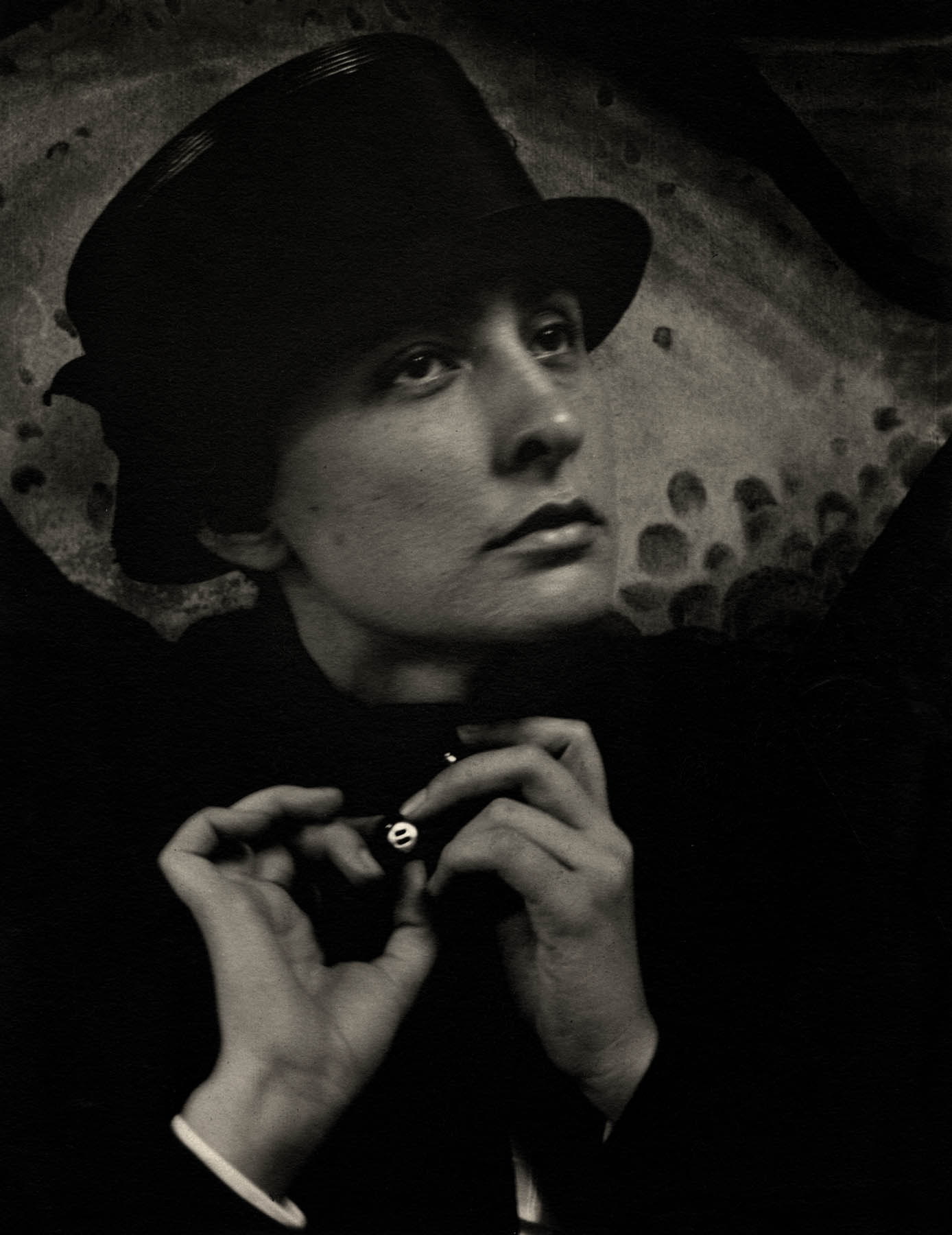
 

Alfred Stieglitz (American, 1864-1946) 'Georgia O'Keeffe' 1918


Alfred Stieglitz (American, 1864-1946)
Georgia O’Keeffe
1918
Palladium print on paper
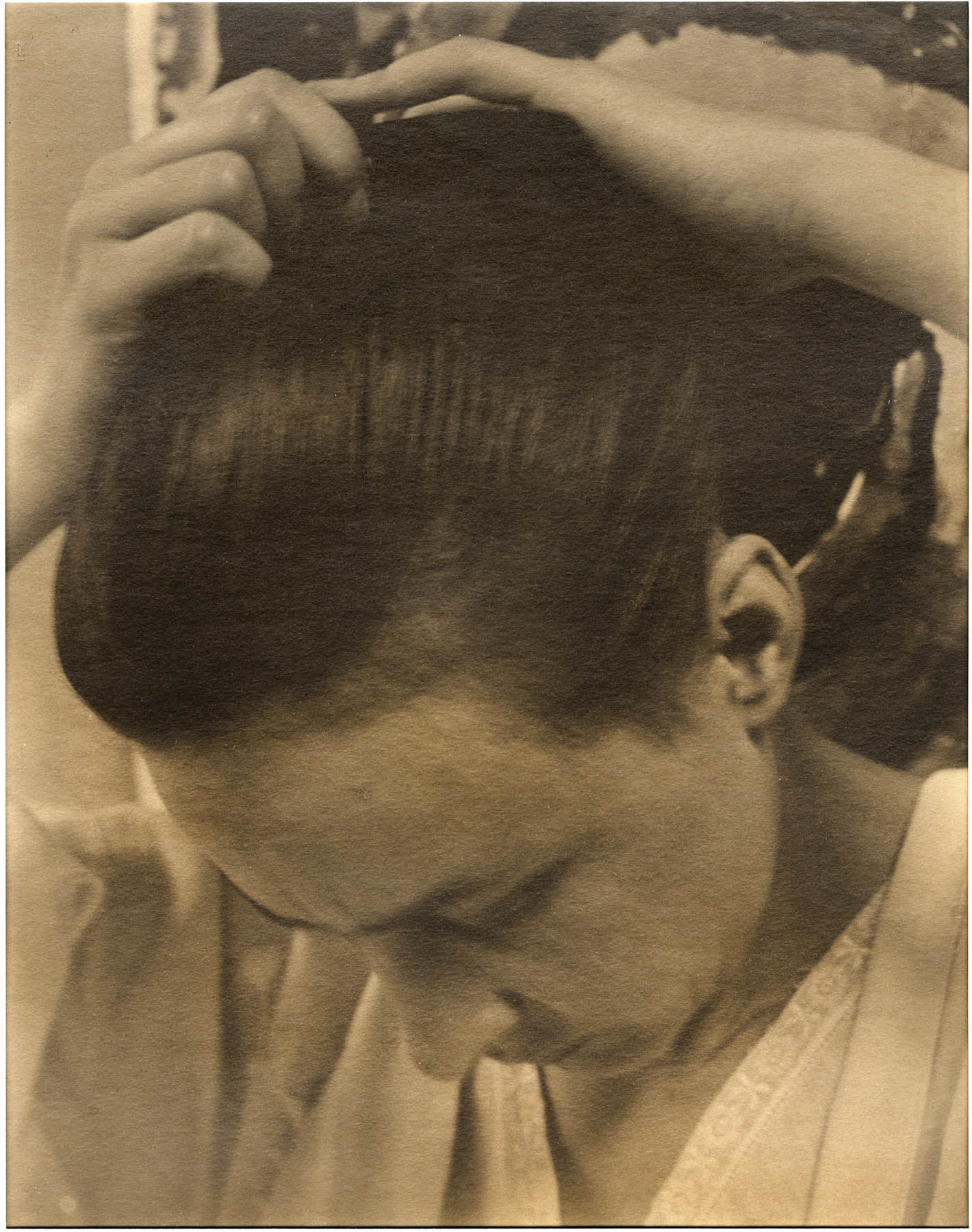
 

Alfred Stieglitz (American, 1864-1946) 'Georgia O'Keeffe (Fixing Hair)' 1919-1921


Alfred Stieglitz (American, 1864-1946)
Georgia O’Keeffe (Fixing Hair)
1919-1921
Palladium print on paper


Over two decades, Stieglitz made over 300 photos of O’Keeffe, producing an extraordinary and candid portrait of the artist. She recalled, “I was photographed with a kind of heat and excitement and in a way wondered what it was all about.” The directness and intimacy of this series of photos differ from the idealised nudes that Stieglitz and White made together during the heyday of the Photo-Secession.

All from the Collection of Michael Mattis and Judith Hochberg


Works by White

Clarence Hudson White: The Romantic

Clarence Hudson White was celebrated for his romanticised and intimate approach to photography. His 1904 image The Kiss perfectly illustrates his unique style. This platinum print on paper captures a tender moment with a soft focus and gentle lighting. The Kiss portrays an intimate scene imbued with a sense of emotional depth. White’s use of the platinum printing process, which provides a broad tonal range and exquisite detail, enhances the image’s delicate and dreamlike quality. His work reflects the movement’s early emphasis on creating photographs that evoke the emotional and aesthetic qualities of fine art while also paving the way for future explorations in photographic expression.

Adelaide Ryder. “The Photo-Secession Movement: Pioneering Artistry in Early Photography,” on the UMFA website Nd [Online] Cited 22/10/2024


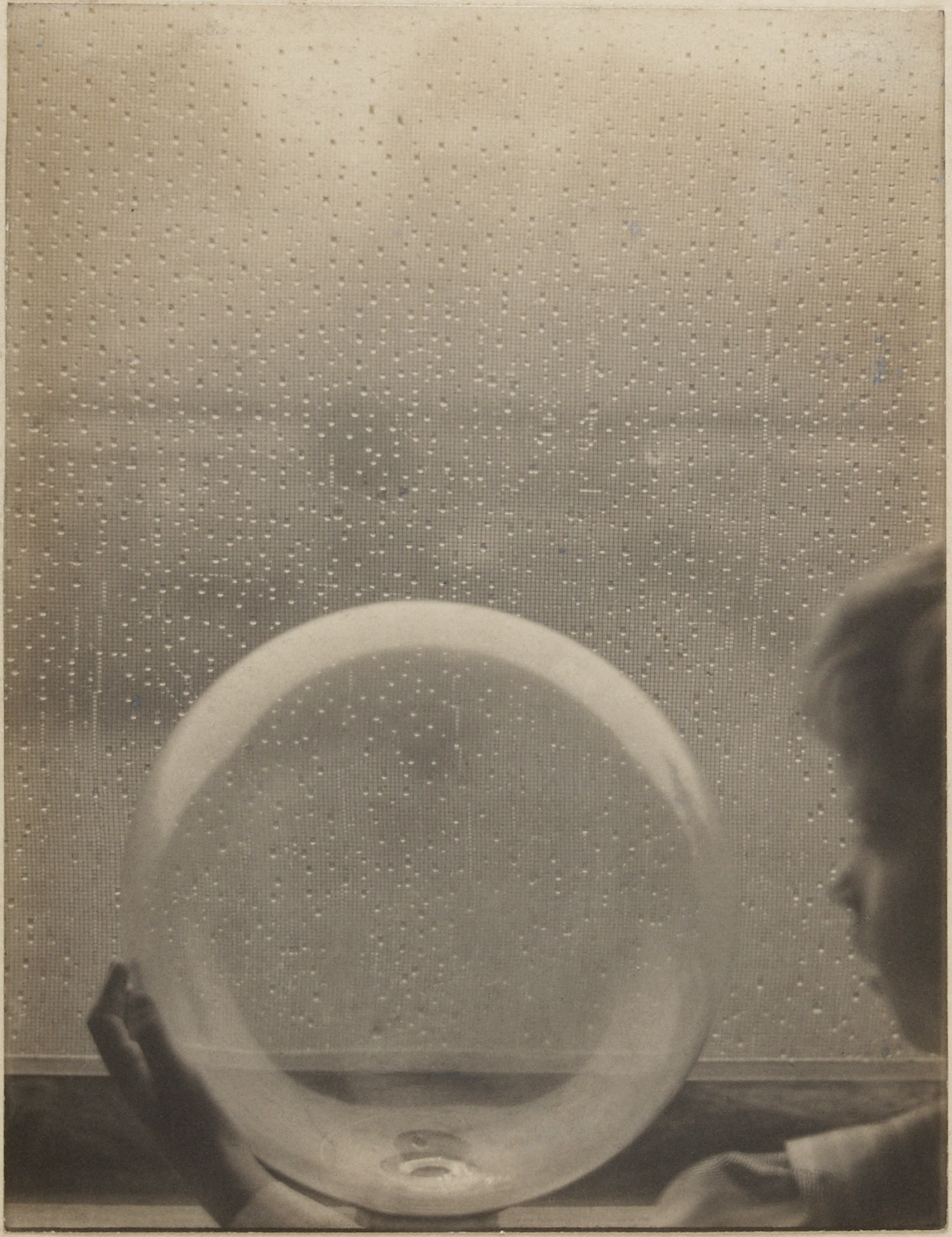
Clarence H. White (American, 1871-1925) 'The Bubble' 1898, printed 1905


Clarence Hudson White (American, 1871-1925)
The Bubble
1898
Platinum print on paper


This image was exhibited at the 1898 Philadelphia Photographic Salon to great acclaim. Fellow photographer and critic Joseph Keiley commented, “Like most of Mr. White’s pictures, it is a well nigh perfect piece of composition whose subject with subtle poetry stimulates and leaves much to the imagination.”


Clarence Hudson White (American, 1871-1925) 'The Mirror' 1912


Clarence Hudson White (American, 1871-1925)
The Mirror
1912
Platinum print on paper
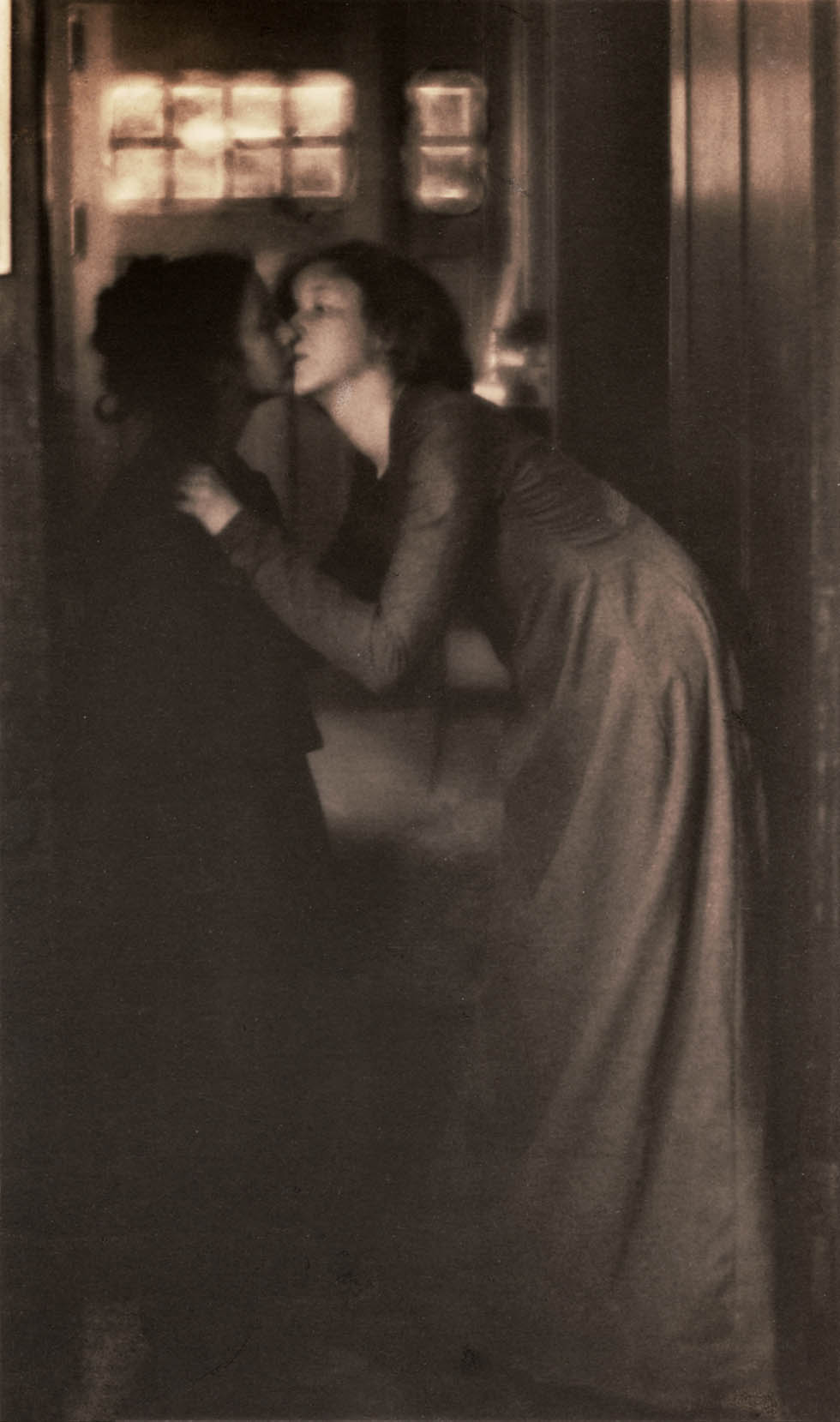
 

Clarence Hudson White (American, 1871-1925) 'The Kiss' 1904


Clarence Hudson White (American, 1871-1925)
The Kiss
1904
Platinum print on paper


This is one of White’s best known photographs. Despite his separation from White, Stieglitz kept prints of both The Kiss and The Bubble in his personal collection throughout his life.

All from the Collection of Michael Mattis and Judith Hochberg


Works by followers of White

Anne Brigman: The Feminine Mystic of Photo-Secession

Anne Brigman was known for her evocative and mystical imagery. She often placed herself within her compositions, challenging traditional gender roles and expectations. Her connection to the Photo-Secession movement was cemented through her association with Alfred Stieglitz, who published her work in Camera Work and admired her innovative spirit.

Brigman’s 1911 photograph The Pine Sprite exemplifies her distinctive style. The image features a nude female figure intertwined with the natural landscape, blending the human form seamlessly with the rugged environment. This work reflects Brigman’s themes of femininity, nature, and freedom, aligning with the Photo-Secessionist emphasis on personal expression and artistic experimentation. Brigman’s contributions highlighted the movement’s inclusive spirit, showcasing how female photographers could assert their voices and artistic visions in a male-dominated field.

Adelaide Ryder. “The Photo-Secession Movement: Pioneering Artistry in Early Photography,” on the UMFA website Nd [Online] Cited 22/10/2024
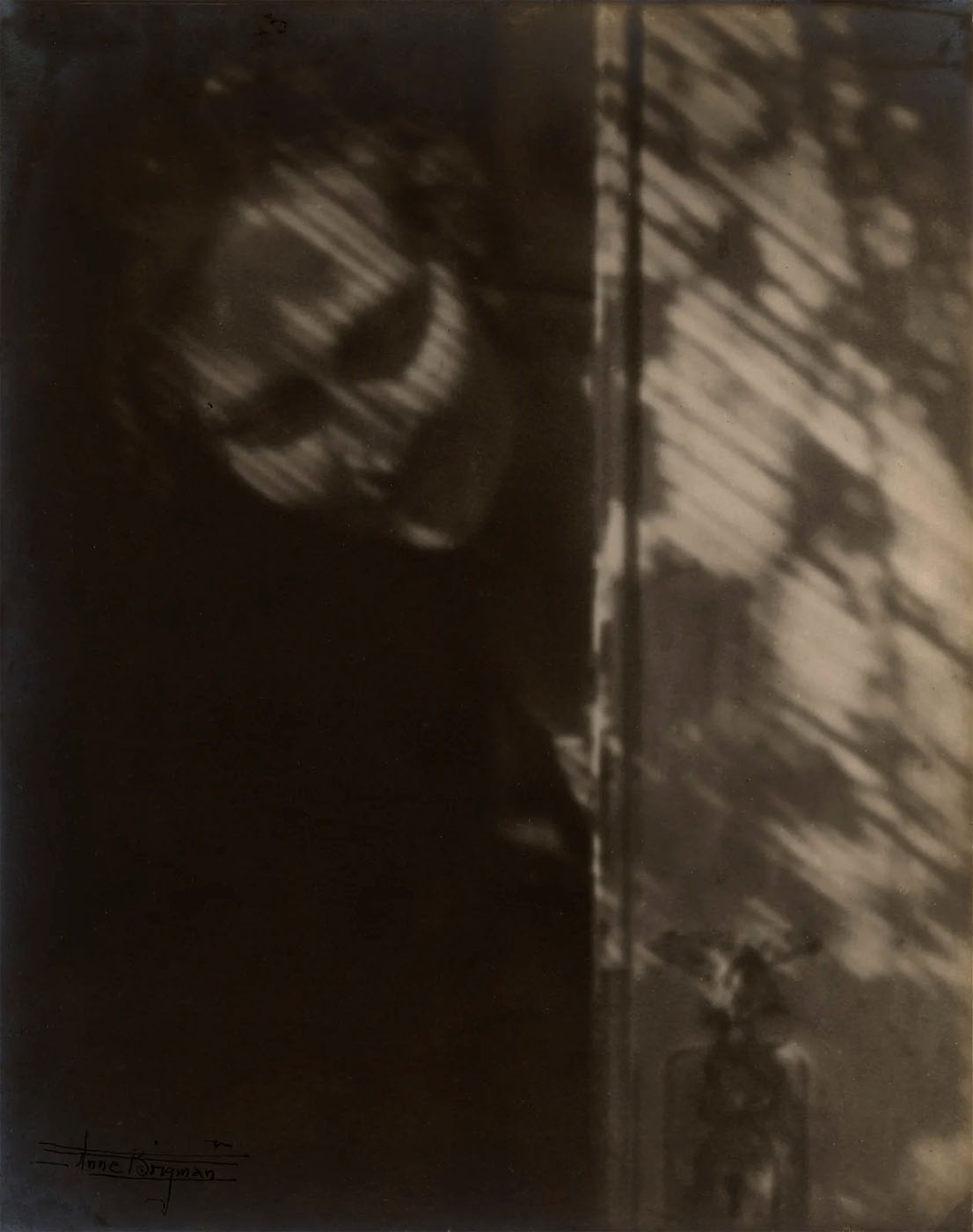
 

Anne Brigman (American, 1869-1950) 'The Shadow on My Door (Self Portrait)' 1921


Anne Brigman (American, 1869-1950)
The Shadow on My Door (Self Portrait)
1921
Gelatin silver print on paper
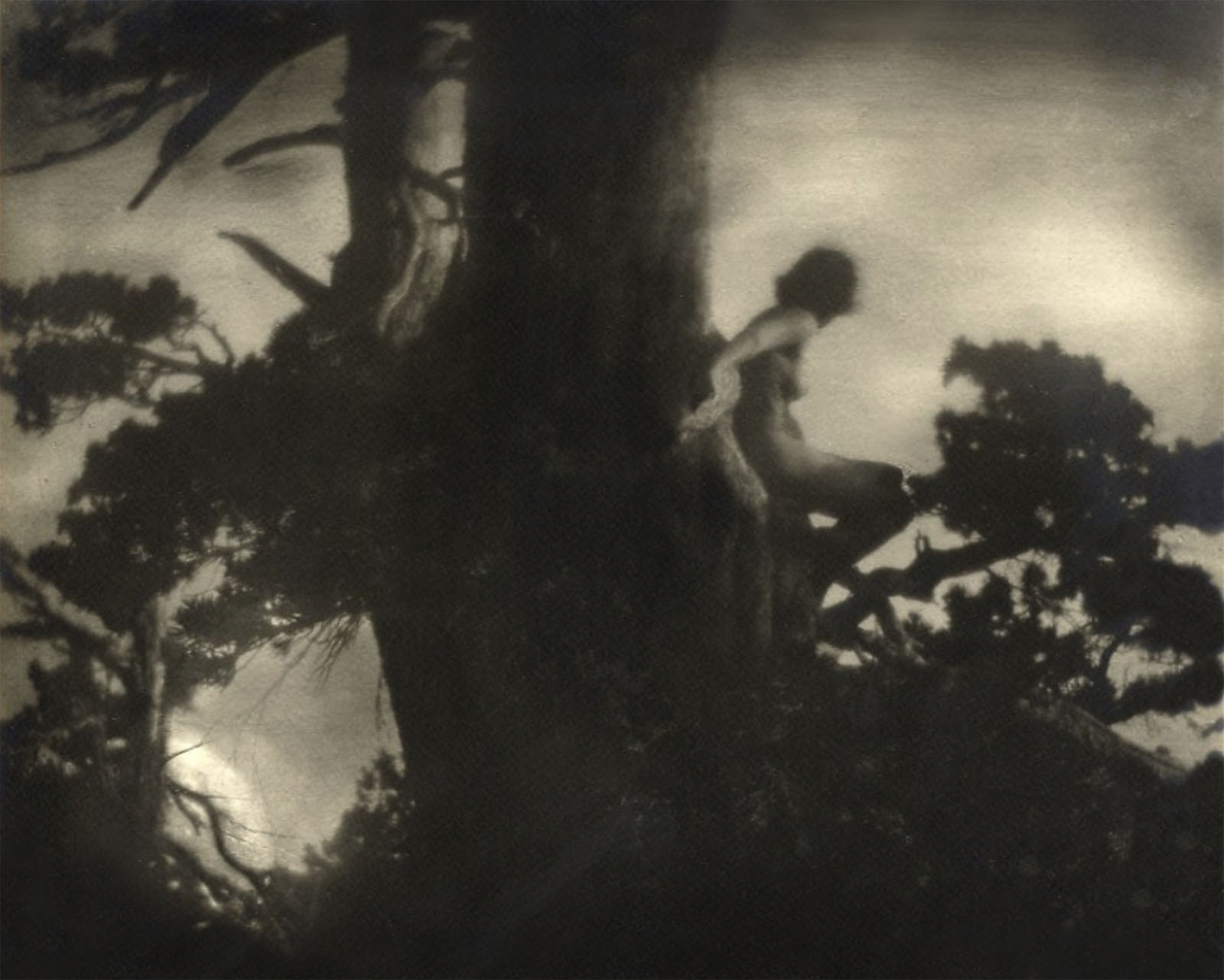
 

Anne Brigman (American, 1869-1950) 'The Pine Sprite' 1911 from the exhibition 'Photo-Secession: Painterly Masterworks of Turn-of-the-Century Photography' at the Utah Museum of Fine Arts, Salt Lake City, August - December 2024


Anne Brigman (American, 1869-1950)
The Pine Sprite
1911
Gelatin silver print on paper


Brigman was for a long time the only Californian member of the Photo-Secession. She was a free spirit and pagan whose woodsy nudes inspired by fantasy and folklore were frequently reproduced in Camera Work.


Laura Gilpin (American, 1891-1979) 'Ghost Rock, Garden of the Gods, Colorado' 1919


Laura Gilpin (American, 1891-1979)
Ghost Rock, Garden of the Gods, Colorado
1919
Palladium print on paper


An amateur photographer from Colorado Springs, Gilpin moved to New York to study with Clarence White in 1916. This photograph was one of Gilpin’s first successes after returning home in 1919, the beginning of her decades-long career as one of the most notable photographers of the West and Southwest.

All from the Collection of Michael Mattis and Judith Hochberg


In 1916 Gilpin enrolled at the Clarence H. White School of Photography in New York. Two years later, she returned to her native Colorado Springs and became one of the few women to pursue landscape photography.

This is her depiction of the Garden of the Gods, a scenic rock formation in Colorado Springs. It captures the stillness and otherworldly quality of the area. The photograph also reflects an emphasis on the evocation of mood rather than on descriptive detail.

Text from the National Gallery of Art Facebook page


Edward Steichen

Edward J. Steichen: The Innovator

Edward J. Steichen, a close associate of Stieglitz, brought a unique perspective to the Photo-Secession movement. Steichen was not only a photographer but also a painter, which influenced his photographic style. He experimented with various techniques, including soft focus and manipulation of light, to create both ethereal and visually striking images.

An avid gardener, Steichen propagated and grew a bountiful garden at his French country house. This image of a calla lily is rendered with exquisite detail and tonal richness. Steichen’s botanical images showcase his ability to find harmony between nature and art. His meticulous composition and sensitivity to light transform a simple flower into a work of art, reflecting his painterly approach to photography. His botanical works contributed to the Photo-Secession movement by highlighting the artistic potential of natural forms.

Adelaide Ryder. “The Photo-Secession Movement: Pioneering Artistry in Early Photography,” on the UMFA website Nd [Online] Cited 22/10/2024
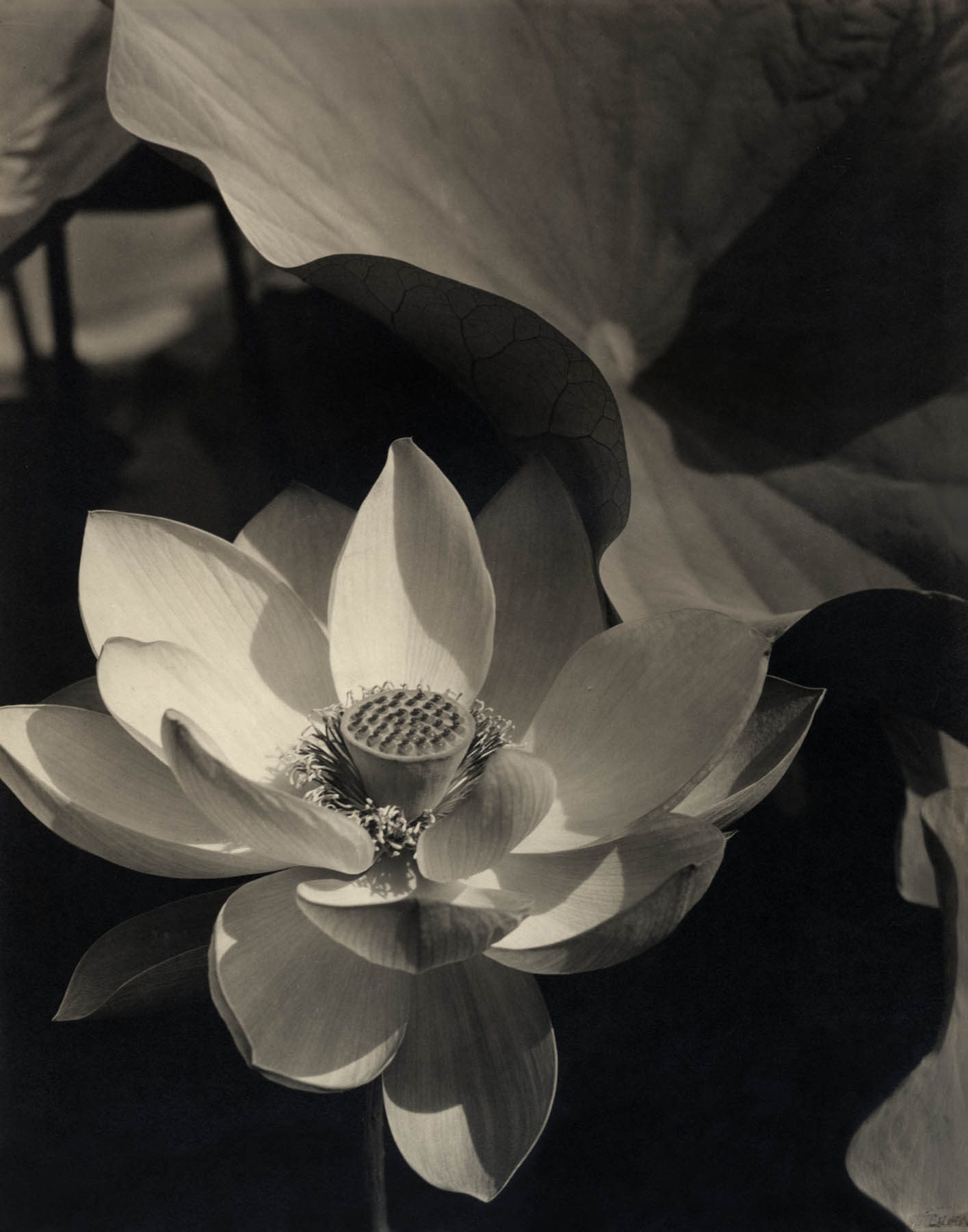
 

Edward Steichen (American born Luxembourg, 1879-1973) 'Lotus, Mount Kisco' 1915 from the exhibition 'Photo-Secession: Painterly Masterworks of Turn-of-the-Century Photography' at the Utah Museum of Fine Arts, Salt Lake City, August - December 2024


Edward Steichen (American born Luxembourg, 1879-1973)
Lotus, Mount Kisco
1915
Gelatin silver print on paper


Edward Steichen (American born Luxembourg, 1879-1973) 'Calla Lily' c. 1921


Edward Steichen (American born Luxembourg, 1879-1973)
Calla Lily
c. 1921
Platinum print on paper


Steichen had previously photographed flowers in compositions that placed delicate floral arrangements next to women figured as ideals of feminine beauty. In contrast, here he presents the lotus and calla lily in sharp focus and as singular subjects without overt metaphorical meaning.


Edward Steichen (American born Luxembourg, 1879-1973) 'Three Pears and an Apple' 1921


Edward Steichen (American born Luxembourg, 1879-1973)
Three Pears and an Apple
1921
Gelatin silver print on paper


On making this picture Steichen wrote: “I was particularly interested in a method of representing volume, scale, and a sense of weight. In my small greenhouse I constructed a tent of opaque blankets. From a tiny opening, I directed light against one side of the covering blanket, and this light, reflected from the blanket, was all. I made a series of exposures that lasted more than two days and one night. As the nights were cool, everything, including the camera, contracted and the next day expanded. Instead of producing one meticulously sharp picture, the infinitesimal movement produced a succession of slightly different sharp images, which optically fused as one. Here for the first time in a photograph, I was able to sense volume as well as form.”


Edward Steichen (American born Luxembourg, 1879-1973) 'Blossom of White Fingers' c. 1923


Edward Steichen (American born Luxembourg, 1879-1973)
Blossom of White Fingers
c. 1923
Gold-toned gelatin silver print on paper


This study of the graceful hands of Steichen’s wife with ultra-soft focus and high-key lighting and printed on gold-toned gelatin paper is one of the rare instances of Steichen using Pictorialist methods after the end of the Photo-Secession.
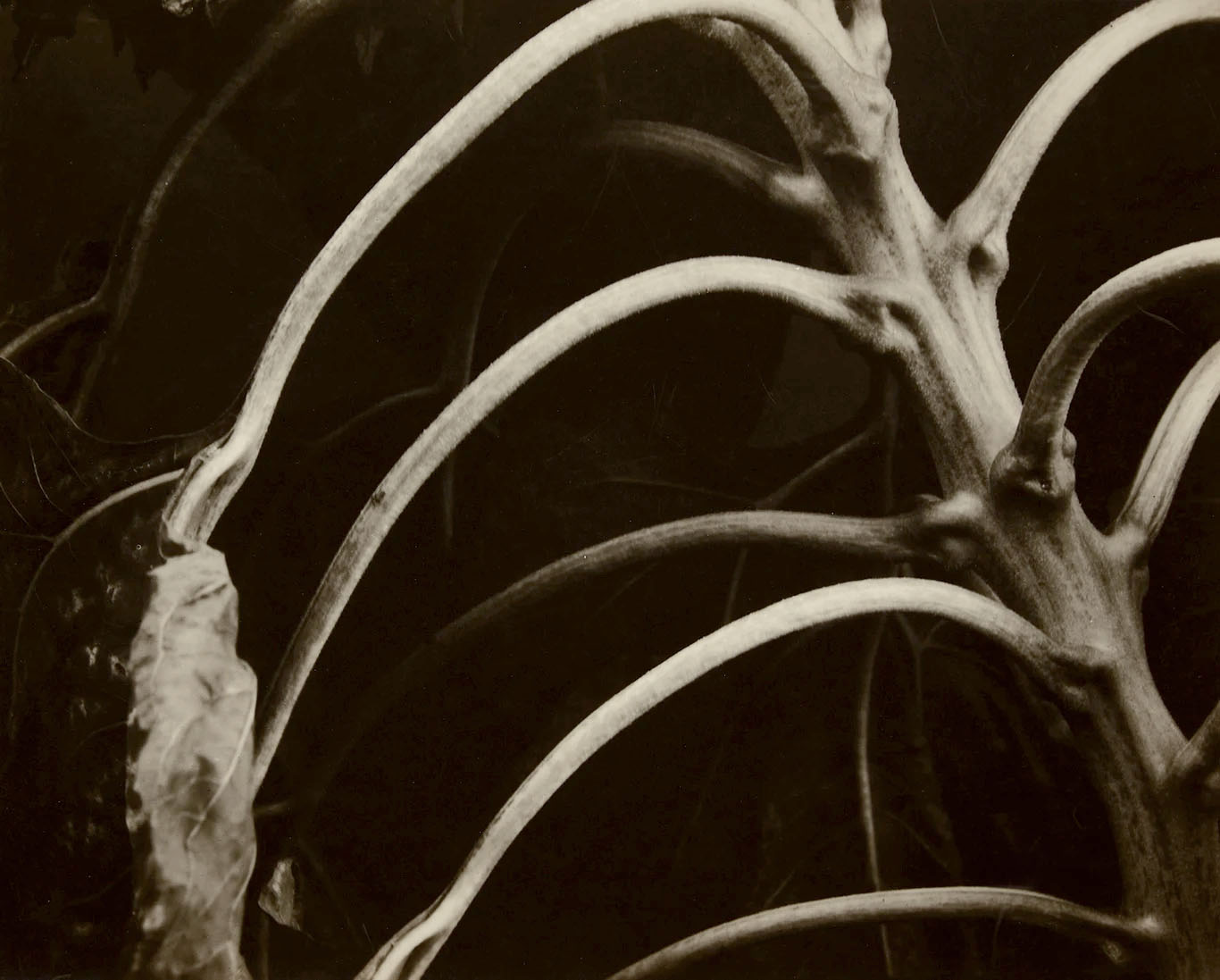
 

Edward Steichen (American born Luxembourg, 1879-1973) 'Backbone and Ribs of a Sunflower' c. 1920


Edward Steichen (American born Luxembourg, 1879-1973)
Backbone and Ribs of a Sunflower
c. 1920
Gelatin silver print on paper


Steichen was a knowledgeable botanist and spent five decades photographing the life cycle of sunflowers. This is one of his earliest studies of the plant. He became fascinated with spirals in nature, writing, “I found some form of the spiral in most succulent plants and in certain flowers, particularly in the seed pods of the sunflower.”


Edward Steichen (American born Luxembourg, 1879-1973) 'Advertising Study for Coty Lipstick' 1929


Edward Steichen (American born Luxembourg, 1879-1973)
Advertising Study for Coty Lipstick
1929
Gelatin silver print on paper


Steichen is credited as a founding figure of modern advertising and fashion photography. From 1923 to 1938, he served as chief photographer for the Condé Nast magazines Vogue and Vanity Fair. He had extensive experience in graphic design and advertising from his youth and earlier career. He had designed posters as a young man for a lithographic printer in Milwaukee. As Alfred Stieglitz’s associate on Camera Work from 1903 to 1917, Steichen produced the logo, typeface, and page layouts.

All from the Collection of Michael Mattis and Judith Hochberg


Works by Strand
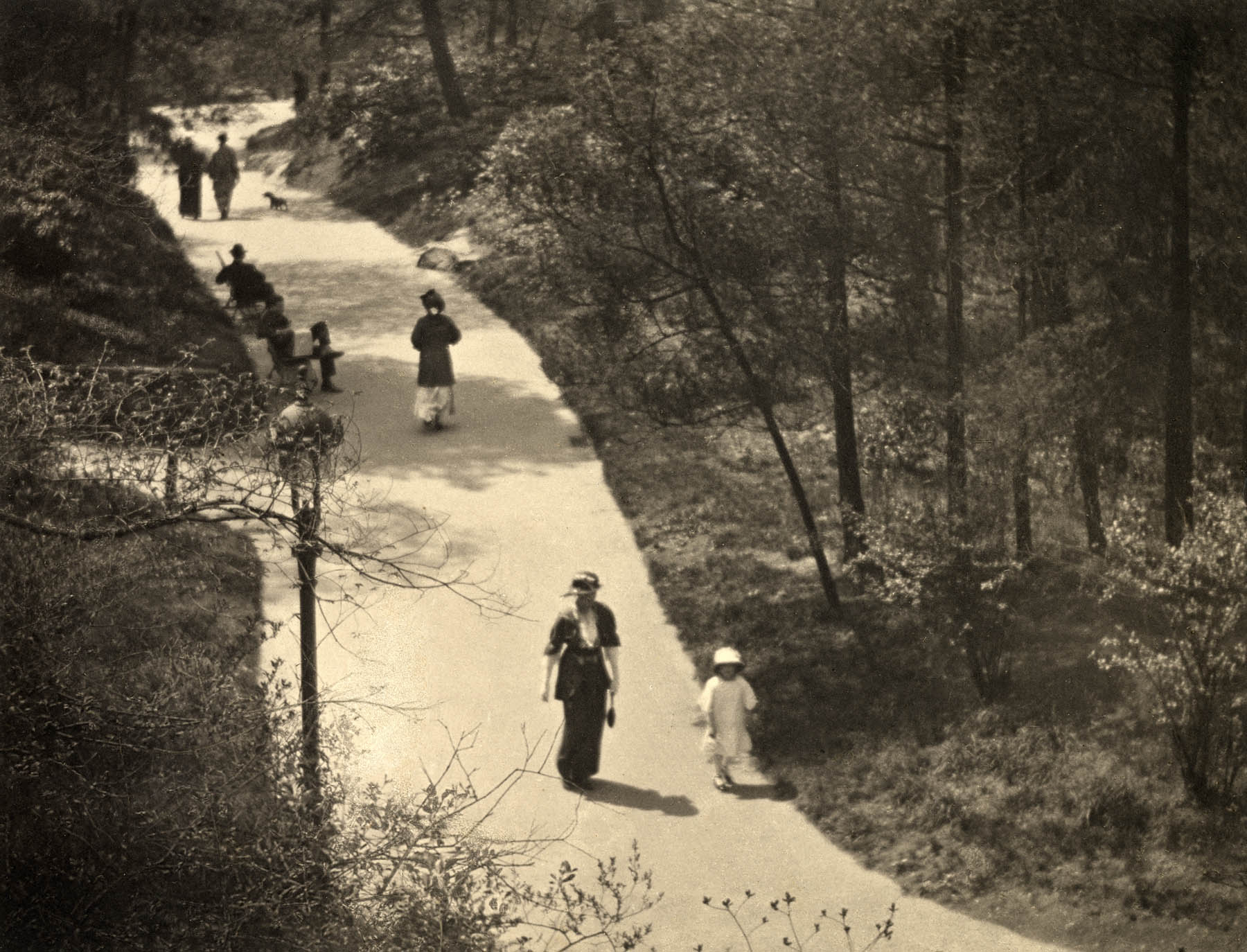
 

Paul Strand (American, 1890-1976) 'Central Park' 1915-1916 from the exhibition 'Photo-Secession: Painterly Masterworks of Turn-of-the-Century Photography' at the Utah Museum of Fine Arts, Salt Lake City, August - December 2024


Paul Strand (American, 1890-1976)
Central Park
1915-1916
Platinum print on paper


Urban life preoccupied Strand and in the 1920s would become a central subject of Modernist photographers around the world. From a Central Park overpass Strand identified this interesting composition with the bright, sinuous path dividing the picture plane. The decisive moment to snap the shutter occurred with the appearance of the two advancing figures and their angular shadows.
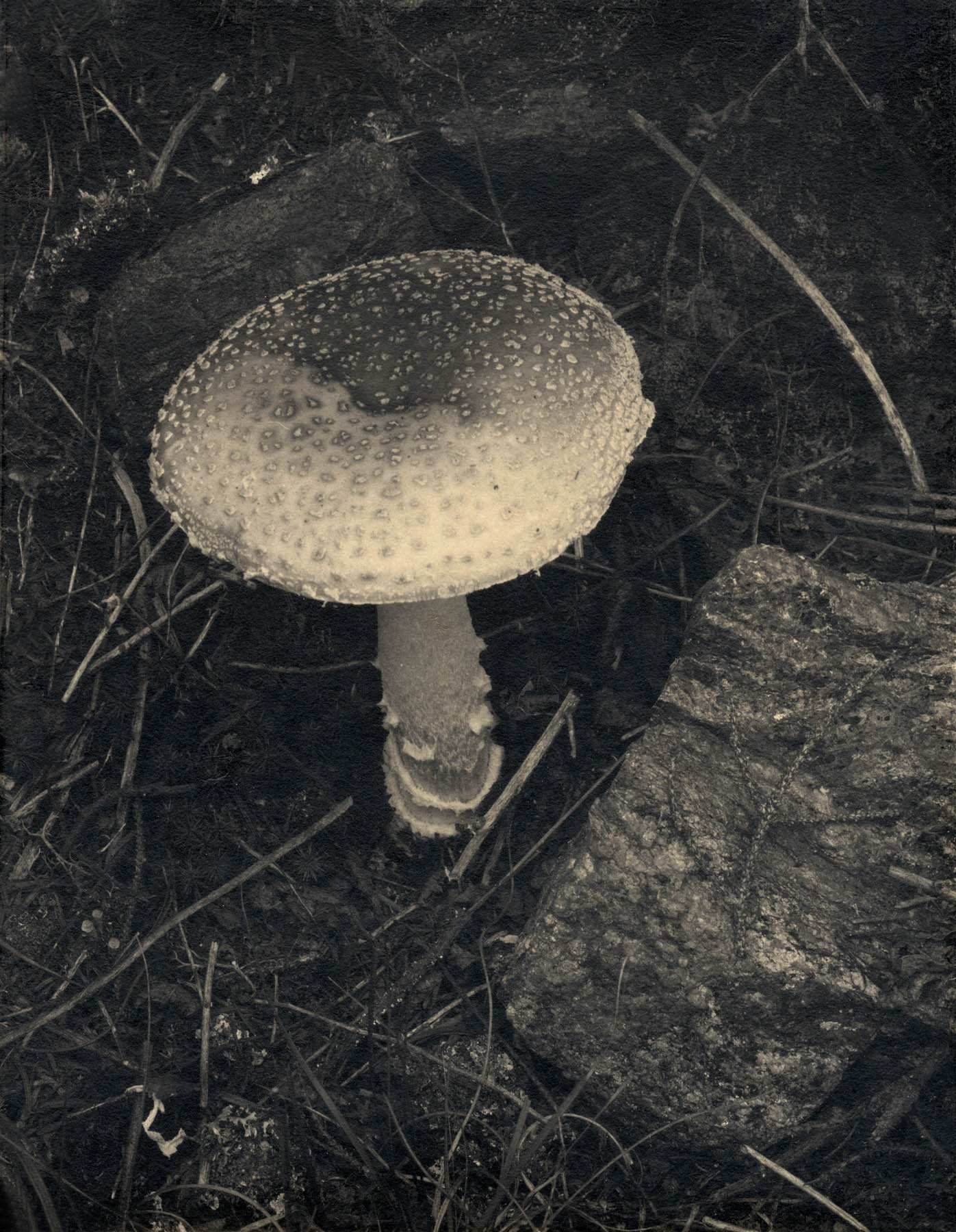
 

Paul Strand (American, 1890-1976) 'Speckled Toadstool, Georgetown, Maine' 1927


Paul Strand (American, 1890-1976)
Speckled Toadstool, Georgetown, Maine
1927
Waxed platinum print on paper


Strand continued to use platinum printing long after most other photographers adopted gelatin silver papers, which were more efficient and versatile and had a glossier surface. His prints in platinum are highly regarded for capturing minute detail and a wide range of tonal values.
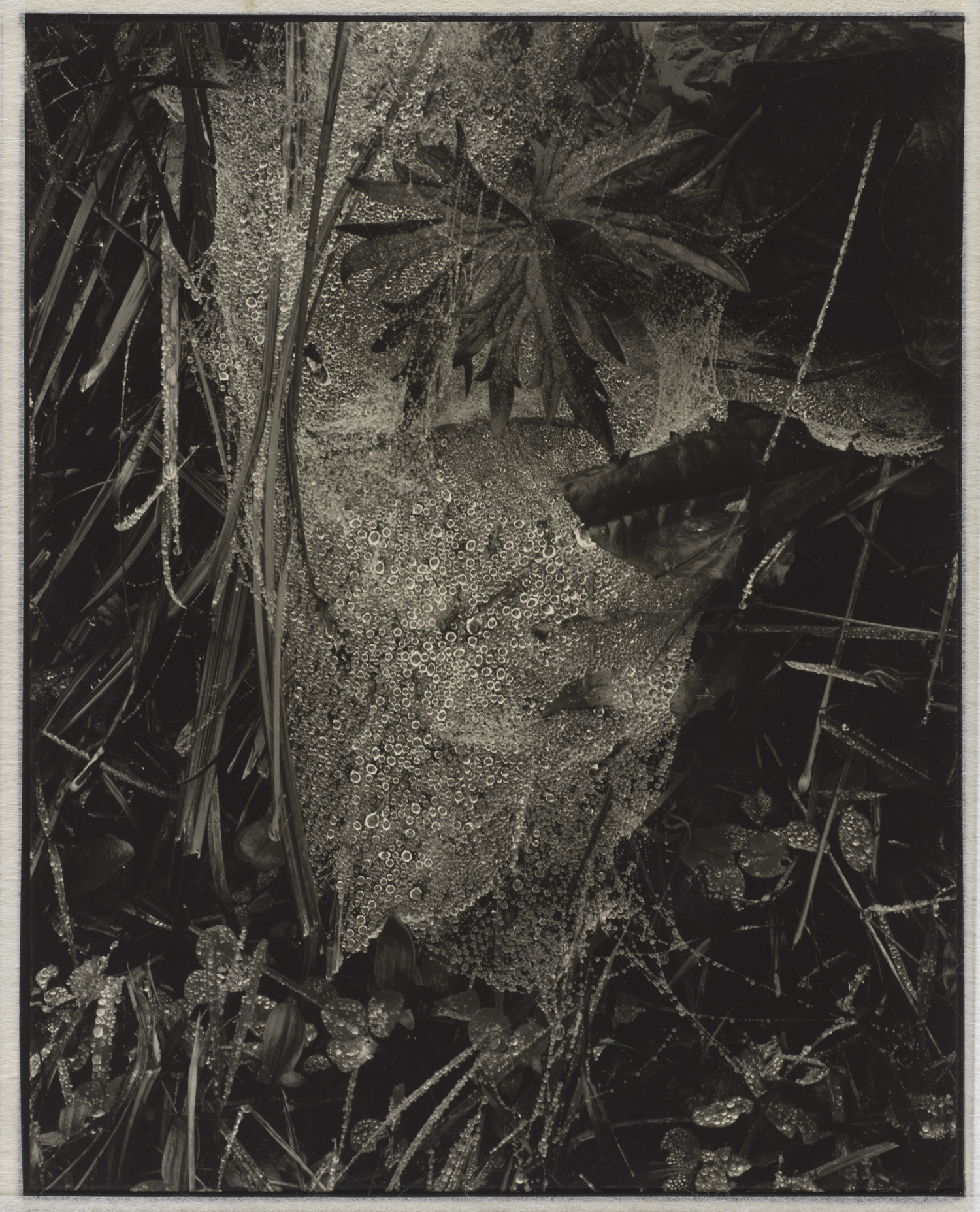
 

Paul Strand (American, 1890-1976) 'Cobweb in the Rain, Georgetown, Maine' 1928


Paul Strand (American, 1890-1976)
Cobweb in the Rain, Georgetown, Maine
1928
Gelatin silver print on paper

All from the Collection of Michael Mattis and Judith Hochberg


Works of Straight photography
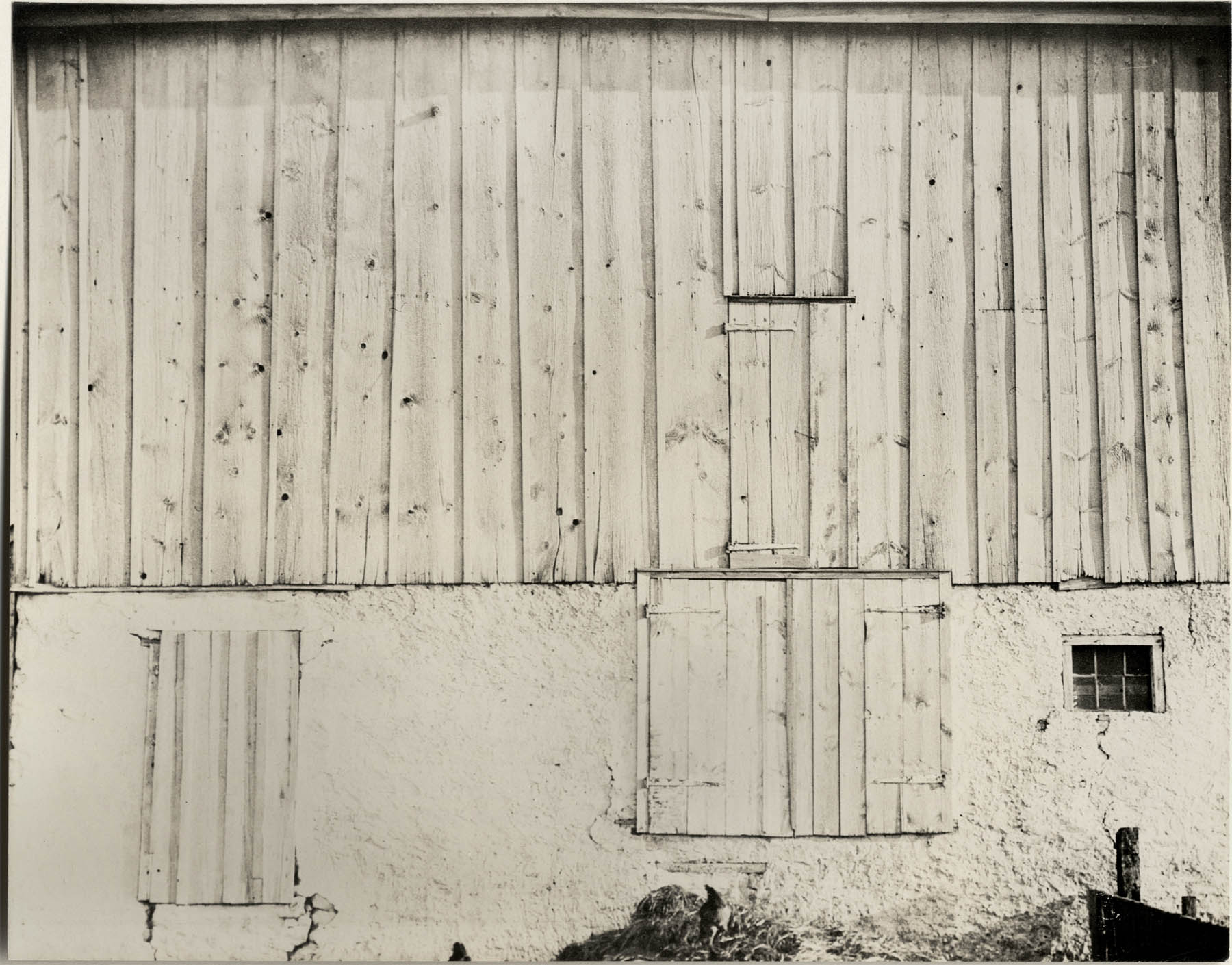
 

Charles Sheeler (American, 1883-1965) 'Side of White Barn, Bucks County' 1917


Charles Sheeler (American, 1883-1965)
Side of White Barn, Bucks County
1917
Gelatin silver print on paper


A painter and photographer, Sheeler became a close friend of Alfred Stieglitz as the Photo-Secession dissolved. This photographic study of line, shape, and tone recalls the hard-edged style of Sheeler’s paintings. Only the chickens appearing at the bottom edge give a sense of scale to the barn.


Alvin Langdon Coburn: The Avant-Garde Creator

Alvin Langdon Coburn pushed the boundaries of photography with his innovative Vortographs, created in 1916-1917. These images are considered some of the first abstract photographs, born from Coburn’s desire to create art that combined the physical with the spiritual. By placing a vortoscope, a triangular arrangement of mirrors and prisms, over a camera’s lens, Coburn created complex images of kaleidoscopic and geometric patterns that simplify the photograph to the essential elements of light and form. This technique broke away from traditional photographic representation, emphasising form, structure, and abstraction. The Vortographs were influenced by the Vorticist movement, which celebrated dynamic and abstract art. Coburn’s pioneering work with these images marked a significant departure from Pictorialism, embracing modernist principles and demonstrating the artistic potential of photography beyond mere depiction. The Vortographs stand as a testament to Coburn’s visionary approach and contributions to the evolution of photographic art.

Adelaide Ryder. “The Photo-Secession Movement: Pioneering Artistry in Early Photography,” on the UMFA website Nd [Online] Cited 22/10/2024
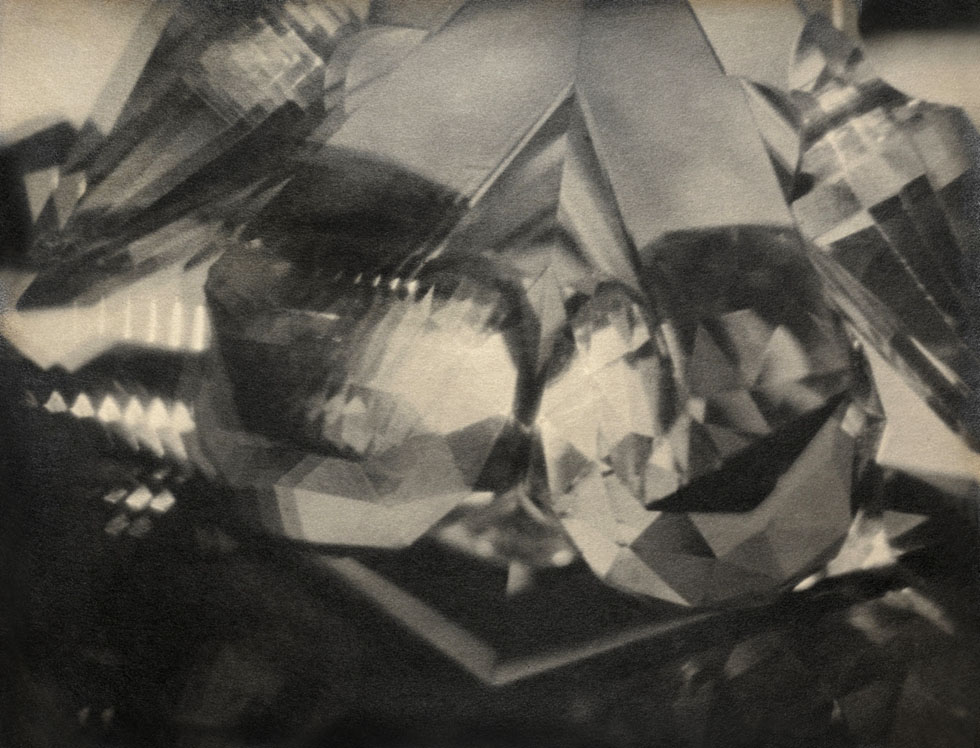
 

Alvin Langdon Coburn (British American, 1882-1966) 'Vortograph' 1917


Alvin Langdon Coburn (British American, 1882-1966)
Vortograph
1917
Gelatin silver print on paper


Coburn was one of the Photo-Secessionists who rejected Pictorialism. In his 1916 essay “The Future of Pictorial Photography,” he called for abstraction in photography, concluding, “it is my hope that photography may fall in line with all the other arts, and with her infinite possibilities, do things stranger and more fascinating than the most fantastic dreams.” Coburn created vortographs like this by placing a devise with three mirrors between his camera and subject. When he exhibited them to great fanfare in London in 1917, Ezra Pound proclaimed: “The Camera is freed from Reality!”

All from the Collection of Michael Mattis and Judith Hochberg


Utah Museum of Fine Arts
University of Utah campus
Marcia and John Price Museum Building
410 Campus Center Drive

Opening hours:
Tuesday – Sunday 10am – 5pm
Closed Mondays

Utah Museum of Fine Arts website

LIKE ART BLART ON FACEBOOK

Back to top

Exhibition: ‘Clarence H. White and His World: The Art and Craft of Photography, 1895-1925’ at the Princeton University Art Museum

Exhibition dates: 7th October, 2017 – 7th January, 2018

Curator: Anne McCauley


Clarence H. White (American, 1871-1925) 'The Bubble' 1898, printed 1905 from the exhibition 'Clarence H. White and His World: The Art and Craft of Photography, 1895-1925' at the Princeton University Art Museum, Oct 2017 - Jan 2018


Clarence H. White (American, 1871-1925)
The Bubble
1898, printed 1905
Platinum print
24.2 x 19.3cm (9 1/2 x 7 5/8 in.)
Alfred Stieglitz Collection, 1933
The Metropolitan Museum of Art


A sense of the beyond

I have waited over nine years to be able to do a posting on this artist. This is the first retrospective of Clarence H. White’s photographs in a generation… and my first posting for 2018. What a beauty the posting is, and what beauty is contained within, his photographs.

White was born in Newark, Ohio (see map below) in 1871. Just to put that into perspective, of the big three Alfred Stieglitz was born in 1871, Edward Steichen in 1879 and Paul Strand in 1890. Soon after marrying his wife in 1893 White took up photography, applying some of his artistic vision, developed earlier through filling sketchbooks with pencil sketches, pen-and-ink drawings and watercolours, to the craft of photography. “He learned how to use light, or the lack of it, to draw attention to his subject. He also learned how to visualise his subjects in his mind.” He was completely self-taught, “in part because he had no money to pay for training or courses at the time when he was developing his own vision in the medium. Many of his friends, students and biographers believe his lack of any formal training was one of his greatest strengths… It is important to note that at that time there were no formal schools of photography in the U.S. or even acknowledged leaders with whom White might have studied.”1

In 1895, he exhibited his first photos in public, at the Camera Club of Fostoria, Ohio, and by 1898 he had met Fred Holland Day and Alfred Stieglitz. His star continued to rise, White having solo exhibitions in 1899 at the Camera Club of New York and at the Boston Camera Club, and he also exhibited in the London Photographic Salon organised by The Linked Ring. In 1900 White was elected to membership in The Linked Ring and in 1901 White and 10 others to become “charter members” of the Photo-Secession, a group founded by Alfred Stieglitz to promote Pictorialism and fine art photography. Due to financial constraints during this time, White was only able to create about 8 photographs each month, and he had to photograph either very early in the morning, after he finished work as a bookkeeper, or at the weekend. Some of his most memorable images were created at this time, before his move to New York in 1906. As Cathleen A. Branciaroli and William Inness Homer observe in “The Artistry of Clarence H. White”, “White is most significant in the history of photography because, in his early years, he redefined the nature of picture-making, creating a distinctly modern idiom for his own time…. He reduced his compositions to very simple elements of form, and by experimenting with principles of design derived largely from Whistler and Japanese prints, he created a personal style that was unique for photography.”2

If the photograph consumes light, then Clarence H. White was consumed by photography. Informed by the widespread Japonisme of the period, especially ukiyo-e prints (the term ukiyo-e translates as “picture[s] of the floating world”) with their flat perspective, unmodulated colours and outlined forms – his photographs “sought to capture either the geometry of perceived pattern or the gorgeous effect of shimmering light… qualities of image that the camera, conjoining realism and poetic perception, could render with compelling effect.”3 We now group these kind of photographs under the label “pictorialism,” soft-focus photographs that were more than purely representational, that project “an emotional intent into the viewer’s realm of imagination.”4 Here, an “atmosphere” (formulated, created, conceptualised, captured) is the key to conveying an expressive mood and an emotional response to the viewer “through an emphasis on the atmospheric elements in the picture and by the use of “vague shapes and subdued tonalities … [to convey] a sense of elegiac melancholy.””5

After his move to New York in 1906, White and Stieglitz “jointly created a series of photographs of two models, Mabel Cramer and another known only as Miss Thompson,” in 1907. This was the only time that Stieglitz ever worked with another photographer. “In 1908 Stieglitz continued to show his admiration for White by devoting an entire issue of Camera Work to him and 16 of his photographs. It was only the third time Stieglitz had singled out an individual photographer for this honor (the others were Steichen and Coburn).”6 In 1910, White set up the Seguinland School of Photography, the first independent school of photography in America, while in 1912 he had a terminal falling out with the excessive ego of Stieglitz. “First Käsebier, then White and finally Steichen broke off their relationship with Stieglitz, each citing Stieglitz’s overbearing ego, his refusal to consider other’s viewpoints and his repeated actions on behalf of the Photo-Secession without consulting any of the so-called “members” of the group.”7

Encouraged by his newfound freedom to act outside of the shadow of Stieglitz, White founded the Clarence H. White School of Photography in 1914… an influential school which, over the next decade, “attracted many students who went on to become notable photographers, including Margaret Bourke-White, Anton Bruehl, Dorothea LangePaul OuterbridgeLaura GilpinRalph SteinerKarl StrussMargaret Watkins and Doris Ulmann.”8 In his class “The Art of Photography” White stressed that the primary thing his students had to learn was “the capacity to see.” White became one of the most important teachers of photography of the age. White died suddenly of a heart attack while on a trip to Mexico with students to take his first photographs in years. He was 54 years old.

After Alfred Stieglitz died in 1946 numerous photographs by White were found in his personal collection. Despite their differences, it is obvious that Stieglitz held White in very high regard, “one of the very few who understand what the Photo-Session means & is.”9 “Although White and Stieglitz had tried to reconcile their differences before White died, Stieglitz never forgave White for breaking from him in 1912. Upon hearing about White’s untimely death, Stieglitz wrote to Kuehn, “Poor White. Cares and vexation. When I last saw him he told me he was not able to cope with [life as well as he was] twenty years ago. I reminded him that I warned him to stay in business in Ohio – New York would be too much for him. But the Photo-Session beckoned. Vanity and ambitions. His photography went to the devil.” In spite of these words, Stieglitz had 49 of White’s photographs, including 18 created jointly with Stieglitz, in his personal collection when he died.”10

There is something undeniable in what Stieglitz says. White’s greatest photographs emerge from the Stygian dusk, a dash of melancholy, a lot of beauty, mostly before he moved to New York. It says a lot that Stieglitz still thought that much of him as an artist, a man, and as an emasculated friend, that he kept nearly 50 of his photographs in his personal collection until he died. Stieglitz knew the nature of (his) genius.

The value of self-expression and direct engagement with experience

Clarence H. White’s artistic achievements may have been overshadowed by the likes of Stieglitz, Steichen and Strand’s later modernist photographs, but there is no doubt in my mind that he is a colossus, a monster in the history of art photography. Simply put, there is no one else like him in the history of photography, for you can always recognise the “signature” of a White photograph.

Peter Bunnell notes, “[White] celebrated elemental things, the time spent playing in the fields or woods, the simple pleasure of unhurried living, the playing of games in interior spaces…. White, growing up within an extended family, knowing nothing else, had no real sense of other societies and his pictures thus had a kind of fortification against the outside. They were his private epic.”12 His private epic was a personal mythology which expressed his personality and distinctive sentiments through his photographs of imagined worlds. This is the critical thing that makes him so different from other photographers of the period: he was beholden to no movement, no school, teacher or narrative – but only to himself. In his best photographs it was this private world writ large in light that made him famous.

His “masterful reinterpretation of the possibilities of light and the photographic medium done with artistic intent”11 allowed him to develop this personal mythology. White learned how to visualise his subjects in his imagination, before rendering them by drawing in light. His unique prints, made in a variety of processes (platinum, gum-platinum, palladium, gum-palladium, gum, glycerin developed platinum, cyanotype and hand-coated platinum) with the same image sometimes printed using different processes,13 celebrate “pure photography”, a cerebral, ethereal emanation of pure light and form. They seem not of this earth. Indeed, I would argue that White steps outside strict Pictorialism into this “other”, private realm.

There may be, as Peter Bunnell suggests, a luminosity of tone in his prints rarely achieved in the history of photography, but there was also a luminosity in his thinking, in the way he approaches the medium itself. I look at the photograph The Deluge (c. 1902-1903, below) and I think of William Blake. I look at the three versions of the photograph Spring – A Triptych [Letitia Felix] (1898, below) and observe how each iteration is different (in colour, tone and inflection), but how they are just as valid as each other. There are personal, domestic quotidian scenes (Blindmans’ Bluff, 1898 or Mother was living in the old home alone, 1902); mythic scenes, such as the glorious photograph The Bubble (1898, above) where the figure seems to hover above the ground (“pictures of the floating world”); and early Modernist inclinations such as Drops of Rain (1903, below) and Newport the Maligned (1907, below). But above all, there is the light which shines from within.

Further, his was a whole art aligned perhaps subconsciously, perhaps not, to that German Art Nouveau movement named after the Munich periodical Die Jugend (‘Youth’) – Jugendstijl. “A decorative art with the mid-century idea of the gesamtkunstwerk; the ‘total work of art’ applied in Wagner’s opera and in Dülfer’s architecture, Jugendstil before 1900 favoured floral motifs and ukiyo-e prints of Japanese art.” Evidence of this ‘total work of art’ (an expression of folk legend as universal humanist fable), can be seen in the few Pictorialist works from the late 1890s that survive in their original exhibition frames (see below). The plain dark wood frames with their curved tops serve to further isolate and flatten the pictorial space of the photograph; the dark colour of the wood pushing against the luminosity, line, form and reddish brown colour of the prints. The last version of Spring – A Triptych (Letitia Felix) (1898, below) is particularly illuminating in this respect, the dark wood framing the individual panels fragmenting the field upon which the young woman stands, so that we are no longer in a fairytale landscape (as in the first iteration) but surrounded by writhing tree trunks of sombre hue with a ghost-like presence walking amongst them. And then we see how these photographs were originally exhibited!

In Display of Clarence H. White photographs in Newark Camera Club exhibition, Young Men’s Christian Association building, Newark, Ohio, 1899 (below) we observe, we are witness to, a flow of energy from one side of the wall to the other – none of this staid singular hanging “on the line” – but a dynamic narrative that moves the viewer both physically and mentally. How wondrous is this display! An then in William Herman Rau’s photograph Untitled [Clarence H. White works in Second Philadelphia Photographic Salon installation (1899, below) we see a networked display, almost a cross-like shape, with portraits surrounding what looks like a central landscape image (although it is difficult to make out exactly what the image is). This is an almost contemporary sequencing of photographic work, still used by the likes of Annette Messager today… a perfect example of gesamtkunstwerk, where White has fully understood concept, narrative, form, function, the physicality of the photograph, it’s frame, and the context and environment of the image display.

To me, the early prints of Clarence H. White give the sense that he has found a metaphor, but he is not sure what that metaphor relates to: a cosmology? / man creating something of wonder (when viewed with imagination)?

He is still working it out… and then he goes to New York.
Does it matter that he didn’t find the answer? A thing that is done as a reaction to a situation.
Not at all. It’s the journey that matters.

The sense of ethereal beauty and the beyond that he captured on his glass plates are enough to make him a genius in my eyes. “Images arising from dreams are the well spring of all our efforts to give enduring form and meaning to the urgencies within,” states Douglas Fowler.14 White’s oneiric photographs, and our prior experiences with dreaming and imagination, help to create a sense of oneness with his photographs. Ultimately, his private epic, his personal mythology brought these aspects of art into photography.

Dr Marcus Bunyan


Many thankx to the Princeton University Art Museum for allowing me to publish the art work in the posting. Please click on the art work for a larger version of the image.


Footnotes

1/ Anonymous. “Clarence Hudson White,” on the Wikipedia website [Online] Cited 02/01/2018

2/ Cathleen A. Branciaroli and William Inness Homer. “The Artistry of Clarence H. White,” in Homer, William Innes (ed.). Symbolism of Light: The Photographs of Clarence H. White. Wilmington, DE: Delaware Art Museum, 1977, p. 34

3/ Richard K. Kent. “Early Twentieth-Century Art Photography in China: Adopting, Domesticating, and Embracing the Foreign,” in Local Culture / Global Photography, Trans Asia Photography Review Vol. 3, Issue 2, Spring 2013 [Online] Cited 02/01/2018

4/ “Pictorialism is the name given to an international style and aesthetic movement that dominated photography during the later 19th and early 20th centuries. There is no standard definition of the term, but in general it refers to a style in which the photographer has somehow manipulated what would otherwise be a straightforward photograph as a means of “creating” an image rather than simply recording it. Typically, a pictorial photograph appears to lack a sharp focus (some more so than others), is printed in one or more colours other than black-and-white (ranging from warm brown to deep blue) and may have visible brush strokes or other manipulation of the surface. For the pictorialist, a photograph, like a painting, drawing or engraving, was a way of projecting an emotional intent into the viewer’s realm of imagination.”

Anonymous. “Pictorialism,” on the Wikipedia website [Online] Cited 02/01/2018

5/ Naomi Rosenblum. A World History of Photography. New York: Abbeville Press, 1989, p. 297 quoted in Anonymous. “Pictorialism,” on the Wikipedia website [Online] Cited 02/01/2018

6/ Anonymous. “Clarence Hudson White,” on the Wikipedia website [Online] Cited 02/01/2018

7/ Maynard Pressley White Jr. Clarence H. White: A Personal Portrait. Wilmington, Delaware: University of Delaware, PhD dissertation, 1975 quoted in Anonymous. “Clarence Hudson White,” on the Wikipedia website [Online] Cited 02/01/2018

8/ Lucinda Barnes (ed.) with Constance W. Glenn and Jane L. Bledsoe. A Collective Vision: Clarence H. White and His Students. Long Beach, CA: University Art Museum, 1985 in Anonymous. “Clarence Hudson White,” on the Wikipedia website [Online] Cited 02/01/2018

9/ Maynard Pressley White Jr. Clarence H. White: A Personal Portrait. Wilmington, Delaware: University of Delaware, PhD dissertation, 1975, p. 175 quoted in Anonymous. “Clarence Hudson White,” on the Wikipedia website [Online] Cited 02/01/2018

10/ Weston J. Naef. The Collection of Alfred Stieglitz, Fifty Pioneers of Modern Photography. NY: Viking Press, 1978, pp. 482-493 quoted in Anonymous. “Clarence Hudson White,” on the Wikipedia website [Online] Cited 02/01/2018

11/ Peter Bunnell. Clarence H. White: The Reverence for Beauty. Athens, Ohio: Ohio University Gallery of Fine Arts, 1986, p. 17 quoted in Anonymous. “Clarence Hudson White,” on the Wikipedia website [Online] Cited 02/01/2018

12/ Anonymous. “A Reevaluation: Clarence H. White,” on the Photoseed blog [Online] Cited 02/01/2018

13/ “White sometimes printed the same image using different processes, and as a result there are significant variations in how some of his prints appear. His platinum prints have a deep magenta-brown tone, for example, whereas his gum prints have a distinct reddish hue. Photogravures of his images in Camera Work, which he considered to be true prints, were more neutral, tending toward warm black-and-white tones.”

Maynard Pressley White Jr. Clarence H. White: A Personal Portrait. Wilmington, Delaware: University of Delaware, PhD dissertation, 1975, p. 68 quoted in Anonymous. “Clarence Hudson White,” on the Wikipedia website [Online] Cited 02/01/2018

14/ Douglas Fowler. The Kingdom of Dreams in Literature and Film: Selected Papers from the Tenth Annual Florida State University Conference on Literature and Film. Tallahassee: University Presses of Florida, 1986, p. 10 quoted in Anonymous. “Oneiric (film theory),” on the Wikipedia website [Online] Cited 03/01/2018


Newark, Ohio


Newark, Ohio – where Clarence H. White was born and taught himself photography


Lecture Clarence H White and His World

Anne McCauley, curator of the exhibition and David Hunter McAlpin Professor of the History of Photography and Modern Art, explores the legacy of one of the early twentieth century’s most gifted photographers and influential teachers. Program took place on Saturday, October 14, 2017.


Clarence H. White Analysis and Collaborative Discovery

Collaboration with Yale Reveals Late Nineteenth and Early Twentieth-Century Photographic Processes

Preparations for the first retrospective exhibition in a generation of pioneer photographer Clarence Hudson White (1871-1925) have inspired an unexpected collaboration between the Princeton University Art Museum and the Yale Institute for the Preservation of Cultural Heritage. Immersed in the real-life setting of the Princeton University Art Museum, the project drew students, researchers, and curators from across two universities and from numerous disciplines to analyse the experimental techniques that took place during the “Pictorialism” period of the late 19th and early 20th centuries.


Unknown photographer. 'Display of Clarence H. White photographs in Newark Camera Club exhibition, Young Men's Christian Association building, Newark, Ohio, 1899' 1899  from the exhibition 'Clarence H. White and His World: The Art and Craft of Photography, 1895-1925' at the Princeton University Art Museum, Oct 2017 - Jan 2018


Unknown photographer
Display of Clarence H. White photographs in Newark Camera Club exhibition, Young Men’s Christian Association building, Newark, Ohio, 1899
1899


Unknown photographer. 'Jury of the Second Philadelphia Photographic Salon' 1899


Unknown photographer
Jury of the Second Philadelphia Photographic Salon
1899


Photograph shows, from left: Frances Benjamin Johnston, Clarence H. White, F. Holland Day, Gertrude Käsebier, and Henry Troth


William Herman Rau (1855-1920) 'Untitled [Clarence H. White works in Second Philadelphia Photographic Salon installation]' 1899


William Herman Rau (1855-1920)
Untitled [Clarence H. White works in Second Philadelphia Photographic Salon installation]
1899


Photograph shows a wall installation of photographs by Clarence H. White at the second exhibition of the Philadelphia Photographic Salon; according to the catalog for the exhibition, the works shown are “Fear”, “Morning”, “A Puritan”, “The Bubble”, “Lady in Black”, “Evening : An Interior”, “On the Old Stair”, “At the Old Canal Lock”, and “Lady with the Venus.” Also includes a portrait, presumably of White, half-length, facing right.


Clarence H. White (American, 1871-1925) 'A Rift in the Clouds' 1896


Clarence H. White (American, 1871-1925)
A Rift in the Clouds
1896
Platinum print
Image (window): 10.3 x 13.9cm (4 1/16 x 5 1/2 in.)
Frame: 28.6 × 36.2cm (11 1/4 × 14 1/4 in.)
The Clarence H. White Collection, assembled and organised by Professor Clarence H. White Jr., and given in memory of Lewis F. White, Dr. Maynard P. White Sr., and Clarence H. White Jr., the sons of Clarence H. White Sr. and Jane Felix White


Clarence H. White (American, 1871-1925) 'A Rift in the Clouds' 1896


Clarence H. White (American, 1871-1925)
A Rift in the Clouds
1896
Platinum print
Image (window): 10.3 x 13.9cm (4 1/16 x 5 1/2 in.)
Frame: 28.6 × 36.2cm (11 1/4 × 14 1/4 in.)
The Clarence H. White Collection, assembled and organised by Professor Clarence H. White Jr., and given in memory of Lewis F. White, Dr. Maynard P. White Sr., and Clarence H. White Jr., the sons of Clarence H. White Sr. and Jane Felix White


White was completely self-taught throughout his career, in part because he had no money to pay for training or courses at the time when he was developing his own vision in the medium. Many of his friends, students and biographers believe his lack of any formal training was one of his greatest strengths. When a one-man exhibition of his work was held in Newark in 1899, fellow Newark photographer Ema Spencer wrote, “He has been remote from artistic influences and is absolutely untrained in the art of the schools. In consequence, traditional lines have unconsciously been ignored and he has followed his own personal bent because he has been impelled by that elusive and inscrutable force commonly known as genius.” It is also important to note that at that time there were no formal schools of photography in the U.S. or even acknowledged leaders with whom White might have studied. The most common way a new photographer learned the trade was by working with an experienced photographer, and, other than a few portraitists, there was no one to learn from in Newark.

Text from the Wikipedia website


Clarence H. White (American, 1871-1925) 'The Girl with the Violin' 1897


Clarence H. White (American, 1871-1925)
The Girl with the Violin
1897
Platinum print with gouache in original frame
Image: 14.7 x 14cm (5 13/16 x 5 1/2 in.)
Frame: 22.9 x 22.4cm (9 x 8 13/16 in.)
The Clarence H. White Collection, assembled and organised by Professor Clarence H. White Jr., and given in memory of Lewis F. White, Dr. Maynard P. White Sr., and Clarence H. White Jr., the sons of Clarence H. White Sr. and Jane Felix White


Clarence H. White (American, 1871-1925) 'The Deluge' c. 1902-1903 Gum bichro


Clarence H. White (American, 1871-1925)
The Deluge
c. 1902-1903
Gum bichromate print
Image (arched top): 20.2 x 16.2cm (7 15/16 x 6 3/8 in.)
Frame: 43.8 × 36.2 × 3.2cm (17 1/4 × 14 1/4 × 1 1/4 in.)
The Clarence H. White Collection, assembled and organised by Professor Clarence H. White Jr., and given in memory of Lewis F. White, Dr. Maynard P. White Sr., and Clarence H. White Jr., the sons of Clarence H. White Sr. and Jane Felix White


Clarence H. White (American, 1871-1925) 'Just a Line' 1897


Clarence H. White (American, 1871-1925)
Just a Line
1897
Platinum print in original frame
Image: 19.2 x 13.3cm (7 9/16 x 5 1/4 in.)
Frame: 28.8 x 22.9cm (11 5/16 x 9 in.)
The Clarence H. White Collection, assembled and organised by Professor Clarence H. White Jr., and given in memory of Lewis F. White, Dr. Maynard P. White Sr., and Clarence H. White Jr., the sons of Clarence H. White Sr. and Jane Felix White


Clarence H. White (American, 1871-1925) 'Climbing the Hill' 1897


Clarence H. White (American, 1871-1925)
Climbing the Hill
1897
Platinum print with gouache in original frame
Image: 20 x 16cm (7 7/8 x 6 5/16 in.)
Frame: 34.5 x 30.5cm (13 9/16 x 12 in.)
The Clarence H. White Collection, assembled and organised by Professor Clarence H. White Jr., and given in memory of Lewis F. White, Dr. Maynard P. White Sr., and Clarence H. White Jr., the sons of Clarence H. White Sr. and Jane Felix White


Clarence H. White (American, 1871-1925) 'At the Window' 1896, printed 1897


Clarence H. White (American, 1871-1925)
At the Window
1896, printed 1897
Platinum print in original frame
Image: 20.4 x 14.2cm (8 1/16 x 5 9/16 in.)
Frame: 29.8 x 22.9cm (11 3/4 x 9 in.)
The Clarence H. White Collection, assembled and organised by Professor Clarence H. White Jr., and given in memory of Lewis F. White, Dr. Maynard P. White Sr., and Clarence H. White Jr., the sons of Clarence H. White Sr. and Jane Felix White


“These photographs [above] are among the few Pictorialist works from the late 1890s that survive in their original exhibition frames.”

Wall text from the exhibition


Gertrude L. Brown (approximately 1870-1934) 'Clarence H. White (seated center), Gertrude Käsebier (seated right), and students, Summer School of Photography, Five Islands, Maine' c. 1913


Gertrude L. Brown (approximately 1870-1934)
Clarence H. White (seated center), Gertrude Käsebier (seated right), and students, Summer School of Photography, Five Islands, Maine
c. 1913
Clarence H. White School of Photography


“My photographs were less sharp than others and I do not think it was because of the lens so much as the conditions under which the photographs were made – never in the studio, always in the home or in the open, and when out of doors at a time of day very rarely selected for photography.”


Clarence H. White


“I think that if I were asked to name the most subtle and refined master photography has produced, that I would name him… To be a true artist in photography one must also be an artist in life, and Clarence H. White was such an artist.”


Alvin Langdon Coburn


“What he brought to photography was an extraordinary sense of light. ‘The Orchard’ is bathed in light. ‘The Edge of the Woods’ is a tour de force of the absence of light.”


Beaumont Newhall


“Clarence White’s poetic vision and sensitive intuition produced images that insinuate themselves deeply into one’s consciousness.”


Edward Steichen


“[White] celebrated elemental things, the time spent playing in the fields or woods, the simple pleasure of unhurried living, the playing of games in interior spaces… White, growing up within an extended family, knowing nothing else, had no real sense of other societies and his pictures thus had a kind of fortification against the outside. They were his private epic.”

“The qualities that make White’s photographs memorable have to do with both form and content. In his finest pictures the disposition of every element, of each line and shape, is elevated to an expressive intensity few photographers managed to attain. … White was able to transform the sensory perception of light into an exposition of the most fundamental aspect of photography – the literal materialisation of form through light itself. His prints, mostly in the platinum medium, display a richness, a subtlety, and a luminosity of tone rarely achieved in the history of photography.”


Peter Bunnell


Innovative American Photographer Clarence H. White Receives First Retrospective in a Generation

The vision and legacy of photographer Clarence H. White (1871-1925), a leader in the early twentieth-century effort to position photography as an art, will be the focus of a major traveling exhibition organised by the Princeton University Art Museum. The first retrospective devoted to the photographer in over a generation, Clarence H. White and His World: The Art and Craft of Photography, 1895-1925 will survey White’s career from his beginnings in 1895 in Ohio to his death in Mexico in 1925.

On view at the Princeton University Art Museum from October 7, 2017, through January 7, 2018, the exhibition will draw on the Clarence H. White Collection at the Museum and the deep holdings at the Library of Congress as well as loans from other public and private collections. Clarence H. White and His World reasserts White’s place in the American canon and, in the process, reshapes and expands our understanding of early twentieth-century American photography.

White’s career spans the radical shifts in photographic styles and status from the Kodak era of the 1890s; the corresponding fight for art photography primarily associated with his friend and fellow photographer Alfred Stieglitz; and the postwar rise of advertising and fashion photography. While living in a small town in Ohio, White received international recognition for his beautiful scenes of quiet domesticity and his sensitivity to harmonious, two-dimensional composition. With his move to New York in 1906, he became renowned as a teacher, first at Teachers College with Arthur Wesley Dow, then in the summer school he established in Maine, and finally with the Clarence H. White School of Photography, founded in 1914. Among his students were some of the most influential artistic and commercial photographers of the early twentieth century: Laura Gilpin, Doris Ulmann, Paul Outerbridge, Ralph Steiner, Margaret Watkins, Dorothea Lange, Karl Struss, Anton Bruehl and hundreds more who did not become professional photographers but were shaped by White’s belief that art could enrich the lives of everyday Americans.

“The goal of the exhibition is to locate White’s own diverse and rich body of work within a period of great social and aesthetic change, from the Gilded Age to the Roaring Twenties,” said Anne McCauley, exhibition curator and David Hunter McAlpin Professor of the History of Photography and Modern Art at Princeton. “Far from staying stuck in the nineteenth century, White embraced new media like cinema and new commercial uses for photography, including fashion and advertising.”

The exhibition will feature photographs by White’s fellow Photo-Secessionists and his students as well as a selection of paintings and prints by other artists whom he knew and admired, and was influenced by or whose work he shaped, including William Merritt Chase, Thomas Dewing, Max Weber, Edmund Tarbell and John Alexander.

Also explored within the exhibition are White’s links to the American Arts and Crafts movement, his embrace of socialism, his radically modern representations of childhood, and his complicated printing and framing processes. Of particular note is his lifelong investment in photographing the nude model, culminating in series that he made with Alfred Stieglitz in 1907 and with Paul Haviland in 1909, brought together here for the first time.

“As an artist and a teacher, White emerges as one of the essential American innovators of the early twentieth century, dedicated to the creation of beauty,” notes James Steward, Nancy A. Nasher – David J. Haemisegger, Class of 1976, Director. “Through significant new archival research and bringing together works not seen in one setting since the artist’s lifetime, this exhibition and publication aim to reaffirm White’s astonishing accomplishments.”

After premiering at the Princeton University Art Museum, the exhibition travels to the Davis Museum, Wellesley College (February 7-June 3, 2018), the Portland Museum of Art, Maine (June 30-September 16, 2018) and the Cleveland Museum of Art (October 21, 2018-January 21, 2019). The exhibition is accompanied by a sumptuous 400-page catalogue by Anne McCauley, published by the Princeton University Art Museum and distributed by Yale University Press, with contributions by Peter C. Bunnell, Verna Posever Curtis, Perrin Lathrop, Adrienne Lundgren, Barbara L. Michaels, Ying Sze Pek and Caitlin Ryan.

Press release from the Princeton University Art Museum


The Clarence H. White School of Photography

In 1910, to augment his courses in New York City and bring in extra income, White opened a summer school for photography. Named the Seguinland School of Photography, it was housed in a hotel, which was to be part of the new “Seguinland” resort on the mid-coast of Maine near Georgetown and Seguin Island. Pictorialist photographer F. Holland Day, who summered nearby, had earlier invited White and his family to the area for a respite from the city and the opportunity to explore creative photography outdoors. The fellowship between the two photographers and their families was an important factor in White’s decision to start the summer school. Students wore sailor suits, a practice begun by Day and his summer guests, and boarded at the Seguinland Hotel. Day regularly conducted critiques for White’s students, as on occasion did New York photographer Gertrude Käsebier. After 1912, the Pilot House adjacent to the hotel served as the school’s studio and darkroom. Among the students attracted to the idyllic coastal setting was the Pictorialist Anne W. Brigman from Northern California, who made the pilgrimage to Maine during an eight-month visit to the East Coast. White’s summer school in Maine lasted until 1915, when White relocated to northwestern Connecticut’s Berkshire Hills for summers. He reintroduced a summer school there, first in East Canaan, and then in Canaan that lasted until his death.

In the fall of 1914, the Clarence H. White School of Photography opened its doors at 230 E. 11th St. in New York City. This was the first of four locations for the school in the burgeoning art and publishing capital. White’s first instructor for art appreciation and design between 1914 and 1918 was avant-garde painter Max Weber, who often posed for the students. When Weber left, White hired one of his Columbia students, Charles J. Martin.

In 1917 the school occupied the “Washington Irving House” at 122 E. 17th St. at the corner of Irving Place near Union Square and Gramercy Park. Three years later, when that location was no longer available, the Clarence H. White Realty Corp. was formed in order to purchase a building for the school, and the White School resettled again, at 460 W. 144th St., where it remained until 1940. The uptown location provided a meeting place for White’s Columbia classes. From the 1920s on, photographer Edward Steichen was among those who served regularly as guest lecturers. White students paid $150 per semester, a fee that held constant until the school’s closing.

After Clarence White’s unexpected death in 1925, friends urged his widow to carry on despite the fact that his personality had been crucial to the advancement of the school. Though Jane Felix White was not a photographer herself, she took on the challenge and remained the school’s director until her retirement in 1940, when her youngest son, Clarence H. White Jr., took over. Jane and Clarence Jr. recruited more students, raising the enrolment to 106 by 1939. With greater numbers came significant changes: twice as many men as women (a reversal of the previous 2-to-1 ratio of women to men) and new classes. Art integrated with technique – the school’s previous hallmark – was no longer central to the curriculum. Nonetheless, the school continued to prosper, and its reputation surpassed other competitors, such as the New York Institute of Photography, a commercial school established in 1910, and the Studio School of Art Photography, which began in 1920 and continued a strict orientation toward the soft-focus, Pictorialist style. A poorly timed and costly move to larger, more centrally located quarters at 32 West 74th Street in 1940, however, soon helped bring about its closure. The mobilisation for World War II dealt the White School its final blow. After surviving for three decades, it closed its doors in 1942.

Vern Posever Curtis. “Photos from the Clarence H. White School,” on the Library of Congress website December 2001 [Online] Cited 03/01/2018


Clarence H. White (American, 1871-1925) 'Spring - A Triptych [Letitia Felix]' 1898

Clarence H. White (American, 1871-1925) 'Spring - A Triptych [Letitia Felix]' 1898

Clarence H. White (American, 1871-1925) 'Spring - A Triptych [Letitia Felix]' 1898


Clarence H. White (American, 1871-1925)
Spring – A Triptych (Letitia Felix)
1898
Gum bichromate prints with graphite
Image (1): 16.8 x 2.7cm (6 5/8 x 1 1/16 in.)
Image (2): 20.7 x 9.8cm (8 1/8 x 3 7/8 in.)
Image (3): 16.8 x 2.7cm (6 5/8 x 1 1/16 in.)
Frame: 34 x 28.5 x .5cm (13 3/8 x 11 1/4 in.)
The Clarence H. White Collection, assembled and organised by Professor Clarence H. White Jr., and given in memory of Lewis F. White, Dr. Maynard P. White Sr., and Clarence H. White Jr., the sons of Clarence H. White Sr. and Jane Felix White


Arthur Wesley Dow (American, 1857-1922) 'Spring Landscape' 1892


Arthur Wesley Dow (American, 1857-1922)
Spring Landscape
1892
Oil on canvas
University of Michigan Museum of Art


Clarence H. White (American, 1871-1925) 'The Orchard' 1902


Clarence H. White (American, 1871-1925)
The Orchard
1902
Palladium print
24.3 x 19.1cm (9 9/16 x 7 1/2 in.)


Clarence H. White (American, 1871-1925) 'What shall I say?' 1896, printed after 1917


Clarence H. White (American, 1871-1925)
What shall I say?
1896, printed after 1917
Palladium print
Image: 14.8 × 17.3cm (5 13/16 × 6 13/16 in.)
Frame: 43.8 × 36.2 × 3.2cm (17 1/4 × 14 1/4 × 1 1/4 in.)
The Clarence H. White Collection, assembled and organised by Professor Clarence H. White Jr., and given in memory of Lewis F. White, Dr. Maynard P. White Sr., and Clarence H. White Jr., the sons of Clarence H. White Sr. and Jane Felix White


Clarence H. White (American, 1871-1925) 'Girl with Mirror' 1898


Clarence H. White (American, 1871-1925)
Girl with Mirror
1898
Varnished palladium print
George Eastman Museum, purchase


Clarence H. White (American, 1871-1925) 'Evening Interior' c. 1899


Clarence H. White (American, 1871-1925)
Evening Interior
c. 1899
Platinum print


Clarence H. White (American, 1871-1925) 'Untitled [Male academic nude]' c. 1900


Clarence H. White (American, 1871-1925)
Untitled [Male academic nude]
c. 1900
Waxed platinum print
Image: 22.7 x 14.7cm (8 15/16 x 5 13/16 in.)
Frame: 51.4 × 41.3 × 3.2cm (20 1/4 × 16 1/4 × 1 1/4 in.)
The Clarence H. White Collection, assembled and organised by Professor Clarence H. White Jr., and given in memory of Lewis F. White, Dr. Maynard P. White Sr., and Clarence H. White Jr., the sons of Clarence H. White Sr. and Jane Felix White


Clarence H. White (American, 1871-1925) 'The Ring Toss' 1899


Clarence H. White (American, 1871-1925)
The Ring Toss
1899
Palladium print


Clarence H. White (American, 1871-1925) 'Untitled [Portrait of F. Holland Day with Male Nude]' 1902


Clarence H. White (American, 1871-1925)
Untitled [Portrait of F. Holland Day with Male Nude]
1902
Platinum print
24.2 x 18.8cm (9 1/2 x 7 3/8 in.)
Gilman Collection, Purchase, Harriette and Noel Levine Gift, 2005
The Metropolitan Museum of Art


Clarence H. White (American, 1871-1925) 'Untitled [F. Holland Day lighting a cigarette]' 1902


Clarence H. White (American, 1871-1925)
Untitled [F. Holland Day lighting a cigarette]
1902
Cyanotype
Image: 24.2 x 19.2cm (9 1/2 x 7 9/16 in.)
Frame: 43.8 × 36.2 × 3.2cm (17 1/4 × 14 1/4 × 1 1/4 in.)
The Clarence H. White Collection, assembled and organised by Professor Clarence H. White Jr., and given in memory of Lewis F. White, Dr. Maynard P. White Sr., and Clarence H. White Jr., the sons of Clarence H. White Sr. and Jane Felix White


Clarence H. White (American, 1871-1925) 'The Boy with His Wagon [1/3]' 1898


Clarence H. White (American, 1871-1925)
The Boy with His Wagon [1/3]
1898
Platinum print
Sheet: 17.7 x 15.5cm (6 15/16 x 6 1/8 in.)
The Clarence H. White Collection, assembled and organised by Professor Clarence H. White Jr., and given in memory of Lewis F. White, Dr. Maynard P. White Sr., and Clarence H. White Jr., the sons of Clarence H. White Sr. and Jane Felix White


Clarence H. White (American, 1871-1925) "Blindman's Bluff" 1898


Clarence H. White (American, 1871-1925)
“Blindman’s Bluff”
1898
Platinum print
Library of Congress


Clarence H. White (American, 1871-1925) 'Drops of Rain' 1903


Clarence H. White (American, 1871-1925)
Drops of Rain
1903
Platinum print
Image: 21.1 × 16.2cm (8 5/16 × 6 3/8 in.)
Frame: 51.4 × 41.3 × 3.2cm (20 1/4 × 16 1/4 × 1 1/4 in.)
The Clarence H. White Collection, assembled and organised by Professor Clarence H. White Jr., and given in memory of Lewis F. White, Dr. Maynard P. White Sr., and Clarence H. White Jr., the sons of Clarence H. White Sr. and Jane Felix White


Clarence H. White (American, 1871-1925) 'Winter Landscape' 1903


Clarence H. White (American, 1871-1925)
Winter Landscape
1903
Photogravure


Léon Dabo (American, born France, 1868-1960) 'Rondout, New York' c. 1907


Léon Dabo (American born France, 1868-1960)
Rondout, New York
c. 1907
Oil on canvas
68.6 x 91.4cm
Indianapolis Museum of Art, Gift of S. O. Buckner
© Estate of Léon Dabo


Leon Dabo (July 9, 1864 – November 7, 1960) was an American tonalist landscape artist best known for his paintings of New York, particularly the Hudson Valley. His paintings were known for their feeling of spaciousness, with large areas of the canvas that had little but land, sea, or clouds. During his peak, he was considered a master of his art, earning praise from such luminaries as John Spargo, Bliss Carman, Benjamin De Casseres, Edwin Markham, and Anatole Le Braz. His brother, Scott Dabo, was also a noted painter.

Text from the Wikipedia website


Clarence H. White (American, 1871-1925) "Newport the Maligned" 1907


Clarence H. White (American, 1871-1925)
Unpublished illustration [Beacon Rock with home of E. D. Morgan III] for Gouverneur Morris, “Newport the Maligned”
1907
Platinum print
Image: 23.9 x 19.2cm (9 7/16 x 7 9/16 in.)
Frame: 51.4 × 41.3 × 3.2cm (20 1/4 × 16 1/4 × 1 1/4 in.)
The Clarence H. White Collection, assembled and organised by Professor Clarence H. White Jr., and given in memory of Lewis F. White, Dr. Maynard P. White Sr., and Clarence H. White Jr., the sons of Clarence H. White Sr. and Jane Felix White


Clarence H. White (1871-1925) 'The Sea (Rose Pastor Stokes, Caritas Island, Connecticut)' 1909


Clarence H. White (American, 1871-1925)
The Sea (Rose Pastor Stokes, Caritas Island, Connecticut)
1909
Platinum print
The Clarence H. White Collection, Princeton University Art Museum


Clarence H. White (1871-1925) "At the Edge of the Woods - Evening" 1901


Clarence H. White (American, 1871-1925)
“At the Edge of the Woods – Evening” [Letitia Felix]
1901
Chine-collé photogravure
14.4 x 10.1cm
28.6 x 19.6cm uncut
Camera Notes, Vol. IV, April 1901


Clarence H. White (1871-1925) 'Untitled [Jean Reynolds in Newark, Ohio]' c. 1905


Clarence H. White (American, 1871-1925)
Untitled [Jean Reynolds in Newark, Ohio]
c. 1905
Gum bichromate print
Image: 24.1 x 19cm (9 1/2 x 7 1/2 in.)
Frame: 43.8 × 36.2cm (17 1/4 × 14 1/4 in.)
The Clarence H. White Collection, assembled and organised by Professor Clarence H. White Jr., and given in memory of Lewis F. White, Dr. Maynard P. White Sr., and Clarence H. White Jr., the sons of Clarence H. White Sr. and Jane Felix White


Clarence H. White (1871-1925) 'Mother was living in the old home alone' 1902


Clarence H. White (American, 1871-1925)
Mother was living in the old home alone
1902
Photogravure
From the book Eben Holden, John Andrew & Son (Boston) 1903


Clarence H. White (American, 1871-1925) 'Untitled [Interior of Weiant house, Newark, Ohio]' 1904


Clarence H. White (American, 1871-1925)
Untitled [Interior of Weiant house, Newark, Ohio]
1904
Platinum print
Image: 15.6 x 19.6cm (6 1/8 x 7 11/16 in.)
Frame: 36.2 × 43.8 × 3.2cm (14 1/4 × 17 1/4 × 1 1/4 in.)
Gift of Edmund T. Weiant


Clarence H. White (American,  1871-1925) and Paul Burty Haviland (French, 1880-1950) 'Untitled [Florence Peterson]' 1909, printed after 1917


Clarence H. White (American, 1871-1925) and Paul Burty Haviland (French, 1880-1950)
Untitled [Florence Peterson]
1909, printed after 1917
Palladium print
Image: 25.6 x 19.6cm (10 1/16 x 7 11/16 in.)
Frame: 51.4 × 41.3 × 3.2cm (20 1/4 × 16 1/4 × 1 1/4 in.)
The Clarence H. White Collection, assembled and organised by Professor Clarence H. White Jr., and given in memory of Lewis F. White, Dr. Maynard P. White Sr., and Clarence H. White Jr., the sons of Clarence H. White Sr. and Jane Felix White


Clarence H. White (1871-1925) 'Morning - The Bathroom' 1906


Clarence H. White (American, 1871-1925)
Morning – The Bathroom
1906
Platinum print
22.3 x 18.0cm (8 3/4 x 7 1/16 in.)
Alfred Stieglitz Collection, 1933
The Metropolitan Museum of Art


Alfred Stieglitz (American, 1864-1946) and Clarence H. White (American,  1871-1925) "Experiment 28" 1907


Alfred Stieglitz (American, 1864-1946) and Clarence H. White (American, 1871-1925)
“Experiment 28”
1907
Vintage japanese tissue photogravure
20.6 x 15.9cm
30.2 x 21.1cm uncut
Published in Camera Work XXVII, 1909


In 1907, the year after Clarence White arrived in New York City, he collaborated with Photo-Secession founder Alfred Stieglitz on a series of portraits featuring two models. Shown here holding a glass globe, California model Mabel Cramer poses in a portrait later reproduced as a plate in Camera Work. Said to be a friend of the German American photographer Arnold Genthe and possessing a face worthy of Cleopatra, Cramer and a woman known only as a Miss Thompson, posed for a series of photographs intended to promote photography as an equivalent medium to painting. It was the only time Stieglitz would ever work in tandem with another photographer and shows the extent to which the photographers were allied aesthetically and technically.


Alfred Stieglitz (American, 1864-1946) and Clarence H. White (American, 1871-1925) 'Untitled [Miss Thompson]' 1907


Alfred Stieglitz (American, 1864-1946) and Clarence H. White (American, 1871-1925)
Untitled [Miss Thompson]
1907
Platinum print
Image: 23.7 x 18.4cm (9 5/16 x 7 1/4 in.)
Frame: 43.8 × 36.2 × 3.2cm (17 1/4 × 14 1/4 × 1 1/4 in.)
The Clarence H. White Collection, assembled and organised by Professor Clarence H. White Jr., and given in memory of Lewis F. White, Dr. Maynard P. White Sr., and Clarence H. White Jr., the sons of Clarence H. White Sr. and Jane Felix White


Also in 1910, Stieglitz led an effort to create a major exhibition of the Photo-Secession artists at what was then called the Albright Gallery in Buffalo, New York (now known as the Albright-Knox Art Gallery). While this effort was announced as a group activity of the Photo-Secession, Stieglitz refused to allow any others to have input or make decision about who would be included in the exhibition and how it would be displayed. Stieglitz, who was already known for his domineering ways and dogmatic approach to photography, took his self-assigned, unilateral authority even beyond his past actions; in this case he proved to have gone too far for several people who had been closely aligned with him. First Käsebier, then White and finally Steichen broke off their relationship with Stieglitz, each citing Stieglitz’s overbearing ego, his refusal to consider other’s viewpoints and his repeated actions on behalf of the Photo-Secession without consulting any of the so-called “members” of the group.

Stieglitz reacted to these claims and White’s departure in particular with his usual antagonistic manner. Within a short while, he delivered to White most of the negatives and prints he had jointly produced with White in 1907. The split between the two was so deep that Stieglitz wrote to White “One thing I do demand… is that my name not be mentioned by you in connection with either the prints or the negatives… Unfortunately I cannot wipe out the past…” …

Although White and Stieglitz had tried to reconcile their differences before White died, Stieglitz never forgave White for breaking from him in 1912. Upon hearing about White’s untimely death, Stieglitz wrote to Kuehn, “Poor White. Cares and vexation. When I last saw him he told me he was not able to cope with [life as well as he was] twenty years ago. I reminded him that I warned him to stay in business in Ohio – New York would be too much for him. But the Photo-Session beckoned. Vanity and ambitions. His photography went to the devil.” In spite of these words, Stieglitz had 49 of White’s photographs, including 18 created jointly with Stieglitz, in his personal collection when he died.

Text from the Wikipedia website


Alfred Stieglitz (American, 1864-1946) and Clarence H. White (American, 1871-1925) 'Torso' 1907


Alfred Stieglitz (American, 1864-1946) and Clarence H. White (American, 1871-1925)
Torso
1907
Platinum print
22.1 x 18.7cm (8 11/16 x 7 3/8 in.)
Alfred Stieglitz Collection, 1933
The Metropolitan Museum of Art


In 1907 White and Stieglitz collaborated on a series of nude studies in which they planned to experiment with various lenses and papers. Stieglitz placed the camera and choreographed the poses, much as he would later do in his extensive portrait of Georgia O’Keeffe, while White focused the camera and developed the negatives. These three photographs illustrate the range of the imagery and its progression from the most formal and demure image in which the draped Miss Thompson assumes a cool classical pose to the second image which is surprisingly intimate and unaffected. Combining the compositional strength and naturalism of the first two photographs, but exchanging props and interior surroundings for tight framing and expressive chiaroscuro, the third and most accomplished photograph is both modern and sensual.

Text from The Metropolitan Museum of Art website


Clarence H. White (American, 1871-1925) 'Untitled [Florence Peterson]' c. 1909


Clarence H. White (American, 1871-1925)
Untitled [Florence Peterson]
c. 1909
Platinum print
Image (arched top): 22.5 x 16.5cm (8 7/8 x 6 1/2 in.)
Frame: 51.4 × 41.3 × 3.2cm (20 1/4 × 16 1/4 × 1 1/4 in.)
The Clarence H. White Collection, assembled and organised by Professor Clarence H. White Jr., and given in memory of Lewis F. White, Dr. Maynard P. White Sr., and Clarence H. White Jr., the sons of Clarence H. White Sr. and Jane Felix White


Clarence H. White (American, 1871-1925) 'Morning' 1905


Clarence H. White (American, 1871-1925)
Morning
1905
Platinum print
From Camera Work (No. 23, July 1908)


Morning perfectly embodies the tenets of Pictorialism: expressive, rather than narrative or documentary, content; craftsmanship in the execution of the print; and a carefully constructed composition allied to Impressionist and American Tonalist painting and to popular Japanese prints. His photographs from the period before he moved to New York in 1906 signalled a remove from the modern urban world. Neither genre scene nor narrative tableau, this photograph is a retreat into domesticised nature.

Text from The Metropolitan Museum of Art website


Clarence H. White (American, 1871-1925) 'Eugene Debs' c. 1906-1908


Clarence H. White (American, 1871-1925)
Eugene Debs
c. 1906-1908
Platinum print
Image: 22.2 x 17.8cm (8 3/4 x 7 in.)
Frame: 51.4 × 41.3 × 3.2cm (20 1/4 × 16 1/4 × 1 1/4 in.)
The Clarence H. White Collection, assembled and organised by Professor Clarence H. White Jr., and given in memory of Lewis F. White, Dr. Maynard P. White Sr., and Clarence H. White Jr., the sons of Clarence H. White Sr. and Jane Felix White


Eugene Debs (American, 1855-1926)

Eugene Victor Debs (November 5, 1855 – October 20, 1926) was an American union leader, one of the founding members of the Industrial Workers of the World (IWW or the Wobblies), and five times the candidate of the Socialist Party of America for President of the United States. Through his presidential candidacies, as well as his work with labor movements, Debs eventually became one of the best-known socialists living in the United States. …

Debs ran as a Socialist candidate for President of the United States five times, including 1900 (earning 0.63% of the popular vote), 1904 (2.98%), 1908 (2.83%), 1912 (5.99%), and 1920 (3.41%), the last time from a prison cell. He was also a candidate for United States Congress from his native state Indiana in 1916.

Debs was noted for his oratory, and his speech denouncing American participation in World War I led to his second arrest in 1918. He was convicted under the Sedition Act of 1918 and sentenced to a term of 10 years. President Warren G. Harding commuted his sentence in December 1921. Debs died in 1926, not long after being admitted to a sanatorium due to cardiovascular problems that developed during his time in prison. He has since been cited as the inspiration for numerous politicians.

Text from the Wikipedia website


Clarence H. White (American, 1871-1925) 'Alfred Stieglitz' 1907


Clarence H. White (American, 1871-1925)
Alfred Stieglitz
1907
Cyanotype
Image: 24.2 x 19.2cm (9 1/2 x 7 9/16 in.)
Frame: 43.8 × 36.2 × 3.2cm (17 1/4 × 14 1/4 × 1 1/4 in.)
The Clarence H. White Collection, assembled and organised by Professor Clarence H. White Jr., and given in memory of Lewis F. White, Dr. Maynard P. White Sr., and Clarence H. White Jr., the sons of Clarence H. White Sr. and Jane Felix White


Clarence H. White (American, 1871-1925) 'Portrait of Arthur Wesley Dow' 1908


Clarence H. White (American, 1871-1925)
Portrait of Arthur Wesley Dow
1908
Vintage waxed platinum print
22.1 x 16.6cm


“White was hired by Arthur Wesley Dow at Teachers College in 1907 and shared Dow’s philosophy that students of the fine and the applied arts should have the same fundamental training based on design principles (anticipating the approach of the Bauhaus in the 1920s).”


Arthur Wesley Dow (American, 1857-1922)

Arthur Wesley Dow (April 6, 1857 – December 13, 1922) was an American painter, printmaker, photographer and influential arts educator.

Dow taught at three major American arts training institutions over the course of his career beginning with the Pratt Institute from 1896-1903 and the New York Art Students League from 1898-1903; then, in 1900, he founded and served as the director of the Ipswich Summer School of Art in Ipswich, Massachusetts, and from 1904 to 1922, he was a professor of fine arts at Columbia University Teachers College.

His ideas were quite revolutionary for the period; he taught that rather than copying nature, art should be created by elements of the composition, like line, mass and colour. He wanted leaders of the public to see art is a living force in everyday life for all, not a sort of traditional ornament for the few. Dow suggested this lack of interest would improve if the way art was presented would permit self-expression and include personal experience in creating art.

Text from the Wikipedia website


Clarence H. White (American, 1871-1925) 'Clarence H. White' c. 1908-1910


Clarence H. White (American, 1871-1925)
Clarence H. White
c. 1908-1910
Autochrome
17.5 x 12.5cm
The Clarence H. White Collection, assembled and organised by Professor Clarence H. White Jr., and given in memory of Lewis F. White, Dr. Maynard P. White Sr., and Clarence H. White Jr., the sons of Clarence H. White Sr. and Jane Felix White


In the decade after the invention of the Kodak point-and-shoot camera in 1888, thousands of men and women began taking their own amateur photographs. Some of them, generally from educated backgrounds and interested in the fine arts, aspired to make aesthetically pleasing images that rivalled paintings and prints in their compositions and tonal effects. These serious photographers, favouring large-format view cameras on tripods, called themselves pictorialists, which merely meant that they were concerned with making artistic “picture” rather than documents.

One of the most successful and influential of these self-taught amateurs was Clarence H. White (1871-1925), who rose from modest origins in Newark, Ohio, to become an internationally known art photographer and teacher. Clarence H. White and His World: The Art and Craft of Photography, 1895-1925 celebrates the short-lived career of this dedicated visionary, which spans the turbulent era from the Gilded Age through the 1913 Armory Show to the Roaring Twenties.

Drawing primarily on the vast collection of prints and archival material acquired by former curator Peter C. Bunnell for the Princeton University Art Museum and from the Library of Congress’s White Family Collection, the exhibition also includes photographs by White’s friends – such as Alvin Langdon Coburn, F. Holland Day, and Gertrude Käsebier – and works by a sampling of the hundreds of students who White trained at Columbia Teachers College, the Brooklyn Institute of Arts and Sciences, and the schools he founded in New York, Maine, and Connecticut. Complementing more than 140 rare photographic prints, illustrated books, and albums are paintings and drawings by John White Alexander, Léon Dabo, Thomas Wilmer Dewing, Arthur Wesley Dow, Alice Barber Stephens, Edmund Charles Tarbell, Max Weber, and Marius de Zayas that illuminate the artistic milieu in which White’s style evolved.

White’s early career centers on his Midwestern hometown, where he took up the camera in 1894. Squeezing photographic sittings into the spare time he had from his job as a bookkeeper for a wholesale grocer, he dressed his wife, her sisters, and his friends in costumes evocative of the colonial or antebellum era and posed them in penumbral interiors or the twilit hills outside Newark. White’s knack for setting up tableaux that were at once naturalistic and yet formally striking won him prizes in regional exhibitions, followed by his acceptance in 1898 in the exclusive group show of art photographs held at the Pennsylvania Academy of the Fine Arts. His meeting there with Alfred Stieglitz, F. Holland Day, Gertrude Käsebier, and others led to his participation in international exhibitions and his eventual inclusion as a founding member of the group that Stieglitz in 1902 dubbed the “Photo-Secession.” White stood out from his contemporaries for his assimilation of the radical cropping and flattened planes of Japanese prints, his melancholy, introspective women, and his frank, unromanticised portrayals of children.

White’s decision in 1904 to become a full-time photographer and his move in 1906 to New York transformed his life and his subjects. While in Newark, he had already earned extra income from commercial jobs illustrating fiction, primarily stories set in frontier America, such as the bestselling novel by Irving Bacheller, Eben Holden: A Tale of the North Country. A section of the exhibition reveals the extent to which White, like many Photo-Secessionists, sold portraits, landscapes, and narrative illustrations to magazines – a practice that has received little attention as a result of Alfred Stieglitz’s renowned dismissal of commercial photography.

Another discovery explored in the exhibition is the importance of socialism for White’s aesthetic vision. White’s selection of handmade printing techniques – such as gum prints in which a pigmented gum emulsion is hand applied to drawing paper – and his transformation of each platinum print (made in contact with a negative) into a unique object are indebted to the ideals of William Morris and the Arts and Crafts movement, which valued hand labor over standardised machine production. White’s deep friendship with the family of Stephen M. Reynolds, Eugene Debs’s campaign manager and a leading Indiana socialist, resulted in idealised portraits of a family that embraced the simple life, racial and social equality, and the philosophy that every object in the home should be harmonious. White also went on to celebrate Rose Pastor Stokes and her husband, Graham Stokes, a socialist power couple in the years prior to the American entry into World War I.

Consistent with many socialists’ embrace of Morris and Walt Whitman, White also accepted the undressed human form as natural and free of sin. Throughout his career he made photographs of nude figures, primarily his sons outdoors and young women posed in the studio or in secluded glens. Drawing upon his greater experience with indoor lighting, White joined with Stieglitz in 1907 for a series of soft-focus studies of female models. A sampling of these prints is reunited here for the first time since 1912, when Stieglitz split with White and disavowed this collaborative venture.

The latter part of the exhibition is devoted to White’s innovations as a teacher, which form a major part of his legacy. White was hired by Arthur Wesley Dow at Teachers College in 1907 and shared Dow’s philosophy that students of the fine and the applied arts should have the same fundamental training based on design principles (anticipating the approach of the Bauhaus in the 1920s). At a time when the few American schools that existed to teach photography focused solely on processes and technique, White assigned more open-ended compositional and exposure problems followed by group critiques. Later, at the Clarence H. White School that he founded in New York in 1914, he hired a series of artists (starting with Max Weber) to teach art history and composition. White’s students – represented here by Anton Bruehl, Laura Gilpin, Paul Burty Haviland, Paul Outerbridge, Karl Struss, Doris Ulmann, and Margaret Watkins, among others – mastered abstract principles of framing, cropping, and lighting that prepared them for a wide array of professional careers, including the growing arenas of advertising and fashion photography.

White’s late works include portraits of famous, but now forgotten, actresses and silent film stars, such as Alla Nazimova and Mae Murray, as well as the painter Abbott Thayer and the art director for Condé Nast, Heyworth Campbell. White also tried his hand at fashion photography and welcomed filmmaking into the White School in the months before he led a summer class to Mexico City, where he tragically succumbed to a heart attack at the age of fifty-four.

Far from rejecting modern styles, White accommodated them in his school, although he maintained his preference for matte printing papers and a degree of soft focus for his personal salon prints. What unites his career, and allows his work to speak to us today, is his belief in the transformative power of art and the potential of every individual to craft objects of lasting beauty.

Anne McCauley
David Hunter McAlpin Professor of the History of Photography and Modern Art


Margaret Watkins (Canadian, 1884-1969) 'Untitled [Kitchen still life]' c. 1919-1920


Margaret Watkins (Canadian, 1884-1969)
Untitled [Kitchen still life]
c. 1919-1920
Gelatin silver print
16 x 18.7cm
Los Angeles County Museum of Art, The Marjorie and Leonard Vernon Collection, gift of the Annenberg Foundation, acquired from Carol Vernon and Robert Turbin
© The Estate of Margaret Watkins, courtesy of Robert Mann Gallery, New York
Digital image © Museum Associates / LACMA


Margaret Watkins (Canadian, 1884-1969)

Margaret Watkins (1884-1969) was a Canadian photographer who is remembered for her innovative contributions to advertising photography. She lived a life of rebellion, rejection of tradition, and individual heroism; she never married, she was a successful career woman in a time when women stayed at home, and she exhibited eroticism and feminism in her art and writing. …

Watkins opened a studio in Greenwich Village, New York City, and in 1920 became editor of the annual publication Pictorial Photography in America. She worked successfully as an advertising photographer for Macy’s and the J. Walter Thompson Company and Fairfax, becoming one of the first women photographers to contribute to advertising agencies. She also produced landscapes, portraits, nudes and still lifes. While teaching at the Clarence White school from 1916 to 1928, her students included Margaret Bourke-White, Laura Gilpin, Paul Outerbridge, Ralph Steiner and Doris Ulmann.

One of the earliest art photographers in advertising, her images of everyday objects set new standards of acceptability. From 1928, when she was based in Glasgow, she embarked on street photography in Russia, Germany and France, specialising in store fronts and displays. Watkins died in Glasgow, Scotland in 1969, largely forgotten as a photographer.

Watkins legacy exists in her exemplary work left behind, but also her example as a single, successful woman. According to Queen’s Quarterly, her life is an inspiration for single women, who are fulfilled by their careers, rather than the traditional gender roles women face of fulfilment through marrying and having children.

Before she died, Watkins handed over a sealed box of all her work to her neighbour and executor of her will, Joseph Mulholland. She gave him strict instructions to not open it until after she died. As a result, several solo exhibitions were subsequently held in Britain and North America. When she died in November 1969, she left most of her estate to music charities.

In October 2012, a retrospective exhibition of Margaret Watkins’ work titled “Domestic Symphonies” opened at the National Gallery of Canada. This exhibition showcased 95 of her photographs dating from 1914-1939. Of these photos were portraits and landscapes, modern still life, street scenes, advertising work, and commercial designs. Music was a vital inspiration for Watkins, and that can be seen just from the title of this exhibition.

Text from the Wikipedia website


Clarence H. White (American, 1871-1925) Shipbuilding, Bath, Maine 1917


Clarence H. White (American, 1871-1925)
Shipbuilding, Bath, Maine
1917
Hand-applied platinum print
Image: 12.1 x 9.8cm (4 3/4 x 3 7/8 in.)
Frame: 43.8 × 36.2 × 3.2cm (17 1/4 × 14 1/4 × 1 1/4 in.)
The Clarence H. White Collection, assembled and organised by Professor Clarence H. White Jr., and given in memory of Lewis F. White, Dr. Maynard P. White Sr., and Clarence H. White Jr., the sons of Clarence H. White Sr. and Jane Felix White


Clarence H. White (American, 1871-1925) 'Untitled [Dome of the Church of Our Lady of Carmen, San Ángel, Mexico]' 1925


Clarence H. White (American, 1871-1925)
Printed by Clarence H. White Jr., American, 1907-1978
Untitled [Dome of the Church of Our Lady of Carmen, San Ángel, Mexico]
1925
Palladium print by Clarence H. White Jr.
Image: 21.9 x 17.1cm (8 5/8 x 6 3/4 in.)
Frame: 43.8 × 36.2 × 3.2cm (17 1/4 × 14 1/4 × 1 1/4 in.)
The Clarence H. White Collection, assembled and organised by Professor Clarence H. White Jr., and given in memory of Lewis F. White, Dr. Maynard P. White Sr., and Clarence H. White Jr., the sons of Clarence H. White Sr. and Jane Felix White


Clarence H. White (American, 1871-1925) 'Mae Murray' c. 1919-1920


Clarence H. White (American, 1871-1925)
Mae Murray
c. 1919-20
Platinum print with graphite
Image: 24.3 x 14.8cm (9 9/16 x 5 13/16 in.)
Frame: 43.8 × 36.2 × 3.2cm (17 1/4 × 14 1/4 × 1 1/4 in.)
The Clarence H. White Collection, assembled and organised by Professor Clarence H. White Jr., and given in memory of Lewis F. White, Dr. Maynard P. White Sr., and Clarence H. White Jr., the sons of Clarence H. White Sr. and Jane Felix White


Mae Murray (May 10, 1885 – March 23, 1965) was an American actress, dancer, film producer, and screenwriter. Murray rose to fame during the silent film era and was known as “The Girl with the Bee-Stung Lips” and “The Gardenia of the Screen”.


Clarence H. White (American, 1871-1925) 'Alla Nazimova' 1919


Clarence H. White (American, 1871-1925)
Alla Nazimova
1919
Photogravure
Library of Congress


All Nazimova (Russian, 1879-1945)

Alla Nazimova (Russian: Алла Назимова; born Marem-Ides Leventon; June 3 [O.S. May 22], 1879 – July 13, 1945) was a Russian actress who immigrated to the United States in 1905. On Broadway, she was noted for her work in the classic plays of Ibsen, Chekhov and Turgenev. Her efforts at silent film production were less successful, but a few sound-film performances survive as a record of her art. Nazimova openly conducted relationships with women, and her mansion on Hollywood’s Sunset Boulevard was believed to be the scene of outlandish parties. She is credited with having originated the phrase “sewing circle” as a discreet code for lesbian or bisexual actresses.

Text from the Wikipedia website


Clarence H. White (American, 1871-1925) 'The Dancers - Barnard Greek Games' 1922


Clarence H. White (American, 1871-1925)
The Dancers – Barnard Greek Games
1922
Palladium print
Image: 24.5 x 19.6cm (9 5/8 x 7 11/16 in.)
Frame: 43.8 × 36.2 × 3.2cm (17 1/4 × 14 1/4 × 1 1/4 in.)
The Clarence H. White Collection, assembled and organised by Professor Clarence H. White Jr., and given in memory of Lewis F. White, Dr. Maynard P. White Sr., and Clarence H. White Jr., the sons of Clarence H. White Sr. and Jane Felix White


The Barnard Greek Games were a tradition at Barnard College pitting the freshman and sophomore classes against one another in a series of competitions. They began in 1903 when the Class of 1905 challenged the Class of 1906 to an informal athletic contest. In later years upperclass students would cheer on their juniors, “odds” cheering for “odds” and “evens” for “evens.” Signature events included a chariot race, with chariots pulled by teams of 4 students, and a torch race. The torch race is captured in the “Spirit of the Greek Games” statue outside Barnard Hall that was given by the Class of 1905 as a gift on the 25th anniversary of the games in 1928. The games, a central part of Barnard campus life, were held annually until 1968, when upheaval on campus caused their cancellation, snuffing out this tradition along with such longstanding features of campus life as the Varsity Show.

After a 22 year absence, the Games were revived in 1989 as part of Barnard’s Centennial celebrations. The games were revived again in 2000, and have been held sporadically since.

Text from the Wikicu website


Clarence H. White (American, 1871-1925) 'Heyworth Campbell' c. 1921


Clarence H. White (American, 1871-1925)
Heyworth Campbell
c. 1921
Hand-applied platinum print
Image: 24 x 18.9cm (9 7/16 x 7 7/16 in.)
Frame: 51.4 × 41.3 × 3.2cm (20 1/4 × 16 1/4 × 1 1/4 in.)
The Clarence H. White Collection, assembled and organised by Professor Clarence H. White Jr., and given in memory of Lewis F. White, Dr. Maynard P. White Sr., and Clarence H. White Jr., the sons of Clarence H. White Sr. and Jane Felix White


Gertrude Käsebier (1852 - 1934) 'Portrait of Clarence H. White' c. 1910


Gertrude Käsebier (1852 – 1934)
Portrait of Clarence H. White
c. 1910
Silver gelatin print
Library of Congress

Note: Digital clean and print balance by Dr Marcus Bunyan


Princeton University Art Museum
McCormick Hall, Princeton, NJ ‎
Phone: (609) 258-3788

The main Museum building is closed for construction of our new Museum, designed by architect Sir David Adjaye and anticipated to open in late 2024.

Princeton University Art Museum website

LIKE ART BLART ON FACEBOOK

Back to top