Curators: Simon Baker & Laurie Hurwitz, MEP and Polly Fleury & Hope Kingsley, Wilson Centre for Photography
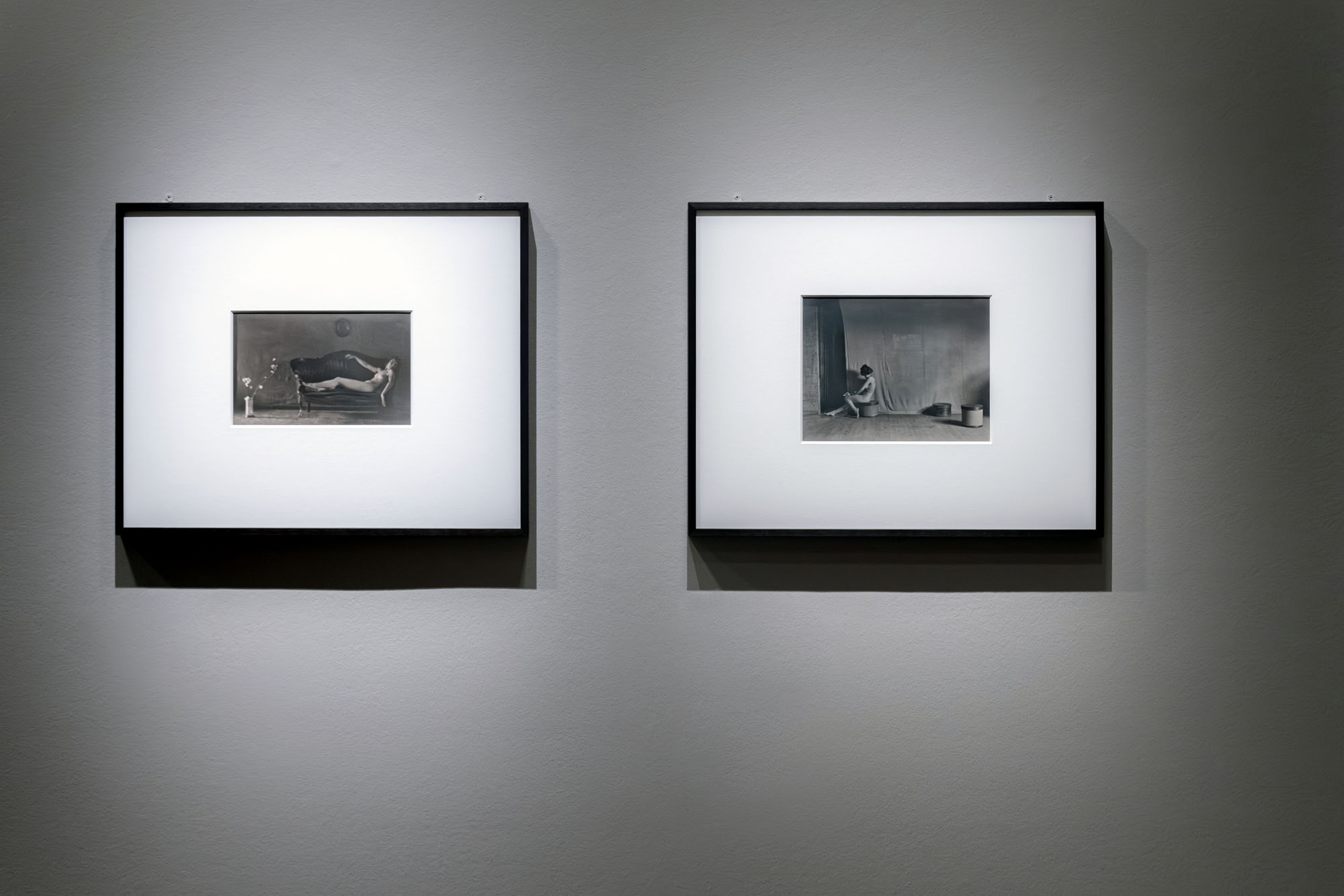
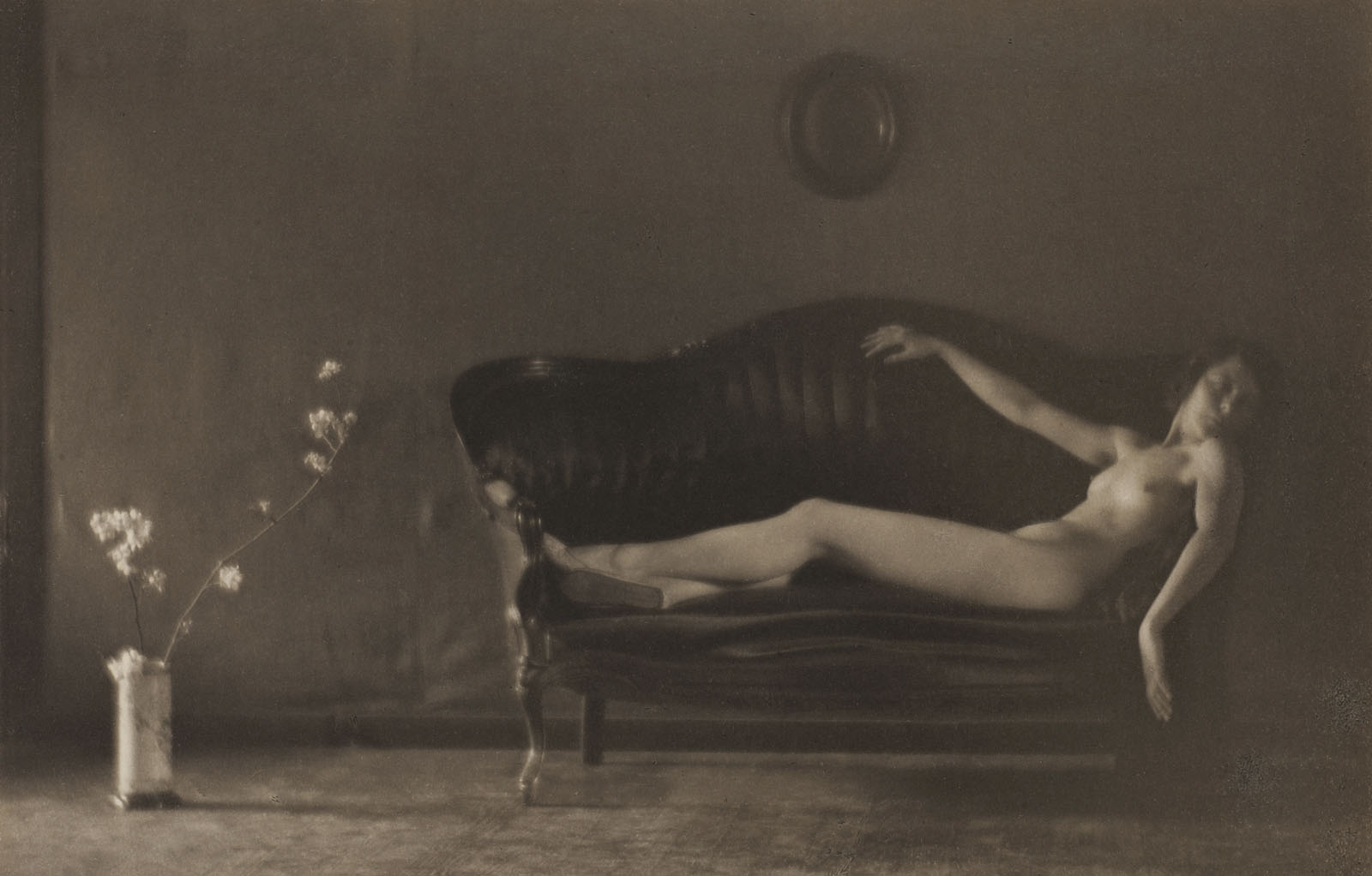
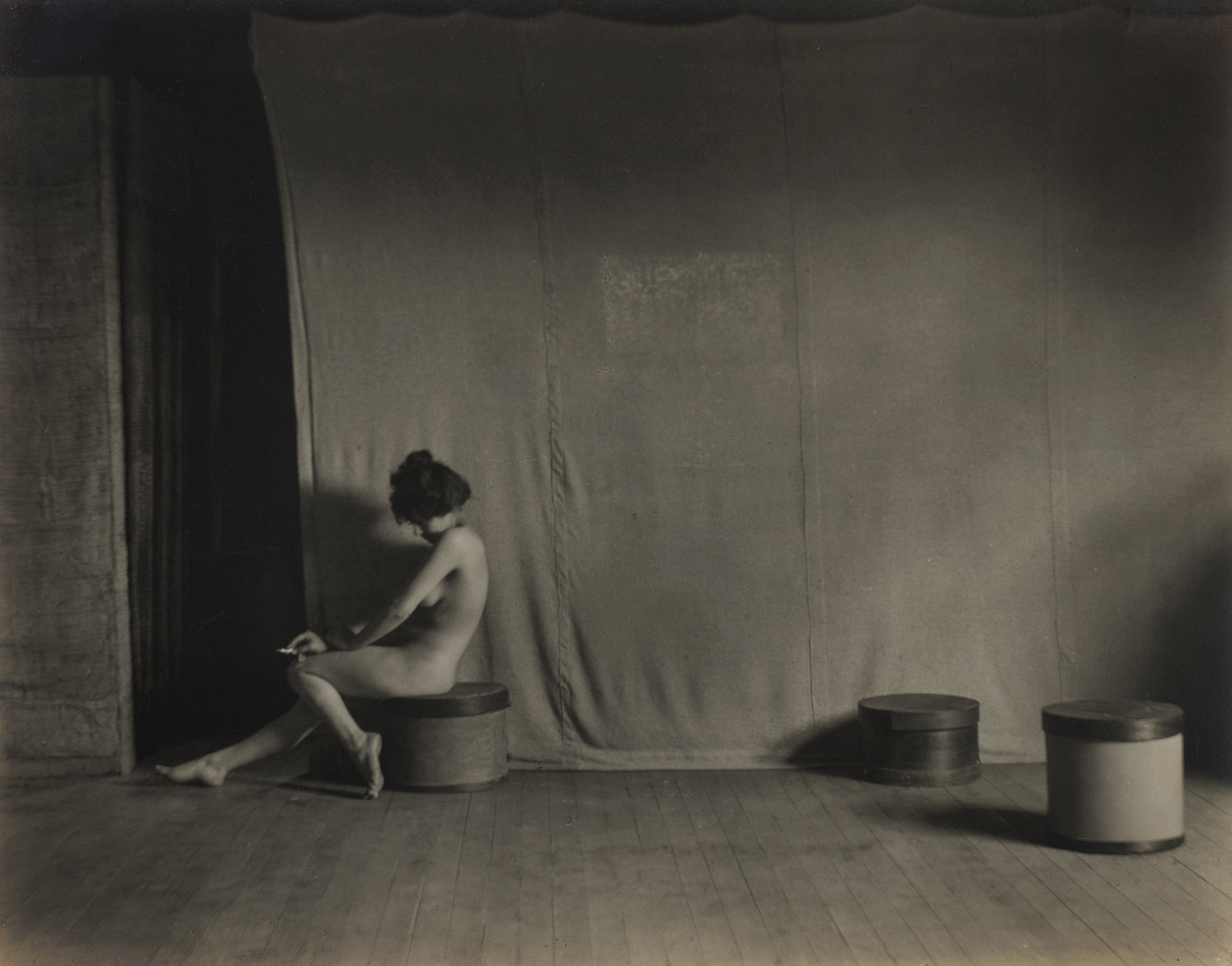
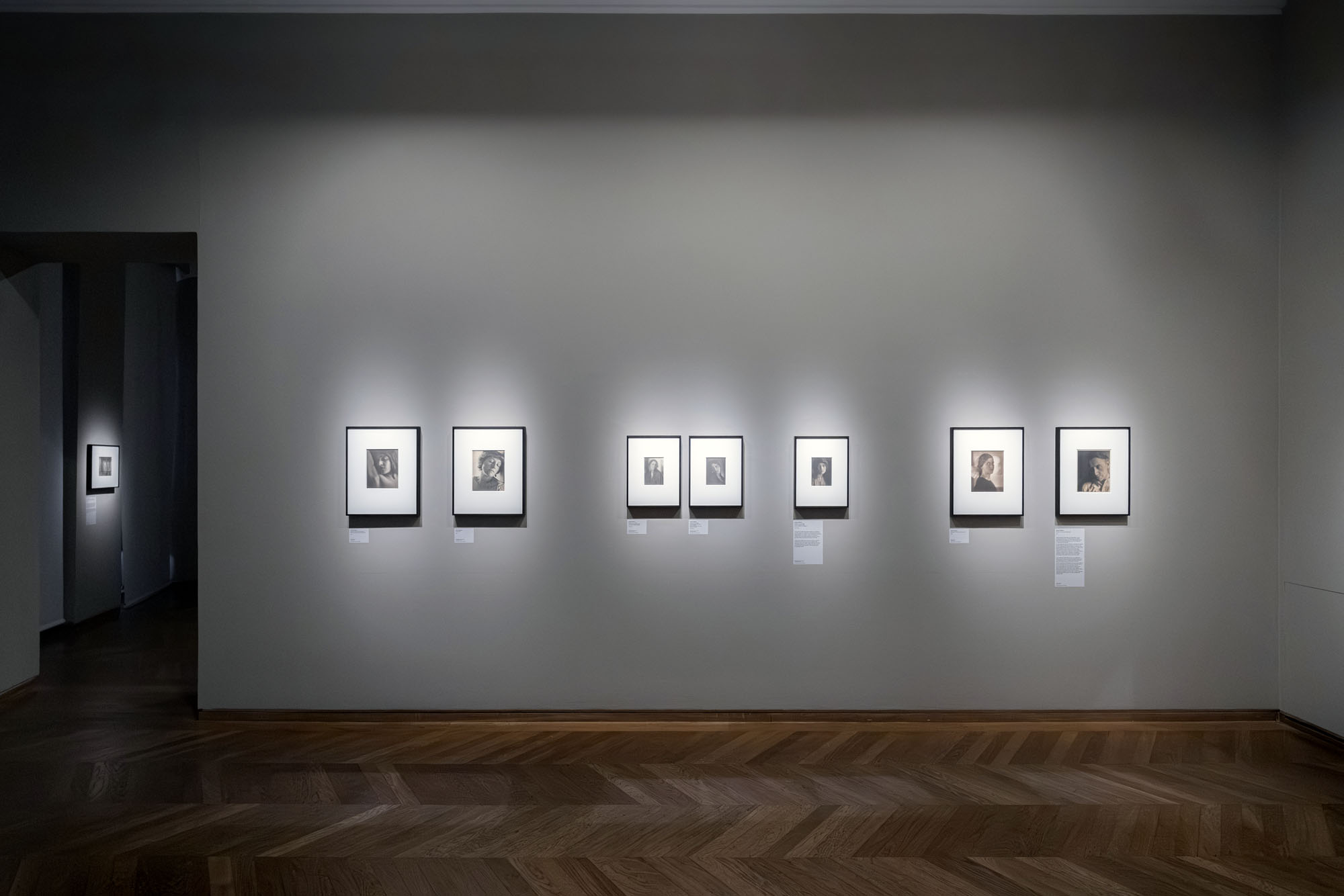
Installation view of the exhibition Edward Weston: Becoming Modern at Maison Européenne de la Photographie (MEP), Paris, 15th October, 2015 – 25th January, 2026 showing at left, Edward Weston’s ‘M’ on the Black Horsehair Sofa, 1921 (below); and at right, Tina Modotti (Nude in Studio), 1922 (below)
Shadow man
You can always learn from the great artists now matter how many times you have seen their work, especially when the photographs are simply, effectively hung ‘on the line’ in a beautiful space.
Here are photographs by Edward Weston I have never seen before: Pictorialist photographs of suffused and intimate beauty. An exhibition of Weston’s Pictorialist work would be magnificent to behold.
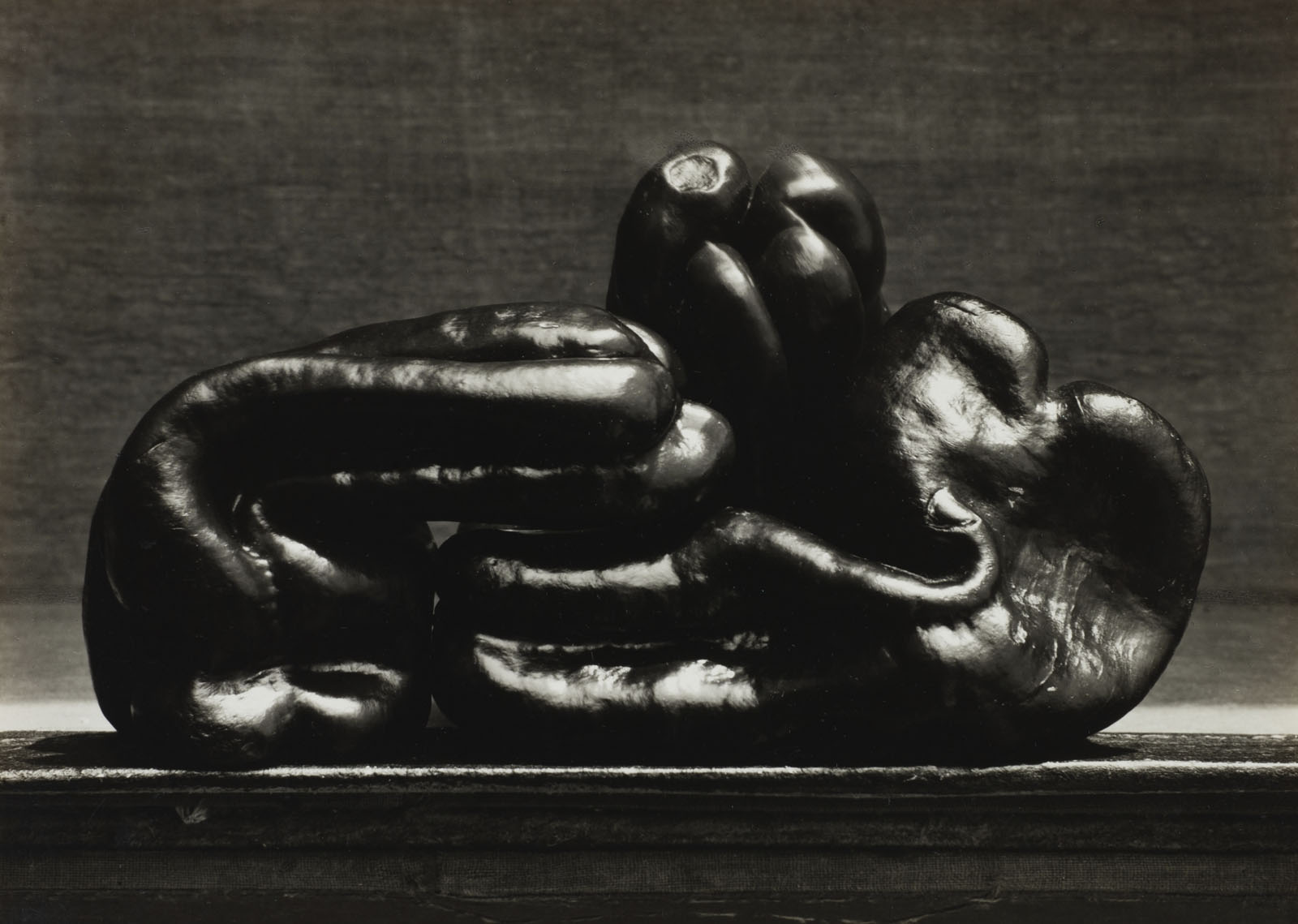
And then Weston’s Peppers (1929, below).
I don’t know why I have never seen this photograph before, why his Pepper (1930, below) is more famous, for this is a monstrous image of dark, writhing, semi-abstract figurative forms, just as valid an artistic statement (in a completely different way) than the more famous image.
Can you imagine holding a vintage print of this photograph in your hands!
Gloria virtutem tanquam umbra sequitur
Dr Marcus Bunyan
Many thankx to Maison Européenne de la Photographie (MEP) for allowing me to publish the photographs in the posting. Please click on the photographs for a larger version of the image.
“Only rhythm, form and perfect detail to consider – first conceptions coming straight through unadulterated.”
“What I seek now is simplicity – the form reduced to its essence.”
Edward Weston. Daybooks II: California (1930-1945). Aperture, 1961
“The camera should be used for a recording of life, for rendering the very substance and quintessence of the thing itself.”
“To see the Thing Itself is essential: the Quintessence revealed direct without the fog of impressionism.”
Edward Weston. The Daybooks of Edward Weston, from Edward Weston: The Flame of Recognition. Aperture, 1965
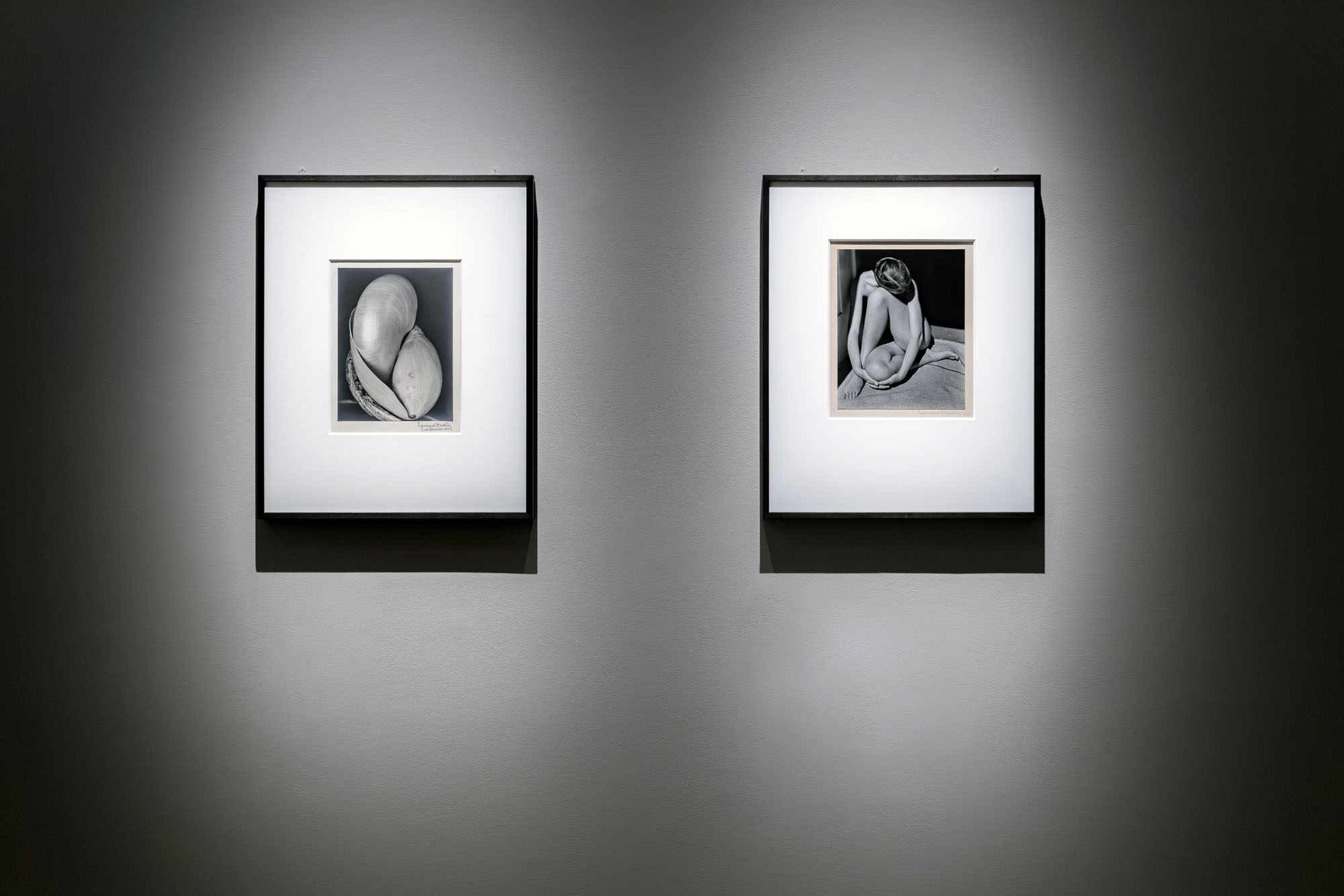
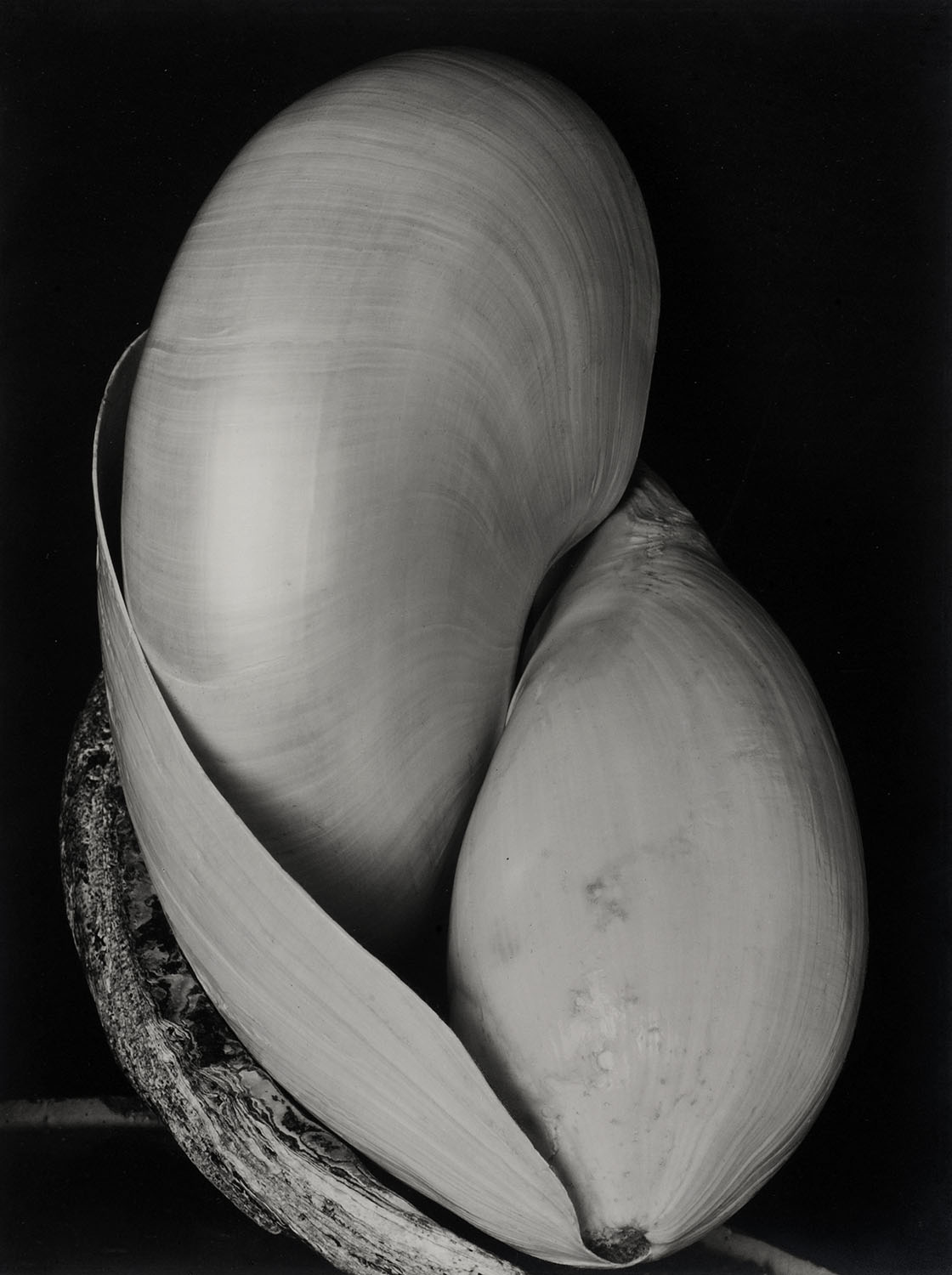
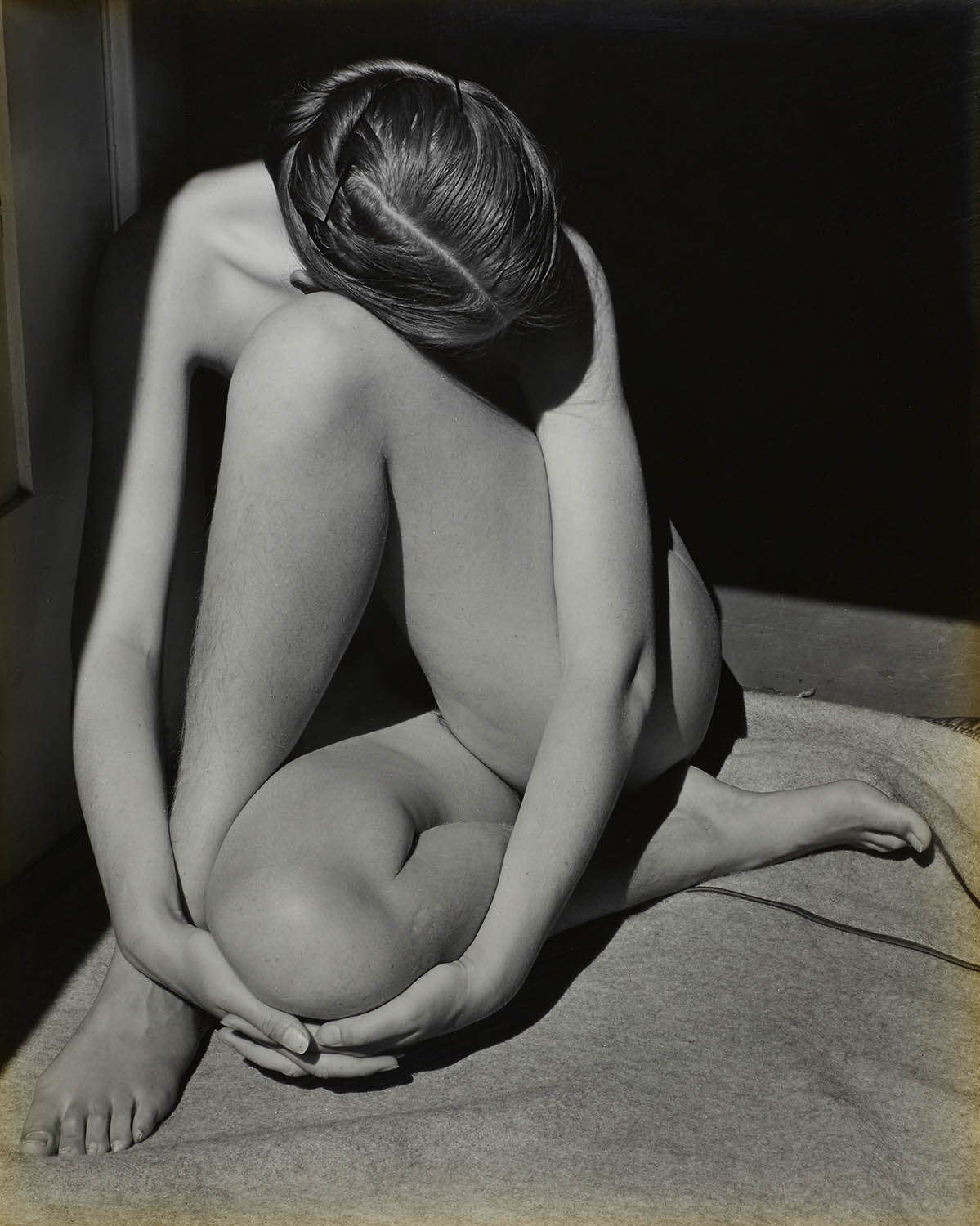
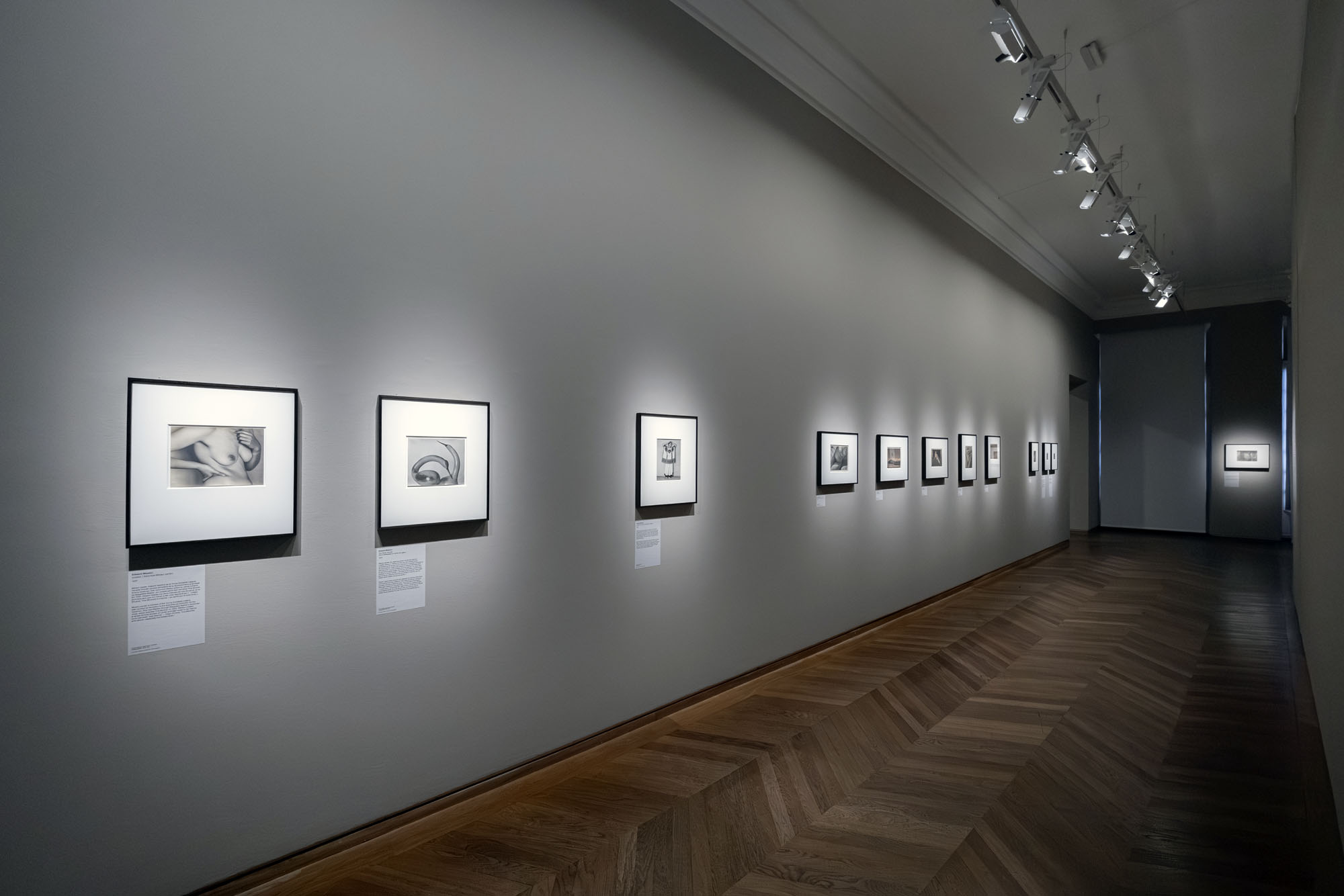
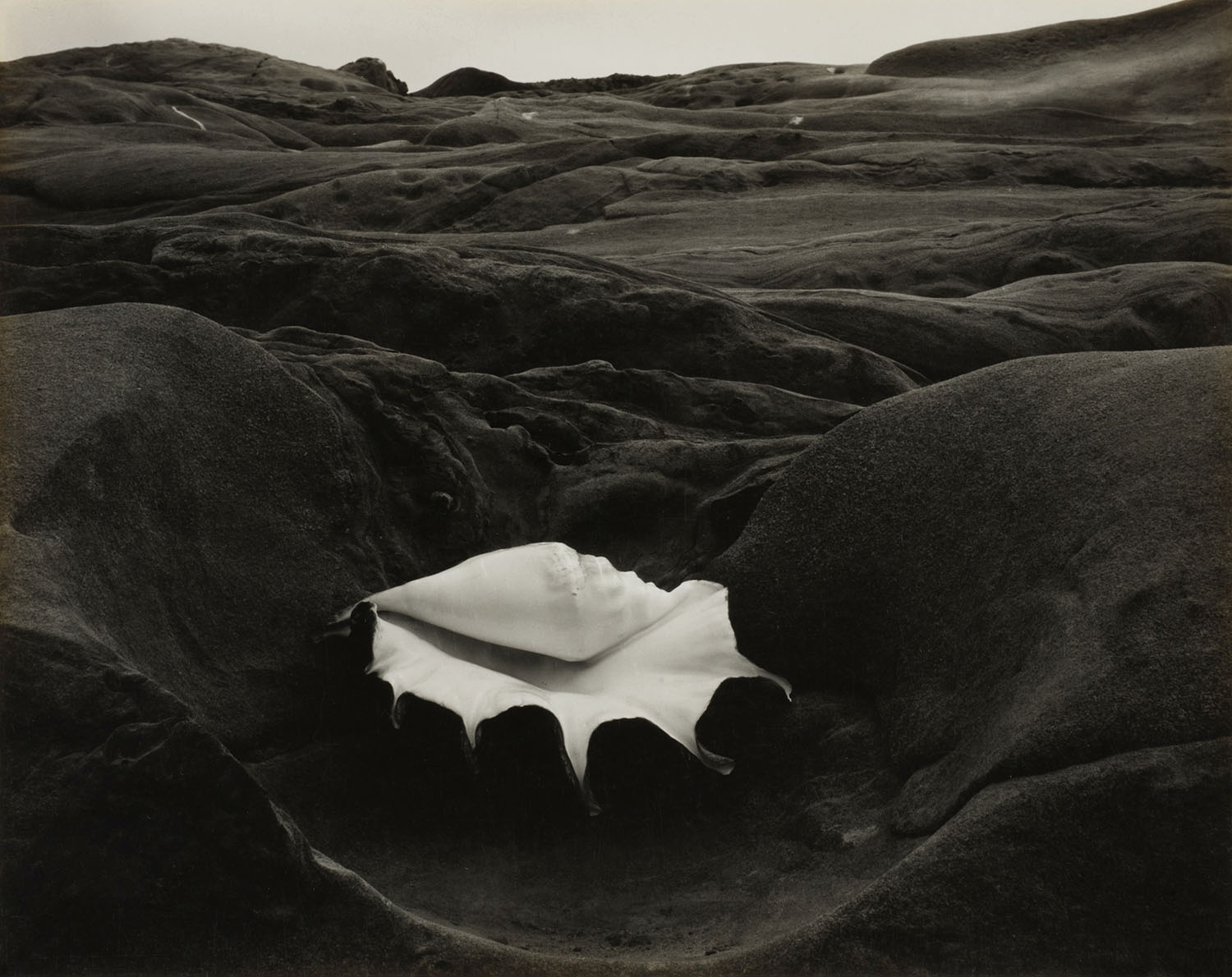
Installation view of the exhibition Edward Weston: Becoming Modern at Maison Européenne de la Photographie (MEP), Paris, 15th October, 2015 – 25th January, 2026 showing at left, Edward Weston’s Shell 1927 (below); and right, Santa Monica (Nude in Doorway) 1936 (below)
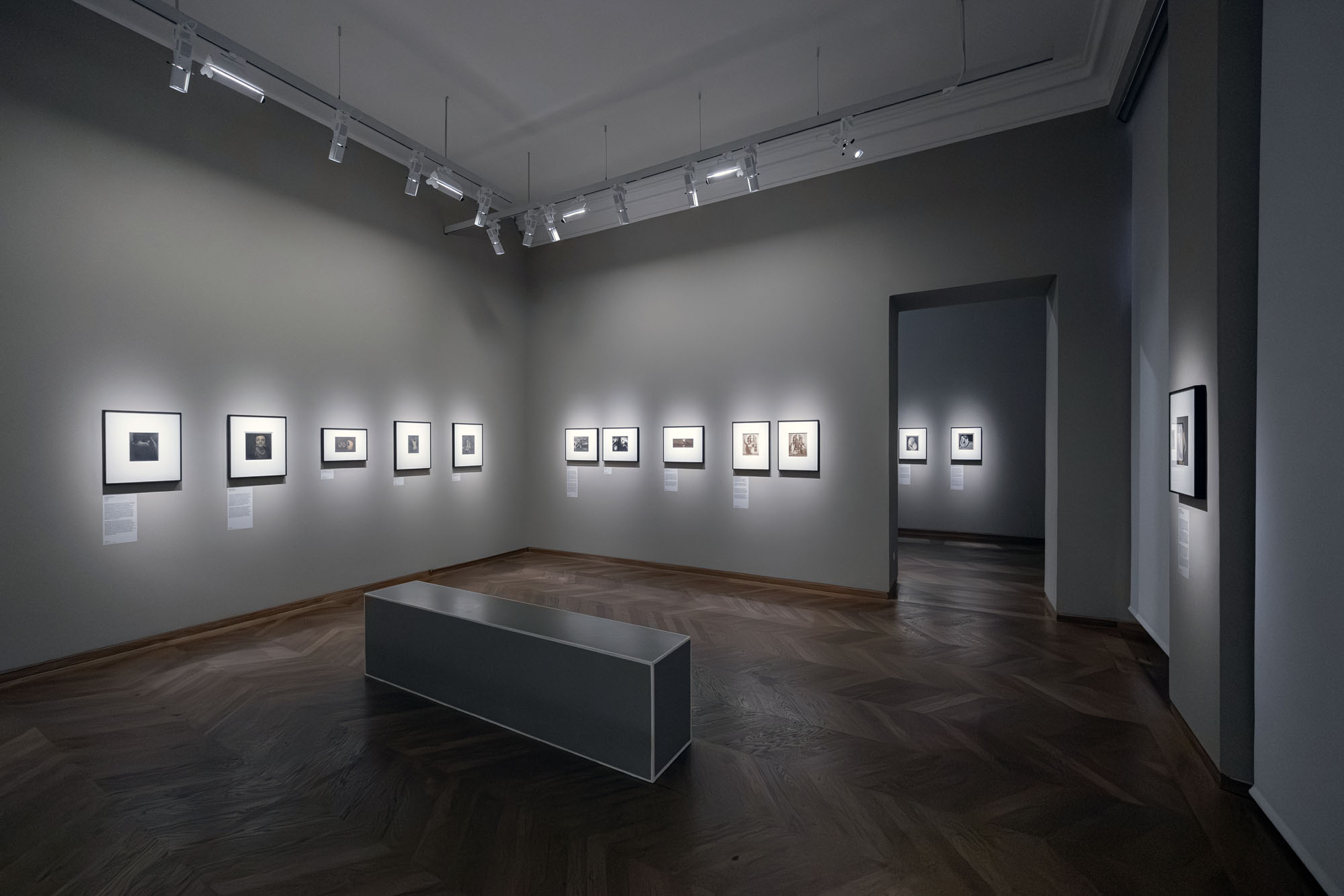
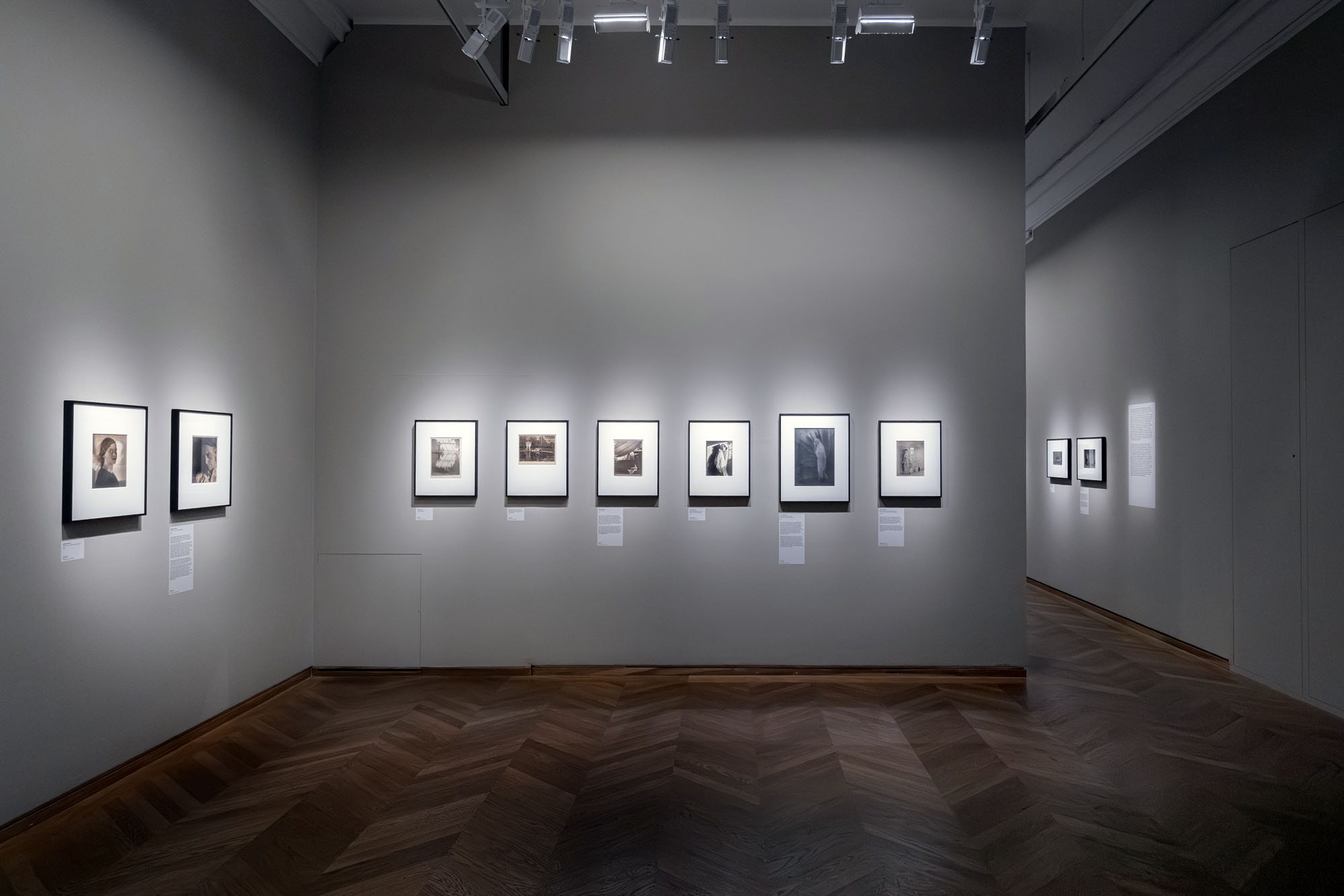
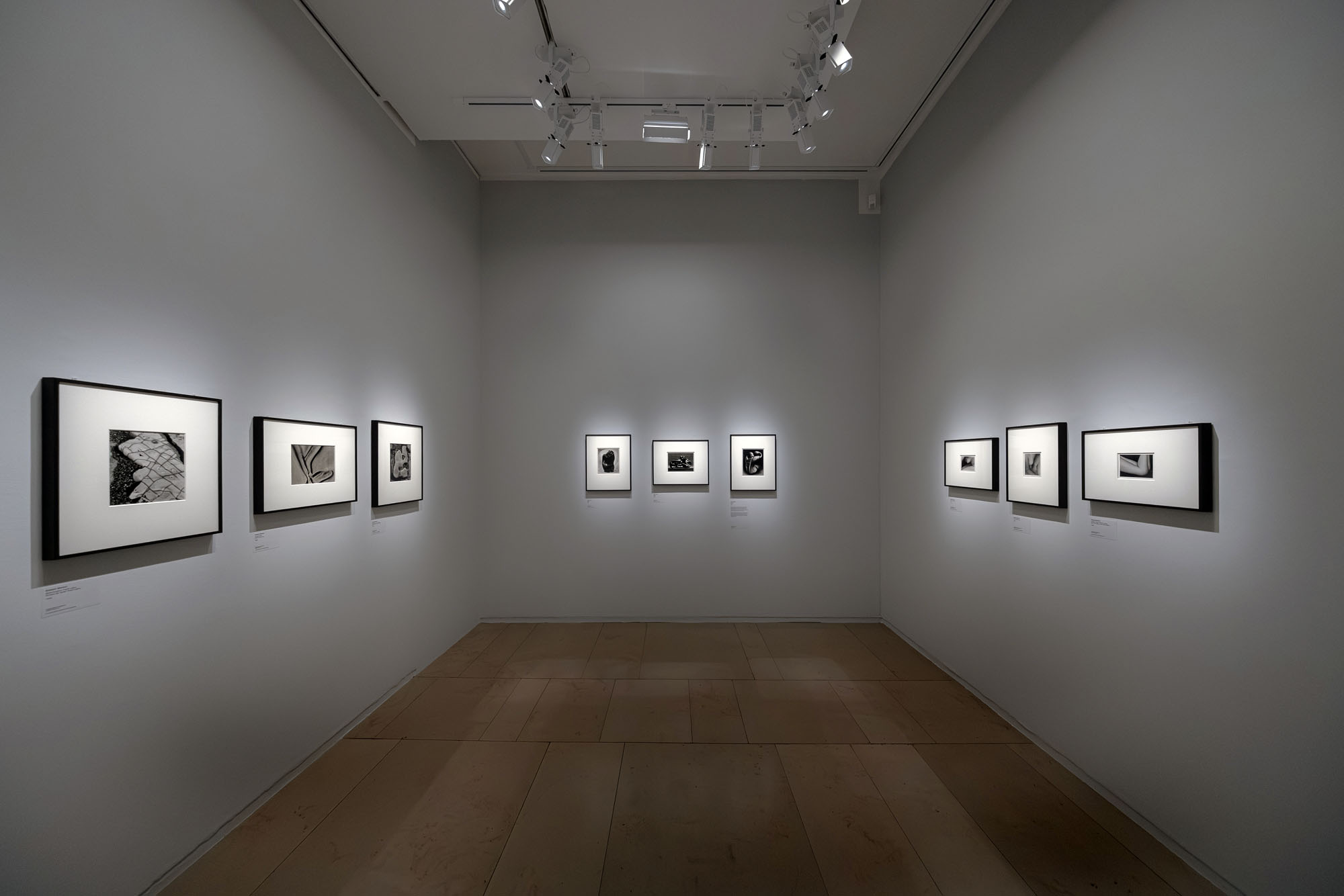
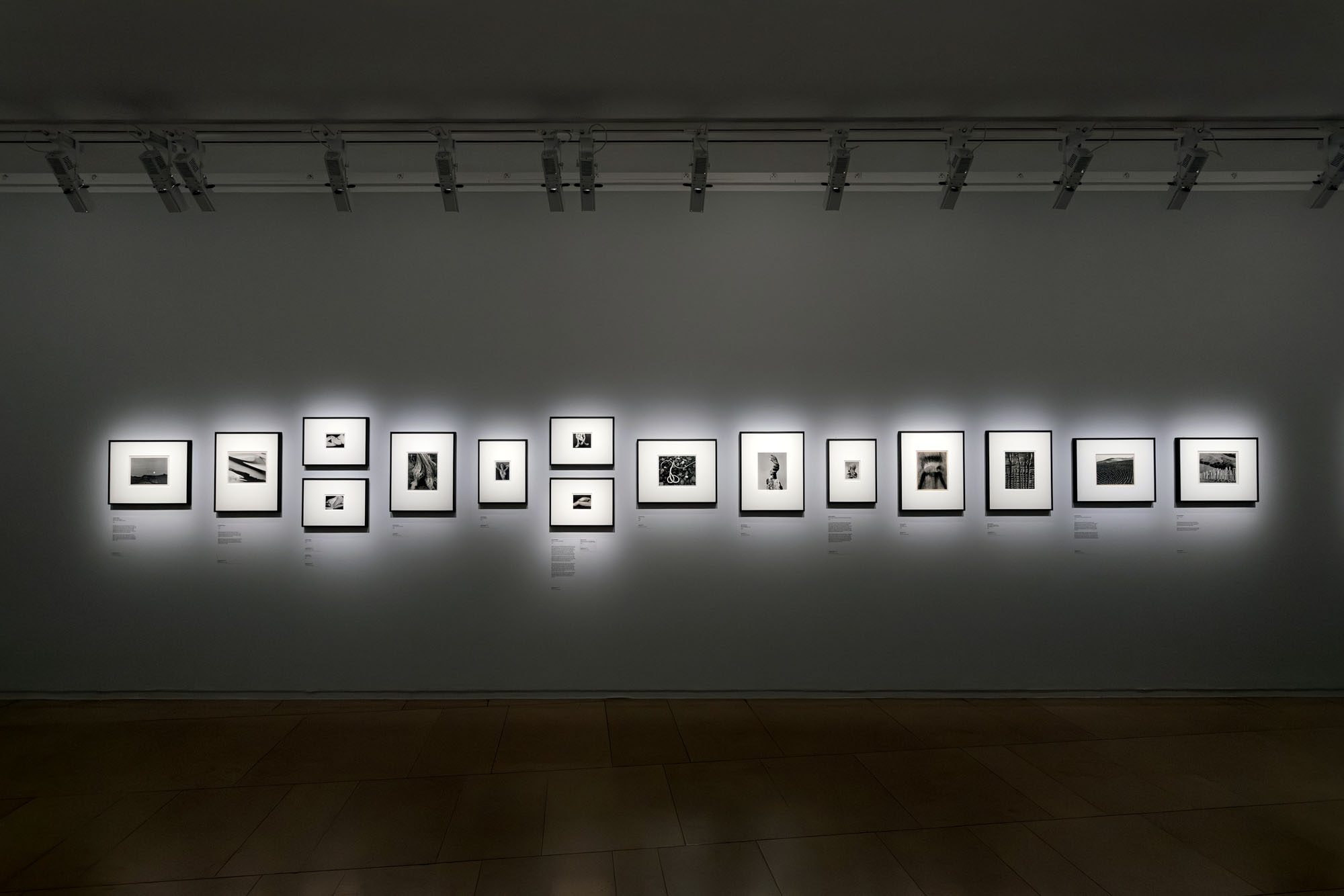
Installation views of the exhibition Edward Weston: Becoming Modern at Maison Européenne de la Photographie (MEP), Paris, 15th October, 2015 – 25th January, 2026
The exhibition
The MEP presents Edward Weston: Becoming Modern, the most significant exhibition dedicated to Edward Weston in Paris in nearly thirty years. A pioneering figure of photographic modernism, Weston helped forge a new visual language – marked by clarity, formal rigour, and a profound engagement with the essential qualities of the photographic medium.
Originating from an idea by Michael Wilson – founder of the Wilson Centre for Photography in London and one of the world’s foremost collectors – Becoming Modern brings together a rare selection of vintage prints from his collection, many of which have never been exhibited in France. These works offer an exceptional insight into Weston’s evolving practice and the emergence of a distinctly photographic modernism.
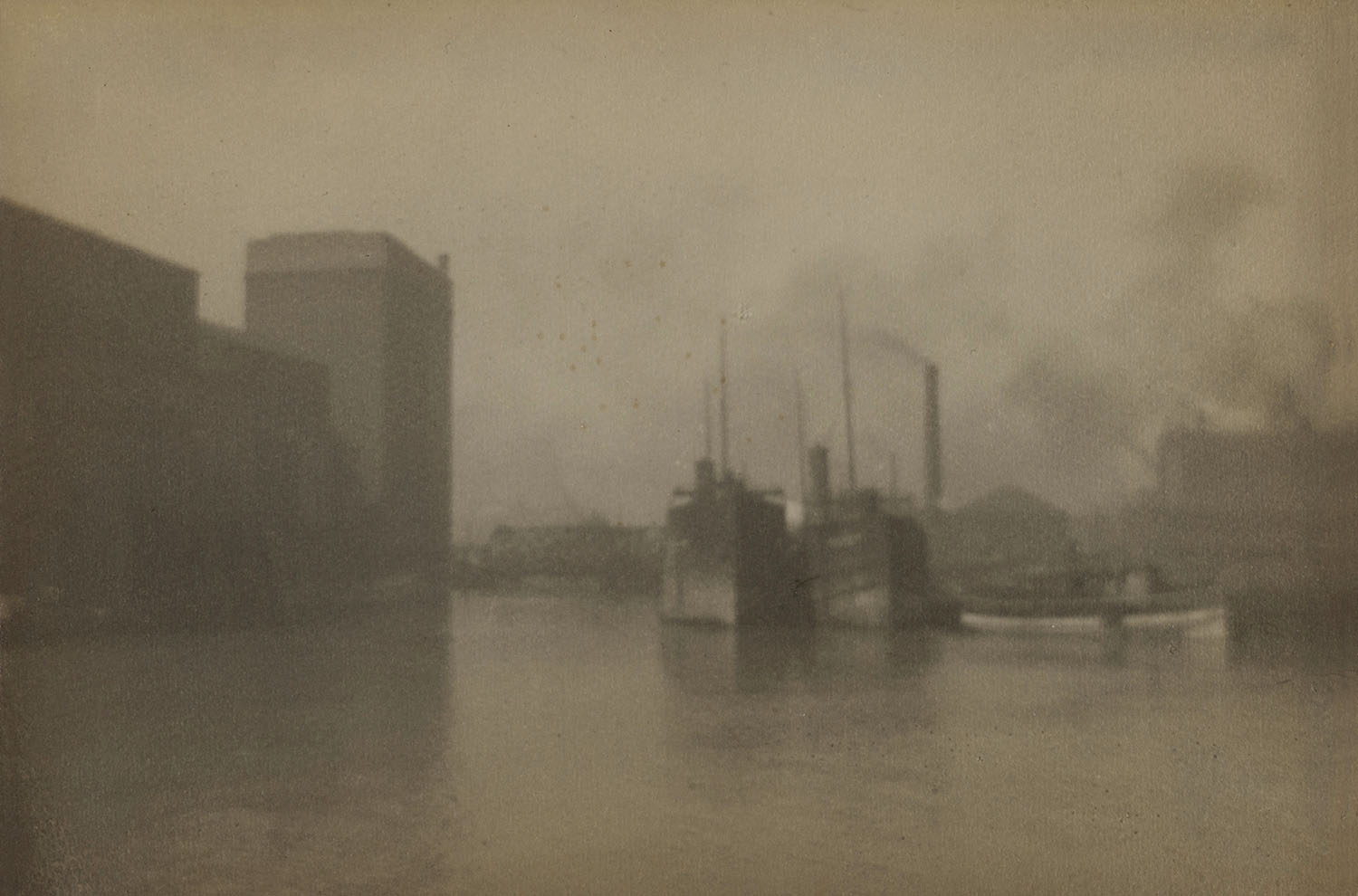
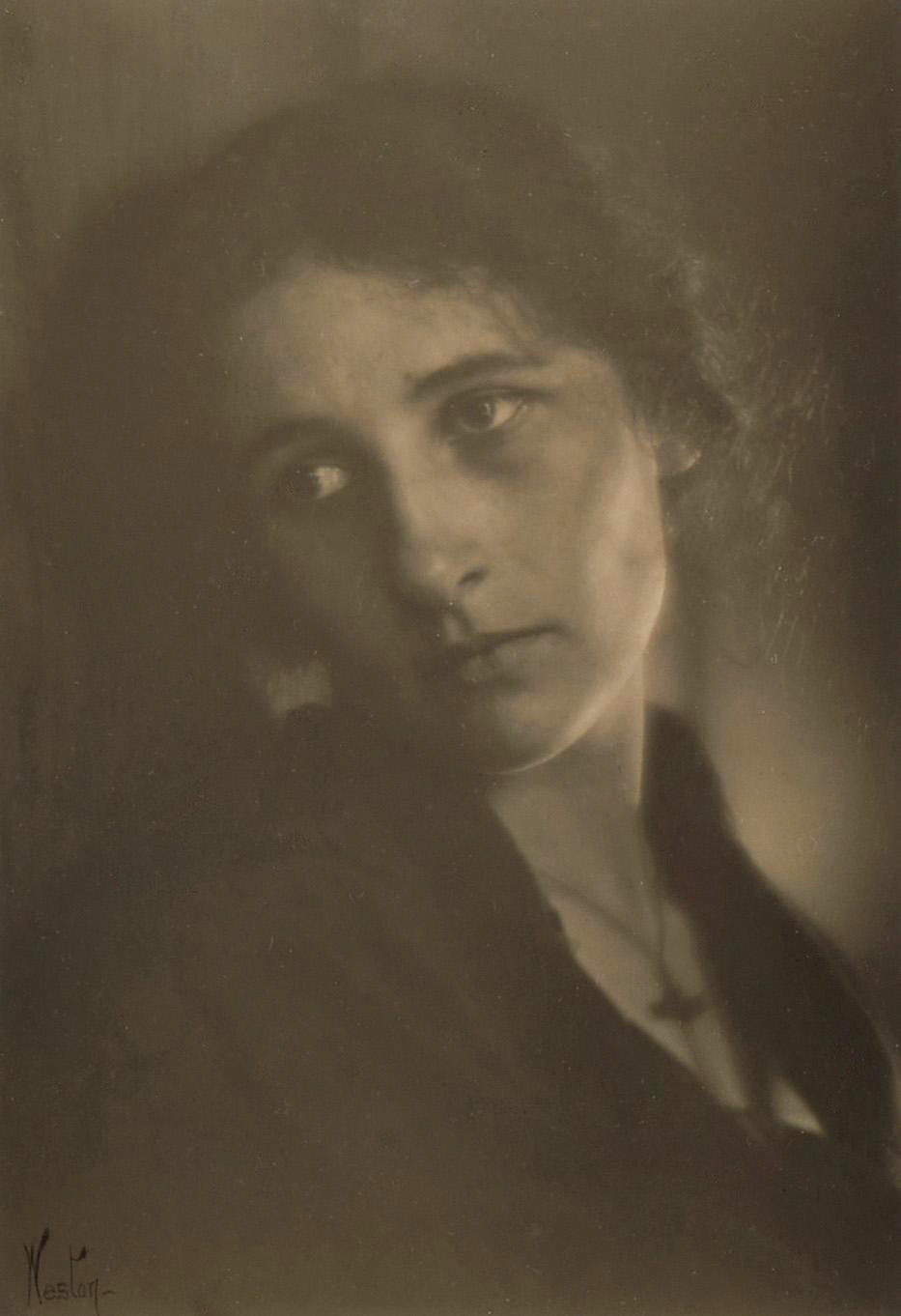
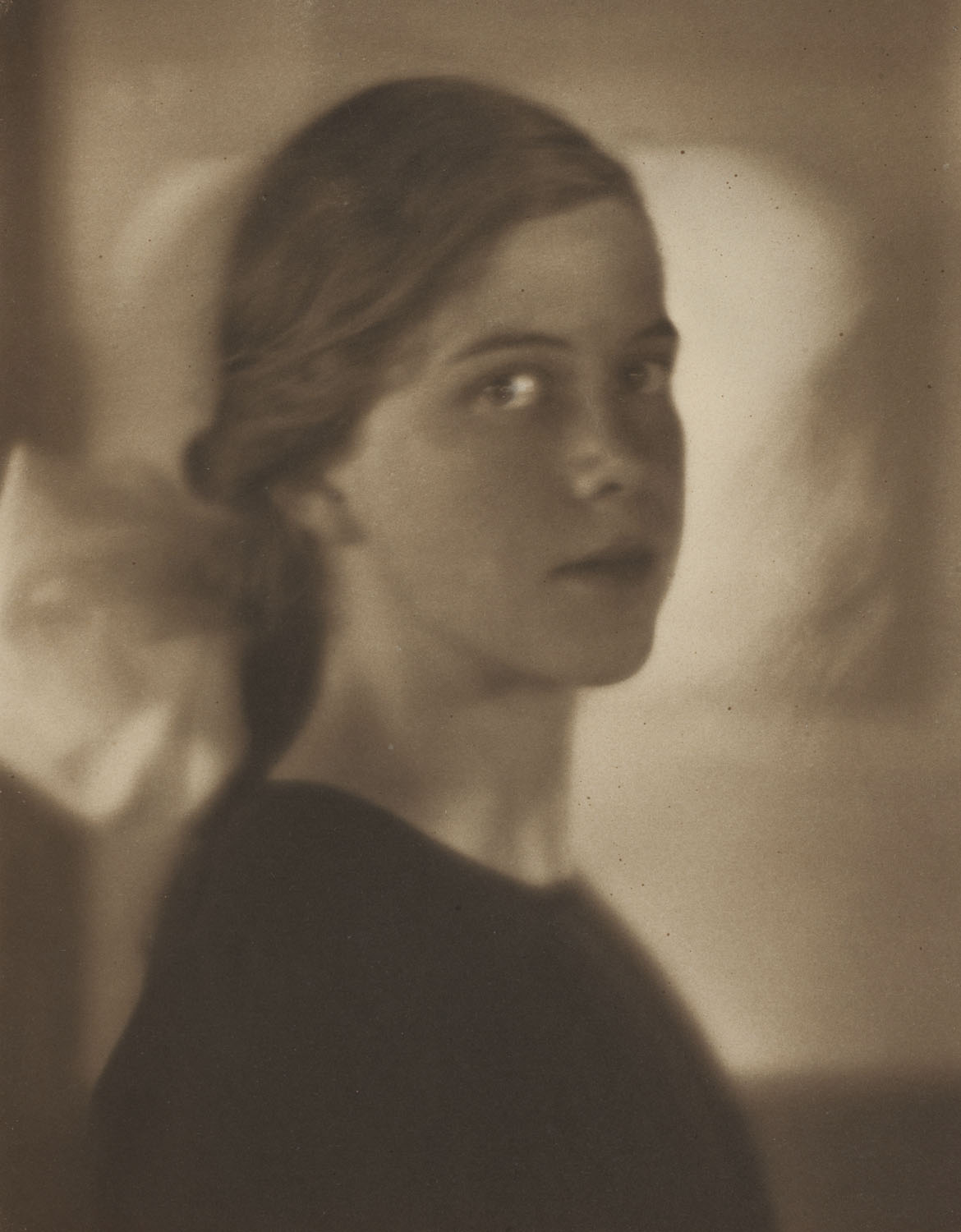
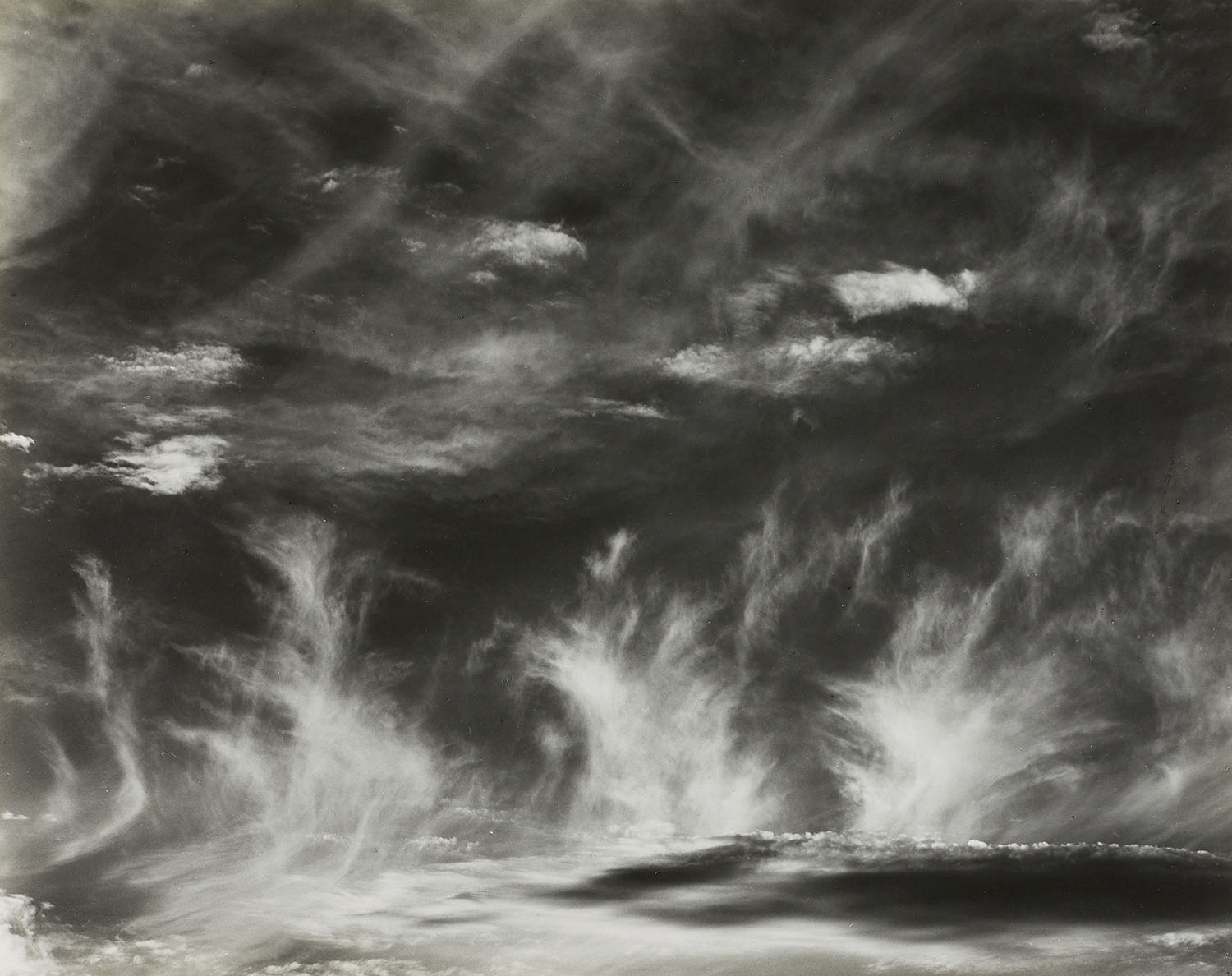
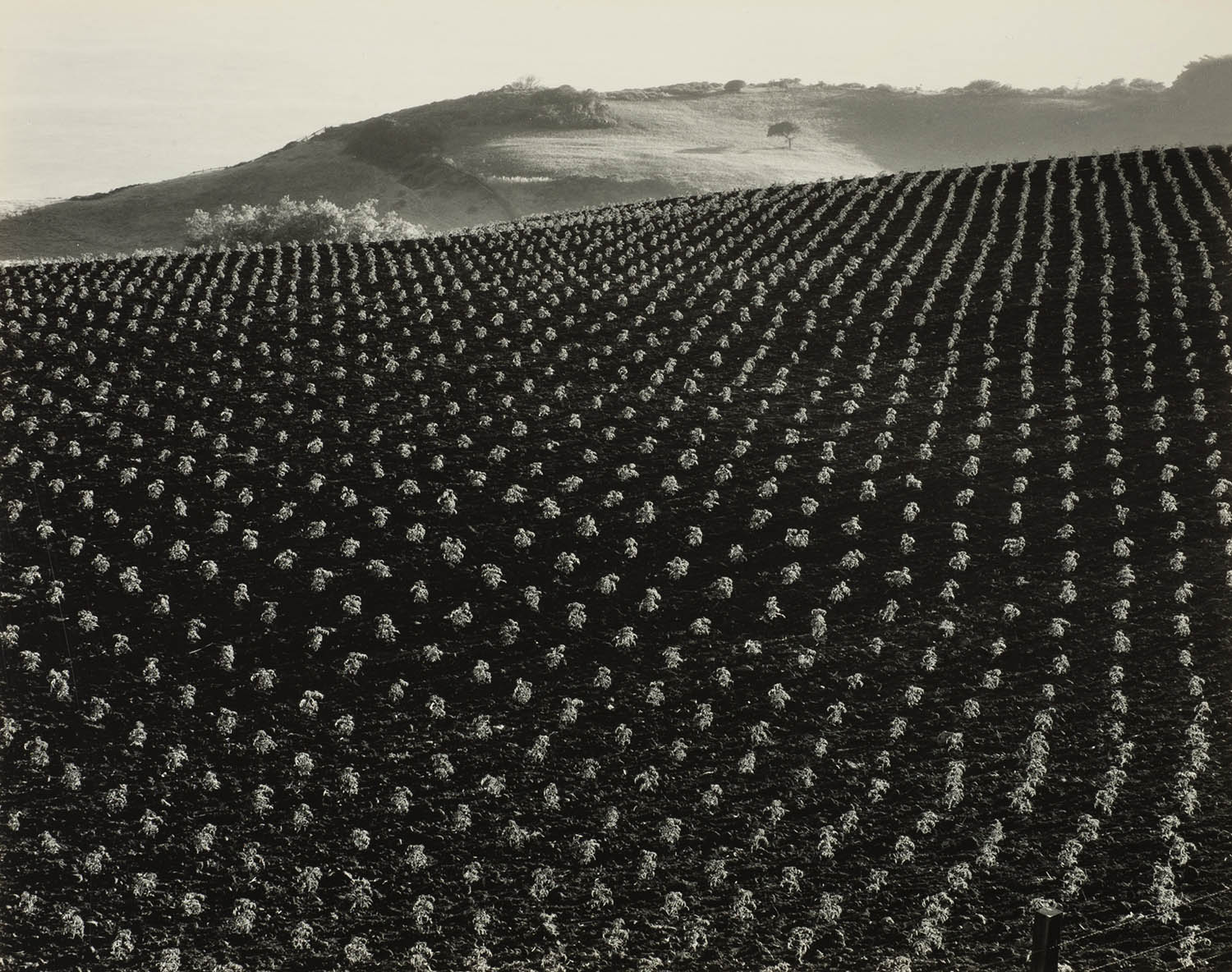
Spanning more than three decades, from 1908 to 1945, the exhibition traces Weston’s artistic trajectory. His early pictorialist photographs, created in California during the 1910s and early 1920s, draw upon 19th-century artistic traditions, employing soft focus, carefully staged settings, and symbolic imagery. Over time, his vision transformed: his images became sharper, compositions more austere, with an increasing emphasis on form, surface, and structure. By the 1920s, many of his photographs approached geometric abstraction – though Weston was never confined to a single style. This transformation unfolded gradually, as motifs intertwined and techniques evolved in a subtle, ongoing dialogue, revealing an artist continuously refining and deepening his vision.
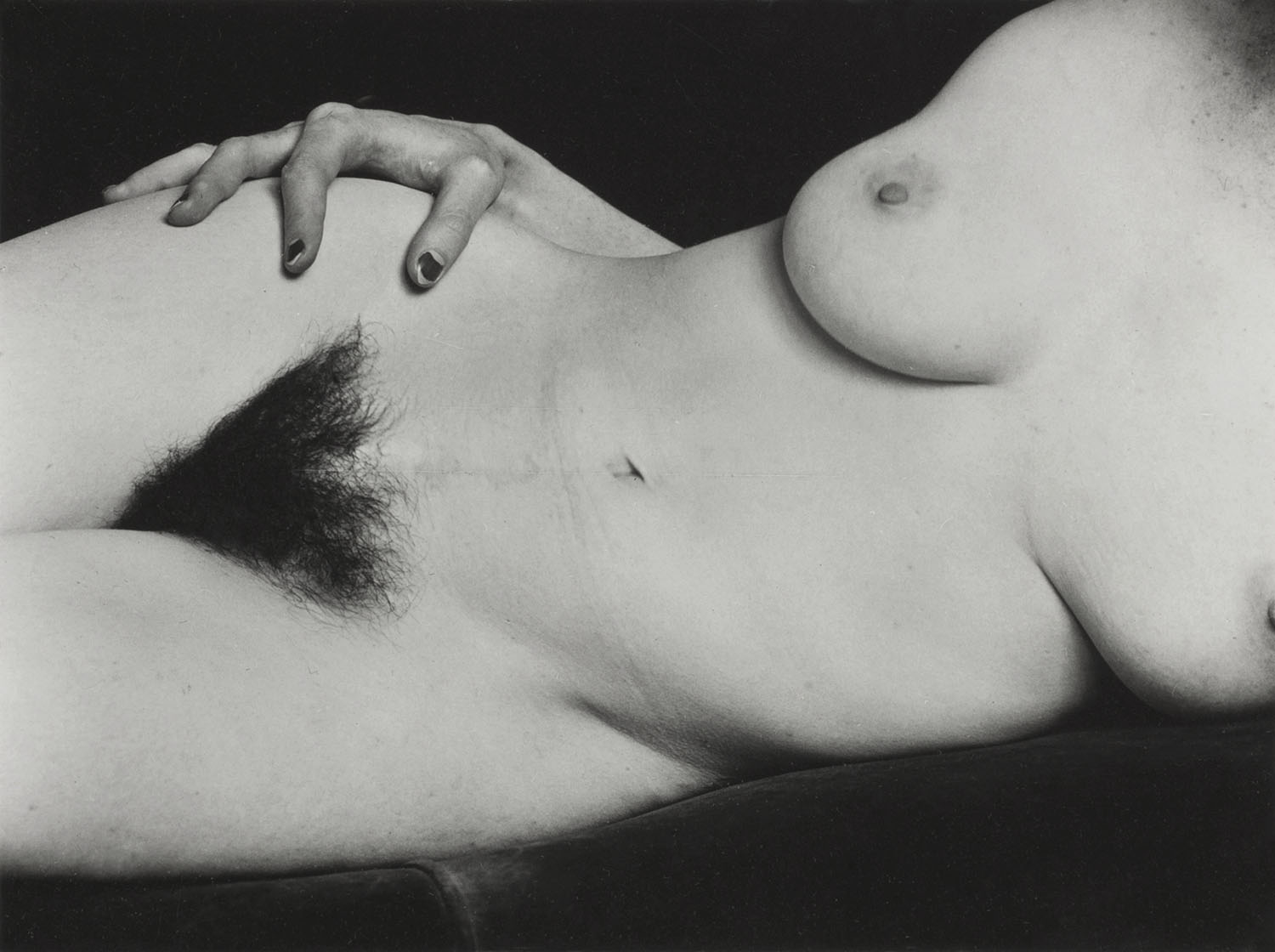
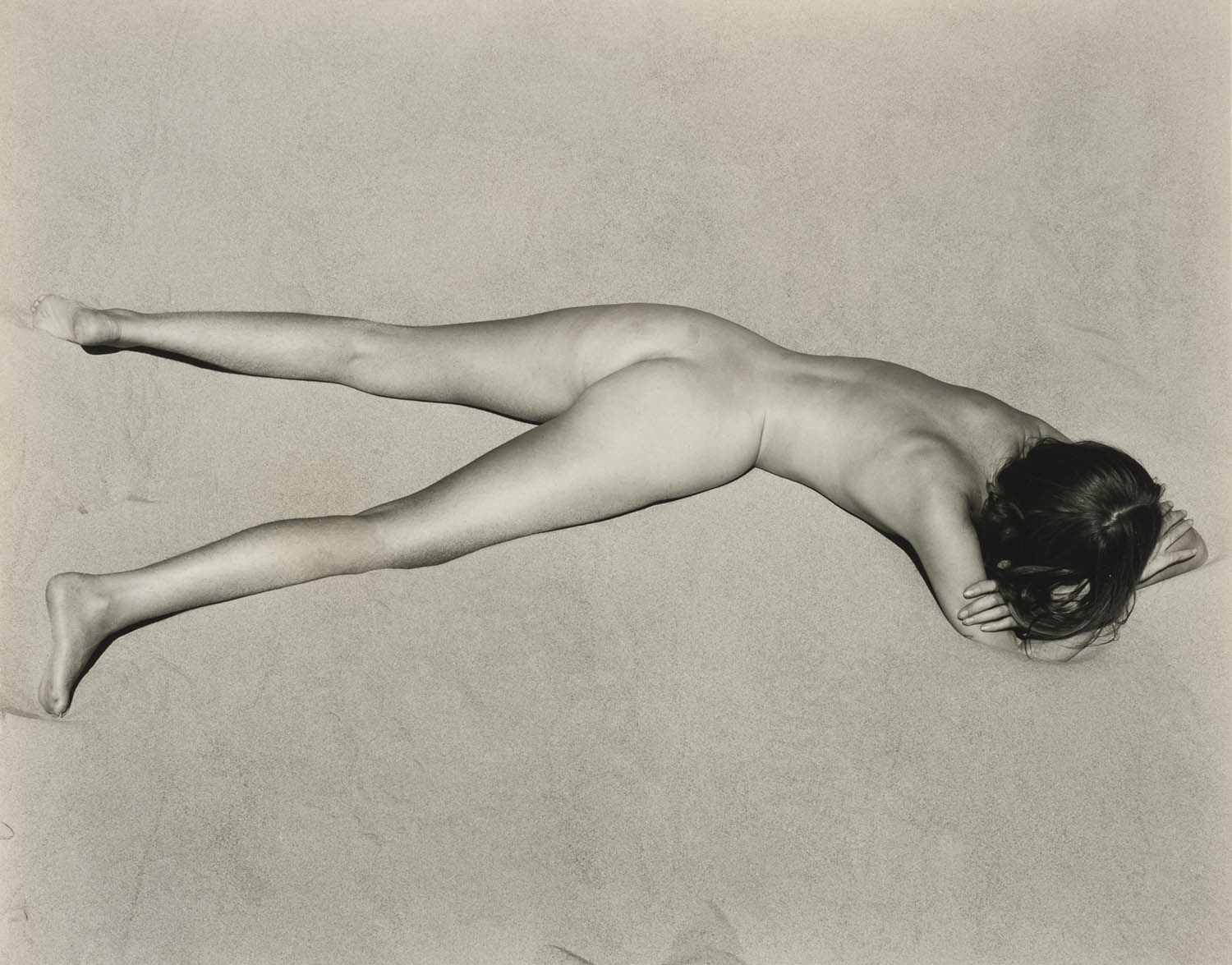
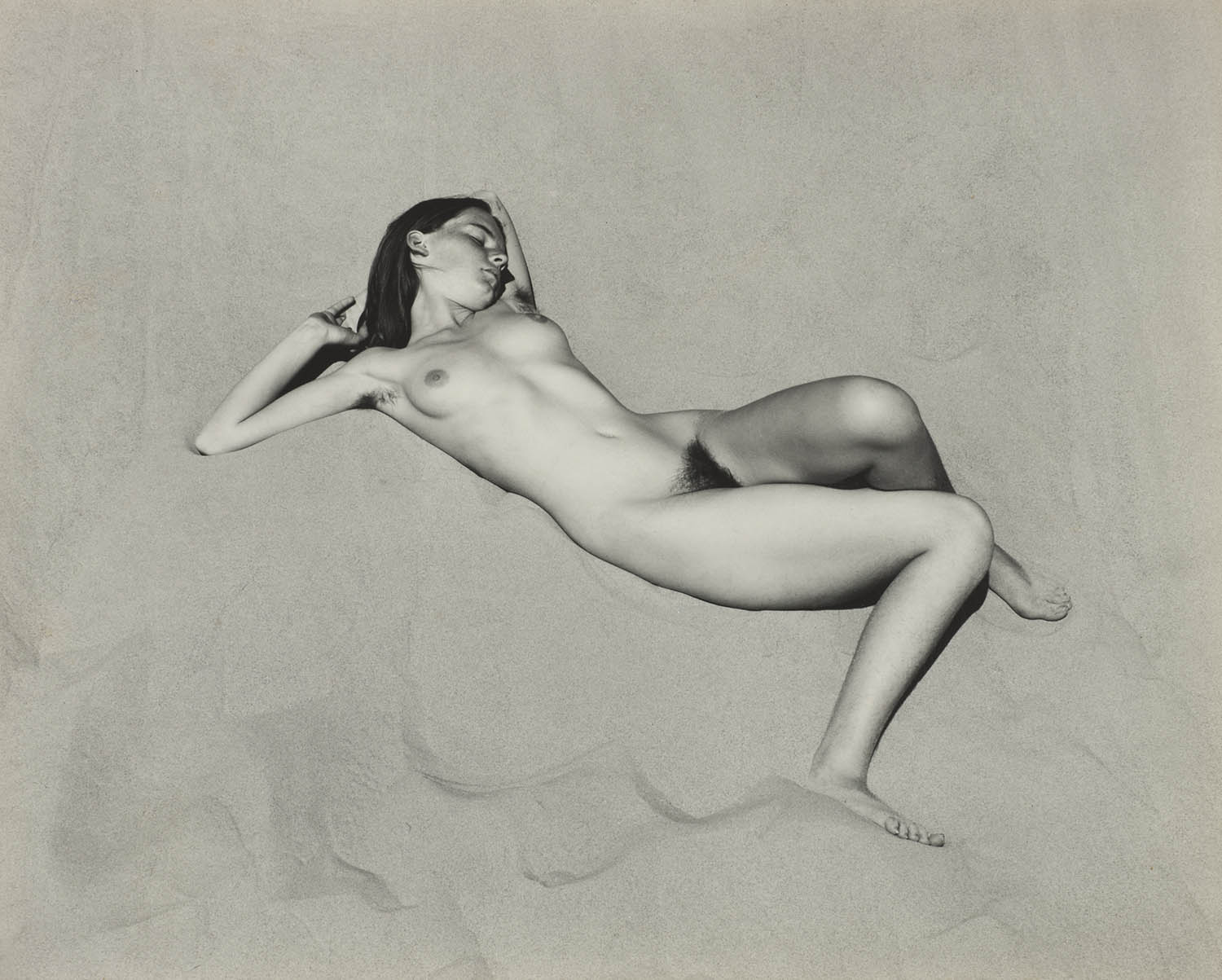
Highlights include works from Weston’s time in Mexico, where, in close collaboration with Tina Modotti – an artist, political activist, and his lover – he created portraits and nudes imbued with a newfound freedom and radicalism These are complemented by evocative landscapes of the dramatic California coastline near Point Lobos and Carmel. At the heart of the exhibition are his most iconic series: sensuous close-up studies of natural forms – peppers, shells, fruits, and vegetables – captured with an almost obsessive intensity; dune and rock landscapes from Point Lobos and Death Valley; and luminous nudes of his muse, Charis Wilson. Throughout, Weston reveals the universal beauty of everyday subjects, transforming them into pure, sculptural forms. Recurring themes – portraiture, the nude, still life, and nature – are placed in dialogue, uncovering deeper connections across his oeuvre. His work displays remarkable strength and variety, with many natural forms taking on subtle anthropomorphic qualities.
Becoming Modern invites audiences to rediscover a bold innovator whose visionary approach helped shape the course of photographic history. The exhibition also includes a selection of rare works by leading Pictorialist photographers, offering a broader context for Weston’s early influences and the artistic milieu from which his modernism emerged.
Edward Weston biography
Widely regarded as one of the masters of 20th-century photography, Edward Henry Weston (March 24, 1886 – January 1, 1958) reshaped the medium through a vision rooted in clarity, form, and a profound sensitivity to the physical world. Over a career spanning more than forty years, he forged a style that was both radically modern and deeply grounded in the landscapes and materials of the American West.
Born in Highland Park, Illinois, Weston spent his early years in the Chicago area, where his fascination with photography first took hold. By 1903, as a teenager, he was already exhibiting his early works. At sixteen, he received his first camera – a gift from his father that marked the beginning of a lifelong creative journey. He studied at the Illinois College of Photography from 1908 to 1911 before relocating to California, where, at age 25, he opened a portrait studio in Tropico, operating from 1911 to 1922. In his early career, Weston worked within the Pictorialist tradition – a popular style of the early 20th century characterised by soft focus and romantic, painterly effects. His portraits from this period brought him recognition from the art community. Yet by the early 1920s, he began to move away from this approach, embracing a sharper, more precise, and abstract visual language that emphasised form and detail.
A turning point in Weston’s artistic journey occurred in 1922 on a trip to New York, where he met influential modernist photographers such as Alfred Stieglitz, Paul Strand, and Charles Sheeler. They recognised the originality of his work and encouraged him to fully embrace this new direction, which soon included close studies of fruits, vegetables, shells, and stones, rendered with astonishing clarity and sculptural intensity. Through close observation and meticulous composition, he revealed the inherent beauty of form, transforming the ordinary into the iconic.
In the mid-1920s, Weston travelled to Mexico with the photographer and political activist Tina Modotti, with whom he shared a studio and a deep creative partnership. Immersed in the vibrant cultural life of Mexico City, he engaged with a dynamic community of artists and thinkers whose ideas further catalysed his break from tradition.
Returning to California in 1928, Weston found new inspiration in the rugged coastal terrain of Point Lobos. The region’s intricate rock formations, windswept trees, and tide pools became a central focus of his work, offering endless opportunities for visual exploration and formal innovation. In 1932, Weston co-founded Group f/64 – a collective of West Coast photographers dedicated to “straight” photography, emphasising sharp focus, rich tonality, and the use of large-format cameras. The group championed an unmanipulated approach to the medium. Weston’s contributions during this period, especially his landscapes, remain among the most enduring images in American photography.
Becoming Modern traces Edward Weston’s evolution from the soft pictorialism of his early years to the clarity and precision that came to define modern photography. Spanning nearly three decades, the exhibition presents more than 100 rare vintage prints from the Wilson Centre for Photography. It invites viewers to rediscover one of photography’s most visionary pioneers through an extraordinary body of work.
The exhibition opens with two emblematic photographs that frame its central theme, reflecting a curatorial concept developed by Michael Wilson to highlight Weston’s extraordinary range and experimentation. On one side hangs M on the Black Horsehair Sofa (1921, above), a quintessential example of the Pictorialist style: a languid pose, softly diffused light, and a painterly atmosphere enriched by symbolic elements – a floral bouquet, a circular mirror. Opposite it, Tina Modotti (Nude in Studio) (1922, above) marks a striking departure. The figure sits upright, smoking, in a bare studio – captured with crisp focus and a stark, modern sensibility. Though created just a year apart, these works embody the transformative arc at the heart of Weston’s career: a restless search for new ways of seeing. From these beginnings, Weston’s exploratory approach soon dissolved strict categories, embracing a practice defined by an ongoing dialogue between subjects and forms.
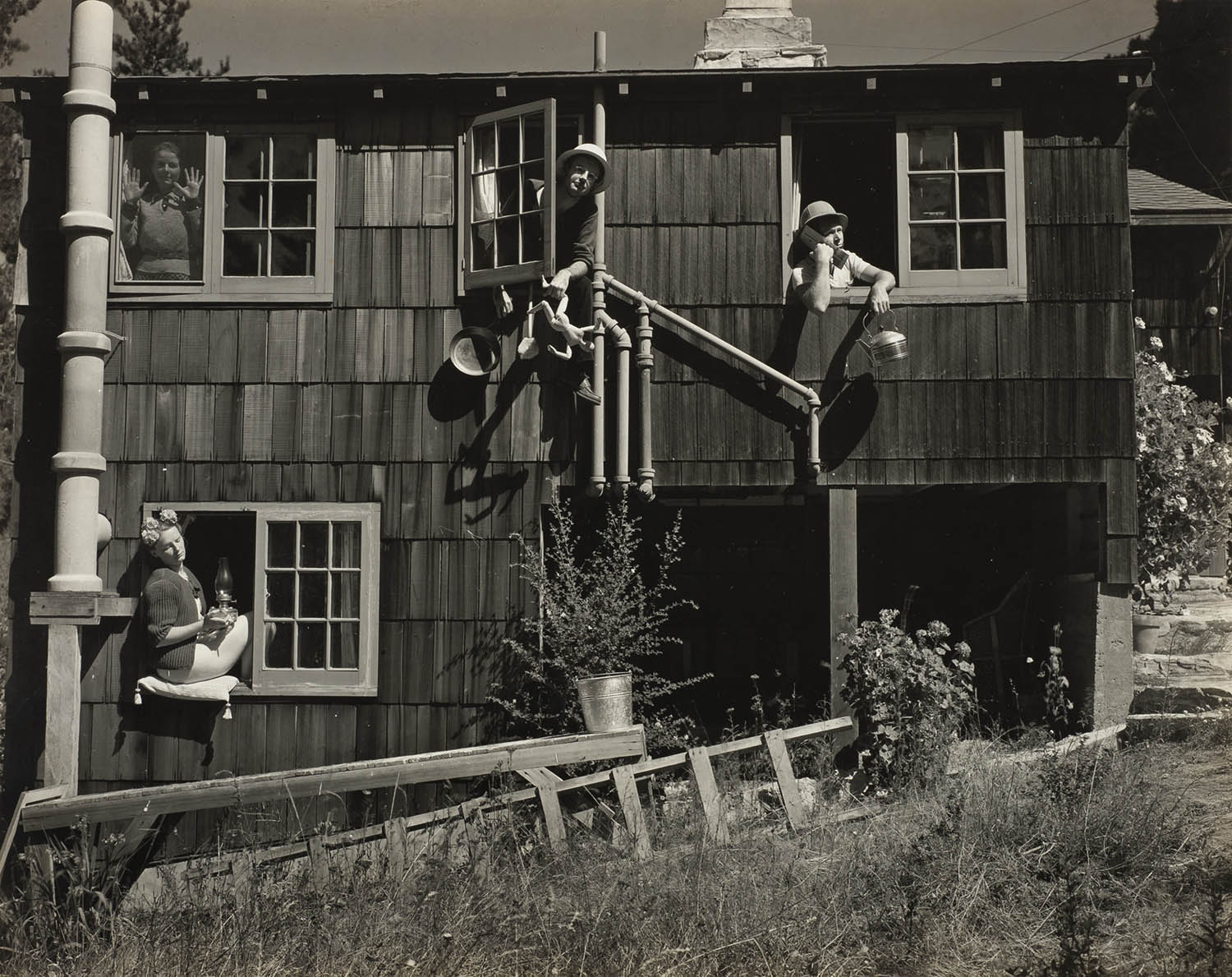
From here, the exhibition situates Weston’s early work within the broader context of the Pictorialist movement. His prints are shown alongside key images by photographers who shaped or anticipated his early style – Edward Steichen, George Seeley, Anne Brigman, Dorothea Lange, Margrethe Mather, and Alfred Stieglitz. A tireless advocate for photography as a fine art, Stieglitz helped define the medium’s possibilities through his publications Camera Work and 291, and through his influential New York gallery of the same name. Weston’s own early prints – including a striking self-portrait – are exhibited alongside these historic works. These are placed in conversation with later photographs that capture Weston and his creative circle in 1920s California, evoking a distinct artistic atmosphere. Rooted in the landscape and rhythms of the West Coast, Weston’s early vision subtly diverged from that of his East Coast contemporaries.
The exhibition then turns to the pivotal decade of the 1920s, a period of remarkable transformation and experimentation in Weston’s practice. Rather than unfolding in a linear progression, this section reveals how Weston moved fluidly between subjects and styles – returning repeatedly to certain motifs while continually refining his formal vocabulary.
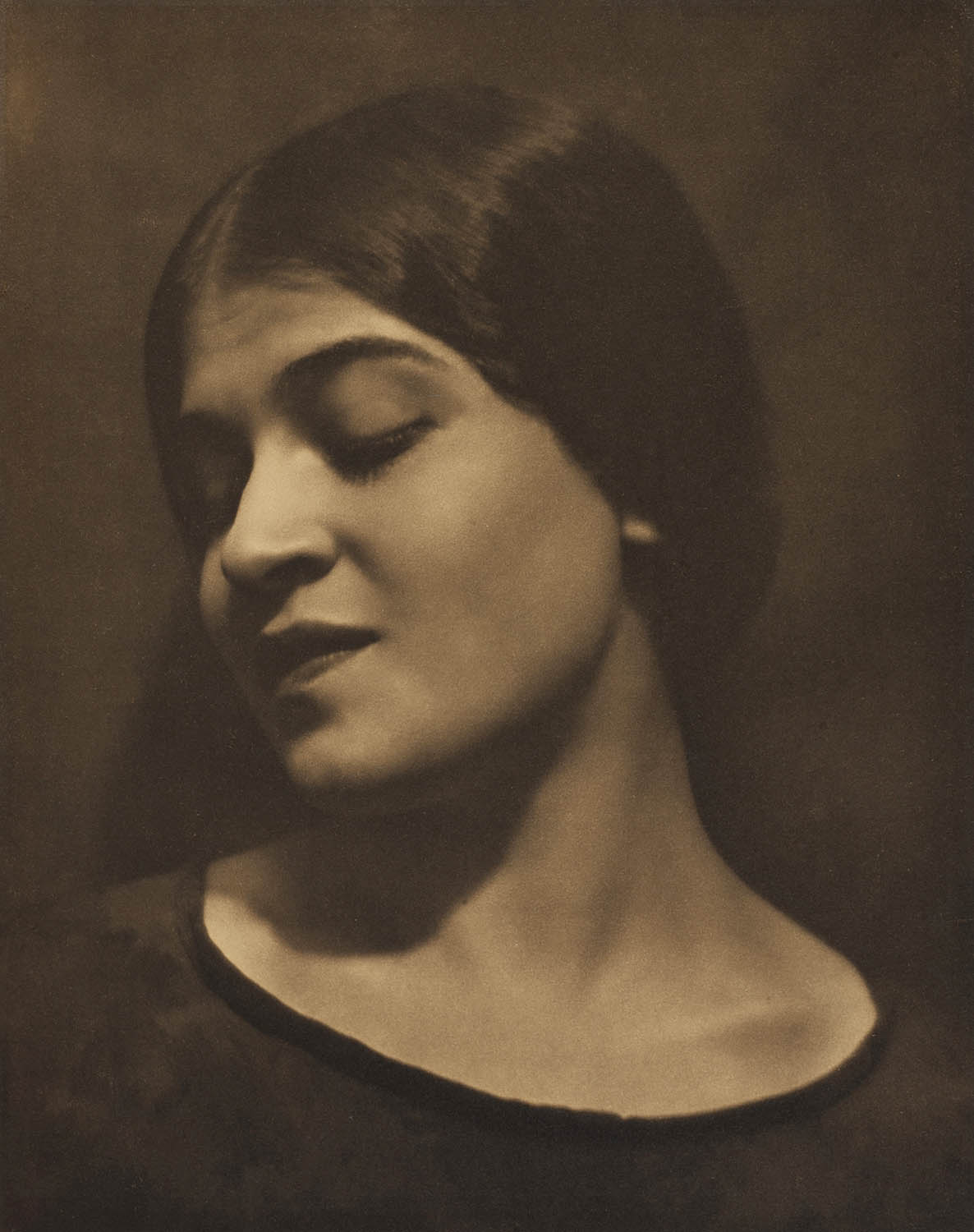
This section opens with works from Weston’s extended stays in Mexico from 1923 to 1926 with photographer and political activist Tina Modotti – his muse, lover, and collaborator – where he encountered a vibrant avant-garde community. Immersed in the artistic and political ferment of 1920s Mexico, Weston developed a bold new visual language focused on form, contrast, and a sense of immediate presence. A striking portrait of Modotti, presented in both gelatin silver and palladium prints, showcases Weston’s ongoing technical experimentation alongside his deepening sensitivity to tonal nuance. Modotti encouraged Weston toward an even more radical vision, challenging him to see the world anew through his camera.
His Mexican experience deepened Weston’s experimental impulse, introducing sharper contrasts and new formal rigor that reverberated through his portraits and nudes. His obsession with natural forms intensified. He photographed them repeatedly, seeking the perfect composition and meticulously refining his prints to reveal the interplay of light, shadow, and volume.
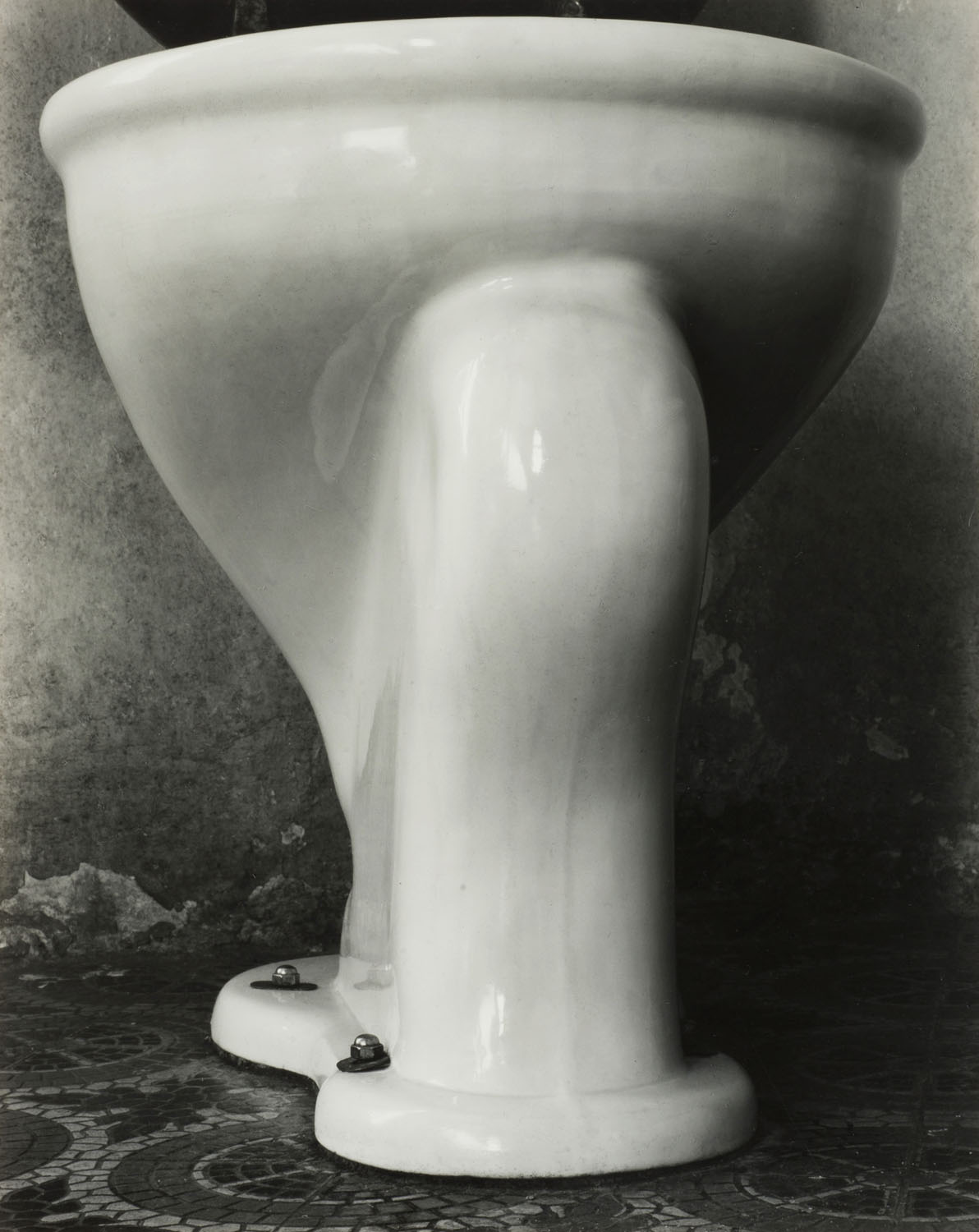
These subjects interact and reflect one another through Weston’s lens. The sinuous curves of a shell echo the lines of a nude; the gleaming porcelain of Excusado (Toilet) (1926) takes on the quiet sensuality of the human body. Shell (1927, above), one of Weston’s most iconic images, exemplifies his singular ability to elevate everyday objects into studies of luminous purity, rendering form, texture, and light with a precision so distilled that they verge on abstraction – not simply photographs of things, but meditations on form itself. During this period, his treatment of the nude also evolved dramatically: the body becomes fragmented and abstracted, its anatomy transformed into sculptural rhythm. This exploration reaches its pinnacle in Charis, Santa Monica (Nude in Doorway) (1936, above), one of Weston’s most celebrated images.
At the heart of the exhibition are many of Weston’s most exceptional works from the late 1920s and 1930s, in which he famously transformed the ordinary into something sensuous and unexpected. In his iconic studies of vegetables – particularly peppers – their curves and folds evoke the flesh and contours of the human torso, recalling both modernist sculpture and the body. Using the camera to express, in his words, “the very substance and the quintessence of the thing itself,” Weston also photographed in close-up what he saw around him: an egg-slicer, the plank from a barley sifter, a gnarled tree.
His portraits from this period grew sharper in focus and more daring in composition, echoing the dynamic perspectives emerging in European Modernist photography. By the late 1920s, after returning to California, his work had begun to appear in major exhibitions linked to the New Objectivity movement, which championed photographic clarity and rejected painterly effects. This evolution is also evident in his treatment of the nude: the body is fragmented and abstracted, its forms studied as sculptural elements.
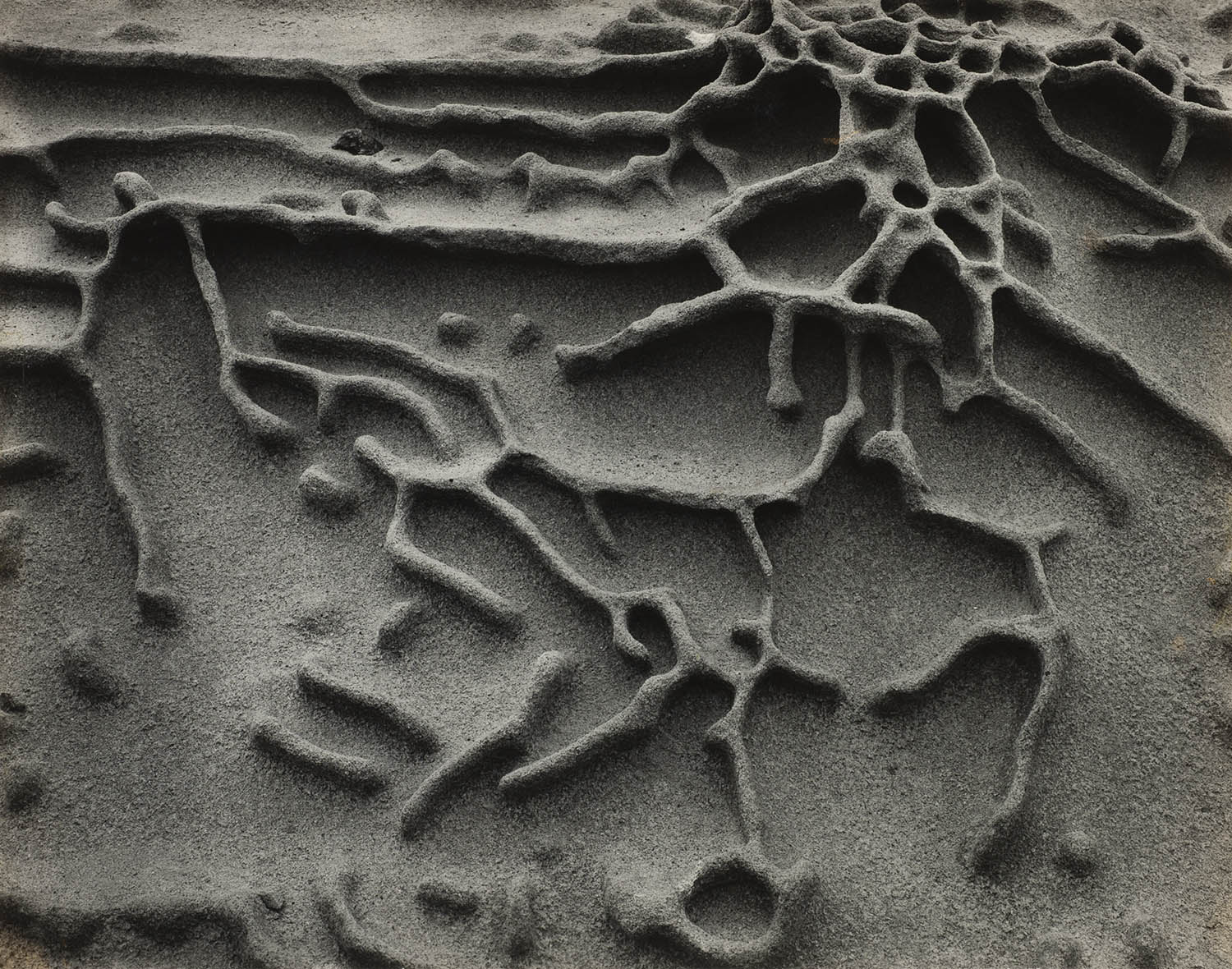
Weston’s practice moved fluidly between subjects, embracing both the human body and the natural world, constantly refining his vision through intense study and formal innovation. Close-up studies of nature – sand patterns, rocks, and wood – verge on abstraction, including Rock Erosion and Sandstone Erosion (Point Lobos) – photographs made along the dramatic California coastline that Weston returned to repeatedly. Jagged rock formations, knotted seaweed, wind-twisted cypress trees, and bleached driftwood became recurring motifs, offering endless opportunities for formal exploration. These works also include a group of powerful portraits, from images of his future wife, Charis Wilson, and her brother Leon, to Weston’s son Brett and daughter-in-law Elinore Stone.
This is the last posting for the year 2022, and what a year it has been… personally, now retired, surviving an appendicitis where they had trouble stabilising me after the operation, and in terms of the world: living with COVID, further destruction of habitat and species, global warming, and the invasion of the sovereign country of Ukraine by a Russian aggressor, and let’s call it what it really is – the war in Ukraine.
Can you imagine a creative, dissident, free-thinking political artist like Boris Mikhaïlov existing, being alive, under the dictatorship of Putin’s Russia if that country were to conquer Ukraine. He’d either be dead or packed off to a forced-labour camp in Siberia, quick smart, unless he escaped to the West.
“Since the 1960s, he has been creating a haunting record of the tumultuous changes in Ukraine that accompanied the collapse of the Soviet Union and the disastrous consequences of its dissolution. …
Early in his career, he was given a camera in order to document the state-owned factory where he was employed; he used it to take nude photographs of his wife. He developed them in the factory’s laboratory, and was fired after they were found by KGB agents.
Determined to take up the camera full-time, he eked out a living making photographs on the black market, in parallel creating a body of experimental personal work in reaction to the idealised images of Soviet life. He showed his work in “dissident kitchens”, clandestine exhibitions organised among friends in private flats, and became an active member of a collective of non-conformist photographers that would later become the core of the Kharkiv School of Photography.
At the time, taking images of the naked body or unflattering images of daily life, of people who were poor, ill, or in distress, was utterly taboo. Artists whose work did not conform to the official USSR aesthetic risked arrest, interrogation, even imprisonment. Under constant surveillance, Mikhailov was frequently harassed, his cameras broken and his rolls of film destroyed.” (Press release)
Speaking to Le Figaro, Mikhailov reflects on the early years of his career working in the former Soviet Union: “The most terrifying thing was on the street: anyone could call the police just because you took a photo, and you would be questioned. There was a very strong climate of mistrust, an omnipresent spy hunt.” (Lydia Figes)
Mikhailov’s lack of formal training as a photographer has served him well for he was able to experiment freely and was not beholden to any aesthetic or photographic style. Through irony, the artist subversively undermined official art, notably “art and its history under the Soviet Union, from the avant-garde montages of Alexander Rodchenko to the kitsch propagandist images of Socialist Realism.” (Lydia Figes) His photographs “range from political scenes to staged photos, landscapes, self-portraits and erotic images, often soiled and blemished by scratches, tears, blotches and hand-colouring.” (Exhibition text)
His surreptitious photographs are full of overlappings, slippages, collages, assemblages, and links to early photographic processes (sepia and cyanotype); full of introduced dust and scratches, application of fixer and hand-colouring; and full of concepts which deconstruct, dissect and disrupt the “official” reading of an image. “By allowing chance to connect disparate images, Mikhailov wants to bring ‘together several topics into a single, common world view inextricably linked to mass culture, memory and the collective unconscious of Soviet people in the 1960 and 1970s’.” (Boris Mikhailov quoted in Lydia Figes)
“Mikhailov has constructed his own distinct artistic language in series that vary enormously in terms of technique, format and approach. In an extraordinarily rich body of work that defies categorisation, he challenges visual codes, and uses documentary photography to conceptual ends. Combining numerous working methods, he alternately creates a dialogue between photography and text as well as between the images themselves, in superimpositions and diptychs and with blur, cropping or hand-colouring, giving them a feeling of irony, poetry or nostalgia.” (Exhibition text)
Mikhailov has constructed his own distinct artistic language, one in which “he combines humour and tragedy, consistently defending a wild and energetic artistic freedom as both a means of resistance to oppression and potential emancipation. For the artist, even the most serious subjects have a deep comedy, and every joke is deadly serious.” (Exhibition text)
His photographs are emotionally powerful, politically astute and uncannily effective conversations with the world… about subjects that should matter to all of us: war, destitution, poverty, oppression, and the power of an authoritarian state to control the thoughts and actions of human beings under its control. They are about the freedom of individual people to live their lives as they choose; and they are about the freedom of a group of people which form a country to not be subjugated under the rule of another country to which they are historically linked.
His photographs are about choice and difference, they are about life.
They perform a task, that is, they bring into consciousness … the ground on which we stand together, against oppression, for freedom. Of course, no country is without its problems, its historical traumas, prejudices and corruption but the alternative is being ruled over without a choice, which is totally unacceptable.
Against the “failed promises of both communism and capitalism” and the “economic history that is written on the flesh” of the poor, Boris Mikhaïlov’s Ukrainian diary documents day after day the dis-ease and fragility, but also resilience, of his subjects and the world in which they live. He uses his art as a visual tool for cultural resistance. And the thing about his images is: you remember them.
They are unlike so much bland, conceptual contemporary photography because these are powerful, emotional images. In their being, in their presence, they resonate within you. Photographs such as those from my favourite series Case History remain with you as a reminder, no, not a reminder, as a prick to your consciousness – never forget! This can so easily happen to you!
Happy New Year to you all.
Dr Marcus Bunyan
Many thankx to the Maison Européenne de la Photographie (MEP) for allowing me to publish the photographs in the posting. Please click on the photographs for a larger version of the image.
PS. What I find so ironic about the current war in Ukraine is the Russian pronouncement that they were invading the country to “denazify” it… to discredit Ukrainian nationalism as Nazism. When they themselves fought to rid themselves of a tyrannical, invading regime.
“One of the Kremlin’s most common disinformation narratives to justify its devastating war against the people of Ukraine is the lie that Russia is pursuing the “denazification” of Ukraine. Russian President Vladimir Putin has referred to Ukraine’s democratically elected government as a “gang of drug addicts and neo-Nazis,” while Russian state media and propagandists have repeatedly called for the “denazification” of the entire population of Ukraine.
By evoking Nazism and the horrors associated with World War II and the Holocaust, the Kremlin hopes to delegitimize and demonize Ukraine in the eyes of the Russian public and the world. The Kremlin attempts to manipulate international public opinion by drawing false parallels between Moscow’s aggression against Ukraine and the Soviet fight against Nazi Germany, a source of pride and unity for many people of the former Soviet republics who made enormous sacrifices during World War II, including both Ukrainians and Russians.
More than 140 international historians have denounced Russia’s “equation of the Ukrainian state with the Nazi regime to justify its unprovoked aggression,” calling Moscow’s propaganda “factually wrong, morally repugnant and deeply offensive” to the “victims of Nazism and those who courageously fought against it.””
A lengthy list of historians signed a letter condemning the Russian government’s “cynical abuse of the term genocide, the memory of World War II and the Holocaust, and the equation of the Ukrainian state with the Nazi regime to justify its unprovoked aggression.”
They pointed to a broader pattern of Russian propaganda frequently painting Ukraine’s elected leaders as “Nazis and fascists oppressing the local ethnic Russian population, which it claims needs to be liberated.”
And while Ukraine has right-wing extremists, they add, that does not justify Russia’s aggression and mischaracterization. …
Laura Jockusch, a professor of Holocaust studies at Brandeis University in Massachusetts, told NPR over email that Putin’s claims about the Ukrainian army allegedly perpetrating a genocide against Russians in the Donbas region are completely unfounded, but politically useful to him.
“Putin has been repeating this ‘genocide’ myth for several years and nobody in the West seems to have listened until now,” she says. “There is no ‘genocide,’ not even an ‘ethnic cleansing’ perpetrated by the Ukraine against ethnic Russians and Russian-speakers in the Ukraine. It is a fiction that is used by Putin to justify his war of aggression on the Ukraine.”
“A photographer is not a hero. He has no great desire to be there at the end of the world to document the most important, the most interesting and the hardest things. A photographer is not a hero.”
“Art can compromise an ideology by aesthetic means.”
“A photographer’s task is to always find this subtle and vague border between the permitted and the prohibited. This border is constantly changing, like life itself.”
Boris Mikhailov
“”Boris Mikhailov: Ukrainian Diary,” which opened recently at the Maison Européenne de la Photographie (M.E.P.) in Paris, is the biggest show of his life and – to spell it out – arrives as Ukrainian culture receives attention for the worst possible reason. It includes no fewer than 800 photographs, covering almost all of the series he undertook before and after the fall of the Soviet Union. There are burlesque self-portraits, but also straight reportage from the 2013-14 Maidan Uprising in Kyiv. Conceptual mockery of “lousy” Soviet pictures, as well as aching collages of poetry and everyday snaps. Preparations for the show were well underway when Russia invaded Ukraine on Feb. 24, and the war has reformatted “Ukrainian Diary” into a show of improbable resistance: to Soviet repression and now to Russian historical revisionism, to the fraudulence of official Communist art and to the global market’s appetite for trauma porn. …
I’d stood there in Kyiv this past summer, looking up at that kitschy angel, who looked back down onto the square that the invading army planned to parade through and never reached. To see it again, through Mikhailov’s eyes, was to see at last how all of the parts fit together: the trashy and the conceptual, the heroic and the parodic, the busted utopias of the past century and the Ukrainian bravery of 2022.
“Soviet history gave us a common culture, and we had a connection to Moscow, but less and less with time,” Mikhailov told me. “And this is why Maidan happened: because people waited and waited and did not get anything.” He showed me a photo from Kyiv, one more ironic record from a lifetime spent under misrule, and said: “Whatever system there might have been, it was broken, and it brought a lot of grief. But on the other hand, that grief made the country.””
The MEP is proud to present, from the 7th of September, 2022 to the 15th of January, 2023, the most important retrospective to date devoted to the Ukrainian artist Boris Mikhailov (born in 1938 in Kharkiv): Boris Mikhaïlov – Ukrainian diary. Considered one of the most influential contemporary artists from Eastern Europe, he has been developing a body of experimental photographic work exploring social and political subjects for more than fifty years.
The exhibition
Boris Mikhailov’s pioneering practice encompasses documentary photography, conceptual work, painting and performance. Since the 1960s, he has been creating a haunting record of the tumultuous changes in Ukraine that accompanied the collapse of the Soviet Union and the disastrous consequences of its dissolution. Conceived in close collaboration with the artist, the exhibition brings together more than 800 images drawing on more than twenty of his most important series, up to his most recent work.
In an extraordinarily rich body of work that defies categorisation, Mikhailov unsettles visual codes. Inventing his own distinct artistic language in series that vary enormously in terms of technique, format and approach, he bears witness to the harsh social realities and absurdities of his time.
Combining humour and tragedy, Boris Mikhailov unceasingly defends artistic freedom as both a means of resistance. Through his uncompromising treatment of controversial subjects, he demonstrates the subversive power of art.
For more than half a century, he has been bearing witness to the grip of the Soviet system on his country, constructing a complex and powerful photographic narrative on Ukraine’s contemporary history that in light of current events, is all the more poignant and enlightening.
The artist
Born in 1938 in Kharkiv, Ukraine, and trained as an engineer, Boris Mikhailov is a self-taught photographer. Early in his career, he was given a camera in order to document the state-owned factory where he was employed; he used it to take nude photographs of his wife. He developed them in the factory’s laboratory, and was fired after they were found by KGB agents.
Today seen as one of the most important figures on the international art scene, he has received many prestigious awards, among them the 2015 Goslar Kaiserring Award, the Citibank Private Bank Photography Prize (now the Deutsche Börse Photography Foundation Award) in 2001 and the Hasselblad Award in 2000. He represented Ukraine at the Venice Biennale in 2007 and again in 2017.
His work has been exhibited in major international venues, including the Tate Modern in London, MoMA in New York, and more recently, the Berlinische Galerie and C/O Berlin in Berlin, the Pinchuk Art Center in Kyiv, the Sprengel Museum in Hannover and the Staatliche Kunsthalle in Baden Baden.
Boris Mikhailov is represented in Paris by the Suzanne Tarasieve Gallery. He also shows his work at the Sprovieri Gallery in London, Guido Costa Projects in Turin, Barbara Gross in Munich and Galerie Barbara Weiss in Berlin.
He lives between Berlin and Kharkiv with his wife, Vita.
Boris Mikhailov’s pioneering practice encompasses documentary photography, conceptual work, painting and performance. Since the 1960s, he has been creating a haunting record of the tumultuous changes in Ukraine that accompanied the collapse of the Soviet Union and the disastrous consequences of its dissolution. Conceived in close collaboration with the artist, the exhibition brings together more than 800 images that draw on more than twenty of his most important series, up to his most recent work.
Mikhailov has constructed his own distinct artistic language in series that vary enormously in terms of technique, format and approach. In an extraordinarily rich body of work that defies categorisation, he challenges visual codes, and uses documentary photography to conceptual ends. Combining numerous working methods, he alternately creates a dialogue between photography and text as well as between the images themselves, in superimpositions and diptychs and with blur, cropping or hand-colouring, giving them a feeling of irony, poetry or nostalgia.
The series produced while Ukraine was part of the Soviet Union deconstruct propaganda images and question collective memory, and reflect the societal contradictions that existed at the time. In “Yesterday’s Sandwich”, starting in 1965, the artist shows a dual reality, ambiguous and poetic, juxtaposing beauty and ugliness. In “Red” (1968-1975), he underlines the omnipresence of the colour red, evoking the pervasive presence of the communist regime and the way it introduced itself into individual consciousness and collective memory. The series “Luriki” (1971-1985) and “Sots Art” (1975-1986) are a cynical reflection on the way propaganda images artificially idealise reality. The underside of the proselytised utopia is also revealed in “Salt Lake” (1986), images of bathers taken clandestinely on the shore of a lake in southern Ukraine.
Boris Mikhailov also frequently uses humour as a weapon, a means of resistance to oppression and of potential emancipation. In provocative self portraits, he uses self-deprecation and irony in series such as “Crimean Snobbism” (1982), “I am not I” (1992), “National Hero” (1992) and “If I were a German” (1994), rather than making a more frontal critique of society.
Other series realised during and after the collapse of the USSR bear witness to the failure of both communism and capitalism in Ukraine and shed light on the roots of war, from “By the ground” (1991) and “At Dusk” (1993) to “Case History” (1997-1998), “Tea, Coffee, Cappuccino” (2000-2010) and “The Theater of War, Second Act, Time Out” (2013). The iconic series “Case History” depicts a devastating portrayal of the disenfranchised in Kharkiv, left homeless by the new capitalist society; while “The Theater of War” powerfully documents the occupation of Maidan Nezalezhnosti, the central square in Kyiv, during violent protests that are inextricably linked to the current conflict.
Through his uncompromising treatment of controversial subjects, Boris Mikhailov demonstrates the subversive power of art. For more than half a century, he has been bearing witness to the grip of the Soviet system on his country, constructing a complex and powerful photographic narrative of Ukraine’s contemporary history that in the light of current events, is all the more poignant and enlightening.
The exhibition gathers more than twenty series, most being shown in France for the first time, in loaned works from major institutions and from the artist’s personal collection. From projected images and large-scale installations to small-format vintage prints or artist’s books in display cases, the hanging reflects his indefatigable investigations of photographic techniques and styles as well as his frequent oscillation between conceptual and documentary work as he explores the shifting landscape of his native Ukraine.
The exhibition is curated by Laurie Hurwitz in collaboration with Boris and Vita Mikhailov.
The exhibition is accompanied by a catalogue in French and English published by Morel Books, London, with an introduction by Simon Baker, director of the MEP.
Text from the MEP website
Reality, aesthetic innovations and the dissolution of the USSR
The first half of the exhibition introduces a number of the artist’s most important aesthetic innovations from the mid-1960s to the early 1990s – black-and-white documentary, conceptual work, superimpositions of slides, hand-colouring prints, combinations of text and image, “bad” photography – in an experimental visual language that is poetic, playful and uncompromising. At certain moments, the order of the works is non-chronological, in order to highlight connections or contrasts between the series.
“Ironically, it was the Ukrainian’s lack of photographic training that led to his success, providing him with a unique and peripheral perspective. “As an unofficial photographer, I discover, I observe, I clandestinely stalk,” he said. Mikhailov’s proclivity for risk underpinned his career, though it came at a price. Speaking to Le Figaro, Mikhailov reflects on the early years of his career working in the former Soviet Union: “The most terrifying thing was on the street: anyone could call the police just because you took a photo, and you would be questioned. There was a very strong climate of mistrust, an omnipresent spy hunt.” He became known for showing his work in “dissident kitchens”, clandestine exhibitions organised in private flats, and became an active member of a collective of non-conformist photographers, later known as the Kharkiv School of Photography. In the words of his long-term friend and fellow artist Ilya Kabakov, “From the way that Boris takes pictures, I have the complete impression of a catastrophic shot on the verge of self-destruction”.”
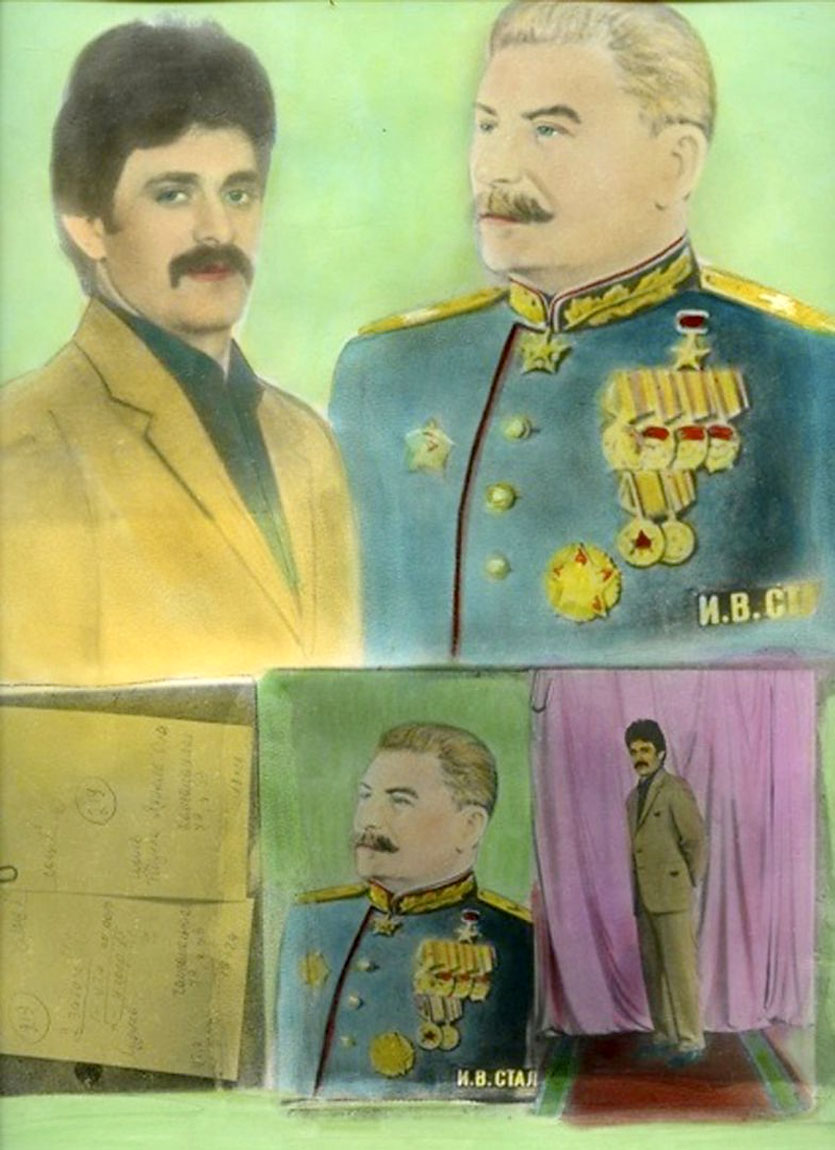
“Mikhailov’s series “Luriki” (1971-85) took found black-and-white photographs of anonymous soldiers and sailors, or of happy families who are all alike, and overpainted them with hand coloring – a common technique in the Soviet Union, where color printing was expensive. These were probably the first artworks in the Soviet Union to use found imagery to capture the Soviet zeitgeist and tweak the regime. Yet their garishness gave him an out with irony-blind censors, to whom he could always explain that he was just trying to make the sitters look prettier.”
Starting in the late 1960s, Mikhailov worked as a commercial photographer and earned extra money enlarging, retouching and hand-colouring family snapshots of weddings or newborns, or of someone lost during the war. In what is considered the first use of found material in contemporary Soviet photography, Mikhailov appropriated the photos in order to conceptualise this technique and create ironic works of art. Often using kitsch colours, he made them more “beautiful” while mocking the way Soviet propaganda glorified mundane events.
Sots Art, 1975-1986
The title “Sots Art” refers to a movement created in 1972 by the Moscow born duo Vitally Komar and Alexander Melamid, who deconstructed Socialist Realism and combined it with elements of Western Pop art. Boris Mikhailov took photographs depicting sanctioned socialist imagery (parades, students in military training, athletic youth…), then subverted them using garish colours that reflect his disillusionment with false Soviet ideals.
“A photographer’s task is to always find this subtle and vague border between the permitted and the prohibited. This border is constantly changing, like life itself.”
Yesterday’s Sandwich, late 1960s – late 1970s
While developing colour slide film, the artist nonchalantly threw it on the bed and two slides accidentally stuck together “like a sandwich,” he says. “Suddenly, I saw a totally new, metaphoric image”. He began randomly exploring combinations in what he called “programmed accidentality” to create surreal, highly poetic images that act as a metaphor for the duality of Soviet life, between the idealised images imposed by those in power and the drab reality. “Yesterday’s Sandwich” fuses opposites or unrelated images as a way of introducing forbidden imagery, conflating beauty and the grotesque, and visualising the world of memory and the collective unconscious in a visual language not unrelated to the cinema of Andrei Tarkovsky. “I made these compositions at a time when, given the scarcity of real news, everyone was on the lookout for the smallest piece of new information, hoping to uncover a secret or read between the lines. Encryption was the only way to explore forbidden subjects such as politics, religion, nudity”, Mikhailov explains. The MEP exhibition presents the work in a large-scale projection set to Pink Floyd’s The Dark Side of the Moon, which for the artist explores the “exaggeration of beauty” and “a paradise lost”, along with individual prints.
“By adding something previously unacceptable to my photos, I was violating the canons of Soviet photography: I was shooting allegedly wrong things in an allegedly wrong way…”
“As a photographer without official credentials, I discover, I observe, I clandestinely stalk.”
Boris Mikhailov
“These unofficial pictures were printed on cheap paper; they incorporated blurs and backlighting and too much headroom; the nudes, especially, could have gotten him packed to Siberia. Mikhailov, along with other artists of what’s now known as the Kharkiv School of Photography, could exhibit only in private, usually in friends’ kitchens. (“They were free artists,” Vita said, “because they didn’t think, ‘We should sell for money’.”) And the lack of public opportunities, not to mention a market, inspired a self-sufficiency guarded long after the Soviet censors faded from view.”
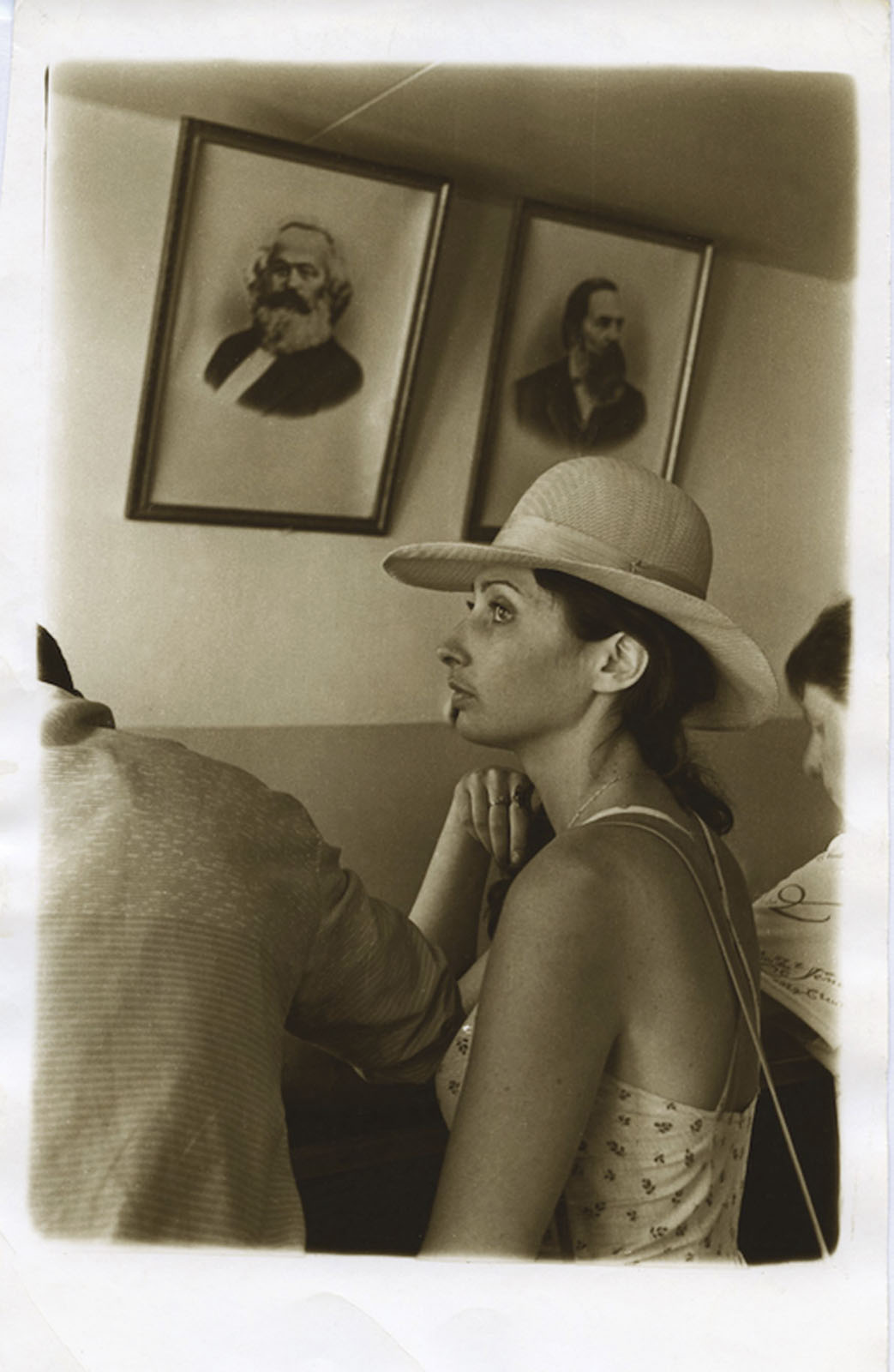
Small-format black-and-white vintage prints, “Black Archive” documents everyday life in Kharkiv, often revealing the disparity between outside and inside. In the public space, images taken clandestinely (at the time, anyone making photos on the street could be taken for a spy, and Mikhailov’s studio was frequently searched by the KGB) capture solitary pedestrians, often from behind and at odd angles, while in contrast, the private sphere is seen as a space of liberty, as in joyful shots of naked woman proudly showing off their curves.
The series introduces another of Boris Mikhailov’s concept of “bad” photography: unlike his fellow photographers, who sought technical perfection, his prints were deliberately low-contrast, blurry, full of visible flaws, on poor-quality paper. While it was quite difficult to procure high-quality Soviet-made film, paper or chemicals, these defects more importantly express Mikhailov’s very personal idea of beauty. They were also a way of subverting the glorified imagery of social realism; he felt glossy, impeccably crafted photographs could never reflect the hardships of the life he saw around him.
“Dance” captures light-hearted moments of open-air dancing in Kharkiv. These scenes reflecting Mikhailov’s interest in photographing very ordinary subjects and anti-heroes, “some sort of general uniqueness, a group of people that could easily be from anywhere.” In many images, women dance together as if preparing subconsciously for war, when the men would be sent away again.
Boris Mikhaïlov (Russian, b. 1938) From the series Series of four 1982-1983 Silver gelatin print, unique copy From a 20-part series Each 18 x 23.80cm
Boris Mikhailow (Russian, b. 1938) From the series Series of four 1982-1983 Silver gelatin print, unique copy From a 20-part series Each 18 x 23.80cm
Series of Four, early 1980s
In “Series of Four” Boris Mikhailov printed four small-format, black-and-white pictures on the same sheet, as if creating a single image. Once again an accident, here due to a technical constraint – a shortage of photographic paper – is conceptualised. Multiple viewpoints become a metaphor for a complex reality, an ambiguous, fragmented view of a world in constant flux, one that invites viewers to look for connections between them. Taken in the suburbs of Kharkiv, these “bad” images, poorly aligned and full of imperfections, depict a series of non-events.
Combining text and image in a conceptual way, Mikhailov created a new kind of artist’s book, one that would have an enormous influence on his peers and on generations of younger artists. Mikhailov carelessly pasted his photographs onto pieces of paper, then scribbled thoughts – banal, poetic or philosophical – in the margins. His fragmentary thoughts were not meant as captions, nor as an interpretation or elucidation of the photos, and did not even necessarily relate to them; they were also meant to be as important as the images and to inspire unexpected associations. “Viscidity” for Mikhailov talks about a period he calls viscous, “at the threshold of something unknown… no catharsis nor nostalgia – only frozen dayto- dayness”. In this time of “deep political stagnation”, he said “nothing is happening – nothing at all is interesting… There was a kind of certainty that society was at the threshold of something unknown, something everyone was anticipating”.
Unfinished Dissertation, 1984
On the back of each yellowed page of a tattered university thesis found in the bin, Mikhailov pasted in two messily printed, black-and-white photographs of insignificant moments, often taken just a few moments apart, then jotted down his thoughts on art and life in the margins. Totally subjective (as its subtitle, “discussions with oneself”, suggests) and bereft of any scientific value, in this project, in which he says the “text gives new life to boring pictures”, Mikhailov puts forth his own “dissertation” about a new aesthetic.
“The word ‘red’ in Russian contains the root of the word for beauty. It also means the Revolution and evokes blood and the red flag. Everyone associates red with Communism. Maybe that’s enough. But few people know that red suffused all our lives, at all levels.”
Boris Mikhailov
Mikhailov’s work is a rich and self-referential homage to art and its history under the Soviet Union, from the avant-garde montages of Alexander Rodchenko to the kitsch propagandist images of Socialist Realism. The series Red appropriates the old-fashioned technique of making hand-coloured prints. The colourful overlaid slides in Yesterday’s Sandwich, to a degree, echo the uncanny montages of the Surrealists. By allowing chance to connect disparate images, Mikhailov wants to bring “together several topics into a single, common world view inextricably linked to mass culture, memory and the collective unconscious of Soviet people in the 1960 and 1970s.”
Bridging documentary and conceptual art, the “Red” series brings together 84 colour photographs taken in Kharkiv between 1968 and 1975. All contain the colour red – a powerful symbol of the revolution and the Soviet empire – either in patriotic objects (a flag, a billboard, a military parade) or mundane details (a tomato, a garage door, painted toenails, a headscarf). For the artist, together they showed the extent to which everyday life was permeated by communist ideology. Printed in small format and left unframed, the photographs are hung together in a loose, pseudo-organised grid several meters long, in random order. Drawing visitors into a disjointed vision made up of small, disparate moments, this immersive installation invites viewers to become active participants in the work.
In two seminal series created before and after the dissolution of the Soviet Union, Mikhailov wandered the streets with a Russian-made swing-lens Horizon camera with a rotating lens that took in a 120-degree panoramic view. Holding the camera at hip height, the artist guides the viewer’s gaze downward, as if to bring us closer to the experience of destitute figures queuing for food or lying in the street.
In “By the Ground”, Mikhailov hand-painted the silver prints with sepia, evoking dirt and dust, while imbuing the pictures with a sense of nostalgia. The bleak street scenes reminded him of Maxim Gorki’s play The Lower Depths (1901-1902) and the extreme poverty of Russia’s lower class it depicts. The artist’s protocol for installation accentuates this effect: hung low, in a single row, they force viewers to stoop down, symbolising the new, destabilising social order.
“Everything fell, collapsed, died: both the environment and human beings. Space was destroyed, people fell to the ground… I tried to express this photographically, in sepia toned, aged panoramic images.”
Taken shortly after the collapse of the Soviet Union, this series is toned with cobalt blue, the colour of twilight, the transition from day into night, alluding to Ukraine’s transition to independence after the collapse of the Soviet Union. For the artist, the colour blue is also linked to the artist’s traumatic memories from World War II, when at age three he was awakened by the wailing of air-raid sirens in the middle of the night: “Blue for me is the colour of the blockade, hunger and the war… I can still remember the bombings, the howling sirens and the searchlights in the wonderful, dark-blue sky…”
A related work, “Green”, a monumental triptych of hand-coloured silver prints, shows a world falling apart: an abandoned factory, surrounded by an overgrown landscape with a figure attempting to reactivate a rusty tractor.
The second part of the exhibition introduces Mikhailov’s performative work. We see him using irreverence and humour as tools for corrosive social criticism, for revealing our fragility and the lies of Soviet propaganda – mise en scène reflects a world in which everyone seems to be playing a role. This part of the exhibition also includes Mikhailov’s best known social photography, bridging documentary work and a conceptual approach, and evoking the failures and tensions that have since led to war.
“In the Soviet Union, heroism had already been destroyed by ideology. So there could only be an anti-hero.”
Boris Mikhailov
I Am Not I, 1992
In provocative, dramatically-lit black-and-white images, the naked artist plays the role of anti-hero in burlesque, self-deprecating self-portraits that mock the traditional masculine stereotype idealised by the Soviet regime. At times recalling Buster Keaton or pantomime artist Marcel Marceau, he dons a curly black wig, brandishing a sword or artificial phallus or holding an enema bag; exposing his ageing, vulnerable body, “trying on the icons of Western mass culture, like Rambo,” he assumes pseudo-athletic or contemplative poses that call to mind works by Rodin or Caravaggio. The images are presented here in a composition imagined by the artist especially for the MEP with vintage prints from his archives.
Dressed in Soviet military garb with Ukrainian insignia, Mikhailov creates a seemingly simple portrait of troubling ambiguity, in which the face’s delicate beauty and the pink background challenge classic images of masculinity.
Mikhailov turned the camera on himself for the first time in tongue-in-cheek snapshots of his holidays with his wife Vita and their friends in Gursuf, a seaside resort on the Crimean Peninsula and a popular destination for Russian intellectuals in the 19th century. Sepia-toned images, like photos from another era, capture the carefree protagonists swimming, sunbathing on the rocks, spouting seawater, frolicking in the park or on the pier. But their idyllic vacation is also a game, “playing at being bourgeois”; on closer inspection, the poses feel forced, exaggerated, as if mimicking the luxurious and carefree lifestyle of the West that was inaccessible to Ukrainians at the time.
In the early 1990s, Mikhailov, his wife Vita founded a group called “Fast Reaction” with their artist friends Sergei Bratkov and Sergei Solonski. In this controversial series, they engaged in darkly provocative, satirical role play, staging scenes inspired by interviews with Ukrainians who had witnessed the country’s wartime occupation by the Germans during World War II. At times donning Nazi uniforms, the artists pose in tableaux vivants, some with captions quoting Goethe or Dürer, in scenarios that explore how they might have felt as either victim or oppressor, and probe difficult questions about guilt, accountability and shame: “What if we had been a German? How would we have treated others? Who or what is the real enemy?”
Mikhailov’s large-format sepia prints of bathers were taken on the edge of a lake in Sloviansk, his father’s native city, in the Donbass region of southern Ukraine, whose inhabitants, he was told, were convinced the warm, salty water had healing properties. He found a popular bathing spot where little suggested anything salubrious: a murky, heavily polluted industrial site surrounded by factories. Mikhailov’s clandestine photographs of these scenes in which families enjoying their “freedom” with total indifference to their surroundings are both compassionate and scathing.
Promzona, 2011
A guest at the first Kyiv Biennale, Mikhailov returned to abandoned industrial sites in Donetsk, in the Donbass region, long famous as a centre for mining, steel production and machine manufacturing, largely left behind by socioeconomic transformations. The former engineer explores a constructivist aesthetic in compositions that at times echo works by Rodchenko, with their sharp, unusual camera angles and rigid geometry. “For me, these pictures are an anthem to the technologies of a past age,” says the artist.
“Only when one sees misery in a picture, does one begin to notice it in the street.”
Boris Mikhailov
Tea, Coffee, Cappuccino, 2000-2010
In a continuation of “By the Ground”, “At Dusk” and “Case History”, the artist photographs Kharkiv nearly two decades after the fall of the USSR, in an independent Ukraine that has adopted the Western capitalist model. Colourful advertisements and billboards, McDonald’s, an ocean of cheap plastic objects and tote bags, anonymous figures waiting at tram stops, and the cries of street vendors who once sold only tea or coffee, but now propose cappuccino as well – they capture a moment of transition, in between east and west, past and present, and a new era of “doing business” in which “anything can be bought and sold, even children,” says Mikhailov.
Part of “Tea, Coffee, Cappuccino” was first presented in the Ukrainian Pavilion at the 2007 Venice Biennale.
In late December 2013, Boris Mikhailov and his wife Vita documented those who had pitched their tents a few weeks earlier on the central square in Kyiv, Maidan Nezalezhnosti, to protest the Ukrainian government’s sudden decision not to sign the Association Agreement with the European Union – a key moment in the ongoing tensions that recently led to war. In photographs of the protestors’ everyday life behind the barricades, their faces express a palpable sense of anxiety. Some of the images recall 19th-century Russian realist paintings. “Emotions were so high”, the artist explains, “that at first glance, the scenes almost felt as if they had been staged”.
“Now the war has sent Ukraine into an economic tailspin, and Russia’s attacks on Ukraine’s electrical grid threaten millions with scarcity and worse. Mikhailov never shied from misfortune and crisis, especially in the first years of Ukrainian independence, when the country fell into a spiral of hyperinflation that peaked at 10,000 percent. A new underclass of homeless people appeared in Kharkiv’s city parks, without any state aid to help them.
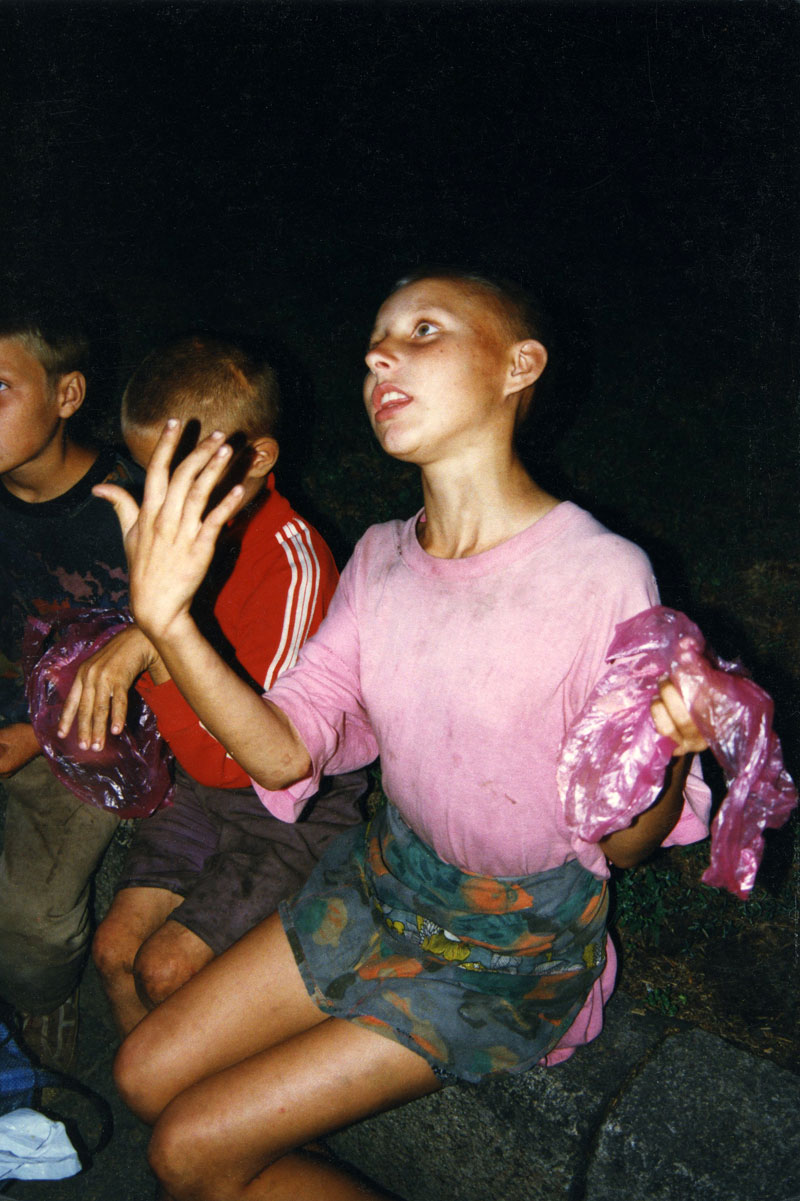
Out of that misery came the unshrinking “Case History,” for which Mikhailov photographed Kharkiv’s most desperate people and printed them at billboard size. He frequently had them pose nude, laughing or crying in the snow. He posed them in positions that recall a Pietà or the Descent from the Cross. He showed their chapped, burned, infected skin, their tumorous bellies and misshaped genitals; economic history is written on the flesh. Boris and Vita paid these subjects, and often invited them into their home – the 400 or so pictures of “Case History” were not reportage. They were a requiem for all of the failed promises of both communism and capitalism, a danse macabre on the grave of the 20th century.
The “Case History” pictures have compelled, disturbed and enraged viewers for two decades now, with a corpus of academic literature now trailing behind them. They certainly defy Ukraine’s current projection of itself through viral propaganda, though with their indictment of local corruption, the images in “Case History” also call forward to Ukraine’s two revolutions of the 2000s: the Orange Revolution of 2004 and especially the Revolution of Dignity in 2014, which pushed the whole country, Russian- and Ukrainian-speaking alike, into a new democratic era.”
After spending a year in Berlin on a stipend from DAAD (German Academic Exchange Service), Mikhailov returned to Kharkiv and saw that the city had changed drastically post-communism. A new ruling elite of millionaires had emerged, but a considerable part of the population had been plunged into poverty, and the number of homeless people, or bomzhes, had swollen dramatically. A series of some 400 raw, difficult, deeply empathetic portraits, “Case History” is Mikhailov’s requiem; it documents the deeply troubling situation of this disenfranchised community. Some embrace in poignant moments of tenderness or gesticulate drunkenly; others pose in compositions that allude to scenes in paintings by Leonardo da Vinci or Rembrandt or evoke actors in a passion play; many openly exhibit their wounded bodies for the camera.
While these photographs may look like traditional photojournalism (the title even evokes the clinical detachment of a medical history), they also distance themselves from this genre – Mikhailov and his wife Vita paid their subjects, often taking them home to feed them and give them baths, in exchange for posing. Mikhailov intentionally subverted the codes of photojournalism, exploring the limits of objective representation. While this approach was controversial and perceived by some as unethical, he argued that his often theatrical shots might help draw attention to the degradation and suffering of his subjects.
For this exhibition, the artist proposed to show a selection of large-format works along with small-scale prints of the series and medium-format works specially created by the artist for the MEP collection.
“The work itself can be difficult to look at. The colour, life-size prints are unsparing in their documentation of the disease and frailty of Mikhailov’s subjects, and the grit and grime of their humble surroundings. Directed to stand naked, clothes in hand, some appear, in his words, ‘like people going to gas chambers.’ Others share heartbreaking moments of tenderness, while a few appear comatose with drink” (Little).
This elegiac installation, composed of more than 150 diptychs, was awarded Shevchenko National Prize, the first official recognition of Mikhailov’s work in Ukraine in 2021. The project was inspired by an unfinished building for a working crematorium in Kyiv, where construction, begun in 1968, was fraught with conflict. Sensitive to the fact that the subject of cremation could provoke memories of the mass killing of Ukrainian Jews during World War II, the architects proposed a modernist design that also included a park and a huge bas-relief, “The Wall of Remembrance”. But after more than ten years of work, the government buried the wall under a layer of concrete, calling it inconsistent with the “principles of socialist realism”. Boris Mikhailov juxtaposed new photographs of the structure with images made throughout his career in a dialogue about past and present, raising questions about transformation, vulnerability and mortality.
In 2016, Boris Mikhailov published “Diary”, bringing together five decades of his work presented as an intimate scrapbook. “Diary” was not conceived in a retrospective manner; and there is no obvious historical narrative or linear progression. The selection of images, many of which are outtakes from his different series, range from political scenes to staged photos, landscapes, self-portraits and erotic images, often soiled and blemished by scratches, tears, blotches and hand-colouring.
In work often marked by irony and self-mockery, Boris Mikhailov plays with a wide range of everyday and propaganda imagery to bear witness, in uncompromising terms, to both the harsh social realities and absurdities of his time. He combines humour and tragedy, consistently defending a wild and energetic artistic freedom as both a means of resistance to oppression and potential emancipation. For the artist, even the most serious subjects have a deep comedy, and every joke is deadly serious. The interplay of these haunting images – by turns beautiful and ugly, disturbing and poignant, brutal and tender – gives rise to a compelling and unique view of history that resonates today more than ever before.
A key figure of the Kharkiv School of Photography (KSOP)
In 1971, Boris Mikhailov was one of eight photographers who established the Vremya group in Kharkiv, an experimental non-conformist art collective that is considered the core of the Kharkiv School of Photography. The group’s members (Boris Mikhailov, Evgeniy Pavlov, Jury Rupin, Anatoliy Makiyenko, Oleg Malyovany, Oleksandr Sitnichenko, Oleksandr Suprun, and Gennadiy Tubalev), thus formalised an underground movement sparked in an informal photo club in the 1960s, to create a visual tool for cultural resistance. Although the name Vremya (Time) sounds banal, it was a call for revolution – a statement of defiance against a painful system from the past. They called their artistic objective the “blow theory”, to produce works whose impact would strike the viewer hard and fast. Boris Mikhailov, who emerged as their informal leader, was the driving force for much of their shared aesthetic.
Vremya developed a diverse but recognisable photographic language that frequently depicted nudes and an unseemly Soviet reality. Persecuted by the party’s ideological watchdogs, routinely searched by the KGB, its only public exhibition of their works, held in Kharkiv in 1983, shut down on opening day, the Vremya collective dissolved in the 1980s. The group nevertheless formed the basis for the school established a few years later.
The group’s influence was far-reaching and continues to be deeply felt throughout Ukraine; a second and third wave of younger artists are still inspired by their ideas today. Boris Mikhailov continues to be a beloved mentor for many of them. In 2018, the Museum of Kharkiv School of Photography was also founded through the initiative of Sergiy Lebedynskyy, a member of the Shilo Group, in close collaboration with Boris and Vita Mikhailov.
Biography
Born in 1938 in Kharkiv, Ukraine, and trained as an engineer, Boris Mikhailov is a self-taught photographer. Early in his career, he was given a camera in order to document the state-owned factory where he was employed; he used it to take nude photographs of his wife. He developed them in the factory’s laboratory, and was fired after they were found by KGB agents.
Determined to take up the camera full-time, he eked out a living making photographs on the black market, in parallel creating a body of experimental personal work in reaction to the idealised images of Soviet life. He showed his work in “dissident kitchens”, clandestine exhibitions organised among friends in private flats, and became an active member of a collective of non-conformist photographers that would later become the core of the Kharkiv School of Photography.
At the time, taking images of the naked body or unflattering images of daily life, of people who were poor, ill, or in distress, was utterly taboo. Artists whose work did not conform to the official USSR aesthetic risked arrest, interrogation, even imprisonment. Under constant surveillance, Mikhailov was frequently harassed, his cameras broken and his rolls of film destroyed.
Today seen as one of the most important figures on the international art scene, he has received many prestigious awards, among them the 2015 Goslar Kaiserring Award, the Citibank Private Bank Photography Prize (now the Deutsche Börse Photography Foundation Award) in 2001 and the Hasselblad Award in 2000. He represented Ukraine at the Venice Biennale in 2007 and again in 2017.
His work has been exhibited in major international venues, including the Tate Modern in London, MoMA in New York, and more recently, the Berlinische Galerie and C/O Berlin in Berlin, the Pinchuk Art Center in Kyiv, the Sprengel Museum in Hannover and the Staatliche Kunsthalle in Baden Baden.
Boris Mikhailov is represented in Paris by the Suzanne Tarasiève Gallery. He also shows his work at the Sprovieri Gallery in London, Guido Costa Projects in Turin, Barbara Gross in Munich and Galerie Barbara Weiss in Berlin.
His work is currently on display in the exhibition This is Ukraine: Defending Freedom at the Scuola Grande della Misericordia in Venice, as part of the official program accompanying the Venice Biennale.








 Art Blart _ art and cultural memory archive
You must be logged in to post a comment.