Review: ‘Lionel Bawden: Pattern spill’ at Karen Woodbury Gallery, Richmond

Exhibition dates: 23rd November – 17th December 2011
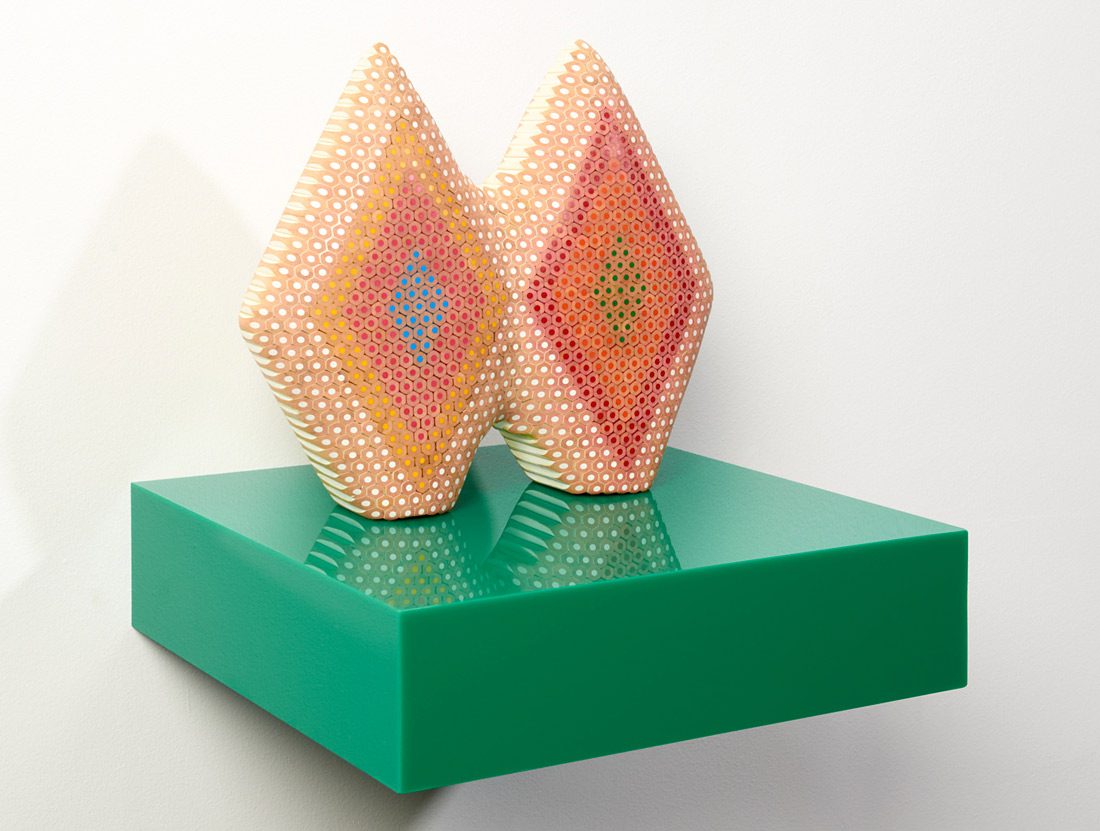
 

Lionel Bawden (Australian, b. 1974) 'Double Vision' 2011


Lionel Bawden (Australian, b. 1974)
Double Vision
2011
Coloured Staedtler pencils, epoxy, incralac on perspex shelf
Form: 23 x 26 x 7cm
Shelf: 7.5 x 30 x 30cm


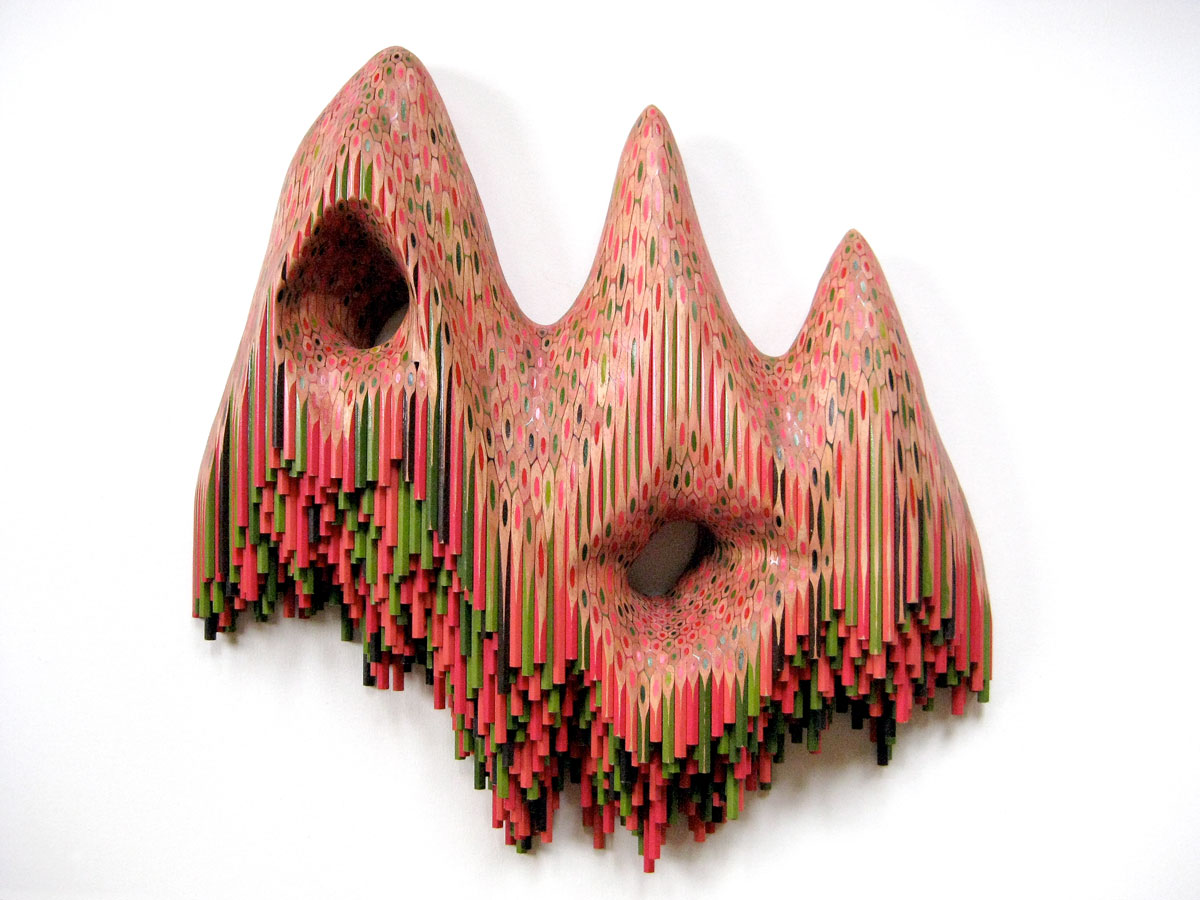
In the self contained world of commercial “art to go” galleries, this exhibition is the apotheosis of that form. The work is astonishingly beautiful, refined and self contained. Drawing on references to Islamic art, Brancusi (Endless Column), stalactites, wafting sea sponges and the changeable camouflage patterns of sea creatures, the sculptures are perfect in visualisation, creation, contemplation and containment.

Sitting on coloured perspex shelves the patterns spills of coloured Staedtler pencils explore “themes of flux, transformation and repetition as preconditions to our experience of the physical world.” The titles of the work hint at such an exploration: Double VisionTrance-muterSecretionLosing Containment, Pattern Spill.

How I wish, long, crave to own one and I am not alone: on the opening night nearly all the sculptures were already sold! Obviously people recognise the uniqueness and beauty of this work.

And yet …


Part of               me

longs
for    a
      broken
pencil,
a
snapped           t/wig,
something
                                           out of place
that puts
pattern to
shame.


For only in mutation is pattern given relevance (and this is what the irregularity of ‘spill’ is supposed to be about). The flow of the Pattern Spill sculptures are the only ones that get close to this mutation and that in a pretty, ordered way.

“What happens in the case of mutation? Consider the example of the genetic code. Mutation normally occurs when some random event (for example, a burst of radiation or a coding error) disrupts an existing pattern and something else is put in its place instead. Although mutation disrupts pattern, it also presupposes a morphological standard against which it can be measured and understood as mutation … Mutation is critical because it names the bifurcation point at which the interplay between pattern and randomness causes the system to evolve in a new direction…

The randomness to which mutation testifies is implicit in the very idea of pattern, for only against the background of nonpattern can pattern emerge. Randomness is the contrasting term that allows pattern to be understood as such.”1


Instead of pattern “something else is put in its place instead.” I don’t get that here. Yes, these are beautiful, contemplative sculptures but one wonders how they will go on revealing themselves over months and years. I yearn for the prick of their imperfection.

Dr Marcus Bunyan


1/ Hayles, Katherine. How We Became Posthuman: Virtual Bodies in Cybernetics, Literature, and Informatics. Chicago: University of Chicago Press, 1999, pp.30-33.


Many thankx to Karen Woodbury Gallery for allowing me to publish the photographs in the posting. Please click on the photographs for a larger version of the image.
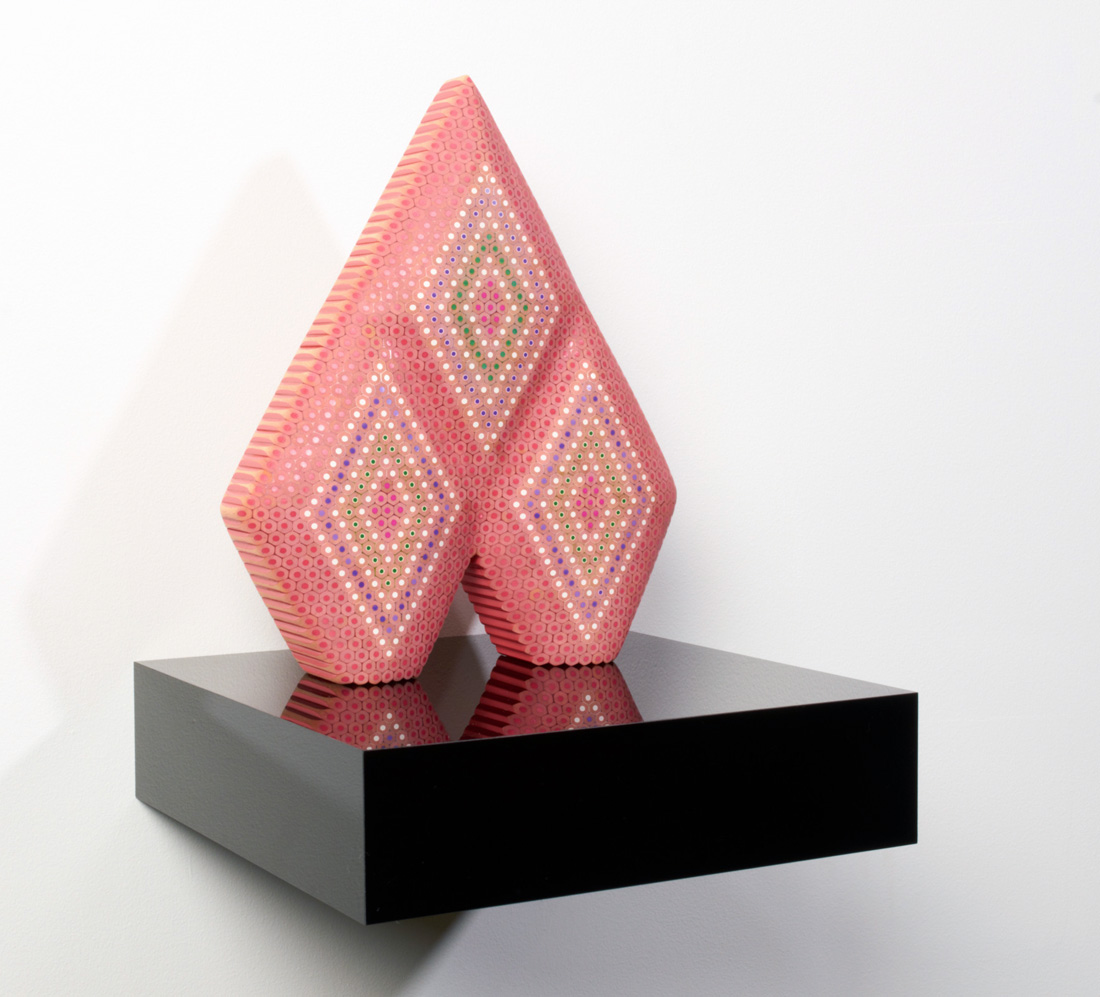


Lionel Bawden (Australian, b. 1974) 'Trance-muter' 2011


Lionel Bawden (Australian, b. 1974)
Trance-muter
2011
Coloured Staedtler pencils, epoxy, incralac on perspex shelf
Form: 32 x 26 x 7.5cm
Shelf: 7.5 x 30 x 30cm


Lionel Bawden (Australian, b. 1974) 'Secretion' 2011


Lionel Bawden (Australian, b. 1974)
Secretion
2011
Coloured Staedtler pencils, epoxy, incralac on perspex shelf
Form: 31 x 25 x 17cm
Shelf: 7.5 x 45 x 30cm
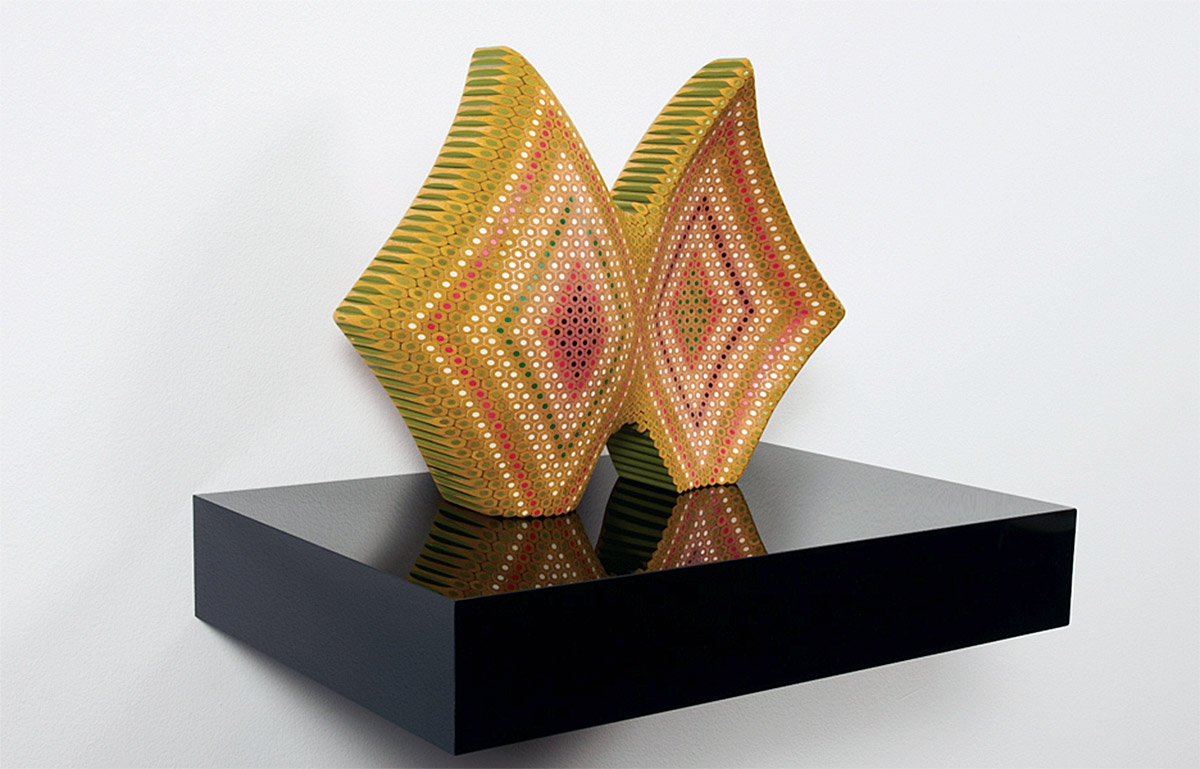
 

Lionel Bawden (Australian, b. 1974) 'Flipside' 2011


Lionel Bawden (Australian, b. 1974)
Flipside
2011
Coloured Staedtler pencils, epoxy and incralac on perspex shelf
28 x 33 x 13cm
Image courtesy Karen Woodbury Gallery and the artist


Lionel Bawden (Australian, b. 1974) 'Crossing the mirror' 2011


Lionel Bawden (Australian, b. 1974)
Crossing the mirror
2011
Coloured Staedtler pencils, epoxy and incralac on perspex shelf
29.8 x 24.7 x 16.5cm
Image courtesy Karen Woodbury Gallery and the artist
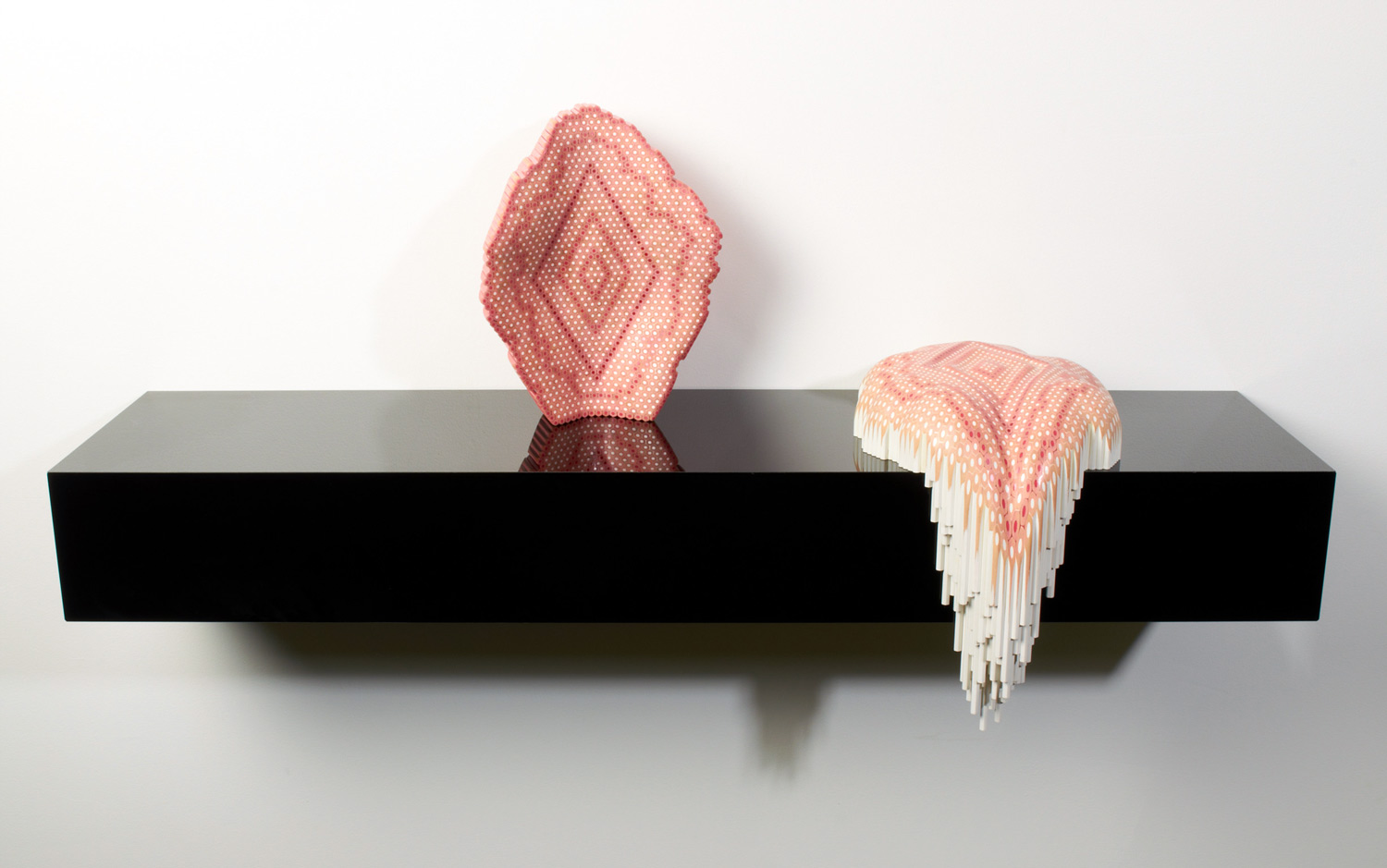
 

Lionel Bawden (Australian, b. 1974) 'Losing Containment' 2011


Lionel Bawden (Australian, b. 1974)
Losing Containment
2011
Coloured Staedtler pencils, epoxy, incralac on perspex shelf
Form 1: 31.5 x 24 x 12cm
Form 2: 33.5 x 33 x 26cm
Shelf: 15 x 120 x 30cm


Lionel Bawden (Australian, b. 1974) 'The caverns of temporal suspension (between two sites)' 2011


Lionel Bawden (Australian, b. 1974)
The caverns of temporal suspension (between two sites)
2011
White Staedtler pencils, epoxy and incralac
45.5 x 63.5 x 8.0cm
Image courtesy Karen Woodbury Gallery and the artist


Lionel Bawden’s exhibition Pattern Spill will comprise of a range of small-scale objects created from vibrantly coloured pencils that are fused and sculpted together. By working with hexagonal coloured pencils as a sculptural material, Bawden is able to reconfigure and carve a range of amorphous shapes that convey movement and process. Bawden explores themes of flux, transformation and repetition as preconditions to our experience of the physical world.

This new body of work deals with ideas of control and collapse, surface and interior and organic patterns and energies through static three-dimensional objects. Bawden’s sculptures explore larger ideas beyond the work and relate to societal and natural systems, cycles and structures. Through his work, Bawden communicates macro ideas through micro detail. The works in Pattern spill become vessels for contemplation.

Alongside the sculptures there will also be a range of small meticulous drawings of vast hexagonal cells included in the exhibition. These drawings will act as companions to the sculptures, assisting to convey Bawden’s oblique explorations and meditations of the human condition.

Text from the Karen Woodbury Gallery website


Lionel Bawden (Australian, b. 1974) 'Pattern spill' 2014


Lionel Bawden (Australian, b. 1974)
Pattern spill
2014
Coloured Staedtler pencils, epoxy and incralac on perspex shelf
34 x 27 x 29cm
Image courtesy Karen Woodbury Gallery and the artist
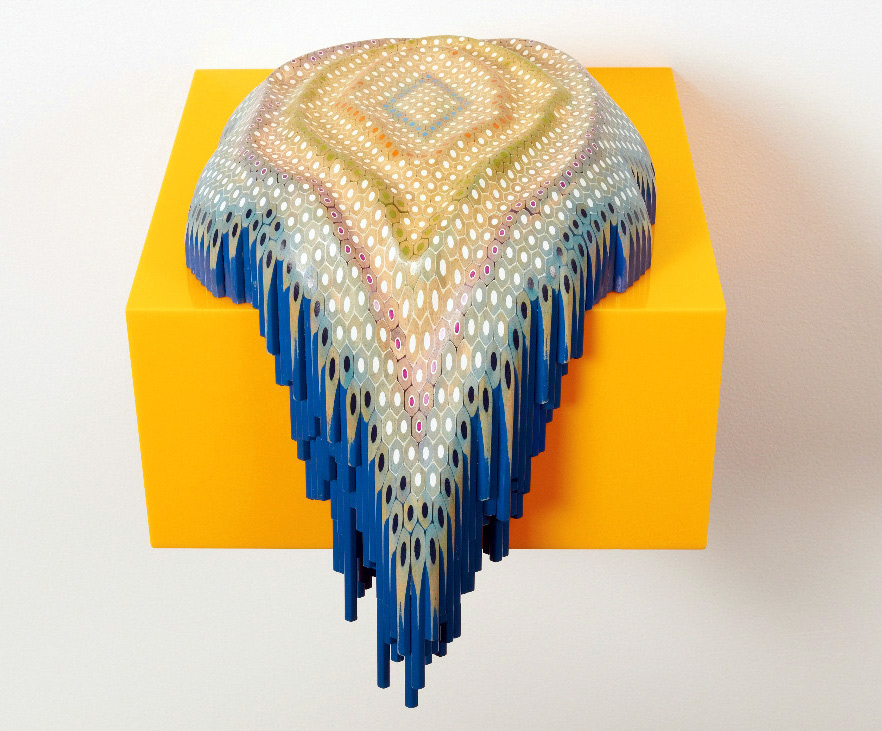
 

Lionel Bawden (Australian, b. 1974) 'Pattern Spill' 2011


Lionel Bawden (Australian, b. 1974)
Pattern Spill
2011
Coloured Staedtler pencils, epoxy, incralac on perspex shelf
Form: 30 x 23.5 x 33cm
Shelf: 15 x 30 x 30cm


Lionel Bawden (Australian, b. 1974) 'Patttern Spill III' 2011


Lionel Bawden (Australian, b. 1974)
Patttern Spill III
2011
Coloured Staedtler pencils, epoxy, incralac on perspex shelf
Form: 31 x 23 x 34cm
Shelf: 15 x 30 x 30cm
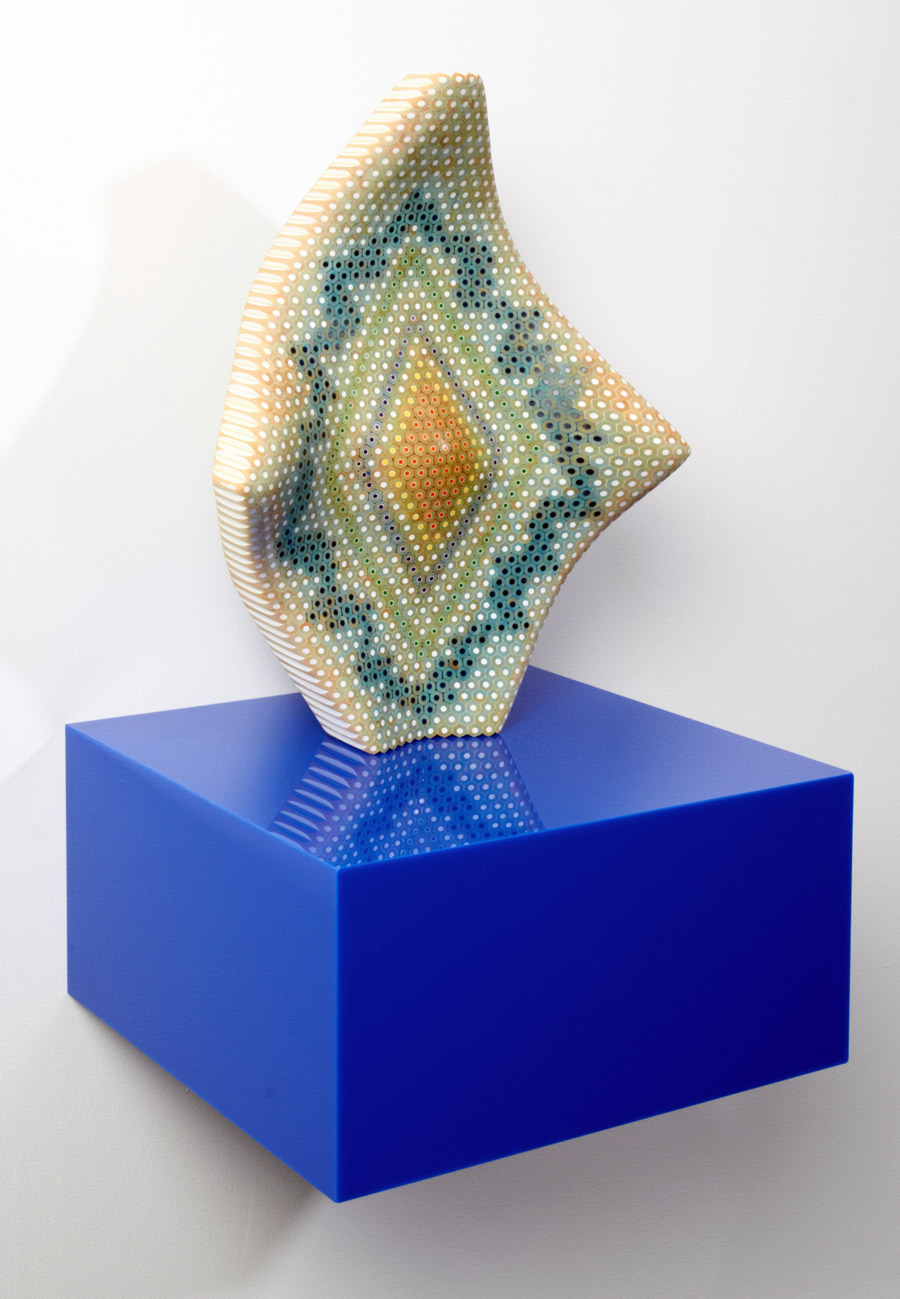
 

Lionel Bawden (Australian, b. 1974) 'Secretion III' 2011


Lionel Bawden (Australian, b. 1974)
Secretion III
2011
Coloured Staedtler pencils, epoxy, incralac on perspex shelf
Form: 35 x 26.5 x 15cm
Shelf: 15 x 30 x 30cm
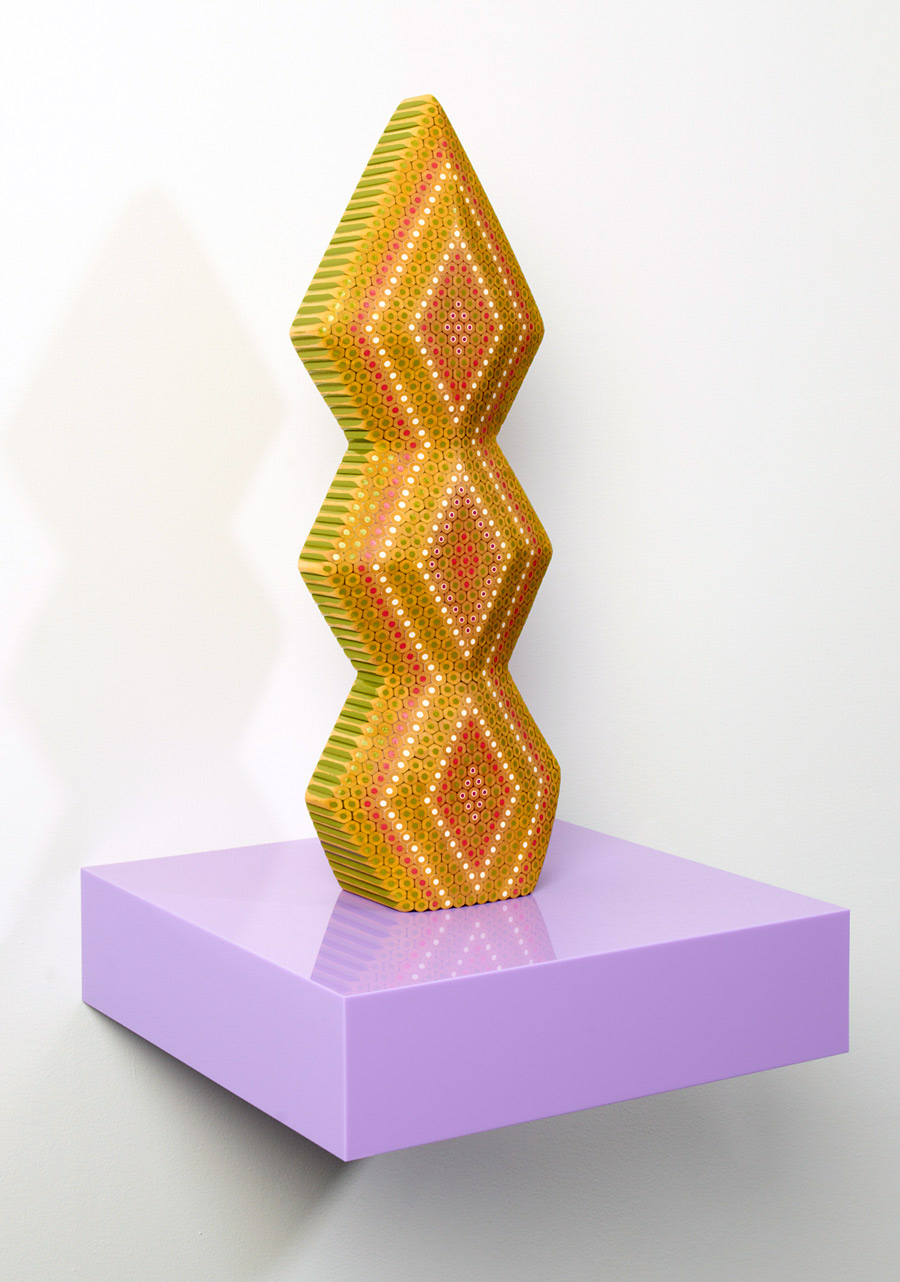
 

Lionel Bawden (Australian, b. 1974) 'Elevation' 2011


Lionel Bawden (Australian, b. 1974)
Elevation
2011
Coloured Staedtler pencils, epoxy, incralac on perspex shelf
Form: 42.5 x 15 x 7cm
Shelf: 7.5 x 30 x 30cm


Karen Woodbury Gallery

This gallery has now closed.
LIKE ART BLART ON FACEBOOK

Exhibition: ‘The Navigators’ at Karen Woodbury Gallery, Melbourne

Exhibition dates: 5th May – 29th May 2010

Artists: Lionel Bawden, Penny Byrne, Nicholas Folland, Locust Jones, Rhys Lee, Rob McHaffie, Derek O’Connor, Alex Spremberg, Madonna Staunton


Lionel Bawden (Sydney, b. 1974) 'formless worlds move through me' 2010 from the exhibition 'The Navigators' at Karen Woodbury Gallery, Melbourne, May 2010


Lionel Bawden (Australian, b. 1974)
formless worlds move through me
2010
Coloured Staedtler pencils, epoxy, incralac
51.0 x 51.0 x 9.5cm


Some good work in this exhibition – especially the Staedtler hexagonal coloured pencil constructions by Lionel Bawden. Beautifully crafted by hand they remind me of ghosts, the ‘millefiori’ (thousand flowers) of Italian glass and the inside of caverns with their stalactites.

Dr Marcus Bunyan


Many thankx to the Karen Woodbury Gallery for allowing me to publish the photographs in the posting. Please click on the photographs for a larger version of the image.


Alex Spremberg (Australian, born Germany 1950) 'Inside skins' 2002 from the exhibition 'The Navigators' at Karen Woodbury Gallery, Melbourne, May 2010


Alex Spremberg (Australian born Germany, b. 1950)
Inside skins
2002


These artists have been selected for their interest in ideas of assemblage and re-use of pre-existing materials. Working across a range of media, each artist in the exhibition employs a process of manipulation to create completely different concepts and forms with their finished works. These works comprise of found objects and assembled from disparate elements, scavenged or foraged by the artists and juxtaposed in inventive ways. All works included in The Navigators take on their own form and imbue a new meaning to the original source materials.

Not originally intended as art materials, yet these artists have seen potential for a new idea in the materials; creating a new thought for the object. The original useful element of the preformed material thus comes under more aesthetic and creative significance. The impetus for such artistic practice is located in a desire by these artists to re-use, re-model, reshape and recycle within their practices. Despite an obvious interest and emphasis in the materiality of the works, the conceptual underpinning are the key motivation within these varying works and pose questions regarding the value of the objects within society. The artists included in The Navigators are continuously surveying and navigating their practice, allowing for deeper exploration in their work.

The exhibition will include various two and three-dimensional objects that interact with each other in unique ways. In the example of Lionel Bawden’s sculptures, his work exploits hexagonal coloured pencils as a sculptural material, reconfiguring and carving into amorphous shapes. Here the rich qualities of colour are explored as pencils are carved, shaped and fused together. Bawden explores themes of flux, transformation, rhythm and repetition as preconditions to our experience of the physical world. Bawden’s wall mounted works ‘the caverns of temporal suspension’ explore shapes within and outside the work as they hover ominously, melting, conjoined, growing, in transformation. These works are at the forefront of his current practice.

Penny Byrne’s work makes use of vintage porcelain sculptures that are adorned with a range of materials. Through this process, Byrne makes the base sculptures appear starkly different to that of the original, taking on new connotations that are often humorous and quirky but also convey political and social issues. In her work Mercury Rising. Hunted, Slaughtered, Eaten vintage porcelain dolphins and new plastic Manga figurines are employed to relate to the annual Japanese slaughter of tens of thousands dolphins as highlighted in the documentary ‘The Cove’. The Japanese eat the dolphins and then suffer mercury poisoning due to the high mercury levels in the dolphins flesh, leading to symptoms of madness.

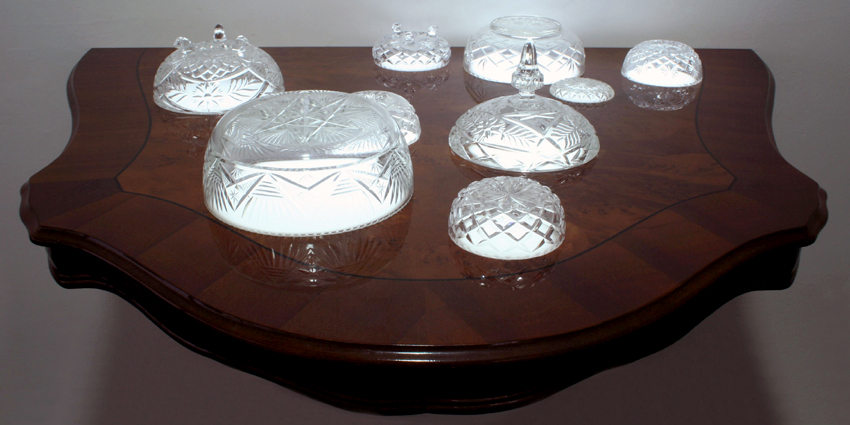
Nicholas Folland’s Navigator sculptures are indicative Folland’s continued interest in utilising, modifying and experimenting with various sourced materials. These sculptures comprise of various upturned intricately detailed crystal objects that sit above a wood panelled shelf. These glass object are lit and act as beacons or floating satellite cities. Folland personifies the intrepid creative explorer via his navigation of various found materials.

Locust Jones’ three-dimensional globes are made from papier mache and pictorially and graphically convey global issues. These works sit on the floor and allow the viewer to orient themselves around the works allowing for a detached, objective perspective on contemporary societal issues. The quickly worked surfaces reflect a stream of consciousness in process. Imagery and themes are taken from various media such as the Internet, photojournalism, film culture and nightly news broadcasts.

The two sculptures in the exhibition by Rhys Lee imbue associations of debris and deal with found objects such as a money box, a dead bird and a clowns face. These trophy-like pieces are decorated by old, worn and found vintage materials that engage with the everyday. The intimate scale of these works do not account for the potency of symbolism and accumulation of collected ideas. The blistered silver patina and bronze sculptures allude to a dark gothic sentiment that extends beyond the morphing forms. The shapes have been smashed, manipulated and stuck back together again resulting in frozen miniature icons that represent a contemporary zest for defiance.

Rob McHaffie’s works comprise a pastiche of painted anonymous unrelated objects and shapes that somehow come together to create unlikely compositions and formations. The highly skilled execution of McHaffie’s paintings attracts the viewer, who is then faced with a banality in subject matter, often of depictions of clothing, crumpled paper, plants and disfigured creatures and figures. These perfectly rendered images of everyday objects are unsettling in their clarity and realism, which are then skewed, moulded and displaced in unlikely relationships. There is a sense of a deliberate haphazard nature to McHaffie’s work that draws upon a range of elements brought together to mimic something else. Humour surfaces through this stylistic creative process.

Derek O’Connor’s re-worked painting collages resemble distorted and fragmented realities and stories via the manipulation and playful technique of alteration and re-use of book covers and record album and EP covers. O’Connor’s characteristic gestural sweeping luscious brushstrokes are employed with precision yet allow for organic spontaneity. The old material takes on new meaning and are given new life via O’Connor’s creations.

Alex Spremberg’s work Inside Skins highlights the artist’s accidental processes at work. This sculptural piece was made as an ancillary to his broader practice – working with acrylic, enamel and varnish on board and canvas. These objects where literally created via chance – an after thought that was noticed to be a finished piece in its own right. Left to dry within their containers these ‘skins’ were extracted and proved to provide aesthetic attraction and conceptual ideas of the ready-made.

The mainstay of Madonna Staunton’s practice surrounds the physicality of assemblage. Essentially she is a collage artist. The components of her two- and three-dimensional assemblages are usually drawn from old, faded and battered discards such as frames and chairs that are carefully put together in new ways and given another life. A play between precision and randomness animates her work. Her sensitivity to tonal and formal arrangement always remains acute during this process and the results are austerely and chaotically beautiful.

Press release from the Karen Woodbury Gallery website [Online] Cited 20/05/2010 no longer available online


Nicholas Folland (Australian, b. 1967) 'Navigators 1' 2008 from the exhibition 'The Navigators' at Karen Woodbury Gallery, Melbourne, May 2010


Nicholas Folland (Australian, b. 1967)
Navigators 1
2008
Glassware, table and lightbox
25.0 x 110.0 x 87.0cm


Nicholas Folland (Australian, b. 1967) 'Navigators 2' 2008


Nicholas Folland (Australian, b. 1967)
Navigators 2
2008
Glassware, table and lightbox
25.0 x 110.0 x 87.0cm


Karen Woodbury Gallery

This gallery has now closed.
LIKE ART BLART ON FACEBOOK

Back to top