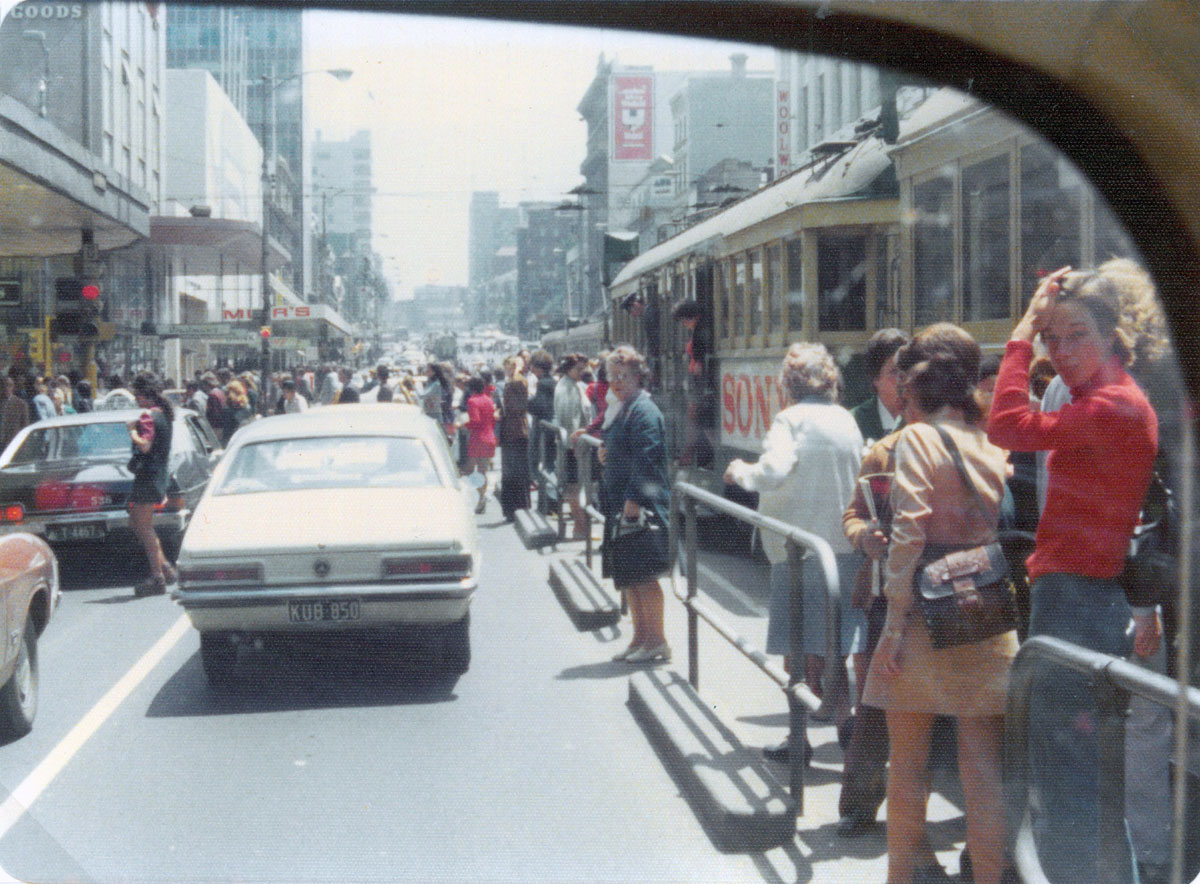
Review: ‘John Gollings: The history of the built world’ at the Monash Gallery of Art, Wheelers Hill, Melbourne

Exhibition dates: 2nd December, 2017 – 4th March, 2018

Curator: Stephen Zagala, MGA Senior Curator
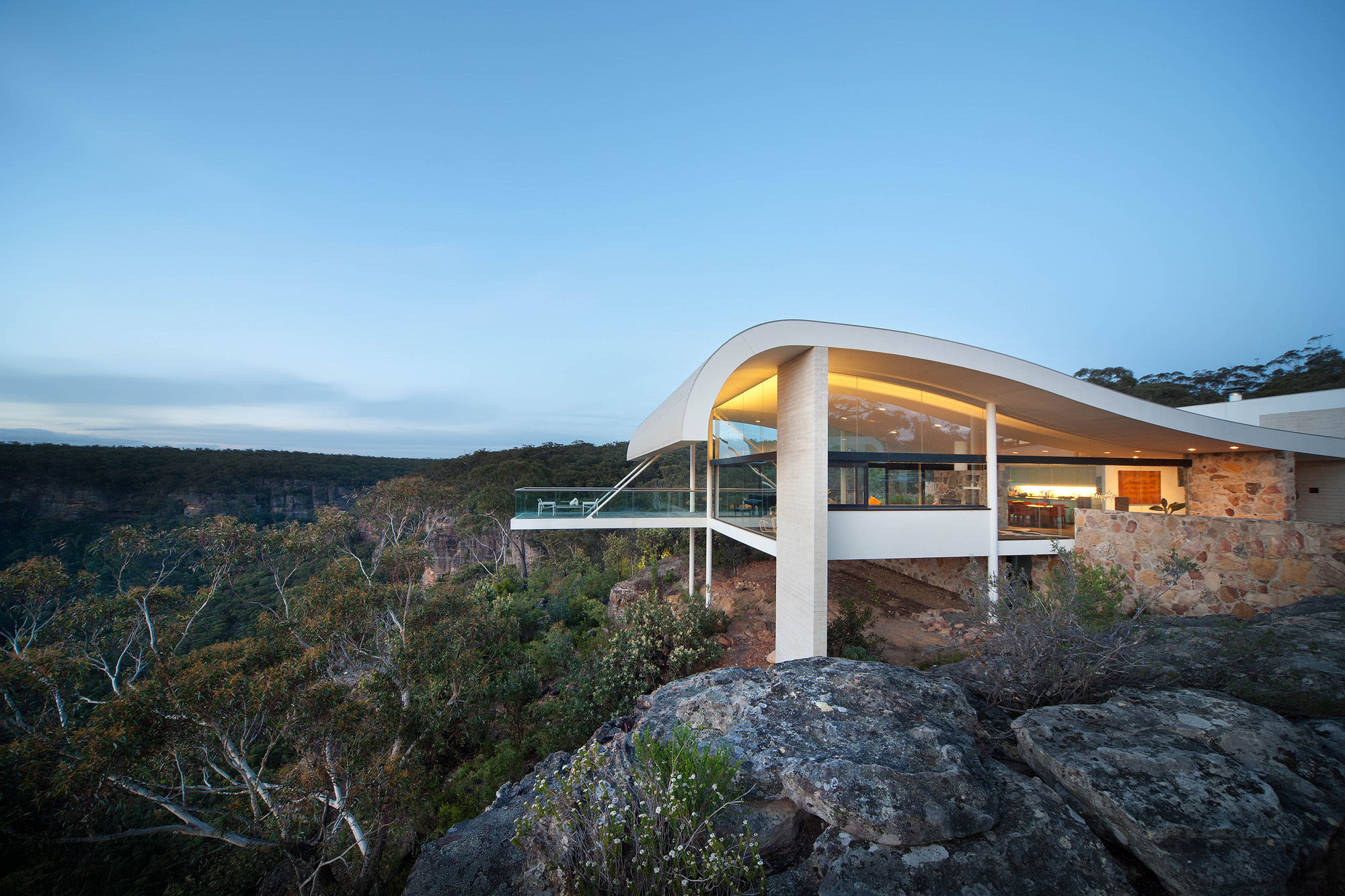
 

John Gollings (Australian, b. 1944) 'Berman House (Harry Seidler), Joadja, New South Wales' 2007 from the exhibition 'John Gollings: The history of the built world' at the Monash Gallery of Art, Wheelers Hill, Melbourne, Dec 2017 - March 2018


John Gollings (Australian, b. 1944)
Berman House (Harry Seidler), Joadja, New South Wales
2007


From ancient to modern; different but same

This is a solid exhibition of the work of architectural photographer John Gollings, which features highly colour saturated photographs of the built environment, from ancient to modern.

The formal, classical images are well seen and photographed, mainly for commercial clients who, at the end of the project, want to document their construction in the most flattering light. And that’s what you get with a Gollings architectural photograph – a known “style” used again and again to document an object devoid of human presence, usually photographed at the bewitching hour for photographers (dawn or dusk) or illuminated, to give the building that special glow. Sounds easy, but it isn’t!

For some people the intention of the photographer is primary… later on comes the  successful manifestation of that intention. And of course, there is the public intention stated in the brief directed to a photographer who has accepted that brief. As well, there are the photographer’s private intentions and for these we have to refer to the image(s). I then ask, what happens when the photographer’s private intentions becomes his commercial practice, when his style becomes his trademark?

In these photographs which are about multiplicity / difference (in the sense of a different set of objects) / series and the pursuit of spirit (as compared to the pursuit of ego), Gollings evidences something inherent in man that has shown itself from the start – inhabitation – that has now has become something else. He has put these series together to make sense / no sense / nonsense and through this juxtaposition, he hopes that something transcendent happens when these environments are seen together. The contemporary structures are made by extraordinary people who keep pushing to make an ultimate ideal of their belief, and so they are extraordinary, yet different from each other. Gollings captures this difference.

“What is it that asks a question that cannot be answered” is a question that I believe that Gollings is interested in, and it manifests itself in people and some of their works, e.g. poetry, cinema, photography, music… and this is the scope of that question in architecture. I think that Gollings has just tried to be clear about this question in his work, in the images straightforward yet dramatic way.

In their usually monolithic grounding, the building is always front and centre, even in his views of ancient structures or the landscape. “Gollings will use dramatic lighting and acute points of view to create a moody effect, and draw people into the ambience of the architect’s creation.” (Wall text) That is the key word, effect. While Gollings has stripped everything back to the bare minimum, removed ego, has it got him any closer to that place of magic and noumenality – that place that we can know but never experience (e.g. death). SOME of the images work towards an exploration of this subliminal state of being, the unconscious raised to the surface (images such as Habitat filter (Matt Drysdale, Matt Myers and Tim Dow), Southbank, Victoria, 2017 and The Lotus Building (Studio 505), Changzhou, China, 2013), yet others just sit there, the camera angles too regulated, the monolithic structure too central. How I longed for a more unusual positioning of the camera – something Atget might have done for example – to capture the personality of the building, for I never really “get” the personality of the building in Gollings representational photographs.

Personally, what I love about photography is the magical space of exploration in the image, and that is something that I don’t really get in these photographs, from one image to the next. The same feeling emanates from them time after time. They have little human warmth despite their high colour sheen. But I think that a lot of the absence of the magical that I regret is probably quite intentional. That is not Gollings’ project or his projection, his “effect” if you like, for he is a very intelligent artist, and a very well informed photographer. He has considered all of this, and his photographs come out exactly the way he wants them to come out. They might not be my cup of tea but I can appreciate and understand them on an intellectual and aesthetic, if not a spiritual, level. Gollings’ holistic vision over more than 40 years has stood the test of time, proving that he is, indeed, a damn good photographer.

Dr Marcus Bunyan


Many thankx to Monash Gallery of Art for allowing me to publish the media photographs in the posting. Please click on the photographs for a larger version of the image. All installation photographs © Dr Marcus Bunyan, the artist and the Monash Gallery of Art.


Installation photographs

First gallery


Installation view of the exhibition 'John Gollings: The History of the Built World' at the Monash Gallery of Art, Melbourne

Installation view of the exhibition 'John Gollings: The History of the Built World' at the Monash Gallery of Art, Melbourne

Installation view of the exhibition 'John Gollings: The History of the Built World' at the Monash Gallery of Art, Melbourne


Installation views of the exhibition John Gollings: The history of the built world at the Monash Gallery of Art featuring the opening title and text
Photos: Marcus Bunyan


Installation view of the exhibition 'John Gollings: The history of the built world' at the Monash Gallery of Art showing the rear of opening wall featuring at right, 'Kay Street housing (Edmond & Corrigan), Carlton, Victoria' 1983


Installation view of the exhibition John Gollings: The history of the built world at the Monash Gallery of Art showing the rear of opening wall featuring at right, Kay Street housing (Edmond & Corrigan), Carlton, Victoria 1983
Photo: Marcus Bunyan


Installation view of the exhibition 'John Gollings: The history of the built world' at the Monash Gallery of Art

Installation view of the exhibition 'John Gollings: The history of the built world' at the Monash Gallery of Art showing at left, 'Melbourne CBD, Melbourne, Victoria' 2009; middle, 'Federation Square, Melbourne, Victoria' 2010; and right, 'Melbourne CBD, Melbourne, Victoria' 2010


Installation views of the exhibition John Gollings: The history of the built world at the Monash Gallery of Art showing at left in the bottom image, Melbourne CBD, Melbourne, Victoria 2009; middle, Federation Square, Melbourne, Victoria 2010; and right, Melbourne CBD, Melbourne, Victoria 2010
Photo: Marcus Bunyan


Installation view of the exhibition 'John Gollings: The history of the built world' at the Monash Gallery of Art showing Gollings' photograph 'Melbourne CBD, Melbourne, Victoria' 2010


Installation view of the exhibition John Gollings: The history of the built world at the Monash Gallery of Art showing Gollings’ photograph Melbourne CBD, Melbourne, Victoria 2010
Photo: Marcus Bunyan
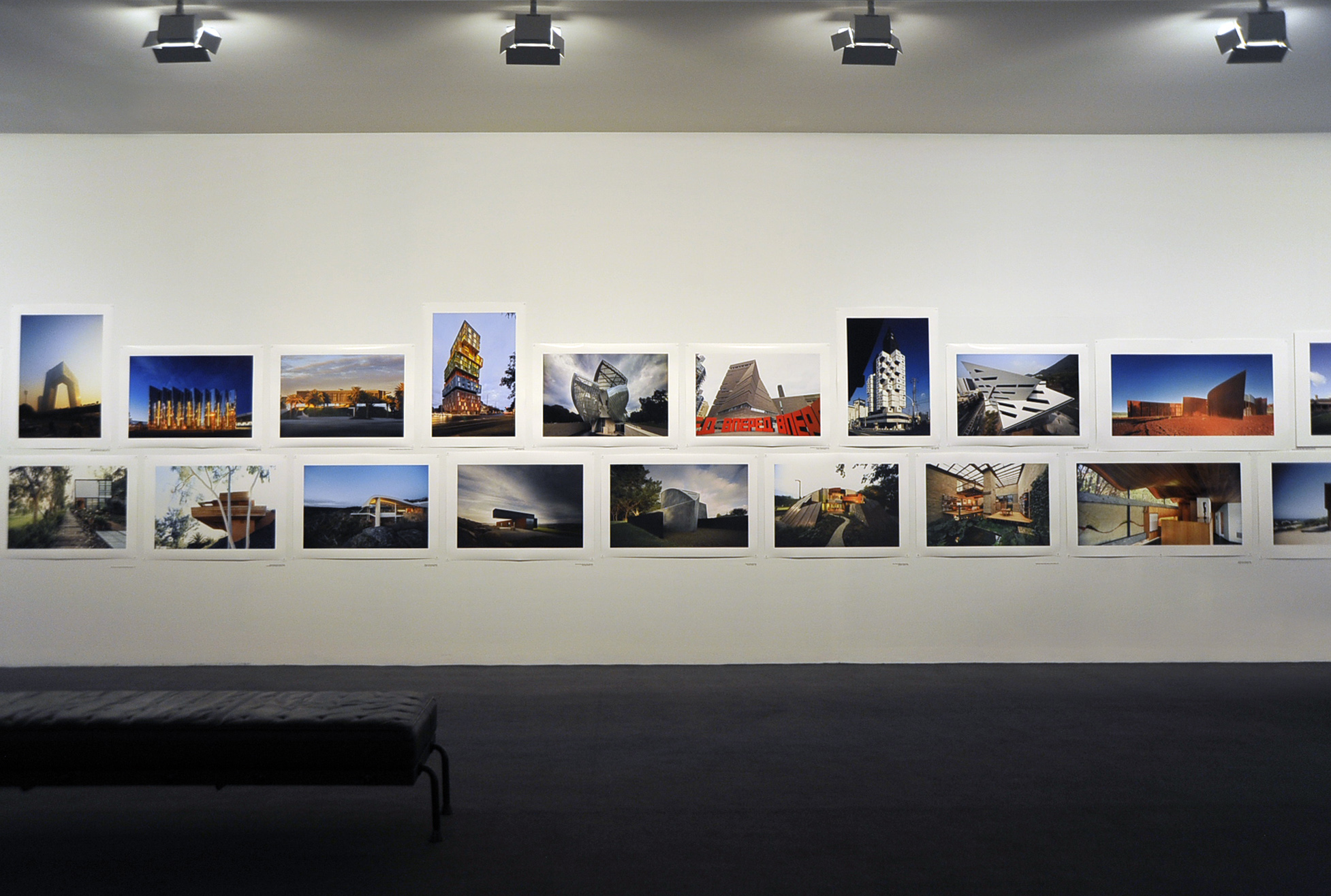
 

Installation view of the exhibition 'John Gollings: The history of the built world' at the Monash Gallery of Art

Installation view of the exhibition 'John Gollings: The history of the built world' at the Monash Gallery of Art

Installation view of the exhibition 'John Gollings: The history of the built world' at the Monash Gallery of Art showing Gollings' photograph 'Vineyard House (Denton Corker Marshall), Yarra Valley, Victoria' 2013


Installation views of the exhibition John Gollings: The history of the built world at the Monash Gallery of Art showing in the bottom image, Gollings’ photograph Vineyard House (Denton Corker Marshall), Yarra Valley, Victoria 2013
Photo: Marcus Bunyan


Installation view of the exhibition 'John Gollings: The history of the built world' at the Monash Gallery of Art showing Gollings' photograph 'Somers House (Kai Chen), Somers, Victoria' 1997


Installation view of the exhibition John Gollings: The history of the built world at the Monash Gallery of Art showing Gollings’ photograph Somers House (Kai Chen), Somers, Victoria 1997
Photo: Marcus Bunyan


Installation view of the exhibition 'John Gollings' at the Monash Gallery of Art, Melbourne


Installation view of the exhibition John Gollings: The history of the built world at the Monash Gallery of Art
Photo: Marcus Bunyan


Main gallery


Installation view of the exhibition 'John Gollings' at the Monash Gallery of Art, Melbourne

Installation view of the exhibition 'John Gollings: The history of the built world' at the Monash Gallery of Art showing Gollings' photograph 'Sabratha Theatre, Sabratha, Libya' 2005


Installation views of the exhibition John Gollings: The history of the built world at the Monash Gallery of Art showing in the bottom image, Gollings’ photograph Sabratha Theatre, Sabratha, Libya 2005
Photos: Marcus Bunyan


Installation view of the exhibition 'John Gollings: The history of the built world' at the Monash Gallery of Art showing Gollings' photograph 'Underground temple, Kep, Cambodia' 2007


Installation view of the exhibition John Gollings: The history of the built world at the Monash Gallery of Art showing in the bottom image, Gollings’ photograph Underground temple, Kep, Cambodia 2007
Photo: Marcus Bunyan


Installation view of the exhibition 'John Gollings' at the Monash Gallery of Art, Melbourne

Installation view of the exhibition 'John Gollings' at the Monash Gallery of Art, Melbourne

Installation view of the exhibition 'John Gollings' at the Monash Gallery of Art, Melbourne


Installation views of the exhibition John Gollings: The history of the built world at the Monash Gallery of Art
Photos: Marcus Bunyan


Installation view of the exhibition 'John Gollings: The history of the built world' at the Monash Gallery of Art showing Gollings' photograph 'Jiaohe Old City, Turfan, China' 2005


Installation view of the exhibition John Gollings: The history of the built world at the Monash Gallery of Art showing Gollings’ photograph Jiaohe Old City, Turfan, China 2005
Photo: Marcus Bunyan


Installation view of the exhibition 'John Gollings: The history of the built world' at the Monash Gallery of Art showing at right, 'Sidney Myer Music Bowl refurbishment (Yuncken Freeman/Greg Burgess), Melbourne, Victoria' 2001


Installation view of the exhibition John Gollings: The history of the built world at the Monash Gallery of Art showing at right, Sidney Myer Music Bowl refurbishment (Yuncken Freeman/Greg Burgess), Melbourne, Victoria 2001
Photo: Marcus Bunyan


Installation view of the exhibition 'John Gollings: The history of the built world' at the Monash Gallery of Art showing at second left, 'The Lotus Building (Studio 505), Changzhou, China' 2013; third left, 'Croft House (James Stockwell), Inverloch, Victoria' 2013; second right, 'Australian Centre for Contemporary Art (Wood Marsh), Southbank, Victoria' 2002; and right, 'Habitat filter (Matt Drysdale, Matt Myers and Tim Dow), Southbank, Victoria' 2017


Installation view of the exhibition John Gollings: The history of the built world at the Monash Gallery of Art showing at second left, The Lotus Building (Studio 505), Changzhou, China 2013; third left, Croft House (James Stockwell), Inverloch, Victoria 2013; second right, Australian Centre for Contemporary Art (Wood Marsh), Southbank, Victoria 2002; and right, Habitat filter (Matt Drysdale, Matt Myers and Tim Dow), Southbank, Victoria 2017
Photo: Marcus Bunyan


Installation view of the exhibition 'John Gollings: The history of the built world' at the Monash Gallery of Art showing Gollings' photograph 'Croft House (James Stockwell), Inverloch, Victoria' 2013


Installation view of the exhibition John Gollings: The history of the built world at the Monash Gallery of Art showing Gollings’ photograph Croft House (James Stockwell), Inverloch, Victoria 2013
Photo: Marcus Bunyan


Installation view of the exhibition 'John Gollings: The history of the built world' at the Monash Gallery of Art

Installation view of the exhibition 'John Gollings: The history of the built world' at the Monash Gallery of Art

Installation view of the exhibition 'John Gollings: The history of the built world' at the Monash Gallery of Art


Installation views of the exhibition John Gollings: The history of the built world at the Monash Gallery of Art
Photos: Marcus Bunyan


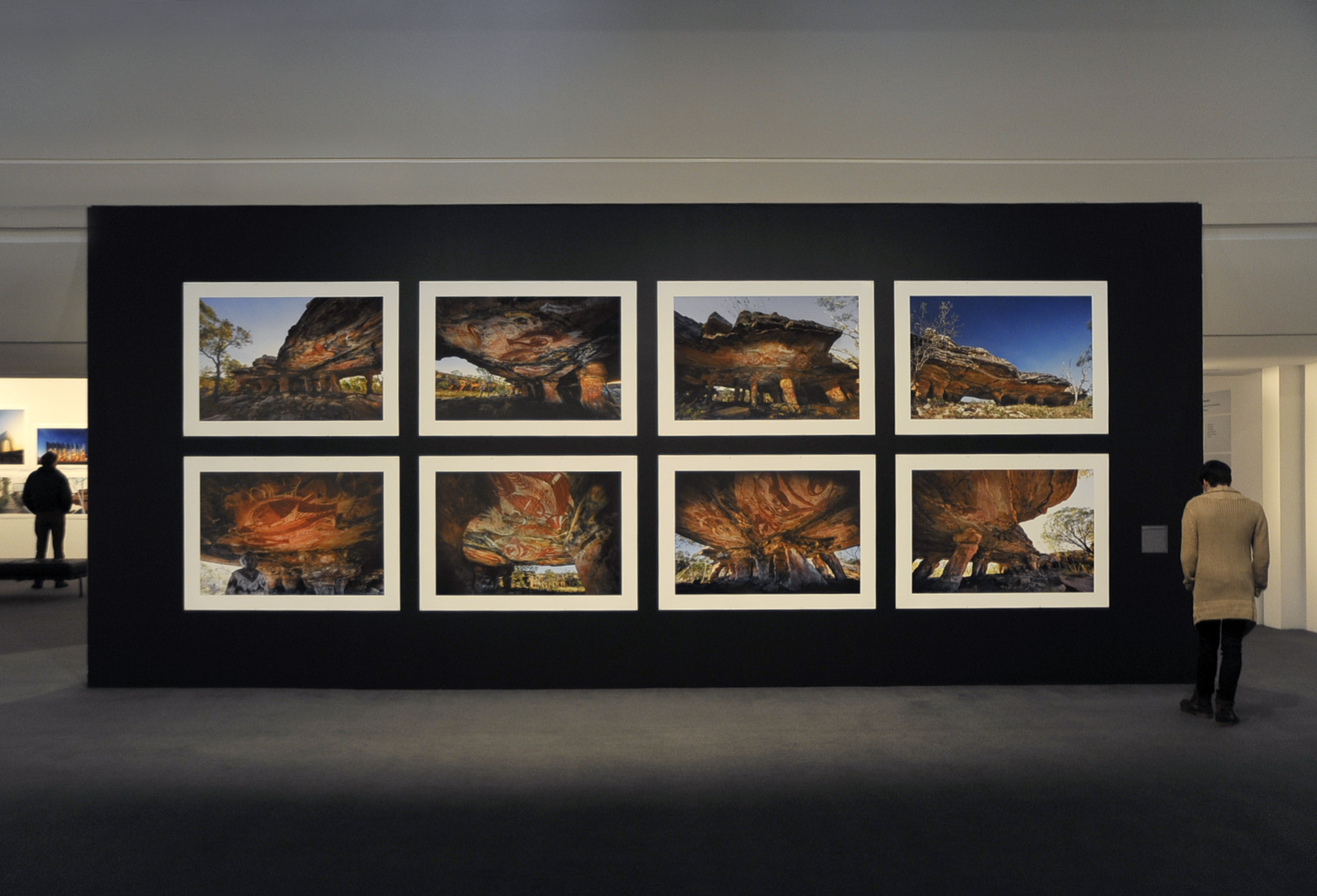
Installation view of the exhibition 'John Gollings: The history of the built world' at the Monash Gallery of Art showing Gollings' photograph 'Nawarla Gabarnmang, Arnhem Land, Northern Territory' 2015


Installation view of the exhibition John Gollings: The history of the built world at the Monash Gallery of Art showing Gollings’ photograph Nawarla Gabarnmang, Arnhem Land, Northern Territory 2015
Photo: Marcus Bunyan


Installation view of the exhibition 'John Gollings: The history of the built world' at the Monash Gallery of Art


Installation view of the exhibition John Gollings: The history of the built world at the Monash Gallery of Art
Photo: Marcus Bunyan


Third gallery


Installation view of the exhibition 'John Gollings: The history of the built world' at the Monash Gallery of Art showing at left, 'El Dorado Motel, Surfers Paradise, Queensland' 1973; second left, 'Golden Sun Motel, Surfers Paradise, Queensland' 1973; second right, 'Biscayne Apartments, Surfers Paradise, Queensland' 1973; and right, 'Cuba Flats, Surfers Paradise, Queensland' 1973


Installation view of the exhibition John Gollings: The history of the built world at the Monash Gallery of Art showing at left, El Dorado Motel, Surfers Paradise, Queensland 1973; second left, Golden Sun Motel, Surfers Paradise, Queensland 1973; second right, Biscayne Apartments, Surfers Paradise, Queensland 1973; and right, Cuba Flats, Surfers Paradise, Queensland 1973
Photo: Marcus Bunyan


Installation view of the exhibition 'John Gollings: The history of the built world' at the Monash Gallery of Art showing at left 'Mid-century house, Surfers Paradise, Queensland' 2017; middle, 'Mid-century house, Surfers Paradise, Queensland' 2017; and right, 'Mid-century house, Surfers Paradise, Queensland' 2017


Installation view of the exhibition John Gollings: The history of the built world at the Monash Gallery of Art showing at left Mid-century house, Surfers Paradise, Queensland 2017; middle, Mid-century house, Surfers Paradise, Queensland 2017; and right, Mid-century house, Surfers Paradise, Queensland 2017
Photo: Marcus Bunyan


Installation view of the exhibition 'John Gollings: The history of the built world' at the Monash Gallery of Art

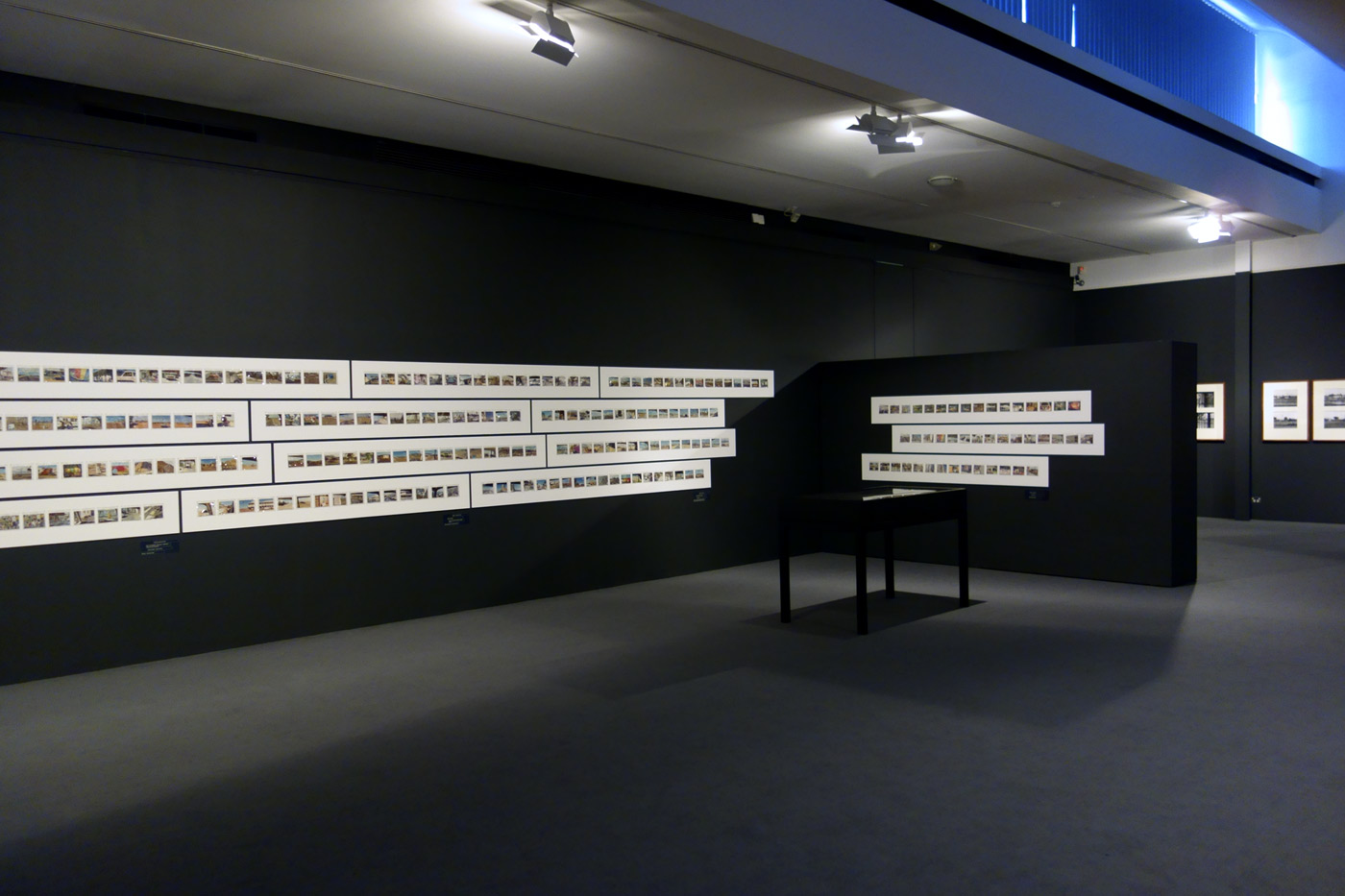
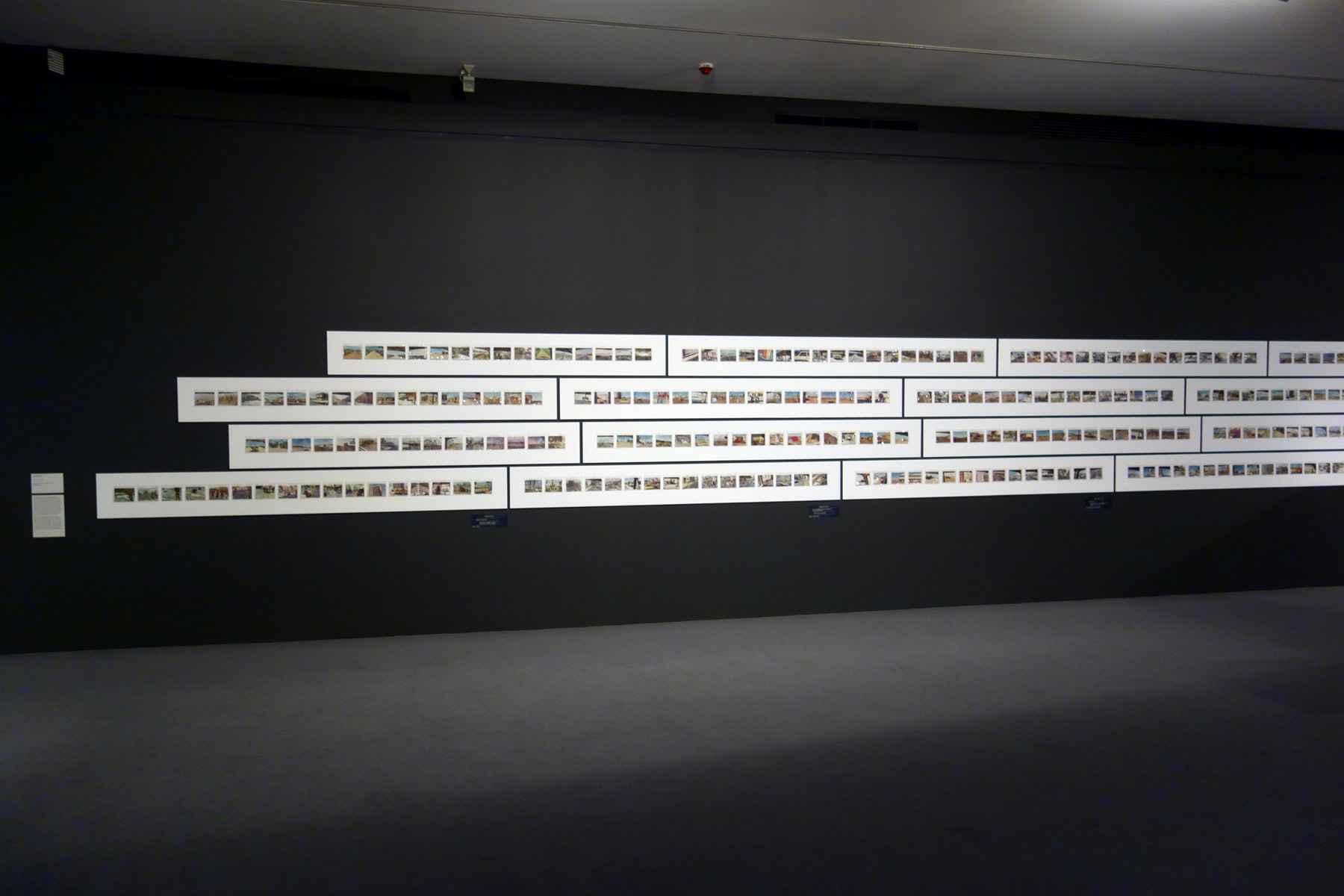
Installation view of the exhibition 'John Gollings: The history of the built world' at the Monash Gallery of Art showing at right Gollings' 'Every building on Surfers Paradise Boulevard west' 1973


Installation views of the exhibition John Gollings: The history of the built world at the Monash Gallery of Art showing at right in the bottom image, Gollings’ Every building on Surfers Paradise Boulevard west 1973
Photos: Marcus Bunyan


Installation view of the exhibition 'John Gollings: The history of the built world' at the Monash Gallery of Art showing 'Every building on Surfers Paradise Boulevard west' 1973 (detail)


Installation view of the exhibition John Gollings: The history of the built world at the Monash Gallery of Art showing Every building on Surfers Paradise Boulevard west 1973 (detail)
Photo: Marcus Bunyan


Installation view of the exhibition 'John Gollings: The history of the built world' at the Monash Gallery of Art showing 'Every building on Surfers Paradise Boulevard west' 1973 (detail)


Installation view of the exhibition John Gollings: The history of the built world at the Monash Gallery of Art showing Every building on Surfers Paradise Boulevard west 1973 (detail)
Photo: Marcus Bunyan


John Gollings is Australia’s most pre-eminent and prolific photographer of the built environment. For the past 50 years he has been synthesising his parallel interests in photography and architecture to explore the cultural construction of social spaces. From sacred rock art sites and ancient temples to suburban dream homes and the monuments of corporate architecture, Gollings’s catalogue of images provides a remarkable visual history of human habitats. The history of the built world is the first major survey of Gollings photographic practice, and offers a much anticipated opportunity to appreciate the full breadth of his unique photographic vision.


John Gollings (Australian, b. 1944) 'Monash Gallery of Art (Harry Seidler), Wheelers Hill, Victoria' 1990


John Gollings (Australian, b. 1944)
Monash Gallery of Art (Harry Seidler), Wheelers Hill, Victoria
1990

Wonderful photograph I love this.


Waverley City Gallery

Gollings photographed Harry Seidler’s Waverley City Gallery before it was extended and renamed as Monash Gallery of Art. Gollings worked under Seidler’s direction to document the building, and the photographs clearly reflect Seidler’s architectural philosophy of organic geometric forms and interlocking planes.

Gollings’s interior view shows a Josef Albers tapestry hanging in the original foyer; an artwork that Seidler donated to the gallery with the intention of it remaining a permanent feature. Seidler once stated that he learnt more about design from Albers than any architectural school, and two of Albers’s design principles are clearly articulated in the architecture of MGA. The first of these is the notion that a high centre of gravity makes visual forms more dynamic, as evidenced in MGA’s top-heavy roofline. And the second – that irregular forms are more interesting to the eye than symmetrical grids – is apparent in the complex geometry of the building.

Wall text from the exhibition


John Gollings (Australian, b. 1944) 'Webb Bridge (Robert Owen with Denton Corker Marshall), Docklands, Victoria' 2003 from the exhibition 'John Gollings: The history of the built world' at the Monash Gallery of Art, Wheelers Hill, Melbourne, Dec 2017 - March 2018


John Gollings (Australian, b. 1944)
Webb Bridge (Robert Owen with Denton Corker Marshall), Docklands, Victoria
2003


Melbourne architecture

Gollings’s photographs of Melbourne offer a compelling portrait of the city he knows best. His aerial photographs draw out different features of Melbourne’s character, from the flatness of its suburban sprawl to the resplendent jewel box quality of its central business district. The sequence of images along this wall emphasises Gollings’s ability to metaphorically crawl inside the skin of his home town. Whether he’s photographing temporary architectural interventions or monumental entertainment stadiums, he finds ways to render them as skeletal structures or translucent surfaces. Gollings’s ability to embed the viewer in a scene is apparent across his work, but this is particularly evident in his images of Melbourne, where it seems he wears the built environment like a second skin. Even in his photograph of the Eureka Tower, Gollings uses the reflected light of a sunset to subdue this monolithic form and embed a reflected image of himself in the glass facade.

Wall text from the exhibition


John Gollings (Australian, b. 1944) 'Federation Square, Melbourne, Victoria' 2010


John Gollings (Australian, b. 1944)
Federation Square, Melbourne, Victoria
2010
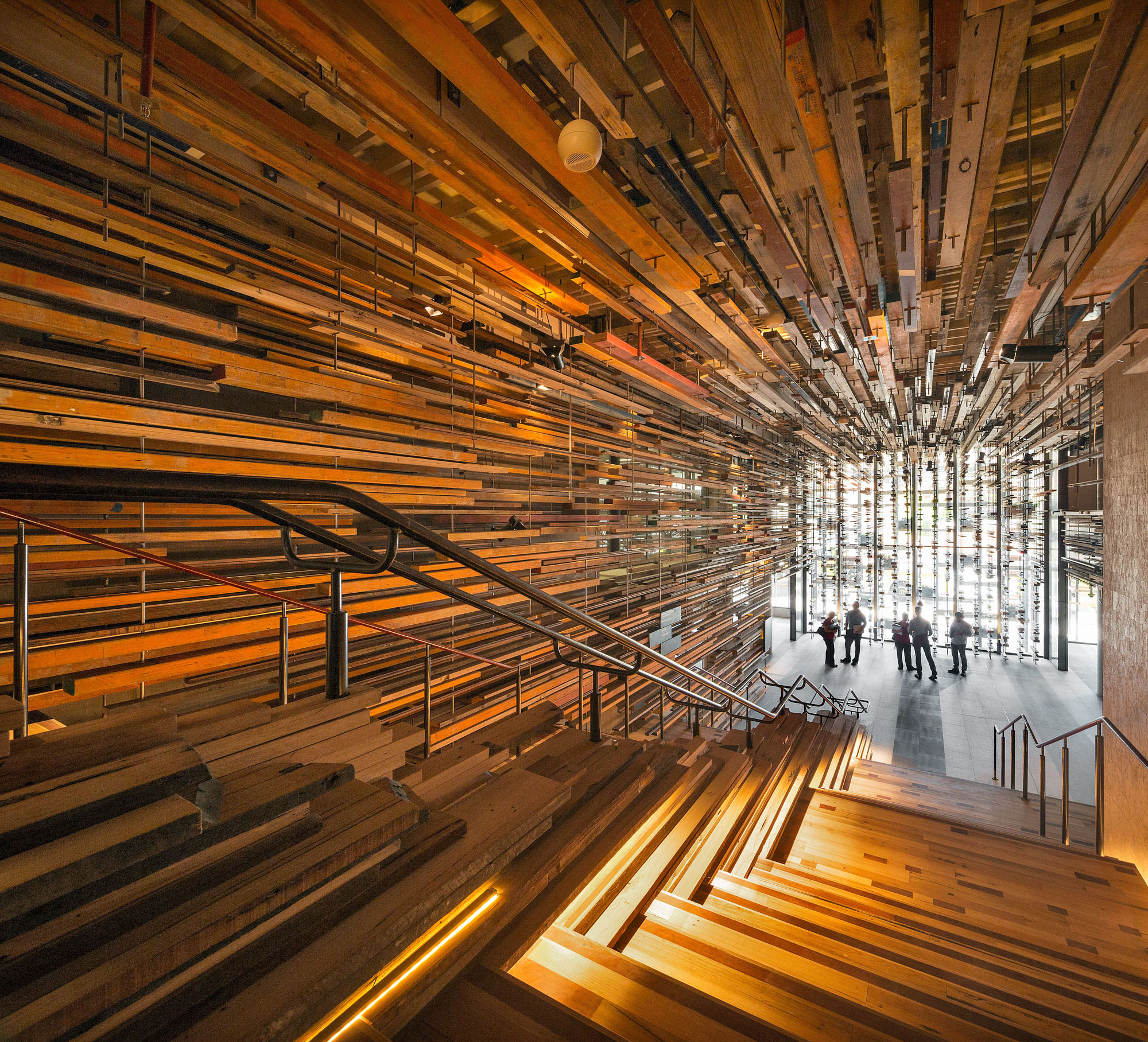
 

John Gollings (Australian, b. 1944) 'Hotel Hotel foyer (March Studio), New Acton, Australian Capital Territory' 2013


John Gollings (Australian, b. 1944)
Hotel Hotel foyer (March Studio), New Acton, Australian Capital Territory
2013


John Gollings (Australian, b. 1944) 'Karijini Visitor Centre (Woodhead International BDH), West Pilbara, Western Australia' 2001


John Gollings (Australian, b. 1944)
Karijini Visitor Centre (Woodhead International BDH), West Pilbara, Western Australia
2001


Modern and contemporary architecture

Gollings’s professional practice has always included fashion and advertising projects, and one could argue that his treatment of architecture is invested with a certain dramatic fl air that owes something to these other genres of photography. Rather than using a sequence of photographs to systematically document different aspects of an architect’s design, Gollings often composes a single shot that captures the personality of a building. These are like portrait photographs, which use props and the surrounding backdrop to accentuate a sitter’s identity. A domestic house might be photographed through foliage in order to give it a bucolic character. Or a photograph might include more sky than building in order to evoke the vista that can be enjoyed by the inhabitants. In a similar vein, Gollings will use dramatic lighting and acute points of view to create a moody effect, and draw people into the ambience of the architect’s creation.

Wall text from the exhibition


John Gollings (Australian, b. 1944) 'Penleigh and Essendon Grammar School (McBride Charles Ryan), Essendon, Victoria' 2011


John Gollings (Australian, b. 1944)
Penleigh and Essendon Grammar School (McBride Charles Ryan), Essendon, Victoria
2011


John Gollings (Australian, b. 1944) 'Featherston House (Robin Boyd), Ivanhoe, Victoria' 2011


John Gollings (Australian, b. 1944)
Featherston House (Robin Boyd), Ivanhoe, Victoria
2011


“Gollings’s photographic practice is driven by a deep enthusiasm and interest in the built environment,” explains MGA Senior Curator, Stephen Zagala. “He loves architecture and he uses photography to share his passion, bringing constructed spaces to life and drawing viewers into sensual encounters with architectural form.”

John Gollings is Australia’s pre-eminent, and most prolific, photographer of the built environment. For the past 50 years he has been synthesising his parallel interests in photography and architecture to explore the cultural construction of social spaces. While Gollings is well known for his documentation of new buildings and cityscapes, this survey exhibition situates these images within the broader context of his photographic practice. Alongside his commercial work, Gollings has always engaged in projects concerned with architectural history and heritage. This includes photographs of iconic modernist buildings, ancient sites of spiritual significance and the ruins of abandoned cities. Gollings’s interest in architectural heritage is also apparent in his documentation of places such as Melbourne and Surfers Paradise, where he has recorded the evolution of the built environment over extended periods of time.

From sacred rock art sites and ancient temples, to suburban dream homes, iconic monuments and architectural interventions, Gollings’s catalogue of images provides a remarkable visual history of how humans have chosen to inhabit their world. Constantly innovating with photographic technologies, and investigating new architectural subjects with a restless enthusiasm, Gollings has developed a distinctive visual style. This style typically conveys a personal or physical connection with the structure being photographed. Rather than documenting buildings in a way that reproduces the impersonal elevation plans of an architectural diagram, Gollings embeds the viewer in face-to-face encounters with built environments. Using a range of compositional techniques and visual effects to invest architecture with personality, he portrays buildings as lively habitats rather than static monuments.

The history of the built world is the first major survey of Gollings’s photographic practice and offers a much anticipated opportunity to appreciate the full breadth of his unique vision. With academic training in the history of architecture, and a professional grounding in photographic practice, Gollings documents and dramatises architecture with an informed artistic flair. Constantly innovating with photographic technologies, and investigating new architectural subjects with a restless enthusiasm, Gollings’s connoisseurship of the built world is unparalleled.

Press release from the Monash Gallery of Art
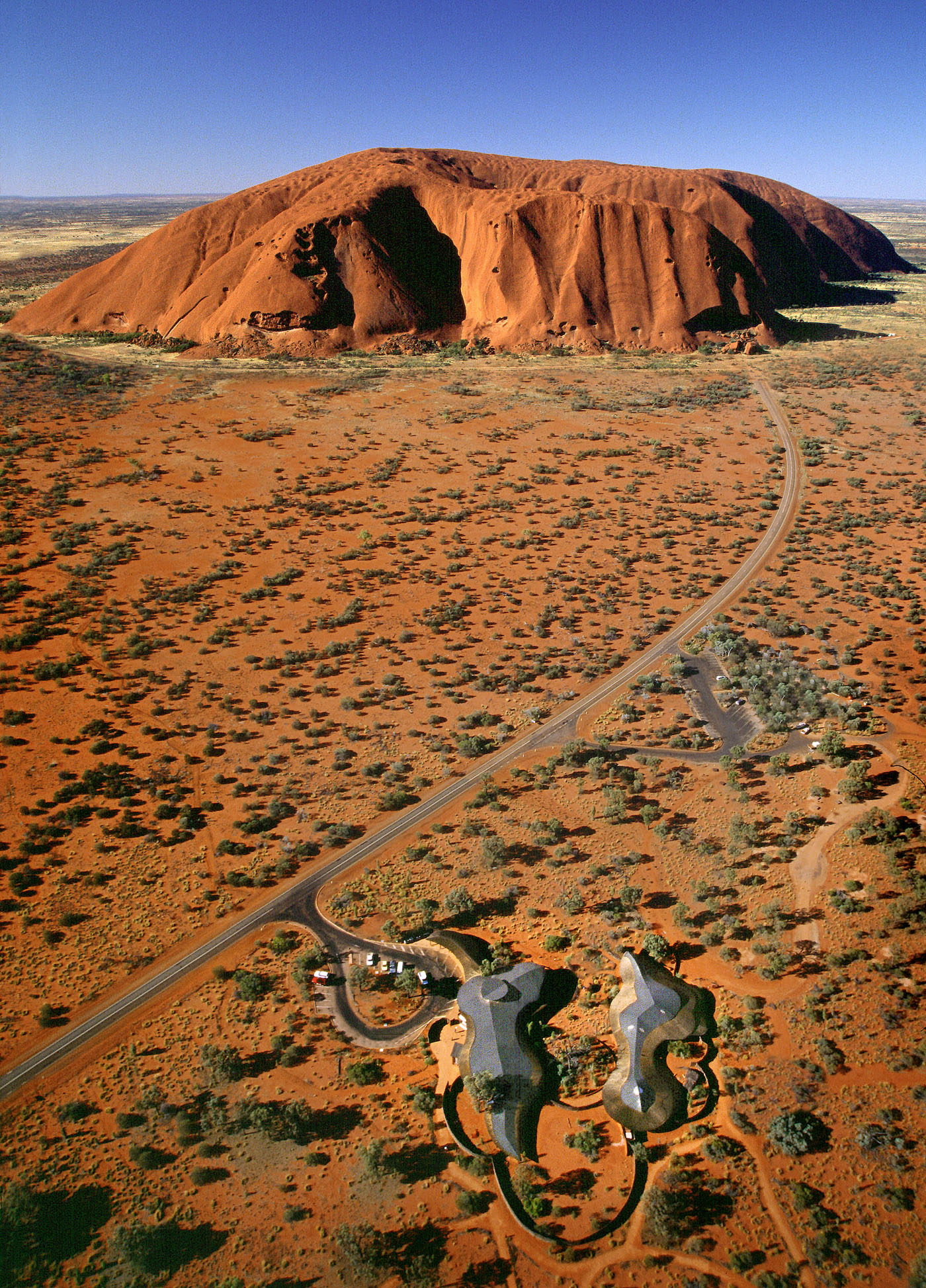
 

John Gollings (Australian, b. 1944) 'Uluru Visitor Centre (Gregory Burgess), Uluru, Northern Territory' 1999


John Gollings (Australian, b. 1944)
Uluru Visitor Centre (Gregory Burgess), Uluru, Northern Territory
1999


John Gollings (Australian, b. 1944) 'Kabaw Berber Granary, Kabaw, Libya' 2005


John Gollings (Australian, b. 1944)
Kabaw Berber Granary, Kabaw, Libya
2005


John Gollings (Australian, b. 1944) 'Bayon, Angkor Thom, Cambodia' 2012


John Gollings (Australian, b. 1944)
Bayon, Angkor Thom, Cambodia
2012


John Gollings (Australian, b. 1944) 'North face, south gate, Angkor Thom, Cambodia' 2007


John Gollings (Australian, b. 1944)
North face, south gate, Angkor Thom, Cambodia
2007


John Gollings (Australian, b. 1944) 'Buddha detail, Borobudur, Java, Indonesia' 2011


John Gollings (Australian, b. 1944)
Buddha detail, Borobudur, Java, Indonesia
2011


John Gollings (Australian, b. 1944) 'Mori Tim Stupa, Silk Road, China' 2005


John Gollings (Australian, b. 1944)
Mori Tim Stupa, Silk Road, China
2005
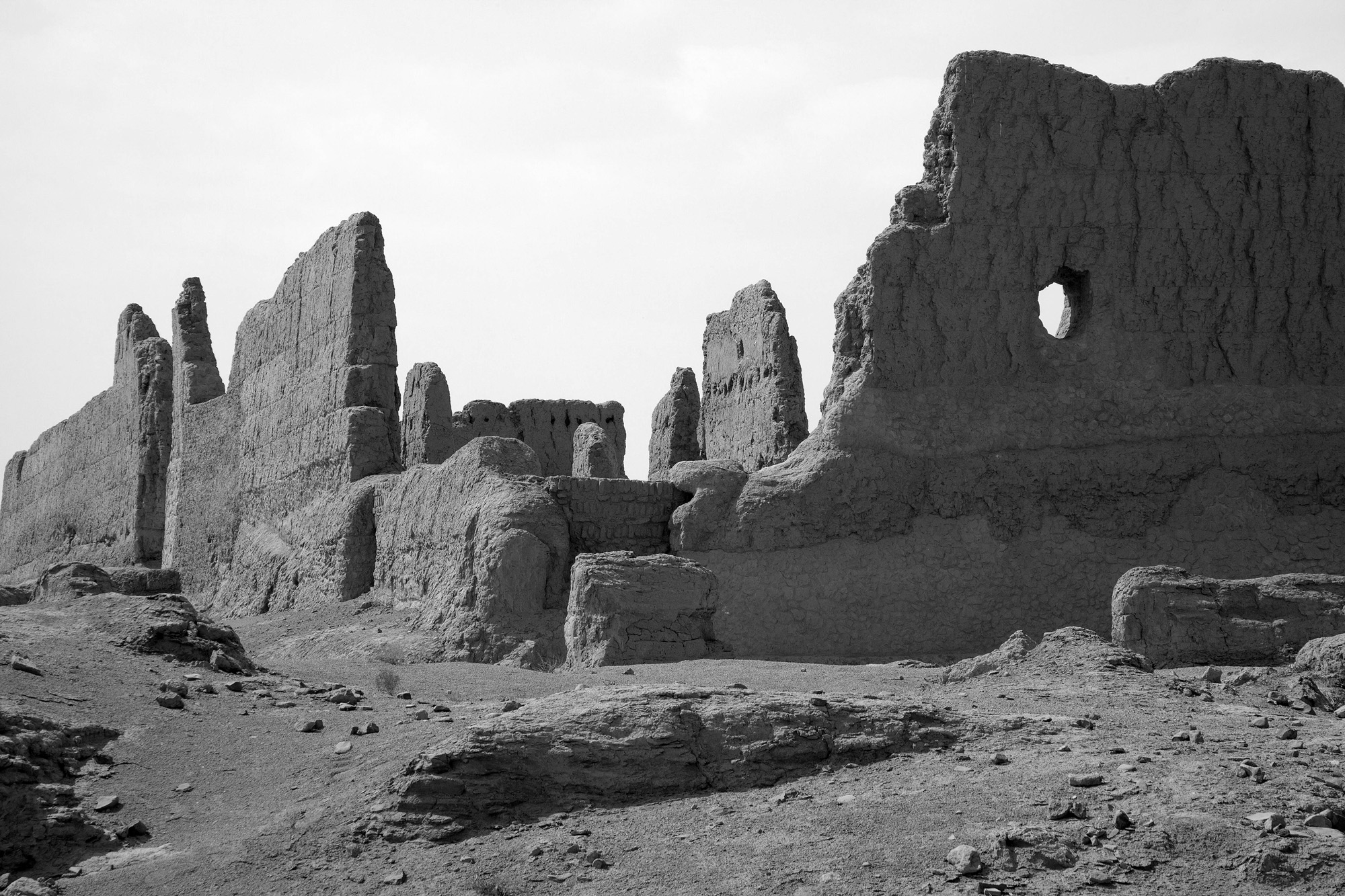
 

John Gollings (Australian, b. 1944) 'Jiaohe Old City, Turfan, China' 2005


John Gollings (Australian, b. 1944)
Jiaohe Old City, Turfan, China
2005


John Gollings (Australian, b. 1944) 'Pushkarani Kund (King's Bath), Hampi, India' 1988


John Gollings (Australian, b. 1944)
Pushkarani Kund (King’s Bath), Hampi, India
1988


John Gollings (Australian, b. 1944) 'Ta Prohm Temple, Angkor Thom, Cambodia' 2007


John Gollings (Australian, b. 1944)
Ta Prohm Temple, Angkor Thom, Cambodia
2007


John Gollings (Australian, b. 1944) 'Hanuman Temple, Hampi, India' 2006


John Gollings (Australian, b. 1944)
Hanuman Temple, Hampi, India
2006


John Gollings (Australian, b. 1944) 'Small Ganesh, Hampi, India' 2006


John Gollings (Australian, b. 1944)
Small Ganesh, Hampi, India
2006


John Gollings (Australian, b. 1944) 'Vittala Dance Mandapa interior, Hampi, India' 2005


John Gollings (Australian, b. 1944)
Vittala Dance Mandapa interior, Hampi, India
2005


Ancient architecture

Gollings has embarked on a number of heritage projects that document the evolution of architectural history under various religious and political regimes across Asia. This includes the Chinese city of Jiaohe, which was carved out of the earth 2 000 years ago and then abandoned after Genghis Khan invaded the area in the 13th century; the Khmer temples of the Angkor Empire that once extended across much of mainland south-east Asia; and the architecture of the Hindu Vijayanagara Empire that ruled over southern India for 200 years before being conquered by Muslim sultanates in the 16th century. Further a fi eld, Gollings has documented the grain stores of the nomadic Berbers in Lybia, and the marble theatres that supplanted them when the Roman Empire occupied northern Africa at the dawn of the Common Era. Gollings brings his characteristic style to bear on all these subjects, drawing the viewer into the built environment with embedded perspectives and dramatic lighting.

Wall text from the exhibition


John Gollings (Australian, b. 1944) 'Nawarla Gabarnmang, Arnhem Land, Northern Territory' 2015


John Gollings (Australian, b. 1944)
Nawarla Gabarnmang, Arnhem Land, Northern Territory
2015


The Nawarla Gabarnmang rock shelter is the oldest human construction that Gollings has photographed. Located in southwestern Arnhem Land, on the traditional lands of the Jawoyn people, the architecture of this site was created by tunnelling into a naturally eroding cliff face. The roof is supported by 36 pillars, formed by the natural erosion of fissure lines in the bedrock. Archaeologists have shown that some pre-existing pillars were removed, some were reshaped and others were moved to new positions in order to modify the interior space. The ceiling, walls and pillars feature paintings of fi sh, wallabies, crocodiles, people and spiritual figures. Radiocarbon dating of floor deposits indicates that humans have used the shelter for over 45 000 years, and the rock art itself has been firmly dated back 28 000 years, making it some of the oldest surviving artwork in the world. Gollings’s photographs, with their accentuated perspectives and saturated colours, celebrate Nawarla Gabarnmang as a site of imagination and awe.

Wall text from the exhibition


John Gollings (Australian, b. 1944) 'Australian Centre for Contemporary Art (Wood Marsh), Southbank, Victoria' 2002


John Gollings (Australian, b. 1944)
Australian Centre for Contemporary Art (Wood Marsh), Southbank, Victoria
2002


John Gollings (Australian, b. 1944) 'Habitat filter (Matt Drysdale, Matt Myers and Tim Dow), Southbank, Victoria' 2017


John Gollings (Australian, b. 1944)
Habitat filter (Matt Drysdale, Matt Myers and Tim Dow), Southbank, Victoria
2017

Wow! What a scintillating photograph…


John Gollings (Australian, b. 1944) 'Jean-Marie Tjibaou Cultural Centre (Renzo Piano), Nouméa, New Caledonia' 1997


John Gollings (Australian, b. 1944)
Jean-Marie Tjibaou Cultural Centre (Renzo Piano), Nouméa, New Caledonia
1997


John Gollings (Australian, b. 1944) 'The Lotus Building (Studio 505), Changzhou, China' 2013


John Gollings (Australian, b. 1944)
The Lotus Building (Studio 505), Changzhou, China
2013


Illuminated architecture

Photographing an inanimate object in the half light of dusk or dawn tends to invest it with a sense of life. A house with its interior lights on as night falls can seem enlivened with nocturnal possibilities. A building emerging from the shadows at daybreak might appear to be stirring from sleep. Gollings often takes advantage of the half light to give architecture a quiet vitality. He sometimes describes these photographs as ‘efficient images’, when the balance of sunlight and internal lighting allows him to make the interior and exterior of a building simultaneously visible. In effect, these images draw attention to the skin of architecture, rendering buildings as shells or envelopes rather than solid volumes. This approach is a particularly effective way of giving a sense of spiritual lightness to ancient stone temples.

Wall text from the exhibition


John Gollings (Australian, b. 1944) 'Surfers Paradise aerial, Surfers Paradise, Queensland' 2012


John Gollings (Australian, b. 1944)
Surfers Paradise aerial, Surfers Paradise, Queensland
2012


Surfers Paradise

Gollings’s relationship with the Gold Coast stretches back to childhood road trips that he made to Queensland with his parents in the late 1950s and 1960s. While he was still a teenager, Gollings took photographs that testify to an early fascination with the fanciful architecture of roadside motels. And in recent years he has continued to record the quaint postwar architecture of Surfers Paradise, along with the high rise developments that now overshadow them.

During 1973 and 1974 Gollings embarked on a major survey of architecture in Surfers Paradise. This project was specifically inspired by a seminal book on postmodern architecture, Learning from Las Vegas, authored by Robert Venturi, Denise Scott Brown and Steven Izenour in 1972. This book turned its back on the formal purism of modernist architecture and argued for an approach to urban design that embraced popular culture, personal narratives and humour. Gollings, along with Mal Horner (urban planner), Julie James (graphic designer) and Tony Styant-Browne (architect), set out to produce a complimentary publication, Learning from Surfers Paradise. The publication was abandoned in 1975, but Gollings’s photographs remain an important record of Surfers Paradise and the postmodern condition in Australian culture.

The ideas associated with postmodern architecture have had a lasting influence on Gollings’s approach to photography. Throughout his work, Gollings subverts pure formalism with humorous juxtapositions and personal affectations.

Wall text from the exhibition


John Gollings (Australian, b. 1944) 'Every high rise on the Gold Coast, Surfers Paradise, Queensland' 2012


John Gollings (Australian, b. 1944)
Every high rise on the Gold Coast, Surfers Paradise, Queensland
2012
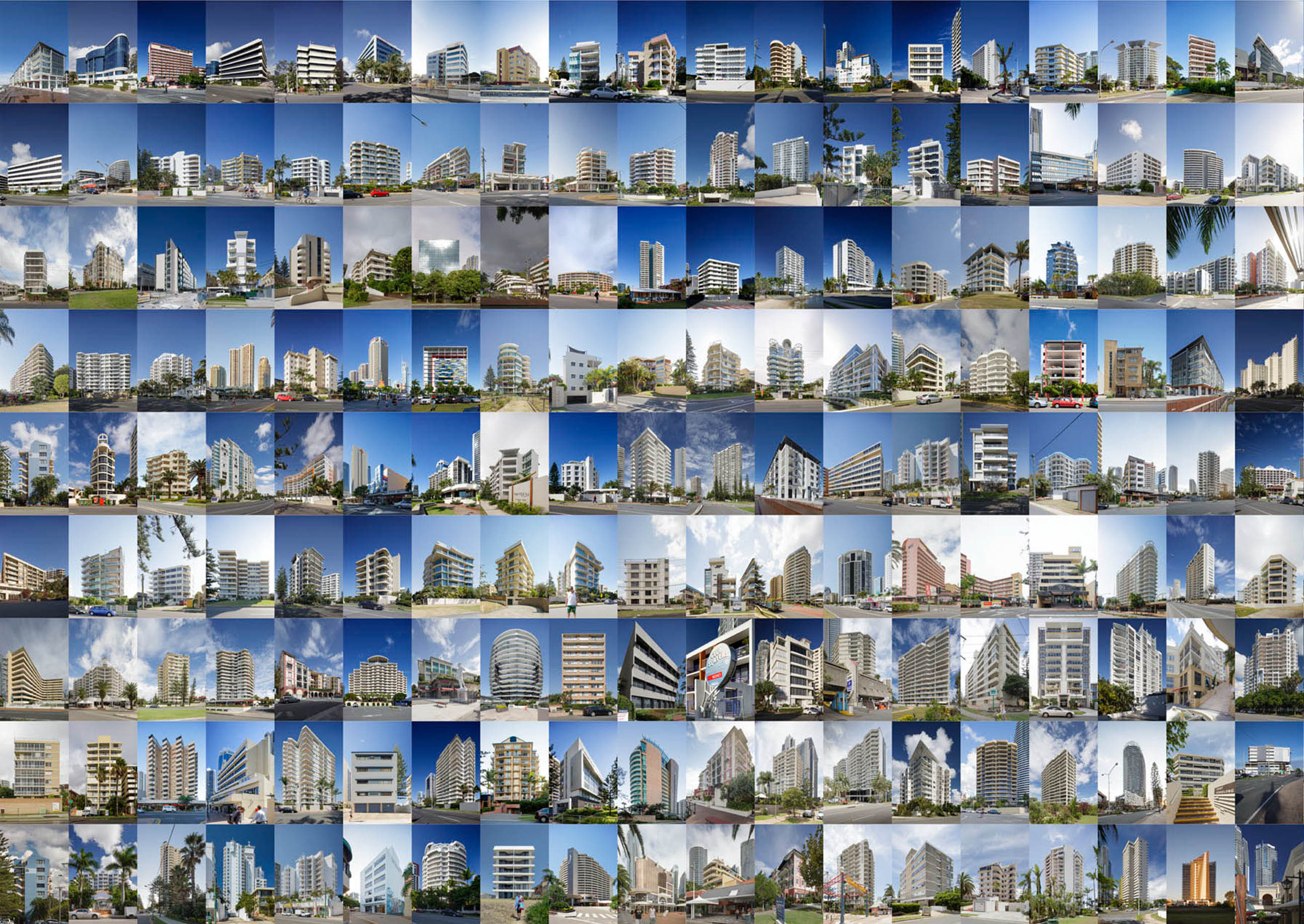
 

John Gollings (Australian, b. 1944) 'Every high rise on the Gold Coast, Surfers Paradise, Queensland' 2012 (detail)


John Gollings (Australian, b. 1944)
Every high rise on the Gold Coast, Surfers Paradise, Queensland (detail)
2012


Monash Gallery of Art
860 Ferntree Gully Road, Wheelers Hill
Victoria 3150 Australia
Phone: + 61 3 8544 0500

Opening hours:
Tue – Fri: 10am – 5pm
Sat – Sun: 10pm – 4pm
Mon/public holidays: closed

Monash Gallery of Art website

LIKE ART BLART ON FACEBOOK

Back to top

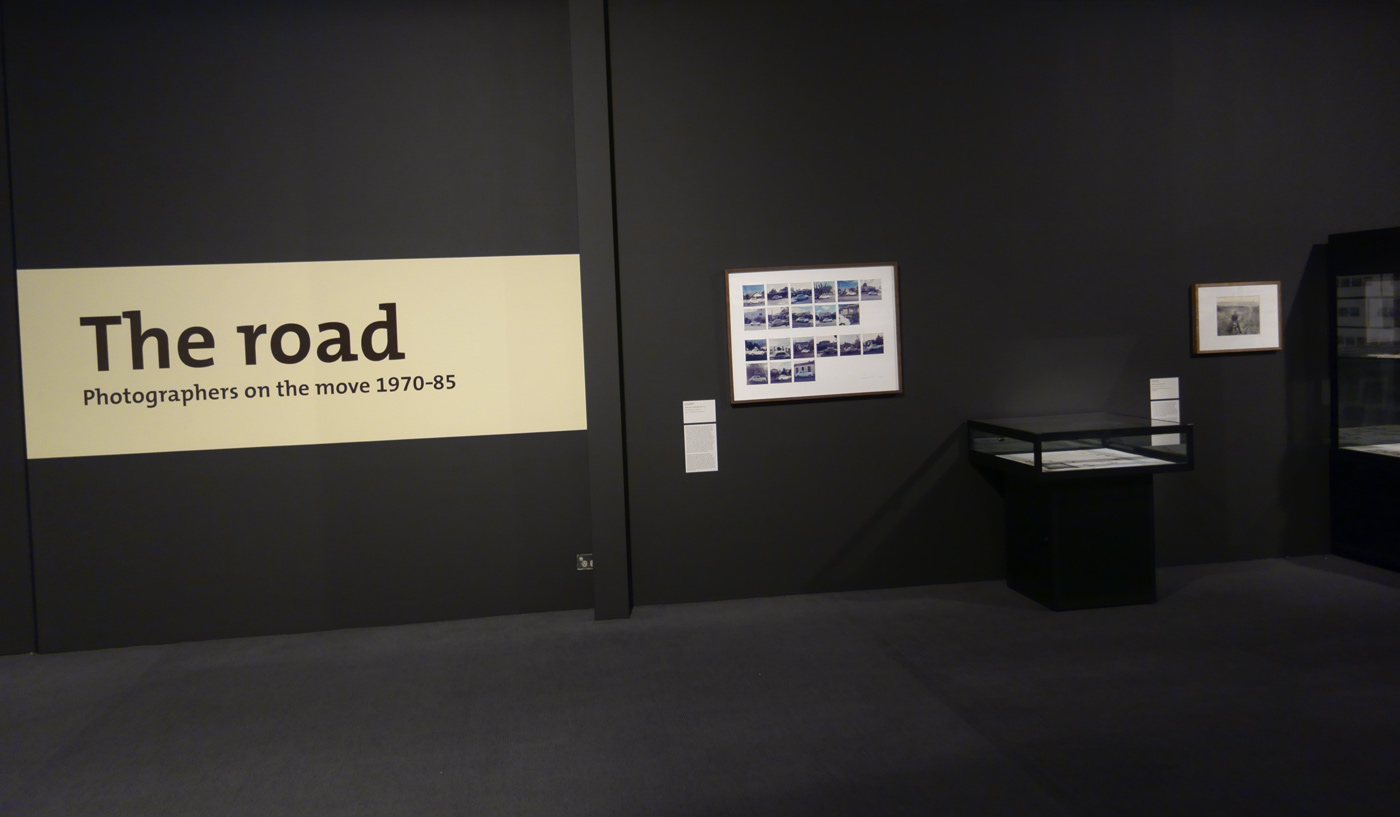
Review: ‘The road: Photographers on the move 1970-1975’ at the Monash Gallery of Art, Wheelers Hill, Melbourne

Exhibition dates: 13th June – 31st August 2014

Artists: Micky Allan, Virginia Coventry, Gerrit Fokkema, John Gollings, Tim Handfield, Ian North, Robert Rooney, Wes Stacey


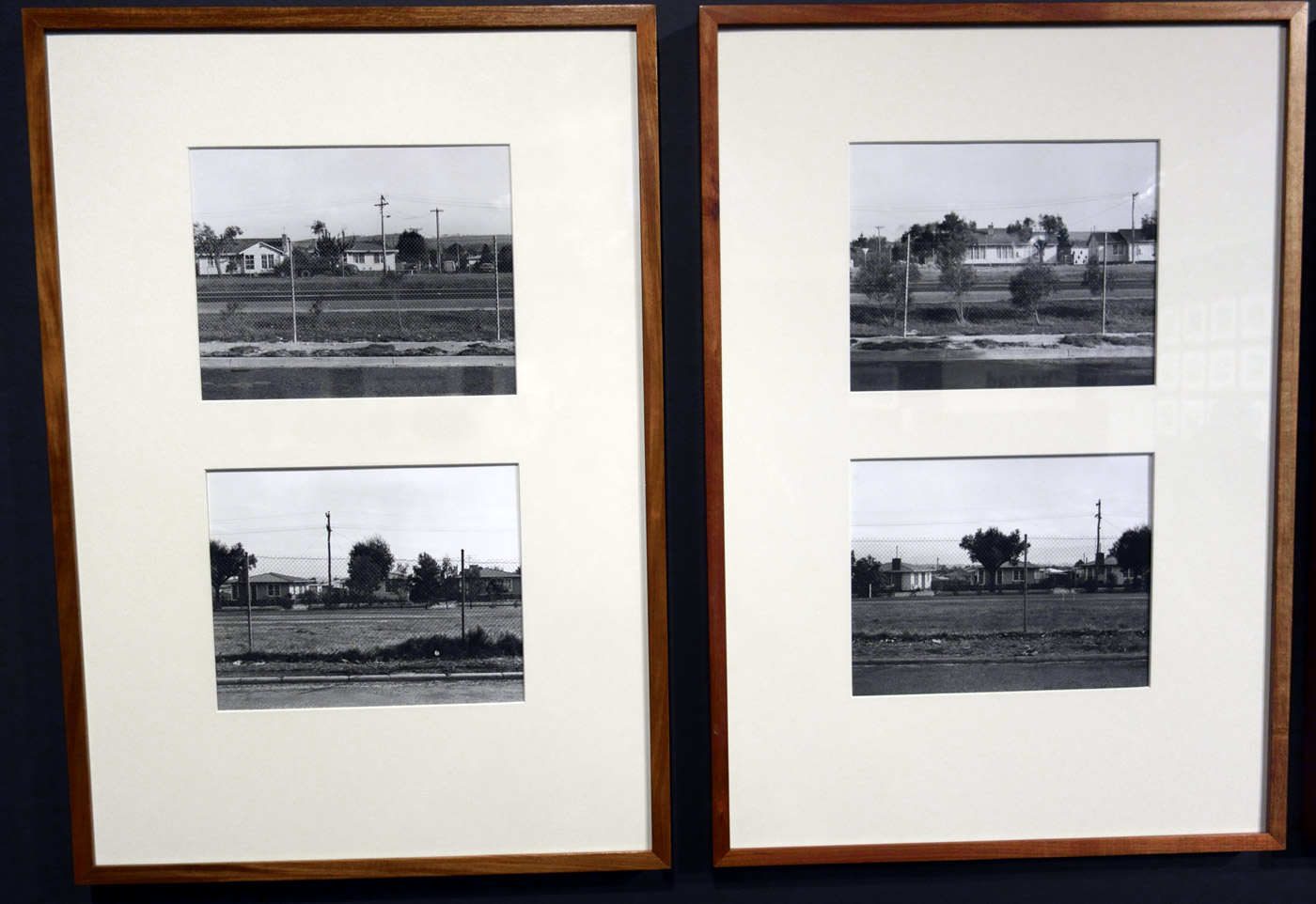
Virginia Coventry (Australian, b. 1942) 'Service road' 1976-1978


Virginia Coventry (Australian, b. 1942)
Service road
1976-1978
1 of 34 gelatin silver prints and two text panels
26.5 x 32.5cm (each)
Collection: Powerhouse Museum, Sydney
Courtesy of the artist and Liverpool Street Gallery (Sydney)


This is another stimulating exhibition at the Monash Gallery of Art, a gallery that consistently puts on some of the best photography exhibitions in Melbourne each year. Kudos to them.

Each of the eight artists in this exhibition present mainly conceptually based work. Each body of work is individually strong but in the context of the exhibition they come together seamlessly to form a kind of giant jigsaw puzzle of images, a series of impressions of Australia and the road: work that responds to the experience of automotive travel in Australia, announcing “the road-trip as the quintessential Australian journey, highlighting the challenges to life and culture that accompanied suburban expansion and the ways that Australians embraced the road during the 1970s and ‘80s.”

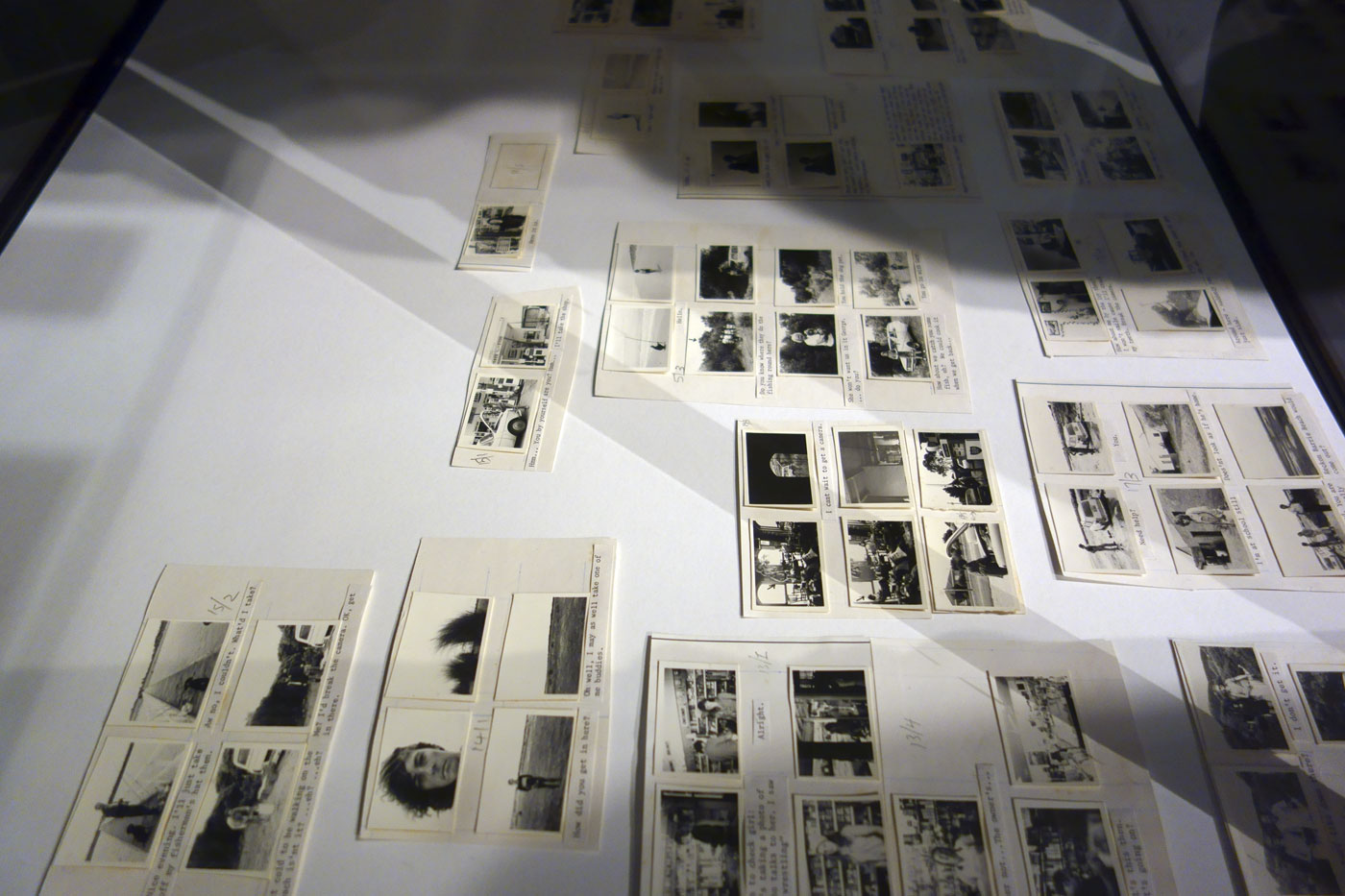
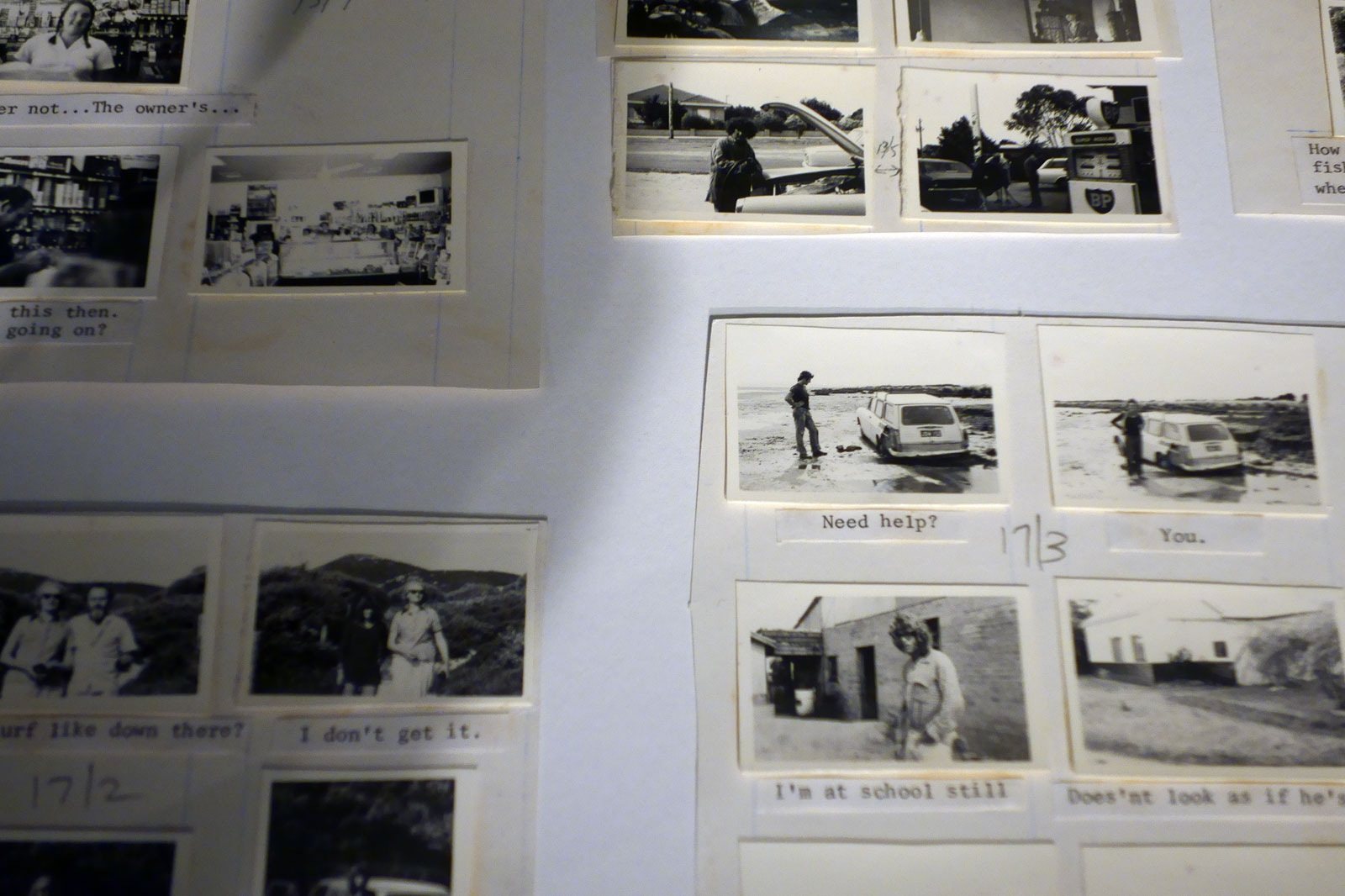
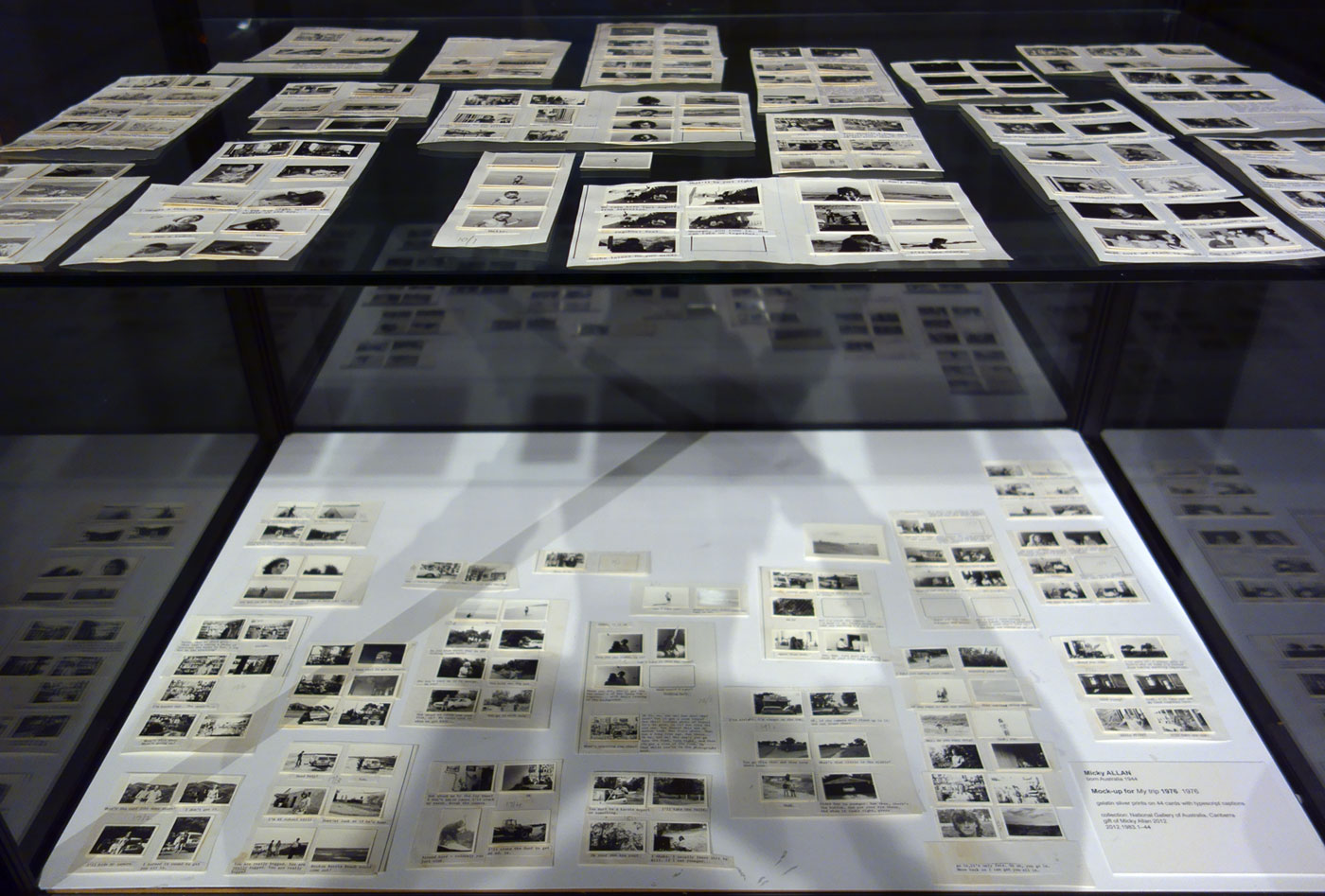
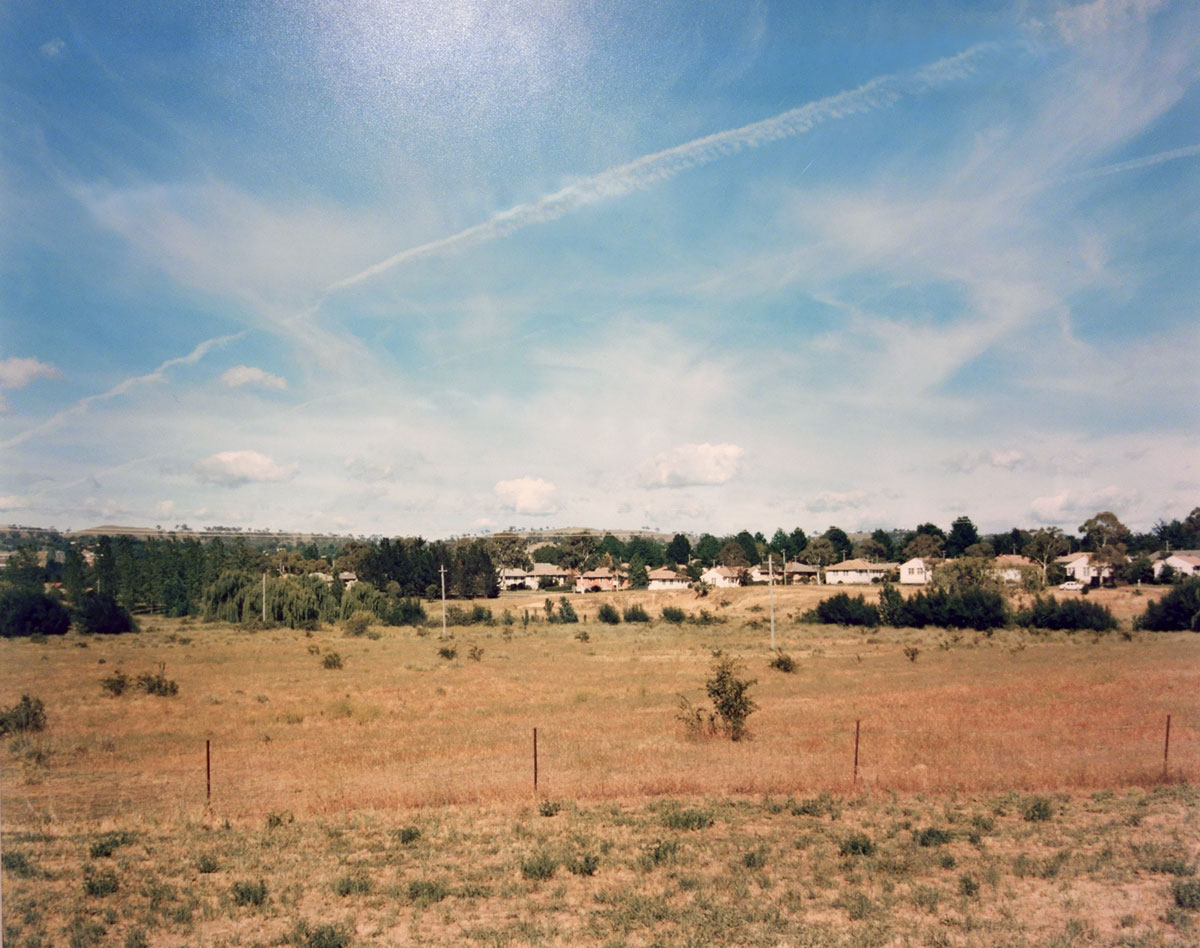
It is a pleasure to finally see Ian North’s colour series Canberra suite (1980-1981, below). Having seen but a few images online, to see the whole body of work in the flesh was illuminating. While lacking the formal rigour and structure of some of the other work in the exhibition, I enjoyed the natural simplicity of the photographs, their planned naïveté, which perfectly captures the suburbs of Canberra at that time. I also delighted in the intimacy of the small silver gelatin prints of Micky Allan’s Mock-up for ‘My trip’ 1976 (1976, below) with their pithy aphorisms such as “Need help?” when the car is bogged.

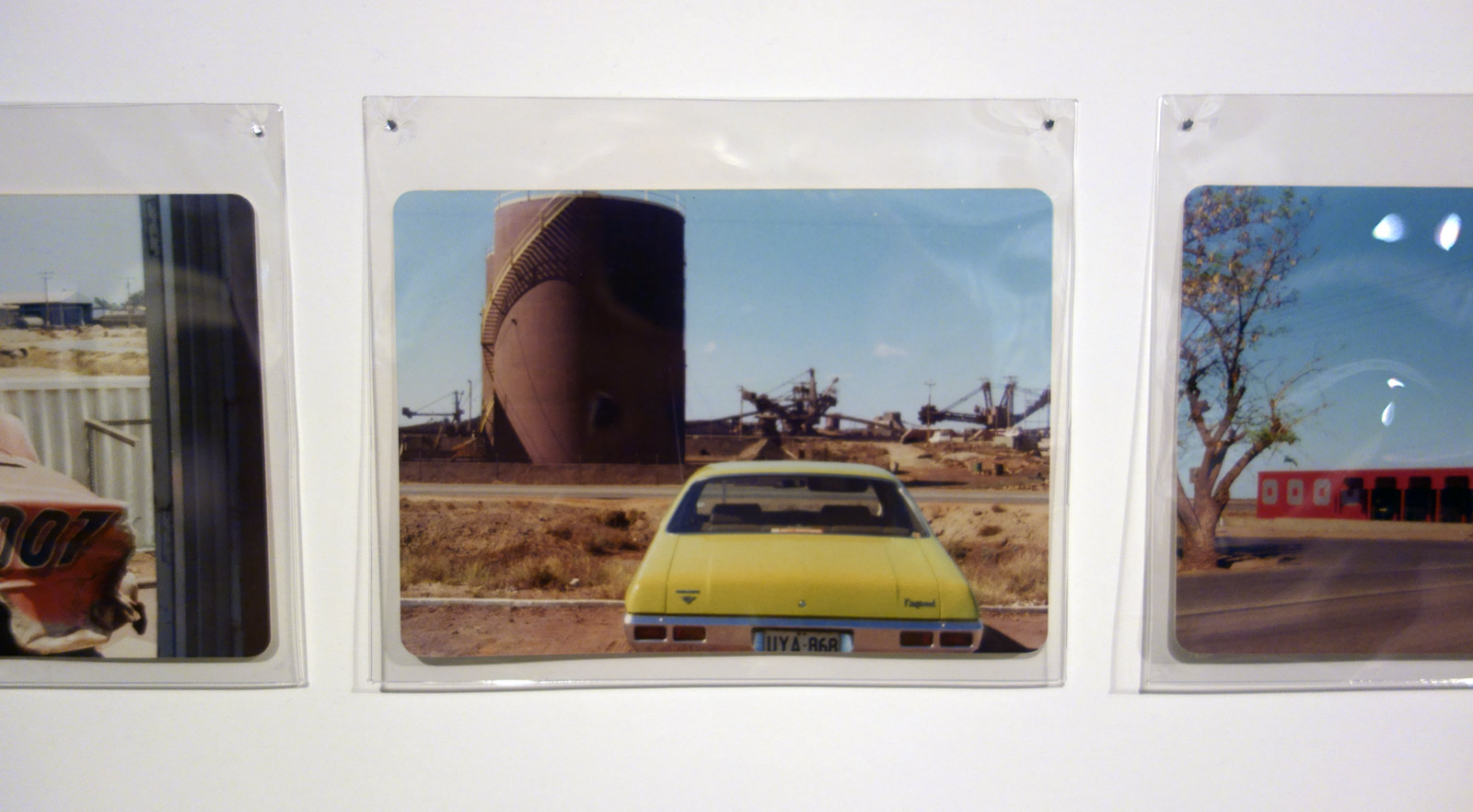
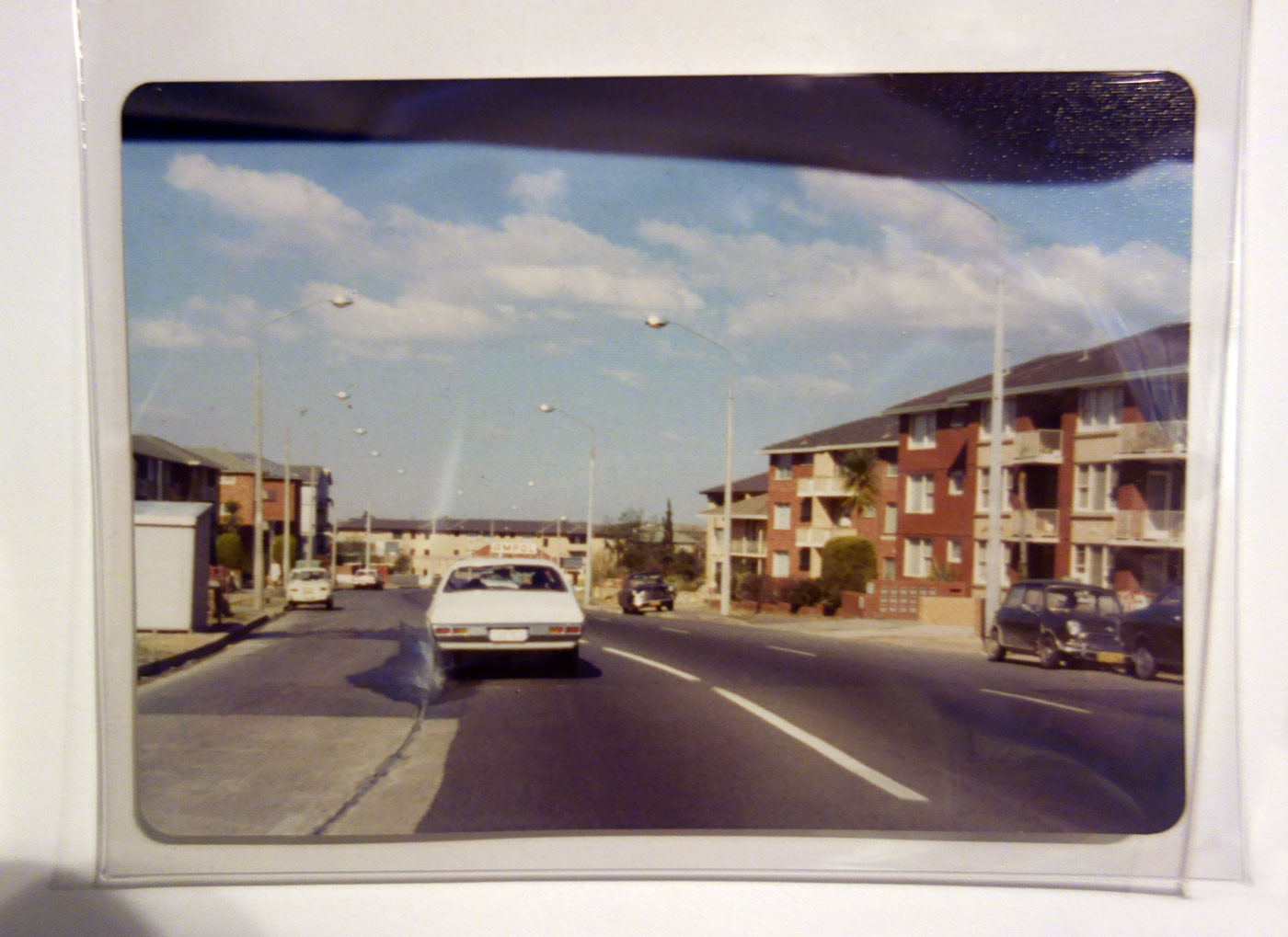
Another great series is Wes Stacey’s spunky The road (1974-1975, below) – small automated chemist shop prints with their 1970s colours and rounded corners all housed in cheap plastic sleeves pinned to board. This series is beautifully resolved which today allows for a sensually self-indulgent nostalgia to form for the time in which they were taken. The cars, the colours, the travel, people and places so evocatively captured on an Instamatic camera form a captivating narrative of “the sense of movement and adventure that underpins a road trip in a relatively cheap and expedient way.” Another strong series of photographs are by Tim Handfield who I have always thought is an excellent photographer with a good eye. As can be seen by the four images in this posting, Handfield is a master at handling form, structure and colour in the image field. In these photographs he almost seems to compress the space inside the photograph so that they have a vaguely threatening presence.

Finally, there is the wonderful Surfers Paradise Boulevard (1973, below) by John Gollings. The artist’s riff on the American artist Ed Ruscha’s book Every building on the Sunset Strip (1966) – which presented composite black and white panoramas of each side of Los Angeles’s Sunset Strip – Gollings vision is in glorious Ektacolour film which highlights the sensuality of what can, at that time, be seen as a sleepy surf coast town. The shock comes on seeing the main strip of the town and envisioning in your mind what a monster it has become today… how human beings almost always despoil the very thing that is beautiful and valuable in a spiritual sense (such as my favourite place in Australia, Byron Bay). This fragmented, Hockney-esque view of the vernacular forms of cultural expression perfectly captures the insouciance of a town that doesn’t yet know what’s going to hit ’em – through an ideal representation of contemporary urban space and the automotive experience of it.

Dr Marcus Bunyan


Many thankx to the Monash Gallery of Art for allowing me to publish the text and photographs in the posting. Please click on the photographs for a larger version of the image. All installation photographs © Marcus Bunyan and Monash Gallery of Art


Installation view of the exhibition 'The road: Photographers on the move 1970-1975' at the Monash Gallery of Art

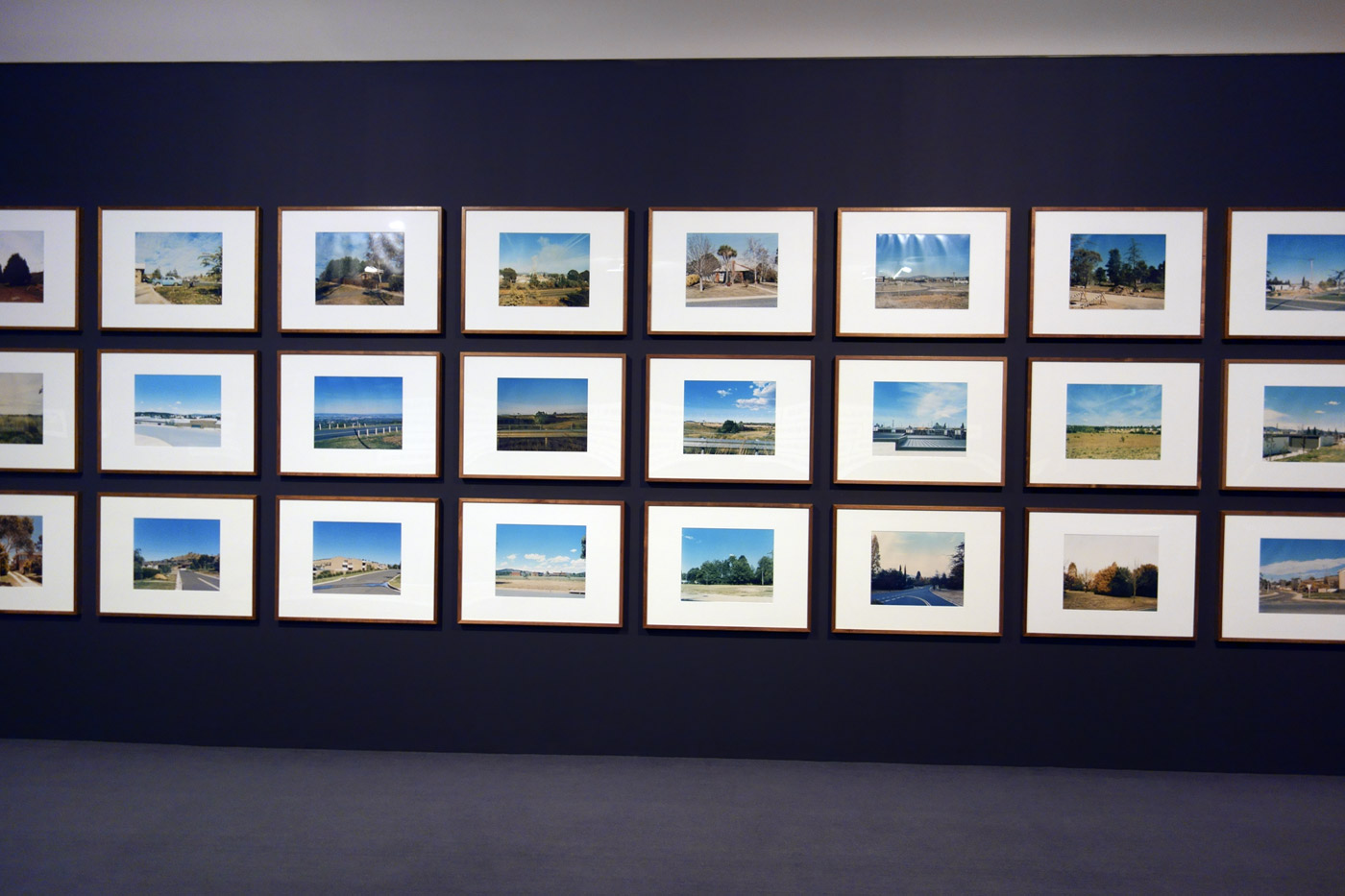
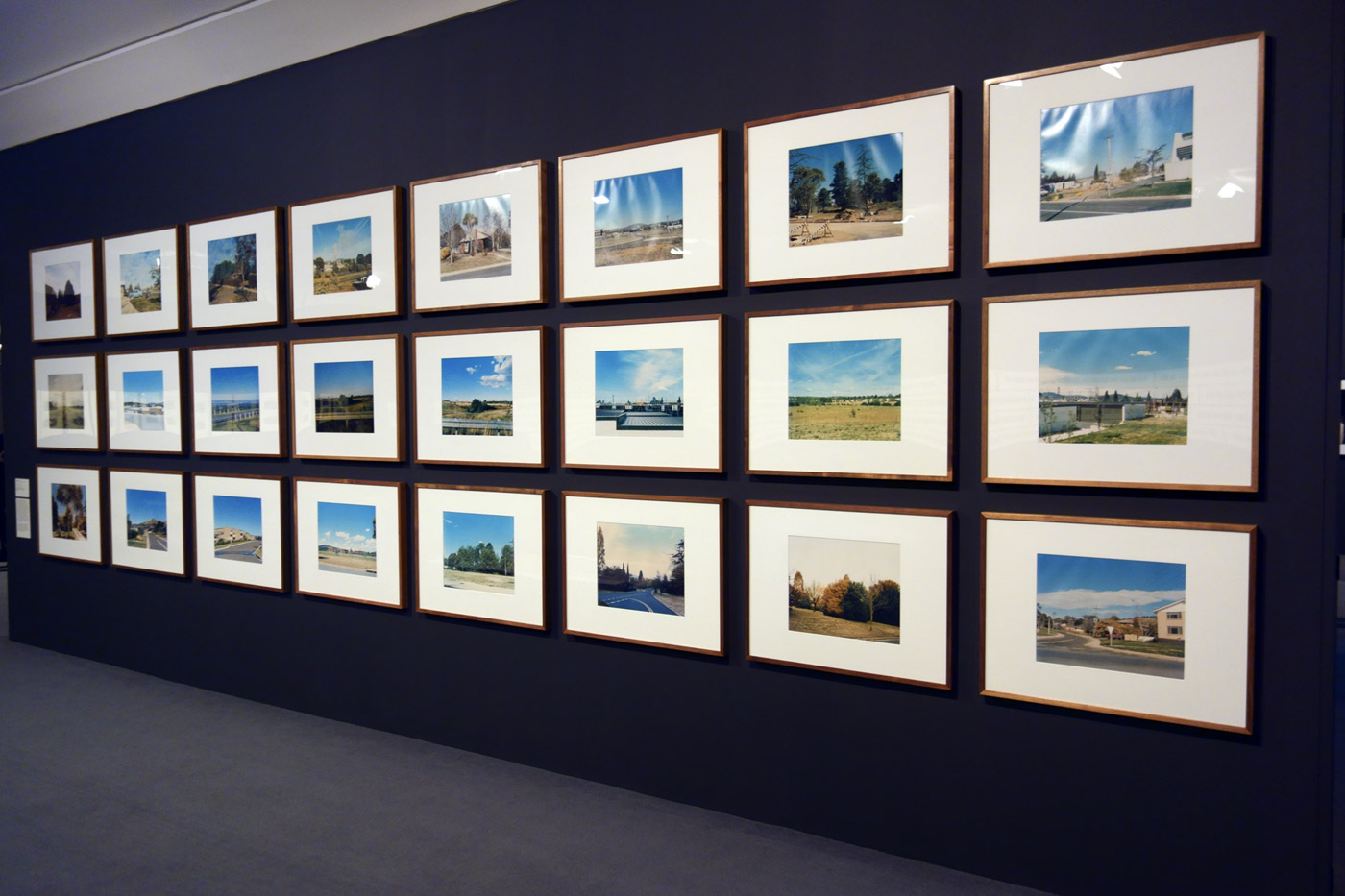
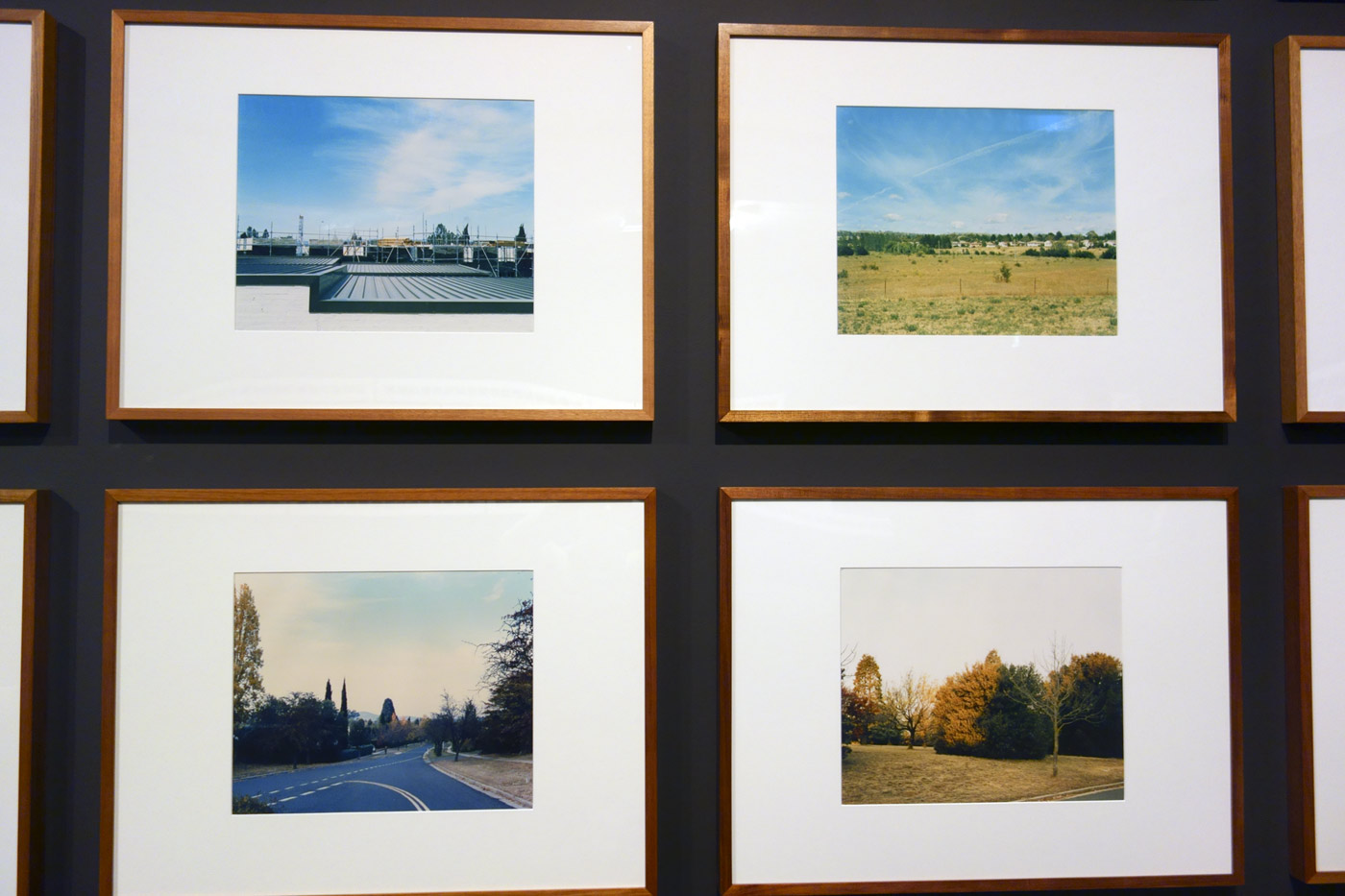
Installation view of Ian North's series 'Canberra suite' 1980-81 at the exhibition 'The road: Photographers on the move 1970-1975' at the Monash Gallery of Art

Installation view of Ian North's series 'Canberra suite' 1980-81 at the exhibition 'The road: Photographers on the move 1970-1975' at the Monash Gallery of Art

Installation view of Ian North's series 'Canberra suite' 1980-81 at the exhibition 'The road: Photographers on the move 1970-1975' at the Monash Gallery of Art


Installation view of Ian North’s series Canberra suite 1980-1981 at the exhibition The road: Photographers on the move 1970-1975 at the Monash Gallery of Art


Installation view of Wesley Stacey's series 'The road' 1974-75 at the exhibition 'The road: Photographers on the move 1970-1975' at the Monash Gallery of Art

Installation view of Wesley Stacey's series 'The road' 1974-75 at the exhibition 'The road: Photographers on the move 1970-1975' at the Monash Gallery of Art


Installation views of Wesley Stacey’s series The road 1974-1975 at the exhibition The road: Photographers on the move 1970-1975 at the Monash Gallery of Art


This exhibition brings together a range of photographic projects that responded to the experience of automotive travel in Australia during the 1970s and ’80s. The work in this exhibition shows that there was a strong relationship between photography and the road in Australian culture at this time. Photography helped to make sense of the particular experience of movement made possible by faster cars and better roads; at the same time, it helped to demonstrate the challenges to life and culture that accompanied suburban expansion and the rise of the road in Australia.

The road is one of the great subjects in Australian visual culture. In many of our greatest films, books and works of art, the road is a place where personal identity is negotiated, where the national story unfolds, and where culture, technology and nature come together at times in extraordinary ways. MGA’s latest exhibition The road: Photographers on the move 1970-1975 brings together a range of photographic projects that explore the road as experienced by many Australians in the 1970s and ’80s.

Presenting the work of eight prominent Australian artists, The road: Photographers on the move 1970-1975 announces the road-trip as the quintessential Australian journey, highlighting the challenges to life and culture that accompanied suburban expansion and the ways that Australians embraced the road during the 1970s and ‘80s. Using a range of strategies – from Instamatic cameras and chemist-shop printing, to expansive composite panoramas and photographic grids that replicate the experience of the modern city – these photographers helped to make sense of the particular experience of movement and landscape made possible by faster cars and better roads, in a way only photography could.

The exhibition features some of the most significant photographic projects produced by Australian photographers during this period. Wes Stacey’s mythic series of over 300 photographs The road presents an epic travelogue of road trips made by the artist in his Kombi Van during 1973 and 1974. The exhibition also features John Gollings’s monumental, ten-metre long streetscapes of Surfers Paradise Boulevard from 1973, as well as Robert Rooney’s iconic Holden park, featuring the artist’s Holden car parked in 20 different locations across Melbourne. The road also features work by two of Australia’s most important feminist photographers, Micky Allan and Virginia Coventry, who both challenged many of the gendered assumptions about the road, automotive travel and Australian life during the ’70s and ’80s.

As MGA Curator Stephen Zagala notes, “The road has often provided Australian photographers with a means to an end, whether a landscape or a picturesque community in some distant part of the country. But as this important exhibition shows, during the 1970s, the road took on a whole new meaning for Australian photographers. It provided a space for innovation and experimentation, and also a photographic reconsideration of Australian life.”

Gallery Director Shaune Lakin states, “The history of MGA – with its genesis in the late 1970s – is intricately linked to The road, one of our most important exhibitions of the year. Relatively cheap and accessible petrol, increased private car ownership, and a vastly improved network of roads encouraged the suburban expansion of Melbourne, and MGA is one of the many legacies of this expansion. We are proud to present this exhibition, which provides an as-yet untold account of Australian photography and has such a close historical association with our gallery.”

Press release from the MGA website


Installation view of Micky Allan's 'Mock-up for 'My trip' 1976' (1976) at the exhibition 'The road: Photographers on the move 1970-1975' at the Monash Gallery of Art

Installation view of Micky Allan's 'Mock-up for 'My trip' 1976' (1976) at the exhibition 'The road: Photographers on the move 1970-1975' at the Monash Gallery of Art

Installation view of Micky Allan's 'Mock-up for 'My trip' 1976' (1976) at the exhibition 'The road: Photographers on the move 1970-1975' at the Monash Gallery of Art


Installation views of Micky Allan’s Mock-up for ‘My trip’ 1976 (1976) at the exhibition The road: Photographers on the move 1970-1975 at the Monash Gallery of Art


Micky Allan (Australia, b. 1944)

Micky Allan’s My trip is a conceptual art project based on a road trip that she made through country Victoria in 1976. Allan’s conceptual premise was to photograph everyone who spoke to her and then invite these people to use her camera to photograph whatever they chose. Allan also recorded the conversations that transpired in these encounters, and subsequently compiled all these elements as a photographic essay that was printed and distributed as a broadsheet. Like many road trip narratives, Allan’s My trip conceptualises travel as a trajectory of chance encounters that illuminate social differences.

Micky Allan completed a Bachelor of Fine Arts at the University of Melbourne in 1967 and a Diploma of Painting at the National Gallery School in 1968. Allan began taking photographs in 1974 after joining the loosely formed feminist collective at Melbourne’s experimental arts and theatre space the Pram Factory. In this context Allan was part of a vibrant community of feminist artists that included Sue Ford, Ruth Maddison, Ponch Hawkes and Virginia Coventry, who taught her how to take and print photographs. Allan is well-known for reclaiming the antiquated practice of hand-colouring monotone photographs, as a way of investing the photo-mechanical process with subjective qualities. She has often used the theme of travel to embed her practice in a personal journey of discovery.


Installation view of Virginia Coventry's series 'Service road' 1976-78 (detail) at the exhibition 'The road: Photographers on the move 1970-1975' at the Monash Gallery of Art


Installation view of Virginia Coventry’s series Service road 1976-1978 (detail) at the exhibition The road: Photographers on the move 1970-1975 at the Monash Gallery of Art


Virginia Coventry (Australian, b. 1942) 'Service road' 1976-1978


Virginia Coventry (Australian, b. 1942)
Service road
1976-1978
1 of 34 gelatin silver prints and two text panels
26.5 x 32.5cm (each)
Collection: Powerhouse Museum, Sydney
Courtesy of the artist and Liverpool Street Gallery (Sydney)


Virginia Coventry (Australian, b. 1942) 'Service road' 1976-1978


Virginia Coventry (Australian, b. 1942)
Service road
1976-1978
1 of 34 gelatin silver prints and two text panels
26.5 x 32.5cm (each)
Collection: Powerhouse Museum, Sydney
Courtesy of the artist and Liverpool Street Gallery (Sydney)


Virginia Coventry (Australian, b. 1942) 'Service road' 1976-1978


Virginia Coventry (Australian, b. 1942)
Service road
1976-1978
1 of 34 gelatin silver prints and two text panels
26.5 x 32.5cm (each)
Collection: Powerhouse Museum, Sydney
Courtesy of the artist and Liverpool Street Gallery (Sydney)


Virginia Coventry (b. Melb 1942)

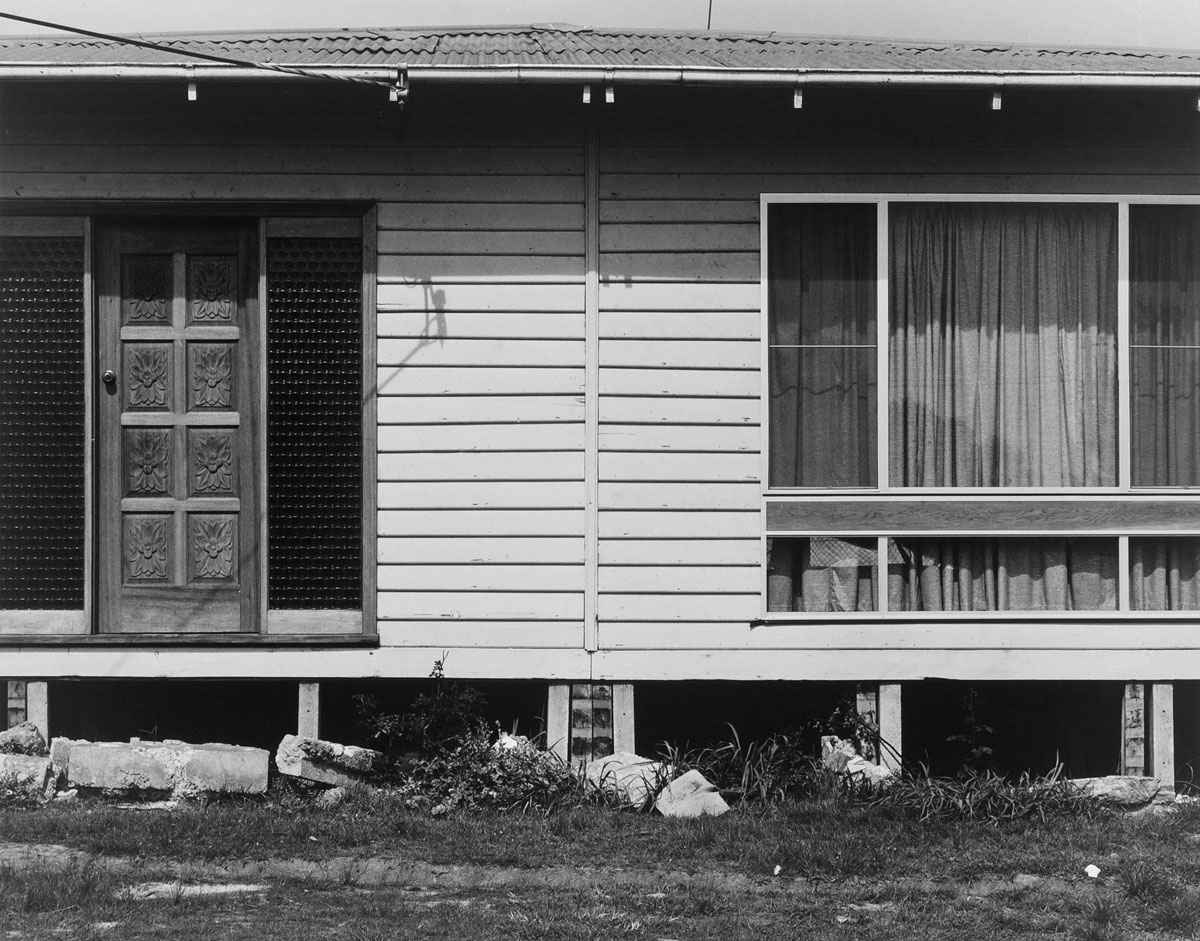
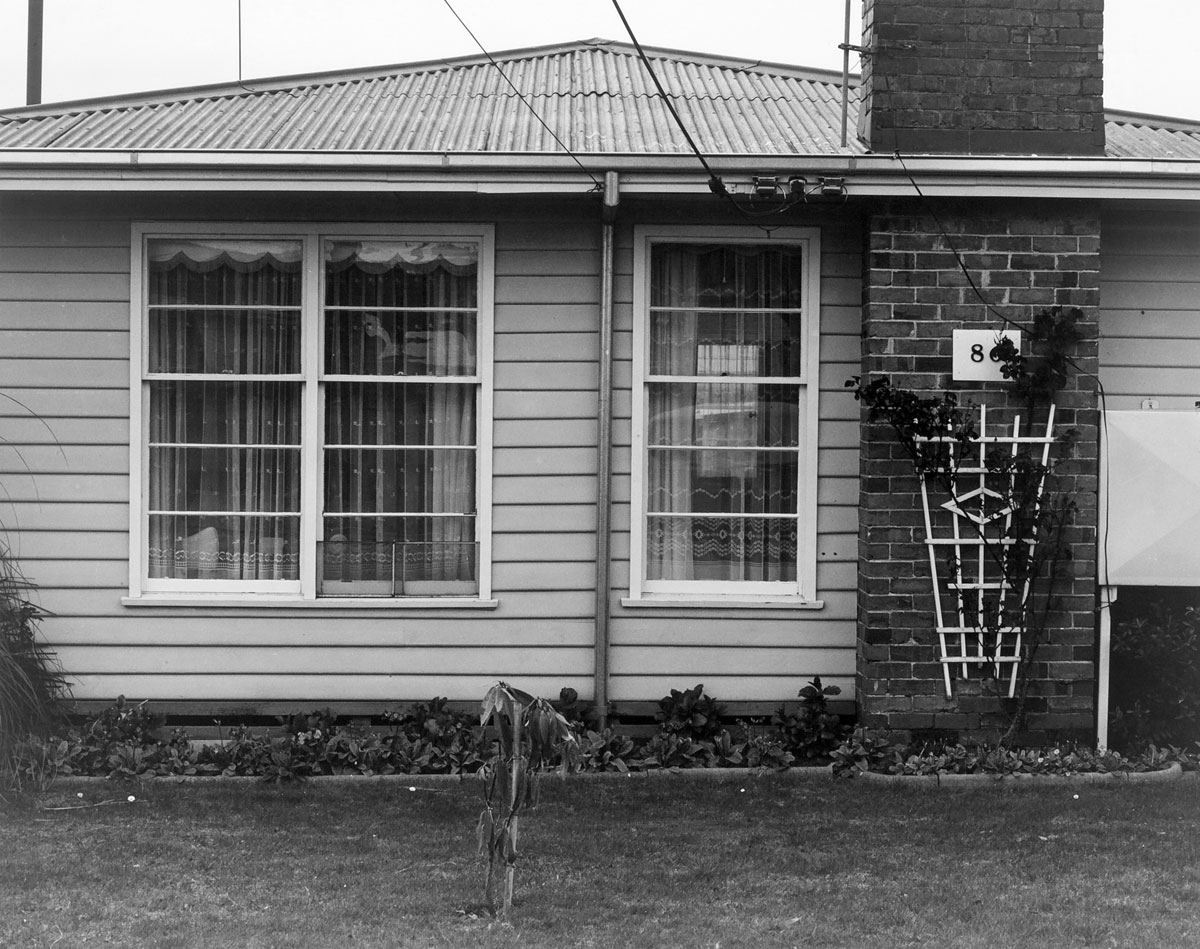
Virginia Coventry’s Service road continued the artist’s interest in reflecting social and emotional experiences that differed from dominant, particularly masculine positions and experiences. The series presents two rows of reverse-angle photographs of houses and empty blocks that line a service road near the recently-completed Princes Freeway at Moe, Victoria. The weatherboard houses and the scene no doubt reflect the experience of many Australians living in postwar suburban developments who commuted between home and work, in this case the thousands of men who worked at the nearby Yallourn and Morewell power stations. Coventry photographed these homes and empty blocks as if viewed from a car passing by. Coventry has also included a number of views of the road, seen from inside the homes. The dark interiors take on a particular psychological and emotional countenance, one that contrasts starkly with the brightly lit outside. In this way, the series illuminates the experience of many women for whom the service road was a place of loneliness and dislocation.

Virginia Coventry studied painting at the Royal Melbourne Institute of Technology during the early 1960s, before undertaking postgraduate studies at the Slade School of Fine Art, University College, London. While painting and drawing have remained a constant part of Coventry’s practice, she started taking photographs during the mid-1960s and developed a significant reputation during the 1970s for her photographs and installations. Her photographic work often comprised sequences of images combined with text and other fragments, and examined the relationship of landscape, place and power – particularly in relation to the experience of women. Her photographs were included in a number of key exhibitions of the period, including Three women photographers at George Paton Gallery, the Sydney Biennales of 1976 and 1979, Ten viewpoints (Australian Centre for Photography, 1976), and Self portrait/self image (Victorian College of the Arts, 1980).


Gerrit Fokkema (b. 1954, Papua New Guinea; Australia since 1958)

During the 1970s Gerrit Fokkema used the spacious streetscapes of Canberra to compose surreal photographs of contemporary urban life. In Exit Canberra and Ligertwood Street, the infrastructure of new suburbs has become overgrown with grass while waiting to be populated. The road itself doesn’t appear in these photographs, but its presence is alluded to with street signs and a lamp post. In this way, Fokkema suggests that these places exist at the ‘end of the road’ or on a ‘road to nowhere’. The optimistic skies that feature in these photographs seem to mock the aspirations of Canberra’s town planners.

Gerrit Fokkema studied photography at Canberra Technical College (1974-1977) while working as a press photographer. In 1980 he moved to Sydney to work for the Sydney Morning Herald, and in 1986 he left the paper to pursue a freelance commercial career. Throughout his professional life Fokkema has maintained a personal photographic practice and exhibited his work on numerous occasions. He held his first solo exhibition at the Australian Centre for Photography in 1975, where he exhibited regularly throughout the late 1970s. His photographs are executed in a social-documentary mode, with a particular interest in urban landscapes and situated portraits of ‘everyday’ Australians.


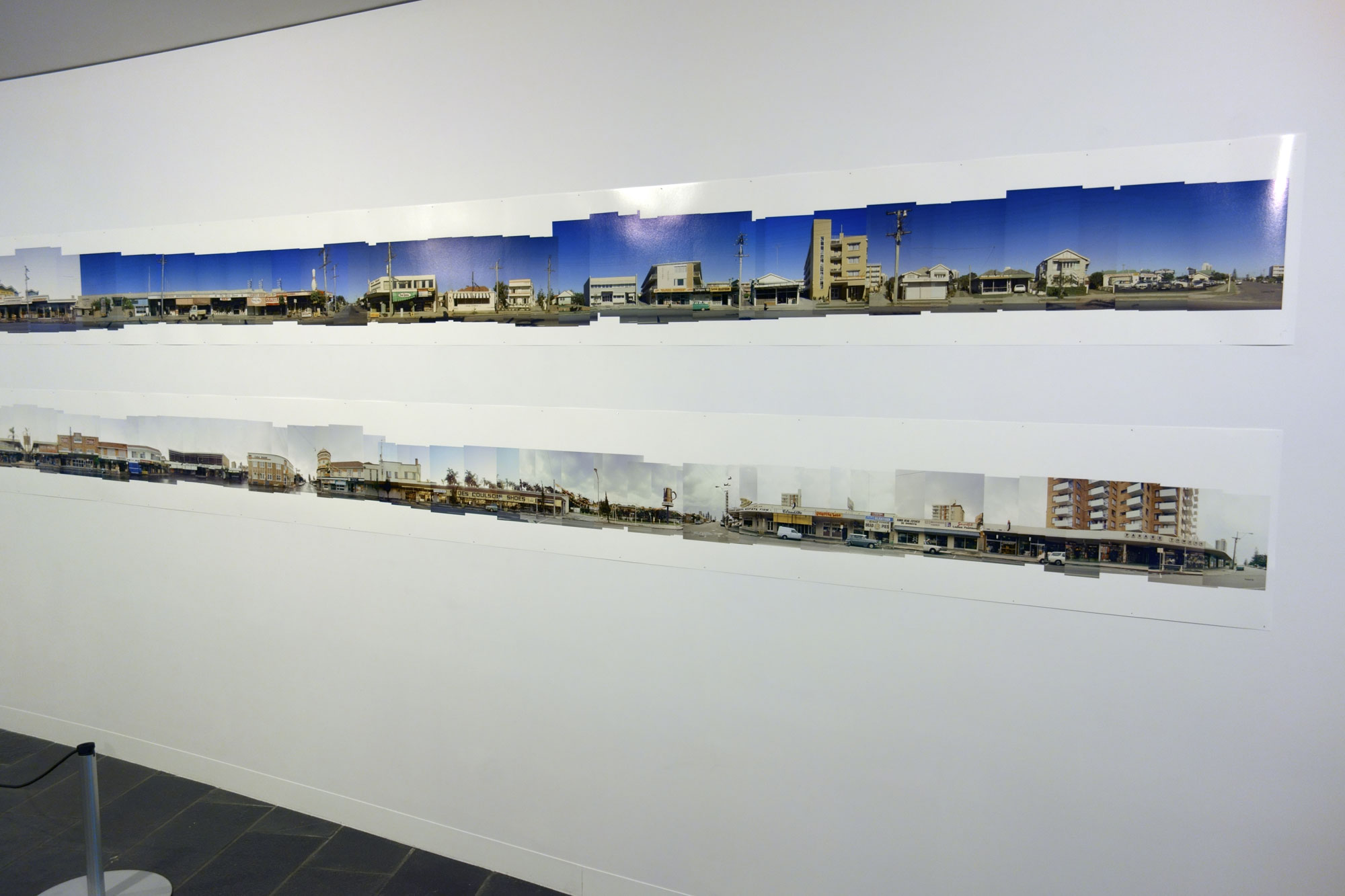
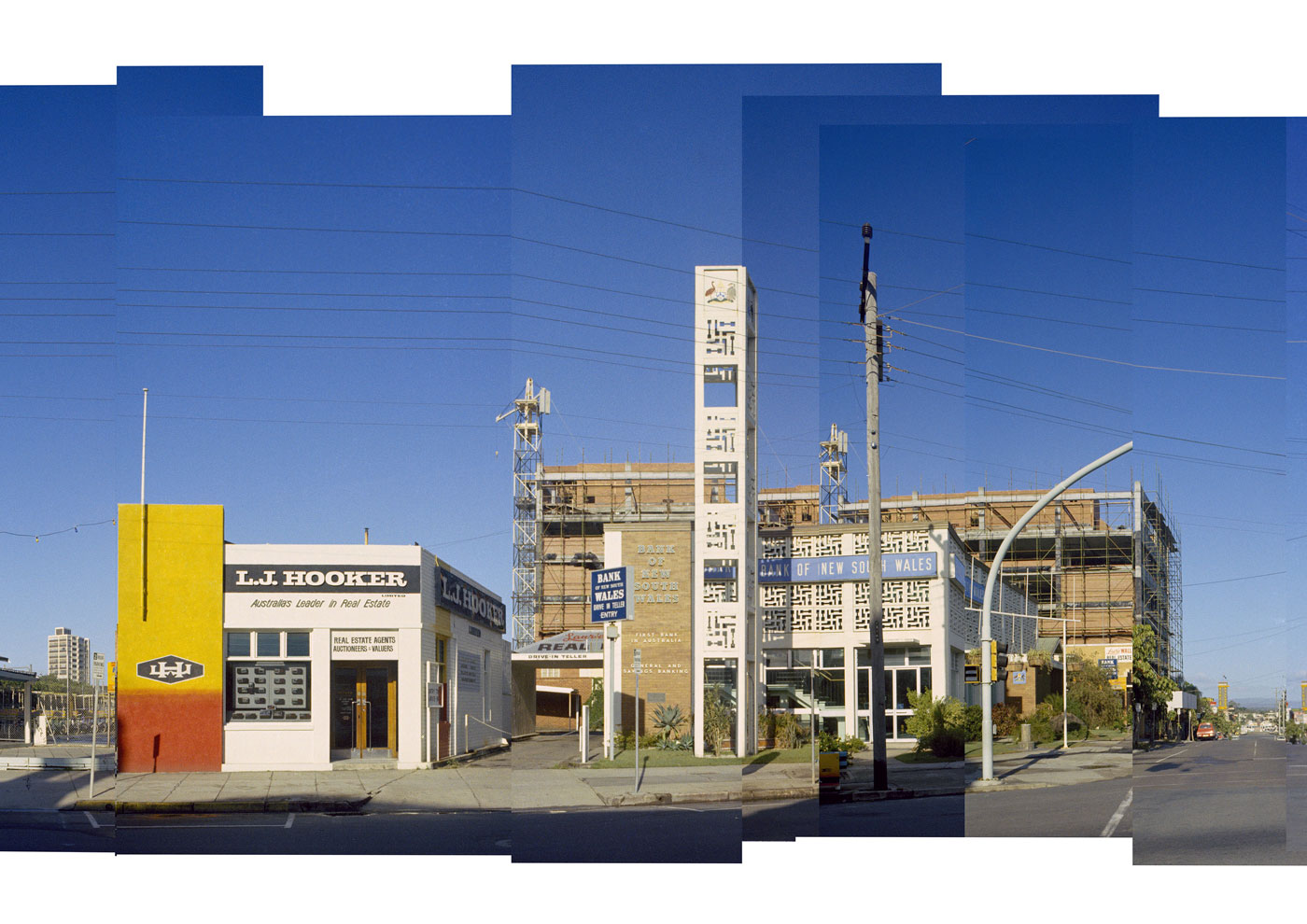
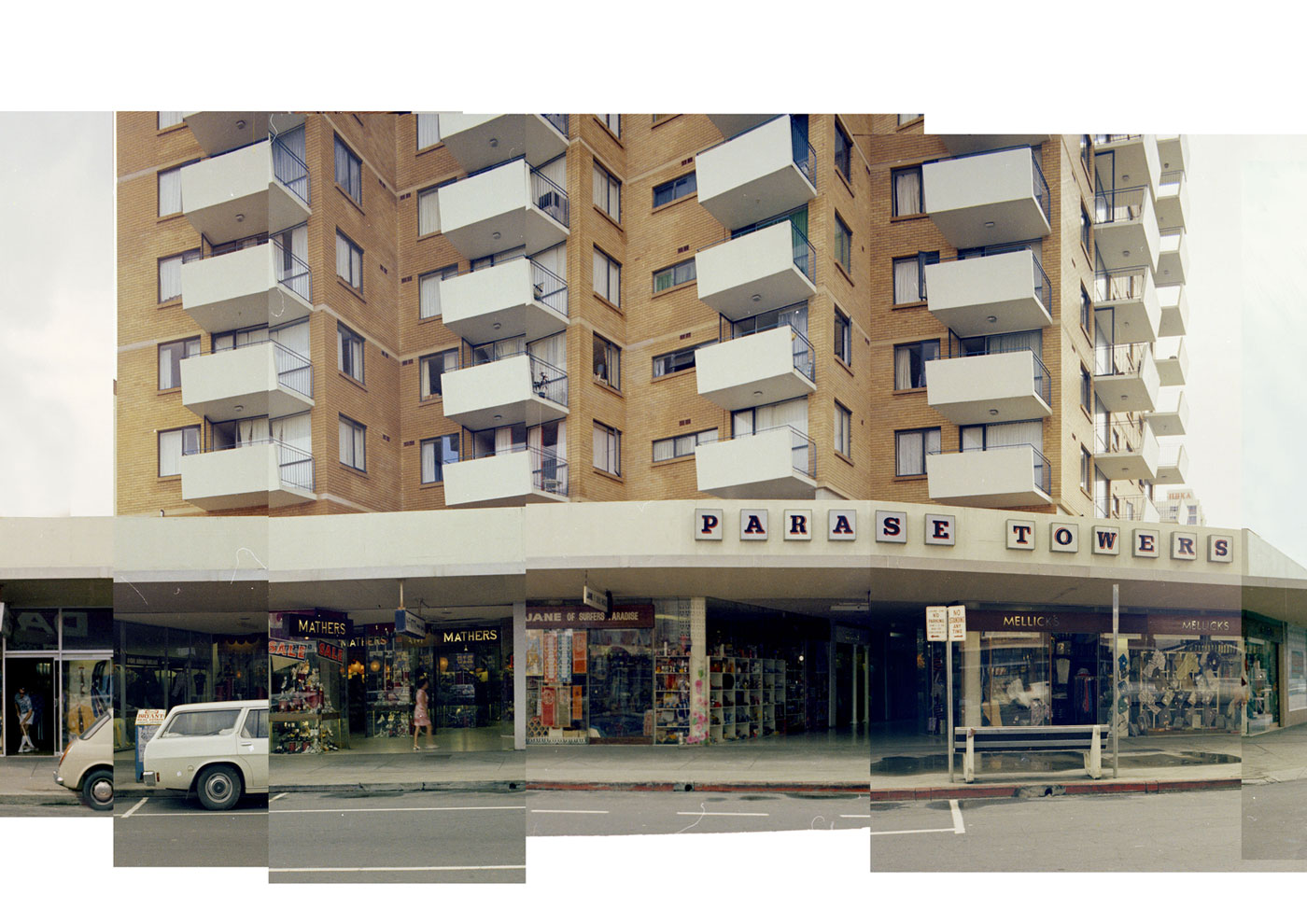
John Gollings (Australian, b. 1944) 'Surfers Paradise Boulevard' 1973 (installation view)

John Gollings (Australian, b. 1944) 'Surfers Paradise Boulevard' 1973 (installation view detail)

John Gollings (Australian, b. 1944) 'Surfers Paradise Boulevard' 1973 (installation view detail)

John Gollings (Australian, b. 1944) 'Surfers Paradise Boulevard' 1973 (installation view detail)


Installation and detail views of John Gollings’ work Surfers Paradise Boulevard 1973 (details) at the exhibition The road: Photographers on the move 1970-1975 at the Monash Gallery of Art


John Gollings (Australian, b. Melb 1944)

John Gollings is best known for his architectural photography, and has over the last four decades photographed most of Australia’s and Asia’s most significant architectural projects. In 1973, Gollings travelled to Surfers Paradise to photograph its buildings, streetscape and signage. He had recently read influential architects Robert Venturi, Denise Scott-Brown and Steven Izenour’s book Learning from Las Vegas (1972), which asked architects to pay closer attention to vernacular forms of cultural expression in favour of heroic or monumental architecture of the past. Gollings was also familiar with the work of the Californian artist Ed Ruscha, notably his book Every building on the Sunset Strip (1966), which presented composite panoramas of each side of Los Angeles’s Sunset Strip. For many urbanists at the time – including the authors of Learning from Las Vegas – Ruscha’s book realised an ideal representation of contemporary urban space and the automotive experience of it.

Gollings undertook a depiction of Surfers Paradise Boulevard that drew on Ruscha’s composite panorama of Sunset Strip. Sitting on the bonnet of a V8 Valiant station wagon, Gollings drove up and down Surfers Paradise Boulevard on a quiet Sunday morning, progressively photographing each side of the strip with his Nikon camera using Ektacolour film. The resulting composite panorama has become a remarkable historical record of an urban setting that has undergone radical transformation in the time since 1973.


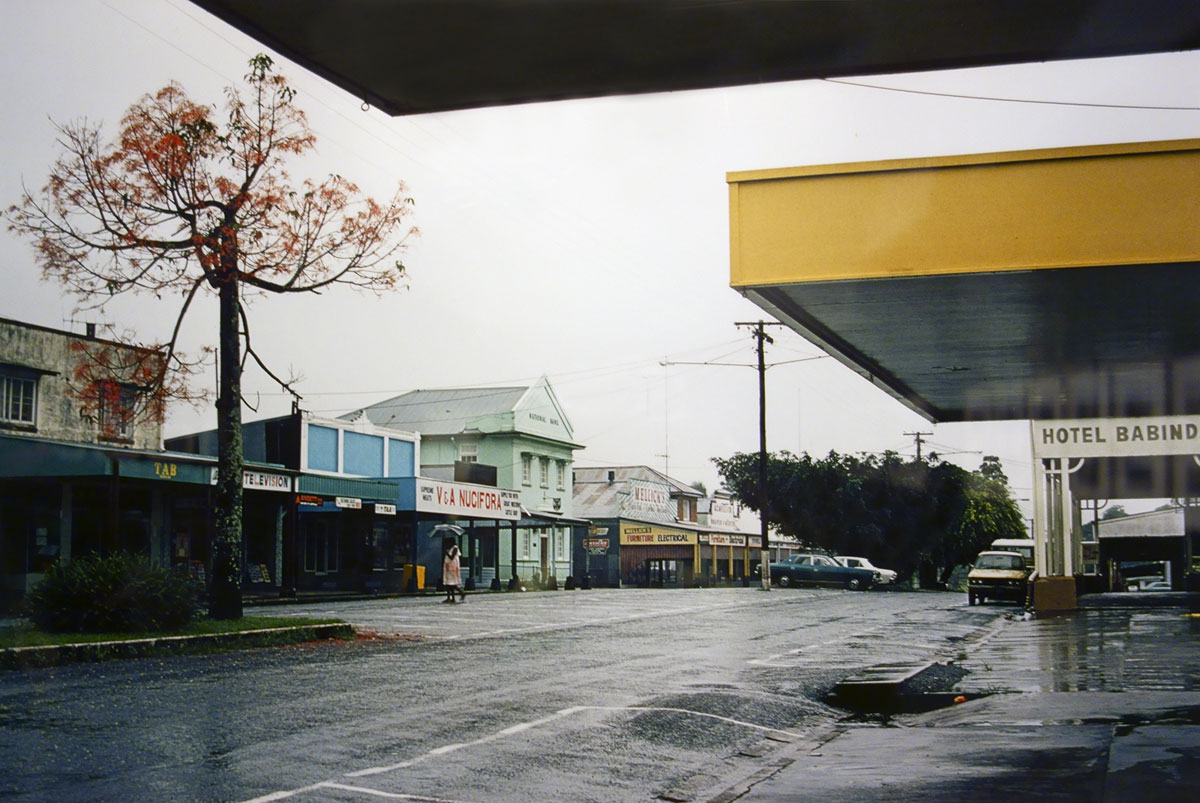
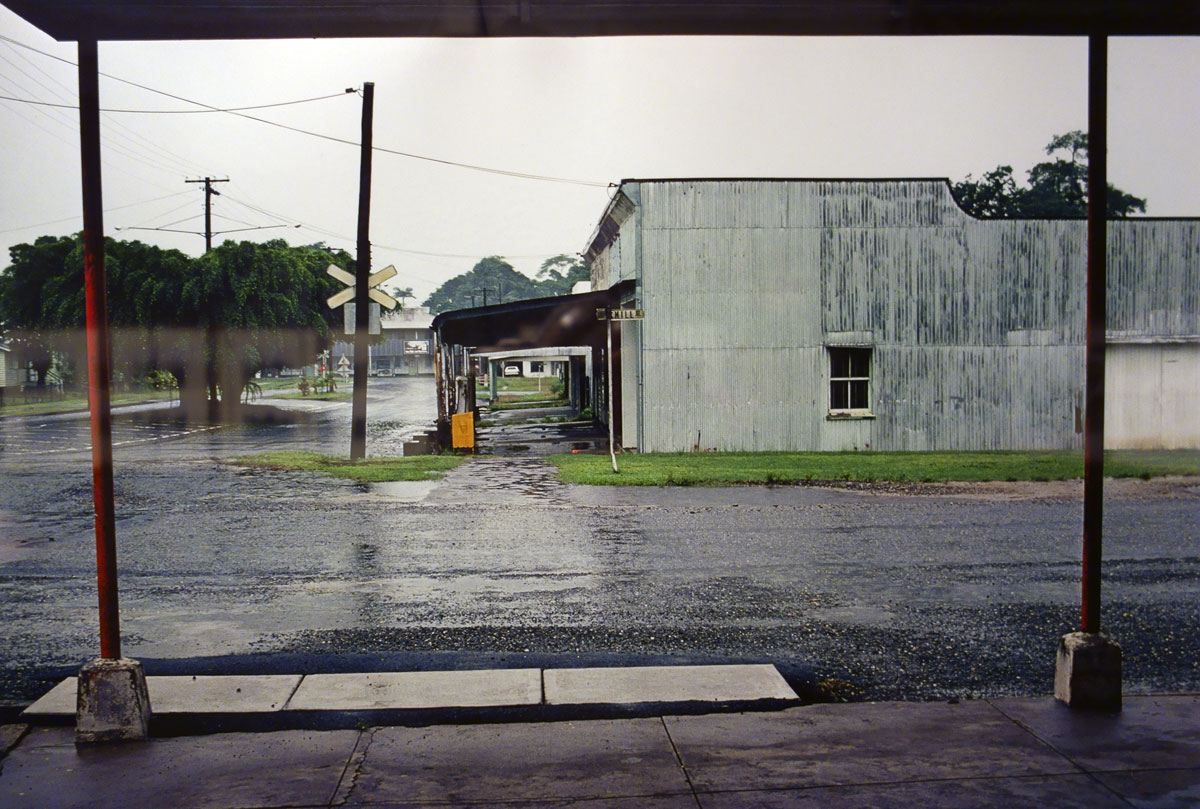
Installation view of Tim Handfield's work 'Babinda' 1981 at the exhibition 'The road: Photographers on the move 1970-1975' at the Monash Gallery of Art


Installation view of Tim Handfield’s work Babinda 1981 at the exhibition The road: Photographers on the move 1970-1975 at the Monash Gallery of Art


Installation view of Tim Handfield's work 'Gordonvale' 1981 at the exhibition 'The road: Photographers on the move 1970-1975' at the Monash Gallery of Art


Installation view of Tim Handfield’s work Gordonvale 1981 at the exhibition The road: Photographers on the move 1970-1975 at the Monash Gallery of Art


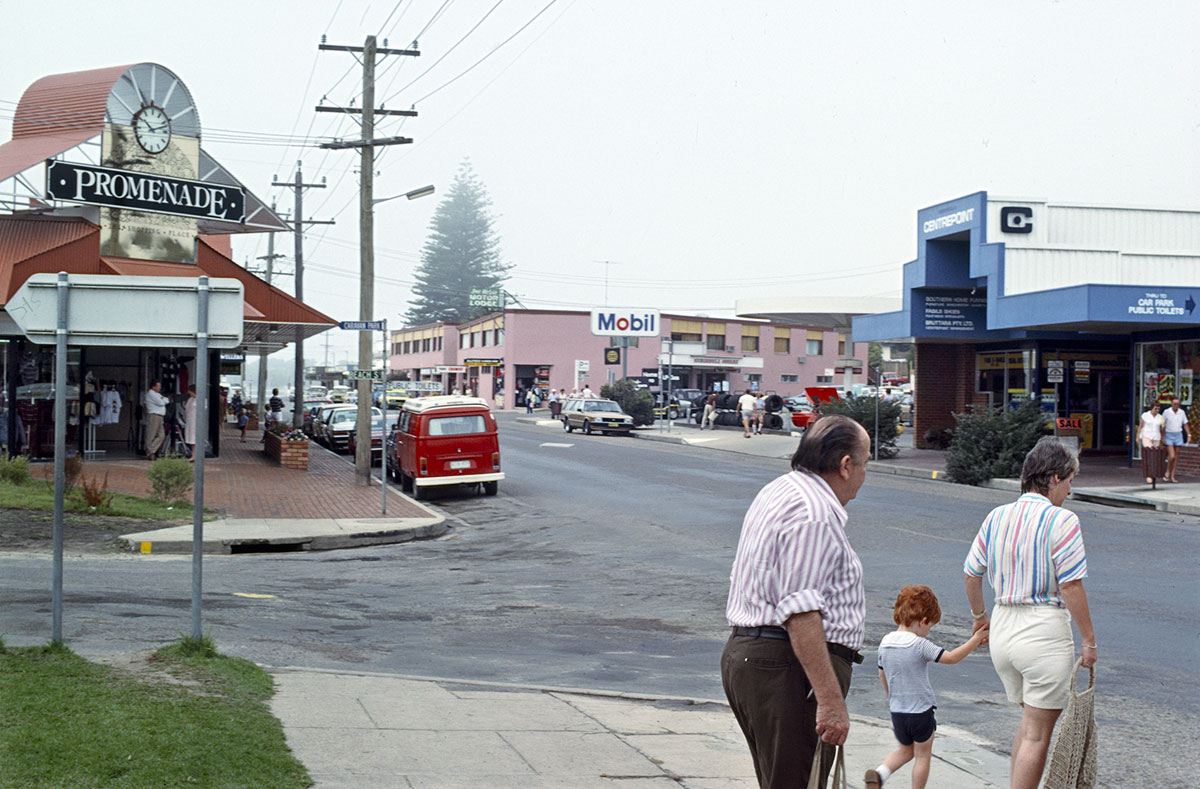
Tim Handfield (Australian, b. 1952) 'Promenade' 1985


Tim Handfield (Australian, b. 1952)
Promenade
1985
Silver dye bleach print
51 x 67cm
Collection of the artist
Courtesy of the artist and M. 33 (Melbourne)


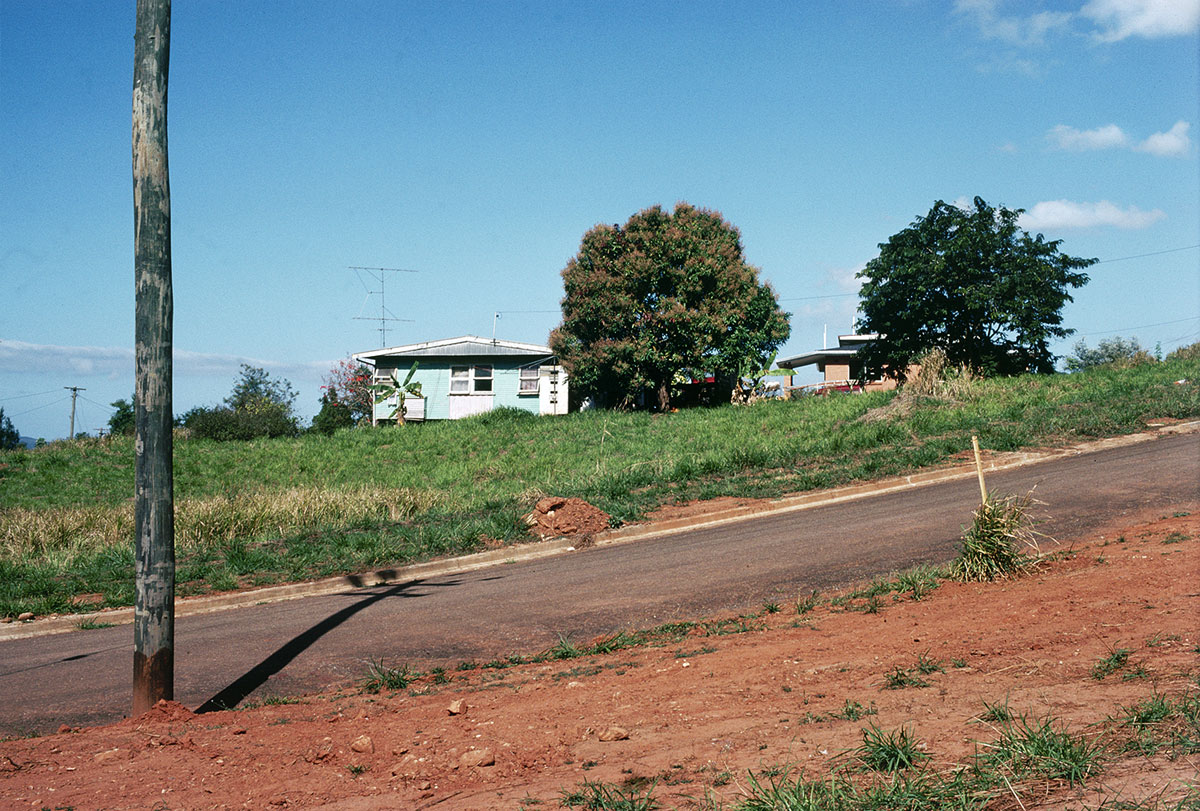
Tim Handfield (Australian, b. 1952) 'Bayview Heights, Cairns' 1980


Tim Handfield (Australian, b. 1952)
Bayview Heights, Cairns
1980
Silver dye bleach print
51 x 67cm
Collection of the artist
Courtesy of the artist and M. 33 (Melbourne)


Tim Handfield (Australian, b. Melb 1952)

These photographs come from an extended series of pictures taken by Tim Handfield on the road. The series features images of the roadside landscape of places Handfield travelled through and visited along Australia’s eastern seaboard during the 1980s. The photographs relate to a broad body of often diaristic postwar literature, cinema and visual arts that considered the particular experience of the world made possible by the road (at least in the West). In this way, the pictures reflect the dominance of American culture at this time, when earlier assumptions about the road as a place of quest and opportunity were giving way to accounts of the road as a place of boredom, sameness and danger. The series is also about the particular experience of travel and landscape in Australia, at a time when the impending bicentennial of European settlement led many to reconsider the assumptions upon which Australian life was based.

Tim Handfield has been working at the forefront in Australia of new colour photographic processes since the mid-1970s. Spending extended periods of time in the United States during the early to mid-1970s, Handfield became interested in the work of American photographers such as William Eggleston and Stephen Shore, who found deadpan beauty in the banality of American suburban life. After returning to Australia, Handfield sought out non-dramatic urban sites, which he photographed in highly formal ways. These images were ideally served by the Cibachrome printing process, a dye destruction positive-to-positive photographic process noted for the purity of its colour, clarity of image and archival stability.


Ian North (born New Zealand 1945; arrived Australia 1971) 'Canberra suite' 1980-1981


Ian North (born New Zealand 1945; arrived Australia 1971)
Canberra suite
1980-1981
1 of 24 chromogenic prints, printed 1984
37 x 46cm (each)
National Gallery of Victoria, Melbourne
Purchased through the NGV Foundation with the assistance of David Symen & Co. Limited, 2001
Courtesy of the artist


Ian North (born New Zealand 1945; arrived Australia 1971) 'Canberra suite' 1980-1981


Ian North (born New Zealand 1945; arrived Australia 1971)
Canberra suite
1980-1981
1 of 24 chromogenic prints, printed 1984
37 x 46cm (each)
National Gallery of Victoria, Melbourne
Purchased through the NGV Foundation with the assistance of David Symen & Co. Limited, 2001
Courtesy of the artist


Ian North (b. 1945, New Zealand; Australia from 1971)

Ian North developed his Canberra suite while living in Canberra during 1980-1984. The suite reflects North’s experience of the particular suburban interface that is so intrinsic to Walter Burley-Griffin’s vision of Canberra. Having grown up in New Zealand, making artwork about the sublime urban spaces of Wellington, North brought a particularly soulful sensibility to Australia’s suburban capital. Canberra suite also reflects North’s professional experience of the city. He moved to Canberra in 1980 as the first Curator of Photography at the National Gallery of Australia. A key feature of NGA’s collection development at the time was the acquisition of work by contemporary American photographers, including prints by William Eggleston and Stephen Shore and books by Ed Ruscha. After work hours, North made a pastime of wandering the streets of Canberra and taking photographs in a similar vein. Like his American contemporaries, North embraced the roadside as an uncanny threshold between public and private space, systematically documenting the everyday in order to imbue it with a sense of mystery.

Ian North initially studied art history and spent most of his professional life working as a curator and an academic. Alongside his career as a curator, North developed a substantial artistic practice which flourished when he moved away from museum-based work. Working with photography and painting, North’s art practice focuses on the representation of the landscape.


Installation view of Robert Rooney's series 'Holden Park 1 & 2, May 1970' at the exhibition 'The road: Photographers on the move 1970-1975' at the Monash Gallery of Art

Installation view of Robert Rooney's series 'Holden Park 1 & 2, May 1970' (detail) at the exhibition 'The road: Photographers on the move 1970-1975' at the Monash Gallery of Art


Installation views of Robert Rooney’s series Holden Park 1 & 2, May 1970 at the exhibition The road: Photographers on the move 1970-1975 at the Monash Gallery of Art


Robert Rooney (Australian, b. Melb 1937-2017)

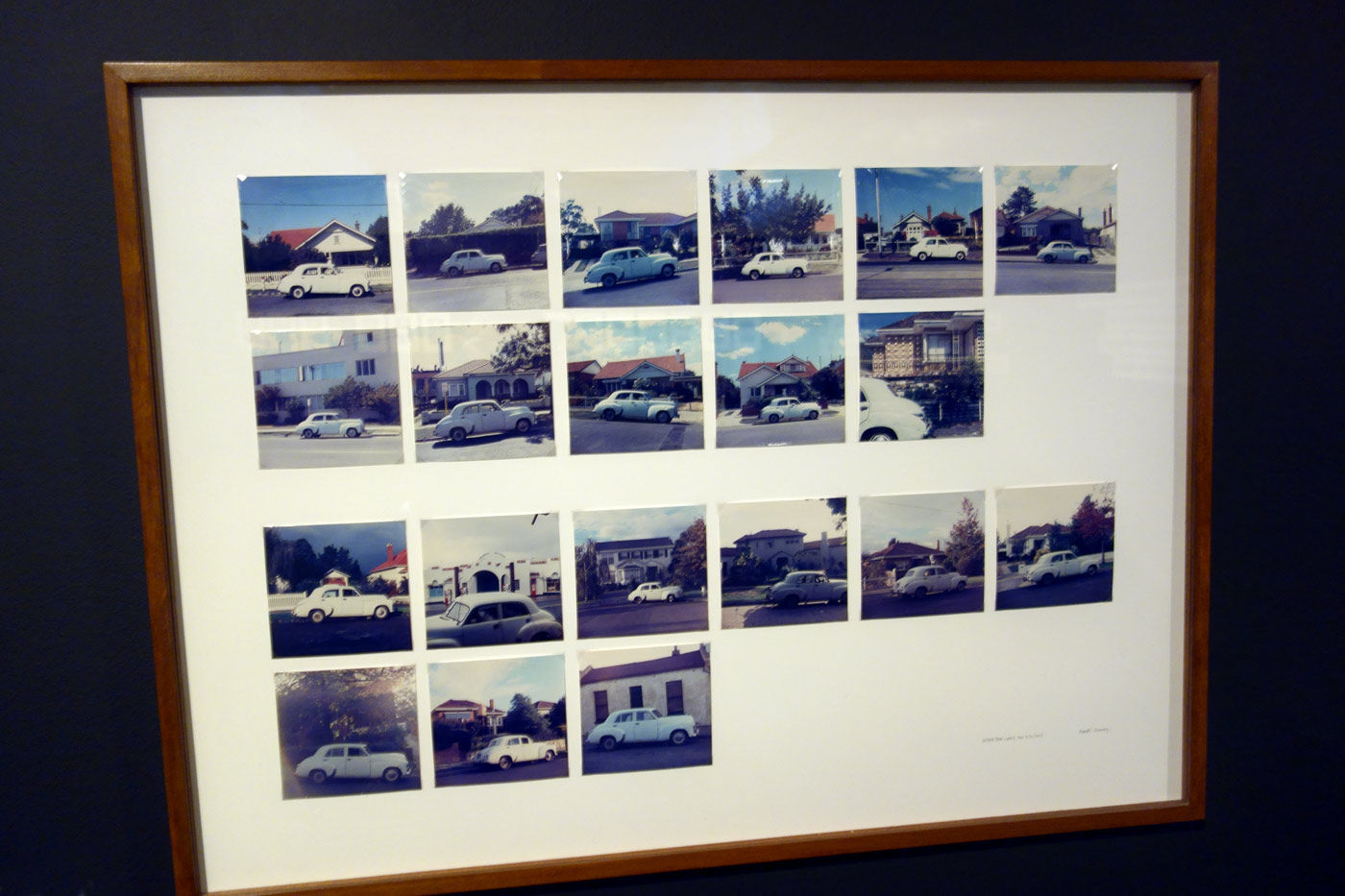
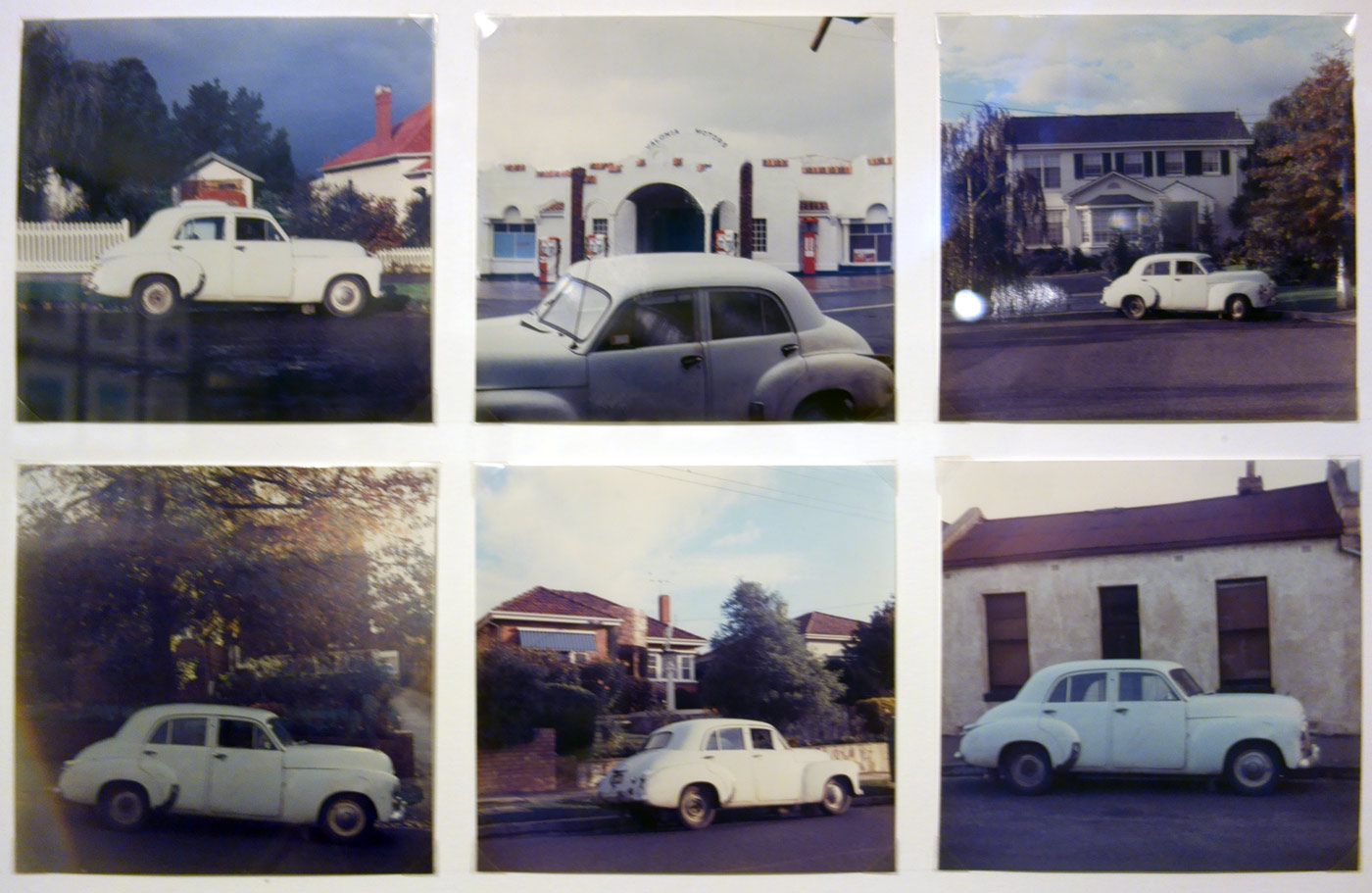
Robert Rooney’s Holden Park 1 & 2, May 1970 is one of the key works of postwar Australian photography. The work comprises a grid of photographs depicting Rooney’s Holden car parked at 19 different sites around the artist’s East Hawthorn home, locations which Rooney chose at random from a street directory. Holden Park draws on a range of influences that include the photographic books of American conceptualist Ed Ruscha, the absurd topographies of the Swiss conceptualist Daniel Spoerri, and the American composer John Cage’s interest in chance as a creative principle. However, and while the work is very ‘literate’ in relation to these influences, Holden Park is very much a product of postwar Melbourne. Rooney has always maintained a strong interest in the suburban experience and the way that Melbourne has developed around this experience. While it would be disingenuous to say that Holden Park is a product of social history, it was certainly informed by and reflects the sensation of driving around Melbourne’s suburbs on a Sunday afternoon.

Robert Rooney is one of Australia’s best-known artists. Rooney studied art and design at Swinburne Technical College and quickly developed a significant reputation for his abstract painting and art criticism. Rooney gave up painting during the early 1970s and for over a decade focussed largely on photographic work. Using an Instamatic and later a 35 mm camera, Rooney photographed in great detail his suburban life, organising his pictures according to gridded frameworks that seemed to distil the rigour of European and American conceptualism and performance art, the humour of Pop Art, and the particular countenance of Australian suburban life during the 1970s. Examples include AM/PM of 1974, for which Rooney photographed his bed each morning and night for 107 days, and Garments 1972-1973, for which he photographed the clothes he would wear each day for 107 days.


Installation view of Wesley Stacey's series 'The road' 1974-75 (detail) at the exhibition 'The road: Photographers on the move 1970-1975' at the Monash Gallery of Art

Installation view of Wesley Stacey's series 'The road' 1974-75 (detail) at the exhibition 'The road: Photographers on the move 1970-1975' at the Monash Gallery of Art


Installation views of Wesley Stacey’s series The road 1974-1975 (detail) at the exhibition The road: Photographers on the move 1970-1975 at the Monash Gallery of Art


Installation view of Wesley Stacey's series 'The road' 1974-75 (detail) at the exhibition 'The road: Photographers on the move 1970-1975' at the Monash Gallery of Art

Installation view of Wesley Stacey's series 'The road' 1974-75 (detail) at the exhibition 'The road: Photographers on the move 1970-1975' at the Monash Gallery of Art

Installation view of Wesley Stacey's series 'The road' 1974-75 (detail) at the exhibition 'The road: Photographers on the move 1970-1975' at the Monash Gallery of Art

Installation view of Wesley Stacey's series 'The road' 1974-75 (detail) at the exhibition 'The road: Photographers on the move 1970-1975' at the Monash Gallery of Art

Installation view of Wesley Stacey's series 'The road' 1974-75 (detail) at the exhibition 'The road: Photographers on the move 1970-1975' at the Monash Gallery of Art


Wesley Stacey (Australian, b. 1941)
The road (details)
1974-1975
304 chromogenic prints
9.0 x 12.7cm (each)
Monash Gallery of Art, City of Monash Collection
Courtesy of the artist


Wesley Stacey (Australian, b. 1941)

Wesley Stacey’s The road is an epic travelogue that documents a series of specific road trips made by the artist in his Kombi Van during 1973 and 1974. This project grew out of Stacey’s interest in Instamatic cameras and automated colour printing, which became readily available during the early 1970s. Remote Australian landscapes are a persistent theme in Stacey’s photography, but these new technologies allowed him to document the sense of movement and adventure that underpins a road trip in a relatively cheap and expedient way. The road was initially exhibited as a series of sequential panels at the Australian Centre for Photography in 1975, and then re-configured as a series of photobooks containing 305 prints. A second version containing 280 photographs was printed for the National Gallery of Australia in 1984.

Wesley Stacey studied drawing and design at East Sydney Technical College (1960-1962) before working as a graphic designer and photographer for the ABC in Sydney and the BBC in London through the 1960s. In the late 1960s he worked as a magazine photographer in Sydney and from 1969-1975 worked as a freelance commercial photographer. In 1973 Stacey helped establish the Australian Centre for Photography and was a member of its inaugural board of management. In 1976 Stacey moved to the Bermagui area of the NSW South Coast, where he purchased land and established a rudimentary bush camp where he continues to live.

Text © Monash Gallery of Art 2014


Monash Gallery of Art
860 Ferntree Gully Road, Wheelers Hill
Victoria 3150 Australia
Phone: + 61 3 8544 0500

Opening hours:
Tue – Fri: 10am – 5pm
Sat – Sun: 10pm – 4pm
Mon/public holidays: closed
Monash Gallery of Art website

LIKE ART BLART ON FACEBOOK

Back to top