Review: ‘Lost & Found: Family Photos Swept away by the 3.11 East Japan Tsunami’ at the Centre for Contemporary Photography (CCP), Fitzroy, Melbourne

Exhibition dates: 1st June – 15th July 2012
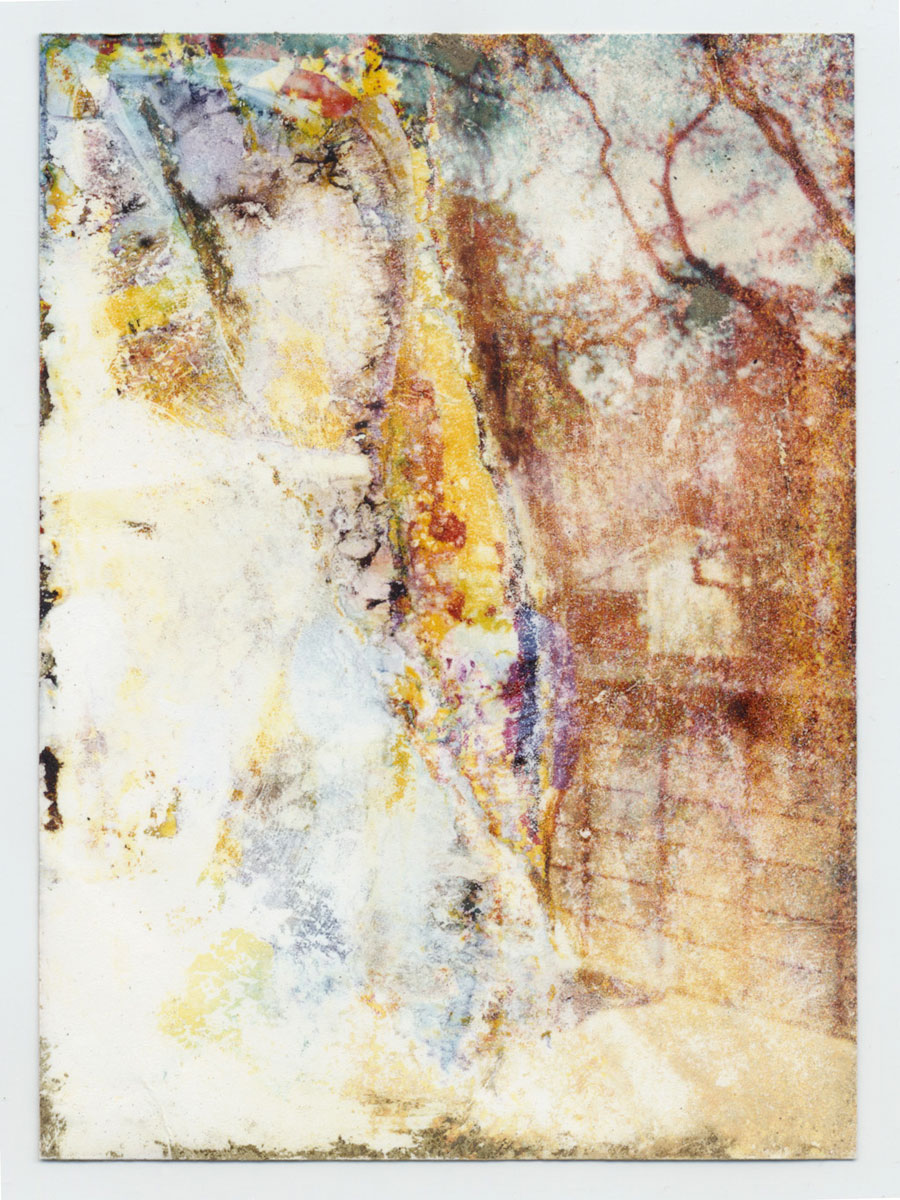
 

'Untitled' from 'Lost and Found' 2011


This is a profound exhibition of photographs that have been lost then found. Too damaged to be returned to the families of their missing owners after the 3.11 East Japan Tsunami they have been cleaned, dried, digitally catalogued and put on display. As remnants of disaster they have taken on an ethereal, abstract expressionist beauty.

Like Atget’s photographs (his “documents for artists”) they were never meant to be “art”, but through morphogenesis (‘beginning of the shape’) these snapshots of places, family and friends reveal their inherent form. This beginning of form has been exposed through displacement, washing and erasure. Through this process of erasure these anonymous images reveal their underlying structure with its link to alchemy, as the image dis/appears from view; they have become unfixed (as in the fixer that stabilises the image in the analogue darkroom) from reality. In this process they have become art.


The images are incredibly beautiful.

They hid secrets (of ownership, names, families and places, of time and space).

Something (energy, spirit?) emerges when you least expect it.


Photographs are coded, but usually so as to appear uncoded but here the link to the indexicality of the image – the idea of the visible as evidence of truth – has been broken. These photographs, taken out of their original context, have lost their specific use value in the particular time and place of their consumption. The fragmentation of this use value, together with the dissolution of their formal characteristics, means that they are freed of the conditions that limit and determine their meaning.1 As Annette Kuhn has written in The Power of the Image, “Meanings do not reside in images, then: they are circulated between representation, spectator and social function.”2 And in these images all three things have changed.

Further, the link between the image and its referent, the photograph and the thing being photographed has been irreversibly broken. As the French critic Maurice Blanchot has written, “The image has nothing to do with signification, meaning, as implied by the existence of the world, the effort of truth, the law and the brightness of the day. Not only is the image of an object not the meaning of that object and of no help in comprehending it, but it tends to withdraw it from its meaning by maintaining it in the immobility of a resemblance that it has nothing to resemble.”3 In other words (and especially in these photographs) it is this severance of meaning and its object, this resemblance of nothing.

But think about this idea:

THINK ABOUT THE IDEA OF RE(AS)SEMBLANCE!

DOES THE PHOTOGRAPH REASSEMBLE A SIGNIFICATION, A MEANING WHOLLY ITS OWN, OR IS THAT RE(AS)SEMBLANCE PART OF THE ORIGINAL MEANING OF THE OBJECT PHOTOGRAPHED?


In these photographs there is an obfuscation of reality in which the usually coded photographs now appear to be uncoded in some visceral sense. In fact there is a double obfuscation, a double effacement, as the images are displayed on the wall like a series of bathroom tiles in plastic sleeves, here not at one remove but at two (the clouding of the image and the clouding through the plastic). What emerges from this alchemical miasma is the ghost of the meaning of the object, where we acknowledge that the essence of these people did really exist. The recognition of their presence, this partial reassemblance of the context and meaning of the object originally photographed, is the strength of these images: our acknowledgment of some form of existence in the trace of the photograph, where seeing is subconsciously believing.

What we are left with in these images are vestiges of presence, remnants or traces of people that have passed on. In a kind of divine intervention, these photographs ask the viewer questions about the one fact that we cannot avoid in our lives, our own mortality, and what remains after we pass on. We can never know these people and places, just as we can never know the place and time of our death – when our “time” is up – but these photographs awaken in us a subconscious remembering: that we may be found (in life), then lost (through death), then found again in the gaze of the viewer looking at the photographs in the future present. We are (dis)continuous beings.

There is no one single reading of these photographs for “there are only competing narratives and interpretations of a world that cannot be wholly, accurately described.”4 These indescribable photographs impinge on our consciousness calling on us to remember even as the speed of contemporary life asks us to forget. This ethical act of looking, of mourning and remembering, of paying homage to presence acknowledges that we choose not to let pass into the dark night of the soul these traces of our forebears, for each emanation is deeply embedded within individual and cultural memory.

These photographs are a contemporary form of Western ‘dreaming’ in which we feel a link to the collective human experience. In this reification, we bear witness to the (re)assemblance of life, the abstract made (subconsciously) concrete, as material thing. These images of absent presence certainly reached out and touched my soul.

Vividly, I choose to remember rather than to forget.

Dr Marcus Bunyan


Footnotes

1/ Kuhn, Annette. The Power of the Image: Essays on Representation and Sexuality. London: Routledge and Kegan Paul, 1985, p. 6

2/ Ibid.,

3/ Blanchot, Maurice. The Gaze of Orpheus. New York: Barrytown, 1981, p. 85

4/ Townsend, Chris. Vile Bodies: Photography and the Crisis of Looking. Munich: Prestel, 1998, p. 10


Many thankx to Munemasa Takahashi, Kristian Haggblom and Karra Rees for their help and the CCP for allowing me to publish the photographs in the posting. Please click on the photographs to view a larger version of the image.


'Untitled' from 'Lost and Found' 2011


Opening of the 'Lost & Found' exhibition at the Centre for Contemporary Photography


Opening of the Lost & Found exhibition at the Centre for Contemporary Photography, Melbourne


'Untitled' from 'Lost and Found' 2011


'Untitled' from 'Lost and Found' 2011


'Untitled' from 'Lost and Found' 2011


Lost & Found is a profoundly moving exhibition of collected photographs recovered from the devastation following the earthquake and tsunami and subsequent nuclear catastrophe that took place in the Tohoku region in 2011. 

The tsunami not only swept the harbour away, but also houses, cars, trains; and many people lost their lives. Although no longer in the media, people in this region are still in great need. These photographs remind us of their presence and make us aware of their silent voices. The exhibition also gives us an opportunity to think about the relationship people have with their photographs.

The Lost & Found project is attempting to return pictures from the collection to their owners by cleaning, cataloguing and creating a digital database of the photographs. Many images were too badly damaged and can not be returned; rather than discard them, the project team decided to exhibit the imagery and give people the opportunity to see these photographs in the belief that they carry powerful messages. 

This project was initiated by Munemasa Takahashi and Hiroshi Hatate in Japan and Kristian Haggblom from Wallflower Photomedia Gallery in Australia. Funds raised will go directly to the people of Yamamoto-cho.

Text from the CCP website


'Untitled' from 'Lost and Found' 2011


'Untitled' from 'Lost and Found' 2011


'Untitled' from 'Lost and Found' 2011


'Untitled' from 'Lost and Found' 2011


'Untitled' from 'Lost and Found' 2011


All photographs are from the exhibition Lost & Found


Centre for Contemporary Photography

No permanent exhibition space at the moment

Centre for Contemporary Photography website

LIKE ART BLART ON FACEBOOK

Back to top

Exhibition: ‘Yayoi Kusama: Mirrored Rooms’ at Museum of Contemporary Art (MCA), Sydney

Exhibition dates: 24th February – 8th June, 2009

Curators: Jaap Guldemond (Museum Boijmans Van Beuningen), Franck Gautherot & Seungduk Kim (Le Consortium, Dijon)

MCA Curatorial Liaison: Judith Blackall


“Discover the work of internationally acclaimed Japanese artist Yayoi Kusama with this major exhibition that spans decades of her artistic practice.

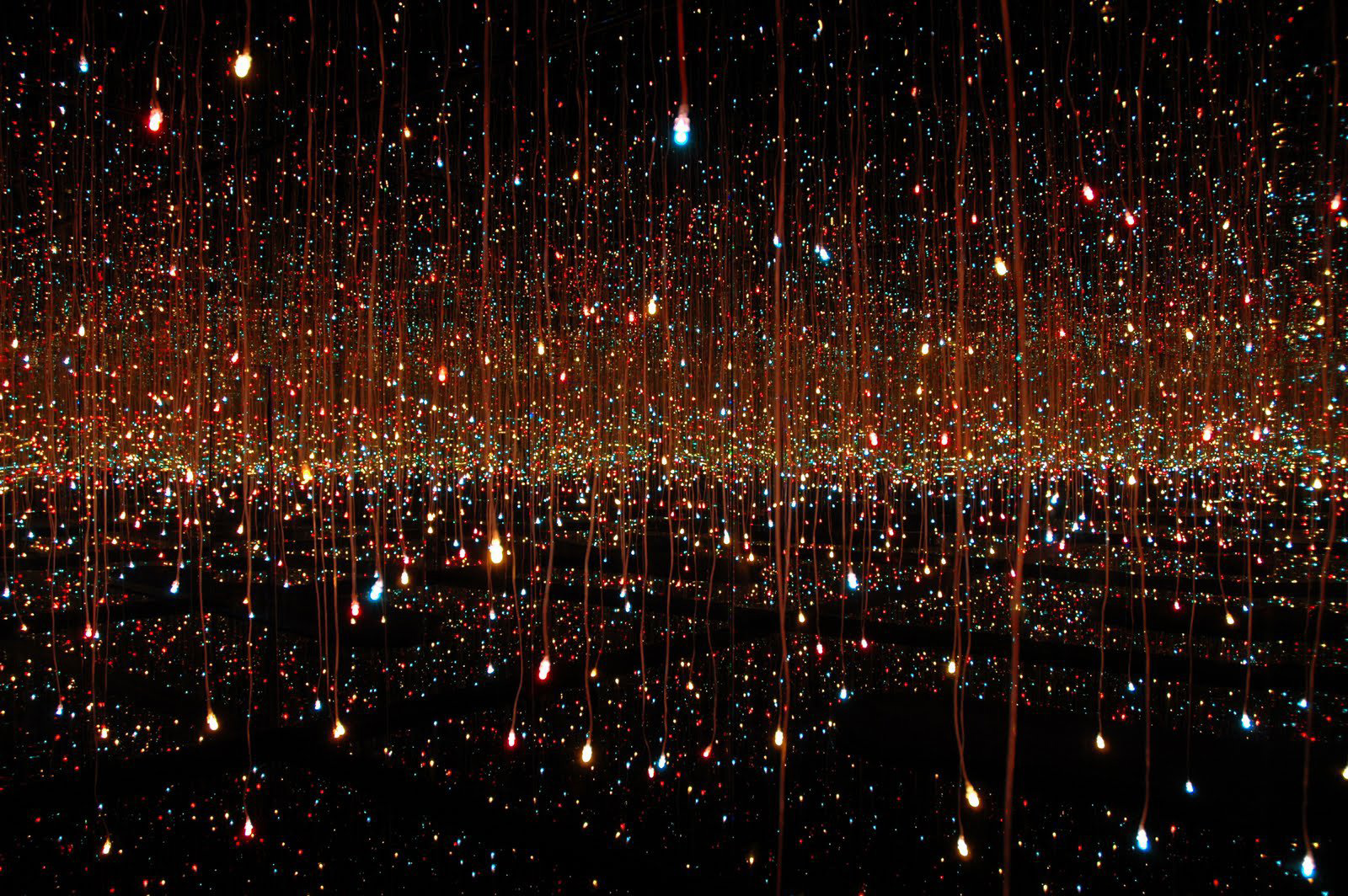
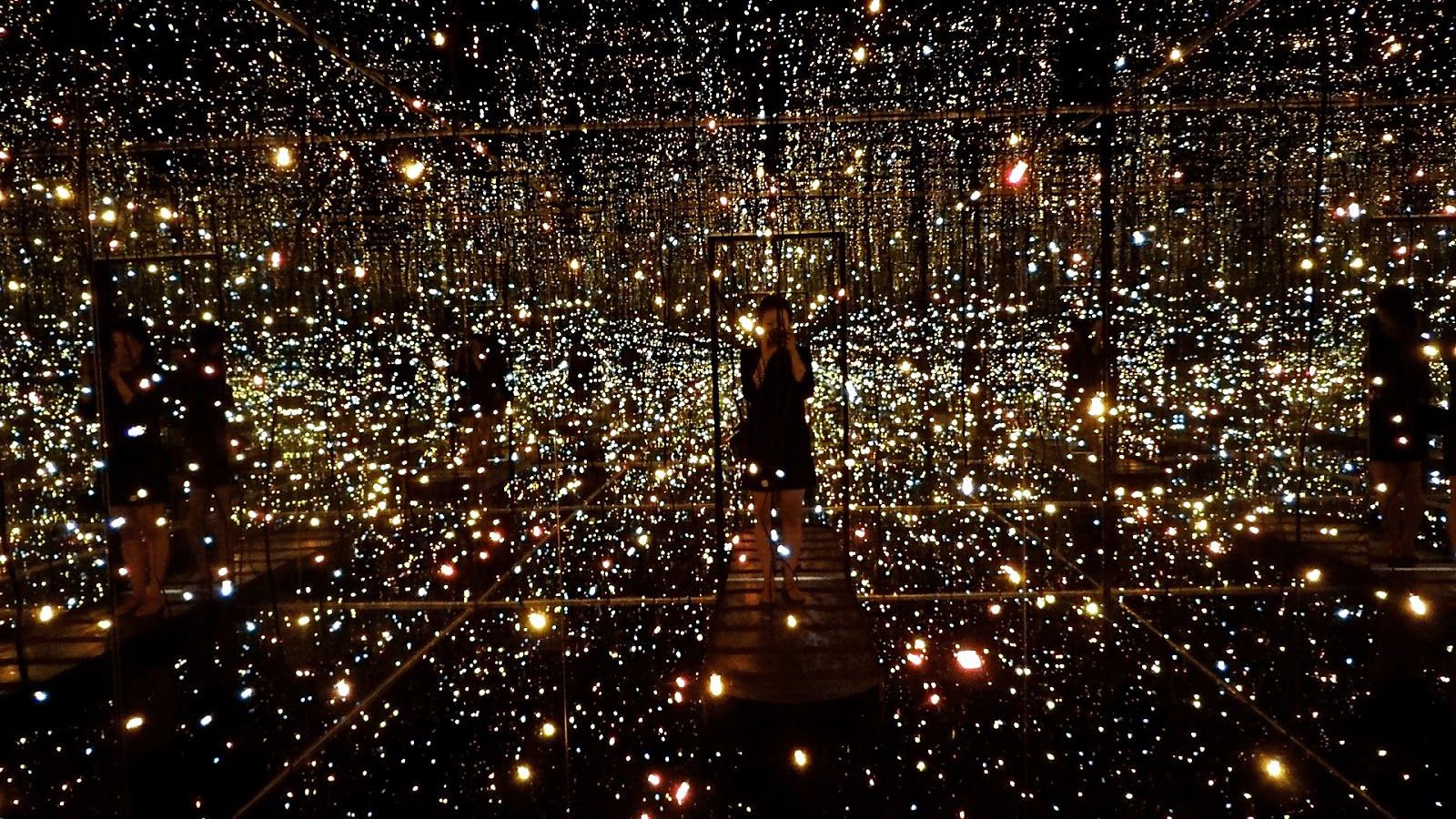
Yayoi Kusama: Mirrored Years demonstrates the enduring force of Yayoi Kusama. Renowned early installations such as Infinity Mirror Room – Phalli’s Field (1965) along with recent immersive environments including Fireflies on the Water (2000) and Clouds (2008) provide insight into the creative energy of this extraordinary artist and her lifelong preoccupation with the perceptual, visual and physical worlds.

Working across different media and forms that include painting, collage, sculpture, installation and film, as well as performance and its documentation, Kusama creates works that reveal a fixation with repetition, pattern and accumulation. Describing herself as an “obsessive artist”, her work is intensely sensual, infused with autobiographical, psychological and sexual content.”

Text from the MCA website [Online] Cited 12/03/2009. No longer available online


Many thanks to Ed Jansen for the use of his installation photographs of this exhibition at Museum Boijmans Van Beuningen, Rotterdam in 2008. See the whole set of his photographs on Flickr. Please click on the photographs for a larger version of the image.


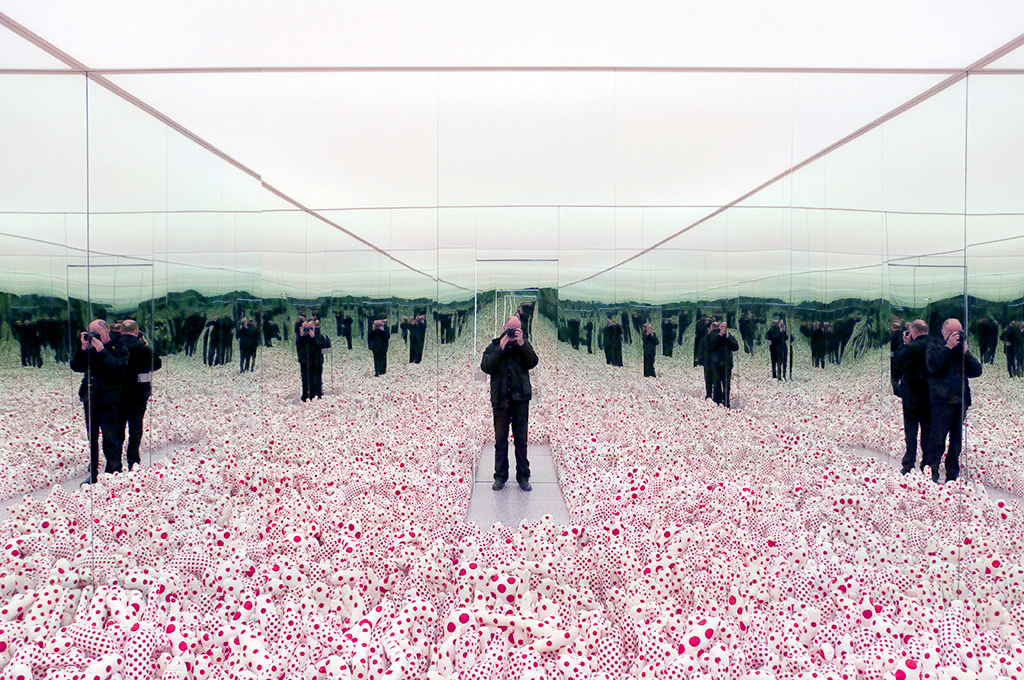
Yayoi Kusama (Japanese, b. 1929) 'Infinity Mirror Room - Phalli's Field' 1965 from the exhibition 'Yayoi Kusama: Mirrored Rooms' at Museum of Contemporary Art (MCA), Sydney, Feb - June, 2009


Yayoi Kusama (Japanese, b. 1929)
Infinity Mirror Room – Phalli’s Field
1965


Yayoi Kusama (Japanese, b. 1929) 'Infinity Mirror Room - Phalli's Field' 1965 from the exhibition 'Yayoi Kusama: Mirrored Rooms' at Museum of Contemporary Art (MCA), Sydney, Feb - June, 2009

Yayoi Kusama (Japanese, b. 1929) 'Infinity Mirror Room - Phalli's Field' 1965


Yayoi Kusama (Japanese, b. 1929)
Infinity Mirror Room – Phalli’s Field
1965
Museum Boijmans Van Beuningen, Rotterdam, 2008
Photo: Ed Jansen


Rewind 1960

Visual hallucinations of polka dots since childhood have inspired the most significant works of this avant-gardist, who says creating art “saved” her during her lifelong battle with mental illness.

Interview by Natalie Reilly

This photograph [see above, top, for the image of her in 1965] shows a creative work that I made in New York in 1960. I was 31 years old at the time and my inspiration was the inundation and proliferation of polka dots. The work represents the evolution of my original formative process. Of all the pieces I have made, I like this one the best. It was my intention to create an interminable image by using mirrors and multiplying red polka dots.

I was born in Nagano Prefecture , a mountainous region in Japan. The youngest of four children, I have one sister and two brothers.

Since childhood, I have loved to paint pictures and create art forms. [Kusama has suffered from obsessive thinking and visual hallucinations since early childhood. the hallucinations – often of polka dots, or “nets” as she calls them – have become the inspiration for much of her work.] I did many artworks in great numbers in my younger days.

I went to Seattle in 1957 where I had my first solo exhibition in the US. I moved  to New York in 1958. Japan in those days was too conservative for avant-garde art to be accepted. [By 1961, Kusama was an active participant in the avant-garde movement in New York. Her art, which often included performance and controversial themes such as nudity and protests against the Vietnam War, drew acclaim for art critics and other artists such as Andy Warhol and Claes Oldenburg.]

I was deeply moved by the efforts the artists in New York were making then to develop a new history for art. I owe what I am today to many people in the art circles in Japan, the US and Europe who enthusiastically supported my art and gave me a boost into the international art scene.

Artists Georgia O’Keefe and Joseph Cornell were among the many friends who helped me, including Donald Judd and [writer and activist] Lucy Lippard who appreciated the originality of my art.  [In 1962 at the height of her success in New York, Kusama’s mental health began to suffer as she grew more paranoid about other artists copying her work. Late that year, she covered up all the windows in her studio in an attempt to “shut out the world”, and by November she was hospitalised after suffering a nervous breakdown.]

I came back to Japan in 1973, because my health had deteriorated. I wanted to create art in a quiet atmosphere. I once said, “if it were not for art, I would have killed myself a long time ago” an that’s still true. I do art in order to pursue my philosophy of life seeking truth in art.

Reilly, Natalie. “Rewind 1960,” in Boleyn, Alison (ed.,). Sunday Life: The Sunday Age Magazine. Melbourne: Fairfax Magazines. February 15th 2009, p. 30.


Yayoi Kusama (Japanese, b. 1929) 'Clouds' 1999 and 'Love Forever' 2005 from the exhibition 'Yayoi Kusama: Mirrored Rooms' at Museum of Contemporary Art (MCA), Sydney, Feb - June, 2009


Yayoi Kusama (Japanese, b. 1929)
Clouds 1999 and Love Forever 2005
Museum Boijmans Van Beuningen, Rotterdam, 2008
Photo: Ed Jansen


Yayoi Kusama (Japanese, b. 1929) 'Clouds' 2008 (installation view at MCA)


Yayoi Kusama (Japanese, b. 1929)
Clouds (installation view at MCA)
2008
Image courtesy the artist, Yayoi Kusama Studio, Victoria Miro Gallery, London and Ota Fine Arts, Tokyo and © the artist


Yayoi Kusama (Japanese, b. 1929) 'Stars Infinity (A.B.C)' 2003 (installation view MCA)


Yayoi Kusama (Japanese, b. 1929)
Stars Infinity (A.B.C) (installation view at MCA)
2003
Image courtesy and © the artist


This exhibition explored the extraordinary work of Japanese artist Yayoi Kusama. It revealed the coherence of her practice over many years and highlighted the freshness and innovation she brings to themes investigated throughout her life. Describing herself as an ‘obsessive artist’, her work is intensely sensual, infused with autobiographical, psychological and sexual content.

Kusama was born in 1929, in Matsumoto City, Nagano Prefecture, Japan. She demonstrated a passion for art from an early age and went on to study Nihonga painting, a formal Japanese technique using ground pigment and animal glues. Excited by the promise of the post-war international art scene, Kusama moved to New York in 1958. Her first New York solo exhibition a year later was an outstanding success and she became renowned as an innovative and adventurous young artist with her large Infinity Net canvases; Accumulation sculptures of everyday objects completely covered with soft, sewn and stuffed protuberances; environments such as the Infinity Mirror Room-Phalli’s Field (1965) and performances and Happenings. In 1966 she exhibited Narcissus Garden, a field of mirrored spheres in the gardens of the Venice Biennale, creating a sensation with an extraordinarily beautiful and compelling new version of her accumulations.

Kusama was energetic, talented, strategic and courageous at a time of fervent development in the art world, in a city that was exciting and notoriously competitive. During the ‘60s and ‘70s she was an active presence in Europe as well – in 1962 she was the only female artist to take part in the widely acclaimed Nul (Zero) international group exhibition at the Stedelijk Museum in Amsterdam. She returned to Tokyo in 1973.

Yayoi Kusama: Mirrored Years juxtaposed seminal works from the 1960s with more recent installations, films, paintings, floor pieces and silkscreen prints on canvas, and included major new works. The exhibition reflected Kusama’s lifelong obsession with repetition, pattern and aggregation, and her perceptions – visual, physical and sensory. It demonstrated her originality, creativity and uncompromising vision across many different techniques. Her work has been highly influential to new generations of artists and designers and she remains one of the most respected artists working today.

Organised by Museum Boijmans Van Beuningen, Rotterdam, Netherlands.
Presented in association with City Gallery, Wellington, New Zealand.

Anonymous. “Yayoi Kusama: Mirrored Years,” on the MCA website Nd [Online] Cited 13/06/2022


Yayoi Kusama (Japanese, b. 1929) 'Fireflies on the Water' 2000

Yayoi Kusama (Japanese, b. 1929) 'Fireflies on the Water' 2000


Yayoi Kusama (Japanese, b. 1929)
Fireflies on the Water
2000


Yayoi Kusama (Japanese, b. 1929) 'The Moment of Regeneration' 2004


Yayoi Kusama (Japanese, b. 1929)
The Moment of Regeneration
2004


Yayoi Kusama (Japanese, b. 1929) 'The Moment of Regeneration' 2004 (installation view at MCA)


Yayoi Kusama (Japanese, b. 1929)
The Moment of Regeneration (installation view at MCA)
2004
Image courtesy the artist, Yayoi Kusama Studio, Victoria Miro Gallery, London and Ota Fine Arts, Tokyo and © the artist


Yayoi Kusama (Japanese, b. 1929) 'Walking on the Sea of Death' 1981 (installation view at MCA)


Yayoi Kusama (Japanese, b. 1929)
Walking on the Sea of Death (installation view at MCA)
1981
Image courtesy the artist, Yayoi Kusama Studio, Victoria Miro Gallery, London and Ota Fine Arts, Tokyo and © the artist


Yayoi Kusama (Japanese, b. 1929) 'Narcissus Garden' 1966


Yayoi Kusama (Japanese, b. 1929)
Narcissus Garden (at the Venice Biennale, Italy)
1966


Yayoi Kusama (Japanese, b. 1929) 'The Earth in Late Summer' 2004 (installation view MCA)


Yayoi Kusama (Japanese, b. 1929)
The Earth in Late Summer (installation view MCA)
2004
Image courtesy the artist, Yayoi Kusama Studio, Victoria Miro Gallery, London and Ota Fine Arts, Tokyo and © the artist


Yayoi Kusama (Japanese, b. 1929) 'I'm here but nothing' 2000- (installation view MCA)


Yayoi Kusama (Japanese, b. 1929)
I’m here but nothing (installation view MCA)
2000-
Image courtesy the artist, Yayoi Kusama Studio, Victoria Miro Gallery, London and Ota Fine Arts, Tokyo and © the artist


Yayoi Kusama (Japanese, b. 1929) 'Invisible Life' 2000


Yayoi Kusama (Japanese, b. 1929)
Invisible Life
2000


Museum of Contemporary Art (MCA)
140 George Street
The Rocks, Sydney, Australia

Opening hours:
Daily 11am – 5pm

Yayoi Kusama website

Museum of Contemporary Art website

LIKE ART BLART ON FACEBOOK

Back to top