Many thankx to BAM/PFA for allowing me to publish the photographs in the posting. Please click on the photographs for a larger version of the image.
Lutz Bacher (American, 1943-2019) Bien Hoa (detail)
2006-2007
inkjet print mounted on aluminium
24 x 36 in.
Courtesy of Ratio 3, San Francisco
Lutz Bacher (American, 1943-2019) Bien Hoa (detail)
2006-2007
inkjet print mounted on aluminium
24 x 36 in.
Courtesy of Ratio 3, San Francisco
Since Lutz Bacher’s first MATRIX exhibition in 1993, the Berkeley-based artist has become a leading figure in contemporary art; she was the subject of a retrospective at MoMA PS1 in 2009 and was included in the 2012 Whitney Biennial. MATRIX 242 presents an important but rarely seen series from 2006-2007 that sheds light on the artist’s often elusive practice.
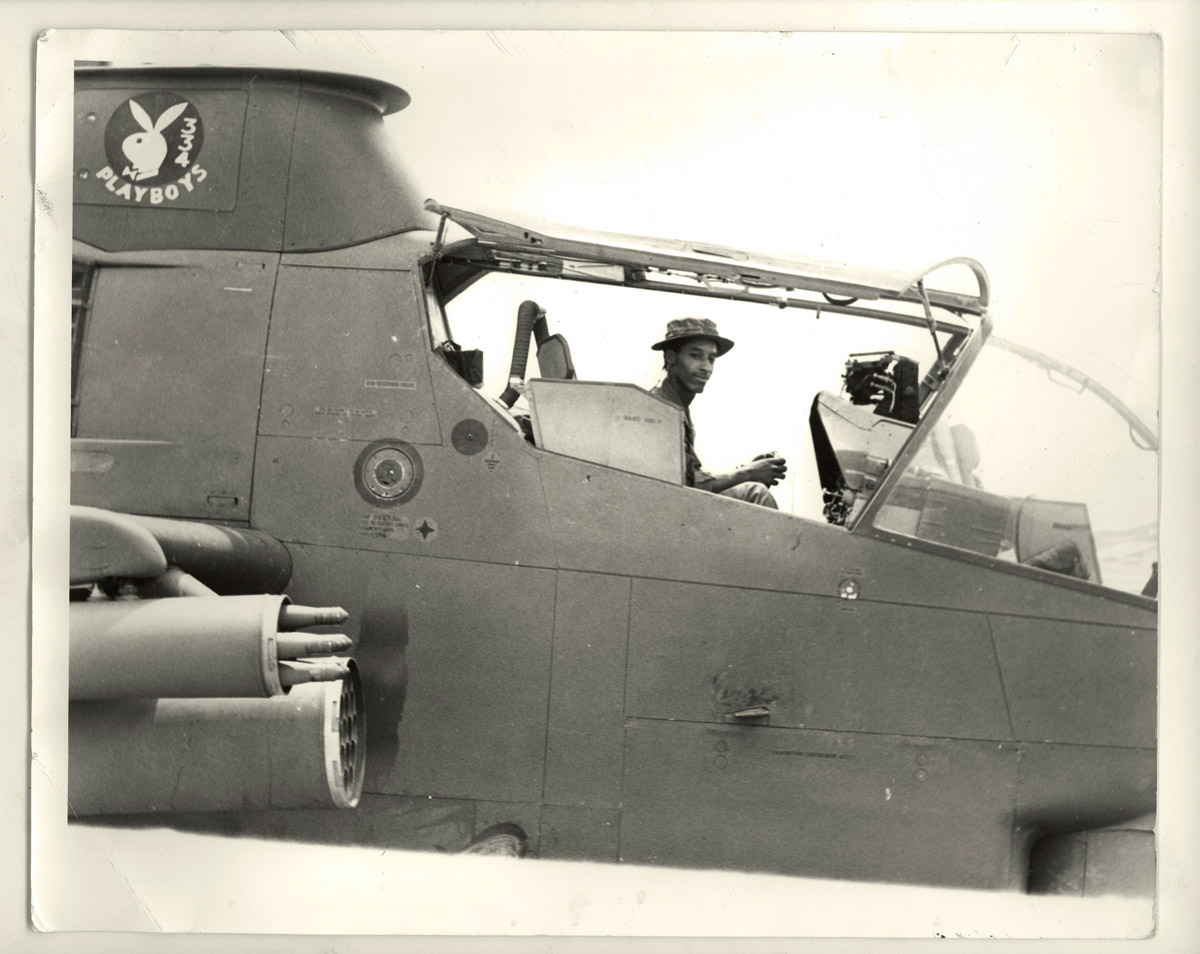
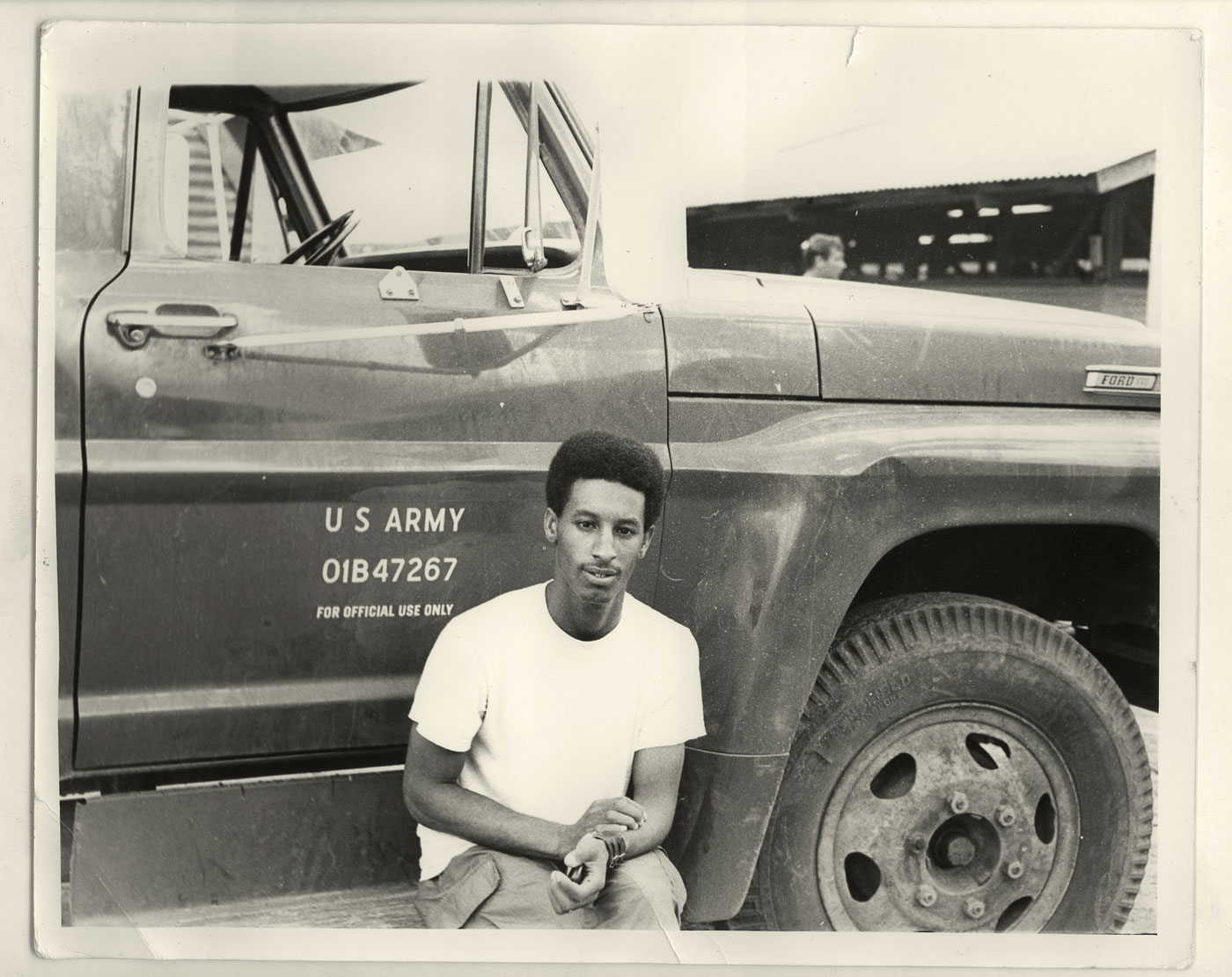
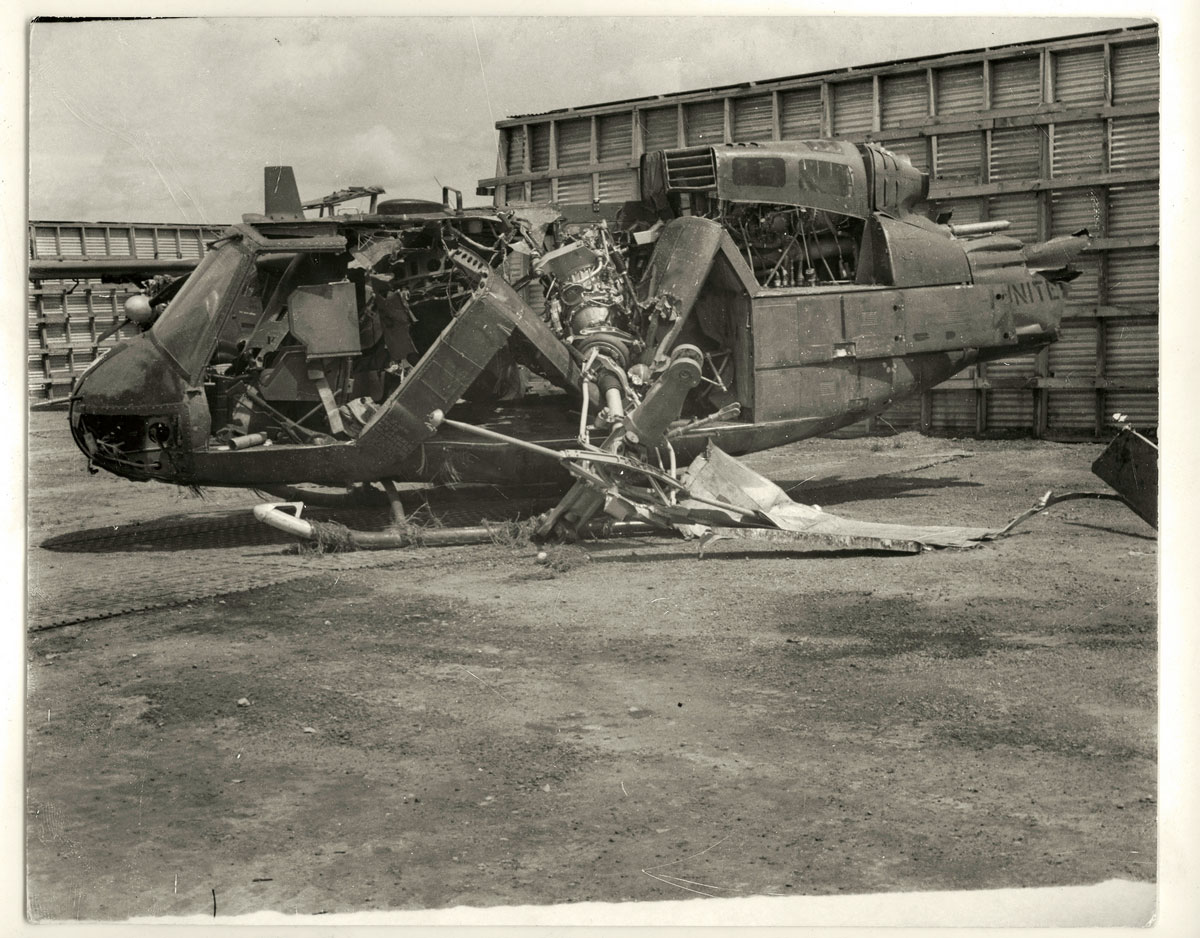
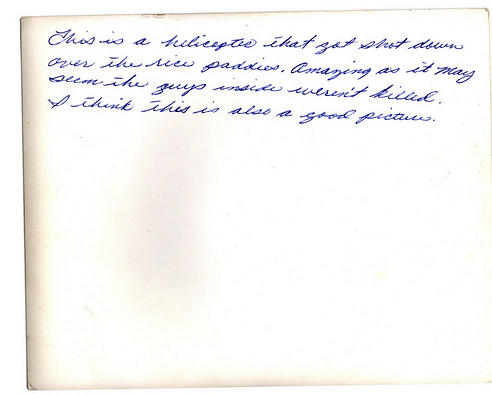
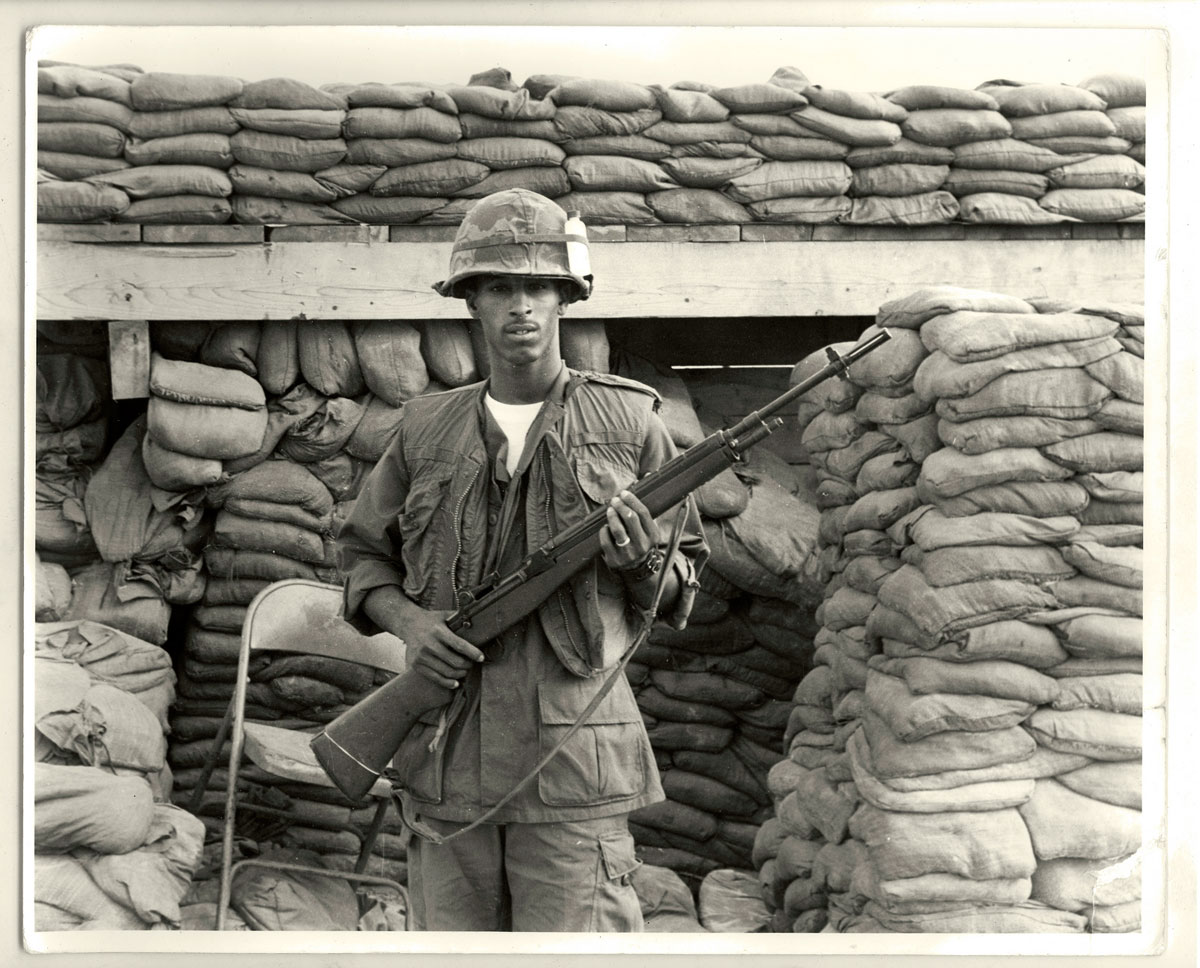
Bien Hoa is is based on a set of ten photographs Bacher discovered at a Berkeley salvage store. All of the photographs were created by an American soldier named Walter, who was stationed at Bien Hoa Air Base during the Vietnam War. Walter inscribed the backs of all but two of the pictures before mailing them home to his partner in Oakland. Bacher has enlarged and reprinted the photographs to hang above the verso of the originals, which disclose Walter’s annotations. These have a surprisingly casual tone, given what must have been the harrowing experience of being a soldier stationed in Vietnam. In some cases, Walter’s inscriptions sound almost like a tourist writing a postcard; in others, he seems to have been more concerned with the composition of the image than with the grisly content of a scene. “This is Bien Hoa looking at it from the Air Base. This is a pretty good picture. Now do you think that’s beautiful? Can you see the wire, keeping the people from attacking the Air Base? That’s what those fences are out there for.”
By strategically juxtaposing these images and texts, and placing them in a museum setting, Bacher reveals the slippery nature of perception. She prompts us to wonder, Why was Walter so concerned with the quality of his images? Why were these photographs discarded? What became of Walter?”
Text from the BAM/PFA website
Lutz Bacher (American, 1943-2019) Bien Hoa (detail)
2006-2007
inkjet print mounted on aluminium
24 x 36 in.
Courtesy of Ratio 3, San Francisco
The ten photographic sets that make up Lutz Bacher’s Bien Hoa (2006-2007) are deceptively simple. Large colour inkjet images, reproductions of yellowed black-and-white photographs, are presented above handwritten notes written on the backs of the original prints. The annotations were made by a man stationed at Vietnam’s Bien Hoa Air Force Base in 1969, identified only as Walter, who is alternately the author and the subject of the images. We see Walter posing at a military desk with his section chief, in an armed helicopter adorned with a playboy bunny, in front of sand bagged barracks, and at gunpoint, “surrendering” to a Vietnamese woman. Other photographs depict the bleak situation – burned-out helicopters, fire drills, and fences separating the base from the local town. Bacher found the cache of photographs, which had been mailed from Vietnam, at a Berkeley salvage store. Originally meant for an intimate audience, the photos are displaced by Bacher’s decision to remake them as her art. She channels the voice of an African American man fighting in the Vietnam War, decisively situating that voice, through her own authorship, in a new time and context.
On their own, the images are charged with America’s uneasy history of armed aggression and recall our complex legacy of racism and popular unrest; with Walter’s notes, however, that general discomfort becomes deeply personal. Referring to an image of himself seated inside a helicopter he writes: “This is a Huey Cobra, the badest [sic] Helicopter in Vietnam. Those are rockets on the side of the ship. I wish I could take off and come home. Your Man, Walter.” With his comments, Walter reveals feelings of complicity in the military apparatus of the war, as well as his desire to return home. It is hard not to wonder how Walter wound up in Vietnam and what became of him: was he drafted or enlisted by the many recruiters targeting African American neighbourhoods at the time, promising subsidies? Did he return home safely?
Presented, as they are here, in a museum setting, Walter’s self-conscious commentaries on his photographs take on new relevance. In some cases, Walter’s inscriptions sound almost like a tourist writing a postcard; in others, he seems to have been more concerned with the composition of the image than with the grisly content of a scene: “This is a practice session that the Fire Department has every now and then. They are practicing on a burning helicopter. I messed up on my border at the top of the picture.” Bacher’s enlargements invite us to hone in on these details and scrutinise the photographs aesthetically, as Walter directs: “This is Bien Hoa looking at it from the Air Base. This is a pretty good picture. Now do you think that’s beautiful? Can you see the wire, keeping the people from attacking the Air Base?” Walter’s grim interjections foil our sense of detached aesthetic judgment.
Likewise, Bacher, conspiring with Walter, complicates easy explanations of her work. Curiously, the only two photographs in the series that remain unannotated feature a gun. In the first, Walter poses solemnly in front of sandbagged barracks in full military uniform. In the second, he is dressed in Vietnamese garb, playfully surrendering at gunpoint to a local woman. This reversal, from American soldier to Vietnamese prisoner, illustrates not only the paradox of Walter’s situation, but also Bacher’s. Without captions to describe Walter’s feelings, it is unclear if he fought willingly or if, like many soldiers at that time, he was ambivalent about our presence in Vietnam, or perhaps even sympathised with the local’s desire to enact political change. Faced with these gaps in explanation, viewers are left to wonder about Walter’s intentions in setting up the photographs as he did, with this strange role reversal. The reasons for Bacher’s own reversal, exchanging her voice for Walter’s, is also left ambiguous.
Shifting between Walter, of whom nothing is known, and Bacher, Bien Hoa’s narrative refuses to be fixed in any one time or place. For that reason, the work feels contemporary, alive with the contradictions that make up our present moment. Bacher uses found images, objects, and text to confound easy understandings of authorship, gender, race, violence, and power. Despite being composed of discarded photographs, Bien Hoa resonates as a pivotal description of a fraught moment in United States history, yet this history still feels open to interpretation. Bacher, exhuming the photographs and aligning her voice with Walter’s, inverts any sense of their cohesion.”
Dena Beard
Assistant Curator
Exhibition brochure
Lutz Bacher (American, 1943-2019) Bien Hoa (detail)
2006-2007
inkjet print mounted on aluminium
24 x 36 in.
Courtesy of Ratio 3, San Francisco
Lutz Bacher (American, 1943-2019) Bien Hoa (detail)
2006-2007
inkjet print mounted on aluminium
24 x 36 in.
Courtesy of Ratio 3, San Francisco
Berkeley Art Museum and Pacific Film Archive
BAMPFA is located at 2155 Center Street between Oxford Street and Shattuck Avenue, in downtown Berkeley Phone: (510) 642-0808
Exhibition dates: 26th March – 6th September, 2010
Looks like a great exhibition – wish I was there to see it!
Many thankx to Claire Laporte and the Solomon R. Guggenheim Museum for allowing me to publish the photographs in the posting. Please click on the photographs for a larger version of the image.
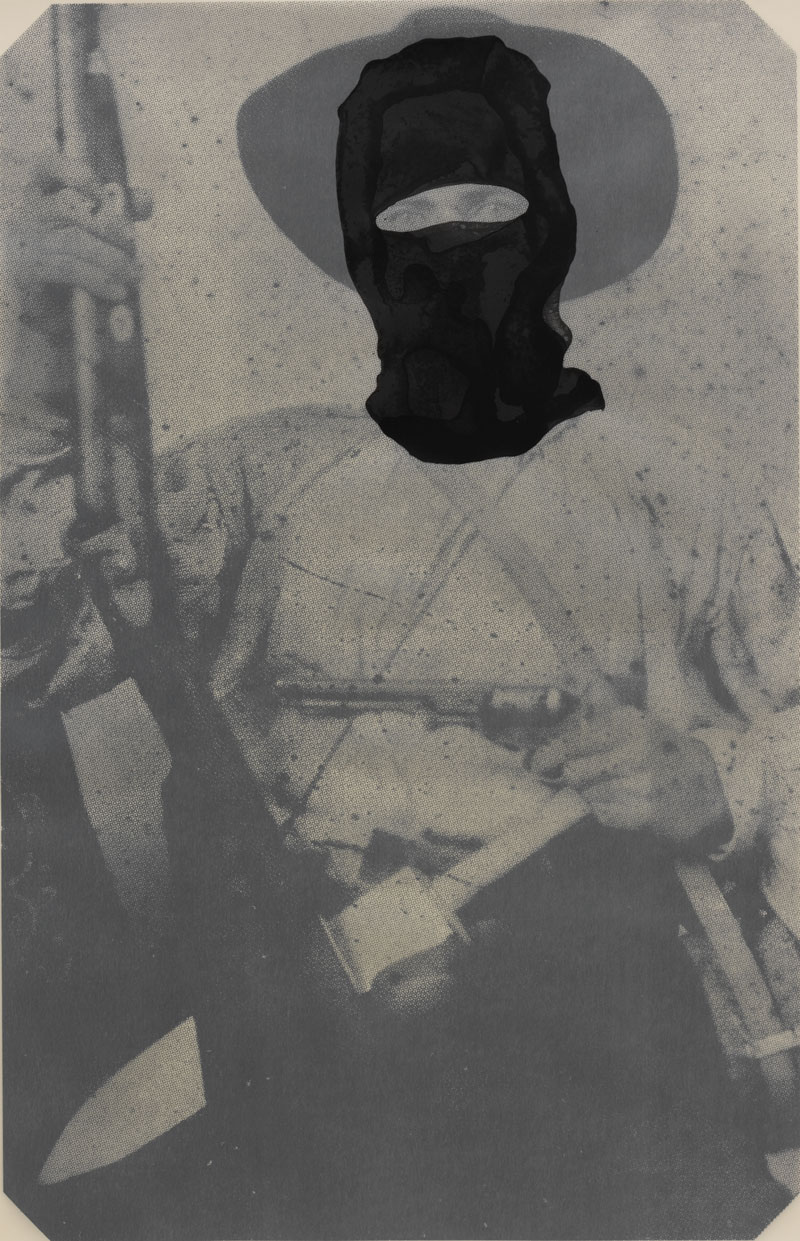
Adam Helms (American, b. 1974) Untitled Portrait (Santa Fe Trail) 2007 Double-sided screenprint on paper vellum edition 2/2 101.3 x 65.7cm Solomon R. Guggenheim Museum, New York, Purchased with funds contributed by the Photography Committee 2007.131
Idris Khan (British, b. 1978) Homage to Bernd Becher 2007 Bromide print edition 1/6 49.8 x 39.7cm Solomon R. Guggenheim Museum, New York, Purchased with funds contributed by the Photography Committee
Bernd Becher (German, 1931-2007) and Hilla Becher (German, 1934-2015) Water Towers 1980 Nine gelatin silver prints 155.6 x 125.1cm Solomon R. Guggenheim Museum, New York, Purchased with funds contributed by Mr. and Mrs. Donald Jonas
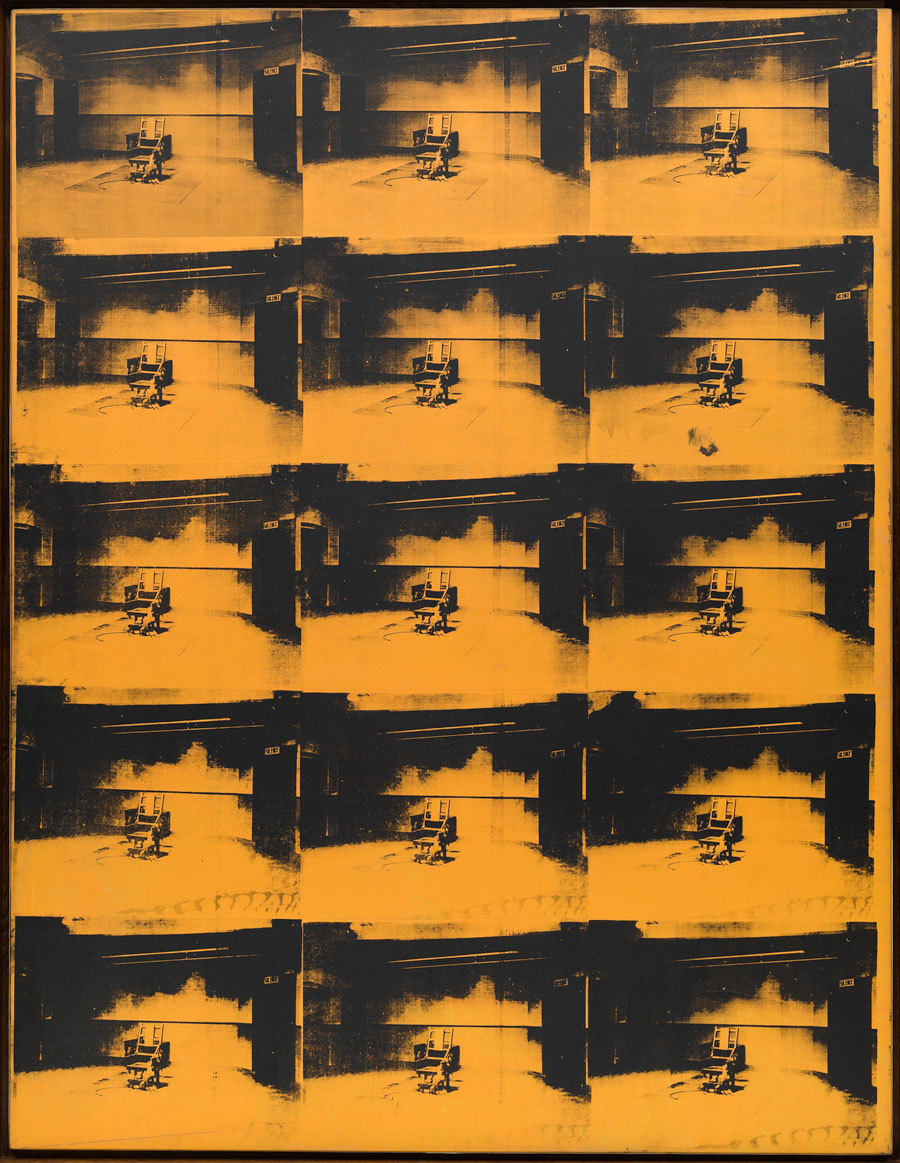
Andy Warhol (American, 1928-1987) Orange Disaster #5 1963 Acrylic and silkscreen enamel on canvas 269.2 x 207cm Solomon R. Guggenheim Museum, New York, Gift, Harry N. Abrams Family Collection 74.2118
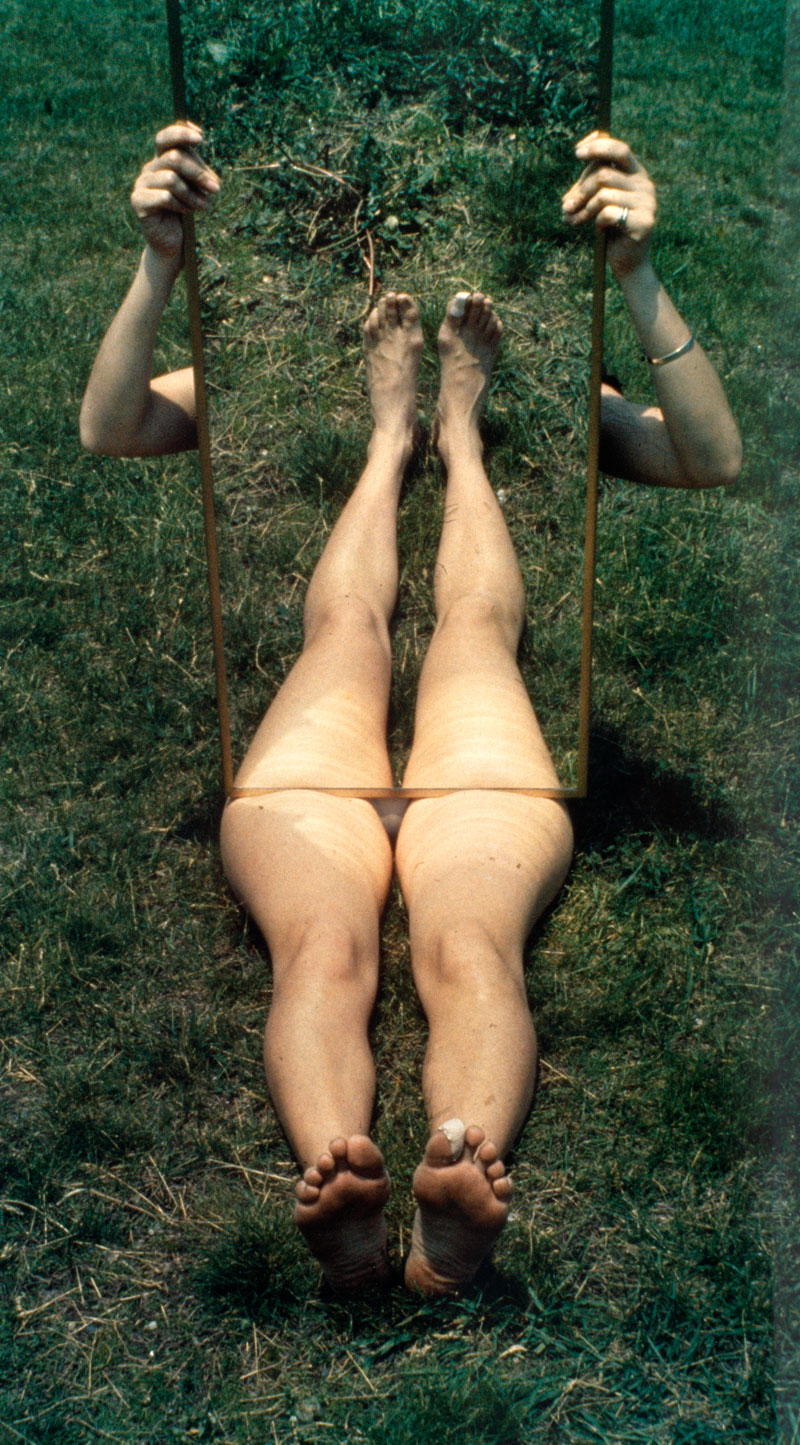
Joan Jonas (American, b. 1936) Mirror Piece I 1969 Chromogenic print 101 x 55.6cm Solomon R. Guggenheim Museum, New York, Purchased with funds contributed by the Photography Committee
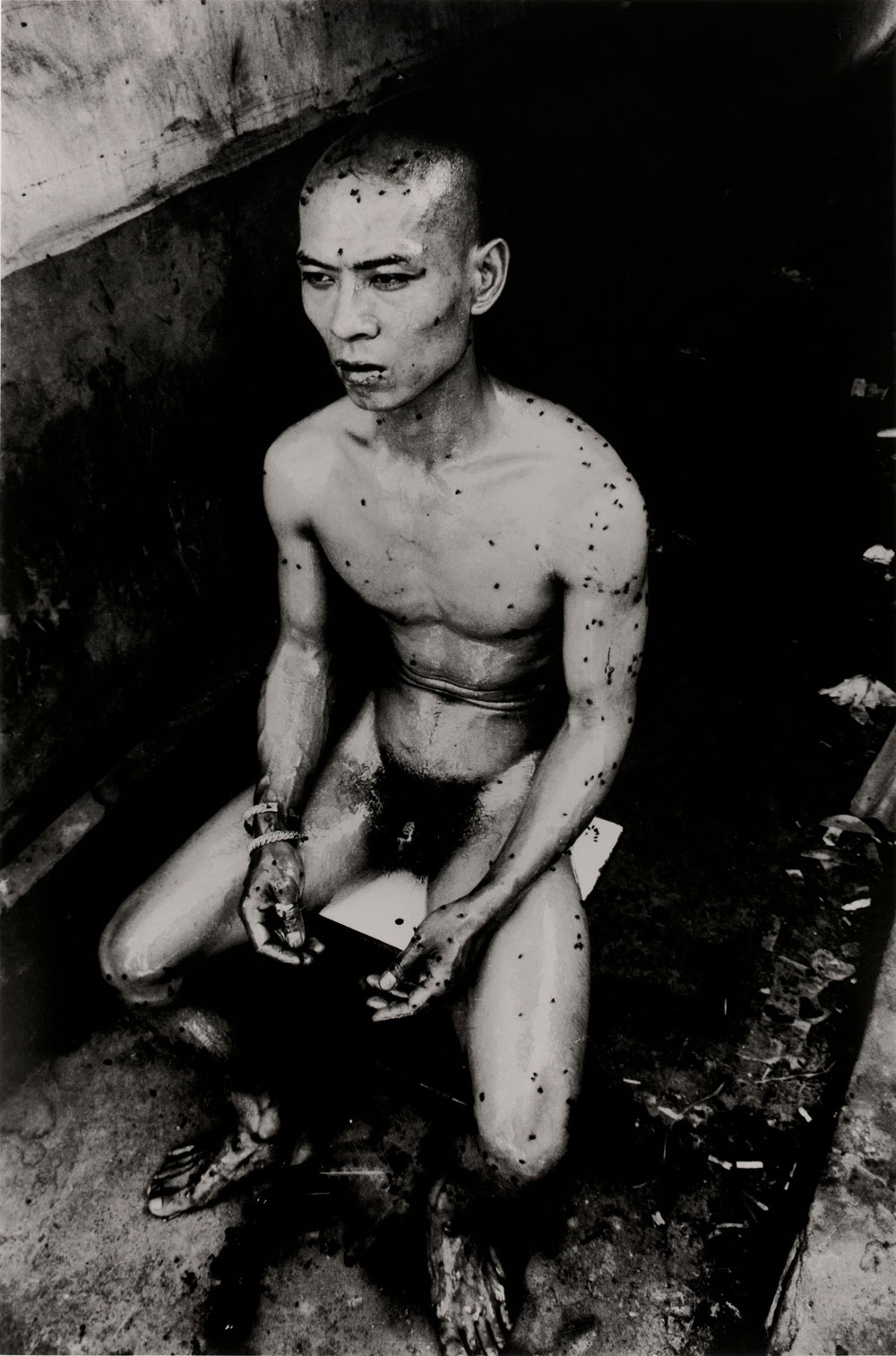
Zhang Huan (Chinese, b. 1965) 12 Square Meters 1994 Chromogenic print A.P. 3/5, edition of 15 149.9 x 99.7cm Solomon R. Guggenheim Museum, New York, Purchased with funds contributed by Manuel de Santaren and Jennifer and David Stockman
Much of contemporary photography and video seems haunted by the past, by the history of art, by apparitions that are reanimated in reproductive mediums, live performance, and the virtual world. By using dated, passé, or quasi-extinct stylistic devices, subject matter, and technologies, such art embodies a longing for an otherwise unrecuperable past.
From March 26 to September 6, 2010, the Solomon R. Guggenheim Museum presents Haunted: Contemporary Photography / Video / Performance, an exhibition that documents this obsession, examining myriad ways photographic imagery is incorporated into recent practice. Drawn largely from the Guggenheim’s extensive photography and video collections, Haunted features some 100 works by nearly 60 artists, including many recent acquisitions that will be on view at the museum for the first time. The exhibition is installed throughout the rotunda and its spiralling ramps, with two additional galleries on view from June 4 to September 1, featuring works by two pairs of artists to complete Haunted’s presentation.
The works in Haunted: Contemporary Photography / Video / Performance range from individual photographs and photographic series to sculptures and paintings that incorporate photographic elements; projected videos; films; performances; and site-specific installations, including a new sound work created by Susan Philips for the museum’s rotunda. While the show traces the extensive incorporation of photography into contemporary art since the 1960s, a significant part of the exhibition will be dedicated to work created since 2001 by younger artists.
Haunted is organised around a series of formal and conceptual threads that weave themselves through the artworks on view:
Appropriation and the Archive
In the early 1960s, Robert Rauschenberg and Andy Warhol began to incorporate photographic images into their paintings, establishing a new mode of visual production that relied not on the then-dominant tradition of gestural abstraction but rather on mechanical processes such as screenprinting. In so doing, they challenged the notion of art as the expression of a singular, heroic author, recasting their works as repositories for autobiographical, cultural, and historical information. This archival impulse revolutionised art production over the ensuing decades, paving the way for a conceptually driven use of photography as a means of absorbing the world at large into a new aesthetic realm. Since then, a number of artists, including Bernd and Hilla Becher, Sarah Charlesworth, Douglas Gordon, Luis Jacob, Sherrie Levine, Richard Prince, Cindy Sherman, and Sara VanDerBeek, have pursued this archival impulse, amassing fragments of reality either by creating new photographs or by appropriating existing ones.
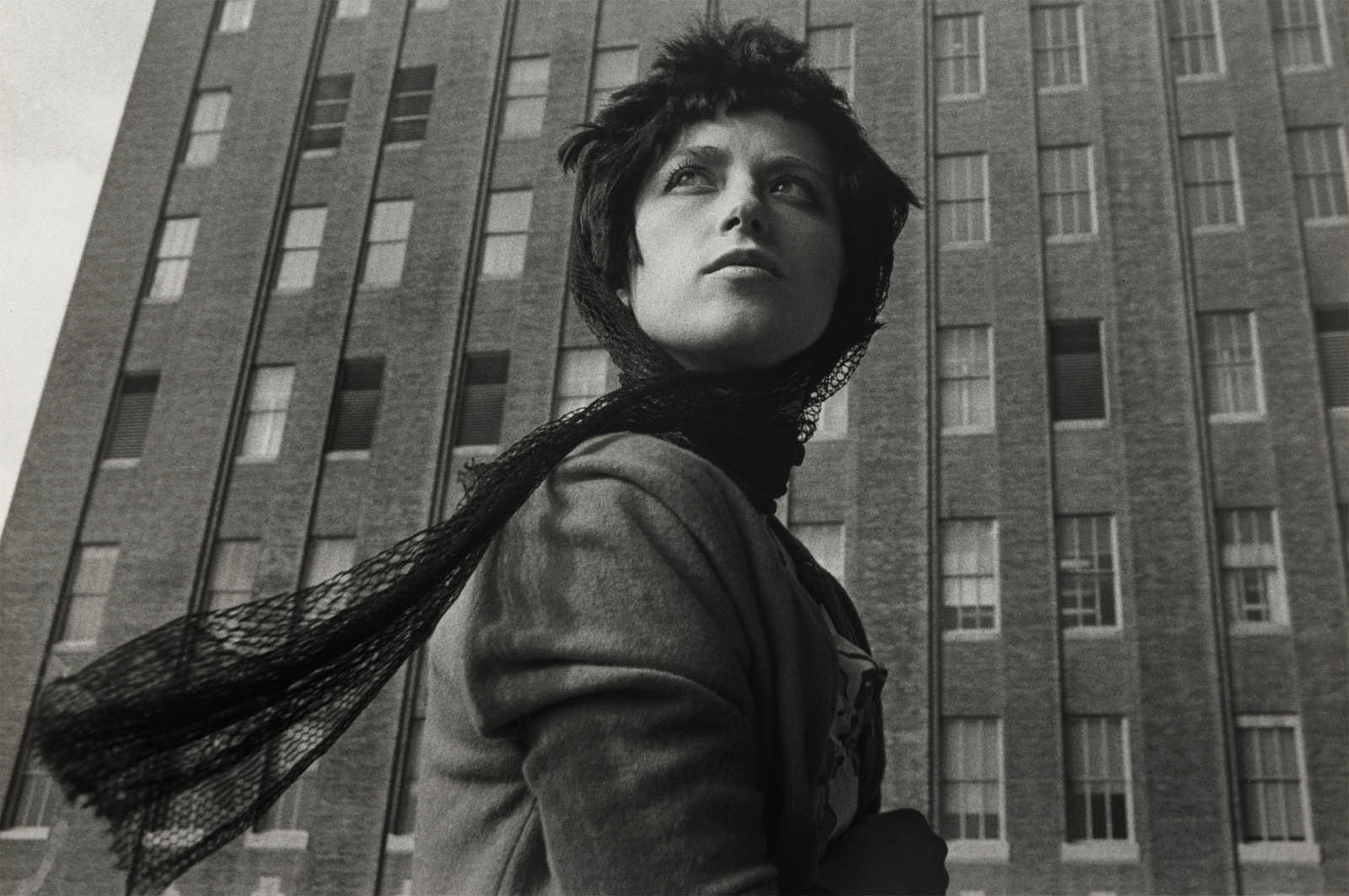
Cindy Sherman (American, b. 1954) Untitled Film Still #58 1980 Gelatin silver print 20.3 x 25.4cm Solomon R. Guggenheim Museum, Gift, Ginny Williams
“I’ve always played with make-up to transform myself, but everything, including the lighting, was self taught. I just learned things as I needed to use them. I absorbed my ideas for the women in these photos from every cultural source that I’ve ever had access to, including film, TV, advertisements, magazines, as well as any adult role models from my youth.”1
Cindy Sherman (b. 1954, Glen Ridge, N.J.) emerged onto the New York art scene in the early 1980s as part of a new generation of artists concerned with the codes of representation in a media-saturated era. Along with many artists working in the 1980s, Sherman explored photography as a way to reveal and examine the cultural constructions we designate as truth. Confronting the belief that photographs are truthful documents, Sherman’s fictional narratives suggested that photographs, like all forms of representation, are ideologically motivated. She is aware that the camera is not a neutral device but rather a tool that frames a particular viewpoint.
Sherman’s reputation was established early on with her Untitled Film Stills, a series of 69 black-and-white photographs that she began making in 1977, when she was twenty-three. In this series, the artist depicted herself dressed in the various melodramatic guises of clichéd B-movie heroines presented in 8 x 10 publicity stills from the 1950s and 1960s. In photograph after photograph, Sherman both acts in and documents her own productions. Although Sherman is both model and photographer, these images are not autobiographical. Rather, they memorialise absence and leave us searching for a narrative and clues to what may exist beyond the frame of the camera.
By the time Sherman made the Untitled Film Stills, black-and-white photography was already recognised as belonging to the past, and the styles she replicated were taken not from her own generation but from that of her mother’s. Sherman used wigs and makeup as well as vintage clothing to create a range of female characters. She sets her photos in a variety of locations, including rural landscapes, cities, and her own apartment. Although many of the pictures are taken by Sherman herself using an extended shutter release, for others she required help, sometimes enlisting friends and family. The characters she created include an ingénue finding her way in the big city, a party girl, a housewife, a woman in distress, a dancer, and an actress. In 1980 she completed the series and has said that she stopped when she ran out of clichés to depict. Unlike the media images they refer to, Sherman’s stills have a deliberate artifice that is heightened by the often-visible camera cord, slightly eccentric props, unusual camera angles, and by the fact that each image includes the artist rather than a recognisable actress or model. Sherman remains an important figure, with works in major collections around the globe, and continues to create striking, imaginative art.
Text from the Teacher’s Guide to the exhibition
1/ Cindy Sherman, quoted in Monique Beudert and Sean Rainbird, eds., Contemporary Art: The Janet Wolfson de Botton Gift, p. 99.
Landscape, Architecture, and the Passage of Time
Historically, one of photography’s primary functions has been to document sites where significant, often traumatic events have taken place. During the Civil War, which erupted not long after the medium was invented, a new generation of reporters sought to photograph battles, but due to the long exposure times required by early cameras, they could only capture the aftermath of the conflicts. These landscapes, strewn with the dead, now seem doubly arresting, for they capture past spaces where something has already occurred. Their state of anteriority, witnessed at such an early stage in the medium’s development, speaks to the very nature of a photograph, which possesses physical and chemical bonds to a past that disappears as soon as it is taken. As viewers, we are left with only traces from which we hope to reconstruct the absent occurrences in the fields, forests, homes, and offices depicted in the works in the exhibition. With this condition in mind, many artists, among them James Casebere, Spencer Finch, Ori Gersht, Roni Horn, Luisa Lambri, An-My Lê, Sally Mann, and Hiroshi Sugimoto, have turned to empty spaces in landscape and architecture, creating poetic reflections on time’s inexorable passing and insisting on the importance of remembrance and memorialisation.
“A good work of art can never be read in one way. My work is full of contradictions. An artwork is open – it is the spectators looking at the work who make the piece, using their own background. A lamp in my work might make you think of a police interrogation, but it’s also religious, like a candle. At the same time it alludes to a precious painting, with a single light shining on it. There are many way of looking at the work. It has to be ‘unfocused’ somehow so that everyone can recognize something of their own self when viewing it.”1
The power of photography to recall the past has inspired many contemporary artists to use photographs to revisit the experience of historical events. In so doing, artists reconsider the photograph itself as an object imbued with history. They became aware that using the medium of photography would lend the elements of specificity and truth to their work.
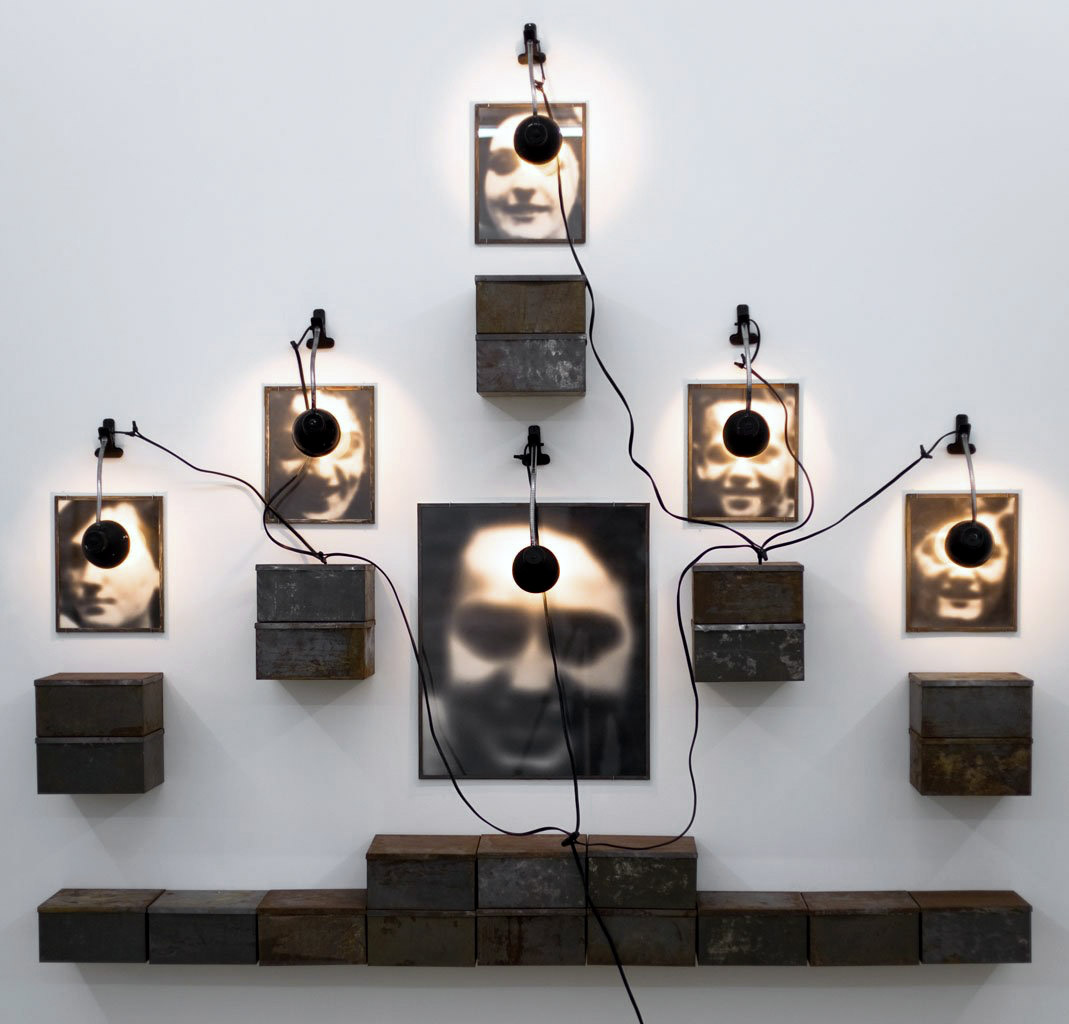
Since the late 1960s, Christian Boltanski (b. 1944, Paris) has worked with photographs collected from ordinary and often ephemeral sources, endowing the commonplace with significance. Rather than taking original photographs to use in his installations, he often finds and rephotographs everyday documents – passport photographs, school portraits, newspaper pictures, and family albums – to memorialise everyday people. Boltanski seeks to create an art that is indistinguishable from life and has said, “The fascinating moment for me is when the spectator hasn’t registered the art connection, and the longer I can delay this association the better.”2 By appropriating mementos of other people’s lives and placing them in an art context, Boltanski explores the power of photography to transcend individual identity and to function instead as a witness to collective rituals and shared cultural memories.
In Boltanski’s 1986-1987 work Autel de Lycée Chases (which means “Altar to the Chases High School”) enlarged photographs of children are hung over a platform constructed from stacked tin biscuit boxes, which are rusted as if they have been ravaged by time. The black-and-white photographs look like artefacts from another era. An electric light illuminates each face while at the same time obscuring it. The arrangement gives no way to identify or connect the unnamed individuals.
The photos used in Autel de Lycée Chases were taken from a real-world source, the school photograph of the graduating class of 1931 from a Viennese high school for Jewish students. These students were coming of age in a world dominated by war and persecution, and it is likely that many perished over the next decade.
At once personal and universal in reference, Boltanski’s work serves as a monument to the dead, hinting at the Holocaust without naming it. Within this haunting environment, Boltanski intermingles emotion and history, sentimentality and profundity.
Text from the Teacher’s Guide to the exhibition
1/ Christian Boltanski, “Tamar Garb in conversation with Christian Boltanski,” in Christian Boltanski (London: Phaidon Press, 1997), p. 24. 2/ “Christian Boltanski: Lessons of Darkness”
Documentation and Reiteration
Since at least the early 1970s, photographic documentation, including film and video, has served as an important complement to the art of live performance, often setting the conditions by which performances are staged and sometimes obviating the need for a live audience altogether. Through an ironic reversal, artworks that revolved around singular moments in time have often come to rely on the permanence of images to transmit their meaning and sometimes even the very fact of their existence. For many artists, these documents take on the function of relics-objects whose meaning is deeply bound to an experience that is always already lost in the past. Works by artists such as Marina Abramović, Christian Boltanski, Sophie Calle, Tacita Dean, Joan Jonas, Christian Marclay, Robert Mapplethorpe, Ana Mendieta, and Gina Pane examine various aesthetic approaches inspired by the reiterative power of the photograph. Using photography not only to restage their own (and others’) performances but to revisit the bodily experience of past events, these artists have reconsidered the document itself as an object embedded in time, closely attending to its material specificity in their works.
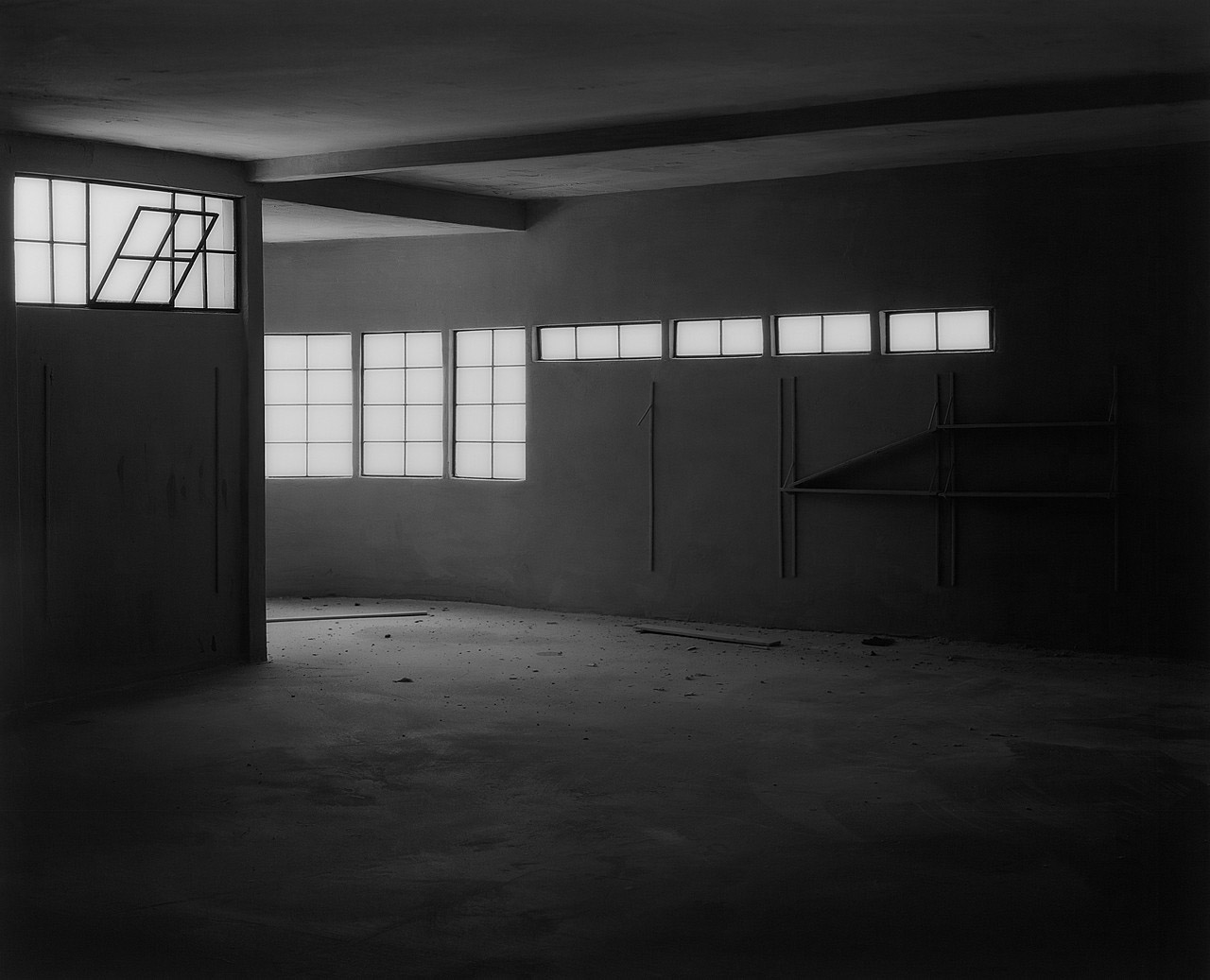
James Casebere (American, b. 1953) Garage 2003 Chromogenic print, face-mounted to acrylic 181.6 x 223.5cm Solomon R. Guggenheim Museum, New York Anonymous gift
“Black and white had more to do with memory and the past. Color was too much about the present, I associated it with color TV, which was not a part of my past. I wanted the images to be related to a sense of history, let’s say, whether personal or social. And I think black and white adds a certain level of abstraction.”1
Since the mid-1970s James Casebere (b. 1953, Lansing, Michigan) has been carefully constructing architectural models and photographing them, yielding images somewhere between realism and obvious fabrication. His photographs are stripped of color and detail to evoke a sense of emotional place rather than the physicality of a place’s forms. Casebere is interested in the memories and feelings that are brought to mind by the architectural spaces he represents. The resulting works are dramatic, surreal, and remarkably true to life, embracing qualities of photography, architecture, and sculpture.
His tabletop models imitate the appearance of architectural institutions (home, school, library, prison) or common sites (tunnel, corridor, archway), representing the structures that occupy our everyday world. These models, made from such featureless materials as Foamcore, museum board, plaster, and Styrofoam, remain empty of detail and human figures. It is only when Casebere casts light on their bland surfaces and spartan interiors that the models are transformed. By eliminating the details, and taking advantage of dramatic lighting effects and the camera’s ability to flatten space, Casebere is able to transform familiar domestic spaces to find the extraordinary in the everyday. He asks viewers to rely on their memory to fill in the gaps and to create a context in which to understand his images.
Casebere stages his photographs to construct realities inspired by contemporary American visual culture that blur the line between fiction and fact. In this way, his images suggest psychologically charged spaces and have an otherworldly quality. The notion that these may be actual places seems plausible, but the lack of human presence leads us to wonder what has happened here. The viewer may imagine a human story within the abandoned spaces. Without people or colour, the photographs are about our own associations with these spaces and what they may represent.
When Andy Warhol created his silkscreen paintings of Marilyn Monroe in the wake of her death, he touched on the darker side of a burgeoning media culture that, during the Vietnam War, became an integral part of everyday life. Today, with vastly expanded channels for the propagation of images, events as varied as the terrorist attack on the World Trade Center and the deaths of celebrities such as Princess Diana and Michael Jackson have the ability to become traumatic on a global scale. Many artists, including Adam Helms, Nate Lowman, Adam McEwen, Cady Noland, and Anri Sala, have reexamined the strategy of image appropriation Warhol pioneered, attending closely to the ways political conflict can take on global significance. At the same time, photography has altered, or as some theorists argue, completely reconfigured our sense of personal memory. From birth to death, all aspects of our lives are reconstituted as images alongside our own experience of them. This repetition, which is mirrored in the very technology of the photographic medium, effectively produces an alternate reality in representation that, especially when coping with traumatic events, can take on the force of the uncanny. Artists such as Stan Douglas, Anthony Goicolea, Sarah Anne Johnson, Jeff Wall, and Gillian Wearing exploit this effect, constructing fictional scenarios in which the pains and pleasures of personal experience return with eerie and foreboding qualities.
Press release from the Solomon R. Guggenheim Museum website [Online] Cited 22/08/2010 no longer available online
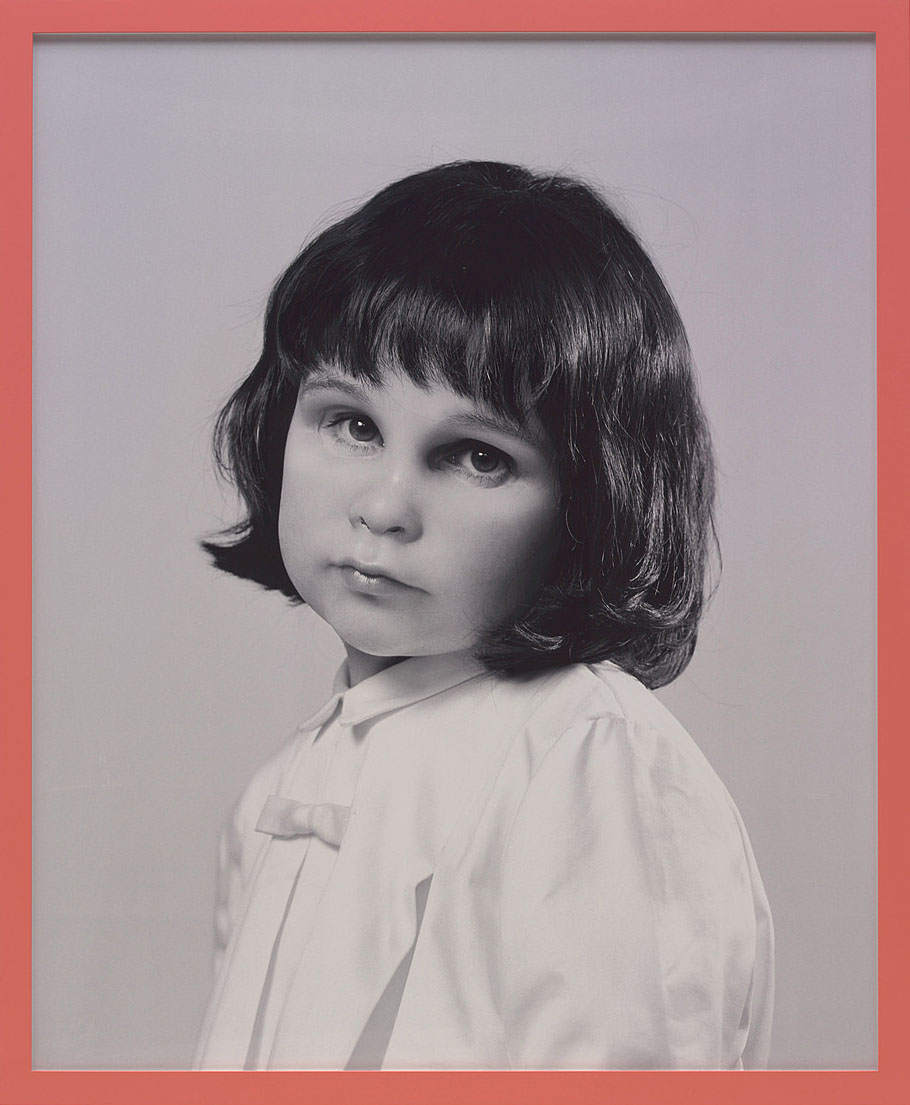
Gillian Wearing (British, b. 1963) Self-Portrait at Three Years Old 2004 Chromogenic print 182 x 122cm Solomon R. Guggenheim Museum, New York Purchased with funds contributed by the International Directors Council and Executive Committee Members: Ruth Baum, Edythe Broad, Elaine Terner Cooper, Dimitris Daskalopoulos, Harry David, Gail May Engelberg, Shirley Fiterman, Nicki Harris, Dakis Joannou, Rachel Lehmann, Linda Macklowe, Peter Norton, Tonino Perna, Elizabeth Richebourg Rea, Mortim
“I taught myself to use a camera – it’s not very difficult to use a camera, but I never bothered looking at any textbooks on how to make a picture. I had a much more casual relation to it. For me at the time it was much more about the process rather than the results.”1
Photography has not only profoundly impacted our understanding of historical events, it has also changed the way we remember our personal histories. Beginning at birth, all aspects of our lives are recorded as images alongside our own experiences of them. These parallel recording devices, the camera and personal memory, produce alternate realities that may sometimes be synchronised but at other times are askew.
Gillian Wearing (b. 1963, Birmingham, England) uses masks as a central theme in her videos and photographs. The masks, which range from literal disguises to voice dubbing, conceal the identities of her subjects and free them to reveal intimate secrets. For her 2003 series of photographs Album, Wearing used this strategy to create an autobiographical work. Donning silicon prosthetics, she carefully reconstructed old family snapshots, transforming herself into her mother, father, uncle, and brother as young adults or adolescents. In one of the works, Wearing recreated her own self-portrait as a teenager – and in fact the artist considers all the photographs in this series as self-portraits. She explains: “I was interested in the idea of being genetically connected to someone but being very different. There is something of me, literally, in all those people – we are connected, but we are each very different.”2
To make the Album series, Wearing collaborated with a talented team (some of whom have worked for Madame Tussaud’s wax works) who sculpted, cast, painted, and applied hair to create the masks, wigs, and body suits used in these photographs. The elaborate disguises the artist wears, when combined with the snapshot “realism” of the original images on which they are based, create an eerie fascination that serves to reveal aspects of her identity rather than conceal it.
Self-Portrait at Three Years Old (2004) carries this role-playing further back in time. Confronting the viewer with her adult gaze through the eyeholes of the toddler’s mask, Wearing plays on the rift between interior and exterior and raises a multitude of provocative questions about identity, memory, and the truthfulness of the photographic medium. Wearing says, “What I love about photographs is that they give you a lot and also they withhold a lot.”3
Text from the Teacher’s Guide to the exhibition
1/ “Gillian Wearing,” interview by Leo Edelstein, Journal of Contemporary Art 2/ Quoted in Jennifer Bayles, “Acquisitions: Gillian Wearing,” Albright-Knox Art Gallery, Buffalo, NY (accessed January 25, 2010) 3/ Sebastian Smee, “Gillian Wearing: The art of the matter,” The Independent (London), October 18, 2003
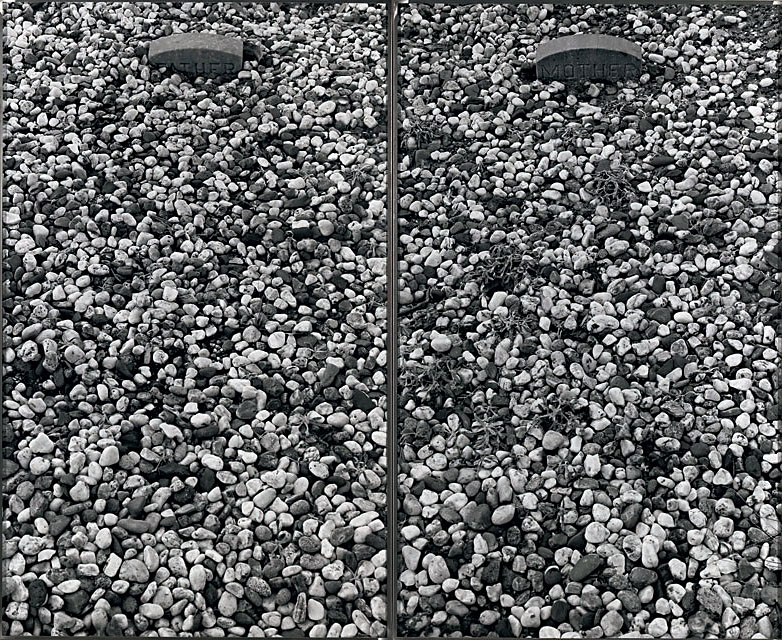
Sophie Calle (French, b. 1953) Father Mother (The Graves, #17) 1990 Two gelatin silver prints in artist’s frames edition 2/2 181.0 x 111.1cm each Solomon R. Guggenheim Museum, New York, Gift, The Bohen Foundation
Ana Mendieta (Cuban American, 1948-1985) Untitled (Silueta series) 1978 Gelatin silver print 20.3 x 25.4cm Solomon R. Guggenheim Museum, New York, Purchased with funds contributed by the Photography Committee
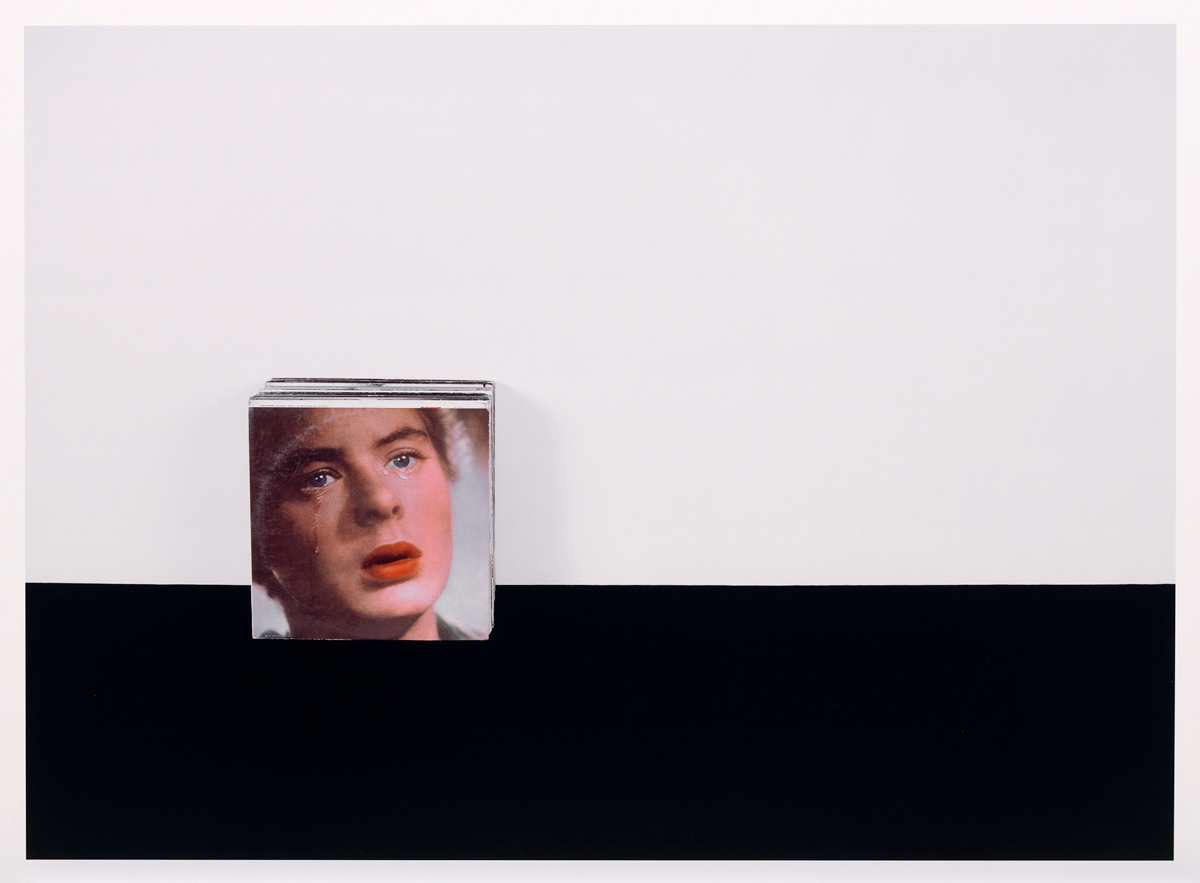
Anne Collier (American, b. 1970) Crying 2005 Chromogenic print edition 1/5 99.1 x 134 x 0.6cm Solomon R. Guggenheim Museum, New York, Purchased with funds contributed by Mr. and Mrs. Aaron M. Tighe
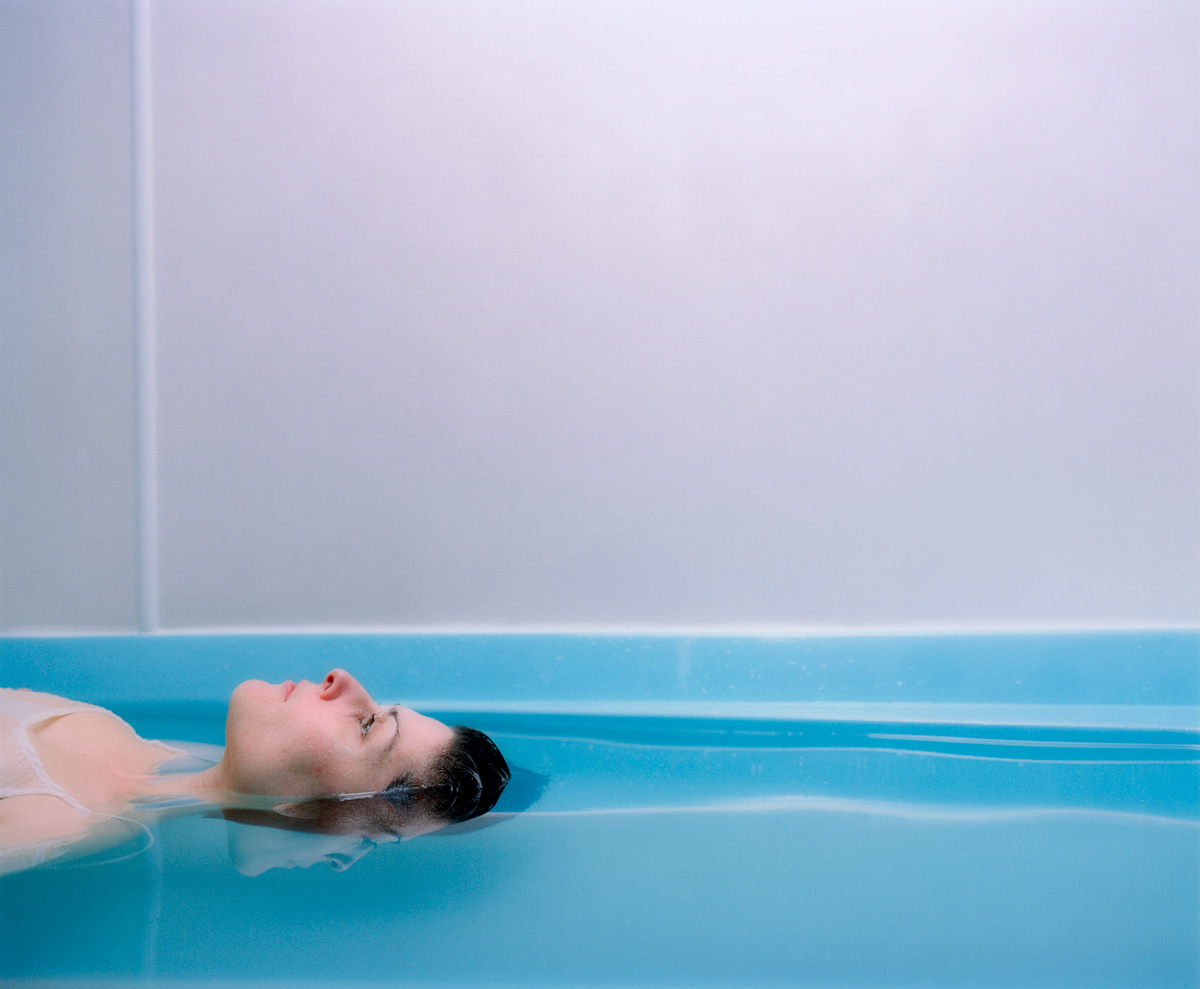
Miranda Lichtenstein (American, b. 1969) Floater 2004 Chromogenic print edition 5/5 104.1 x 127cm Solomon R. Guggenheim Museum, New York, Purchased with funds contributed by the Photography Committee
Sarah Anne Johnson (Canadian, b. 1976) Morning Meeting (from Tree Planting) 2003 Chromogenic print edition 73.7 x 79.7cm Solomon R. Guggenheim Museum, New York, Purchased with funds contributed by Pamela and Arthur Sanders; the Harriett Ames Charitable Trust; Henry Buhl; the Heather and Tony Podesta Collection; Ann and Mel Schaffer; Shelley Harrison; and the Photography Committee
Sally Mann (American, b. 1951) Virginia from the Mother Land series 1992 Gelatin silver print 76.2 x 96.5cm Solomon R. Guggenheim Museum, New York, Gift, The Bohen Foundation
Solomon R. Guggenheim Museum 1071 5th Avenue (at 89th Street) New York








 Art Blart _ art and cultural memory archive
You must be logged in to post a comment.