Exhibition: ‘A History: Contemporary Art from the Centre Pompidou’ at the Haus der Kunst, Munich

Exhibition dates: 25th March – 4th September, 2016

Curator: Christine Macel

Artists include: Pawel Althamer/ Maja Bajević / Yto Barrada / Jean-Michel Basquiat / Taysir Batniji / Christian Boltanski / Erik Boulatov / Mohammed Bourouissa / Frédéric Bruly Bouabré / Sophie Calle and Greg Shephard / Mircea Cantor / Chen Zhen / Hassan Darsi / Destroy All Monsters / Atul Dodiya / Marlene Dumas / Ayşe Erkmen / Fang Lijun / Harun Farocki and Andrei Ujica / Samuel Fosso / Michel François / Coco Fusco und Paula Heredia / Regina José Galindo / Kendell Geers / Liam Gillick / Fernanda Gomes / Dominique Gonzalez-Foerster / Felix Gonzalez-Torres / Renée Green / Subodh Gupta / Andreas Gursky / Hans Haacke / Petrit Halilaj / Edi Hila / Gregor Hildebrandt / Thomas Hirschhorn / Nicholas Hlobo / Carsten Höller / Pierre Huyghe / Fabrice Hyber / Isaac Julien / Oleg Kulik / Glenn Ligon / Robert Longo / Sarah Lucas / Gonçalo Mabunda / David Maljković / Chris Marker / Ahmed Mater / Mike Kelley and Paul McCarthy / Annette Messager / Rabih Mroué / Zanele Muholi / Jun Nguyen-Hatsushiba / Roman Ondák / Gabriel Orozco / Damián Ortega / Philippe Parreno / Nira Pereg / Dan Perjovschi / Wilfredo Prieto / Tobias Putrih / Walid Raad / Sara Rahbar / Tobias Rehberger / Nick Relph und Oliver Payne / Pipilotti Rist / Chéri Samba / Anne-Marie Schneider / Santiago Sierra / Mladen Stilinović / Georges Tony Stoll / Wolfgang Tillmans / Rirkrit Tiravanija / Danh Vo / Marie Voignier / Akram Zaatari / Zhang Huan


Thomas Hirschhorn (Swiss, b. 1957) 'Outgrowth' 2005 from the exhibition 'A History: Contemporary Art from the Centre Pompidou' at the Haus der Kunst, Munich, March - Sept, 2016


Thomas Hirschhorn (Swiss, b. 1957)
Outgrowth
2005
Wood, plastic, newspaper clipping, tape, metal, bubble wrap
Installation: 374 x 644 x 46cm
Minimum dimensions of the rail: 400 x 670cm
Achat en 2006, Ankauf / Purchase
Collection Centre Pompidou, Paris
Musée national d’art moderne – Centre de création industrielle
Crédit photographique: © Centre Pompidou, MNAM-CCI/Georges Meguerditchian/Dist. RMN-GP
Copyright de l’oeuvre: © VG Bild-Kunst, Bonn 2016


Take your pick: some interesting, some not. My favourite: Annette Messager Mes voeux (1989, below) … such a strong, creative and inspiring artist.

I’m not writing so much as I have bad RSI in my left wrist at the moment.

Dr Marcus Bunyan


Many thankx to Haus der Kunst for allowing me to publish the art work in the posting. Please click on the photographs for a larger version of the image.


In 2016, two prominent exhibition projects explore the pressing question of which factors remain relevant to the writing of art history. While “Postwar – Art between the Pacific and Atlantic, 1945-1965” concentrates on the time immediately after World War II, “A History: Contemporary Art from the Centre Pompidou” provides an overview of contemporary art since the 1980s with 160 works by more than 100 artists.

The year 1989 marked a break with the past and the start of a new era. The fall of the Berlin Wall toppled divisions in the world of European art, while the events of Tiananmen Square focused attention on a new China. The ongoing globalisation allows for an unprecedented mobility. The static understanding of identity, once based on origin and nationality, has since given way to a more transnational and variable narrative. Contemporary artistic proposals, which arise from the new “decolonised subjectivity”, are also based on a new understanding of site-specificity. For example, in the 1960s and 1970s the protagonists of Land Art still understood landscapes primarily as post-industrial ruins. In contemporary artistic practice, however, space is defined above all socially and politically – by traumatic historical events, home country, exile, diaspora and hybrid identities, such as African-American, Latino, Turkish-German, African-Brazilian, and so forth. The new presentation of the Centre Pompidou contemporary collections at Haus der Kunst focuses particularly on this altered geography, notably the former Eastern Europe, China, Lebanon, and various Middle Eastern countries, India, Africa, and Latin America. This is the first time such a large-scale view of the Centre Pompidou collection has been presented outside France.


Lijun Fang (Chinese, b. 1963) 'Sans titre' 2003 from the exhibition 'A History: Contemporary Art from the Centre Pompidou' at the Haus der Kunst, Munich, March - Sept, 2016


Lijun Fang (Chinese, b. 1963)
Sans titre
2003
Woodcut on paper
400 x 854cm
Each panel: 400 x 120cm
Achat en 2004, Ankauf / Purchase
Collection Centre Pompidou, Paris
Musée national d’art moderne – Centre de création industrielle


Marlene Dumas (South African, b. 1953) 'The Missionary' (Le Missionnaire) 2002-2004


Marlene Dumas (South African, b. 1953)
The Missionary (Le Missionnaire)
2002-2004
Oil on canvas
60 x 230cm
Don de la Clarence Westbury Foundation, 2005
Collection Centre Pompidou, Paris
Musée national d’art moderne – Centre de création industrielle
Crédit photographique: © Centre Pompidou, MNAM-CCI/Philippe Migeat/Dist. RMN-GP
Copyright de l’oeuvre: © Marlene Dumas


Jean-Michel Basquiat (American, 1960-1988) 'Slave Auction (Vente aux enchères d’esclaves)' 1982


Jean-Michel Basquiat (American, 1960-1988)
Slave Auction (Vente aux enchères d’esclaves)
1982
Acrylic paint, oil pastel and collages
Collage of crumpled papers, oil pastel and acrylic paint on canvas
183 x 305.5cm
Don de la Société des Amis du Musée national d’art moderne, 1993
Collection Centre Pompidou, Paris
Musée national d’art moderne – Centre de création industrielle
Crédit photographique: © Centre Pompidou, MNAM-CCI/Philippe Migeat/Dist. RMN-GP
Copyright de l’oeuvre: © The estate of Jean-Michel Basquiat / VG Bild-Kunst, Bonn 2016
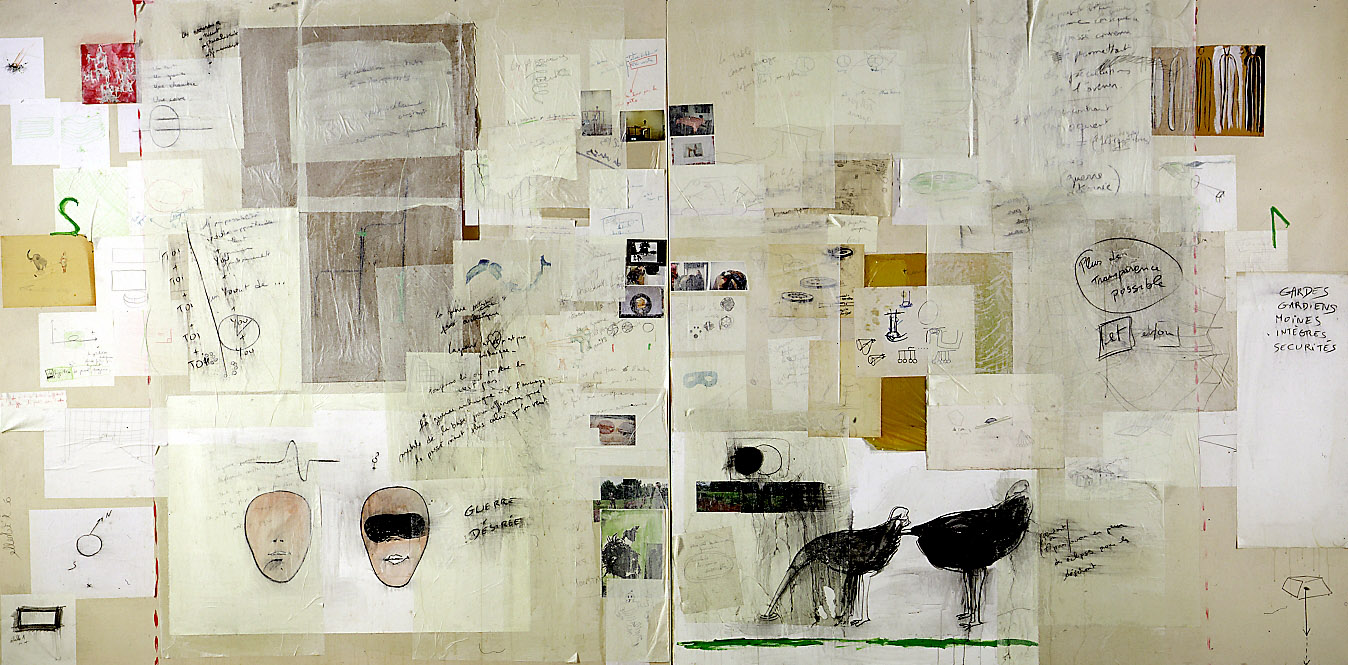
 

Fabrice Hyber (French, b. 1961) 'Peinture homéopathique n° 10 (Guerre désirée)' (Homeopathic painting n° 10 (Desired war)) 1983-1996


Fabrice Hyber (French, b. 1961)
Peinture homéopathique n° 10 (Guerre désirée) (Homeopathic painting n° 10 (Desired war))
1983-1996
Mixed media on canvas
Graphite lead, charcoal, coloured pencil, resin, gouache, India ink, acrylic, pastel, watercolour, felt-tip pen, adhesive tape, on paper, photocopy, photographs and tissue paper pasted on canvas
225 x 450cm
Each panel: 225 x 225cm
Achat en 1996, Ankauf / Purchase
Collection Centre Pompidou, Paris
Musée national d’art moderne – Centre de création industrielle
Crédit photographique: © Centre Pompidou, MNAM-CCI/Jacques Faujour/Dist. RMN-GP
Copyright de l’oeuvre: © Adagp, Paris
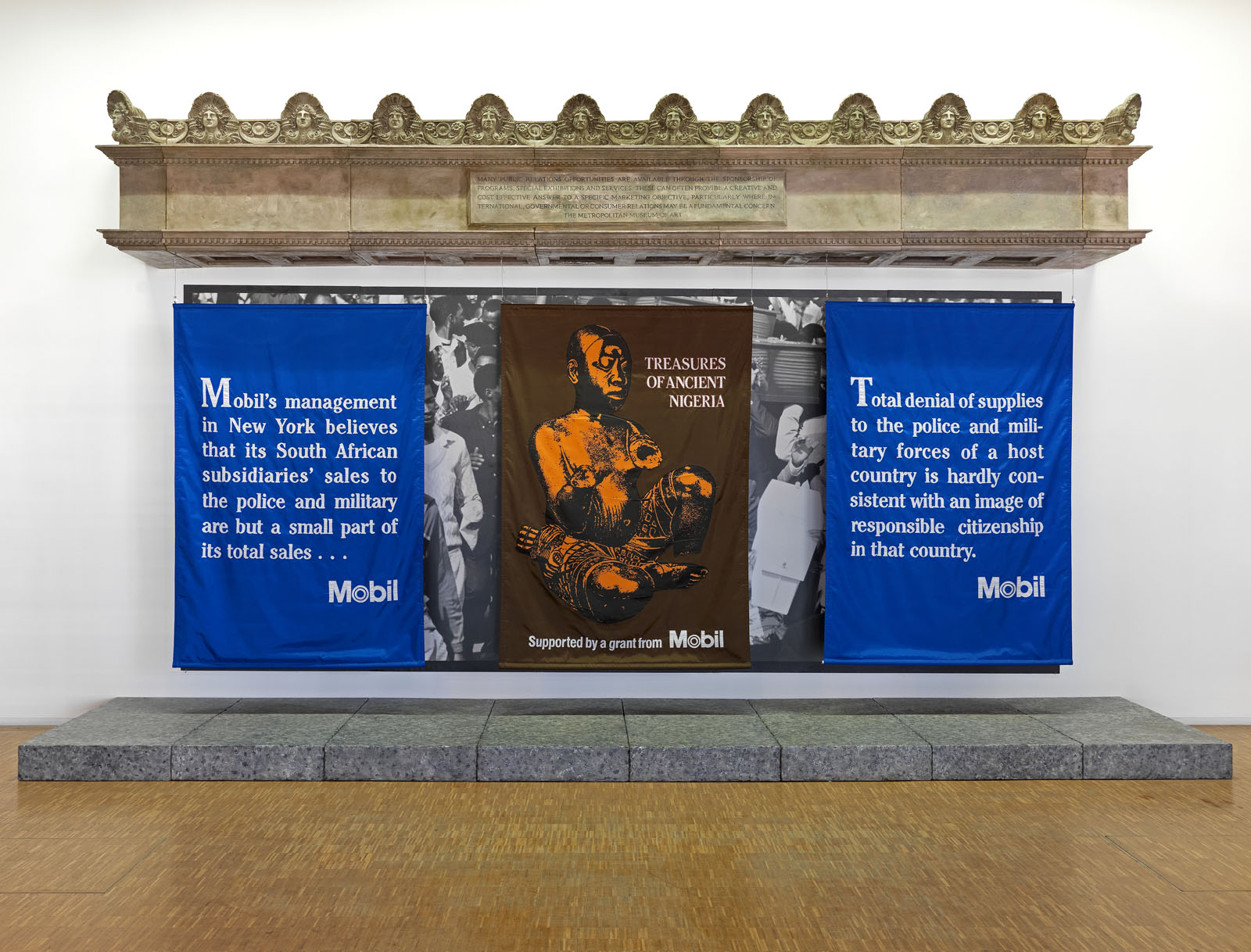
 

Hans Haacke (German, b. 1936) 'MetroMobiltan' 1985


Hans Haacke (German, b. 1936)
MetroMobiltan
1985
Fibreglass, photography, hardboard, polyester fabric, aluminum, acrylic paint
Fibreglass pediment, 1 fibreglass plate with English text, 1 black and white photograph in 5 parts laminated on hardboard, 3 banners in synthetic polyester fabric each mounted on 2 aluminium tubes: on the left and on the right 2 banners blue with English text (letters in cut and sewn white polyester fabric), in the centre 1 brown banner with photographic enlargement in cut and sewn fabric and English text), platform in 8 elements of acrylic painted fibreglass
Installation: 355.6 x 609.6 x 152.4cm
Achat en 1988, Ankauf / Purchase
Collection Centre Pompidou, Paris
Musée national d’art moderne – Centre de création industrielle
Crédit photographique: © Centre Pompidou, MNAM-CCI/Georges Meguerditchian/Dist. RMN-GP
Copyright de l’oeuvre: © VG Bild-Kunst, Bonn 2016
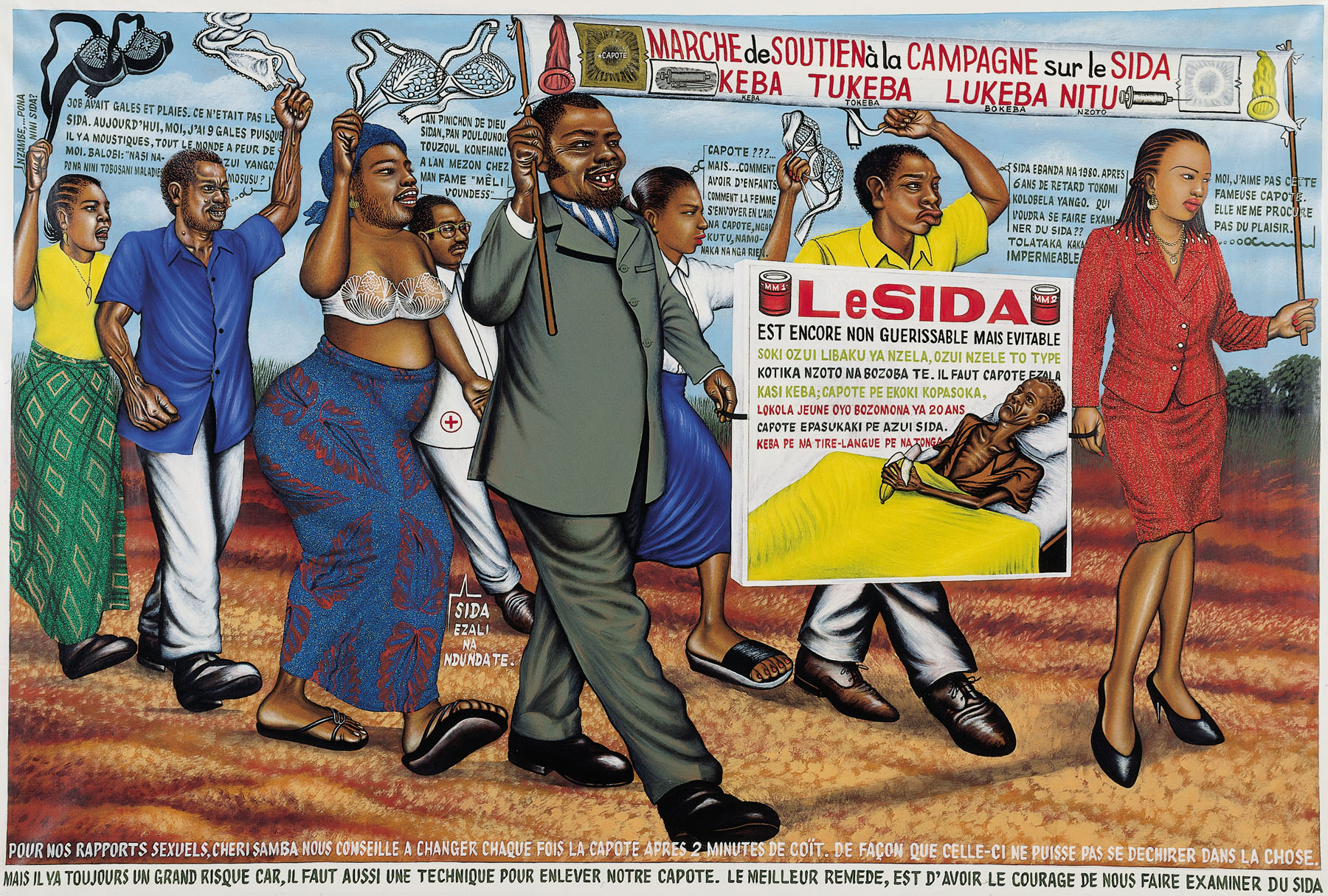
 

Chéri Samba (Democratic Republic of Congo, b. 1956) 'Marche de soutien à la campagne sur le SIDA' 1988


Chéri Samba (Democratic Republic of Congo, b. 1956)
Marche de soutien à la campagne sur le SIDA
1988
Oil and glitter on prepared canvas
134.5 x 200cm
Purchase in 1990
Collection Centre Pompidou, Paris Musée national d’art moderne – Centre de création industrielle
© Chéri Samba, photo © Centre Pompidou, MNAM-CCI/Philippe Migeat/Dist. RMN-GP


Haus der Kunst is pleased to present A History: Contemporary Art from Centre Pompidou, an exhibition originally curated by Christine Macel at the Centre Pompidou, Paris. With approximately 160 works by more than 100 artists from across the world, “A History: Contemporary Art from the Centre Pompidou” provides an incisive overview of artistic positions since the 1980s in painting, sculpture, installation, video, photography, and performance.

The Centre Pompidou’s collection of contemporary art has rarely been presented so comprehensively outside France. The selected works on view date from the 1980s to the present raising two significant questions: What factors are relevant for ensuring that art history is written in a specific way, and what does an ever changing understanding of the term ‘contemporary’ mean for public museums and their collections? Still, the concentration on Euro- American domains, which many museums formerly pursued in the acquisition of works for their collections, can hardly be sustained today and is no longer the aspiration of most museums. Globalisation, with its expanded narratives, has recently become too determining for the position of contemporary art to ignore. Curator Christine Macel defines her intention accordingly: to present ‘one’ among many possible histories of contemporary art.

With the progression of globalisation – understood here as the consolidation of economic, technological and financial systems, but also the questioning of linear history, and hegemonic cultural narratives – our perception of identity has changed. Since the first globally-oriented biennial in Havana in 1986, exhibition organisers and larger museums in Europe and North America have strived to display art created beyond the Western artistic circuit. The static understanding of identity as something based in origins and a “home base” has largely given way to a transnational and variable one.

The turning point for Centre Pompidou was its 1989 exhibition “Les Magiciens de la Terre”, in which curator Jean-Hubert Martin aimed to confront the problematic phenomenon of “one hundred percent of exhibitions that ignore eighty percent of the world.” Half the participating artists came from non-Western countries, while the other half came from the West. In addition, all exhibiting artists were – without exception – still active, making the presentation truly contemporary. Since then, the Centre Pompidou, like many large museums, has had to confront the reality of the expanded circuits of contemporary art. Over the years the museum gradually changed its acquisition practices and has increasingly opened its focus toward Eastern Europe, China, Lebanon, the Middle East, India, Congo, Nigeria, South Africa, Cameroon, Mexico and Brazil.

Meanwhile, our understanding of the term “origins” has continued to evolve. Consequently, the definition of “site-specific” has also changed. In the 1960s and 70s, artists of the Land Art movement still essentially regarded landscapes as post-industrial ruins. By contrast, Okwui Enwezor, director of Haus der Kunst believes that, in today’s artistic practice, space is defined by impermanence, by the mutability of politically and socially grounded positions, by aesthetic pluralism, and by cultural differences. Furthermore, colonial and postcolonial experiences shaped by traumatic historical events, home, exile, diaspora produced hybrid identities – such as African-American, Euro- American, Latino, Turkish-German, French-Arabic, African-Brazilian, etc. Consequently new forms of cosmopolitanism and provincialism jostle next to one another. It is no coincidence that the exhibition practice of today can already look back on a number of shows that focused on borders and issues of migration.

Against this backdrop of dynamism and permanent transition the exhibition is divided into seven chapters:

The Artist as Historian

An interest in the historical document and a more general obsession with the past, have led to the nostalgic excavation and re-enactments of existing works of art. Artists from the Arab speaking world are increasingly present in the art world; having borne witness to the Gulf War in 1991, these artists have developed new practices around the examination of history.

The Artist as Archivist

A passion for the archive initially led to a demand for completeness and later to an acceptance of the fragmentary, resulting on the one hand in concurrence of taxonomic efforts and endless accumulation, and, on the other, in an insight into the accelerated loss of memory. On a higher level, both coincide: Archives are especially useful in helping to identify and address wounds in the collective memory.

Sonic Boom

Trying to capture the sensation of listening to music in an image has a long tradition. Yet, even for artists who take their works to the edge of physical dissolution, listening often moves to the fore. Further, changes in the music industry and music production have reinforced the permeability of art and composition.

The Artist as Producer: The “Traffic” Generation

The concept of artwork is transformed through its dematerialisation. An awareness of temporality, volatility, and process shifts to the foreground. Artists develop new forms of collaboration and collective creation, and make aesthetic use of clips, sampling, and film narrative (which is also regarded as an exhibition platform). As a result, copyright as an object of reflection has come into focus.

The Artist as Documentarist: As Close as Possible to the Real

The proliferation of the Internet in the context of a market economy and consumer society has led to a greater interest in the real, in the status quo of the observer and the reporter and generally in an engagement with all areas of human life. The artist takes on the role of a witness who accepts the subjectivity of his observations.

Artist and Object

Between 1980 and 1990, artists turned to an exploration of the everyday and the object; the 1990’s can be considered as the ultimate epoch of the aesthetic of the mundane. The now-famous video, “The Way Things Go” by Fischli and Weiss (1986-87) sings this song of songs to the everyday. No less iconic is Gabriel Orozco’s modified Citroën (La DS, 1993). The confrontation with consumer society is manifested in photography in detailed and richly coloured compositions like Gursky’s 99 Cent (1999), and in sculpture with the integration of found objects. The common denominator is the attention artists pay to excessive consumption – as an opportunity or as a fact.

The Artist and the Body

Video and photography seem to be particularly fitting mediums for artists whose works include a performative element. The theme of the human body – wounded or damaged by oppression – returns as a theme with a vengeance. Many works with erotic and sexual overtones emerge. New technical possibilities, either through plastic surgery or image manipulation, bring the grotesque into the fold.

Press release from Haus der Kunst


Fischli and Weiss
The Way Things Go
1986-1987


Erik Boulatov (Russian, b. 1933) 'Printemps dans une maison de repos des travailleurs' 1988


Erik Boulatov (Russian, 1933-2025)
Printemps dans une maison de repos des travailleurs
1988
Oil on canvas
169.2 x 239 x 4cm
Purchased in 1989
Collection Centre Pompidou, Paris Musée national d’art moderne – Centre de création industrielle
© VG Bild-Kunst, Bonn 2016,
Photo © Centre Pompidou, MNAM-CCI/Philippe Migeat/Dist. RMN-GP


Michel François (Belgian, b. 1956) 'Affiche Cactus' 1997


Michel François (Belgian, b. 1956)
Affiche Cactus
1997
Print on paper
120 x 178cm
Don de l’artiste en 2003
Collection Centre Pompidou
Paris Musée national d’art moderne – Centre de création industrielle
© VG Bild-Kunst, Bonn 2016
Photo © Centre Pompidou, MNAM-CCI/Philippe Migeat/Dist. RMN-GP


Pawel Althamer (Polish, b. 1967) 'Tecza' (Rainbow) 2004


Pawel Althamer (Polish, b. 1967)
Tecza (Rainbow)
2004
Metal, cotton, felt, rubber, cork, plastic
120 x 185 x 57cm
Purchased in 2006
Collection Centre Pompidou, Paris Musée national d’art moderne – Centre de création industrielle
© Pawel Althamer
Photo © Centre Pompidou, MNAM-CCI/Service de la documentation photographique du MNAM/Dist. RMN-GP
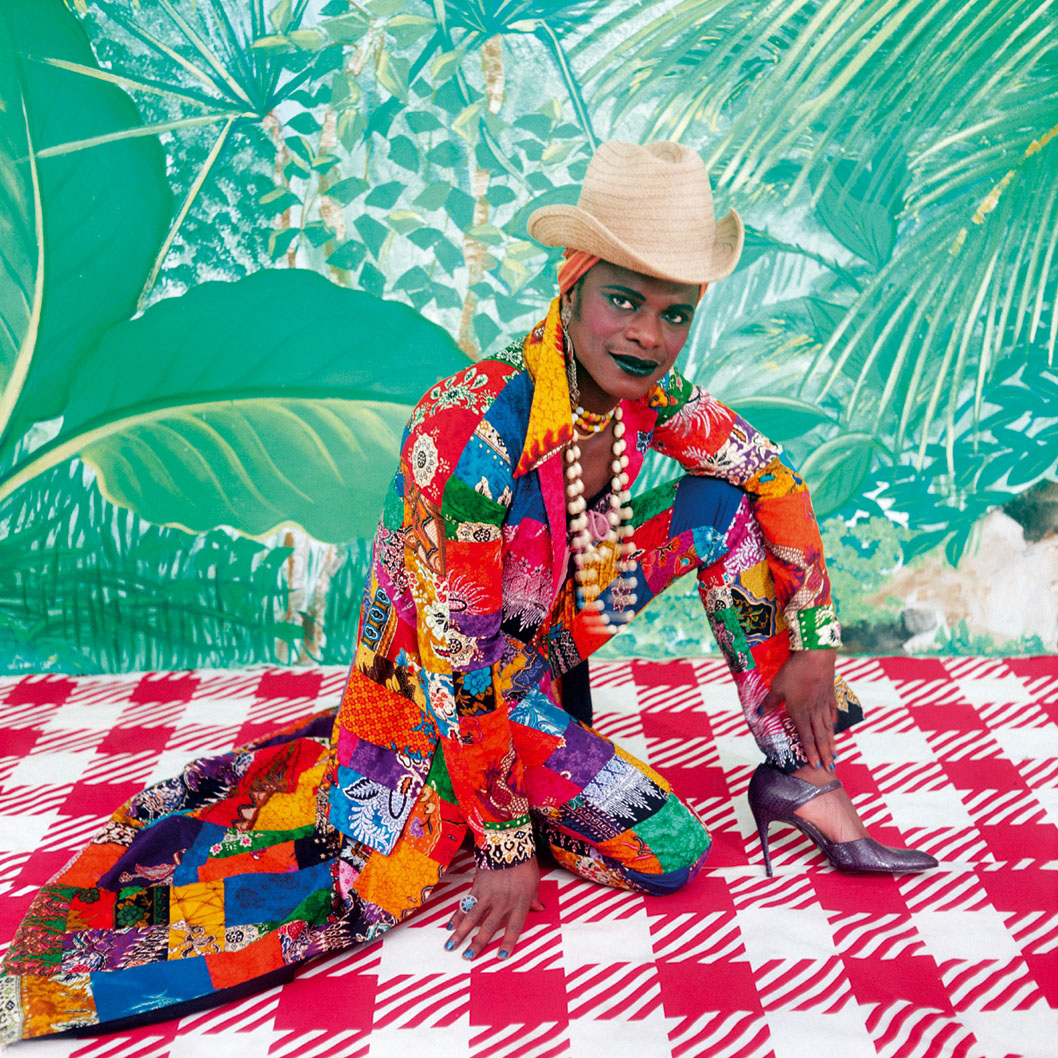
 

Samuel Fosso (Nigerian born Cameroon, b. 1962) 'La Femme américaine libérée des années 70' 1997


Samuel Fosso (Nigerian born Cameroon, b. 1962)
La Femme américaine libérée des années 70
1997
Chromogenic print
127 x 101cm
Crédit photographique: © Centre Pompidou, MNAM-CCI/Philippe Migeat/Dist. RMN-GP
Copyright de l’oeuvre: © Samuel Fosso, courtesy J.M. Patras, Paris
Achat en 2004, Ankauf / Purchase
Collection Centre Pompidou, Paris
Musée national d’art moderne – Centre de création industrielle
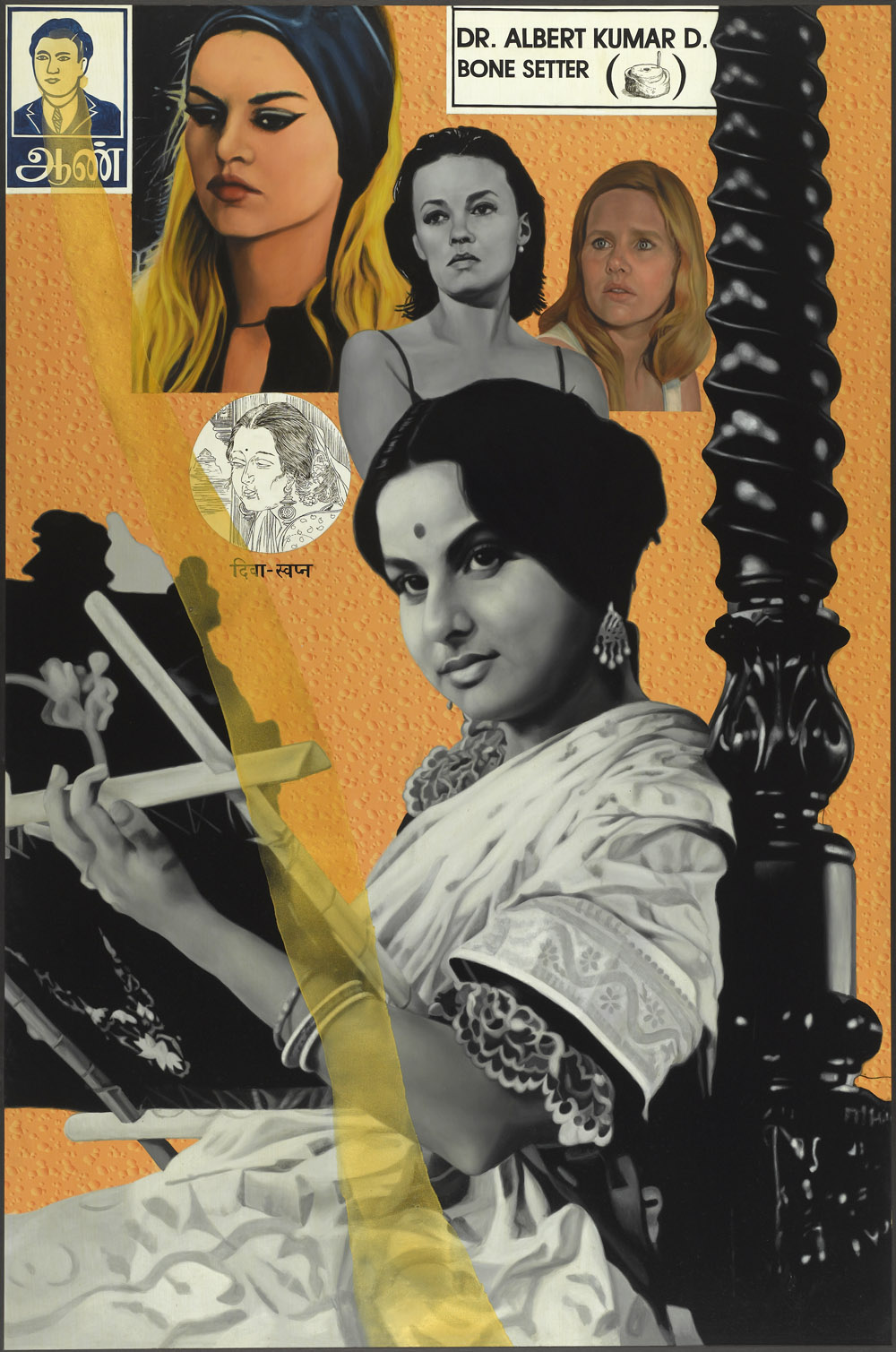
 

Atul Dodiya (Indian, b. 1959) 'Charu' 2004


Atul Dodiya (Indian, b. 1959)
Charu
2004
Enamel paint and synthetic varnish on plywood
183 x 122cm
Don de la Société des Amis du Musée national d’art moderne, 2013
Collection Centre Pompidou, Paris
Musée national d’art moderne – Centre de création industrielle
Crédit photographique: © Centre Pompidou, MNAM-CCI/Philippe Migeat/Dist. RMN-GP
Copyright de l’oeuvre: © Atul Dodiya
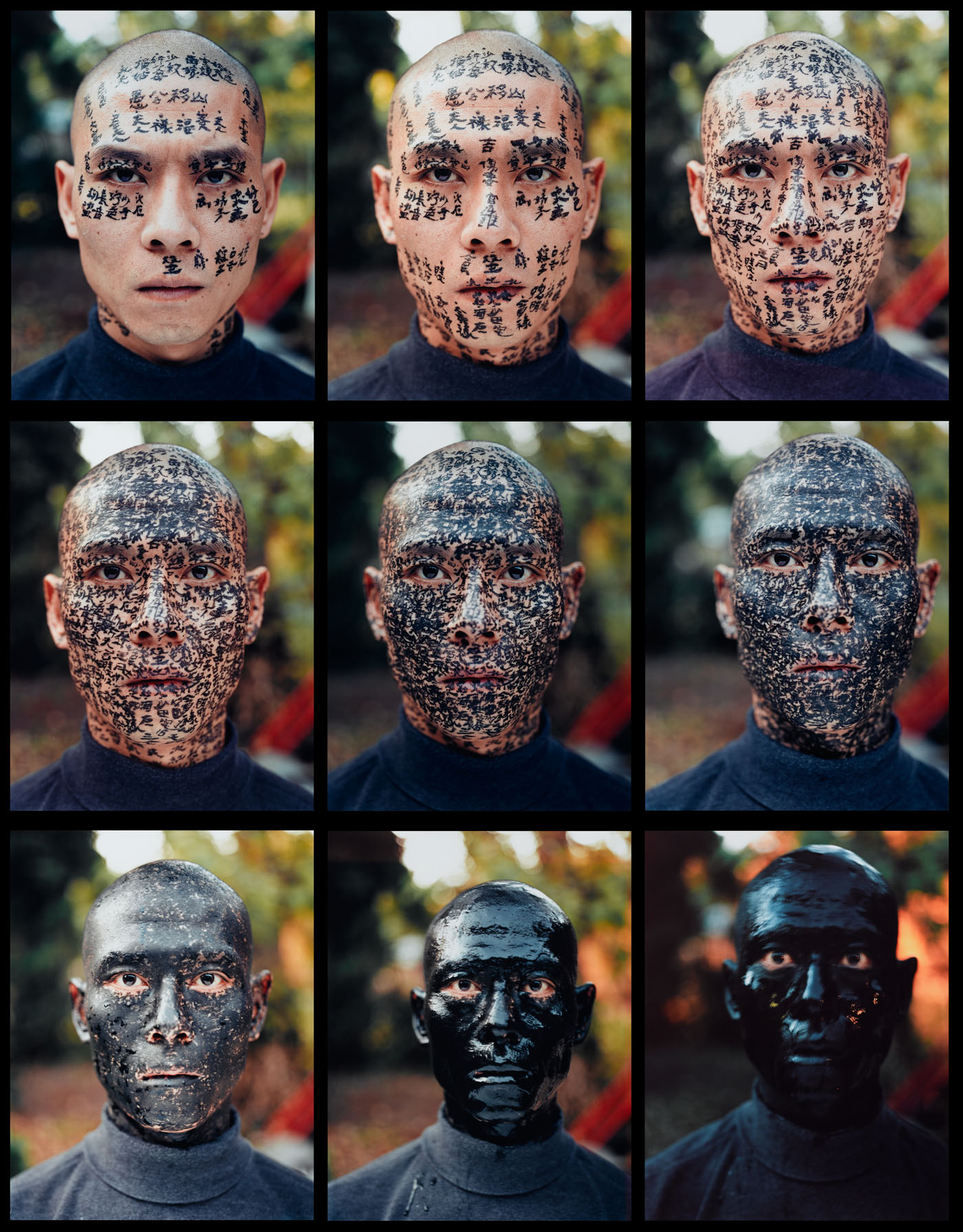
 

Huan Zhang (Chinese, b. 1966) 'Family Tree' 2000


Huan Zhang (Chinese, b. 1966)
Family Tree
2000
9 chromogenic prints
396 x 318cm
Each print 132 x 106cm
Montage of the nine prints
Collection Centre Pompidou, Paris
Musée national d’art moderne – Centre de création industrielle,
Purchased in 2004
© droits réservés, photo © Centre Pompidou, MNAM-CCI/Philippe Migeat/Dist. RMN-GP
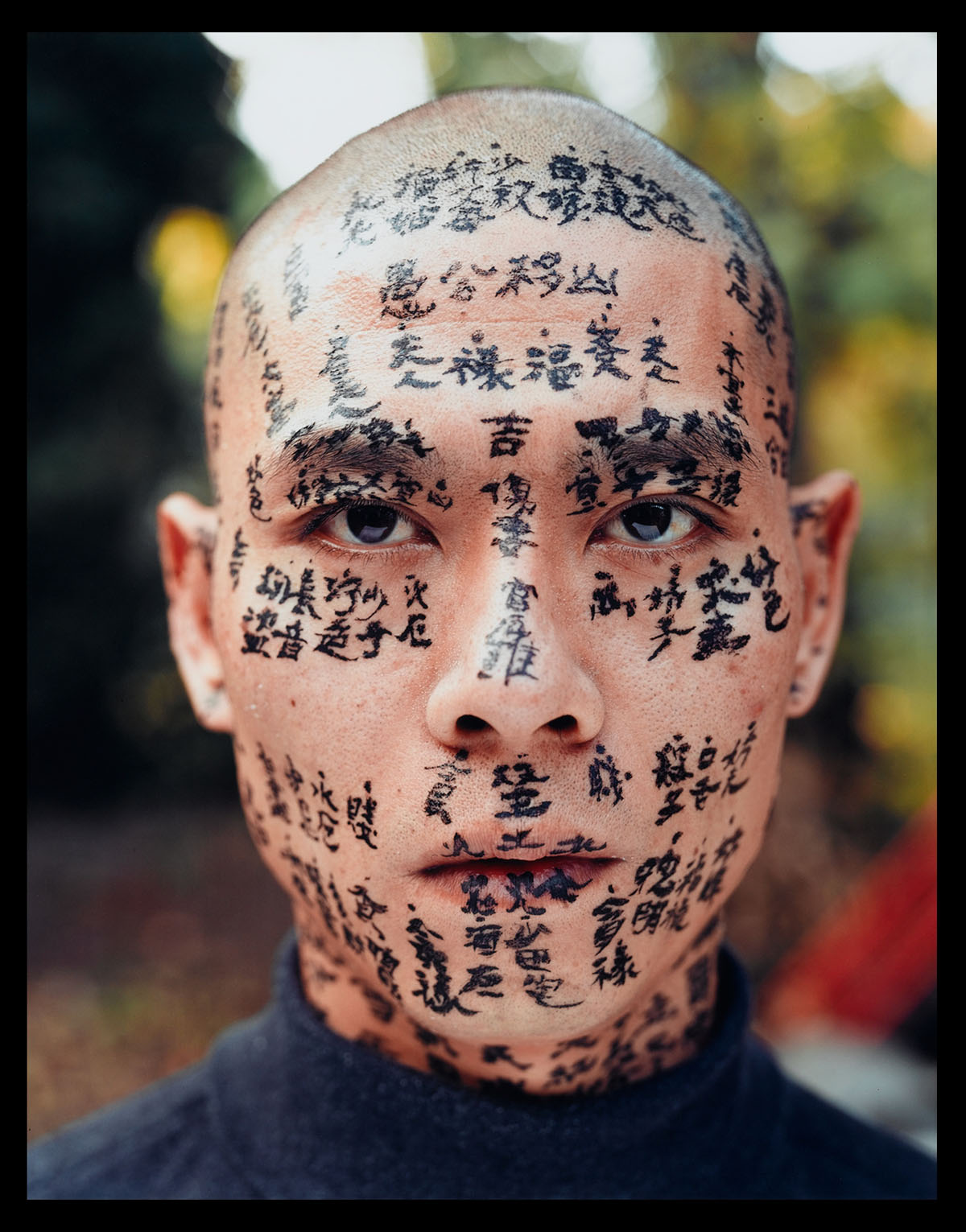
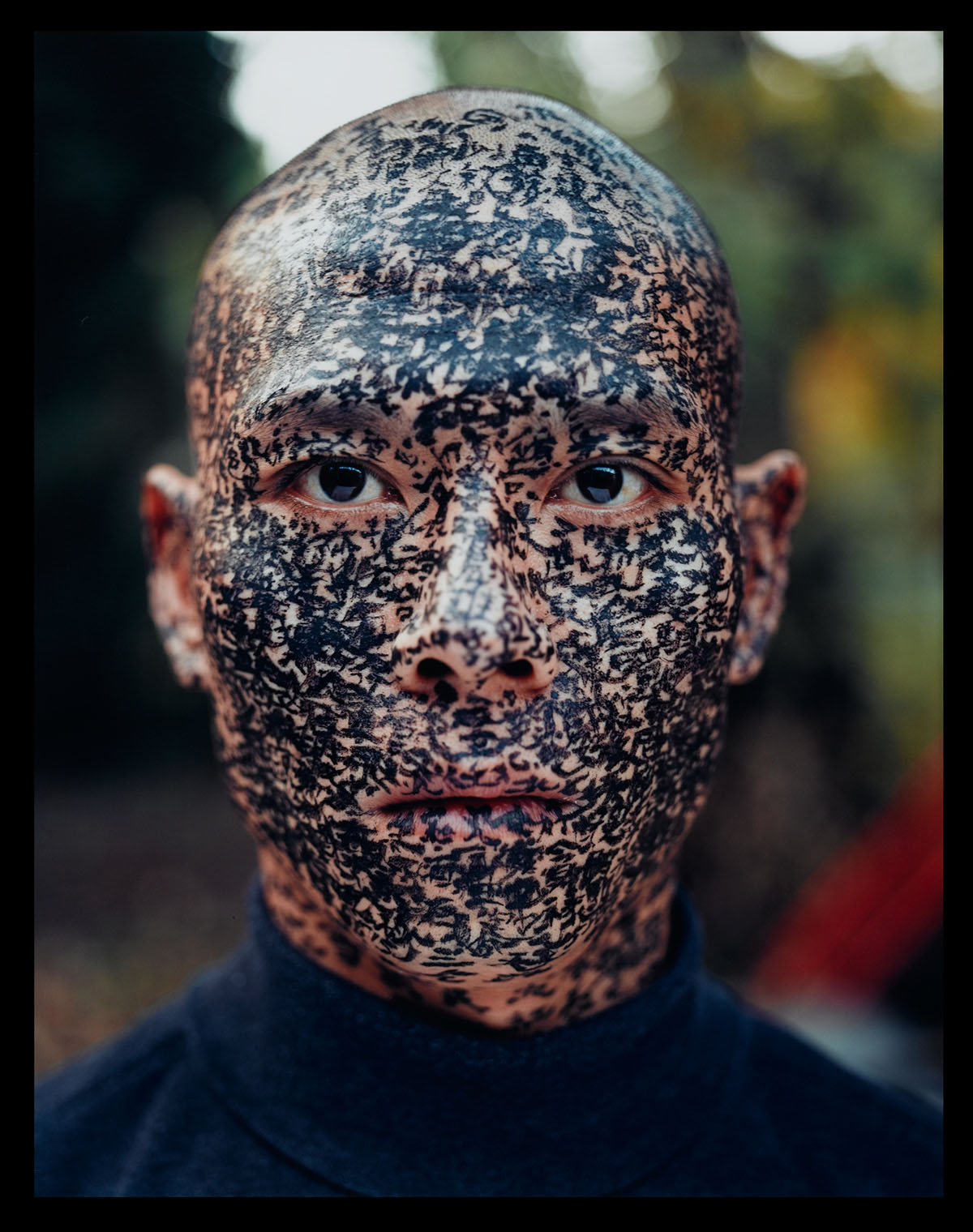
 

Huan Zhang (Chinese, b. 1966) 'Family Tree' 2000 (detail)

Huan Zhang (Chinese, b. 1966) 'Family Tree' 2000 (detail) 'Family Tree' 2000 (detail)


Huan Zhang (Chinese, b. 1966)
Family Tree (details)
2000
9 chromogenic prints
396 x 318cm
Each print 132 x 106cm
Montage of the nine prints
Musée national d’art moderne – Centre de création industrielle,
Achat en 2004
© droits réservés, photo
© Centre Pompidou, MNAM-CCI/Philippe Migeat/Dist. RMN-GP
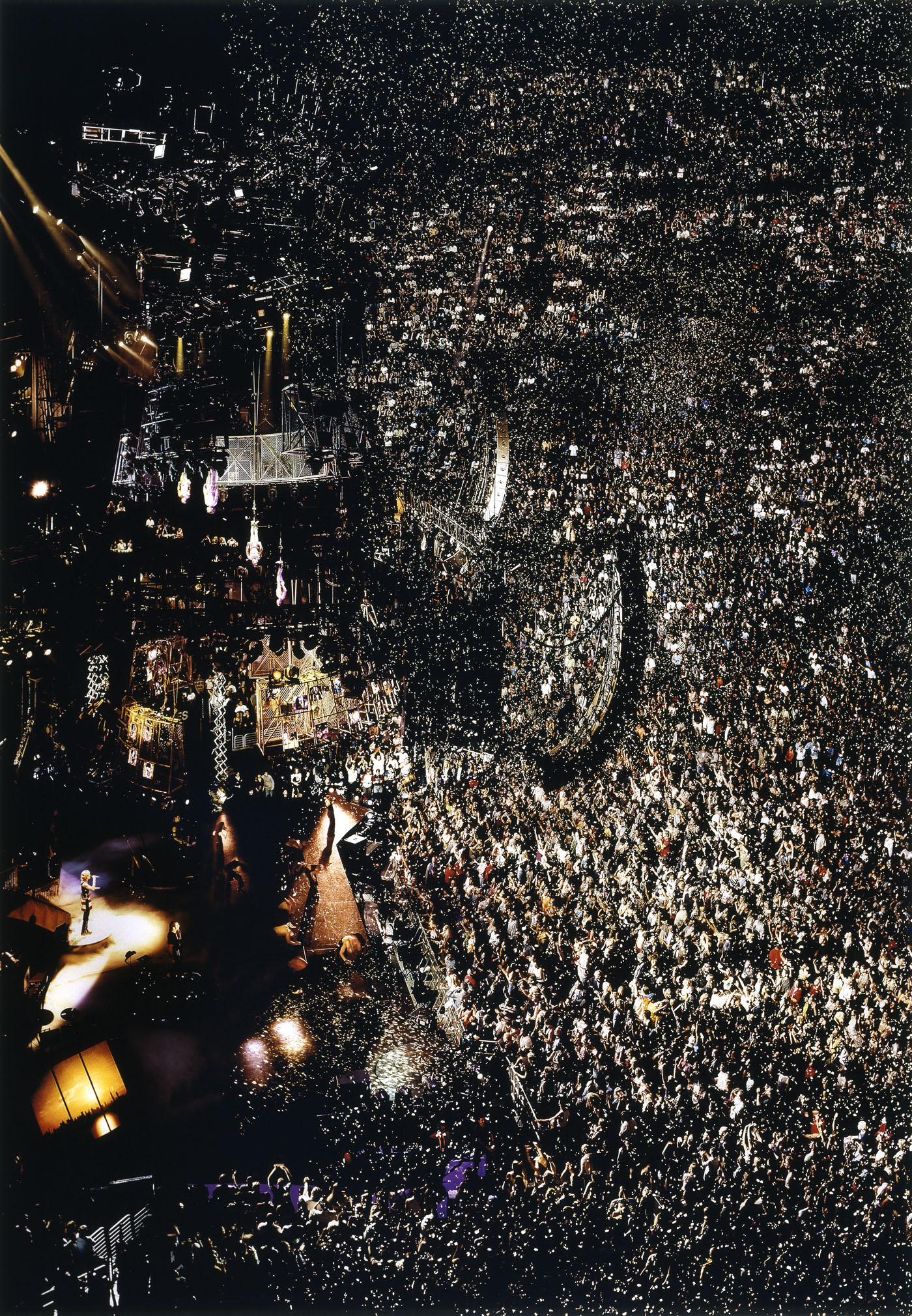
 

Andreas Gursky (German, b. 1955) 'Madonna I' 2001


Andreas Gursky (German, b. 1955)
Madonna I
2001
Chromogenic print
282 x 213 x 6.5cm
Achat en 2003, Ankauf / Purchase
Collection Centre Pompidou, Paris
Musée national d’art moderne – Centre de création industrielle
Crédit photographique: © Centre Pompidou, MNAM-CCI/Georges Meguerditchian/Dist. RMN-GP
Copyright de l’oeuvre: © Courtesy: Monika Sprüth Galerie, Cologne / VG Bild-Kunst, Bonn 2016
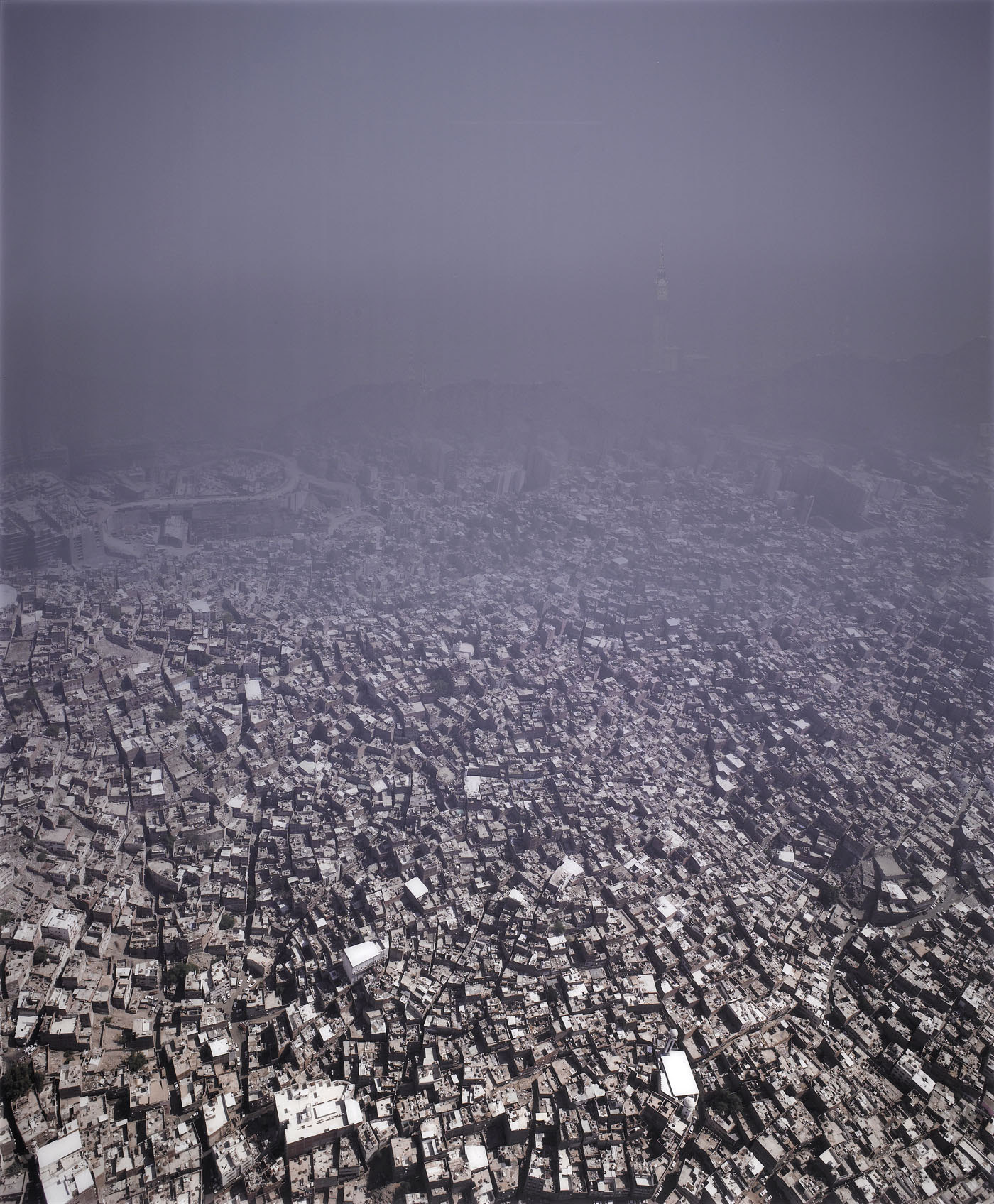
 

Ahmed Mater (Saudi, b. 1979) 'From the Real to the Symbolic City' 2012


Ahmed Mater (Saudi, b. 1979)
From the Real to the Symbolic City
2012
Digital proof
292 x 245cm
Don de Athr Gallery, avec le soutien de Sara Binladin et Zahid Zahid, Sara Alireza et Faisal Tamer, Abdullah Al-Turki, 2013
Collection Centre Pompidou, Paris
Musée national d’art moderne – Centre de création industrielle
Crédit photographique: © Centre Pompidou, MNAM-CCI/Georges Meguerditchian/Dist. RMN-GP
Copyright de l’oeuvre: © droits réservés
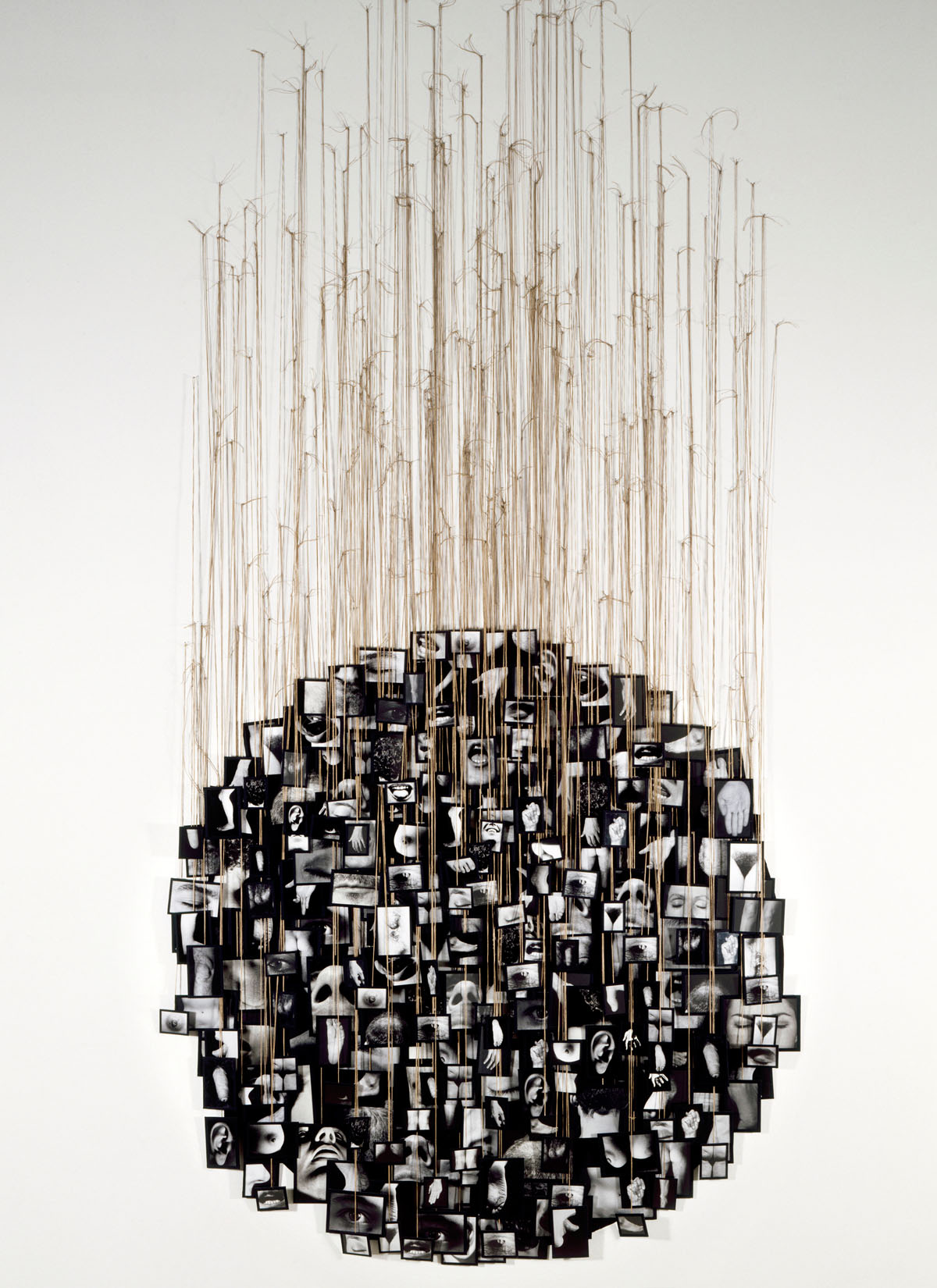
 

Annette Messager (French, b. 1943) 'Mes voeux' 1989


Annette Messager (French, b. 1943)
Mes voeux
1989
263 gelatin silver prints framed under glass held in place by black adhesive paper and hung on the wall by long strings
Overall dimensions: 320 x 160cm
1 épreuve 24 x 17cm, 50 épreuves 20 x 14cm, 57 épreuves 15 x 11cm, 49 épreuves 13 x 9cm, 106 épreuves 8 x 6cm
Collection Centre Pompidou, Paris
Musée national d’art moderne – Centre de création industrielle
Achat en 1990
© VG Bild-Kunst, Bonn 2016, photo Centre Pompidou, MNAM-CCI/Philippe Migeat/Dist. RMN-GP
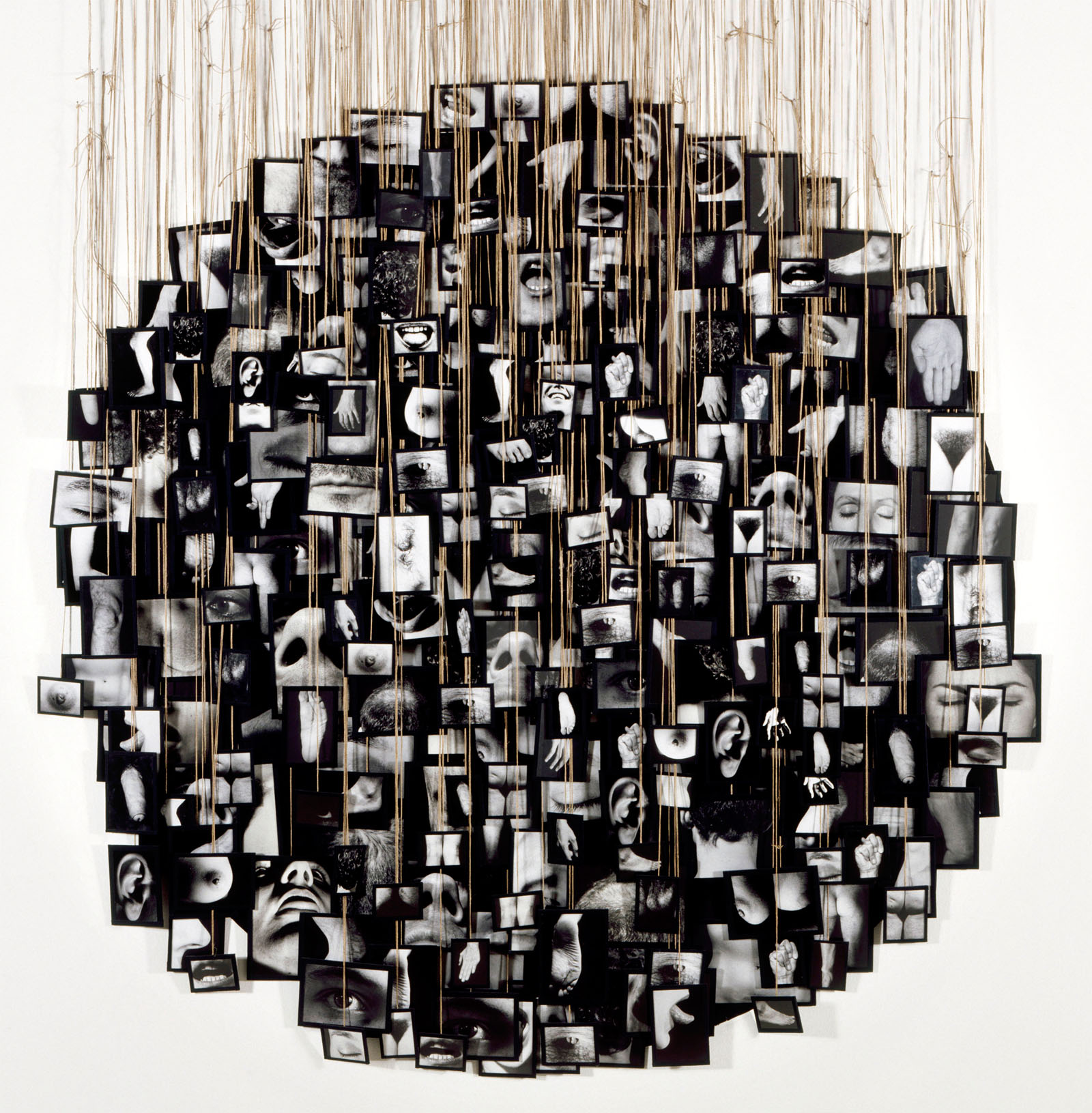
 

Annette Messager (French, b. 1943) 'Mes voeux' 1989 (detail)


Annette Messager (French, b. 1943)
Mes voeux (detail)
1989
263 gelatin silver prints framed under glass held in place by black adhesive paper and hung on the wall by long strings
Overall dimensions: 320 x 160cm
1 épreuve 24 x 17cm, 50 épreuves 20 x 14cm, 57 épreuves 15 x 11cm, 49 épreuves 13 x 9cm, 106 épreuves 8 x 6cm
Collection Centre Pompidou, Paris
Musée national d’art moderne – Centre de création industrielle
Achat en 1990
© VG Bild-Kunst, Bonn 2016, photo Centre Pompidou, MNAM-CCI/Philippe Migeat/Dist. RMN-GP
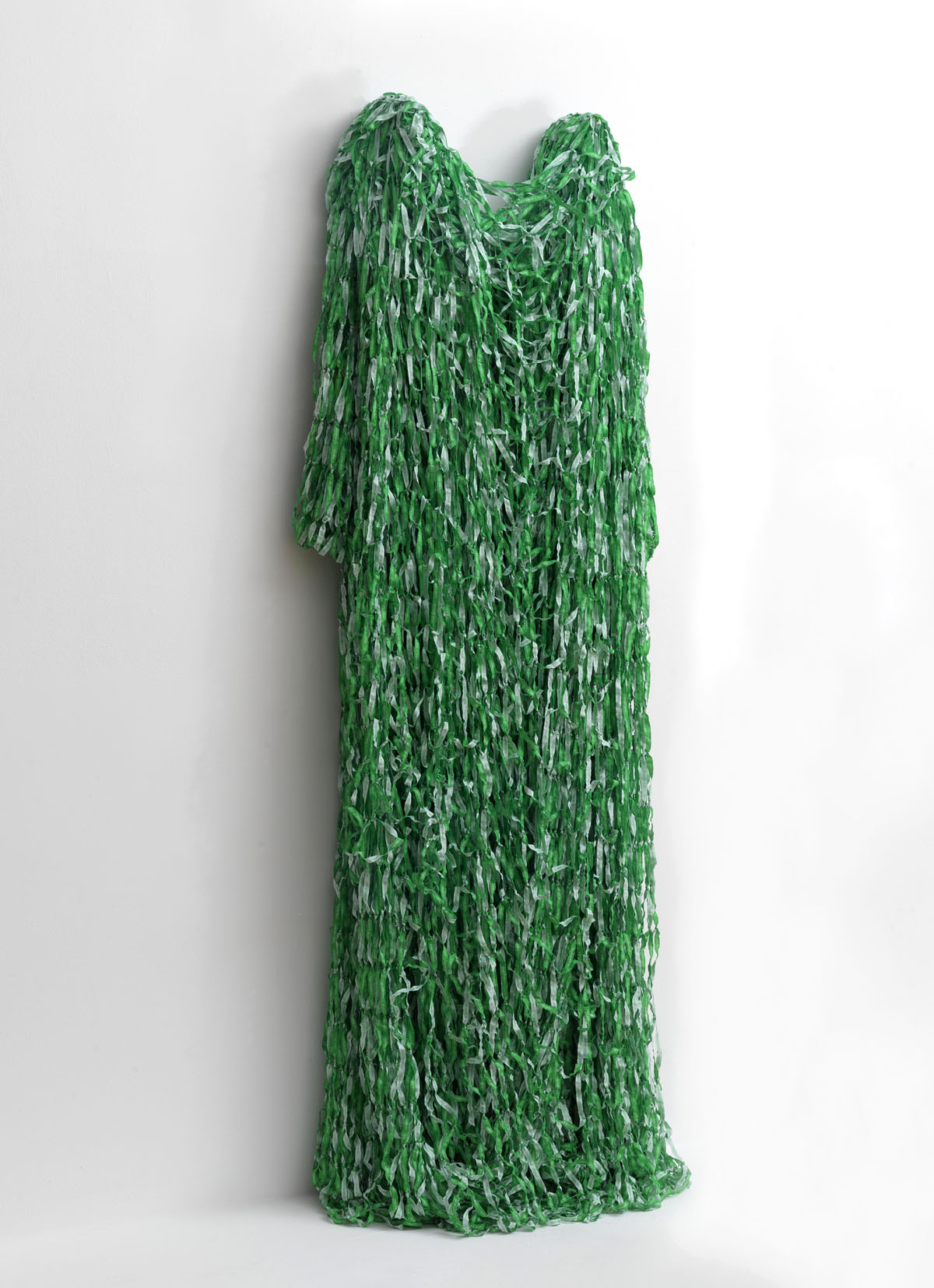
 

Ayse Erkmen (Turkish, b. 1949) 'Netz' 2006


Ayse Erkmen (Turkish, b. 1949)
Netz
2006
Cotton garment labels, nails
Installation: 220 x 60 x 20cm
Purchased in 2012
Collection Centre Pompidou, Paris
Musée national d’art moderne – Centre de création industrielle
© Ayse Erkmen
Photo © Centre Pompidou, MNAM-CCI/Georges Meguerditchian/Dist. RMN-GP
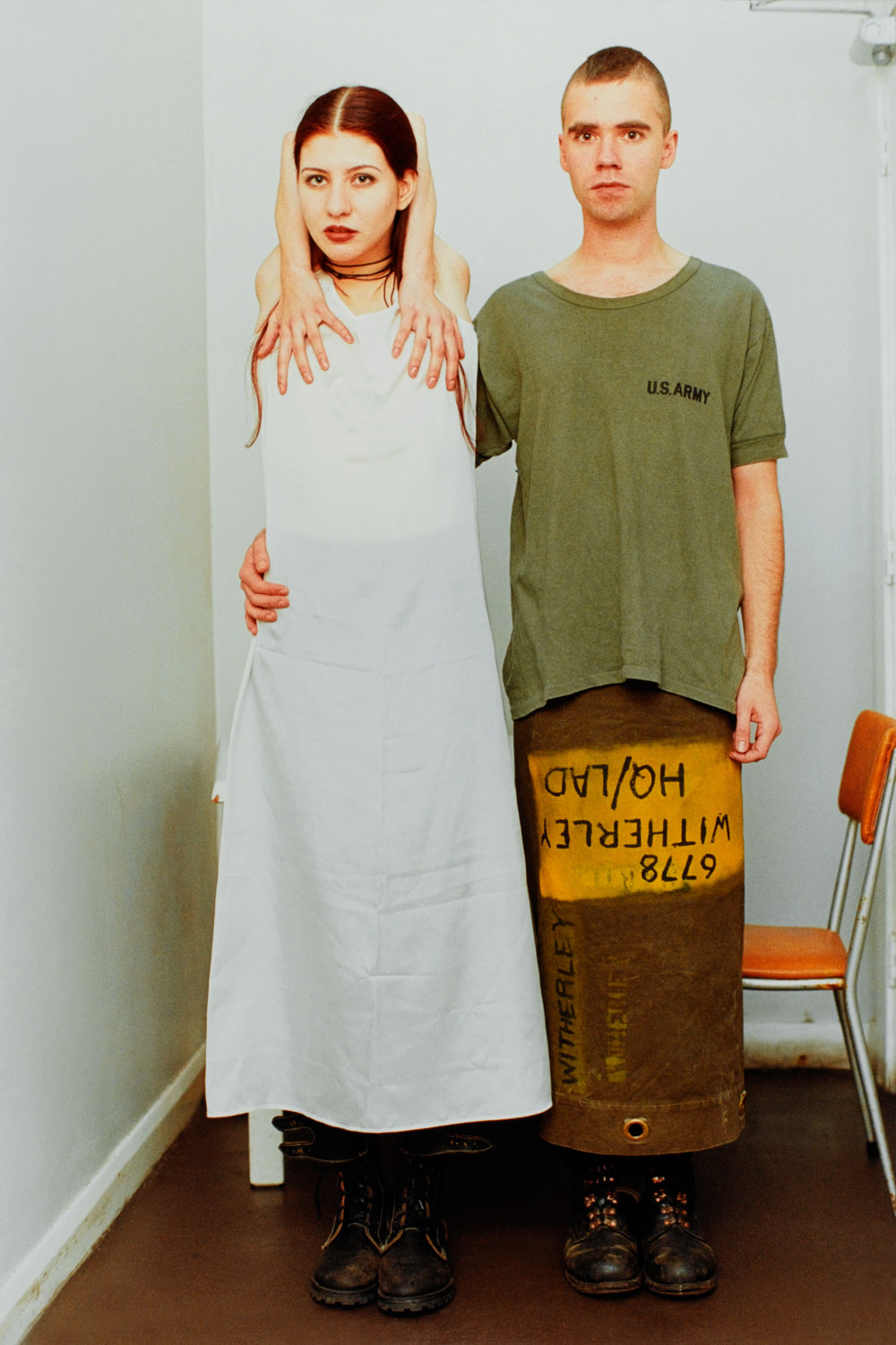
 

Wolfgang Tillmans (German, b. 1968) 'Suzanne & Lutz, white dress, army skirt' 1993


Wolfgang Tillmans (German, b. 1968)
Suzanne & Lutz, white dress, army skirt
1993
Chromogenic print
99 x 66 x 2cm
Donation de la Caisse des Dépôts en 2006
Collection Centre Pompidou, Paris
Musée national d’art moderne – Centre de création industrielle
© Wolfgang Tillmans
Photo © Centre Pompidou, MNAM-CCI/Philippe Migeat/Dist. RMN-GP


Gabriel Orozco (Mexican, b. 1962) 'La D.S.' 1992

Gabriel Orozco (Mexican, b. 1962) 'La D.S.' 1992 'La D.S.' 1992


Gabriel Orozco (Mexican, b. 1962)
La D.S.
1992
Centre national des arts plastiques, FNAC 94003
© Gabriel Orozco/CNAP, courtesy photo Galerie Crousel-Robelin-Bama


Gonçalo Mabunda (Mozambique, b. 1975) 'O trono de um mundo sem revoltas (Le trône d’un monde sans révolte)' 2011


Gonçalo Mabunda (Mozambique, b. 1975)
O trono de um mundo sem revoltas (Le trône d’un monde sans révolte) (The throne of the world without revolt)
2011
Recycled iron, weapons of the civil war in Mozambique
79 x 88 x 49cm
Don de la Société des Amis du Musée national d’art moderne, 2012. Projet pour l’art contemporain 2011, avec le soutien de Nathalie Quentin-Mauroy
Collection Centre Pompidou, Paris
Musée national d’art moderne – Centre de création industrielle
Crédit photographique: © Centre Pompidou, MNAM-CCI/Georges Meguerditchian/Dist. RMN-GP
Copyright de l’oeuvre: © Gonçalo Mabunda
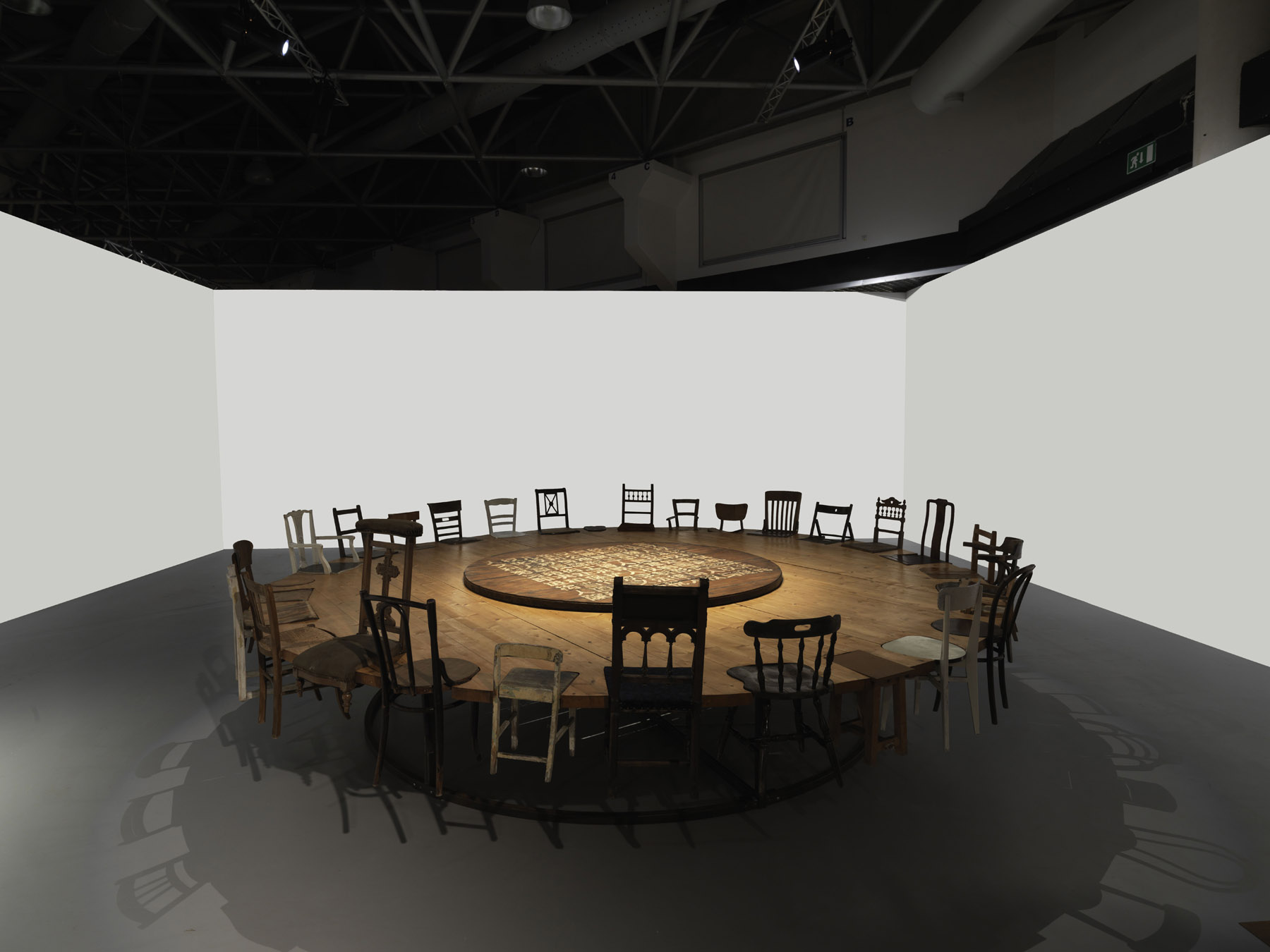
 

Chen Zhen (Chinese-French, 1955-2000) 'Paris Round Table' 1995


Chen Zhen (Chinese-French, 1955-2000)
Paris Round Table
1995
Wood, metal
180cm, diameter 550cm
Purchased in 2002
Dépôt du Centre national des arts plastiques, 2002
Collection Centre Pompidou, Paris
Musée national d’art moderne – Centre de création industrielle
© VG Bild-Kunst, Bonn 2016, Présentation dans “Extra Large”, Grimaldi Forum, Monaco, juillet 2012
Photo © Centre Pompidou, MNAM-CCI/Philippe Migeat/Dist. RMN-GP
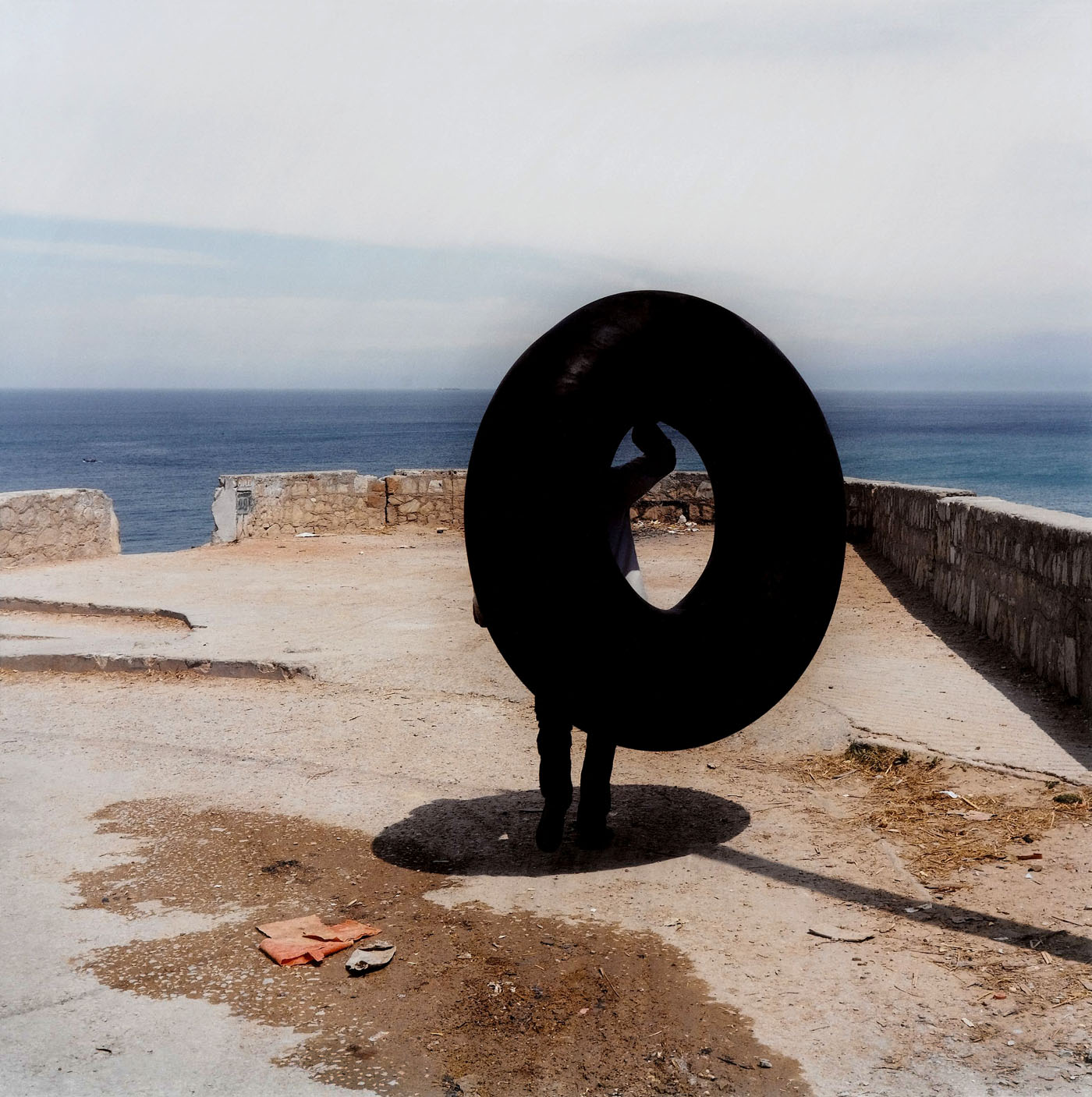
 

Yto Barrada (Franco-Moroccan, b. 1971) 'Sans titre' 1998-2004


Yto Barrada (Franco-Moroccan, b. 1971)
Sans titre
1998-2004
Chromogenic print
73 x 73cm
Donation de la Caisse des Dépôts en 2006
Collection Centre Pompidou, Paris
Musée national d’art moderne – Centre de création industrielle
© Yto Barrada
Photo © Centre Pompidou, MNAM-CCI/Georges Meguerditchian/Dist. RMN-GP


Haus der Kunst
Prinzregentenstraße 1
80538 Munich
Germany
Phone: +49 89 21127 113

Opening hours:
Mon | Wed | Fri | Sat | Sun 10am – 8pm
Thurs 10am – 10pm
Tues closed

Haus der Kunst website

LIKE ART BLART ON FACEBOOK

Back to top

Catalogue essay: ‘Aspects of the Self (Revealed)’ by Dr Marcus Bunyan for the exhibition ‘Hidden Talents’ at the Faculty of the Victorian College of the Arts (VCA) and Melbourne Conservatorium of Music (MCM), The University of Melbourne, Australia

Exhibition dates: August 2014


Marcus Bunyan (Australian, b. 1958) 'Zen' 1984


Marcus Bunyan (Australian, b. 1958)
Zen
1984
From the series First experiments
Silver gelatin print
© Marcus Bunyan


This is the catalogue essay for the exhibition Hidden Talents, an exhibition of the hidden talents of professional staff at the Faculty of the VCA & MCM, The University of Melbourne, Australia. The exhibition has been postponed until a later date but I did not want the catalogue essay to metaphorically sit under the bed with no one reading it.

The essay was written without seeing any of the art work for the exhibition (which is going to consist of knitting, performance, video, sculpture, painting, etc…). I have used my imagination to write about the subject matter, asking why it is important to reveal hidden aspects of the self.

Curator Tracey Claire observes, “Practicing artists are as likely to be found behind a desk as in front of a class at the VCA & MCM… Be it dancing, cycling, sailing, knitting, painting, writing, film making or performing, all the individuals in this exhibition are creative artists thriving in a melting hot pot of creativity… Professional staff tend to go about their business quietly, excelling in the dark arts of spreadsheet wizardry and effortless administration but in their private lives, conjuring mysterious creations. Toiling endlessly in the hours beyond their professional lives, yet inspired and nurtured by precisely this environment, they distill these experiences and produce magic.

This catalogue essay examines the significance of these activities and is accompanied by 5 of the very first black and white images that I ever took, long before I ever started studying photography in 1989.

Dr Marcus Bunyan


Keywords

Hidden Talents, The Self, Aspects of the Self, self-expression, image man, essence man, actual self, networked society, perfomative self, citational self, cosmopolitanism, hybridity, visibility, bricolage, Goethe, hybrid identities, identity formation, self actualisation, social transparency, The University of Melbourne, Australia, Victorian College of the Arts, Melbourne Conservatorium of Music, VCA.

Download the Aspects of the Self (Revealed) catalogue essay (2.6Mb pdf). Please click on the photographs for a larger version of the image.


Marcus Bunyan (Australian, b. 1958) 'Brighton Pier (horizontal)' 1984


Marcus Bunyan (Australian, b. 1958)
Brighton Pier (horizontal)
1984
From the series First experiments
Silver gelatin print
© Marcus Bunyan


Aspects of the Self (Revealed)

Dr Marcus Bunyan


“In our era of internet ubiquity, the line that separates our selves from the media with which we self-express has dissolved, and the distinction between medium and maker is confused. As we publicise our private stories, and perpetually alter, rebrand, and repaint ourselves to the world, performances of self are status quo and everyone is an artist.”


Josephine Skinner 1


We are all performance artists. And this text is a performance piece, an aspect of myself as I choose to express it in this place and time. An aspect – appearance, look, character, view, interpretation, phase, countenance2 – which, like the word itself, is both stable and fluid, and will change at any time: perhaps even now; or in the future.

Having noted the amorphous nature of the wor(l)d, what I will do in this performance is examine the truths and separate them from the platitudes of Josephine Skinner’s quotation (above) in order to understand not only that the private be made public but also why the hidden should be revealed. Of course, our sense of self changes when the private becomes open, public and possibly universal. I will ask why this is important and how it affects our sense of connection to other human beings. To do this I will examine my own private story, not to rebrand or repaint myself to the world, far from it, but because every life path has important lessons for us all.

In the beginning, I grew up on a farm. My parents were impoverished. It was subsistence living and we were the working poor. We had no running hot water and my mother used to have to boil water on a stove and fill a bathtub on the kitchen floor so that we could be cleaned. I used to explore the remote reaches of the land, out behind the pond at the front of the farmhouse and up the cart path into the forests, creating fantasy worlds to escape what was going on at home. There, fantasies became a form of escapism, for my imagination, for action,3 a place where I could create new worlds of magic, light and freedom.

My mother was a piano teacher and my father was a part-time singer. I started to study piano at the age of 5 years old under my mother’s tutelage. I had a natural gift and became a child prodigy, the youngest person at that time to attain a distinction in Associated Board Grade 8 examination, at age 11. I was sent to boarding school on a music scholarship at the age of 12, leaving all my school friends behind. There, in that upper class boarding school, I was ostracised because they found out I was gay (just as I was discovering it myself), and because I was a music scholar. My parent’s adage to life was what I would come to call Protestant work ethic: ‘you never work hard enough, you’ll never be good enough, you’ll never make anything of yourself.” This damnation has stuck with me and I have struggled against its prophecy, working hard to make something of myself, something I can be proud of. Even now my mother (I don’t see my father) still fails to recognise my achievements, my life path.

At boarding school I developed what I was told was depression but which was actually bipolar disorder, undiagnosed until I was in my forties. At the age of 16, I was one of the youngest people to go to the Royal Academy of Music and at 17 I went to the Royal College of Music full time. I moved away from home, which was a blessing, and started living on my own. It was a tough initiation into adult life but I was determined not to be dependent on anyone else. My parents finally divorced when I was 17 and, at the same age, the stress of my hidden sexuality leading me to have a nervous breakdown. After nearly a year recovering I came out as a gay man. I graduated with my degree at 21 and gave up being a concert pianist the same year. The time to start living my own life had begun.

I worked in pubs around London for years. I hated classical music (a rejection of the past) and was really into the funk scene. I was a dilettante, a person without real commitment or knowledge. Not once did I ever think of myself as intelligent or creative, it just wasn’t in my vocabulary. I enjoyed partying, holidays, friends and motor racing and started taking a few photographs. That was it until I was about 28 when I returned to Year 12 and university to study, study, study, to read Carlos Castaneda, Robert Johnson and Joseph Campbell, to devour Borges, Jung and Foucault – not the usual university curriculum for an artist, but I was searching for a spiritual way in life. These authors offered wisdom and learning, and a network to other authors and artists investigating similar subject matter. The start of a path had been found and an inquiring mind slowly emerged. I tell you all of this simply as a statement of fact – this was my beginning, this is what I went through, and this journey and learning informs my being and relation to other people and to the world.

Today, we need to understand our own paradigm of sharing, what we are prepared to reveal of ourselves now that we live in a networked society. In a networked society the private and the public self are no longer two endpoints of a linear dichotomy for the boundaries have well and truly been breached: mobile technologies, computers and social media bring the outside world into our home and we willingly promote our point of view to others. Our interior thoughts are advertised through our exterior relations and appearance – on videos, on mobile phones, through millions of images and informational flows that surround us everyday. Our performative self, our citational self constantly performs and citationally quotes our relations of our self to others through different nodal points, or contexts of connection. But our interiority is still different from our exteriority, even as we perform the self.

Yet, while it is correct that in our era of internet ubiquity, the line that separates our selves from the media with which we self-express has dissolved – we are still not yet fully immersed in this system. Critically, we still have a choice about what we reveal of ourselves to others. My degree as a concert pianist may appear at the bottom of my CV, and I may not tell many people about it, but how I imagine my art, how I write my words and my worlds, is inherently related to the line and ‘magic’ of music. How I relate to other people is based on my core values (strong moral code, loyalty, love of helping people) developed during childhood, core values that have remained stable but whose context may have changed over the journey from youth to adulthood. And because of our class (our position in the world and our contexts), we inhabit the privilege of that disclosure. In this moment, we can still prioritise what other people know of us. What we should not do is divest this choice from our whole selves, partitioning ourselves off in different contexts. We cannot act within our core values in one situation and not in another – unless we want to deceive ourselves and those around us – AND YET WE DO!

While our fundamental values remain consistent (the actual self) what is rapidly changing is the environment in which our social self operates.4 As Sally Shaw notes, “We are experiencing an important cultural moment: the next generation will not be able to recall a time without smartphones, the internet or other enhanced means of communication.”5 Globalised mass media, technological advances in communications, future generations’ normalising of the constant barrage of information and the endless pursuit of “stuff”6 (materialism gone mad) means that “image man” takes precedence over “essence man.”7 But all is not lost if we are prepared to be open to possibilities, to be brave in our choice of engagement with others, and be accepting in our attitude and perspective on life. As the artist Bill Henson observes, “Of course, we live with each other and get along using “civilisational logic” – go at a green light, stop at a red light. But there is a deeper logic – no less exacting or emphatic.”8

This deeper logic, a logic that opens up spaces of inquiry, has links to creative, moderate cosmopolitanism,9 hybridity,10 bricolage and visibility. It is how creativity is changing how our talents are recognised by our friendship networks, our work colleagues or students, without having to justify or hide their existence. It is how the networked personality extends along a horizontal consciousness (not a vertical hierarchy), in which interior / exterior, self / other, is re/formed. Through respect, authenticity (and not anxiety about it!) and openness, we can embed the self into naturalised flows of increasingly open (media) systems. We have a new freedom to construct social relations across time and space for the horizon of social relationship – my body, the social body, the actual self – can become open constellations. Here there is fluidity in identity representation in which stable dimensions, persistent appearances and secure meanings are disavowed. This is coupled, however, with a paradoxical insecurity of those in power, evidenced by the proliferation of borders, walls, security cameras and protected areas.11

This new process of self actualisation enables a creative context, the context for understanding creativity, intelligence, self and what you bring to an encounter, what you are prepared to reveal of your self during that encounter – whether it be baking cakes, knitting scarves, making a video, documenting the self or creating, as I did in my childhood and still do in my art, imaginative worlds to express inner self. Through the lived practice of social transformation we, as social actors, have to rethink our hybrid identities and the function of our imagination as a world-making process.12 This process is about the exposure of the hidden; it is about social transparency; and it is about the emergence of something new.13

Finally, we can say it is neither about the roles we play nor the destination that many seek, but it is about the journey that we take and about rejoicing in that journey. It’s about the moment before ecstasy, the anticipation: of company, of environment, of friends, places, being human, that joy of being human. It’s an inquiring instability that leads, as in Beethoven, to the resolution of stability, a love of the human being and our existence. It’s about understanding the personality and possibility of being.

Instead of the byte sized tweet (in which we understand everything, in an instant), we understand our hybrid being only by moving mentally and physically through heterogenous spaces via flows, nodes and lexias, accessing different perspectives and viewpoints. If we are attentive and aware of these viewpoints, we can open up lines of inquiry and access spaces of plurality which may allow us to be better informed as to the value of self and others. Through an understanding of difference. Through an understanding of the obligation of all human beings to each other.

This challenge to established rhythms, institutions and boundaries – the polity of the state, the indifference of the masses, and the speed of informational flows – can be accomplished by both stepping back and contemplating but also by moving forward and engaging in acts of informed choice, thinking, believing, and relating to other people. This is where I disagree with Josephine Skinner’s quote at the beginning of this aspect of myself: performances of self should never become just so, status quo – for we must not be afraid to reveal aspects of our self and expose the hidden to light. In the day-to-day world, the roles we play and the masks we wear must never come to define who we really are. As Lou Benson observes, “If people begin to see their roles as their true selves and deny thoughts and feelings that are really present, they become estranged from themselves.”14

By not being secret but secreting wisdom and seeking creation we may ultimately find better paths through life. This journey is about being extra/ordinary, however that may be. It is about the ‘making present’ of our imagination in the moment we are in, being consciously aware of that moment, being happy in that moment without ego. It’s about what you do and who you are, not cowering behind the bulkheads.


“O God, how the world and heaven shrink together when our heart cowers in its barriers.”


Johann Wolfgang von Goethe


© Dr Marcus Bunyan
August 2014

Word count: 2,164


Marcus Bunyan (Australian, b. 1958) 'Craig in his Docs' 1984


Marcus Bunyan (Australian, b. 1958)
Craig in his Docs
1984
From the series First experiments
Silver gelatin print
© Marcus Bunyan


Endnotes

1/ Skinner, Josephine. “Totally Looks Like.” Exhibition catalogue. Stills Gallery, Sydney, June 2014.

2/ as·pect [as-pekt]
noun

~ Appearance to the eye or mind; look: the physical aspect of the country.
~
Nature; quality; character: the superficial aspect of the situation.
~ A way in which a thing may be viewed or regarded; interpretation; view: both aspects of a decision.
~ Part; feature; phase: That is the aspect of the problem that interests me most.
~ Facial expression; countenance: He wore an aspect of gloom. Hers was an aspect of happy optimism.

Aspect as defined on the Dictionary.com website [Online] Cited 22/06/2014 http://dictionary.reference.com/browse/aspect

3/ “The ubiquity of images and the constant enhancement of the modes for public participation have not only disrupted the conventional division between the agency of the artist and collective authorship but also underscore the necessity to rethink the function of the imagination as world-making process. Arjun Appadurai stated it most succinctly: ‘the imagination is today a staging ground for action, and not only escape’.”

Appadurai, Arjun. Modernity at Large. Minneapolis: University of Minnesota Press, 1996, p. 7 quoted in Papastergiadis, Nikos. Cosmopolitanism and Culture. Cambridge: Polity Press, 2012, p. 95.

4/ “A natural extension of social comparison theory is the development of the self-concept. Self-concept is a person’s perceptions and perceptual organization of his/her own characteristics, roles, abilities and appearance. One’s self-concept is based in part on how one compares to other individuals with regards to traits, opinions and abilities … Self concept can have a number of dimensions which evolve from social comparisons and evaluations. The self-concept consists of:

~ the actual self (how a person perceives him/herself),
~ the ideal self (how a person would like to perceive him/herself), and
~ the social self (how a person presents him/herself to others).

Sproles, George and Burns, Leslie Davis. Changing Appearances: Understanding Dress in Contemporary Society. New York: Fairchild Publications, 1994, pp. 208-209.

5/ Shaw, Sally quoted in Beesley, Ruby. “Challenging Normality,” in Aesthetica, Issue 59, June/July 2014, p. 52.

6/ Ibid.,

7/ “Essence man approaches life from the standpoint of being who he is without concern for the way he is perceived by others. Image man, on the other hand, focuses on what he wishes to appear to be. In reality, Buber admits, we are all a combination of both. But the tendency is to develop a life-style that is dominated by one pole of this duality.”

Benson, Lou. Images, Heroes and Self-Perceptions. New Jersey: Prentice-Hall, 1974, pp. 26-29.

8/ Henson, Bill. “Unfinished Symphony,” in the Weekend Australian Review, June 14-15, 2014, p. 5.

9/ “The more moderate [cosmopolitan] alternative “is to say that, in addition one to one’s relationships and affiliations with particular individuals and groups, one also stands in an ethically significant relation to other human beings in general” … This second approach starts with rights rather than obligations, and holds that wherever people are joined in significant social relations they have a collective right to share in control of these.”

Calhoun, Craig. “‘Belonging’ in the cosmopolitan imaginary,” in Ethnicities, 3 (4), 2003, pp. 531-553.

10/ “At the first level, hybridity refers to the visible effects of difference within identity as a consequence of the incorporation of foreign elements… Recognition of the second level refers to the process by which cultural differences are either naturalized or neutralized within the body of the host culture… The third level of hybridity is linked to aesthetic processes and can be thematized through the early modernist techniques of juxtaposition, collage, montage and bricolage.”

Papastergiadis, Op. cit., p. 117.

11/ For these ideas I am indebted to the “Introduction: The Uncanny Home,” in McQuire, Scott. The Media City: Media, Architecture and Urban Space. London: Sage Publications, 2008, pp. 22-24.

12/ Papastergiadis, Op. cit., p. 95.

13/ “Hybridity refers not only to the ambivalent consequences of mixture but also to the shift in the mode of consciousness. By mixing thing that were previously kept apart there is both a stimulus for the emergence of something new and a shift in position that can offer a perspective for seeing newness as it emerges.”

Papastergiadis, Op. cit., p. 131.

14/ “This is not to say that it is possible or even desirable to try to live in the day-to-day world without playing certain roles and wearing certain masks. Societies function through the role play of their inhabitants. But if people begin to see their roles as their true selves and deny thoughts and feelings that are really present, they become estranged from themselves.”

Benson, Lou. Images, Heroes and Self-Perceptions. New Jersey: Prentice-Hall, 1974, pp. 26-29.


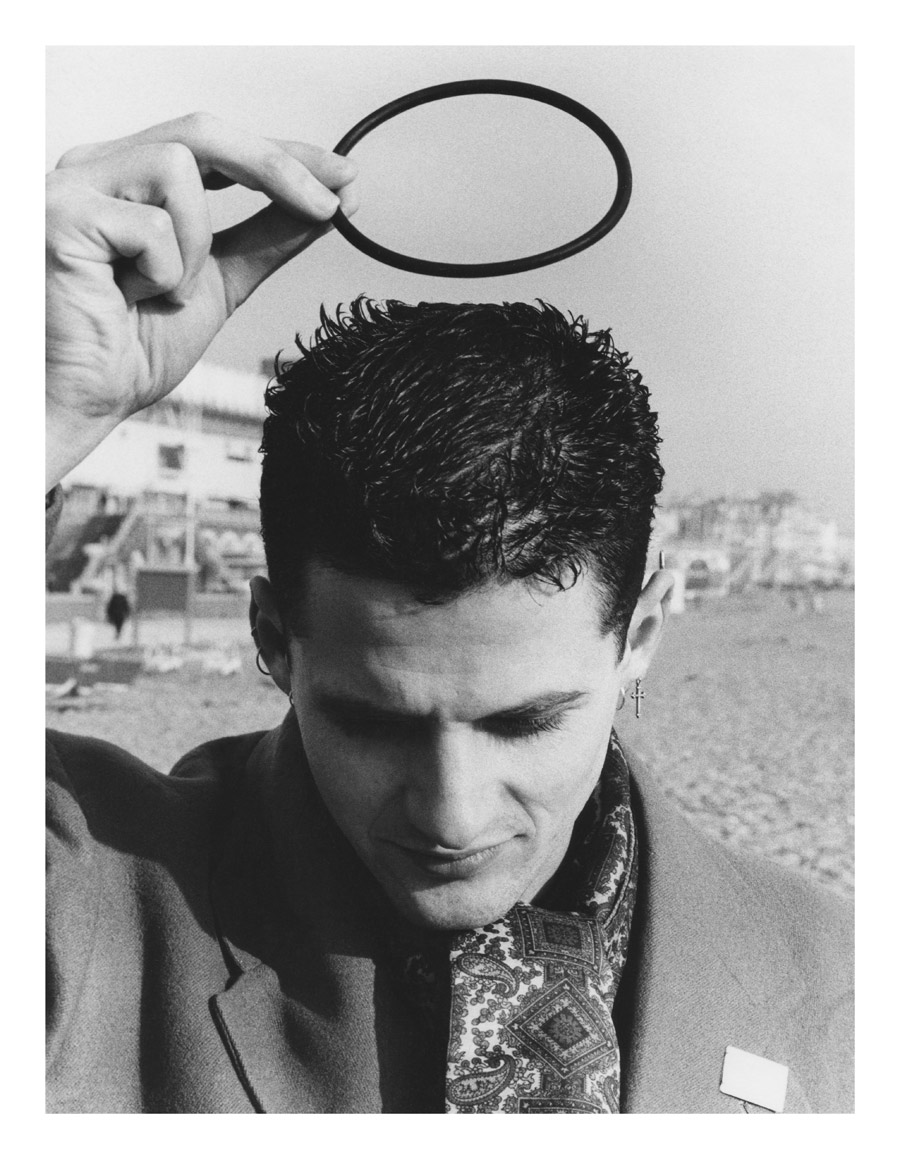
Marcus Bunyan (Australian, b. 1958) 'Craig with halo' 1984


Marcus Bunyan (Australian, b. 1958)
Craig with halo
1984
From the series First experiments
Silver gelatin print
© Marcus Bunyan


Marcus Bunyan (Australian, b. 1958) 'Brighton Pier (vertical)' 1984


Marcus Bunyan (Australian, b. 1958)
Brighton Pier (vertical)
1984
From the series First experiments
Silver gelatin print
© Marcus Bunyan


Hidden Talents website

LIKE ART BLART ON FACEBOOK

Back to top