Exhibition: ‘Surveillance’ at the Nelson-Atkins Museum of Art, Kansas City, Missouri

Exhibition dates: 16th September, 2016 – 29th January, 2017

Curator: Jane L. Aspinwall, Associate Curator, Photography
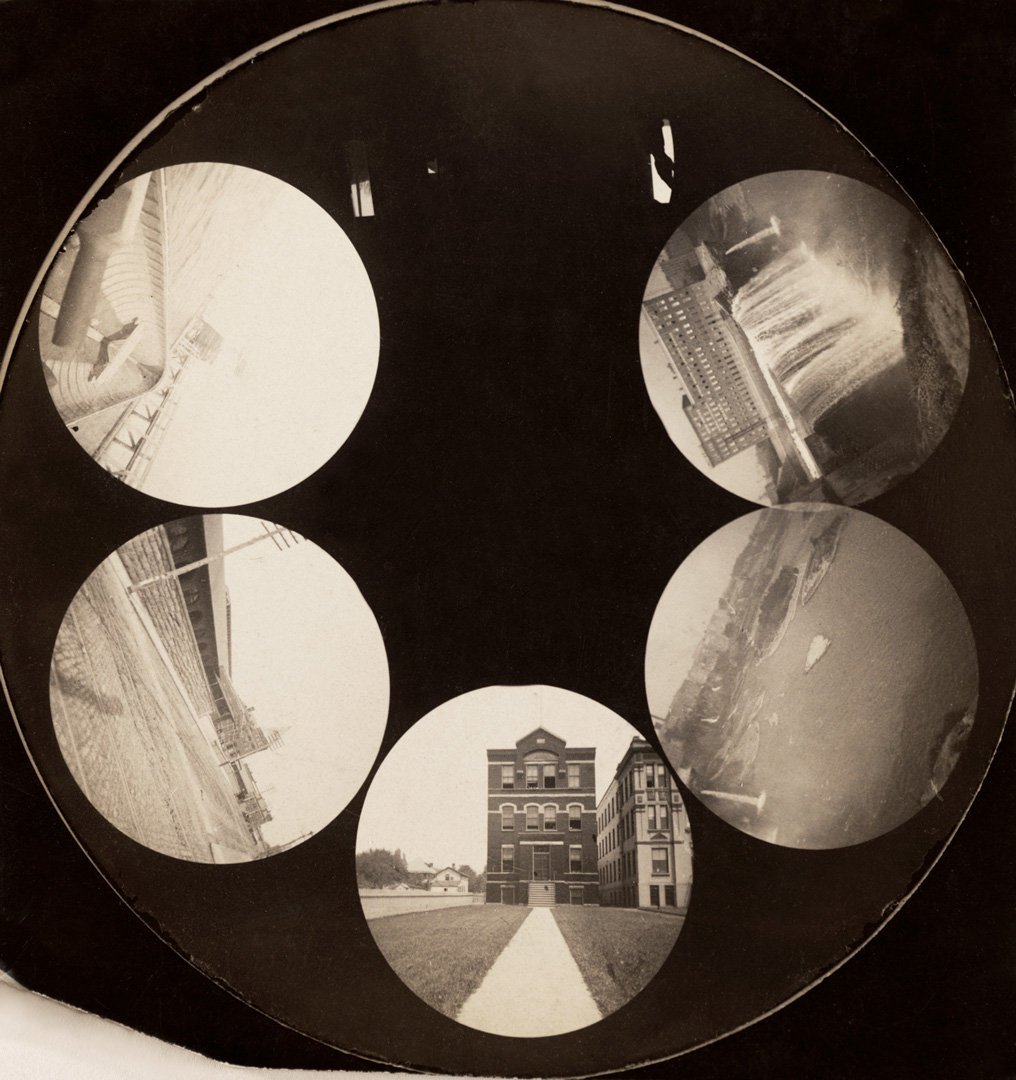
 

Unknown maker (American) 'Rochester, New York' 1886


Unknown maker (American)
Rochester, New York
1886
Albumen print
5 5/8 x 5 5/16 inches
The Nelson-Atkins Museum of Art, Kansas City, Missouri
Gift of Hallmark Cards, Inc.,


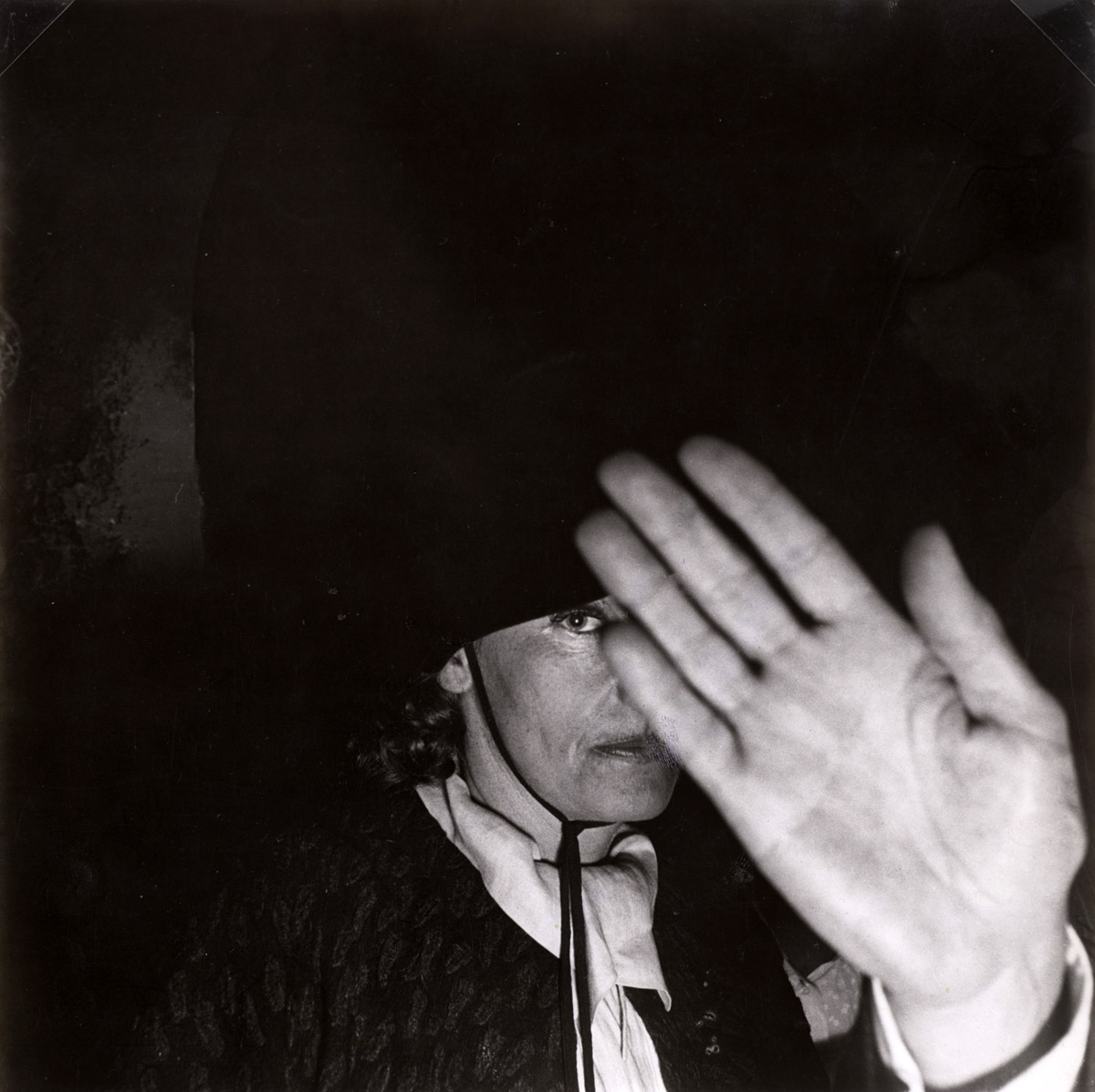
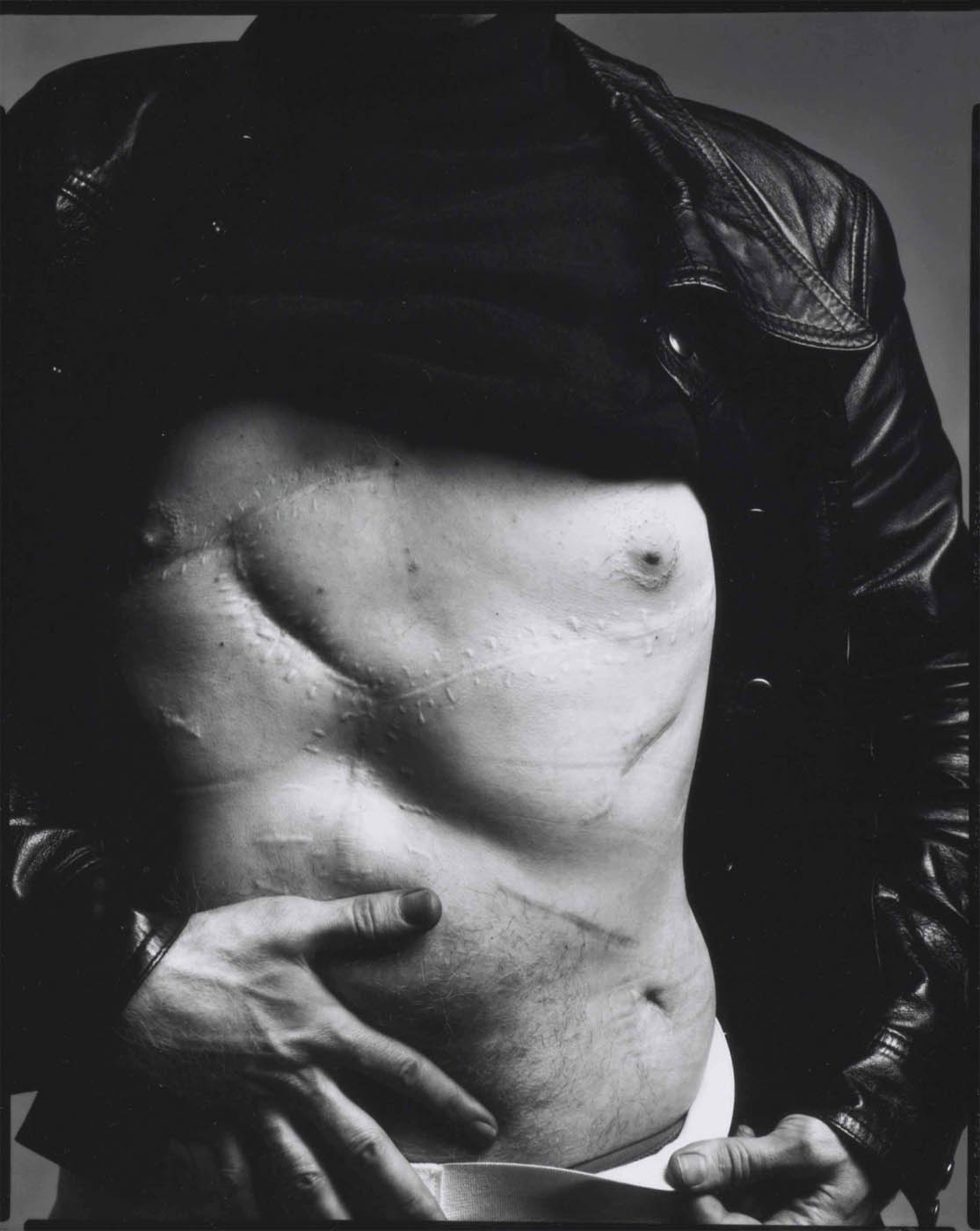
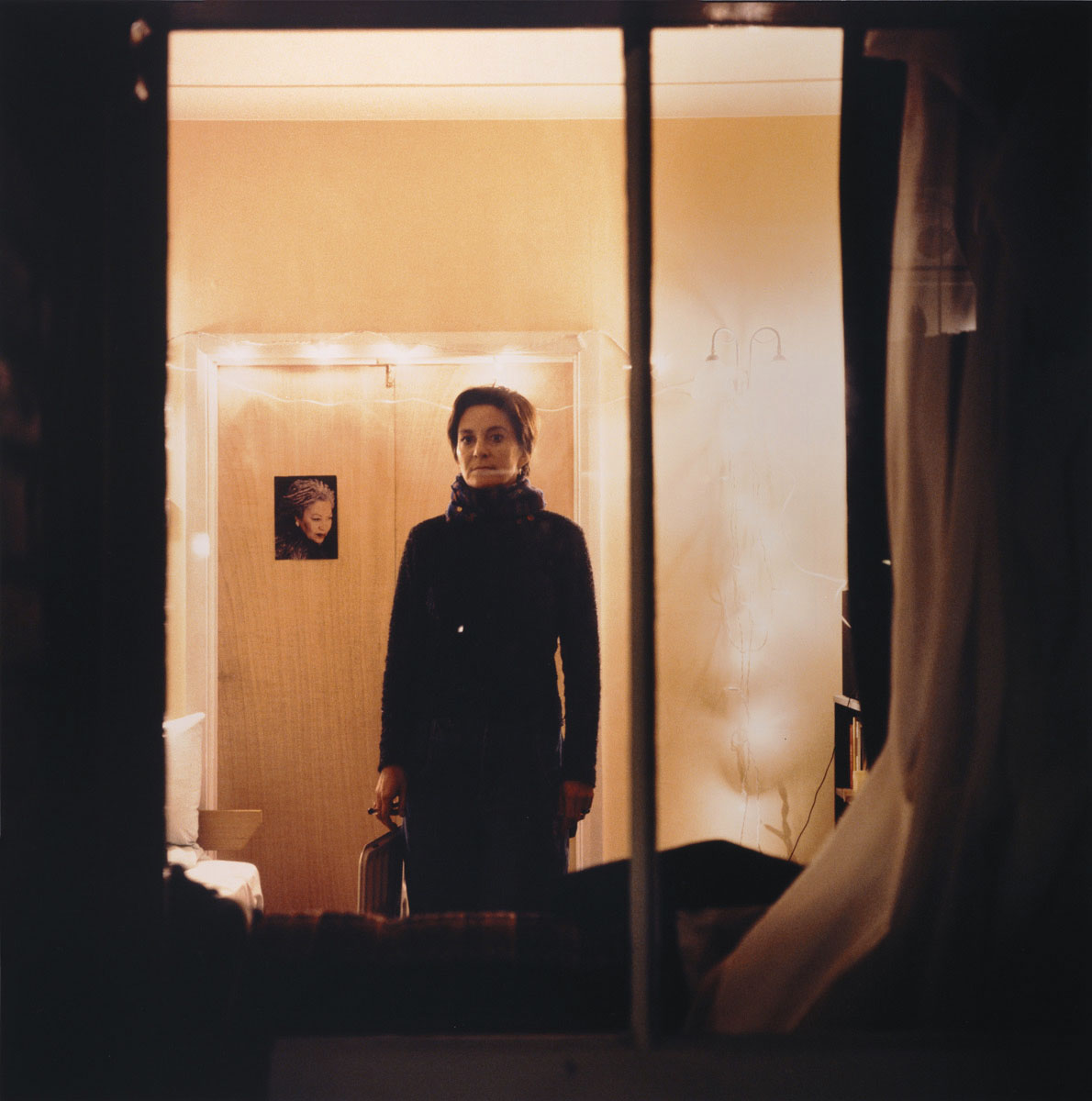
This looks to be a fascinating exhibition on a very interesting subject. It’s such a pity I cannot comment on the exhibition itself due to the small number of media images, and having no idea how the images I do have fit into the themes of the exhibition, although one can make guesses: Henri Cartier-Bresson’s Brussels (1932, below) surveys the watchers; his Hyeres, France (1932, below) is taken by an unseen camera; while Professor Lowe’s balloon Intrepid was used by the Union in the American Civil War to spy on Confederate troop movements. Others I have absolutely no idea.

“Dating from 1864-2014, the works in Surveillance fall under these categories: spying or hidden cameras, photography of the forbidden, military surveillance, areas of heavy surveillance and mapping satellites and drones. There are also examples of counter-surveillance that either prevent watching or surveille the watchers.”

My favourite images in this posting of surreptitious photography are those of Tomas van Houtryve from his series Blue Sky Days. I love the titles play on the ideas of blue sky thinking (original or creative thinking, unfettered by convention and not grounded in reality) and blue skies research (scientific research in domains where “real-world” applications are not immediately apparent) – views of the world that are quantifiable but not grounded in reality, and where the “reality” of the world is not immediately apparent. Such a clever and insightful “point of view” which engages with “the changing nature of surveillance, personal privacy, and war”, a projection on a vertical plane.

More intriguing images from this series can be seen on his website.

Dr Marcus Bunyan


Many thankx to the the Nelson-Atkins Museum of Art for allowing me to publish the photographs in the posting. Please click on the photograph for a larger version of the image.


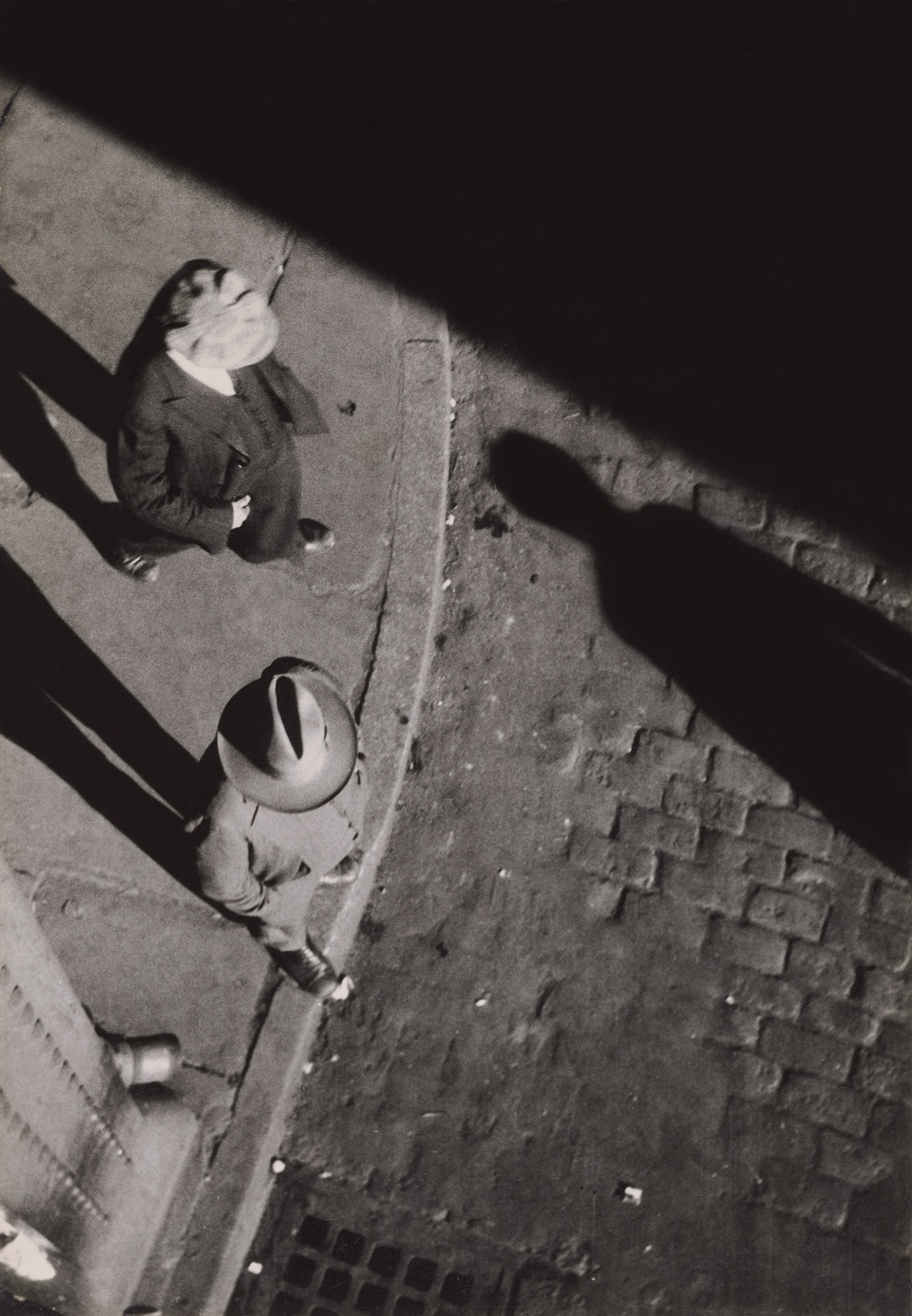
Henri Cartier-Bresson (French, 1908-2004) 'Brussels' 1932 from the exhibition 'Surveillance' at the Nelson-Atkins Museum of Art, Kansas City, Missouri, Sept 2016 - Jan 2017


Henri Cartier-Bresson (French, 1908-2004)
Brussels
1932
Gelatin silver print
9 1/2 x 14 3/16 inches
The Nelson-Atkins Museum of Art, Kansas City, Missouri
Gift of Hallmark Cards, Inc.,
© Henri Cartier-Bresson / Magnum Photos
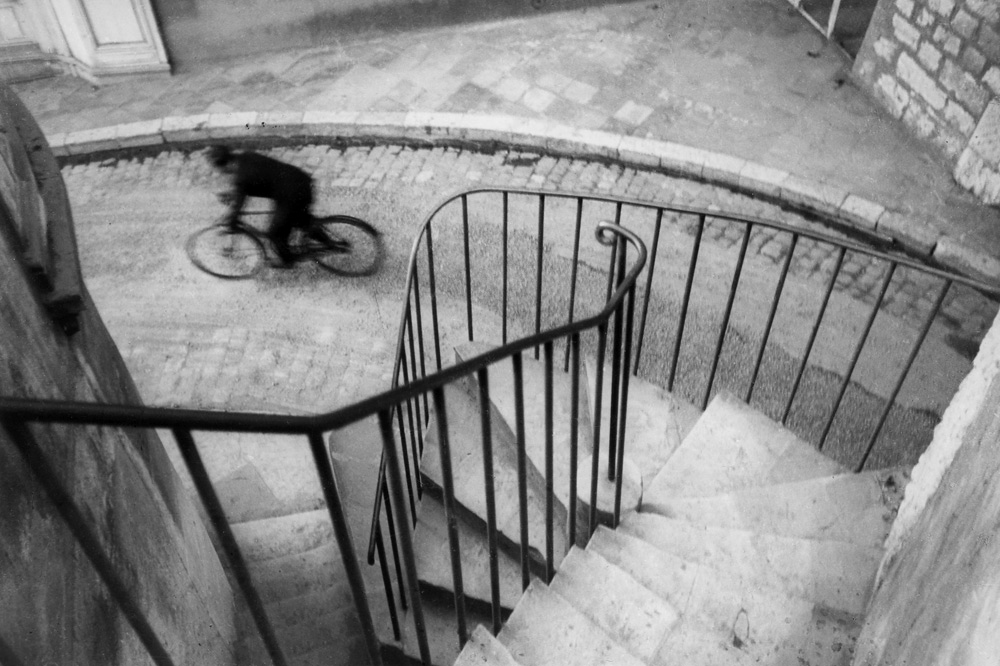
 

Henri Cartier Bresson (French, 1908-2004) 'Hyeres, France' 1932


Henri Cartier Bresson (French, 1908-2004)
Hyeres, France
1932
Gelatin silver print
© Henri Cartier-Bresson/Magnum
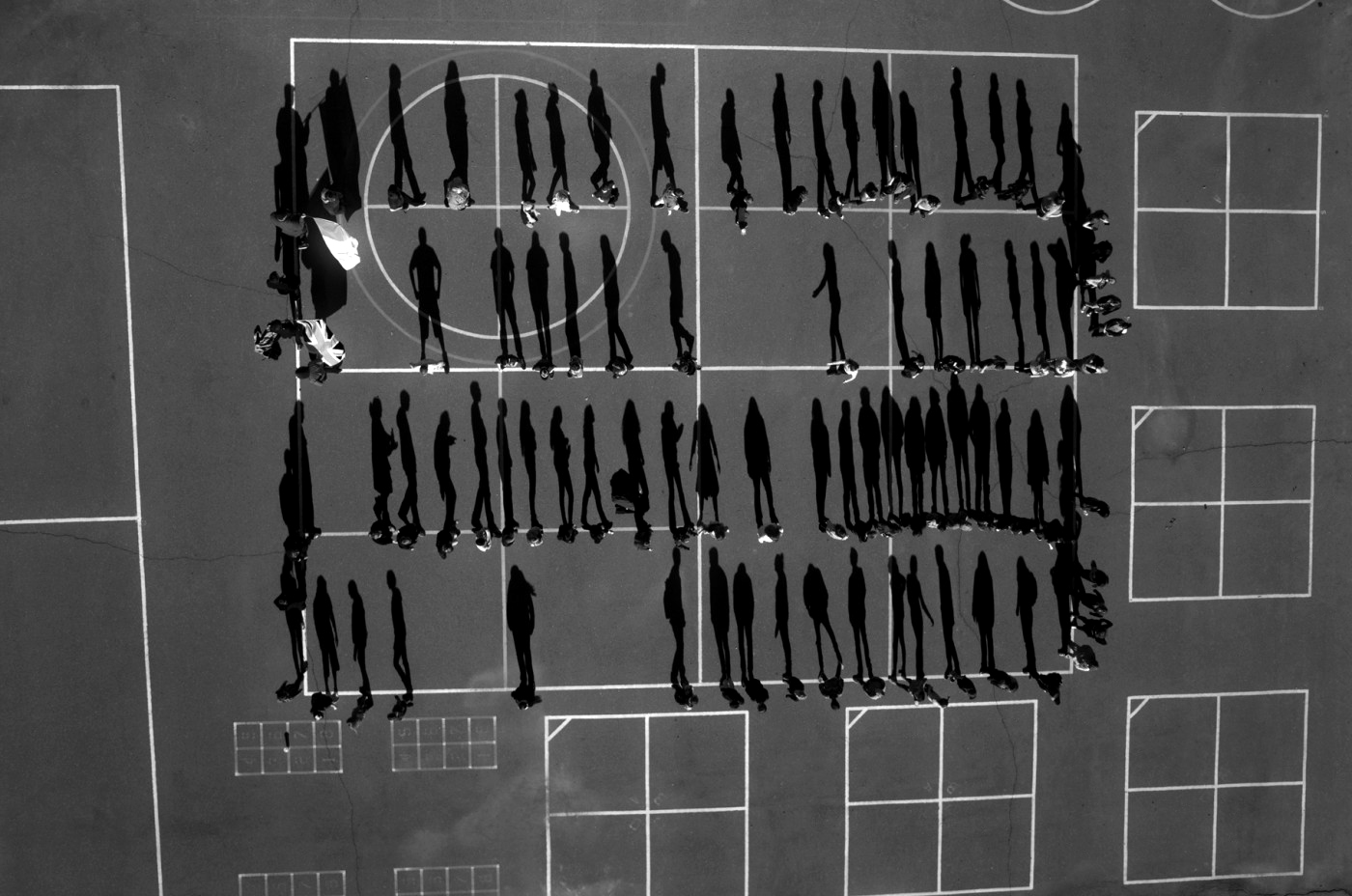
 

Tomas van Houtryve (Belgian, b. 1975) 'Schoolyard From the series 'Blue Sky Days'' 2013-2014


Tomas van Houtryve (Belgian, b. 1975)
Schoolyard
2013-2014
From the series Blue Sky Days
Gelatin silver print
150 x 100cm
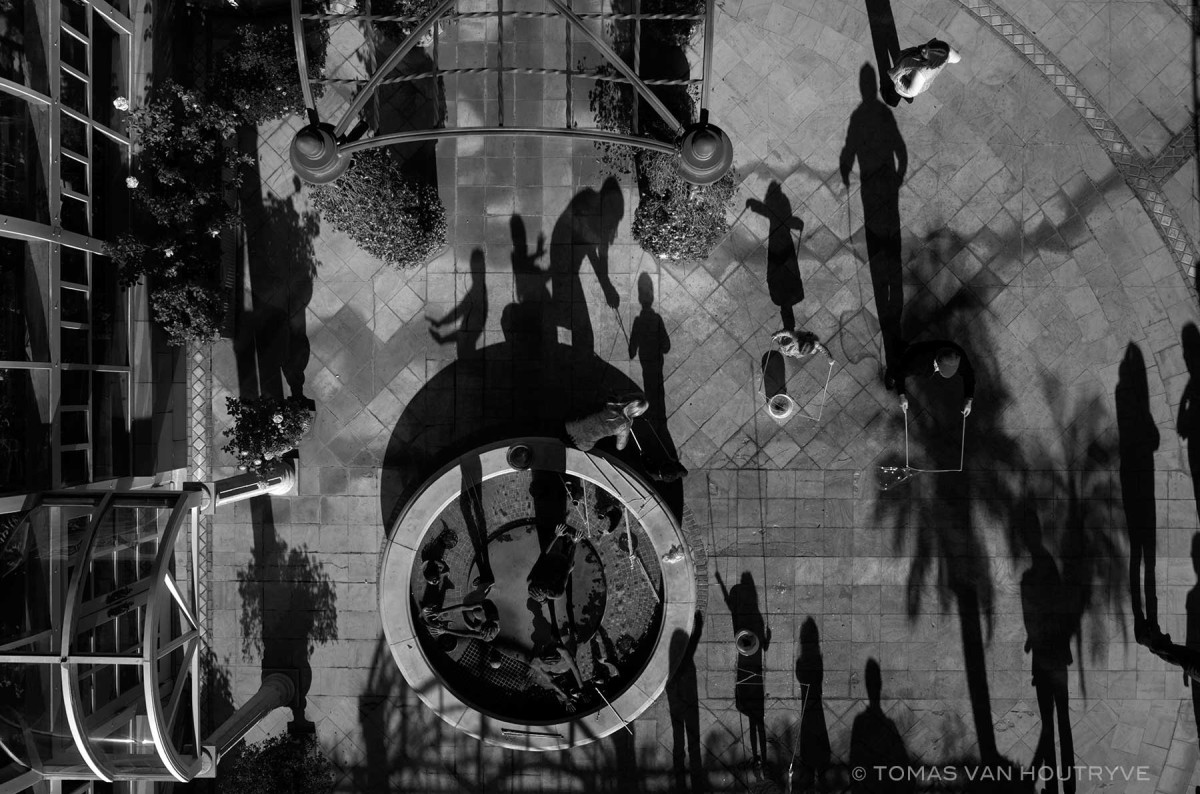
 

Tomas van Houtryve (Belgian, b. 1975) 'Domestic gathering' 2013-2014


Tomas van Houtryve (Belgian, b. 1975)
Domestic gathering
2013-2014
From the series Blue Sky Days
Gelatin silver print


“The images captured from the drone’s perspective engage with the changing nature of surveillance, personal privacy, and war.”

~ Tomas van Houtryve


“In October 2012, a drone strike in northeast Pakistan killed a 67-year-old woman picking okra outside her house. At a briefing held in 2013 in Washington, the woman’s 13-year-old grandson, Zubair Rehman, spoke to a group of five lawmakers. “I no longer love blue skies,” said Rehman, who was injured by shrapnel in the attack. “In fact, I now prefer grey skies. The drones do not fly when the skies are grey.”

Over the past decade, drones have become the weapon of the United States military and the CIA for strikes overseas. Their use for surveillance and commercial purposes is also rapidly expanding both at home and abroad.

Tomas van Houtryve attached his camera to a small drone and traveled across America to photograph the very sorts of gatherings that have become habitual targets for foreign air strikes – weddings, funerals, groups of people praying or exercising. He also flew his camera over settings in which drones are used to less lethal effect, such as prisons, oil fields, industrial feedlots, and stretches of the U.S.-Mexico border.”

Text from the Pulitzer Center website [Online] Cited 18/11/2021
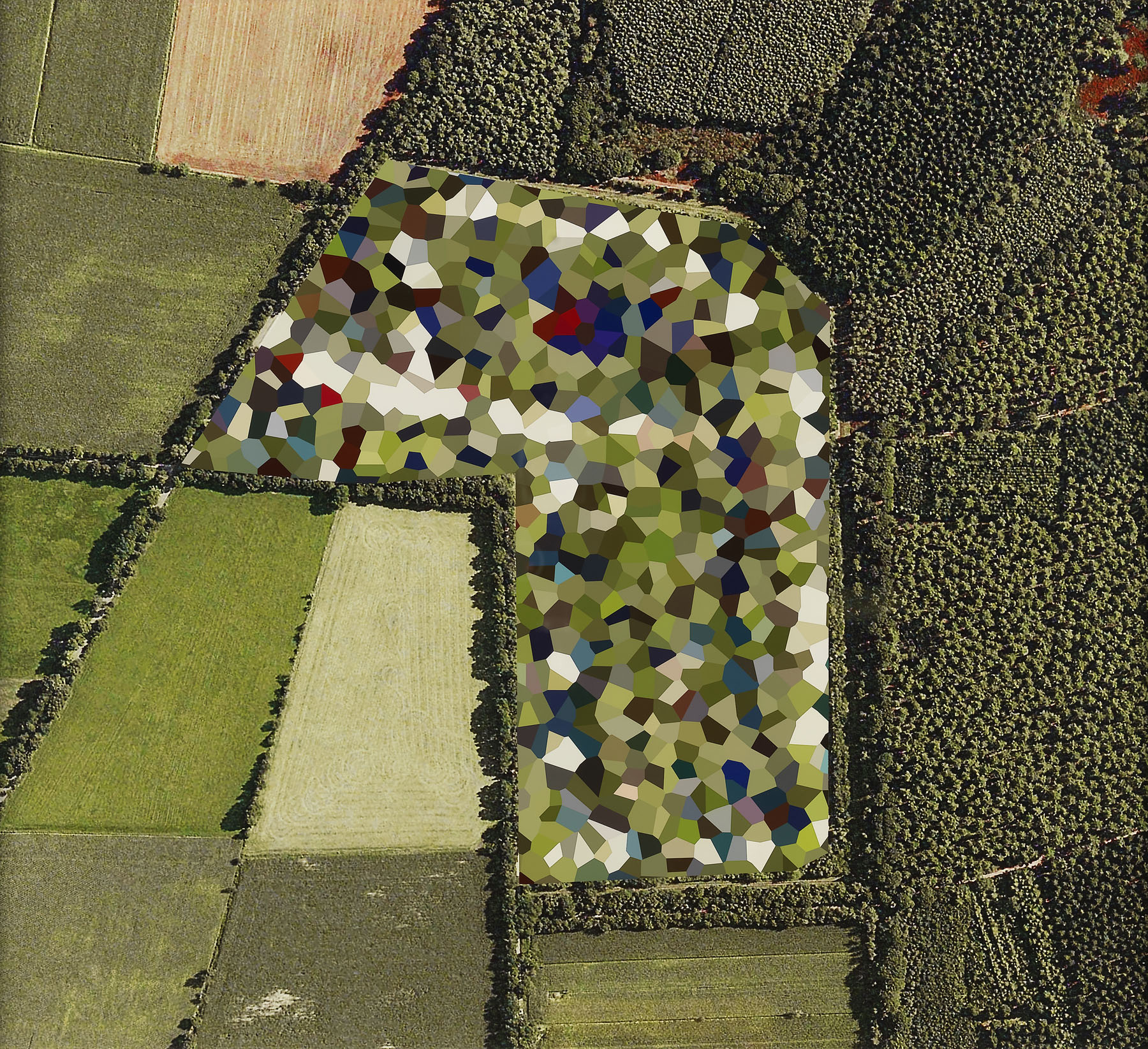
 

Mishka Henner (Belgian, b. 1976) 'Staphorst Ammunition Depot' 2011


Mishka Henner (Belgian, b. 1976)
Staphorst Ammunition Depot
2011
Inkjet print
31 1/4 x 35 1/8 inches
The Nelson-Atkins Museum of Art, Kansas City, Missouri
Gift of the Hall Family Foundation


British photographer Mishka Henner, in his series Dutch Landscapes, uses Google satellite views of locations that have been censored by the Dutch government because of concerns about the visibility of political, economic and military locations. Many countries blur, pixilate or whiten sensitive sites. The Dutch method, however, employs bold, multi-coloured polygons. The resulting photograph is an artistic, visual contrast between secret sites and the surrounding rural environment, providing an unsettling reflection on surveillance and the contemporary landscape.


Surveillance cameras in the 21st century are practically everywhere – on street corners, in shops, in public buildings, silently recording our every movement. Yet this is not a construct of modern times. As soon as cameras were introduced in the 1880s, anyone could be unknowingly photographed at any time. It was an unfortunate fact of life. The exhibition Surveillance opened at The Nelson-Atkins Museum of Art in Kansas City September 16, examining the role of surreptitious photography from the mid-19th century to the present day.

“This body of work represents a sign of our times,” said Julián Zugazagoitia, Menefee D. and Mary Louise Blackwell CEO and Director of the Nelson-Atkins. “Cameras have been recording our movements, many times secretly, since photography began. But it was the tragedy of 9/11 that increased our awareness of this constant presence and brought a new and chilling meaning to the art, and the intention, of surveillance.”

Dating from 1864-2014, the works in Surveillance fall under these categories: spying or hidden cameras, photography of the forbidden, military surveillance, areas of heavy surveillance and mapping satellites and drones. There are also examples of counter-surveillance that either prevent watching or surveille the watchers.

“Twenty-first century technology – like Google Earth View and drone photography – have provided photographers with a treasure trove of surveillance images,” said Jane L. Aspinwall, Associate Curator, Photography. “This work provokes uneasy questions about who is looking at whom and the limits of artistic expression.”

Photographer Roger Schall, formerly a French news reporter, secretly recorded the Nazi occupation of Paris beginning in June 1940. His photographs document his daily routine and illustrate how completely the Nazis permeated every facet of Parisian life.

British photographer Mishka Henner, in his series Dutch Landscapes, uses Google satellite views of locations that have been censored by the Dutch government because of concerns about the visibility of political, economic and military locations. Many countries blur, pixilate or whiten sensitive sites. The Dutch method, however, employs bold, multi-coloured polygons. The resulting photograph is an artistic, visual contrast between secret sites and the surrounding rural environment, providing an unsettling reflection on surveillance and the contemporary landscape.

Other photographers employ techniques to circumvent surveillance. Adam Harvey creates “looks” that block online facial recognition software [CV Dazzle]. The contours of the face are manipulated in such a way that a computer is not able to identify a person, which can be a useful tool for social media sites like Facebook, in which users can search an entire archive for one particular face.”

Press release from the Nelson-Atkins Museum of Art
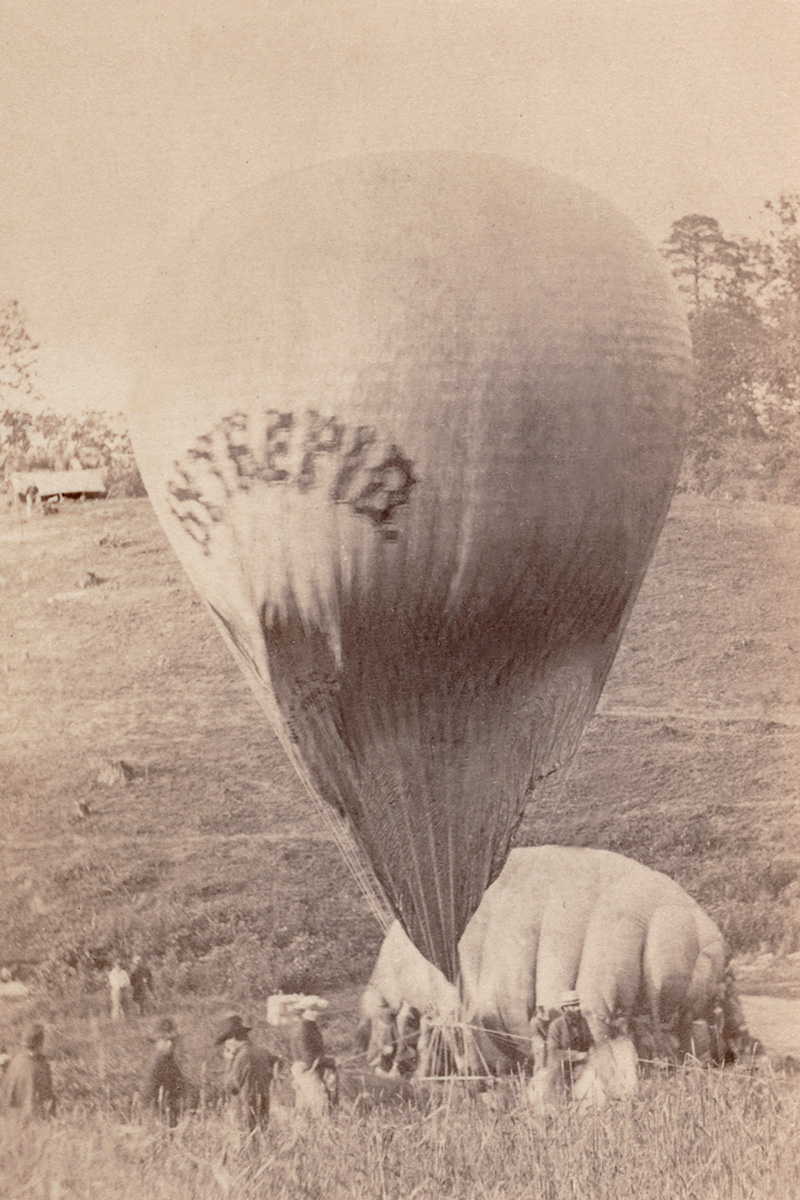
 

Brady Studio (American, active c. 1843-1885) 'Professor Lowe inflating balloon Intrepid' 1862


Brady Studio (American, active c. 1843-1885)
Professor Lowe inflating balloon Intrepid
1862
Albumen print
3 1/4 x 2 3/16 inches
The Nelson-Atkins Museum of Art, Kansas City, Missouri
Gift of Hallmark Cards, Inc.,


Intrepid being cross-inflated from Constitution in a spur-of-the-moment attempt to get the larger balloon in the air to overlook the imminent Battle of Seven Pines. The balloon Intrepid, one of six to eventually be constructed by Thaddeus Lowe and the Union Army Balloon Corps.


Peninsula Campaign

The battlefront turned toward Richmond in the Peninsula Campaign. The heavy forestation inhibited the use of balloons, so Lowe and his Balloon Corps, with the use of three of his balloons, the Constitution, the Washington, and the larger Intrepid, used the waterways to make its way inland. In mid May 1862, Lowe arrived at the White House on the Pamunkey River. This is the first home of George and Martha Washington, after which the Washington presidential residence is named. At this time, it was the home of the son of Robert E. Lee, whose family fled at the arrival of Lowe. Lowe was met by McClellan’s Army a few days later, and by 18 May, he had set up a balloon camp at Gaines’ Farm across the Chickahominy River north of Richmond, and another at Mechanicsville. From these vantage points, Lowe, his assistant James Allen, and his father Clovis were able to overlook the Battle of Seven Pines. 

A small contingent from Gen. Samuel P. Heintzelman’s corps crossed the river toward Richmond and was slowly being surrounded by elements of the Confederate Army. McClellan felt that the Confederates were simply feigning an attack. Lowe could see, from his better vantage point, that they were converging on Heintzelman’s position. Heintzelman was cut off from the main body because the swollen river had taken out all the bridges. Lowe sent urgent word of Heintzelman’s predicament and recommended immediate repair of New Bridge and reinforcements for him. 

At the same time, he sent over an order for the inflation of the Intrepid, a larger balloon that could take him higher with telegraph equipment, in order to oversee the imminent battle. When Lowe arrived from Mechanicsville to the site of the Intrepid at Gaines’ Mill, he saw that the aerostat’s envelope was an hour away from being fully inflated. He then called for a camp kettle to have the bottom cut out of it, and he hooked the valve ends of the Intrepid and the Constitution together. He had the gas of the Constitution transferred to the Intrepid and was up in the air in 15 minutes. From this new vantage point, Lowe was able to report on all the Confederate movements. McClellan took Lowe’s advice, repaired the bridge, and had reinforcements sent to Heintzelman’s aid. An account of the battle was being witnessed by the visiting Count de Joinville who at day’s end addressed Lowe with: “You, sir, have saved the day!”

Text from the Union Army Balloon Corps Wikipedia entry
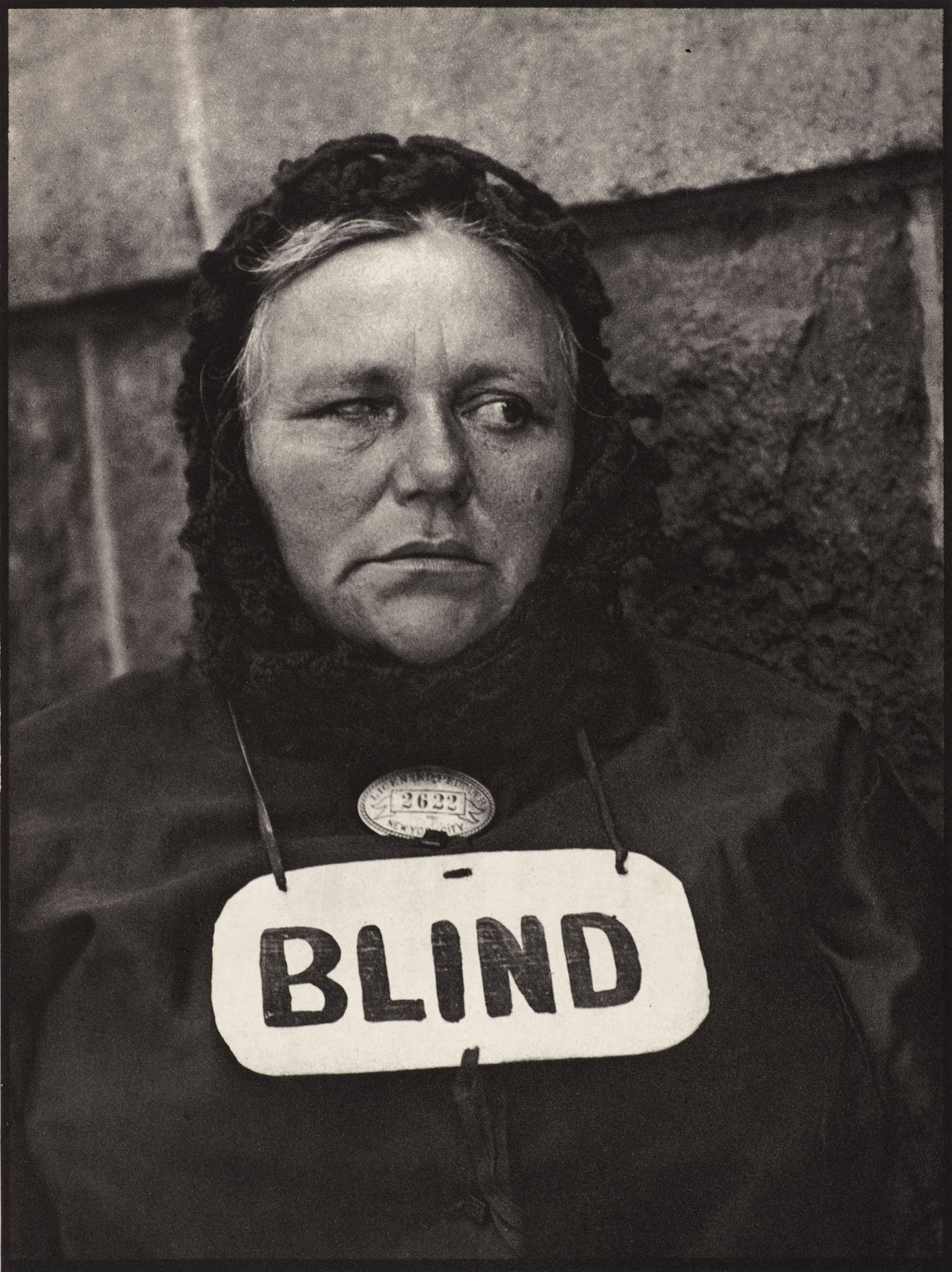
 

Paul Strand (American, 1890-1976) 'Blind woman, New York' 1916 from the exhibition 'Surveillance' at the Nelson-Atkins Museum of Art, Kansas City, Missouri, Sept 2016 - Jan 2017


Paul Strand (American, 1890-1976)
Blind woman, New York
1916
Photogravure
8 13/16 x 6 9/16 inches
The Nelson-Atkins Museum of Art, Kansas City, Missouri
Gift of Hallmark Cards, Inc.,


Roger Schall (French, 1904-1985) 'Taking the subway' c. 1941


Roger Schall (French, 1904-1985)
Taking the subway
c. 1941
Gelatin silver print
7 7/16 x 7 1/16 inches
The Nelson-Atkins Museum of Art, Kansas City, Missouri
Gift of Jeffrey and Polly Kramer


Born in 1904, Roger Schall was one of the most renowned photographers of the 1930s and 1940s. He worked in all photographic disciplines from fashion, portraits, nudes, still lives and reporting. He began working with his father, a portrait photographer in 1918. 10 years later he would be one of the first reporters to work with a Leica or Rolleiflex. In 1939, he closed the studio-agency he had opened with his brother. From June 1940 to August 1944 he photographed German occupied Paris – hiding the negatives so they would not be seen by the censors. When the occupation was over his brother, Raymond Schall, published a book: A Paris sous la botte des Nazis (Paris under the heel of the Nazis) that was illustrated with the photographs of Roger Schall, Parry, Doisneau, the Seeberger brothers and many others. He then continued working in fashion, doing commercial and publicity work instead of news reporting. From 1970 until his death in 1995, he would manage his archive of some 80,000 images.

Anonymous text. “Roger Schall,” on the Real Life is Elsewhere blog July 30, 2011 [Online] Cited 18/11/2021


His work covered a number of topics, especially Parisian everyday life, his favourite subject, which he photographed before, during and after the German occupation. Formed in 1931, Le Studio in Montmartre was the first agency to publish his work in leading international magazines, such as Vu, Vogue, L’Illustration, Life, and Paris-Match. 150 covers and 10,000 shots were published in his lifetime.

Text from the Yellow Korner website [Online] Cited 23/01/2017. No longer available online


Henri Cartier Bresson (French, 1908-2004) 'An Attentive Cat' 1953


Henri Cartier Bresson (French, 1908-2004)
An Attentive Cat
1953
Gelatin silver print
© Henri Cartier-Bresson/Magnum


Raphaël Dallaporta (French b. 1980) 'Kafir Qala Citadel, Balkh Province, Afghanistan, from the Achaemenid period (6th-4th century BC) to the Ghorid period (12th-13th century AD)' 2010


Raphaël Dallaporta (French b. 1980)
Kafir Qala Citadel, Balkh Province, Afghanistan, from the Achaemenid period (6th-4th century BC) to the Ghorid period (12th-13th century AD)
2010
Inkjet print
59 x 47 1/4 x 1 5/8 inches
The Nelson-Atkins Museum of Art, Kansas City, Missouri
Gift of the Hall Family Foundation


The Nelson-Atkins Museum of Art
4525 Oak Street
Kansas City, MO 64111

Opening hours:
Thursday – Monday 10am – 5pm
Closed Tuesday and Wednesday
The Nelson-Atkins Museum of Art website

LIKE ART BLART ON FACEBOOK

Back to top

Exhibition: ‘Exposed: Voyeurism, Surveillance & the Camera’ at Tate Modern, London

Exhibition dates: 28th May – 3rd October 2010


Many thankx to Rose Dahlsen and the Tate Modern for allowing me to publish the photographs in the posting. Please click on the photographs for a larger version of the image.


Harry Callahan (American, 1912-1999)
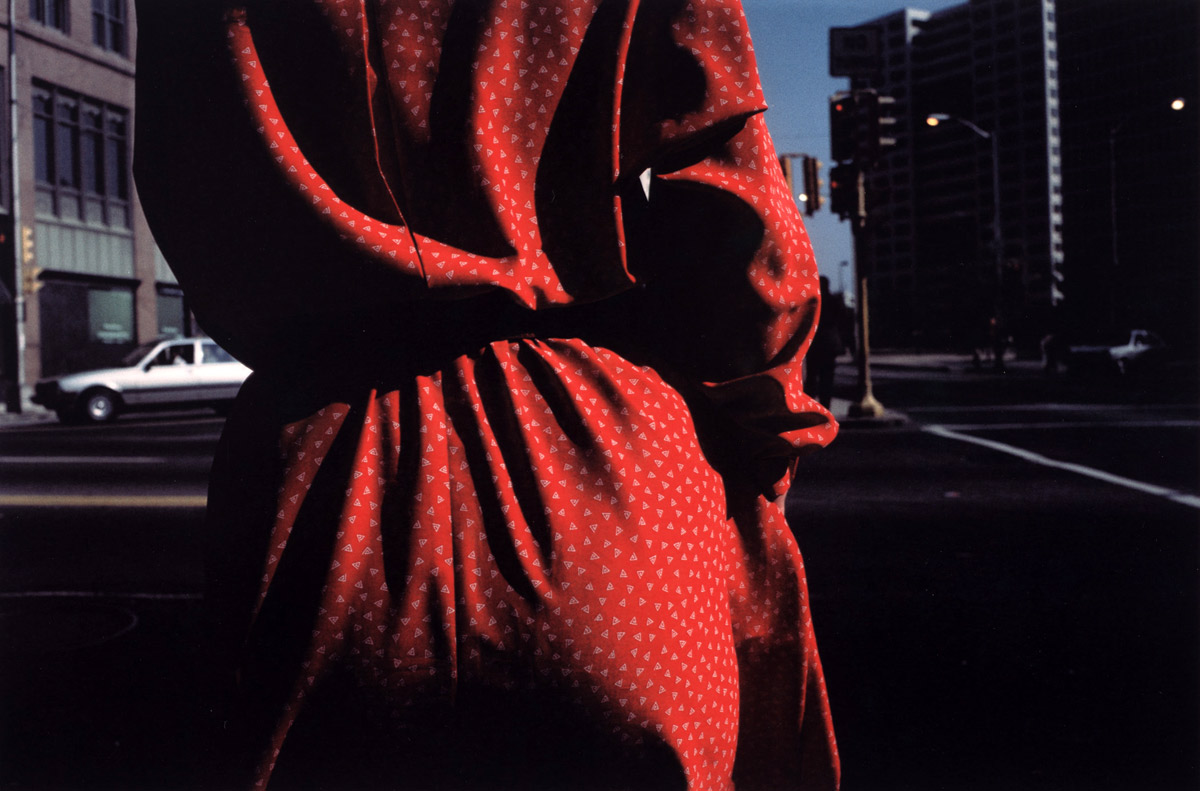
 'Untitled (Atlanta)' 1984 from the exhibition 'Exposed: Voyeurism, Surveillance & the Camera' at Tate Modern, London, May - Oct 2010 from the exhibition 'Exposed: Voyeurism, Surveillance & the Camera' at Tate Modern, London, May - Oct 2010


Harry Callahan (American, 1912-1999)
Untitled (Atlanta)
1984
Dye transfer print 
9 7/16 x 14 5/16 in. (23.97 x 36.35cm)
San Francisco Museum of Modern Art
© The Estate of Harry Callahan, courtesy Pace/MacGill Gallery, New York


Jonathan Olley. 'Golf Five Zero watchtower (known to the British Army as 'Borucki Sanger'), Crossmaglen Security Force Base, South Armagh' 1999 from the exhibition 'Exposed: Voyeurism, Surveillance & the Camera' at Tate Modern, London, May - Oct 2010


Jonathan Olley (British, b. 1967)
Golf Five Zero watchtower (known to the British Army as ‘Borucki Sanger’), Crossmaglen Security Force Base, South Armagh
1999
Gelatin silver bromide print
Coutesy Diemar/Noble Photography, London
© J.Olley


Philip-Lorca diCorcia (American, b. 1951) 'Head #23' 2001 from the 'Head' series


Philip-Lorca diCorcia (American, b. 1951)
Head #23
2001
From the Head series


Examining photography as an invasive act immediately confronts the complacency with which we accept these invasions, encourage them even in our curiosity, and though it falters in parts and overwhelms in others (this is a huge exhibition), EXPOSED successfully addresses a number of the social, cultural and psychologically motivating factors behind these kinds of images – why we take them and why we look at them. Critical to this engagement is the wall text at the beginning, which states that most of the hundreds of photographs on display were taken without the subject’s knowledge. It is a distinctly creepy start.

Philip-Lorcia diCorcia’s Head series perhaps best embodies this conundrum. Visually they are not terribly shocking or even necessarily interesting. Theatrical lighting catches the head of someone in a crowd and the effect is of a staged encounter. In fact, these people, denominated variously as Head #23 or Head #4, were photographed without their knowledge by a series of hidden cameras, the flash triggering as they walked by. Famously, one of diCorcia’s unwitting targets tried to take legal action against him but the landmark ruling defended the artist and his right to self-expression over any right the subject might have over their own image. It is difficult to know which is worse – to be censored or to be spied upon.

Jo Higgins. “Review: Exposed: Voyeurism, Surveillance & the Camera, Tate Modern, London,” on the Jo Higgins website, July 5, 2010 [Online] Cited 22/03/2025


Benjamin Lowy (American, b. 1979) 'Iraq Perspective II' 2003-2007 from the exhibition 'Exposed: Voyeurism, Surveillance & the Camera' at Tate Modern, London, May - Oct 2010


Benjamin Lowy (American, b. 1979)
Iraq Perspective II
2003-2007


US soldiers go on a late night raid with Iraqi Sunni Concerned citizens leading the way and identifying potential AQi targets. Due to a high level of IEDs in the area the company size raiding party walked 5 kilometres to the target in complete darkness, raided the target houses, detained questionable suspects and walked 5 kilometres back to waiting humvees.


Sophie Calle (French, b. 1953) 'The Hotel, Room 47' (L'Hôtel, Chambre 47) 1981


Sophie Calle (French, b. 1953)
The Hotel, Room 47 (L’Hôtel, Chambre 47)
1981
2 works on paper, photographs and ink
2140 x 1420 mm
Tate
Presented by the Patrons of New Art through the Tate Gallery Foundation 1999


This is a two-part framed work comprising photographs and text. In the upper part, the title Room 47 is printed below a colour photograph of elegantly carved wooden twin head-boards behind a bed covered in rich brown satin. Below it, three columns of italic text are diary entries describing findings in the hotel room between Sunday 22 February 1981 and Tuesday 24. In the lower frame a grid of nine black and white photographs show things listed in the text above. This work is part of a project titled The Hotel, which the artist has defined:

“On Monday, February 16, 1981, I was hired as a temporary chambermaid for three weeks in a Venetian hotel. I was assigned twelve bedrooms on the fourth floor. In the course of my cleaning duties, I examined the personal belongings of the hotel guests and observed through details lives which remained unknown to me. On Friday, March 6, the job came to an end.” (Quoted in Calle, pp. 140-141.)

Each of the twelve rooms gave rise to a diptych of similar structure following the occupancy of one or more guests during the period of the artist’s employment at the hotel. Some rooms feature more than once as a second set of guests occupied them, giving rise to a total of twenty-one diptychs in the series. Calle’s descriptions of the hotel rooms and their contents combine factual documentation along with her personal response to the people whose lives she glimpsed by examining their belongings. Each text begins with the chambermaid / artist’s first entry into the room and a notation of which bed or beds have been slept in, with a description of the nightwear the guests have left. A list of objects usually follows, as the artist transcribes her activities in the room. Calle is unashamedly voyeuristic, reading diaries, letters, postcards and notes written or kept by the unknown guests, rummaging in suitcases, and looking into wardrobes and drawers. She sprays herself with their perfume and cologne, makes herself up using the contents of a vanity case, eats food left behind and salvages a pair of women’s shoes left in the bin. Outside the room, she listens at doors, recording the occupants’ conversations or any other sounds she may overhear, and even peers into a room when the floor-waiter opens the door to catch a glimpse of the unknown guests.

The absent occupants described in Room 47 are a family of four – two parents and two children – as revealed by their four pairs of slippers. Calle does not go through their suitcase, commenting: ‘I am already bored’. From their passports she discovers that the parents are a married couple from Geneva and she copies out four postcards one of them has written. Words on one of these hint at problems within the family.

Calle began her artistic projects in 1979 on returning to Paris after seven years’ travel abroad. Disorientated, she felt like a stranger in her own city, not knowing how to occupy her time. She started to follow random passers-by and spend her days as they did. Eventually she picked up the camera she had been experimenting with during her time abroad and photographed the strangers, writing diaristic notes of their movements. From this she has developed a particular way of working, collecting information about people who are absent and investigating her subjects like a detective. The Hotel follows directly from a project the artist undertook the previous year entitled Suite Venetienne 1980, which evolved from a chance encounter with a man she had been following in Paris. He told her he was going to Venice, so she followed him there in disguise, documenting her observations. After a year of planning and waiting, she returned to Venice in 1981 as a chambermaid.

The Hotel diptychs were produced in an edition of four in English and four in French. Tate’s copy of Room 47 (22 February) is the first in the English edition. Another version of Room 47 exists for the period 2-6 March.

Elizabeth Manchester
June 2005

Text from the Tate website [Online] Cited 26/12/2019


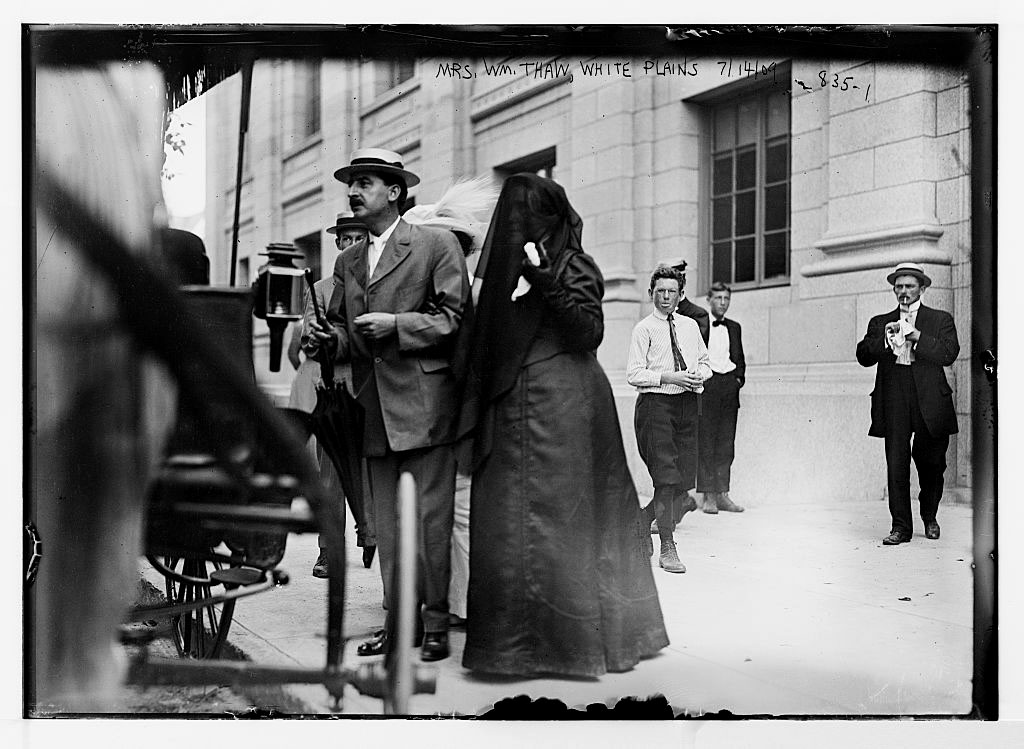
Unknown photographer / Bain News Service, publisher. 'Mrs. Wm. Thaw, veiled, on street, White Plains, N.Y.'
1909


Unknown photographer
Bain News Service, publisher

Mrs. Wm. Thaw, veiled, on street, White Plains, N.Y.
1909
From a glass negative
Library of Congress Prints and Photographs Division Washington, D.C.


Tom Howard (American, 1894 - 1961) '[Electrocution of Ruth Snyder, Sing Sing Prison, Ossining, New York]' 1928


Tom Howard (American, 1894-1961)
[Electrocution of Ruth Snyder, Sing Sing Prison, Ossining, New York]
1928
Gelatin silver print
Collection SFMOMA, Accessions Committee Fund purchase


In 1925, Ruth Snyder, a housewife from Queens, New York, took a lover, Judd Gray, a corsetmaker from upstate. Already married to Albert Snyder, an arts editor at MotorBoating magazine, she hid the affair for nearly three years. But on March 12, 1927, she and Gray planned a murder. After taking out a forged insurance policy, the two killed Ruth’s husband and staged a burglary scene. It didn’t take long for law enforcement to connect the dots, and a few months later, Gray and Snyder found themselves charged with first degree murder.
The court case was front page news and both Ruth and Judd found themselves constantly photographed for ever-evolving stories. Sing Sing, not one to change policy for press, reinstated that no photographers were to be present at the execution. But the public wanted to see.

The New York Daily News knew that the prison was familiar with many journalists from their staff, so they hired someone from out of town, Tom Howard, a then-unknown local photographer from the Chicago Tribune. Knowing he would never be allowed in with a camera, Howard strapped a single-use camera to his right ankle and wired a trigger release up his pant leg. Remarkably, he was allowed in. From across the room, Howard pointed his toe at the chair and took but one photo as Snyder took her last breaths.

The camera was rushed to the city and the film developed overnight. Editors and writers marveled at what was to be one of the most shocking photographs ever made: Snyder in the chair, the legs of the prison guard to the right. The image, shot on an angle, was cropped and published immediately with the headline: Dead!

The black-and-white image was shocking to the U.S. and international public alike. There sat a 32-year-old wife and mother, killed for killing. Her blurred figured seemed to evoke her struggle, as one can imagine her last, strained breaths. Never before had the press been able to attain such a startling image – one not made in a faraway war, one not taken of the aftermath of a crime scene, but one capturing the very moment between life and death here at home.

Erica Fahr Campbell. “The First Photograph of an Execution by Electric Chair,” on the TIME website, April 10,2024 [Online] Cited 24/03/2025


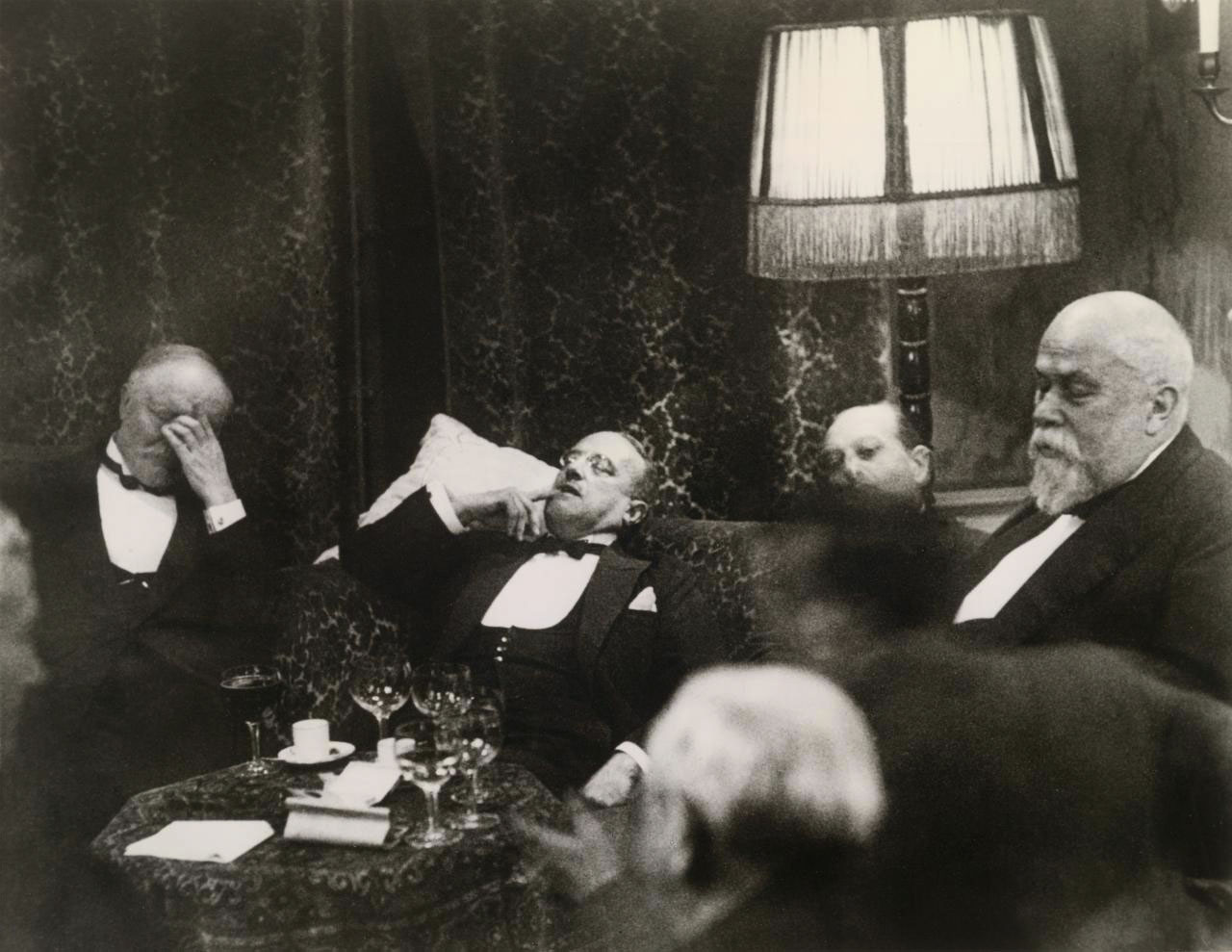
Erich Salomon (German Jewish, 1886-1944) 'Hague Conference (Second Hague Conference on Reparations, January 1930, in the early morning hours)' 1930


Erich Salomon (German Jewish, 1886-1944)
Hague Conference (Second Hague Conference on Reparations, January 1930, in the early morning hours)
1930
Promised gift of Paul Sack to the Sack Photographic Trust of the San Francisco Museum of Modern Art


Henri Cartier Bresson (French, 1908-2004) 'Hyeres, France' 1932


Henri Cartier Bresson (French, 1908-2004)
Hyeres, France
1932
Gelatin silver print


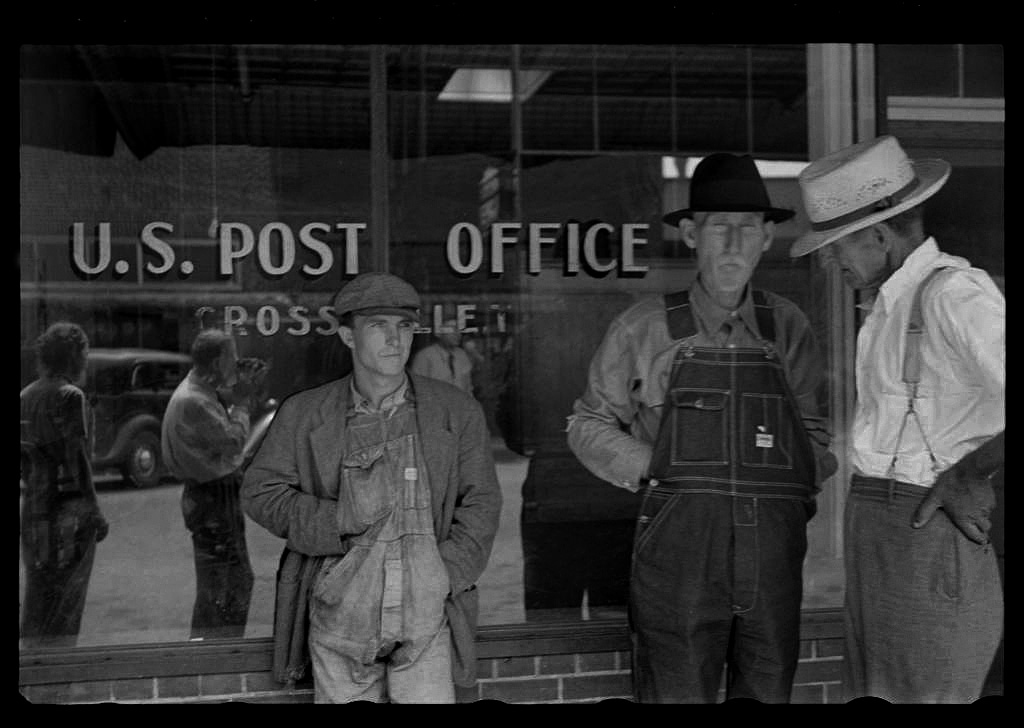
Ben Shah (American, 1898-1969) 'Post Office, Crossville, Tennesse' 1937


Ben Shah (American, 1898-1969)
Post Office, Crossville, Tennesse
1937
Gelatin silver print


Ben Shahn visible using his right-angled lens in the window reflection


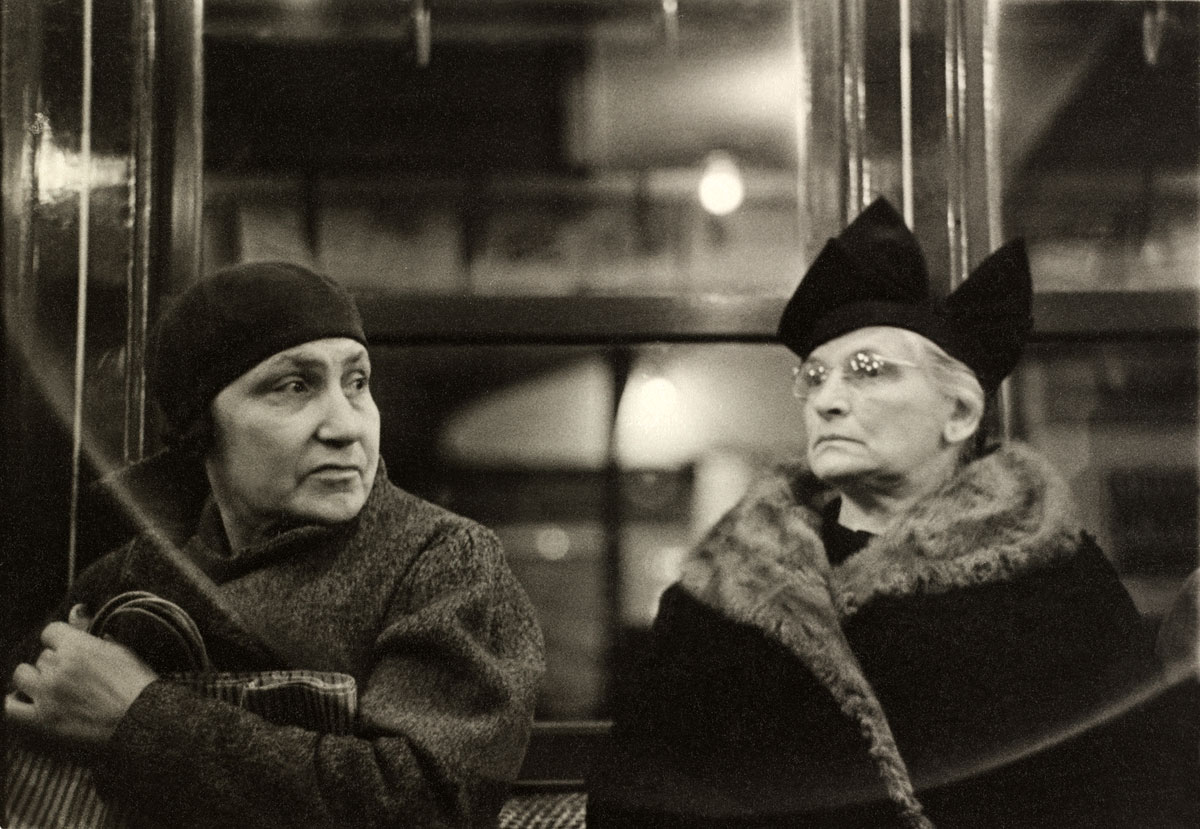
Walker Evans (American, 1903-1975) 'Subway Passengers, New York' 1938


Walker Evans (American, 1903-1975)
Subway Passengers, New York
1938
Gelatin silver print


Walker Evans (American, 1903-1975) 'Subway portrait' 1938-1941


Walker Evans (American, 1903-1975)
Subway Passengers, New York
1938-1941
Gelatin silver print


Weegee (Arthur H. Fellig) (American, 1899-1968) 'Their First Murder' Before 1945


Weegee (Arthur H. Fellig) (American, 1899-1968)
Their First Murder
Before 1945
Gelatin silver print


“Brooklyn School Children see Gambler Murdered in Street
Pupils were leaving P.S. 143, [Sixth Ave. and Roebling St.] in the Williamsburg section of Brooklyn, at 3:15 yesterday when Peter Mancuso, 22, described by police as a small time gambler, pulled up in a 1931 Ford at a traffic light a block from the school. Up to the car stepped a waiting gunman, who fired twice and escaped through the throng of children. Mancuso, shot through the head and heart, struggled to the board and collapsed dead on the pavement. Above are some of the spectators. The older woman is Mancuso’s aunt, who lives in the neighborhood, and the boy tugging at the hair of the girl in front of him is her son, hurrying away from her. Below is what they saw as a priest, flanked by an ambulance doctor and a detective, said the last rites of the Church over the body.”
PM Daily, October 9, 1941, Vol. II, No. 82, p. 15

Text from the International Center of Photography website


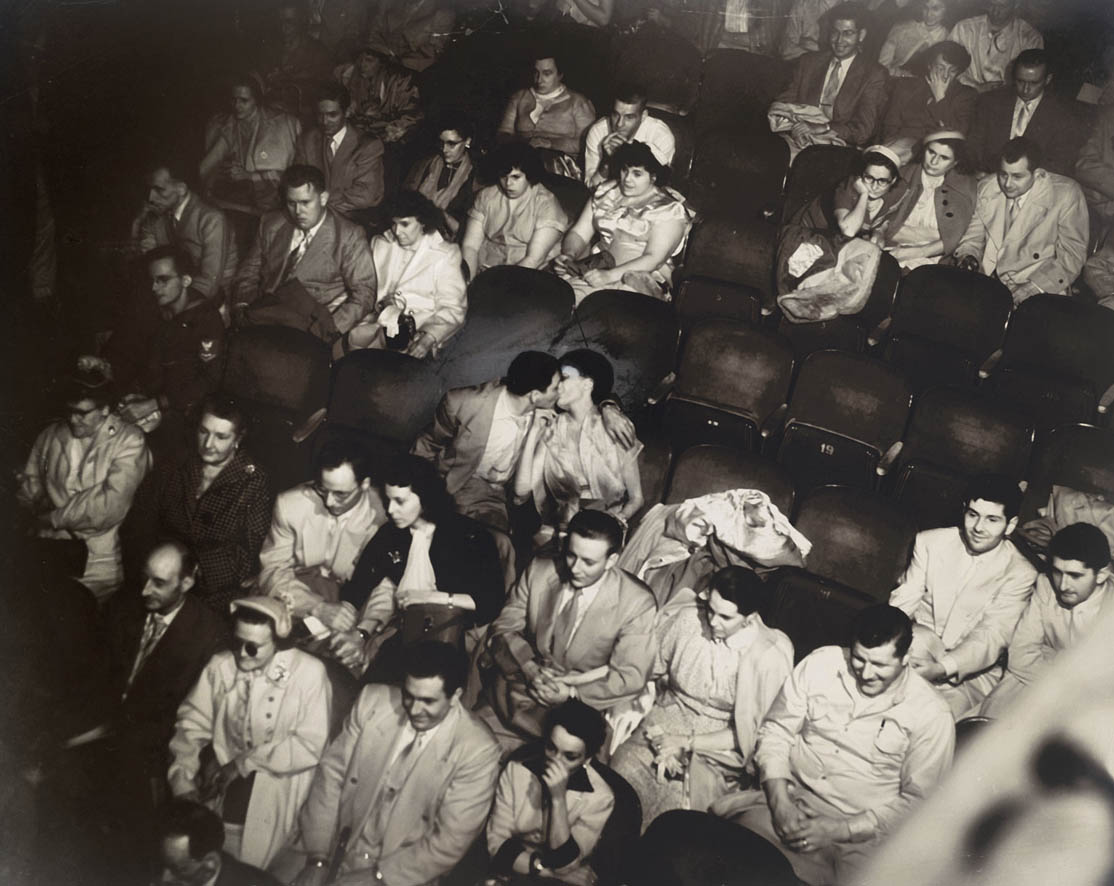
Weegee (Arthur H. Fellig) (American, 1899-1968) 'Audience in the Palace Theatre' c. 1943


Weegee (Arthur H. Fellig) (American, 1899-1968)
Audience in the Palace Theatre
c. 1943
Gelatin silver print
© Weegee/International Center of Photography/Getty Images


Weegee (Arthur Fellig) (American, born Austria, 1899-1968) '[Lovers at the Movies, Times Square]' c. 1953


Weegee (Arthur Fellig) (American born Austria, 1899-1968)
[Lovers at the Movies, Times Square]
c. 1953
Gelatin silver print
26.7 × 35.4cm (10 1/2 × 13 15/16 in)
© International Center of Photography


Robert Frank (American, 1924-2019)
'New York City' 1955 From 'The Americans'


Robert Frank (American, 1924-2019)
New York City
1955
From The Americans
Gelatin silver print


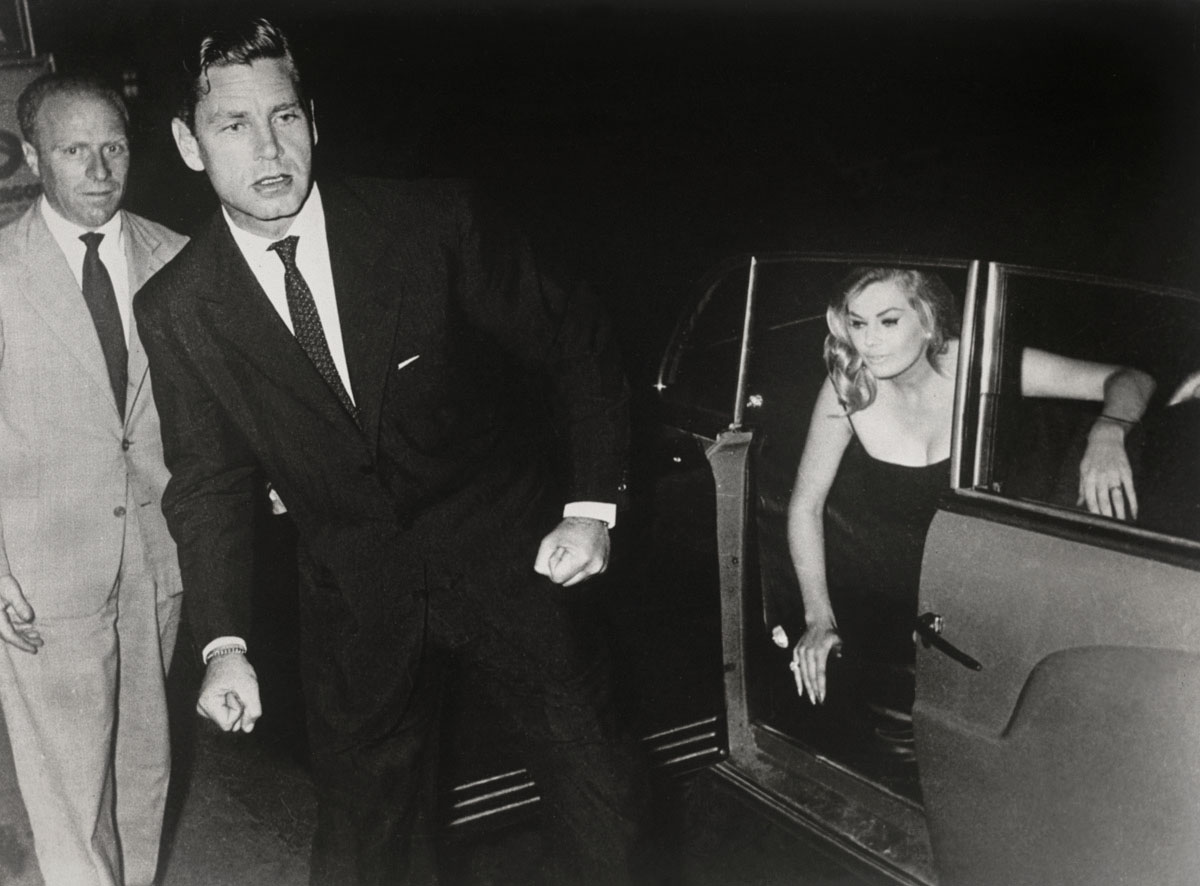
Tazio Secchiaroli (Italian, 1925-1998) 'Anita Ekberg and Husband Anthony Steel, Vecchia, Roma' 1958


Tazio Secchiaroli (Italian, 1925-1998)
Anita Ekberg and Husband Anthony Steel, Vecchia, Roma
1958
Gelatin silver print
SFMOMA, Accessions Committee Fund purchase


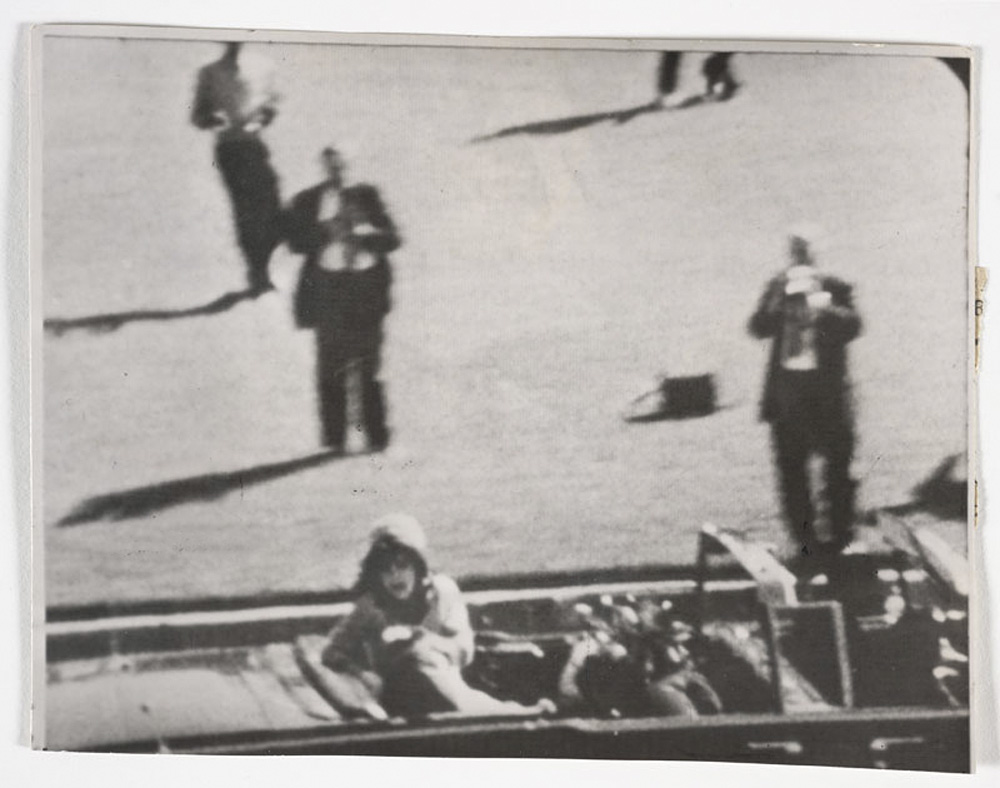
Abraham Zapruder (American born Ukraine, 1905-1970) 'Assassination of John F. Kennedy, November 22, 1963' 1963


Abraham Zapruder (American born Ukraine, 1905-1970)
Assassination of John F. Kennedy, November 22, 1963
1963
Collection SFMOMA, Accessions Committee Fund purchase
© The Sixth Floor Museum at Dealey Plaza


United Press International. 'Suffolk, Virginia, Race Confrontation, May 6, 1964' 1964


United Press International
Suffolk, Virginia, Race Confrontation, May 6, 1964
1964
Collection SFMOMA, Accessions Committee Fund purchase
© United Press International, Inc. All Rights Reserved


Lee Friedlander (American, b. 1934) 'New York City' 1966


Lee Friedlander (American, b. 1934)
New York City
1966
Gelatin silver print


Vito Acconci (Italian, 1940-2017)
'Following Piece' 1969


Vito Acconci (Italian, 1940-2017)
Following Piece
1969
Gelatin silver prints


Exposed offers a fascinating look at pictures made on the sly, without the explicit permission of the people depicted. With photographs from the late nineteenth century to present day, the pictures present a shocking, illuminating and witty perspective on iconic and taboo subjects.

Beginning with the idea of the ‘unseen photographer’, Exposed presents 250 works by celebrated artists and photographers including Brassaï’s erotic Secret Paris of the 1930s images; Weegee’s iconic photograph of Marilyn Monroe; and Nick Ut’s reportage image of children escaping napalm attacks in the Vietnam War. Sex and celebrity is an important part of the exhibition, presenting photographs of Liz Taylor and Richard Burton, Paris Hilton on her way to prison and the assassination of JFK. Other renowned photographers represented in the show include Guy Bourdin, Henri Cartier-Bresson, Philip Lorca DiCorcia, Walker Evans, Robert Frank, Nan Goldin, Lee Miller, Helmut Newton and Man Ray.

The UK is now the most surveyed country in the world. We have an obsession with voyeurism, privacy laws, freedom of media, and surveillance – images captured and relayed on camera phones, YouTube or reality TV.

Much of Exposed focuses on surveillance, including works by both amateur and press photographers, and images produced using automatic technology such as CCTV. The issues raised are particularly relevant in the current climate, with topical debates raging around the rights and desires of individuals, terrorism and the increasing availability and use of surveillance. Exposed confronts these issues and their implications head-on.

Text from the Tate Modern website [Online] Cited 21/09/2010 no longer available online


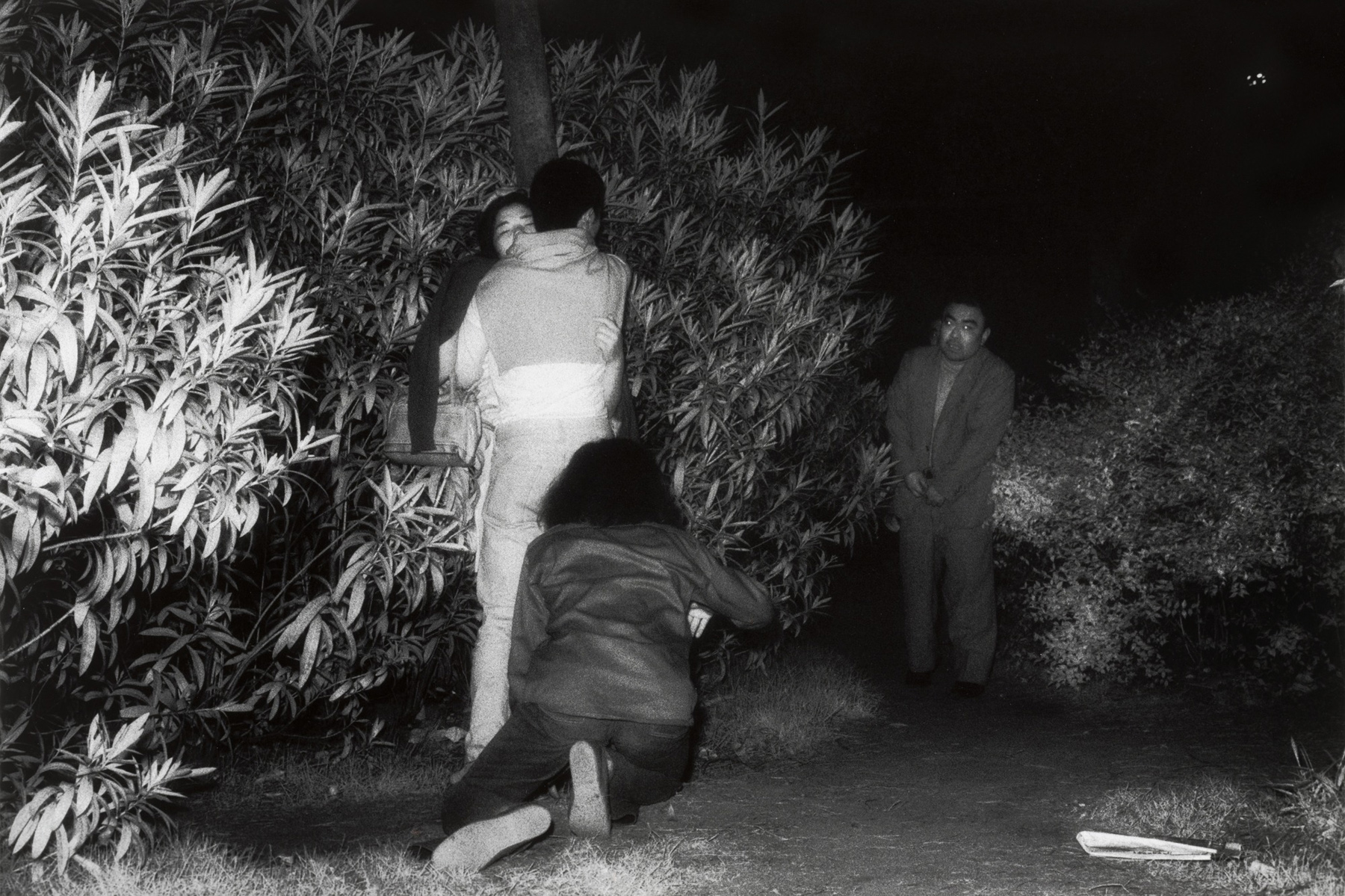
Kohei Yoshiyuki (Japan, b. 1946)
'Untitled' 1971 From the series 'The Park'


Kohei Yoshiyuki (Japan, b. 1946)
Untitled
1971
From the series The Park
Gelatin silver print


Kohei Yoshiyuki (Japan, b. 1946) 'Untitled' 1971 From the series 'The Park'


Kohei Yoshiyuki (Japan, b. 1946)
Untitled
1971
From the series The Park
Gelatin silver print


Sandra Phillips on Surveillance – Exposed at Tate Modern

SFMOMA’s Curator of Photography Sandra Phillips describes how contemporary artists like Sophie Calle and Benjamin Lowry have started to talk back to surveillance.


Ron Galella (American, b. 1931) 'What Makes Jackie Run? Central Park, New York City, October 4, 1971' 1971


Ron Galella (American, 1931-2022)
What Makes Jackie Run? Central Park, New York City, October 4, 1971
1971
Gelatin silver print
7 3/8 in x 9 7/8 in (18.73 x 25.08cm)
© Ron Galella


Ronald Edward Galella (January 10, 1931 – April 30, 2022) was an American photographer, known as a pioneer paparazzo. Dubbed “Paparazzo Extraordinaire” by Newsweek and “the Godfather of the U.S. paparazzi culture” by Time magazine and Vanity Fair, he is regarded by Harper’s Bazaar as “arguably the most controversial paparazzo of all time”. He photographed many celebrities out of the public eye and gained notice for his feuds with some of them, including Jacqueline Onassis and Marlon Brando. Despite the numerous controversies and claims of stalking, Galella’s work was praised and exhibited in art galleries worldwide.

Text from the Wikipedia website


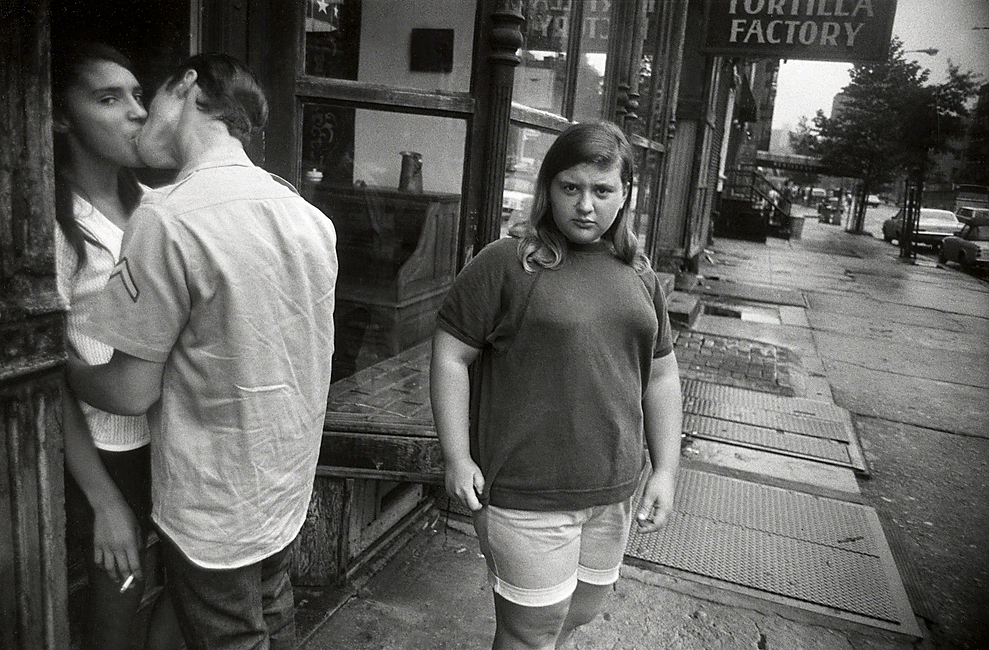
Garry Winogrand (American, 1928-1984) 'Couple Kissing, Girl Staring at Camera, Tortilla Factory, New York' 1969


Garry Winogrand (American, 1928-1984)
Couple Kissing, Girl Staring at Camera, Tortilla Factory, New York
1969
Gelatin silver print
© Garry Winogrand/Fraenkel Gallery, San Francisco


Nan Goldin (American, b. 1953) 'Nan and Brian in Bed, New York City' 1983


Nan Goldin (American, b. 1953)
Nan and Brian in Bed, New York City
1983
Chromogenic print
Nan Goldin and Matthew Marks Gallery, NYC


Denis Beaubois (Mauritian, b. 1970) 'In the event of Amnesia the city will recall…' 1996-1997 (still)


Denis Beaubois (Mauritian, b. 1970)
In the event of Amnesia the city will recall... (still)
1996-1997
DVD
9 mins 30 secs
Courtesy the artist


Denis Beaubois (Mauritian, b. 1970) 'In the event of Amnesia the city will recall…' 1996-1997 (still)


Denis Beaubois (Mauritian, b. 1970)
In the event of Amnesia the city will recall… (still)
1996-1997
DVD
9 mins 30 secs
Courtesy the artist


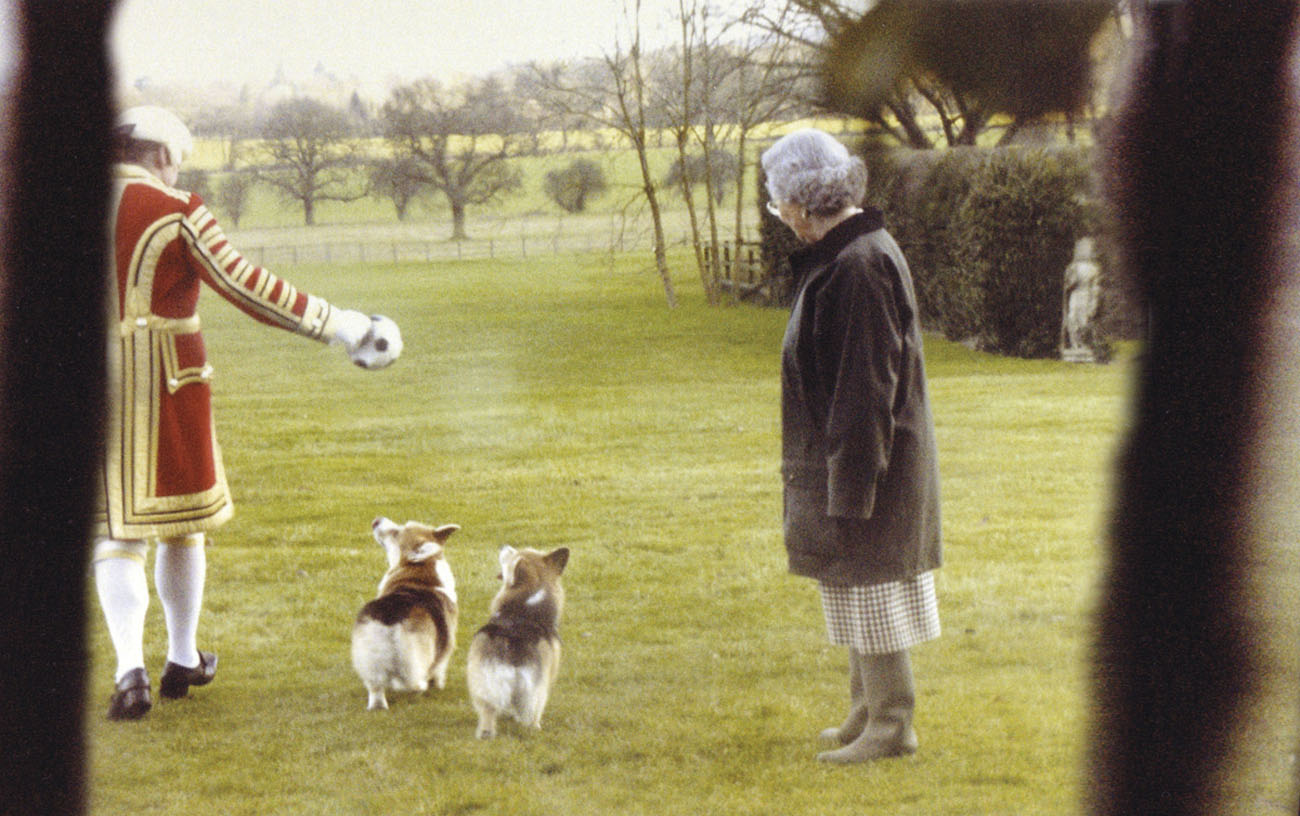
Alison Jackson (English, b. 1960)
'The Queen plays with her corgis' 2007


Alison Jackson (English, b. 1960)
The Queen plays with her corgis
2007
From the series Confidential
Chromogenic print
Courtesy the artist and Hamiltons Gallery, London
© Alison Jackson, Hamiltons Gallery, London


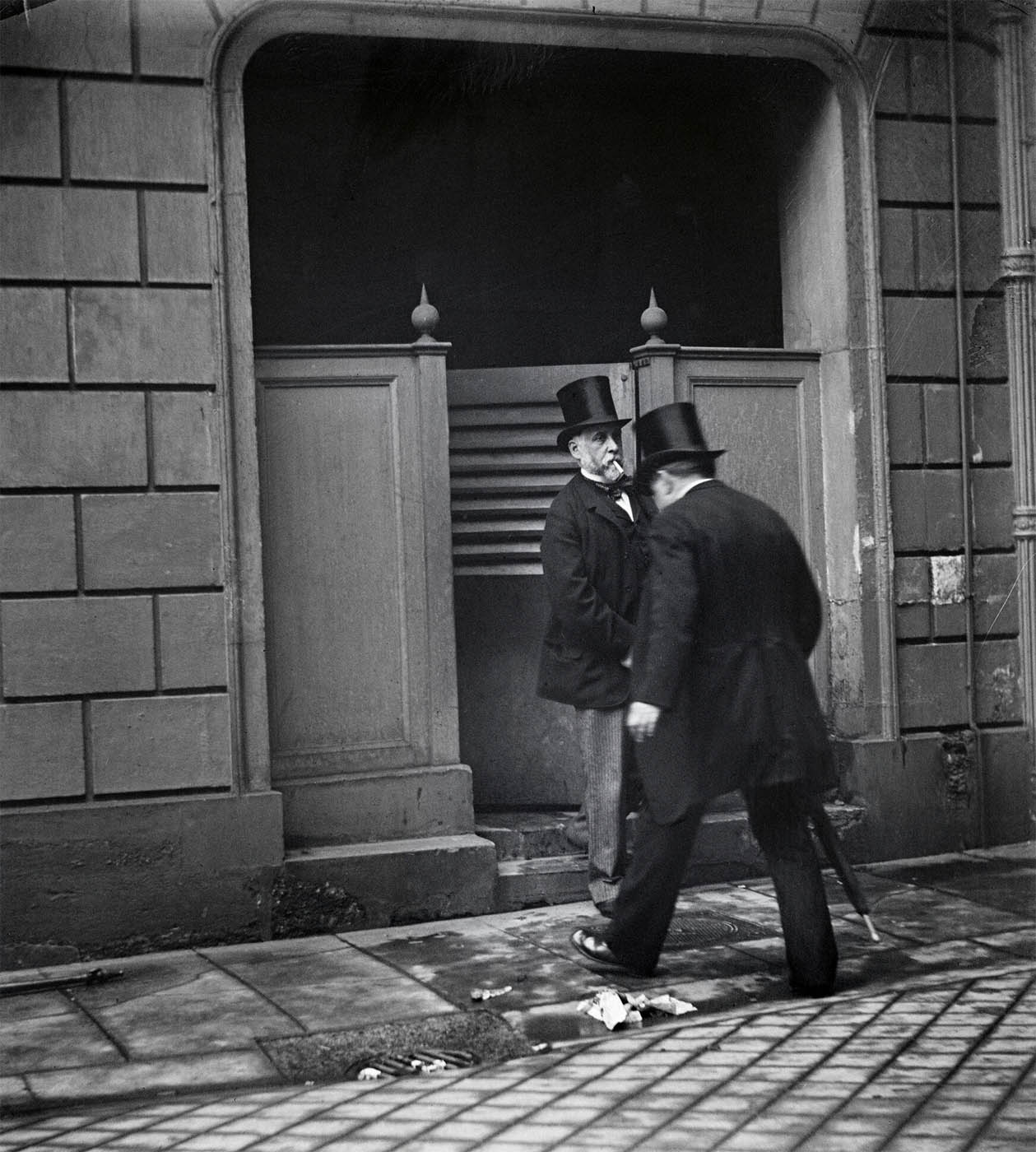
Giuseppe Primoli (Italian, 1851-1927)
'Edgar Degas emerging from a Parisian public toilet' 1889


Giuseppe Primoli (Italian, 1851-1927)
Edgar Degas emerging from a Parisian public toilet
1889
Gelatin silver print


Walker Evans (American, 1903-1975) 'Street Scene, New York' 1929


Walker Evans (American, 1903-1975)
Street Scene, New York
1928
Gelatin silver print
San Francisco Museum of Modern Art
© Walker Evans Archive, The Metropolitan Museum of Art


Georges Dudognon (French, 1922-2001) 'Greta Garbo in the Club St. Germain, Paris' c. 1950s


Georges Dudognon (French, 1922-2001)
Greta Garbo in the Club St. Germain, Paris
c. 1950s
Gelatin silver print
7 1/16  x 7 1/8 in. (17.94 x 18.1cm)
San Francisco Museum of Modern Art, Members of Foto Forum, 2005.200
© Estate of Georges Dudognon


The face in the paparazzi image above is actually The Face: Greta Garbo. One of the most famous and admired women in the world, Garbo became a New York recluse after retiring from films at the beginning of the 1940s. Sightings of her were rare, and this 1950s image captures the conflict between a movie star’s public persona and private life. Now older and with her face obscured, Garbo is unrecognisable, but once understood to be her it becomes a contrasting reference to all those images of her as an icon of beauty and stardom.

Christian Hayes. “Exposed: Voyeurism, Surveillance and the Camera,” on The Classic Film Show website, June 15, 2010 [online] Cited 24/03/2025


Weegee (Arthur H. Fellig) (American, 1899-1968) '[Marilyn Monroe]' c. 1950s


Weegee (Arthur H. Fellig) (American, 1899-1968)
[Marilyn Monroe]
c. 1950s
Gelatin silver print
International Center of Photography, New York, Gift of Wilma Wilcox, 1993
© Weegee / International Center of Photography / Getty Images


Richard Avedon (American, 1923-2004) 'And Warhol' 1969
Screenshot


Richard Avedon (American, 1923-2004)
And Warhol
1969
Gelatin silver print


Shizuka Yokomizo (Japanese, b. 1966) 'Stranger No. 1' 1998


Shizuka Yokomizo (Japanese, b. 1966)
Stranger No. 1
1998
Chromogenic print
50 x 42 1/2 in. (127 x 108 cm)
© Shizuka Yokomizo


Shizuka Yokomizo (Japanese, b. 1966)
'Stranger No. 2' 1998


Shizuka Yokomizo (Japanese, b. 1966)
Stranger No. 2
1998
Chromogenic print
SFMOMA, Accessions Committee Fund purchase
© Shizuka Yokomizo


Tate Modern
Bankside
London SE1 9TG
020 7887 8888

Opening hours:
Daily 10.00 – 18.00

Tate Modern website

LIKE ART BLART ON FACEBOOK

Back to top