Opening: ‘Andreas Gursky’ at the National Gallery of Victoria International, Melbourne

Exhibition dates: 21st November, 2008 – 22nd February, 2009

Opening: Thursday 21st November 2008
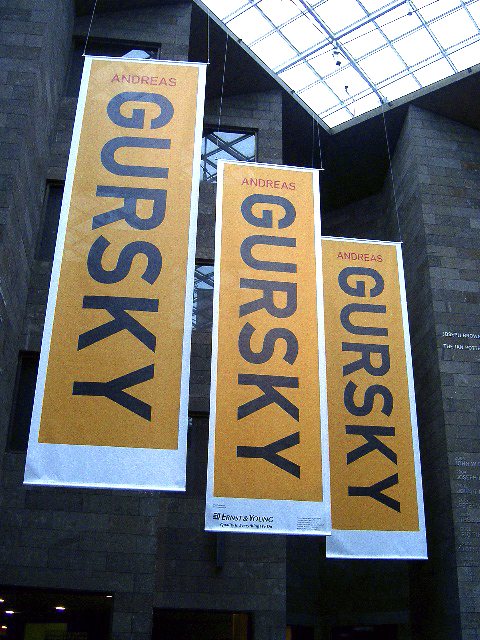
 

Andreas Gursky banner at NGV International exhibition, Melbourne


Andreas Gursky banner at NGV International exhibition, Melbourne


A large but plain crowd assembled for the opening of the first exhibition by world renowned German photographer Andreas Gursky at the National Gallery of Victoria in St Kilda Road, Melbourne. After some lively conversation with friends and following the opening speeches we wandered into a large clean gallery space with minimal design elements. The use of space within the gallery allowed the work to speak for itself. It is a minimal hang and the exhibition works all the better for this.

As for the work itself 21 large photographs are presented ranging from landscapes to buildings, race tracks to formula 1 pits, Madonna concerts to the Tour de France. Most work successfully in building a hyperreal vision of the world. We are not sure what is ‘real’ or hyperreal, what is a straight photograph or what has been digitally manipulated and woven together. The colour and sharpness of the images is often intensified: in reproductions of the famous photograph of the 99c supermarket in America the colours seem flat but ‘in the flesh’ the colours are almost fluoro in their saturation and brightness.

Having said that the photographs are nearly always unemotional – as though seen from above in the third person, they observe with detachment. The intrigue for the viewer is in the detail, in working out what is going on, but these are not passionate photographs on the surface. It is beneath the surface that the photographs have their psychological effect: the best of the images work on the subconscious of the viewer. Like a fantastical dance the three very wide images of the Formula 1 pits feature pit crews practicing tyre changes, frozen in a choreographed ballet. People in the galleries above stare down; pit lane girls seem to have been inserted digitally into the images, standing at side or behind the pit crews in a seemingly surreal comment on these worlds. These are theatrical tableaux vivant, splashed with teams colours. Fantastic photographs.

In some of the images, such as the Madonna concert or the photograph of the Bahrain Formula 1 racetrack, space seems to have folded in on itself and the viewer is unsure of the structure of the image and of their vantage point in looking at them. Space also collapses in the photograph of the pyramid of Cheops (2006, below), where the depth of field from foreground to background of the image is negligible. Less successful are images of a Jackson Pollock painting and a green grass bank with running river (Rhein II 1996, below), intensified beyond belief so that the river seems almost to be made of liquid silver.

A wonderful exhibition in many aspects, well worth a visit to see one the worlds best photographers at work. The photographs tell detached but psychologically emotional stories about what human beings are doing to the world in which they live. These images are a commentary on the state of this relationship – images of repetition, pattern, construction, use, abuse and fantasy woven into hyperreal visions of an unnatural world.

Dr Marcus Bunyan


Many thankx to the National Gallery of Victoria for inviting me to the opening and for allowing me to publish the photographs in the posting. Please click on the photographs for a larger version of the image.
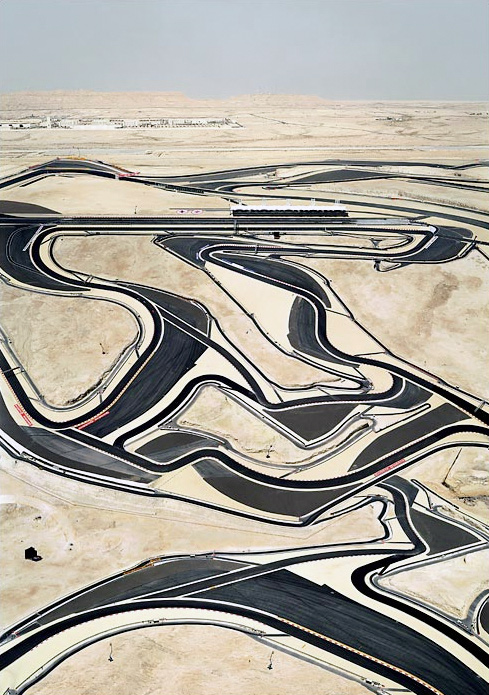


Andreas Gursky (German, b. 1955) 'Bahrain I' 2007 from the exhibition 'Andreas Gursky' at the National Gallery of Victoria International, Melbourne, November, 2008 - February, 2009


Andreas Gursky (German, b. 1955)
Bahrain I
2007
C Print
120 1/2 x 87 1/4 inches
© Andreas Gursky
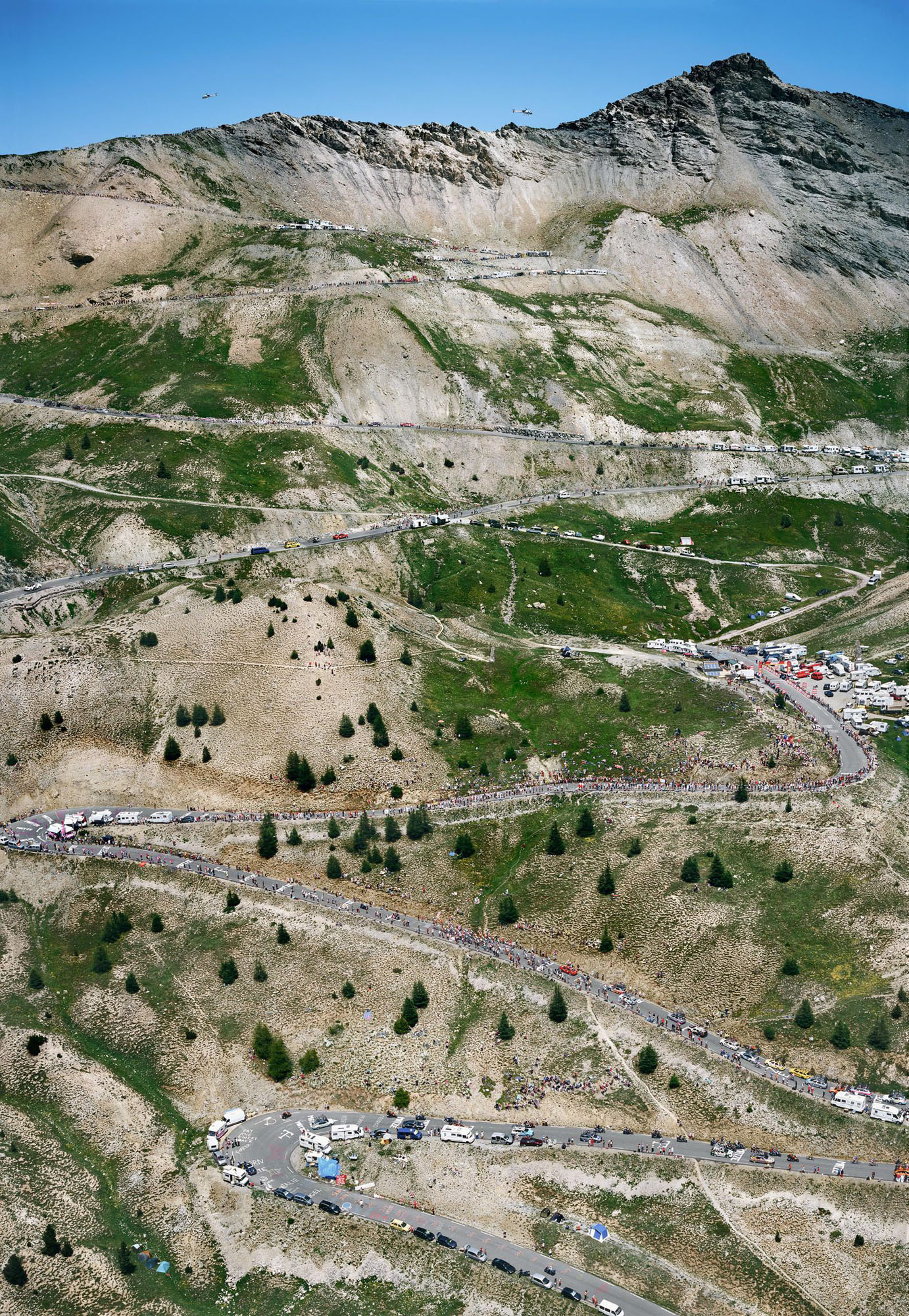
 

Andreas Gursky (German, b. 1955) 'Tour de France' 2007 from the exhibition 'Andreas Gursky' at the National Gallery of Victoria International, Melbourne, November, 2008 - February, 2009


Andreas Gursky (German, b. 1955)
Tour de France
2007
C Print
© Andreas Gursky
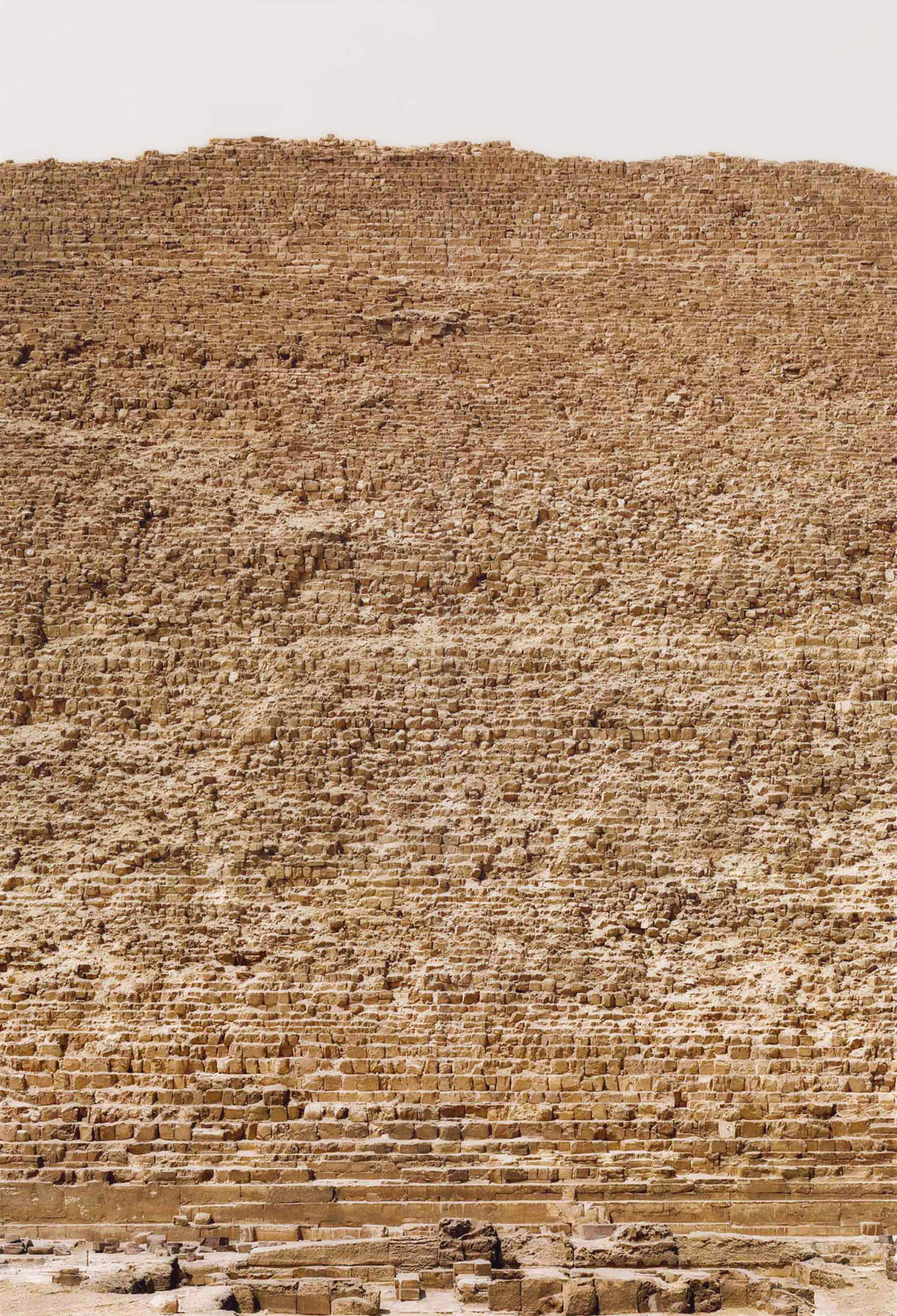
 

Andreas Gursky (German, b. 1955) 'Cheops' 2006 from the exhibition 'Andreas Gursky' at the National Gallery of Victoria International, Melbourne, November, 2008 - February, 2009


Andreas Gursky (German, b. 1955)
Cheops
2006
C Print
307 x 217.1cm
© Andreas Gursky
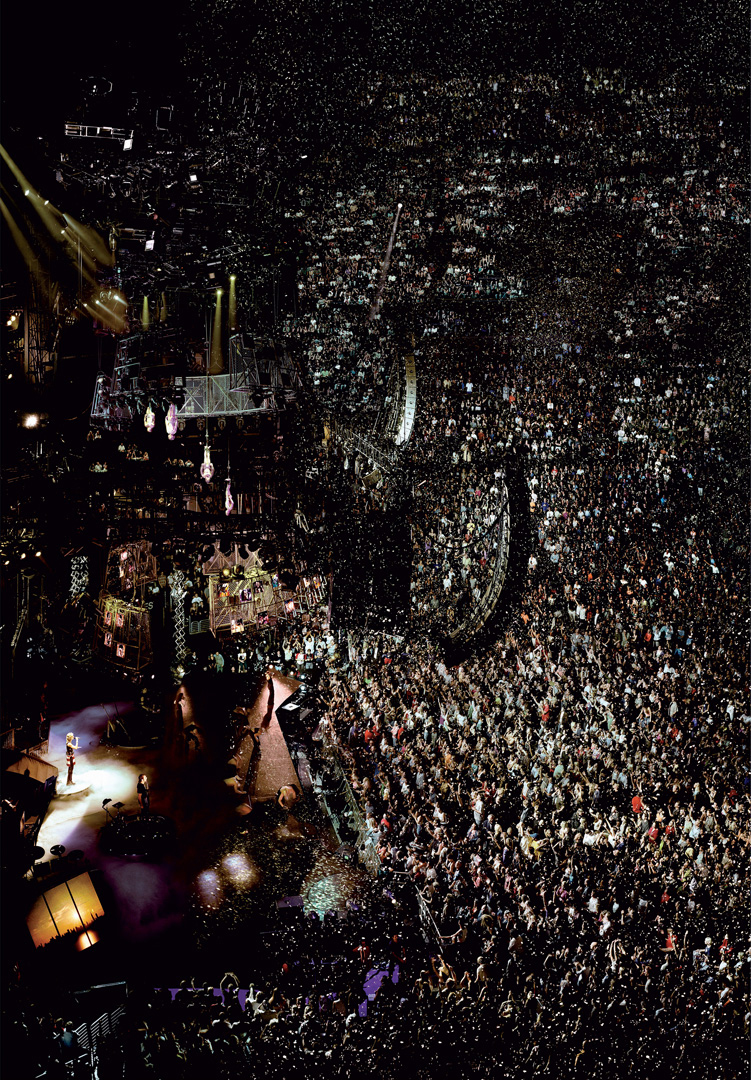
 

Andreas Gursky (German, b. 1955) 'Madonna I' 2001


Andreas Gursky (German, b. 1955)
Madonna I
2001
C Print
282.26 x 207.01 x 6.35cm
© Andreas Gursky
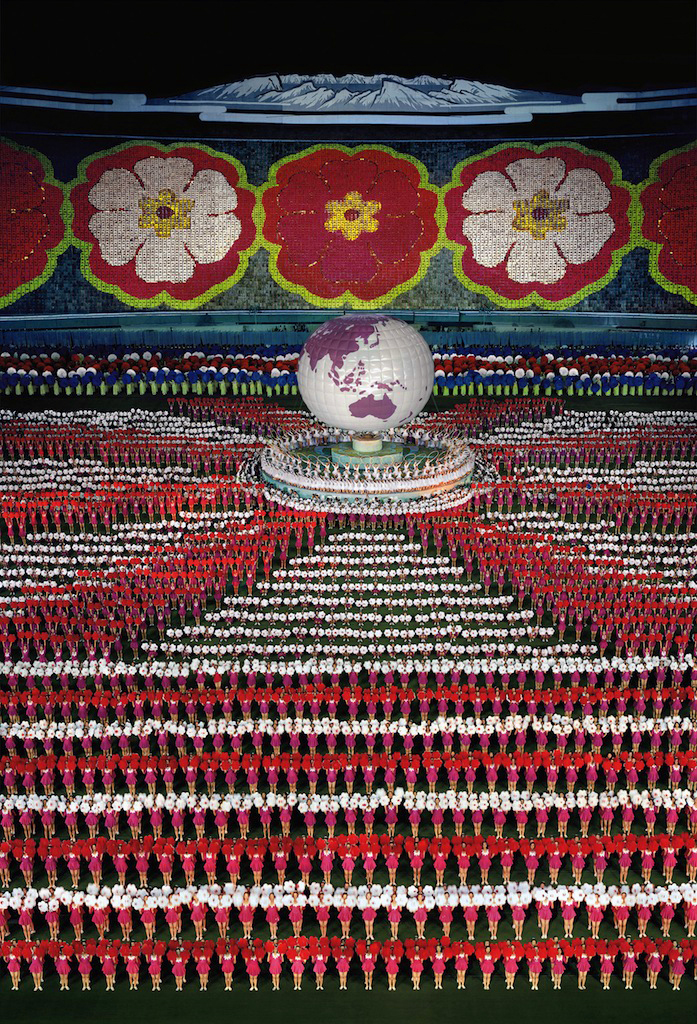
 

Andreas Gursky (German, b. 1955) 'Pyongyang I' 2007


Andreas Gursky (German, b. 1955)
Pyongyang I
2007
C Print
307.0 x 215.5 x 6.2cm
© Andreas Gursky


For the first time in Australia, an exhibition by German contemporary photographer Andreas Gursky opened at the National Gallery of Victoria. From the Haus der Kunst in Munich, Andreas Gursky presents 21 major works for which the artist is internationally acclaimed. The photographs range from 1989 to 2007 and include seminal works such as Tokyo Stock Exchange and the diptych 99 cent store. Andreas Gursky is recognised as one of the world’s leading contemporary artists. On view through 22 February, 2009.

Well known for his large-scale (generally measuring an astounding four to five metres) and extraordinarily detailed photographs of contemporary life, Gursky continues the lineage of ‘new objectivity’ in German photography which was brought to contemporary attention by Bernd and Hilla Becher.

In the 1990s, Gursky became inspired by the various manifestations of global capitalism. His interest was piqued looking at a newspaper photograph of the crowded floor of the Tokyo Stock Exchange and he began to photograph its flurry of suited traders, somehow moving according to some inbuilt order.

Dr Gerard Vaughan, Director, NGV said the Andreas Gursky exhibition represented a significant coup for Melbourne: “The National Gallery of Victoria is the only Australian venue for this extraordinary show – the first major exhibition of Gursky’s work ever to be seen in this country. Generously organised by the Haus der Kunst Museum in Munich we are extremely fortunate to have had the works in this show selected for us by Andreas Gursky himself.”

Andreas Gursky was born in 1955 and grew up in Düsseldorf, Germany. In the early 1980s, he studied at the Kunstakademie Düsseldorf, Germany’s State Art Academy. Whilst there he was heavily influenced by his teachers Bernd and Hilla Becher, who were well known for their methodical black and white photographs of industrial machinery.

In 1984 Gursky began to move away from the Becher style, choosing instead to work in colour. Since then he has travelled across the world to cities such as Tokyo, Cairo, Hong Kong, Stockholm, Singapore and Los Angeles photographing factories, hotels and office buildings – places he considered to be symbols of contemporary culture. His world-view photographs during this period are considered amongst the most original achievements in contemporary photography.

Gursky has been the subject of numerous international exhibitions including the Internationale Foto-Triennale in Esslingen, Germany in 1989 and 1995, the Venice Biennale in 1990, and the Biennale of Sydney in 1996 and 2000. In 2001, Gursky was the subject of an exhibition at the Museum of Modern Art in New York.

Press release from the National Gallery of Victoria website
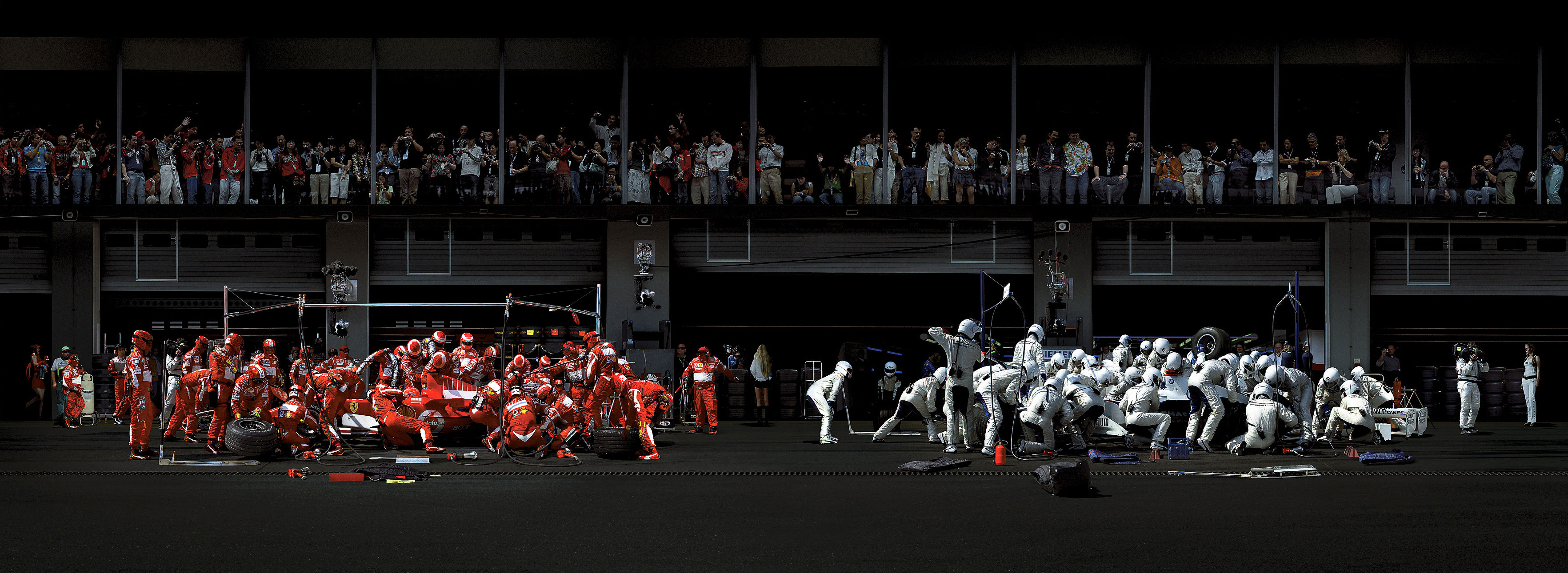
 

Andreas Gursky (German, b. 1955) 'F1 Boxenstopp 1' 2007


Andreas Gursky (German, b. 1955)
F1 Boxenstopp 1
2007
C Print
© Andreas Gursky
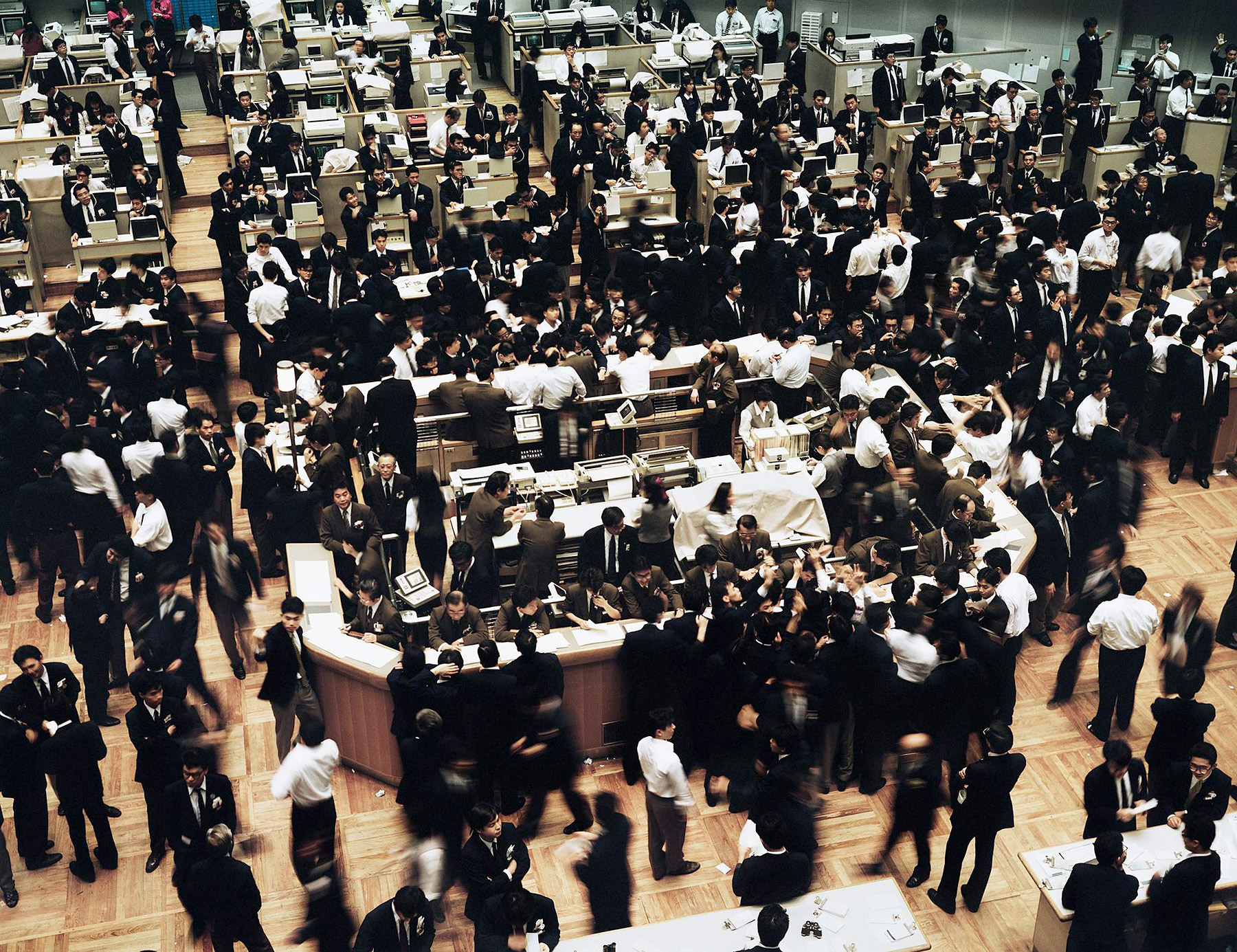
 

Andreas Gursky (German, b. 1955) 'Tokyo Stock Exchange' 1990


Andreas Gursky (German, b. 1955)
Tokyo Stock Exchange
1990
C Print
205.0 x 260.0 x 6.2cm
© Andreas Gursky
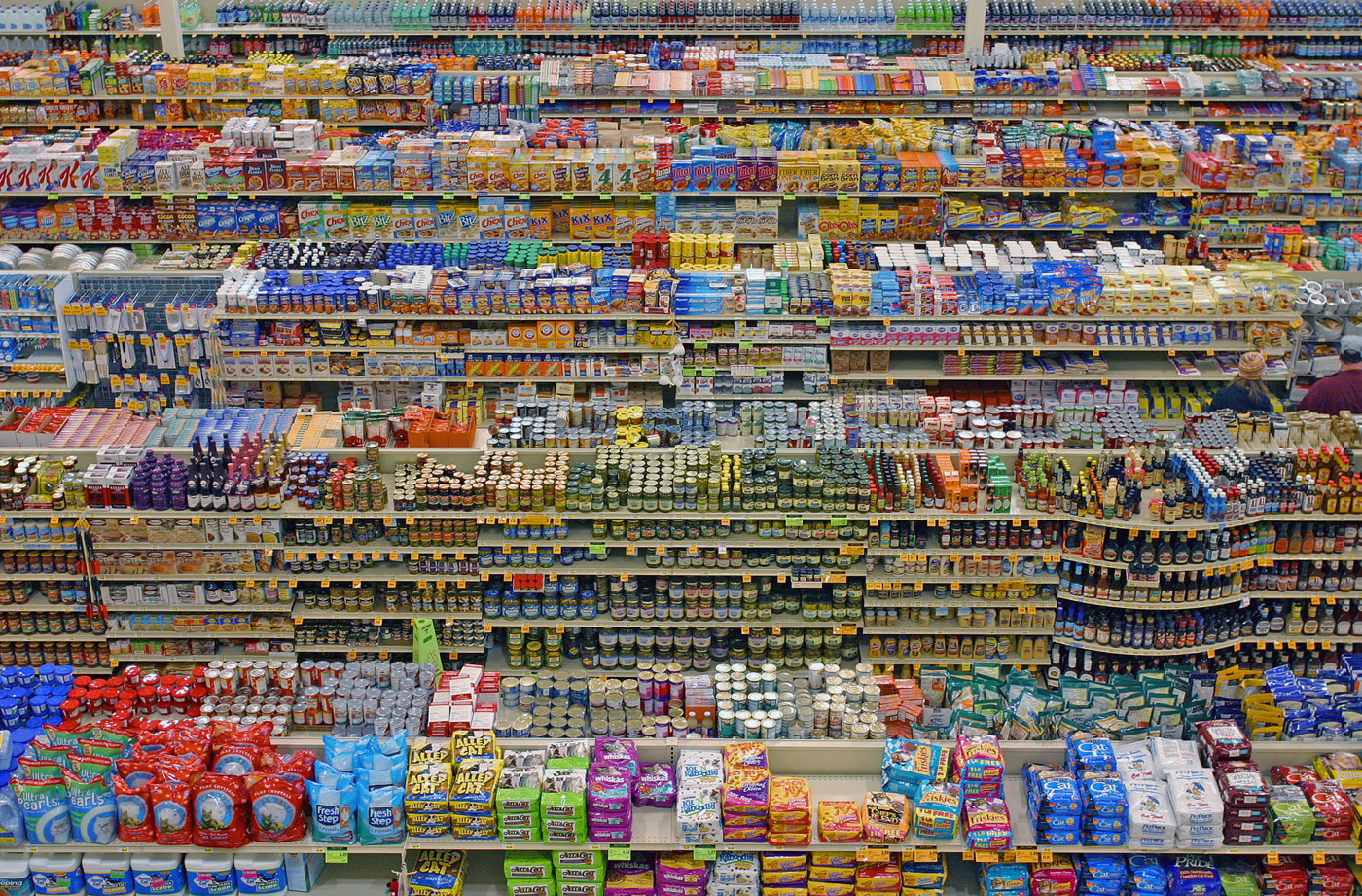
 

Andreas Gursky (German, b. 1955) 'diptych 99 cent store II' 2001


Andreas Gursky (German, b. 1955)
diptych 99 cent store II
2001
C Print
© Andreas Gursky


Andreas Gursky (German, b. 1955) 'Rhein II' 1996


Andreas Gursky (German, b. 1955)
Rhein II
1996
C print
© Andreas Gursky


NGV International
180 St Kilda Road
Melbourne
Phone: 03 8620 2222

Opening hours:
Daily 10am – 5pm

National Gallery of Victoria website

LIKE ART BLART ON FACEBOOK

Back to top

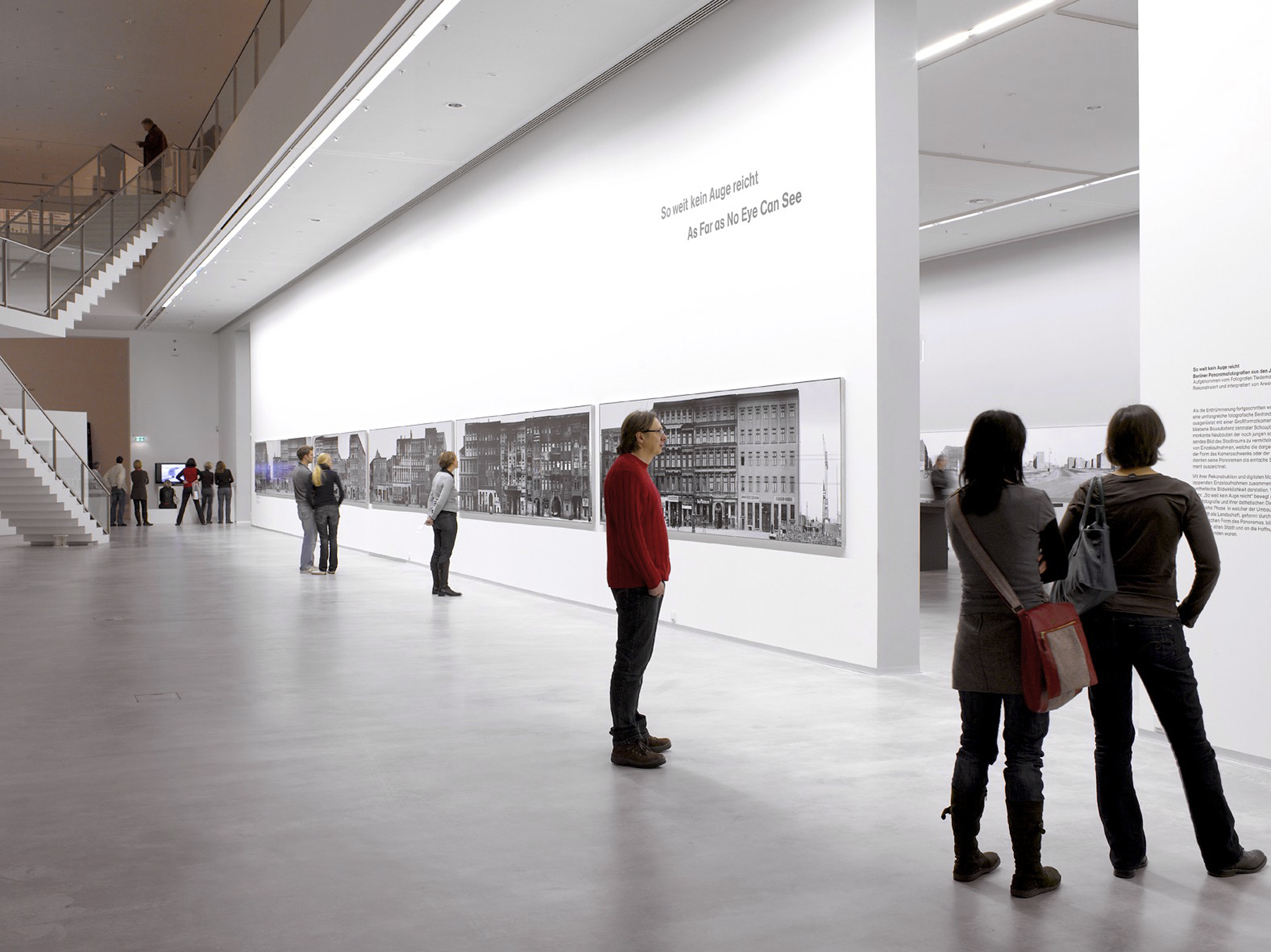
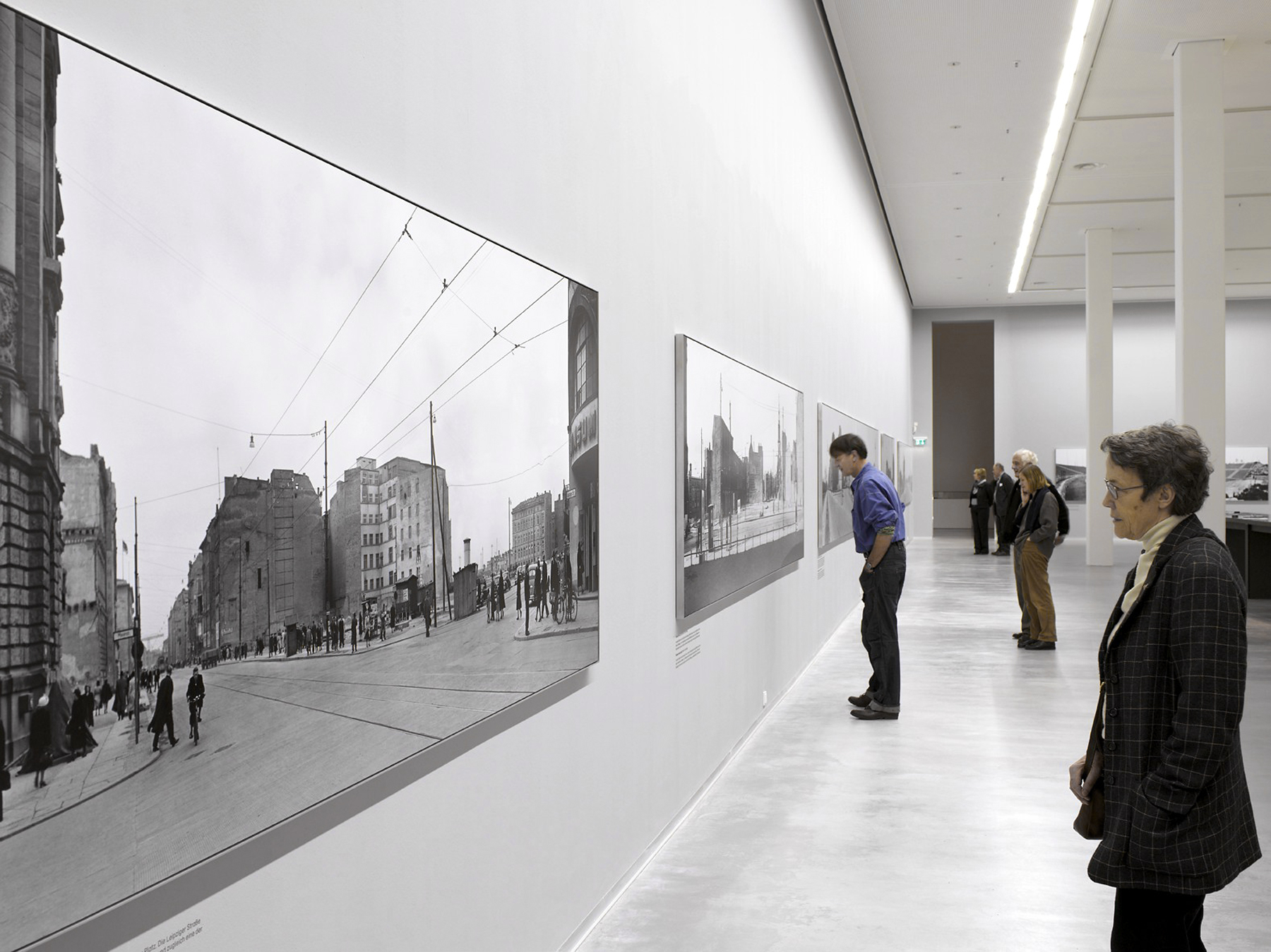
Exhibition: ‘As far as no eye can see: panoramic photographs of Berlin, 1949-1952’ at the Berlinische Galerie Museum of Modern Art, Berlin

Exhibition dates: 2nd November, 2008 – 16th February, 2009


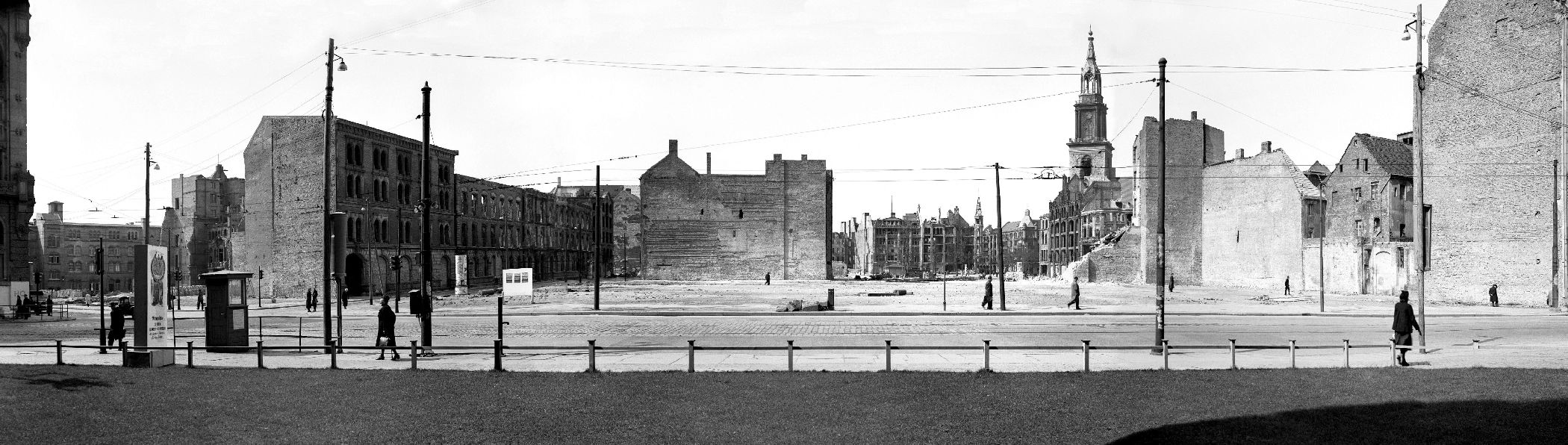
Fritz Tiedemann (German, 1915-2001) 'Pariser Platz, April 21, 1951' from the exhibition As far as no eye can see: panoramic photographs of Berlin, 1949-1952' at the Berlinische Galerie Museum of Modern Art, Berlin, Nov 2008 - Feb 2009


Fritz Tiedemann (German, 1915-2001)
Pariser Platz, April 21, 1951
1951
Reconstructed by Arwed Messmer 2008
1.25 x 5.84 metres
© Fritz Tiedemann / Arwed Messmer


As far as the eye can see shows 13 reconstructed and digitally reassembled panorama photos by Tiedemann from his 1,500-footage work. The city views from the years 1949-1952 were enlarged to almost gigantic dimensions (up to 25.5 m in length) and thus provide a fascinating view of the destruction of the war and the reconstruction of Berlin.

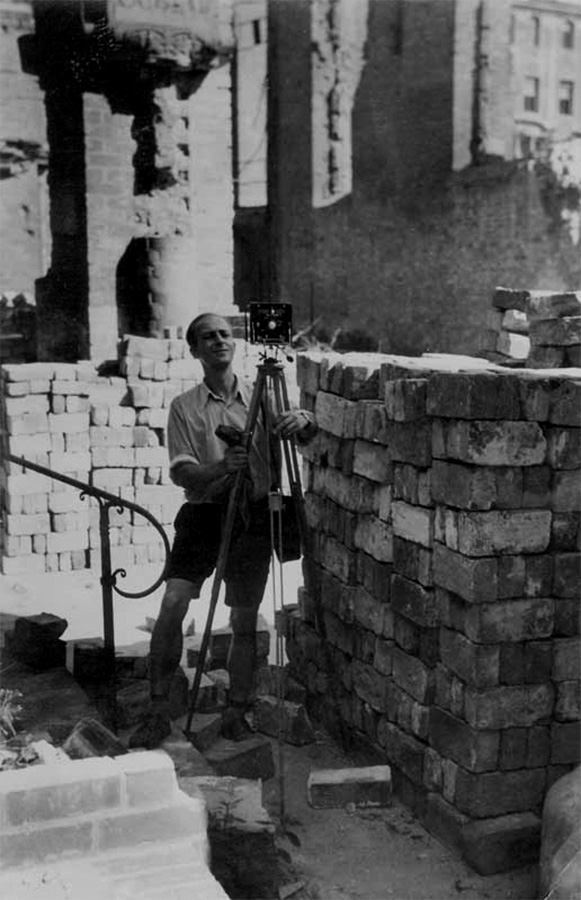
Fritz Tiedemann (German, 1915-2001) was a trained surveying technician and was trained in the military as a photogrammeter (specialist for photographic measuring methods). He documented the city as a photographer at the Office of Preservation. The photographer Arwed Messmer came across Tiedemann’s photographs during research work for his book project “Anonyme Mitte – Berlin” in the Berlinische Galerie and then developed the idea for this exhibition.

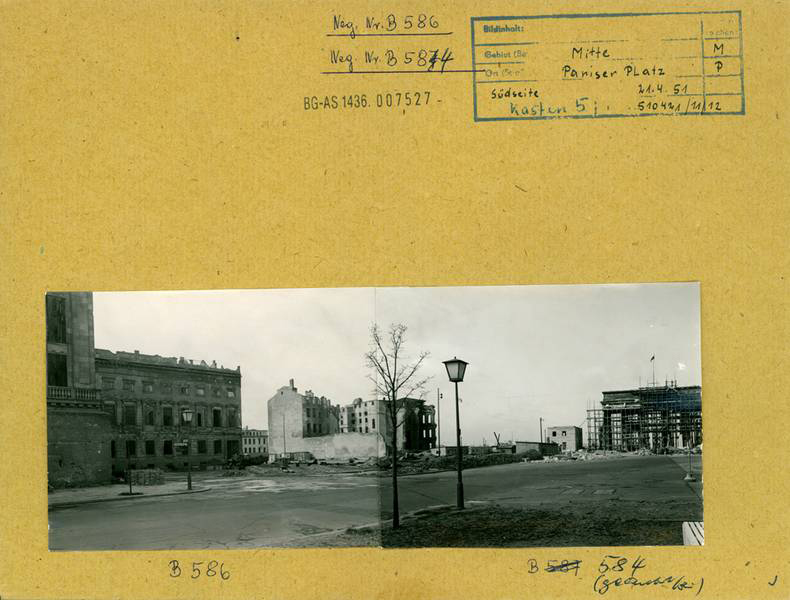
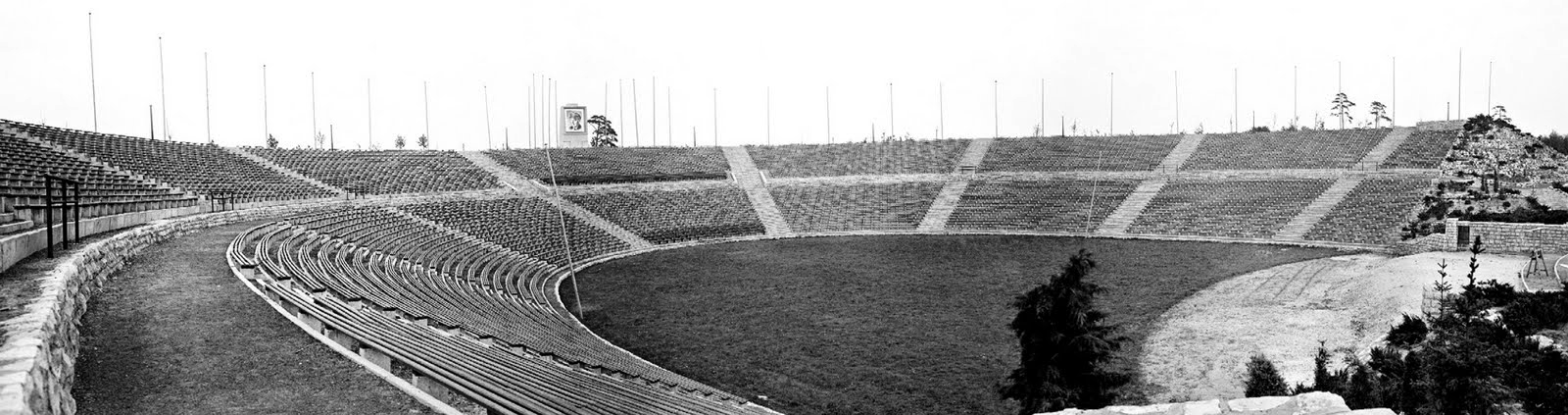
After WW 2, rubble clearance had made considerable progress and rebuild had begun, a remarkable photographic inventory was done in East Berlin. By order of the magistrate of the capital of the GDR an – up to now – unknown photographer documented central places and areas that were of importance concerning the urban planning in the early 50s. He captured the Pariser Platz and the Schloßplatz area as well as the works on the Walter Ulbricht Stadium or a sand storage area in the outskirts. In order to adequately picture the void and the vastness of the destroyed city as well as the remaining urban structures, the photographer made horizontal turns with the camera and thus produced sequences that – once brought together – turned into panoramic pictures.

The concealed quality of these pictures was lately discovered by Berlin photographer Arwed Messmer. By means of digital mounting of the sequences he created synthetic large-size pictorial worlds that show the destroyed Berlin as an empty stage. Thus inspired, the Photo Archive of the East Berlin magistrate, preserved by the Berlinische Galerie and documented in the catalogue “Ost-Berlin und seine Bauten. Fotografien 1945-1990” / “East Berlin Architecture”, was searched through anew. Thus the exhibition operates at the interface between applied photography and new photographic technology as well as between collective memory and an unfamiliar optic experience.

Press release from the Berlinische Galerie Museum of Modern Art


Fritz Tiedemann (German, 1915-2001) 'Pariser Platz, April 21, 1951' (detail) from the exhibition As far as no eye can see: panoramic photographs of Berlin, 1949-1952' at the Berlinische Galerie Museum of Modern Art, Berlin, Nov 2008 - Feb 2009


Fritz Tiedemann (German, 1915-2001)
Pariser Platz, April 21, 1951 (detail)
1951
Reconstructed by Arwed Messmer 2008
1.25 x 5.84 metres
© Fritz Tiedemann / Arwed Messmer


Installation view of the exhibition 'As far as the eye can see' at the Berlinische Galerie, Berlin

Installation view of the exhibition 'As far as the eye can see' at the Berlinische Galerie, Berlin


Installation views of the exhibition As far as the eye can see at the Berlinische Galerie, Berlin


Between 1948 and 1953, photographer and technical surveyor Fritz Tiedemann (German, 1915-2001) was commissioned by the urban administration of East Berlin to undertake extensive documentation of architecture and urban planning in the capital of the GDR. Many of his early visual documents are series of images conceived as panoramas, whereby the sweep of the camera gives a comprehensive impression of emptiness and the extent of war damage in the city. Processed as contact copies and stuck onto archive covers, his many photographs are one important, early basic collection of a photo archive that was extended consistently until 1990. It has been kept in the architectural collection of the Berlinische Galerie since 1992.

An in-depth study of the collection was facilitated with support from the Getty Foundation, Los Angeles, and the results were made available to the public in the shape of the publication “Ost-Berlin und seine Bauten” in 2006. In 2008 a selection of Tiedemann’s photographs was shown to the public in the exhibition So weit kein Auge reicht. Berliner Panoramafotografien aus den Jahren 1949-1952. Aufgenommen von Fritz Tiedemann. Rekonstruiert und interpretiert von Arwed Messmer (As far as no eye can see. Berlin panorama photographs from the years 1949-1952. Taken by Fritz Tiedemann. Reconstructed and interpreted by Arwed Messmer). A catalogue of the same name was also published; it has since been produced in a second, revised edition.

Text from the Berlinische Galerie Museum of Modern Art


Fritz Tiedemann (German, 1915-2001) 'Pariser Platz (south side) April 21, 1951'


Fritz Tiedemann (German, 1915-2001)
Pariser Platz (south side), April 21, 1951
1951
Archive cover with contact copies of the original negatives
Silver gelatine paper on paper, 18.5 x 24.6cm
Taken over from the collections of the Urban Administration for Urban Development, Housing and Transport Berlin [East] via the Senate Administration for Building and Housing Berlin, 1991
© Berlinische Galerie Museum of Modern Art


Fritz Tiedemann short biography

14 February 1915 Hamburg – 23 November 2001 Münster, Westfalen

The identity behind the name “Tiedemann” could be clarified during the course of the exhibition. A former colleague of Fritz Tiedemann as well as descendents of the photographer learned about the exhibition due to the nationwide media coverage and contacted the museum.

As a professional surveying technician Fritz Tiedemann received additional specialist qualification as a topographer during his military service. His photographic skills and expertise were of great importance for the documentation of wartime damage and a visual basis for future urban planning. Indeed, his photographs can be considered as new documents showing the vastness and emptiness of the destroyed city.

In February 1948 he began working as a photographer for the Berlin Historic Buildings’ and Memorials’ Conservation Office. In October 1949 due to the political division of Greater Berlin he was to continue his work for the East Berlin government’s city planning office. Besides historical aspects the documentation then also focused on the architectural development of East Berlin as is also displayed by the exhibition’s panoramic photographs.

On February 28, 1953 Fritz Tiedemann was arrested by the East German police forces for his attempts to have West Berlin authorities share in those historically valuable photographs. He was tried and imprisoned and after the events of June 17, 1953 granted amnesty. Together with his family he subsequently fled to West Germany where he was acknowledged as political refugee. In January 1954 he took up work as a topographer with a company called Plan und Karte, later Hansa Luftbild, in Münster, Westphalia, where he remained employed until his retirement in 1978.

Photography had not only been part of Fritz Tiedmann’s professional activities, it was in fact his life-long passion, the results of which are considered by his family as a great heritage.

Text from the Berlinische Galerie Museum of Modern Art


Fritz Tiedemann (German, 1915-2001) 'Marx-Engels-Platz, April 20, 1951'


Fritz Tiedemann (German, 1915-2001)
Marx-Engels-Platz, April 20, 1951 [previously called Schloss-Platz]
1951
Reconstructed by Arwed Messmer 2008
© Fritz Tiedemann / Arwed Messmer


Fritz Tiedemann (German, 1915-2001) 'Am Friedrichshain, March 5, 1952'


Fritz Tiedemann (German, 1915-2001)
Am Friedrichshain, March 5, 1952
1952
Reconstructed by Arwed Messmer 2008
© Fritz Tiedemann / Arwed Messmer


Fritz Tiedemann (German, 1915-2001) 'Rathausstrasse, April 20, 1951'


Fritz Tiedemann (German, 1915-2001)
Rathausstrasse, April 20, 1951 [The Rathausstrasse overlooking the Marienkirche of Alexanderplatz]
1951
Reconstructed by Arwed Messmer 2008
© Fritz Tiedemann / Arwed Messmer


Fritz Tiedemann (German, 1915-2001) 'Outdoor scene in Wuhlheide, May 4, 1952'


Fritz Tiedemann (German, 1915-2001)
Outdoor scene in Wuhlheide, May 4, 1952
1952
Reconstructed by Arwed Messmer 2008
© Fritz Tiedemann / Arwed Messmer


Unknown photographer. 'Fritz Tiedemann' c. 1951


Unknown photographer
Fritz Tiedemann
c. 1951
Private collection


Berlinische Galerie Museum of Modern Art
Alte Jakobstraße 124-128
10969 Berlin Germany

Opening hours:
Wednesday – Monday 10am – 6pm
Closed on Tuesdays

Berlinische Galerie Museum of Modern Art website

LIKE ART BLART ON FACEBOOK

Back to top