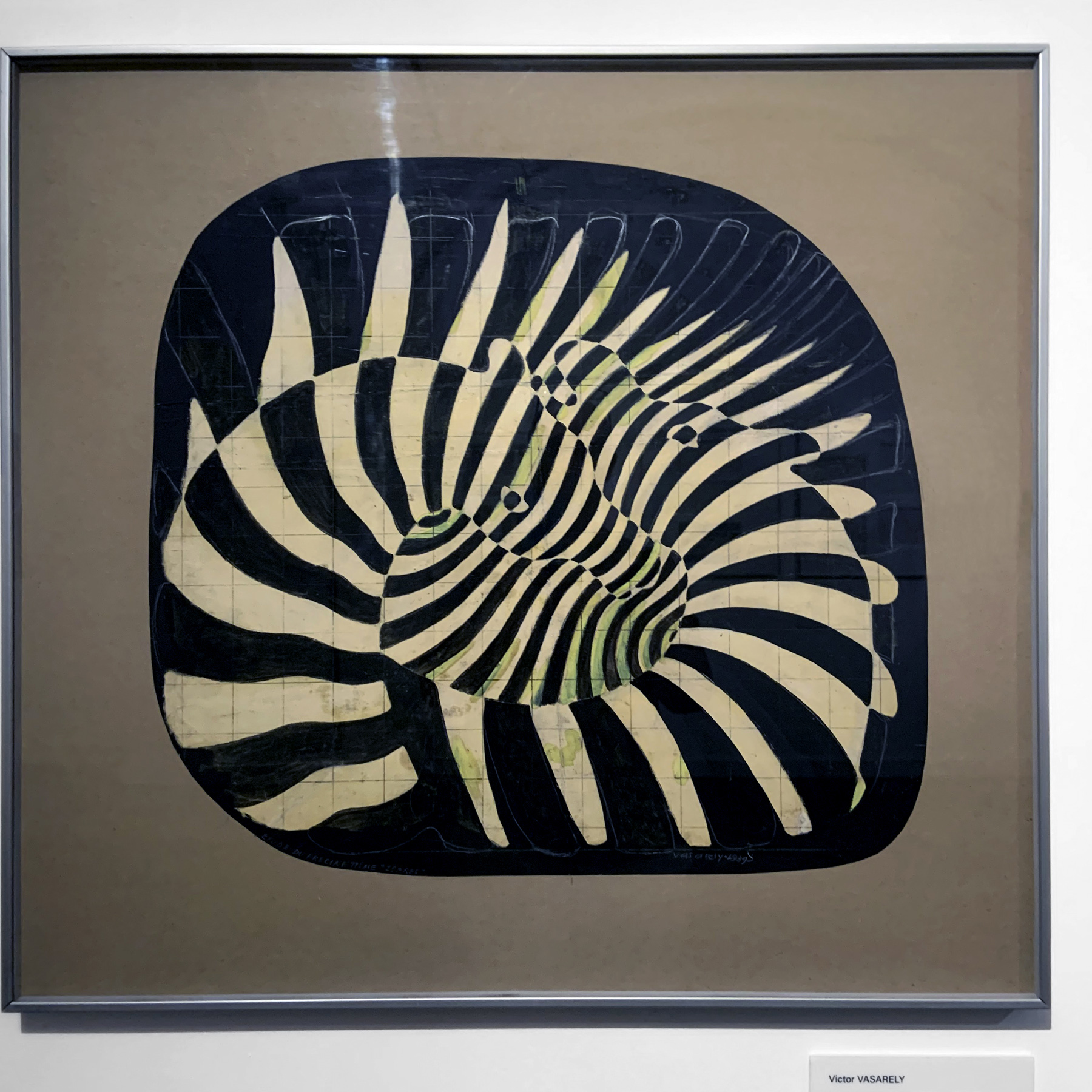
Victor Vasarely (Hungarian-French, 1906-1997) Zebras. Prekinetic study (Preliminary study for the kinetic theory. Graphic Period, 1929-1939) (installation view) 1939 Gouache, pencil, colour and white chalk on paper Photo: Marcus Bunyan
While on my European art trip in 2019, I ventured by tram to the deepest suburbs of Budapest to visit the Vasarely Museum on a Sunday – one of only three days the museum is open. The journey was an experience in itself. The reward was that I got to see an artists work I have always admired (I have a Vasarely serigraph in my collection), set in one of the most beautiful art galleries I have ever seen in my life. What’s not too like.
Critically, I got to examine Vasarely’s work up close and personal, on a large scale. I noted how gestural his work is, even as it is geometric – emerging from his Gesture Drawings. Ground Plans of 1946. There is a mesmerising flow to his compositions, even as they are supposedly set, fixed, in their mathematical complexity.
Even as Josef Albers explored colour in the belief that colours have no inherent emotional associations, so Vasarely investigated the formula for a “plastic alphabet”, a universal visual language based on the structural interplay of form and colour, a programmed language with an infinite number of form and colour variations. Through serialisation and the processes of re-creation, multiplication and expansion, “in pictures based on the mutual association between forms and colours, he claimed to perceive a ‘grammar’ of visual language, with which a set of basic forms making up a composition could be arranged into a system similar to musical notation… He regarded colour-forms as the cells or molecules out of which the universe was made.”
Don’t believe all that is written on the can. While both artists want to euthanise the authenticity of the hand, the feeling of he eye, and the beauty of the object through an investigation of concept, form and replication, when in the presence of these paintings, once, twice, three times, one cannot deny the intimacy of their construction.
Unlike flat reproductions of these paintings in books, their serial reproduction, in these installation photographs you can see the ripples in the surface of these paintings. Their meticulous, hand-crafted production. For example, look at the surface of paintings such as Lom-Lan 2 (1953, below); Marsan (1950 / 1955 / 1958, below); and Sonora(1973, below). From a distance their patterns are stable but optically disturbing. Up close, their surface dis/integrates into swirls and ripples at a molecular level. The musical annotation – colour, form, pattern, repetition – of these optical illusions is subsumed into an aura, an earthly divination of a transient ‘planetary folklore’.
View of the downstairs galleries of the Vasarely Museum Budapest Photo: Marcus Bunyan
View of one of the downstairs galleries of the Vasarely Museum, Budapest showing at second left, Gesture Drawings. Ground Plans (1946); and at second right, Composition (1948) Photo: Marcus Bunyan
Victor Vasarely (Hungarian-French, 1906-1997) Gesture Drawings. Ground Plans (installation view) 1946 Pencil on paper Vasarely Museum Budapest Photo: Marcus Bunyan
The Galerie Denise René opened in 1944. Its first exhibition was Les dessins et composition de Vasarely (Vasarely’s drawings and graphic compositions). Surrealism influenced his works, and even caught the attention of André Breton. As Denise René recalled: ‘André Breton was even convinced we had found a Surrealist painter; it was mostly the trompe l’œils that made him think so, which abounded in Vasarely’s graphic innovations. Breton invited me and Vasarely to visit him in rue Fontaine. Éluard and Breton both came to see the exhibition, though on different days because Éluard had broken with Breton and Surrealism.’ Vasarely had a painterly turn. Shortly he made experimentations in gesture painting. (Victor Vasarely, Jazz, 1942, inv. V. 195) Later, despite his artistic discoveries, he described his earliest period as Les Fausses Routes (Wrong Roads).
Text from the Vasarely Museum website [Online] Cited 26/10/2020
Victor Vasarely (Hungarian-French, 1906-1997) Hombre en movimiento – Estudio del movimiento (El hombre) Man in motion. Study of Motion (The Man) 1943 Tempera on plywood 117 x 132cm Vasarely Museum Budapest
Victor Vasarely (Hungarian-French, 1906-1997) Composition (installation view) 1948 Oil on canvas Vasarely Museum Budapest Photo: Marcus Bunyan
Magyar Grafika (Hungarian Graphics) Az Ujság Hirdetés (The Newspaper is Advertised) (installation view) Edition 12 1931 Vasarely Museum Budapest Photo: Marcus Bunyan
A journal for the development of graphic industries and related professions. Budapest, 1. 1920 – 13. 1932
Installation views of the downstairs galleries of the Vasarely Museum, Budapest with in the last photo at left, Versant (1952) Photos: Marcus Bunyan
Victor Vasarely (Hungarian-French, 1906-1997) Versant (installation view) 1952 Acrylic on plywood Vasarely Museum Budapest Photo: Marcus Bunyan
Installation view of the Vasarely Museum, Budapest with at right, Lom-Lan 2 (1953) Photo: Marcus Bunyan
Victor Vasarely (Hungarian-French, 1906-1997) Lom-Lan 2 (installation view) 1953 Oil on fibreboard Vasarely Museum Budapest Photo: Marcus Bunyan
Installation views on one of the downstairs galleries of the Vasarely Museum, Budapest showing the painting Amir (“Rima”) 1953 (installation view) Photos: Marcus Bunyan
Victor Vasarely (Hungarian-French, 1906-1997) Amir (“Rima”) (installation view) 1953 Acrylic on plywood Vasarely Museum Budapest Photo: Marcus Bunyan
Victor Vasarely (Hungarian-French, 1906-1997) MORA (Oeuvre profonde cinétique) (installation views) 1954/1960 (?) Deep kinetic object, silk screen on plexiglas, glass and steel Vasarely Museum Budapest Photos: Marcus Bunyan
Installation view one of the downstairs galleries of the Vasarely Museum, Budapest showing at left, Orion noir (1970); and at right, Norma (1962-1979) Photo: Marcus Bunyan
Victor Vasarely (Hungarian-French, 1906-1997) Orion noir 1970 Acrylic on canvas Vasarely Museum Budapest
Victor Vasarely (Hungarian-French, 1906-1997) Norma (installation view) 1962-1979 Acrylic on canvas Vasarely Museum Budapest Photo: Marcus Bunyan
Installation view of the Vasarely Museum, Budapest Photo: Marcus Bunyan
Victor Vasarely (Hungarian-French, 1906-1997) Chess Set 1980 Multiple, plexiglass Vasarely Museum Budapest Photos: Marcus Bunyan
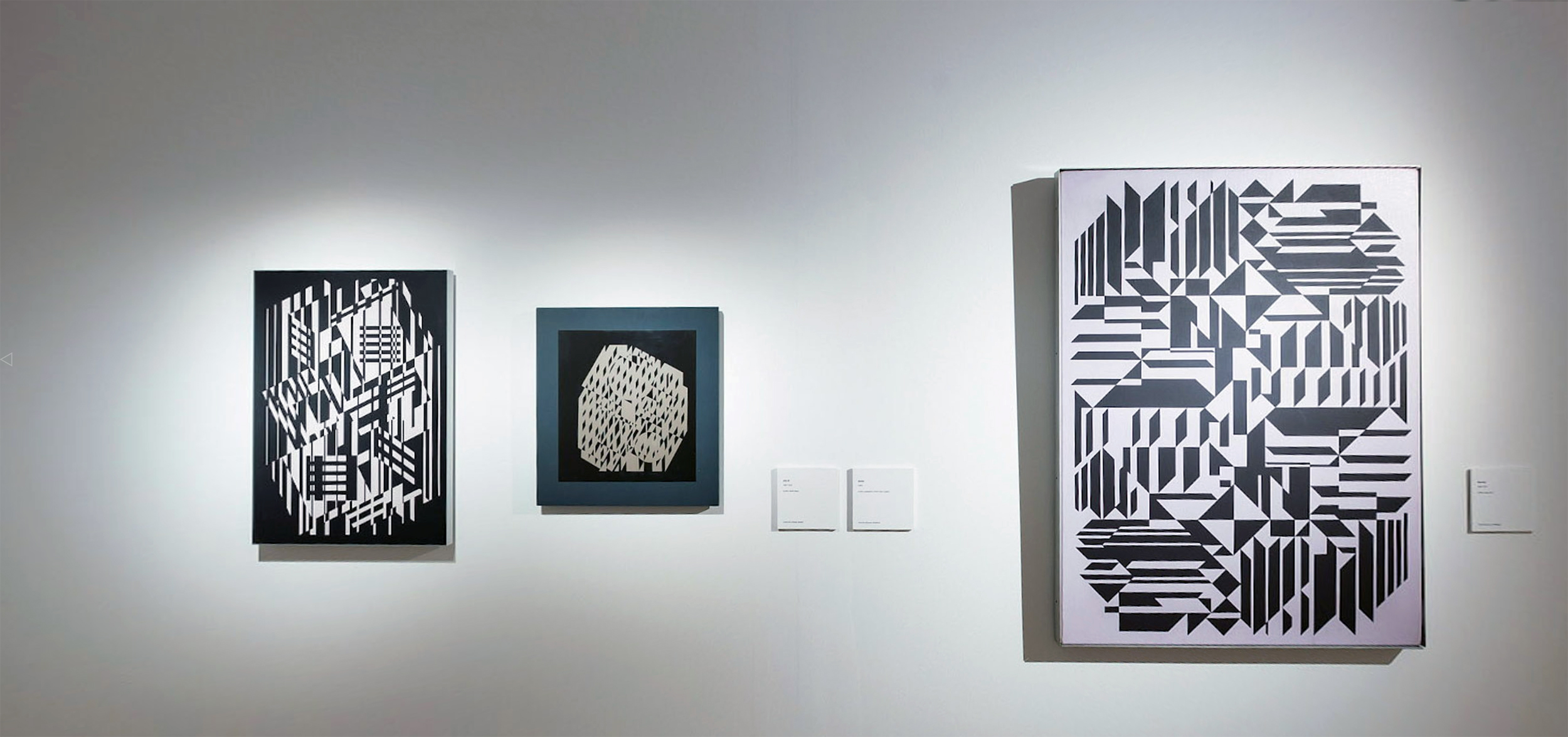
Installation view of one of the downstairs galleries of the Vasarely Museum, Budapest showing at left, Marsan-2 (1964/1974); at centre, Gizeh (1955/1962); and at right, Marsan (1950/1955/1958) Photo: Marcus Bunyan
Victor Vasarely (Hungarian-French, 1906-1997) Marsan-2 (installation views) 1964/1974 Acrylic on canvas Vasarely Museum Budapest Photos: Marcus Bunyan
Victor Vasarely (Hungarian-French, 1906-1997) Gizeh (installation view) 1955/1962 Oil on canvas Donation of Victor Vasarely, 1970 Vasarely Museum Budapest Photo: Marcus Bunyan
Victor Vasarely (Hungarian-French, 1906-1997) Marsan (installation view) 1950/1955/1958 Oil on canvas Donation of Victor Vasarely, 1970 Vasarely Museum Budapest Photo: Marcus Bunyan
Victor Vasarely (Hungarian-French, 1906-1997) Naissances (installation view) 1954/1960 From the album Hommage à Johann Sebastian Bach (Éd. Pierre belford, Paris, 1973. Éxemplaire XIV/XX), Supplement no. 3. Deep kinetic object, plexiglass, silk screen Vasarely Museum Budapest Photo: Marcus Bunyan
Victor Vasarely (Hungarian-French, 1906-1997) Zilia (installation view) 1981 Acrylic on canvas Vasarely Museum Budapest Photo: Marcus Bunyan
Victor Vasarely (Hungarian-French, 1906-1997) Stridio-Z (installation view) 1976-1977 Acrylic on canvas Vasarely Museum Budapest Photo: Marcus Bunyan
Victor Vasarely (Hungarian-French, 1906-1997) Tri-Axo (installation view) 1972/1976 Acrylic on canvas Vasarely Museum Budapest Photo: Marcus Bunyan
William Seitz The responsive eye (book cover) Museum of Modern Art, 1965 Photo: Marcus Bunyan
Installation view of the downstairs galleries of the Vasarely Museum, Budapest Photo: Marcus Bunyan
Installation view of the Vasarely Museum, Budapest showing Yllus (1978) Photo: Marcus Bunyan
Victor Vasarely (Hungarian-French, 1906-1997) Yllus 1978 Acrylic on canvas Vasarely Museum Budapest Photo: Marcus Bunyan
Upstairs galleries
Installation view of the upstairs galleries of the Vasarely Museum, Budapest Photo: Marcus Bunyan
Installation view of the Vasarely Museum, Budapest showing V.P. 102 (1979) Photo: Marcus Bunyan
Victor Vasarely (Hungarian-French, 1906-1997) V.P. 102 (installation view) 1979 Acrylic on cardboard, mounted on plywood Vasarely Museum Budapest Photo: Marcus Bunyan
Installation view of the upstairs galleries of the Vasarely Museum, Budapest showing at left in the display cabinet, KROA-MC (1969); and at centre, Quivar (Ouivar) (1974) Photo: Marcus Bunyan
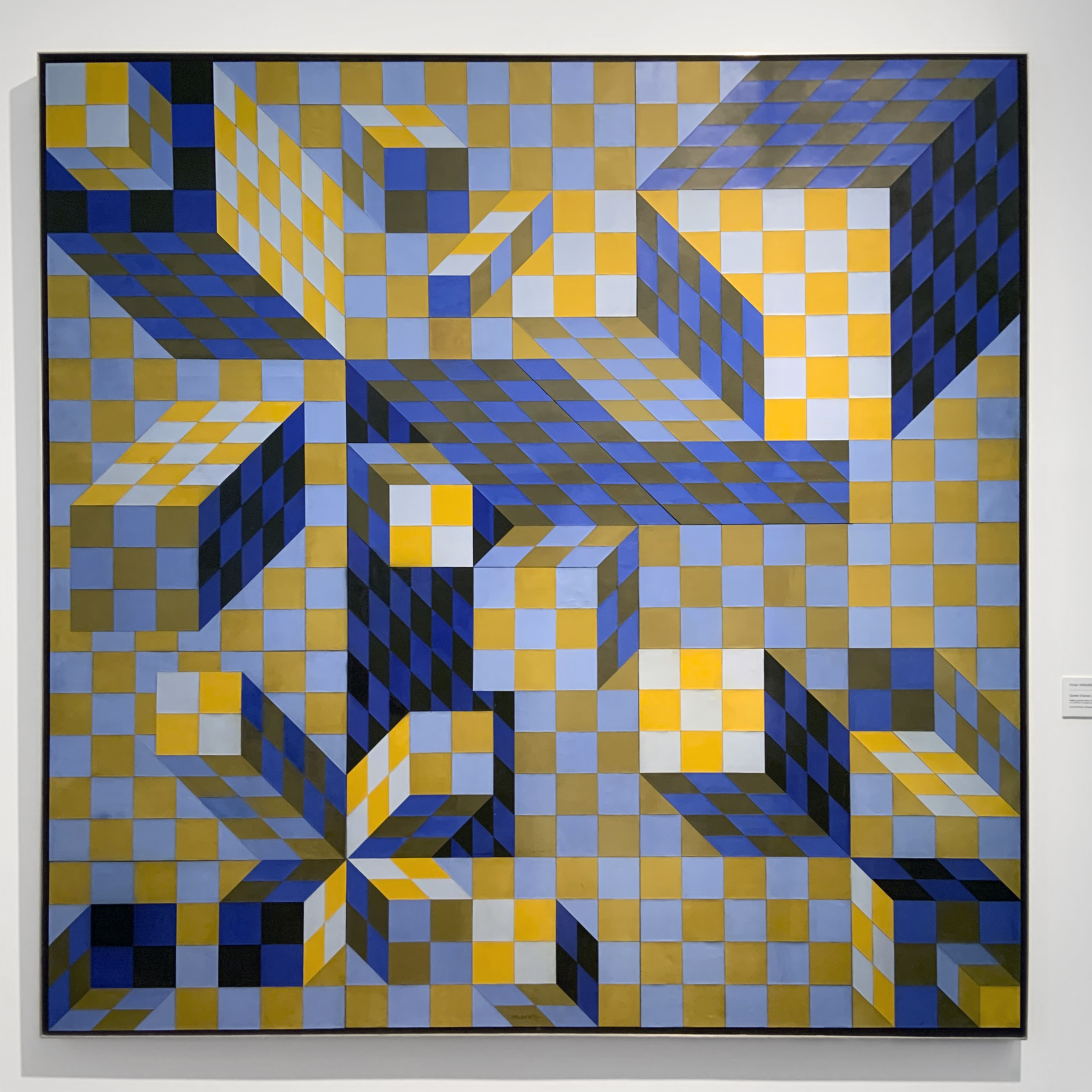
Installation view of the upstairs galleries of the Vasarely Museum, Budapest showing at left, Eroed-Pre (1978); and at right, Quivar (Ouivar) (1974) Photo: Marcus Bunyan
Victor Vasarely (Hungarian-French, 1906-1997) Eroed-Pre (installation view) 1978 Acrylic on canvas Vasarely Museum Budapest Photo: Marcus Bunyan
Victor Vasarely (Hungarian-French, 1906-1997) Quivar (Ouivar) (installation view) 1974 Collage, gouache on cardboard, mounted on plywood Vasarely Museum Budapest Photo: Marcus Bunyan
Installation view of the upstairs galleries of the Vasarely Museum, Budapest showing at right, Stri-oet (1979) Photo: Marcus Bunyan
Victor Vasarely (Hungarian-French, 1906-1997) Stri-oet (installation view) 1979 Acrylic on canvas Vasarely Museum Budapest Photo: Marcus Bunyan
Installation view of the Vasarely Museum, Budapest showing at left centre, Stri-oet (1979); and in the display cabinet, KROA-MC (1969). Love the reflection of the colours on the wall behind! Photo: Marcus Bunyan
Installation view of the Vasarely Museum, Budapest showing KROA-MC (1969) Photo: Marcus Bunyan
Installation view of the upstairs galleries of the Vasarely Museum, Budapest showing at left, Bull (1973/74); and at centre left, Orion noir (1963) Photo: Marcus Bunyan
Victor Vasarely (Hungarian-French, 1906-1997) Bull (installation view) 1973/1974 Acrylic on canvas Vasarely Museum Budapest Photo: Marcus Bunyan
Victor Vasarely (Hungarian-French, 1906-1997) Vega Mir (Oeuvre profonde cinétique) (installation view) 1954/1960 From the album Hommage à Johann Sebastian Bach (Éd. Pierre belford, Paris, 1973. Éxemplaire XIV/XX), Supplement no. 1. Multiple, silk screen on anodised aluminium Vasarely Museum Budapest Photo: Marcus Bunyan
Victor Vasarely (Hungarian-French, 1906-1997) Vega Mir (Oeuvre profonde cinétique) (installation view detail) 1954/1960 From the album Hommage à Johann Sebastian Bach (Éd. Pierre belford, Paris, 1973. Éxemplaire XIV/XX), Supplement no. 1. Multiple, silk screen on anodised aluminium Vasarely Museum Budapest Photo: Marcus Bunyan. Self portrait with ‘Vega Mir’ 2019
Installation view of the upstairs galleries of the Vasarely Museum, Budapest showing at left, Bi. Octans (1979) Photo: Marcus Bunyan
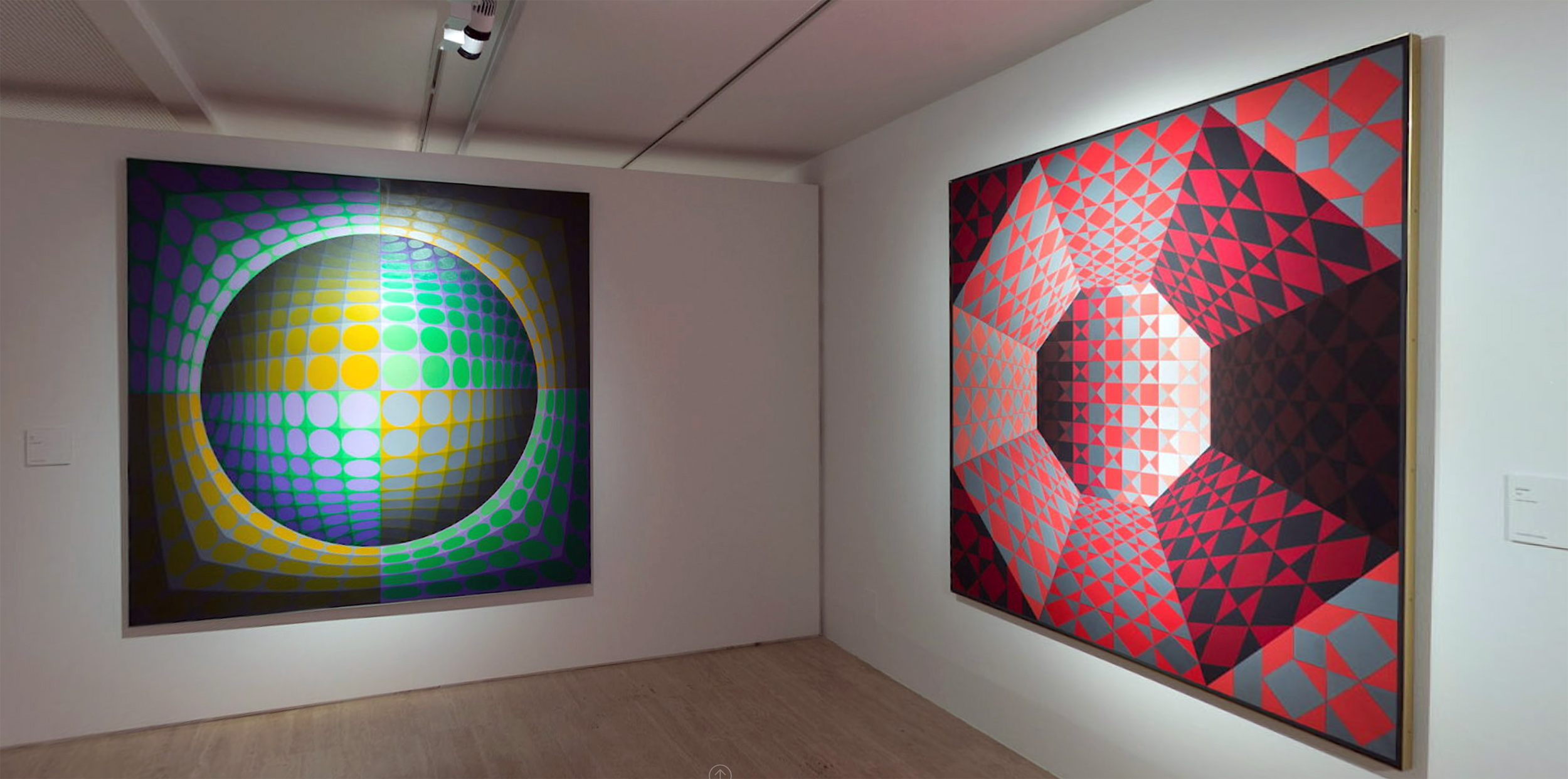
Victor Vasarely (Hungarian-French, 1906-1997) Bi. Octans (installation view) 1979 Acrylic on canvas Vasarely Museum Budapest Photo: Marcus Bunyan
Installation view of the upstairs galleries of the Vasarely Museum, Budapest showing at left, Kotzka (1973-1976); and at right, Trybox (1979) Photo: Marcus Bunyan
Victor Vasarely (Hungarian-French, 1906-1997) Kotzka (installation view) 1973-1976 Acrylic on canvas Vasarely Museum Budapest Photo: Marcus Bunyan
Victor Vasarely (Hungarian-French, 1906-1997) Trybox (installation view) 1979 Acrylic on canvas Vasarely Museum Budapest Photo: Marcus Bunyan
Installation view of the upstairs galleries of the Vasarely Museum, Budapest showing at centre right, Vonal-Ket (1972/1977) Photo: Marcus Bunyan
Victor Vasarely (Hungarian-French, 1906-1997) Vonal-Ket (installation views) 1972/1977 Acrylic on canvas Vasarely Museum Budapest Photos: Marcus Bunyan
Installation view of the upstairs galleries of the Vasarely Museum, Budapest showing at centre left, Sonora (1973) Photo: Marcus Bunyan
Victor Vasarely (Hungarian-French, 1906-1997) Sonora (installation view) 1973 Acrylic on canvas Vasarely Museum Budapest Photo: Marcus Bunyan
Vasarely Museum 1033, Budapest Szentlélek tér 6 Phone: + 36 1 388 7551
Exhibition dates: 26th June – 27th October, 2019 Visited September 2019 posted September 2020
Curators: Matthieu Rivallin and Pia Viewing
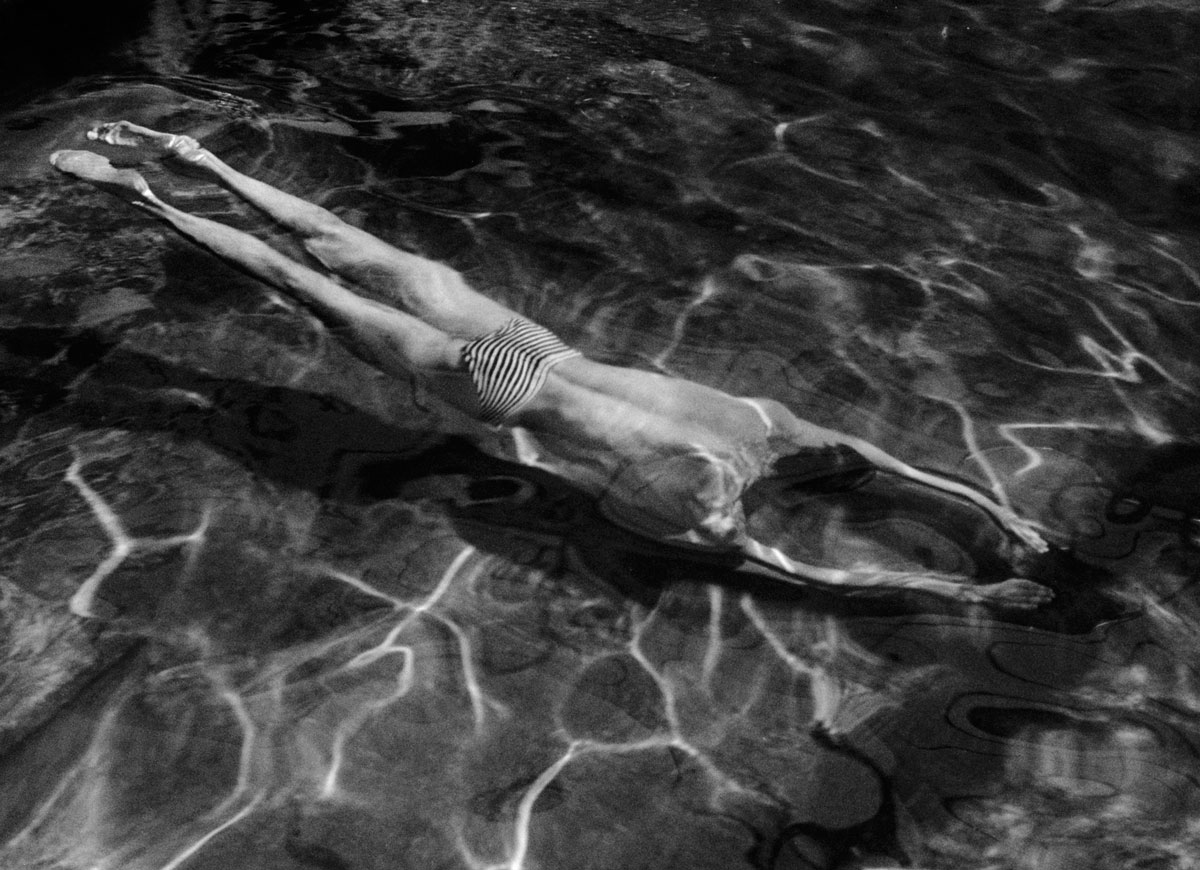
André Kertész (Hungarian, 1894-1985) Nageur sous l’eau, Esztergom Underwater swimmer, Esztergom 1918 Contact original
“”… especially haptic qualities are demanded of the deconstructionist performer, spectator, and reader; not to follow optically the ‘line of ideas’ in the text or in a picture and see only the representation proper, the surface, but to probe with the eyes the pictorial texture and even to enter the texture.”69 Such “touching” with the eye did not lead to a secure tactile experience of being firmly planted on the ground, for all grounds, all foundations, were suspect, however construed. We are, as Nietzsche knew, swimming in an endless sea, rather than standing on dry land. To “touch” a trace, groping blindly in the dark, is no more the guarantee of certainty than to see its residues.”
Gandelman, Claude. ‘Reading Pictures, Viewing Texts’. Bloomington, Indiana, 1991, p. 140 quoted in Martin Jay. ‘Downcast Eyes: The Denigration of Vision in Twentieth-Century French Thought’. Berkley: University of California Press, 1993, p. 512.
Touching with the eye
Part 2 of a large posting on the exhibition L’equilibriste, André Kertész at Jeu de Paume, Château de Tours, which I saw in Tours in September 2019.
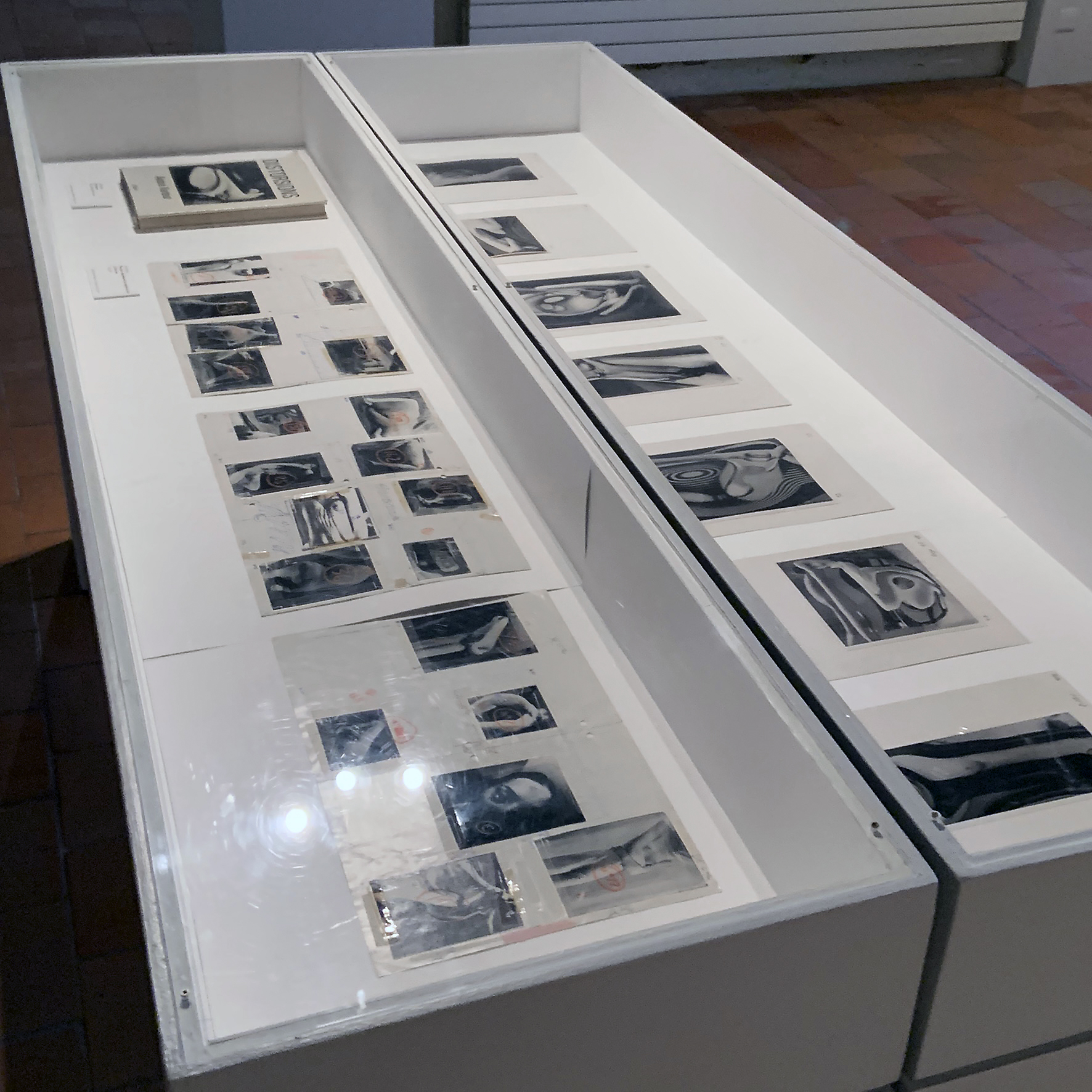
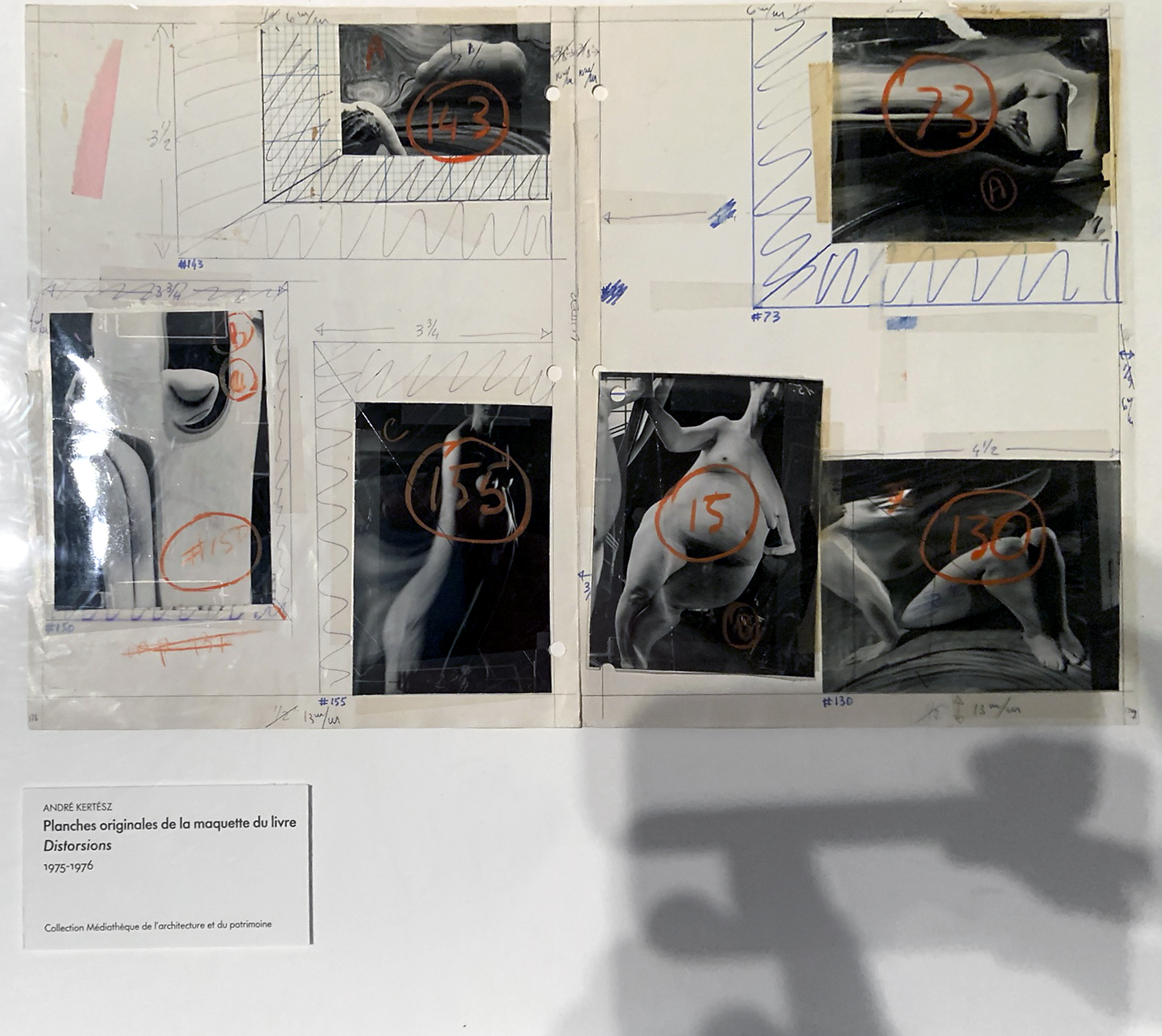
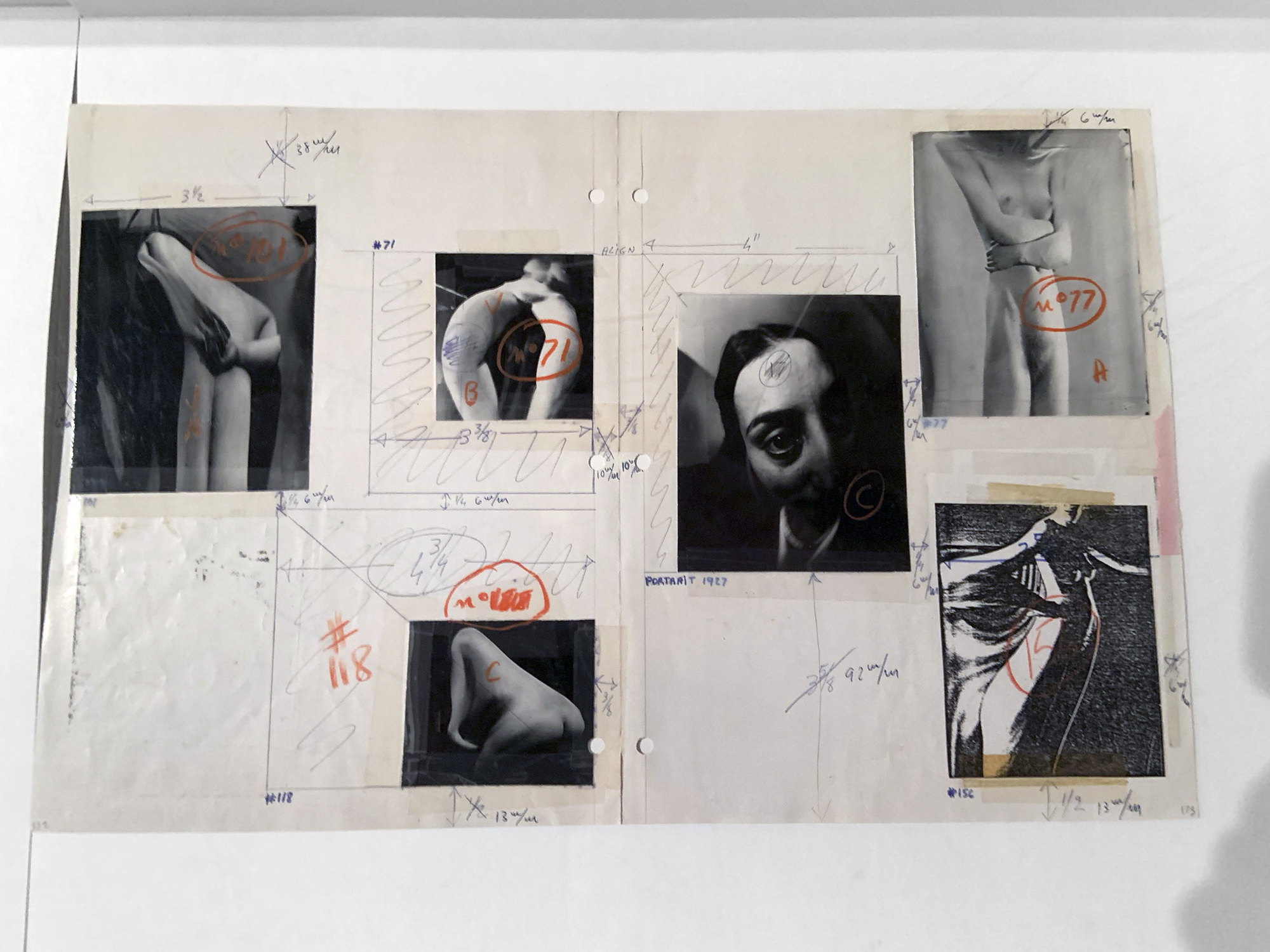
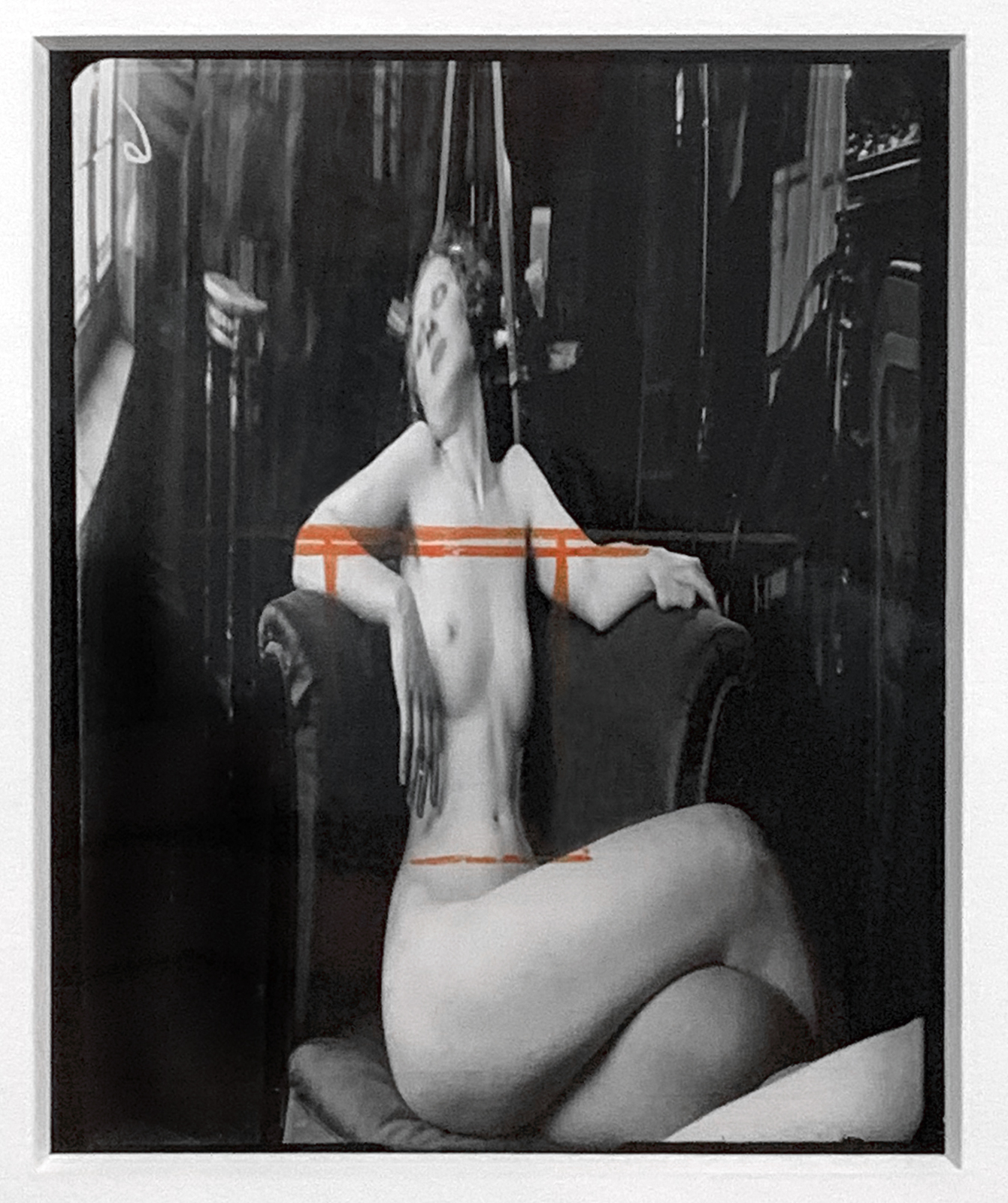
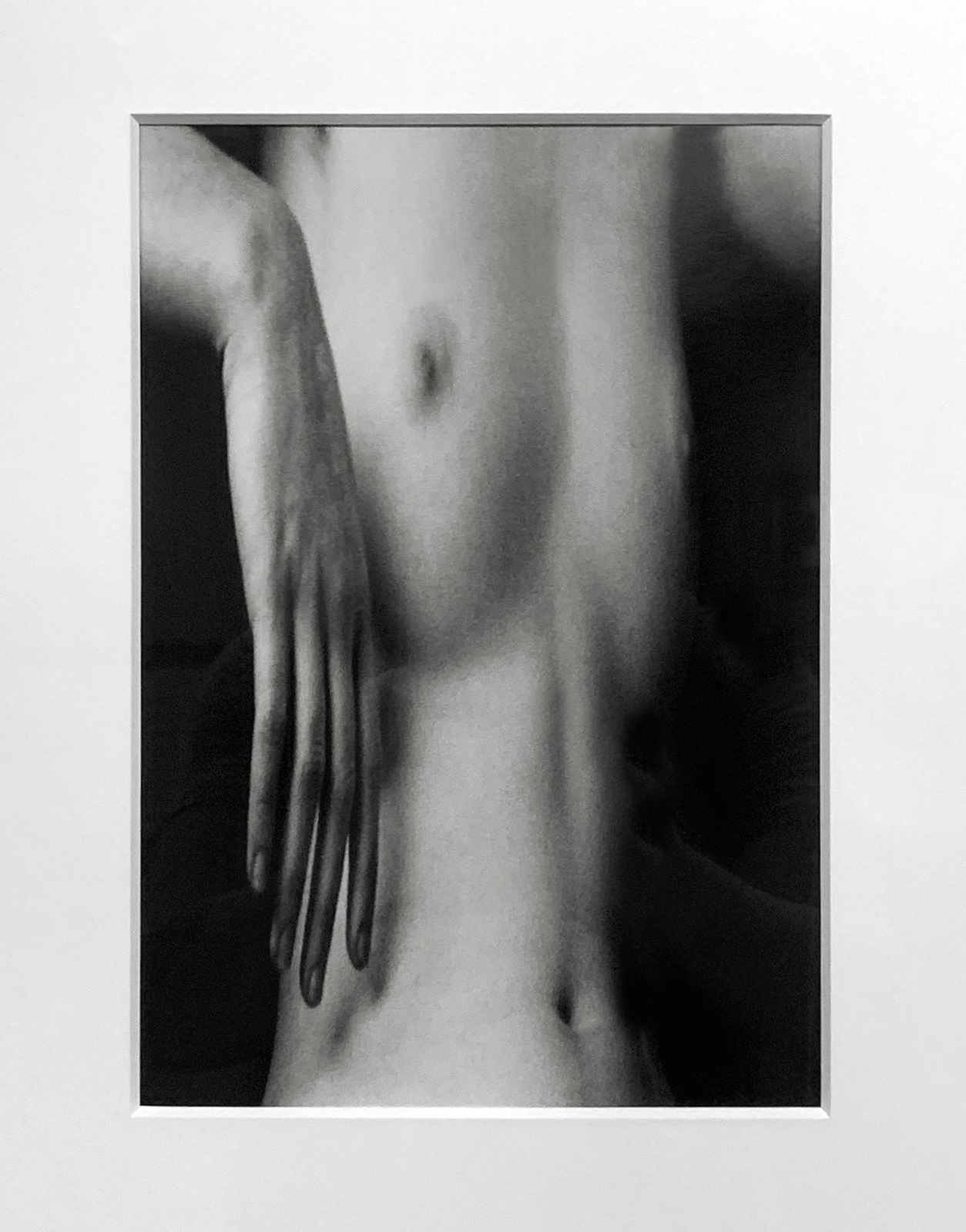
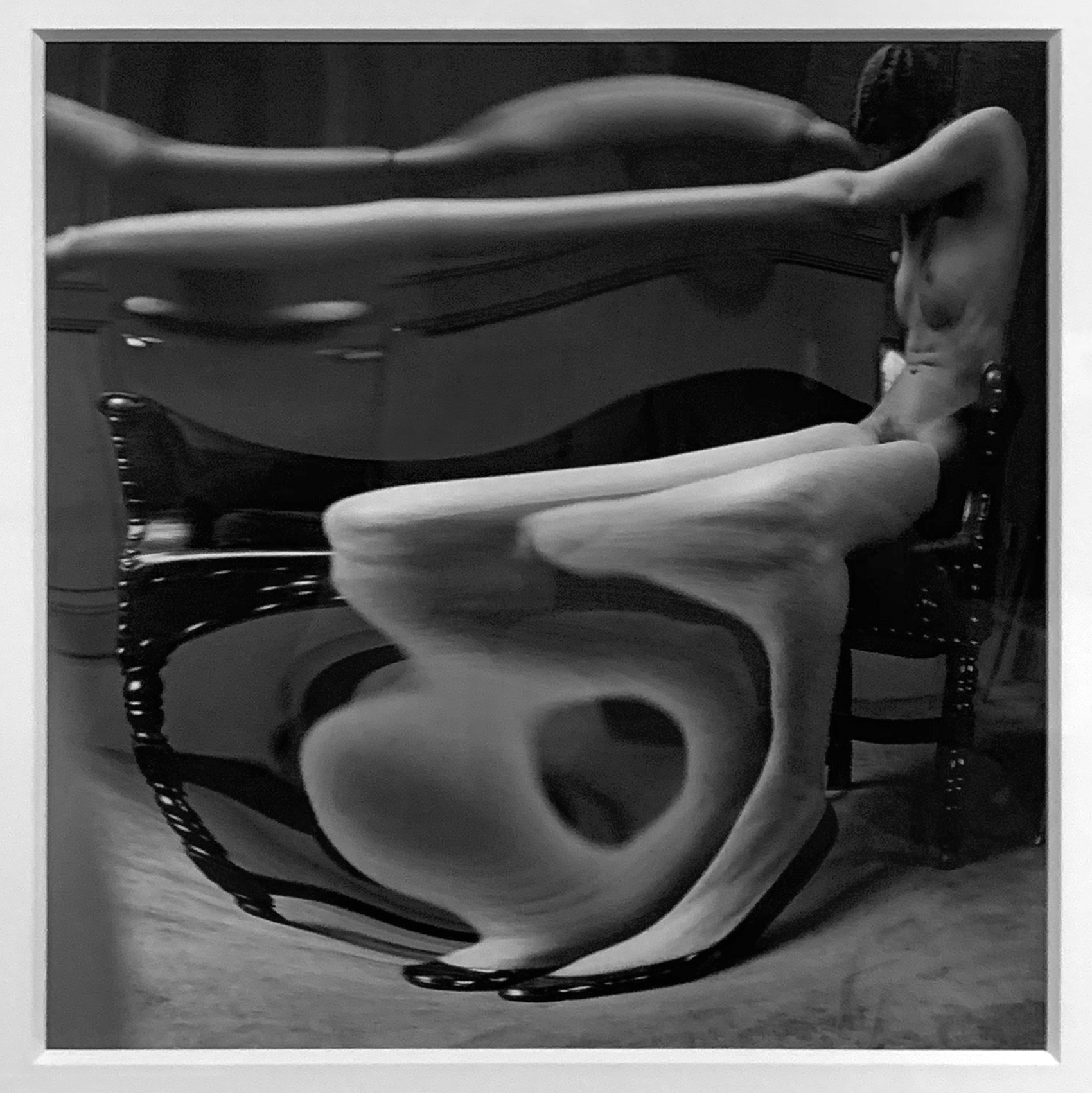
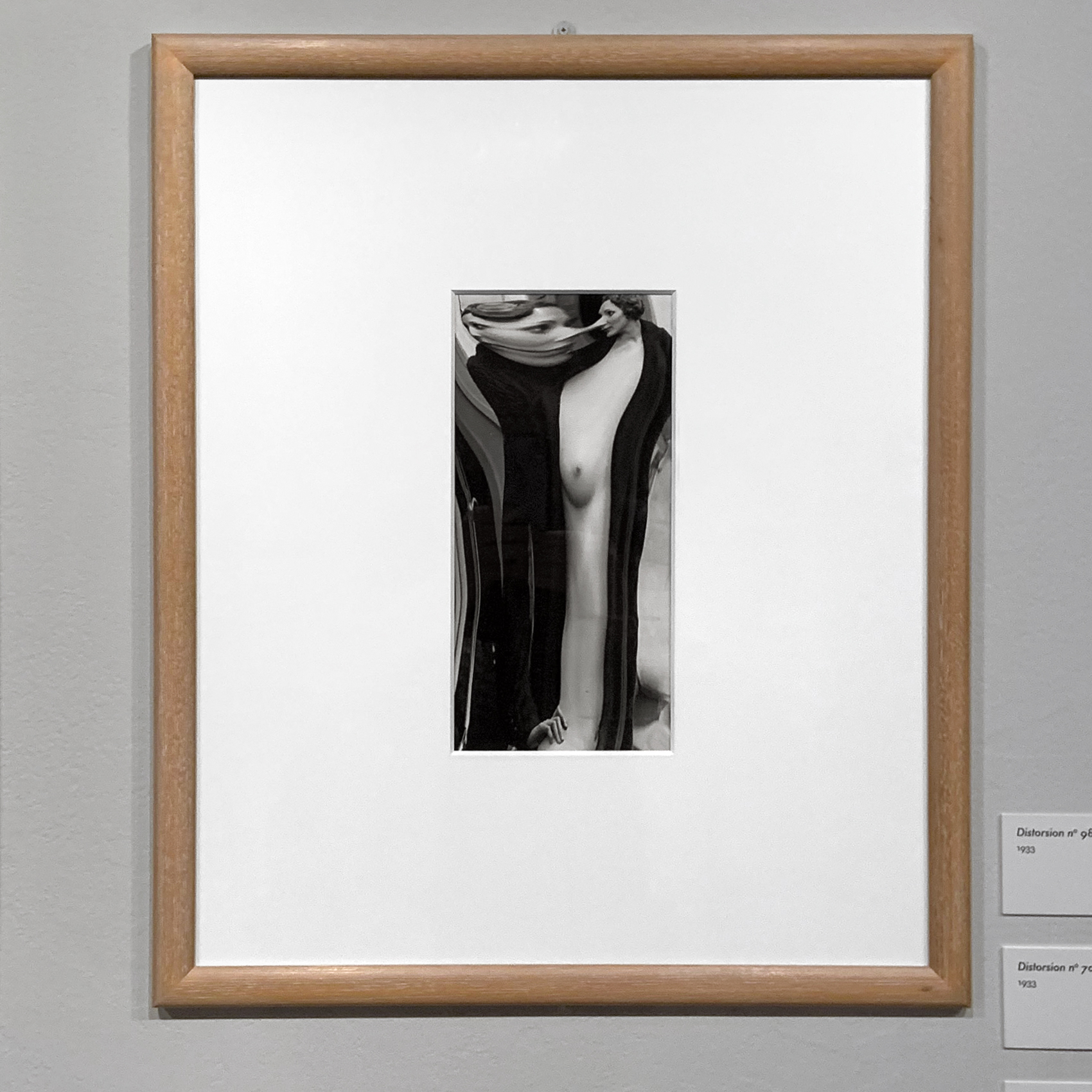
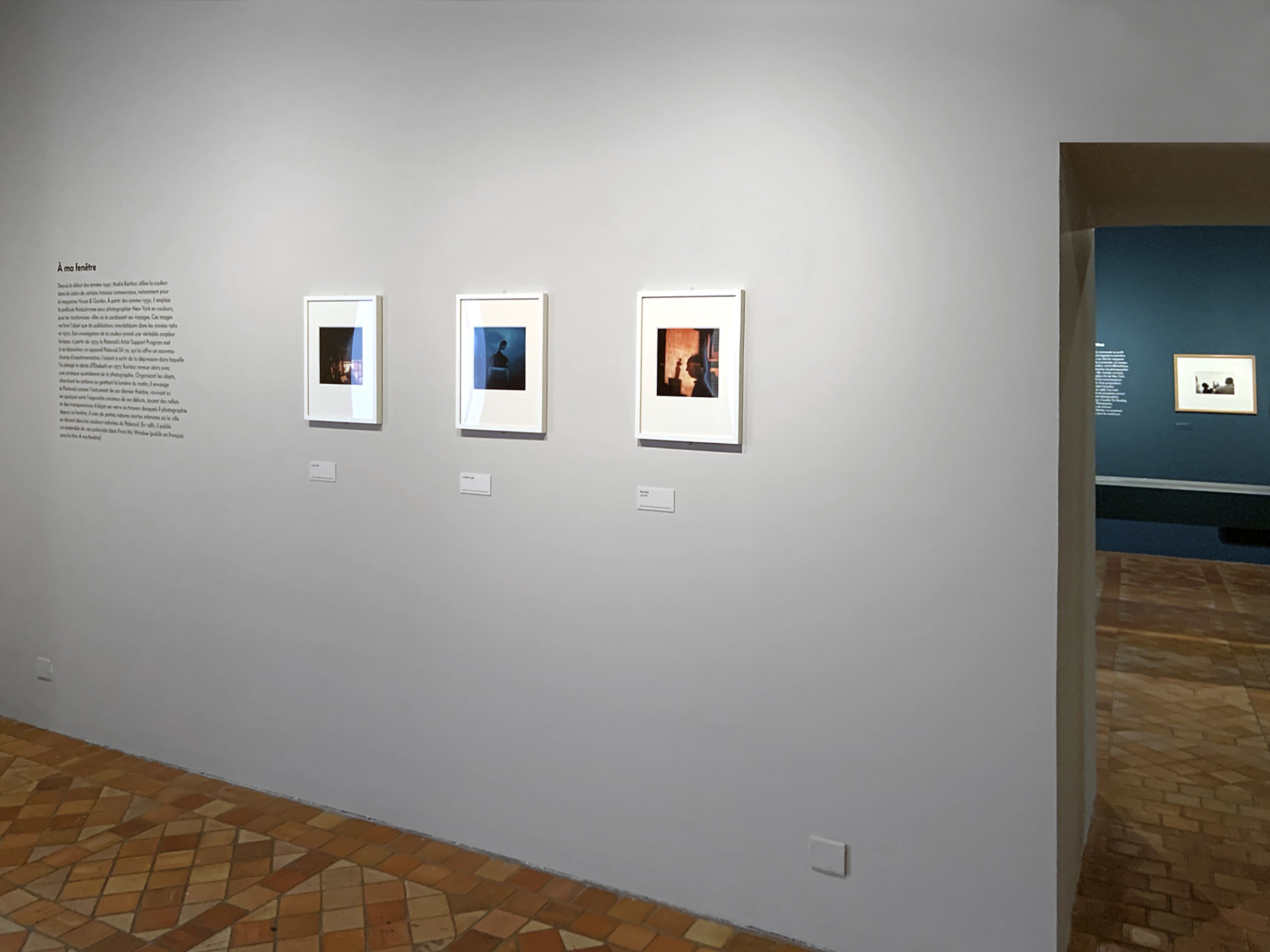
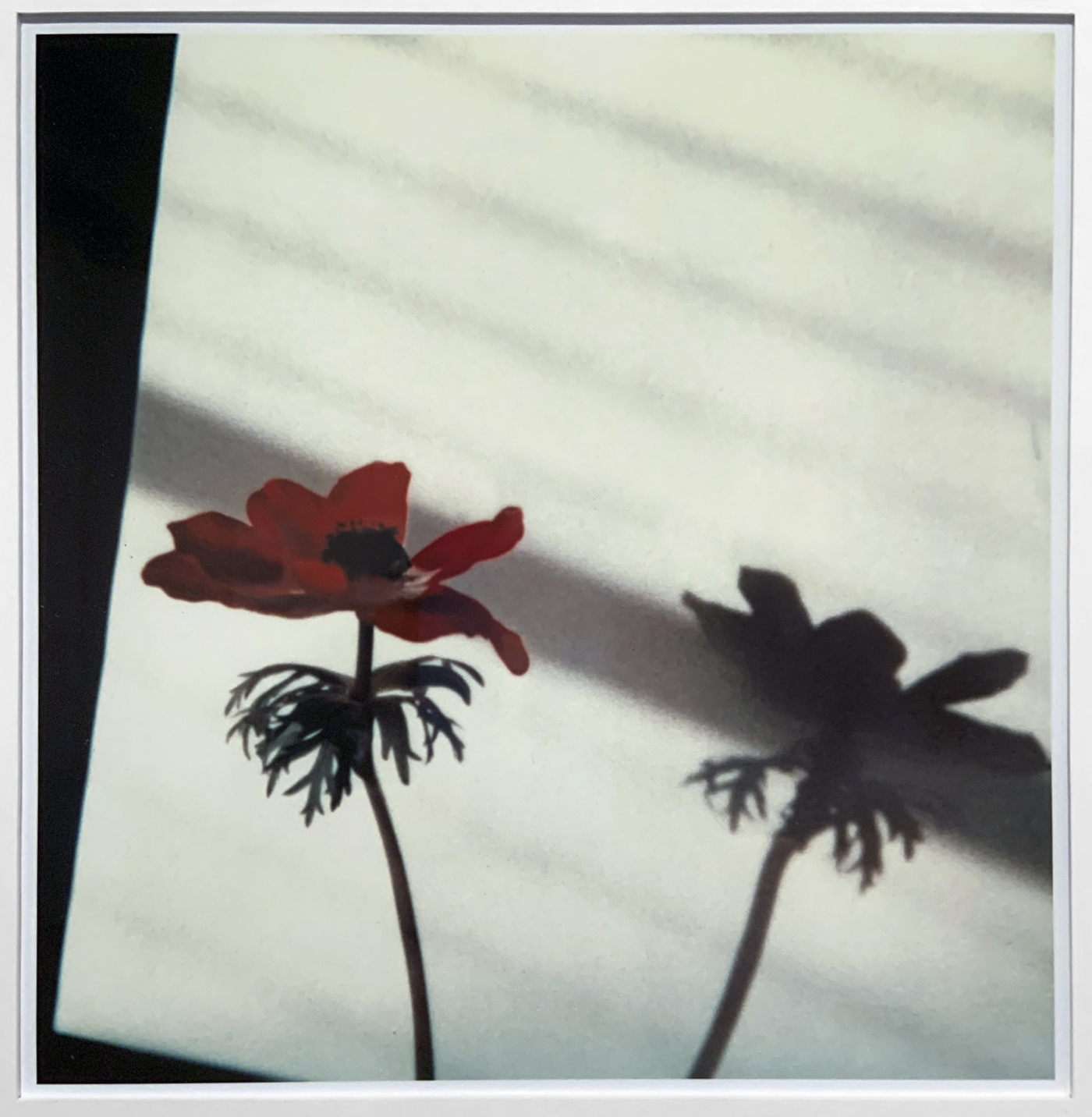
This posting contains photographs from his famous series “Distortions” (fascinating to see the original plates for the book of the same name, complete with cropping marks and red lead pencil annotations); American works from 1936 onwards, when Kertész moved to the United States to avoid the persecution of the Jews and the threat of World War II; and the late work colour Polaroids.
I admit that Kertész is not my favourite photographer. While I admire some of his photographs, I feel emotionally distant from most of them. Edward Clay observes in the quotation below that Kertész was “one of the most lyrical and formally inventive photographers of the twentieth-century… [His photographs] often convey a quiet mood of melancholy … He remains revered for his clarity of style and ability to blend simplicity with emotion, prizing impact over technical precision, seeking metaphors and geometry in everyday objects and scenarios, to turn the mundane into the surreal.”
Personally, I don’t find his photographs emotional nor lyrical, only a few poetic. Not melancholic, but geometric. In later works, he simplifies, simplifies, simplifies much like his friend Mondrian did. For me, the balance between sacred / geometry, the sacred geometry of the mystery of things, is often unbalanced in these images (particularly relevant, given the title of this exhibition). Is it enough just to turn the mundane into the surreal? Where does that lead the viewer? Is it enough to just observe, represent, without digging deeper.
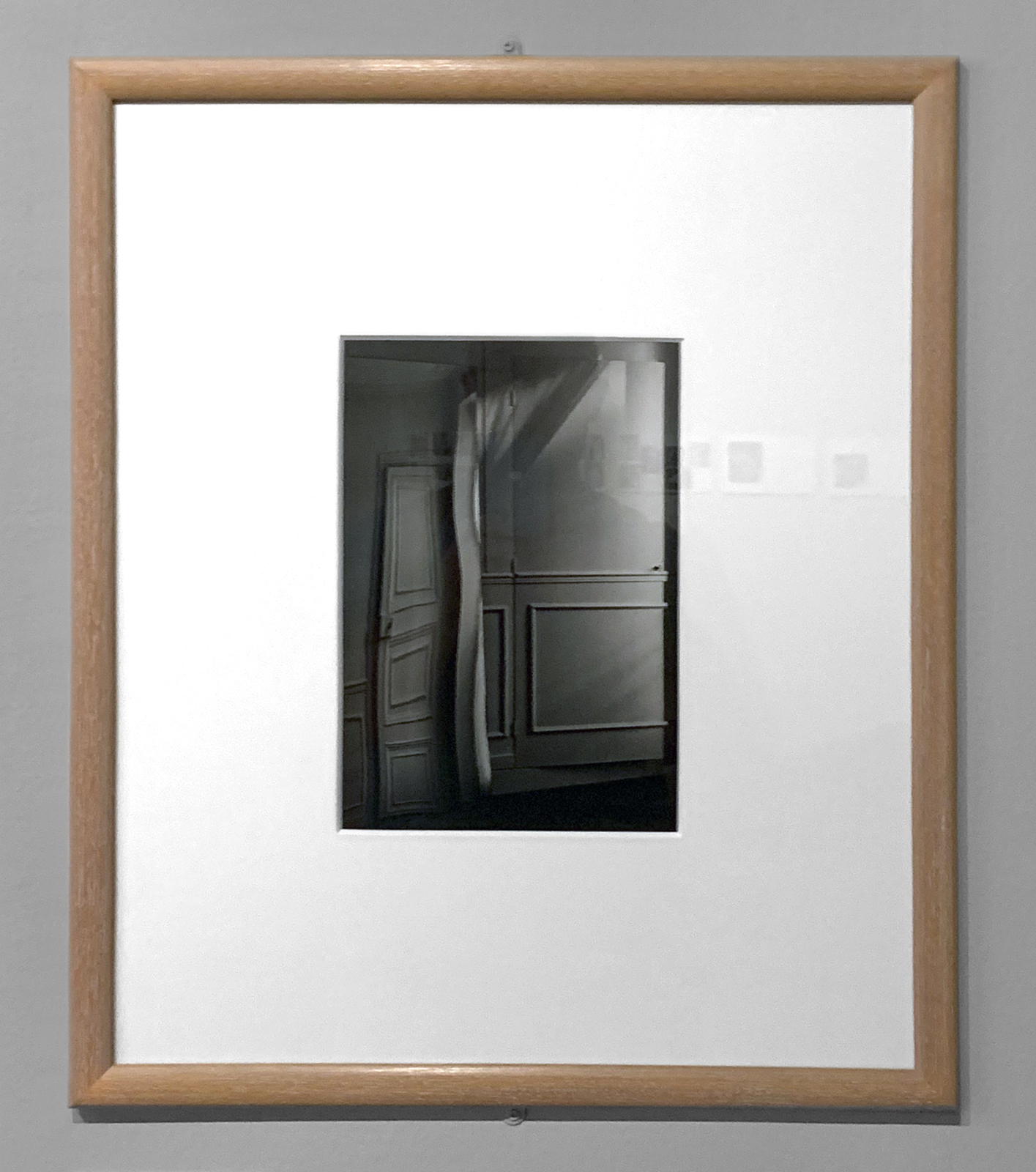
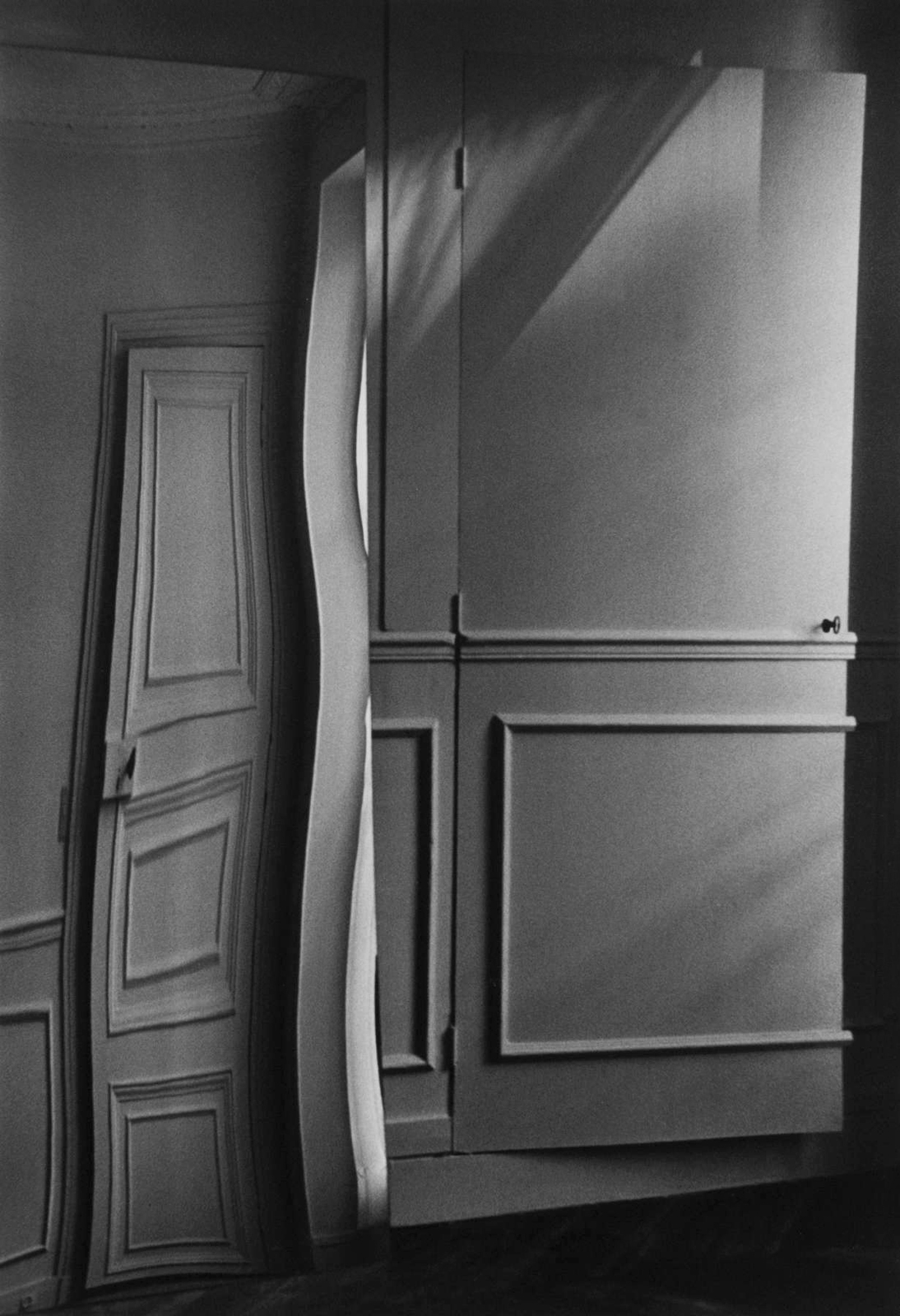
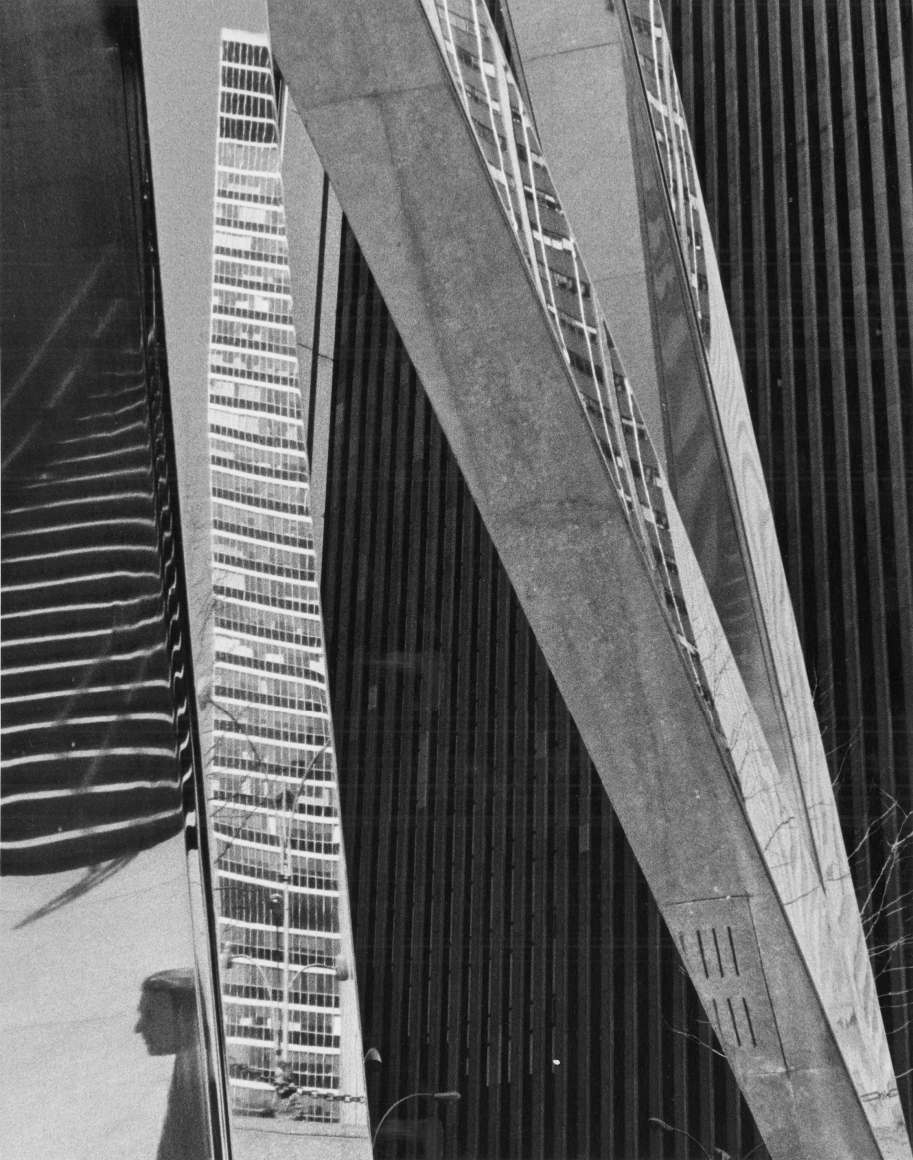
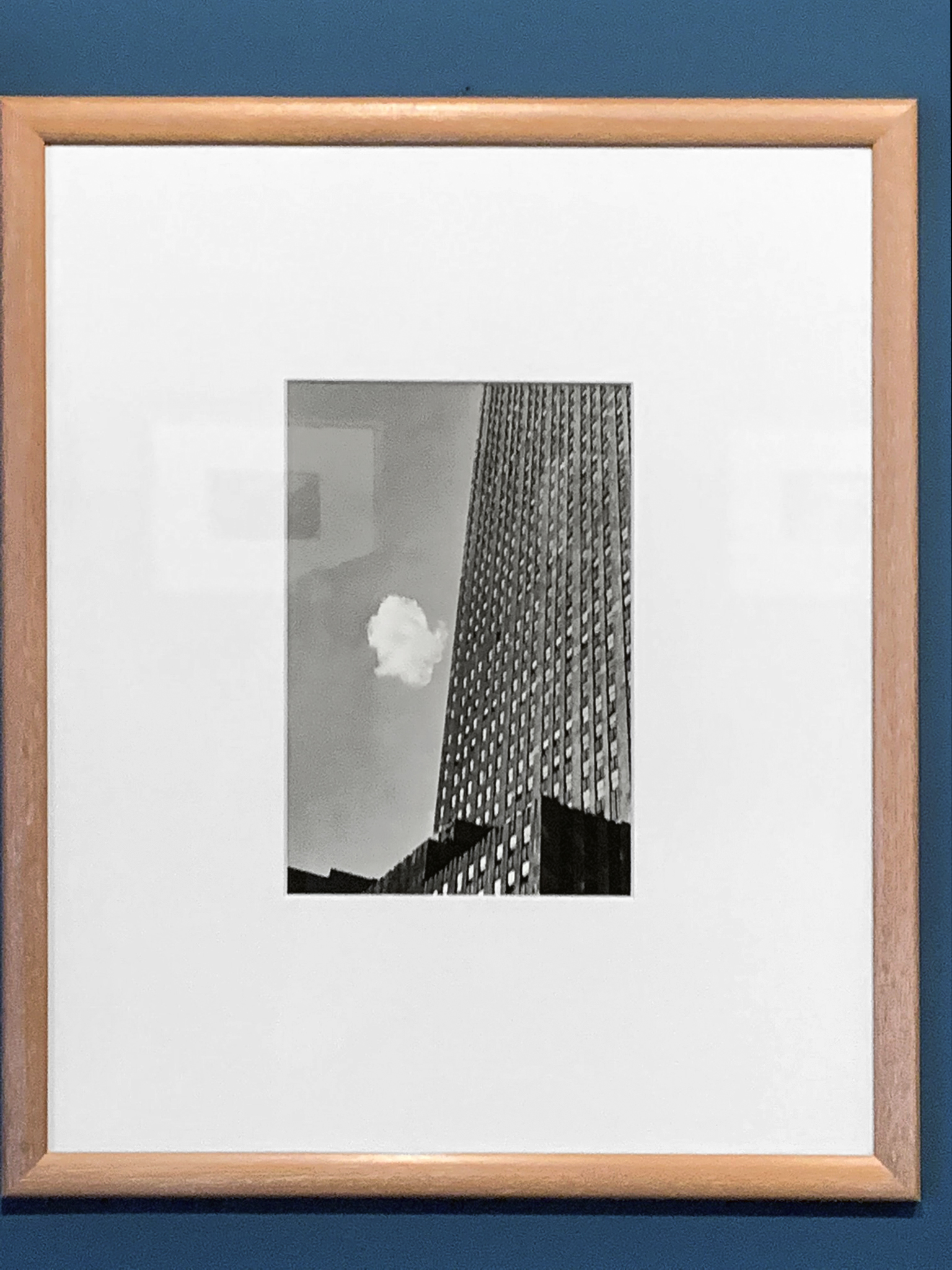
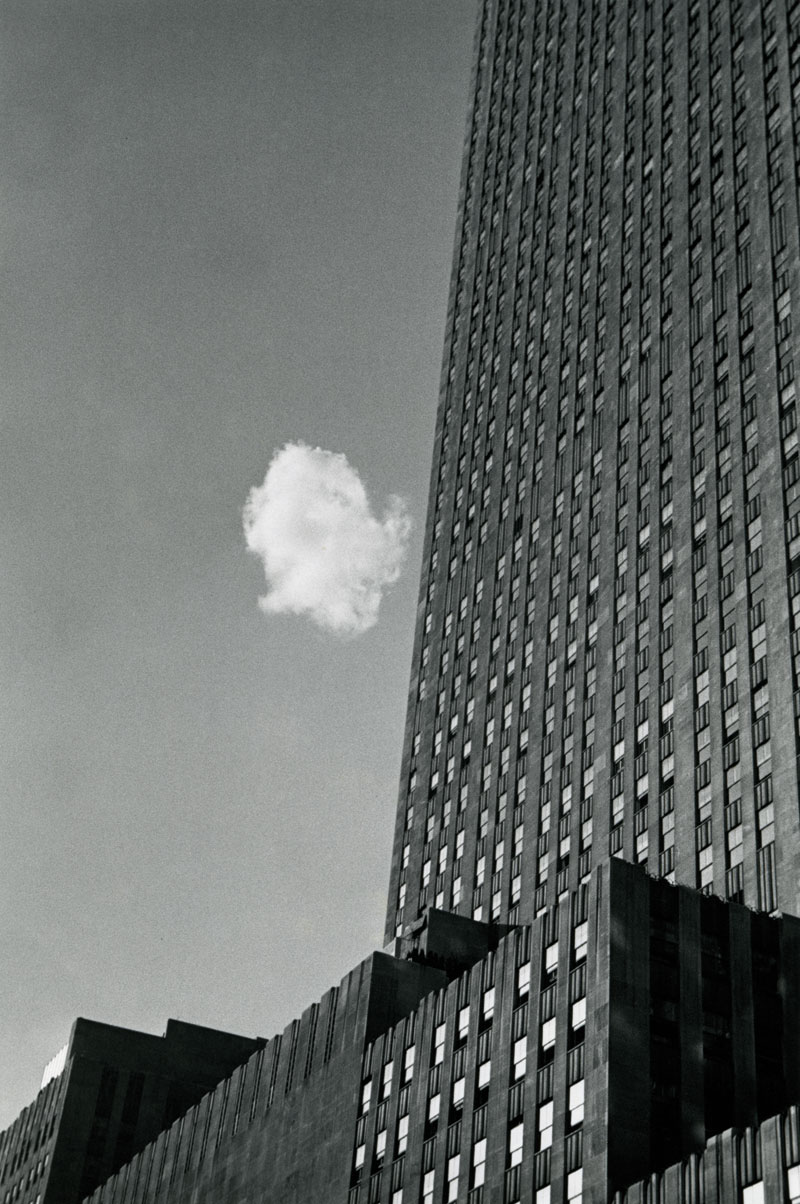
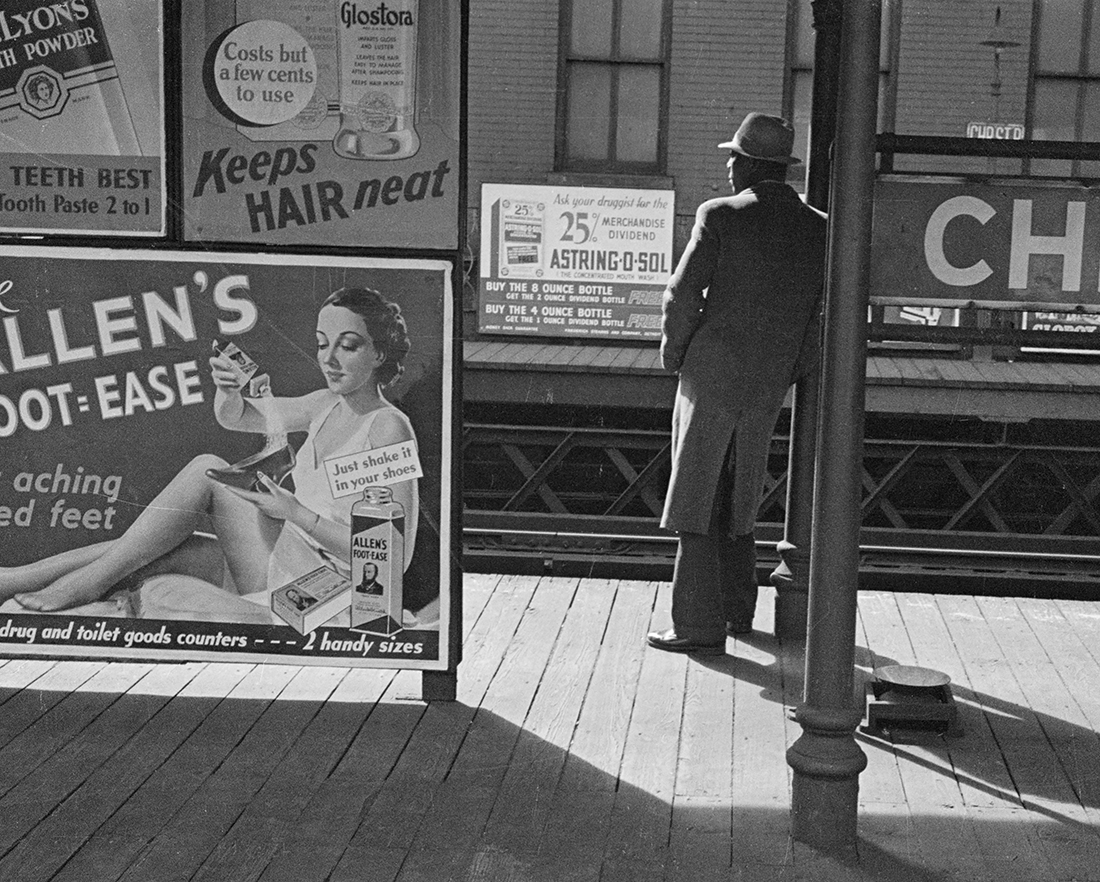
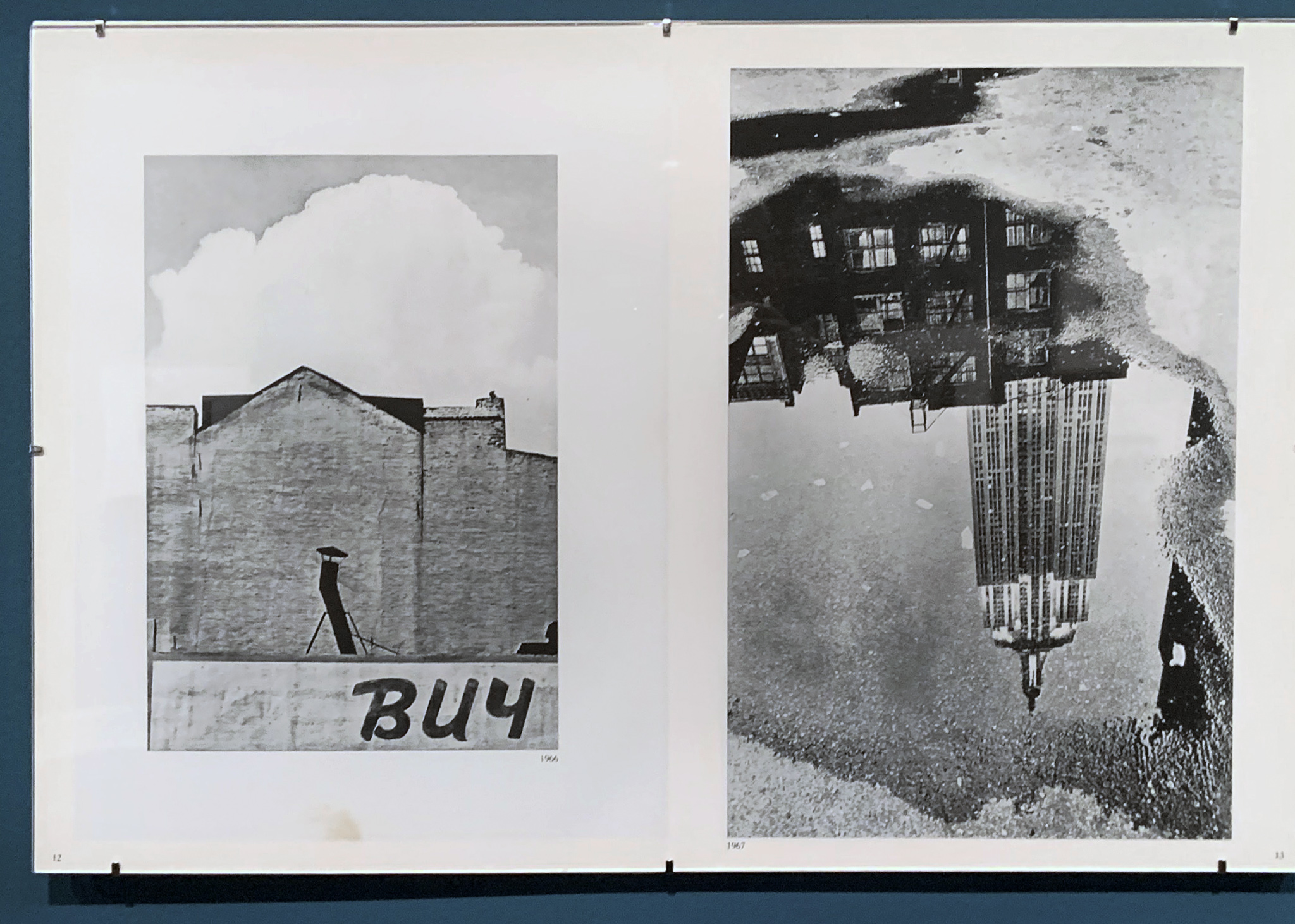
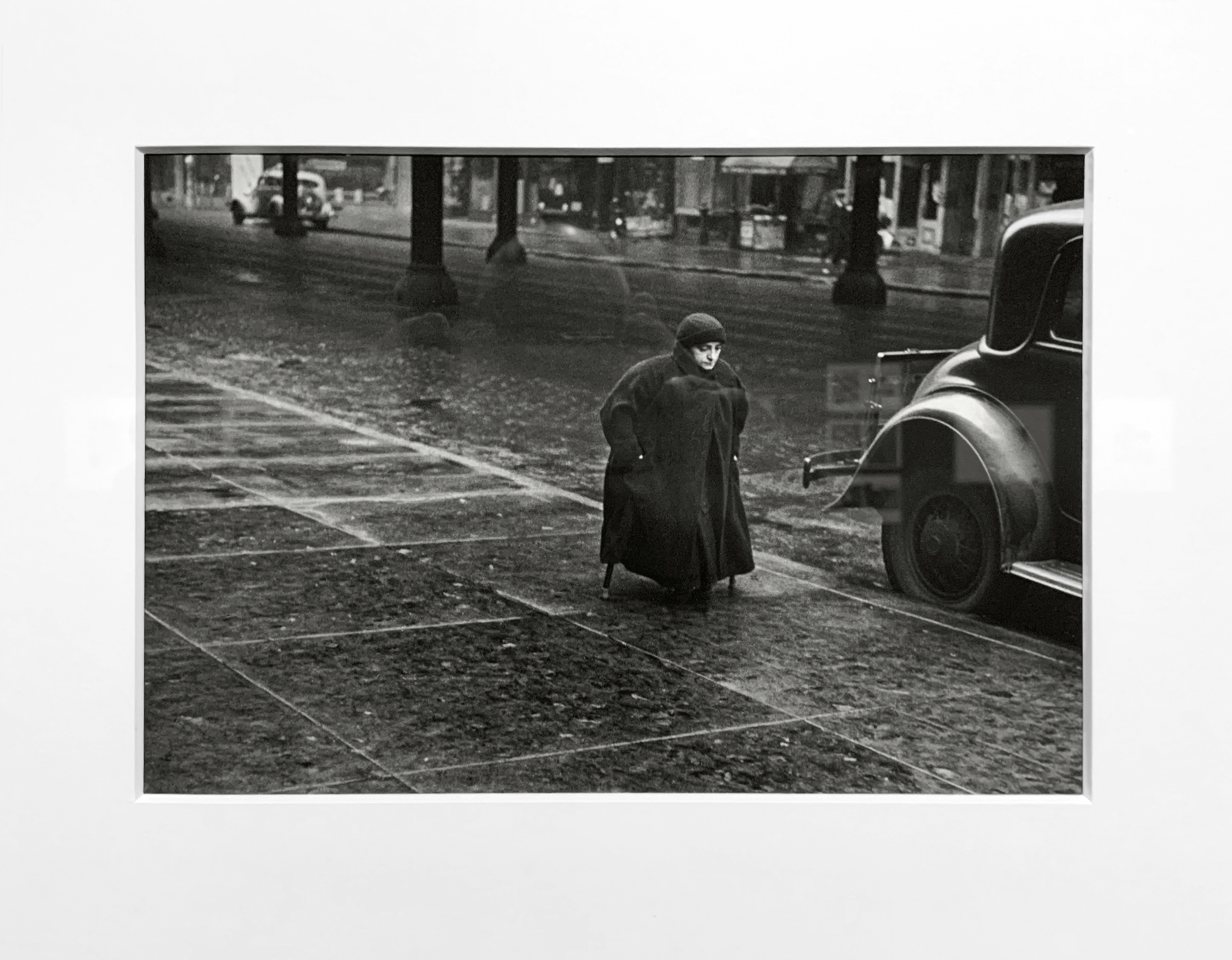
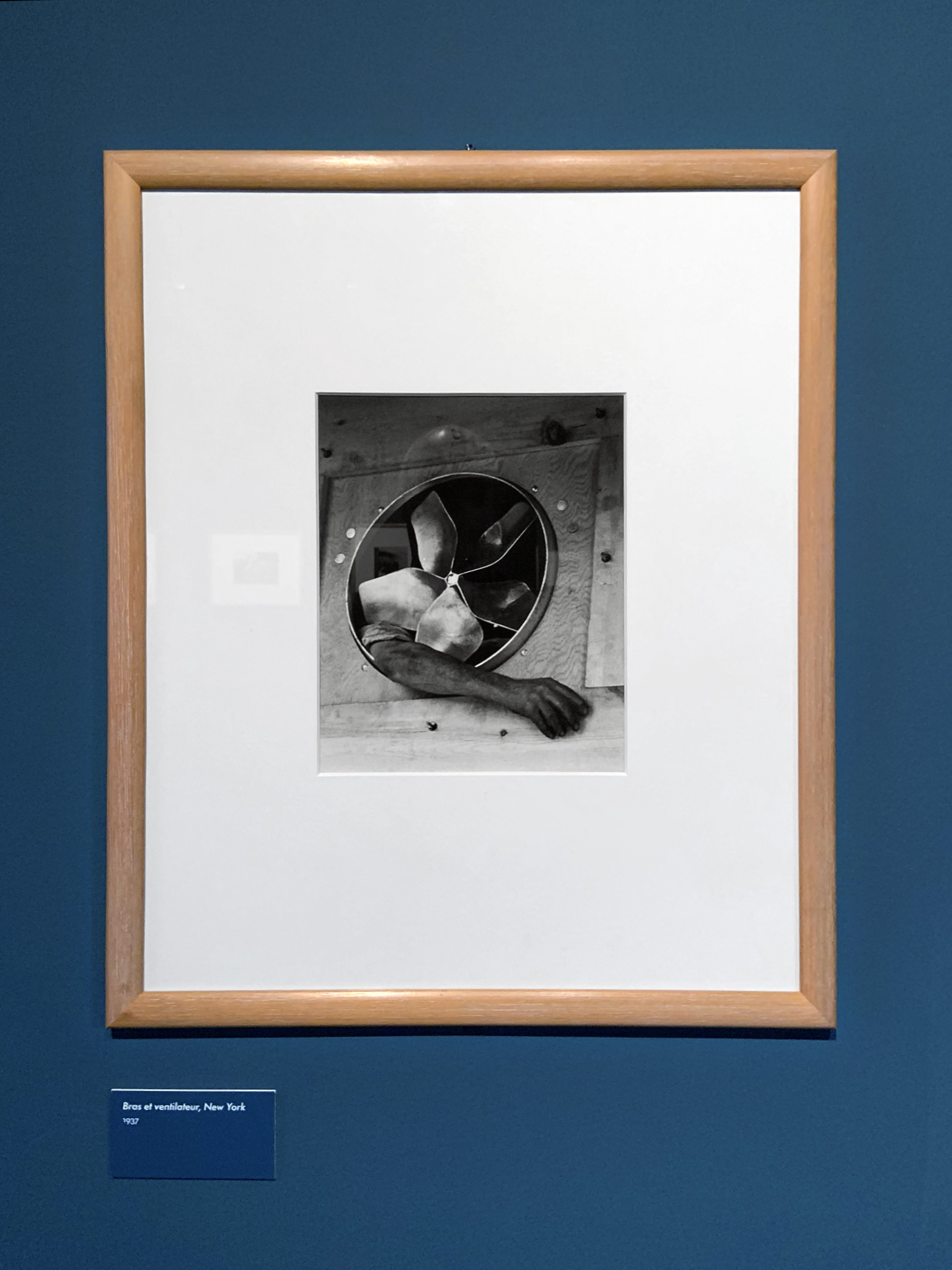
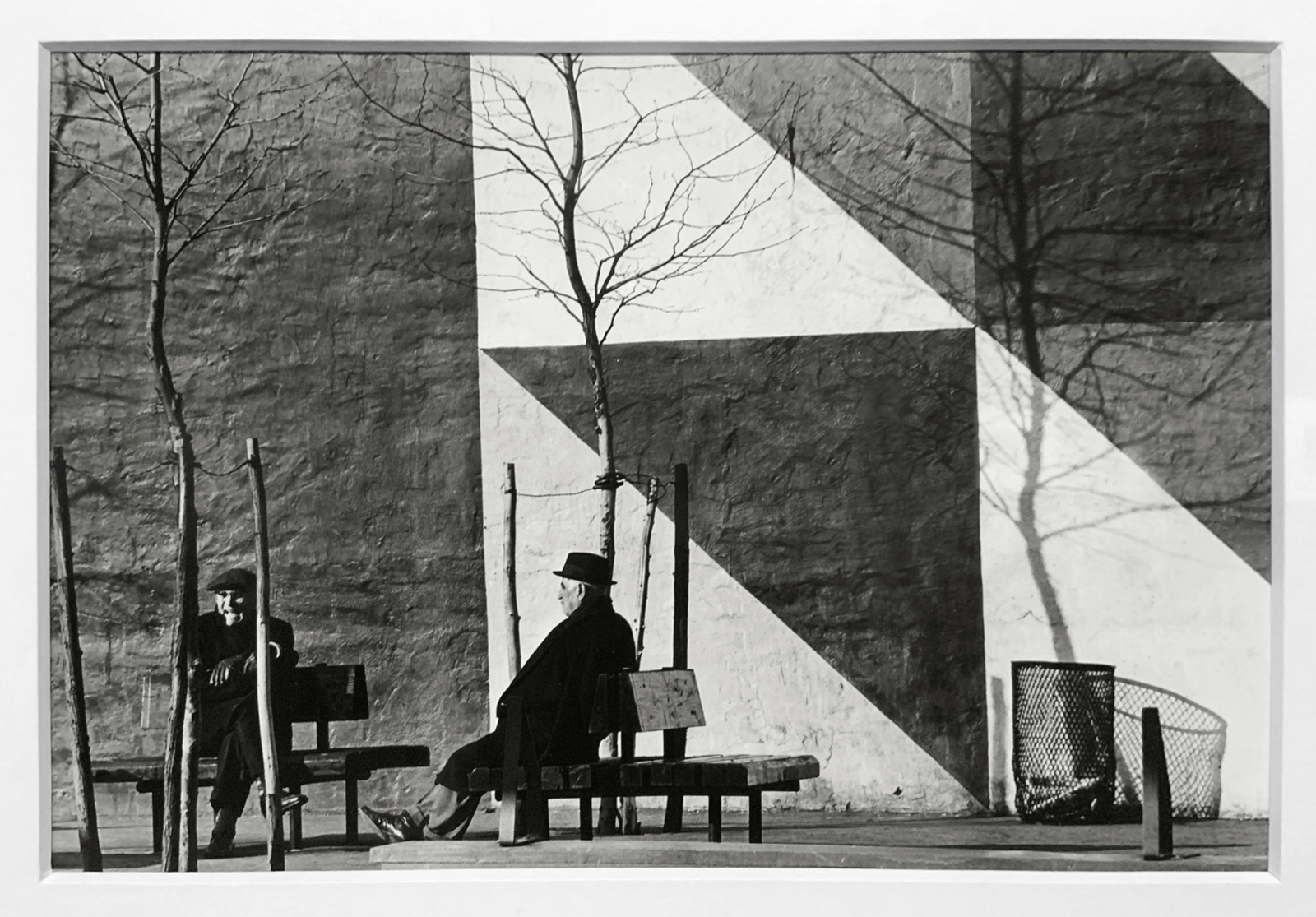
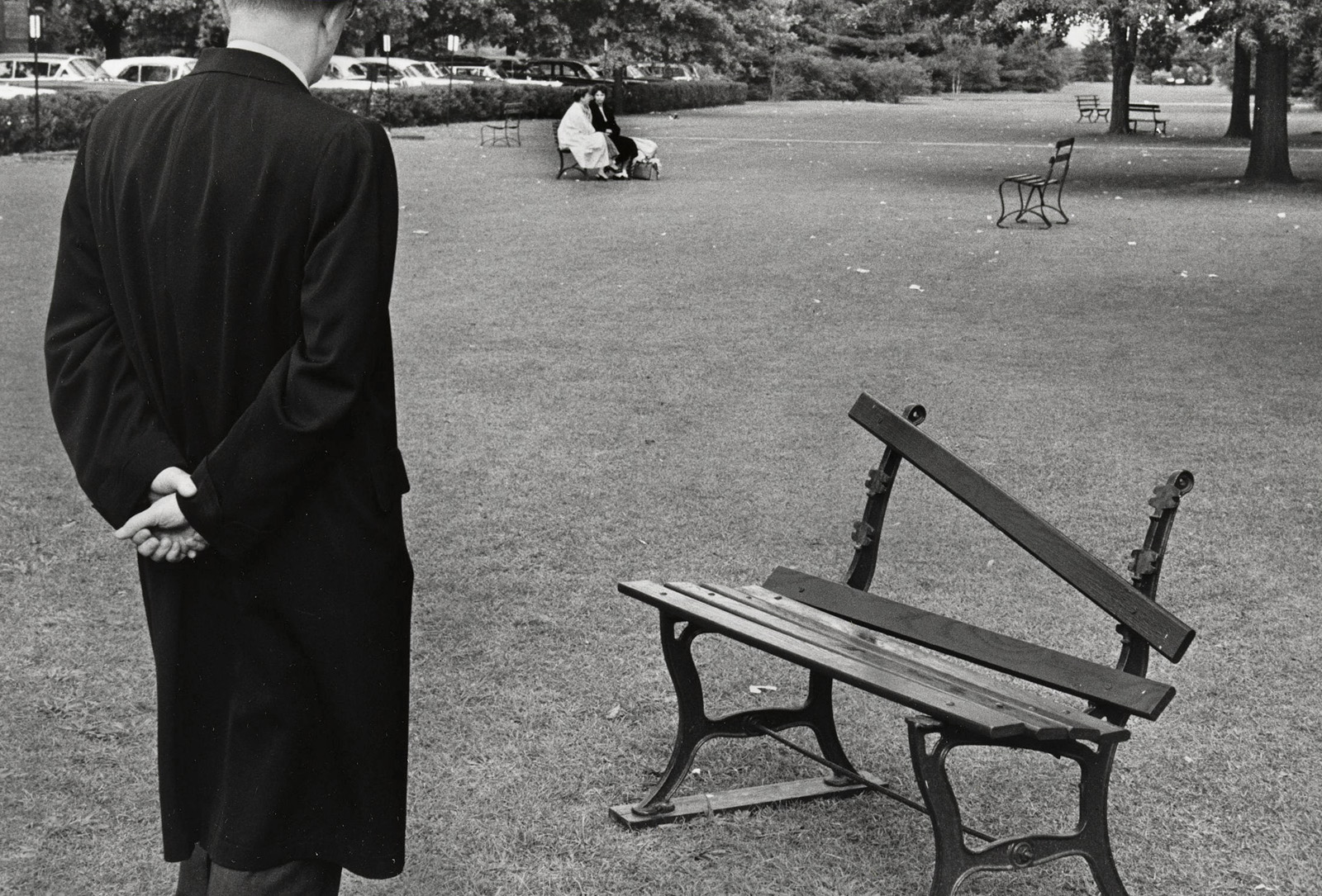
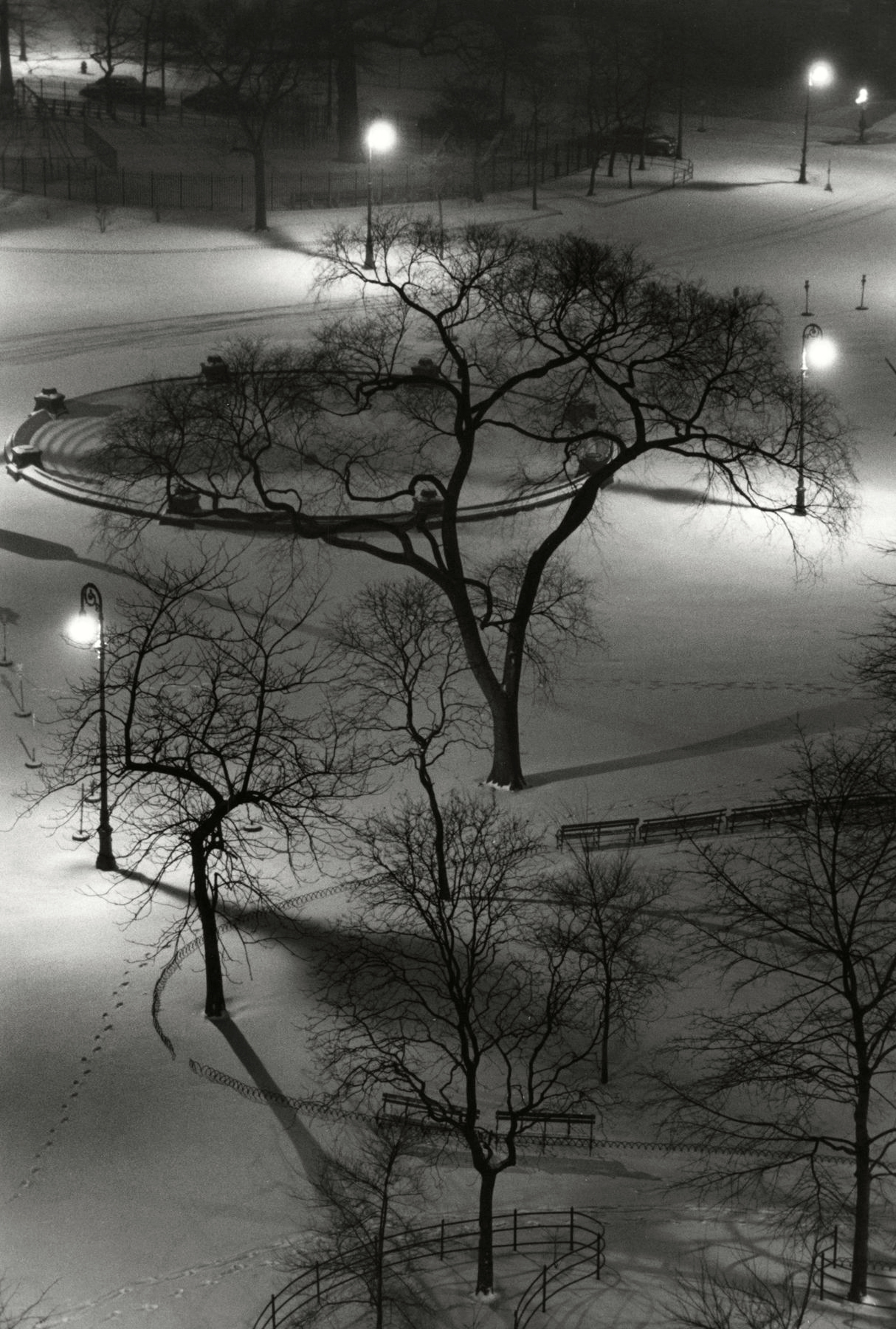
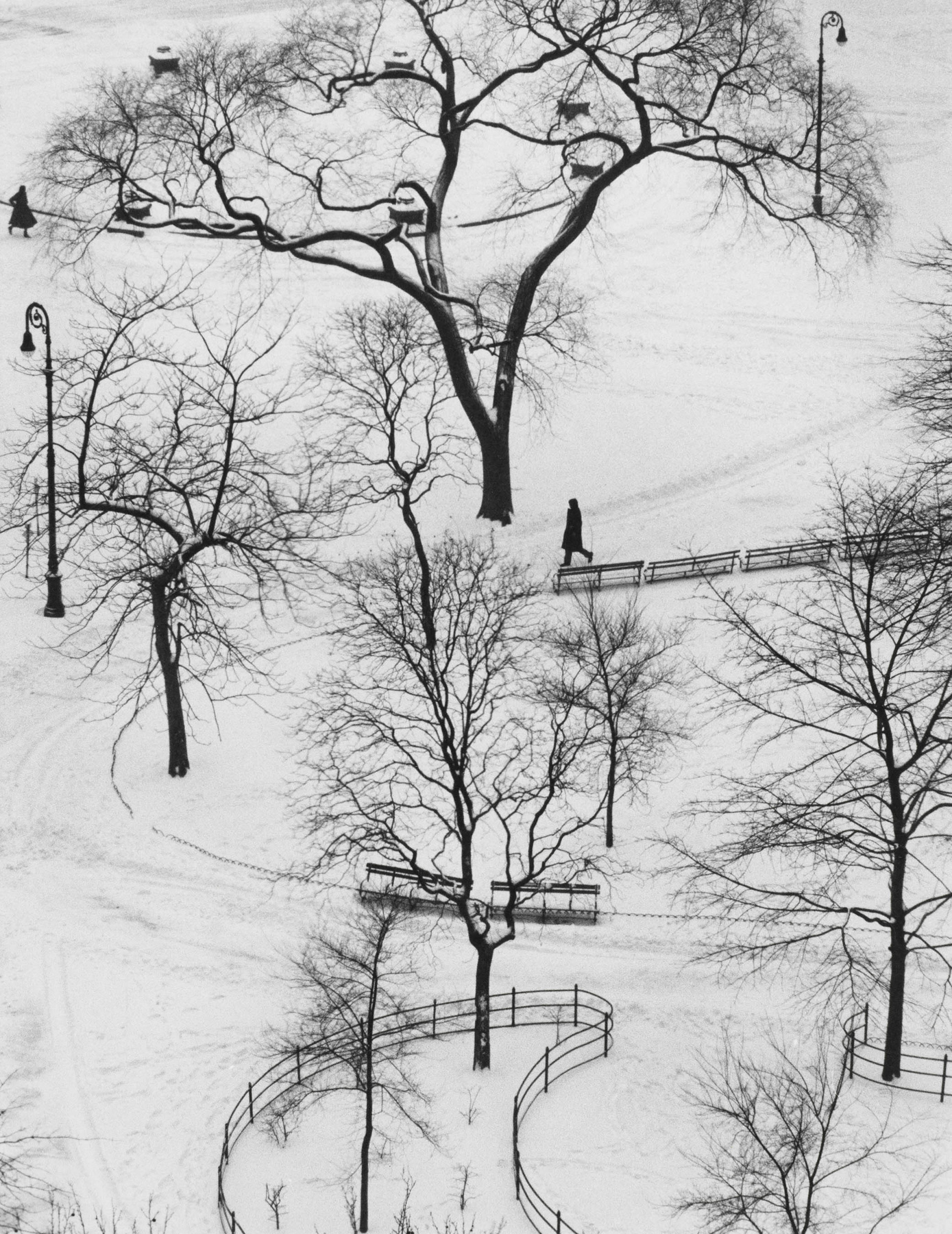
At his best, in images such as Underwater swimmer, Esztergom (1918, above), Arm and Fan, New York (1937, below) and Washington Square, New York (1954, below) there is a structured, avant-garde mystery about the reality of the world, as re/presented through the object of the photograph, it’s physical presence. In Underwater swimmer, the body is stretched and distorted by an element, water, not a man-made mirror. His photographs from Hungary, Italy and early Paris possess a sensitivity of spirit that seems to have been excised from his life, the older he got. Far too often in later images, there is a “brittleness” to his photography, in which the object of reflection sits at the surface of the image, all sparkling in unflinching light. The single cloud oh so lonely in the sterile city; the man looking at the broken bench; the “buy, buy, buy” of consumer culture. You consumer Kertész’s later images, you do not reflect on them.
“André Kertész, one of the most lyrical and formally inventive photographers of the twentieth-century, whose work advocated for spontaneity over technical precision, has left a distinctive legacy of poetic images which form a bridge between the avant-garde and geometrical precision. A roamer for much of his life, his feelings of rootlessness manifest in his work and often convey a quiet mood of melancholy. …
Claiming “I am an amateur and I intend to stay that way for the rest of my life”, Kertesz was a great source of inspiration to photographic legends such as Cartier-Bresson.
He remains revered for his clarity of style and ability to blend simplicity with emotion, prizing impact over technical precision, seeking metaphors and geometry in everyday objects and scenarios, to turn the mundane into the surreal. Nothing was too plain or ordinary for his eye, since he had a special ability to breathe life into even the most ‘unremarkable’ subjects.”
Edward Clay. “André Kertész: between poetry and geometry,” on ‘The Independent Photographer’ website, May 19th 2020 [Online] Cited 26/08/2020
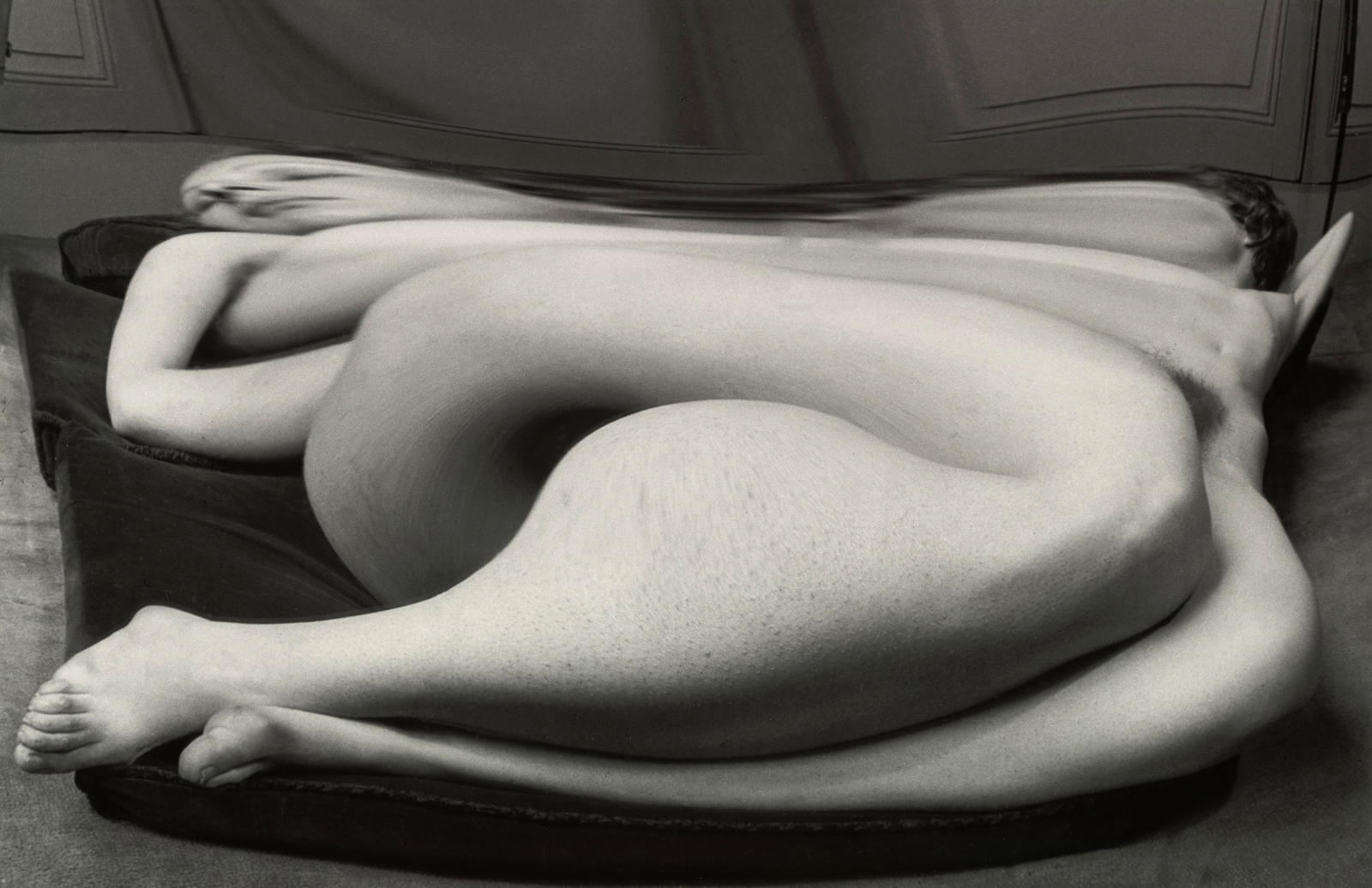
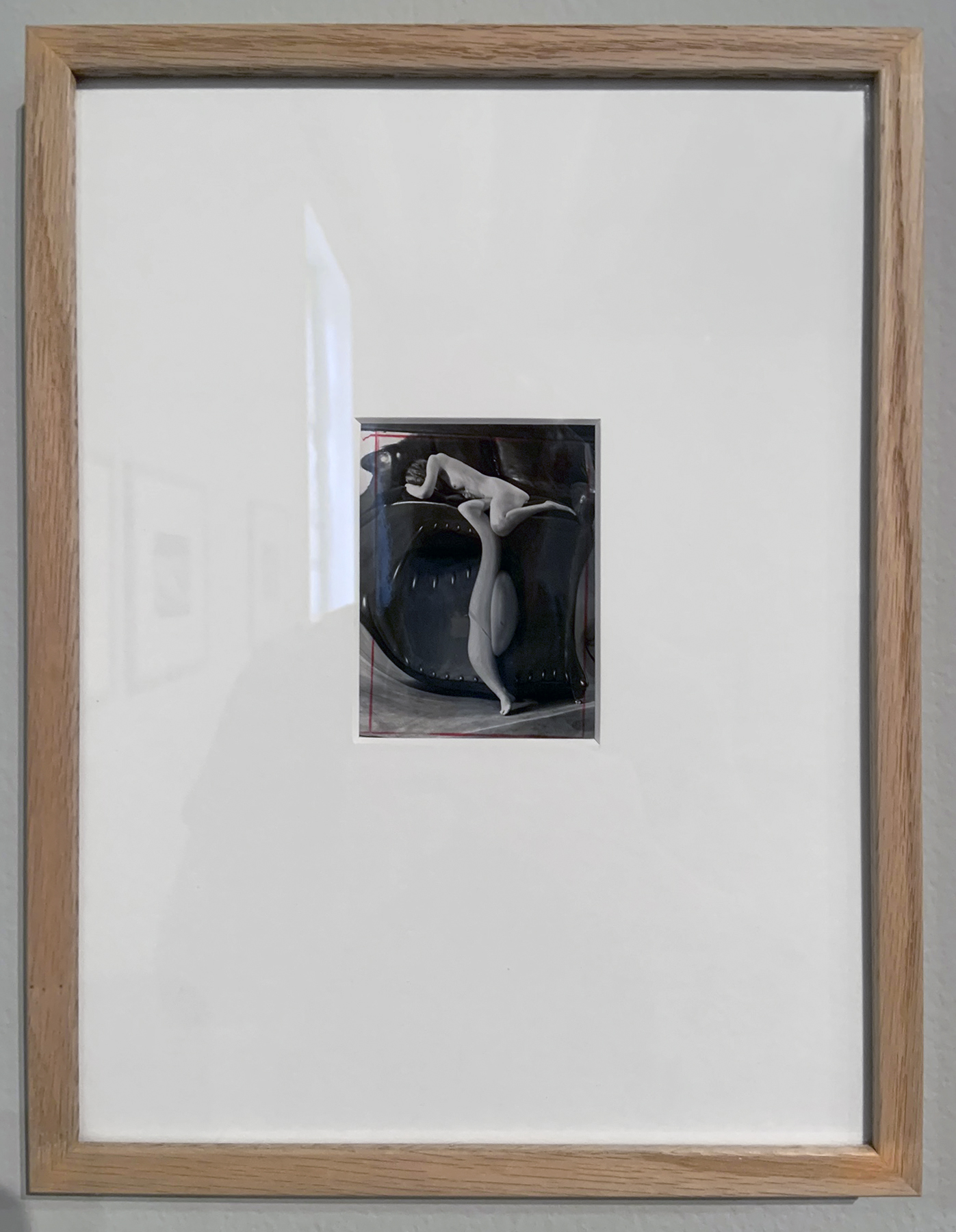
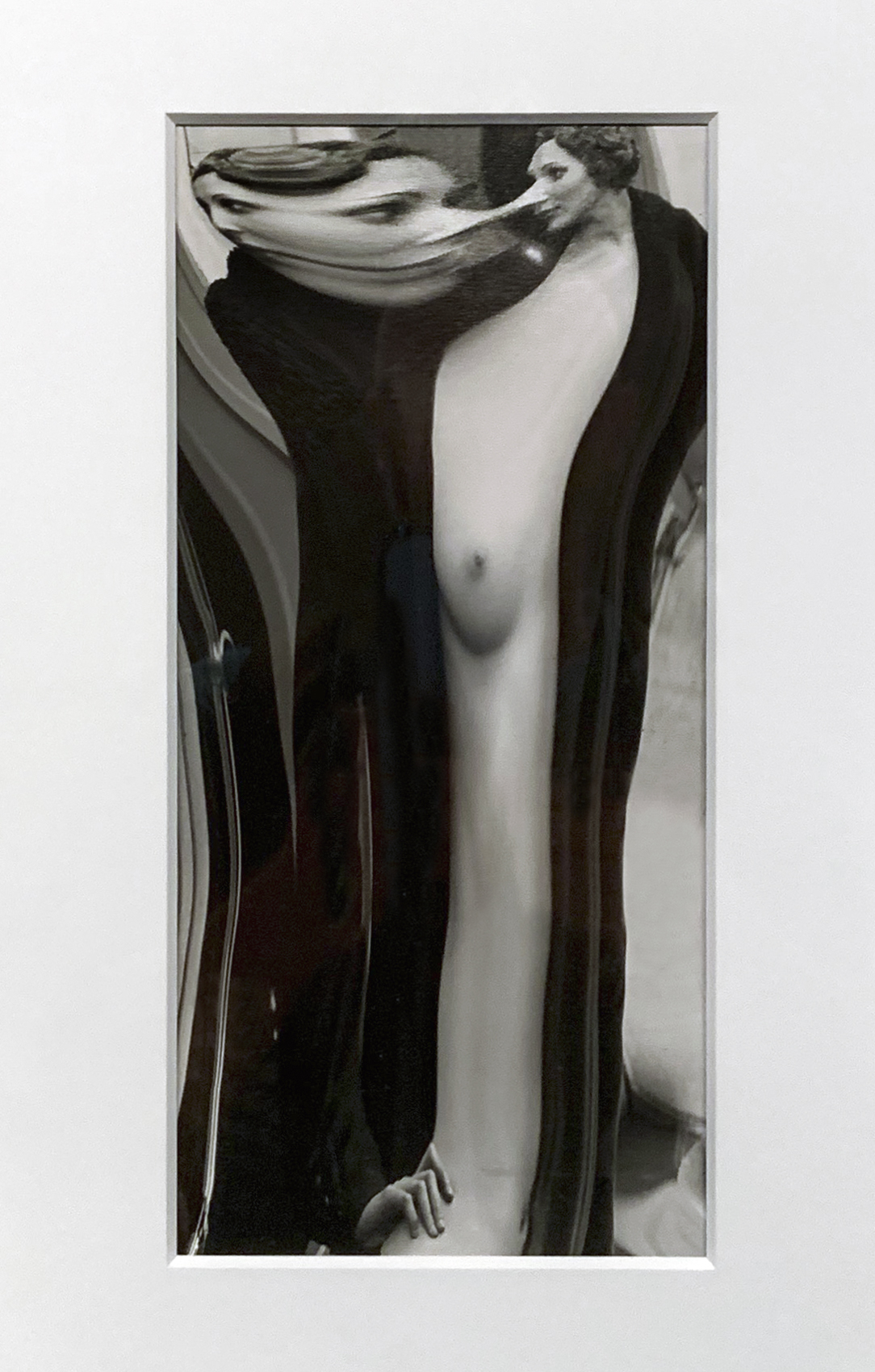
André Kertész (Hungarian, 1894-1985) Distortion #34 1933 Gelatin silver print
André Kertész (Hungarian, 1894-1985) Distortion #40 1933 Gelatin silver print
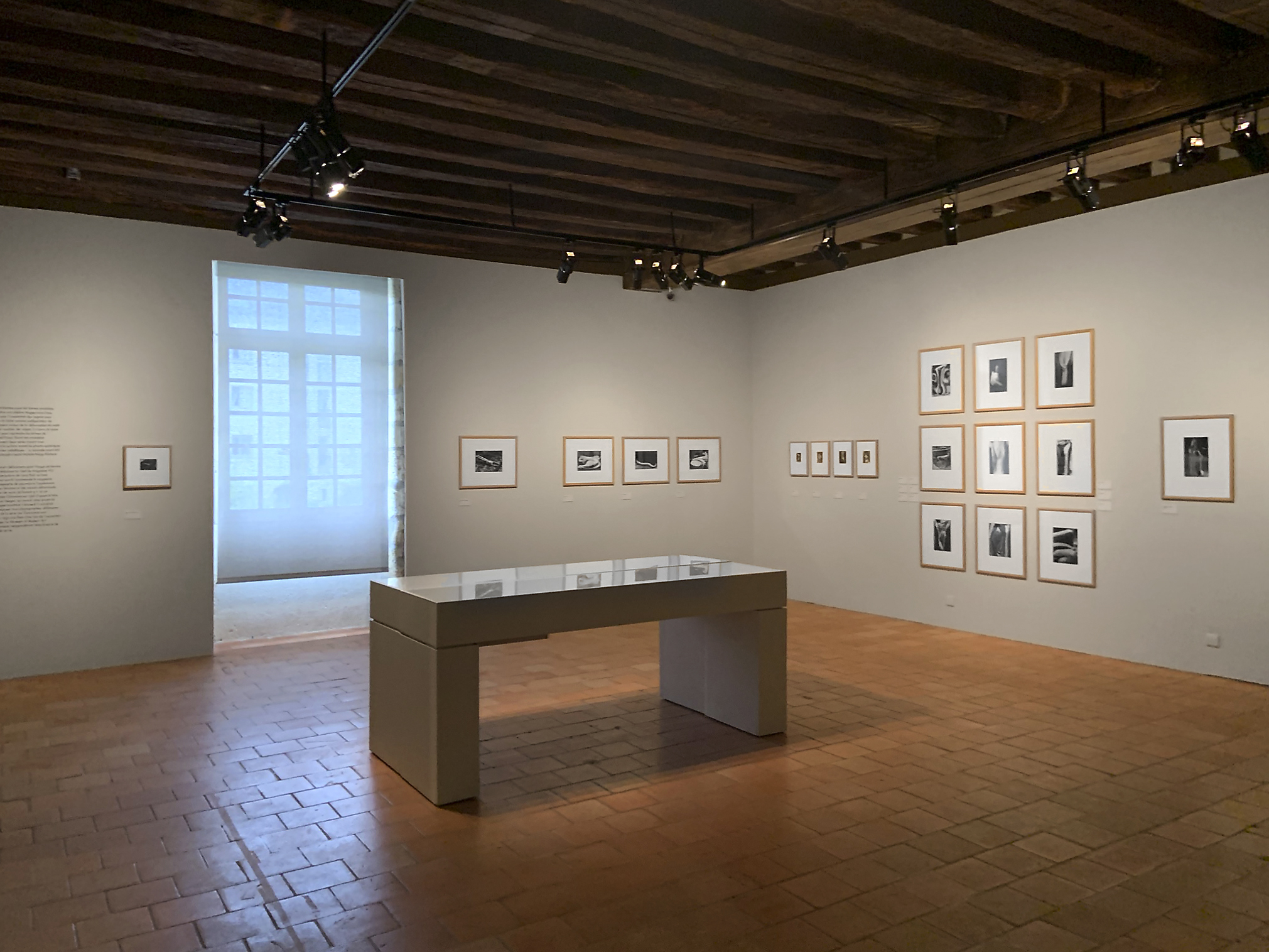
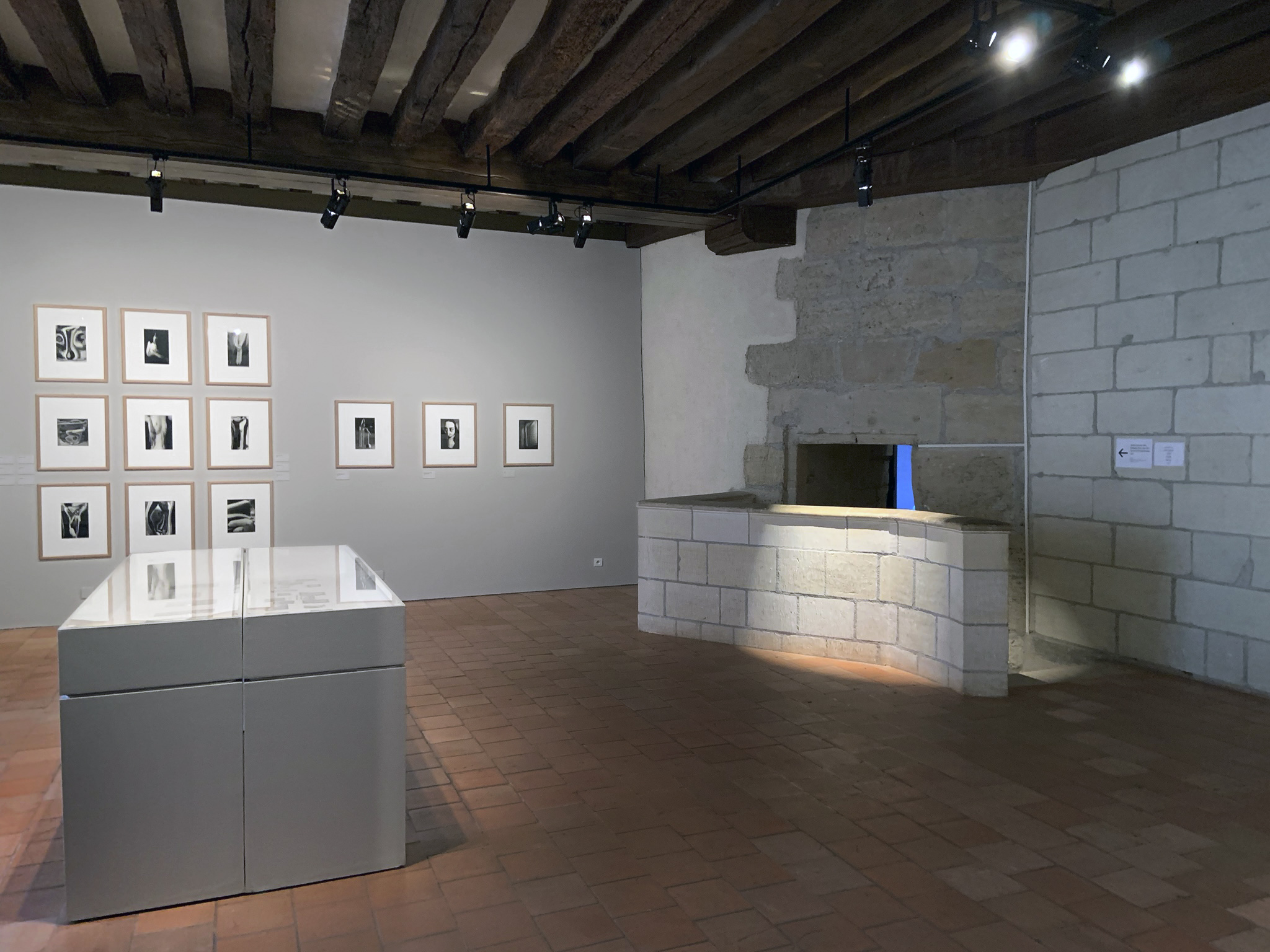
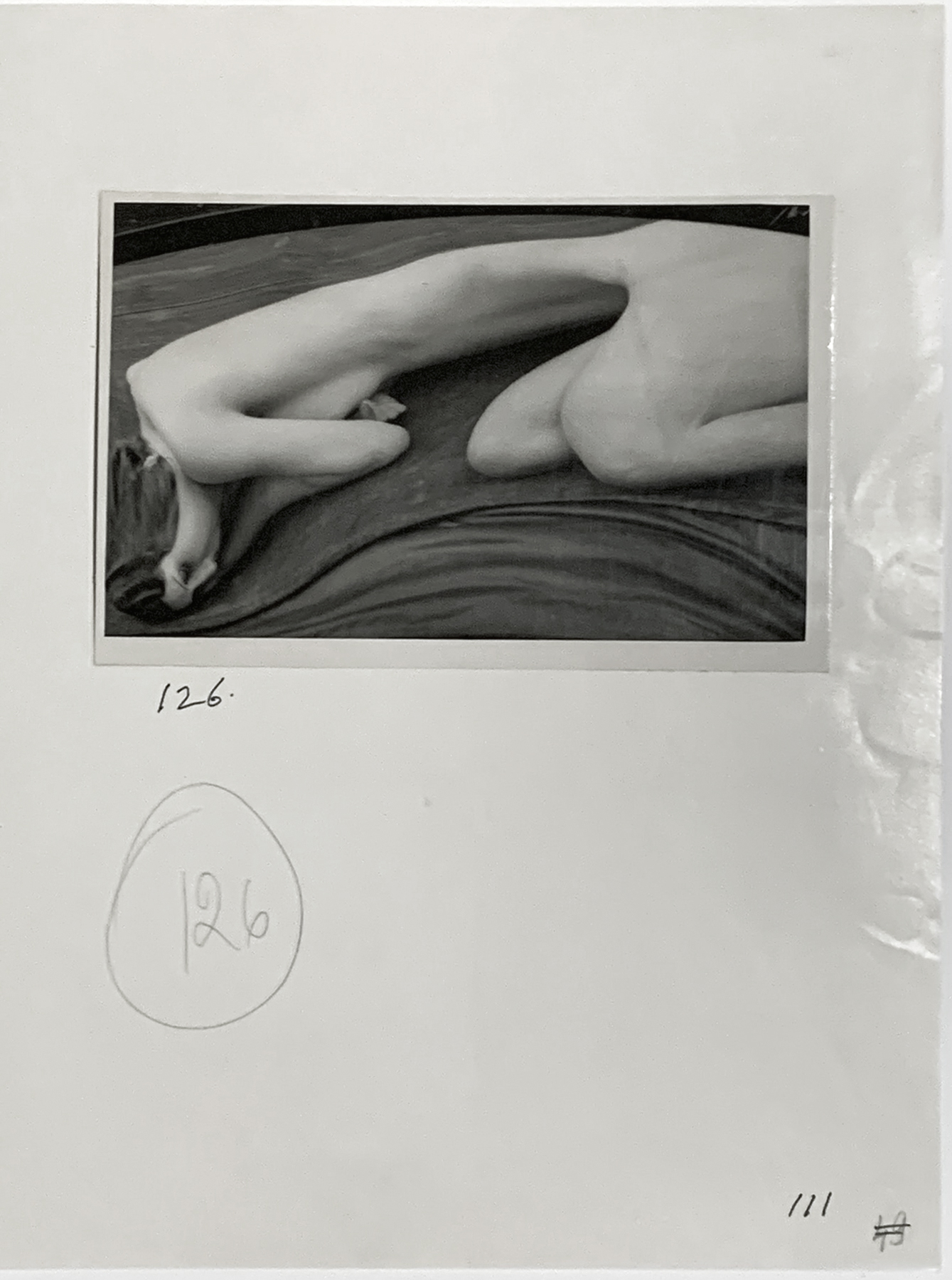
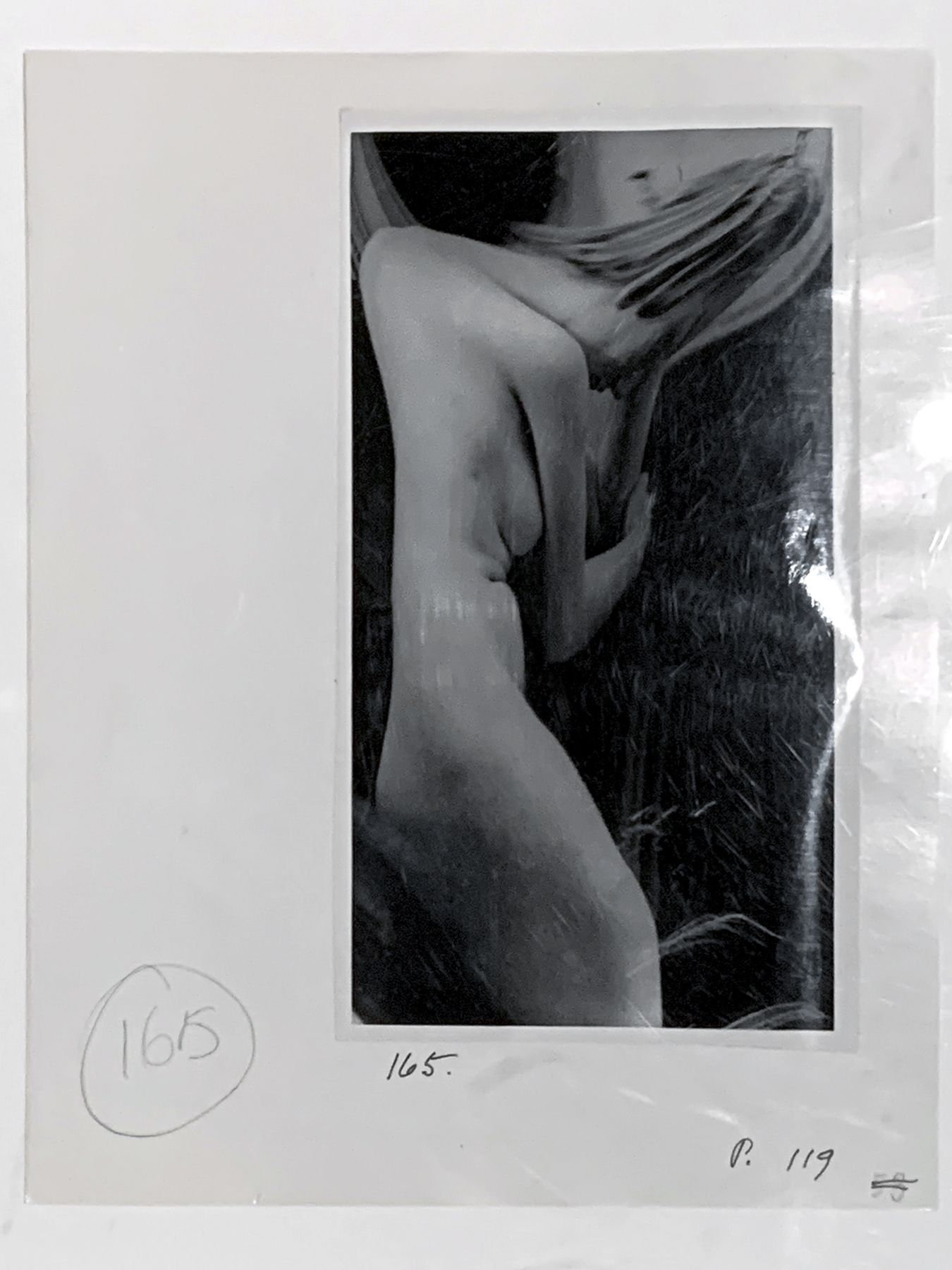
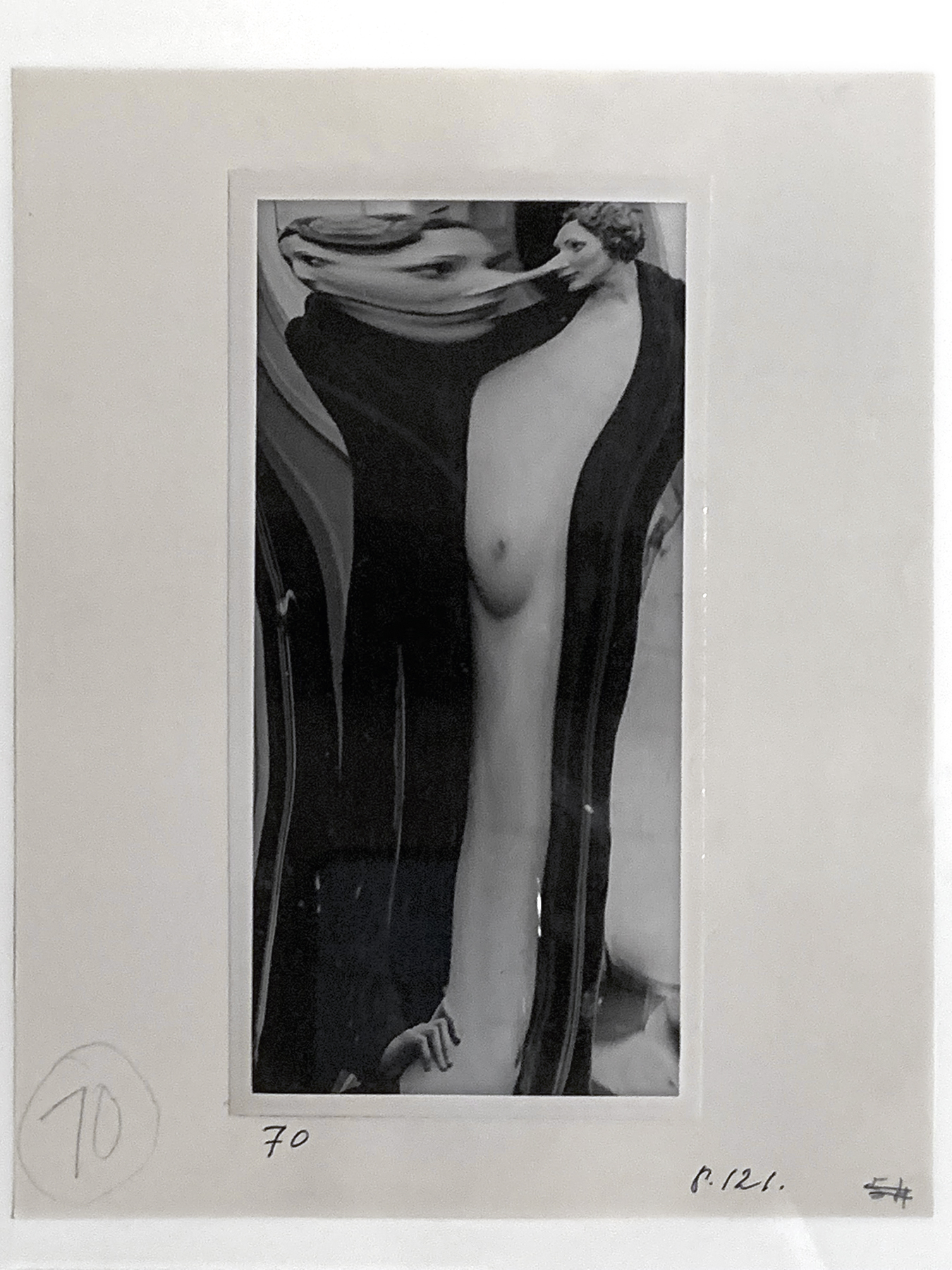
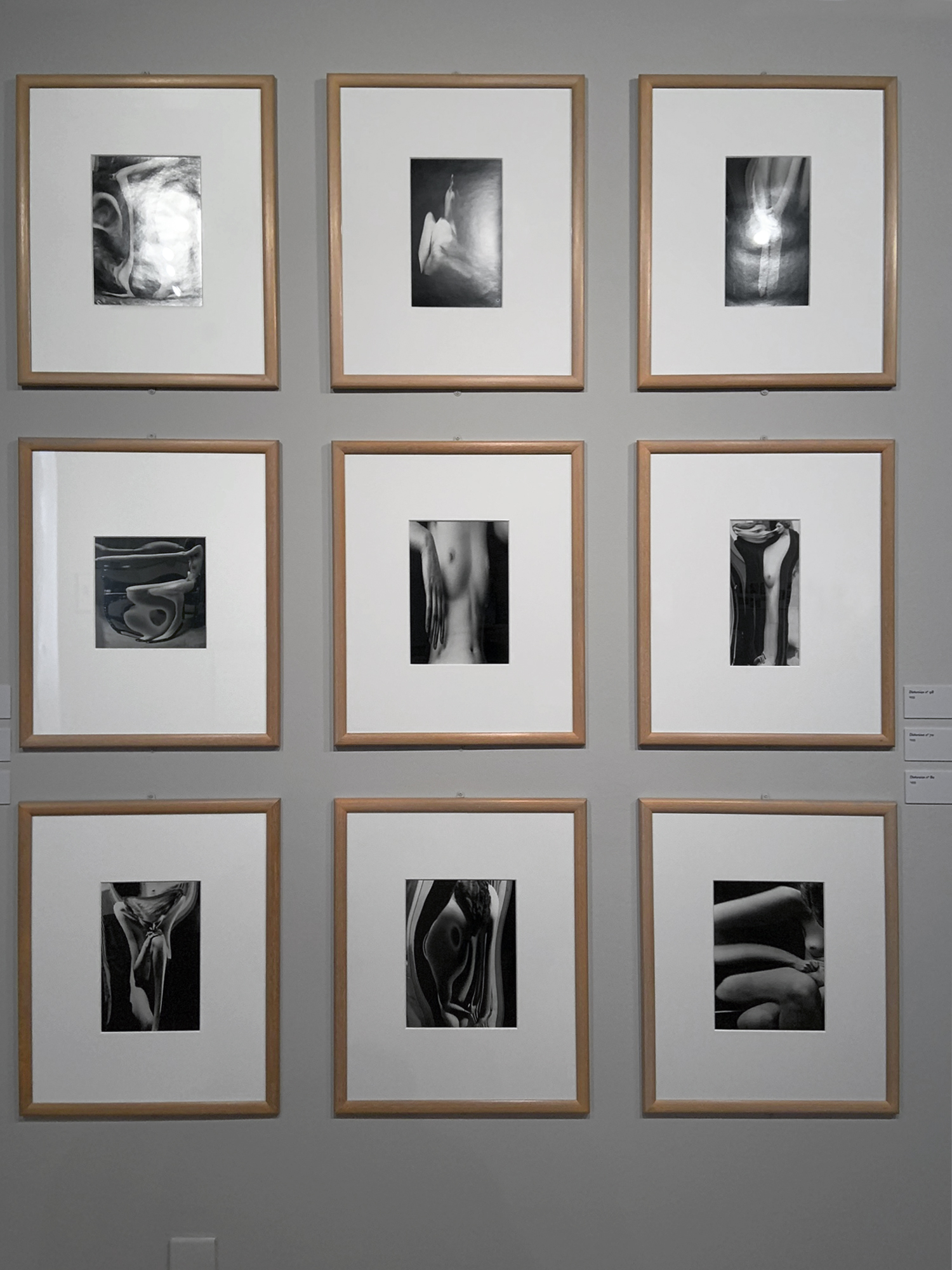
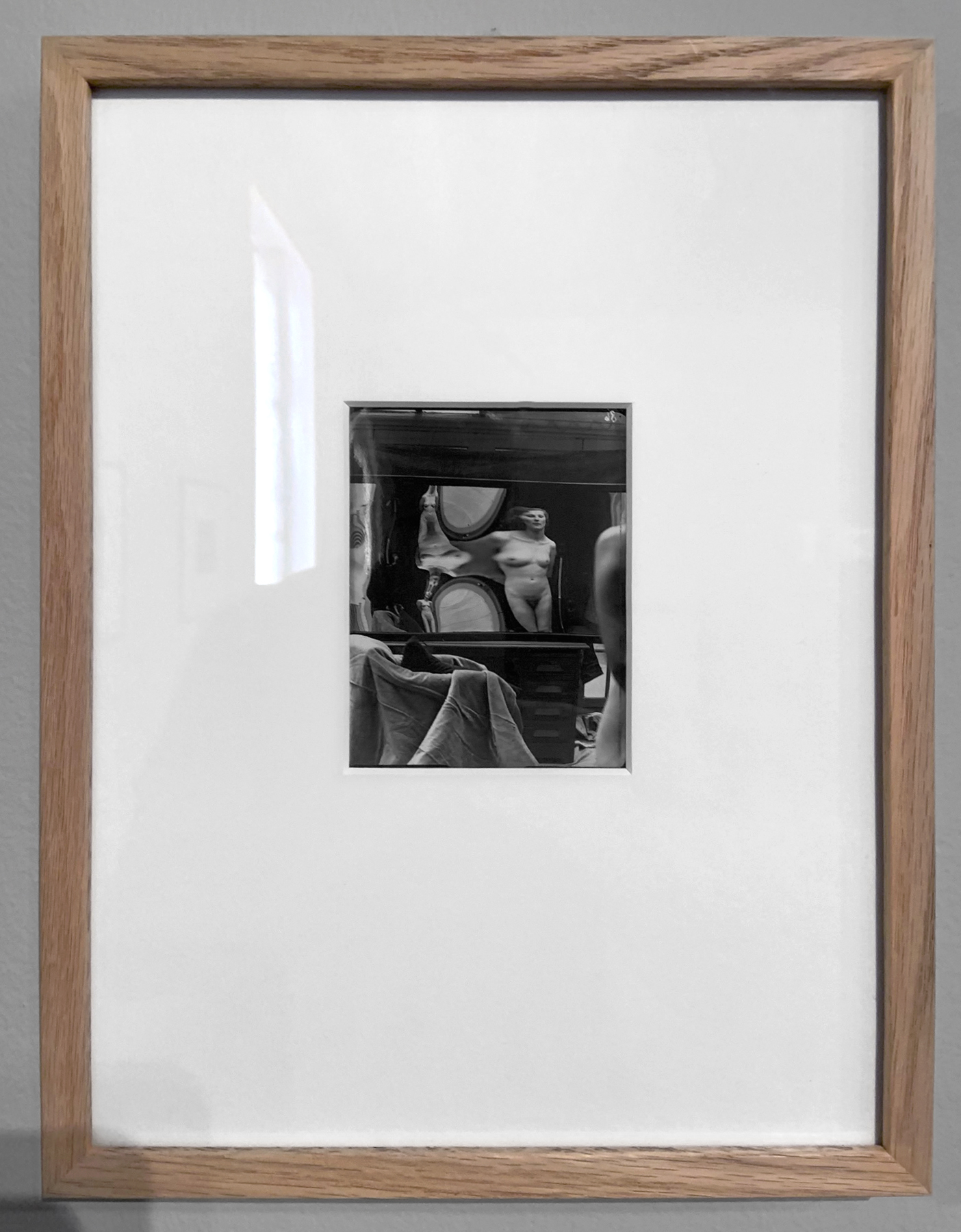
Installation views of the exhibition L’equilibriste, André Kertész at Jeu de Paume, Château de Tours showing photographs from the series Distortions, the bottom image showing at left, the photograph Underwater swimmer, Esztergom 1918 Photos: Marcus Bunyan
André Kertész (Hungarian, 1894-1985) Planches originales de la maquette du livre ‘Distortions’ (installation view) Original plates of the model of the book ‘Distortions’ 1975-1976 Collection Médiathèque de l’architecture et du patrimoine Photos: Marcus Bunyan
Installation view of the exhibition L’equilibriste, André Kertész at Jeu de Paume, Château de Tours showing photographs from the series Distortions Photo: Marcus Bunyan
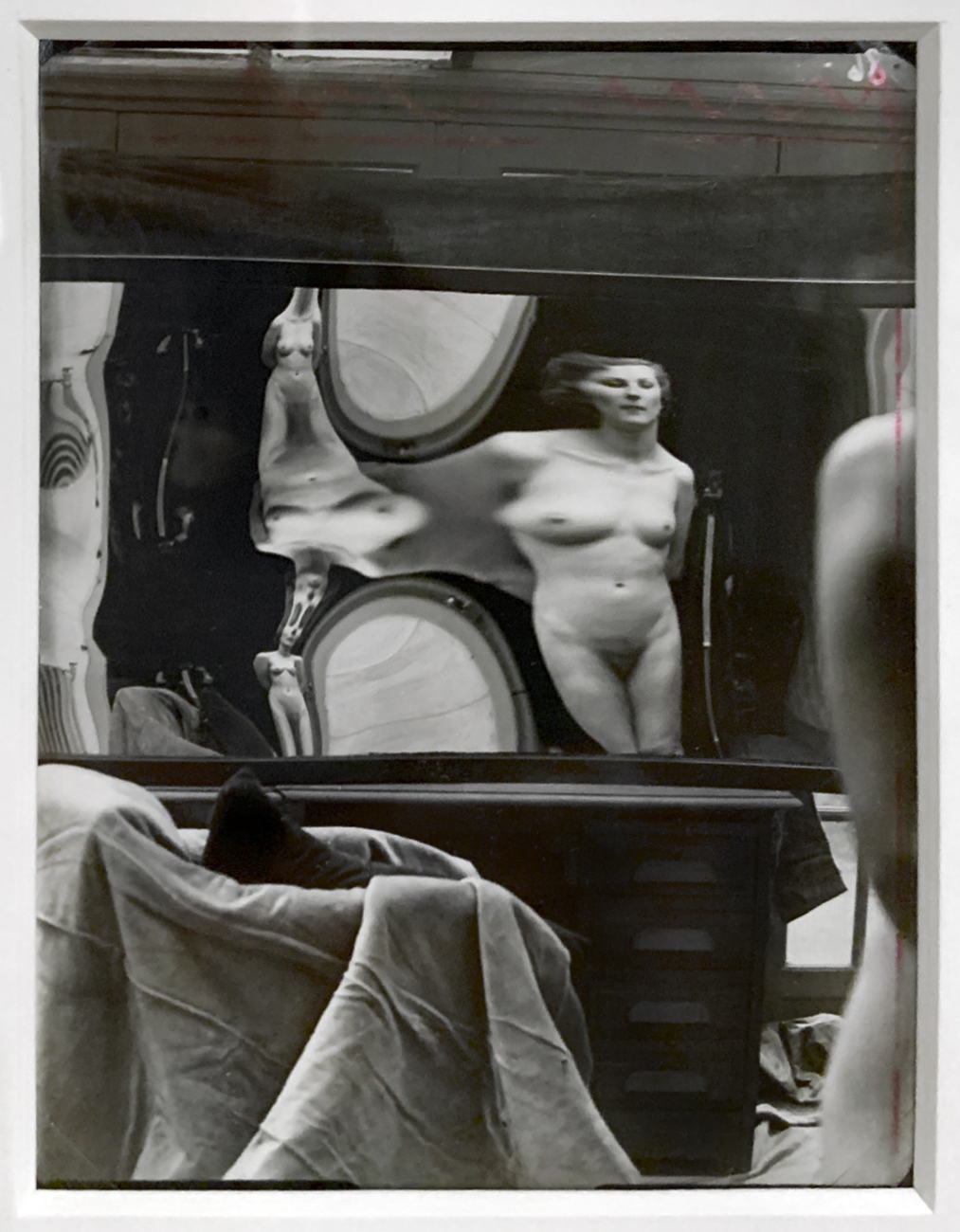
André Kertész (Hungarian, 1894-1985) Distortion #60 (installation view) 1933 Contact original Photo: Marcus Bunyan
André Kertész (Hungarian, 1894-1985) Distortion #86 (installation view) 1933 Contact original Photo: Marcus Bunyan
André Kertész (Hungarian, 1894-1985) Distortion #86 (installation view) 1933 Contact original Photo: Marcus Bunyan
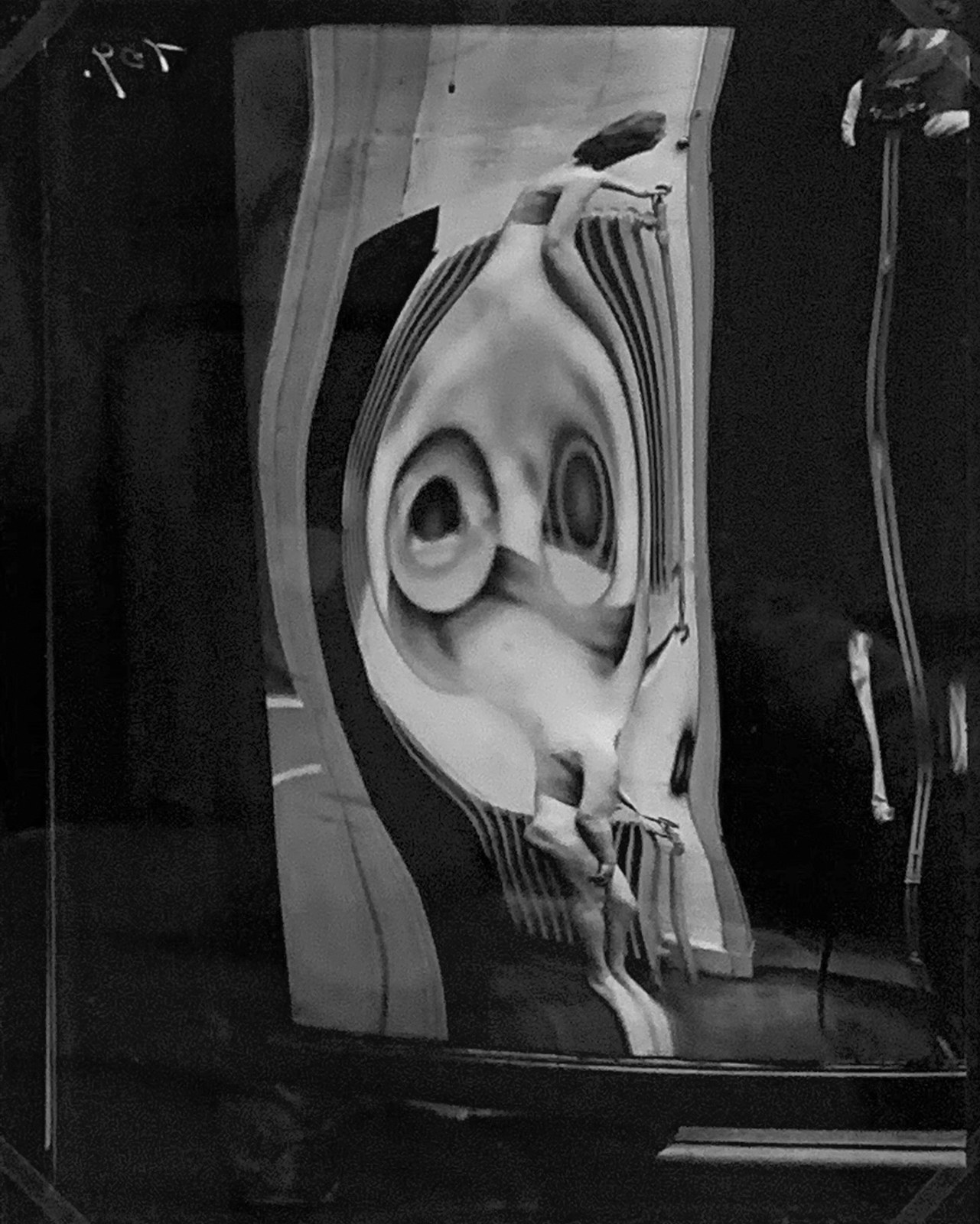
André Kertész (Hungarian, 1894-1985) Distortion #109 (installation view) 1933 Contact original Photo: Marcus Bunyan
André Kertész (Hungarian, 1894-1985) Distortion #6 (installation view) 1933 Contact original Photo: Marcus Bunyan
André Kertész (Hungarian, 1894-1985) Distortion #159 (installation view) 1933 Contact original Photo: Marcus Bunyan
André Kertész (Hungarian, 1894-1985) Distortion #128 (installation view) 1933 Contact original Photo: Marcus Bunyan
André Kertész (Hungarian, 1894-1985) Distortion #70 (installation view) 1933 Contact original Photo: Marcus Bunyan
André Kertész (Hungarian, 1894-1985) Distortion #70 (installation view) 1933 Contact original Photo: Marcus Bunyan
André Kertész (Hungarian, 1894-1985) Distortion #80 (installation view) 1933 Contact original Photo: Marcus Bunyan
André Kertész (Hungarian, 1894-1985) Distortion (installation view) 1933 Contact original Photo: Marcus Bunyan
André Kertész (Hungarian, 1894-1985) Portrait déformé (Visage de femme), Paris (installation view) Distorted Portrait (Face of a Woman), Paris 1927 Gelatin silver print Photo: Marcus Bunyan
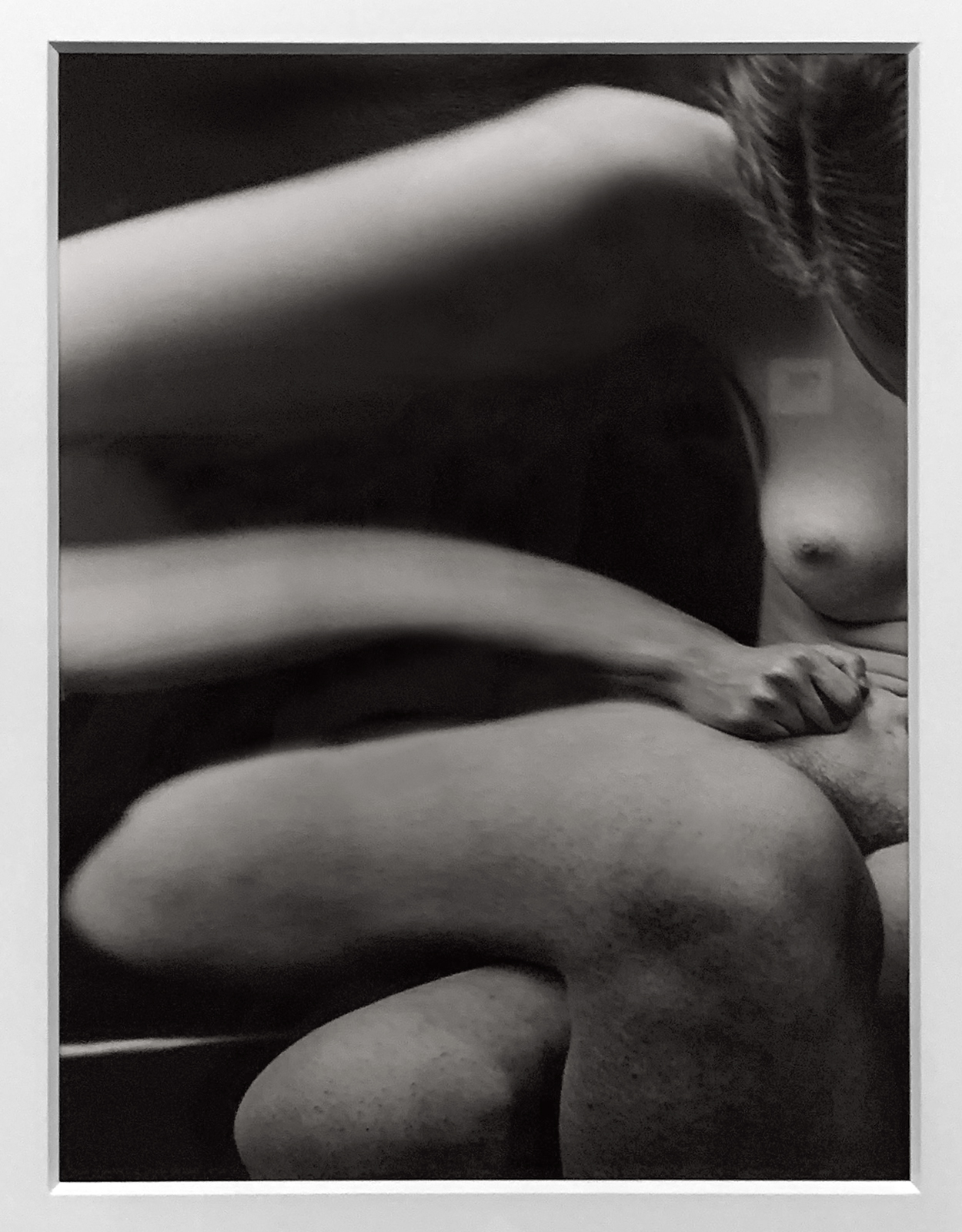
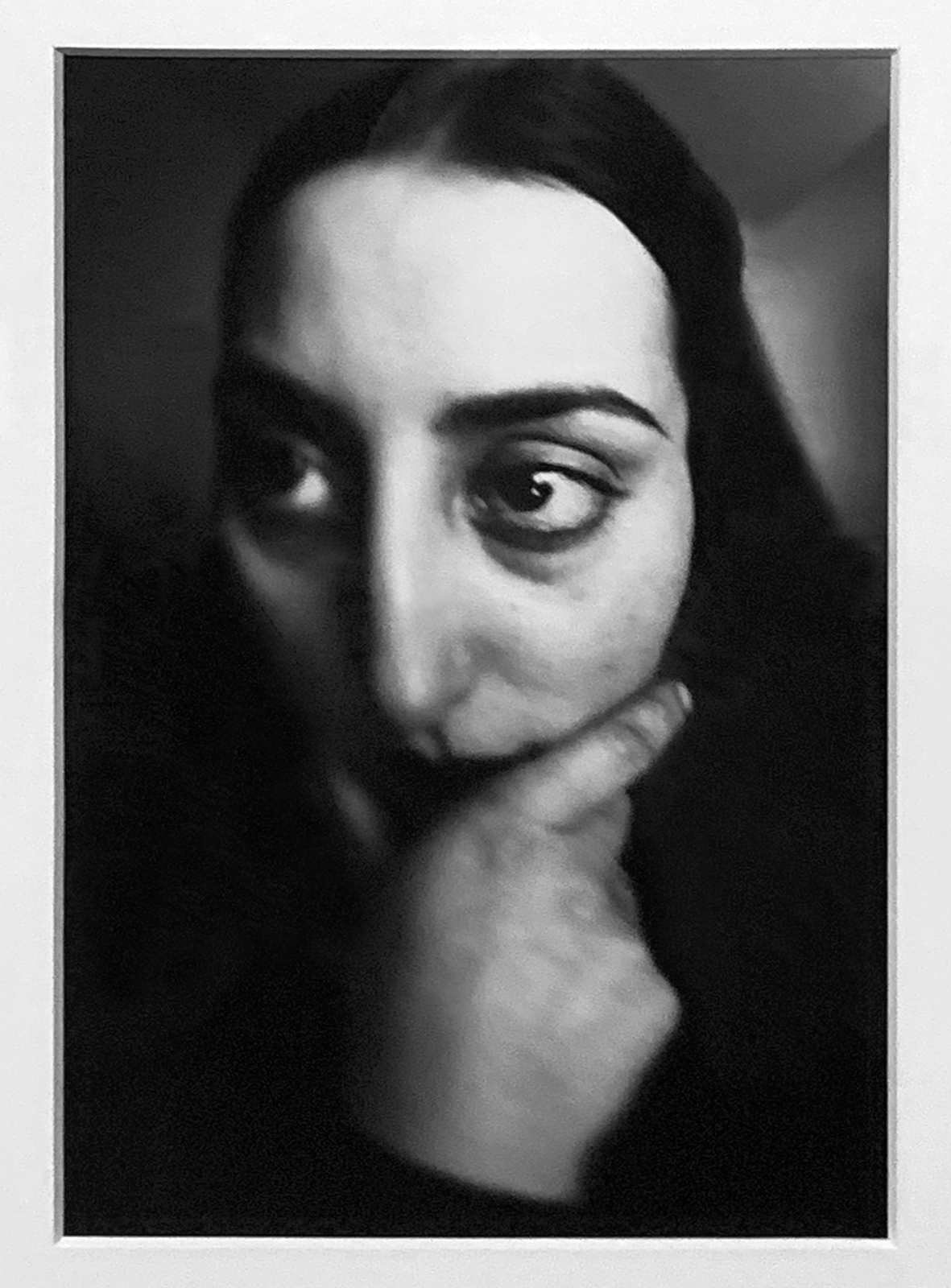
One of the twentieth century’s great photographers, André Kertész (Budapest, 1894 – New York, 1985) left a prolific body of work spanning more than seventy years (1912-1984), a blend of the poetic and the intimate with its wellspring in his Hungarian culture. The Art of Poise: André Kertész traces this singular career, showcasing compositions that bear the stamp of Europe’s avant-garde art movements, from the artist’s earliest Hungarian photographs to the blossoming of his talent in France, and from his New York years to ultimate international recognition.
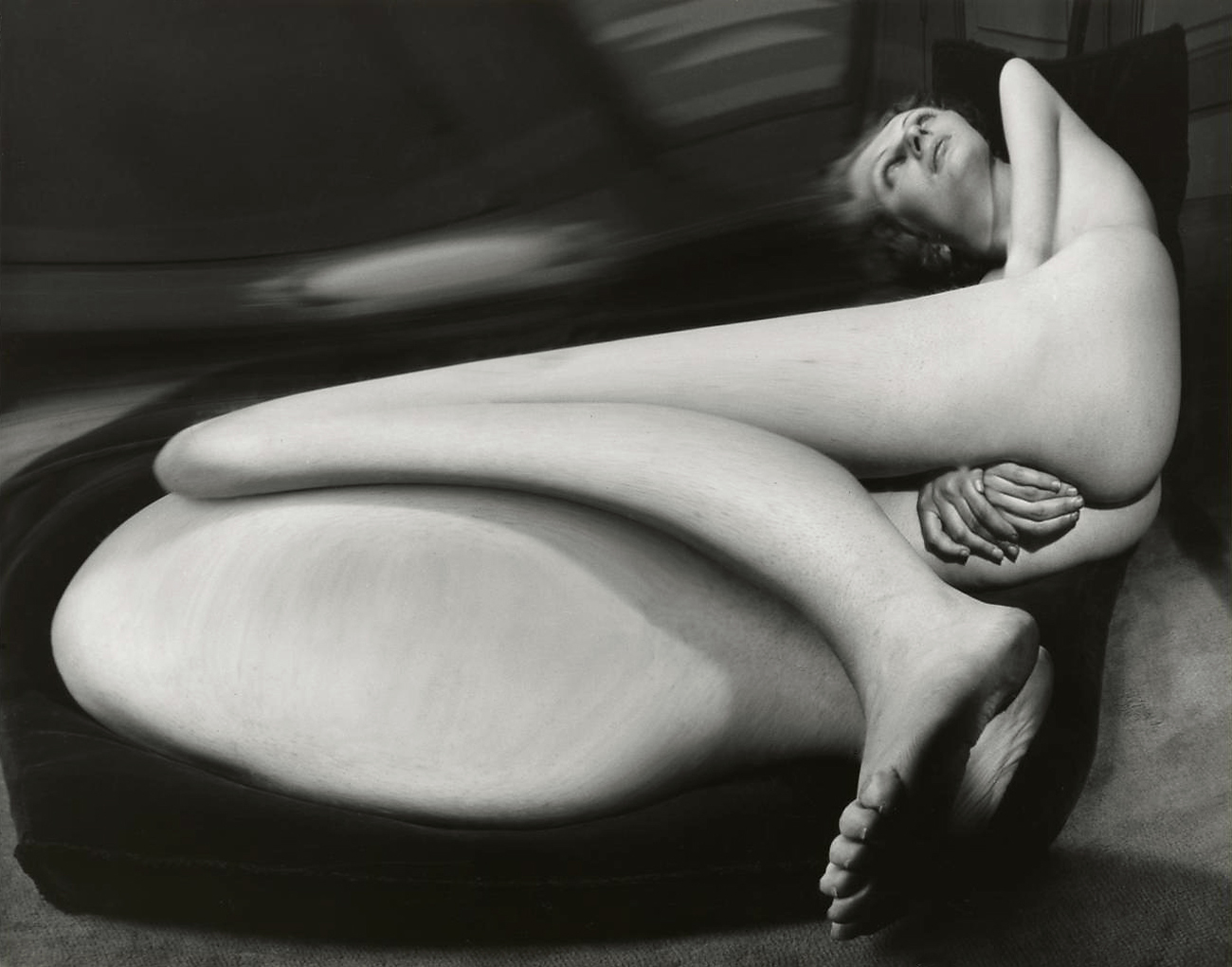
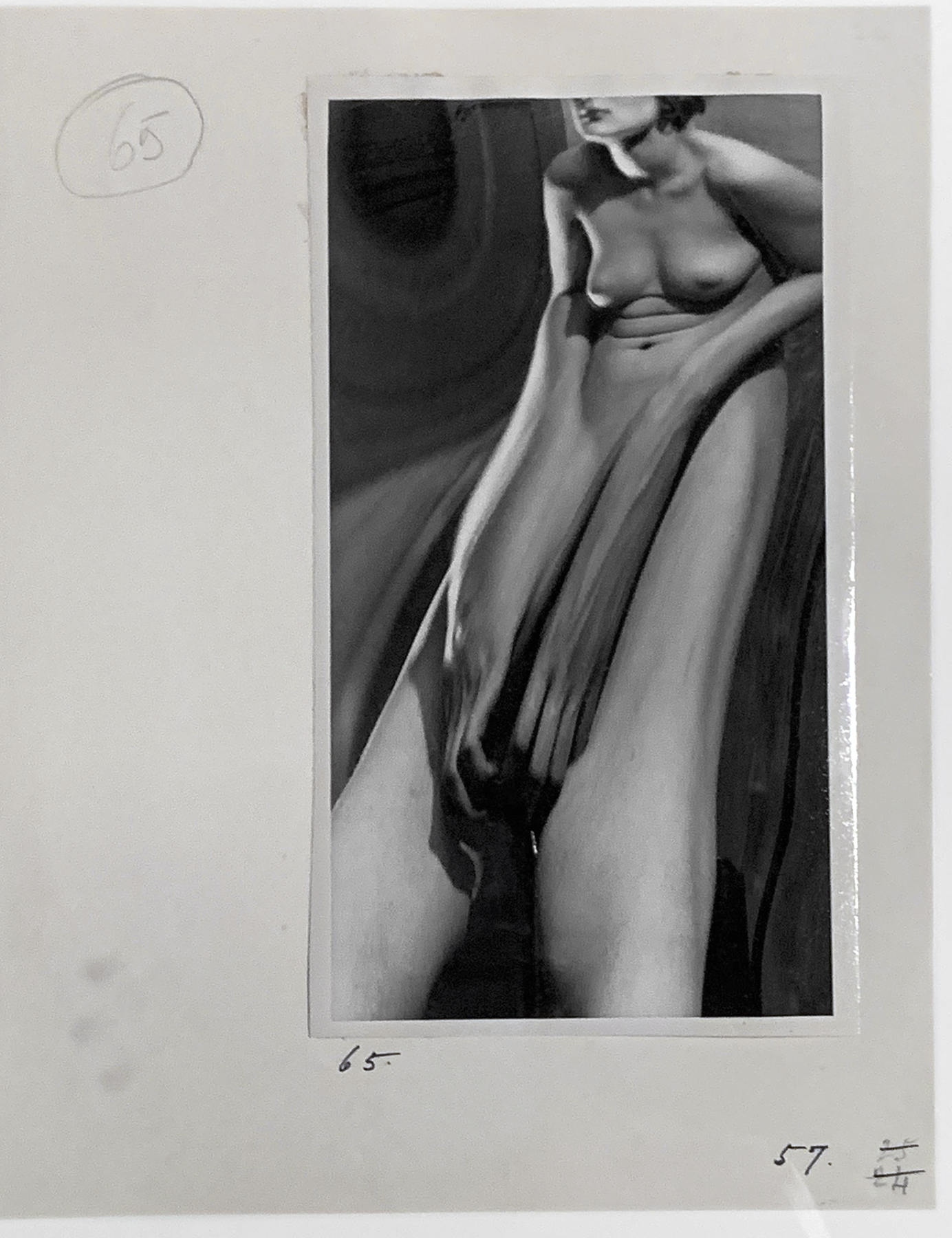
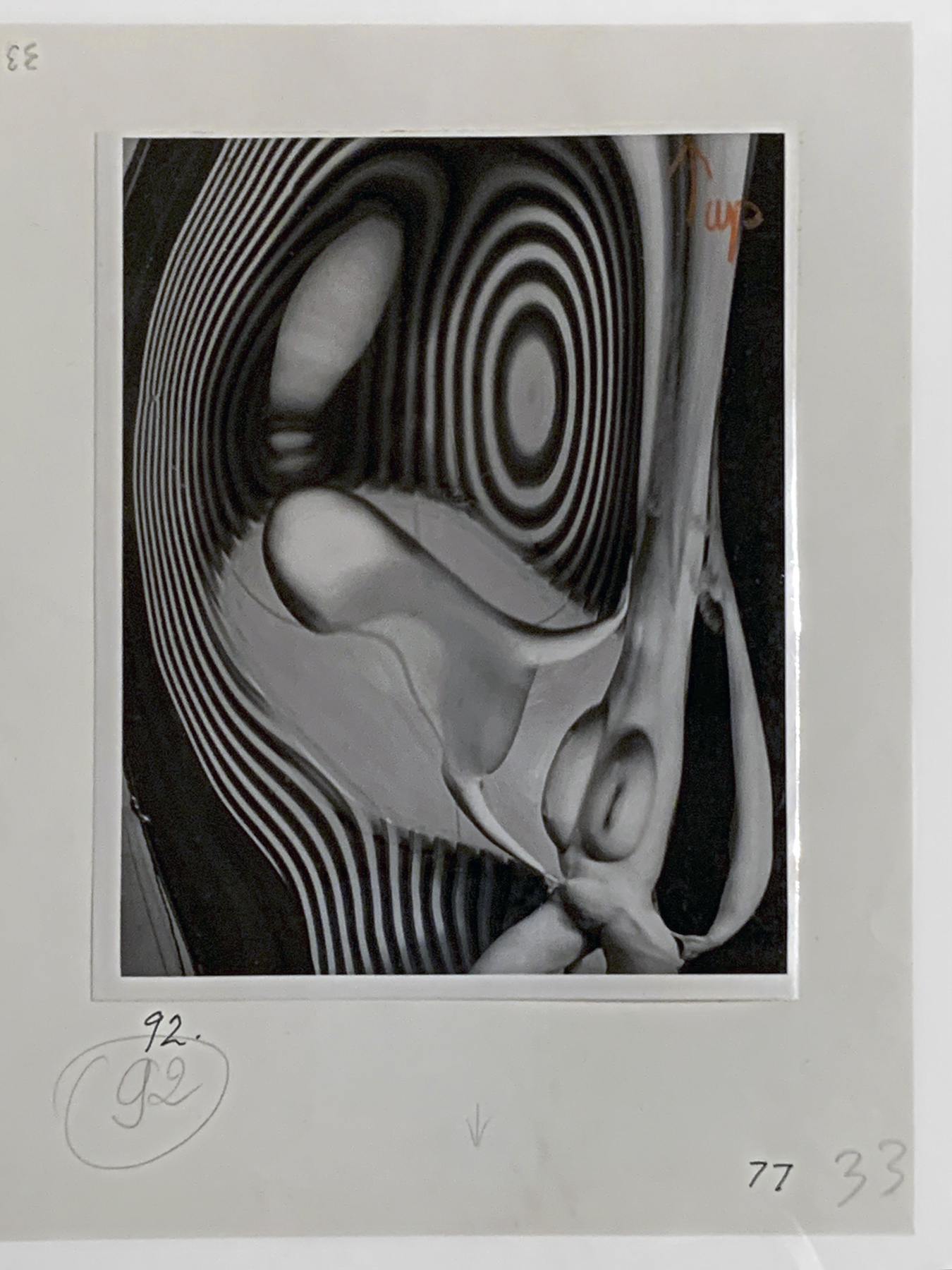
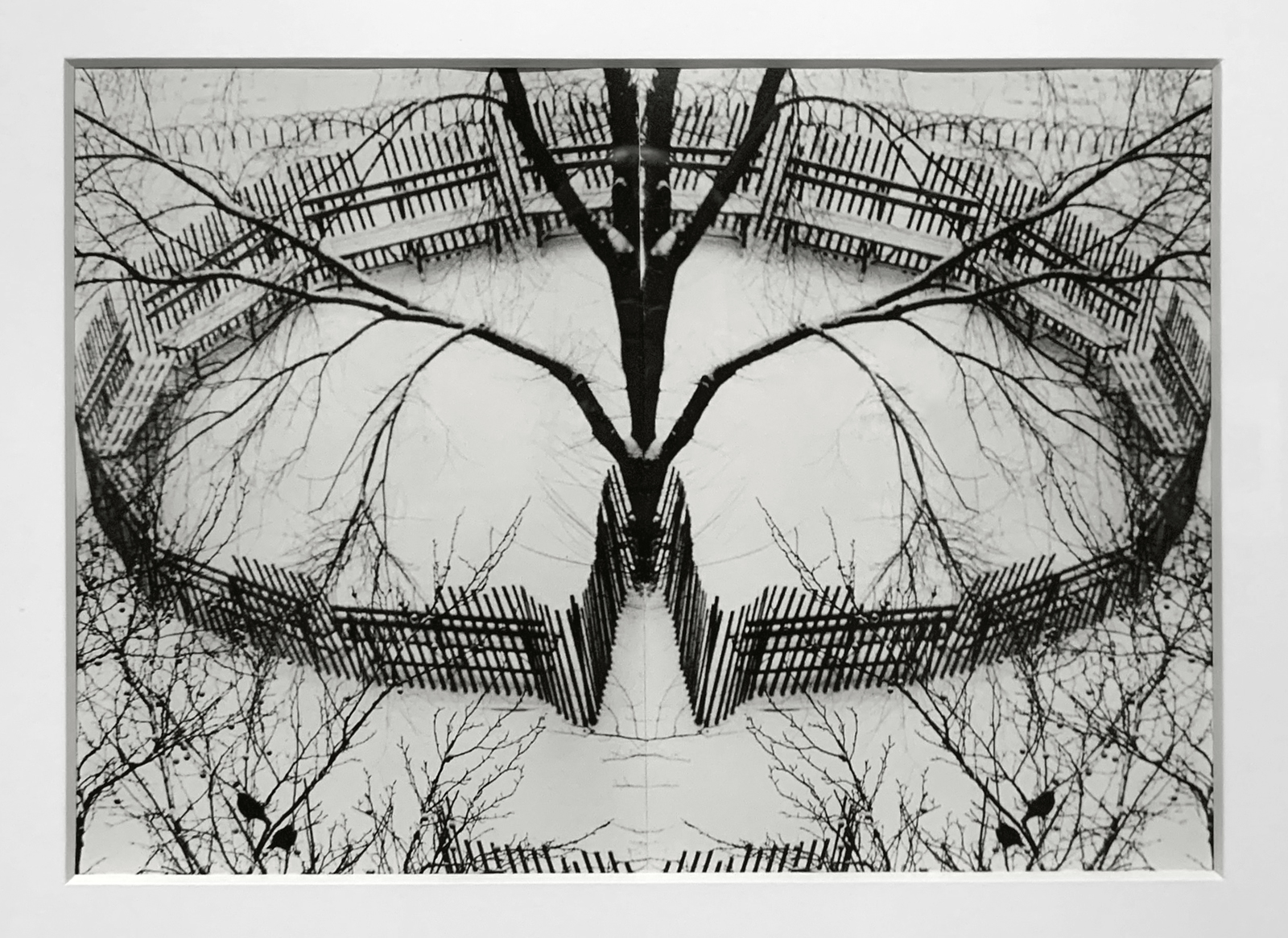
Kertész arrived in Paris in October 1925. Moving in avant-garde literary and artistic circles, he photographed his Hungarian friends, artists’ studios, street life and the city’s parks and gardens. In 1933 he embarked on his famous Distortions series of nudes deformed by funhouse mirrors, producing anamorphic images similar in spirit to the work of Pablo Picasso, Jean Arp and Henry Moore.
In addition to this profusion of activity, he explored the possibility of disseminating his work in publications. Between 1933 and the end of his life he had designed and published a total of nineteen books.
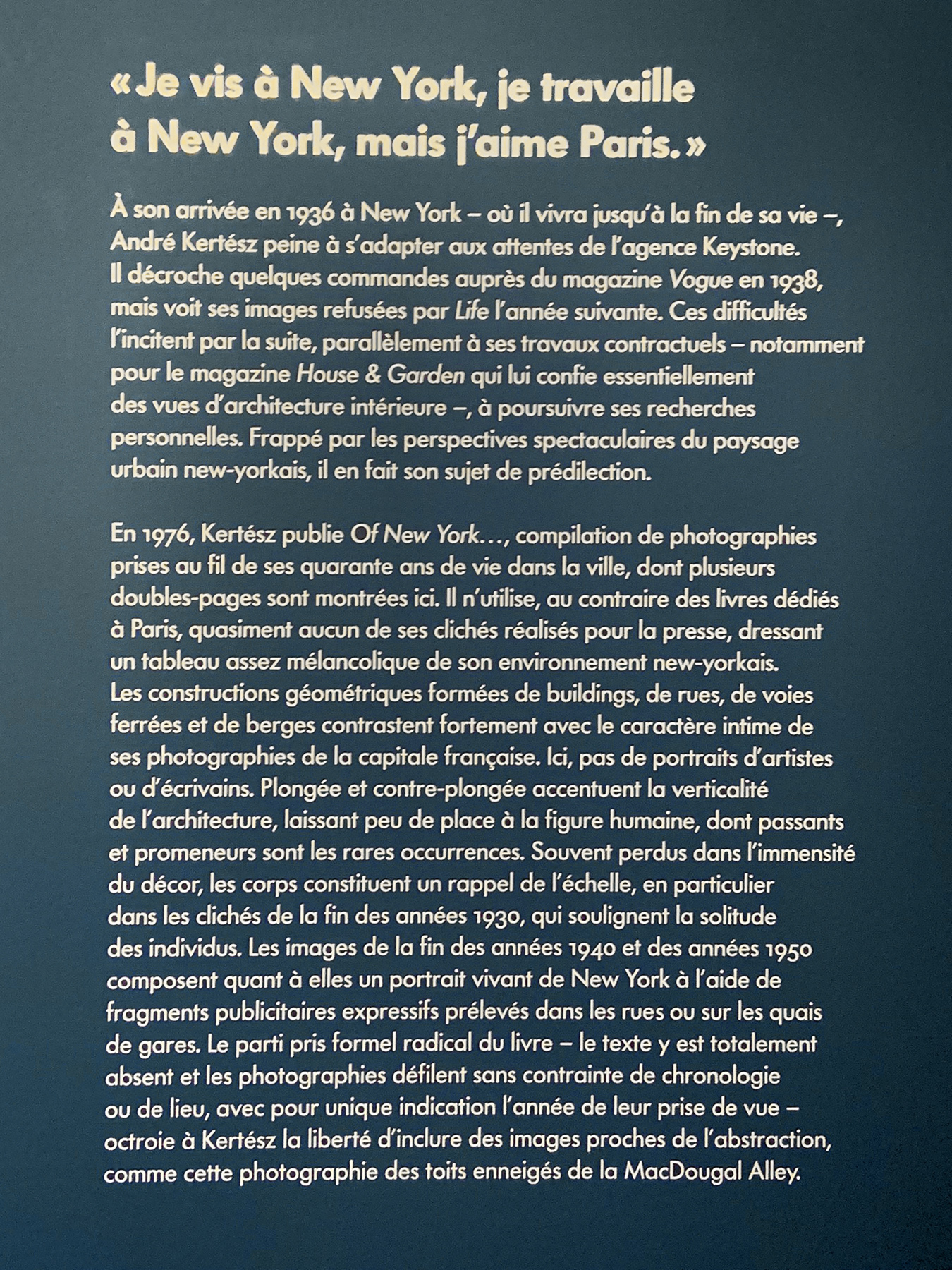
In 1936 Kertész and his wife Elizabeth left for New York, where he began with a brief assignment for Keystone, the world’s biggest photographic agency. He struggled, though, to carve out a place for himself in a context whose demands were very different from those of his Paris years.
Inspired by the rediscovery of his Hungarian and French negatives, from 1963 onwards he devoted himself solely to personal projects, and was offered retrospectives by the French National Library in Paris and MoMA in New York. This fresh recognition sparked a flurry of books in which he harked back to the high points of his oeuvre. In his last years, armed with a Polaroid, he returned to his earlier practice of everyday photography.
Text from the Jeu de Paume website for the earlier exhibition The Art of Poise: André Kertész
Text from the exhibition L’equilibriste, André Kertész at Jeu de Paume, Château de Tours
André Kertész (Hungarian, 1894-1985) La Tulipe mélancolique, New York Melancholic Tulip, New York 1939 Gelatin silver print
André Kertész (Hungarian, 1894-1985) Paris (installation view) 1984 Gelatin silver print Photo: Marcus Bunyan
André Kertész (Hungarian, 1894-1985) Paris 1984 Gelatin silver print
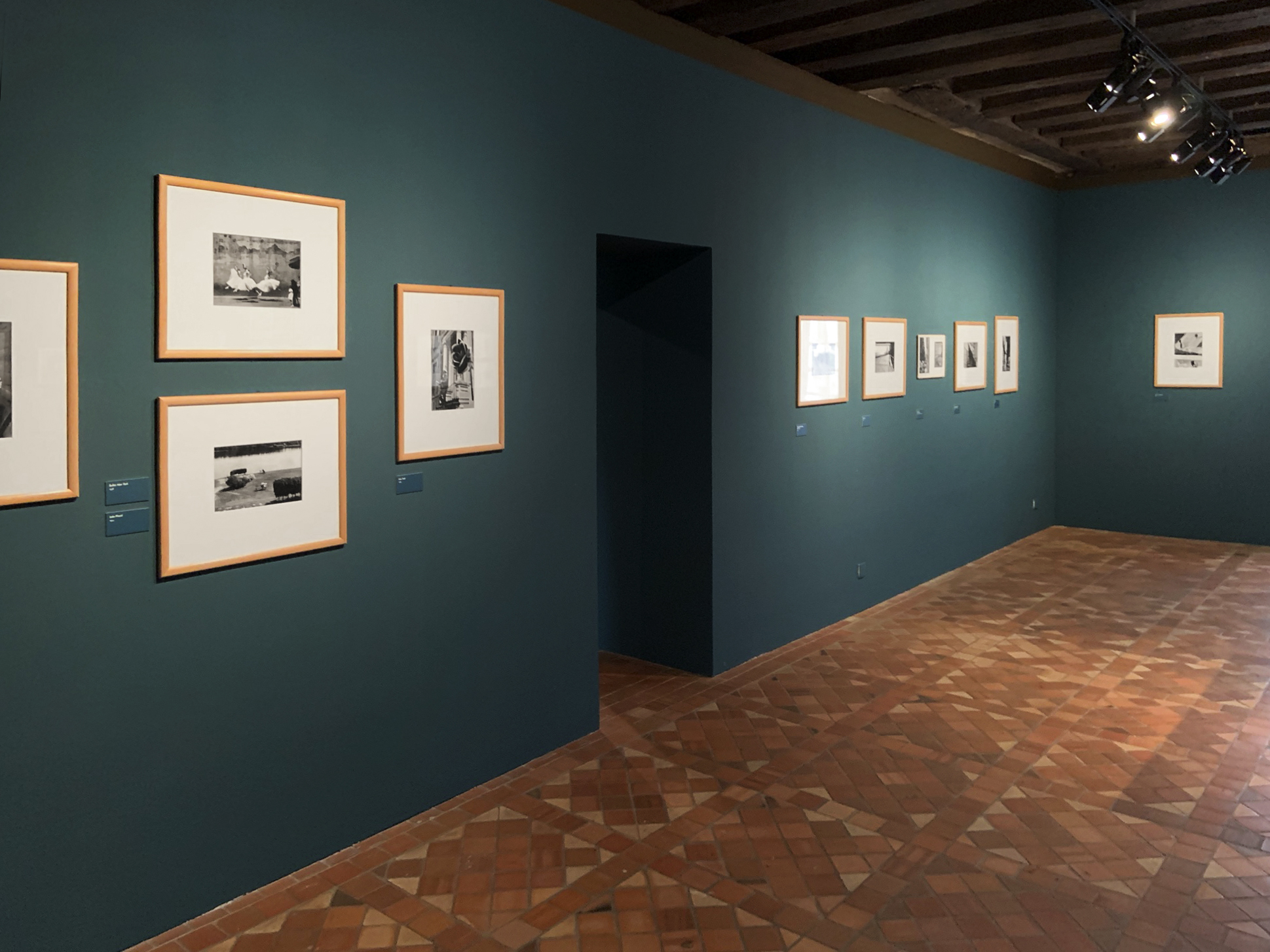
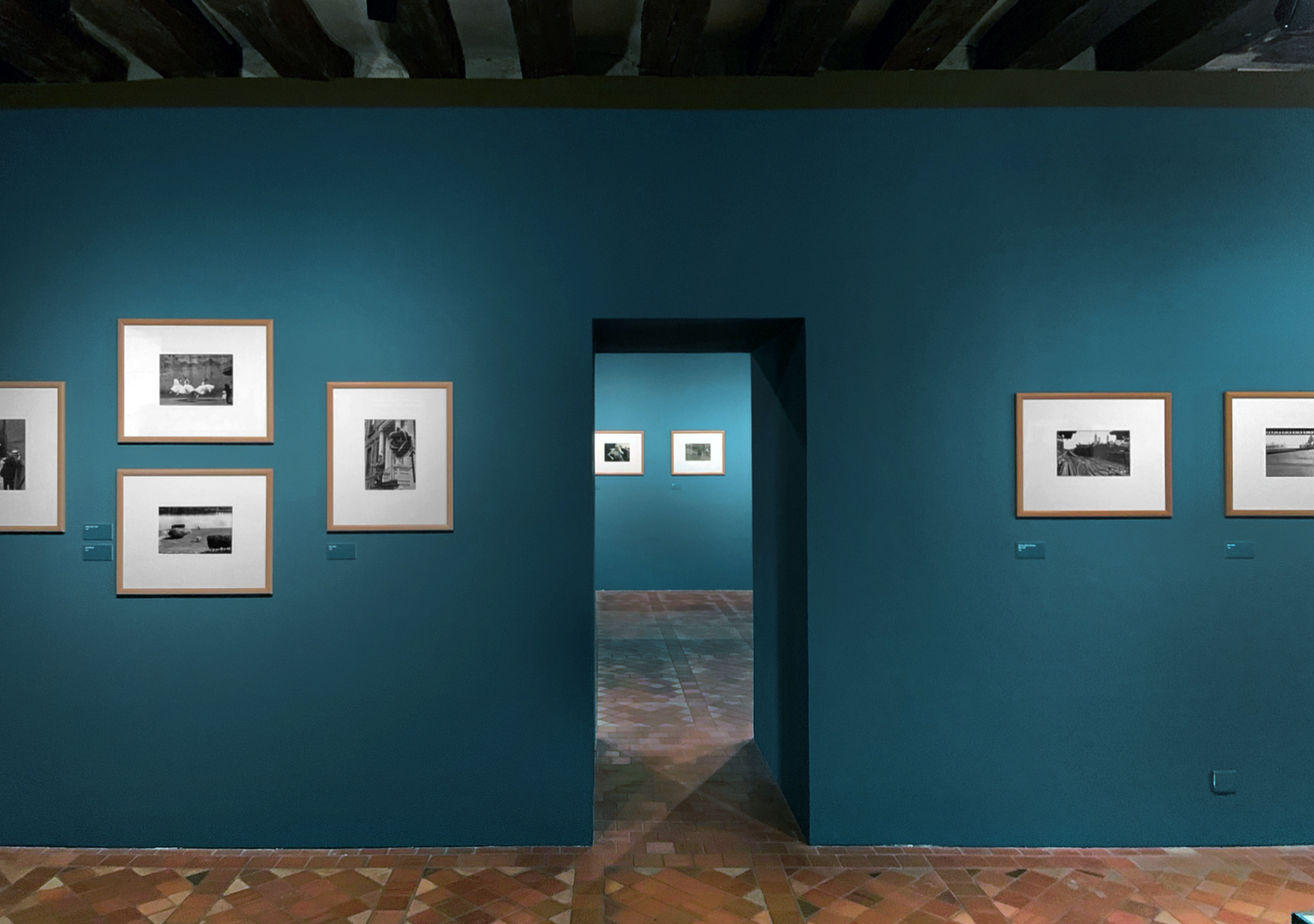
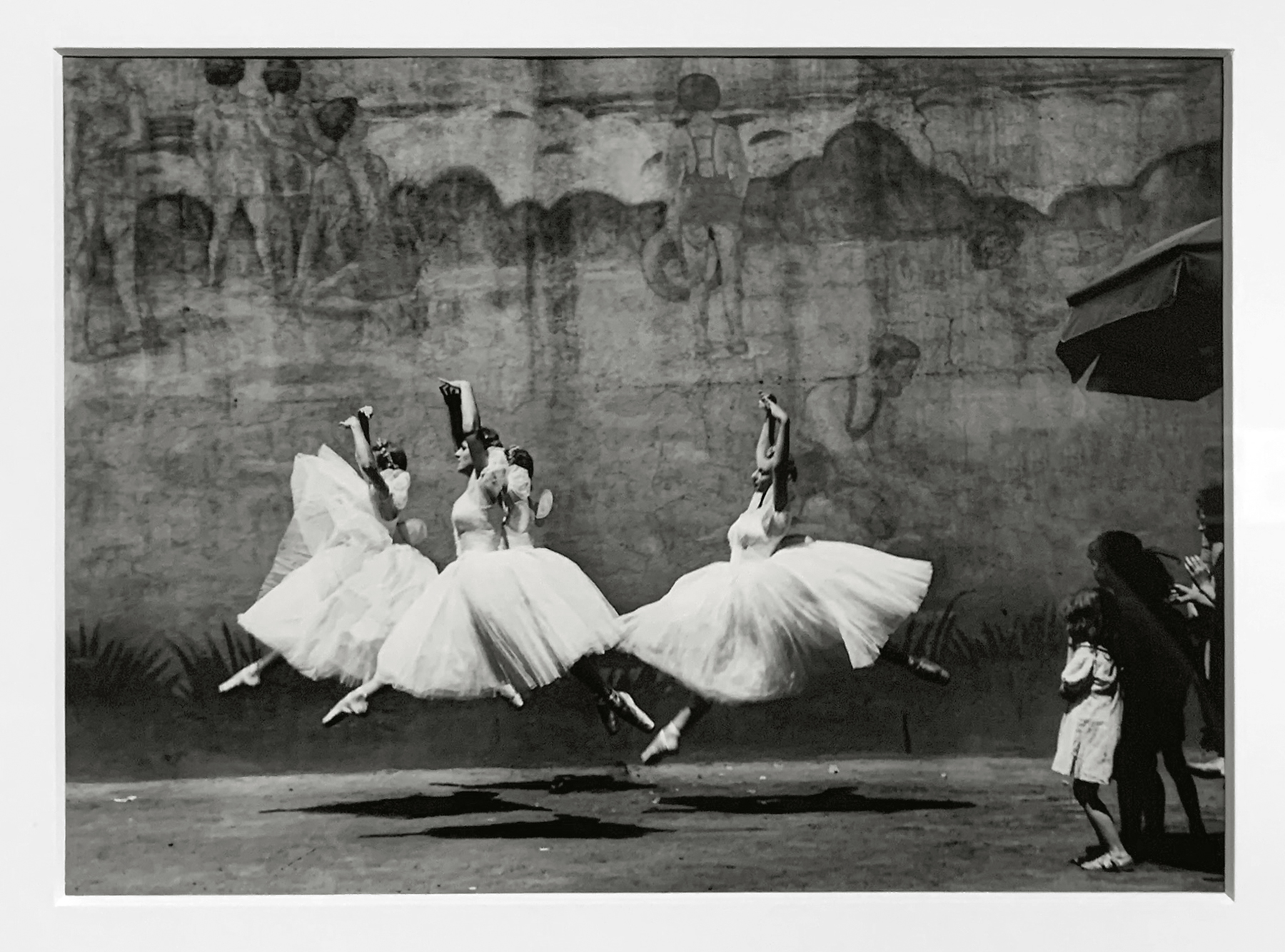
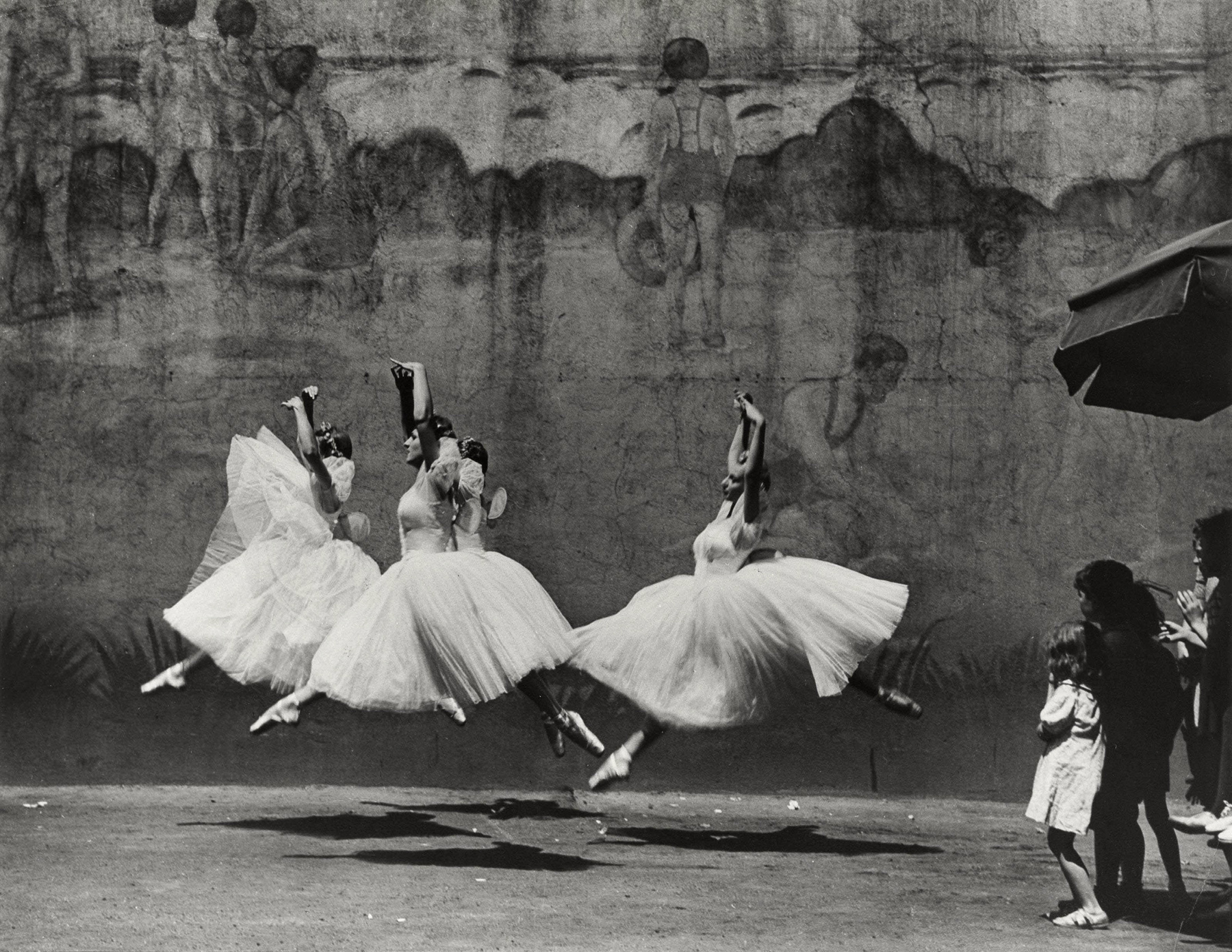
Installation views of the exhibition L’equilibriste, André Kertész at Jeu de Paume, Château de Tours showing at top left, Ballet, New York 1938; and at bottom left, Lake Placid 1954 Photos: Marcus Bunyan
André Kertész (Hungarian, 1894-1985) Ballet, New York (installation view) 1938 Gelatin silver print Photo: Marcus Bunyan
André Kertész (Hungarian, 1894-1985) Ballet, New York 1938 Gelatin silver print
André Kertész (Hungarian, 1894-1985) Lake Placid (installation view) 1954 Gelatin silver print Photo: Marcus Bunyan
André Kertész (Hungarian, 1894-1985) New York (installation view) 1937 Gelatin silver print Photo: Marcus Bunyan
André Kertész (Hungarian, 1894-1985) New York (installation view) 1939 Gelatin silver print Photo: Marcus Bunyan
André Kertész (Hungarian, 1894-1985) New York 1939 Gelatin silver print
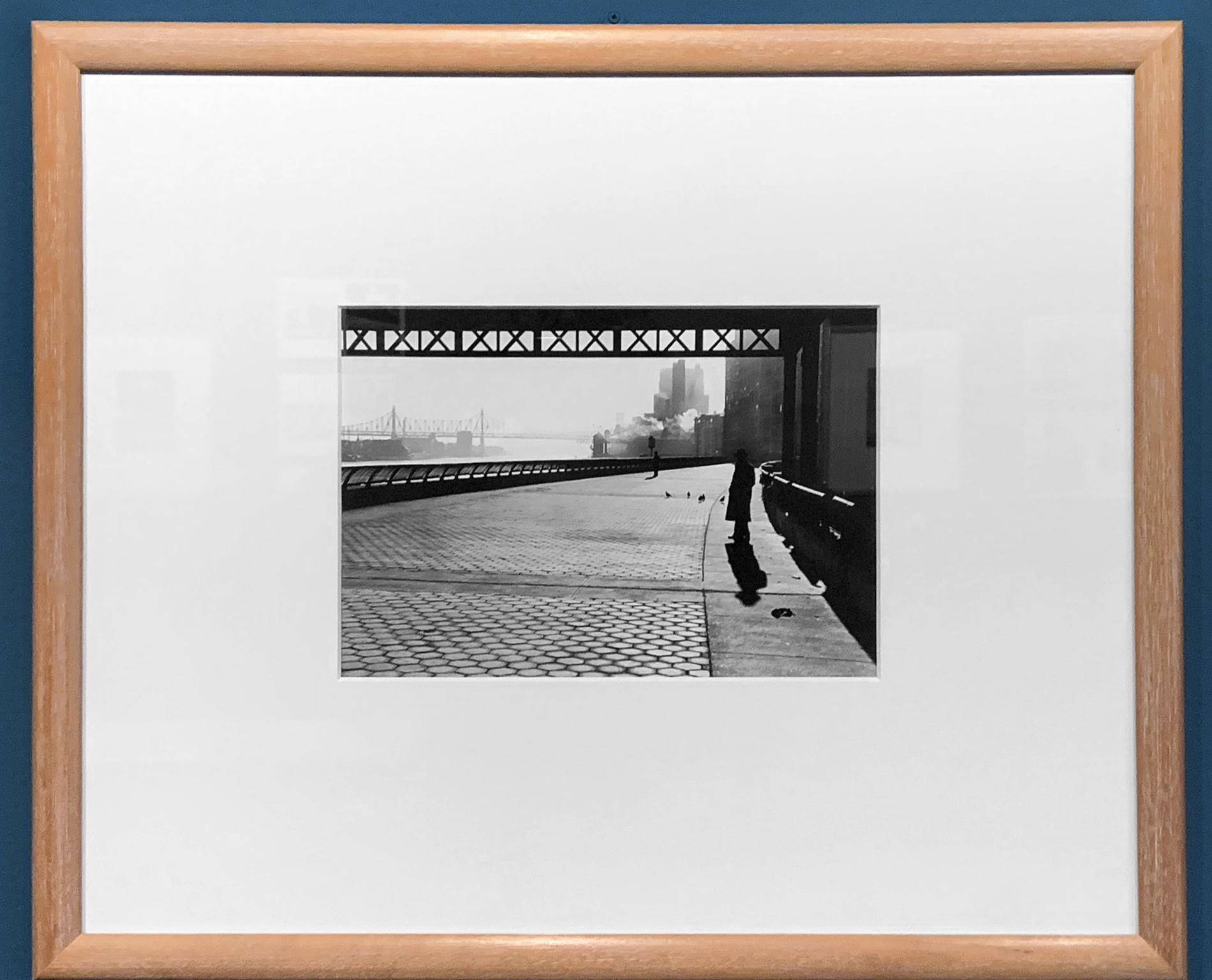
André Kertész (Hungarian, 1894-1985) New York (installation view) 1954 Gelatin silver print Photo: Marcus Bunyan
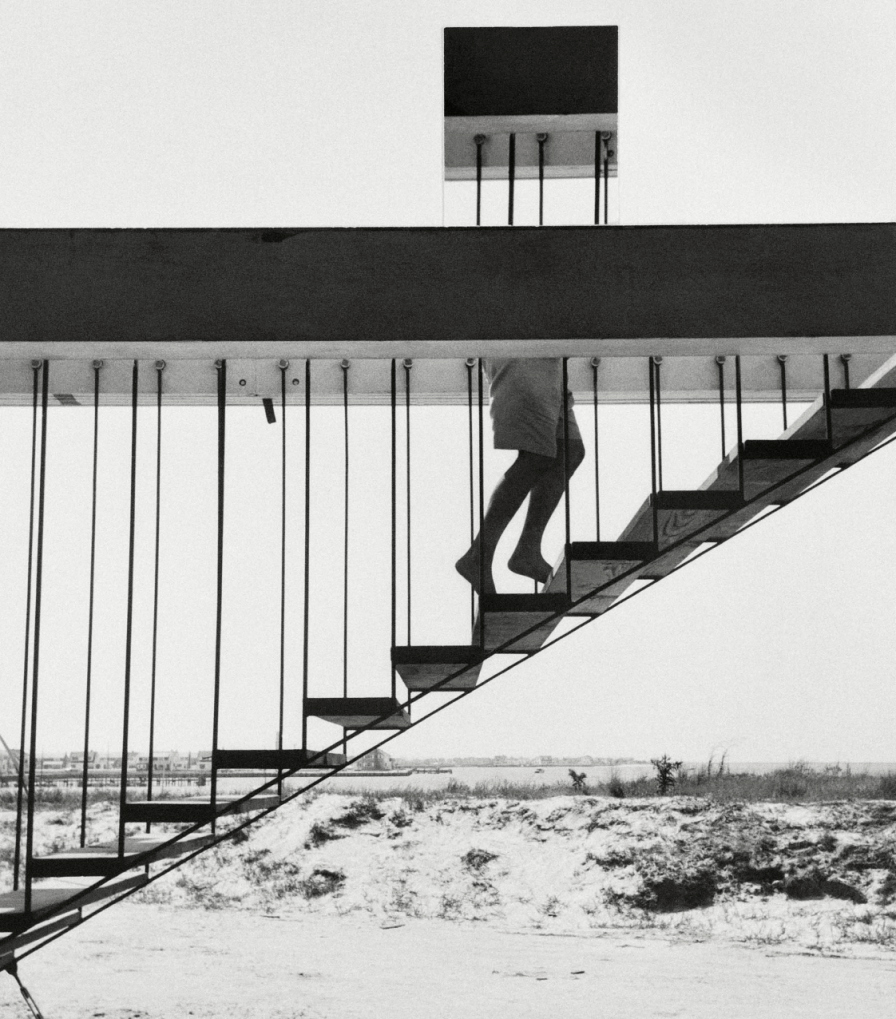
André Kertész (Hungarian, 1894-1985) Escalier, rampe, ombres et femme, New York (installation view) Staircase, banister, shadows and woman, New York 1951 Gelatin silver print Photo: Marcus Bunyan
André Kertész (Hungarian, 1894-1985) Escalier, rampe, ombres et femme, New York (installation view) Staircase, banister, shadows and woman, New York 1951 Gelatin silver print Photo: Marcus Bunyan
André Kertész (Hungarian, 1894-1985) “Buy”, Long Island 1963 Gelatin silver print
André Kertész (Hungarian, 1894-1985) 6th Avenue, New York 1973 Gelatin silver print
André Kertész (Hungarian, 1894-1985) Nuage égaré Lost cloud 1937 Photo: Marcus Bunyan
André Kertész (Hungarian, 1894-1985) Nuage égaré Lost cloud 1937 Gelatin silver print
André Kertész (Hungarian, 1894-1985) Poughkeepsie, New York (installation view) 1937 Gelatin silver print Photo: Marcus Bunyan
André Kertész (Hungarian, 1894-1985) Poughkeepsie, New York 1937 Gelatin silver print
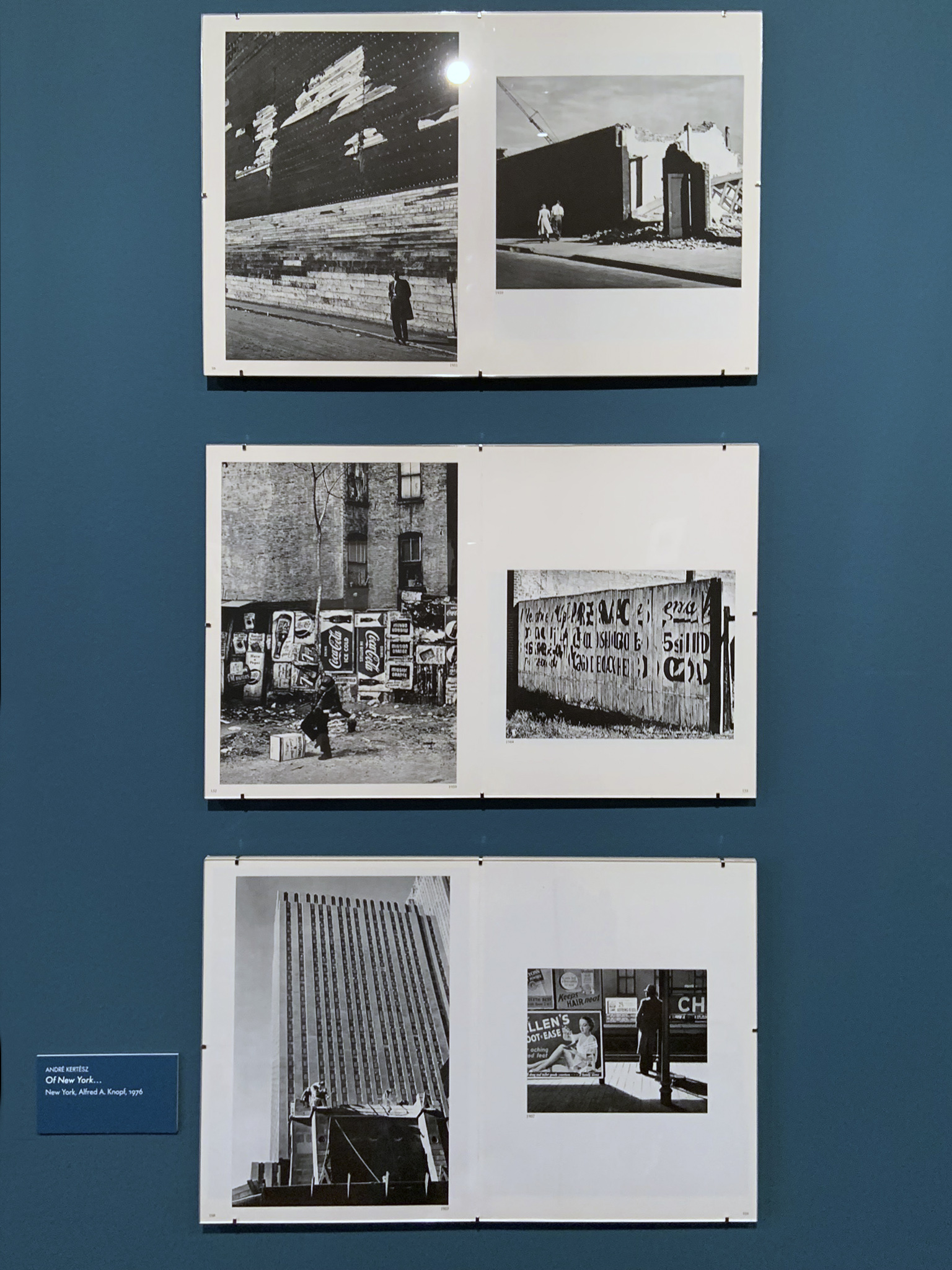
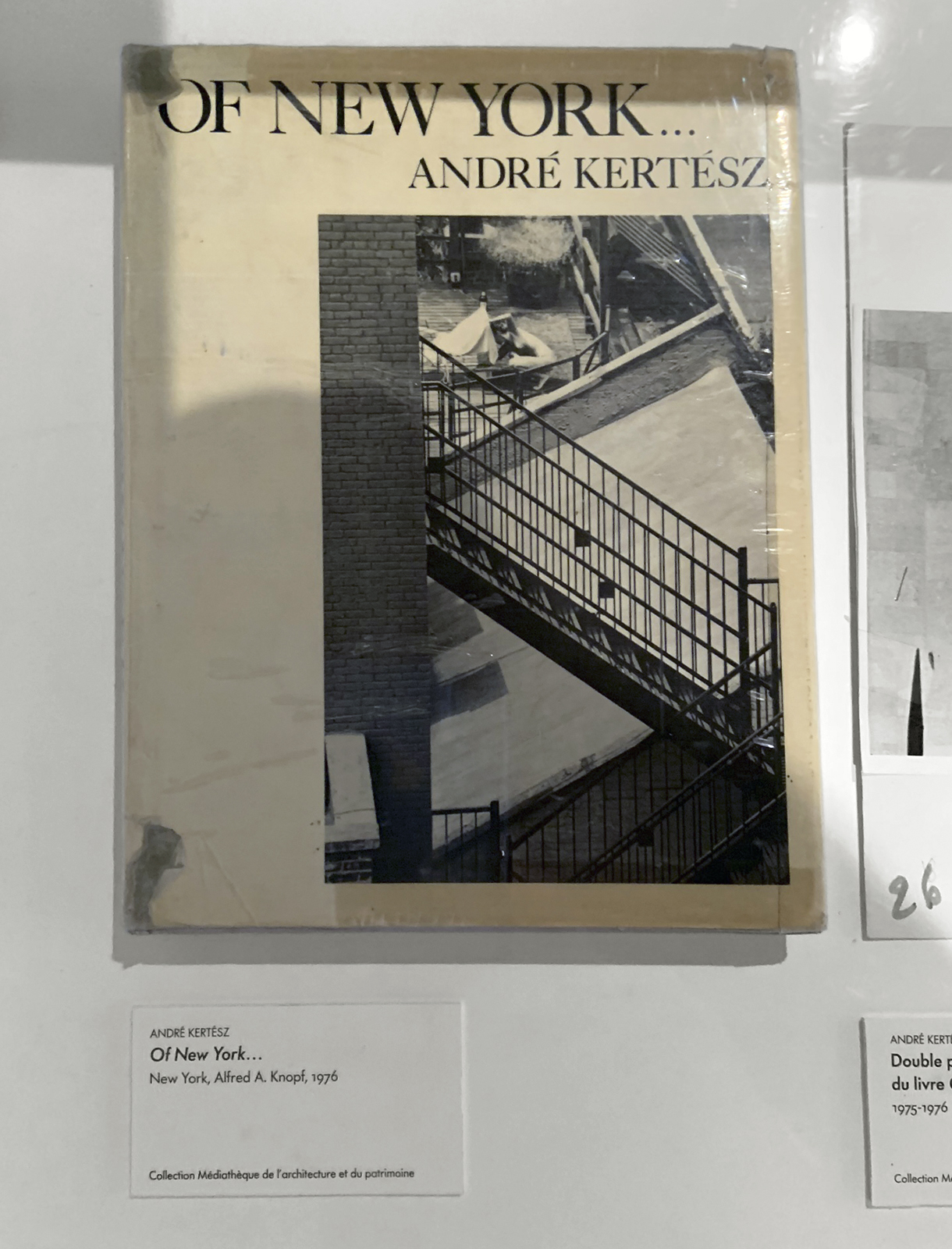
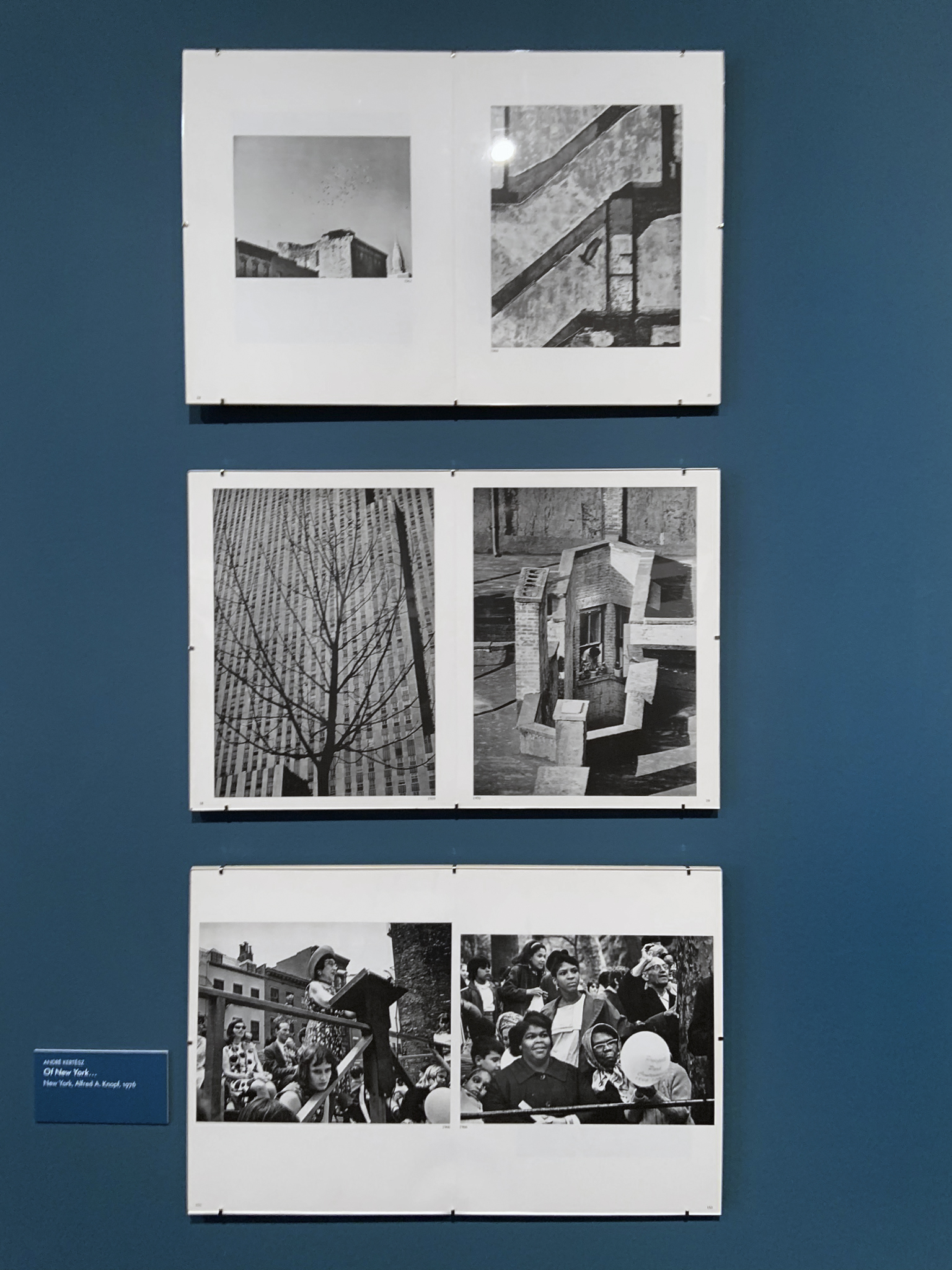
André Kertész (Hungarian, 1894-1985) Of New York… (installation view) New York, Alfred A. Knopf, 1976 Photo: Marcus Bunyan
André Kertész (Hungarian, 1894-1985) New York (installation view) 1951 Gelatin silver print Photo: Marcus Bunyan
André Kertész (Hungarian, 1894-1985) Of New York… (installation view) New York, Alfred A. Knopf, 1976 Photo: Marcus Bunyan
André Kertész (Hungarian, 1894-1985) “Buy”, New York (installation view) 1966 Gelatin silver print Photo: Marcus Bunyan
André Kertész (Hungarian, 1894-1985) Of New York… (installation view) New York, Alfred A. Knopf, 1976 Photo: Marcus Bunyan
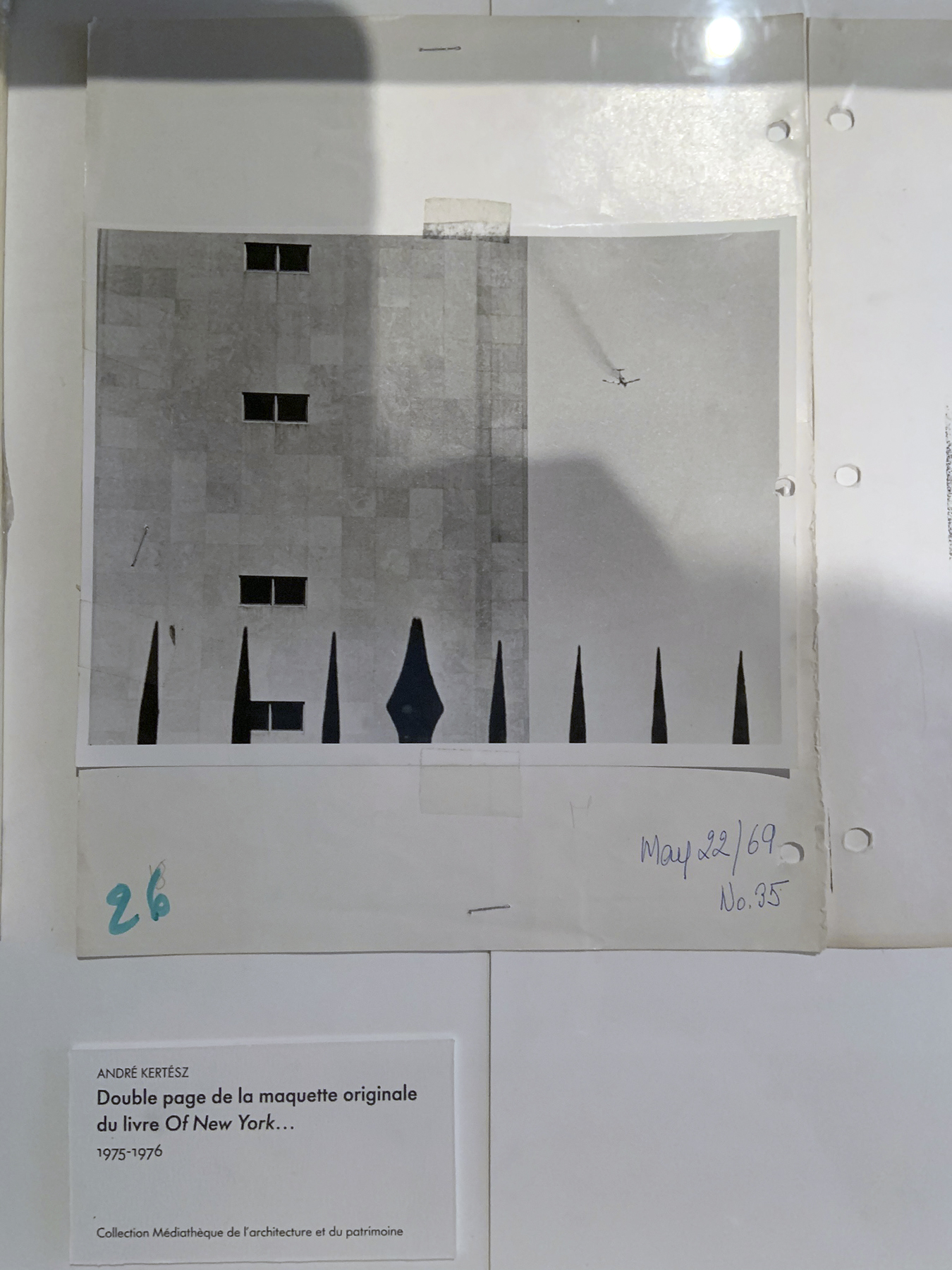
André Kertész (Hungarian, 1894-1985) Double page de la maquette originale du livre ‘Of New York…’ (installation view) Double page of the original model of the book ‘Of New York…’ 1975-76 Photo: Marcus Bunyan
Installation view of the exhibition L’equilibriste, André Kertész at Jeu de Paume, Château de Tours showing at second left, New York 1939; and at third left, New York 1936 Photo: Marcus Bunyan
André Kertész (Hungarian, 1894-1985) New York (installation view) 1939 Gelatin silver print Photo: Marcus Bunyan
André Kertész (Hungarian, 1894-1985) New York (installation view) 1936 Gelatin silver print Photo: Marcus Bunyan
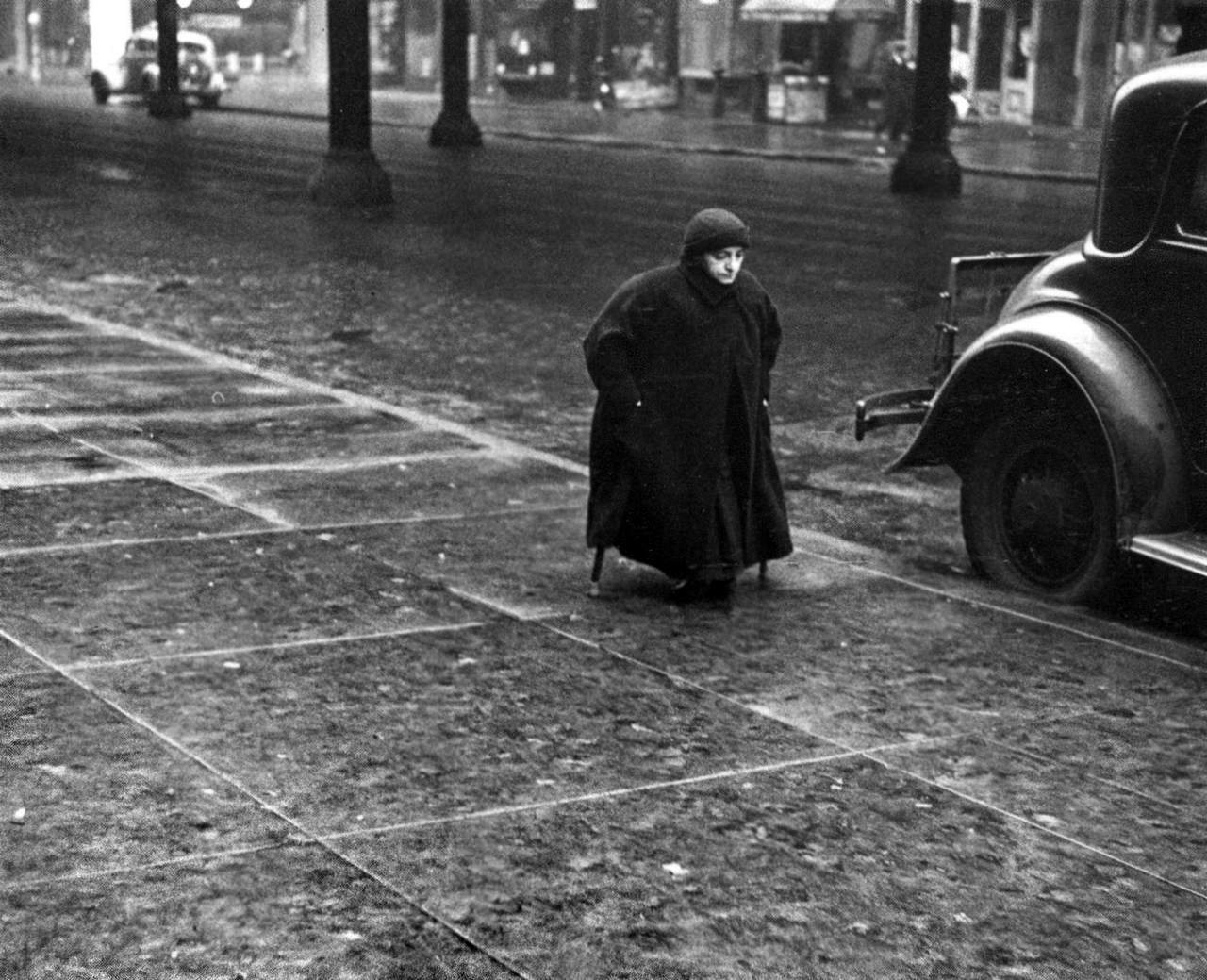
André Kertész (Hungarian, 1894-1985) New York 1936 Gelatin silver print
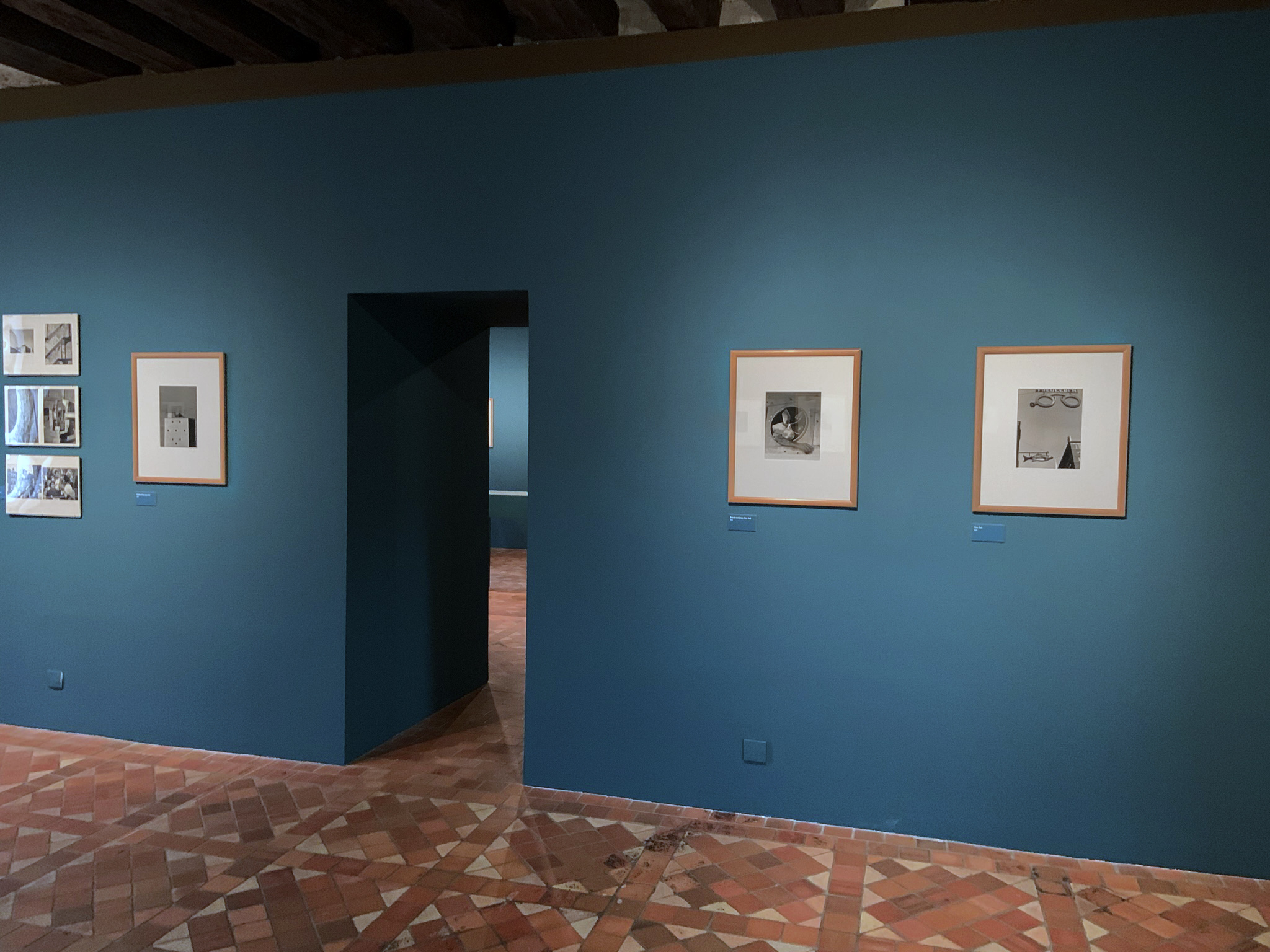
Installation view of the exhibition L’equilibriste, André Kertész at Jeu de Paume, Château de Tours showing at second right, Arm and Fan, New York 1937 Photo: Marcus Bunyan
André Kertész (Hungarian, 1894-1985) Bras et ventilateur, New York (installation view) Arm and Fan, New York 1937 Gelatin silver print Photo: Marcus Bunyan
André Kertész (Hungarian, 1894-1985) Bras et ventilateur, New York Arm and Fan, New York 1937 Gelatin silver print
André Kertész (Hungarian, 1894-1985) Of New York… (installation view) New York, Alfred A. Knopf, 1976 Photo: Marcus Bunyan
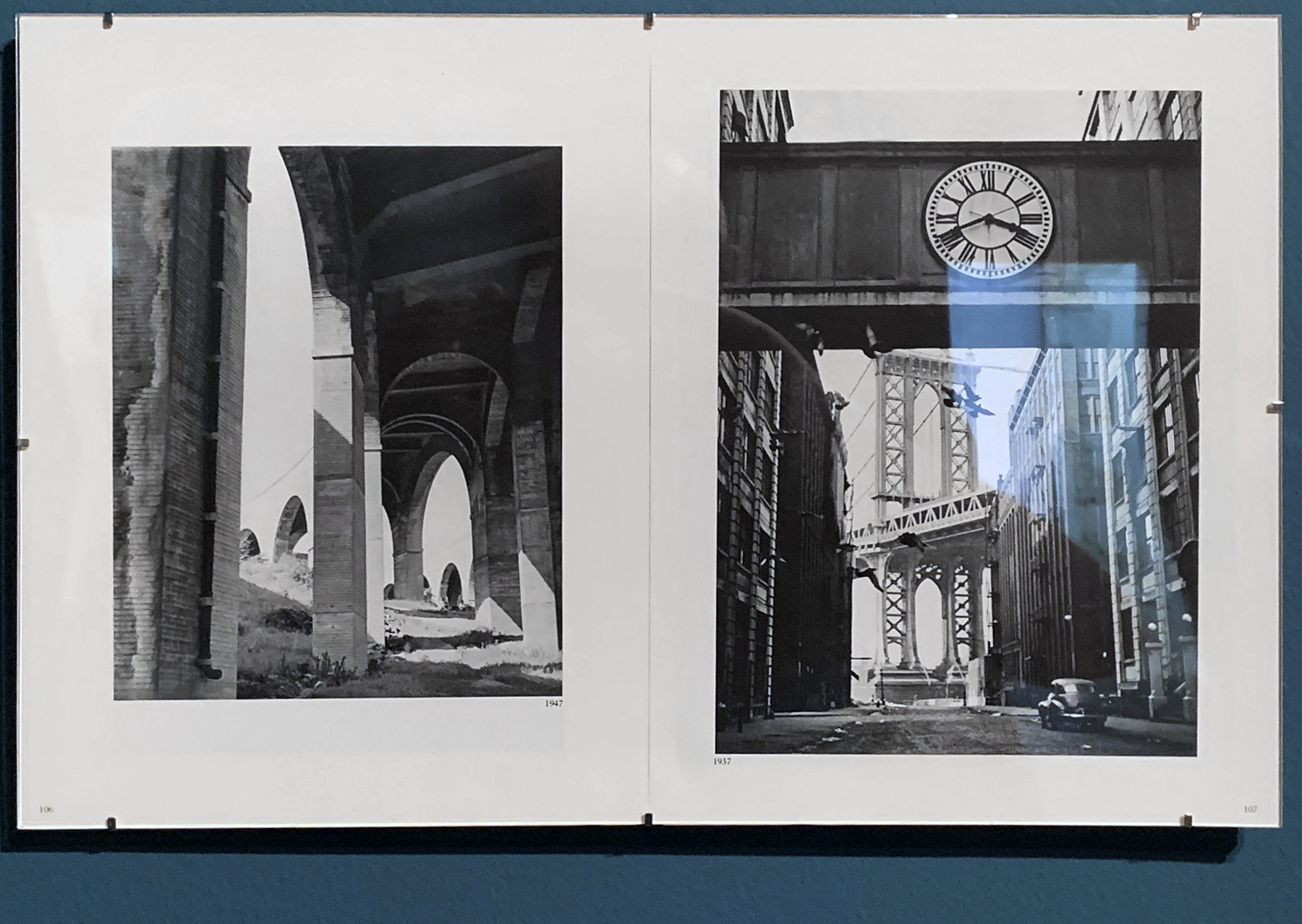
André Kertész (Hungarian, 1894-1985) New York (installation view) 1947 Gelatin silver print Photo: Marcus Bunyan
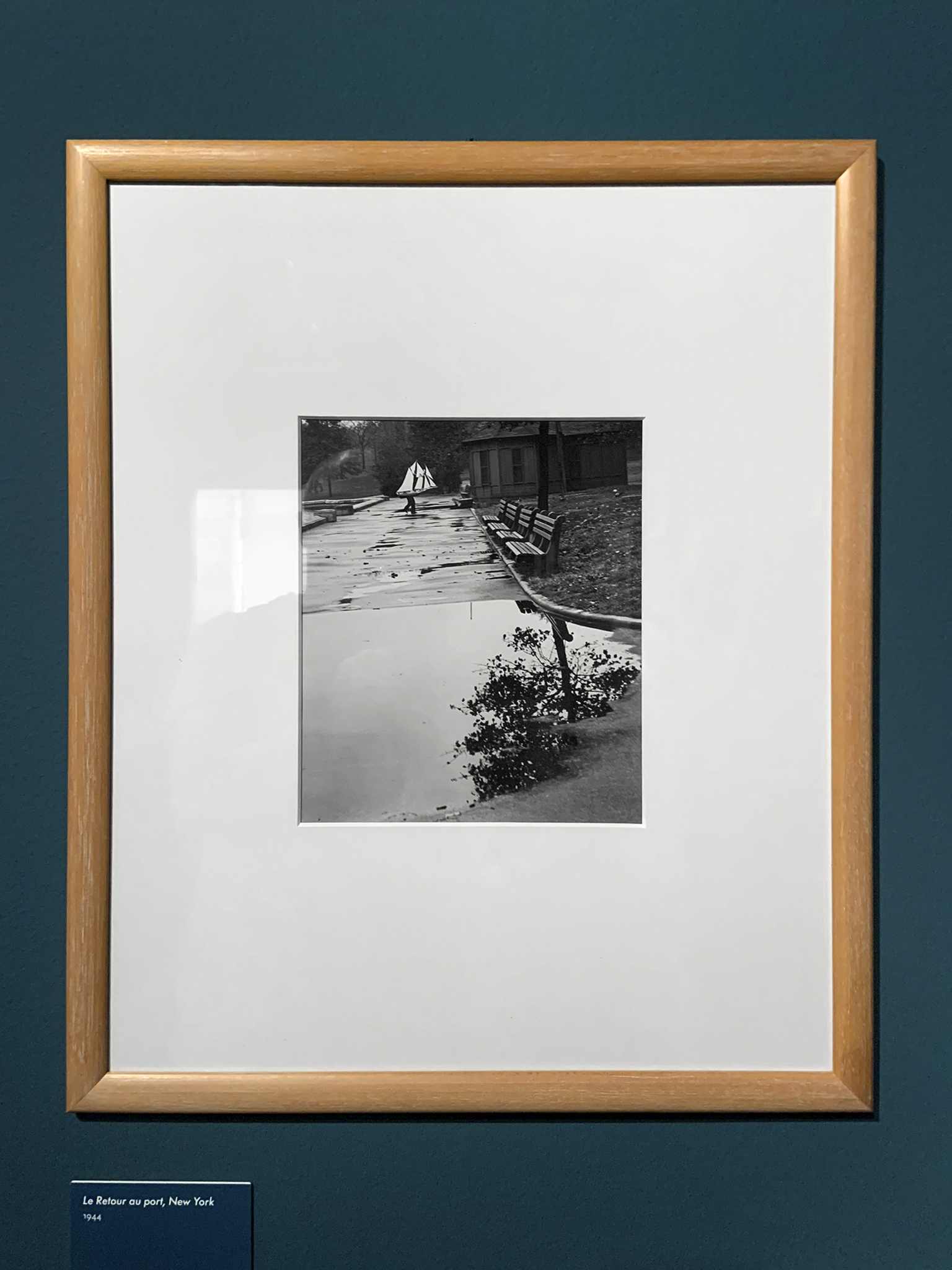
André Kertész (Hungarian, 1894-1985) Le retour au port, New York (installation view) Return to port, New York 1944 Gelatin silver print Photo: Marcus Bunyan
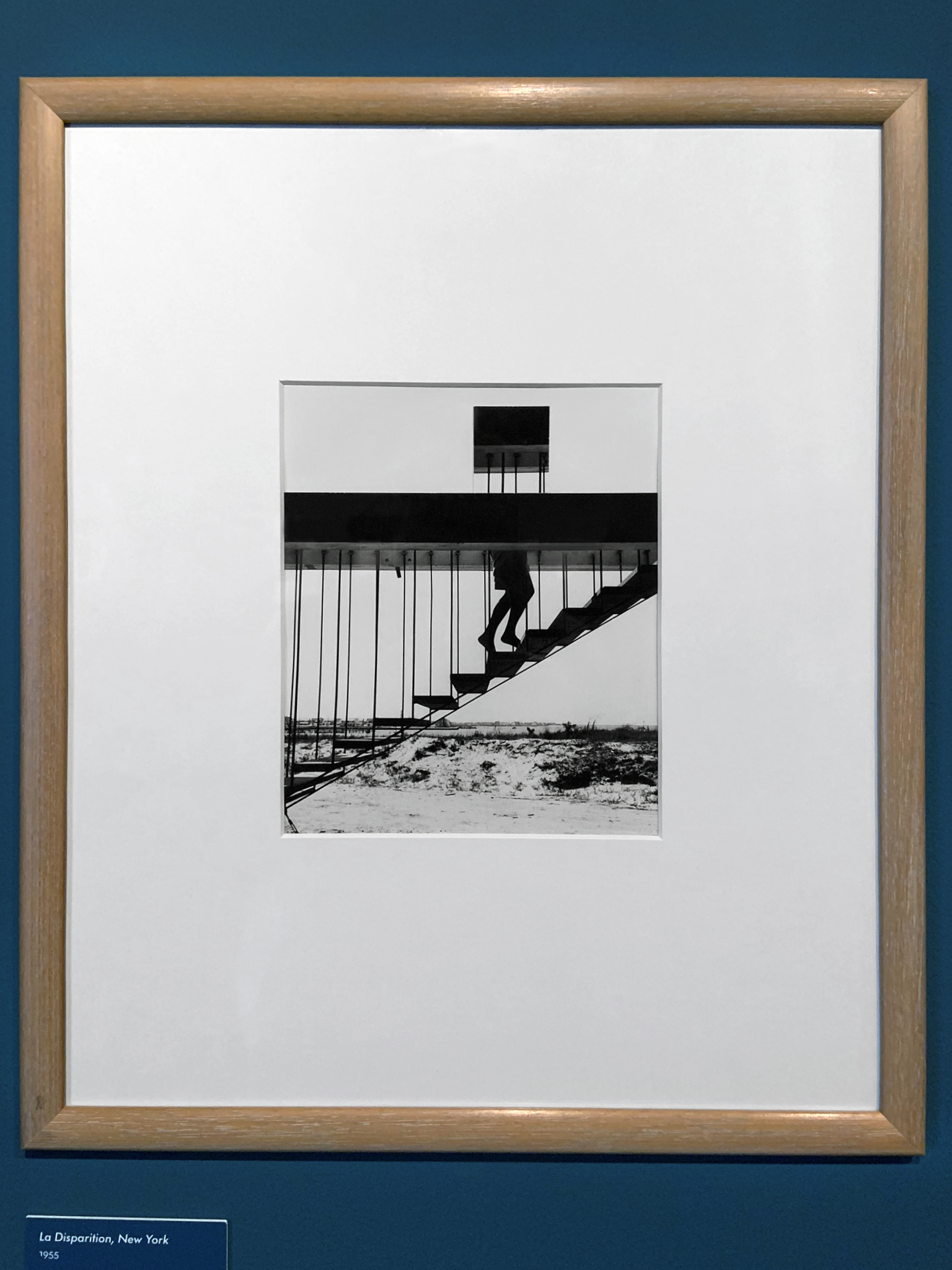
Installation view of the exhibition L’equilibriste, André Kertész at Jeu de Paume, Château de Tours showing at left, Disappearance, New York 1955 Photo: Marcus Bunyan
André Kertész (Hungarian, 1894-1985) La Disparition, New York (installation view) Disappearance, New York 1955 Gelatin silver print Photo: Marcus Bunyan
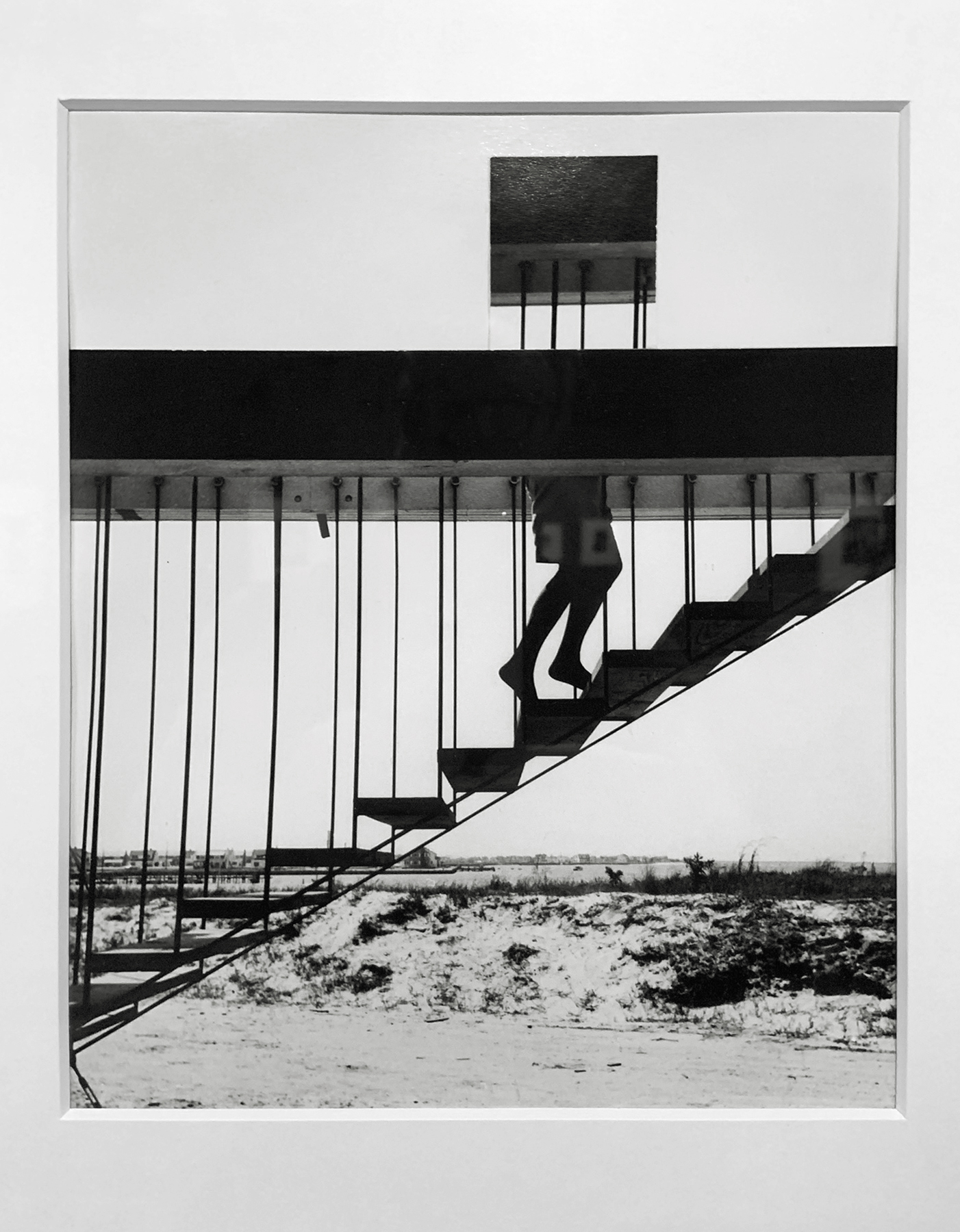
André Kertész (Hungarian, 1894-1985) La Disparition, New York (installation view) Disappearance, New York 1955 Gelatin silver print Photo: Marcus Bunyan
André Kertész (Hungarian, 1894-1985) Disappearance, New York 1955 Gelatin silver print
André Kertész (Hungarian, 1894-1985) New York (installation view) 1969 Gelatin silver print Photo: Marcus Bunyan
Text from the exhibition L’equilibriste, André Kertész at Jeu de Paume, Château de Tours
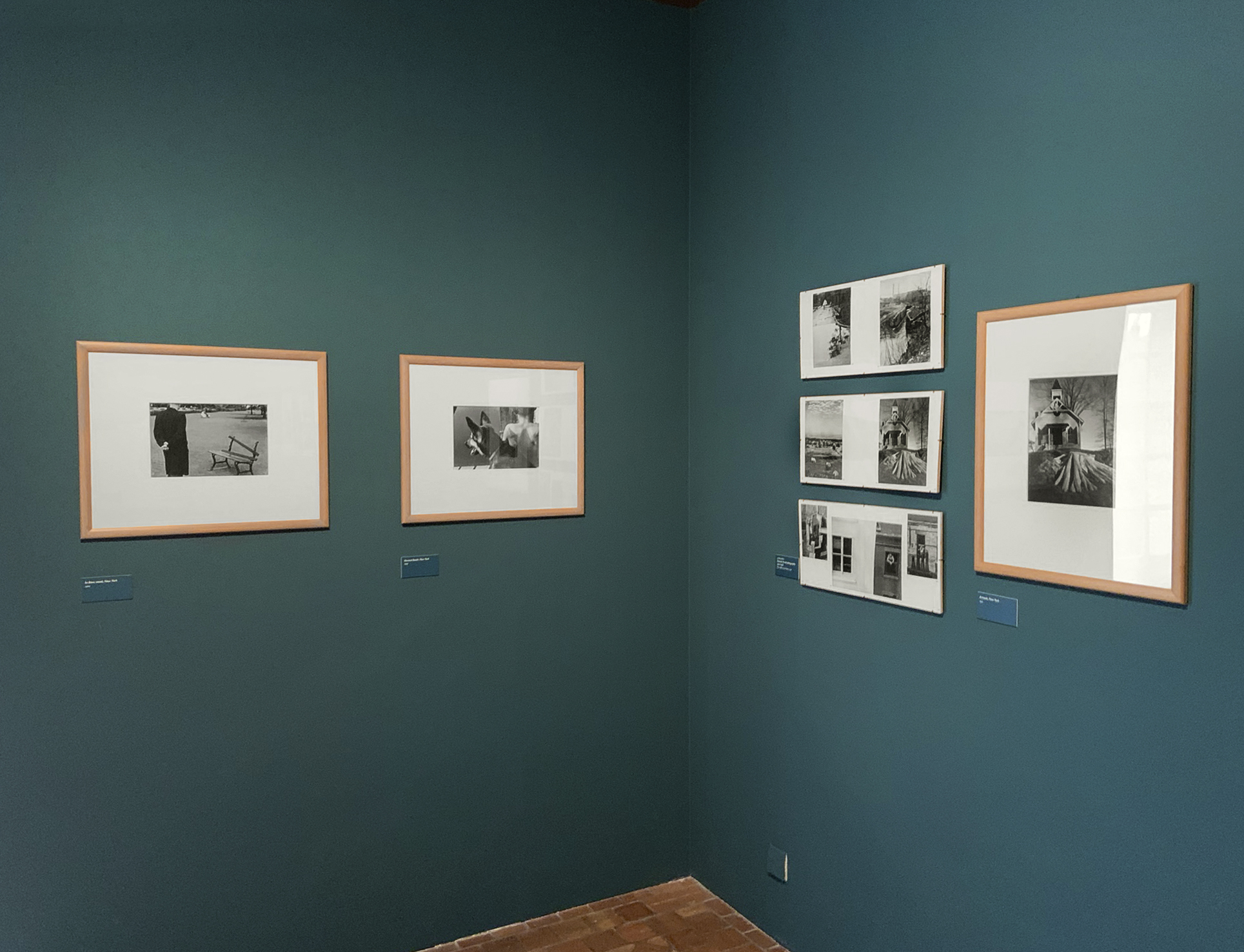
Installation views of the exhibition L’equilibriste, André Kertész at Jeu de Paume, Château de Tours showing at left in the bottom image, Broken Bench, New York 1962 Photos: Marcus Bunyan
André Kertész (Hungarian, 1894-1985) Le Banc cassé, New York Broken Bench, New York 1962 Gelatin silver print
André Kertész (Hungarian, 1894-1985) Of New York… (installation view) New York, Alfred A. Knopf, 1976 Photo: Marcus Bunyan
André Kertész (Hungarian, 1894-1985) Soixante ans de photographie (installation view) Sixty years of photography 1912-1972 Paris, éditions du Chêne, 1972 Photo: Marcus Bunyan
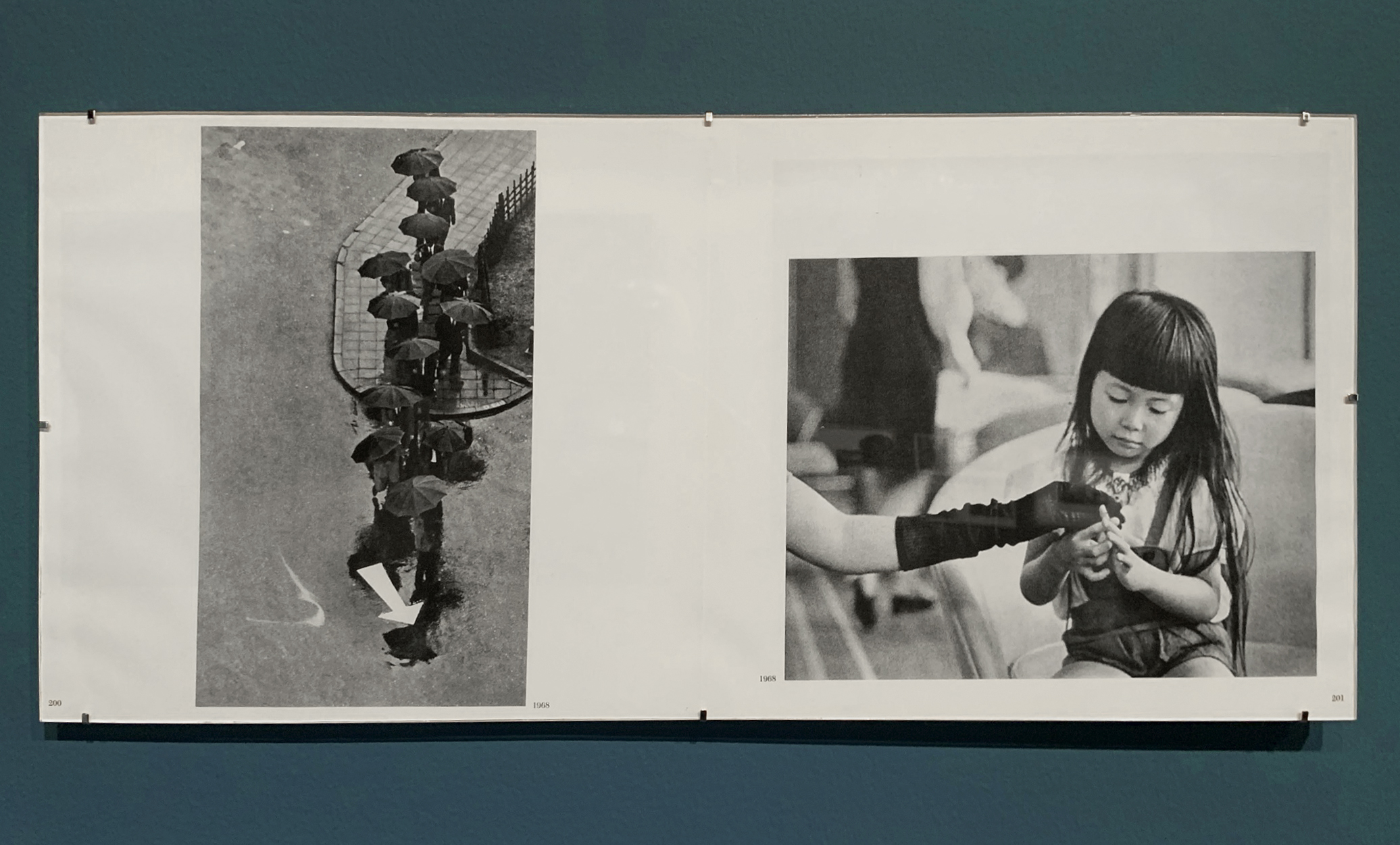
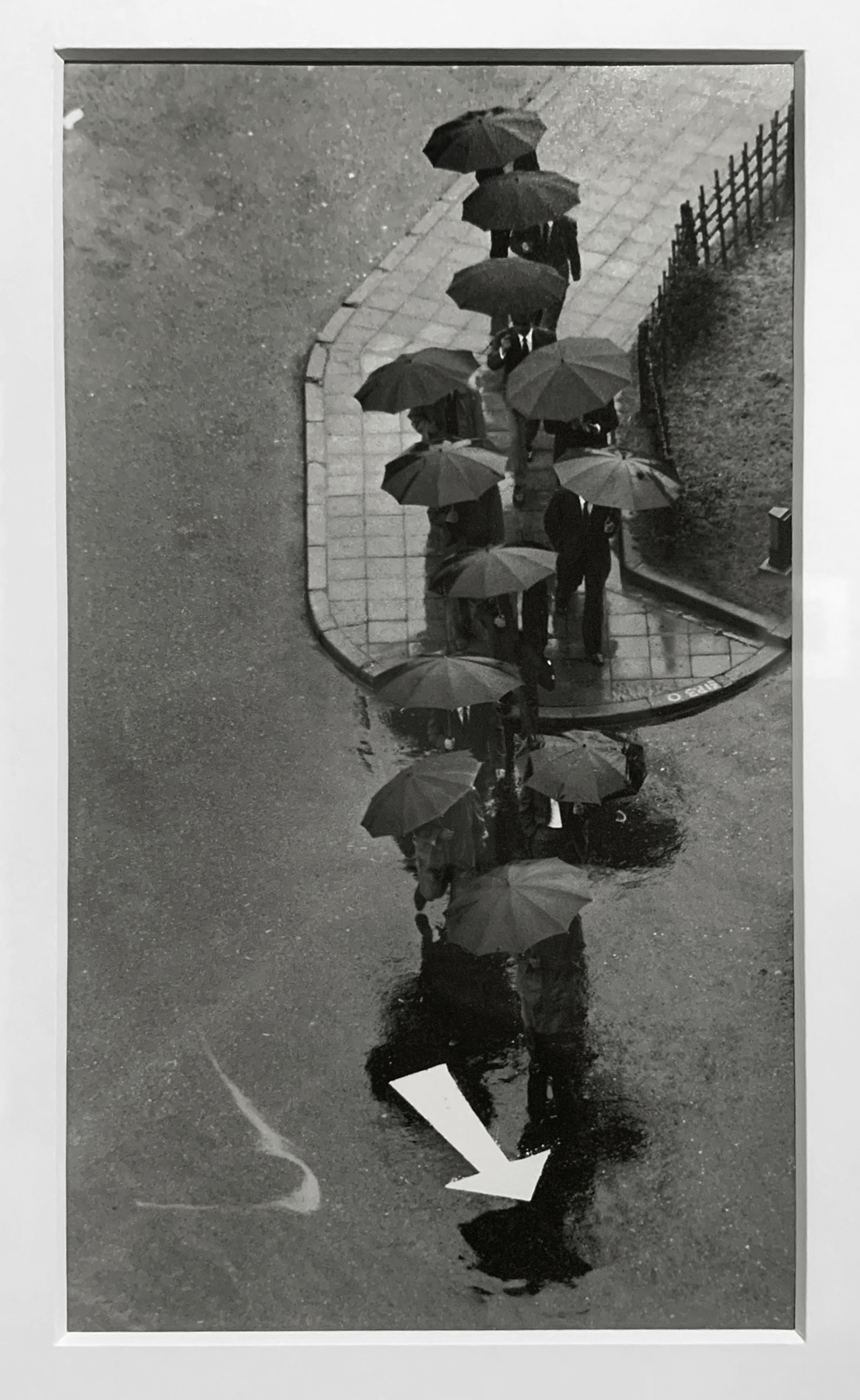
André Kertész (Hungarian, 1894-1985) Jour pluvieux, Tokyo (installation view) Rainy day, Tokyo 1968 Gelatin silver print Photo: Marcus Bunyan
André Kertész (Hungarian, 1894-1985) McDougall Alley, New York (installation view) 1965 Gelatin silver print Photo: Marcus Bunyan
André Kertész (Hungarian, 1894-1985) Washington Square, New York 1954 Gelatin silver print
André Kertész (Hungarian, 1894-1985) Washington Square, New York (installation view) 1954 Gelatin silver print Photo: Marcus Bunyan
André Kertész (Hungarian, 1894-1985) Washington Square, New York 1954 Gelatin silver print
André Kertész (Hungarian, 1894-1985) Jardin d’hiver, New York (installation view) Winter Garden, New York 1970 Gelatin silver print Photo: Marcus Bunyan
André Kertész (Hungarian, 1894-1985) Martinique 1972 Gelatin silver print
André Kertész (Hungarian, 1894-1985) Soixante ans de photographie (installation view) Sixty years of photography 1912-1972 Paris, éditions du Chêne, 1972 Photo: Marcus Bunyan
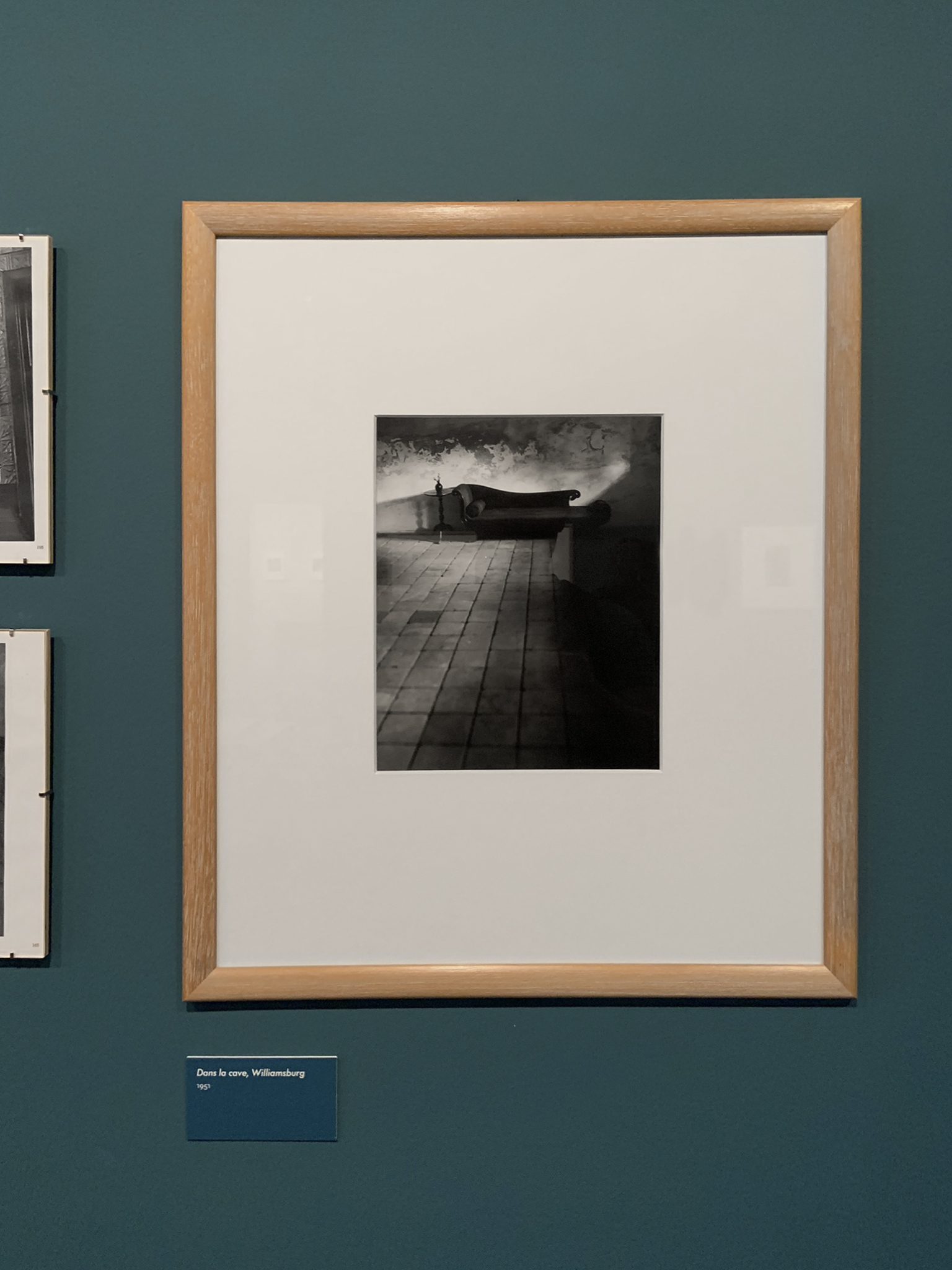
André Kertész (Hungarian, 1894-1985) Dans la cave, Williamsburg (installation view) In the cellar, Williamsburg 1951 Gelatin silver print Photo: Marcus Bunyan
André Kertész (Hungarian, 1894-1985) Nara, Japan 1968 Gelatin silver print
Text from the exhibition L’equilibriste, André Kertész at Jeu de Paume, Château de Tours
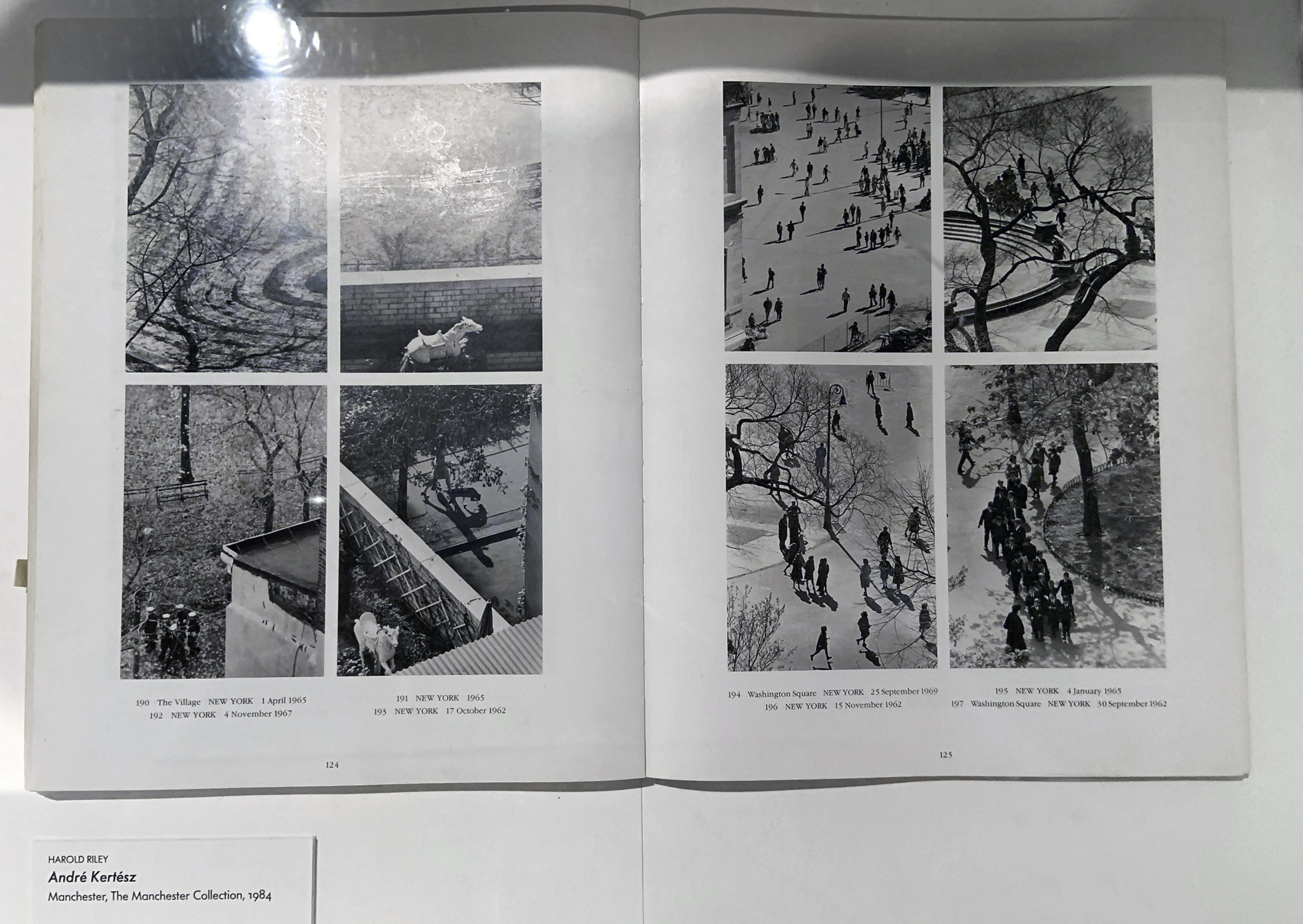
Harold Riley André Kertész (installation view) Manchester, The Manchester Collection, 1984 Collection Médiathèque de l’architecture et du patrimoine Photo: Marcus Bunyan
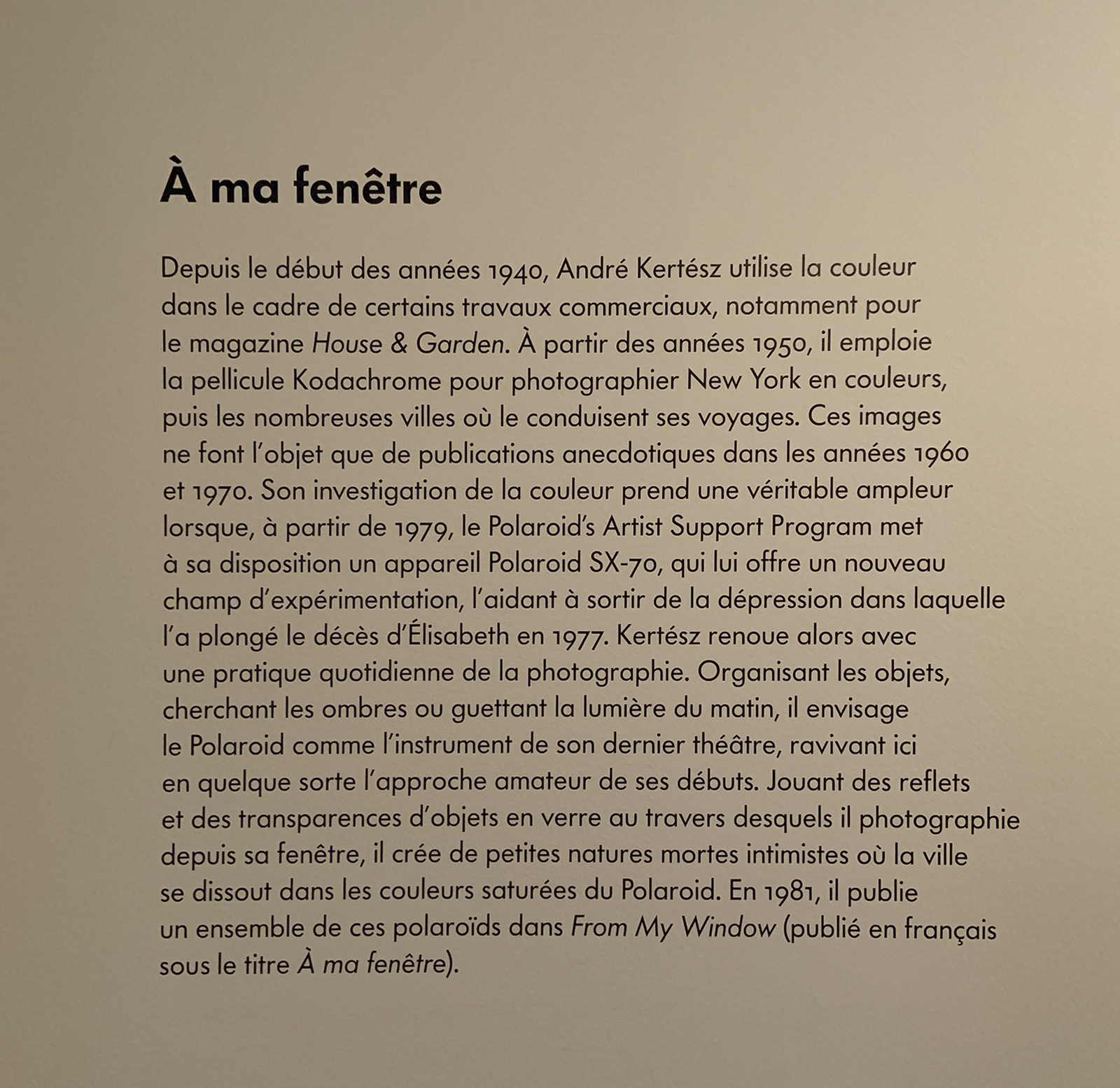
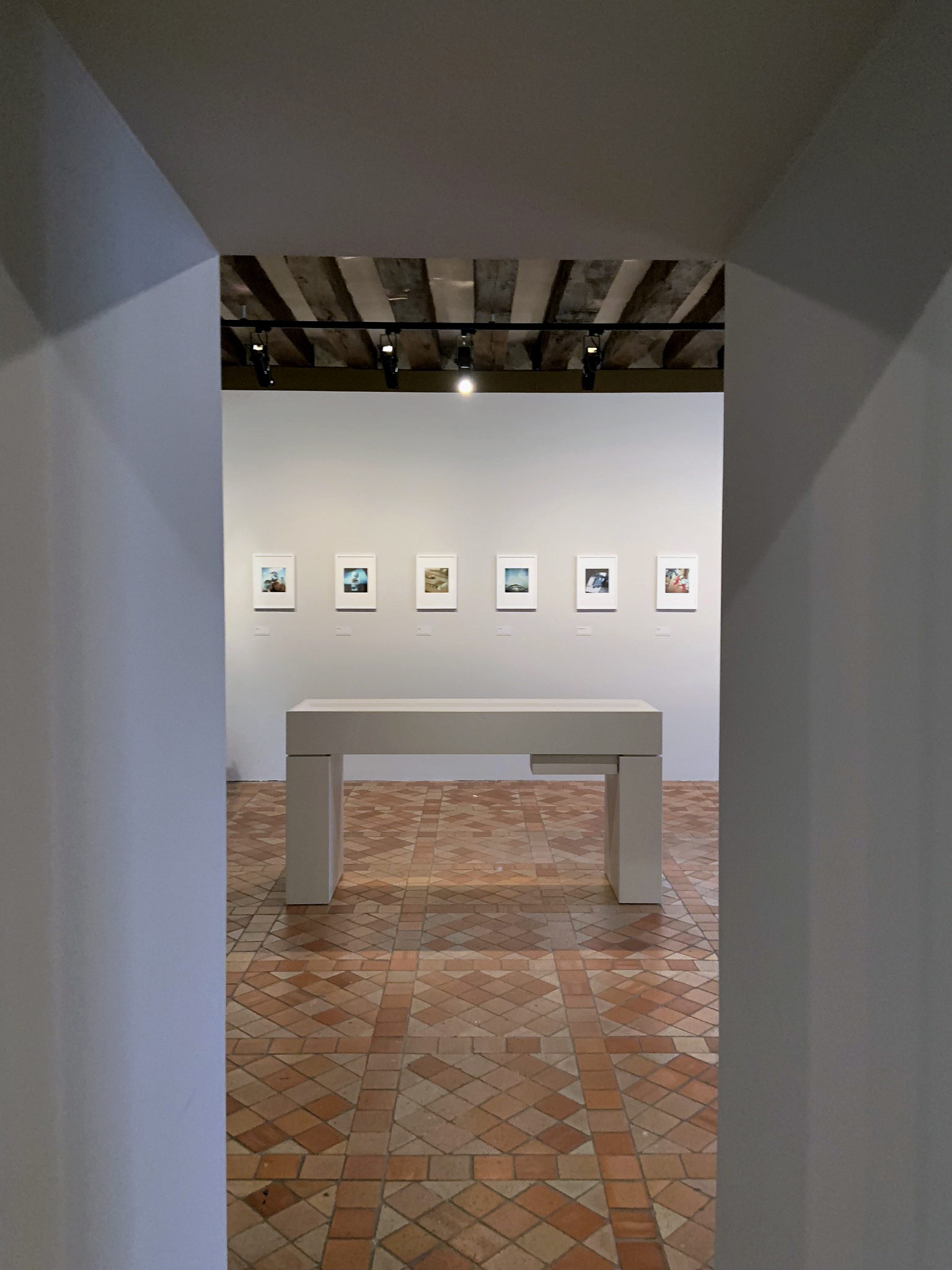
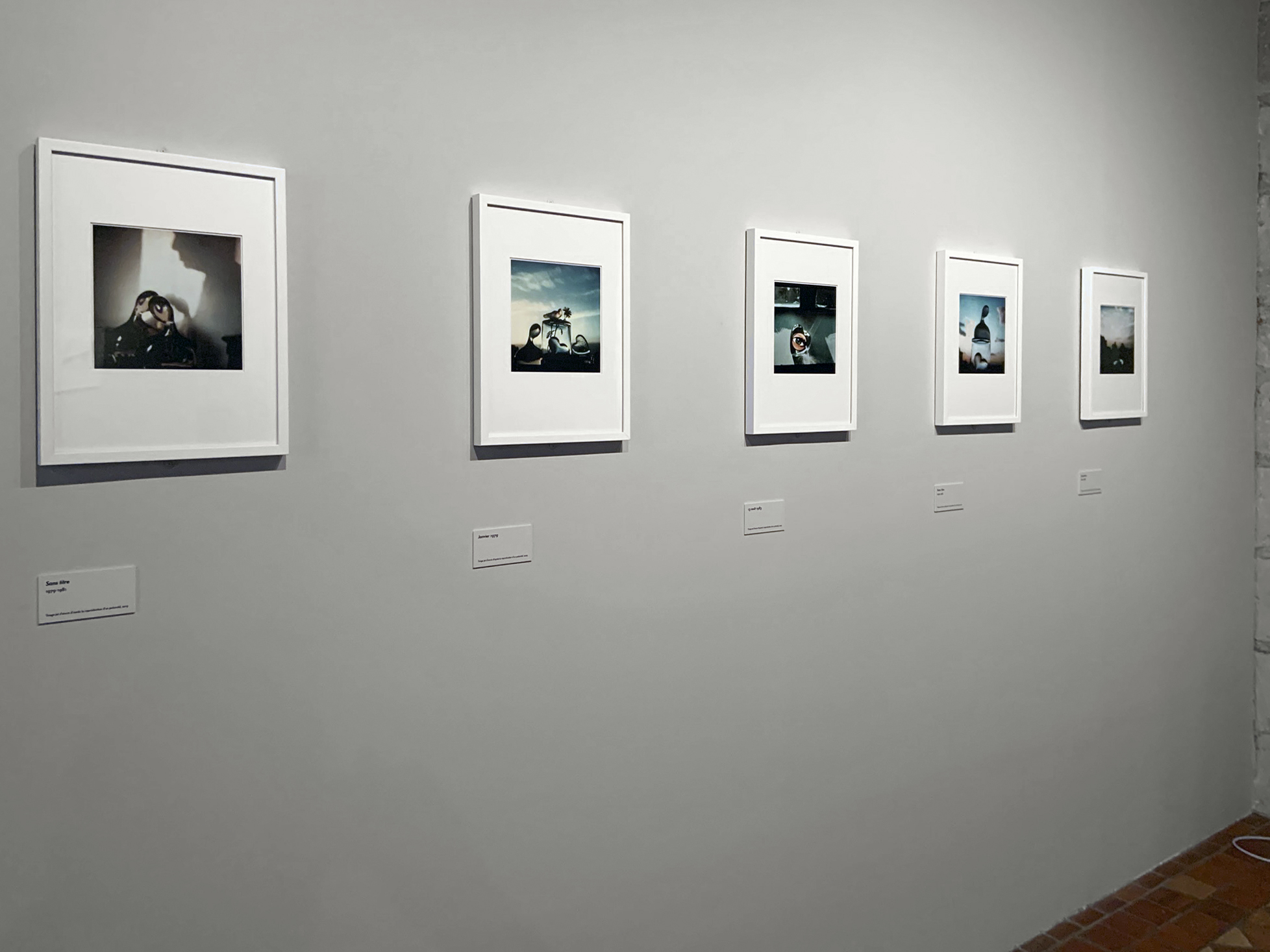
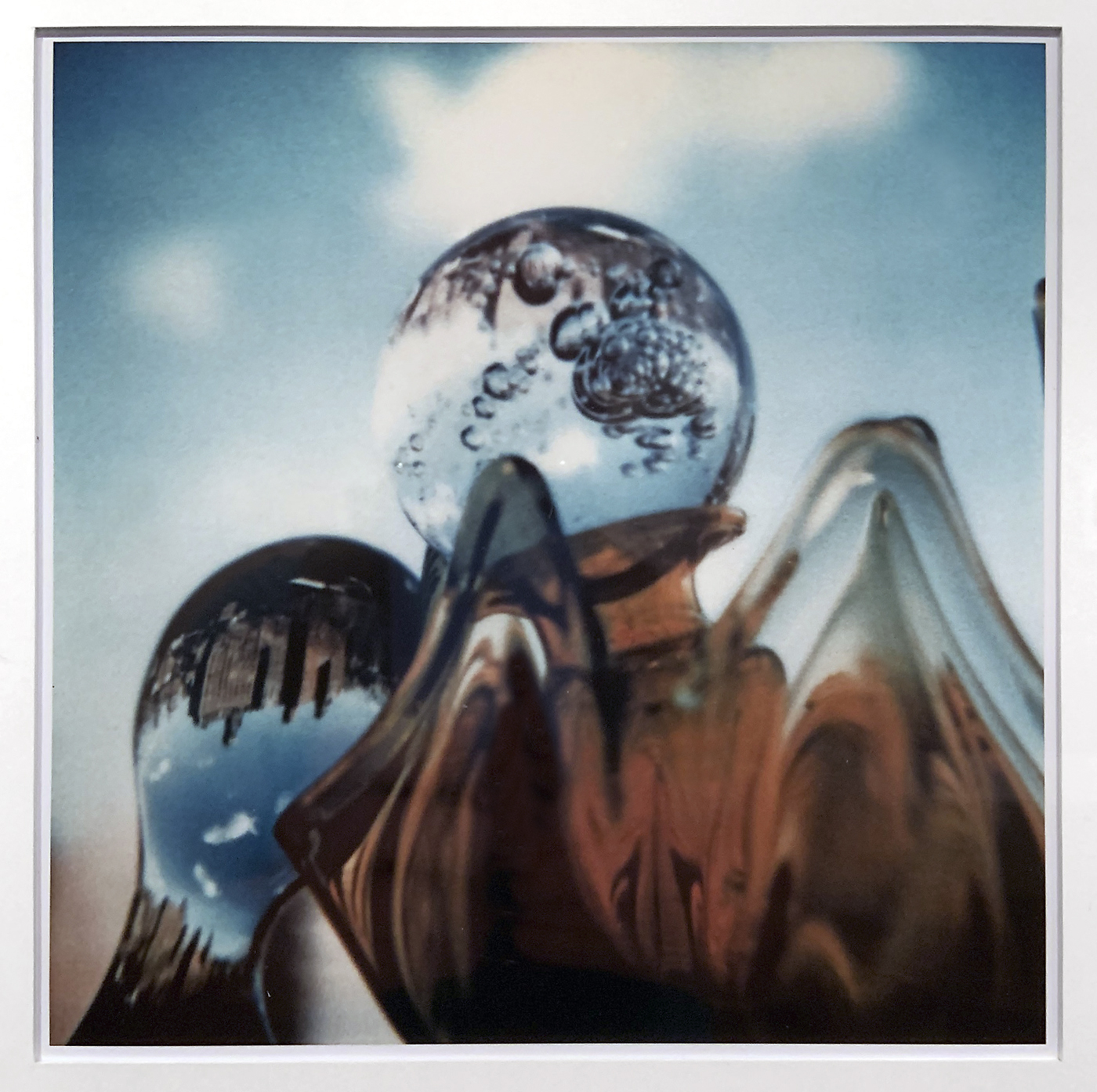
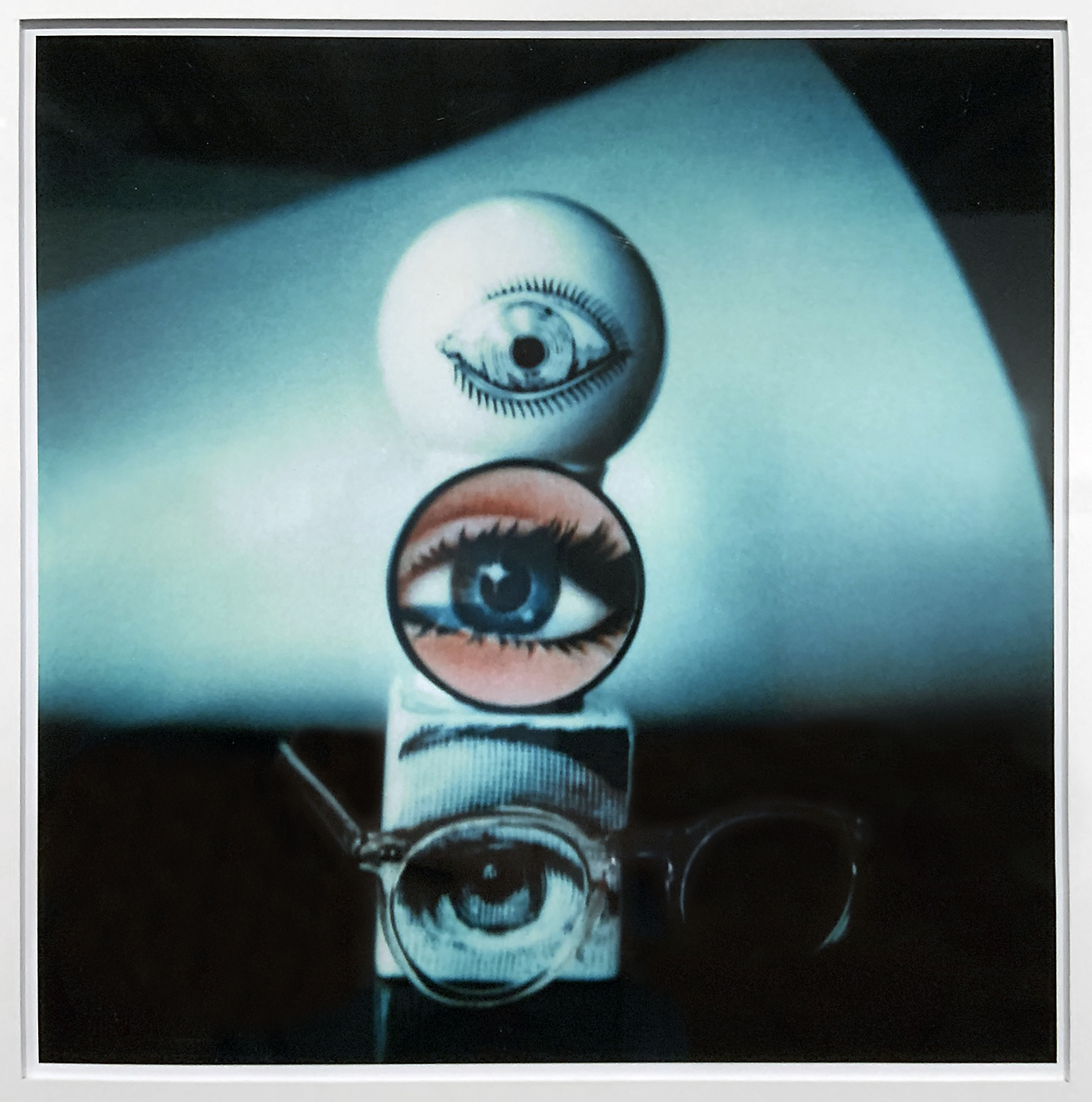
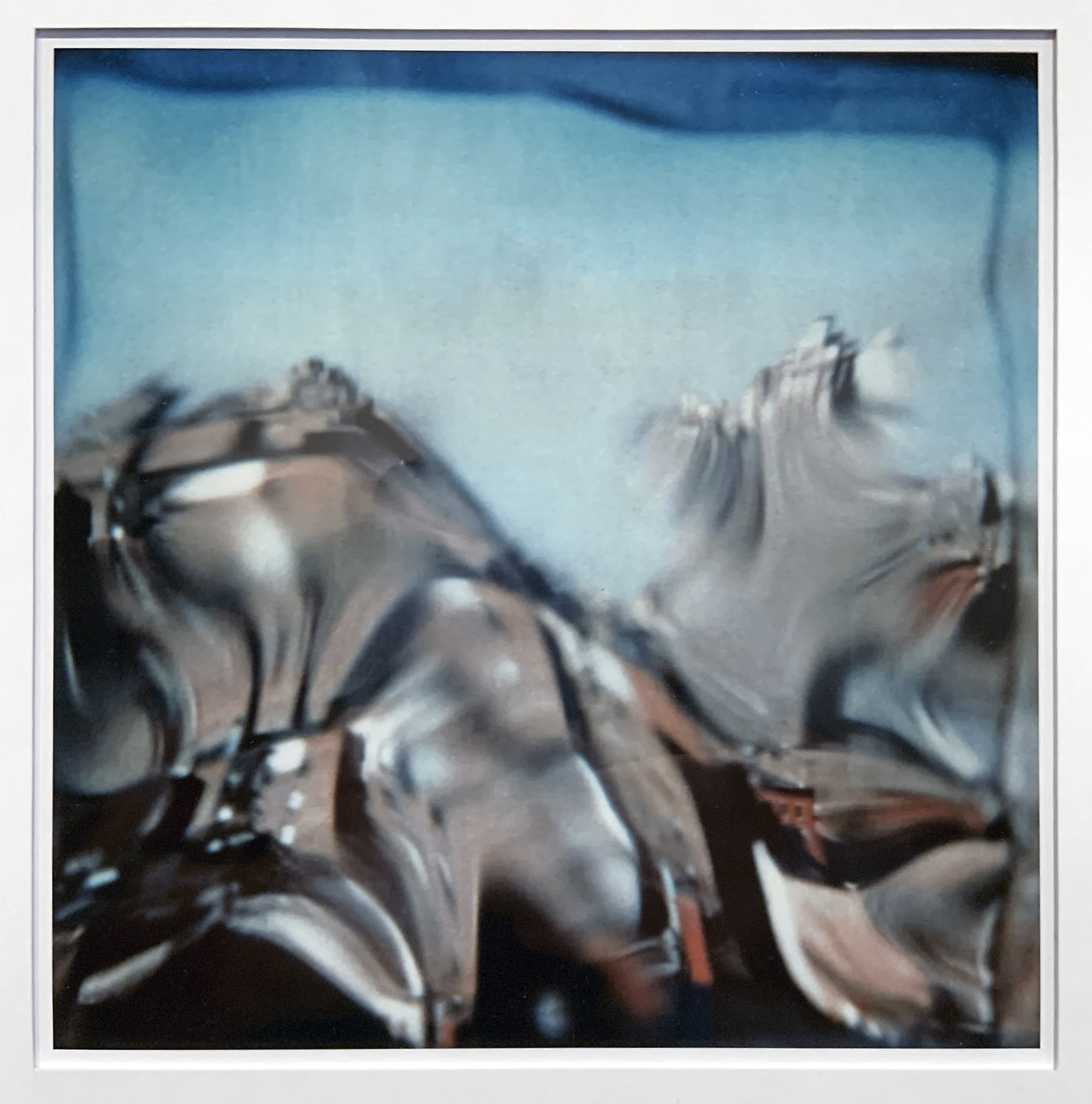
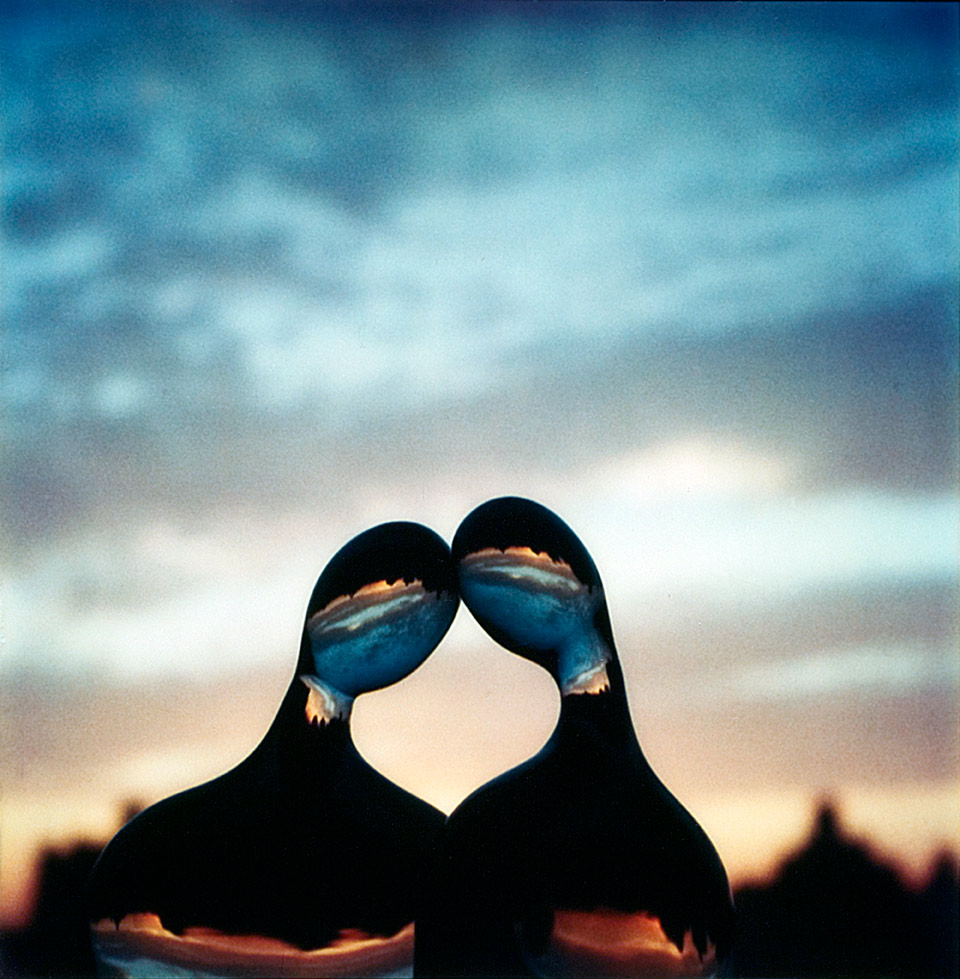
Installation views of the exhibition L’equilibriste, André Kertész at Jeu de Paume, Château de Tours showing his late Polaroid work Photos: Marcus Bunyan
André Kertész (Hungarian, 1894-1985) 12 December 1979 (installation view) 1979 Tirage jet d’encre d’après la reproduction d’un polaroid, 2019 Inkjet print from a reproduction of a polaroid, 2019 Photo: Marcus Bunyan
André Kertész (Hungarian, 1894-1985) Untitled (installation view) 1979-1981 Tirage jet d’encre d’après la reproduction d’un polaroid, 2019 Inkjet print from a reproduction of a polaroid, 2019 Photo: Marcus Bunyan
André Kertész (Hungarian, 1894-1985) June 1979 (installation view) 1979 Tirage jet d’encre d’après la reproduction d’un polaroid, 2019 Inkjet print from a reproduction of a polaroid, 2019 Photo: Marcus Bunyan
André Kertész (Hungarian, 1894-1985) 21 June 1979 (installation view) 1979 Tirage jet d’encre d’après la reproduction d’un polaroid, 2019 Inkjet print from a reproduction of a polaroid, 2019 Photo: Marcus Bunyan
André Kertész (Hungarian, 1894-1985) Untitled (installation view) 1979-1981 Tirage jet d’encre d’après la reproduction d’un polaroid, 2019 Inkjet print from a reproduction of a polaroid, 2019 Photo: Marcus Bunyan
André Kertész (Hungarian, 1894-1985) 13 August 1979 (installation view) 1979 Tirage jet d’encre d’après la reproduction d’un polaroid, 2019 Inkjet print from a reproduction of a polaroid, 2019 Photo: Marcus Bunyan
André Kertész (Hungarian, 1894-1985) July 3, 1979 1979 Tirage jet d’encre d’après la reproduction d’un polaroid, 2019 Inkjet print from a reproduction of a polaroid, 2019
André Kertész (Hungarian, 1894-1985) Untitled 1979-1981 Tirage jet d’encre d’après la reproduction d’un polaroid, 2019 Inkjet print from a reproduction of a polaroid, 2019
André Kertész (Hungarian, 1894-1985) 13 August 1983 Tirage jet d’encre d’après la reproduction d’un polaroid, 2019
Jeu de Paume at the Château de Tours 25 avenue André Malraux, 37000 Tours Phone: 02 47 70 88 46
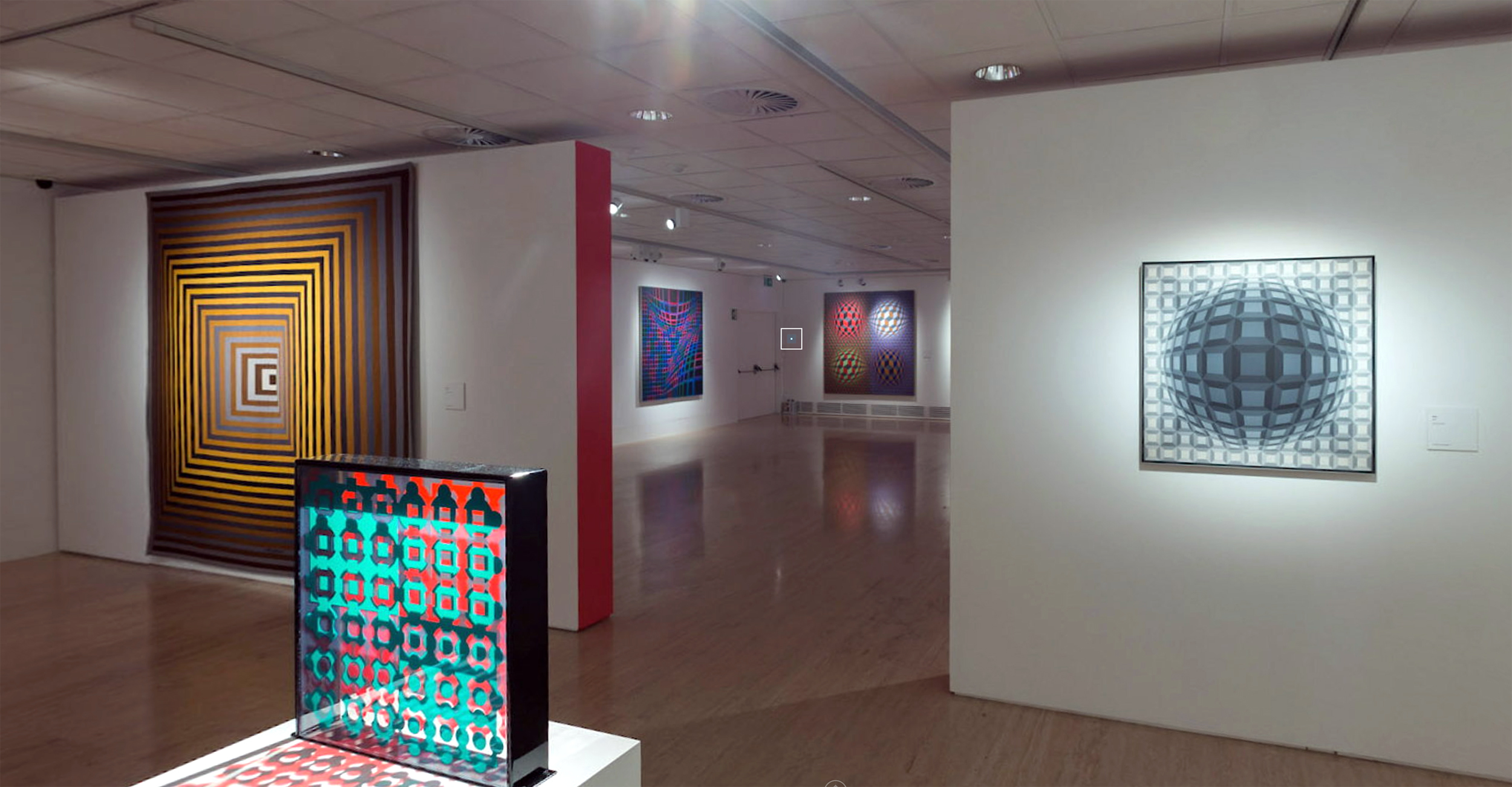
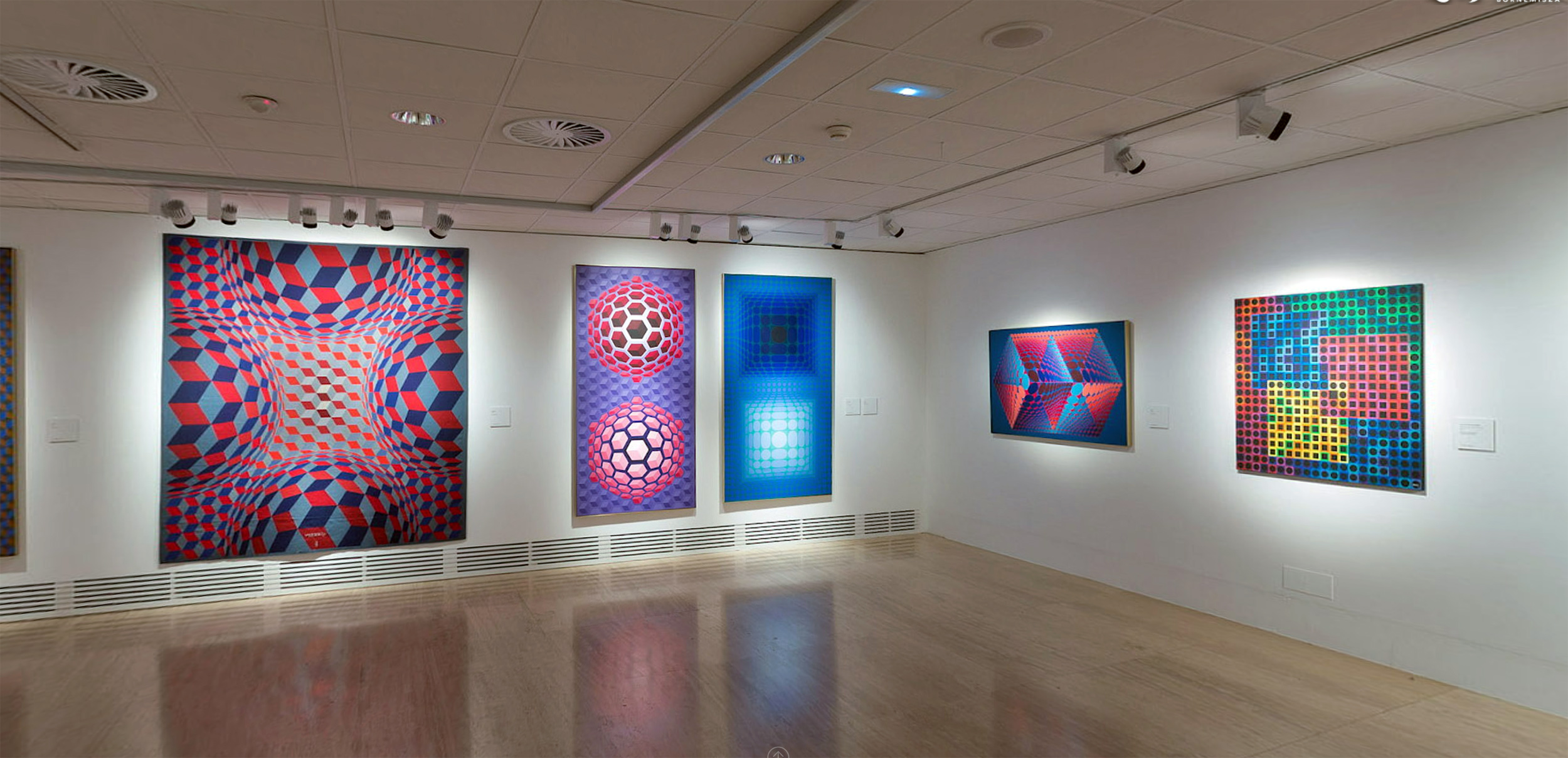
Installation view of the exhibition Victor Vasarely. The Birth of Op Art at the Museo Nacional Thyssen-Bornemisza, Madrid showing Vasarely’s Feny (1973, below)
No comment is really necessary. You just have to look at the spirit and inventiveness of the art. A pioneer of light and colour, a genius of plastic grid and form, is at play here!
The installation photographs show just how optically magnetic these works are. How they are holistic, singular works which then play magnificently off each other when placed in close proximity. Like the fugues of J.S. Bach these optical illusions create dazzlingly beautiful, intricate and powerful works, an earthly divination of a ‘planetary folklore’.
As my good friend Elizabeth Gertsakis said of the work of Robert Hunter, “he had the mind of abstract divination for a music of the spheres, of any geometry.”
Visit the VR Microsite for a Virtual Reality walk through of the exhibition.
Dr Marcus Bunyan
Many thankx to the Museo Nacional Thyssen-Bornemisza for allowing me to publish the photographs in the posting. Please click on the photographs for a larger version of the image.
From 7 June to 9 September 2018, the Museo Nacional Thyssen-Bornemisza will be presenting a monographic exhibition devoted to Victor Vasarely (Pécs, 1906 – Paris, 1997), the founding father of Op Art. Comprising works from the Vasarely Museum in Budapest, the Victor Vasarely Museum in Pécs, the Fondation Vasarely in Aix-en- Provence and prominent loans from private collections, the exhibition will aim to offer an overall vision of the life and work of this Hungarian painter whose best output was created in France. The exhibition includes works from all the principal phases of Vasarely’s career in order to present a chronological survey of his artistic evolution. Visitors will thus be able to appreciate the key role played by the artist in the development of geometrical post-war abstraction and to learn about the experiments based on his artistic principles and theoretical reflections which he undertook with the aim of bringing art and society closer together.
Victor Vasarely is a towering figure in the history of abstract geometric art. The results of his experiments with spatially ambiguous, optically dynamic structures and their effects on visual perception burst into public consciousness in the mid-1960s under the name of Op Art, launching a short-lived yet extraordinarily popular wave of fashion.
The exhibition is organised in eight chronological sections and an introductory space devoted to Vega Structures, one of the best-known and most emblematic series produced by Vasarely at the height of his career named after the brightest star in the northern hemisphere’s summer night sky.
1. Vega Structures
Inspired by contemporary news reports about mysterious signals received from distant galaxies, Vasarely named many of his works after stars and constellations. The Vega pictures rely on convex-concave distortions of a grid-like network, a sophisticated combination of the cube and the sphere, symbolically referring to the two-way motion of the light that emanates from pulsating stars, and to the functioning of condensing galaxies and the expanding universe. The common denominator in these works is Vasarely’s realisation that two dimensions can be expanded into three simply by deforming the basic grid, and that, depending on the degree of enlargement or reduction, the elements in the deformed grid can be transformed into rhombuses or ellipses.
Installation view of the exhibition Victor Vasarely. The Birth of Op Art at the Museo Nacional Thyssen-Bornemisza, Madrid
Blessed with exceptional drawing ability, Vasarely studied the basics of graphic design at Műhely (Workshop) from 1929 to 1930. The private school in Budapest was run by Sándor Bortnyik, a painter and graphic designer who had connections with the Bauhaus in Weimar. Through Bortnyik, Vasarely began to take an interest in the formal problems of the kind of art in which composition is based on geometric principles, and as such he adopted Piet Mondrian, Theo van Doesburg, El Lissitzky, Kazimir Malevich and László Moholy-Nagy as his spiritual masters. In the first period of the artist’s career, which lasted until 1939, the imagery had not yet broken away from the primary visual world, that is, it was not entirely abstract, but the paradoxical optical effects produced by his networks of lines and crosses already bore hints of the illusionistic spatiality to come.
Installation view of the exhibition Victor Vasarely. The Birth of Op Art at the Museo Nacional Thyssen-Bornemisza, Madrid showing the works Man in motion. Study of Motion (The Man) 1943 (left) and Material Study-Wood 1939 (right)
In 1951, the Galerie Denise René in Paris held an exhibition titled Formes et couleurs murales (Mural Forms and Colours). It was at this time that the Hungarian-French artist first considered representing the spatial problems of his pictures on a more monumental scale. At this exhibition, Vasarely used photographic methods to blow up his earlier pen-and-ink drawings, which he then arranged in series covering entire walls. These compositions were later rechristened Naissances (Births). The new name came about when the artist swept the photographic negatives of the drawings over one another, and disquieting, randomly arranged patterns emerged. In is Oeuvres profondes cinétiques (deep kinetic works), first exhibited in 1955, which Vasarely created following the same method of image-making, structuring them out of superimposed sheets of glass, acrylic or transparent foil, the sense of spatiality was combined with actual three-dimensional depth. Exploiting the physical laws of refraction and reflection, he produced spatial collages in a constant state of flux generated by the interference of two abstract patterns projected over each other, which were brought alive as the viewer changed position.
In 1947, while spending the summer on Belle Île, an island off the coast of Brittany, he discovered the internal geometry of nature. He took irregularly shaped glass tiles and pebbles polished by the ocean waves and stylised their abstract forms into ellipses. In 1948, he produced delicate pen-and-ink drawings that conjured up the strange meandering patterns of the hairline cracks that pervaded the ceramic tiles covering the Paris metro station named Denfert-Rochereau. From his sketches, which reveal a vivid imagination, he created evocative paintings composed with well unified colours. Those same years also saw the beginning of his Crystal period, which was inspired by the strict geometric structure of the stone houses in Gordes, a medieval town built on a cliff in the South of France. Vasarely strove to transpose reality into the two-dimensional plane with the help of the axonometric approach.
Installation view of the exhibition Victor Vasarely. The Birth of Op Art at the Museo Nacional Thyssen-Bornemisza, Madrid showing from left, the works Lan 2, 1953; Amir (Rima) 1953; and Vessant, 1952
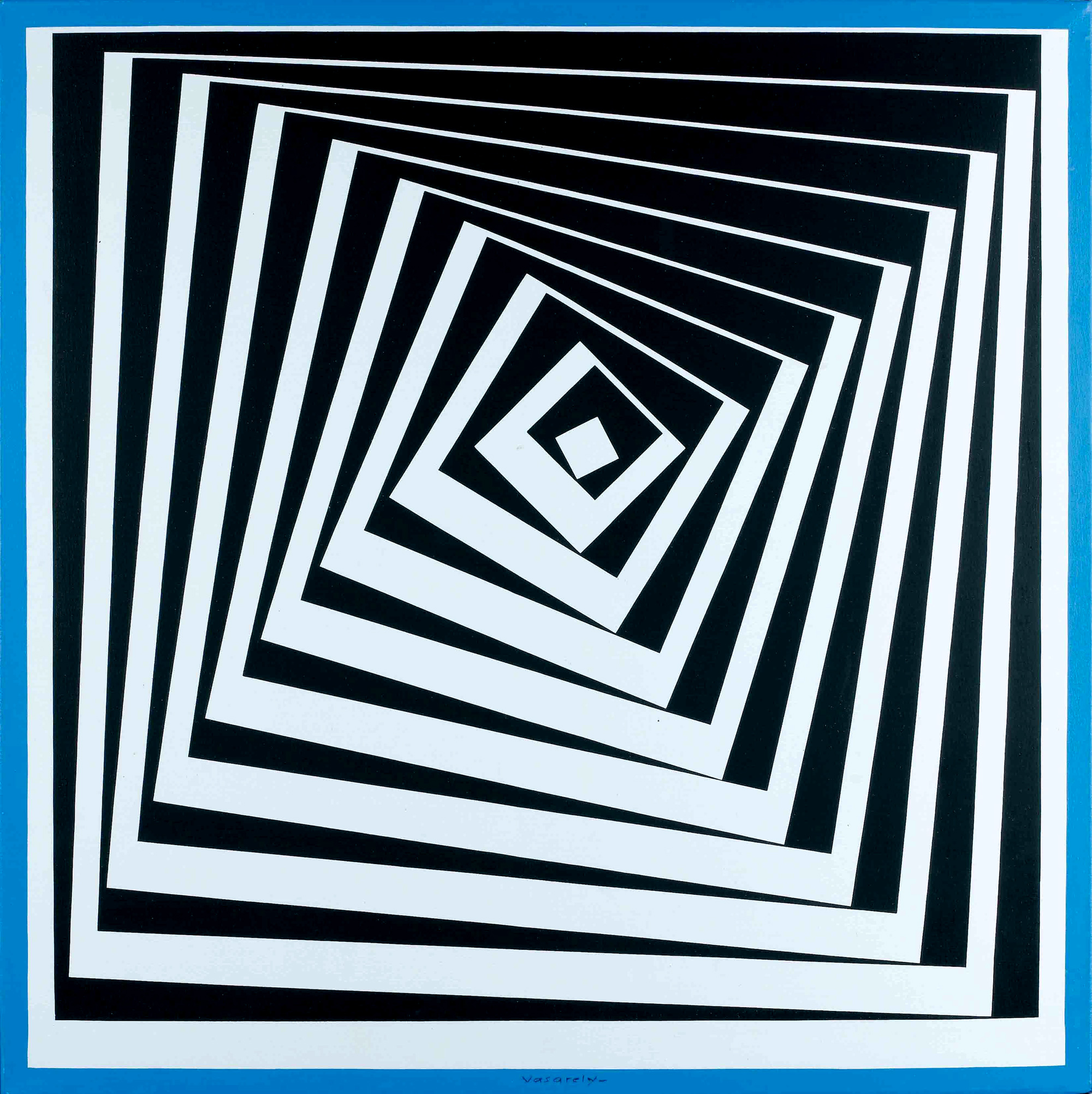
Inspired by Kazimir Malevich’s Suprematist composition, Black and White (1915), which embodies the harmony of spirituality and is widely interpreted as the ‘end point’ of painting, Vasarely conceived of the picture titled Homage to Malevich. Its basic component, a square rotated about its axis so that it appears as a rhombus, became the starting point of his ‘kinetic’ works.
Installation view of the exhibition Victor Vasarely. The Birth of Op Art at the Museo Nacional Thyssen-Bornemisza, Madrid showing from left, the works Doupla, 1970-1975; Kotzka, 1973-1976 and Gixeh, 1955-1962
Installation view of the exhibition Victor Vasarely. The Birth of Op Art at the Museo Nacional Thyssen-Bornemisza, Madrid showing from left, the works Nethe, 1964; Noorum, 1960-1977 and Tlinko-F, 1956-1962
Installation view of the exhibition Victor Vasarely. The Birth of Op Art at the Museo Nacional Thyssen-Bornemisza, Madrid showing from left, the works Afa III, 1957-1973 Nethe, 1964; Noorum, 1960-1977
Installation view of the exhibition Victor Vasarely. The Birth of Op Art at the Museo Nacional Thyssen-Bornemisza, Madrid showing from left, the works Taymir II, 1956 and Afa III, 1957-1973
6. Universal systems built from a plastic alphabet
Vasarely presented the results of his analytical research into the Plastic Unit at an exhibition held in the Musée des Arts Décoratifs in Paris in 1963. His formula for this was built on the structural interplay of form and colour. He regarded colour-forms as the cells or molecules out of which the universe was made. ‘The form-color unit […] is to plasticity what the particle-wave is to nature’, he declared. In pictures based on the mutual association between forms and colours, he claimed to perceive a ‘grammar’ of visual language, with which a set of basic forms making up a composition could be arranged into a system similar to musical notation.
The plastic alphabet
The plastic alphabet is a kind of programmed language with an infinite number of form and colour variations. The basic unit of the alphabet is a coloured square containing smaller basic shapes like squares, triangles, circles and rectangles. Vasarely used these patterns and primary colours plus endless colour permutations as the duplicating and changing elements in his works. In each unit there was a number which determined its colour, tone, form and place in the whole.
Vasarely saw that his plastic alphabet, by enabling serial production, could open the way to countless applications. It could be used as the basis for planning houses and whole environments for cities: it offered countless permutations of form and colour, and the size of the basic unit could be changed or enlarged as required.
Installation view of the exhibition Victor Vasarely. The Birth of Op Art at the Museo Nacional Thyssen-Bornemisza, Madrid showing from centre to right, the works Villog, 1979; Zila, 1981 and Pavo II, 1979
Installation view of the exhibition Victor Vasarely. The Birth of Op Art at the Museo Nacional Thyssen-Bornemisza, Madrid showing from left to right in the bottom image, the works Vonal-Fegn, 1968-1971; Helios, 1964 (multiple) and Villog, 1979
Installation view of the exhibition Victor Vasarely. The Birth of Op Art at the Museo Nacional Thyssen-Bornemisza, Madrid showing from left in the bottom image, Doupla, 1970-1975; Kotzka, 1973-1976 and Vonal-Fegn, 1968-1971
Installation view of the exhibition Victor Vasarely. The Birth of Op Art at the Museo Nacional Thyssen-Bornemisza, Madrid showing from left, Bi-Octans, 1979; Doupla, 1970-1975; Kotzka, 1973-1976; Vonal-Fegn, 1968-1971 and Helios, 1964 (multiple)
Installation view of the exhibition Victor Vasarely. The Birth of Op Art at the Museo Nacional Thyssen-Bornemisza, Madrid showing from left Dirac, 1978 and Bi-Octans, 1979
Vasarely first discussed the necessity for his works to be duplicated and disseminated widely in 1953. Then, in his Yellow Manifesto of 1955 he outlined his ideas on the possibilities of re-creation, multiplication and expansion. He believed that a basic set of corpuscular elements, by virtue of their multiplicability and permutability, could be transformed using a pre-selected algorithm into a virtually infinite number of different compositions. The programmations that would record the picture-composition process onto graph paper assumed that the colours, shades and forms making up each image could be notated numerically, and even fed into an electronic brain to be retrieved at any time. Although Vasarely himself had never worked with computers, his principles led logically to the possibility of creating images with such technology. As conceived by the artist, in future, employing codes of colour and form that were objectively defined using alphanumerical data, his compositions could be recreated at anytime, anywhere in the world, by anybody at all.
Installation view of the exhibition Victor Vasarely. The Birth of Op Art at the Museo Nacional Thyssen-Bornemisza, Madrid showing from left Kekub, 1976-1978; Black Orion, 1970; Marsan-2, 1964-1974 and Eroed-Pre, 1978
Installation view of the exhibition Victor Vasarely. The Birth of Op Art at the Museo Nacional Thyssen-Bornemisza, Madrid showing in the bottom image from left Yllus, 1978; V.P. 102, 1979; Trybox, 1979 and Toro, 1973-1974
Installation view of the exhibition Victor Vasarely. The Birth of Op Art at the Museo Nacional Thyssen-Bornemisza, Madrid showing in the bottom image from left Stri-Oet, 1979; Cheiyt-Stri-F, 1975; Peer-Rouge, 1977; Woo, 1972-1975; Kekub, 1976-1978 and Black Orion, 1970
8. Planetary Folklore
In the early 1960s, Vasarely put forward a proposal for the use of a universal visual language formulated in accordance with the principle of the Plastic Unit, which he called ‘planetary folklore’. He believed that regularly arranged and numbered, homogeneous colours and constant forms, of the kind that could be manufactured industrially, could have meaning attached to them. His intention was for the opportunity of aesthetic pleasure to become part of the everyday environment. As Vasarely argued, artworks not only belonged in museums and galleries, but were also needed in every single segment of urban life. His concept, which built on the ideas of Le Corbusier and Fernand Léger, and which proclaimed a synthesis of the different fields of the arts, was for the building blocks of the cities of the future to consist of mass-produced, monumental ‘plastic’ works that could be extended to any desired size, which would provide limitless possibilities of variation. The first of his architectural integrations was implemented in Venezuela in 1954, on the campus of the Central University of Caracas; this was followed by monumental ‘plastic’ installations on buildings in Bonn, Essen, Paris and Grenoble.
An important part of Vasarely’s art philosophy was his conscious refusal to discriminate between an individual work and its duplicate. He was convinced that an artwork came alive again when multiplied, and that the multiple was the most democratic form of art. His aim was to topple the elitist concept of owning unique and unrepeatable works by replacing it with the notion of making pictures for mass distribution. The artist experimented with the most diverse assortment of materials and techniques, from the most modern to the most ancient. Weaving workshops in Aubusson, following traditions dating back centuries, produced tapestries from his designs. Vasarely was also especially fond of the serigraph. His individually signed and numbered screen prints were commercially available on the art market, as were the multiple objects composed of individually handcoloured or industrially reproduced sheets mounted on wooden or metal backing materials.
When the major exhibition titled The Responsive Eye opened at the New York Museum of Modern Art in 1965, it made Optical Art famous almost overnight. The limelight was stolen by two Europeans: Josef Albers, who continued the legacy of the Bauhaus in his art, and Victor Vasarely. Both men were represented at the show with six works each. But whereas Albers, oft neglected by the critics, was turned into the black sheep of the movement by contemporary art history writing, for Vasarely, who was just reaching the peak of his career, the show served as a launch pad to fame.(…)
The scientific definition of Op Art came soon afterwards, with the first attempt made in 1967 by the German art historian, Max Imdahl. Imdahl interpreted the art of Victor Vasarely as deriving from the Orphism of Robert Delaunay, which ascribed meaning to colour, the Neo-Plasticism of Piet Mondrian, which rested on the symmetry of two-dimensional structures, and the Mechano-Faktura of Henryk Berlewi, which borrowed its aesthetic principles from the schematism of mechanical production. Vasarely, meanwhile, preferred to call his own invention Kineticism, and he was fully justified in doing so, because if we accept the contents of his art philosophical writings, published in chronological order under the title of Notes brutes, then the artist was the first person to consistently use this name for the movement. He coined the phrase ‘kinetic art’ in 1953, basing the term on the description of the movement of gases written by Nicolas Sadi Carnot, the nineteenth-century French engineer who developed thermodynamics. In the light of Vasarely’s consistency of thought, his wide-ranging knowledge and his enthusiasm for science, it would have been the logical outcome of his principles to classify his works under a style or movement of his own construction. Kineticism, however, was regarded by Vasarely as something more than a simple art movement. He not only referred to it in a formal sense, but also accorded it ethical, economic, social and philosophical functions. He believed it to be of greater significance than Cubism, and he was convinced the Kineticism offered, for the first time since the Renaissance, a synthesis of ‘the two creative expressions of man: the arts and the sciences’. The simultaneous representation of movement, space and time had already found expression in Constructivist art in the 1920s, but Vasarely’s Op Art was fundamentally different, in that it aimed to generate a spatial effect through the use of a two-dimensional surface by creating the illusion of motion in macro-time, whereby the image formed on the retina underwent virtual manipulation. Consequently, the name Op Art can be given to any artwork ‘that shifts during the spectator’s act of perception’. (…).
‘Optical’ paintings
(…) Vibrant surfaces created from patterns of geometric figures arranged according to a particular algorithm can be found among the mosaics of Antiquity. The first stage in the history of the autonomisation of retina-based art, however, came at the end of the nineteenth century with Pointillist painting, which relied on the scientific theory of the optical combination of colours, and with the so-called Divisionists, who strove to separate optical effects using an analytical method. Georges Seurat’s ‘optical painting’, however, remained firmly attached to the real spectacle. Primary shapes became a means of generating illusions with the arrival of non-objective, abstract art styles, especially Cubism. Optical games derived from periodic series of geometric elements were incorporated into the repertoire of applied photography in the second half of the 1920s. During his studies in Budapest, Vasarely may have come across such depictions, even in the printed press, such as the photograph of the Hollywood actress, Alice White, in a room of mirrors decorated with abstract patterns.
Yet optical illusion was not enough to bring about Op Art, which also needed the dynamism of kinetics. It became inseparable from the concept of the fourth dimension of motion-time, which tipped the static work out of its fixed position by involving the viewer and turning the eye into the active organ of sight. In this sense, Vasarely’s optical kineticism also posed the question of the dematerialisation of the artwork, for in his works, the actual spectacle is not present on the canvas at rest in front of us, but comes about through interacting with the work and is generated on the retina. Vasarely was never concerned with the type of mechanical movement that brought about the works of Jean Tinguely or Marcel Duchamp. The Hungarian artist’s planar kineticism was in this respect far more closely connected to visual research than to the approach of works that emphasise their industrial nature. (…)
Op Art as Algorithm
(…) When it came to the aesthetic and market values of artworks that existed in multiple copies, opinion was split even among the artists participating in the exhibition. In terms of form, the experiments into perception conducted by Vasarely and Bridget Riley, for example, had much in common, and yet their views on the democratisation and interdisciplinarity of art differed sharply. Unlike Riley, who always insisted on her paintings being one of a kind, Vasarely’s programme of art targeted a re-evaluation of the aesthetic of reproduced, duplicated objects. It was in this regard that Vasarely came closest to Pop Art and to its iconic exponent, Andy Warhol. In spite of this, Vasarely was not in thrall to Pop Art. He spoke appreciatively of its achievements, but he considered it to be a movement outside the realm of painting, a parody or caricature of its own times. Pop Art, meanwhile, suffered greatly from the fact that Op Art ultimately proved far more popular. ‘I am “pop” in the sense that I would like to be popular’, Vasarely wittily replied when one journalist pressed him on his personal position in Op Art, shortly after it had found fame as a fashion phenomenon. A few years later, at a reception held in the Galerie Spiegel in Cologne in September 1971, where a work by Vasarely hung on the wall beside Tom Wesselmann’s Great American Nude, an iconic piece from the rival movement, the Hungarian-born artist was asked his opinion of Pop Art. He could not refrain from commenting that the essence of Pop was exaggeration. He then cast a malicious glance at Wesselmann’s painting before declaring, ‘Art is not about painting gigantic pictures for billionaires’. When it was subsequently suggested that his democratic views were not compatible with the high prices commanded by his works, he replied, ‘The critics compare me to hippies who loathe money but who want to get around by hitchhiking. And at such times it is of no concern to them that they are travelling with the help of General Motors, Shell and other billionaire companies’.
There was, however, a whole group of Pop-Art fans who would never have dreamed of denigrating Kineticism. Warhol, for instance, began to follow Vasarely’s career after seeing his works at the opening of The Responsive Eye. He was present at the artist’s exhibition held in 1965 in the Pace Gallery in New York, and his admiration endured until 1984, when he attended Vasarely’s birthday party, arranged by Yoko Ono. It was probably on this occasion that Warhol was given a handkerchief signed by Vasarely, decorated with a pre-kinetic zebra composition, which the American artist preserved among his relics up until his death. We would find few artists in the twentieth century who achieved more in rethinking the aesthetic of the multiplied artwork than Vasarely and Warhol, so there is a striking contradiction in the fact that the only work by Vasarely in Warhol’s collection was a monochromatic oil painting, titled Onix 107 (1966), which actually represented the counterpoint to the paradigm expressing the latent artistic opportunities in duplication (including the entire spectrum of vibrant and saturated colours). (…)
























































 Art Blart _ art and cultural memory archive
You must be logged in to post a comment.