Exhibition: ‘Status – 24 Contemporary Documents’ at Fotomuseum Winterthur, Zurich

Exhibition dates: 9th June – 26th August 2012

Participating artists: Lara Almarcegui, Dimitry Astakhov, Sammy Baloji, Walead Beshty, Ursula Biemann, Fernando Brito, Moyra Davey, Lukas Einsele, Cédric Eisenring / Thomas Julier, Michael Elmgreen / Ingar Dragset, Alfredo Jarr, Jérôme Leuba, Market Photo Workshop, Erica Overmeer, Trevor Paglen, Willem Popelier, Gosha Rubchinskiy, Jules Spinatsch, Hiroshi Sugimoto, Fiona Tan, Jonas Unger, Unknown Taliban, Lidwien van de Ven, wearethe99percent
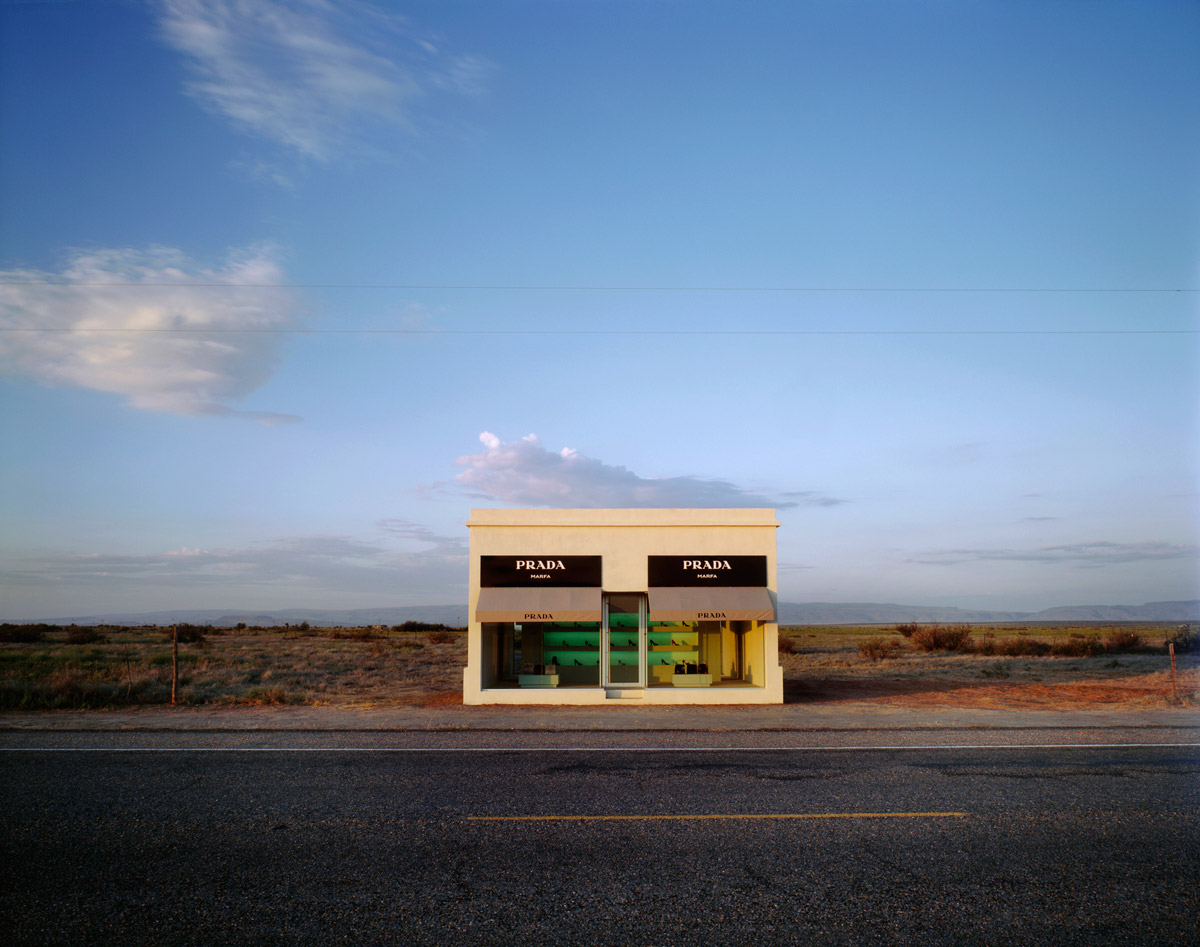
 

Elmgreen & Dragset.
 'Untitled (Prada Marfa)' 2007


Elmgreen & Dragset
Untitled (Prada Marfa)
2007
C-print
160 x 204cm
© Michael Elmgreen & Ingar Dragset / Courtesy Galerie Perrotin, Paris


The word status (noun) can mean the position of an individual in relation to another or others, especially in regard to social or professional standing. The word derives from the Latin posture, from stãre to stand. What is the standing of these photographs (as documents)? What does their posturing suggest, when the time of contemporary photographs has become but a series of disconnected presents/presence.

Mike Featherstone observes that, “Postmodern everyday culture is a culture of stylistic diversity and heterogeneity (comprising different parts or qualities), of an overload of imagery and simulations which lead to a loss of the referent or sense of reality. The subsequent fragmentation of time into a series of presents through a lack of capacity to chain signs and images into narrative sequences leads to a schizophrenic emphasis on vivid, immediate, isolated, affect-charged experiences of the presentness of the world – of intensities.“1

It is these intensities that we confront in the (Facebook) frenzy of contemporary photography. It is this schizophrenic inability to sustain a coherent identity that the photographs in this posting address. The words embedded in the media statement give ample latitude for the exploration of these immediacies: complex network, loose associations, immediate relationships, current status, apparent jumps and various themes to name but a few. But Annette Kuhn notes, “The truth / authenticity potential of photography is tied in with the idea that seeing is believing. Photography draws on an ideology of the visible as evidence. The eye of the camera is neutral, it sees the world as it is: we look at a photograph and see a slice of the world. To complete the circuit of recording, visibility and truth set up by the photograph, there has to be someone looking at it …”2 Kuhn continues, “A photograph, however much it may pretend to authenticity, must always in the final instance admit that it is not real, in the sense that what is in the picture is not here, but elsewhere.”3

The photograph evacuates its own meaning, its status as document; its posturing lies elsewhere. This very quality of absence may augment the voyeuristic pleasure of the spectator’s look.4 We return again and again to look at these fleeting, fetishistic images, to confirm their documentary status, that they do exist – to confirm our pleasure, the scopophilic desire for pleasurable looking. In the end we can ask, what do the photographs of a fake Prada shop in the desert, the perfect pink circles of identity / identical absence represent?

What are we really seeing? Do they really exist, do we really exist. Is living really believing?

Dr Marcus Bunyan


1/ Featherstone, Mike. Consumer Culture and Postmodernism. London: Sage Publications, 1991, p. 124
2/ Kuhn, Annette. The Power of the Image: Essays on Representation and Sexuality. London: Routledge and Kegan Paul, 1985, pp. 27-28
3/ Ibid., pp. 30-31
4/ Ibid., pp. 30-31


Many thanx to Fotomuseum Winterthur for allowing me to publish the photographs in the posting. Please click on the photograph for a larger version of the image.
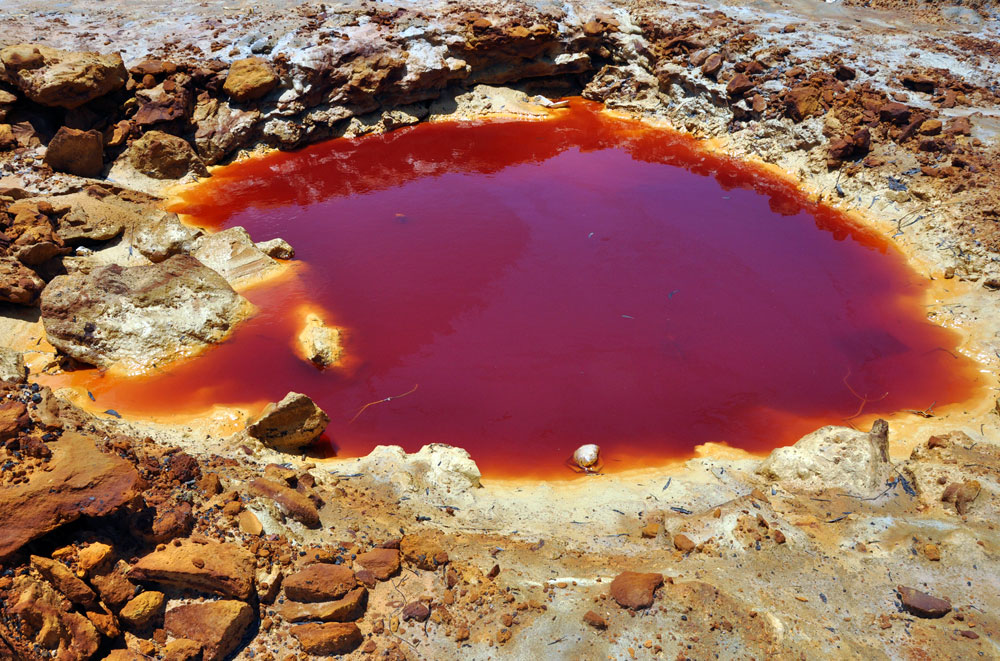


Jérôme Leuba (Swiss, b. 1970) 'Battlefield #60, Goldmine' 2009


Jérôme Leuba (Swiss, b. 1970)
Battlefield #60, Goldmine
2009
C-print
40 x 58cm
© Jérôme Leuba / Courtesy Blancpain Art Contemporain, Geneva
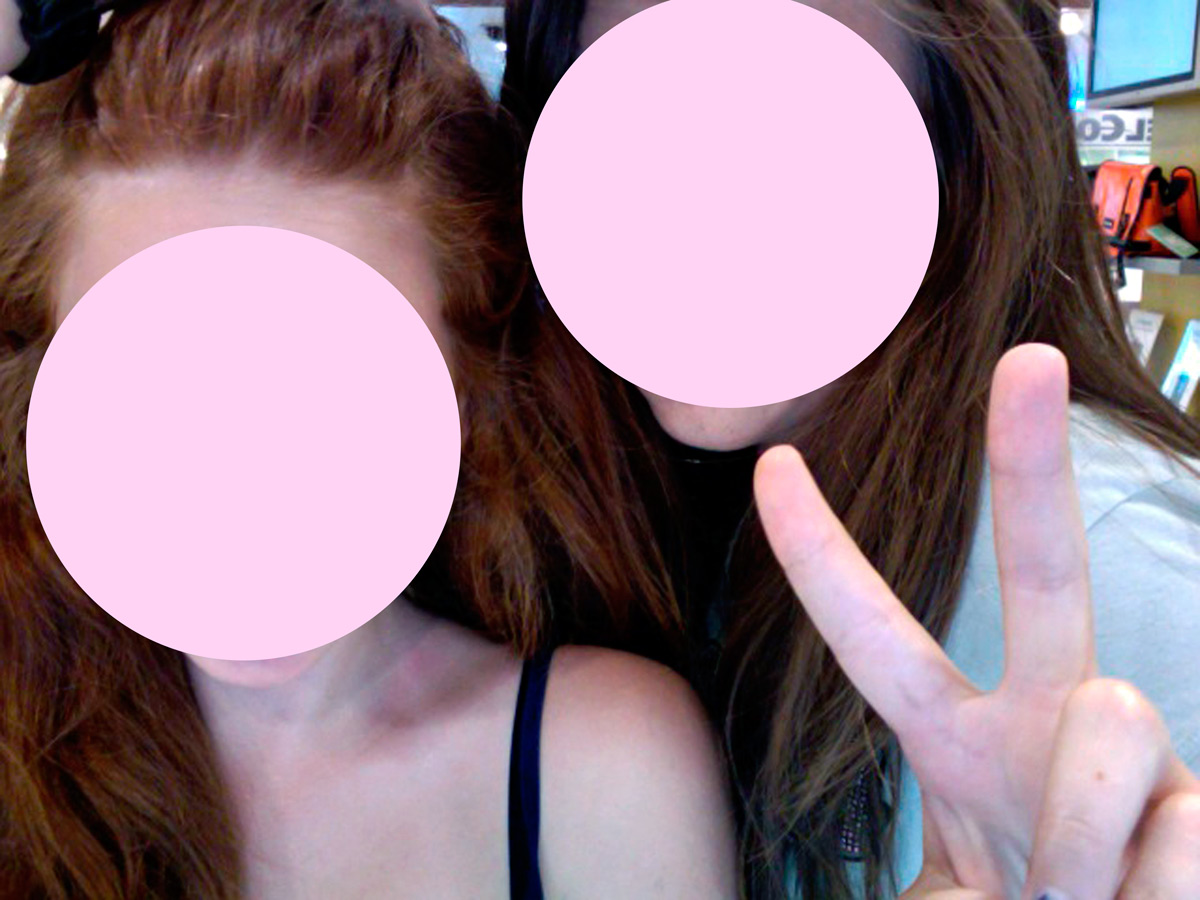
 

Willem Popelier (Netherlands, b. 1982) 'Showroom Girls' 2011
 (detail)


Willem Popelier (Netherlands, b. 1982)
Showroom Girls (detail)
2011
5 Inkjet prints
128 x 90.5cm each
© Willem Popelier


Photographer Willem Popelier (Eindhoven, 1982) found by accident 91 photographs and two films made by two girls on a publicly accessible computer. This was the start of a long-running project in which Popelier researched the role of photography on the internet and in social media. The result is the exhibition, Showroom Girls, an intimate portrait of one of the girls in the form of pictures and texts by her hand that Popelier found online.

Webcam

Whilst working on another project, Showroom,  Popelier was looking for showroom computers which visitors use to take pictures of themselves by using the computer’s webcam. He discovered that people leave these pictures on the computer in the shop. Popelier started to collect these images. Photographs of anonymous people who portray themselves in the public domain and upon occasion rather obsessively.

On one particular computer Popelier found almost a hundred pictures made by two girls. After more research he discovered that the girls had produced around two hundred images in almost an hour. A large number of these shots were removed, but the girls had left a number on purpose. One of the girls wore a necklace stating her name. Popelier started to look for her on the internet and found both girls on various websites such as Hyves, Facebook and Twitter. Via the internet Popelier got access to the tweets of one of the girls, but also managed to find her address and even her school results. And all of this he found legally, without hacking into any secret or inaccessible data. With all the collected material he put together the exhibition Showroom Girls.

Text from the Foam website
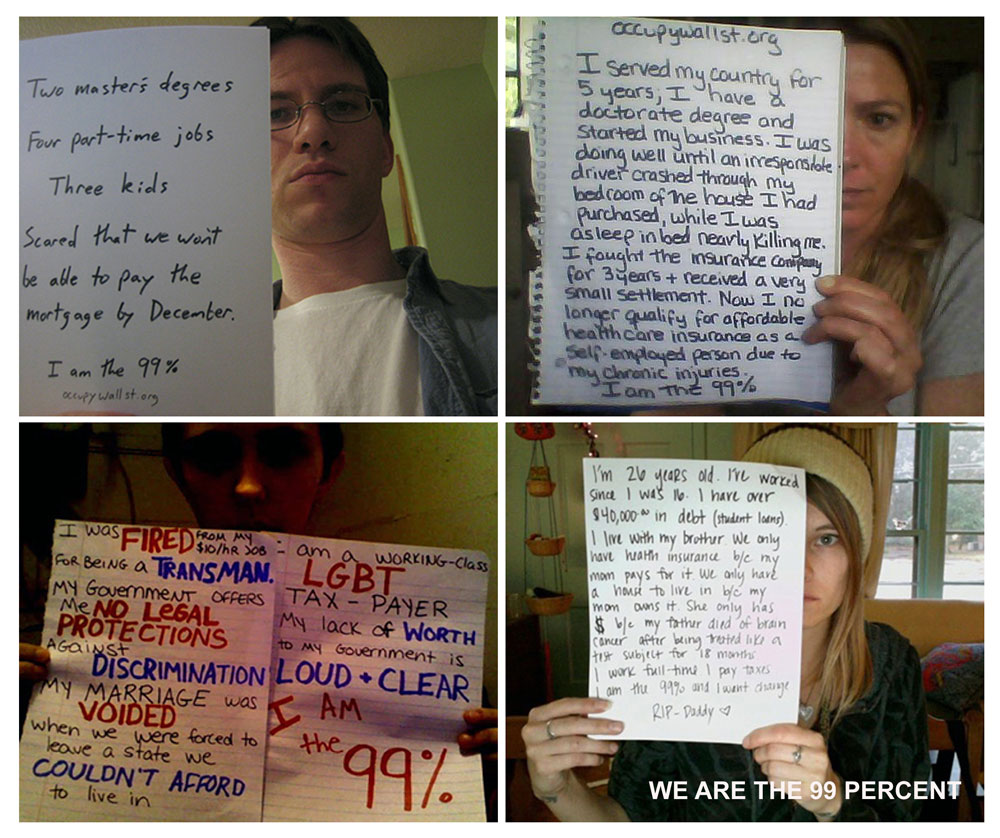
 

wearethe99percent.tumblr.com
 Tumblr website, since August 2011


wearethe99percent.tumblr.com

Tumblr website, since August 2011


A few years after the digital turn the shift from analog to digital image production and archiving, Foto­museum Winterthur explores the current state of the document and the documentary image in the exhibition Status – 24 Contemporary Documents. Whereas the term “status” used to have a thoroughly positive connotation, indicating a confident display of one’s own condition or state, today we ask about the “status” of things almost with a sense of apprehension, knowing full well that situations are often uncertain, precarious, and usually in flux. This uncertainty carries over into the field of photography. The rapid dissemination and availability of images and videos in print media, on the Internet, on social platforms such as Facebook, Google, Twitter, or Flickr have led to new forms of communication through documentary images. Often we do not know who took the picture, nor do we know how the picture has made its way to us. How are these photographic documents to be understood? How do the schemata of seeing, understanding, deleting, and saving function in our contemporary multi-media environment?

The 24 exemplary “documents” selected for this exhibition come together in a complex network of loose associations and immediate relationships, which attempts to capture the current status of the documentary image. The apparent jumps between various themes and media formats, between official press images (Vladimir Putin fishing) and anthropological studies of the family image (the Vox Populi work by Fiona Tan) correspond to our current viewing experience as alternating between high and low, surface and depth. The conquest of unknown territory and the quiet contemplation of a personal theme form two poles of the exhibition. Whereas Trevor Paglen uses meticulous, scientific precision to offer proof of hidden US satellites operating in the night sky, Sammy Baloji, Jérôme Leuba, and Lara Almarcegui rescue removed sites or unusual biographies from oblivion. In 2009 Almarcegui was able to photograph the overgrown lots in East London that have now been built up and will be the sites of the Summer Olympics 2012.

The exhibition Status – 24 Contemporary Documents pursues the traces photography leaves behind, travelling at both analog and digital speeds. Through her video camera, Moyra Davey delves into a volume of photographs that is important to her, Portraits in Life and Death by Peter Hujar, and thereby creates a parable of decelerated reading and looking. Willem Popelier examines the shifting identities and presentations of the self through his work Showroom Girls, which offers an exemplary reflection on a younger generation’s behaviour in social networks. Conceived and realised by Jules Spinatsch, the 24-hour panorama of the trading floor of the German stock exchange in Frankfurt – a site highly familiar from media images – enables us to witness the simultaneous recording, receiving, and saving of information in the form of a 14-meter wall installation, whose individual components will come together at Fotomuseum Winterthur over the course of the opening day of the exhibition on June 8, 2012 and depict a complete calendar day.

The exhibition is organised by Thomas Seelig, curator at Fotomuseum Winterthur.

Press release from the Fotomuseum Winterthur website


Anonymous photographer.
 'Taliban' 2001


Anonymous photographer
Taliban
2001
C-print
9 x 13cm
© Collection Thomas Dworzak / Courtesy Magnum Photos, Paris


Jonas Unger (German, b. 1975)
 'Gérard Depardieu' 2010


Jonas Unger (German, b. 1975)
Gérard Depardieu
2010
C-print
60 x 40cm
© Jonas Unger
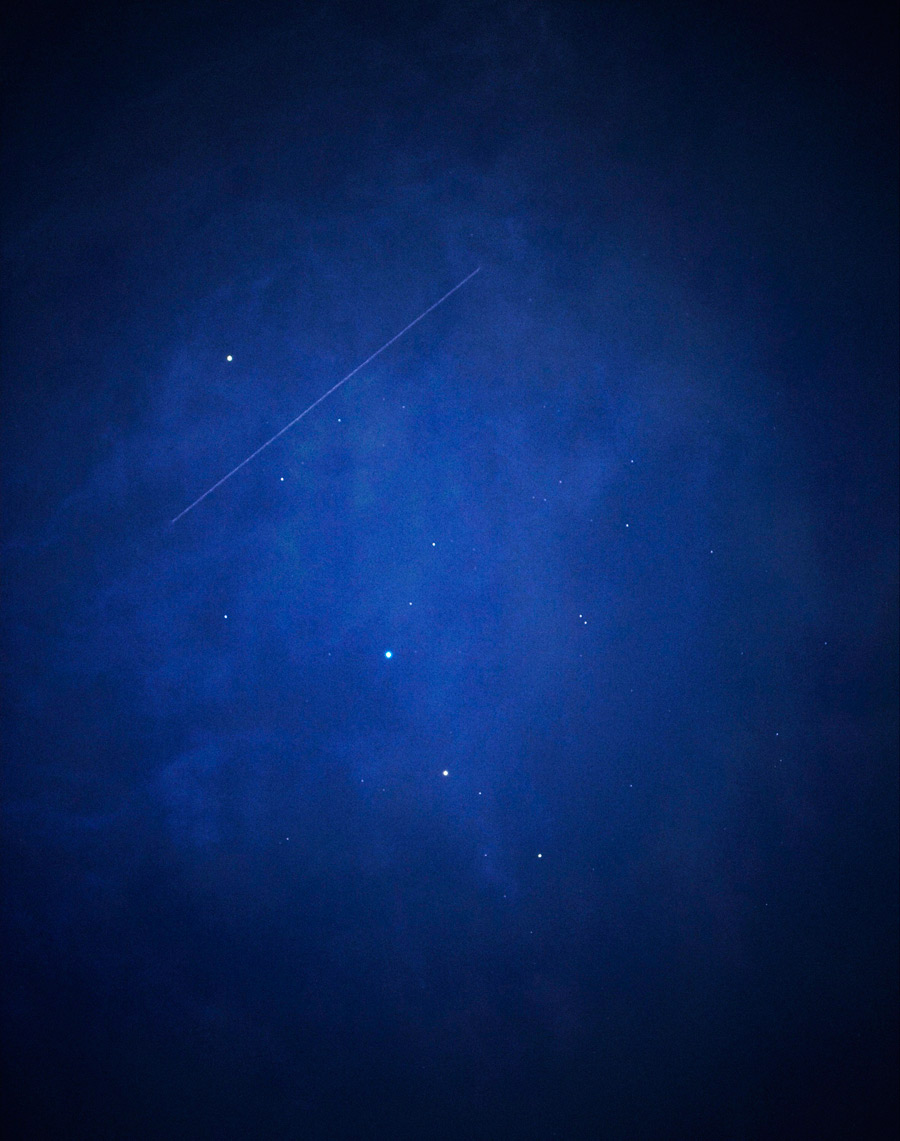
 

Trevor Paglen (American, b. 1974) 'LACROSSE/ONYX II Radar Imaging Reconnaissance Satellite Passing Through Draco (USA 69)' 2007


Trevor Paglen (American, b. 1974)
LACROSSE/ONYX II Radar Imaging Reconnaissance Satellite Passing Through Draco (USA 69)
2007
From the series: A Compendium of Secrets
C-print
152 x 122cm
© Trevor Paglen / Courtesy Galerie Thomas Zander, Cologne


Fotomuseum Winterthur
Grüzenstrasse 44 + 45
CH-8400
Winterthur (Zürich)

Opening hours:
Tuesday to Sunday 11.00 – 18.00
Wednesday 11.00 – 20.00
Closed on Mondays
Fotomuseum Winterthur website

LIKE ART BLART ON FACEBOOK

Back to top

Exhibition: ‘The Navigators’ at Karen Woodbury Gallery, Melbourne

Exhibition dates: 5th May – 29th May 2010

Artists: Lionel Bawden, Penny Byrne, Nicholas Folland, Locust Jones, Rhys Lee, Rob McHaffie, Derek O’Connor, Alex Spremberg, Madonna Staunton


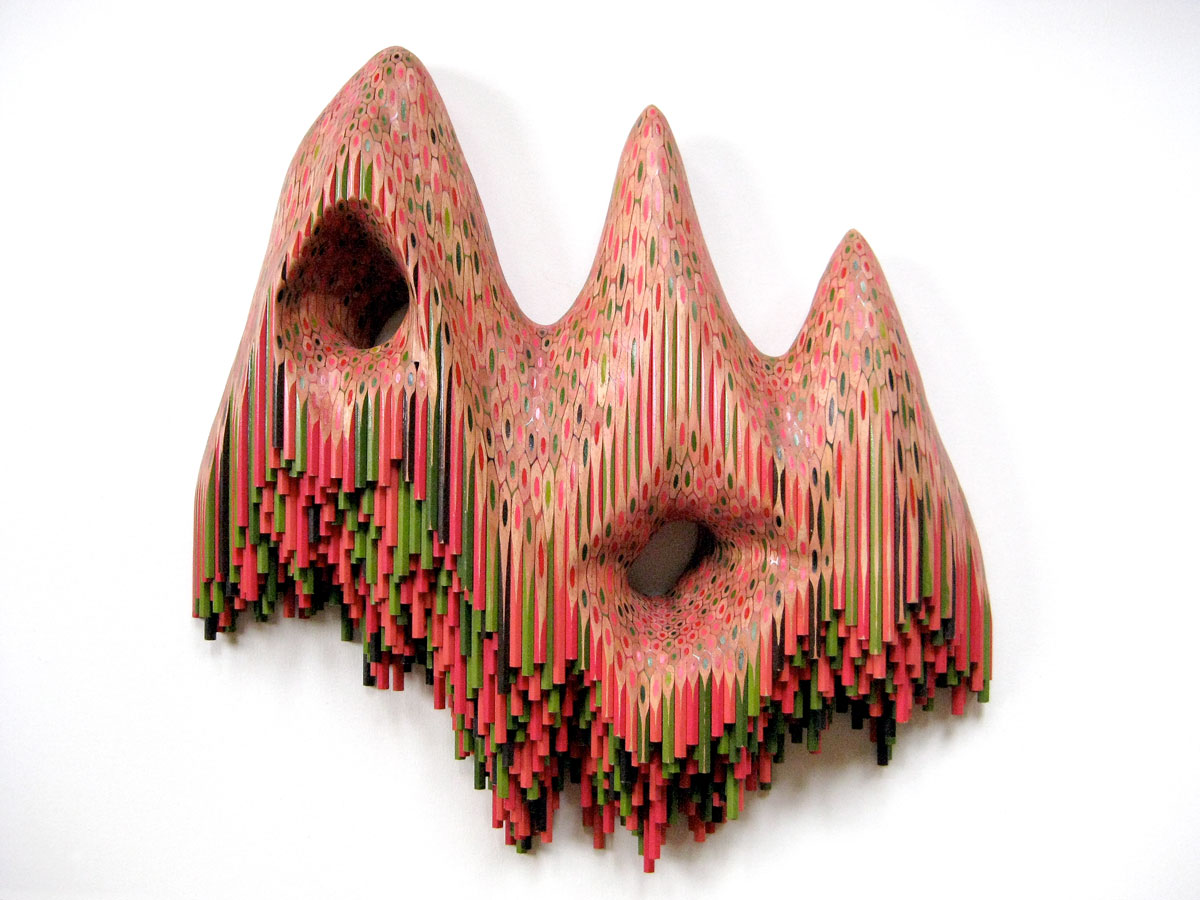
Lionel Bawden (Sydney, b. 1974) 'formless worlds move through me' 2010 from the exhibition 'The Navigators' at Karen Woodbury Gallery, Melbourne, May 2010


Lionel Bawden (Australian, b. 1974)
formless worlds move through me
2010
Coloured Staedtler pencils, epoxy, incralac
51.0 x 51.0 x 9.5cm


Some good work in this exhibition – especially the Staedtler hexagonal coloured pencil constructions by Lionel Bawden. Beautifully crafted by hand they remind me of ghosts, the ‘millefiori’ (thousand flowers) of Italian glass and the inside of caverns with their stalactites.

Dr Marcus Bunyan


Many thankx to the Karen Woodbury Gallery for allowing me to publish the photographs in the posting. Please click on the photographs for a larger version of the image.


Alex Spremberg (Australian, born Germany 1950) 'Inside skins' 2002 from the exhibition 'The Navigators' at Karen Woodbury Gallery, Melbourne, May 2010


Alex Spremberg (Australian born Germany, b. 1950)
Inside skins
2002


These artists have been selected for their interest in ideas of assemblage and re-use of pre-existing materials. Working across a range of media, each artist in the exhibition employs a process of manipulation to create completely different concepts and forms with their finished works. These works comprise of found objects and assembled from disparate elements, scavenged or foraged by the artists and juxtaposed in inventive ways. All works included in The Navigators take on their own form and imbue a new meaning to the original source materials.

Not originally intended as art materials, yet these artists have seen potential for a new idea in the materials; creating a new thought for the object. The original useful element of the preformed material thus comes under more aesthetic and creative significance. The impetus for such artistic practice is located in a desire by these artists to re-use, re-model, reshape and recycle within their practices. Despite an obvious interest and emphasis in the materiality of the works, the conceptual underpinning are the key motivation within these varying works and pose questions regarding the value of the objects within society. The artists included in The Navigators are continuously surveying and navigating their practice, allowing for deeper exploration in their work.

The exhibition will include various two and three-dimensional objects that interact with each other in unique ways. In the example of Lionel Bawden’s sculptures, his work exploits hexagonal coloured pencils as a sculptural material, reconfiguring and carving into amorphous shapes. Here the rich qualities of colour are explored as pencils are carved, shaped and fused together. Bawden explores themes of flux, transformation, rhythm and repetition as preconditions to our experience of the physical world. Bawden’s wall mounted works ‘the caverns of temporal suspension’ explore shapes within and outside the work as they hover ominously, melting, conjoined, growing, in transformation. These works are at the forefront of his current practice.

Penny Byrne’s work makes use of vintage porcelain sculptures that are adorned with a range of materials. Through this process, Byrne makes the base sculptures appear starkly different to that of the original, taking on new connotations that are often humorous and quirky but also convey political and social issues. In her work Mercury Rising. Hunted, Slaughtered, Eaten vintage porcelain dolphins and new plastic Manga figurines are employed to relate to the annual Japanese slaughter of tens of thousands dolphins as highlighted in the documentary ‘The Cove’. The Japanese eat the dolphins and then suffer mercury poisoning due to the high mercury levels in the dolphins flesh, leading to symptoms of madness.

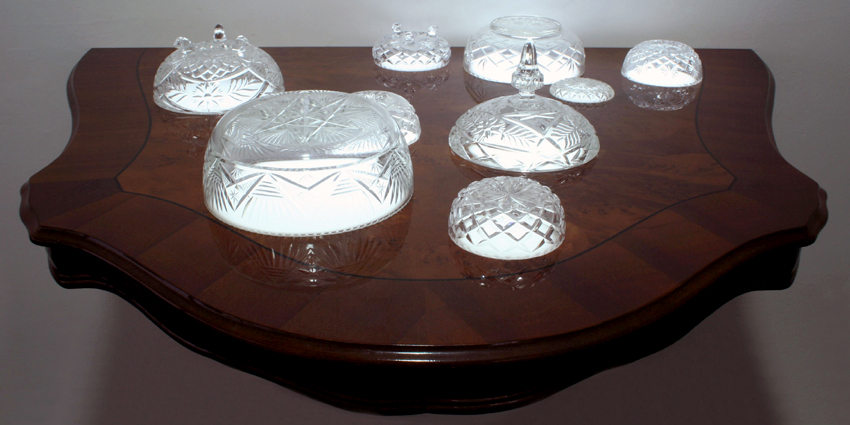
Nicholas Folland’s Navigator sculptures are indicative Folland’s continued interest in utilising, modifying and experimenting with various sourced materials. These sculptures comprise of various upturned intricately detailed crystal objects that sit above a wood panelled shelf. These glass object are lit and act as beacons or floating satellite cities. Folland personifies the intrepid creative explorer via his navigation of various found materials.

Locust Jones’ three-dimensional globes are made from papier mache and pictorially and graphically convey global issues. These works sit on the floor and allow the viewer to orient themselves around the works allowing for a detached, objective perspective on contemporary societal issues. The quickly worked surfaces reflect a stream of consciousness in process. Imagery and themes are taken from various media such as the Internet, photojournalism, film culture and nightly news broadcasts.

The two sculptures in the exhibition by Rhys Lee imbue associations of debris and deal with found objects such as a money box, a dead bird and a clowns face. These trophy-like pieces are decorated by old, worn and found vintage materials that engage with the everyday. The intimate scale of these works do not account for the potency of symbolism and accumulation of collected ideas. The blistered silver patina and bronze sculptures allude to a dark gothic sentiment that extends beyond the morphing forms. The shapes have been smashed, manipulated and stuck back together again resulting in frozen miniature icons that represent a contemporary zest for defiance.

Rob McHaffie’s works comprise a pastiche of painted anonymous unrelated objects and shapes that somehow come together to create unlikely compositions and formations. The highly skilled execution of McHaffie’s paintings attracts the viewer, who is then faced with a banality in subject matter, often of depictions of clothing, crumpled paper, plants and disfigured creatures and figures. These perfectly rendered images of everyday objects are unsettling in their clarity and realism, which are then skewed, moulded and displaced in unlikely relationships. There is a sense of a deliberate haphazard nature to McHaffie’s work that draws upon a range of elements brought together to mimic something else. Humour surfaces through this stylistic creative process.

Derek O’Connor’s re-worked painting collages resemble distorted and fragmented realities and stories via the manipulation and playful technique of alteration and re-use of book covers and record album and EP covers. O’Connor’s characteristic gestural sweeping luscious brushstrokes are employed with precision yet allow for organic spontaneity. The old material takes on new meaning and are given new life via O’Connor’s creations.

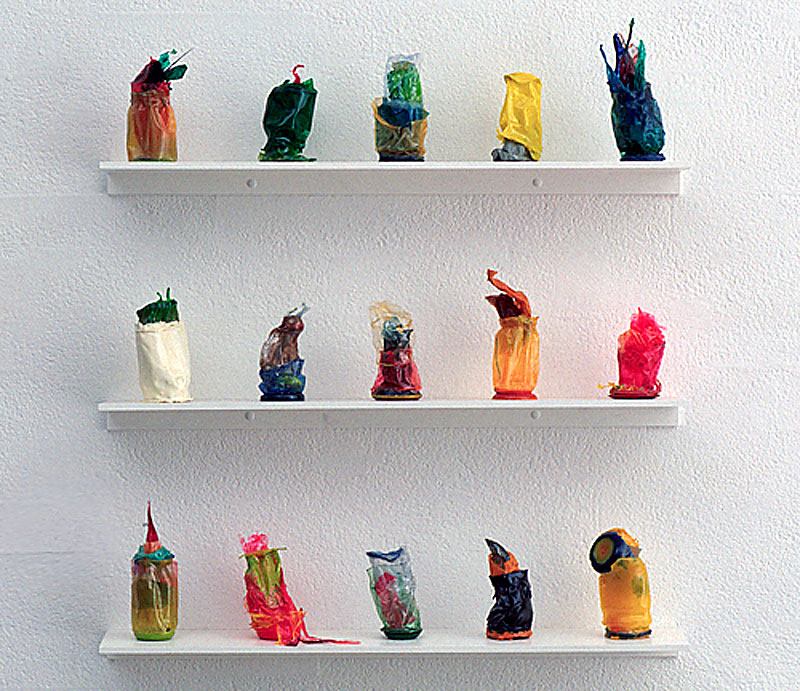
Alex Spremberg’s work Inside Skins highlights the artist’s accidental processes at work. This sculptural piece was made as an ancillary to his broader practice – working with acrylic, enamel and varnish on board and canvas. These objects where literally created via chance – an after thought that was noticed to be a finished piece in its own right. Left to dry within their containers these ‘skins’ were extracted and proved to provide aesthetic attraction and conceptual ideas of the ready-made.

The mainstay of Madonna Staunton’s practice surrounds the physicality of assemblage. Essentially she is a collage artist. The components of her two- and three-dimensional assemblages are usually drawn from old, faded and battered discards such as frames and chairs that are carefully put together in new ways and given another life. A play between precision and randomness animates her work. Her sensitivity to tonal and formal arrangement always remains acute during this process and the results are austerely and chaotically beautiful.

Press release from the Karen Woodbury Gallery website [Online] Cited 20/05/2010 no longer available online


Nicholas Folland (Australian, b. 1967) 'Navigators 1' 2008 from the exhibition 'The Navigators' at Karen Woodbury Gallery, Melbourne, May 2010


Nicholas Folland (Australian, b. 1967)
Navigators 1
2008
Glassware, table and lightbox
25.0 x 110.0 x 87.0cm


Nicholas Folland (Australian, b. 1967) 'Navigators 2' 2008


Nicholas Folland (Australian, b. 1967)
Navigators 2
2008
Glassware, table and lightbox
25.0 x 110.0 x 87.0cm


Karen Woodbury Gallery

This gallery has now closed.

LIKE ART BLART ON FACEBOOK

Back to top

Review: ‘Intersections’ by Sarah Amos at Gallery 101, Melbourne

Exhibition dates: 22nd July – 15th August, 2009


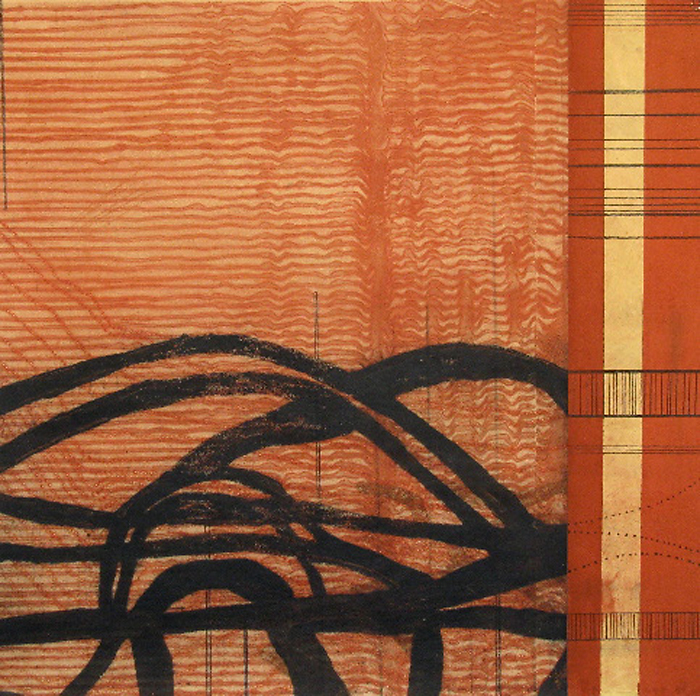
Sarah Amos (Australian, b. 1965) 'Red Walk' 2009 from the exhibition 'Intersections' by Sarah Amos at Gallery 101, Melbourne, July - August, 2009


Sarah Amos (Australian, b. 1965)
Red Walk
2009
Collagraph and Monoprint


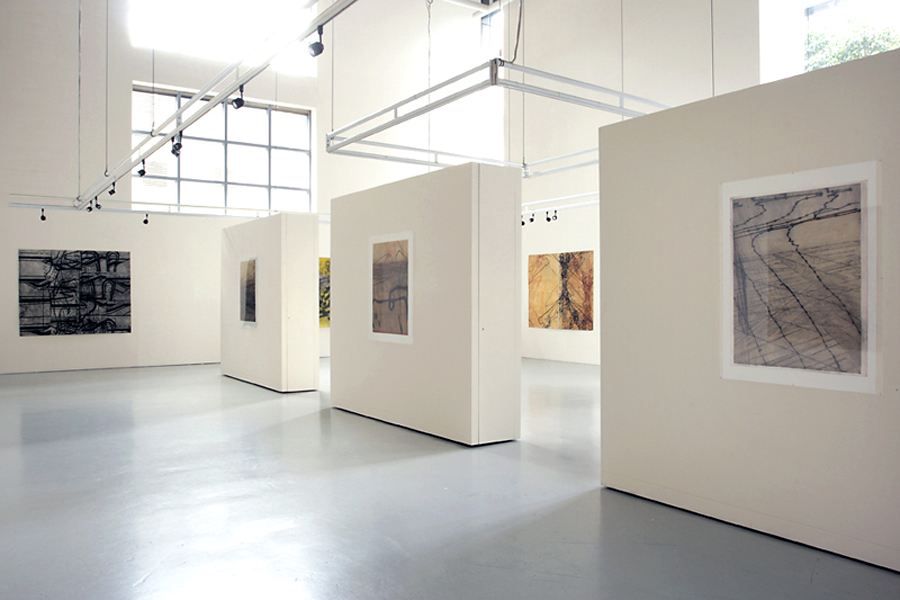
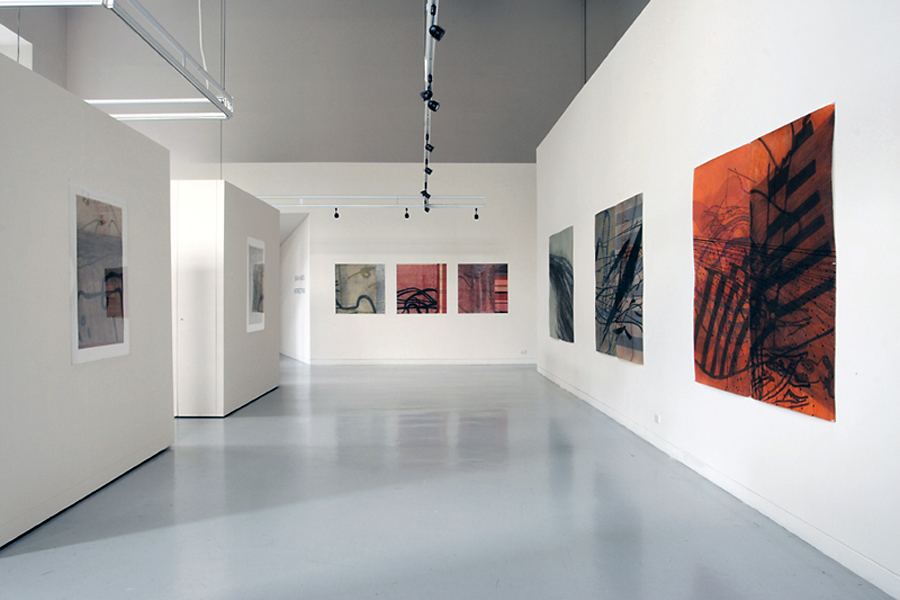
An interesting exhibition of Collagraphs (a type of collage printmaking)1 and etchings is presented by Sarah Amos at Gallery 101, Melbourne, work that is full of delicate coloured layering, topographical mapping and nodal, rhizomic and Spirogyra-type structures.

The ‘flux’ of the work, it’s musical cadence if you like, is the fusion of palimpsestic markings as viewed from the air – the dotted contours, the ploughed fields, the beautiful spatial layering that has an almost Kandinsky-like effect – with the aesthetics of Japanese paper, matt black colour (that subtly glistens on close inspection) and the tactility of the surface of the work. These intersections produce images that have some outstanding resonances: vibrations of energy that ebb and flow around the gallery space. These works are captivating!

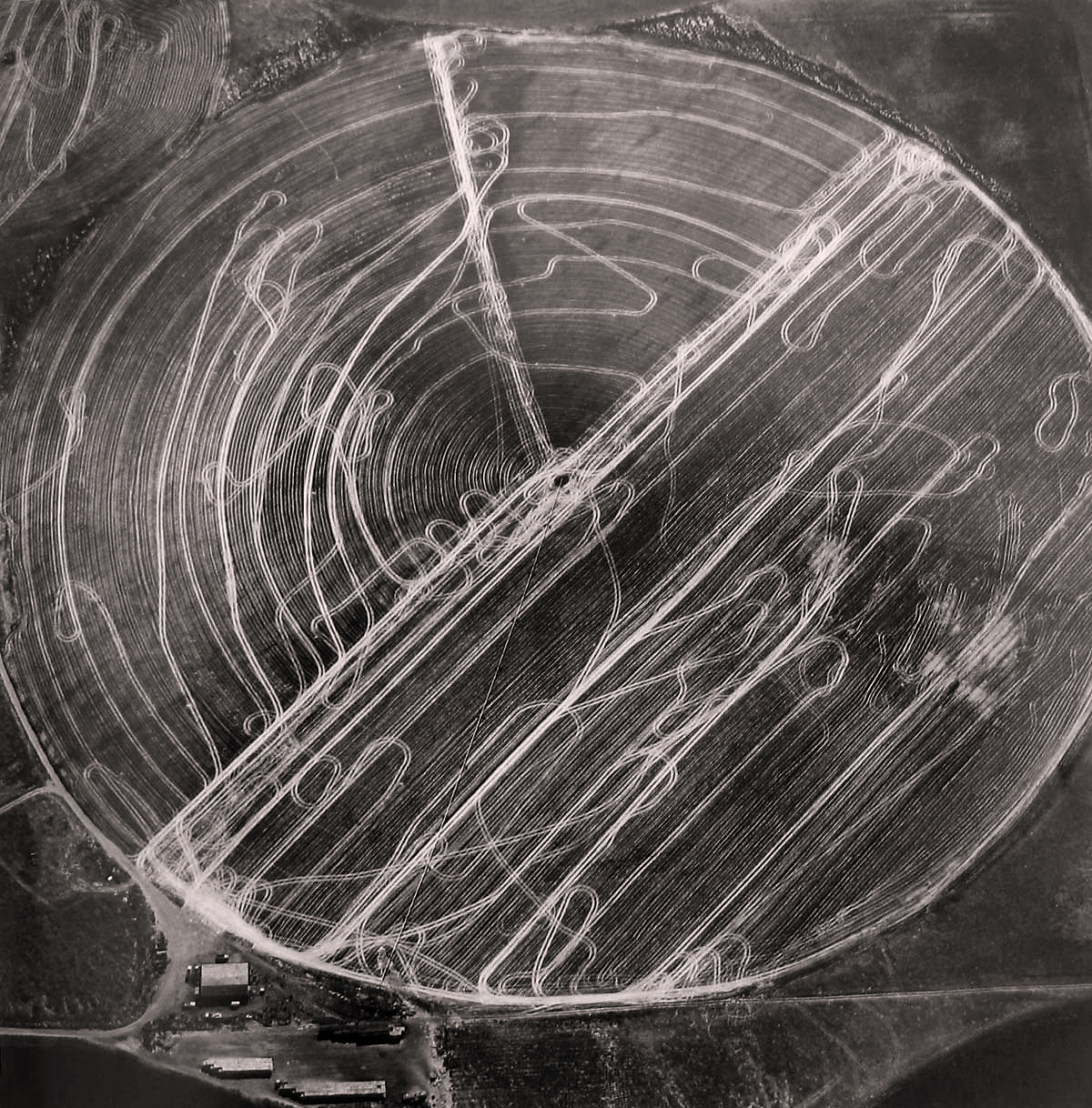
For me the simpler images were the more successful especially the series named Intersections with their muted tonalities, shifting colours and topographical structure. They also reminded me of the black and white aerial landscape photography of Emmet Gowin (see below).

While I am unsure of the validity of the ‘landscape’/’urban lens’ ‘urban temperature’ references (which I found unnecessary and slightly irrelevant) these works and their synaptic interfaces must be experienced. For the viewer they hold a strange attraction as you stand before them drawn, inexorably, into their penumbral spaces. Recommended.

Dr Marcus Bunyan


Many thankx to gallery 101 for allowing me to publish the art work in the posting. Please click on the photographs for a larger version of the image.


1/ “A Collagraph print is a collage printmaking technique and is a form of Intaglio printing. The collagraph plate is printed in the same way as etchings, but also include the basic principle of relief printing and can be printed either as intaglio or relief.

The term collagraph refer to a collage board where the materials are assembled on a flat base or plate (matrix) to form a relief block with different surface levels and textures.

Collagraph plates are created by sticking and gluing materials like textured paper or fabric onto the plate and then coat it with varnish or acrylic medium afterwards to protect the materials.

Anonymous. “Printmaking: Collagraphs/Collage Blocks,” on the ArtistTerms.com website [Online] Cited 03/08/2009. No longer available online


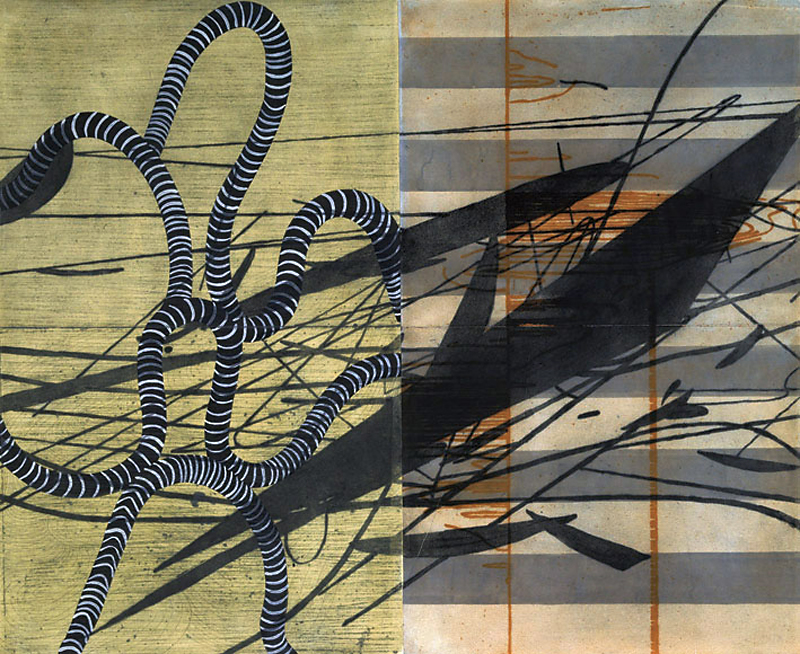
Sarah Amos (Australian, b. 1965) 'Storm Loading' 2009 from the exhibition 'Intersections' by Sarah Amos at Gallery 101, Melbourne, July - August, 2009


Sarah Amos (Australian, b. 1965)
Storm Loading
2009
Etching and hand drawing on Shiramine Japanese paper


Installation view of 'Intersections' by Sarah Amos at Gallery 101, Melbourne

Installation view of 'Intersections' by Sarah Amos at Gallery 101, Melbourne


Installation views of Intersections by Sarah Amos at Gallery 101, Melbourne
Photos: Marcus Bunyan


Emmet Gowin (American, b. 1941) 'Harvest traffic over agricultural pivot near Hermiston, Orgeon, 1991' 1991


Emmet Gowin (American, b. 1941)
Harvest traffic over agricultural pivot near Hermiston, Orgeon, 1991
1991
Gelatin silver print


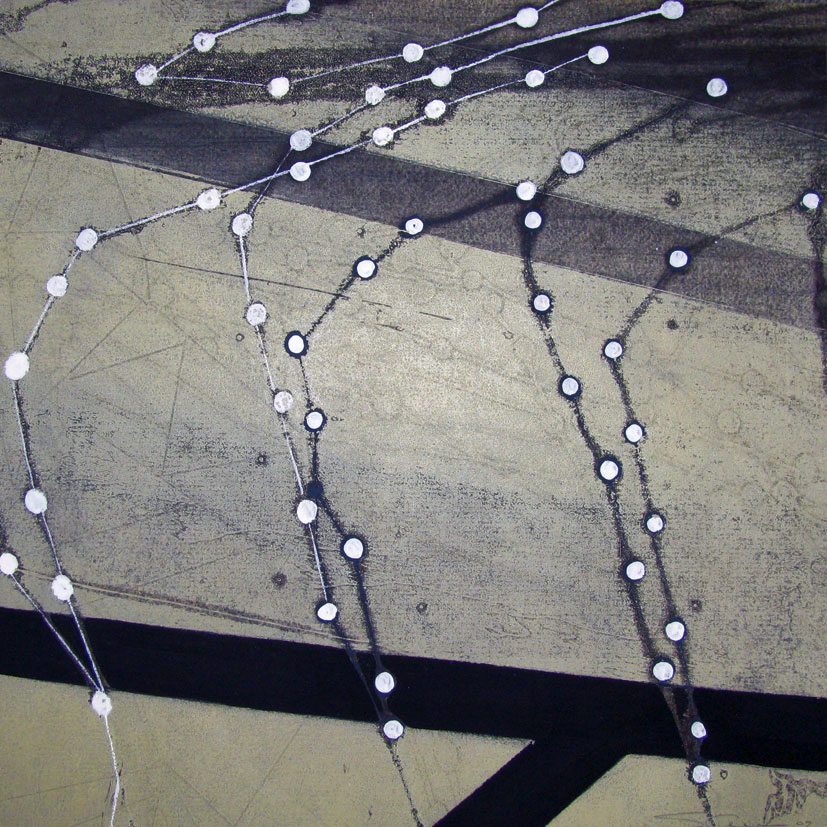
Sarah Amos (Australian, b. 1965) 'Intersections 8' 2009


Sarah Amos (Australian, b. 1965)
Intersections 8
2009
Collagraph with gouache


“(Flux) – where a total electric or magnetic field passes through a surface.”

 
My work is a fusion of both land and cityscape. I am interested in interpreting spatially dynamic, real and half forgotten landscapes through an urban lens. New to this body of work is my interest in the visual graphics of scientific diagrams in which dynamic and informative landscapes are drafted into linear minimal lines. I have absorbed this distilled language, translating it into an architectural and organic landscape where the intersections of line, volume and space are constantly in flux. This obscure knowledge is pared down, simplified and ordered into a clean analysis ready for instant translation.

The Australian landscape is central to my work and influences my use of colour, idiosyncratic marks and open space. These works are personalised maps of accumulated information, like printed histories, that record the duelling intersections where the weathers of the landscape and the urban temperature have begun to take on new and vital immediacy.”

Sarah Amos, 2009

Text from the Gallery 101 website [Online] Cited 01/08/2009. No longer available online


Sarah Amos (Australian, b. 1965) 'Lute' 2009


Sarah Amos (Australian, b. 1965)
Lute
2009
Collagraph


Gallery 101

This gallery is no longer open.ppp

Sarah Amos website

LIKE ART BLART ON FACEBOOK

Back to top