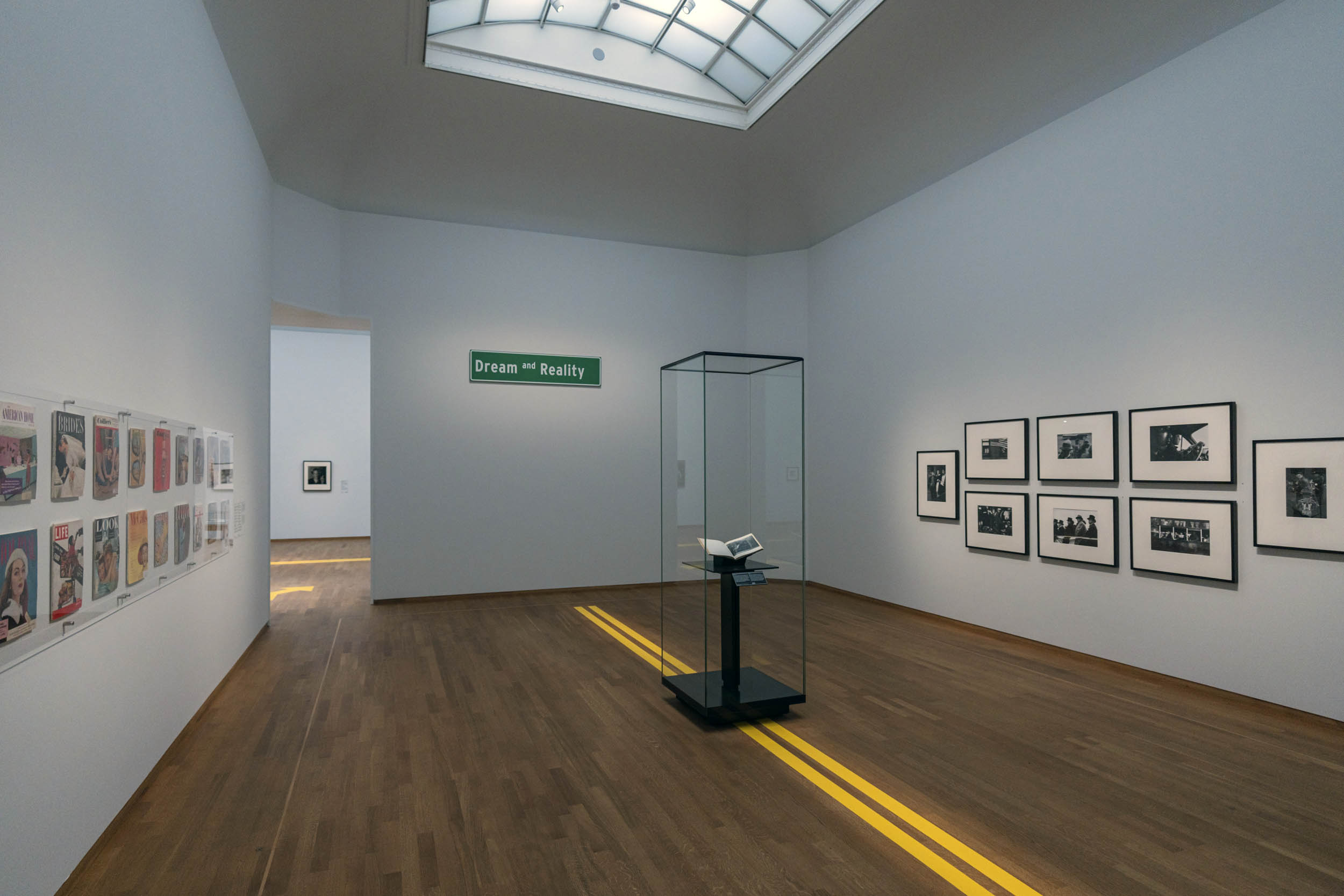
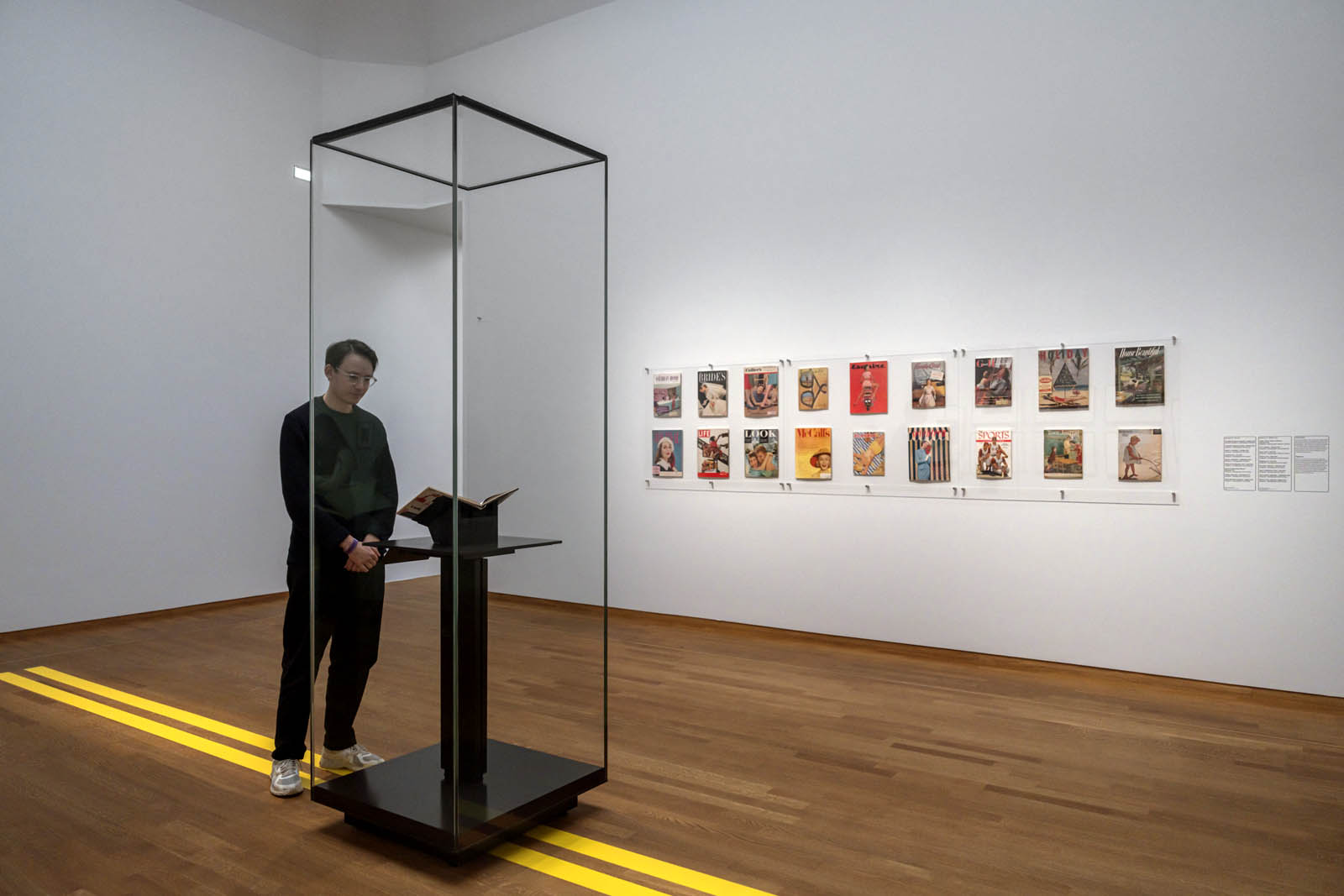
While I haven’t physically seen this exhibition – according to Rijksmuseum “the Netherlands’ first major survey exhibition of American photography… the first comprehensive survey of American photography in Europe … reflect[ing] the rich and multifaceted history of photography in the United States. The exhibition presents the country as seen through the eyes of American photographers, and shows how the medium has permeated every aspect of our lives: in art, news, advertising and everyday life” – you can glean a lot about an exhibition from the installation photographs.
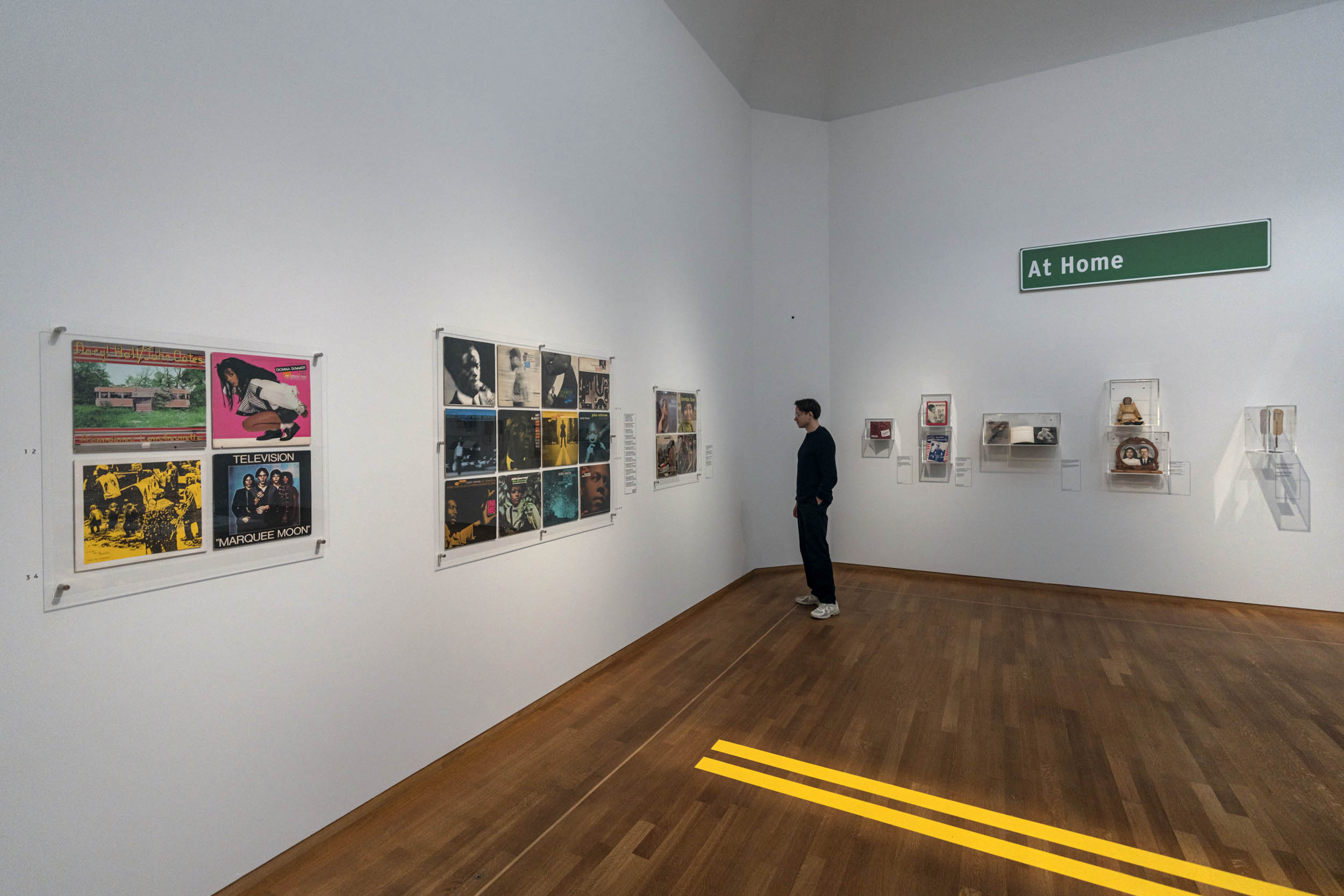
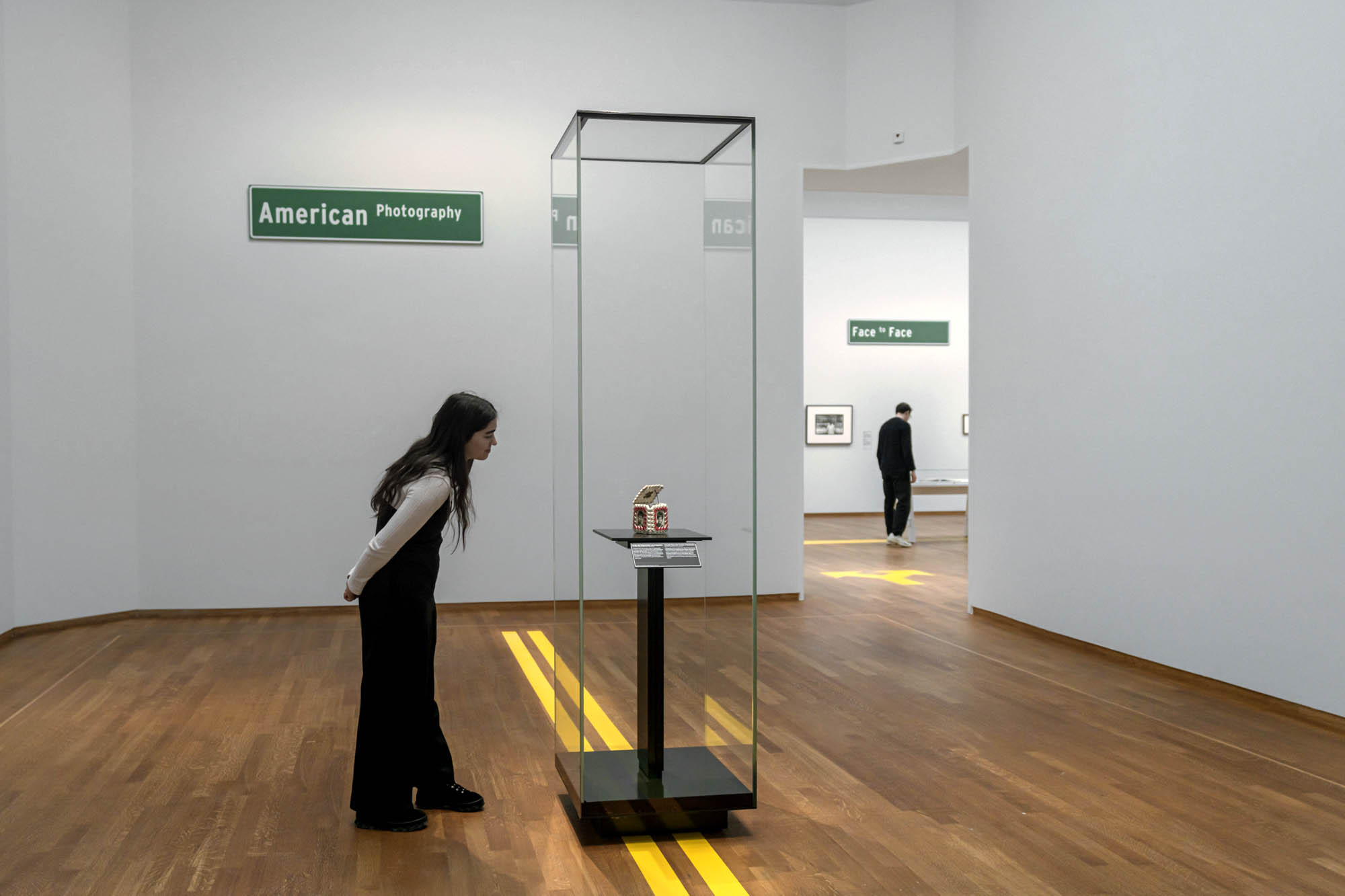
The feeling I get from the installation photographs is of a particularly meagre offering – gallery halls with minimal photographs, huge empty spaces (just look at the installation photograph Curio box made of cigarette packets with portraits of roommates, late 1960s below) – and to then consider this is supposed to be “the first comprehensive survey of American photography in Europe” and reflect the large photographic holdings of the Rijksmuseum. Really? You wouldn’t really know it from looking at “the show”.
Perhaps the problem stems from the rationale of the exhibition:
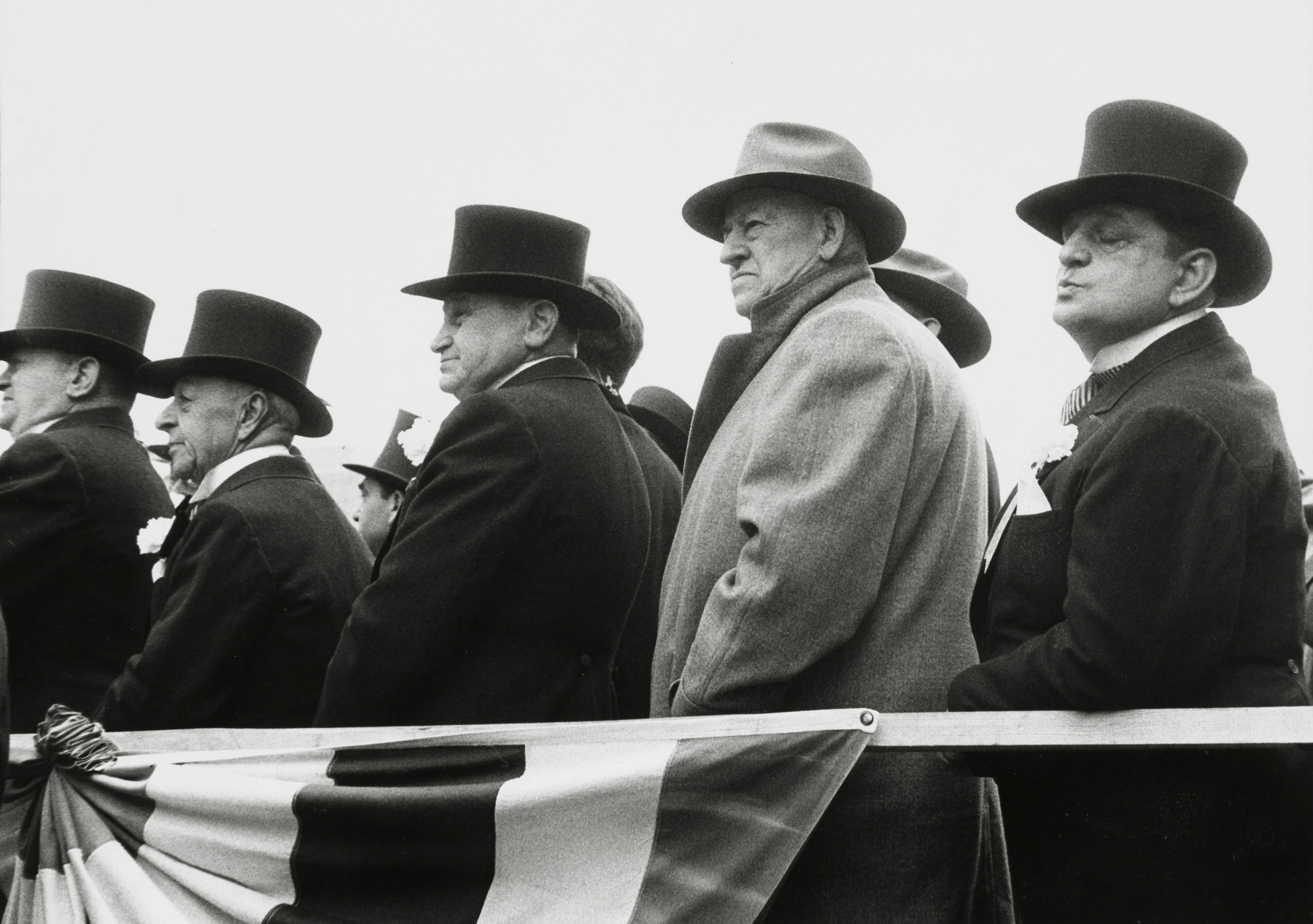
“There is no hierarchy to the selection. A sequence of rooms present numerous fields – portraiture, landscape, advertising work, art photography – like chapters in a novel. “We tried to find surprising images and things we’ve never seen before,” says Boom. The result is a broad mix, shaped with co-curator Hans Rooseboom, of anonymous photography, commercial work, news coverage, medical prints and propaganda, presented in tandem with masterpieces such as Robert Frank’s enigmatic picture of a woman watching a New Jersey parade in 1955, her face partially obscured by an unfurled Stars and Stripes.”1 (see below)
The phrase “a broad mix” says it all: a mishmash of anonymous photography, commercial work, fine art photography, the political power of photography, photographs on racism, war, etc., … taking on too much in one exhibition (the American landscape is largely absent from the walls), proclaiming to be a comprehensive survey of American photography. An impossible task.
“The exhibition has deliberately departed from a “top 100” approach, Rooseboom [one of the curators] adds, stating “that would have been too easy”.”2
Easy to say (and move away from) but not easy to do…
What I feel is lacking in this subjective selection (all exhibitions are subjective) is the focused “energy” present in American photography radiating from the wall – the energy that documents and imagines the growth of a nation and the passion of the artists that capture that energy.
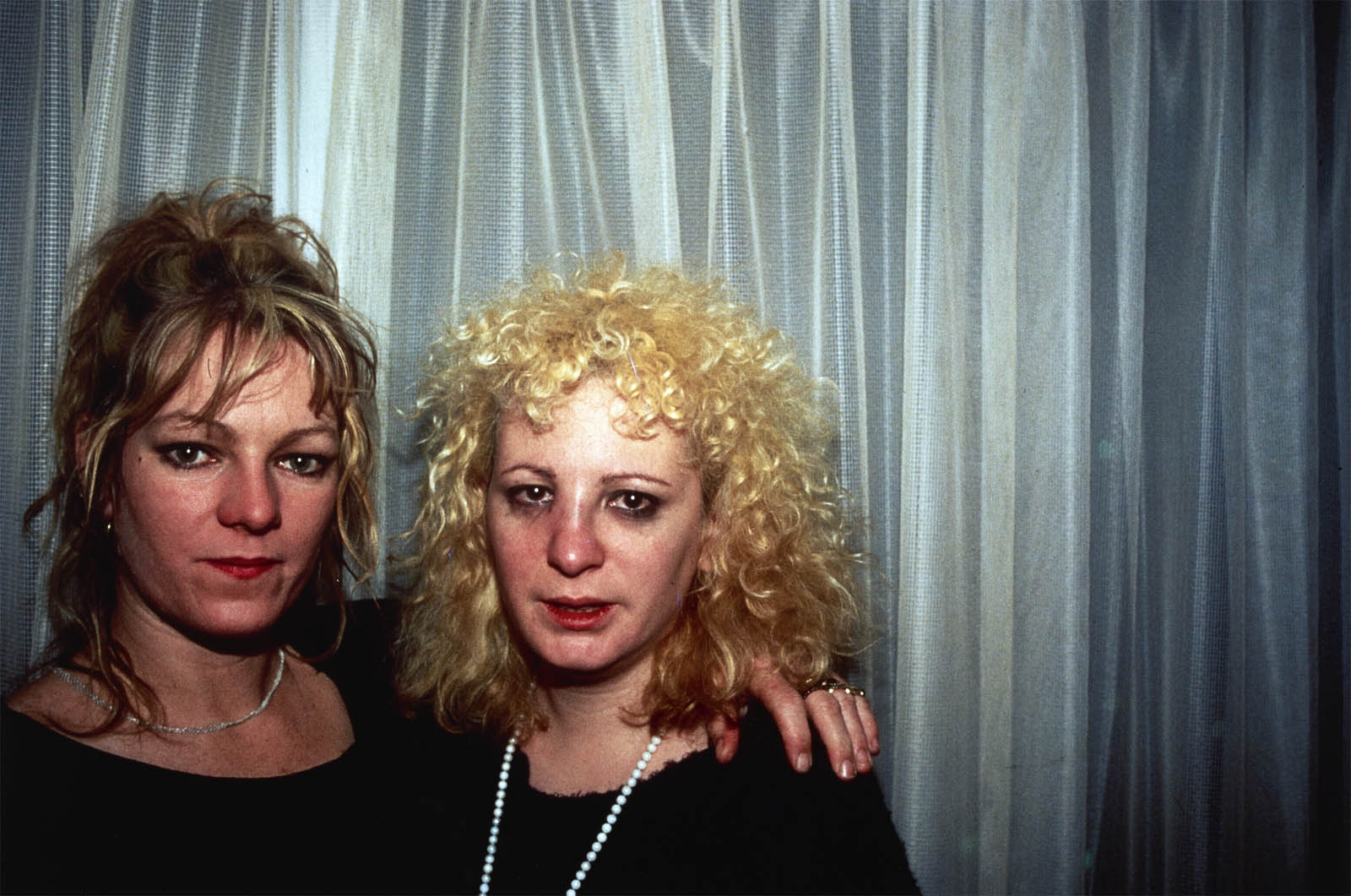
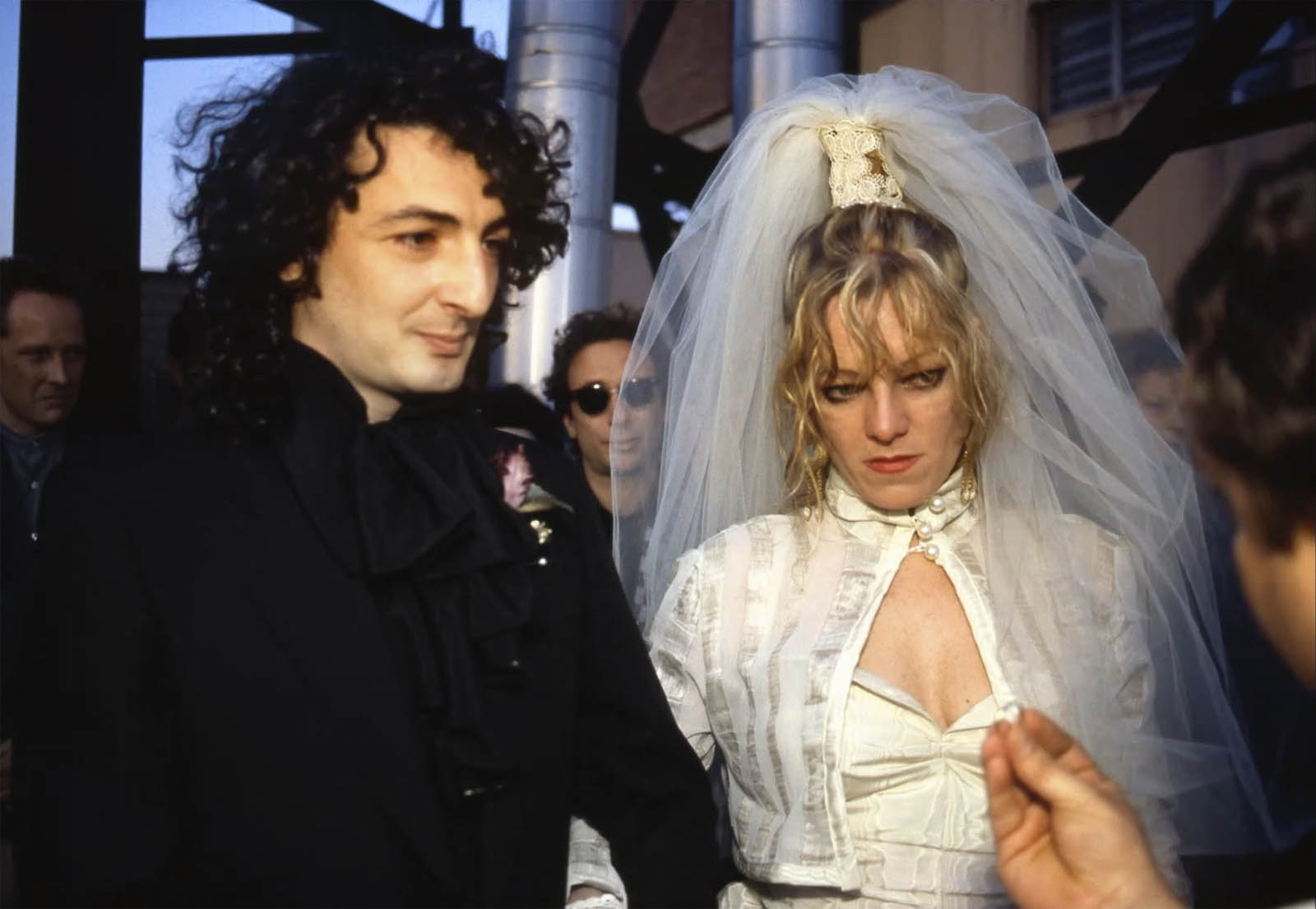
Where is, for example, the passion of Sally Mann’s photographs of the American South, the New York buildings of Berenice Abbott, George Dureau’s portraits of friends and amputees in New Orleans, the narrative stories of Duane Michals or the darkness / otherness that has always been present from the very start in American photography. In the selection in the posting, the photographs of Robert Frank (a foreigner, whose photographs of America were reviled when they were first published) and Nan Goldin (photographs of counter culture America) come closest to this alternate perspective, both outsiders from the main stream point of view.
Thus, while there are some interesting photographs in the exhibition it’s all too ho hum for me, perhaps a “vapour” of something almost brought into consciousness.
Many thankx to the Rijksmuseum for allowing me to publish the photographs in the posting. Please click on the photographs for a larger version of the image.
Installation view of the exhibition American Photography at Rijksmuseum, Amsterdam showing at right photographs by Robert Frank (below) Photo: Rijksmuseum/Olivier Middendorp
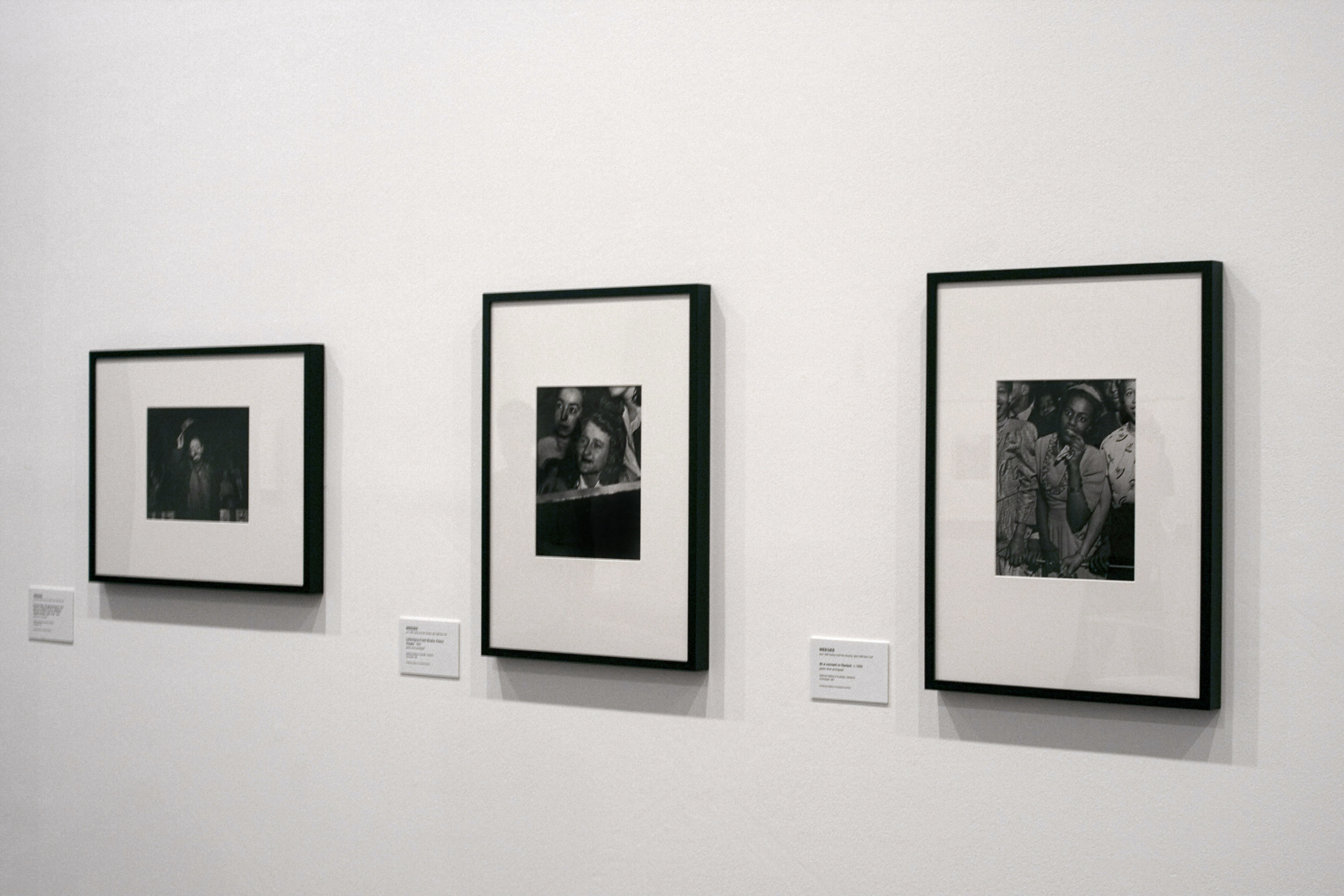
Robert Frank (Swiss, 1924-2019) City fathers – Hoboken, New Jersey 1955 Gelatin silver print
Robert Frank (Swiss, 1924-2019) Parade – Hoboken, New Jersey 1955 Gelatin silver print
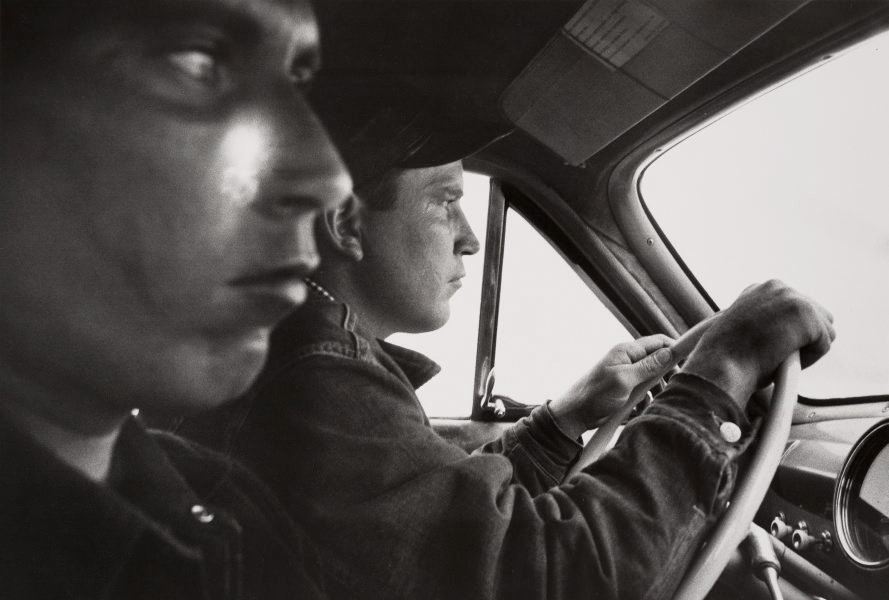
Robert Frank (Swiss, 1924-2019) U.S. 91, Leaving Blackfoot, Idaho 1956 Gelatin silver print
Robert Frank (Swiss, 1924-2019) New York City 1955 Gelatin silver print
Rijksmuseum moves you to The American Dream. To the real American. To unexpected recognition. The Rijksmuseum is staging the Netherlands’ first major survey exhibition of American photography.
The more than 200 works on display in American Photography reflect the rich and multifaceted history of photography in the United States. The exhibition presents the country as seen through the eyes of American photographers, and shows how the medium has permeated every aspect of our lives: in art, news, advertising and everyday life.
Over the past decades the Rijksmuseum has been assembling a collection of American photographic work. This is the first time we are exhibiting photographs from the collection, alongside loaned works from American, Dutch and other European collections. This show includes iconic photographs by the likes of Sally Mann, Robert Frank, Lisette Model, Nan Goldin, Richard Avedon, Andy Warhol, Paul Strand, Diane Arbus and James Van Der Zee, as well as surprising images by unknown and anonymous photographers.
Text from the Rijksmuseum website
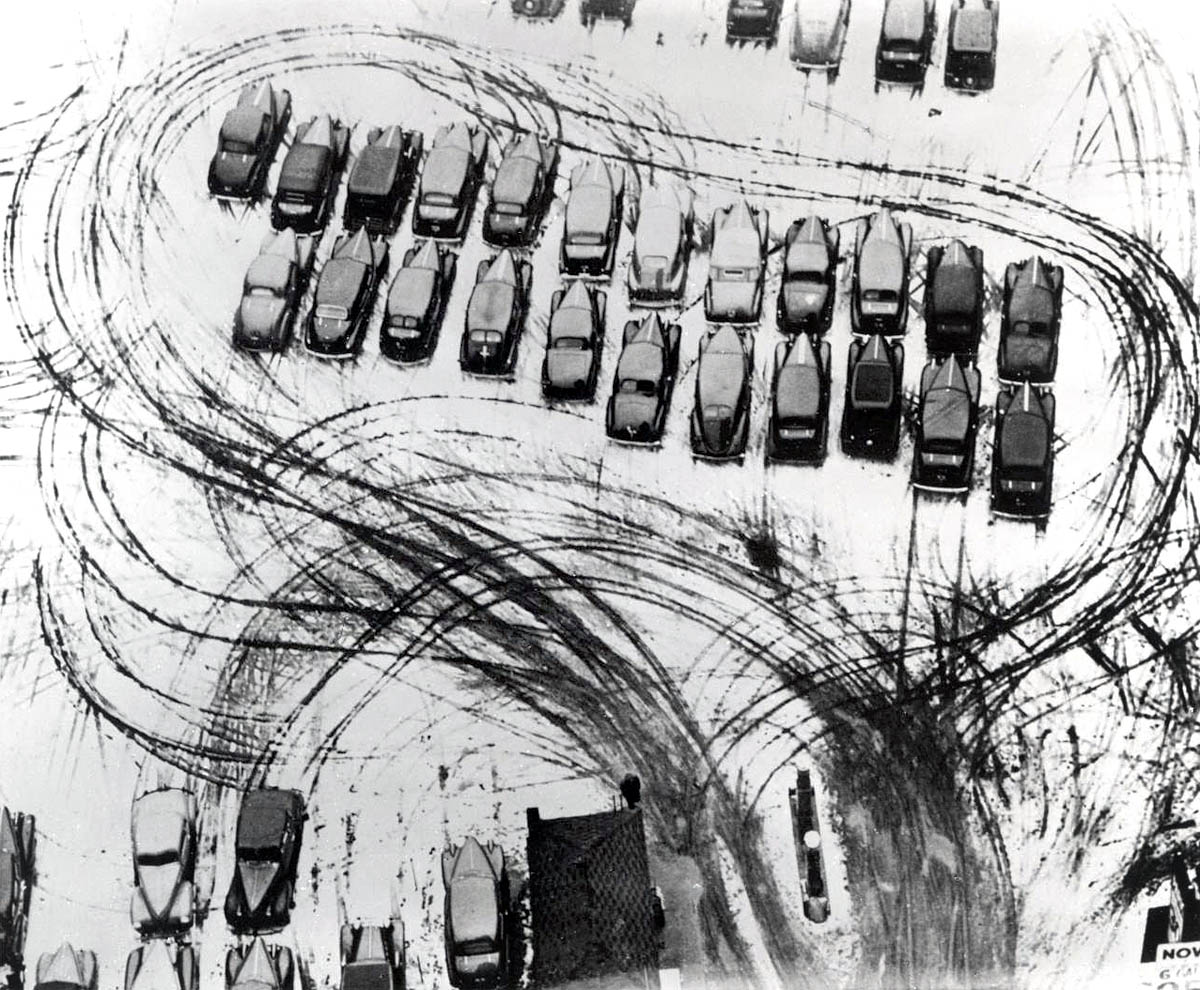
Installation view of the exhibition American Photography at Rijksmuseum, Amsterdam showing in the bottom image at left, Sally Mann’s Jessie #34 (2004, below); at second left, Chuck Close’s Phil [Photo Maquette of Philip Glass] (1969, below); and at third right, László Moholy-Nagy’s Parking lot in Chicago, 1938 (1938, below) Photo: Rijksmuseum/Olivier Middendorp
Sally Mann (American, b. 1951) Jessie #34 2004 Gelatin Silver enlargement print from 8 x 10 in. collodion wet-plate negative, with Soluvar matte varnish mixed with diatomaceous earth
László Moholy-Nagy (Hungarian, 1895-1946) Parking lot in Chicago, 1938 1938 Gelatin silver photograph 23.8 × 33.8cm
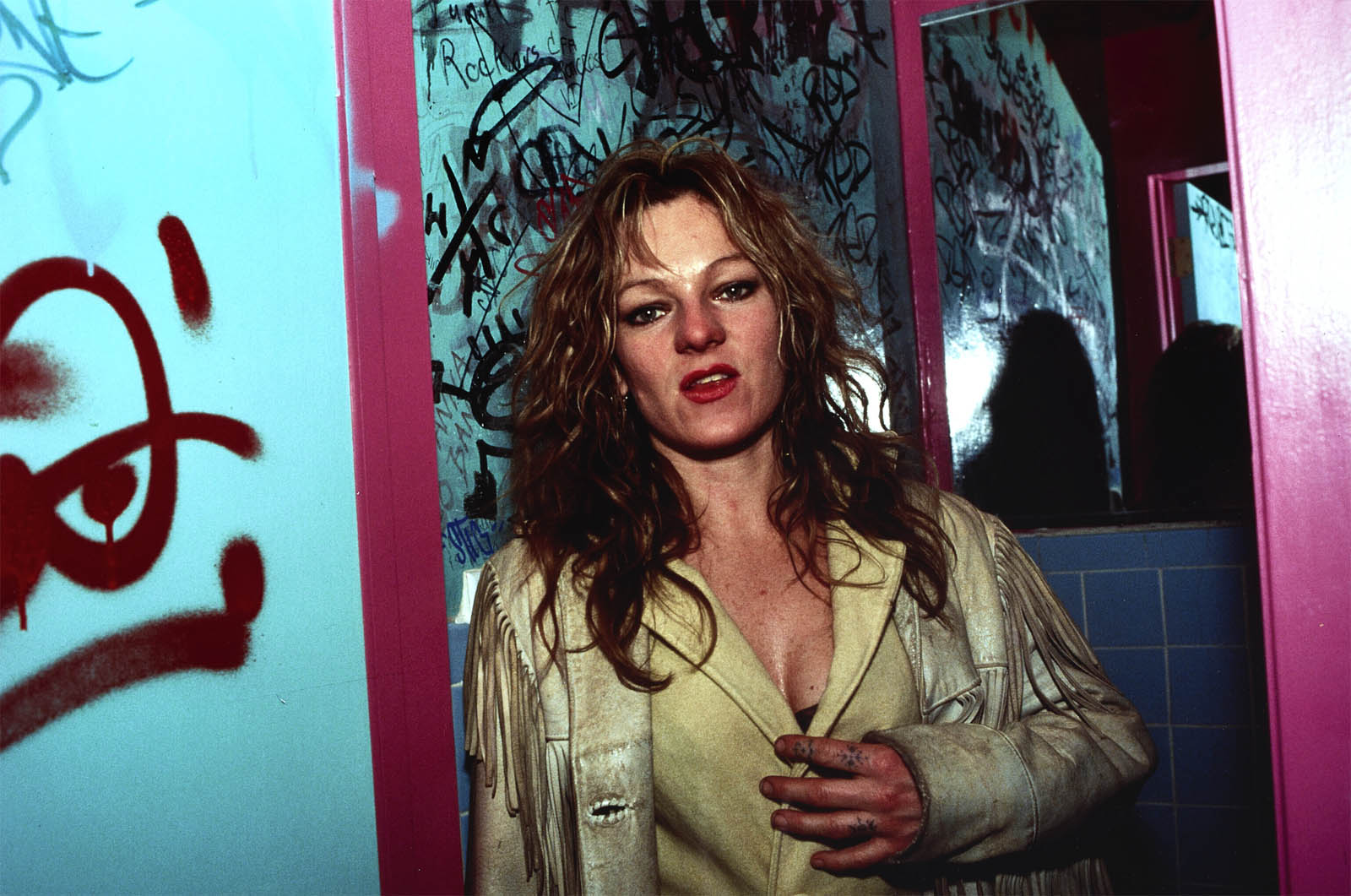
Installation view of the exhibition American Photography at Rijksmuseum, Amsterdam showing the work of Nan Goldin from The Ballad of Sexual Dependency (below) Photo: Rijksmuseum/Olivier Middendorp
Nan Goldin (American, b. 1953) Cookie with Me After Being Hit at the SPE Conference, Baltimore, MD, 1986 1986
Nan Goldin (American, b. 1953) Cookie and Vittorio’s Wedding: The Ring, NYC, 1986 1986
Nan Goldin (American, b. 1953) Cookie in the Bathroom at Hawaii 5.0, NYC, 1986 1986
The Rijksmuseum presents the first comprehensive survey of American photography in Europe. With more than 200 works spanning three centuries, American Photography will be an exploration of the rich and multifaceted history of photography in the United States, showing how the medium has permeated every aspect of our lives: in art, news, advertising and everyday life.
Over the past decade, the Rijksmuseum has built an extensive collection of American Photography. This exhibition is the first ever presentation of Rijksmuseum’s collection, which will be shown together with loans from over 30 collections in the United States, the Netherlands and other European countries. Works by icons including Sally Mann, Robert Frank, Lisette Model, Nan Goldin, Richard Avedon, Andy Warhol, Paul Strand, Diane Arbus and James Van Der Zee will be on view alongside eye-opening photographs by unknown and anonymous photographers.
The exhibition is possible by Rijksmuseum’s major partnership with Baker McKenzie. American Photography runs from 7 February to 9 June 2025. Concurrently with American Photography, Carrie Mae Weems’s 2021 series Painting the Town will be on show in the Rijksmuseum’s photography gallery.
American Photography will give picture of the country through the eyes of American photographers, showing the country in all its complexity. The exhibition takes themes such as the American dream, landscapes and portraiture to trace how photographers increasingly reflected on changes and events in their country. A major topic of the show is photography’s evolution as an art form, from 19th-century daguerreotypes of frost flowers on a window to the work of Paul Strand, Charles Sheeler, Sally Mann, Irving Penn, Dawoud Bey and Sarah Sense. Another important theme is how photography has grown to be a part of everyday life, which is demonstrated by family portraits, advertisements, postcards, gramophone record covers and more.
Press release from Rijksmuseum
Installation view of the exhibition American Photography at Rijksmuseum, Amsterdam showing in the bottom photograph at right, Jocelyn Lee’s Julia in Greenery (2005, below) Photo: Rijksmuseum/Olivier Middendorp
Jocelyn Lee (American, b. 1962) Julia in Greenery 2005 Archival Pigment Print 20 × 24 in | 50.8 × 61cm
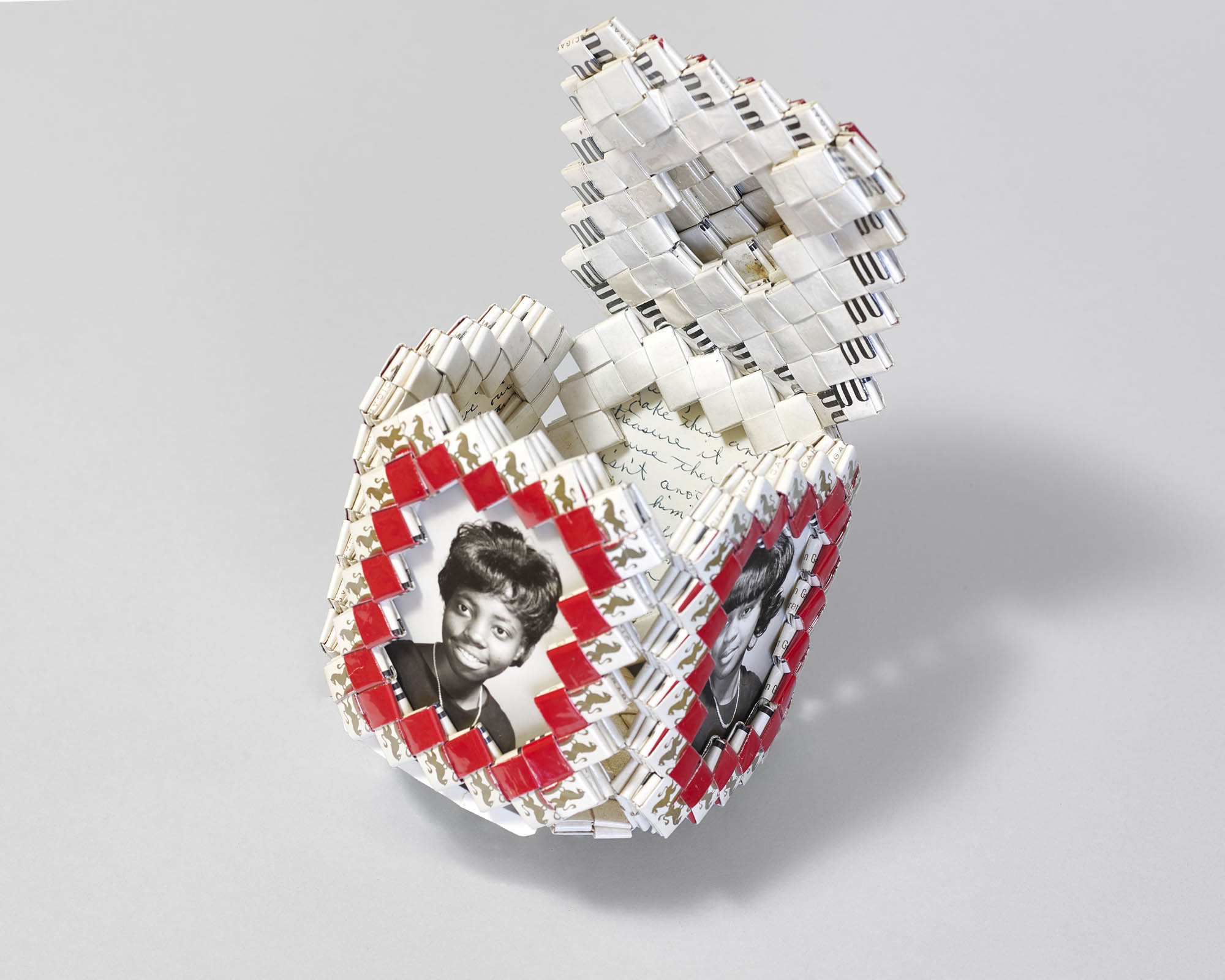
Installation view of the exhibition American Photography at Rijksmuseum, Amsterdam showing in the display case, Curio box made of cigarette packets with portraits of roommates, late 1960s (below) Photo: Rijksmuseum/Olivier Middendorp
Curio box made of cigarette packets with portraits of roommates, late 1960s Wood, handwoven cigarette packets, gelatin silver prints 140 x 110 x 195 mm Collection of Daile Kaplan, Pop Photographica, New York Photo: Andy Romer Photography, New York
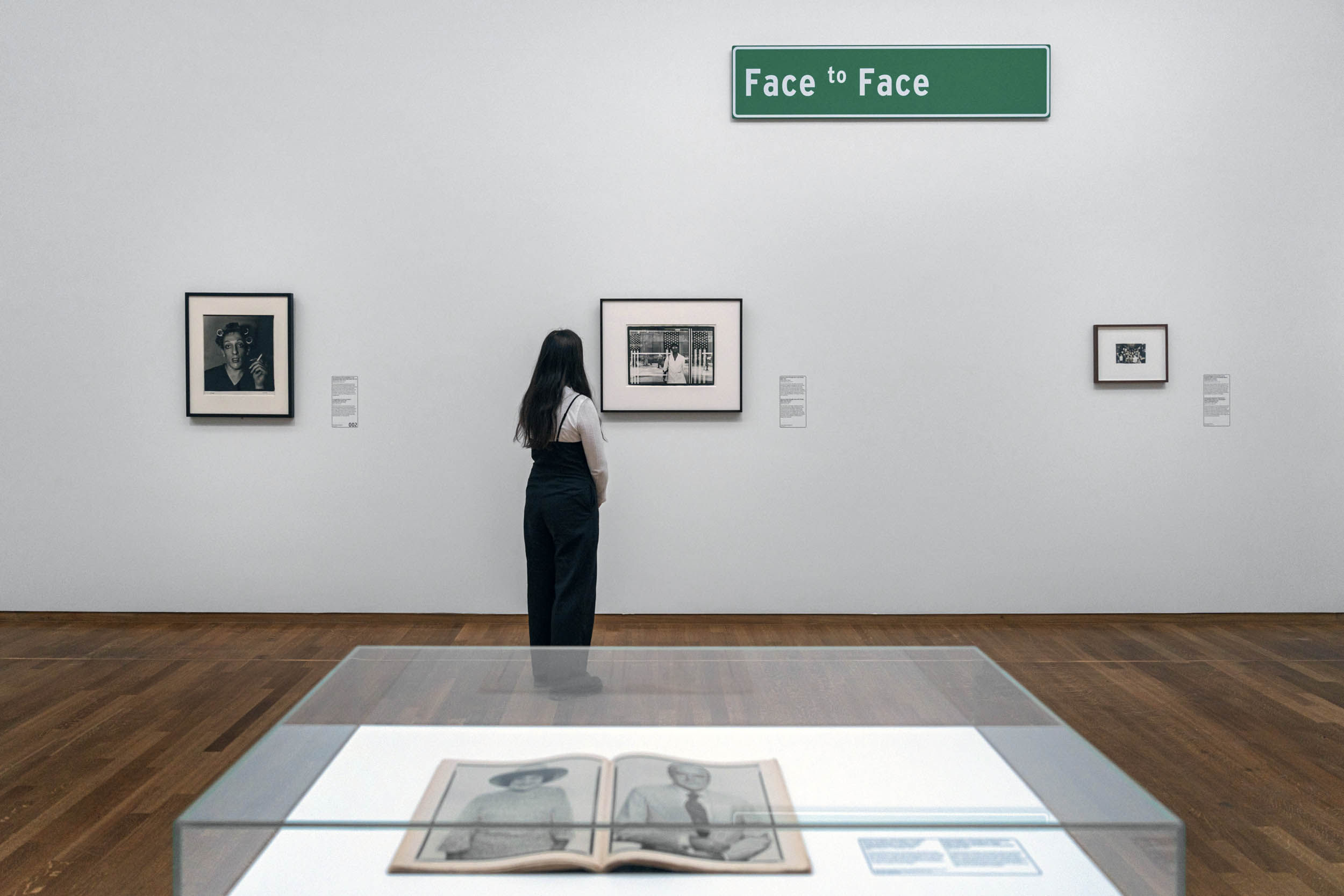
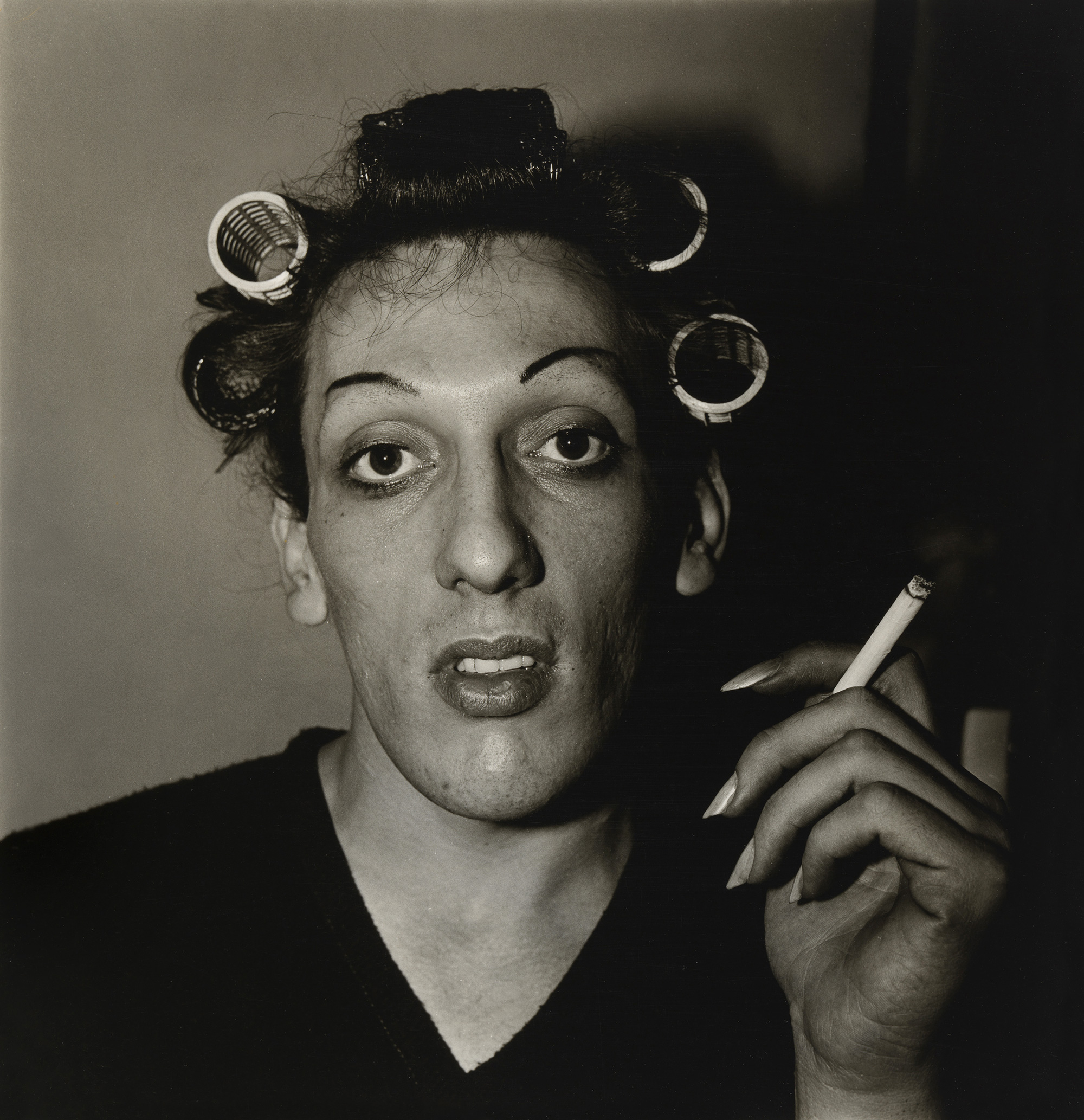
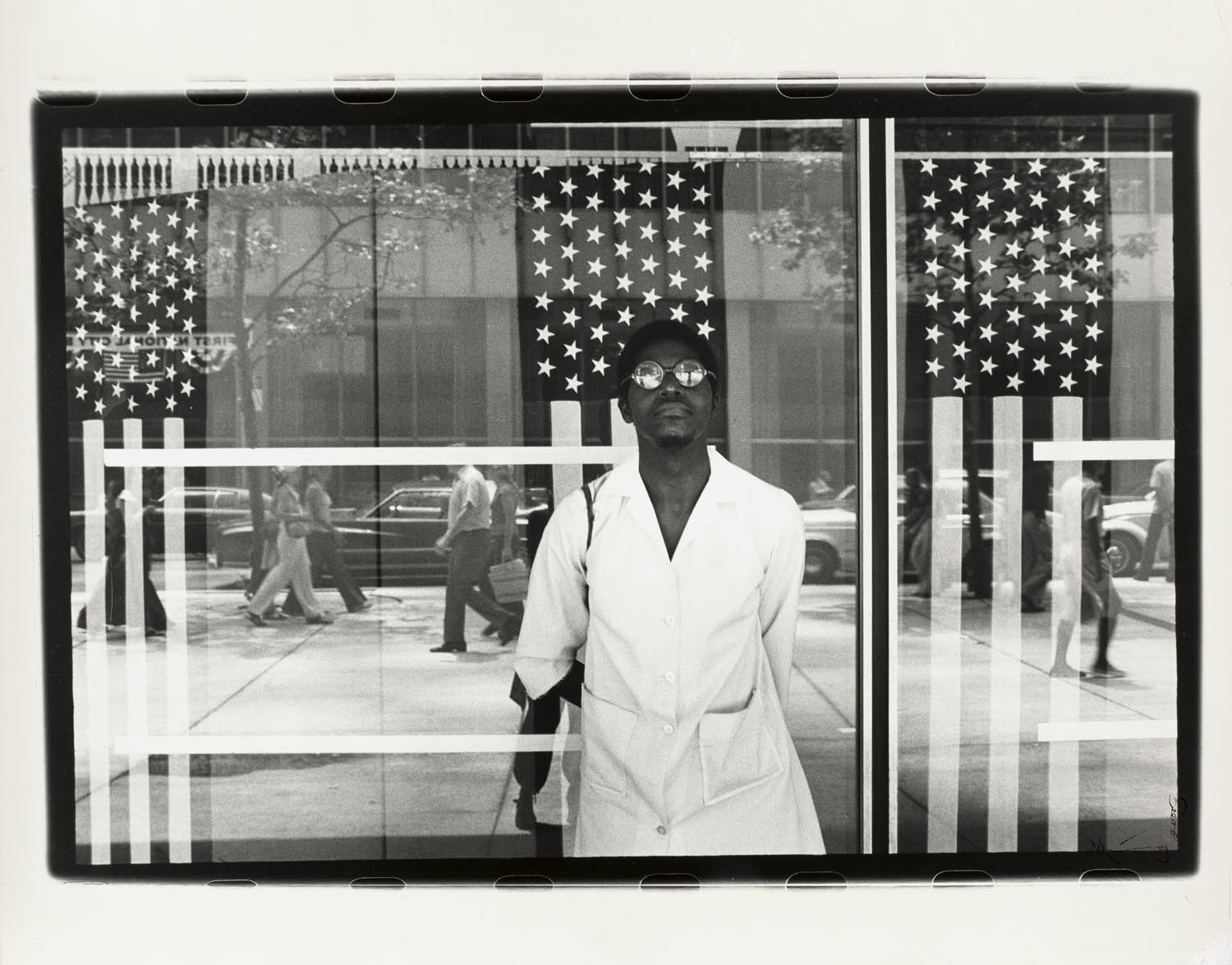
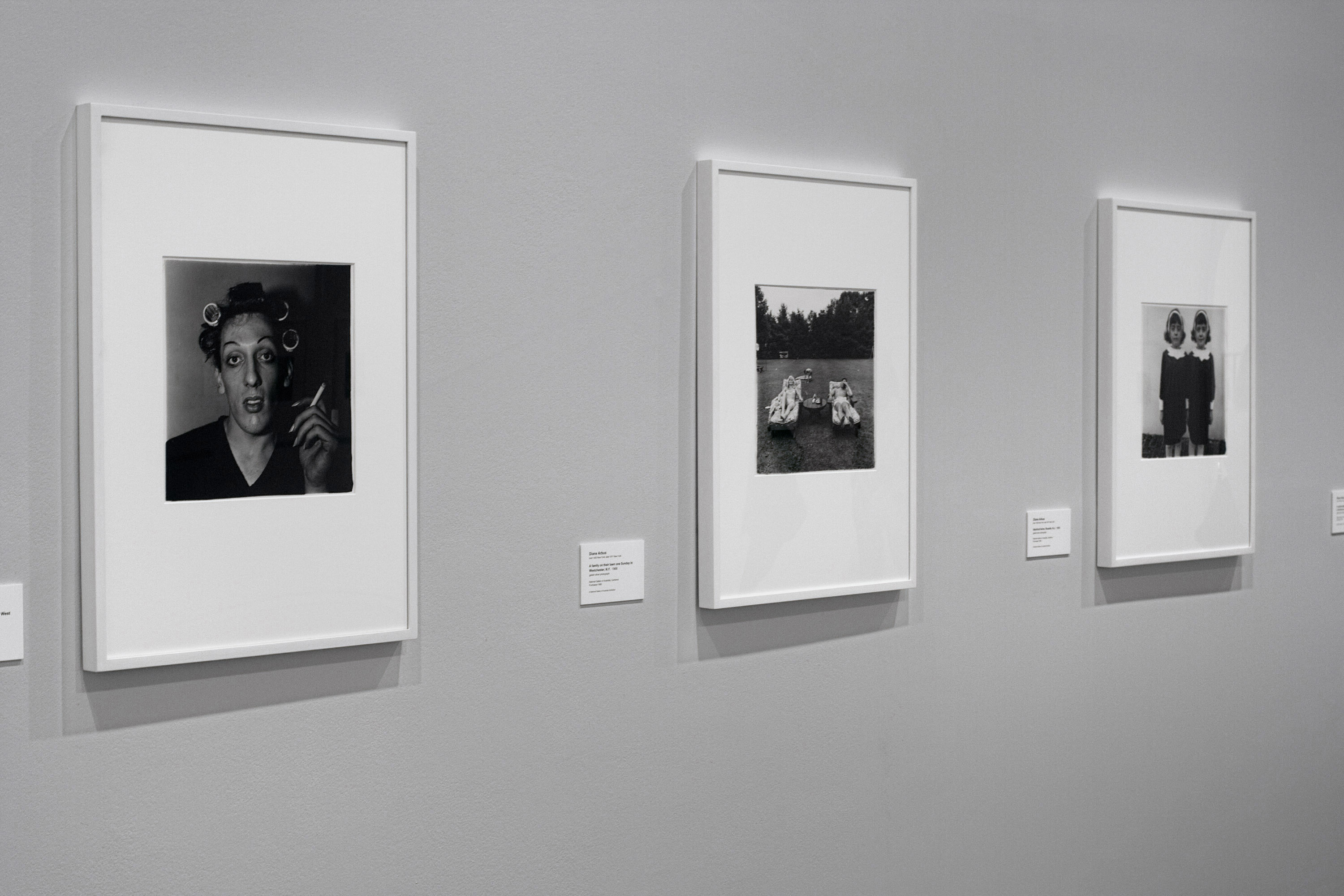
Installation view of the exhibition American Photography at Rijksmuseum, Amsterdam showing at left, Diane Arbus’ A young man in curlers at home on West 20th St., N.Y.C. 1966 (1966, below); and at second left, Ming Smith’s America Seen Through Stars and Stripes, New York City (1976, below) Photo: Rijksmuseum/Olivier Middendorp
Diane Arbus (American, 1923-1971) A young man in curlers at home on West 20th St., N.Y.C. 1966 1966 Gelatin silver print
Ming Smith (American, b. 1951) America Seen Through Stars and Stripes, New York City 1976 Gelatin silver print 318 x 470 mm Virginia Museum of Fine Arts, Richmond (VA) Adolph D. and Wiliams C. Williams Fund
In the post-war years, mass immigration to the US brought new ways of thinking. the US took over from Europe as a cultural trendsetter, and photography was eventually accepted as an art form. Playful approaches to photography emerged, moving beyond documenting people and places to provoking emotion and inviting deep questions. Ming Smith’s America Seen Through Stars and Stripes (1976), created on the bicentenary of the Declaration of Independence, turns again to the flag inviting America to reflect on its history. By placing a figure in mirrored sunglasses in front of a shop window, she creates a disorientating mesh of reflective surfaces. The grid structure suggests incarceration but – in combination with the round glasses and the stars on the flag – also creates an abstract composition reminiscent of modern art. “She’s a careful observer, playing with all these layers in the image,” says Boom.
Smith explores the artistic potential of photography, experimenting with double-exposure, shutter speed and collage. In one version of this image, she paints on bold red stripes, altering this snapshot of the US with marks that resemble blood or flames. Smith’s work builds on the civil rights movement that preceded it and features activists such as James Baldwin and Alvin Ailey. She was the first woman to join the African-American photography collective the Kamoinge Workshop and the first black woman to have her work acquired by the Museum of Modern Art (MoMA). Yet her demographic was largely overlooked by the art world. “I worked to capture black culture, the richness, the love. That was my incentive,” she told the Financial Times in 2019. “It wasn’t like I was going to make money from it, or fame – not even love, because there were no shows.”
Henry Fitz Jnr (American, 1808-1863) Self-portrait 1840 Daguerreotype Smithsonian National Museum of American History, Washington (DC)
In 1840, using a self-made copper plate, Henry Fitz Jnr produced one of the world’s first selfies, his eyes gently closed to prevent any blinking from spoiling the result. In creating this striking blue image, he was doing more than record his appearance; he was also documenting America’s first essays into an art form that would tell its story in radical new ways.
Thomas Martin Easterly (American, 1809-1882) Chief Keokuk (Watchful Fox) 1847 Daguerreotype Missouri History Museum
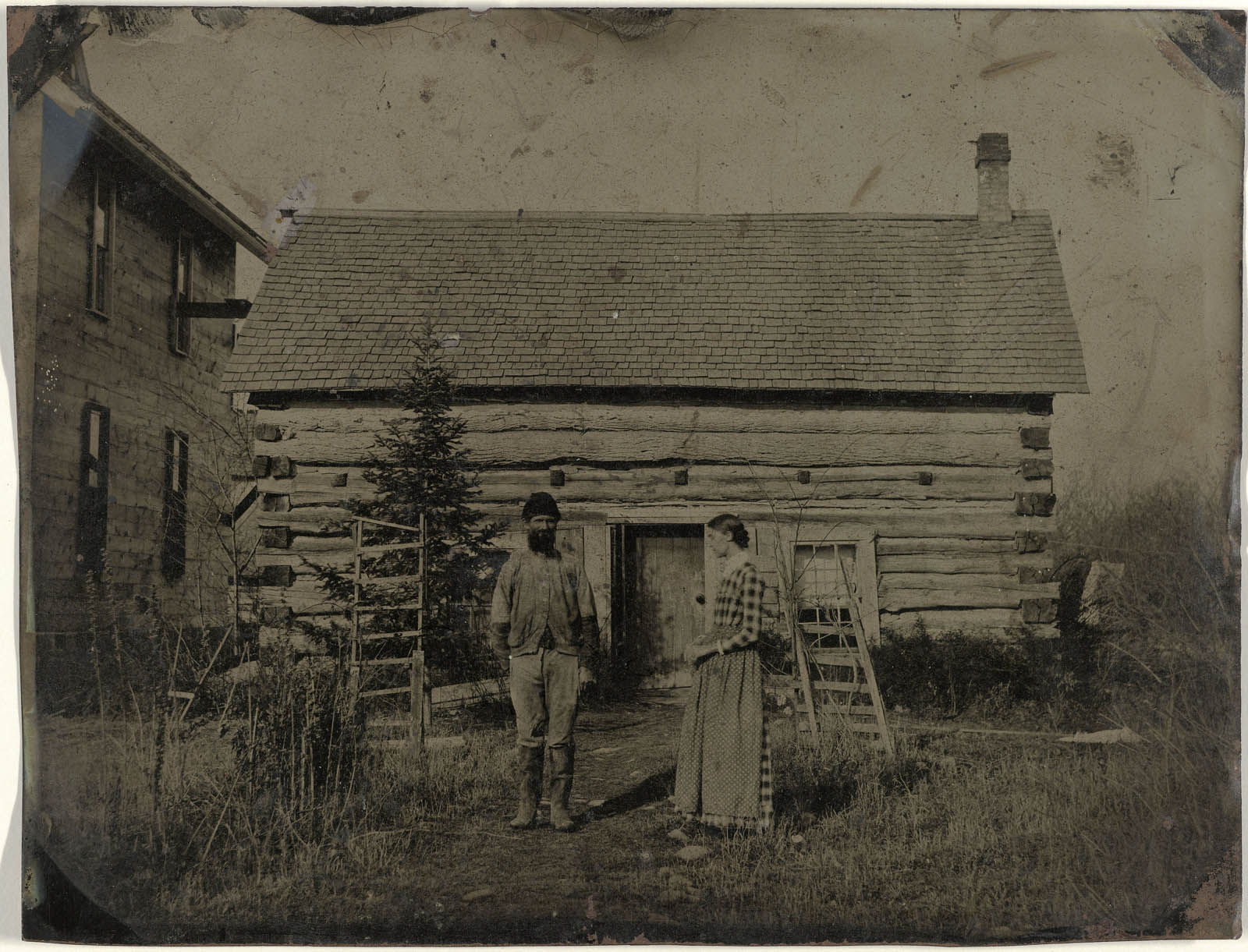
Anonymous photographer View of a wooden house or barn with a man and a woman in front c. 1870-1875 Tintype 164 x 215 mm Rijksmuseum, Amsterdam
A 19th-Century tintype (an image made on a sheet of metal) featuring a man and woman in front of a rustic barn is a case in point. The image was probably sold on the spot by a travelling tin typist “for a modest price”, explains Rooseboom. “Many people had just arrived and were living in the countryside, no big city nearby, so this was the only possibility of having your portrait taken.” The man stands proud, looking at the camera, but the woman’s head is bowed and she is looking away. “Sometimes you can sense that people were simply not used to being photographed,” says Rooseboom. “Nowadays, we’ve seen in magazines and movies how to pose elegantly.” This may be the only time in their whole life that they would be photographed, and the result, adds Boom, “would hang on the wall of the house where they lived forever”.
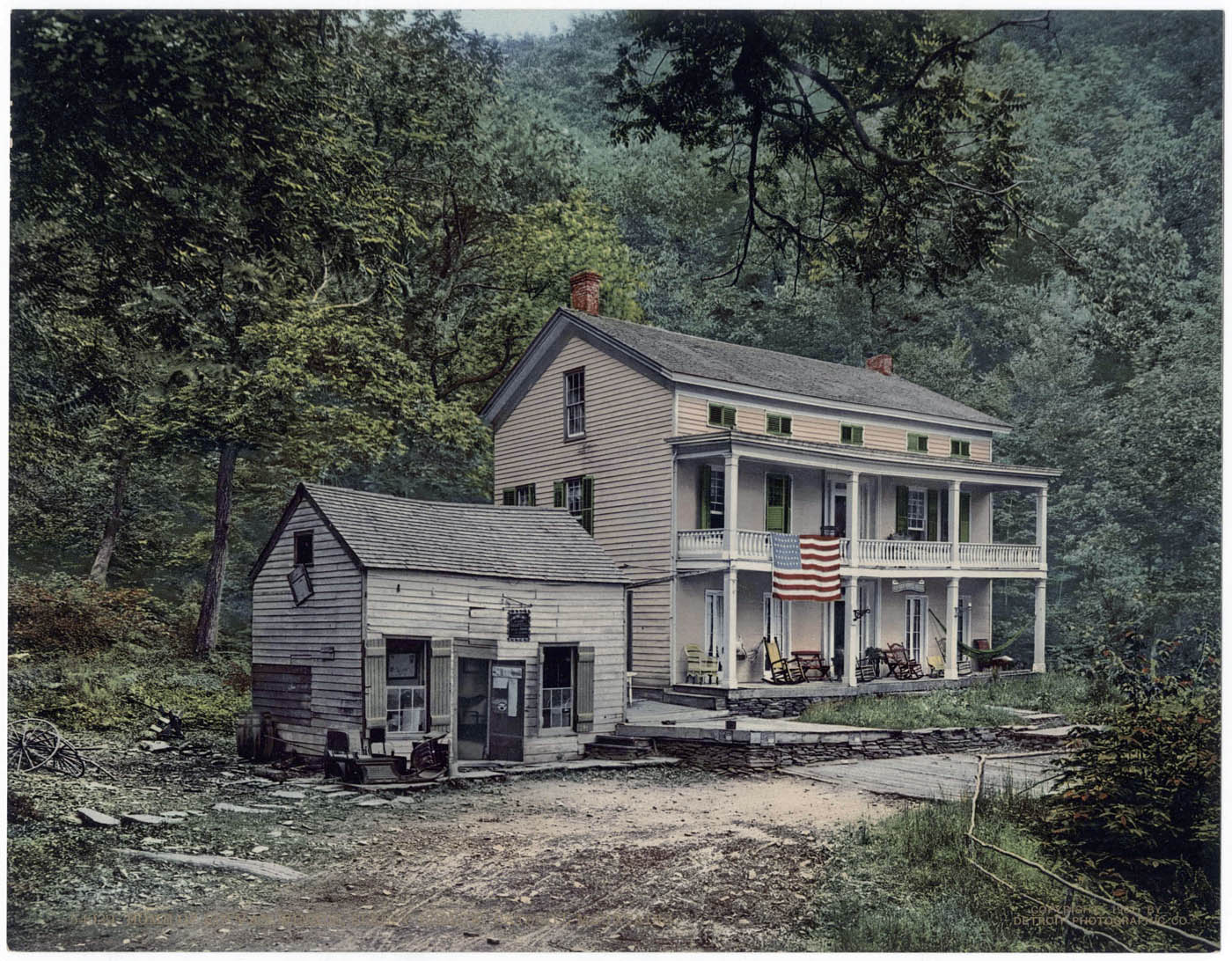
Detroit Photographic Company Home of Rip Van Nd Rijksmuseum, Amsterdam
Bertha E. Jaques (American, 1863-1941) Tree – in Governor Gleghorn’s Place Honolulu 1908 Cyanotype 248 x 152 mm Rijksmuseum, Amsterdam, purchased with the support of Baker McKenzie
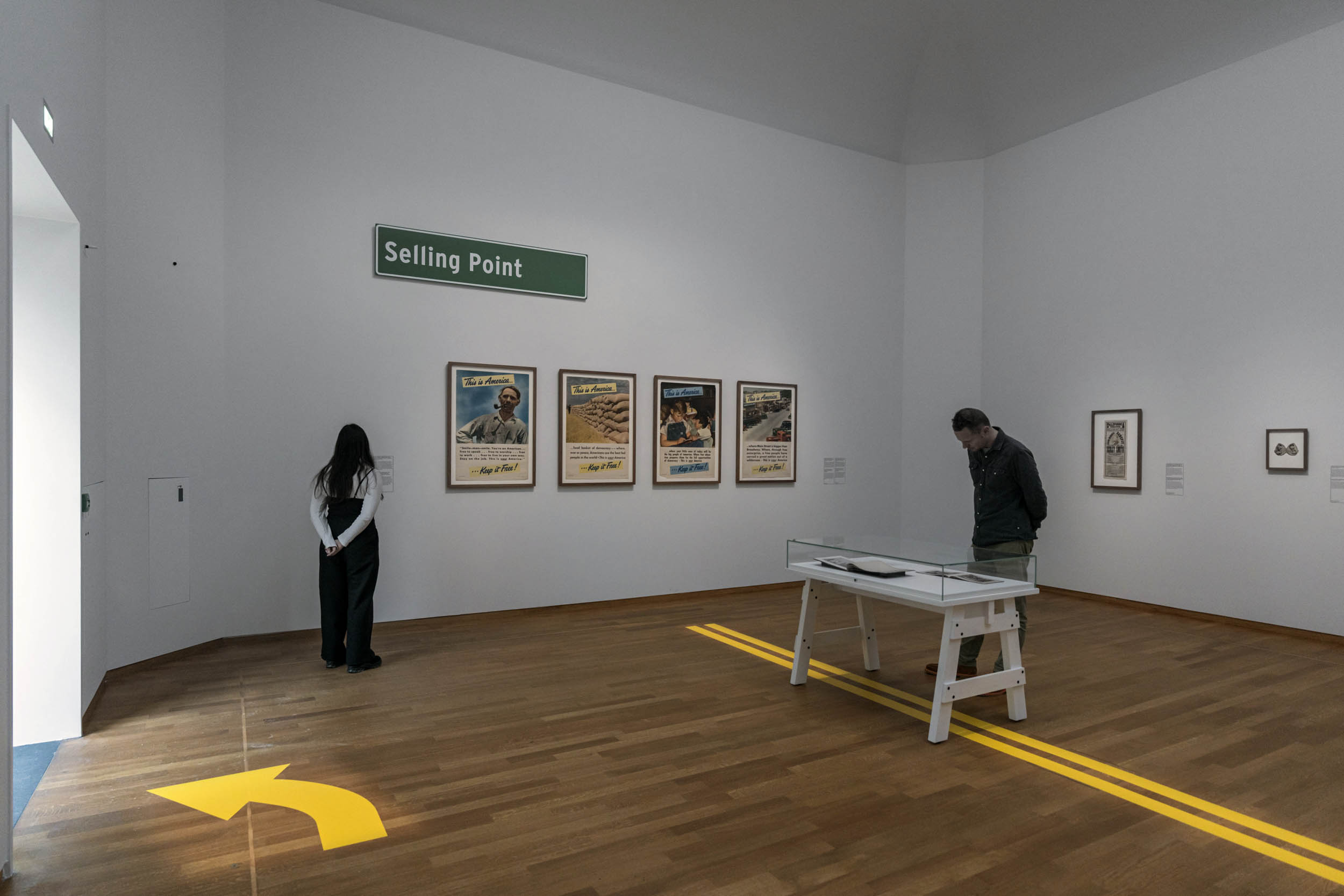
Walker Evans (American, 1903-1975) (photographer) (mentioned on object) A free country? This is America … Keep it Free! Nd Sheldon-Claire Company
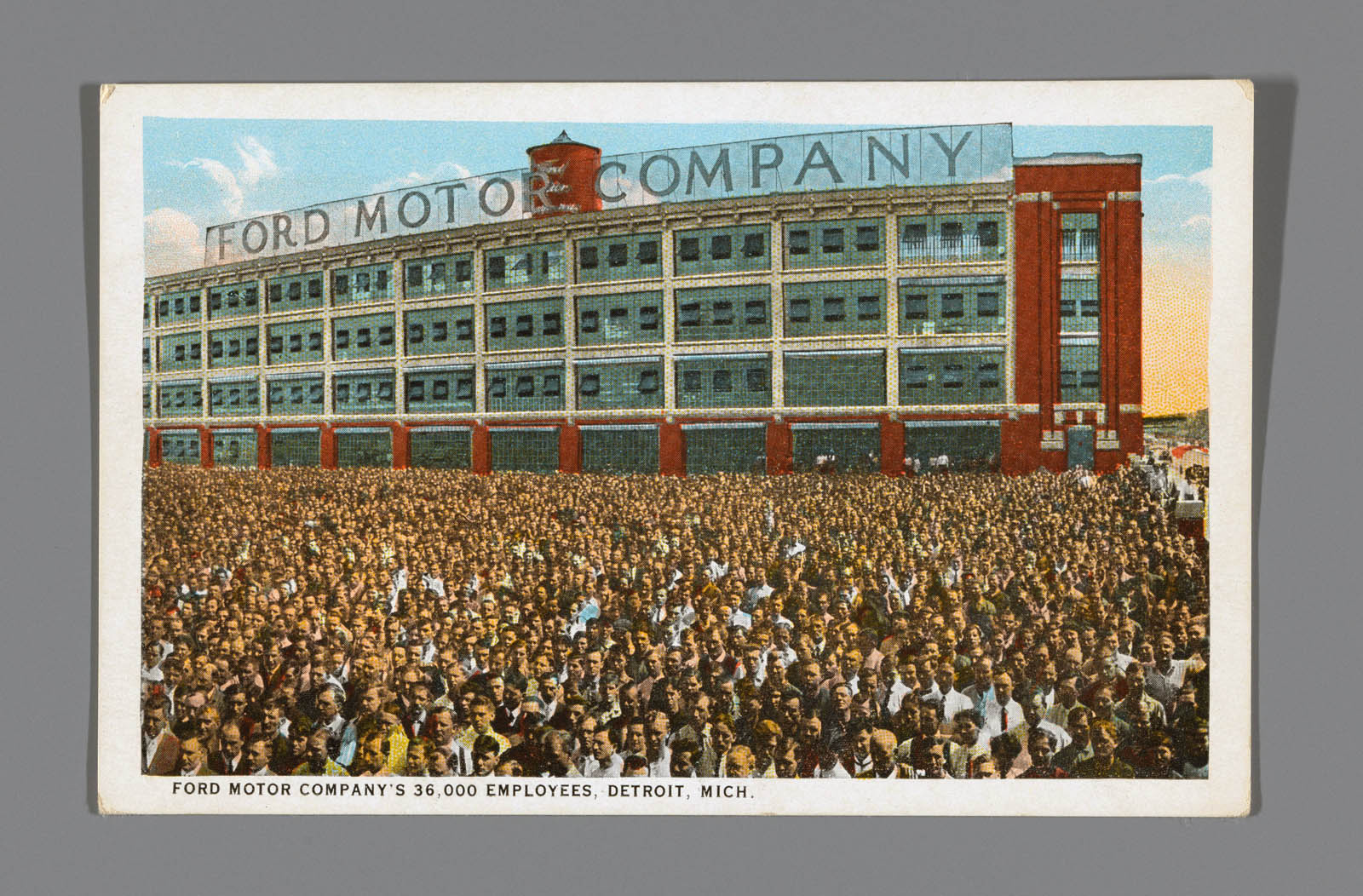
United News Company (publisher) 12,000 Employees of the Ford Motor Company, Detroit, Mich. 1913 Postcard, relief halftone and colour lithography 88 × 137 mm Rijksmuseum, Amsterdam
… a 1913 postcard featuring 12,000 employees of the Ford Motor Company in Detroit may have been the “most expensive picture that was ever taken”, quipped a newspaper at the time, as the factory had to shut down for two hours to assemble the staff. The image, the company boasted, was “the largest specially posed group picture ever made” and illustrates a turning point where industry saw the value in investing large sums in promotional photography. Taken in the year when Ford introduced America’s first moving assembly line and the US had become the world’s largest economy, the photograph also depicts the mass production that would shape the country.
The image’s reappearance in Ford marketing also made it an early example of photoshopping. While the same tinted faces swarmed in the foreground, the number of employees cited in the caption increased exponentially, and a building to the left was cropped out in one version and acquired extra floors in another. “Apparently, many photographers and their publishers had no qualms about abandoning their medium’s potential for realism,” write Boom and Rooseboom in the exhibition catalogue.
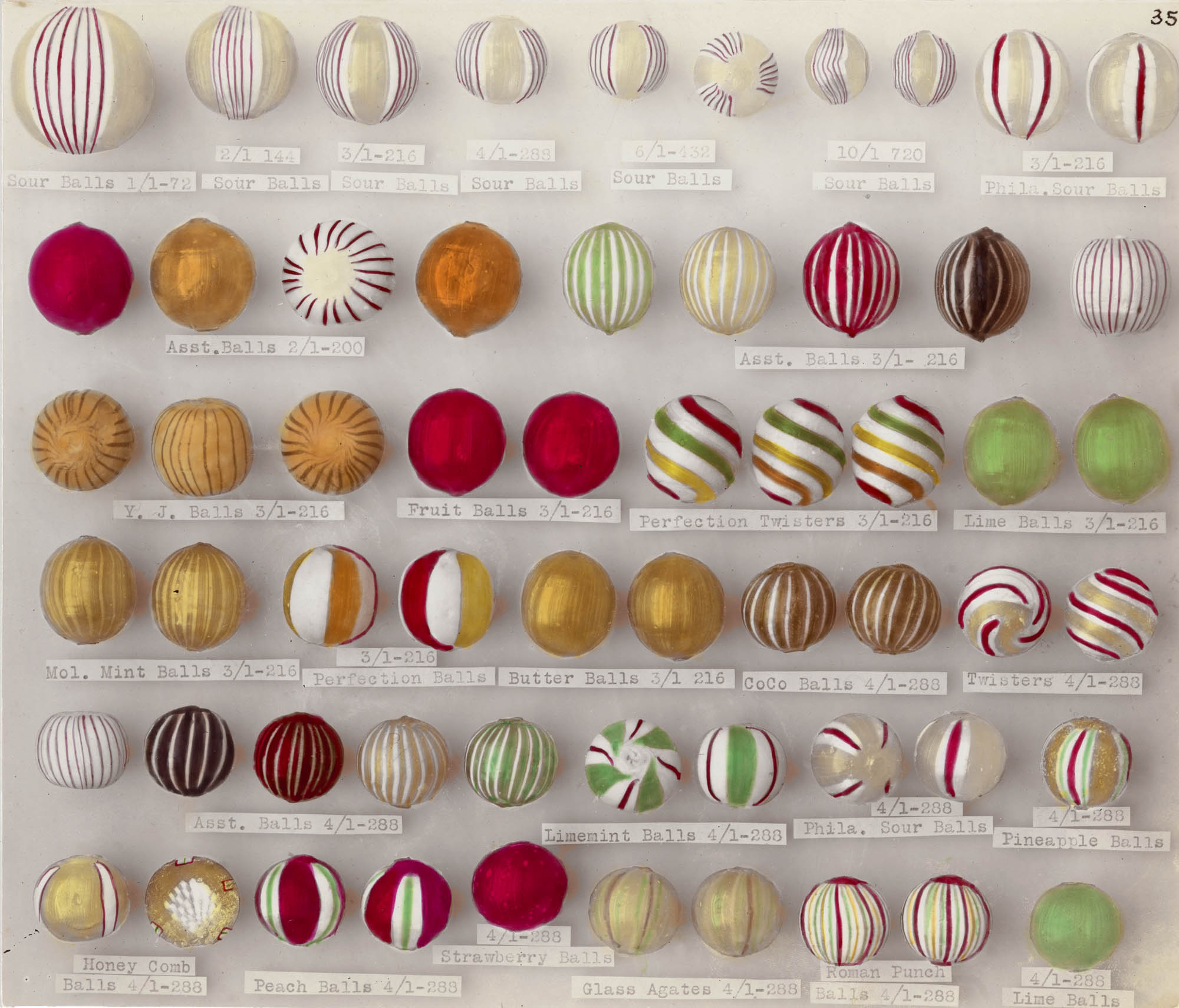
Schadde Brothers Studio Display, sample or trade catalogue photograph for sweet manufacturer Brandle & Smith Co., c. 1915 Gelatin silver print with applied colour 288 x 240 mm Rijksmuseum, Amsterdam
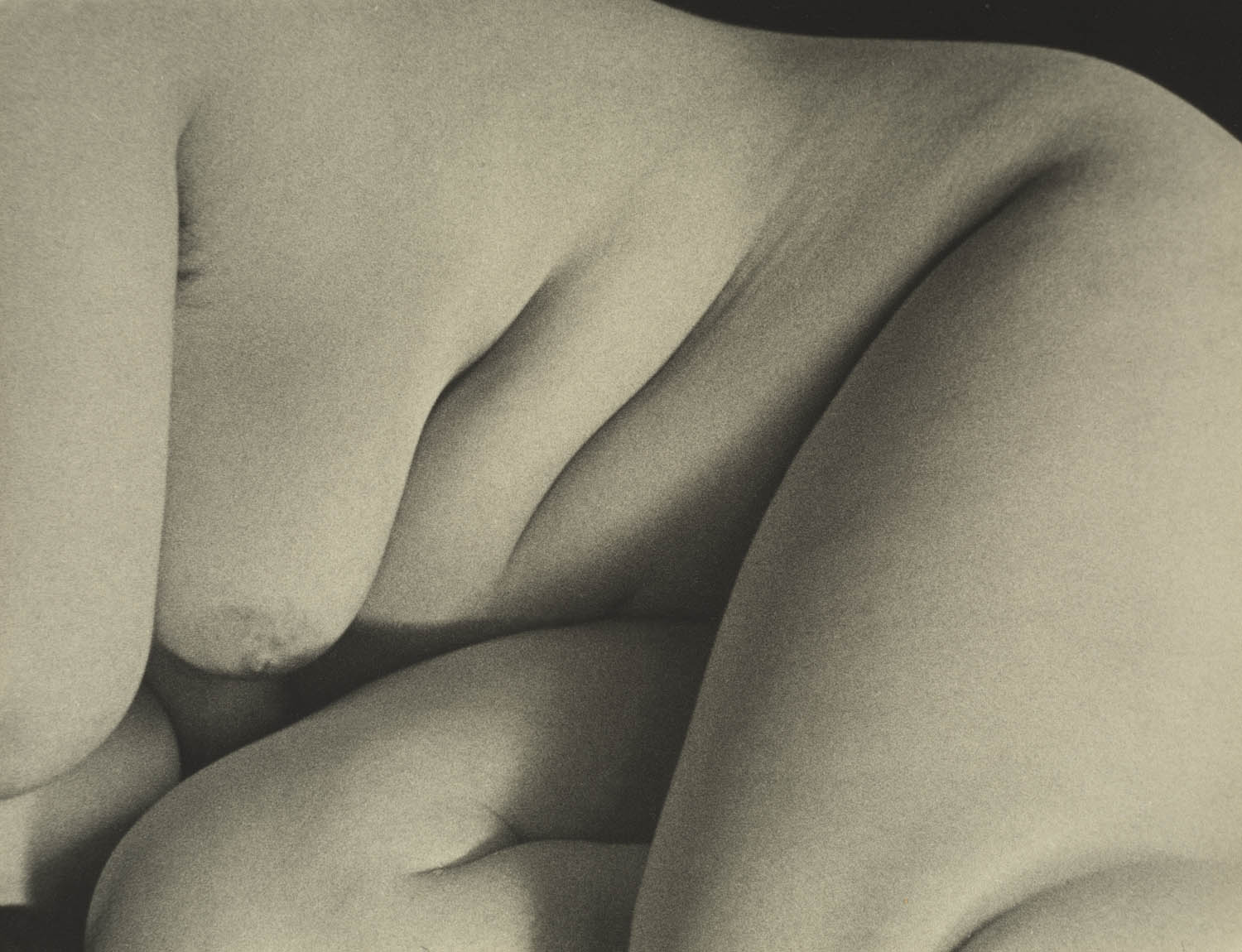
Charles Sheeler (American, 1883-1965) Nude #3 1918-1919 Gelatin silver print 127 × 171 mm Museum of Fine Arts, Boston
… the New York portrait photographer James Van Der Zee was also embellishing his work, drawing jewellery on to his subjects and retouching their faces to erase dark lines and wrinkles. “I put my heart and soul into them and tried to see that every picture was better looking than the person,” he said. As a black photographer working from his Harlem studio at the height of the Harlem Renaissance, his work records a period when black migrants fleeing the segregationist South were forging a new life for themselves in the urban North. For the first time, African Americans and other minority groups could be photographed by someone inside their community, and represented in a way that uplifted them. Van Der Zee’s Portrait of an Unknown Man (1938), for example, is carefully posed to suggest confidence. The outfit is elegant and the buttonhole daisy adds a dandyish flourish. It’s an image that reflects the aspirations and upward mobility of African-American people and the pride Van Der Zee had in his culture.
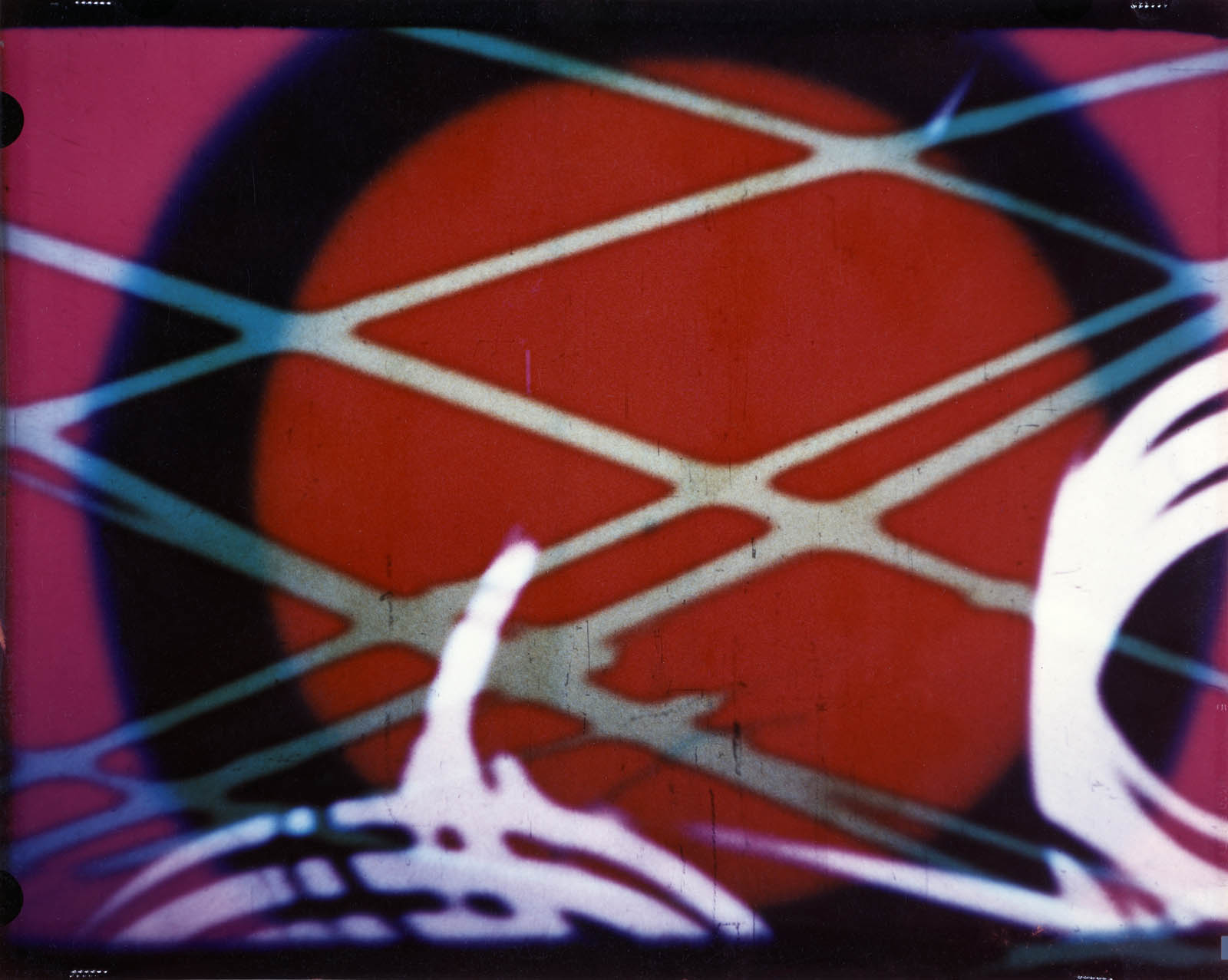
Hy Hirsh (American, 1911-1961) Untitled (abstraction) c. 1950 Chromogenic print, 251 x 200 mm Rijksmuseum, Amsterdam Purchased with the support of Baker McKenzie
Anonymous photographer Family Standing beside their Car c. 1957-1960 Chromogenic print (Kodak Instamatic) 76 x 76 mm Rijksmuseum, Amsterdam
It is the Chinese-American community that is the focus of the work of Irene Poon, who grew up in San Francisco’s Chinatown, where her parents, first-generation immigrants from Guanghzou, ran a herbalist store. A 1965 image features Poon’s sister Virginia in a local sweet shop, crowded out by Hershey’s and Nestlé bars. The letters “Nest” peep out from the densely packed shelves, reinforcing a sense that she is enclosed by this mass of graphic lettering. Beside her head a “Look” bar competes for attention, hinting at that other ever-expanding role for American photography: advertising − a sector in which the US was a forerunner. “Many of the 20th-Century artists started in advertising. It’s part of art history,” Boom says. “This whole field already existed, and the arts, and photography as an art form, draws from it.”
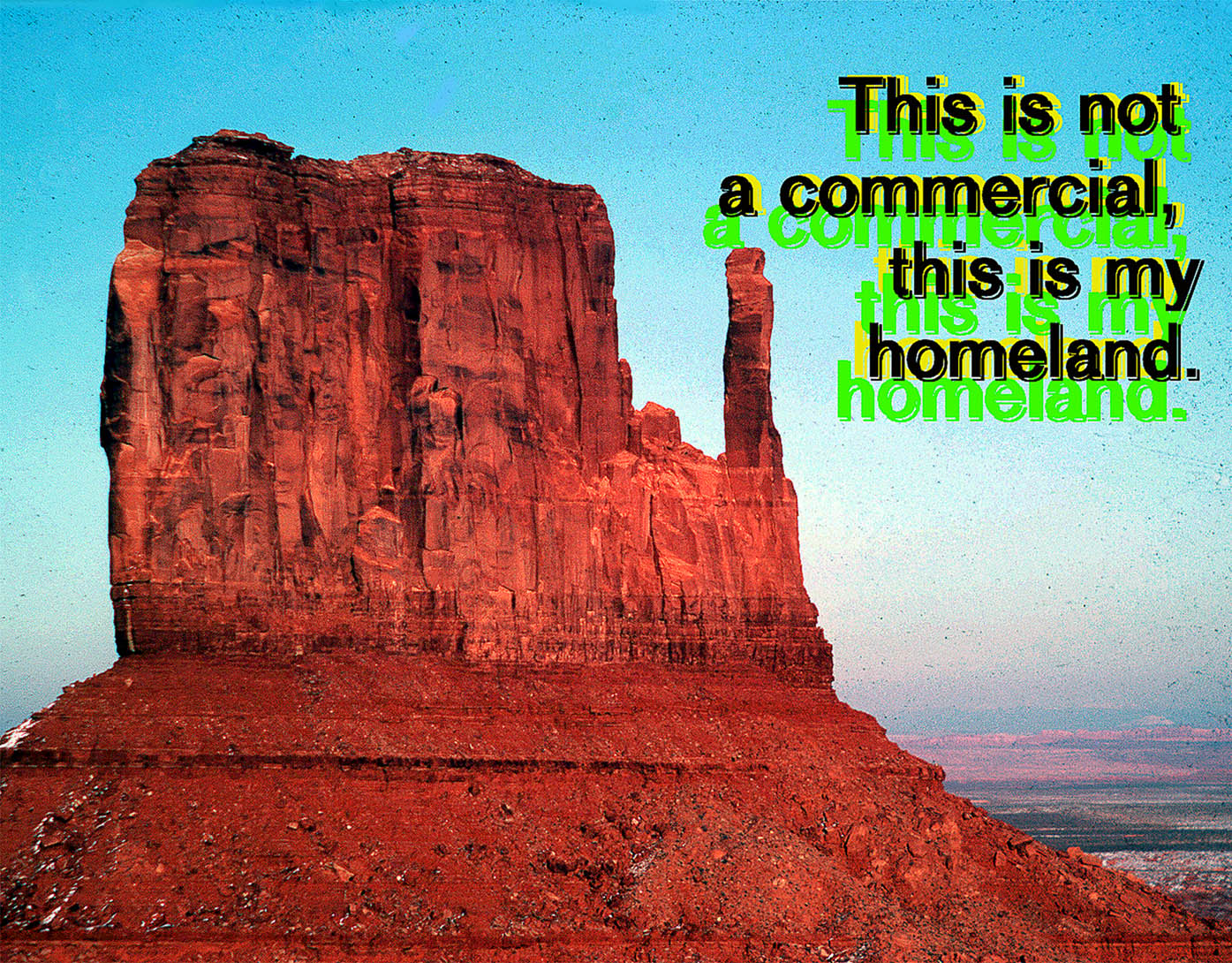
Hulleah Tsinhnahjinnie (American, b. 1954) This is not a commercial, this is my homeland 1998 Platinum lambda print 476 x 609 mm Courtesy of the artist
The political power of photography is also seen in the work of Native American (Seminole-Muscogee-Navajo) photographer Hulleah Tsinhnahjinnie who uses the camera to correct misconceptions about Indigenous populations and to offer an alternative viewpoint on US history. “No longer is the camera held by an outsider looking in, the camera is held with brown hands opening familiar worlds,” she writes in a 1993 essay. “We document ourselves with a humanising eye, we create new visions with ease, and we can turn the camera and show how we see you.”
Tsinhnahjinnie’s captioning of a touristic image of Monument Valley, Arizona with This is not a commercial, this is my homeland highlights the commodification of American land, and uses what she calls “photographic sovereignty” to take us back to the very beginning and reclaim and retell the story of America. In combination with works such as Bryan Schutmaat’s Tonopah, Nevada (2012), which documents mining’s effect on the landscape of the American West, images like Tsinhnahjinnie’s tell a story of a beautiful land that means different things to different people: financial gain, security or a sacred space.
Bryan Schutmaat (American, b. 1983) Tonopah, Nevada 2012 Inkjet print 1017 x 1277 mm (printed 2021) Rijksmuseum, Amsterdam Purchased with the support of Baker McKenzie
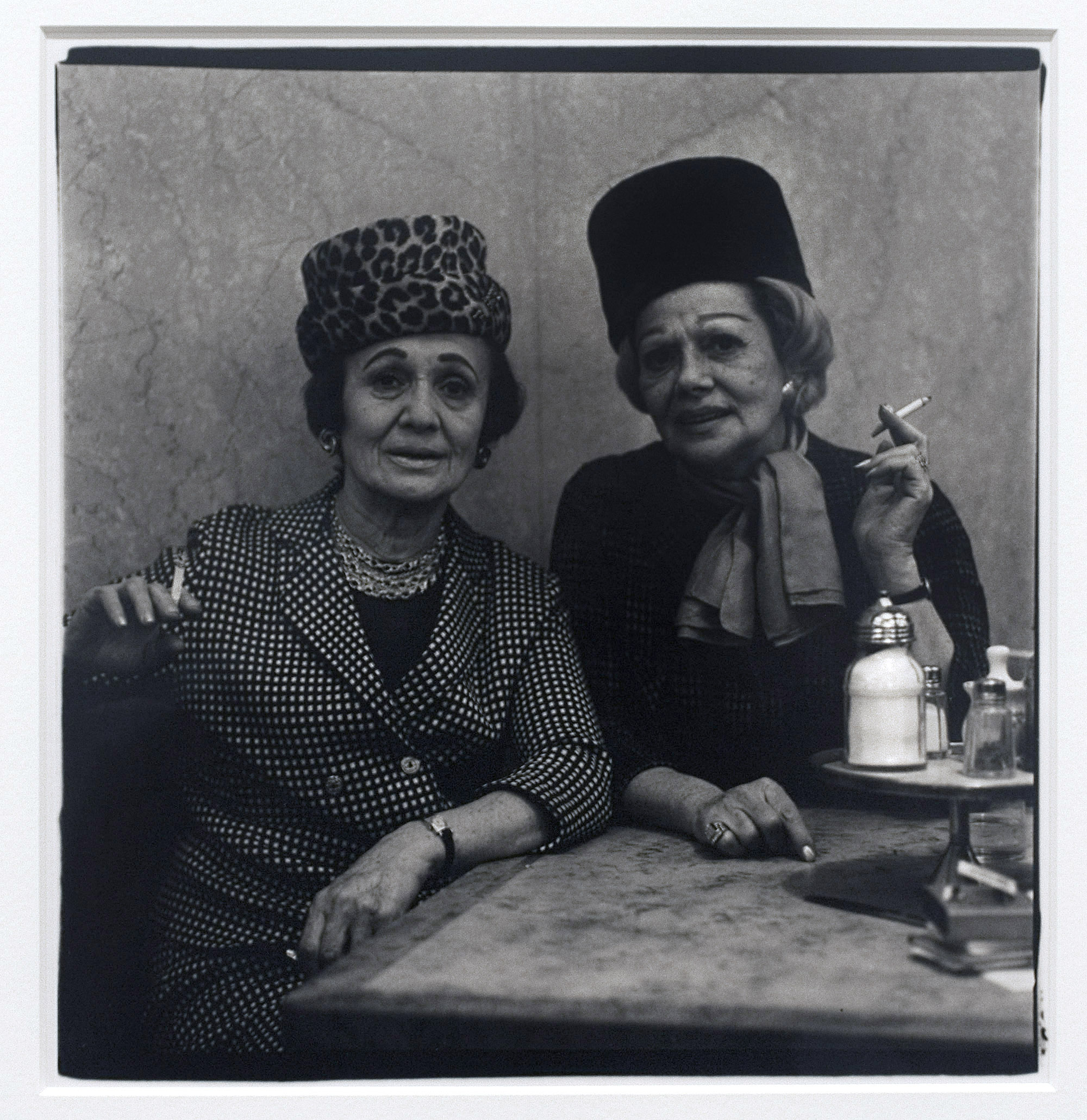
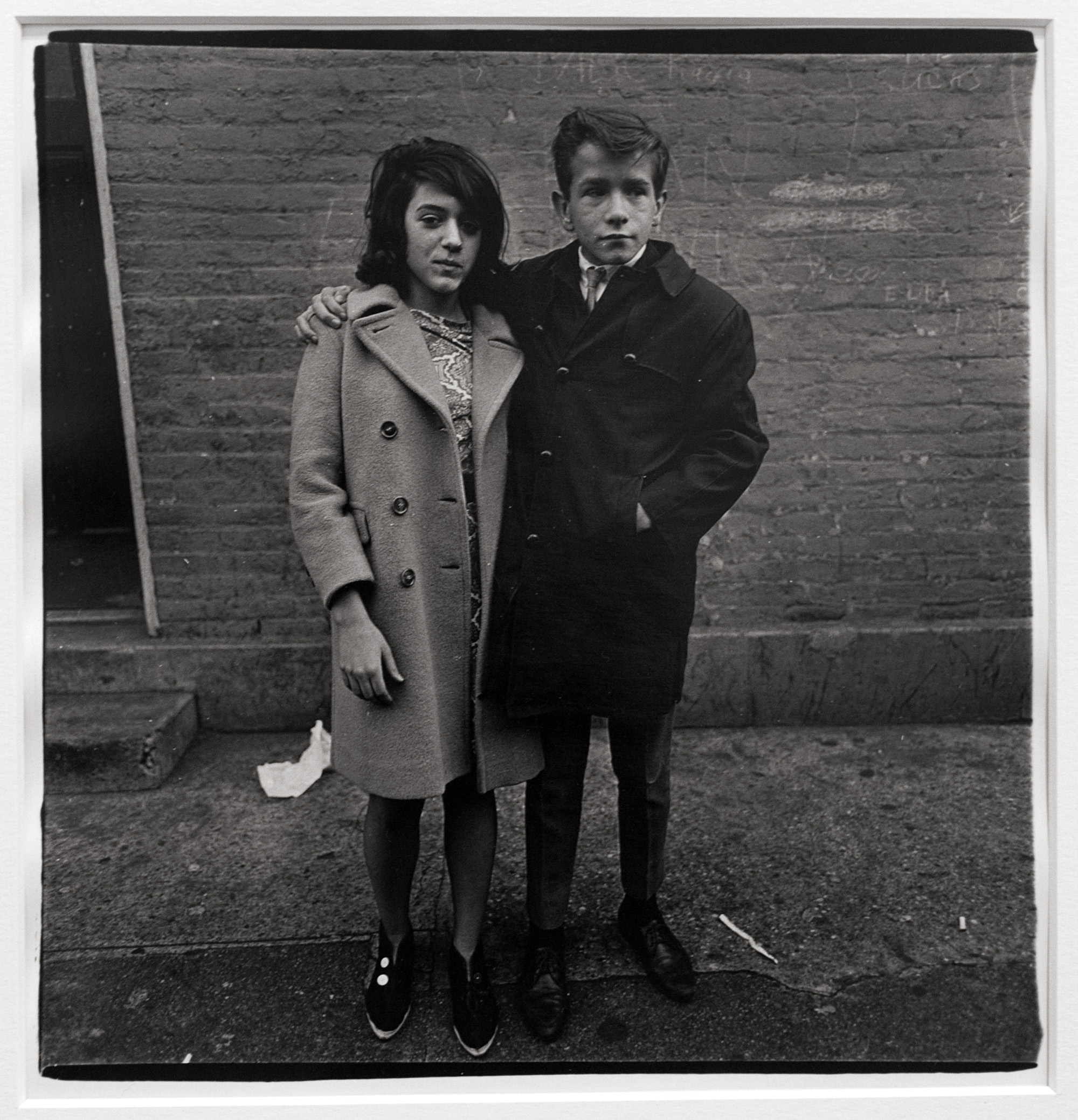
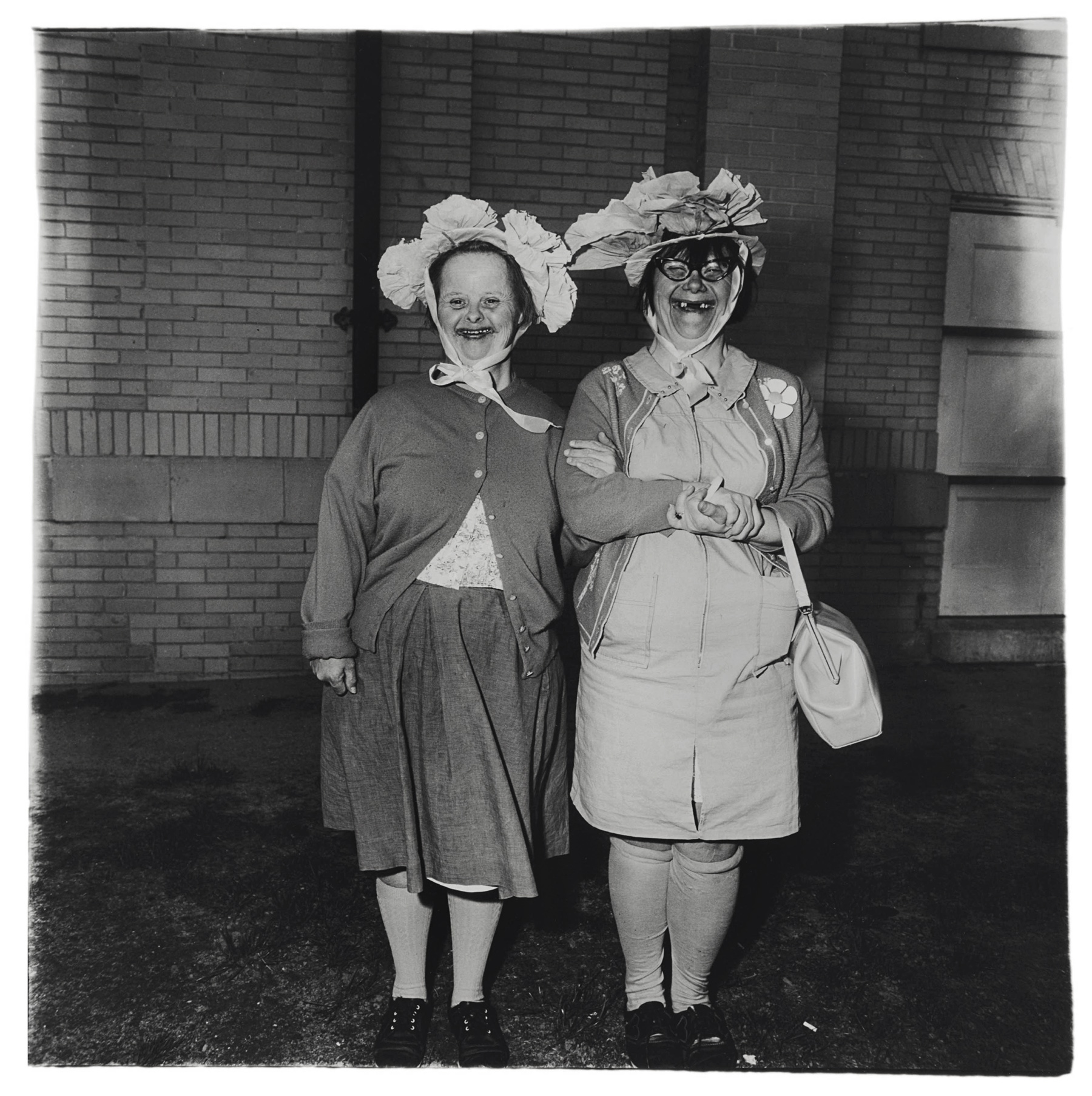
If I had to nominate one photographer who is my favourite of all time, it would be Diane Arbus. There is just something about her photographs that impinge on my consciousness, my love of difference in human beings, their subversiveness and diversity. She pictures it all, some with irony, some with love, some with outright contempt, but always with interest. In photographs of dwarfs you don’t get the majesty and beauty that Susan Sontag desired, you get something else instead: the closeness of intention and effect – this is who this person was at that particular moment represented in a photograph, the essence of their being at that particular time.
Arbus was fascinated by the relationships between the psychological and the physical, probing her subjects with the camera to elicit a physical response. Her sensory, emotional, intellectual and aesthetic intelligence creates a single experience in relation to subject, stimulating her to respond to the world in her own unique way. While Arbus may well have hated aspects of American culture – “Its hypocrisy, this ‘happy happy’ story after the war, the consumerism, the racism, she feels deeply about that,” as Anne O’Hehir, curator of the National Gallery of Australia’s American Portraits observes – she photographed everything that makes us human in profound and powerful photographs. To me, her subjects were not ‘caught off guard’ nor did they unintentionally reveal aspects of themselves – they revealed themselves to Arbus just as they are, because she gained their trust, she had empathy for who they were… an empathy that probably flowed both ways, enhanced by the subjects sense of Arbus’ own personal travails.
It is unfortunate then, that this exhibition at Heide Museum of Modern Art is such a disappointment. This has nothing to do with the wonderful installation by the Heide curatorial team in the beautiful gallery spaces, but in the prints themselves and the artists that accompany Arbus’ work. Let’s look at the prints first.
According to the article “Diane Arbus: Iconic photographs on show together for first time at National Gallery of Australia” by Louise Maher on the ABC News website in June 2016, “The collection is one of the largest public holdings of her work outside New York and, according to NGA curator of photography Anne O’Hehir, one of the most impressive in the world. “The gallery was buying a huge amount of work in 1980 and ’81 leading up to the opening of the gallery in 1982,” Ms O’Hehir said. “We were offered in two lots these extraordinary photographs – they were the first release of prints from the Arbus estate and they were expensive at the time.”
These vintage prints are by the hand of Arbus, not later printings by other people, and as such should be as close a rendition to what Arbus intended the work to look like as can be found. The exhibition text notes that, “All the same, she was very clear about how she wanted her images to look; she worked hard to achieve a particular quality in her prints, which have a distinct feel and appearance that are quite different from other photographs of the 1960s … She reminds us consistently through a number of careful and deliberate strategies that we are looking at a photograph that has been made by a particular person.”
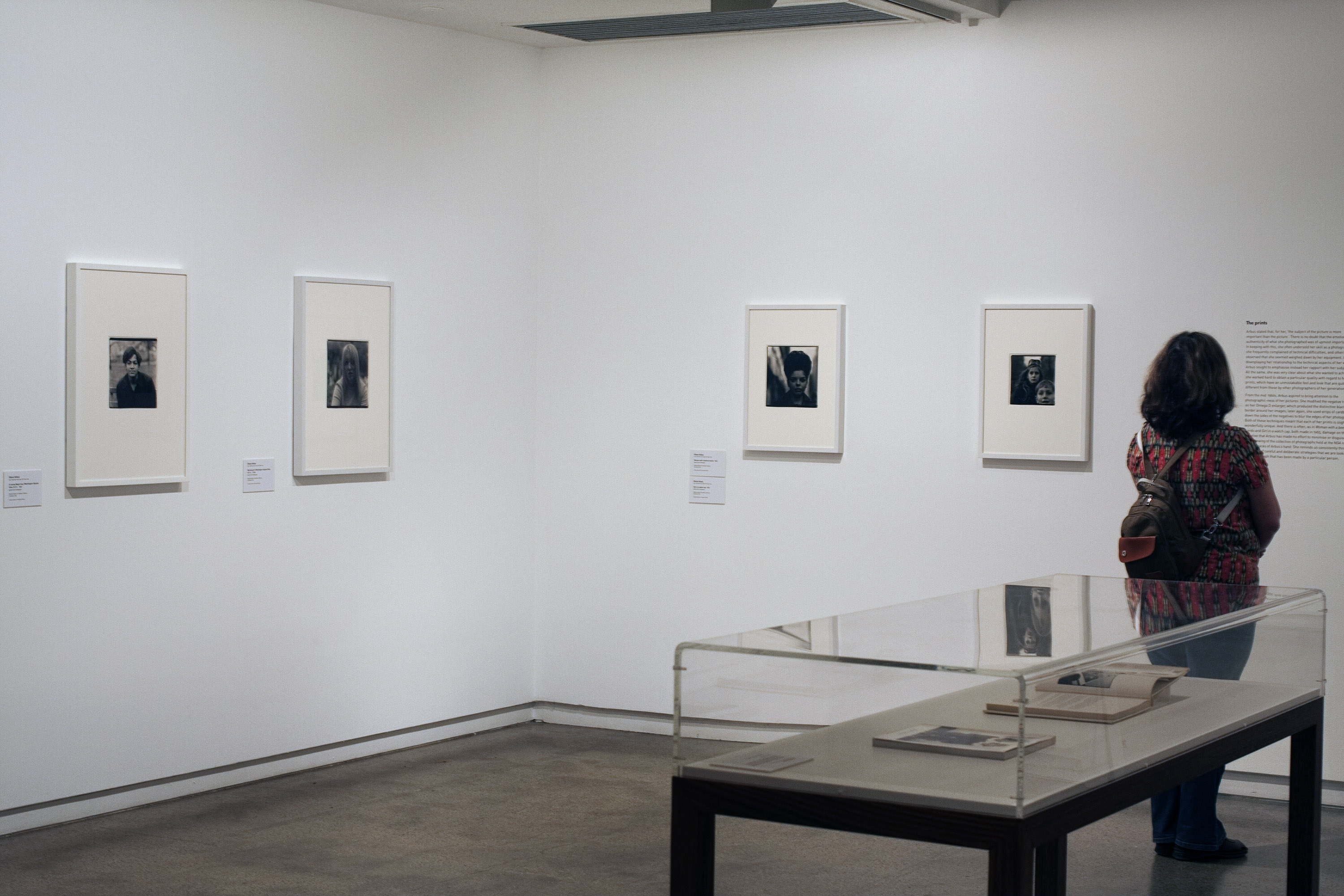
Through these strategies Arbus sought to differentiate her prints from the West Coast Ansel Adams Zone system of printing which was prevalent at the time. The Zone System would have been the antithesis of what Arbus wanted from her photographs. Every popular magazine at that time would have had Zone System stuff… so Arbus didn’t dare align herself with that school. But truth be told, if these prints are the best that she could do as a printer, then they are not very good. As can be seen from the installation photographs in this posting (not the media photographs), some of the prints are so dark as to be beyond comparison to the clarity of the prints that were later produced by her daughter Doon Arbus for the Arbus estate and for reproduction in books.
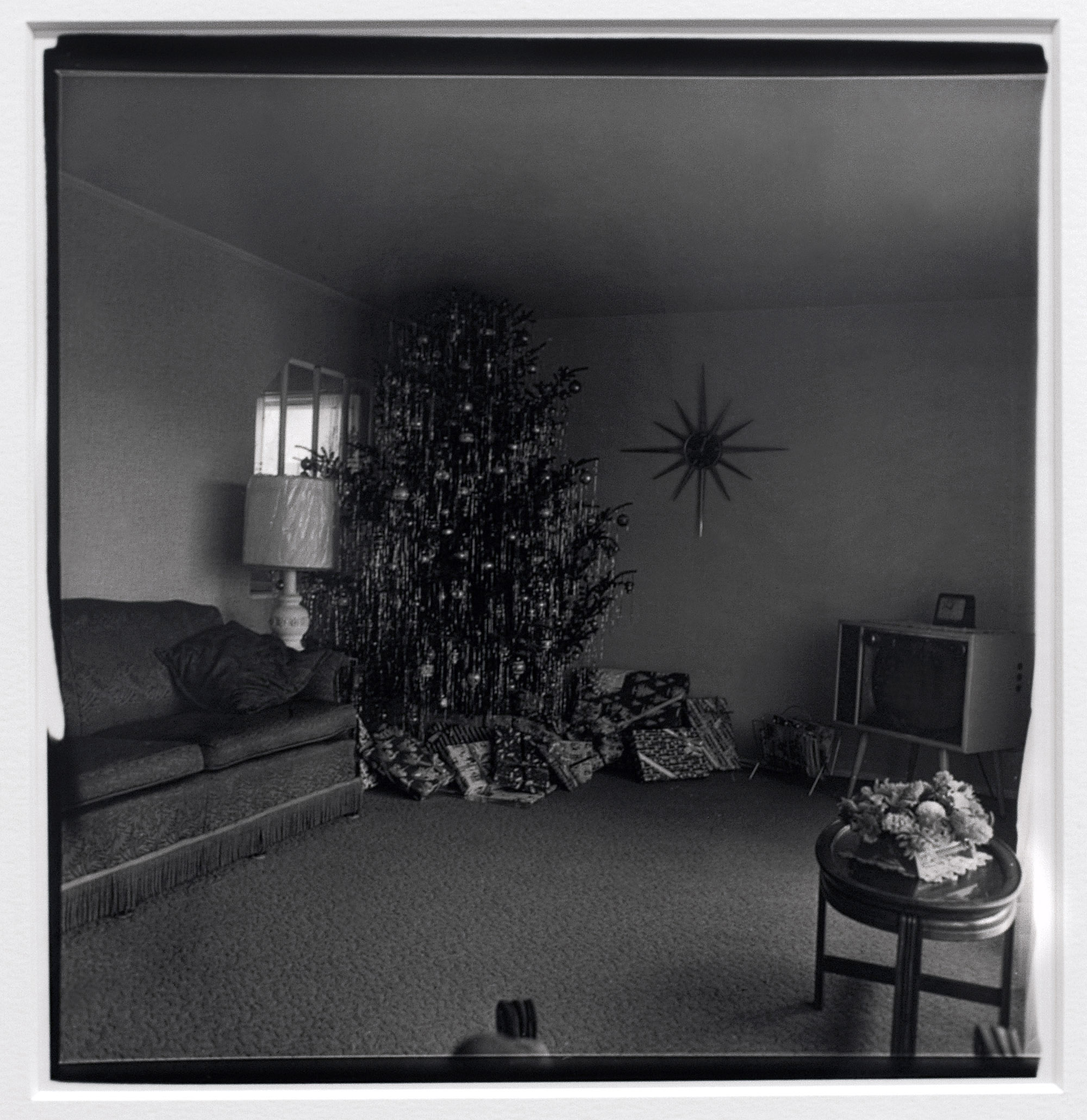
You only have to look at the installation photograph of Xmas tree in a living room in Levittown, L.I. 1963 (above) and another reproduction of this image to see how dark the National Gallery of Australia’s prints are. If you take time to actually look at the photographs one of the prints, Identical twins, Roselle, N.J., 1966 (1966, below) was barely in focus under the enlarger when developed, and several others have not been fixed properly. They may have been first release, but how far down the release were they? We don’t know whether these were the top shelf prints, or tenth in the stack. I know from personal experience that I have a numbering system from one to ten. You sell the best print and so number two then becomes number one, and so on.
The poorness of these prints again becomes a sign of intention. The print is the final, luminous rendition of a photographers previsualisation, the ultimate expression of their creativity. This is how I want to show you the world, through this photograph. It is the end point of a long process. I believe strongly that Arbus wanted to show things as clearly as possible, as clearly as the best possible use that photography could provide. She is like a razor the way she cuts through. But in these particular final renditions, she lets herself down. And the people who bought these photographs, should have realised what poor prints they were.
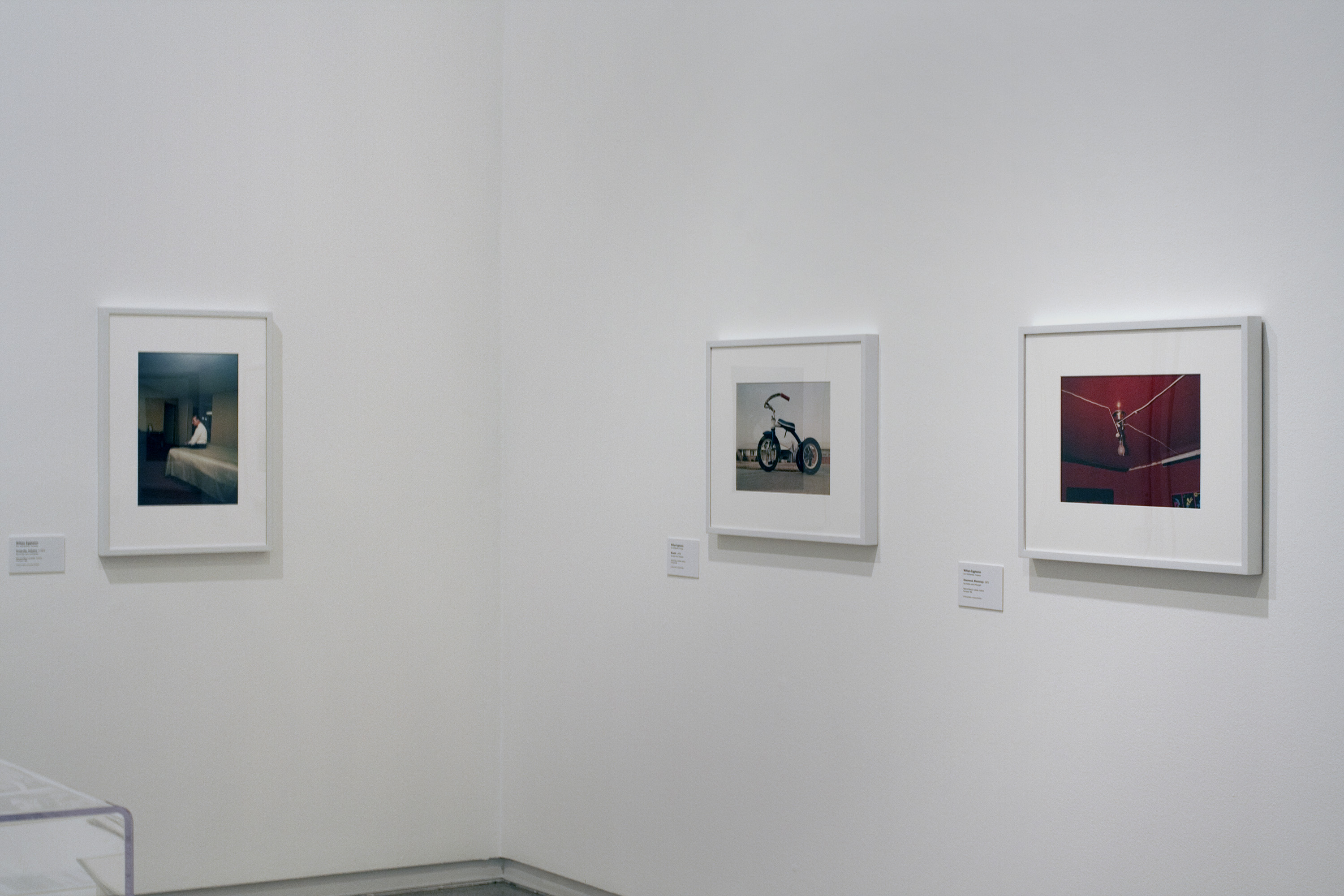
Turning to the artists that accompany the work of Arbus… was it really necessary to surround such a powerful artist’s work with such noise? While it is always a delight to see the work of Mary Ellen Mark, William Eggleston, Milton Rogovin, Lee Friedlander, Garry Winogrand, Lisette Model, Walker Evans, Weegee and William Klein, to try and embed the work of Arbus within a photographic milieu, within a cacophony of imagery that stretches from the 1930s to the 1980s, simply does not work. While Arbus emerges out of the concerns of her era, she is such a powerful presence and force that simply no one compares. She is so different from the organised Evans and or the macabre Weegee, more closely aligned to Model, and certainly by no stretch of the imagination does she influence Eggleston, Friedlander, Winogrand or Rogovin in any significant way… so that these artists works just become filler for this exhibition. If the intention was to situate Arbus’ work in the chronological “flow” of photography then the concept falls between intention and effect. While no artist’s work appears without regard to historical precedent, their work is simply their own and needs its own space to breathe.
What would have been more interesting would have been to position Arbus’ work within an Australian context. Now there’s an idea, since we live in Australia!
Here we go: exhibit Arbus’ prints with 15 prints by Carol Jerrems (Vale Street, Mark and Flappers), 15 prints of the early work of Polixeni Papapetrou (drag queens, Elvis fans, circus performers and wrestlers) and 15 prints of the work of Sue Ford. Four strong women who deal with issues of gender and identity in a forthright manner – not a cacophony of noise (9 artists, 6 of them men) to accompany the work of a genius. Analyse the influence of Arbus on this generation of Australian photographers. Pretty simple. Clean, concise, accessible, relevant to Australia audiences. Then intention would have possibly met effect.
There are highlights to be had within this exhibition, two in particular.
It was a pleasure to see the work of Milton Rogovin. I have always admired his work, and the small, intimate prints from his Lower West Side series (1973-2002) did not disappoint. While Arbus’ portraits are powerful visualisations, front and centre, Rogovin’s working class families are just… present. His social documentary photographs of working class families are almost reticent in their rendition. “His classical portraits, often grouped in diptychs and triptychs, expound narrative in a single image and over time. They compress time intimately… and by that I mean the viewer is engaged in a conversation with the subject, where we can imagine that we live those lives as they do (transcending time), the lives of what Rogovin called “the forgotten ones.” He makes their countenance, their physicality, the hardships they endure, and their narrative, directly and intimately compelling. We are made to feel their plight in the now and the forever. For these photographs are as relevant, if not more so, now as then.”
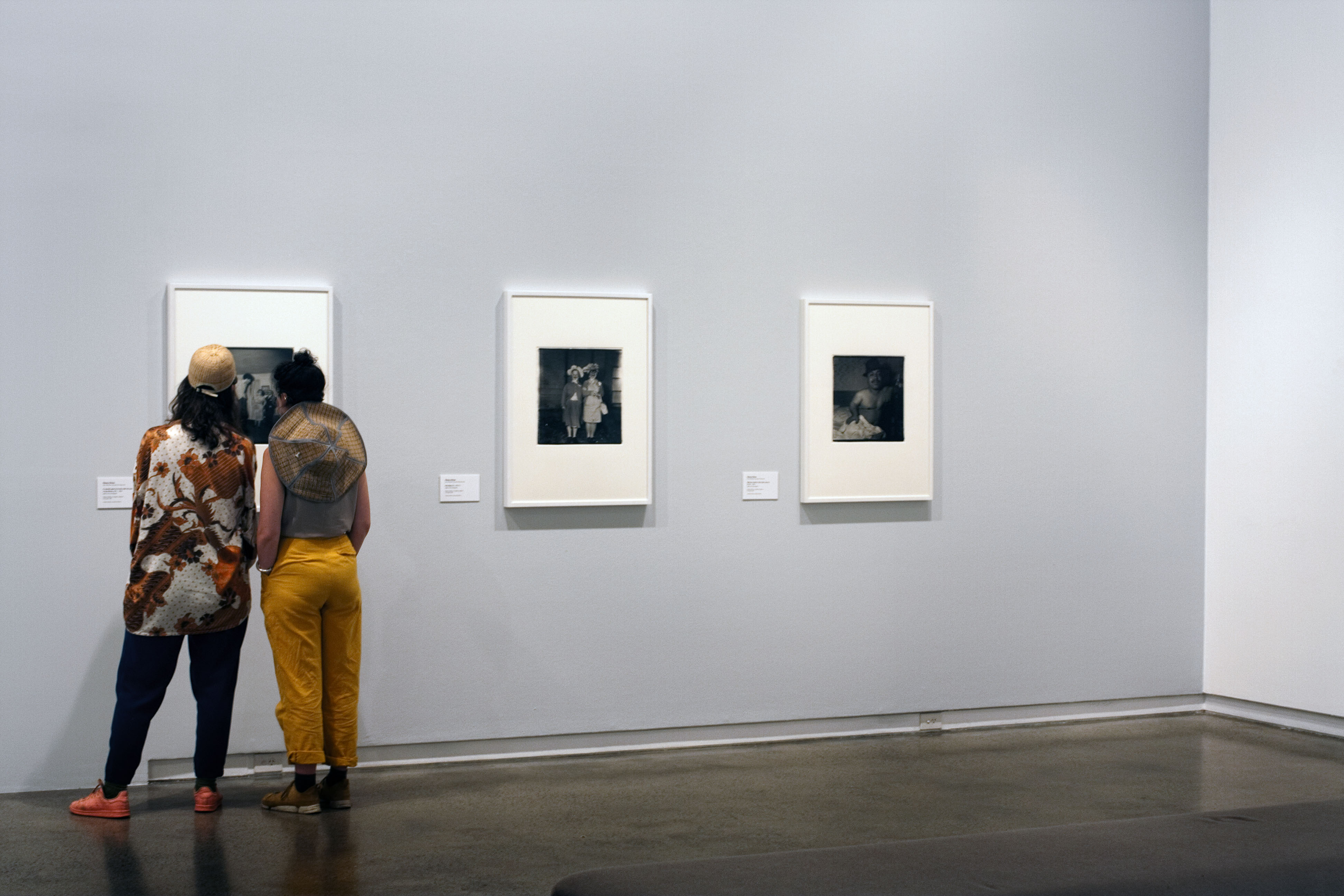
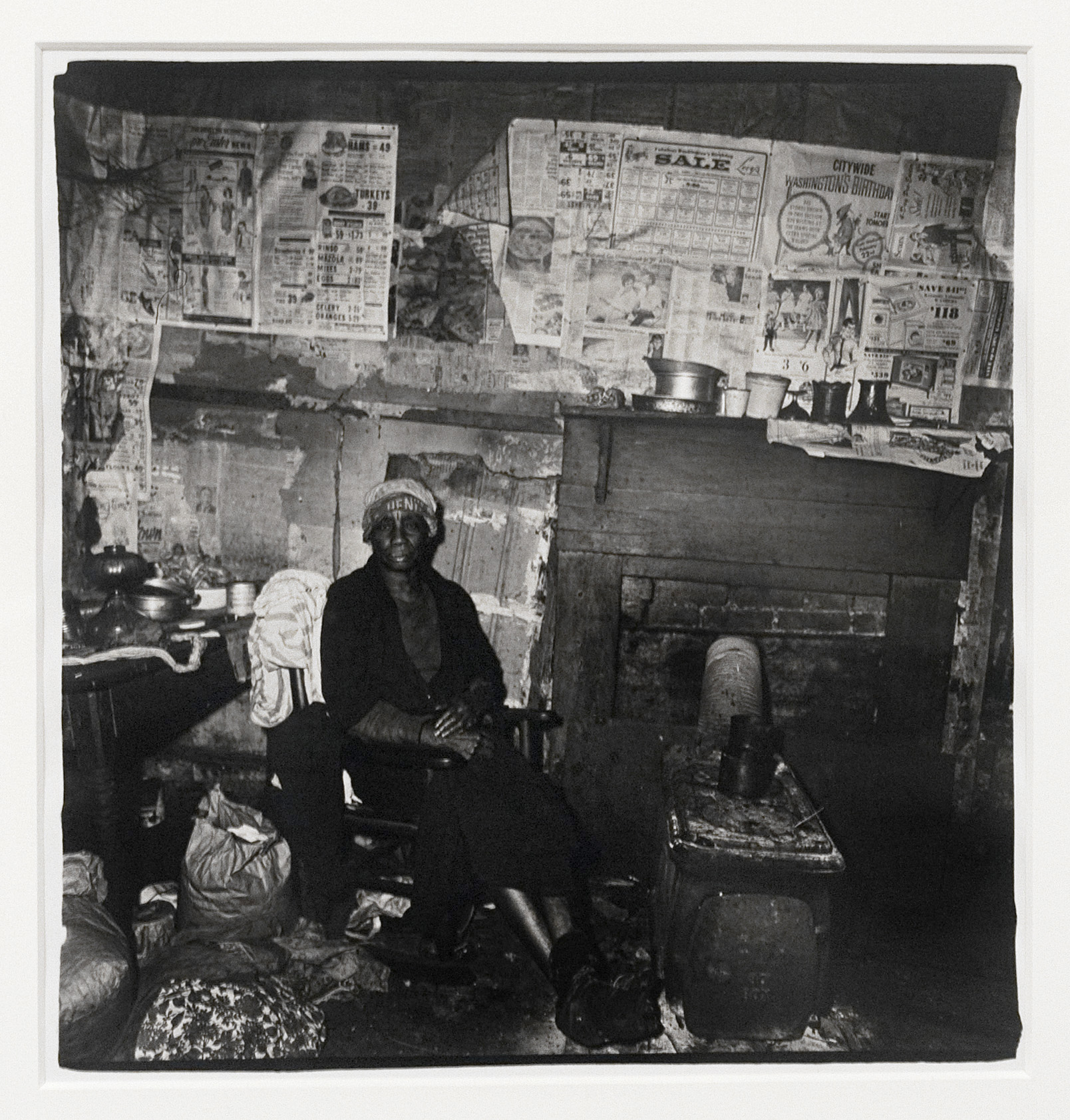
The other highlight is to see three Arbus photographs that I have never seen before: Old black woman with gnarled hand; Large black family in small shack; and Addie Taylor in her shack, Beaufort, South Carolina (all 1968, installation views below), all three taken with flash. These works were a revelation for their observational intimacy and evocation of a dark place in the existence of the poorest of human beings. The gnarled hand of the old woman lying in a filthy bed with cardboard walls is particularly distressing to say the least. To compare these photographs with Walker Evans’ flash photograph Hudson Street boarding house detail, New York (1931, below) and his naturally aspirated Bedroom, shrimp fisherman’s house, Biloxi, Mississippi (1945, below) in their pristine emptiness is instructive. This ideation, together with Arbus’ photographs relationship to the work of her sometime teacher Lisette Model (particularly her Lower East Side photographs (1939-1942); Albert-Alberta, Hubert’s 42nd St Flea Circus, New York (c. 1945) and Woman with Veil, San Francisco (1949) all below) are the zenith of this exhibition, where the intention of embedding Arbus’ photographs in the history of the medium comes best to fruition, in effect.
Finally, I must say a big thank you to Heide Museum of Modern Art for allowing me to come out to the gallery to take the installation photographs. Many thanks indeed.
Dr Marcus Bunyan
Many thankx to Heide Museum of Modern Art for allowing me to publish some of the photographs in the posting. Please click on some of the photographs for a larger version of the image.
“People who met Arbus often said she was incredibly seductive. Immensely curious, she was softly spoken and her ability to connect with and gain the trust of people was legendary. She talked about “the gap between intention and effect”, explaining “it really is totally fantastic that we look like this and you sometimes see that very clearly in a photograph. Something is ironic in the world and it has to do with the fact that what you intend never comes out like you intend it.””
Diane Arbus quoted in Kerrie O’Brien (curator of the National Gallery of Australia’s Diane Arbus: American Portraits)“Intimate, dark and compelling: the photographs of Diane Arbus,” on The Sydney Morning Herald website March 14, 2018 [Online] Cited 16/02/2022
“The people in an Arbus photograph are never trivialised; they have certainly a larger-than-life intensity that few other photographers can achieve. While they seem like figures from fairy tales or myth, they are also invested with powerful agency.”
Gillian Wearing quoted in Kerrie O’Brien (curator of the National Gallery of Australia’s Diane Arbus: American Portraits)“Intimate, dark and compelling: the photographs of Diane Arbus,” on The Sydney Morning Herald website March 14, 2018 [Online] Cited 16/02/2022
“When you’re awake enough to question your purpose and ask how to connect to it, you’re being prodded by the power of intention. The very act of questioning why you’re here is an indication that your thoughts are nudging you to reconnect to the field of intention. What’s the source of your thoughts about your purpose? Why do you want to feel purposeful? Why is a sense of purpose considered the highest attribute of a fully functioning person? The source of thought is an infinite reservoir of energy and intelligence.
In a sense, thoughts about your purpose are really your purpose trying to reconnect to you. This infinite reservoir of loving, kind, creative, abundant energy grew out of the originating intelligence, and is stimulating you to express this universal mind in your own unique way.”
Heide is delighted to host the National Gallery of Australia’s touring exhibition, Diane Arbus: American Portraits.
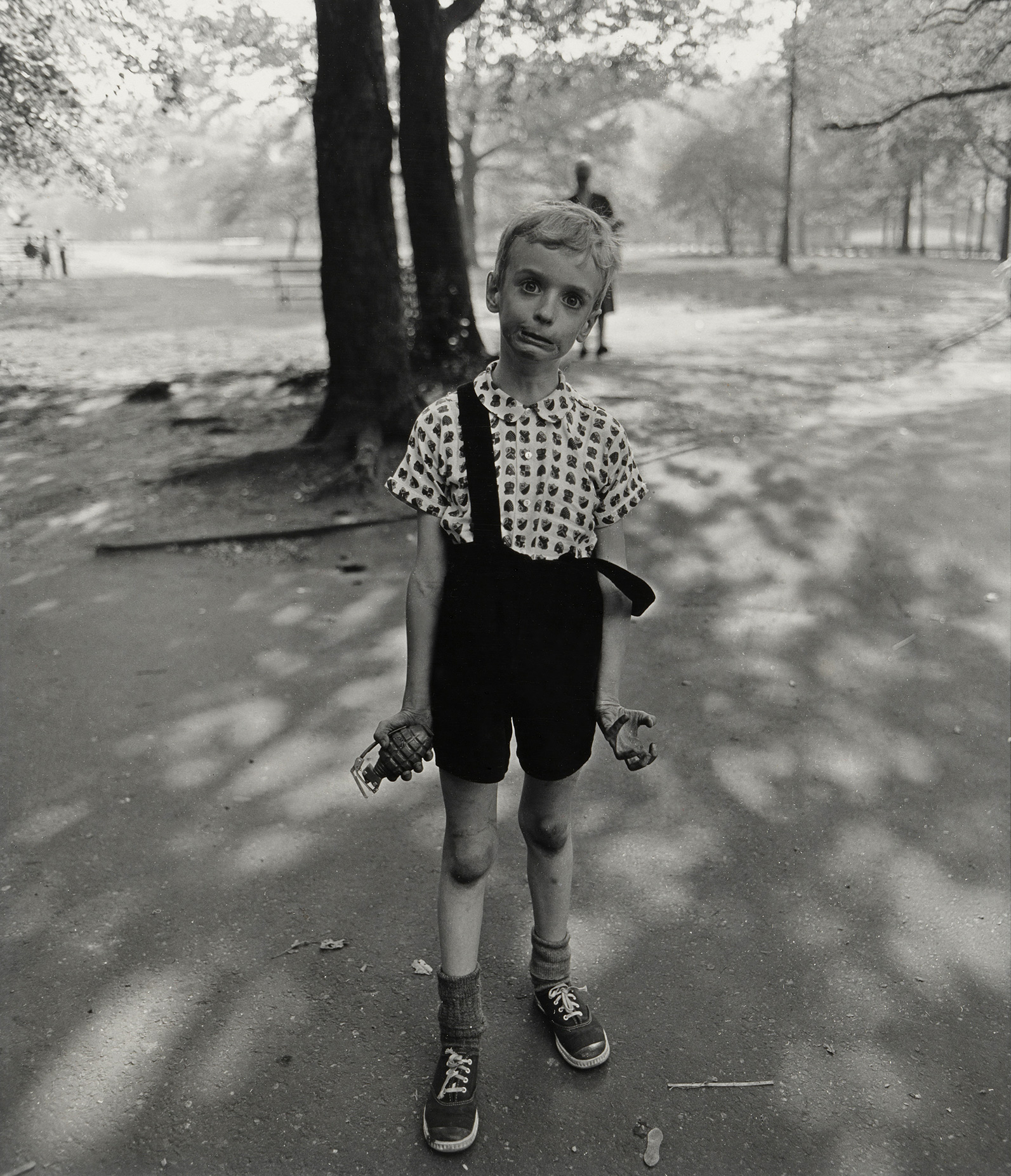
The photographs of Diane Arbus (1923-1971) are among the most widely recognised in the history of photography. Her images stand as powerful allegories of post-war America, and once seen are rarely forgotten. Works such as Identical twins, Roselle, N.J., 1967 and Child with toy hand grenade, in Central Park, New York City have been described as two of ‘the most celebrated images in the history of the medium’.
Featuring 35 of Arbus’s most iconic and confrontational images from 1961-1971, this exhibition examines the last decade of Arbus’s life,the period in which her style is in full flight. Her work has polarised viewers who question whether she exploited or empowered her subjects, who were often drawn from society’s margins. ‘The National Gallery of Australia is privileged to hold such an extraordinary collection of work by a photographer of Arbus’s significance,’ said Anne O’Hehir, curator. ‘This collection covers Arbus’s best-known pictures, and also includes images which are rarely seen. This exhibition is a testament to the power of Arbus’s extraordinary vision.’
Arbus’s photographs are exhibited alongside a selection of works by other leading American photographers whose work influenced Arbus, was shown alongside hers in the ’60s, or has been influenced by her. These include famous images by Lisette Model, Walker Evans and Weegee, her contemporaries William Klein, Garry Winogrand, Lee Friedlander and Milton Rogovin as well as a slightly younger generation, work by Mary Ellen Mark and William Eggleston.
Heide Director and CEO Dr Natasha Cica said: ‘Heide is delighted to present this exhibition of the renowned photographer Diane Arbus. Her uncompromising view challenged existing photography conventions in a surprising and enchanting way.’
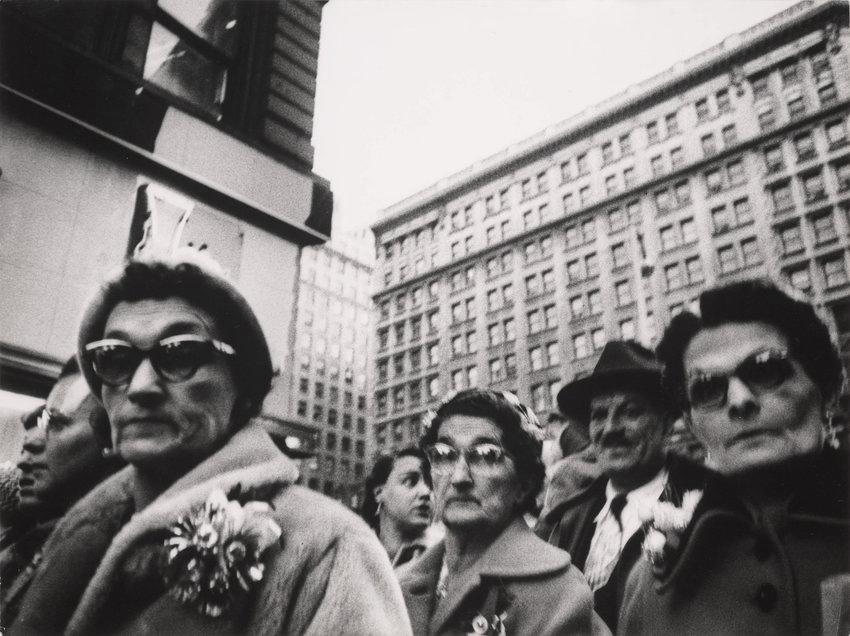
William Klein (American, 1928-2022) Christmas shoppers, near Macy’s, New York 1954 Gelatin silver photograph
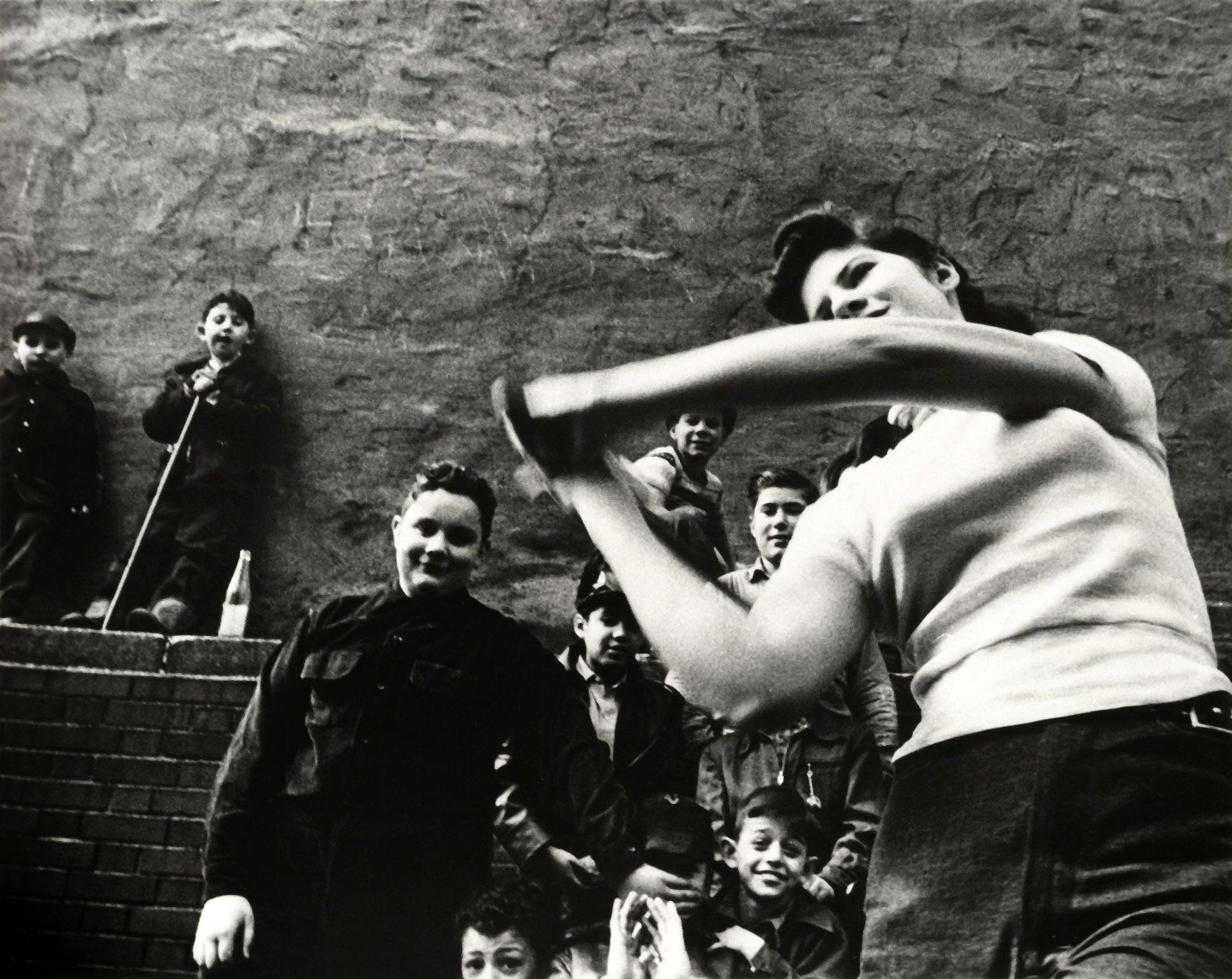
Klein sandwiched his relatively short photographic career, working as a fashion photographer for Vogue, between being a painter and a filmmaker. Self-taught, he experimented with flash, wide-angle lenses, blurring, abstraction and accidents, and produced grainy, high contrast prints. He is deliberately at the other end of the spectrum from the invisible, disinterested photographer. Klein deliberately got really close to his subjects, in their faces, and caught them reacting to being photographed on the street. ‘To be visible, intervene and show it’ was his mantra.
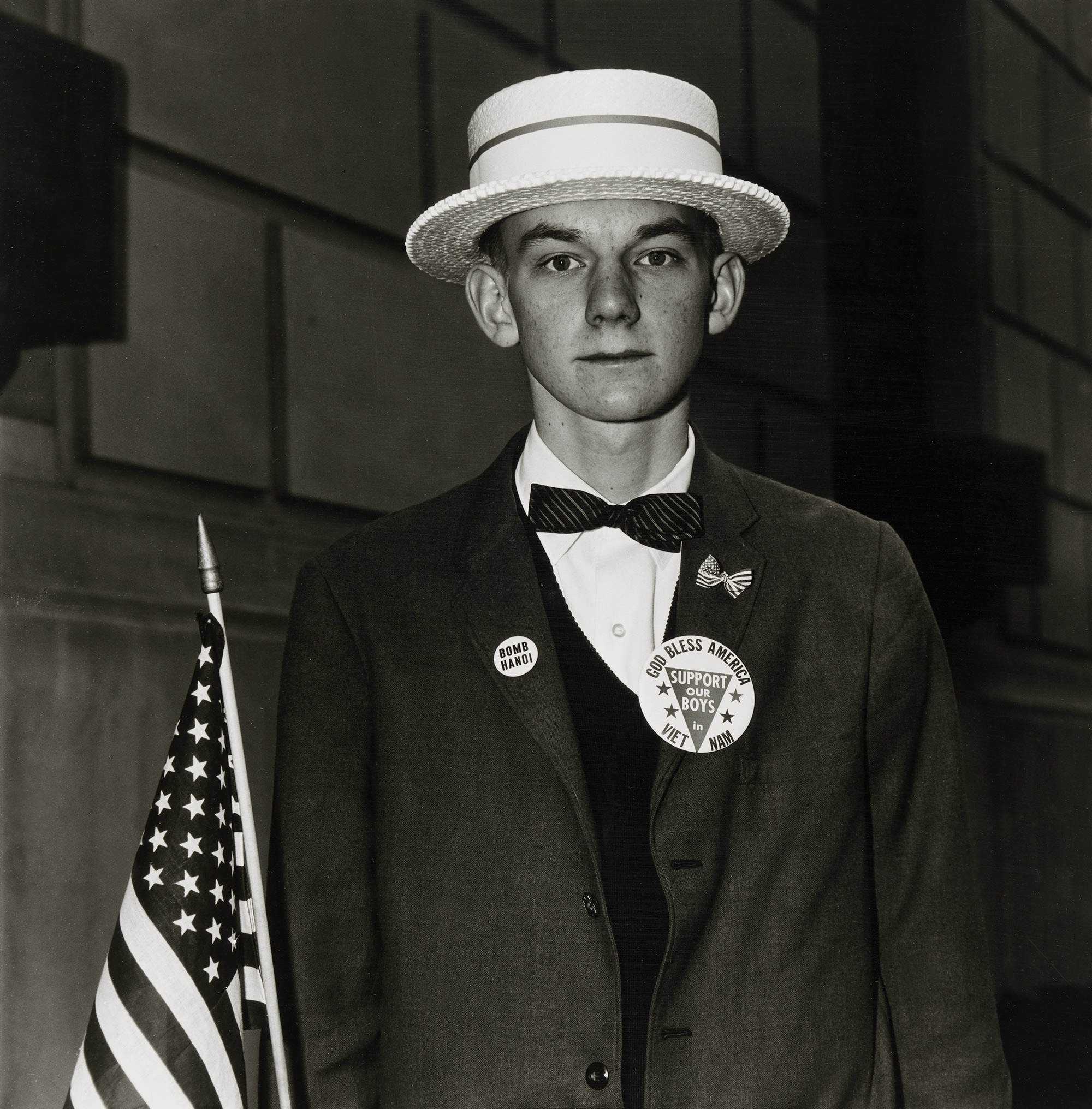
Diane Arbus (American, 1923-1971) Boy with a straw hat waiting to march in a pro-war parade, N.Y.C., 1967 1967 Gelatin silver photograph National Gallery of Australia, Canberra Purchased 1980
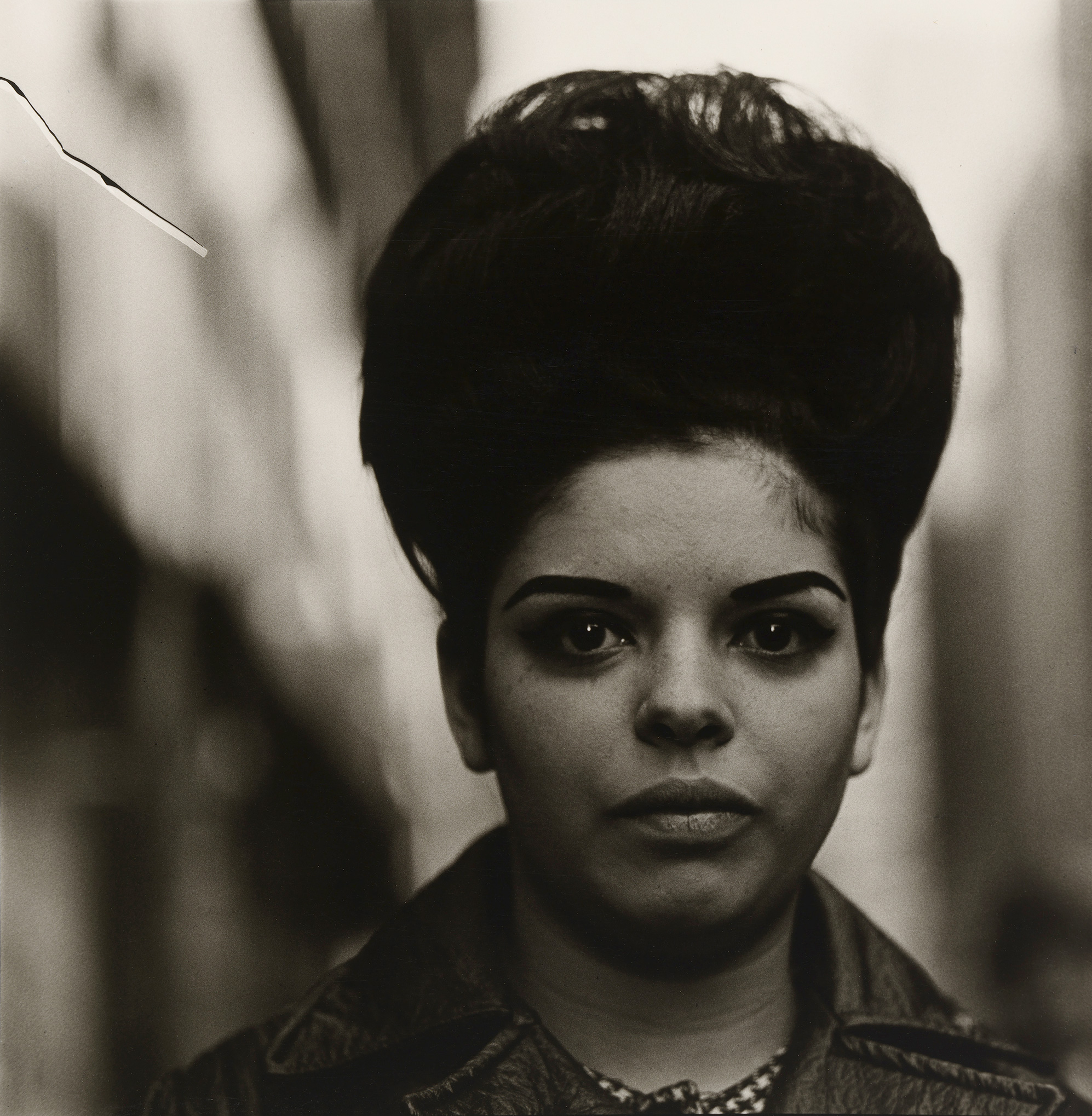
Diane Arbus (American, 1923-1971) Woman with a beehive hairdo 1965 Gelatin silver photograph
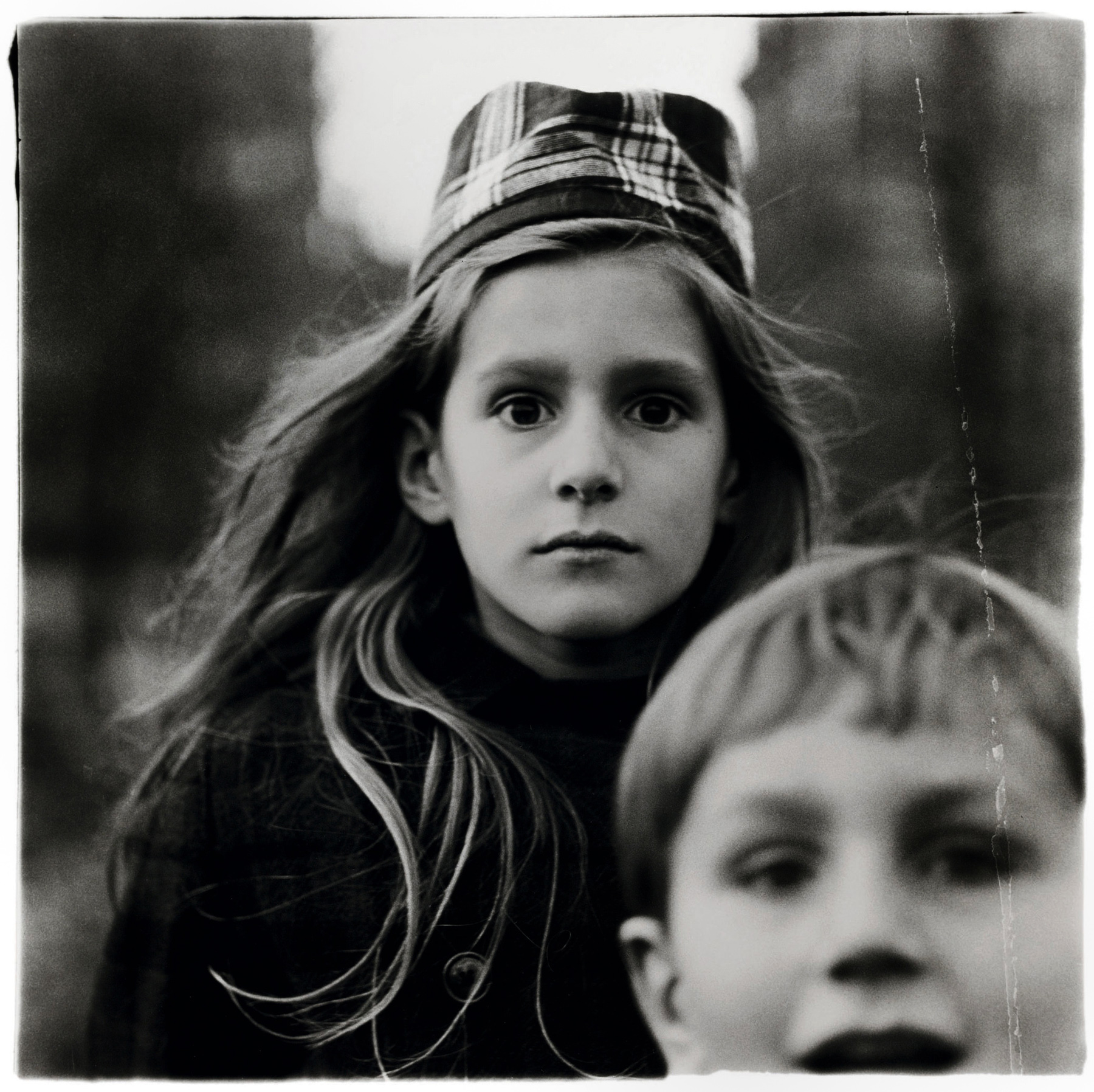
Diane Arbus (American, 1923-1971) Girl in a watch cap, N.Y.C. 1965 1965 Gelatin silver photograph
Diane Arbus (American, 1923-1971) Child with toy hand grenade, in Central Park, New York City 1962 1962 Gelatin silver photograph National Gallery of Australia, Canberra Purchased 1980
The photographs of Diane Arbus (1923-1971) are powerful allegories of postwar America. Once seen they are rarely forgotten. Contemporary audiences found the way that Arbus approached the genre of portraiture confronting and her work continues to polarise opinion. The images raise difficult, uncomfortable questions concerning the intent of the photographer.
Arbus had a huge curiosity about the society around her; her favourite thing was ‘to go where I’ve never been’. As she was a photographer, this manifested as an obsessive exploration into what it means to photograph and be photographed, and what can happen at that moment of exchange – something elusive and a little bit magical. Whether Arbus is an empathetic champion of the outsider, or an exploitative voyeur, is something that each viewer alone must decide.
The National Gallery of Australia’s collection of Arbus photographs is among the most impressive in the world. The NGA is extremely fortunate to have bought 36 rare, vintage prints in 1980 and 1981, from the earliest releases of prints from the Arbus Estate. These works are from the last decade of the artist’s life, the period in which her recognisable style is in full flight and she was in total control of her medium.
These rare prints are shown alongside photographs by others who also sought to redefine the tradition of portraiture, and whose vision of America is also both challenging and moving. The work of these photographers relates to Arbus in a variety of ways: they are influencers, contemporaries or heirs to aspects of her worldview. Like Arbus, they are keen, singular observers of their worlds, transforming the sometimes banal and ugly into images of unexpected beauty.
An uncompromising view of the world
Diane Arbus was born Diane Nemerov, the daughter of wealthy Jewish New Yorkers; her father ran Russek’s, a department store on Fifth Avenue selling furs and women’s clothing. Growing up in an apartment in a towering building on Central Park West, her world was highly protected, one in which she never felt adversity. This was something Arbus resented both at the time and later; it seemed to her to be an unreal experience of the world. At 18 she married her childhood sweetheart, Allan Arbus, and for a decade from the mid 1940s, they ran a successful photography studio doing fashion shots for leading picture magazines.
In 1956 Arbus ceased working with Allan in the studio and began instead to explore subjects of her own choice. She was, apart from the occasional class, essentially self-taught and as she struck out on her own, she undertook a detailed study of the work of other photographers. Compelled to confront that which had been off-limits in her own privileged childhood, she looked to other photographers who had confronted the world head-on, including Weegee, William Klein, Walker Evans and Lisette Model. They recorded, each in their own way, their surroundings with an at-times frightening candour. In their images, Arbus found an uncompromising view of the world, stripped of sentimentality.
Weegee
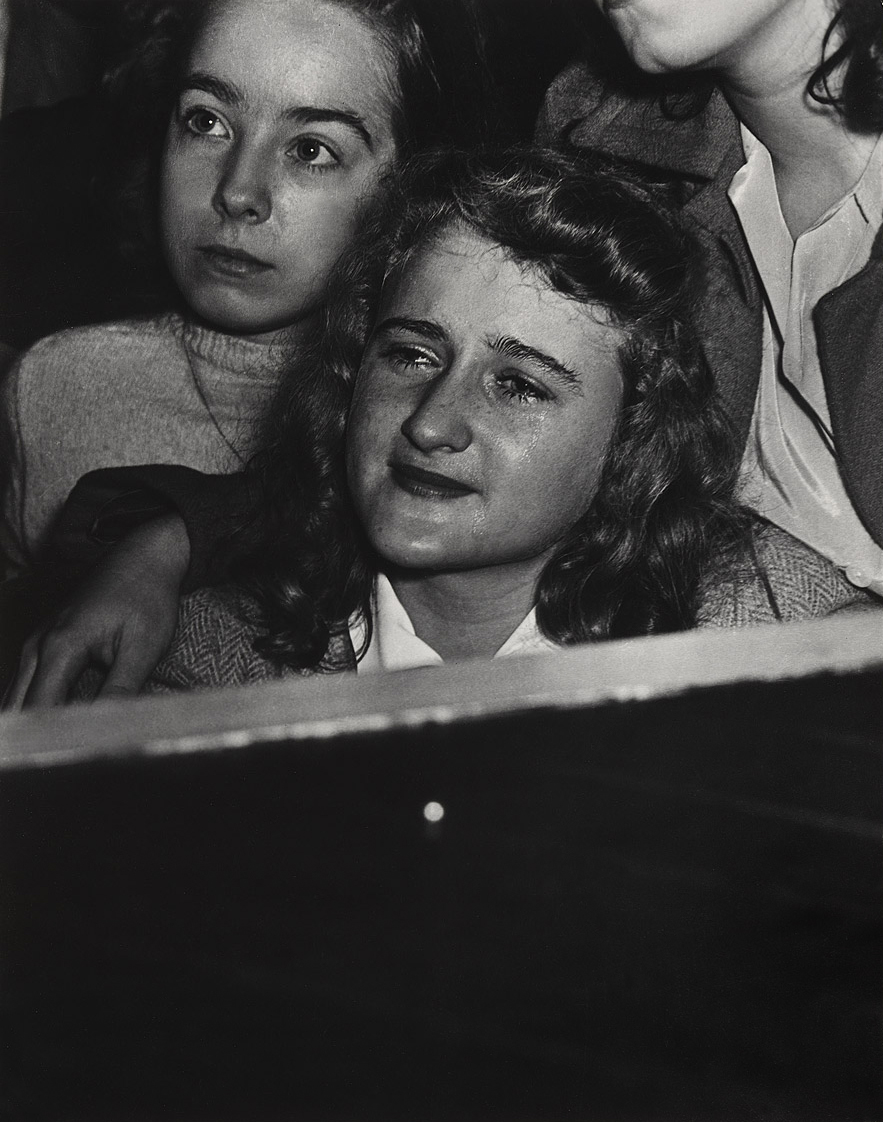
Weegee turns the banal and seedy underbelly of New York city streets after hours into moments of great psychological drama. A freelance news photographer, he supplied images to the popular press but was also well regarded in art circles. The Museum of Modern Art collected his work and exhibited it in 1943. Arbus owned a number of Weegee’s books and greatly admired his Runyonesque view of the world. She closely studied aspects of his working method as she formulated her own, especially his use of flash. His ‘wild dynamics’ made everyone else ‘look like an academician’, she wrote.
William Klein
Returning to New York in 1954 from his émigré life in Paris, Klein was at once taken aback by what he perceived to be a society pursuing purely materialistic goals, but also excited by the energy he found on the streets. Self-taught, he experimented with flash, wide-angle lenses, blurring and close-ups, abstraction and accidents, and produced grainy, high contrast prints. Klein’s 1956 book, Life is Good & Good for You in New York: Trance Witness Revels, a copy of which Arbus owned, gave impetus to the emerging genre of street photography through his harsh, uncompromising vision of the city. His work was met, particularly in the United States, with misunderstanding and hostility.
Walker Evans
The writer James Agee travelled to Alabama in America’s South in 1936 to research an article on the plight of tenant farmers for Fortune magazine. He chose photographer Walker Evans to accompany him. The article did not eventuate but a book did, Let us now praise famous men. Both men were unnerved by what they saw: Agee wrote of ‘the nakedness, disadvantage and humiliation of … an undefended and appallingly damaged group of human beings’. And yet in the face of this, Evans made images of insistent frontality and careful symmetrical framing; devoid of cliché or pretention, and suggesting an impartiality. This gave the images a great authenticity and power.
Evans’ oeuvre is essentially concerned with how photography represents the world. His significance in the development of twentieth-century photography was reappraised during the 1960s, largely through the largesse of John Szarkowski, the head of the Museum of Modern Art’s photography department at the time. Szarkowski argued that the foundations for many of the key aesthetic and formal tendencies of 1960s photography rested in Evans’ work. The catalogue that accompanied his 1938 exhibition American photographs, in particular, had a huge impact on the new generation of photographers, and on Arbus in particular. She met Evans in 1961 and visited him regularly at his New York home throughout the decade. He wrote in support of her 1963 Guggenheim Grant application.
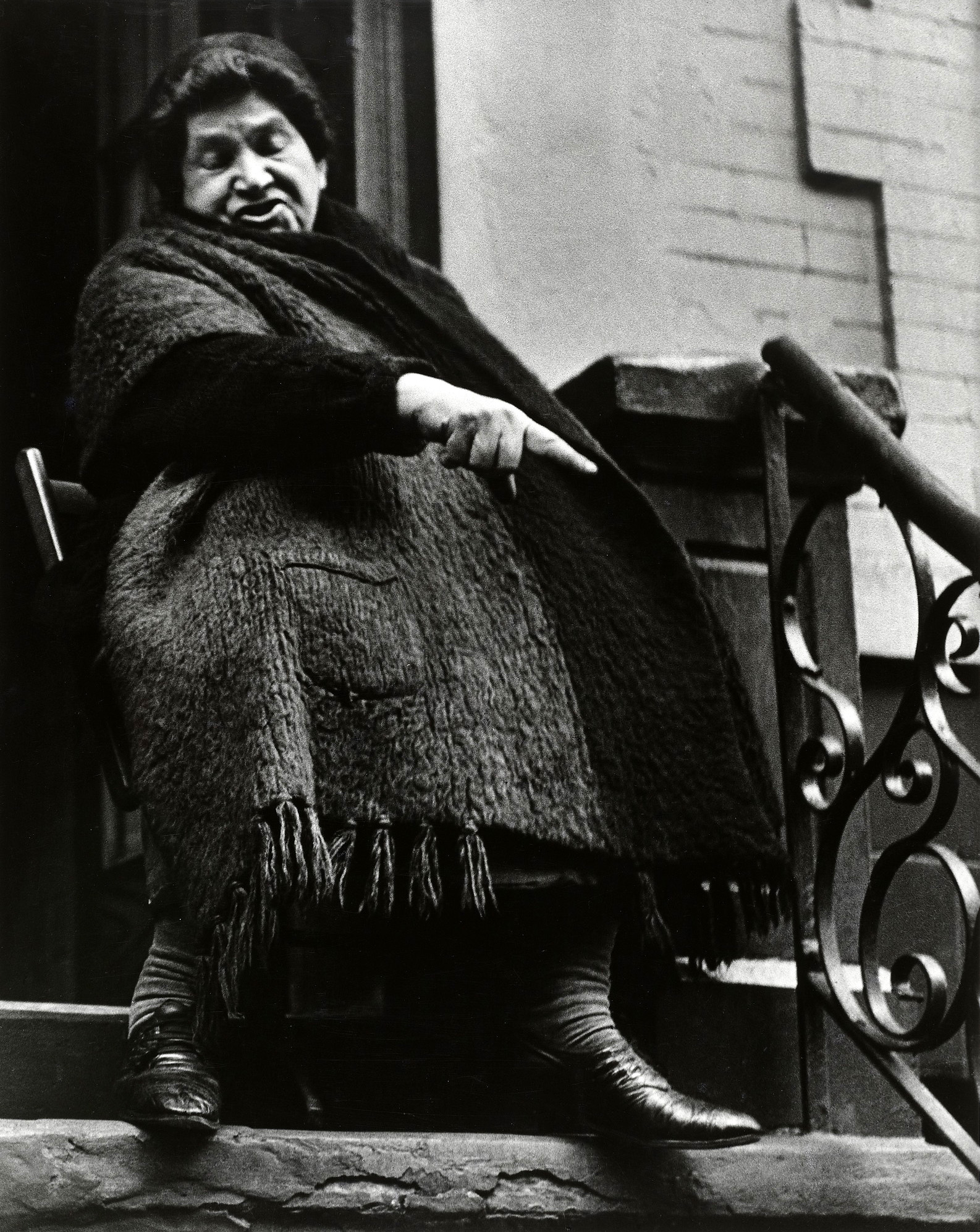
Lisette Model
Lisette Model’s satirical portraits of the rich on the French Riviera and the photographs she made in the 1940s of the Lower East Side’s poor and marginalised bear out the fact that she took her own advice: ‘Don’t shoot ’till the subject hits you in the pit of your stomach’. By the 1950s she had largely turned to teaching and her influence on Arbus, who took a number of her classes at the New School in 1956 and again in 1957-1958, was profound. Model encouraged Arbus to pursue her own distinctive voice. Model recalled, ‘One day I said to her, and I think this was very crucial, “originality means coming from the source…” And from then on, Diane was sitting there and – I’ve never in my life seen anybody – not listening to me but suddenly listening to herself through what was said.’
The gap between intention and effect
Prior to 1962 Arbus worked primarily with a 35mm Nikon camera. Her images at this time were often about gesture, with grainy images and subjects frequently shown in movement. In 1962 Arbus switched to a 2 ¼ inch medium-format, twin-lens Rolleiflex (later a Mamiyaflex), which she used with a flash and which when printed full-frame, gave the photographs a square format. The pictures she took with these cameras are deceptively, deliberately simple. Compositionally they are often masterful with repetitions of shapes and minutely observed, subtly presented details. Despite the confronting subject matter, her images have a classical stillness, an insistent frontality that she borrowed from classic documentary photography. To this Arbus adds a very deliberate use of the snap-shot aesthetic, with slightly tilted picture planes and people caught unawares, to signal the authenticity of her connection with the subject.
Arbus developed a working method and style that offered what amounts to a critique of the photographic portrait. There is a palpable tension in the way she presents her subjects, a complicity in the image-making process which rubs up against the fact that her subjects seem caught off-guard, unintentionally revealing aspects of themselves. Arbus identified this as ‘the gap between intention and effect’, explaining that ‘it really is totally fantastic that we look like this and you sometimes see that very clearly in a photograph. Something is ironic in the world and it has to do with the fact that what you intend never comes out like you intend it’. Arbus’s ability to connect with and gain the trust of people is legendary. Fellow photographer Joel Meyerowitz felt that she was ‘an emissary from the world of feeling. She cared about these people. They felt that and gave her their secret’.
The aristocrats
As a student at the alternative Fieldston Ethical Culture School in the Bronx, Arbus developed a fascination with myths, ritual and public spectacle. This preoccupation remained steadfast throughout her life. For example, in 1963 she was awarded a prestigious Guggenheim Fellowship to document ‘American rites, manners and customs’. Arbus had an almost insatiable curiosity and fascination with the world and she sought to make photographs that addressed fundamental aspects of our humanity in the broadest terms. It was the photographer Lisette Model, with whom she studied in the late 1950s, who made her realise that, in a seemingly contradictory way, the more specific a photograph of something was, the more general its message became.
To this extent, it is notable that Arbus’s photographs rarely address the issues of the day in any overt and obvious way. While there are exceptions – for example, her work for magazines from the sixties, including portraits of celebrities and documentary work examining the plight of the poor in South Carolina – for the most part Arbus used the camera as a licence to enter the specifics of other people’s lives.
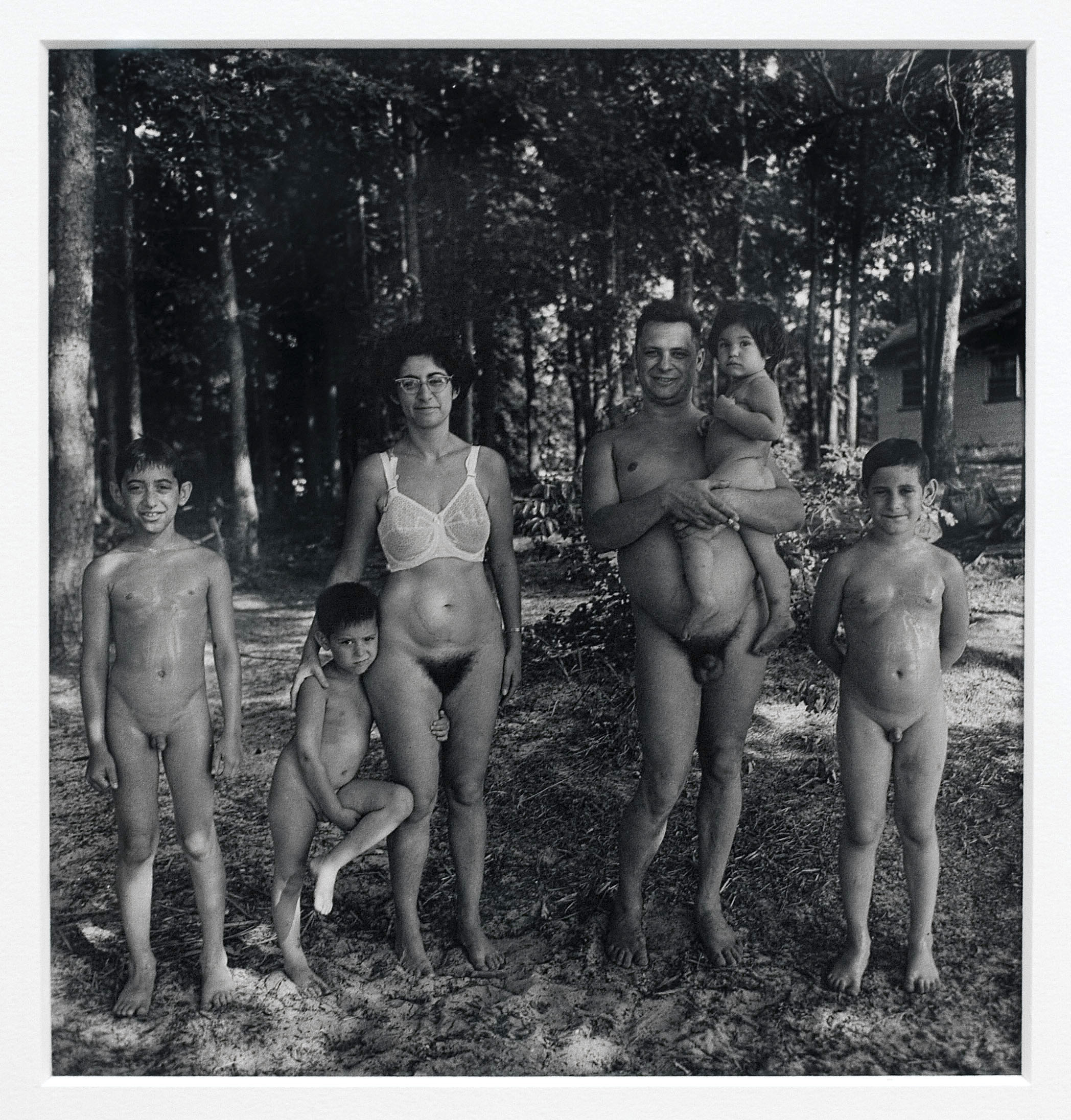
She was particularly drawn to marginalised people, who for whatever reason had fallen out of a conventional place in society and were forced (those born into disability) or chose (the nudists, for example) to construct their own identity. To find them, she frequented sideshow alleys and Hubert’s Freak Museum at Broadway and 42nd Street, joined nudist camps in New Jersey and Pennsylvania, and visited seedy hotels; she also found them in public spaces, in streets and parks where social rules were often arbitrarily imposed and discarded.
Arbus’s subjects are often seen to play with society’s roles and restrictions. She classified these people as ‘aristocrats’, having achieved a certain freedom from social constraints, and they made her feel a mix of shame and awe.
The prints
Arbus stated that, for her, ‘the subject of the picture is more important than the picture’. There is no doubt that the emotional authenticity of what she photographed was of upmost importance. In keeping with this, she often undersold her skill as a photographer; she often complained of technical difficulties, and others frequently observed that she seemed weighed down by her equipment. In downplaying her relationship to the technical aspects of her work, Arbus sought to emphasise instead her rapport with her subjects. All the same, she was very clear about how she wanted her images to look; she worked hard to achieve a particular quality in her prints, which have a distinct feel and appearance that are quite different from other photographs of the 1960s.
From the mid 1960s, Arbus worked hard to emphasise the photographic-ness of her pictures. She modified the negative tray on her Omega ‘D’ enlarger, which produced the distinctive black border around her images; later again, she used strips of cardboard down the sides of the negatives to blur the edges of her images. Both of these techniques meant that each of her prints is slightly, wonderfully unique. And there is often, as in the cases of Woman with a beehive hairdo and Girl in a watch cap, both made in 1965, damage (tears and marks) on the negative that Arbus has made no effort to minimise or disguise. Close viewing of the collection of photographs held at the NGA reveal ghostly traces of the hand of Arbus. She reminds us consistently through a number of careful and deliberate strategies that we are looking at a photograph that has been made by a particular person.
To know life
Arbus was not alone in photographing the social landscape of America in the 1960s. Others, including Garry Winogrand, Lee Friedlander and Milton Rogovin, similarly took to the country’s streets. Rogovin’s life work was to photograph people from poor minority groups, much of his work being made in Buffalo, New York, where he himself lived. Like Arbus, he often knew and befriended his subjects, returning to photograph them over many years, collaborating with them to create images of great dignity and integrity.
Like Arbus, Winogrand and Friedlander were included in the landmark 1967 exhibition New documents, curated by John Szarkowski for the Museum of Modern Art, New York. This was the only major showing of Arbus’s work during her lifetime. While acknowledging that each of the artists in the exhibition had their own distinct styles, Szarkowski characterised them as part of a generation that used the documentary tradition ‘to more personal ends.’ As he wrote: ‘Their aim has been not to reform life, but to know it. Their work betrays a sympathy – almost an affection – for the imperfections and frailties of society’.
An essential aspect of their innovation was the way they positioned photography and the acts of taking and viewing a photograph as an essential aspect of the work. Their photographs were not intended simply as windows to the world. As Winogrand noted when asked how he felt about missing photographs while he reloaded his camera, ‘there are no photographs while I’m reloading’. Winogrand, Friedlander and Arbus were fascinated by how the real was translated into the language of photography, and how the experience of the photograph involves a fascinating, multilayered three-way interaction between the photographer, the subject and the viewer.
Garry Winogrand
Winogrand restlessly prowled the same streets of New York as Arbus in the 1960s, working stealthily, capturing people without their knowledge. His viewpoint, one he asks the viewer to join, is unashamedly, unapologetically voyeuristic. He used a Leica M4 with a wide-angle lens and tipped the picture plane, giving his compositions a particular feel. Traumatised by the fraught political tensions of the cold war period, anxiety found its way into the imagery – lending his work an edge that makes for a compelling reading of an alienated and fearful society in the throes of change. His city is a site of unexpected confrontations and strange, witty juxtapositions. Fellow photographer Joel Meyerowitz remarked that Winogrand ‘set a tempo on the street so strong that it was impossible not to follow it. It was like jazz. You just had to get in the same groove’.
Lee Friedlander
Friedlander’s images are invariably about looking and this includes turning the camera on himself. He often intrudes into his hastily grabbed, ironic studies of the city, through reflection or shadow or a pair of shoes. Thus, the viewer of his photographs is constantly reminded that this is an image of the world that is made by someone, in this case, the photographer Lee Friedlander. The works are laconic, witty and intensely personal: and certainly the self-portraits are rarely flattering. Coming at the end of a decade in which a particular, new brand of art photographer had begun to achieve celebrity status, through the efforts of curators like John Szarkowski at the Museum of Modern Art, Friedlander’s self-portraits can also be seen as a shrewd send-up of fame.
Milton Rogovin
Originally trained as an optometrist, Rogovin began his career as a social documentary photographer in 1958, recording gospel services held in ‘store-front’ churches in the African-American neighbourhood of Buffalo, New York. Profoundly influenced as a young man by the impact of the Great Depression, Rogovin reflected that, ‘I could no longer be indifferent to the problems of the people, especially the poor, the forgotten ones’. He worked in collaboration with his subjects, who were always allowed to determine how they should be photographed. His photographs focus on family life, the celebrations and events that bind a community together, and the particulars of an individual’s existence.
The Arbus legacy
Arbus occupies an important place in the development of American photography. Her work has indelibly influenced the way that the documentary tradition has continued to evolve over the last 50 years, with many of the leading contemporary photographers, such as William Eggleston and Mary Ellen Mark, continuing to rethink the tradition, looking back to Arbus just as she looked back to her predecessors. Although it has often infuriated, and continues to do so, those who take issue with the way Arbus photographed the world, her impact on audiences and photographers alike is incontestable.
William Eggleston
While Arbus used the snap-shot aesthetic in her work to increase its aura of authenticity and immediacy, when Eggleston employed the same technique in colour without the abstraction and artistic mediation of black-and-white, contemporary audiences reacted with confusion. Careful observation of the images though reveals a masterful eye, and a sophisticated understanding of the way photography transforms the world. Eggleston’s images are at once monumental and mundane, ordinary and strange, prosaic and poetic. The result is luminous, breathtaking and perfectly banal.
Mary Ellen Mark
The photojournalist Mary Ellen Mark built a career photographing those on the fringes of society, seeking out those who she felt displayed what she described as attitude and often working on projects over many years, slowly earning trust. Her commitment was to give the people she photographed a unique voice, an individuality. Commenting on a body of work, Mark spoke of her desire to let her subjects ‘make contact with the outside world by letting them reach out and present themselves. I didn’t want to use them. I wanted them to use me’.
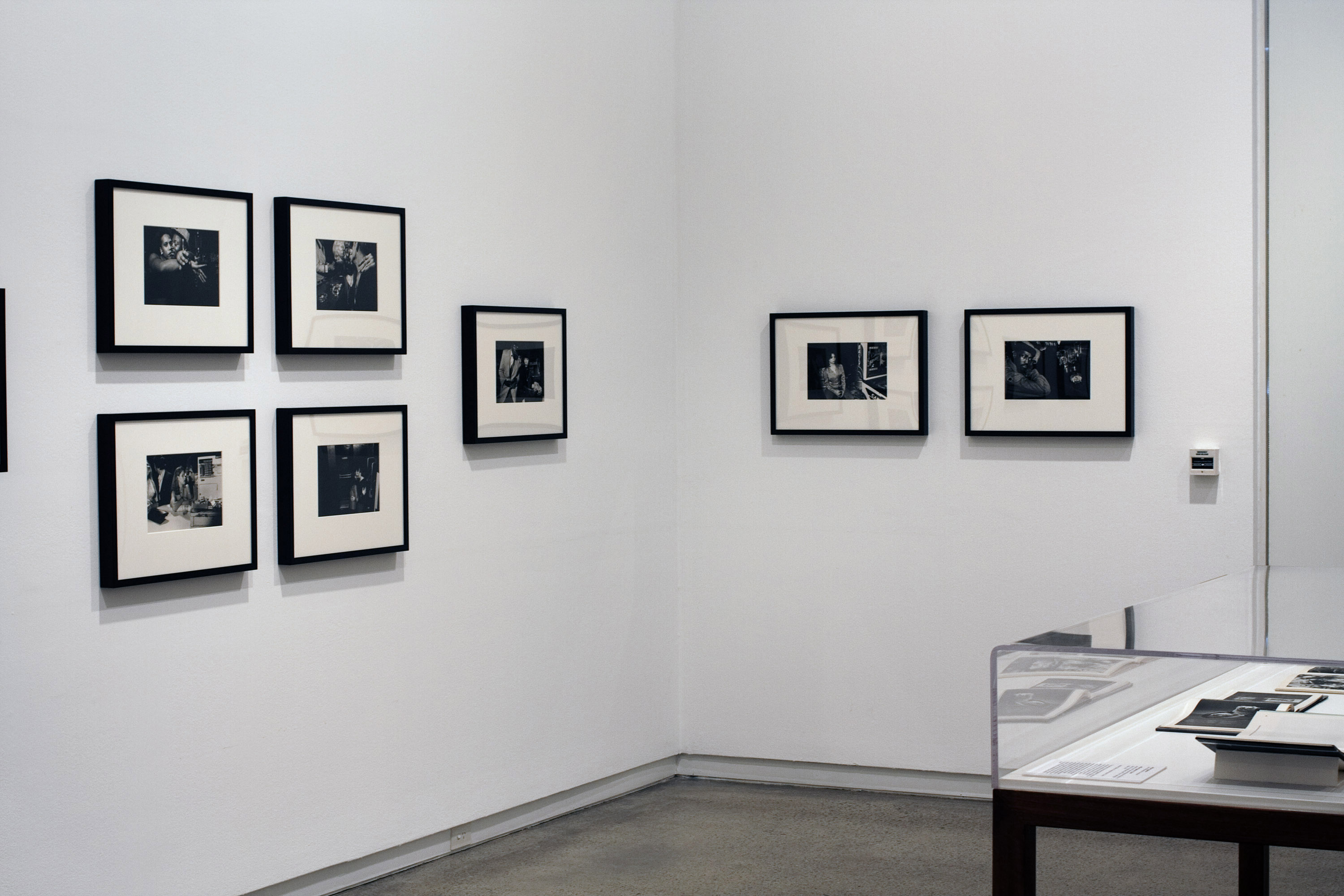
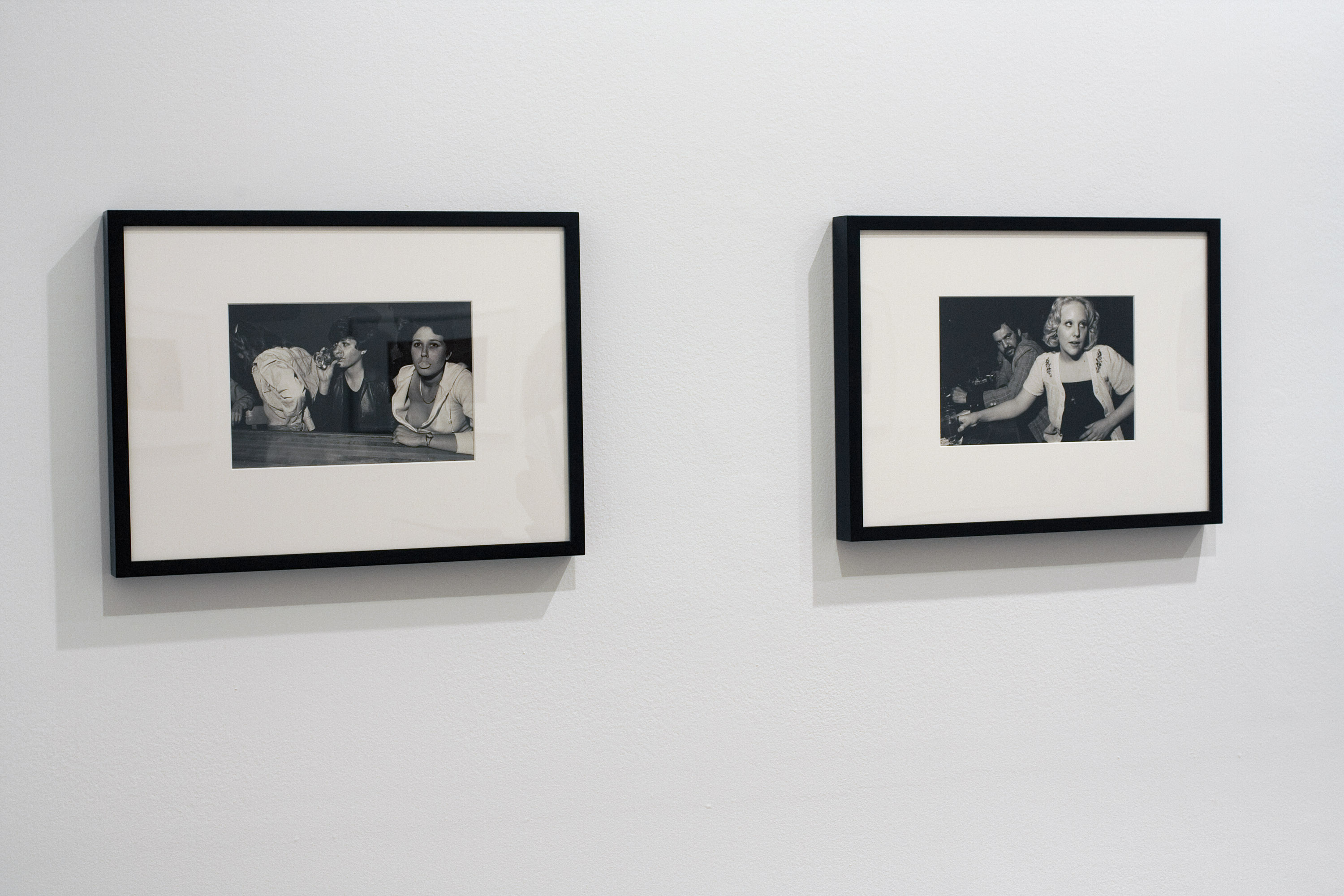
Mark spent months photographing the New York bar scene at night. This work formed the basis of her first one person exhibition, at the Photographers’ Gallery in London. She reflected at the time, ‘I would like to have the means to travel the whole country and show what America is through its bars. Millions of people who do not want or can not stay at home. The majority of clients are loners, which is why it is extremely difficult to work in these places. I had to make myself accepted’.
Anonymous text from the National Gallery of Australia website [Online] Cited 01/06/2018. No longer available online
Lisette Model (Austrian, 1901-1983) Coney Island Bather, New York [Baigneuse, Coney Island] c. 1939-1941 Silver gelatin print National Gallery of Australia, Canberra
Lisette Model (Austrian, 1901-1983) Woman with Veil, San Francisco 1949 Silver gelatin print National Gallery of Australia, Canberra Purchased 1978
Lisette Model (Austrian, 1901-1983) Lower East Side, New York 1942 Gelatin silver photograph 49.2 h x 39.5 w cm National Gallery of Australia, Canberra Purchased 1978
Lisette Model (Austrian, 1901-1983) Lower East Side, New York 1939-1942 Gelatin silver photograph 48.9 h x 38.9 w cm National Gallery of Australia, Canberra Purchased 1978
Lisette Model (Austrian, 1901-1983) Fashion show, Hotel Pierre, New York City 1940-1946 Gelatin silver photograph 40.0 h x 49.6 w cm National Gallery of Australia, Canberra Purchased 1978
Lisette Model (Austrian, 1901-1983) Cafe Metropole, New York City c. 1946 Gelatin silver photograph 49.5 h x 40.0 w cm National Gallery of Australia, Canberra Purchased 1978
While training as a musician in Vienna, Lisette Model studied under the avant-garde composer Arnold Schoenberg, who introduced her to the Expressionist painters of the early 20th century. Influenced by European modernist philosophy and aesthetics, Model abandoned music in Paris in 1933, taking up painting and then photography. She gained initial renown for a series of photographs of men and women lounging in deck chairs along the Promenade des Anglais in the south of France. In 1938, she relocated to New York with her husband (the artist Evsa Model), where she took photographs of exuberant characters on the streets of New York – catching reflections of individuals in store windows and images of feet in motion and holidaymakers around Coney Island. Model taught at the New School where one of her most famous students was Diane Arbus, and was published by Harper’s Bazaar and other magazines.
Anonymous text. “Lisette Model,” on the Artsy website [Online] Cited 16/02/2022. No longer available online
Lisette Model (Austrian, 1901-1983) Albert-Alberta, Hubert’s 42nd St Flea Circus, New York [Albert/Alberta] c. 1945 Gelatin silver photograph 49.5 h x 39.7 w cm National Gallery of Australia, Canberra Purchased 1981
Mary Ellen Mark (American, 1940-2015) Untitled from The bar series 1977 Gelatin silver photograph National Gallery of Australia, Canberra Purchased 1980
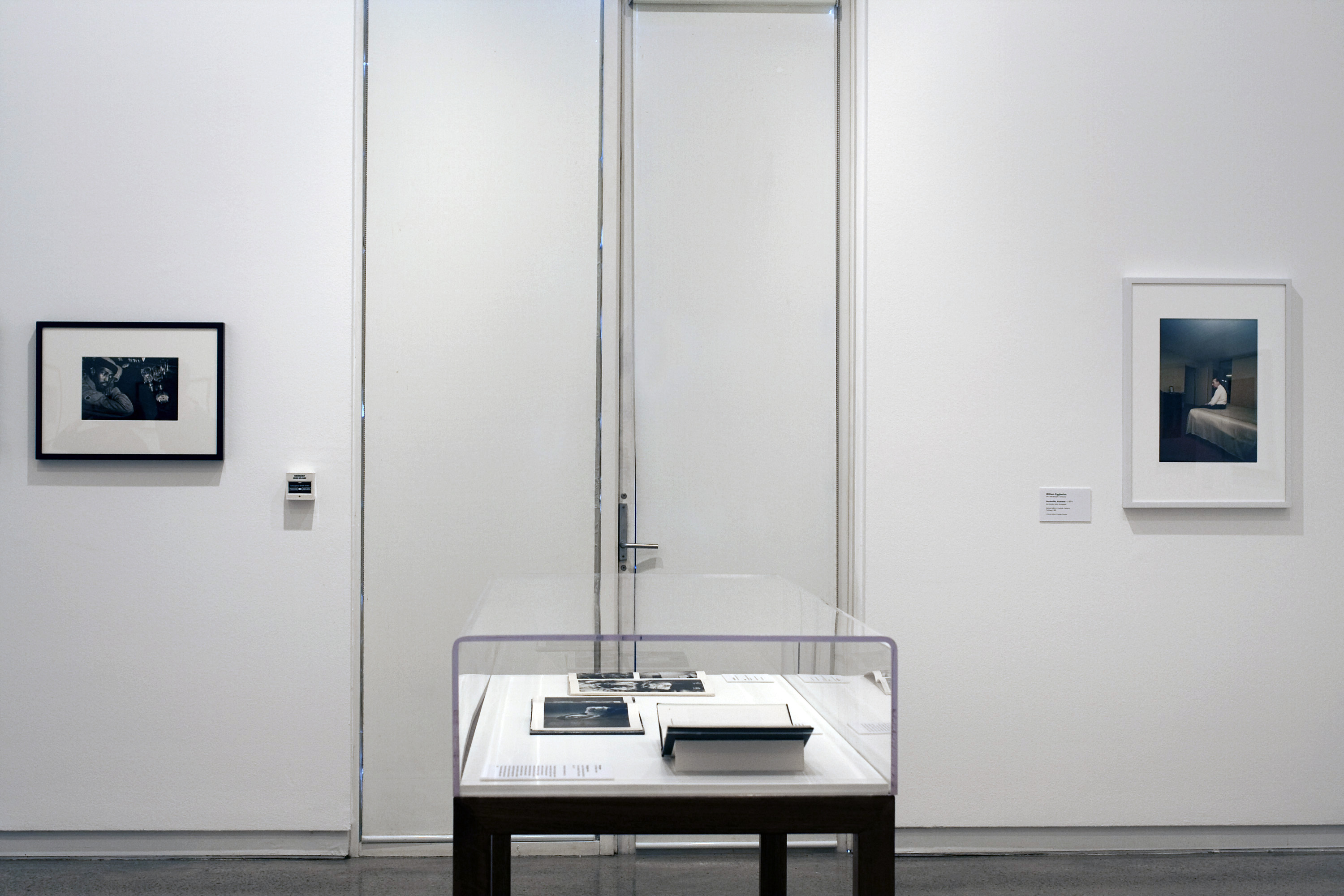
William Eggleston (American, b. 1939) Huntsville, Alabama c. 1971 Dye transfer colour photograph 46.6 h x 32.4 w cm National Gallery of Australia, Canberra Purchased 1980
William Eggleston (American, b. 1939) Memphis c. 1970 printed 1980 Dye transfer colour photograph 30.2 h x 44.2 w cm National Gallery of Australia, Canberra Purchased 1980
William Eggleston (American, b. 1939) Greenwood, Mississippi [“The Red Ceiling”] 1973, printed 1979 Dye transfer colour photograph 29.5 h x 45.4 w cm National Gallery of Australia, Canberra Purchased 1980
With its intense red, Eggleston’s picture of the spare room in a friend’s home is one of the most iconic of all colour photographs. Often called The red room, this photograph was intended to be shocking: Eggleston described the effect of the colour as like ‘red blood that is wet on the wall’. But the radicalness of the picture is not just in its juicy (and impossible to reproduce) redness; it is also found in the strange view it provides of a domestic interior, one that Eggleston has described as a ‘fly’s eye view’.
Garry Winogrand (American, 1928-1984) No title [Centennial Ball, Metropolitan Museum, New York] 1969 Gelatin silver photograph 27.2 h x 42.0 w cm National Gallery of Australia, Canberra Purchased 1980
Garry Winogrand (American, 1928-1984) New York City, New York. From “Garry Winogrand” 1970 Gelatin silver photograph 21.6 h x 32.6 w cm National Gallery of Australia, Canberra Purchased 1978
Winogrand was asked how he felt about missing photographs while he reloaded his camera. He replied ‘There are no photographs while I’m reloading’: There is no possibility in the Winograndian world view of regarding the camera as a window onto the world; it becomes a mirror reflecting back the photographer’s concerns. Winogrand was fascinated by how the real was translated into the photographic. In the end this fascination became an obsession from which he could not escape or find solace – or meaning. At the time of his death there were a third of a million exposures that he had never looked at including 2,500 undeveloped rolls of film.
Lee Friedlander (American, b. 1934) Rt. 9w, N.Y. 1969 Gelatin silver photograph 18.8 h x 28.2 w cm National Gallery of Australia, Canberra Purchased 1981
Lee Friedlander (American, b. 1934) Mount Rushmore 1969 Gelatin silver photograph 18.8 h x 28.0 w cm National Gallery of Australia, Canberra Purchased 1981
“I always wanted to be a photographer. I was fascinated with the materials. But I never dreamed I would be having this much fun. I imagined something much less elusive, much more mundane.”
~ Lee Friedlander
Friedlander is known for his complex, layered images, exploring the way that the urban landscape fragments our vision. Throughout his career he has found endless fascination in photographing reflections in windows – merging what lies behind the glass with what is reflected in it – out of which he has created juxtapositions which are witty and insightful. He often inserts himself into the image, either overtly or more frequently as a shadow or partially concealed form – part of his face, for instance, hidden behind the camera.
In the 1960s he moved away from a recognisably documentary style toward one in which the subject is more elusive, reflecting a society which had itself become more fragmented and complex. By cropping and cutting up city and natural landscapes he changes our perception of them. In creating compositions that are dynamic, unexpected and often confusing, Friedlander asks us to look freshly at our everyday environments.
Walker Evans (American, 1903-1975) Hudson Street boarding house detail, New York 1931 Gelatin silver photograph 15.7 h x 20.6 w cm National Gallery of Australia, Canberra Purchased 1980
Walker Evans (American, 1903-1975) Bedroom, shrimp fisherman’s house, Biloxi, Mississippi 1945 Gelatin silver photograph 23.4 h x 18.3 w cm National Gallery of Australia, Canberra Purchased 1980
Walker Evans (American, 1903-1975) Tenant Farmer’s Wife, Alabama [Allie Mae Burroughs, wife of a cotton sharecropper, Hale County, Alabama] 1936 Gelatin silver photograph 23.6 h x 18.0 w cm National Gallery of Australia, Canberra Purchased 1978
“Written with her trademark flair and force, Sontag’s book [On Photography] inaugurated a wave of criticism, much of it influenced by Foucaultian theory, that underscored the instrumentality and implicit violence of photography, its ability to police and regulate it subjects, especially those lacking social and political power: the poor, presumed “deviants” or “criminals,” and workers. As Sontag herself acknowledged, however, photography is not only a predatory means of taking possession, but also a mode of conferring value; it can potentially be put to counter-hegemonic uses, used to see and frame in ways that affirm and legitimate, rather than strictly contain and control, the presence of culturally disenfranchised persons.”
“The power of his art stems from the particular manner in which Rogovin transforms traditional portrait photography and documentary practice, opening up potentially instrumentalist, one-sided visual forms to dynamics of reciprocity and mutuality…”
“Rogovin’s photography thus balances the documentary desire to grasp and present, to “capture” an image of the”Other,” with a commitment to holding back in order to allow his subjects space to shape the photographic process. His practice is a form of”approach,” to borrow a term from Carol Shloss, that resists even as it engages. We might call this an aesthetic of “making space”: a photographic method that creates room for subjects to actively participate in the production of their own images rather than stand as passive objects before a colonizing gaze.”
“The fact that Rogovin’s work at once invokes and questions the camera’s capacity to classify – to embed individuals in a larger archive – echoes his challenge to documentary business as usual. Certainly, Rogovin’s images of working people perform a classic documentary task: to lend public visibility to those who have been overlooked and exploited, to give aggrieved people the social recognition they are otherwise denied in our society. However, his images do not enforce the power and prerogatives of middle-class reformers or governmental institutions, as did so much early twentieth-century documentary photography, which, as Maren Stange has argued, tended to reassure “a 11 liberal middle-class that social oversight was both its duty and its right.” By refusing to provide pity-inducing images of working people that present them as weak and vulnerable, Rogovin’s photographs undercut the sense of privilege viewers often feel when looking at pictures of what Jacob Riis called “the other half.””






![Chuck Close (American, 1940-2021) 'Phil' [Photo Maquette of Philip Glass] 1969](https://artblart.com/wp-content/uploads/2025/05/chuck-close-photo-maquette-of-philip-glass.jpg "Chuck Close (American, 1940-2021) 'Phil' [Photo Maquette of Philip Glass] 1969")
































![Diane Arbus (American, 1923-1971) 'Large black family in small shack [Robert Evans and his family, 1968]' 1968 (installation view)](https://artblart.com/wp-content/uploads/2018/05/installation-af.jpg "Diane Arbus (American, 1923-1971) 'Large black family in small shack [Robert Evans and his family, 1968]' 1968 (installation view)")

![Lisette Model (Austrian, 1901-1983) 'Coney Island Bather, New York' [Baigneuse, Coney Island] c. 1939-1941](https://artblart.com/wp-content/uploads/2018/05/model-coney-island-bather-web.jpg "Lisette Model (Austrian, 1901-1983) 'Coney Island Bather, New York' [Baigneuse, Coney Island] c. 1939-1941")



![Installation view of the exhibition 'Diane Arbus: American Portraits' at the Heide Museum of Modern Art, Melbourne showing from left to right, Lisette Model's 'Fashion show, Hotel Pierre, New York City' 1940-1946; Lisette Model's 'Cafe Metropole, New York City' c. 1946; and Lisette Model's 'Albert-Alberta, Hubert's 42nd St Flea Circus, New York [Albert/Alberta]' c. 1945](https://artblart.com/wp-content/uploads/2018/05/installation-w1.jpg "Installation view of the exhibition 'Diane Arbus: American Portraits' at the Heide Museum of Modern Art, Melbourne showing from left to right, Lisette Model's 'Fashion show, Hotel Pierre, New York City' 1940-1946; Lisette Model's 'Cafe Metropole, New York City' c. 1946; and Lisette Model's 'Albert-Alberta, Hubert's 42nd St Flea Circus, New York [Albert/Alberta]' c. 1945")






![William Eggleston (American, b. 1939) 'Greenwood, Mississippi' ["The Red Ceiling"] 1973, printed 1979](https://artblart.com/wp-content/uploads/2018/05/eggleston-the-red-ceiling-web.jpg "William Eggleston (American, b. 1939) 'Greenwood, Mississippi' [\"The Red Ceiling\"] 1973, printed 1979")


![Garry Winogrand (American, 1928-1984) 'No title [Centennial Ball, Metropolitan Museum, New York]' 1969](https://artblart.com/wp-content/uploads/2018/05/winogrand-centennial-ball-web.jpg "Garry Winogrand (American, 1928-1984) 'No title [Centennial Ball, Metropolitan Museum, New York]' 1969")


 Art Blart _ art and cultural memory archive
You must be logged in to post a comment.