
Exhibition: ‘Gordon Parks: Centennial’ at Jenkins Johnson Gallery, San Francisco

Exhibition dates: 21st February – 27th April 2013


Gordon Parks (American, 1912-2006) 'Ondria Tanner and Her Grandmother Window-shopping, Mobile, Alabama' 1956


Gordon Parks (American, 1912-2006)
Ondria Tanner and Her Grandmother Window-shopping, Mobile, Alabama
1956
Edition 19 of 25
Pigment print
14 x 14 inches
Modern print
© The Gordon Parks Foundation


What an admirable photographer Gordon Parks was. It is a joy to see five of his colour photographs in this posting because I have never seen any before. They are glorious, complex compositions that ebb and flow like music whilst at the same time they are also damning indictments of the racially segregated society that was America in the 1950s (and still is today). Bitterness, discrimination and racism have deep roots in any country – just look at contemporary Australia. The little girl looks on in Ondria Tanner and Her Grandmother Window-shopping (1956, above), her left index finger bent upward on the pane of glass as the prettily dressed white, automaton mannequins march on, oblivious to her gaze; Mr. and Mrs. Albert Thornton, Mobile, Alabama  (1956, below) are surrounded by photographs, their pose mimicking that of their parents hanging behind them, while before them on the coffee table (under glass) are other, younger members of their extended family. Past, present and future coalesce in this one poignant image.

“Sensibility” is based on personal impressions of pleasure or pain. The sensibility of Parks photographs is a refined sensitivity based on experience – his experience of the discrimination of human beings toward each other. These hard-wired responses toward such a situation will vary from person to person.

These photographs were his hard-wired response. This was his feeling towards subject matter and that is why these insightful photographs still matter to us today.

Dr Marcus Bunyan


Many thankx to the Jenkins Johnson Gallery for allowing me to publish the photographs in the posting. Please click on the photographs for a larger version of the image.


Gordon Parks is the most important black photographer in the history of photojournalism. Long after the events that he photographed have been forgotten, his images will remain with us, testaments to the genius of his art, transcending time, place and subject matter.


Dr Henry Louis Gates


Gordon Parks (American, 1912-2006) 'At Segregated Drinking Fountain, Mobile, Alabama' 1956


Gordon Parks (American, 1912-2006)
At Segregated Drinking Fountain, Mobile, Alabama
1956
Edition 19 of 25
Pigment print
14 x 14 inches
Modern print
© The Gordon Parks Foundation


Gordon Parks (American, 1912-2006) 'Department Store, Mobile, Alabama' 1956


Gordon Parks (American, 1912-2006)
Department Store, Mobile, Alabama
1956
Edition 20 of 25
Pigment print
14 x 14 inches
Modern print
© The Gordon Parks Foundation
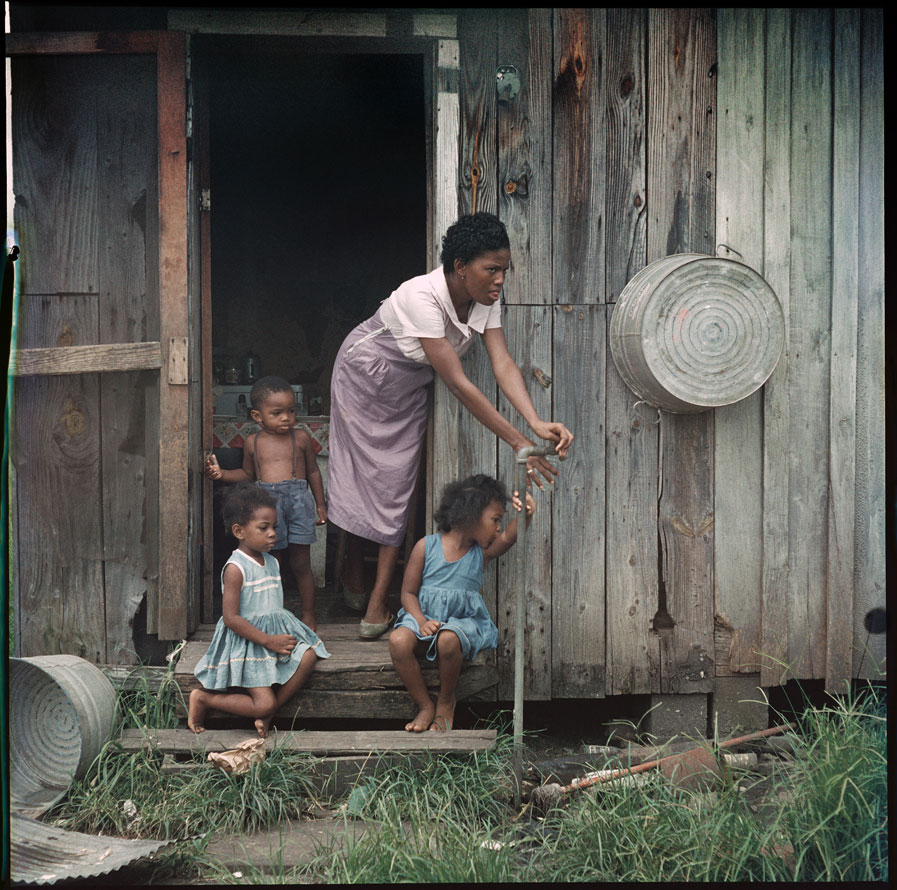
 

Gordon Parks (American, 1912-2006) 'Mother and Children, Mobile, Alabama' 1956


Gordon Parks (American, 1912-2006)
Mother and Children, Mobile, Alabama
1956
Edition 17 of 25
Pigment print
13 7/8 x 14 inches
Modern print
© The Gordon Parks Foundation
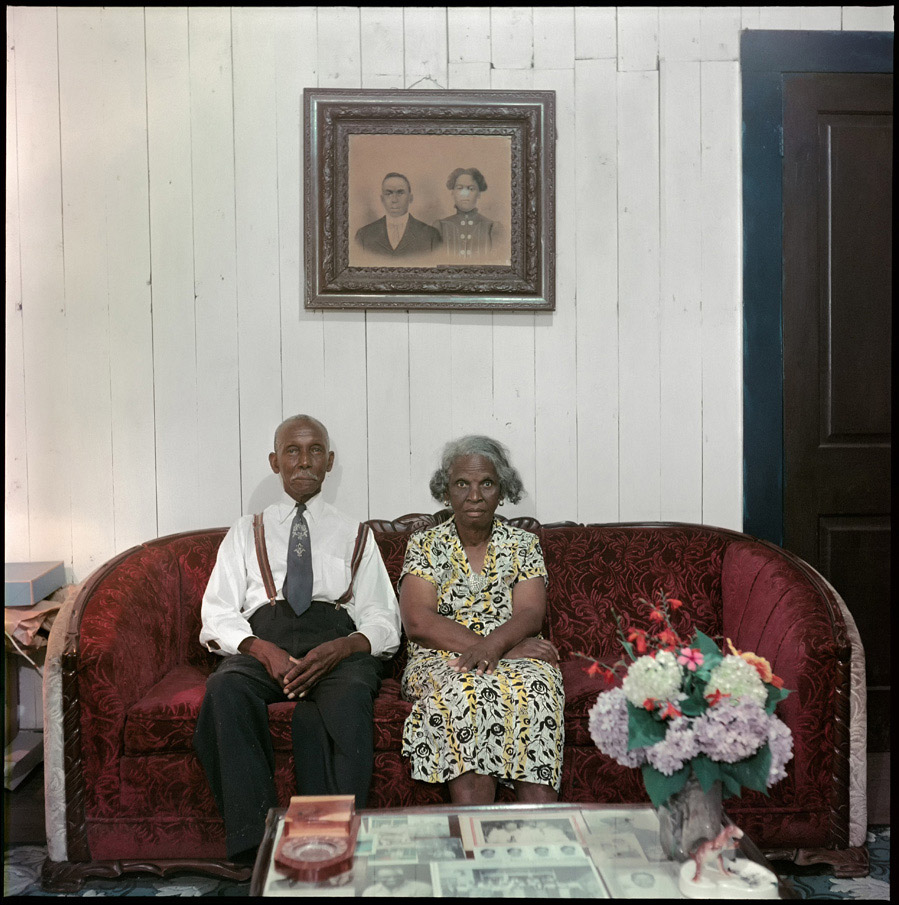
 

Gordon Parks (American, 1912-2006) 'Mr. and Mrs. Albert Thornton, Mobile, Alabama' 1956


Gordon Parks (American, 1912-2006)
Mr. and Mrs. Albert Thornton, Mobile, Alabama
1956
Edition 17 of 25
Pigment print
14 1/8 x 14 inches
Modern print
© The Gordon Parks Foundation


In celebration of the 100th birthday of Gordon Parks, one of the most influential African American photographers of the 20th century, Jenkins Johnson Gallery in collaboration with The Gordon Parks Foundation presents Gordon Parks: Centennial, on view from February 21 through April 27, 2013. Gordon Parks, an iconic photographer, writer, composer, and filmmaker, would have turned 100 on November 30, 2012. This will be the first solo exhibition for Parks on the West Coast in thirteen years. The exhibition will survey works spanning six decades of the artist’s career starting in 1940. The exhibition consists of more than seventy-five gelatin silver and pigment prints, including selections from Life magazine photo essays: Invisible Man, 1952; Segregation Story, 1956; The Black Panthers, 1970; and Flavio, 1960, about favelas in Brazil. Also included in the exhibition is his reinterpretation of American Gothic and his elegant depictions of artists like Alexander Calder, fashion models, and movie stars.

Noteworthy highlights include groundbreaking prints from the Invisible Man series which unfolds a visual narrative based on Ralph Ellison’s award winning novel. The images capture the essence of social isolation and the struggle of a black man who feels invisible to the outside world. Also on view will be a number of colour prints from Segregation Story, 1956, which are a part of a limited edition portfolio of twelve colour photographs with an essay by Maurice Berger. Newly released, these images were produced from transparencies found in early 2012, discovered in a storage box at The Gordon Parks Foundation. In the late 1960s Life magazine asked Gordon Parks to report on the Oakland, California-based Black Panther Party, including Eldridge Cleaver. Parks’ striking image of Eldridge Cleaver and His Wife, Kathleen, Algiers, Algeria, 1970 depicts Cleaver recovering from gun wounds after being ambushed by the Oakland police as well as an insert of Huey P. Newton, co-founder of the party along with Bobby Seale.

About Gordon Parks

Parks was born into poverty in Fort Scott, Kansas in 1912, the youngest of fifteen children. He worked several odd jobs until he bought a camera at a Pawn Shop in 1937 in Seattle and was hired to photograph fashion at a department store in Minneapolis. In 1942 Parks received a photography fellowship from the Farm Security Administration, succeeding Dorothea Lange among others. While at the F.S.A., Parks created American Gothic, now known as one of his signature images, in which he shows Ella Watson, a cleaning women, holding a mop and broom, standing in front of an American flag. The image makes a poignant commentary on social injustice whilst referencing Grant Wood’s celebrated painting American Gothic which it is also named after. He became a freelance photographer working for Vogue as well as publishing two books, Flash Photography (1947) and Camera Portraits: Techniques and Principles of Documentary Portraiture (1948). In 1948 Parks was hired by Life magazine to do a photographic essay on Harlem gang leader, Red Jackson, which led to a permanent position at Life, where he worked for twenty years. Parks developed his skills as a composer and author and in 1969 he became the first African American to direct a major motion picture, The Learning Tree based on his best selling novel and in 1971 he directed Shaft. A true Renaissance man, Gordon Parks passed away in 2006.

As Philip Brookman, curator of photography and media arts at the Corcoran, states, “Gordon Parks’ art has now changed the way we perceive and remember chronic issues, such as race, poverty, and crime, just as it has influenced our understanding of beauty: of nature, landscape, childhood, fashion, and memory.”

Press release from the Jenkins Johnson Gallery website
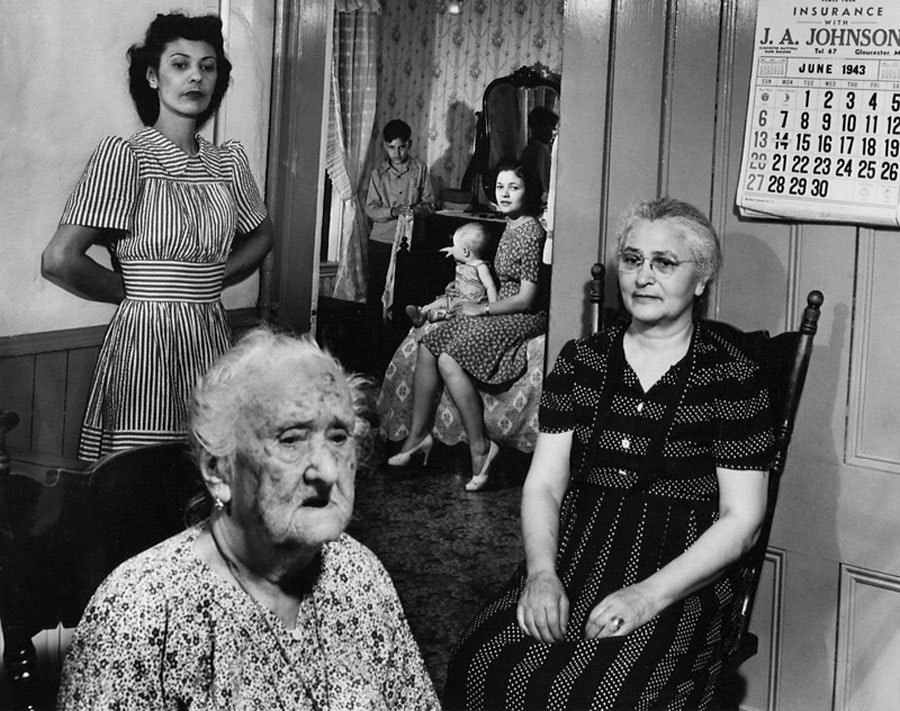
 

Gordon Parks (American, 1912-2006) 'Mary Machado, Mother of Isabell Lopez, and Family, Gloucester, Massachusetts' 1943


Gordon Parks (American, 1912-2006)
Mary Machado, Mother of Isabell Lopez, and Family, Gloucester, Massachusetts
1943
Gelatin silver print
© The Gordon Parks Foundation
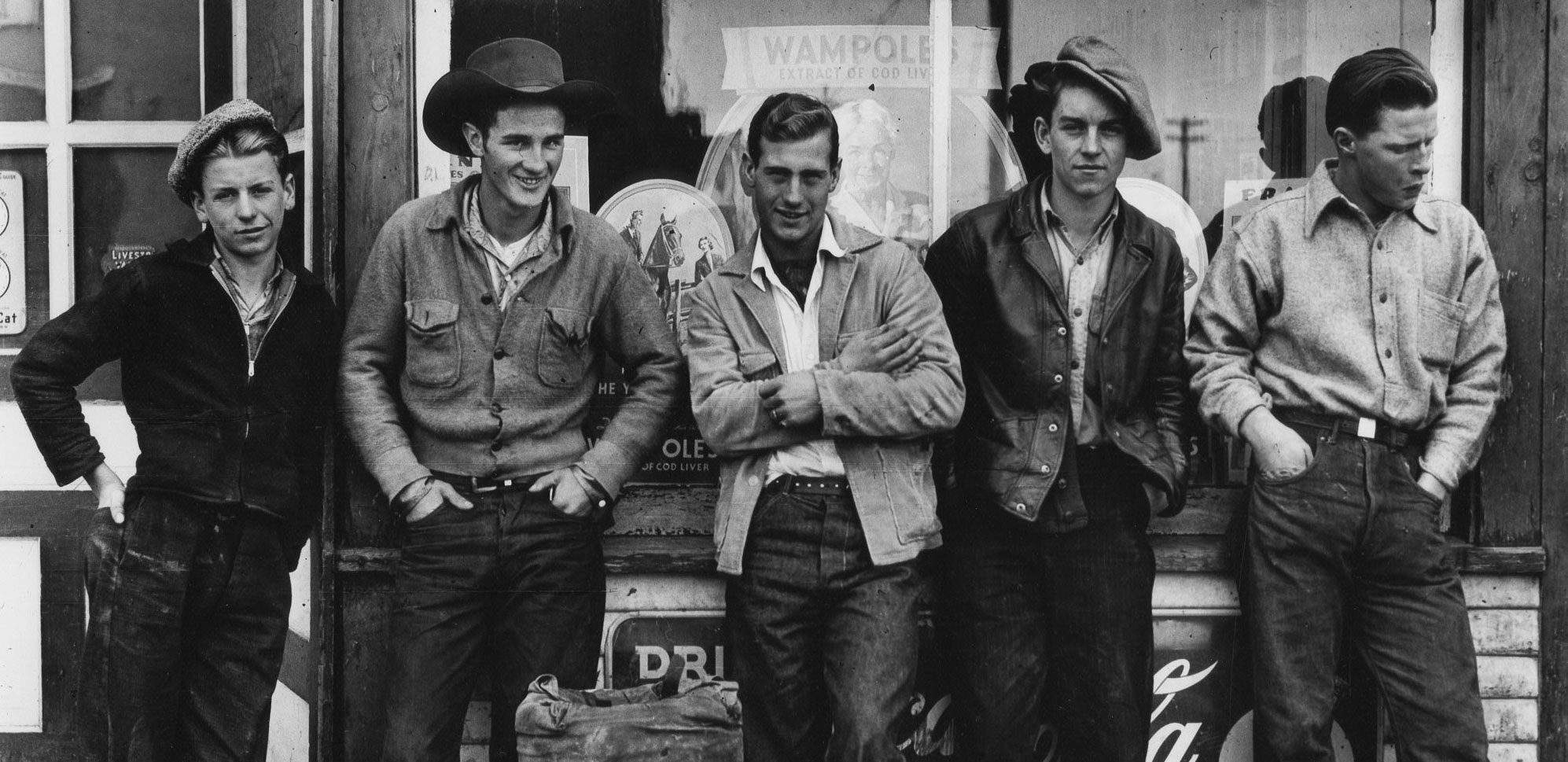
 

Gordon Parks (American, 1912-2006) 'Drugstore Cowboys, Turner Valley, Canada' 1945


Gordon Parks (American, 1912-2006)
Drugstore Cowboys, Turner Valley, Canada
1945
Gelatin silver print
9 7/8 x 12 7/8 inches
Modern print
© The Gordon Parks Foundation


Gordon Parks (American, 1912-2006) 'Untitled' 1950


Gordon Parks (American, 1912-2006)
Untitled
1950
Gelatin silver print
© The Gordon Parks Foundation


Gordon Parks (American, 1912-2006) 'Tenement Dwellers, Chicago, Illinois' 1950


Gordon Parks (American, 1912-2006)
Tenement Dwellers, Chicago, Illinois
1950
Gelatin silver print
7 x 9 inches
Modern print
© The Gordon Parks Foundation


Gordon Parks (American, 1912-2006) 'Mysticism, Harlem, New York' 1952


Gordon Parks (American, 1912-2006)
Mysticism, Harlem, New York
1952
Gelatin silver print
10 5/8 x 10 3/8 inches
Vintage print
© The Gordon Parks Foundation


Gordon Parks (American, 1912-2006) 'Harlem Neighborhood, Harlem, New York' 1952


Gordon Parks (American, 1912-2006)
Harlem Neighborhood, Harlem, New York
1952
Gelatin silver print
10 3/8 x 13 1/2 inches
Vintage print
© The Gordon Parks Foundation


Gordon Parks (American, 1912-2006) 'The Invisible Man, Harlem, New York' 1952


Gordon Parks (American, 1912-2006)
The Invisible Man, Harlem, New York
1952
Edition 1 of 10
Pigment print
14 1/8 x 14 inches
Modern print
© The Gordon Parks Foundation


Gordon Parks (American, 1912-2006) 'Muhammad Ali' 1966


Gordon Parks (American, 1912-2006)
Muhammad Ali
1966
Gelatin silver print
© The Gordon Parks Foundation


Gordon Parks (American, 1912-2006) 'Ellen's Feet, Harlem, New York' 1967


Gordon Parks (American, 1912-2006)
Ellen’s Feet, Harlem, New York
1967
Gelatin silver print
6 1/4 x 9 3/8 inches
Modern print
© The Gordon Parks Foundation


Gordon Parks (American, 1912-2006) 'Norman Fontenelle, Sr., Harlem, New York' 1967


Gordon Parks (American, 1912-2006)
Norman Fontenelle, Sr., Harlem, New York
1967
Gelatin silver print
13 x 9 1/8 inches
Modern print
© The Gordon Parks Foundation
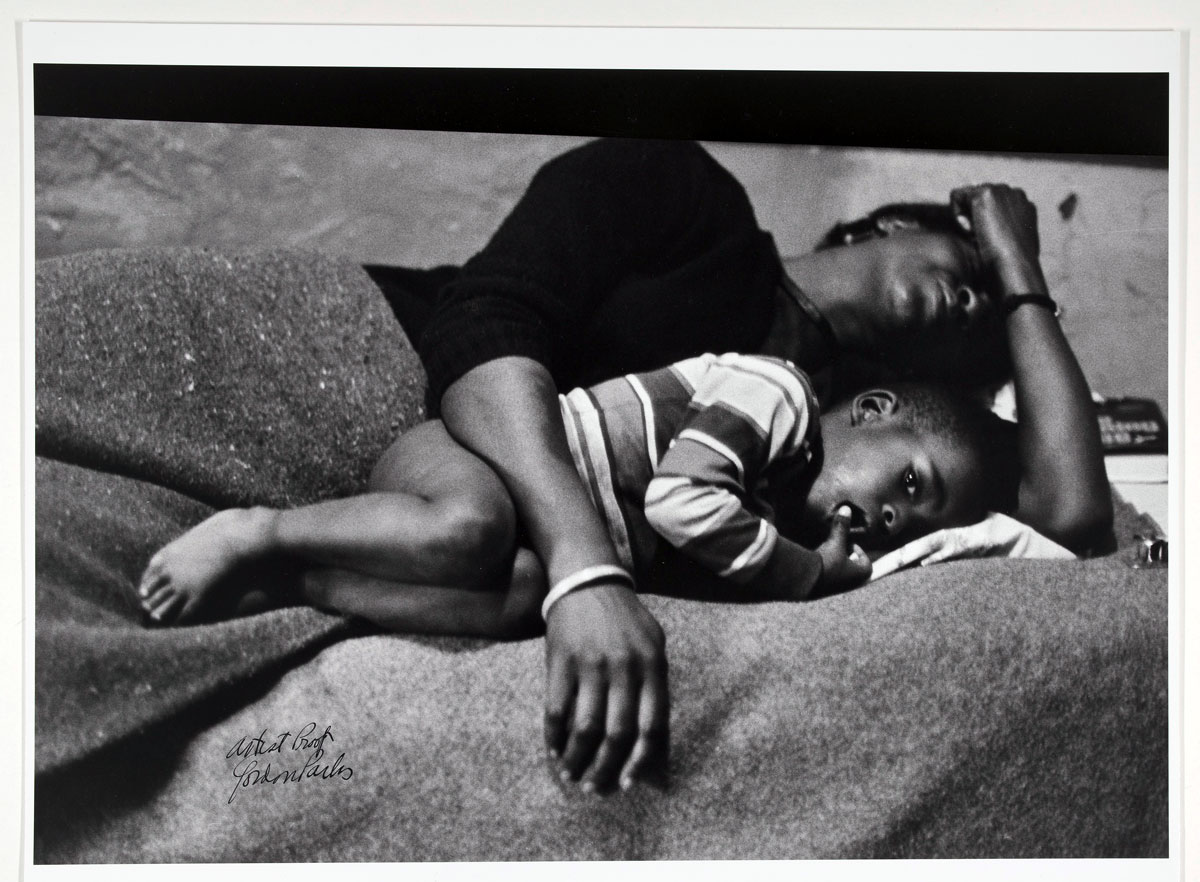
 

Gordon Parks (American, 1912-2006) 'Bessie and Little Richard the Morning After She Scalded Her Husband, Harlem, New York, 1968' 1968


Gordon Parks (American, 1912-2006)
Bessie and Little Richard the Morning After She Scalded Her Husband, Harlem, New York, 1968
1968
Gelatin silver print
© The Gordon Parks Foundation


Jenkins Johnson Gallery
1275 Minnesota Street, #200
San Francisco, CA 94107
Phone: 415.677.0770

Opening hours:
Tuesday – Saturday 11am – 5pm

Jenkins Johnson Gallery website

LIKE ART BLART ON FACEBOOK

Back to top

Free Symposium: ‘Photography as Crime’ at the Centre for Contemporary Photography, Melbourne

Saturday 15th October 2011, 1 – 5pm (with interval)

Presented by Monash University and the Centre for Contemporary Photography


What are the key legal and philosophical issues relating to photography in public places? What pressures are recent changes in the relationship between publicity and privacy putting on the meaning and significance of ‘privacy’, the body and the human face? How are photographers and other artists responding to transformations in urban space brought about by increasingly participatory and automated forms of surveillance?


Chaired by Dr Anne Marsh, Professor of Art Theory in the Faculty of Art & Design at Monash University, with presentations by:
Dr Melissa Miles, Lecturer, Art Theory Program in the Faculty of Art & Design at Monash University
Dr Jessica Whyte, Post-Doctoral Fellow in the School of English, Communication and Performance Studies, Monash University
Professor Mark Davison, Faculty of Law, Monash University
Dr Daniel Palmer, Senior Lecturer, Art Theory Program in the Faculty of Art & Design at Monash University
Dr Martyn Jolly, Head of Photography and Media Arts at the Australian National University School of Art


Symposium program

Welcome: 1.10 – 1.30

Professor Anne Marsh (Chair) Dr Anne Marsh is Professor of Art Theory in the Faculty of Art & Design, Monash University. She is author of LOOK! Contemporary Australian Photography since 1980 (2010), Pat Brassington: This is Not a Photograph (Quintus/University of Tasmania, 2006), The Darkroom: Photography and the Theatre of Desire (Macmillan, 2003) and Body and Self: Performance Art in Australian, 1969-1992 (Oxford University Press, 1993).


Session 1: 1.30 – 3.00

Dr Melissa Miles Photography and its Publics

There has been a recent shift in our perception of photography and privacy. The view that our privacy is under threat has created an atmosphere of paranoia and fuelled demands for law reform in relation to photography in public space. As photographers and privacy advocates battle each other by opposing the right to privacy with the right to free expression, there seems little chance of finding a workable solution. This paper seeks to address this issue by analyzing the links between photography, privacy and the public, and assessing the cultural and political implications of this new climate.

Dr Melissa Miles is a photography historian and theorist based at the Faculty of Art & Design at Monash University. Her interest in the interdisciplinary qualities of photography informs her first book, The Burning Mirror: Photography in an Ambivalent Light (Australian Scholarly Publishing, 2008).


Dr Jessica Whyte Sexting, anxiety and ‘photographic injuries’

Recent ‘sexting’ cases in Australia and the United States have seen girls as young as 14 charged with producing and child-pornography for taking and distributing photographs of themselves. Undoubtedly, the ease of distribution enabled by new technologies creates extra hazards for teens, who may come to regret images that may circulate far further than they had desired. Yet, the other trajectory, which could see teenage displays of sexuality resulting in lengthy jail sentences and teenagers having their names and faces publicly displayed on lists of sex offenders for at least the next decade is hardly an attractive one. This paper questions the assumption that protecting young people’s privacy from themselves justifies laws that both criminalise them and reinforce their status as powerless victims whose sexual experimentation is too dangerous for the state to turn a blind eye.

Jessica Whyte is a post-doctoral fellow in the School of English, Communication and Performance Studies, Monash University. She has published widely on contemporary continental philosophy (Agamben, Foucault, Rancière), sovereignty and biopolitics, critical legal theory and critiques of human rights.


Professor Mark Davison Law of Photography: What is it and how is it decided?

Taking photographs in public places and subsequently distributing those photographs is subject to a multitude of laws that may impose criminal or civil law consequences on photographers. There is also considerable uncertainty about the nature and operation of some of those laws. For example, what constitutes offensive conduct in the context of, say, taking photographs on a beach is difficult to define. Similarly, care needs to be taken in defining what is a public place and what is a private place in a legal sense because those definitions will vary according to the context in which the distinction is being made. One consequence of this uncertainty isthat incorrect statements of the law come to be acted upon with a further consequence that incorrect perceptions of the law actually become the law in a practical and de facto manner. This presentation will be designed to give an overview of some of the key legal issues relating to photography in public places.

Mark Davison is a Professor in the Faculty of Law at Monash University. His main areas of expertise are intellectual property and contract law. He is a member of the Commonwealth government’s Expert Advisory Group on plain packaging of tobacco products and a member of the Intellectual Property Committee of the Law Council of Australia.

Break: 3 – 3.30


Session 2: 3.30 – 4.30

Dr Daniel Palmer Social Space in the Age of Networked Photography

In the era of ubiquitous networked photography, cameras have colonised social space in new ways. One result, according to Michael T. Jones, Google’s Chief Technology Advocate, is that “the earth itself is like a table of contents for direct exploration of all the photographs that have ever been shared by people around the world, automatically.” This paper explores some of the unexpected consequences of GPS-enabled camera phones and Google Street View for our understanding of the dynamic relationship between photography, surveillance and social space. As urban space is transformed by increasingly participatory and automated forms of visual mediation, how are photographers and other artists responding?

Dr Daniel Palmer is a Senior Lecturer in the Art Theory Program in the Faculty of Art & Design at Monash University. His publications include the books Twelve Australian Photo Artists (2009), co- authored with Blair French, and the edited volume Photogenic: Essays/ Photography/ CCP 2000 – 2004 (2005). He is currently writing a book on digital photography as part of the ARC Discovery Project Genealogies of Digital Light.


Dr Martyn Jolly Facial Velocities

What pressures are recent changes in the relationship between publicity and privacy, as well as advances in technological surveillance, image capture and dissemination, putting on the meaning and significance of the human face? After a brief historical excursion to Kaspar Lavater, Charles Darwin and Lillie Langtry, I will focus an a range of examples drawn from: the current ‘war’ between celebrity and paparazzi; tabloid scandals about the nocturnal indiscretions of footballers; social media; developments in the use of facial recognition algorithms; plastic surgery; and recent developments in movie CGI motion capture techniques. Using these examples I will argue that there has been a subtle but profound shift in the concept of the face from the ‘private’ in the sense of the ‘discreet’, to the ‘private’ in the sense of the ‘owned’. And further, that faces now do not so much have expressive features, as transactional velocities.

Dr Martyn Jolly is Head of Photography and Media Arts at the ANU School of Art. He is an artist and a writer. This year he was a Scholar and Artist in Residence at the National Film and Sound Archive, working in their magic lantern slide collection, and a Harold White Fellow at the National Library of Australia, working on Australiana picture books of the 1960s.


Closing Panel 4.30 – 5pm


Centre for Contemporary Photography
Level 2, Perry St Building
Collingwood Yards, Collingwood
Victoria 3066

Opening hours:
Wednesday – Saturday 11am – 5pm

Centre for Contemporary Photography website

LIKE ART BLART ON FACEBOOK

Back to top