Exhibition: ‘Zbigniew DÅ‚ubak – Heir of the Avant-Garde’ at Fondation Henri Cartier-Bresson, Paris

Exhibition dates: 17th January – 29th April, 2018

Curator: The exhibition is curated by Karolina Ziebinska-Lewandowska, curator at the Centre Pompidou.


Zbigniew Dłubak (Polish, 1921-2005) 'Untitled' c. 1946 from the exhibition 'Zbigniew Dłubak – Heir of the Avant-Garde' at Fondation Henri Cartier-Bresson, Paris, Jan - April, 2018


Zbigniew Dłubak (Polish, 1921-2005)
Untitled
c. 1946
© Armelle Dłubak/Archeology of Photography Foundation, Warsaw


Photography, the object, conceptual art, reality and the empty sign.

An interesting artist who warrants further investigation. The text and images provide an introduction, but I really need further evidence before I can make informed comment.

Dr Marcus Bunyan


Many thankx to the Fondation HCB for allowing me to publish the photographs in the posting. Please click on the photographs for a larger version of the image.


“I’m not interested in stylistic effects, whether they’re derived from modern art or conceptualism. I use shapes, ideas, colours, words, photographs and actions as my materials in a way that best suits my art, to create an empty sign in the context of the reality I live in.”


“The social role of art consists in introducing the factor of negation into the human consciousness, it challenges the rigidity of systems and conventions in the rendering of reality. Art itself is evolution, it’s the introduction of all new means of expression.”


“Photography is in phase with the rhythm of life. It impatiently looks for new images. The more effigies it accumulates, the greater its appetite; it’s increasingly obsessive. Not only does it record but, subject to the imagination, it also creates new phenomena. It constantly takes us on new adventures, it shakes us up, and does not allow us to rest.”


Zbigniew Dłubak


Zbigniew Dłubak (Polish, 1921-2005) 'I recall the solitude of the straits' 1948 from the exhibition 'Zbigniew Dłubak – Heir of the Avant-Garde' at Fondation Henri Cartier-Bresson, Paris, Jan - April, 2018


Zbigniew Dłubak (Polish, 1921-2005)
I recall the solitude of the straits
1948
Illustration for Pablo Neruda’s poem “Le coeur magellanique”
© Armelle Dłubak / Archeology of Photography Foundation, Warsaw


Zbigniew Dłubak (Polish, 1921-2005) 'The streets are for the sun and not for people' 1948


Zbigniew Dłubak (Polish, 1921-2005)
The streets are for the sun and not for people
1948
© Armelle Dłubak / Archeology of Photography Foundation, Warsaw


In the post-war period, Zbigniew Dłubak (1921-2005) was one of the driving forces behind the profound changes in the Polish artistic scene. A great experimenter of photographic forms, he was also a painter, art theoretician, teacher and editor of the Fotografia magazine for twenty years, introducing into this publication a robust photographic critique and interdisciplinary approach to the medium.

Although Dłubak was primarily known as a photographer, he initially aspired to become a painter, tirelessly searching for materials for drawing during the war. Very active in these two traditionally separate disciplines, he greatly influenced the decompartmentalisation of artistic forms. He also defended the right of photography to exist as a completely separate discipline. His first photographic experiments reveal a diversity of inspirations characteristic of pre-war practices, stemming from constructivist and surrealist traditions.

This exhibition proposes to highlight the similarities and complementary focuses on two decisive periods in the artist’s life: the year 1948, which marks the beginning of his career and places it within the avant-garde movement, and the 1970s, which symbolise his ambiguous position regarding conceptual art. The selection presents iconic works and hitherto unseen photographs.

Curated by Karolina Ziebinska-Lewandowska, a specialist in DÅ‚ubak’s work, the exhibition is accompanied by a book published by Éditions Xavier Barral under the direction of Karolina Ziebinska-Lewandowska. The exhibition is being organised in collaboration with the Fundacja Archaeologia Fotografii in Warsaw, with the support of the Adam Mickiewicz Institute and the Polish Institute in Paris.

Text from the Fondation Henri Cartier-Bresson


Zbigniew Dłubak (Polish, 1921-2005) 'Untitled' c. 1950


Zbigniew Dłubak (Polish, 1921-2005)
Untitled
c. 1950
© Armelle Dłubak


Zbigniew Dłubak (Polish, 1921-2005) Sketch for the series 'Ammonites' 1959-1961


Zbigniew Dłubak (Polish, 1921-2005)
Sketch for the series Ammonites
1959-1961
© Armelle Dłubak


The Zbigniew Dłubak – Héritier des avant-gardes exhibition is being held at the Fondation Henri Cartier-Bresson between January 17 and April 29, 2018. In the post-war period, Zbigniew Dłubak (1921-2005) was one of the driving forces behind the profound changes in the Polish artistic scene. A great experimenter of photographic forms, he was also a painter, art theoretician, teacher and editor of the Fotografia magazine for twenty years, introducing into this publication a robust photographic critique and interdisciplinary approach to the medium. He enjoyed a certain notoriety in Poland during his lifetime. Several monographic exhibitions were dedicated to him and some of his major works are part of Polish public collections.

Although Dłubak was primarily known as a photographer, he initially aspired to become a painter, tirelessly searching for materials for drawing during the war. Very active in these two traditionally separate disciplines, he greatly influenced the decompartmentalisation of artistic forms. He also defended the right of photography to exist as a completely separate discipline.

His first photographic experiments reveal a diversity of inspirations characteristic of pre-war practices, stemming from constructivist and surrealist traditions. Fascinated by linguistics, Dłubak then moves towards the mechanisms of a systematic approach and then onto the disappearance and fading of signs.

The work carried out by the Fundacja Archaeologia Fotografii where his archives have been deposited offers a new insight into his oeuvre and a new way of looking at it. Continuing in this vein of offering a different reading, this exhibition proposes to highlight the similarities and complementary aspects of photography and painting in his work. It focuses on two decisive periods in the artist’s life: the year 1948, which marks the beginning of his career and places it within the avant-garde movement, and the 1970s, which symbolise his ambiguous position regarding conceptual art. The selection presents iconic works and hitherto unseen photographs.

Press release from the Fondation Henri Cartier-Bresson


Zbigniew Dłubak (Polish, 1921-2005) From the series 'Existences' 1959-1966


Zbigniew Dłubak (Polish, 1921-2005)
From the series Existences
1959-1966
© Armelle Dłubak / Archeology of Photography Foundation, Warsaw


Zbigniew Dłubak (Polish, 1921-2005) From the series 'Existences' 1959-1966


Zbigniew Dłubak (Polish, 1921-2005)
From the series Existences
1959-1966
© Armelle Dłubak / Archeology of Photography Foundation, Warsaw


Zbigniew Dłubak (Polish, 1921-2005) Study for 'Iconosphere I' 1967


Zbigniew Dłubak (Polish, 1921-2005)
Study for Iconosphere I
1967
© Armelle Dłubak / Archeology of Photography Foundation, Warsaw


Extracts from the book

Éditions Xavier Barral

The first photographic images created by DÅ‚ubak, who taught himself to paint and draw in the early 1940s, were undoubtedly strictly utilitarian: they documented the activities of the clandestine army he joined and then, when he was deported to the Mauthausen concentration camp after his participation in the Warsaw uprising in 1944, they were dictated by the tasks the Nazis assigned to him in the camp’s photography studio (touchups and perhaps portraits or reproductions). The images he shows in Krakow1 were however preceded by a few more artistic attempts, created in 1947 and early 1948, which show the desire to understand from within two significant trends of what photographic modernism might have constituted in the eyes of a Polish novice. On the one hand, DÅ‚ubak creates images of trees using a low-angle shot or fragments of ground using a sharp high-angle shot, stemming from a sort of Pictorialism marked by a superficial link with the Germanic New Vision, in keeping with Jan BuÅ‚hak, then considered the father of Polish modern photography. On the other hand, he arranges compositions of insignificant little objects (like matches, springs, buttons, screws and so on) on tables, which he photographs like abstract not-to-scale landscapes, as practised by constructivists and notably Florence Henri (some of whose images he might have known, even though he never seems to have mentioned them). However, nothing in these two series really prepares for what can be seen in the photographs shown in 1948. […]

DÅ‚ubak’s key originality comes from the fact that he focuses less on producing the supernatural and more on finding it, by blurring the too-certain habits of ordinary vision but without the factual origin of his image obscuring its poetic efficacy. […]

So, for DÅ‚ubak, it’s not just about reconciling previously separate artistic traditions, but dismantling the traditional opposition between abstraction and figuration. The use of the extreme close-up (on the scale of macro photography) and technical manipulations (solarisation or pseudo-solarisation, presentation of the negative as a positive) must not be seen as a distancing from external reality but, on the contrary, as a way of penetrating its core; less like a hidden thing than a spiritual vision, and less like burying than a revelation of what is latent within, giving us a subtler understanding of it. As DÅ‚ubak writes in 1948 in an article on method called “Reflections on photography”: “Photographic realism is a different kind of realism and, fittingly, the faithfulness and attachment to the object, which has the nature of a raw material here, prohibits any artifice, because it is immediately unmasked. Such realism requires one to rely essentially on nature avoiding any narration.”2

Éric de Chassey
Extracts from “1948-1949: un réalisme de l’extrême proximité”


1/ At the “1st Exhibition of Modern Art” (I Wystawa Sztuki Nowoczesnej) opened on 19 December 1948. This exhibition included artists from across the country, often young (the vast majority were under thirty): painters, sculptors but also, and this was a huge novelty in Poland, photographers. Zbigniew DÅ‚ubak was even one of the key organisers of the event

2/ Zbigniew DÅ‚ubak, “RozmyÅ›lania o fotografii II,” Åšwiat fotografii, no 11, January-February 1949, reproduced in Lech Lechowicz and Jadwiga Janik (dir.), cat. exp. DÅ‚ubak, fotografie photographs, 1947-1950, Lodz, Muzeum Sztuki, 1995, p. 47


Two events occurred in 1970 which are traditionally considered by Polish historiography as key manifestations of conceptual art: the WrocÅ‚aw Symposium ’70 and the Åšwidwin-Osieki ’70 (Osieki open air events). It would of course be illusory to bring the appearance of conceptual art in Poland down to this one year, since it was a much more complex process, as demonstrated by Piotr Piotrowski and Luiza Nader in particular. However, referring to these events helps explain the work and engagement of Zbigniew DÅ‚ubak during these years. Organised thanks to a close collaboration between local authorities and artistic circles, they brought together artists and art critics, representing various experimental trends in Polish art. The aim of the WrocÅ‚aw Symposium was to attract an audience not accustomed to experimental art. The primary idea, justifying the participation of local organisations, was to bring contemporary art into the public space, particularly social housing areas, squares and undefined suburban sites. […]

Finally, for DÅ‚ubak, 1970 marks the beginning of a series to which he is to dedicate the next eight years: Systems – Gesticulations. This series which, at first glance perfectly conforms to the codes of conceptual art, in reality indicates DÅ‚ubak’s break from conceptualism. Although he saw theoretical activity as an integral part of his artistic practice, he was convinced of the need to preserve a role of mediation in the artistic object. So why did Zbigniew DÅ‚ubak, one of the ardent protagonists of the development of conceptualism in Poland, finally break away from the movement?

His writings suggest some answers to this question. In 1977, when the movement was still very much alive, he wrote: “In aspiring to total purification, conceptual art has created a list of ‘don’ts’ regarding methods of recording and transmission. […] But conceptualism immediately developed a morphology of its own means [of expression] and became frozen.”1 In an (undated) manuscript, he added: “The causes of the failure of conceptualism: an erroneous interpretation of art (false models of ancient art); an under-estimation of the fight against aestheticism in the first half of the 20th century; too much attention paid to ways of recording ideas; unjustified faith in the existence of the idea outside its recording; the belief in the advent of a new era of art through the choice of another material for realising ideas.”2 He too relied on this new morphology but tried nevertheless to preserve his autonomy. He didn’t believe in the annihilation of the artistic object, considering the work of art as the result of an encounter. The object started the social dialogue.

Karolina Ziebinska-Lewandowska
Extracts from “1970: l’art du concept (non) assimilé”


1/ Uwagi o sztuce i fotografii (Comments about art and photography), 1977, Fotografia, no 8, 1969

2/ Untitled text, reproduced in Teoria sztuki Zbigniewa Dłubaka (Theory of art of Zbigniew Dłubak), Magdalena Ziółkowska (dir.), Warsaw, Fundacja Archeologia Fotografii, 2013, p. 145


Zbigniew Dłubak (Polish, 1921-2005) 'Untitled' c. 1970


Zbigniew Dłubak (Polish, 1921-2005)
Untitled
c. 1970
© Armelle Dłubak / Archeology of Photography Foundation, Warsaw


Zbigniew Dłubak (Polish, 1921-2005) 'Tautologies' 1971


Zbigniew Dłubak (Polish, 1921-2005)
Tautologies
1971
© Armelle Dłubak / Archeology of Photography Foundation, Warsaw


Zbigniew Dłubak (Polish, 1921-2005) 'Gesticulations' 1970-1978


Zbigniew Dłubak (Polish, 1921-2005)
Gesticulations
1970-1978
© Armelle Dłubak / Archeology of Photography Foundation, Warsaw


Zbigniew Dłubak (Polish, 1921-2005) 'Desymbolisations' 1978


Zbigniew Dłubak (Polish, 1921-2005)
Desymbolisations
1978
© Armelle Dłubak / Archeology of Photography Foundation, Warsaw


Fondation Henri Cartier-Bresson
79 rue des Archives
75003 Paris

Opening hours:
Tuesday – Sunday 11am – 7pm
Closed on Mondays

Fondation Henri Cartier-Bresson website

LIKE ART BLART ON FACEBOOK

Back to top

Exhibition: ‘Moholy-Nagy: Future Present’ at the Solomon R. Guggenheim Museum, New York

Exhibition dates: 27th May – 7th September, 2016

Curator: Karole P. B. Vail, Guggenheim’s exhibition curator, in collaboration with co-organisers Carol S. Eliel (LACMA) and Matthew S. Witkovsky (Art Institute of Chicago)


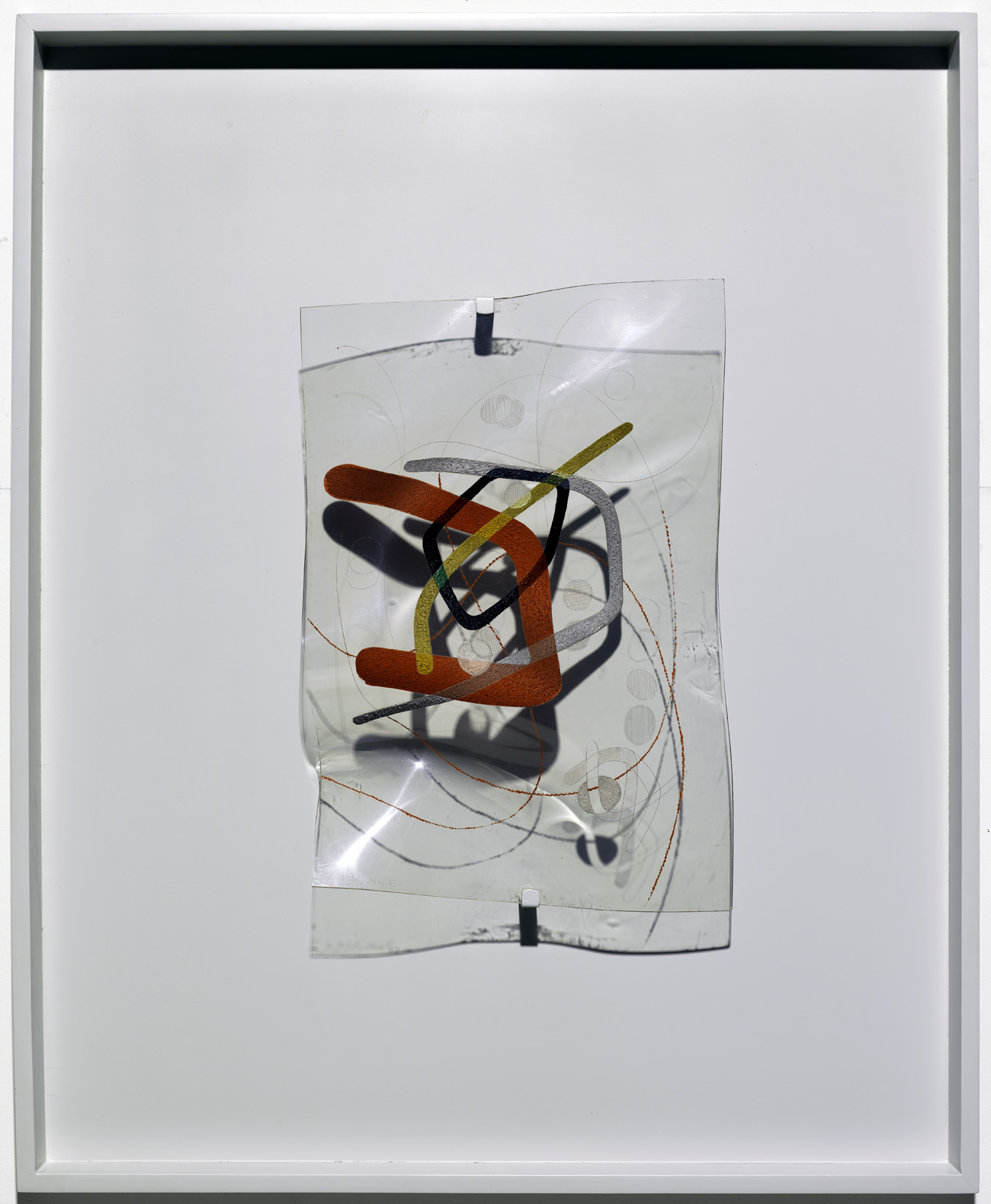
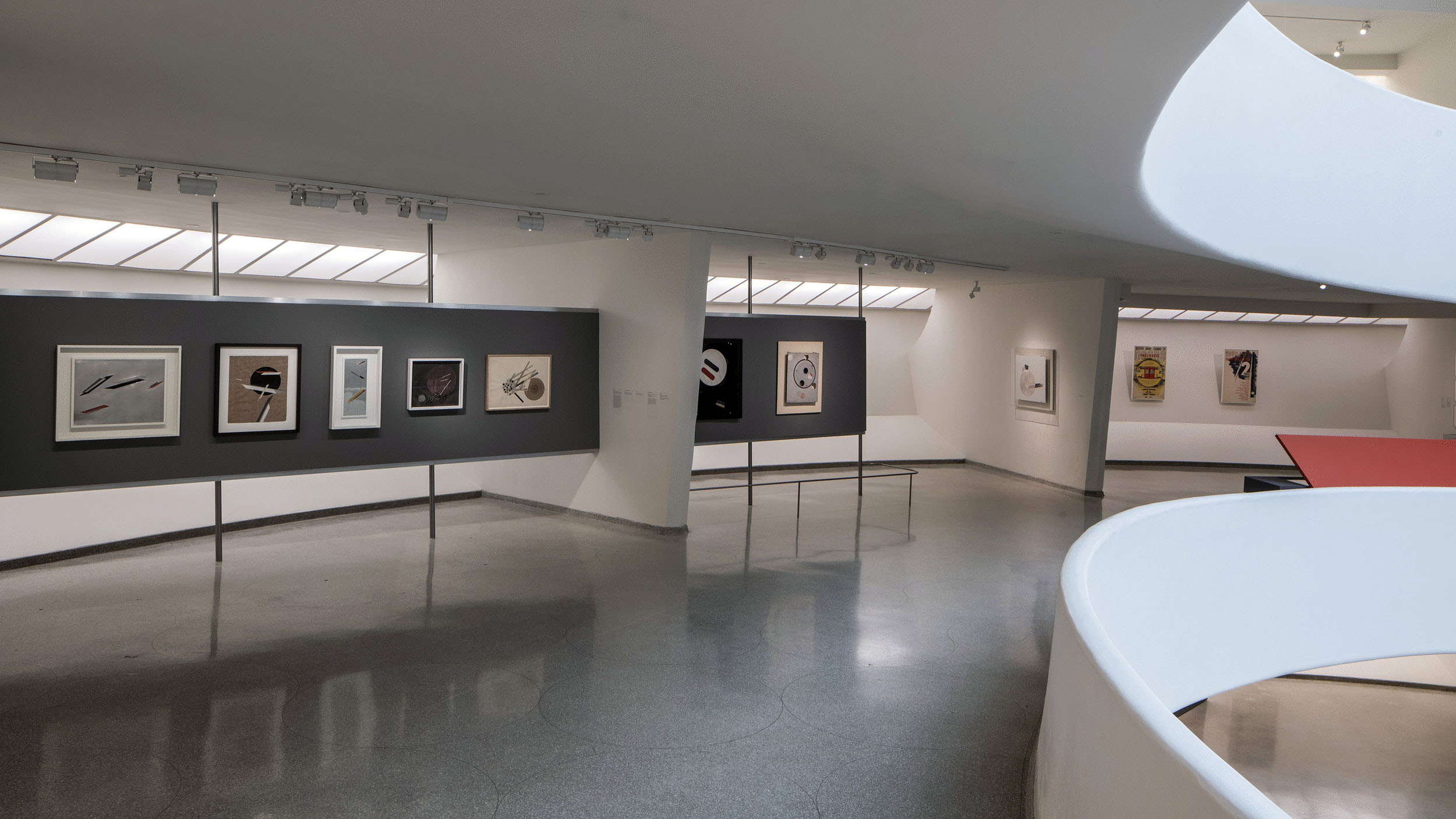
Installation view: 'Moholy-Nagy: Future Present', Solomon R. Guggenheim Museum, New York, May 27–September 7, 2016 showing at left, 'B-10 Space Modulator' (1942)


Installation view of Moholy-Nagy: Future Present at the Solomon R. Guggenheim Museum, New York, May 27 – September 7, 2016 showing at left, B-10 Space Modulator (1942, below)
Photo: David Heald © Solomon R. Guggenheim Foundation


“To understand the production of art at the end of tradition, which in our lifetime means art at the end of modernism, requires, as the postmodern debate has shown, a careful consideration of the idea of history and the notion of ending. Rather than just thinking ending as the arrival of the finality of a fixed chronological moment, it can also be thought as a slow and indecisive process of internal decomposition that leaves in place numerous deposits of us, in us and with us – all with a considerable and complex afterlife. In this context all figuration is prefigured. This is to say that the design element of the production of a work of art, the compositional, now exists prior to the management of form of, and on, the picture plane. Techniques of assemblage, like montage and collage – which not only juxtaposed different aesthetics but also different historical moments, were the precursors of what is now the general condition of production.”

Fry, Tony. “Art Byting the Dust,” in Hayward, Phillip. Culture, Technology and Creativity in the Late Twentieth Century. London: John Libbey and Company, 1990, pp. 169-170.


Many thankx to the Solomon R. Guggenheim Museum for allowing me to publish the photographs in the posting. Please click on the photographs for a larger version of the image.


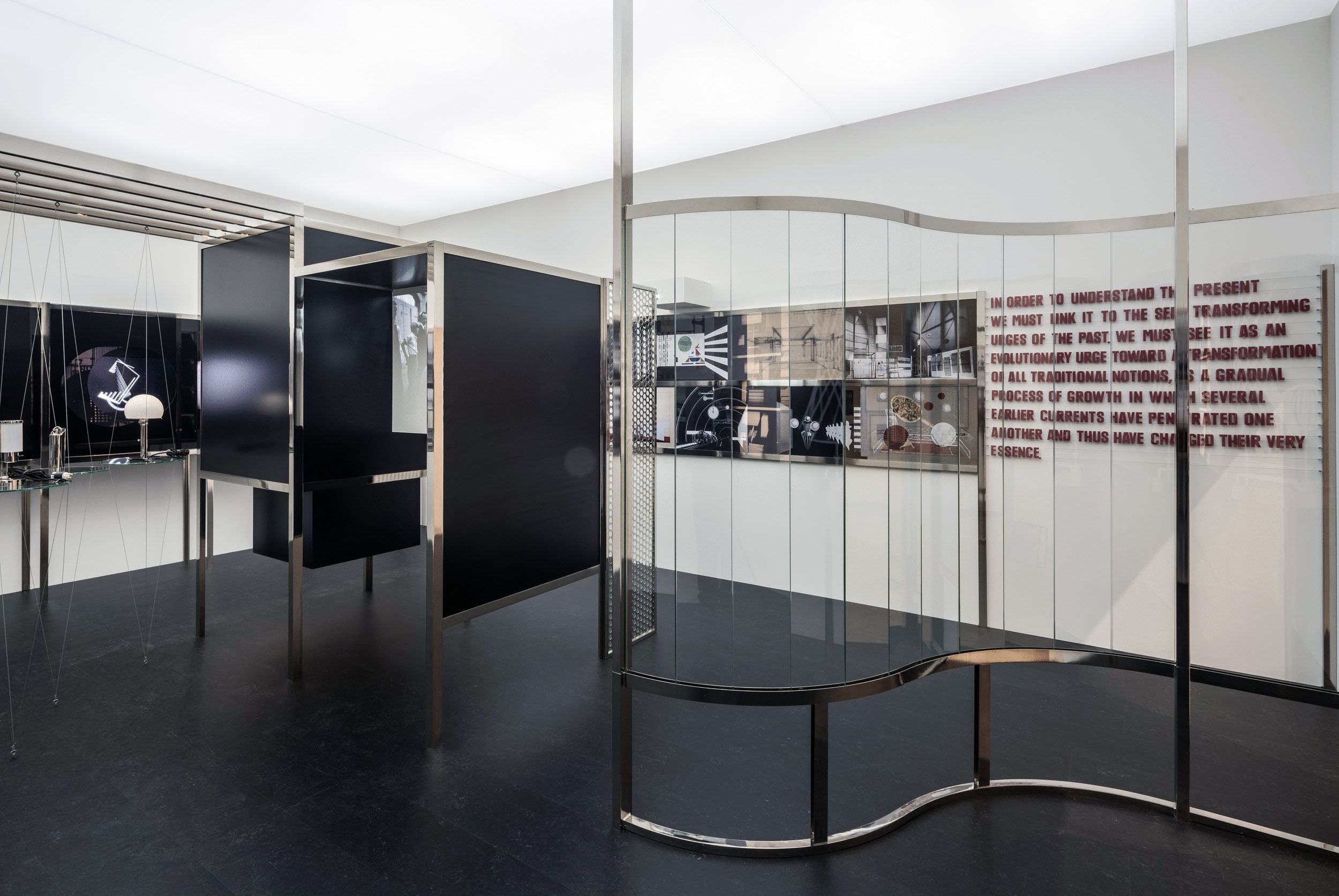
In order to understand the present we must link it to the self transforming urges of the past. We must see it as an evolutionary urge toward a transformation of all traditional notions, as a gradual process of growth in which several earlier currents have penetrated one another and thus have changed their very essence.


László Moholy-Nagy


László Moholy-Nagy (Hungarian, 1895-1946) 'B-10 Space Modulator' 1942


László Moholy-Nagy (Hungarian, 1895-1946)
B-10 Space Modulator
1942
Oil and incised lines on Plexiglas, in original frame
Plexiglas: 42.9 × 29.2cm
Frame: 82.9 × 67.6cm
Solomon R. Guggenheim Museum, New York, Solomon R. Guggenheim Founding Collection
© 2016 Hattula Moholy-Nagy/VG Bild-Kunst, Bonn/Artists Rights Society (ARS), New York


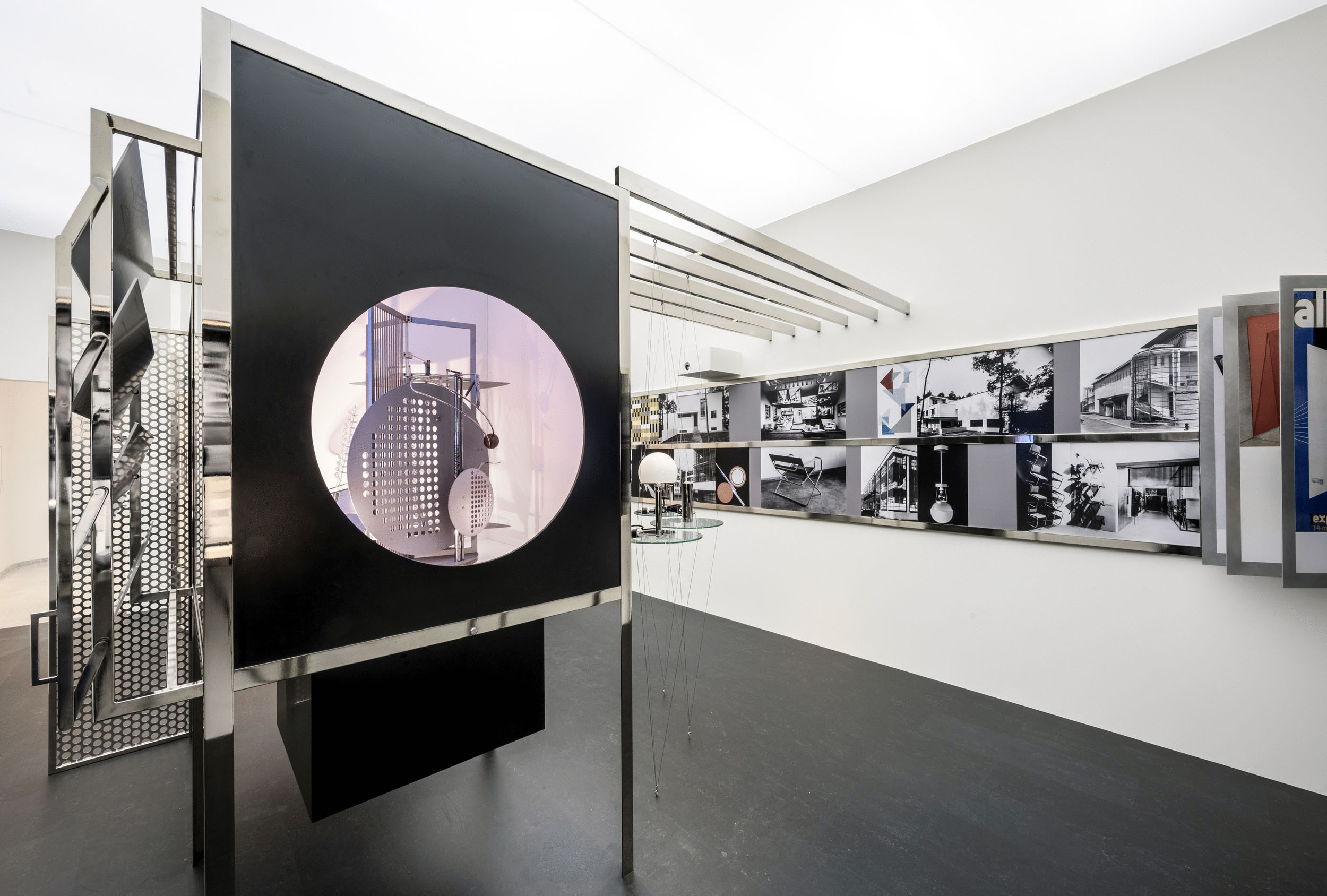
László Moholy-Nagy. 'Room of the Present (Raum der Gegenwart)' constructed in 2009 from plans and other documentation dated 1930

László Moholy-Nagy. 'Room of the Present (Raum der Gegenwart)' constructed in 2009 from plans and other documentation dated 1930

László Moholy-Nagy. 'Room of the Present (Raum der Gegenwart)' constructed in 2009 from plans and other documentation dated 1930


László Moholy-Nagy (Hungarian, 1895-1946)
Room of the Present (Raum der Gegenwart)
Constructed in 2009 from plans and other documentation dated 1930
Van Abbemuseum, Eindhoven
© 2016 Hattula Moholy-Nagy/VG Bild-Kunst, Bonn/Artists Rights Society (ARS), New York
Photo: Peter Cox, courtesy Art Resource, New York


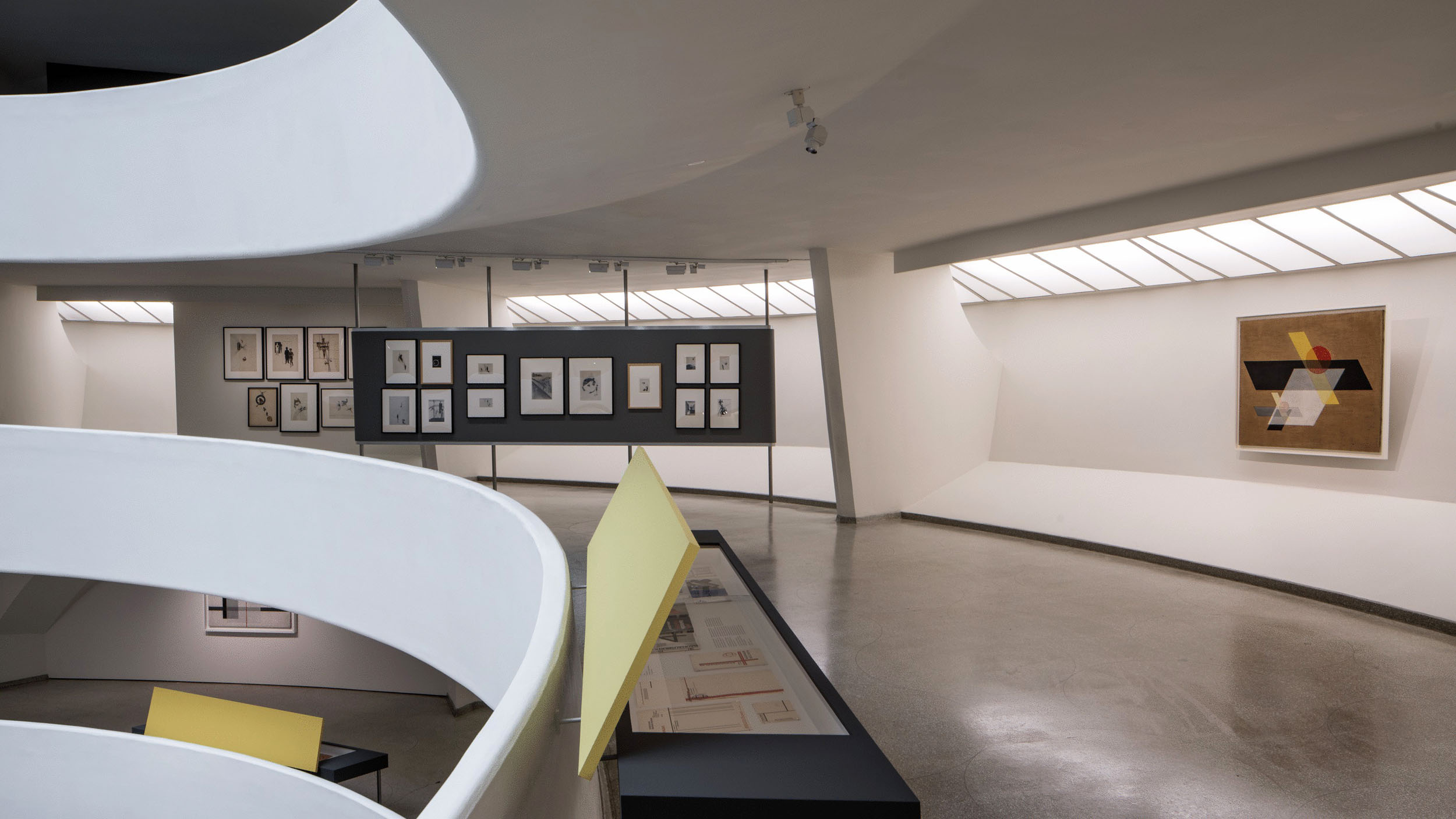
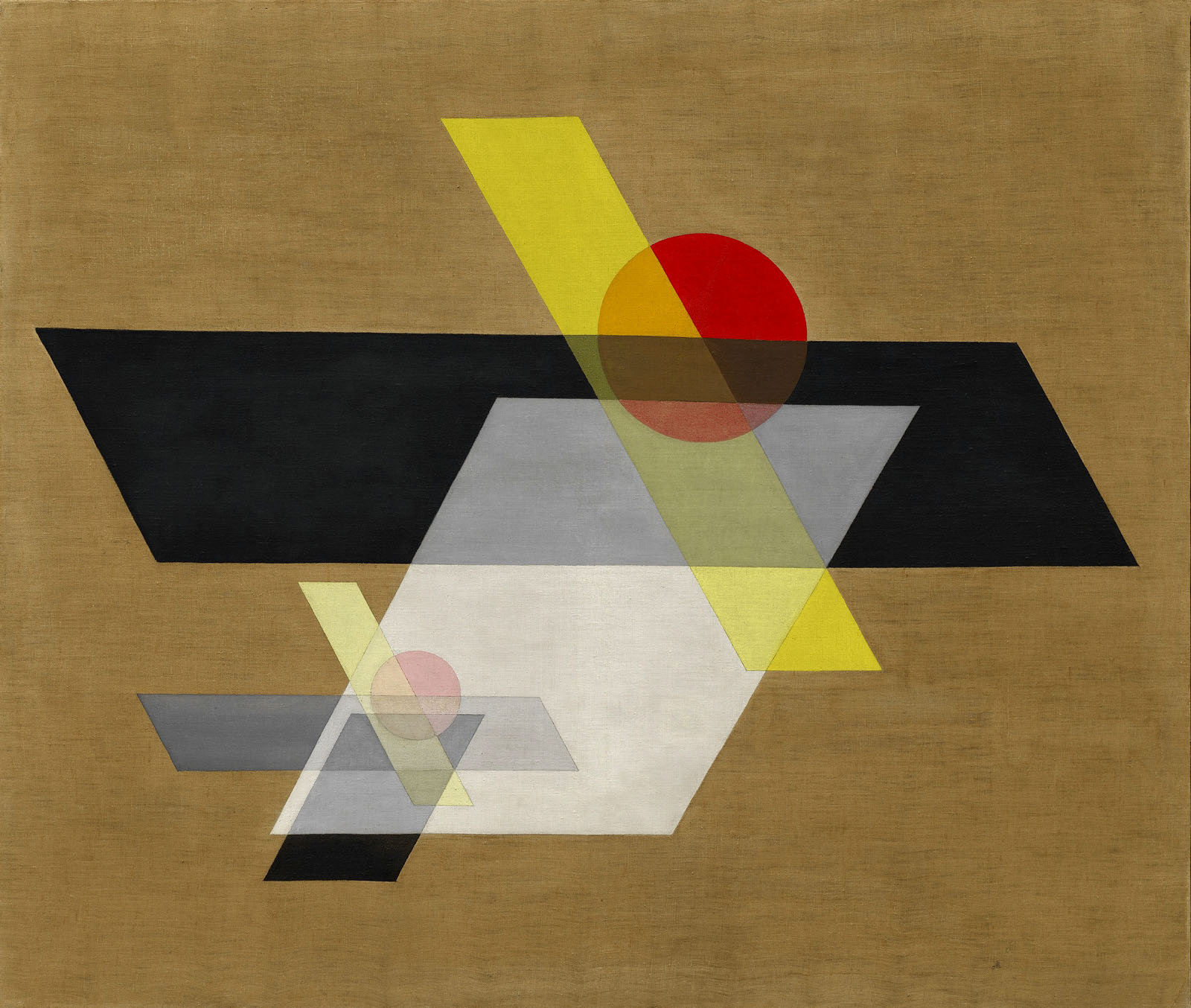
Installation view: 'Moholy-Nagy: Future Present', Solomon R. Guggenheim Museum, New York, May 27–September 7, 2016 showing at right, 'A II (Construction A II)' (1924)


Installation view of Moholy-Nagy: Future Present at the Solomon R. Guggenheim Museum, New York, May 27 – September 7, 2016 showing at right, A II (Construction A II) (1924, below)
Photo: David Heald © Solomon R. Guggenheim Foundation


László Moholy-Nagy (Hungarian, 1895-1946) 'A II' 1924 from the exhibition 'Moholy-Nagy: Future Present' at the Solomon R. Guggenheim Museum, New York, May - Sept, 2025


László Moholy-Nagy (Hungarian, 1895-1946)
A II (Construction A II)
1924
Oil and graphite on canvas
115.8 × 136.5cm
Solomon R. Guggenheim Museum, New York, Solomon R. Guggenheim Founding Collection
© 2016 Hattula Moholy-Nagy/VG Bild-Kunst, Bonn/Artists Rights Society (ARS), New York


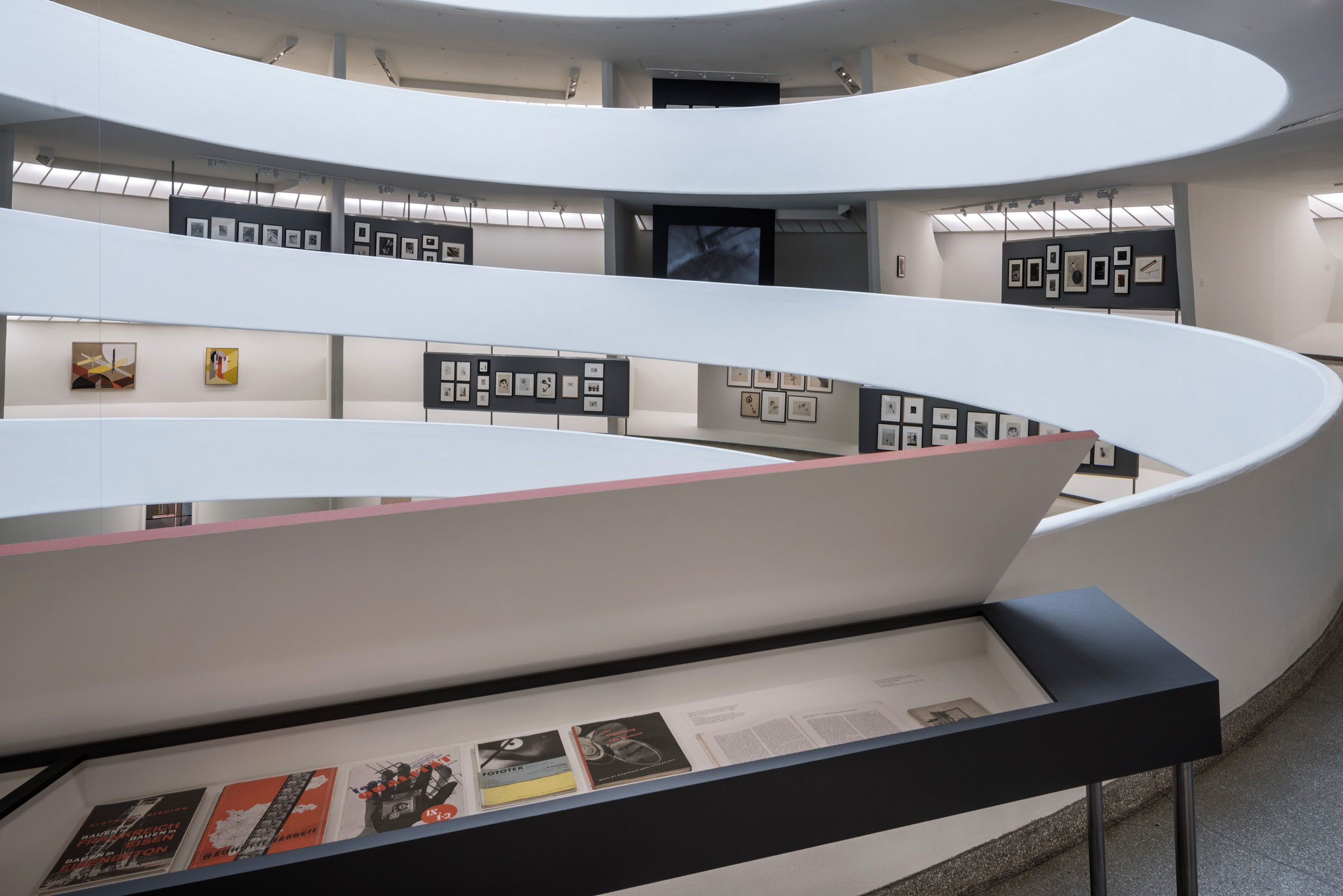
Installation view: 'Moholy-Nagy: Future Present', Solomon R. Guggenheim Museum, New York, May 27–September 7, 2016

Installation view: 'Moholy-Nagy: Future Present', Solomon R. Guggenheim Museum, New York, May 27–September 7, 2016

Installation view: 'Moholy-Nagy: Future Present', Solomon R. Guggenheim Museum, New York, May 27–September 7, 2016

Installation view: 'Moholy-Nagy: Future Present', Solomon R. Guggenheim Museum, New York, May 27–September 7, 2016


Installation views of Moholy-Nagy: Future Present at the Solomon R. Guggenheim Museum, New York, May 27 – September 7, 2016
Photo: David Heald © Solomon R. Guggenheim Foundation


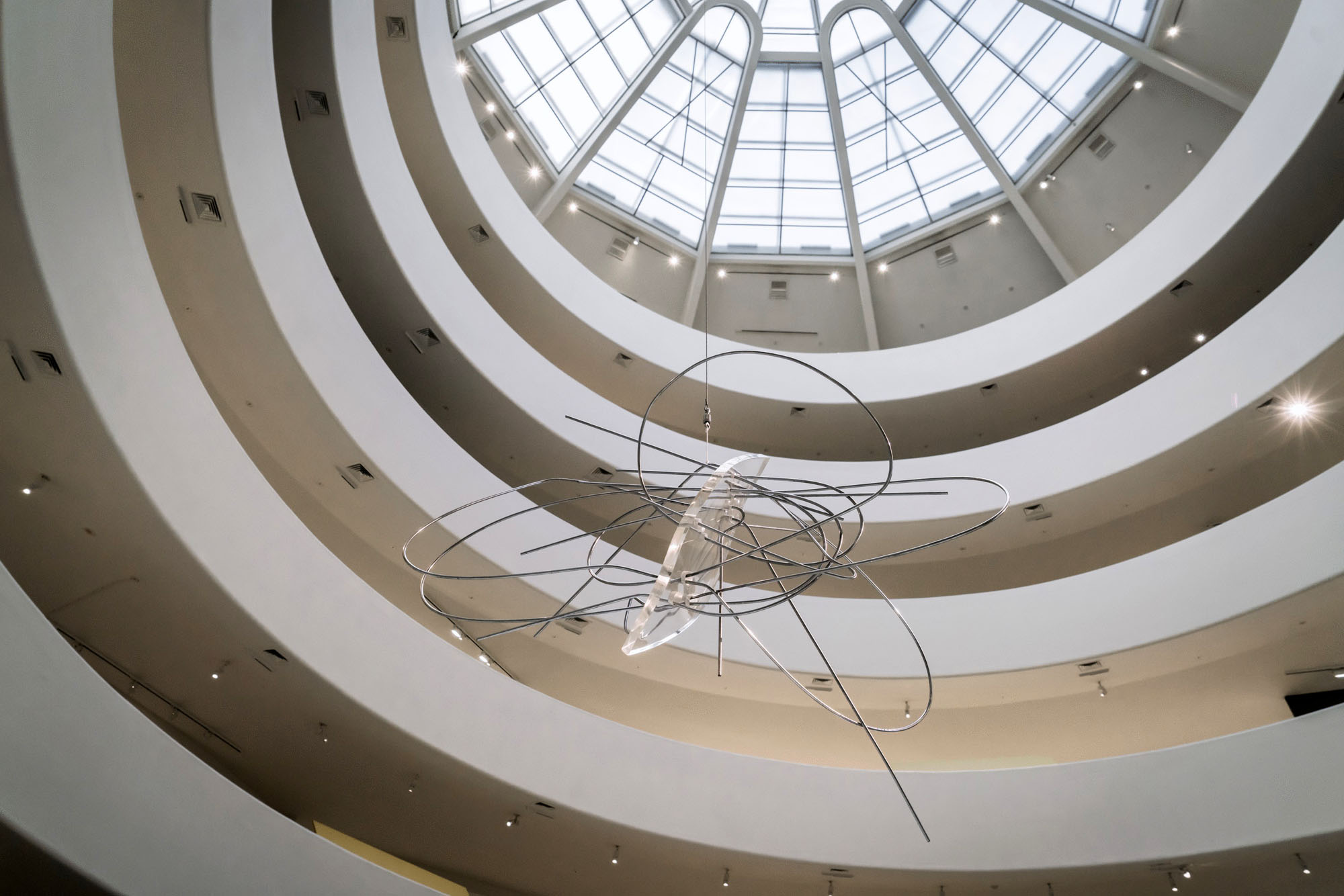
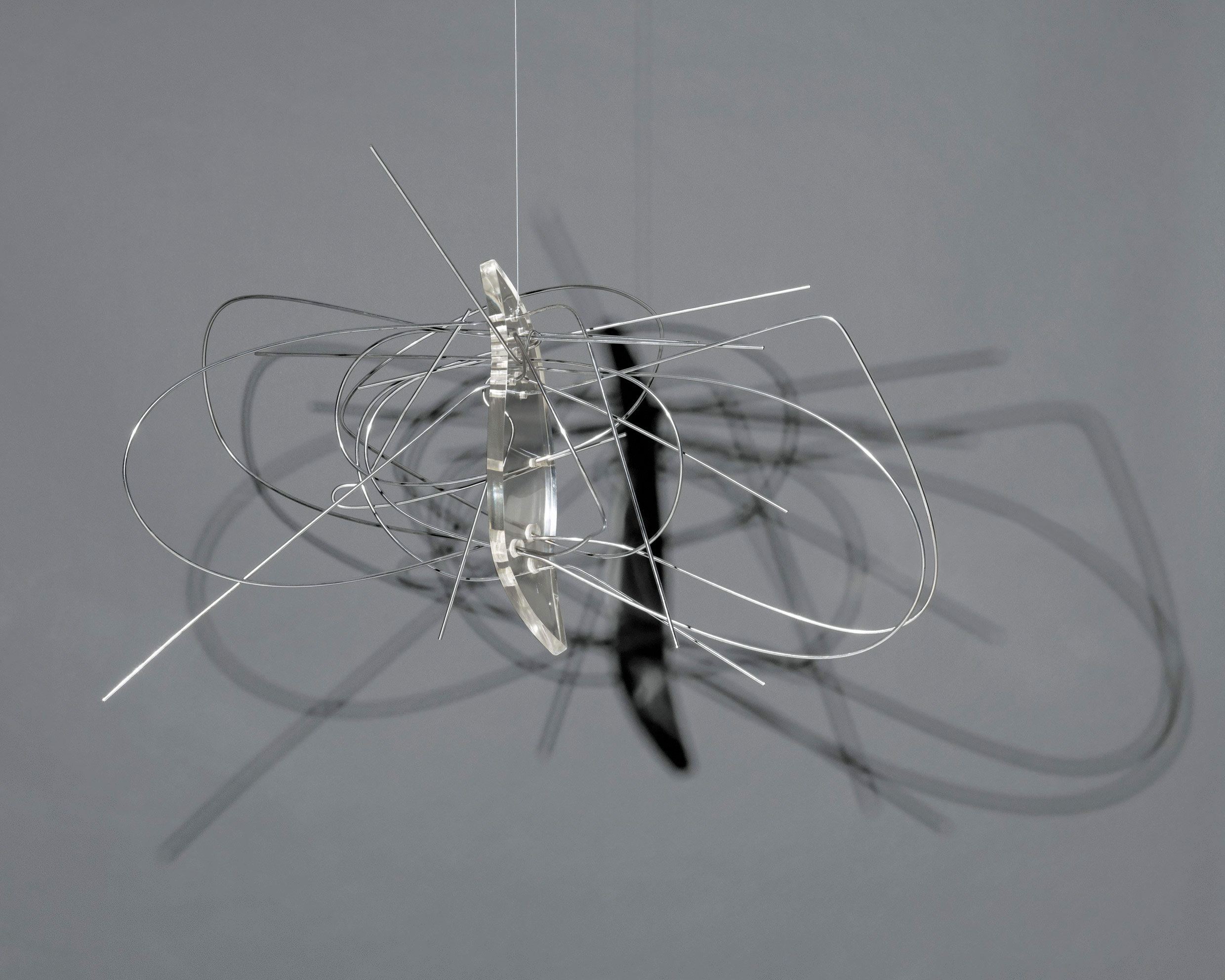
László Moholy-Nagy (Hungarian, 1895-1946) 'Dual Form with Chromium Rods' 1946 (installation view)


László Moholy-Nagy (Hungarian, 1895-1946)
Dual Form with Chromium Rods (installation view)
1946
Plexiglas and chrome-plated brass
92.7 × 121.6 × 55.9cm
Solomon R. Guggenheim Museum, New York, Solomon R. Guggenheim Founding Collection
© 2016 Hattula Moholy-Nagy/VG Bild-Kunst, Bonn/Artists Rights Society (ARS), New York


László Moholy-Nagy (Hungarian, 1895-1946) 'Dual Form with Chromium Rods' 1946 from the exhibition 'Moholy-Nagy: Future Present' at the Solomon R. Guggenheim Museum, New York, May - Sept, 2025


László Moholy-Nagy (Hungarian, 1895-1946)
Dual Form with Chromium Rods
1946
Plexiglas and chrome-plated brass
92.7 × 121.6 × 55.9cm
Solomon R. Guggenheim Museum, New York, Solomon R. Guggenheim Founding Collection
© 2016 Hattula Moholy-Nagy/VG Bild-Kunst, Bonn/Artists Rights Society (ARS), New York
Photo: Kristopher McKay © Solomon R. Guggenheim Foundation, New York


From May 27 to September 7, 2016, the Solomon R. Guggenheim Museum presents the first comprehensive retrospective in the United States in nearly fifty years of the work of pioneering artist and educator László Moholy-Nagy (1895-1946). Organised by the Solomon R. Guggenheim Foundation, the Art Institute of Chicago, and the Los Angeles County Museum of Art, Moholy-Nagy: Future Present examines the full career of the utopian modernist who believed in the potential of art as a vehicle for social transformation, working hand in hand with technology. Despite Moholy-Nagy’s prominence and the visibility of his work during his lifetime, few exhibitions have conveyed the experimental nature of his work, his enthusiasm for industrial materials, and his radical innovations with movement and light. This long overdue presentation, which encompasses his multidisciplinary methodology, brings together more than 300 works drawn from public and private collections across Europe and the United States, some of which have never before been shown publicly in this country. After its debut presentation in New York, the exhibition will travel to the Art Institute of Chicago (October 2, 2016 – January 3, 2017) and the Los Angeles County Museum of Art (February 12 – June 18, 2017).

Moholy-Nagy: Future Present provides an opportunity to examine the full career of this influential Bauhaus teacher, founder of Chicago’s Institute of Design, and versatile artist who paved the way for increasingly interdisciplinary and multimedia work and practice. Among his radical innovations were his experiments with cameraless photographs (which he dubbed “photograms”); use of industrial materials in painting and sculpture that was unconventional for his time; researching with light, transparency, and movement; his work at the forefront of abstraction; and his ability to move fluidly between the fine and applied arts. The exhibition is presented chronologically up the Guggenheim’s rotunda and features collages, drawings, ephemera, films, paintings, photograms, photographs, photomontages, and sculptures. The exception to the sequential order is Room of the Present (Raum der Gegenwart) in the High Gallery, a contemporary fabrication of a space originally conceived by Moholy-Nagy in 1930 but never realised in his lifetime. Constructed by designers Kai-Uwe Hemken and Jakob Gebert, the large-scale work contains photographic reproductions, films, slides, documents, and replicas of architecture, theater, and industrial design, including a 2006 replica of his kinetic Light Prop for an Electric Stage (Lichtrequisit einer elektrischen Bühne, 1930). Room of the Present illustrates the artist’s belief in the power of images and his approach to the various means with which to view them – a highly relevant paradigm in today’s constantly shifting and evolving technological world. Room of the Present will be on display at all three exhibition venues and for the first time in the United States. The Guggenheim installation is designed by Kelly Cullinan, Senior Exhibition Designer, and is inspired by Moholy-Nagy’s texts on space and his concept of a “spatial kaleidoscope” as applied to the experience of walking up the ramps.

Born in 1895 in Austria-Hungary (now southern Hungary), Moholy-Nagy moved to Vienna briefly and then to Berlin in 1920, where he encountered Dada artists, whose distinctive visual attributes of the urban industrial landscape had already entered his work. He was also influenced by the Constructivists, and exhibited work on several occasions at Berlin’s Der Sturm gallery. During this time, Moholy-Nagy experimented with metal constructions, photograms, and enamel paintings. At the same moment, in his ongoing quest to depict light and transparency, he painted abstract canvases composed of floating geometric shapes. While teaching at the Bauhaus in Weimar and then Dessau, he and Walter Gropius pioneered the Bauhaus Books series, which advanced Moholy-Nagy’s belief that arts education and administration went hand in hand with the practice of art making. Around this period, the artist became temporarily disenchanted with the limitations of traditional painting. Photography took on greater importance for him, and he described the photogram as “a bridge leading to new visual creation for which canvas, paint-brush and pigment cannot serve.” He fashioned photomontages by combining photographs (usually found) and newspaper images into absurd, satirical, or fantastical narratives. When he moved back to Berlin in 1928, he enjoyed success as a commercial artist, exhibition and stage designer, and typographer, examples of which will be on display in Moholy-Nagy: Future Present. Adolf Hitler’s rise to power made life increasingly difficult for the avant-garde in Germany; thus, in 1934 Moholy-Nagy moved with his family to the Netherlands and then to London. Once he moved to Chicago in 1937, he never returned to Europe.

Moholy-Nagy immigrated to Chicago to become founding director of the New Bauhaus, known today as the Institute of Design at the Illinois Institute of Technology. He also made some of his most original and experimental work during this time, pursuing his longtime fascination with light, shadow, transparency, and motion. He continued to make photograms, created his Space Modulators (hybrids of painting and sculpture made from Plexiglas), and pioneered 35 mm colour slide photography, shown as projections in the exhibition. He gave his full attention to American exhibition venues before his untimely death of leukaemia in 1946, showing nearly three dozen times across the United States – including in four solo shows.

Moholy-Nagy was a central figure in the history of the Guggenheim Museum. His work was included in the museum’s founding collection, and he held a special place at the Museum of Non-Objective Painting, the forerunner of the Guggenheim Museum. He was among the first artists director Hilla Rebay exhibited and collected in depth, and the museum presented a memorial exhibition shortly after his death. Moholy-Nagy: Future Present highlights the artist’s interdisciplinary and investigative approach, migrating from the school to the museum or gallery space, consistently pushing toward the Gesamtwerk, the total work, which he sought to achieve throughout his lifetime.

Press release from the Solomon R. Guggenheim Museum


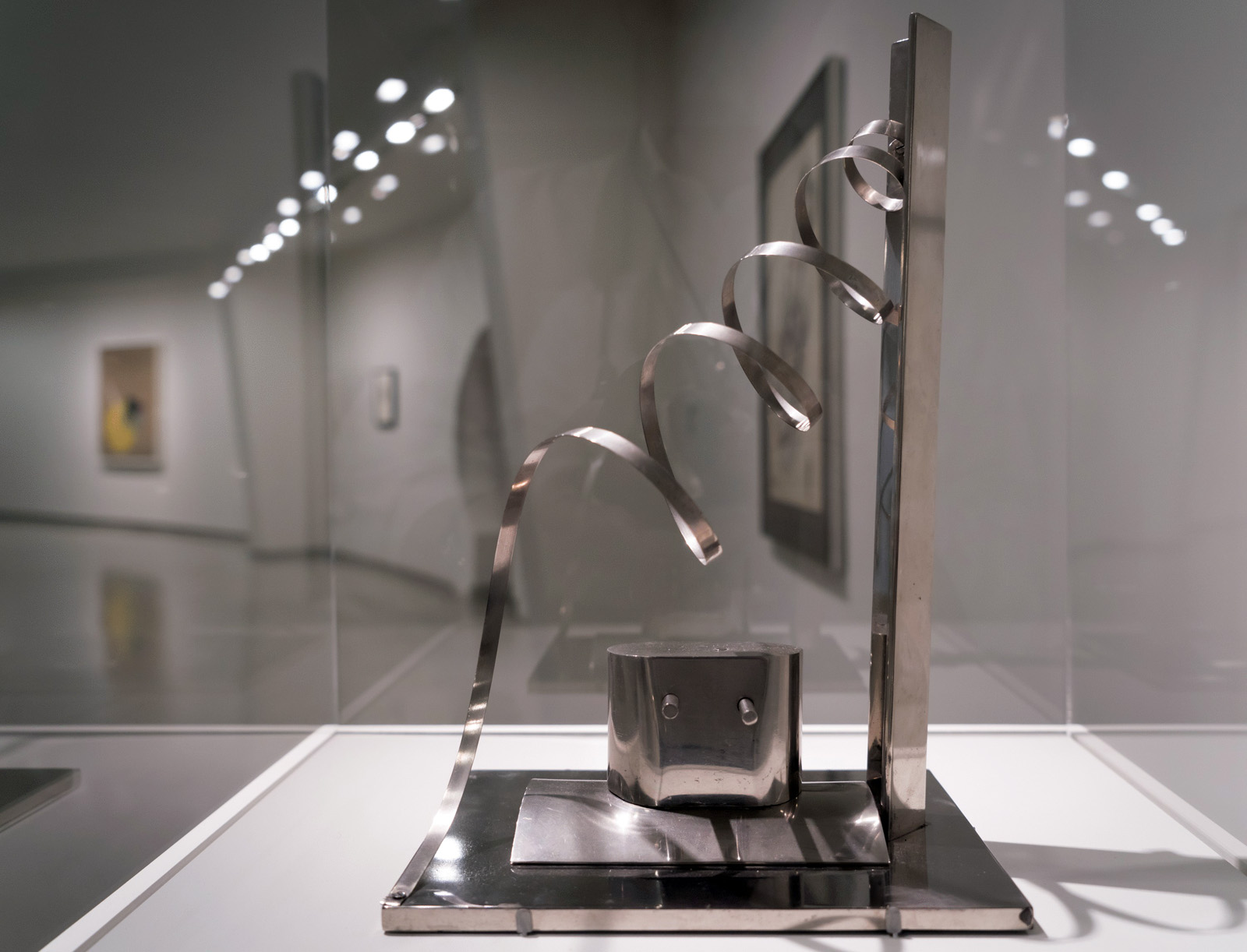
László Moholy-Nagy (Hungarian, 1895-1946) 'Nickel Sculpture with Spiral' 1921 (installation photograph)


László Moholy-Nagy (Hungarian, 1895-1946)
Nickel Sculpture with Spiral (installation view)
1921
Nickel-plated iron, welded
35.9 x 17.5 x 23.8cm
The Museum of Modern Art, New York, Gift of Mrs. Sibyl Moholy-Nagy 1956
© 2016 Hattula Moholy-Nagy/VG Bild-Kunst, Bonn/Artists Rights Society (ARS), New York


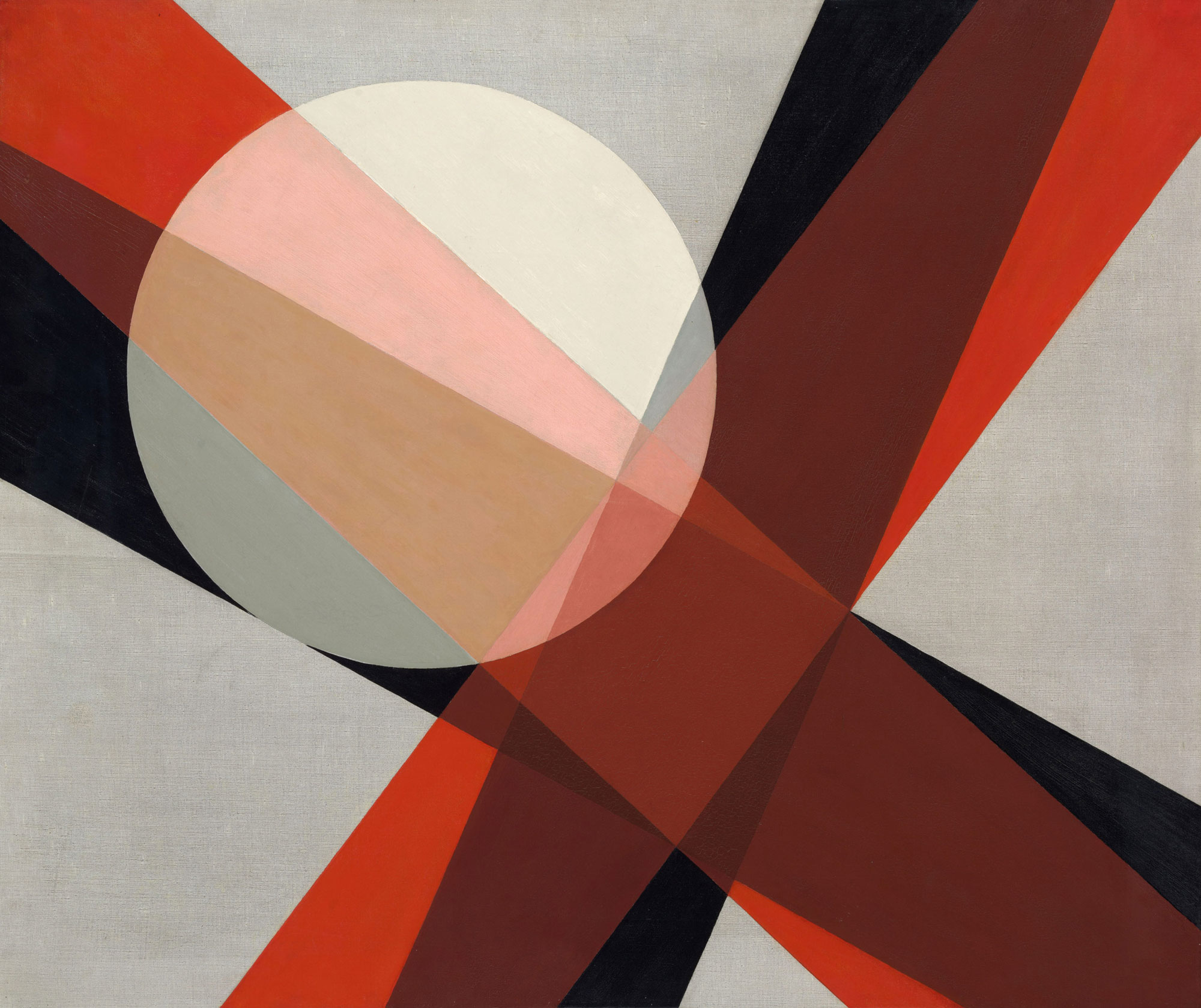
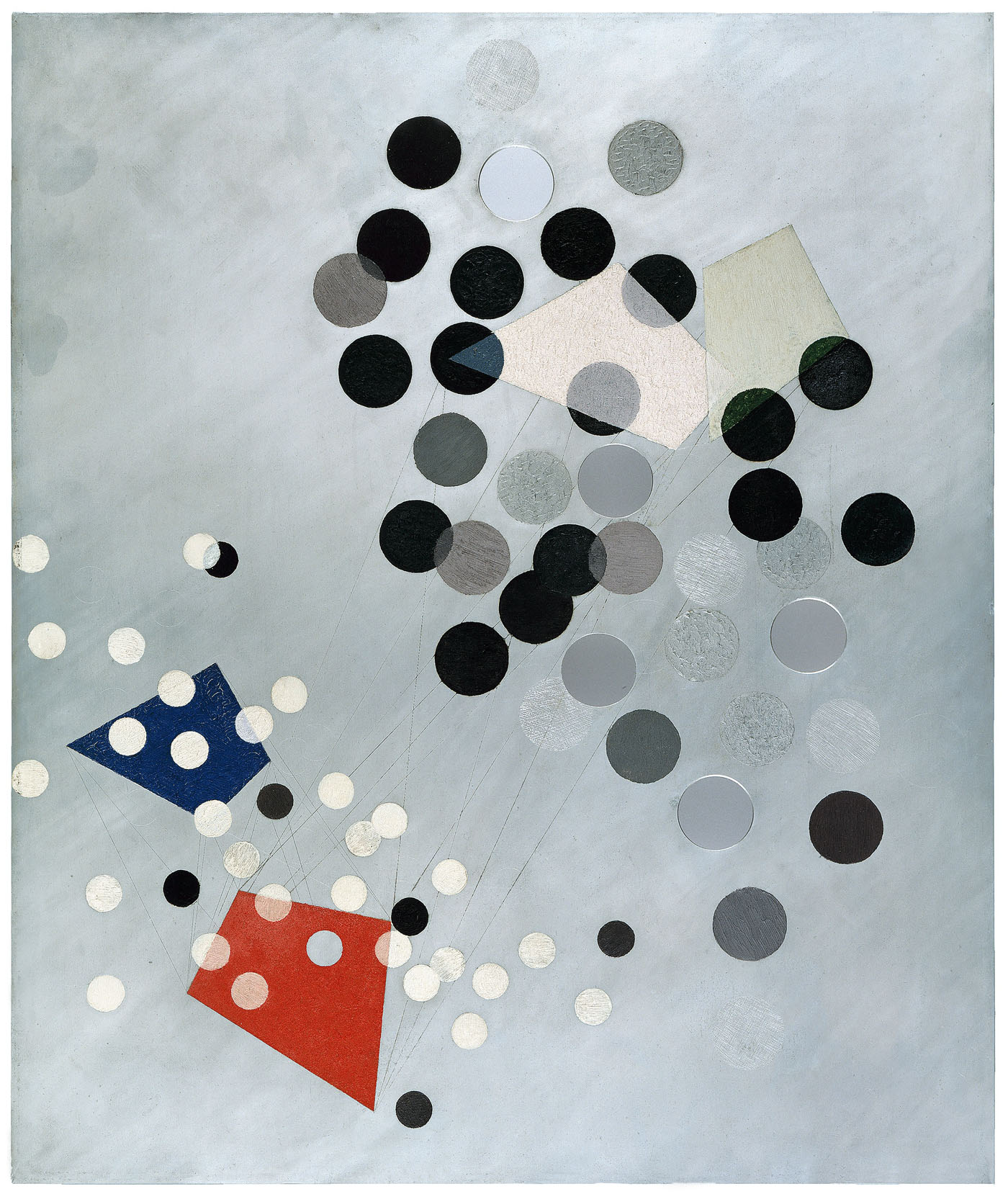
László Moholy-Nagy (Hungarian, 1895-1946) 'A 19' 1927 from the exhibition 'Moholy-Nagy: Future Present' at the Solomon R. Guggenheim Museum, New York, May - Sept, 2025


László Moholy-Nagy (Hungarian, 1895-1946)
A 19
1927
Oil and graphite on canvas
80 x 95.5cm
Hattula Moholy-Nagy, Ann Arbor, MI
© 2016 Hattula Moholy-Nagy/VG Bild-Kunst, Bonn/Artists Rights Society (ARS), New York


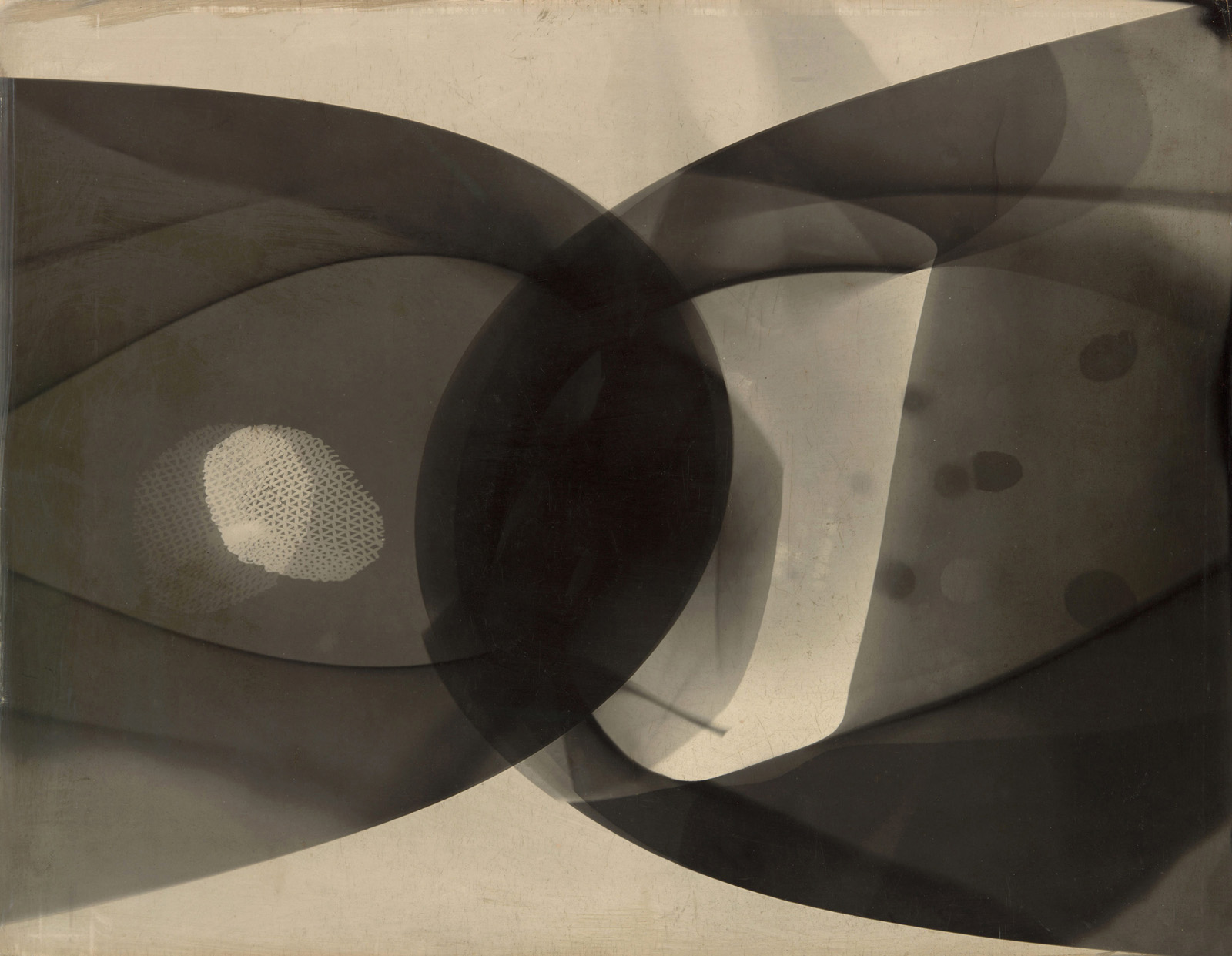
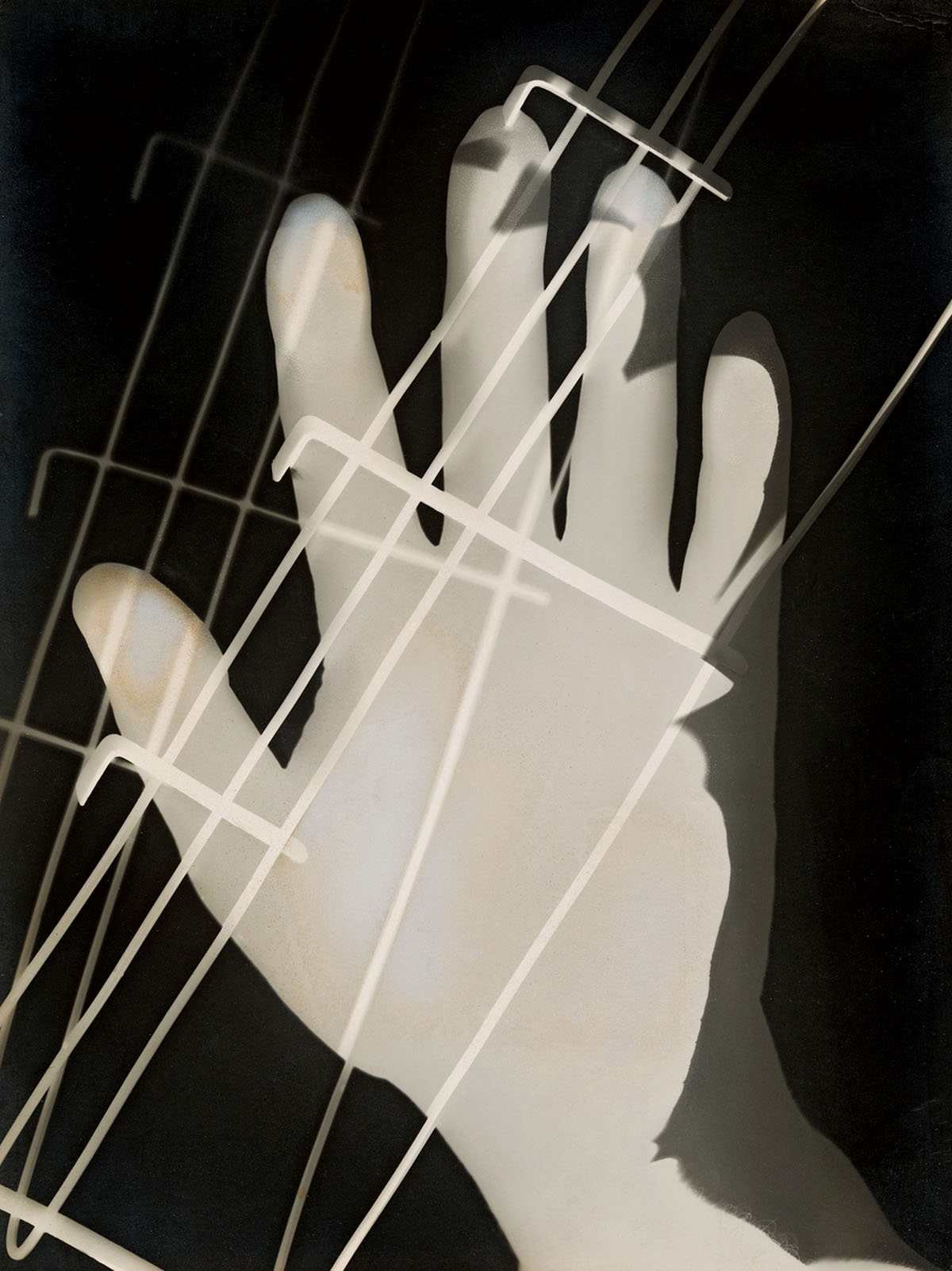
László Moholy-Nagy (Hungarian, 1895-1946) 'Photogram' 1941


László Moholy-Nagy (Hungarian, 1895-1946)
Photogram
1941
Gelatin silver photogram
28 x 36cm
The Art Institute of Chicago, gift of Sally Petrilli, 1985
© 2016 Hattula Moholy-Nagy/VG Bild-Kunst, Bonn/Artists Rights Society (ARS), New York


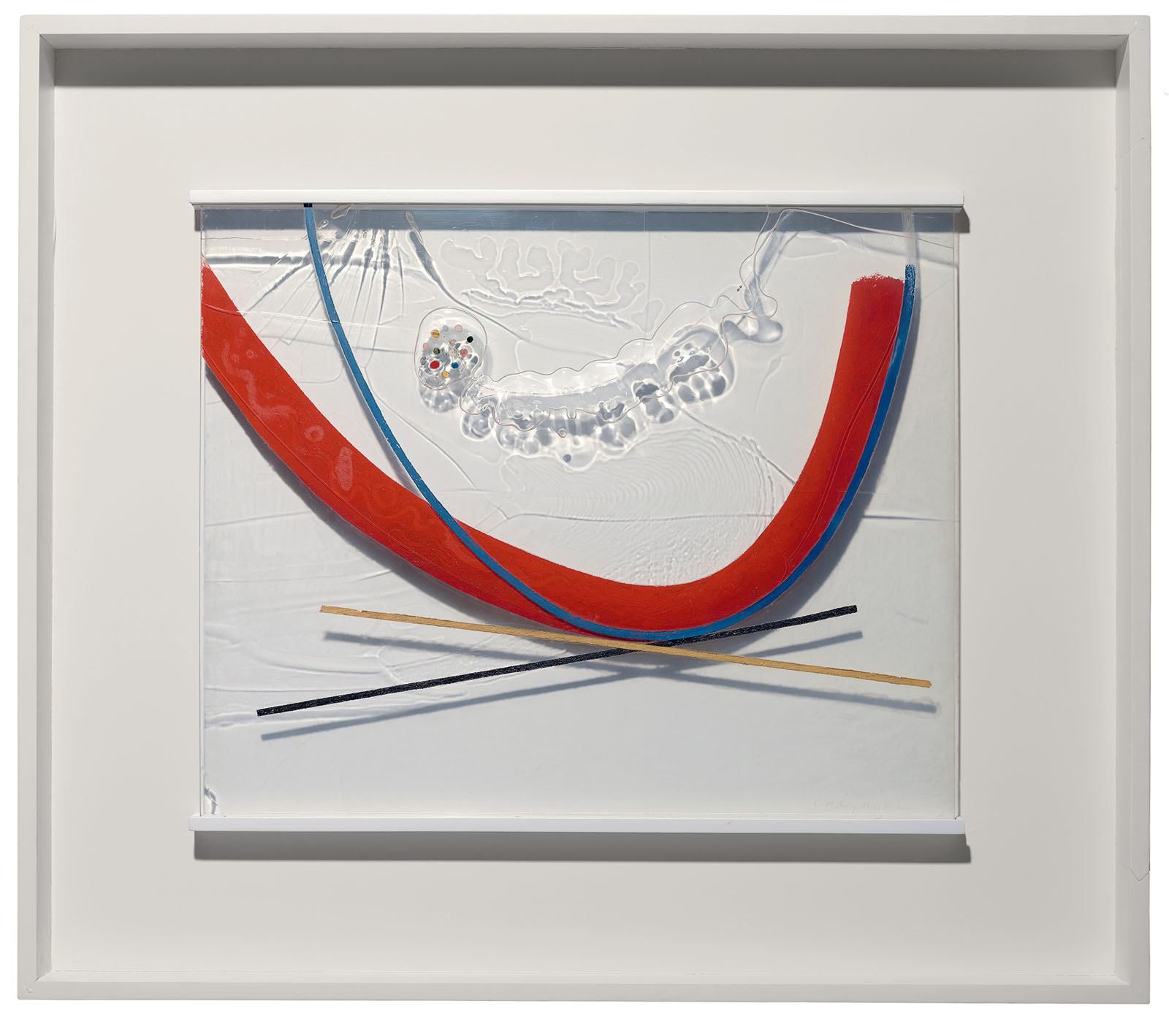
László Moholy-Nagy (Hungarian, 1895-1946) 'Space Modulator' 1939-1945


László Moholy-Nagy (Hungarian, 1895-1946)
Space Modulator
1939-1945
Oil and incised lines on Plexiglas, in original frame
Plexiglas: 63.2 × 66.7cm
Frame: 88.6 × 93cm
Solomon R. Guggenheim Museum, New York, Solomon R. Guggenheim Founding Collection
© 2016 Hattula Moholy-Nagy/VG Bild-Kunst, Bonn/Artists Rights Society (ARS), New York


László Moholy-Nagy (Hungarian, 1895-1946) 'Papmac' 1943


László Moholy-Nagy (Hungarian, 1895-1946)
Papmac
1943
Oil and incised lines on Plexiglas, in original frame
Plexiglas: 58.4 × 70.5cm
Frame: 91.1 × 101.9cm
Private collection
© 2016 Hattula Moholy-Nagy/VG Bild-Kunst, Bonn/Artists Rights Society (ARS), New York


László Moholy-Nagy (Hungarian, 1895-1946) 'CH BEATA I' 1939


László Moholy-Nagy (Hungarian, 1895-1946)
CH BEATA I
1939
Oil and graphite on canvas
118.9 × 119.8cm
Solomon R. Guggenheim Museum, New York, Solomon R. Guggenheim Founding Collection
© 2016 Hattula Moholy-Nagy/VG Bild-Kunst, Bonn/Artists Rights Society (ARS), New York


László Moholy-Nagy (Hungarian, 1895-1946) 'Construction AL6 (Konstruktion AL6)' 1933-1934


László Moholy-Nagy (Hungarian, 1895-1946)
Construction AL6 (Konstruktion AL6)
1933-1934
Oil and incised lines on aluminium
60 × 50cm
IVAM, Institut Valencià d’Art Modern, Generalitat
© 2016 Hattula Moholy-Nagy/VG Bild-Kunst, Bonn/Artists Rights Society (ARS), New York


László Moholy-Nagy (Hungarian, 1895-1946) 'Photogram' 1926


László Moholy-Nagy (Hungarian, 1895-1946)
Photogram
1926
Gelatin silver photogram
23.8 x 17.8cm
Los Angeles County Museum of Art, Ralph M. Parsons Fund
© 2016 Hattula Moholy-Nagy/VG Bild-Kunst, Bonn/Artists Rights Society (ARS), New York
Photo: Â© Museum Associates/LACMA


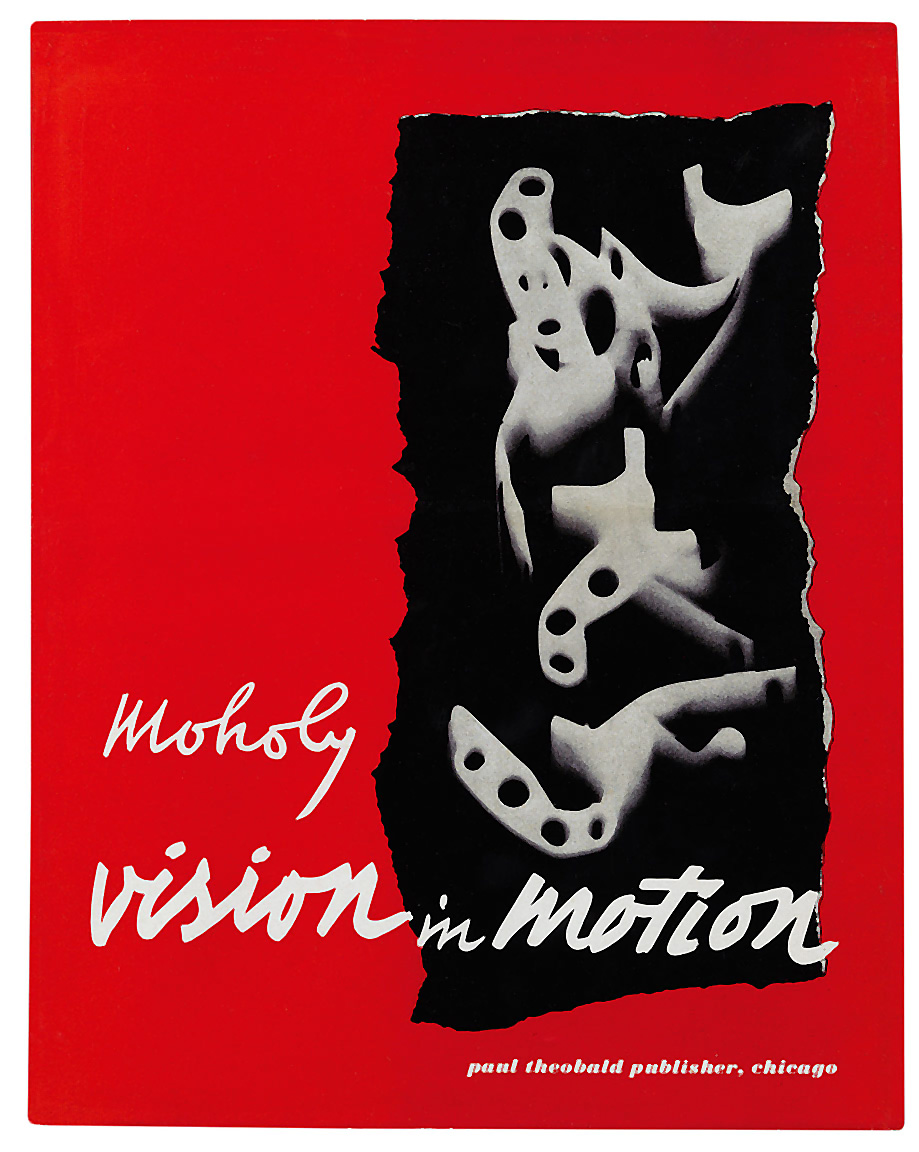
László Moholy-Nagy (Hungarian, 1895-1946) 'Cover and design for Vision in Motion' (Paul Theobald, 1947)


László Moholy-Nagy (Hungarian, 1895-1946)
Cover and design for Vision in Motion (Paul Theobald, 1947)
Bound volume
28.6 × 22.9cm
The Hilla von Rebay Foundation Archive
© 2016 Hattula Moholy-Nagy/VG Bild-Kunst, Bonn/Artists Rights Society (ARS), New York


Solomon R. Guggenheim Museum
1071 5th Avenue (at 89th Street)
New York

Opening hours:
Sunday – Friday 11am – 6pm
Saturday 11am – 8pm

Solomon R. Guggenheim Museum website

LIKE ART BLART ON FACEBOOK

Back to top