Review: ‘New 09’ at Australian Centre for Contemporary Art (ACCA), Melbourne

Exhibition dates: 17th March – 17th May, 2009

Curator: Charlotte Day


ACCA’s annual commissions exhibition – this year curated by Charlotte Day with new works from eight contemporary Australian artists including Justine Khamara, Brodie Ellis, Marco Fusinato, Simon Yates, Matthew Griffin, Benjamin Armstrong and Pat Foster and Jen Berean.


Simon Yates (Australian, b. 1973) 'Rhabdomancy' 2009 from the exhibition 'New 09' at Australian Centre for Contemporary Art (ACCA), Melbourne, March - May, 2009


Simon Yates (Australian, b. 1973)
Rhabdomancy
Tissue paper, wood, fishing rods, tape, string, electrical components, helium balloons dimensions variable
2009
Photo: Marcus Bunyan


“That’s what art is, he said, the story of a life in all its particularity. It’s the only thing that really is particular and personal. It’s the expression and, at the same time, the fabric of the particular. And what do you mean by the fabric of the particular? I asked, supposing he would answer: Art. I was also thinking, indulgently, that we were pretty drunk already and that it was time to go home. But my friend said: What I mean is the secret story … The secret story is the one we’ll never know, although we’re living it from day to day, thinking we’re alive, thinking we’ve got it all under control and the stuff we overlook doesn’t matter. But every damn thing matters! It’s just that we don’t realise. We tell ourselves that art runs on one track and life, our lives, on another, we don’t even realise that’s a lie.”


From the story “Dentist” from the book ‘Last Evenings on Earth’ by Roberto Bolaño1


“A work of art reminds you of who you are now”


Kepesh from the film ‘Elegy’


The curator Charlotte Day has assembled an interesting selection of artists for New 09 at ACCA, Melbourne. It is an exhibition whose ‘presences’ challenge through dark and light, sound and light, contemplation and silence. The journey is one of here and now moments that transport the viewer to states of being that address the fabric of the particular: doubt, anxiety and enlightenment crowd every corner. The particularities of the experience (material, social, psychological and imaginative) impinge on the viewers interior states of being transcending the very physicality and symbolic realism of the works.2

On entering the gallery you are greeted by Simon Yates self-propelled figures that make up the work Rhabdomancy (2009, above). Suspended, tethered, floating just above the floor the figures move eerily about the entrance to the gallery, startling people who have not seen them move before. They stand silent witness, a simulation of self in tissue paper searching for meaning by using a dowsing rod. The word rhabdomancy has as one of it’s meanings ‘the art or gift of prophecy (or the pretence of prophecy) by supernatural means’. Here the figures are divining and divination rolled into one: grounded they seek release through the balloons but through augury they become an omen or portent from which the future is foretold.

“… cutting and slicing in order to see them better, willing them into three dimensions; an attempt to cheat death, or rather, to ward off forgetting of them as they are/were and as I was when the work was made.”

~ Justine Khamara

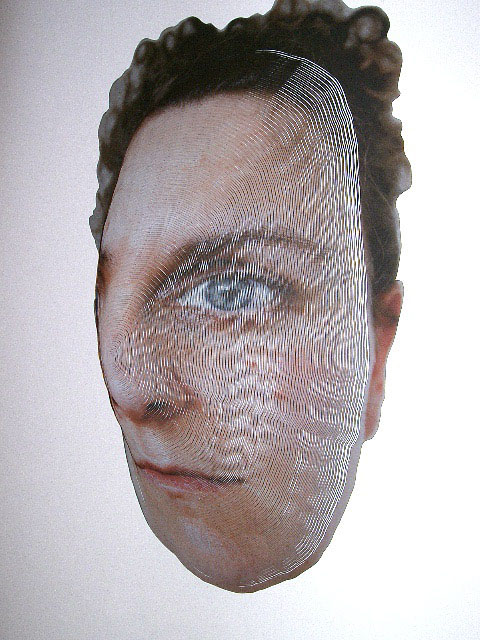
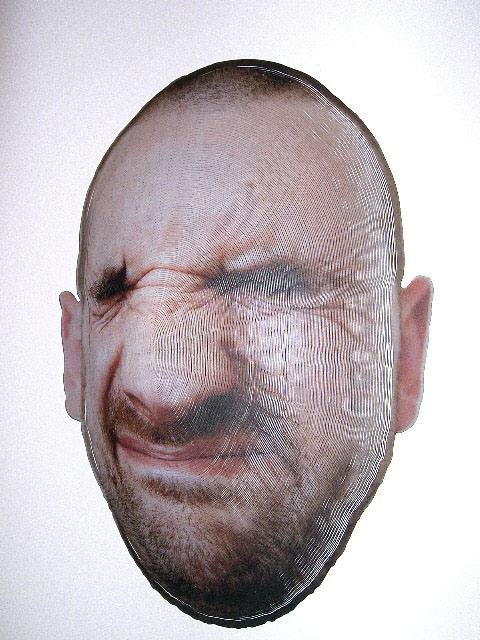
In the first gallery, a very minimal installation by Justine Khamara of two fractured faces stare out at you from the wall, my favourite work of the show. These are unsettling faces, protruding towards you like some topographical map, one eyes screwed shut the other beadily following you as you walk around the gallery space. Here the images of brother and sister presence anterior, already formed subjects not through memory (as photographs normally do) but through the insistence of the their multiple here and now planes of existence. Rather than ‘forgetting’ the images authenticate their identity through their ongoing presence in an ever renewing present.3 Their dissection of reality, the affirmation of their presence (not the photographic absence of a lost subject) embodies their secret story on the viewer told through psychological and imaginative processes: how do they make me feel – about my life, my death and being, here, now.

The pathos of the show is continued with the next work Noosphere (2008) by Brodie Ellis (the noosphere is best described as a sort of collective consciousness of human-beings).4 In this work a video above the clouds is projected onto a circular shape on the ceiling in a darkened room. The emotional and the imaginative impact of the message on the audience is again disorientating and immediate. The images look across the clouds to vistas of setting suns, look down on the clouds and the sea and land below. The images first move one way and then another, disorientating the viewer and changing their perspective of the earth; these are alien views of the earth accompanied by heart beat like ambient music. The perspective of the circle also changes depending on where the viewer stands like some anamorphic distortion of reality. On a stand a beaded yoke for a horse adds to the metaphorical allegory of the installation.

In the next gallery is the literal climax to the exhibition, Marco Fusinato’s Aetheric Plexus (2009). (Aether: medium through which light propagates; Plexus: in vertebrates, a plexus is an area where nerves branch and rejoin and is also a network of blood vessels).

Consisting of scaffolding that forms a cross and supports large numbers of silver spotlights with visible wiring and sound system the installation seems innocuous enough at first. Walking in front of the work produces no effect except to acknowledge the dull glow of red from the banks of dormant lights trained on the viewer. The interaction comes not in random fashion but when the viewer walks to the peripheries of the gallery corners triggering the work – suddenly you are are blasted with white light and the furious sound of white noise for about 15 seconds: I jumped half out of my skin! Totally disorientated as though one has been placed in a blast furnace or a heavenly irradiated crematorium one wonders what has just happened to you and it takes some time to reorientate oneself back in the afterlife of the here and now. Again the immediacy of the work, the particularities of the experience affect your interior states of being.

After a video installation by Matt Griffin you wander into the next gallery where two works by Benjamin Armstrong inhabit the floor of the gallery. And I do mean inhabit. Made of blown glass forms and wax coated tree branches the works have a strange affect on the psyche, to me seemingly emanations from the deep subconscious. Twin glass hemispheres of what look like a brain are surrounded by clasping synaptic nerve endings that support an egg like glass protrusion – a thought bubble? a spirit emanation? These are wonderful contemplative but slightly disturbing objects that have coalesced into shape only in another form to melt and disappear: molten glass and melted wax dissipating the very form of our existence.

Finally we come to the three part installation by Pat Foster and Jen Berean (below). On the right of the photograph you can see three aluminium and glass doors, closed, sealed leading to another gallery. What you can’t see in the photograph is the three pieces of gaffer tape stretched across the glass doors, like they do on the building sites of new homes. No entry here. Above your head is a suspended matrix of aluminium and glass with some of the glass planes smashed. Clean, clinical, safe but smashed, secure but threatening the matrix presses down on the viewer. It reminded me of the vertical standing shards of the World Trade Centre set horizontal suspended overhead. Only the steel cable seemed to ruin the illusion and seemed out of place with the work. It would have been more successful if the matrix was somehow suspended with fewer tethers to increase the sense of downward pressure. Finally you sit on the aluminium benches and contemplate in silence all that has come before and wonder what just hit you in a tidal wave of feelings, immediacies and emotions. The Doing and Undoing of Things.

An interesting journey then, one to provoke thought and emotion.
The fabric of the particular. The pathos of the art-iculate.

My only reservations are about the presence, the immediacy, the surface of it all. How persistent will these stories be? Will the work sustain pertinent inquiry above and beyond the here and now, the shock and awe. Or will it be like a meal one eats and then finds one is full but empty at the same time. A journey of smoke and mirrors.

Dr Marcus Bunyan


1/ Bolano, Robert. Last Evenings on Earth. New Directions, 2007. Available on Amazon.

2/ Blair, French. The Artist, The Body. [Online] Cited on 12/04/2009. No longer available online

3/ Ibid.,

4/ “For Teilhard, the noosphere is best described as a sort of ‘collective consciousness’ of human-beings. It emerges from the interaction of human minds. The noosphere has grown in step with the organisation of the human mass in relation to itself as it populates the earth. As mankind organizes itself in more complex social networks, the higher the noosphere will grow in awareness.” From the concept of Nooshpere on Wikipedia.


Many thankx to ACCA for allowing me to publish the photographs in the posting. All Images © Dr Marcus Bunyan and ACCA.


    Justine Khamara (Australian, b. 1971) 'Dilated Concentrations' 2009 from the exhibition 'New 09' at Australian Centre for Contemporary Art (ACCA), Melbourne, March - May, 2009

    Justine Khamara (Australian, b. 1971) 'Dilated Concentrations' 2009  (detail) from the exhibition 'New 09' at Australian Centre for Contemporary Art (ACCA), Melbourne, March - May, 2009

    Justine Khamara (Australian, b. 1971) 'Dilated Concentrations' 2009  (detail) from the exhibition 'New 09' at Australian Centre for Contemporary Art (ACCA), Melbourne, March - May, 2009

    Justine Khamara (Australian, b. 1971) 'Dilated Concentrations' 2009  (detail) from the exhibition 'New 09' at Australian Centre for Contemporary Art (ACCA), Melbourne, March - May, 2009


    Justine Khamara (Australian, b. 1971)
    Dilated Concentrations
    2009
    UV print on laser cut stainless steel
    Photos: Marcus Bunyan
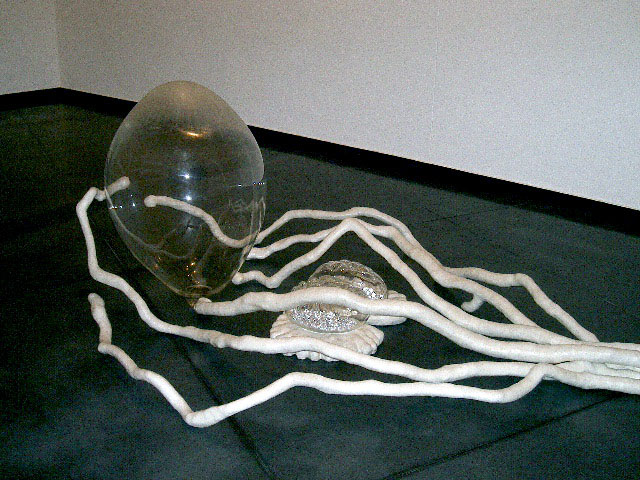
     

    Benjamin Armstrong (Australian, b. 1975) 'Hold Everything Dear I' 2008


    Benjamin Armstrong (Australian, b. 1975)
    Hold Everything Dear I
    2008
    Photo: Marcus Bunyan
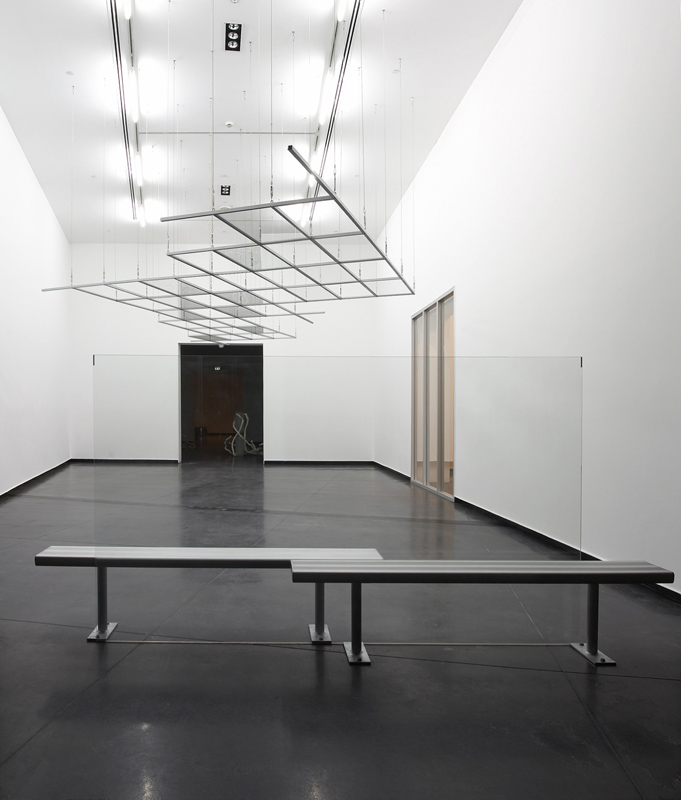
     

    Pat Foster (Australian, b. 1981) and Jen Berean (Canadian, b. 1981) 'Untitled’ from the series ‘The Doing and Undoing of Things’ 2009


    Pat Foster (Australian, b. 1981) and Jen Berean (Canadian, b. 1981)
    Untitled from the series The Doing and Undoing of Things
    2009
    Aluminium, safety glass, steel cable
    Photo: Marcus Bunyan


    Pat Foster (Australian, b. 1981) and Jen Berean (Canadian, b. 1981) 'Untitled’ from the series ‘The Doing and Undoing of Things’ 2009 (detail)


    Pat Foster (Australian, b. 1981) and Jen Berean (Canadian, b. 1981)
    Untitled from the series The Doing and Undoing of Things (detail)
    2009
    Aluminium, safety glass, steel cable
    Photo: Marcus Bunyan


    Australian Centre for Contemporary Art (ACCA)
    111 Sturt Street
    Southbank
    Victoria 3006
    Australia

    Opening hours:
    Tuesday – Friday 10am – 5pm
    Saturday – Sunday 11am – 5pm
    Closed Monday

    ACCA website

    LIKE ART BLART ON FACEBOOK

    Back to top

    Exhibition: ‘Looking In: Robert Frank’s The Americans’ at The National Gallery of Art, Washington

    Exhibition dates: National Gallery of Art, January 18 – April 26, 2009; San Francisco Museum of Modern Art, May 16 – August 23, 2009; Metropolitan Museum of Art, September 22 – December 27, 2009


    Robert Frank (Swiss-American, 1924-2019) 'The Americans' New York: Grove Press 1959 front cover from the exhibition Exhibition: 'Looking In: Robert Frank's The Americans' at The National Gallery of Art, Washington, Jan - April, 2009

    Robert Frank (Swiss-American, 1924-2019) 'The Americans' New York: Grove Press 1959 back cover from the exhibition Exhibition: 'Looking In: Robert Frank's The Americans' at The National Gallery of Art, Washington, Jan - April, 2009


    Robert Frank (Swiss-American, 1924-2019)
    The Americans
    New York: Grove Press
    1959


    One of the seminal photography books of the twentieth century, Robert Frank’s The Americans changed photography forever, changed how America saw itself and became a cult classic. Like Eugene Atget’s positioning of the camera in an earlier generation Frank’s use of camera position is unique; his grainy and contrasty images add to his outsider vision of a bleak America; his sequencing of the images, like the cadences of the greatest music, masterful. One of the easiest things for an artist to do is to create one memorable image, perhaps even a group of 4 or 5 images that ‘hang’ together – but to create a narrative of 83 images that radically alter the landscape of both photography and country is, undoubtedly, a magnificent achievement.

    The photographs in the posting appear by number order that they appear in the book.

    Dr Marcus Bunyan


    Many thankx to the National Gallery of Art for allowing me to publish the photographs in the posting. Please click on the photographs for a larger version of the image.


    Robert Frank (Swiss-American, 1924-2019) The Americans 1 'Parade - Hoboken, New Jersey' 1955


    Robert Frank (Swiss-American, 1924-2019)
    The Americans 1
    Parade – Hoboken, New Jersey
    1955
    Gelatin silver print
    Image: 21.3 x 32.4cm (8 3/8 x 12 3/4 in.)
    Private collection, San Francisco
    Photograph © Robert Frank, from The Americans


    Released at the height of the Cold War, The Americans was initially reviled, even decried as anti-American. Yet during the 1960s, many of the issues that Frank had addressed – racism, dissatisfaction with political leaders, skepticism about a rising consumer culture – erupted into the collective consciousness. The book came to be regarded as both prescient and revolutionary and soon was embraced with a cult-like following.

    First published in France in 1958 and in the United States in 1959, Robert Frank’s The Americans is widely celebrated as the most important photography book since World War II. Including 83 photographs made largely in 1955 and 1956 while Frank (1924-2019) travelled around the United States, the book looked beneath the surface of American life to reveal a profound sense of alienation, angst, and loneliness. With these prophetic photographs, Frank redefined the icons of America, noting that cars, jukeboxes, gas stations, diners, and even the road itself were telling symbols of contemporary life. Frank’s style – seemingly loose, casual compositions, with often rough, blurred, out-of-focus foregrounds and tilted horizons – was just as controversial and influential as his subject matter. The exhibition celebrates the 50th anniversary of the book’s publication by presenting all 83 photographs from The Americans in the order established by the book, and by providing a detailed examination of the book’s roots in Frank’s earlier work, its construction, and its impact on his later art.

    Anonymous text from The National Gallery of Art website [Online] Cited 06/03/2009. No longer available online


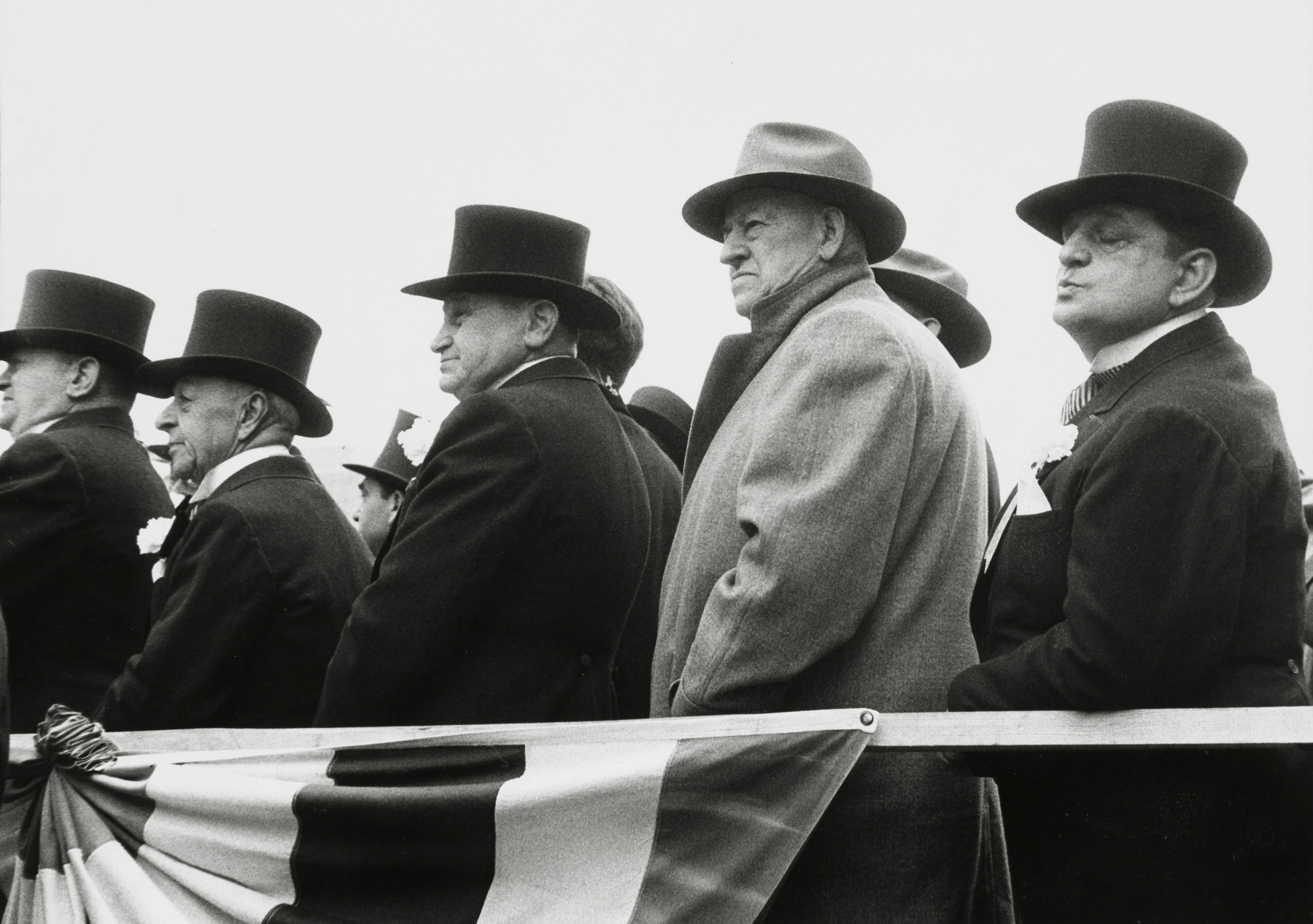
    Robert Frank (Swiss-American, 1924-2019) The Americans 2 'City fathers – Hoboken, New Jersey' 1955


    Robert Frank (Swiss-American, 1924-2019)
    The Americans 2
    City fathers – Hoboken, New Jersey
    1955
    Gelatin silver print
    Image: 41.9 x 57.8cm (16 1/2 x 22 3/4 in.)
    Susan and Peter MacGill
    Photograph © Robert Frank, from The Americans


    Robert Frank (Swiss-American, 1924-2019) The Americans 3. 'Political Rally - Chicago' 1956


    Robert Frank (Swiss-American, 1924-2019)
    The Americans 3
    Political Rally – Chicago
    1956
    Gelatin silver print
    Image and sheet: 57.8 x 39.4cm (22 3/4 x 15 1/2 in.)
    Susan and Peter MacGill
    Photograph © Robert Frank, from The Americans


    Robert Frank (Swiss-American, 1924-2019) The Americans 4 'Funeral, St. Helena, South Carolina' 1955-1956


    Robert Frank (Swiss-American, 1924-2019)
    The Americans 4
    Funeral – St. Helena, South Carolina
    1955
    Gelatin silver print
    Image and sheet: 39.7 x 58.1cm (15 5/8 x 22 7/8 in.)
    Susan and Peter MacGill
    Photograph © Robert Frank, from The Americans


    “The photos revealed a bleaker, more dislocated view of America than Americans were used to (at least in photography). Frank’s “in-between moments” demonstrated that disequilibrium can seem more revealing, seeming to catch reality off-guard. In doing so the collection also announced to the world that photos with a completely objective reference / referent could be subjective, lyrical, reveal a state-of-mind. Looser framing, more forced or odd juxtapositions, “drive-by” photos and other elements offer a sense of the process that has produced the photos”

    Lloyd Spencer on Discussing The Americans in Hardcore Street Photography

    I couldn’t have put it better myself!


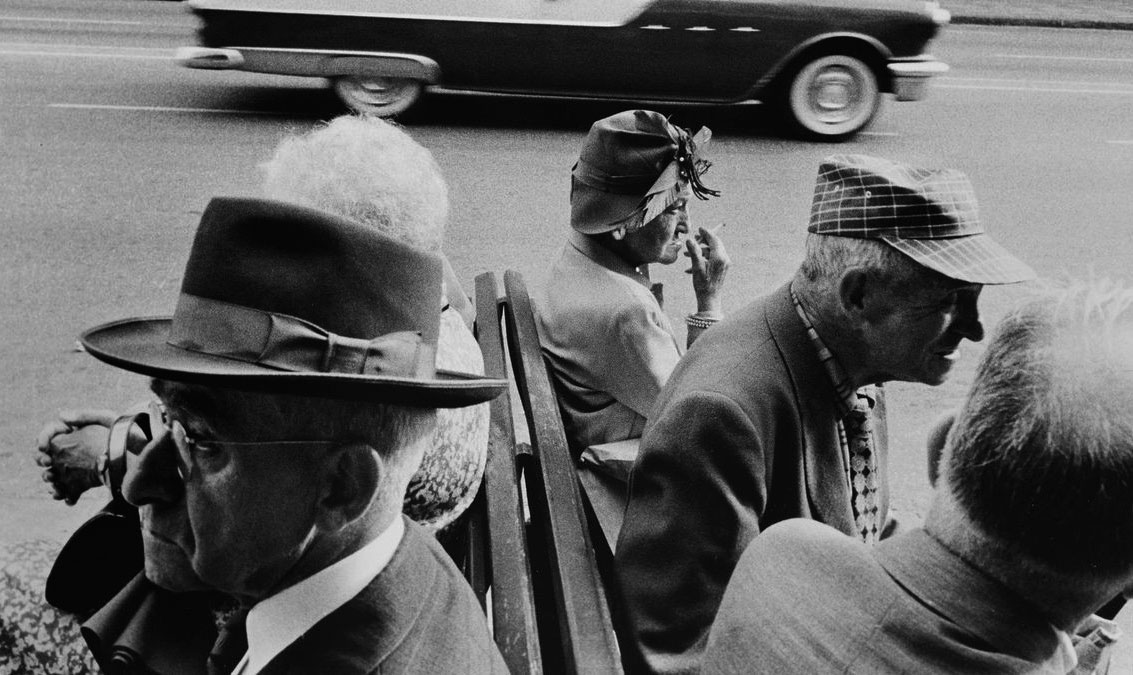
    Robert Frank (Swiss-American, 1924-2019) The Americans 13 'Charleston, South Carolina' 1955


    Robert Frank (Swiss-American, 1924-2019)
    The Americans 13
    Charleston, South Carolina
    1955
    Gelatin silver print
    Image: 41.3 x 59.1cm (16 1/4 x 23 1/4 in.)
    Susan and Peter MacGill
    Photograph © Robert Frank, from The Americans


    Robert Frank (Swiss-American, 1924-2019) The Americans 14 'Ranch Market, Hollywood' 1955-1956


    Robert Frank (Swiss-American, 1924-2019)
    The Americans 14
    Ranch Market – Hollywood
    1956
    Gelatin silver print
    Image: 31.4 x 48.3cm (12 3/8 x 19 in.)
    Danielle and David Ganek
    Photograph © Robert Frank, from The Americans


    Robert Frank (Swiss-American, 1924-2019) The Americans 15 'Butte, Montana' 1956


    Robert Frank (Swiss-American, 1924-2019)
    The Americans 15
    Butte, Montana
    1956
    Gelatin silver print
    Overall: 20 x 30.2cm (7 7/8 x 11 7/8 in.)
    The Museum of Modern Art, New York, Acquired through the generosity of the Young family in honour of Robert B. Menschel, 2003
    Photograph © Robert Frank, from The Americans


    Robert Frank (Swiss-American, 1924-2019) The Americans 18 'Trolley - New Orleans' 1955


    Robert Frank (Swiss-American, 1924-2019)
    The Americans 18
    Trolley – New Orleans
    1955
    Gelatin silver print
    Image: 40.6 x 57.8cm (16 x 22 3/4 in.)
    Susan and Peter MacGill
    Photograph © Robert Frank, from The Americans


    Robert Frank (Swiss-American, 1924-2019) Contact sheets for 'The Americans'


    Robert Frank (Swiss-American, 1924-2019)
    Contact sheets for The Americans
    Photograph © Robert Frank, from The Americans


    “Frank’s contact sheets take us back to the moment he made the photographs for The Americans. They show us what he saw as he traveled around The United States and how he responded to it. These sheets are not carefully crafted objects; in his eagerness to see what he had captured, Frank did not bother to order his film strips numerically or even to orientate them all in the same direction.”


    Robert Frank (Swiss-American, 1924-2019) Sequencing of 'The Americans' numbers 32-36


    Robert Frank (Swiss-American, 1924-2019)
    Sequencing of
    The Americans numbers 32-36
    Photograph © Robert Frank, from The Americans


    “Almost halfway through the book Frank created a sequence united by the visual repetition of the car and the suggestion of its movement.”


    Robert Frank (Swiss-American, 1924-2019) The Americans 32 'U.S. 91, Leaving Blackfoot, Idaho' 1956


    Robert Frank (Swiss-American, 1924-2019)
    The Americans 32
    U.S. 91, Leaving Blackfoot, Idaho
    1956
    Gelatin silver print
    Image: 28.9 x 42.2cm (11 3/8 x 16 5/8 in.)
    Collection of Barbara and Eugene Schwartz
    Photograph © Robert Frank, from The Americans


    Robert Frank (Swiss-American, 1924-2019) The Americans 33 'St. Petersburg, Florida' 1955


    Robert Frank (Swiss-American, 1924-2019)
    The Americans 33
    St. Petersburg, Florida
    1955
    Gelatin silver print
    Sheet: 22.2 x 33.7cm (8 3/4 x 13 1/4 in.)
    Collection of Barbara and Eugene Schwartz
    Photograph © Robert Frank, from The Americans


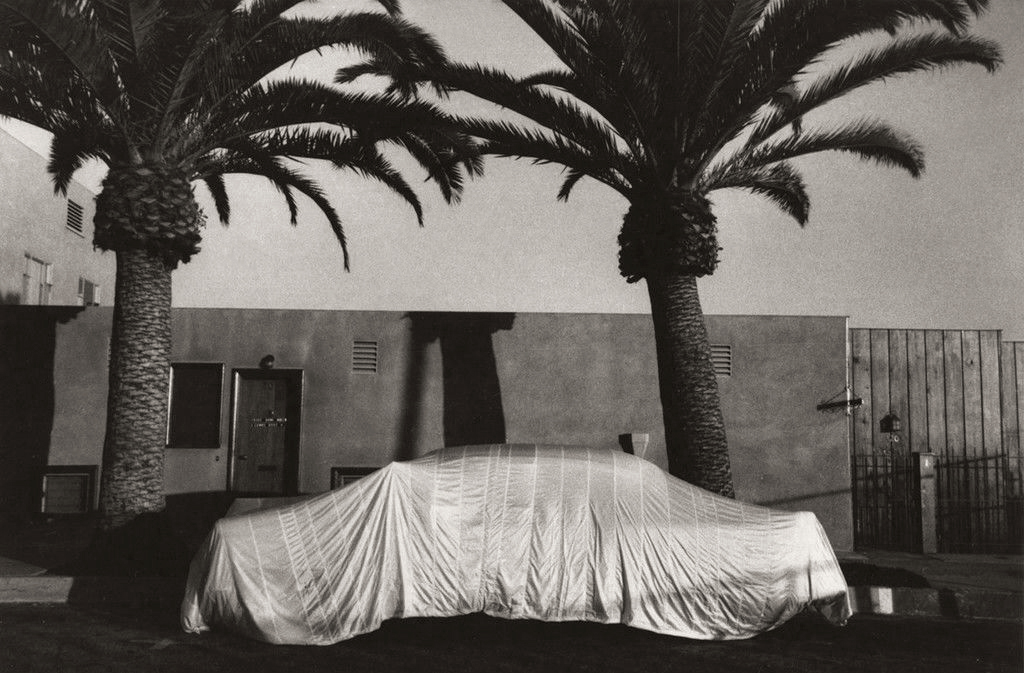
    Robert Frank (Swiss-American, 1924-2019) The Americans 34 'Covered Car - Long Beach, California' 1956


    Robert Frank (Swiss-American, 1924-2019)
    The Americans 34
    Covered Car – Long Beach, California
    1956
    Gelatin silver print
    Image: 21.4 x 32.7cm (8 7/16 x 12 7/8 in.)
    Lent by The Metropolitan Museum of Art, Gilman Collection, Purchase, Ann Tenenbaum and Thomas H. Lee Gift, 2005
    Photograph © Robert Frank, from The Americans


    Robert Frank (Swiss-American, 1924-2019) The Americans 35 'Car accident, US 66 between Winslow and Flagstaff, Arizona' 1955-1956


    Robert Frank (Swiss-American, 1924-2019)
    The Americans 35
    Car accident, US 66 between Winslow and Flagstaff, Arizona
    1955-1956
    Gelatin silver print
    Image: 31 x 47.5cm (12 3/16 x 18 11/16 in.)
    Philadelphia Museum of Art, Promised gift of Susan and Peter MacGill in honour of Anne d’Harnoncourt
    Photograph © Robert Frank, from The Americans


    Robert Frank (Swiss-American, 1924-2019) The Americans 36 'U.S. 285, New Mexico' 1955


    Robert Frank (Swiss-American, 1924-2019)
    The Americans 36
    U.S. 285, New Mexico
    1955
    Gelatin silver print
    Image: 33.7 x 21.9cm (13 1/4 x 8 5/8 in.)
    Mark Kelman, New York
    Photograph © Robert Frank, from The Americans


    Robert Frank (Swiss-American, 1924-2019) The Americans 37 'Bar, Detroit' 1955-1956


    Robert Frank (Swiss-American, 1924-2019)
    The Americans 37
    Bar – Detroit
    1955
    Gelatin silver print
    Overall: 39.4 x 57.8cm (15 1/2 x 22 3/4 in.)
    Sherry and Alan Koppel
    Photograph © Robert Frank, from The Americans


    The 50th anniversary of a groundbreaking publication will be celebrated in the nation’s capital with the exhibition Looking In: Robert Frank’s The Americans, premiering January 18 through April 26, 2009, in the National Gallery of Art’s West Building ground floor galleries. In 1955 and 1956, the Swiss-born American photographer Robert Frank (b. 1924) traveled across the United States to photograph, as he wrote, “the kind of civilisation born here and spreading elsewhere.” The result of his journey was The Americans, a book that looked beneath the surface of American life to reveal a culture on the brink of massive social upheaval and one that changed the course of 20th-century photography.

    First published in France in 1958 and in the United States in 1959, The Americans remains the single most important book of photographs published since World War II. The exhibition will examine both Frank’s process in creating the photographs and the book by presenting 150 photographs, including all of the images from The Americans, as well as 17 books, 15 manuscripts, and 28 contact sheets. In honour of the exhibition, Frank has created a film and participated in selecting and assembling three large collages. The exhibition will travel to the San Francisco Museum of Modern Art from May 17 through August 23, 2009, and The Metropolitan Museum of Art from September 22 through December 27, 2009.

    The Americans is as powerful and provocative today as it was 50 years ago,” said Earl A. Powell III, director, National Gallery of Art. “We are immensely grateful to Robert Frank and his wife, June Leaf, for their enthusiastic participation and assistance in all aspects of this exhibition and its equally ambitious catalogue. We also wish to thank Robert Frank for his donation of archival material related to The Americans, in addition to gifts of his photographs and other exhibition prints to the National Gallery of Art in 1990, 1994, and 1996, all of which formed the foundation of the project.”

    Press release from the National Gallery of Art


    Robert Frank (Swiss-Americans, 1924-2019) The Americans 44 'Elevator - Miami Beach' 1955


    Robert Frank (Swiss-Americans, 1924-2019)
    The Americans 44
    Elevator – Miami Beach
    1955
    Gelatin silver print
    Image: 31.4 x 47.8cm (12 3/8 x 18 13/16 in.)
    Philadelphia Museum of Art, Purchased with funds contributed by Dorothy Norman, 1969
    Photograph © Robert Frank, from The Americans


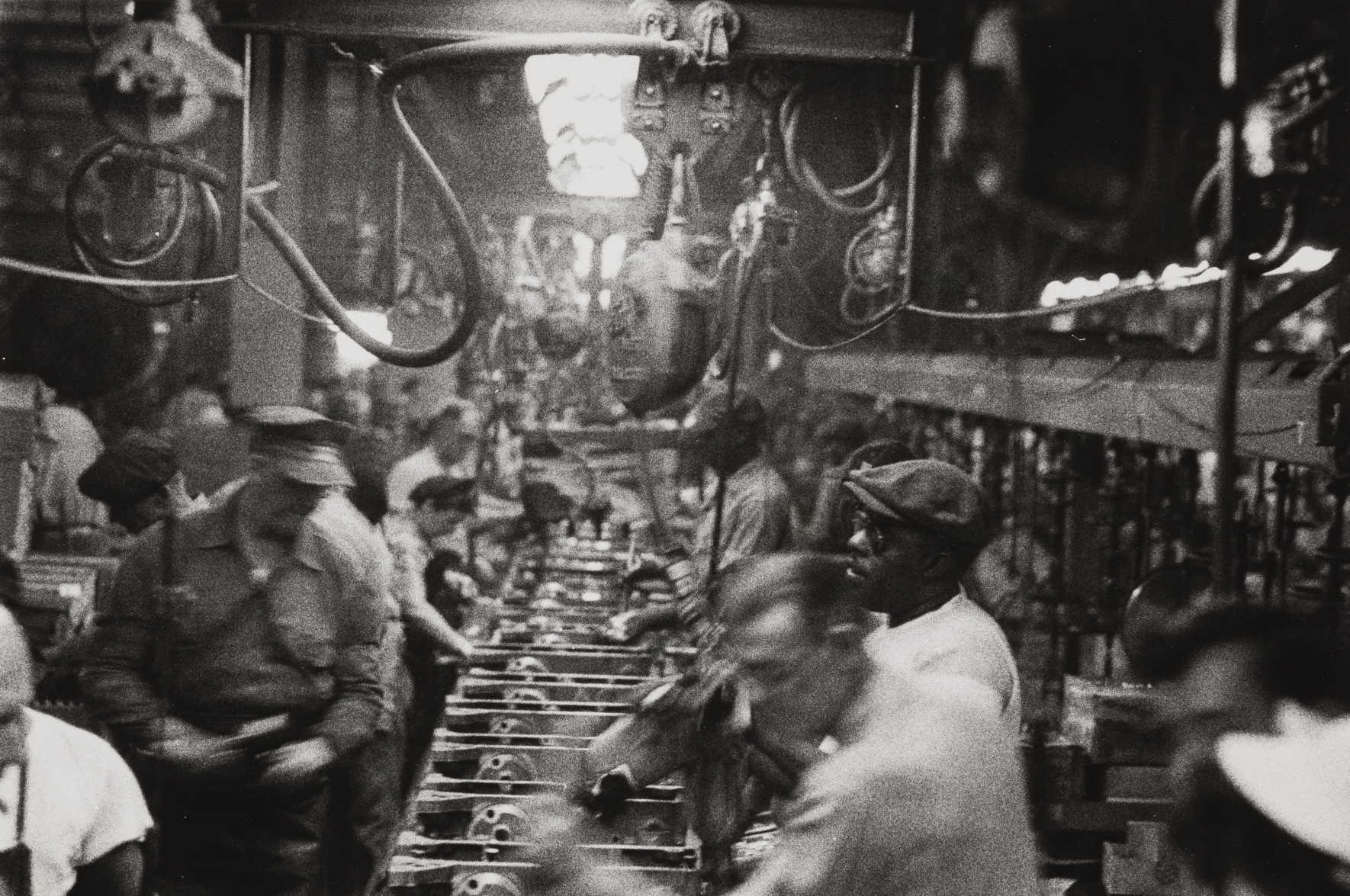
    Robert Frank (Swiss-American, 1924-2019) The Americans 50 'Assembly line, Detroit' 1955-1956


    Robert Frank (Swiss-American, 1924-2019)
    The Americans 50
    Assembly line – Detroit
    1955
    Gelatin silver print
    21.4 x 32.1cm (8 7/16 x 12 5/8 in.)
    The Museum of Modern Art, New York, Purchase, 1959
    Photograph © Robert Frank, from The Americans


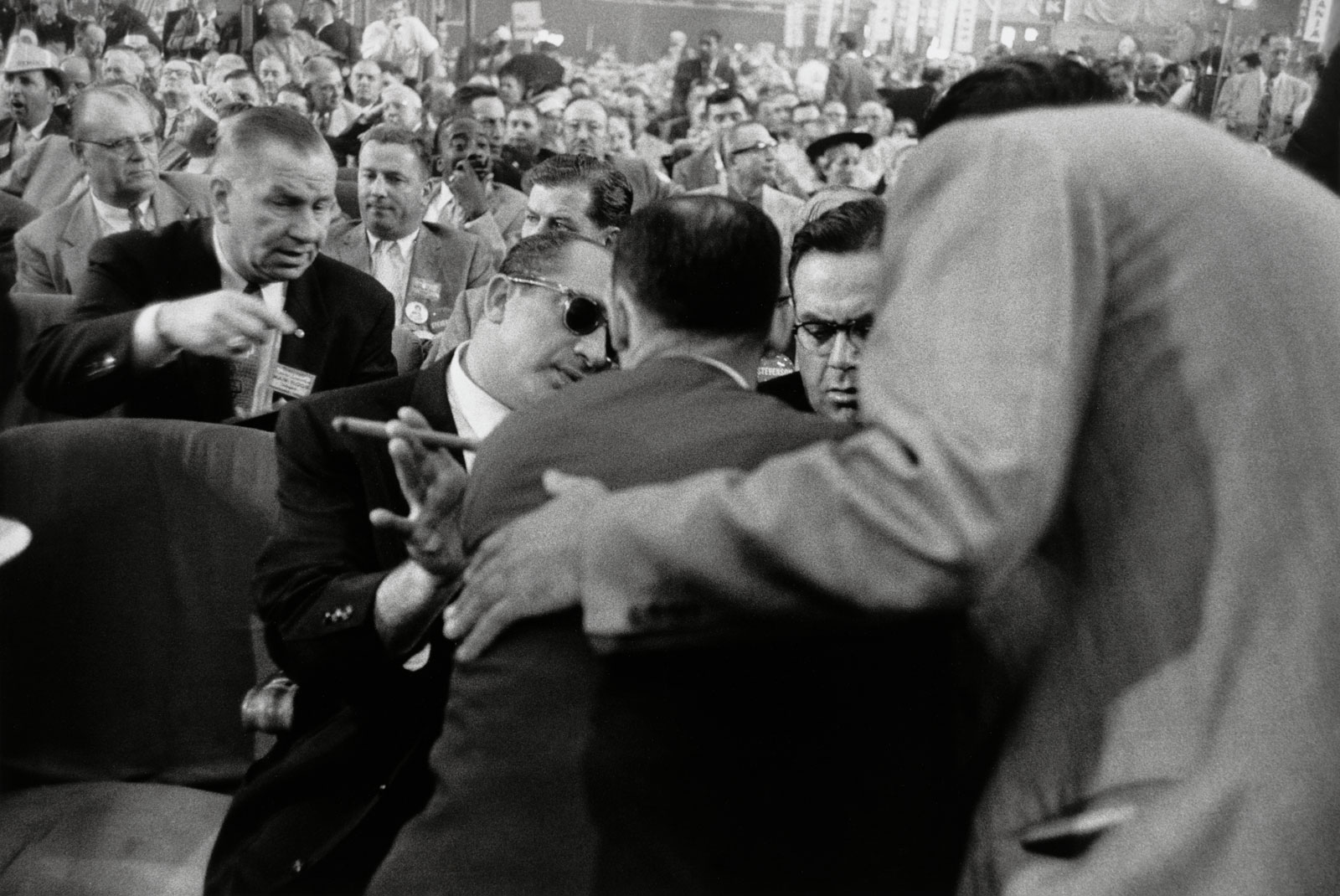
    Robert Frank (Swiss-American, 1924-2019) The Americans 51 'Convention hall, Chicago' 1956


    Robert Frank (Swiss-American, 1924-2019)
    The Americans 51
    Convention hall – Chicago
    1956
    Gelatin silver print
    Image: 22.5 x 34.1cm (8 7/8 x 13 7/16 in.)
    Addison Gallery of American Art, Phillips Academy, Andover, Museum Purchase
    Photograph © Robert Frank, from The Americans


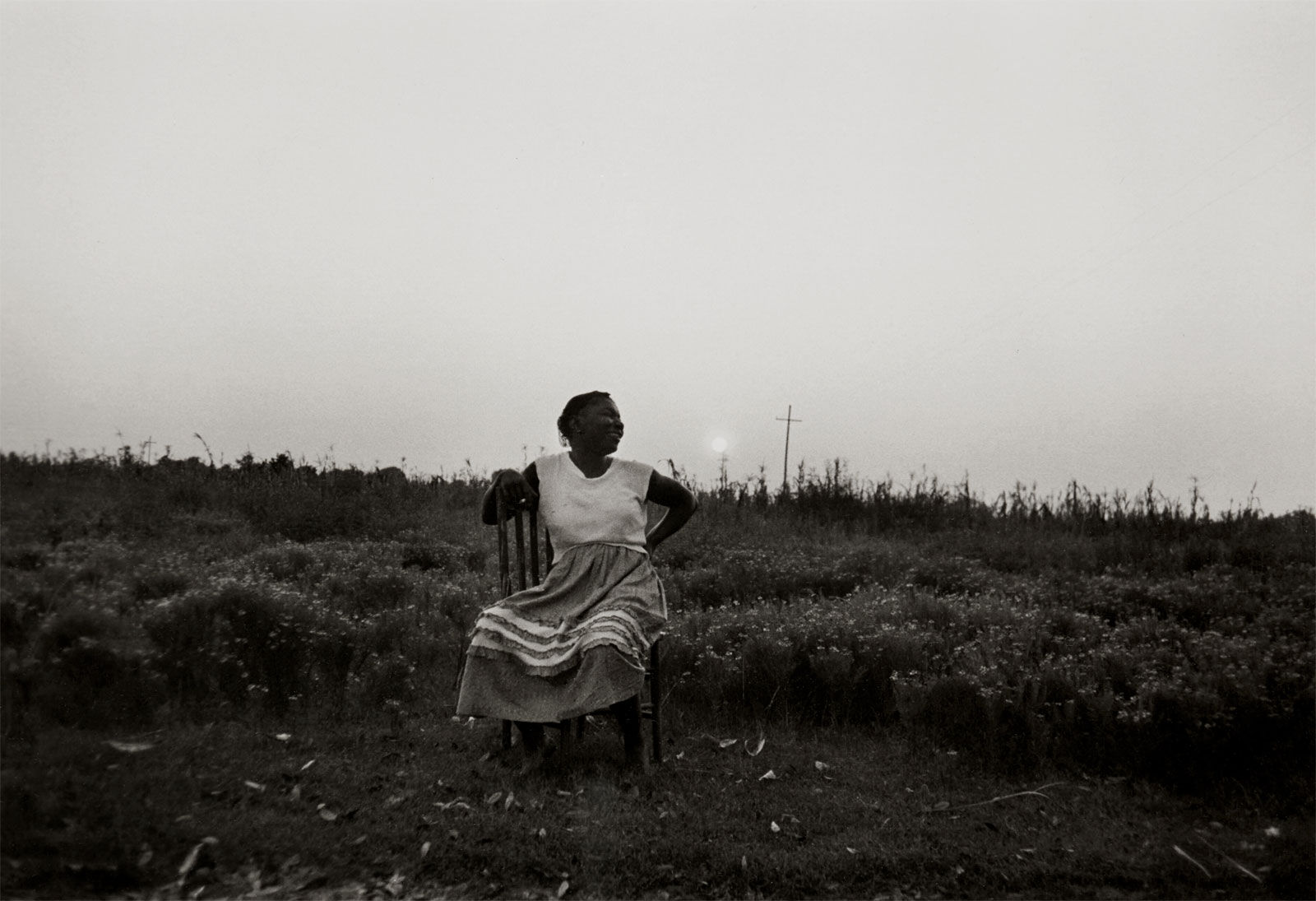
    Robert Frank (Swiss-American, 1924-2019) The Americans 55 'Beaufort, South Carolina' 1955-1956


    Robert Frank (Swiss-American, 1924-2019)
    The Americans 55
    Beaufort, South Carolina
    1955
    Gelatin silver print
    Image and sheet: 31.1 x 47.6cm (12 1/4 x 18 3/4 in.)
    Private collection
    Photograph © Robert Frank, from The Americans


    Robert Frank (Swiss-American, 1924-2019) The Americans 58 'Political rally – Chicago' 1956


    Robert Frank (Swiss-American, 1924-2019)
    The Americans 58
    Political rally – Chicago
    1956
    Gelatin silver print
    Image: 59.1 x 36.5cm (23 1/4 x 14 3/8 in.)
    Betsy Karel
    Photograph © Robert Frank, from The Americans


    Robert Frank (Swiss-American, 1924-2019) The Americans 70 'Coffee shop, railway station – Indianapolis' 1956


    Robert Frank (Swiss-American, 1924-2019)
    The Americans 70
    Coffee shop, railway station – Indianapolis
    1956
    Gelatin silver print
    Overall (image): 22.9 x 34.6cm (9 x 13 5/8 in.)
    The Museum of Modern Art, New York, Acquired through the generosity of Carol and David Appel, 2003
    Photograph © Robert Frank, from The Americans


    Robert Frank (Swiss, 1924-2019) The Americans 71 'Chattanooga, Tennessee' 1955


    Robert Frank (Swiss, 1924-2019)
    The Americans 71
    Chattanooga, Tennessee
    1955
    Gelatin silver print
    Image: 20.8 x 29.5cm (8 3/16 x 11 5/8 in.)
    Private collection
    Photograph © Robert Frank, from The Americans


    “It’s hard to stress how different The Americans was. Over the course of those 83 pictures – shot from Detroit to San Francisco to Chattanooga, Tennessee – Frank captured the country in images that were intentionally unglamorous. On a technical level, he brazenly tossed out an adherence to traditional ideas of composition, framing, focus, and exposure.”

    Sarah Greenough, Senior Curator of Photography at the National Gallery of Art in Washington


    Robert Frank (Swiss-American, 1924-2019) The Americans 73 'Detroit - Belle Isle' 1955


    Robert Frank (Swiss-American, 1924-2019)
    The Americans 73
    Belle Isle – Detroit
    1955
    Gelatin silver print
    Sheet: 29.2 x 42.5cm (11 1/2 x 16 3/4 in.)
    Collection of Barbara and Eugene Schwartz
    Photograph © Robert Frank, from The Americans


    Robert Frank (Swiss-American, 1924-2019) The Americans 81 'City Hall – Reno, Nevada' 1956


    Robert Frank (Swiss-American, 1924-2019)
    The Americans 81
    City Hall – Reno, Nevada
    1956
    Gelatin silver print
    Image: 20.3 x 32.4cm (8 x 12 3/4 in.)
    Private collection
    Photograph © Robert Frank, from The Americans


    Robert Frank (Swiss-American, 1924-2019) The Americans 83 'US 90 on route to Del Rio, Texas' 1955-1956


    Robert Frank (Swiss-American, 1924-2019)
    The Americans 83
    U.S. 90, en route to Del Rio, Texas
    1955
    Gelatin silver print
    Image (and board): 47.6 x 31.1cm (18 3/4 x 12 1/4 in.)
    Private collection, courtesy Hamiltons Gallery, London
    Photograph © Robert Frank, from The Americans


    National Gallery of Art
    National Mall between 3rd and 7th Streets
    Constitution Avenue NW, Washington

    Opening hours:
    Daily 10.00am – 5.00pm

    National Gallery of Art website

    LIKE ART BLART ON FACEBOOK

    Back to top