Exhibition: ‘American Photography’ at Rijksmuseum, Amsterdam

Exhibition dates: 7th February – 9th June, 2025


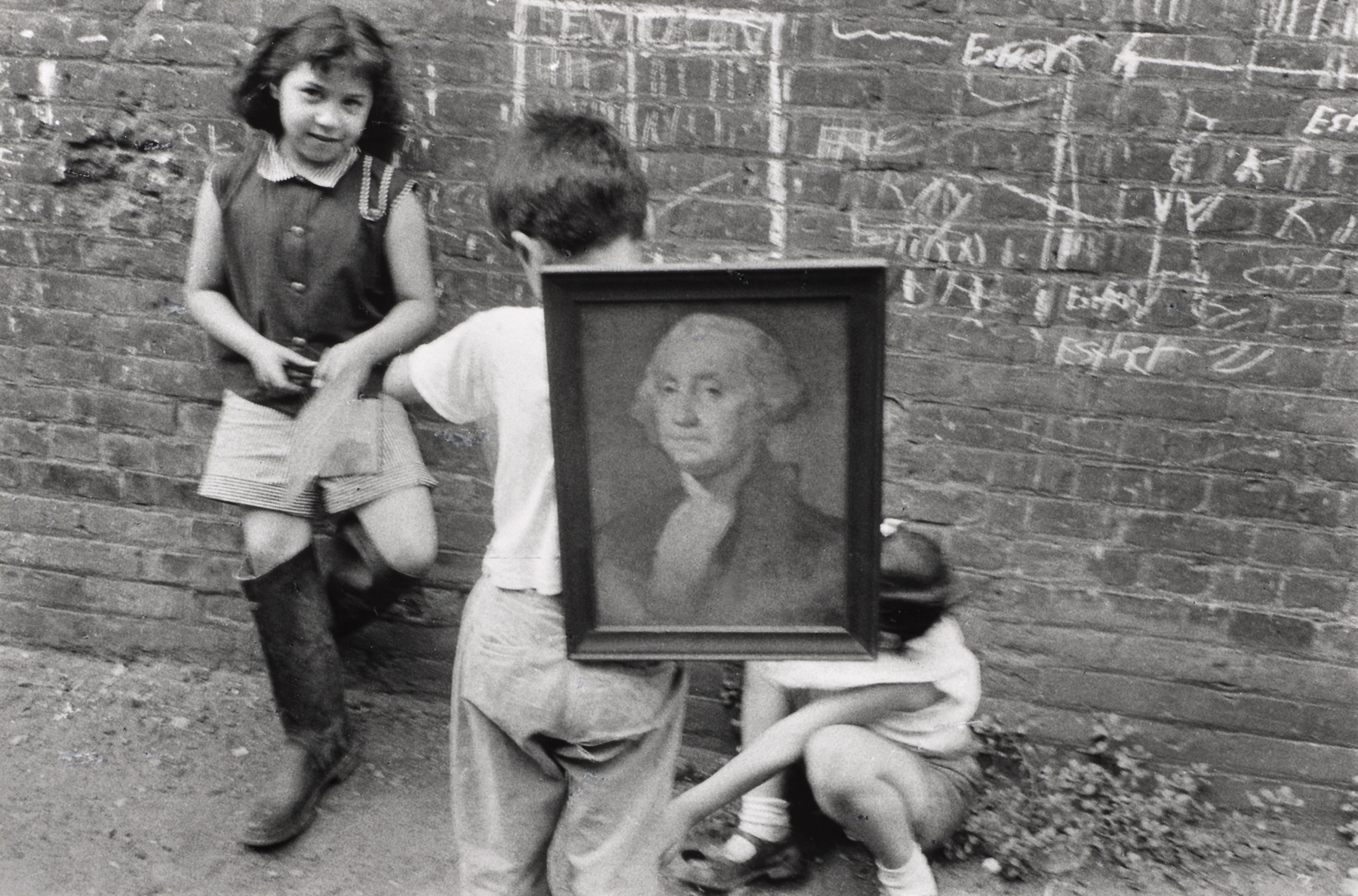
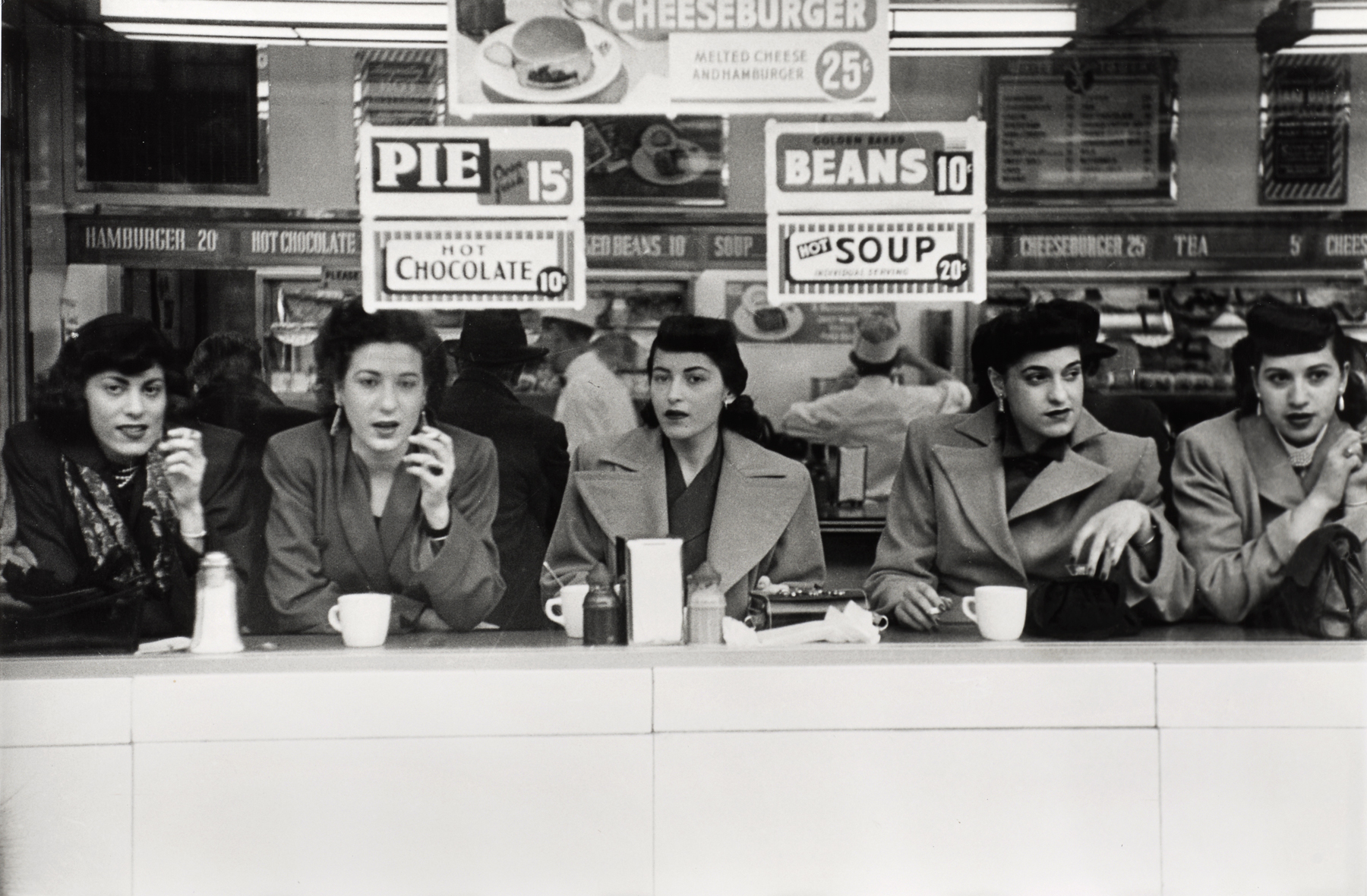
Amanda López (American, b. 1982) 'Homegirls, San Francisco' 2008 from the exhibition 'American Photography' at Rijksmuseum, Amsterdam, Feb - June, 2025


Amanda López (American, b. 1982)
Homegirls, San Francisco
2008
Inkjet print
320 x 435 mm
National Museum for American History, Washington (DC)
© Amanda López


Let’s get down to brass tacks.

While I haven’t physically seen this exhibition – according to Rijksmuseum “the Netherlands’ first major survey exhibition of American photography… the first comprehensive survey of American photography in Europe … reflect[ing] the rich and multifaceted history of photography in the United States. The exhibition presents the country as seen through the eyes of American photographers, and shows how the medium has permeated every aspect of our lives: in art, news, advertising and everyday life” – you can glean a lot about an exhibition from the installation photographs.

The feeling I get from the installation photographs is of a particularly meagre offering – gallery halls with minimal photographs, huge empty spaces (just look at the installation photograph Curio box made of cigarette packets with portraits of roommates, late 1960s below) – and to then consider this is supposed to be “the first comprehensive survey of American photography in Europe” and reflect the large photographic holdings of the Rijksmuseum. Really? You wouldn’t really know it from looking at “the show”.

Perhaps the problem stems from the rationale of the exhibition:

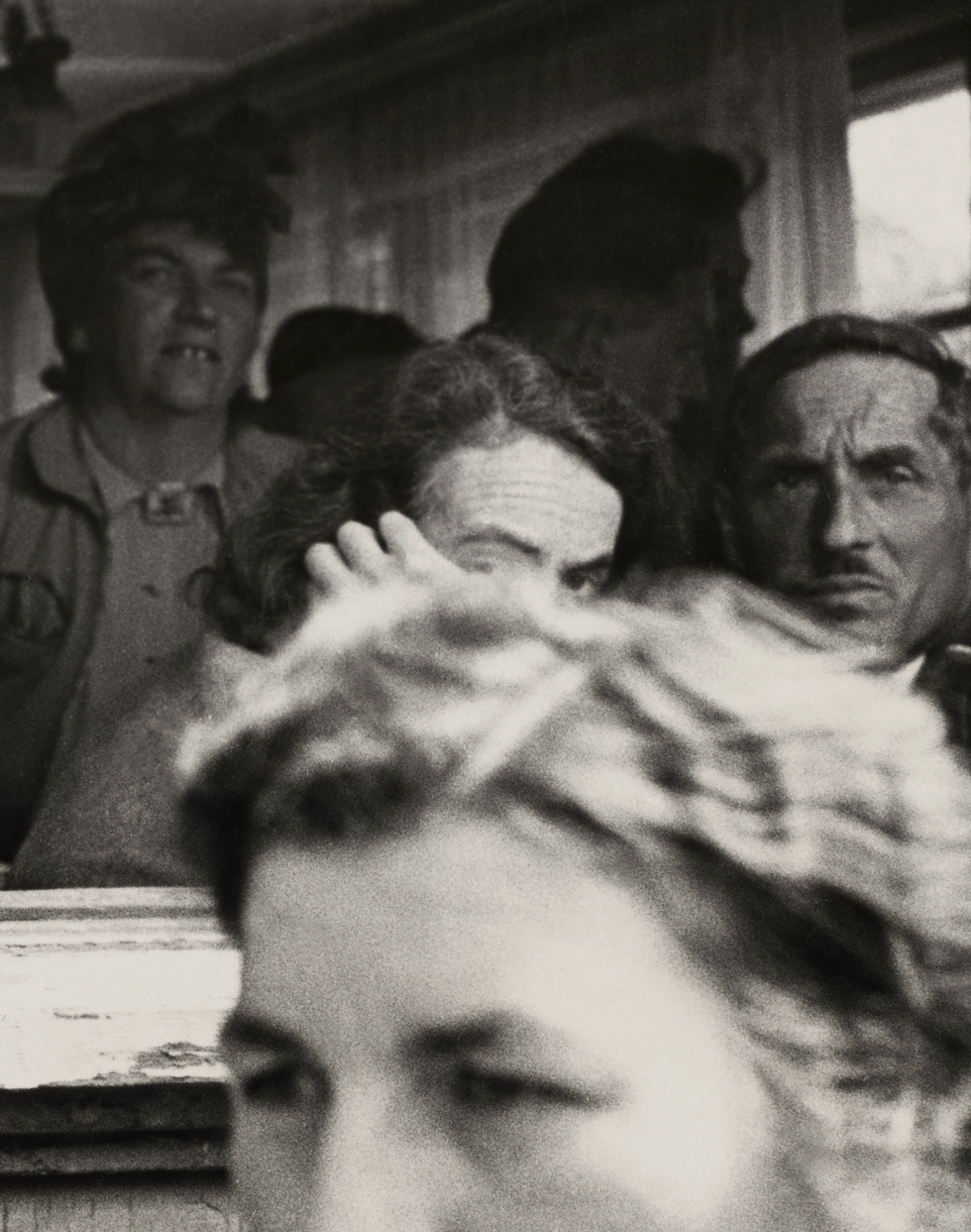
“There is no hierarchy to the selection. A sequence of rooms present numerous fields – portraiture, landscape, advertising work, art photography – like chapters in a novel. “We tried to find surprising images and things we’ve never seen before,” says Boom. The result is a broad mix, shaped with co-curator Hans Rooseboom, of anonymous photography, commercial work, news coverage, medical prints and propaganda, presented in tandem with masterpieces such as Robert Frank’s enigmatic picture of a woman watching a New Jersey parade in 1955, her face partially obscured by an unfurled Stars and Stripes.”1 (see below)

The phrase “a broad mix” says it all: a mishmash of anonymous photography, commercial work, fine art photography, the political power of photography, photographs on racism, war, etc., … taking on too much in one exhibition (the American landscape is largely absent from the walls), proclaiming to be a comprehensive survey of American photography. An impossible task.

“The exhibition has deliberately departed from a “top 100” approach, Rooseboom [one of the curators] adds, stating “that would have been too easy”.”2

Easy to say (and move away from) but not easy to do…

What I feel is lacking in this subjective selection (all exhibitions are subjective) is the focused “energy” present in American photography radiating from the wall – the energy that documents and imagines the growth of a nation and the passion of the artists that capture that energy.

Where is, for example, the passion of Sally Mann’s photographs of the American South, the New York buildings of Berenice Abbott, George Dureau’s portraits of friends and amputees in New Orleans, the narrative stories of Duane Michals or the darkness / otherness that has always been present from the very start in American photography. In the selection in the posting, the photographs of Robert Frank (a foreigner, whose photographs of America were reviled when they were first published) and Nan Goldin (photographs of counter culture America) come closest to this alternate perspective, both outsiders from the main stream point of view.

Thus, while there are some interesting photographs in the exhibition it’s all too ho hum for me, perhaps a “vapour” of something almost brought into consciousness.

Dr Marcus Bunyan


1/ Christian House. “American Photography: unforgettable images of the beauty and brutality of a nation,” on The Guardian website Thu 13 Feb 2025 [Online] Cited 06/06/2025

2/ Deborah Nicholls-Lee. “Eight images that tell the story of America,” on the BBC website 12 February 2025 [Online] Cited 06/06/2025


Many thankx to the Rijksmuseum for allowing me to publish the photographs in the posting. Please click on the photographs for a larger version of the image.
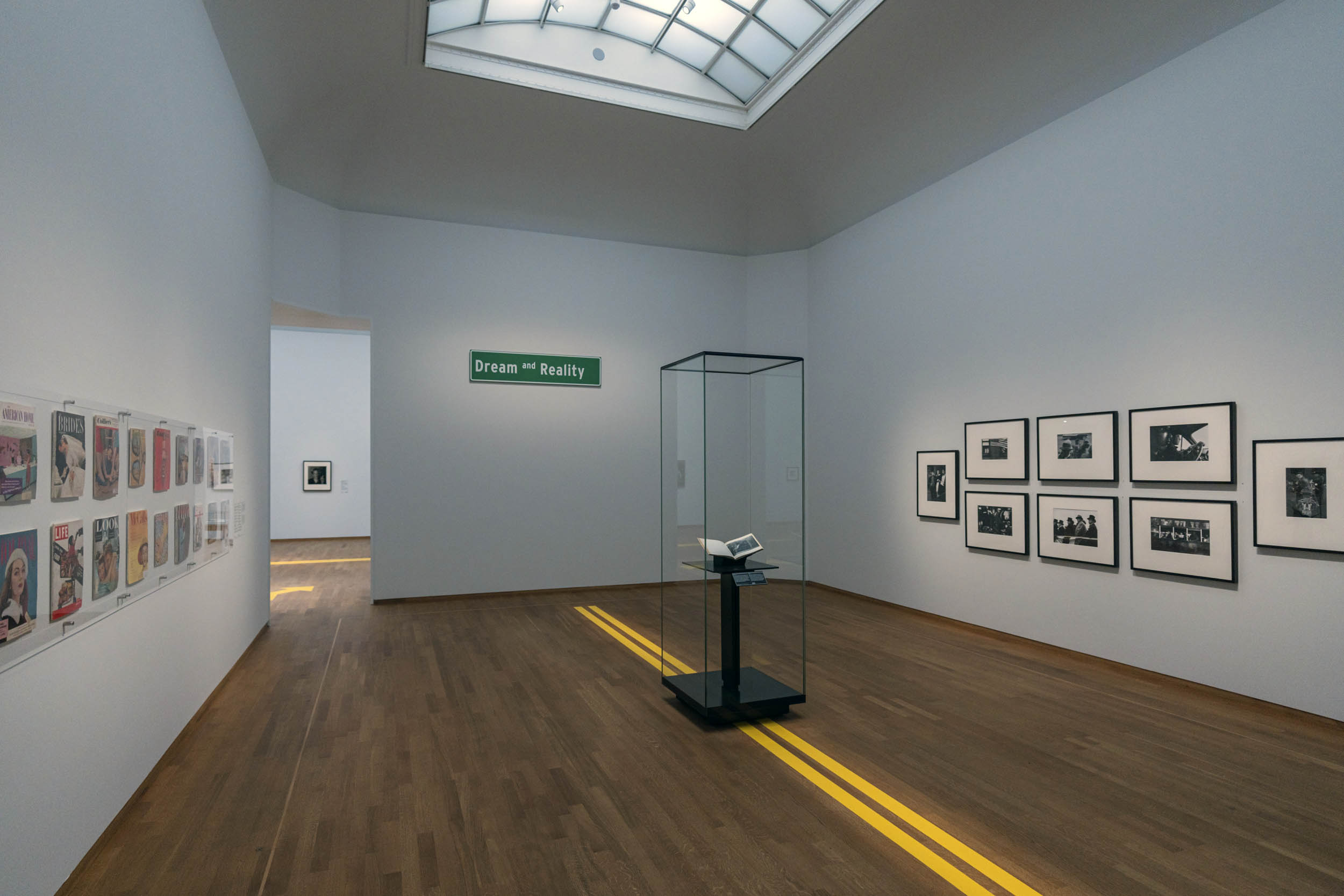


Installation view of the exhibition ‘American Photography’ at Rijksmuseum, Amsterdam showing at right photography by Robert Frank


Installation view of the exhibition American Photography at Rijksmuseum, Amsterdam showing at right photographs by Robert Frank (below)
Photo: Rijksmuseum/Olivier Middendorp
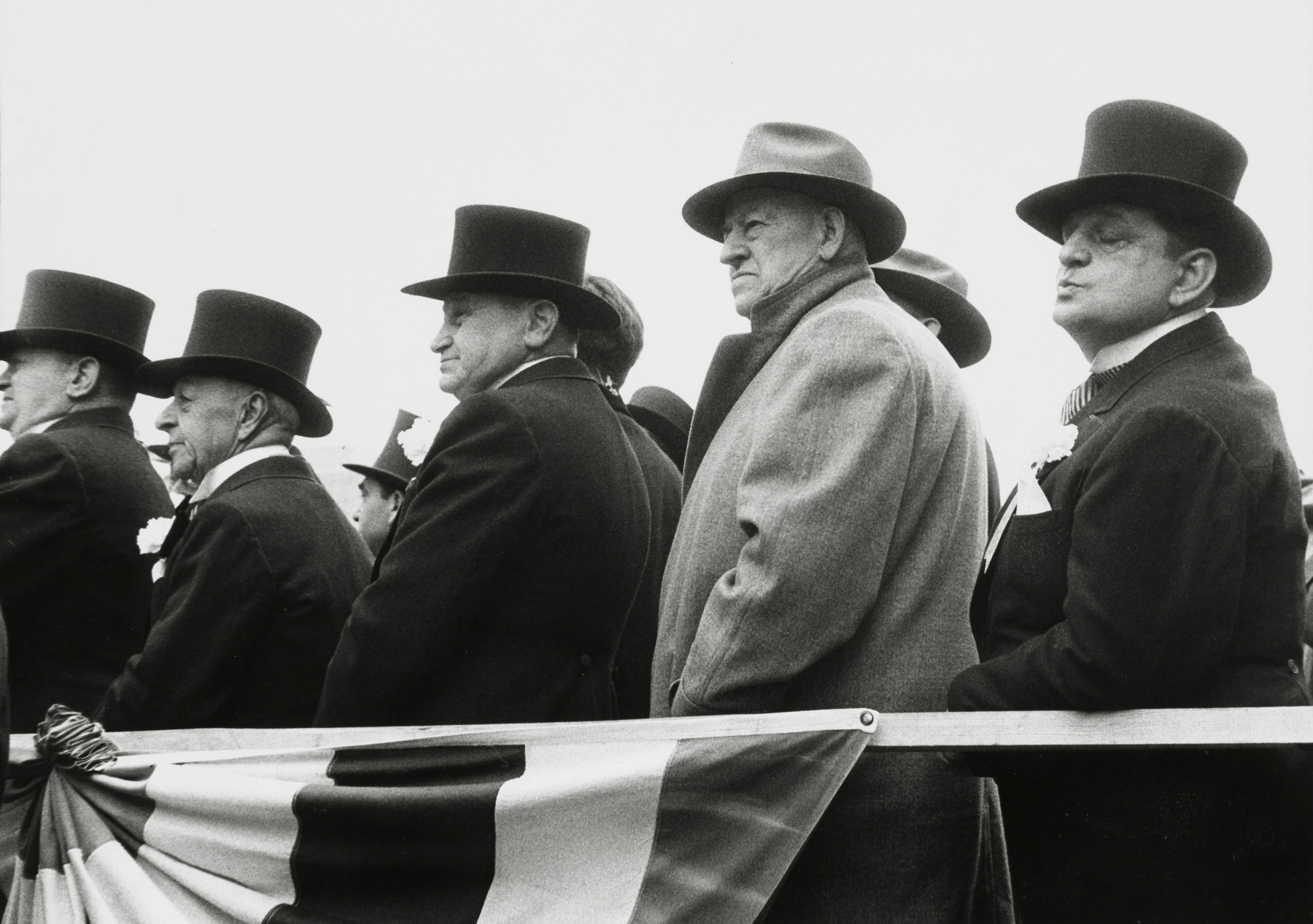
 

Robert Frank (Swiss, 1924-2019) 'City fathers – Hoboken, New Jersey' 1955


Robert Frank (Swiss, 1924-2019)
City fathers – Hoboken, New Jersey
1955
Gelatin silver print


Robert Frank (Swiss, 1924-2019) 'Parade - Hoboken, New Jersey' 1955


Robert Frank (Swiss, 1924-2019)
Parade – Hoboken, New Jersey
1955
Gelatin silver print
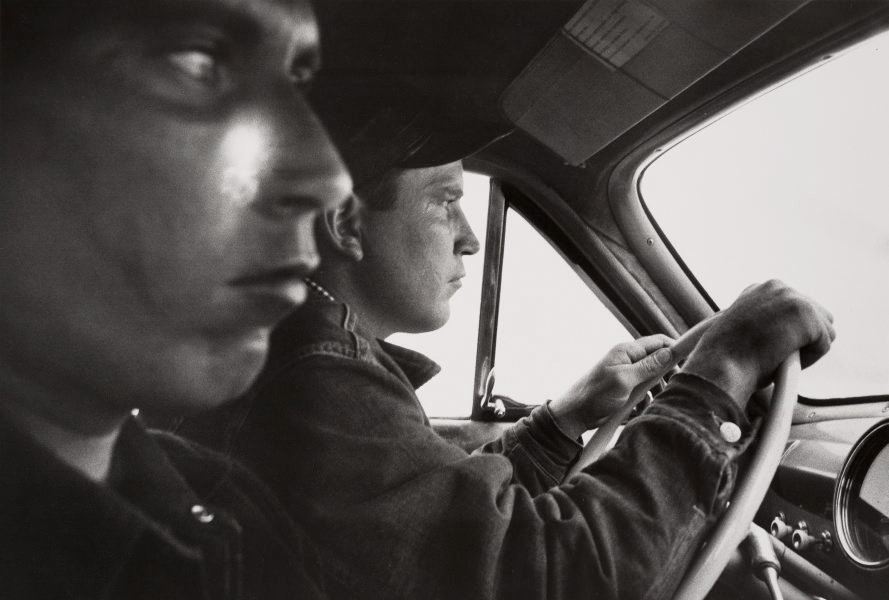
 

Robert Frank (Swiss, 1924-2019) 'U.S. 91, Leaving Blackfoot, Idaho' 1956


Robert Frank (Swiss, 1924-2019)
U.S. 91, Leaving Blackfoot, Idaho
1956
Gelatin silver print


Robert Frank (Swiss, 1924-2019) 'New York City' 1955


Robert Frank (Swiss, 1924-2019)
New York City
1955
Gelatin silver print


Rijksmuseum moves you to The American Dream. To the real American. To unexpected recognition. The Rijksmuseum is staging the Netherlands’ first major survey exhibition of American photography.

The more than 200 works on display in American Photography reflect the rich and multifaceted history of photography in the United States. The exhibition presents the country as seen through the eyes of American photographers, and shows how the medium has permeated every aspect of our lives: in art, news, advertising and everyday life.

Over the past decades the Rijksmuseum has been assembling a collection of American photographic work. This is the first time we are exhibiting photographs from the collection, alongside loaned works from American, Dutch and other European collections. This show includes iconic photographs by the likes of Sally Mann, Robert Frank, Lisette Model, Nan Goldin, Richard Avedon, Andy Warhol, Paul Strand, Diane Arbus and James Van Der Zee, as well as surprising images by unknown and anonymous photographers.

Text from the Rijksmuseum website
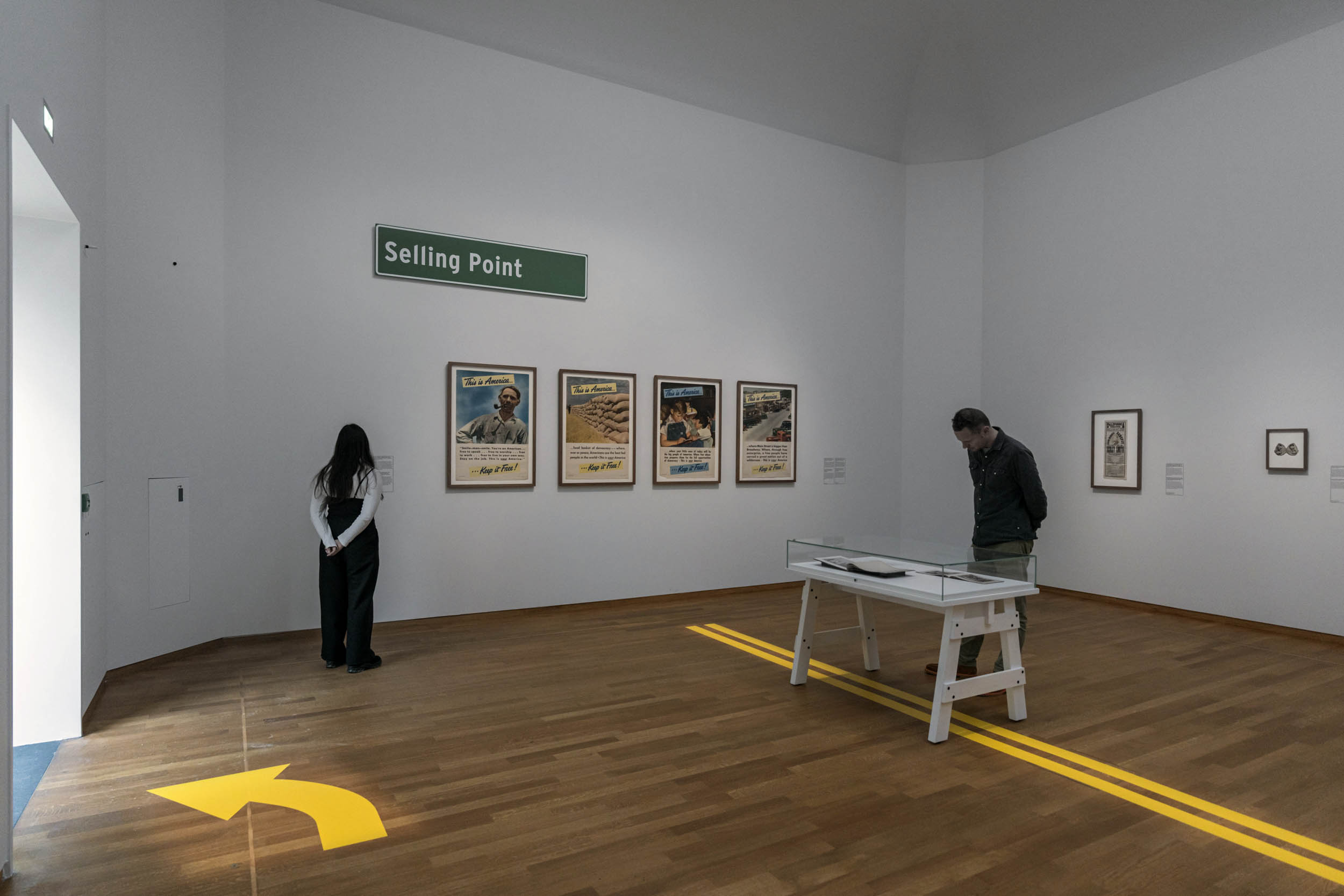
 

Installation view of the exhibition ‘American Photography’ at Rijksmuseum, Amsterdam


Installation view of the exhibition American Photography at Rijksmuseum, Amsterdam showing in the bottom image at left, Sally Mann’s Jessie #34
(2004, below); at second left, Chuck Close’s Phil [Photo Maquette of Philip Glass] (1969, below); and at third right, László Moholy-Nagy’s Parking lot in Chicago, 1938 (1938, below)
Photo: Rijksmuseum/Olivier Middendorp


Sally Mann (American, b. 1951) 'Jessie #34' 2004


Sally Mann (American, b. 1951)
Jessie #34
2004
Gelatin Silver enlargement print from 8 x 10 in. collodion wet-plate negative, with Soluvar matte varnish mixed with diatomaceous earth


Chuck Close (American, 1940-2021) 'Phil' [Photo Maquette of Philip Glass] 1969


Chuck Close (American, 1940-2021)
Phil [Photo Maquette of Philip Glass]
1969
16 x 12 inches (40.64 x 30.48cm)
Gelatin silver print mounted on mat board
© Chuck Close
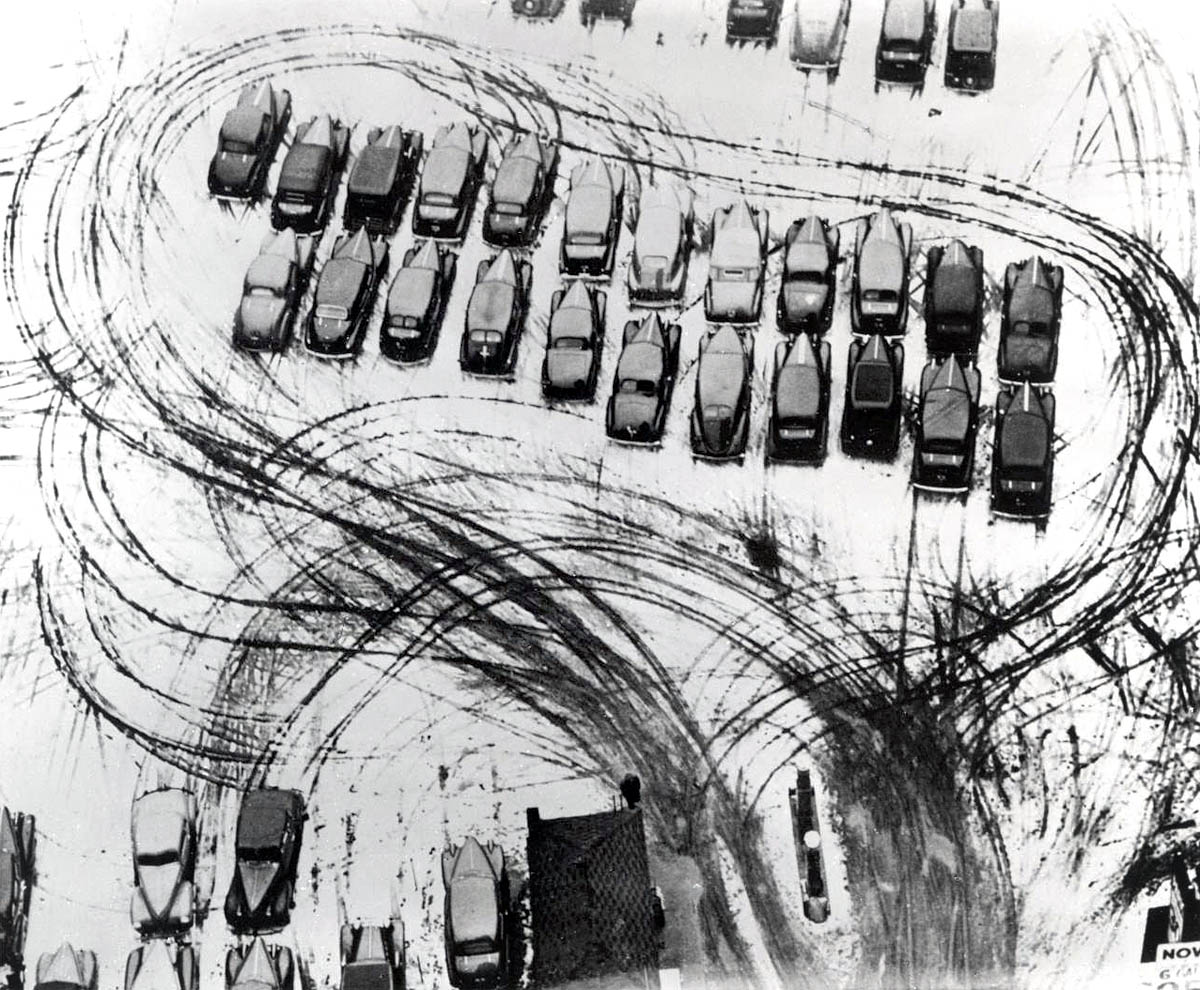
 

László Moholy-Nagy (Hungarian, 1895-1946) 'Parking Lot in Chicago' 1938


László Moholy-Nagy (Hungarian, 1895-1946)
Parking lot in Chicago, 1938
1938
Gelatin silver photograph
23.8 × 33.8cm


Installation view of the exhibition ‘American Photography’ at Rijksmuseum, Amsterdam showing the work of Nan Goldin from 'The Ballad of Sexual Dependency'


Installation view of the exhibition American Photography at Rijksmuseum, Amsterdam showing the work of Nan Goldin from The Ballad of Sexual Dependency (below)
Photo: Rijksmuseum/Olivier Middendorp
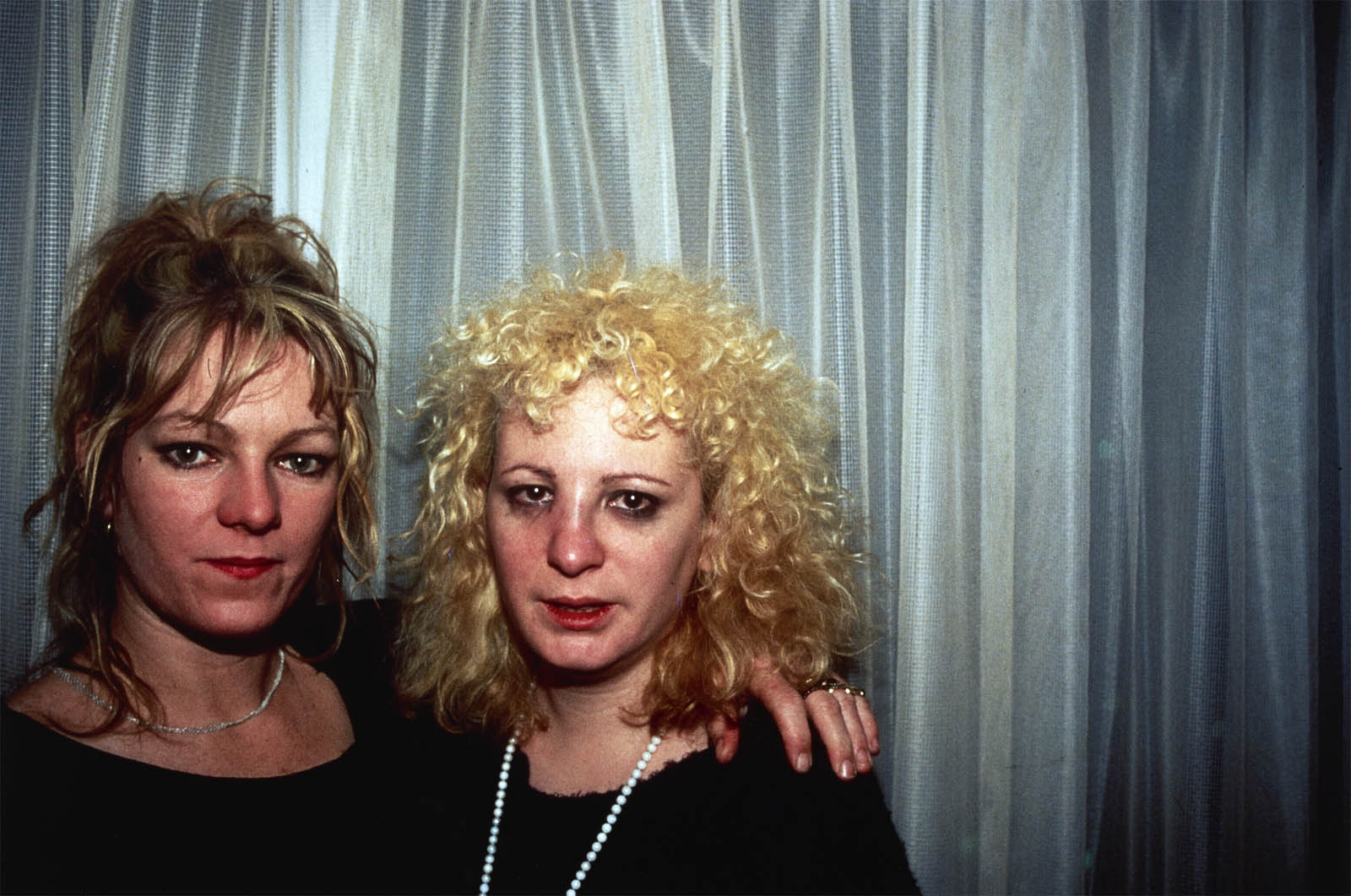
 

Nan Goldin (American, b. 1953) 'Cookie with Me After Being Hit at the SPE Conference, Baltimore, MD, 1986' 1986


Nan Goldin (American, b. 1953)
Cookie with Me After Being Hit at the SPE Conference, Baltimore, MD, 1986
1986
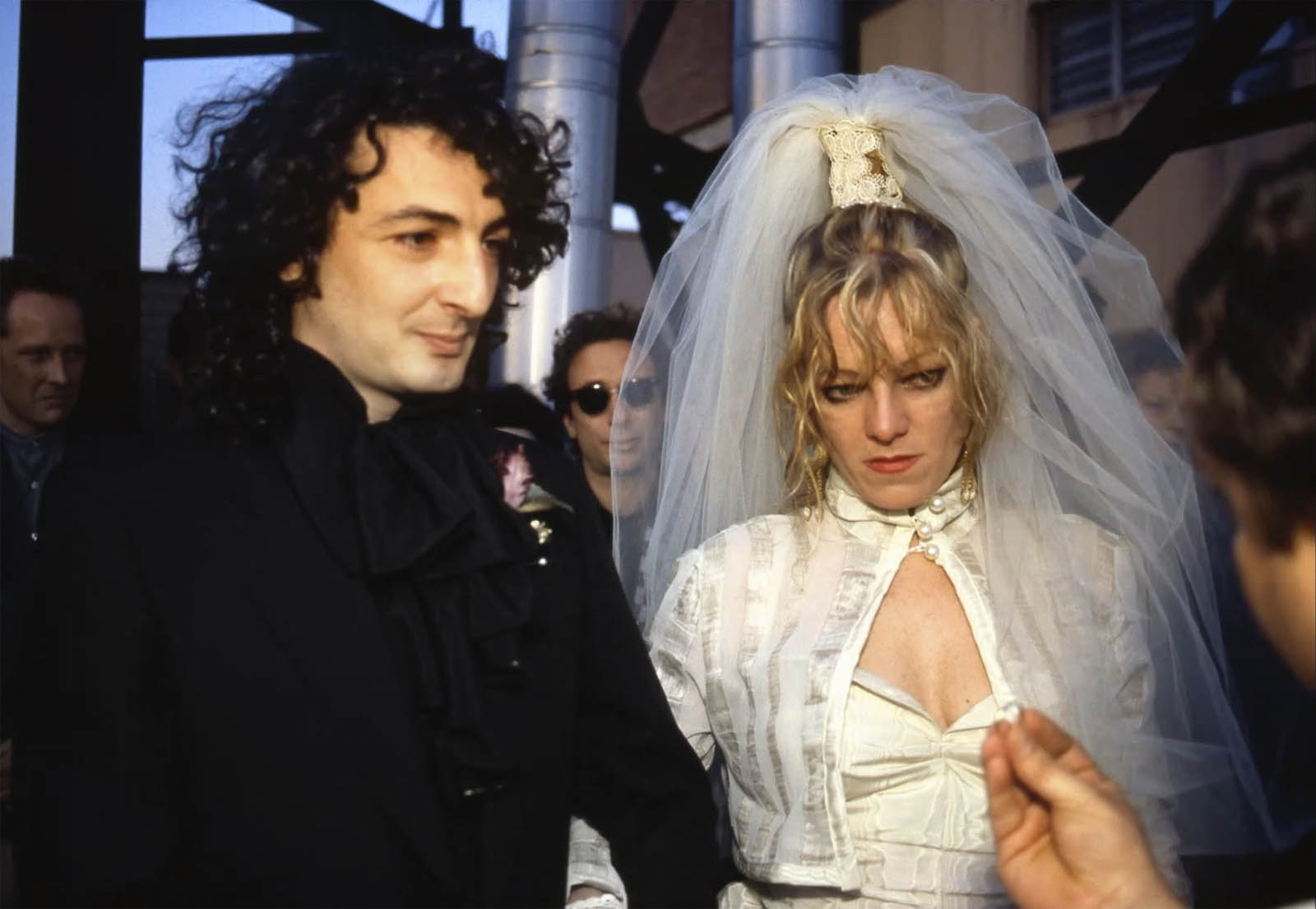
 

Nan Goldin (American, b. 1953) 'Cookie and Vittorio’s Wedding: The Ring, NYC, 1986' 1986


Nan Goldin (American, b. 1953)
Cookie and Vittorio’s Wedding: The Ring, NYC, 1986
1986
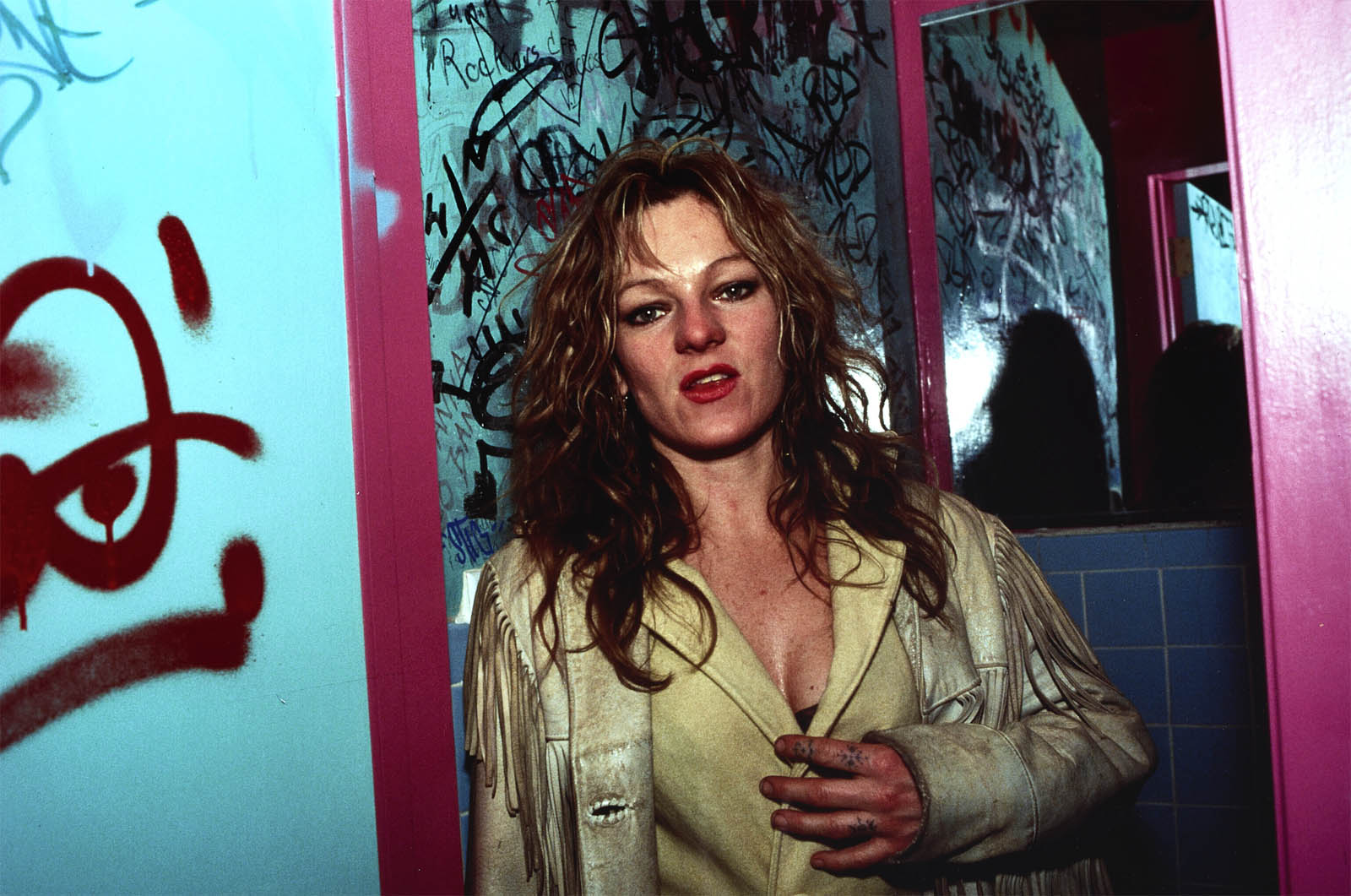
 

Nan Goldin (American, b. 1953) 'Cookie in the Bathroom at Hawaii 5.0, NYC, 1986' 1986


Nan Goldin (American, b. 1953)
Cookie in the Bathroom at Hawaii 5.0, NYC, 1986
1986


The Rijksmuseum presents the first comprehensive survey of American photography in Europe. With more than 200 works spanning three centuries, American Photography will be an exploration of the rich and multifaceted history of photography in the United States, showing how the medium has permeated every aspect of our lives: in art, news, advertising and everyday life. 

Over the past decade, the Rijksmuseum has built an extensive collection of American Photography. This exhibition is the first ever presentation of Rijksmuseum’s collection, which will be shown together with loans from over 30 collections in the United States, the Netherlands and other European countries. Works by icons including Sally Mann, Robert Frank, Lisette Model, Nan Goldin, Richard Avedon, Andy Warhol, Paul Strand, Diane Arbus and James Van Der Zee will be on view alongside eye-opening photographs by unknown and anonymous photographers. 

The exhibition is possible by Rijksmuseum’s major partnership with Baker McKenzie. American Photography runs from 7 February to 9 June 2025. Concurrently with American Photography, Carrie Mae Weems’s 2021 series Painting the Town will be on show in the Rijksmuseum’s photography gallery.

American Photography will give picture of the country through the eyes of American photographers, showing the country in all its complexity. The exhibition takes themes such as the American dream, landscapes and portraiture to trace how photographers increasingly reflected on changes and events in their country. A major topic of the show is photography’s evolution as an art form, from 19th-century daguerreotypes of frost flowers on a window to the work of Paul Strand, Charles Sheeler, Sally Mann, Irving Penn, Dawoud Bey and Sarah Sense. Another important theme is how photography has grown to be a part of everyday life, which is demonstrated by family portraits, advertisements, postcards, gramophone record covers and more.

Press release from Rijksmuseum
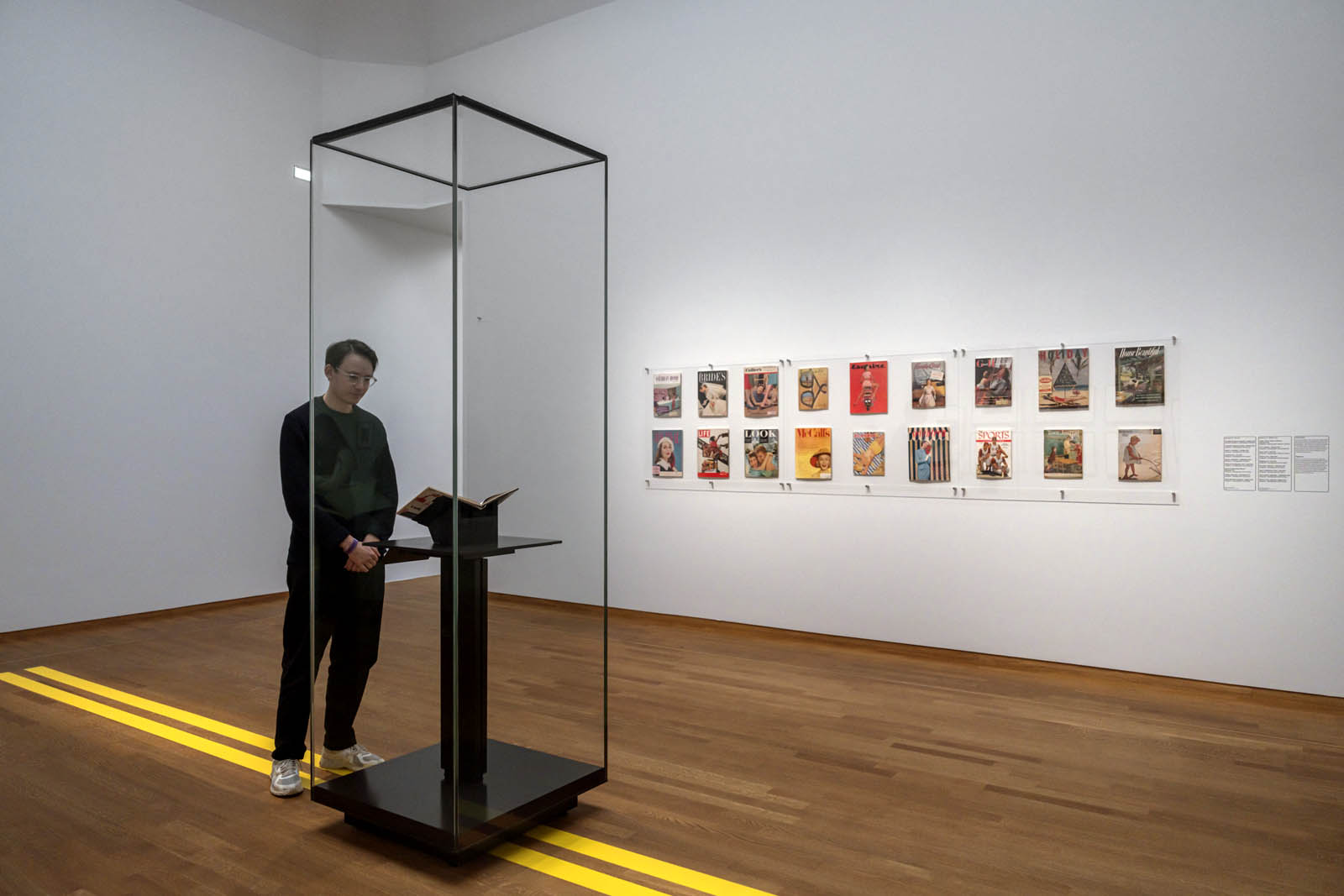
 

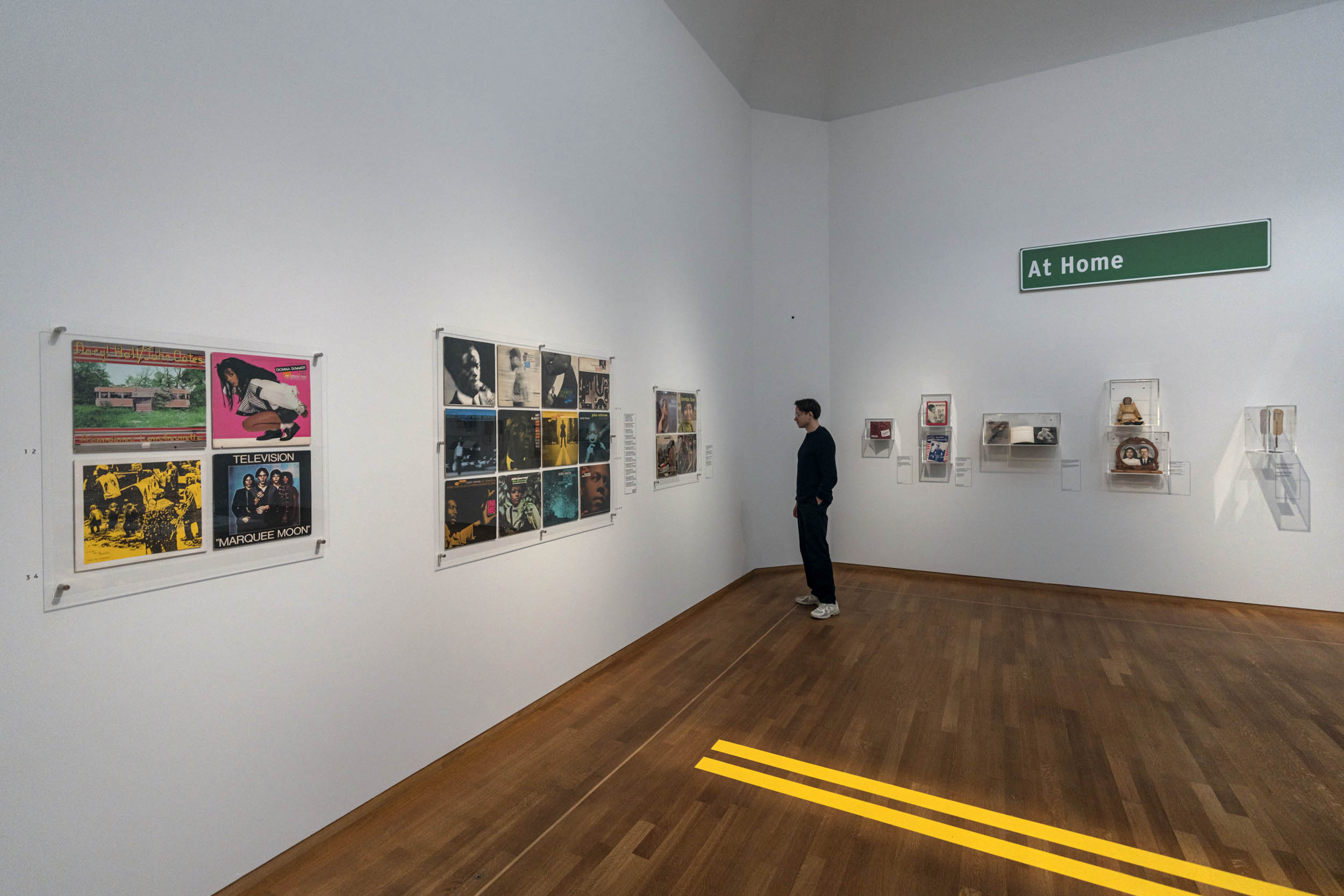
Installation view of the exhibition ‘American Photography’ at Rijksmuseum, Amsterdam
Installation view of the exhibition ‘American Photography’ at Rijksmuseum, Amsterdam showing at right, Jocelyn Lee's 'Julia in Greenery' (2005)


Installation view of the exhibition American Photography at Rijksmuseum, Amsterdam showing in the bottom photograph at right, Jocelyn Lee’s Julia in Greenery (2005, below)
Photo: Rijksmuseum/Olivier Middendorp


Jocelyn Lee (American, b. 1962) 'Julia in Greenery' 2005


Jocelyn Lee (American, b. 1962)
Julia in Greenery
2005
Archival Pigment Print
20 × 24 in | 50.8 × 61cm
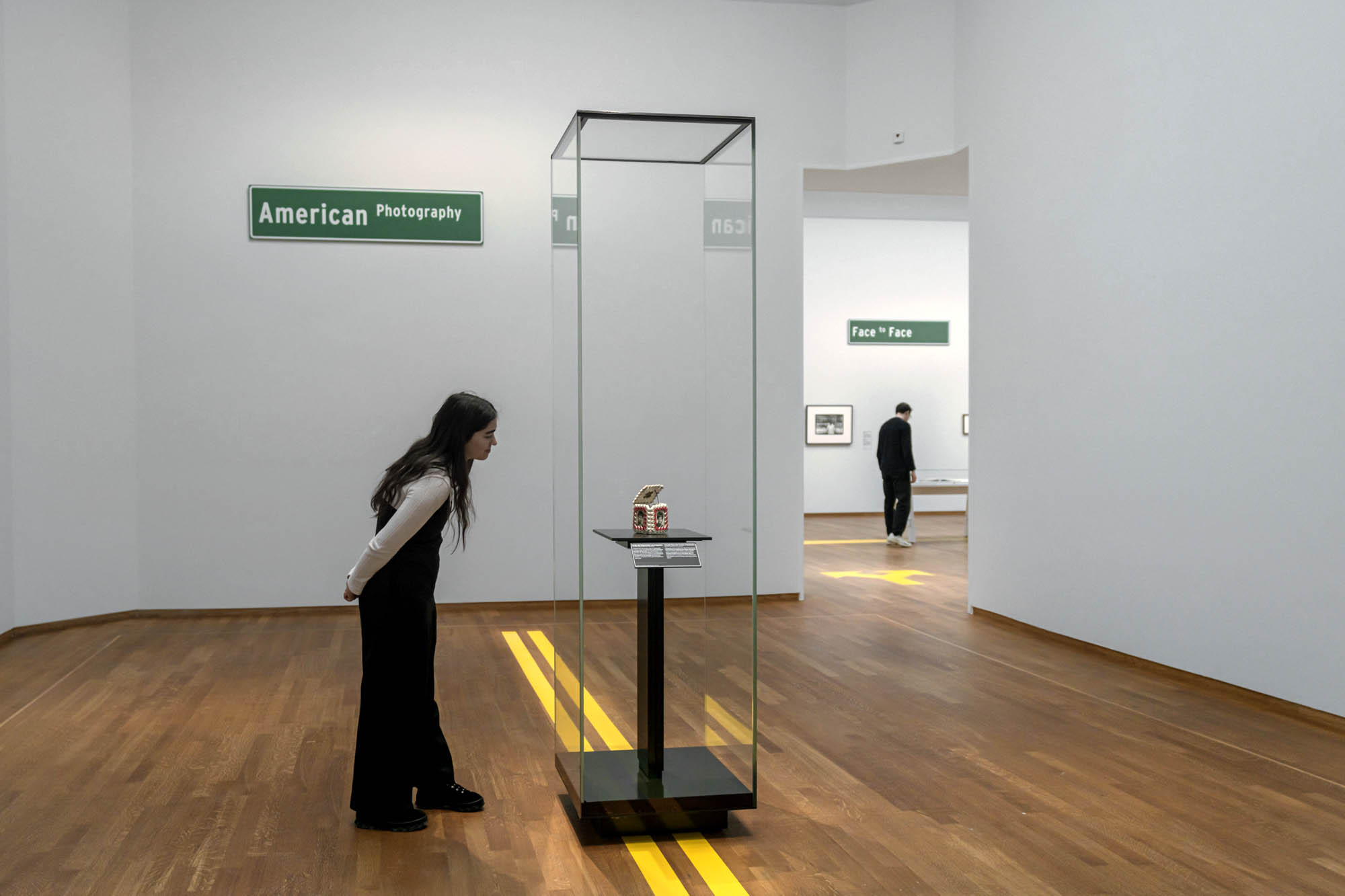
 

Installation view of the exhibition ‘American Photography’ at Rijksmuseum, Amsterdam


Installation view of the exhibition American Photography at Rijksmuseum, Amsterdam showing in the display case, Curio box made of cigarette packets with portraits of roommates, late 1960s (below)
Photo: Rijksmuseum/Olivier Middendorp
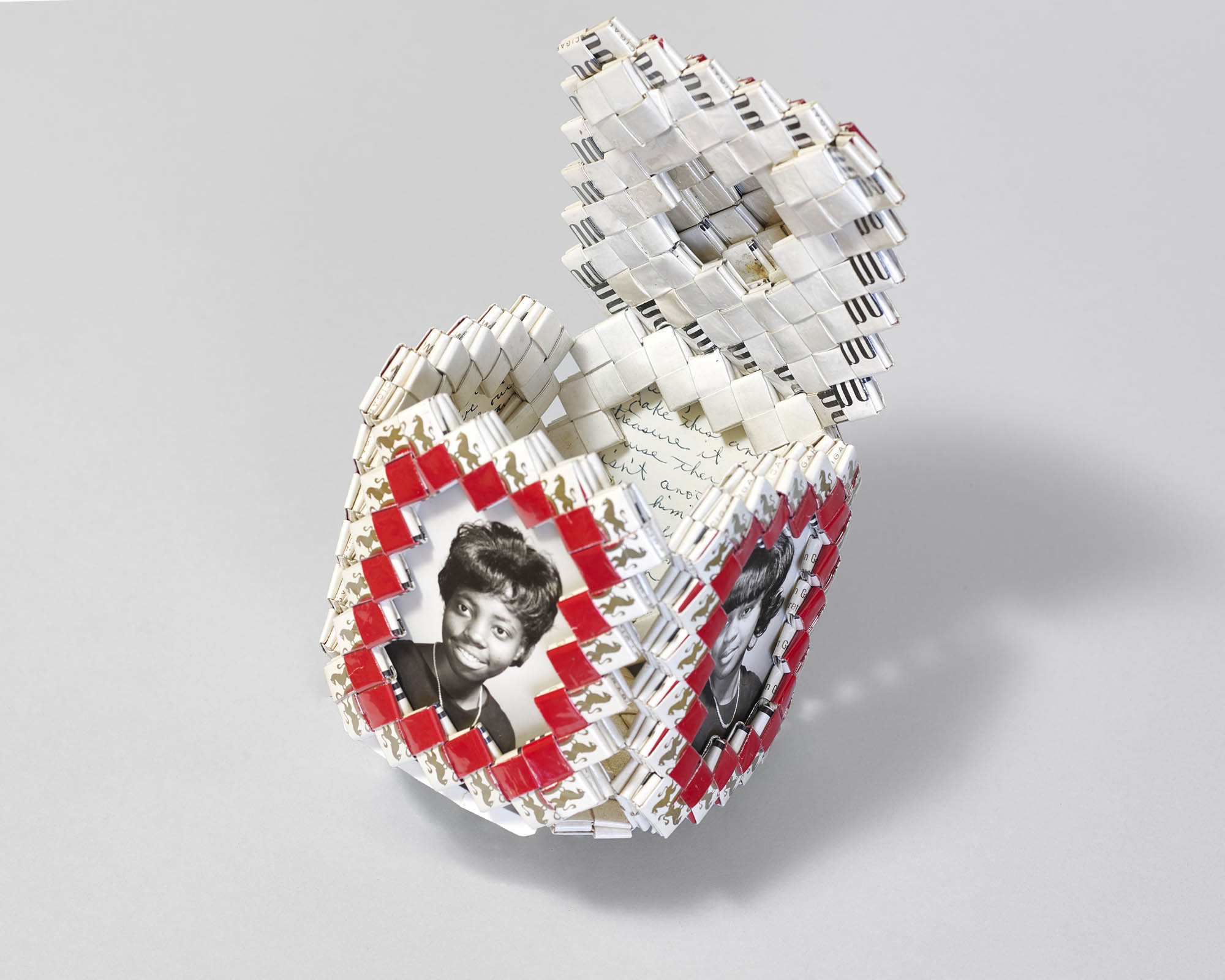
 

Curio box made of cigarette packets with portraits of roommates, late 1960s from the exhibition 'American Photography' at Rijksmuseum, Amsterdam, Feb - June, 2025


Curio box made of cigarette packets with portraits of roommates, late 1960s
Wood, handwoven cigarette packets, gelatin silver prints
140 x 110 x 195 mm
Collection of Daile Kaplan, Pop Photographica, New York
Photo: Andy Romer Photography, New York
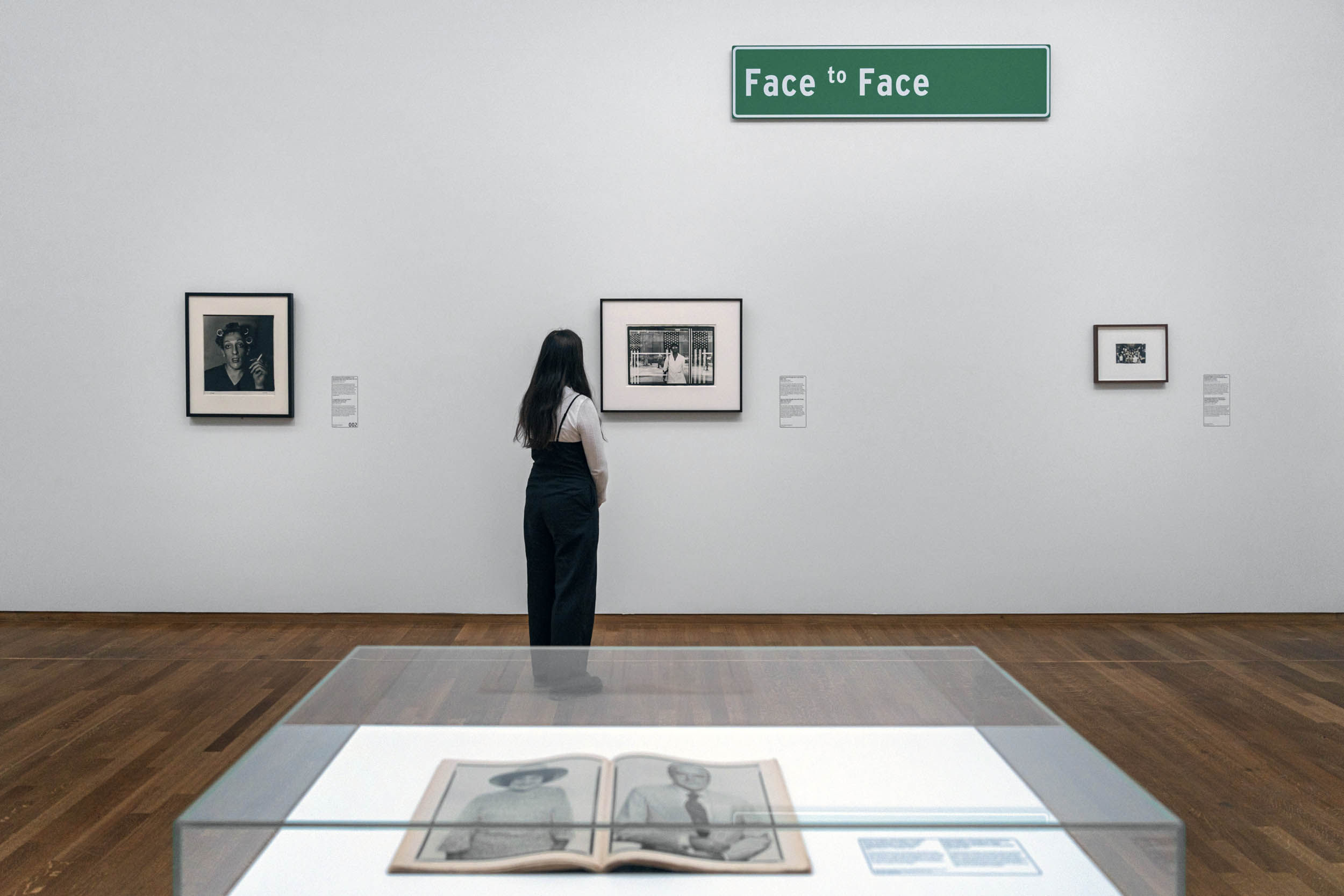
 

Installation view of the exhibition ‘American Photography’ at Rijksmuseum, Amsterdam showing at left, Diane Arbus' 'A young man in curlers at home on West 20th St., N.Y.C. 1966' (1966); and at second left, Ming Smith's 'America Seen Through Stars and Stripes, New York City' (1976)


Installation view of the exhibition American Photography at Rijksmuseum, Amsterdam showing at left, Diane Arbus’ A young man in curlers at home on West 20th St., N.Y.C. 1966 (1966, below); and at second left, Ming Smith’s America Seen Through Stars and Stripes, New York City (1976, below)
Photo: Rijksmuseum/Olivier Middendorp
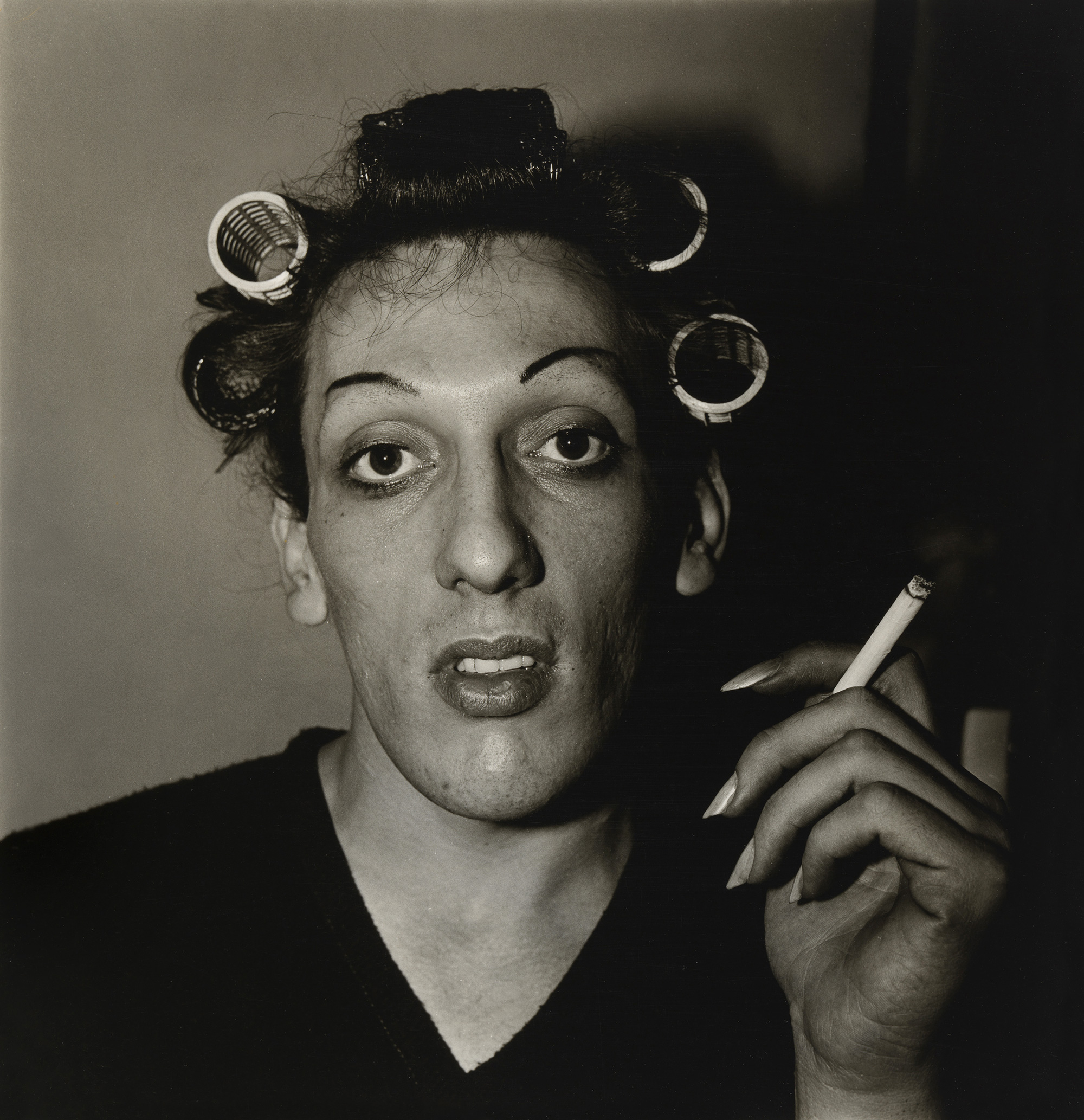
 

Diane Arbus (American, 1923-1971) 'A young man in curlers at home on West 20th St., N.Y.C. 1966' 1966


Diane Arbus (American, 1923-1971)
A young man in curlers at home on West 20th St., N.Y.C. 1966
1966
Gelatin silver print
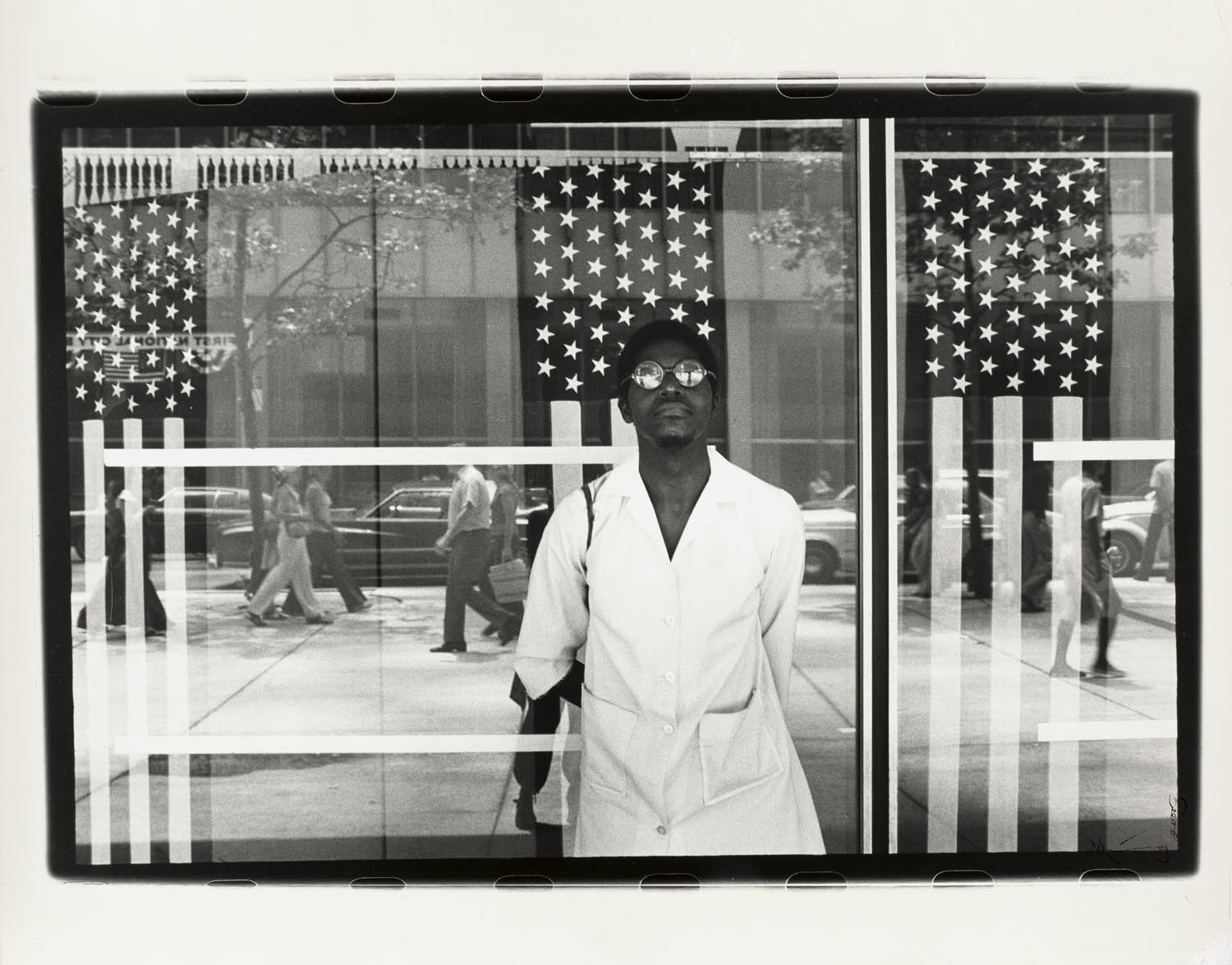
 

Ming Smith (American, b. 1951) 'America Seen Through Stars and Stripes, New York City' 1976 from the exhibition 'American Photography' at Rijksmuseum, Amsterdam, Feb - June, 2025


Ming Smith (American, b. 1951)
America Seen Through Stars and Stripes, New York City
1976
Gelatin silver print
318 x 470 mm
Virginia Museum of Fine Arts, Richmond (VA)
Adolph D. and Wiliams C. Williams Fund


In the post-war years, mass immigration to the US brought new ways of thinking. the US took over from Europe as a cultural trendsetter, and photography was eventually accepted as an art form. Playful approaches to photography emerged, moving beyond documenting people and places to provoking emotion and inviting deep questions. Ming Smith’s America Seen Through Stars and Stripes (1976), created on the bicentenary of the Declaration of Independence, turns again to the flag inviting America to reflect on its history. By placing a figure in mirrored sunglasses in front of a shop window, she creates a disorientating mesh of reflective surfaces. The grid structure suggests incarceration but – in combination with the round glasses and the stars on the flag – also creates an abstract composition reminiscent of modern art. “She’s a careful observer, playing with all these layers in the image,” says Boom.

Smith explores the artistic potential of photography, experimenting with double-exposure, shutter speed and collage. In one version of this image, she paints on bold red stripes, altering this snapshot of the US with marks that resemble blood or flames. Smith’s work builds on the civil rights movement that preceded it and features activists such as James Baldwin and Alvin Ailey. She was the first woman to join the African-American photography collective the Kamoinge Workshop and the first black woman to have her work acquired by the Museum of Modern Art (MoMA). Yet her demographic was largely overlooked by the art world. “I worked to capture black culture, the richness, the love. That was my incentive,” she told the Financial Times in 2019. “It wasn’t like I was going to make money from it, or fame – not even love, because there were no shows.”

Deborah Nicholls-Lee. “Eight images that tell the story of America,” on the BBC website 12 February 2025 [Online] Cited 06/06/2025


Henry Fitz Jnr (American, 1808-1863) 'Self-portrait' 1840


Henry Fitz Jnr (American, 1808-1863)
Self-portrait
1840
Daguerreotype
Smithsonian National Museum of American History, Washington (DC)


In 1840, using a self-made copper plate, Henry Fitz Jnr produced one of the world’s first selfies, his eyes gently closed to prevent any blinking from spoiling the result. In creating this striking blue image, he was doing more than record his appearance; he was also documenting America’s first essays into an art form that would tell its story in radical new ways.

Deborah Nicholls-Lee. “Eight images that tell the story of America,” on the BBC website 12 February 2025 [Online] Cited 06/06/2025


Thomas Martin Easterly (American, 1809-1882) 'Chief Keokuk (Watchful Fox)' 1847


Thomas Martin Easterly (American, 1809-1882)
Chief Keokuk (Watchful Fox)
1847
Daguerreotype
Missouri History Museum
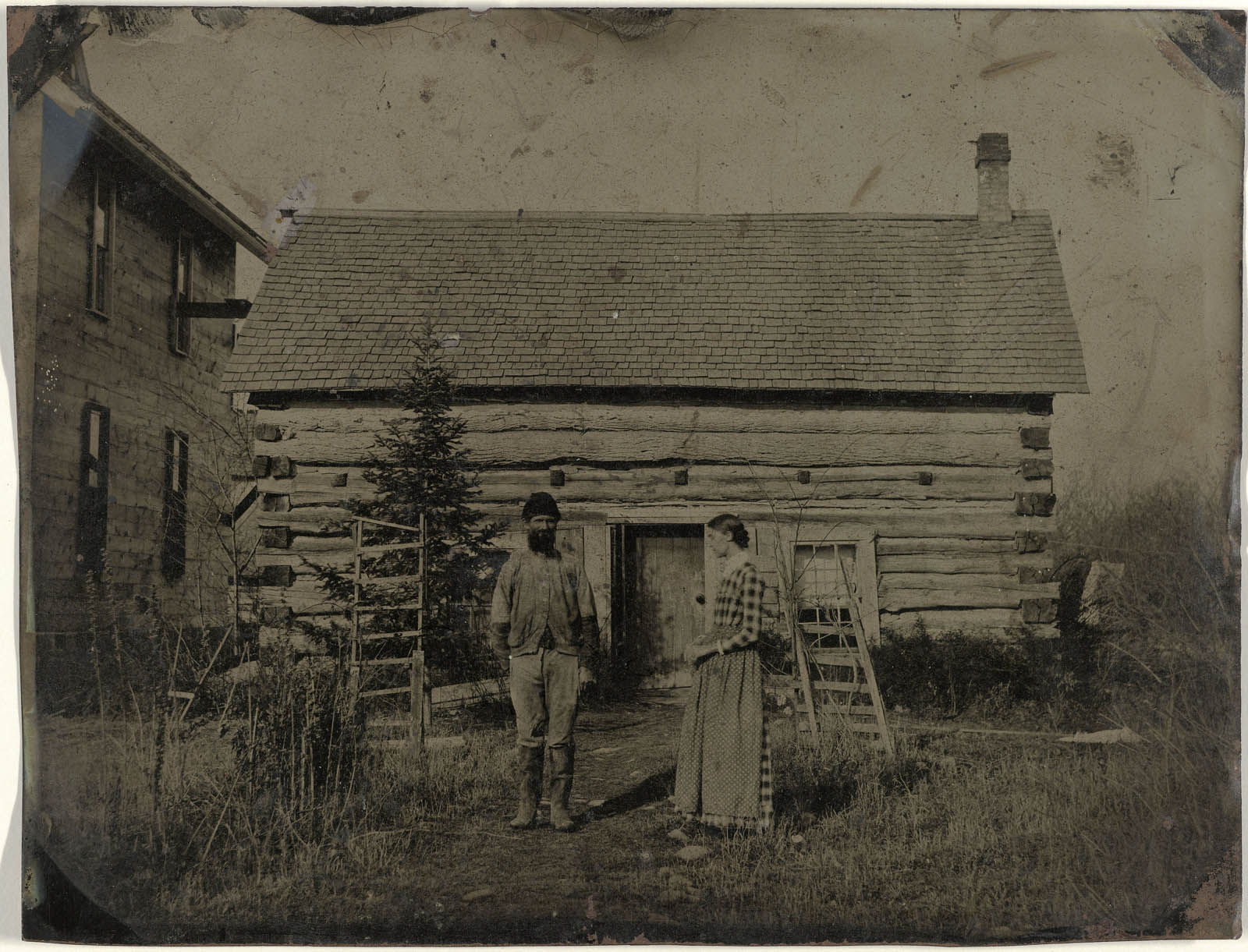
 

Anonymous photographer. 'View of a wooden house or barn with a man and a woman in front' c. 1870-1875


Anonymous photographer
View of a wooden house or barn with a man and a woman in front
c. 1870-1875
Tintype
164 x 215 mm
Rijksmuseum, Amsterdam


A 19th-Century tintype (an image made on a sheet of metal) featuring a man and woman in front of a rustic barn is a case in point. The image was probably sold on the spot by a travelling tin typist “for a modest price”, explains Rooseboom. “Many people had just arrived and were living in the countryside, no big city nearby, so this was the only possibility of having your portrait taken.” The man stands proud, looking at the camera, but the woman’s head is bowed and she is looking away. “Sometimes you can sense that people were simply not used to being photographed,” says Rooseboom. “Nowadays, we’ve seen in magazines and movies how to pose elegantly.” This may be the only time in their whole life that they would be photographed, and the result, adds Boom, “would hang on the wall of the house where they lived forever”.

Deborah Nicholls-Lee. “Eight images that tell the story of America,” on the BBC website 12 February 2025 [Online] Cited 06/06/2025
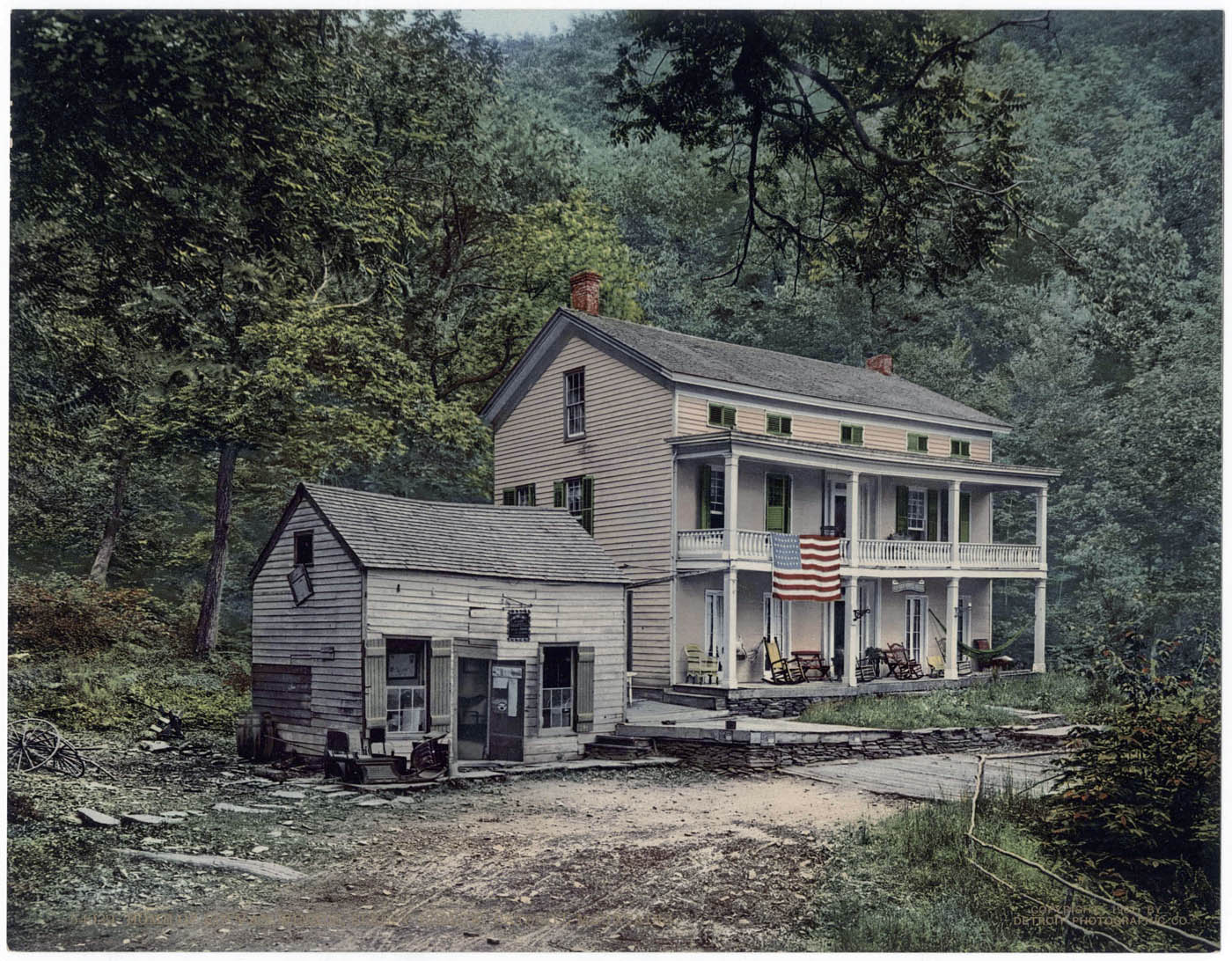
 

Detroit Photographic Company. 'Home of Rip Van' Nd


Detroit Photographic Company
Home of Rip Van
Nd
Rijksmuseum, Amsterdam


Bertha E. Jaques (American, 1863-1941) 'Tree - in Governor Gleghorn’s Place Honolulu' 1908


Bertha E. Jaques (American, 1863-1941)
Tree – in Governor Gleghorn’s Place Honolulu
1908
Cyanotype
248 x 152 mm
Rijksmuseum, Amsterdam, purchased with the support of Baker McKenzie


Walker Evans (American, 1903-1975) (photographer) (mentioned on object) 'A free country? This is America … Keep it Free!' Nd


Walker Evans (American, 1903-1975) (photographer) (mentioned on object)
A free country? This is America … Keep it Free!
Nd
Sheldon-Claire Company
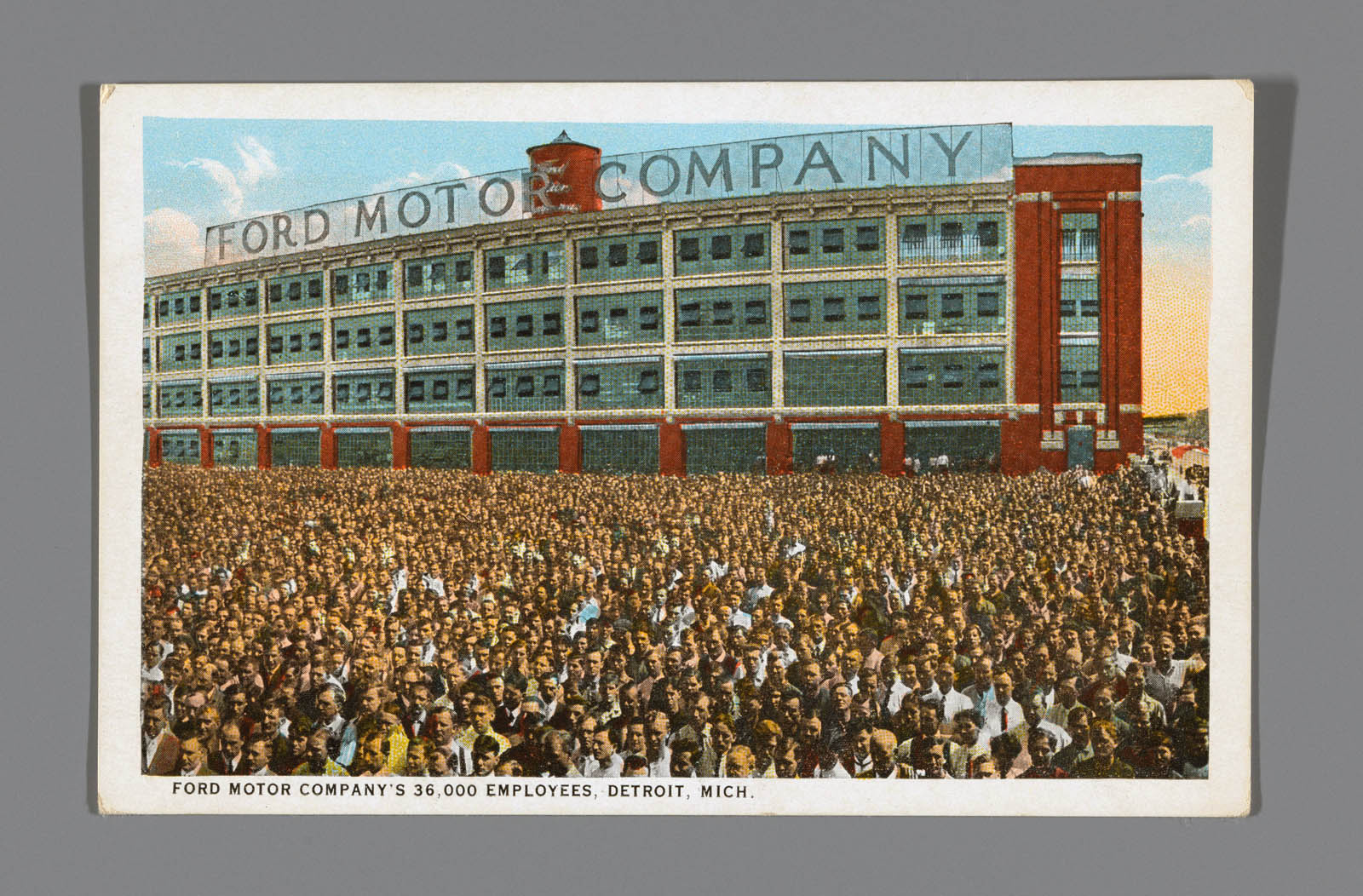
 

United News Company (publisher) ‘12,000 Employees of the Ford Motor Company, Detroit, Mich.' 1913


United News Company (publisher)
12,000 Employees of the Ford Motor Company, Detroit, Mich.
1913
Postcard, relief halftone and colour lithography
88 × 137 mm
Rijksmuseum, Amsterdam


… a 1913 postcard featuring 12,000 employees of the Ford Motor Company in Detroit may have been the “most expensive picture that was ever taken”, quipped a newspaper at the time, as the factory had to shut down for two hours to assemble the staff. The image, the company boasted, was “the largest specially posed group picture ever made” and illustrates a turning point where industry saw the value in investing large sums in promotional photography. Taken in the year when Ford introduced America’s first moving assembly line and the US had become the world’s largest economy, the photograph also depicts the mass production that would shape the country.

The image’s reappearance in Ford marketing also made it an early example of photoshopping. While the same tinted faces swarmed in the foreground, the number of employees cited in the caption increased exponentially, and a building to the left was cropped out in one version and acquired extra floors in another. “Apparently, many photographers and their publishers had no qualms about abandoning their medium’s potential for realism,” write Boom and Rooseboom in the exhibition catalogue.

Deborah Nicholls-Lee. “Eight images that tell the story of America,” on the BBC website 12 February 2025 [Online] Cited 06/06/2025
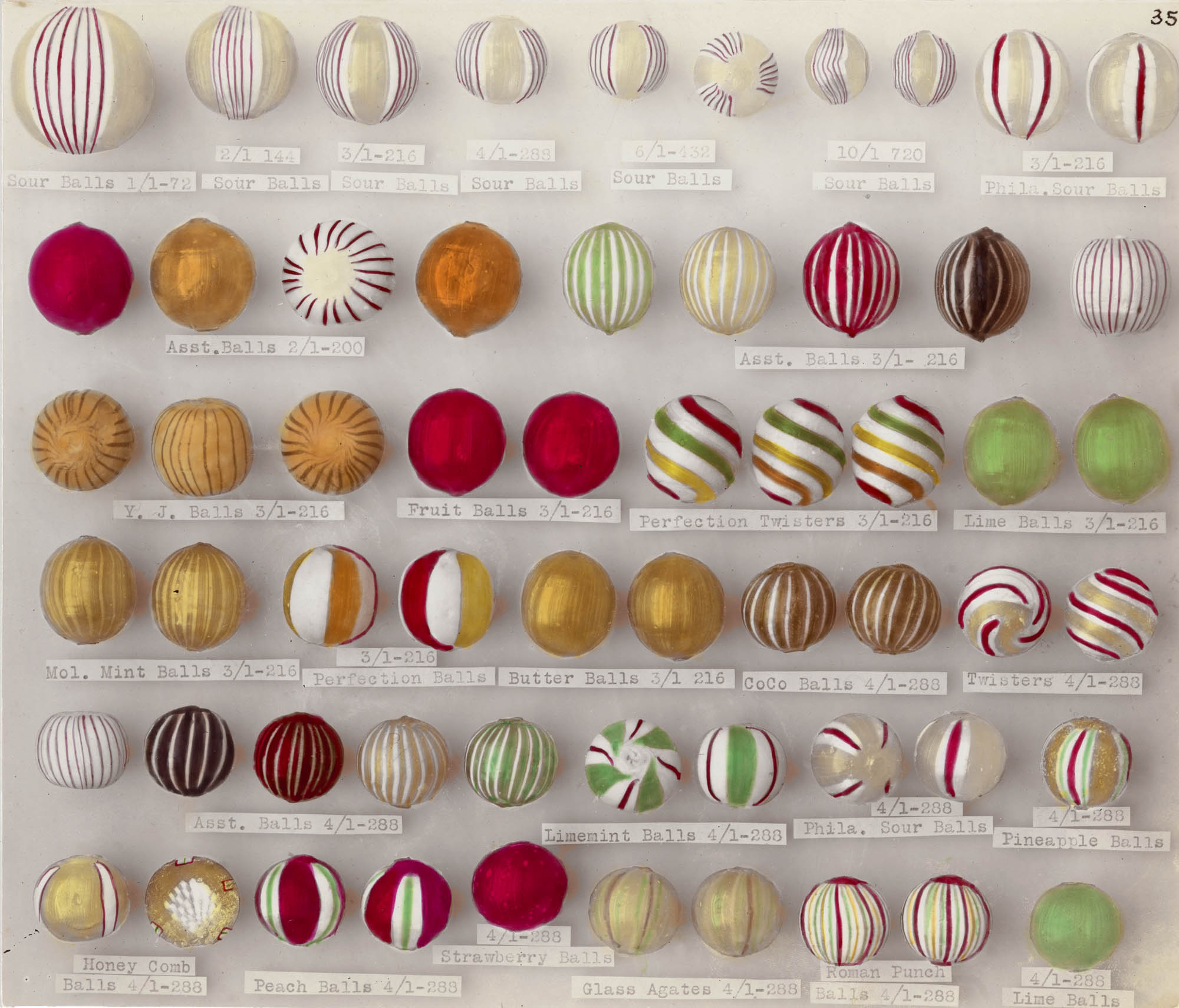
 

Schadde Brothers Studio. 'Display, sample or trade catalogue photograph for sweet manufacturer Brandle & Smith Co.,' c. 1915


Schadde Brothers Studio
Display, sample or trade catalogue photograph for sweet manufacturer Brandle & Smith Co.,
c. 1915
Gelatin silver print with applied colour
288 x 240 mm
Rijksmuseum, Amsterdam
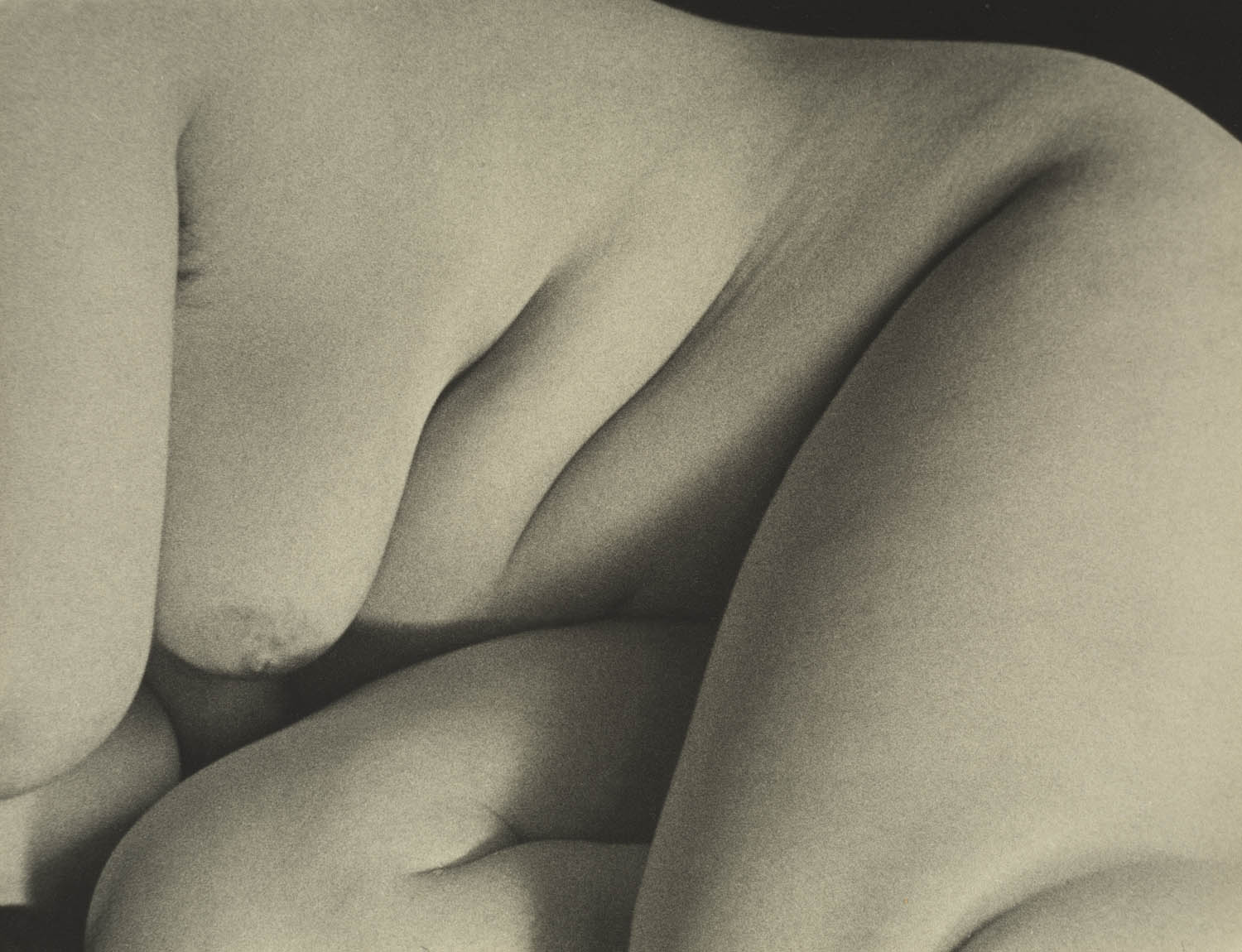
 

Charles Sheeler (American, 1883-1965) 'Nude #3' 1918-1919


Charles Sheeler (American, 1883-1965)
Nude #3
1918-1919
Gelatin silver print
127 × 171 mm
Museum of Fine Arts, Boston


James Van Der Zee (American, 1886-1983) 'Portrait of an Unknown Man, Harlem, New York City' 1938


James Van Der Zee (American, 1886-1983)
Portrait of an Unknown Man, Harlem, New York City
1938
Gelatin silver print
244 x 203 mm
Rijksmuseum, Amsterdam
Purchased with the support of Baker McKenzie
© The James Van Der Zee Archive/The Metropolitan Museum of Art


… the New York portrait photographer James Van Der Zee was also embellishing his work, drawing jewellery on to his subjects and retouching their faces to erase dark lines and wrinkles. “I put my heart and soul into them and tried to see that every picture was better looking than the person,” he said. As a black photographer working from his Harlem studio at the height of the Harlem Renaissance, his work records a period when black migrants fleeing the segregationist South were forging a new life for themselves in the urban North. For the first time, African Americans and other minority groups could be photographed by someone inside their community, and represented in a way that uplifted them. Van Der Zee’s Portrait of an Unknown Man (1938), for example, is carefully posed to suggest confidence. The outfit is elegant and the buttonhole daisy adds a dandyish flourish. It’s an image that reflects the aspirations and upward mobility of African-American people and the pride Van Der Zee had in his culture.

Deborah Nicholls-Lee. “Eight images that tell the story of America,” on the BBC website 12 February 2025 [Online] Cited 06/06/2025
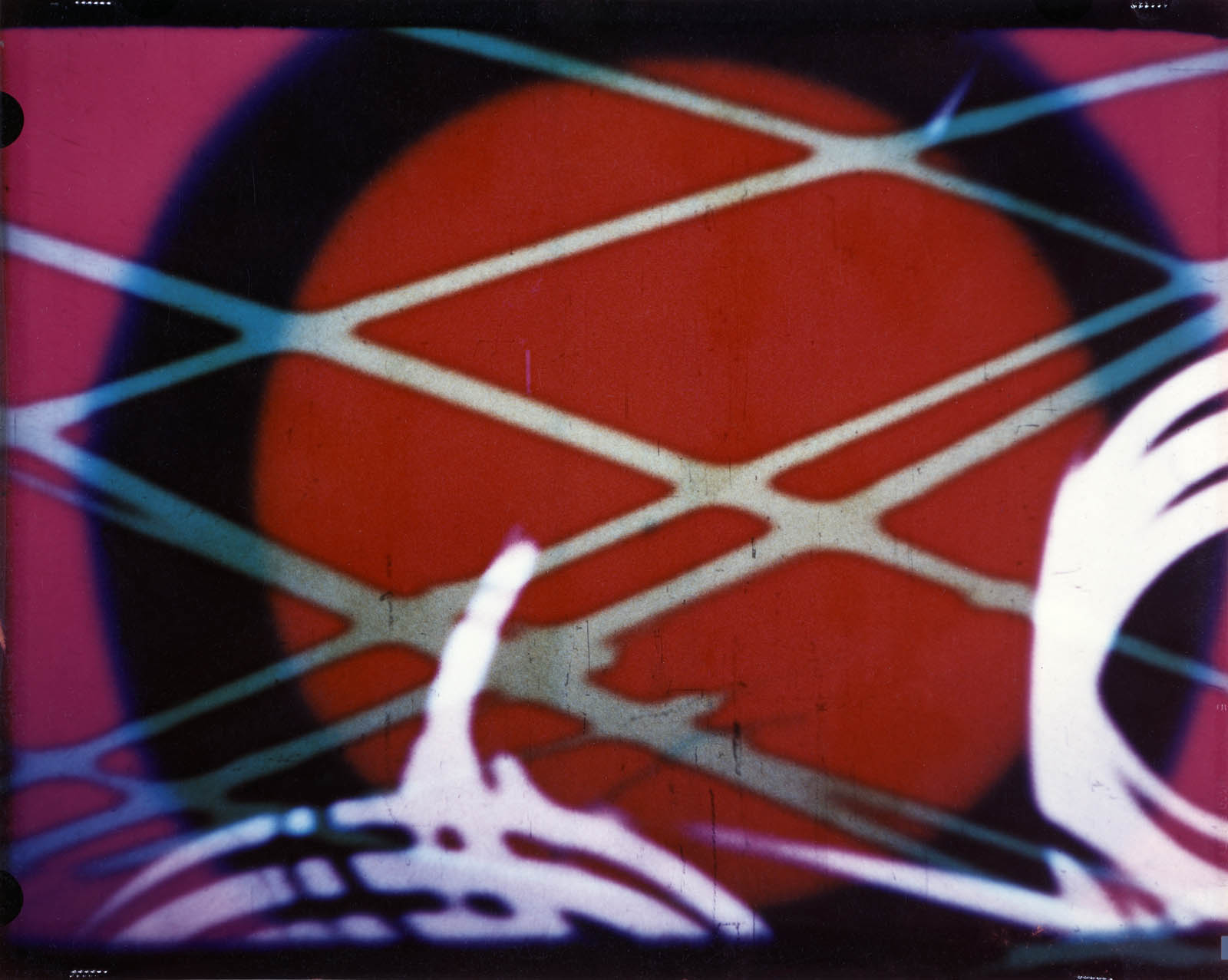
 

Hy Hirsh (American, 1911-1961) 'Untitled (abstraction)' c. 1950


Hy Hirsh (American, 1911-1961)
Untitled (abstraction)
c. 1950
Chromogenic print, 251 x 200 mm 
Rijksmuseum, Amsterdam
Purchased with the support of Baker McKenzie


Anonymous photographer. 'Family Standing beside their Car' c. 1957–1960


Anonymous photographer
Family Standing beside their Car
c. 1957-1960
Chromogenic print (Kodak Instamatic)
76 x 76 mm 
Rijksmuseum, Amsterdam


Irene Poon (American, b. 1941) 'Virginia' 1965


Irene Poon (American, b. 1941)
Virginia
1965
San Francisco Museum of Modern Art
Gift of Charles Wong
© Irene Poon Photography Archive, Department of Special Collections, Stanford University Libraries


It is the Chinese-American community that is the focus of the work of Irene Poon, who grew up in San Francisco’s Chinatown, where her parents, first-generation immigrants from Guanghzou, ran a herbalist store. A 1965 image features Poon’s sister Virginia in a local sweet shop, crowded out by Hershey’s and Nestlé bars. The letters “Nest” peep out from the densely packed shelves, reinforcing a sense that she is enclosed by this mass of graphic lettering. Beside her head a “Look” bar competes for attention, hinting at that other ever-expanding role for American photography: advertising − a sector in which the US was a forerunner. “Many of the 20th-Century artists started in advertising. It’s part of art history,” Boom says. “This whole field already existed, and the arts, and photography as an art form, draws from it.”

Deborah Nicholls-Lee. “Eight images that tell the story of America,” on the BBC website 12 February 2025 [Online] Cited 06/06/2025


Bruce Wrighton (American, 1950-1988) 'Portrait of a woman, Binghampton, NY ('Woolworth Shopper')' 1987


Bruce Wrighton (American, 1950-1988)
Portrait of a woman, Binghampton, NY (‘Woolworth Shopper’)
1987
Rijksmuseum, Amsterdam
Purchased with the support of Baker McKenzie
© Estate of Bruce Wrighton, Courtesy Laurence Miller Gallery
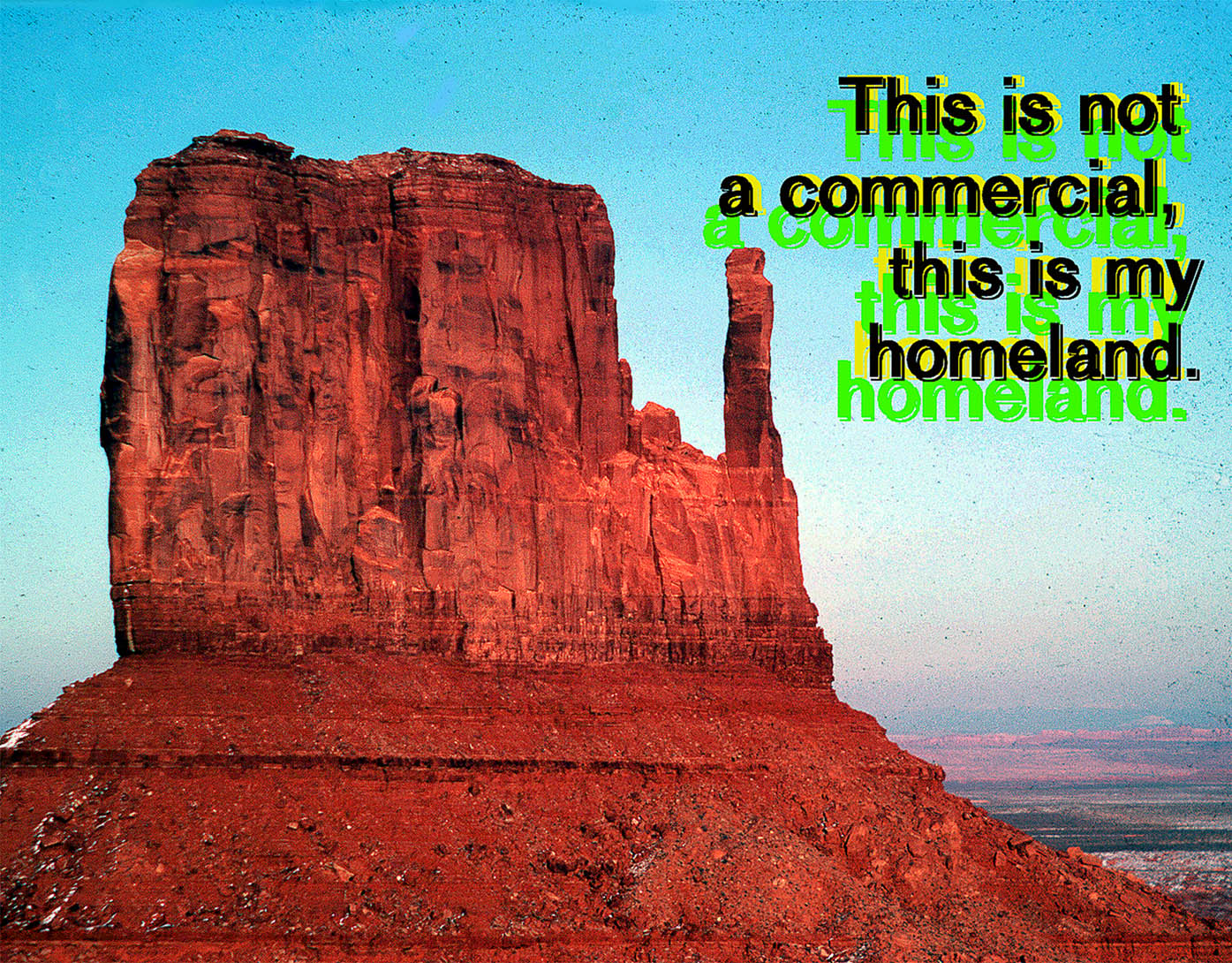
 

Hulleah Tsinhnahjinnie (American, b. 1954) 'This is not a commercial, this is my homeland' 1998


Hulleah Tsinhnahjinnie (American, b. 1954)
This is not a commercial, this is my homeland
1998
Platinum lambda print
476 x 609 mm
Courtesy of the artist


The political power of photography is also seen in the work of Native American (Seminole-Muscogee-Navajo) photographer Hulleah Tsinhnahjinnie who uses the camera to correct misconceptions about Indigenous populations and to offer an alternative viewpoint on US history. “No longer is the camera held by an outsider looking in, the camera is held with brown hands opening familiar worlds,” she writes in a 1993 essay. “We document ourselves with a humanising eye, we create new visions with ease, and we can turn the camera and show how we see you.”

Tsinhnahjinnie’s captioning of a touristic image of Monument Valley, Arizona with This is not a commercial, this is my homeland highlights the commodification of American land, and uses what she calls “photographic sovereignty” to take us back to the very beginning and reclaim and retell the story of America. In combination with works such as Bryan Schutmaat’s Tonopah, Nevada (2012), which documents mining’s effect on the landscape of the American West, images like Tsinhnahjinnie’s tell a story of a beautiful land that means different things to different people: financial gain, security or a sacred space.

Deborah Nicholls-Lee. “Eight images that tell the story of America,” on the BBC website 12 February 2025 [Online] Cited 06/06/2025


Bryan Schutmaat (American, b. 1983) 'Tonopah, Nevada' 2012


Bryan Schutmaat (American, b. 1983)
Tonopah, Nevada
2012
Inkjet print
1017 x 1277 mm (printed 2021)
Rijksmuseum, Amsterdam
Purchased with the support of Baker McKenzie


Rijksmuseum
Museumstraat 1
1071 XX Amsterdam

Opening hours:
Open daily 9 – 17h
Rijksmuseum website

LIKE ART BLART ON FACEBOOK

Back to top

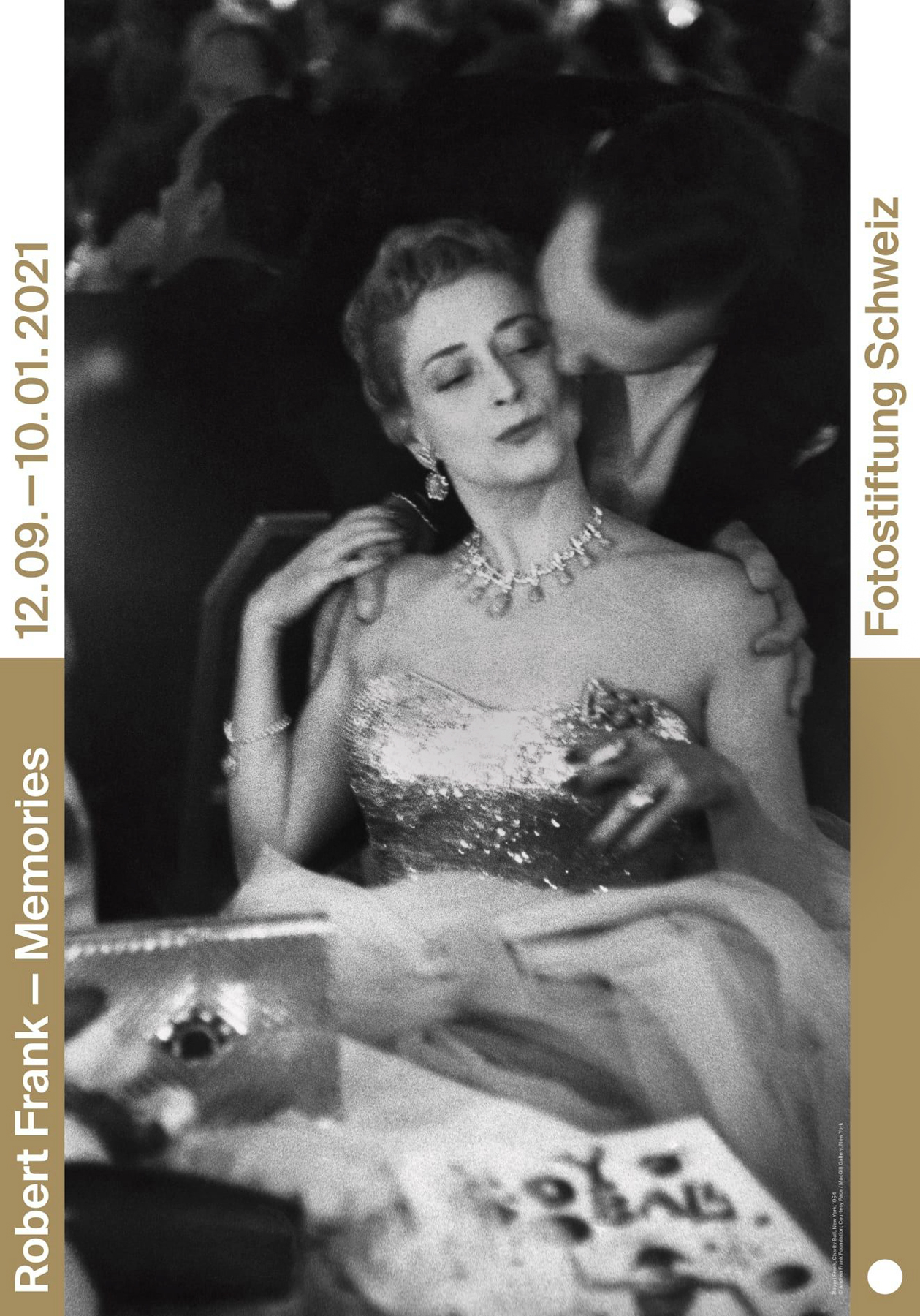
Exhibition: ‘Robert Frank – Memories’ at the Fotostiftung Schweiz, Winterthur, Zürich

Exhibition dates: 12th September, 2020 – 10th January, 2021

Curator: Martin Gasser


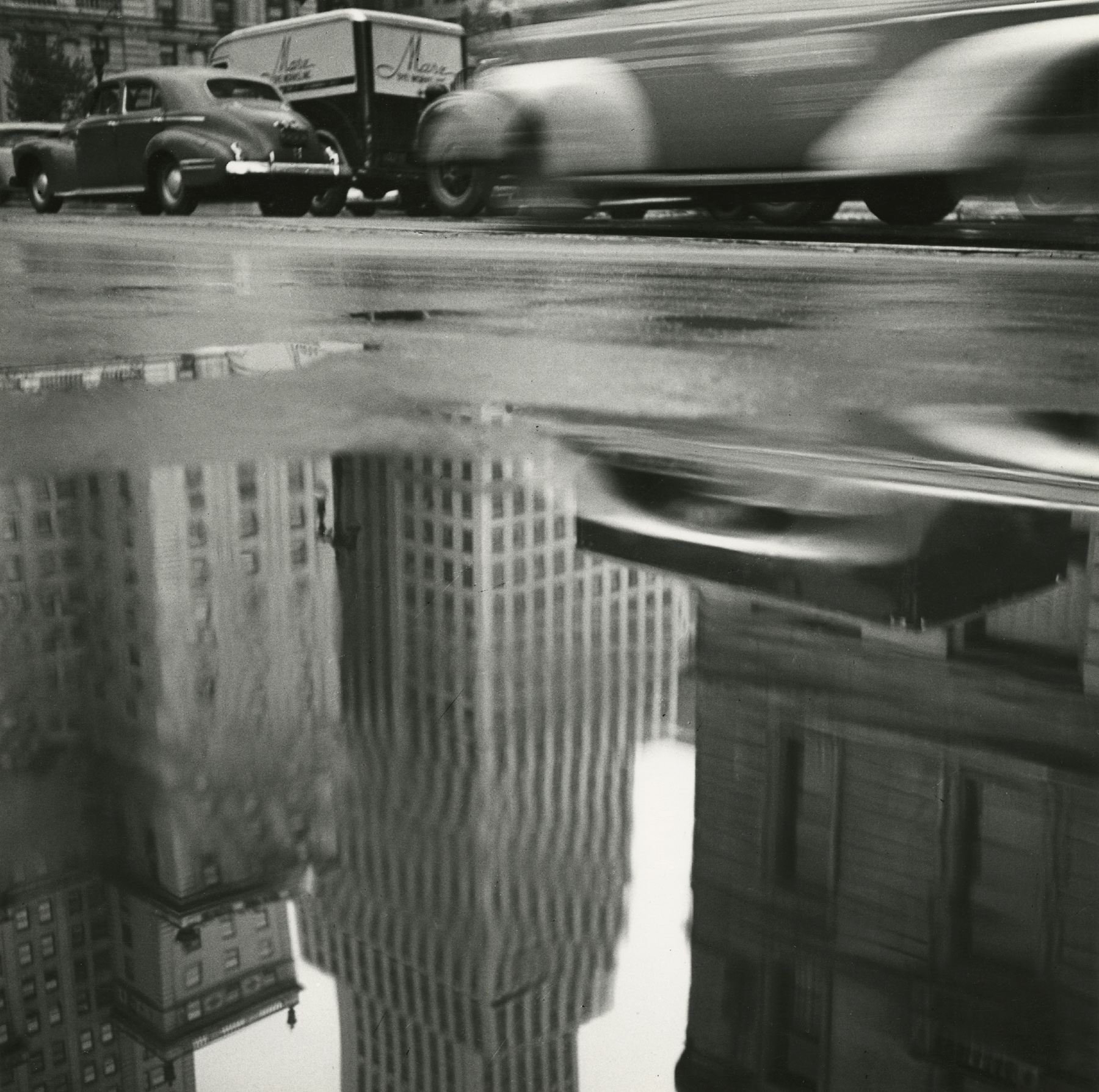
Robert Frank (Swiss, 1924-2019) 'White Tower, New York' 1948 from the exhibition 'Robert Frank – Memories' at the Fotostiftung Schweiz, Winterthur, Zürich, Sept 2020 - Jan 2021


Robert Frank (Swiss, 1924-2019)
White Tower, New York
1948
Gelatin silver print
© Andrea Frank Foundation; courtesy Pace/MacGill Gallery, New York


An interesting selection of media images, including some early Swiss and American photographs, which are rarely seen.

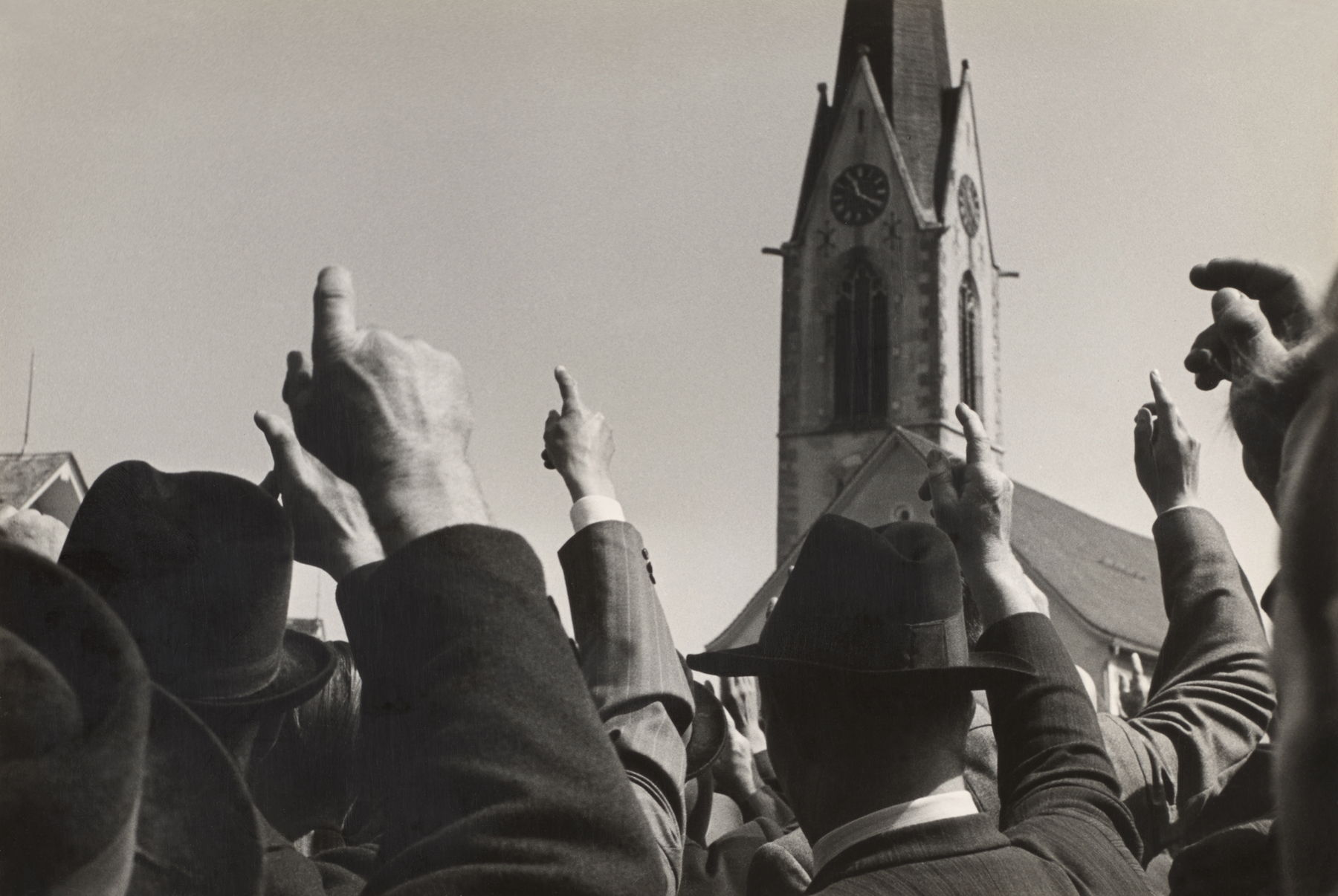
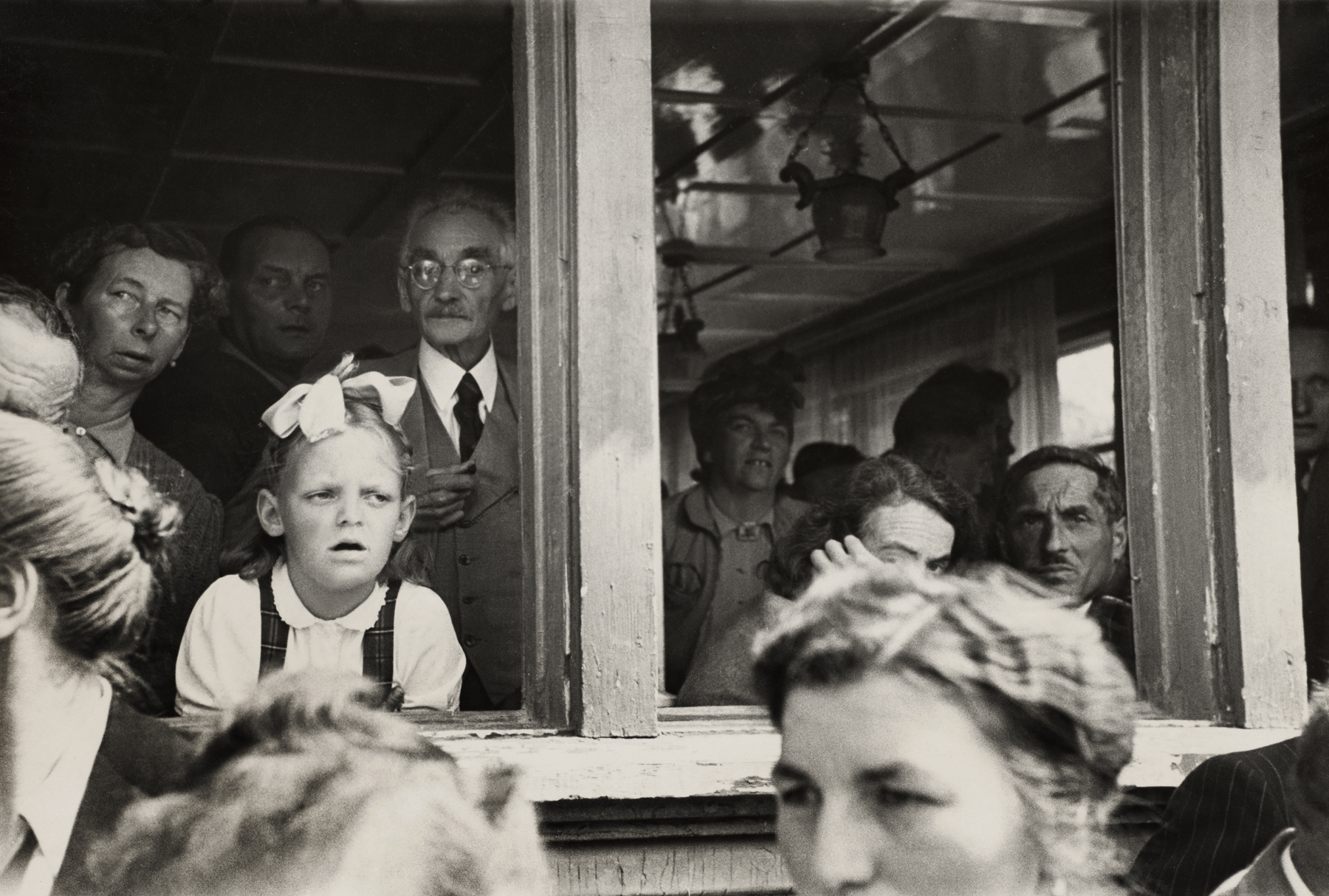
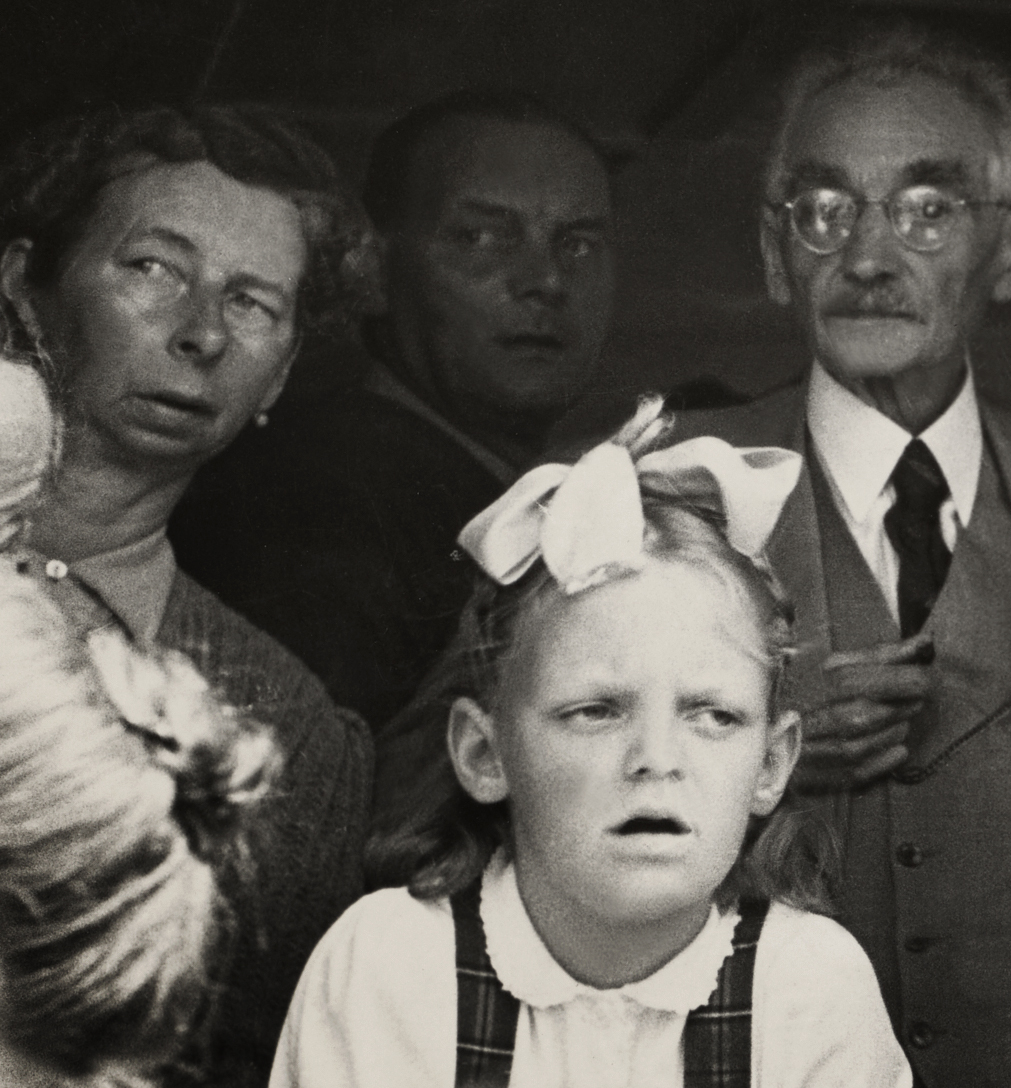
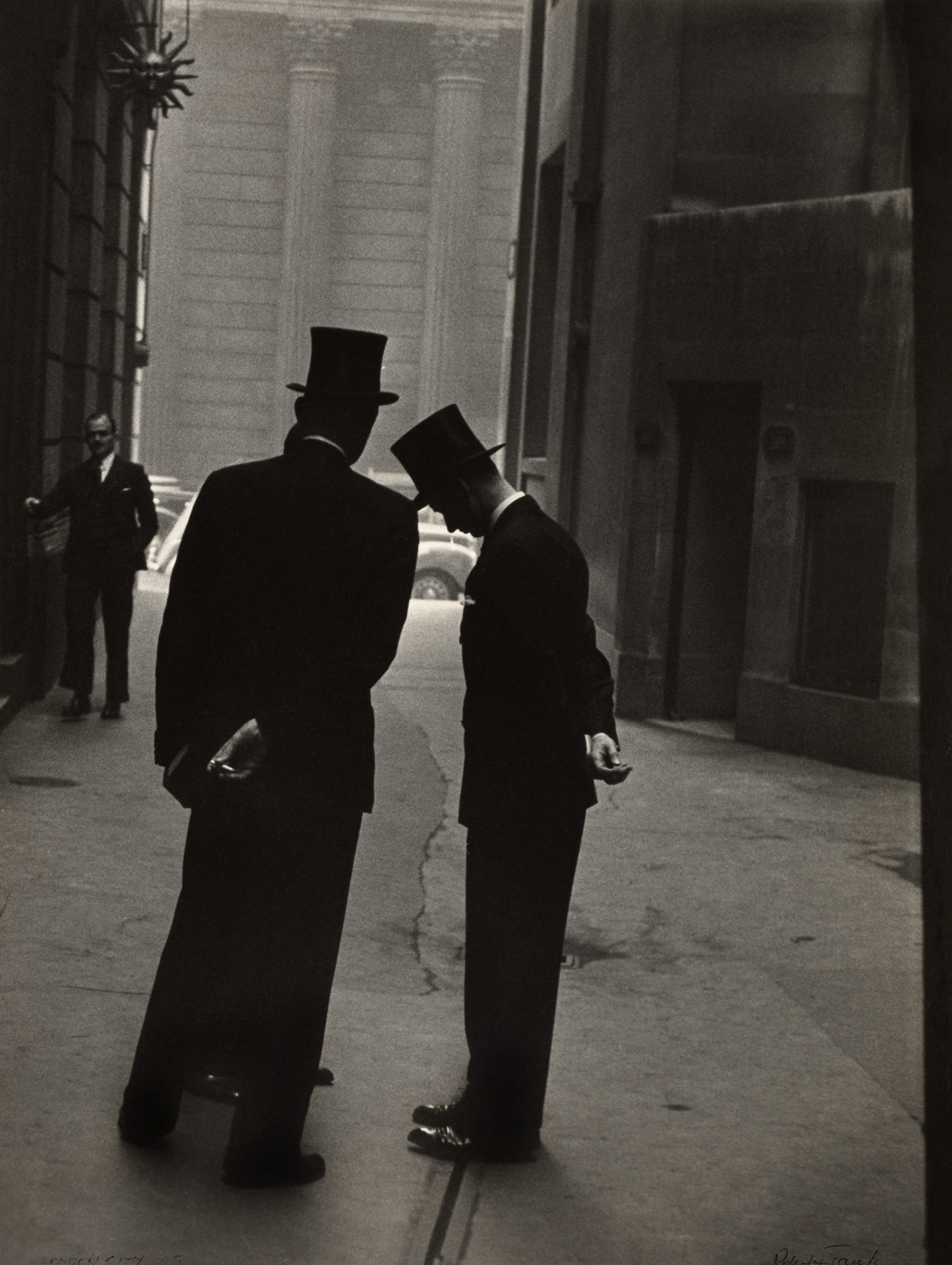
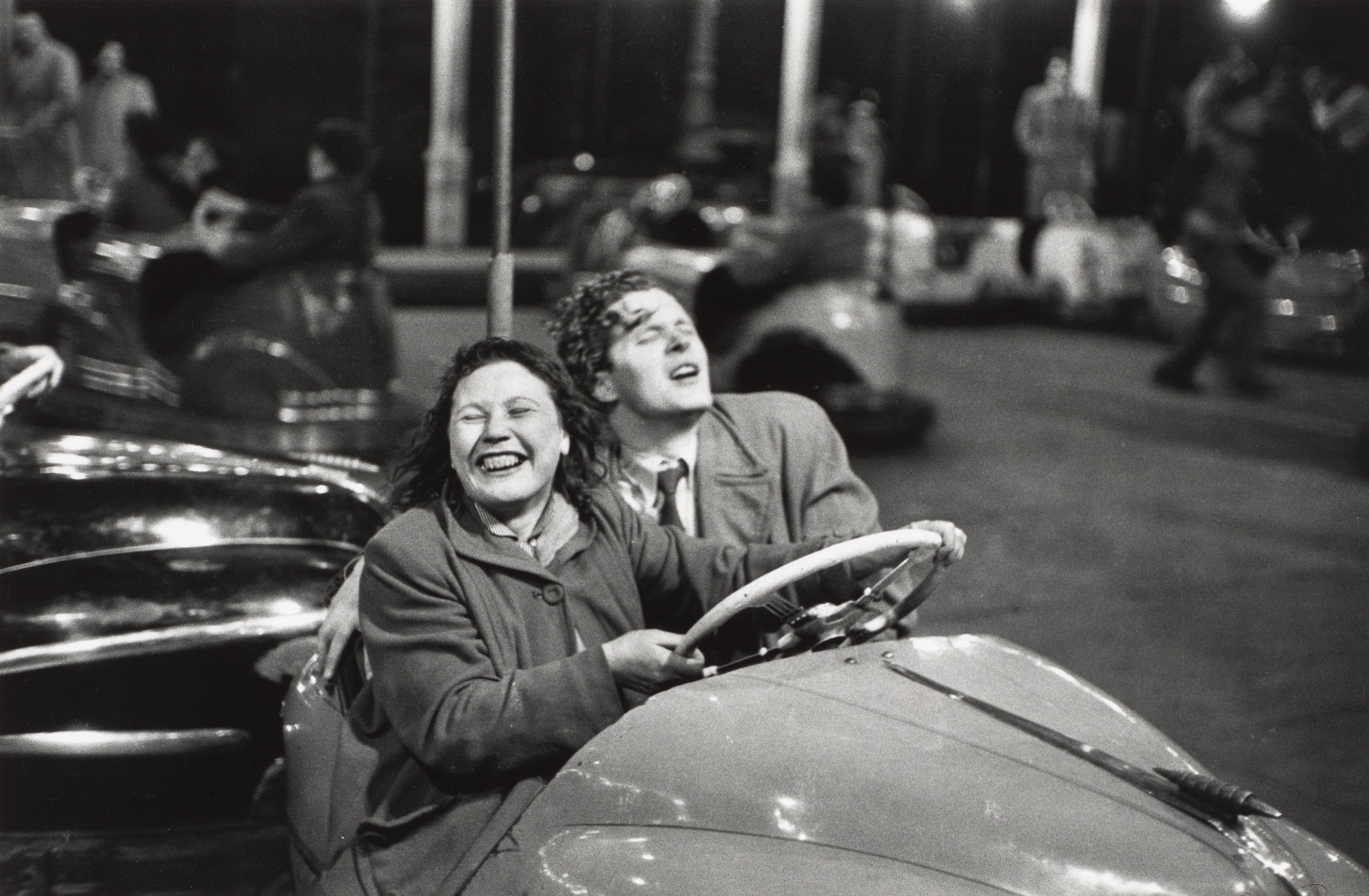
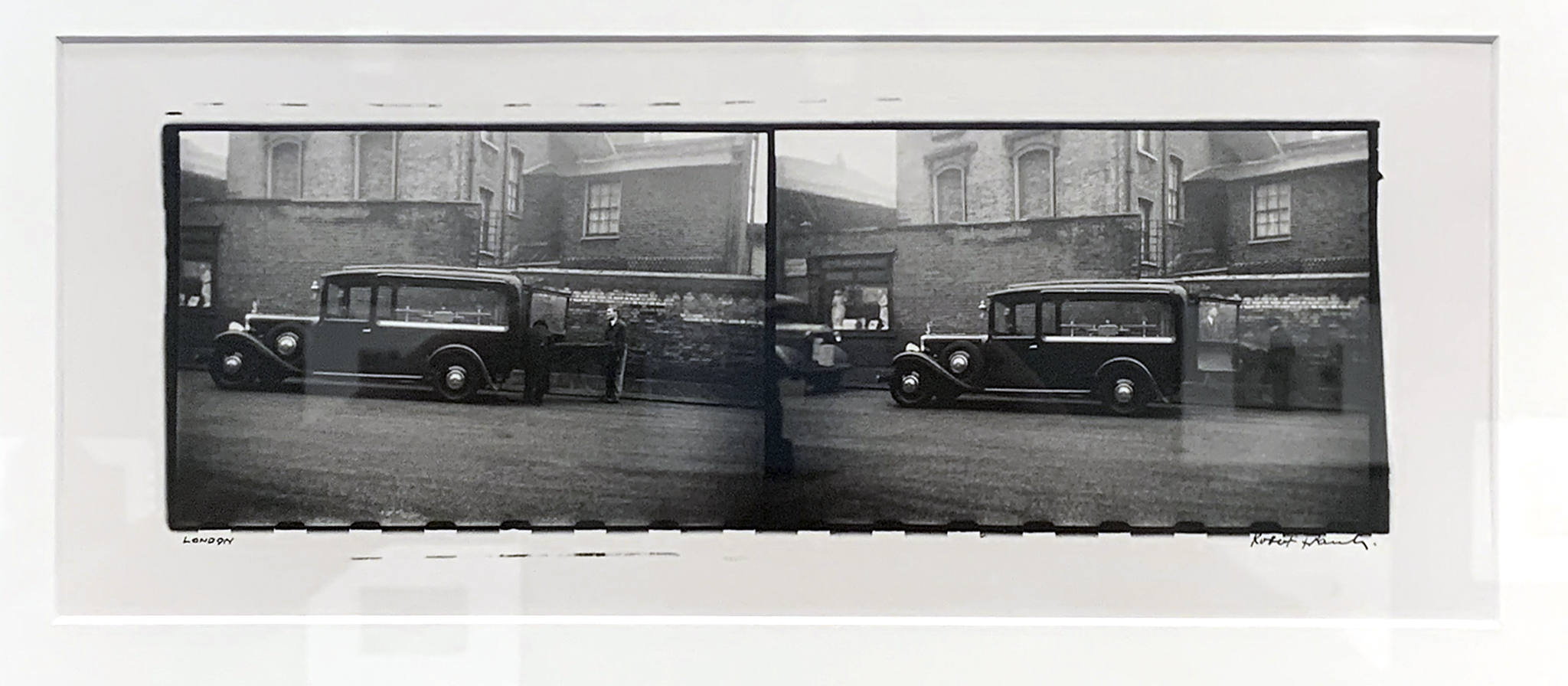
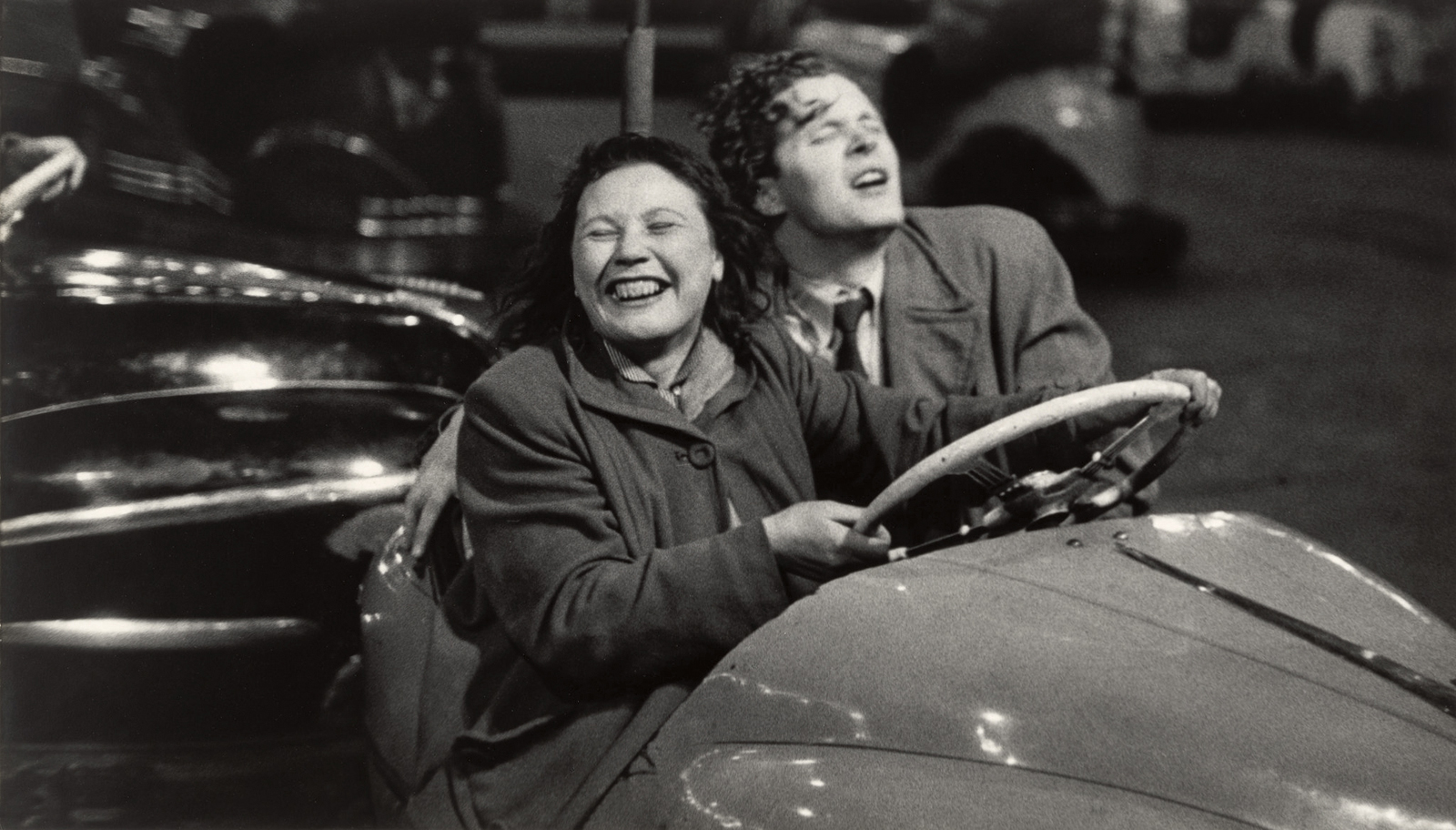
Frank’s perceptiveness of human beings and their context of being and becoming is incredible. Look at the faces in Landsgemeinde, Hundwil (1949, below), Paris (1952, below) and the attitude of the bodies, surmounted by the sun (top left), in London (1951, below).

“It is important to see what is invisible to others.”

Dr Marcus Bunyan


Many thankx to Fotostiftung Schweiz for allowing me to publish the photographs in the posting. Please click on the photographs for a larger version of the image.


The recently deceased Robert Frank is widely regarded as one of the most important photographers of our time. His book The Americans, first published in Paris in 1958 and then in New York the following year, is quite possibly the most influential photo book of the 20th century. As a kind of photographic road movie, it sketches a gloomy social portrait that served as a wake-up call to all of America at the time. And his personal style, alternating between documentary and subjective expression, radically changed post-war photography. But The Americans wasn’t merely a spontaneous stroke of genius. Frank’s early works already feature back stories and side plots that are closely connected to the themes and images of his legendary book. The Fotostiftung Schweiz holds a collection of lesser-known works – many of which were donated by the artist – which illustrate the consolidation of Frank’s subjective style. In addition to essays from Switzerland and Europe, it also includes works from early 1950s America that are on par with the well-known classics, but remained unpublished for editorial reasons. At the heart of the exhibition Robert Frank – Memories is the narrative force of Frank’s visual language, which developed in opposition to all conventions and only received international recognition when Frank had already abandoned photography and turned to the medium of film.

The exhibition is accompanied by a presentation of the books that publisher Gerhard Steidl produced with Robert Frank over a period of more than 15 years.


Robert Frank (Swiss, 1924-2019) 'New York City' 1948 from the exhibition 'Robert Frank – Memories' at the Fotostiftung Schweiz, Winterthur, Zürich, Sept 2020 - Jan 2021


Robert Frank (Swiss, 1924-2019)
New York City
1948
Gelatin silver print
© Andrea Frank Foundation; courtesy Pace/MacGill Gallery, New York


Robert Frank (Swiss, 1924-2019) 'Landsgemeinde, Hundwil' 1949


Robert Frank (Swiss, 1924-2019)
Landsgemeinde, Hundwil
1949
Gelatin silver print
© Andrea Frank Foundation; courtesy Pace/MacGill Gallery, New York


Robert Frank (Swiss, 1924-2019) 'Landsgemeinde, Hundwil' 1949


Robert Frank (Swiss, 1924-2019)
Landsgemeinde, Hundwil
1949
Gelatin silver print
© Andrea Frank Foundation; courtesy Pace/MacGill Gallery, New York


Robert Frank (Swiss, 1924-2019) 'Landsgemeinde, Hundwil' 1949 (detail)


Robert Frank (Swiss, 1924-2019)
Landsgemeinde, Hundwil (detail)
1949
Gelatin silver print
© Andrea Frank Foundation; courtesy Pace/MacGill Gallery, New York


Robert Frank (Swiss, 1924-2019) 'Landsgemeinde, Hundwil' 1949 (detail)


Robert Frank (Swiss, 1924-2019)
Landsgemeinde, Hundwil (detail)
1949
Gelatin silver print
© Andrea Frank Foundation; courtesy Pace/MacGill Gallery, New York


Robert Frank (Swiss, 1924-2019) 'London' 1951


Robert Frank (Swiss, 1924-2019)
London
1951
Gelatin silver print
© Andrea Frank Foundation; courtesy Pace/MacGill Gallery, New York


Robert Frank (Swiss, 1924-2019) 'Paris' 1952


Robert Frank (Swiss, 1924-2019)
Paris
1952
Gelatin silver print
© Andrea Frank Foundation; courtesy Pace/MacGill Gallery, New York


Robert Frank (Swiss, 1924-2019) 'New York City' early 1950s


Robert Frank (Swiss, 1924-2019)
New York City
early 1950s
Gelatin silver print
© Andrea Frank Foundation; courtesy Pace/MacGill Gallery, New York


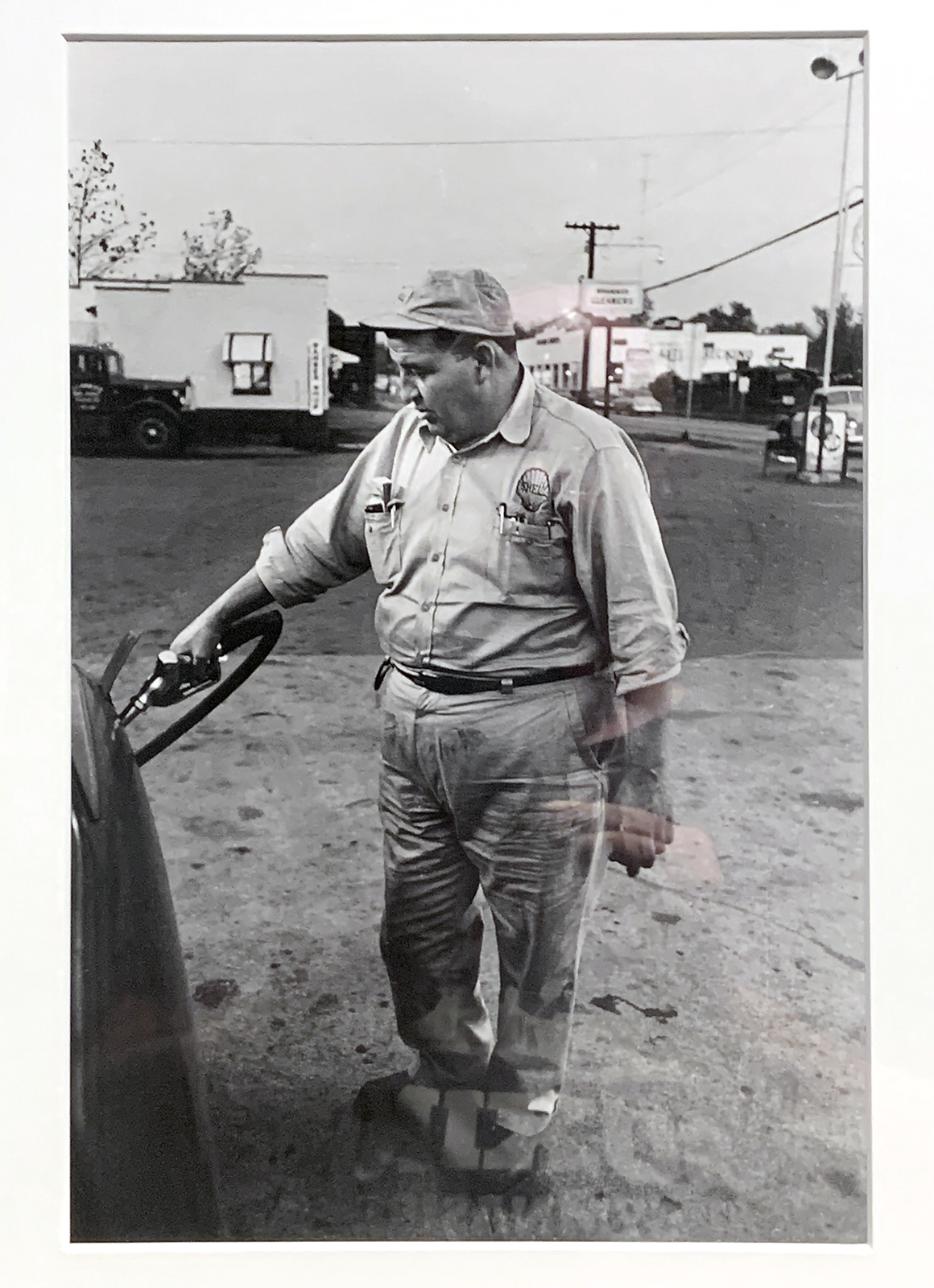
Robert Frank, who was born in Zurich in 1924 and died last year in Canada, is widely regarded as one of the most important photographers of our time. Over the course of decades, he has expanded the boundaries of photography and explored its narrative potential like no other. Robert Frank travelled thousands of miles between the American East and West Coasts in the mid-1950s, going through nearly 700 films in the process. A selection of 83 black-and-white images from this blend of diary, sombre social portrait and photographic road movie would leave its mark on generations of photographers to come. The photobook The Americans was first published in Paris, followed by the US in 1959 – with an introduction by Beat writer Jack Kerouac, no less. Off-kilter compositions, cut-off figures and blurred motion marked a new photographic style teetering between documentation and narration that would have a profound impact on postwar photography.

It is quite possibly the single most influential book in the history of photography; however, rather than being a spontaneous stroke of genius, Frank had worked on his subjective visual language for years. Many of his photographs from Switzerland, Europe and South America, as well as his rarely shown works from the USA in the early 1950s, are on a par with the famous classics from The Americans. The photographer’s early work, which remained unpublished for editorial reasons and is therefore little known to this day, reveals connections to those iconic pictures that still define our image of America, even today.

At the heart of the exhibition Robert Frank – Memories is the narrative force of Robert Frank’s visual language, which developed in opposition to all conventions and only received international recognition after Frank had already abandoned photography and turned to the medium of film. The exhibition mainly features vintage silver gelatin prints from the collection of the Fotostiftung Schweiz, which either come from the former collection of Robert Frank’s long-time friend Werner Zryd (now owned by the Swiss Confederation) or were donated to the Fotostiftung Schweiz by the artist himself. They are complemented by a number of loans from the Fotomuseum Winterthur. A presentation of the books and films that publisher Gerhard Steidl released with Robert Frank over a period of more than 15 years accompanies the exhibition (in the corridor leading to the library and in the seminar room).

Early Work

In March 1947, Robert Frank arrived in New York following an adventurous journey on a cargo ship. The young, ambitious photographer had found Switzerland too stifling and he hoped to gain new freedom in America liberated from social and family obligations. The photographer carried a 6×6 Rolleiflex and a small spiral-bound book of 40 photographs taken during his apprentice years from 1941 to 1946. This portfolio included landscapes, portraits, personal photojournalistic works, and meticulously executed still lifes, all of which reveal that the 22-year old was a highly skilled photographer. It is therefore unsurprising that influential Harper’s Bazaar art director Alexey Brodovitch swiftly hired Frank as an assistant photographer after seeing his portfolio and first test photos.

In the magazine’s in-house photo studio, Frank photographed fashion industry products from clinical shots of women’s shoes and every imaginable accessory to laboriously staged fashion shoots and occasionally even photojournalistic assignments offering a little more freedom. Frank was successful and rose through the ranks, but quickly realised that this industry cared only about money, an attitude to which he couldn’t reconcile himself. Only a few months later, he quit his job in order to be able to work wholly free of constraints. He traveled to Peru and Bolivia the following year and often used his 35 mm Leica. Later he recalled: “I was making a kind of diary. I was very free with the camera. I didn’t think of what would be the correct thing to do; I did what I felt good doing. I was like an action painter.”

Frank returned to Europe in spring 1949. He photographed the yearly cantonal assembly in the Swiss canton of Appenzell Ausserrhoden, during which citizens (exclusively men back then) voted by a show of hands. However, he was unsuccessful in placing this story with a major periodical, even though he circulated the images via the acclaimed agency Magnum. Evidently, Frank had focused too little on the actual events. He was more interested in the bystanders’ stances than in the pomp of government officials wearing tailcoats and top hats. His photographs of this assembly prefigure the penetrating and critical gaze he would later level on America’s societal and political landscape. Here as there, his was an outsider’s subjective and inward looking perspective.

Black White and Things

In late 1949, the international magazine Camera published a first selection of Robert Frank’s work. The accompanying text described him as a photographer who loved “truth and unvarnished reality”, as someone “whose thirst for experience compelled him to get out and capture life with his camera”. Indeed, Frank worked chiefly in Paris, London, and Spain between 1949 and 1953, frequently traveling between Europe and the US. He reported on a bullfighter in Spain and observed life in London’s financial district. In Paris he took pictures of objects – mostly chairs and flowers – photographs he assembled in an album dedicated to his future wife. In subsequent years, he shook off any sentimental tendencies.

Frank continued his attempts to publish both smaller and more substantial stories and photo essays in glossy magazines such as Life, but with limited success. His reportage on Welsh coal miner Ben James, which appeared in U.S. Camera 1955 annual, was a rare exception. But Frank found himself less and less able to reconcile himself with the conventional view of photography as a universal language accessible to all. Instead, he increasingly distanced himself from print media’s expectations and developed a strong aversion to what he once termed stereotypical “Life stories”, “those goddamned stories with a beginning and an end”.

In autumn 1952, Frank created Black White and Things with his Zurich-based friend Werner Zryd. This handmade book comprising 34 photographs was an attempt to counter these expectations with something new: an intuitively ordered series of photos with neither text nor linear narrative structure, introduced simply by Saint-Exupéry’s famed lines from The Little Prince: “It is only with the heart that one can see rightly; what is essential is invisible to the eye.” Accordingly, Black White and Things is a kind of three-part visual poem: “Black” evokes death, materialism, loneliness, and anonymity; “White” evokes home, love, religion, and camaraderie; and “Things” engages with diametrical oppositions such as friendship and cruelty, and affection and solitude. The order and pairing of the images sparks thoughts, associations, and feelings. Yet Frank’s evocative arrangement is intentionally ambiguous and open: “Something must be left for the onlooker, he must have something to see. It is not all said for him.”

America, America

After a further trip to New York – which he assured his mother would be his last – Robert Frank applied for a Guggenheim fellowship in October 1954. His project proposal was for an “observation and record of what one naturalised American finds to see in the United States that signifies the kind of civilisation born here and spreading elsewhere”. The result was to be a book, for which he had already won support from Arnold Kübler, the long-standing editor of the Zurich-based culture magazine Du, and Robert Delpire, a young publisher in Paris. Thanks to help from Alexey Brodovitch, Walker Evans, Edward Steichen and others, Frank was the first European photographer to be awarded this generous fellowship. The award made it possible for him to set off on his now-legendary road trips across the US in spring 1955.

Over almost two years, Frank took more than 20,000 photographs on his travels. He made roughly 1,000 work prints in the autumn and winter of 1956-57, which he pinned to the walls and laid on the floor of his apartment. At the time his home was East Village, New York, where artists including Alfred Leslie and Willem de Kooning also lived. Over many months Frank made countless passes through his photographs, eliminating those images he was unsure of and focusing on specific themes. He constantly rearranged the selection that was gradually coming together until he had a first mocked-up book with just under 90 images and the provisional title America, America. Frank took this book with him when he traveled to Europe in summer 1957, showing it to Delpire and his Swiss photographer friend Gotthard Schuh.

Over the years, the America photographs not included in his final selection disappeared into archives and collections or even got lost altogether. Only recently has it been possible to ascertain that many of the rejected and unpublished photographs were of the same caliber as the 83 book images Frank and Delpire agreed on. Frank’s contact sheets show that these photos were often taken directly before or after the images that have become icons of photographic history. Rather than putting forth a single message, Frank’s dark take on 1950s America contains impressive variations, facets, and excursuses that made a powerful impression on many, including his early supporter, Schuh. Schuh wrote to his young friend: “I don’t know America, but your photographs frighten me because in them you show, with visionary alertness, things that affect us all.”

The Americans

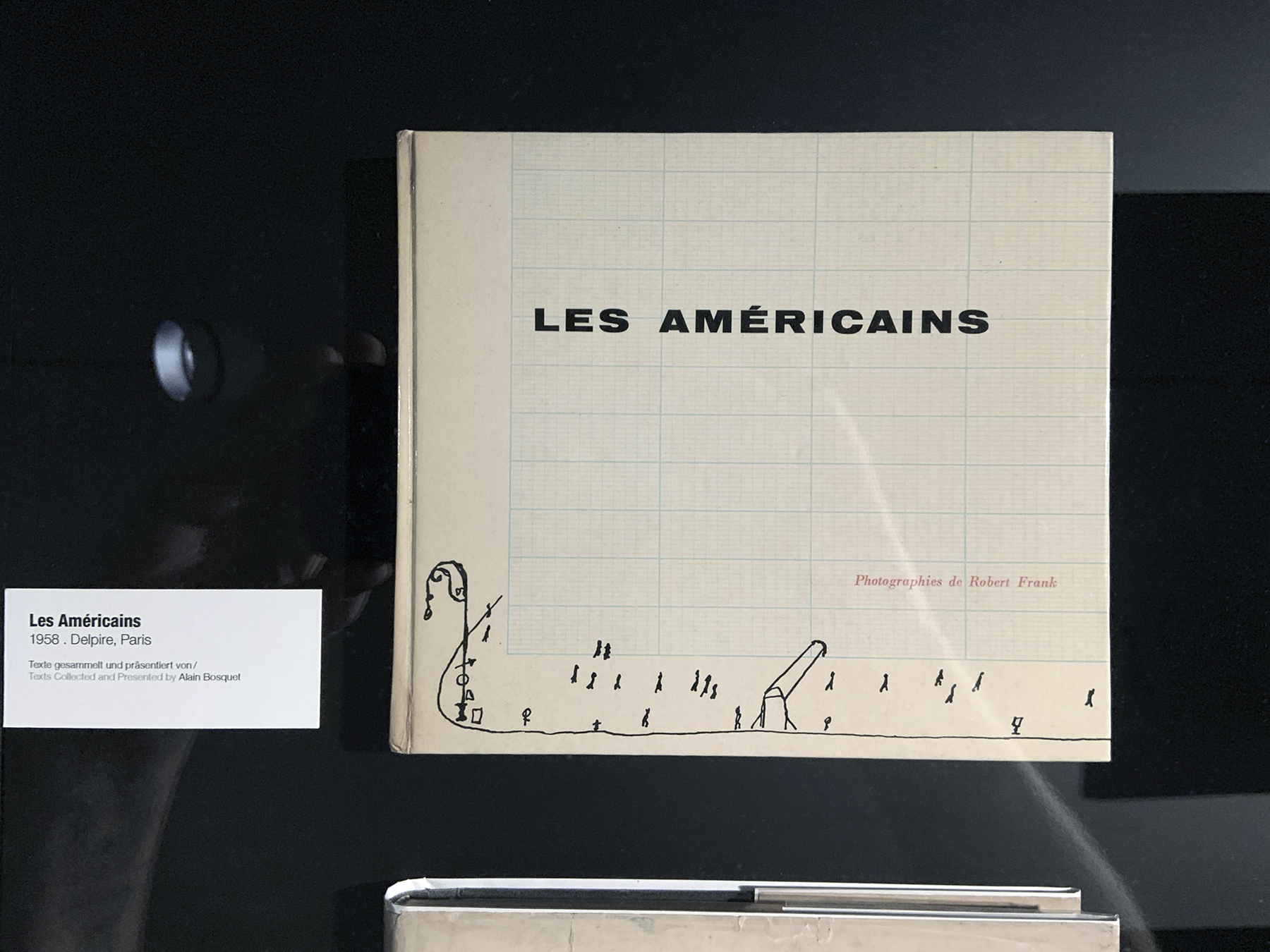
Following the first French edition of Les Américains, Robert Frank’s book was published as The Americans in New York in 1959. The English edition dropped the cover illustration and the selection of texts on America (which Delpire had insisted on over Frank’s protests), and added an introduction by Jack Kerouac. Frank had much in common with the Beat poets, though he only met them after his Guggenheim-funded travels. Like Kerouac’s main character in On the Road, Frank crisscrossed the country with apparent aimlessness, working spontaneously. Moreover, his work shares a stylistic consonance with Beat literature: Frank had abandoned all technical conventions and photographed intuitively instead. Many of his photographs are underexposed and grainy; they frame a scene and omit key details; their horizons are slanting and the lighting is often murky. Frank’s focus was the everyday, the fleeting, and the marginal. People are shown turning away from the camera, and his landscapes are desolate and bleak, “really more like Russia”, as Frank once remarked to Kerouac. He flouted the rules he had learned during his early training as a photographer in Switzerland in order to be as true as possible to his subjective experience and to capture unvarnished reality.

Kerouac’s introduction begins with the words: “That crazy feeling in America when the sun is hot on the streets and music comes out of the jukeboxes or from a nearby funeral, that’s what Robert Frank has captured in tremendous photographs taken as he traveled on the road around practically forty-eight states in an old used car (on Guggenheim Fellowship) and with the agility, mystery, genius, sadness and strange secrecy of a shadow photographed scenes that have never been seen before on film …” The Americans is a long, poetic image arc with cross-references, digressions, and associations, but also mental leaps and ambiguities, which provoked many critics. Although most acknowledged that Frank’s photographs were highly powerful, they read his take on Americans as a malicious attack on the country. Frank, a Jewish foreigner, was resented for picking up on the racism, hollow patriotism, commodified cheer, and political corruption lurking behind the façade of American society. Even before his groundbreaking book was published, Robert Frank wrote: “Above all, I know that life for a photographer cannot be a matter of indifference. Opinion often consists of a kind of criticism. But criticism can come out of love. It is important to see what is invisible to others.”

Martin Gasser, Curator


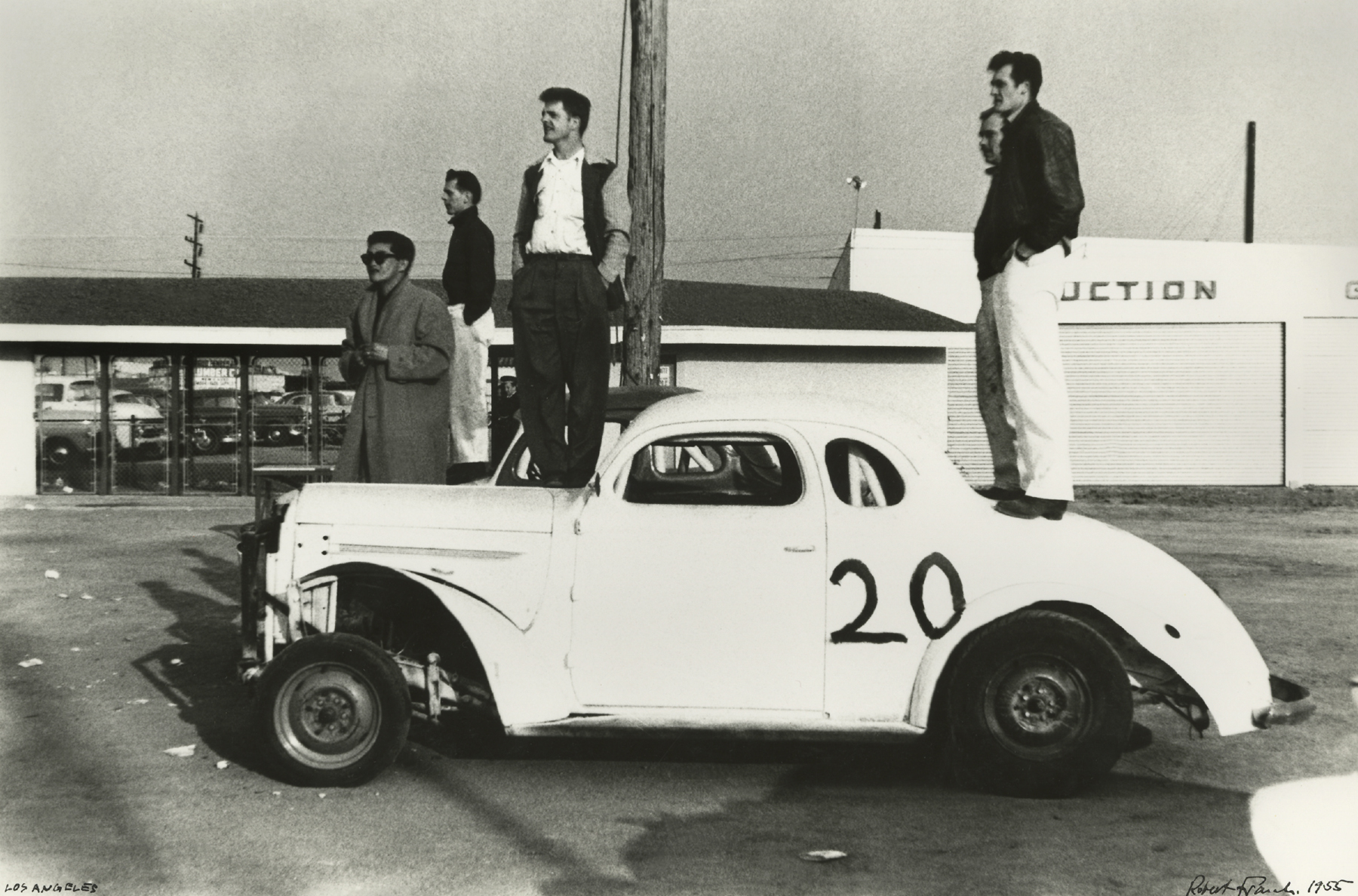
Robert Frank (Swiss, 1924-2019) "Los Angeles" 1955


Robert Frank (Swiss, 1924-2019)
“Los Angeles”
1955
Gelatin silver print
© Andrea Frank Foundation; courtesy Pace/MacGill Gallery, New York


Robert Frank (Swiss, 1924-2019) 'City fathers – Hoboken, New Jersey' 1955


Robert Frank (Swiss, 1924-2019)
City fathers – Hoboken, New Jersey
1955
Gelatin silver print
© Andrea Frank Foundation; courtesy Pace/MacGill Gallery, New York


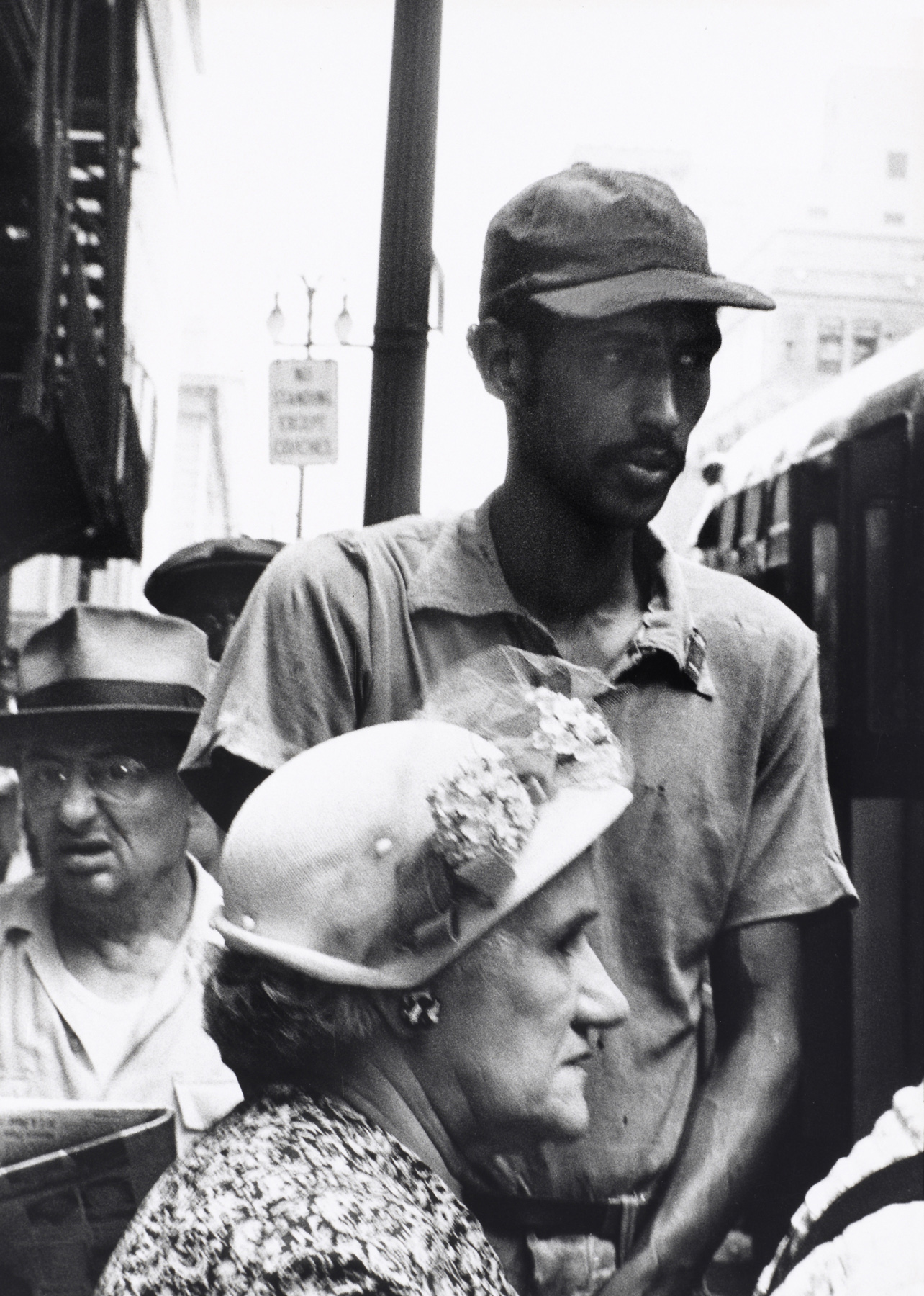
Robert Frank (Swiss, 1924-2019) 'Bus-Stop, Detroit' 1955


Robert Frank (Swiss, 1924-2019)
Bus-Stop, Detroit
1955
Gelatin silver print
© Andrea Frank Foundation; courtesy Pace/MacGill Gallery, New York


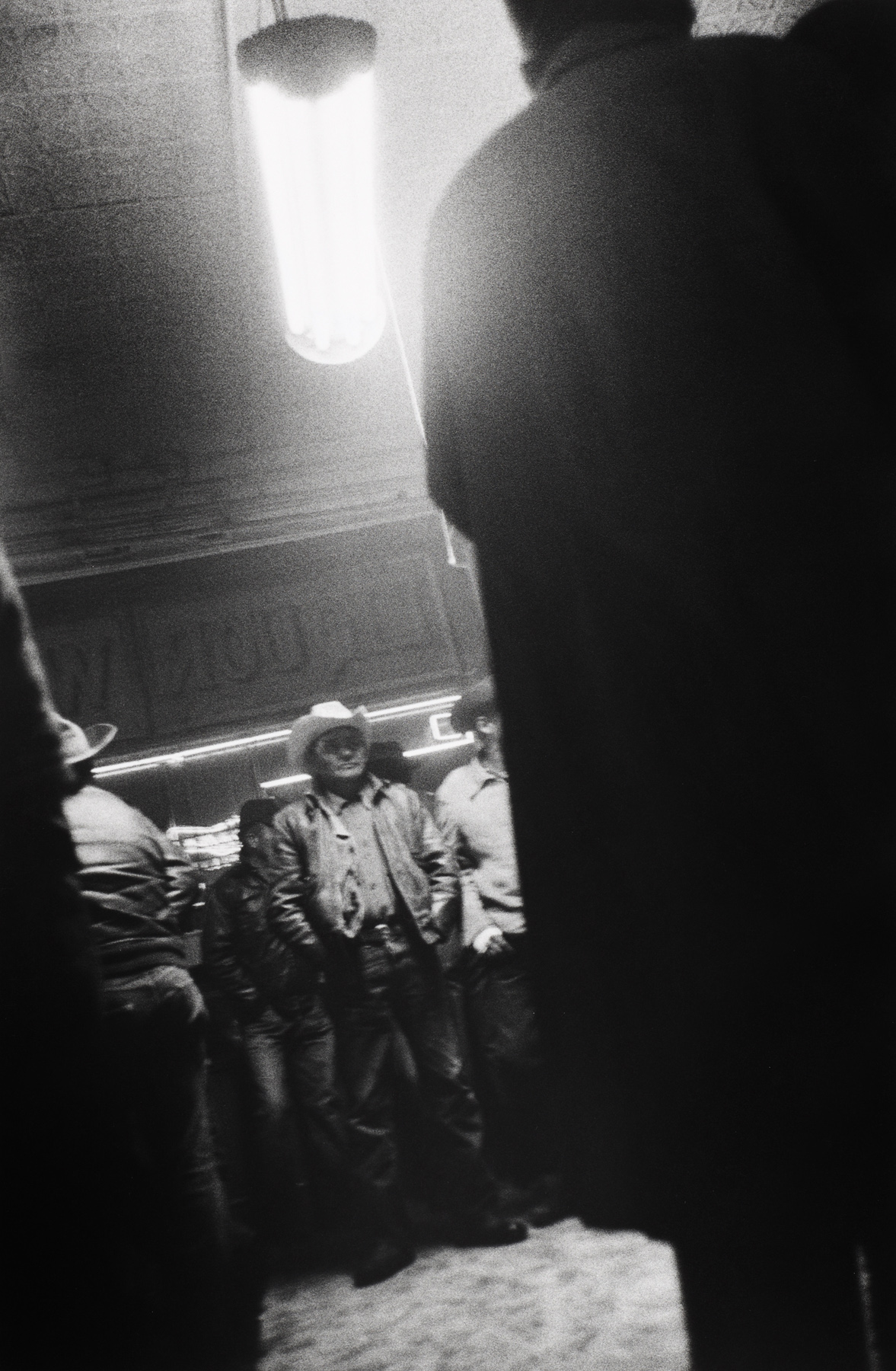
Robert Frank (Swiss, 1924-2019) 'Bar – Gallup, New Mexico' 1955


Robert Frank (Swiss, 1924-2019)
Bar – Gallup, New Mexico
1955
Gelatin silver print
© Andrea Frank Foundation; courtesy Pace/MacGill Gallery, New York


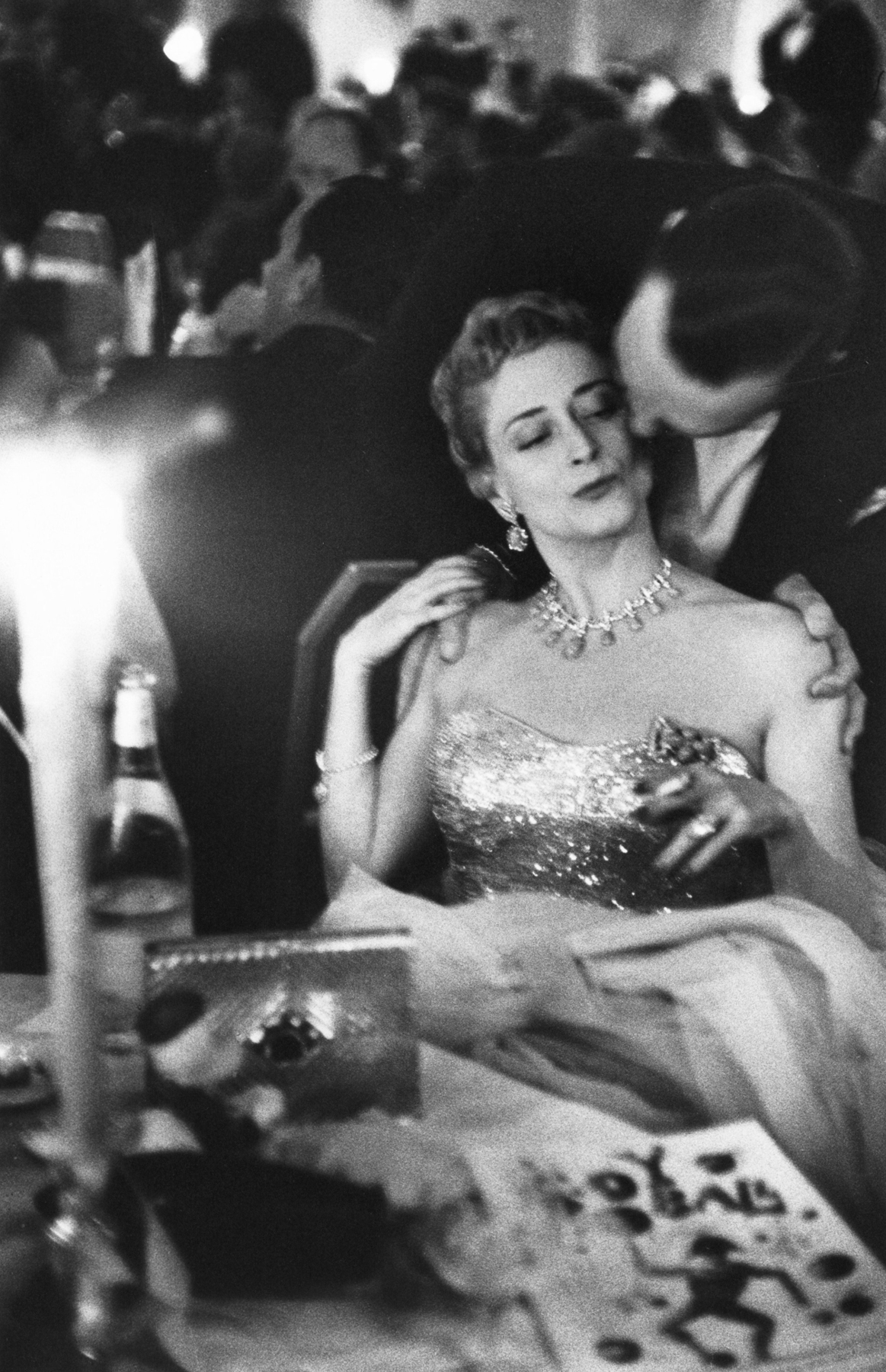
Robert Frank (Swiss, 1924-2019) 'Charity Ball – New York' 1954


Robert Frank (Swiss, 1924-2019)
Charity Ball – New York
1954
© Andrea Frank Foundation; courtesy Pace / MacGill Gallery, New York
Collection of the Swiss Photo Foundation


Müller + Hess, Wendelin Hess and Jesse Wyss, Basel / Zurich


Müller + Hess, Wendelin Hess and Jesse Wyss, Basel / Zurich


Fotostiftung Schweiz
Grüzenstrasse 45
CH-8400 Winterthur (Zürich)
Phone: +41 52 234 10 30

Opening hours:
Tuesday – Sunday 11am – 6pm
Wednesday 11am – 8pm
Closed on Mondays

Fotostiftung Schweiz website

LIKE ART BLART ON FACEBOOK

Back to top

European photographic research tour exhibition: ‘Robert Frank. Unseen’ at C/O Berlin

Exhibition dates: 13th September – 30th November, 2019
Visited September 2019 posted January 2020


Installation view of the exhibition 'Robert Frank. Unseen' at C/O Berlin


Installation view of the exhibition Robert Frank. Unseen at C/O Berlin
Photo: Marcus Bunyan


Utopian dreaming / dystopian dreams

Synchronicity… when I visited this exhibition on the 16th September 2019, the grand man had only died the previous week on the 9th September 2019.

This was a fabulous exhibition of mainly VINTAGE prints (see labels) at C/O Berlin, with the added bonus of seeing many Robert Frank photographs I had never seen before.

Thoughts

1/ The vintage prints were much larger than I had thought they would be

2/ The English photographs were very impressive. A similar tonal range to Josef Sudek’s prints in these works i.e. no hard blacks or whites zones 2.5-8

3/ The Americans – to actually see a large vintage print of the Trolley Car was incredible. The Black American man’s face was only his mouth, nose and eyes, the rest was completely dark

4/ The vintage prints seemed more whimsical than the later prints: not so much contrast. Sometimes edges bleed off, grain was large, depth of field low, skylines askew. Frank loved his silhouettes and chiaroscuro


It was a great pleasure to see these iconic photographs together in one place. Several times I had to catch my breath as one famous image followed another. But then there were images I had never seen before. Mostly vintage prints as well… as close to Frank’s original vision as you can get. More poetic, more spontaneous, than the later prints. The United States photographs form a road trip of impressions, a reflective and elegiac poem to the American dream.

It’s not often that you can say that an artist changed how we see and interpret the world but that is the case. Through his seminal work The Americans, Frank’s importance to the history of photography and visual culture cannot be denied. Americans didn’t like the mirror that was held up to their society by an outsider, a European Jew. Frank certainly wasn’t afraid to picture the underbelly of America – a phlegmatic portrait of a disaffected and divided country that still has great relevance today.

Dr Marcus Bunyan


All installation photographs © Marcus Bunyan. Please click on the photographs for a larger version of the image.


Installation view of the exhibition 'Robert Frank. Unseen' at C/O Berlin showing photographs titled 'Landsgemeinde / Cantonal Assembly Hundwil, Schweiz' (1949)

Installation view of the exhibition 'Robert Frank. Unseen' at C/O Berlin showing photographs titled 'Landsgemeinde / Cantonal Assembly Hundwil, Schweiz' (1949)


Installation views of the exhibition Robert Frank. Unseen at C/O Berlin showing photographs titled Landsgemeinde / Cantonal Assembly Hundwil, Schweiz (1949). Later silver gelatin prints. No individual titles. Donation of the artist.
Photos: Marcus Bunyan


Robert Frank (Swiss-American, 1924-2019) 'Landsgemeinde / Cantonal Assembly Hundwil, Schweiz' 1949 (installation view) at the exhibition 'Robert Frank. Unseen' at C/O Berlin

Robert Frank (Swiss-American, 1924-2019) 'Landsgemeinde / Cantonal Assembly Hundwil, Schweiz' 1949 (installation view) at the exhibition 'Robert Frank. Unseen' at C/O Berlin

Robert Frank (Swiss-American, 1924-2019) 'Landsgemeinde / Cantonal Assembly Hundwil, Schweiz' 1949 (installation view) at the exhibition 'Robert Frank. Unseen' at C/O Berlin


Robert Frank (Swiss-American, 1924-2019)
Landsgemeinde / Cantonal Assembly Hundwil, Schweiz (installation views)
1949
Gelatin silver photograph, later print
Donation of the artist
Photos: Marcus Bunyan


Installation view of the exhibition 'Robert Frank. Unseen' at C/O Berlin

Installation view of the exhibition 'Robert Frank. Unseen' at C/O Berlin


Installation views of the exhibition Robert Frank. Unseen at C/O Berlin
Photos: Marcus Bunyan


Robert Frank (Swiss-American, 1924-2019) 'Peru' 1948 (installation view)


Robert Frank (Swiss-American, 1924-2019)
Peru (installation view)
1948
Gelatin silver photograph, later print
Collection Fotomuseum Winterthur
Permanent loan of the Volkart Stiftung
Photo: Marcus Bunyan


'Robert Frank. Unseen' wall text


Robert Frank. Unseen wall text
Photo: Marcus Bunyan


Robert Frank (Swiss-American, 1924-2019) 'Geneva' 1945 (installation view)


Robert Frank (Swiss-American, 1924-2019)
Geneva (installation view)
1945
Gelatin silver photograph, later print
Donation of the artist
Photo: Marcus Bunyan


Robert Frank (Swiss-American, 1924-2019) 'Geneva' 1945 (installation view)


Robert Frank (Swiss-American, 1924-2019)
Geneva (installation view)
1945
Gelatin silver photograph, later print
Donation of the artist
Photo: Marcus Bunyan


Robert Frank (Swiss-American, 1924-2019) 'Geneva' 1944-45 (installation view)


Robert Frank (Swiss-American, 1924-2019)
Geneva (installation view)
1944-1945
Vintage gelatin silver print
Donation of the artist
Photo: Marcus Bunyan


Robert Frank (Swiss-American, 1924-2019) 'New York' c. 1949


Robert Frank (Swiss-American, 1924-2019)
New York
c. 1949
Vintage silver gelatin print
Donation of the artist


Robert Frank (Swiss-American, 1924-2019) 'Times Square, New York' 1949 (installation view)


Robert Frank (Swiss-American, 1924-2019)
Times Square, New York (installation view)
1949
Gelatin silver photograph, later print
Donation of the artist
Photo: Marcus Bunyan


'Robert Frank. Unseen' wall text


Robert Frank. Unseen wall text
Photo: Marcus Bunyan


Installation view of the exhibition 'Robert Frank. Unseen' at C/O Berlin


Installation view of the exhibition Robert Frank. Unseen at C/O Berlin
Photo: Marcus Bunyan


Robert Frank (Swiss-American, 1924-2019) 'Portfolio. 40 Photos' 1941-46 (installation view)

Robert Frank (Swiss-American, 1924-2019) 'Portfolio. 40 Photos' 1941-46 (installation view)


Robert Frank (Swiss-American, 1924-2019)
Portfolio. 40 Photos (installation views)
1941-1946
First Edition Steidl, Göttingen, 2000
Photos: Marcus Bunyan


Installation view of the exhibition 'Robert Frank. Unseen' at C/O Berlin

Installation view of the exhibition 'Robert Frank. Unseen' at C/O Berlin


Installation views of the exhibition Robert Frank. Unseen at C/O Berlin
Photos: Marcus Bunyan


Robert Frank (Swiss-American, 1924-2019) 'Mississippi, St Louis' 1948 (installation view)


Robert Frank (Swiss-American, 1924-2019)
Mississippi, St Louis (installation view)
1948
Vintage gelatin silver print
Property of the Confédération Suisse, Federal Office of Culture, Bern
Photo: Marcus Bunyan


Robert Frank (Swiss-American, 1924-2019) 'Paris' 1949 (installation view)


Robert Frank (Swiss-American, 1924-2019)
Paris (installation view)
1949
Gelatin silver photograph, later print
Donation of the artist
Photo: Marcus Bunyan


Robert Frank (Swiss-American, 1924-2019) 'Paris' 1949 (installation view)


Robert Frank (Swiss-American, 1924-2019)
Paris (installation view)
1949
Vintage gelatin silver print
Donation of the artist
Photo: Marcus Bunyan


Installation view of the exhibition 'Robert Frank. Unseen' at C/O Berlin

Installation view of the exhibition 'Robert Frank. Unseen' at C/O Berlin


Installation views of the exhibition Robert Frank. Unseen at C/O Berlin
Photos: Marcus Bunyan


Robert Frank (Swiss-American, 1924-2019) 'Mary and Pablo, New York' 1951 (installation view)

Robert Frank (Swiss-American, 1924-2019) 'Mary and Pablo, New York' 1951 (installation view)


Robert Frank (Swiss-American, 1924-2019)
Mary and Pablo, New York (installation views)
1951
Vintage gelatin silver print
Property of the Confédération Suisse, Federal Office of Culture, Bern
Photos: Marcus Bunyan


Robert Frank (b. 1924 in Zurich, d. 2019 in Nova Scotia, Canada) traveled thousands of kilometres between America’s East and West coasts, taking almost 30,000 photographs. Just 83 black-and-white pictures from this mixture of diary, social portrait, and photographic road movie have influenced generations of photographers after him. Frank’s book The Americans was first published in Paris before it was released in the United States in 1959 with an introduction by the Beat novelist Jack Kerouac. Oblique angles, cropped figures, and blurred movement became the hallmarks of a new photographic style that would change the course of postwar photography. In 1985, Franks photographs have been displayed in Germany for the first time – in the Amerika Haus in Berlin. Now, C/O Berlin presents contact sheets, first editions, and vintage material from the photographer’s early work at the same place. His time in Switzerland, travels through Europe and South America, and unpublished pictures from the United States in the 1950s will be shown together with famous classic photos from The Americans.

Robert Frank. Unseen reveals the narrative power of a visual language that Frank developed long before it earned him international recognition.

The exhibition was organised in cooperation with the Fotostiftung Schweiz, Winterthur.

Robert Frank was born in Zurich in 1924. A trained photographer, he traveled to New York for the first time in 1947, where he found a position at the Harper’s Bazaar photo studio. He worked between Europe and the US for several years and in 1950, Edward Steichen invited him to participate in the 51 American Photographers exhibition at Museum of Modern Art, New York. Frank freelanced for Life, McCall’s, Look, Vogue and other magazines. In 1955, he was the first European to receive a prestigious Guggenheim fellowship that funded a comprehensive photo series for which he traveled across America. The result was the seminal photobook The Americans (1959). Following the volume’s unexpected success, the photographer turned to film. His later work juxtaposed Polaroids and autobiographical text fragments. This year Frank published his most recent book, Good Days Quiet, at the age of 95. Frank’s photographs have been exhibited internationally, most recently at Les Rencontres d’Arles (2018); Albertina, Vienna (2018); Art Institute of Chicago (2017); Museum Folkwang, Essen (2014); and at Tate Modern, London (2004). His films were shown at C/O Berlin in 2009. Robert Frank lived in New York and in Nova Scotia, Canada, where he died on September 9, 2019.

Text from the C/O Berlin [Online] Cited 28/12/2019


Installation view of the exhibition 'Robert Frank. Unseen' at C/O Berlin

Installation view of the exhibition 'Robert Frank. Unseen' at C/O Berlin

Installation view of the exhibition 'Robert Frank. Unseen' at C/O Berlin

Installation view of the exhibition 'Robert Frank. Unseen' at C/O Berlin


Installation views of the exhibition Robert Frank. Unseen at C/O Berlin showing at bottom, photographs of London
Photos: Marcus Bunyan


Robert Frank (Swiss-American, 1924-2019) 'London' 1951 (installation view)


Robert Frank (Swiss-American, 1924-2019)
London (installation view)
1951
Vintage gelatin silver print
Property of the Confédération Suisse, Federal Office of Culture, Bern
Photo: Marcus Bunyan


Robert Frank (Swiss-American, 1924-2019) 'Paris' 1949 (installation view)


Robert Frank (Swiss-American, 1924-2019)
Paris (installation view)
1949
Vintage gelatin silver print
Property of the Confédération Suisse, Federal Office of Culture, Bern
Photo: Marcus Bunyan


Installation view of the exhibition 'Robert Frank. Unseen' at C/O Berlin


Installation view of the exhibition Robert Frank. Unseen at C/O Berlin showing at right a photograph of London
Photos: Marcus Bunyan


Robert Frank (Swiss-American, 1924-2019) 'London' 1951 (installation view)


Robert Frank (Swiss-American, 1924-2019)
London (installation view)
1951
Vintage gelatin silver print
Arnold Kübler Archive
Photo: Marcus Bunyan


Robert Frank (Swiss-American, 1924-2019) 'London' 1951


Robert Frank (Swiss-American, 1924-2019)
London
1951
Vintage gelatin silver print
Arnold Kübler Archive


Robert Frank (Swiss-American, 1924-2019) 'London' 1951 (installation view)

Robert Frank (Swiss-American, 1924-2019) 'London' 1951 (installation view)

Robert Frank (Swiss-American, 1924-2019) 'London' 1951 (installation view)


Robert Frank (Swiss-American, 1924-2019)
London (installation views)
1951
Gelatin silver photographs, later prints
Permanent loan of the Friends of the Fotostiftung Schweiz
Photos: Marcus Bunyan


Robert Frank (Swiss-American, 1924-2019) 'London' 1951


Robert Frank (Swiss-American, 1924-2019)
London
1951
Gelatin silver photograph, later print
Permanent loan of the Friends of the Fotostiftung Schweiz


Robert Frank (Swiss-American, 1924-2019) 'Paris' 1952


Robert Frank (Swiss-American, 1924-2019)
Paris
1952
Gelatin silver photograph, later print
Donation of the artist


America


'Robert Frank. Unseen' wall text


Robert Frank. Unseen wall text
Photo: Marcus Bunyan


Installation view of the exhibition 'Robert Frank. Unseen' at C/O Berlin showing at left, 'Nevada' (1956); at second left, 'Los Angeles' (1956); and at right, 'On the road to Carolina' (1955)


Installation view of the exhibition Robert Frank. Unseen at C/O Berlin showing at left, Nevada (1956); at second left, Los Angeles (1956); and at right, On the road to Carolina (1955)
Photo: Marcus Bunyan


Robert Frank (American, 1924-2019) 'Nevada' 1956 (installation view)


Robert Frank (American, 1924-2019)
Nevada (installation view)
1956
Vintage gelatin silver print
Donation of the artist
Photo: Marcus Bunyan


Robert Frank (Swiss-American, 1924-2019) 'Los Angeles' 1956 (installation view)


Robert Frank (American, 1924-2019)
Los Angeles (installation view)
1956
Vintage gelatin silver print
Donation of the artist
Photo: Marcus Bunyan


Robert Frank (Swiss-American, 1924-2019) 'On the road to Carolina' 1955 (installation view)


Robert Frank (American, 1924-2019)
On the road to Carolina (installation view)
1955
Vintage gelatin silver print
Donation of the artist
Photo: Marcus Bunyan


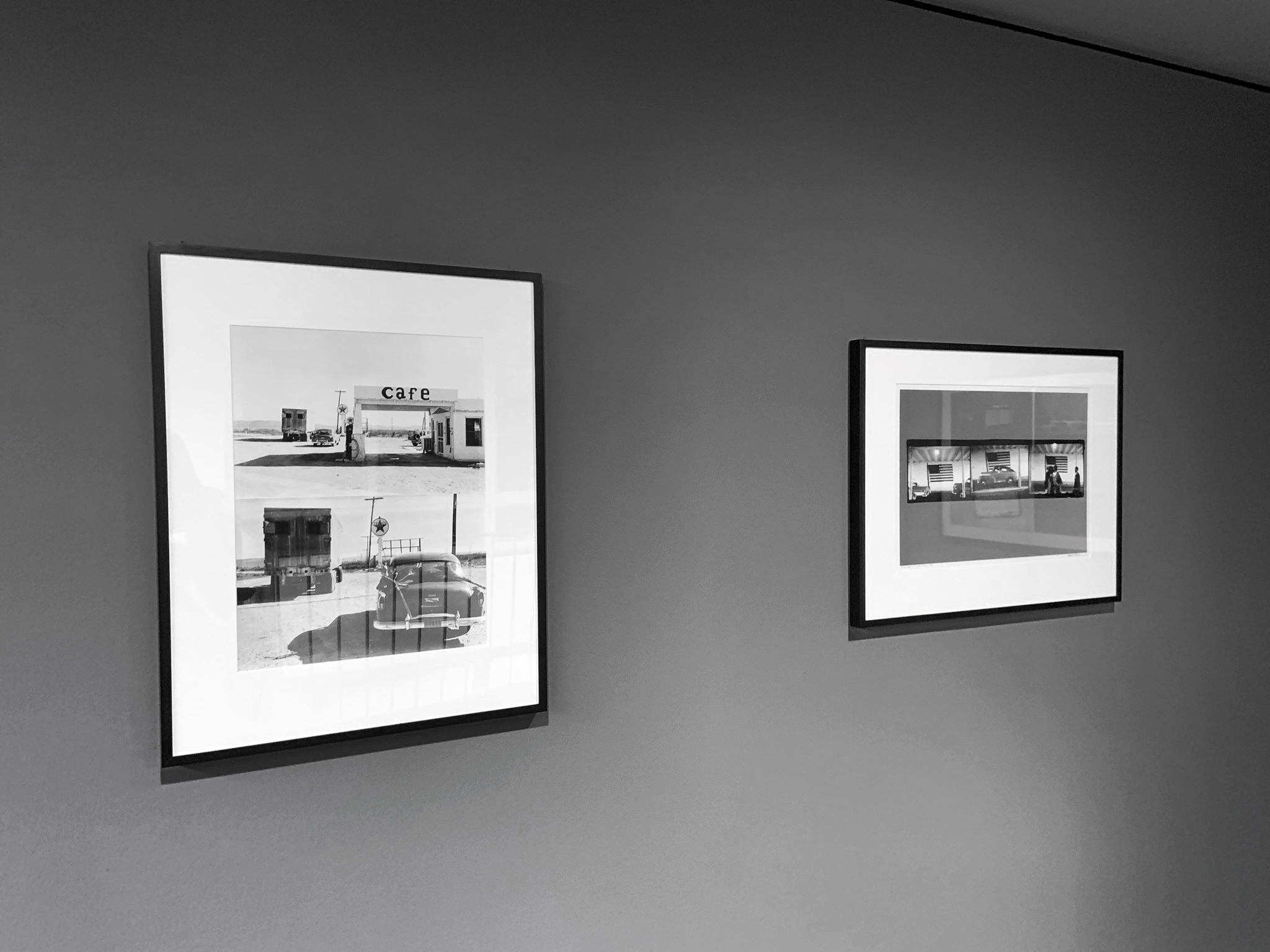
Robert Frank (Swiss-American, 1924-2019) 'Route US 91, leaving Blackfoot, Idaho' 1956 (installation view)

Robert Frank (Swiss-American, 1924-2019) 'Route US 91, leaving Blackfoot, Idaho' 1956 (installation view)


Robert Frank (Swiss-American, 1924-2019)
Route US 91, leaving Blackfoot, Idaho (installation views)
1956
Gelatin silver photograph, later print
Donation of the artist
Photos: Marcus Bunyan


Robert Frank (Swiss-American, 1924-2019) 'U.S. 91, leaving Blackfoot, Idaho' 1956


Robert Frank (Swiss-American, 1924-2019)
Route US 91, leaving Blackfoot, Idaho
1956
Gelatin silver photograph, later print
Donation of the artist


Installation view of the exhibition 'Robert Frank. Unseen' at C/O Berlin showing at left, 'Florida' (1956); at third left, 'New York City' (early 1950s); and at right, 'Ranch Market, Hollywood' (1955-1956)


Installation view of the exhibition Robert Frank. Unseen at C/O Berlin showing at left, Florida (1956); at third left, New York City (early 1950s); and at right, Ranch Market, Hollywood (1955-1956)
Photo: Marcus Bunyan


Robert Frank (Swiss-American, 1924-2019) 'New York City' early 1950s (installation view)


Robert Frank (Swiss-American, 1924-2019)
New York City (installation view)
early 1950s
Vintage gelatin silver photograph
Donation of the artist
Photo: Marcus Bunyan


Robert Frank (Swiss-American, 1924-2019) 'Florida' 1956 (installation view)


Robert Frank (American, 1924-2019)
Florida (installation view)
1956
Gelatin silver print
Swiss Foundation for Photography Collection, Winterthur
Photo: Marcus Bunyan


Robert Frank (Swiss-American, 1924-2019) 'Florida' 1956


Robert Frank (American, 1924-2019)
Florida
1956
Gelatin silver print
© Robert Frank
Courtesy Swiss Foundation for Photography Collection, Winterthur


Robert Frank (Swiss-American, 1924-2019) 'New York City' early 1950s (installation view)


Robert Frank (American, 1924-2019)
New York City (installation view)
early 1950s
Vintage gelatin silver photograph
Donation of the artist
Photo: Marcus Bunyan


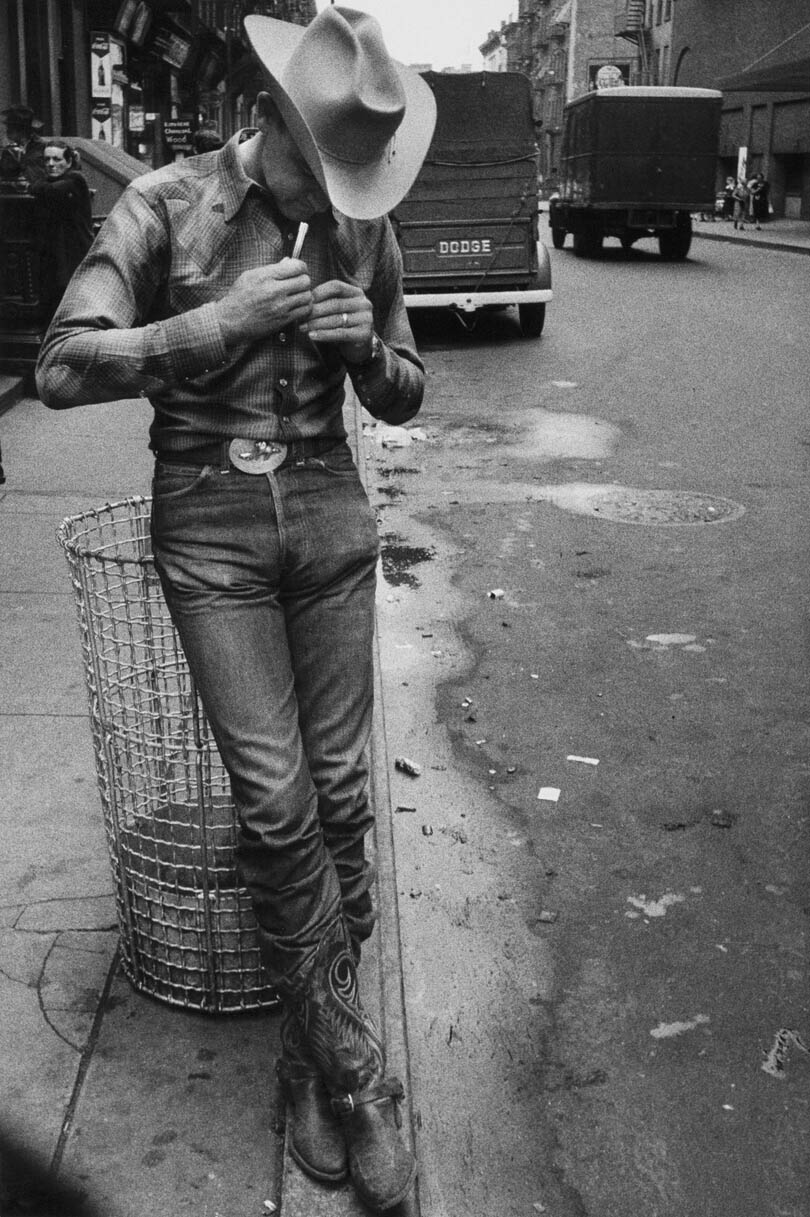
Installation view of the exhibition 'Robert Frank. Unseen' at C/O Berlin showing at left, 'Bar – Gallup, New Mexico' (1955) and at right, 'Rodeo – New York City' (1954)


Installation view of the exhibition Robert Frank. Unseen at C/O Berlin showing at left, Bar – Gallup, New Mexico (1955) and at right, Rodeo – New York City (1954)
Photo: Marcus Bunyan


Robert Frank (Swiss-American, 1924-2019) 'Rodeo - New York City' 1954 (installation view)

Robert Frank (Swiss-American, 1924-2019) 'Rodeo - New York City' 1954 (installation view)


Robert Frank (Swiss-American, 1924-2019)
Rodeo – New York City (installation views)
1954
Vintage gelatin silver print
Property of the Confédération Suisse, Federal Office of Culture, Bern
Photos: Marcus Bunyan


Robert Frank (Swiss-American, 1924-2019) 'Rodeo – New York City' 1954


Robert Frank (Swiss-American, 1924-2019)
Rodeo – New York City
1954
Vintage gelatin silver print
Property of the Confédération Suisse, Federal Office of Culture, Bern


Installation view of the exhibition 'Robert Frank. Unseen' at C/O Berlin showing at right, 'Charity Ball, New York' 1954


Installation view of the exhibition Robert Frank. Unseen at C/O Berlin showing at right, Charity Ball, New York 1954
Photo: Marcus Bunyan


Robert Frank (Swiss-American, 1924-2019) 'Charity Ball, New York' 1954 (installation view)

Robert Frank (Swiss-American, 1924-2019) 'Charity Ball, New York' 1954 (installation view)


Robert Frank (American, 1924-2019)
Charity Ball, New York (installation views)
1954
Vintage gelatin silver print
Property of the Confédération Suisse, Federal Office of Culture, Bern
Photos: Marcus Bunyan


Robert Frank (Swiss-American, 1924-2019) 'Charity Ball, New York' 1954


Robert Frank (Swiss-American, 1924-2019)
Charity Ball, New York
1954
Vintage gelatin silver print
Property of the Confédération Suisse, Federal Office of Culture, Bern


Installation view of the exhibition 'Robert Frank. Unseen' at C/O Berlin

Installation view of the exhibition 'Robert Frank. Unseen' at C/O Berlin showing at left 'Bar – New York' (1955) followed by, 'Yom Kippur – East River, New York City' (1954)


Installation views of the exhibition Robert Frank. Unseen at C/O Berlin showing at left in the bottom photograph, Bar – New York (1955) followed by, Yom Kippur – East River, New York City (1954)
Photos: Marcus Bunyan


Robert Frank (Swiss-American, 1924-2019) 'Los Angeles' 1955 (installation view)


Robert Frank (Swiss-American, 1924-2019)
Los Angeles (installation view)
1955
Vintage gelatin silver photograph
Donation of the artist
Photo: Marcus Bunyan


Robert Frank (Swiss-American, 1924-2019) 'Los Angeles' 1955


Robert Frank (Swiss-American, 1924-2019)
Los Angeles
1955
Vintage gelatin silver photograph
Donation of the artist


Robert Frank (Swiss-American, 1924-2019) 'Wanamaker Fire, 10th Street East, New York' 1956 (installation view)


Robert Frank (Swiss-American, 1924-2019)
Wanamaker Fire, 10th Street East, New York (installation view)
1956
Vintage gelatin silver print
Donation of the artist
Photo: Marcus Bunyan


Robert Frank (Swiss-American, 1924-2019) 'Bar - New York' 1955 (installation view)


Robert Frank (Swiss-American, 1924-2019)
Bar – New York (installation view)
1955
Gelatin silver photograph, later print
Donation of the artist
Photo: Marcus Bunyan


Robert Frank (Swiss-American, 1924-2019) 'Bar, New York City' 1955-1956


Robert Frank (Swiss-American, 1924-2019)
Bar – New York
1955
Gelatin silver photograph, later print
Donation of the artist


Robert Frank (Swiss-American, 1924-2019) 'Yom Kippur - East River, New York City' 1954 (installation view)


Robert Frank (Swiss-American, 1924-2019)
Yom Kippur – East River, New York City (installation view)
1954
Vintage gelatin silver print
Property of the Confédération Suisse, Federal Office of Culture, Bern
Photo: Marcus Bunyan


Robert Frank (Swiss-American, 1924-2019) 'USA' 1950s (installation view)


Robert Frank (Swiss-American, 1924-2019)
USA (installation view)
1950s
Vintage gelatin silver print
Donation of the artist
Photo: Marcus Bunyan


Robert Frank (Swiss-American, 1924-2019) 'Contact Sheet 62 / Factory, Detroit' 1955 (installation view)

Robert Frank (Swiss-American, 1924-2019) 'Contact Sheet 62 / Factory, Detroit' 1955 (installation view)


Robert Frank (Swiss-American, 1924-2019)
Contact Sheet 62 / Factory, Detroit (installation views)
1955
From The Americans. 81 Contact Sheets.
Yugensha, Tokyo/Motomura Kazuhiko, 2009
Private Collection
Photos: Marcus Bunyan


Robert Frank (Swiss-American, 1924-2019) 'Contact Sheet 31 / U.S. 91, Leaving Blackfoot, Idaho' 1956 (installation view)

Robert Frank (Swiss-American, 1924-2019) 'Contact Sheet 31 / U.S. 91, Leaving Blackfoot, Idaho' 1956 (installation view)


Robert Frank (Swiss-American, 1924-2019)
Contact Sheet 31 / U.S. 91, Leaving Blackfoot, Idaho (installation views)
1956
From The Americans. 81 Contact Sheets.
Yugensha, Tokyo/Motomura Kazuhiko, 2009
Private Collection
Photos: Marcus Bunyan


Robert Frank (Swiss-American, 1924-2019) 'Contact Sheet 18 / Trolley, New Orleans' 1955 (installation view)

Robert Frank (Swiss-American, 1924-2019) 'Contact Sheet 18 / Trolley, New Orleans' 1955 (installation view)


Robert Frank (Swiss-American, 1924-2019)
Contact Sheet 18 / Trolley, New Orleans (installation views)
1955
From The Americans. 81 Contact Sheets.
Yugensha, Tokyo/Motomura Kazuhiko, 2009
Private Collection
Photos: Marcus Bunyan


Installation view of the exhibition Robert Frank. Unseen at C/O Berlin


Installation view of the exhibition Robert Frank. Unseen at C/O Berlin showing wall text
Photo: Marcus Bunyan


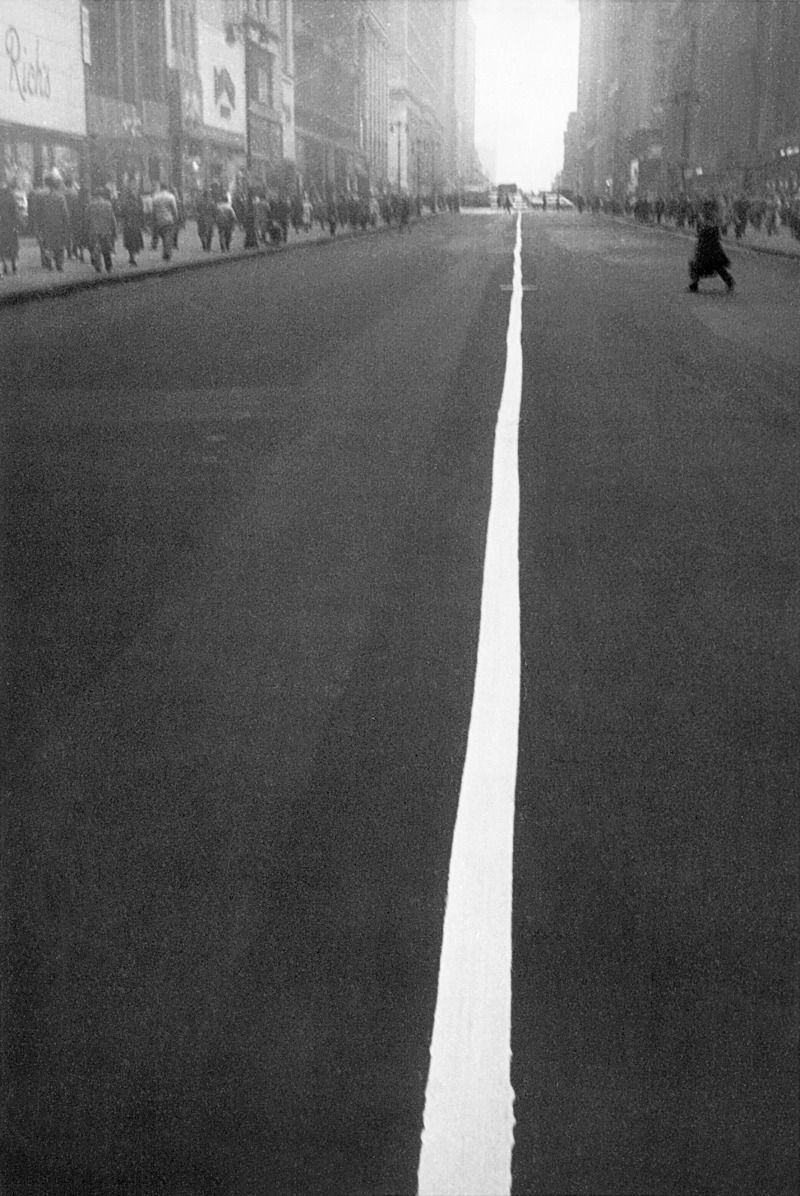
Robert Frank (Swiss-American, 1924-2019) 'Bryant Park, New York' around 1955 (installation view)


Robert Frank (Swiss-American, 1924-2019)
Bryant Park, New York (installation view)
around 1955
Vintage gelatin silver print
Donation of the artist
Photo: Marcus Bunyan


Robert Frank (Swiss-American, 1924-2019) '42nd Street, New York' early 1950s (installation view)


Robert Frank (Swiss-American, 1924-2019)
42nd Street, New York (installation view)
early 1950s
Vintage gelatin silver print
Donation of the artist
Photo: Marcus Bunyan


Robert Frank (Swiss-American, 1924-2019) '41st Street and 7th Avenue' 1953 (installation view)


Robert Frank (Swiss-American, 1924-2019)
41st Street and 7th Avenue (installation view)
1953
Vintage gelatin silver print
Donation of the artist
Photo: Marcus Bunyan


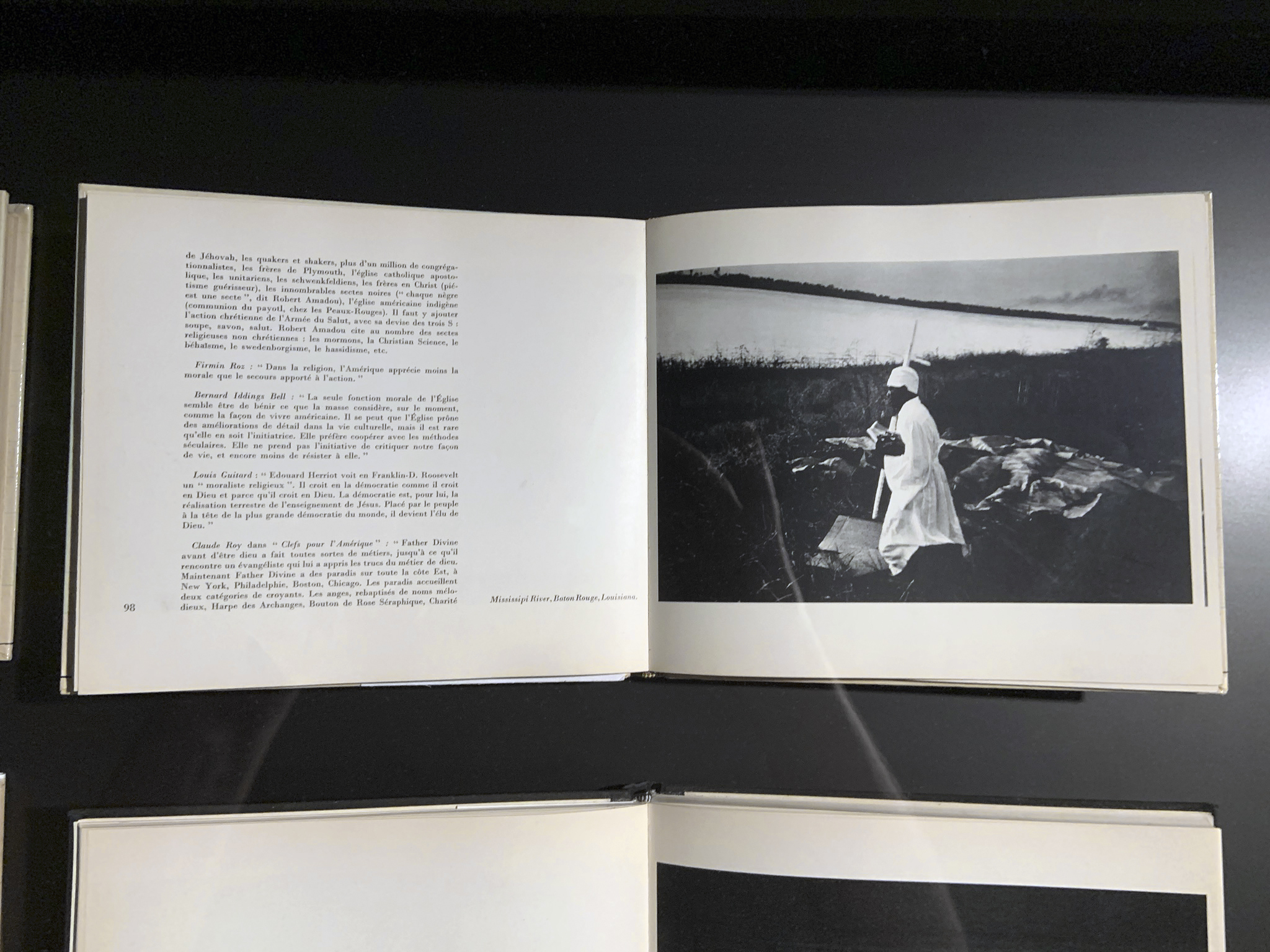
Robert Frank (Swiss-American, 1924-2019) 'Les Américans' book cover (installation view)

Robert Frank (Swiss-American, 1924-2019) 'Les Américans' pages (installation view)


Robert Frank (Swiss-American, 1924-2019)
Les Américans book cover and pages (installation views)
1958
Delpire. Paris


Robert Frank (Swiss-American, 1924-2019) 'Gli Americani' book cover (installation view)


Robert Frank (Swiss-American, 1924-2019)
Gli Americani book cover (installation view)
1959


Robert Frank (Swiss-American, 1924-2019) 'The Americans' book cover (installation view)

Robert Frank (Swiss-American, 1924-2019) 'The Americans' pages (installation view)


Robert Frank (Swiss-American, 1924-2019)
The Americans book cover and pages (installation views)
1959
Grove Press, New York


Robert Frank (Swiss-American, 1924-2019) 'Trolley - New Orleans' 1955 (installation view)


Robert Frank (Swiss-American, 1924-2019)
Trolley – New Orleans (installation view)
1955
Vintage gelatin silver print
Property of the Confédération Suisse, Federal Office of Culture, Bern
Photo: Marcus Bunyan


Robert Frank (Swiss-American, 1924-2019) 'Trolley - New Orleans' 1955 (installation view)


Robert Frank (Swiss-American, 1924-2019)
Trolley – New Orleans (installation view)
1955
Vintage gelatin silver print
Property of the Confédération Suisse, Federal Office of Culture, Bern
Photo: Marcus Bunyan


Robert Frank (Swiss-American, 1924-2019) 'Trolley, New Orleans' 1955


Robert Frank (Swiss-American, 1924-2019)
Trolley – New Orleans
1955
Vintage gelatin silver print
Property of the Confédération Suisse, Federal Office of Culture, Bern


Installation view of the exhibition Robert Frank. Unseen at C/O Berlin showing at left, 'Parade – Hoboken, New Jersey' (1955) and at right, 'City Fathers – Hoboken, New Jersey' (1955)


Installation views of the exhibition Robert Frank. Unseen at C/O Berlin showing at left, Parade – Hoboken, New Jersey (1955) and at right, City Fathers – Hoboken, New Jersey (1955)
Photos: Marcus Bunyan


Robert Frank (Swiss-American, 1924-2019) 'Parade - Hoboken, New Jersey' 1955 (installation view)


Robert Frank (Swiss-American, 1924-2019)
Parade – Hoboken, New Jersey (installation view)
1955
Vintage gelatin silver print
Property of the Confédération Suisse, Federal Office of Culture, Bern
Photo: Marcus Bunyan


Robert Frank (Swiss-American, 1924-2019) 'City Fathers - Hoboken, New Jersey' 1955 (installation view)

Robert Frank (Swiss-American, 1924-2019) 'City Fathers - Hoboken, New Jersey' 1955 (installation view)


Robert Frank (Swiss-American, 1924-2019)
City Fathers – Hoboken, New Jersey (installation views)
1955
Vintage gelatin silver print
Property of the Confédération Suisse, Federal Office of Culture, Bern
Photos: Marcus Bunyan


Robert Frank (Swiss-American, 1924-2019) 'City fathers – Hoboken, New Jersey' 1955


Robert Frank (Swiss-American, 1924-2019)
City Fathers – Hoboken, New Jersey
1955
Vintage gelatin silver print
Property of the Confédération Suisse, Federal Office of Culture, Bern


Installation view of the exhibition 'Robert Frank. Unseen' at C/O Berlin

Installation view of the exhibition 'Robert Frank. Unseen' at C/O Berlin


Installation views of the exhibition Robert Frank. Unseen at C/O Berlin
Photos: Marcus Bunyan


Installation view of the exhibition 'Robert Frank. Unseen' at C/O Berlin

Installation view of the exhibition 'Robert Frank. Unseen' at C/O Berlin


Installation views of the exhibition Robert Frank. Unseen at C/O Berlin
Photos: Marcus Bunyan


C/O Berlin Foundation, Amerika Haus,
Hardenbergstraße 22–24, 10623 Berlin
Phone: +49 30 2844416 62

Opening hours:
Daily 11am – 8pm

C/O Berlin website

LIKE ART BLART ON FACEBOOK

Back to top