
Exhibition dates: 15th October, 2023 – 4th February, 2024
Curators: The exhibition is curated by Sarah Greenough, senior curator and head of the department of photographs, with Andrea Coffman, collection manager in the department of photographs, both at the National Gallery of Art.

Charles Nègre (French, 1820-1880)
Cathédrale de Chartres – Portique du Midi XIIe Siècle
c. 1854, printed c. 1857
Photogravure
Image: 53 x 73cm (20 7/8 x 28 3/4 in.)
Sheet: 59.3 x 80cm (23 3/8 x 31 1/2 in.)
National Gallery of Art, Washington, The Sarah and William L Walton Fund
The under appreciated photogravure process, which prints photographs in ink on paper, produces images of luscious lucidity.
In the “photomechanical process, which came to be called photogravure, a photographic image is etched into a printmaking plate, ink is rubbed into the etched surface, a damp sheet of paper is laid on top of the plate, and both are put through a printing press to transfer the ink to paper.” (Press release)
The prints are tonally rich and have a smooth, continuous tonal range and, depending on the choice of paper and inks, can be produced in a variety of colours and textures. While the process is time-consuming and labour-intensive nothing – except perhaps a platinum print developed in Amidol or alike whose negative has been developed in Pyro developer – comes close to the beauty and tonality of the gravure. “This intricate, painstaking and time-consuming method produces images with rich tones and a sense of light, depth, and realism.”
“The process offers the most sophisticated photomechanical means to reproduce large editions while still retaining the warm blacks and subtle shades of gray. It thrived into the 1930s, but World War II brought an end to its popularity due to costs and availability. As the spirit of hands-on experimentation returned to photography in the 1960s, Jon Goodman (b. 1953) is credited with its revival, and is lauded for creating sumptuous portfolios of the works of famed photographers Paul Strand (1890-1976) and Edward Steichen (1879-1973).”1
Some of the most beautiful photographs ever made are printed in the photogravure process. Alfred Stieglitz (American, 1864-1946), that pioneering artist, publisher and teacher, used them extensively in his influential quarterly photographic journal Camera Work (1903-1917).
One of my favourite photographs of all time, Paul Strand’s Wall Street (1915) is known only in two vintage platinum palladium prints, but is more commonly seen in reproduction as a photogravure print, notably in Stieglitz’s Camera Work Number 48 October 1916 (see below). “Wall Street became one of his most famous images because of his willingness to reproduce it in various photographic media and at different periods throughout his career.” (Philadelphia Museum of Art website)
Thus the reproducibility of the photogravure process led to the wider distribution of beautiful photographs. Crucially these hand printed photomechanical prints still retain an aura – of reality, presence and the hand of the artist, spirit if you like – unlike many reproductions in later photography books.
Dr Marcus Bunyan
1/ Robin O’Dell. “The Photogravure Process,” on the Florida Museum of Photographic Arts website Nov 15, 2020 [Online] Cited 26/01/2024
Many thankx to the National Gallery of Art for allowing me to publish the photographs in the posting. Please click on the photographs for a larger version of the image.
![Paul Strand (American, 1890-1976) 'New York [Wall Street]' Negative 1915; print 1916 Photogravure](https://artblart.com/wp-content/uploads/2024/01/strand-wall-street-a.jpg "Paul Strand (American, 1890-1976) 'New York [Wall Street]' Negative 1915; print 1916 Photogravure")
![Paul Strand (American, 1890-1976) 'New York [Wall Street]' Negative 1915; print 1916 Photogravure](https://artblart.com/wp-content/uploads/2024/01/strand-wall-street-b.jpg "Paul Strand (American, 1890-1976) 'New York [Wall Street]' Negative 1915; print 1916 Photogravure")
Paul Strand (American, 1890-1976)
New York [Wall Street]
Negative 1915; print 1916
Photogravure
From Camera Work. Number 48. Alfred Stieglitz (American, 1864-1946) publisher
Image: 13 × 16.2 cm (5 1/8 × 6 3/8 in.)
Sheet: 27.8 × 19.7 cm (10 15/16 × 7 3/4 in.)
The J. Paul Getty Museum, Los Angeles
Public domain
Please note: As far as I know, this photograph is not in the exhibition.
Discover an intriguing chapter in the history of photography, as innovative practitioners searched for and perfected a method to produce identical photographic prints in ink. The process, which came to be called photogravure, yielded some of the most beautiful photographs ever made – featuring delicate highlights, lush blacks, a remarkably rich tonal range, and a velvety matte surface. Etched by Light: Photogravures from the Collection, 1840-1940 tells the story of the first 100 years of this process. Artists and scientists working across Europe from the 1840s through the 1870s were dismayed to discover that identical silver-based photographic prints were not only difficult to make but also faded quickly. Building on one another’s discoveries, innovators such as William Henry Fox Talbot, Hippolyte Fizeau, and Charles Nègre perfected a way to etch a photographic image into a copperplate and print it in ink. In the late 19th and early 20th centuries, photographers such as James Craig Annan and Peter Henry Emerson utilised this process to demonstrate the artistic nature of photography while somewhat later photographers such as Alfred Stieglitz, Man Ray, and Laure Albin-Guillot used the technique to create large, bold pictures that they disseminated widely. Including 46 photogravures and 5 bound volumes illustrated with photogravures, many never before exhibited, Etched by Light shows how these works, through their proliferation, have helped shape our collective visual experience.

Bisson Frères. Louis-Auguste Bisson (French, 1814-1876) and Auguste-Rosalie Bisson (French, 1826-1900)
Notre-Dame
1850s
Heliogravure on chine colle
Sheet: 35.7 x 27.3cm (14 1/16 x 10 3/4 in.)
National Gallery of Art, Washington, Alfred H. Moses and Fern M. Schad Fund
Public domain
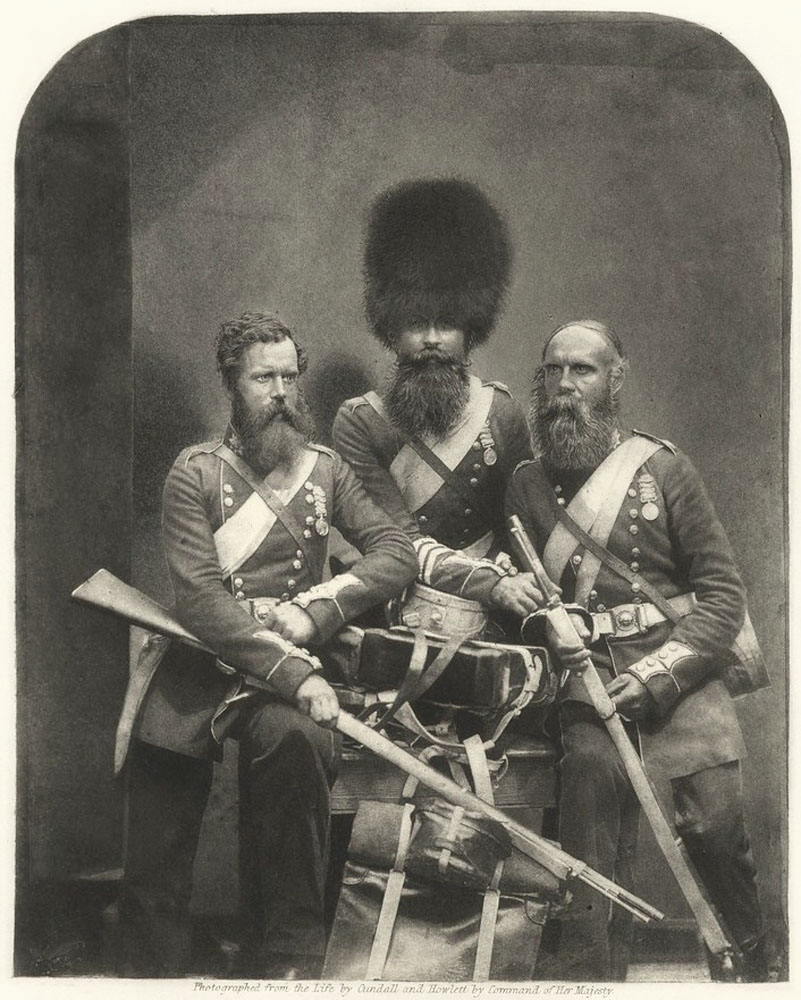
Joseph Cundall (British, 1818-1895) and Robert Howlett (British, 1831-1858)
Crimean Braves – Men of the Trenches and Battlefields in the Crimea
1856
Photogalvanograph proof on chine collé
Plate: 31 x 25cm (12 3/16 x 9 13/16 in.)
Sheet: 55.8 x 38cm (21 15/16 x 14 15/16 in.)
National Gallery of Art, Washington, Alfred H. Moses and Fern M. Schad Fund
Public domain

Peter Henry Emerson (British, 1856-1936)
A Winter’s Morning
1887
Photogravure
Image: 17.7 x 28.7cm (6 15/16 x 11 5/16 in.)
Sheet: 21.5 x 32.4cm (8 7/16 x 12 3/4 in.)
Mount: 40 x 50.8cm (15 3/4 x 20 in.)
National Gallery of Art, Washington, Carolyn Brody Fund and Robert B. Menschel and the Vital Projects

Peter Henry Emerson (British born Cuba, 1856-1936)
The Poacher – A Hare in View
1888
Photogravure
Image: 28.5 x 23.7cm (11 1/4 x 9 5/16 in.)
Sheet: 30.5 x 25.7cm (12 x 10 1/8 in.)
National Gallery of Art
Gift of Mary and Dan Solomon and Patrons’ Permanent Fund
Public domain
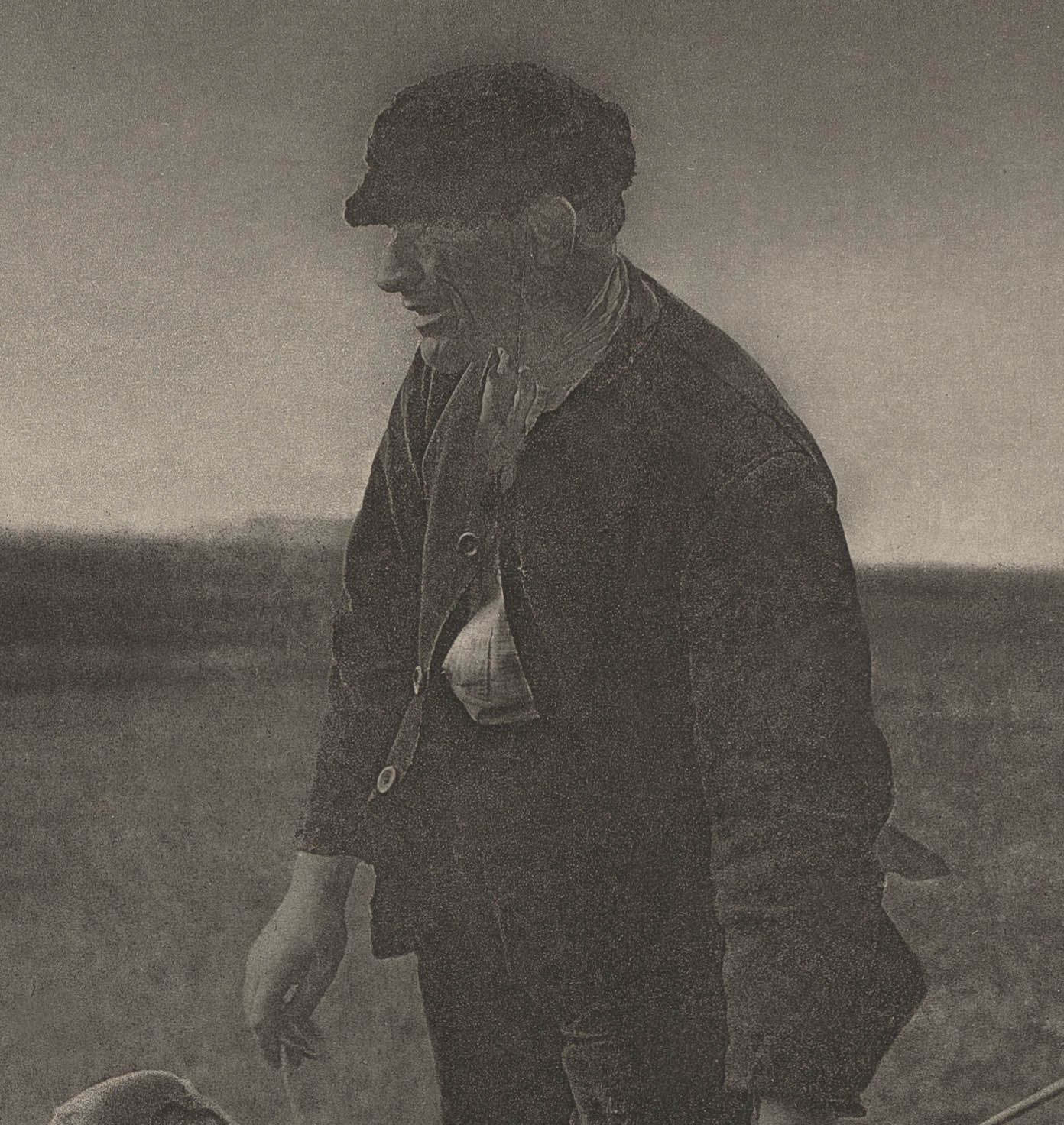
Peter Henry Emerson (British born Cuba, 1856-1936)
The Poacher – A Hare in View (detail)
1888
Photogravure
Image: 28.5 x 23.7cm (11 1/4 x 9 5/16 in.)
Sheet: 30.5 x 25.7cm (12 x 10 1/8 in.)
National Gallery of Art
Gift of Mary and Dan Solomon and Patrons’ Permanent Fund
Public domain
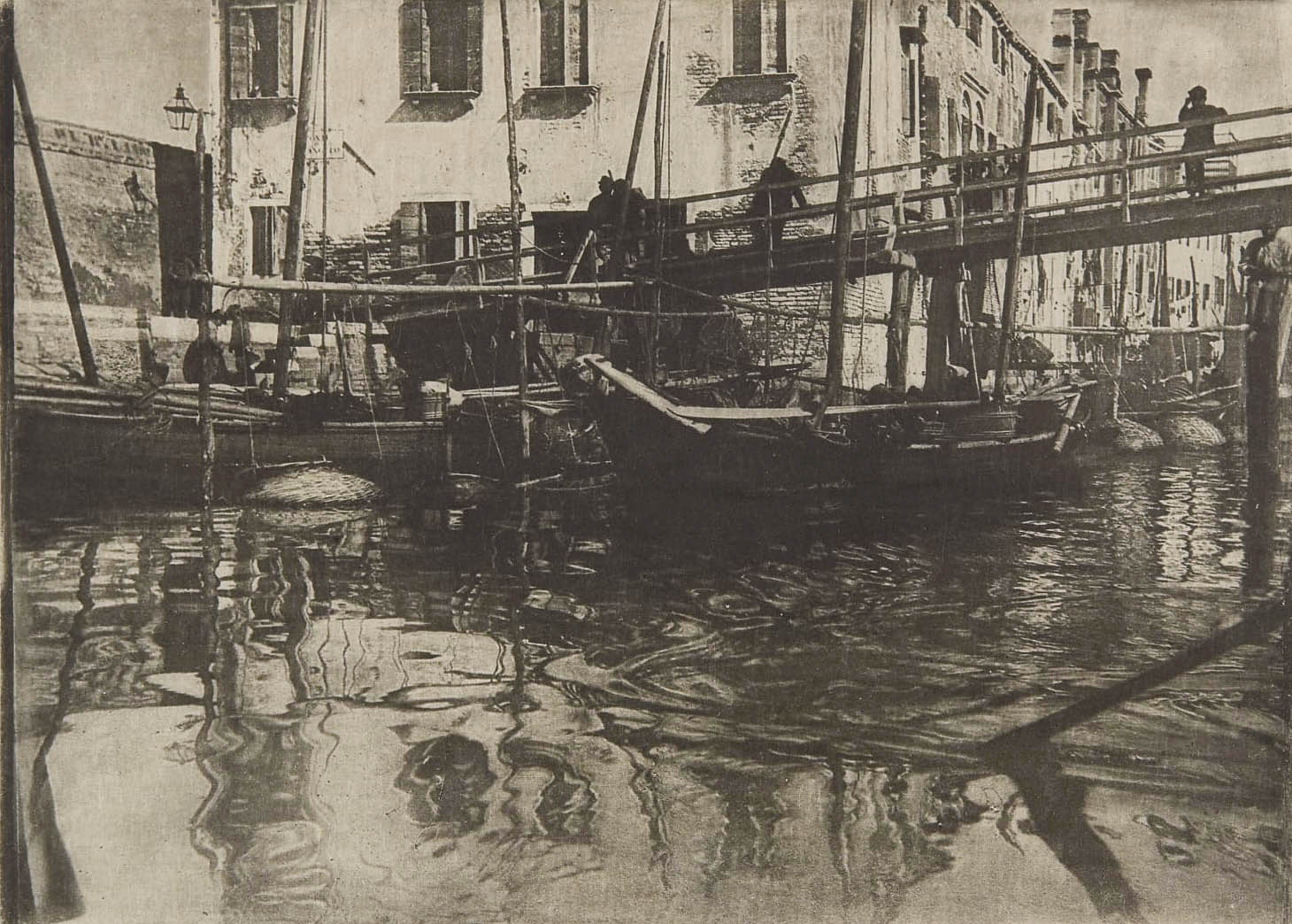
James Craig Annan (British, 1864-1946)
A Black Canal
1894
Photogravure
Image: 9.1 x 12.6cm (3 9/16 x 4 15/16 in.)
Sheet: 9.6 x 12.8cm (3 3/4 x 5 1/16 in.)
National Gallery of Art
Pepita Milmore Memorial Fund and Robert B. Menschel and the Vital Projects Fund
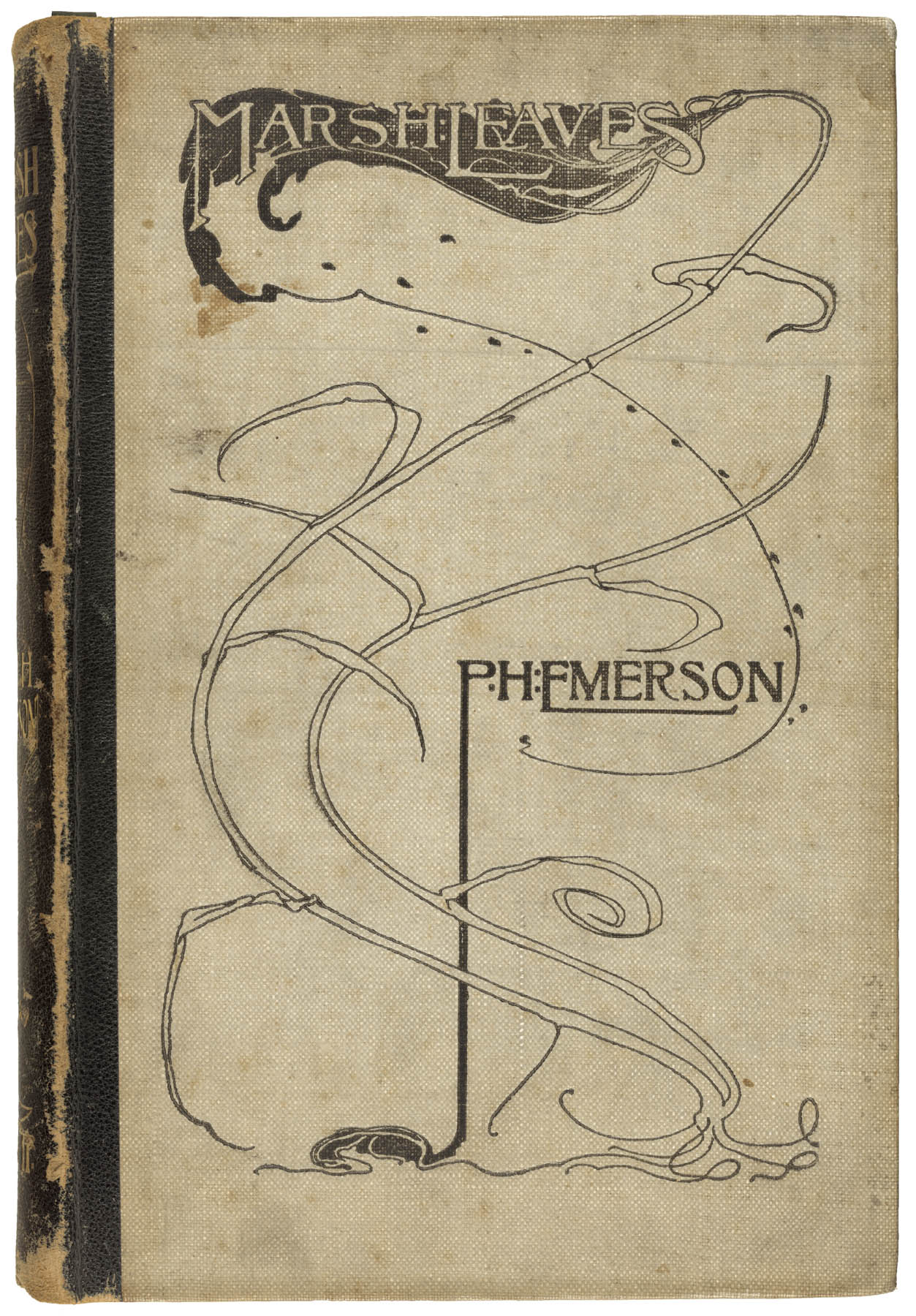
Peter Henry Emerson (British born Cuba, 1856-1936)
Marsh Leaves
Published 1895
1 vol: ill: 16 photogravures on wove paper
Page size: 28.4 x 18.4cm (11 3/16 x 7 1/4 in.)
National Gallery of Art, Washington, Gift of Harvey S. Shipley Miller and J. Randall Plummer, in Honor of the 50th Anniversary of the National Gallery of Art
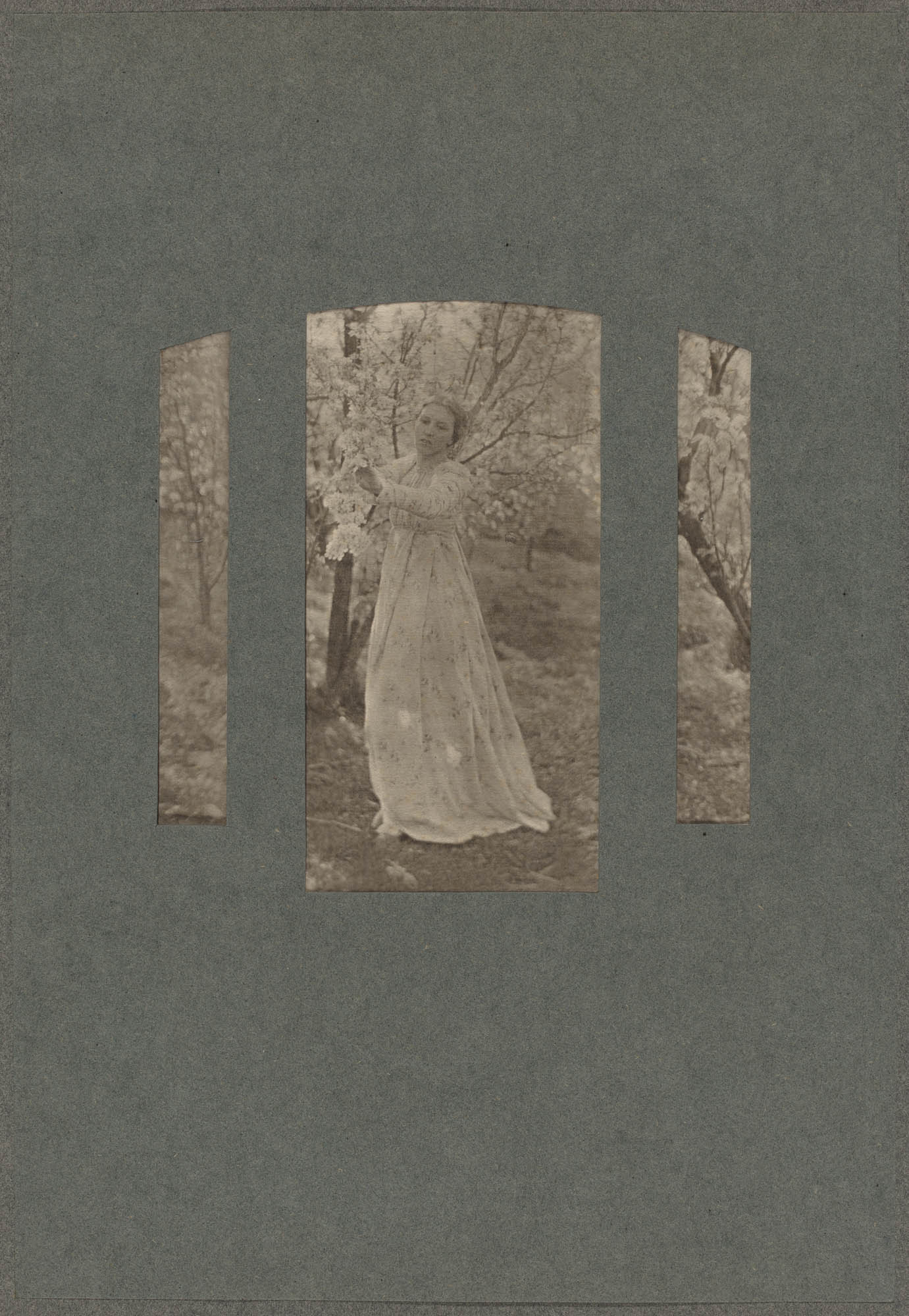
Clarence H. White (American, 1871-1925)
Spring
1899
Photogravure overmatted and mounted on gray wove paper
Image (sight): 12.9 x 13cm (5 1/16 x 5 1/8 in.)
Mat: 28.5 x 19.5cm (11 1/4 x 7 11/16 in.)
Mount: 38 x 27.8cm (14 15/16 x 10 15/16 in.)
National Gallery of Art, Washington, Anonymous Gift
Public domain
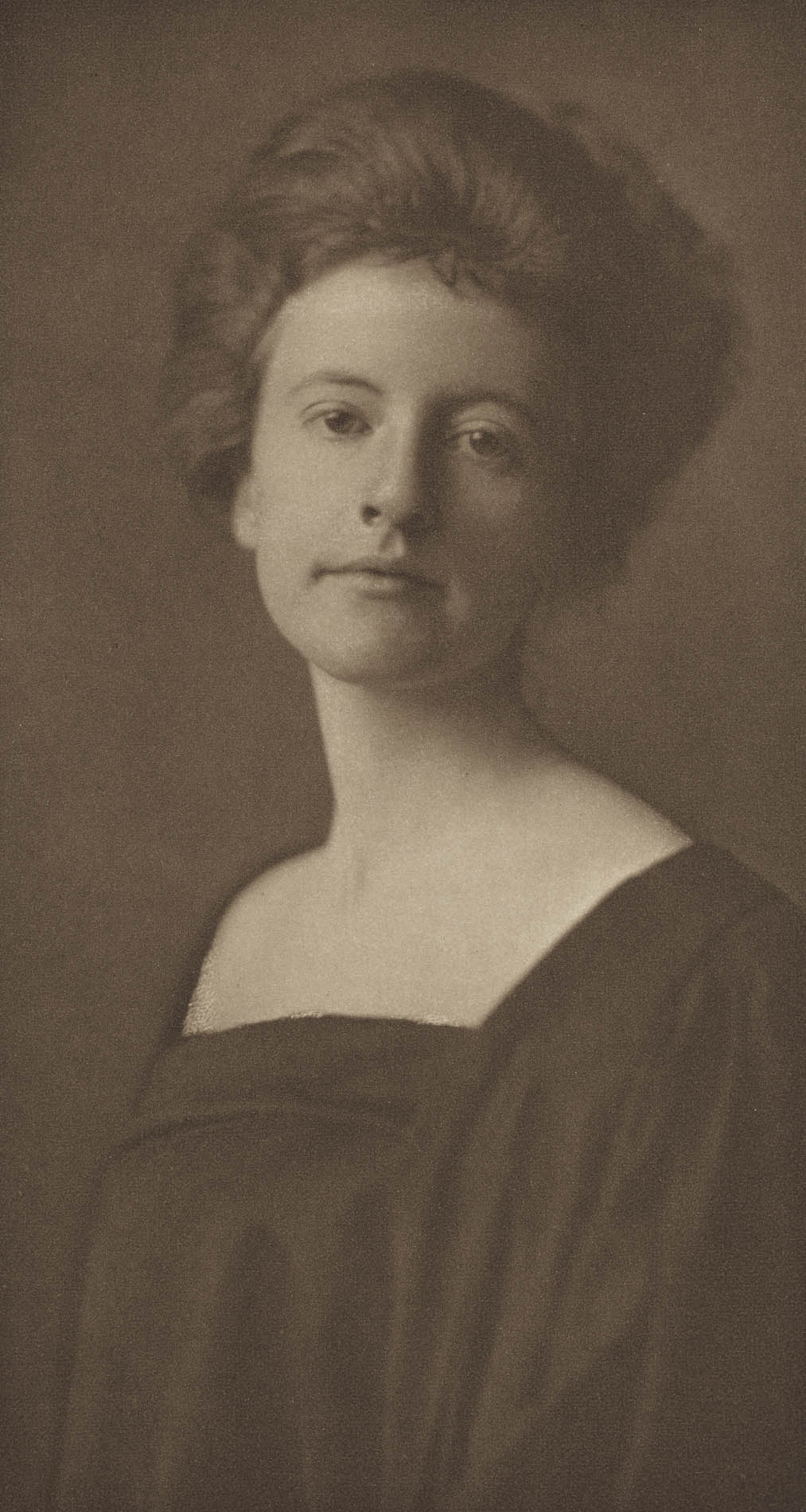
Mathilde Weil (American, 1872-1942)
Beatrice
1899
Photogravure in sepia on chine collé mounted on cream wove paper
Image: 16.7 x 9cm (6 9/16 x 3 9/16 in.)
Sheet: 18.8 x 10.4cm (7 3/8 x 4 1/8 in.)
Mount: 37.8 x 27.8cm (14 7/8 x 10 15/16 in.)
National Gallery of Art, Washington, Anonymous Gift
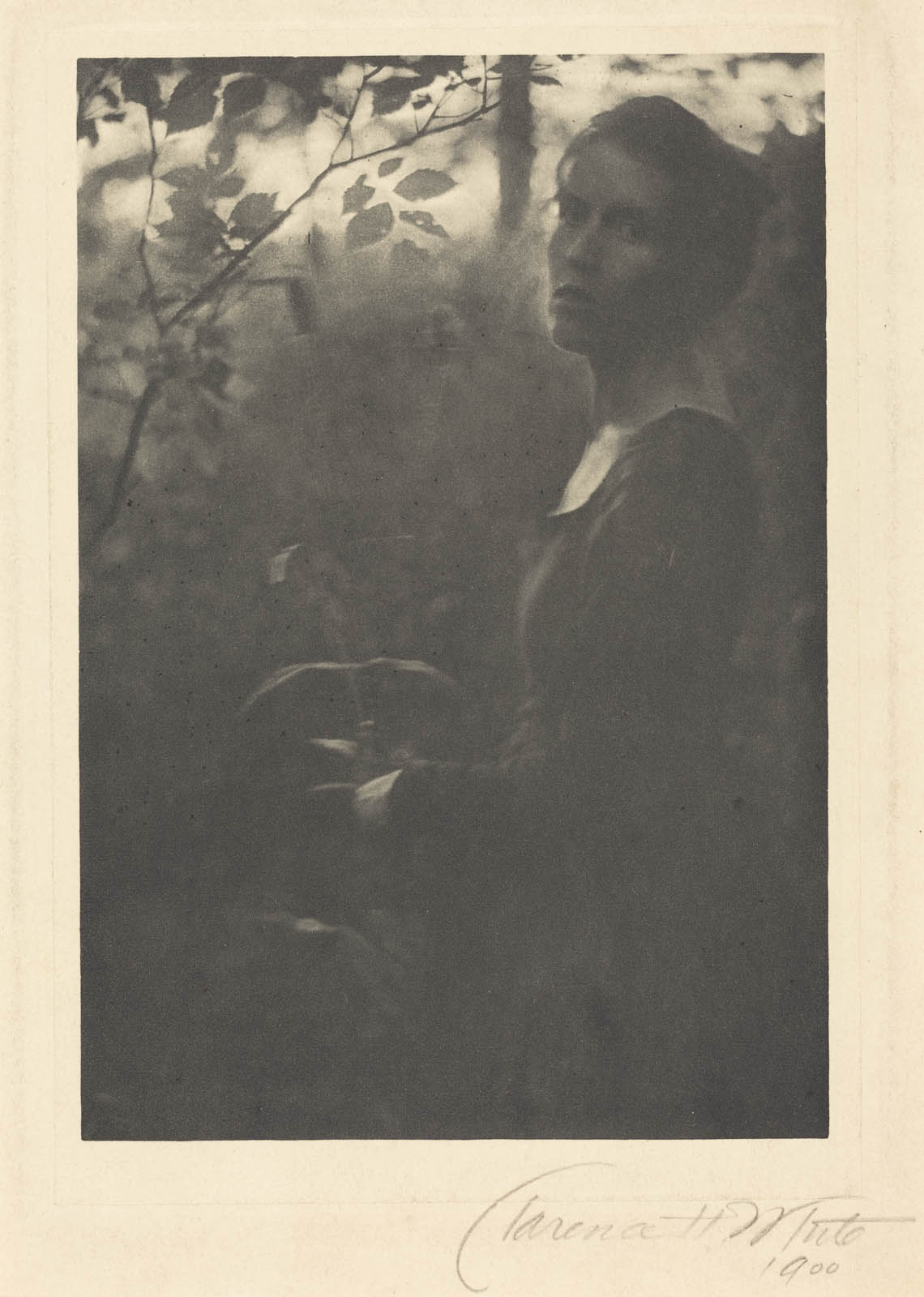
Clarence H. White (American, 1871-1925)
Edge of the Woods, Evening
1900
Photogravure
Image: 14.5 x 10.1cm (5 11/16 x 4 in.)
Sheet: 28.5 x 19.8cm (11 1/4 x 7 13/16 in.)
National Gallery of Art
Robert B. Menschel and the Vital Projects Fund
Public domain

Clarence H. White (American, 1871-1925)
Morning
c. 1905
Photogravure
Image: 20.2 x 15.5cm (7 15/16 x 6 1/8 in.)
Mount: 20.7 x 16.2cm (8 1/8 x 6 3/8 in.)
National Gallery of Art Washington, Robert B. Menschel and the Vital Projects Fund
Public domain
Etched by Light: Photogravures from the Collection, 1840-1940 tells the fascinating story of the search to find and perfect a way to print photographs in ink. The process, which came to be called photogravure, resulted in some of the most beautiful photographs ever made – featuring delicate highlights, lush blacks, a remarkably rich tonal range, and a velvety matte surface. Presenting 40 photogravures and 4 bound volumes illustrated with them (many recently acquired and exhibited here for the first time), Etched by Light shows how this process enabled photographs to circulate widely and help shape our collective visual experience. The exhibition is on view from October 15, 2023, through February 4, 2024, in the West Building of the National Gallery of Art.
“Discover an intriguing chapter in the history of photography, as innovative practitioners developed a method to produce photographic prints in ink,” said Sarah Greenough, senior curator and head of the department of photographs at the National Gallery of Art. “Including photogravures from the National Gallery’s collection, this exhibition shows the pivotal role photogravures played in the history of photography by enabling the creation and widespread dissemination of tonally rich and lasting prints.”
About the Exhibition
From its very beginnings, photography revolutionised the way pictures were made and knowledge about the visual world was disseminated. But in the early 1840s, artists and scientists working across Europe discovered that it had drawbacks. The daguerreotype process, developed by Louis-Jacques-Mandé Daguerre, created astonishingly vivid images, but each one was unique and could only be copied by making another photograph. William Henry Fox Talbot’s negative / positive process held more promise, but his silver-chloride prints faded when exposed to light. Early practitioners also learned that it was hard to make numerous identical prints that could be tipped into books or journals, owing to variabilities in the paper and chemicals that were used to make prints. Such obstacles, at least initially, frustrated their hopes of fully realising the potential of this new medium.
Divided into three sections, Etched by Light traces the search – unfolding across 100 years – for a process to print photographs in ink, which were more stable than traditional silver-based photographic prints. It moves from the experiments in the 1840s and 1850s by French and British photographers such as Armand-Hippolyte-Louis Fizeau, Charles Nègre, and Talbot, who discovered the chemical and technical components necessary to print photographs in ink, to the successful solution invented by Talbot in the 1850s and perfected by Karl Klíč in 1879. In their photomechanical process, which came to be called photogravure, a photographic image is etched into a printmaking plate, ink is rubbed into the etched surface, a damp sheet of paper is laid on top of the plate, and both are put through a printing press to transfer the ink to paper. Favoured from the mid-1880s through the 1930s, revived in the 1980s and 1990s, and still popular today, photogravures have a smooth, continuous tonal range, although an extremely fine grain is evident under magnification.
The exhibition also shows how photographers working in the late 19th and early 20th centuries, including Peter Henry Emerson and Alfred Stieglitz, exploited the photogravure process for its artistic potential. They highlighted the individuality of their pictures through their choice of paper and inks, and even manipulated the photographic image itself. They also utilised the reproducibility of the process, inserting their photogravures into limited edition books, portfolios, and journals that they circulated in an effort to prove the artistic merit of photography.
The exhibition concludes with the work of modernist photographers, such as Alvin Langdon Coburn, Laure Albin Guillot, Man Ray, and Margaret Bourke-White, who used the process to enlarge small negatives, creating big, bold, and sometimes colourful photogravures. Circulating their photogravures widely in books and portfolios, as well as commercial advertisements, these artists demonstrated that photography could tackle new subjects, revitalising our view of life, art, and science, and in the process revealing critical new insights about the world around us.
The exhibition is organised by the National Gallery of Art, Washington
Press release from the National Gallery of Art

Alvin Langdon Coburn (British born United States, 1882-1966)
Trafalgar Square
1909
Photogravure
Image: 21.2 x 16.2cm (8 3/8 x 6 3/8 in.)
Sheet: 21.7 x 16.7cm (8 9/16 x 6 9/16 in.)
National Gallery of Art
Robert B. Menschel and the Vital Projects Fund

Alvin Langdon Coburn (British born United States, 1882-1966)
Brooklyn Bridge
c. 1910
Photogravure
Image: 19.9 x 14.7cm (7 13/16 x 5 13/16 in.)
Sheet: 21.2 x 15.3cm (8 3/8 x 6 in.)
National Gallery of Art
Robert B. Menschel and the Vital Projects Fund

Alvin Langdon Coburn (British born United States, 1882-1966)
The Battery
c. 1909
Photogravure
Image: 16 x 15.56cm (6 5/16 x 6 1/8 in.)
Sheet: 17.3 x 16.4cm (6 13/16 x 6 7/16 in.)
National Gallery of Art
Robert B. Menschel and the Vital Projects Fund
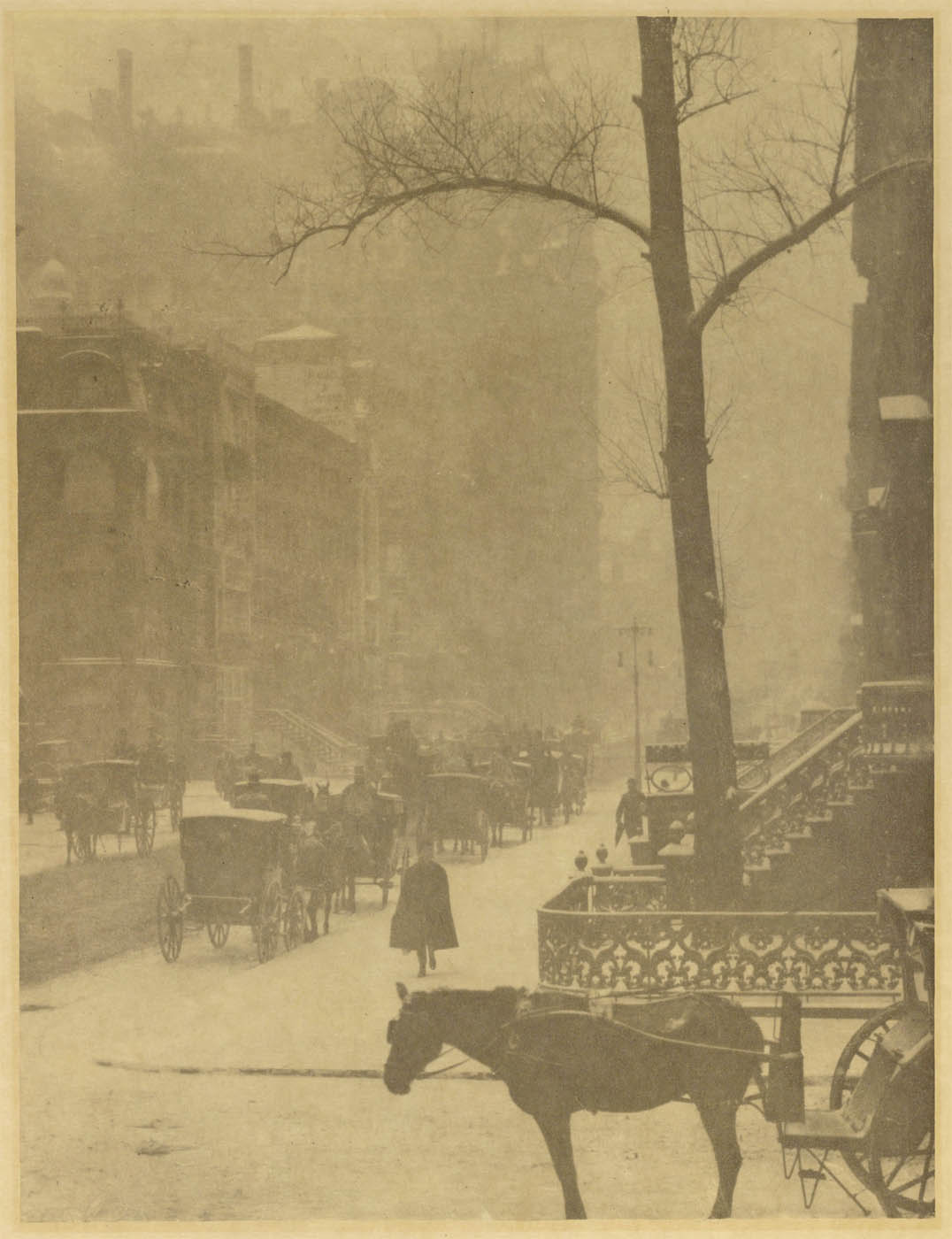
Alfred Stieglitz (American, 1864-1946)
The Street – Design for a Poster / The Street – Fifth Avenue
1896? / 1901-1902?, printed 1903
Photogravure
National Gallery of Art
Public domain

Alfred Stieglitz (American, 1864-1946)
The Steerage
1907, printed in or before 1913
Photogravure on cream moderately thick smooth wove Japanese paper
Image: 33.2 x 26.4cm (13 1/16 x 10 3/8 in.)
Sheet: 46.3 x 31.9cm (18 1/4 x 12 9/16 in.)
National Gallery of Art
Alfred Stieglitz Collection

Alfred Stieglitz (American, 1864-1946)
Old and New New York
1910, printed in or before 1913
Photogravure on beige thin slightly textured laid Japanese paper
Image: 33.3 x 25.7cm (13 1/8 x 10 1/8 in.)
Sheet: 40.3 x 28.3cm (15 7/8 x 11 1/8 in.)
National Gallery of Art
Alfred Stieglitz Collection
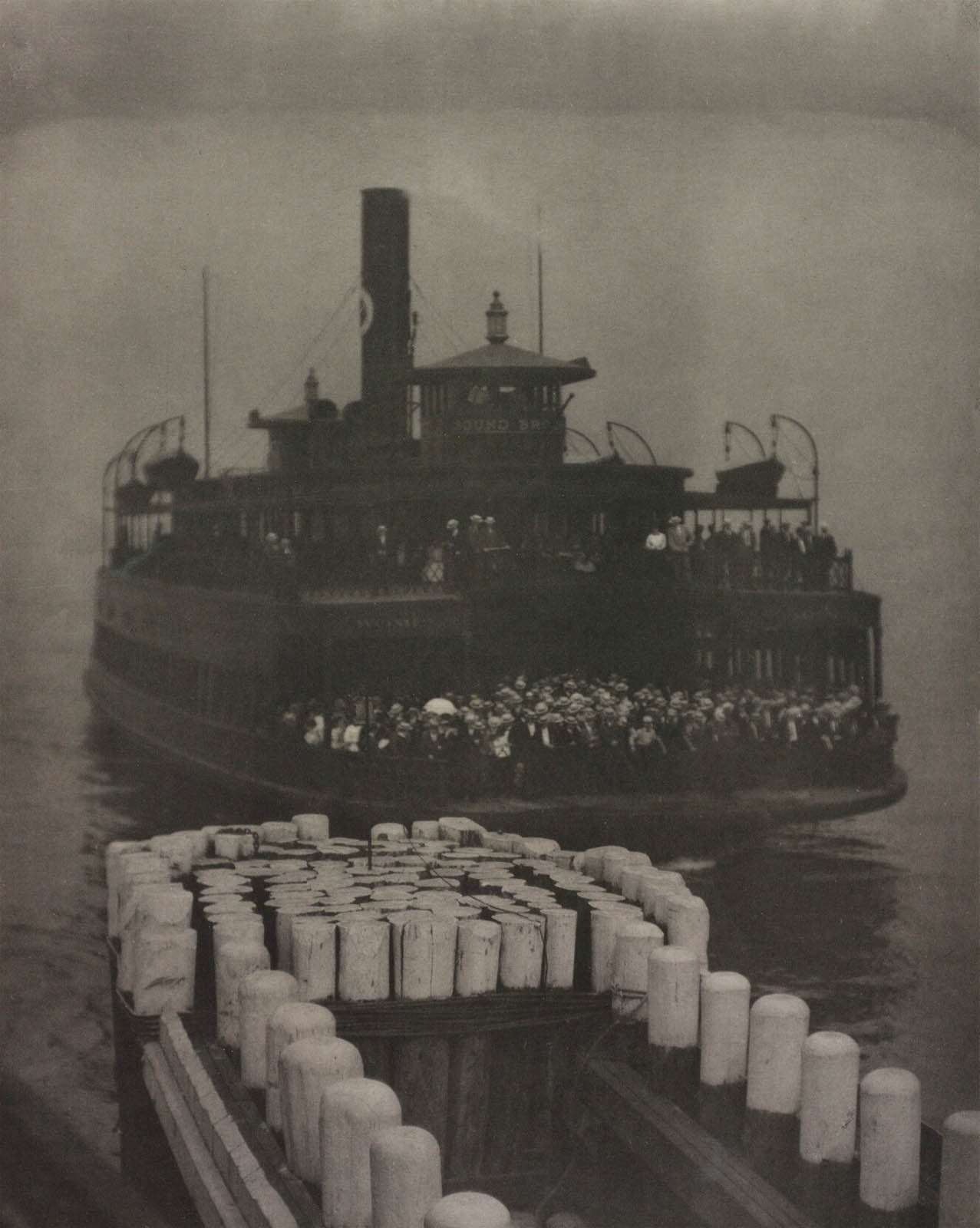
Alfred Stieglitz (American, 1864-1946)
After Working Hours – The Ferry Boat
1910, printed in or before 1913
Photogravure
Image: 33.6 x 25.9cm (13 1/4 x 10 3/16 in.)
Sheet: 40.4 x 28.1cm (15 7/8 x 11 1/16 in.)
National Gallery of Art
Alfred Stieglitz Collection
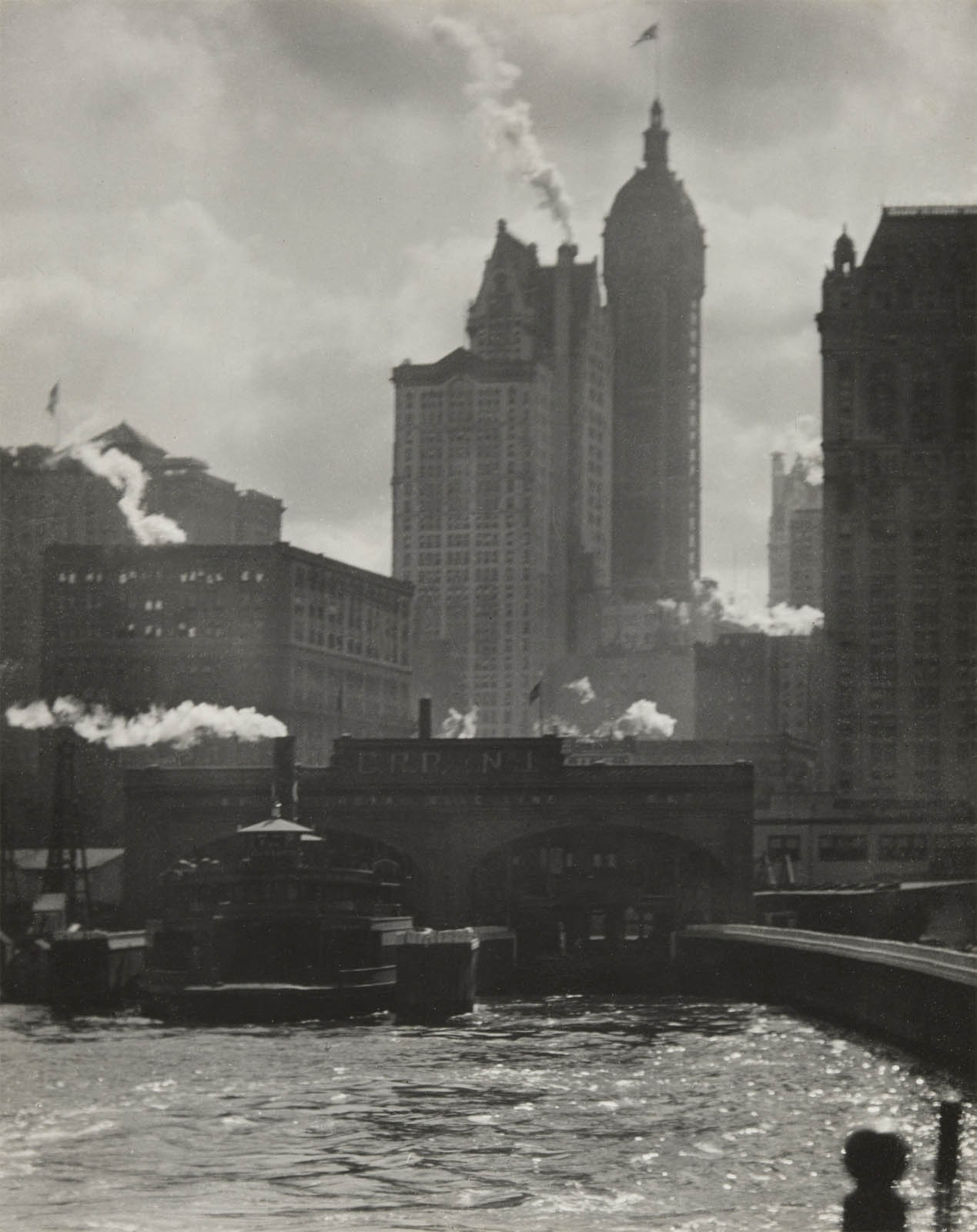
Alfred Stieglitz (American, 1864-1946)
The City of Ambition
1910, printed in or before 1913
Photogravure on beige thin slightly textured laid Japanese paper
Sheet (trimmed to image): 34 x 26cm (13 3/8 x 10 1/4 in.)
Mount: 43.3 x 32 cm (17 1/16 x 12 5/8 in.)
National Gallery of Art, Washington, Alfred Stieglitz Collection

Anne Brigman (American, 1859-1960)
The Cleft of the Rock
1912
Photogravure
Image: 21 x 16cm (8 1/4 x 6 5/16 in.)
National Gallery of Art, Washington, Gift of Mark Katzman and Hilary Skirboll

Alvin Langdon Coburn (British born United States, 1882-1966)
The Tunnel Builders
1913
Photogravure
Image: 21 x 17cm (8 1/4 x 6 11/16 in.)
National Gallery of Art, Washington, Gift of Funds from John S. Parsley and Nancy Nolan Parsley

Man Ray (American, 1890-1976)
Électricité
1931
Photogravure
Image: 26 x 20.5cm (10 1/4 x 8 1/16 in.)
Mount: 37.5 x 27.5cm (14 3/4 x 10 13/16 in.)
National Gallery of Art, Washington, Gift of Robert B. Menschel
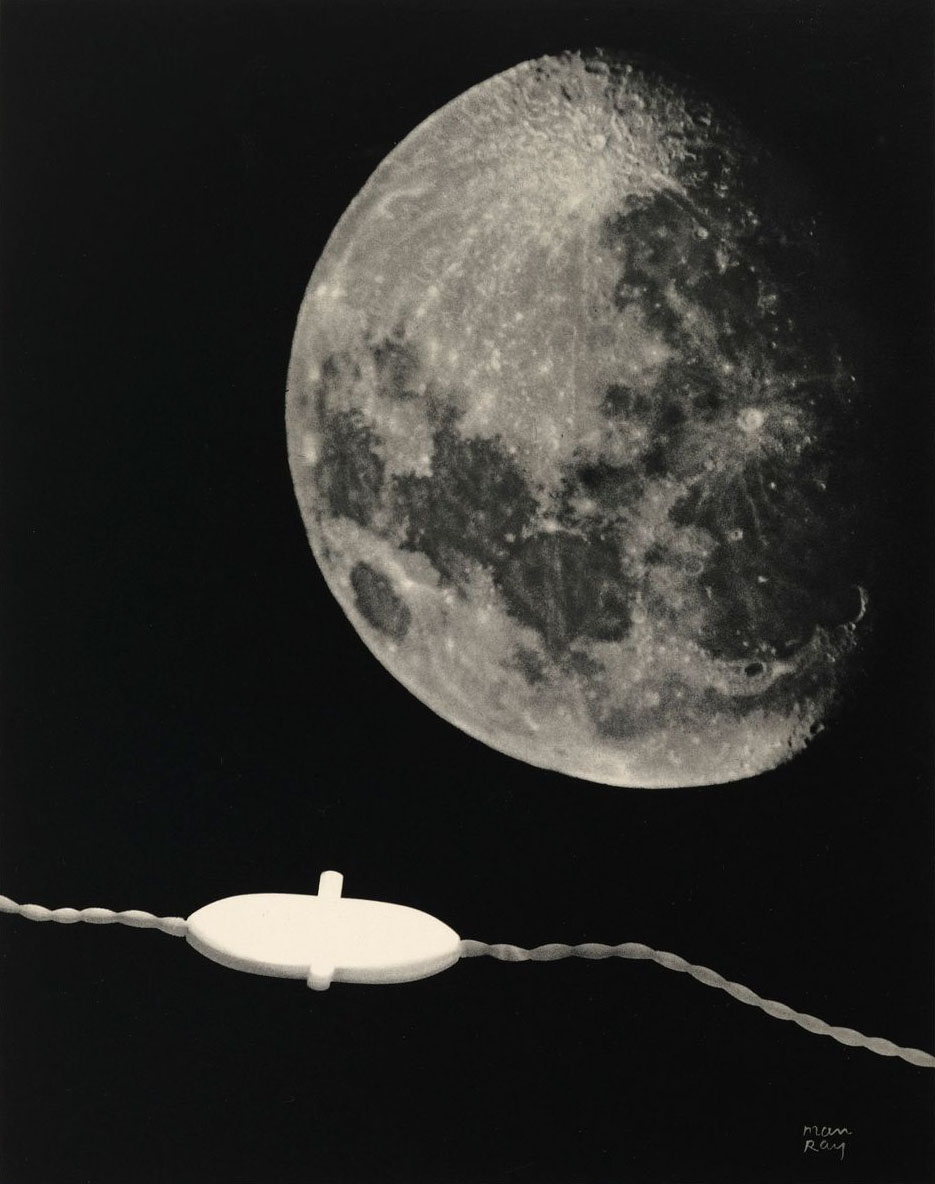
Man Ray (American, 1890-1976)
Le Monde
1931
Photogravure
Image: 26 x 20.5cm (10 1/4 x 8 1/16 in.)
Mount: 37.5 x 27.5cm (14 3/4 x 10 13/16 in.)
National Gallery of Art, Washington, Gift of Robert B. Menschel
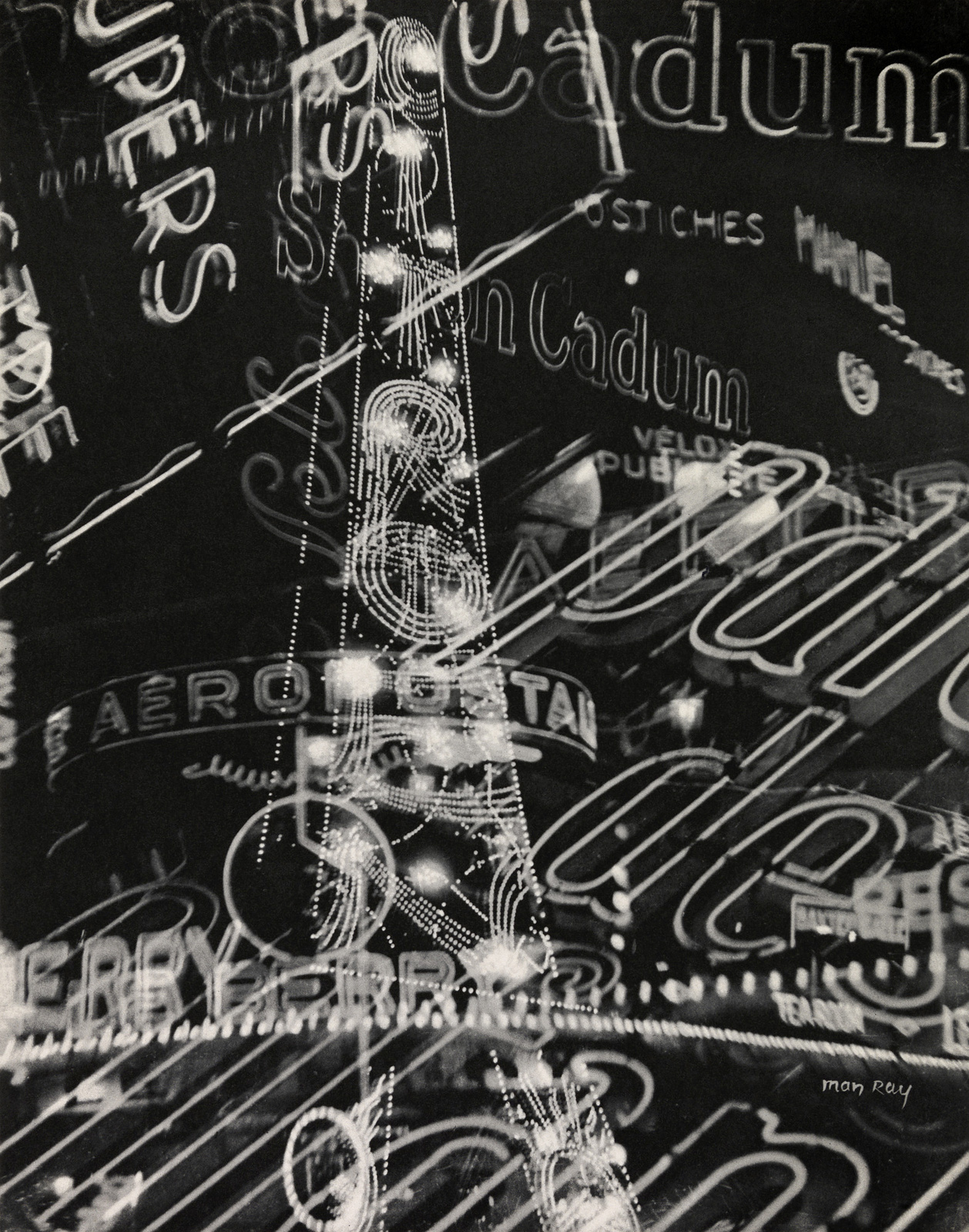
Man Ray (American, 1890-1976)
La Ville (The City)
1931
Photogravure
Image: 26 x 20.5cm (10 1/4 x 8 1/16 in.)
Mount: 37.5 x 27.5cm (14 3/4 x 10 13/16 in.)
National Gallery of Art, Washington, Gift of Robert B. Menschel

Man Ray (American, 1890-1976)
Le Souffle (Breeze)
1931
Photogravure
Image: 26 x 20.2cm (10 1/4 x 7 15/16 in.)
Mount: 37.5 x 27.5cm (14 3/4 x 10 13/16 in.)
National Gallery of Art, Washington, Gift of Robert B. Menschel

Paul Strand (American, 1890-1976)
Virgin, Sand Felipe, Oaxaca
1933, printed 1940
Photogravure
Image: 26.4 x 20.7cm (10 3/8 x 8 1/8 in.)
Sheet: 40.4 x 31.7cm (15 7/8 x 12 1/2 in.)
National Gallery of Art, Washington, Alfred H. Moses and Fern M. Schad Fund

Paul Strand (American, 1890-1976)
Men of Santa Anna, Michoacan
1933, printed 1940
Photogravure
Image: 16.1 x 12.7cm (6 5/16 x 5 in.)
Sheet: 40.4 x 31.7cm (15 7/8 x 12 1/2 in.)
National Gallery of Art, Washington, Alfred H. Moses and Fern M. Schad Fund

Paul Strand (American, 1890-1976)
Boy, Uruapan
1933, printed 1940
Photogravure
Image: 25.7 x 20.5cm (10 1/8 x 8 1/16 in.)
Sheet: 40.4 x 31.7cm (15 7/8 x 12 1/2 in.)
National Gallery of Art, Washington, Alfred H. Moses and Fern M. Schad Fund

Paul Strand (American, 1890-1976)
Cristo, Tiacochoaya, Oaxaca
1933, printed 1940
Photogravure
Image: 26 x 20.4cm (10 1/4 x 8 1/16 in.)
Sheet: 40.4 x 31.7cm (15 7/8 x 12 1/2 in.)
National Gallery of Art, Washington, Alfred H. Moses and Fern M. Schad Fund

Paul Strand (American, 1890-1976)
Cristo with Thorns, Huexotla
1933, printed 1940
Photogravure
Image: 26 x 20.5cm (10 1/4 x 8 1/16 in.)
Sheet: 40.4 x 31.7cm (15 7/8 x 12 1/2 in.)
National Gallery of Art, Washington, Alfred H. Moses and Fern M. Schad Fund
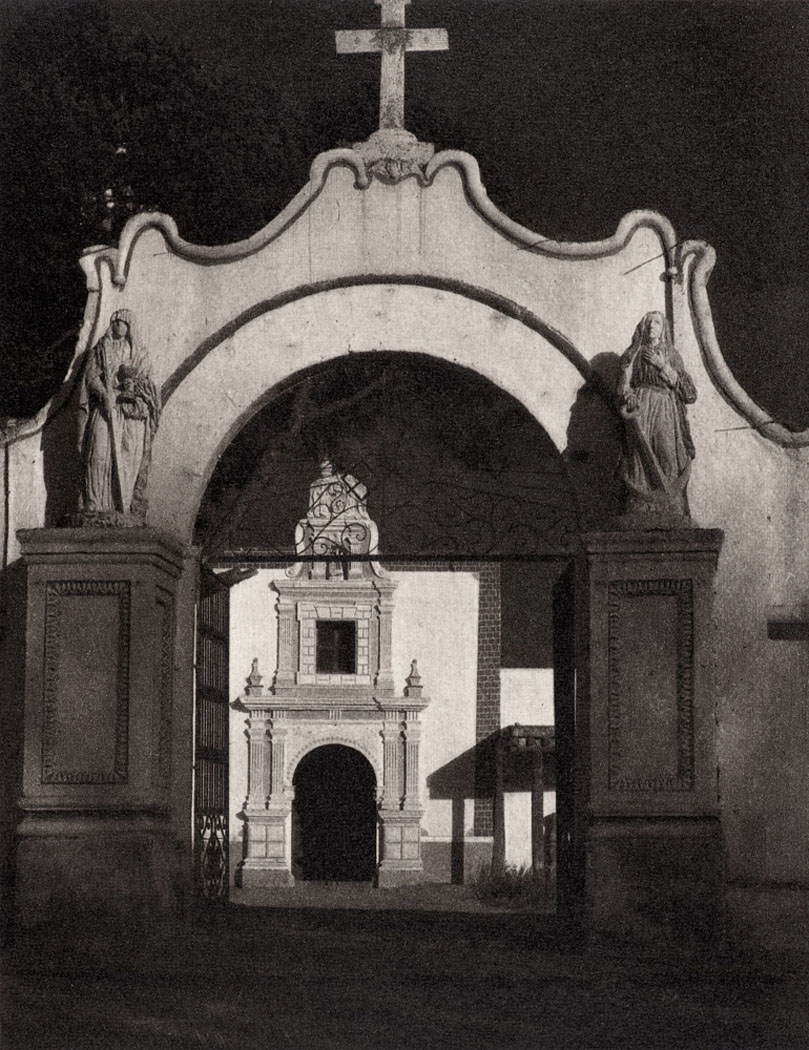
Paul Strand (American, 1890-1976)
Church, Coapiaxtla
1933, printed 1940
Photogravure
Image: 16.2 x 12.7cm (6 3/8 x 5 in.)
Sheet: 40.4 x 31.7cm (15 7/8 x 12 1/2 in.)
National Gallery of Art, Washington, Alfred H. Moses and Fern M. Schad Fund
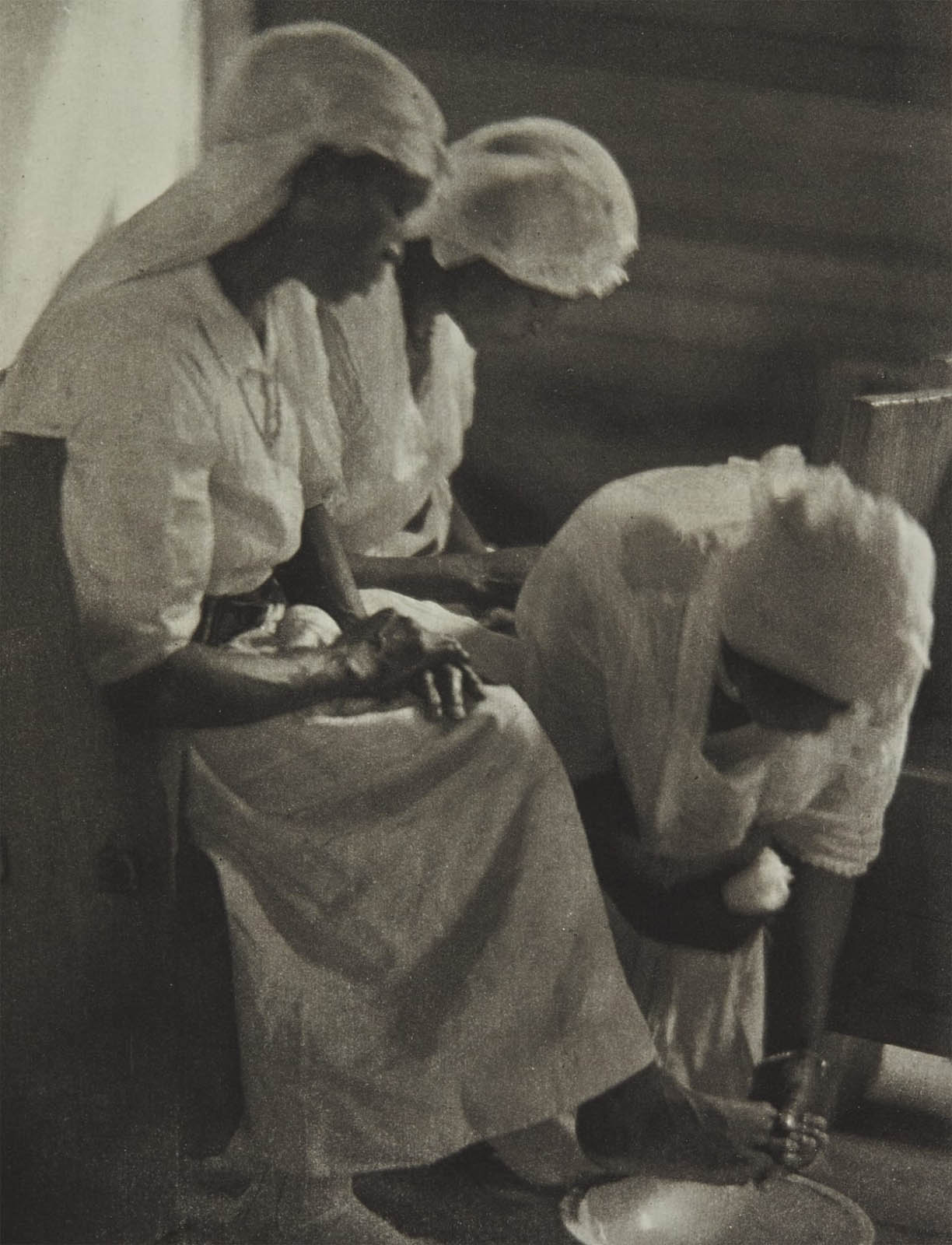
Doris Ulmann (American, 1882-1934)
Plate 35
1933
Photogravure
Image: 21 x 16cm (8 1/4 x 6 5/16 in.)
National Gallery of Art, Washington, Gift of Mary and Dan Solomon
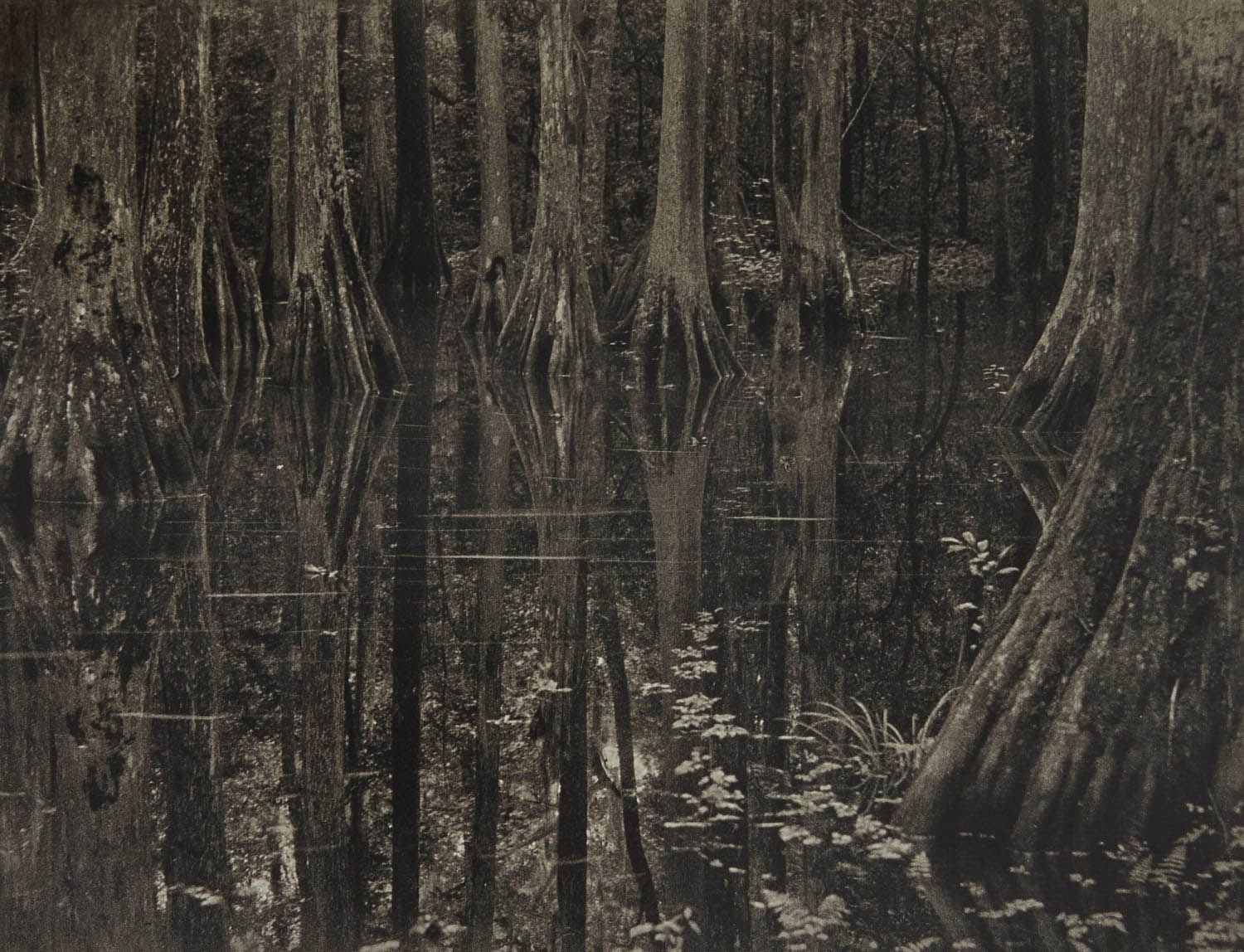
Doris Ulmann (American, 1882-1934)
Plate 47
1933
Photogravure
Image: 16 x 21cm (6 5/16 x 8 1/4 in.)
National Gallery of Art, Washington, Pepita Milmore Memorial Fund
National Gallery of Art
National Mall between 3rd and 7th Streets
Constitution Avenue NW, Washington
Opening hours:
Daily 10am – 5pm






 Art Blart _ art and cultural memory archive
You must be logged in to post a comment.