Exhibition: ‘Carrie Mae Weems: The Heart of the Matter’ at Gallerie d’Italia, Turin

Exhibition dates: 17th April – 7th September, 2025

 Curator: Sarah Meister
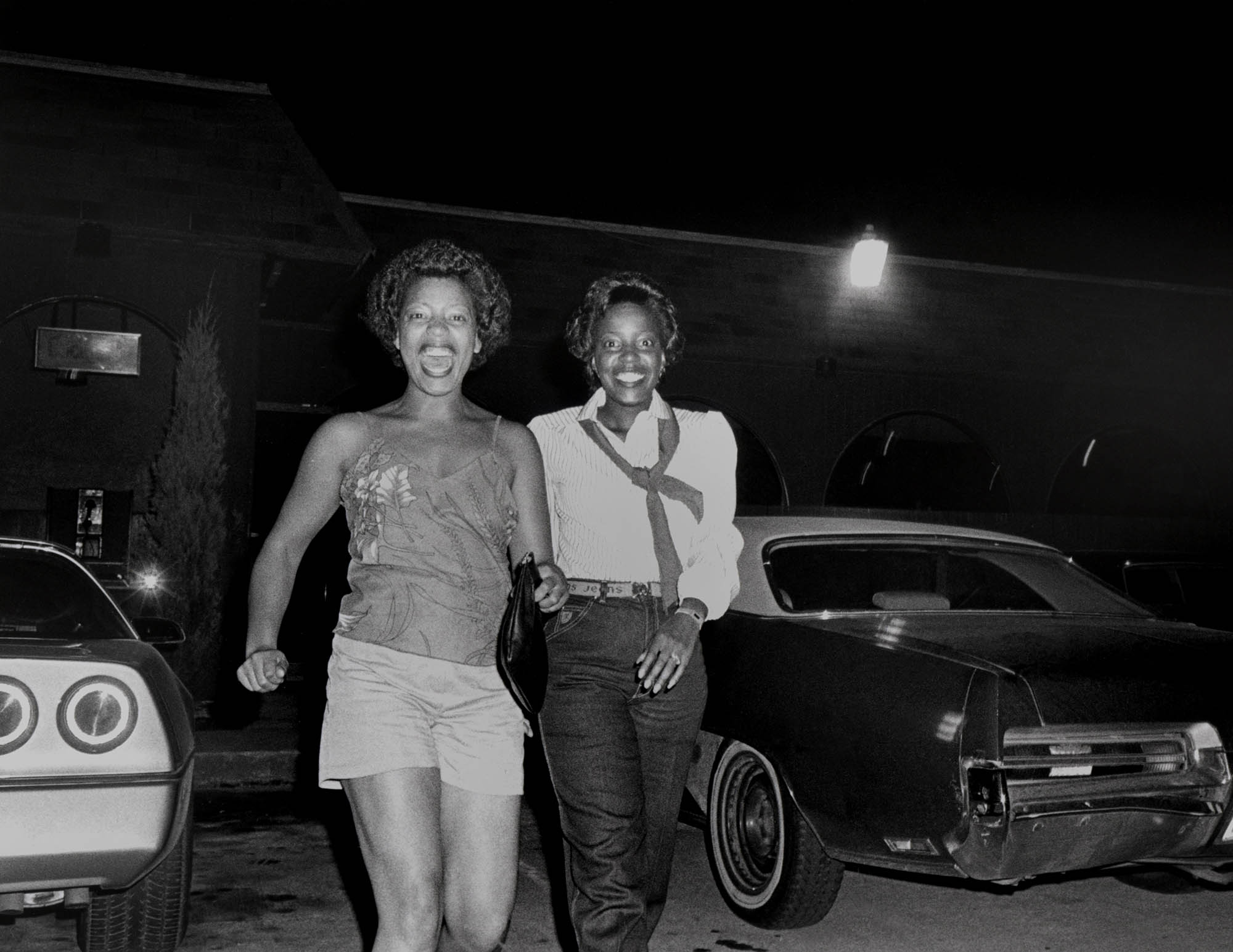


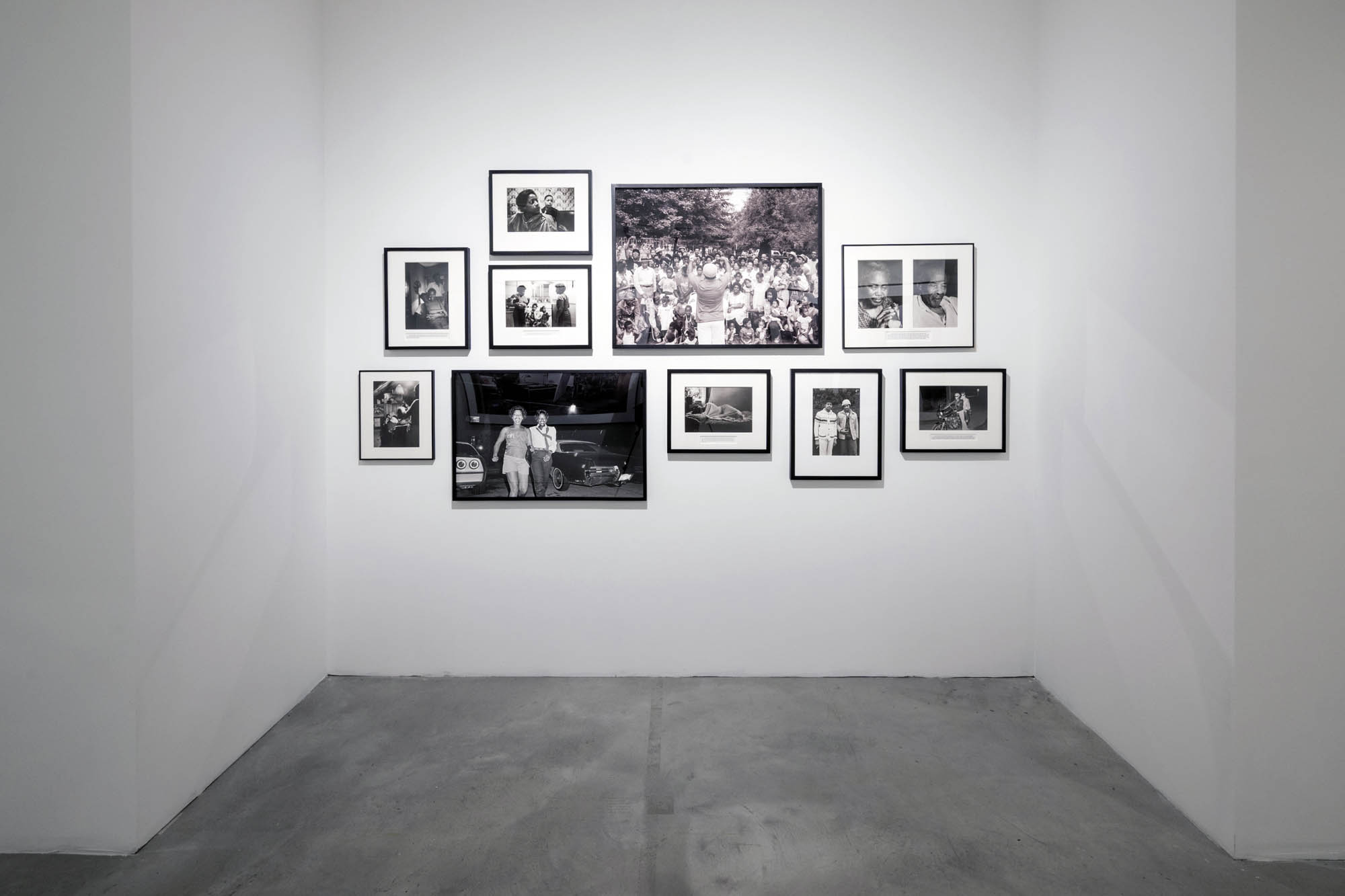
Carrie Mae Weems (American, b. 1953) 'Welcome Home' 1978-1984 From the series 'Family Pictures and Stories' from the exhibition 'Carrie Mae Weems: The Heart of the Matter' at Gallerie d'Italia, Turin, April - Sept, 2025


Carrie Mae Weems (American, b. 1953)
Welcome Home
1978-1984
From the series Family Pictures and Stories 1978-1984
© Carrie Mae Weems and reproduced courtesy of the artist and Gladstone Gallery, New York, Fraenkel Gallery, San Francisco, and Galerie Barbara Thumm, Berlin


I love artist’s that challenge your point of view, knowledge of the world, prejudices and biases – which we all have.

I love artist’s who make you think about the stories they tell, and how you relate to their intimate, constructed and memorable worlds.

Carrie Mae Weems is one such generational artist.

Weems blends the poetic and conceptual in photographs and bodies of work which investigate history, identity, racism, executive and patriarchal power from the perspectives of female / Black American.

What a fabulous artist, a guide into circumstances seldom seen, now revealed.

Dr Marcus Bunyan


Many thankx to Gallerie d’Italia, Turin for allowing me to publish the photographs in the posting. Please click on the photographs for a larger version of the image.


“I discovered that I was the reference point, and the point of view, pointing the viewer toward the likes of me in history. Later, I understood this photographic self to be a muse and a guide into the unknown.”


Carrie Mae Weems


“My work endlessly explodes the limits of tradition.”

“Weems was trained as both a dancer and a photographer before enrolling in the folklore studies program at the University of California, Berkeley, in the mid-1980s, where she became interested in the observation methods used in the social sciences. In the early 1990s, she began placing herself in her photographic compositions in an “attempt to create in the work the simultaneous feeling of being in it and of it.”2 She has since called this recurring figure an “alter-ego,” “muse,” and “witness to history” who can stand in for both the artist and audience. “I think it’s very important that as a Black woman she’s engaged with the world around her,” Weems has said, “she’s engaged with history, she’s engaged with looking, with being. She’s a guide into circumstances seldom seen.”3


Caitlin Ryan. “My work endlessly explodes the limits of tradition,” 2021 on the MoMA website [Online] Cited 06/09/2025


Carrie Mae Weems: The Heart of the Matter at Gallerie d’Italia, Turin

Installation walk through of the exhibition 17th April – 7th September, 2025


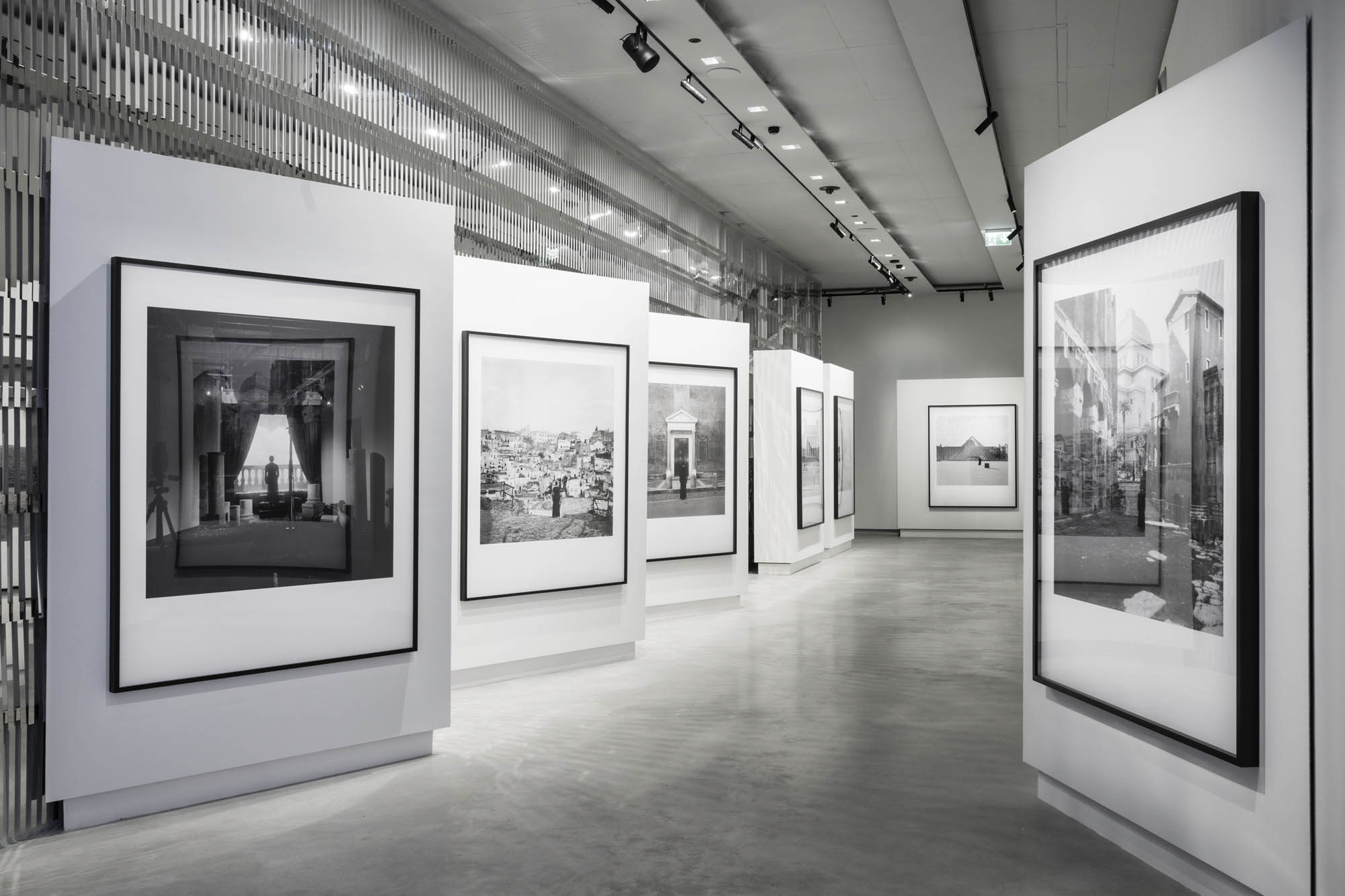
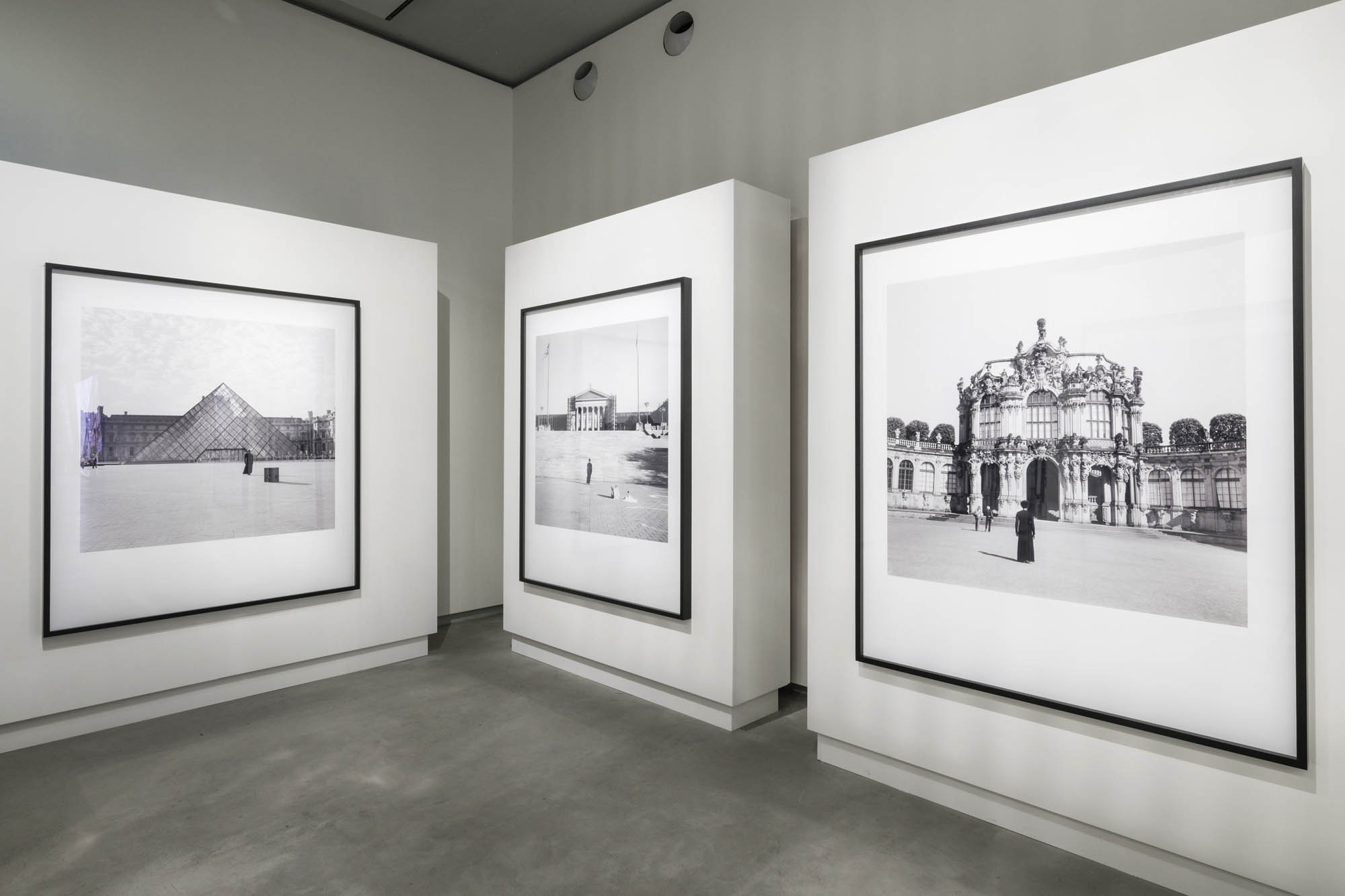
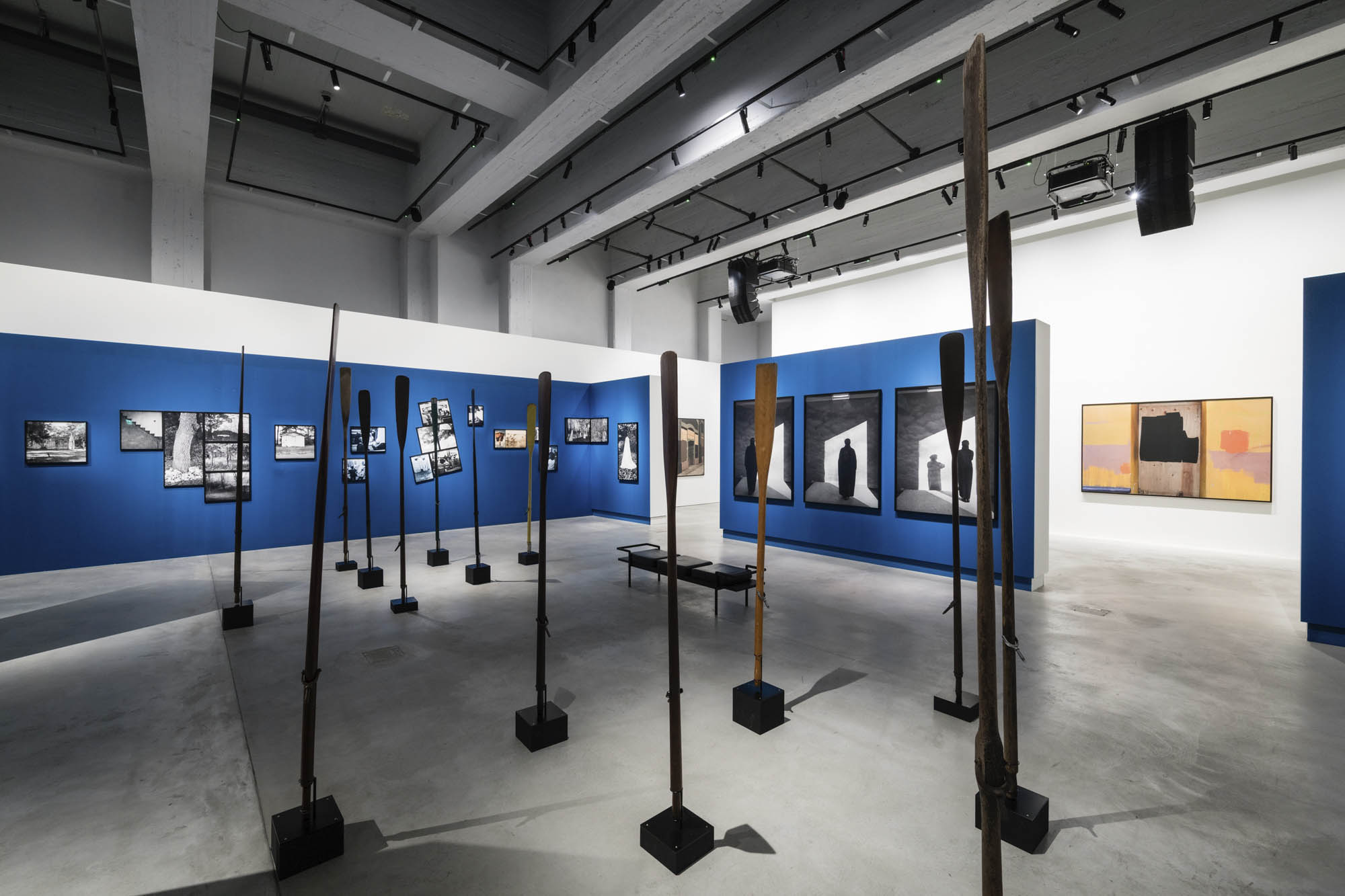
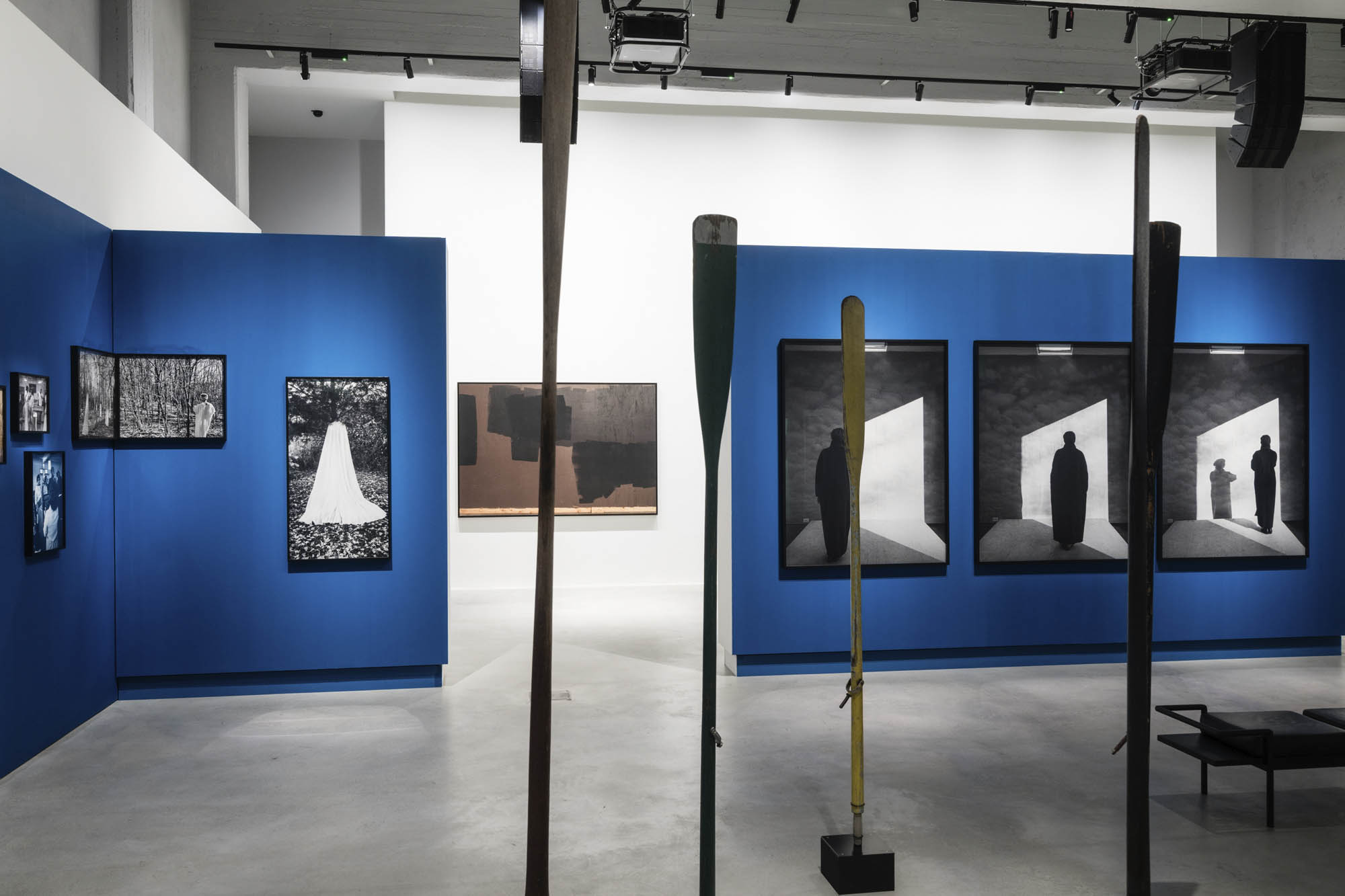
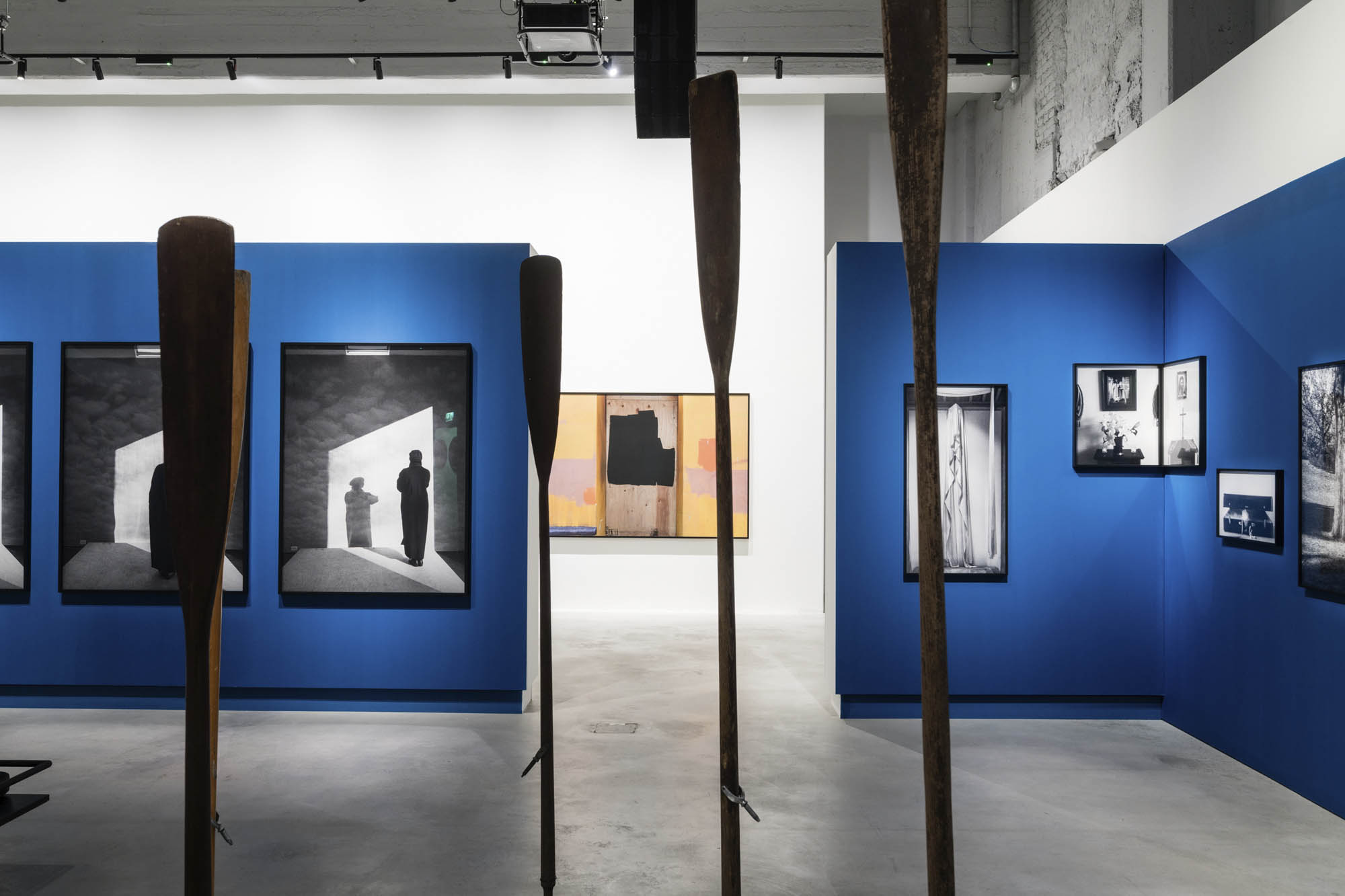
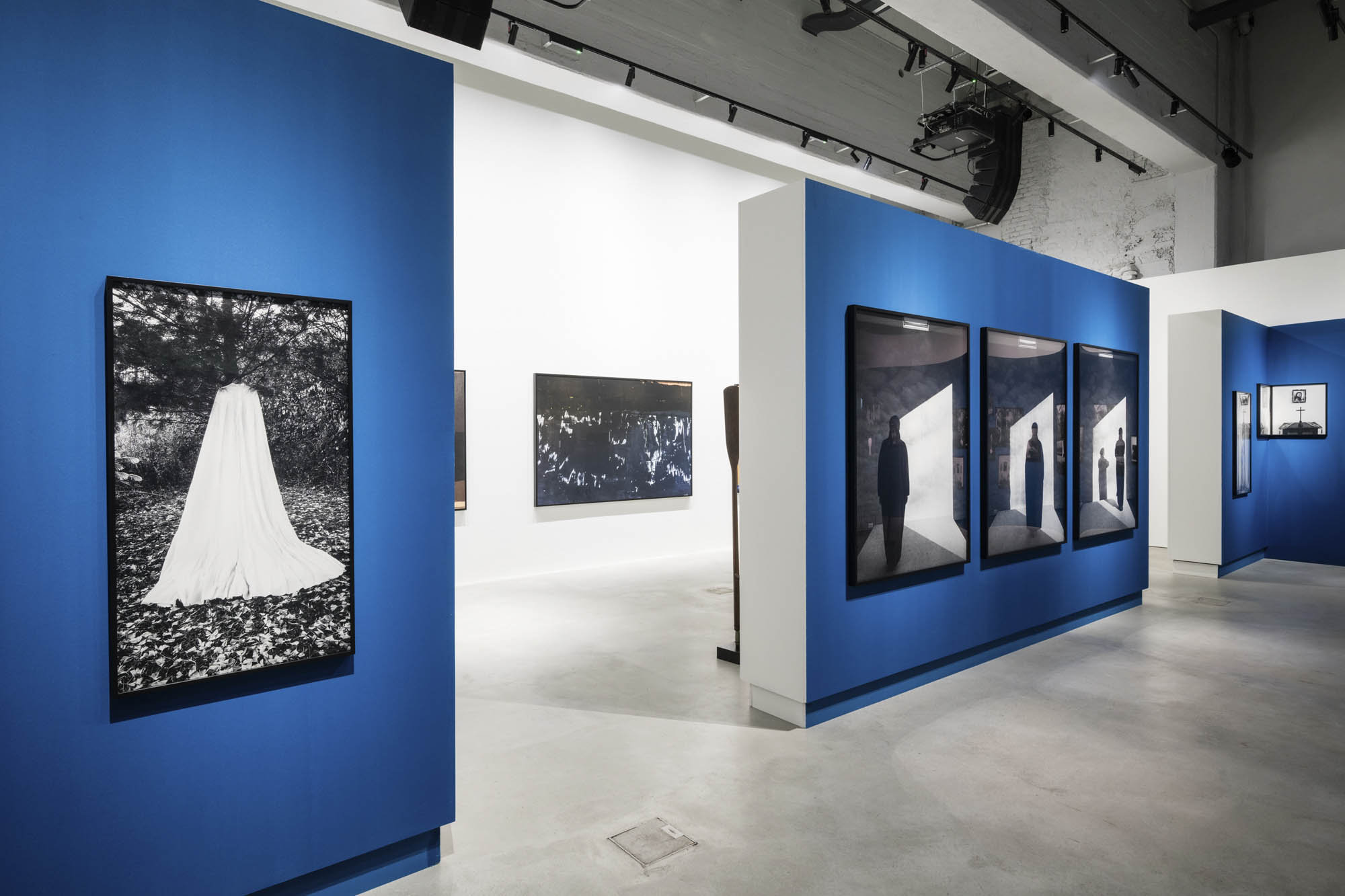
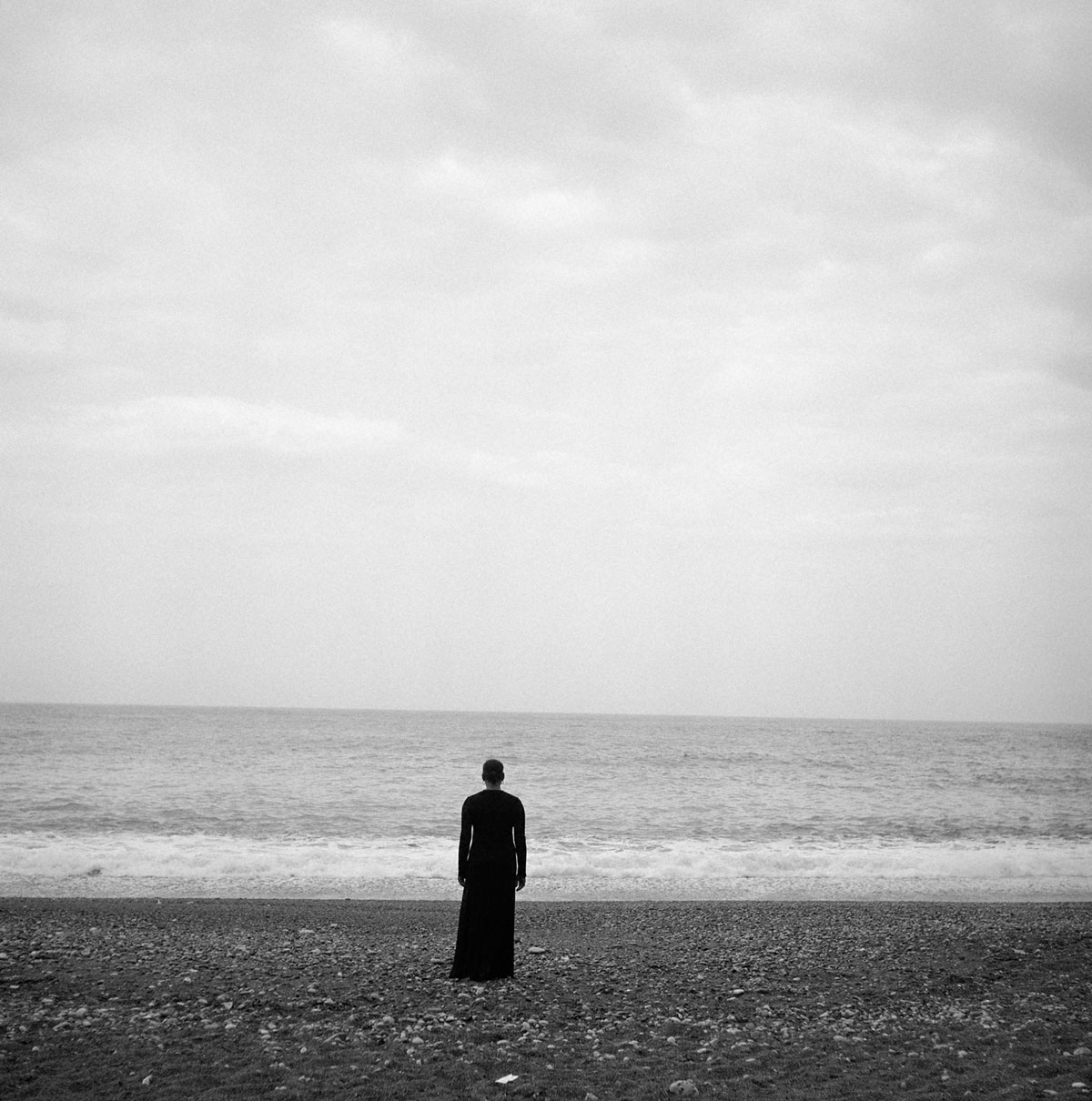
Installation view of the exhibition 'Carrie Mae Weems: The Heart of the Matter' at Gallerie d'Italia, Turin, April - September, 2025 showing work from the series 'Roaming', 2006


Installation views of the exhibition Carrie Mae Weems: The Heart of the Matter at Gallerie d’Italia, Turin showing work from the series Roaming, 2006


Transcending medium, chronology, and geography, Carrie Mae Weems: The Heart of the Matter puts the artist – as well as her spiritual and philosophical journeys – at the center of the discourse. Weems is a touchstone artist, renowned for her work investigating history, identity, and power. A comprehensive survey, The Heart of the Matter features generous presentations of landmark bodies of work, from Family Pictures and Stories (1978-1984) to her most recent series on the Black church. Throughout the exhibition and accompanying book, the artist’s spiritual musings provide critical insight into the iconic artist’s mind and eye. Newly commissioned essays and additional contributions from esteemed thinkers and scholars across generations underscore the singular value of Weems’s vision in grappling with the complexities and injustices of the world around us.

Text from the Aperture website


Carrie Mae Weems (American, b. 1953) 'The Edge of Time – Ancient Rome' 2006 from the series 'Roaming', 2006 from the exhibition 'Carrie Mae Weems: The Heart of the Matter' at Gallerie d'Italia, Turin, April - Sept, 2025


Carrie Mae Weems (American, b. 1953)
The Edge of Time – Ancient Rome
2006
From the series Roaming


Carrie Mae Weems’s “Rome Series,” titled ” Roaming” (2006), features photographs taken during her residency at the American Academy in Rome where she performed “photographic actions” contrasting her presence with grand architecture and monumental surroundings. In these works, Weems, often in her signature long black dress with her back to the camera, challenges viewers to confront power structures and historical contexts associated with the sites of Rome. The series explores themes of history, power, and the individual’s relationship to imposing edifices of authority.

AI generated text from Google
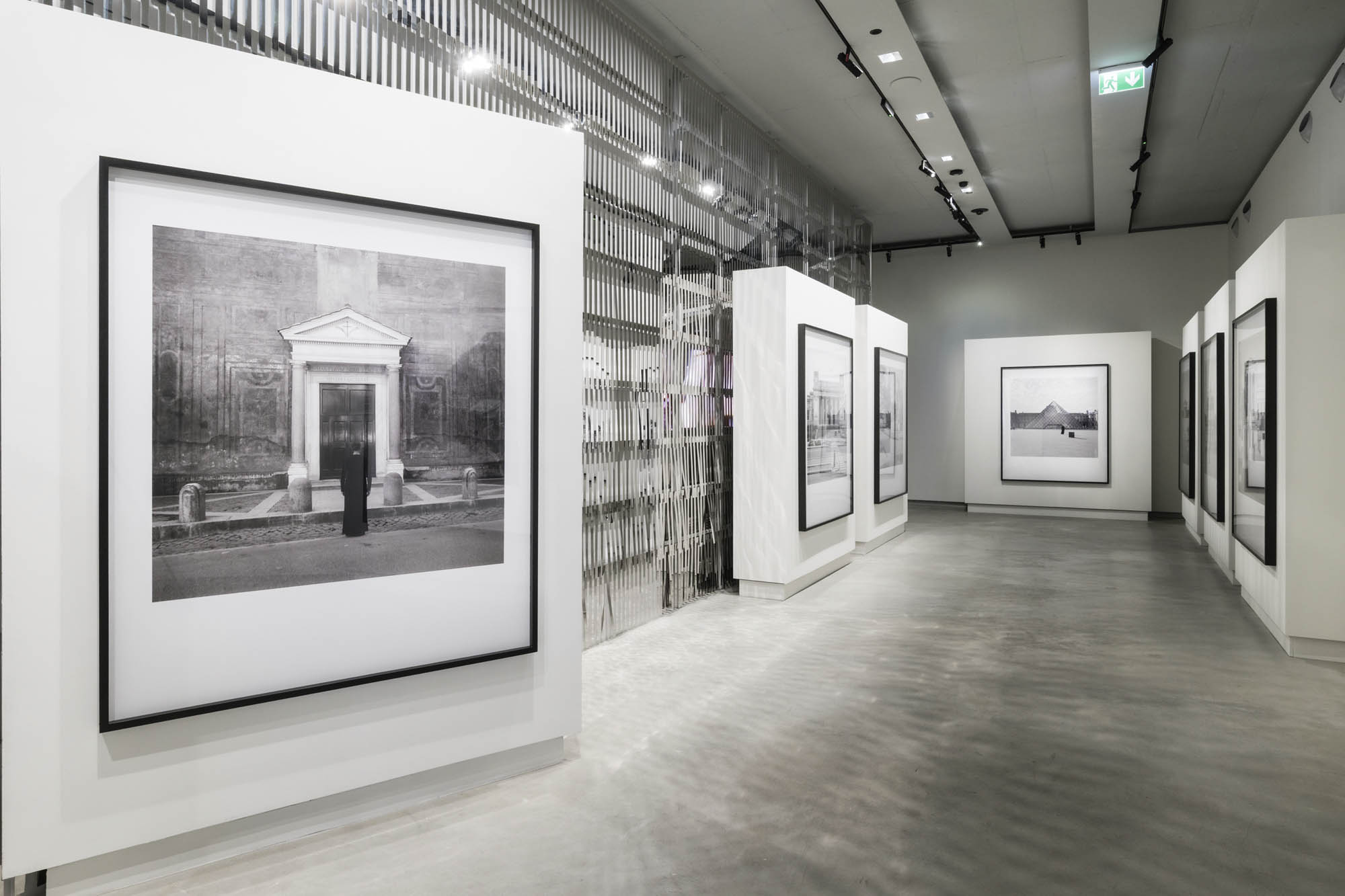
 

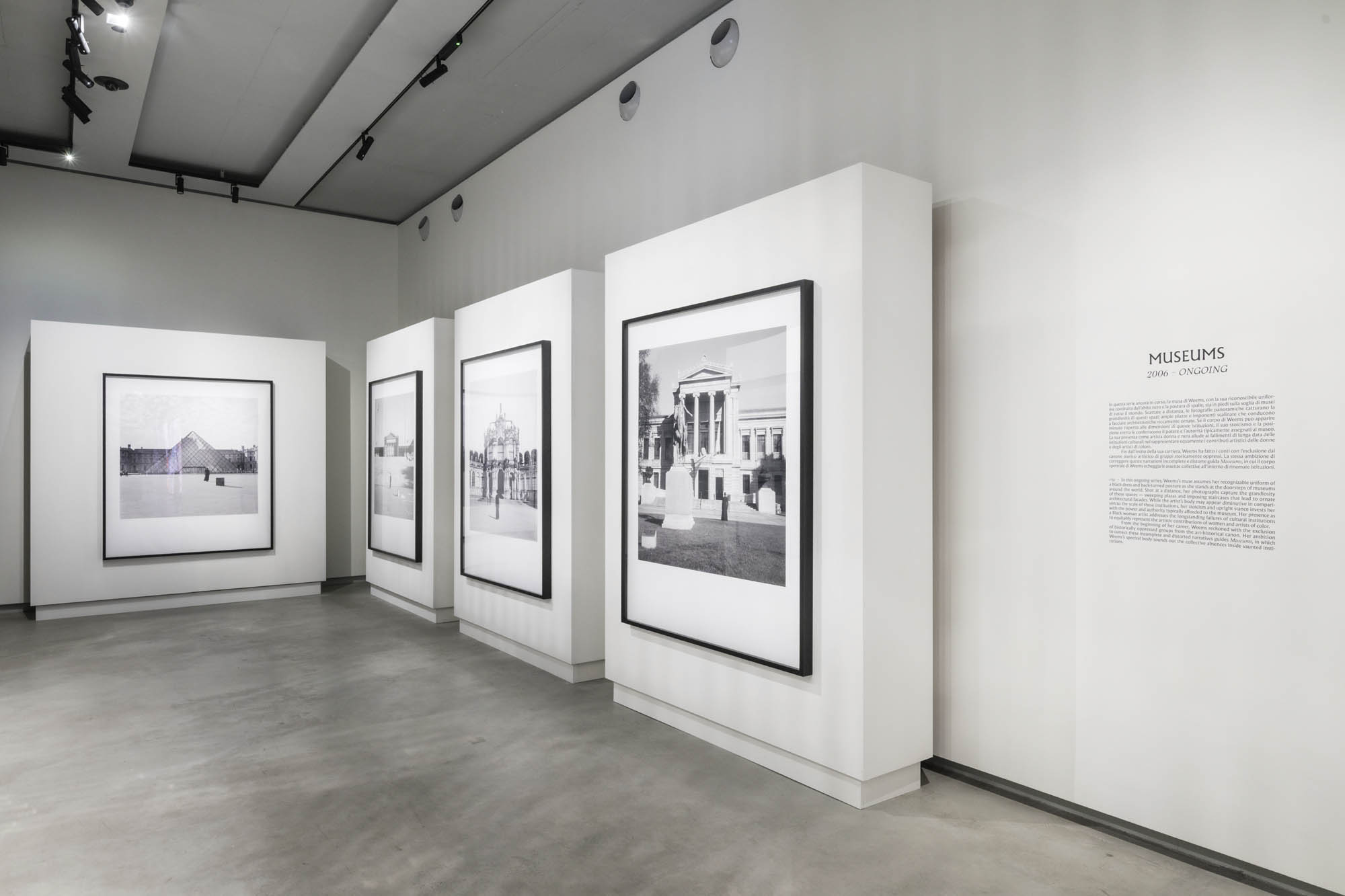
Installation view of the exhibition 'Carrie Mae Weems: The Heart of the Matter' at Gallerie d'Italia, Turin, April - September, 2025 showing work from the series 'Museums', 2006-ongoing


Installation views of the exhibition Carrie Mae Weems: The Heart of the Matter at Gallerie d’Italia, Turin showing work from the series Museums, 2006-ongoing
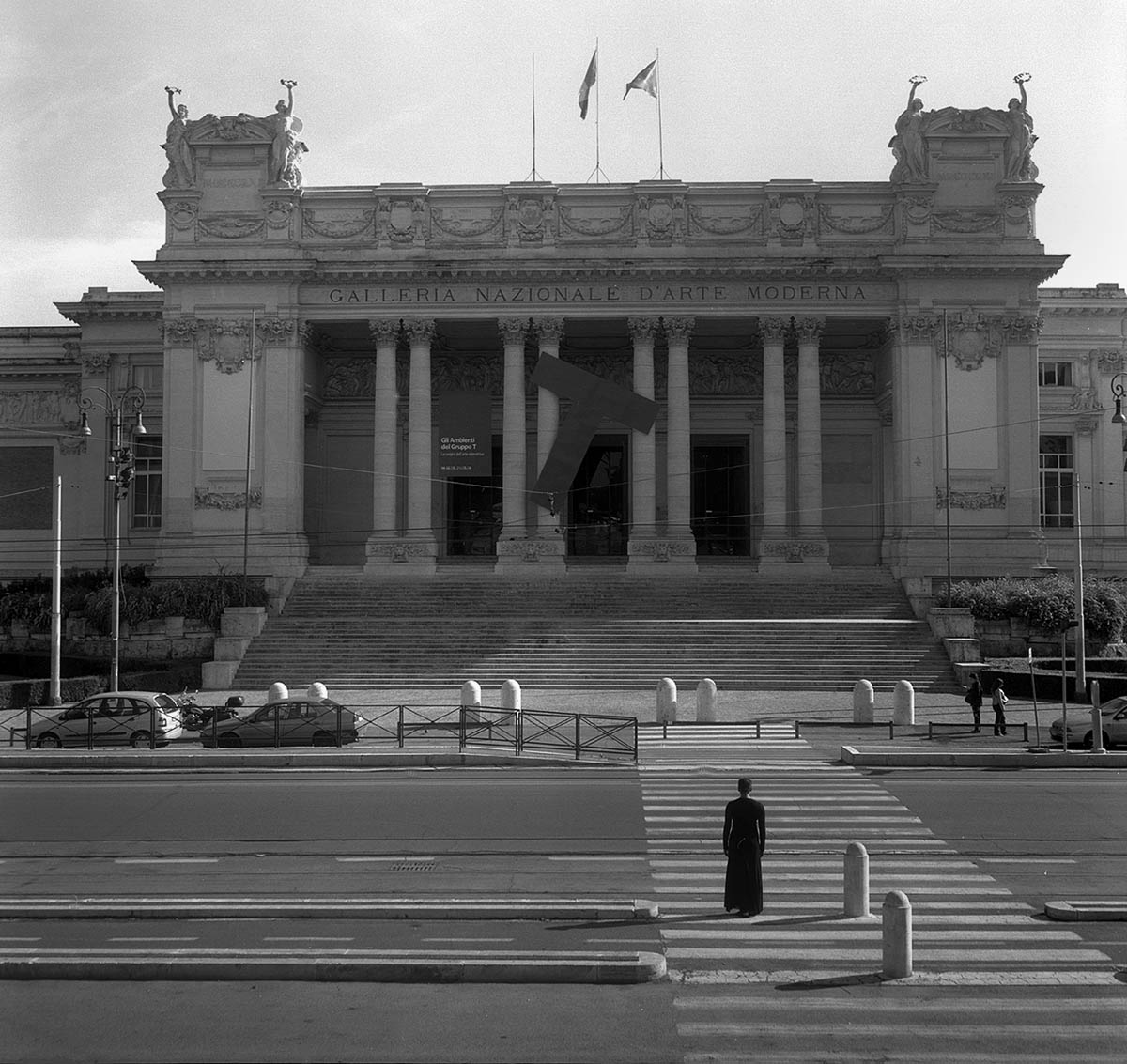
 

Carrie Mae Weems (American, b. 1953) 'Galleria Nazionale D'Arte Moderna' 2006-ongoing


Carrie Mae Weems (American, b. 1953)
Galleria Nazionale D’Arte Moderna
2006-ongoing
© Carrie Mae Weems and reproduced courtesy of the artist and Gladstone Gallery, New York, Fraenkel Gallery, San Francisco, and Galerie Barbara Thumm, Berlin
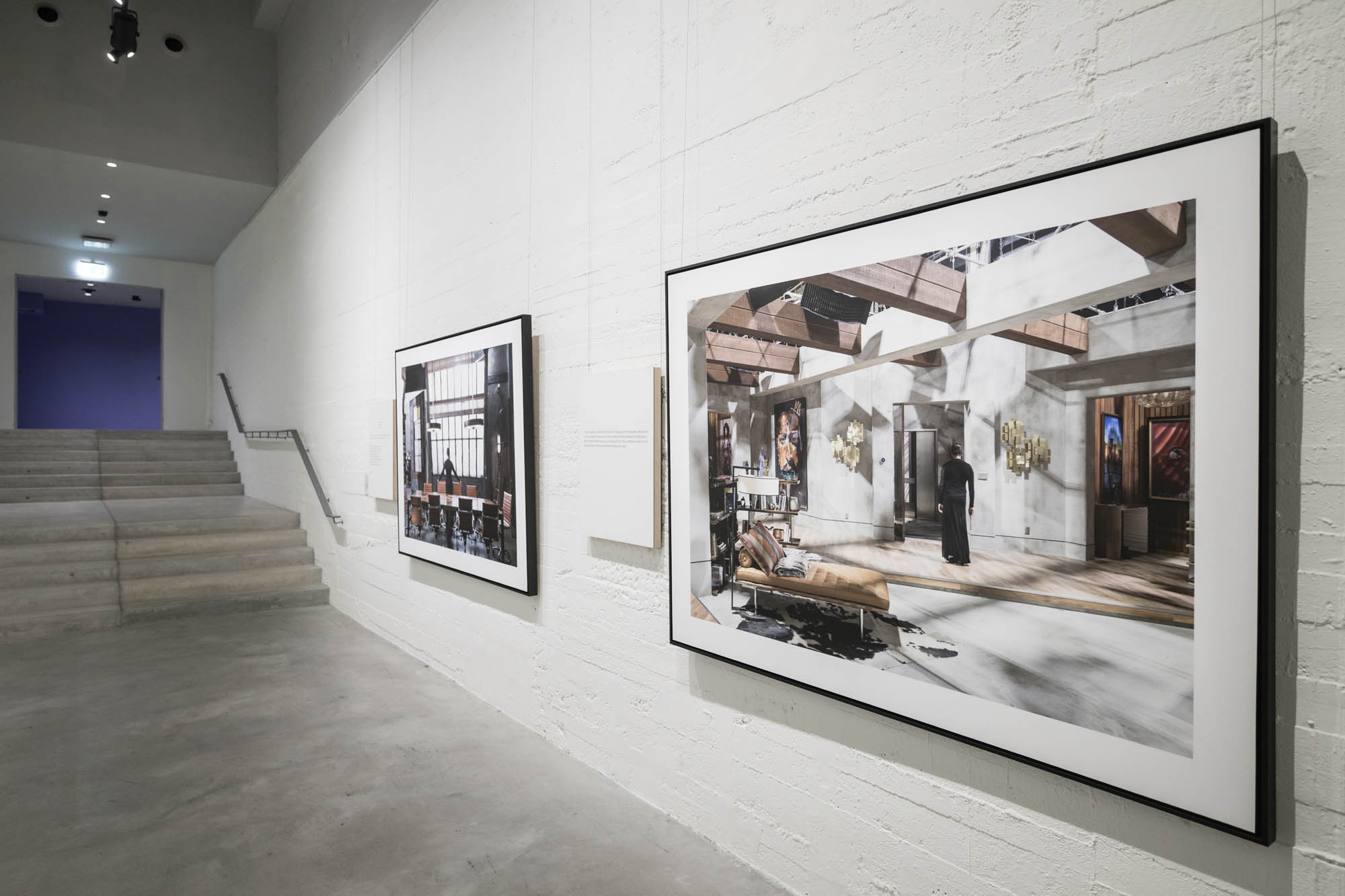
 

Installation view of the exhibition 'Carrie Mae Weems: The Heart of the Matter' at Gallerie d'Italia, Turin, April - September, 2025


Installation views of the exhibition Carrie Mae Weems: The Heart of the Matter at Gallerie d’Italia, Turin


Gallerie d’Italia – Torino presents the exhibition by American artist Carrie Mae Weems, open to the public from April 17 to September 7, 2025. The exhibition is organised in collaboration with Aperture and curated by Sarah Meister, former curator of the photography department at MoMA in New York. It is part of the main program of the second edition of EXPOSED Torino Foto Festival, titled Beneath The Surface, curated by Menno Liauw and Salvatore Vitale.

A major new exhibition dedicated to the internationally renowned artist Carrie Mae Weems, known for her photographic explorations of cultural identity, sexism, and class belonging.

The exhibition will feature a world premiere of a project commissioned by Intesa Sanpaolo specifically for this occasion, integrated into a powerful retrospective showcasing works from Weems’ most famous photographic series. Visitors will be guided through the artist’s entire career, following a deeply personal and spiritual journey.

The selected works highlight Carrie Mae Weems’ unique ability to address the complexities and injustices of the world around us. Her photography is rooted in spaces often excluded from mainstream narratives: artists’ studios, Southern U.S. plantations, domestic interiors, and the “invisible institutions” that emerged as places of worship for Black communities during times of oppression, juxtaposed with images of monuments and museums that have historically been sites of exclusion.

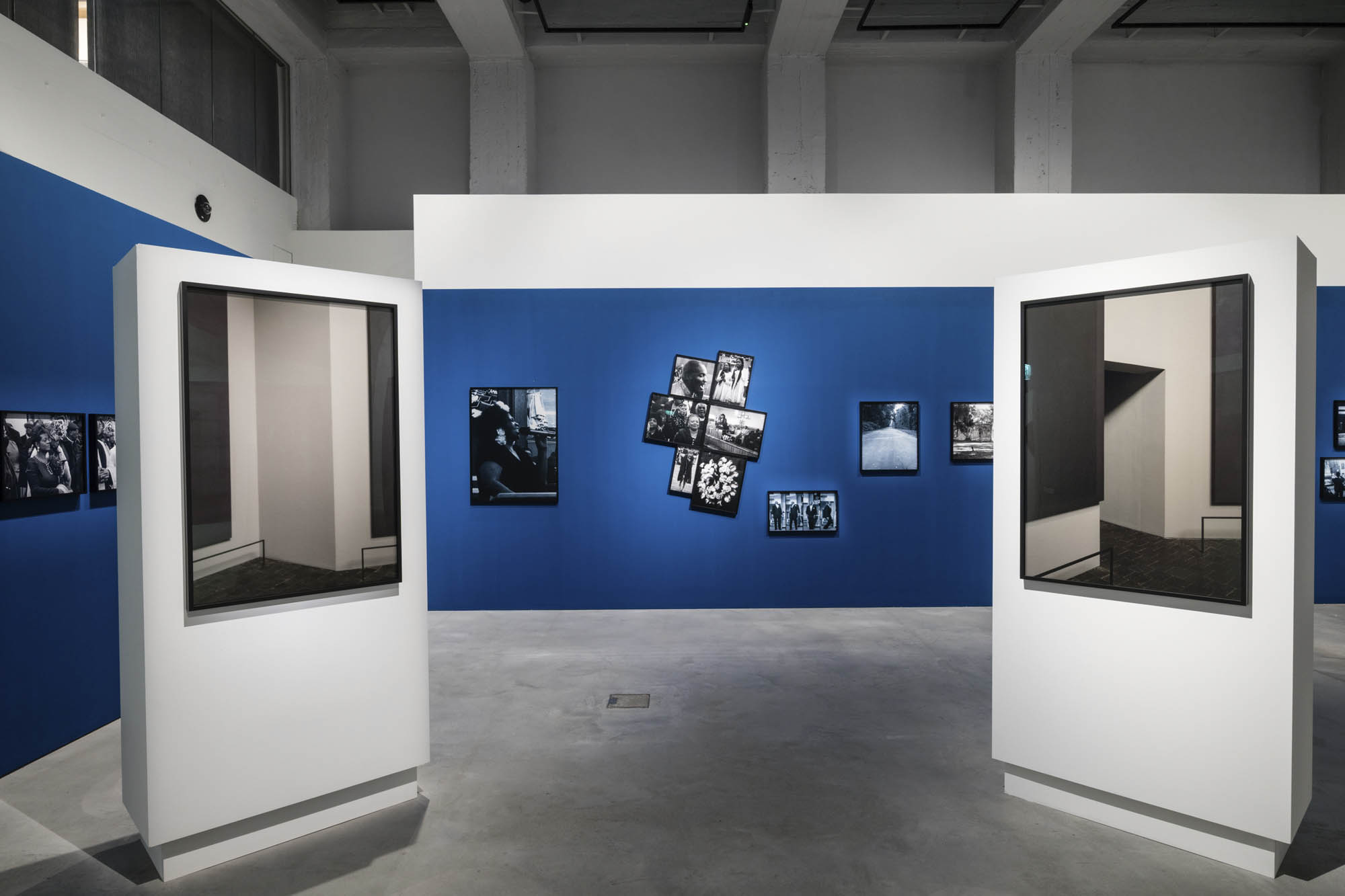
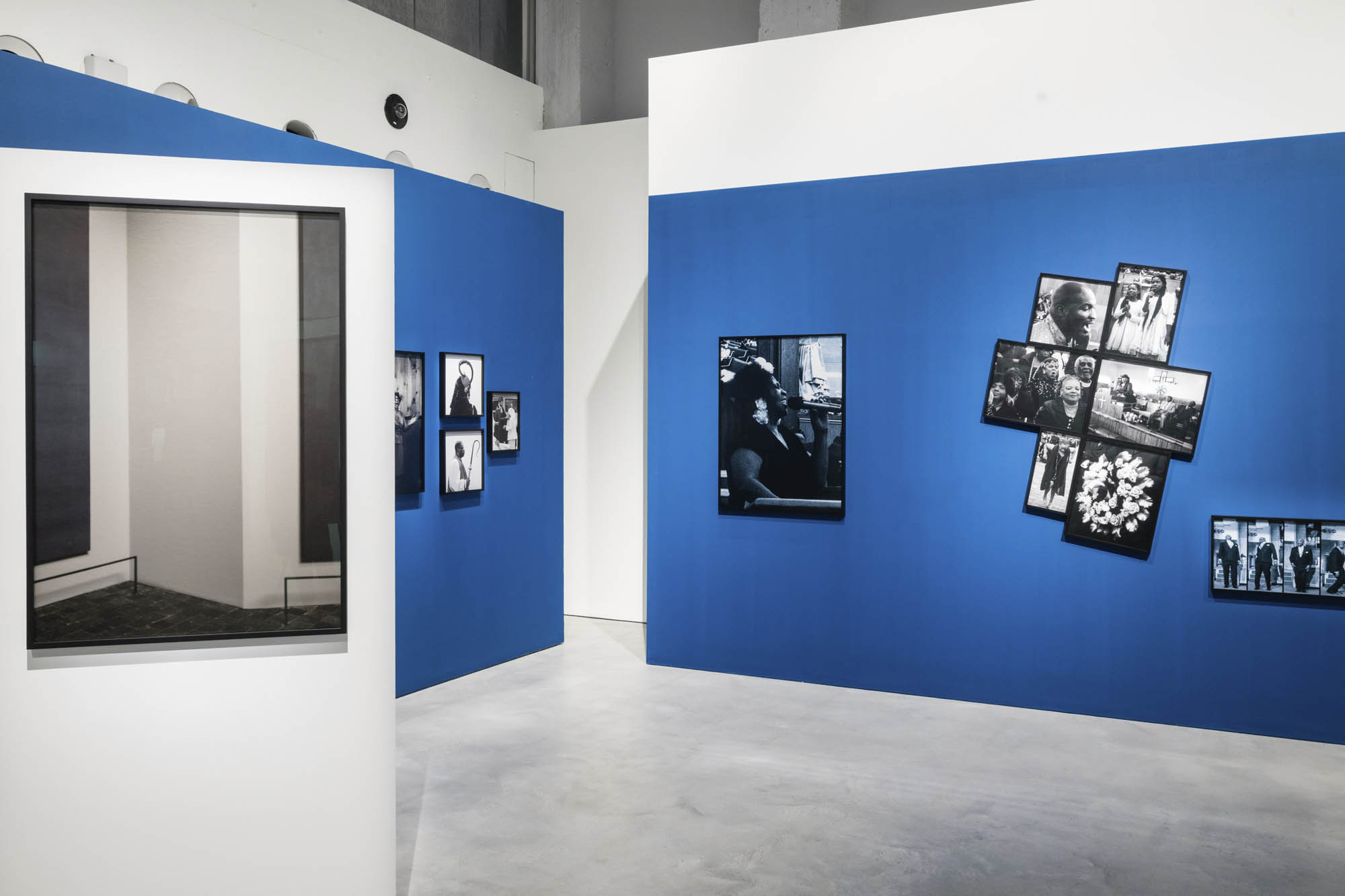
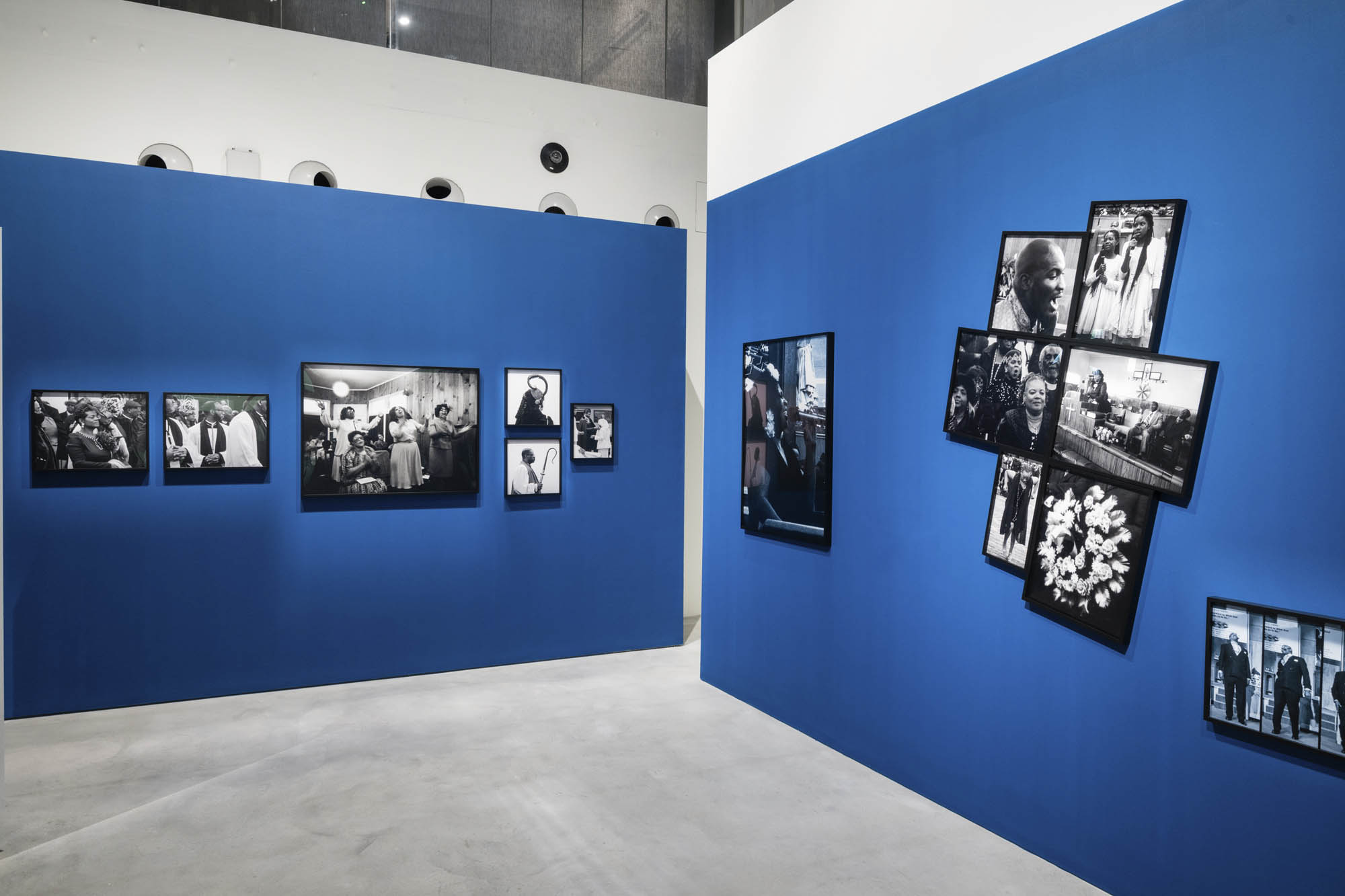
At the heart of the exhibition is Preach, a new project created specifically for this event as an original commission. This ambitious and intense installation explores religion and spirituality among African American communities across generations. The series celebrates the profound, passionate, and joyful forms of worship that define Weems’ Black Church experience while simultaneously confronting the violence and oppression that are inseparable from this history. In the new poetic text accompanying the installation, Weems writes: “Through flames and bombs, pray wherever and whenever you can, in ports and cabins, in palaces and basements, in theaters and clubs. From your secret hiding place, you have discovered new forms of worship…”. Using herself as both muse and guide, Weems invites us to join in this spiritual awakening and to condemn the persecution that has turned these sacred spaces into sites of refuge and activism. Preach intertwines early images from Harlem, San Diego, and Sea Island, Georgia, with a vast collection of new works that evoke the transcendental and secular realities of Black religious expression today.

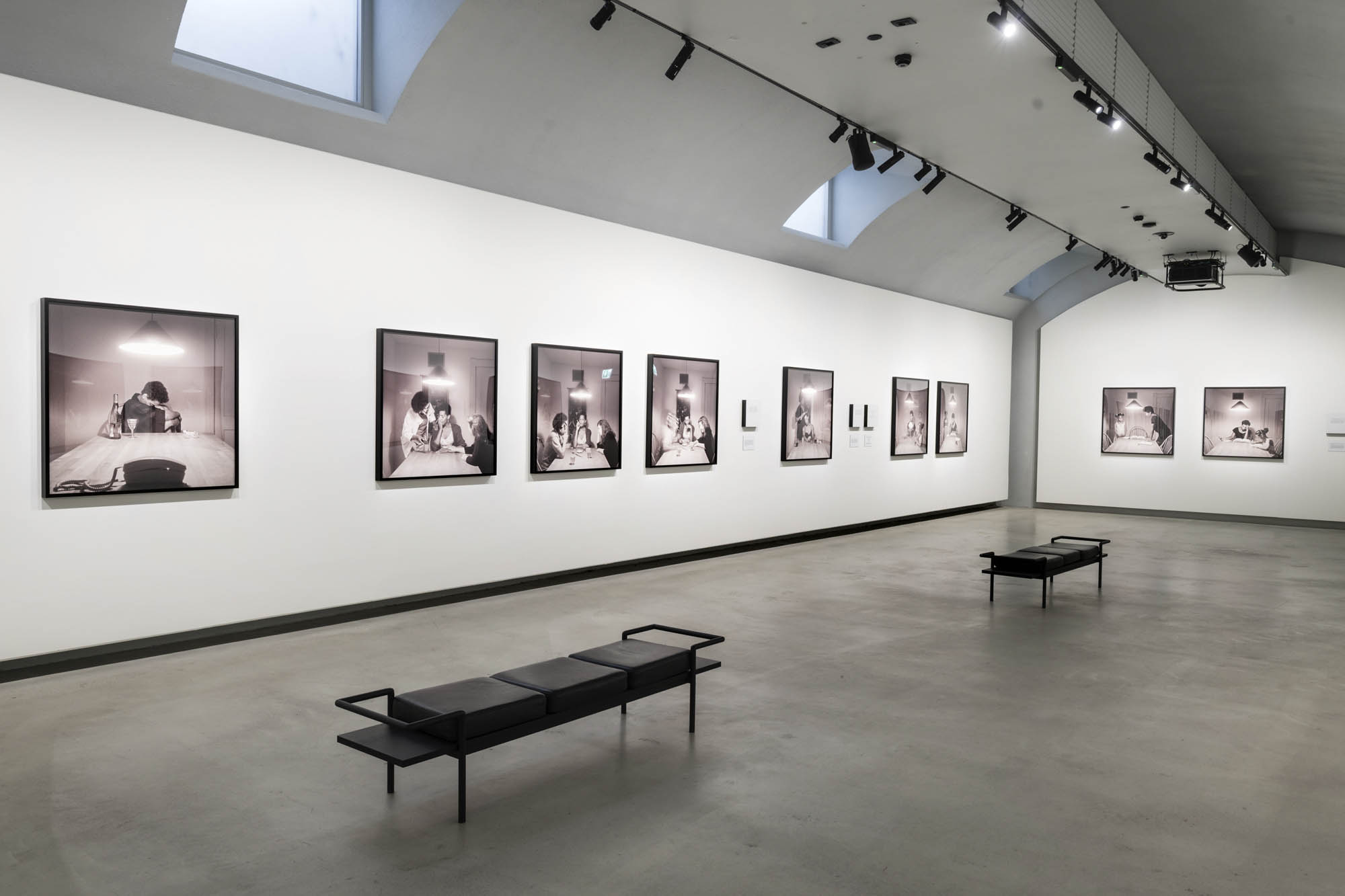
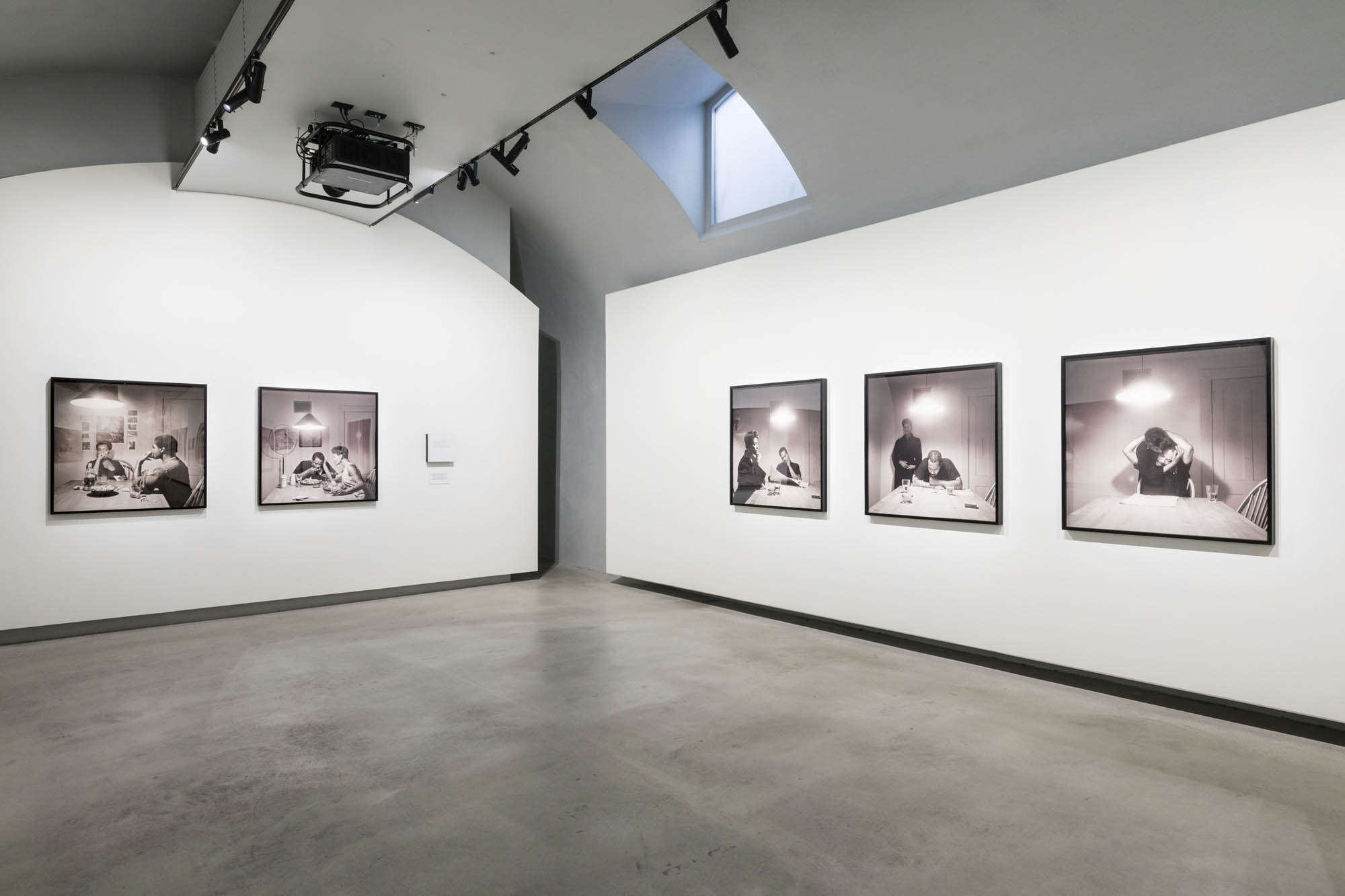
The retrospective also includes many of Weems’ early works, such as the historic Kitchen Table Series (1990) and Museums (2006-ongoing); a selection of more recent projects, such as Scenes and Takes (2016) and Painting the Town (2021); as well as significant video installations, including The Shape of Things (2021) and Leave Now! (2022). Together, these works take visitors on a journey spanning Weems’ entire career, showcasing the depth and diversity of her artistic language.

The exhibition also benefits from the collaboration of Fondazione Compagnia di San Paolo, which has developed activities inspired by the values of inclusion and the appreciation of diversity as a source of enrichment, themes that resonate with the exhibition’s content and align with the foundation’s strategic challenges. Photography serves as a tool for storytelling, documentation, and identity-building, contributing to inclusion and community formation. Through widespread urban communication campaigns and collaboration with the public program #Inside, the foundation’s initiatives aim to promote participation and extend the exhibition’s themes to increasingly diverse audiences, particularly in light of the simultaneous presence of the EXPOSED Torino Foto Festival 2025 in the city.

The exhibition Carrie Mae Weems: The Heart of the Matter will be accompanied by a catalogue co-published by Società Editrice Allemandi / Aperture. In addition to numerous images of the American artist’s works, the catalog will feature contributions from scholars of different generations, underscoring the unique value of Weems’ vision in addressing these themes.

Aperture

Aperture is a nonprofit publisher that leads conversations around photography worldwide. From its base in New York, Aperture connects global audiences and supports artists through the acclaimed quarterly magazine, books, exhibitions, digital platforms, public programs, limited-edition prints, and awards. Established in 1952 to advance “creative thinking, significantly expressed in words and photographs,” Aperture champions photography’s vital role in nurturing curiosity and encouraging a more just, tolerant society.

Carrie Mae Weems. Biography

Carrie Mae Weems, a conceptual artist, examines and challenges perceptions of race and femininity in search of new models of life. Rooted in the specificity of her experience as a Black woman yet universal in its exploration of family relationships, cultural identity, power structures, and social hierarchy, her artistic practice is primarily photographic but also incorporates text, textiles, audio, installations, and video.

Informed by storytelling, folklore traditions, and the observational methodologies of social sciences, her approach to image-making ranges from staged and serialised narratives to the appropriation and adaptation of archival and ethnographic imagery. Weems critically addresses photography’s complicity in perpetuating dehumanising representations and the historical omission of Black women from institutions and art canons.

Weems lives in Syracuse, New York, with her husband, Jeffrey Hoone. She is currently an Artist in Residence at Syracuse University.

Text from the Gallerie d’Italia website
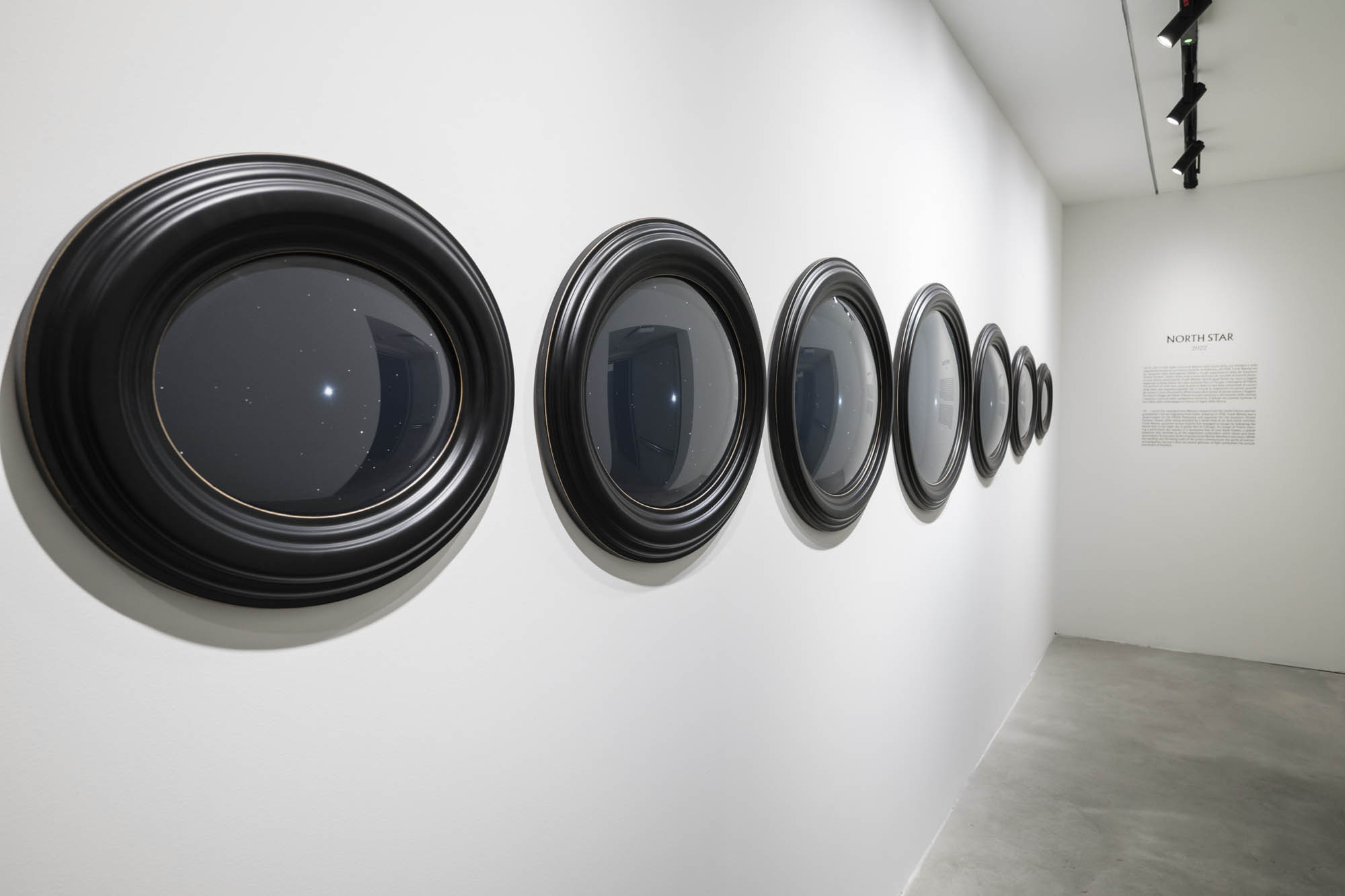
 

Installation view of the exhibition 'Carrie Mae Weems: The Heart of the Matter' at Gallerie d'Italia, Turin, April - September, 2025


Installation view of the exhibition Carrie Mae Weems: The Heart of the Matter at Gallerie d’Italia, Turin showing the work North Star, 2022


In 1936 Carrie Mae Weems’s grandfather Frank Weems traveled 550 miles to Chicago on foot from Earle, Arkansas, partly with the aid of the North Star, which appears in these seven oval photographs as a cold and abstract promise. Frank Weems had been beaten after organising a labour strike to protest abysmal wages and working conditions in the cotton fields. For the artist, the abstracted world holds a tremendous yet distant possibility that her grandfather seized step by step.

Text from the Art Institute of Chicago website


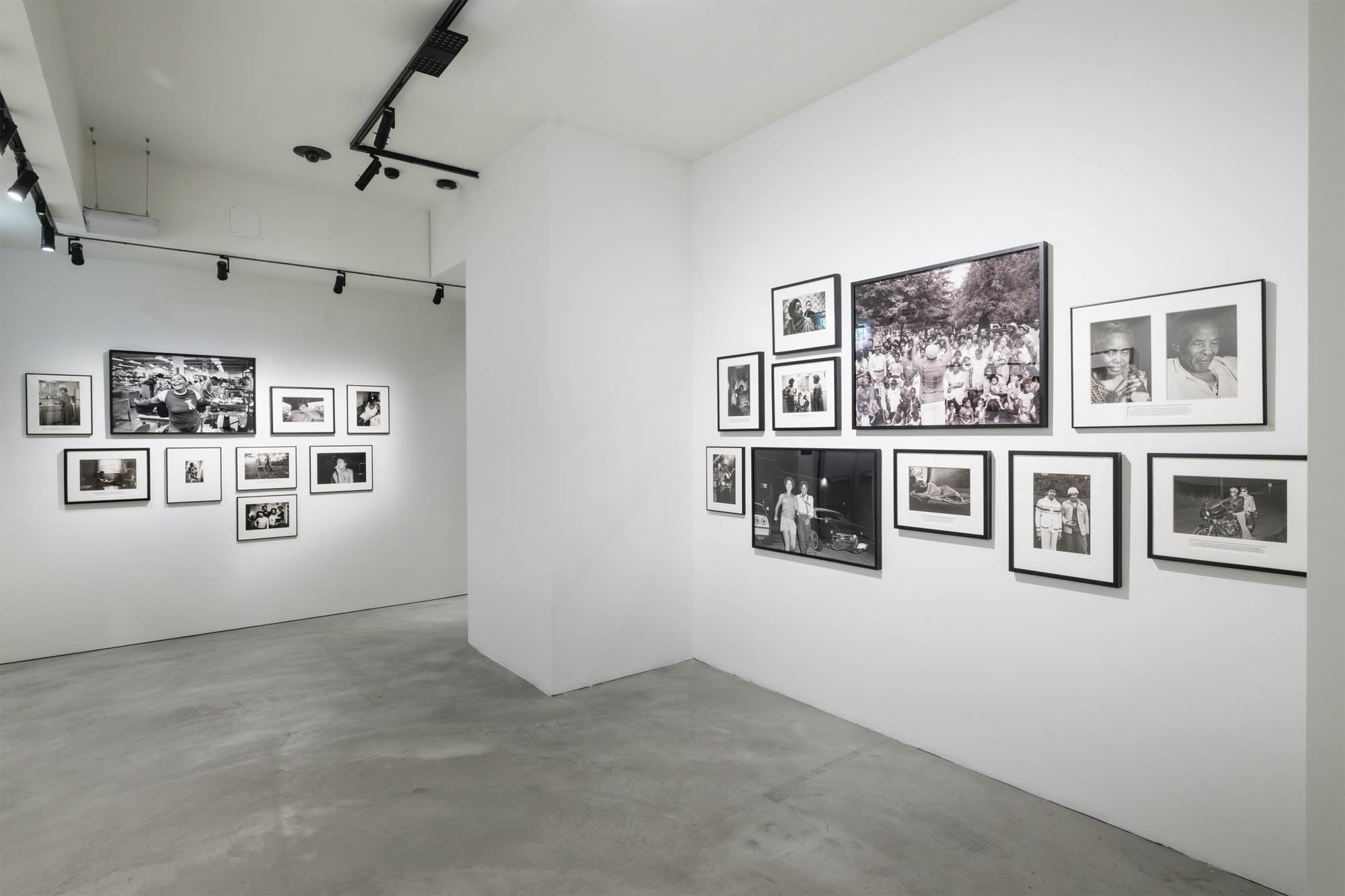
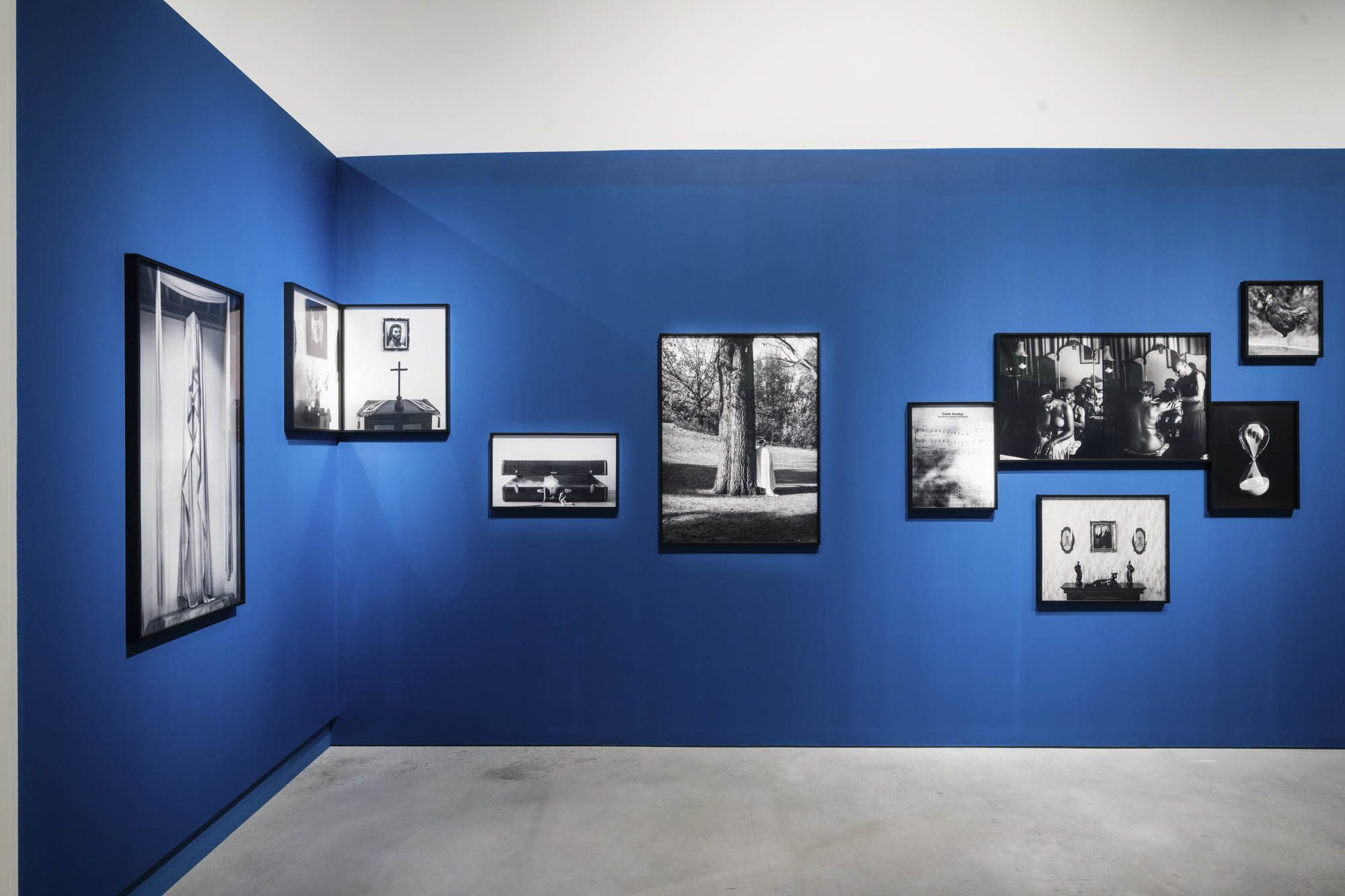
Installation view of the exhibition 'Carrie Mae Weems: The Heart of the Matter' at Gallerie d'Italia, Turin, April - September, 2025 showing at left, work from the series 'Family Pictures and Stories' 1978-1984
Installation view of the exhibition 'Carrie Mae Weems: The Heart of the Matter' at Gallerie d'Italia, Turin, April - September, 2025 showing work from the series 'Family Pictures and Stories' 1978-1984


Installation view of the exhibition Carrie Mae Weems: The Heart of the Matter at Gallerie d’Italia, Turin showing at left, work from the series Family Pictures and Stories 1978-1984

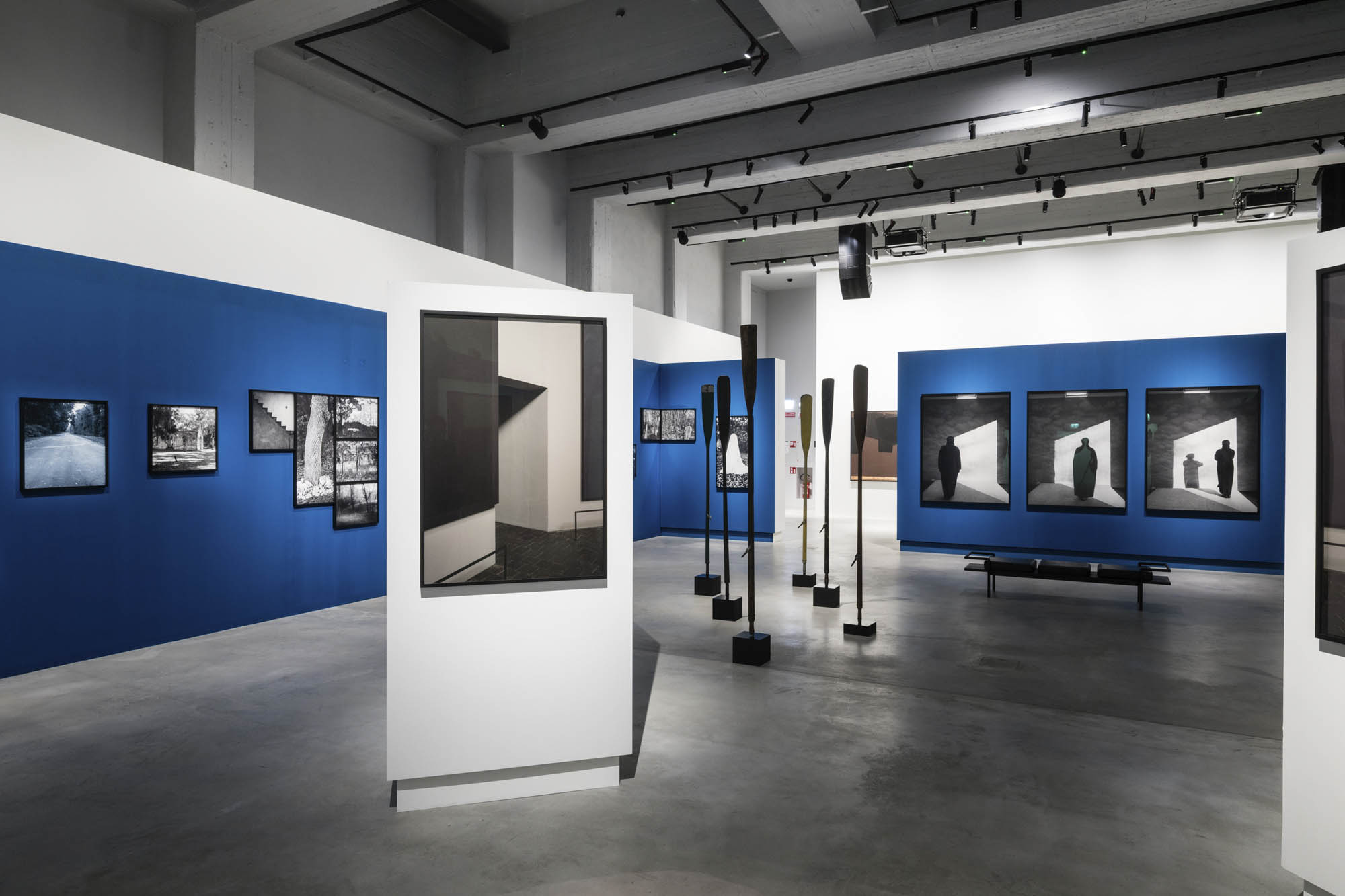
 

Installation view of the exhibition 'Carrie Mae Weems: The Heart of the Matter' at Gallerie d'Italia, Turin, April - September, 2025 showing work from the installation 'Preach' 2025


Installation view of the exhibition Carrie Mae Weems: The Heart of the Matter at Gallerie d’Italia, Turin showing the installation Preach, 2025


At the heart of the exhibition is Preach… this ambitious and intense installation explores religion and spirituality among African American communities across generations. The series celebrates the profound, passionate, and joyful forms of worship that define Weems’ Black Church experience while simultaneously confronting the violence and oppression that are inseparable from this history.

In the new poetic text accompanying the installation, Weems writes: “Through flames and bombs, pray wherever and whenever you can, in ports and cabins, in palaces and basements, in theaters and clubs. From your secret hiding place, you have discovered new forms of worship…”. Using herself as both muse and guide, Weems invites us to join in this spiritual awakening and to condemn the persecution that has turned these sacred spaces into sites of refuge and activism.

Preach intertwines early images from Harlem, San Diego, and Sea Island, Georgia, with a vast collection of new works that evoke the transcendental and secular realities of Black religious expression today.

Text from the Gallerie d’Italia Instagram web page
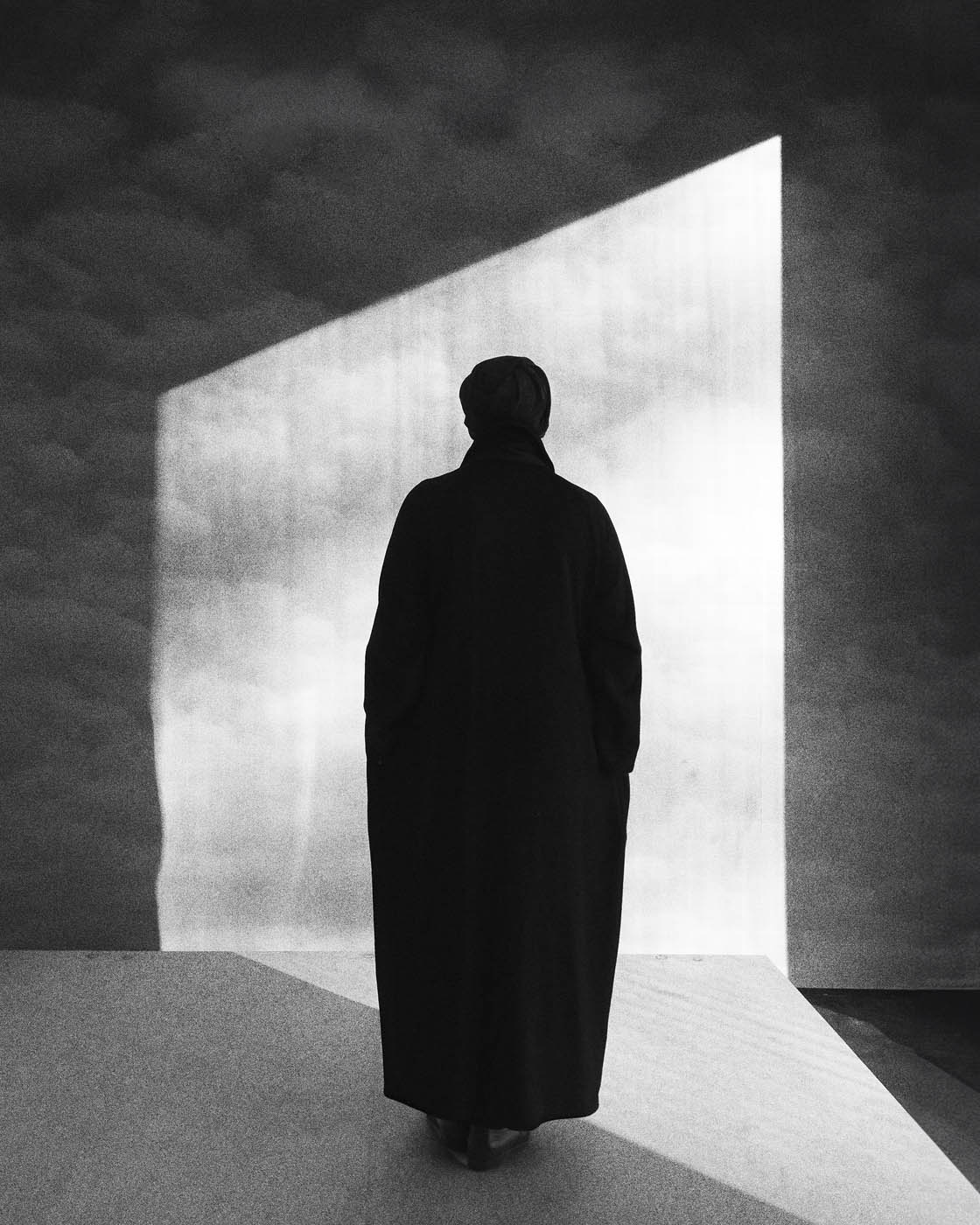
 

Carrie Mae Weems (American, b. 1953) 'Untitled' Nd from the series 'Preach' 2025


Carrie Mae Weems (American, b. 1953)
Untitled
Nd
From the series Preach
© Carrie Mae Weems and reproduced courtesy of the artist and Gladstone Gallery, New York, Fraenkel Gallery, San Francisco, and Galerie Barbara Thumm, Berlin


Carrie Mae Weems (American, b. 1953) 'Road Sign' 1991-1992


Carrie Mae Weems (American, b. 1953)
Road Sign
1991-1992
From the series Preach
© Carrie Mae Weems and reproduced courtesy of the artist and Gladstone Gallery, New York, Fraenkel Gallery, San Francisco, and Galerie Barbara Thumm, Berlin
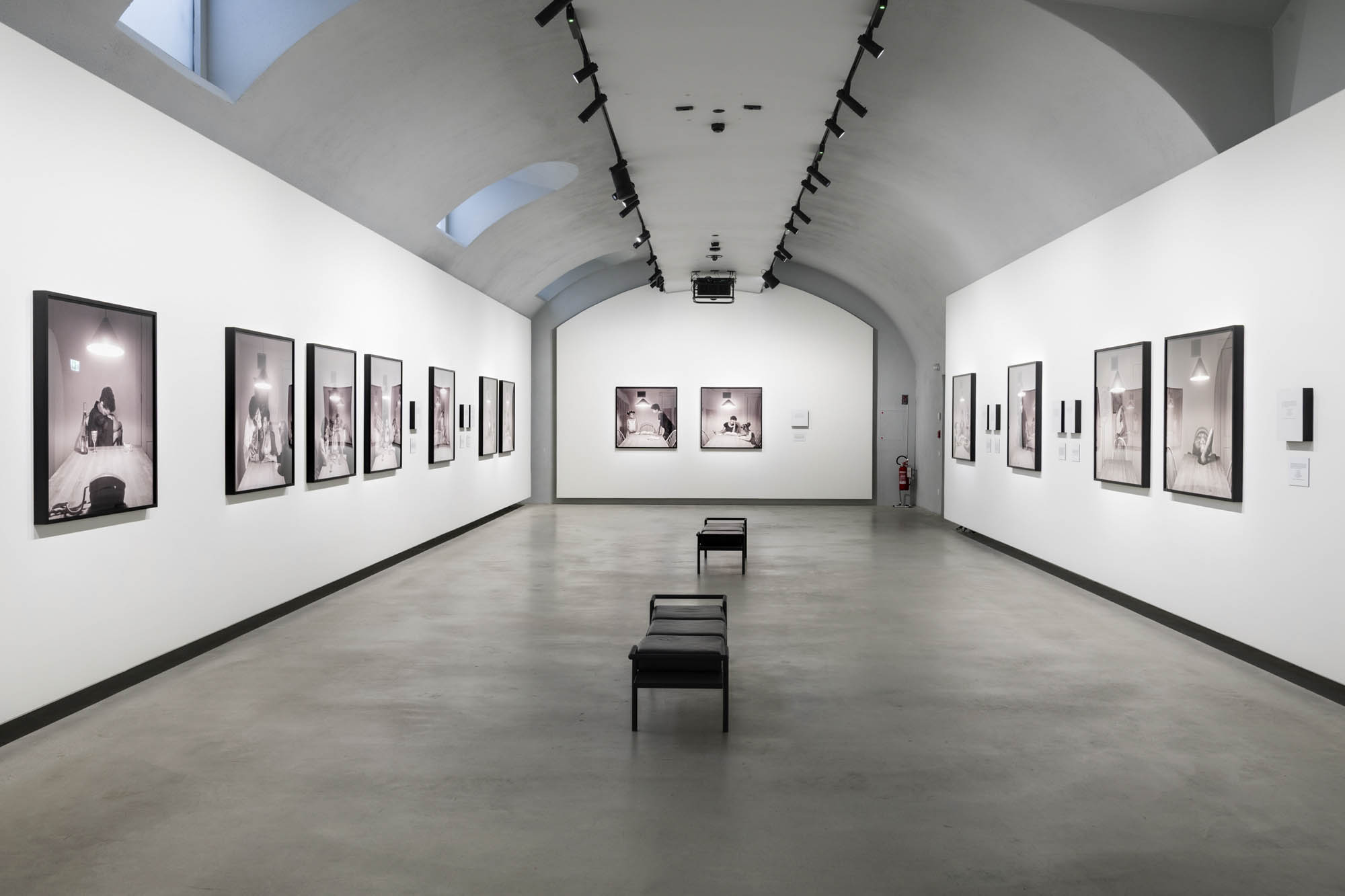
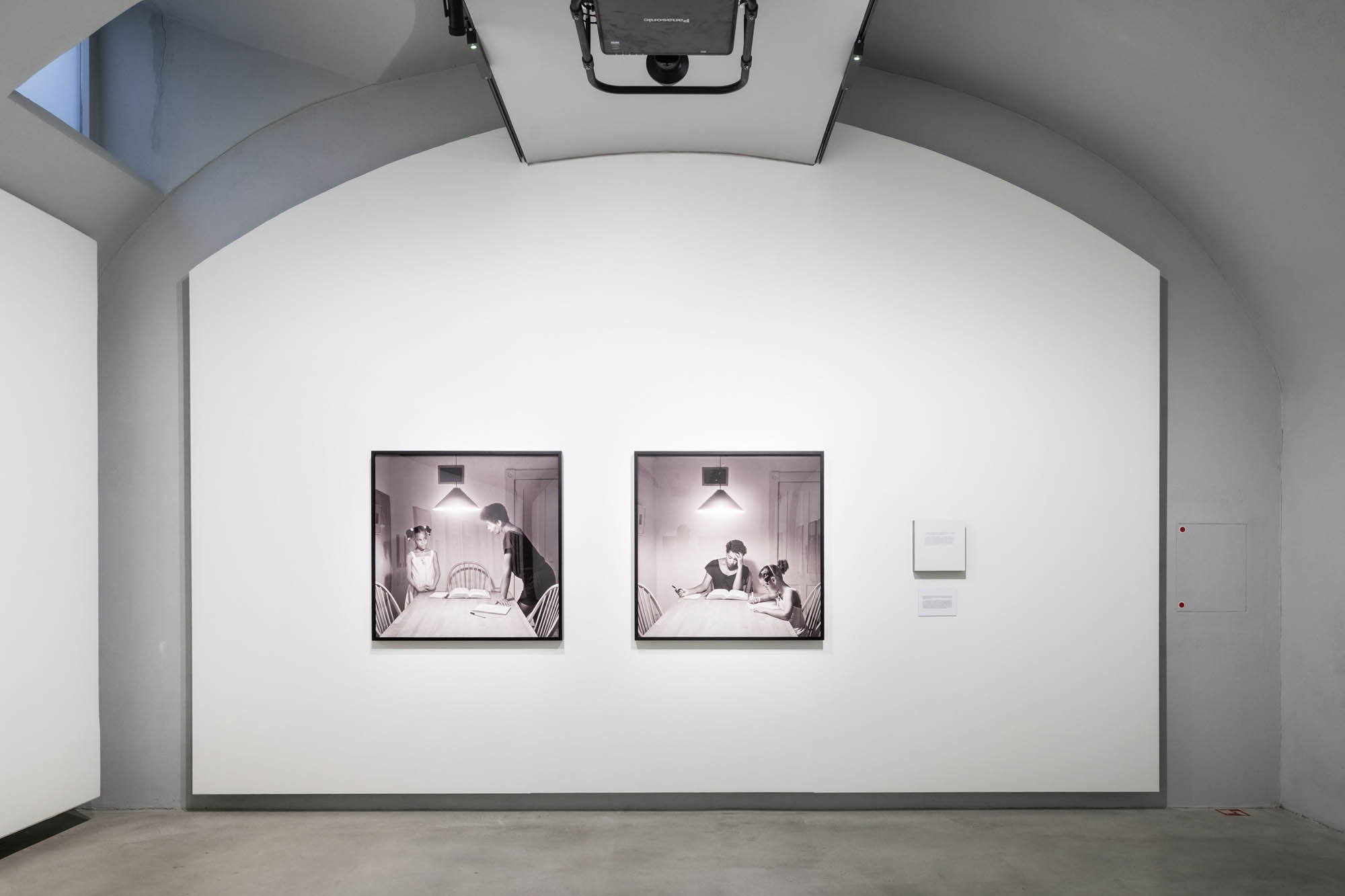
 

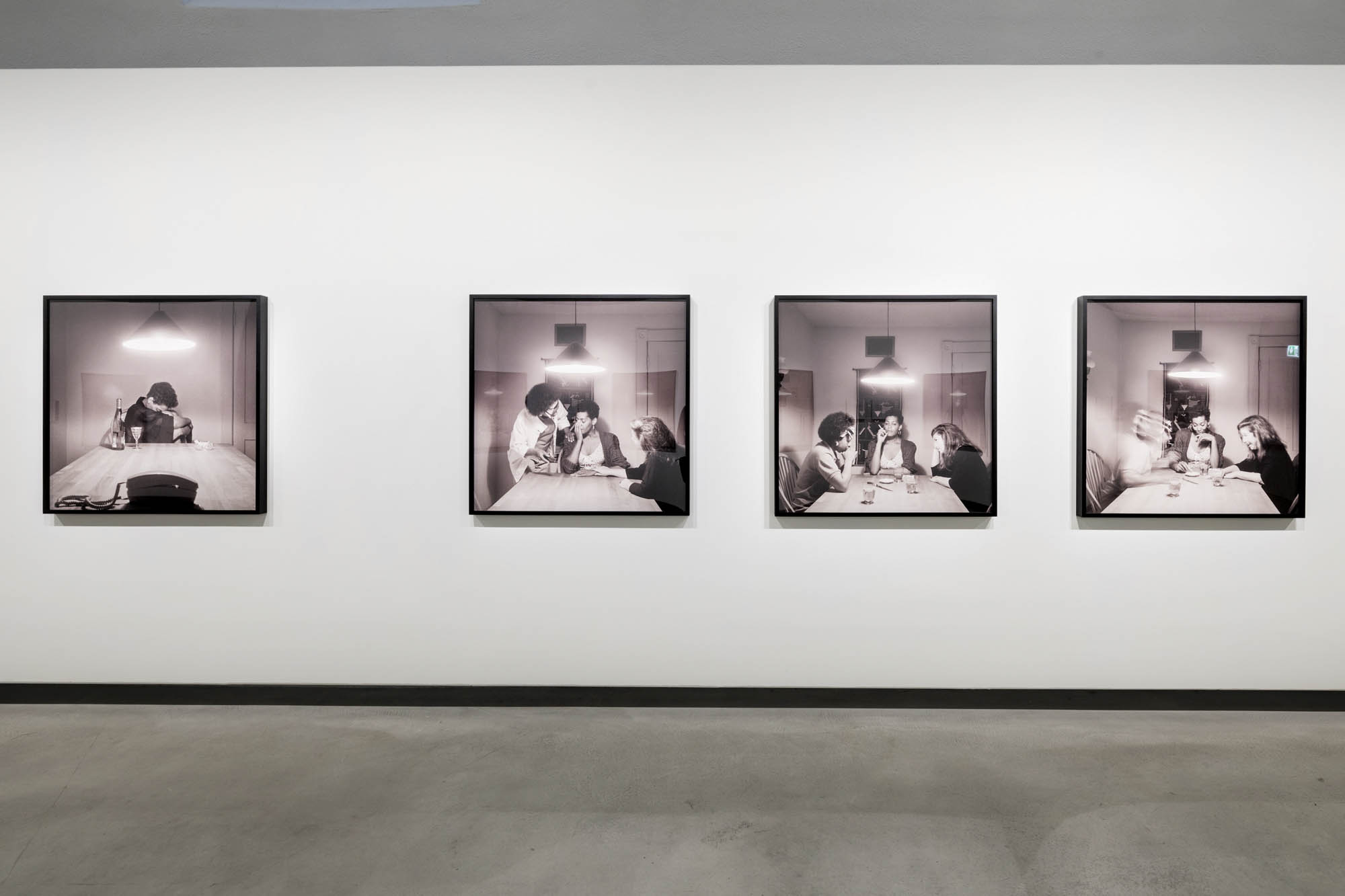
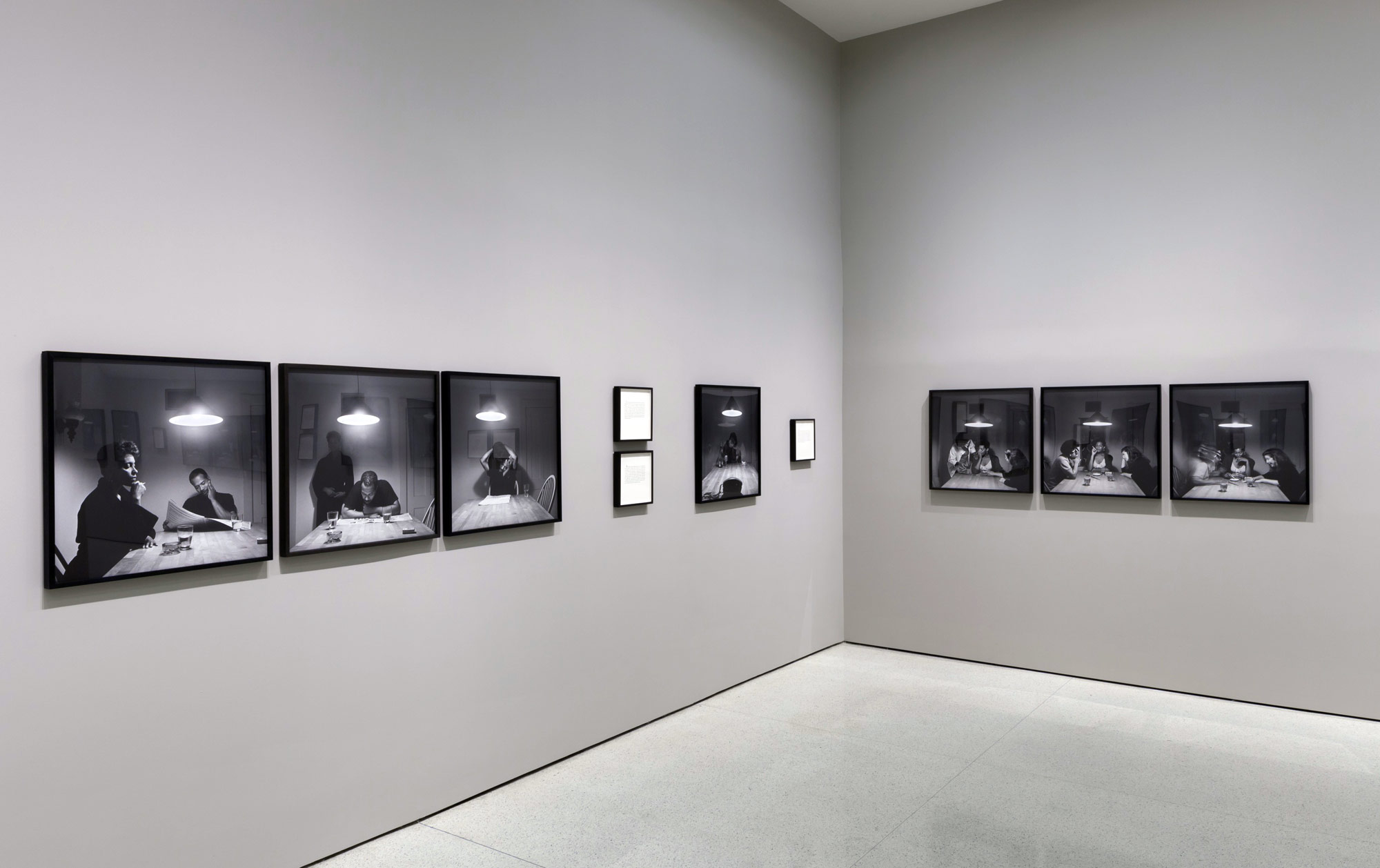
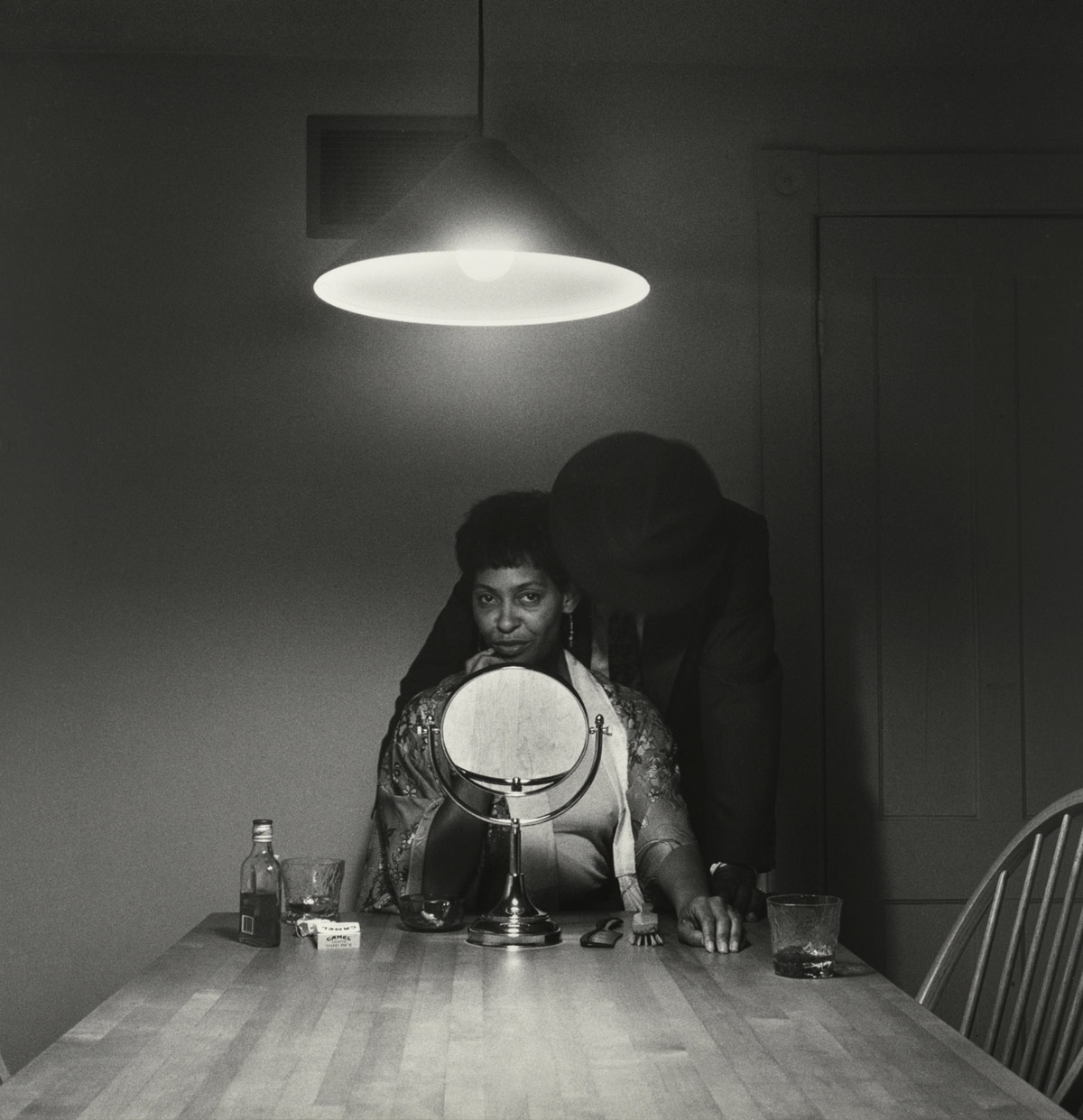
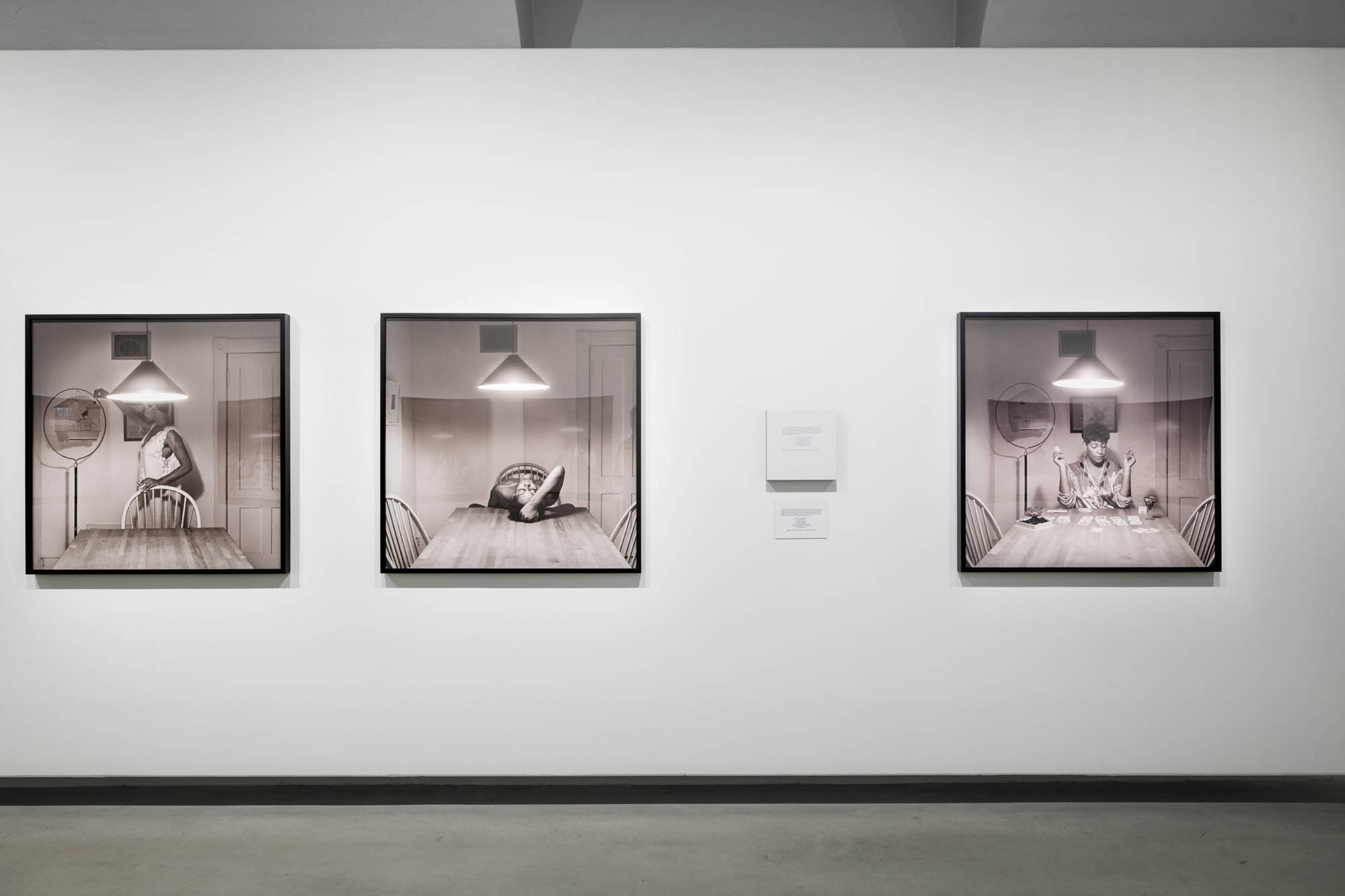
Installation view of the exhibition 'Carrie Mae Weems: The Heart of the Matter' at Gallerie d'Italia, Turin, April - September, 2025 showing work from the 'Kitchen Table Series', 1990


Installation view of the exhibition Carrie Mae Weems: The Heart of the Matter at Gallerie d’Italia, Turin showing work from the Kitchen Table Series, 1990


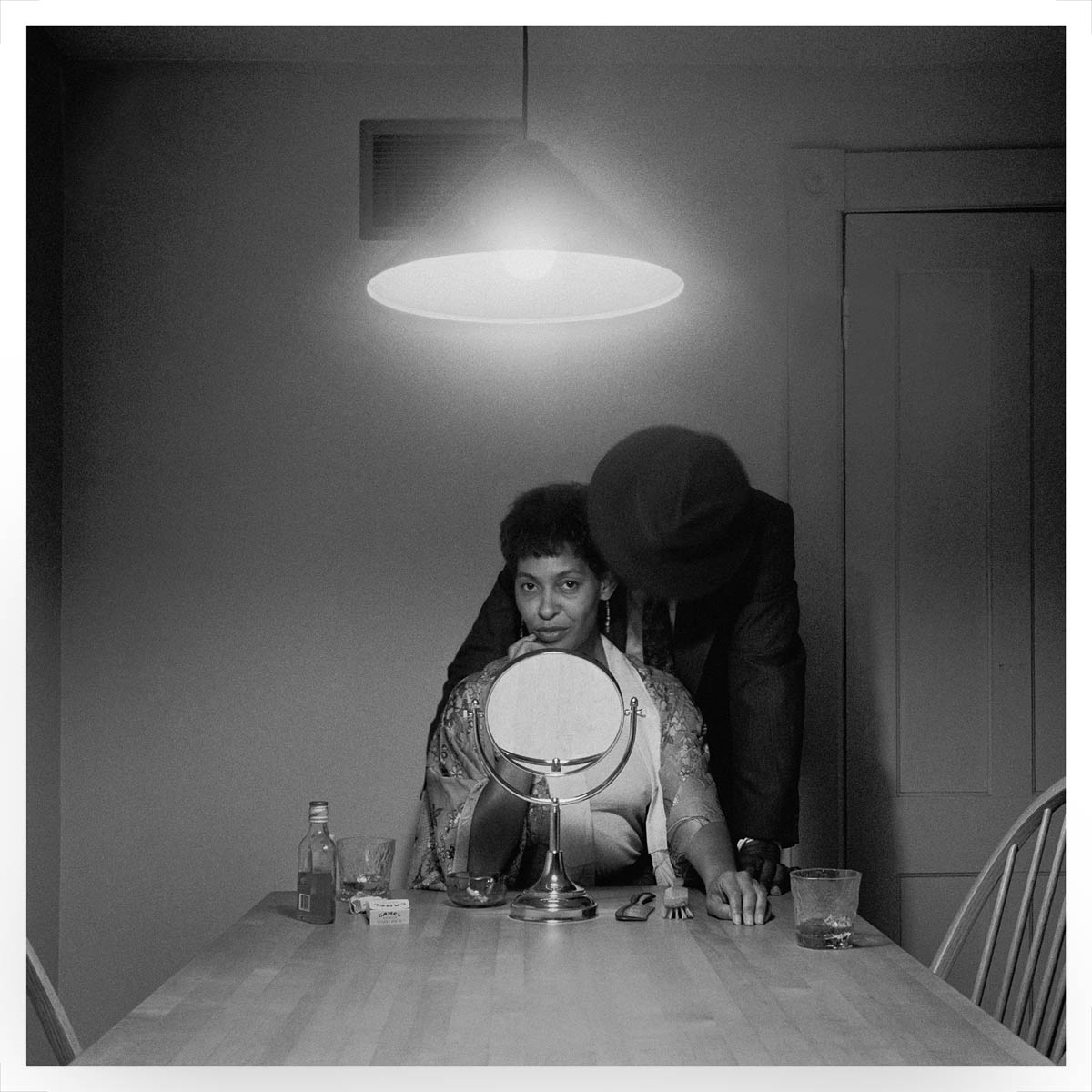
Carrie Mae Weems (American, b. 1953) 'Untitled (Man and mirror)' 1990 From the series 'Kitchen Table'


Carrie Mae Weems (American, b. 1953)
Untitled (Man and mirror)
1990
From the Kitchen Table Series
© Carrie Mae Weems and reproduced courtesy of the artist and Gladstone Gallery, New York, Fraenkel Gallery, San Francisco, and Galerie Barbara Thumm, Berlin
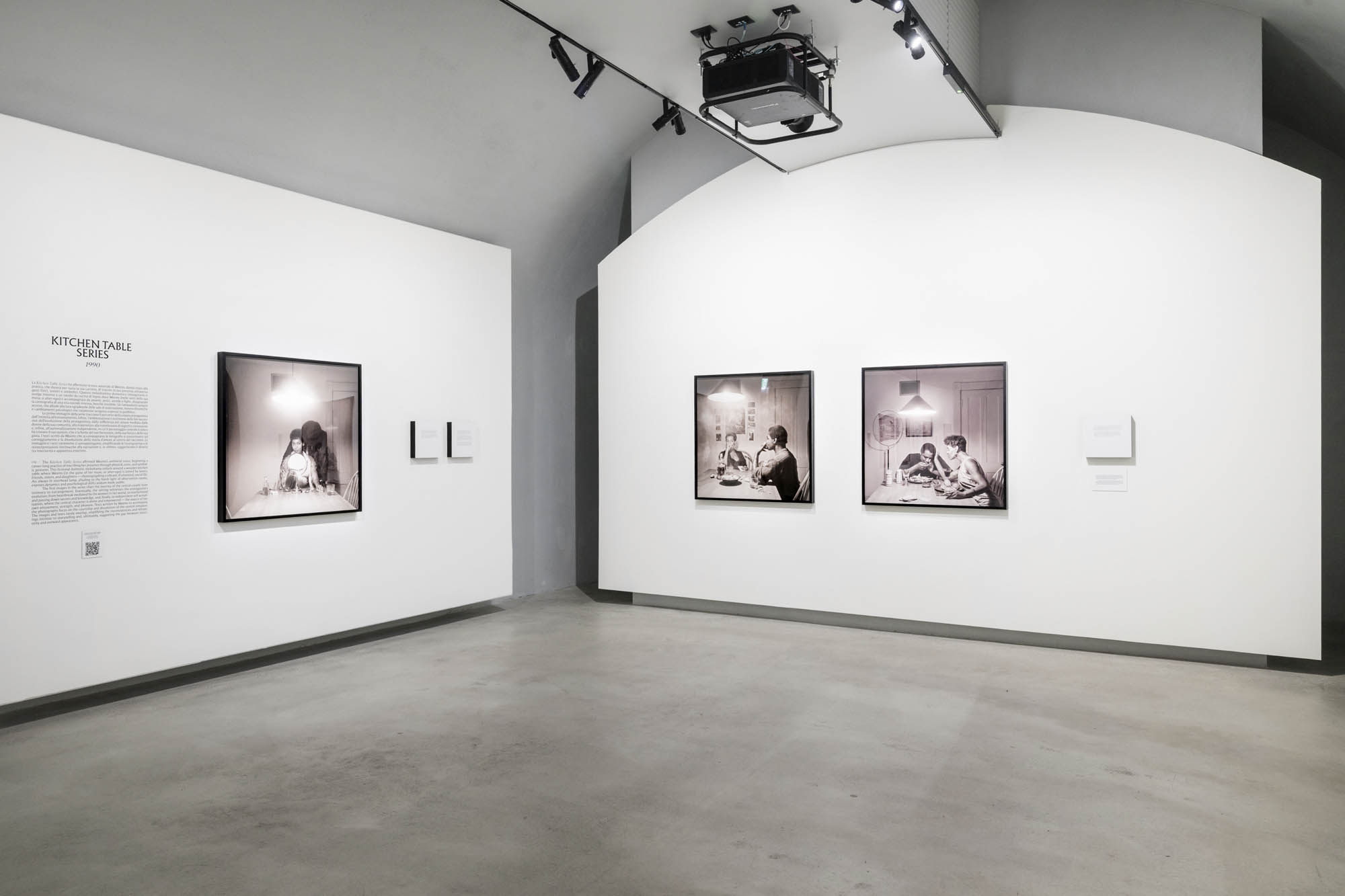
 

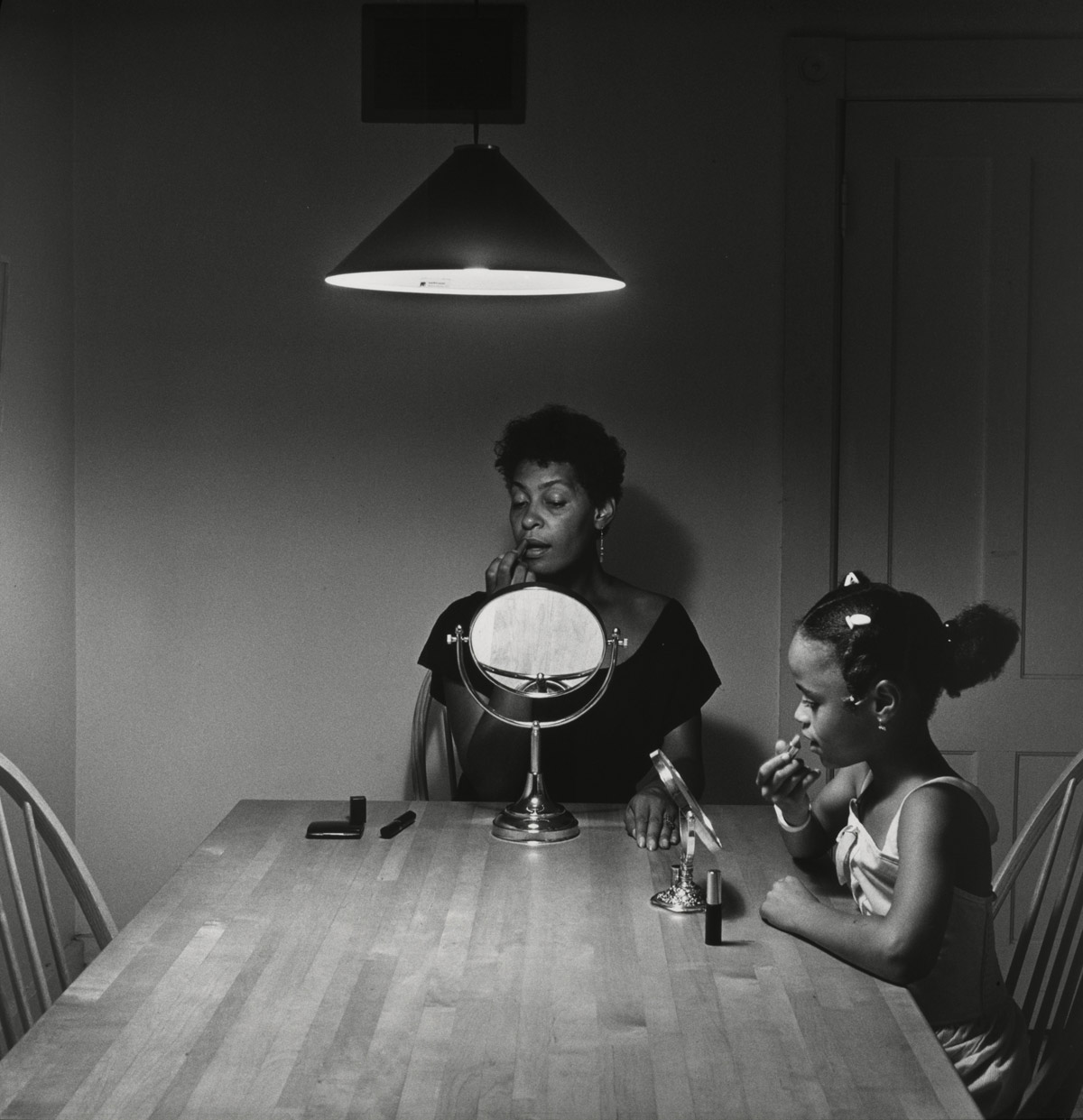
Carrie Mae Weems (American, b. 1953) 'Untitled (Woman and daughter with children)' 1990 From the series 'Kitchen Table'


Carrie Mae Weems (American, b. 1953)
Untitled (Woman and daughter with children)
1990
From the Kitchen Table Series
© Carrie Mae Weems and reproduced courtesy of the artist and Gladstone Gallery, New York, Fraenkel Gallery, San Francisco, and Galerie Barbara Thumm, Berlin
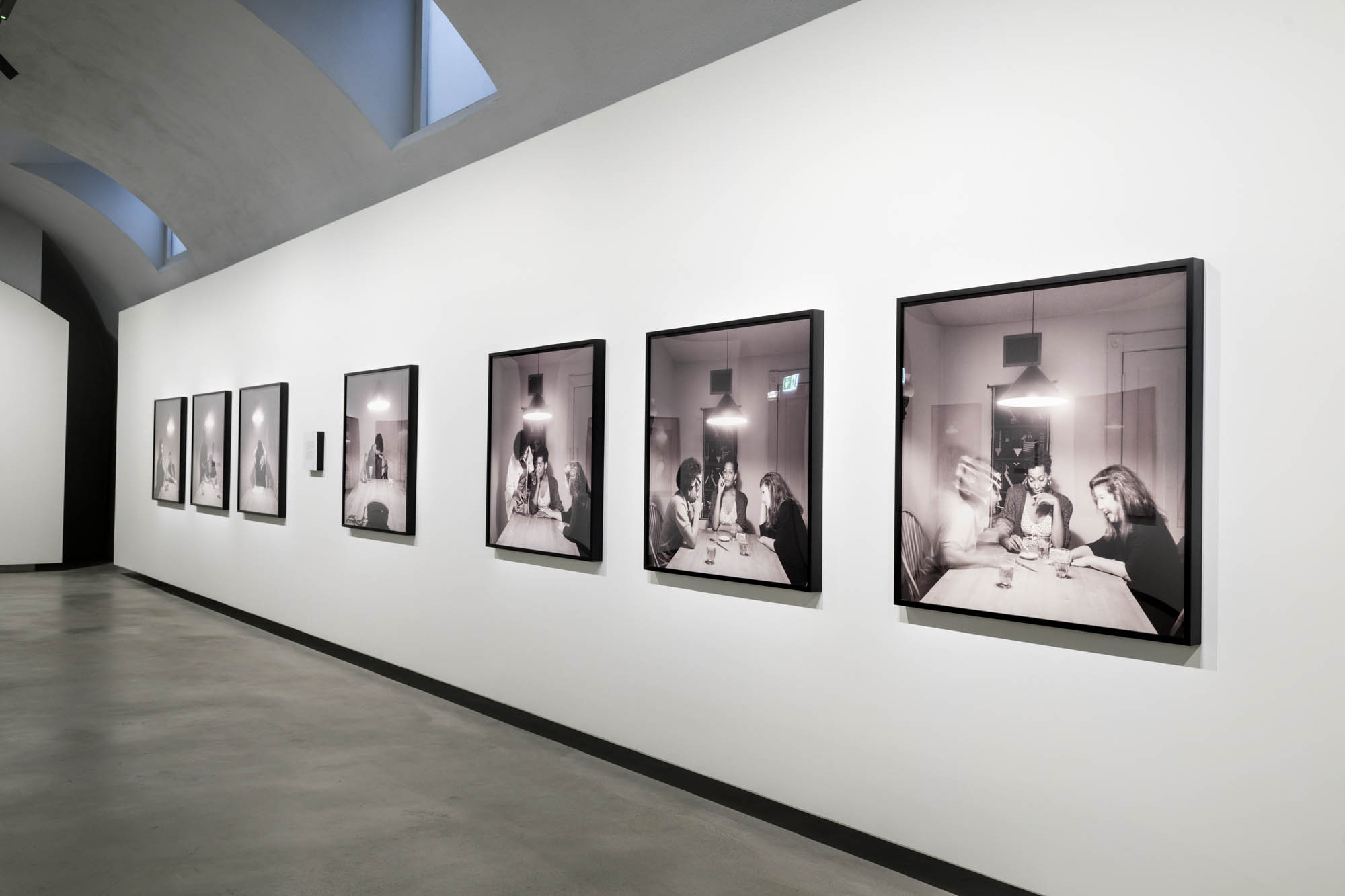
 

Carrie Mae Weems (American, b. 1953) 'Untitled (Woman standing alone)' 1990 from the series 'Kitchen Table'


Carrie Mae Weems (American, b. 1953)
Untitled (Woman standing alone)
1990
From the Kitchen Table Series
© Carrie Mae Weems and reproduced courtesy of the artist and Gladstone Gallery, New York, Fraenkel Gallery, San Francisco, and Galerie Barbara Thumm, Berlin
 

Carrie Mae Weems (American, b. 1953)
'Untitled' 1988 from the series 'Four Women'


Carrie Mae Weems (American, b. 1953)
Untitled
1988
From the series Four Women
© Carrie Mae Weems and reproduced courtesy of the artist and Gladstone Gallery, New York, Fraenkel Gallery, San Francisco, and Galerie Barbara Thumm, Berlin
 

Carrie Mae Weems (American, b. 1953)
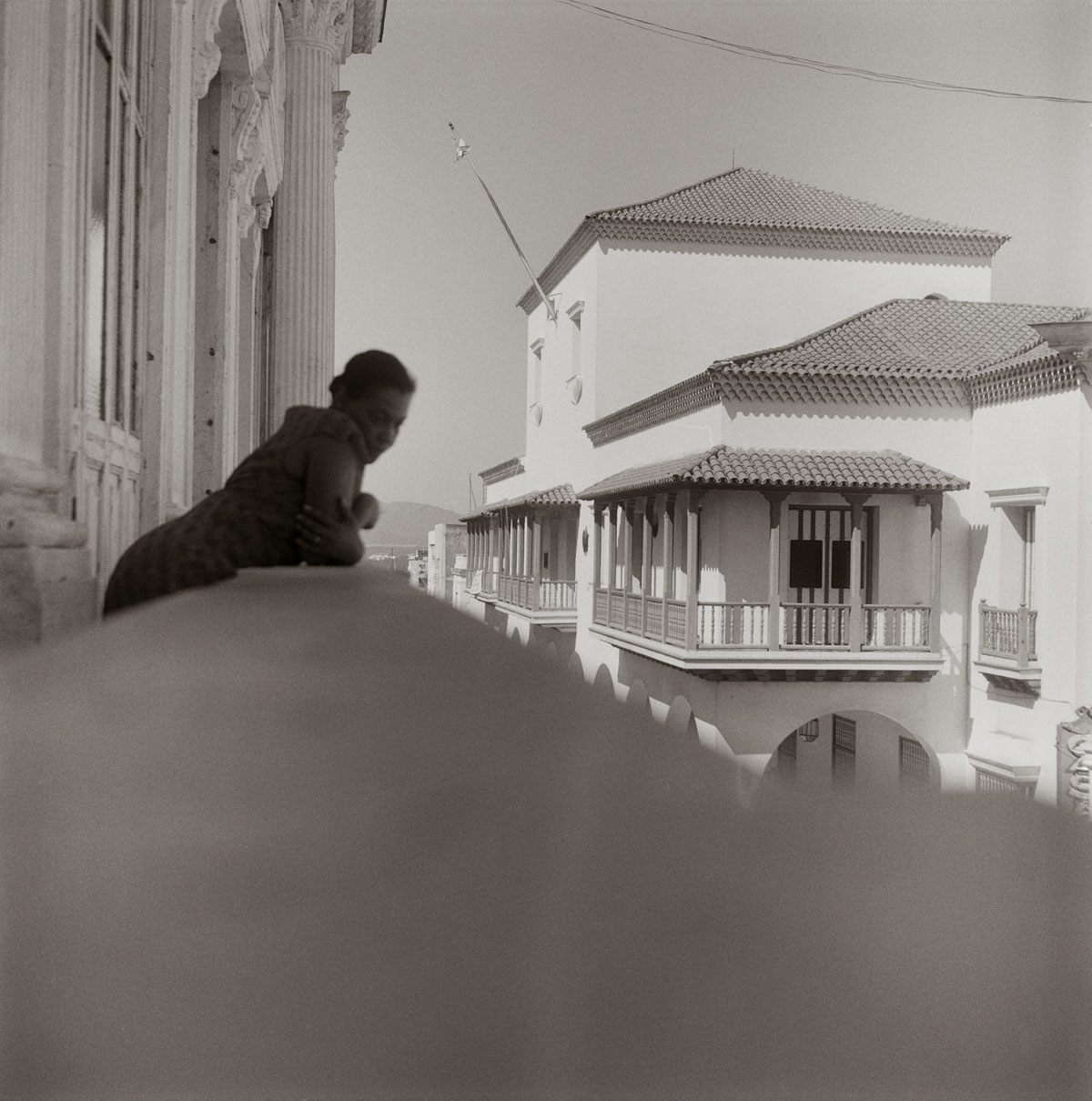
'Wilfredo, Laura and Me, I' 2002 From the series 'Dreaming in Cuba'


Carrie Mae Weems (American, b. 1953)
Wilfredo, Laura and Me, I
2002
From the series Dreaming in Cuba
© Carrie Mae Weems and reproduced courtesy of the artist and Gladstone Gallery, New York, Fraenkel Gallery, San Francisco, and Galerie Barbara Thumm, Berlin


Gallerie d’Italia – Torino
Piazza San Carlo, 156
10121 Turin
Phone number: 800 167 619

Opening hours:
Tuesday, Thursday, Friday, Saturday and Sunday: 9.30 – 19.30
Wednesday: 9.30 – 20.30
Gallerie d’Italia – Torino website

LIKE ART BLART ON FACEBOOK

Back to top

Exhibition: ‘Carrie Mae Weems: Three Decades of Photography and Video’ at The Solomon R. Guggenheim Museum, New York

Exhibition dates: 24th January – 14th May 2014


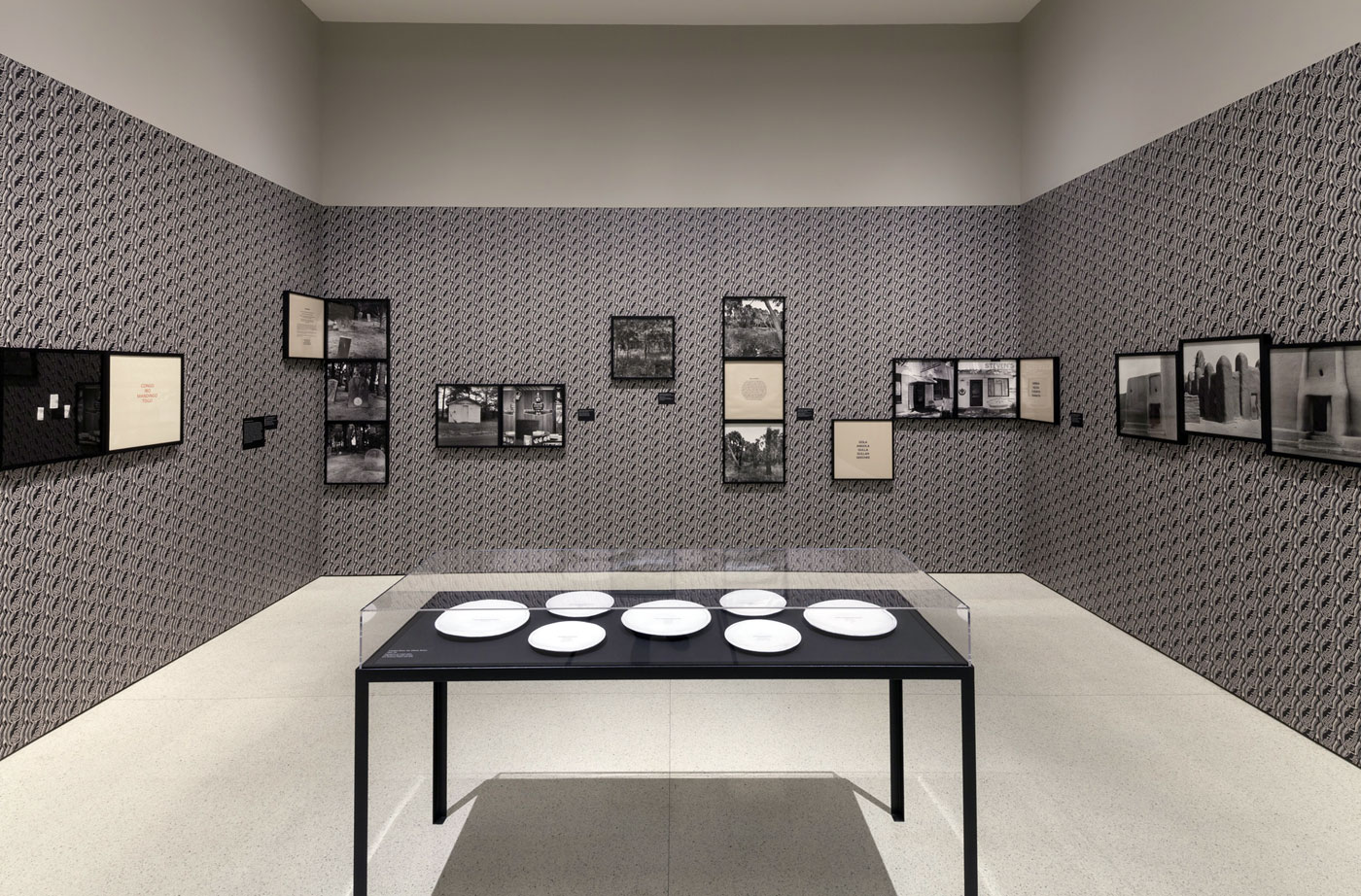
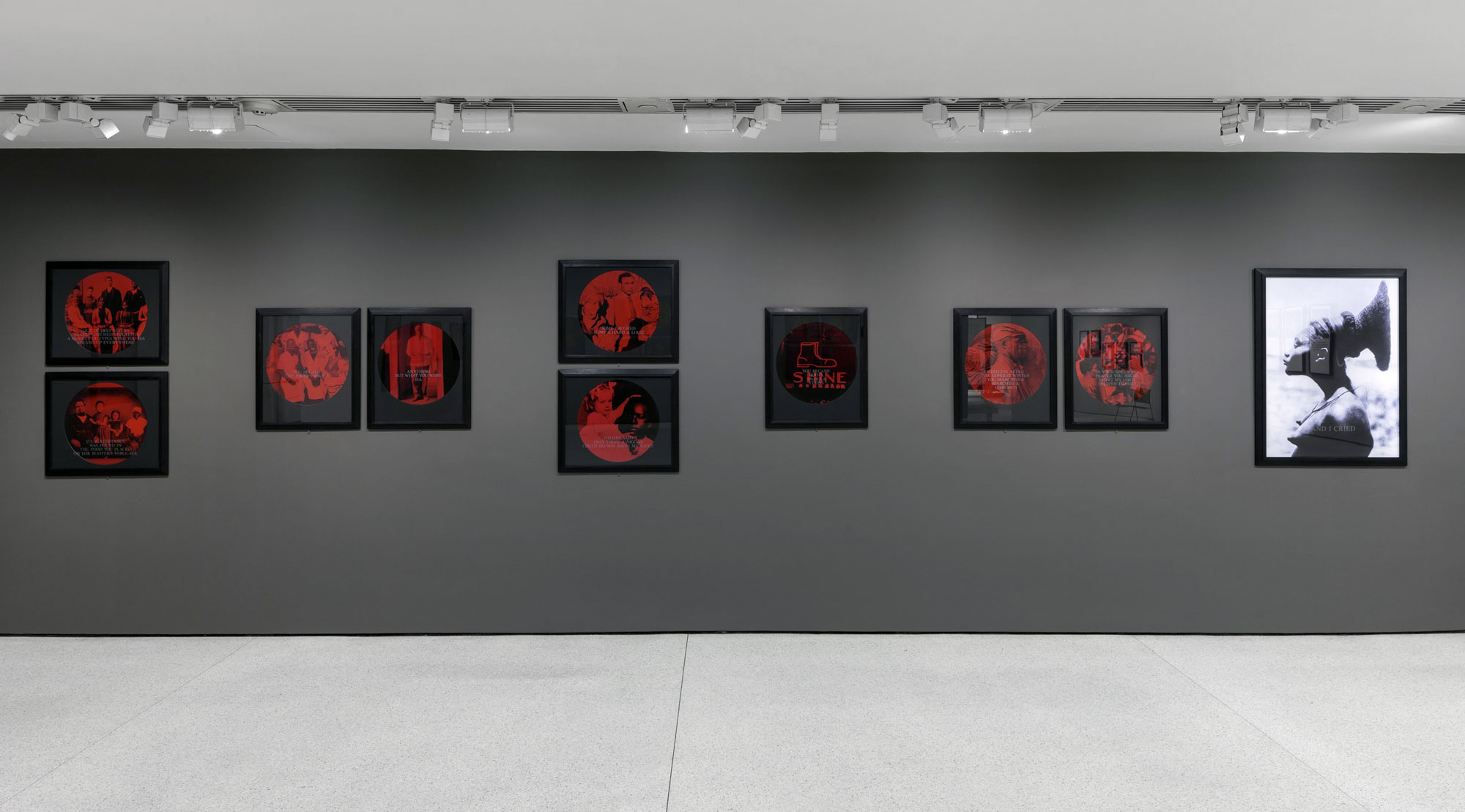
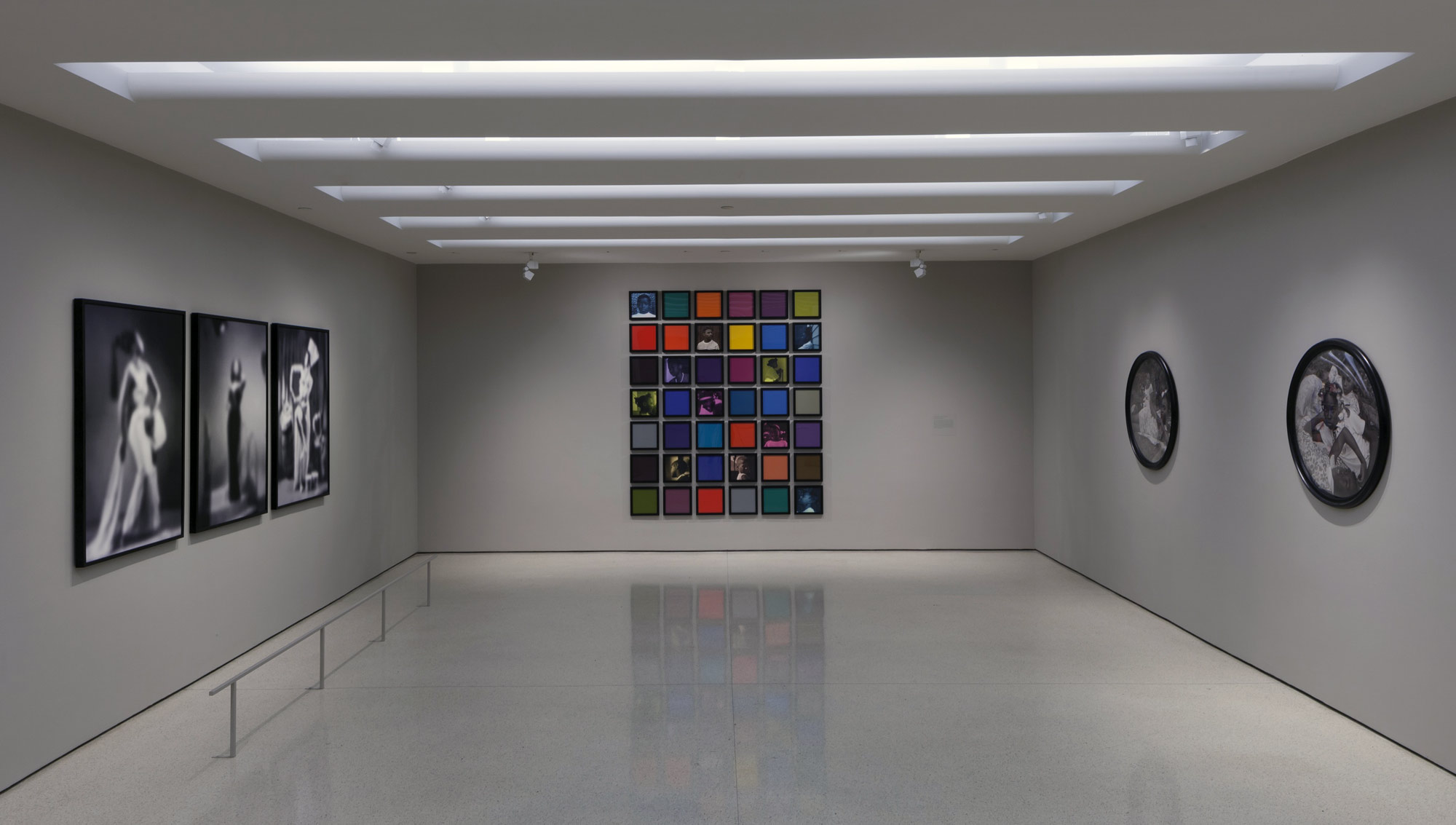
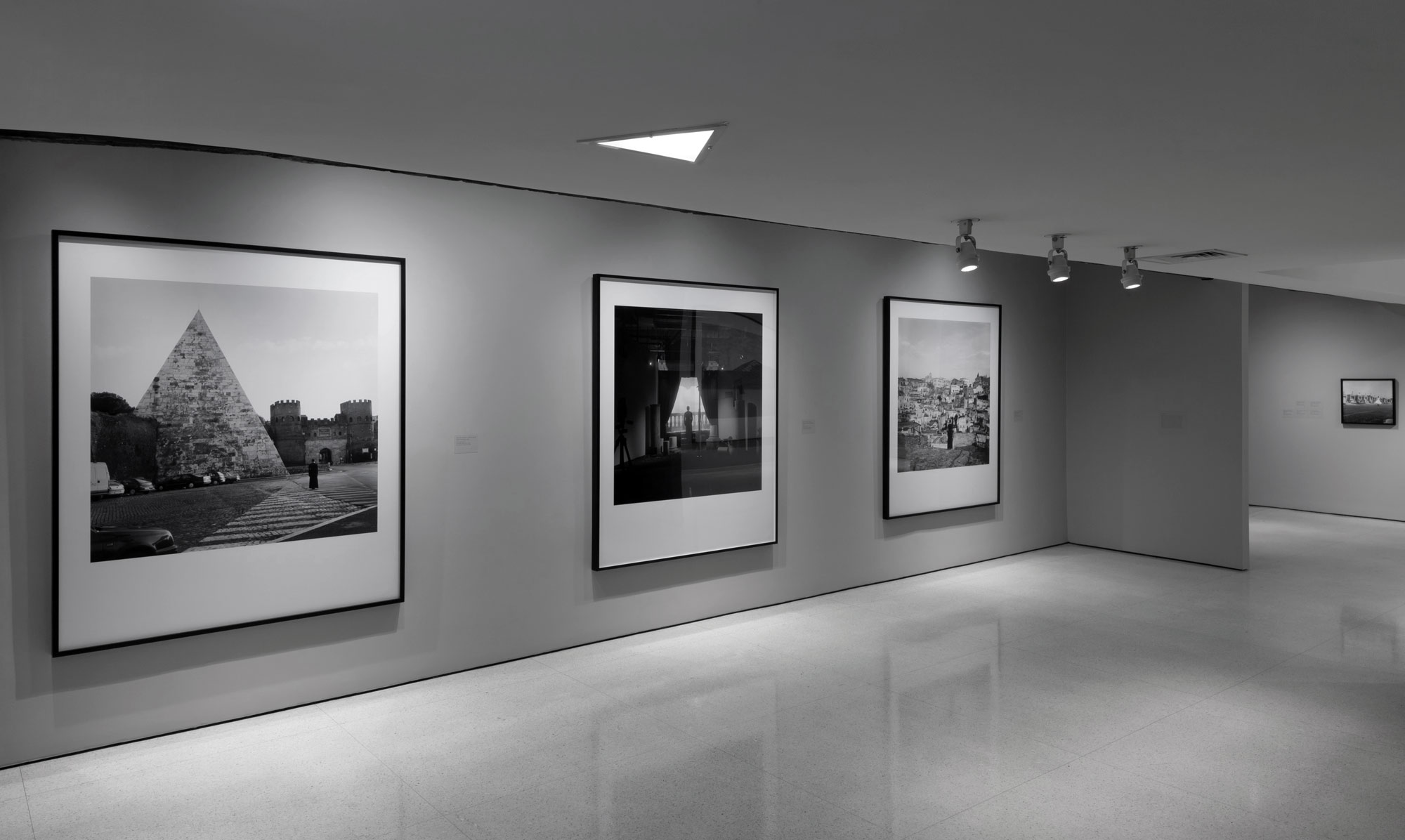
Installation view: 'Carrie Mae Weems: Three Decades of Photography and Video', Solomon R. Guggenheim Museum, New York, January 24-May 14, 2014


Installation view: Carrie Mae Weems: Three Decades of Photography and Video, Solomon R. Guggenheim Museum, New York, January 24-May 14, 2014
Photo: David Heald © Solomon R. Guggenheim Foundation.


A busy time with postings on the archive over the next week with a lot of exhibitions finishing on the 18th May 2014. The posting about this artist is one of the best of them. I have been wanting to show this artist on this site since it started, nearly 6 years ago. Finally, I get my chance!


I ask the question:

Who are the interesting photographers anywhere who are alive now?

That is – by looking at the ideas that are present in poetry, music, philosophy or even politics – who is there that is truly taking these ideas forward (or ideas that are as interesting). Or, who is arranging images with the elegance of a Sommer or an Atget or the dynamics of Arbus.

In other words whose acts am I hanging upon, so that I am waiting with great anticipation to see what they are going to do next?

Which living photographers would I walk over broken glass to see their work? = some

If I was being essential (and if you were walking over glass you would be), the list would be very short:

Carrie Mae Weems and Wolfgang Tillmans.


What both these image makers – for they are not photographers in the traditional sense – do, is problematise and reconfigure narration and visualisation in the conceptualisation of subject. Tillmans experiments with a sensory experiential backdrop against and within which the photographs are produced. Modes of perception and the regimes of emotion are inducted into the aesthetics of production and meaning so that, “the pictures communicate with each other in a way that is not bound to the pattern of a closed narrative or any particular line of argument.” The mobilisation and reversal of value and meaning are central strategies in Tillmans’ praxis, where realistic and abstract elements are never intentionally separated from each other, and where the physicality and space of the photographs is also acknowledged in the installation of the work.

A similar sensory experience can be observed in the work of Carrie Mae Weems, only this artist invites contemplation of issues surrounding race, gender, and class inequality – bringing to light the voices of marginalised and oppressed people and histories – through a multidimensional picture of history and humanity, intended to spur greater cultural awareness and compassion. As the press release observes, “Although her subjects are often African American, Weems wants “people of color to stand for the human multitudes” and for her art to resonate with audiences of all backgrounds… Weems often appropriates words and images, re-presenting them to viewers as biting reminders of the persistence of bigoted attitudes in the United States.”

This is the power of both artists work, the creation of open ended narratives, multidimensional pictures of history and humanity which allows the viewer to create a space beyond the art works.

Using ekphrasis – the structuring patterns of language, in Weems’ case emphasising the role of both spoken and written narrative – to vividly represent a wide range of perceptual experiences, she creates a complementary space outside of the art work in the reader’s mind. The author creates links, “designating the paths along which the reader may travel, and thus, in a much freer manner than modernist authors, structures the network of allusions, parallelisms, and juxtapositions that contribute to the sense of textual space.”1 This allows the viewer to create a language of personal associations and engages in them an autonomy of experience, one encouraged by the products, the texts and images that these authors create.

These thoughts come to mind. Some things we interpret and then remember that interpretation, but we are no longer involved in the actual act of interpretation – and there are other, probably fewer things that continue to involve us – where we never finish the first way of looking at them, we are always coming to them and not arriving. Unfortunately, I find a lot of things in the first group, and as much as theoreticians try to inspire me to re-interpret, the work they have done often only works as an adjunct to something that has settled.

The art of Weems and Tillmans resides, lives and breathes of the second category, for we can never be sure of the pattern of narrative, the form of aesthetic and thematic interaction and the specificity of the marginalised histories they examine. These histories apply to all of us.

Dr Marcus Bunyan


1/ Tolva, John. Ut Pictura Hyperpoesis: Spatial Form, Visuality, and the Digital World,” in HYPERTEXT ’96 Proceedings of the the seventh ACM conference on Hypertext, 1996, p. 71.


Many thankx to The Solomon R. Guggenheim Museum for allowing me to publish the photographs in the posting. Please click on the photographs for a larger version of the image.


“Over the past thirty years, Carrie Mae Weems has yearned to insert marginalized peoples into the historical record. She does this not only to bring ignored or erased experiences to light but to provide a more multidimensional picture of humanity as a whole, a picture that ultimately will spur greater awareness and compassion. Weems believes deeply that “my responsibility as an artist is to … make art. beautiful and powerful, that adds and reveals; to beautify the mess of a messy world, to heal the sick and feed the helpless; to shout bravely from the roof-tops and storm barricaded doors and voice the specifics of our historic moment.””


Carrie Mae Weems quoted in Kathryn E. Delmez. “Introduction,” from Kathryn E. Delmez (ed.,). Carrie Mae Weems: Three Decades of Photography and Video. Yale University Press 2012, p. 1.


“Weems [work] exist at the intersection of photography and race, image and text.”


John Pultz


“Belying the myth that conceptual artists disdain the old-fashioned notion of aesthetics, Weems has long been consumed and galvanized by the idea of beauty. The notion of beauty encompasses and reaches beyond aesthetics. It is not a simple concept, as often there are unspoken political implications in her use. Beauty is a powerful adjective in her hands and an important tool in her work. Her work is always about beauty and purposely so. She seduces the viewer through the very process of creating luscious prints, or beautiful images, without ever using beauty purely to seduce. But no matter what one encounters within the text or within one’s own revelations about what the texts ultimately say, the religion of beauty always undergirds Weem’s vision and informs her work.”


Thelma Golden. “Some Thoughts on Carrie Mae Weems,” in Golden, T. and Piché Jr., T. Carrie Mae Weems: Recent Work, 1992-1998. New York: George Braziller, 1998, p. 32 quoted in Deborah Willis. “Photographing between the Lines: Beauty, Politics, and the Poetic Vision of Carrie Mae Weems,” in Kathryn E. Delmez (ed.,). Carrie Mae Weems: Three Decades of Photography and Video. Yale University Press 2012, p. 33.


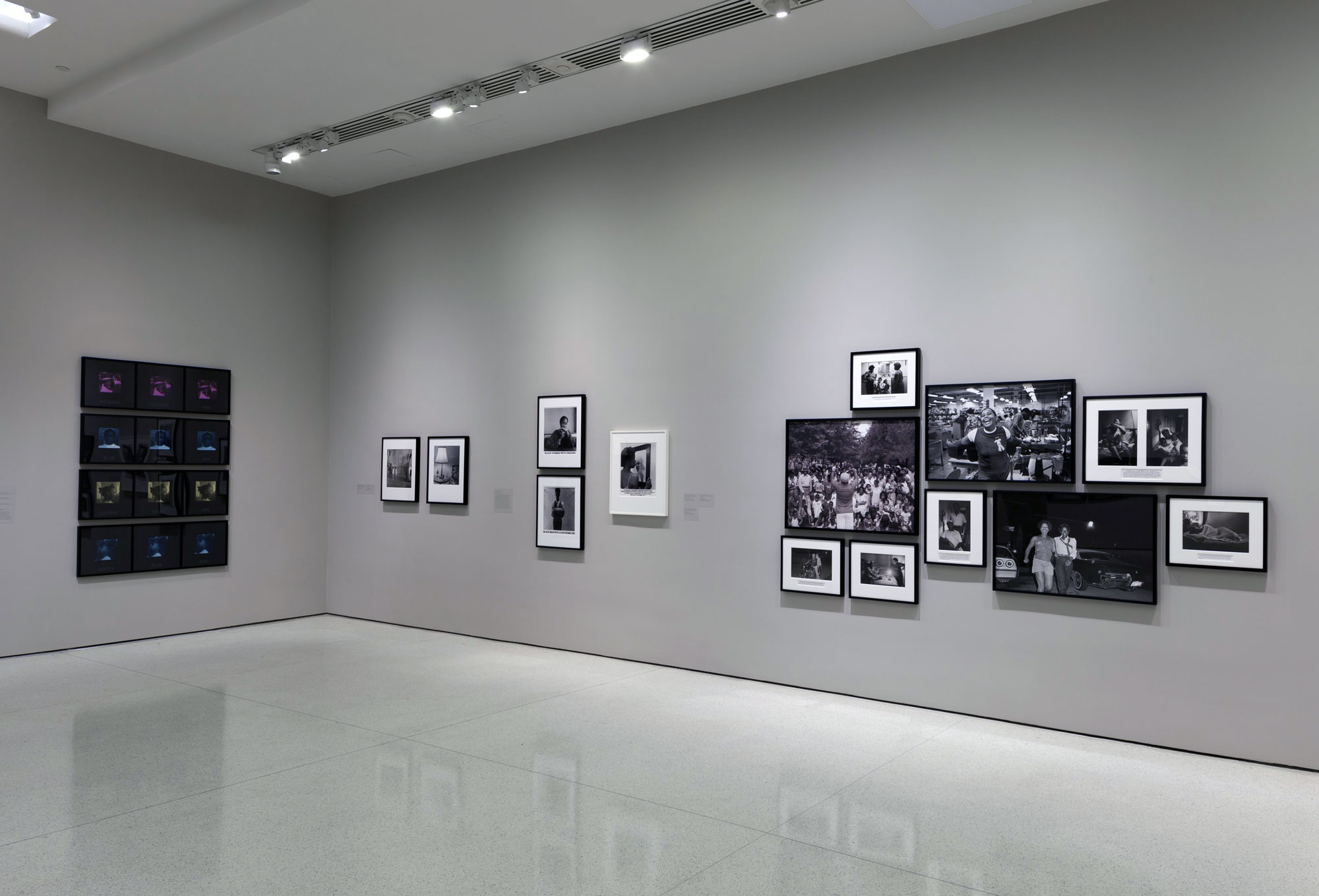
Installation view: 'Carrie Mae Weems: Three Decades of Photography and Video', Solomon R. Guggenheim Museum, New York, January 24-May 14, 2014

Installation view: 'Carrie Mae Weems: Three Decades of Photography and Video', Solomon R. Guggenheim Museum, New York, January 24-May 14, 2014

Installation view: 'Carrie Mae Weems: Three Decades of Photography and Video', Solomon R. Guggenheim Museum, New York, January 24-May 14, 2014

Installation view: 'Carrie Mae Weems: Three Decades of Photography and Video', Solomon R. Guggenheim Museum, New York, January 24-May 14, 2014

Installation view: 'Carrie Mae Weems: Three Decades of Photography and Video', Solomon R. Guggenheim Museum, New York, January 24-May 14, 2014


Installation views: Carrie Mae Weems: Three Decades of Photography and Video, Solomon R. Guggenheim Museum, New York, January 24-May 14, 2014
Photos: David Heald © Solomon R. Guggenheim Foundation.


The Solomon R. Guggenheim Museum presents Carrie Mae Weems: Three Decades of Photography and Video, the first major New York museum retrospective devoted to this socially motivated artist. Weems has long been acclaimed as one of the most eloquent and respected interpreters of African American experiences, and she continues to be an important influence for many young artists today. Featuring more than 120 works – primarily photographs, but also texts, videos, and an audio recording – as well as a range of related educational programs, this comprehensive survey offers an opportunity to experience the full breadth of the artist’s oeuvre and gain new insight into her practice.

Carrie Mae Weems: Three Decades of Photography and Video is organised by the Frist Center for the Visual Arts, Nashville, Tennessee. The exhibition has been curated by Kathryn Delmez, the Frist Center, where it opened in September 2012. The Solomon R. Guggenheim Museum presentation is organised by Jennifer Blessing, Senior Curator, Photography, with Susan Thompson, Assistant Curator. This exhibition is supported in part by The Robert Mapplethorpe Foundation. The Leadership Committee for Carrie Mae Weems: Three Decades of Photography and Video is also gratefully acknowledged for its support, including Jo Carole and Ronald S. Lauder, Robert Menschel Vital Projects, and Jack Shainman Gallery, as well as Henry Buhl, Crystal R. McCrary and Raymond J. McGuire, Beth Rudin DeWoody, Rhona Hoffman Gallery, Toby Devan Lewis, Louise and Gerald W. Puschel, and Miyoung Lee and Neil Simpkins. Additional funding is provided by the William Talbott Hillman Foundation and the New York State Council on the Arts.

The work of Carrie Mae Weems (b. 1953, Portland, Oregon) invites contemplation of issues surrounding race, gender, and class inequality. Over the past thirty years, Weems has used her art to bring to light the ignored or erased experiences of marginalised people. Her work proposes a multidimensional picture of history and humanity, intended to spur greater cultural awareness and compassion. Although her subjects are often African American, Weems wants “people of colour to stand for the human multitudes” and for her art to resonate with audiences of all backgrounds.

Organised in a loosely chronological order throughout two of the museum’s Annex Levels, the exhibition begins on Level 2 with the series Family Pictures and Stories (1978-1984). This series, like many of Weems’s early works, explores matters relating to contemporary black identity, highlighting individuals in social contexts – including in this case her own kin. Her landmark Kitchen Table Series (1990) employs text and photography to explore the range of women’s roles within a community, pointedly situating the photographs’ subject within a domestic setting. Selections from Weems’s Sea Islands Series (1991-1992), Africa (1993), and Slave Coast (1993) demonstrate her ongoing interest in language and storytelling. These works, made during the artist’s travels to the titular locales, pair images with evocative vernacular texts or etymological investigations that trace English words to African roots. The artist’s practice emphasises the role of both spoken and written narrative, reflecting her graduate studies in folklore.

Weems often appropriates words and images, re-presenting them to viewers as biting reminders of the persistence of bigoted attitudes in the United States. Her renowned series From Here I Saw What Happened and I Cried (1995-1996), presented on Annex Level 4, layers new text over found historical imagery to critique and lament prejudiced attitudes toward African Americans throughout the nineteenth and twentieth centuries. A yearning to investigate the underlying causes and effects of racism, slavery, and imperialism has spurred Weems to travel widely throughout the United States, Africa, Europe, and the Caribbean. During extended visits to these places, depicted in series such as Dreaming in Cuba (2002), The Louisiana Project (2003), and Roaming (2006), all represented in the exhibition, she looks to the surrounding land and architecture in order to foster communion with inhabitants past and present.

Video is a natural extension of Weems’s narrative photographic practice, also providing an opportunity for the artist to include music in her work. Although she worked in film during her undergraduate years at the California Institute of the Arts, Weems’s first major endeavour in the medium came in 2003-2004 with Coming Up for Air, a work comprised of series of poetic vignettes that will be screened in the New Media Theater in the Guggenheim’s Sackler Center for Arts Education. Other video works, including Italian Dreams (2006), Afro Chic (2009), and Constructing History: A Requiem to Mark the Moment (2008) will be integrated into the exhibition near related photographs.

Press release from The Solomon R. Guggenheim Museum website


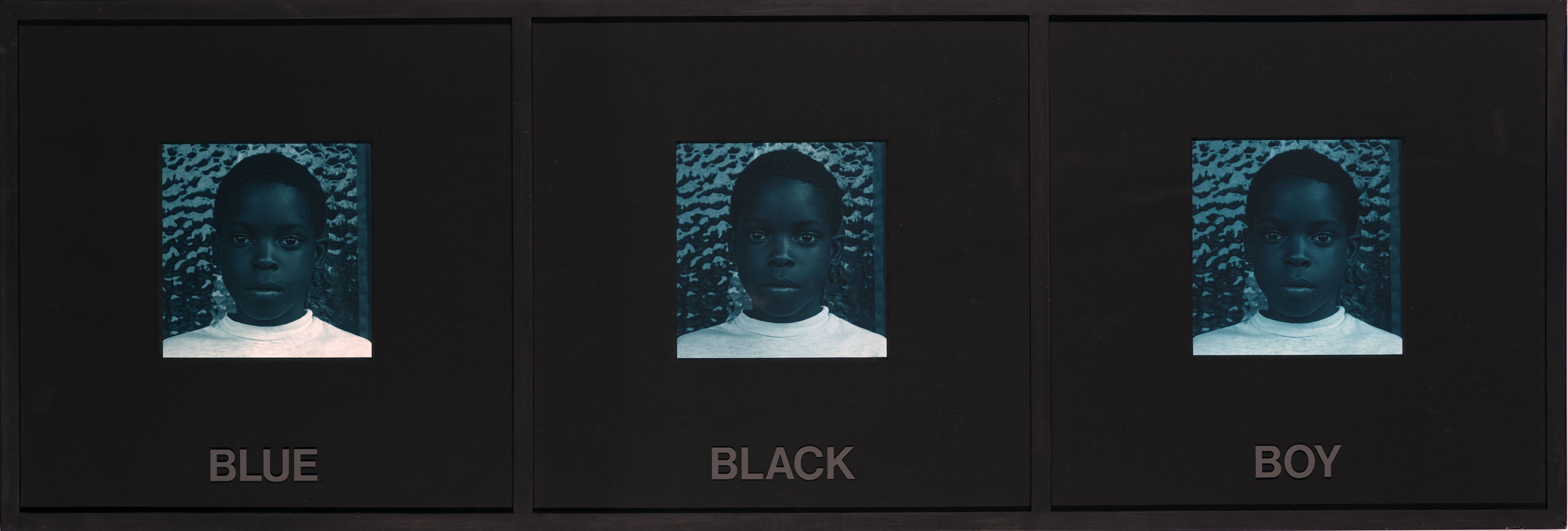
Carrie Mae Weems (American, b. 1953) 'Blue Black Boy (from 'Colored People')' 1989-1990


Carrie Mae Weems (American, b. 1953)
Blue Black Boy (from Colored People)
1989-90
Triptych, three toned gelatin silver prints with Prestype and frame
16 x 48 inches (40.6 x 121.9cm) overall
Whitney Museum of American Art, New York, Purchase, with funds from the Photography Committee
© Carrie Mae Weems


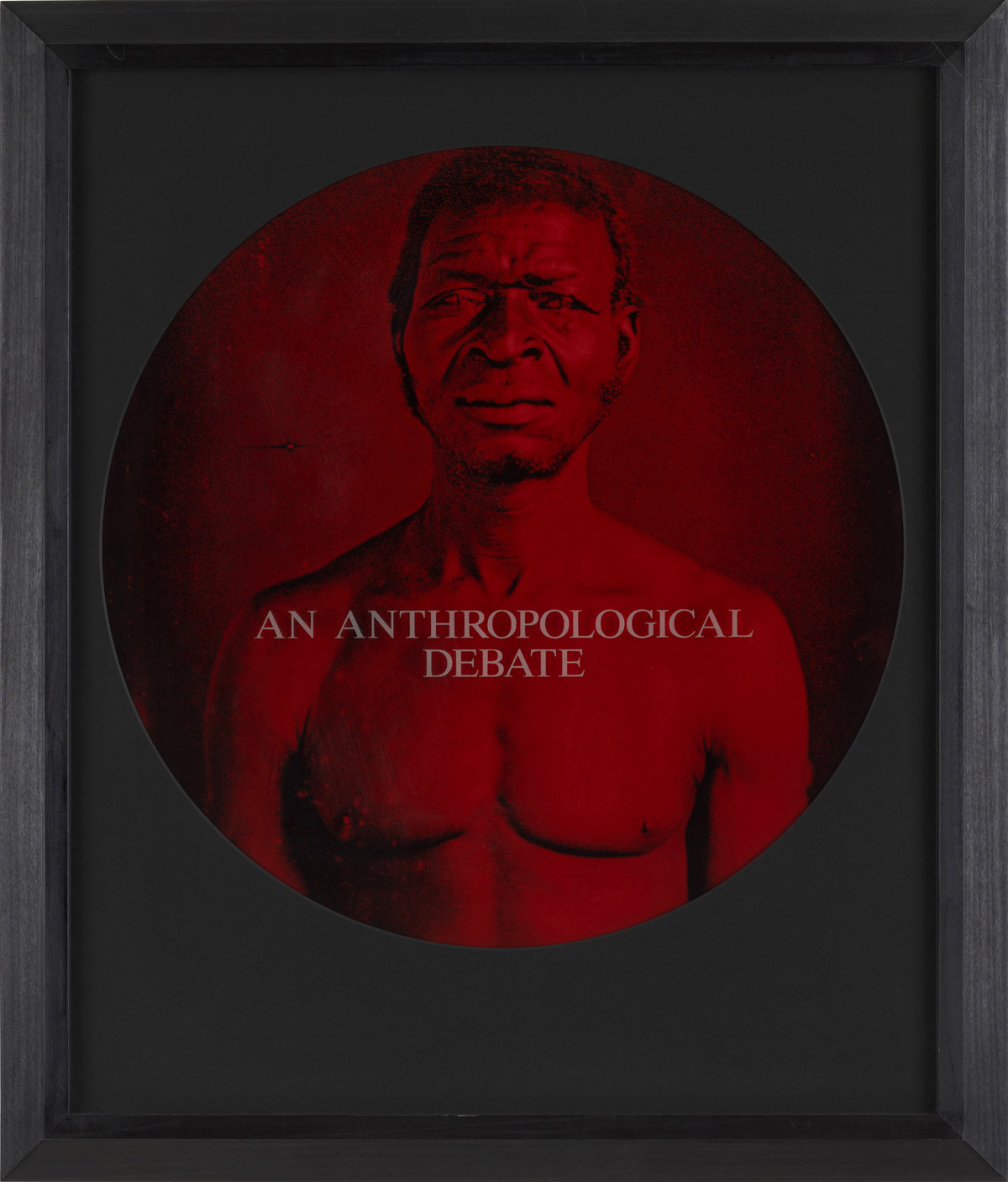
Carrie Mae Weems (American, b. 1953) 'An Anthropological Debate' (from 'From Here I Saw What Happened and I Cried') 1995-1996


Carrie Mae Weems (American, b. 1953)
An Anthropological Debate (from From Here I Saw What Happened and I Cried)
1995-96
Chromogenic print with etched text on glass
26 1/2 x 22 3/4 inches (67.3 x 57.8cm)
The Museum of Modern Art, New York, Gift on behalf of The Friends of Education of the Museum of Modern Art
From an original daguerreotype taken by J.T. Zealy, 1850. Peabody Museum, Harvard University.Copyright President & Fellows of Harvard College, 1977. All rights reserved.
Photo: © 2012, MoMA, NY


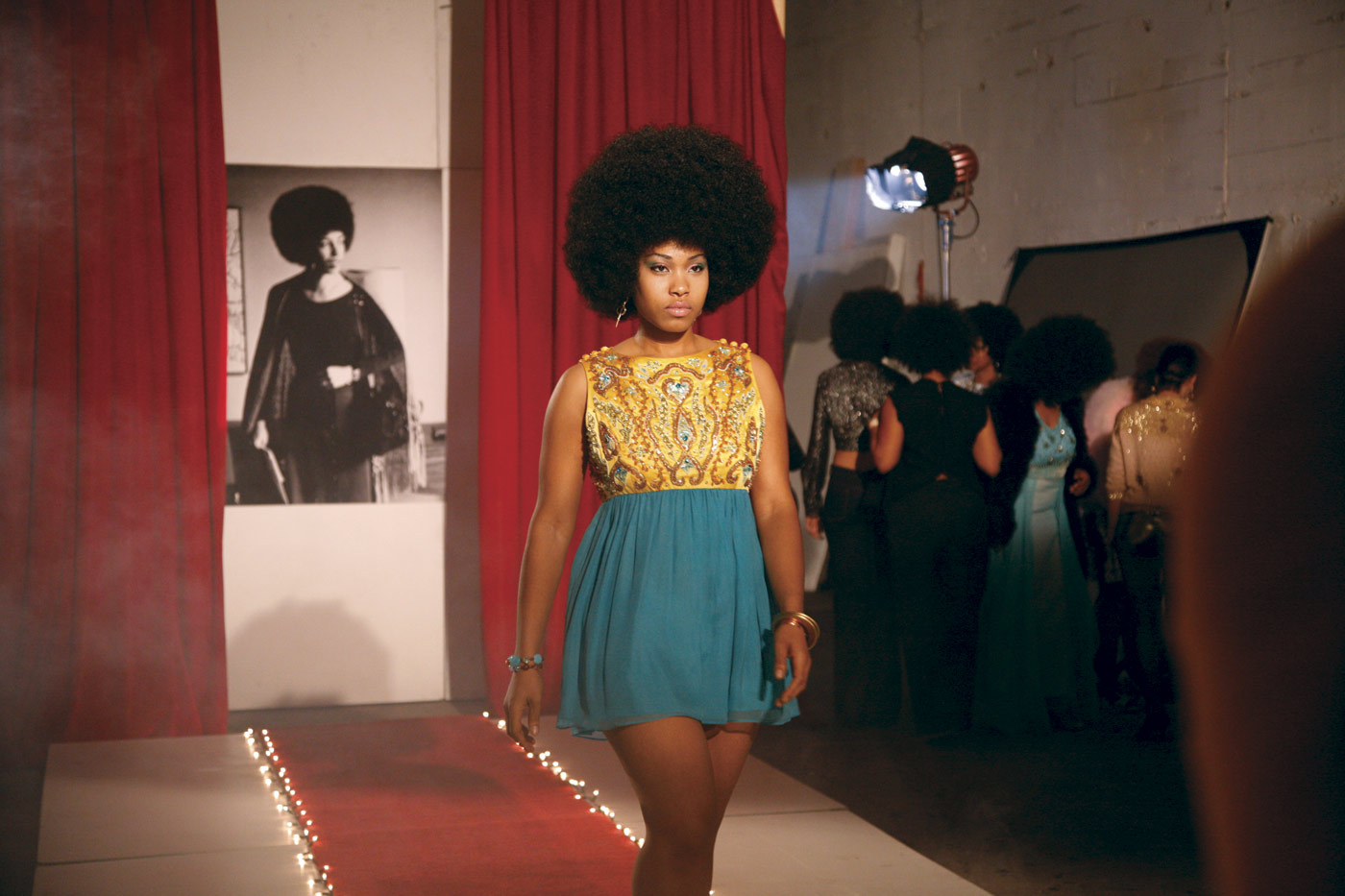
Carrie Mae Weems (American, b. 1953) 'Afro-Chic' 2010


Carrie Mae Weems (American, b. 1953)
Afro-Chic
2010
Digital colour video, with sound, 5 min., 30 sec.
Collection of the artist, courtesy Courtesy the artist and Jack Shainman Gallery, New York
© Carrie Mae Weems


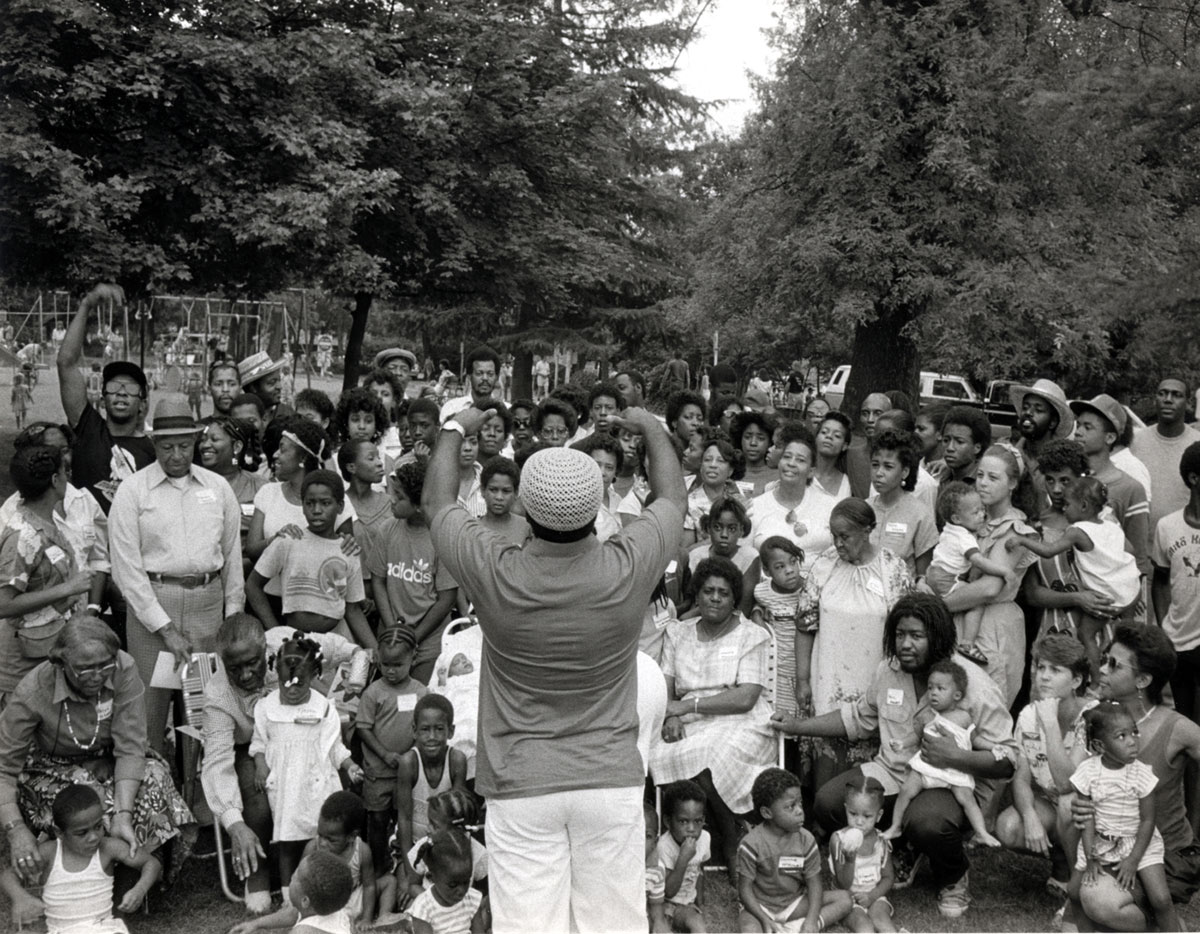
Carrie Mae Weems (American, b. 1953) 'Family Reunion' (from 'Family Pictures and Stories') 1978-84


Carrie Mae Weems (American, b. 1953)
Family Reunion (from Family Pictures and Stories)
1978-1984
Gelatin silver print
30 x 40 inches (76.2 x 101.6cm)
Collection of the artist, courtesy Jack Shainman Gallery, New York
© Carrie Mae Weems


Carrie Mae Weems (American, b. 1953) 'Untitled (Man and mirror)' (from 'Kitchen Table Series') 1990


Carrie Mae Weems (American, b. 1953)
Untitled (Man and mirror) (from Kitchen Table Series)
1990
Gelatin silver print
27 1/4 x 27 1/4 inches (69.2 x 69.2 cm)
Collection of Eric and Liz Lefkofsky, Promised gift to The Art Institute of Chicago
© Carrie Mae Weems
Photo: © The Art Institute of Chicago


Carrie Mae Weems (American, b. 1953) 'Untitled (Woman and daughter with makeup)' (from 'Kitchen Table Series') 1990


Carrie Mae Weems (American, b. 1953)
Untitled (Woman and daughter with makeup) (from Kitchen Table Series)
1990
Gelatin silver print
27 1/4 x 27 1/4 inches (69.2 x 69.2cm)
Collection of Eric and Liz Lefkofsky, Promised gift to The Art Institute of Chicago
© Carrie Mae Weems
Photo: © The Art Institute of Chicago


Carrie Mae Weems (American, b. 1953) 'A Broad and Expansive Sky - Ancient Rome' (from 'Roaming') 2006


Carrie Mae Weems (American, b. 1953)
A Broad and Expansive Sky – Ancient Rome (from Roaming)
2006
Chromogenic print
73 x 61 inches (185.4 x 154.9cm)
Private collection, Portland, Oregon
© Carrie Mae Weems


Carrie Mae Weems (American, b. 1953) 'Listening for the Sounds of Revolution' (from 'Dreaming in Cuba') 2002


Carrie Mae Weems (American, b. 1953)
Listening for the Sounds of Revolution (from Dreaming in Cuba)
2002
Gelatin silver print
28 1/2 x 28 1/2 inches (72.4 x 72.4cm)
Collection of the artist, courtesy Courtesy the artist and Jack Shainman Gallery, New York
© Carrie Mae Weems


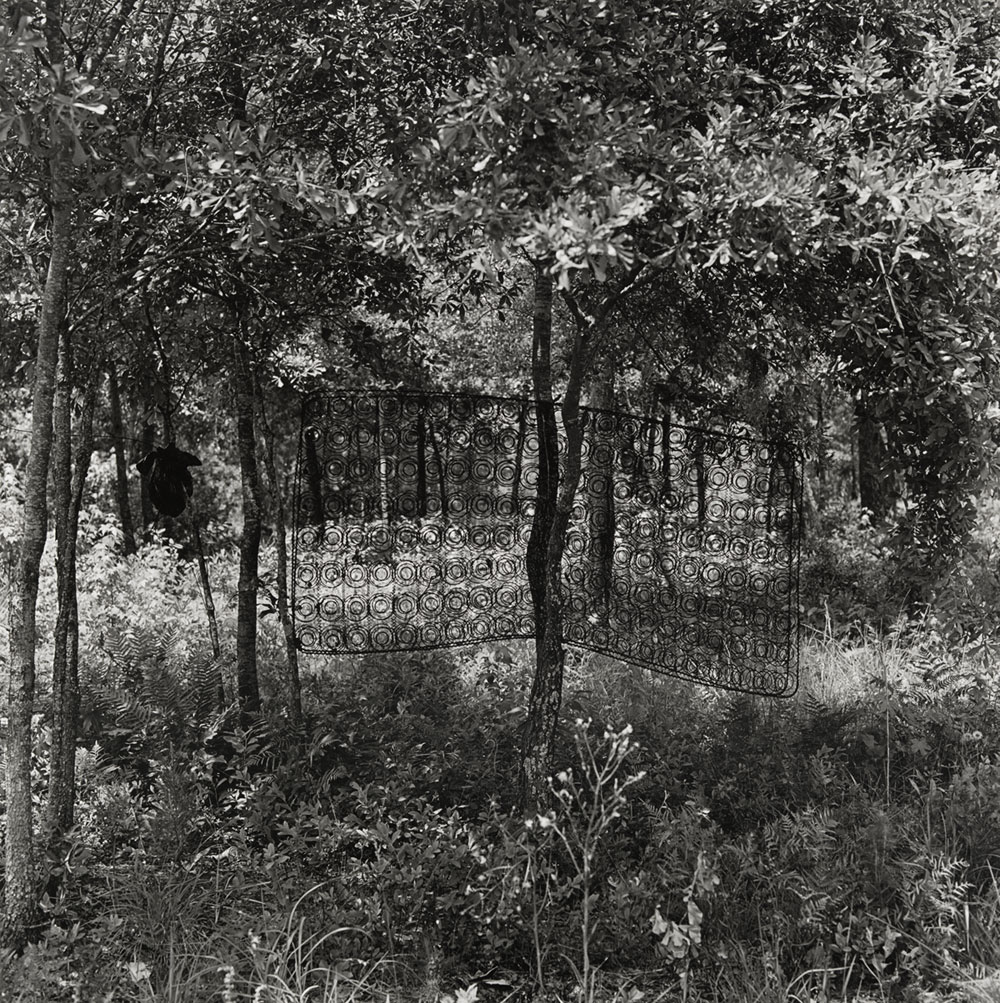
Carrie Mae Weems. 'Untitled (Box Spring in Tree)' (from 'Sea Islands Series') 1991-92
Carrie Mae Weems (American, b. 1953)
Untitled (Box Spring in Tree) (from Sea Islands Series)
1991-1992
Gelatin silver print
20 x 20 inches (50.8 x 50.8cm)
Whitney Museum of American Art, New York, Gift of Carrie Mae Weems and P•P•O•W, 97.97.1
© Carrie Mae Weems
Photo: Robert Gerhardt


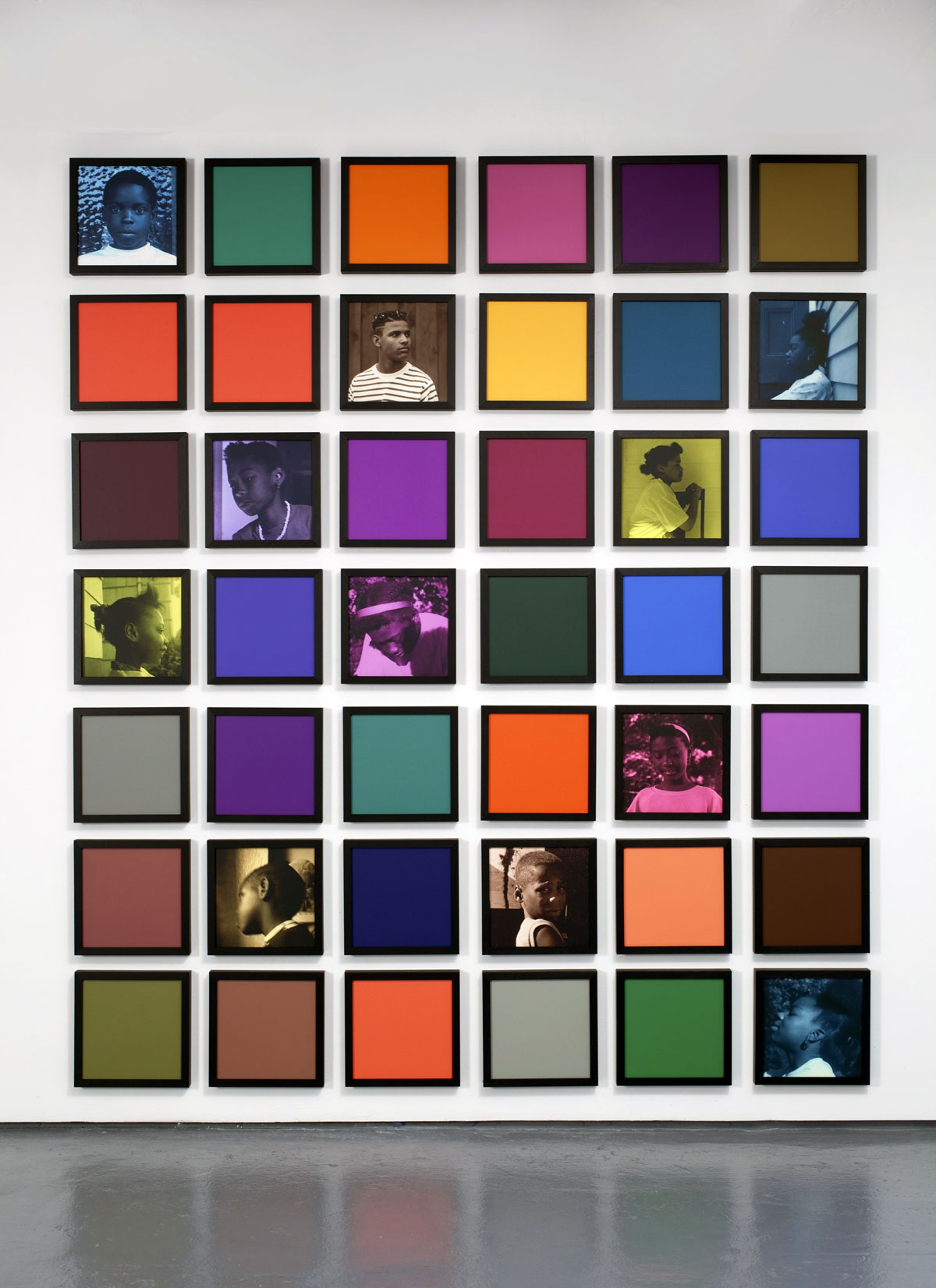
Carrie Mae Weems (American, b. 1953) 'Untitled (Colored People Grid)' 2009-2010


Carrie Mae Weems (American, b. 1953)
Untitled (Colored People Grid)
2009-2010
11 inkjet prints and 31 coloured clay papers
Dimensions variable overall; individual components: 10 x 10 inches (25.4 x 25.4cm) each
Collection of Rodney M. Miller
© Carrie Mae Weems


Solomon R. Guggenheim Museum
1071 5th Avenue (at 89th Street)
New York

Opening hours:
Sunday – Monday, 11am – 6pm
Wednesday – Friday 11am – 6pm
Saturday 11am – 8pm
Closed Tuesday

Solomon R. Guggenheim Museum website

LIKE ART BLART ON FACEBOOK

Back to top