
Exhibition dates: 3rd October, 2024 – 5th January, 2025
Curator: Robert Wolterstorff

Joel Sternfeld (American, b. 1944)
Abandoned Uranium Refinery, Near Tuba City, Arizona, Navajo Nation
1982
Archival pigment print
50 x 60 in.
Courtesy of the artist and the Bruce Museum
© Joel Sternfeld
Last exhibition posting until the New Year. I need a break!
On the edge of oblivion
Joel Sternfeld – along with artists like William Eggleston, Paul Outerbridge Jr., Stephen Shore and Saul Leiter among others – was a pioneer of colour photography, his large format photographs picturing American contemporary life and identity.
His elegant, luxurious, and slightly twisted if not surreal look at the American landscape and life can be seen as “a darkly funny, bleak, but not unromantic vision of America.” Sternfeld, “peels back layers of familiar landscapes to reveal the ironies, contradictions, and hidden stories that shape the American experience.”
Both utopian and dystopian at one and the same time, Sternfeld’s photographs have both a quiet eloquence and an unsettling kick in the pants within the same image, for example updating the historical lineage of Walker Evans (documentary) and Robert Frank (outsider) in colour photographs framing the uneasy nature of American life.
Sternfeld’s Pendleton, Oregon (1980, below) reformulates in colour the tract housing photographs of Bill Owens, William A. Garnett or Robert Adams. His Domestic Workers Waiting for the Bus, Atlanta, Georgia (April 1983, below) comments sublimely, subliminally, to the ongoing racism in the genteel South. “There’s no need for a “white’s only” sign, it’s implied… The picture speaks to America’s structural racism and its racial wealth gap with a whisper, not a scream. Doing so reveals how it’s not just the racist sheriffs and brutes who poured milkshakes over the head of sit-in protesters at the Woolworth’s counter back in the day who are complicit in those systems.”1
Sternfeld’s photographs are full of felt insecurities and idiosyncrasies.
The crumpled car indicative of the alienated landscape the barefoot youth is growing up in that is Kansas City, Kansas (May 1983, below); the family with their myriad possessions in a battered Ford pickup truck heading who knows where (riffing on the FSA photographs of the 1930s) in Interstate 79, Bridgeport, West Virginia (March 1983, below); the migrant family “existing” in their wooden shack in South Texas (January 1983, below); and the baby protected, isolated, left to its own devices in Glen Canyon Dam, Page, Arizona (August 1983, below) as the family peers over the precipice into the existential depths.
On and on and on we go… from exhausted renegade elephants to realtors in the desert to abandoned uranium mines to limousines and glaciers. The real and the absurd, ludicrous even, living cheek by jowl, on the edge of oblivion.
There is one particular image of Sternfeld’s that is my favourite and that I think sums up the art of this wonderful artist: After a Flash Flood, Rancho Mirage, California (1979, below). To me it perfectly pictures the dichotomy of American life. The have and have nots. The large expensive car and the beautiful, probably gated, community homes – and the desire for money that provides that lifestyle – dashed away by a force of nature, sweeping both the lifestyle, homes and car into the ravine, like Hieronymus Bosch’s Garden of Earthly Delights (c. 1490-1510), the ‘garden of lusts’ (and desires for money, home, possessions) descending into the hell of the chthonic earth. Be careful what you wish for.
Sternfeld’s work is worthy of our kind, calm meditation for in the stillness and cinematic quality of his photographs lies everlasting revelation into the human condition as we live and die on this, our one Earth.
Dr Marcus Bunyan
1/ Chadd Scott. “Explore Three Centuries Of Southern Photography,” on the Forbes website Mar 12, 2024 [Online] Cited 20/12/2024
Many thanks to the Bruce Museum for allowing me to publish the photographs in the posting. Please click on the photographs for a larger version of the image.

Joel Sternfeld (American, b. 1944)
Pendleton, Oregon
1980
Archival pigment print
50 x 60 in.
Courtesy of the artist and the Bruce Museum
© Joel Sternfeld
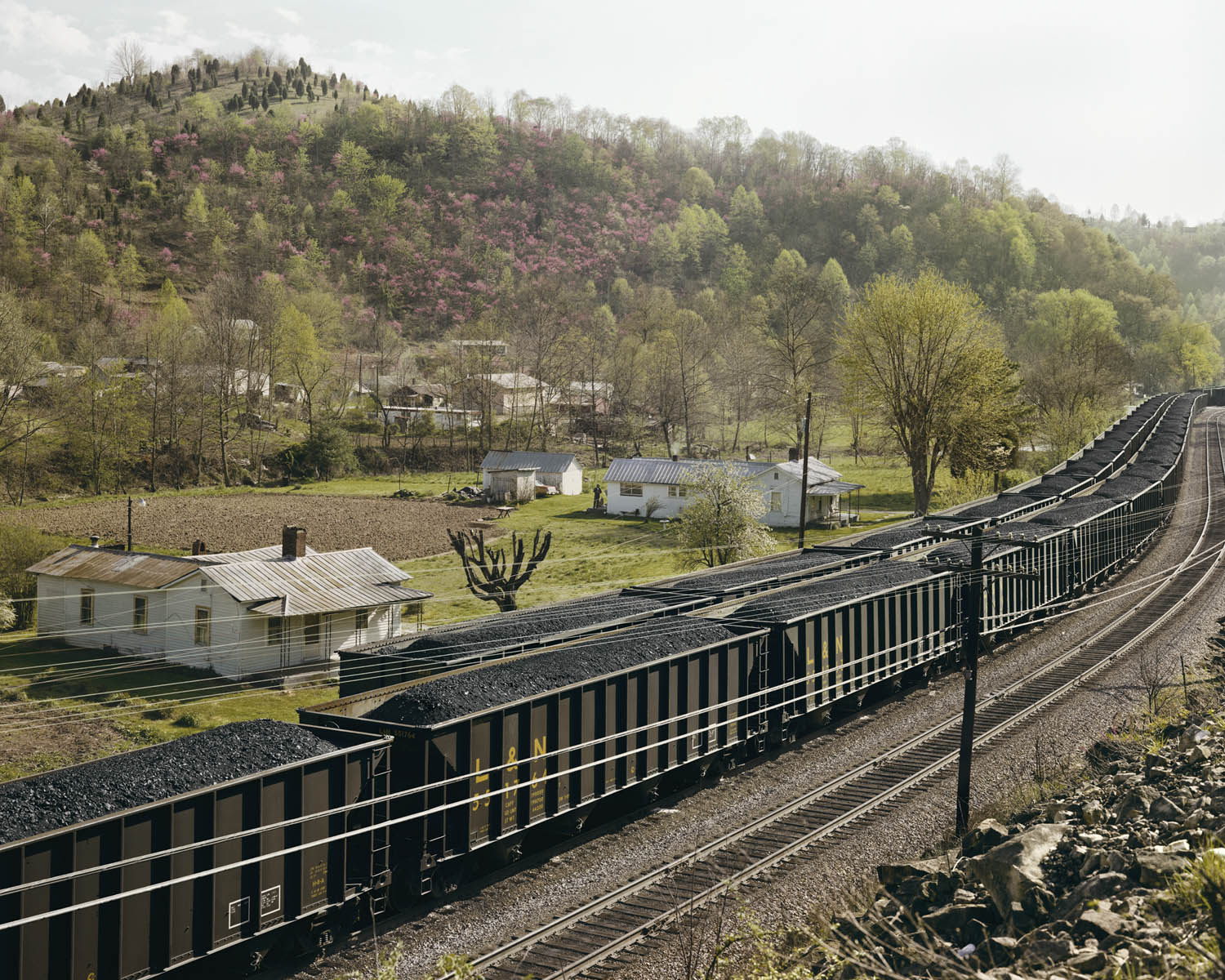
Joel Sternfeld (American, b. 1944)
Coeburn, Virginia
April 1981, printed 2022
Archival pigment print
50 x 60 in.
© Joel Sternfeld
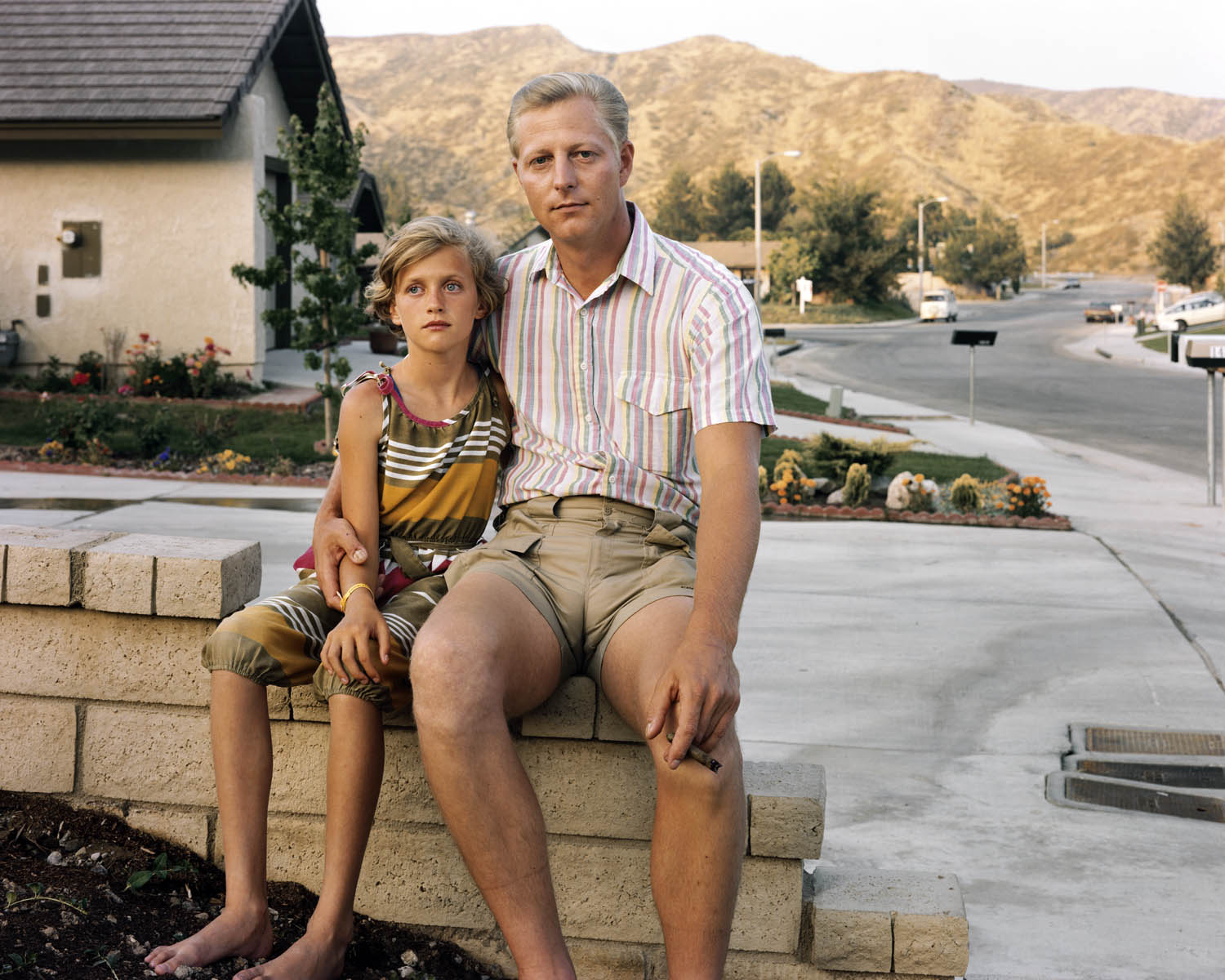
Joel Sternfeld (American, b. 1944)
Canyon Country, California
June 1983, printed 2022
Archival pigment print
50 x 60 in.
© Joel Sternfeld
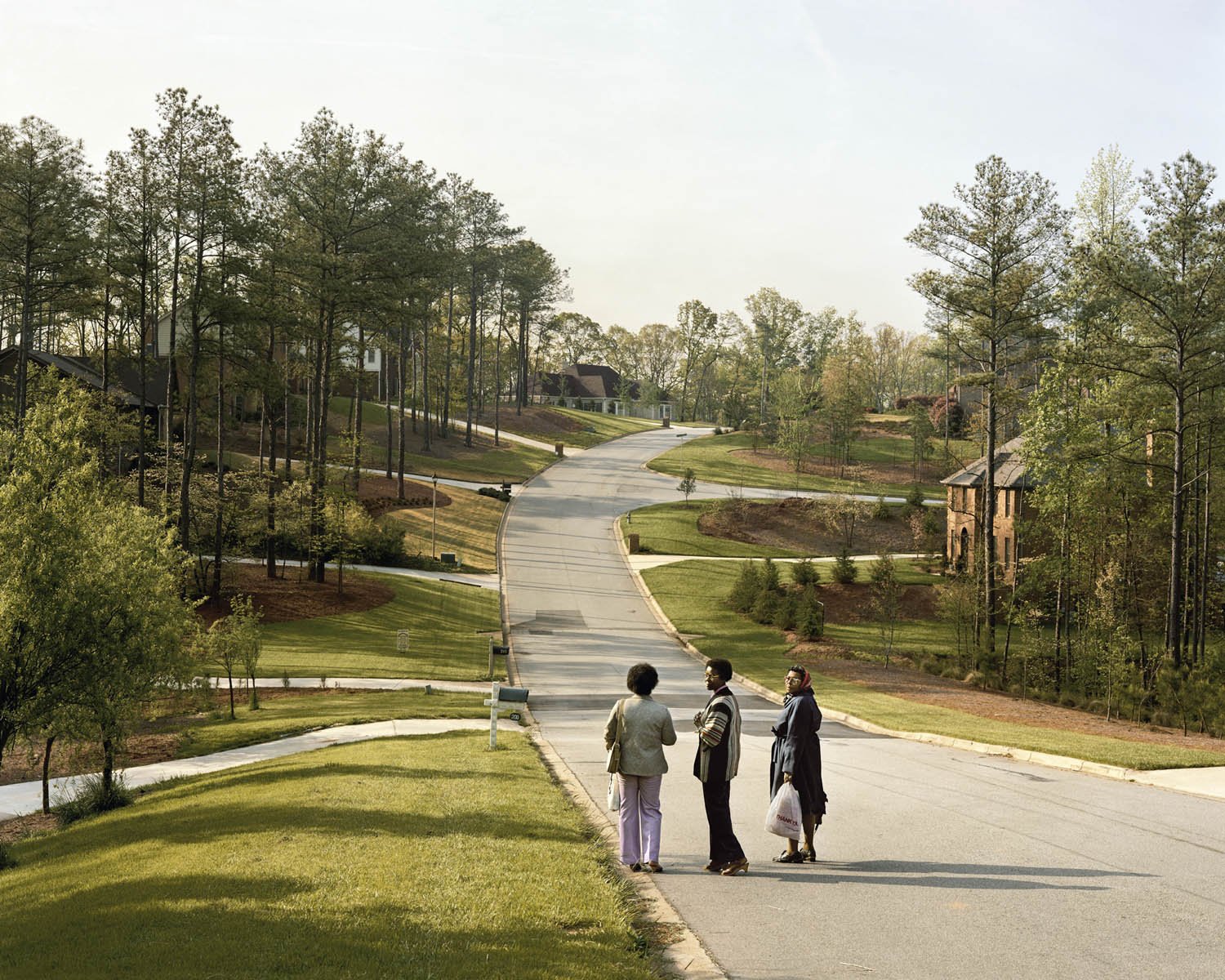
Joel Sternfeld (American, b. 1944)
Domestic Workers Waiting for the Bus, Atlanta, Georgia
April 1983, printed 2024
Archival pigment print
50 x 60 in.
© Joel Sternfeld
Joel Sternfeld doesn’t just capture America; he exposes it. With each photograph, he peels back layers of familiar landscapes to reveal the ironies, contradictions, and hidden stories that shape the American experience. A pioneer in colour photography, Sternfeld’s lens turns everyday scenes into striking narratives where beauty meets decay, and hope intersects with abandonment. His images, timeless, yet hauntingly relevant – a cross-country journey that invites us to look deeper and
question what lies beneath the surface.
The Bruce Museum’s American Prospects offers a rare encounter with Joel
Sternfeld’s profound exploration of the American Dream – its triumphs, fractures, and quiet absurdities. Since its first release in 1987, this series has stood as a seminal work in colour photography, redefining the medium and reshaping our perception of American landscapes. Like his contemporaries William Eggleston and Stephen Shore, Sternfeld used colour to move beyond documentation, crafting layered narratives that invite both reflection and critique. On view through January 5, 2025, Sternfeld’s lens frames America as it is – flawed, resilient, and enduringly hopeful.
In Abandoned Uranium Refinery, Near Tuba City, Arizona, Sternfeld confronts us with a haunting testament to industrial intrusion on sacred land. The muted pinks and warm ochres spread across the landscape, evoking the natural beauty of the Navajo Nation’s desert. Yet, at its heart, the photograph holds a darker, fractured reality – the scars of industry etched deeply into the land, an intrusion upon both the environment and the community’s heritage. Sternfeld’s light is gentle yet harsh, and his careful composition balances the serenity of nature against the unease of contamination. It’s a scene that commands attention, evoking reverence while quietly asking us to grapple with the unsettling impact of human intervention.
Coeburn, Virginia brings Sternfeld’s eye for subtle irony to life within the seemingly serene environment of a small town. Here, the frame captures the tension between the landscape’s lushness and signs of quiet disrepair houses sitting precariously against a verdant backdrop, hinting at lives lived in the margins. Through muted earthy tones and a sparing splash of green, Sternfeld avoids romanticising rural life, instead highlighting the fragile balance between nature’s persistence and the impermanence of human structures. The result is a scene that feels both intimate and detached, inviting us to see Coeburn not as a forgotten place but as a testament to resilience and transience.
In Canyon Country, California, Sternfeld turns his lens to the sublime – a canyon that feels at once vast and void, a sprawling testament to the untouched beauty of the American West. Here, the land stretches endlessly, exuding a calm that contrasts sharply with the bustling, culturally charged image of California we often imagine. Sternfeld’s framing, balanced with a quiet geometry, amplifies the canyon’s emptiness while subtly pointing to the tension between this natural expanse and the human inclination to intrude, consume, and commercialise. It’s a scene that invites introspection, leaving viewers to consider California as both escape and spectacle, a space layered with expectation yet stripped bare.
The Bruce Museum’s American Prospects invites us to traverse Sternfeld’s
America – a land as haunting as it is beautiful. With a careful eye for color,
geometry, and narrative tension, Sternfeld transforms these landscapes into timeless scenes, at once grounded and surreal. Each photograph holds a sense of melancholic grandeur, inviting viewers not just to observe but to confront the quiet dramas embedded in America’s vast, varied, and vulnerable terrain. In Sternfeld’s vision, America is an open road of paradoxes – where beauty meets desolation, and where each mile reveals a new truth we can’t ignore.
Giuliana Brida. “Oct 30 Joel Sternfeld: American Prospects | The Bruce Museum,” in Musee: Vanguard of Photography Culture on the Bruce Museum website Nd [Online] Cited 28/11/2024
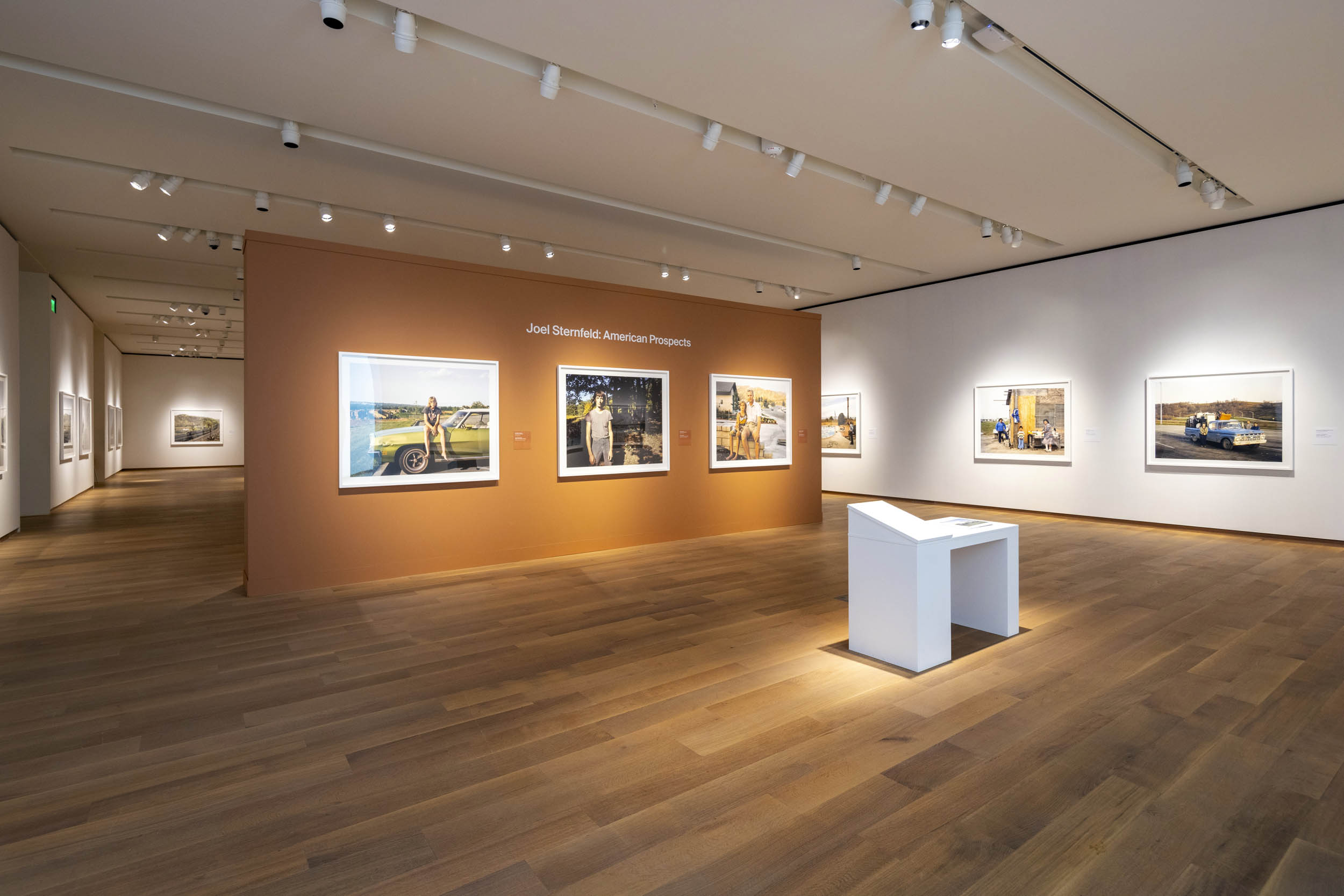
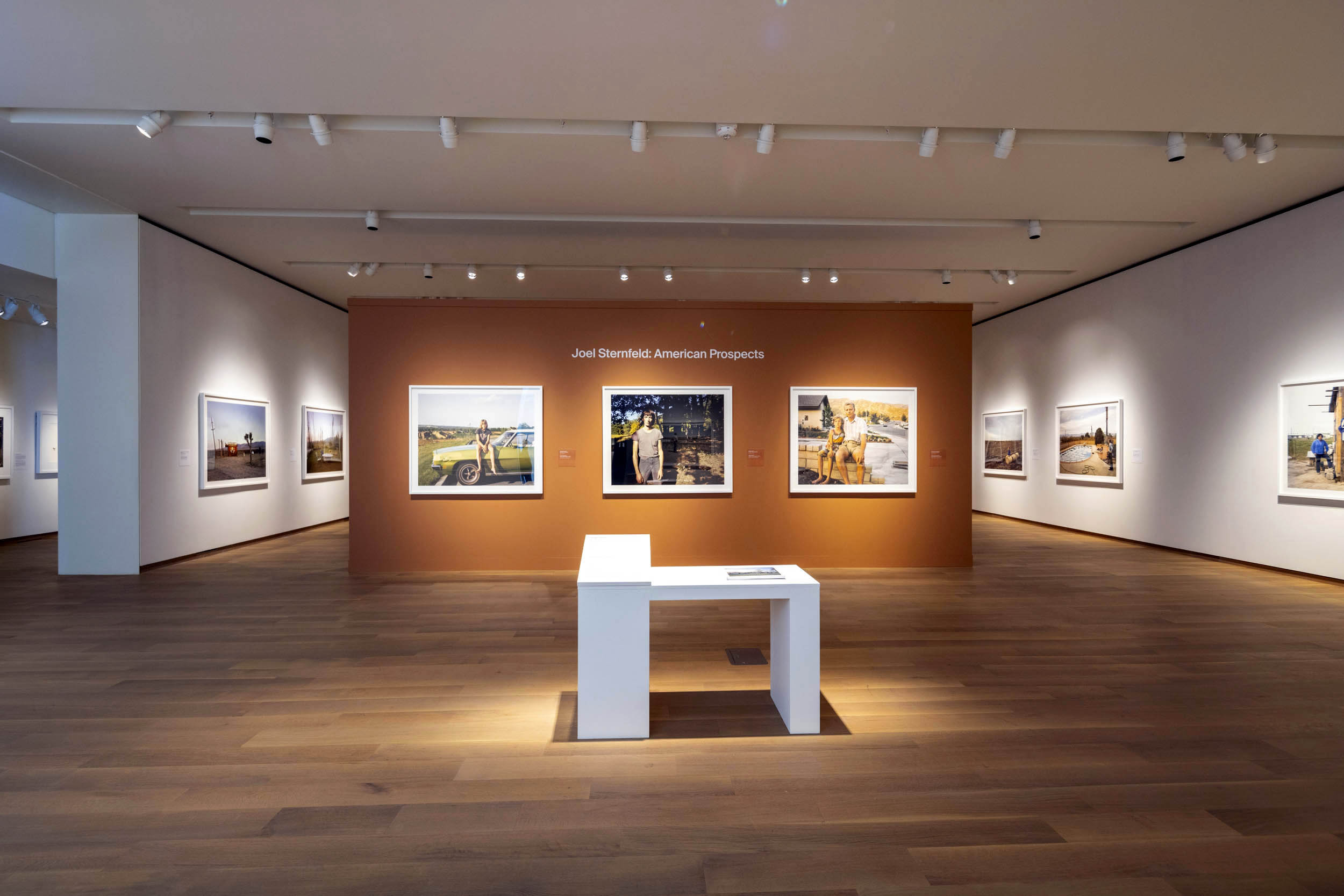

Installation views of the exhibition Joel Sternfeld: American Prospects at the Bruce Museum showing at left, Sternfeld’s Kansas City, Kansas, May 1983 (below); at centre, Putney, Vermont, October 1978; and at right, Canyon Country, California June 1983 (above)
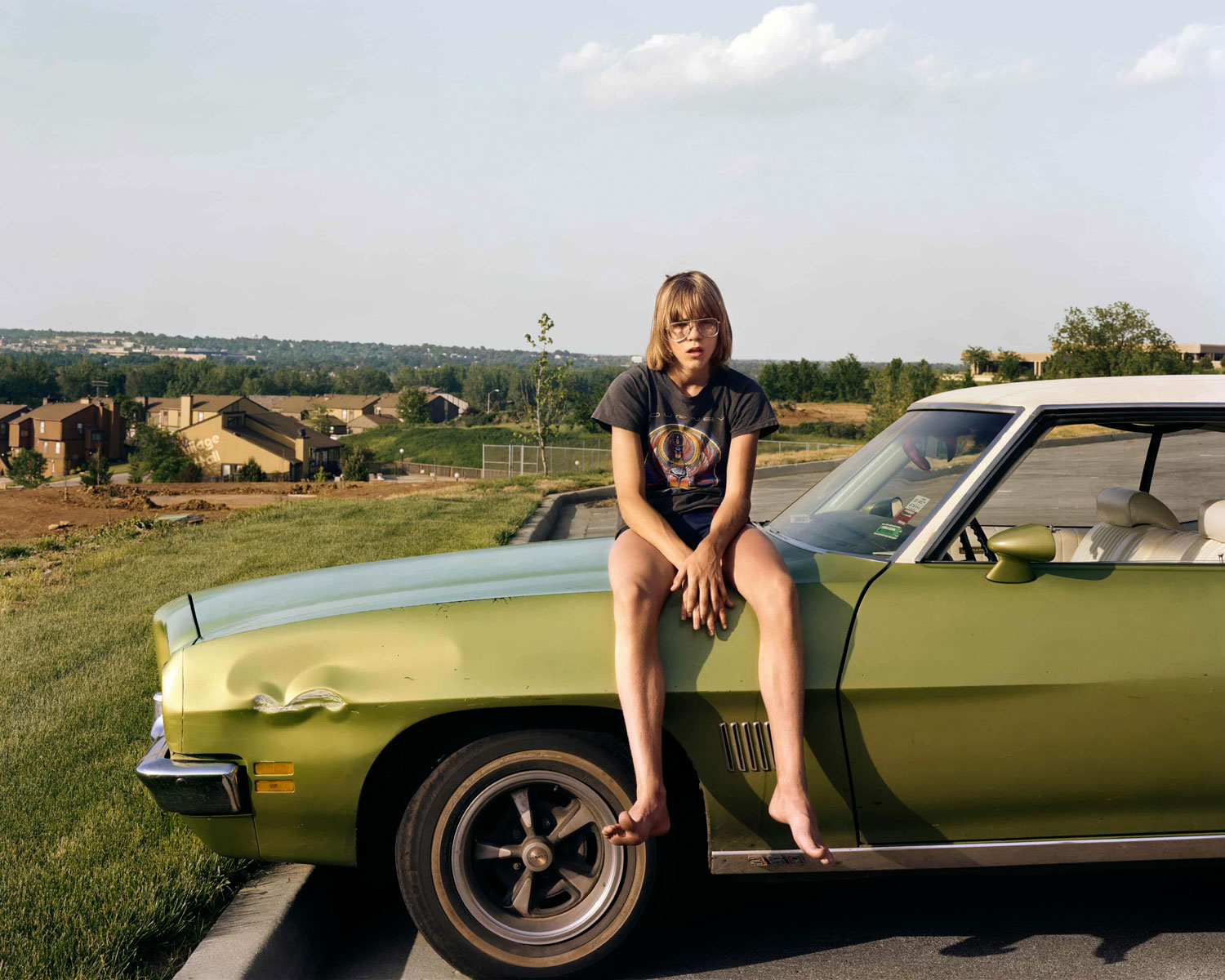
Joel Sternfeld (American, b. 1944)
Kansas City, Kansas
May 1983
Archival pigment print
50 x 60 in.
© Joel Sternfeld

Installation view of the exhibition Joel Sternfeld: American Prospects at the Bruce Museum showing at centre, Sternfeld’s A Bus Stop in Tucson, Arizona (July 1979)
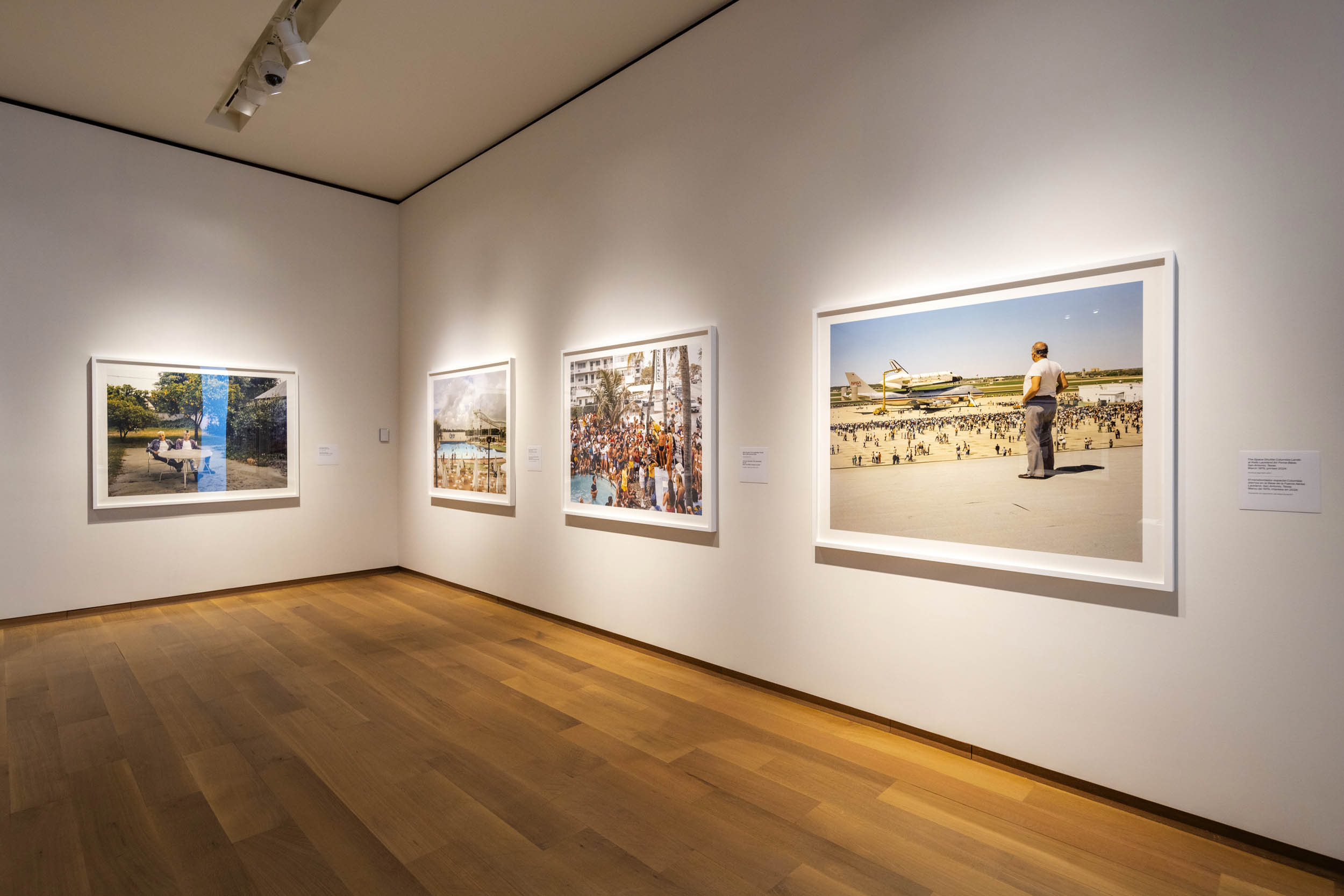
Installation view of the exhibition Joel Sternfeld: American Prospects at the Bruce Museum showing at right, Sternfeld’s The Space Shuttle Columbia Lands at Kelly Lackland Air Force Base, San Antonio, Texas (March 1979, below)

Installation view of the exhibition Joel Sternfeld: American Prospects at the Bruce Museum showing Sternfeld’s The Space Shuttle Columbia Lands at Kelly Lackland Air Force Base, San Antonio, Texas (March 1979, below)

Joel Sternfeld (American, b. 1944)
The Space Shuttle Columbia Lands at Kelly Lackland Air Force Base, San Antonio, Texas
March 1979, printed 2024
Archival pigment print
50 x 60 in.
© Joel Sternfeld

Installation view of the exhibition Joel Sternfeld: American Prospects at the Bruce Museum showing at left, Sternfeld’s Bikini Contest, Fort Lauderdale, Florida (March 1983, below); and at right, The Space Shuttle Columbia Lands at Kelly Lackland Air Force Base, San Antonio, Texas (March 1979, above)
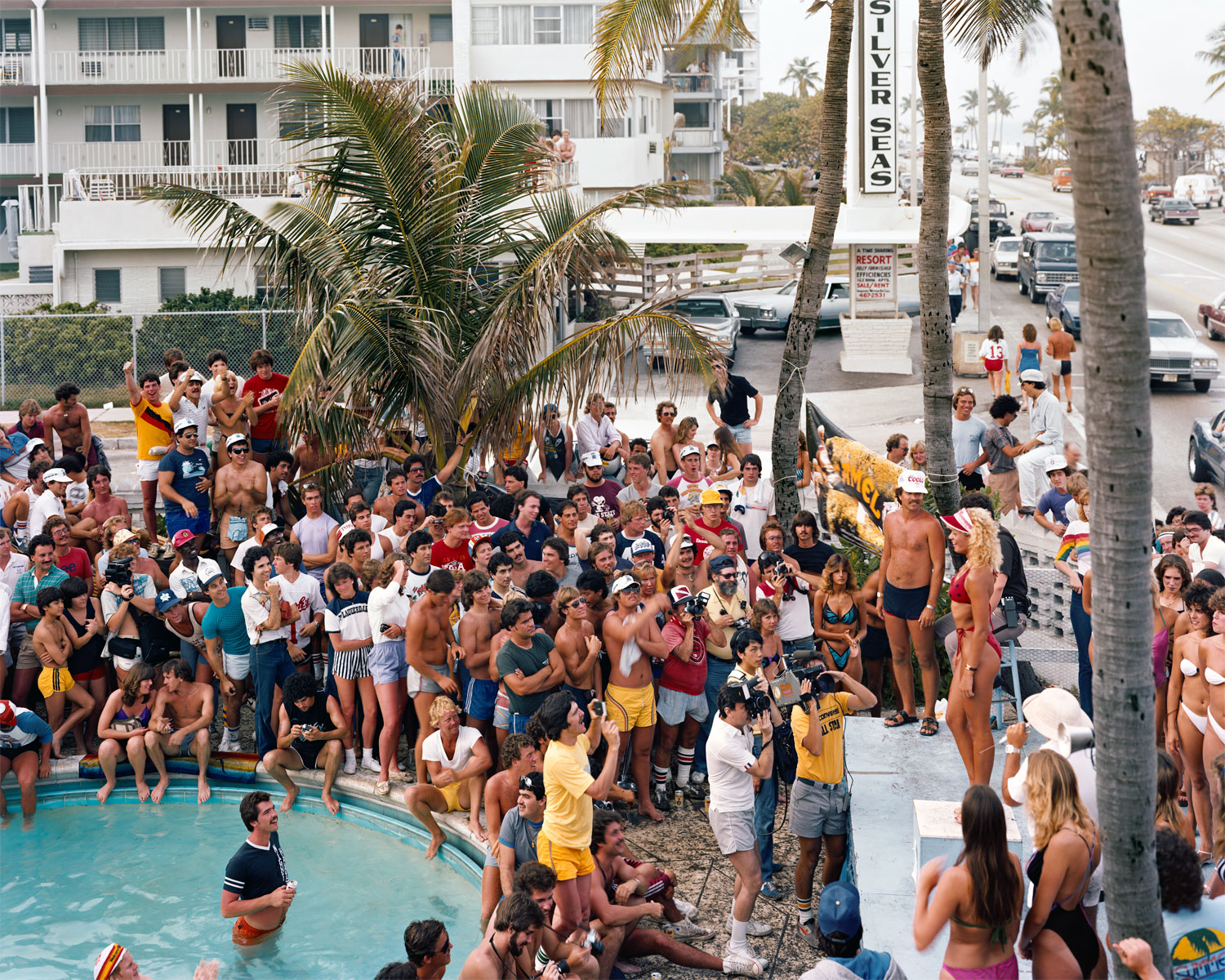
Joel Sternfeld (American, b. 1944)
Bikini Contest, Fort Lauderdale, Florida
March 1983
Archival pigment print
50 x 60 in.
© Joel Sternfeld

Installation view of the exhibition Joel Sternfeld: American Prospects at the Bruce Museum showing at left, Two punks sit together in Studio City, California (June 1982); and at right, Wet’n Wild Aquatic Theme Park, Orlando, Florida (September 1980, below)
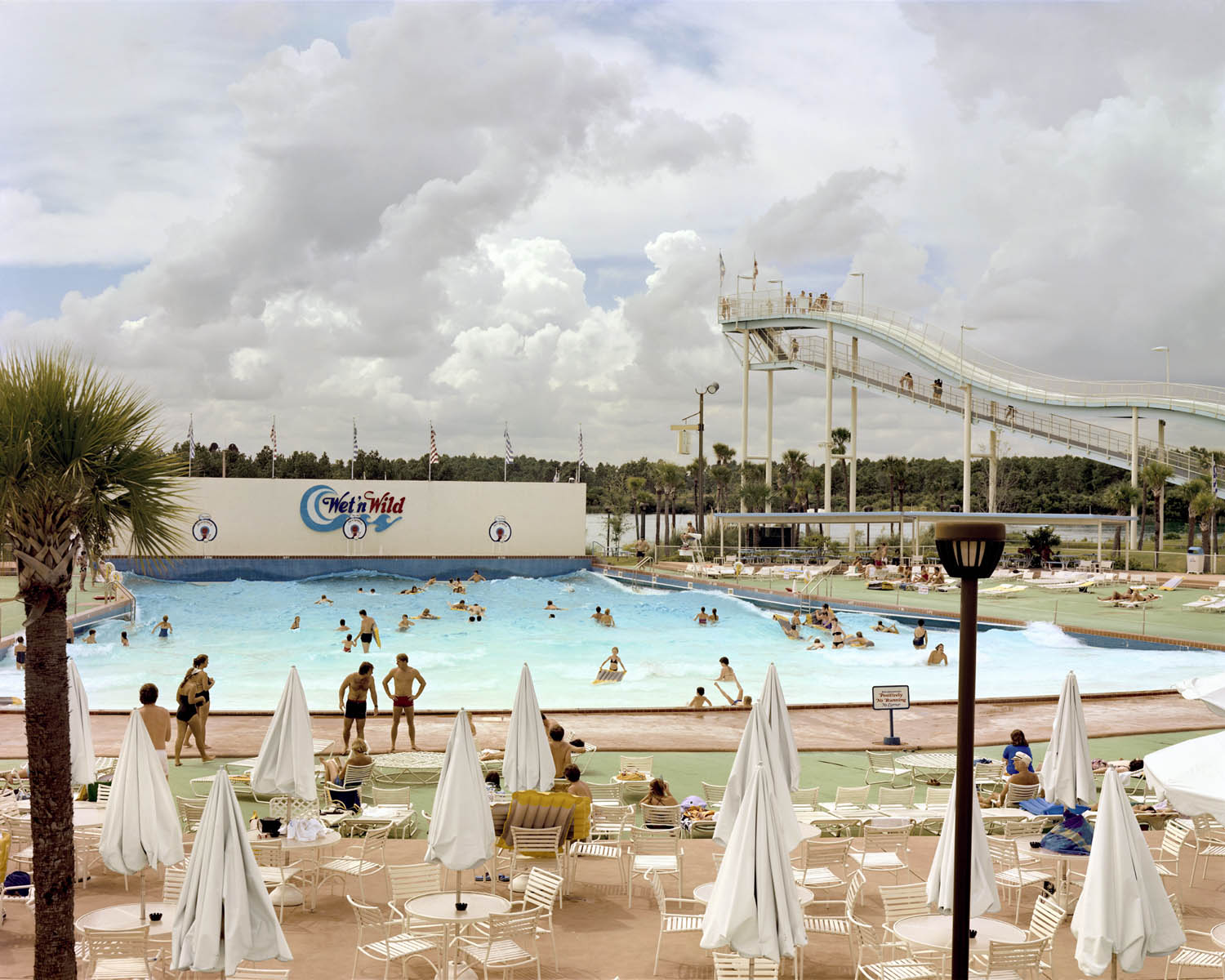
Joel Sternfeld (American, b. 1944)
Wet’n Wild Aquatic Theme Park, Orlando, Florida
September 1980, printed 2024
Archival pigment print
50 x 60 in.
© Joel Sternfeld
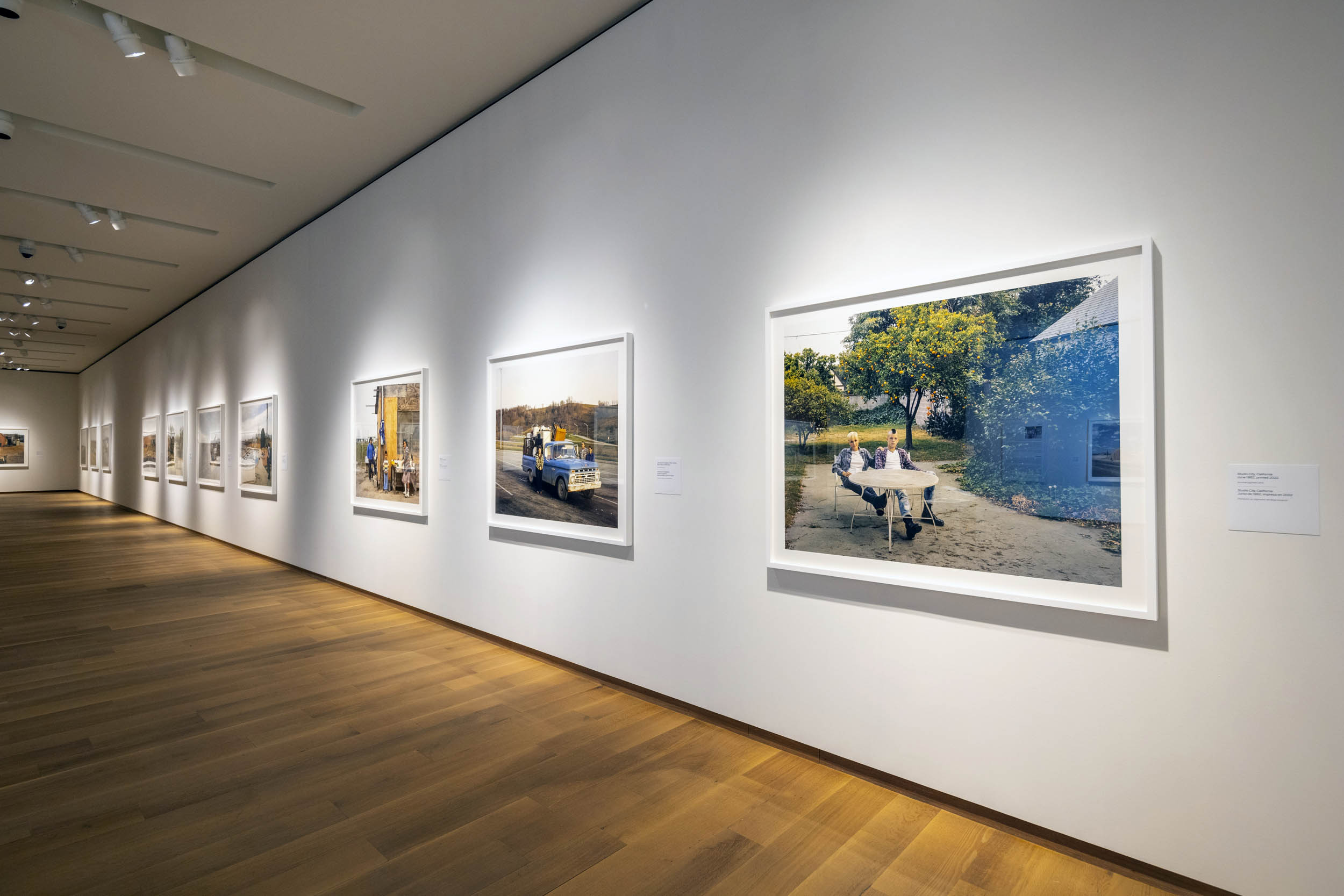
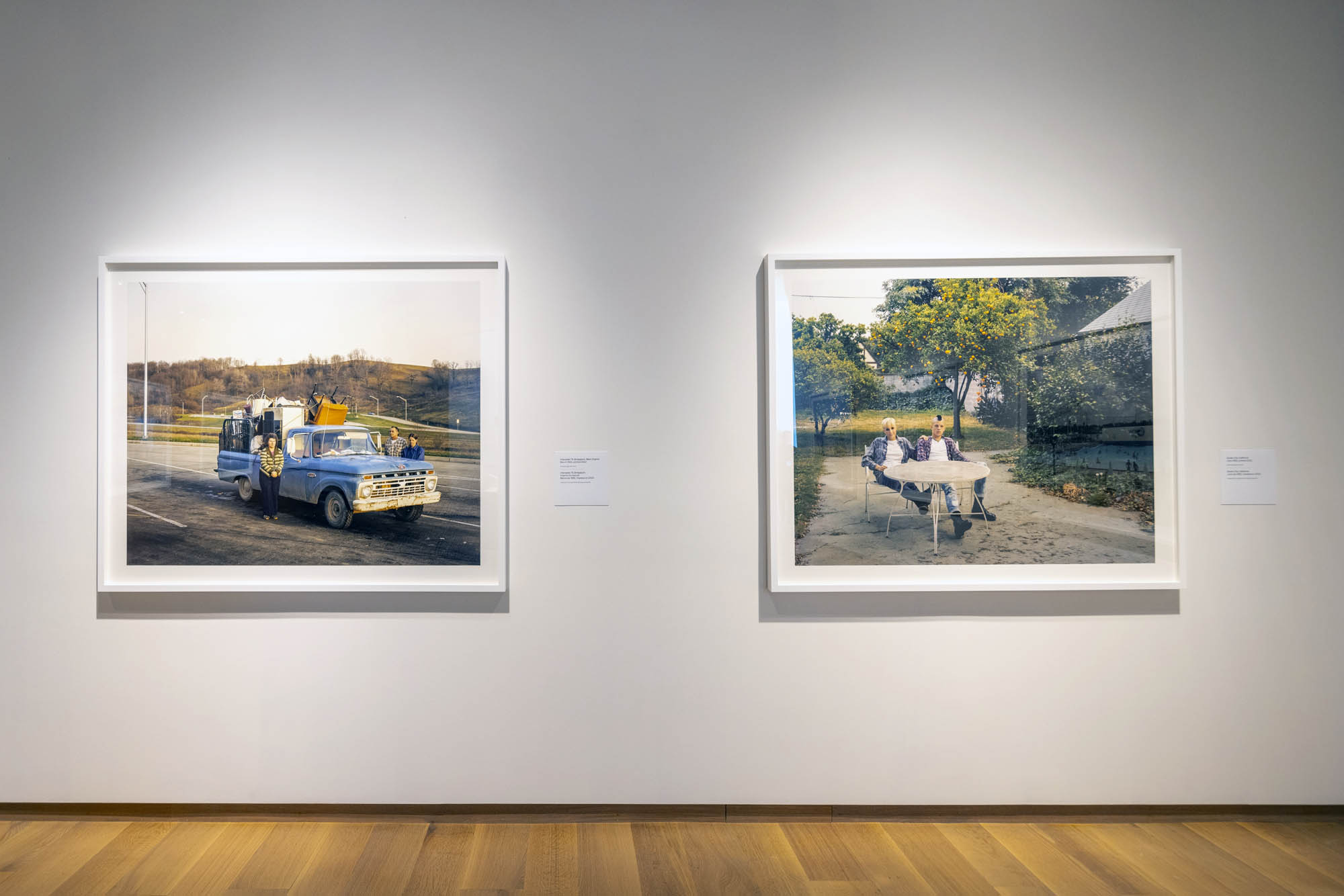
Installation views of the exhibition Joel Sternfeld: American Prospects at the Bruce Museum showing in the bottom photograph at left, Sternfeld’s Interstate 79, Bridgeport, West Virginia (March 1983, below); and at right, Two punks sit together in Studio City, California (June 1982)
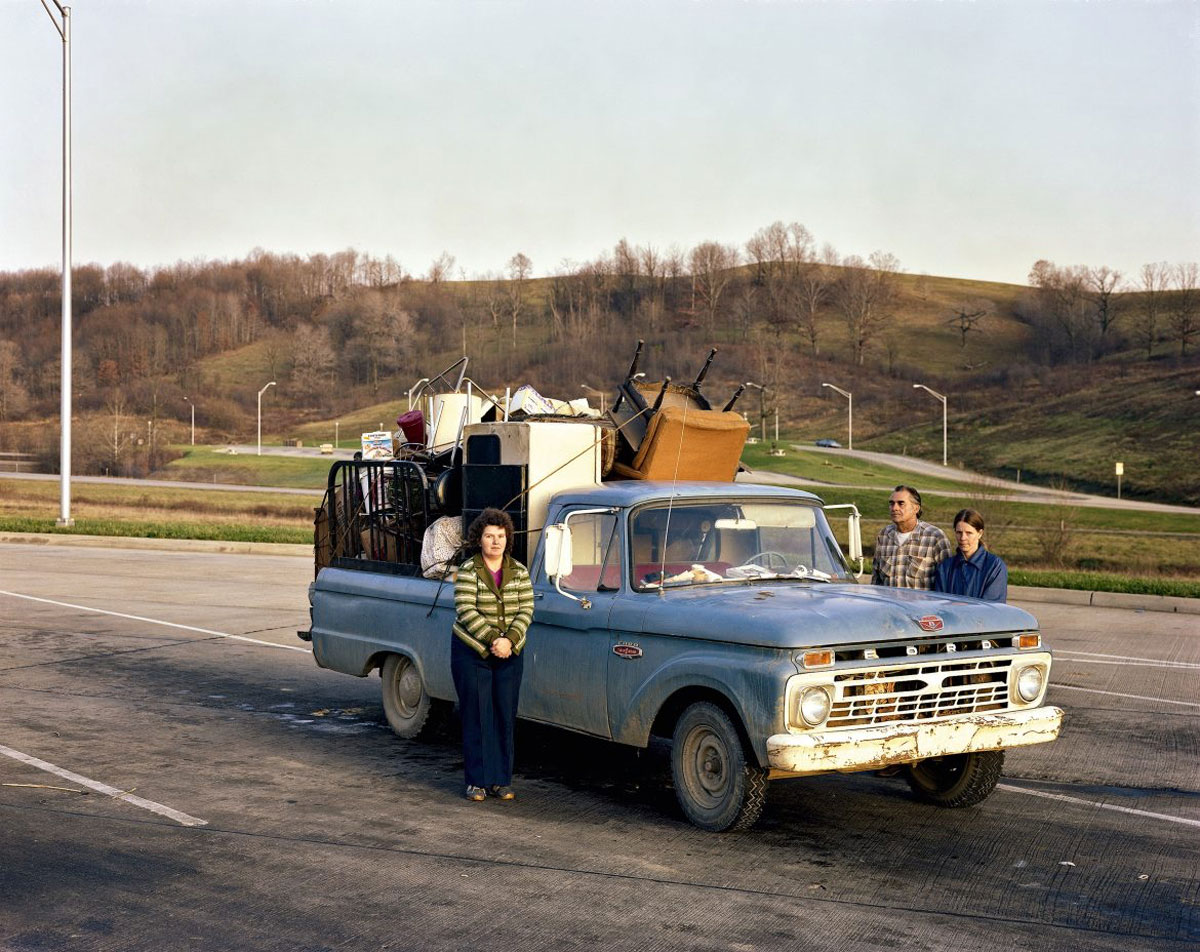
Joel Sternfeld (American, b. 1944)
Interstate 79, Bridgeport, West Virginia
March 1983
Archival pigment print
50 x 60 in.
© Joel Sternfeld
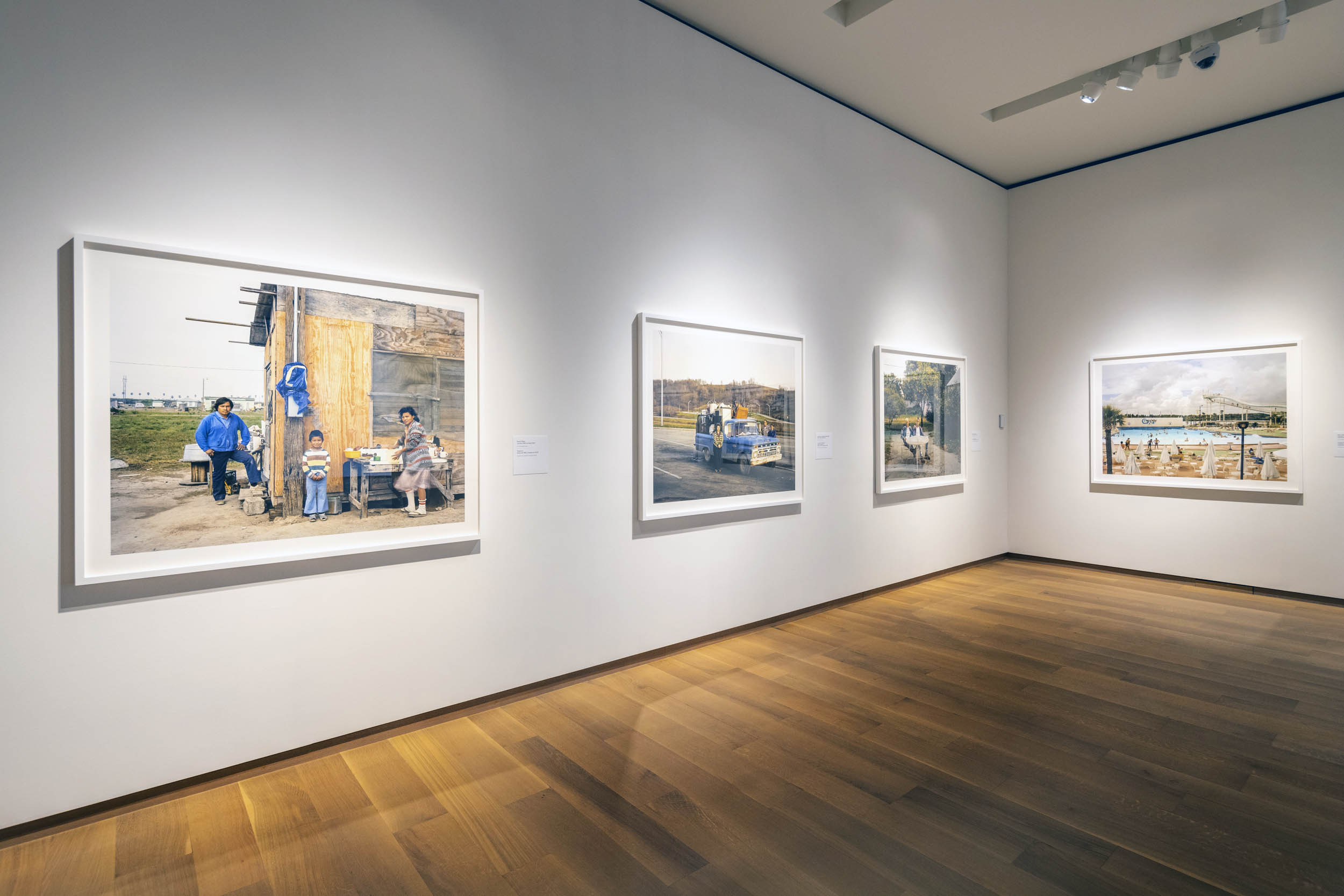
Installation view of the exhibition Joel Sternfeld: American Prospects at the Bruce Museum showing at left, Sternfeld’s South Texas (January 1983, below); at second left, Interstate 79, Bridgeport, West Virginia (March 1983, above); and at right, Wet’n Wild Aquatic Theme Park, Orlando, Florida (September 1980, above)
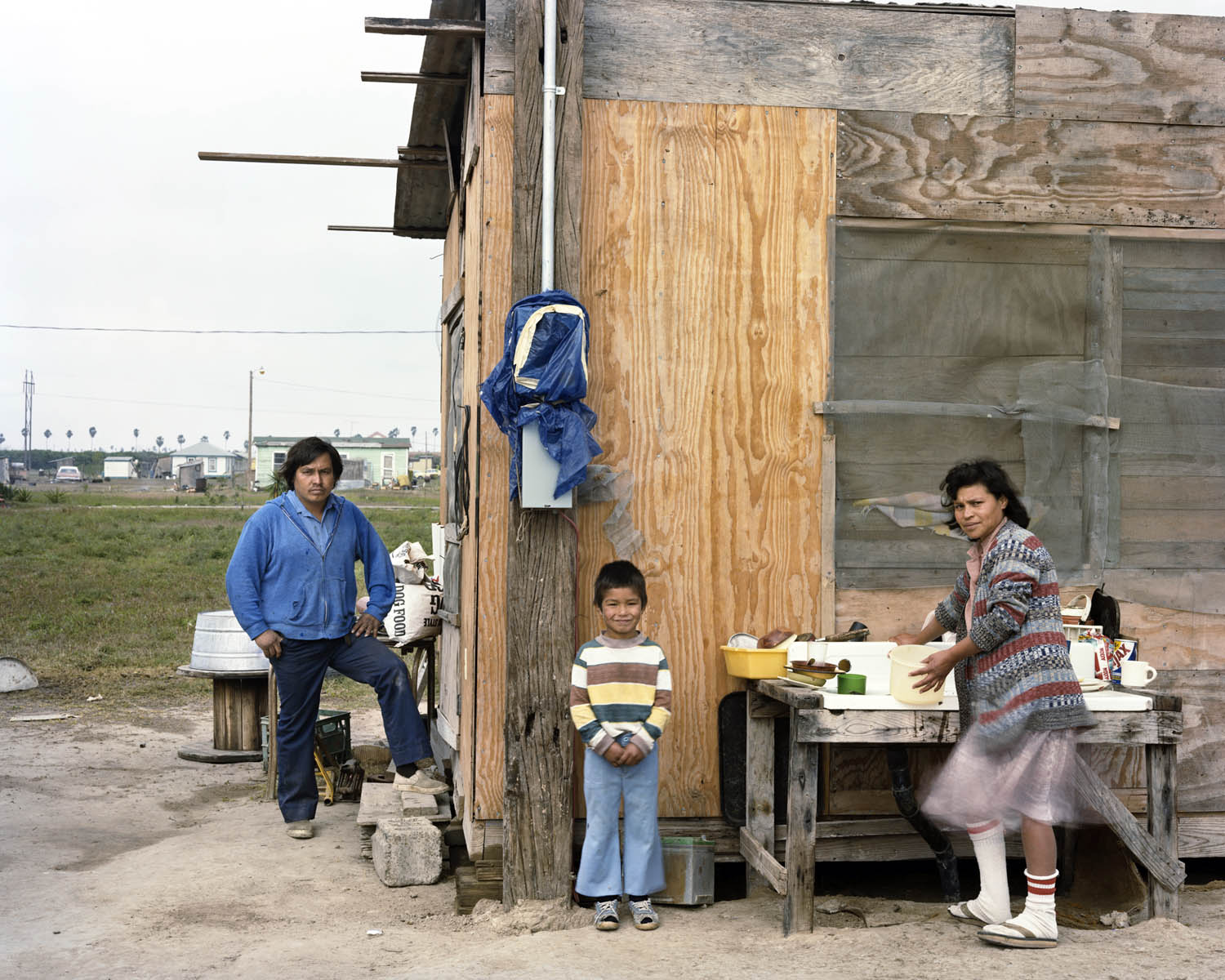
Joel Sternfeld (American, b. 1944)
South Texas
January 1983, printed 2022
Archival pigment print
50 x 60 in.
© Joel Sternfeld
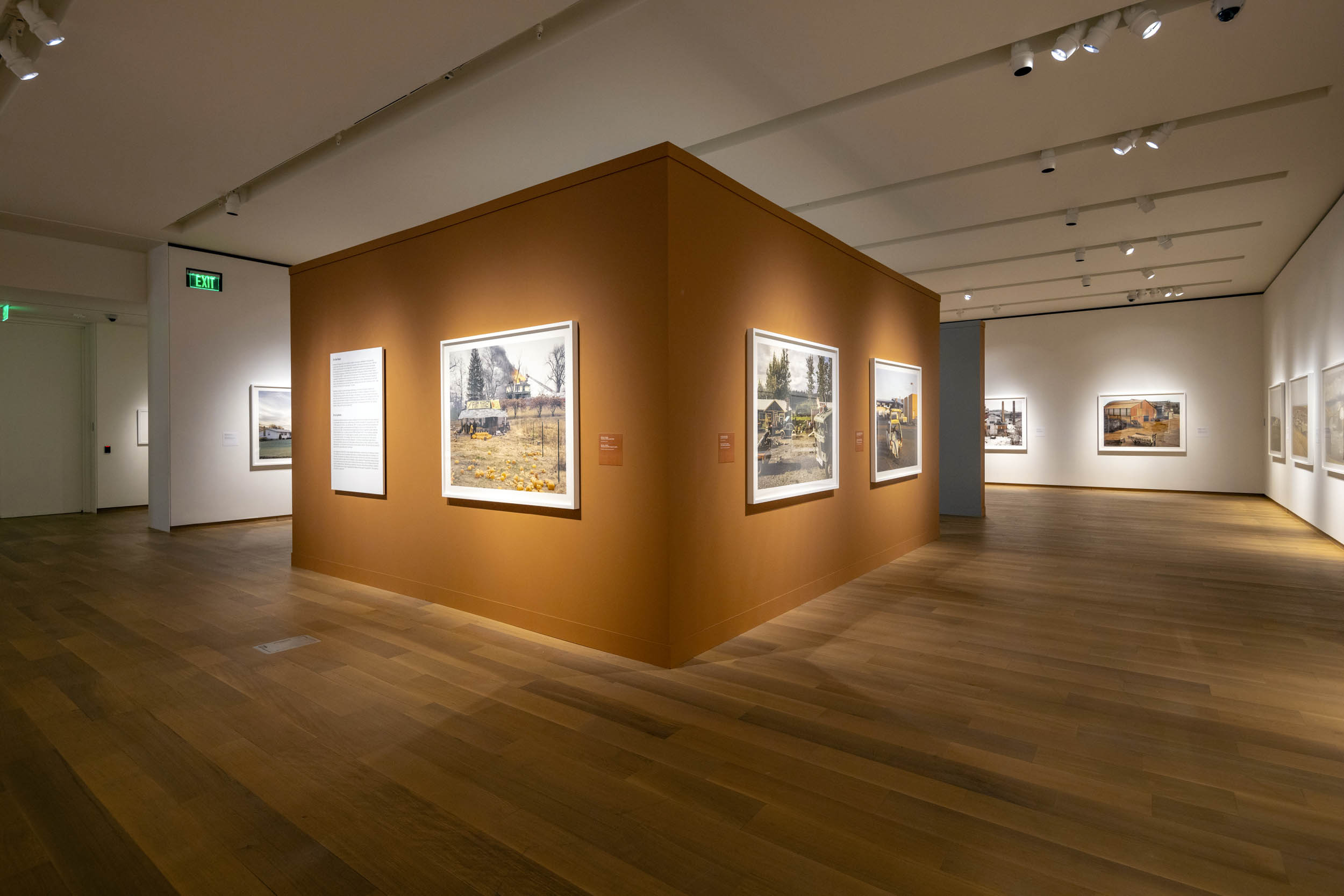
Installation view of the exhibition Joel Sternfeld: American Prospects at the Bruce Museum showing at left, Sternfeld’s McLean, Virginia (December 1978, below)

Installation view of the exhibition Joel Sternfeld: American Prospects at the Bruce Museum showing at right, Sternfeld’s McLean, Virginia (December 1978, below)

Joel Sternfeld (American, b. 1944)
McLean, Virginia
December 1978, printed 2024
Archival pigment print
50 x 60 in.
© Joel Sternfeld
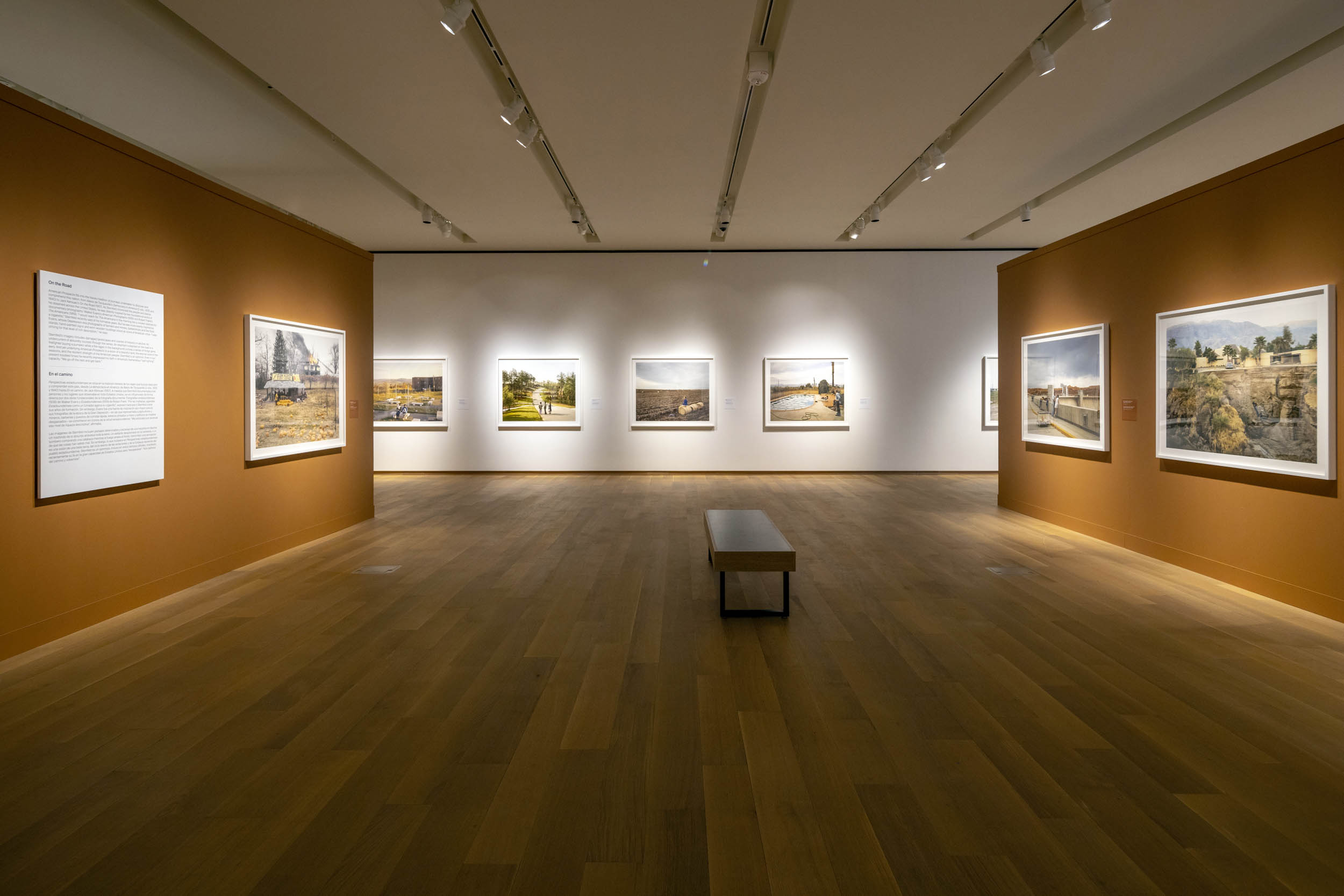
Installation view of the exhibition Joel Sternfeld: American Prospects at the Bruce Museum showing at left, Sternfeld’s McLean, Virginia (December 1978, above); at second right, Glen Canyon Dam, Page, Arizona (August 1983, below); and at right, After a Flash Flood, Rancho Mirage, California (1979, below)

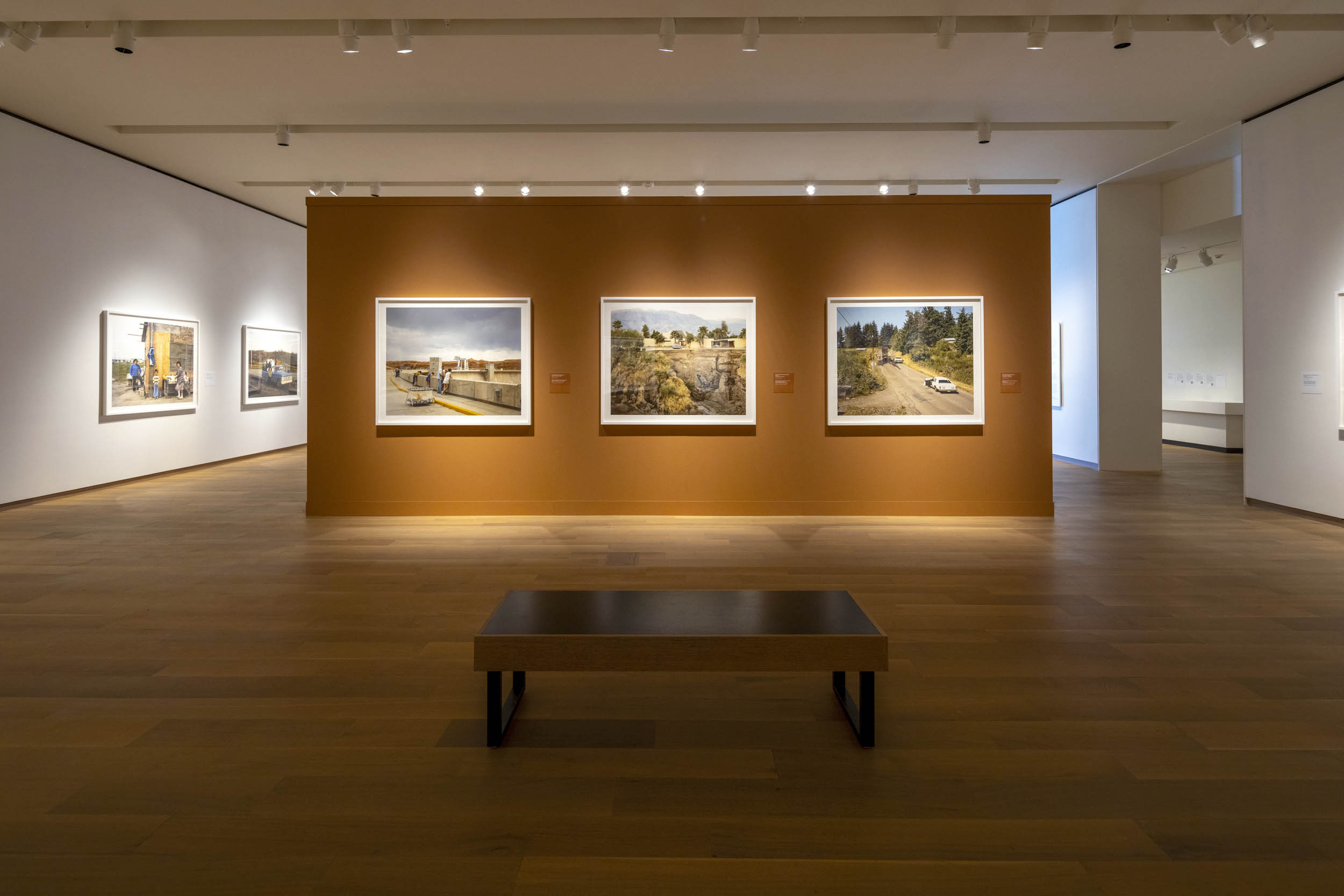
Installation view of the exhibition Joel Sternfeld: American Prospects at the Bruce Museum showing in the bottom photograph at left centre, Sternfeld’s Glen Canyon Dam, Page, Arizona (August 1983, below); at centre, After a Flash Flood, Rancho Mirage, California (1979, below); and at right, Exhausted Renegade Elephant, Woodland, Washington (June 1979, below)
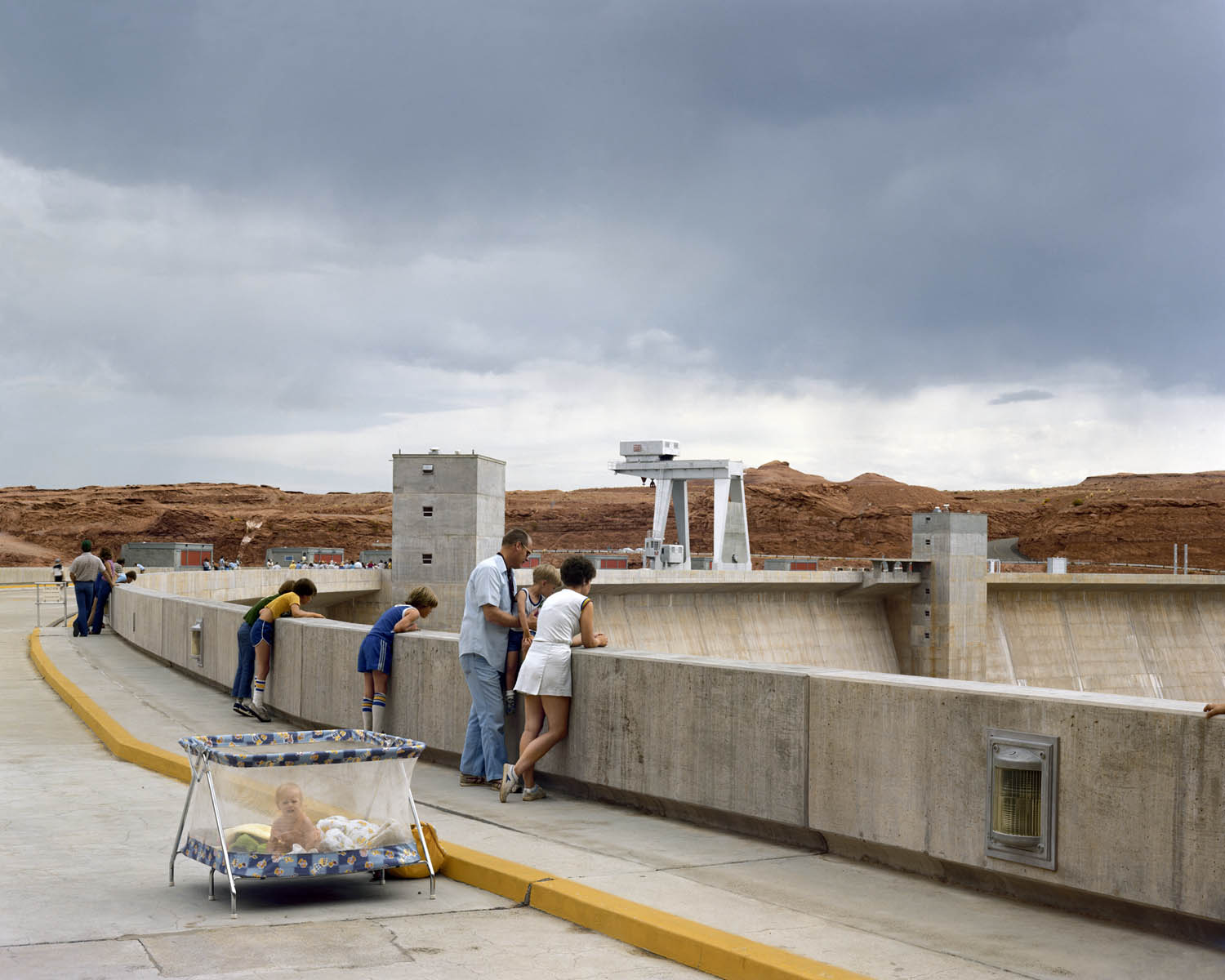
Joel Sternfeld (American, b. 1944)
Glen Canyon Dam, Page, Arizona
August 1983, printed 2024
Archival pigment print
50 x 60 in.
© Joel Sternfeld

Joel Sternfeld (American, b. 1944)
After a Flash Flood, Rancho Mirage, California
1979
Archival pigment print
50 x 60 in.
© Joel Sternfeld
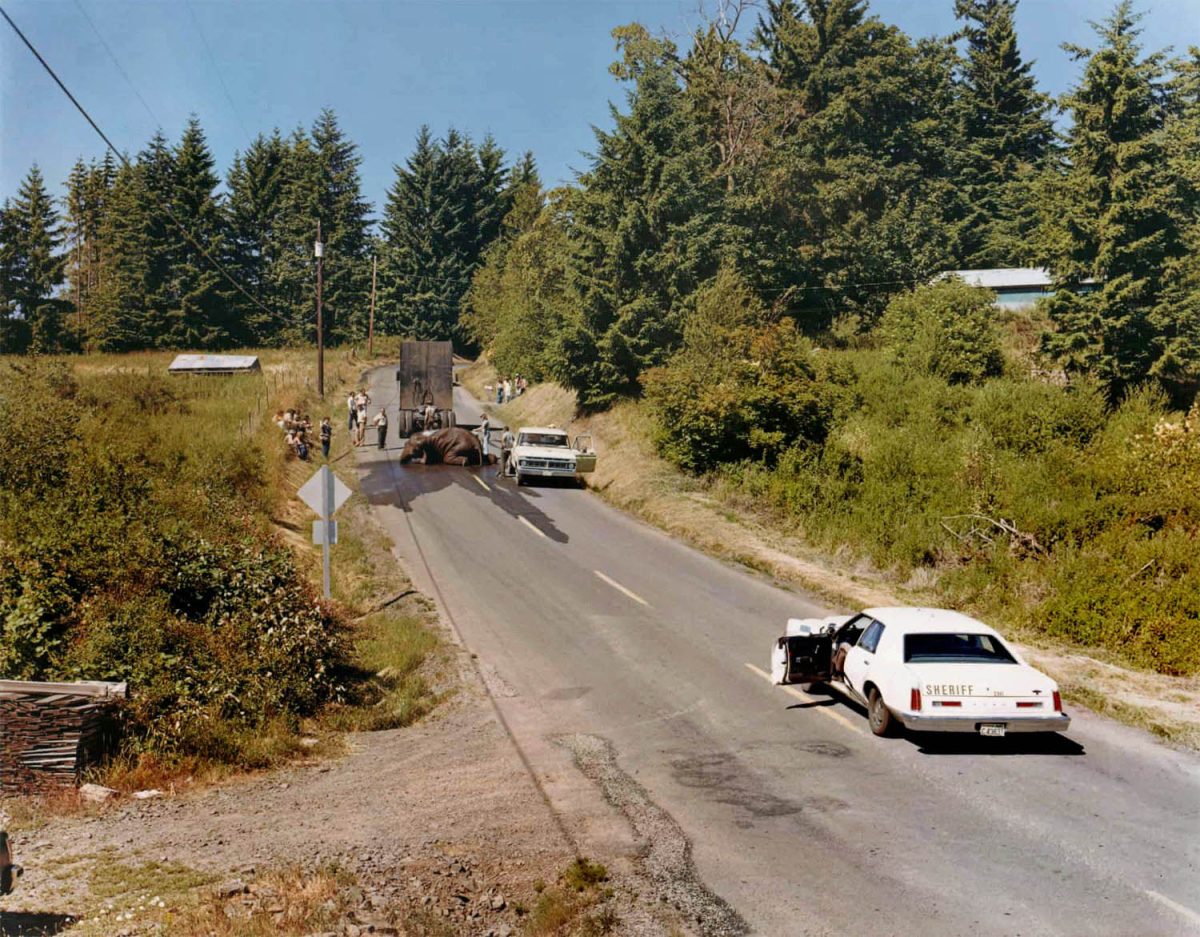
Joel Sternfeld (American, b. 1944)
Exhausted Renegade Elephant, Woodland, Washington
June 1979
Archival pigment print
50 x 60 in.
© Joel Sternfeld
Widely acclaimed when it was published in 1987, Joel Sternfeld’s American Prospects has come to be regarded as one of the important early monuments of colour photography. Sternfeld (American, b. 1944) was one of a small cohort of pioneers, including William Eggleston, Helen Levitt, and Stephen Shore, who in the 1960s and 1970s began exploring the potential of colour photography as a fine art.
Sternfeld developed a unique aesthetic for the use of colour and a distinctive personal vision. Inspired by the photographers Walker Evans and Robert Frank, he embarked on an ambitious quest to document America, traversing the continent from 1978 to 1983 with the support of a Guggenheim Fellowship. American Prospects is the result.
Although Sternfeld saw deep fissures and contradictions in the country at the time, he also went on the road with a sense of optimism and discovery. His goal was not to document the failure of the American Dream, but to record what was great, vital, and regenerative about this nation. On one hand, Sternfeld’s imagery includes damaged landscapes and industry in decline. He delights in the curious, bizarre, and accidental in the everyday. Scenes of an elephant collapsed on the road or a firefighter buying a pumpkin while a fire rages in the background convey a sense of absurdity. And yet underlying the series is a vision of a beautiful land and the eternal cycle of the seasons, and of the variety and resiliency of the American people. Even today, Sternfeld is optimistic about the American prospect: “America has a tremendous capacity to right itself,” he noted recently. Sternfeld’s vision is as complicated as the nation. His images are deep, rich, and powerful specifically because they are complex and conflicted, at once both critical and affectionate.
Guest curated by Robert Wolterstorff, Joel Sternfeld: American Prospects will mount more than forty large scale colour prints, among them many of the most iconic images from the series, along with others that have never before been exhibited. It coincides with a new edition of American Prospects published by Steidl Press.
Text from the Bruce Museum website

Installation view of the exhibition Joel Sternfeld: American Prospects at the Bruce Museum showing at left, Sternfeld’s Earl Garvey Realtor, The Mojave Desert, California (July 1979, below); and at right, Wyoming (1994)
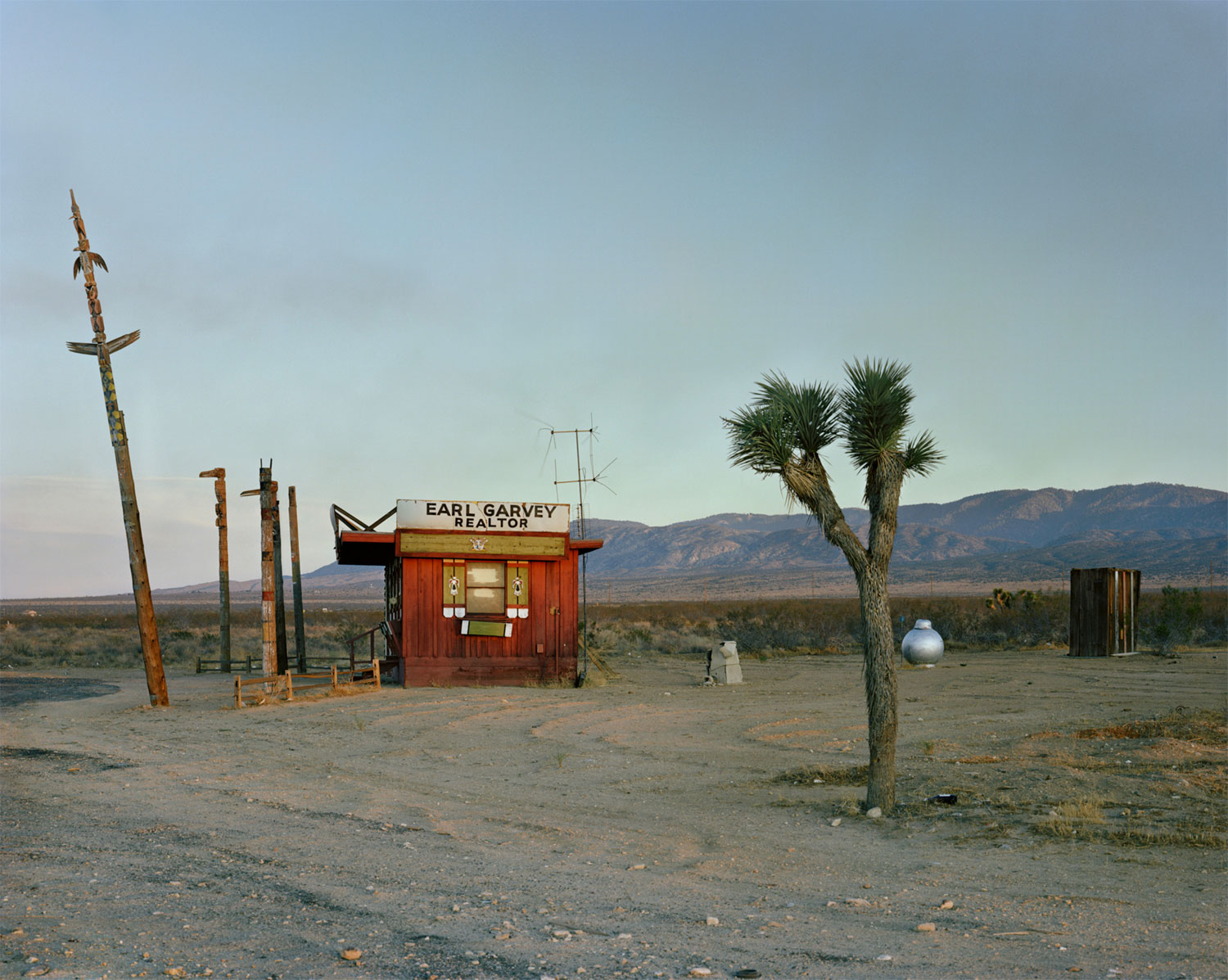
Joel Sternfeld (American, b. 1944)
Earl Garvey Realtor, The Mojave Desert, California
July 1979
Archival pigment print
50 x 60 in.
© Joel Sternfeld
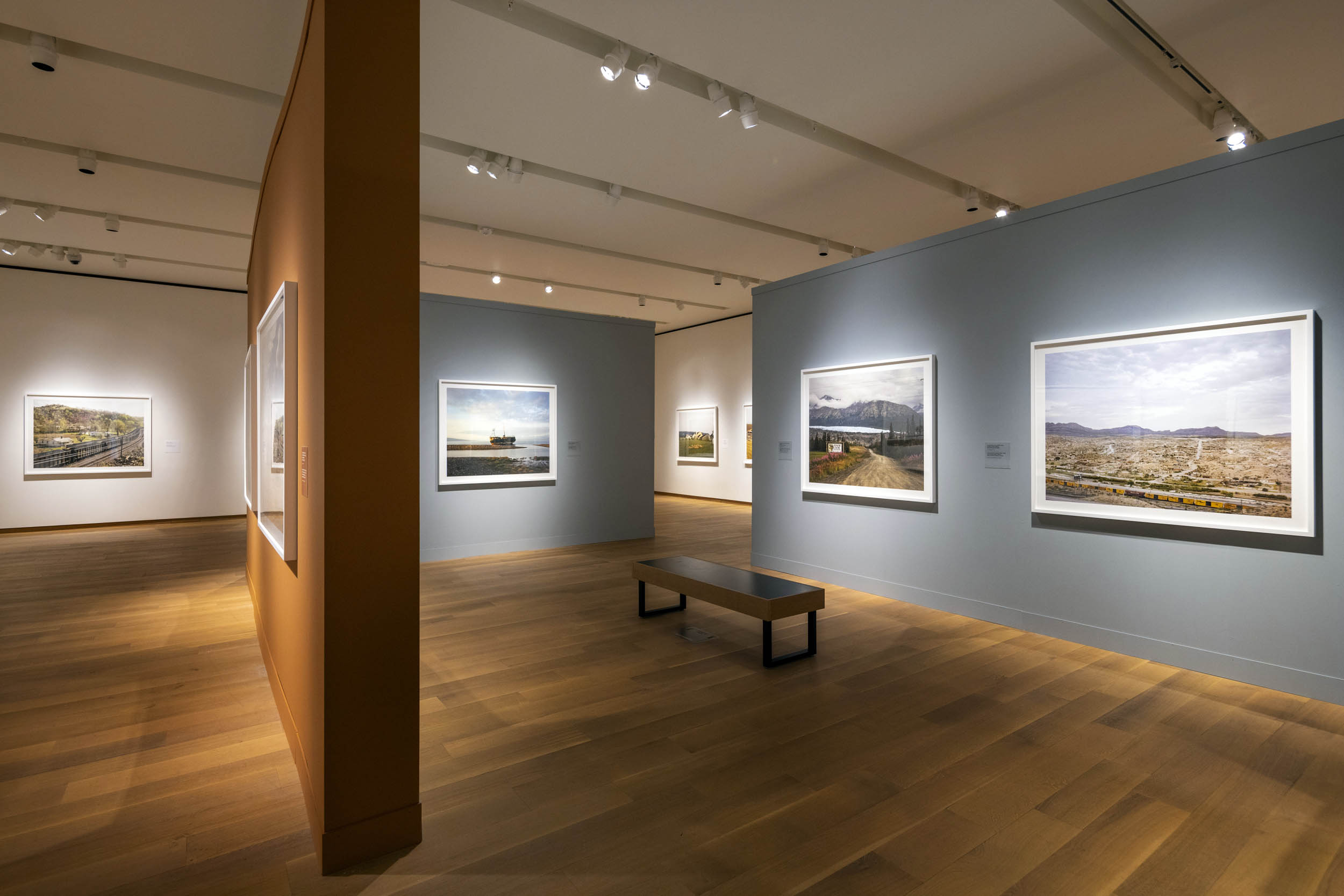

Installation views of the exhibition Joel Sternfeld: American Prospects at the Bruce Museum showing at left, Sternfeld’s Abandoned Freighter, Homer Alaska (July 1984, below); and at second right, Matanuska Glacier, Matanuska Valley, Alaska (July 1984)
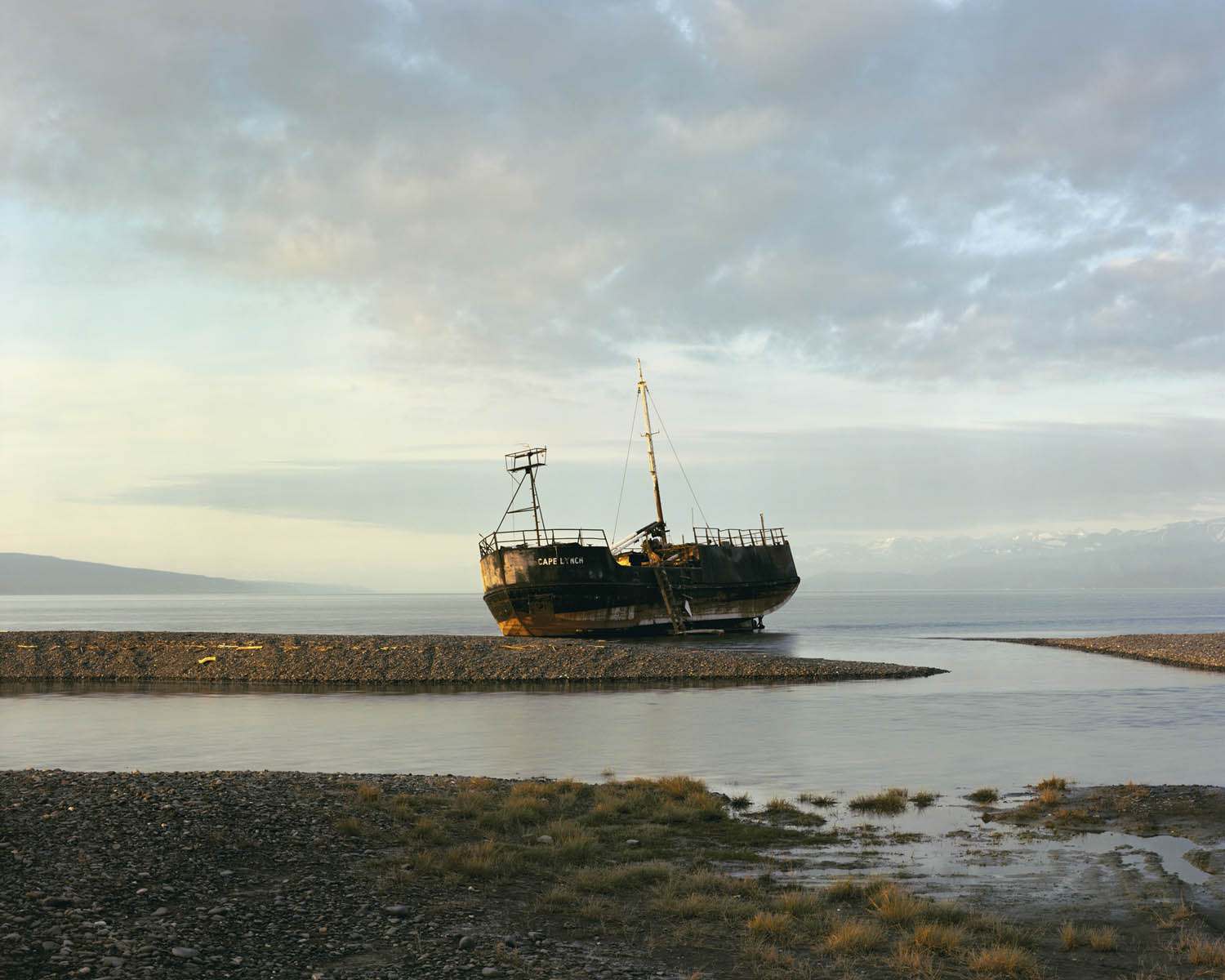
Joel Sternfeld (American, b. 1944)
Abandoned Freighter, Homer Alaska
July 1984, printed 2024
Archival pigment print
50 x 60 in.
© Joel Sternfeld

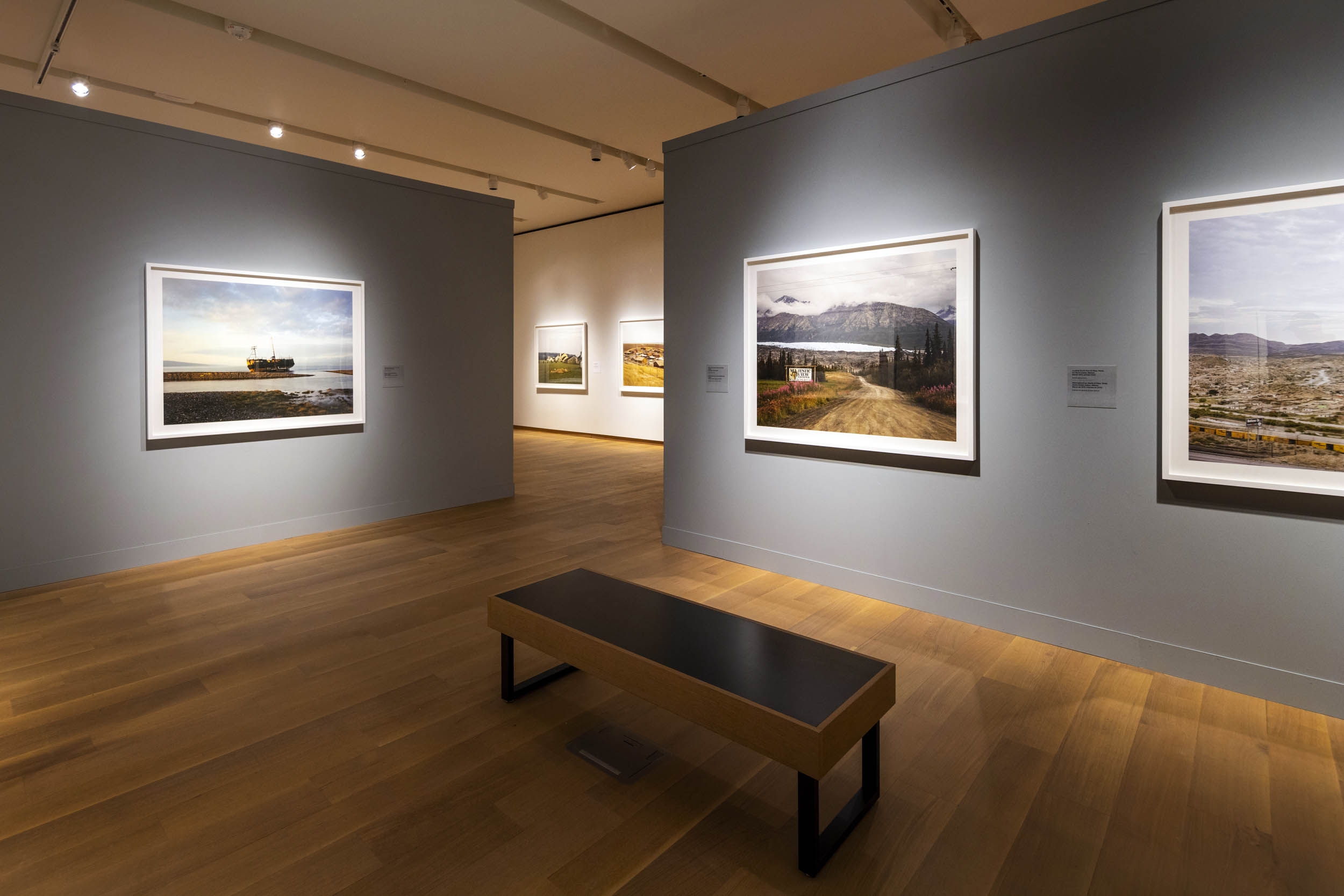
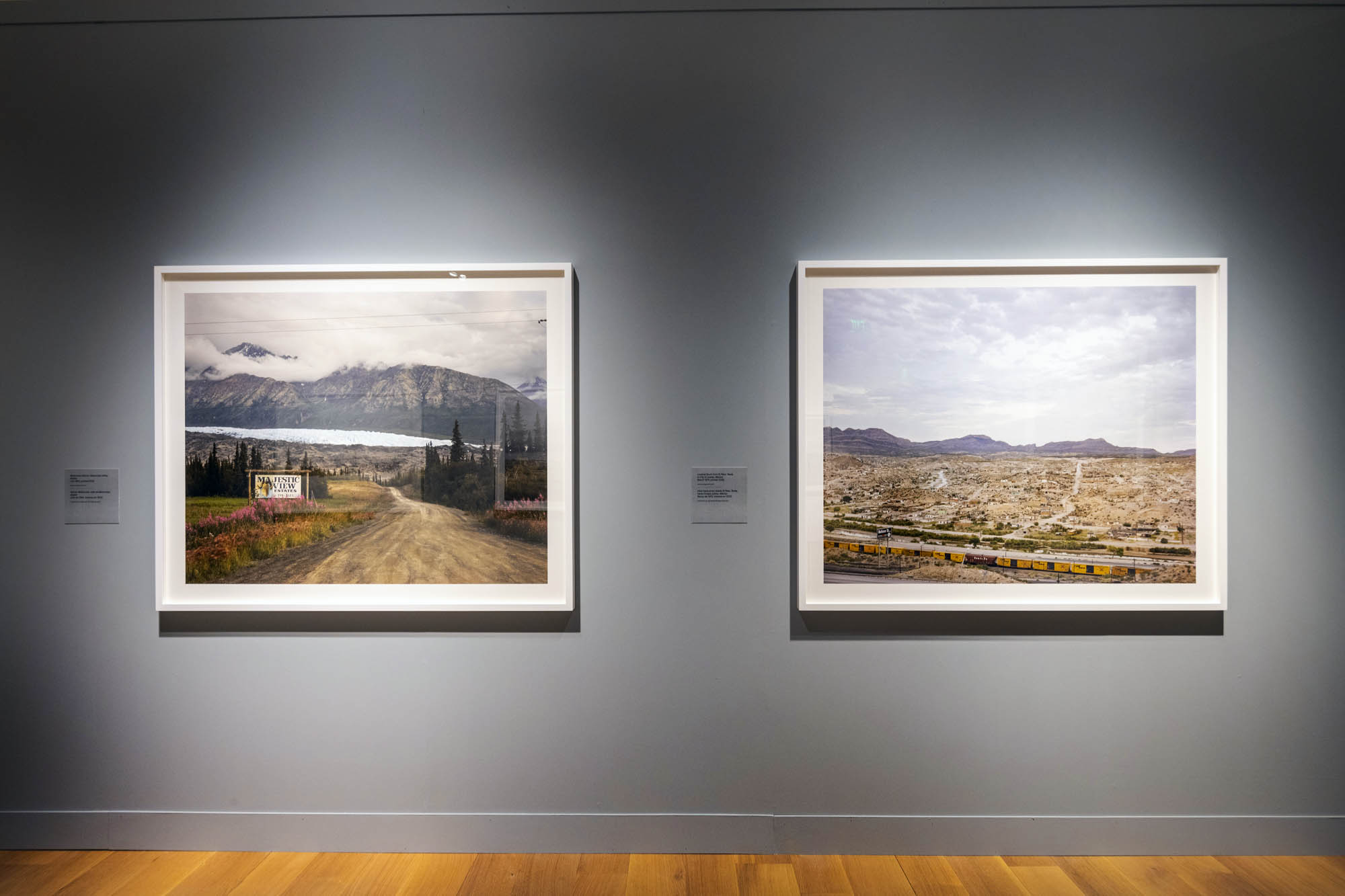

Installation views of the exhibition Joel Sternfeld: American Prospects at the Bruce Museum showing in the bottom photograph at left, Sternfeld’s Matanuska Glacier, Matanuska Valley, Alaska (July 1984); and at right, Abandoned Uranium Refinery, Near Tuba City, Arizona, Navajo Nation (1982)
Beauty, sadness and humor are woven through complex portraits of America in “Joel Sternfeld: American Prospects.” On view at the Bruce Museum Oct. 3, 2024 – Jan. 5, 2025, the exhibition is an ode to the artist’s 1987 landmark photography book, “American Prospects,” and coincides with a new edition published by Steidl Press. The Bruce mounted more than 40 large-scale color prints, ranging from Sternfeld’s most iconic images to never-before-exhibited photographs.
Sternfeld (American, b. 1944) was an early adopter of color photography as fine art. He explored the medium’s potential in the 1960s and 70s with a small cohort of pioneers, including William Eggleston, Helen Levitt and Stephen Shore. Sternfeld initially focused on New York street photography and was awarded a Guggenheim Fellowship in 1978. Longing to explore beyond the confines of the urban grid, the award supported his purchase of a Volkswagen camper and a wooden 8 x 10 view camera, his tools as he embarked on a multi-year quest to capture scenes across the country.
The work of documentary photographers Walker Evans and Robert Frank inspired Sternfeld to observe people and places across the United States and record what was great, vital and regenerative about the nation. Despite sensing deep fissures and contradictions in the country at the time, he went on the road with a sense of optimism and discovery, delighting in the curious, bizarre and accidental moments in everyday life.
Sternfeld traversed the nation from 1978 to 1987, taking thousands of photographs. His large-format view camera accommodated 8 x 10-inch sheets of color negative film, with a small shutter opening that achieved great depth of field. Ansel Adams and Edward Weston used the same methods in their famous black-and-white photographs, producing razor-sharp detail and an infinite range of tones. Sternfeld’s pictures were composed carefully around color harmonies, often focusing on pastel hues of two or three dominant colors and were guided by a strong sense of geometry and order despite the visual chaos of life they portrayed.
The resulting images revealed beautiful land and the eternal cycle of the seasons, damaged landscapes and industry in decline and the variety and resiliency of the American people. The artist has referred to the underlying theme of his work as the utopian vision of America contrasted with the dystopian one. The first edition of “American Prospects” featured 55 images created from four-colour plates that capture both America’s beauty and its flaws. The book was published to wide acclaim and is regarded as an important early monument of color photography.
“Joel Sternfeld developed a unique aesthetic for the use of color and a distinctive personal vision,” said guest curator Robert Wolterstorff, the former Susan E. Lynch executive director of the Bruce Museum. “His powerful images are imbued with a sense of irony and depict a vision of Americans that is as complicated as the nation, inviting contemplation on ideas of paradise versus reality through modern conceptions of landscape.”
“American Prospects” includes a 1978 photograph of a farm market in McLean, Virginia that depicts a uniformed fireman shopping for pumpkins as a house fire rages in the background, the autumnal colours coordinating with the flames. Published in Life magazine, the absurd image is one of the most recognised scenes of Sternfeld’s career. Other subjects include an elephant collapsed on a road in Washington state, clouds approaching a busy waterpark in Florida and the landing of the space shuttle Columbia at Kelly Lackland Air Force Base in San Antonio, Texas.
Sternfeld’s work captures details of specific moments in time, serving as an archive for the future as well as a caution toward photography’s manipulative power. In a 2004 interview with The Guardian, Sternfeld said, “No individual photo explains anything. That’s what makes photography such a wonderful and problematic medium. It is the photographer’s job to get this medium to say what you need it to say.”
Sternfeld is based in New York and teaches at Sarah Lawrence College. He is the recipient of numerous awards, including two Guggenheim Fellowships and the Rome Prize. His work has been exhibited in institutions worldwide, including the Museum of Modern Art (New York), the Art Institute of Chicago (Chicago), the Albertina Museum (Vienna, Austria) and the San Francisco Museum of Modern Art (San Francisco).
Press release from the Bruce Museum
Joel Sternfeld short biography
Joel Sternfeld is an artist-photographer whose work is concerned with utopic and dystopic possibilities of the American experience.
Ever since the publication of his landmark study, American Prospects in 1987 his work has maintained conceptual and political aspects, while also being steeped in history, art history, landscape theory and attention to seasonal passage. It is a melancholic, spectacular, funny and profound portrait of America. The curator Kevin Moore has claimed that the work embodies the “synthetic culmination of so many photographic styles of the 1970s, incorporating the humor and social perspicacity of street photography with the detached restraint of New Topographics photographs and the pronounced formalism of works by so many late-decade colorists” (Kevin Moore, Starburst: Color Photography in America 1970-1980).
On This Site (1996) examines violence in America while simultaneously raising significant epistemological questions about photographs as objects of knowledge.
Sweet Earth: Experimental Utopias in America (2006) “can be seen as a generous respite from the traumatic history in On This Site… It is a survey of American human socialization, alternative ways of living, of hopeful being” (Elin O’Hara Slavik, 2018).
All his subsequent work has sought to expand the narrative possibilities of still photography primarily through an authored text. All of his books and bodies of work converse with each other and may be read as a collective whole.
His work represents a melding of time and place that serves to elucidate, honor, and warn. The images hold a certain urgency, as their histories survive solely through their photographic representation – they are an archive for the future.
Sternfeld is the recipient of two Guggenheim Fellowships and spent a year in Italy on a Rome Prize. He teaches at Sarah Lawrence College, where he holds the Noble Foundation Chair in Art and Cultural History.

Installation view of the exhibition Joel Sternfeld: American Prospects at the Bruce Museum showing at left, Sternfeld’s Brattleboro, Vermont (October 1978)
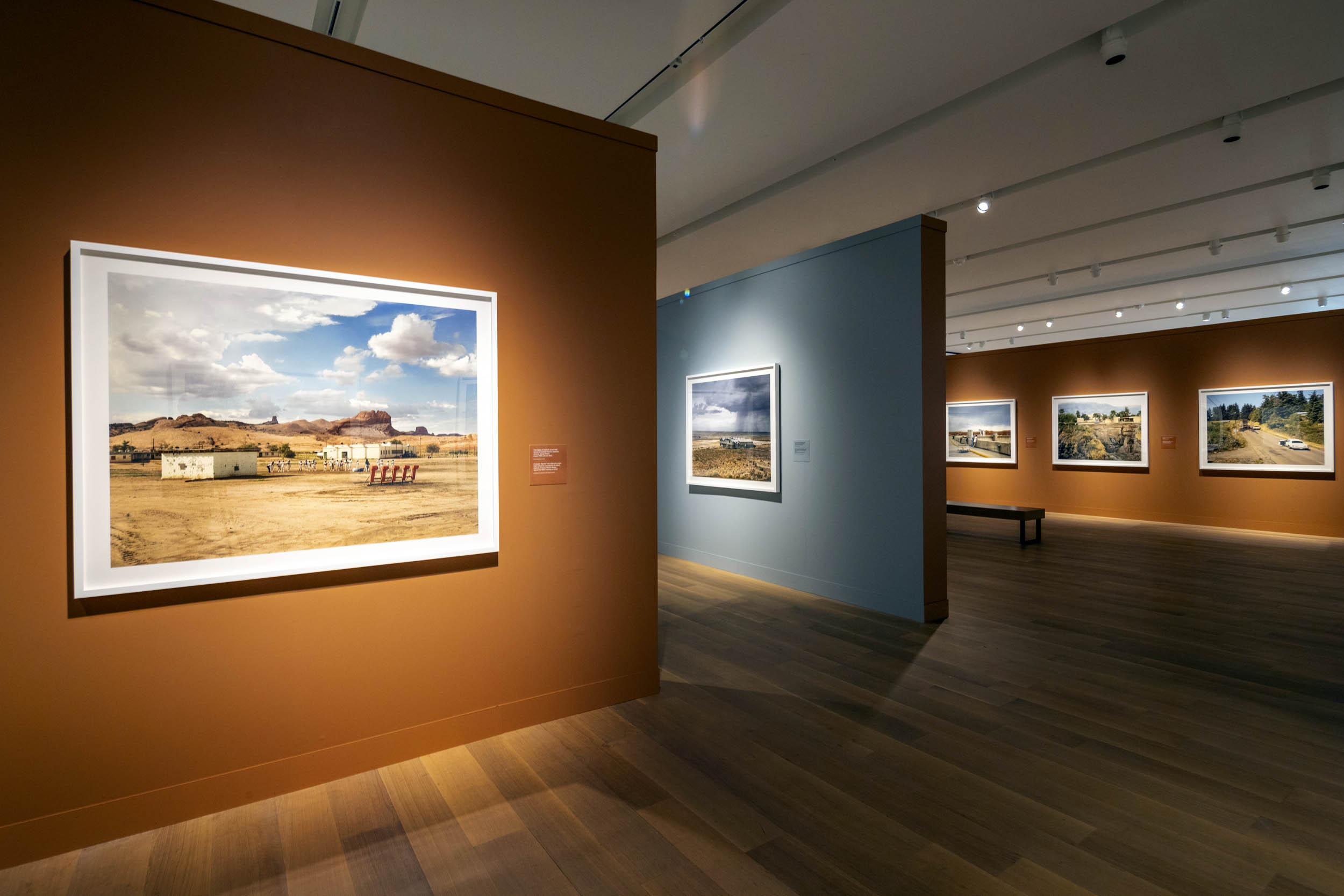
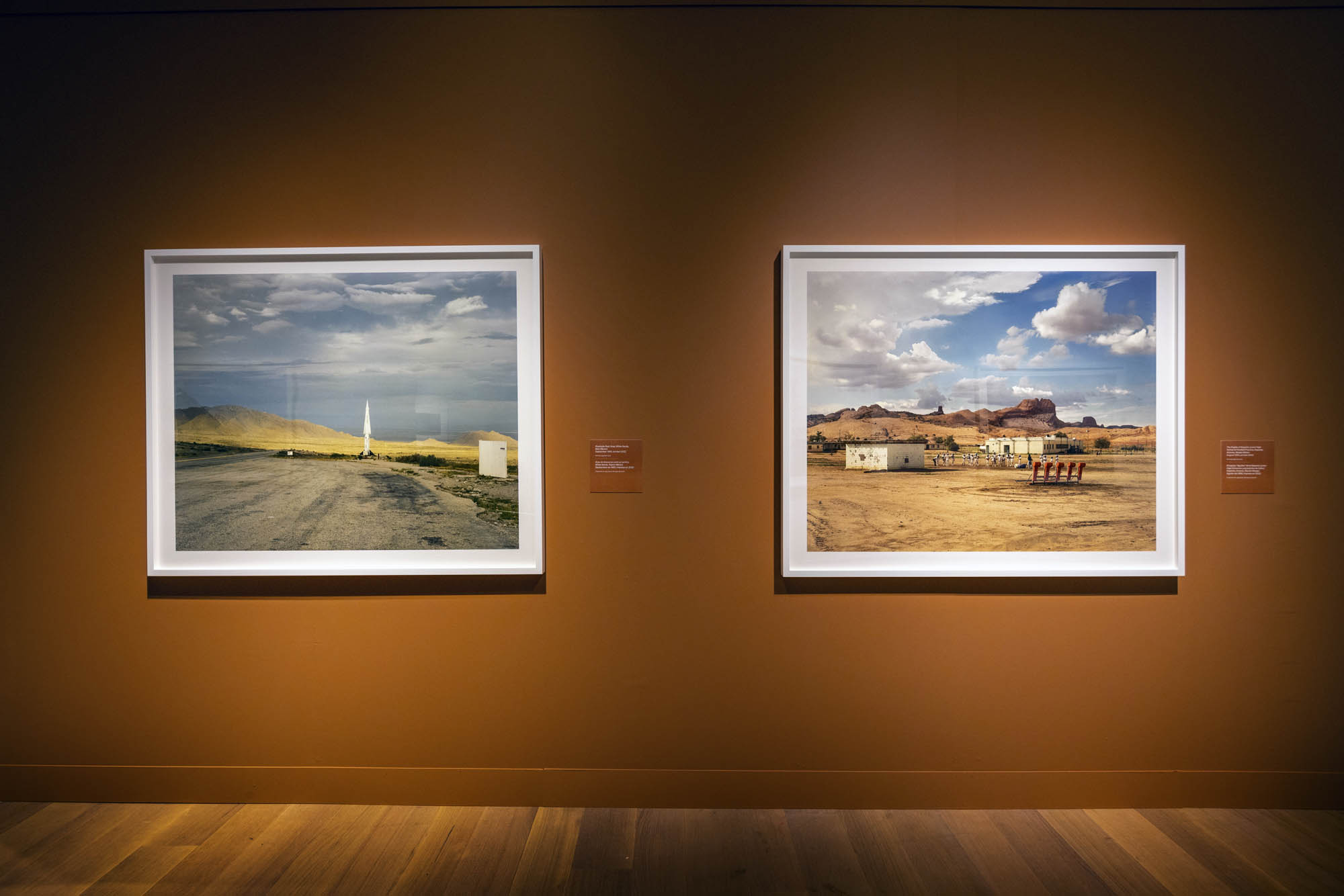
Installation views of the exhibition Joel Sternfeld: American Prospects at the Bruce Museum showing in the bottom photograph at left, Sternfeld’s Roadside Rest Area, White Sands, New Mexico (September 1980); and at right, The Eagles of Kayenta, Junior High School at Football Practice, Kayenta, Arizona, Navajo Nation (August 1986)

Installation view of the exhibition Joel Sternfeld: American Prospects at the Bruce Museum showing at left, Sternfeld’s Portage Glacier, Alaska (August 1984, below); and at right, Coeburn, Virginia (April 1981)
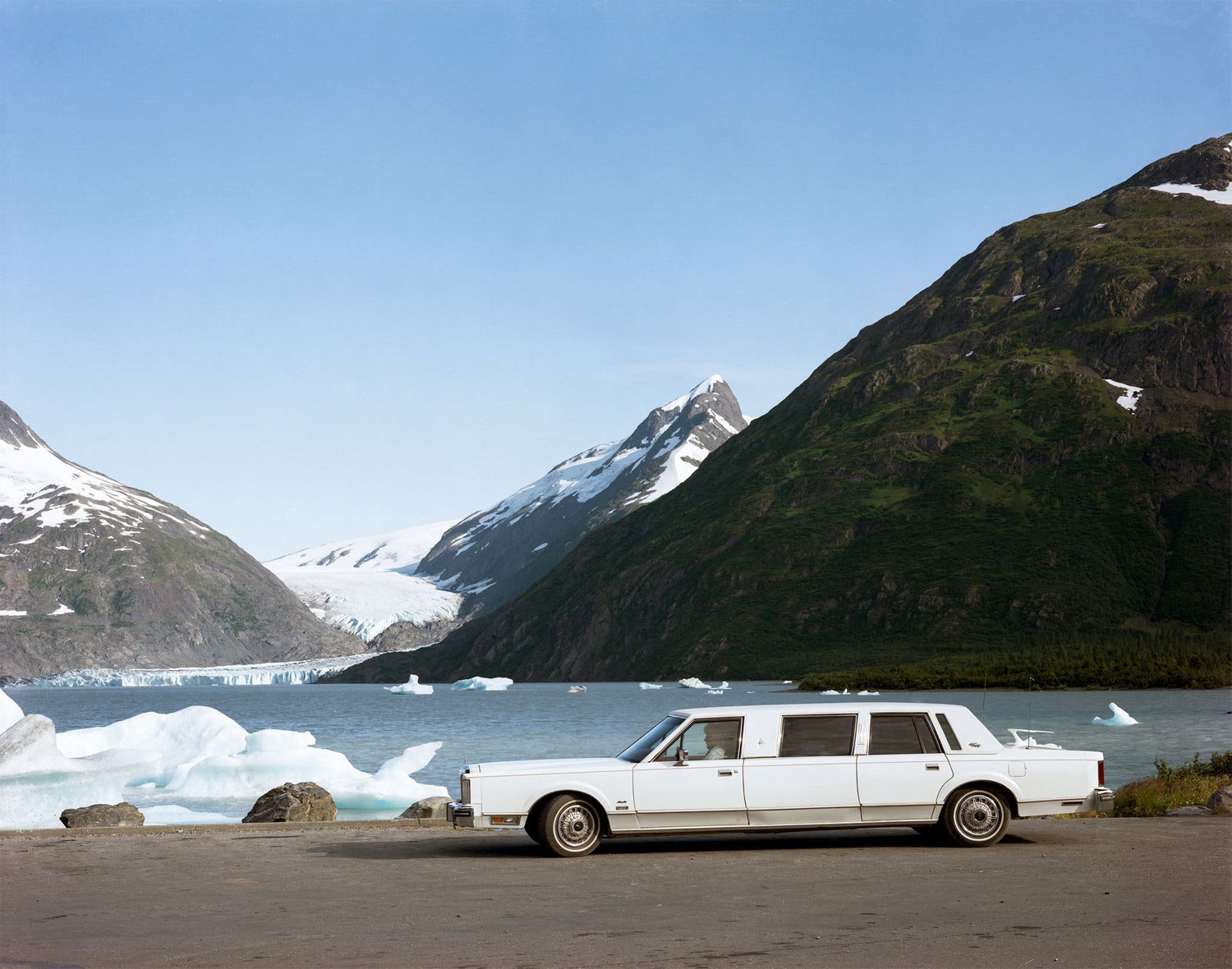
Joel Sternfeld (American, b. 1944)
Portage Glacier, Alaska
August 1984
Archival pigment print
50 x 60 in.
© Joel Sternfeld

Installation view of the exhibition Joel Sternfeld: American Prospects at the Bruce Museum showing at left, Sternfeld’s Coeburn, Virginia (April 1981)
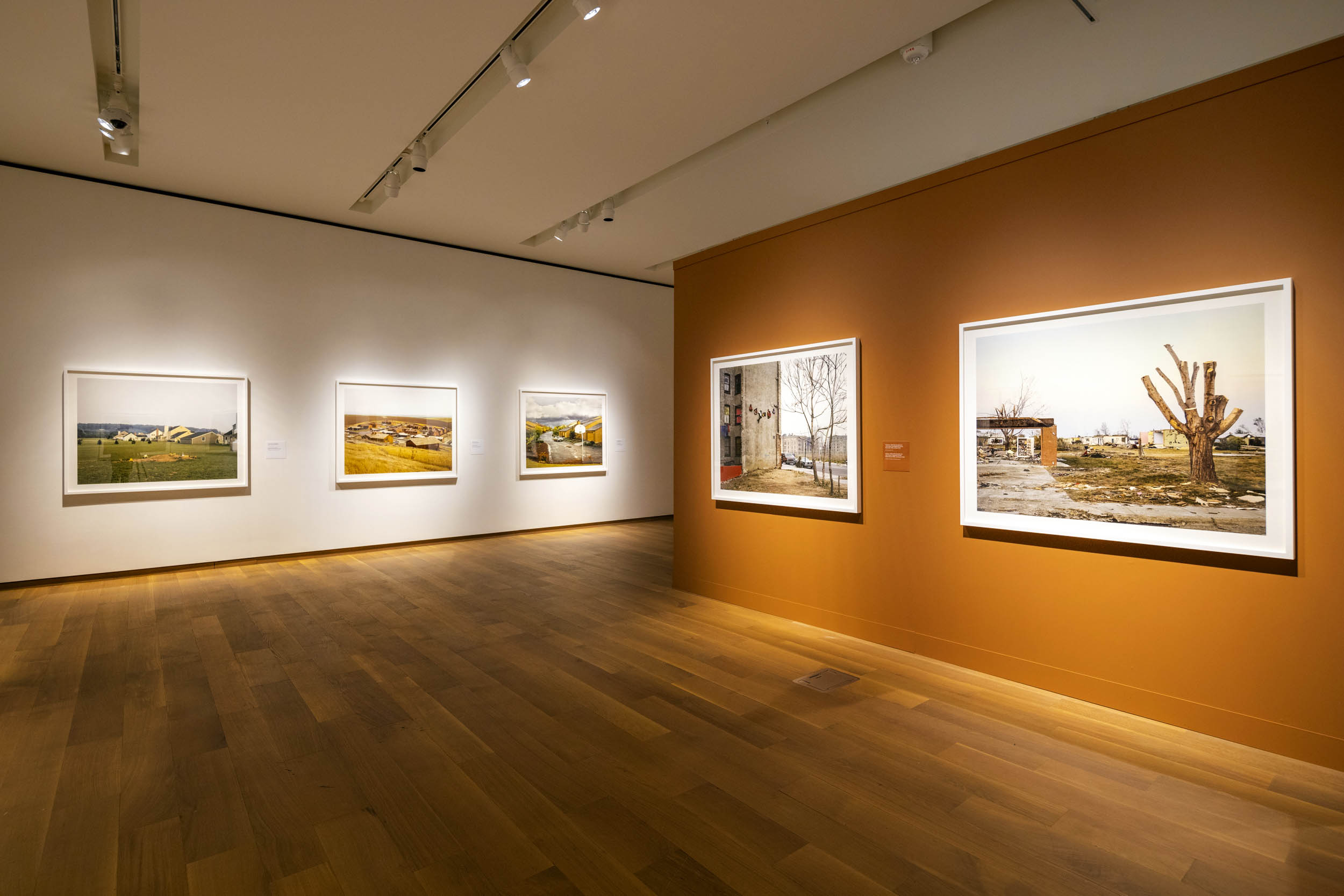

Installation views of the exhibition Joel Sternfeld: American Prospects at the Bruce Museum showing at right, Sternfeld’s After a Tornado, Grand Isle, Nebraska (June 1980, below)

Joel Sternfeld (American, b. 1944)
After a Tornado, Grand Isle, Nebraska
June 1980
Archival pigment print
50 x 60 in.
© Joel Sternfeld

Installation view of the exhibition Joel Sternfeld: American Prospects at the Bruce Museum showing at left, Sternfeld’s Grafton, West Virginia (February 1983); and at right, Prince Manufacturing, Bowmanstown, Pennsylvania (November 1982)
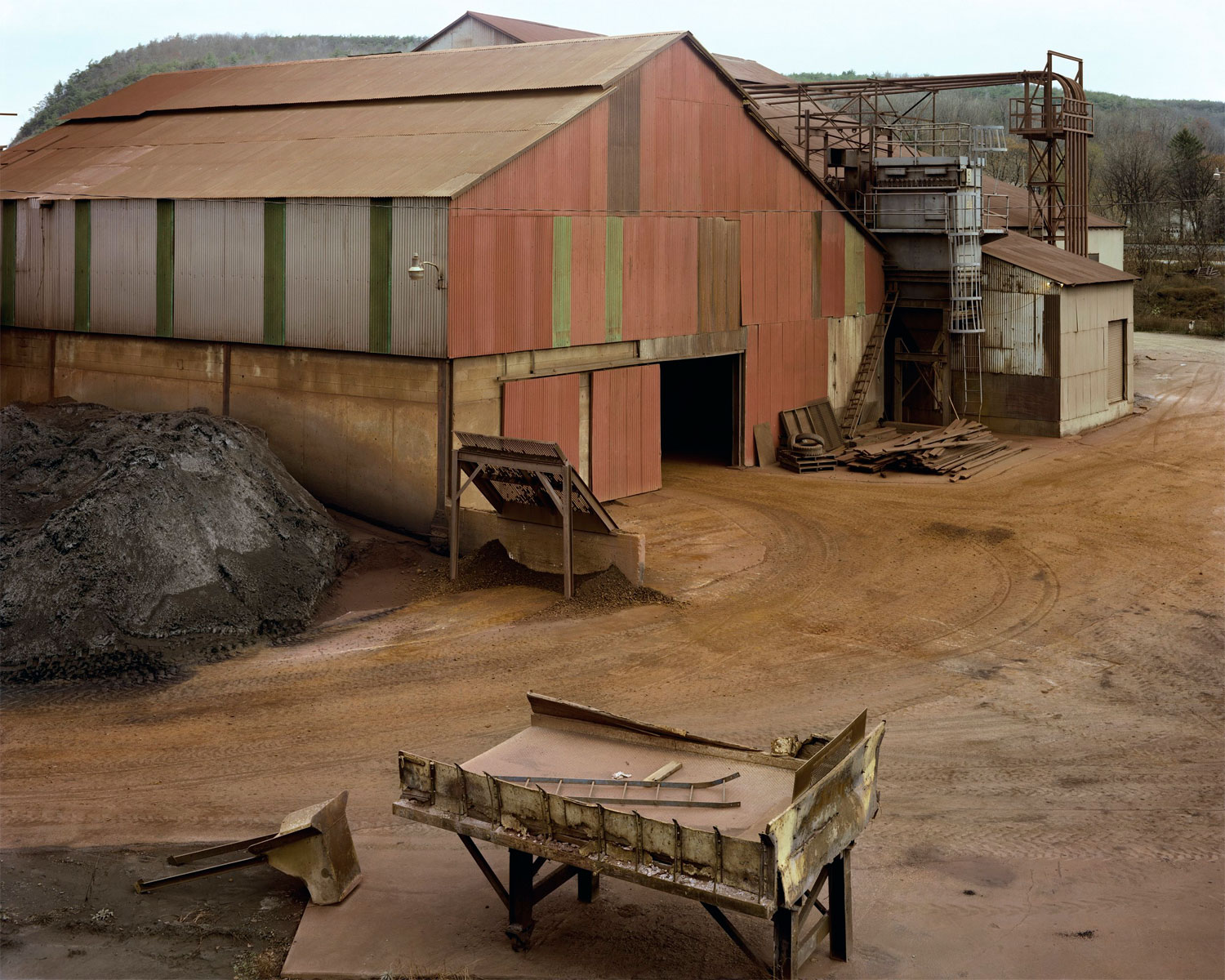
Joel Sternfeld (American, b. 1944)
Prince Manufacturing, Bowmanstown, Pennsylvania
November 1982
Archival pigment print
50 x 60 in.
© Joel Sternfeld
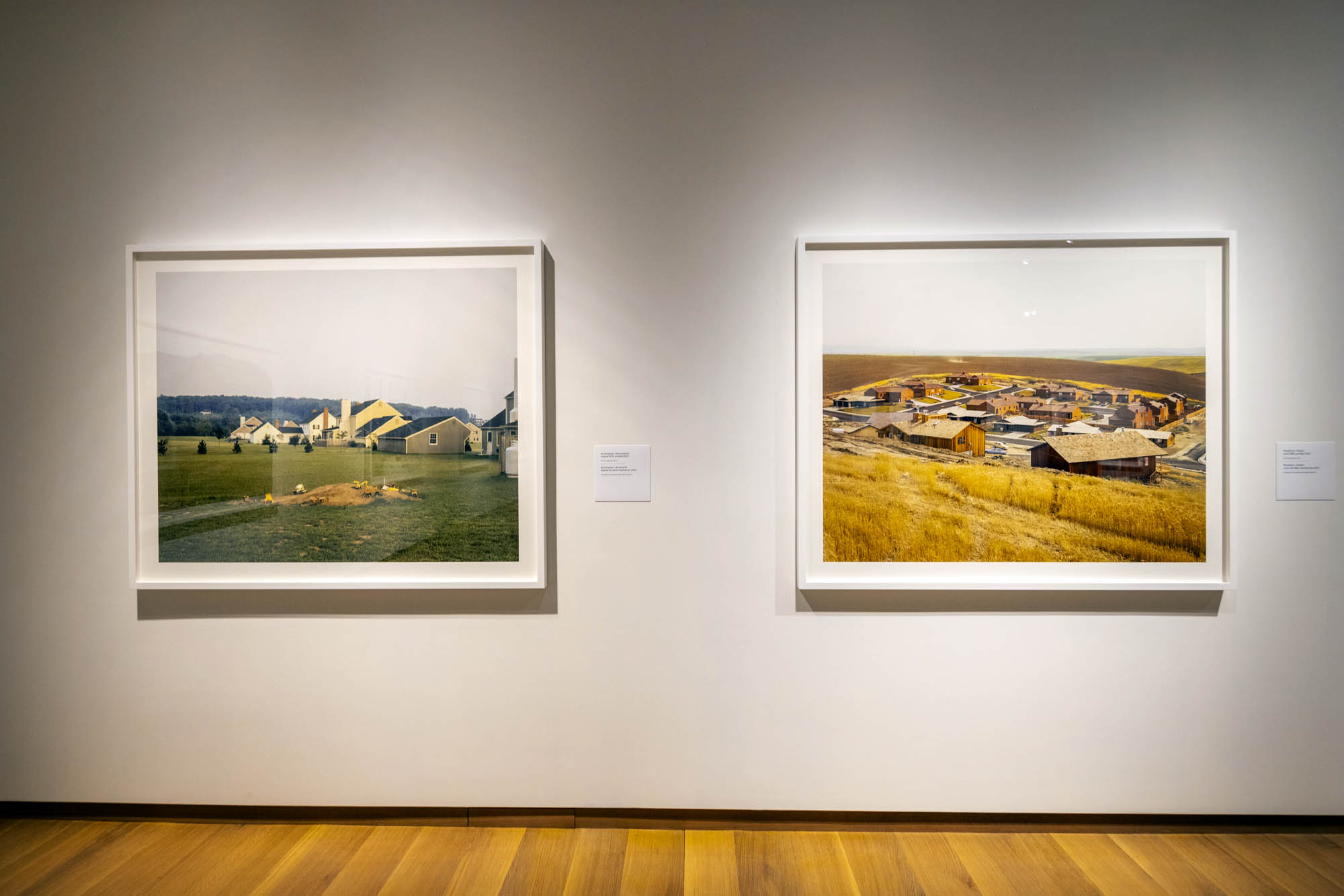
Installation view of the exhibition Joel Sternfeld: American Prospects at the Bruce Museum showing at left, Sternfeld’s Buckingham, Pennsylvania (August 1978); and at right, Pendleton, Oregon (1980)

Installation view of the exhibition Joel Sternfeld: American Prospects at the Bruce Museum showing at left, Sternfeld’s Pendleton, Oregon (1980); and at right, Lake Oswego, Oregon (June 1979)
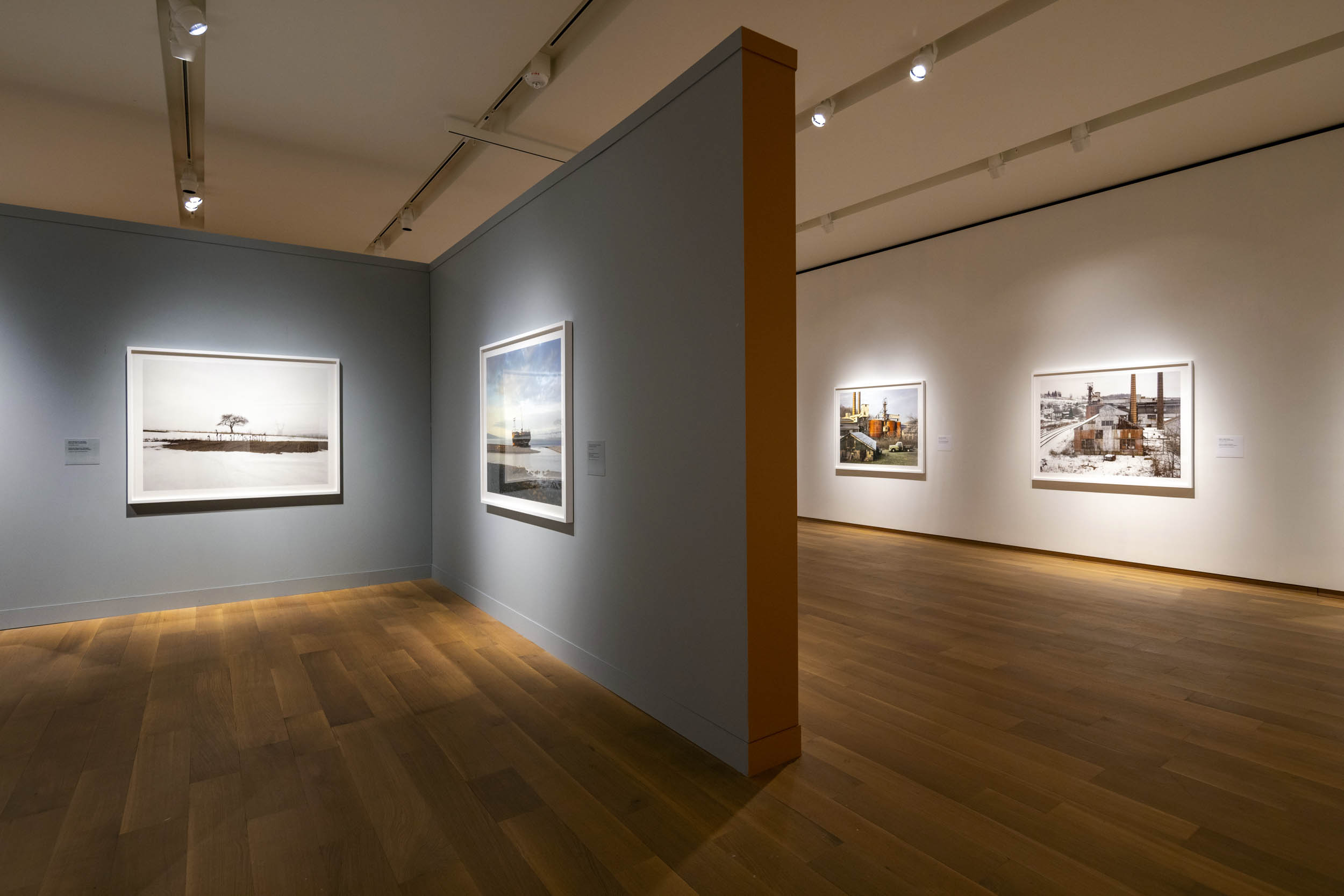
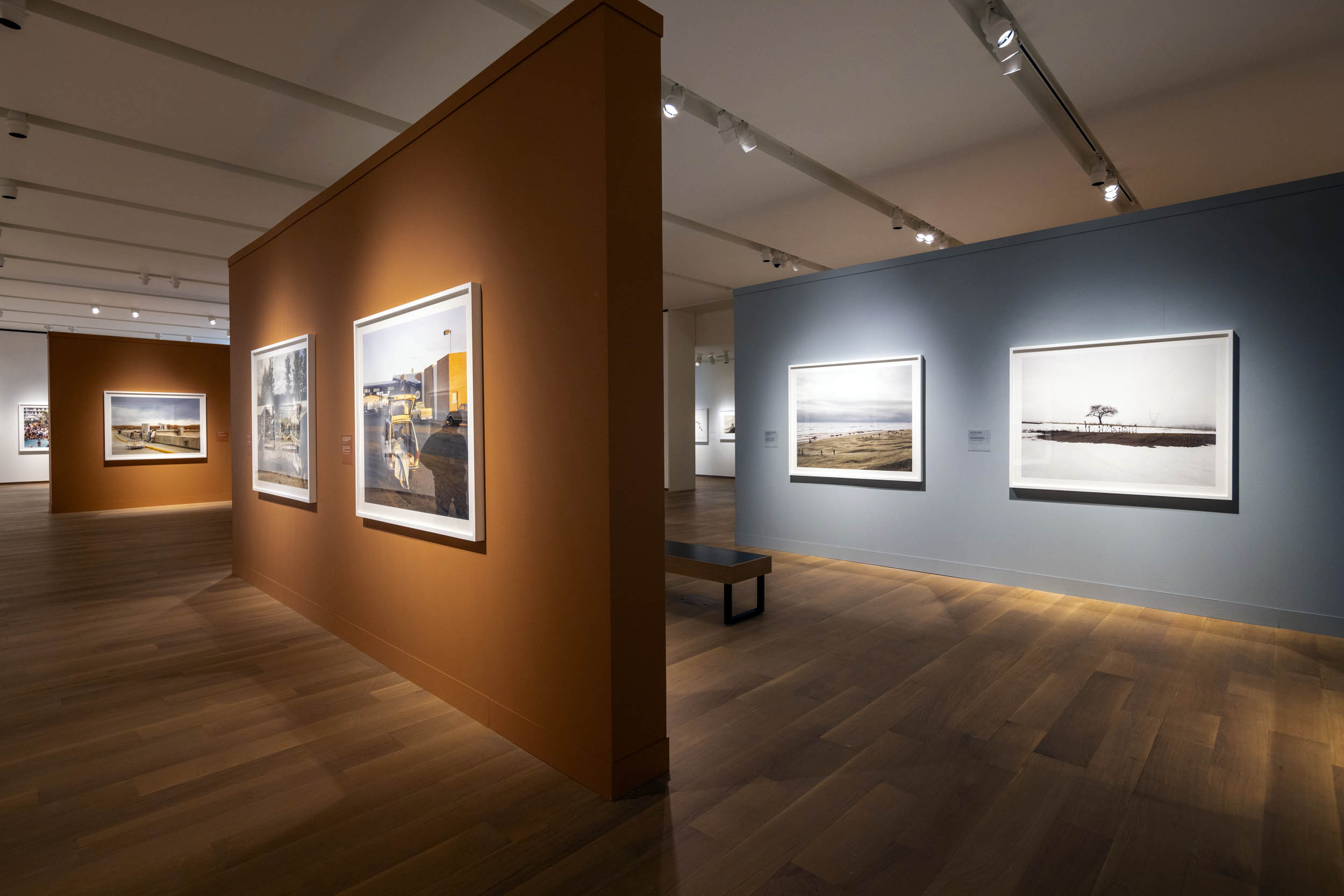
Installation view of the exhibition Joel Sternfeld: American Prospects at the Bruce Museum showing in the bottom photograph at right, Sternfeld’s Near Interlochen, Michigan (February 1981)
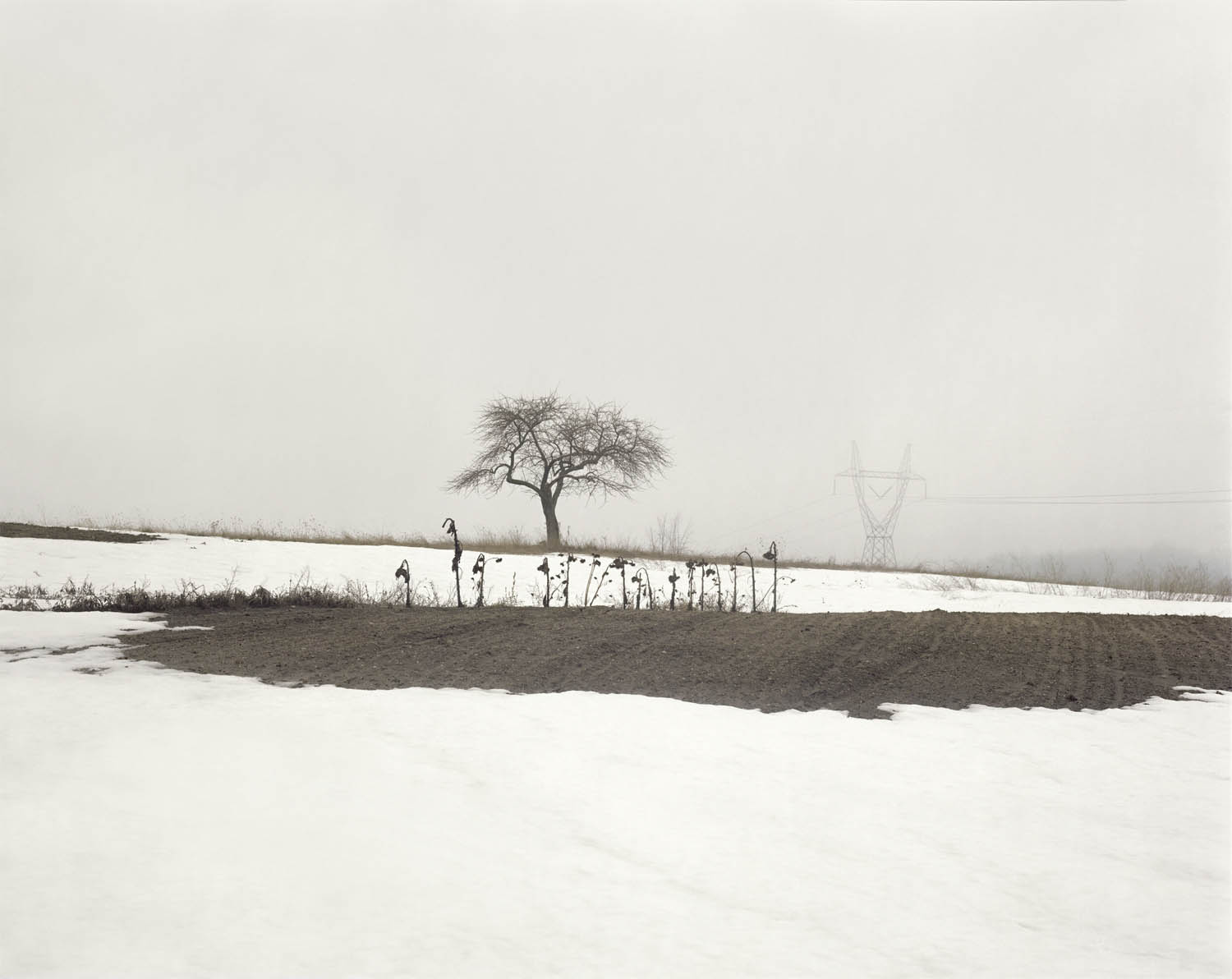
Joel Sternfeld (American, b. 1944)
Near Interlochen, Michigan
February 1981
Archival pigment print
50 x 60 in.
© Joel Sternfeld
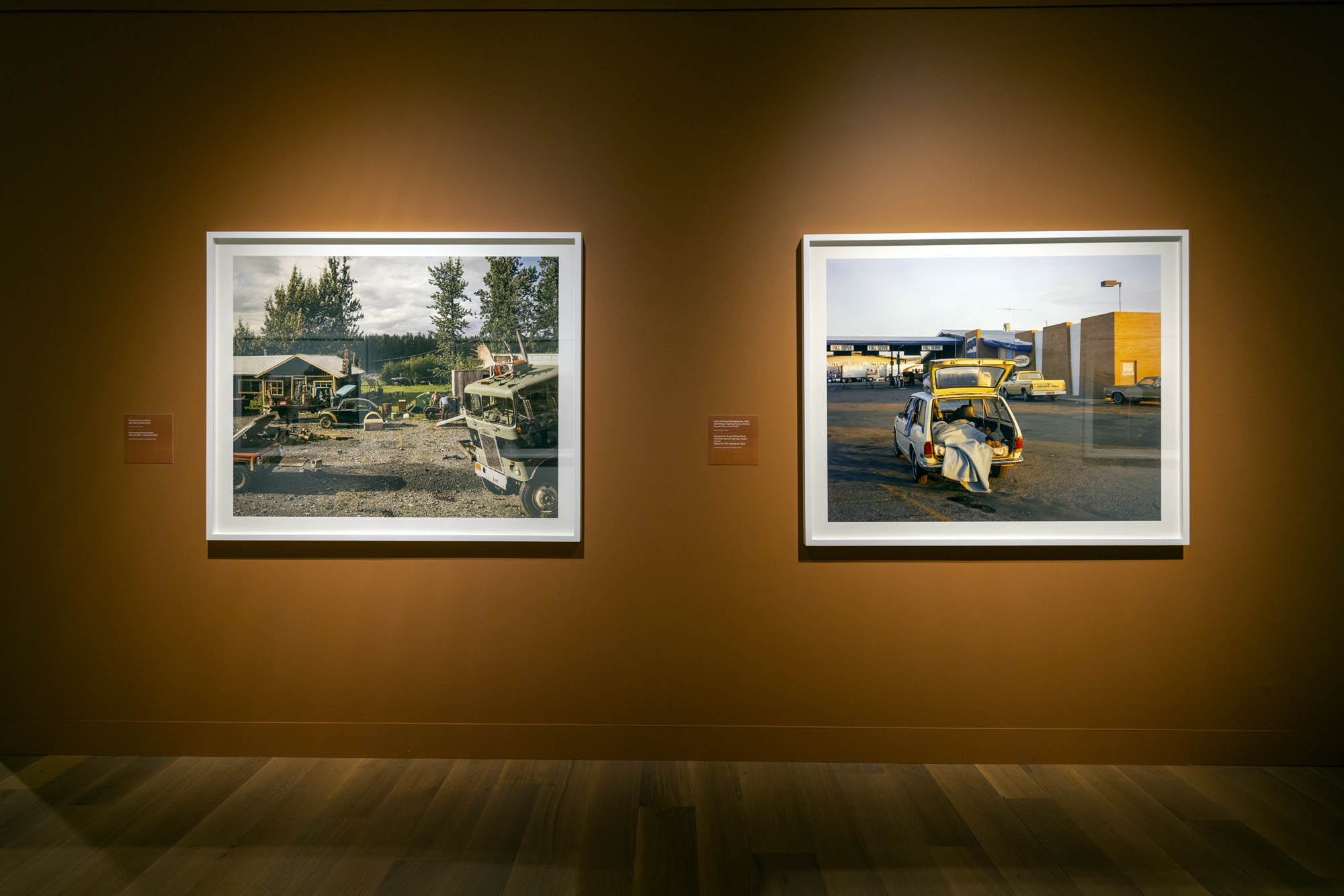
Installation view of the exhibition Joel Sternfeld: American Prospects at the Bruce Museum showing at right, Car Sleeping (Nd)
Bruce Museum
1 Museum Drive
Greenwich, CT
Phone: 203.869.0376
Opening hours:
Tuesday – Saturday 10am – 5pm
Sunday 1pm – 5pm
Closed Mondays




 Art Blart _ art and cultural memory archive
You must be logged in to post a comment.