
Exhibition dates: 6th November, 2025 – 17th January, 2026

Diane Arbus (American, 1923-1971)
Transvestite with her birthday cake, N.Y.C. 1969
1969
Gelatin silver print
© The Estate of Diane Arbus
Without judgement
In my humble opinion Diane Arbus is the best portrait photographer of the 20th century.
As can be seen in the quotation from a 1939 high-school essay on Plato when Arbus was just 19 years old (below), latent inside her was an appreciation of difference, uniqueness, and the importance of life – all awaiting an out, an emanation of her spirit later manifested in her photographs through the picturing of her subjects.
Arbus found her mature voice as an artist, her métier if you like, when in 1962 she switched from a 35mm camera to a 2 1/4 inch twin-lens reflex (TLR) Rolleiflex (later a Mamiyaflex), a square format which became her iconic signature.
In the photograph Nancy Bellamy’s bedroom, N.Y.C. 1961 (1961, below) we therefore have evidence of the early results of the use of this new camera. In this photograph I believe you can feel how Arbus is still getting used to his new way of seeing the world, for you have to approach your visualisation of the world in a completely different way when constructing the image plane in a square format. Here she is still unsure as to where to place the camera. The light is fantastic coming in through the window and flooding the room but the out of focus left wall is weak and simply does not work with the image.
Fast forward to 1963-1965 and we see Arbus in complete control of her physical and emotional environment. In photographs from this period, whether medium distance portraits showing subjects in situ or tightly cropped portraits with minimal backgrounds, we see her undoubted mastery of natural light, flash, construction and tensioning of the image plane but, above all, in control of the feeling that emanates from the photographs that flows to the viewer.
Whether direct / acceptance / this is who I am (Interior decorator at the nudist camp in his trailer, New Jersey, 1963, 1963 below) to contained / introspective (Lucas Samaras, N.Y.C. 1966, 1966 below) – but never the dreaded “dead pan” – and on to the inscrutable / open / closed looks on each of the three faces in the photograph Triplets in their Bedroom, N.J., 1963 (1963, below), Arbus is the master at conjuring, no what is the word I’m looking for … Arbus is the master at materialising the energy of a person or place before our very eyes.
As the press release so eloquently states, “Through her singular combination of intelligence, charisma, intuition, and courage, Diane Arbus was frequently invited into homes and other private realms seldom seen by strangers. Though made in intimate settings, her photographs evidence no sense of intrusion or trespass. Instead, they reveal an unspoken exchange between photographer and subject, a moment of recognition in which confidences emerge freely and without judgment.”
An unspoken exchange between photographer and subject. A moment of revelation, or revelatio, where the curtain is pulled back to reveal our innermost secrets. Visualised by Arbus without judgement.
As the years progress towards 1968-1970 Arbus becomes bolder still. In photographs such as A naked man being a woman, N.Y.C., 1968 (1968, below), Girl sitting on her bed with her shirt off, N.Y.C., 1968 (1968, below) and Mexican Dwarf in his hotel room, N.YC., 1970 (1970, below) we see and feel such an intimate bond between the photographer and the subject – all crap cut out, all extraneous noise gone, just the baring of the soul of the sitter looking directly into the camera. As Minor White used to say, a communication / communion between the photographer and the subject, back through the lens of the camera and onto the film, forming a Zenian circle of energy, hoping for a revelation of spirit in the negative and subsequent print – whether that be from a rock, a landscape or a portrait.
And in two photographs from the same sitting, we can begin to understand how Arbus achieved her aim. In the photograph Transvestite at the birthday party, N.Y.C. 1969 (1969, below) we have the subject in situ, in context, laughing, happy, enjoying her birthday party surrounded by her things. Then things change. In Transvestite with her birthday cake, N.Y.C. 1969 (1969, below) Arbus closes in on this wonderful human being on her bed with her birthday cake. Isolating her from the background through the use of flash, there she is, fag in hand, staring directly into the camera in all her strength and vulnerability. Arbus evinces what it is to be this human being, she has empathy for the subject in these intimate settings.
I believe that Arbus’ empathy for her subjects was greatly enhanced by the waist level engagement with her sitters when using her medium format camera. Instead of bringing the camera up to the eye, Arbus looks down into the viewfinder to locate and ground the energy of her subjects, and the camera is nestled at solar plexus / belly button, with all the connection to mother, blood, energy and water (Amniotic Fluid) from which we all come. When singing and in yoga practice, breathing comes from the stomach and the energy flows in an out of the navel, the Manipura (solar plexus) in yoga, linked to personal power, emotional balance, and metabolism, acting as a hub for energy distribution.1 Having used an old Mamiya twin-lens C220 medium format camera myself I can totally appreciate the unique perspective and energy such a camera position brings to picturing the world.
“These archetypal images have become deeply embedded in the collective conscience where conscience is pre-eminently the organ of sentiments and representations. The snap, snap, snap of the shutter evinces the flaws of human nature, reveals the presence of a quality or feeling to which we can all relate. As Arbus states, the subject of the picture is always more important than the picture. And more complicated. That is why these photographs always capture our attention – because we become, we inhabit, we are the subject.”2
Dr Marcus Bunyan
1/ The (navel) is seen as a powerful energy centre in many traditions (Yoga, Ayurveda, TCM) and science, representing our origin, core strength, digestion (Agni/digestive fire), self-esteem, and life force (prana).
2/ Marcus Bunyan commenting on the exhibition Diane Arbus at Jeu de Paume, Paris, October 2011 – February 2012
Many thankx to David Zwirner for allowing me to publish the 5 images and installation photographs in the posting. All other photographs are used under fair use conditions for the purposes of eduction and research. Please click on the photographs for a larger version of the image.
“For me the subject of the picture is always more important than the picture. And more complicated.”
Diane Arbus
“There are and have been and will be an infinite number of things on earth: individuals all different, all wanting different things, all knowing different things, all loving different things, all looking different. Everything that has been on earth has been different from any other thing. That is what I love: the differentness, the uniqueness of all things and the importance of life…. I see something that seems wonderful; I see the divineness in ordinary things.”
Diane Arbus in a high-school essay on Plato, 1939
![Dennis McGuire (American) 'Untitled [Diane Arbus using her medium format Mamiya camera]' Nd](https://artblart.com/wp-content/uploads/2026/01/dennis-mcguire-diane-arbus.jpg "Dennis McGuire (American) 'Untitled [Diane Arbus using her medium format Mamiya camera]' Nd")
Dennis McGuire (American)
Untitled [Diane Arbus using her medium format Mamiya camera]
Nd
© Dennis McGuire
Used under fair use conditions for the purposes of education and research
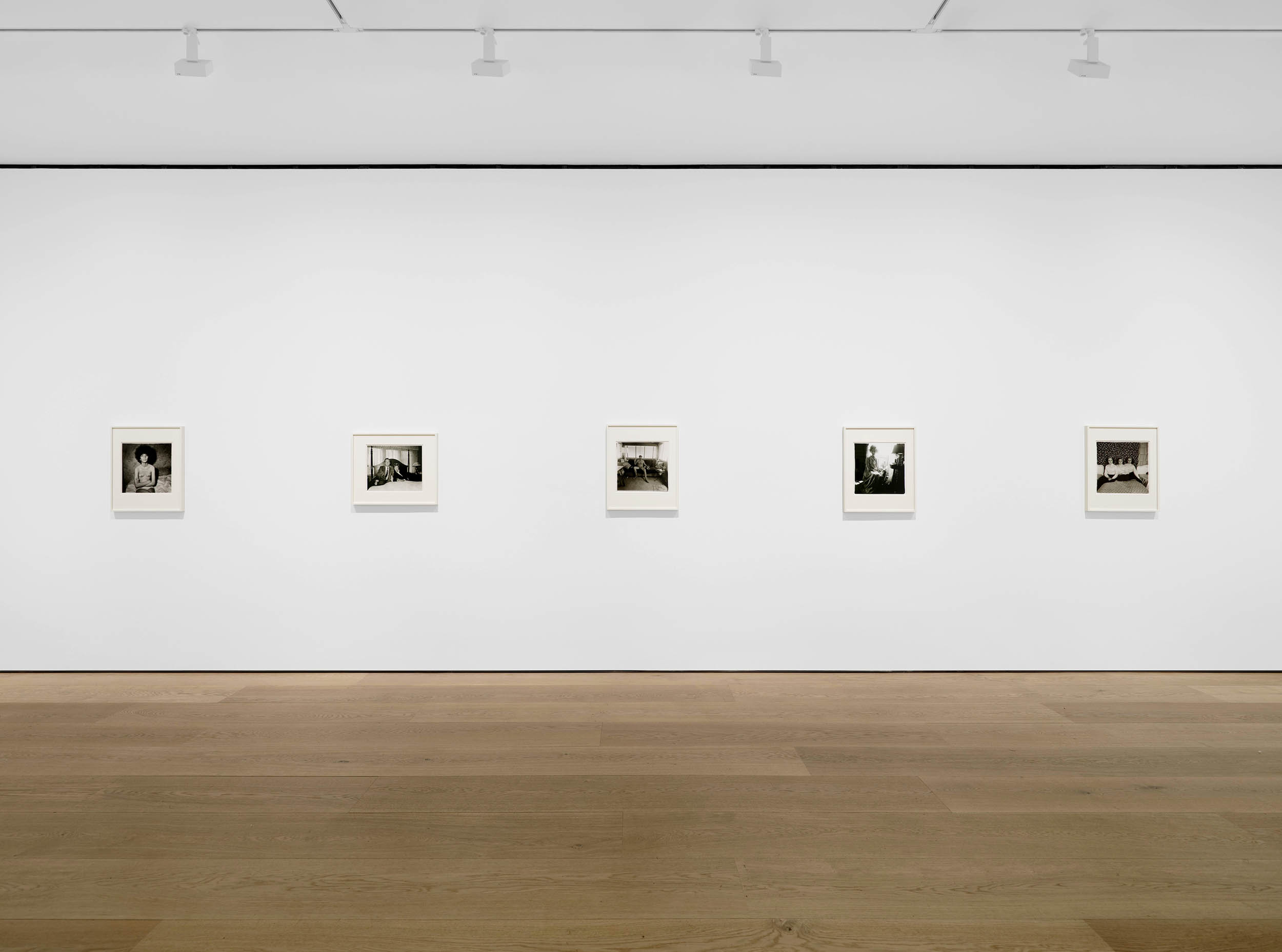
Installation view of the exhibition Diane Arbus: Sanctum Sanctorum at David Zwirner, London showing at left, Arbus’ Girl sitting on her bed with her shirt off, N.Y.C., 1968; at centre, Interior decorator at the nudist camp in his trailer, New Jersey 1963; at second right, Mrs. T. Charlton Henry in a negligee, Philadelphia, Pa. 1965; and at right, Triplets in their Bedroom, N.J., 1963
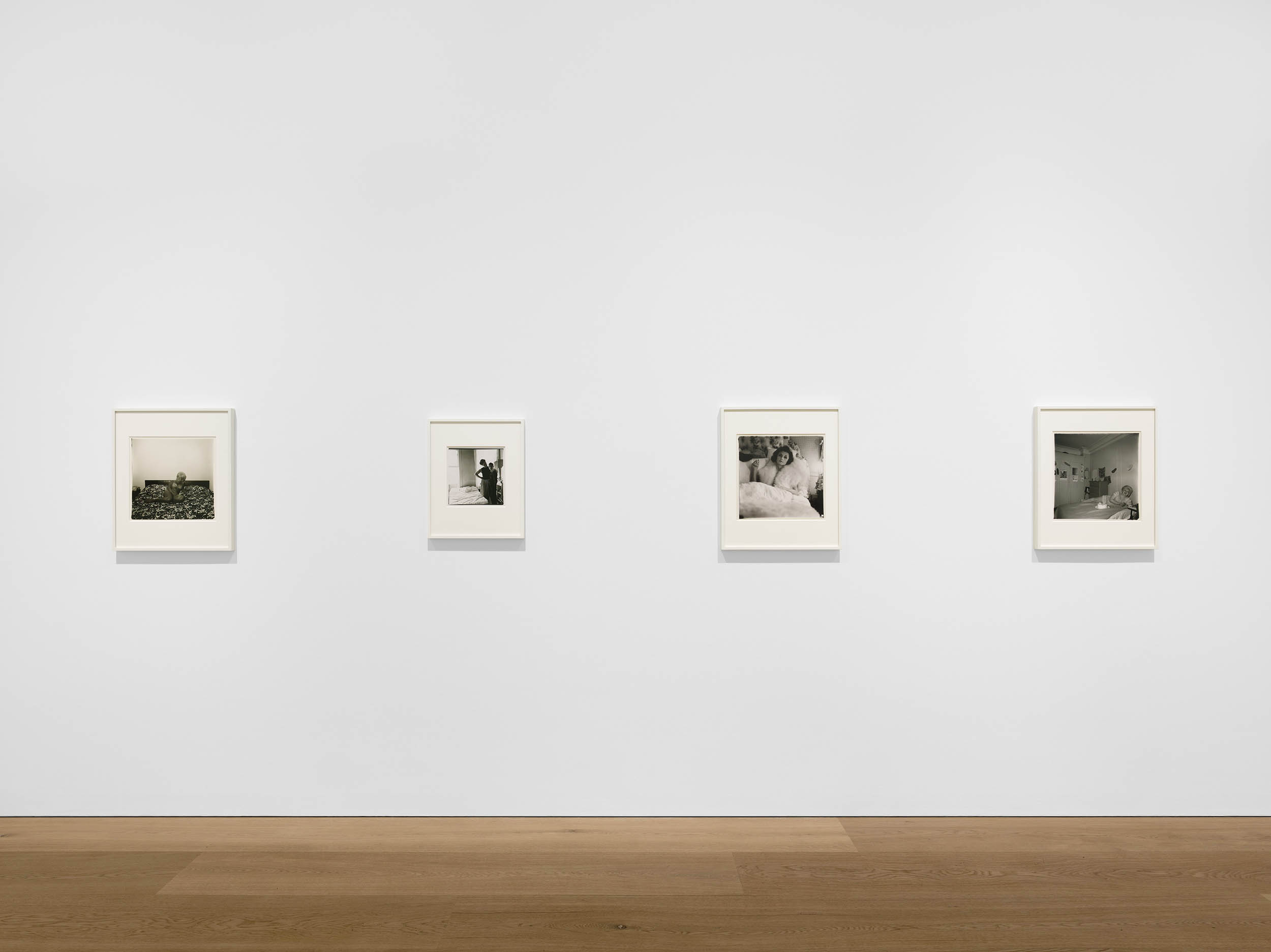
Installation view of the exhibition Diane Arbus: Sanctum Sanctorum at David Zwirner, London showing at second left, Arbus’ Two friends at home, N.Y.C., 1965; at second right, Brenda Diana Duff Frazier, 1938 Debutante of the Year, at home, Boston, Mass. 1966; and at right, Transvestite at her birthday party, N.Y.C., 1968
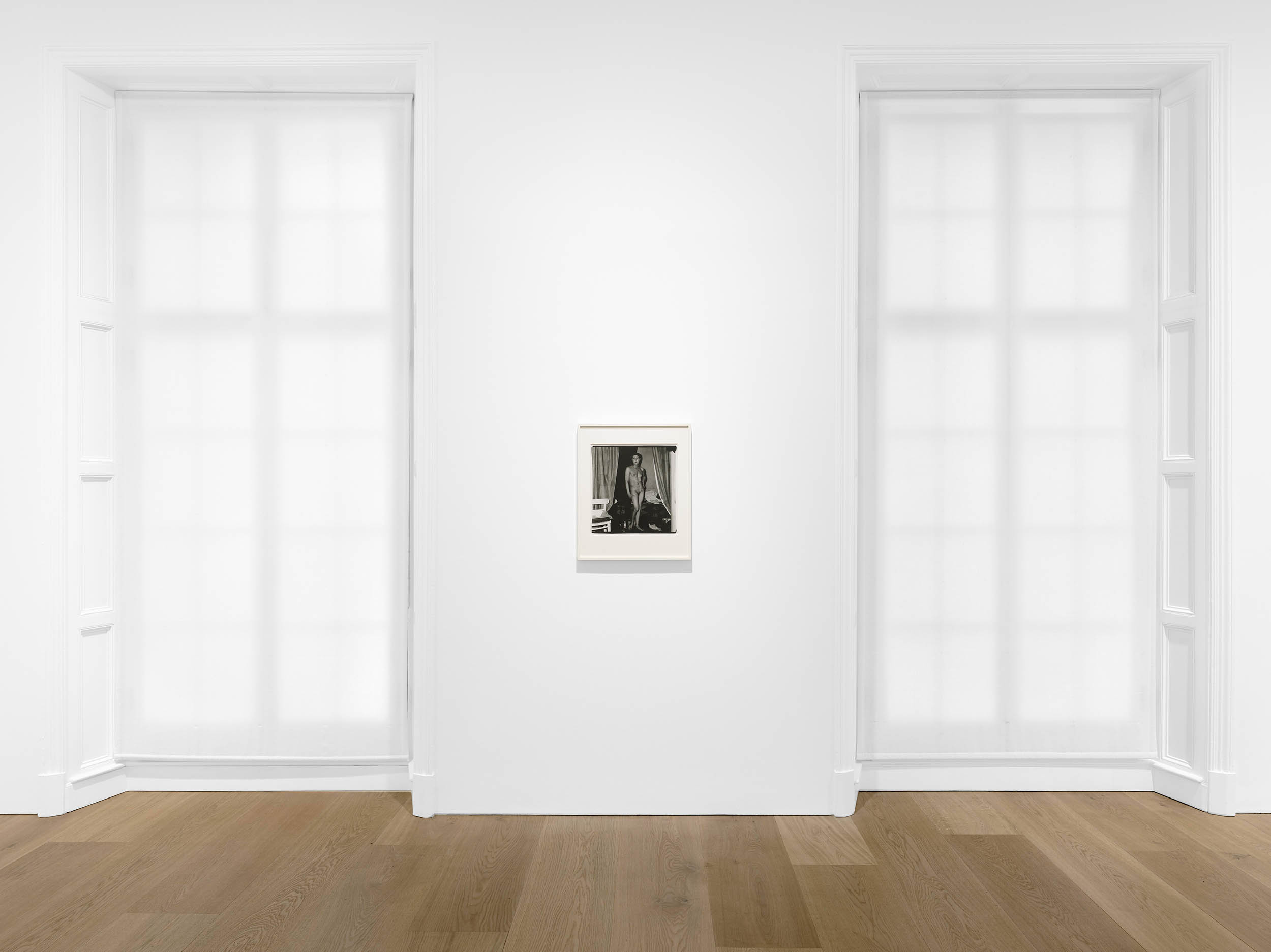
Installation view of the exhibition Diane Arbus: Sanctum Sanctorum at David Zwirner, London showing Arbus’ photograph A naked man being a woman, N.Y.C. 1968
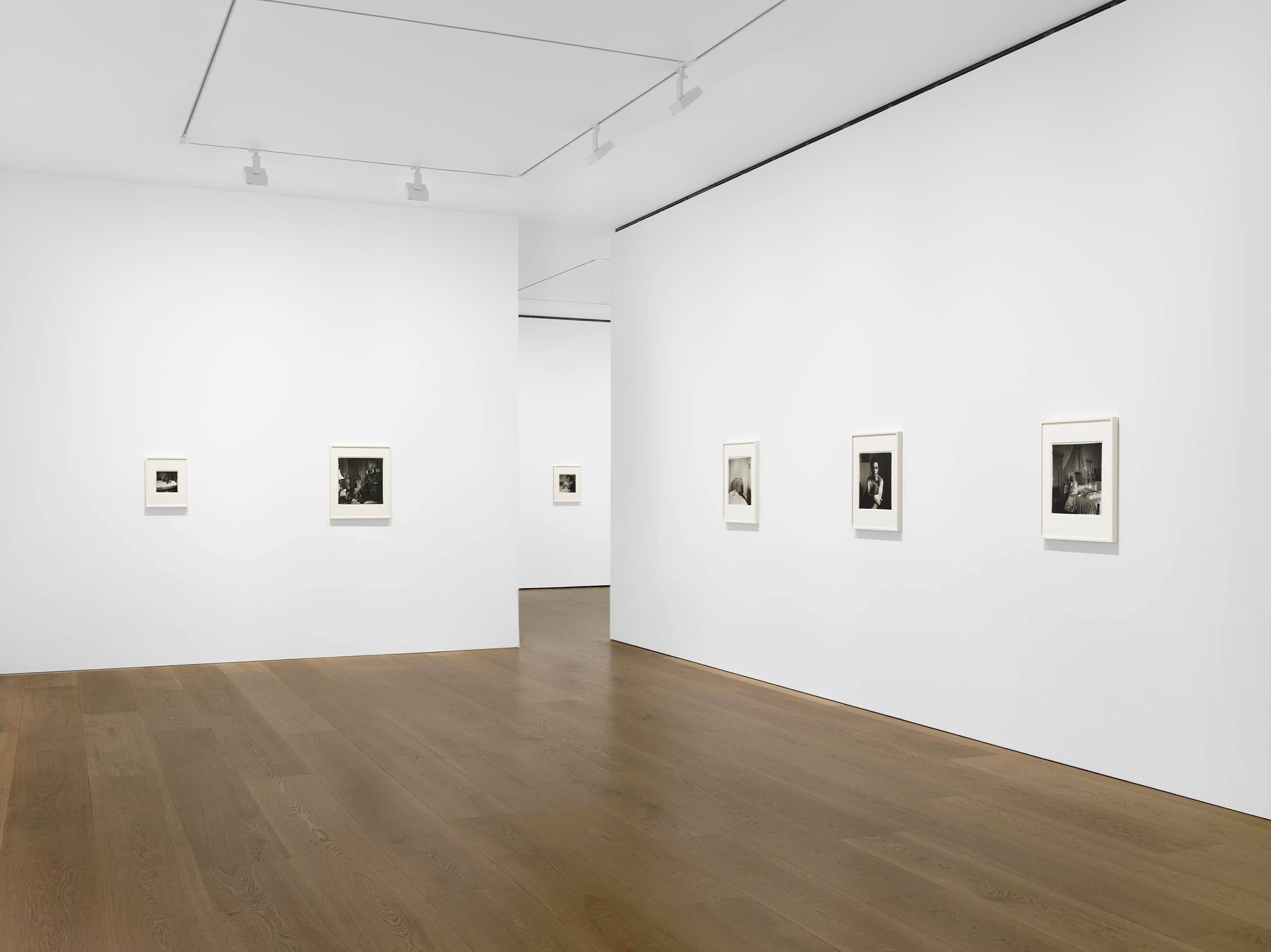
Installation view of the exhibition Diane Arbus: Sanctum Sanctorum at David Zwirner, London showing in the centre distance, Arbus’ Mexican dwarf in his hotel room, N.Y.C. 1970; at second right, Lucas Samaras, N.Y.C. 1966; and at right, Bishop on her bed, Santa Barbara, Cal., 1964

Diane Arbus (American, 1923-1971)
Female impersonator on bed, N.Y.C. 1961
1961
Gelatin silver print
© The Estate of Diane Arbus
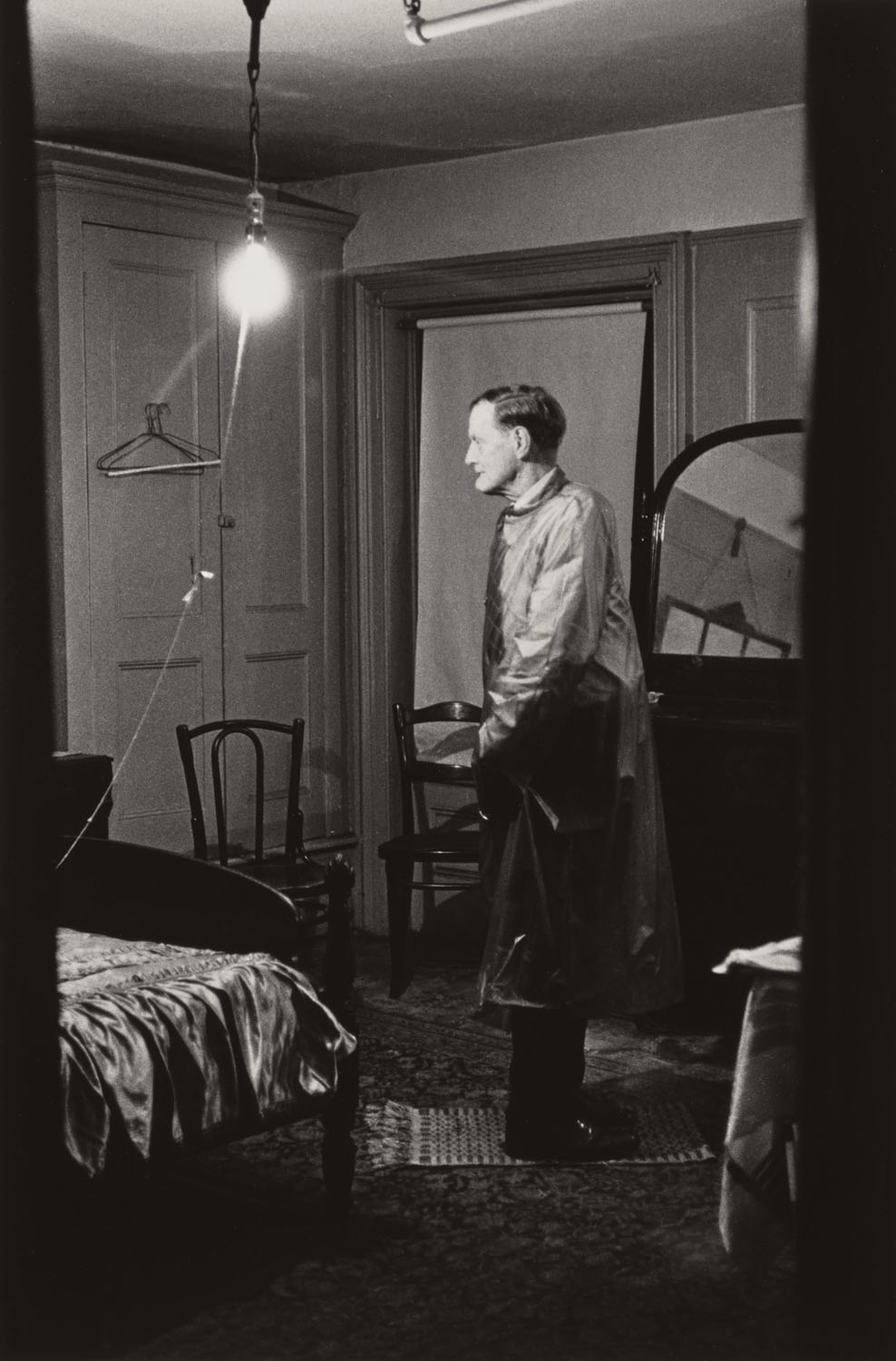
Diane Arbus (American, 1923-1971)
The Backwards Man in his hotel room, N.Y.C. 1961
1961
Gelatin silver print
© The Estate of Diane Arbus
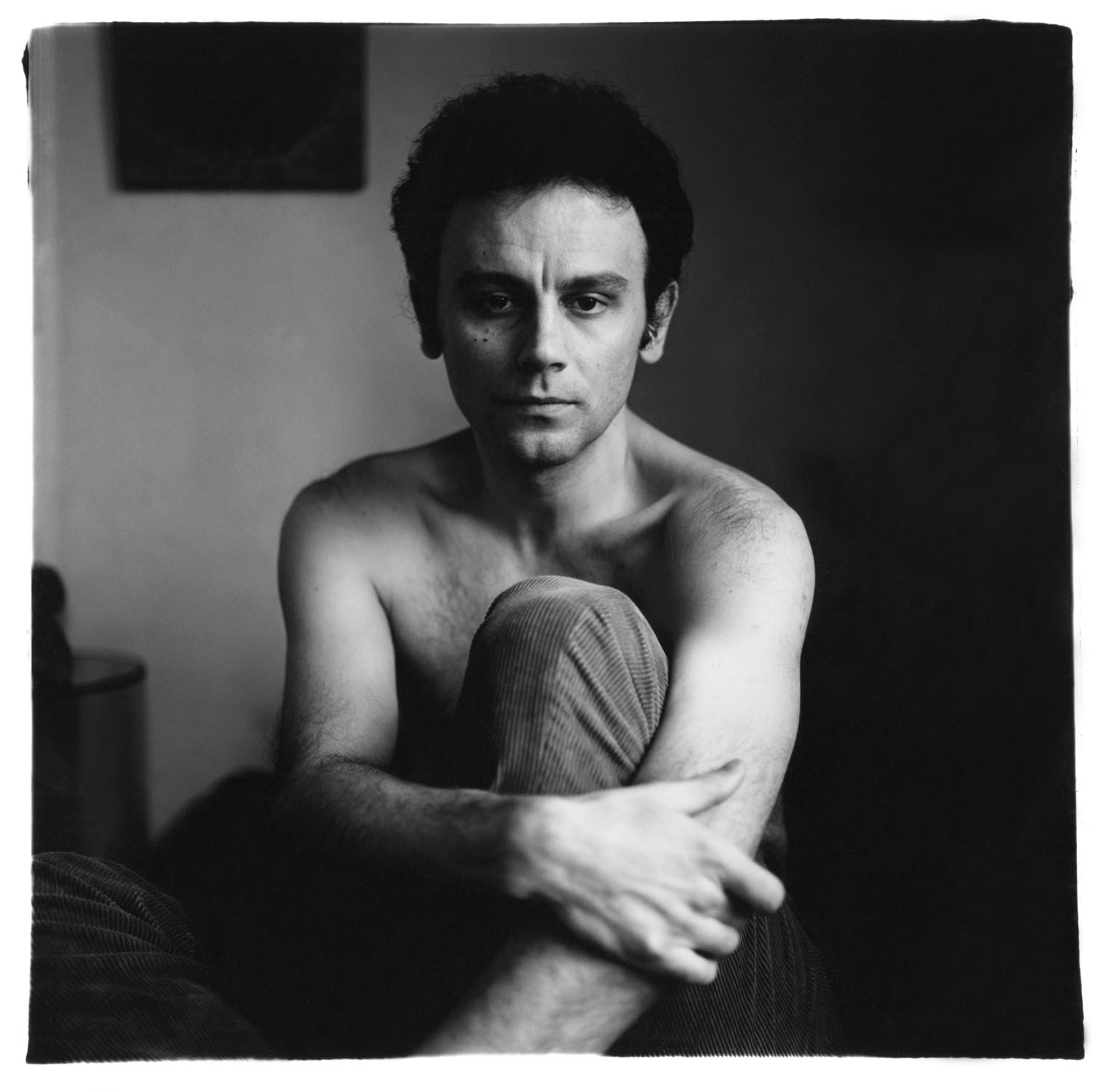
Diane Arbus (American, 1923-1971)
Lucas Samaras, N.Y.C. 1966
1966
Gelatin silver print
© The Estate of Diane Arbus
Lucas Samaras (Greek: Λουκάς Σαμαράς; September 14, 1936 – March 7, 2024) was a Greek-born American photographer, sculptor, and painter. …
His “Auto-Interviews” were a series of text works that were “self-investigatory” interviews. The primary subject of his photographic work is his own self-image, generally distorted and mutilated. He worked with multi-media collages, and by manipulating the wet dyes in Polaroid photographic film to create what he calls “Photo-Transformations”.
Text from the Wikipedia website

Diane Arbus (American, 1923-1971)
Brenda Diana Duff Frazier, 1938 Debutante of the Year, at home, Boston, Mass. 1966
1966
Gelatin silver print
© The Estate of Diane Arbus
~ Sanctum Sanctorum: a sacred room or inner chamber; a place of inviolable privacy
Diane Arbus: Sanctum Sanctorum, an exhibition of forty-five photographs made in private places across New York, New Jersey, California, and London between 1961 and 1971, is on view at David Zwirner, London, from 6 November to 17 January 2025, and travels to Fraenkel Gallery, San Francisco in spring 2026. The exhibition will be accompanied by a comprehensive monograph reproducing all works in the exhibition, jointly published by both galleries.
Through her singular combination of intelligence, charisma, intuition, and courage, Diane Arbus was frequently invited into homes and other private realms seldom seen by strangers. Though made in intimate settings, her photographs evidence no sense of intrusion or trespass. Instead, they reveal an unspoken exchange between photographer and subject, a moment of recognition in which confidences emerge freely and without judgment.
Arbus’s desire to know people embraced a vast spectrum of humanity. Her subjects in Sanctum Sanctorum include debutantes, nudists, celebrities, aspiring celebrities, socialites, transvestites, babies, widows, circus performers, lovers, female impersonators, and a blind couple in their bedroom.
The exhibition brings together little-known works, such as Girl sitting in bed with her boyfriend, N.Y.C. 1966; Ozzie and Harriet Nelson on their bed, Los Angeles 1970; and Interior decorator at the nudist camp in his trailer, New Jersey 1963, alongside celebrated images like Mexican dwarf in his hotel room, N.Y.C. 1970 and A naked man being a woman, N.Y.C. 1968.
While many of Arbus’s photographs have become part of the public’s collective consciousness since her landmark retrospective at The Museum of Modern Art, New York, in 1972, seen in this context, viewers may discover aspects of even familiar works that have previously gone unnoticed.
Sanctum Sanctorum follows two recent major exhibitions of the artist’s work: Cataclysm: The 1972 Diane Arbus Retrospective Revisited at David Zwirner New York (2022) and Los Angeles (2025), and Diane Arbus: Constellation at LUMA, Arles (2023–2024) and the Park Avenue Armory, New York (2025).
Exhibition Catalogue
This new title ‘Sanctum Sanctorum’ illuminates Diane Arbus’s singular ability to enter private worlds.
Press release from the David Zwirner
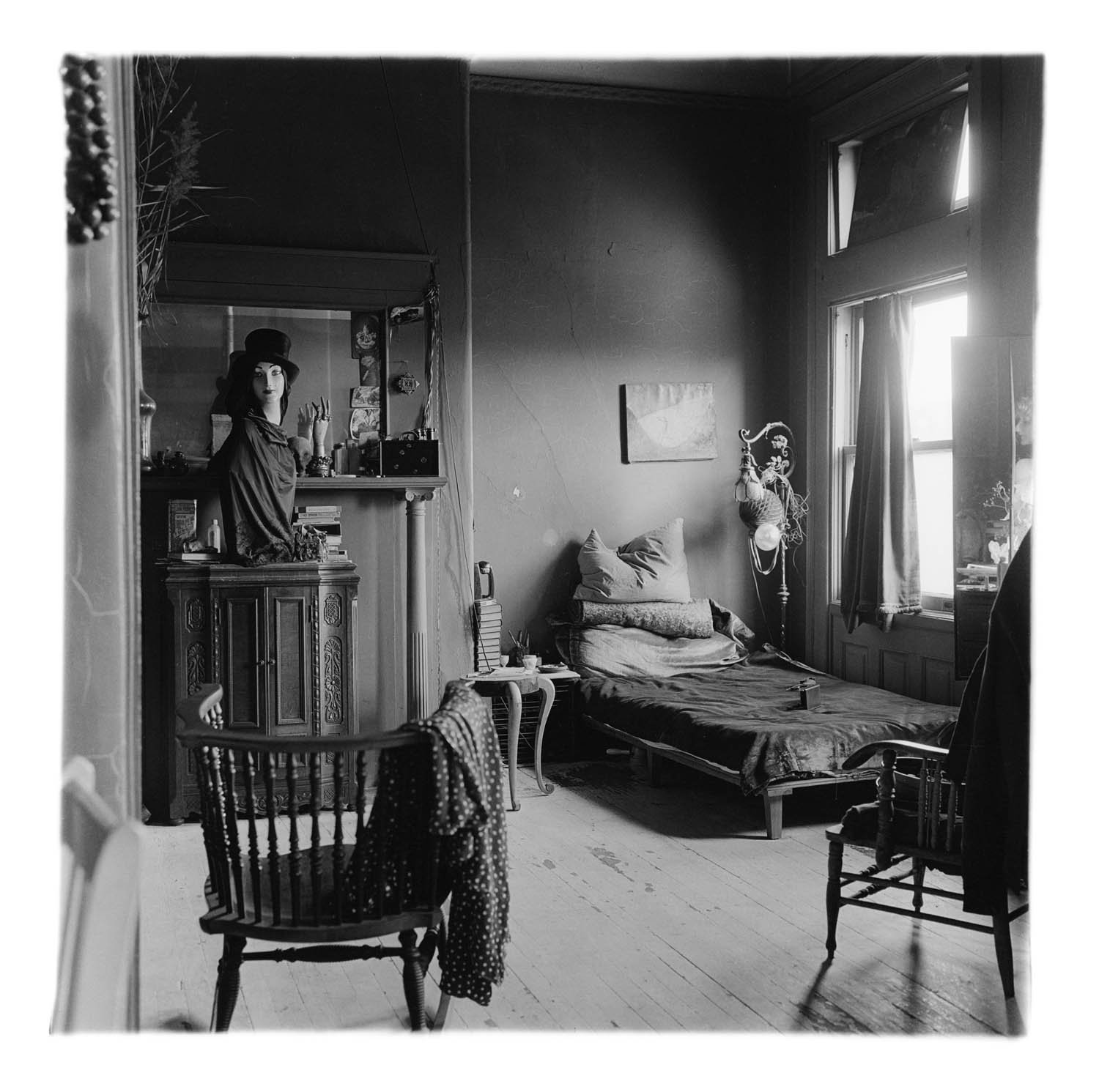
Diane Arbus (American, 1923-1971)
Nancy Bellamy’s bedroom, N.Y.C. 1961
1961
Gelatin silver print
© The Estate of Diane Arbus
Used under fair use conditions for the purposes of education and research.
One of Arbus’s lesser known pictures, this photograph is of the bedroom of Nancy Bellamy, the wife of Richard Bellamy, a leading gallerist in 1960s New York who influentially championed Pop Art and Minimalism. Before she began her personal projects, Arbus worked in fashion photography with her husband, Allan, and she first met Nancy when she modelled for the Arbuses on a fashion shoot. As well as modelling, Bellamy also worked as a dancer, painter and costume designer, and had a keen interest in spiritualism. Like ‘Xmas Tree in a Living Room in Levittown 1963’, Arbus uses an empty room to create a portrait of the person – the dressmaker’s dummy, the canvas on the wall, the photographs by the mirror and the simple, yet elegant furnishings together create an impression of Arbus’s friend’s personality.
Text from the National Galleries of Scotland website
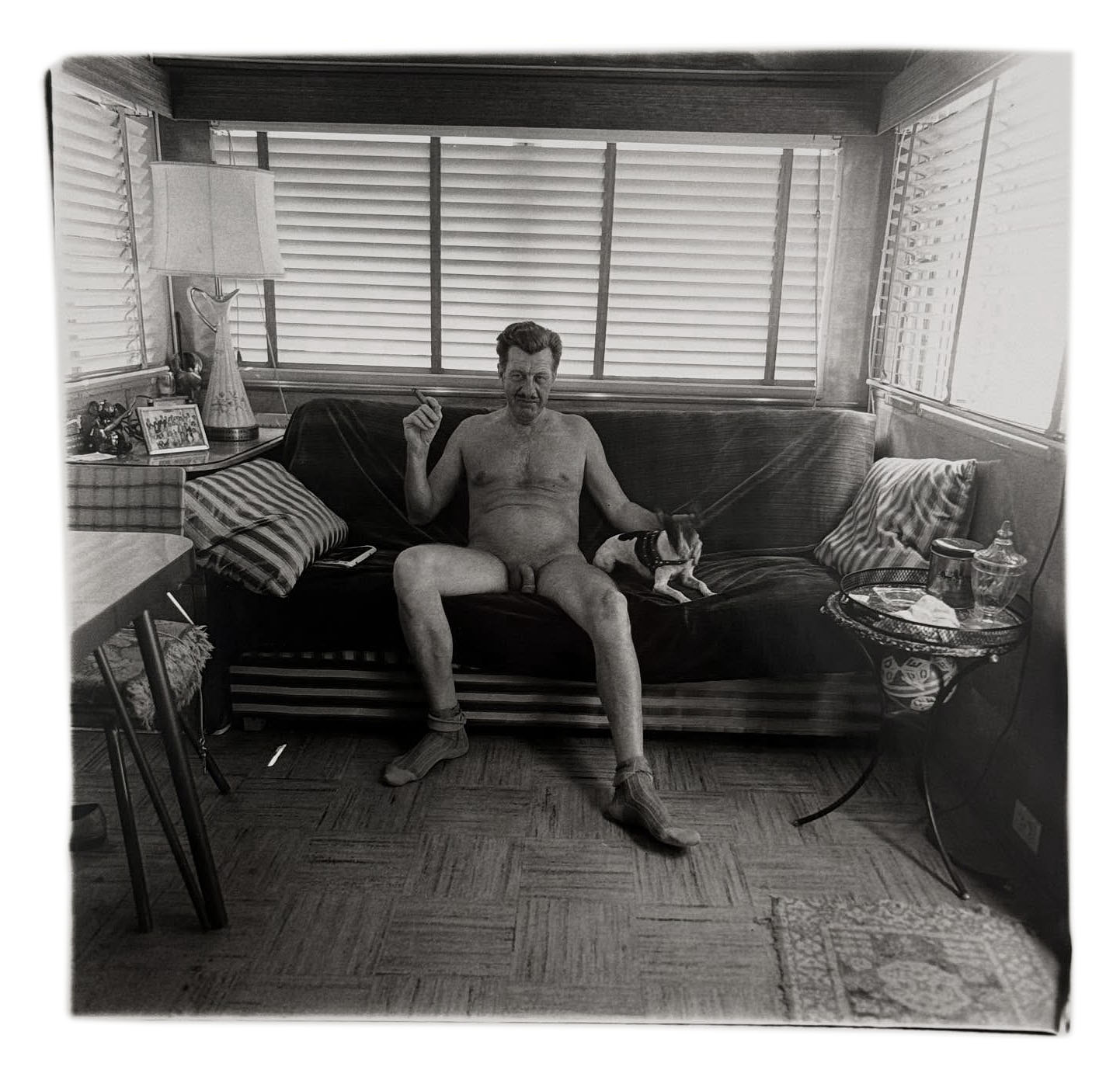
Diane Arbus (American, 1923-1971)
Interior decorator at the nudist camp in his trailer, New Jersey, 1963
1963
Gelatin silver print
© The Estate of Diane Arbus
Used under fair use conditions for the purposes of education and research.
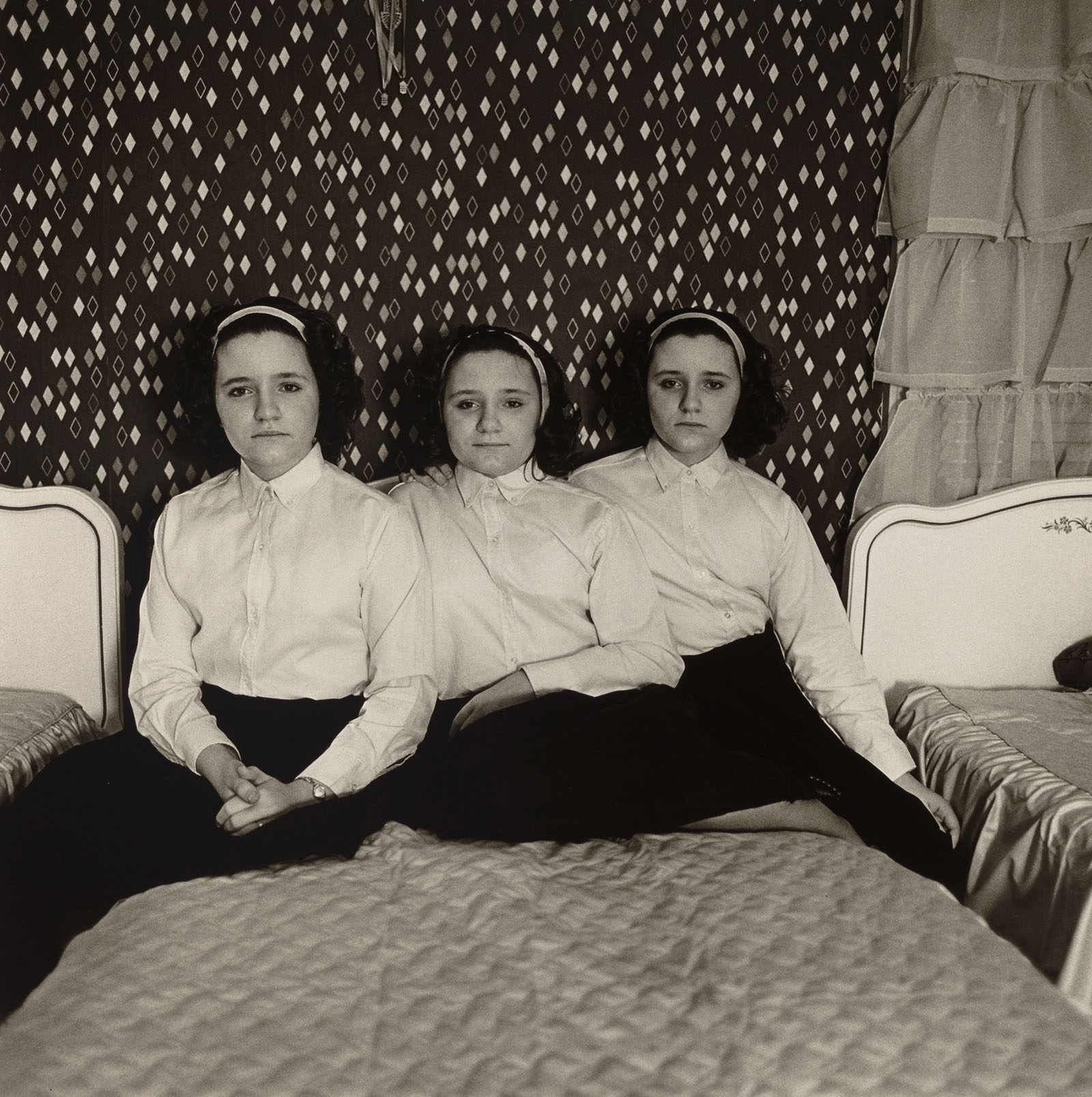
Diane Arbus (American, 1923-1971)
Triplets in their Bedroom, N.J., 1963
1963
Gelatin silver print
© The Estate of Diane Arbus
Used under fair use conditions for the purposes of education and research.
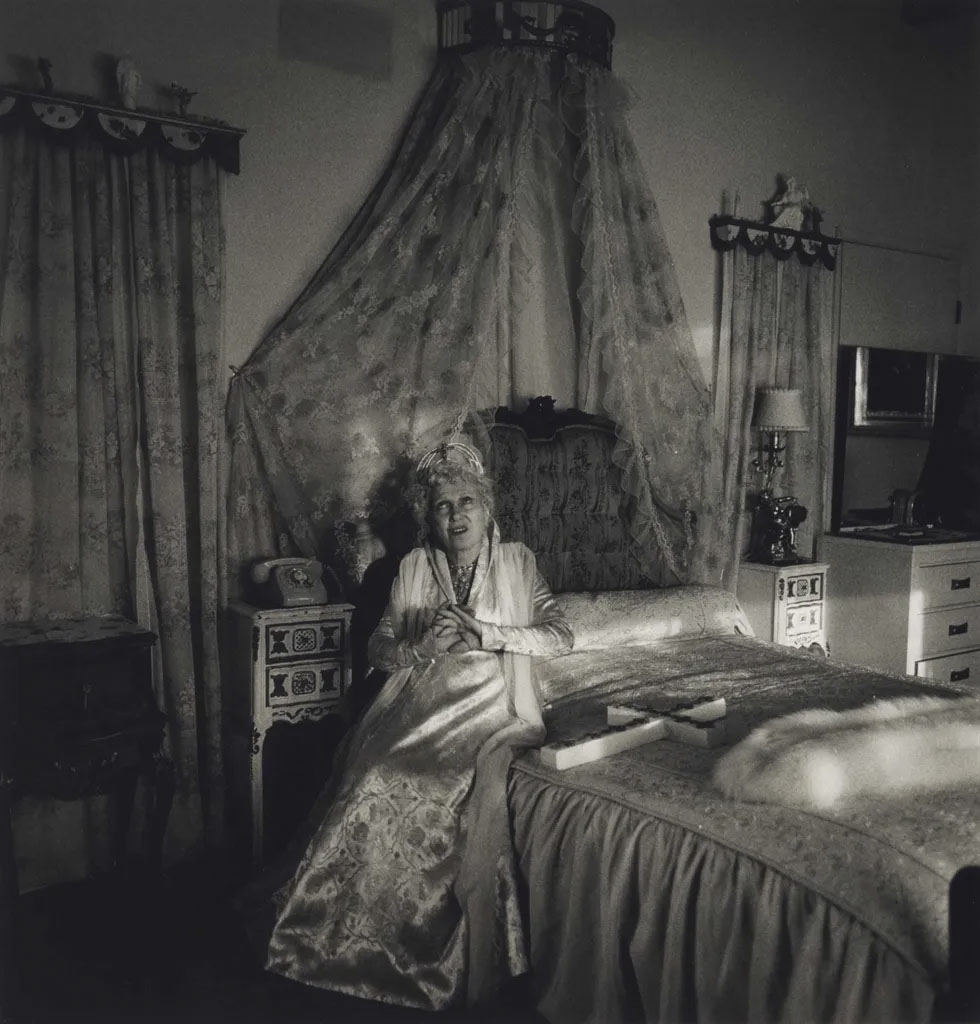
Diane Arbus (American, 1923-1971)
Bishop on her bed, Santa Barbara, Cal., 1964
1964
Gelatin silver print
© The Estate of Diane Arbus
Used under fair use conditions for the purposes of education and research.
The bishop in Diane Arbus’s photograph “Bishop on her bed, Santa Barbara, Cal.” (1964, above) was Bishop Ethel Predonzan, a unique figure who believed she was in Santa Barbara to await the Second Coming of Christ and wore elaborate robes, described by Arbus as a “small lady in damask robes with hair of phosphorescent pink”.
Predonzan was a key subject in Arbus’s exploration of individuals on the fringes, showcasing the artist’s ability to find deep personal connection and reveal inner strangeness.
Google AI
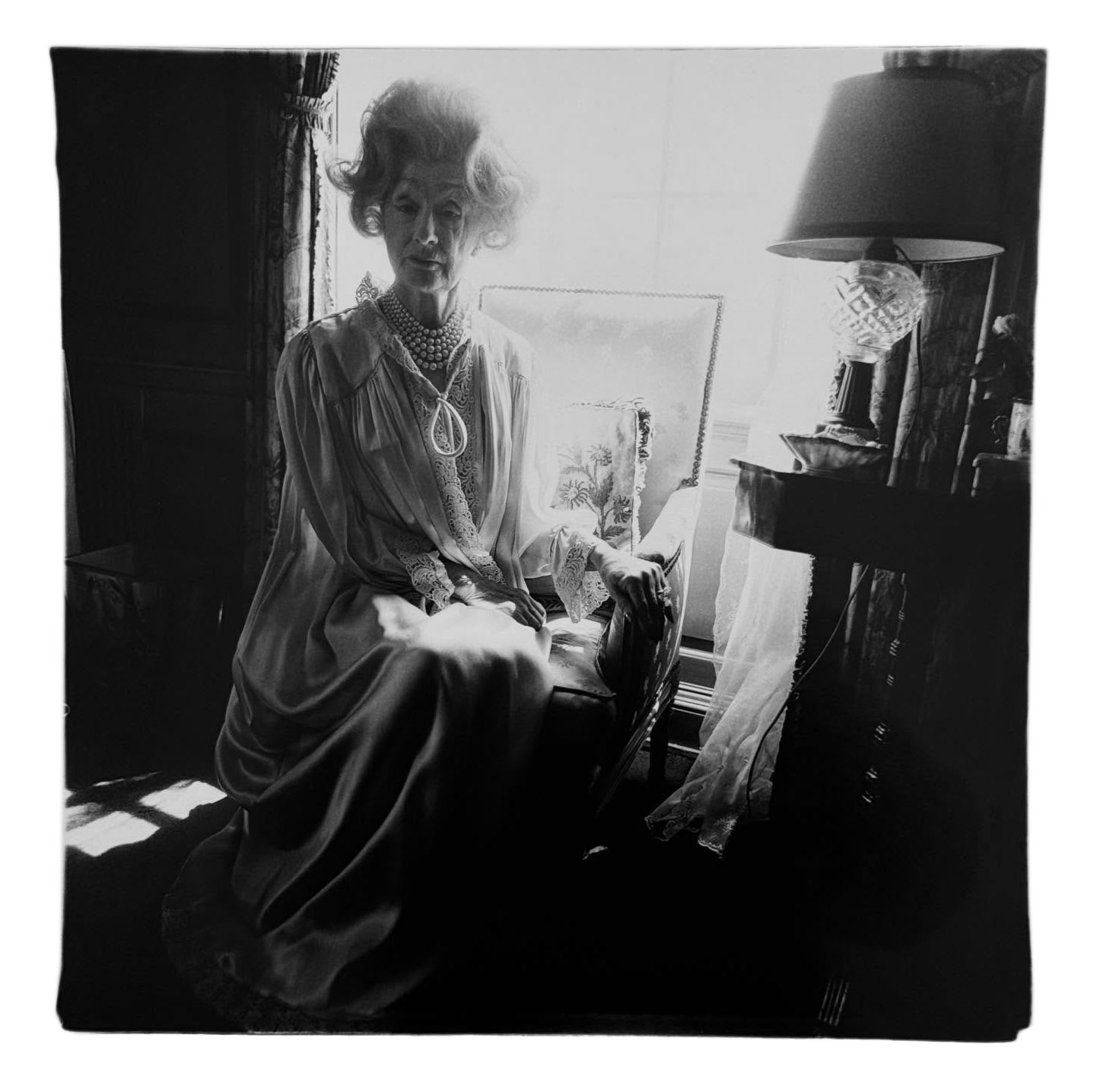
Diane Arbus (American, 1923-1971)
Charlton Henry in a negligee, Philadelphia, Pa. 1965
1965
Gelatin silver print
© The Estate of Diane Arbus
Used under fair use conditions for the purposes of education and research.
Mrs T. Charlton Henry was a Philadelphia socialite, a philanthropist, and a fashion icon – often top of the ‘best-dressed’ lists. She was the kind of wealthy upper-class woman that Arbus’s father would have hoped to see in his Fifth Avenue department store buying the latest furs.
Text from the National Galleries of Scotland website
“Mrs. Henry, born Julia Rush Biddle of Philadelphia’s Main Line, weighs approximately 88 pounds. She will be 82 years old this month. She has been on the best-dressed list so often that she is now a member of fashion’s Hall of Fame. She still lives in Philadelphia, but commutes to New York for luncheon, shopping, theater. She sits, with the posture of another era, on a bound-to-be-seen banquette at La Caravelle restaurant and delves into a curry (“I’ll have jellied soup for dinner tonight”). Her silver and gold “57 varieties” hair is meticulously coifed; the fingernails that blow delicate little kisses of greeting to friends are tinted a deep pink. Her brown and white gingham Mainbocher is perked up with her favorite day jewels. There are marble-size pearls around the neck and one wrist, and massive yellow sapphires at the other wrist, the ears, and flashing away on a ring and a brooch.”
Enid Nemy. “Mrs. T. Charlton Henry: A Grande Dame and a Jogger,” on The New York Times website July 29, 1968 [Online] Cited 05/01/2026
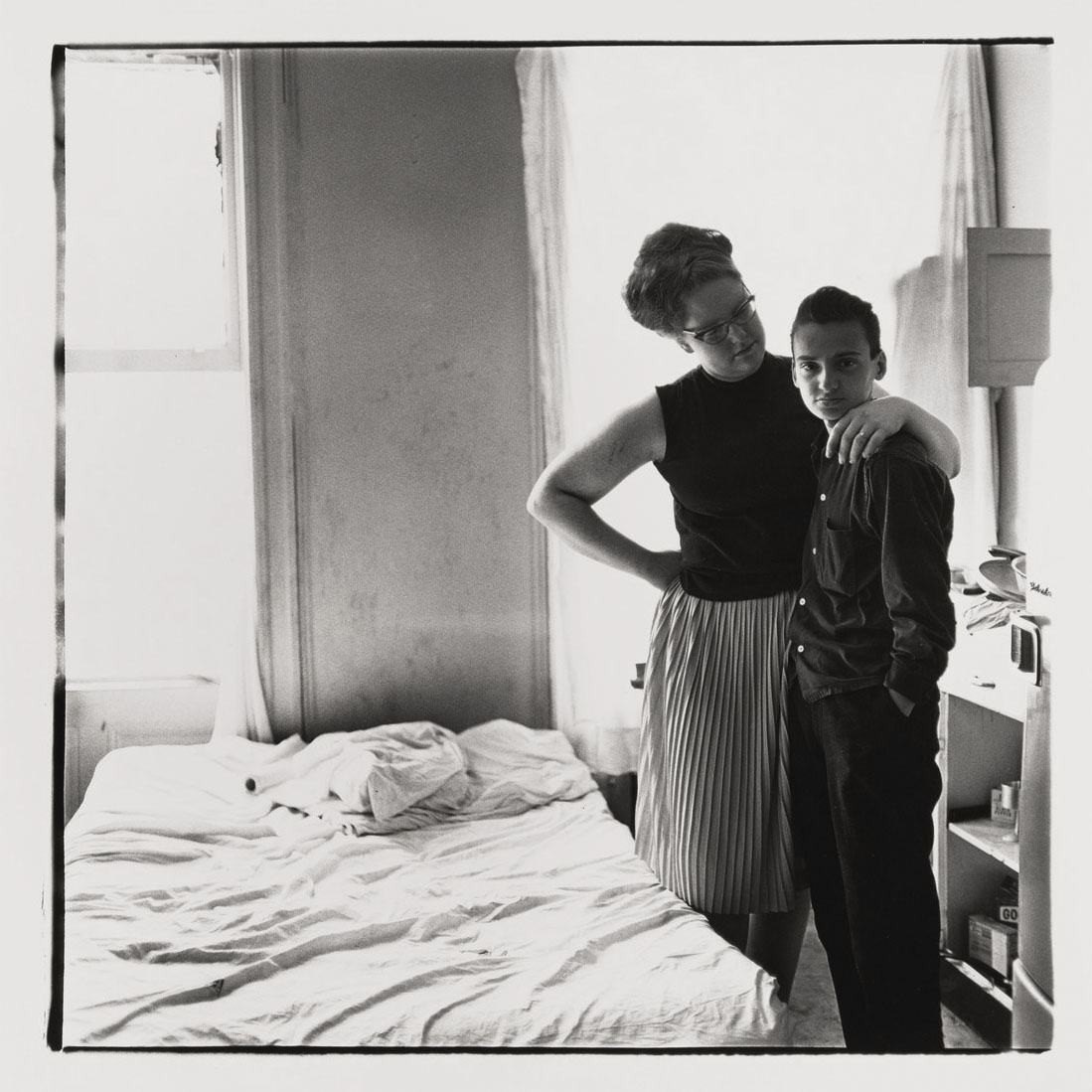
Diane Arbus (American, 1923-1971)
Two friends at home, N.Y.C., 1965
1965
Gelatin silver print
© The Estate of Diane Arbus
Used under fair use conditions for the purposes of education and research.

Diane Arbus (American, 1923-1971)
A naked man being a woman, N.Y.C., 1968
1968
Gelatin silver print
© The Estate of Diane Arbus
Used under fair use conditions for the purposes of education and research.
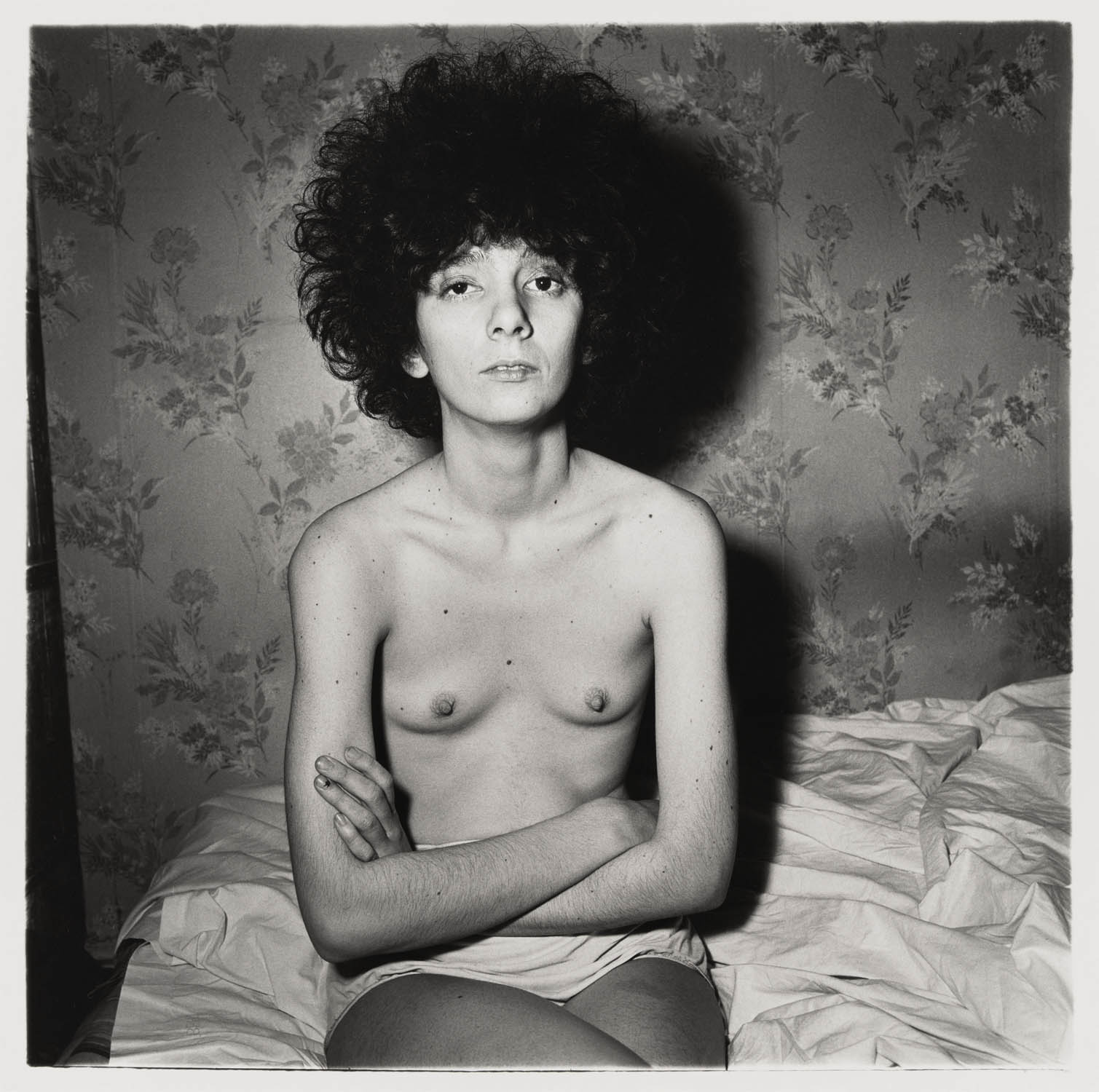
Diane Arbus (American, 1923-1971)
Girl sitting on her bed with her shirt off, N.Y.C., 1968
1968
Gelatin silver print
© The Estate of Diane Arbus
Used under fair use conditions for the purposes of education and research.
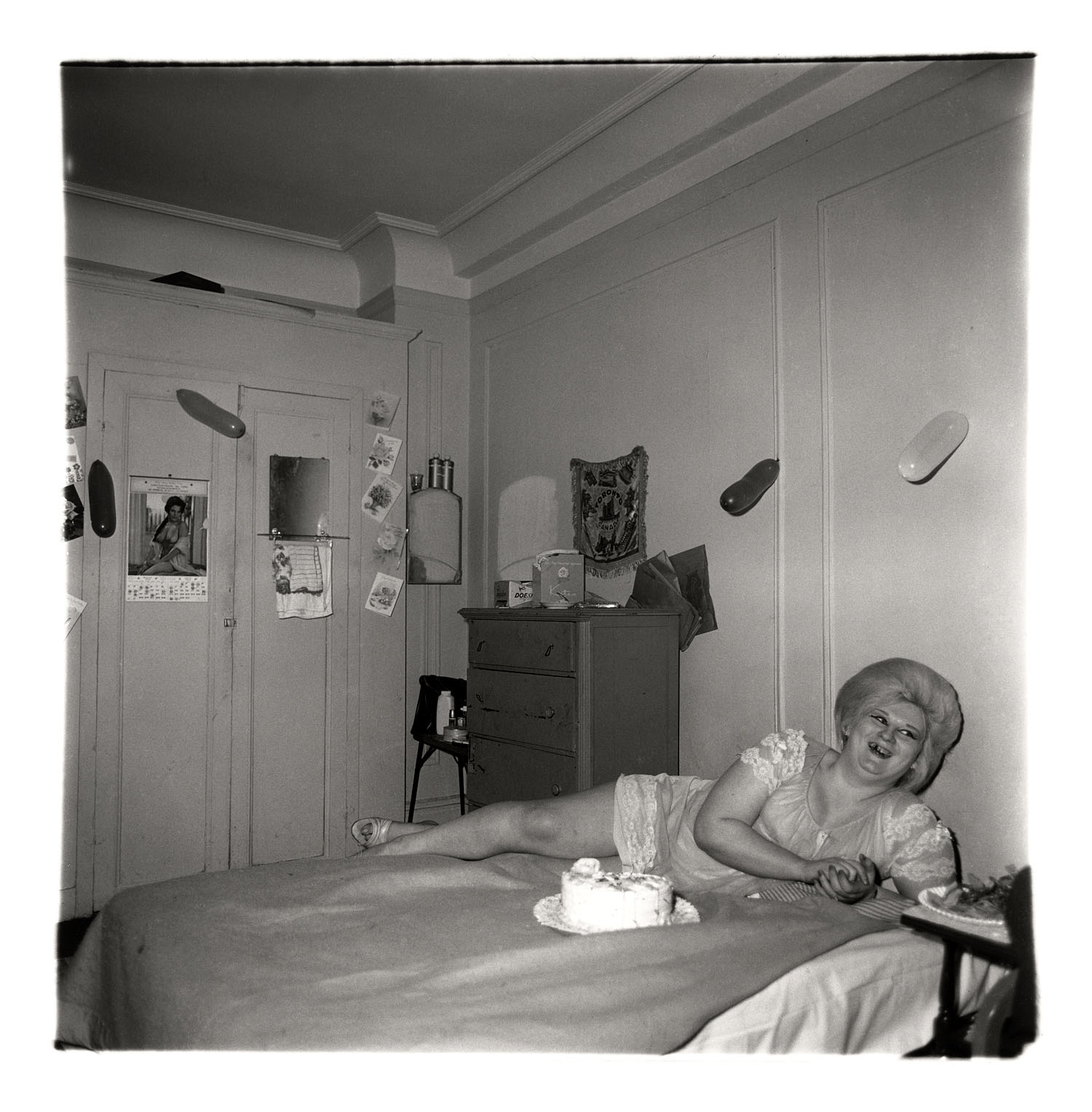
Diane Arbus (American, 1923-1971)
Transvestite at the birthday party, N.Y.C. 1969
1969
Gelatin silver print
© The Estate of Diane Arbus
Used under fair use conditions for the purposes of education and research.
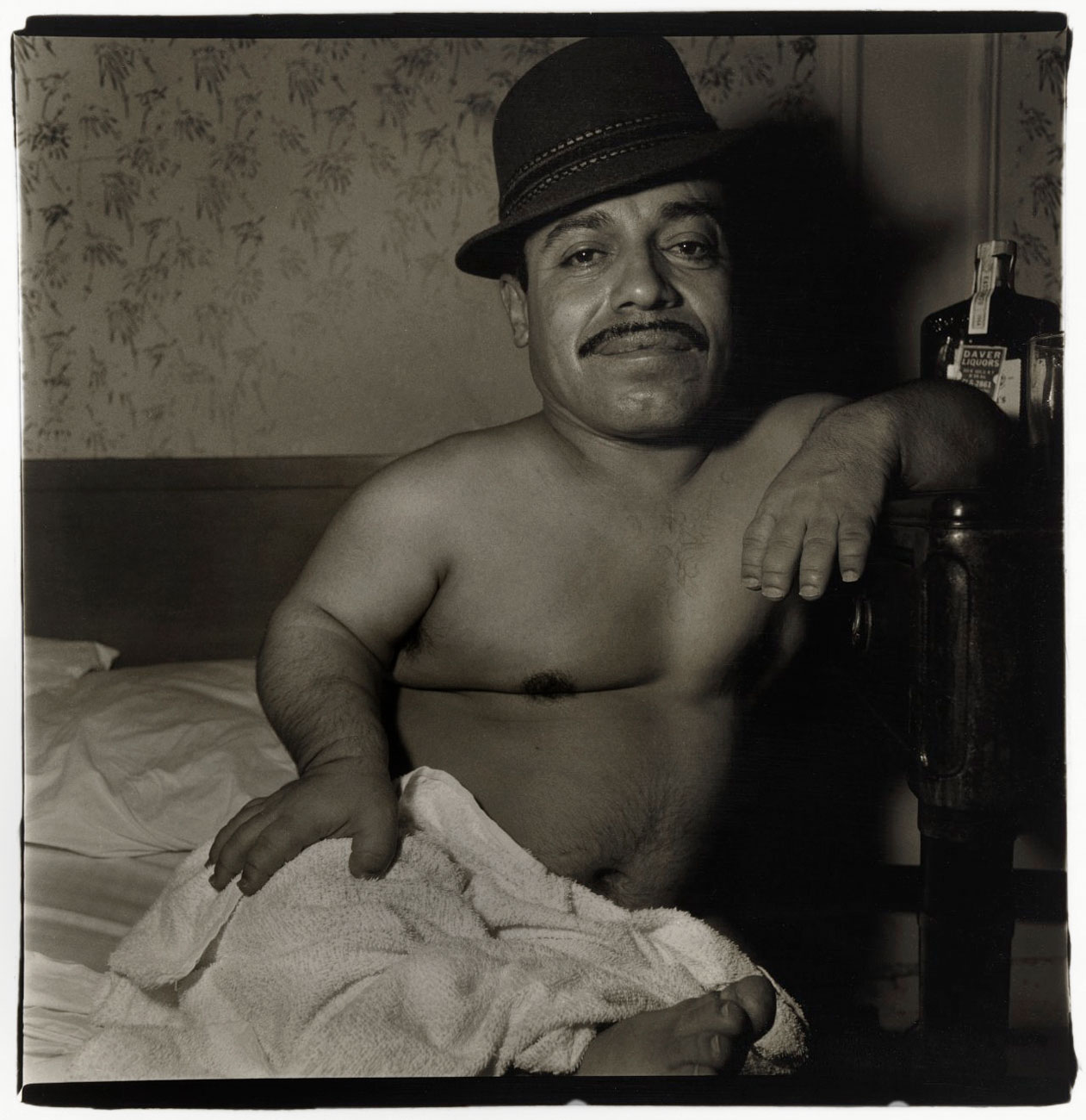
Diane Arbus (American, 1923-1971)
Mexican Dwarf in his hotel room, N.YC., 1970
1970
Gelatin silver print
© The Estate of Diane Arbus
Used under fair use conditions for the purposes of education and research.
David Zwirner
24 Grafton Street
London W1S 4EZ
Opening hours:
Tuesday – Saturday, 10am – 6pm




 Art Blart _ art and cultural memory archive
You must be logged in to post a comment.