Exhibition: ‘My Country, I Still Call Australia Home: Contemporary Art from Black Australia’ at The Gallery of Modern Art (GOMA), Brisbane

Exhibition dates: 1st June – 7th October 2013
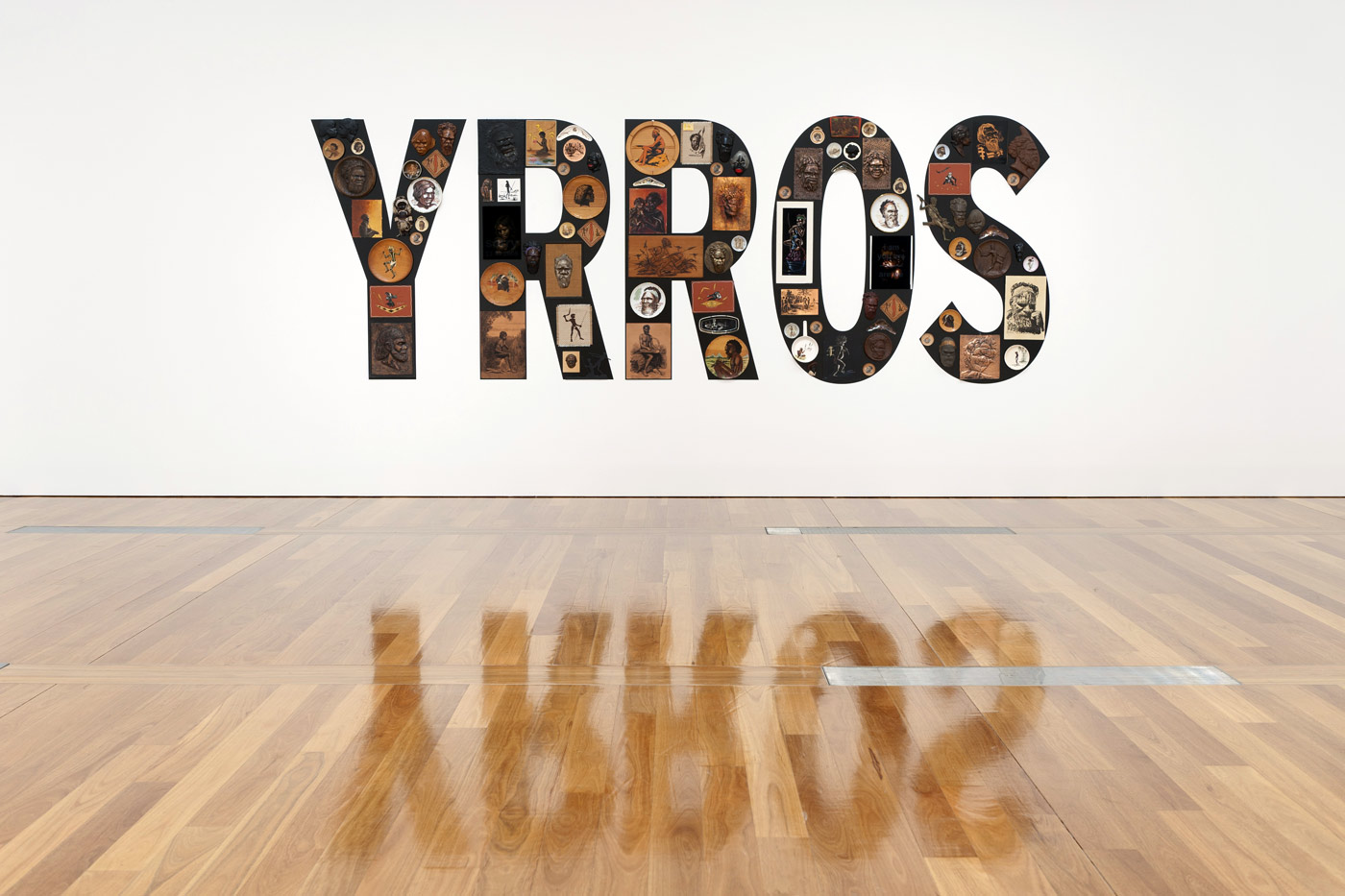
 

Tony Albert (Australia, Queensland Girramay people b. 1981) Girramay people 'Sorry' 2008


Tony Albert (Australia, Queensland b. 1981)
Girramay people
Sorry
2008
Found kitsch objects applied to vinyl letters
The James C Sourris, AM, Collection. Purchased 2008 with funds from James C Sourris through the Queensland Art Gallery Foundation
Collection: Queensland Art Gallery


R U SORRY?

Do you feel FORGIVEN?

What do I have to feel sorry for
I only arrived here yesterday

I FORGIVE you for all the SADNESS and SORROW that COLONISATION has CAUSED

You gutless wonder

GUILT, GUILTY, GUILTLESS, GUILELESS, GUTLESS


The persistence of memory – how the past lingers and subverts

MEMORY – inflicting more DAMAGE on the already DAMAGED

(TIME) to MOVE ON… Nothing to  see here


Dr Marcus Bunyan


Many thankx to the The Gallery of Modern Art (GOMA) for allowing me to publish the photographs in the posting. Please click on the photographs for a larger version of the image.


Bindi Cole (Australian, Victoria Wathaurung people b. 1975) 'I forgive you' 2012


Bindi Cole (Australian, Victoria b. 1975)
Wathaurung people
I forgive you
2012
Emu feathers on MDF board
Purchased 2012. Queensland Art Gallery Foundation
Collection: Queensland Art Gallery
© Bindi Cole 2012. Licensed by Viscopy, Sydney, 2013


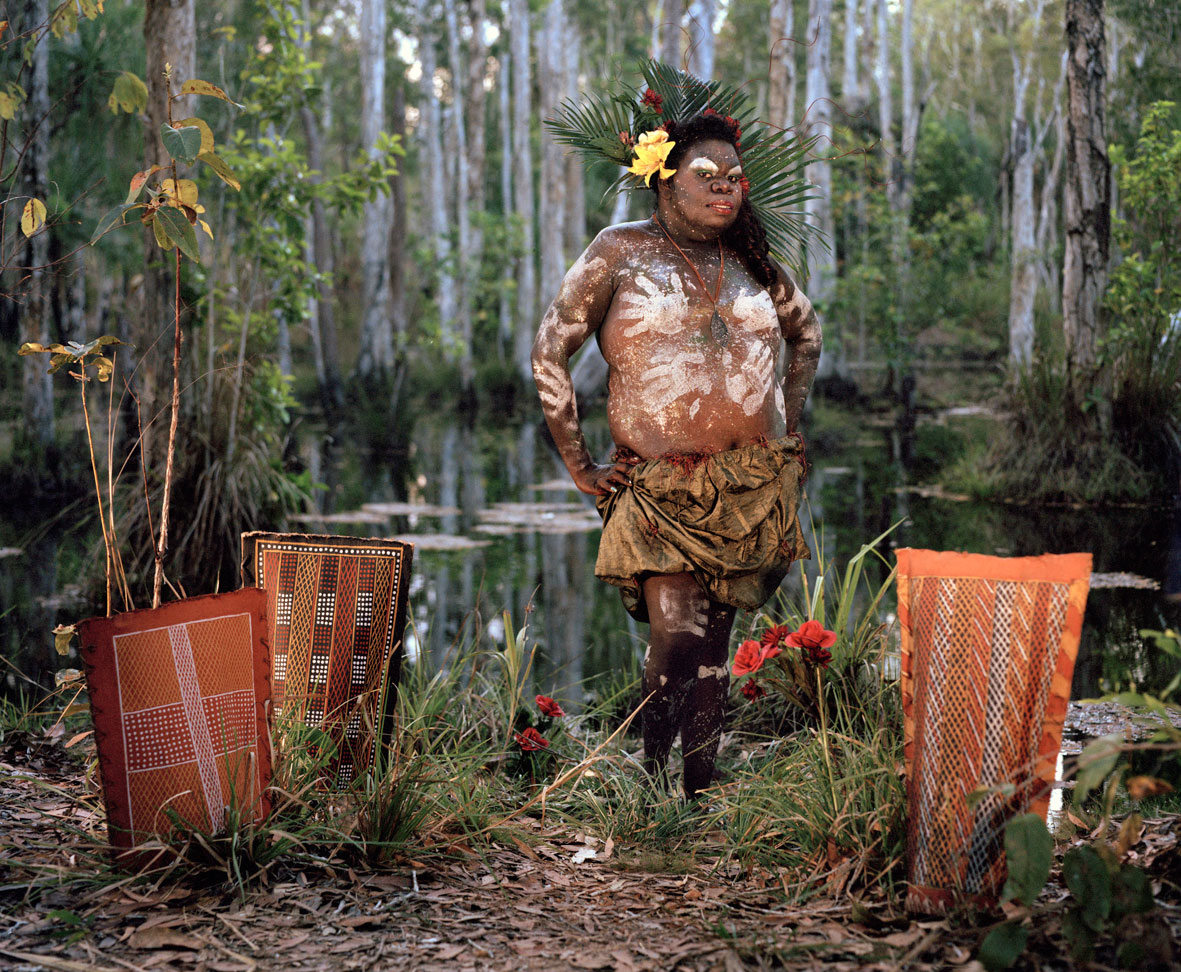
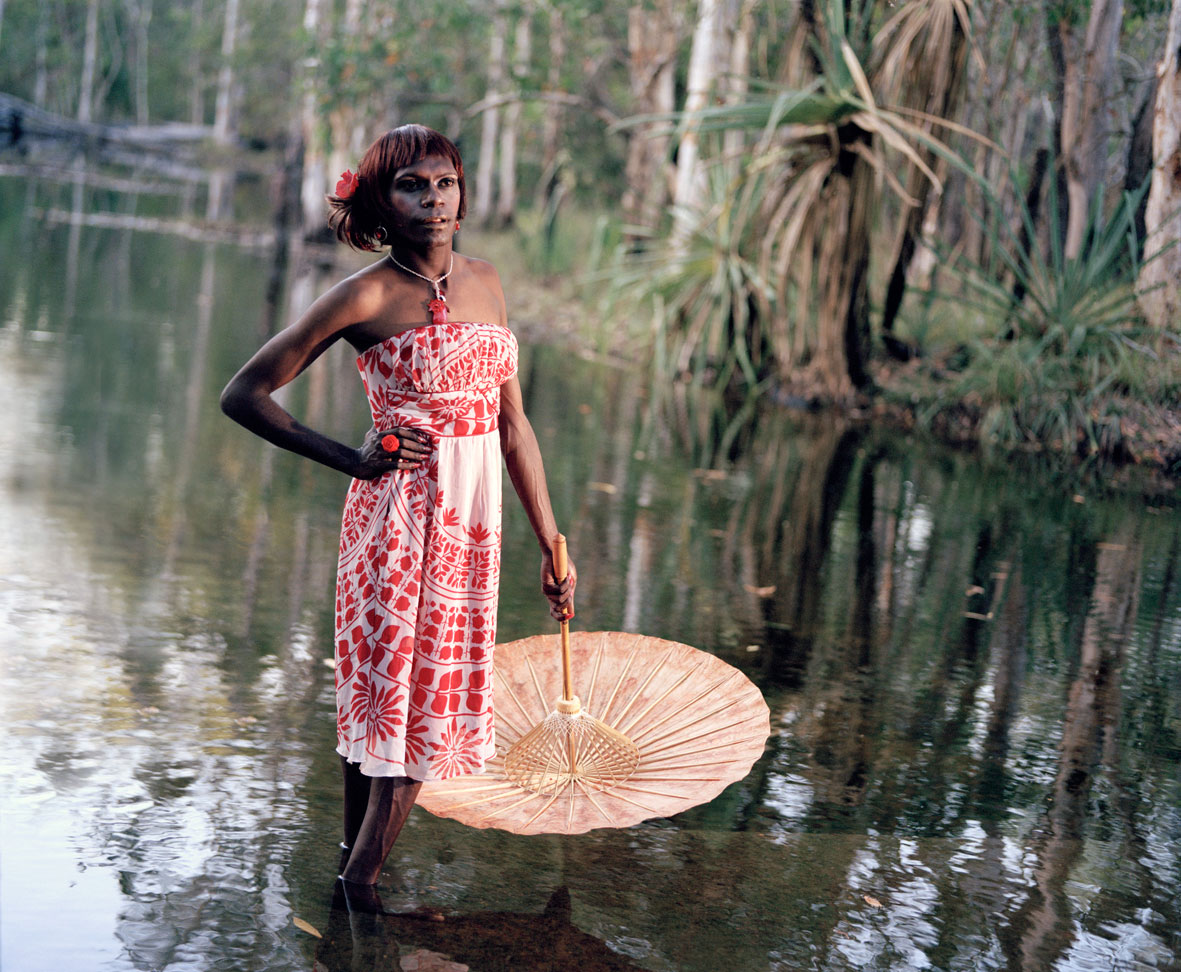
Bindi Cole (Australian, Victoria Wathaurung people b. 1975) 'Crystal' 2009


Bindi Cole (Australian, Victoria b. 1975)
Wathaurung people
Crystal
2009
From the series Sistagirls
Pigment print on Hahnemühle Photo Rag paper
Purchased 2011 with funds from the Bequest of Grace Davies and Nell Davies through the Queensland Art Gallery Foundation
Collection: Queensland Art Gallery
© Bindi Cole 2009. Licensed by Viscopy, Sydney, 2013


~ Review: ‘Sistagirls’ by Bindi Cole at Nellie Castan Gallery, Melbourne, July 2010
 

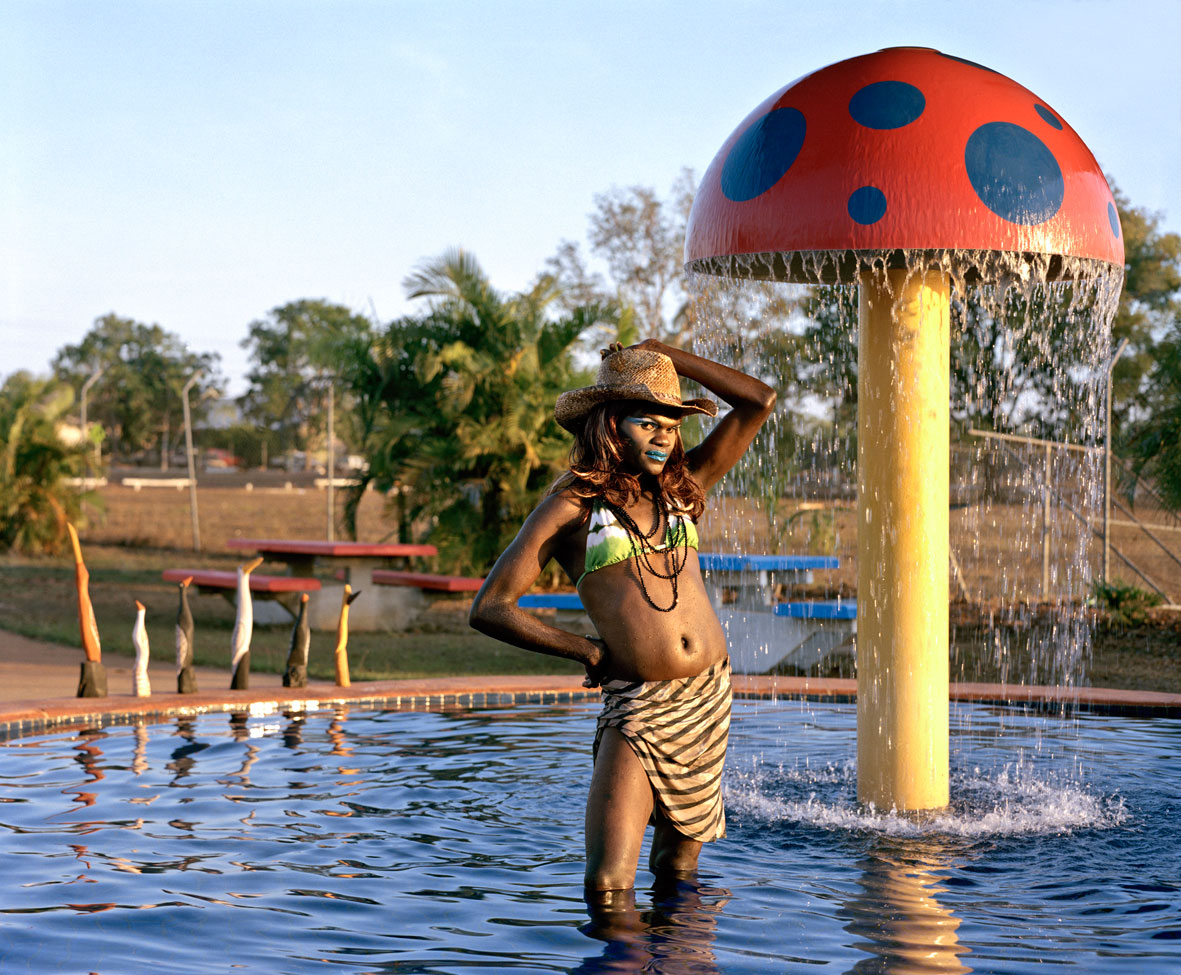
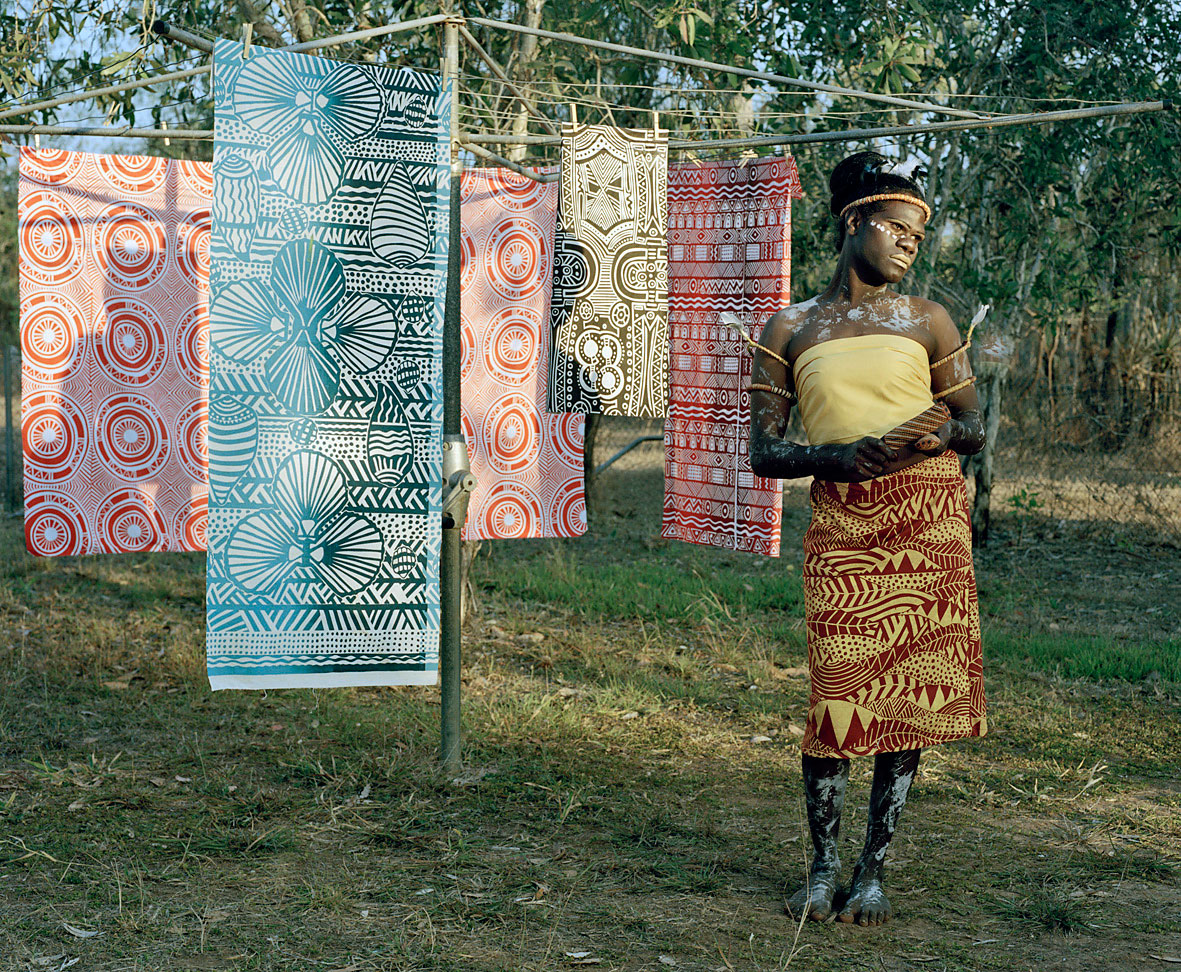
Bindi Cole (Australian, Victoria Wathaurung people b. 1975) 'Frederina' 2009


Bindi Cole (Australian, Victoria b. 1975)
Wathaurung people
Frederina
2009
From the series Sistagirls
Pigment print on Hahnemühle Photo Rag paper
Purchased 2011 with funds from the Bequest of Grace Davies and Nell Davies through the Queensland Art Gallery Foundation
Collection: Queensland Art Gallery
© Bindi Cole 2009. Licensed by Viscopy, Sydney, 2013
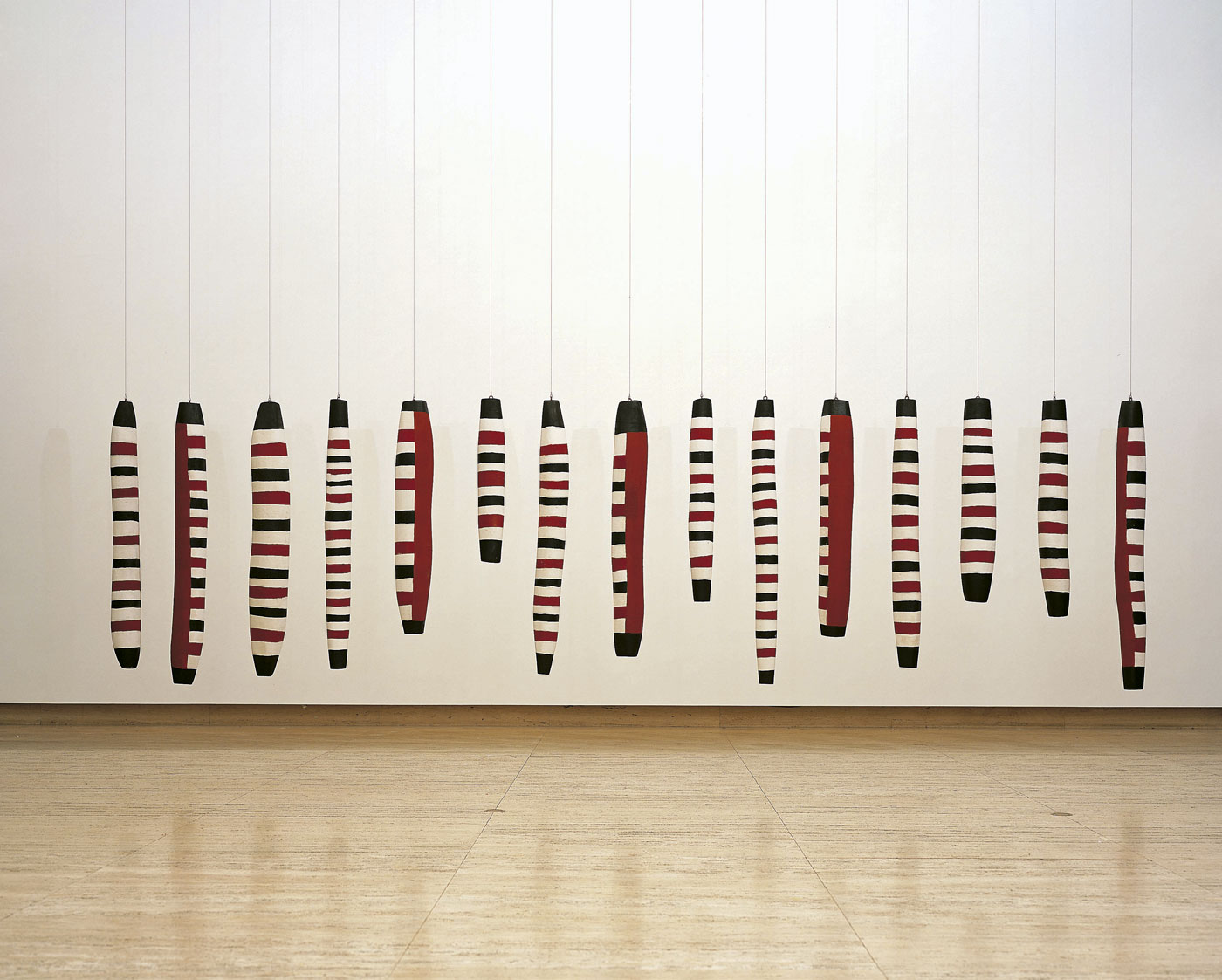
 

Arthur Koo-ekka Pambegan Jr (Australian, Queensland Wik-Mungkan people 1936-2010) 'Flying Fox Story Place' 2002-2003


Arthur Koo-ekka Pambegan Jr (Australian, Queensland 1936-2010)
Wik-Mungkan people
Flying Fox Story Place
2002-2003
Carved milkwood (Alstonia muellerana) with synthetic polymer paint and natural pigments
Commissioned 2002 with funds from the Queensland Art Gallery Foundation Grant
Collection: Queensland Art Gallery
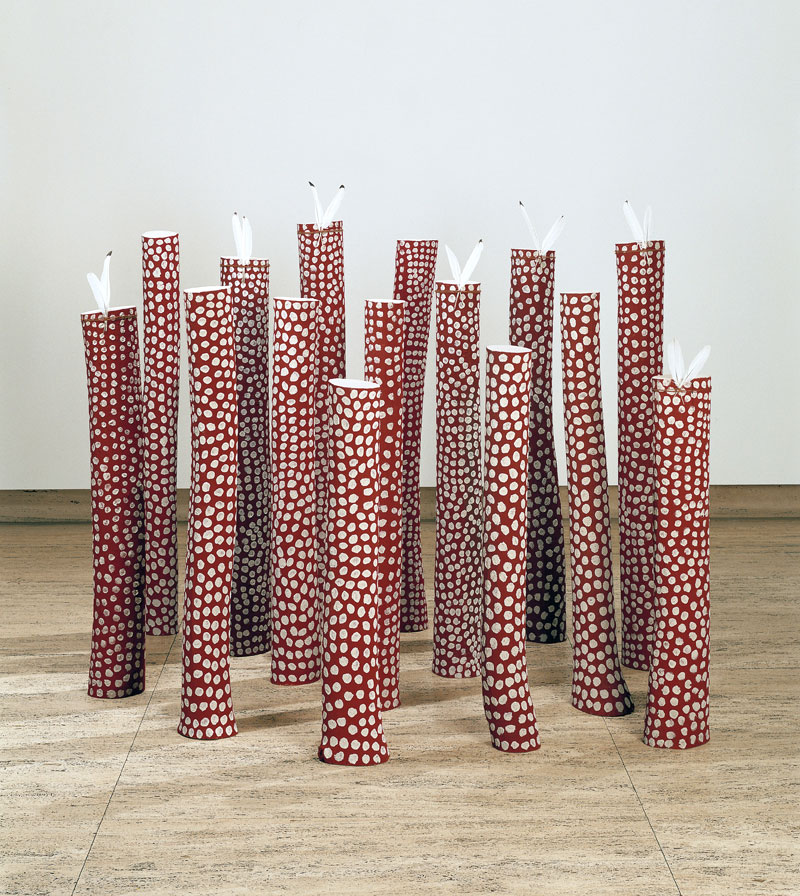
 

Ron Yunkaporta (Australian, Queensland Wik-Ngathan people b. 1956) 'Thuuth thaa' munth (Law poles)' 2002-2003


Ron Yunkaporta (Australian, Queensland b. 1956)
Wik-Ngathan people
Thuuth thaa’ munth (Law poles)
2002-2003
Cottontree wood (Hibiscus tiliaceus), ibis feathers, bush string with natural pigments
Commissioned 2002 with funds from the Queensland Art Gallery Foundation Grant
Collection: Queensland Art Gallery


Jennifer Mye Jr. (Australian, Queensland Meriam Mir people b. 1984) 'Basket with short handles' 2011


Jennifer Mye Jr. (Australian, Queensland b. 1984)
Meriam Mir people
Basket with short handles
2011
Woven polypropylene tape (blue with Australian flag motif)
Purchased 2011 with funds from Thomas Bradley through the Queensland Art Gallery Foundation
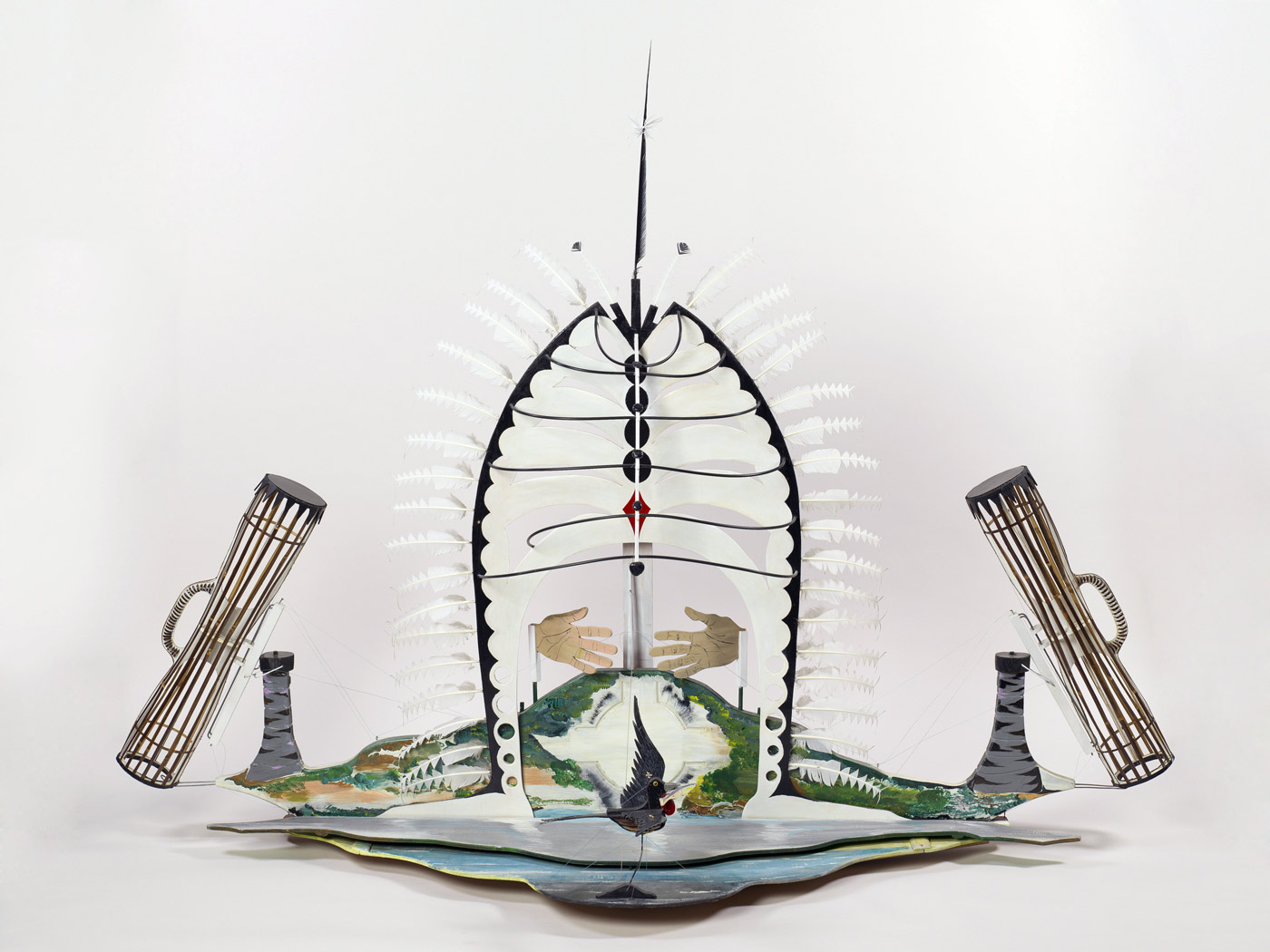
 

Ken Thaiday Sr (Australian, Queensland Meriam Mir people b. 1950) 'Symbol of the Torres Strait' 2003


Ken Thaiday Sr (Australian, Queensland b. 1950)
Meriam Mir people
Symbol of the Torres Strait
2003
Plywood, synthetic polymer paint, feathers, black bamboo, plastic tubing, fishing line
Purchased 2004 with funds from Corrs Chambers Westgarth through the Queensland Art Gallery Foundation
Collection: Queensland Art Gallery


Dinny McDinny (Australian, Northern Territory Marnbaliya people, Balyarrinji skin group c. 1927-2003) 'Kalajangu – Rainbow Dreaming came through Marnbaliya Country' 2003


Dinny McDinny (Australian, Northern Territory c. 1927-2003)
Marnbaliya people, Balyarrinji skin group
Kalajangu – Rainbow Dreaming came through Marnbaliya Country
2003
Synthetic polymer paint on canvas
Purchased 2004
Queensland Art Gallery Foundation
Collection: Queensland Art Gallery
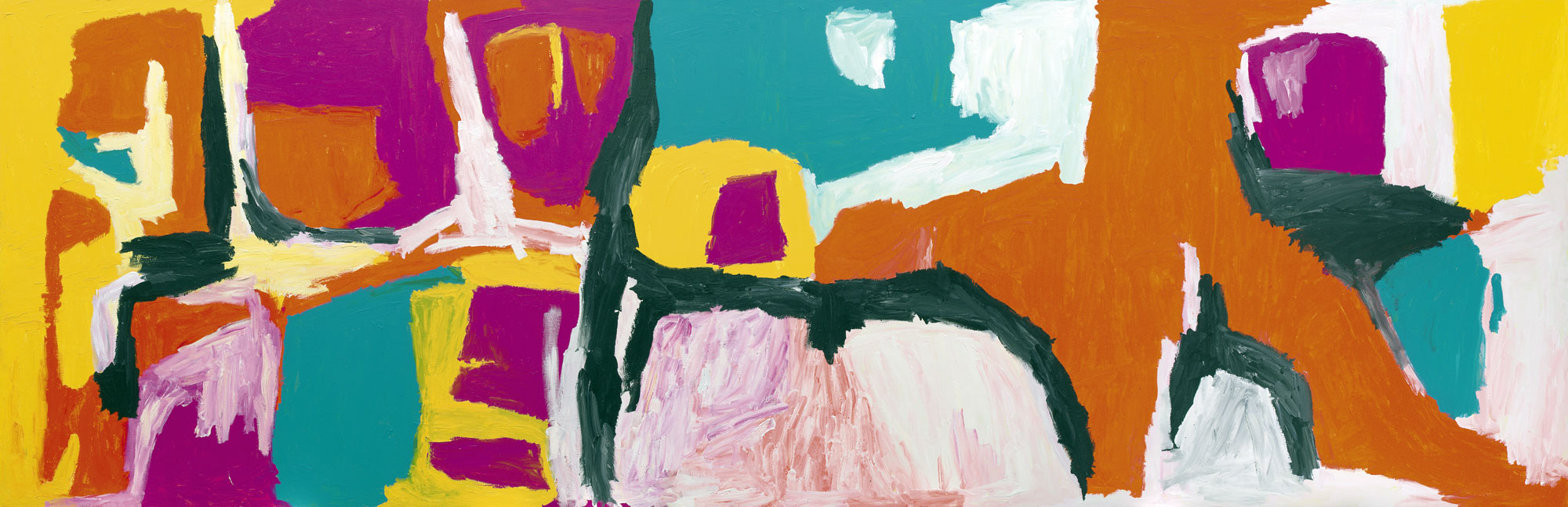
 

Sally Gabori (Australian, Queensland Kaiadilt people 1924-2015) 'Dibirdibi Country' 2008


Sally Gabori (Australian, Queensland 1924-2015)
Kaiadilt people
Dibirdibi Country
2008
Synthetic polymer paint on linen
Purchased 2008 with funds from Margaret Mittelheuser, AM, and Cathryn Mittelheuser, AM, through the Queensland Art Gallery Foundation
Collection: Queensland Art Gallery
© Sally Gabori 2008. Licensed by Viscopy, Sydney, 2013


Gabori created a body of work, which expressed sensations of life and cultural memory in diaspora, and differed from other known forms of Aboriginal painting, which focused on story-telling. Most of Gabori’s works represent places on Bentinck Island of deep personal significance to the artist: her husband’s place, Dibirdibi Country, her father’s place, Thundi, her own Country, Mirdidingki, and the first outstation, Nyinyilki.

Gabori lived on Bentinck Island in accordance with custom, developing knowledge of Kaiadilt cartography and cosmology, until the entire population was removed to Mornington Island mission by European settlers in 1948.

Text from the NGV website
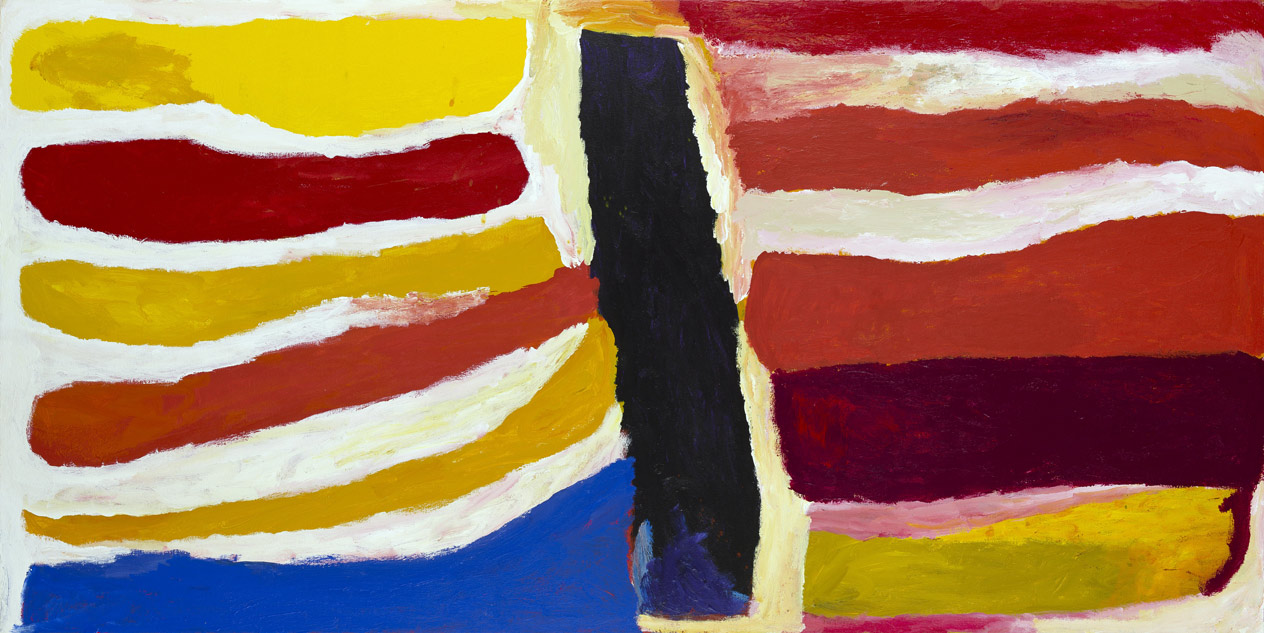
 

Wakartu Cory Surprise (Australian, Western Australia Walmajarri people 1929-2011) 'Mimpi' 2011


Wakartu Cory Surprise (Australian, Western Australia 1929-2011)
Walmajarri people
Mimpi
2011
Synthetic polymer paint on canvas
Purchased 2012
Queensland Art Gallery
Collection: Queensland Art Gallery
© Wakartu Cory Surprise 2011. Licensed by Viscopy, Sydney, 2013


“When I paint, I think about my country and where I have been travelling across that couontry. I paint from here (points to head-thinking about country) and here (points to breasts, collarbone and shoulder blades which is reference to body painting). I think abut my people the old people and what they told me, I think about jumangkarni (Dreamtime). Nobody taught me how to paint, I put down my own ideas, I saw these palces for my self, I went there with the old people. I paint jiji (sand hills), jumu (soak water), jila (spring), jiwari (rock hole), pamarr (hills and rock country), I think about mangarri (vegetable food) and kuyu (game) from my country and when I was there. Whe I paint I am thinking about law from a long time ago, I am thinking about the country, my country. When I first painted we didn’t get money, nothing. I like painting, its good, I get pamarr (word for rock, stone money) for it, I can buy my food, tyres, fix my car, I give some money to family and I keep some for me.”

~ Wakartu Cory Surprise
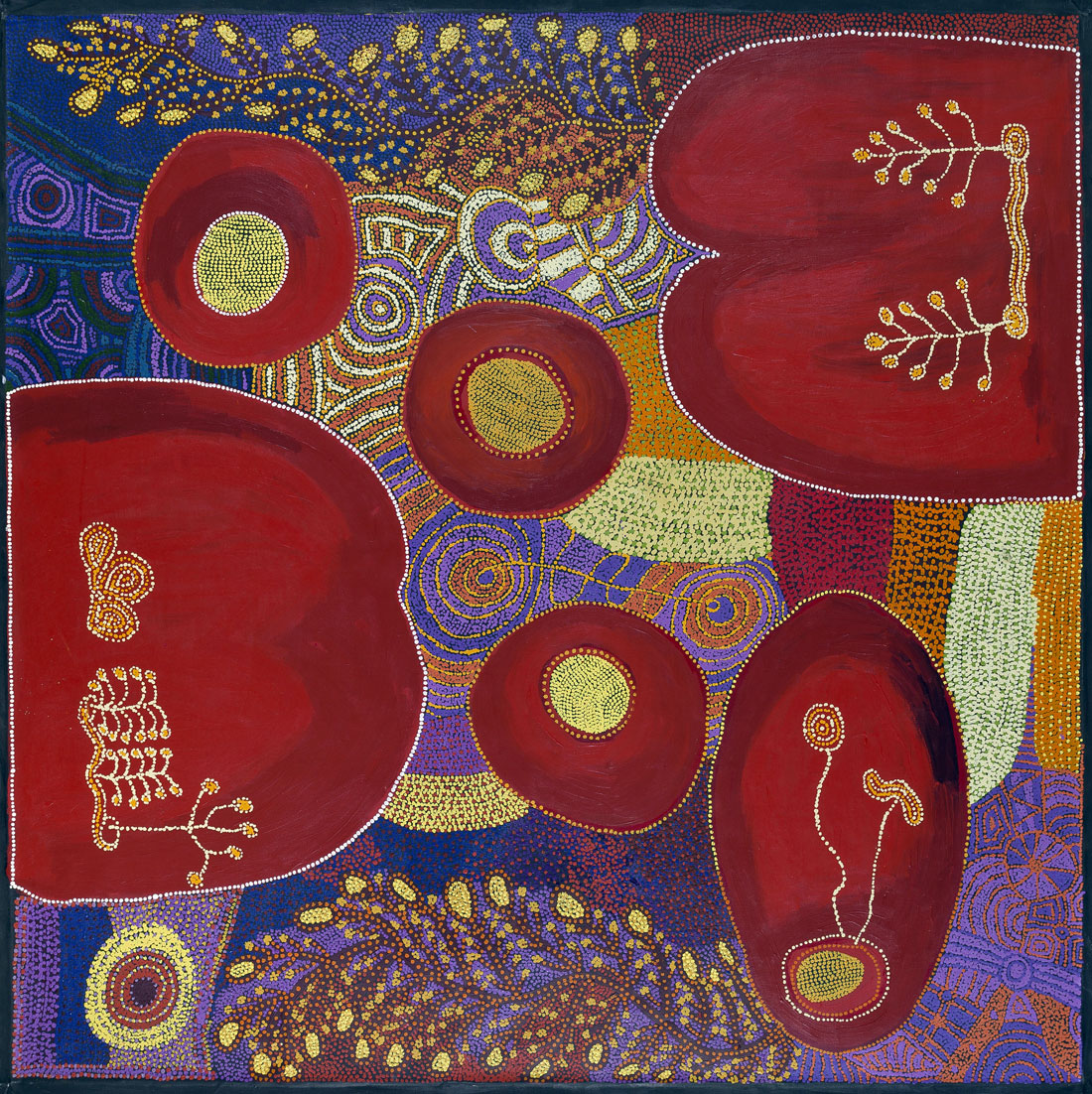
 

Ruby Tjangawa Williamson (Australian, South Australia b. 1940); Nita Williamson (Australian, South Australia b. 1963); Suzanne Armstrong (Australian, South Australia b. 1980); Pitjantjatjara people (Collaborating artists). 'Ngayuku ngura (My country) Puli murpu (Mountain range)' 2012


Ruby Tjangawa Williamson (Australian, South Australia b. 1940)
Pitjantjatjara people
Nita Williamson (Australian, South Australia b. 1963)
Suzanne Armstrong (Australian, South Australia b. 1980)
Pitjantjatjara people (Collaborating artists)
Ngayuku ngura (My country) Puli murpu (Mountain range)
2012
Synthetic polymer paint on linen
Purchased 2012 with funds from Margaret Mittelheuser, AM, and Cathryn Mittelheuser, AM, through the Queensland Art Gallery Foundation
Collection: Queensland Art Gallery


Ruby Tjangawa Williamson is a senior law woman committed to fostering traditional culture. She began painting in 2000. Her distinctive works are acclaimed and she is regarded as one of Amata’s most significant artists. Williamson also weaves tjanpi (desert grass) baskets and makes punu (wood carvings) with pokerwork designs.


My Country, I Still Call Australia Home: Contemporary Art from Black Australia is the Gallery’s largest exhibition of contemporary art by Aboriginal and Torres Strait Islander artists to date. The exhibition examines the strengths of the Gallery’s holdings and explores three central themes – presenting Indigenous views of history (My history), responding to contemporary politics and experiences (My life), and illustrating connections to place (My country).

From paintings and sculptures about ancestral epicentres to photographs and moving-image works that interrogate and challenge the established history of Australia, to installations responding to political and social situations affecting all Australians, the thread that binds these artists is their collective desire to share their experiences and tell their stories.

“Drawing on three decades of research, collaboration and Collection development, My Country, I Still Call Australia Home highlights the connection Aboriginal and Torres Strait Islander artists have with country as both ‘land’ and ‘nation’, and features over 300 works by 116 artists from every state and territory,” Mr Saines said.

“Curated by Bruce McLean, a Wirri / Birri-Gubba man with heritage from the central coast of Qoeensland and the Gallery’s Curator of Indigenous Australian Art, the exhibition gives voice to artists who investigate historical and contemporary political and social issues. Many of these issues and works are confronting and controversial, and we are proud of the role our Gallery plays as a forum for discussion, debate and education.”

Mr Saines said the exhibition was divided in to three broad thematic strands that explore how Aboriginal and Torres Strait Islander artists depict the stories of their communities and highlight contemporary Indigenous experiences in Australia.

Press release from the Gallery of Modern Art (GOMA) website


Michael Cook (Australian, Queensland Bidjara people b. 1968) 'Civilised #13' 2012


Michael Cook (Australian, Queensland b. 1968)
Bidjara people
Civilised #13
2012
Inkjet print on paper
Purchased 2012
Queensland Art Gallery
Collection: Queensland Art Gallery
© The artist


Michael Cook’s works depict an ethereal dreamworld, a timeless place that traverses both the colonial and contemporary worlds and is sustained on ‘what ifs’ and hypotheticals. It is a place of Cook’s own modern Dreaming. His central question is quite simple: what if the British, instead of dismissing Aboriginal society, had taken a more open approach to their culture and knowledge systems? This all-Aboriginal world is a sort of utopia where questions can be posed and answered without the complication of race – there is no black and white, no right or wrong. The figures within them are both conquerors and conquered. Through the use of images of Aboriginal people, often in roles opposite to the stereotypical, Cook ensures that an Aboriginal voice is ever-present.
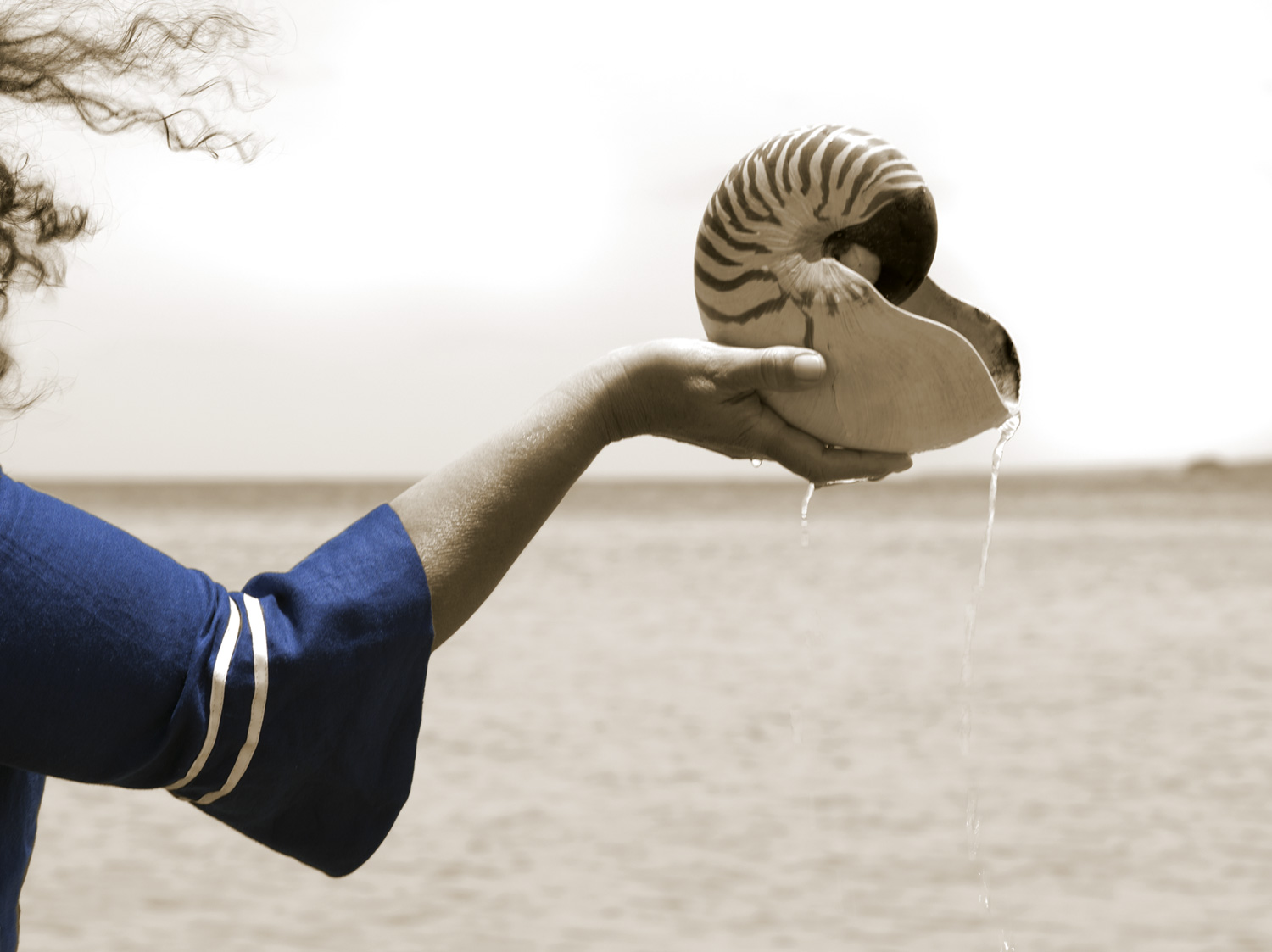
 

Fiona Foley (Australian, Queensland/New South Wales Badtjala people, Wondunna clan, Fraser Island b. 1964) 'The Oyster Fishermen #1' 2011


Fiona Foley (Australian, Queensland/New South Wales b. 1964)
Badtjala people, Wondunna clan, Fraser Island
The Oyster Fishermen #1
2011
Inkjet print on Hahnemühle paper
Purchased 2012
Queensland Art Gallery Foundation
Collection: Queensland Art Gallery


Vernon Ah Kee (Australian, Queensland Kuku Yalanji/Waanyi/Yidinyji/GuuguYimithirr people b. 1967) 'Tall Man' 2010 (still)


Vernon Ah Kee (Australian, Queensland b. 1967)
Kuku Yalanji/Waanyi/Yidinyji/GuuguYimithirr people
Tall Man (still)
2010
Four-channel digital video installation from DVD
Purchased 2012
Queensland Art Gallery
Collection: Queensland Art Gallery
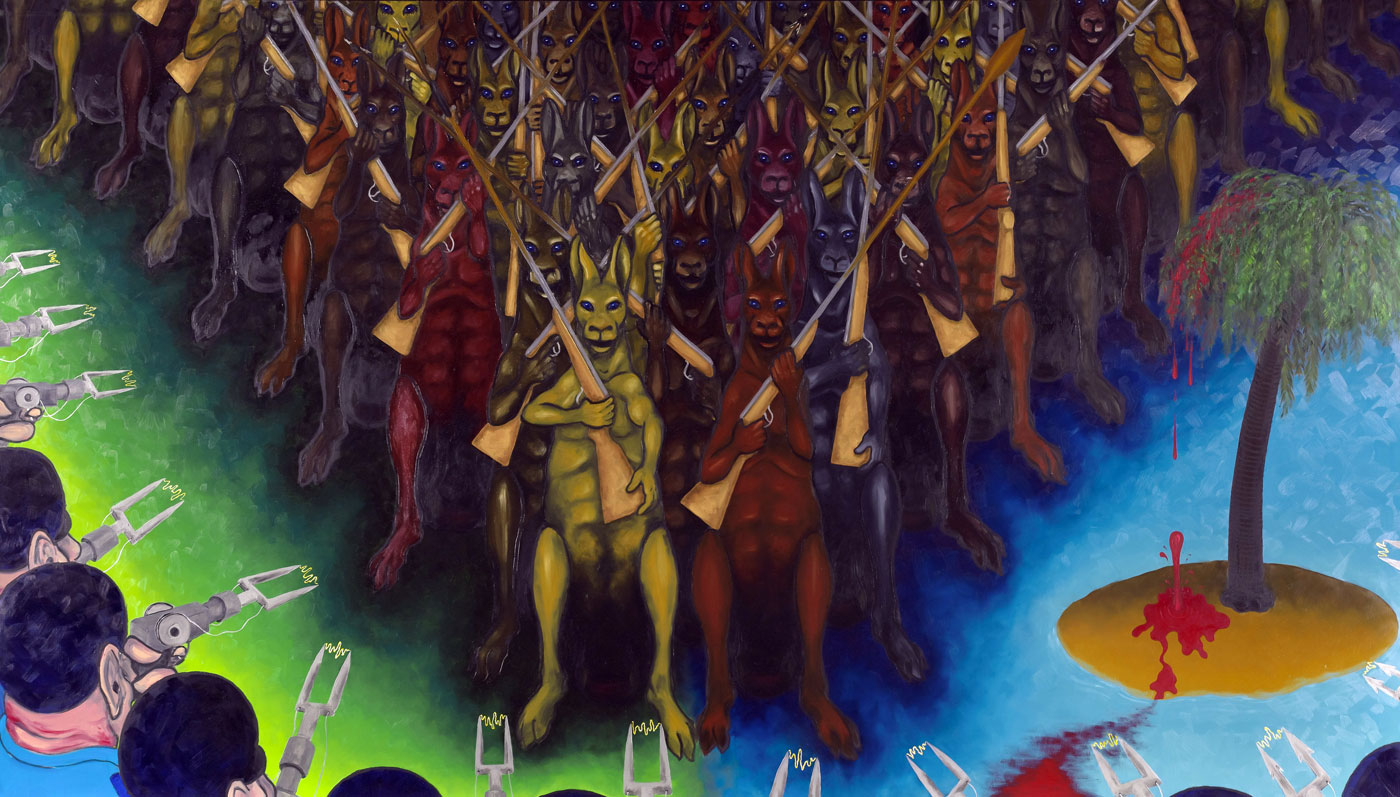
 

Gordon Hookey (Australian, Queensland/New South Wales Waanyi people b. 1961) 'Blood on the wattle, blood on the palm' 2009


Gordon Hookey (Australian, Queensland/New South Wales b. 1961)
Waanyi people
Blood on the wattle, blood on the palm
2009
Oil on linen
The James C Sourris, AM, Collection
Gift of James C Sourris, AM, through the Queensland Art Gallery Foundation 2012
Donated through the Australian Government’s Cultural Gifts Program
Collection: Queensland Art Gallery
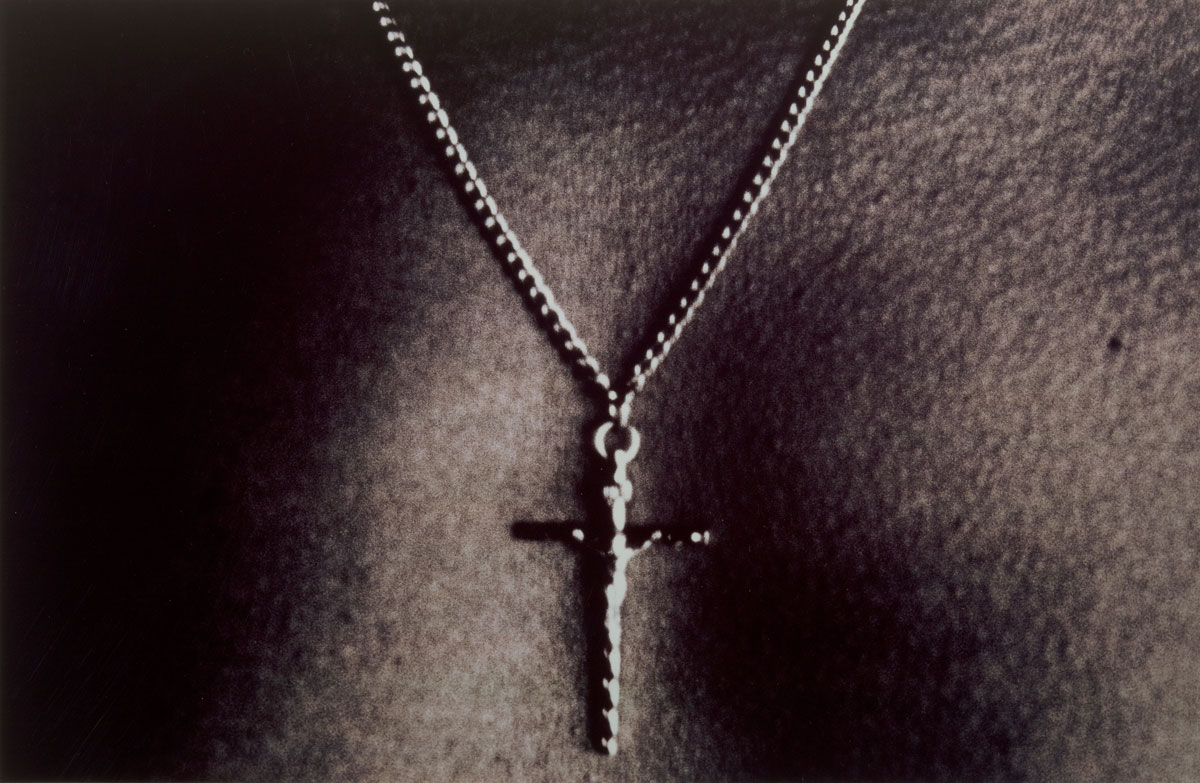
 

Michael Riley (Australian, New South Wales Kamilaroi/Wiradjuri people 1960-2004) 'Sacrifice (portfolio)' 1993 (detail)


Michael Riley (Australian, New South Wales 1960-2004)
Kamilaroi/Wiradjuri people
Sacrifice (portfolio) (detail)
1993
Colour cibachrome photograph
Purchased 2002
Collection: Queensland Art Gallery


Christian Thompson (Australian, Queensland/New South Wales/Victoria Bidjarra/Kunja people b. 1978) 'Black Gum 2' (from 'Australian Graffiti' series) 2008


Christian Thompson (Australian, Queensland/New South Wales/Victoria b. 1978)
Bidjarra/Kunja people
Black Gum 2 (from Australian Graffiti series)
2008
Type C photograph
Purchased 2008
The Queensland Art Gallery Foundation Grant
Collection: Queensland Art Gallery


Warwick Thornton (Australian, Northern Territory Kaytej people b. 1970) 'Stranded' 2011 (still)


Warwick Thornton (Australian, Northern Territory b. 1970)
Kaytej people
Stranded (still)
2011
3D digital video: 11.06 minutes, colour, sound
Commissioned by the 2011 Adelaide Film Festival Investment Fund
Purchased 2011
Queensland Art Gallery Foundation
Collection: Queensland Art Gallery
© Warwick Thornton. Image courtesy the artist and Stills Gallery


Gallery of Modern Art (GOMA)

The Queensland Art Gallery (QAG) and Gallery of Modern Art (GOMA) are located 150 metres from each other, on the south bank of the Brisbane River. Entrance to both buildings is possible from Stanley Place, and the river front entrance to the Queensland Art Gallery is on Melbourne Street. The Galleries are within easy walking distance to the city centre and South Bank Parklands.

Opening hours:
Daily 10.00am – 5.00pm

Gallery of Modern Art (GOMA) website

LIKE ART BLART ON FACEBOOK

Back to top

Exhibition: ‘Hijacked III: Contemporary Photography from Australia and the UK’ at Perth Institute of Contemporary Art (PICA)

Exhibition dates:  18th February – 8th April 2012


Hijacked III Interview with writer Anthony Luvera


The photographs in this posting highlight the conceptual diversity in contemporary art practice and emphasise the talent of the practitioners working today. Just an observation: how serious are the portraits – it’s as if no’body’ is allowed to laugh or smile anymore. Perhaps this is a reflection of the times in which we live, full of malaise, anxiety and little wonder. Fear of being replaced, fear of discrimination, fear of growing up, fear of dying. Or dressed up in a women’s dress and pink hat, having the “courage” or ignorance (the opposite of fear?) to look like a stunned mullet with a blank expression on the face (deadpan photography that I really can’t stand). Or, perhaps, simple effacement: defiance as body becomes mannequin, body hidden behind a mask or completely cloaked from view. These grand photographs have the intensity, perhaps not a lightness of being.

Dr Marcus Bunyan


Many thankx to PICA for allowing me to publish the photographs in the posting. Please click on the photographs for a larger version of the image.


Trish Morrissey (Irish, b. 1967) 'Hayley Coles, June 17th, 2006' 2006


Trish Morrissey (Irish, b. 1967)
Hayley Coles, June 17th, 2006
2006
Courtesy of the artist and Elaine Levy Project, commissioned by Impressions Gallery

Review of Trish Morrissey on Art Blart


Front deals with the notion of borders, boundaries and the edge; using the family group and the beach setting as metaphors. For this work, the artist travelled to beaches in the UK and around Melbourne. There, she approached families and groups of friends who had made temporary encampments, or marked out territories and asked if she could be part of their family temporarily. Morrissey took over the role or position of a woman within that group – usually the mother figure. The artist asked to take the place of the mother figure, and to borrow her clothes. The mother figure then took over the artist’s role and photographed her family using a 4 x 5 camera (which Morrissey had already carefully set up) under the artist’s instruction. While Morrissey, a stranger on the beach, nestled in with the mother figure’s loved ones.

These highly performative photographs are shaped by chance encounters with strangers, and by what happens when physical and psychological boundaries are crossed. Ideas around the mythological creature the ‘shape shifter’ and the cuckoo are evoked. Each piece within the series is titled by the name of the woman who the artist replaced within the group.

Text from the PICA website


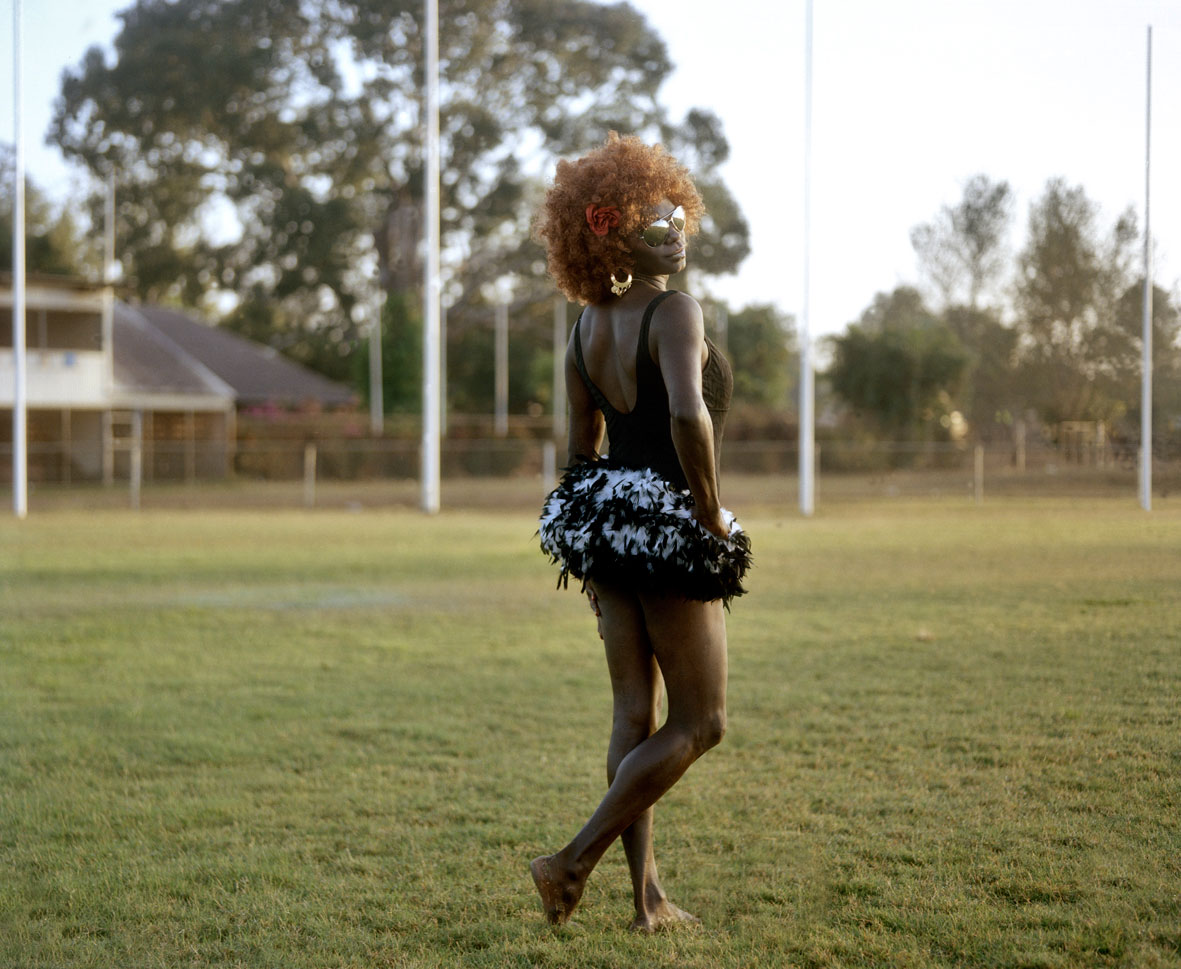
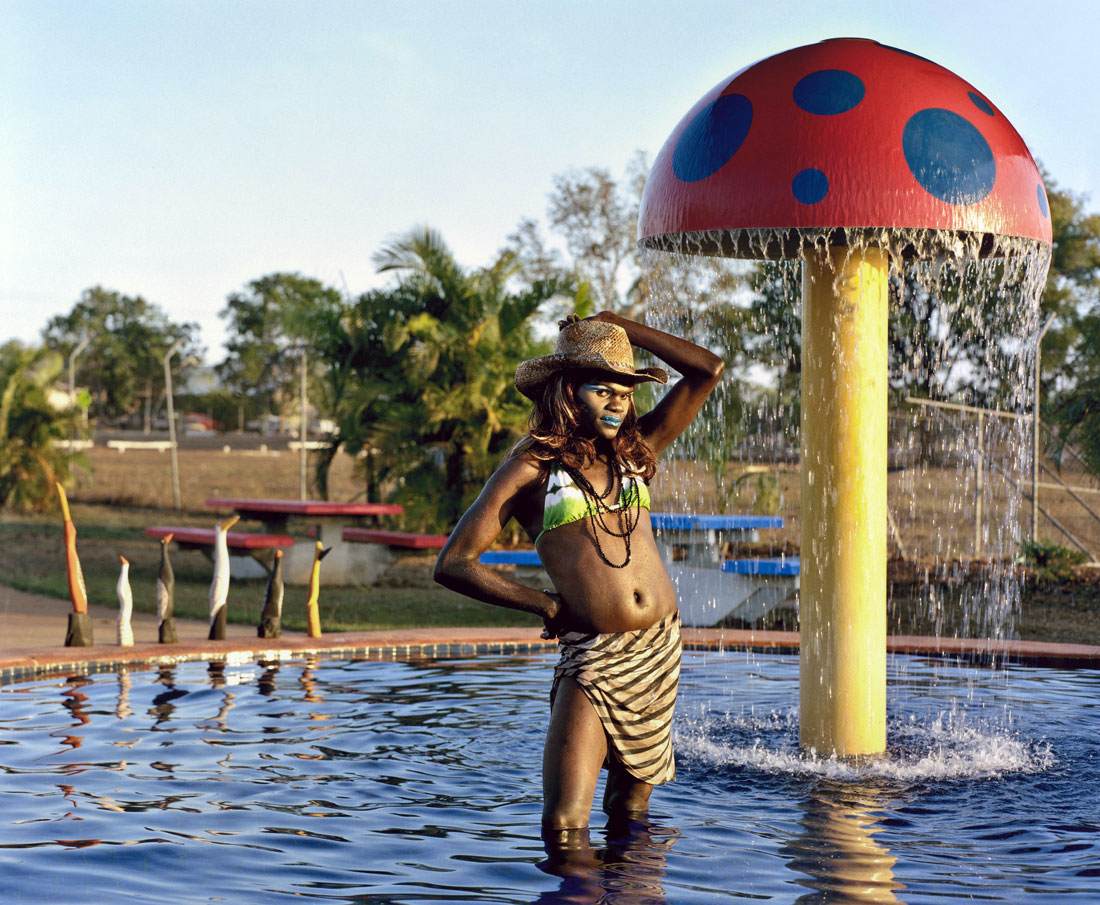
Bindi Cole (Australian, b. 1975) 'Ajay' 2009


Bindi Cole (Australian, b. 1975)
Ajay
2009
From the series Sistagirls
Courtesy of Nellie Castan Gallery

Review of Sistagirls on Art Blart


The term ‘Sistagirl’ is used to describe a transgender person in Tiwi Island culture. Traditionally, the term was ‘Yimpininni’. The very existence of the word provides some indication of the inclusive attitudes historically extended towards Aboriginal sexual minorities. Colonisation not only wiped out many Indigenous people, it also had an impact on Aboriginal culture and understanding of sexual and gender expression.

As many traditions were lost, this term became a thing of the past. Yimpininni were once held in high regard as the nurturers within the family unit and tribe much like the Faafafine from Samoa. As the usage of the term vanished, tribes’ attitudes toward queer Indigenous people began to resemble that of the western world and the religious right. Even today many Sistagirls are excluded from their own tribes and suffer at the hands of others.

Text from the PICA website


Maciej Dakowicz (Polish, b. 1976) 'Pink Hat, 23:42. Cardiff' 2006


Maciej Dakowicz (Polish, b. 1976)
Pink Hat, 23:42. Cardiff
2006
Courtesy of the artist and Third Floor Gallery


St Mary Street is one of the main streets in central Cardiff, the capital city of Wales; a city as any other in the UK. Unassuming during the day, on weekend nights it becomes the main scene of the city night life, fuelled by alcohol and emotions. Some of Cardiff’s most popular clubs and pubs are located there or in its vicinity. The very popular Chippy Lane, with its numerous chip and kebab shops, is just a stone’s throw away. Sooner or later most party-goers end up in that area, whether looking for another drink, some food or in search of another dance floor.

Everything takes place in this public arena – from drinking, fighting, kissing to crying and sleeping. Supermen chat up Playboy Bunnies, somebody lies on the pavement taking a nap, the hungry ones finish their portions of chips and the policemen stop another argument before it turns into a fight. Nobody seems to worry about tomorrow, what matters is here and now, punctuated by another week at work, until the next weekend rolls around again.

Text from the PICA website


Laura Pannack (British, b. 1985) 'Shay' 2010


Laura Pannack (British, b. 1985)
Shay
2010
Courtesy of the artist
Represented by Lisa Pritchard Agency


What’s so special about this picture are the details. The tattoo – not just what it says but the way it mimics the Nike Swoosh on her shirt – and the cigarette, that although it is not in focus, one imagines has a large line of ash on it, as if time has stopped. This is echoed in the expression on her face, deep intensity and focused on something ahead although the car is obviously stationary. From a distance one could be mistaken that this is an American photograph from the 70s but on closer inspection – the piercing, the Nike Swoosh, the car door handles – one realises that this is contemporary and British. And yet of course that stare is timeless.

Harry Hardie on the Foto8 website [Online] Cited 22/03/2012 no longer available online


Adam Broomberg and Oliver Chanarin. 'Culture3/Sheet72/Frame3' 2011


Adam Broomberg and Oliver Chanarin
Culture3/Sheet72/Frame3
2011
Courtesy of the artists & Paradise Row, London


HIJACKED III interview with PICA curator Leigh Robb


… Artists are notorious for their ability to hijack; meaning to stop and hold up, to seize control by use of force in order to divert or appropriate, a deliberate attempt to action a change of direction.

Hijacked III: Contemporary Photography from Australia the UK draws on the success and unique energy of Hijacked I (Australia and USA) and Hijacked II (Australia and Germany), to once again bring together two geographically distant but historically connected communities through a range of diverse photographic practices.

This exhibition will be simultaneously presented across two sites: PICA in Perth, Western Australia and QUAD Gallery in Derby, United Kingdom, and has been timed to coincide with the launch of the luscious, full colour and 420 page Hijacked III compendium, published by Big City Press. Utilising portraiture, digital collage, archival images, documentary snap shots, internet grabs and refined photographic tableaux, the 24 artists and over 120 works in this exhibition explore themes as diverse as curious weekend leisure pursuits, gender politics and displaced Indigenous culture.

Artists: Tony Albert, Warwick Baker, Broomberg & Chanarin, Natasha Caruana, Bindi Cole, Maciej Dakowicz, Christopher Day, Melinda Gibson, Toni Greaves, Petrina Hicks, Alin Huma, Seba Kurtis, David Manley, Tracey Moffatt, Trish Morrissey, Laura Pannack, Sarah Pickering, Zhao Renhui, Simon Roberts, Helen Sear, Justin Spiers, Luke Stephenson, Christian Thompson, Tereza Zelenkova, Michael Ziebarth.

Press release from PICA website


Sarah Pickering (British, b. 1972) 'Land mine' 2005


Sarah Pickering (British, b. 1972)
Land mine
2005
Courtesy of the artist and Meessen De Clercq, Brussels


The Explosion pictures document the literal theatre of war – the detailed level of artifice used to prepare men and women for combat on the front lines. They also reveal the minutiae of packaging war as entertainment. The beauty of the pictures lies in their perverse seductiveness, and this attraction underscores the distance most of us have from real combat.

Pickering’s Explosion images, by distilling an aspect of the war that is a fiction, question the reliability of seemingly objective historical accounts, such as news reports and photographs that influence how war is communicated and remembered. By extension they question how we come to know what we know about it. We learn about war from a variety of sources, from history books, first-hand accounts, news media, and movies, all of which can get confused and merged in our minds as memory.

The dual purpose of the explosives – training and re-enacting – forms a fitting parallel to how we cope with trauma, a process of both anticipation and reconciliation.”

Sarah Pickering website


Simon Roberts (British, b. 1974) 'We English No. 56' 2007


Simon Roberts (British, b. 1974)
We English No. 56
2007

More Simon Roberts We English on Art Blart


Simon Roberts travelled across England in a motorhome between 2007 and 2008 for this portfolio of large-format tableaux photographs of the English at leisure. We English builds on his first major body of work, Motherland (2005), with the same themes of identity, memory and belonging resonating throughout. Photographing ordinary people engaged in diverse pastimes, Roberts aims to show a populace with a profound attachment to its local environment and homeland. He explores the notion that nationhood – that what it means to be English – is to be found on the surface of contemporary life, encapsulated by banal pastimes and everyday leisure activities. The resulting images are an intentionally lyrical rendering of a pastoral England, where Roberts finds beauty in the mundane and in the exploration of the relationship between people and place, and of our connections to the landscapes around us.

Text from the Simon Roberts website


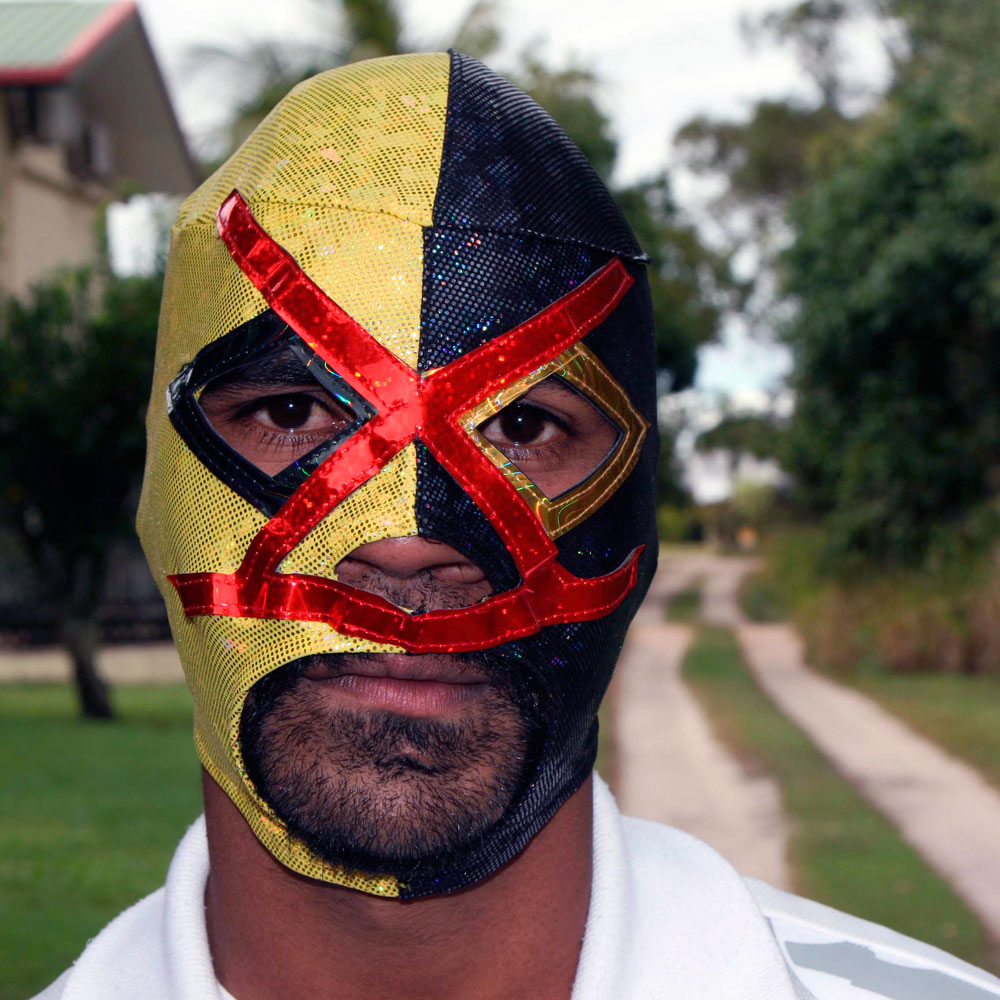
Tony Albert (Australian, b. 1981) 'No Place' 2009


Tony Albert (Australian, b. 1981)
No Place
2009
Courtesy of the artist


Tony Albert is a Girramay rainforest man from the Cardwell area… The No Place series references The Wizard of Oz ‘there’s no place like home’. For No Place Tony returns to his tropical paradise home with a group of Lucho Libre wrestling masks from Mexico. His family adorn these masks and again become warriors protecting their paradise. These seemingly playful masks share much with Aboriginal and particularly rainforest culture. Body and shield designs from this area represent animal gods or spirit beings. The use of these masks brings a prescient new layer of armour for a new generation of warrior.

The colour scheme of solid blocks of red, black and yellow also speak to traditional rainforest aesthetics. There are strong elements of the sublime and the fantastical within these works. Viewing Aboriginal people in iconic north Queensland locations masked in Mexican wrestling paraphernalia carries more than a hint of the surreal and absurd.

Anon. “Tony Albert and No Place,” on the Big Art website, 2010 [Online] Cited 22/03/2012 no longer available online


Christian Thompson (Australian / Bidjara, b. 1978) 'Untitled #7 from the King Billy Series' 2010


Christian Thompson (Australian / Bidjara, b. 1978)
Untitled #7 from the King Billy series
2010
Courtesy of the artist and Gallery Gabrielle Pizzi


King Billy, is an ode to his great great grandfather, King Billy of Bonnie Doon Lorne. The initial inspiration was a photograph of King Billy, standing alone wearing his ‘name plate’. Despite its colonial overtones, for Thompson, this image of the senior tribesman exudes wisdom and kindness and reminds him of his father. In much of Thompson’s work his processes are intuitive, he delves into a rich dream world and draws out fabulous images. He manifests his own mythological world. In this series his figures are clad in fabrics patterned with Indigenous motifs, mainly cheap hoodies in lurid colours; a modern / ancient skin for a magic youth culture. He has made a triptych, three views of a pink hooded figure spewing cascading pearl stands from the face; opulent, decadent, excessive and sensual.

Another image shows a crowned figure swathed in fabrics bearing the markings of various clans, perhaps indicating the domain of this regal form. In the hands a (poisoned?) chalice – the sawn off plastic bottle a warning about petrol sniffing? His self-portrait as psychedelic godhead/Carnaby Street dandy / flower child is spectacular and arresting. He is wearing a tailored suit, patterned with more Indigenous motifs and he cradles a bouquet. His skin is green and his eyes are purple flowers. What can this otherworldly creature tell us?

Thompson seems to emphasise a theme of disparity in this work; the ‘hoodie’ with the cascading pearls, the crown with the plastic bottle, the opulence with the desperate. These works are both beautiful and confronting.

Text from the PICA website


HIJACKED III interview with Christian Thompson


Petrina Hicks (Australian, b. 1972) 'Emily the Strange' 2011


Petrina Hicks (Australian, b. 1972)
Emily the Strange
2011
Courtesy of the artist and Stills Gallery


Petrina Hicks’ Beautiful Creatures appeals to our senses. Immediately alluring, the large-scale, hyper-real photographs, are all rendered so clearly and with such control they are reminiscent of advertisements. But with a series of little ruptures, within images and between them, Hicks disrupts our usually beguiled response to such artistry. For her, photography’s capability to both create and corrupt the process of seduction and consumption is of endless interest.

Hicks loads her images with history and associations but denies us a clear message. Along with the ambiguity, there is a visceral quality in these new works; her depiction of flesh, hair and veins stops the viewer short of being lulled into consumption. Hicks engages a playful yet confronting approach to confound our expectations. A cat, naked without fur, in the image Sphynx, contrasts a beautiful blonde with a face full of it in Comfort. In Emily the Strange the hairless creature reappears with a young girl whose piercing green eyes, skin-pink dress, and latent defiance, make her eerily akin to her pet. Alluded to, in the title of the exhibition, this duality is present in much of the work. Her subjects are not simply beautiful or simply creatures.

Text from the PICA website


HIJACKED III interview with photographer Petrina Hicks


Tereza Zelenkova (Czech, b. 1985) 'Cadaver' 2011


Tereza Zelenkova (Czech, b. 1985)
Cadaver
2011
Courtesy of the artist


Luke Stephenson (British, b. 1983) 'Diamond Sparrow #1' 2009


Luke Stephenson (British, b. 1983)
Diamond Sparrow #1
2009
Courtesy of the artist


Stephenson finds birds and the world surrounding them wonderfully fascinating. The birds he has photographed all belong to avid bird breeders who on the whole have been keeping birds their whole lives. It’s a hobby people generally don’t come into contact with, unless you are active within it. The artist does not keep birds but finds them beautiful in all their variations and colours, so has set out capture these birds in a way that would show them at their best.

There are many criteria to breeding a prize-winning bird, from shape and form to its pattern, and this is something Stephenson has tried to convey whilst also attempting to show some of their personalities. He set out to photograph every breed of bird within the ‘hobby’ of keeping birds but soon realised there were thousands of variations, so decided to keep this as an ongoing project; realising instalments every couple of years which people can collect and, hopefully one day, the dictionary will be complete.

Luke Stephenson website


Perth Institute of Contemporary Art (PICA)
Perth Cultural Centre
James Street Northbridge
Phone: + 61 (0) 8 9228 6300

Opening hours:
Tuesday – Sunday 10am – 5pm
Closed Mondays

PICA website

LIKE ART BLART ON FACEBOOK

Back to top

Review: ‘Sistagirls’ by Bindi Cole at Nellie Castan Gallery, Melbourne

Exhibition dates: 8th July – 31st July, 2010


Bindi Cole Chocka (Australian, b. 1975) 'Bimbo' 2009 from the exhibition 'Sistagirls' by Bindi Cole at Nellie Castan Gallery, Melbourne, July 2010


Bindi Cole Chocka (Australian, b. 1975)
Bimbo
2009


The exhibition Sistagirls by Bind Cole at Nellie Castan Gallery contains some beautiful photographs and others that are less successful. The successful portraits the ones that depict the Sistagirls in a more natural, less stylised way – they are the more interesting photographs. The subjects seem to speak for themselves without restriction, to be not so beholden to the pose that photographer wishes them to assume and/or the pose they wish to impose on themselves.

For example, the photograph of Jemima (see below) is just stunning in it’s naturalness and beauty. The two photographs of Crystal and Patricia, where the transgendered person asked to be photographed in traditional body paint with traditional objects, are highly successful in their form, composition and in the ability of the photographs to challenge stereotypical notions of Aboriginal culture.

Other portraits are anachronistic and a little try hard, with the misplacing of persons and objects in regard to each other. The portrait of Bimbo (very top photograph) did not need the two objects placed on the beach next to the person to make it a successful photograph; the portrait of Frederina (below) had enough going on in the photograph without the seemingly gratuitous placement of traditional objects in the background. We get the point and there was really no need to labour it.

One of the problems, of course, of a ‘stylised’ portrait (Bind Cole’s word in her artist statement) is that the portrait can become a double forgery, that of the pose of the person and that of the photographer imposing the style …

” … in a sense, the posed photograph is a kind of forgery, an imposition of an artificial composition before the recording instrument. On the other hand, the photo of a posing subject captures the authenticity of the practice of posing. A version of a person’s image is still an image of that person …

We are confronted with the pose, the conscious composition of the image to be photographed, the inherent constructedness of the posed photograph. Our heretofore implicit faith in the photograph as an evidentiary document is shaken. This is not to imply an outright rejection of photography … the effect is more properly an inducement to engage the document directly, personally, and on its own terms.”1


As noted at the end of the quotation, we, the viewer, must cut through this com-pose-ition to address the document directly. We must cut away the appendages of style and view the person and the photograph on its own terms. This is why the simpler portraits in the exhibition have so much more power than the overly constructed ones – they reach for an intangible essence that Cole is seeking by dropping away style and surrendering to the ineffable, a recognition of the lightness and joy in just being.

Dr Marcus Bunyan


1/ Feiereisen, Florence and Pope, Daniel. “True Fiction and Fictional Truths: The Enigmatic in Sebald’s Use of Images in The Emigrants,” in Patt, Lise (ed.,). Searching for Sebald: Photography after W.G. Sebald. Los Angeles: The Institute of Cultural Inquiry, 2007, p. 175.


Many thankx to Olivia Poloni and Nellie Castan Gallery for allowing me to publish the photographs in the posting. The permission is most appreciated. Please click on the photographs for a larger version of the image. All photographs © Bind Cole, courtesy of the artist and Nellie Castan Gallery.


Bindi Cole Chocka (Australian, b. 1975) 'Buffy' 2009 from the exhibition 'Sistagirls' by Bindi Cole at Nellie Castan Gallery, Melbourne, July 2010


Bindi Cole Chocka (Australian, b. 1975)
Buffy
2009


Bindi Cole Chocka (Australian, b. 1975) 'Crystal' 2009 from the exhibition 'Sistagirls' by Bindi Cole at Nellie Castan Gallery, Melbourne, July 2010


Bindi Cole Chocka (Australian, b. 1975)
Crystal
2009


Bindi Cole Chocka (Australian, b. 1975) 'Frederina' 2009


Bindi Cole Chocka (Australian, b. 1975)
Frederina
2009


The term ‘Sistagirl’ is used to describe a transgender person in Tiwi Island culture. Traditionally, the term was ‘Yimpininni’. The very existence of the word provides some indication of the inclusive attitudes historically extended towards Aboriginal sexual minorities. Colonisation not only wiped out many indigenous people, it also had an impact on Aboriginal culture and understanding of sexual and gender expression. As Catholicism took hold and many traditions were lost, this term became a thing of the past. Yimpininni were once held in high regard as the nurturers within the family unit and tribe much like the Faafafine from Samoa. As the usage of the term vanished, tribes’ attitudes toward queer indigenous people began to resemble that of the western world and religious right. Even today many Sistergirls are excluded from their own tribes and suffer at the hands of others.

Within a population of around 2500, there are approximately 50 ‘Sistagirls’ living on the Tiwi Islands. This community contains a complex range of dynamics including a hierarchy (a queen Sistergirl), politics, and a significant history of pride and shame. The Sistagirls are isolated yet thriving, unexplored territory with a beauty, strength and diversity to inspire and challenge.

During August and September of 2009, I was fortunate enough to have the opportunity to spend a month living with the ‘Sistagirls’ on the Tiwi Islands creating a series of highly stylised portraits of them. I loaded a barge with a four wheel drive, lights, a generator, cameras and enough film to fill a suitcase. Each day brought an emotional roller coaster from moments of elation around what was being achieved with the images to complete anxiety from the many dramas that occurred. This time has affected me in a profound way. The ‘Sistagirls’ have touched my heart. I only hope that in some way I have captured the essence of who they are and the spirit of their community. I know that they will always be a part of me and that I will be a regular visitor to Tiwi to visit the ‘Sistagirl’ community for the rest of my life.

Artist statement from the Nellie Castan website [Online] Cited 22/07/2010 no longer available online


Bindi Cole Chocka (Australian, b. 1975) 'Jemima' 2009


Bindi Cole Chocka (Australian, b. 1975)
Jemima
2009


Bindi Cole Chocka (Australian, b. 1975) 'Patricia' 2009


Bindi Cole Chocka (Australian, b. 1975)
Patricia
2009


Nellie Castan Gallery

This gallery is no longer open.

LIKE ART BLART ON FACEBOOK

Back to top