
July 2015
Please click on the photography for a larger version of the image.
Marcus
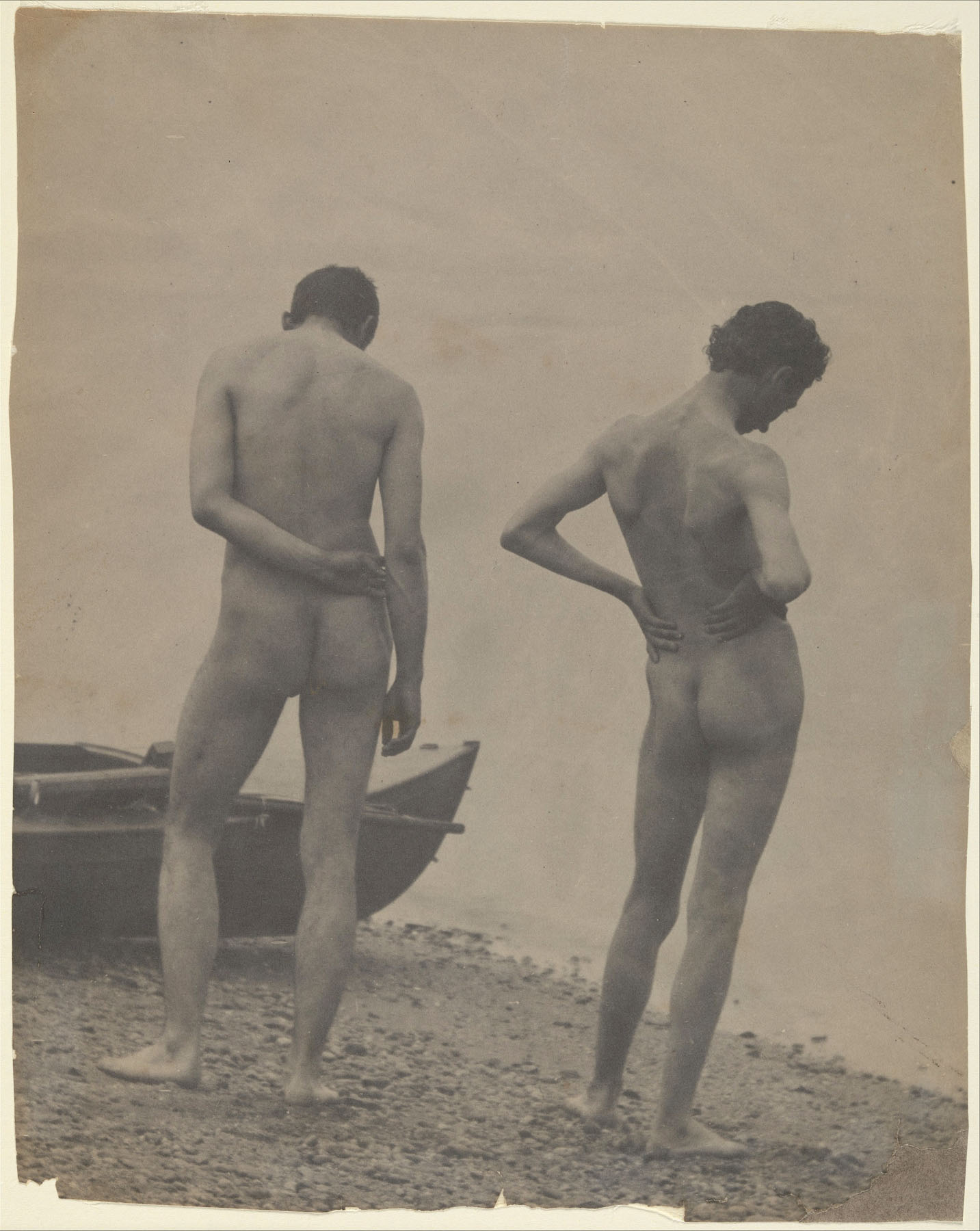
Thomas Eakins (American, 1844-1916)
(Thomas Eakins and John Laurie Wallace on a Beach)
c. 1883
Public domain
The great American painter and photographer Thomas Eakins was devoted to the scientific study of the human form and committed to its truthful representation. While he and his students at the Pennsylvania Academy of the Fine Arts were surrounded by casts of classical sculpture, Eakins declared that he did not like “a long study of casts. … At best they are only imitations, and an imitation of imitations cannot have so much life as an imitation of life itself.” Photography provided an obvious solution.
This photograph, in which Eakins and a student affected the elegant contrapposto stances of classical sculpture, was probably taken during an excursion with students to Manasquan Inlet at Point Pleasant, New Jersey, during the summer of 1883. Valuing his photographs not only as studies for paintings but also for their own sake, Eakins carefully printed the best images on platinum paper. In this case, he went to the additional trouble of enlarging the original, horizontally formatted image and cropping it vertically to better contain the perfectly balanced figures.
Text from The Metropolitan Museum of Art website

Thomas Eakins (American, 1844-1916)
Nude, Playing Pipes
c. 1883
Platinum print
22.7 x 16.6cm (8 15/16 x 6 9/16 in.) irregular
Metropolitan Museum of Art
David Hunter McAlpin Fund, 1943
Public domain

Thomas Eakins (American, 1844-1916)
Standing Male Nude with Pipes
1880s
Platinum print
22.9 x 17.3cm (9 x 6 13/16 in.)
Metropolitan Museum of Art
David Hunter McAlpin Fund, 1943
Public domain

Thomas Eakins (American, 1844-1916)
Bill Duckett nude, reclining on side, hand on knee
c. 1889
Platinum print
2 15/16 x 4 5/16 in. (7.46252 x 10.95502cm)
Pennsylvania Academy of the Fine Arts
Charles Bregler’s Thomas Eakins Collection, purchased with the partial support of the Pew Memorial Trust
Public domain
In January 1886, Thomas Eakins removed the loincloth from a male model while lecturing about the pelvis to an anatomy class that included female students at the Pennsylvania Academy of the Fine Arts. Angry protests by parents and students soon forced him to resign from the Academy at the request of the board. Following Eakins’ departure, however, thirty-eight of his male students resigned from the Academy and formed the Art Students’ League of Philadelphia, providing him with a new forum for his life classes and for the creation of many of the paintings and photographs of the 1880s, including this nude study of Bill Duckett, an amateur athlete. The relaxed atmosphere of the Art Students’ League, where Eakins and his students governed themselves, permitted greater freedom in the photography of models than had prevailed at the Pennsylvania Academy. This photograph is an excellent example of Eakins’ unabashed exploration of frontal male nudity.
Text from the Metropolitan Museum of Art website
For Eakins, the camera was a teaching device comparable to anatomical drawing, a tool the modern artist should use to train the eye to see what was truly before it.
In the 1880s, through a series of technical advances that greatly simplified its practice, photography had expanded from being the province solely of the specialist into an activity accessible to the millions. To define photography as a discipline distinct from its casual, commercial, and scientific applications became the overriding goal of many American artists in the last two decades of the century, who claimed for it a place commensurate with those artistic endeavours that celebrated the complex, irreducible subjectivity of their makers. The photographs of Thomas Eakins are a perfect example of this development.
In addition to being an accomplished painter, watercolorist, and teacher, Thomas Eakins was a dedicated and talented photographer. Working with a wooden view camera, glass plate negatives, and the platinum print process, he distinguished himself from most other painters of his generation by mastering the technical aspects of the new medium and requiring his students to do the same. For Eakins, the camera was a teaching device comparable to anatomical drawing (43.87.23; 43.87.19), a tool the modern artist should use to train the eye to see what was truly before it.
Although it is not known from whom or when Eakins learned photography, it is clear that by 1880 he had already incorporated the camera into his professional and personal life. The vast majority of photographs attributed to Eakins are figure studies (nude and clothed) and portraits of his pupils (43.87.17), extended family (including himself) (43.87.23), and immediate friends (41.142.2). More than 225 negatives survive in the Bregler collection at the Pennsylvania Academy of the Fine Arts and approximately 800 images are currently attributed to Eakins and his circle – ample proof of the intensity with which Eakins worked with the camera.
Eakins did not generally use photographs as a preparatory aid to painting, although there are a small number of oils which have direct counterparts in existing photographs: the Amon Carter Museum’s The Swimming Hole [below] and the Metropolitan’s Arcadia [below] being the foremost examples. To the contrary, Eakins saw a different role for photography – one related to his extraordinary interest in knowing the figure and improving his sensitivity to complex figure-ground relationships. Committed to teaching close observation through the practice of dissection and preparatory wax and plaster sculpture, Eakins introduced the camera to the American art studio. At first his photographs were likely quick studies of pose and gesture; later, perhaps during the process of editing and cropping the negatives, and then making enlarged platinum prints, he saw the photographs as discrete works of art on paper, at their best on equal status with his watercolours.
The artistic freedom of the classical world that Eakins strove to bring to life in his academic programs at the Pennsylvania Academy of the Fine Arts (and in his Arcadian paintings) also appears as an important element in many of his nude studies (43.87.19) with the camera. These photographs, far more than the paintings, celebrate the male physique; even today, more than a century after their creation, their unabashed frontal nudity still has the power to shock contemporary eyes.
Text from The Metropolitan Museum of Art website October 2004 [Online] Cited 16/08/2021
Citation: Department of Photographs. “Thomas Eakins (1844-1916): Photography, 1880s-90s,” in Heilbrunn Timeline of Art History. New York: The Metropolitan Museum of Art, 2000

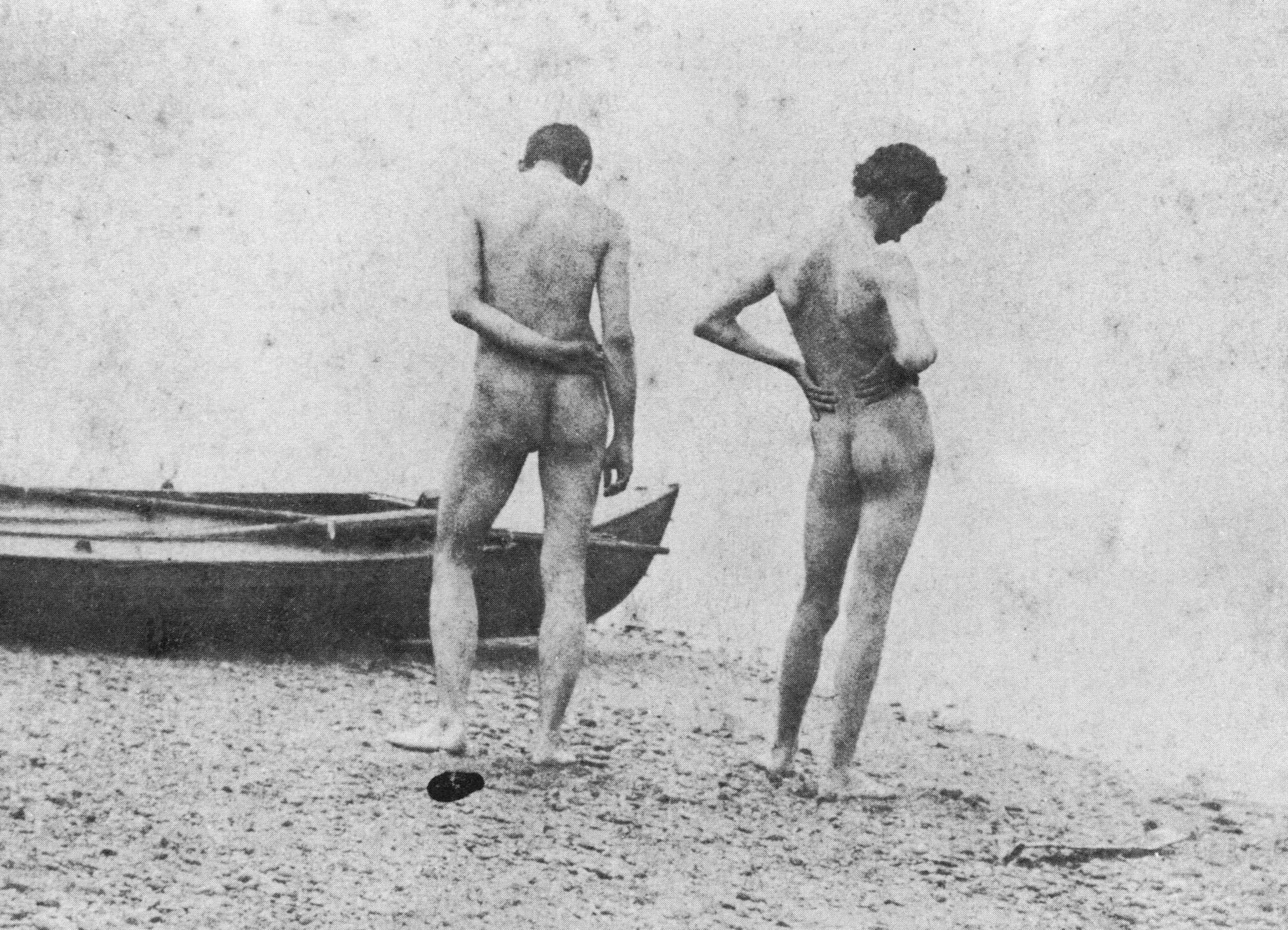
Thomas Eakins (American, 1844-1916)
Thomas Eakins and J. Laurie Wallace at the Shore
1883
Public domain
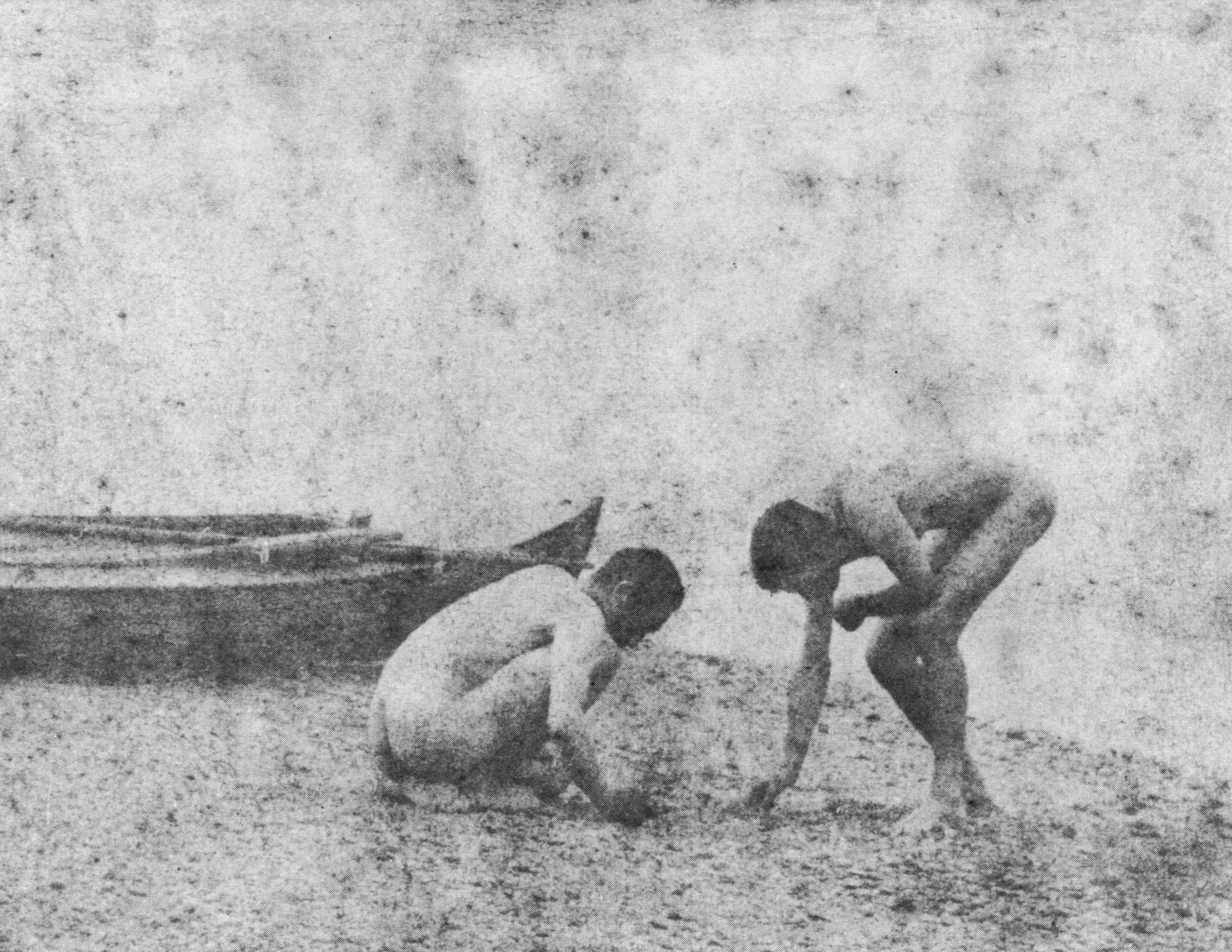
Thomas Eakins (American, 1844-1916)
Thomas Eakins and J. Laurie Wallace at the Shore
1883
Public domain
Thomas Eakins (American, 1844-1916)
Thomas Eakins and J. Laurie Wallace at the Shore
1883
Public domain
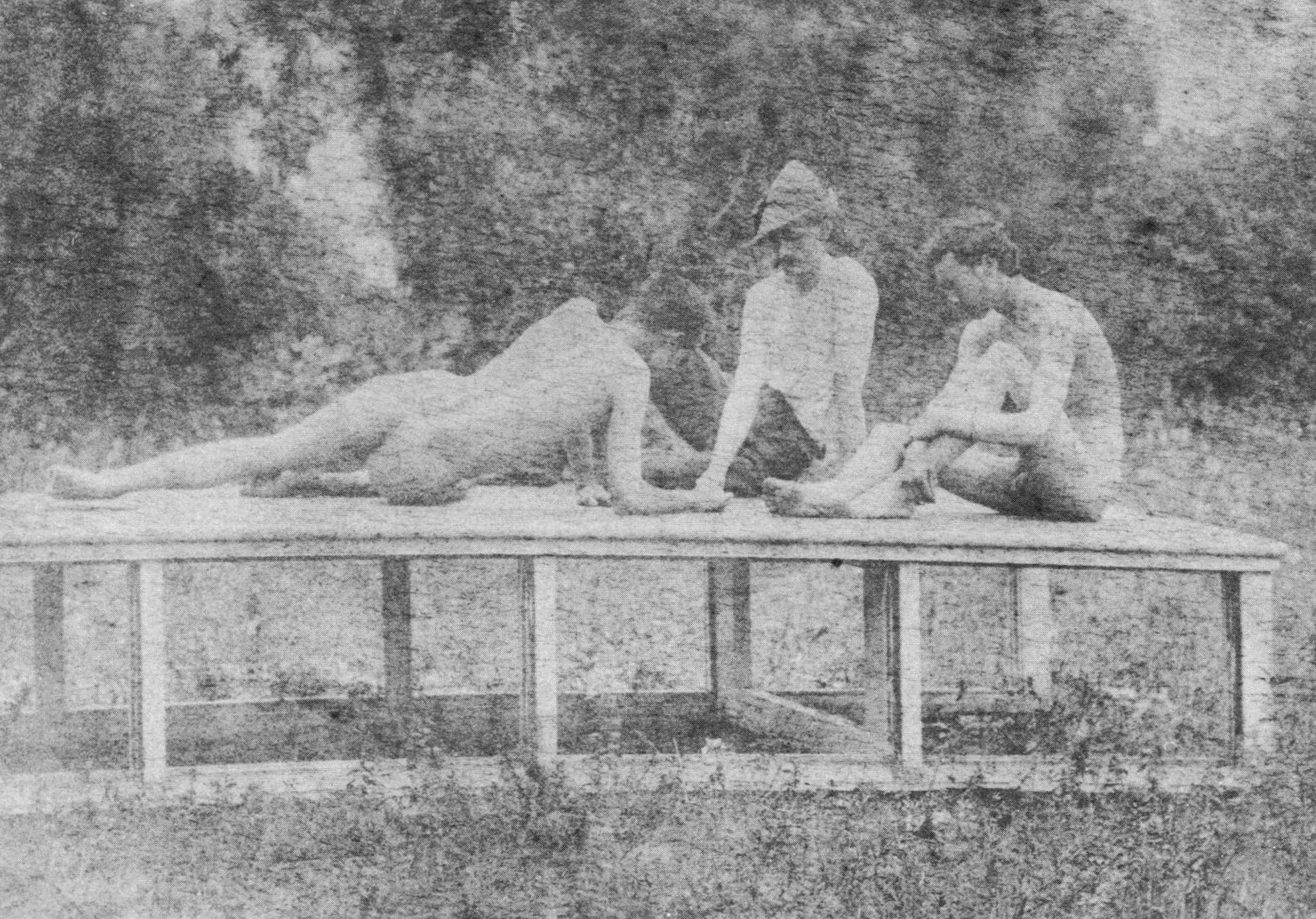
Thomas Eakins (American, 1844-1916)
Unidentified model, Thomas Anschutz and J. Laurie Wallace
1883
Public domain

Thomas Eakins (American, 1844-1916)
Unidentified model, Thomas Anschutz and J. Laurie Wallace
1883
Public domain
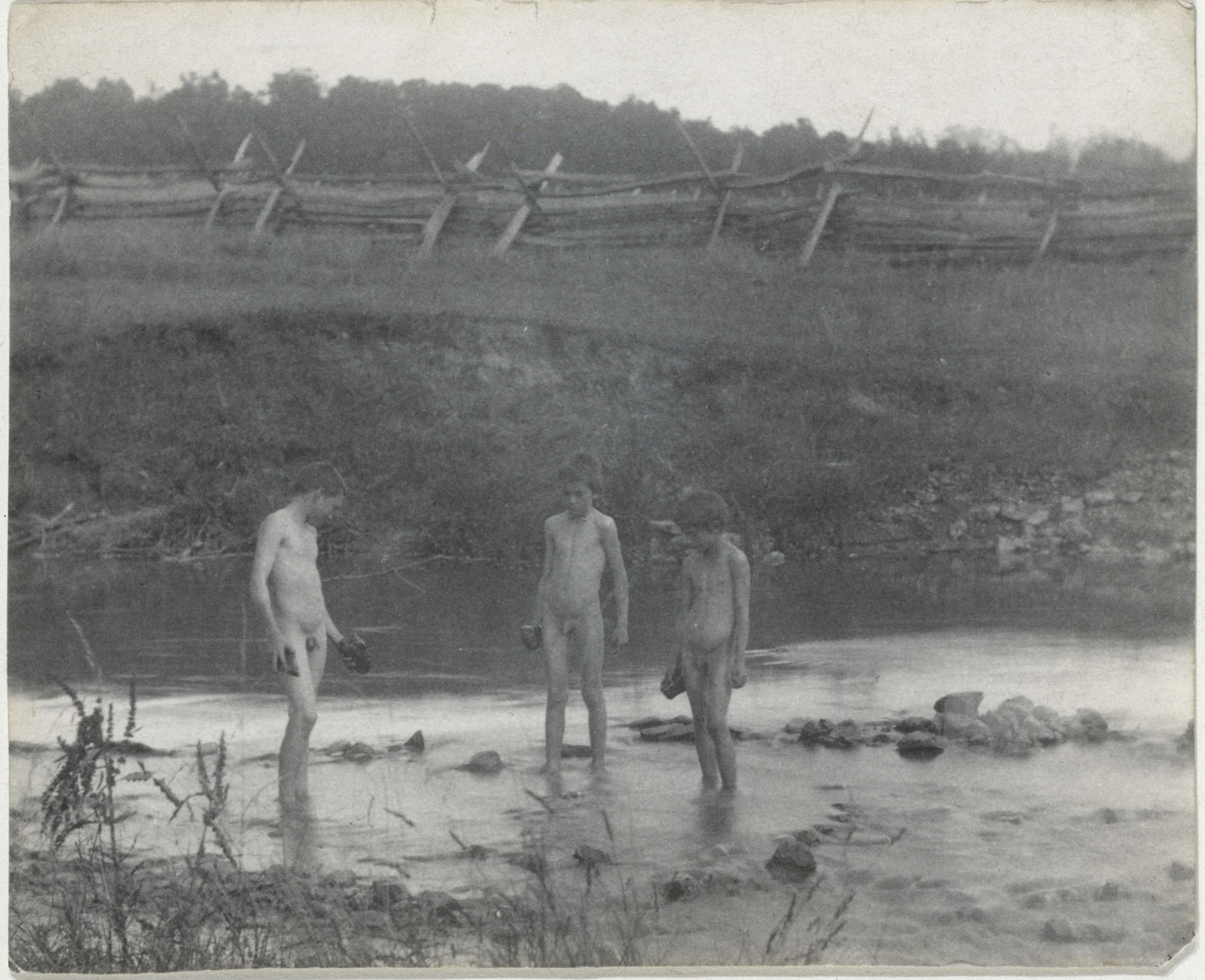
Thomas Eakins (American, 1844-1916)
(Three Boys Wading in a Creek)
In 1882, Thomas Eakins was promoted to the post of director of schools at the Pennsylvania Academy of the Fine Arts, where he became known as a charismatic and innovative teacher who advocated intensive study of the nude figure. Committed to teaching close observation through every means possible, Eakins turned his school into a laboratory of photographic experimentation. He and his students (male and female) made negatives of each other – in lithe repose or in action, nude or in costume. At times, Eakins must have realised that he was pushing the limits of Philadelphia decorum. This small 4 x 5 albumen silver print shows several of Eakins’ nephews playing in a creek on the property of the artist’s sister Frances and her husband, William J. Crowell. In the 1880s, Eakins spent much of his free time at the Crowell family home in Avondale, Pennsylvania, thirty miles southwest of Philadelphia. Distant from urban distractions, the idyllic farm soon became a refuge for him. The Crowell children delighted Eakins and he made many photographs of their spirited games.
Text from The Metropolitan Museum of Art website

Thomas Eakins (American, 1844-1916)
Arcadia
c. 1883
Oil on canvas
98.1 × 114.3cm (38.6 × 45 in)
Metropolitan Museum of Art

Circle of Thomas Eakins (American, 1844-1916)
Thomas Eakins and students, swimming nude
c. 1883
Public domain
The Swimming Hole (1884-1885) features Eakins’ finest studies of the nude, in his most successfully constructed outdoor picture. The figures are those of his friends and students, and include a self-portrait. Although there are photographs by Eakins which relate to the painting, the picture’s powerful pyramidal composition and sculptural conception of the individual bodies are completely distinctive pictorial resolutions. The work was painted on commission, but was refused.
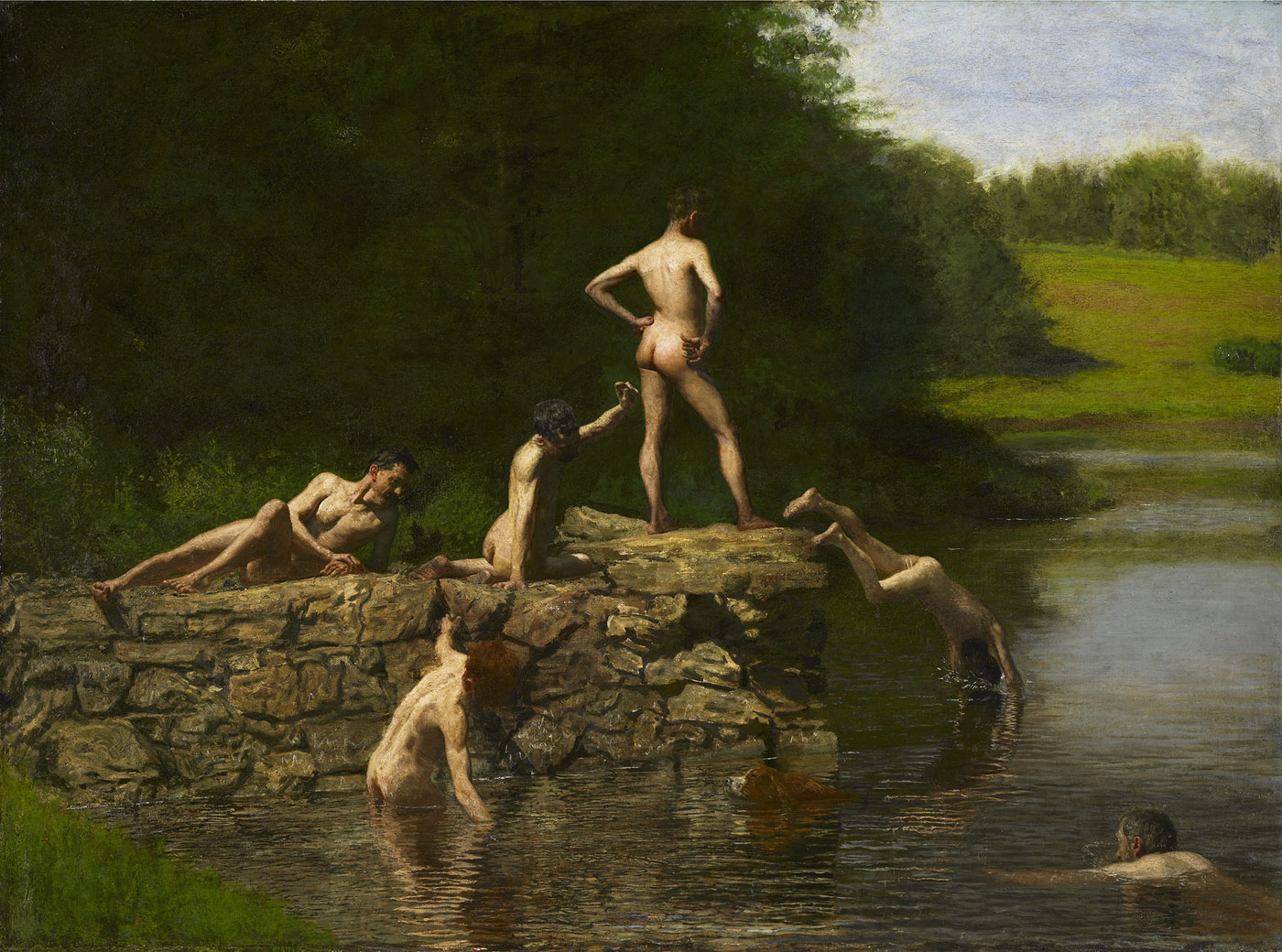
Thomas Eakins (American, 1844-1916)
Swimming / The swimming hole
1885
Oil on canvas
27.625 × 36.625 in (70.2 × 93cm)
Amon Carter Museum of American Art

Thomas Eakins (American, 1844-1916)
Wrestlers in Eakins’s studio
1899
Platinum print on paper
3 5/8 x 6 in. (9.0 x 15.2cm)
Hirshhorn Museum and Sculpture Garden, Smithsonian Institution, Washington, DC
Gift of Joseph H. Hirshhorn, 1966
Public domain
On May 22, 1899, Eakins had two wrestlers pose in his 4th-floor studio at 1729 Mount Vernon Street, Philadelphia. Three days earlier, he had written to his friend, sportswriter Clarence Cranmer: “I am going to start the wrestling picture on Monday at half past two. I wish you could find it convenient to be at the studio and help us with advice as to positions and so forth.” The artist’s protégé Samuel Murray may have been present; he modelled a small sculpture of the wrestlers that is also dated 1899. Eakins painted the works from the live models and from a nearly identical photograph, that may have been taken that day. The photograph shows the wrestler on top holding the other in a half nelson and crotch hold.
Text from the Wikipedia website
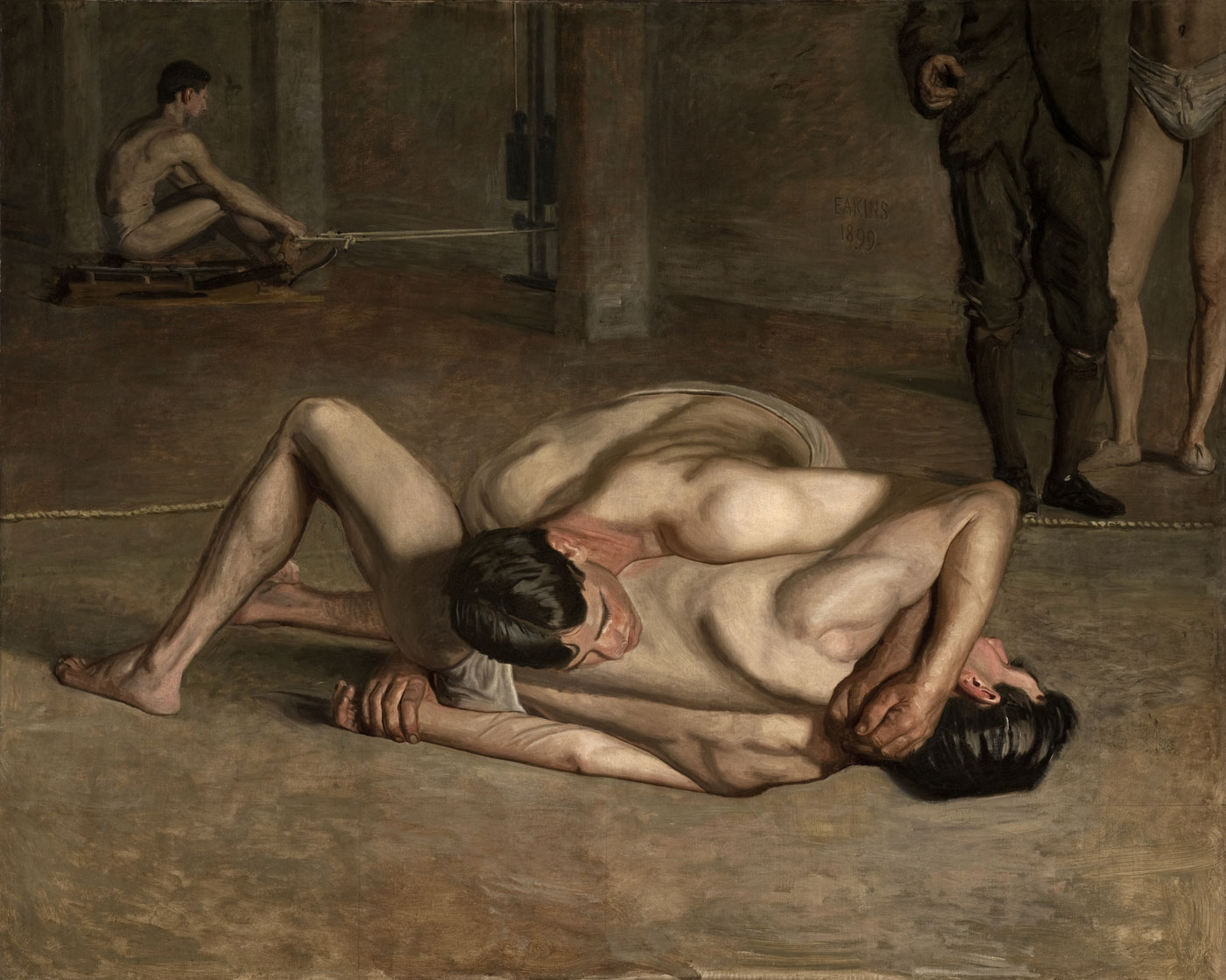
Thomas Eakins (American, 1844-1916)
Wrestlers
1899
Oil on canvas
48 3/8 x 60 in. (122.87 x 152.4cm)
Image: Museum Associates/LACMA
Los Angeles County Museum of Art (LACMA) Image Library

Circle of Thomas Eakins (American, 1844-1916)
Reclining Male Nude from The Grafly Album
1886
Albumen print
Mounting Sheet: 6 7/8 x 10 in. (17.5 x 25.4cm)
Photo: 4 1/2 x 7 in. (11.5 x 17.8cm)
Acquired by the Clark, 2001
The Clark Art Institute
Public domain
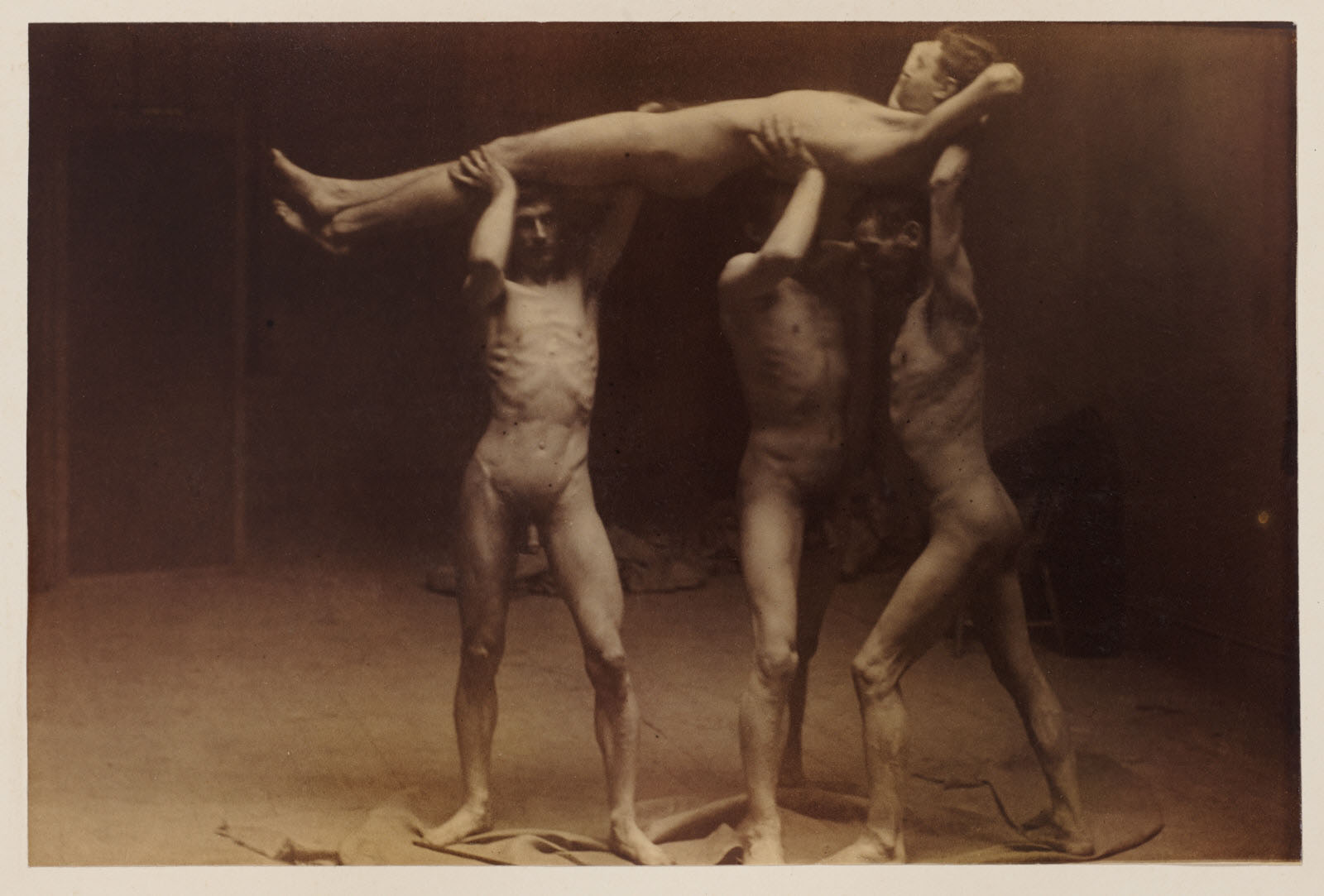
Circle of Thomas Eakins (American, 1844-1916)
Three Male Nude Models Supporting a Reclining Fourth Model, from The Grafly Album
1886
Albumen print
Mounting Sheet: 6 7/8 x 10 in. (17.5 x 25.4cm)
Photo: 4 1/2 x 7 in. (11.5 x 17.8cm)
Acquired by the Clark, 2001
The Clark Art Institute
Public domain

Circle of Thomas Eakins (American, 1844-1916)
Four Standing Male Nudes, Frontal View, from The Grafly Album
1886
Albumen print
Mounting Sheet: 6 7/8 x 10 in. (17.5 x 25.4cm)
Photo: 4 1/2 x 7 in. (11.5 x 17.8cm)
Acquired by the Clark, 2001
The Clark Art Institute
Public domain
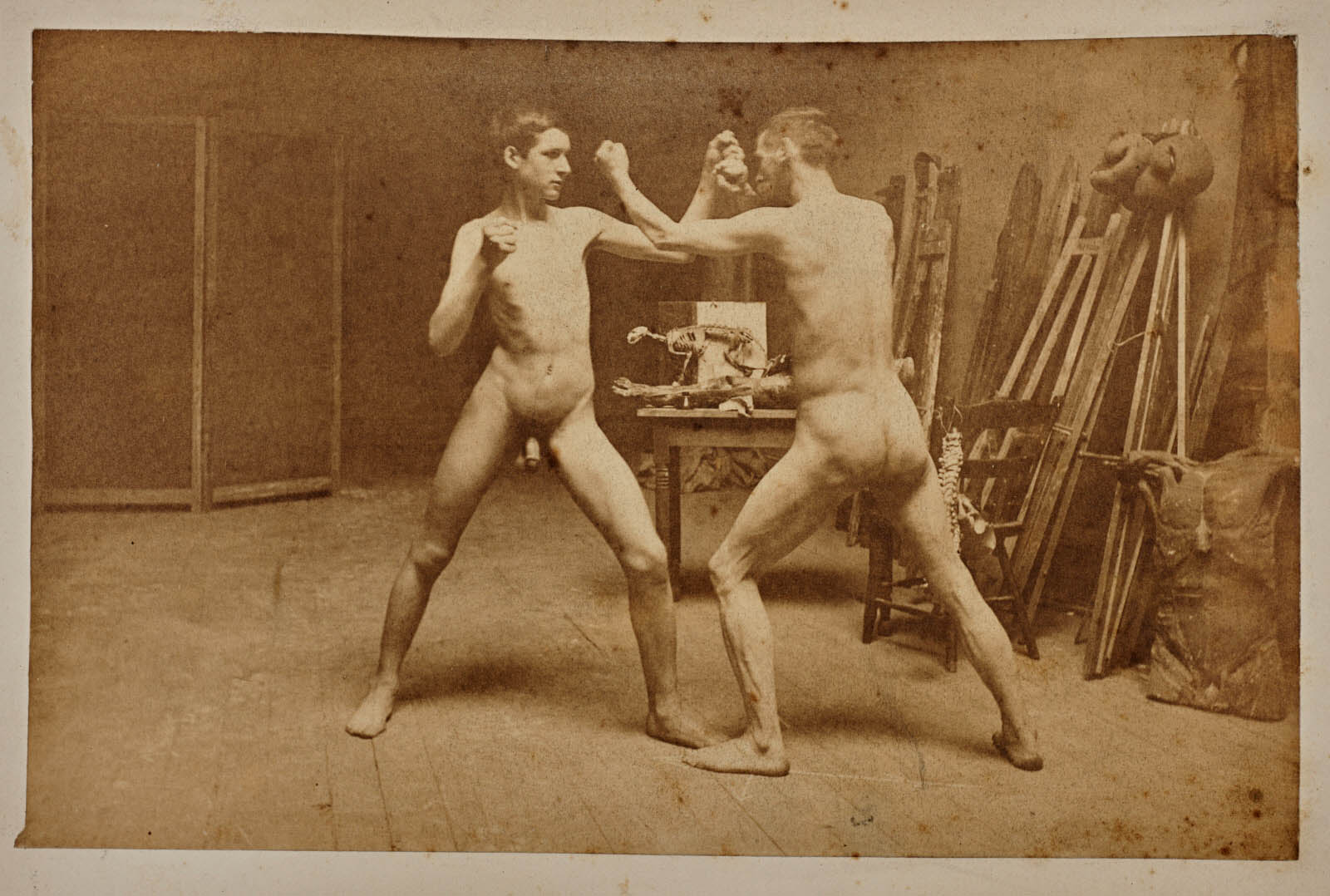
Circle of Thomas Eakins (American, 1844-1916)
Two Male Nude Models Posing as Boxers, from The Grafly Album
1886
Albumen print
Mounting Sheet: 6 7/8 x 10 in. (17.5 x 25.4cm)
Photo: 4 1/2 x 7 in. (11.5 x 17.8cm)
Acquired by the Clark, 2001
The Clark Art Institute
Public domain



 Art Blart _ art and cultural memory archive
You must be logged in to post a comment.