Exhibition: ‘Jan Senbergs: Observation – Imagination’ at The Ian Potter Centre: NGV Australia, Melbourne

Exhibition dates: 18th March – 12th June 2016


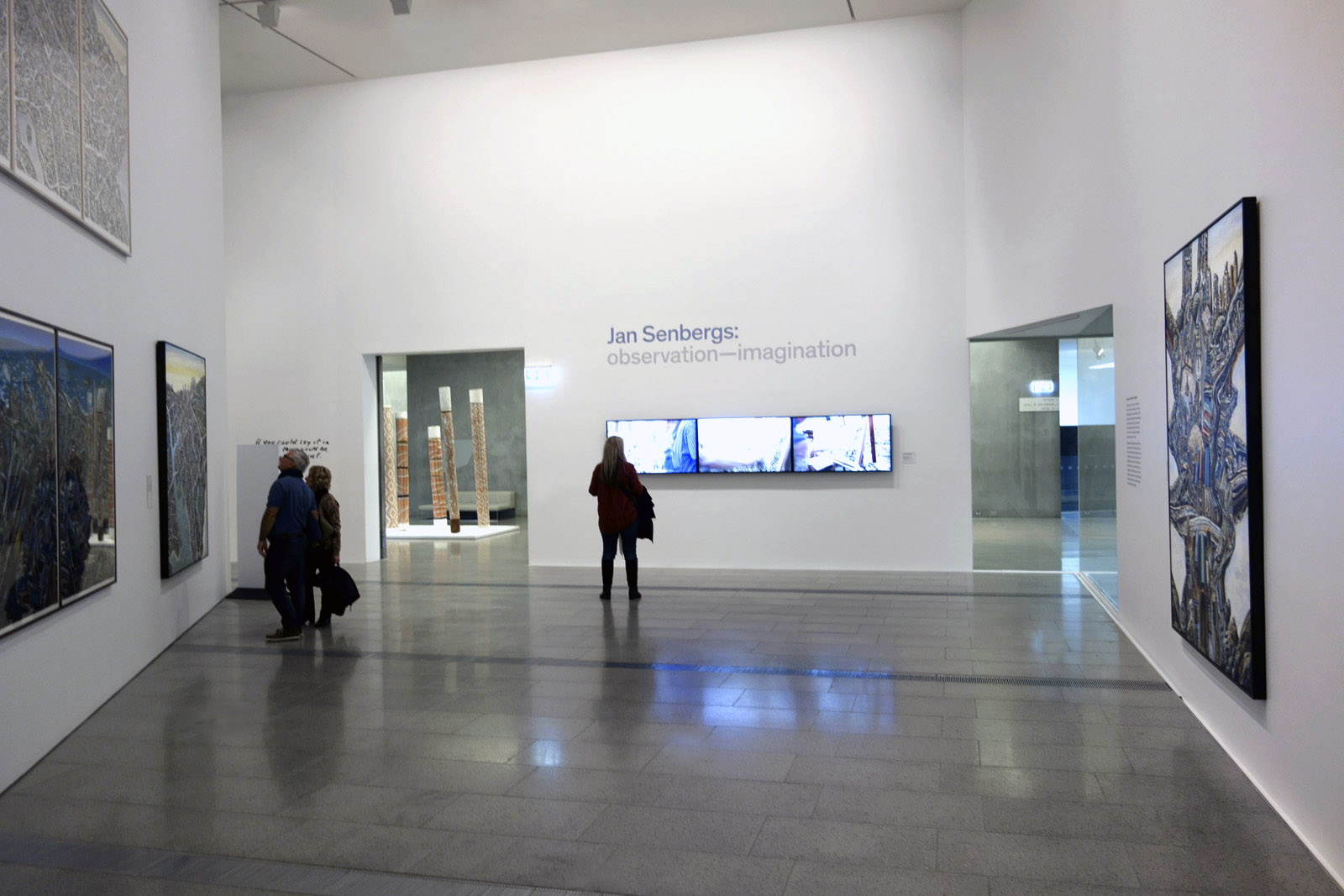
Installation view of the exhibition 'Jan Senbergs: Observation – Imagination' at The Ian Potter Centre: NGV Australia


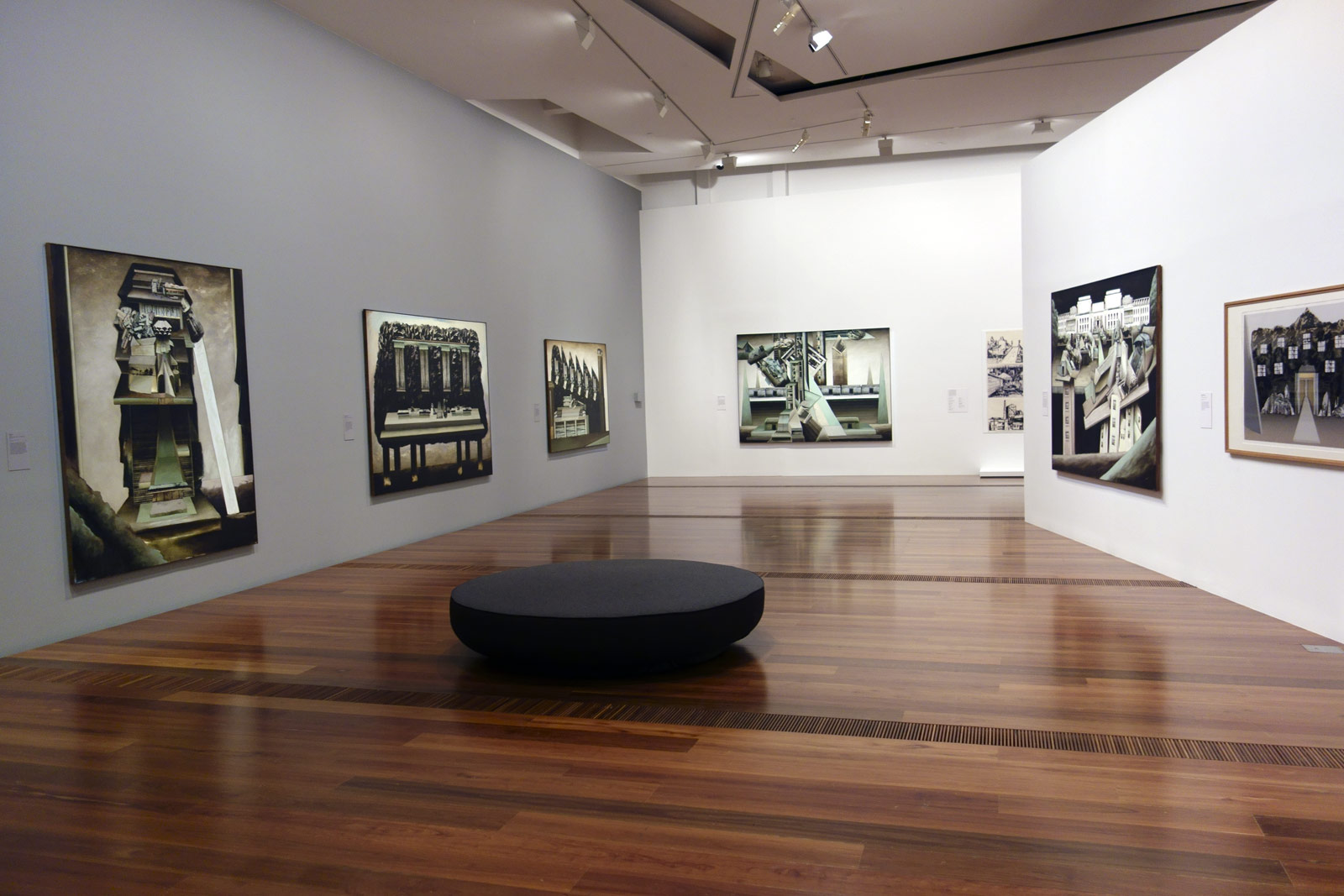
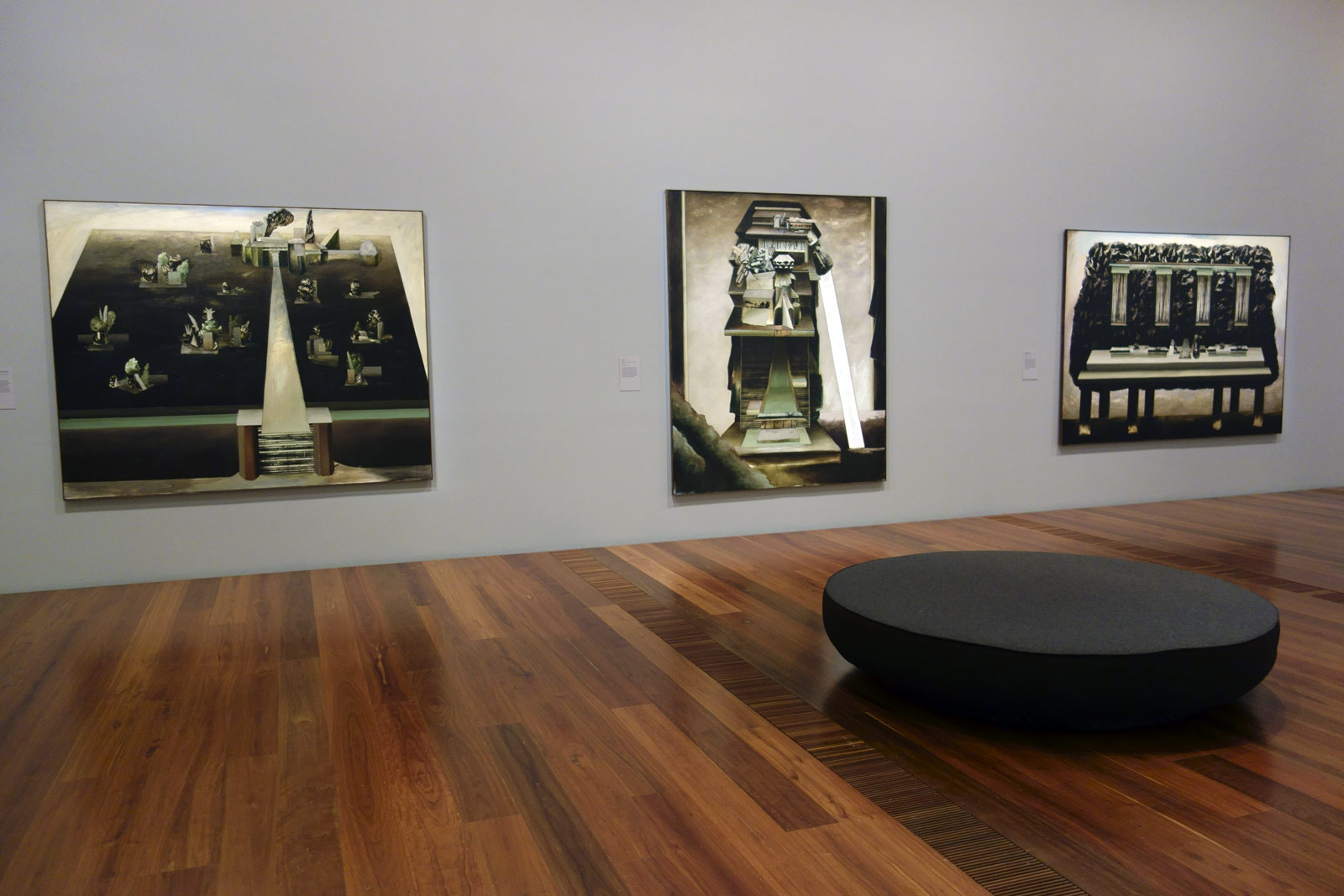
Installation view of the opening room of the exhibition Jan Senbergs: Observation – Imagination at The Ian Potter Centre: NGV Australia
Photo: Marcus Bunyan


You only have five days left to catch what I consider to be one of the best exhibitions I have seen this year in Melbourne.

If ever there was a man deserving of a large retrospective, it is Jan Senbergs. This wondrous, intelligent, immersive exhibition by this iconic Australian artist is a joy. Particularly so as you witness the gestation of the artist, the journey from very first exhibition to latest work.

Witness is a particularly apt metaphor for Senbergs – he is a witness to the world who uses his imagination to create, as he says, “maybe something architectonic or machine-like, but not quite: and ambiguous … I was trying to create something irrational, something out of the imagination but belonging to the world.” He belongs to the world but creates things not of the world as we know it. It is a twisted world n/visioned in multiple forms. Twisted labyrinthine structures – mechanistic, naturalistic, humanistic – swirling around in his head, put down as marks on paper, synthetic polymer paint on canvas.

Mark making is important to this man. He maps mechanistic and biomorphic elements, always intelligently informed by sources as diverse as “literature, history, architecture and non-Western art, and finds imagery within obscure technical journals, ancient mythology and illustrated encyclopaedias.” His influences are various – German Expressionism, Max Beckmann, Neo-Expressionist painting of the early 1980s, Brutalism, Eduardo Paolozzi, Pop Art and the writing of American postmodernist author Donald Bartheme – to name but a few. And his perspective is unique, as John Olsen insightfully observes, “not often on the vanishing point, but … more related to the spatial  orientation in Chinese or Islamic art. This kind of perspective gives weight to an object; the sensation is abrupt and very blunt, ideally related to his vision.”

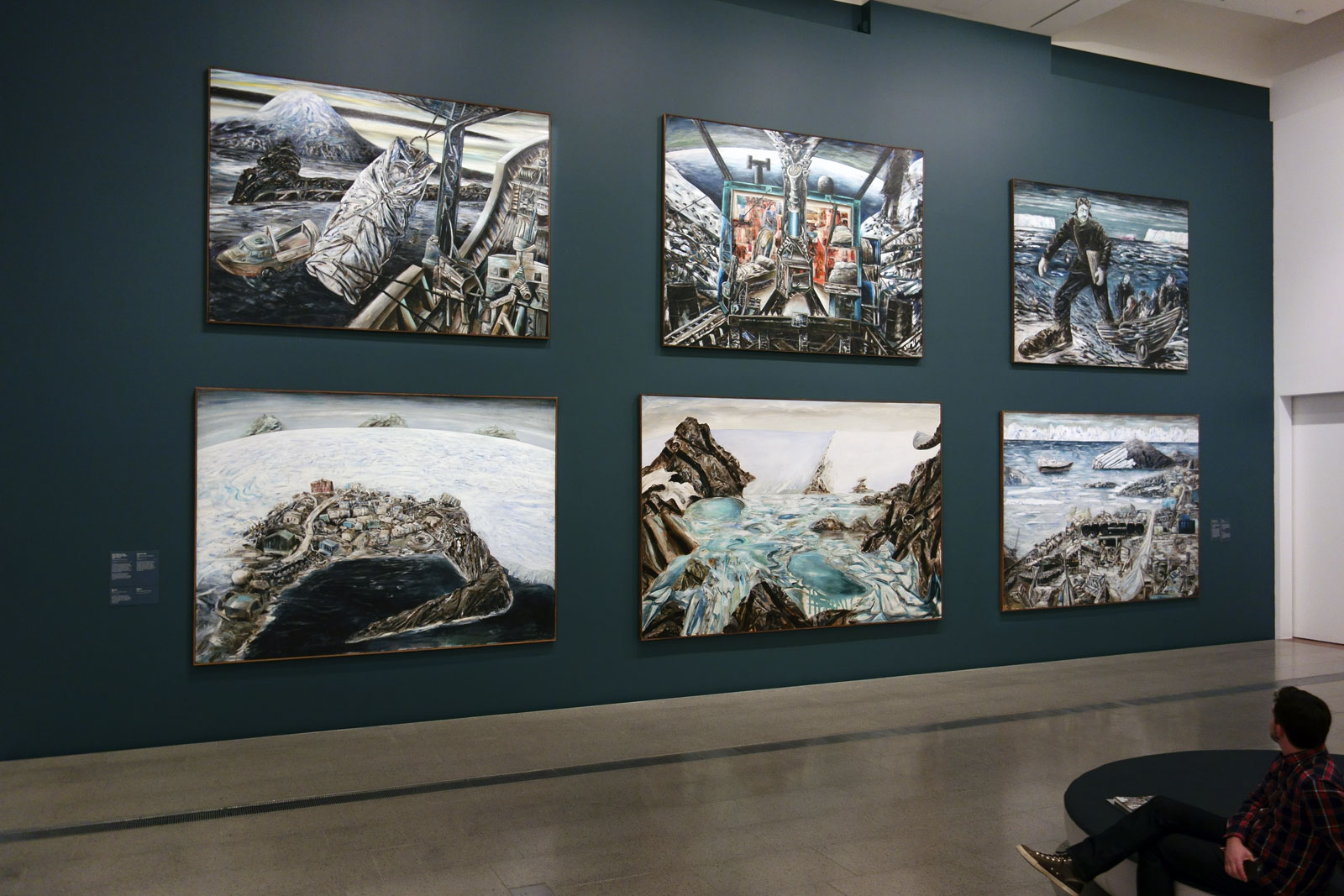
Standing in front of the huge six painting wall of Senbergs’ Antarctic paintings you feel the power of that (topographical? analytical? cut-away) vision. I dare you not to.

There are downsides. When they do appear in his paintings, his literal figures and landscapes (such as people, boats and bays), are weak. But that’s not what this artist is about. His screen print work of the mid to late 1970s lead him into a formally stylistic dead end. But he was an intelligent enough artist to recognise it as such and returned to mark making: “But it was a period when I was getting too confident. It was time to leave it alone, go back to the mark.” And his popularist map paintings of Sydney and Melbourne, painted in a brighter colour palette, don’t have the depth of feeling and response to the world that other works possess.

His limited colour palette – all blacks and subdued colours in the early enamel work; green and browns in the 1970s work; greys, blacks and beiges in the early 1980s; blues and greens with splashes of colour for the Antarctic and mining paintings; through to the more colourful map paintings of the 1990s and the recent oranges of the bushfire paintings – has always given weight to the object, weight to his constructed upside-down world, weight to his vision of a place where anything might happen. And frequently does.

Irrational, perhaps (but the irrational can only exist if there is the rational).
Something out of the imagination but belonging to the world, indubitably.
A world that is neither dysfunctional in vision nor balance.

Dr Marcus Bunyan


Many thankx to the National Gallery of Victoria for allowing me to publish the artworks in the posting. All installation photographs as noted © Marcus Bunyan and the National Gallery of Victoria. Please click on the photographs for a larger version of the image.


This is the first comprehensive retrospective of renowned Melbourne artist Jan Senbergs. Throughout his long career, Senbergs’ work has been characterised by a fundamental humanist vision, a finely-honed sense of the absurd, and a rigorous studio practice spanning printmaking, drawing and painting. He is considered to be amongst Australia’s leading painters and his large-scale expressive drawings are highly regarded. More recently Senbergs has created labyrinthine views of cities, employing aerial perspectives to present a bird’s eye view of humankind’s endeavours. The exhibition includes paintings, drawings and prints from his first exhibition in 1960 until the present day, borrowed from public and private collections around Australia.

Jan Senbergs is one of Australia’s most distinctive artists. He is both an acute observer and a creator of fantastical imagery. Since his first exhibition in 1960, Senbergs’s work has undergone many transformations of style, technique and subject, yet there have also been recurring themes and motifs. Elements from his very first works have reappeared, reworked and reinterpreted, throughout his career.

Senbergs’s artistic imagination has been fed by many sources, including his love of literature and poetry; his interest in no-Western artistic traditions and the work of outsider artists; journeys to distant locales as well as familiar places close to home. The artist has often referred to himself as a ‘visual scavenger’ of images – photographs, scientific diagrams, maps – which he transforms and incorporates into his own work. Above all, Senbergs’s art reflects his essential humanism, humour and wide-ranging curiosity.

Text from the NGV website


“I was always interested in painting buildings and things and I tried to make them half human, trying to put figures into them, in the end they blended together as one, the figures, the buildings and the people.”


Jan Senbergs, 1965


“I was always trying to invent new forms, different forms, shapes which were recognisable – maybe something architectonic or machine-like, but not quite: and ambiguous … I was trying to create something irrational, something out of the imagination but belonging to the world.”


Jan Senbergs, 2008
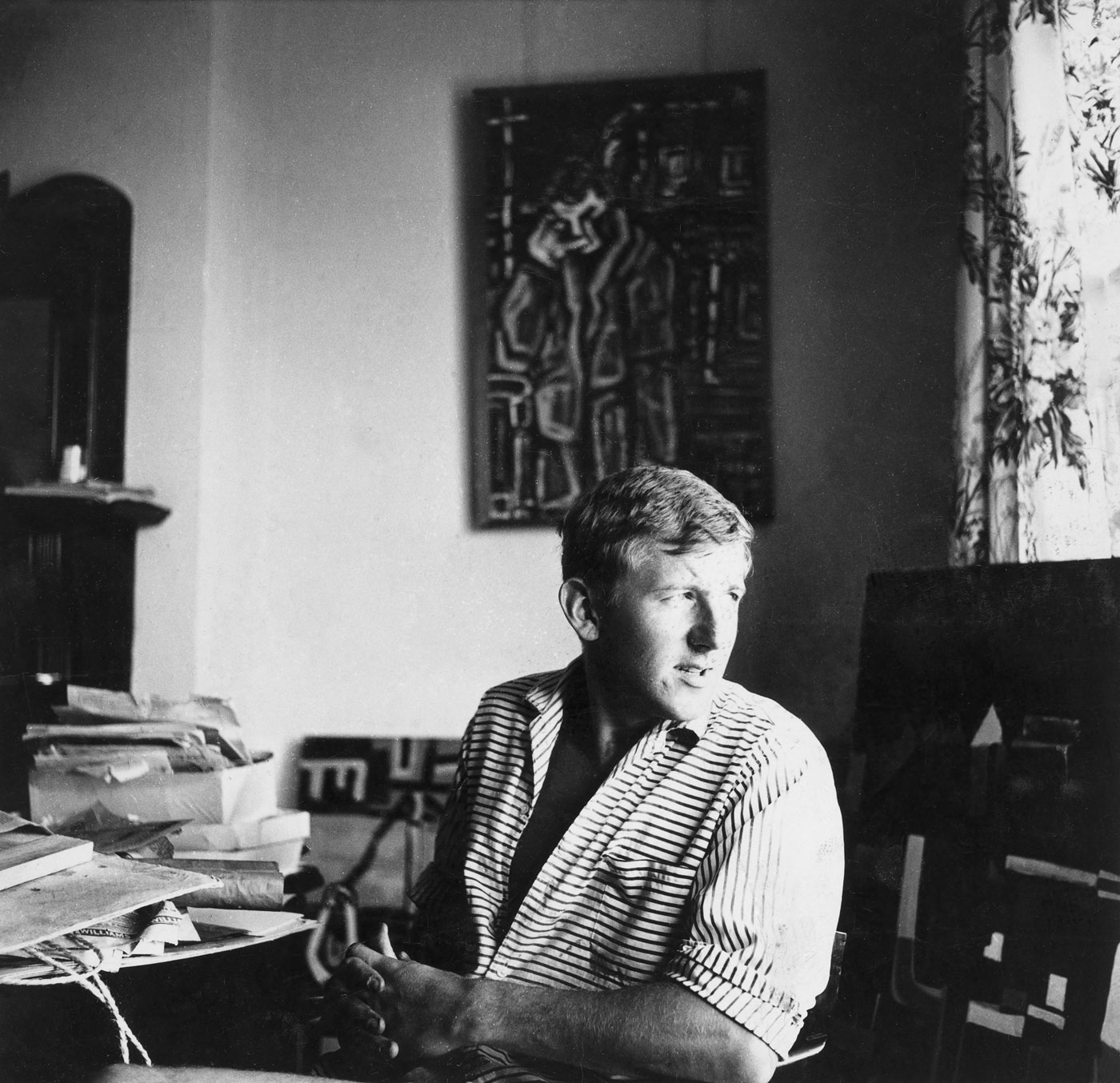


Alan Kilner. 'Jan Senbergs, Melbourne' c. 1959


Alan Kilner
Jan Senbergs, Melbourne
c. 1959
Image courtesy Jan Senbergs


Jan Senbergs (born Latvia 1939, arrived Australia 1950, died Melbourne 2024) 'The whipper' 1961


Jan Senbergs (born Latvia 1939, arrived Australia 1950, died Melbourne 2024)
The whipper
1961
Enamel paint on composition board
183.0 x 122.0cm
Courtesy of the artist and Niagara Galleries, Melbourne
© Jan Senbergs


Literature has always been an important source of imagery for Senbergs. This work, one of his earliest, is based upon an episode in The Trial (1925) by Czech writer Franz Kafka. In the painting two figures cower beneath ‘the whipper’, who metes out a brutal punishment to them. This work was included in Senbergs’s second solo exhibition at the Argus Gallery, Melbourne, in 1962.
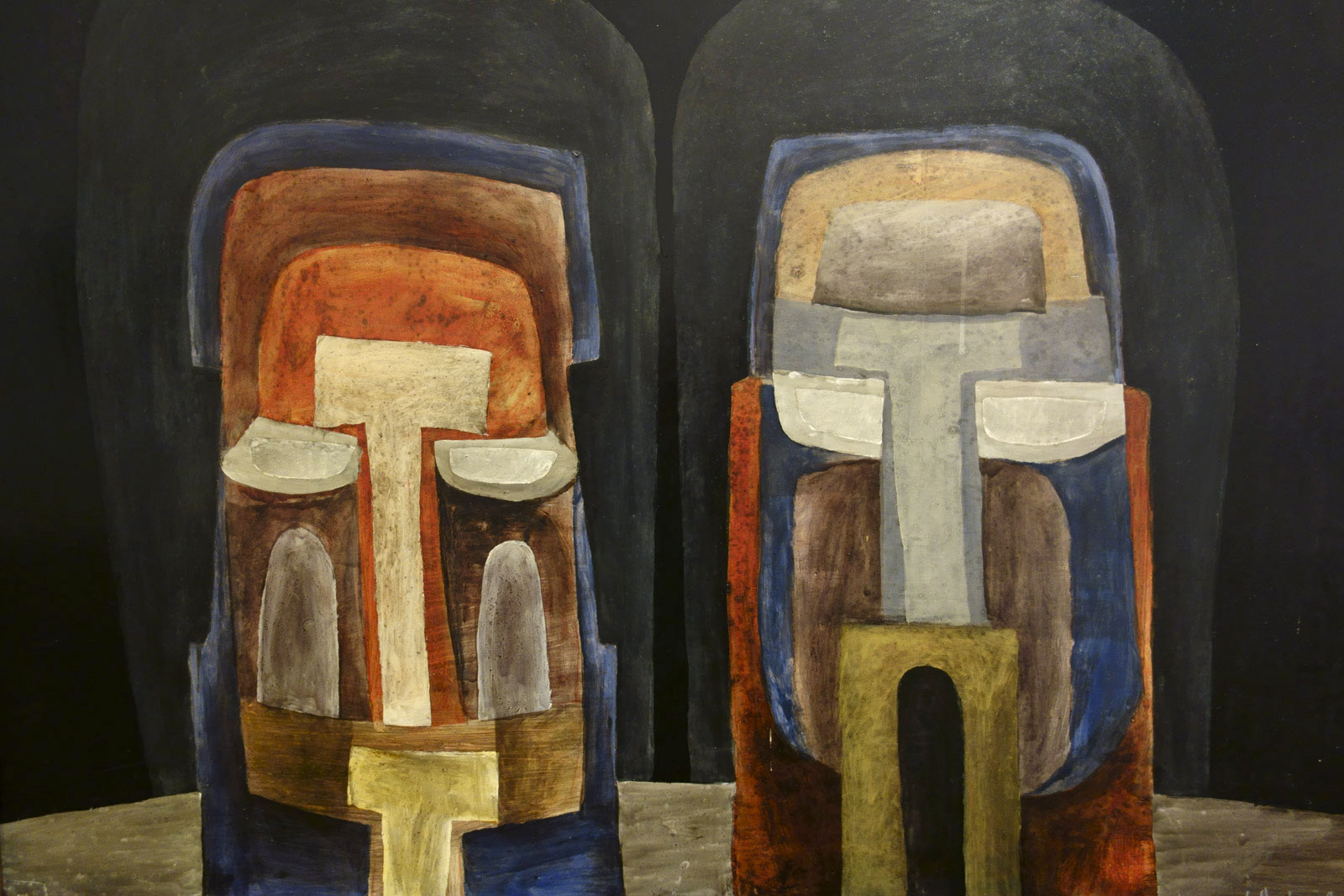
 

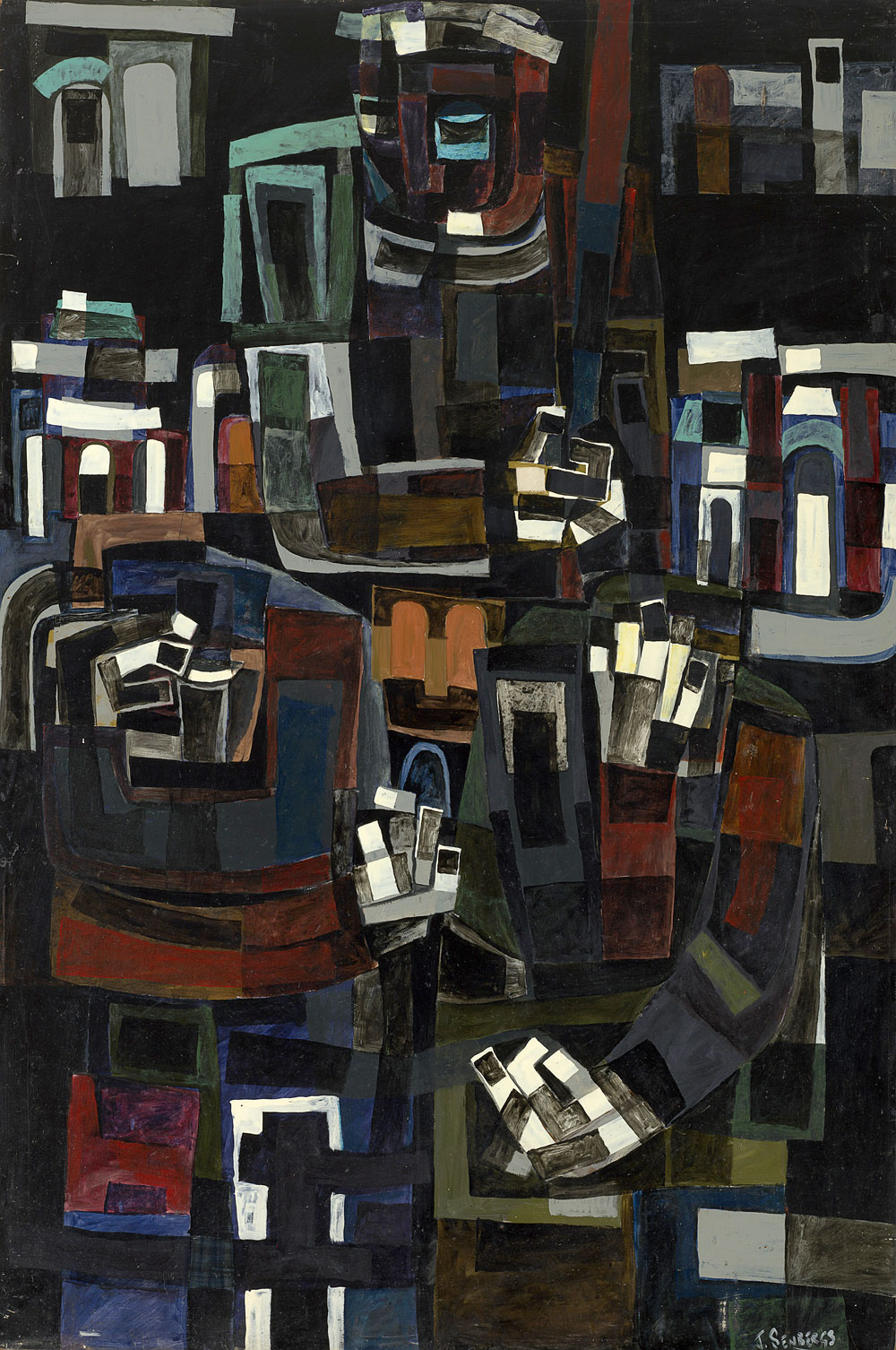
Jan Senbergs (born Latvia 1939, arrived Australia 1950, died Melbourne 2024) 'Two heads' 1961


Jan Senbergs (born Latvia 1939, arrived Australia 1950, died Melbourne 2024)
Two heads
1961
Enamel paint on composition board
Private collection, Melbourne


“I was always interested in painting buildings and things and I tried to make them half-human, trying to put the figures into them; in the end they blended together as one, the figures and the buildings and the people.”

~ Jan Senbergs, 1965


Jan Senbergs (born Latvia 1939, arrived Australia 1950, died Melbourne 2024) 'Head' 1963


Jan Senbergs (born Latvia 1939, arrived Australia 1950, died Melbourne 2024)
Head
1963
Colour screen print on paper, artist’s proof, edition of 10
42.4 x 35.2cm (image and sheet)
Courtesy of the artist and Niagara Galleries, Melbourne
© Jan Senbergs
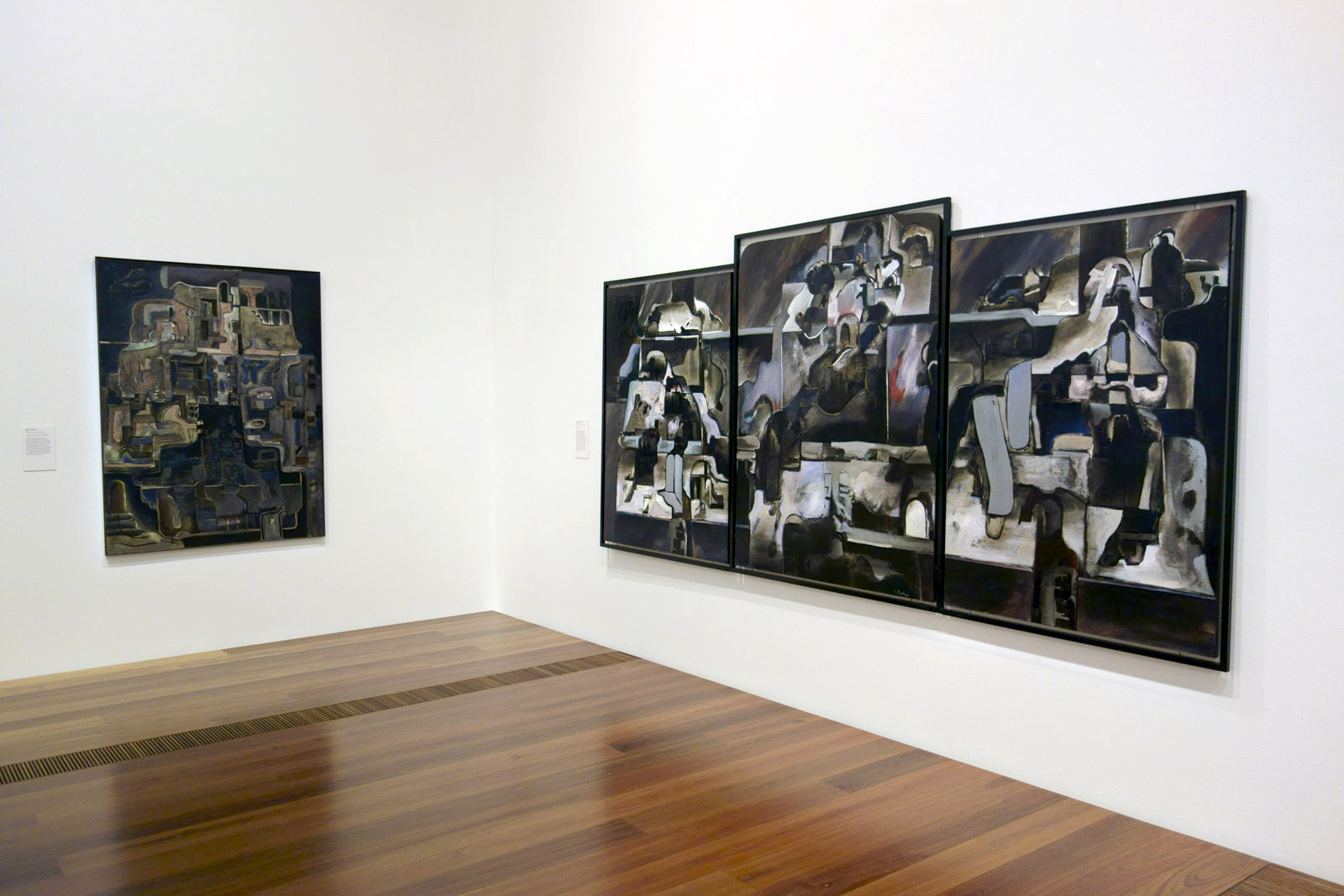
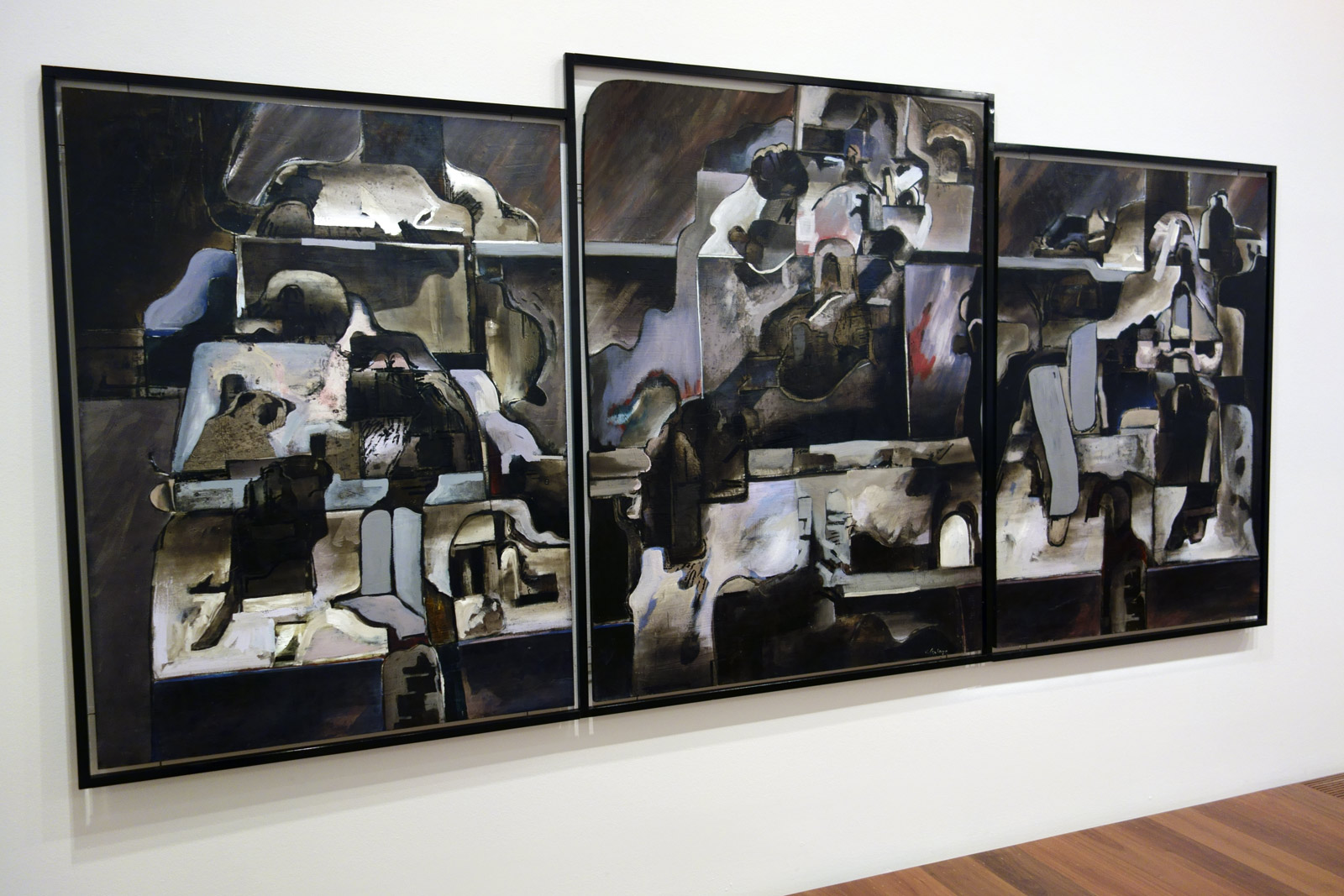
 

Jan Senbergs (born Latvia 1939, arrived Australia 1950, died Melbourne 2024) 'The night parade' 1966 (installation view)

Jan Senbergs (born Latvia 1939, arrived Australia 1950, died Melbourne 2024) 'The night parade' 1966 (installation view)


Jan Senbergs (born Latvia 1939, arrived Australia 1950, died Melbourne 2024)
The night parade (installation views)
1966
Enamel paint on composition board
Mornington Peninsula Regional Gallery
Gift of the artist, 1977
Photos: Marcus Bunyan


At the time of its creation, this was Senbergs’s largest and most ambitious painting to date, and it formed the centrepiece of his 1966 exhibition at Georges Gallery in Melbourne. The triptych format recalls the work of German Expressionist painter Max Beckmann, one of Senbergs’s earliest and ongoing artistic heroes. In his review of the exhibition, critic Allan McCulloch wrote: “Instead of simply looking at abstract pictures we have the feeling of standing on the perimeter of a vast industrial landscape in which hills and slag heaps, factories and cities are relentlessly pushed and jostled by an omni-present parade of silent watchers. The huge triptych “The night parade’ … illustrates the point.”


Jan Senbergs (born Latvia 1939, arrived Australia 1950, died Melbourne 2024) 'Observation post 2' 1968


Jan Senbergs (born Latvia 1939, arrived Australia 1950, died Melbourne 2024)
Observation post 2
1968
Synthetic polymer paint, oil screenprint on canvas
246.0 x 185.0cm
National Gallery of Australia, Canberra
Purchased 1971
© Jan Senbergs


On his return to Melbourne in late 1967, Senbergs’ work changed dramatically. He ceased painting with enamel on Masonite composition boards, and instead started working with oil or acrylic on canvas and began to incorporate screen printed elements into his paintings. Of his year in Europe he later recalled, “I got a lot out of it, it completely made me revise and rethink a whole lot of things regarding my painting, my work, my attitudes and so on … I felt very refreshed and confident when I came back.”

By the mid 1960s Senbergs’ imagery was becoming increasingly sculptural, merging mechanistic and biomorphic elements, in part stimulated by his interest in the work of Scottish Pop artist Eduardo Paolozzi. Senbergs entered what he refers to as his ‘axle-grease’ period, when his colours became darker and more sombre, which he considered would enhance form in his work.
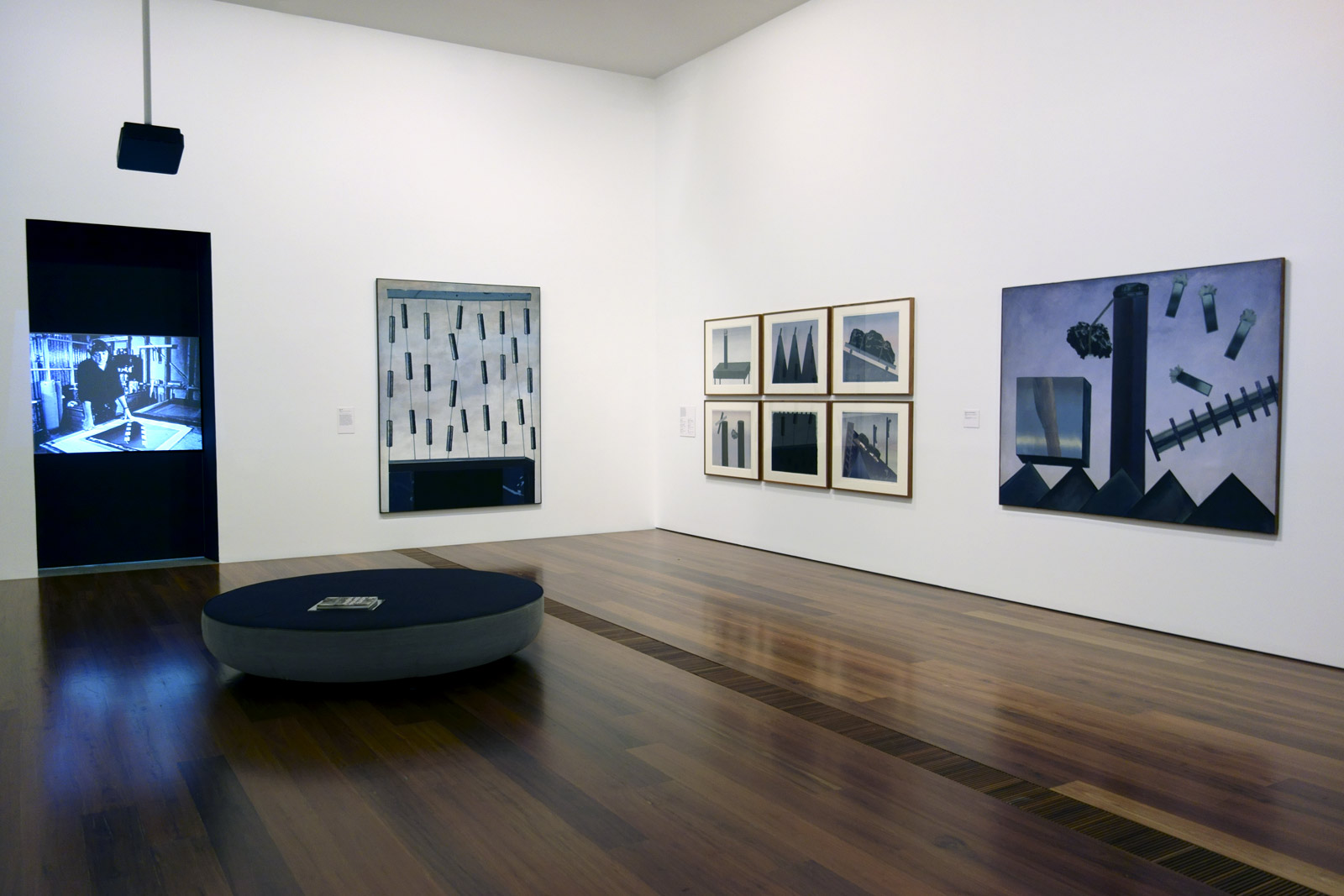
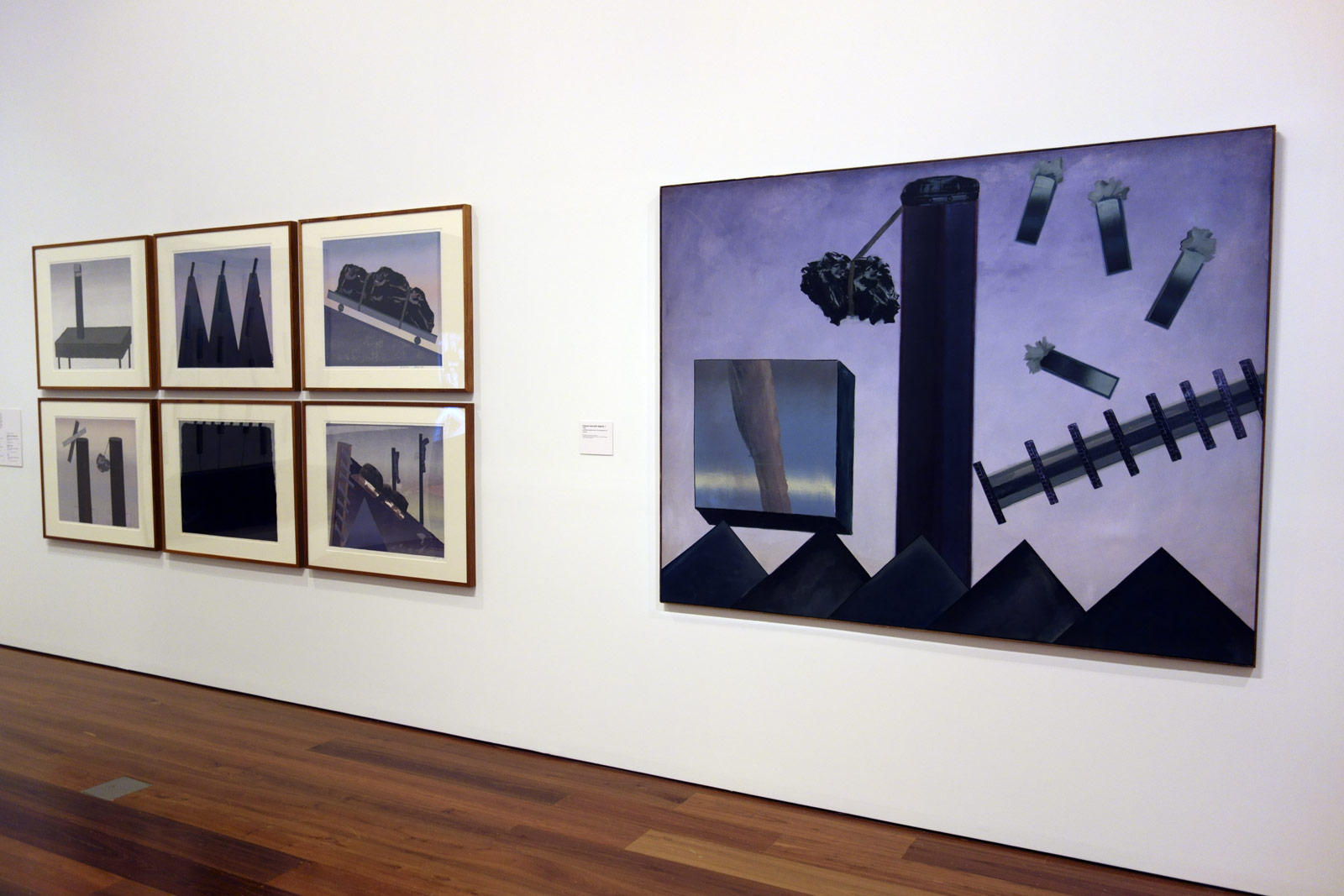
 

Installation view of the exhibition 'Jan Senbergs: Observation - Imagination' at The Ian Potter Centre: NGV Australia showing at right, 'Column and still objects 1' (1968)

Installation view of the exhibition 'Jan Senbergs: Observation - Imagination' at The Ian Potter Centre: NGV Australia showing at right, 'Column and still objects 1' (1968)


Installation views of the exhibition Jan Senbergs: Observation – Imagination at The Ian Potter Centre: NGV Australia showing at right, Column and still objects 1 (1968)
Photos: Marcus Bunyan
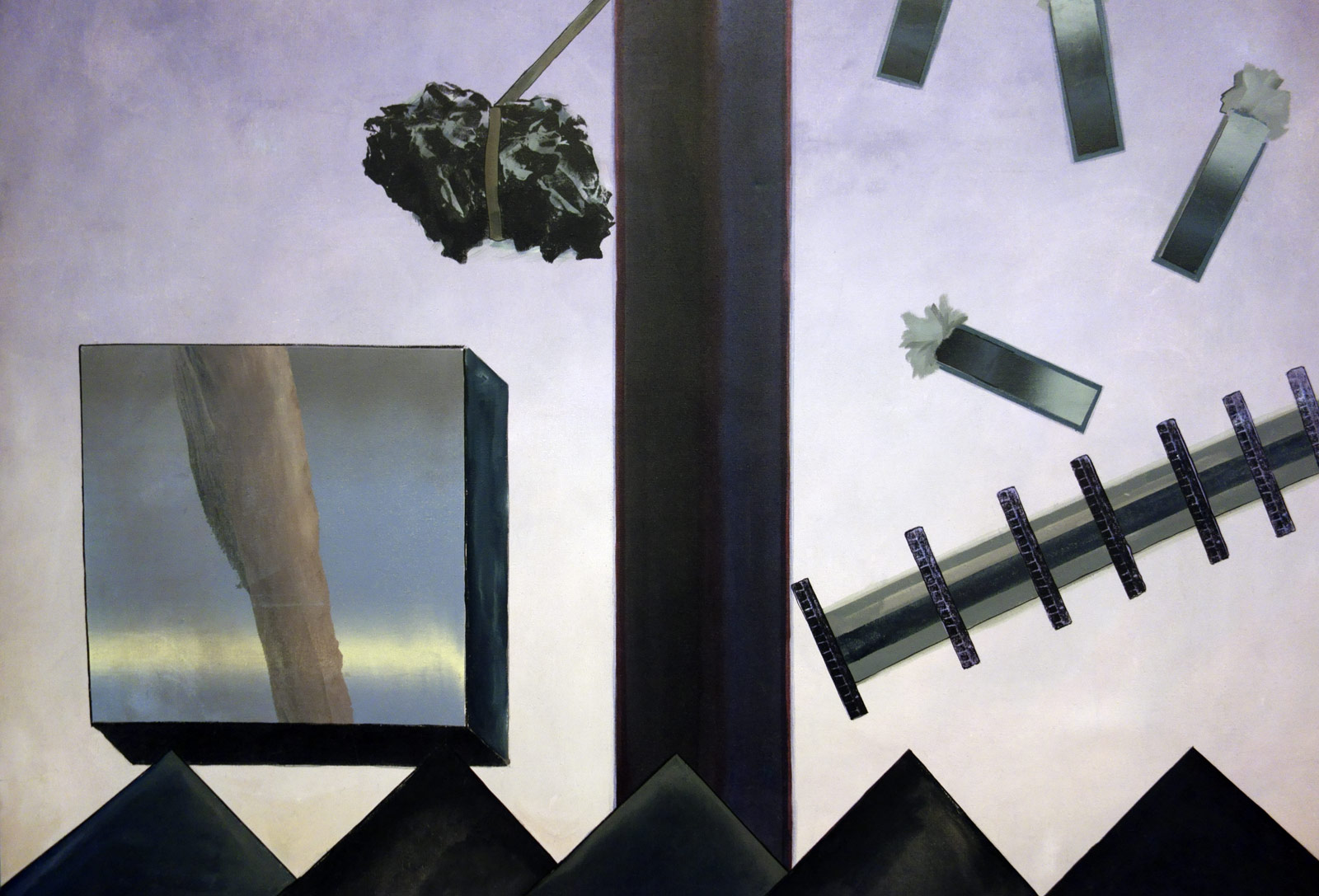
 

Jan Senbergs (born Latvia 1939, arrived Australia 1950, died Melbourne 2024) 'Column and still objects 1' 1968 (detail)


Jan Senbergs (born Latvia 1939, arrived Australia 1950, died Melbourne 2024)
Column and still objects 1 (detail)
1968
The Edith Cowan University Art Collection
Donated through the Australian Government’s Cultural Gifts Program by Mr Timothy James Bernadt
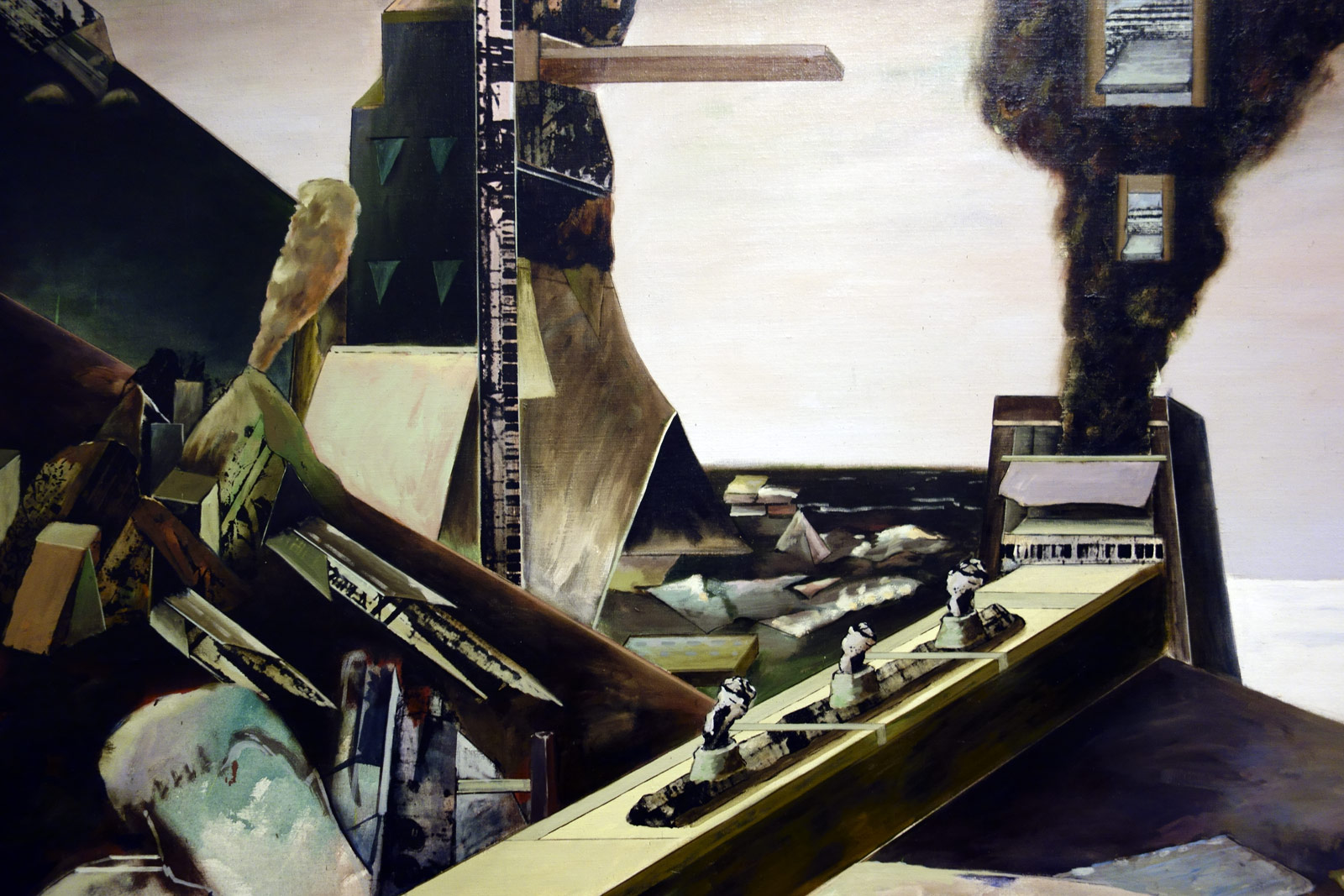
 

Jan Senbergs (born Latvia 1939, arrived Australia 1950, died Melbourne 2024) 'Black garden' 1972 (detail)


Jan Senbergs (born Latvia 1939, arrived Australia 1950, died Melbourne 2024)
Black garden (detail)
1972
Synthetic polymer paint, oil screenprint on canvas plywood
National Gallery of Australia, Canberra
Purchased 1973


In 1972 Senbergs exhibition sixteen new paintings at Melbourne’s Gallery A, including Black garden, in which he created ambiguous cityscapes from surrealistic combinations of screen printed fragments of images. With their absurdist sensibility and disjointed fragmentary images, these paintings emulate the writing of American postmodernist author Donald Bartheme, whose short stories Senbergs admired greatly and whom he credits with being a major influence upon him.
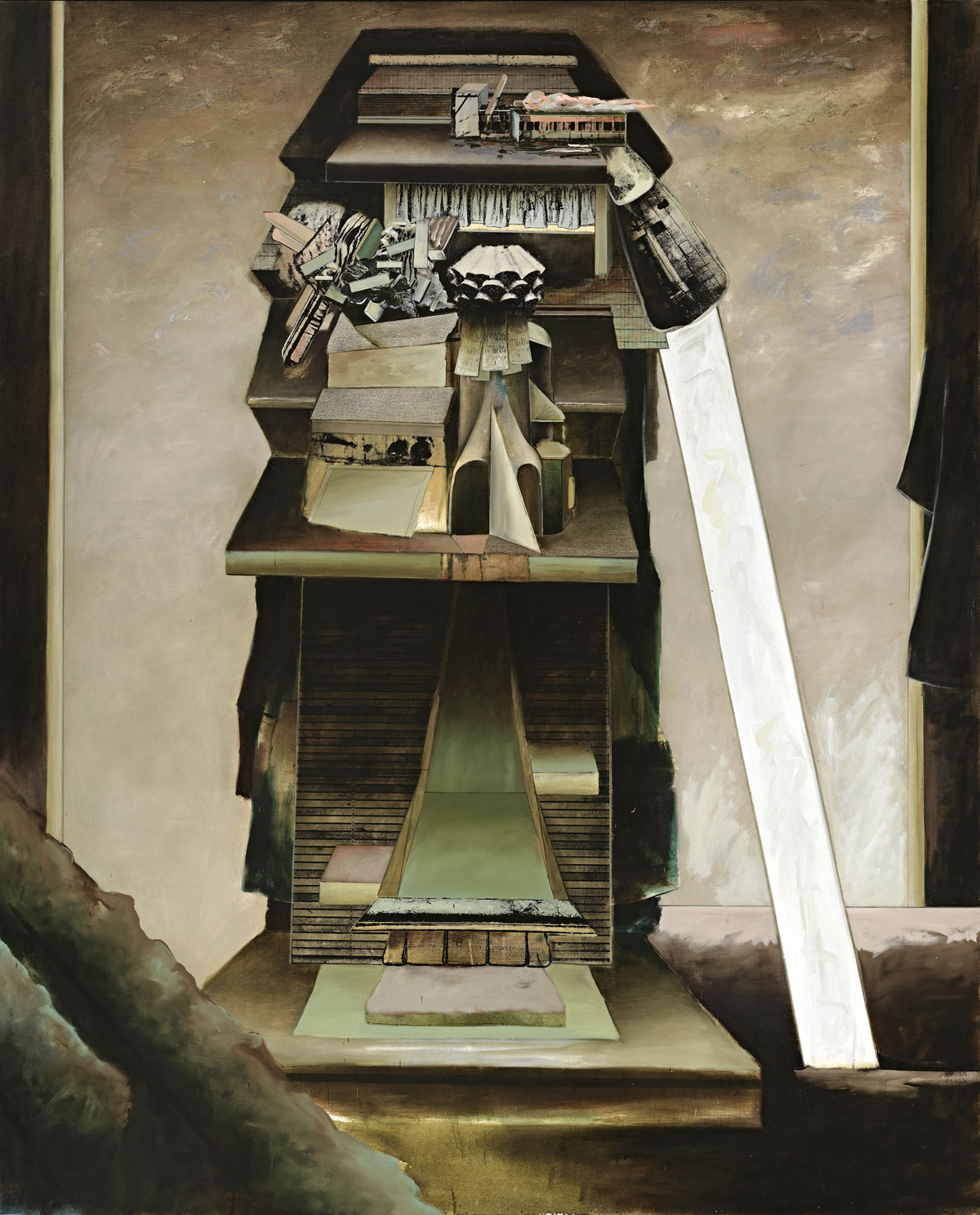
 

Jan Senbergs (born Latvia 1939, arrived Australia 1950, died Melbourne 2024) 'Fort 2' 1973


Jan Senbergs (born Latvia 1939, arrived Australia 1950, died Melbourne 2024)
Fort 2
1973
Synthetic polymer paint, oil screen print on canvas
243.7 x 197.8cm
National Gallery of Australia, Canberra
Purchased 1974
© Jan Senbergs


The paintings Senbergs created in 1973 in response to his selection to represent Australia at the 12th São Paolo Biennial in Brazil were larger and more imposing than his 1972 paintings, and often incorporated an image of a ramp to suggest entry into the forms. With their realistic modelling of architectural forms set against a horizon line, these works evoke the real world, yet remain defiantly resistant to interpretation.
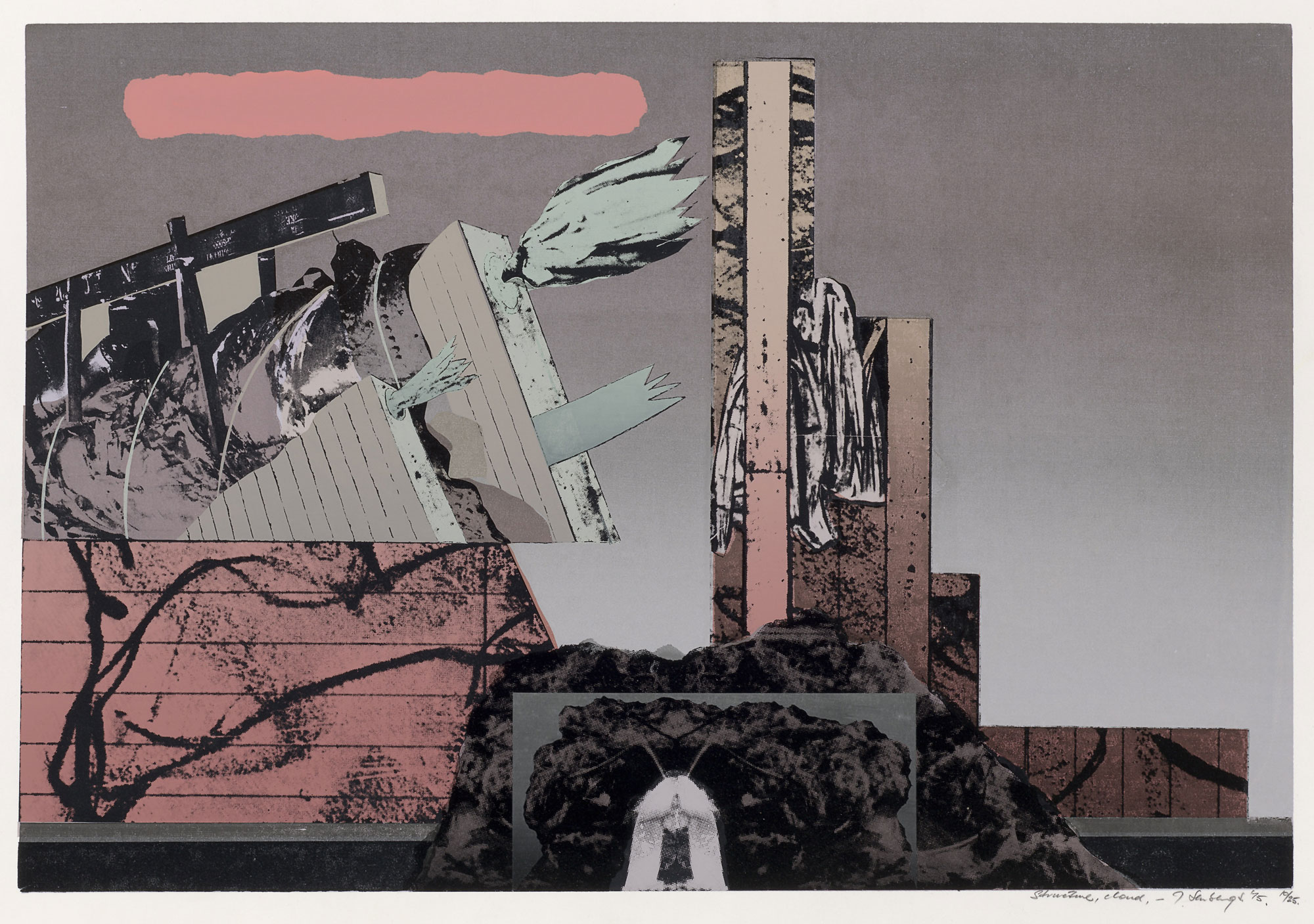
 

Jan Senbergs (born Latvia 1939, arrived Australia 1950, died Melbourne 2024) 'Structure, cloud' 1975


Jan Senbergs (born Latvia 1939, arrived Australia 1950, died Melbourne 2024)
Structure, cloud
1975
Colour screen print, ed. 19/25
55.6 x 81.2cm (image), 71.0 x 100.2cm (sheet)
Courtesy of the artist and Niagara Galleries, Melbourne
© Jan Senbergs


“The printing technique was very important to me because I was a kind of scavenger of odd sorts of images. I mean a lot of those sort of shapes and forms were things that one saw perhaps in an old engraving book, a little detail of a section of some background somewhere and I’d look into it and see certain sorts of forms there … I was a collector, a scavenger. I used to go to libraries and collect these images and I’d buy a lot of books.”

~ Jan Senbergs


“When I was doing these prints and as I was coming to a conclusion to them, I also realised I was handling it in a more sophisticated way. The prints were becoming more refined, more in control … But it was a period when I was getting too confident. It was time to leave it alone, go back to the mark.”

~ Jan Senbergs 2008
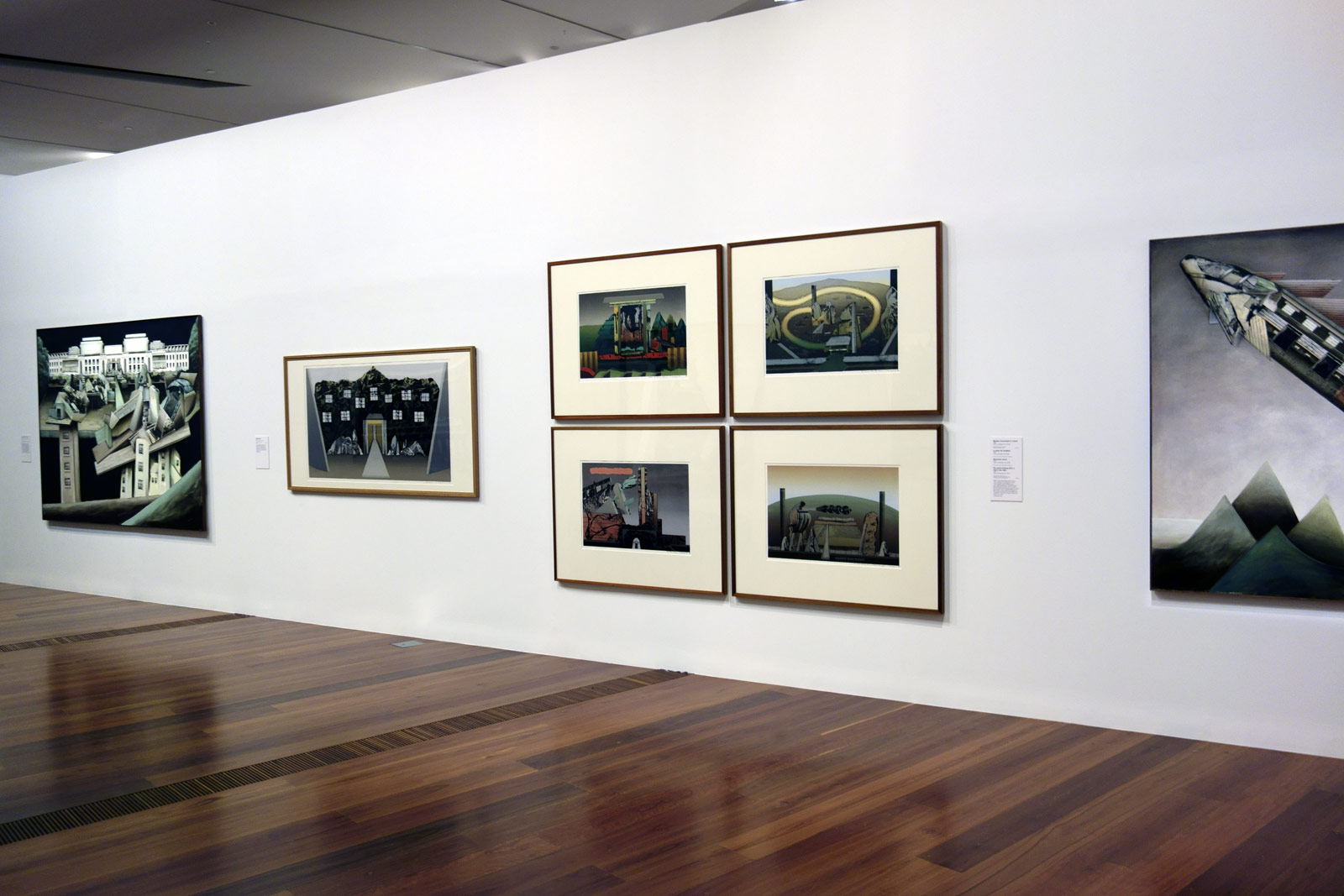
 

Installation view of the exhibition 'Jan Senbergs: Observation – Imagination' at The Ian Potter Centre: NGV Australia

Installation view of the exhibition 'Jan Senbergs: Observation – Imagination' at The Ian Potter Centre: NGV Australia

Installation view of the exhibition 'Jan Senbergs: Observation - Imagination' at The Ian Potter Centre: NGV Australia

Installation view of the exhibition 'Jan Senbergs: Observation - Imagination' at The Ian Potter Centre: NGV Australia

Installation view of the exhibition 'Jan Senbergs: Observation - Imagination' at The Ian Potter Centre: NGV Australia


Installation views of the exhibition Jan Senbergs: Observation – Imagination at The Ian Potter Centre: NGV Australia
Photos: Marcus Bunyan
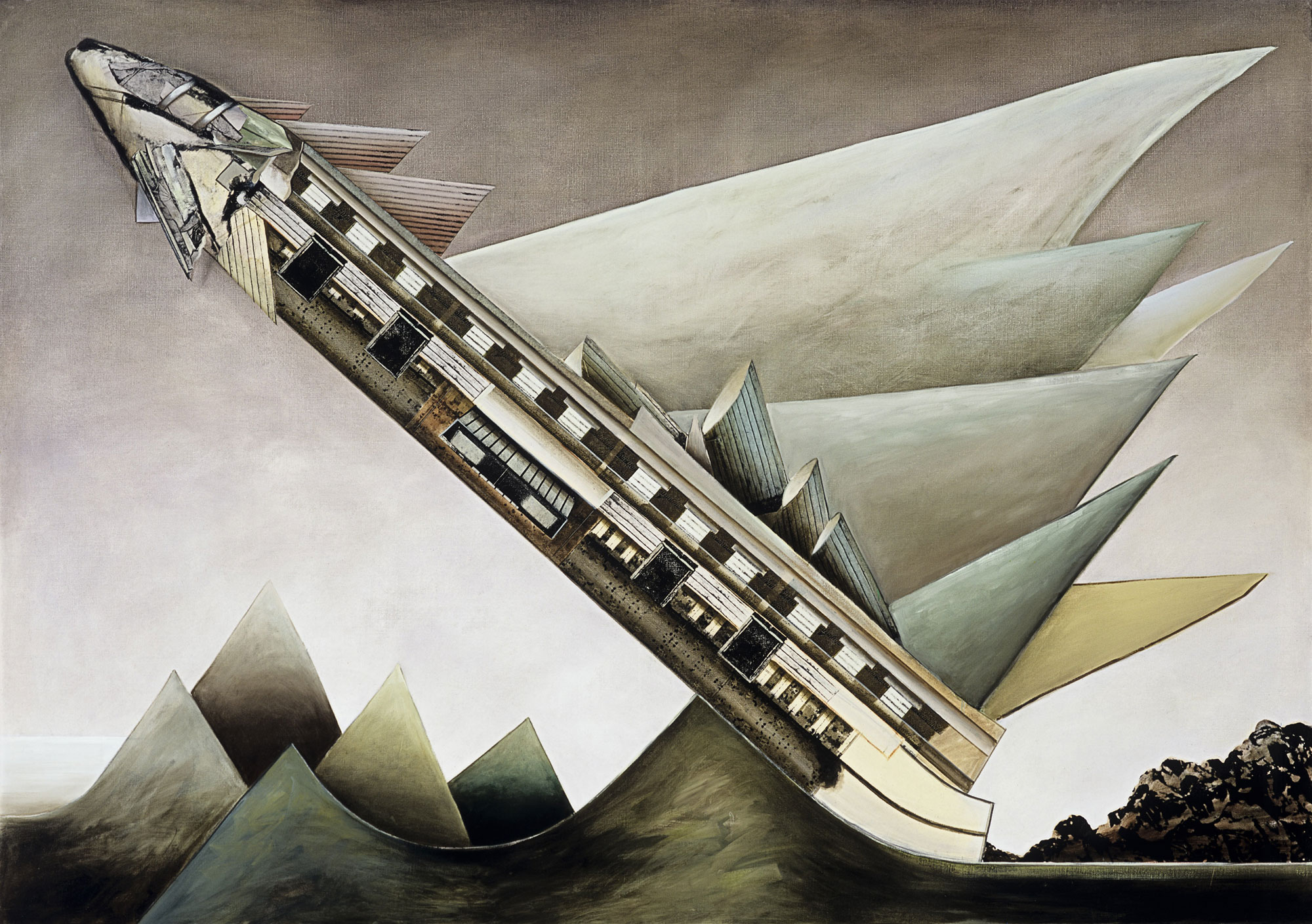
 

Installation view of the exhibition 'Jan Senbergs: Observation – Imagination' at The Ian Potter Centre: NGV Australia 'The flyer' 1975


Jan Senbergs (born Latvia 1939, arrived Australia 1950, died Melbourne 2024)
The flyer
1975
Synthetic polymer paint, oil silkscreen on canvas
167.0 x 244.0cm
Collection of Paul Guest, Melbourne
© Jan Senbergs
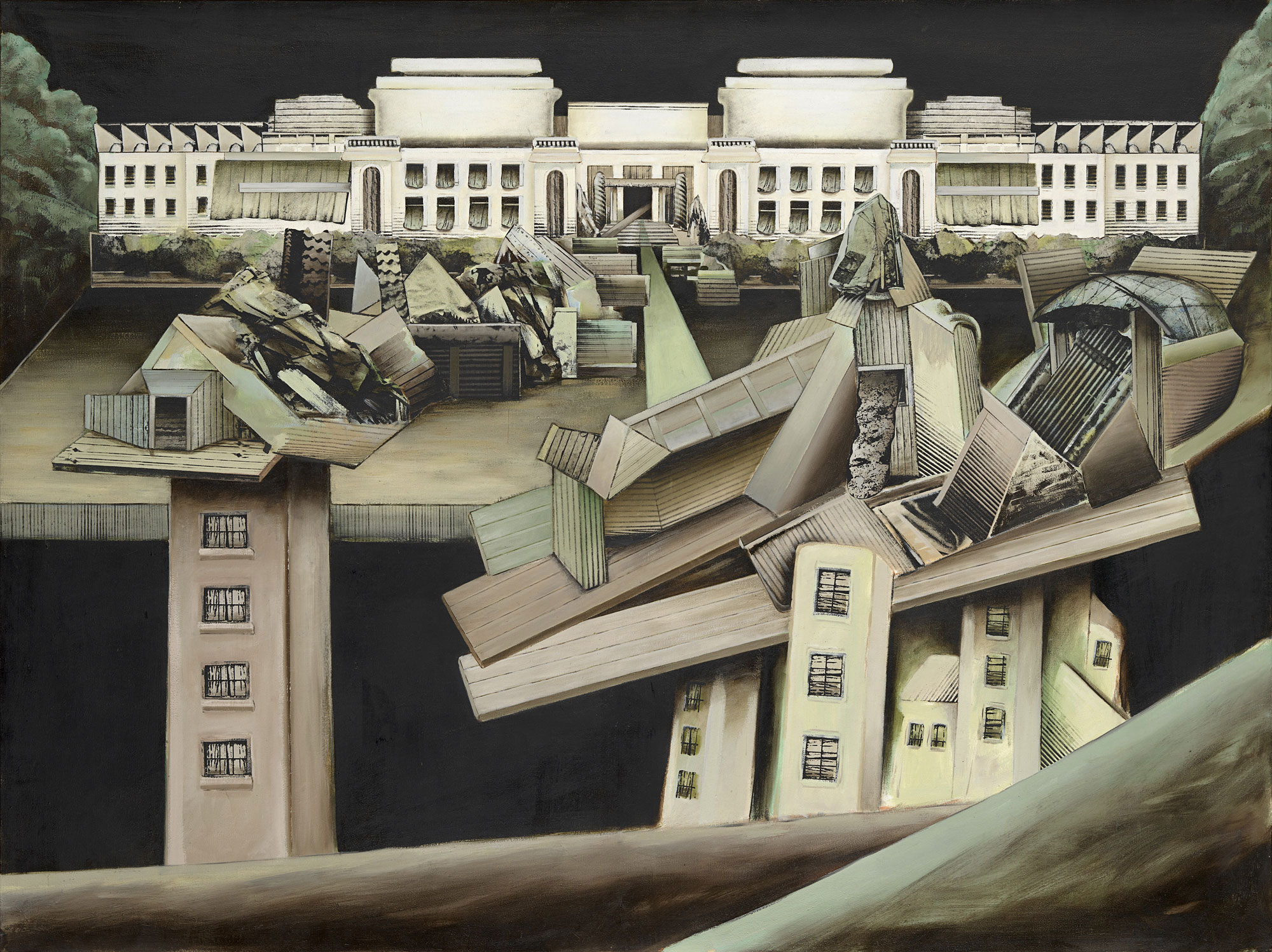
 

Jan Senbergs (born Latvia 1939, arrived Australia 1950, died Melbourne 2024) 'Altered Parliament House 1' 1976


Jan Senbergs (born Latvia 1939, arrived Australia 1950, died Melbourne 2024)
Altered Parliament House 1
1976
Synthetic polymer paint, oil silkscreen on canvas
182.5 x 243.5cm
National Gallery of Victoria, Melbourne
Presented by Mrs Adrian Gibson as the winner of the 1976 Sir William Angliss Memorial Art Prize, 1977
© Jan Senbergs


While living in Canberra, on his walk home Senbergs would see Parliament House: “I’d see this white glowing dreadnought in the distance … that’s the way it appeared, sort of floating, just this whiteness because it was lit up … This form fascinated me. But also, and on another level, I was there in ’75 when all the political things happened and [after that] it didn’t have that sort of purity and whiteness that it appeared to have beforehand. In a way that gave me more liberty to change the imagery of the building.”
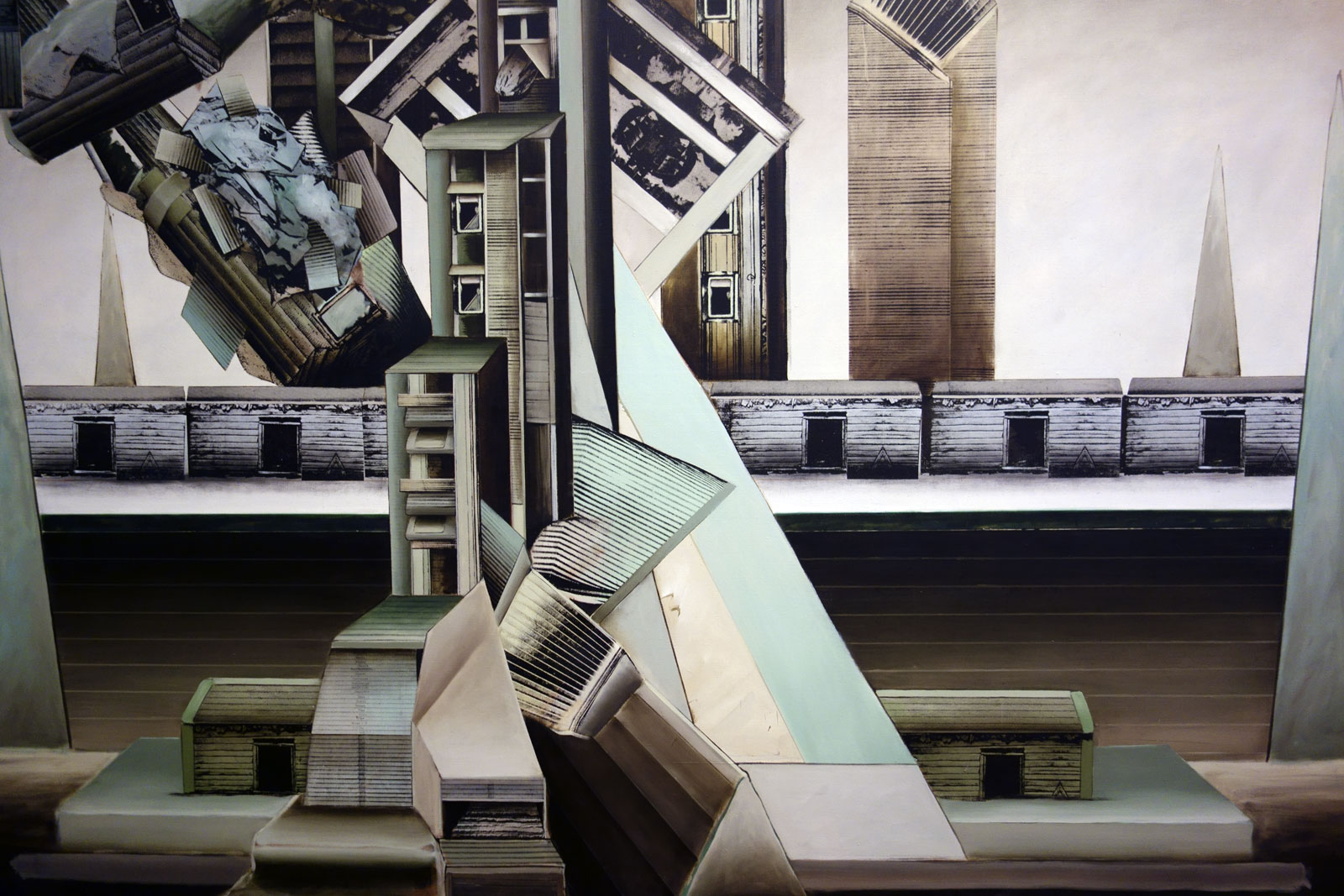
 

Jan Senbergs (born Latvia 1939, arrived Australia 1950, died Melbourne 2024) 'Observatory of hard edges' 1976 (detail)


Jan Senbergs (born Latvia 1939, arrived Australia 1950, died Melbourne 2024)
Observatory of hard edges (detail)
1976
Synthetic polymer paint, oil screen print on canvas
National Gallery of Australia, Canberra
Purchased 1976


This is one of Senbergs’ most architectonic images; its massing of asymmetrical forms, pronounced geometry and pale colours bring to mind the contemporaneous style of Brutalist architecture.
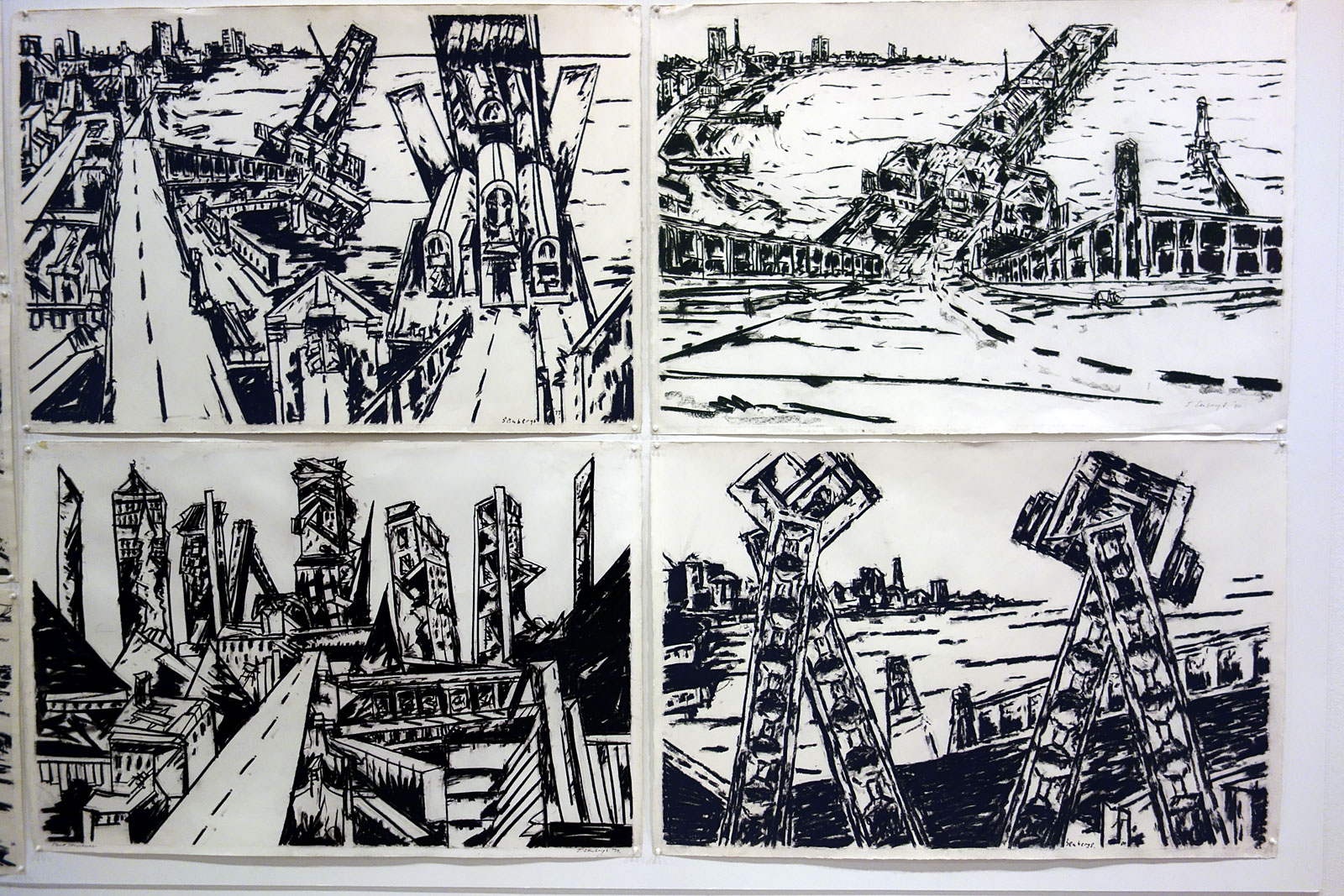
 

Jan Senbergs (born Latvia 1939, arrived Australia 1950, died Melbourne 2024) drawings late 1970s - early 1980s


Jan Senbergs (born Latvia 1939, arrived Australia 1950, died Melbourne 2024)

Port piers and overpass (top left)
1979
Pastel on paper
Courtesy of the artist and Niagara Galleries, Melbourne

Port structure (bottom left)
1979
Pastel on paper
Courtesy of the artist and Niagara Galleries, Melbourne

Station Pier (top right)
1980
Pastel on paper
Courtesy of the artist and Niagara Galleries, Melbourne

Port signals (bottom right)
1980
Pastel on paper
Courtesy of the artist and Niagara Galleries, Melbourne
Photo: Marcus Bunyan


“Yesterday I visited Jan Senbergs at his studio in Port Melbourne … I was greatly impressed by what I saw: he has moved away from a photo image to observation, perhaps with [Max] Beckmann as his distant father. His line is slow and sullen and he creates a feeling of junk-heap menace … His perspective is not often on the vanishing point, but is more related to the spatial  orientation in Chinese or Islamic art. This kind of perspective gives weight to an object; the sensation is abrupt and very blunt, ideally related to his vision.”

~ John Olsen 1980
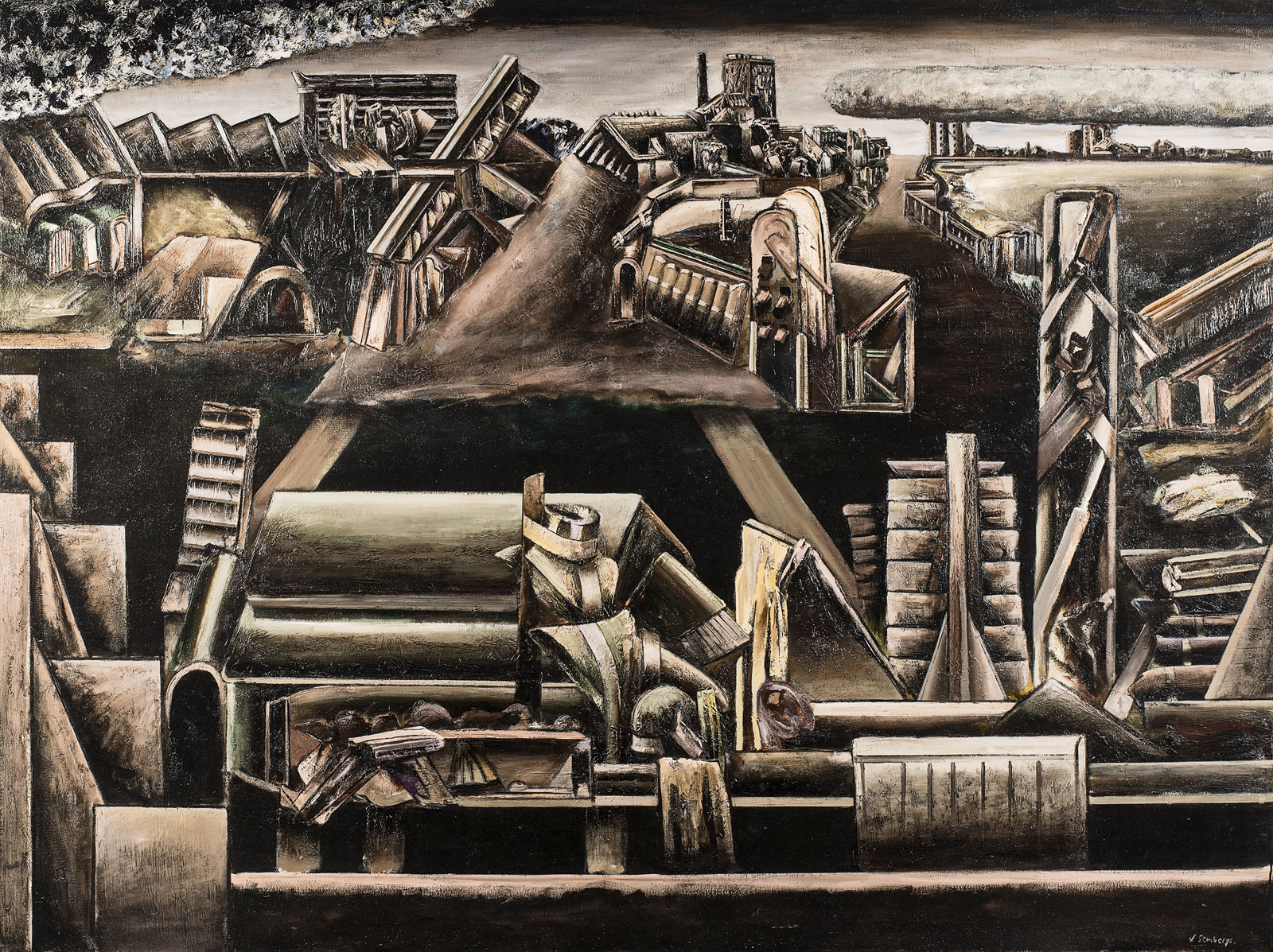
 

Jan Senbergs (born Latvia 1939, arrived Australia 1950, died Melbourne 2024) 'Port Liardet' 2 1981


Jan Senbergs (born Latvia 1939, arrived Australia 1950, died Melbourne 2024)
Port Liardet 2
1981
Synthetic polymer paint on canvas
183 x 244cm
Latrobe Regional Gallery Collection.
Acquired with assistance from the Caltex Victorian Government Art Fund and the Shire of Morwell
© Jan Senbergs
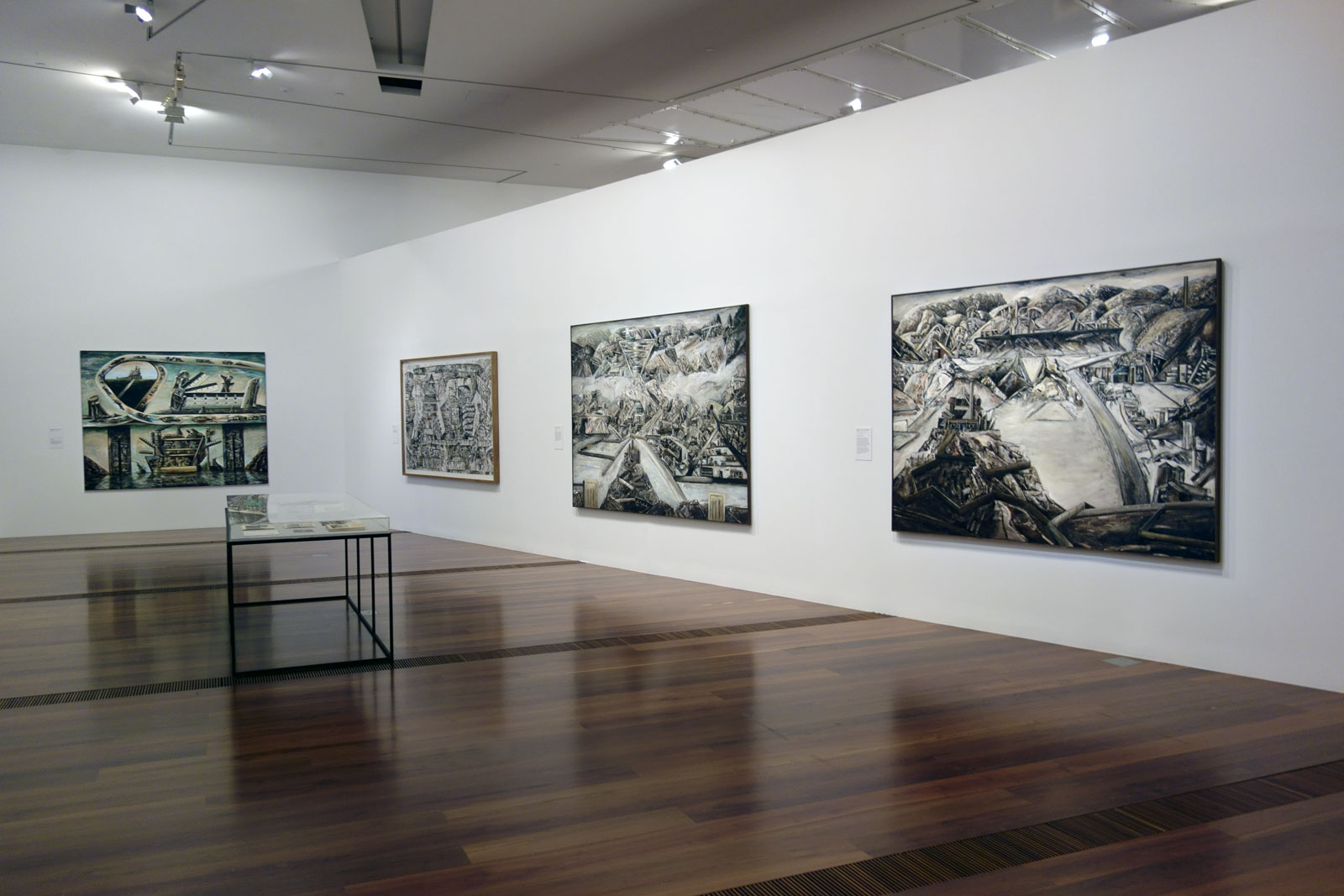
 

Installation view of the exhibition 'Jan Senbergs: Observation – Imagination' at The Ian Potter Centre: NGV Australia with 'Sticht's view to the smelters 1' at right


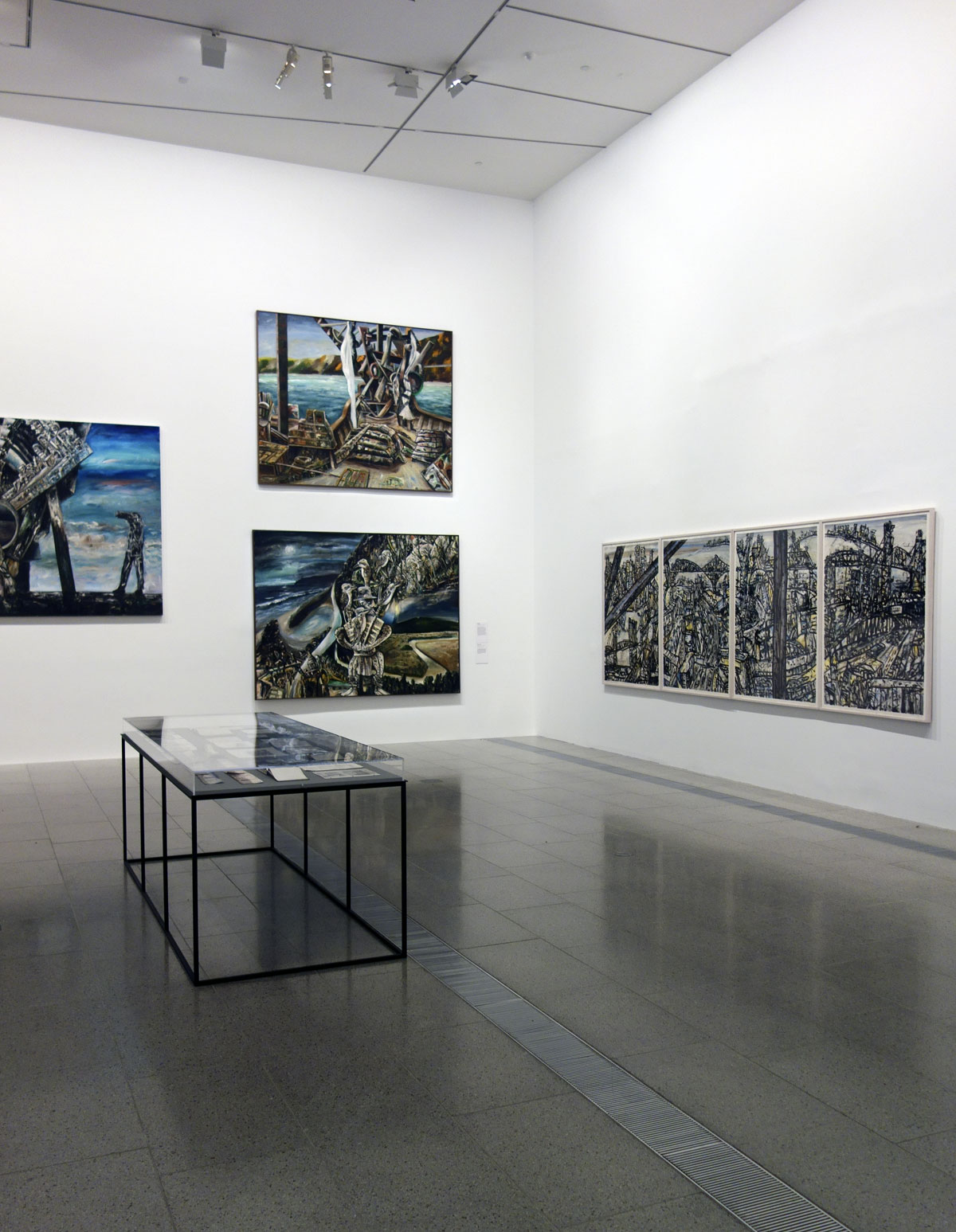
Installation view of the exhibition Jan Senbergs: Observation – Imagination at The Ian Potter Centre: NGV Australia with Sticht’s view to the smelters 1 at right
Photo: Marcus Bunyan
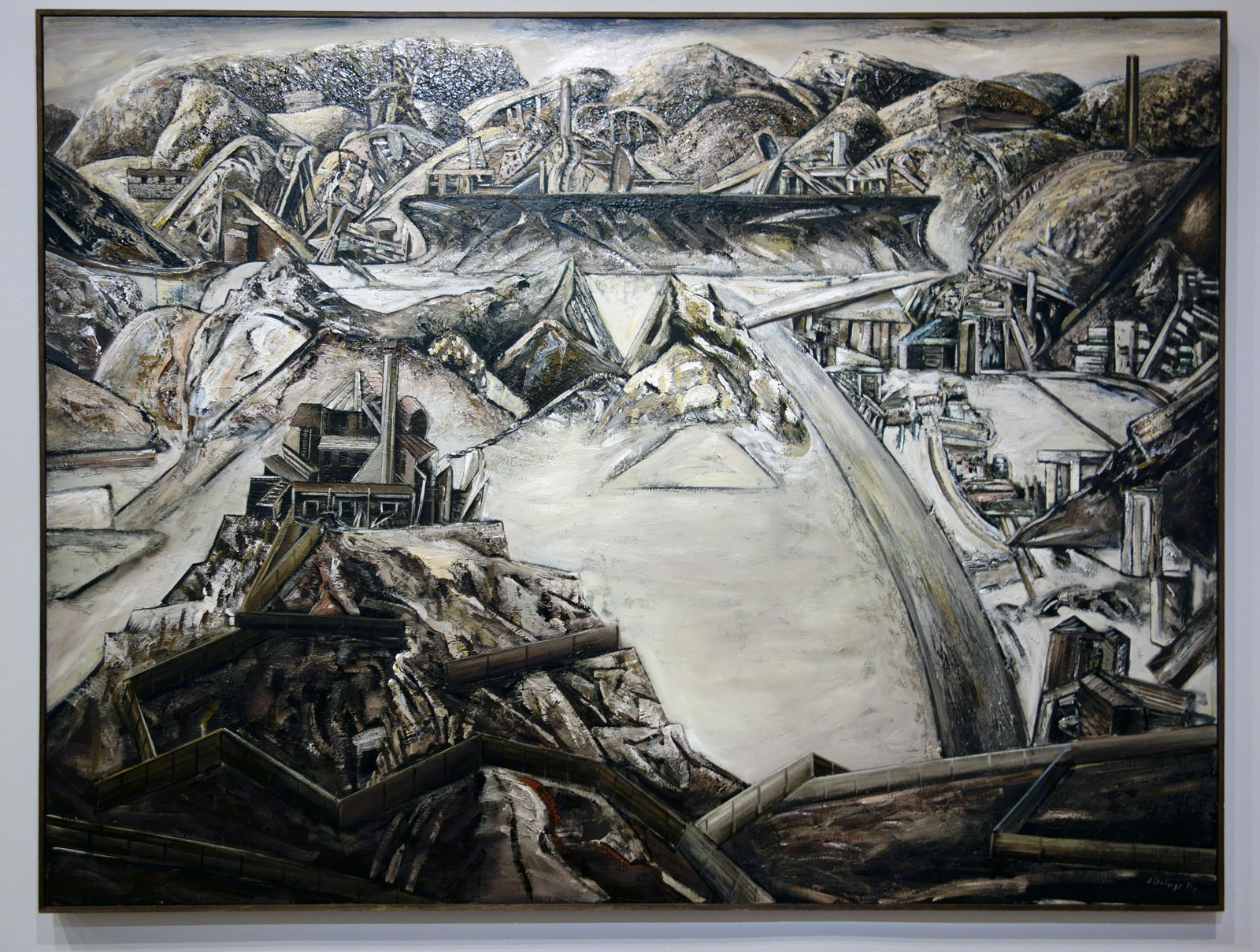
 

Jan Senbergs (born Latvia 1939, arrived Australia 1950, died Melbourne 2024) 'Sticht's view to the smelters 1' 1982 (installation view)


Jan Senbergs (born Latvia 1939, arrived Australia 1950, died Melbourne 2024)
Sticht’s view to the smelters 1 (installation view)
1982
Synthetic polymer paint on canvas
Tasmanian Museum and Art Gallery, Hobart
Purchase with funds presented by Renison Goldfields Consolidated, 1983
Photo: Marcus Bunyan
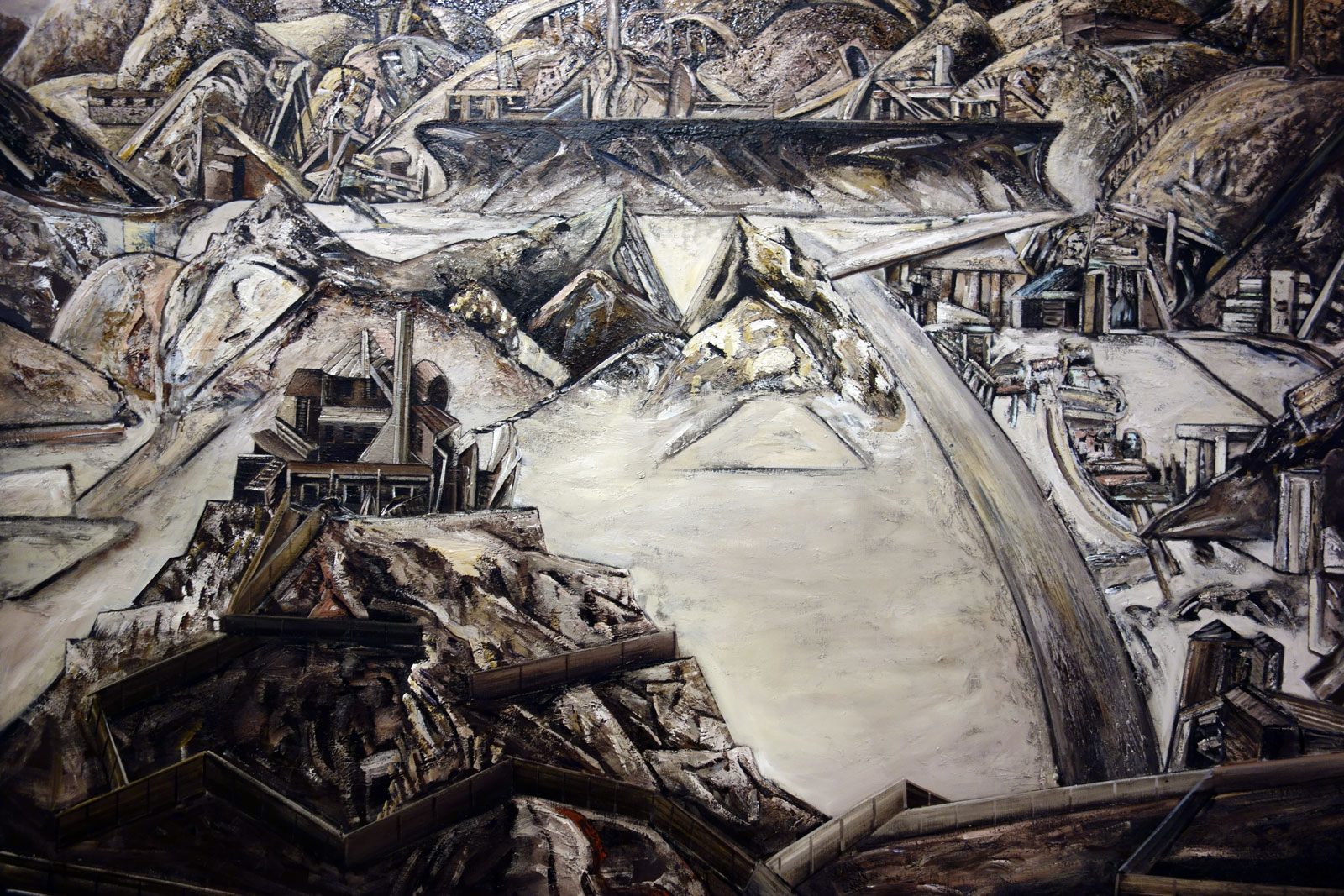
 

Jan Senbergs (born Latvia 1939, arrived Australia 1950, died Melbourne 2024) 'Sticht's view to the smelters 1' 1982 (detail)


Jan Senbergs (born Latvia 1939, arrived Australia 1950, died Melbourne 2024)
Sticht’s view to the smelters 1 (detail)
1982
Synthetic polymer paint on canvas
Tasmanian Museum and Art Gallery, Hobart
Purchase with funds presented by Renison Goldfields Consolidated, 1983


Robert Carl Sticht was an American metallurgist who in 1897 became general manager of the copper mine at Mount Lyell on the remote and rugged west coast of Tasmania. There he introduced a new technique of smelting which released large amounts of deadly sulphur into the air, one of the principal agents of destruction of the natural environment of the region.

In the Copperopolis – Mt Lyell series, Senbergs moved away from the smooth surfaces and clearly articulated forms of his Port Liardet paintings to a more gestural, painterly mode, in accord with the style of Neo-Expressionist painting of the early 1980s.
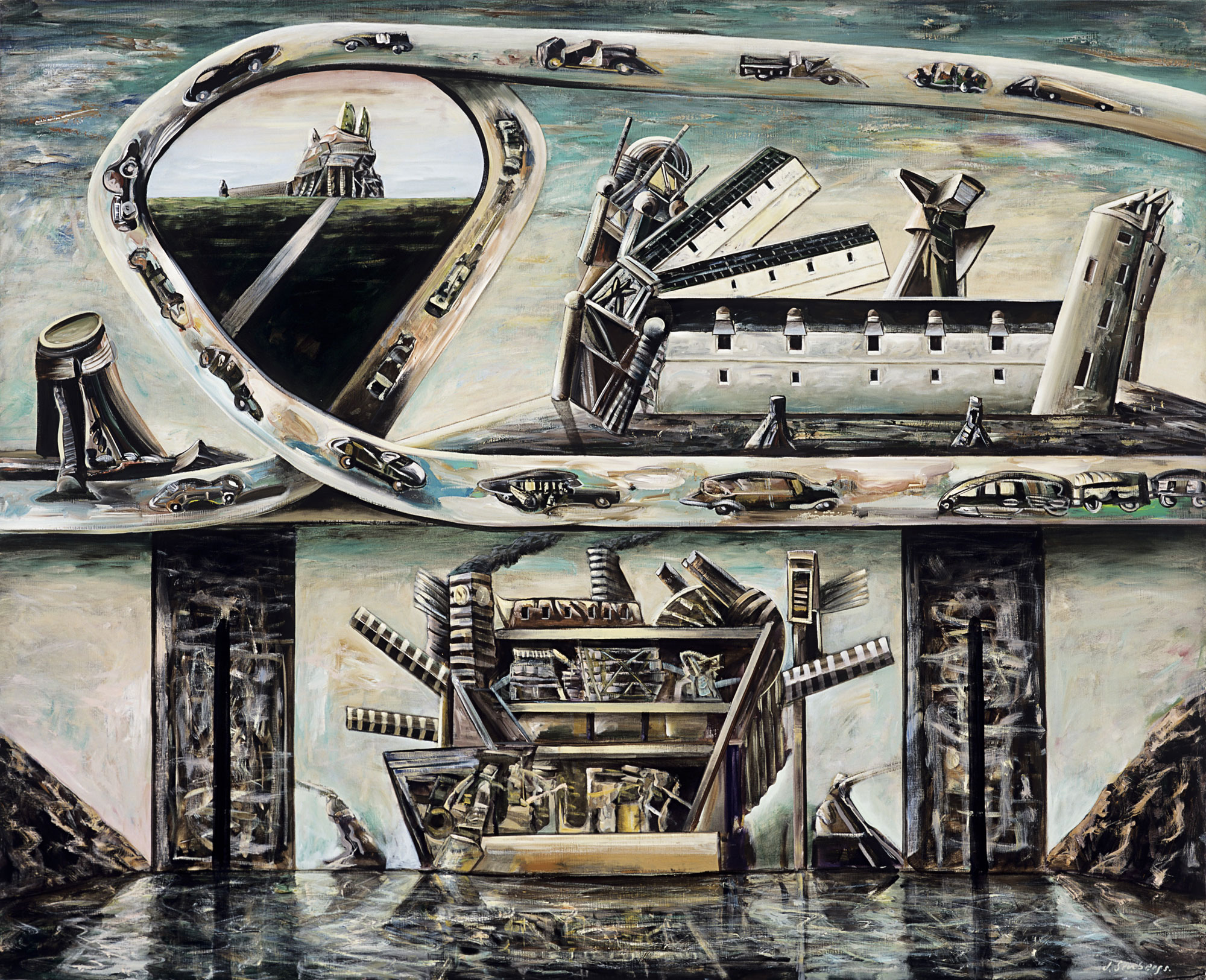
 

Jan Senbergs (born Latvia 1939, arrived Australia 1950, died Melbourne 2024) 'Broadening the mind in Italy' 1986, 1991


Jan Senbergs (born Latvia 1939, arrived Australia 1950, died Melbourne 2024)
Broadening the mind in Italy
1986, 1991
Synthetic polymer paint on canvas
167 x 243cm
Private collection, Melbourne
© Jan Senbergs
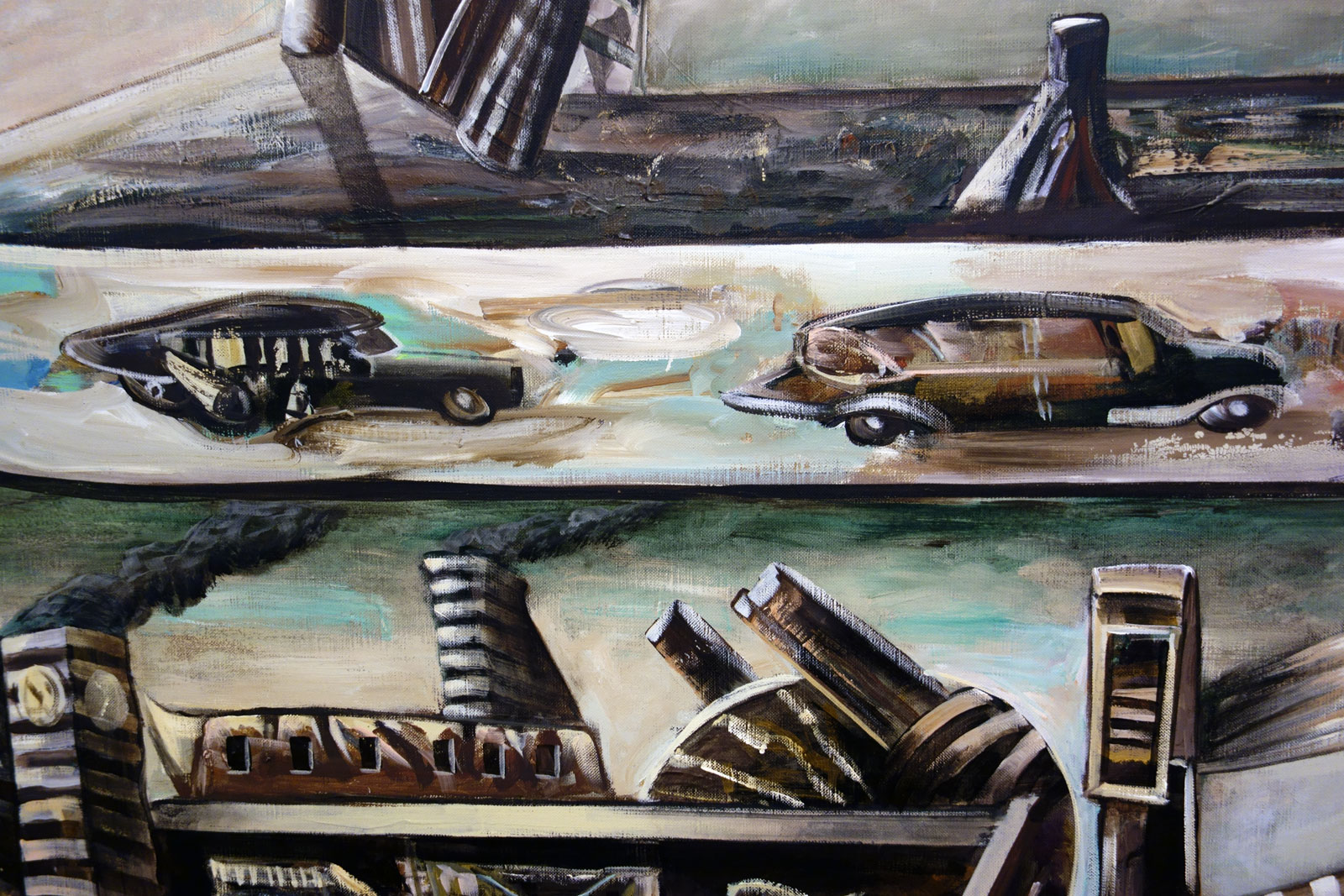
 

Jan Senbergs (born Latvia 1939, arrived Australia 1950, died Melbourne 2024) 'Broadening the mind in Italy' 1986, 1991 (detail)


Jan Senbergs (born Latvia 1939, arrived Australia 1950, died Melbourne 2024)
Broadening the mind in Italy (detail)
1986, 1991
Synthetic polymer paint on canvas
167 x 243cm
Private collection, Melbourne
© Jan Senbergs
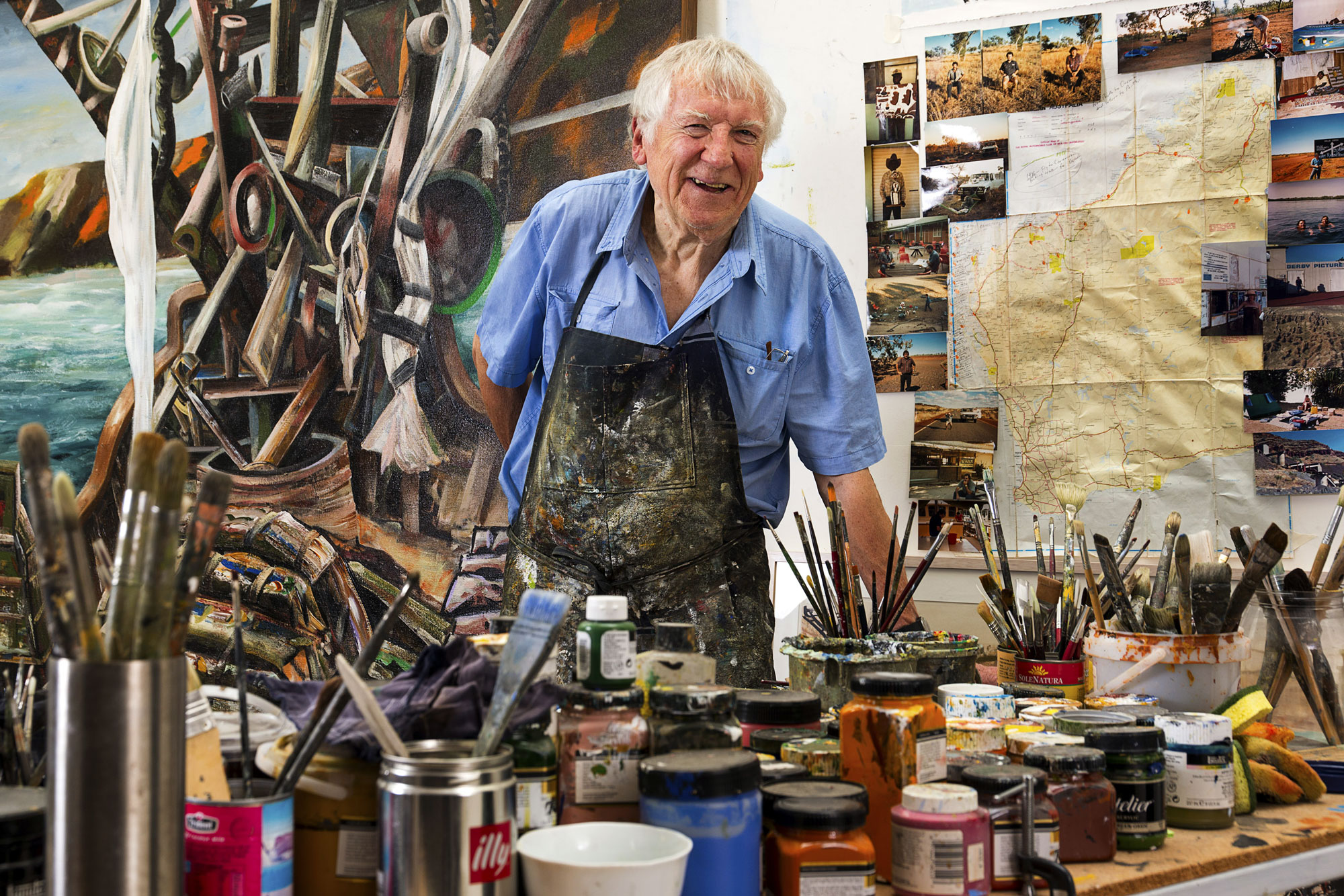
 

Predrag Cancar/NGV Photographic Services. 'Jan Senbergs in his studio' 2015


Predrag Cancar/NGV Photographic Services
Jan Senbergs in his studio
2015


From the vast expanses of Antarctica to labyrinthine Melbourne cityscapes, more than five decades of artist Jan Senbergs’ prolific oeuvre will be revealed in the major retrospective Jan Senbergs: Observation – Imagination.

The exhibition, Senbergs’ first-ever comprehensive survey, will feature over 120 works including large-scale paintings, drawings and prints which depict sprawling aerial views of Australian cities, dystopic industrial landscapes, raging bushfires in the Victorian Otways, the remote deserts of north-Western Australia and more. The exhibition spans Senbergs’ first exhibition in 1960 through to the present day, representing all periods of his career. Recognised for his sheer visual inventiveness and sitting outside any defined artistic trend, Senbergs draws inspiration from a remarkably diverse range of influences; literature, history, architecture and non-Western art, and finds imagery within obscure technical journals, ancient mythology and illustrated encyclopaedias.

Tony Ellwood, Director, NGV, said, “As one of Australia’s leading contemporary artists, Jan Senbergs is an extraordinary inventor of his own visual language, at once simple and bold. From lush landscapes to barren urban spaces, his body of work signifies an artist who has continually experimented with shape, form and motif, and one who to this day continues to push his art in new and unexpected directions. The NGV is pleased to present the first major retrospective of Jan Senbergs’ work and offer visitors the opportunity to experience the full spectrum and constant evolution of his career.”

Senbergs, born in 1939 in Latvia, moved to Melbourne in 1950 following the end of World War II. Among other honours, he represented Australia at the prestigious 12th São Paolo Biennial in 1973 and was appointed to the Visiting Chair in Australian Studies at Harvard University in 1989, the first artist to hold this illustrious post. Observation – Imagination will include key works from Senbergs’ most important and critically acclaimed series including his 1973 São Paolo Biennial paintings, the Copperopolis – Mt Lyell mining landscape series, 1983, and his immense multi-panelled studio drawings of 1993-1995.

Senbergs’ Antarctica series is considered one of the most significant artistic responses to the continent. In 1987, Senbergs spent six weeks with the Australian Antarctic Division, travelling with fellow artists Bea Maddock and John Caldwell, on an annual resupply mission. Observation – Imagination will include key works such as his epic landscapes Mawson and Davis. The exhibition will also present Senbergs’ epic, 4.6 metre long Pulaski Skyway painting, which reflects the post-industrial landscape of the five and a half kilometre freeway that crosses the wasteland of western New Jersey from Newark to Jersey City. In this, Senbergs found a metaphor for the American experience and its splendour and decay.

More recently Senbergs has produced intricate labyrinthine views of cities, combining memory and imagination, and the exhibition will include map-like images of Melbourne, Sydney, Geelong, Wollongong and Port Kembla. The exhibition will also feature works from Senbergs’ recent 2014 Victorian bushfire series, which burst with visual drama and chromatic brilliance. Senbergs often refers to himself as a scavenger and collector of imagery taken from a wide variety of sources, and Observation – Imagination will include an enormous showcase, created by the artist, filled with cut-outs, photographs and personal artefacts that reference the people, places and artworks which have fuelled his visual imagination.

Press release from the National Gallery of Victoria
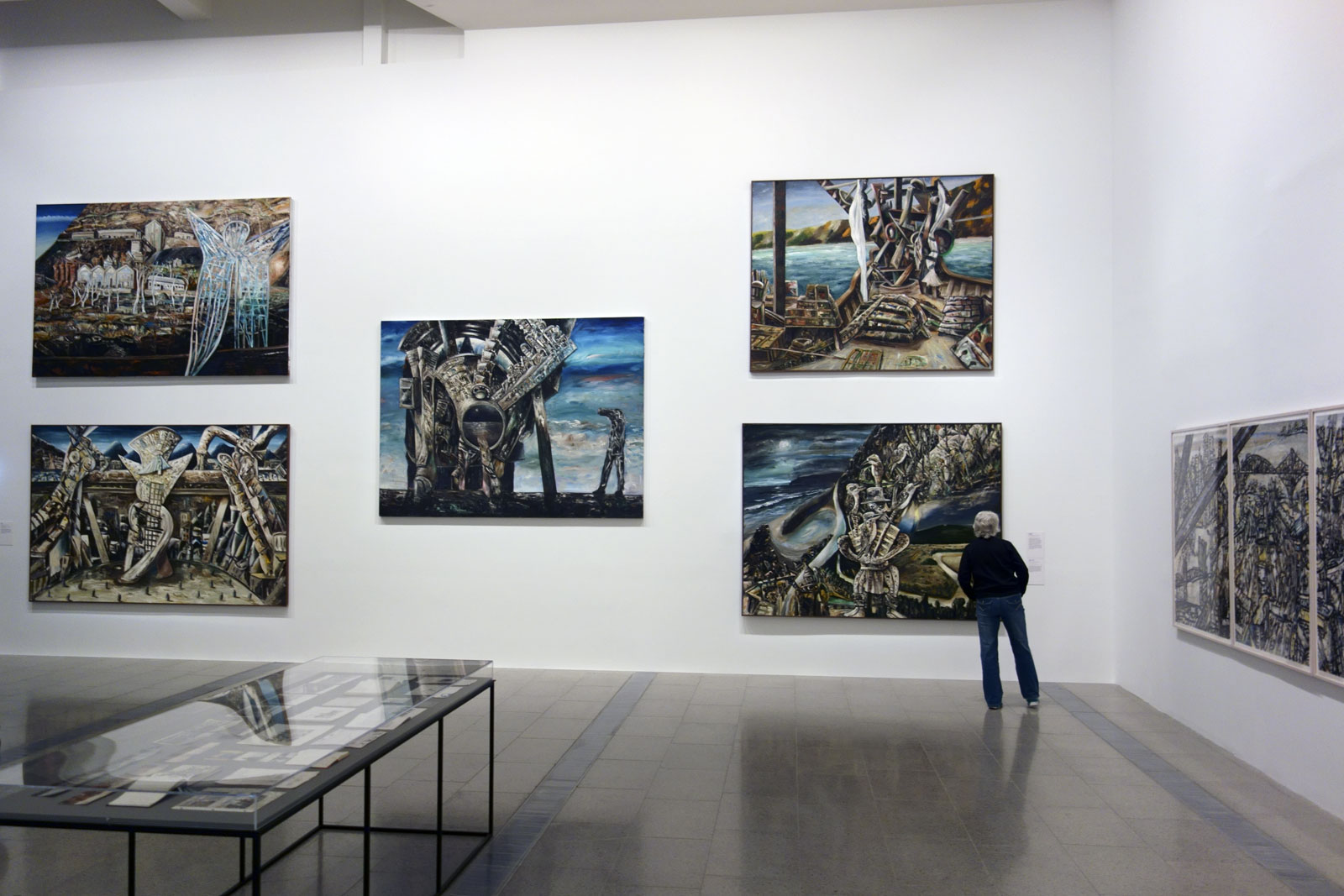
 

Installation view of the exhibition 'Jan Senbergs: Observation – Imagination' at The Ian Potter Centre: NGV Australia showing 'Blue angel of Wittenoom' at top left (1988, below); and 'Otway night' at bottom right (1994, below)

Installation view of the exhibition 'Jan Senbergs: Observation – Imagination' at The Ian Potter Centre: NGV Australia


Installation views of the exhibition Jan Senbergs: Observation – Imagination at The Ian Potter Centre: NGV Australia showing in the top image, Blue angel of Wittenoom at top left (1988, below); and Otway night at bottom right (1994, below)
Photos: Marcus Bunyan
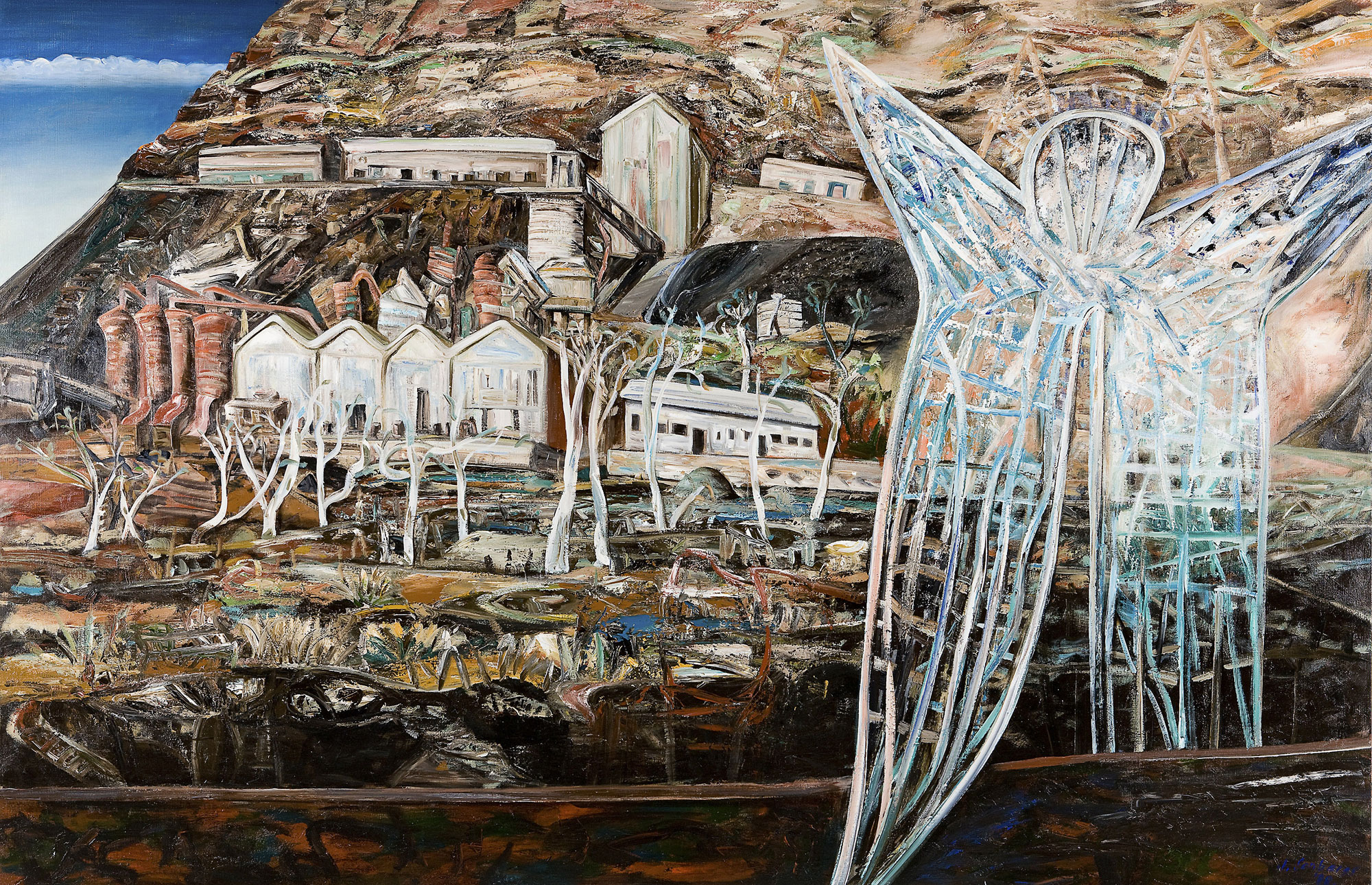
 

Jan Senbergs (born Latvia 1939, arrived Australia 1950, died Melbourne 2024) 'Blue angel of Wittenoom' 1988


Jan Senbergs (born Latvia 1939, arrived Australia 1950, died Melbourne 2024)
Blue angel of Wittenoom
1988
Synthetic polymer paint on canvas
197.5 x 305cm
State Art Collection, Art Gallery of Western Australia, Perth
Purchased 1989
© Jan Senbergs
Photo: Eva Fernandez


The blue angel in the painting refers to the dangers of asbestos in the mining town of Wittenoom.

Wittenoom is a ghost town 1,106 kilometres (687 mi) north-north-east of Perth in the Hamersley Range in the Pilbara region of Western Australia. The area around Wittenoom was mainly pastoral until the 1930s when mining began in the area. By 1939, major mining had begun in Yampire Gorge, which was subsequently closed in 1943 when mining began in Wittenoom Gorge. In 1947 a company town was built, and by the 1950s it was Pilbara’s largest town. During the 1950s and early 1960s Wittenoom was Australia’s only supplier of blue asbestos. The town was shut down in 1966 due to unprofitability and growing health concerns from asbestos mining in the area.

Today, six residents still live in the town, which receives no government services. In December 2006, the Government of Western Australia announced that the town’s official status would be removed, and in June 2007, Jon Ford, the Minister for Regional Development, announced that the townsite had officially been degazetted. The town’s name was removed from official maps and road signs and the Shire of Ashburton is able to close roads that lead to contaminated areas.

The Wittenoom steering committee met in April 2013 to finalise closure of the town, limit access to the area and raise awareness of the risks. Details of how that would be achieved were to be determined but it would likely necessitate removing the town’s remaining residents, converting freehold land to crown land, demolishing houses and closing or rerouting roads. by 2015 six residents remained.

Text from the Wikipedia website
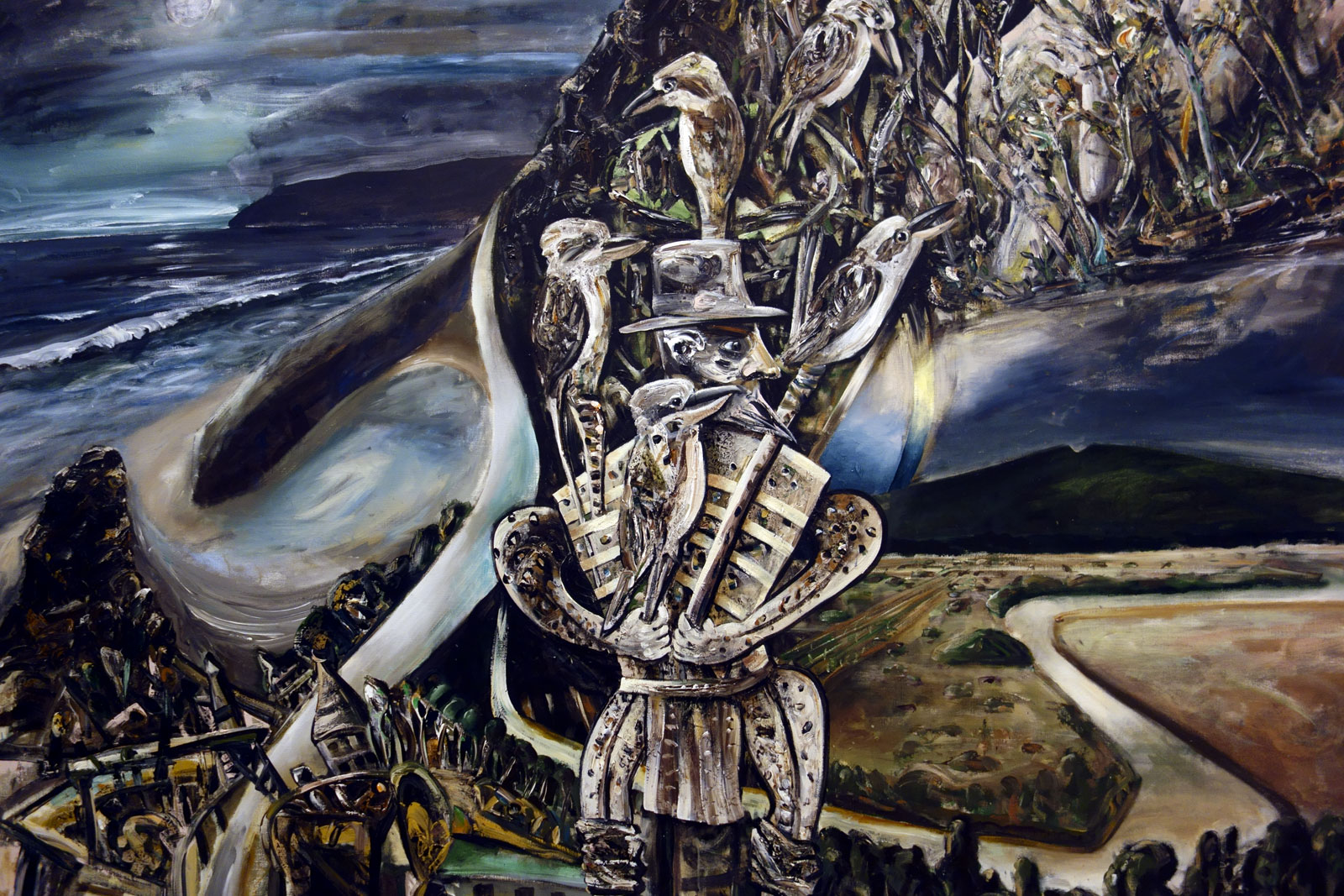
 

Jan Senbergs (born Latvia 1939, arrived Australia 1950, died Melbourne 2024) 'Otway night' 1994 (detail)


Jan Senbergs (born Latvia 1939, arrived Australia 1950, died Melbourne 2024)
Otway night (detail)
1994
Synthetic polymer paint on canvas
Art Gallery of New South Wales
Purchase with assistance from Ruth Komon, 1994


After purchasing a holiday house at Aireys Inlet, Senbergs became interested in the history of Victoria’s west coast and the story of escaped convict William Buckley, ‘the wild white man’ who lived with the local Wathaurung people from 1803 until 1835 before being integrated back into colonial society.
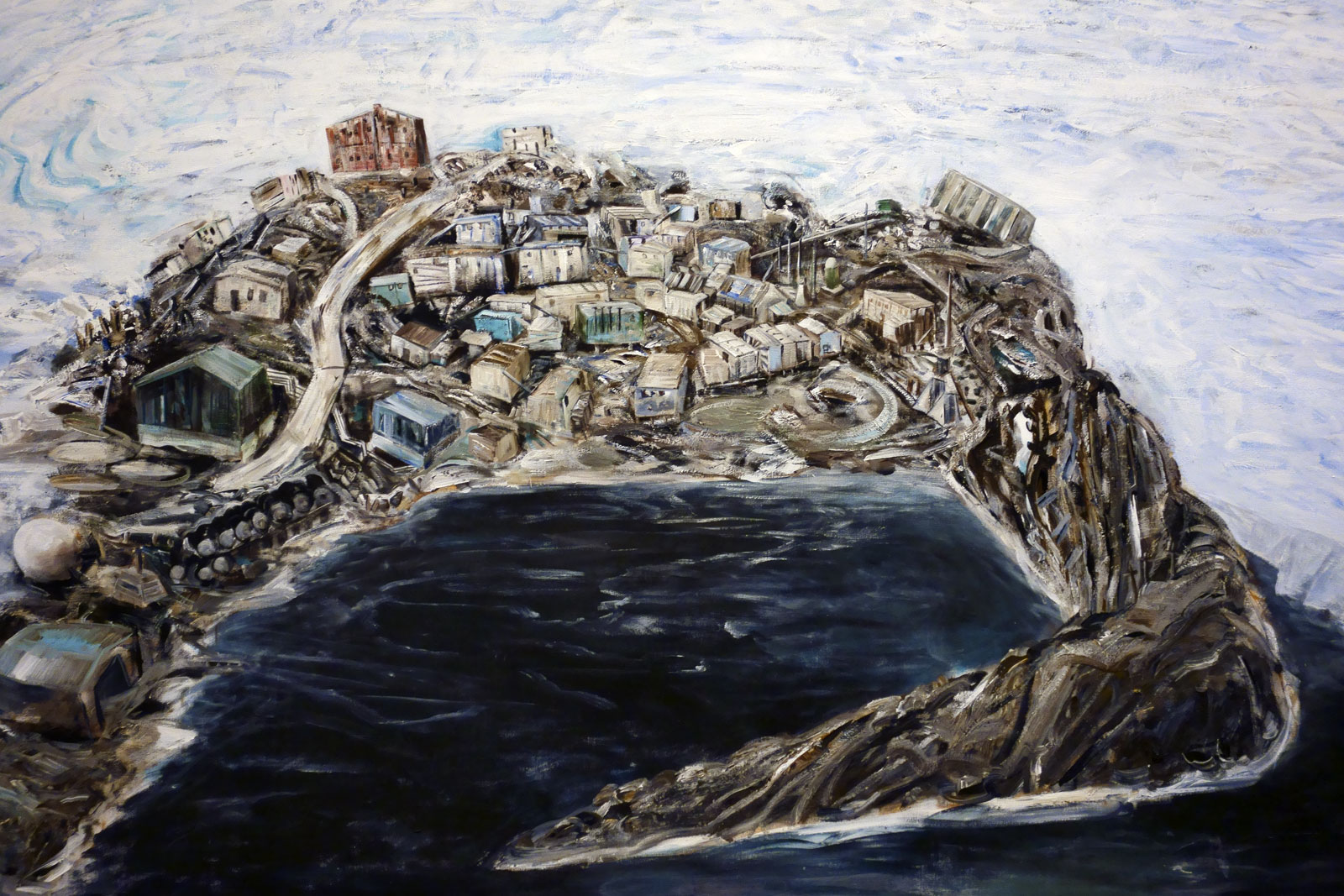
 

Jan Senbergs (born Latvia 1939, arrived Australia 1950, died Melbourne 2024) 'Mawson' 1987 (detail)


Jan Senbergs (born Latvia 1939, arrived Australia 1950, died Melbourne 2024)
Mawson (detail)
1987
Synthetic polymer paint on canvas
Private collection, Melbourne


“As in previous settlements in history, in Antarctica we are again squatting on the edge of yet another continent and bringing our cultural baggage with us. Already there is a sense of history there: architectural, social and visual.”

~ Jan Senbergs, 2002
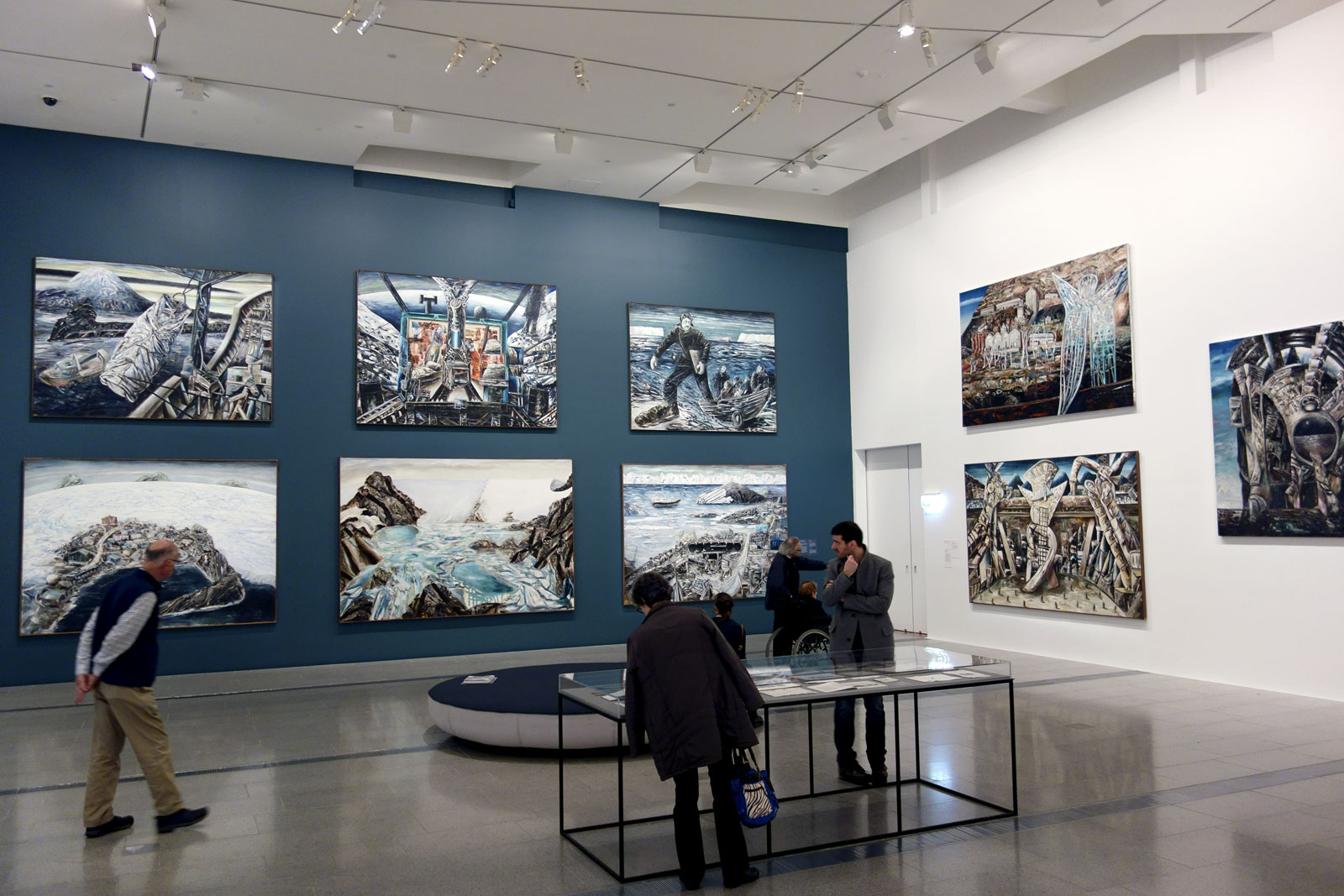
 

Installation view of the exhibition 'Jan Senbergs: Observation – Imagination' at The Ian Potter Centre: NGV Australia

Installation view of the exhibition 'Jan Senbergs: Observation – Imagination' at The Ian Potter Centre: NGV Australia showing in the bottom image at top left, 'Bea Maddock being lifted onto the Icebird – Heard Island' (1987); at top middle, 'Antarctic night' (1989); at bottom left, 'Mawson'; and at bottom middle, 'Platcha' (1987)


Installation views of the exhibition Jan Senbergs: Observation – Imagination at The Ian Potter Centre: NGV Australia showing in the bottom image at top left, Bea Maddock being lifted onto the Icebird – Heard Island (1987, below); at top middle, Antarctic night (1989, below); at bottom left, Mawson; and at bottom middle, Platcha (1987, below)
Photos: Marcus Bunyan
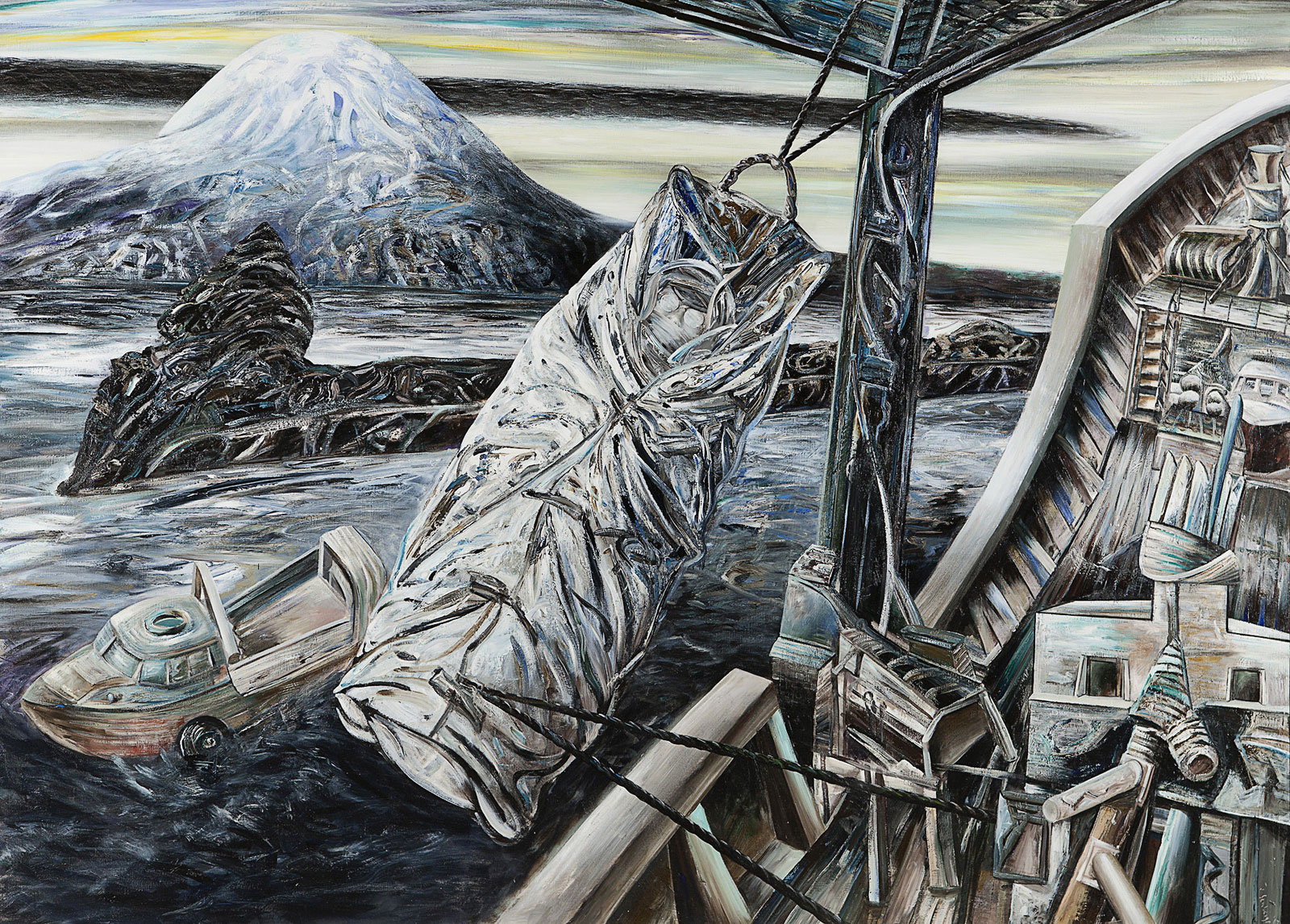
 

Jan Senbergs (born Latvia 1939, arrived Australia 1950, died Melbourne 2024) 'Bea Maddock being lifted onto the Icebird – Heard Island' 1987


Jan Senbergs (born Latvia 1939, arrived Australia 1950, died Melbourne 2024)
Bea Maddock being lifted onto the Icebird – Heard Island
1987
Synthetic polymer paint on canvas
197.2 x 274.1cm
State Art Collection, Art Gallery of Western Australia, Perth
Purchased 1987
© Jan Senbergs


Senbergs was one of three artists invited by the Australian Antractic Division to take part in the resupply Voyage Six to Antarctica as observers. Leaving Hobart in early January 1987, during their six‐week journey the artists visited Heard Island, Scullin Monolith, Law Base, Davis, Mawson and the Russian base at Mirny. This painting depicts fellow artist Bea Maddock who broke her leg while disembarking at Heard Island and needed to be winched back on board. Unfortunately, she was incapacitated for the remainder of the trip.
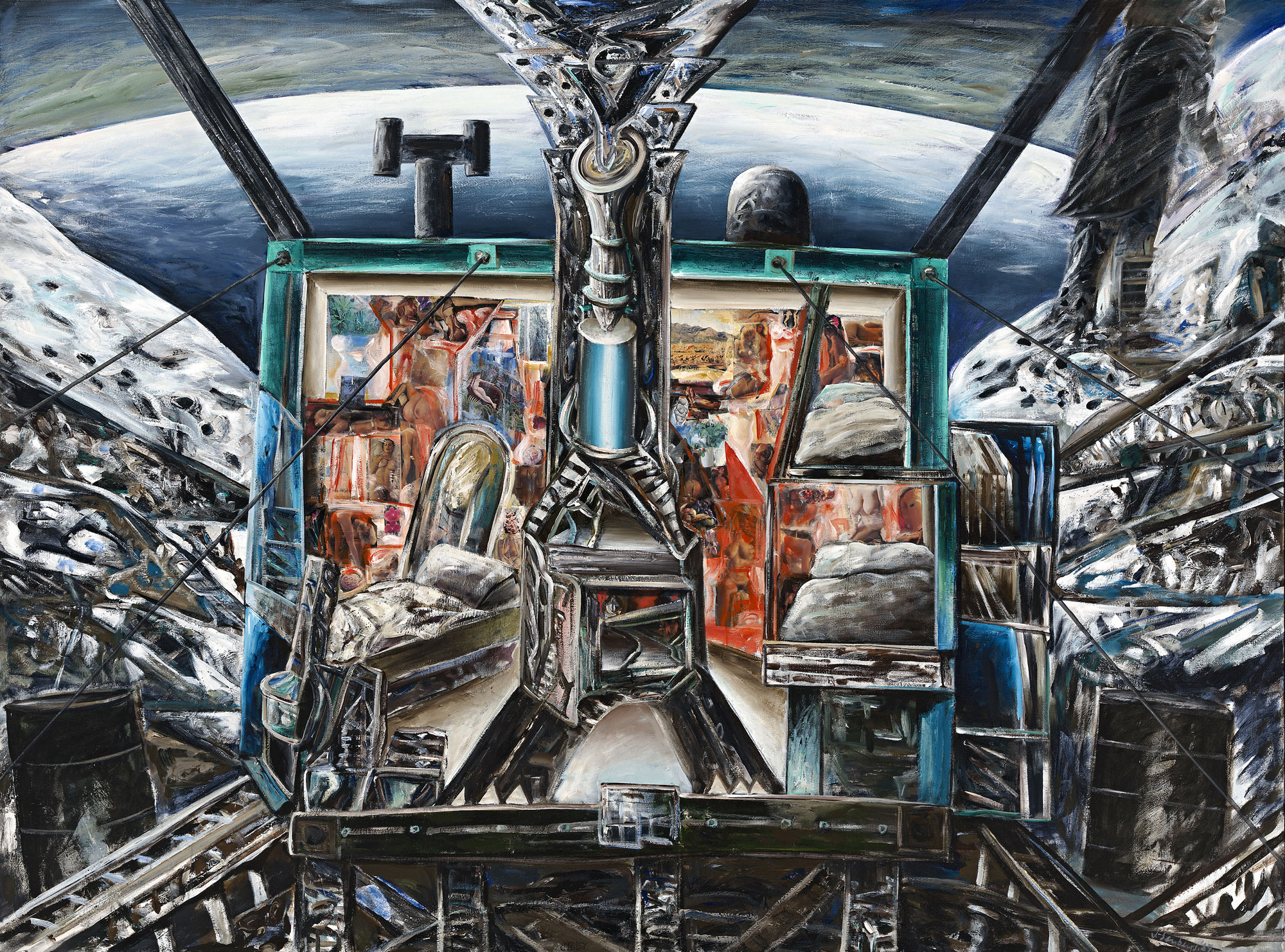
 

Jan Senbergs (born Latvia 1939, arrived Australia 1950, died Melbourne 2024) 'Antarctic night' 1989


Jan Senbergs (born Latvia 1939, arrived Australia 1950, died Melbourne 2024)
Antarctic night
1989
Synthetic polymer paint and collage on canvas
202 x 292cm
National Gallery of Australia, Canberra
Purchased 1990
© Jan Senbergs


“In a “cut-away” view, [Antarctic night] shows the interior of a winterer’s hut with its wall covered in a “tapestry” of pin-up images – from the earliest “pin‐up”, the Venus of Willendorf, to the Playboy centrefolds of the 1950s and 1960s … The more you saw of it, the more it seemed like an Antarctic Pop Art movement.”
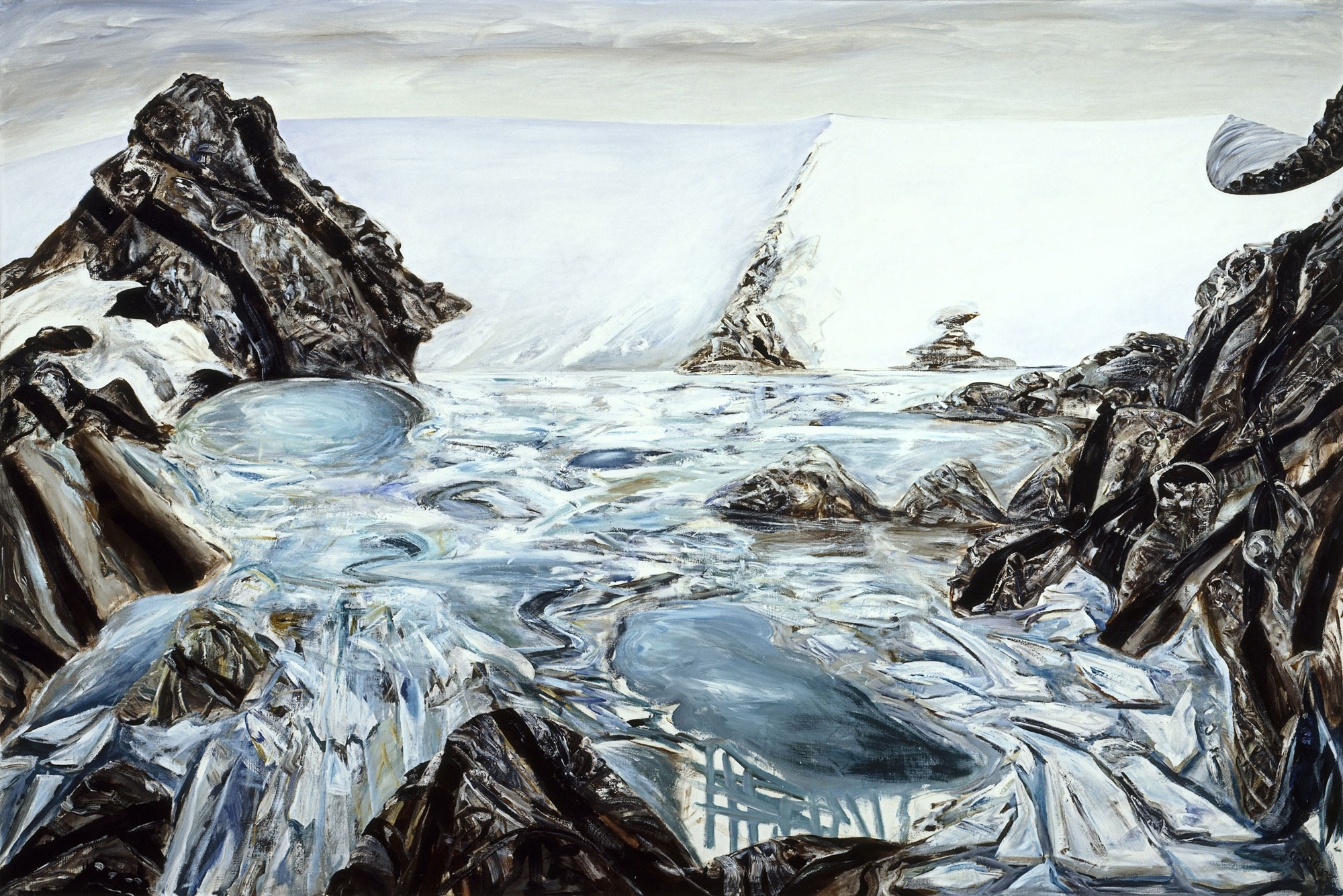
 

Jan Senbergs (born Latvia 1939, arrived Australia 1950, died Melbourne 2024) 'Platcha' 1987


Jan Senbergs (born Latvia 1939, arrived Australia 1950, died Melbourne 2024)
Platcha
1987
Synthetic polymer paint on canvas
224.0 x 355.0cm
Melbourne Convention and Exhibition Trust Collection
© Jan Senbergs
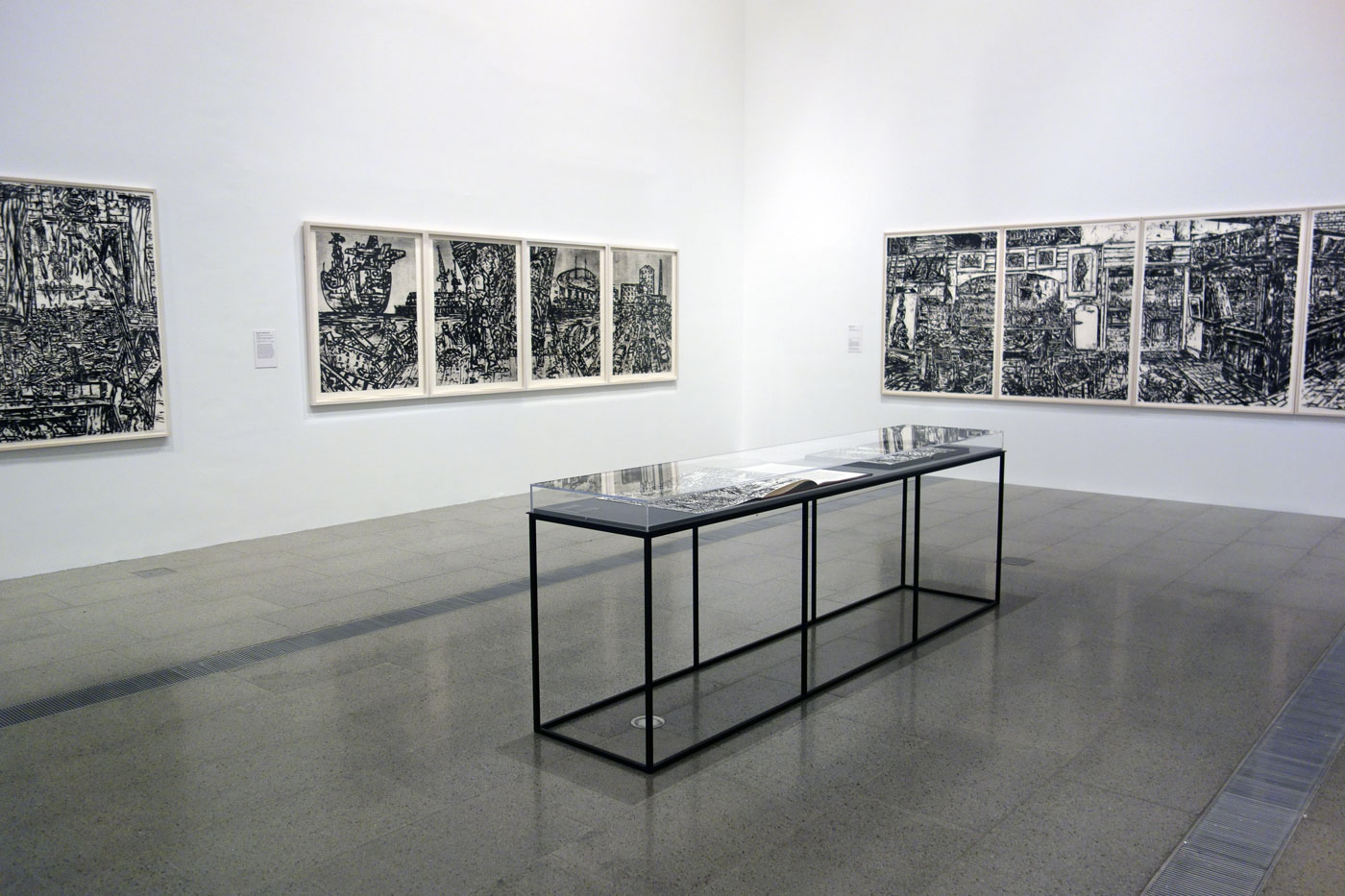
 

Installation view of the exhibition 'Jan Senbergs: Observation – Imagination' at The Ian Potter Centre: NGV Australia


Installation view of the exhibition Jan Senbergs: Observation – Imagination at The Ian Potter Centre: NGV Australia
Photo: Marcus Bunyan


Jan Senbergs. Installation view of 'New Guinea sheilas triptych' (centre row) and 'New Guinea male triptych' (bottom row) both 1993


Installation view of New Guinea sheilas triptych (centre row) and New Guinea male triptych (bottom row) both 1993
Pastel on paper
Courtesy of the artist and Niagara Galleries, Melbourne
Photo: Marcus Bunyan


Jan Senbergs. Detail view of 'New Guinea sheilas triptych' (centre row) and 'New Guinea male triptych' (bottom row) both 1993


Detail view of New Guinea sheilas triptych (centre row) and New Guinea male triptych (bottom row) both 1993
Pastel on paper
Courtesy of the artist and Niagara Galleries, Melbourne
Photo: Marcus Bunyan


Jan Senbergs (born Latvia 1939, arrived Australia 1950, died Melbourne 2024) 'New Guinea male triptych' 1993 (detail)


Jan Senbergs (born Latvia 1939, arrived Australia 1950, died Melbourne 2024)
New Guinea male triptych (detail) 
1993
pastel on paper
(a-c) 160 x 366cm (overall)
Courtesy of the artist and Niagara Galleries, Melbourne
© Jan Senbergs


“I enjoy the freedom of drawing, the directness of what I call my “Long Arm Drawing” with a black pastel or an oil stick, where there’s no room for corrections or embellishments – dancing in front of a sheet of paper, keeping a spontaneous line, and if you hesitate, it shows. It’s “unforgiving” drawing and if you’re out of form you lose, and sheets of paper end up in the bin. Like an athlete or a dancer, you’ve got to put in the hours to make the confident mark.”


Jan Senbergs, 2016
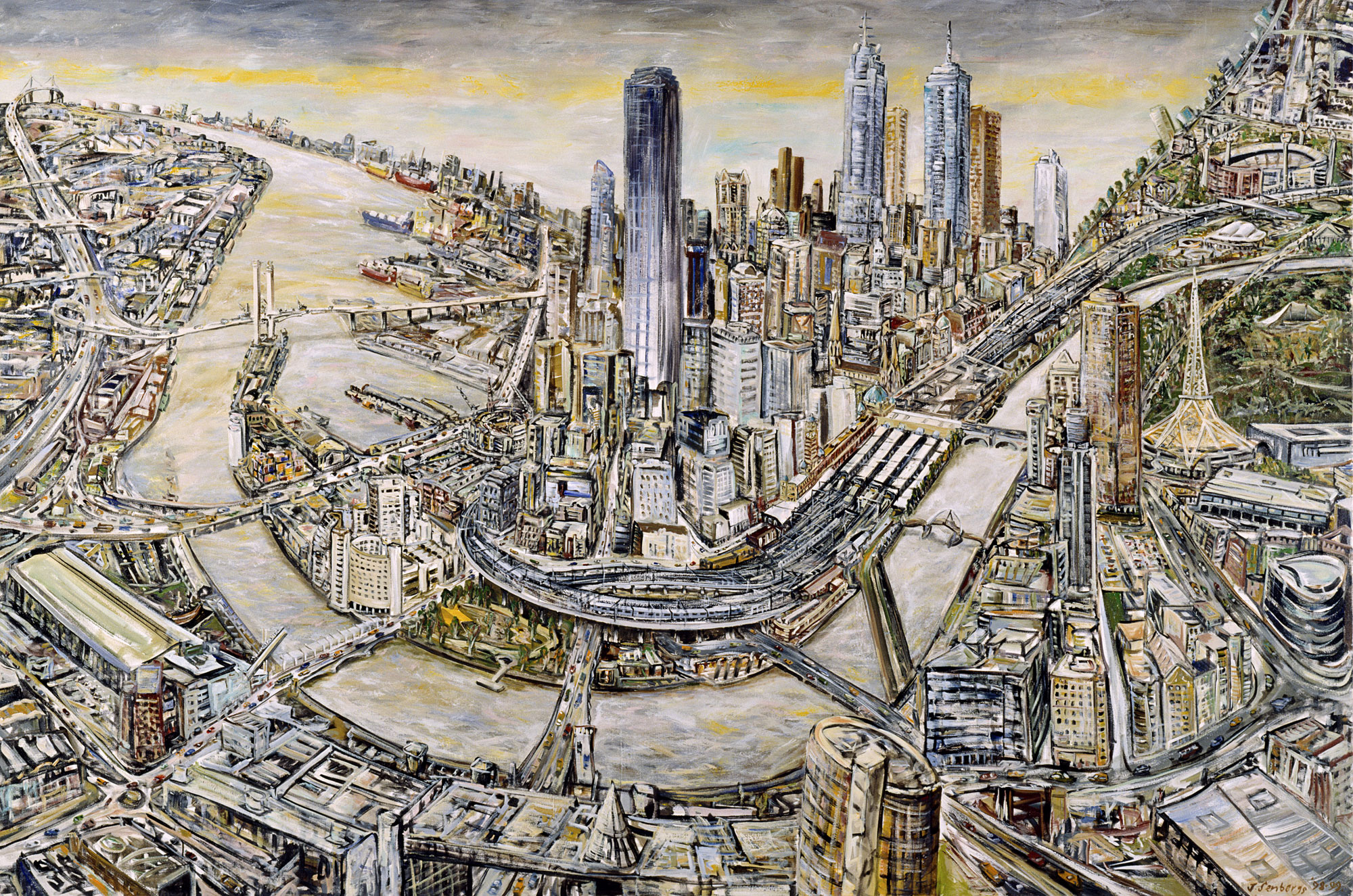


Jan Senbergs (born Latvia 1939, arrived Australia 1950, died Melbourne 2024) 'Melbourne' 1998-1999


Jan Senbergs (born Latvia 1939, arrived Australia 1950, died Melbourne 2024)
Melbourne
1998-1999
Synthetic polymer paint on canvas
183 x 274cm
State Library of Victoria, Melbourne
Gift of the Gualtiero Vaccari Foundation in recognition of services provided by the State Library to the Italian Community, 1999
© Jan Senbergs


“[The] map-like images of the city that I’ve developed – of Melbourne, Sydney, Wollongong, Barcelona – they come out of a fascination with map-making, particularly early map-making … I started to look for an imagined way of painting and drawing actual places like Melbourne or Sydney: not exactly what you see in front of you but what you know to be there … It’s like those early maps, imaginary maps where people were drawing what they knew, not what they saw or measured.”


Jan Senbergs, 2006
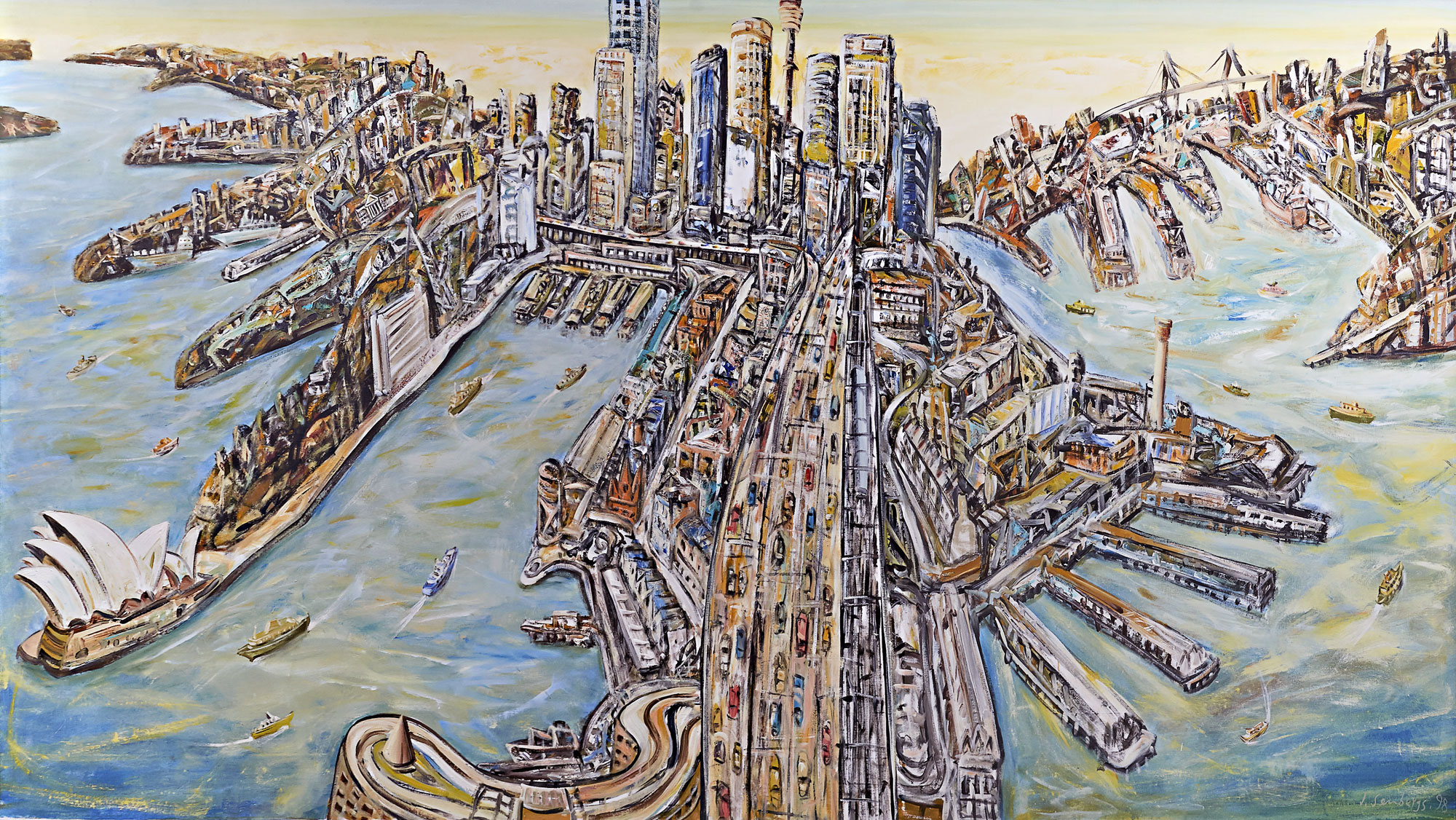


Jan Senbergs (born Latvia 1939, arrived Australia 1950, died Melbourne 2024) 'Sydney' 1998


Jan Senbergs (born Latvia 1939, arrived Australia 1950, died Melbourne 2024)
Sydney
1998
Synthetic polymer paint on canvas
174 x 344cm (framed)
Collection of McDonald’s Australia Limited
© Jan Senbergs
Photo: Felicity Jenkins
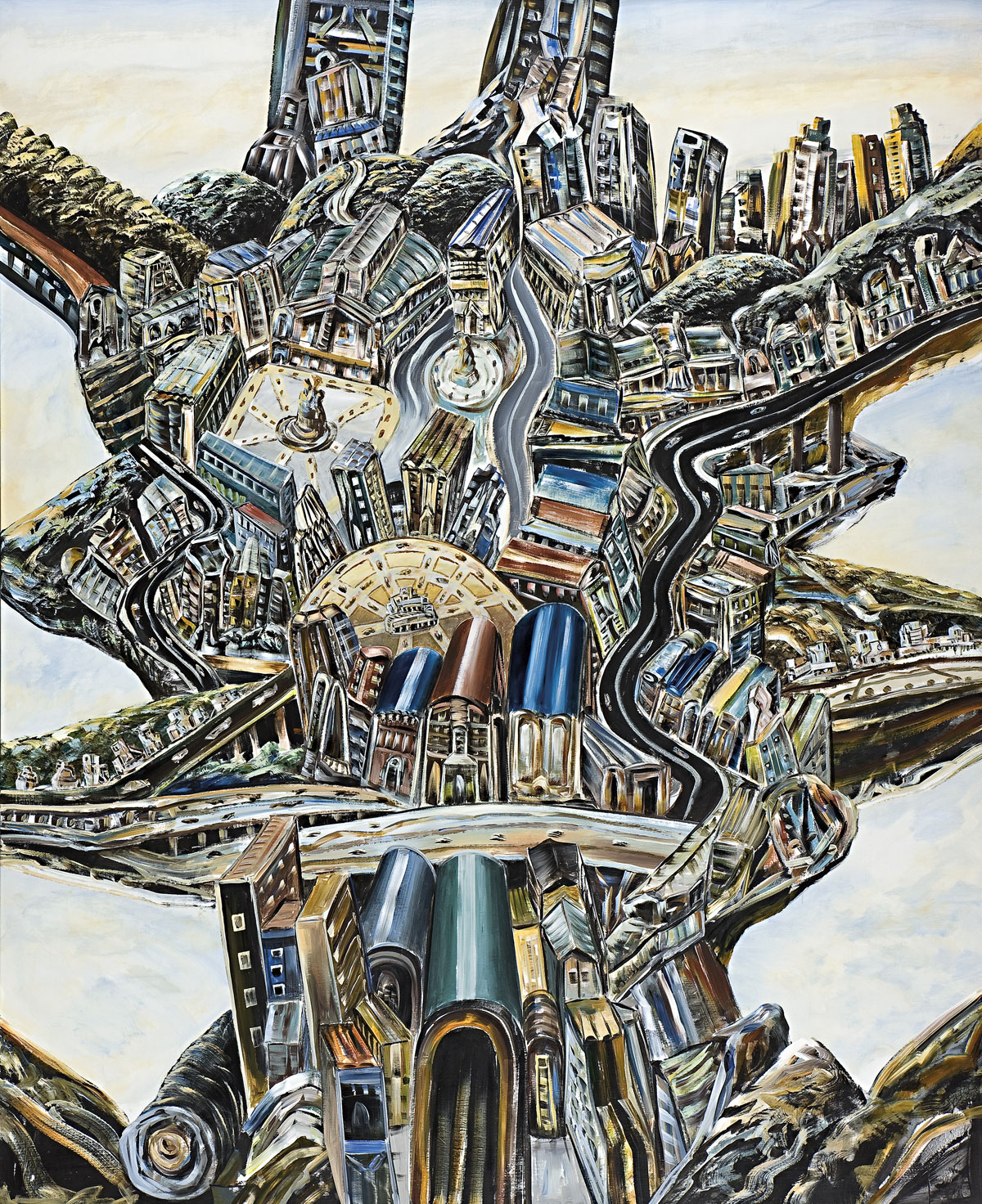
 

Jan Senbergs (born Latvia 1939, arrived Australia 1950, died Melbourne 2024) 'The elated city' 2009


Jan Senbergs (born Latvia 1939, arrived Australia 1950, died Melbourne 2024)
The elated city
2009
Synthetic polymer paint on canvas
239 x 196cm
Courtesy of the artist and Niagara Galleries, Melbourne
© Jan Senbergs


Figures and heads made from mechanistic and architectural elements was one of Senbergs’s earliest subjects. He returned to this motif recently in several monumental paintings, including Paolozzi’s city, 2010, and The elated city, 2009.
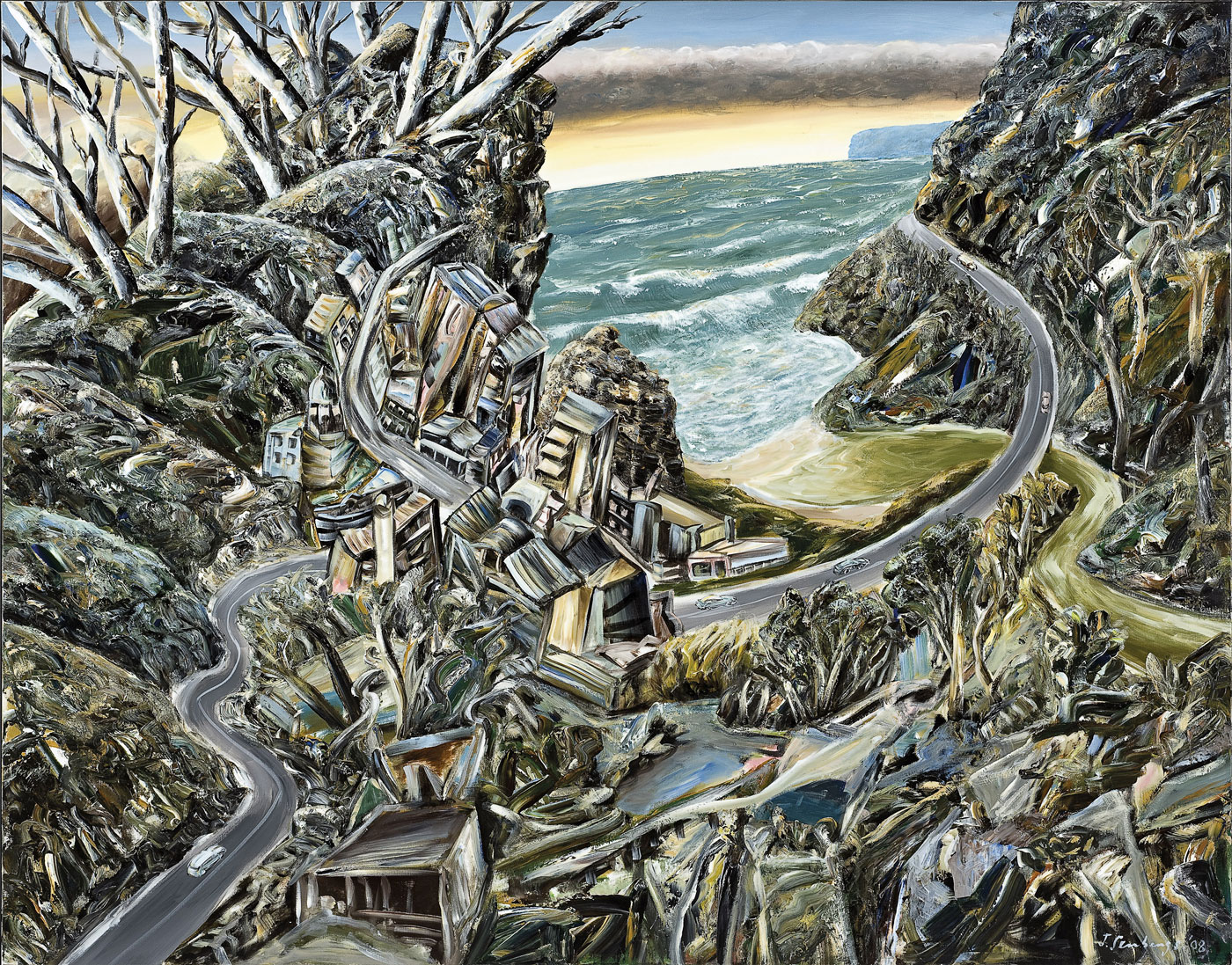
 

Jan Senbergs (born Latvia 1939, arrived Australia 1950, died Melbourne 2024) 'Coastal settlement' 2009


Jan Senbergs (born Latvia 1939, arrived Australia 1950, died Melbourne 2024)
Coastal settlement
2009
Synthetic polymer paint on canvas
169 x 216cm
Private collection, Melbourne
© Jan Senbergs


Jan Senbergs (born Latvia 1939, arrived Australia 1950, died Melbourne 2024) 'Melbourne capriccio 3' 2009


Jan Senbergs (born Latvia 1939, arrived Australia 1950, died Melbourne 2024)
Melbourne capriccio 3
2009
Synthetic polymer paint on canvas
195.2 x 184cm
National Gallery of Victoria, Melbourne
Purchased with funds donated by The Hugh D. T. Williamson Foundation, 2009
© Jan Senbergs


In the history of painting, a capriccio refers to an architectural fantasy where buildings and other architectural elements and places come together in imaginary settings. Senbergs’ Melbourne capriccio offers the viewer the pleasure of a bird’s-eye view of familiar landmarks, seen through a rich blend of memory and imagination.
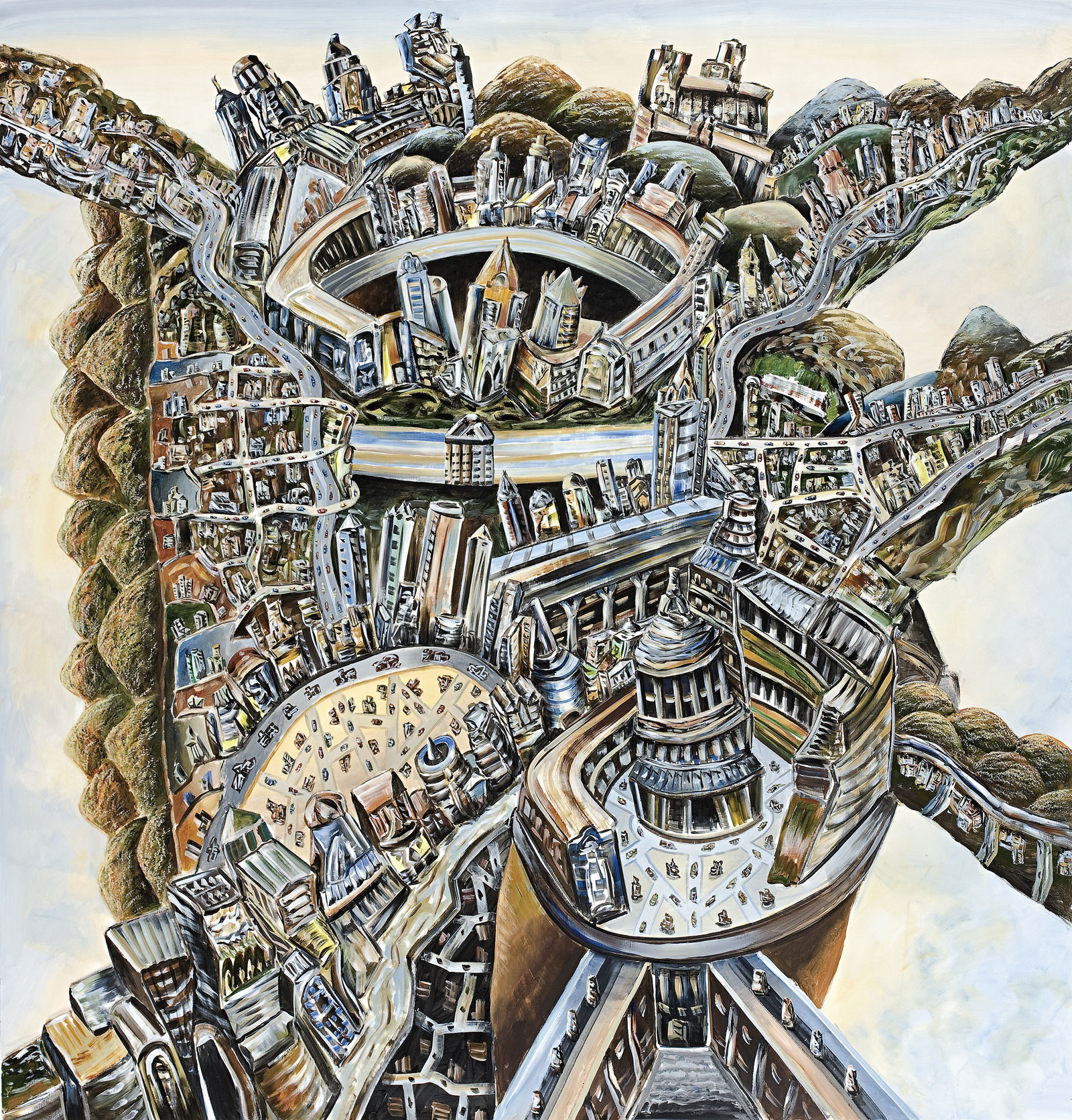
 

Jan Senbergs (born Latvia 1939, arrived Australia 1950, died Melbourne 2024) 'Paolozzi's city' 2010


Jan Senbergs (born Latvia 1939, arrived Australia 1950, died Melbourne 2024)
Paolozzi’s city
2010
Synthetic polymer paint on canvas
200.5 x 193.2cm
TarraWarra Museum of Art Collection
Acquired 2011
© Jan Senbergs


As a young artist in the 1960s, Senbergs greatly admired Scottish Pop artist Edouardo Paolozzi’s strange fusions of machine and organic forms, and explored similar ideas in his own paintings and screen prints. In Paolozzi’s city Senbergs has created a fantastical head out of buildings and roads, and pays homage to one of his first artistic heroes.
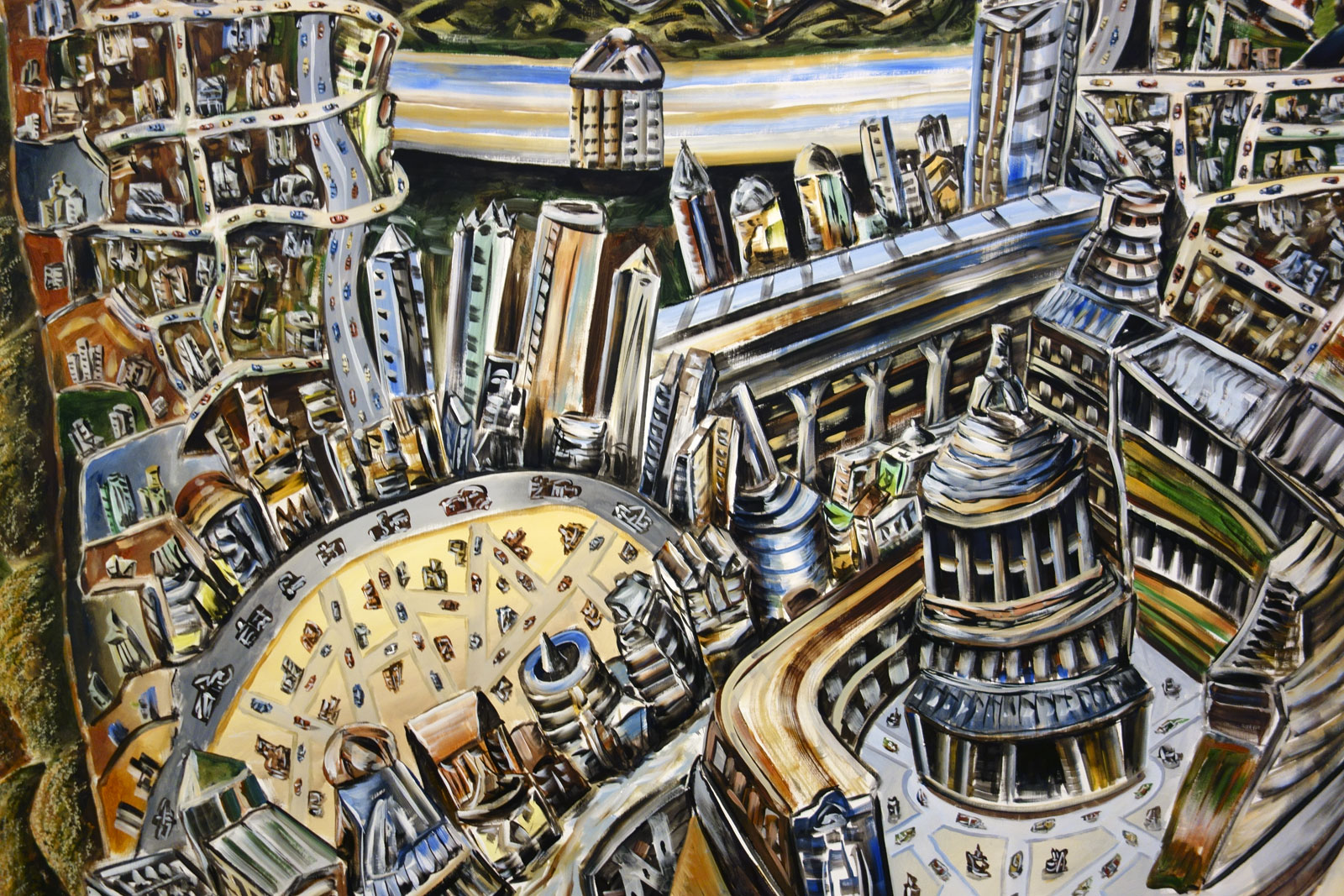
 

Jan Senbergs (born Latvia 1939, arrived Australia 1950, died Melbourne 2024) 'Paolozzi's city' 2010 (detail)


Jan Senbergs (born Latvia 1939, arrived Australia 1950, died Melbourne 2024)
Paolozzi’s city (detail)
2010
Synthetic polymer paint on canvas
200.5 x 193.2cm
TarraWarra Museum of Art Collection
Acquired 2011
© Jan Senbergs
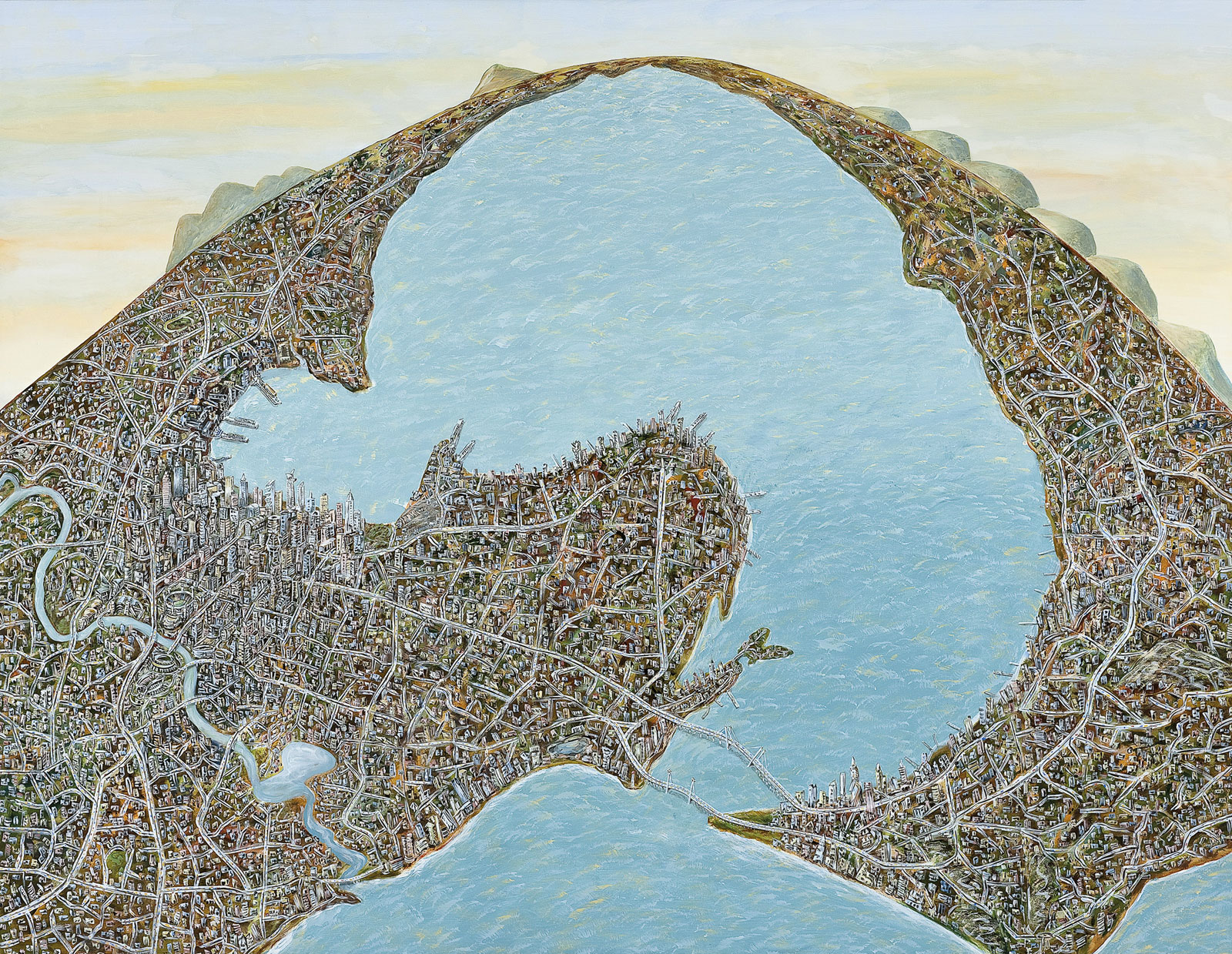
 

Jan Senbergs (born Latvia 1939, arrived Australia 1950, died Melbourne 2024) 'Geelong capriccio (if Geelong were settled instead of Melbourne)' 2010


Jan Senbergs (born Latvia 1939, arrived Australia 1950, died Melbourne 2024)
Geelong capriccio (if Geelong were settled instead of Melbourne)
2010
Synthetic polymer paint on canvas
197 x 255cm
Deakin University Art Collection
© Jan Senbergs
Image courtesy Niagara Galleries, Melbourne


“One of the rarest qualities in contemporary painting is wit … Jan Senberg’s ‘Geelong capriccio’ is in every way a painting of wit, its single and absurd proposition as to what the world would look like if Geelong had become the capital and the site of Melbourne remained open paddocks … It seems to be a very Antipodean painting: the upside-down world, which Europe imagined Australia to be, a place where anything might happen.”


Patrick McCaughey, 2010
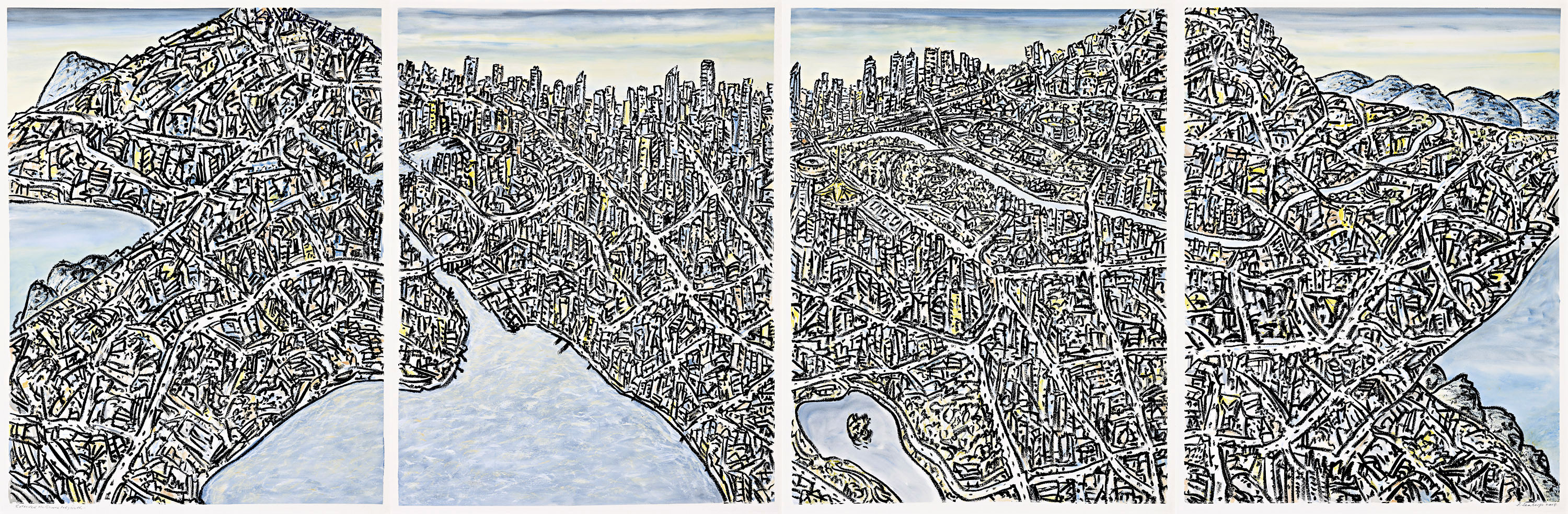


Jan Senbergs (born Latvia 1939, arrived Australia 1950, died Melbourne 2024) 'Extended Melbourne labyrinth' 2013


Jan Senbergs (born Latvia 1939, arrived Australia 1950, died Melbourne 2024)
Extended Melbourne labyrinth
2013
Oil stick, synthetic polymer paint wash
(a-d) 162.5 x 497.4cm (framed) (overall)
National Gallery of Victoria, Melbourne
Yvonne Pettengell Bequest, 2014
© Jan Senbergs
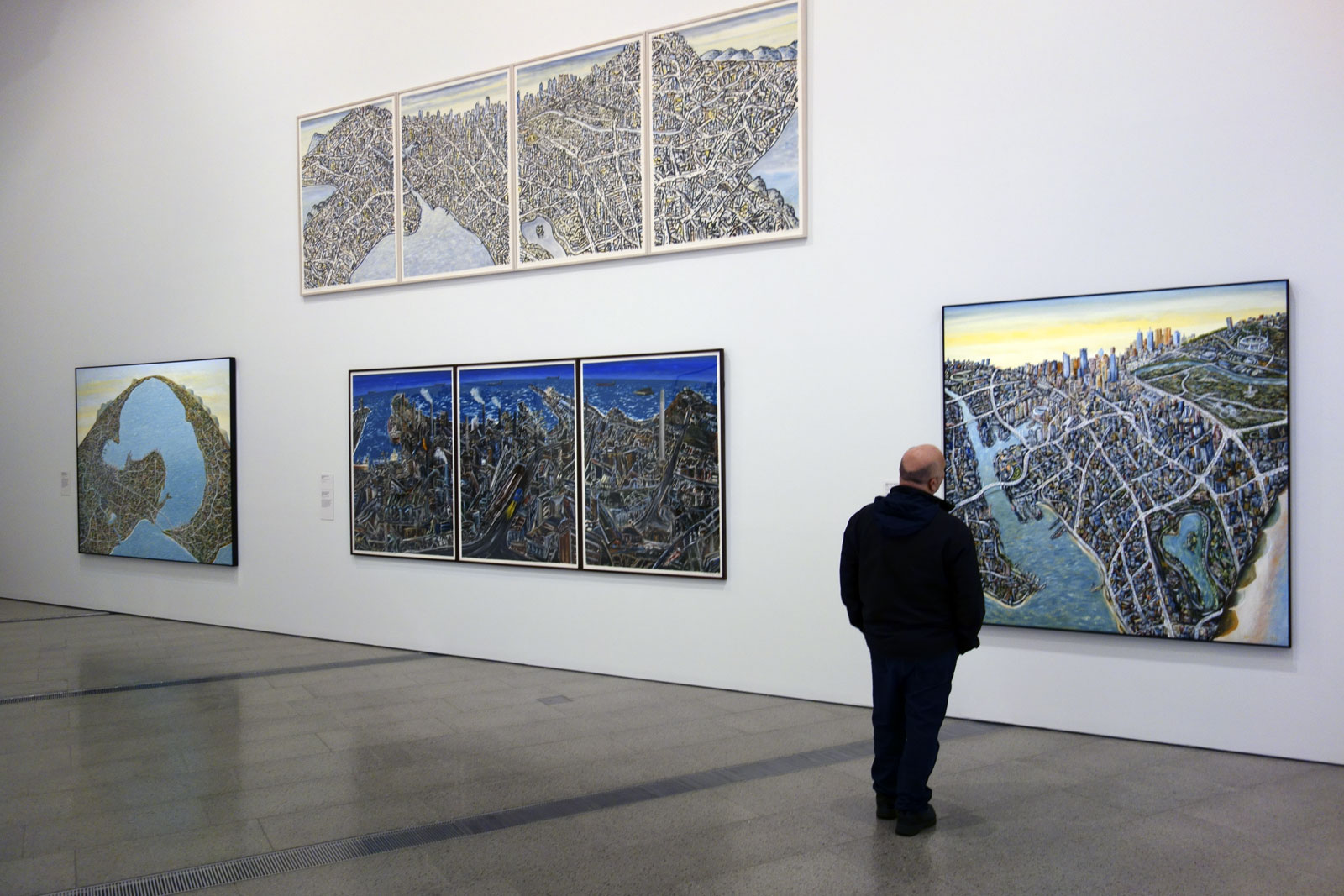
 

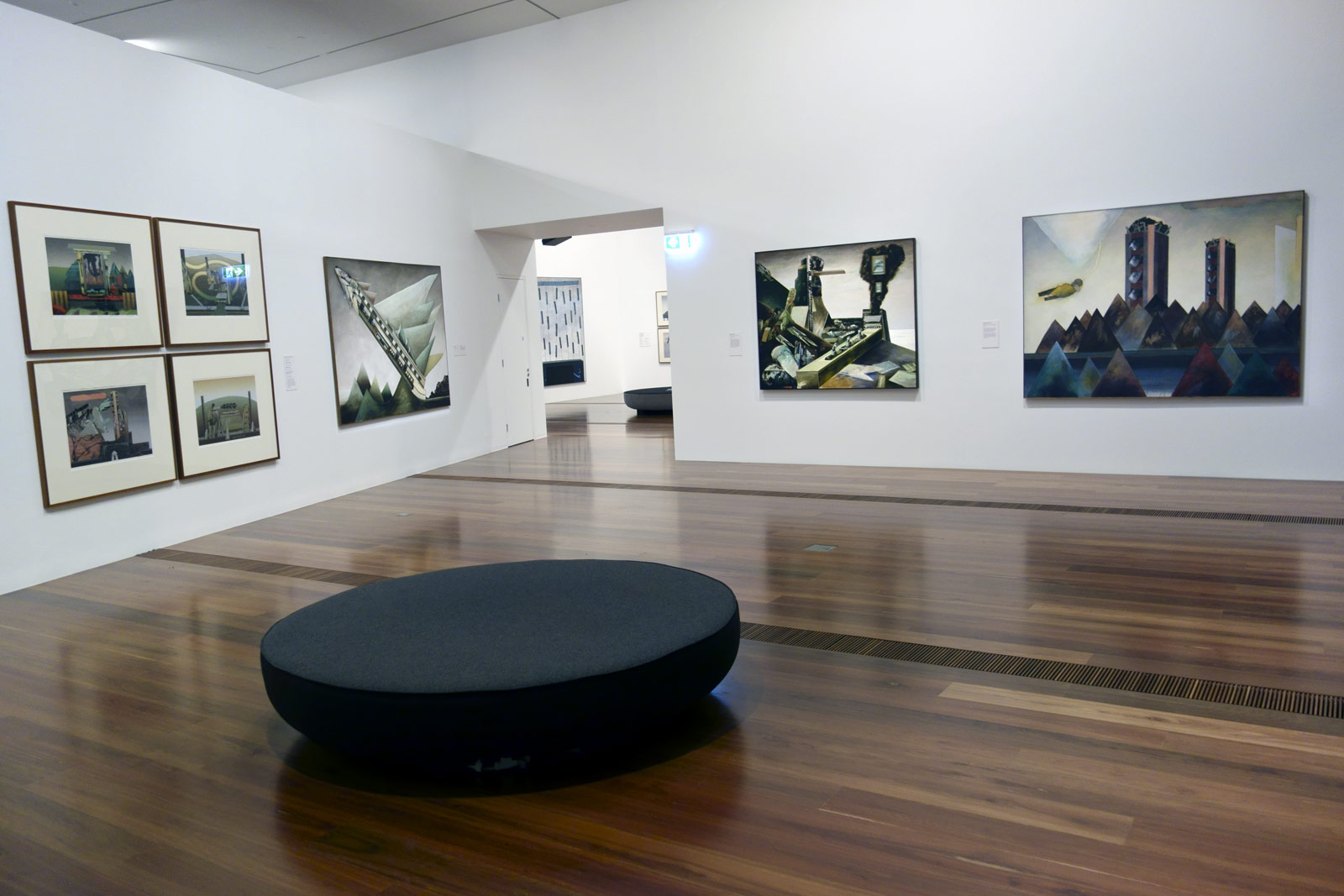
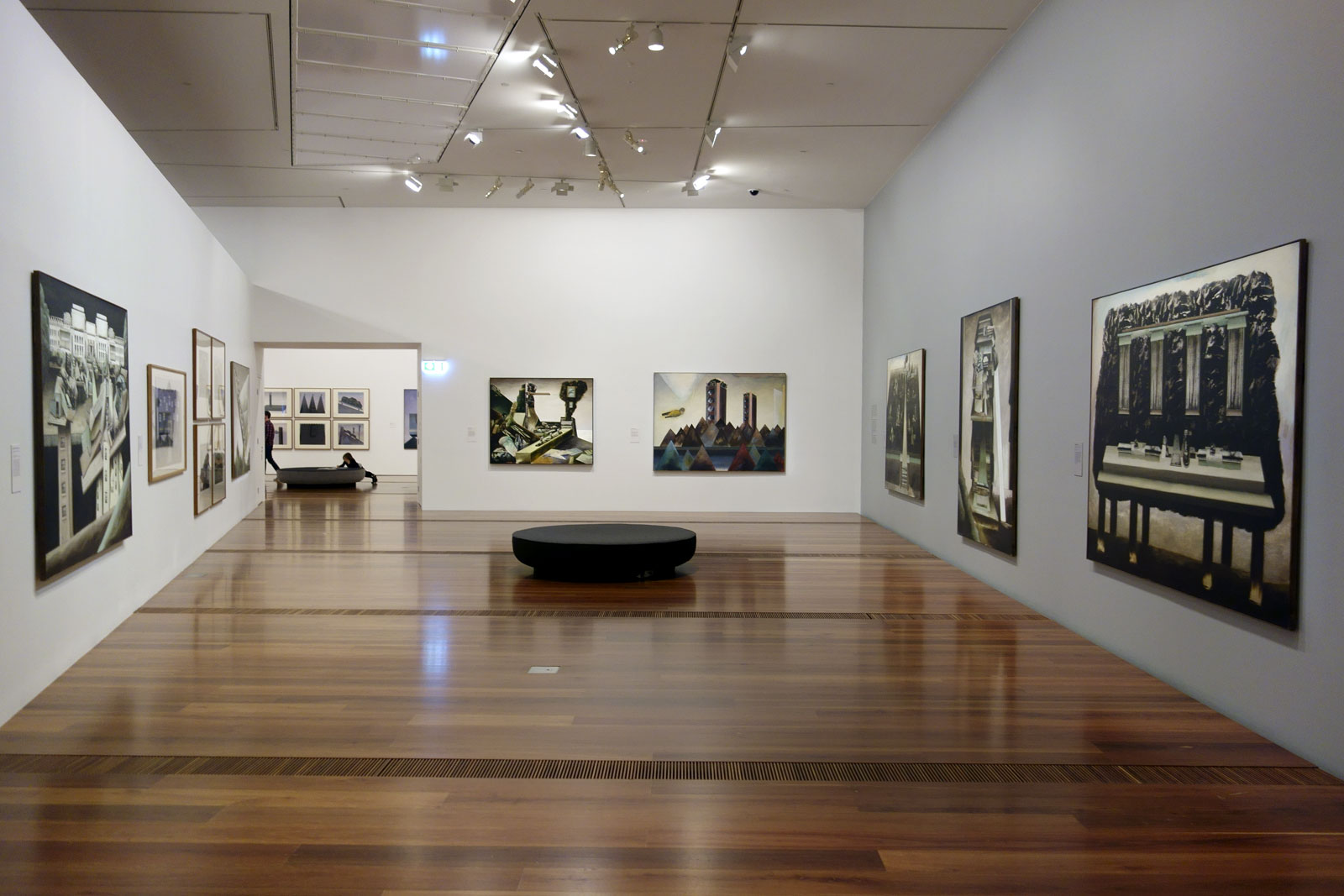
Installation view of the exhibition Jan Senbergs: Observation – Imagination at The Ian Potter Centre: NGV Australia showing at top, 'Extended Melbourne labyrinth' (2013, above); at left, 'Geelong capriccio (if Geelong were settled instead of Melbourne)' (2010, above); at right 'Melbourne capriccio 3'


Installation view of the opening room of the exhibition Jan Senbergs: Observation – Imagination at The Ian Potter Centre: NGV Australia showing at top, Extended Melbourne labyrinth (2013, above); at left, Geelong capriccio (if Geelong were settled instead of Melbourne) (2010, above); at right Melbourne capriccio 3
Photo: Marcus Bunyan
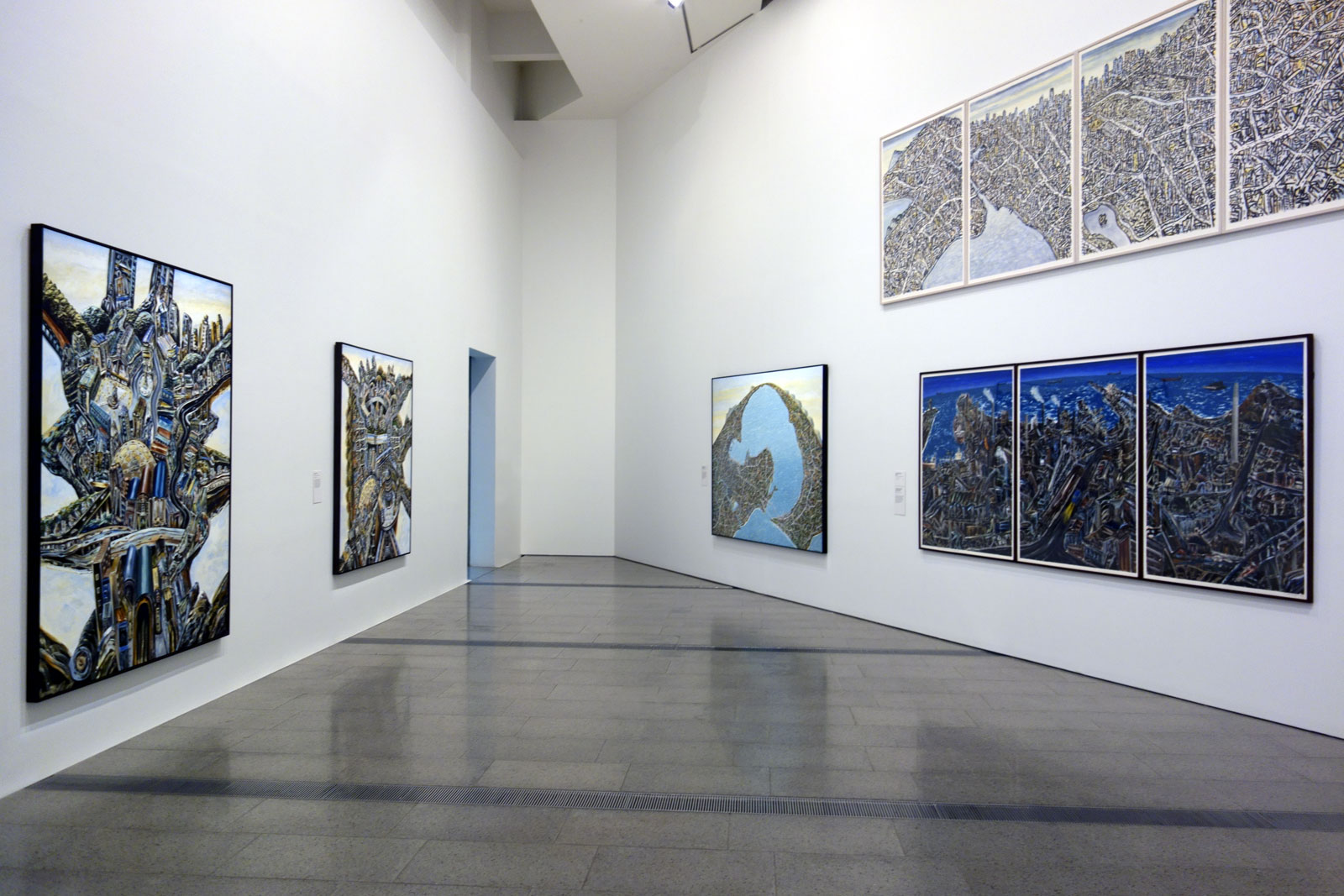
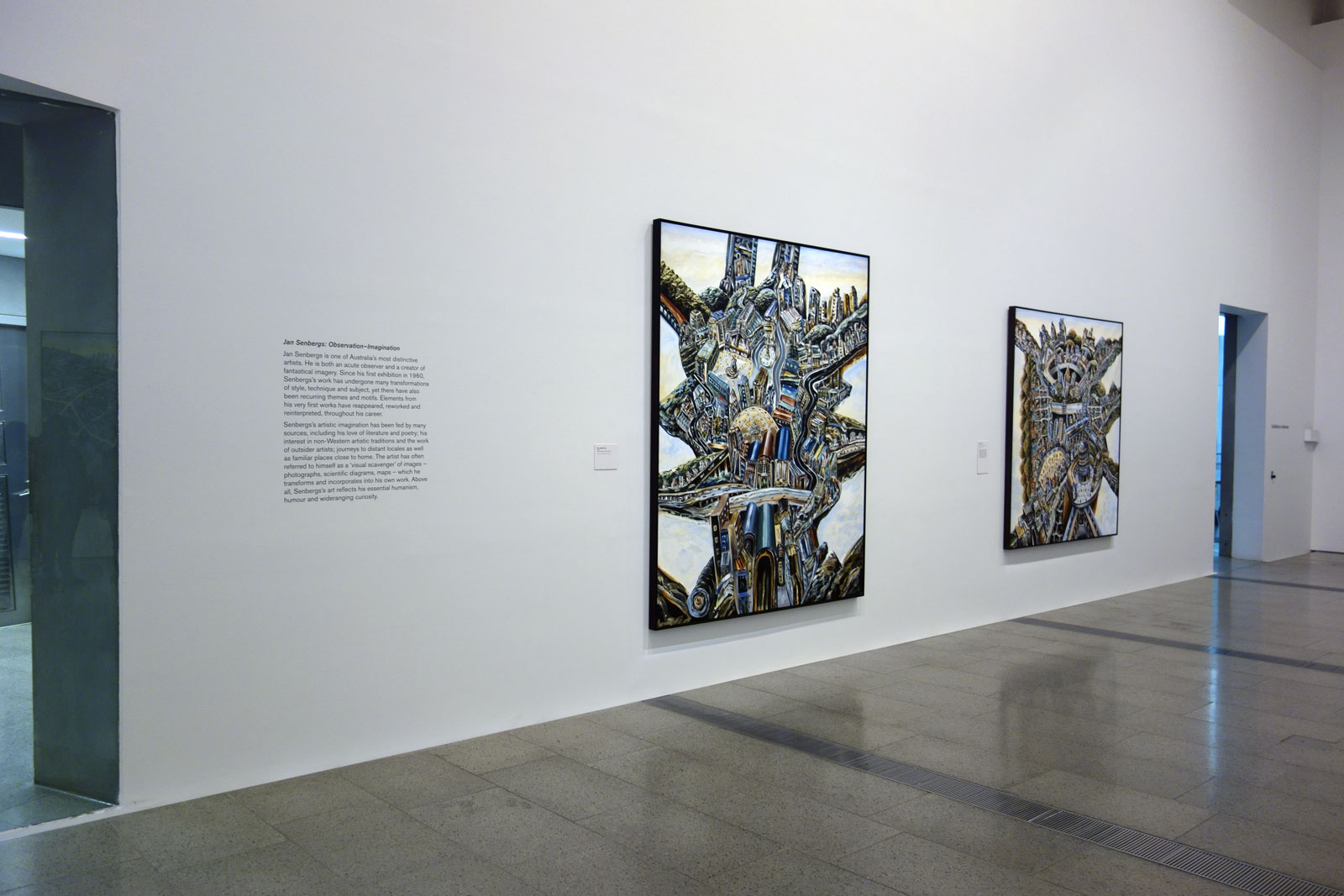
 

Installation view of the opening room of the exhibition 'Jan Senbergs: Observation – Imagination' at The Ian Potter Centre: NGV Australia showing at left in both images, 'The elated city' followed by 'Paolozzi's city'

Installation view of the opening room of the exhibition 'Jan Senbergs: Observation – Imagination' at The Ian Potter Centre: NGV Australia showing at left in both images, 'The elated city' followed by 'Paolozzi's city'


Installation views of the opening room of the exhibition Jan Senbergs: Observation – Imagination at The Ian Potter Centre: NGV Australia showing at left in both images, The elated city followed by Paolozzi’s city
Photo: Marcus Bunyan
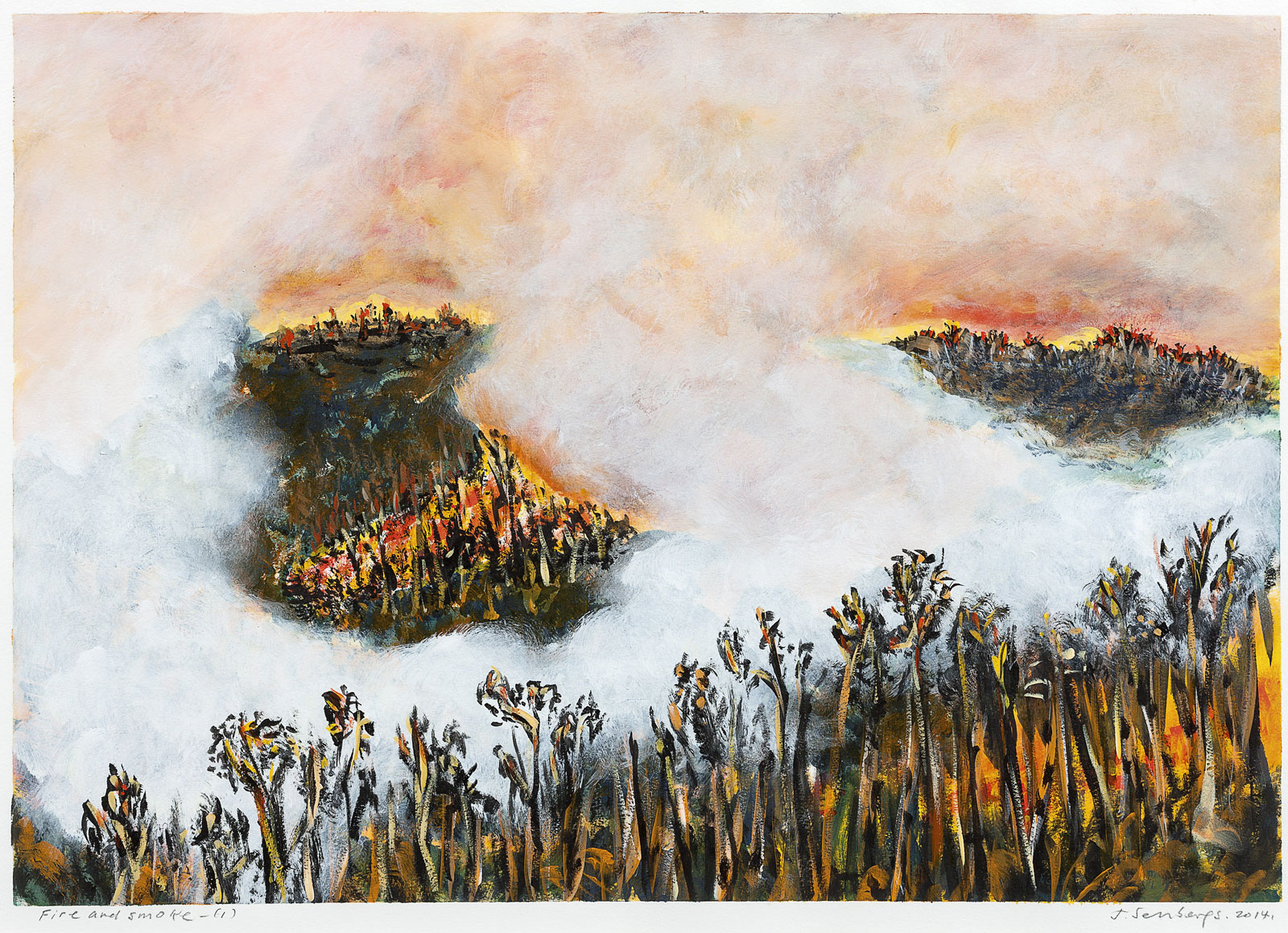
 

Jan Senbergs (born Latvia 1939, arrived Australia 1950, died Melbourne 2024) 'Fire and smoke' 1 2014


Jan Senbergs (born Latvia 1939, arrived Australia 1950, died Melbourne 2024)
Fire and smoke 1
2014
Synthetic polymer paint on paper
48 x 70cm (sheet)
Private collection, Melbourne
© Jan Senbergs
Image courtesy Niagara Galleries, Melbourne


In contrast to the enclosed, almost claustrophobic spaces of the studio interiors, by the end of the 1990s Senbergs had embarked upon a new series of map-like paintings, sprawling bird’s-eye view of cities, which continue to occupy him to the present day. Initially inspired by seeing Melbourne from a high-rise building, these works reflect the artist’s long fascination with early and non-Western map-making traditions. Like these maps, Senbergs’ views are not scientifically measured recordings; rather they are imaginative constructions of place based on observation and memory.

At the same time Senbergs began his most extensive group of landscapes, painting the rugged terrain of the Victorian west coast, an area that he knew well. While some of these works depict untouched wilderness, others include roads and townships and employ multiple perspectives to convey the experience of travelling through the landscape. Senbergs’ recent Heat – Fire – Smoke series is a response to the 2014 bushfires in Victoria, a new subject for the artist, in which he reflects on the cycle of destruction and regeneration. (Wall text from the exhibition)
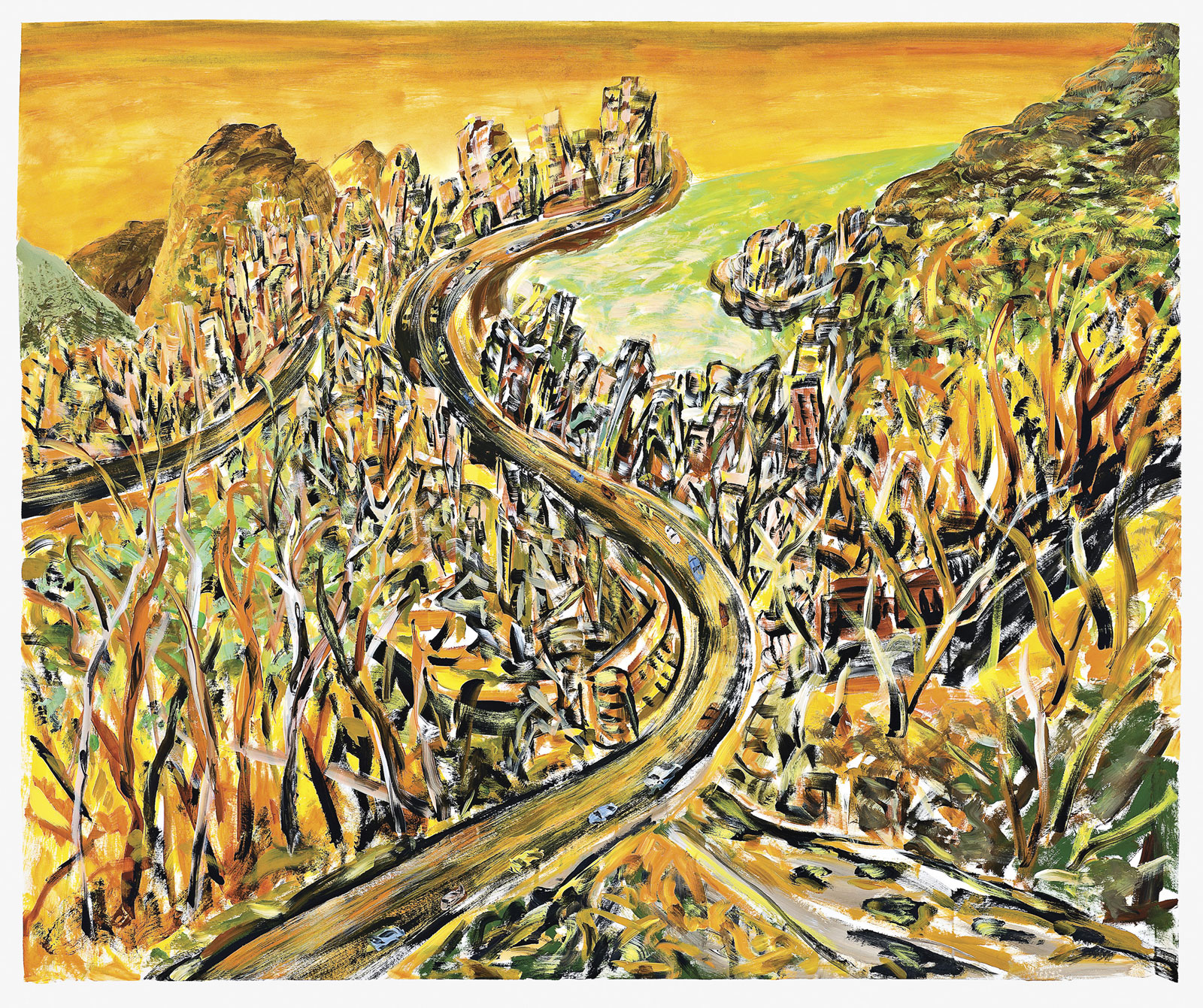
 

Jan Senbergs (born Latvia 1939, arrived Australia 1950, died Melbourne 2024) 'Code Red day 1' 2014


Jan Senbergs (born Latvia 1939, arrived Australia 1950)
Code Red day 1
2014
Synthetic polymer paint on paper
119.0 x 145.0cm
Private collection, Melbourne
© Jan Senbergs


“In January 2014 in Melbourne we had four days of forty-plus degrees of intense heat – with bushfires raging in the countryside casting a pall of acrid smoke over the extended city and all around ominous skies that seemed to portend an inferno that would be all engulfing. That oppressive atmosphere and that sense of threat at the edges of the extended city seemed as if an overwhelming and merciless force was at the gates and ready to break down the barricades.”

~ Jan Senbergs, 2015


The Ian Potter Centre: NGV Australia
Federation Square
Corner of Russell and 
Flinders Streets, Melbourne

Opening hours:
Daily 10am – 5pm
National Gallery of Victoria website

LIKE ART BLART ON FACEBOOK

Back to top

Exhibition: ‘The Heart of the Great Alone: Scott, Shackleton and Antarctic Photography’ at The Queen’s Gallery, Buckingham Palace, London

Exhibition dates: 21st October 2011 – 15th April 2012


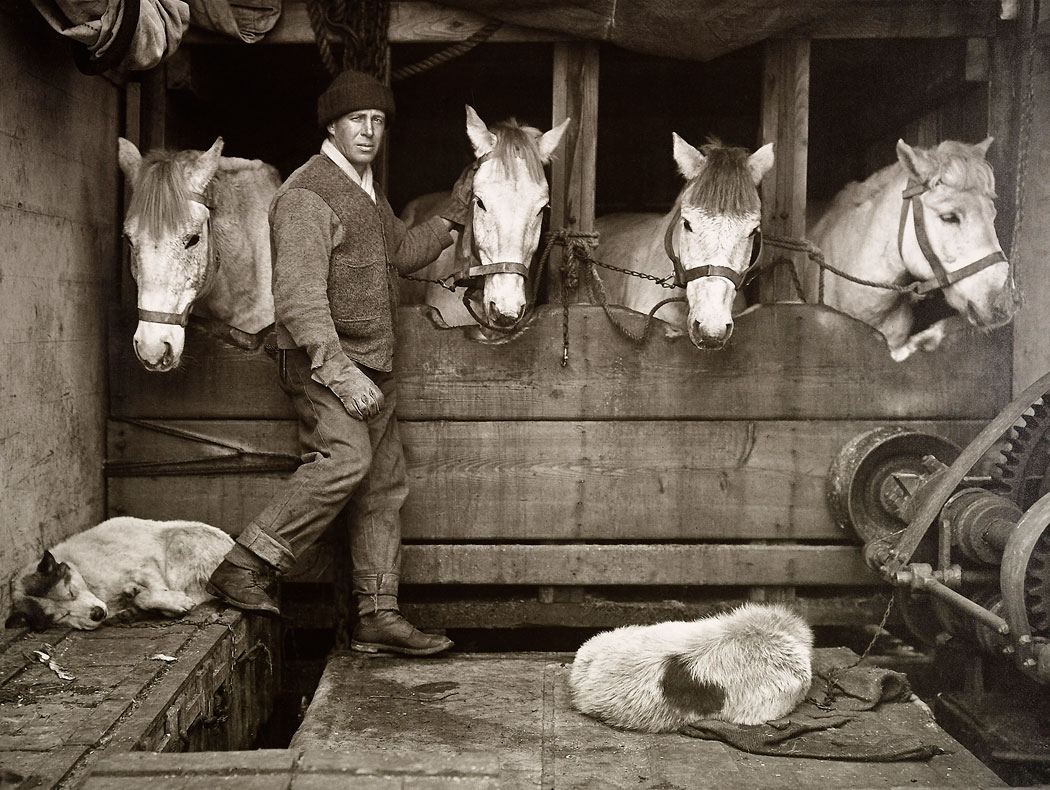
Herbert Ponting (British, 1870-1935) 'Captain Lawrence Oates and Siberian ponies on board 'Terra Nova'' 1910


Herbert Ponting (British, 1870-1935)
Captain Lawrence Oates and Siberian ponies on board ‘Terra Nova’
1910
Presented to King George V, 1914
© 2011 Her Majesty Queen Elizabeth II


Continuing my fascination with all things Antarctic, here are more photographs from the Scott and Shackleton expeditions. The photograph Captain Lawrence Oates and Siberian ponies on board ‘Terra Nova’ by Herbert Ponting (1910, above) is simply breathtaking.

Dr Marcus Bunyan


Many thankx to The Royal Collection for allowing me to publish the photographs in the posting. Please click on the photographs for a larger version of the image.


This exhibition of remarkable Antarctic photography by George Herbert Ponting and Frank Hurley marks the 100th anniversary of Captain Scott’s ill-fated journey to the South Pole. Ponting’s dramatic images record Scott’s Terra Nova expedition of 1910-1912, which led to the tragic death of five of the team on their return from the South Pole. Hurley’s extraordinary icescapes were taken during Ernest Shackleton’s polar expedition on Endurance in 1914-1917, which ended with the heroic sea journey from Elephant Island to South Georgia. Both collections of photographs were presented to King George V and are today part of the Royal Photograph Collection.

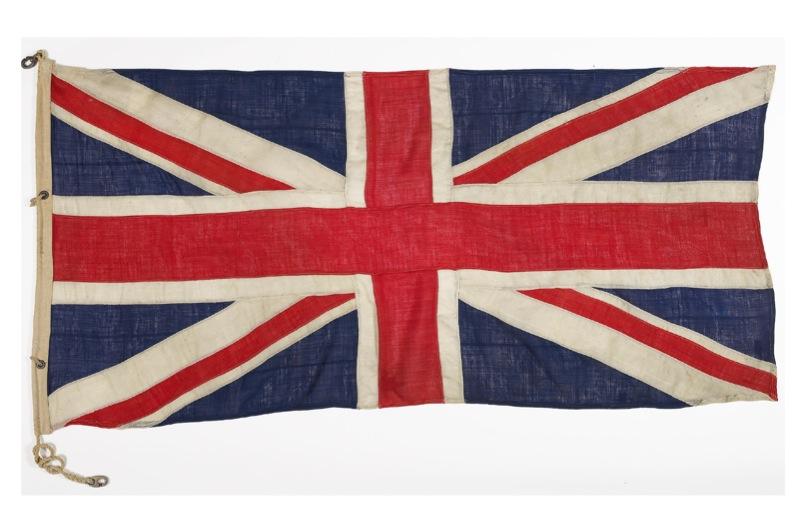
Union Jack taken by Scott to the South Pole 1911-1912


Union Jack taken by Scott to the South Pole
1911-1912
Presented to King George V, 1914
© 2011 Her Majesty Queen Elizabeth II


This Union Jack was given to Scott by the recently widowed Queen Alexandra on 25 June 1910 for him to plant at the South Pole. The flag was recovered with Scott’s body and returned to the queen by his wife, Kathleen, on 12 July 1913.


The photographs of Herbert Ponting and Frank Hurley may be stencilled into the collective memory after nearly a century of over-exposure. But it’s not often you get to see them away from the printed page, and they certainly bring out fresh depths and new perspectives…

It turns out to be highly instructive seeing Hurley and Ponting hung in neighbouring rooms. I’ve always taken Ponting to be somehow the lesser snapper. Hurley had the greatest photostory ever captured land in his lap when Shackleton’s ship the Endurance was trapped in ice floes and held fast for months before pressure ridges eventually crushed it like a dry autumn leaf. Like a good journalist Hurley recorded these traumas and more while also taking the chance to experiment with the strange light and baroque shapes supplied by his surroundings.

Ponting’s story was different. Four or so years earlier, and on the other side of the Antarctic land mass, he didn’t stray far from the expedition base, and indeed was left on the Terra Nova while Scott’s polar party were still out on the ice, trudging balefully towards immortality. There’s something about Ponting’s floridly unmodern moustache which sets him apart from the clean-shaven younger men in either expedition, as if he never quite left the studio behind.

But the photographs are astonishing… The story here is the unequal battle between man and ice, the castellations and ramparts of bergs dwarfing explorers with dogs and sledges placed at their foot to give a sense of scale. Ponting also has a beautiful eye for filigree detail, never more than in one picture of long spindly icicles echoing the adjacent rigging of the Terra Nova.

One of the revelations is that the originals play up the drama of Ponting’s work much more than Hurley’s, which are printed at half the size. For all the astonishing pictures – a field of ice flowers, the masts of the Endurance all but shrouded by Brobdingnagian ice clumps – the final impact of Hurley’s collection lies in the fact that they exist at all… That is partly why Ponting trumps Hurley in this show. His pictures of Scott’s men have never felt more immediate.

Rees, Jasper. Review of “The Heart of the Great Alone: Scott, Shackleton and Antarctic Photography, Queen’s Gallery” on the Arts Desk website. Thursday, 27 October 2011 [Online] Cited 06/04/2012


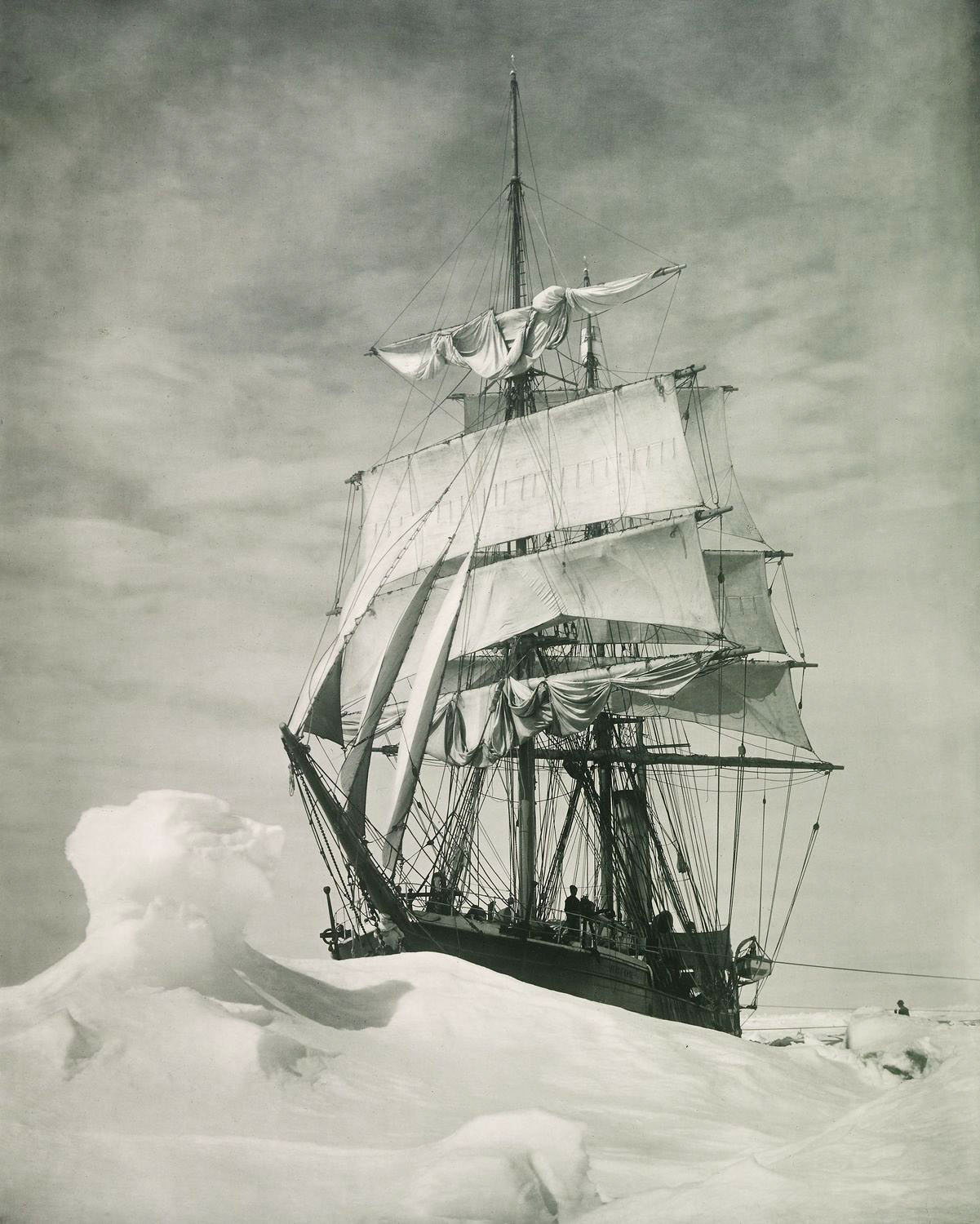
Herbert Ponting (British, 1870-1935) 'The Terra Nova icebound in the pack' 13 Dec 1910


Herbert Ponting (British, 1870-1935)
The Terra Nova icebound in the pack
13 Dec 1910
Carbon print
73.5 x 58.2cm
Presented to King George V, 1914
© 2011 Her Majesty Queen Elizabeth II


Photograph of the Terra Nova in sail, passing through ice and snow. Scott’s ship is seen here held up by the ice pack, with a curiously shaped ‘ice bollard’ in the foreground. The Terra Nova was launched in 1884 as a whaling ship. She had sailed to both the Arctic and Antarctic before serving as Scott’s ship in 1910. She survived until 1943 when she was damaged by ice and sank off the coast of Greenland.


British Antarctic Expedition

Scott and his men reached Antarctica on board the Terra Nova on 31 December 1910. The expedition had several aims that were scientific in nature, but the principal goal for Scott was to lead the first team to the South Pole.

Following his earlier polar experience on the Discovery expedition of 1901-1904, Scott realised the importance of good photographic images for fund-raising and publicising the achievements of the expedition. Scott employed the photographer Herbert Ponting to accompany him. This was the first time a professional photographer had been included in an Antarctic expedition.

Ponting had previously worked in the United States and Asia. He had a great deal of experience, and during his time in Antarctica, he produced around 2,000 glass plate negatives as well as making films. Ponting also taught photography to Scott and other members of the team so that they could record their assault on the Pole.

In March 1912 Ponting left the Antarctic, according to previously-laid plans. After his return to Britain, Ponting exhibited his work and lectured widely about Scott, thus ensuring that his photographs became inextricably linked with Scott and the heroic age of Antarctic exploration.

Text from the Royal Collection Trust website


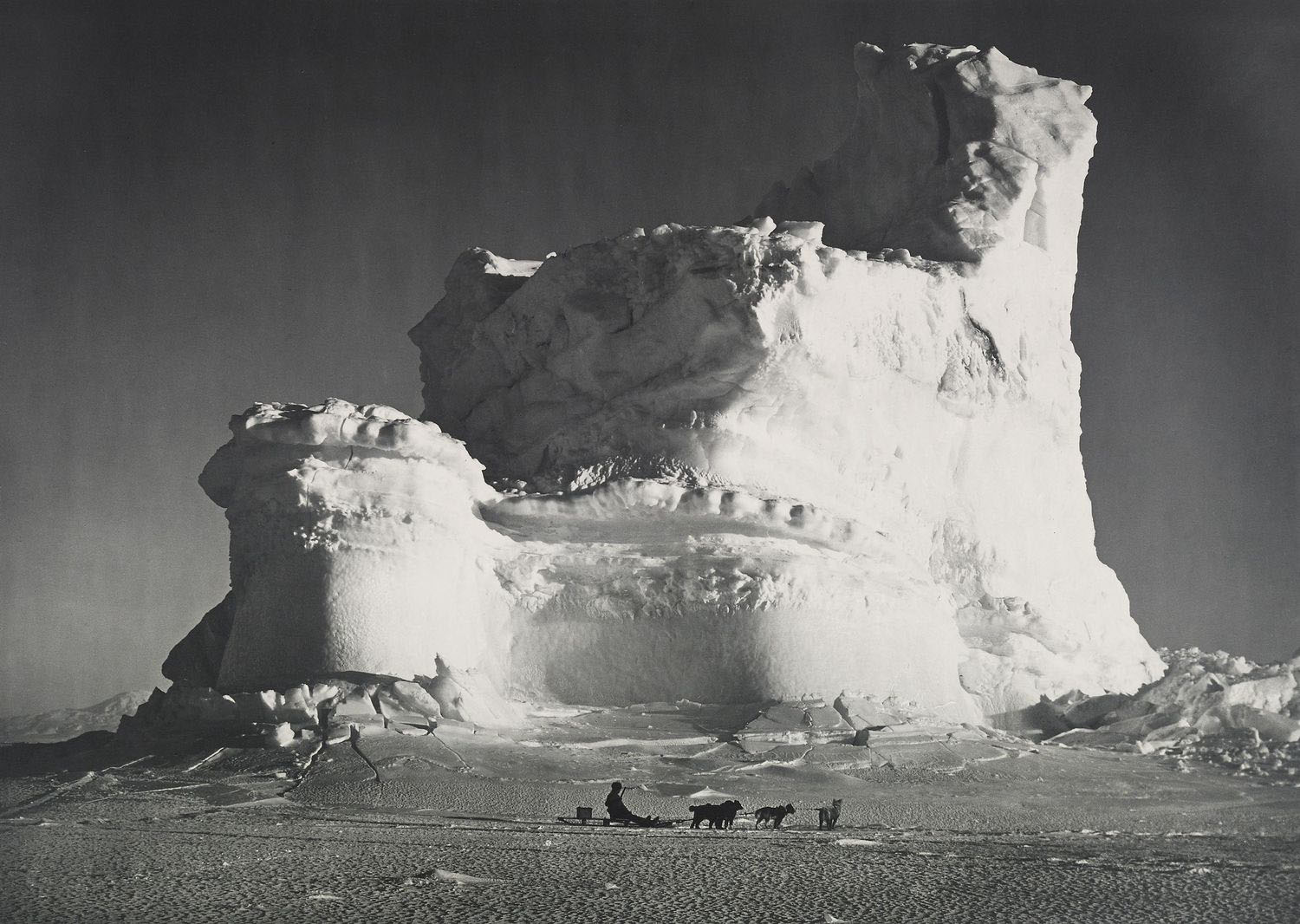
Herbert Ponting (British, 1870-1935) 'The Castle Berg with dog Sledge' 17 Sep 1911


Herbert Ponting (British, 1870-1935)
The Castle Berg with dog Sledge
17 Sep 1911
Carbon print
53.2 x 75.0cm
Presented to King George V, 1914
© 2011 Her Majesty Queen Elizabeth II


This iceberg, which resembles a medieval castle, was greatly admired by members of the expedition. Ponting returned several times during 1911 to photograph it, including once in June, the middle of the Antarctic winter, when he set up flashlights to make an image. At its highest point the berg is around 100 feet high (30.5 m).


Herbert Ponting (British, 1870-1935) 'The ramparts of Mount Erebus' 1911


Herbert Ponting (British, 1870-1935)
The ramparts of Mount Erebus
1911
Presented to King George V, 1914
© 2011 Her Majesty Queen Elizabeth II


Mount Erebus, an active volcano on Ross Island which last erupted in 2008, was first climbed in 1908 by members of Shackleton’s Nimrod expedition. Ponting has contrasted the overwhelming size of the natural world against the tiny human figure pulling a sledge, in the lower left corner of the photograph.


It is a story of heroism and bravery, and ultimately of tragedy, that has mesmerised generations. One hundred years on from their epic voyages to the very limits of the Earth, and of man’s endurance, the legends of Scott and Shackleton live on.

To mark the centenary of Captain Robert Falcon Scott’s expedition to the South Pole, the Royal Collection brings together, for the first time, a collection of the photographs presented to King George V by the official photographers from Scott’s Terra Nova expedition of 1910-1913 and Shackleton’s expedition on Endurance in 1914-1916, and unique artefacts, such as the flag given to Scott by Queen Alexandra (widow of King Edward VII) and taken to the Pole.

The exhibition documents the dramatic landscapes and harsh conditions the men experienced, through the work of expedition photographers Herbert Ponting and Frank Hurley. These sets of photographs are among the finest examples of the artists’ work in existence – and the men who took them play a vital part in the explorers’ stories. Highlights from Scott’s voyage include Ponting’s The ramparts of Mount Erebus, which presents the vast scale of the icescape, and the ethereal The freezing of the sea. Among the most arresting images from Hurley’s work on Shackleton’s expedition are those of the ship Endurance listing in the frozen depths and then crushed between floes.

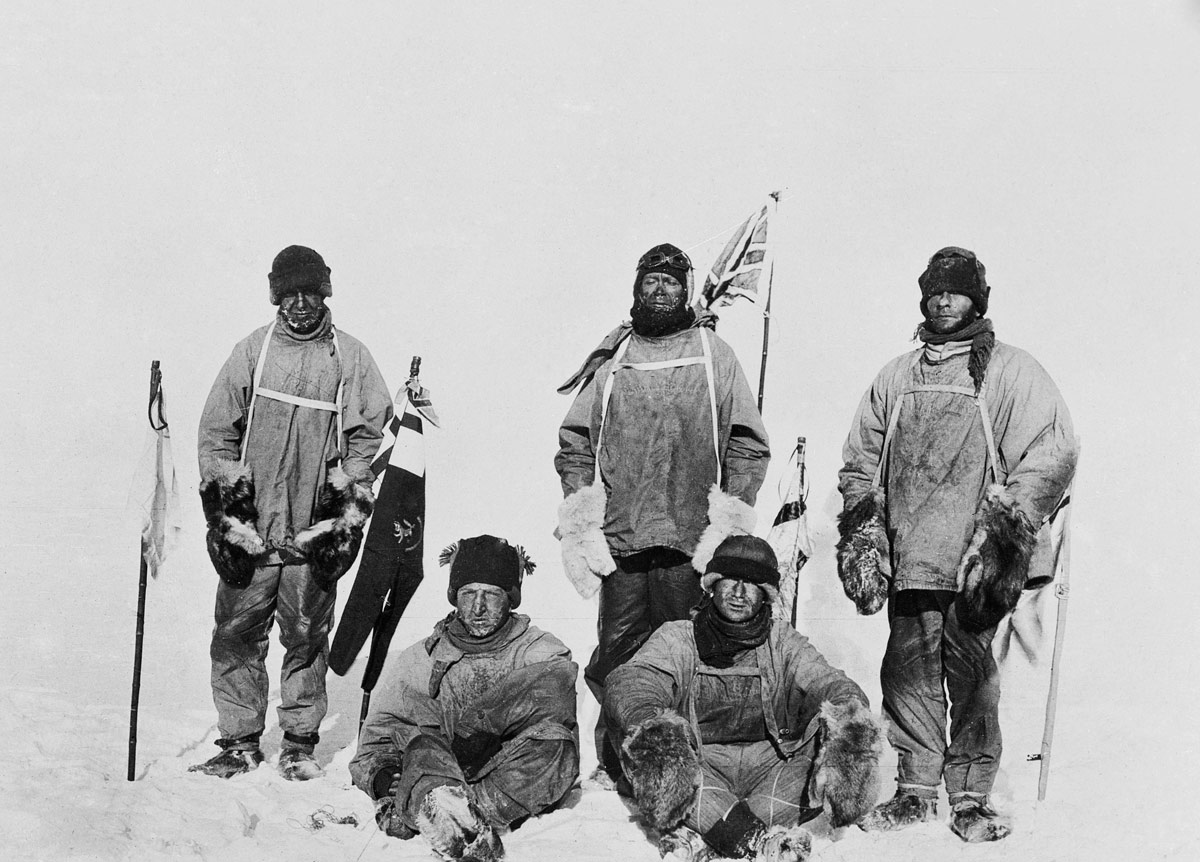
The photographs also give insights into the men themselves. For instance, at the start of the journey Scott appears confident and relaxed, with his goggles off for the camera. In contrast, a photograph taken at the Pole shows him and his team devastated and unsmiling, knowing they had been beaten. The exhibition also records the lighter moments of expedition life, essential for teams cut off from the outside world for years at a time. On Shackleton’s expedition, a derby for the dogs was organised – with bets laid in cigarettes and chocolate. A menu for Midwinter’s Day, on 22 June 1911, shown in the accompanying exhibition publication, includes roast beef and Yorkshire pudding, ‘caviare Antarctic’ and crystallised fruits.

Antarctic adventurer David Hempleman ­Adams has been closely involved in the exhibition and has written an introduction to the catalogue. First given the taste for adventure by The Duke of Edinburgh’s Award scheme, he was inspired, like generations of school children, by the tales of discovery. As a South Pole veteran, the first Briton to reach the Pole solo and unsupported, he is still in awe of Scott and Shackleton’s achievements – and will return with his daughter this year to mark the centenary. David Hempleman­ Adams said: “We have a big psychological advantage today: We know it is possible to reach the South Pole. Nowadays you can go on Google Earth and see what’s there. Back then, it was just a big white piece of paper. Scott and Shackleton had no TVs, radios or satellite phones – they were cut off from the outside world – and in terms of equipment, the tents, skis and sledges, today, we carry about one tenth of what they carried, over the same mileage. What they achieved, with what they had, is really magnificent. This is the 100th anniversary and the legend has stood the test of time. Even in this modern world, there’s still just as much interest.”

As the photographs show, animals played an important part in the expeditions. There are portraits of the ponies and of individual sledge dogs. In his diaries, Scott describes the relationship he struck up with the bad­ tempered husky Vida: “He became a bad wreck with his poor coat… and… I used to massage him; at first the operation was mistrusted and only continued to the accompaniment of much growling, but later he evidently grew to like the warming effect and sidled up to me whenever I came out of the hut… He is a strange beast – I imagine so unused to kindness that it took him time to appreciate it.”

Ponting also photographed wildlife, including seals, gulls and penguins. Scott writes of the moment Ponting tried to photograph killer whales and how the creatures crashed through the ice to catch him. Scott, watching but unable to help, observes, “It was possible to see their tawny head markings, their small glistening eyes, and their terrible array of teeth – by far the largest and most terrifying in the world.”

The inspirational qualities of the explorers were recognised by King George V. In his book, The Great White South, Ponting records what the Monarch said to him when he went to Buckingham Palace to show his Antarctic film: “His Majesty King George expressed to me the hope that it might be possible for every British boy to see the pictures – as the story of the Scott Expedition could not be known too widely among the youth of the nation, for it would help to promote the spirit of adventure that had made the Empire.”

Royal interest in polar exploration began with Queen Victoria and Prince Albert, who followed the fortunes of the early adventurers, such as Sir John Franklin and William Bradford, and it continues to this day. The Duke of Edinburgh, who has written a foreword to the exhibition catalogue, has been the patron of many of David Hempleman­ Adams’s expeditions and has himself crossed the Antarctic Circle. HRH The Princess Royal is Patron of the UK Antarctic Heritage Trust.

Press release from The Royal Collection website


Herbert Ponting (British, 1870-1935) 'Grotto in an iceberg' 5 January 1911


Herbert Ponting (British, 1870-1935)
Grotto in an iceberg
5 January 1911
Presented to King George V, 1914
© 2011 Her Majesty Queen Elizabeth II


Photograph of the Terra Nova seen from inside a grotto that was formed by an iceberg as it turned over, carrying a large floe which froze onto it. Both Ponting and Scott were struck by the colours of the ice inside this ice grotto; they were a rich mix of blues, purples and greens. Ponting thought that this photograph, framing the Terra Nova, was one of his best.


Both Captain Scott and Herbert Ponting – the photographer accompanying him on the Terra Nova expedition – wrote about the intense colours that they encountered in the landscape of Antarctica. In this series of three short talks by Royal Collection curator Sophie Gordon, we examine how Ponting attempted to capture these magical blues, greens and oranges in his photographs beginning here with the blues of this grotto within an iceberg, taken in January, 1911.

Royal Collection: ‘A Lovely Symphony of Blue and Green’ – Grotto in an Iceberg

Both Captain Scott and Herbert Ponting – the photographer accompanying him on the Terra Nova expedition – wrote about the intense colours that they encountered in the landscape of Antarctica. In this series of three short talks by Royal Collection curator Sophie Gordon, we examine how Ponting attempted to capture these magical blues, greens and oranges in his photographs beginning here with the blues of this grotto within an iceberg, taken in January, 1911.


Herbert Ponting (British, 1870-1935) 'The Freezing of the Sea' 1911


Herbert Ponting (British, 1870-1935)
The Freezing of the Sea
1911, printed 1913-1914
Carbon print, tinted
74.6 x 58.1cm
Presented to King George V, 1914
© 2011 Her Majesty Queen Elizabeth II


Photograph of a thin film of new ice covering the sea with ice blocks in the foreground. The Barne Glacier can be seen in the distance. This view, looking from Cape Evans towards Cape Barne on Ross Island, shows the moment when the sea began to freeze. The men would have realised that they could no longer leave Antarctica. Once winter began, no ships would be able to reach them to bring in supplies or to take anyone out.


Royal Collection: ‘A Lovely Symphony of Blue and Green’ – The Freezing of the Sea

In the second of these three short talks, Royal Collection curator Sophie Gordon, briefly considers this atmospheric photograph which captured the moment the sea began to freeze, cutting the men off in Antarctica for the winter.


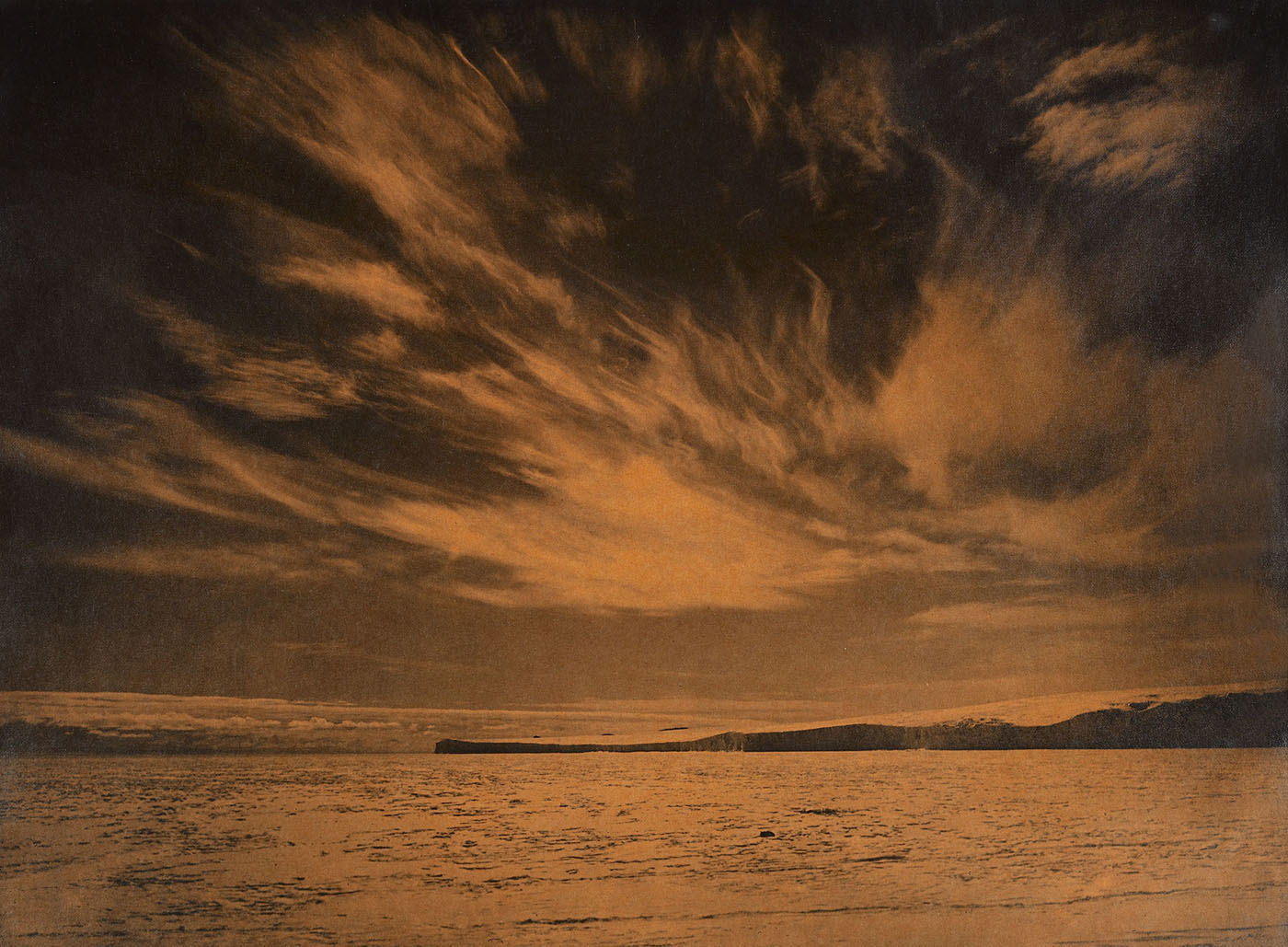
Herbert Ponting (British, 1870-1935) 'Cirrus clouds over the Barne Glacier' April 1911


Herbert Ponting (British, 1870-1935)
Cirrus clouds over the Barne Glacier
April 1911
Carbon print on dyed paper
43.4 x 58.8cm
Presented to King George V, 1914
© 2011 Her Majesty Queen Elizabeth II


Royal Collection: ‘A Lovely Symphony of Blue and Green’ – Cirrus Clouds over the Barne Glacier

In this, the third in her series of talks, Royal Collection curator Sophie Gordon examines how Ponting captured the dramatic reds and oranges and the beauty of the natural landscape that he experienced during his time in the Antarctic.


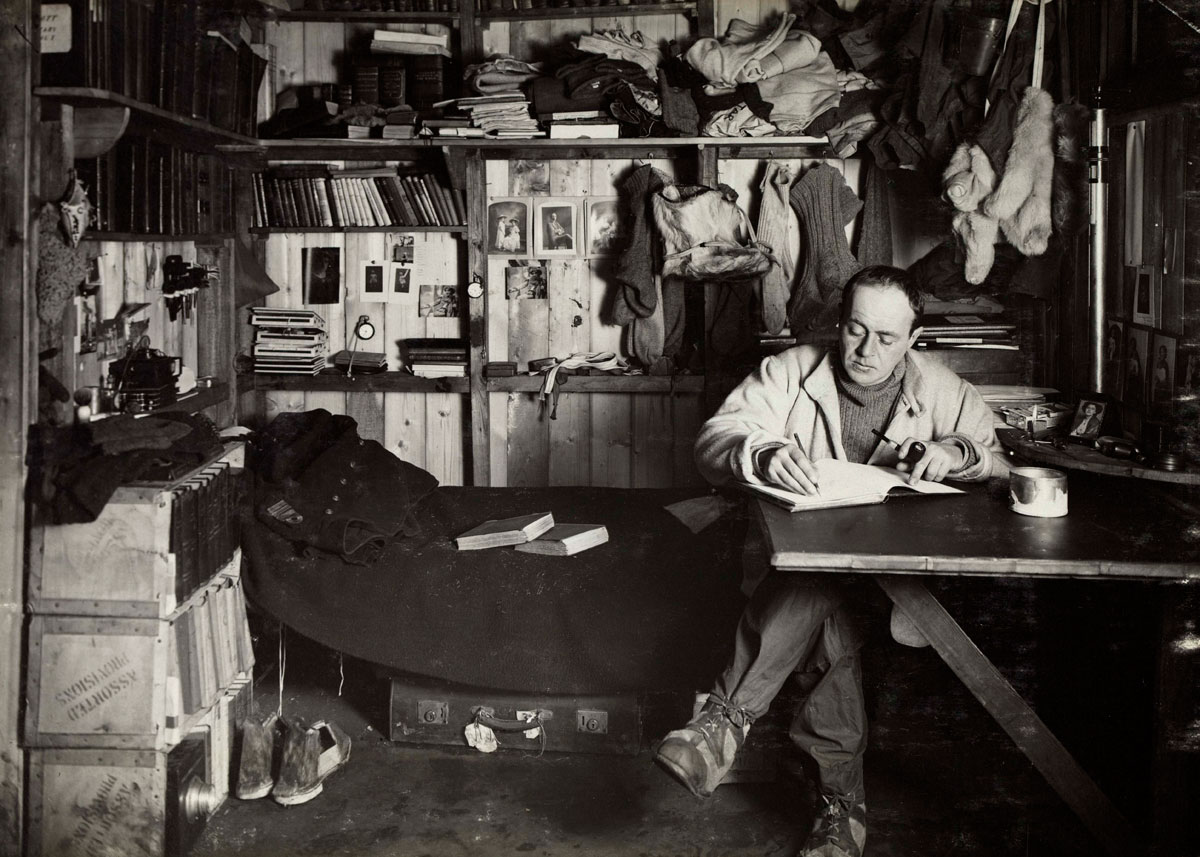
Herbert Ponting (British, 1870-1935) 'Scott writing in his area of the expedition hut, Scott's cubicle' 7 October 1911


Herbert Ponting (British, 1870-1935)
Scott writing in his area of the expedition hut, Scott’s cubicle
7 October 1911
Presented to King George V, 1914
© 2011 Her Majesty Queen Elizabeth II


Captain Robert F. Scott, sitting at a table in his quarters, writing in his diary, during the British Antarctic Expedition.


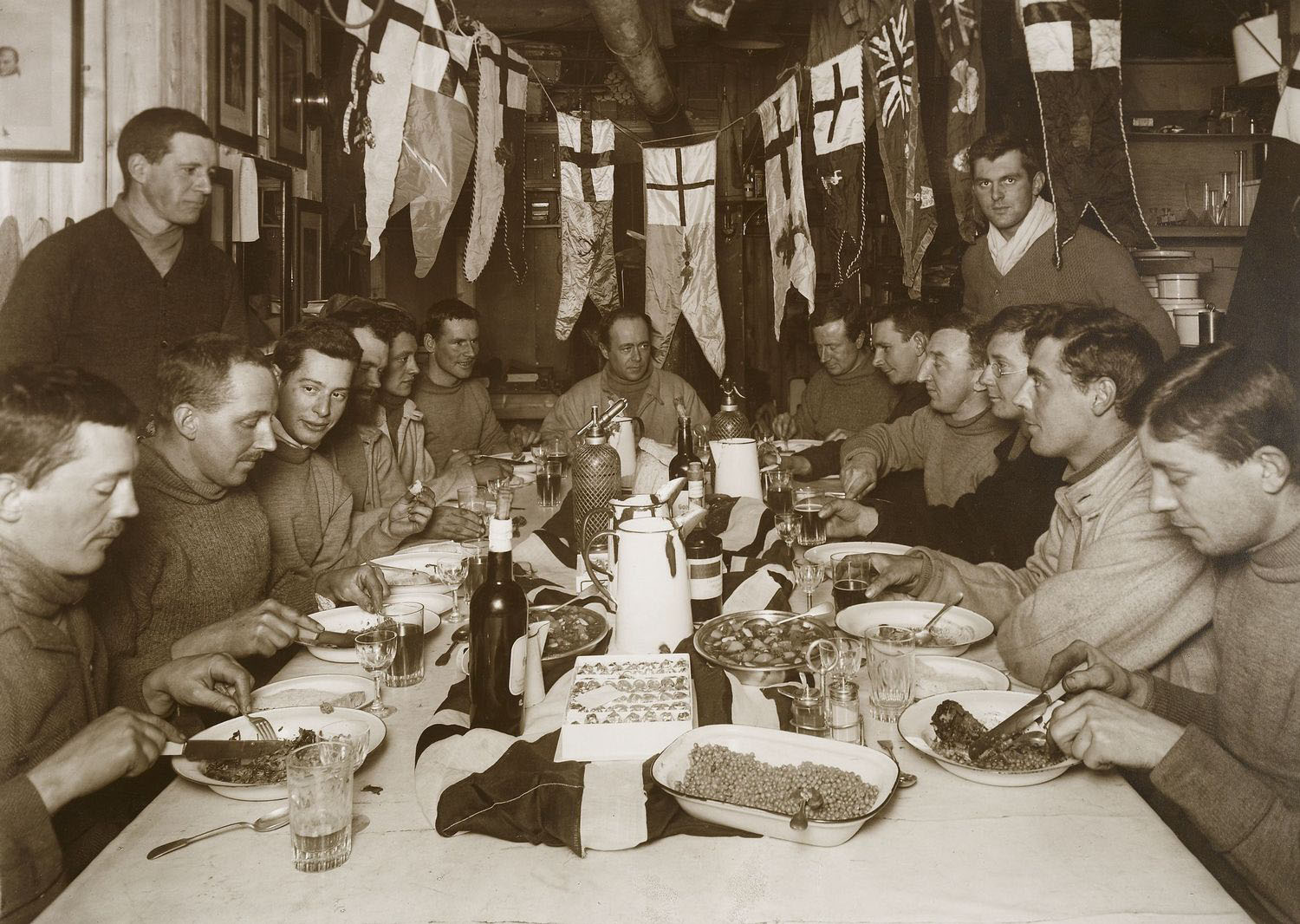
Herbert Ponting (British, 1870-1935) 'Scott's birthday dinner' June 1911


Herbert Ponting (British, 1870-1935)
Scott’s birthday dinner
June 1911
Toned silver bromide print
43.6 x 61cm
Presented to King George V, 1914
© 2011 Her Majesty Queen Elizabeth II


Photograph of the Officer’s table for Captain Scott’s birthday dinner with a variety of food and drink laid out on the table. The men are celebrating Scott’s 43rd birthday – his last – on 6 June 1911. He sits at the head of the table, and is surrounded by the officers and senior members of the team. The only man looking at the camera is the Norwegian naval officer Tryggve Gran (1889-1980). The atmosphere is both festive and patriotic.


Herbert Ponting (British, 1870-1935) 'Vida' 1911


Herbert Ponting (British, 1870-1935)
Vida
1911
Toned silver bromide print
38.0 x 27.5cm
Presented to King George V, 1914
© 2011 Her Majesty Queen Elizabeth II


Photograph of Vida. One of Scott’s favourite dogs, Vida suffered from a bad coat and would creep up to Scott for attention. Scott noted in his diary that initially the dog would growl at him but eventually his suspicion grew less: ‘He is a strange beast – I imagine so unused to kindness that it took him time to appreciate it’.


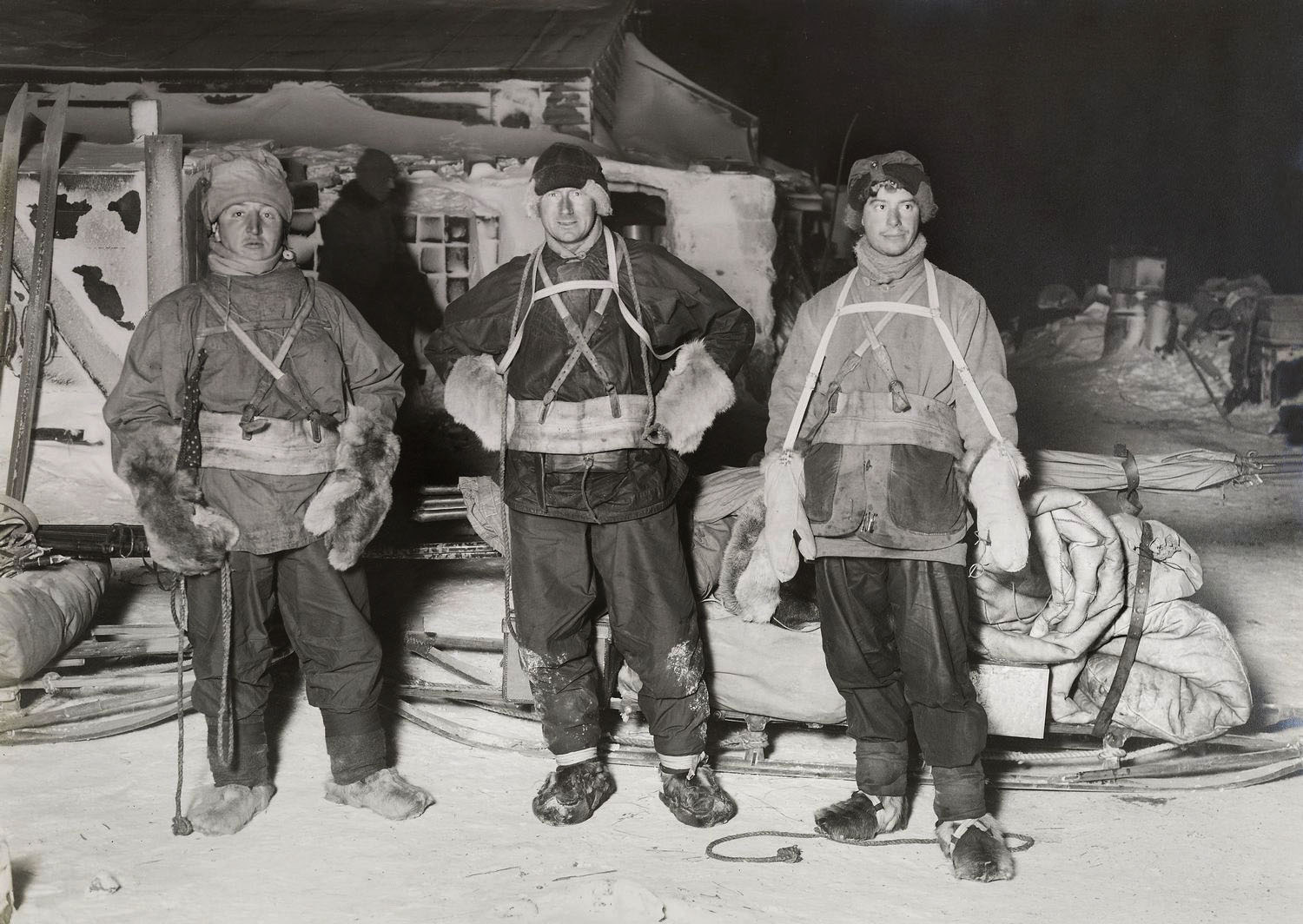
Herbert Ponting (British, 1870-1935) 'The winter journey to Cape Crozier' June 1911


Herbert Ponting (British, 1870-1935)
The winter journey to Cape Crozier
June 1911
Silver bromide print
43.7 x 61cm
Presented to King George V, 1914
© 2011 Her Majesty Queen Elizabeth II


Henry Bowers (1883-1912), Edward Wilson (1872-1912) and Apsley Cherry-Garrard (1886-1959) are shown shortly before departing for Cape Crozier in search of Emperor penguin eggs. Between 27 June and 1 August, the trio endured extreme weather conditions and winter darkness as they crossed Ross Island and then returned, having collected three eggs. Cherry-Garrard famously described it as ‘the worst journey in the world’.


Royal Collection: ‘The weirdest bird’s-nesting expedition that has ever been’ – Part Two

In the second in this series of talks, Royal Collection curator Emma Stuart takes us on a journey with three intrepid explorers as they faced the hostile conditions of the Antarctic to recover an Emperor Penguin’s egg.


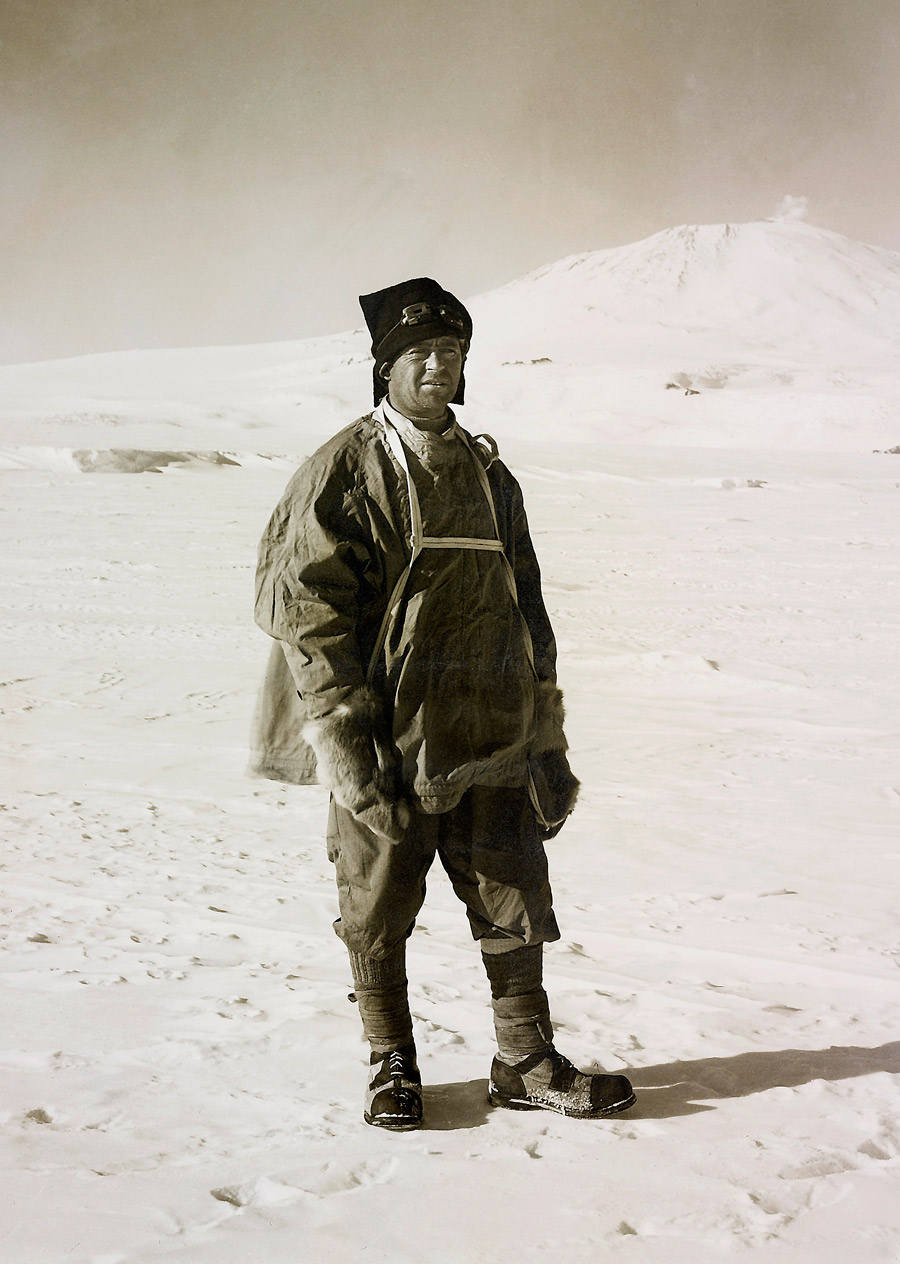
Herbert Ponting (British, 1870-1935) 'Captain Scott' February 1911


Herbert Ponting (British, 1870-1935)
Captain Scott
February 1911
Presented to King George V, 1914
© 2011 Her Majesty Queen Elizabeth II


This photograph of Scott, with Mount Erebus in the background, was taken at the start of the expedition. He is wearing fur gloves with an attached cord, leather boots, gaiters and thick socks.


Herbert Ponting (British, 1870-1935) 'The Shore Party' Jan 1911


Herbert Ponting (British, 1870-1935)
The Shore Party
Jan 1911
Silver bromide print
43.6 x 61.9cm
Presented to King George V, 1914
© 2011 Her Majesty Queen Elizabeth II


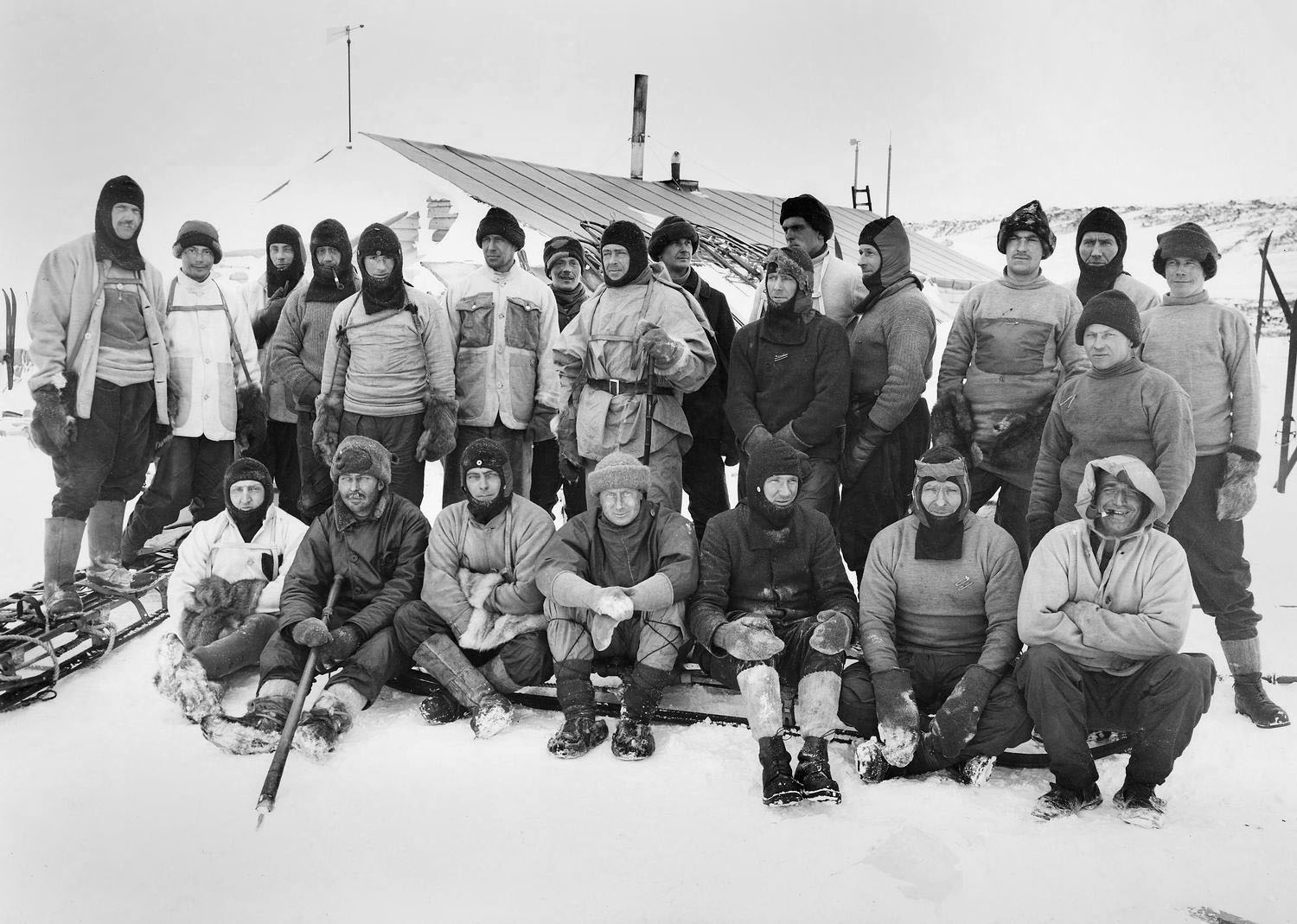
Photograph of the Shore party. On the back row are (from left to right): T. Griffith Taylor; Apsley Cherry-Garrard; Bernard Day; Edward Nelson; Edward Evans; Lawrence Oates; Edward Atkinson; Robert Falcon Scott; Charles Wright; Patrick Keohane; Tryggve Gran; William Lashly; Frederick Hooper; Robert Forde; Anton Omelchenko; Dimitri Gerov. On the front row are (from left to right): Henry Bowers; Cecil Meares; Frank Debenham; Edward Wilson; George Simpson; Edgar Evans and Tom Crean. This group is the Shore Party – the men who remained in Antarctica throughout the winter of 1911, preparing for Scott’s final departure for the Pole. They pose in front of the expedition hut at Cape Evans. The only people not visible are Clissold, the cook, and Ponting, the photographer. Scott is at the centre of the group and all the men look relaxed. This was taken at the very beginning of the expedition, when they would have been optimistic and excited about the future.


Henry Bowers (British, 1883-1912) 'Forestalled. Amundsen's tent at the South Pole' 18 Jan 1912


Henry Bowers (British, 1883-1912)
Forestalled. Amundsen’s tent at the South Pole
18 Jan 1912
Silver bromide print
27.5 x 38cm
Presented to King George V, 1914
© 2011 Her Majesty Queen Elizabeth II


Photograph of Scott’s party at Amundsen’s tent at the South Pole. (from left to right are): Robert Falcon Scott (1868-1912); Lawrence Oates (1880-1912); Edward Wilson (1872-1912) and Edgar Evans (1876-1912). This photograph shows the dejection of the team as they explore the tent left by Roald Amundsen, who reached the South Pole on 14 December 1911, thirty-five days before Scott. There is a Norwegian flag at the top of the tent; inside, Scott found a letter recording their achievement, left by Amundsen in case he did not return safely.


Henry Bowers (British, 1883-1912) 'Scott and the Polar Party at the South Pole' 17 January 1912


Henry Bowers (British, 1883-1912)
Scott and the Polar Party at the South Pole
17 January 1912
Presented to King George V, 1914
© 2011 Her Majesty Queen Elizabeth II


Imperial Transantarctic Expedition 1914-1916

Shackleton set out in October 1914 on the Endurance with the intention of making the first crossing of the Antarctic continent via the South Pole. While he and his men planned to reach Antarctica through the Weddell Sea, another party aboard the Aurora sailed to the other side of the continent to lay food depots for the expected party.

The intention was that only six men would complete the crossing; the photographer Frank Hurley was to be one of the team. Hurley had been to the Antarctic before, as part of the Australasian Expedition of 1911-1914. He was intrepid in his search for dramatic images. The role of photographer was important not just to document the achievements of the expedition, but also to create a source of income. The rights to publish the images would be sold for a great deal of money after the return to Britain.

The expedition ran into difficulties almost immediately. By mid-January 1915, Endurance became trapped in ice and had to become a floating scientific station. The men waited out the harsh Antarctic winter in the hope that their situation would improve.

Text from the Royal Collection Trust website


Frank Hurley (Australian, 1885-1962) 'Entering the pack ice. Weddell Sea, lat. 57° 59' S. long. 22° 39' W' 9 Dec 1914


Frank Hurley (Australian, 1885-1962)
Entering the pack ice. Weddell Sea, lat. 57° 59′ S. long. 22° 39′ W
9 Dec 1914
Silver bromide print
15.3 x 20.5cm
Presented to King George V, 1914
© 2011 Her Majesty Queen Elizabeth II


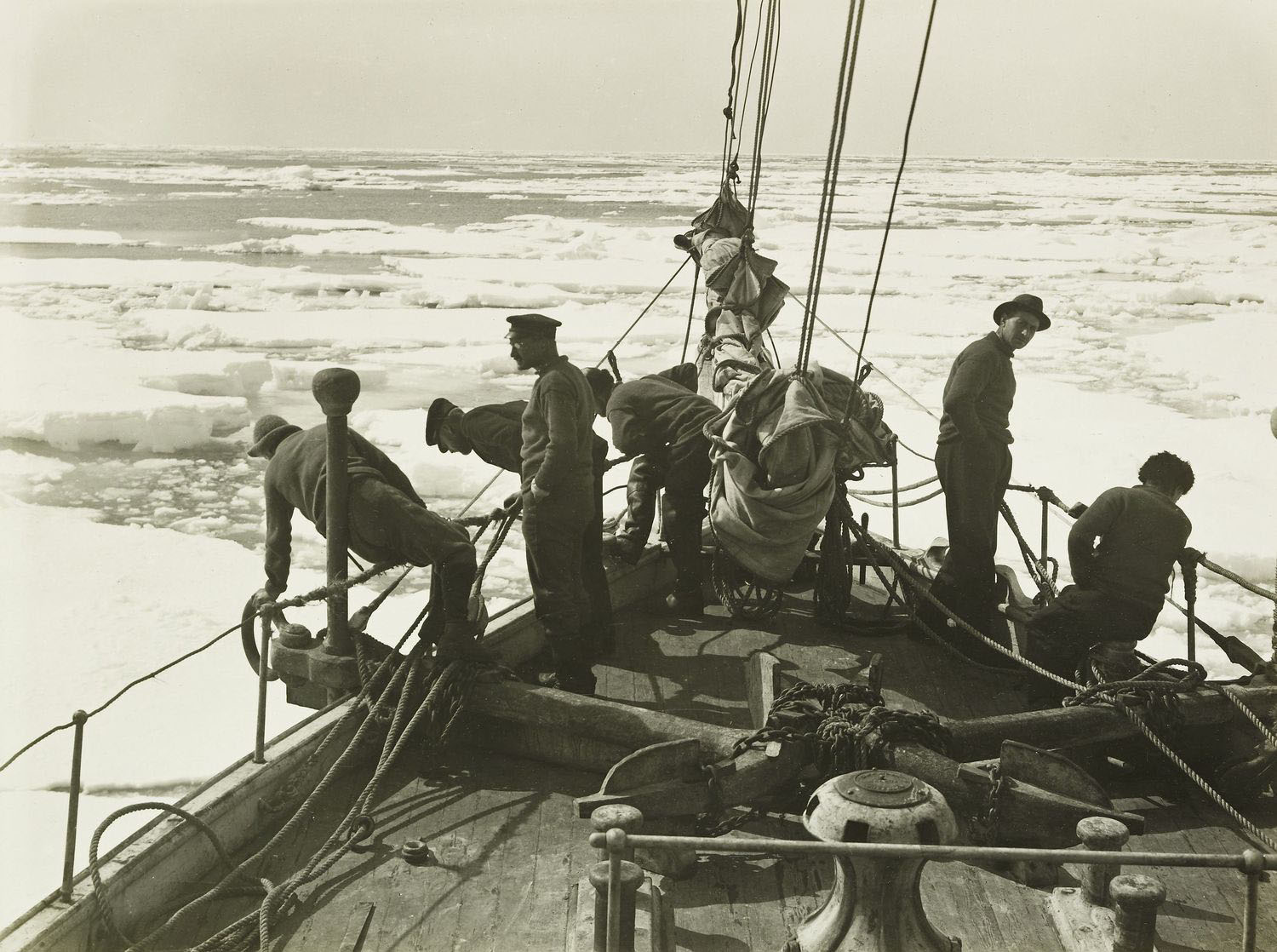
Photograph of six members of Shackleton’s crew standing on the deck of Endurance. This was the men’s first view of the pack ice through which they had to navigate in order to reach the coast of Antarctica. The Endurance met the ice far further north than they had hoped. The whalers on South Georgia had warned them of the poor ice conditions before they set out. This was a warning of things to come.


Frank Hurley (Australian, 1885-1962) 'Self-portrait with cinematograph next to the Endurance' 1915


Frank Hurley (Australian, 1885-1962)
Under the bow of the Endurance
Self-portrait with cinematograph next to the Endurance

1915
Presented to King George V, 1914
© 2011 Her Majesty Queen Elizabeth II


Hurley poses with his cinematograph, which was used to shoot moving film footage. The footage was later turned into a film released after his return under the name of In the Grip of the Polar Pack Ice.


Frank Hurley (Australian, 1885-1962) 'The Endurance in the garb of winter' June 1915


Frank Hurley (Australian, 1885-1962)
The Endurance in the garb of winter
June 1915
Silver bromide print
20.2 x 15.2cm
Presented to King George V, 1914
© 2011 Her Majesty Queen Elizabeth II


Endurance sits benignly at rest in the midst of the ice field. A recent blizzard has coated the hummocks in a layer of snow, softening the contours. All looks peaceful, but within a few months these same hummocks will have crushed the ship.

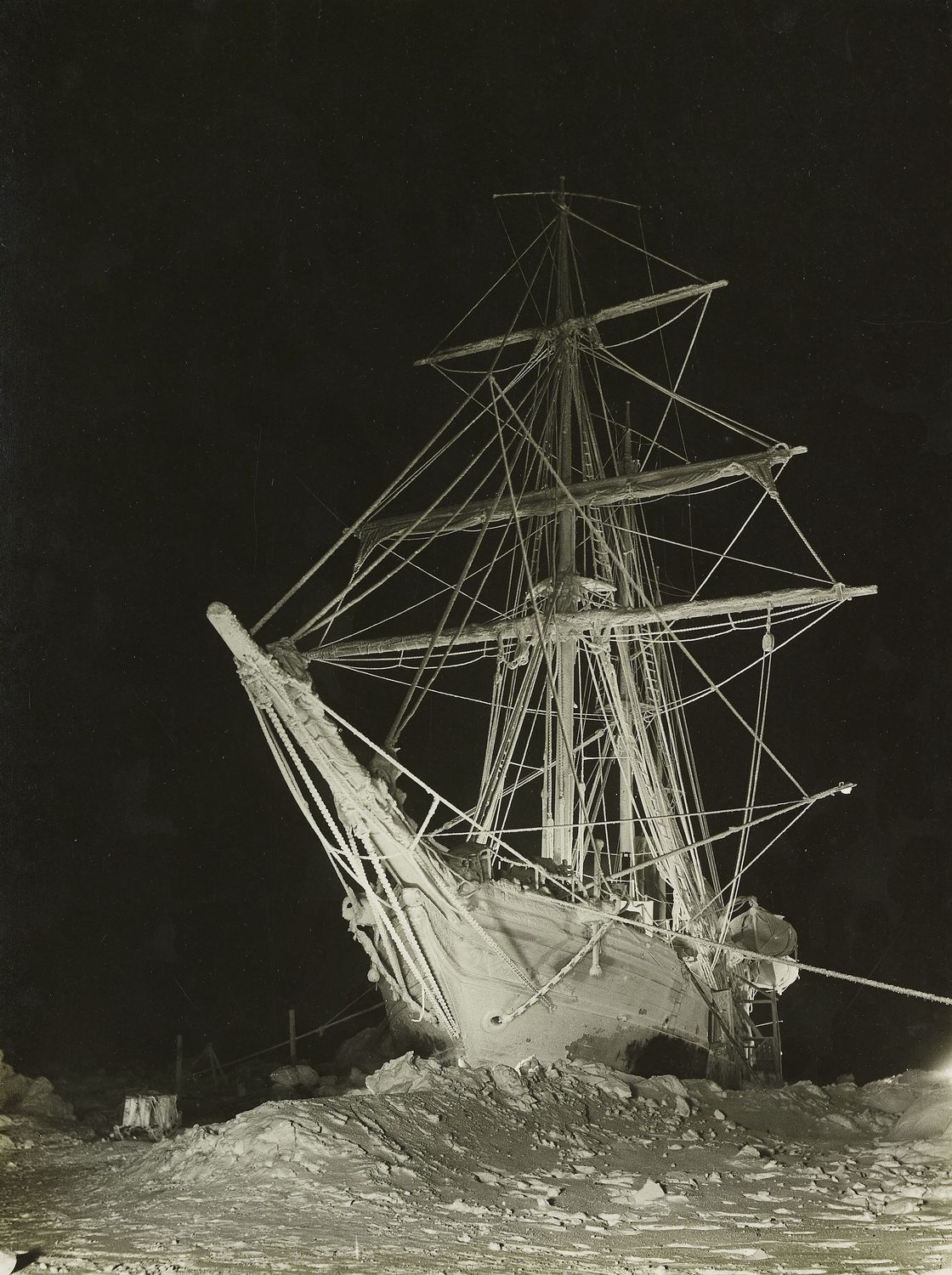
Photograph of the bow and part of the left side of Endurance, lit by flashlight in the darkness of the night. This is probably Hurley’s best-known photograph, which he took with flashlights at -38 °F/-39 °C. It was later used on the front cover of Shackleton’s account of the expedition, South. Hurley described the scene in his autobiography: Never did the ship look quite so beautiful as when the bright moonlight etched her in inky silhouette, or transformed her into a vessel from fairy-land.


Frank Hurley (Australian, 1885-1962) 'The night watchman spins a yarn' 1915


Frank Hurley (Australian, 1885-1962)
The night watchman spins a yarn
1915
Gelatin silver print
Presented to King George V, 1914
© 2011 Her Majesty Queen Elizabeth II


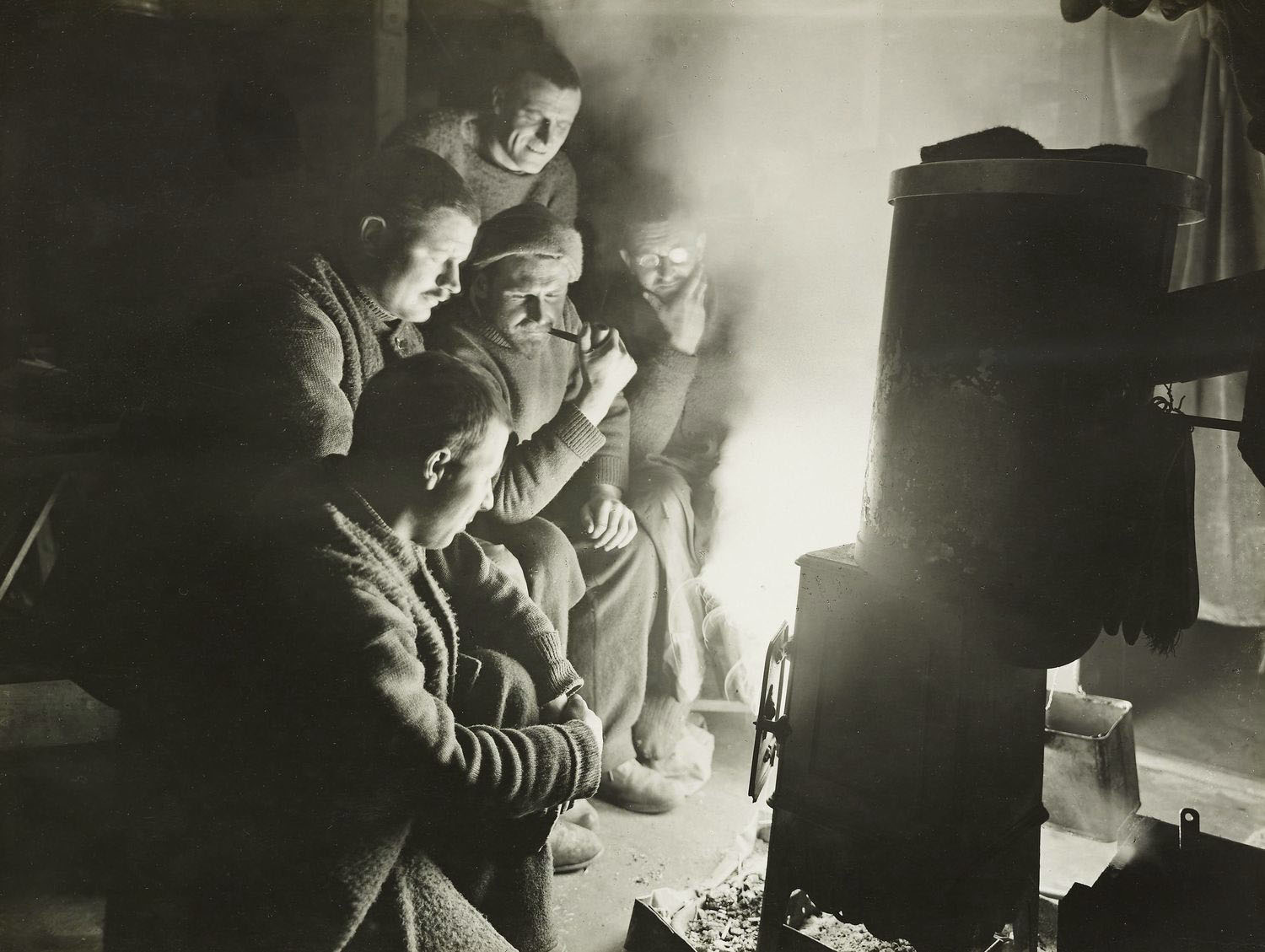
After Endurance became a winter station in February 1915, Shackleton abandoned the usual system of watches. The single nightwatchman had little to do, apart from tending the dogs and observing ice movements. It was private leisure time, to read, or do some washing, but often became a social occasion as shown here, as the men gather companionably round the fire.


Frank Hurley (Australian, 1885-1962) 'The bi-weekly ablutions of the 'Ritz'' 1915


Frank Hurley (Australian, 1885-1962)
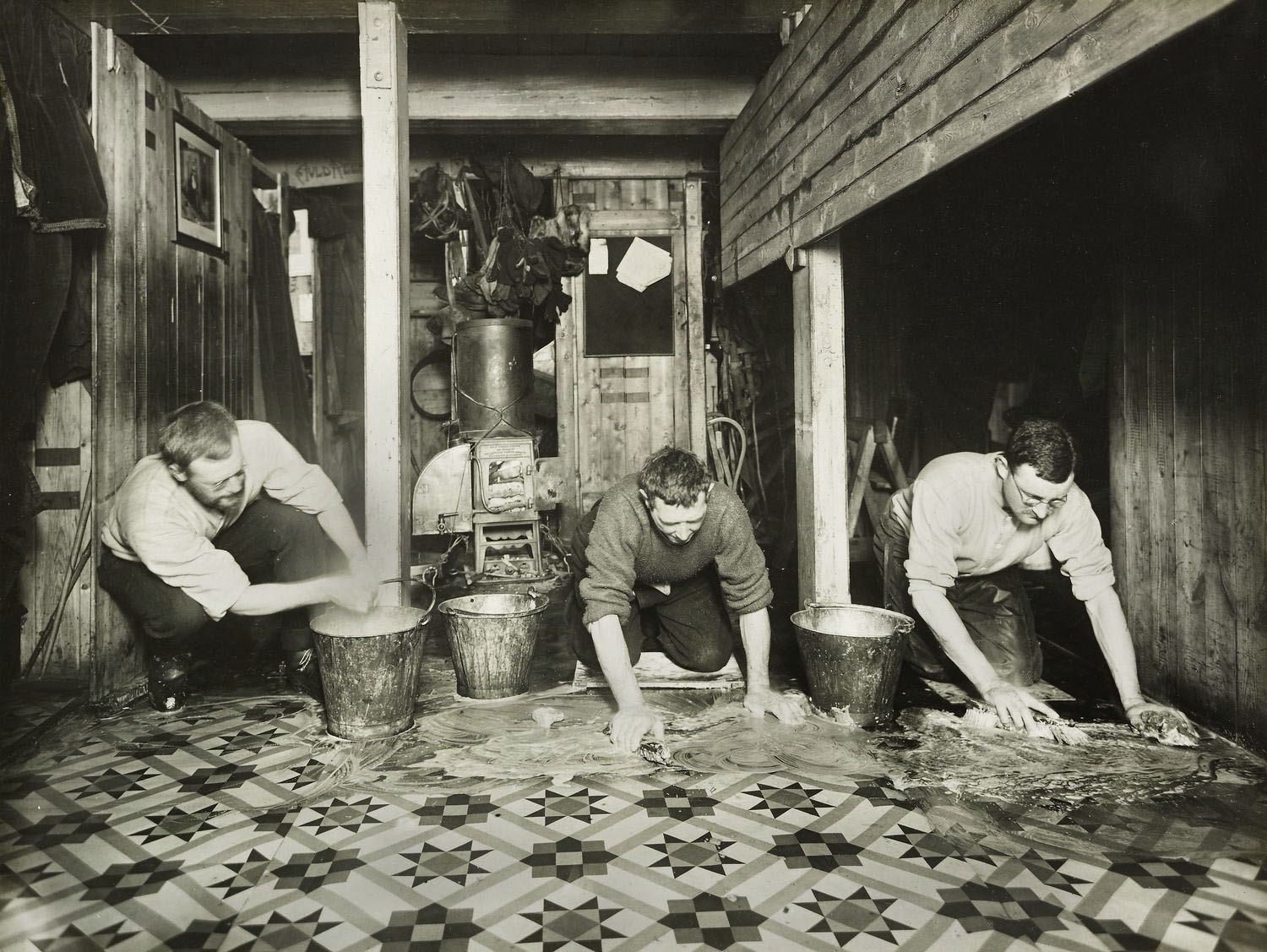
The bi-weekly ablutions of the ‘Ritz’
The Scientists washing down the “Ritz” (living quarters in the hold)

James Wordie, Alfred Cheetham and Alexander Macklin, washing down the ‘Ritz’ living quarters in the hold of the Endurance
1915
Gelatin silver print
© 2011 Her Majesty Queen Elizabeth II


Following the onset of winter and the transformation of Endurance into a scientific station, the main cargo hold was emptied and turned into a communal living space for the men, nicknamed the ‘Ritz’. The traditional Antarctic Christmas on Midwinter’s Day (22 June) saw the ‘Ritz’ transformed for a cabaret, featuring satirical speeches, songs, poems and even a drag act. From left to right are Wordie (1889-1962), Cheetham (1867-1918) and Macklin (1889-1967).


Frank Hurley (Australian, 1885-1962) 'Sir Ernest Shackleton arrives at Elephant Island to take off marooned men' 30 August 1916


Herbert Ponting (British, 1870-1935)
Sir Ernest Shackleton arrives at Elephant Island to take off marooned men
30 August 1916
Presented to King George V, 1914
© 2011 Her Majesty Queen Elizabeth II


This photograph was actually taken at the time of the ‘James Caird’s’ departure on 24 April. Hurley has altered it to represent the moment of rescue, with the arrival of Shackleton on the ‘Yelcho’. The actual rescue was not photographed.


The Royal Collection
The Queen’s Gallery, Buckingham Palace
London SW1A 1AA

Opening hours:
Thursday – Monday 10.00 – 17.30

The Queen’s Gallery website

LIKE ART BLART ON FACEBOOK

Back to top

Review: ‘Ice Structure’ by Kirsten Haydon at Gallery Funaki, Melbourne

Exhibition dates: 24th May – 18th June, 2011

Kirsten Haydon (New Zealand, b. 1973) 'ice objects', 2011 Kirsten Haydon (New Zealand, b. 1973) ice objects 2011 Enamel, copper, reflector beads Various dimensions
“Confronted by the immensity and power of desert and ice, one cannot simply stand to the side and evaluate as though one were standing before a landscape garden and other works of art. Conflicting emotions, including fear, are aroused and simultaneously absorbed or taken over by the overmastering presence of nature.”

Yi Fu Tuan. Desert and Ice: Ambivalent Aesthetics, 1993

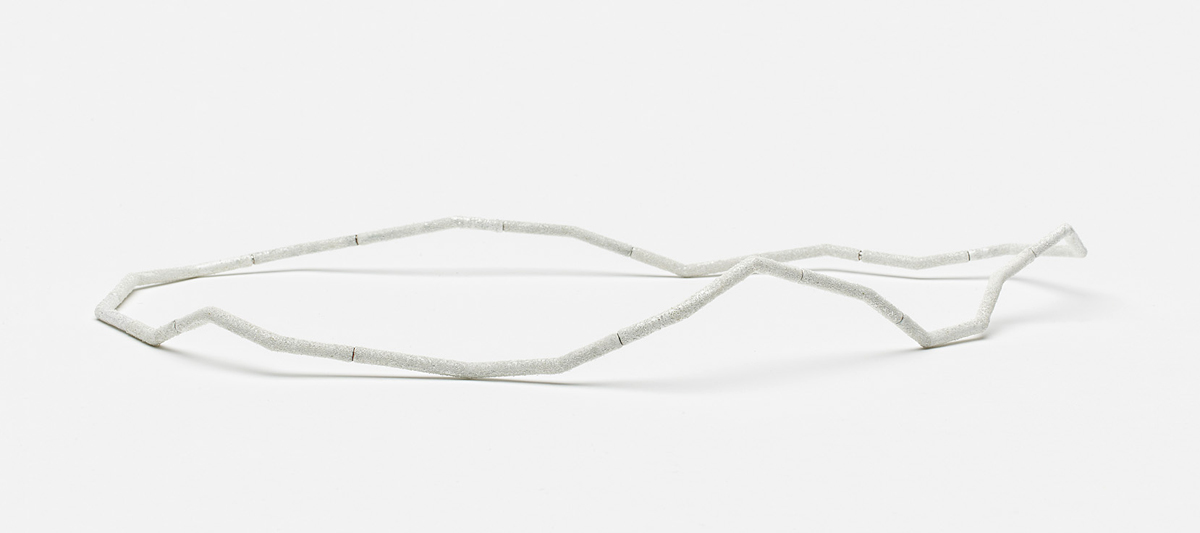
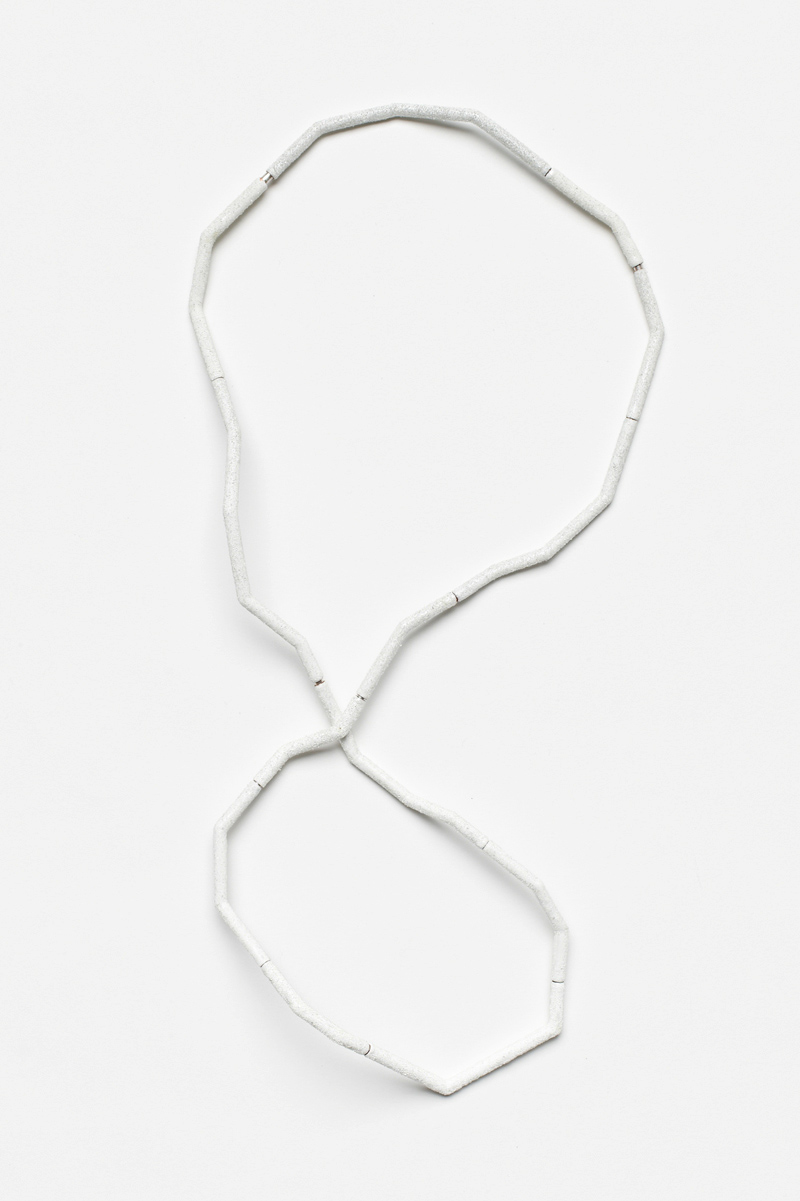
There are many things to like about this exhibition: the fine craftsmanship, the forms, the observation and the beauty of some of the pieces. The symbolism is simple and effective – re-imaged relics of white, vitreous enamel objects from the huts of Robert Scott and Ernest Shackleton, the use of reflector beads to imitate snow and Meccano-like steel girders to symbolise human construction and encroachment on a pristine land. Some of the ‘objects’ remind me of the beauty and simplicity of Etruscan vessels, seemingly delicate apports, being the transference of an article from one place and time to another; the use of reflector beads at the bottom of ice sample (2011, below) is also inspired. So too is the occlusion of the image in the brooch ice plane (2011, below) which adds further mystery to an already surreal landscape. One piece is absolutely stunning. The wonderful neckpiece ice movement (2011, see two photographs below) is ravishing in it’s articulation and form, its snow-covered twig-like coolness. Unfortunately where the exhibition fails is in the use of banal images in several works such as ice depot, ice runway, ice industry (brooch, all 2011, not pictured) and ice industry (2011, neckpiece, below). The obvious point being made is that of man made construction in a pristine landscape but the simple symbology used so effectively in other pieces becomes a little awkward in these pieces. The images used are quite ugly and while this fits the symbolic use of them it doesn’t make for very interesting or illuminating art. There needed to be more layering for the message to be effective – which is why the occluded brooch works so well, human construction blinded, dissolved. This is a pity because the rest of the exhibition is excellent. Enter this ice world and you will be delightfully surprised! Dr Marcus Bunyan Many thankx to Katie Scott for her help and Gallery Funaki for allowing me to publish the photographs and text in the posting. Please click on the photographs for a larger version of the image. Kirsten Haydon (New Zealand, b. 1973) 'ice edge' and 'ice sheet flow' both 2011 Kirsten Haydon (New Zealand, b. 1973) ice edge (left) Object 2011, enamel, reflector beads, copper, silver 60 x 350 x 210 mm ice sheet flow (right) Object 2011 Enamel, reflector beads, copper, silver 70 x 130 x 195 mm Kirsten Haydon (New Zealand, b. 1973) 'ice plane', brooch, 2011 Kirsten Haydon (New Zealand, b. 1973) ice plane Brooch 2011 Enamel, photo transfer, reflector beads, silver, copper, steel 80 x 80 x 10 mm Kirsten Haydon (New Zealand, b. 1973) 'ice movement', neckpiece, 2011 Kirsten Haydon (New Zealand, b. 1973) ice industry neckpiece 2011 enamel, copper, photo transfer, paint, silver 280 x 160 x 10 mm I make jewellery and objects that both connect to and explore human experience and place. Since Antarctica’s discovery explorers, expeditioners, artists and writers have attempted to record and visualise this isolated continent. In 2004 I was awarded a New Zealand Antarctic Arts Fellowship en joined those who communicate their experiences of Antarctica. Antarctica is often regarded as a pristine yet harsh environment, home to extraordinary wildlife and the domain of scientists. Due to its remoteness projects that are supported by international Antarctic programmes are predominantly science-based and as a result artistic research in Antarctica is limited. The cultural theorist, Yi Fu Tuan describes the experience of the explorer as: “the longing to be taken out of oneself and ones habitual world into something vast, overpowering and indifferent.” His statement resonates with my experience of Antarctica where I found myself drawn to the minutiae of the ice crystal and the structures and forms that I could associate with in the extraordinary landscape. While in that place, so removed from the conventions of civilisation, I came to understand the immensity of nature and to see that it exists without the necessity for human presence … Inside the historic huts of Robert Scott and Ernest Shackleton I was captivated by the history, contained both in the interior spaces themselves and in the material artefacts left by the expeditioners … These seemingly mundane objects are transformed into a still life of significant artefacts of a previous time, preserving the memory and story of their parties of explorers. My interpretations engage through the iconography of personal jewellery, domestic objects and the environment of Antarctica. In the course of making I continue to investigate and portray Antarctica through my own and others’ personal experiences. The objects I produce reference valued souvenir jewellery and objects now displayed in museums as historical artefacts, which were once personal mementos … Excerpts from the catalogue text by Kirsten Haydon May 2011 Kirsten Haydon (New Zealand, b. 1973) 'ice movement' neckpiece 2011 Kirsten Haydon (New Zealand, b. 1973) 'ice movement' neckpiece 2011 Kirsten Haydon (New Zealand, b. 1973) ice movement Neckpiece 2011 Enamel, copper, reflector beads, silver Kirsten Haydon (New Zealand, b. 1973) 'ice sample', object, 2011 Kirsten Haydon (New Zealand, b. 1973) ice sample Object 2011 Enamel, copper, reflector beads Gallery Funaki Sackville House Apartment 33 27 Flinders Lane Melbourne 3000 Australia Opening hours: Wednesday – Friday 12 – 5pm Saturday on occasion (check our socials) or by appointment Gallery Funaki website LIKE ART BLART ON FACEBOOK Back to top