
Exhibition dates: 7th September, 2013 – 19th January, 2014
Curators: Professor Eduardo Cadava (Department of English) and Professor Gabriela Nouzeilles (Department of Spanish and Portuguese Languages and Cultures) at Princeton University
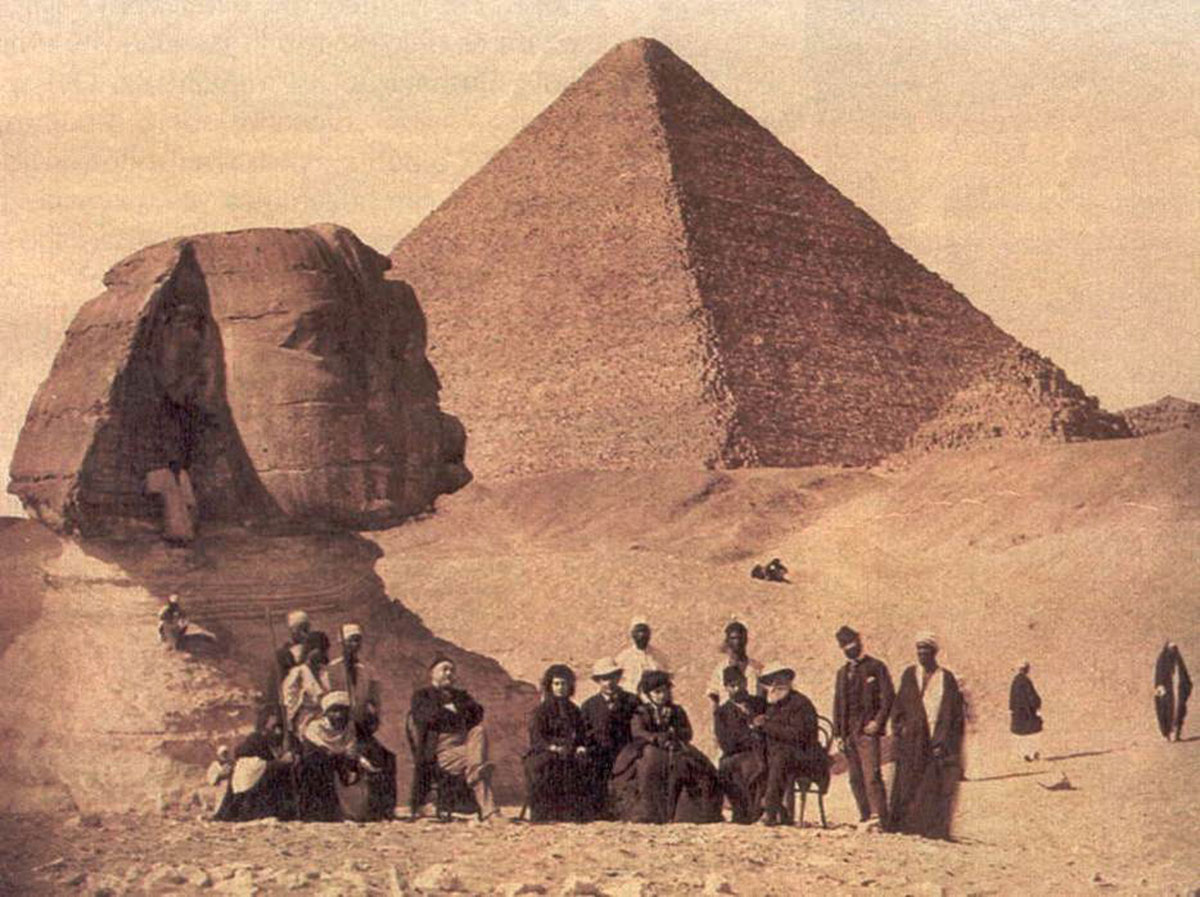
H. Delie and E. Bechard (French, active 1870s)
Brazilian Emperor D. Pedro II, Empress D. Thereza Christina, and the Emperor’s Retinue next to the Pyramids, Cairo, Egypt
1871
Albumen print
19.8 x 26.3cm
D. Thereza Christina Maria Collection, Archive of the National Library Foundation, Brazil
“The work of memory collapses time.”
Walter Benjamin
Another eclectic posting this time featuring Brazilian, Mexican, Spanish and Argentine work. There are some cracking images from the likes of Marc Ferrez, Graciela Iturbide and Joan Colom. “The Itinerant Languages of Photography begins with a simple axiom: that photography can never remain in a single place or time.” A good starting point because photographs always transcend time and space, conflating past, present and future into a movable, memorable point of departure: “the movement of photographs, as disembodied images and as physical artefacts, across time and space as well as across the boundaries of media and genres, including visual art, literature, and cinema.”
itinerant
ɪˈtɪn(ə)r(ə)nt,ʌɪ-/
adjective
adjective: itinerant
1/ travelling from place to place.
Dr Marcus Bunyan
Many thankx to The Princeton University Art Museum for allowing me to publish the photographs in the posting. Please click on the photographs for a larger version of the image.
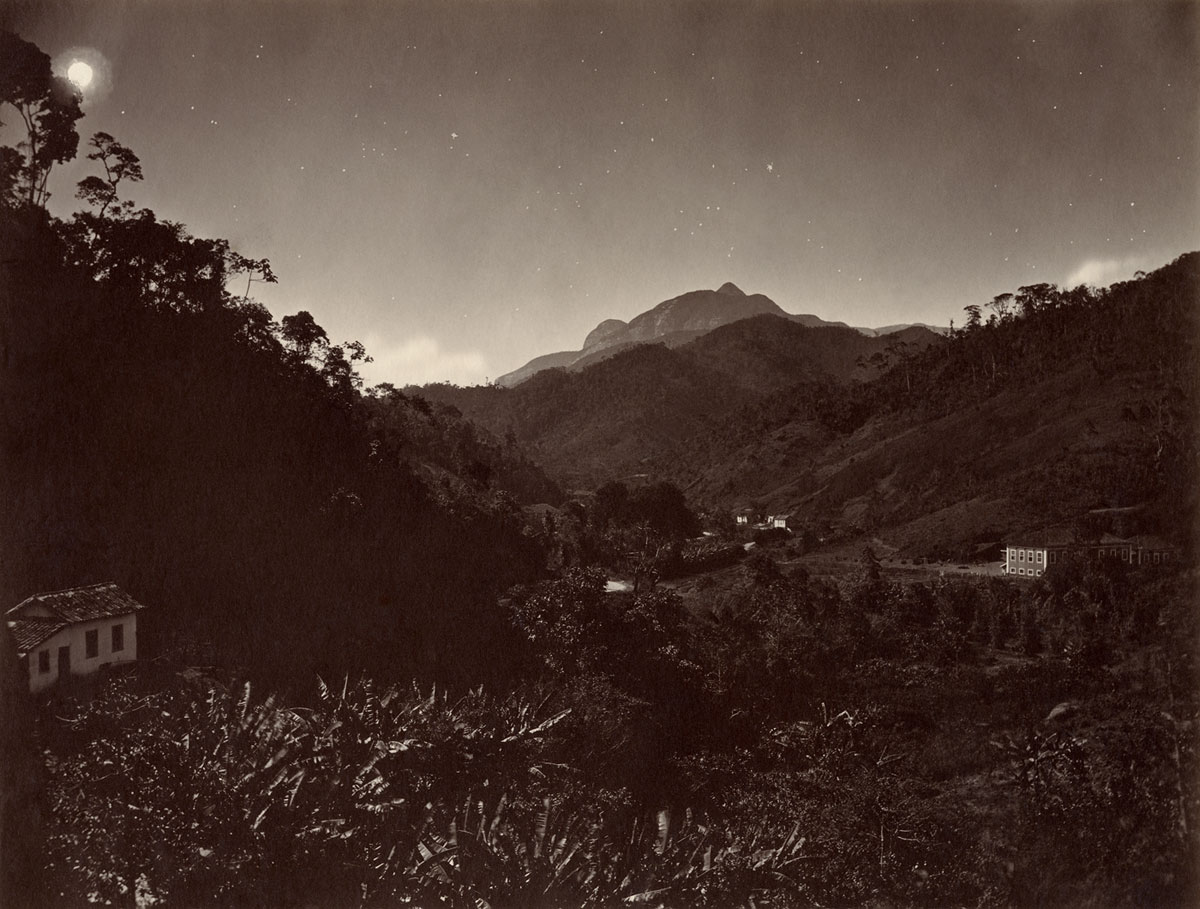
Revert Henrique Klumb (c. 1830s – c. 1886, born in Germany, active in Brazil)
Petrópolis’s Mountain Range (Night View), Petrópolis, Rio de Janeiro
c. 1870
Albumen print
24 x 30cm
Gilberto Ferrez Collection, Instituto Moreira Salles Archive, Brazil
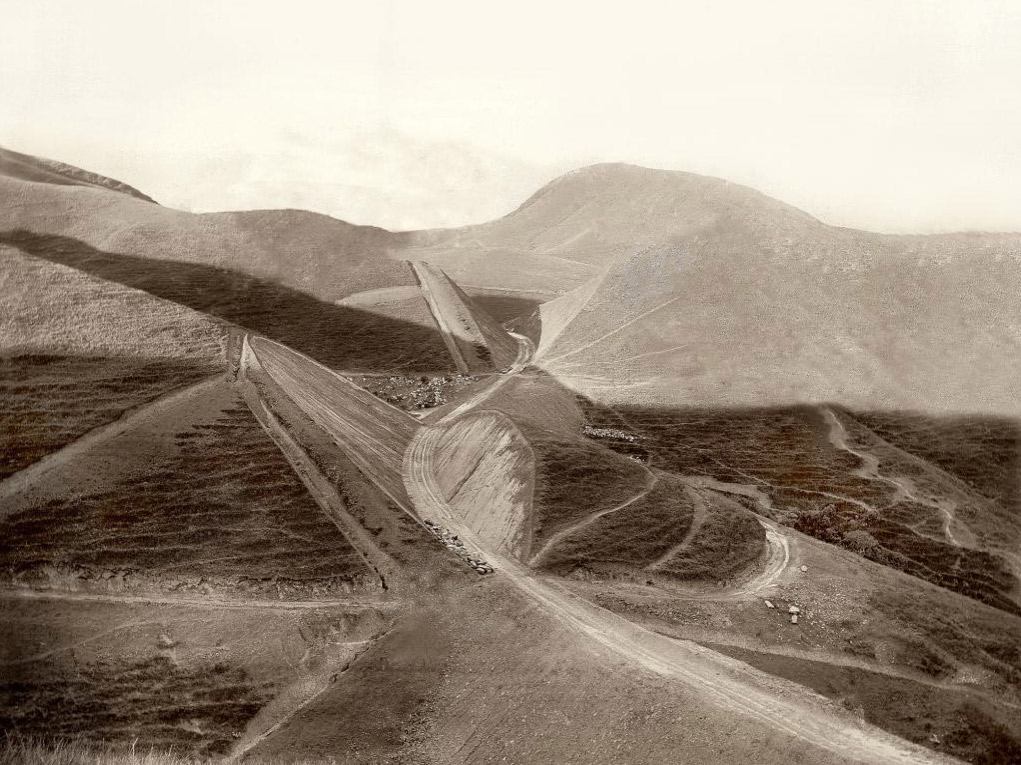
Marc Ferrez (Brazilian, 1843-1923)
Soil Preparation for the Construction of the Railroad Tracks, Paranaguá-Curitiba Railroad, Paraná
c. 1882, printed later
Gelatin silver print
23 x 29cm
Gilberto Ferrez Collection, Instituto Moreira Salles Archive, Brazil
This exhibition will examine the movement of photographs, as disembodied images and as physical artefacts, across time and space as well as across the boundaries of media and genres, including visual art, literature, and cinema. The culmination of a three-year interdisciplinary project sponsored by the Princeton Council for International Teaching and Research, the exhibition traces historical continuities from the 19th century to the present by juxtaposing materials from archival collections in Spain, Argentina, Brazil, and Mexico and works by modern and contemporary photographers from museum and private collections including Joan Fontcuberta, Marc Ferrez, Rosâgela Renno and Joan Colom. A fully illustrated catalogue accompanies the exhibition.
The Itinerant Languages of Photography begins with a simple axiom: that photography can never remain in a single place or time. Like postcards, photographs are moving signs that carry any number of open secrets. They travel from one forum to another – from the family album to the museum, from books into digitised forms – and with each recontextualisation they redefine themselves and take on different and expanding meanings.
The project began in the fall of 2010 as an experimental three-year interdisciplinary program, sponsored by the Princeton Council for International Teaching and Research. Its aim was to initiate and develop new forms of international collaboration, across widely varied fields of expertise, that could bring together scholars, curators, photographers, and artists from Latin America, Europe, the United States, and potentially other areas of the world, all of whom are involved in international circuits of image production. Following on symposia held in Barcelona, Rio de Janeiro, Buenos Aires, and Mexico City, the project culminates in the exhibition now on view and the catalogue that accompanies it. Through more than ninety works from public and private collections in Argentina, Brazil, Mexico, Spain, and the United States, The Itinerant Languages of Photography explores the movement of photographs across different borders, offering a diverse and dynamic history of photography that draws new attention to the work of both well-known masters and emerging artists.
Taking our point of departure from Latin American and Catalonian archives, we sought to study the various means whereby photographs not only “speak” but also move across historical periods, national borders, and different media. In the context of an explosion of “world photography,” Latin America has been at the forefront of the development of new aesthetic paradigms in modern and contemporary photography. Across the Atlantic, Barcelona gave us access to Catalonian photographers with a long history of exchanges with Latin America and Europe. These different “sites” have helped us call attention to significant but often neglected histories of photography beyond the dominant European and American canon and, in particular, to the transnational dimension of image production at a time when photography is at the centre of debates on the role of representation, authorship, and communication in global contemporary art and culture.
The digital revolution has created an explosion in the production, circulation, and reception of photographic images. Despite the many ominous predictions of photography’s imminent and irreversible disappearance, we all have become homines photographici – obsessive archivists taking and storing hundreds and thousands of images, exchanging photographs with other equally frenzied, spontaneous archivists around the globe. From this perspective, the ubiquity and mass circulation of images that describe the present are the latest manifestation of an itinerant condition that has characterised photography from its beginnings. The first image the viewer sees on entering the galleries is Joan Fontcuberta’s Googlegram: Niépce, based on the earliest-known photograph, Joseph Nicéphore Niépce’s View from the Window at Le Gras (c. 1826). By processing the results of a Google image search for the words photo and foto through photomosaic software, Fontcuberta recreated Niépce’s photograph as a composite of ten thousand images from all over the world, what he calls “archive noise.” A meditation on the circulation and itinerancy of images, Fontcuberta’s Googlegram points to the potential for transformation inscribed within every photograph – from the very “first” photograph to all those produced today, made possible by innumerable and ever-changing technologies. Bringing together the past, present, and future of photography, the image sets the stage for the questions raised by the rest of the exhibition.
The first section, “Itinerant Photographs,” offers a glimpse into the global history of early photography by examining the circulation of images in Brazil in the second half of the nineteenth century. The works in this section, many of which have never been exhibited in the United States, are drawn from two important Brazilian collections: the Thereza Christina Maria Collection at the National Library of Brazil, which consists of more than twenty-one thousand images assembled by the Brazilian emperor Pedro II (1925-1891), and the Instituto Moreira Salles’s holdings of early Brazilian photographs. Included are works by the itinerant inventor and photographer Marc Ferrez, whose Brazilian landscapes circulated as postcards and helped define modern Brazil both inside and outside of the country.
The second section, “Itinerant Revolutions,” presents archival materials from Mexico’s Sistema Nacional de Fototecas and representative works by renowned international and Mexican modernist photographers. The notion of itinerancy appears here in two interrelated forms: first, in relation to the explosion of photographic desire ignited by the Mexican Revolution (1910-1920), which produced a massive movement of images across the country and abroad; and, second, in relation to the development of a photographic revolution based on dialogues and exchanges between local photographers, such as Manuel and Lola Alvarez Bravo and their heirs, and an international artistic and political avant-garde of peripatetic photographers represented by Tina Modotti, Henri Cartier-Bresson, and Paul Strand.
The third section, “Itinerant Subjects,” reflects on the different ways in which photography approaches moving subjects. It draws materials from the Fundación Foto Colectania in Barcelona and for the first time introduces to the American public the work of the street photographer Joan Colom and features surrealistic cinematic photo-essays by the Mexican photojournalist Nacho López. Photographs by Eduardo Gil, Graciela Iturbide, Elsa Medina, Susan Meiselas, and Pedro Meyer depict various forms of political itinerancy and migration, and others stage the relation between walking and photographic modes of seeing, suggesting that ambulatory subjects represent the movement of photography itself.
“Itinerant Archives,” the last section of the exhibition, explores the ways in which photographs and photographic archives are duplicated and revitalised through quotation and recontextualisation within a selection of works drawn mostly from Argentine and Brazilian experimental photographers. While artists such as Toni Catany and RES use quotation as a means of paying tribute to classic photography and literature, Rosângela Rennó, Esteban Pastorino Díaz, and Bruno Dubner offer conceptual meditations on the photographic condition by resurrecting older photographic technologies and processes, such as the analog camera, gum printing, and the photogram. Citation can also mobilise a recycled photograph’s dormant political meanings, as when, in 2004, Susan Meiselas returned to the sites where she had photographed events of the Nicaraguan revolution twenty-five years earlier and installed mural-size reproductions of her pictures.
Whether as project, symposia, exhibition, or catalogue, The Itinerant Languages of Photography seeks to explore, embody, and enact photography’s essential itinerancy, which defines a medium that, as the German media theorist Walter Benjamin so often told us, has no other fixity than its own incessant transformation, its endless movement across space and time.
Text from the Princeton University Art Museum website

Joan Fontcuberta (Spanish, b. 1955)
Googlegram: Niépce
2005
Inkjet print from a digital file, exhibition copy
120 x 160cm
Courtesy of the artist
Introduction
Photography – as a set of technologies, a series of languages, and an ever-expanding archive – resists being fixed in a single place or time. Like postcards, photographs are moving signs that travel from one context to another. They move from the intimacy of the family album into museums and galleries; they travel in print and in digital form. And as they circulate, they redefine themselves in each new context. This exhibition examines photography’s capacity to be exchanged, appropriated, and moved across different kinds of borders in a transnational, intermedial flow that has characterised the medium since its beginnings in the nineteenth century and that occurs now with unprecedented speed. The works on view come from Latin American and Spanish Catalonian photographic archives, which, touched as they are by regional histories and cultural and ethnic heterogeneity, tell the history of photography from a richly different perspective, offering a counterpoint to canonical accounts. They also suggest the future of the medium, with Latin American photography at the forefront of new aesthetic possibilities.
The exhibition is divided into four permeable sections, each invoking different aspects of photography’s capacity to converse across political, cultural, and temporal boundaries: Itinerant Photographs, Itinerant Revolutions, Itinerant Subjects, and Itinerant Archives. Each section takes as its point of departure, respectively, Brazilian, Mexican, Spanish, and Argentine work but also opens up to other archives in order to evoke photography’s itinerancy as one moves from one gallery to another. The varied ways in which the camera travels and speaks suggest that the only thing fixed about photography is its incessant transformation, its endless movement across space and time.
Itinerant Photographs
“To collect photographs is to collect the world.”
Susan Sontag
Taking and acquiring photographs have long been ways of archiving the world. The works in this section are drawn from two superb Brazilian collections: the Thereza Christina Maria Collection at the National Library of Brazil, assembled by the Brazilian emperor Dom Pedro II (1825-1891), and the Instituto Moreira Salles’s holdings of early Brazilian photographs. These collections offer a glimpse into the transnational history of early photography, as some of the photographs arrived in Rio de Janeiro from Europe, Africa, and North America. Many of them documented scientific advances and the process of modernisation. At the same time the circulation of images of Brazil – its landscape and developing cities – solidified modern perceptions of the country. Even as the photographs on view here capture a nation in images, they also confirm that these Brazilian collections were never just Brazilian but were instead created by the movement of photographs across national and cultural borders.
Itinerant Revolutions
The Mexican Revolution sparked a transformation of artistic forms and cultural practices. Renowned Mexican photographers and foreign art photographers who travelled to Mexico – including Lola and Manuel Alvarez Bravo, Henri Cartier-Bresson, Tina Modotti, and Paul Strand – came together to challenge and transform the medium’s realist conventions. Rejecting the picturesque approach to portraying Mexico and its peoples adopted by traditional photography, they turned the medium into a site of experimentation. Their politically engaged modernist aesthetic – characterised by a strong interest in the popular classes, a taste for the surreal, and an effort to transform the photographic medium itself – persists today in the work of contemporary photographers such as Graciela Iturbide and Pablo Ortiz Monasterio.
Itinerant Subjects
“The image passes us by. We have to follow its movement as far as possible, but we must also accept that we can never entirely possess it.”
Georges Didi-Huberman
No art has captured such a large number of people as photography. But as the camera wanders, so do its subjects, whether streetwalkers, pedestrians, migrants, or illegal border crossers. This section includes works by some of the most powerful street photographers in Spain and Latin America – including the Catalonian expressionist Joan Colom and the Mexican photographers Elsa Medina and Pablo Ortiz Monasterio, who use the lens as a political instrument to register everyday life and the impact of urban modernisation. They employ a variety of strategies to capture moving subjects, from abstract composition and repetition to the creation of narrative series. Suggesting a relation between walking (or dancing) and photographic modes of seeing, between human movement and the camera’s agility, ambulatory subjects represent the movement of photography itself.
Itinerant Archives
“Eppur si muove (And yet it moves).”
Galileo Galilei
Photographs move not only when they are physically relocated but also when they reference another work or are themselves cited. Some of the works on view quote photography or literature to pay tribute to classic works; others reframe older photographs whose original meanings are vanishing; and still others exploit earlier photographic technologies such as the analog camera or the photogram. Citation can also mobilise a recycled photograph’s dormant political meanings, as when, in 2004, Susan Meiselas returned to the sites where she had photographed events of the Nicaraguan revolution twenty-five years earlier and installed mural-size reproductions of her pictures. The works in this section meditate on the nature of the photographic archive in general and on the relation between different stages in photography’s history. In doing so, they suggest that through different kinds of citation the photographic archive is constantly revived, unsettled, and undermined.
Press release from the Princeton University Art Museum
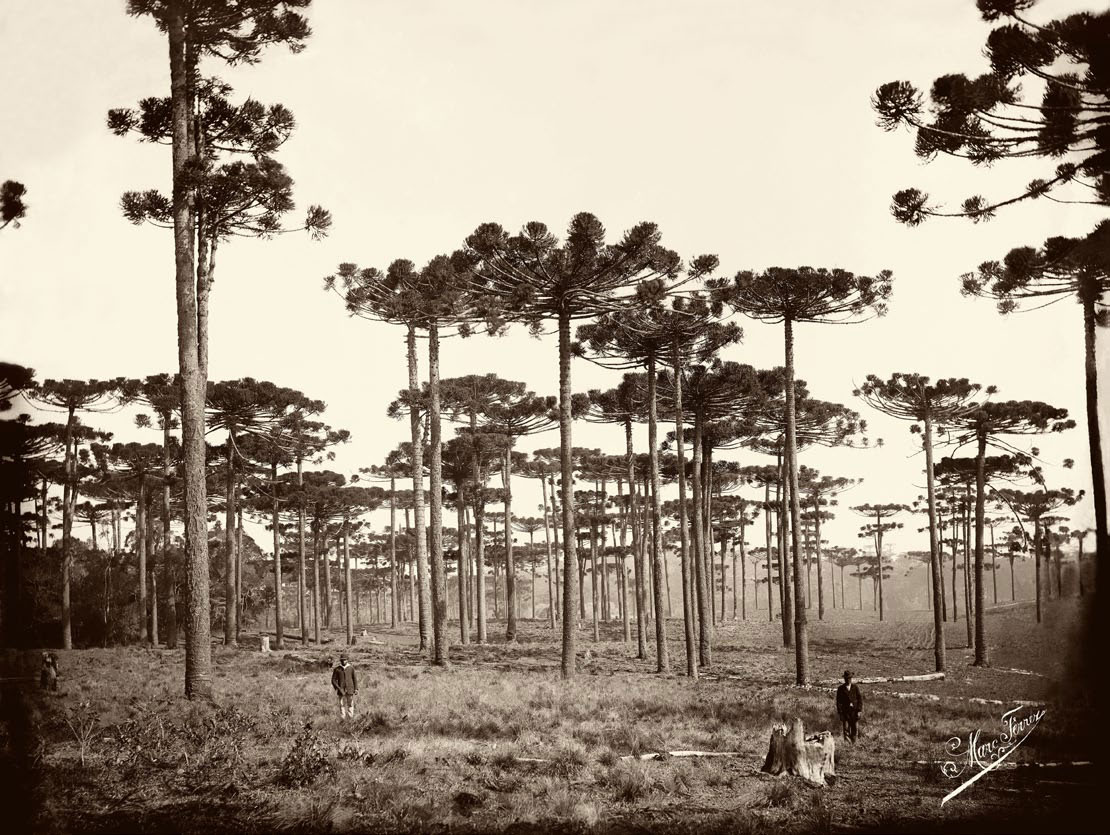
Marc Ferrez (Brazilian, 1843-1923)
Araucárias, Paraná
c. 1884 (printed later)
Gelatin silver print
29 x 39cm
Gilberto Ferrez Collection, Instituto Moreira Salles Archive, Brazil

Marc Ferrez (Brazilian, 1843-1923)
Entrance to Guanabara Bay
c. 1885
Albumen print, 18 x 35 cm
Gilberto Ferrez Collection, Instituto Moreira Salles Archive, Brazil

Unknown photographer
Rurales under Carlos Rincón Gallardo’s Command Boarding Their Horses on Their Way to Aguascalientes
May 18, 1914
Inkjet print from a digital file, exhibition copy
14.6 x 20.3cm
Fondo Casasola, SINAFO-Fototeca Nacional del INAH
Mexican politician General Carlos Rincón Gallardo served as Minister of Agriculture in the Huerta regime and chief of the Rurales Corps in the Mexican Revolution.
Large sombreros and extravagant clothing evoke images of charros or mariachis, but these men are rurales , the Mexican police force established by President Benito Juárez in 1861. … After having been tasked with stopping banditry in the countryside during the Juárez administration, and after helping to oust the Mexican Emperor Maximillian during the French Intervention, Díaz’s modernisation program transformed the rurales into a professional auxiliary military force. The rurales soon earned international fame, being likened to the Texas Rangers, for their success in imposing order over some of Mexico’s most unruly localities. Defeated after having served alongside those troops loyal to Diaz during the Mexican Revolution in 1910, the rurales were officially disbanded by the revolutionaries in 1914.
Anonymous. “From Porfiriato to Mexican Revolution,” on the Reflections on Modernity, Memory, and Identity in 19th-Century Latin America, University of Texas at Austin website Nd [Online] Cited 28/06/2024. Used under fair use conditions for the purposes of education and research
The Mexican Revolution (Spanish: Revolución Mexicana) was an extended sequence of armed regional conflicts in Mexico from 20 November 1910 to 1 December 1920. It has been called “the defining event of modern Mexican history” and resulted in the destruction of the Federal Army, its replacement by a revolutionary army, and the transformation of Mexican culture and government. The northern Constitutionalist faction prevailed on the battlefield and drafted the present-day Constitution of Mexico, which aimed to create a strong central government. Revolutionary generals held power from 1920 to 1940. The revolutionary conflict was primarily a civil war, but foreign powers, having important economic and strategic interests in Mexico, figured in the outcome of Mexico’s power struggles; the U.S. involvement was particularly high. The conflict led to the deaths of around one million people, mostly noncombatants.
Text from the Wikipedia website

Hugo Brehme (?) (German, 1882-1954, active in Mexico)
Emiliano Zapata with Rifle, Sash, and Saber, Cuernavaca
June 1911
Inkjet print from a digital file, exhibition copy
25.4 x 17.8cm
Fondo Casasola, SINAFO-Fototeca Nacional del INAH
Emiliano Zapata, posing in Cuernavaca in 1911, with a rifle and sword, and a ceremonial sash across his chest.
Emiliano Zapata Salazar (August 8, 1879 – April 10, 1919) was a Mexican revolutionary. He was a leading figure in the Mexican Revolution of 1910–1920, the main leader of the people’s revolution in the Mexican state of Morelos, and the inspiration of the agrarian movement called Zapatismo. …
In the aftermath of the revolutionaries’ victory over Huerta, they attempted to sort out power relations in the Convention of Aguascalientes (October to November 1914). Zapata and Villa broke with Carranza, and Mexico descended into a civil war among the winners. Dismayed with the alliance with Villa, Zapata focused his energies on rebuilding society in Morelos (which he now controlled), instituting the land reforms of the Plan de Ayala. As Carranza consolidated his power and defeated Villa in 1915, Zapata initiated guerrilla warfare against the Carrancistas, who in turn invaded Morelos, employing once again scorched-earth tactics to oust the Zapatista rebels. Zapata re-took Morelos in 1917 and held most of the state against Carranza’s troops until he was killed in an ambush in April 1919. After his death, Zapatista generals aligned with Obregón against Carranza and helped drive Carranza from power. In 1920, Zapatistas obtained important positions in the government of Morelos after Carranza’s fall, instituting many of the land reforms envisioned by Zapata.
Text from the Wikipedia website

Manuel Alvarez Bravo (Mexican, 1902-2002)
Obrero en huelga, asesinado (Striking worker, assassinated) (portfolio #13)
1934
Gelatin silver print
18.8 x 24.5cm
Princeton University Art Museum, Gift of Mr. and Mrs. Gerald Levine

Pablo Ortiz Monasterio (Mexican, b. 1952)
D.F.
1987
Gelatin silver print
30.5 x 45.7cm
Princeton University Art Museum, Museum purchase, David L. Meginnity, Class of 1958, Fund

Graciela Iturbide (Mexican, b. 1942)
Cementerio (Cemetery), Juchitán, Oaxaca
1988
Gelatin silver print
32.2 x 22cm
Princeton University Art Museum, Gift of Douglas C. James, Class of 1962

Eduardo Gil (Argentinian, b. 1948)
Siluetas y canas (Silhouettes and cops)
September 21-22, 1983
From the series El siluetazo (The silhouette action), Buenos Aires, 1982-83
Gelatin silver print
31 x 50cm
Princeton University Art Museum, Museum purchase, Philip F. Maritz, Class of 1983, Photography Acquisitions Fund

Graciela Iturbide (Mexican, b. 1942)
Mujer ángel, Desierto de Sonora, México (Angel woman, Sonora Desert, Mexico)
1979 (printed later)
Gelatin silver print
24.8 x 33cm
Private Collection

Elsa Medina (Mexican, b. 1952)
El migrante (The migrant), Cañon Zapata, Tijuana, Baja California, México
1987 (printed 2011)
Gelatin silver print
21.2 x 32cm
Princeton University Art Museum, Museum purchase, David L. Meginnity, Class of 1958, Fund

Susan Meiselas (American, b. 1948)
Soldiers Searching Bus Passengers along the Northern Highway, El Salvador
1980 (printed 2013)
Gelatin silver print
20 x 30cm
Courtesy of the artist

Joan Colom (Spanish, 1921-2017)
Fiesta Mayor
1960
Gelatin silver print
40 x 30cm
Collection Foto Colectania Foundation, Barcelona

Joan Colom (Spanish, 1921-2017)
Gente de la calle (People on the street)
1958-1964
Gelatin silver print
24 x 18.5cm
Collection Foto Colectania Foundation, Barcelona
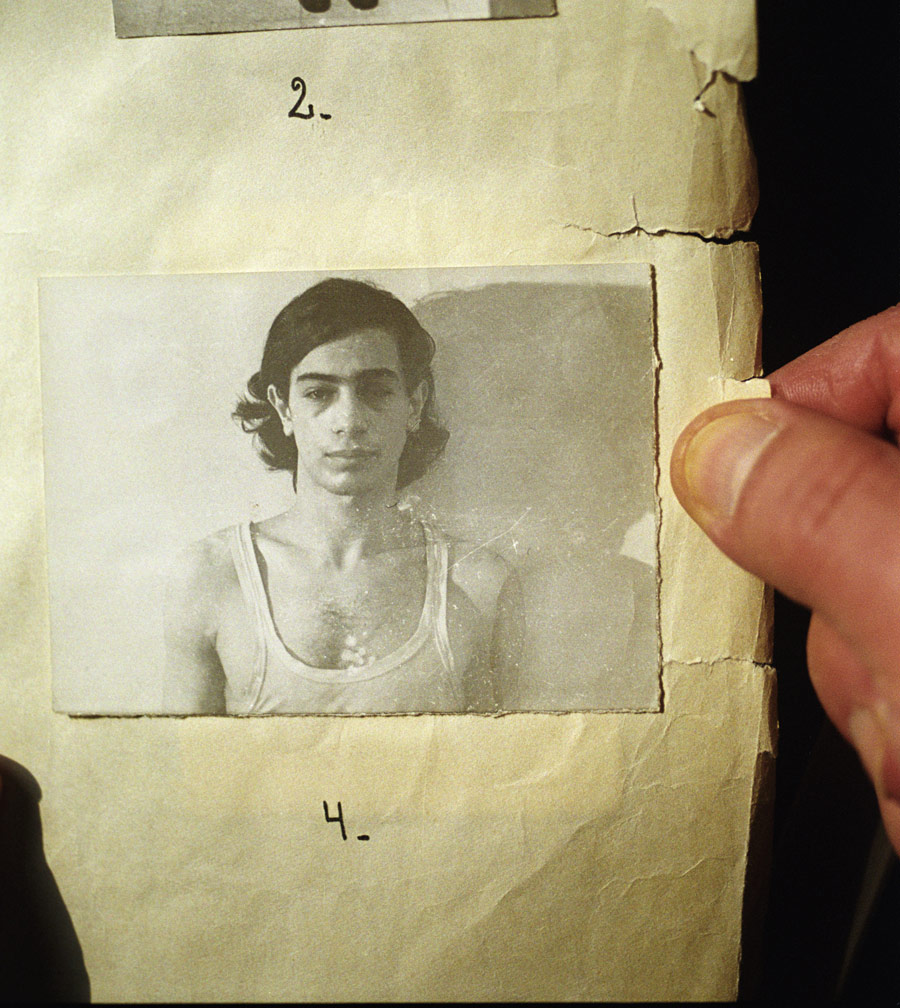
Marcelo Brodsky (Argentinian, b. 1954)
La camiseta (The undershirt)
1979 (printed 2012)
LAMBDA digital photographic print
62 x 53.5cm
Princeton University Art Museum, Museum purchase, Fowler McCormick, Class of 1921, Fund
Detention photograph from ESMA.
As part of a national strategy to destroy armed and nonviolent opposition to the military regime, the Officers’ Quarters building at ESMA (Escuela Superior de Mecánica de la Armada) was used for holding captive opponents who had been abducted in Buenos Aires and interrogating, torturing and eventually killing them.
The last photo taken of a teenage desaparecido.
Desaparecido is a Spanish word that means disappeared. It may refer to: A person who is abducted by a state or political organisation, followed by a refusal to acknowledge the person’s fate and whereabouts.
The shoulders look young, crisscrossed by the straps of the shirt. (The different times in the photograph overlap, continue). The defenselessness and beauty of youth appear, at the same time, through the bits of cloth following the beating. The face is a slightly dislocated, but still complete. The photograph expands on and adds information. It contains small details that are as irrelevant as they are real. It allows you to glimpse the dark passageways that lead to the wall against which it was taken, the sounds of chains being dragged as you walk, the shackles… (another photograph shows the marks left on a young woman’s wrists, someone else’s sister, by the ropes with which she was bound).
The slight comfort provided by the undershirt dresses the body in its pain, marking it. It is not a naked body. It recalls the loincloth of another who was tortured, on the cross. And the scarves – pieces of white cloth; scraps, worn on different parts of the body.
They tell me that he worked out in his cell, in a space similar in size to a pen for raising pigs – as Víctor Basterra and I both described it – with walls barely a meter high. A rectangular place, small, about the size of a compact mattress, with barely any headroom. They did everything possible to talk there. A foam mattress and some blankets, with no cover or sheets. The bare minimum, what you provide a slave, the very basics to survive and not freeze to death, because the sessions must continue.
I always liked undershirts. I sleep in one, which is more of a t-shirt. This one is different, it is the classic style: the kind you would see in the neighborhood, worn by the butcher drinking mate. The upper half – one assumes – is quite dirty, with a clinging odor, and its folds, its shadows and highlights in the photograph, clinging to the body of my brother, still alive.
Marcelo Brodsky. “The Undershirt (1979),” on the Hemisphere Institute website. Translated by David William Foster and Marcial Godoy-Anativia. Nd [Online] Cited 27/06/2024. Used under fair use conditions for the purposes of education and research

Susan Meiselas (American, b. 1948)
Still from Reframing History
2004 (printed 2013)
Chromogenic print
60.5 x 76.2cm
Courtesy of the artist
In July 2004, for the 25th anniversary of the overthrow of Somoza, Susan returned to Nicaragua with nineteen mural-sized images of her photographs from 1978-1979, collaborating with the Institute of History of the UCA (University of Central America) and local communities to create sites for collective memory. The project, “Reframing History,” placed murals on public walls and in open spaces in the towns, at the sites where the photographs were originally made.
Text from the Susan Meiselas website
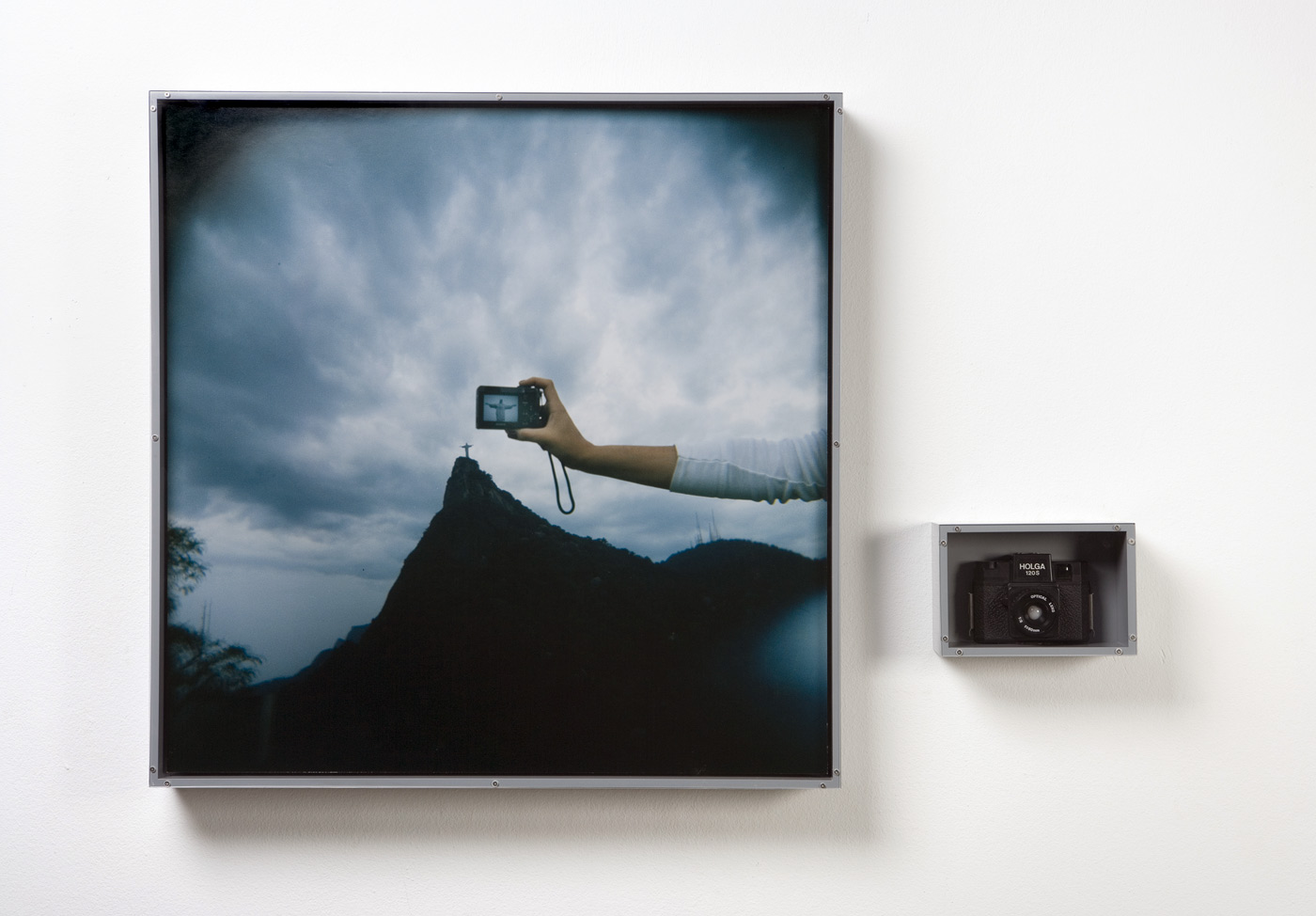
Rosângela Rennó (Born 1962, Belo Horizonte, Brazil; lives and works in Rio de Janeiro)
A Última Foto / The Last Photo: Eduardo Brandão Holga 120
2006
Framed colour photograph and Holga 120S camera (diptych)
Print: 78 x 78 x 9.5cm
Camera: 14.8 x 21.9 x 10cm
Collection of Jorge G. Mora
Princeton University Art Museum
11 Hulfish Street
Princeton, NJ 08544
Opening hours:
Monday – Wednesday 10am – 6pm
Thursday and Saturday 10am – 7pm
Friday 10am – 8pm
Sunday 12 pm – 5pm
 Art Blart _ art and cultural memory archive
You must be logged in to post a comment.