Exhibition: ‘Duane Hanson/Gregory Crewdson: Uncanny realities’ at Museum Frieder Burda, Baden-Baden

Exhibition dates: 27th November 2010 – 6th March 2011

Curators: Götz Adriani and Patricia Kamp
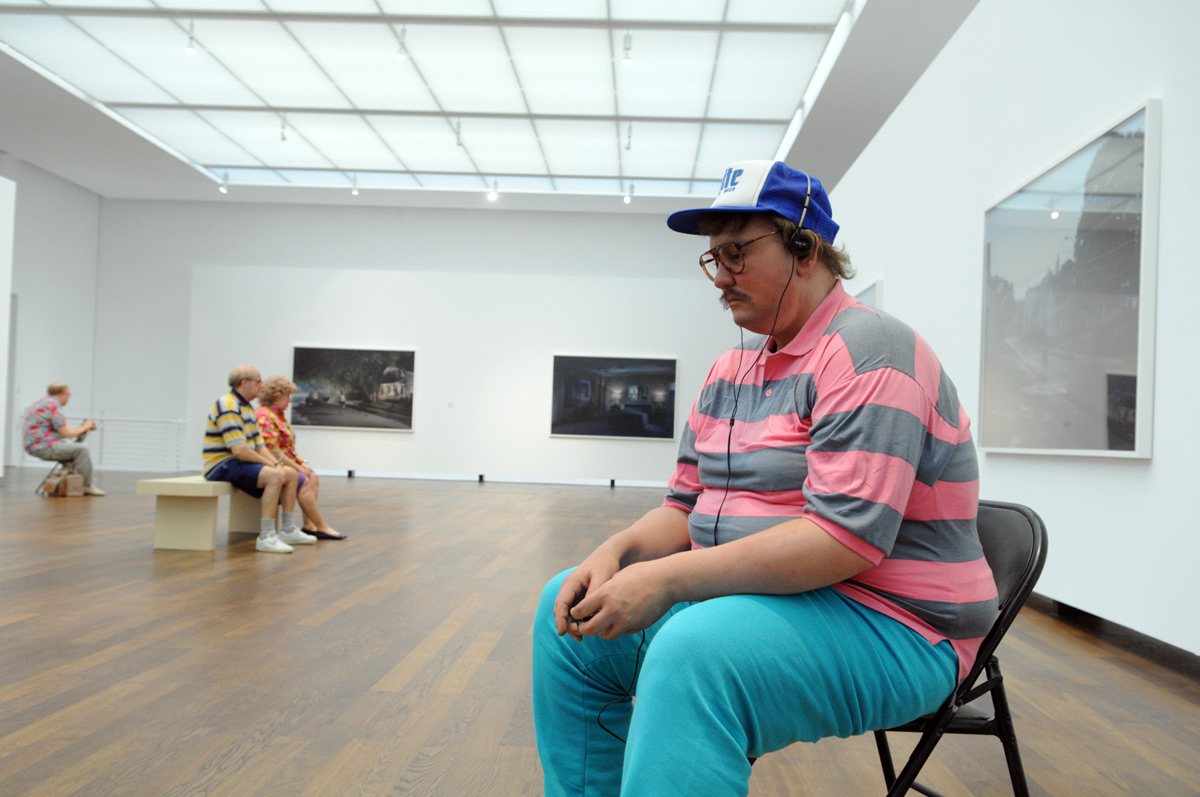
 

Installation photograph of the exhibition 'Duane Hanson/Gregory Crewdson: Uncanny realities' at Museum Frieder Burda


Installation photograph of the exhibition Duane Hanson/Gregory Crewdson: Uncanny realities at Museum Frieder Burda


A great double act!

An inspired curatorial choice brings the work of these two artist’s together – life-like sculptures of everyday Americans mixing with theatrical, deadpan staged images. The mis en scène created in the exhibition space, the tension between sculpture, photograph, frame and space – is delicious.

Crewdson is at his best when he resists the obvious narrative (for example, all the traffic lights stuck on yellow in the photograph Untitled (Brief Encounter) (2006, see below). Personally I prefer his staged photographs with pairs or groups of people within the image, rather than a single figure. The storyline is more ambiguous and the photographs of people walking along railway tracks always remind me of the Stephen King story filmed as Stand by Me (1986) with a young River Phoenix. Either way they are intoxicating, the viewer drawn into these wonderful, dark psychological dramas.

Dr Marcus Bunyan


Many thankx to Museum Frieder Burda for allowing me to publish the photographs in the posting. Please click on the photographs for a larger version of the image.
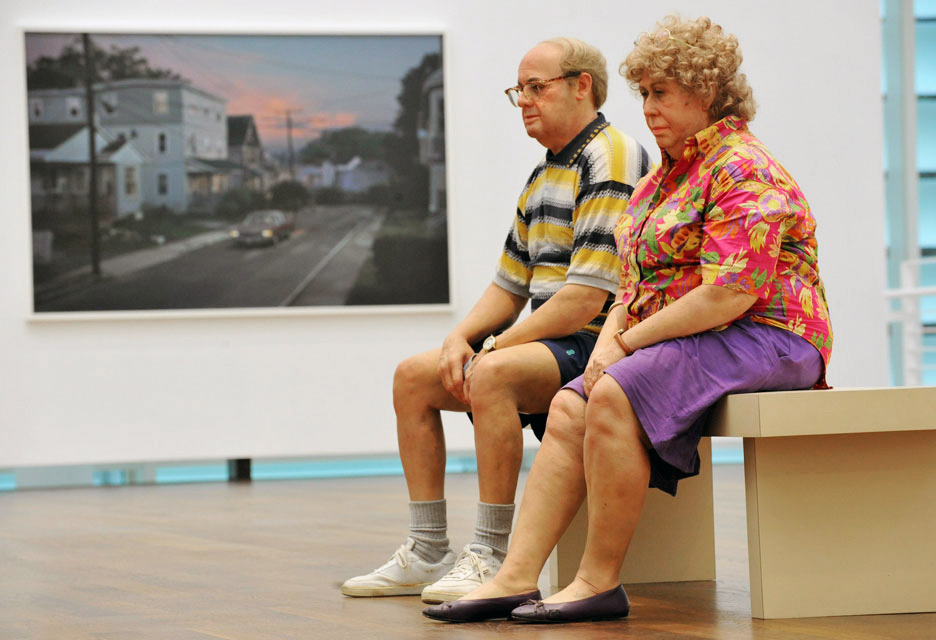


Installation photograph of the exhibition 'Duane Hanson/Gregory Crewdson: Uncanny realities' at Museum Frieder Burda with Duane Hanson 'Old Couple on a Bench' (1994) in the foreground and Gregory Crewdson 'Untitled (Worthington Street)' (2006) in the background


Installation photograph of the exhibition Duane Hanson/Gregory Crewdson: Uncanny realities at Museum Frieder Burda with Duane Hanson Old Couple on a Bench (1994) in the foreground and Gregory Crewdson Untitled (Worthington Street) (2006) in the background


The works by the two American artists Duane Hanson (1925-1996) and Gregory Crewdson (born in 1962) confuse and touch the observer.

Both artists present people in their everyday lives, with hopes, yearnings and broken dreams. People we usually do not notice, aged and marked by reality, by life itself. While Hanson shapes his life-sized figures with a great deal of sympathy, Crewdson rather spreads a gloomy and depressing atmosphere in his pictures of lonely people in their houses, gardens and in streets.

With his realistic sculptures, the American artist Duane Hanson has become a synonym for contemporary realism in contemporary art. Typical motives are average people like  housewives, waitresses, car dealers, janitors. Posture and expression of these figures are very close to reality. The photographer Gregory Crewdson arranges his large format pictures with cineastic arrangements and lets the abyss behind every-day life scenes become visible.

The exhibition at the Frieder Burda Museum presents about 30 figures by Duane Hanson, mainly from the artist’s estate, in dialogue with 20 large format works from the series Beneath the Roses by the photographer Gregory Crewdson. The photographies are mainly owned by the artist himself.

The curators Götz Adriani and Patricia Kamp are not aiming at a direct confrontation. They are rather presenting two artists who work with different materials, but deal with very similar topics. Both artists, Hanson and Crewdson, are grand when it comes to arranging their art. Crewdson always puts very much effort into the arrangements of the scenes in his pictures, and Hanson always keeps an eye on his close surroundings.

The works of both artists impressively reflect the complexity of the human existence. …
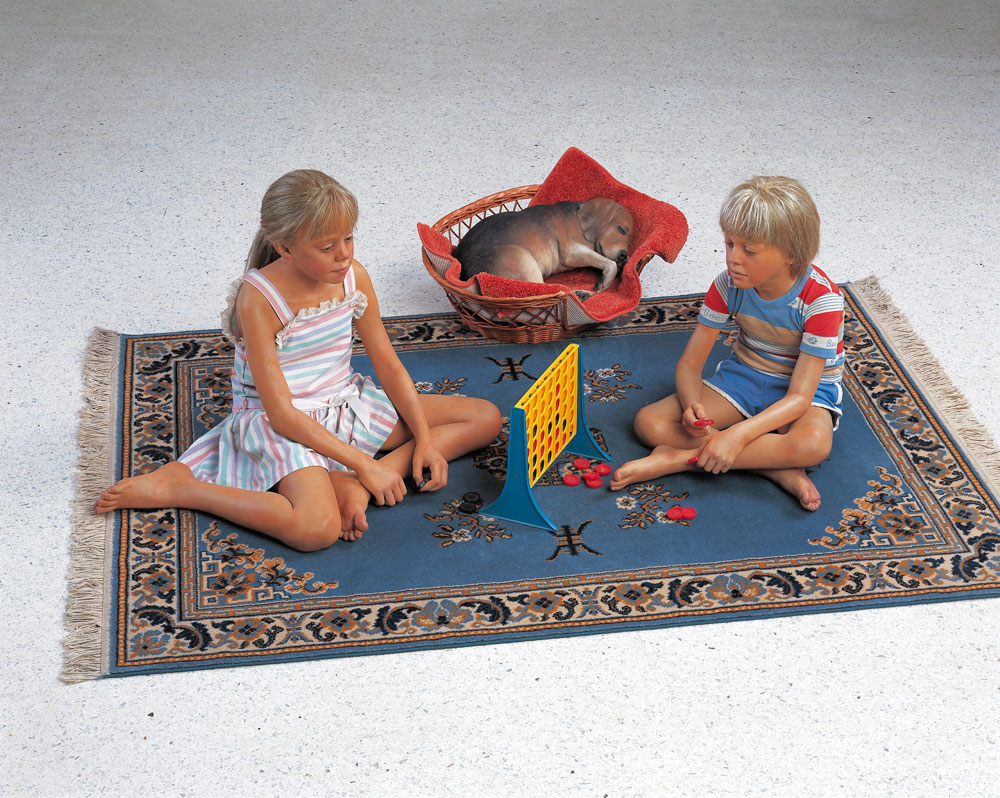
 

Duane Hanson (American, 1925-1996) 'Children Playing Game' 1979


Duane Hanson (American, 1925-1996)
Children Playing Game
1979
Polyvinyl chloride, coloured with oil, mixed technique and accessories
Collection Hanson, Davie, Florida
© VG Bild-Kunst, Bonn 2010
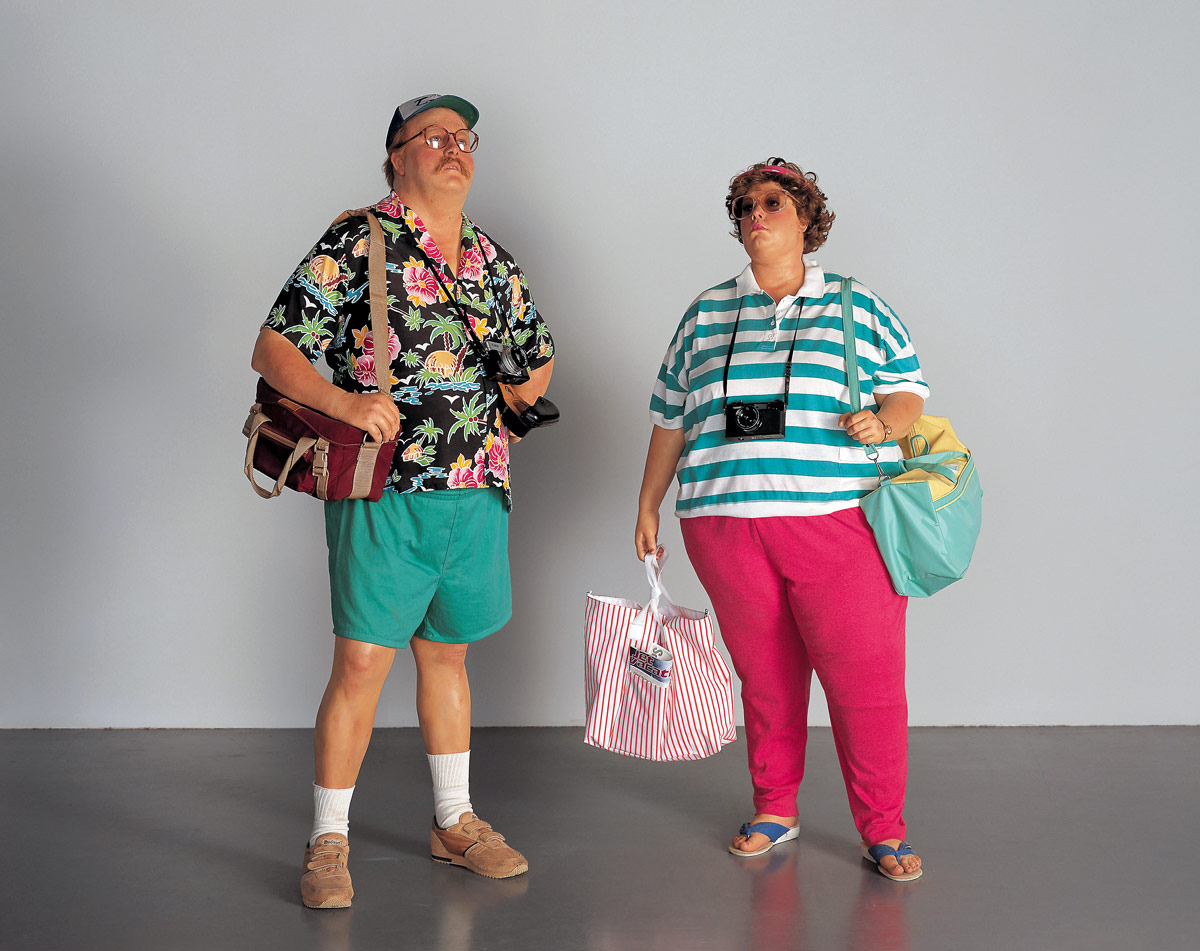
 

Duane Hanson (American, 1925-1996) 'Tourists II' 1988


Duane Hanson (American, 1925-1996)
Tourists II
1988
polyvinyl chloride, coloured with oil, mixed technique, accessories
Collection Hanson, Davie, Florida
© VG Bild-Kunst, Bonn 2010
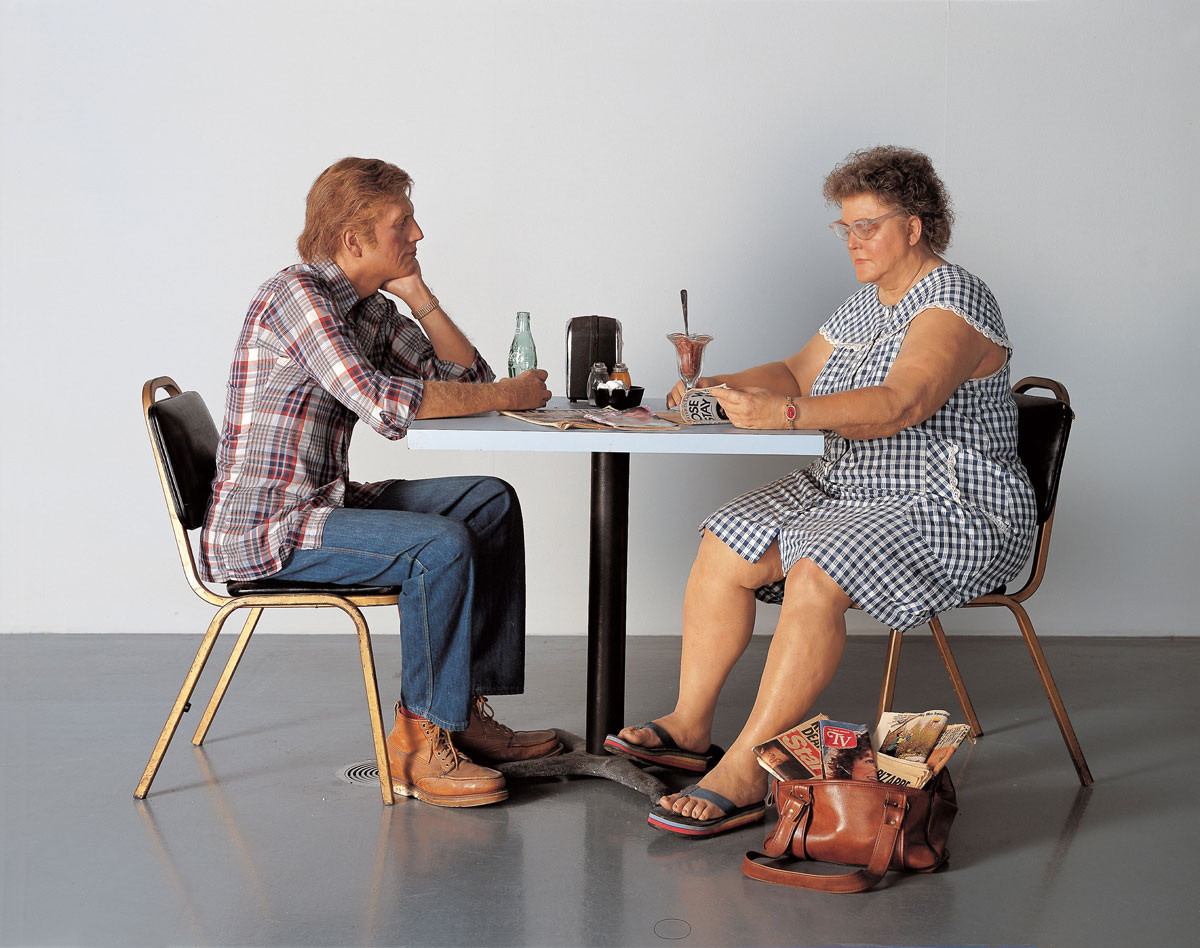
 

Duane Hanson (American, 1925-1996) 'Self-Portrait with Model' 1979


Duane Hanson (American, 1925-1996)
Self-Portrait with Model
1979
Polyvinyl chloride, coloured with oil, mixed technique and accessories
Collection Hanson, Davie, Florida
© VG Bild-Kunst, Bonn 2010
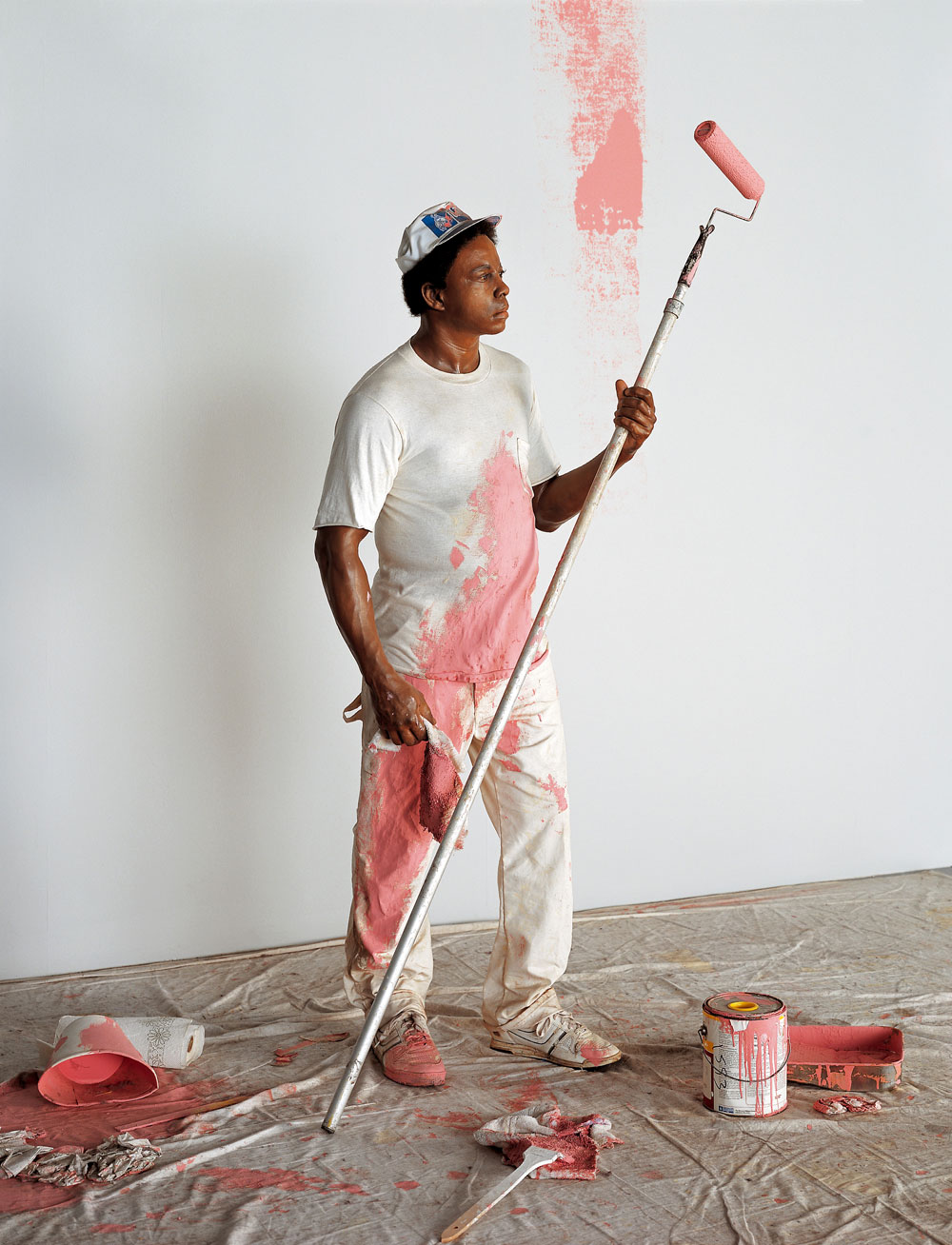
 

Duane Hanson (American, 1925-1996) 'Housepainter I' 1984/1988


Duane Hanson (American, 1925-1996)
Housepainter I
1984/1988
Epoxy resin, coloured with oil, mixed technique, accessories
Collection Hanson, Davie, Florida
© VG Bild-Kunst, Bonn 2010
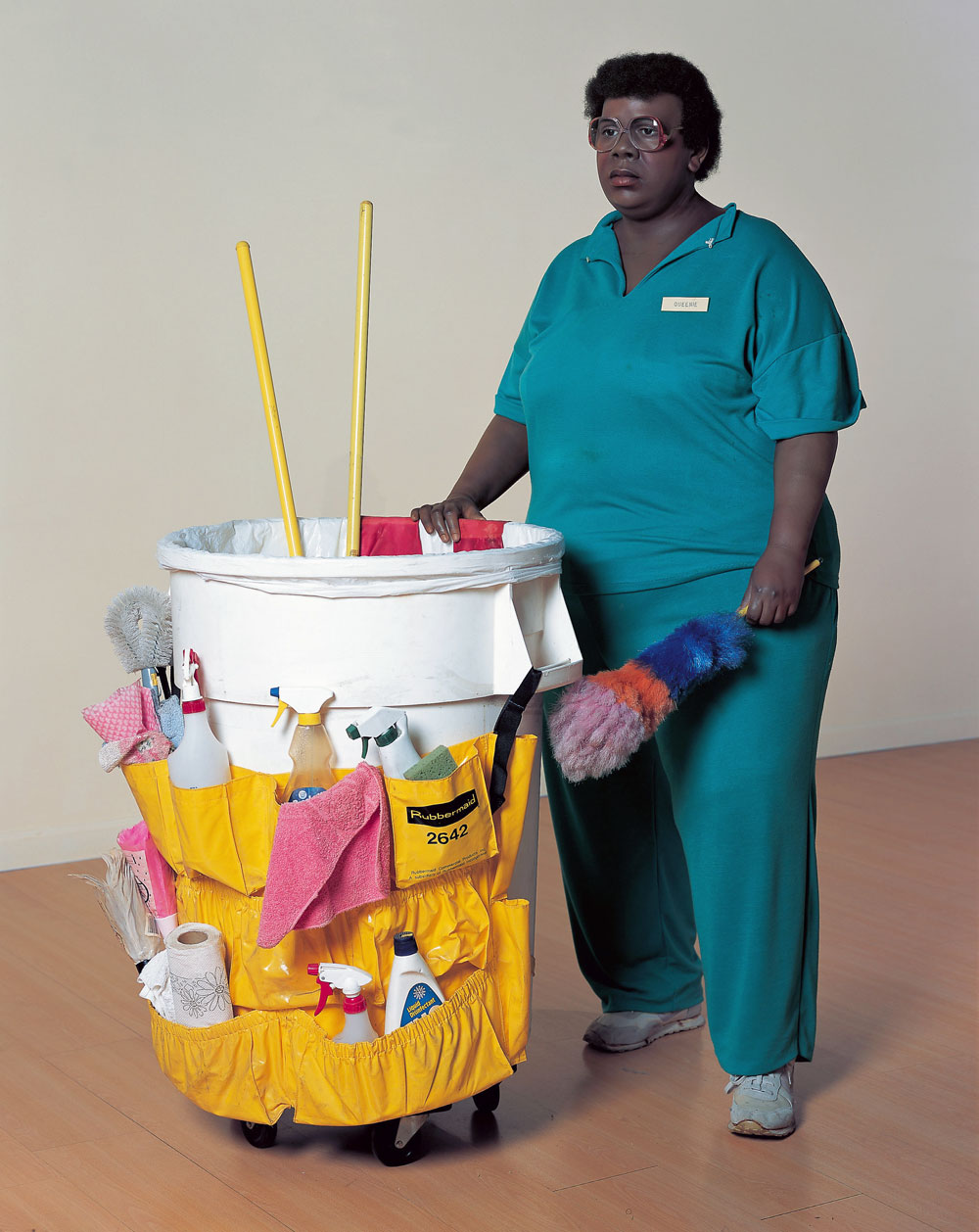
 

Duane Hanson (American, 1925-1996) 'Queenie II' 1988


Duane Hanson (American, 1925-1996)
Queenie II
1988
Epoxy resin, coloured with oil, mixed technique, accessories
Collection Hanson, Davie, Florida
© VG Bild-Kunst, Bonn 2010


Duane Hanson

Duane Hanson (1925-1996) is one of the most influential American sculptors of the 20th century committed to Realism.

The proximity to reality of his lifelike, detailed human figures make for perfect irritation. Despite all the seriousness hidden behind the socio-critical issue, which prompted Hanson to create his protagonists, the figures have a great deal of entertainment value, above all – and it is precisely this that makes them so appealing – due to their occasional gravitational bearing. Featuring twenty-five works, the exhibition presents a representative cross-section of the American’s extensive oeuvre, which comprises a total of only 114 works. The figures enter a dialogue with the large-format photographs by the American photo artist Gregory Crewdson, who has a flair for relating human abysses in a different and very subtle way.

In the early 1950s, after completing his study of sculpture at the Cranbrook Academy of Art in Bloomfield Hills, Michigan, Hanson was initially guided by the abstract style of art that prevailed during this period. However, this would not lead to a satisfactory result. In 1953, he turned his back on his homeland and spent nearly ten years of his life earning a living as an art teacher at American schools in Germany. It was during this period that he discovered the materials polyester resin and fibreglass, which would become crucial for his future creative work. After returning to the United States, Hanson spent the ensuing years perfecting his artistic skills in the treatment of these materials in such a way that the boundaries between reality and artificial figure seem to blur – where Hanson was never concerned with the mere illusionistic reproduction of reality, but chose this veristic manner of representation as a medium for communicating his concern in terms of content, i.e., shedding light on the tragedy of human lives that hauntingly consolidates in his characters.

In the human figures produced in the early work phase in the late 1960s, Hanson responded to the sociopolitical tension and protest movements of the day. He created sculptures and ensembles that very directly take issue with social hardship, violence, or racism, and he took a stand for the victims of this system, for the people who never had a chance to successfully face the demands made by life.

Influenced by Pop Art, Hanson turned to thematising everyday American life, frequently switching his observations to a critically satirical attitude that was, however, always guided by compassion. Housewives, construction workers, car salesmen, or janitors – the models for his figures are people in the American middle and working classes in whose biographies the disappointment in the American dream has become entrenched. He often puts his people and all of their small insufficiencies into perspective with ironic kindness, such as, for example, the Tourists, in whom are combined all of the clichés associated with the typical Florida tourist.

Hanson’s participation in documenta 5 in Kassel in 1972 gave rise to his international breakthrough. His figures became more lifelike; they more and more naturally blended into their surroundings. Their gestures, facial expressions, and postures related the emotional and physical burdens of life. The artist concentrated on older people in whose physiognomies one can read the traces of existence, the impact of loneliness, the problems that accompany being old, and their alienation. Hanson was struck by the isolation of this generation by society, a circumstance that has not lost any of its relevance.

Hanson’s interest in rendering the figures as lifelike as possible is surely not rooted in a desire to want to convince the viewer of their “authenticity”; rather, their lifelikeness was meant to move the viewer to experience empathy and concern, thus manifesting Hanson’s humanism. Human values and destinies comprise the focus of his art; he transforms the reality of life into the realism of art and in doing so sharpens our outlook and our view of the world, our fellow human beings, and our own life as well.
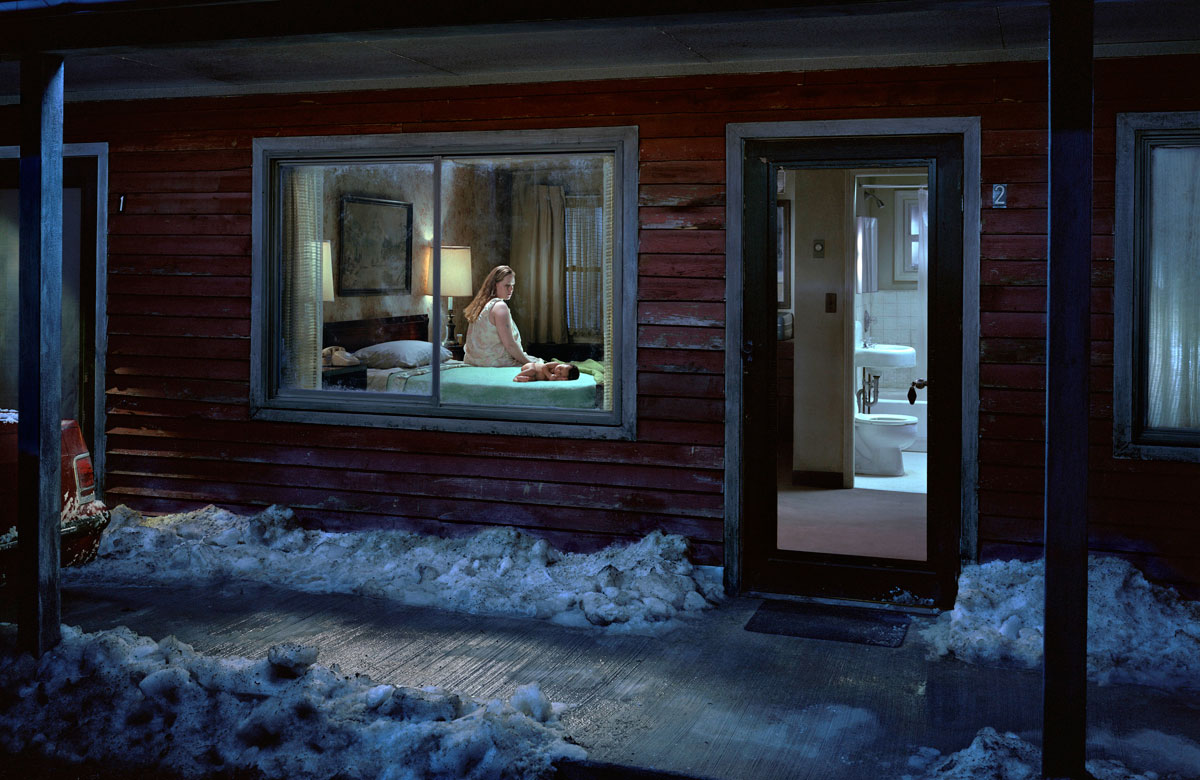
 

Gregory Crewdson (American, b. 1962) 'Untitled (Birth)' from the series 'Beneath the Roses' 2007


Gregory Crewdson (American, b. 1962)
Untitled (Birth)
From the series Beneath the Roses
2007
Digital carbon print
144.8 x 223.5cm
Gregory Crewdson, Courtesy Gagosian Gallery, New York
© Gregory Crewdson, 2010
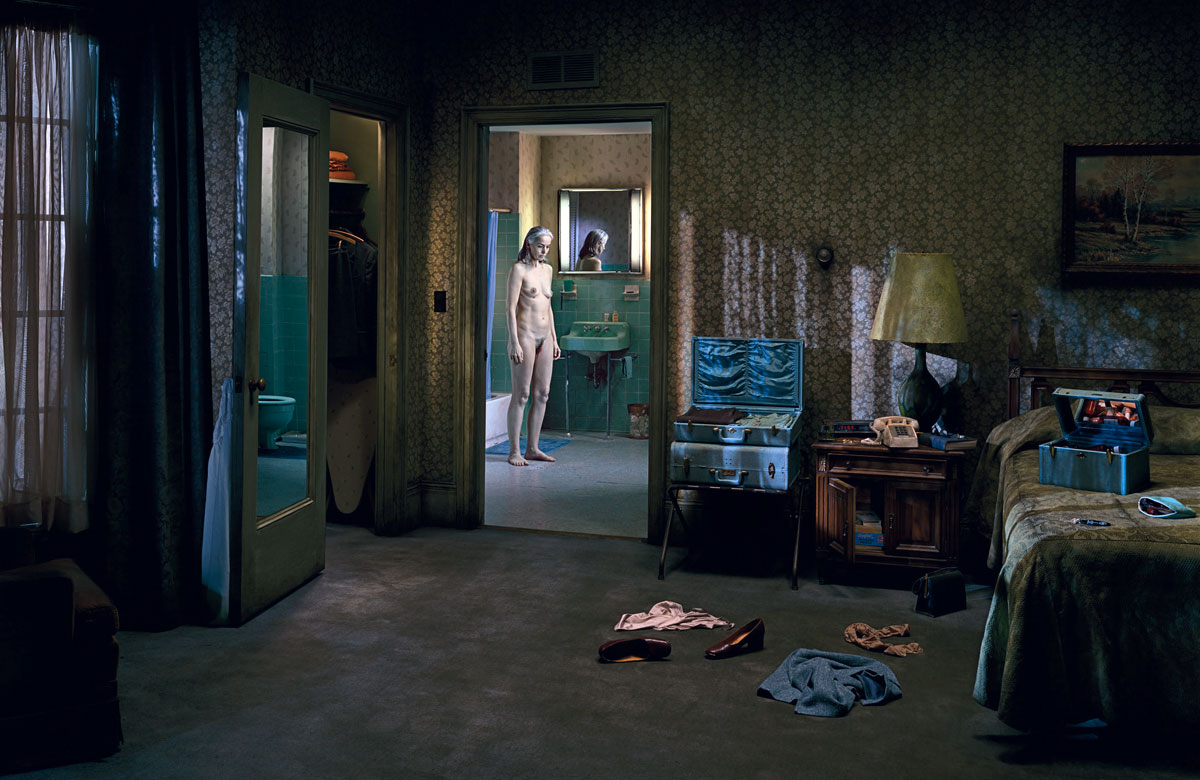
 

Gregory Crewdson (American, b. 1962) 'Untitled (Blue Period)' from the series 'Beneath the Roses' 2005


Gregory Crewdson (American, b. 1962)
Untitled (Blue Period)
From the series Beneath the Roses
2005
Digital carbon print
144.8 x 223.5cm
Gregory Crewdson, Courtesy Gagosian Gallery, New York
© Gregory Crewdson, 2010
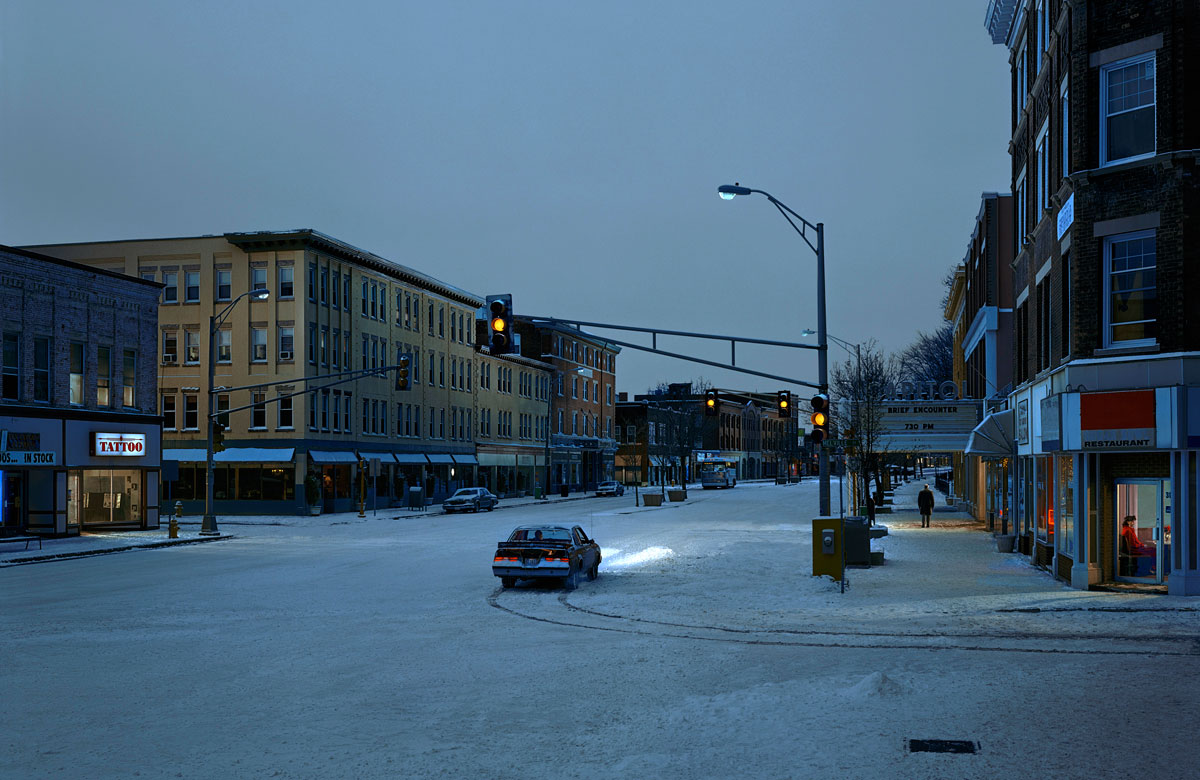
 

Gregory Crewdson (American, b. 1962) 'Untitled (Brief Encounter)' from the series 'Beneath the Roses' 2006


Gregory Crewdson (American, b. 1962)
Untitled (Brief Encounter)
From the series Beneath the Roses
2006
Digital carbon print
144.8 x 223.5cm
Gregory Crewdson, Courtesy Gagosian Gallery, New York
© Gregory Crewdson, 2010
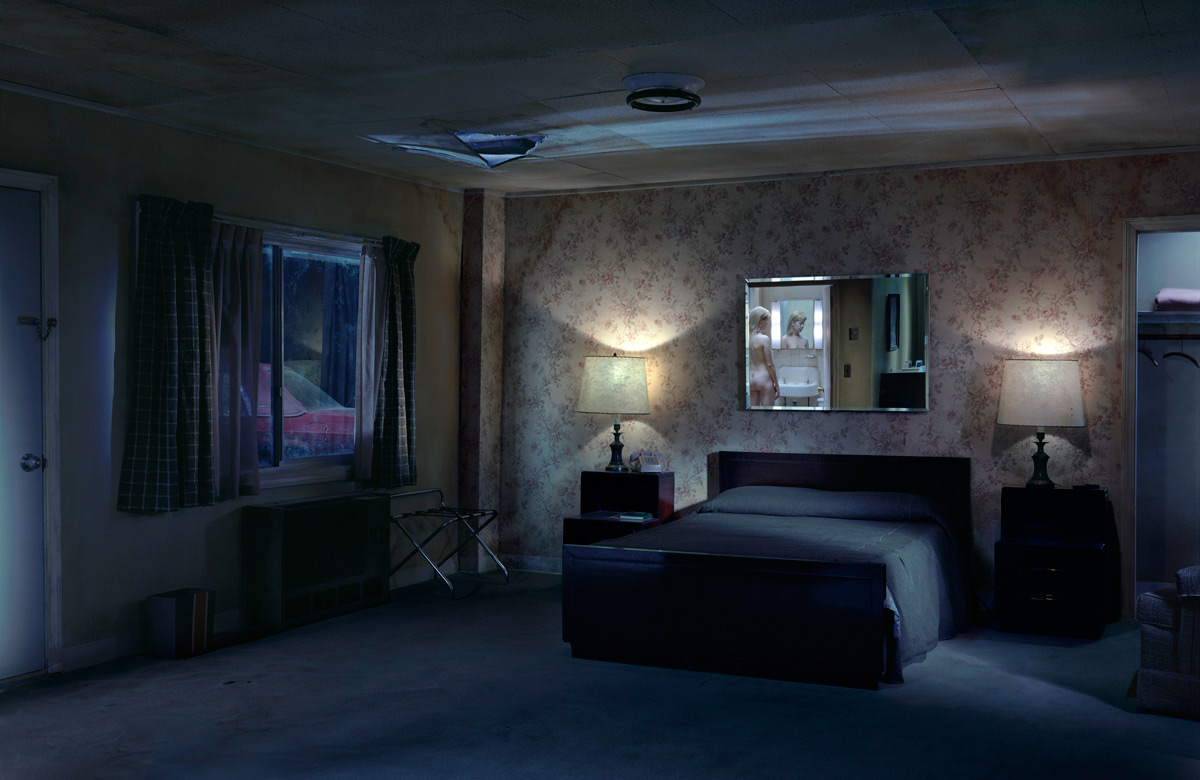
 

Gregory Crewdson (American, b. 1962) 'Untitled (Debutante)' from the series 'Beneath the Roses' 2006


Gregory Crewdson (American, b. 1962)
Untitled (Debutante)
From the series Beneath the Roses
2006
Digital carbon print
144.8 x 223.5cm
Gregory Crewdson, Courtesy Gagosian Gallery, New York
© Gregory Crewdson, 2010
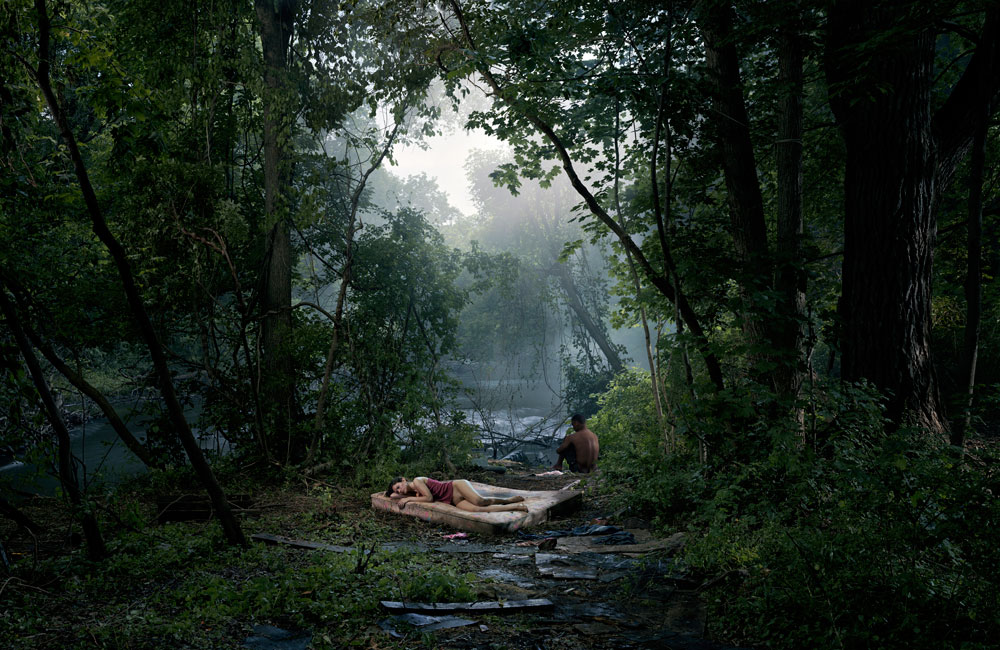
 

Gregory Crewdson (American, b. 1962) 'Untitled (Forest Clearing)' from the series 'Beneath the Roses' 2006


Gregory Crewdson (American, b. 1962)
Untitled (Forest Clearing)
From the series Beneath the Roses
2006
Digital carbon print
144.8 x 223.5cm
Gregory Crewdson, Courtesy Gagosian Gallery, New York
© Gregory Crewdson, 2010
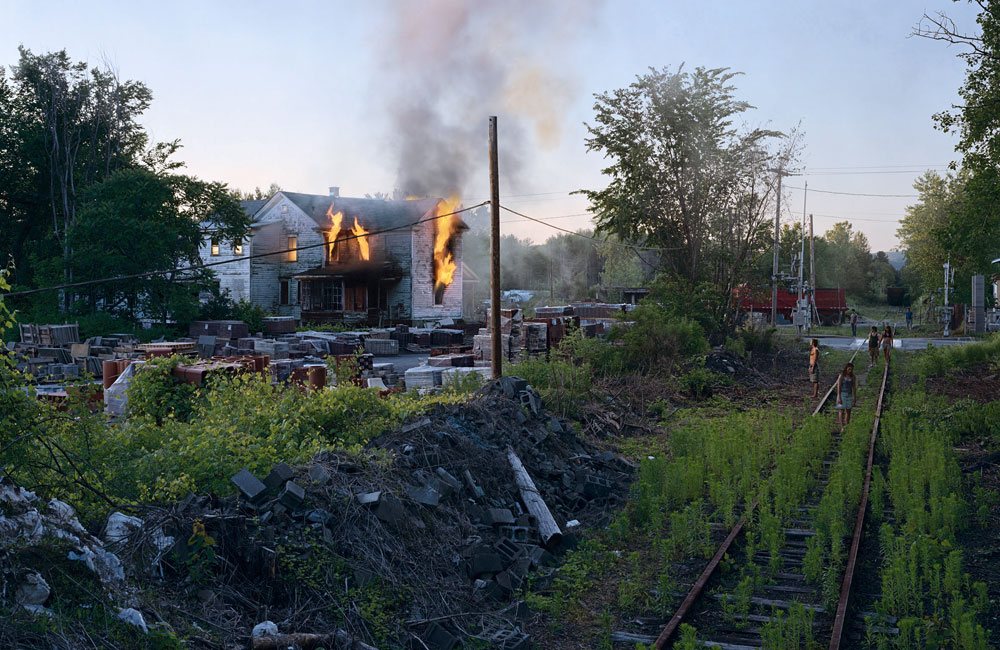
 

Gregory Crewdson (American, b. 1962) 'Untitled (House Fire)' from the series 'Beneath the Roses' 2004


Gregory Crewdson (American, b. 1962)
Untitled (House Fire)
From the series Beneath the Roses
2004
Digital carbon print
144.8 x 223.5cm
Gregory Crewdson, Courtesy Gagosian Gallery, New York
© Gregory Crewdson, 2010
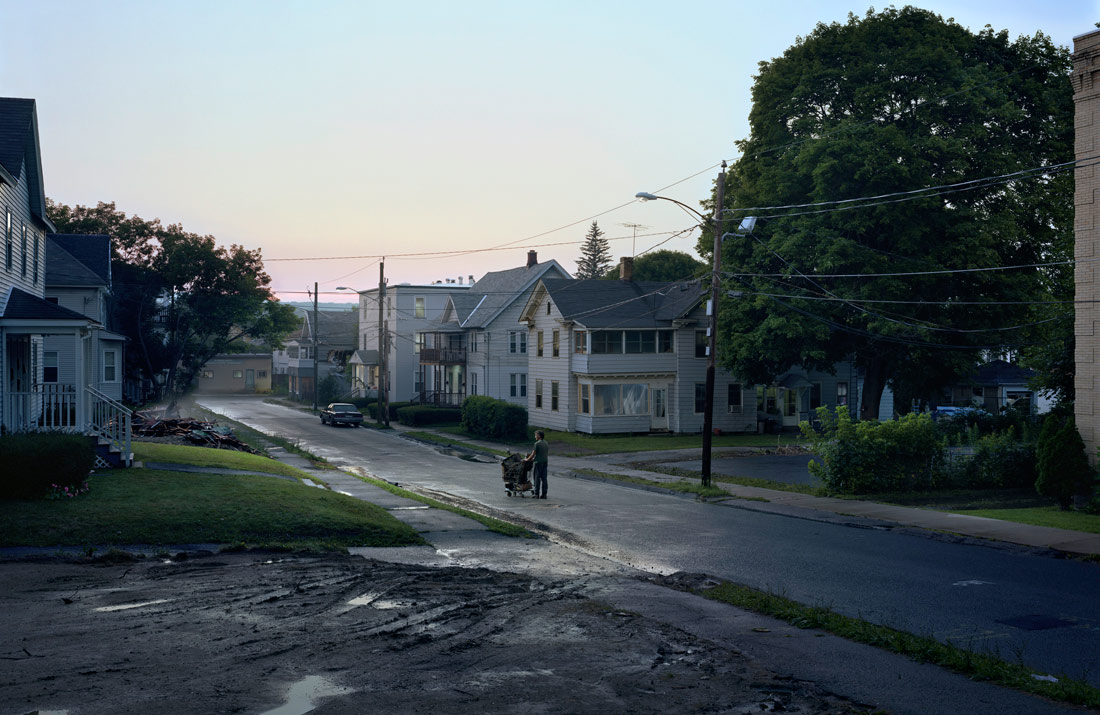
 

Gregory Crewdson (American, b. 1962) 'Untitled (Kent Street)' from the series 'Beneath the Roses' 2007


Gregory Crewdson (American, b. 1962)
Untitled (Kent Street)
From the series Beneath the Roses
2007
Digital carbon print
144.8 x 223.5cm
Gregory Crewdson, Courtesy Gagosian Gallery, New York
© Gregory Crewdson, 2010
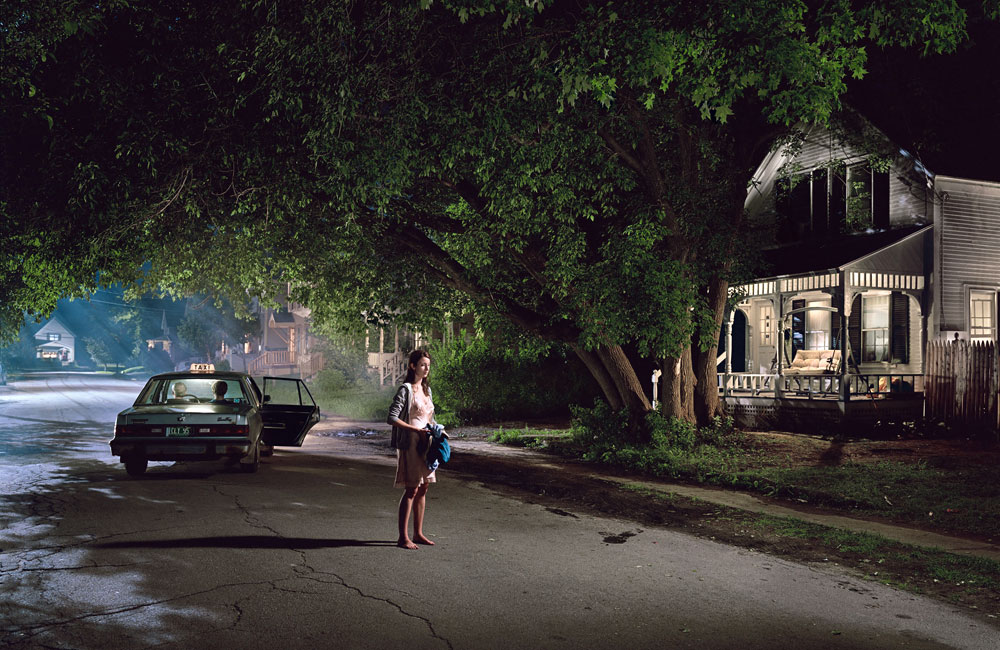
 

Gregory Crewdson (American, b. 1962) 'Untitled (Maple Street)' from the series 'Beneath the Roses' 2004


Gregory Crewdson (American, b. 1962)
Untitled (Maple Street)
From the series Beneath the Roses
Digital carbon print
144.8 x 223.5cm
Gregory Crewdson, Courtesy Gagosian Gallery, New York
© Gregory Crewdson, 2010
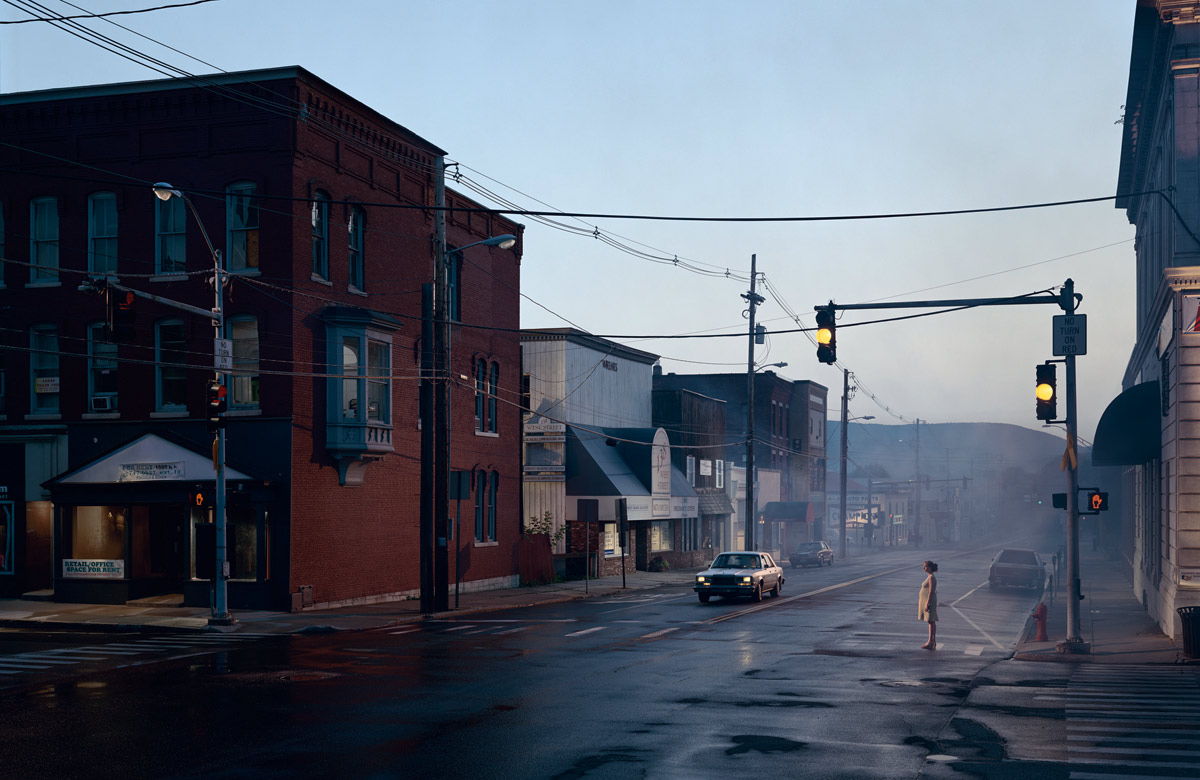
 

Gregory Crewdson (American, b. 1962) 'Untitled (Merchants Row)' from the series 'Beneath the Roses' 2003


Gregory Crewdson (American, b. 1962)
Untitled (Merchants Row)
From the series Beneath the Roses
Digital carbon print
144.8 x 223.5cm
Gregory Crewdson, Courtesy Gagosian Gallery, New York
© Gregory Crewdson, 2010


Gregory Crewdson

Born in 1962 in Brooklyn, New York, Gregory Crewdson is one of the best-known contemporary photographers internationally. In his most important series to date Beneath the Roses, which he created between 2003 and 2008, Crewdson explores the American psyche and the disturbing realities at play within quotidian environments. In his dramatically detailed and realistic photographs situated in America’s morbid, small-town milieu, the artist succeeds to stimulate the viewer’s subconscious on various levels. Twenty outstanding works from the series are being placed in a dialogue with sculptures by Duane Hanson. Gregory Crewdson does not spare either effort or expenses for the production of his visual inventions, which are reminiscent of film productions. The stagings are planned and arranged in advance down to the smallest detail and then elaborately implemented in a major logistical and human effort. The final photograph is the result of what is frequently work lasting several weeks, a circumstance that is substantiated by its depths in terms of content and its technical perfection.

Gregory Crewdson works in two distinct ways to create his photographs. On one hand, he works on location in real neighborhoods and townships. On the other hand, the artist works on the soundstage inventing his world from scratch. Before the photographic location productions start, Crewdson drives around upstate Massachusetts looking for interesting settings, which he then has prepared in an elaborate process. In most cases, local residents of the ramshackle towns also play the characters in his work. Crewdson works closely with the art department of the museum MASSMoCA, when shooting his pictures done on the soundstage. The results are much like stills from a movie and reflect his affinity with cinema. Filmmakers such as Alfred Hitchcock, David Lynch, or Steven Spielberg are the inspiration for Crewdson’s uncanny stories, which he seems to freeze in a single snapshot in time.

The construction of this narrative instant demonstrates the artist’s extraordinary talent. Like sophisticated literature does the reader, his works pose a challenge to viewers, as they have to mount the decisive share of the creative effort themselves. A brief, fleeting glance is not enough. Viewers become immersed in the staged scenes full of details and accessories to experience a moment that is intensely real. Fantasy and the powers of imagination and association fashion the visual event in the mind to become a subjective, alternative reality – an uncanny reality.

In his photographs, Crewdson deliberately works with emotions and fears that extend through his oeuvre in recurring, in part very different scenarios. They mirror alienation, absence, shame, sexuality, and loss – human states of emotion that deeply touch the viewer. That the artist focuses on the mind in his works may be due to the fact that, as the son of a psychoanalyst, he experienced insight into the profundity of the human soul very early on. His works can be regarded as metaphors for fears and desires, for the things that take place below the surface, the palpable, as if Crewdson wanted to make visible a new or different level of reality situated somewhere between the conscious and subconscious.

At the same time, the Beneath the Roses series can be seen as a psychological study of the American province. The settings show social realities and document the economic decline of a society behind the backdrop of the American way of life. Unsentimental and direct, they reflect working-class life – which allows us to strike an arc to the work by Duane Hanson, whose oeuvre also revolves around the concept of humanity, the facets of which he lends expression to in his silent, introverted figures.

The evolution of Beneath the Roses was documented in a series of production stills, original drawings by the artist, and detailed lighting plans. About sixty works from this reservoir are presented in a studio exhibition at the museum in order to illustrate the complex technical process of producing the photographs. Gregory Crewdson completed his study of Street Photography at the Yale School of Art in New Haven in 1988. He returned to Yale in 1993 and has occupied the Chair of Photography since.

Press release from the Museum Frieder Burda website
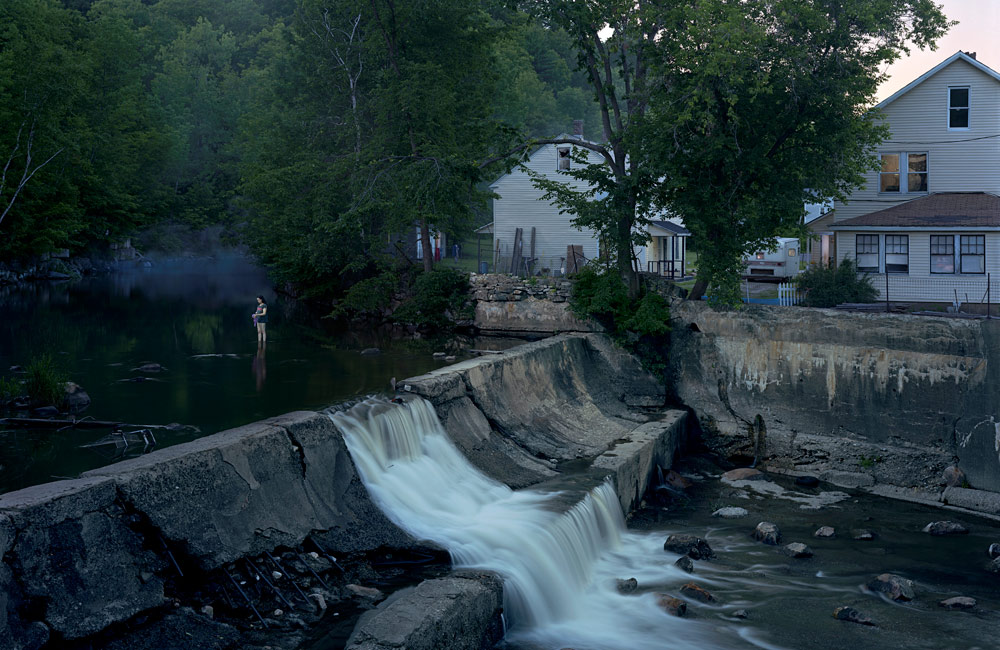
 

Gregory Crewdson (American, b. 1962) 'Untitled (Natural Bridge)' from the series 'Beneath the Roses' 2007


Gregory Crewdson (American, b. 1962)
Untitled (Natural Bridge)
From the series Beneath the Roses
Digital carbon print
144.8 x 223.5cm
Gregory Crewdson, Courtesy Gagosian Gallery, New York
© Gregory Crewdson, 2010
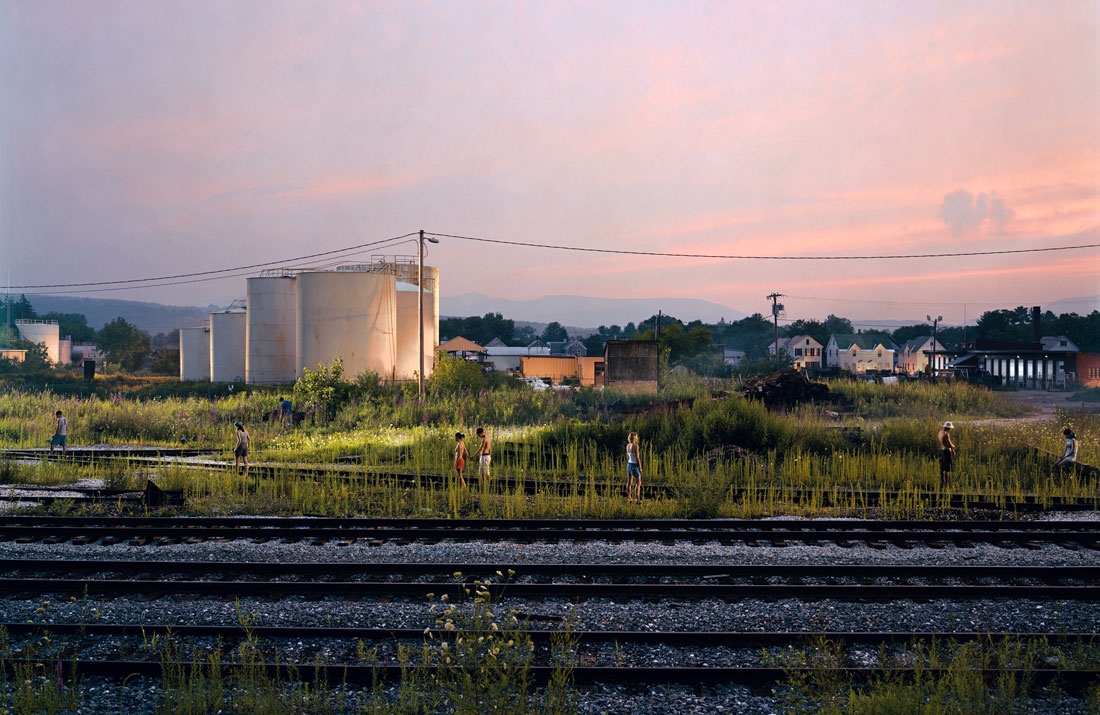
 

Gregory Crewdson (American, b. 1962) 'Untitled (Railway Children)' from the series 'Beneath the Roses' 2003


Gregory Crewdson (American, b. 1962)
Untitled (Railway Children)
From the series Beneath the Roses
2003
Digital carbon print
144.8 x 223.5cm
Gregory Crewdson, Courtesy Gagosian Gallery, New York
© Gregory Crewdson, 2010
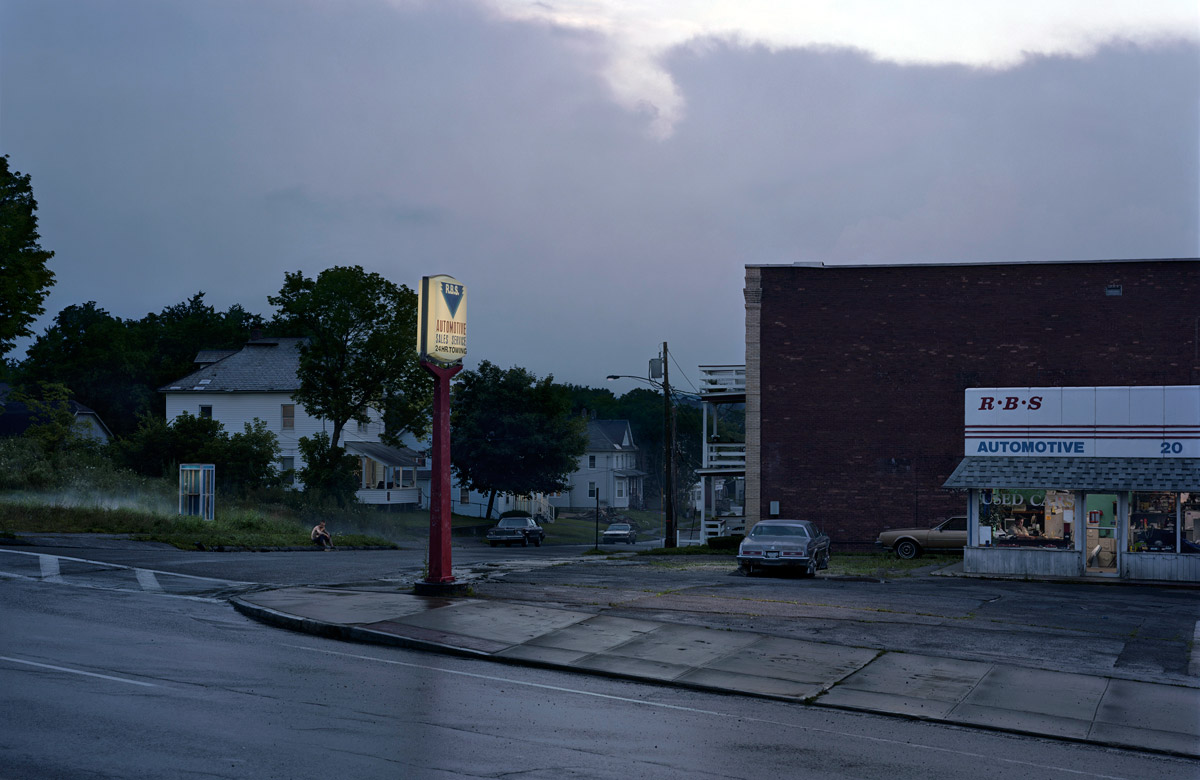
 

Gregory Crewdson (American, b. 1962) 'Untitled (RBS Automotive)' from the series 'Beneath the Roses' 2007


Gregory Crewdson (American, b. 1962)
Untitled (RBS Automotive)
From the series Beneath the Roses
2007
Digital carbon print
144.8 x 223.5cm
Gregory Crewdson, Courtesy Gagosian Gallery, New York
© Gregory Crewdson, 2010
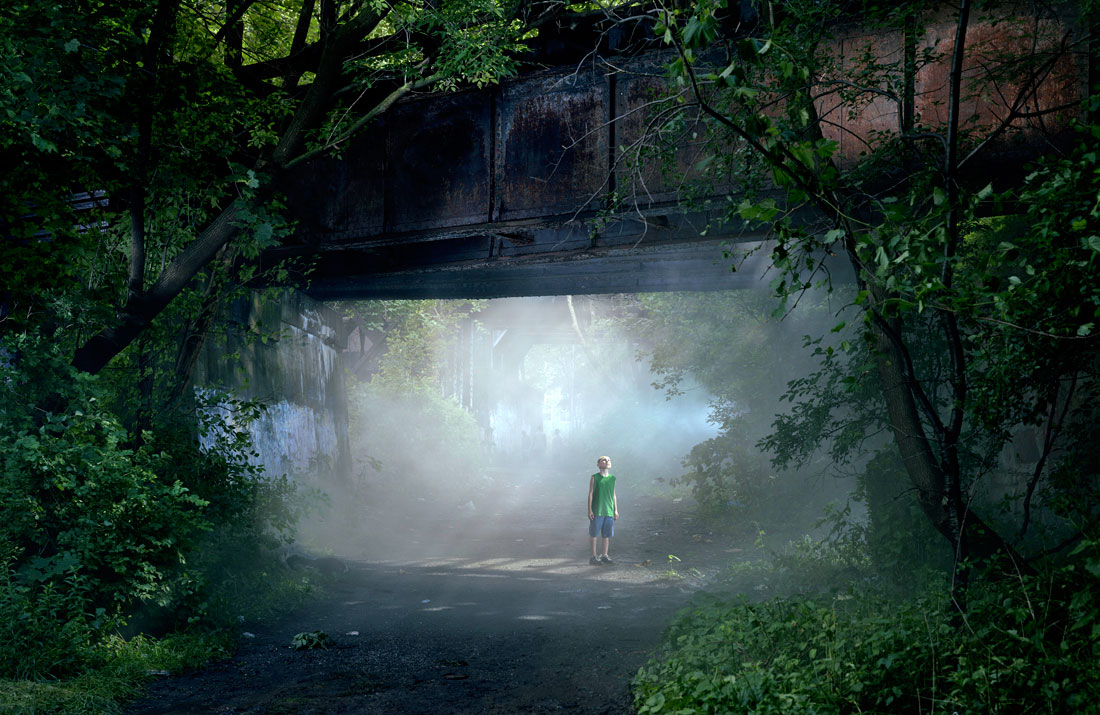
 

Gregory Crewdson (American, b. 1962) 'Untitled (Shane)' from the series 'Beneath the Roses' 2006


Gregory Crewdson (American, b. 1962)
Untitled (Shane)
From the series Beneath the Roses
2006
Digital carbon print
144.8 x 223.5cm
Gregory Crewdson, Courtesy Gagosian Gallery, New York
© Gregory Crewdson, 2010


Gregory Crewdson (American, b. 1962) 'Untitled (Sunday Roast)' from the series 'Beneath the Roses' 2005


Gregory Crewdson (American, b. 1962)
Untitled (Sunday Roast)
From the series Beneath the Roses
2005
Digital carbon print
144.8 x 223.5cm
Gregory Crewdson, Courtesy Gagosian Gallery, New York
© Gregory Crewdson, 2010
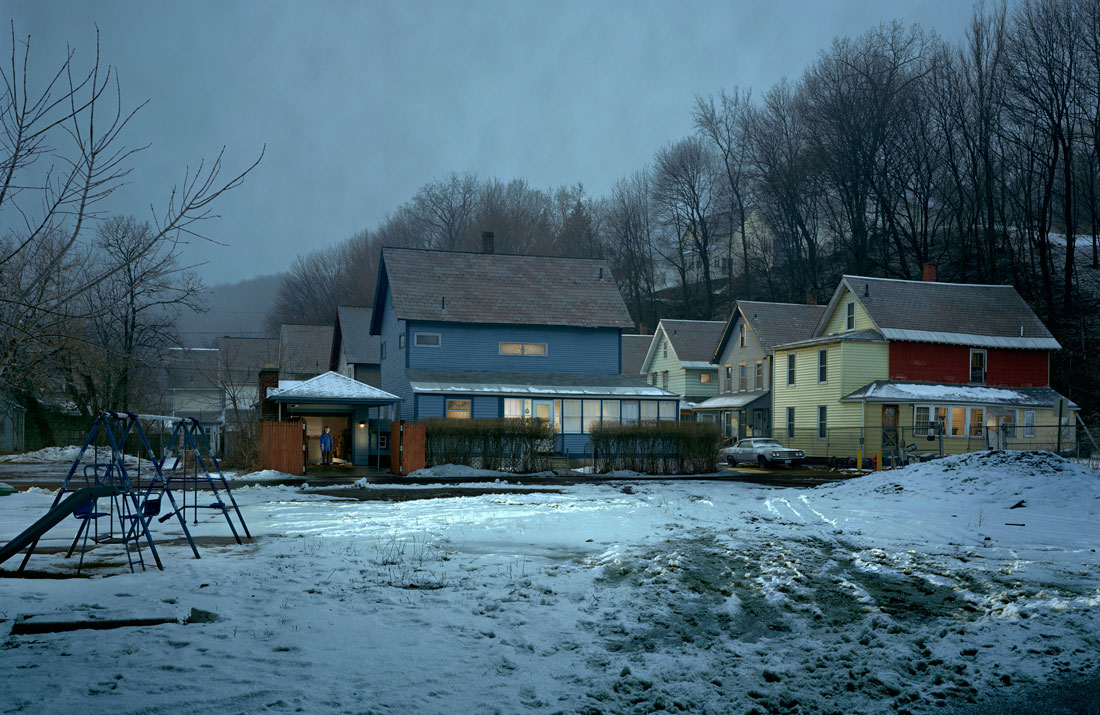
 

Gregory Crewdson (American, b. 1962) 'Untitled (Temple Street)' from the series 'Beneath the Roses' 2006


Gregory Crewdson (American, b. 1962)
Untitled (Temple Street)
From the series Beneath the Roses
2006
Digital carbon print
144.8 x 223.5cm
Gregory Crewdson, Courtesy Gagosian Gallery, New York
© Gregory Crewdson, 2010
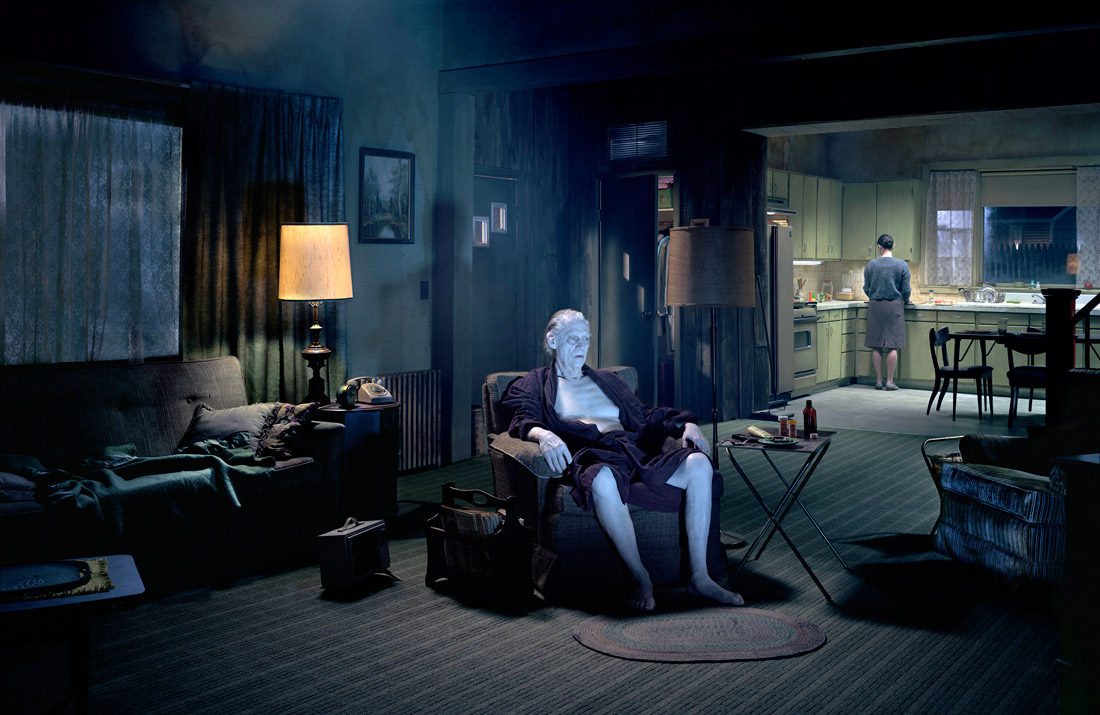
 

Gregory Crewdson (American, b. 1962) 'Untitled (The Father)' from the series 'Beneath the Roses' 2007


Gregory Crewdson (American, b. 1962)
Untitled (The Father)
From the series Beneath the Roses
Digital carbon print
144.8 x 223.5cm
Gregory Crewdson, Courtesy Gagosian Gallery, New York
© Gregory Crewdson, 2010
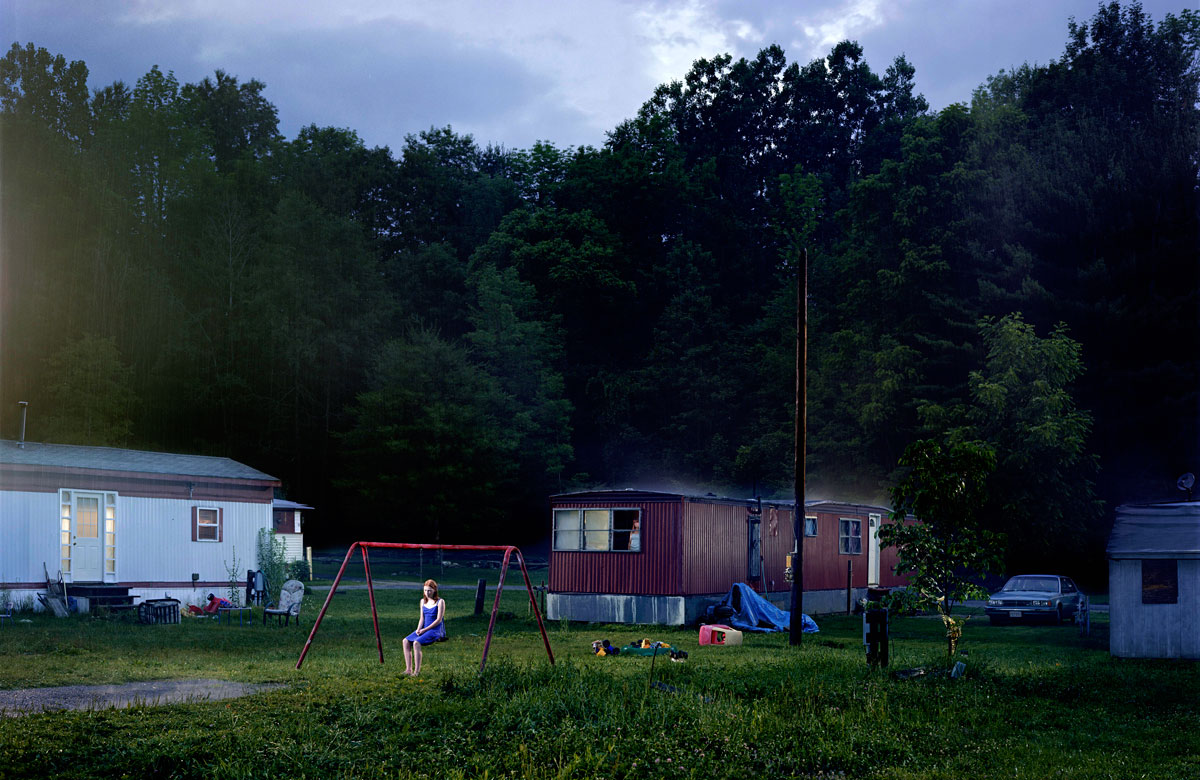
 

Gregory Crewdson (American, b. 1962) 'Untitled (Trailer Park)' from the series 'Beneath the Roses' 200


Gregory Crewdson (American, b. 1962)
Untitled (Trailer Park)
From the series Beneath the Roses
2007
Digital carbon print
144.8 x 223.5cm
Gregory Crewdson, Courtesy Gagosian Gallery, New York
© Gregory Crewdson, 2010
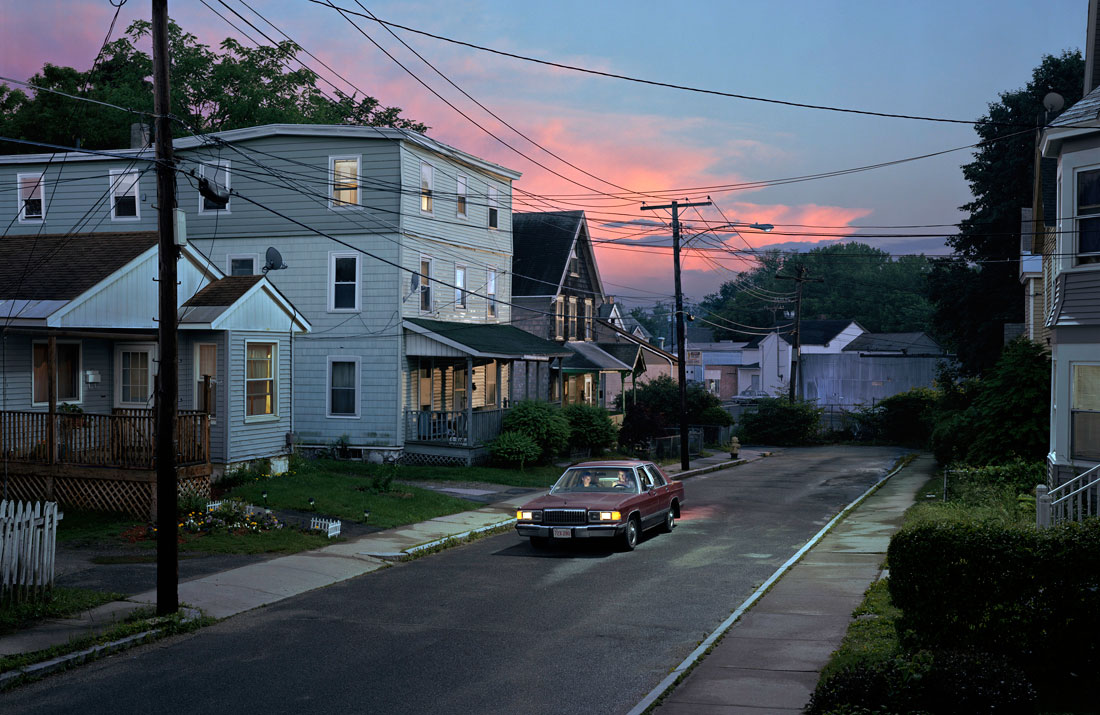
 

Gregory Crewdson (American, b. 1962) 'Untitled (Worthington Street)' from the series 'Beneath the Roses' 2006


Gregory Crewdson (American, b. 1962)
Untitled (Worthington Street)
From the series Beneath the Roses
2006
144.8 x 223.5cm
Gregory Crewdson, Courtesy Gagosian Gallery, New York
© Gregory Crewdson, 2010


Museum Frieder Burda
Lichtentaler Allee 8b
D-76530 Baden-Baden
Phone: +49 (0)7221 / 3 98 98-0

Opening hours:
Tuesday – Sunday 10am – 6pm
Closed Mondays

Museum Frieder Burda website

LIKE ART BLART ON FACEBOOK

Back to top

Review: ‘Stormy Weather: Contemporary Landscape Photography’ at NGV Australia, Melbourne

Exhibition dates: 24th September 2010 – 20th March 2011


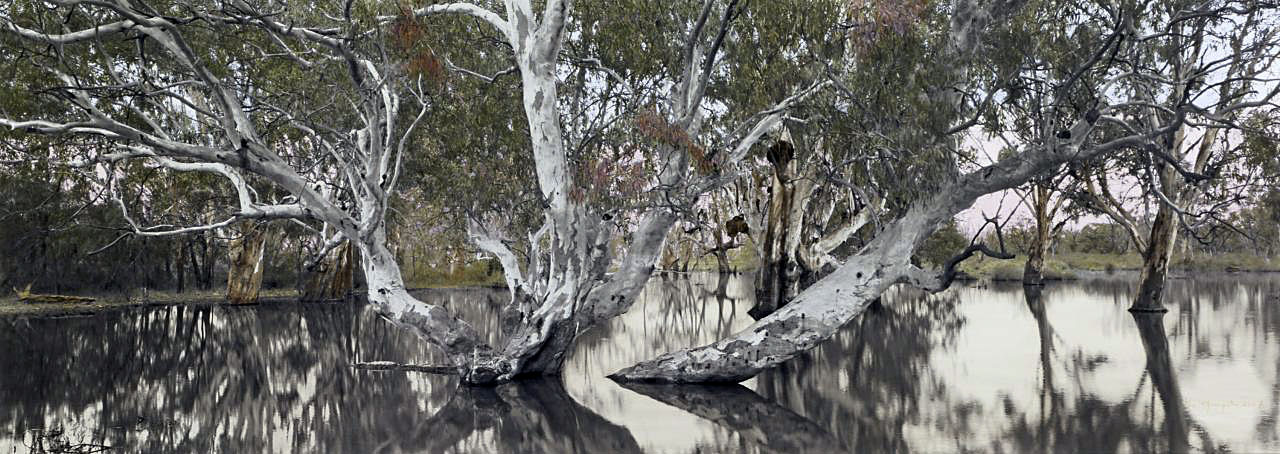
Nici Cumpston (Australian / Barkindji, b. 1963) 'Nookamka - Lake Bonney' 2007


Nici Cumpston (Australian / Barkindji, b. 1963)
Nookamka – Lake Bonney
2007
watercolour and coloured pencils on ink on canvas
74.2 x 203cm
National Gallery of Victoria, Melbourne
Purchased, Victorian Foundation for Living Australian Artists, 2008
© Nici Cumpston


“It is this irreversibly modified world, from the polar caps to the equatorial forests, that is all the nature we have.”


Simon Schama. Landscape and Memory 1


“The term “landscape” can be ambiguous and is often used to describe a creative interpretation of the land by an artist and the terrain itself. But there is a clear distinction: the land is shaped by natural forces while the artist’s act of framing a piece of external reality involves exerting creative control. The terms of this ‘control’ have be theorised since the Renaissance and, while representations of nature have changed over the centuries, a landscape is essentially a mediated view of nature.”


Dr Isobel Crombie 2


“And, finally, what of the vexed, interrelated matter of non-Aboriginal Australians’ sense of belonging? While the Australian historian Manning Clark speculated that European settlers were eternal outsiders who could never know ‘heart’s ease in a foreign land, because … there live foreign ancestral spirits’, it now seems plausible that non-Aboriginal Australians are developing their own form of attachment, not to land as such, but to place. Indeed, it has recently been argued that for contemporary non-Aboriginal Australians, belonging may have no connection with land at all. Perhaps this is one of the reasons why art photographs of the natural landscape have lost their currency and are now far outnumbered by photographs of urban and suburban environments – after all, it is ‘here’ that most Australians live and ‘there’ that the tourist industry beckons them to escape.”


Helen Ennis. Photography and Australia 3


This review took a lot of research, reading, thinking and writing, all good stuff – I hope you enjoy it!


Heavy Weather: Photography and the Australian Land(e)scape

There is nothing fresh about the work in this exhibition. If feels like all the oxygen has been sucked out of the term ‘landscape’, the land itself gasping for air, for life. What the exhibition does evince is an “undercurrent of disruption and contradiction that suggests that all is not as it may appear” (wall text) – and on this evidence the process of photographing the Australian landscape seems to have become an escape from the land, a fragmented and dislocated scoping, mapping and photographing of mental aspects of the land that have little to do with the landscape itself. Landscape as a site of psychological performance. In this sense, the title Stormy Weather should perhaps have been Heavy Weather for contemporary photographic artists seem to make heavy going of photographing our sense of belonging to land, to place.

Is it the artists or the curators that seek to name this work ‘landscape photography’ for it is about everything but the landscape – an escape from the land, perhaps even a denial of it’s very existence. I believe it is the framing of landscape and its imaging in terms of another subject matter. While I am not going to critique individual works in the exhibition, what I am interested in is this framing of the work as ‘landscape photography’.


Since colonial settlement there has been a rich history of photographing the Australian landscape. In the early colonial period the emphasis was on documenting the building of new cities and communities through realist photography and later more picturesque and panoramic vistas of the Australian land as settlers sought comfort in familiar surroundings and a sense of ‘belonging’ to the land (for example day trippers and photographers travelling to the Blue Mountains). Photographers rarely accompanied expeditions into the interior, unlike the exploration and mapping of the land from the East Coast to the West Coast in the United States. Unlike America there has been little tradition of photographing sublime places in Australia because they are not of the same scale as in the USA. It is very difficult to photograph the vast horizon line of the Australian outback and make it sublime. Photographing the landscape then ventured through Pictorialism in the interwar years, Modernism after WWII through to the emergence of art photography in the 1970s (for example see my posting on Dr John Cato), wilderness and tourist photography. An excellent book to begin to understand the history of photography in Australia is Photography and Australia by Helen Ennis (London: Reaktion Books, 2007) that contains the chapter “Land and Landscape.” As Ennis comments in this chapter, “… landscape photography has been the practice of settler Australians and the expression of a settler-colonial culture … The viewpoint in landscape photography has therefore been almost exclusively European”4 although this culture has been changing in recent years with the emergence of Indigenous photographers.

Ennis observes that contemporary landscape photographers embrace internationalist styles, showing a distaste for totalising nationalist narratives and a rejection of essentialist or absolutist viewpoints, noting that an overarching framework like multiculturalism has lost its currency in favour of transnationalism (which is a social movement grown out of the heightened interconnectivity between people and the loosening of boundaries between countries) that does not disavow colonial inequalities and asymmetrical relations between countries and continents.5 Photographers have developed a “photographic language that allows for the expression of the contradictions inherent in contemporary settler Australians’ relations with the land,”6 whilst offering visual artists a “non-linear, non-didactic way of dealing with the complexities of Australia history and experience, and the relationship between past and present.”7

This much then is a given. Let us now look at the framing of the work in the exhibition as ‘landscape photography’.


Simon Schama in his erudite book Landscape and Memory (New York: Vintage, 1996) believes that there can never be a natural or neutral landscape (even the brilliant meadow-floor [at Yosemite] which suggested to its first eulogists a pristine Eden was in fact the result of regular fire-clearances by its Ahwahneechee Indian occupants) and that it is our shaping perception that makes the difference between raw matter and landscape. There was also a recognition that ‘nature’ was neither neutral nor beyond ideology during the 1970s-1980s. Hence there is a double mediation – by both nature and the artist.

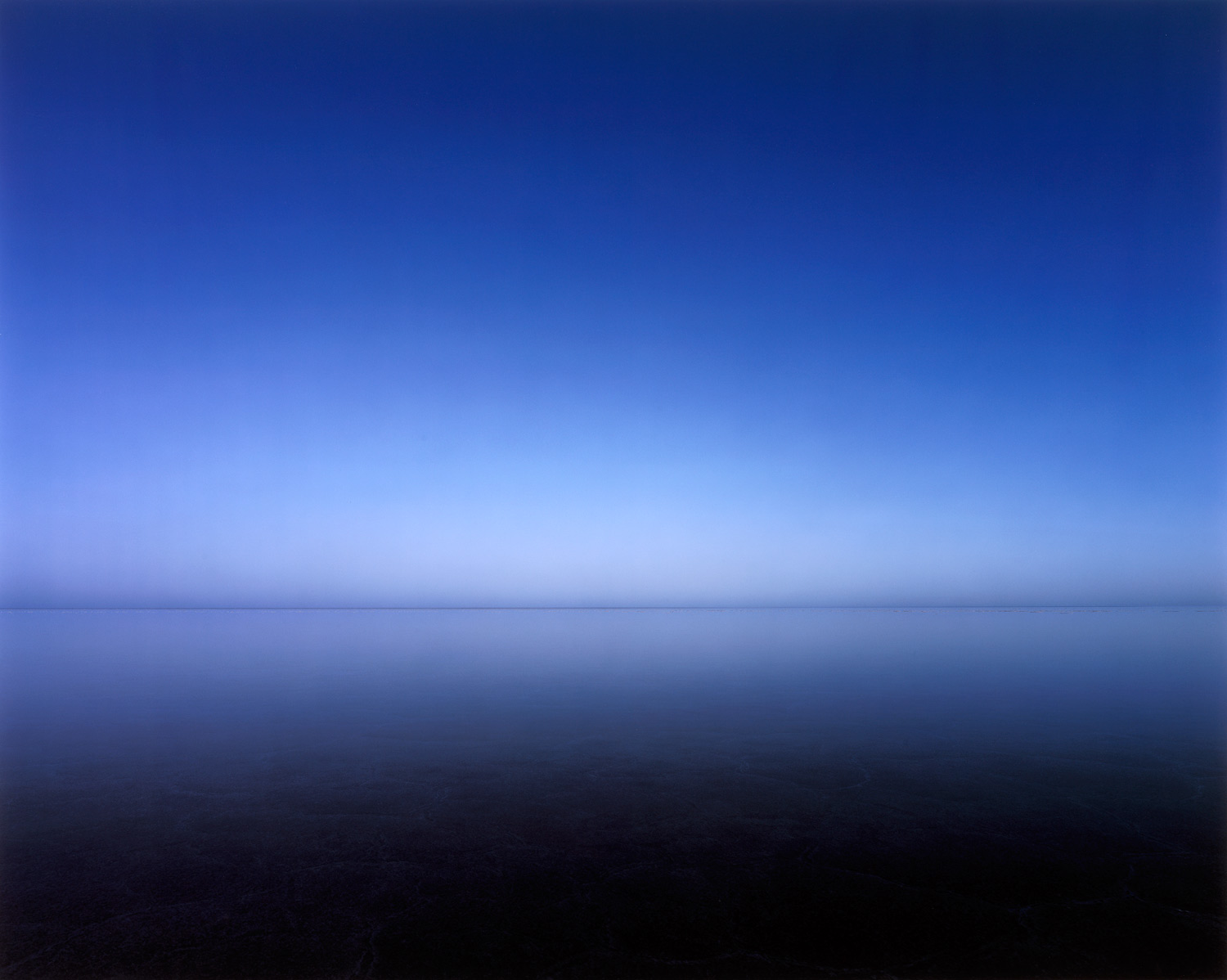
Despite the rejection of essentialist or absolutist viewpoints by contemporary photographers and an acknowledgment of the mediated view by/of nature one can say that there is not a single photograph in this exhibition that is just a ‘landscape’. Even the most sublime photographs in the exhibition, David Stephenson’s (Self-portrait), Reflected moon, Tasmania (1985) is cut up into a grid, or Murray Fredericks Salt photographs (2005, see below) where the photographer has waited agonisingly for weeks for just the right weather conditions to take his photographs which the general public, when visiting Lake Eyre, would have no chance of ever seeing. Through this mediation there seems to have emerged an abrogation or denial of landscape by the artists and curators conceptualisation of it, as though they are performing a particular condition, a style; working out a plan of what to do and say. Is it just a denial or is it an artistic strategy?

I believe that these are strategies that limit artists, not strategies that enable them. The curators are equally implicated in these strategies by their naming of these works ‘landscapes’. What purpose does this naming serve, in terms of the development of a sense of place, not nation, that people living in Australia seek to have? We can ask the question: Where do you stand in relationship to the landscape both philosophically and geographically?

After Butler, we can also ask: What forms of cultural myth making are “embedded” in the framing of landscape by the curators, the naming of such work as ‘landscape photography’?


Rarely is the framing recognised for what it is, when it is the viewer interpreting the interpretation that has been imposed upon us, that limits the visual discourse, producing a view of Australian landscape as fragmented norms enacted through visual narrative frames – that in this case efface the representation of land and place. This conceptual framing of what the work is about limits the grounds for discourse for a frame excludes as much as it corrals. The curators form an interpretative matrix of what is seen (or not seen, or withheld), reinforcing notions of landscape photography, the ‘landscape photography’ “that requires a certain kind of subject that actually institutes that conceptual requirement as part of its description and diagnosis.”8 In other words the description ‘landscape photography’ established by the curators becomes a limiting, self-fulfilling prophecy.

Personally, I think the problem with a landscape exhibition is that this is virtually an inane topic. Somehow “documentary” works as a topic because it is about a mental discipline. But “landscape” is no longer really a topic – it used to be a topic when landscape painters wanted to show the landscape (!) but does anyone really want to show this today? Even when the landscape painters wanted to show the sublime, the landscape was always treated with deference. No-one thinks of Minor White as a landscape photographer for he was a metaphysical photographer. And that’s what this exhibition needs – another word to give sense to a photographers efforts.

This is difficult subject matter. While artists may reject essentialist or absolutist viewpoints what has been substituted in their place is a framing, a definition that is post-nature, that undermines any sense of belonging to land, to place. The dissolutive pendulum has swung too far the other way; we look to theory to be inclusive and sometimes stand on our heads to achieve this to our detriment.

As of this moment we are not at the point where we can look back with some certainty and see that we have reached the beginning of the path of understanding. What I would propose to any artist is a photography that is broadly based, cumulative, offering a layered body of work that builds and refers back to an original body of work, much like the photographs of Robert Adams – photographs that do not make claims but ask questions and hint at a more responsive engagement with the landscape.

My hope is that a more broadly based view of place and our sense of belonging to the land emerges, one that challenges our contemporary understanding of the landscape, a viewpoint and line of sight that calm our troubled sense of reality. Robert Adams has written eloquently about photography and the art of seeing. Here is a quote from his seminal book Why People Photograph (Aperture Foundation, 1994) that aptly concludes this review.

“At our best and most fortunate we make pictures because of what stands in front of the camera, to honor what is greater and more interesting than we are. We never accomplish this perfectly, though in return we are given something perfect – a sense of inclusion. Our subject thus redefines us, and is part of the biography by which we want to be known.”9

Dr Marcus Bunyan


Many thankx to Jemma Altmeier and the National Gallery of Victoria for allowing me to publish the photographs in the posting. Please click on the photographs for a larger version of the image.

Addendum

Further to my argument above there is a session ‘Australian Identity: Australian Bio-diversity and the Landscape of the Imagination’ at the Festival of Ideas, Friday June 17th 2011 at the University of Melbourne where, in the details of the upcoming session, Ian Burn has been quoted about the loss of the landscape:

Details of the session: ‘The connection between landscape and national identity figures prominently in discussions of Australian experience. Recently the pairing of the two has taken a melancholic turn; artist Ian Burn has remarked that ‘A commitment to representing the landscape has come to be about the “loss” of the landscape’. Has the landscape that once supported the Australian legend disappeared? The landscape is represented not only in art but also through science, law and commerce. Are new landscapes and new identities now being imagined and discovered?’

Quotation: “The idea of landscape does not just invoke rival institutional discourses, but today attracts wider and more urgent reflections. A commitment to representing the landscape has become about the ‘loss’ of landscape in the twentieth century … that is about its necessity and impossibility at the same time. Seeing a landscape means focusing on a picture, implicating language in our seeing of the landscape.”

Burn, Ian quoted in Stephen, Ann (ed.,). Artists think: the late works of Ian Burn. Sydney: Power Publications in association with Monash University Gallery, Melbourne, 1996, p. 8.

Footnotes

1/ Schama, Simon. Landscape and Memory. New York: Vintage, 1996, p. 7

2/ Crombie, Isobel. Stormy Weather. Contemporary Landscape Photography (exhibition catalogue). Melbourne: National Gallery of Victoria, 2010, p. 15

3/ Clark, Manning quoted by Peter Read in “A Haunted Land No Longer? Changing Relationships to a Spiritualised Australia,” in Australian Book Review CCLXV (October 2004) pp. 28-33 in Ennis, Helen. “Land and Landscape,” in Photography and Australia. London: Reaktion Books, 2007, pp. 71-72

4/ Ennis, Helen. “Land and Landscape,” in Photography and Australia. London: Reaktion Books, 2007, pp. 51-52

5/ Ennis, Helen. “Land and Landscape,” in Photography and Australia. London: Reaktion Books, 2007, p. 123, p. 133

6/ Ibid., “Land and Landscape,” pp. 71-72

7/ Ibid., “Localism and Internationalism,” p. 128

8/ Butler, Judith. Frames of War: When is Life Grievable? London: Verso, 2010, p. 161

9/ Adams, Robert. Why People Photograph. New York: Aperture Foundation, 1994, p. 179


Nici Cumpston (Australian / Barkindji, b. 1963) 'Flooded Gum, Katarapko Creek, Murray River National Park' 2007


Nici Cumpston (Australian / Barkindji, b. 1963)
Flooded Gum, Katarapko Creek, Murray River National Park
2007
Watercolour and pencil on inkjet print on canvas
74.5 x 202.5cm
National Gallery of Victoria, Melbourne
Purchased, Victorian Foundation for Living Australian Artists, 2008
© Nici Cumpston


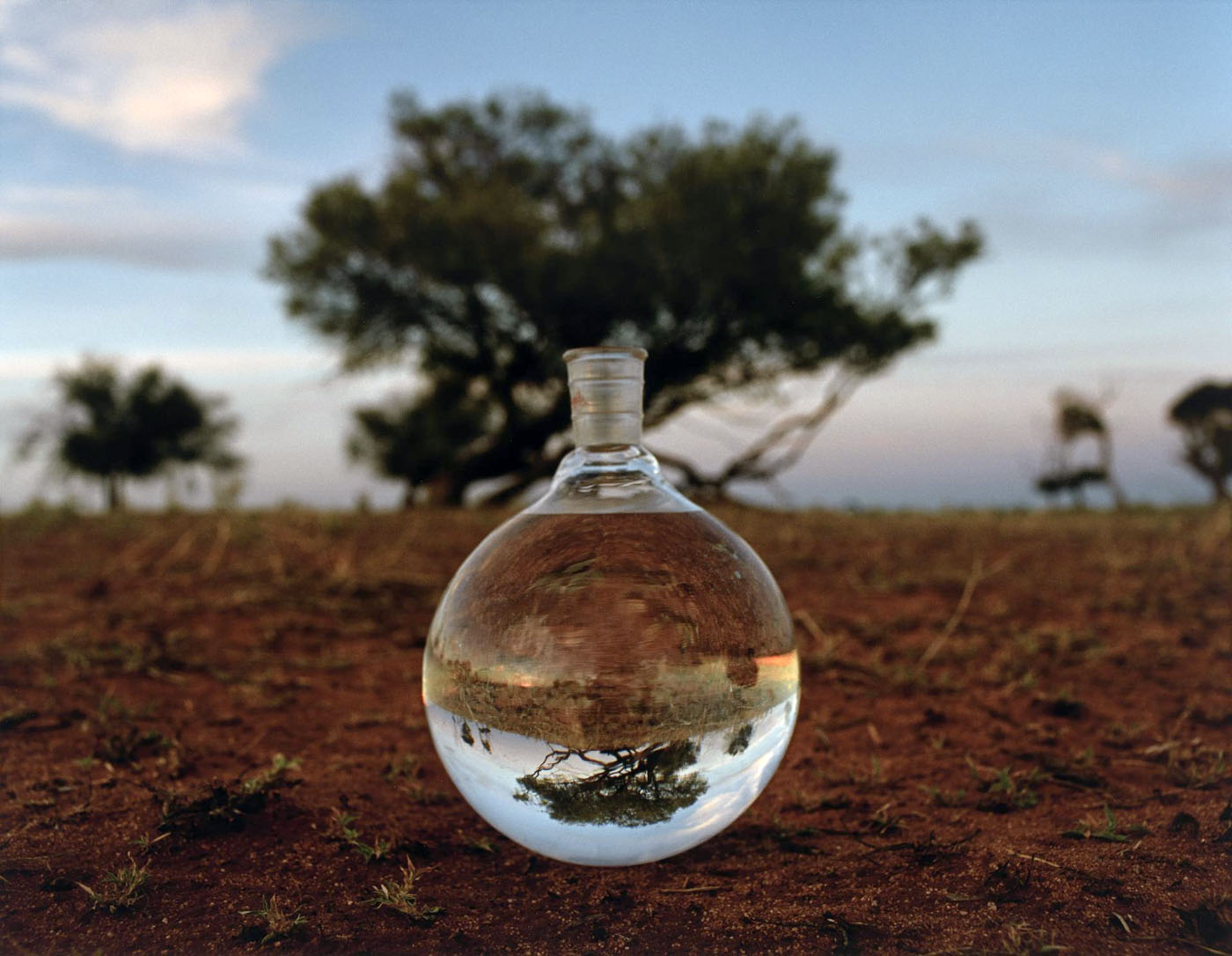
Stephanie Valentin (Australian, b. 1962) 'Earthbound' 2009


Stephanie Valentin (Australian, b. 1962)
Earthbound
2009
from the Earthbound series
inkjet photograph
70 x 90cm
National Gallery of Victoria, Melbourne
Purchased with funds donated by Phillip Ross and Sophia Pavlovski-Ross, 2009
© Stephanie Valentin


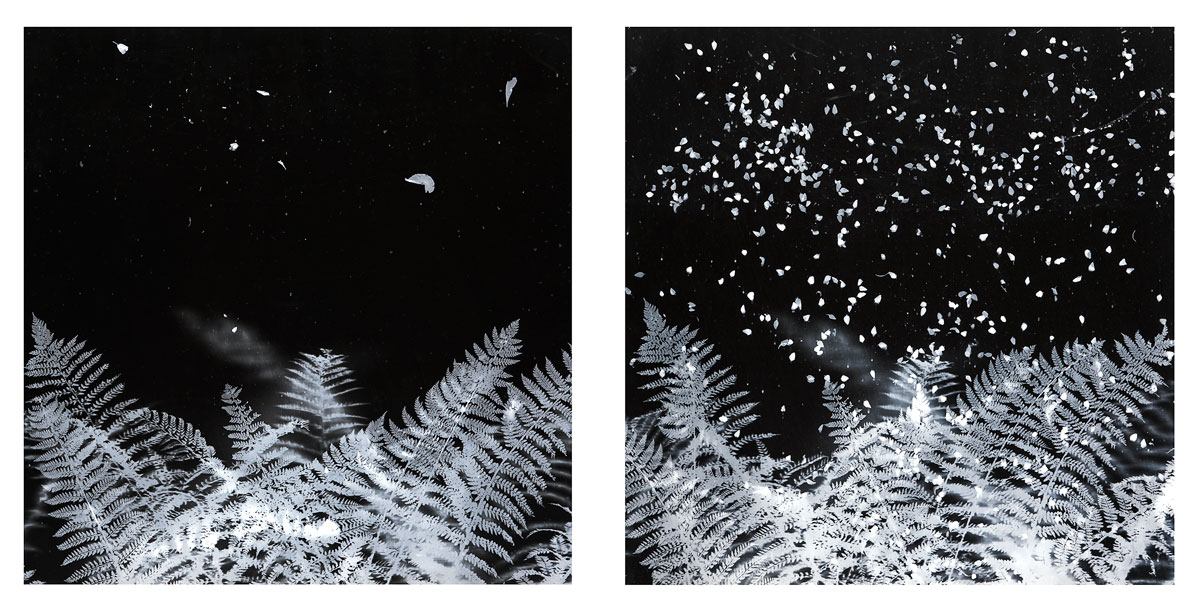
Harry Nankin (Australian, b. 1953) 'Of Great Western tears / Duet 2' 2006


Harry Nankin (Australian, b. 1953)
Of Great Western tears / Duet 2
2006
From The rain series 2006-2007
Gelatin silver photographs
(a-b) 107.1 x 214.3cm (overall)
National Gallery of Victoria, Melbourne
Purchased NGV Foundation, 2007
© Harry Nankin


Stephanie Valentin (Australia, b. 1962) 'Rainbook' 2009


Stephanie Valentin (Australia, b. 1962)
Rainbook
2009
From the earthbound series 2009
Colour inkjet print
69.9 x 86.9cm
National Gallery of Victoria, Melbourne
Purchased with funds donated by Philip Ross and Sophia Pavlovski-Ross, 2009
© Stephanie Valentin


Murray Fredericks (Australia, b. 1970) 'Salt 154' 2005


Murray Fredericks (Australia, b. 1970)
Salt 154
2005
From the Salt series 2003-
Colour inkjet print
119.3 x 149.3cm
National Gallery of Victoria, Melbourne
Purchased, Victorian Foundation for Living Australian Artists, 2009
© Murray Fredericks


Siri Hayes (Australia, b. 1977) 'Plein air explorers' 2008


Siri Hayes (Australia, b. 1977)
Plein air explorers
2008
Type C photograph
104.3 x 134.8cm
National Gallery of Victoria, Melbourne
Purchased, Victorian Foundation for Living Australian Artists, 2009
© Siri Hayes


The work of the contemporary Australian photographers highlighted in this exhibition comes from a profound engagement with the lived landscape around them. The quiet intensity of their work comes from their close and sustained relationship to particular environments. These photographers may use that lived observation to reveal the layers of history in a landscape; to provoke ecological concerns; as the place for site specific performances; or to use the specific poetics of light to reveal the beauty of a place.  However for all of them, the real world is the starting point for images of particularity.

Photographers’ interest in the landscape has increased in the last few years. Perhaps as a result of heightened environmental awareness, or an evolution in our engagement with Australian history, practitioners are again turning to the natural world as a site for critical practice and inspiration.

Drawn from the permanent collection the National Gallery of Victoria, the selected photographers in this exhibition have a particular focus that comes from their active relationship to various environments. The artists displayed here reveal history in a landscape; provoke ecological concerns; use the landscape as a site of performance; or reveal the distinctive beauty of a place.

Frequently underpinning these works of quiet intensity and considerable beauty is an undercurrent of disruption and contradiction that suggests all is not as it may first appear.

Text from the National Gallery of Victoria website [Online] Cited 26/02/2011 no longer available online


Rosemary Laing (Australia, b. 1959) 'weather #9' 2006


Rosemary Laing (Australia, b. 1959)
weather #9
2006
From the weather series 2006
Type C photograph
109.9 x 184.6cm
National Gallery of Victoria, Melbourne
Purchased, Victorian Foundation for Living Australian Artists, 2007
© Rosemary Laing and Tolarno Galleries, Melbourne


Jill Orr (Australia , b. 1952, lived in the Netherlands 1980-1984) 'Southern Cross to bear and behold - Burning' 2007)


Jill Orr (Australia , b. 1952, lived in the Netherlands 1980-1984)
Southern Cross to bear and behold – Burning
2007
Colour inkjet print
65.5 x 134.9cm
National Gallery of Victoria, Melbourne
Purchased, Victorian Foundation for Living Australian Artists, 2010
Photographer: Naomi Herzog for Jill Orr
© Jill Orr


The Ian Potter Centre: NGV Australia
Federation Square

Corner of Russell and 
Flinders Streets, Melbourne

Opening hours:
Open daily 10am – 5pm

National Gallery of Victoria website

LIKE ART BLART ON FACEBOOK

Back to top

Exhibition: ‘Painting on paper – Josef Albers in America’ at Pinakothek der Moderne, Munich

Exhibition dates: 16th December 2010 – 6th March 2011


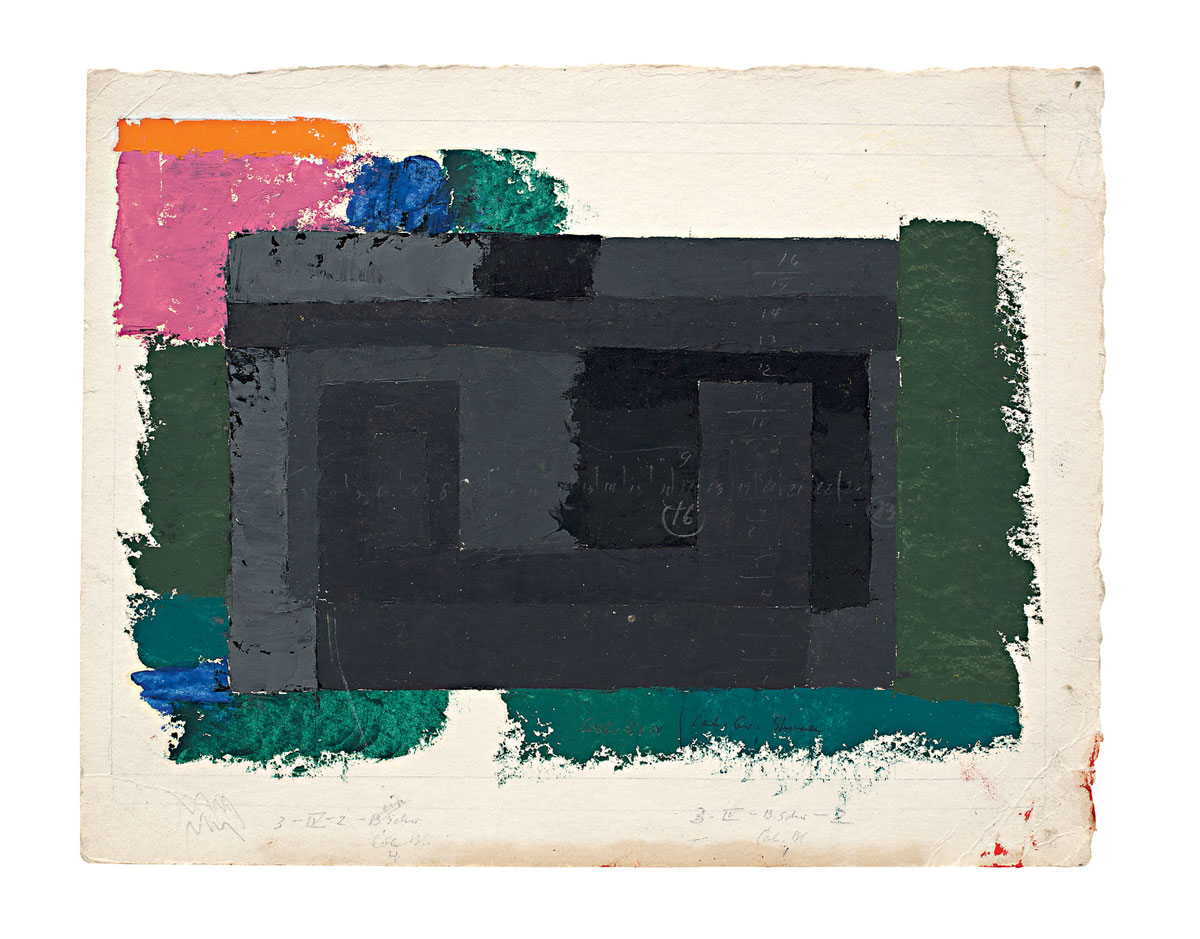
Josef Albers (German, 1888-1976) 'Study for a Adobe' c. 1947


Josef Albers (German, 1888-1976)
Study for a Adobe
c. 1947
Oil and graphite on blotting paper
24.1 × 30.5cm
The Josef Albers Museum Quadrat Bottrop
© 2010 The Josef and Anni Albers Foundation/VG Bildkunst, Bonn/Artists Rights Society, New York


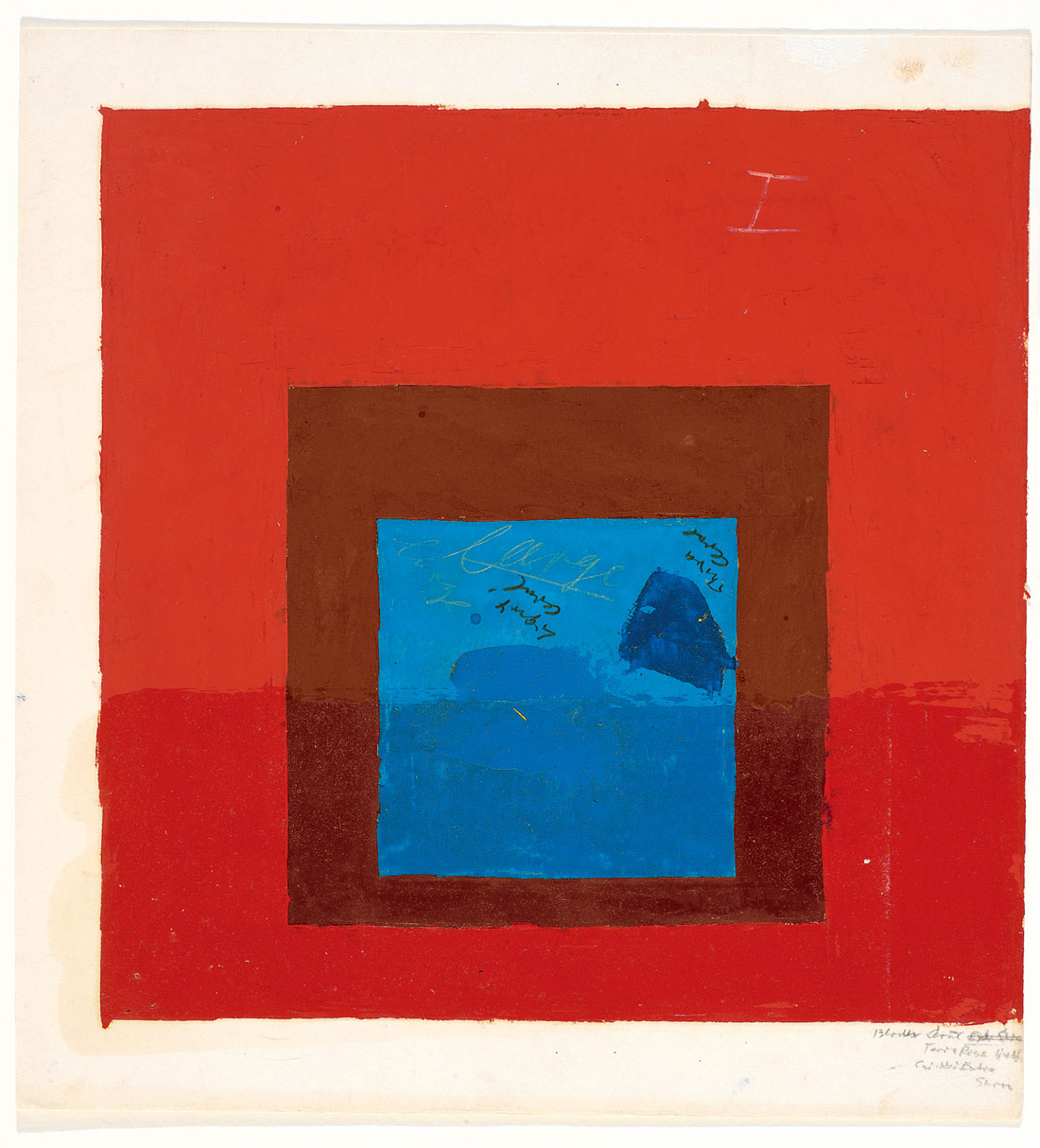
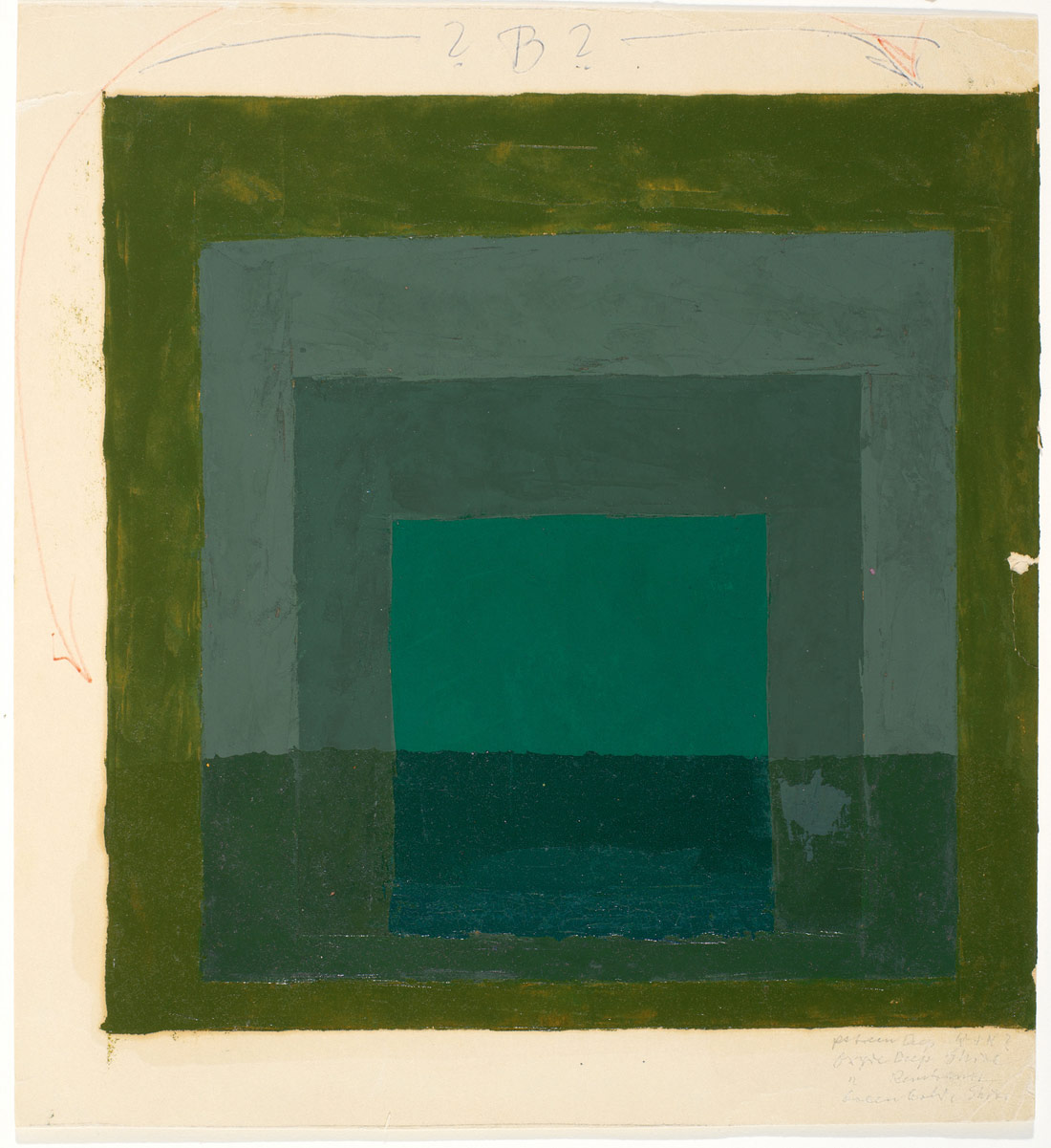
I really like the work of Josef Albers and these paintings on paper, studies for later work, give insight into that rare quality of Albers – his ability to mould, no that’s not the right word – his ability to accrete colours and spaces together, to build tectonic plates of colour that collide and burst against each other forming an “osmosis of plane and space.” These harmonic oscillations of vibrant colour form a pleasing equilibrium in the mind, freeing the viewer from conceptual thought and allowing us to enter a different state of being. It is fascinating to me that he painted these studies on blotting paper as the paper seems to soak up the colours, intensifying their existence.

Dr Marcus Bunyan


Many thankx to Pinakothek der Moderne for allowing me to publish the photographs of the art in the posting. Please click on the photographs for a larger version of the image.


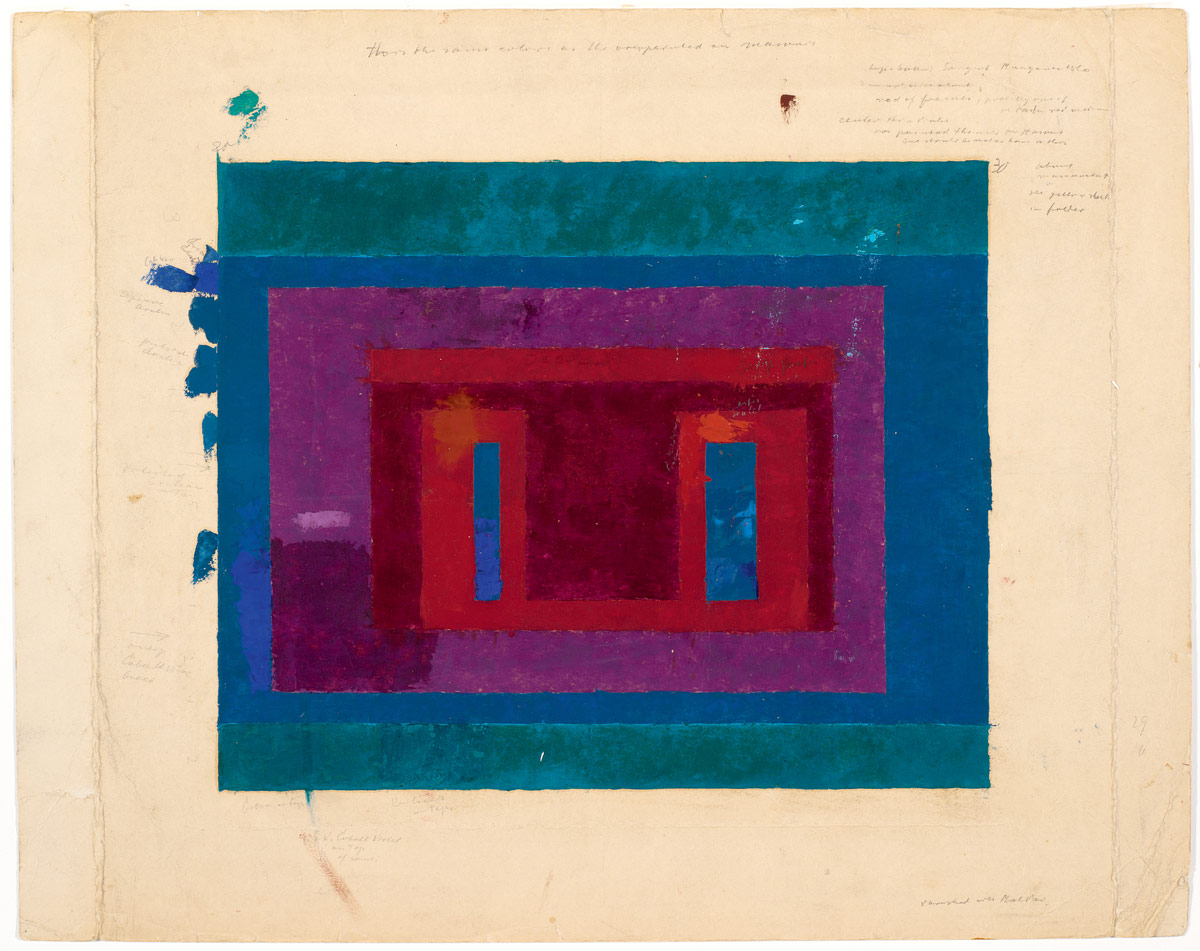
Josef Albers (German, 1888-1976) 'Color Study for a Variant / Adobe' Nd


Josef Albers (German, 1888-1976)
Color Study for a Variant / Adobe
Nd
Oil on blotting paper
48.2 × 60.9cm
The Josef and Anni Albers Foundation
© 2010 The Josef and Anni Albers Foundation/VG Bildkunst, Bonn/Artists Rights Society, New York


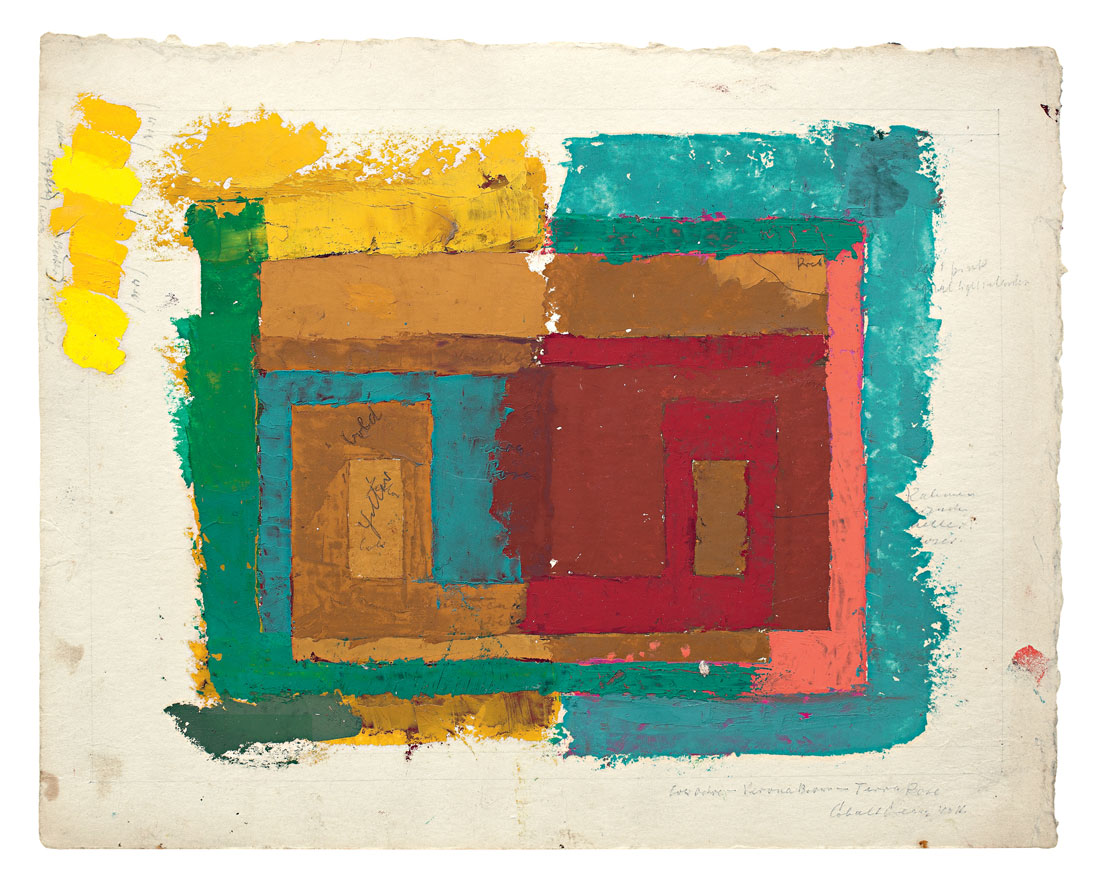
Josef Albers (German, 1888-1976) 'Study for a Variant / Adobe (I)' c. 1947


Josef Albers (German, 1888-1976)
Study for a Variant / Adobe (I)
c. 1947
Oil on blotting paper with pencil
24.1 × 30.6cm
The Josef and Anni Albers Foundation
© 2010 The Josef and Anni Albers Foundation/VG Bildkunst, Bonn/Artists Rights Society, New York


The exhibition is the first to show such a concentration of paintings on paper by Josef Albers, some of which will be completely unknown to the general public. Works in oil on paper, painted by the artist since the 1940s in preparation for the Adobe and Variant series in particular, are presented together with a large group related to his principal work “Homage to the Square” from the artist’s late period, that he focused on from 1950 until his death in 1976.

Josef Albers was only able to fully develop into an important artist and influential teacher after emigrating to the USA. From around 1940 onwards, Albers was inspired by Mexico’s pre-Columbian architecture, sculpture and textile art that boosted his sense for the aesthetic and led to idiosyncratic, radiant colour compositions, the likes of which had never been seen at that time in European modern art. Around 1950, Albers discovered what was for him the ideal formal shape of colour – the square.

The works exhibited surprise the viewer with their spontaneity, their search for immediacy and the extraordinary delicacy of their colours. Albers studied the interaction of colours like virtually no other. Through his works on paper in particular it can be seen in detail how the artist achieved such a thorough osmosis of plane and space through increasing the density of the colours used.

Text from the Pinakothek der Moderne website


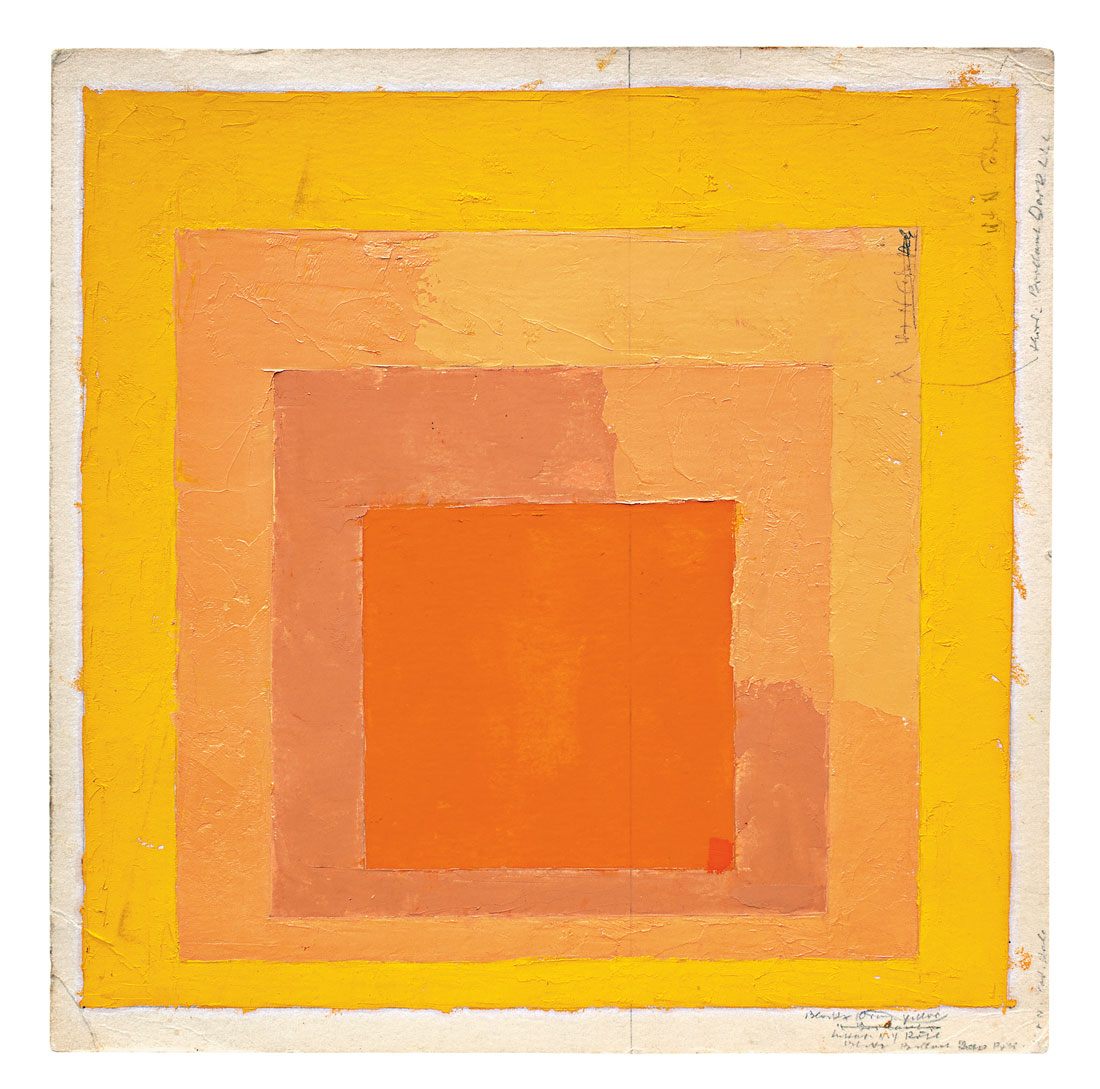
Josef Albers (German, 1888-1976) 'Color Study for Homage to the Square' Nd


Josef Albers (German, 1888-1976)
Color Study for Homage to the Square
Nd
Oil and graphite on blotting paper with varnish
30.5 × 30.5cm
The Josef Albers Museum Quadrat Bottrop
© 2010 The Josef and Anni Albers Foundation/VG Bildkunst, Bonn/Artists Rights Society, New York


Josef Albers (German, 1888-1976) 'Color Study for Homage to the Square' Nd


Josef Albers (German, 1888-1976)
Color Study for Homage to the Square
Nd
Oil on blotting paper
33.2 × 30.9cm
The Josef and Anni Albers Foundation
© 2010 The Josef and Anni Albers Foundation/VG Bildkunst, Bonn/Artists Rights Society, New York


Josef Albers (German, 1888-1976) 'Color Study for Homage to the Square' Nd


Josef Albers (German, 1888-1976)
Color Study for Homage to the Square
Nd
Oil on blotting paper with varnish
33.6 × 30.4cm
The Josef and Anni Albers Foundation
© 2010 The Josef and Anni Albers Foundation/VG Bildkunst, Bonn/Artists Rights Society, New York


Pinakothek Der Moderne
Barer Strasse 40
Munich

Gallery hours:
Daily except Monday 10am – 6pm
Thursday 10am – 8pm

Pinakothek der Moderne website

LIKE ART BLART ON FACEBOOK

Back to top

Review: ‘Unnerved: The New Zealand Project’ at NGV International, Melbourne

Exhibition dates: 26th November 2010 – 27th February, 2011

A Queensland Art Gallery Touring Exhibition


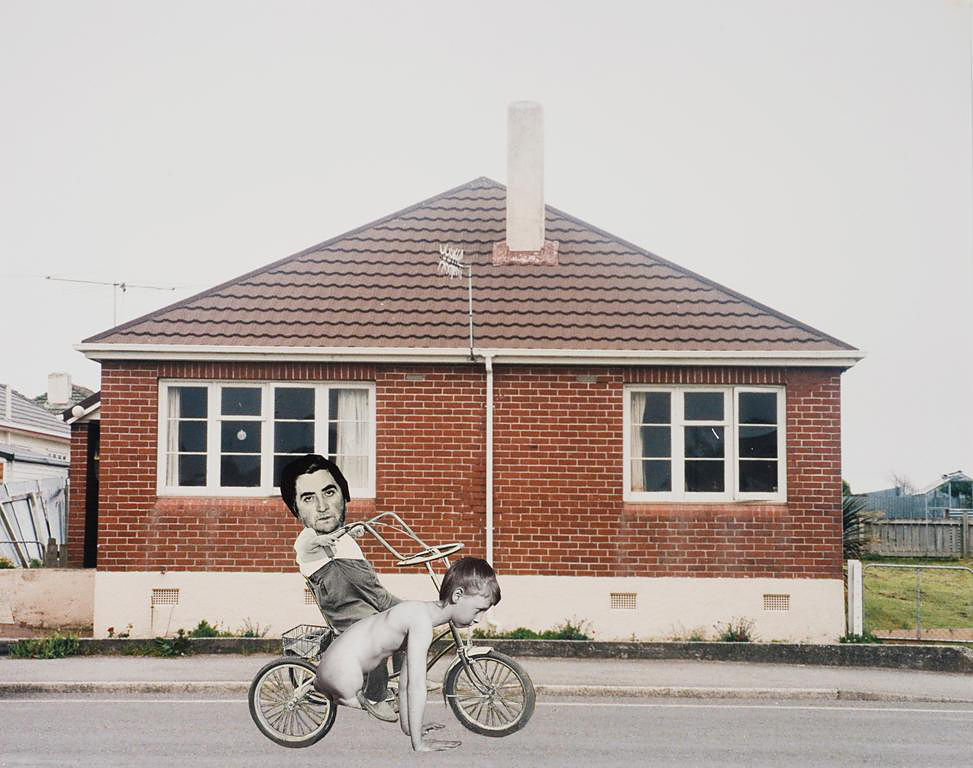
Ava Seymour (New Zealand, b. 1967) 'Sate Highway 1' 1997 from the exhibition 'Unnerved: The New Zealand Project' at NGV International


Ava Seymour (New Zealand, b. 1967)
State Highway I
1997
From Health, happiness and housing series
Colour photograph of a photomontage


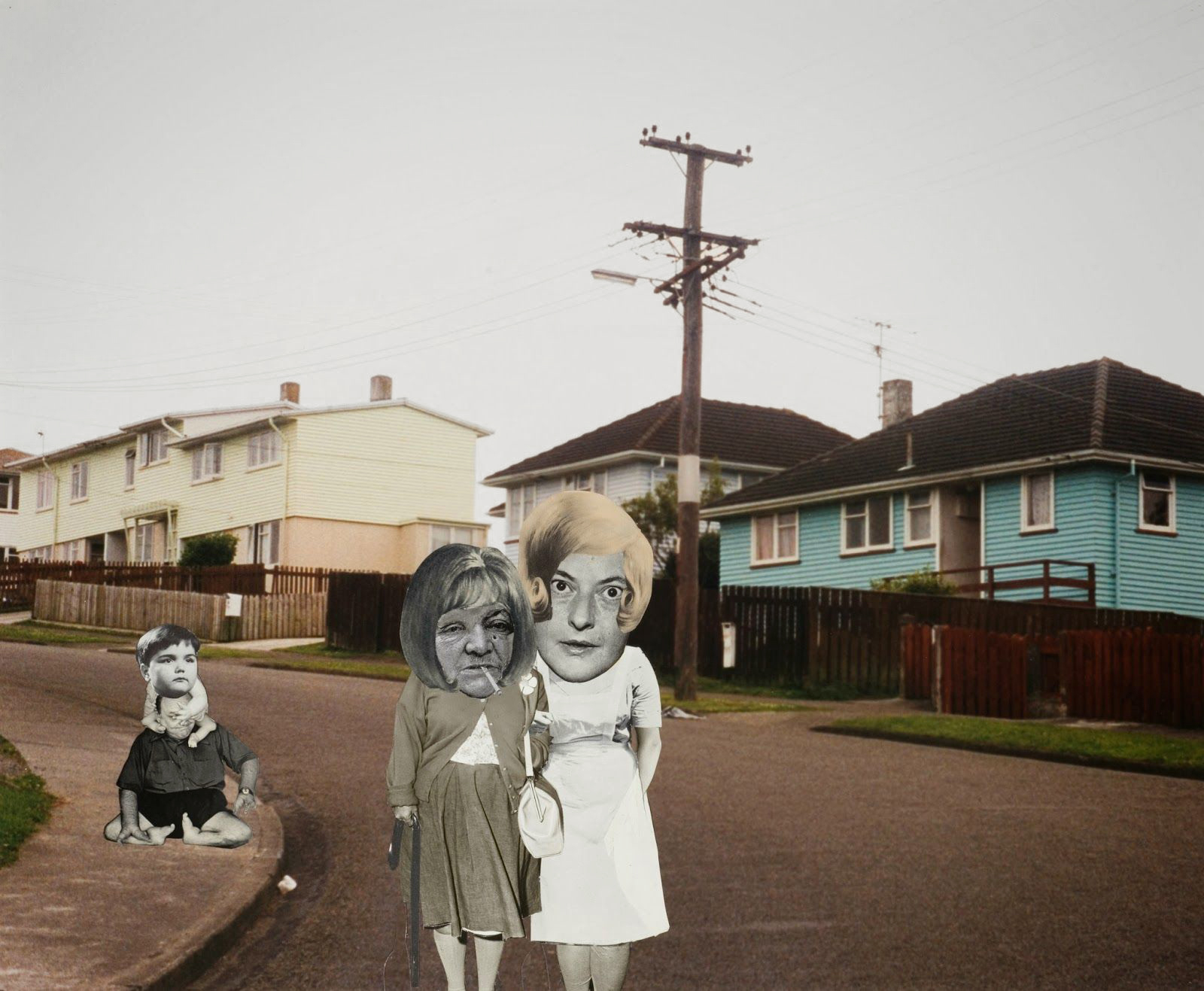
Ava Seymour (New Zealand b. 1967) 'Day Care Walkabouts' 1997 from the exhibition 'Unnerved: The New Zealand Project' at NGV International


Ava Seymour (New Zealand b. 1967)
Day Care Walkabouts
1997
From Health, happiness and housing series
Photomontage on colour photograph


New Zealand art adrift in a myriad of stories and symbols – not a brave ‘new world’

This is an underwhelming group exhibition of over 100 works drawn from the Queensland Art Gallery collection, a show to wander around on a lazy weekend afternoon and not get too excited about. The large number of works in the exhibition make it impossible to review each work individually (although I critique some works below) but one does get an overall sense of the investigation by New Zealand artists into their history, place, culture and identity. While there are a few good works in the exhibition there are also some very mediocre works as well and, other than a few splashes of self-deprecating humour (such as the wonderful The Horn of Africa (2006) by Michael Parekowhai, below) it all seems importantly earnest: an exhibition for serious people (apologies to Oscar Wilde).

On the evidence of this exhibition the country of New Zealand must be a very unnerving place to live, mainly because their artists can’t seem to keep their hand off it – cultural history that is.

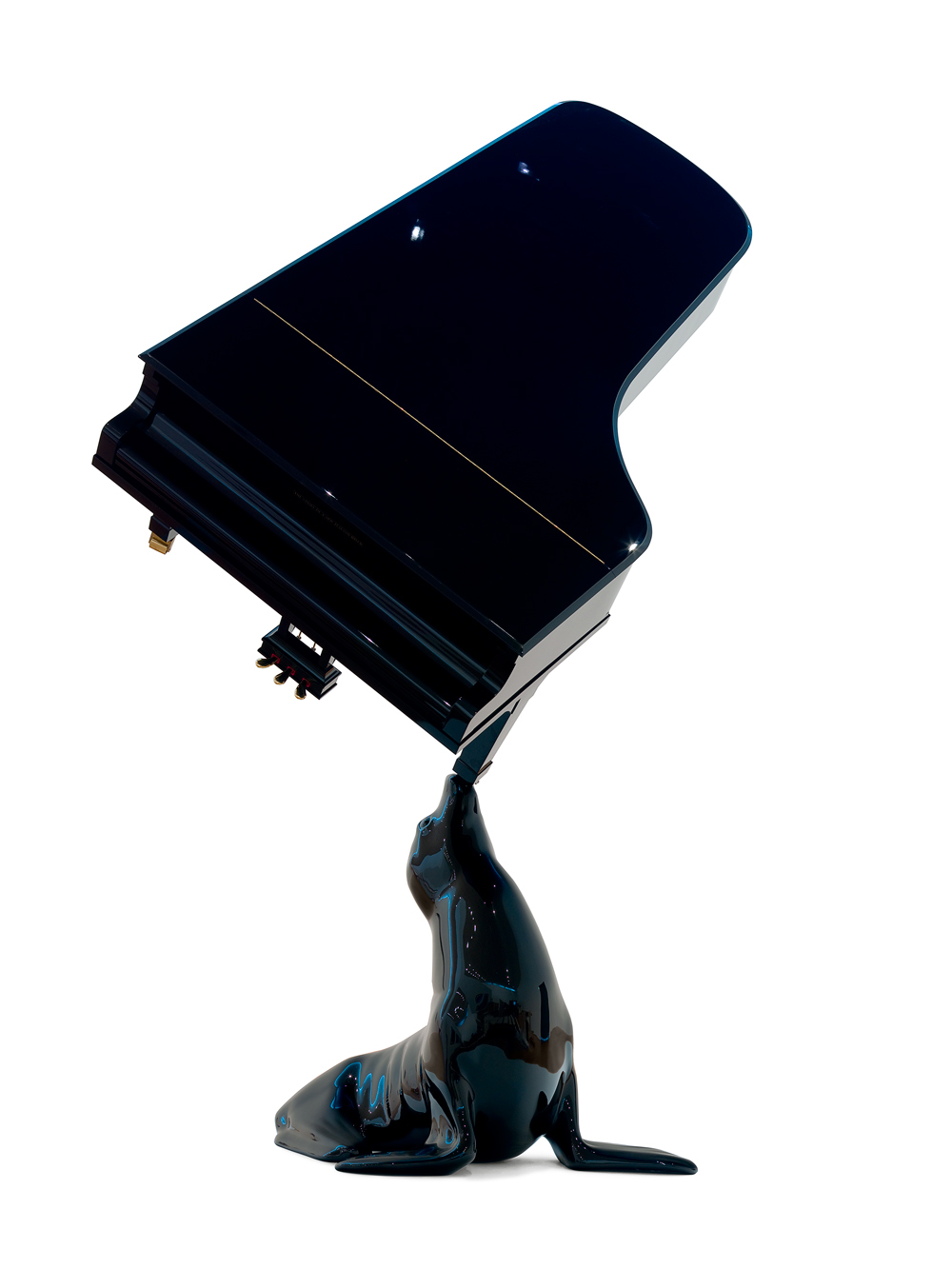
Throughout this exhibition we have psychological unease, physical unease, a little humour, parody, poetry, symbology, allegory, mythology, colonialism, post-colonialism, nationalism, commercialisation, representation, anthropology, travel, landscape, topography, advertising, first contact, sacred spaces, indigenous politics, Māori culture, Pacific Islander culture, pakeha (non-indigenous) culture, tools, guns, rabbits, seals, pianos, traditional tattoos, tourist sites and museums, surfing, suburbia, personal journeys, family albums, androgyny, identity, public housing, ambiguous states, hyperreality, surreality, dislocation, disenfranchisement, alienation, bodies, portraits, subjects, past, present, future (and more!)

Ronnie van Hout exhibits three atmospheric, eerie, dark photographs of constructed model landscapes: of a Nazi doodlebug and the words ABDUCT and HYBRID. The wall text tries, unsuccessfully, to link the images to the obscure and haunted landscapes of New Zealand – a very long bow to draw indeed. Bill Cuthbert’s “nice” photographs offer generalised statements of light and place but really don’t take you anywhere and in fact could have been taken anywhere. The wall text offers that the photographs are a “self-conscious, critical response” to the dismantling of colonial ideas of empire and nation … this is art speak gobbledygook at its worst trying to justify basic photography.

Mark Adams panoramic photograph of one of the sites of first contact – an important historical moment of encounter between Māori and pakeha (non-Māori people of European descent) – are a beautiful photograph of a sound and mountains that has then been dissected, fragmented and individually framed and then mounted unevenly on the gallery wall – just to make sure we get the point about the ‘nature’ of the scenery and its cultural implications. Lonnie Hutchinson’s cut wall work Cinco “offers an interplay between paper and space and explores the ‘va’ or space between – a relation between the Samoan people and the landscape saturated with the dialogue of our ancestors … being adrift in a sea of memories caused by feelings related to cultural loss and uncertainty.” I know how they feel: adrift, underwhelmed by the art and overwhelmed by the text.

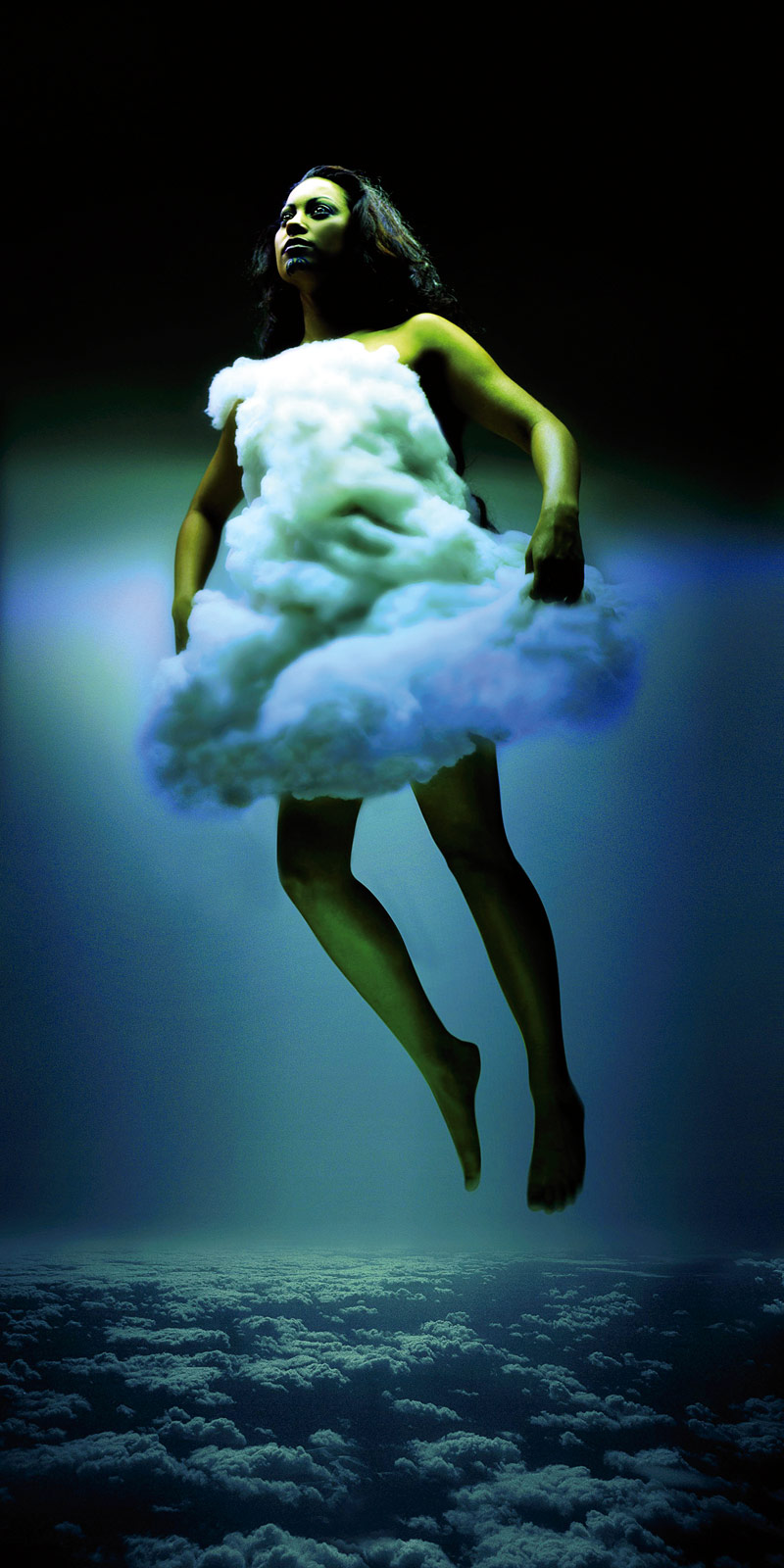
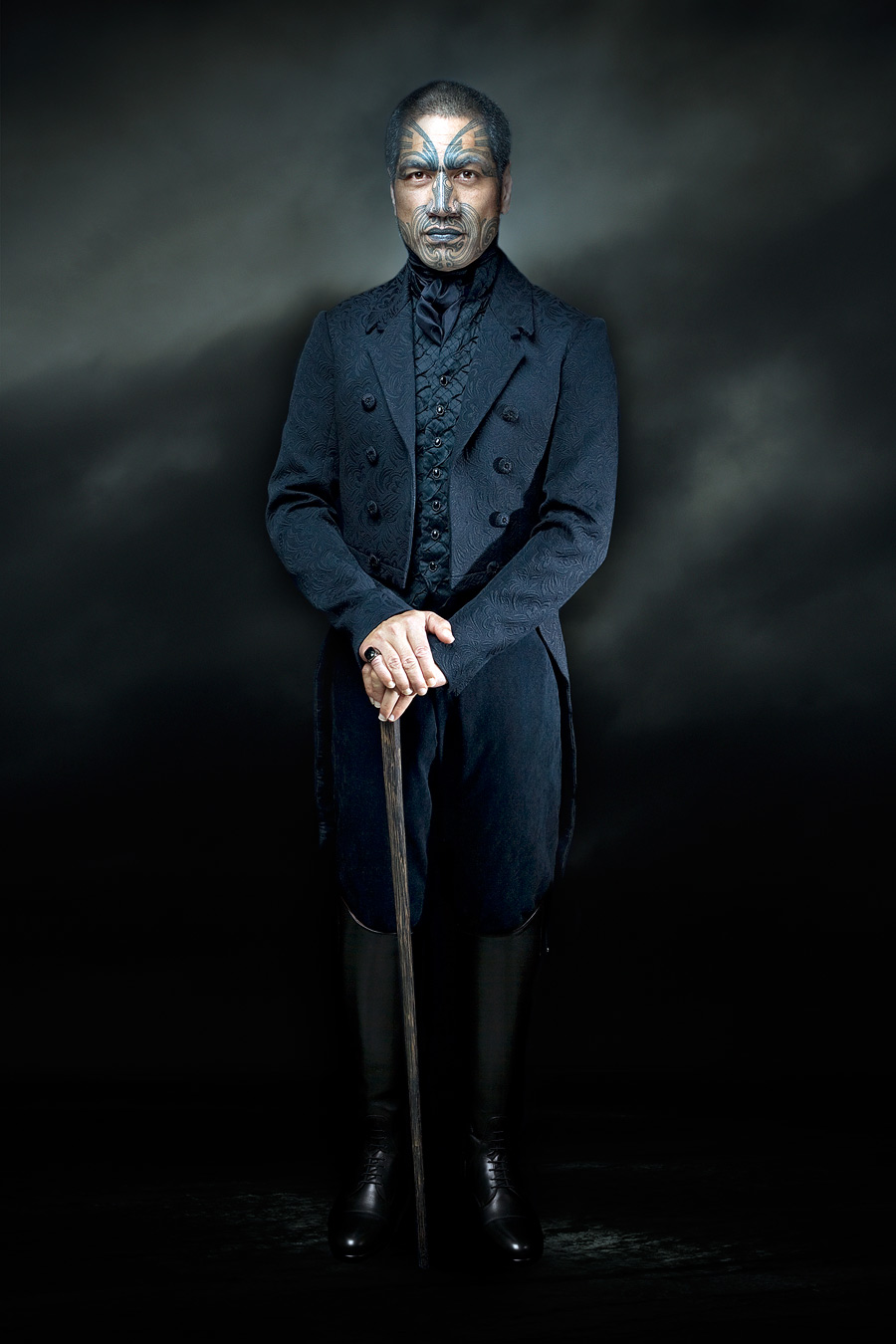
Other than the striking photograph of the Dandy (2007, below) Lisa Reihana’s series Digital Marae (2001- ) also fails to inspire. The marae is a highly structure space where Māori families come together – an outdoor, cleared area, a communal or sacred place which serves religious and social purposes in Polynesian societies. Here can be found male sculptures called poupou featuring diverse forms of masculinity, Māori gods and goddesses. The elder Mahuika, while sometimes described as male, is deliberately depicted in her female state in this series. In Reihanna’s digital interpretation of the marae her gods and goddesses become slick, media-inspired glossy magazine type images printed large, mounted on aluminium and lit for maximum theatrical effect. The unstructured spaces behind the figures have no context, no placement and give lie to the inspiration for the series (a highly structured space) and, as such, they land with a commercial thud onto the cleared earth.

The lowest point in the exhibition must be reserved for the 80 photographs of the series ‘The homely’ (1997-2000) by Gavin Hipkins. Usually when reviewing I refrain from saying anything bad about works of art. Robert Nelson in The Age describes the series as “visually and conceptually incoherent.” Taken over 4 years and supposedly “examining notions of nationhood that are unstable and fractured” Hipkins describes it as “a post-colonial gothic novel.” !!

The series features flat, one-dimensional images of symbols: sculptures, closed doors, open doors, flags, people, repeating circles and vertical elements – where the aggregate of all the images is supposed to MEAN SOMETHING. These are the most simple, most basic of year 12 images formed into a sequence that is conceptually irrelevant in terms of its symbolism and iconography vis a vis the purported critical examination it seeks to undertake. This artist needs to look at the sequences of Minor White to see how a master artist puts photographs together – not just in terms of narrative but the meaning in the spaces between the images, their spiritual resonance – or if wanting to be more literal, study that seminal book The Americans by Robert Frank to see how to really make a sequence.

On to better things. For me the absolute gem of this exhibition were the photomontages of Ava Seymour from her ‘Health, happiness and housing’ series (see photographs above). These are just fantastic! Featuring as a backdrop photographs of state houses built in the 1950s and 60s Seymour assembles her cast of characters – composite figures of found limbs, bodies and faces taken from old medical text books – and creates stark, psychological sites of engagement. The can be seen as family portraits, social documents of unseen alienation and dis-enfranchisement with communities and also a comment on the conduct of the welfare system and state housing, but in their ironic, self-deprecating humour they become so much more. Even though they use old photographs the artist recasts them ingenuously to become something new, a new space that the viewer can step into, unlike most of the work in this exhibition.

Most artists in this exhibition seem intent on a form of cultural excavation to make their work, digging and rooting around in cultural history and memory to find “meaning”, to make new forms from old that actually lead nowhere. They excavate symbols and signs and reform them hoping for what, exactly? All that appears is work that is stunted and fragmented, chopped up dislocations that offer nothing new in terms of a way forward for the culture from which these histories and memories emerge. There is no holistic, healing vision here, only a series of mined observations that fragment, distort and polarise, descending into the decorative, illustrative or the commercial. The same can be said of some Australian art (including the exhibition Stormy Weather: Contemporary Landscape Photography at NGV Federation Square that I will review next). As Robert Nelson succinctly observed in his review of this exhibition in The Age (Wednesday, December 29th, 2010), this exhibition “reveals a weakness that also exists in our scene: fertile tricks and noble intentions, but patchy skill or poetic imagination for connecting them.” Well said.

“”When the soul wants to experience something she throws out an image in front of her and then steps into it.” (Meister Eckhart) It is an evocation of the image as a threshold leading to new dimensions of meaning. Symbolic images are more than data; they are vital seeds, living carriers of possibility.”1


New dimensions of meaning, vital seeds, living carriers of possibility. Everyone of us is a living, breathing embodiment of cultural history and memory. We know that intimately in our bones, as human beings. What artists need to do is observe this legacy but offer a way forward, not constantly excavating the past and hoping this is enough when creating work. These are not new spaces to step into! The cohabitation of indigenous and ethnically mixed non-indigenous cultures in both Australia and New Zealand requires this holistic forward looking vision. It is a redemptive vision that is not mired in the symbols and archetypes of the past but, as Australia writer David Malouf envisages it, ‘a dream history, a myth history, a history of experience in the imagination’.2 It is a vision of the future that all post-colonial countries can embrace, where a people can come to know their sense of place more fully.

Rather than an escapist return to the past perhaps a redemptive vision of New Zealand’s cultural future, a history of experience in the imagination, would be less insular and more open to the capacity to wonder.

Dr Marcus Bunyan


1/ Ronnberg, Ami (ed.,). “Preface,” in The Book of Symbols. Cologne: Taschen, 2010, p. 6

2/ Footnote 6. Daniel, Helen. “Interview with David Malouf,” in Australian Book Review (September , 1996), p. 13 quoted in Ennis, Helen. “The Presence of the Past,” in Photography and Australia. London: Reaktion Books, 2007, p. 141


Many thankx to Jemma Altmeier for her help and to the National Gallery of Victoria for allowing me to publish the photographs in the posting. Please click on the photographs for a larger version of the image.


Lisa Reihana (Ngāpuhi: Ngāti Hine, Ngāi Tu New Zealander, b. 1964) 'Hinepukohurangi' 2001 from the exhibition 'Unnerved: The New Zealand Project' at NGV International


Lisa Reihana (Ngāpuhi: Ngāti Hine, Ngāi Tu New Zealander, b. 1964)
Hinepukohurangi
2001
From Digital Marae 2001-
Cibachrome photograph mounted on aluminium
200 x 100cm
Purchased 2002
© Lisa Reihana


Lisa Reihana (Ngāpuhi: Ngāti Hine, Ngāi Tu New Zealander, b. 1964) 'Dandy' 2007 from the exhibition 'Unnerved: The New Zealand Project' at NGV International


Lisa Reihana (Ngāpuhi: Ngāti Hine, Ngāi Tu New Zealander, b. 1964)
Dandy
2007
From Digital Marae 2001-
Colour digital print mounted on aluminium
200 x 120cm
Queensland Art Gallery, Brisbane
Purchased 2008 with funds from the Estate of Vincent Stack through the Queensland Art Gallery Foundation Queensland Art Gallery, Brisbane
© Lisa Reihana


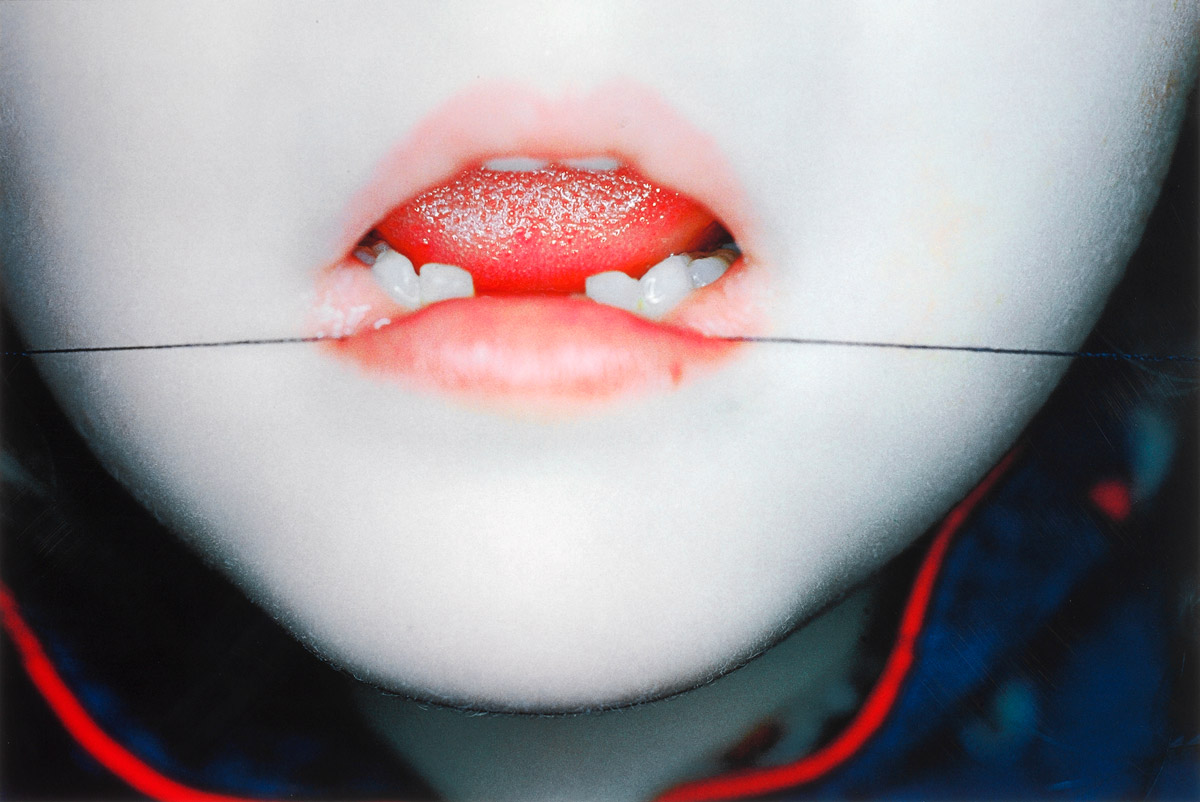
Yvonne Todd (New Zealander, b. 1973) 'January' 2005 from the exhibition 'Unnerved: The New Zealand Project' at NGV International


Yvonne Todd (New Zealander, b. 1973)
January
2005
From the Vagrants’ reception centre series
Light jet photograph
100 x 73.8cm
Queensland Art Gallery, Brisbane
Purchased 2007. Queensland Art Gallery Foundation Grant
©Yvonne Todd


Michael Parekowhai (Ngāti Whakarongo New Zealander, b. 1968) 'Kapa Haka (Whero)' 2003 from the exhibition 'Unnerved: The New Zealand Project' at NGV International


Michael Parekowhai (Ngāti Whakarongo New Zealander, b. 1968)
Kapa Haka (Whero)
2003
Automotive paint on fibreglass
188 x 60 x 50cm
Queensland Art Gallery, Brisbane
Purchased 2009 with funds from Tim Fairfax AM, through the Queensland Art Gallery Foundation
© Michael Parekowhai


The National Gallery of Victoria today opened a major exhibition celebrating the extraordinary work of 26 contemporary New Zealand artists in Unnerved: The New Zealand Project.

Unnerved explores a particularly rich, dark vein found in contemporary New Zealand art. The psychological or physical unease underlying many works in the exhibition is addressed with humour, parody and poetic subtlety by artists across generations and mediums. Bringing together more than 100 works ranging from intimate works on paper to large scale installations by both established and emerging artists, Unnerved engages with New Zealand’s changing social, political and cultural landscape as the country navigates its indigenous settler and migrant histories. These works explore a changing sense of place, the continued importance of contemporary Maori art, biculturalism, a complex colonial past, the creative reworking of memory, and the often interconnected mediums of performance, photography and video. If the vision is unsettling, it is also compelling and Unnerved: The New Zealand Project offers us new ways of seeing one of our closest neighbours.

This fascinating exhibition explores a rich and dark vein found in contemporary art in New Zealand, drawing on the disquieting aspects of New Zealand’s history and culture reflected through more than 100 works of art.

Jane Devery, Coordinating Curator, NGV said: “The works presented in Unnerved reveal a darkness and distinctive edginess that characterises this particular trend in New Zealand contemporary art. The psychological or physical unease underlying many works in the exhibitions is addressed with humour, parody and poetic subtlety.

The exhibition reflects the strength and vitality of contemporary art in New Zealand with works created by both established and emerging artists, across a range of mediums including painting, photography, sculpture, installation, drawing, film and video.

Unnerved engages with New Zealand’s changing social, political and cultural landscape, exploring a shifting sense of place, complex colonial past, the relationships between contemporary Māori, Pacific Islander and pakeha (non-indigenous) culture, and the interplay between performance, video and photography,” said Ms Devery.

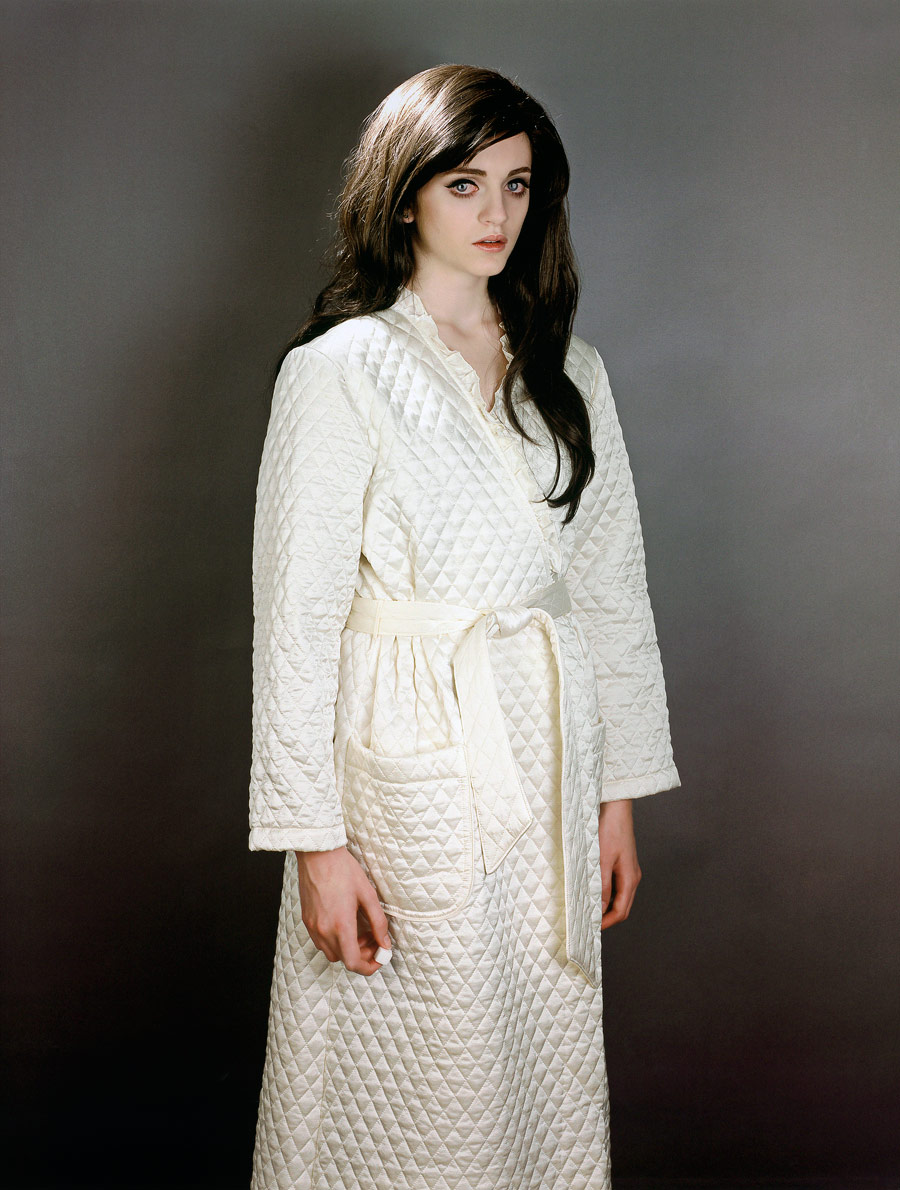
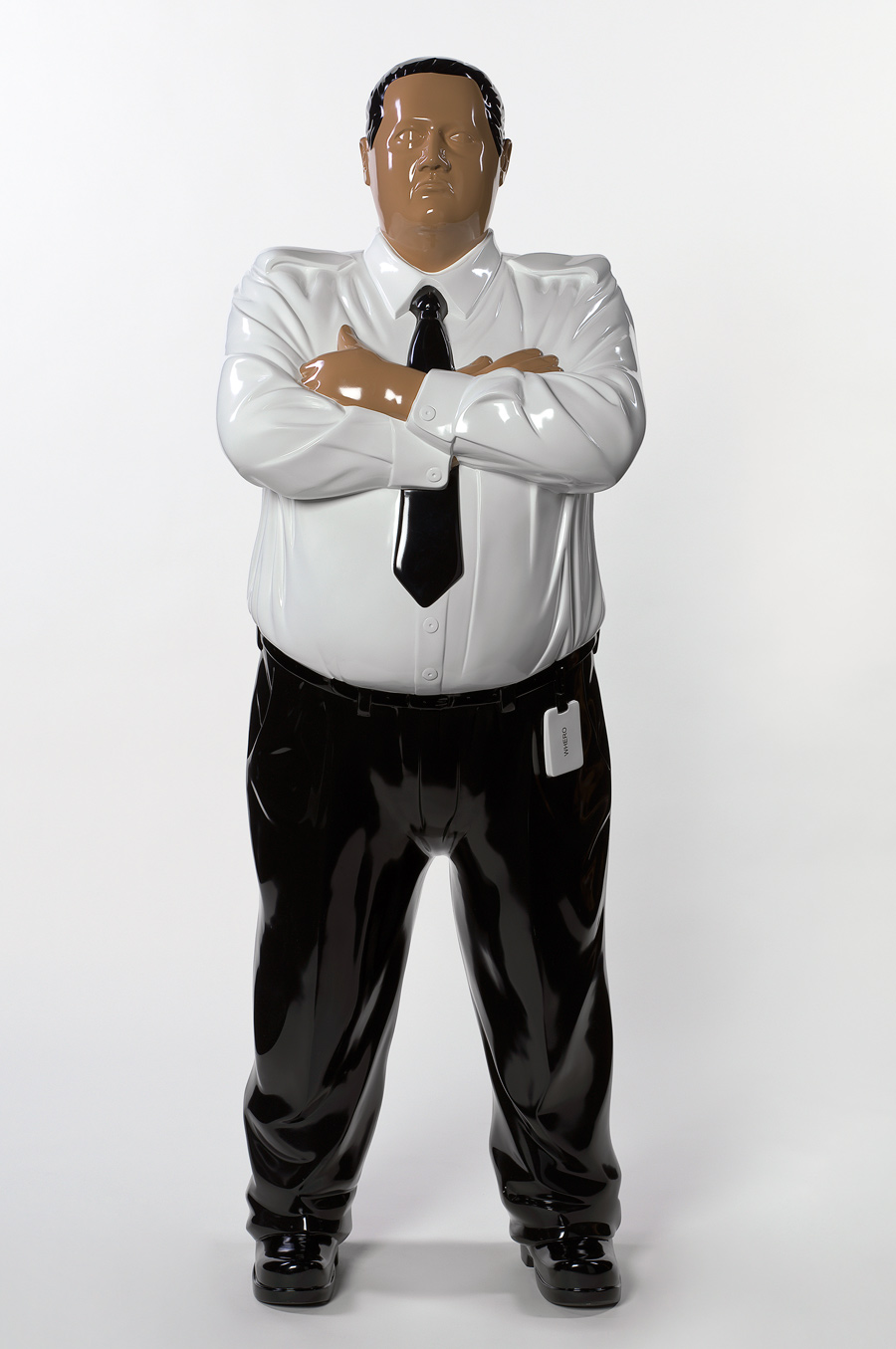
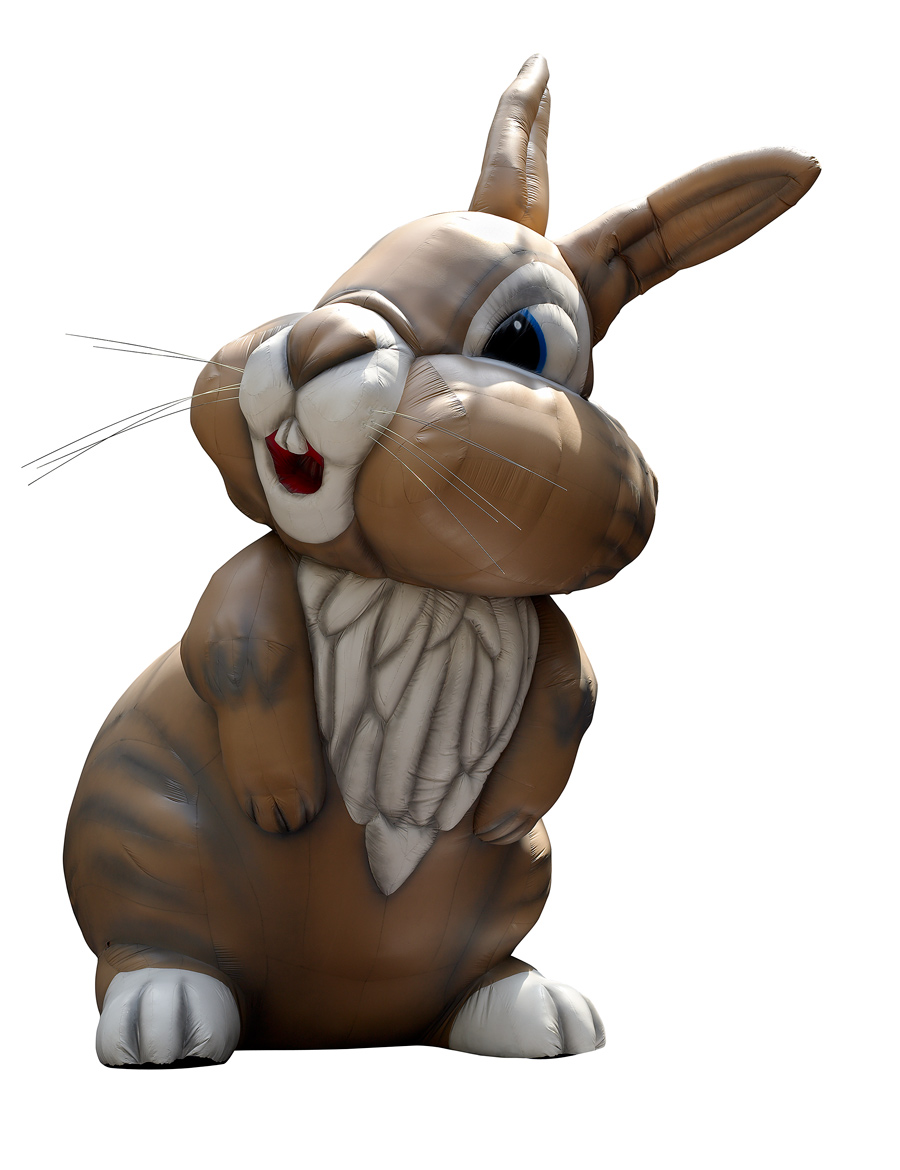
A highlight of the exhibition is a group of sculptural works by Michael Parekowhai including his giant inflatable rabbit, Cosmo McMurtry, which will greet visitors to the exhibition, and a spectacular life-size seal balancing a grand piano on its nose titled The Horn of Africa. Also on display are a series of haunting photographs by Yvonne Todd, whose portrait photography often refers to B-grade films and pulp fiction novels.

Gerard Vaughan, Director, NGV said this exhibition demonstrates the NGV’s strong commitment to interesting and challenging contemporary art secured from around the world; he noted that the NGV has made a special commitment to exhibition the contemporary art of our region.

Unnerved will introduce visitors to the rich contemporary arts scene of one of our closest neighbours, fascinating audiences with works ranging from the life size installations by Parekowhai through to the spectacular 30 metre photographic essay by Gavin Hipkins. This truly is a must see show this summer!” said Dr Vaughan.

Unnerved will also offer a strong and engaging collection of contemporary sculpture, installations, drawings, paintings, photography, film and video art by artists including Lisa Reihana, John Pule, Gavin Hipkins, Anne Noble, Ronnie van Hout, Shane Cotton, Julian Hooper and many others.

Press release from the National Gallery of Victoria website


Michael Parekowhai (Ngāti Whakarongo New Zealander, b. 1968) 'The Horn of Africa' 2006


Michael Parekowhai (Ngāti Whakarongo New Zealander, b. 1968)
The Horn of Africa
2006
Automotive paint, wood, fibreglass, steel, brass
395 x 200 x 260cm
Queensland Art Gallery, Brisbane
Purchased 2008 with funds from the Queensland Government’s Gallery of Modern Art Acquisitions Fund in recognition of the contribution to the Gallery by Wayne Goss (Chair of Trustees 1999-2008)
© Michael Parekowhai


Michael Parekowhai (Ngāti Whakarongo New Zealander, b. 1968) 'Cosmo McMurtry' 2006 from the exhibition 'Unnerved: The New Zealand Project' at NGV International


Michael Parekowhai (Ngāti Whakarongo New Zealander, b. 1968)
Cosmo McMurtry
2006
Synthetic polymer paint on polyvinyl chloride, fibreglass, air compressor
734.3 x 506.4 x 739.1cm (variable)
Presented by the Melbourne Art Fair Foundation with the assistance of funds donated by NGV Contemporary, 2006
National Gallery of Victoria
© Michael Parekowhai


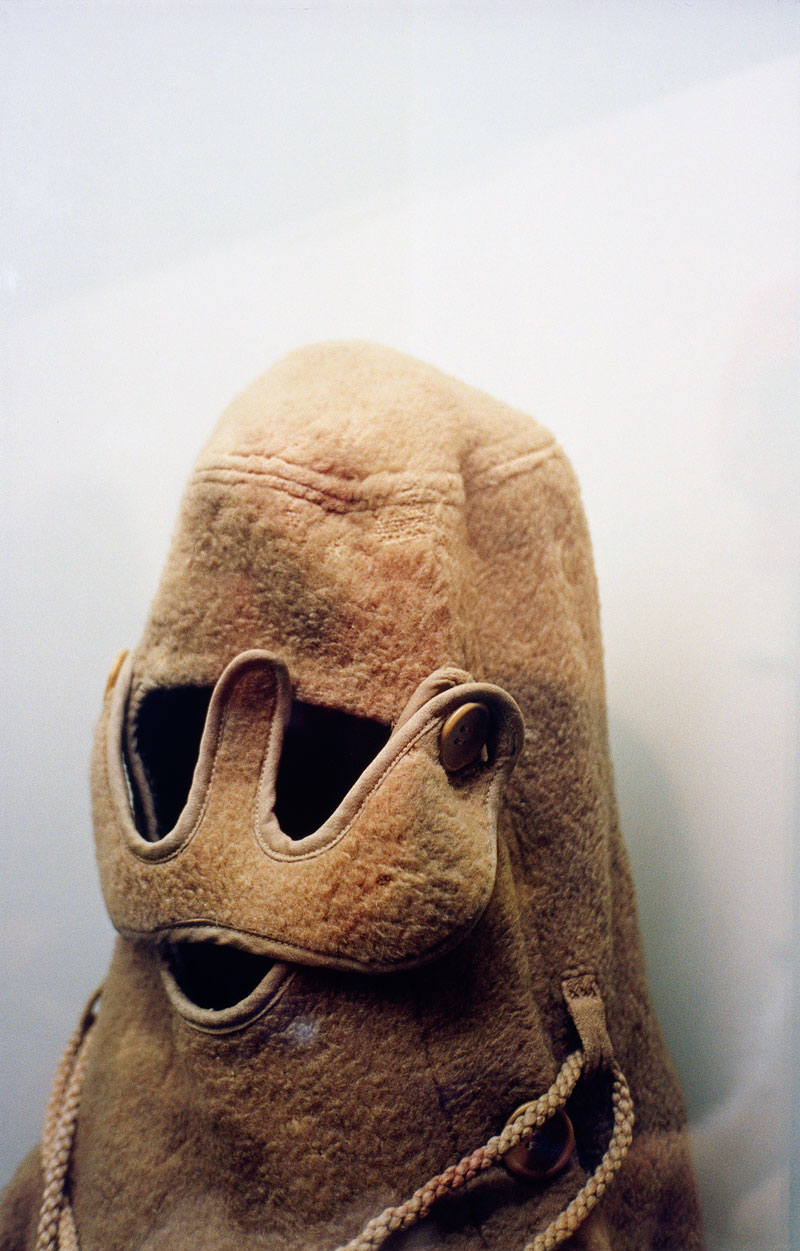
Gavin Hipkins (New Zealander, b. 1968) 'Christchurch (Mask)' 1998 from the exhibition 'Unnerved: The New Zealand Project' at NGV International


Gavin Hipkins (New Zealander, b. 1968)
Christchurch (Mask)
1998
From The homely series 1997-2000
Type C photograph
60 x 40cm
Queensland Art Gallery, Brisbane Purchased 2008. The Queensland Government’s Gallery of Modern Art Acquisitions Fund
© Gavin Hipkins


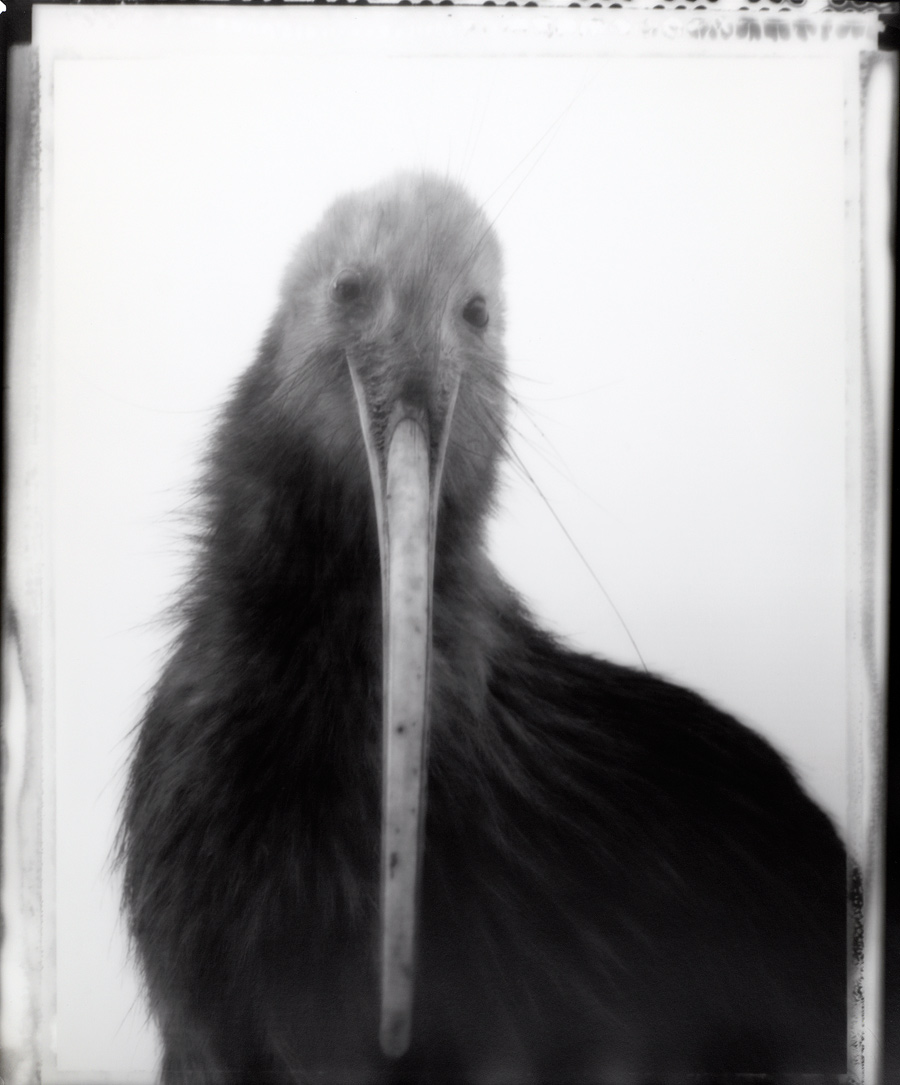
Fiona Pardington (Kai Tahu, Kati Mamoe, Kati Waewae New Zealander, b. 1961) 'Sweet Kiwi, from the collection 'Whanganui Museum'' 2008 from the exhibition 'Unnerved: The New Zealand Project' at NGV International


Fiona Pardington (Kai Tahu, Kati Mamoe, Kati Waewae New Zealander, b. 1961)
Sweet Kiwi, from the collection ‘Whanganui Museum’
2008
Gold-toned gelatin silver photograph
61 x 50.8cm
Queensland Art Gallery, Brisbane
Purchased 2008 with funds from Gina Fairfax through the Queensland Art Gallery Foundation
© Fiona Pardington


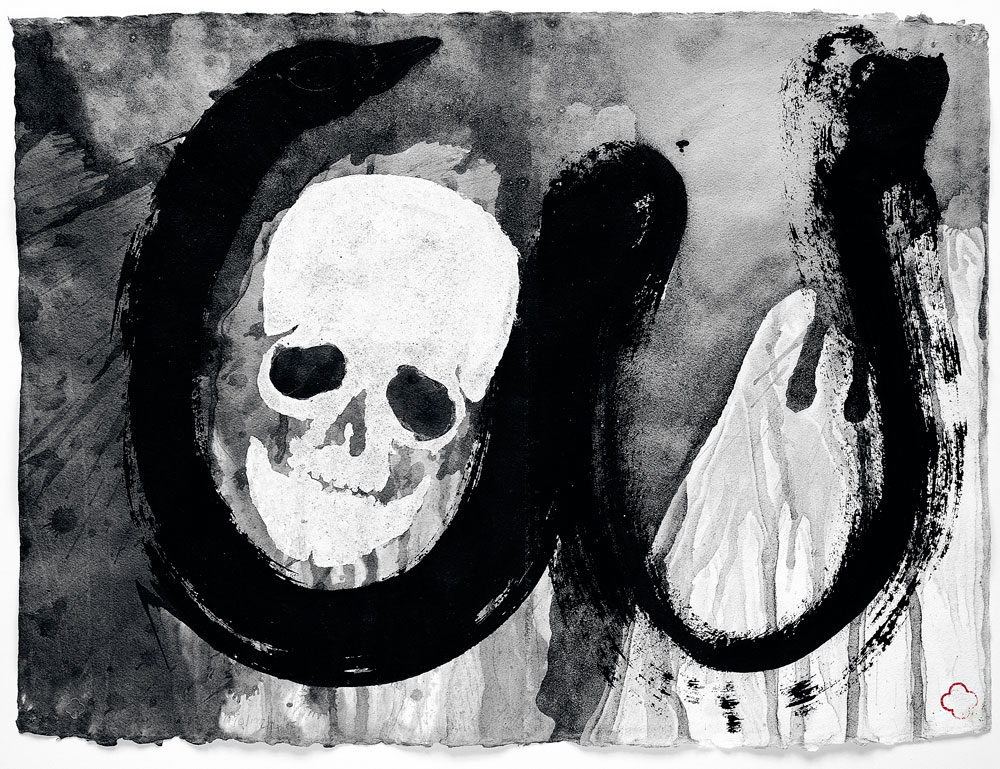
Max Gimblett (New Zealander / American, b. 1935) 'Balls' 1990-1997 from the exhibition 'Unnerved: The New Zealand Project' at NGV International


Max Gimblett (New Zealander/American, b. 1935)
Balls
1990-1997
Brush and ink, synthetic polymer paint and pencil on handmade paper
59.8 x 79.3cm
Queensland Art Gallery, Brisbane
The Max Gimblett Gift.
Gift of the artist through the Queensland Art Gallery Foundation 2000
© Max Gimblett


Anne Noble (New Zealander, b. 1954) 'Ruby's room no. 6' 1999 from the exhibition 'Unnerved: The New Zealand Project' at NGV International


Anne Noble (New Zealander, b. 1954)
Ruby’s room no. 6
1999
Colour digital print
67 x 100.2cm
Queensland Art Gallery, Brisbane
Purchased 2006
© Anne Noble


NGV International
180 St Kilda Road

Opening hours
Daily 10am – 5pm

National Gallery of Victoria website

LIKE ART BLART ON FACEBOOK

Back to top

Exhibition: ‘Bronzino. Artist and Poet at the Court of the Medici’ at the Palazzo Strozzi, Florence

Exhibition dates: 24th September 2010 – 23rd January, 2011


Bronzino. 'Holy Family with St Anne and St John' 1545 or 1546 from the exhibition 'Bronzino. Artist and Poet at the Court of the Medici' at the Palazzo Strozzi


Agnolo di Cosimo named Bronzino (Monticelli, Florence 1503 – Florence 1572)
Holy Family with St Anne and St John
1545 or 1546
Oil on panel
124.5 x 99.5cm
Vienna, Kunsthistorisches Museum, Gemäldegalerie, inv. n. 183


Despite the sensitivity of the religious paintings it is the portraits of strong yet somehow vulnerable women that move me most in this posting. The paintings are “often read as static, elegant, and stylish exemplars of unemotional haughtiness and assurance.” (Wikipedia)

I don’t agree. Of course they have the trappings of the rich and powerful, the knowledgeable books at hand, the elongated Mannerist hands, the lush colours and detail of their pleated robes falling from their shoulders like liquid opulence (imagine the shock of these colours in 1530!) but there is something in their open stare that seems to reach across time to tap me on the shoulder and say yes, I can still see into your soul as you can into mine. Incredibly moving this work of genius.

Dr Marcus Bunyan


Many thankx to the Palazzo Strozzi, Florence for allowing me to publish the photographs of the paintings in the posting. Please click on photographs for a larger version of the image.


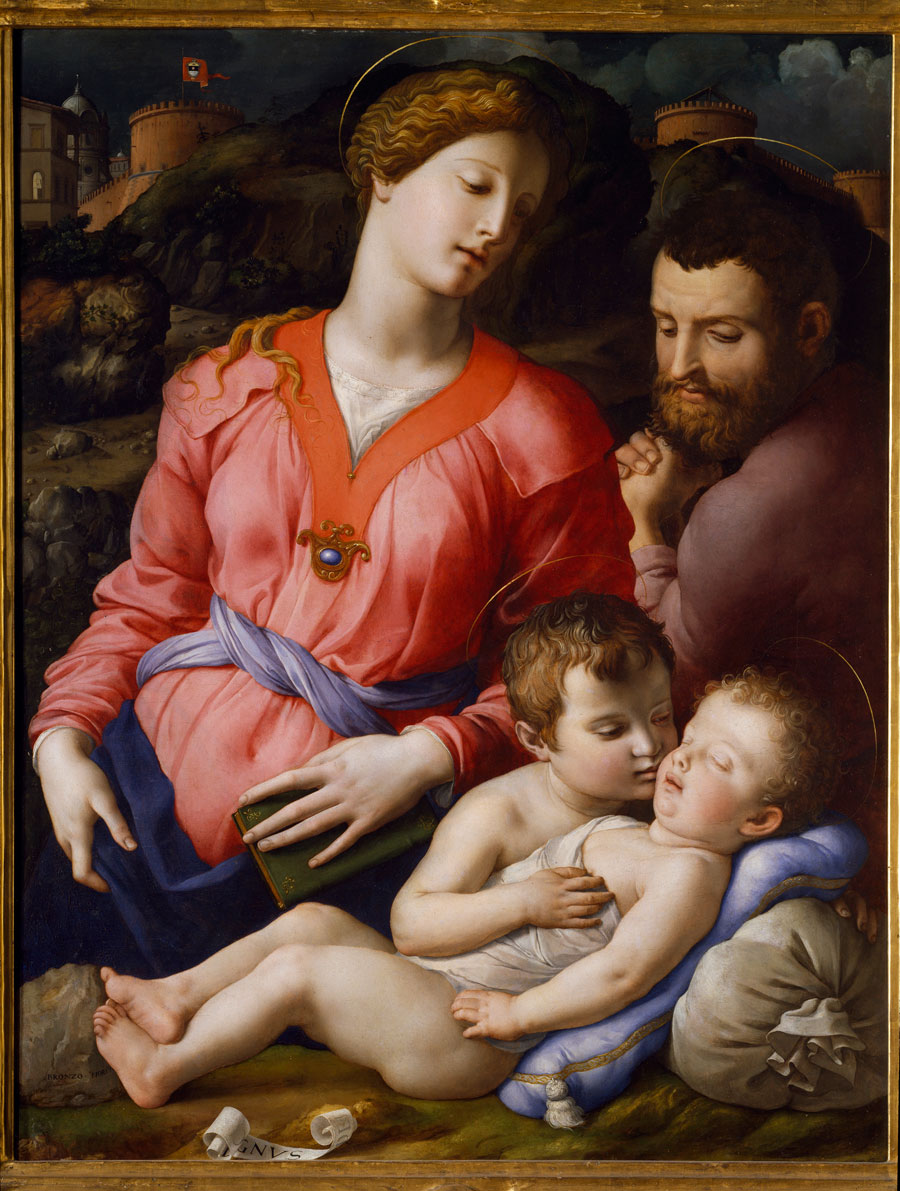
Bronzino. 'Holy Family with St John (Panciatichi Madonna)' c. 1540 from the exhibition 'Bronzino. Artist and Poet at the Court of the Medici' at the Palazzo Strozzi


Agnolo di Cosimo named Bronzino (Monticelli, Florence 1503 – Florence 1572)
Holy Family with St John (Panciatichi Madonna)
c. 1540
Oil on panel
116.5 x 89.5cm
Florence, Galleria degli Uffizi, Inv. 1890 n. 8377


Bronzino. 'Portrait of Eleonora of Toledo with her son Giovanni' c. 1545 from the exhibition 'Bronzino. Artist and Poet at the Court of the Medici' at the Palazzo Strozzi


Agnolo di Cosimo named Bronzino (Monticelli,Florence 1503 – Florence 1572 )
Portrait of Eleonora of Toledo with her son Giovanni
c. 1545
Oil on panel
115 x 96cm
Florence, Galleria degli Uffizi, Inv. 1890 n. 748


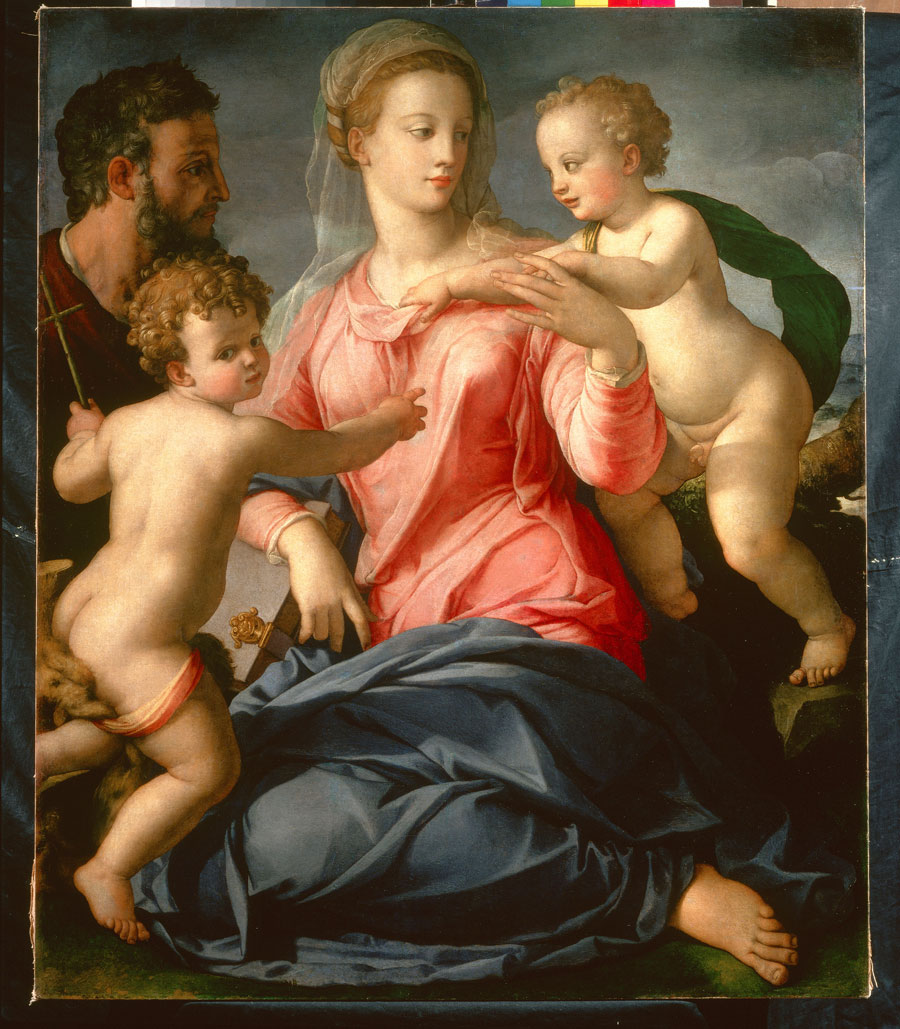
Bronzino. 'Holy Family with St John' c. 1555-1559 from the exhibition 'Bronzino. Artist and Poet at the Court of the Medici' at the Palazzo Strozzi


Agnolo di Cosimo named Bronzino and Alessandro Allori (Bronzino (Monticelli, Florence 1503) Allori (Florence 1535) – Bronzino (Florence 1572) Allori (Florence 1607))
Holy Family with St John
c. 1555-1559
Tempera on panel
117 x 99cm
Moscow, State Pushkin Museum of Fine Arts. Inv.2699


Agnolo di Cosimo, known as Bronzino (1503-1572), was one of the greatest artists in the history of Italian painting. Court artist to Cosimo I de’ Medici (1519-1574), his work embodied the sophistication of the Mannerist style. Bronzino. Artist and Poet at the Court of the Medici, on view at the Palazzo Strozzi in Florence from 24 September 2010 to 23 January 2011, will be the very first exhibition devoted to his painted work. Bronzino conveyed the elegance of the Medici court in his work with “naturalness” and, at the same time, austere beauty.

Florence is the perfect setting for a monographic exhibition on Bronzino. The son of a butcher, not only was he born and died here, the city houses some of his greatest masterpieces, particularly in the Uffizi but also in other museums and churches. This landmark exhibition, with loans from the world’s most important museums, presents presents 63 works attributed to Bronzino, and 10 to Bronzino and his workshop, along with others by his master Pontormo, with whom he had close ties throughout his life. Bronzino’s paintings, with their sculptural definition, will be shown alongside sculptures by such 16th century masters as Benvenuto Cellini, Tribolo, Baccio Bandinelli and Pierino da Vinci, who were his friends and with whom he exchanged sonnets. The exhibition concludes with a number of works by Alessandro Allori, his favourite pupil.

Most of these jewel-like masterpieces have never been shown together. Alongside the paintings from the Uffizi, the exhibition will include such works as The Adoration of the Shepherds and the Allegory of Venus, Cupid and Jealousy from the Szépmüvészeti Múzeum in Budapest, the Venus, Cupid and Satyr from the Galleria di Palazzo Colonna in Rome, the Portrait of a Young Man with a Book from the Metropolitan Museum of Art in New York, and the Holy Family with St Anne and St John in the versions in the Musée du Louvre in Paris and the Kunsthistorisches Museum in Vienna, together with panel paintings from the J. Paul Getty Museum, Los Angeles, and from the National Gallery of Art, in Washington.

The exhibition will show three hitherto ‘missing’ works by Bronzino, two of which, while recorded and mentioned by Giorgio Vasari, were thought to have been lost: the Crucified Christ which he painted for Bartolomeo Panciatichi, and the St Cosmas, the right-hand panel accompanying the Besançon altarpiece when it originally graced Eleonora da Toledo’s chapel in Palazzo Vecchio. Their rediscovery sheds new light on Bronzino’s work and on his ties with the heretical religious mood that permeated the Medici court before 1550. The third previously unknown picture is Christ Carrying the Cross ascribed to his later years.

The exhibition, which has taken over four years to prepare, is curated by Carlo Falciani and Antonio Natali, the foremost experts on Cinquecento painting who have also contributed to the scholarly catalogue. The exhibition, in conjunction with Drawings of Bronzino at the Metropolitan Museum of Art in New York (20 January to 18 April 2010), will play a central role in fostering a new interpretation of this important artist. For those who enjoyed the New York show, this Florence exhibition is a must-see.

Press release from the Palazzo Strozzi website [Online[ Cited 17/01/2011 no longer available online


Bronzino. 'Portrait of Lorenzo Lenzi' 1527 from the exhibition 'Bronzino. Artist and Poet at the Court of the Medici' at the Palazzo Strozzi


Agnolo di Cosimo named Bronzino (Monticelli, Florence 1503 – Florence 1572 )
Portrait of Lorenzo Lenzi
1527
Oil on panel
90 x 71cm
Milan, Civiche Raccolte Artistiche – Pinacoteca del Castello Sforzesco


Bronzino. 'Portrait of Guidubaldo II della Rovere' 1531-1532 from the exhibition 'Bronzino. Artist and Poet at the Court of the Medici' at the Palazzo Strozzi


Agnolo di Cosimo named Bronzino (Monticelli,Florence 1503 – Florence 1572 )
Portrait of Guidubaldo II della Rovere
1531-1532
Oil on panel
114 x 86cm
Florence, Palazzo Pitti, Galleria Palatina, inv. 1912 n. 149


Bronzino. 'Portrait of a Women (Matteo Sofferoni's Daughter?)' c. 1530-1532 from the exhibition 'Bronzino. Artist and Poet at the Court of the Medici' at the Palazzo Strozzi


Agnolo di Cosimo named Bronzino (Monticelli, Florence 1503 – Florence 1572)
Portrait of a Women (Matteo Sofferoni’s Daughter?)
c. 1530-1532
Oil on panel
76.6 x 66.2 x 1.3cm
London, Lent by Her Majesty Queen Elizabeth II, RCIN 405754


Bronzino. 'Portrait of Lucrezia Panciatichi' 1540 from the exhibition 'Bronzino. Artist and Poet at the Court of the Medici' at the Palazzo Strozzi


Agnolo di Cosimo named Bronzino (Monticelli,Florence 1503 – Florence 1572 )
Portrait of Lucrezia Panciatichi
1540
Oil on panel
101 x 82.8cm
Florence, Galleria degli Uffizi


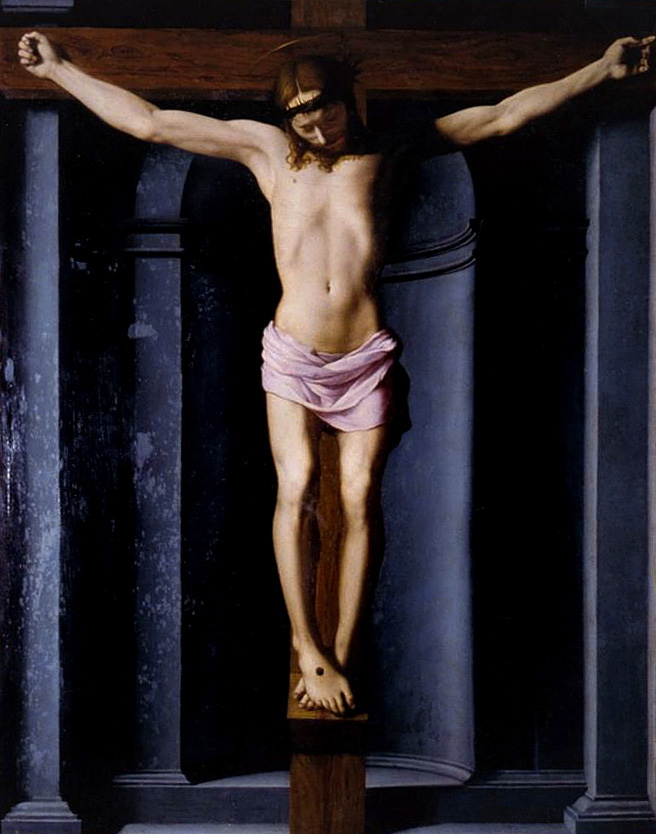
Agnolo di Cosimo named Bronzino (Monticelli,Florence 1503 - Florence 1572) 'Christ on the Cross, Agnolo Allori' c. 1540


Agnolo di Cosimo named Bronzino (Monticelli,Florence 1503 – Florence 1572)
Christ on the Cross, Agnolo Allori
c. 1540
Oil on panel
145 x 115cm
Musée des Beaux-Arts


The Crucifixion (1540-1541 circa) is the third and most intriguing of the debuts in that it tells us something about the religious sensibilities of Bartolomeo and Lucrezia Panciatichi who were tried for heresy between 1551 and 1552. Only the direct intervention of Duke Cosimo I stayed off their conviction. Carlo Falciani and Philippe Costamagna used Vasari’s description and other historical records to identify the piece hanging in Nizza with the label “anonymous Italian work”. Reflectographic analysis shows that it was painted according to the modus operandi of Bronzino himself, who used a preparatory drawing modified several times. According to the original plan, Christ hung more heavily from the cross with head drooping, arms distended, and legs bent. Such a posture would have evoked the preaching of Savonarola, for whom the sufferings of Christ are a stark warning about the consequences of sin. To have extolled these sufferings in the painting would have emphasized the necessity of humans to suffer for their salvation. The Panciatichi, however, persuaded by the poetry of Juan de Valdès, wished that the painting show that salvation comes by faith alone, in such a way that suffering is no longer necessary since Christ himself has already suffered.

To reflect the theology of justification by faith alone, Bronzino ignored the original drawing and instead painted Christ already deceased rather than in the throes of agony. Vasari writes that the artist worked long and hard to render the composition more calm and serene. The statuesque corpse is affixed lightly to the cross, which in turn is situated in an altar-niche rather than on Mount Calvary, suggesting that the painting is a memorial in the same way the eucharist is but a memorial according to the theology the Panciatichi found so attractive.

Daniel B. Gallagher. “Bronzino; Medici Court Painter and poet at the palazzo Strozzi, Florence,” on the New York Arts website, January 10, 2011 [Online] Cited 21/02/2025


Agnolo di Cosimo named Bronzino (Monticelli,Florence 1503 - Florence 1572) 'Nano Morgante' Before 1553


Agnolo di Cosimo named Bronzino (Monticelli,Florence 1503 – Florence 1572)
Nano Morgante
Before 1553
Oil on canvas
Uffizi Gallery, Florence


Agnolo di Cosimo named Bronzino (Monticelli,Florence 1503 - Florence 1572 ) 'Venus, Cupid and Satyr' 1553-1554 from the exhibition 'Bronzino. Artist and Poet at the Court of the Medici' at the Palazzo Strozzi


Agnolo di Cosimo named Bronzino (Monticelli,Florence 1503 – Florence 1572)
Venus, Cupid and Satyr
1553-1554
Oil on panel
135 x 231cm
Palazzo Colonna


Bronzino. 'Portrait of Laura Battiferri' c. 1555-1560 from the exhibition 'Bronzino. Artist and Poet at the Court of the Medici' at the Palazzo Strozzi


Agnolo di Cosimo named Bronzino (Monticelli,Florence 1503 – Florence 1572 )
Portrait of Laura Battiferri
c. 1555-1560
Oil on panel
83 x 60cm
Florence, Palazzo Vecchio, Collezione Loeser


Agnolo di Cosimo named Bronzino (Monticelli, Florence 1503 - Florence 1572) 'Francesco I De Medici' between 1555 and 1565


Agnolo di Cosimo named Bronzino (Monticelli, Florence 1503 – Florence 1572)
Francesco I De Medici
between 1555 and 1565
Oil on panel
97.9 (38.5 in) x 76.4cm (30 in)
Art Institute of Chicago


Palazzo Strozzi
Piazza Strozzi, 50123
Firenze (Florence), Italy
Phone: +39 055 2645155

Opening hours:
Daily 10am – 8pm, Thursday 10am – 11pm
Last admission to the exhibition one hour before closing

Palazzo Strozzi website

LIKE ART BLART ON FACEBOOK

Back to top

Exhibition: ‘Pierre Soulages’ at the Martin-Gropius-Bau, Berlin

Exhibition dates: 2nd October 2010 – 17th January, 2011


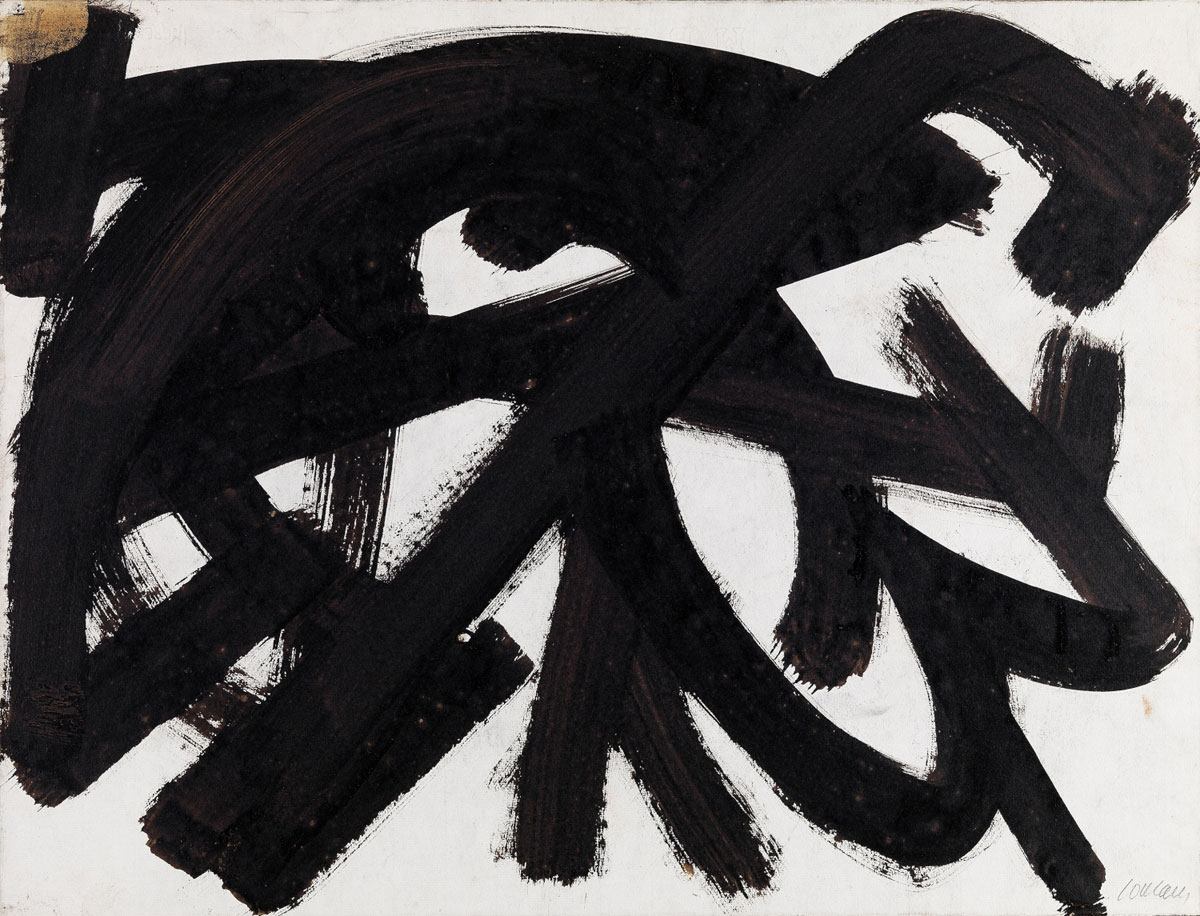
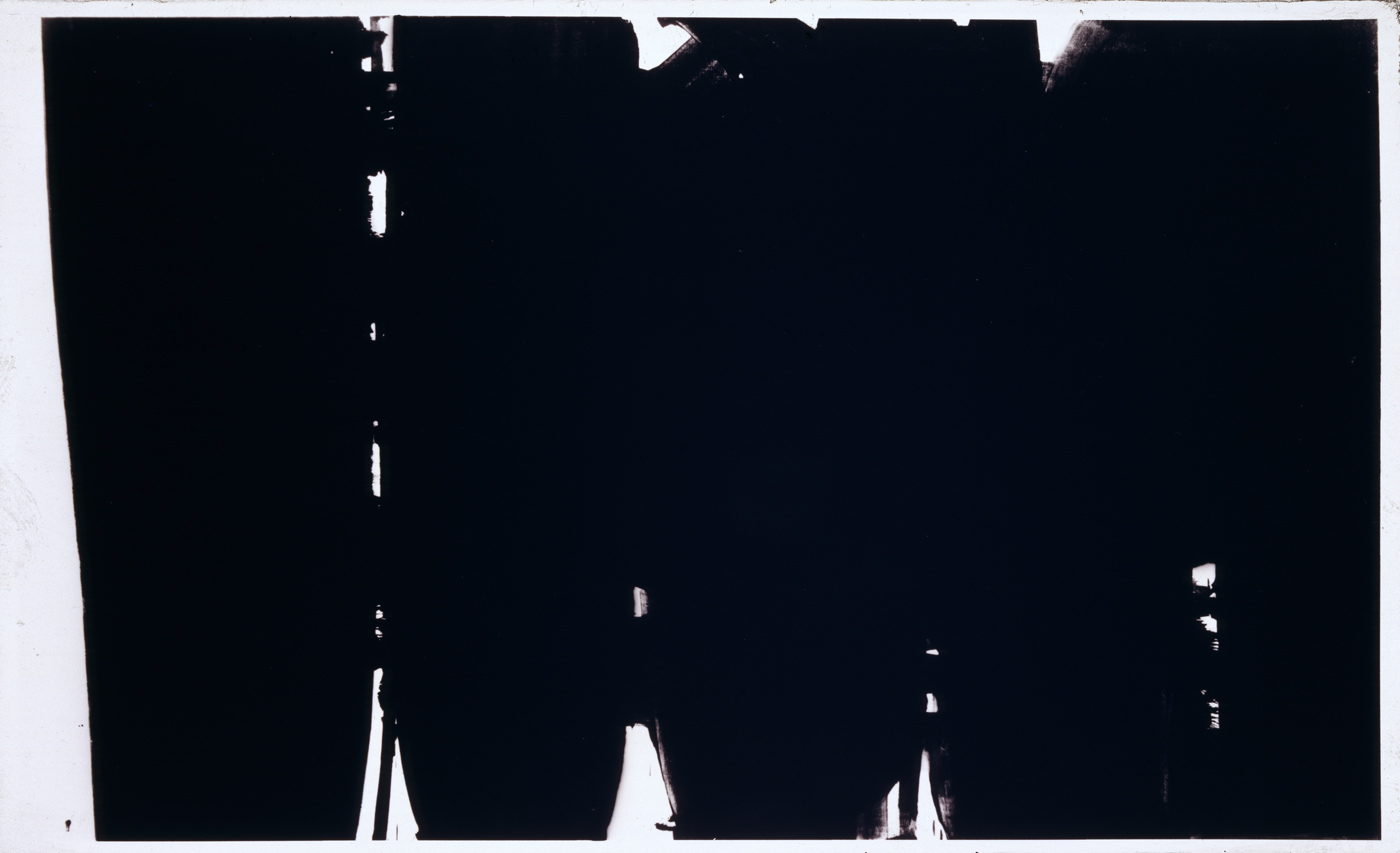
Pierre Soulages (French, 1919-2022) 'Brou de noix sur papier' 1946 from the exhibition 'Pierre Soulages' at the Martin-Gropius-Bau, Berlin


Pierre Soulages (French, 1919-2022)
Brou de noix sur papier
1946
48 x 62.5cm
Private collection
© Photo: DR, Archive Soulages / VG Bild-Kunst Bonn, 2010


The light of beyond black!

Nothing more really needs to be said …

Dr Marcus Bunyan


Many thankx to the Martin-Gropius-Bau, Berlin for allowing me to publish the photographs in the posting. Please click on the photographs for a larger version of the image.


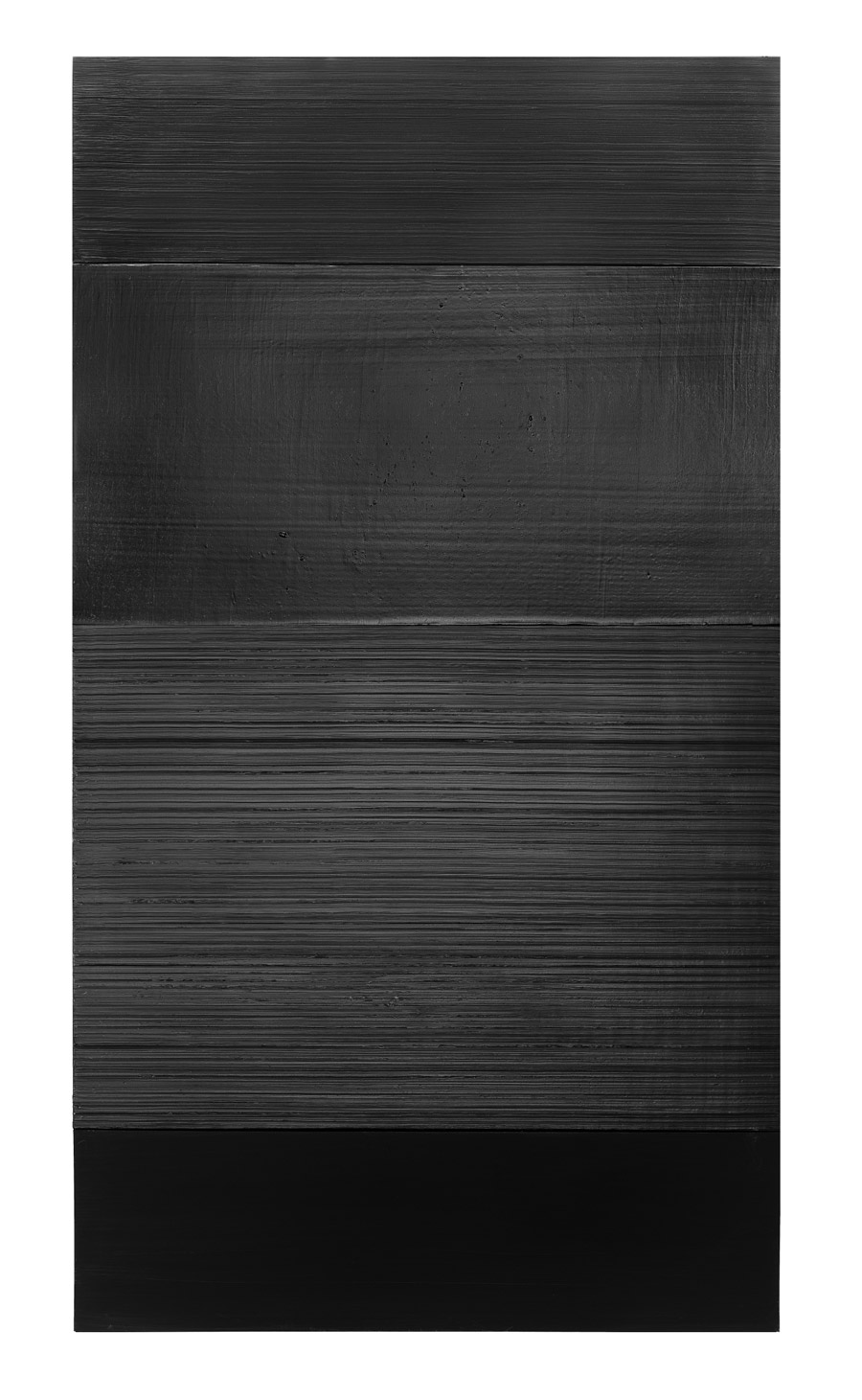
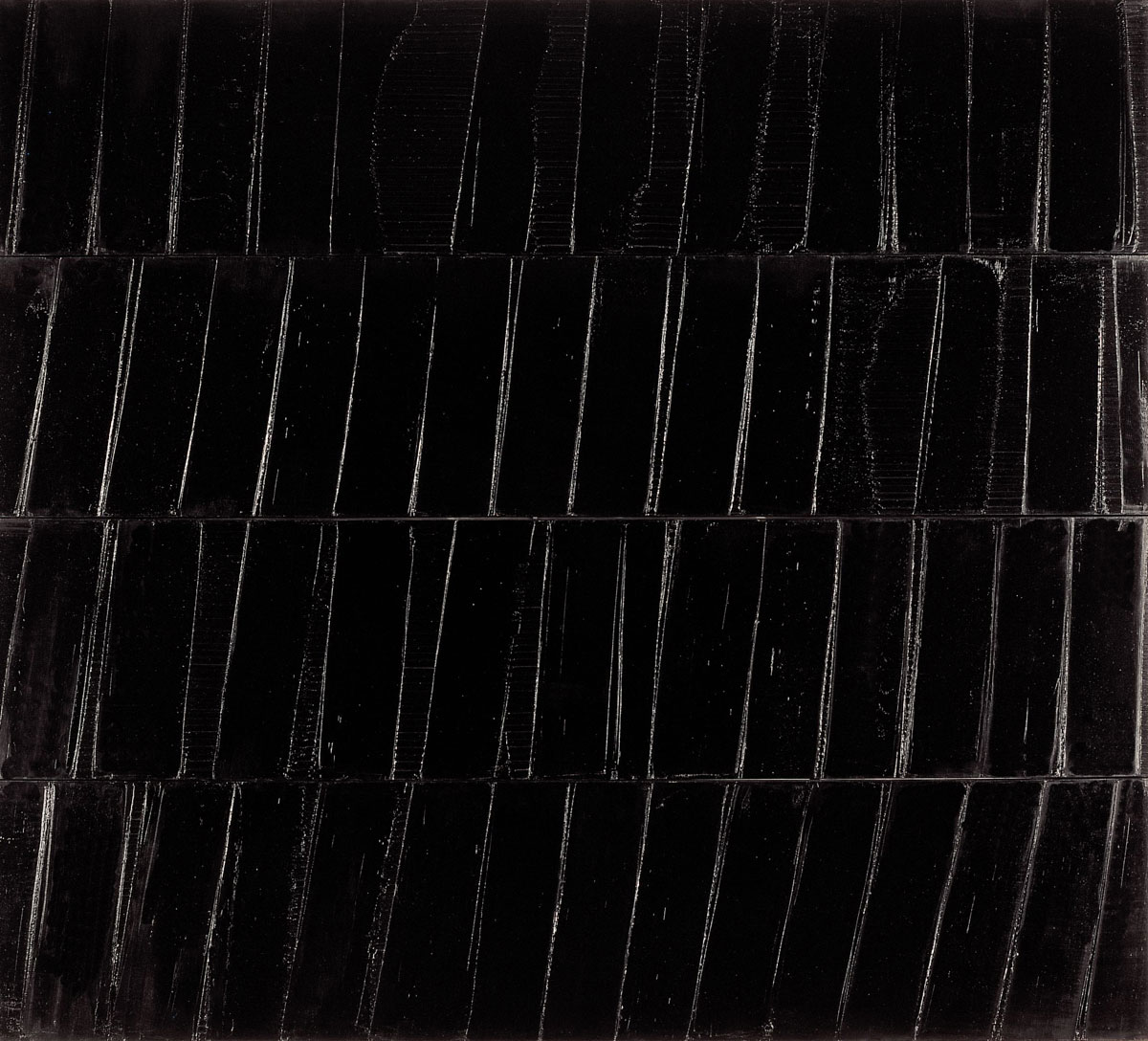
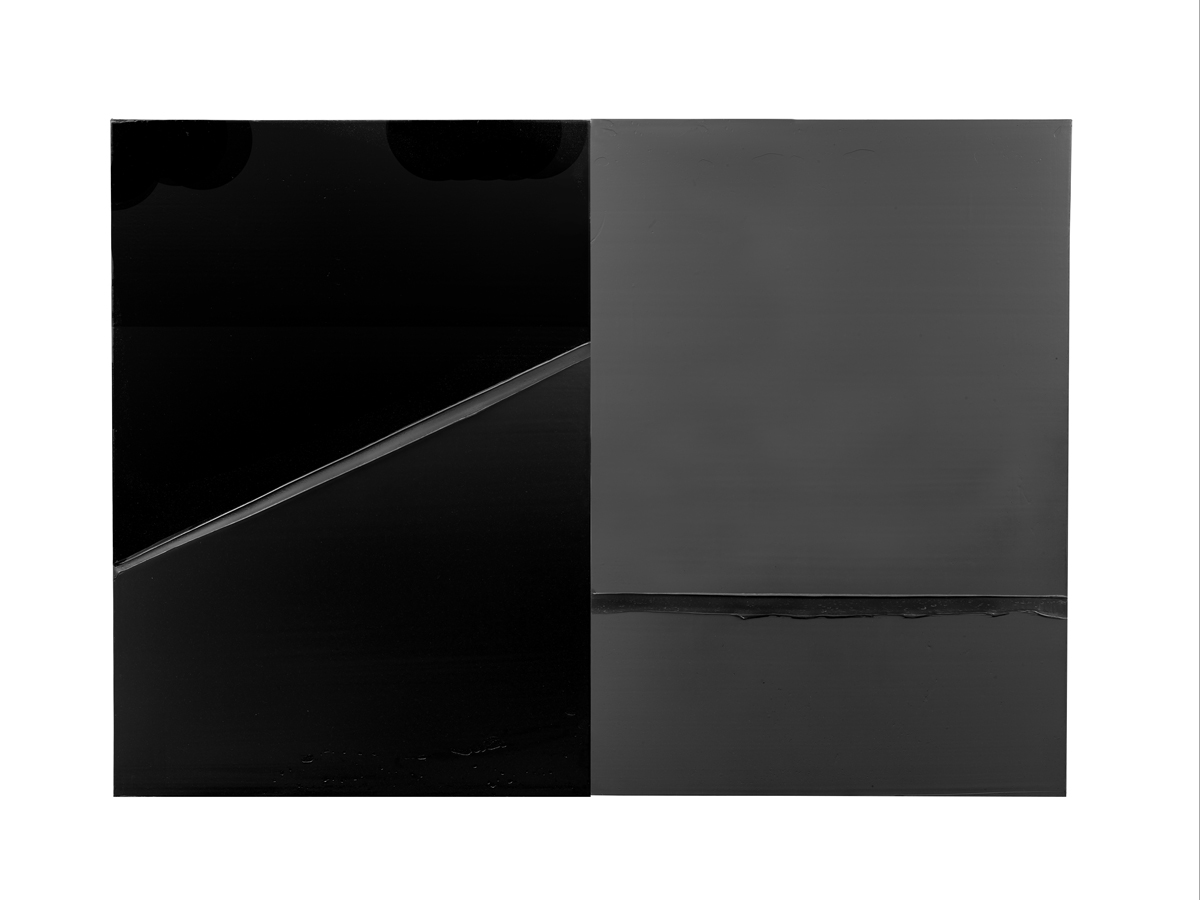
Pierre Soulages (French, 1919-2022) 'Peinture 324 x 181 cm, 17 novembre 2008' from the exhibition 'Pierre Soulages' at the Martin-Gropius-Bau, Berlin


Pierre Soulages (French, 1919-2022)
Peinture; 324 x 181cm; 17 novembre 2008
2008
Acrylic on canvas
Private collection
© Photo: George Poncet, Archive Soulages / VG Bild-Kunst Bonn, 2010


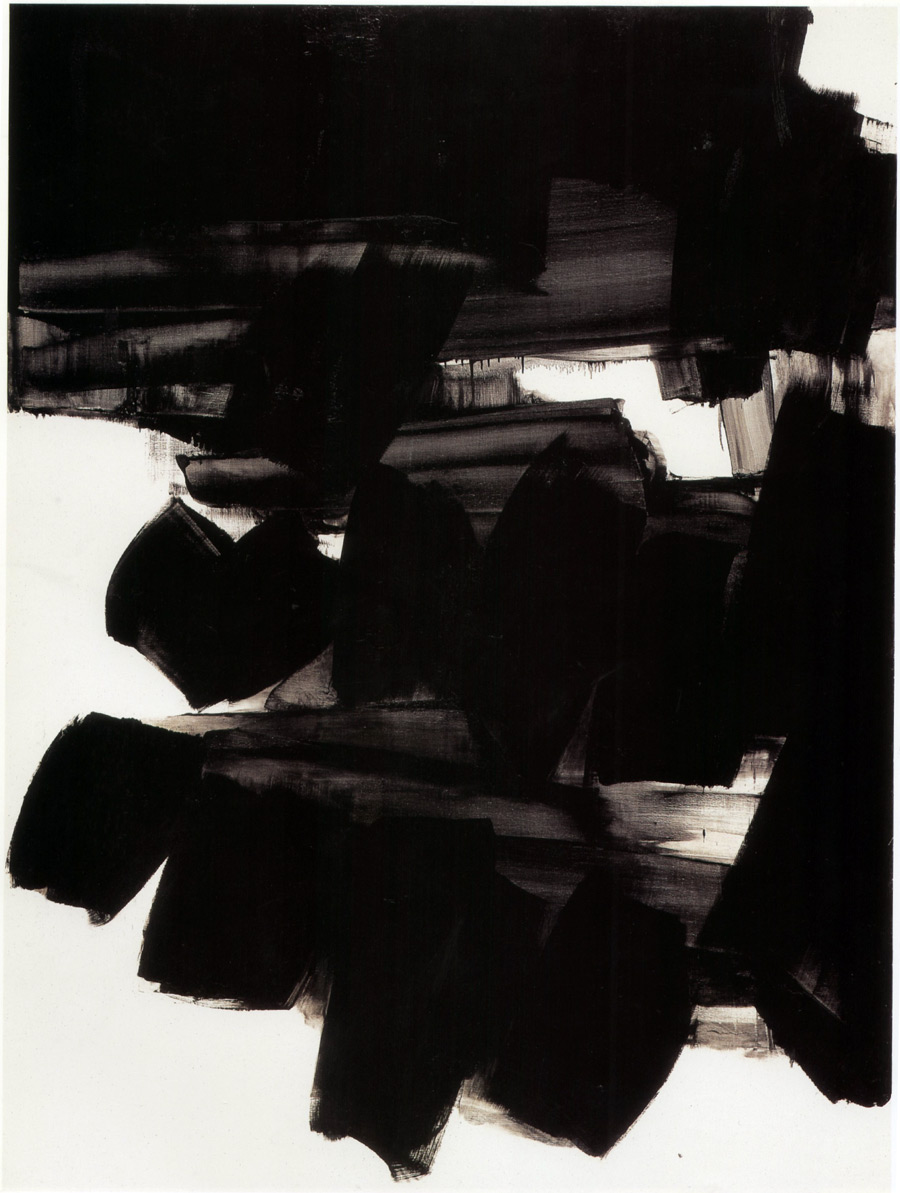
Pierre Soulages (French, 1919-2022) 'Peinture; 243 x 181 cm; 26 juin 1999' from the exhibition 'Pierre Soulages' at the Martin-Gropius-Bau, Berlin


Pierre Soulages (French, 1919-2022)
Peinture; 243 x 181cm; 26 juin 1999
1999
Oil on canvas
Private Collection
© VG Bild-Kunst Bonn, 2010


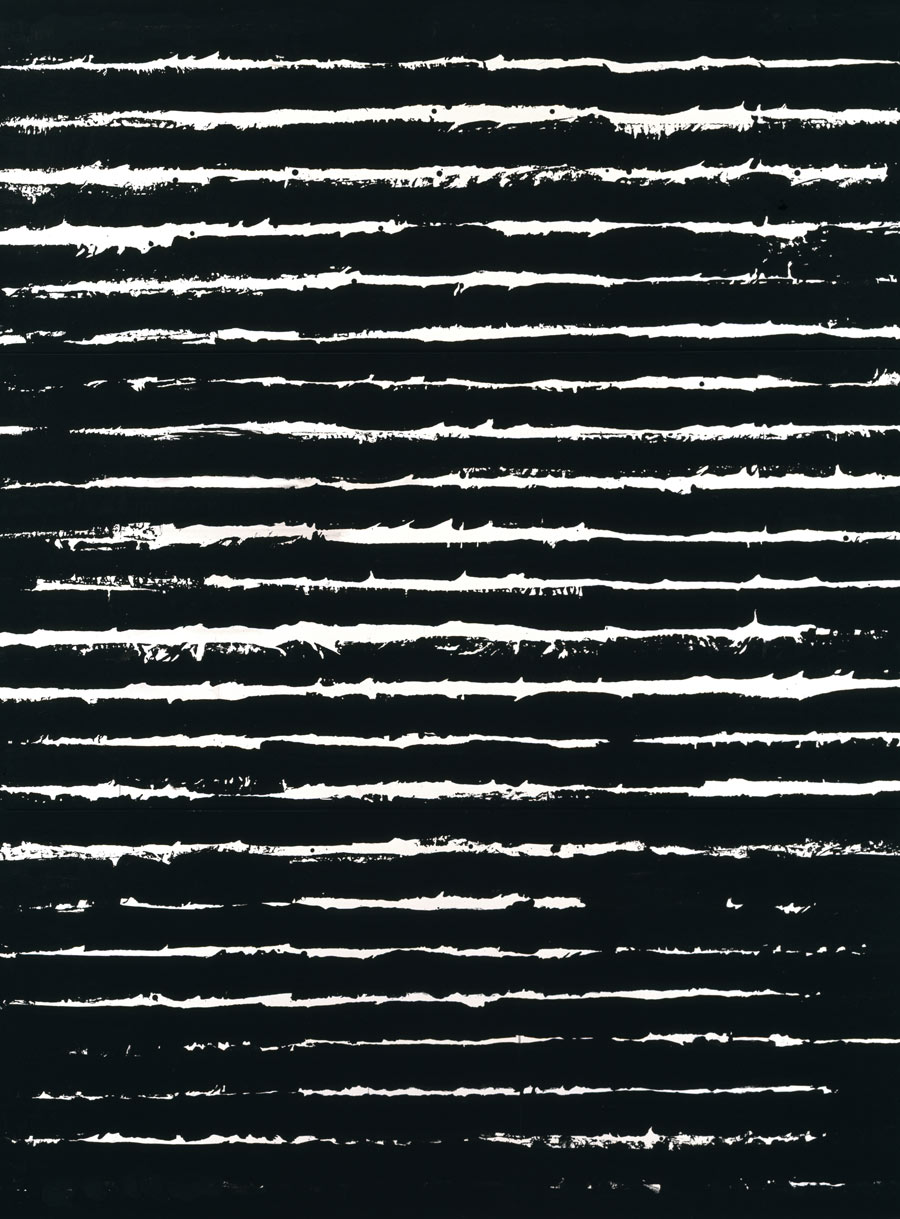
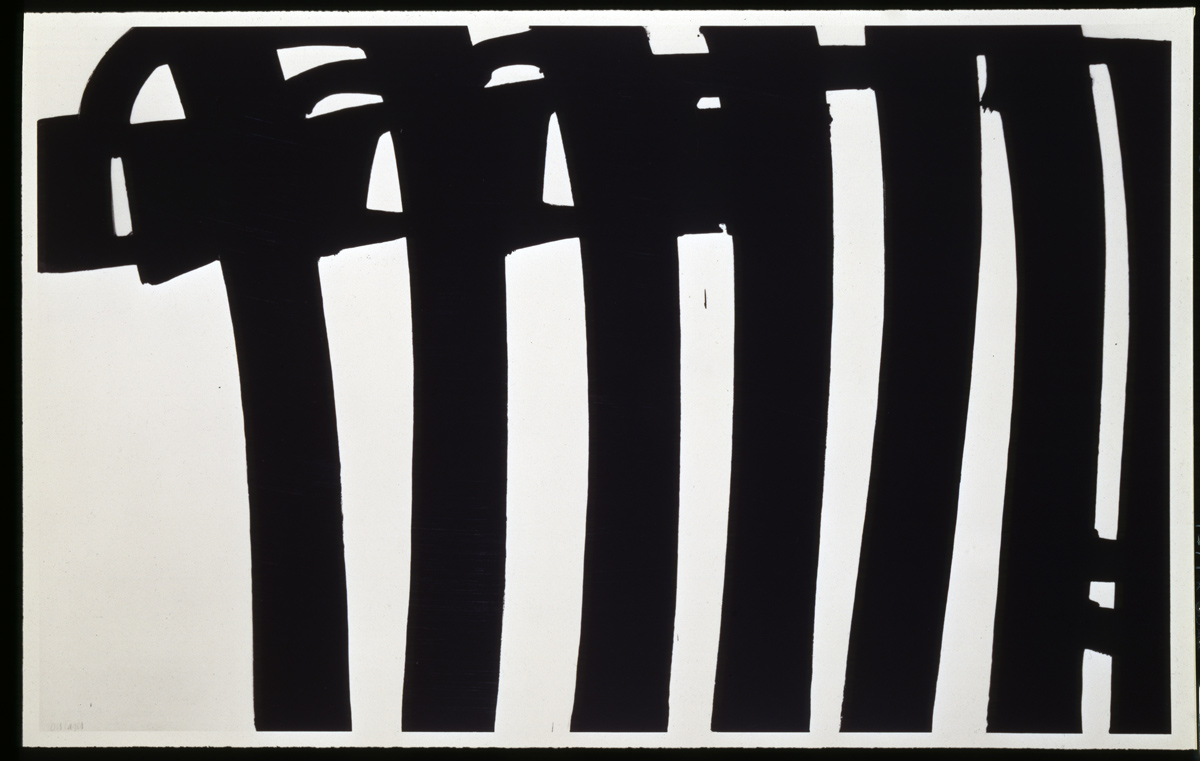
Pierre Soulages (French, 1919-2022) 'Peinture; 260 x 202 cm; 19 juin 1963' from the exhibition 'Pierre Soulages' at the Martin-Gropius-Bau, Berlin


Pierre Soulages (French, 1919-2022)
Peinture; 260 x 202cm; 19 juin 1963
1963
Oil on canvas
Collection Centre Pompidou, Musée national d’art moderne, Diffusion RMN
© VG Bild-Kunst Bonn, 2010


Pierre Soulages is one of the world’s foremost abstract painters of recent decades. On the occasion of his 90th birthday he is being honoured by a retrospective in the Centre Pompidou in Paris. Starting on 2 October 2010 Berlin’s Martin-Gropius-Bau will be showing this exhibition in an altered form.

Over 70 pictures of all his creative periods, from the works with walnut stain (1947 to 1949) to the radically black paintings of recent years measuring up three metres high, are being shown, many of them for the first time in Germany. They illustrate the dynamic artistic development of this most famous of contemporary French artists.

Born on 24 December 1919 in Rodez, a small town located to the north of and roughly equidistant from Toulouse und Montpellier, Pierre Soulages refused to train at the “Ecole nationale superieure des beaux arts” in Paris, being out of sympathy with what he saw as that institution’s retrograde approach to art. Instead he spent the year 1939 visiting exhibitions and familiarising himself with the works of Picasso and Cézanne. But that same year he left Paris and headed south to Montpellier to attend the “Ecole des beaux arts” there. At that time he made the acquaintance of Sonia Delaunay, who showed him catalogues containing what those in power at that time considered to be “degenerate art”. For Soulages this was the justification for working as an abstract artist. After the war he moved to Paris, where he successfully exhibited in the Salon of the Surindépendants. His acquaintanceship with Francis Picabia and Hans Hartung in 1947, and his familiarity with the American scene as represented by such artists as Marc Rothko, Robert Motherwell and Wilhelm de Kooning, show how rapidly he was gaining an international reputation. In 1948, three years after the end of the Second World War, he took part in the then pioneering exhibition “French Abstract Painting”, which was shown in Stuttgart, Hamburg and Düsseldorf. He was the youngest of a group of masters of abstract art, including such names as Kupka, Doméla and Herbin. His participation in Documenta I, II and III brought him recognition in artistic and critical circles.

His wayward style, and more specifically his almost exclusive reliance on the colour black, give him a unique place in the world of art, although the American Robert Motherwell produced similar results in some of his works. But only Soulages consistently dedicated his works to the colour black over a period of decades, before finally turning to light.

His “outrenoir”, a term coined by Soulages for the use of black in his work, swallows up light, especially in his works on paper, achieving a particular sense of depth. “Outrenoir”, which may be translated as “the other side of black”, or “beyond black”, does not exclude, but draws the observer into the picture, inducing him to make a close and precise examination of the work by holding his gaze.

Like many painters, Pierre Soulages is fascinated by the phenomenon of light. He seeks obsessively for ways of letting light operate in the colour black. Works in which black is accompanied by a second colour such as blue or red remain the exception.

His individual style, characterised by strong bold lines and occasional calligraphic elements, is an important organising principle in his works. “I found small brushes only for the exact work, as was necessary and important in the art of the 19th century and earlier – Picasso himself worked with fine brushes in his early works. But for me there was no question of that. I wanted to try something quite different, so I went into a paint shop in Paris and bought myself broad brushes and rollers of the kind used for house-painting.” By using this technique in combination with a dark walnut stain known as “de noix” he created his first masterpieces, one of which was bought by the Museum of Modern Art in New York as early as 1948.

His paintings are to be found in the collections of over 100 museums worldwide, such as the Solomon R. Guggenheim Museum, New York; the Australian National Gallery, Canberra; the Hermitage, St. Petersburg; the Musée national d’Art moderne, Paris; the Staatsgalerie Stuttgart; the Instituto Valenciano de Arte Moderno, Valencia; the Museum of Modern Art, Toyama; the Tate Gallery, London; the Museum of Fine Arts, Houston; and the Musée d’Art contemporain, Montréal, to name but a few.

Press release from the Martin-Gropius-Bau website [Online] Cited 11/01/2011 no longer available online


Pierre Soulages (French, 1919-2022) 'Peinture; 324 x 362 cm; 1985' from the exhibition 'Pierre Soulages' at the Martin-Gropius-Bau, Berlin


Pierre Soulages (French, 1919-2022)
Peinture; 324 x 362cm; 1985
1985
Polyptique C (4 elements 81 x 362cm)
Oil on canvas
Collection Centre Pompidou, Musée national d’art moderne, Diffusion RMN
© VG Bild-Kunst Bonn, 2010


Pierre Soulages (French, 1919-2022) 'Peinture 202 x 327 cm, 17 janvier 1970' from the exhibition 'Pierre Soulages' at the Martin-Gropius-Bau, Berlin


Pierre Soulages (French, 1919-2022)
Peinture 202 x 327cm, 17 janvier 1970
1970
Private collection
© Photo: François Walch, Archive Soulages / VG Bild-Kunst Bonn, 2010


Pierre Soulages (French, 1919-2022) 'Peinture 220 x 366 cm, 14 mai 1968' from the exhibition 'Pierre Soulages' at the Martin-Gropius-Bau, Berlin


Pierre Soulages (French, 1919-2022)
Peinture 220 x 366cm, 14 mai 1968
1968
Collection Centre Pompidou, Musée national d’art moderne, Diffusion RMN
© VG Bild-Kunst Bonn, 2010


Pierre Soulages (French, 1919-2022) 'Peinture 222 x 314 cm, 24 février 2008' from the exhibition 'Pierre Soulages' at the Martin-Gropius-Bau, Berlin


Pierre Soulages (French, 1919-2022)
Peinture 222 x 314cm, 24 février 2008
2008
Acrylic on canvas
Private collection
© Photo: Georges Poncet, Archive Soulages / VG Bild-Kunst Bonn, 2010


Martin-Gropius-Bau Berlin
Niederkirchnerstraße 7
Corner Stresemannstr. 110
10963 Berlin
Phone: +49 (0)30 254 86-0

Opening hours:
Wednesday to Monday 10 – 19 hrs
Tuesday closed

Martin-Gropius-Bau website

LIKE ART BLART ON FACEBOOK

Back to top

Exhibition: ‘Anselm Kiefer’ at BALTIC Centre for Contemporary Art, Gateshead

Exhibition dates: 8th October 2010 – 16th January 2011


Many thankx to the BALTIC Centre for Contemporary Art for allowing me to publish the photographs in the posting. Please click on the photographs for a larger version of the image. All images © Tate, London 2010.


Anselm Kiefer (German, b. 1945) 'Margarette' 1981 from the exhibition 'Anselm Kiefer' at BALTIC Centre for Contemporary Art, Gateshead


Anselm Kiefer (German, b. 1945)
Margarette
1981
Oil and straw on canvas
280 cm x 380cm


Anselm Kiefer (German, b. 1945) 'Man under a Pyramid' 1996 from the exhibition 'Anselm Kiefer' at BALTIC Centre for Contemporary Art, Gateshead


Anselm Kiefer (German, b. 1945)
Man under a Pyramid
1996
Emulsion, acrylic, shellac and ash on burlap
2810 x 5020 x 50 mm
ARTIST ROOMS: Tate and National Galleries of Scotland. Acquired jointly through The d’Offay Donation with assistance from the National Heritage Memorial Fund and the Art Fund 2008


Anselm Kiefer (German, b. 1945) 'Palm Sunday' 2006 from the exhibition 'Anselm Kiefer' at BALTIC Centre for Contemporary Art, Gateshead


Anselm Kiefer (German, b. 1945)
Palm Sunday
2006
Mixed media installation
Overall display dimensions variable
ARTIST ROOMS: Tate and National Galleries of Scotland. Acquired jointly through The d’Offay Donation with assistance from the National Heritage Memorial Fund and the Art Fund 2008


Installation view of the exhibition 'Anselm Kiefer' at the BALTIC Centre for Contemporary Art, Gateshead showing at left, Keifer's work 'Palette' (1981)


Installation view of the exhibition Anselm Kiefer at the BALTIC Centre for Contemporary Art, Gateshead showing at left, Keifer’s work Palette (1981, below)


Anselm Kiefer (German, b. 1945) 'Palette' 1981 from the exhibition 'Anselm Kiefer' at BALTIC Centre for Contemporary Art, Gateshead


Anselm Kiefer (German, b. 1945)
Palette
1981
Oil, shellac and emulsion on canvas
2917 x 4000 x 35 mm
ARTIST ROOMS: Tate and National Galleries of Scotland. Acquired jointly through The d’Offay Donation with assistance from the National Heritage Memorial Fund and the Art Fund 2008


BALTIC Centre for Contemporary Art proudly announces a major exhibition of the work of Anselm Kiefer, one of the foremost figures of European post-war painting. The exhibition includes a diverse body of work, offering a selection that spans four decades and ranges from early paintings to monumental installations. Presented over two floors of BALTIC’s galleries, the exhibition is Kiefer’s largest in the UK for many years and has been made possible by ARTIST ROOMS On Tour with the Art Fund.

Following the success of 2009, 21 museums and galleries across the UK in 2010 will be showing 25 ARTIST ROOMS exhibitions and displays from the collection created by the curator and collector, Anthony d’Offay, and acquired by the nation in February 2008. ARTIST ROOMS On Tour with the Art Fund has been devised to enable this collection held by Tate and the National Galleries of Scotland, to reach and inspire new audiences across the country, particularly young people.
Anselm Kiefer at BALTIC includes painting, sculpture and installation, some of which has been rarely seen before. The starting point for Kiefer’s work is his fascination with myth, history, theology, philosophy and literature. For many years his painting was a vehicle to come to terms with his country’s past, and subsequently became ever concerned with religious traditions and the symbolism of different cultures. Kiefer’s weighty subject matters are reflected in the monumental scale of many of his works, while his keen exploration and visceral layering of materials such as lead, ash, rope and human hair bring an emotional potency.

Among the paintings to be included in the exhibition are three works from the artist’s early Parsifal series (1973), drawn from Richard Wagner’s last opera and its 13th century source, a romance by Wolfram von Eschenbach based upon the legend of the Holy Grail. With Palette 1981, Kiefer revealed the problematic legacy inherited by artists in post-war Germany: the artist’s palette hangs from a single burning thread evoking shame, loss and the apparent impossibility of artistic creation. The expansive Man under a Pyramid 1996, which measures more than five meters long, continues the artist’s interest in meditation and the linking of body and mind.

Also included is Palmsonntag 2006 which comprises a vast sequence of 36 paintings arranged around a full-size palm tree. While avoiding explicit religious statement, the work draws upon the Christian narrative of Palm Sunday to explore death and resurrection, decay, re-creation and rejuvenation; human themes that are central to Kiefer’s practice and that will be identified throughout this presentation.

Anselm Kiefer biography

Anselm Kiefer was born 1945 in Donauschingen, Germany, at the close of World War II. He studied art formally under Joseph Beuys at the Düsseldorf Academy in the early 1970s where history and myth became central themes in his work.

In 1971 Kiefer produced his first large-scale landscape paintings and from 1973 he began to experiment with wooden interiors on a monumental scale. His preoccupation with recent German history is seen throughout his work and his use of recurring motifs, such as an artist’s palette symbolises his emotional journey relating to this period. Kiefer has made increasing use of materials such as sand, straw, wood, dirt and photographs, as well as sewn materials and lead model soldiers. By adding found materials to the painted surface Kiefer invented a compelling third space between painting and sculpture. Recent work has broadened his range yet further: in 2006 he showed a series of paintings based around the little-known work of the modernist Russian poet Velimir Chlebnikov (1885-1922).

Kiefer has had extensive exhibitions internationally including the Museum of Modern Art, New York (1987), Neue Nationalgalerie, Berlin (1991), The Metropolitan Museum, New York (1998), Royal Academy, London (2001), Fort Worth Museum of Art, Fort Worth (2005) and the San Francisco Museum of Modern Art (2006).

Press release from the BALTIC Centre for Contemporary Art website


Anselm Kiefer (German, b. 1945) 'Urd Werdande Skuld (The Norns)' 1983 from the exhibition 'Anselm Kiefer' at BALTIC Centre for Contemporary Art, Gateshead


Anselm Kiefer (German, b. 1945)
Urd Werdande Skuld (The Norns)
1983
Oil, shellac, emulsion and fibre on canvas
4205 x 2805 x 60 mm
ARTIST ROOMS: Tate and National Galleries of Scotland. Acquired jointly through The d’Offay Donation with assistance from the National Heritage Memorial Fund and the Art Fund 2008


Installation view of the exhibition 'Anselm Kiefer' at the BALTIC Centre for Contemporary Art, Gateshead showing from left to right, 'Parsifal I' (1973); 'Parsifal II' (1973); and 'Parsifal III' (1973)


Installation view of the exhibition Anselm Kiefer at the BALTIC Centre for Contemporary Art, Gateshead showing from left to right, Parsifal I (1973, below); Parsifal II (1973, below); and Parsifal III (1973, below)


Anselm Kiefer (German, b. 1945) 'Parsifal I' 1973 from the exhibition 'Anselm Kiefer' at BALTIC Centre for Contemporary Art, Gateshead


Anselm Kiefer (German, b. 1945)
Parsifal I
1973
Oil on paper laid on canvas
3247 x 2198 mm


Anselm Kiefer (German, b. 1945) 'Parsifal II' 1973 from the exhibition 'Anselm Kiefer' at BALTIC Centre for Contemporary Art, Gateshead


Anselm Kiefer (German, b. 1945)
Parsifal II
1973
Oil and blood on paper laid on canvas
3247 x 2188 mm


Anselm Kiefer (German, b. 1945) 'Parsifal III' 1973 from the exhibition 'Anselm Kiefer' at BALTIC Centre for Contemporary Art, Gateshead


Anselm Kiefer (German, b. 1945)
Parsifal III
1973
Oil and blood on paper on canvas
3007 x 4345 mm


BALTIC Centre for Contemporary Art
Gateshead Quays, South Shore Road, Gateshead
NE8 3BA, UK
Phone: +44 (0) 191 478 1810

Opening hours:
Wednesday – Sunday 10am – 6pm

BALTIC Centre for Contemporary Art website

LIKE ART BLART ON FACEBOOK

Back to top

Exhibition: ‘Gustave Moreau and the Eternal Feminine’ at the National Gallery of Victoria, Melbourne

Exhibition dates: 10th December 2010 – 10th April 2011


Installation photograph of the exhibition 'Gustave Moreau and the Eternal Feminine' at the National Gallery of Victoria showing a woman looking at Gustave Moreau's 'Jupiter and Europa' 1868


Installation photograph of the exhibition Gustave Moreau and the Eternal Feminine at the National Gallery of Victoria showing a woman looking at Gustave Moreau’s Jupiter and Europa 1868
Photo: Marcus Bunyan


A small but perfectly formed exhibition of the works of the French Symbolist painter Gustave Moreau at the National Gallery of Victoria. The delight is in the detail: the dark, intense neo-classical paintings on biblical and mythological themes reward close scrutiny and contemplation. I purposefully chose to photograph the details at the media launch for the joys they reveal: the flashes of purple, red and turquoise paint to the right in Delilah (Nd, see below) and the almost etched quality of the columns and their symbols behind Salomé and John the Baptist’s head in The Apparition (1875, see below). Please ENLARGE the photographs by clicking on them to see the detail.

Other important events to celebrate the 150th anniversary of the National Gallery of Victoria next year include major exhibitions such as ManStyle (March – October / November 2011 at both St Kilda Road and Federation Square venues) that will feature an exploration of the dandy in men’s fashion from the 18th century to the present day. I have lent the NGV a 1940s suit and tie from my collection for the exhibition so I am excited to see how they display. Also feted for next year is the major Melbourne Winter Masterpieces exhibition Vienna: Arts & Design: Klimt, Schiele, Hoffmann, Loos (June – October 2011) as well as a large Eugene von Guérard: Nature Revealed exhibition (April – August 2011) and several photographic exhibitions including the intriguing Deep Water (April – September 2011) that will include photographs of water and its environment divided into fresh and saltwater sections.

The best news is the creation of two new contemporary exhibiting spaces – one in St Kilda Road (the old gallery that housed Grecian pottery on the ground floor) and the former restaurant next to the bookshop in the atrium of Federation Square. Both spaces will have their own entry, one off the atrium and the other off the space near the spire allowing them to be open late at night without the larger gallery being open and they will exhibition small contemporary exhibitions. An excellent proactive idea!

As always many thankx to Sue Coffey, Alison Murray, Jemma Altmeier and the media team at the NGV for their help and to the curator of the exhibition Dr Ted Gott for his friendship and erudite conversation.

Dr Marcus Bunyan


Please click on the photographs for a larger version of the image. All photographs © Dr Marcus Bunyan and the National Gallery of Victoria. All rights reserved. No reproduction without the permission of the author and the National Gallery of Victoria.


Installation photograph of the exhibition Gustave Moreau and the Eternal Feminine at the National Gallery of Victoria showing a woman looking at Gustave Moreau's Jupiter and Europa 1868


Installation photograph of the exhibition Gustave Moreau and the Eternal Feminine at the National Gallery of Victoria showing a woman looking at Gustave Moreau’s Jupiter and Europa 1868
Photo: Marcus Bunyan


Gustave Moreau (French, 1826-1898) 'Jupiter and Europa' 1868 (detail)


Gustave Moreau (French, 1826-1898)
Jupiter and Europa (detail)
1868
Oil on canvas
Musée National Gustave Moreau, Paris, France
Photo: Marcus Bunyan


Gustave Moreau (French, 1826-1898) 'Jupiter and Europa' 1868 (detail)


Gustave Moreau (French, 1826-1898)
Jupiter and Europa (detail)
1868
Oil on canvas
Musée National Gustave Moreau, Paris, France
Photo: Marcus Bunyan


Gustave Moreau (French 1826-1898)
'Jupiter and Europa' 1868


Gustave Moreau (French 1826-1898)
Jupiter and Europa
1868
oil on canvas
175 x 130cm
Musée GustaveMoreau (Cat. 191)
© Photo RMN – René-Gabriel Ojéda


Gustave Moreau (French 1826-1898) 'Hercules and Omphale' 1856-1857


Gustave Moreau (French 1826-1898)
Hercules and Omphale
1856-1857
Oil on canvas
104.5 x 65cm
Musée Gustave Moreau (Inv. 13989)
© Photo RMN – Christian Jean


Installation photograph of the exhibition 'Gustave Moreau and the Eternal Feminine' at the National Gallery of Victoria

Installation photograph of the exhibition 'Gustave Moreau and the Eternal Feminine' at the National Gallery of Victoria


Installation photographs of the exhibition Gustave Moreau and the Eternal Feminine at the National Gallery of Victoria
Photos: Marcus Bunyan


Gustave Moreau (French, 1826-1898)
'The Sirens' 1885


Gustave Moreau (French, 1826-1898)
The Sirens
1885
Oil on canvas
89 x 118cm
Gustave Moreau Museum (Inv. 13957)
© Photo RMN – Christian Jean


Gustave Moreau (French, 1826-1898) 'The Sirens' 1885 (detail)


Gustave Moreau (French, 1826-1898)
The Sirens (detail)
1885
Oil on canvas
Musée National Gustave Moreau, Paris, France
Photo: Marcus Bunyan


Gustave Moreau (French, 1826-1898) 'The Sirens' 1885 (detail)


Gustave Moreau (French, 1826-1898)
The Sirens (detail)
1885
Oil on canvas
Musée National Gustave Moreau, Paris, France
Photo: Marcus Bunyan


Gustave Moreau (French, 1826-1898) 'Helen on the Walls of Troy' c. 1870 (detail)


Gustave Moreau (French, 1826-1898)
Helen on the Walls of Troy (detail)
c. 1870
Oil on canvas
Musée National Gustave Moreau, Paris, France
Photo: Marcus Bunyan


Be seduced by femmes fatales, goddesses and temptresses of history and legend at the NGV this summer in Gustave Moreau and the Eternal Feminine, the first significant exhibition of Gustave Moreau (1826-1898) to be seen in Australia. The superb craftsmanship of Gustave Moreau will be celebrated with over 100 paintings, watercolours and drawings from the unique and acclaimed Musée Gustave Moreau in Paris. Gerard Vaughan, Director, NGV said this is a once-in-a-lifetime opportunity for Australians to see these captivating works by Moreau.

“Visitors will embrace Moreau’s portrayals of familiar historical and mythical characters. From famed femmes fatales including Salomé, Helen of Troy and Lady Macbeth to the rugged depictions of Hercules and the Cyclops, this spectacular exhibition will reveal the many faces of Gustave Moreau.

Moreau’s pictures are amongst the most haunting and mysterious of the entire 19th century, and ironically are incredibly modern. This is a must see exhibition!” said Dr Vaughan.

Gustave Moreau and the Eternal Feminine will explore the artist’s obsession with the female form, taking visitors on a voyage from classical antiquity and the ancient Far East, to Christianity’s more lurid escapades and epic narratives of the Middle Ages.

Ted Gott, Senior Curator, International Art, NGV said: “Throughout his life Moreau was both entranced by female beauty and captivated by the allure of powerful, even dangerous women from the pages of history and legend, making him a cult figure for today’s younger generation who are spellbound by gothic tales and imagery.

Moreau’s fascination with heroines and queens, goddesses and temptresses were screens through which he could filter his explorations of the key themes of the Eternal Feminine: obsession, dream, luxury, magic, the femme fatale, exoticism and the ideal,” said Dr Gott.

A highlight of the exhibition will be a section devoted to Moreau’s most celebrated and intriguing obsession – the story of Salomé and the beheading of John the Baptist. Salomé is often depicted as an icon of dangerous female seductiveness and in this famous tale, her stepfather Herod requests Salomé to dance for him on his birthday in exchange for anything she desires. Salomé dances and then orders the beheading of John the Baptist who was in prison at the time for criticising the marriage of her mother, Herodias and stepfather Herod.

During his youth, Moreau was obsessed with Italian art of the 14th and 15th centuries, and with narratives drawn from the classical past. This exhibition will feature the tales and tribulations of well known characters from history – both real and mythological – including Helen of Troy, Cleopatra, Messalina, Lady Macbeth, Samson and Delilah, Galatea, Sappho and Salomé.

Whilst many of Moreau’s works are filled with mythical female characters, in life he was surrounded by two key female figures: his mother and his girlfriend, Alexandrine Dureux. Moreau lived with his mother until her passing in 1884, while Dureux lived nearby. After Dureux’s death in 1890, Moreau transformed his family home into a museum, creating massive ateliers for the display of more than 5,000 of his own works of art, as well as dedicating rooms to his father, his mother and Alexandrine Dureux. Left to the French nation in Moreau’s will in 1898 and officially opened to the public in 1903, the Musée Gustave Moreau remains one of the world’s most unique and extraordinary single-artist museums.

Press release from the National Gallery of Victoria website [Online] Cited 07/12/2010 no longer available online


Gustave Moreau (French, 1826-1898) 'Delilah' Nd (detail)


Gustave Moreau (French, 1826-1898)
Delilah (detail)
Nd
Oil on canvas
Musée National Gustave Moreau, Paris, France
Photo: Marcus Bunyan


Installation photograph of the exhibition 'Gustave Moreau and the Eternal Feminine' at the National Gallery of Victoria

Installation photograph of the exhibition 'Gustave Moreau and the Eternal Feminine' at the National Gallery of Victoria showing at right, Moreau's 'The Apparition' (1875)


Installation photographs of the exhibition Gustave Moreau and the Eternal Feminine at the National Gallery of Victoria showing at right in the bottom image, Moreau’s The Apparition (1875, below)
Photos: Marcus Bunyan


Gustave Moreau (French, 1826-1898) 'The Apparition' 1875


Gustave Moreau (French, 1826-1898)
The Apparition
1875
Oil on canvas
Musée National Gustave Moreau, Paris, France


Gustave Moreau (French, 1826-1898) 'The Apparition' 1875 (detail)


Gustave Moreau (French, 1826-1898)
The Apparition (detail)
1875
Oil on canvas
Musée National Gustave Moreau, Paris, France
Photo: Marcus Bunyan


Gustave Moreau (French, 1826-1898) 'The Apparition' 1875 (detail)


Gustave Moreau (French, 1826-1898)
The Apparition (detail)
1875
Oil on canvas
Musée National Gustave Moreau, Paris, France
Photo: Marcus Bunyan


Gustave Moreau (French, 1826-1898) 'Beheading of John the Baptist' 1870


Gustave Moreau (French, 1826-1898)
Beheading of John the Baptist
1870
Oil on canvas
Musée National Gustave Moreau, Paris, France


Gustave Moreau (French, 1826-1898) 'Beheading of John the Baptist' 1870 (detail)


Gustave Moreau (French, 1826-1898)
Beheading of John the Baptist (detail)
1870
Oil on canvas
Musée National Gustave Moreau, Paris, France
Photo: Marcus Bunyan


Installation photograph of the exhibition 'Gustave Moreau and the Eternal Feminine' at the National Gallery of Victoria with at left, 'The Unicorns' (c. 1885); at second right, 'Unicorn' (1885); and at right, 'Fairy with Griffons' (1875)


Installation photograph of the exhibition Gustave Moreau and the Eternal Feminine at the National Gallery of Victoria with at left, The Unicorns (c. 1885, below); at second right, Unicorn (1885, below); and at right, Fairy with Griffons (1875, below)
Photo: Marcus Bunyan


Gustave Moreau (French, 1826-1898) 'The Unicorns' 1880s


Gustave Moreau (French, 1826-1898)
The Unicorns
1880s
Oil on canvas
Size
115 x 90cm
Gustave Moreau, Cat.213
© RMN-GP / René-Gabriel Ojéda


Gustave Moreau (French, 1826-1898) 'The Unicorns' c. 1885 (detail)


Gustave Moreau (French, 1826-1898)
The Unicorns (detail)
c. 1885
Oil on canvas
Musée National Gustave Moreau, Paris, France
Photo: Marcus Bunyan


Gustave Moreau (French, 1826-1898) 'The Unicorns' c. 1885 (detail)


Gustave Moreau (French, 1826-1898)
The Unicorns (detail)
c. 1885
Oil on canvas
Musée National Gustave Moreau, Paris, France
Photo: Marcus Bunyan


Gustave Moreau (French, 1826-1898) 'Unicorn' 1885


Gustave Moreau (French, 1826-1898)
Unicorn
1885
Oil on canvas


Gustave Moreau (French, 1826-1898) 'Fairy with Griffons' 1875


Gustave Moreau (French, 1826-1898)
Fairy with Griffons
1875
Oil on canvas
Musée National Gustave Moreau, Paris, France


Gustave Moreau (French, 1826-1898) 'Fairy with Griffons' 1875 (detail)


Gustave Moreau (French, 1826-1898)
Fairy with Griffons (detail)
1875
Oil on canvas
Musée National Gustave Moreau, Paris, France
Photo: Marcus Bunyan


Gustave Moreau (French, 1826-1898) 'Fairy with Griffons' 1875 (detail)


Gustave Moreau (French, 1826-1898)
Fairy with Griffons (detail)
1875
Oil on canvas
Musée National Gustave Moreau, Paris, France
Photo: Marcus Bunyan


Gustave Moreau (French 1826-1898)
'Venice' c. 1885


Gustave Moreau (French 1826-1898)
Venice
c. 1885
Watercolour
25.5 x 23.5cm
Musee Gustave Moreau (Cat. 463)
© Photo RMN – René-Gabriel Ojéda


Gustave Moreau (French 1826-1898) 'Salomé' Nd


Gustave Moreau (French 1826-1898)
Salomé
Nd
Oil on canvas
180 x 90cm
Musée Gustave Moreau (Cat. 79)
© Photo RMN – René-Gabriel Ojéda


NGV International
180 St Kilda Road

Opening hours:
Daily 10am – 5pm

National Gallery of Victoria website

LIKE ART BLART ON FACEBOOK

Back to top

Exhibition: ‘László Moholy-Nagy – Art of Light’ at Martin Gropius-Bau, Berlin

Exhibition dates: 4th November 2010 – 16th January 2011


László Moholy-Nagy (Hungarian, 1895-1946) 'Am 7 (26)' 1926 from the exhibition 'László Moholy-Nagy – Art of Light' at Martin Gropius-Bau, Berlin


László Moholy-Nagy (Hungarian, 1895-1946)
Am 7 (26)
1926
Oil on canvas
75.8 x 96cm
Ernst und Kurt Schwitters Stiftung/ Sprengel Museum, Hannover
© VG Bild-Kunst, Bonn 2010


My apologies for the paucity of reviews of local exhibitions on the archive recently. It’s not that I haven’t been going to exhibitions far from it, just that nothing has really struck me as worthy of an in depth review!

Recently I went to the new Monash University Gallery of Art (MUMA) and the opening exhibition of the gallery, CHANGE (until 18th December). This is a hotchpotch of an exhibition that showcases the “breadth and depth of the Monash University Collection, reflecting on the changing forms, circumstances and developments in contemporary art practice from the 1960s to the present day – from late modernism to our contemporary situation … the exhibition signals the potential for institutional change that MUMA’s new situation represents.” Avowing an appeal to the senses the exhibition has some interesting works, notably a large canvas by Howard Arkley, Family home – suburban exterior 1993, Daniel von Sturmer’s installation The Field Equation (2006), Mike Parr’s bloody, mesmeric performance Close the Concentration Camps (2002) that you just can’t take your eyes off and part of Tracey Moffatt’s haunting series Up In The Sky (1998), the “part” declamation leaving one unable to decipher the narrative of the work without seeing the whole series on the Roslyn Oxley9 website. This is symptomatic of the whole exhibition – somehow it doesn’t come together, one of the problems of large, non-thematically organised group exhibitions.

The spaces of the new gallery are interesting to wander through but seem a little pokey and confined. A series of smallish intersecting rooms to the left hand side of the gallery leads one around to a big gallery to the right hand side (the best space), before another small front room. Down the spine runs a narrow enclosed area with exposed trusses and ducts that is unimaginative in design and redundant as an exhibiting space. Overall the gallery feels claustrophobic being an almost hermetically sealed environment enclosed by several sliding glass doors at entry points (and yes, I do know that a gallery has to have regulated temperature, light and humidity). This is at odds with the idea of exhibiting fresh, exciting art that breathes life.

I also ventured to Anna Pappas Gallery to see the exhibition of photographic work Endless Days by Vin Ryan (until 23rd December). Nice idea but a disappointment. Featuring grided, colour-coded photographs of the physical artefacts used to plate 20 meals eaten by the Ryan family the information within the prints is almost indecipherable, the selection of plates, cups and objects so small as to become mere colour decoration. I struggled to see what the objects actually were; even in the 5 individual prints of a meal the definition of the objects was weak, the printing not up to standard. The moral of the story is this: if you are going to use the photographic medium for artwork make sure that a/ you know how to construct an image visually using the medium and b/ that you get someone who knows what they are doing to print the photographs for you if you can’t print them well yourself.

On to better things. In this posting there are some outstanding photographs: the imaginative camera angles of Moholy-Nagy (heavily influenced by Constructivism and Suprematism) where truly ground-breaking at the time. The iconic From the radio tower, Berlin (1928) is simply breathtaking in the photographs ability to flatten the pictorial landscape into abstract shape and form.

Dr Marcus Bunyan


Many thankx to Martin Gropius-Bau, Berlin for allowing me to publish the photographs in the posting. Please click on the photographs for a larger version of the image.


László Moholy-Nagy (Hungarian, 1895-1946) 'Eton. Eleves watching cricket from the pavilion on Agar’s Plough' c. 1930 from the exhibition 'László Moholy-Nagy – Art of Light' at Martin Gropius-Bau, Berlin


László Moholy-Nagy (Hungarian, 1895-1946)
Eton. Eleves watching cricket from the pavilion on Agar’s Plough
c. 1930
Gelatin silver print
15.7 x 20.7cm / 16.3 x 21.3cm
Achat 1994. Centre Pompidou, Paris Musée national d’art moderne / Centre de création industrielle
© VG Bild-Kunst, Bonn 2010


László Moholy-Nagy (Hungarian, 1895-1946) 'Photogram' c. 1938 from the exhibition 'László Moholy-Nagy – Art of Light' at Martin Gropius-Bau, Berlin


László Moholy-Nagy (Hungarian, 1895-1946)
Photogram
c. 1938
Original photogram from Chicago
204 x 252cm
Swiss Foundation of Photography, Winterthur
Donation in memoriam S. and Giedion Welcker
© VG Bild-Kunst, Bonn 2010


László Moholy-Nagy (Hungarian, 1895-1946) 'Untitled' 1940’s from the exhibition 'László Moholy-Nagy – Art of Light' at Martin Gropius-Bau, Berlin


László Moholy-Nagy (Hungarian, 1895-1946)
Untitled
1940’s
Fujicolor crystal archive print
27.9 x 35.6cm / 52.1 x 63.5cm
Courtesy László Moholy-Nagy Estate and Andrea Rosen Gallery Inc., New York
© VG Bild-Kunst, Bonn 2010


For Moholy-Nagy was always a theoretician and practitioner in equal measure, always wanting to be a holistic artist. He approached his work – painting, photography, commercial and industrial design, film, sculpture, scenography – from a wide variety of aspects and practised it as a radical, extreme experiment, by refusing to place his hugely differing works in any sort of aesthetic hierarchy. He also attached enormous importance to education, which is why, at the request of Walter Gropius, he worked in this field for the Bauhaus in Weimar (1923-1925) and Dessau (1925-1928). In Chicago, where he settled in 1937, he again assumed teaching duties and founded the “New Bauhaus”, which sought to realise the programmes of the German Bauhaus in the United States. Shortly afterwards he founded the Institute of Design in Chicago, where he was to remain active until his death in 1946. The institute was later incorporated in the Illinois Institute of Technology, which offers study courses to this day.

From Weimar to Chicago Moholy-Nagy retained his faith in his pedagogical ideal, which for him meant not only teaching, but the moral education of human beings. He believed in education as a means of developing all the abilities lying dormant in the students and as a means of paving the way to a “new, total human being.”

All of Moholy-Nagy’s theoretical contributions arose out of his artistic and pedagogical work. In his numerous writings he gradually presented his ideas, thus developing a complete artistic and pedagogical aesthetic. In his 1925 landmark essay “Painting, Photography, Film” he developed an aesthetic theory of light – light as a matrix of art and art as light. He applied his aesthetic theory of light not only to painting, photography and film, but also to theatrical and commercial design.

From that point on light became the foundation of Moholy-Nagy’s practical and theoretical work. For him art of whatever kind only acquired meaning when it reflected light. Painting was also reinterpreted on the basis of this criterion. Moholy-Nagy described his development as a painter as a shift away from “painting from transparency” to a painting that was free of any representational constraints and created the possibility of painting “not with colours, but with light.” This theory reached its full potential in photography and film. Etymologically, the word “photography” means “writing with light.” The artistic essence of film consists in the portrayal of “inter-related movements as revealed by light projections.” Although he was not in charge of the photography classes in the Bauhaus, it was there that he wrote Painting, Photography, Film, drawing upon his photographic experience. He invented the “photogram,” a purely light-based form of graphic representation, thus demonstrating an ability to create photographic images without a camera at the same time as the “Rayogram” was invented by Man Ray in Paris. He saw photography as a completely autonomous medium whose potential was still to be discovered. He criticised “pictoriality,” propagating an innovative, creative and productive photography. He regarded seriality as one of the main features of the practice of photography and opposed the “aura” of the one-off work in contrast to the infinite multifariousness of the photographic cliché, thus anticipating one of Walter Benjamin’s theses.

The distinction between production and reproduction is a basic theme of his art. A prominent aspect of every work is its ability to integrate the unknown. Works that only repeat or reproduce familiar relationships, are described as “reproductive,” while those that create or produce new relationships are “productive.” For Moholy-Nagy the ability of a work of art to create something new (a basic feature of Modernism) is a key criterion. He postulated for painting, photography and film a moral and aesthetic imperative – the New. Art had to confront new times and an industrial civilisation. In the systematic implementation of this thesis 1926 turned out to be the year in which his pictorial output was greater than his works in other fields, but 1927 witnessed a positive flood of photographic, scenographic, kinetic and film productions. Painting was something he never abandoned. He decided to drop the representational painting inherited from the past and to devote himself to non-representational or “pure” painting instead. The emergence of photography gave painting the perfect opportunity to free itself from all figurative or representative imperatives. Artists did not have to decide in favour of one medium or another, but should use all media to capture and master an optical creation.

Text from the Martin Gropius-Bau website [Online] Cited 26/11/2010 no longer available online


László Moholy-Nagy (Hungarian, 1895-1946) 'Oscar Schlemmer in Ascona' 1926 from the exhibition 'László Moholy-Nagy – Art of Light' at Martin Gropius-Bau, Berlin


László Moholy-Nagy (Hungarian, 1895-1946)
Oskar Schlemmer in Ascona
1926
Tokyo Metropolitan Museum of Photography, Tokio
© VG Bild-Kunst, Bonn 2010


László Moholy-Nagy (Hungarian, 1895-1946) 'Pneumatik' 1924 from the exhibition 'László Moholy-Nagy – Art of Light' at Martin Gropius-Bau, Berlin


László Moholy-Nagy (Hungarian, 1895-1946)
Pneumatik
1924
Collection E. Zyablov, Moskau
© VG Bild-Kunst, Bonn 2010


László Moholy-Nagy (Hungarian, 1895-1946) 'Flower' c. 1925-1927 from the exhibition 'László Moholy-Nagy – Art of Light' at Martin Gropius-Bau, Berlin


László Moholy-Nagy (Hungarian, 1895-1946)
Flower
c. 1925-1927
Centre Pompidou, Paris, Musée national d’art moderne / Centre de création industrielle
© VG Bild-Kunst, Bonn 2010


László Moholy-Nagy (Hungarian, 1895-1946) 'From the radio tower, Berlin' 1928 from the exhibition 'László Moholy-Nagy – Art of Light' at Martin Gropius-Bau, Berlin


László Moholy-Nagy (Hungarian, 1895-1946)
From the radio tower, Berlin
1928
Gelatin silver print
28 x 21.3cm
Private collection
© VG Bild-Kunst, Bonn 2010


László Moholy-Nagy (Hungarian, 1895-1946) 'Lago Maggiore, Ascona, Switzerland' c. 1930 from the exhibition 'László Moholy-Nagy – Art of Light' at Martin Gropius-Bau, Berlin


László Moholy-Nagy (Hungarian, 1895-1946)
Lago Maggiore, Ascona, Switzerland
c. 1930
Gelatin silver print
20.8 x 28.4cm
Collection Spaarnestad Photo/Nationaal Archief
© VG Bild-Kunst, Bonn 2010


László Moholy-Nagy (Hungarian, 1895-1946) / Paul Hartland. 'Carnival: Composition with two masks'
 c. 1934
 from the exhibition 'László Moholy-Nagy – Art of Light' at Martin Gropius-Bau, Berlin


László Moholy-Nagy (Hungarian, 1895-1946) / Paul Hartland
Carnival: Composition with two masks
c. 1934
Gemeentemuseum Den Haag
© VG Bild-Kunst, Bonn 2010


Martin-Gropius-Bau Berlin
Niederkirchnerstraße 7
Corner Stresemannstr. 110
10963 Berlin
Phone: +49 (0)30 254 86-0

Opening hours:
Wednesday to Monday 10.00am – 19.00pm
Tuesday closed

Martin-Gropius-Bau website

LIKE ART BLART ON FACEBOOK

Back to top

Exhibition: ‘Hauntology’ at Berkeley Museum of Art, University of California, Berkeley

Exhibition dates: 14th July – 5th December, 2010


Bernard Maybeck (American, 1862-1957) 'Frontispiece for "Circe, A Dramatic Fantasy" by Isaac Flagg' 1910 from the exhibition 'Hauntology' at Berkeley Museum of Art, University of California, Berkeley, July - December 2010


Bernard Maybeck (American, 1862-1957)
Frontispiece for “Circe, A Dramatic Fantasy” by Isaac Flagg
1910
Watercolour
17 7/8 x 22 3/4″
Berkeley Museum of Art
Gift of Estate of Mabel H. Dillinger


Like the word, love the concept – the proposition that the present is simultaneously haunted by the past and the future: “the persistence of a present past.”

Dr Marcus Bunyan


Many thankx to the Berkeley Museum of Art for allowing me to publish the photographs in the posting. Please click on the photographs for a larger version of the image.


Hauntology

Kevin Killian interviews co-curators Larry Rinder and Scott Hewicker about Hauntology (on view at BAM/PFA from July 14 through December 5, 2010). This exhibition focuses primarily on the museum’s recent contemporary acquisitions, mixing these with a number of other works representing a wide range of periods and styles. Although the artists included in Hauntology do not necessarily see themselves as part of a larger movement, when viewed collectively a number of resonances appear, not unrelated to the musical interpretations of the theme. Works in Hauntology frequently incorporate archaic imagery, styles, or techniques and evoke uncertainty, mystery, inexpressible fears, and unsatisfied longing.

Text from the YouTube website


Francis Bacon (British, 1909-1992) 'Study for Figure V' 1956 from the exhibition 'Hauntology' at Berkeley Museum of Art, University of California, Berkeley, July - December 2010


Francis Bacon (British, 1909-1992)
Study for Figure V
1956
Oil on canvas
60 x 46 1/2″
Berkeley Museum of Art
Gift of Joachim Jean Aberbach


Carrie Mae Weems (American, b. 1953) 'The Capture of Angela' 2008 from the exhibition 'Hauntology' at Berkeley Museum of Art, University of California, Berkeley, July - December 2010


Carrie Mae Weems (American, b. 1953)
The Capture of Angela
2008
Archival pigment print
40 x 40 in.
Berkeley Museum of Art
Purchase made possible through a bequest from Phoebe Apperson Hearst
Photo: courtesy Gallery Paule Anglim, San Francisco


Paul Schiek (American, b. 1977) 'Similar to a Baptism' 2007 from the exhibition 'Hauntology' at Berkeley Museum of Art, University of California, Berkeley, July - December 2010


Paul Schiek (American, b. 1977)
Similar to a Baptism
2007
Chromogenic print
30 x 40″
Berkeley Museum of Art
Collector’s Circle purchase: bequest of Phoebe Apperson Hearst, by exchange.


Hauntology, essentially the logic of the ghost, is a concept as ephemeral and abstract as the term implies. Since it was first used by the French philosopher Jacques Derrida in a 1993 lecture delivered at UC Riverside concerning the state of Marxist thought in the post-Communist era, the term hauntology has been widely discussed in philosophical and political circles, as well as becoming a major influence in the development of various sub-genres of electronic music.

This exhibition focuses primarily on the museum’s recent contemporary acquisitions, mixing these with a number of other works representing a wide range of periods and styles. Although the artists included in Hauntology do not necessarily see themselves as part of a larger movement, when viewed collectively a number of resonances appear, not unrelated to the musical interpretations of the theme. Works in Hauntology frequently incorporate archaic imagery, styles, or techniques and evoke uncertainty, mystery, inexpressible fears, and unsatisfied longing.

For Derrida himself, hauntology is a philosophy of history that upsets the easy progression of time by proposing that the present is simultaneously haunted by the past and the future. Specifically, Derrida suggests that the specter of Marxist utopianism haunts the present, capitalist society, in what he describes as “the persistence of a present past.” The notion of hauntology also can be seen as describing the fluidity of identity among individuals, marking the dynamic and inevitable shades of influence that link one person’s experience to another’s, both in the present and over time.

In the fifteen years since Derrida first used this term, hauntology, and the related term, hauntological, have been adopted by the British music critic Simon Reynolds to describe a recurring influence in electronic music created primarily by artists in the United Kingdom who use and manipulate samples culled from the past (mostly old wax-cylinder recordings, classical records, library music, or postwar popular music) to invoke either a euphoric or unsettling view of an imagined future. The music has an anachronistic quality hinting at an unrecognisable familiarity that is often dreamlike, blurry, and melancholic – what Reynolds describes as “an uneasy mixture of the ancient and the modern.”

This exhibition marks the first time that a museum has presented works of visual art within the framework of hauntology. Works by Luc Tuymans, Paul Sietsema, Carrie Mae Weems, Bruce Conner, Robert Gutierrez, Diane Arbus, Travis Collinson, Paul Schiek, Arnold Kemp, and others form loose groups in which one can discern various thematic concentrations: the enigma of place and placelessness, memorial and longing, transitional beings, displacement and disappearance, demonic manifestations, auras, elegies of nature, and the translucency of the psyche.

Scott Hewicker, artist and musician
Lawrence Rinder, director, BAM/PFA
Curators

Press release from the Berkeley Museum of Art website [Online] Cited 22/11/2010 no longer available online


Unknown artist. 'View of Providence, Rhode Island' 1820 from the exhibition 'Hauntology' at Berkeley Museum of Art, University of California, Berkeley, July - December 2010


Unknown artist
View of Providence, Rhode Island
1820
28 x 29 in.
Oil on wood panel
Berkeley Museum of Art
Gift of W.B. Carnochan


Ad Reinhardt (American, 1913-1967) 'Black Painting' 1960-1966 from the exhibition 'Hauntology' at Berkeley Museum of Art, University of California, Berkeley, July - December 2010


Ad Reinhardt (American, 1913-1967)
Black Painting
1960-1966


Paul Sietsema (American, b. 1968) 'Fall Forward' 2009-2010 from the exhibition 'Hauntology' at Berkeley Museum of Art, University of California, Berkeley, July - December 2010


Paul Sietsema (American, b. 1968)
Fall Forward
2009-2010
Chalk and graphite on paper
Berkeley Museum of Art
Photo: © Paul Sietsema/Courtesy Matthew Marks Gallery, New York


Paul Sietsema (American, b. 1968) 'Ship drawing' 2009 from the exhibition 'Hauntology' at Berkeley Museum of Art, University of California, Berkeley, July - December 2010


Paul Sietsema (American, b. 1968)
Ship drawing (detail)
2009
Ink on paper
Diptych, ea: 50 3/4 x 70 in.
Berkeley Museum of Art
Museum purchase: bequest of Phoebe Apperson Hearst, exchange
Photo: © Paul Sietsema/Courtesy Matthew Marks Gallery, New York


Berkeley Museum of Art
2626 Bancroft Way
2621 Durant Avenue
University of California, Berkeley

Opening hours (Galleries, Museum Store):
Wednesday – Sunday 11am – 7pm
Closed Monday and Tuesday

Berkeley Museum of Art website

LIKE ART BLART ON FACEBOOK

Back to top