Opening: Jamieson Miller ‘territories’ at Dickerson Gallery, Melbourne

Exhibition dates: 5th November – 23rd November, 2008
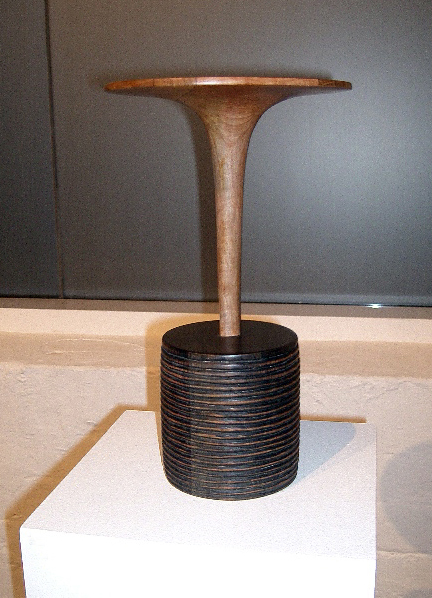
 

Jamieson Miller (Australian, b. 1965) 'The Last Drop' 2008 from the exhibition Jamieson Miller 'territories' at Dickerson Gallery, Melbourne, Nov 2008


Jamieson Miller (Australian, b. 1965)
The Last Drop
2008
Sheoak with ebonised stain
30 x 14 x 10cm


A small but lively crowd was in attendance for the opening of the exhibition territories featuring six small and six large floor standing wooden sculptures by the artist Jamieson Miller at the Dickerson Gallery in Oxford Street, Collingwood.

The work itself is of a fine craftsmanship showing exemplary design: different coloured woods and stains, wonderful joinery, the use of grain and different geometric and fluid shapes are all balanced harmoniously within the objects. A refined aesthetic sensibility is at work in their construction. This sensibility flows through to the conceptual themes of the work: the artist has created sometimes totemic but always lyrical poetic spaces within the corporeality of the work. The viewer enters enclosed intimate spaces (such as the funnels) or steps forward into steeped carved openings that open the way to visions of an inner world. Outer space becomes enclosed inner space as the viewer is at first intrigued, then drawn in and surrounded by the flickering shadows of Plato’s cave.

The new gallery is certainly an attractive modern warehouse space with vaulted roof. Unfortunately the large sculptures, although multi-dimensional and carved in the round, have been pushed to the edges of the space close to the walls. This makes it difficult to appreciate the totality of the form of the sculptures especially important with a work like Sight where the carved blackened wood shape on the ‘back’ of the sculpture is a vital counterpoint to the receding opening at the ‘front’ of the work. Make sure you also explore the reverse of the sculpture Lineage II to also comprehend the intimate space of the medieval window like opening to the front.

I really enjoyed the work of Jamieson Miller and recommend a visit to the gallery to see his refined worlds. The work is on show with the paintings of Jason Cordero.

Dr Marcus Bunyan
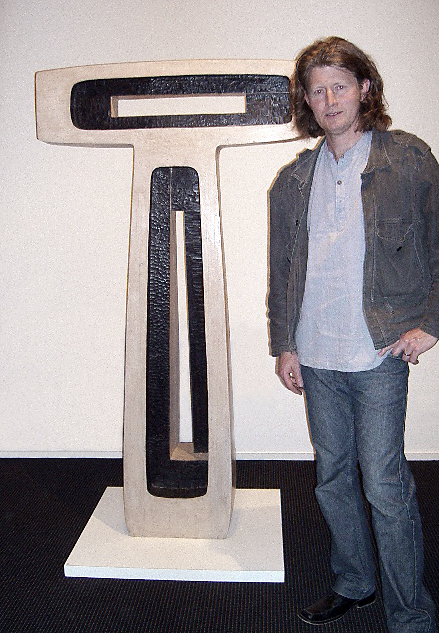
 

Jamieson Miller (Australian, b. 1965) 'Sight' 2008 (installation view)


Jamieson Miller standing next to his sculpture Sight on the opening night of his exhibition territories at Dickerson Gallery in Collingwood.

Cyprus pine with ebonised stain
180 x 100 x 30cm
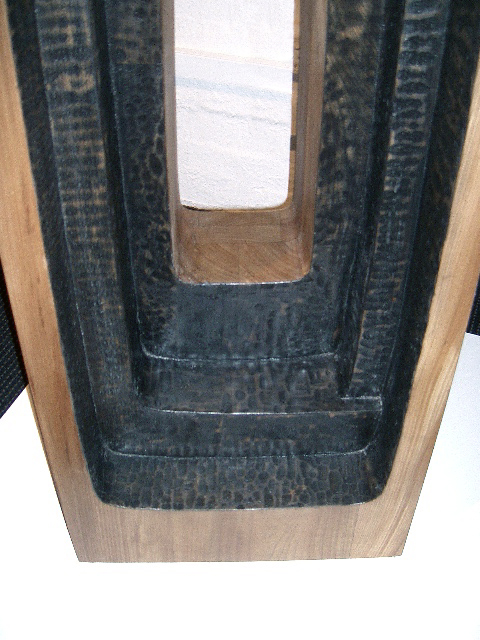
 

Jamieson Miller (Australian, b. 1965) 'Resting Place' 2008 (detail)


Jamieson Miller (Australian, b. 1965)
Resting Place (detail)
2008
Elm with paint
203 x 42 x 30cm


Dickerson Gallery
34 Queen Street, Woollahra
Sydney NSW 2025
Phone: +61 2 9363 3358

Opening hours:
Tuesday – Saturday: currently by appointment only
Closed: Sunday and Monday
Jamieson Miller website

Dickerson Gallery website

LIKE ART BLART ON FACEBOOK

Back to top

Review: ‘Disintegration’ by Robbie Rowlands at Place Gallery, Melbourne

Exhibition dates: 22nd October – 15th November, 2008


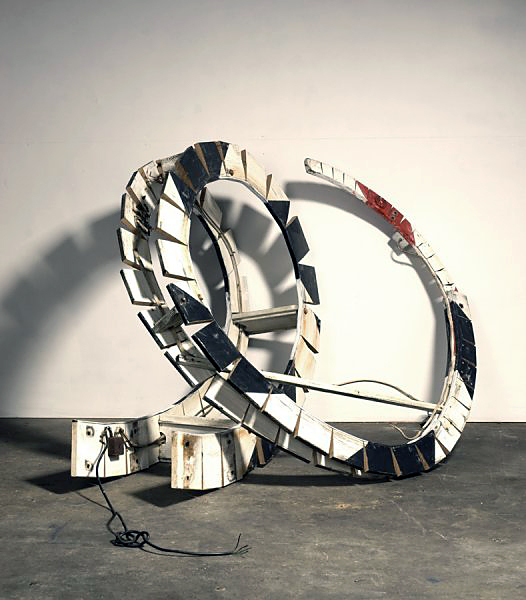
Robbie Rowlands (Australian, b. 1968) 'Scored' 2008 from the exhibition Review: 'Disintegration' by Robbie Rowlands at Place Gallery, Melbourne, Oct - Nov, 2008


Robbie Rowlands (Australian, b. 1968)
Scored
2008
Goal post, steel
160cm x 130cm x 50cm
Photograph: Christian Capurro


“The philosopher Martin Heidegger argued that objects are often invisible to us gathered up as they are within a context of functionality and use. It is only when things break down that we become aware of them, seeing them with fresh eyes. In many ways Heidegger’s observation could form the basis of an approach to Robbie Rowlands’ work. Rowlands takes objects that are often forgotten, invisible or transparent to us, objects that exist on the verge of disappearance, and stages a kind of ‘breakdown’, inviting us to rediscover the object, poised somewhere between what it was and what it might become.”


Simon Cooper. Catalogue essay


Sitting in pools of light in the elegant modern space of Place Gallery in Richmond, six theatrically lit sculptures are presented by artist Robbie Rowlands. Made of everyday objects (a boom gate, desk, chair, single bed, electricity pole, desk and footy goalpost) they have been de/constructed by the artist and reformed into curved objects. With ironic titles such as Down for the felled electricity pole and Collapse for the dismembered chair Rowland’s work hovers between one fixed state and an’other’ transformative state of being.

While the catalogue essay by Simon Cooper suggests that all of these objects are abandoned or nearly forgotten sharing a context of quasi-obsolescence, this is not the case. These were objects of purpose and form, the acts of ritualised production of a consumer society that contained signs that symbolised their status. In his creativity Rowland has used these technologies of production, which permit us to produce, transform or manipulate things to create new sensual forms of life. Some of the sculptures such as Boom (the boom gate; 2008, below) and Scored (the goal post; 2008, above) remind me of creatures emerging from the recesses of the unconscious, curling and rearing up like monsters from the deep. One of the most beautiful forms is the constructed white chair where the function of the object has collapsed into the essence of the form, like the surreal spatiality of a poetic Miro. As Gaston Bachelard reminds use in The Poetics of Space:

“The grace of a curve is an invitation to remain. We cannot break away from it without hoping to return. For the beloved curve has nest-like powers; it incites us to possession, it is a curved corner, inhabited geometry.”1


Cooper suggests that the curved forms that Rowland creates were “already there in the original object, even as it was sat on, written on, or passed by on the way to work.” He rightly notes that the process used contains a certain violence, but that we remember and reconstruct the old form even as we respond to the new construction. For these sculptures are a construction not, I believe, inherent in the original form. This can be seen in the sculpture Boom (2008, below) for example, where Rowland has used additional pieces of metal to hold the curve of the boom gate in place. Without this skilfully added, hidden sub-structure the transformative shape would collapse onto the floor. Rowland inhabits and possesses his new geometry with as much technology as the original but not in such an obvious form.

At their best these sculptures are both poetic palimpsest and heterotopic objects of otherness that are neither here nor there. The work would have been stronger if only four pieces were presented in the gallery space – the sculptures needed more room to breathe (understanding the dictum that less is more). The sculptures themselves also needed greater thematic cohesiveness perhaps using the colour white as the unifying theme. But they are sensual and beautiful gestures and deserve the attention of your visit.

Dr Marcus Bunyan


1/ Bachelard, Gaston. The Poetics of Space. Boston: Beacon, 1969 [originally 1958] p. 146


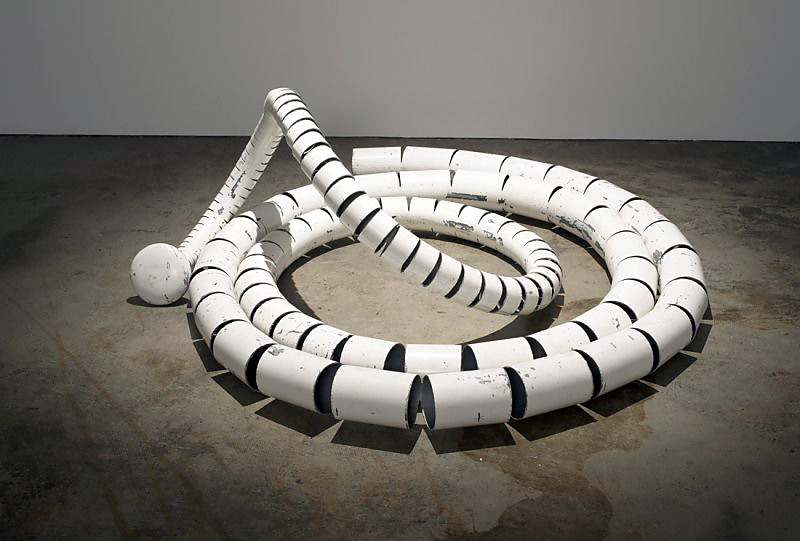
Robbie Rowlands (Australian, b. 1968) 'Boom' 2008


Robbie Rowlands (Australian, b. 1968)
Boom
2008
Rail boom gate, wooden
160cm x 160cm x 130cm
Photograph: Wren


Place Gallery
120 Collins Street
Melbourne VIC 3000
Phone: (03) 9527 6378

Opening hours:
Daily: 9.30am – 6.00pm
Sunday & Holidays: Closed

Robbie Rowlands website

LIKE ART BLART ON FACEBOOK

Back to top

Opening: Rennie Ellis ‘No standing only dancing’ at The Ian Potter Centre: NGV Australia

Exhibition dates: 31st October, 2008 – 22nd February, 2009

Opening: 30th October, 2008


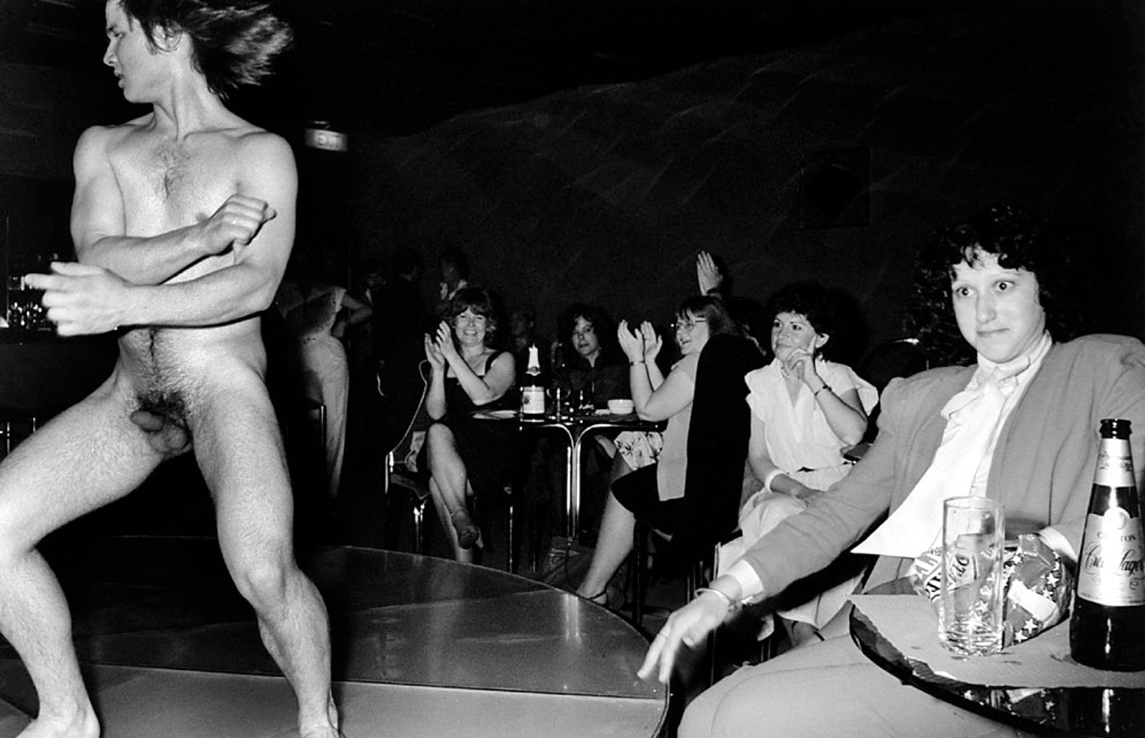
Rennie Ellis (Australian, 1940-2003) 'Girls' Night Out, Prahran' 1980 from the exhibition Rennie Ellis 'No standing only dancing' at The Ian Potter Centre: NGV Australia, Oct 2008 - Feb 2009


Rennie Ellis (Australian, 1940-2003)
Girls’ Night Out, Prahran
1980
Silver gelatin, selenium toned fibre based print


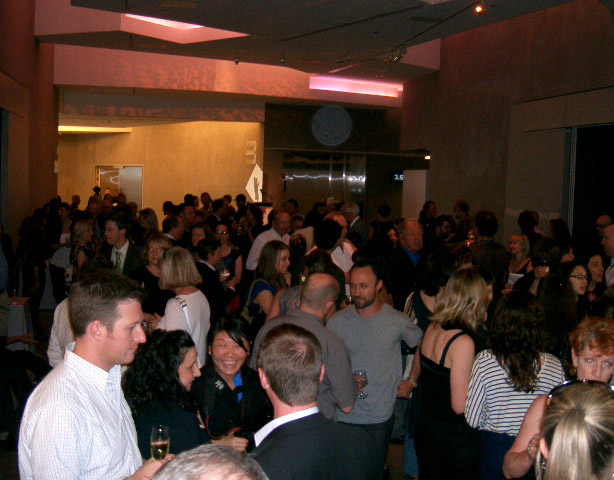
A very social and lively crowd gathered at The Ian Potter Centre: NGV Australia at Federation Square on the evening of 30th October to celebrate the life and work of the Australian social photographer Rennie Ellis.

After opening comments by the NGV Director Dr Gerard Vaughan there was a funny and erudite speech by Phillip Adams AO who had flown down from Sydney to open the exhibition. The crowd enjoyed the anecdotes about his relationship with Rennie and said he thought that dying was a good career move on Rennie’s behalf and that he would have loved the fact that he had a retrospective at the NGV. Adams observed that Ellis used to be everywhere, at every party and opening, using his astute eye to record and never to judge. Applause all round for a life well lived.

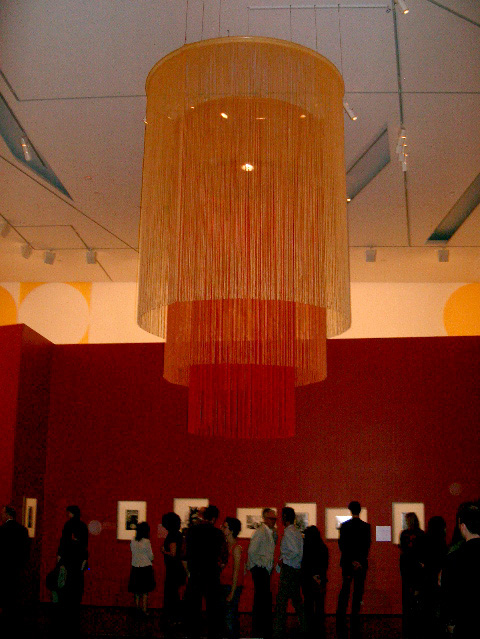
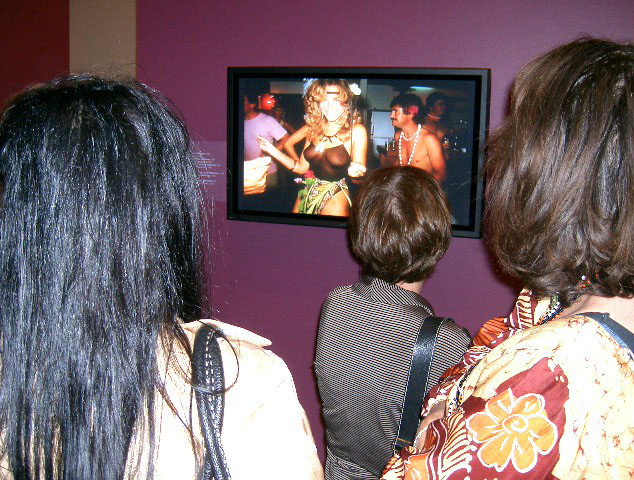
On entering the exhibition space viewers were treated to a simple but effective installation of his work, with overtones of the 1970’s-1980s interior decor with yellow and white circle graphics and hanging fabric chandelier. The curatorial staff at the NGV (notably Susan van Wyk) have chosen over 200 works from an archive of over half a million images for the exhibition in a process that has taken over two and a half years.

As an immigrant arriving in Australia in 1986 I remember 397 Club that used to be at 397 Swanston Street. After every other place had closed this club attracted people from every walk of life: pimps, prostitutes, drag queens, faggots, lesbians, straights and druggies. Rennie was probably there recording the scene. We were there just for a good time. It was fun and this is what Ellis’ photography is. Not burdened by overarching conceptual ideas Ellis recorded what he saw insightfully, balancing social commentary and spatial organisation in the construction of his images. The image Girls’ Night Out, Prahran 1980 (above) is a pearler (with the look on the woman’s face) and neatly encapsulates the magic of his image making.

Dr Marcus Bunyan


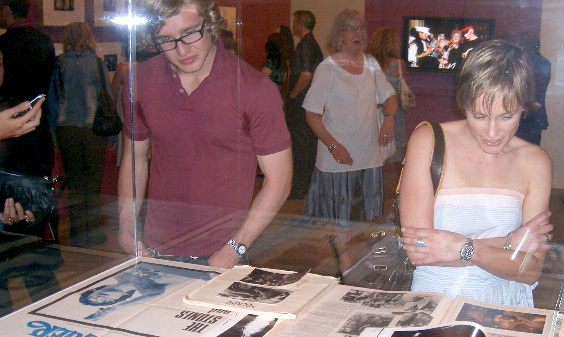
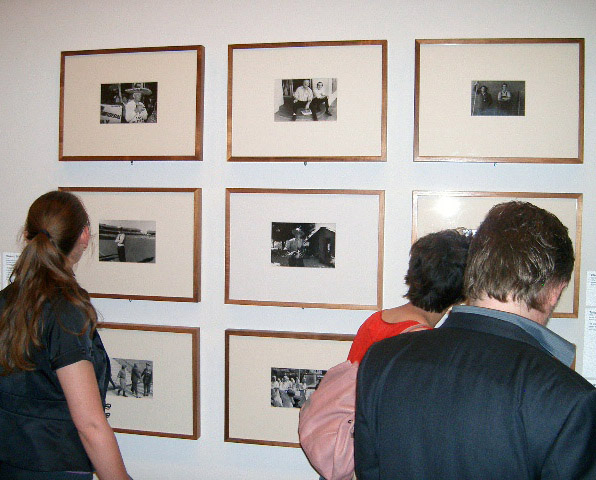
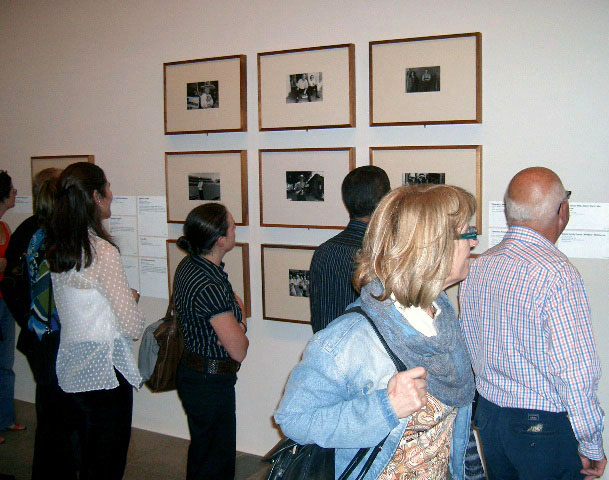
Opening of the exhibition 'No standing only dancing' by Rennie Ellis at The Ian Potter Centre: NGV Australia October 30th 2008

Opening of the exhibition 'No standing only dancing' by Rennie Ellis at The Ian Potter Centre: NGV Australia October 30th 2008

Opening of the exhibition 'No standing only dancing' by Rennie Ellis at The Ian Potter Centre: NGV Australia October 30th 2008

Opening of the exhibition 'No standing only dancing' by Rennie Ellis at The Ian Potter Centre: NGV Australia October 30th 2008

Opening of the exhibition 'No standing only dancing' by Rennie Ellis at The Ian Potter Centre: NGV Australia October 30th 2008

Opening of the exhibition 'No standing only dancing' by Rennie Ellis at The Ian Potter Centre: NGV Australia October 30th 2008

Opening of the exhibition 'No standing only dancing' by Rennie Ellis at The Ian Potter Centre: NGV Australia October 30th 2008

Opening of the exhibition 'No standing only dancing' by Rennie Ellis at The Ian Potter Centre: NGV Australia October 30th 2008


Opening of the exhibition No standing only dancing by Rennie Ellis at The Ian Potter Centre: NGV Australia October 30th 2008.
Photographs © Marcus Bunyan


The Ian Potter Centre: NGV Australia
Federation Square
Corner of Russell and 
Flinders Streets, Melbourne

Opening hours:
Daily 10am – 5pm

National Gallery of Victoria website

Rennie Ellis Photographic Archive

LIKE ART BLART ON FACEBOOK

Back to top