Review: ‘Disintegration’ by Robbie Rowlands at Place Gallery, Melbourne

Exhibition dates: 22nd October – 15th November, 2008
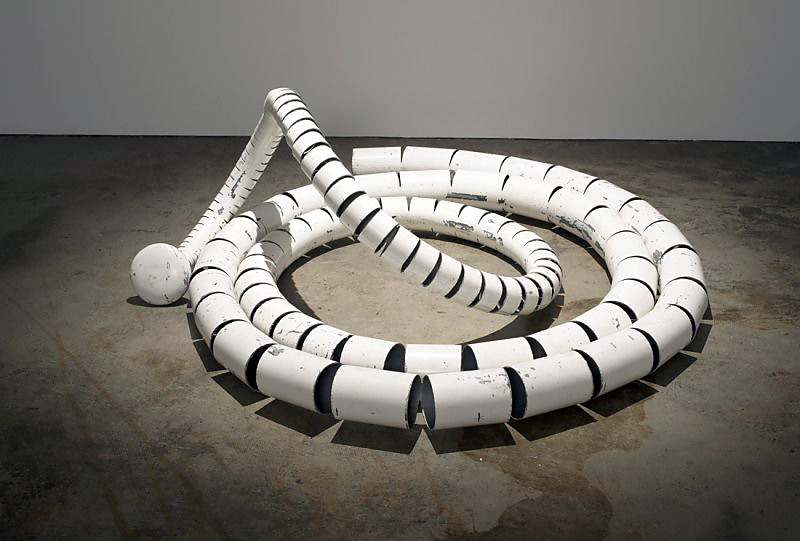
 

Robbie Rowlands (Australian, b. 1968) 'Scored' 2008 from the exhibition Review: 'Disintegration' by Robbie Rowlands at Place Gallery, Melbourne, Oct - Nov, 2008


Robbie Rowlands (Australian, b. 1968)
Scored
2008
Goal post, steel
160cm x 130cm x 50cm
Photograph: Christian Capurro


“The philosopher Martin Heidegger argued that objects are often invisible to us gathered up as they are within a context of functionality and use. It is only when things break down that we become aware of them, seeing them with fresh eyes. In many ways Heidegger’s observation could form the basis of an approach to Robbie Rowlands’ work. Rowlands takes objects that are often forgotten, invisible or transparent to us, objects that exist on the verge of disappearance, and stages a kind of ‘breakdown’, inviting us to rediscover the object, poised somewhere between what it was and what it might become.”


Simon Cooper. Catalogue essay


Sitting in pools of light in the elegant modern space of Place Gallery in Richmond, six theatrically lit sculptures are presented by artist Robbie Rowlands. Made of everyday objects (a boom gate, desk, chair, single bed, electricity pole, desk and footy goalpost) they have been de/constructed by the artist and reformed into curved objects. With ironic titles such as Down for the felled electricity pole and Collapse for the dismembered chair Rowland’s work hovers between one fixed state and an’other’ transformative state of being.

While the catalogue essay by Simon Cooper suggests that all of these objects are abandoned or nearly forgotten sharing a context of quasi-obsolescence, this is not the case. These were objects of purpose and form, the acts of ritualised production of a consumer society that contained signs that symbolised their status. In his creativity Rowland has used these technologies of production, which permit us to produce, transform or manipulate things to create new sensual forms of life. Some of the sculptures such as Boom (the boom gate; 2008, below) and Scored (the goal post; 2008, above) remind me of creatures emerging from the recesses of the unconscious, curling and rearing up like monsters from the deep. One of the most beautiful forms is the constructed white chair where the function of the object has collapsed into the essence of the form, like the surreal spatiality of a poetic Miro. As Gaston Bachelard reminds use in The Poetics of Space:

“The grace of a curve is an invitation to remain. We cannot break away from it without hoping to return. For the beloved curve has nest-like powers; it incites us to possession, it is a curved corner, inhabited geometry.”1


Cooper suggests that the curved forms that Rowland creates were “already there in the original object, even as it was sat on, written on, or passed by on the way to work.” He rightly notes that the process used contains a certain violence, but that we remember and reconstruct the old form even as we respond to the new construction. For these sculptures are a construction not, I believe, inherent in the original form. This can be seen in the sculpture Boom (2008, below) for example, where Rowland has used additional pieces of metal to hold the curve of the boom gate in place. Without this skilfully added, hidden sub-structure the transformative shape would collapse onto the floor. Rowland inhabits and possesses his new geometry with as much technology as the original but not in such an obvious form.

At their best these sculptures are both poetic palimpsest and heterotopic objects of otherness that are neither here nor there. The work would have been stronger if only four pieces were presented in the gallery space – the sculptures needed more room to breathe (understanding the dictum that less is more). The sculptures themselves also needed greater thematic cohesiveness perhaps using the colour white as the unifying theme. But they are sensual and beautiful gestures and deserve the attention of your visit.

Dr Marcus Bunyan


1/ Bachelard, Gaston. The Poetics of Space. Boston: Beacon, 1969 [originally 1958] p. 146
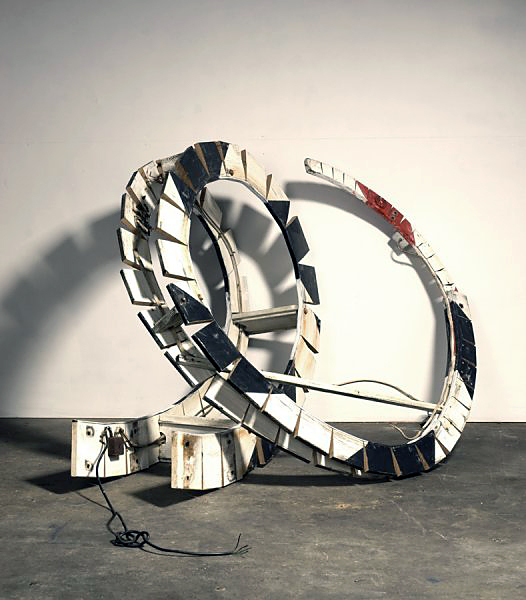
 

Robbie Rowlands (Australian, b. 1968) 'Boom' 2008


Robbie Rowlands (Australian, b. 1968)
Boom
2008
Rail boom gate, wooden
160cm x 160cm x 130cm
Photograph: Wren


Place Gallery
120 Collins Street
Melbourne VIC 3000
Phone: (03) 9527 6378

Opening hours:
Daily: 9.30am – 6.00pm
Sunday & Holidays: Closed
Robbie Rowlands website

LIKE ART BLART ON FACEBOOK

Back to top

Opening: Rennie Ellis ‘No standing only dancing’ at The Ian Potter Centre: NGV Australia

Exhibition dates: 31st October, 2008 – 22nd February, 2009

Opening: 30th October, 2008


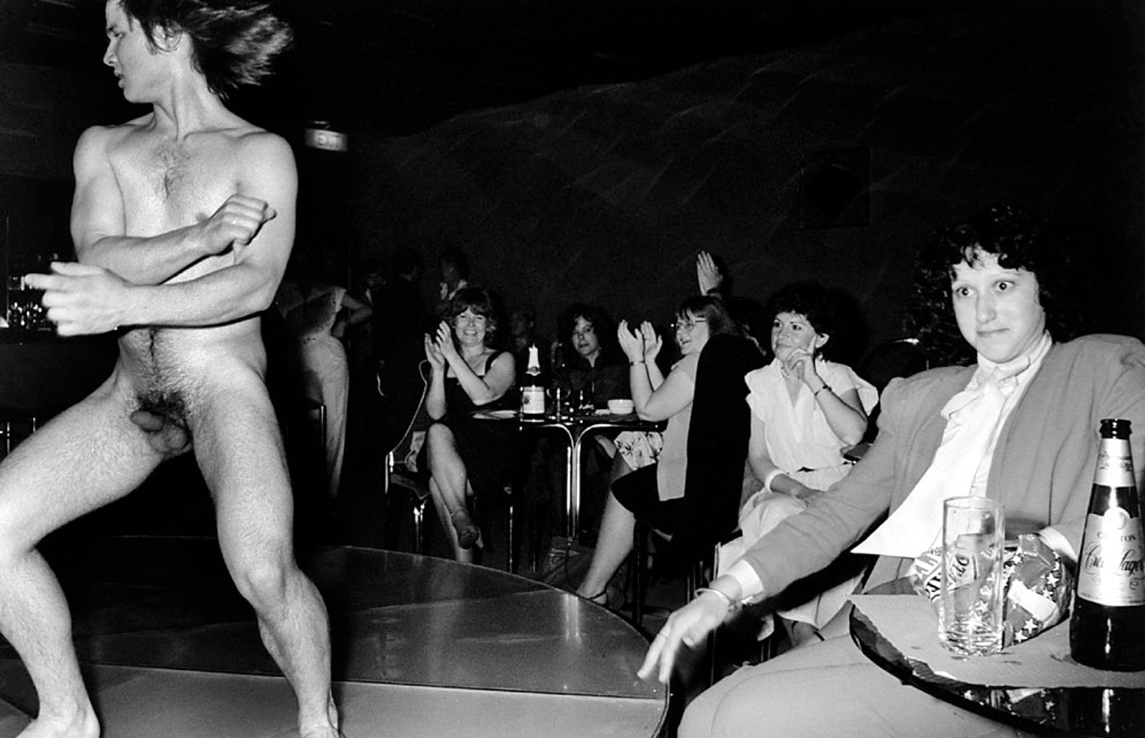
Rennie Ellis (Australian, 1940-2003) 'Girls' Night Out, Prahran' 1980 from the exhibition Rennie Ellis 'No standing only dancing' at The Ian Potter Centre: NGV Australia, Oct 2008 - Feb 2009


Rennie Ellis (Australian, 1940-2003)
Girls’ Night Out, Prahran
1980
Silver gelatin, selenium toned fibre based print


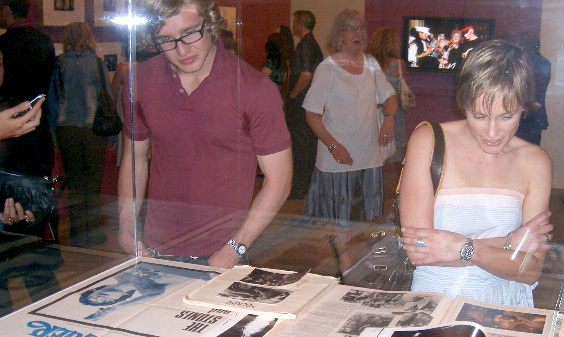
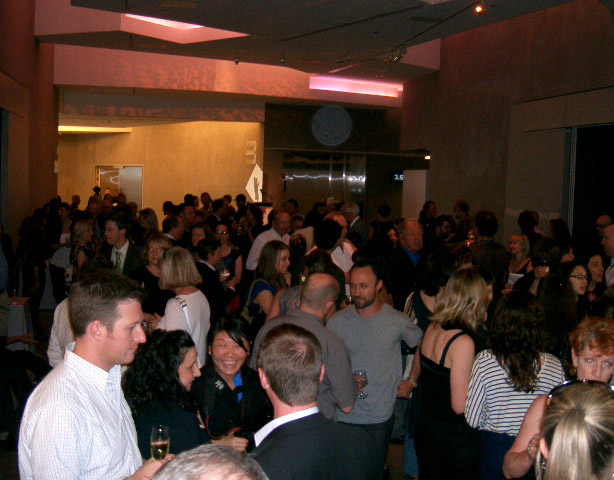
A very social and lively crowd gathered at The Ian Potter Centre: NGV Australia at Federation Square on the evening of 30th October to celebrate the life and work of the Australian social photographer Rennie Ellis.

After opening comments by the NGV Director Dr Gerard Vaughan there was a funny and erudite speech by Phillip Adams AO who had flown down from Sydney to open the exhibition. The crowd enjoyed the anecdotes about his relationship with Rennie and said he thought that dying was a good career move on Rennie’s behalf and that he would have loved the fact that he had a retrospective at the NGV. Adams observed that Ellis used to be everywhere, at every party and opening, using his astute eye to record and never to judge. Applause all round for a life well lived.

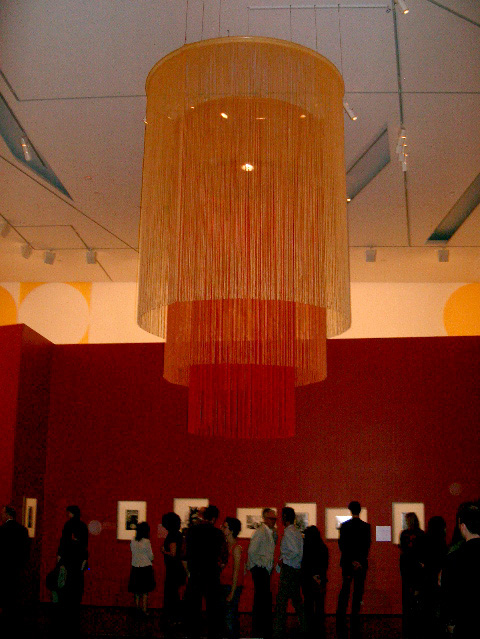
On entering the exhibition space viewers were treated to a simple but effective installation of his work, with overtones of the 1970’s-1980s interior decor with yellow and white circle graphics and hanging fabric chandelier. The curatorial staff at the NGV (notably Susan van Wyk) have chosen over 200 works from an archive of over half a million images for the exhibition in a process that has taken over two and a half years.

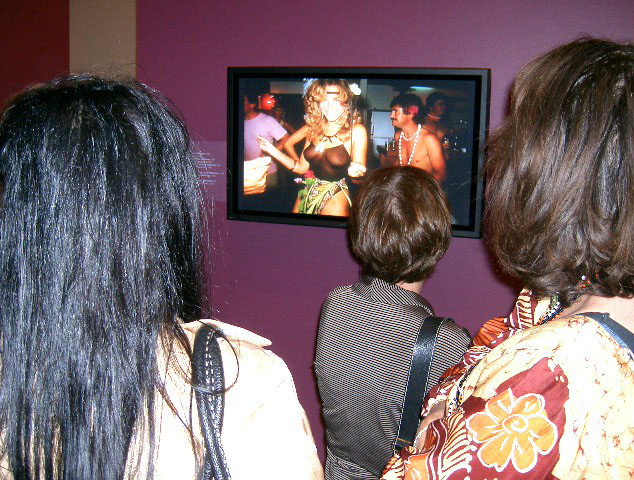
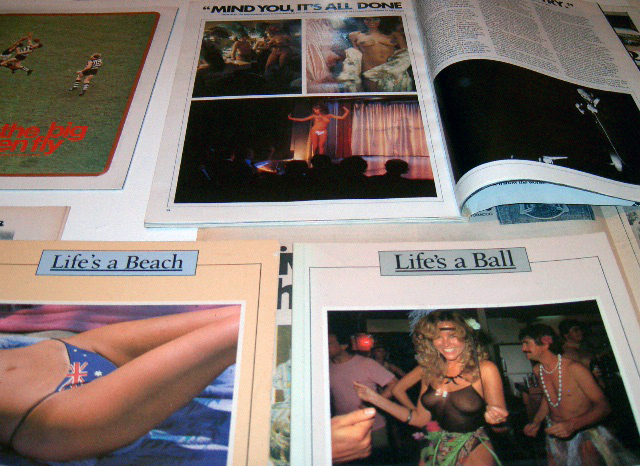
As an immigrant arriving in Australia in 1986 I remember 397 Club that used to be at 397 Swanston Street. After every other place had closed this club attracted people from every walk of life: pimps, prostitutes, drag queens, faggots, lesbians, straights and druggies. Rennie was probably there recording the scene. We were there just for a good time. It was fun and this is what Ellis’ photography is. Not burdened by overarching conceptual ideas Ellis recorded what he saw insightfully, balancing social commentary and spatial organisation in the construction of his images. The image Girls’ Night Out, Prahran 1980 (above) is a pearler (with the look on the woman’s face) and neatly encapsulates the magic of his image making.

Dr Marcus Bunyan


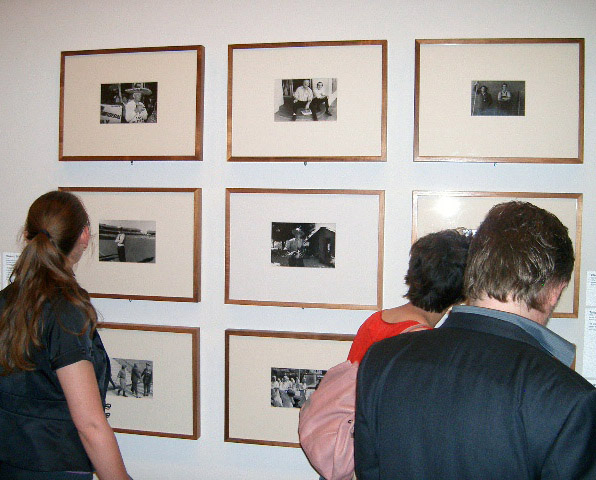
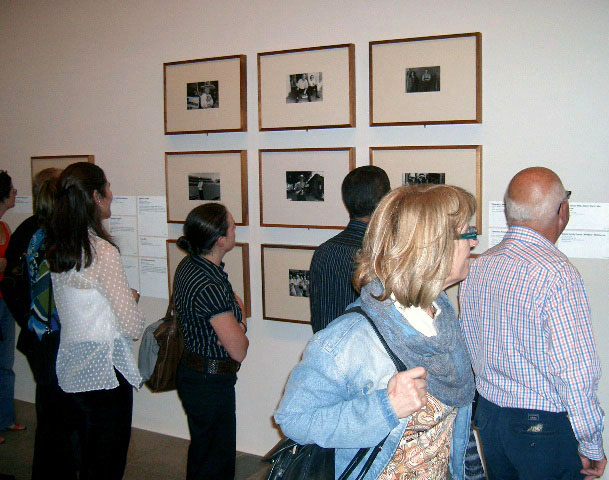
Opening of the exhibition 'No standing only dancing' by Rennie Ellis at The Ian Potter Centre: NGV Australia October 30th 2008

Opening of the exhibition 'No standing only dancing' by Rennie Ellis at The Ian Potter Centre: NGV Australia October 30th 2008

Opening of the exhibition 'No standing only dancing' by Rennie Ellis at The Ian Potter Centre: NGV Australia October 30th 2008

Opening of the exhibition 'No standing only dancing' by Rennie Ellis at The Ian Potter Centre: NGV Australia October 30th 2008

Opening of the exhibition 'No standing only dancing' by Rennie Ellis at The Ian Potter Centre: NGV Australia October 30th 2008

Opening of the exhibition 'No standing only dancing' by Rennie Ellis at The Ian Potter Centre: NGV Australia October 30th 2008

Opening of the exhibition 'No standing only dancing' by Rennie Ellis at The Ian Potter Centre: NGV Australia October 30th 2008

Opening of the exhibition 'No standing only dancing' by Rennie Ellis at The Ian Potter Centre: NGV Australia October 30th 2008


Opening of the exhibition No standing only dancing by Rennie Ellis at The Ian Potter Centre: NGV Australia October 30th 2008.
Photographs © Marcus Bunyan


The Ian Potter Centre: NGV Australia
Federation Square
Corner of Russell and 
Flinders Streets, Melbourne

Opening hours:
Daily 10am – 5pm

National Gallery of Victoria website

Rennie Ellis Photographic Archive

LIKE ART BLART ON FACEBOOK

Back to top

Exhibition: ‘Klippel/Klippel: Opus 2008’ at Ian Potter Centre: NGV Australia

Exhibition dates: 7th August – 2nd November, 2008


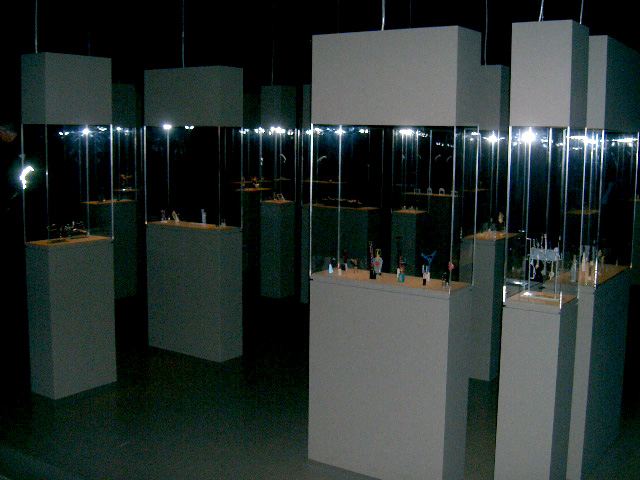
'Klippel/Klippel: Opus 2008' exhibition sculpture and installation from the first space

Robert Klippel 'Opus 2008' exhibition installation from the first space


Klippel/Klippel: Opus 2008 exhibition sculpture and installation from the first space


A magical exhibition of the work of the Australian sculptor Robert Klippel (1920-2001) is presented together with a soundscape to accompany the works by his son Andrew Klippel. The exhibition presents two distinct rooms of light and shade and finishes with a singular monumental bronze work No. 709, but it is the two rooms that astound. They contain small assemblages and bronze sculpture made in the 1980s-1990s.

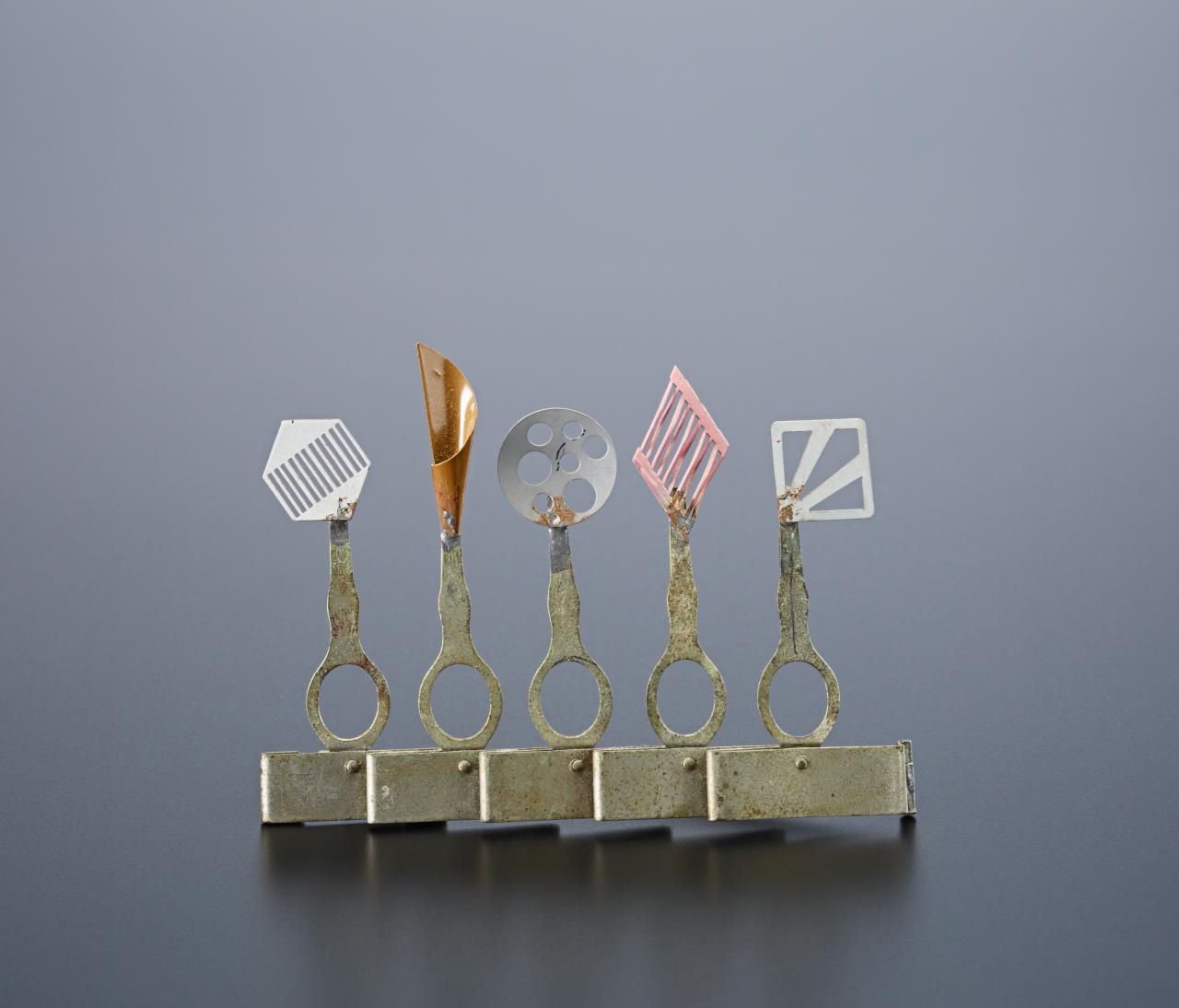
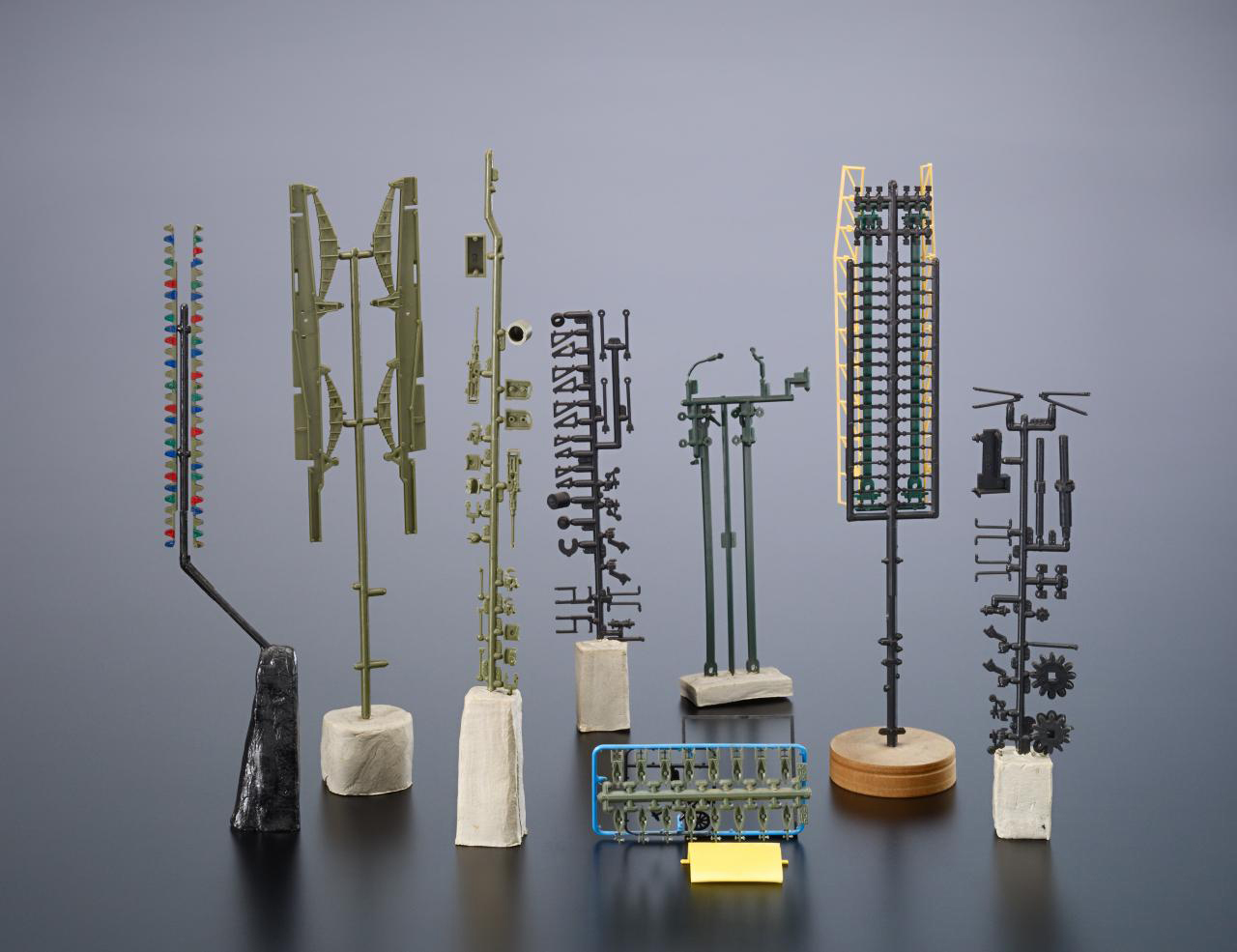
In the first space lit glass cases hover in darkness, containing delicate constructions of found objects, beautifully crafted. Made of plastic and metal, some parts taken from modelling kits, the sculptures morph and weave a delicate narrative, a powerful artistic vision. Mostly totemic in nature they transport the viewer with wonder and delight, the artists vision fully realised: no unnecessary flourishes, no wasted energy on forms that are redundant.

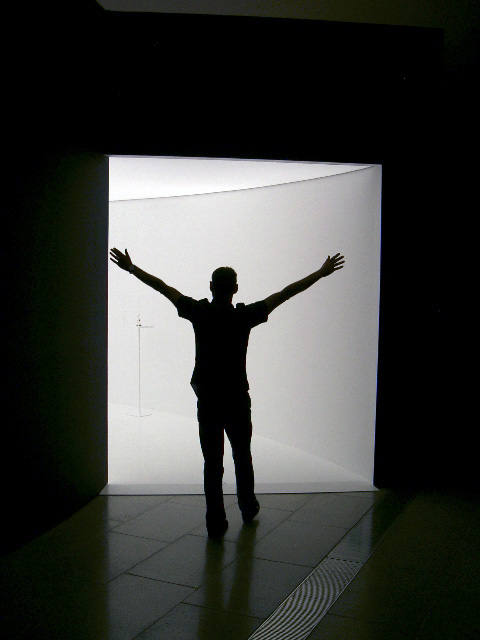
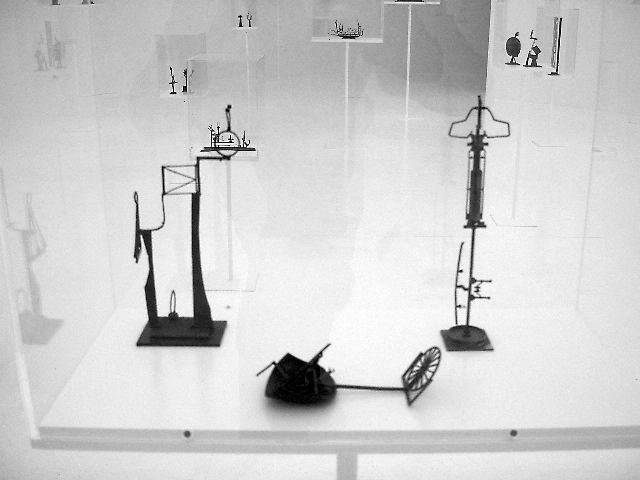
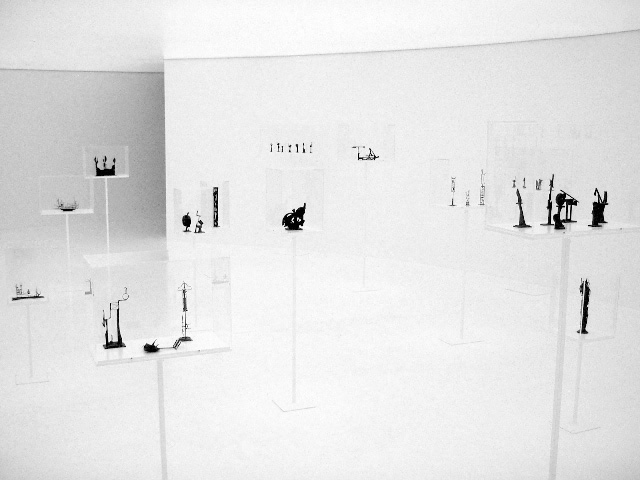
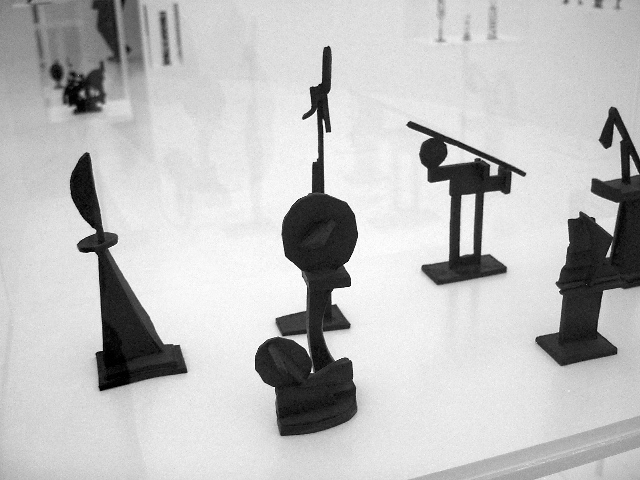
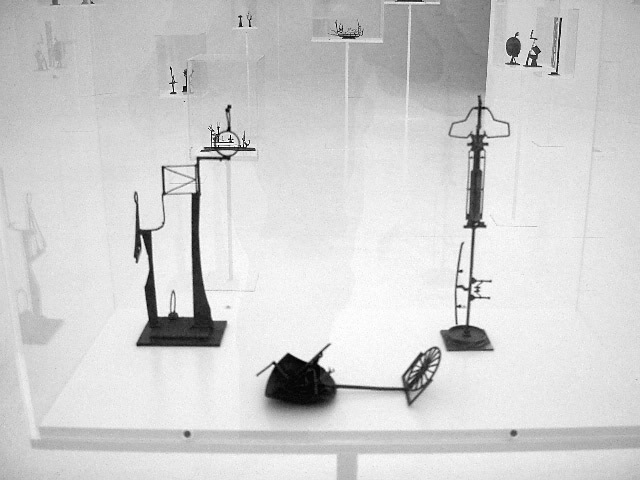
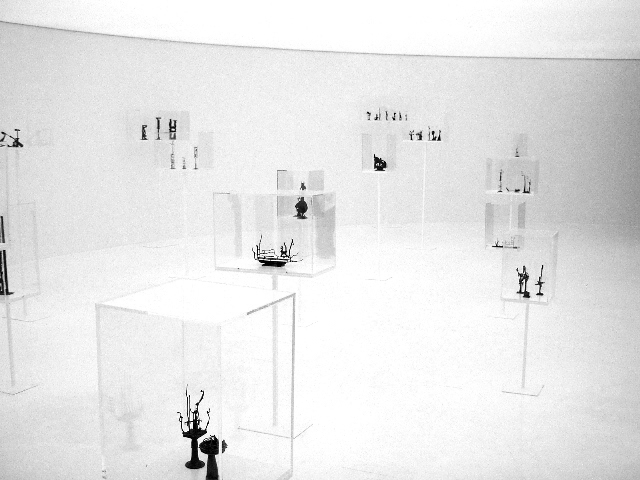
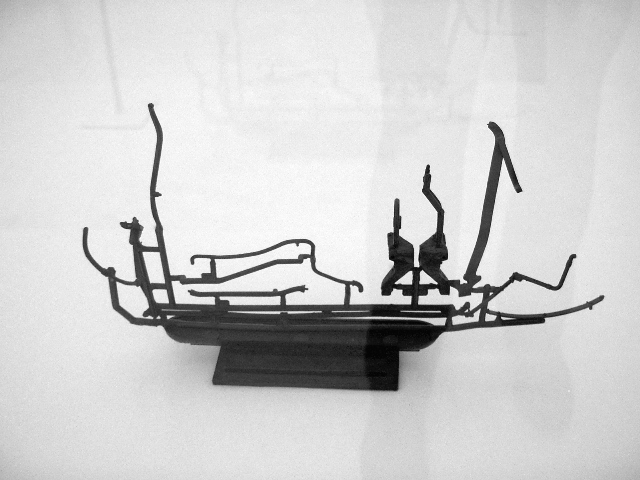
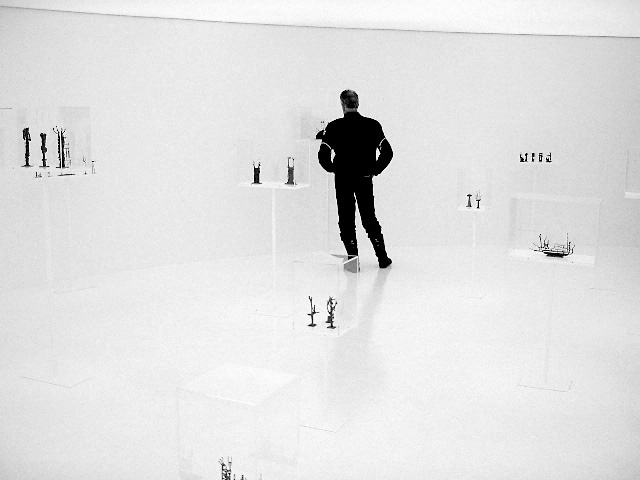
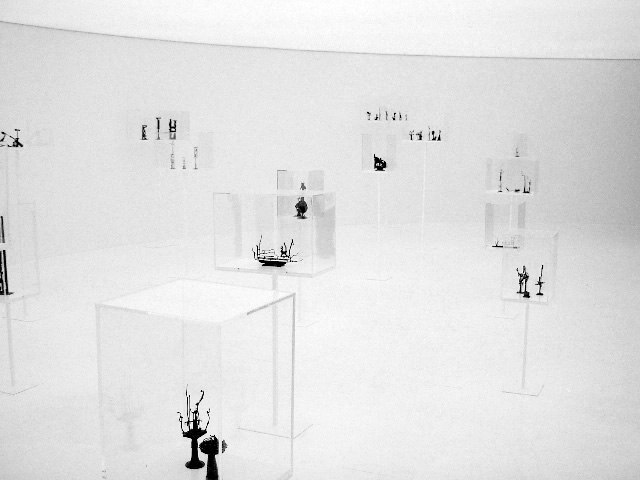
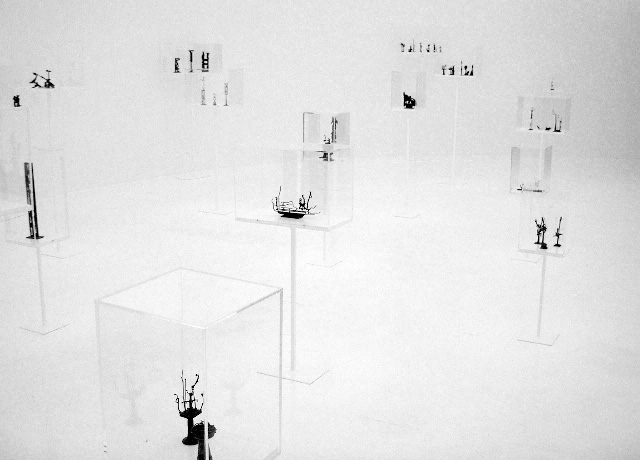
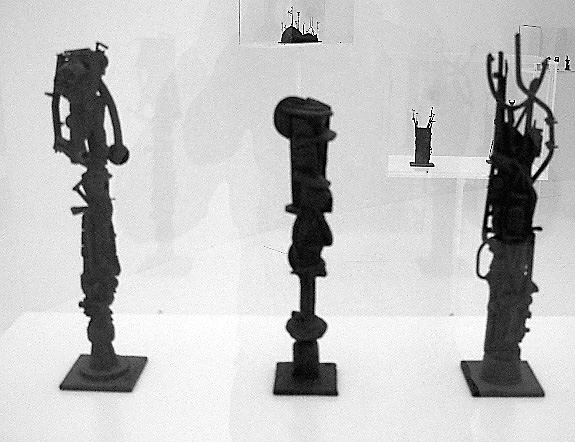
Wandering from the first darkened space we face a curved wall of black with a bright white opening, almost like the mouth of a Nautilus shell. Upon entering we are enveloped in white – walls, floor, stretched acrylic ceiling and stands upon which glass cases sit all being pure white. It is like stepping into the spacecraft from Stanley Kubrick’s 2001: A Space Odyssey – quite disorientating but transformational. In the cases sit small very dark bronze sculptures contrasting with the white. Again mostly totemic in nature the sculptures have great power and presence. Some portray small cities on top of hills. Others intricate machine and figure like constructions. All of the cases are mounted at different eye levels, unlike the first room.

When looking across the gallery space, the boxes and sculpture within create a diorama, almost a tableaux vivant, where you can move the focus of your gaze from foreground to mid to background, all suspended in white. If you can be in this space alone with the work and wander around soaking in the vision of this artist so much the better. The contrast and parallels between the two rooms is striking – here is an artist at the height of his powers commanding his materials and his vision in two distinct bodies of work: one delicate, found, plastic the other solid, dark and essential, both dealing with the essence of human creativity and being, leaving the viewer with a sensory experience long remembered.

Dr Marcus Bunyan


All installation photographs © Marcus Bunyan


'Klippel/Klippel: Opus 2008' exhibition entrance to the second space


Klippel/Klippel: Opus 2008 exhibition entrance to the second space


Robert Klippel is regarded as Australia’s most important sculptor of the post-war 20th century period. Known for his abstract assemblages created from found objects he is a distinguished figure in the history of Australian art. Andrew Klippel, Robert’s son, is a composer and musician who has achieved international recognition as a solo musician, songwriter and influential music producer.

Klippel/Klippel: Opus 2008 is a unique and compelling sensory experience which presents a group of Robert Klippel’s small-scale sculptures that were produced during the 1980s and 1990s – some of these have never been publicly displayed. It also includes the monumental bronze work No. 709. Andrew has arranged for this work, which Robert was preparing to cast at the time of his death, to be executed for the National Gallery of Victoria and included in the exhibition. And, in an important artistic response, Andrew Klippel has created a soundscape – a meditation on his father’s work.

Klippel/Klippel: Opus 2008 is an extraordinary and immersive exhibition that celebrates the creative process.

Text from the National Gallery of Victoria website


Robert Klippel 'Opus 2008' exhibition bronze sculptures from the second space

Robert Klippel 'Opus 2008' exhibition bronze sculptures from the second space

Robert Klippel 'Opus 2008' exhibition bronze sculptures from the second space

Robert Klippel 'Opus 2008' exhibition bronze sculptures from the second space

Robert Klippel 'Opus 2008' exhibition bronze sculptures from the second space

Robert Klippel 'Opus 2008' exhibition bronze sculptures from the second space

Robert Klippel 'Opus 2008' exhibition bronze sculptures from the second space

Robert Klippel 'Opus 2008' exhibition bronze sculptures from the second space

Robert Klippel 'Opus 2008' exhibition bronze sculptures from the second space

Robert Klippel 'Opus 2008' exhibition bronze sculptures from the second space


Klippel/Klippel: Opus 2008 exhibition bronze sculptures from the second space


Robert Klippel (Australian, 1920-2001) 'No. 879 (No. 1126)' 1995


Robert Klippel (Australian, 1920-2001)
No. 879 (No. 1126)
1995
Metal, enamel paint
9.5 x 13.3. x 4.2cm
Private collection, Sydney
© Andrew Klippel


Robert Klippel (Australian, 1920-2001) 'No. 881' c.1990 'No title (No. 1326)' c.1990 and works from the series 'No title (No. 1232)' 1980


Robert Klippel (Australian, 1920-2001)
No. 881
c.1990
No title (No. 1326)
c.1990
and works from the series
No title (No. 1232)
1980
Private collection, Sydney
© Andrew Klippel


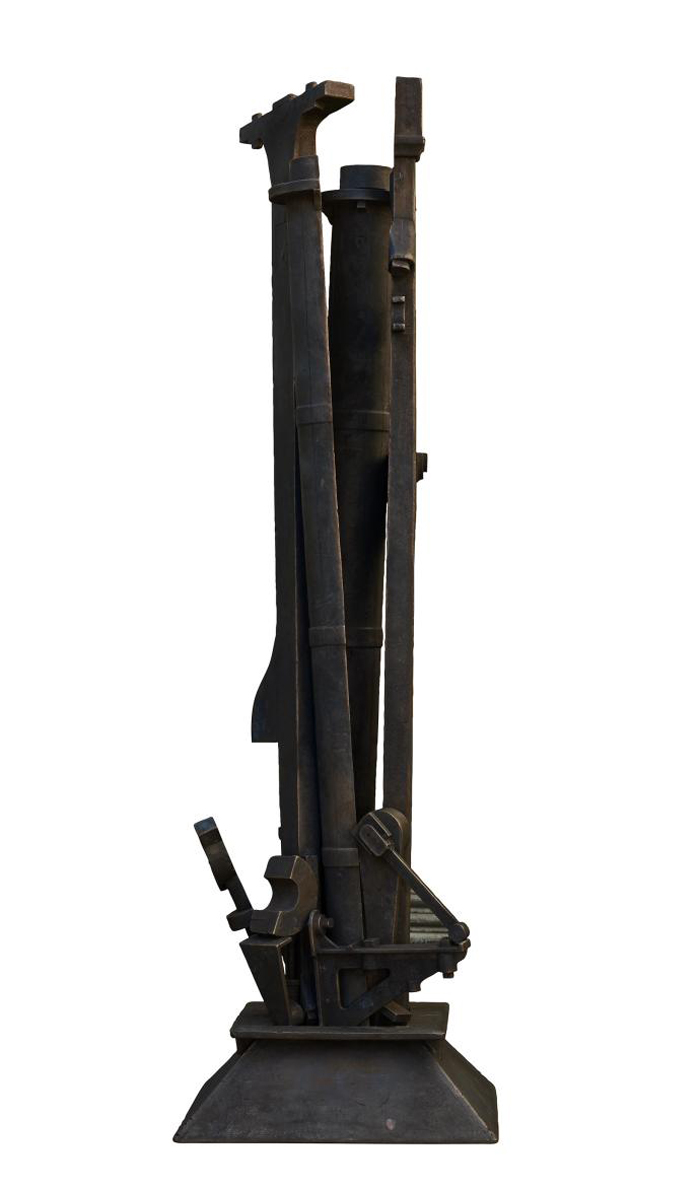
Robert Klippel (Australian, 1920-2001) 'No. 709' 1988


Robert Klippel (Australian, 1920-2001)
No. 709
1988; 2008 {cast}
Bronze
318.9 x 94.8 x 100.2cm
Artist’s proof
National Gallery of Victoria, Melbourne
Purchased with the assistance of Andrew Klippel and the Estate of Patrick Byrne, 2008
© Andrew Klippel


The Ian Potter Centre: NGV Australia
Federation Square
Corner of Russell and 
Flinders Streets, Melbourne

Opening hours:
Daily 10am – 5pm

National Gallery of Victoria website

LIKE ART BLART ON FACEBOOK

Back to top