Exhibition: ‘Helen Levitt’ at Fundación MAPFRE, Barcelona

Exhibition dates: 24th September, 2025 – 1st February, 2026

Curator: Joshua Chuang
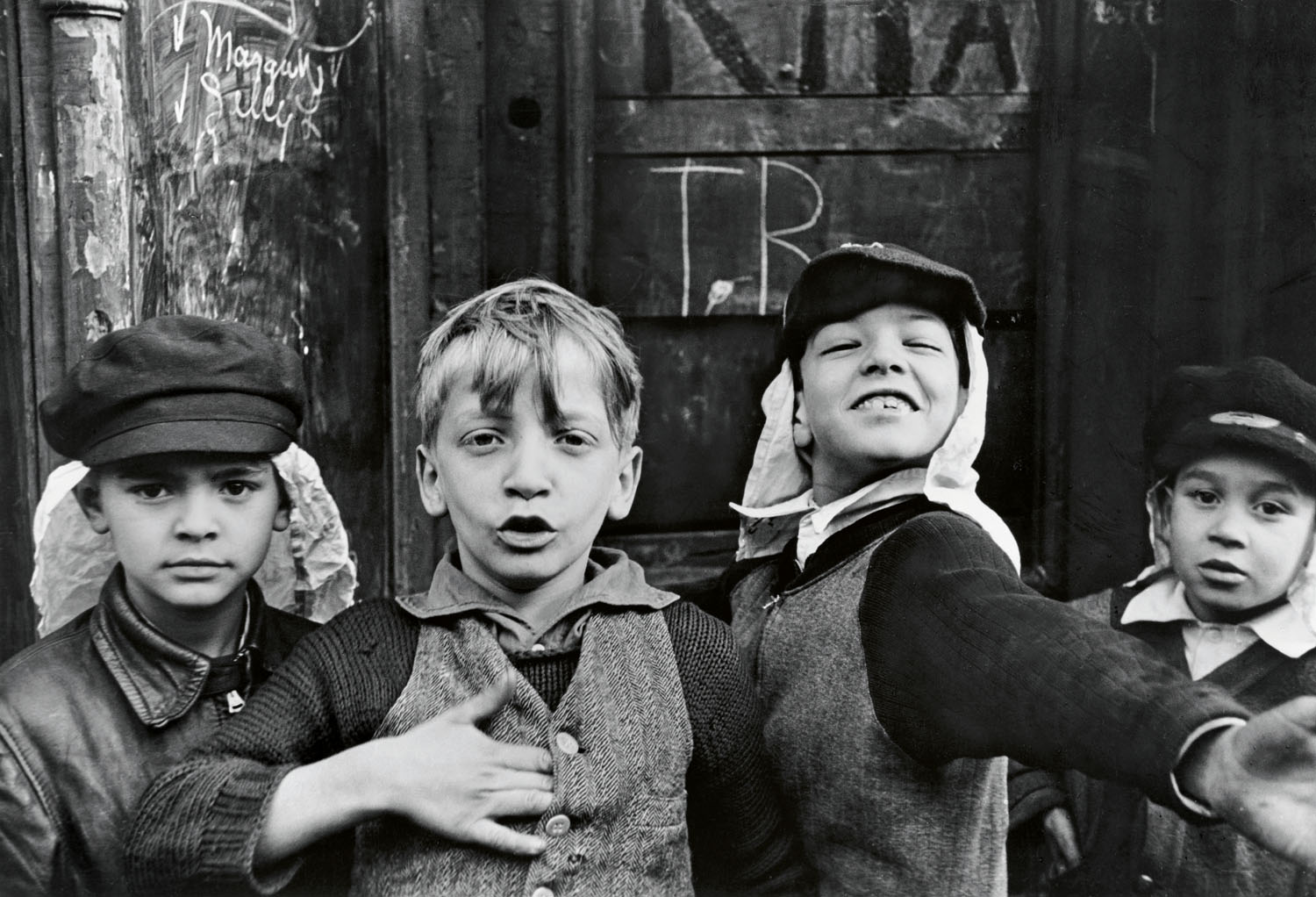
 

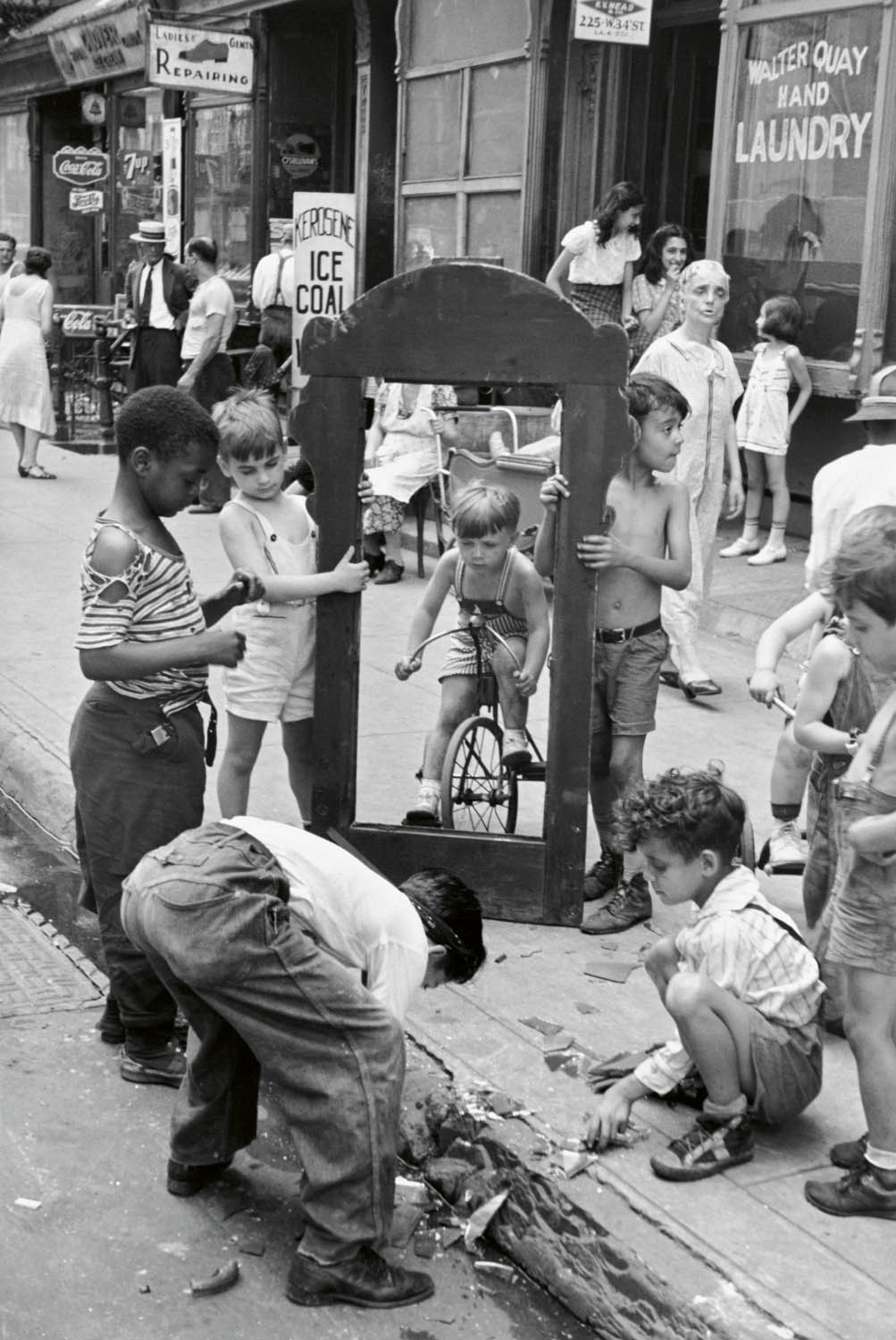
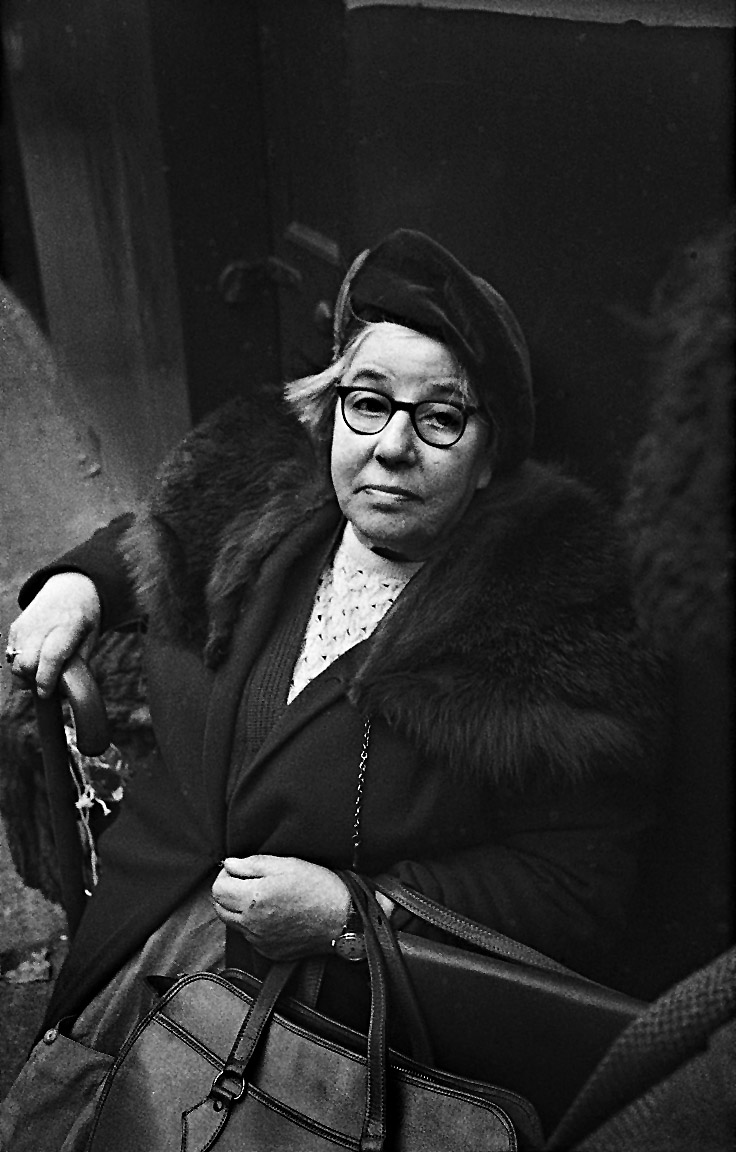
Helen Levitt (American, 1913-2009) 'New York' c. 1940 from the exhibition 'Helen Levitt' at Fundación MAPFRE, Barcelona, Sept 2025 - Feb 2026


Helen Levitt (American, 1913-2009)
New York
c. 1940
Gelatin silver print
© Film Documents LLC, courtesy Zander Galerie, Cologne 


Helen Levitt’s photographs from 1938-1940 are some of the earliest of her artistic career. “Her interest in photography blossomed when, aged 18, and having dropped out of high school, she began working in the darkroom of a commercial portrait photographer.”1

At the age of 23 she bought a secondhand Leica camera and walked the streets of New York – mainly Manhattan’s Lower East Side, the Bronx and Spanish Harlem – observing the social interactions of children and adults in this teeming metropolis. But she was not a flâneuse,2 strolling around the city observing but not interacting with her surroundings … she was fully engaged in the activity of the city.

What amazes me is that her vision as an artist was so well (in)formed at such a young age. And that the concerns and investigations into the nature of play, love and life in New York as a young, strong, independent “New Woman” remained constant throughout her life and decades long photographic career.

In her photographs there is an (in)direct engagement with the people that surrounded her (in her early works “she often hid her camera under her coat to capture candid, unnoticed moments on the streets”), an exchange of energy from the photographer to the subject and back through the camera onto the film… evidencing a generosity of spirit on the part of the artist towards her subjects. Here there is no pressing the camera into the face of the victim a la Garry Winogrand to evince a reaction, but a genuine sense of compassion and empathy towards the people who live in the great city of New York.

Influenced by social realism and the idea the photography could be an agent for change, avant-garde European film, surrealism and contemporaneous dance and theatre Levitt, “decided I should take pictures of working-class people and contribute to the movements,” Levitt later said of that time. “And then I saw pictures of [Henri] Cartier-Bresson and realised that photography could be an art – and that made me ambitious.”1

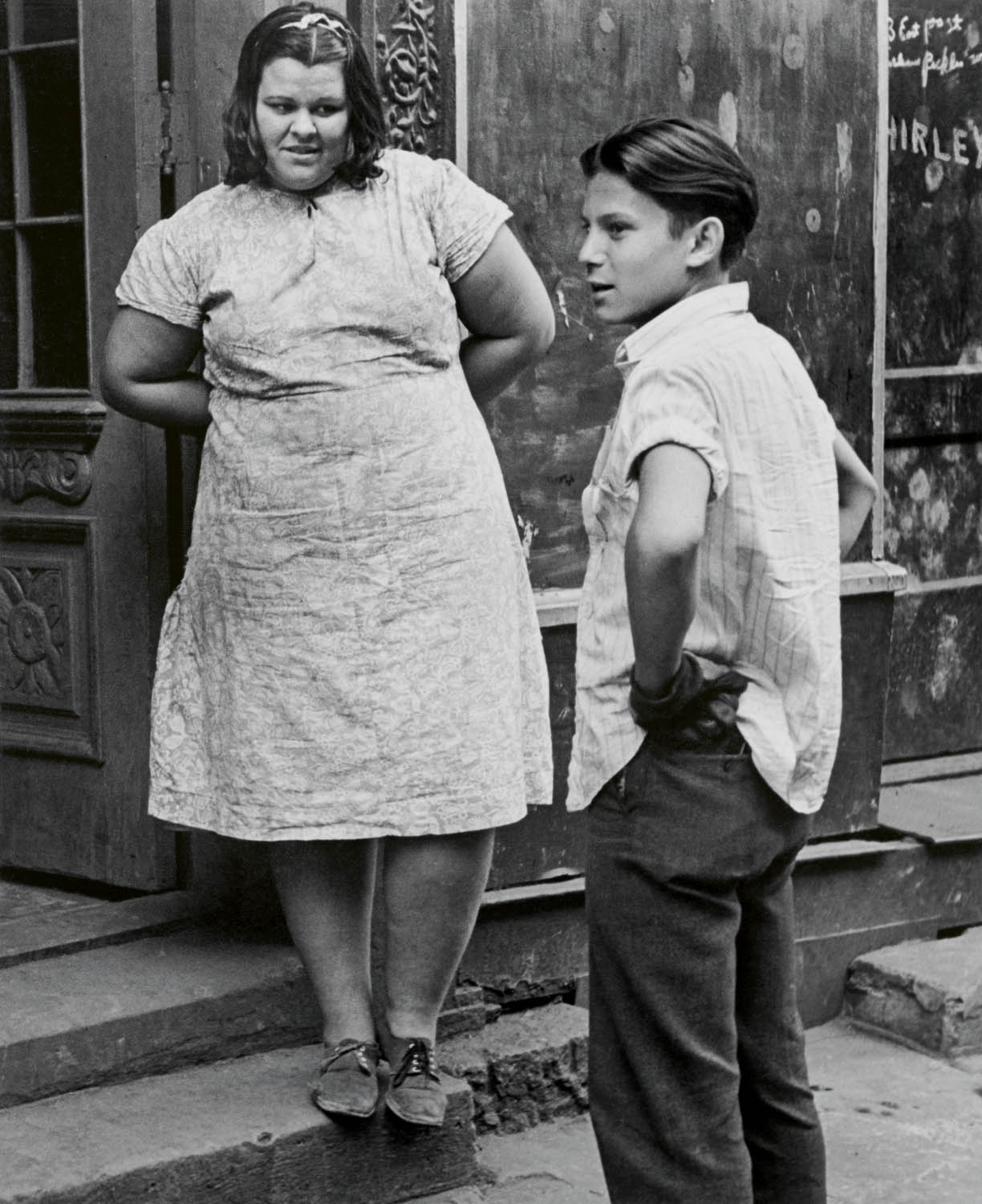
Levitt’s photographs are performative and theatrical, an engagement between artist, subject and viewer in the cause of art. “In her photographs, she presents the street as an almost theatrical landscape where the smallest interactions and gestures are incredibly resonant.”1

Levitt was not interested in concept nor didactic narrative. She was interested in the presence of the image before you … in just what you see.

As with any great art, the artist (even as she is ambitious) seems to be without ego. She lets the picture and the emotions tell the story without the shadow of the artist getting in the way (unlike much contemporary art and photography). For the work of art to have value in itself.

Thus, her photographs speak to us directly, or not at all.

Dr Marcus Bunyan


1/ Sean O’Hagan. “Helen Levitt: the most celebrated, least known photographer of her time,” on The Guardian website Sun 3 Oct 2021 [Online] Cited 28/11/2025

2/ “The flâneuse is not a female flâneur, but she is a version of the flâneur. She does not experience the city in the same way as he does. It is hard to define the archetype of the flâneuse, because the flâneur himself consists of paradoxes and many subcategories. Key concepts for flâneur and flâneuse are the amount of spare time, the aesthetic detachment towards objects, crowd and sceneries they see and their ambiguity about it.”

Akkelies van Nes and Tra My Nguyen. “Gender Differences in the Urban Environment: The flâneur and flâneuse of the 21st Century,” in Daniel Koch, Lars Marcus and Jesper Steen (eds.,). Proceedings of the 7th International Space Syntax Symposium. Stockholm: KTH, 2009


Many thankx to Fundación MAPFRE for allowing me to publish the photographs in the posting. Please click on the photographs for a larger version of the image.


“Levitt was part of a highly intellectual cultural and political milieu in New York in the 1930s and her photography reflected her deep interest in surrealism, cinema, leftwing politics and the new ideas that were then emerging about the role of the body in art.”


Walter Moser, curator
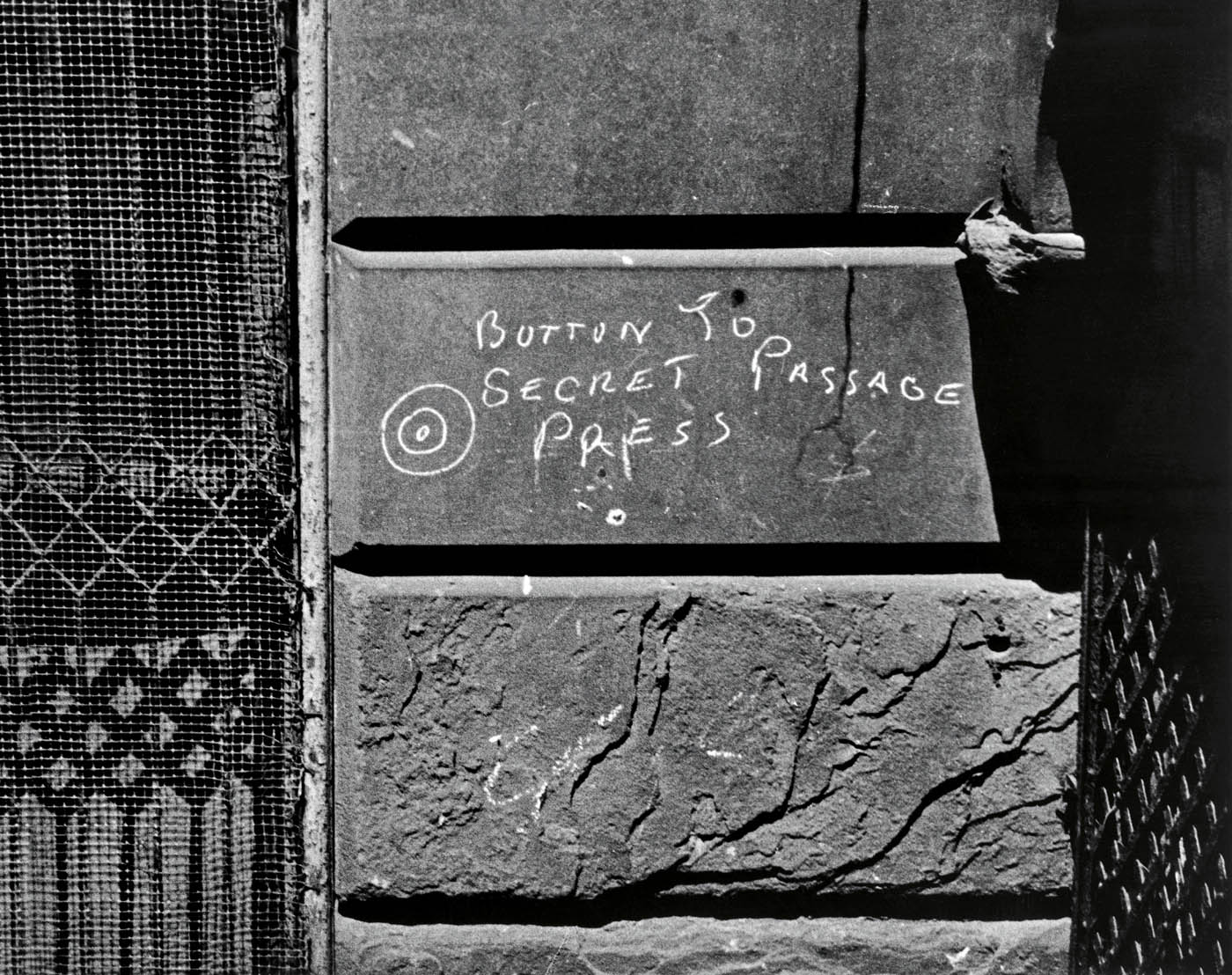


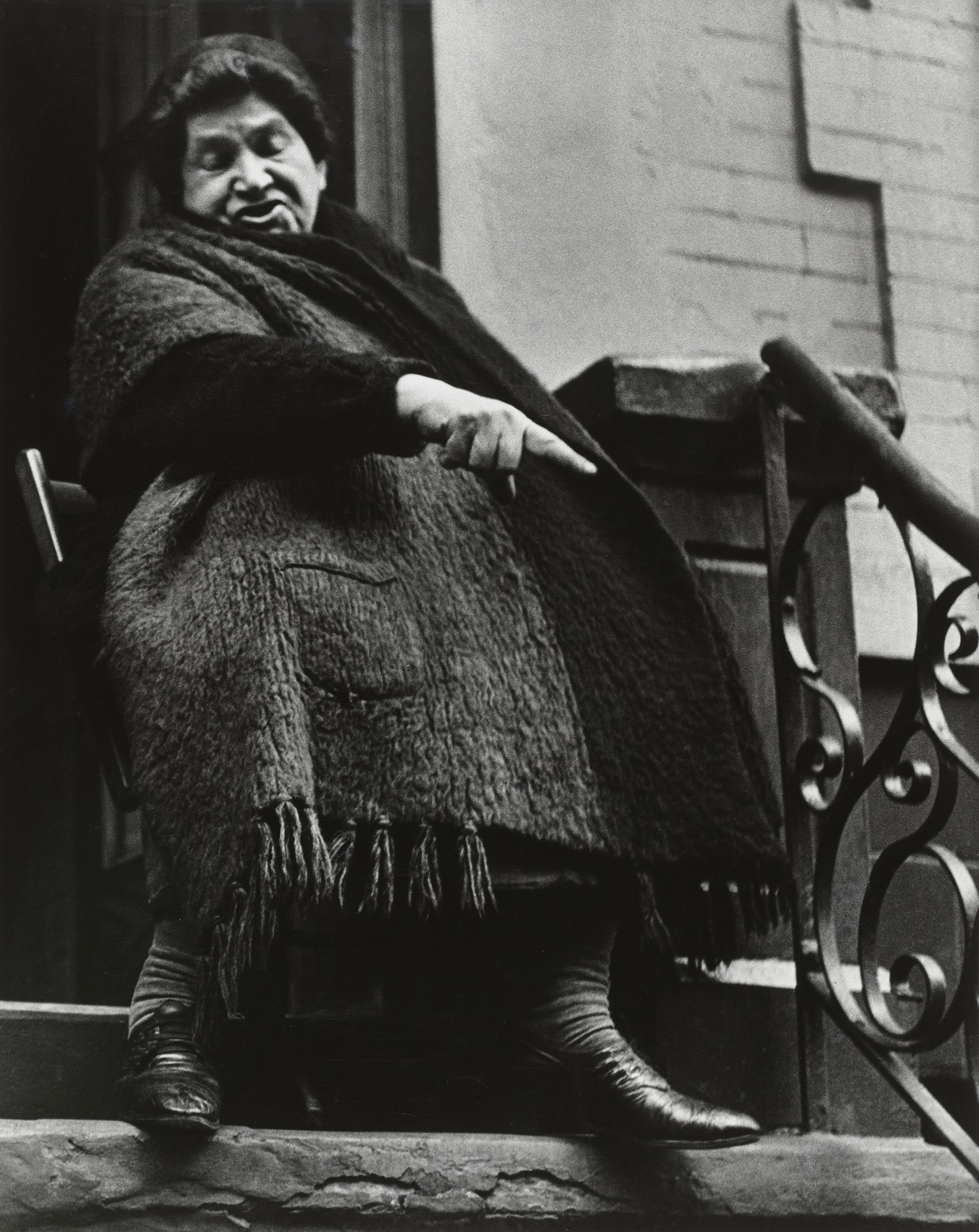
Helen Levitt (American, 1913-2009) 'New York' c. 1938 from the exhibition 'Helen Levitt' at Fundación MAPFRE, Barcelona, Sept 2025 - Feb 2026


Helen Levitt (American, 1913-2009)
New York
c. 1938
Gelatin silver print
© Film Documents LLC, courtesy Zander Galerie, Cologne 
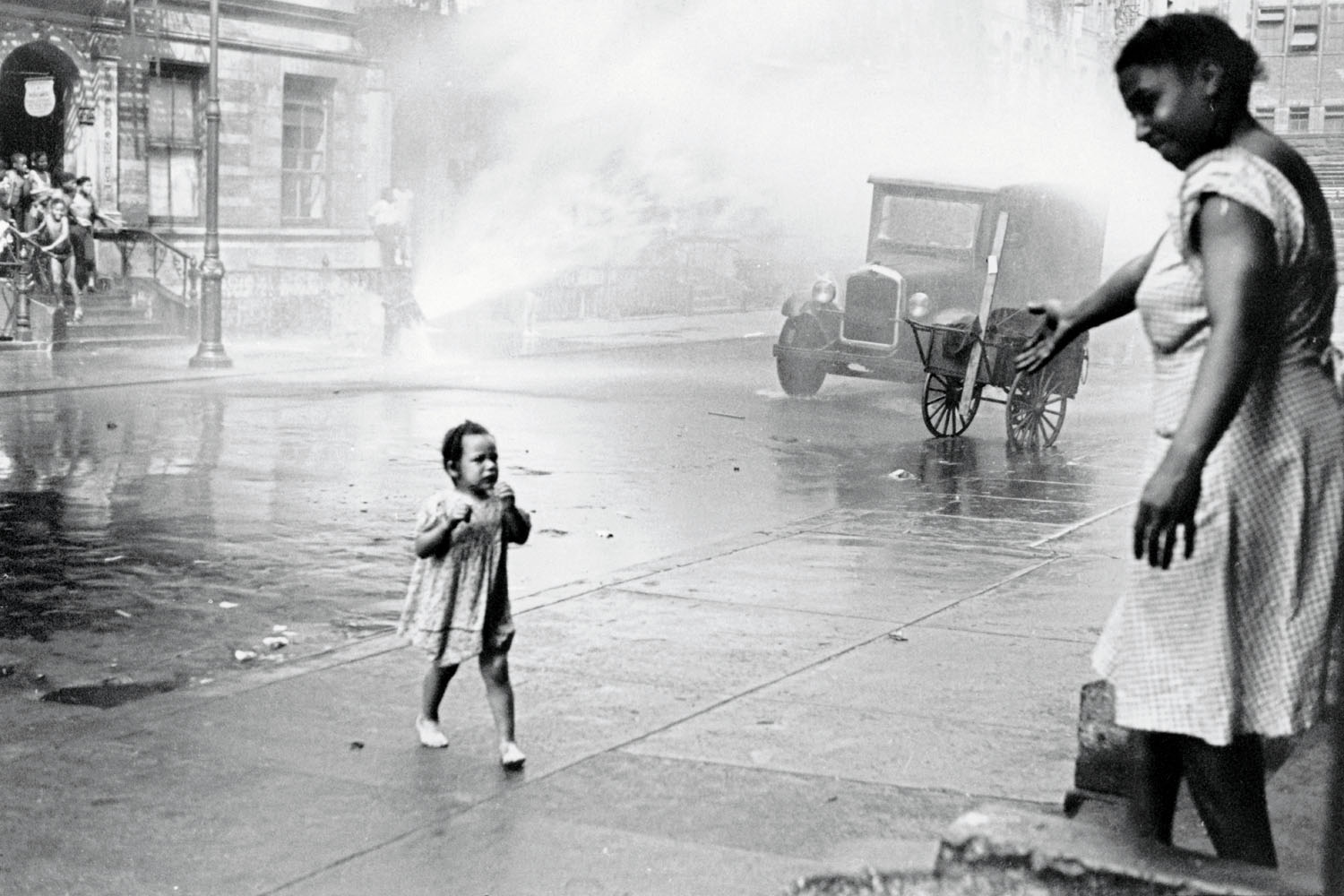
 

Helen Levitt (American, 1913-2009) 'New York' [113th Street] c. 1938


Helen Levitt (American, 1913-2009)
New York
c. 1938
Gelatin silver print
© Film Documents LLC, courtesy Zander Galerie, Cologne 


Helen Levitt (American, 1913-2009) 'New York' c. 1939


Helen Levitt (American, 1913-2009)
New York
c. 1939
Gelatin silver print
© Film Documents LLC, courtesy Zander Galerie, Cologne 


Helen Levitt (American, 1913-2009) 'New York' c. 1939


Helen Levitt (American, 1913-2009)
New York
c. 1939
Gelatin silver print
© Film Documents LLC, courtesy Zander Galerie, Cologne 


Helen Levitt (American, 1913-2009) 'New York' c. 1939


Helen Levitt (American, 1913-2009)
New York
c. 1939
Gelatin silver print
© Film Documents LLC, courtesy Zander Galerie, Cologne
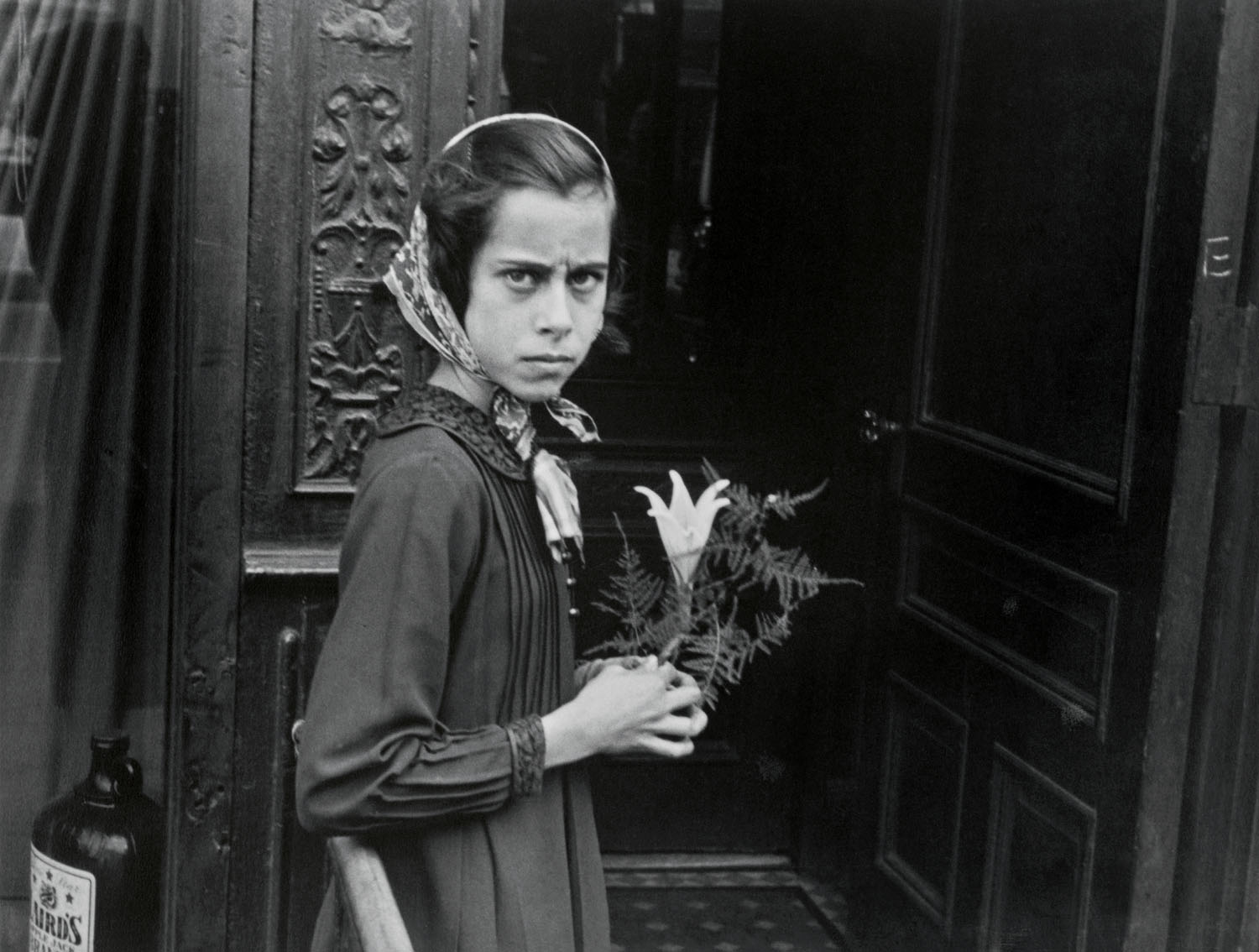
 

Helen Levitt (American, 1913-2009) 'New York' c. 1939


Helen Levitt (American, 1913-2009)
New York
c. 1939
Gelatin silver print
© Film Documents LLC, courtesy Zander Galerie, Cologne
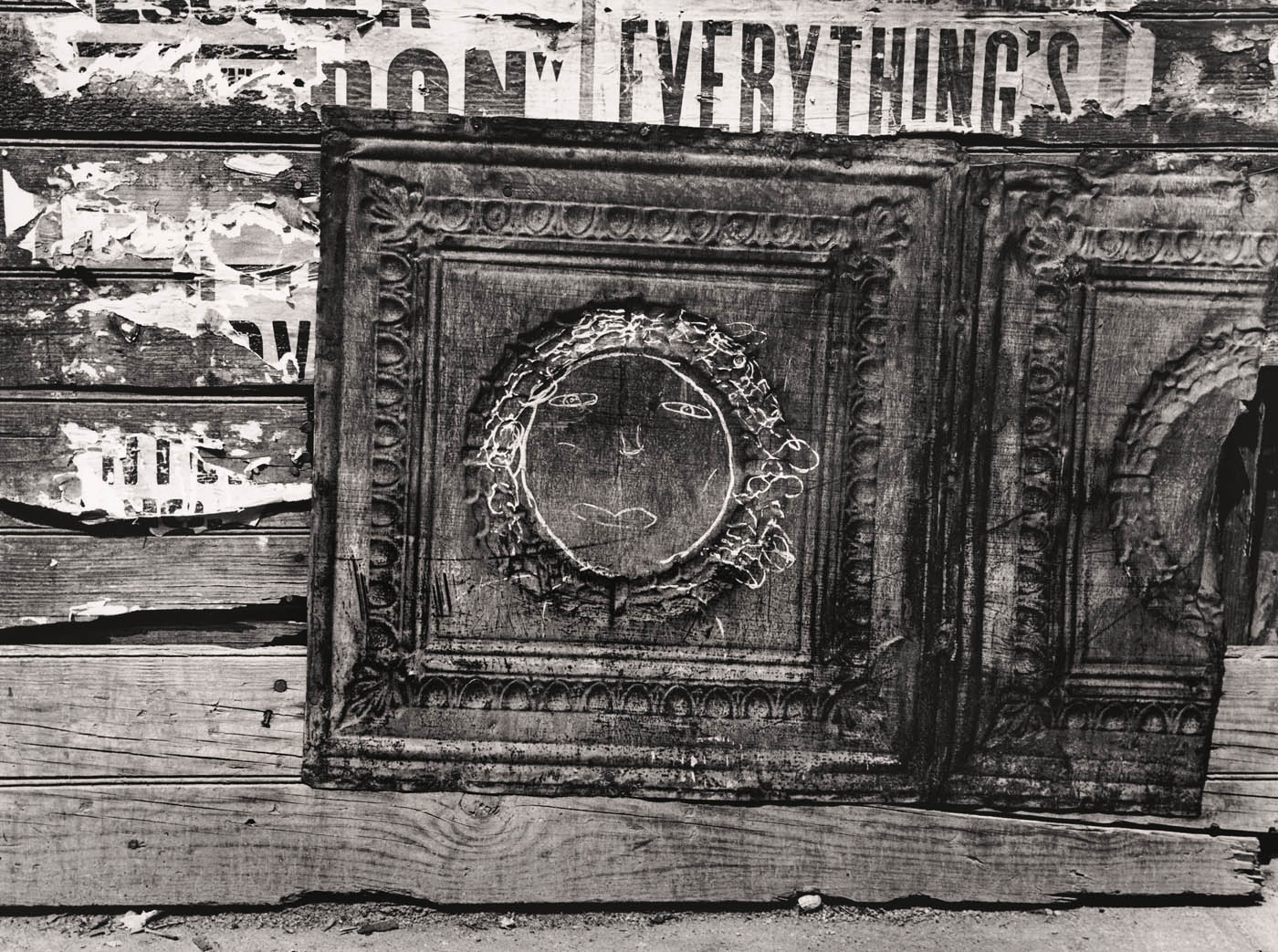
 

Helen Levitt (American, 1913-2009) 'New York' c. 1939


Helen Levitt (American, 1913-2009)
New York
c. 1939
Gelatin silver print
© Film Documents LLC, courtesy Zander Galerie, Cologne
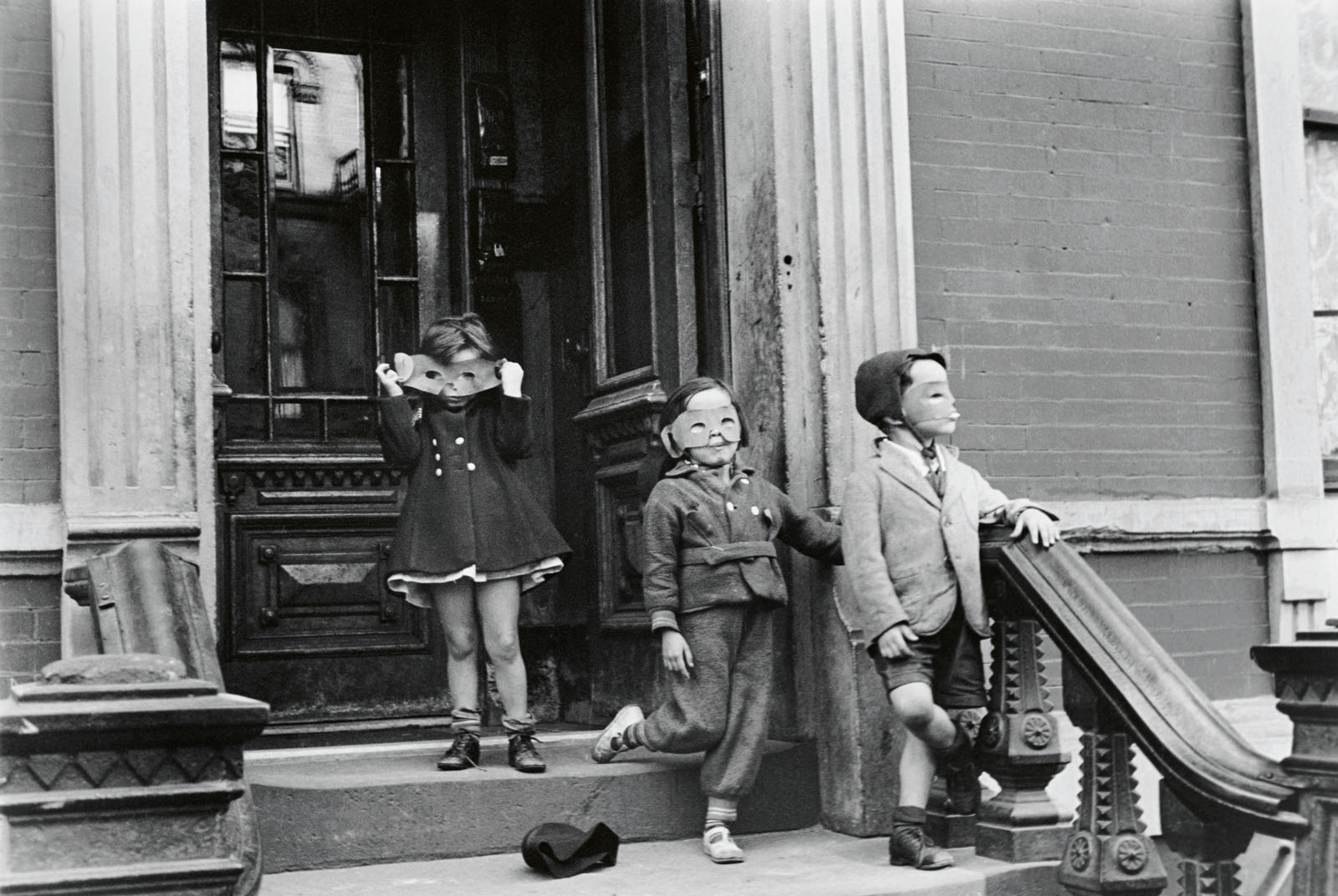
 

Helen Levitt (American, 1913-2009) 'New York' c. 1939


Helen Levitt (American, 1913-2009)
New York
c. 1939
Gelatin silver print
© Film Documents LLC, courtesy Zander Galerie, Cologne
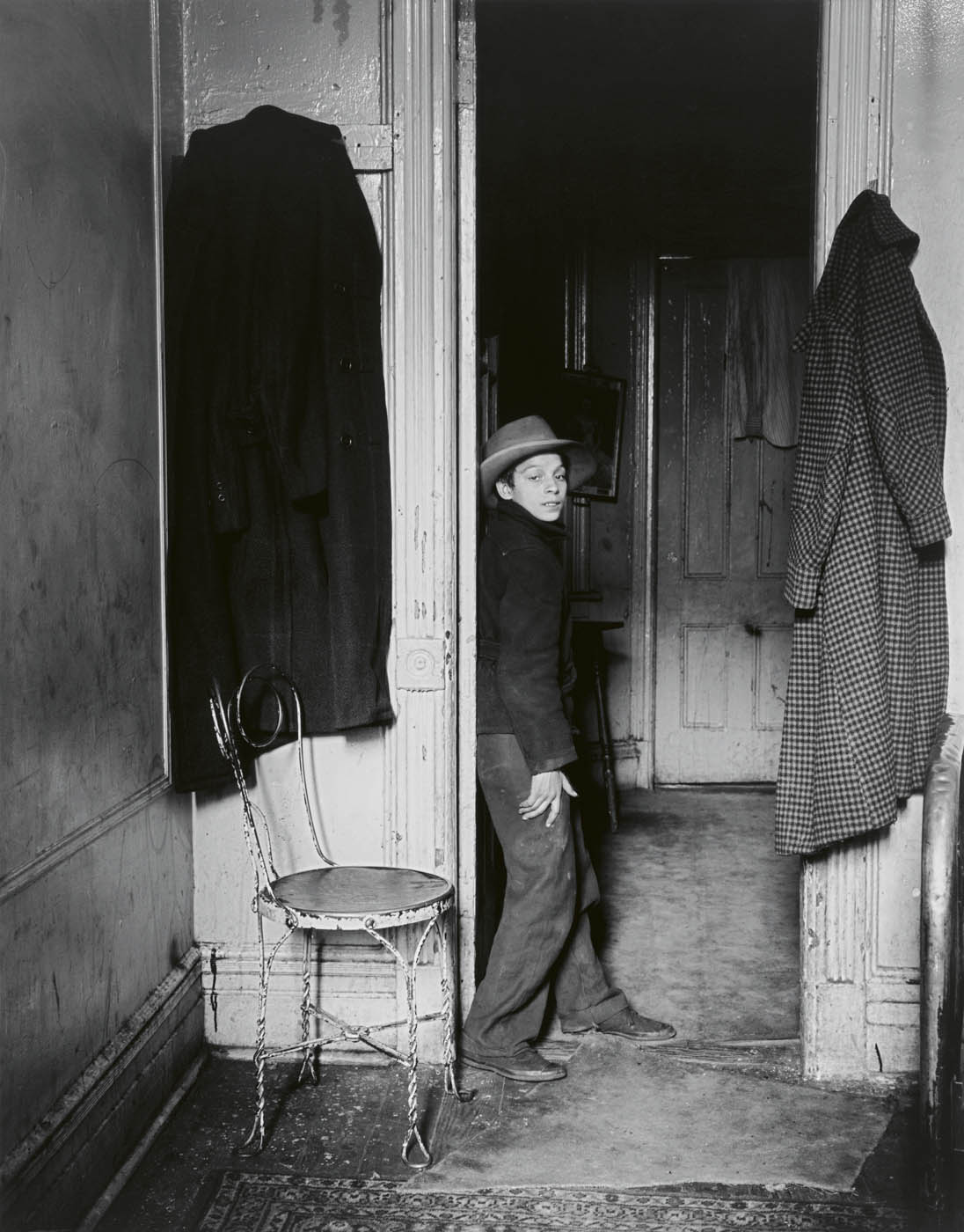
 

Helen Levitt (American, 1913-2009) 'New York' c. 1939


Helen Levitt (American, 1913-2009)
New York
c. 1939
Gelatin silver print
© Film Documents LLC, courtesy Zander Galerie, Cologne
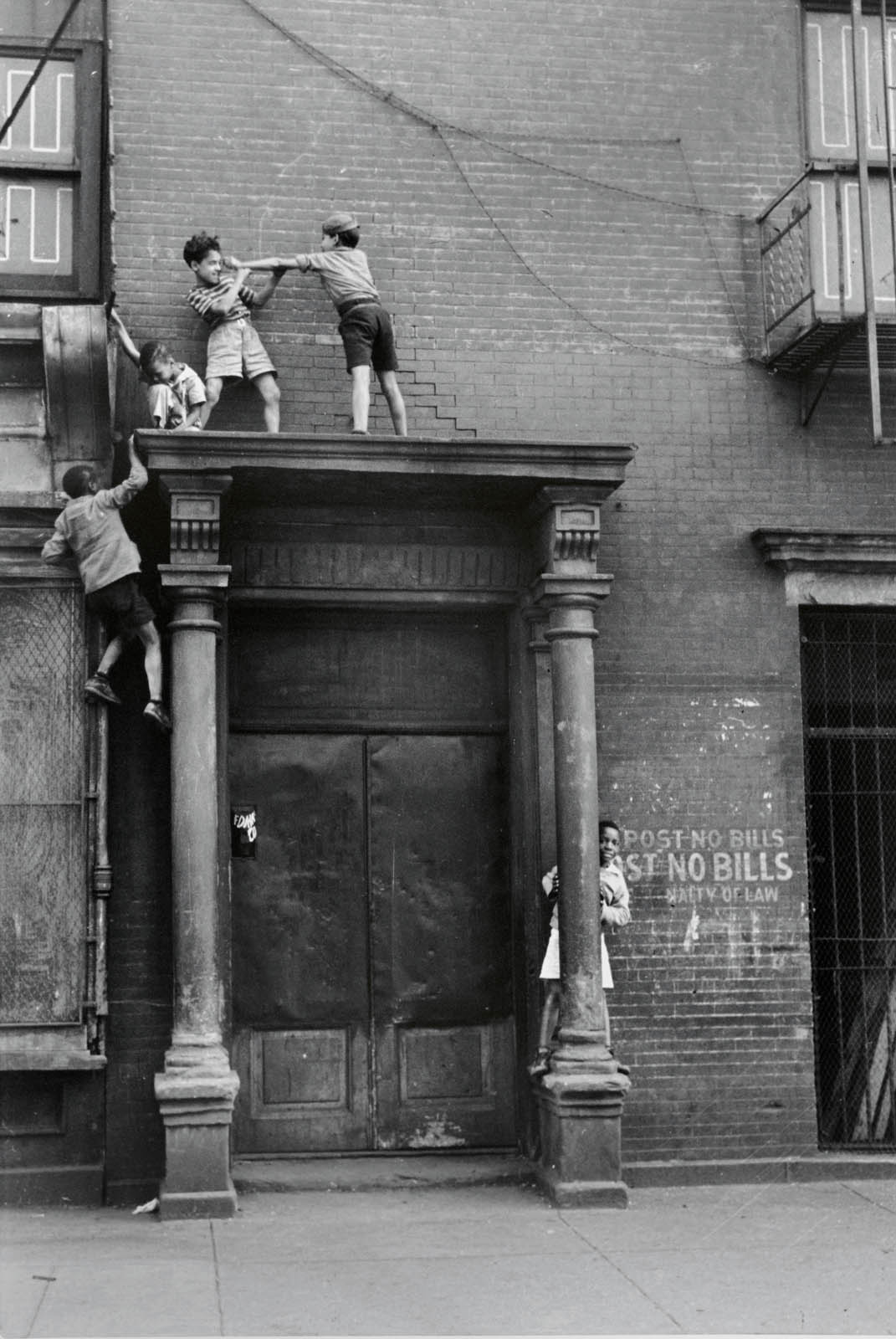


Helen Levitt (1913-2009) began photographing the streets of New York, her hometown, in the late 1930s, focusing mainly on poor neighbourhoods such as Hispanic Harlem and the Lower East Side, where the street clearly takes center stage as the setting for everyday life. Her camera was directed mainly at children and their games in the streets. These scenes of children occupy a central place in a body of work that, as a whole, captivates us with its ability to transform everyday scenes into images that convey all the emotion, mystery, and humour that life can contain, and with which the viewer establishes an immediate connection even though they lack an explicit narrative. Her work soon gained the recognition it deserved, and in 1943 the MoMA in New York organised her first solo exhibition (Photographs of Children).

Later in her career, she also became closely interested in film and colour photography. In 1948, she collaborated on the documentary The Quiet One and co-directed In the Street, another documentary about the streets of Hispanic Harlem. Both titles were highly influential in the subsequent evolution of documentary filmmaking by artists such as Jonas Mekas and Andy Warhol.

After receiving a Guggenheim Fellowship in 1959 to explore chromatic techniques, she began experimenting with colour photography, a medium in which she would also develop pioneering work.

A socially committed artist, Levitt was one of the first women to forge a professional career in photography. This exhibition is the first to be based on her entire body of work and archives, which have only recently been made available to the public.

Text from the Fundación MAPFRE website


Helen Levitt (American, 1913-2009) 'New York' c. 1940


Helen Levitt (American, 1913-2009)
New York
c. 1940
Gelatin silver print
© Film Documents LLC, courtesy Zander Galerie, Cologne
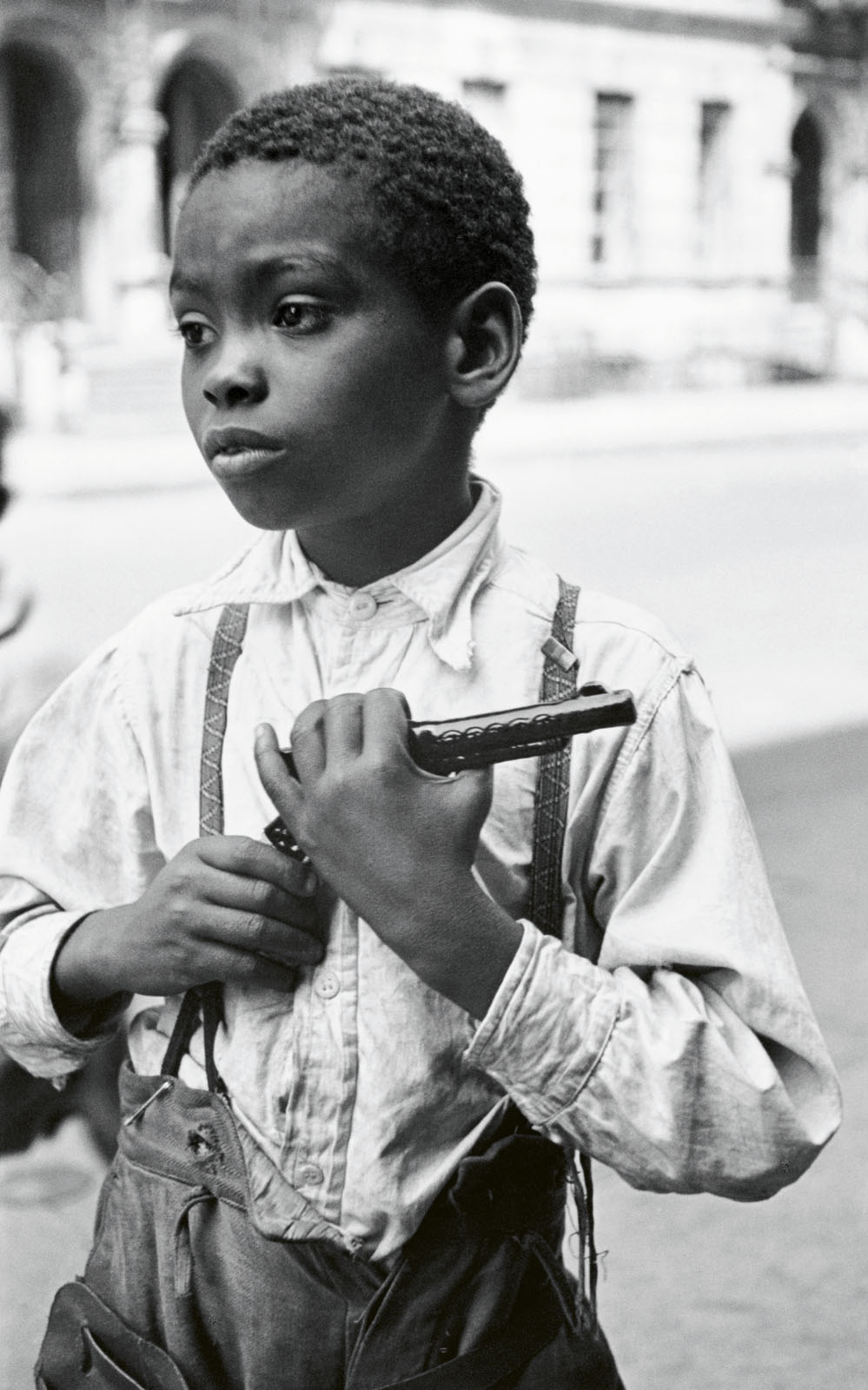
 

Helen Levitt (American, 1913-2009) 'New York' c. 1940


Helen Levitt (American, 1913-2009)
New York
c. 1940
Gelatin silver print
© Film Documents LLC, courtesy Zander Galerie, Cologne
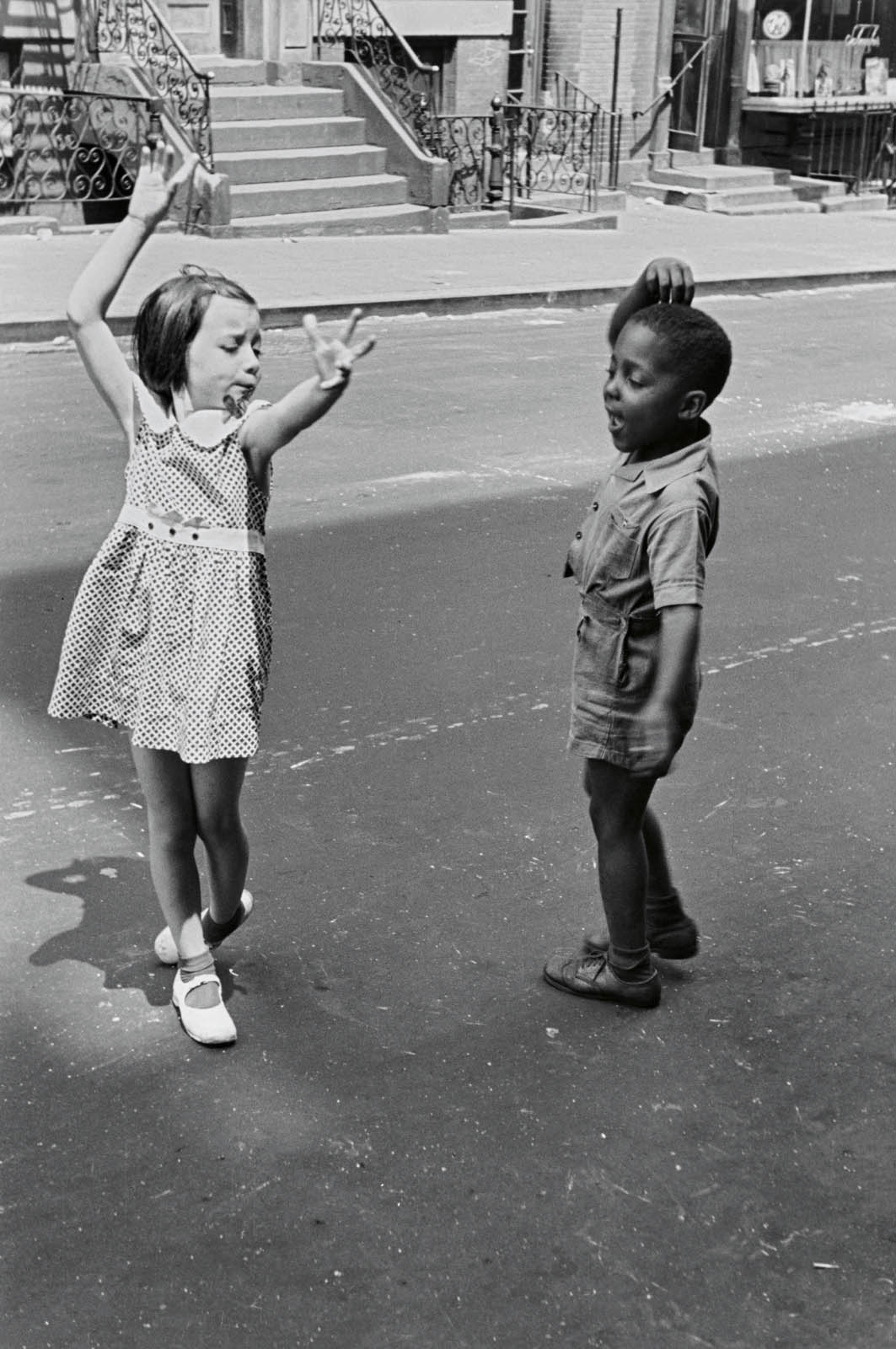
 

Helen Levitt (American, 1913-2009) 'New York' c. 1940


Helen Levitt (American, 1913-2009)
New York
c. 1940
Gelatin silver print
© Film Documents LLC, courtesy Zander Galerie, Cologne


Dedicated full-time to her artistic activities, the photographer Helen Levitt (New York, 1913-2009) did not begin to gain public recognition until relatively late in life. Although her name has always been associated with “street photography,” as it was precisely the streets of her native city that provided the context for the production of her images, throughout her career Levitt made forays into film, visited other countries such as Mexico, and also focused on colour photography. Her images, almost invariably ambiguous and mysterious although not necessarily at first glance, are also characterised by their spontaneity, warmth and sensitivity. The movements and gestures of the figures captured by her lens and the communication between them transcend that inclination to “photograph children” which many critics pointed out after her first exhibition at the MoMA in 1943, entitled Helen Levitt: Photographs of Children.

Levitt’s work as a whole goes far beyond the latter aspect, revealing her acceptance of the pleasures, terrors and complexity of existence at all ages, traits often overlooked by the viewer when immersed in the harsh reality of the urban landscape. The exhibition, the first to be devoted to the artist on the basis of the entirety of her work and archives, which have only recently become available for study, offers a broad overview of Levitt’s career through nine sections and around 220 photographs. It includes previously unexhibited images, as well as work produced in Mexico in 1941 and a large proportion of the artist’s work in colour, which she explored from the 1950s onward. It also features her film In the Street, directed by Levitt in collaboration with Janice Loeb and James Agee, and a projection of her colour slides.

Born in Brooklyn to a Russian-Jewish family, Helen Levitt dropped out of high school early and began her photography training in a Bronx studio. Influenced by Henri Cartier-Bresson, she pursued independent photography, capturing everyday life in New York neighbourhoods between 1938 and 1942. Her first solo exhibition was at the MoMA in 1943. She also experimented with film, making In the Street, and with colour photography, which gained her a Guggenheim Fellowship in 1959. Levitt continued to work intermittently,
exploring new settings such as the subway and rural areas. Her creative output is recognised for its ability to capture moments of human connection in complex urban environments.

Key themes

Enigmatic photographs

Helen Levitt’s images possess a mysterious quality that transforms them into true visual enigmas. Her unique and highly perceptive gaze turns everyday scenes into compositions that are hard to define, creating an immediate connection with the viewer even when there is no clear narrative to explain them.

A pioneer with her own voice

Helen Levitt was one of the first women to make her way in the world of photography, especially in the field of street photography. She always avoided constructing an explicit narrative in her images and preferred not to talk about them. Far from diminishing its value, that decision is one of the key traits that make her work so interesting. Despite this characteristic of reserve, Levitt’s photographs connect with the viewer through the universal emotions they convey.

Text from Fundación MAPFRE
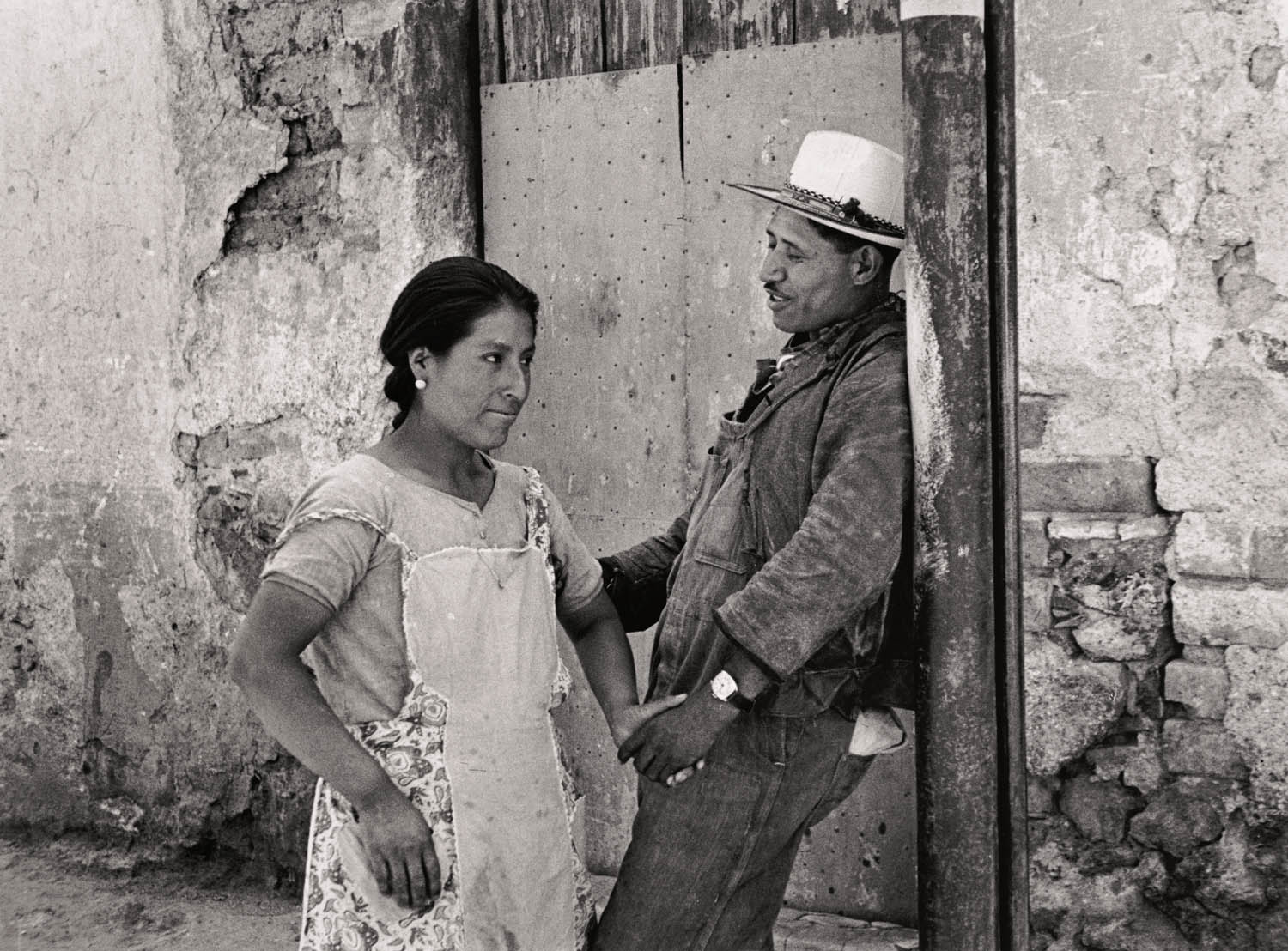
 

Helen Levitt (American, 1913-2009) 'Mexico City' 1941


Helen Levitt (American, 1913-2009)
Mexico City
c. 1941
Gelatin silver print
© Film Documents LLC, courtesy Zander Galerie, Cologne
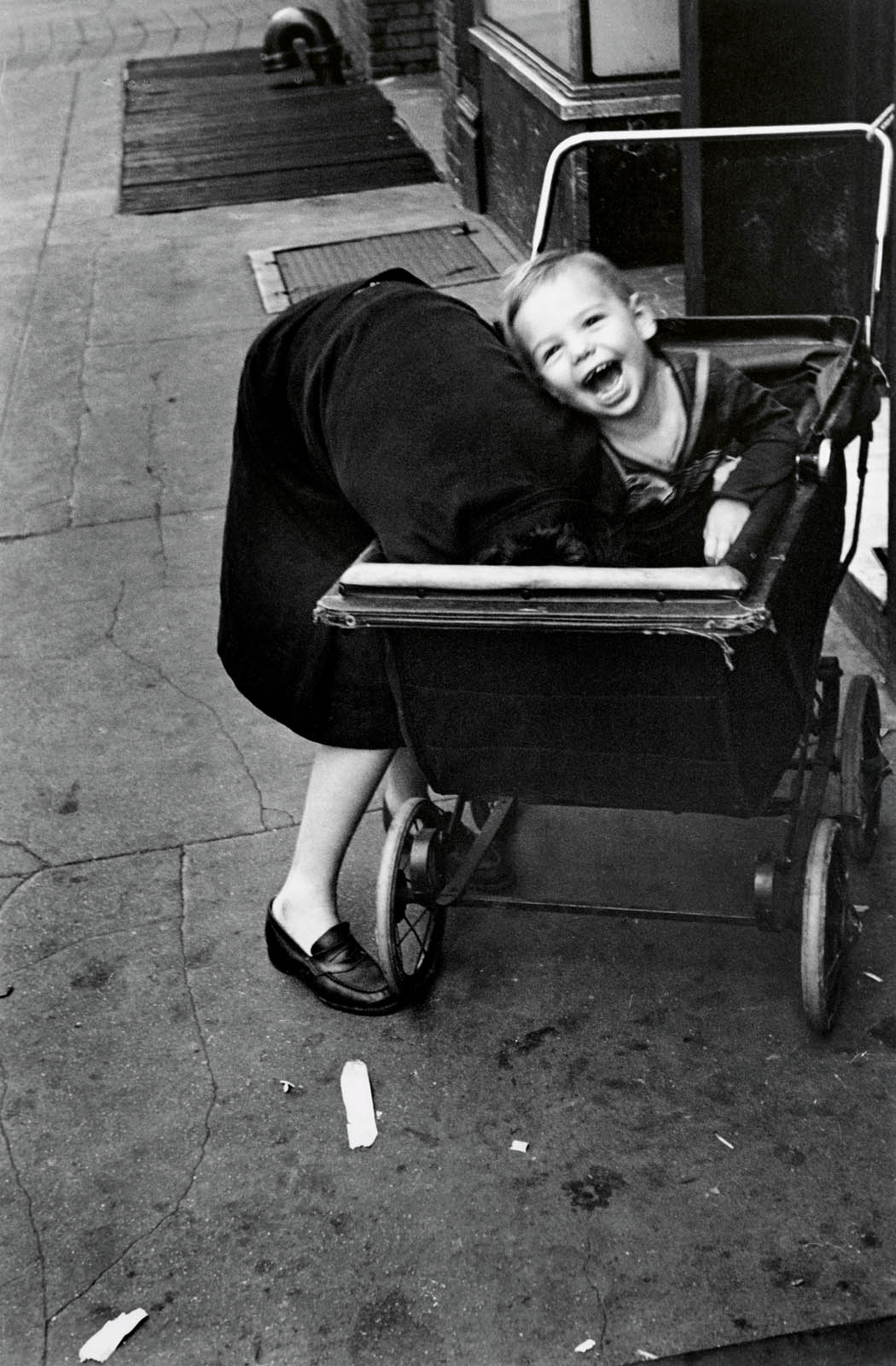
 

Helen Levitt (American, 1913-2009) 'New York' c. 1942


Helen Levitt (American, 1913-2009)
New York
c. 1942
Gelatin silver print
© Film Documents LLC, courtesy Zander Galerie, Cologne
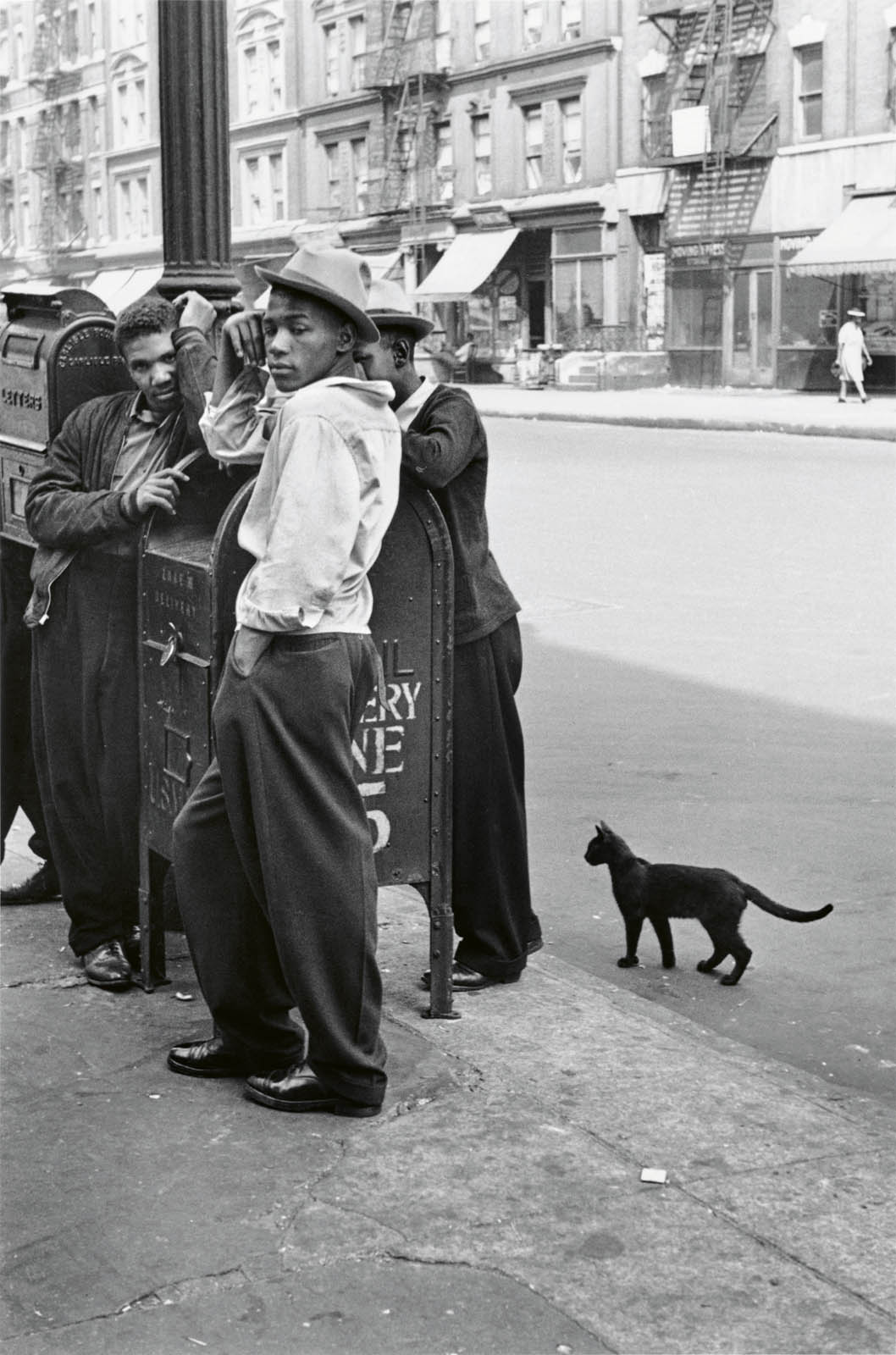
 

Helen Levitt (American, 1913-2009) 'New York' c. 1945


Helen Levitt (American, 1913-2009)
New York
c. 1945
Gelatin silver print
© Film Documents LLC, courtesy Zander Galerie, Cologne


Helen Levitt

Born and raised in Brooklyn, New York, Helen Levitt (1913-2009) became a photographer in the mid-1930s after meeting Henri Cartier-Bresson and seeing his radical new pictures made with a discreet, handheld camera. By the end of the decade, she had developed a unique sensibility, one informed by Surrealism and a love of avant-garde cinema but focused on the interactions of ordinary people in the streets, sidewalks, stoops, and vacant lots of her native city.

Grounded in gritty realism but brimming with subversive humor, mischief, and pathos, Levitt’s pictures are openended and enigmatic, concealing as much as they reveal. Her uncanny photographs of urban children and their games brought Levitt early renown even as she remained attentive to the quiet gestures and movements of a broader swath of humanity observed with her 35mm Leica, especially in Spanish Harlem, where the activity of everyday life often spilled out of doors.

Following a months long foray in Mexico City, Levitt began to work in filmmaking, leading to a long hiatus in her photographic activity. In 1959, advances in the sensitivity colour film spurred her to take to the streets again with her Leica. She continued to photograph in color throughout the 1970s, reverting to black-and-white film for a series of pictures taken in the New York City subway. Levitt continued to photograph intermittently until the early 1990s, when she became known as the “unofficial poet laureate” of New York and her oeuvre universally acknowledged as one of the most timeless and affecting in the history of the medium.

Early Work / Graffiti / Gypsies

Only a few examples survive from Levitt’s first year using a Leica camera. Amid the backdrop of the Great Depression, her pictures of lone figures hunched over or lying on the ground appear documentary in their impulse, while other depictions of people in urban surroundings are notably more ambivalent in their view.

In 1937, while employed by the Federal Art Project to teach at a public school in East (Spanish) Harlem, Levitt noticed the many chalk drawings and messages illicitly scrawled by children on streets and buildings on her way to work, and began to document them in all their variety, innocence, and vulgarity. She sometimes also portrayed the artists themselves posing next to their ephemeral interventions.

Around 1938, on the advice of Walker Evans, Levitt began to use a right-angle viewfinder, a device that allowed her to face one direction while pointing her camera in another. This was particularly effective in recording the uninhibited interactions of the “gypsy” families prevalent in Spanish Harlem and Yorkville. Drawn to their way of life, she also borrowed Evans’s 4 x 5-inch view camera and tripod to make portraits of “gypsy” children in their homes.

1938-1940 / Mexico City / A Way of Seeing

By 1940 Levitt had established her terrain, subject, and approach. In a rare statement, she later described her intent “to seize upon and record those apparently accidental disarrangements that nevertheless and in seeming contradiction provide a more intense apperception of reality.” Uninterested in portraying New York City as a bustling metropolis, Levitt instead saw it as
an environment whose “size and varied character constantly forces into the open material for my camera.” The working class, immigrant neighbourhoods she frequented – where adults chatted on stoops, mothers and children leaned out of windows, and children were left to their own devices – proved to be an especially fertile ground for her work.

In 1941, again inspired by Cartier-Bresson’s example, Levitt, a reluctant traveler, went to Mexico City with a friend to photograph there. Initially struggling with the challenge of working in new environment, she was eventually able to find her artistic footing, producing a body of work that at once acknowledged rawer social realities while locating a subtle lyricism unique to the city and its people. It would be her only trip abroad.

Upon her return to New York City, Levitt picked up where she left off, picking up on more sober themes of melancholy, alienation, and what she referred to as “the deep repressions of the unyoung.” After having photographed for a decade, Levitt collaborated with her friend, the writer and critic James Agee, to edit and sequence a book of her New York photographs. Envisioning the project as an urban counterpart to Let Us Now Praise Famous Men, his 1941 collaboration with Walker Evans, Agee wrote an extensive essay to accompany Levitt’s pictures that heralded their lyric qualities, the sum of which presented “unified view of the world, an uninsistent but irrefutable manifesto.” After a series of setbacks, the book, eventually given the title A Way of Seeing, was not published until nearly two decades later in 1965.

In the Street

In the mid-1940s, along with her friend and patron, Janice Loeb, Levitt began to shoot footage around New York City with a home movie camera. They were joined by James Agee, who encouraged them to conceive of an experimental project that would serve as a cinematic extension of Levitt’s still photographs. This led the three of them to collaborate on the pioneering short film that was first screened in 1949 and then released in 1952 under the title In the Street, a forerunner of the cinéma verité style. By the end of the 1940s and for the next two decades, filmmaking became Levitt’s primary occupation.

Color / Subway / 1980s

In 1959, Levitt was granted a Guggenheim fellowship to experiment with “the latest techniques in colour photography.” Her Leica loaded with colour slide film, she walked some of the same streets she had frequented in the 30s and 40s, newly attentive to the chromatic character of her compositions. After the bulk of her slides were stolen by a burglar in 1970, Levitt redoubled her efforts, photographing throughout the decade with renewed zeal, developing an intuitive system of colour that was at once transporting and transparent. In 1974, a continuous projection of forty of Levitt’s slides were featured at MoMA in New York, after which she began to realise select images as dye transfer prints.

Around the same time, Levitt also decided to revisit the subterranean theatre of New York City subway as a site to make pictures, having served as a decoy for Walker Evans’s subway project work more than three decades earlier. With her subjects largely stationary in train cars and platforms, Levitt attended to the nuances of expression and gesture, recording quiet dramas amid unflattering light and cramped quarters.

From the 1980s onwards, Levitt continued to photograph, but only intermittently, working mainly in black and white, both in the city and outside it.

Text from Fundación MAPFRE
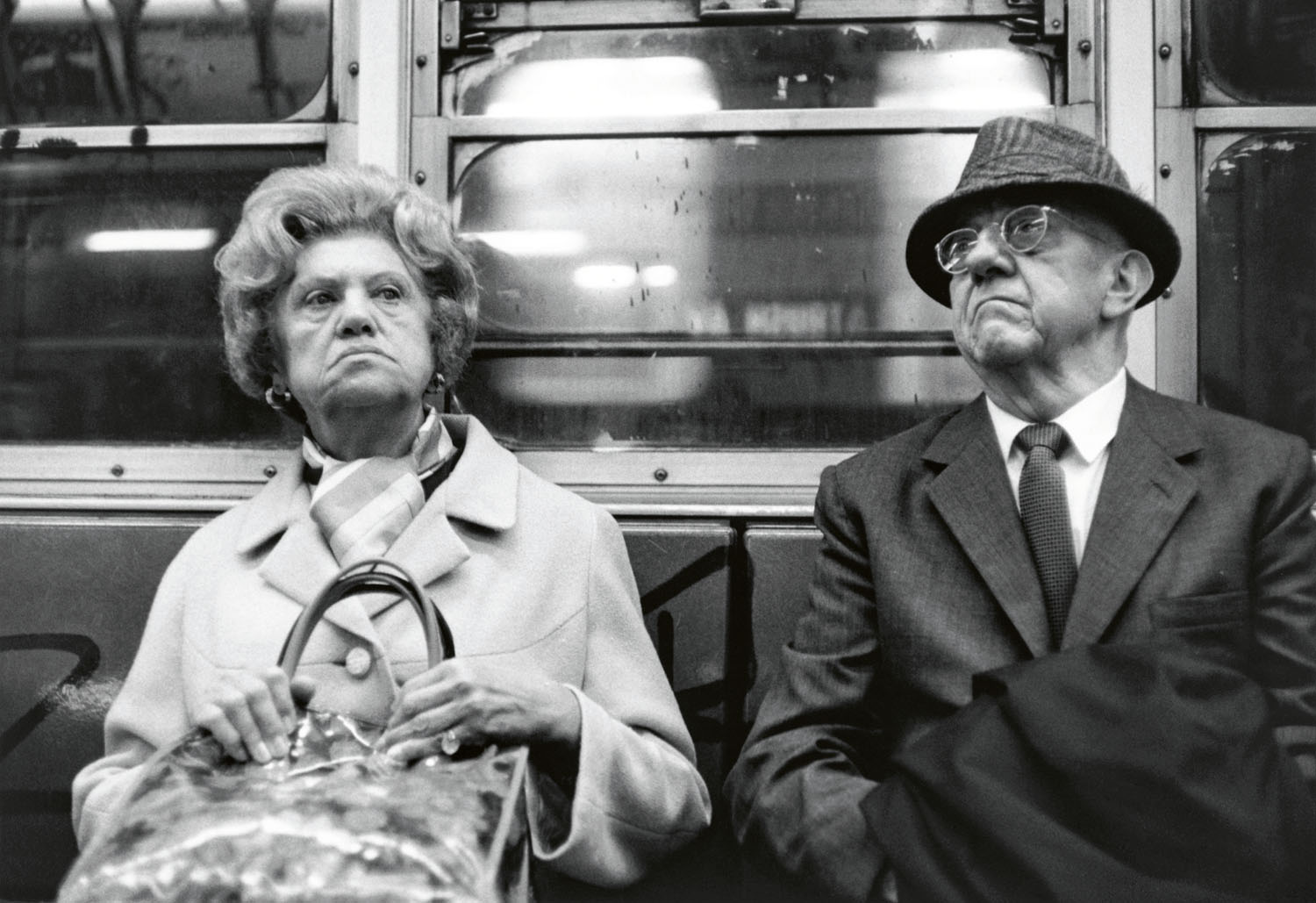
 

Helen Levitt (American, 1913-2009) 'New York' 1975


Helen Levitt (American, 1913-2009)
New York
c. 1975
Gelatin silver print
© Film Documents LLC, courtesy Zander Galerie, Cologne
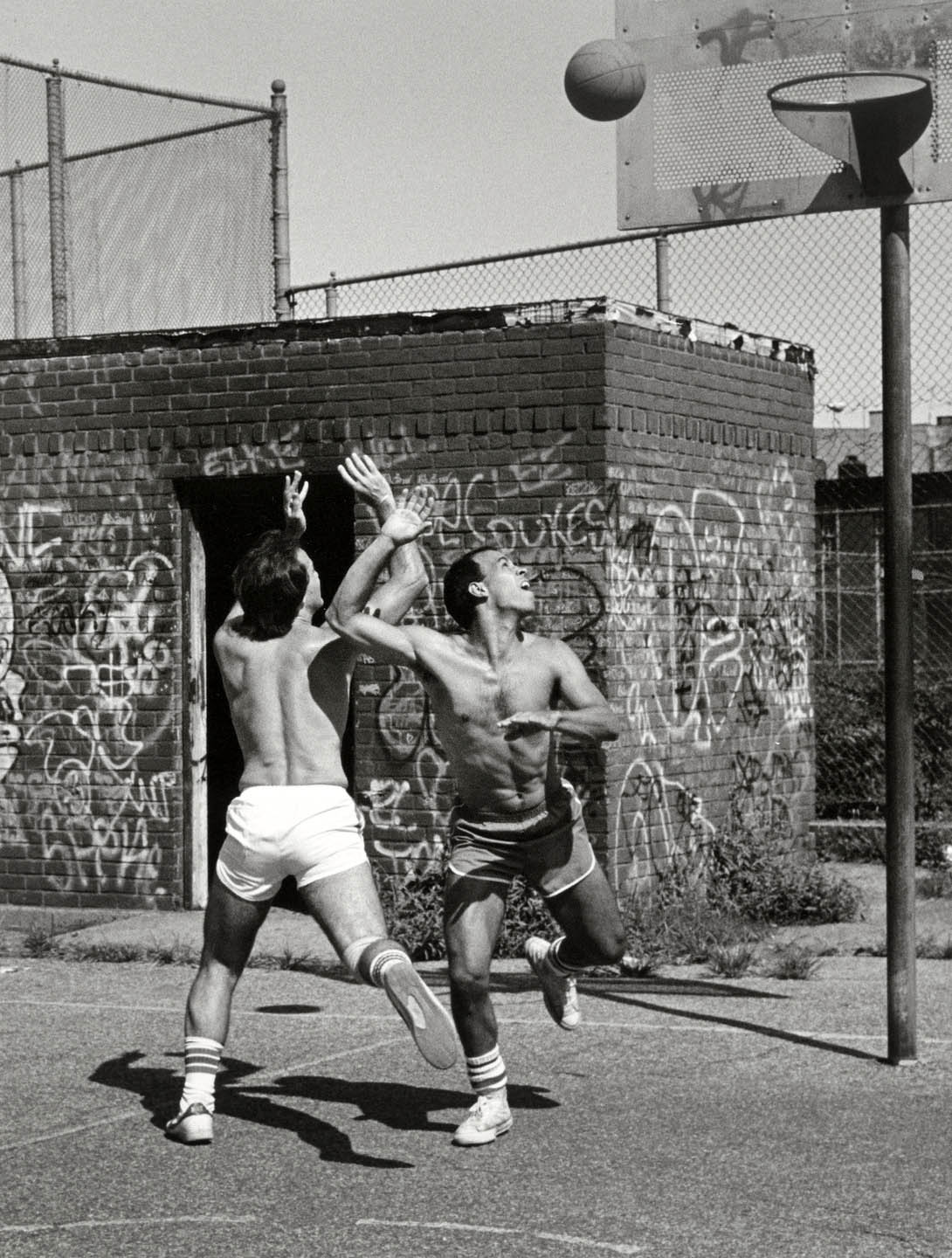
 

Helen Levitt (American, 1913-2009) 'Brooklyn, New York' 1982


Helen Levitt (American, 1913-2009)
New York
c. 1982
Gelatin silver print
© Film Documents LLC, courtesy Zander Galerie, Cologne
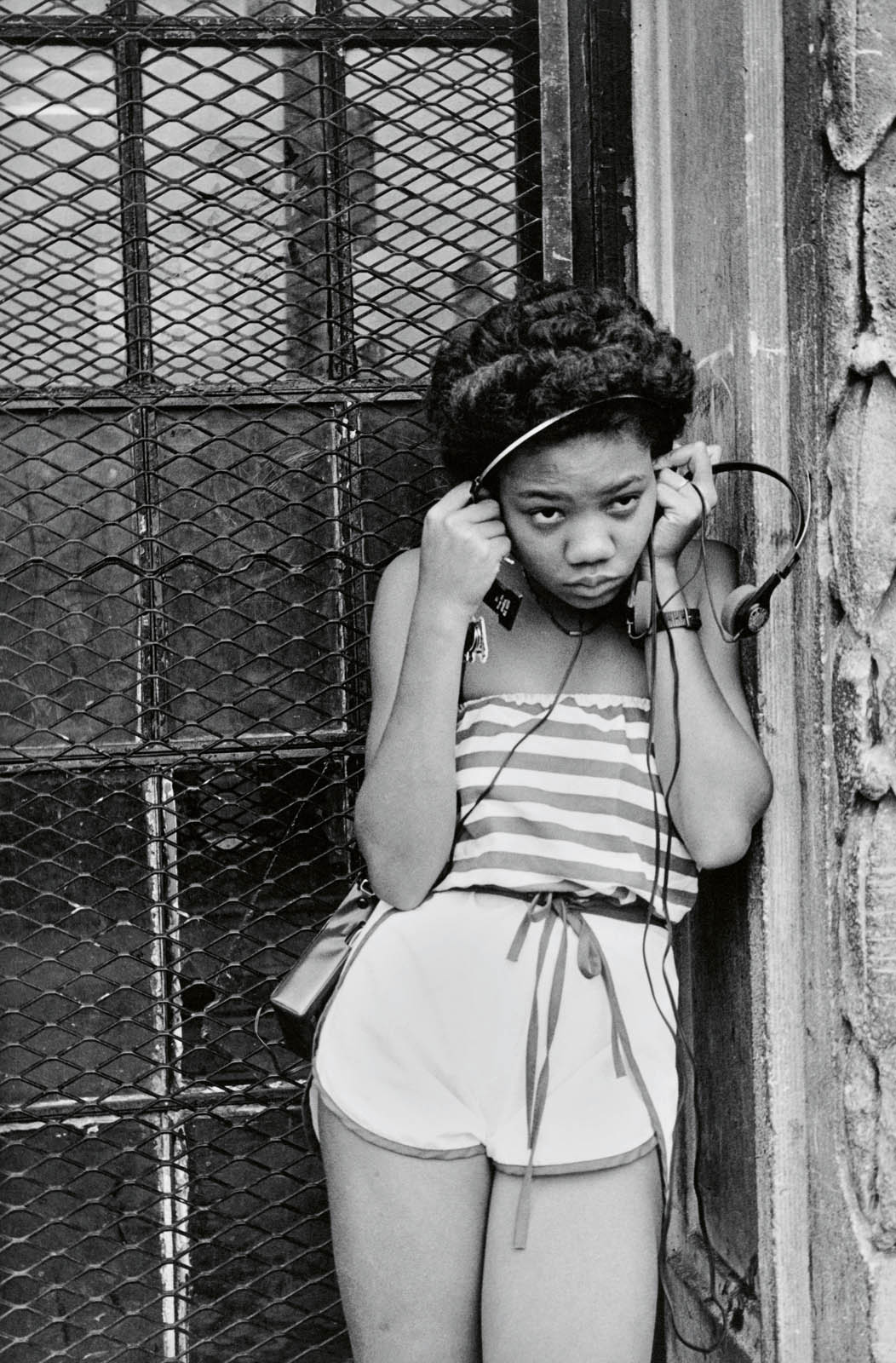
 

Helen Levitt (American, 1913-2009) 'New York' Nd


Helen Levitt (American, 1913-2009)
New York
Nd
Gelatin silver print
© Film Documents LLC, courtesy Zander Galerie, Cologne
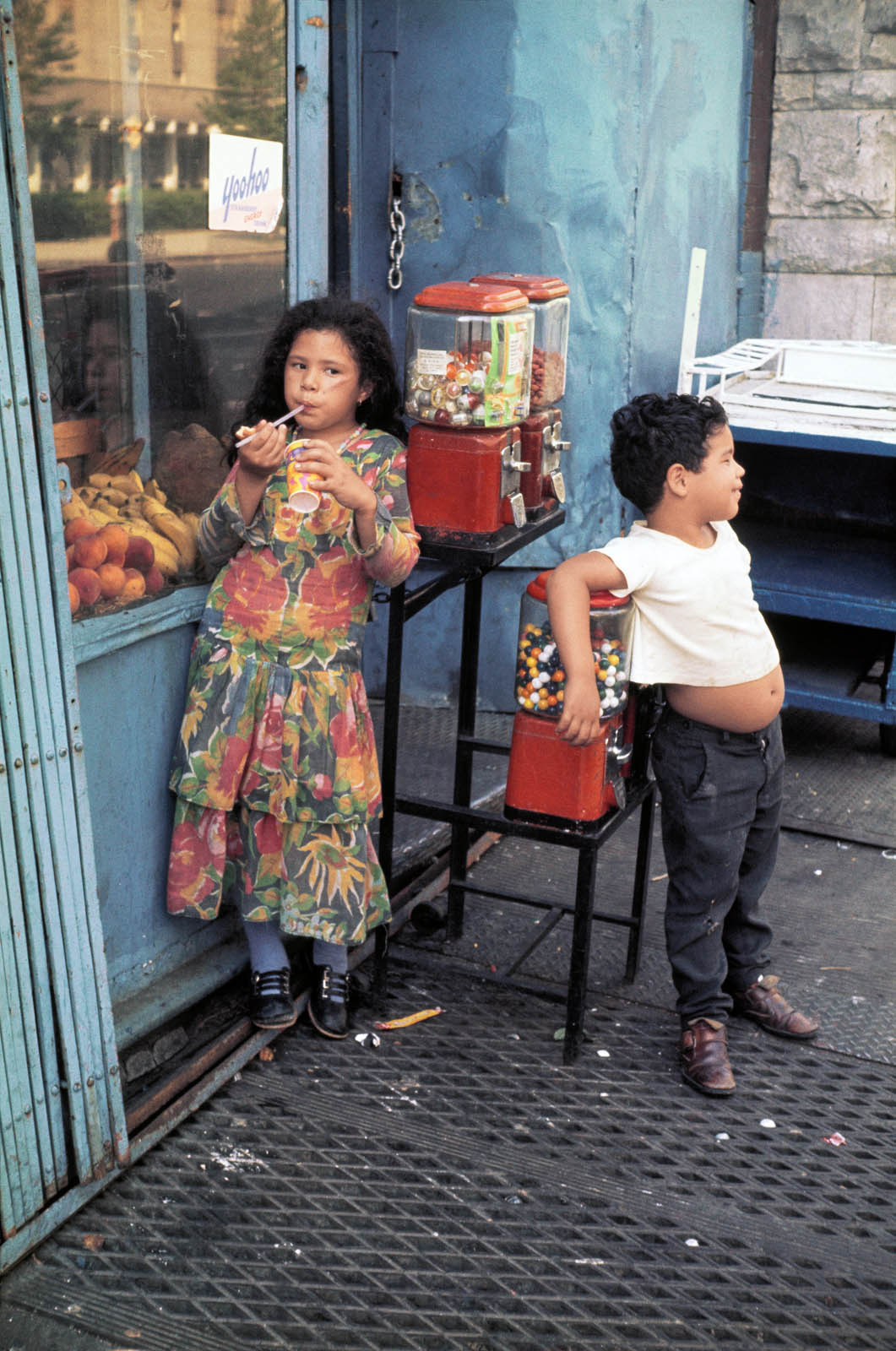
 

Helen Levitt (American, 1913-2009) 'New York' 1971


Helen Levitt (American, 1913-2009)
New York
1971
Gelatin silver print
© Film Documents LLC, courtesy Zander Galerie, Cologne
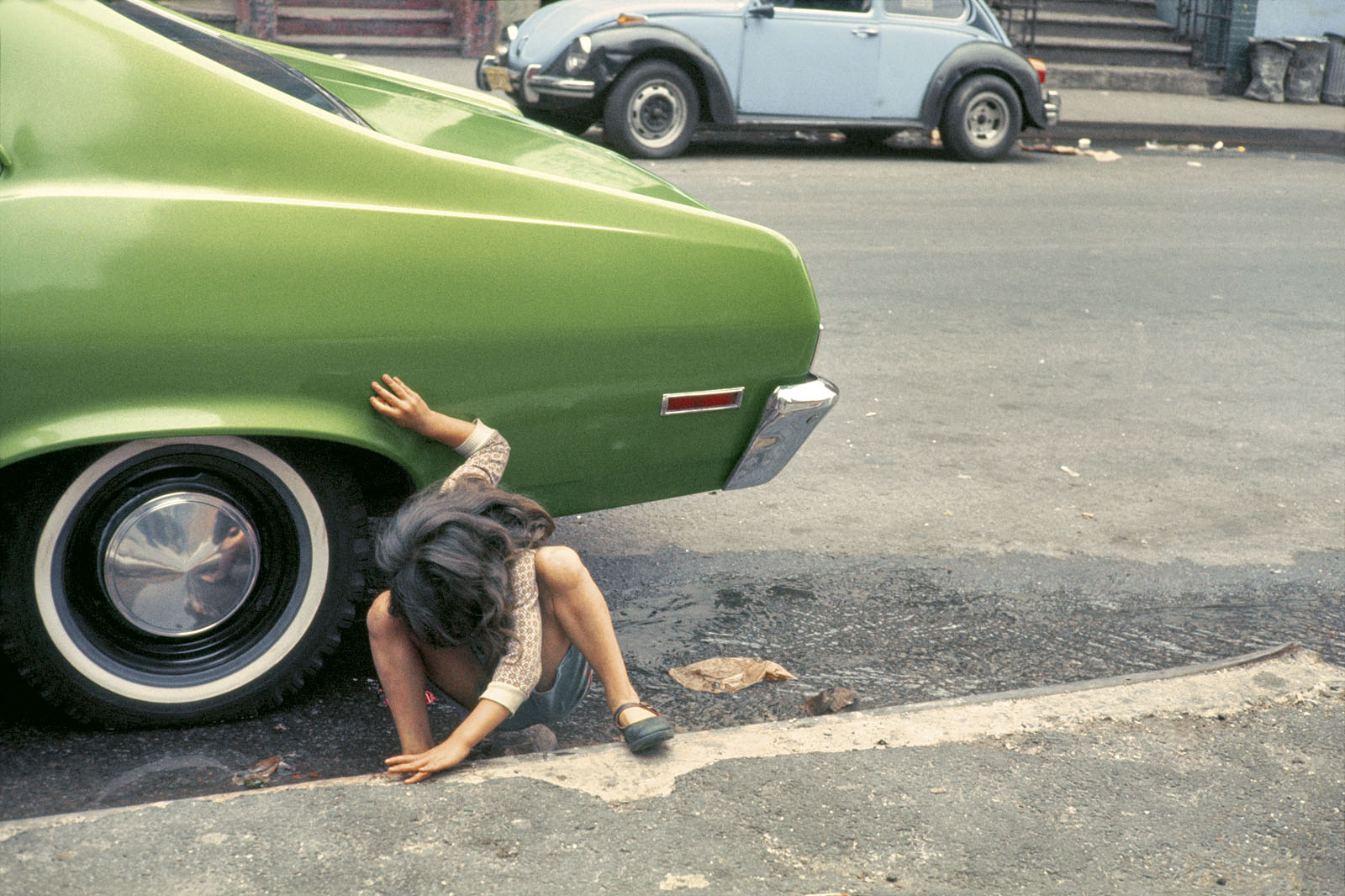
 

Helen Levitt (American, 1913-2009) 'New York' 1976


Helen Levitt (American, 1913-2009)
New York
1976
Gelatin silver print
© Film Documents LLC, courtesy Zander Galerie, Cologne


Fundación MAPFRE
KBr Photography Center
Avenida Litoral, 30 – 08005 Barcelona
Phone: +34 93 272 31 80 (Attention only during the opening hours of the exhibition hall)

Opening hours:
Mondays (except holidays): Closed
Tuesday to Sundays (and holidays): 11am – 7pm
Fundación MAPFRE website

LIKE ART BLART ON FACEBOOK

Back to top

Exhibition: ‘Berlin Courtyards: Between Everyday Life, Work, and Encounters’ at the Museum Ephraim-Palais, Berlin

Exhibition dates: 18th July, 2025 – 18th January, 2026


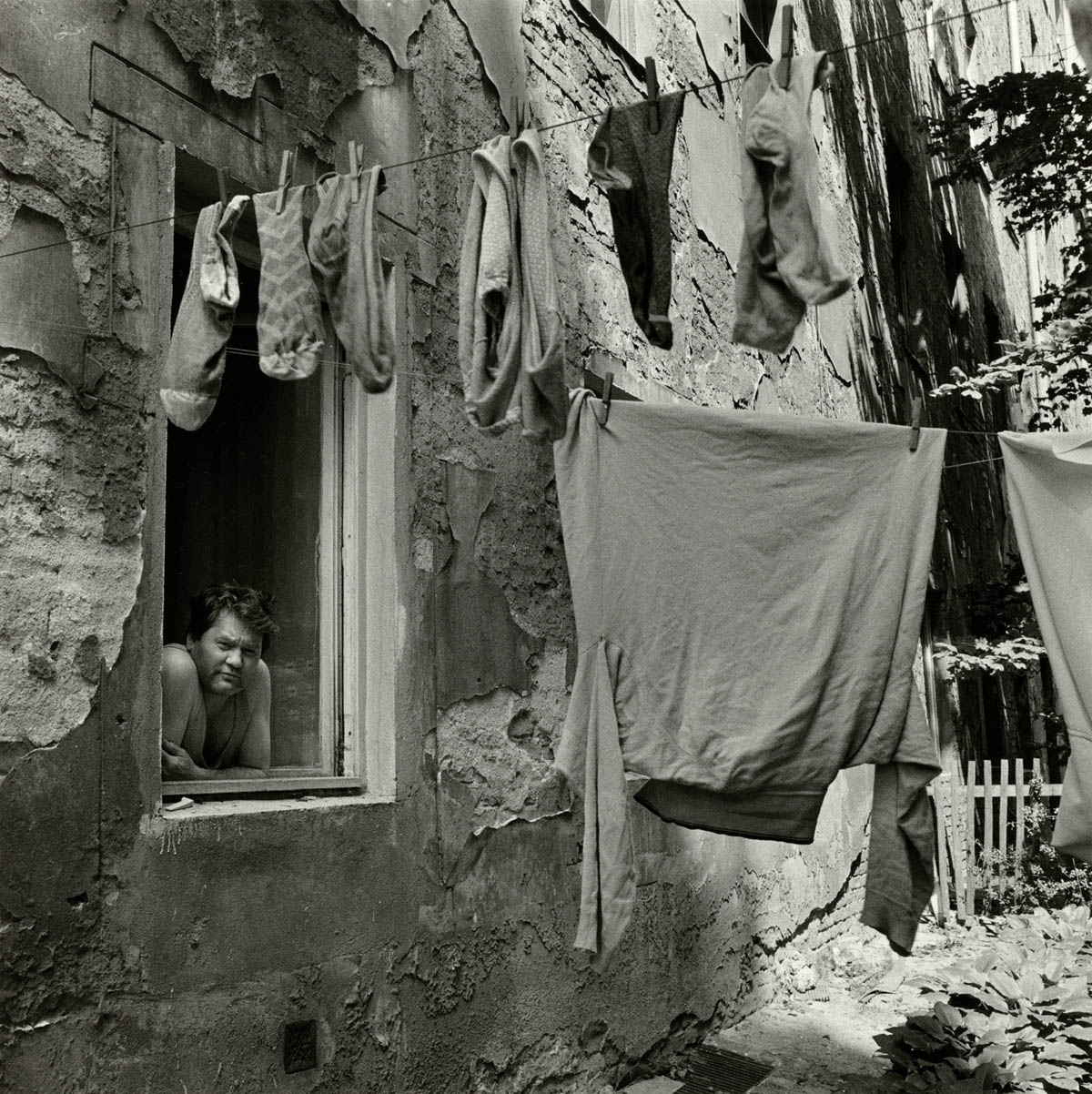
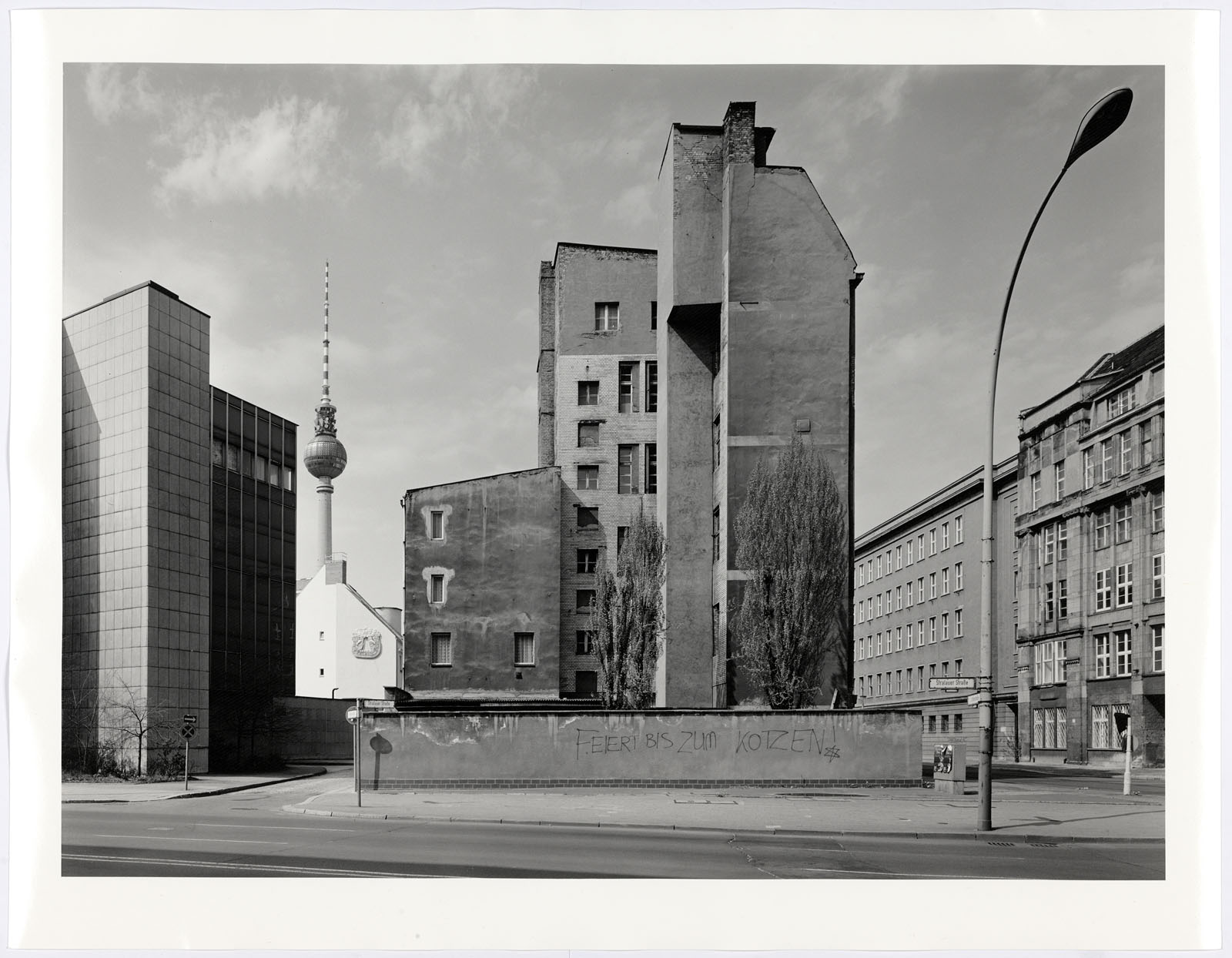
André Kirchner (German, b. 1958) 'Stralauer Straße, Ecke Waisenstraße' from the series 'Nachtrag Berlin' 1990-1992 ('Stralauer Straße, corner of Waisenstraße' from the series 'Addendum Berlin') from the exhbition 'Berlin Courtyards: Between Everyday Life, Work, and Encounters' at the Museum Ephraim-Palais, Berlin, July 2025 - January 2026


André Kirchner (German, b. 1958)
Stralauer Straße, Ecke Waisenstraße
From the series Nachtrag Berlin 1990-1992
Silver bromide baryta paper
34cm x 46cm
Collection of the Berlin City Museum Foundation
© André Kirchner
Reproduction: Dorin Alexandru Ionita, Berlin


This is one of those wonderful, idiosyncratic exhibitions that Art Blart has always liked to promote: small, occluded histories that have great importance to local people; spaces and histories that deserve to be acknowledged in a wider sphere; microcosms of everyday life, work and encounters expanded into the macrocosm of the universe, making us aware of the importance of the seemingly in/consequential in this dance of death we call life.

“This exhibition delves into how these spaces have fostered social and cultural exchange since the 19th century, becoming living capsules of history and community. They reflect the complexities of urban life, showcasing how people shape their surroundings and creating a unique atmosphere that has long inspired artists.” (Press release)

Dr Marcus Bunyan


Many thankx to the Museum Ephraim-Palais for allowing me to publish the photographs in the posting. Please click on the photographs for a larger version of the image.


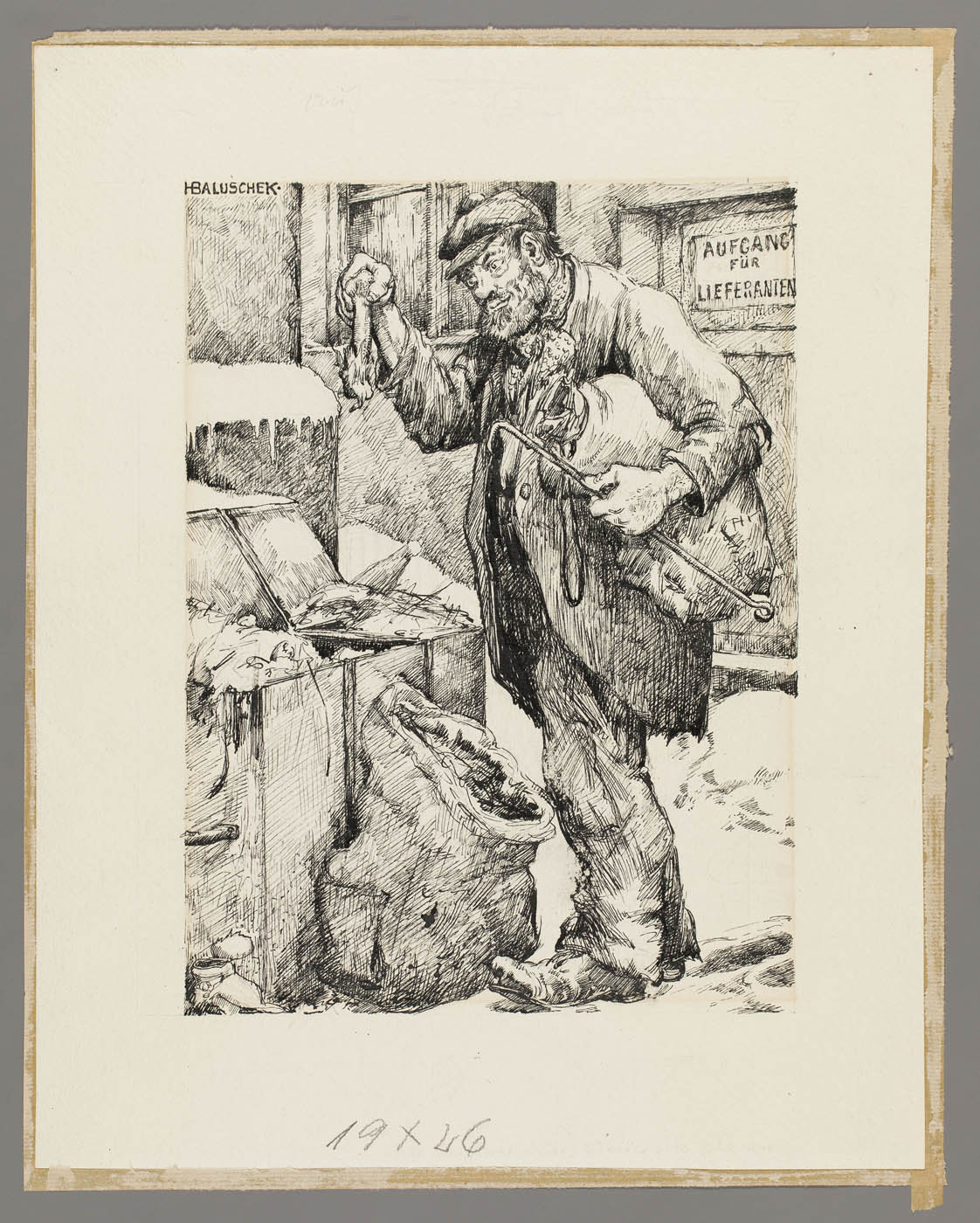
Hans Baluschek (German, 1870-1935) 'Fleisch am Knochen' (Meat on the Bone) 1924 from the exhbition 'Berlin Courtyards: Between Everyday Life, Work, and Encounters' at the Museum Ephraim-Palais, Berlin, July 2025 - January 2026


Hans Baluschek (German, 1870-1935)
Fleisch am Knochen (Meat on the Bone)
Berlin, 1924
Pen and black ink on paper
27.7cm x 35.2cm
Collection of the Berlin City Museum Foundation
Reproduction: Michael Setzpfandt, Berlin


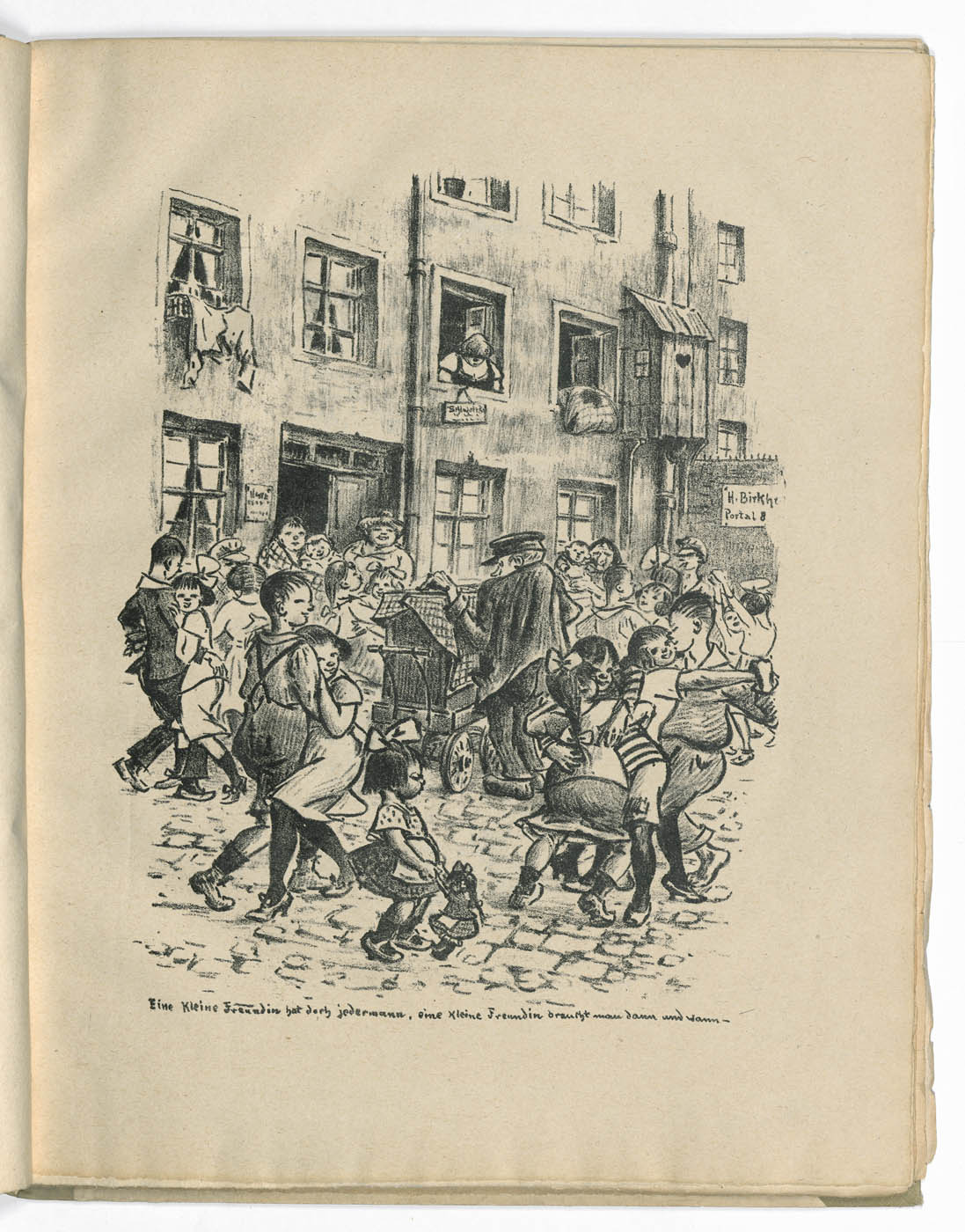
Heinrich Zille (German, 1858-1929) "Eine kleine Freundin hat doch jedermann, eine kleine Freundin braucht man dann und wann…" ("Everyone has a little friend, and one needs a little friend now and then...") 1924


Heinrich Zille (German, 1858-1929)
“Eine kleine Freundin hat doch jedermann, eine kleine Freundin braucht man dann und wann…” (“Everyone has a little friend, and one needs a little friend now and then…”)
Berlin, 1924
Lithograph on laid paper
45.5cm x 36.8cm
Collection of the Berlin City Museum Foundation


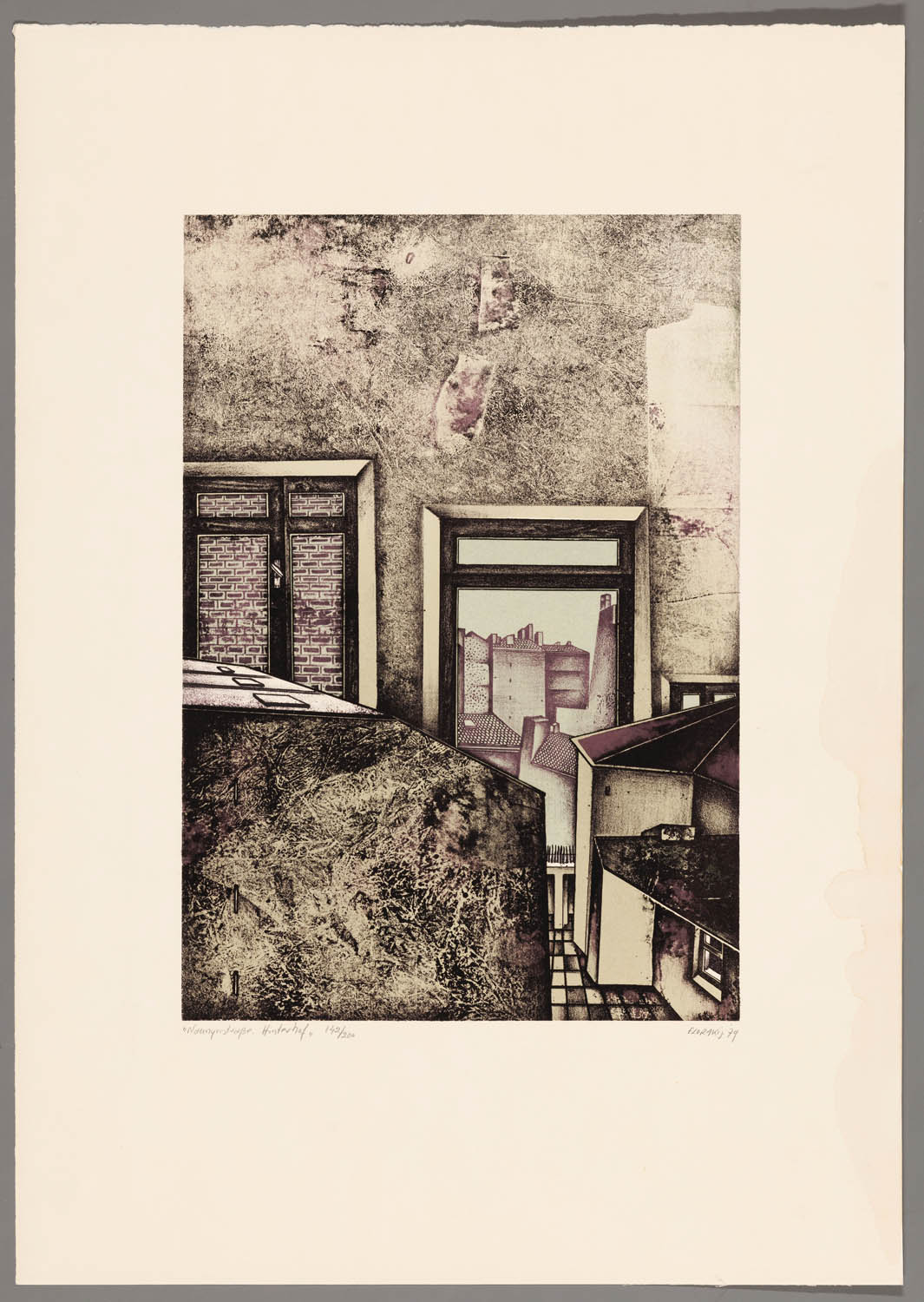
Mathèos Florakis (Greek, b. 1935) 'Naunynstraße, Hinterhof' 1979


Mathèos Florakis (Greek, b. 1935)
Naunynstraße, Hinterhof
1979
Coloured lithograph on paper
59cm x 42cm
© MathËos Florakis – Stiftung Stadtmuseum Berlin
Reproduction: Michael Setzpfandt Berlin


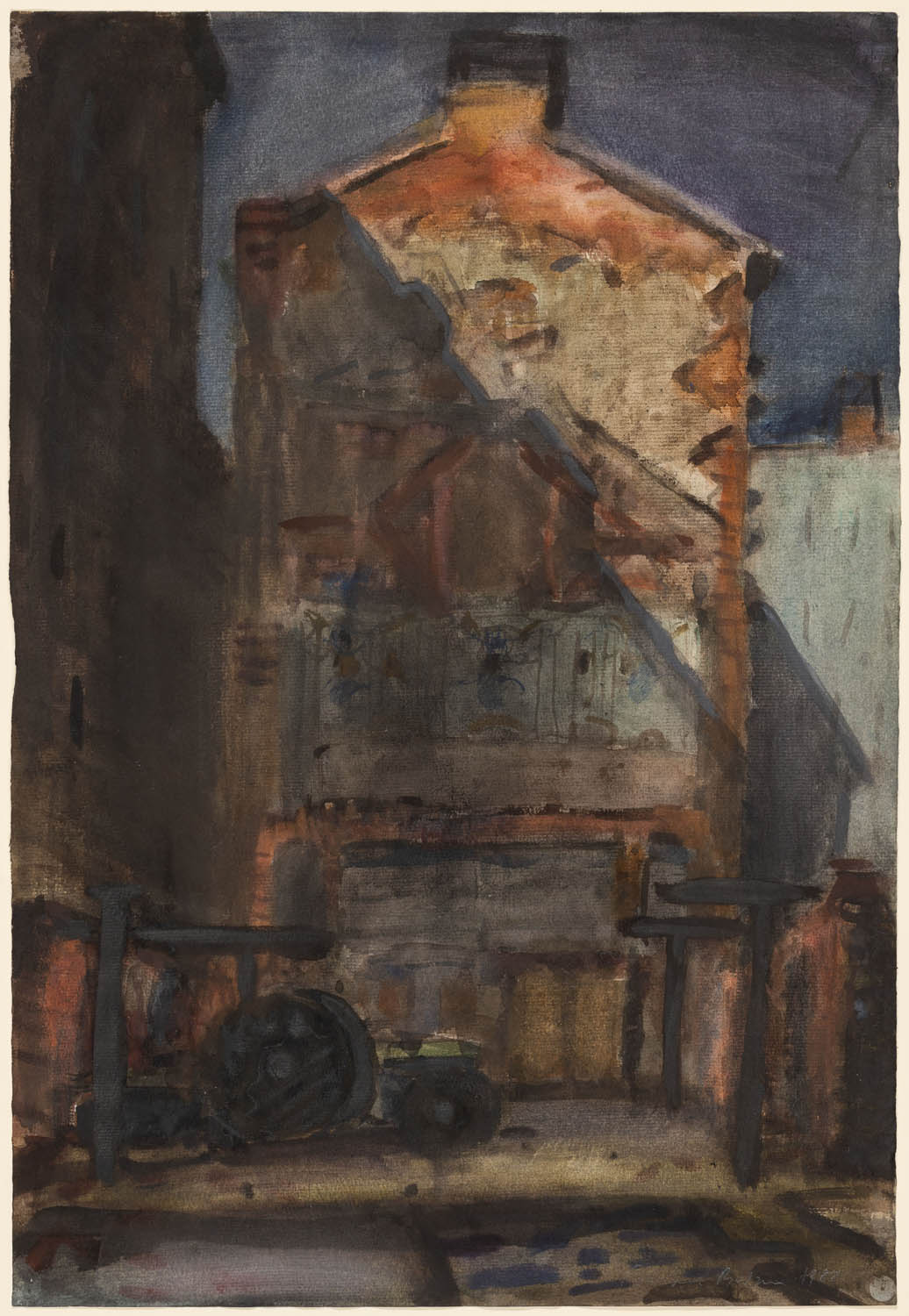
Manfred Butzmann (German, b. 1942) 'Giebelwand (Chausseestraße 16)' (Gable wall (Chausseestraße 16)) 1988


Manfred Butzmann (German, b. 1942)
Giebelwand (Chausseestraße 16) (Gable wall (Chausseestraße 16))
1988
Watercolour on laid paper
49.8cm x 34cm
© VG Bild-Kunst, Bonn
Reproduction: Michael Setzpfandt, Berlin


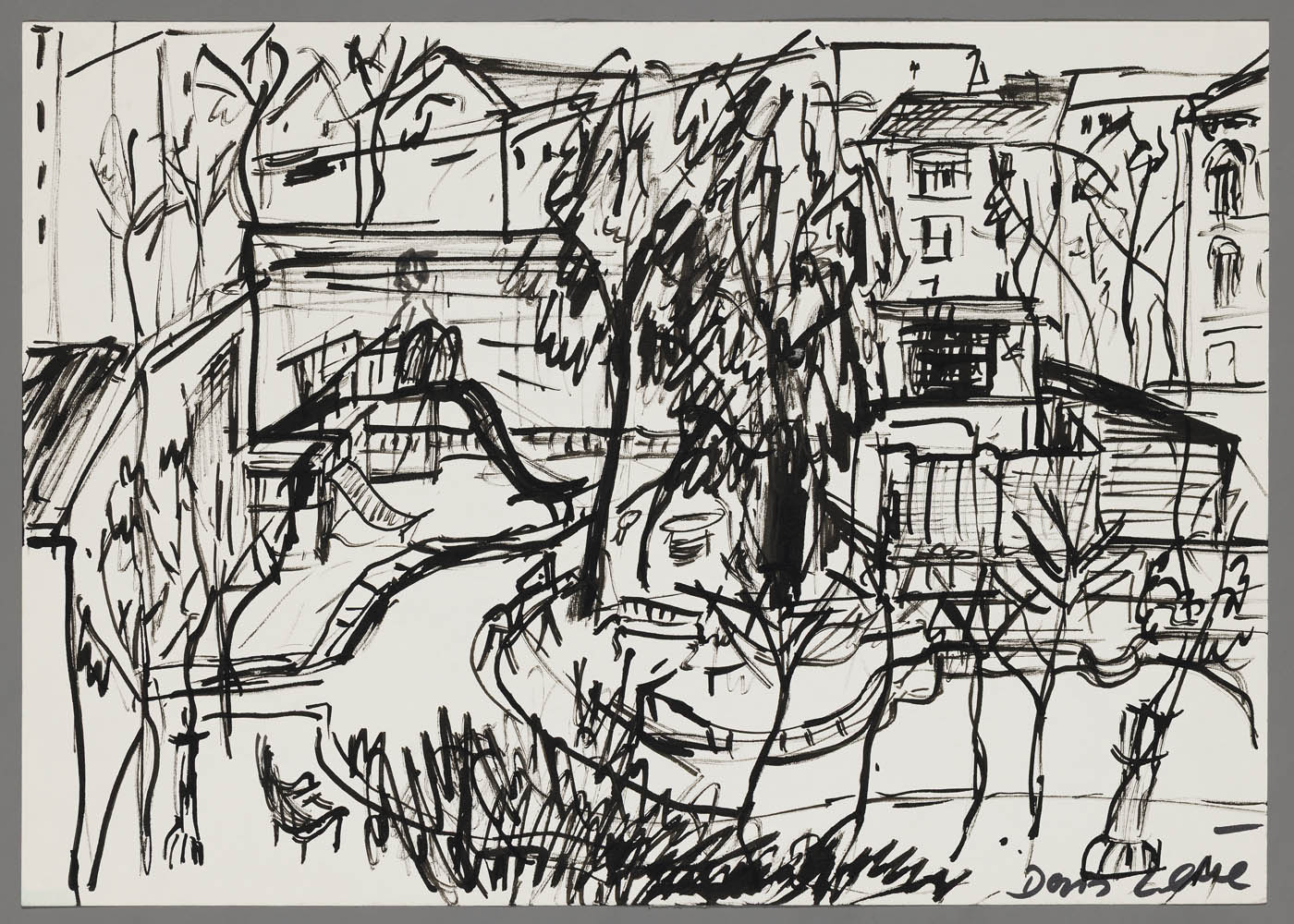
Doris Leue (German, b. 1954) 'Hirschhof' 1999


Doris Leue (German, b. 1954)
Hirschhof
Berlin, 1999
Pen and ink on paper
29.5cm x 42cm
Purchased with funds from the German Class Lottery Berlin by the Cultural Administration of the Berlin Senate, 2024
© Doris Leue
Reproduction: Michael Setzpfandt, Berlin


Ever wondered about the secret lives tucked away behind Berlin’s bustling streets?

The Museum Ephraim-Palais is inviting you on a captivating journey with its new exhibition, “Berlin Courtyards: Between Everyday Life, Work, and Encounters,” running from July 18, 2025, to January 18, 2026.

From cozy residential nooks to bustling commercial hubs and serene artist retreats, Berlin’s courtyards tell the vibrant story of a city constantly evolving. This exhibition delves into how these spaces have fostered social and cultural exchange since the 19th century, becoming living capsules of history and community. They reflect the complexities of urban life, showcasing how people shape their surroundings and creating a unique atmosphere that has long inspired artists.

“Berlin Courtyards” brings together nearly 100 striking photographs and graphics from the vast collection of the Stadtmuseum Berlin. Visitors will discover gems from legendary artists like Heinrich Zille, Hans Baluschek, and Manfred Hamm, alongside contemporary perspectives from photographers like André Kirchner and Günther Steffen.

Adding a fresh layer to the historical narrative are new artistic works by urban researchers Duygu Örs and Sinthujan Varatharajah, specially commissioned for the show. Their multi-sensory exploration of Wedding’s backyards, using texts, photos, videos, and sound, offers an intimate look at these overlooked spaces.

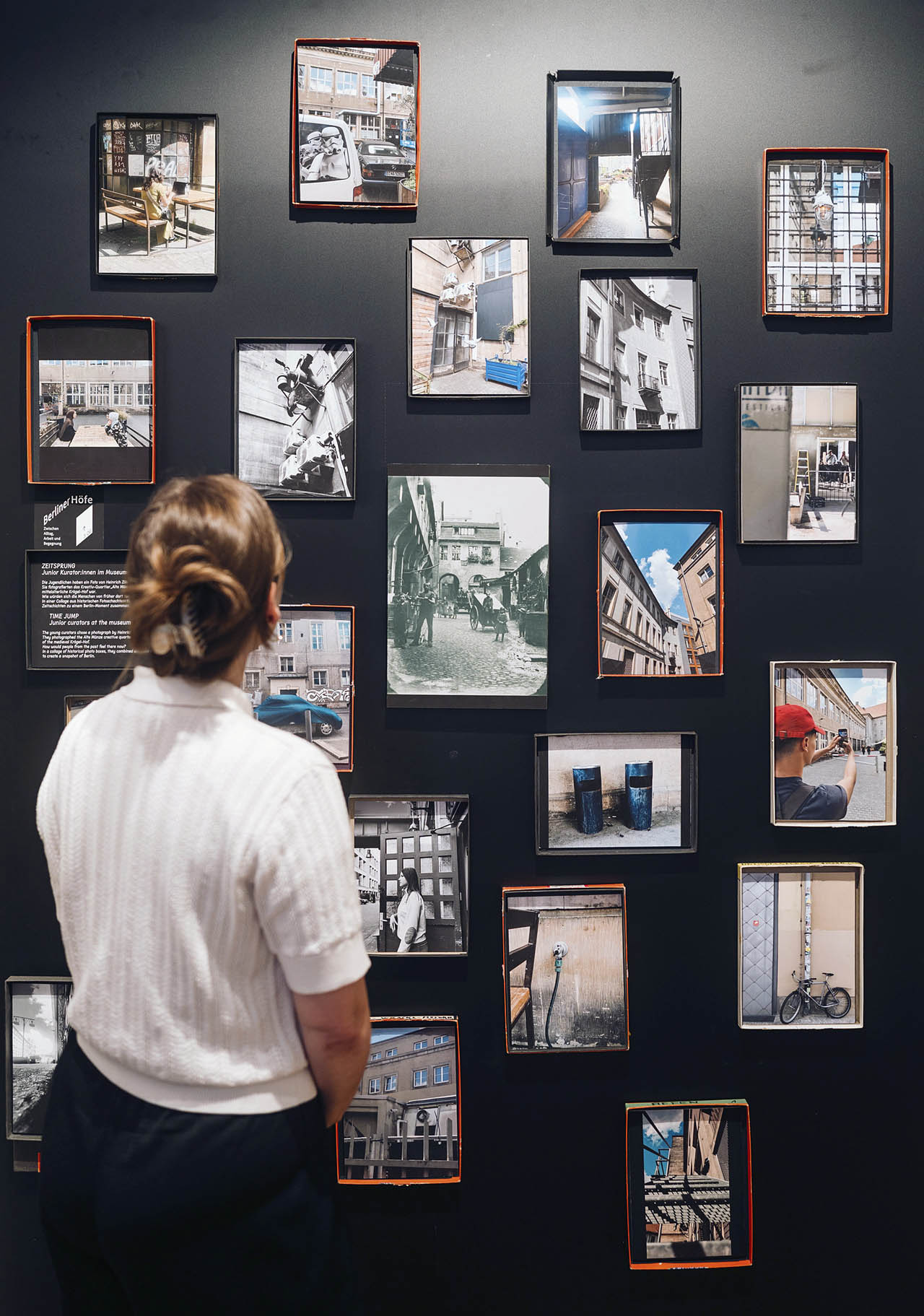
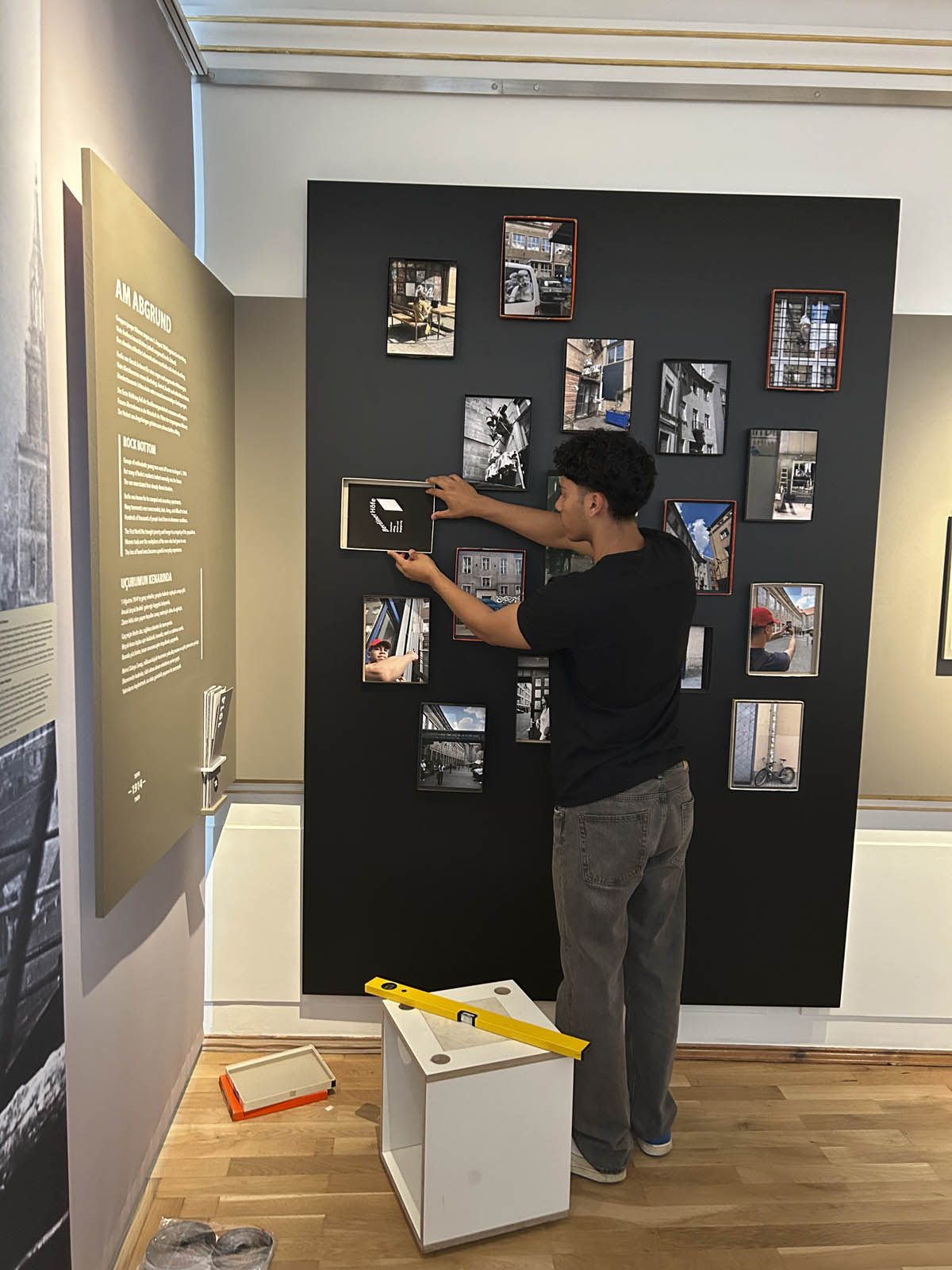
What’s more, the exhibition features a dynamic display of modern-day Berlin courtyards, crowdsourced through the Stadtmuseum Berlin’s “Berlin now!” photo campaign. You’ll see 40 framed photos on the walls, plus 50 smaller photo cards that visitors can rearrange, literally co-creating the exhibition experience. Due to overwhelming interest, the “Berlin now!” photo call has been extended until September 18, giving photography enthusiasts more time to submit their own unique views of Berlin’s courtyards. Selected photos will even be rotated into the framed display in October!

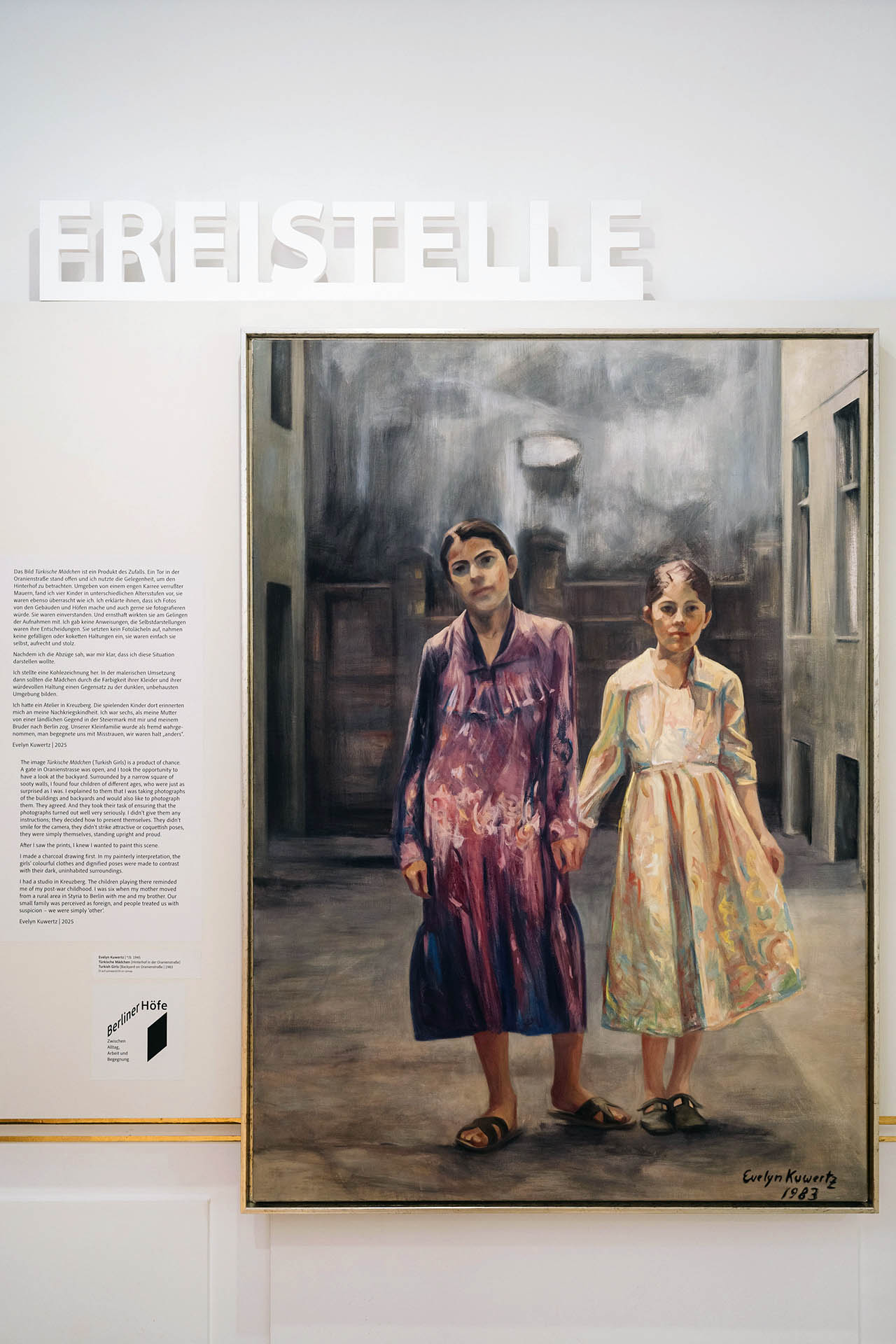
Adding another exciting dimension, junior curators from the Refik-Veseli School in Kreuzberg, mentored by Yella Hoepfner, will share their own “courtyard stories” across five dedicated areas within the Museum Ephraim-Palais, including spaces within the “BerlinZEIT” permanent exhibition. Their personal narratives will engage in a dialogue with objects from the Stadtmuseum Berlin’s collection, offering fresh, youthful insights.

Don’t miss this chance to experience Berlin from a new perspective, delving into the hidden heart of its neighborhoods through the eyes of both historical and contemporary artists.

Press release from Museum Ephraim-Palais


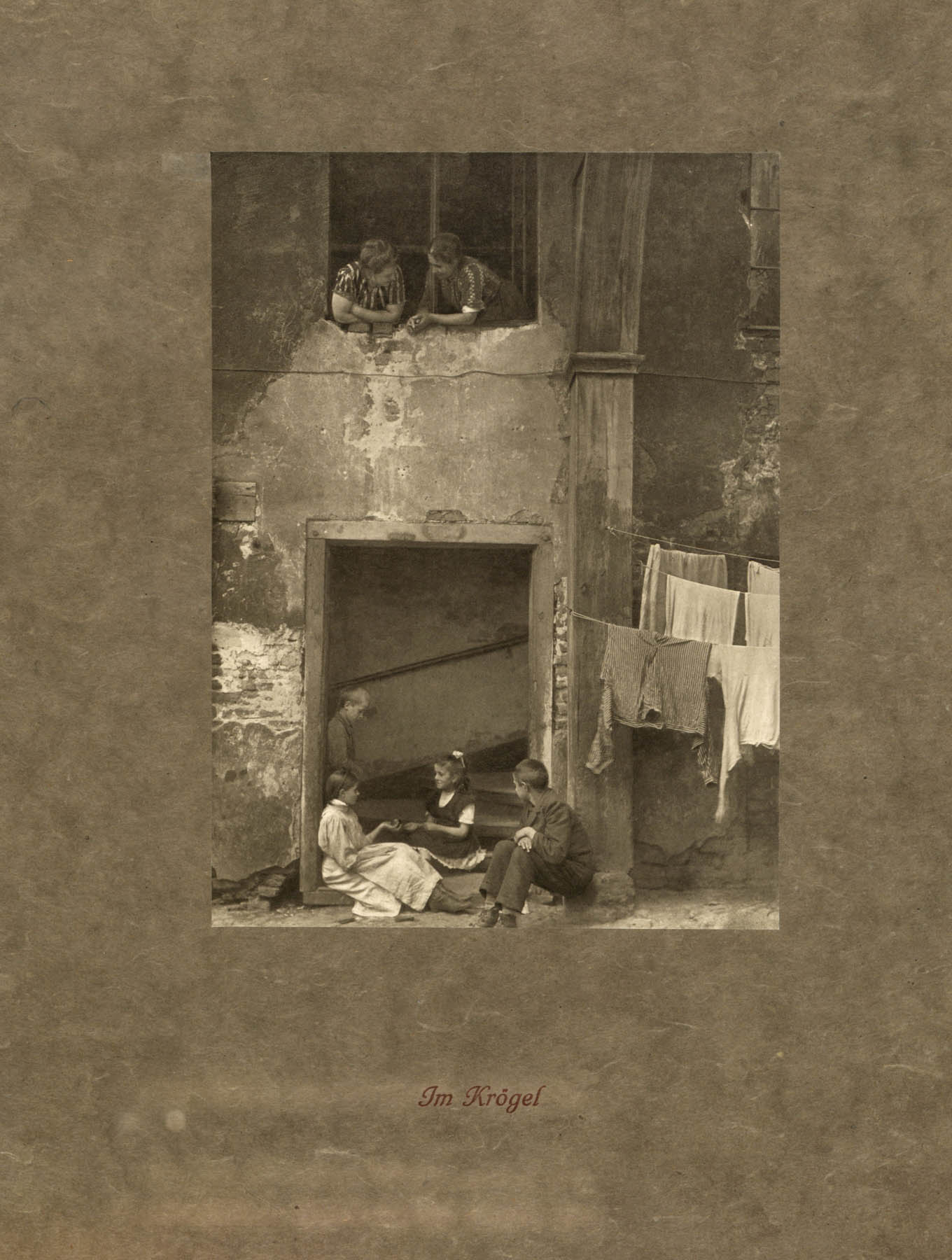
Rudolf Dührkoop (German, 1848-1918) From the portfolio 'Das malerische Berlin, Band 1' (Picturesque Berlin, Volume 1) 1911


Rudolf Dührkoop (German, 1848-1918)
From the portfolio Das malerische Berlin, Band 1 (Picturesque Berlin, Volume 1)
1911


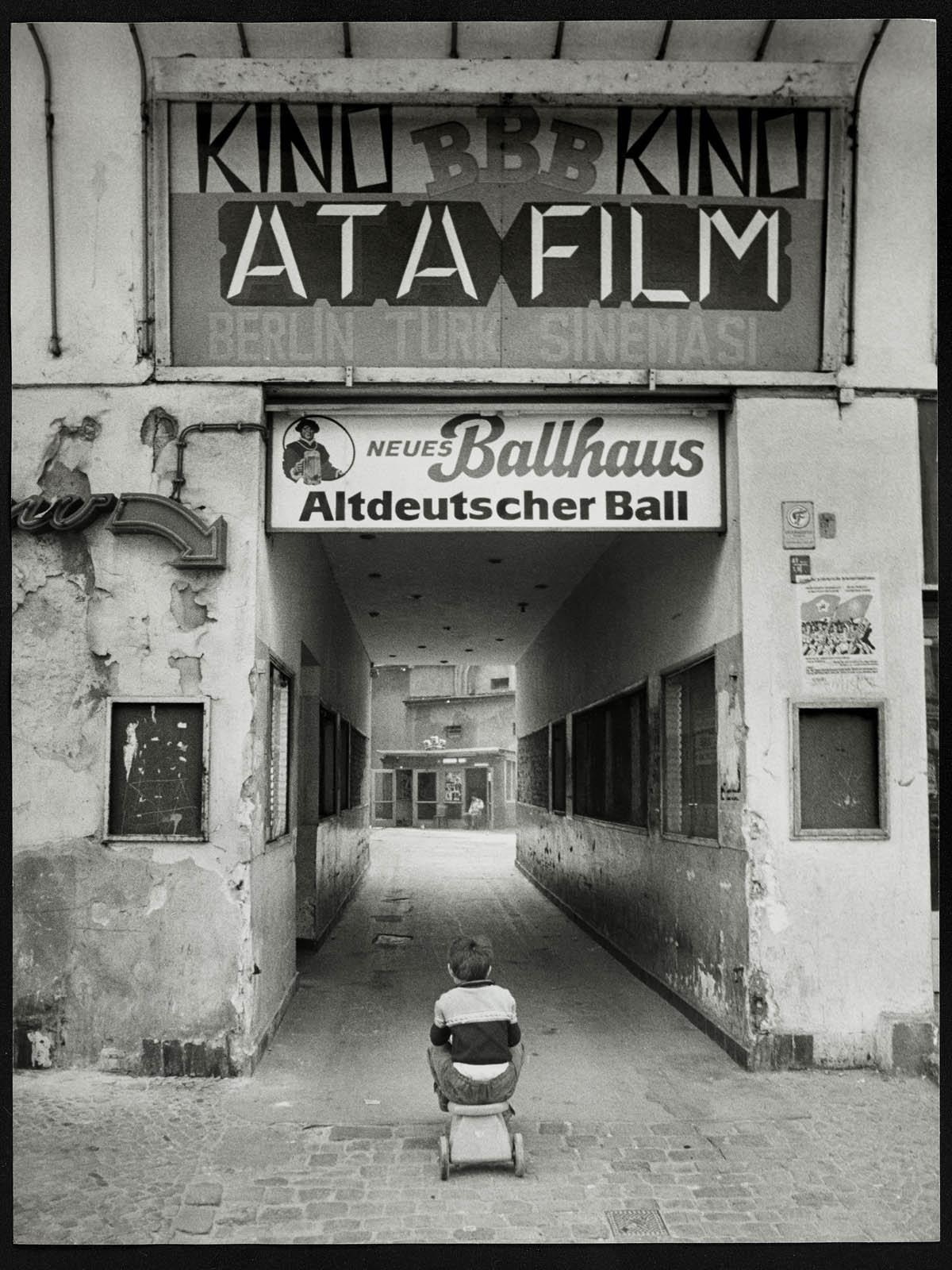
Ludwig Binder (German born Serbia, 1928-1980) 'Hofeinfahrt Kottbusser Straße 6' (Courtyard entrance at Kottbusser Straße 6) c. 1976


Ludwig Binder (German born Serbia, 1928-1980)
Hofeinfahrt Kottbusser Straße 6 (Courtyard entrance at Kottbusser Straße 6)
c. 1976
Ludwig Binder’s Photographic Estate – Positives – 43 images titled Ausländer-Läden-Kino
Photograph
24cm x 18.2cm
© Stiftung Stadtmuseum Berlin, Ludwig Binder


Manfred Hamm (German, b. 1944) 'Goerz'sche Höfe, Rheinstraße' 1978


Manfred Hamm (German, b. 1944)
Goerz’sche Höfe, Rheinstraße
Berlin, 1978
Photograph, baryta paper
22cm x 28.1cm
© Stiftung Stadtmuseum Berlin


Reinhard Münch (German, b. 1951) From the series 'Das Haus Dunckerstr. 16 in Berlin 1058' (The House at Dunckerstrasse 16 in Berlin, 1058) 1985


Reinhard Münch (German, b. 1951)
From the series Das Haus Dunckerstr. 16 in Berlin 1058 (The House at Dunckerstrasse 16 in Berlin, 1058)
1985
Baryta paper, silver gelatin
24.9cm x 24.9cm
© Reinhard Münch


Ergun Çağatay (Turkish, 1937-2018) From the report: "Türken in Deutschland. Die zweite Generation" ("Turks in Germany. The Second Generation") 1989/90


Ergun Çağatay (Turkish, 1937-2018)
From the report: “Türken in Deutschland. Die zweite Generation” (“Turks in Germany. The Second Generation”)
1989/90


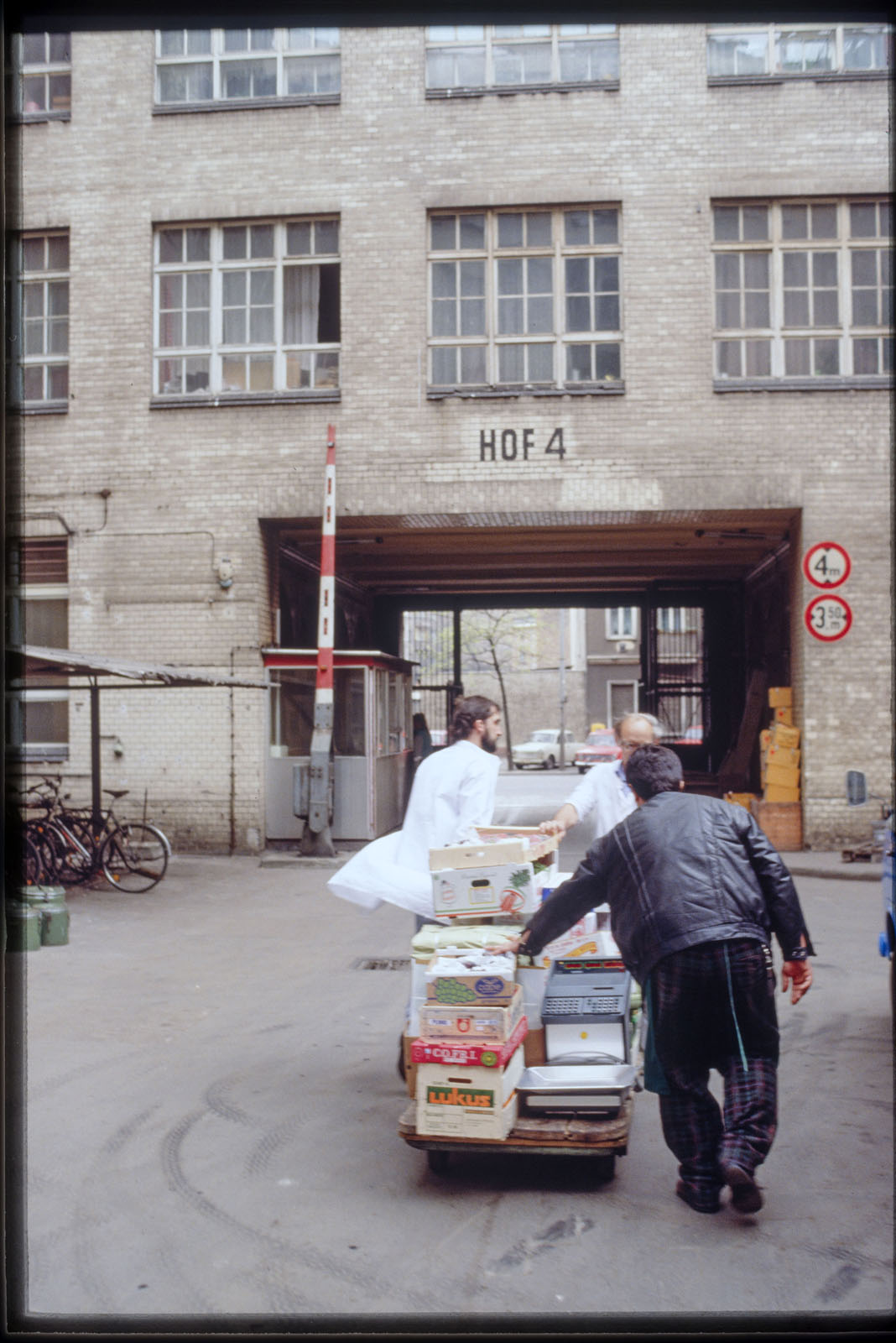
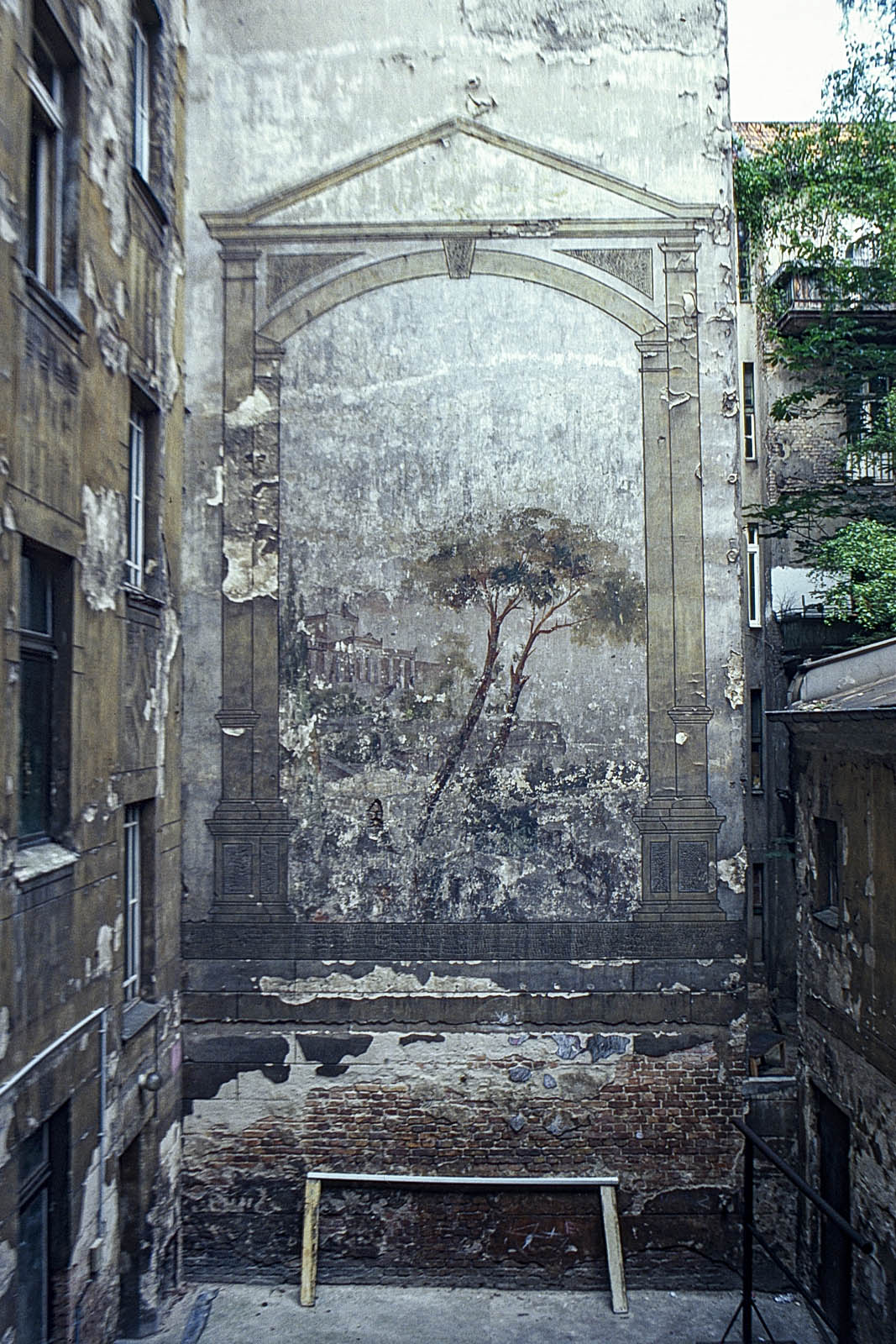
Werner Brunner (German, b. 1941) From the series 'Berliner Wandbilder' (Berlin Murals) 1974-1990 (Berlin-Prenzlauer Berg, Esmarchstraße 26, I. Hinterhof)


Werner Brunner (German, b. 1941)
Berlin-Prenzlauer Berg, Esmarchstraße 26, I. Hinterhof
From the series Berliner Wandbilder (Berlin Murals) 1974-1990
Hahnemühle Digital Fine Art, inkjet printing
30cm x 20cm
© Werner Brunner
Reproduction: Dorin Alexandru Ionita, Berlin


Dr. Barbara Hansen. '"Motive aus dem Osten Berlins 1993-1998. Höfe", Hof in Ostberlin' um 1995 ('"Motives from East Berlin 1993-1998. Courtyards" Courtyard in East Berlin' around 1995)


Dr. Barbara Hansen
“Motive aus dem Osten Berlins 1993-1998. Höfe”, Hof in Ostberlin
(“Motives from East Berlin 1993-1998. Courtyards” Courtyard in East Berlin)

Berlin, around 1995
Colour photograph on PE paper
Approx. 10 x 15cm (HF and QF)
© Stiftung Stadtmuseum Berlin


Unknown photographer. 'Hoffest in der Falckensteinstraße 27' (Garden festival at Falckensteinstraße 27) 1920


Unknown photographer
Hoffest in der Falckensteinstraße 27 (Garden festival at Falckensteinstraße 27)
1920
Postcard
From the collection of Eberhard Müller


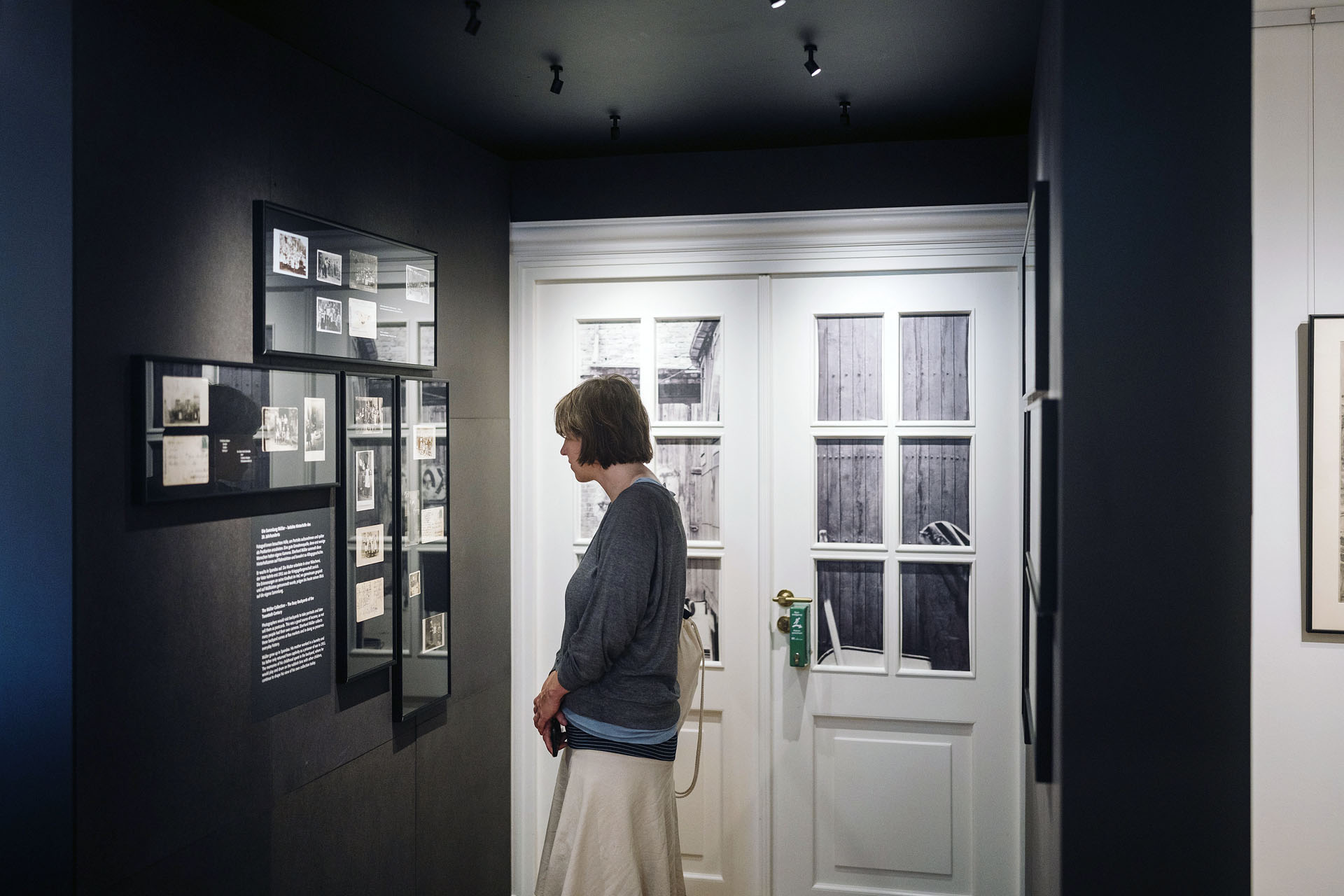
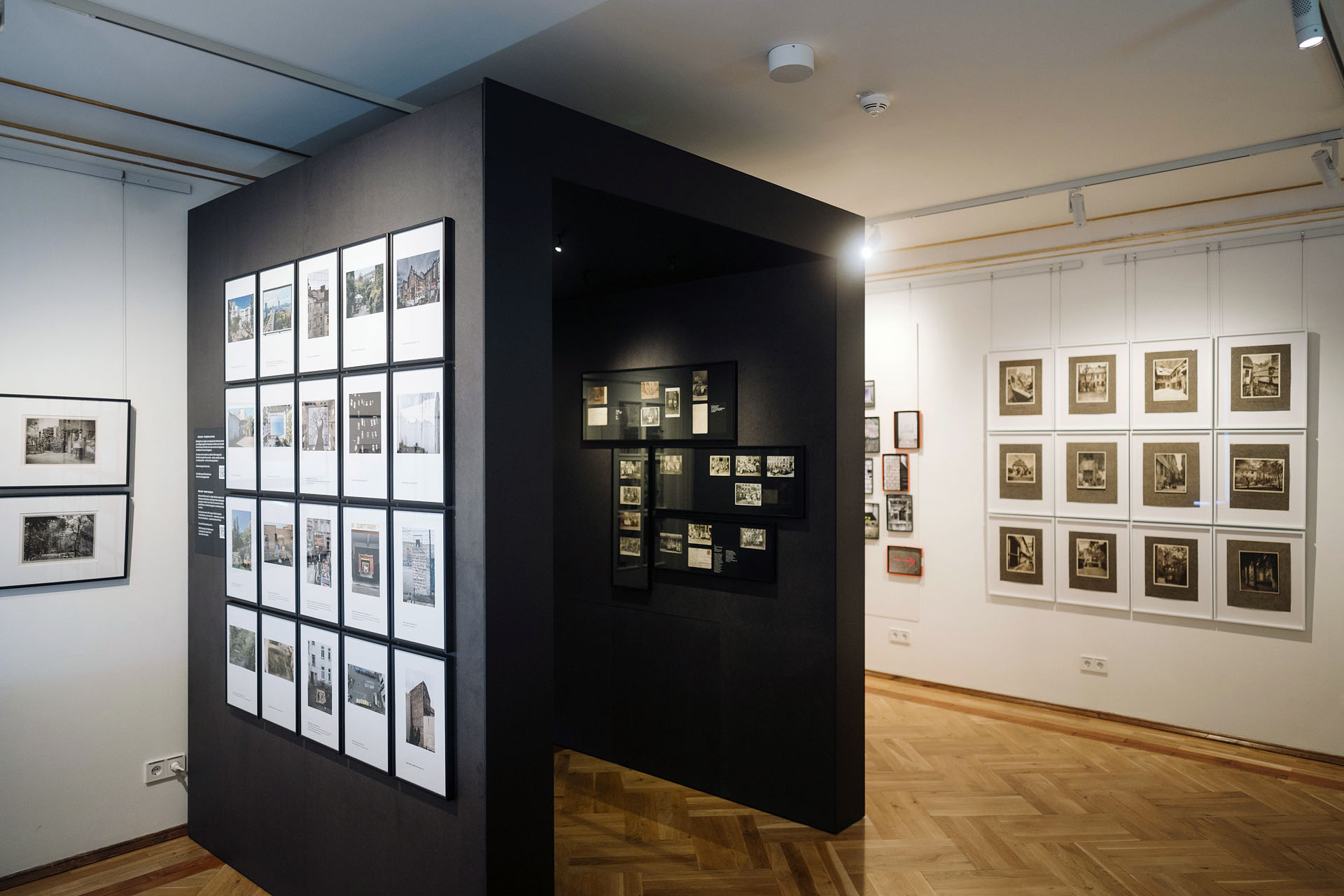
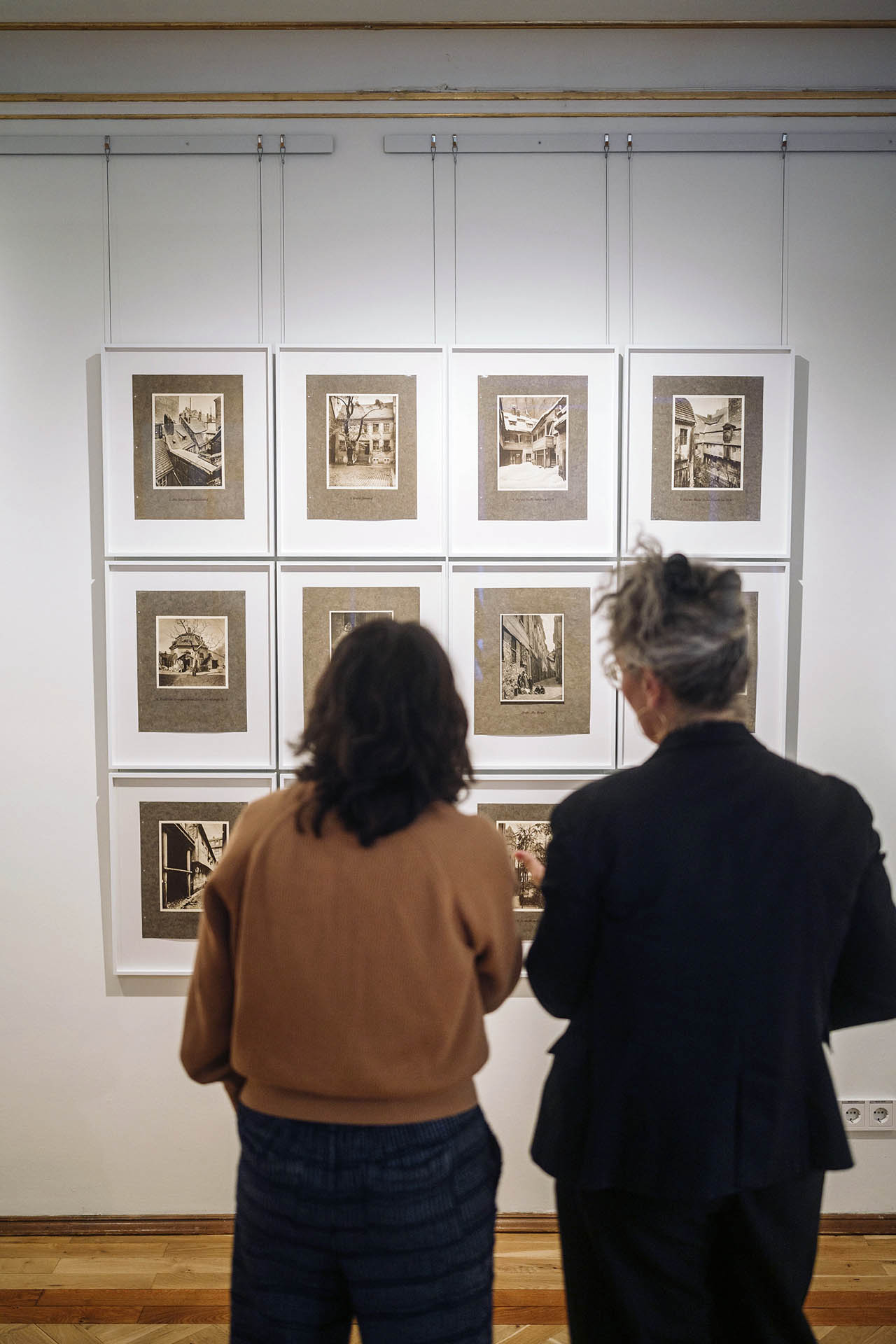
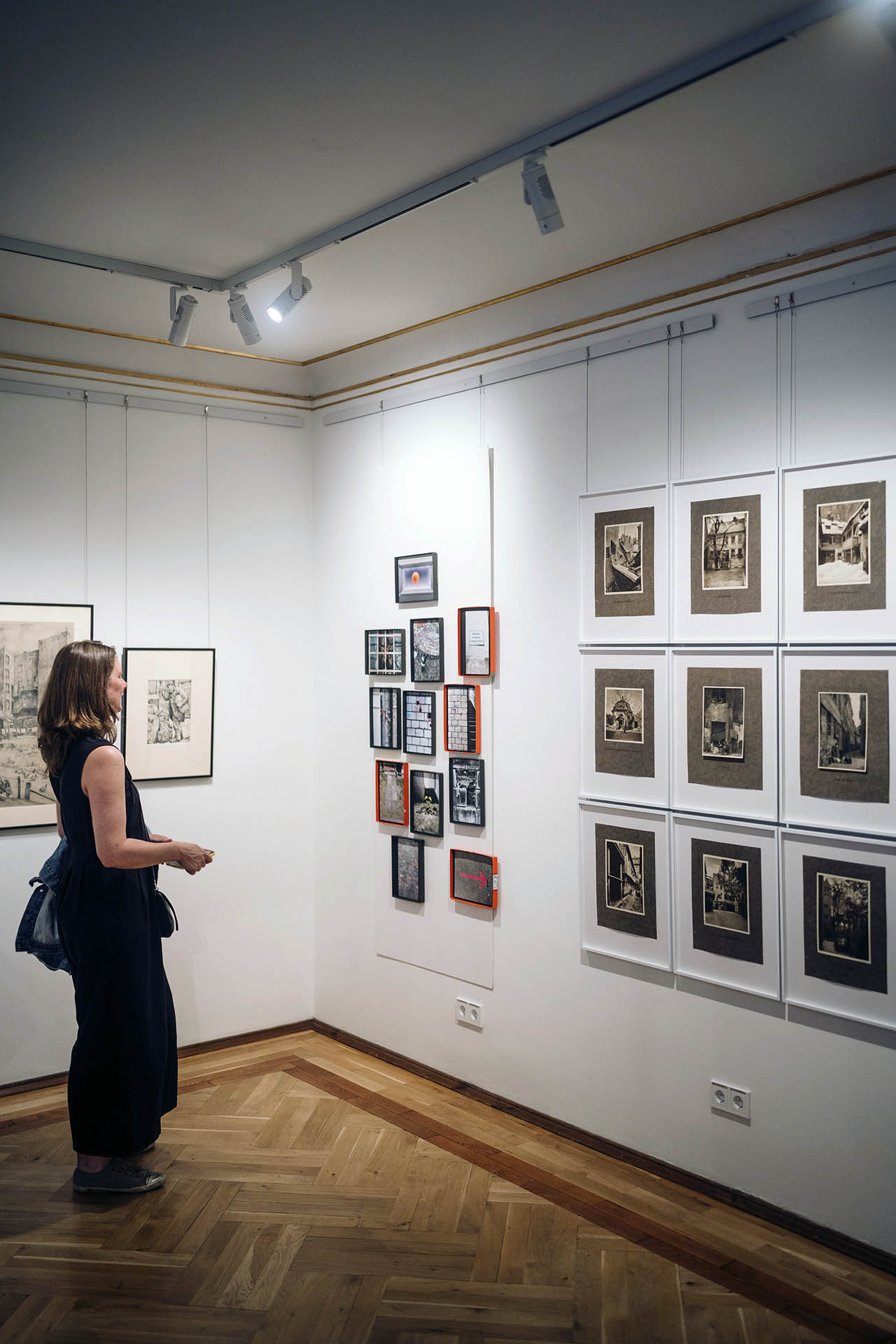
Installation view of the exhibition 'Berlin Courtyards: Between Everyday Life, Work, and Encounters' at the Museum Ephraim-Palais, Berlin, July 2025 - January 2026


Installation views of the exhibition Berlin Courtyards: Between Everyday Life, Work, and Encounters at the Museum Ephraim-Palais, Berlin, July 2025 – January 2026
Photos: Alexander Rentsch


Yella Hoepfner. 'Junior Curator at Refik-Veseli-Schule' 2025


Yella Hoepfner
Junior Curator of the Refik Veseli School
2025
© Yella Hoepfner


Berlin backyards have a lot to tell. Since the industrial revolution in the 19th century at the latest, Berlin has been a center of attraction for people from other regions of Germany and from other countries. The history of the city has therefore always been a history of migration.

Due to enormous population growth, spatial expansion and structural densification, Berlin is characterised by backyards like no other city. They are used for residential, educational, commercial, artistic, culinaric and many other purposes. Their history is diverse, just like the people who live there. With the special exhibition “Berliner Höfe” (Berlin Backyards) on the 3rd floor of the Museum Ephraim-Palais, the Stadtmuseum Berlin invites you to explore these urban spaces between past and present.

The backyards are exemplary of urban coexistence with all its contradictions. They show how people shape space. And they encourage us to take a closer look: What can backyards tell us about Berlin? What about ourselves? In short: What is going on there?

Graphics, photography and history

The special atmosphere of the Berlin backyards has repeatedly inspired graphic artists, draughtsmen and photographers to create images. In the exhibition, highlights from the museum collection meet the artistic works of urban researchers Duygu Örs and Sinthujan Varatharajah, which were created especially for “Berliner Höfe”. Using sounds and light, they deal with different sensory impressions from backyards that Örs and Varatharajah encountered in Wedding.

In addition, the junior curators from the Refik Veseli School in Kreuzberg and their mentor Yella Hoepfner present their own spaces in the permanent exhibition “BerlinZEIT” on the first and second floors of the museum. Their individual stories interact with objects from the collection.

Biographical data

Duygu Örs is a researcher, art educator and curator specialising in cultural and urban research. Since 2019 she has headed the education and mediation work of the Berlin Biennale for Contemporary Art, since 2025 with Jas Wenzel. At the Institute for Sociology and Cultural Organisation (ISKO) at Leuphana University Lüneburg, she is working on the role of the museum in the ‘Right to the City’ movement.‍ She is also a co-founder of the curatorial research collective Curating through Conflict with Care (CCC). Translated with DeepL.com (free version)

Sinthujan Varatarajah (சிந்துஜன் வரதராஜா) writes and researches in Berlin. As a political geographer, Varatarajah focuses on issues of statelessness, im-/mobility and displacement from the perspective of infrastructure, logistics and building culture. Varatarajah has published several books since 2022. Varatarajah’s next book, ‘Where Time Stands Still’, will be published by Carl Hanser Verlag in spring 2026.

Text from the Museum Ephraim-Palais website


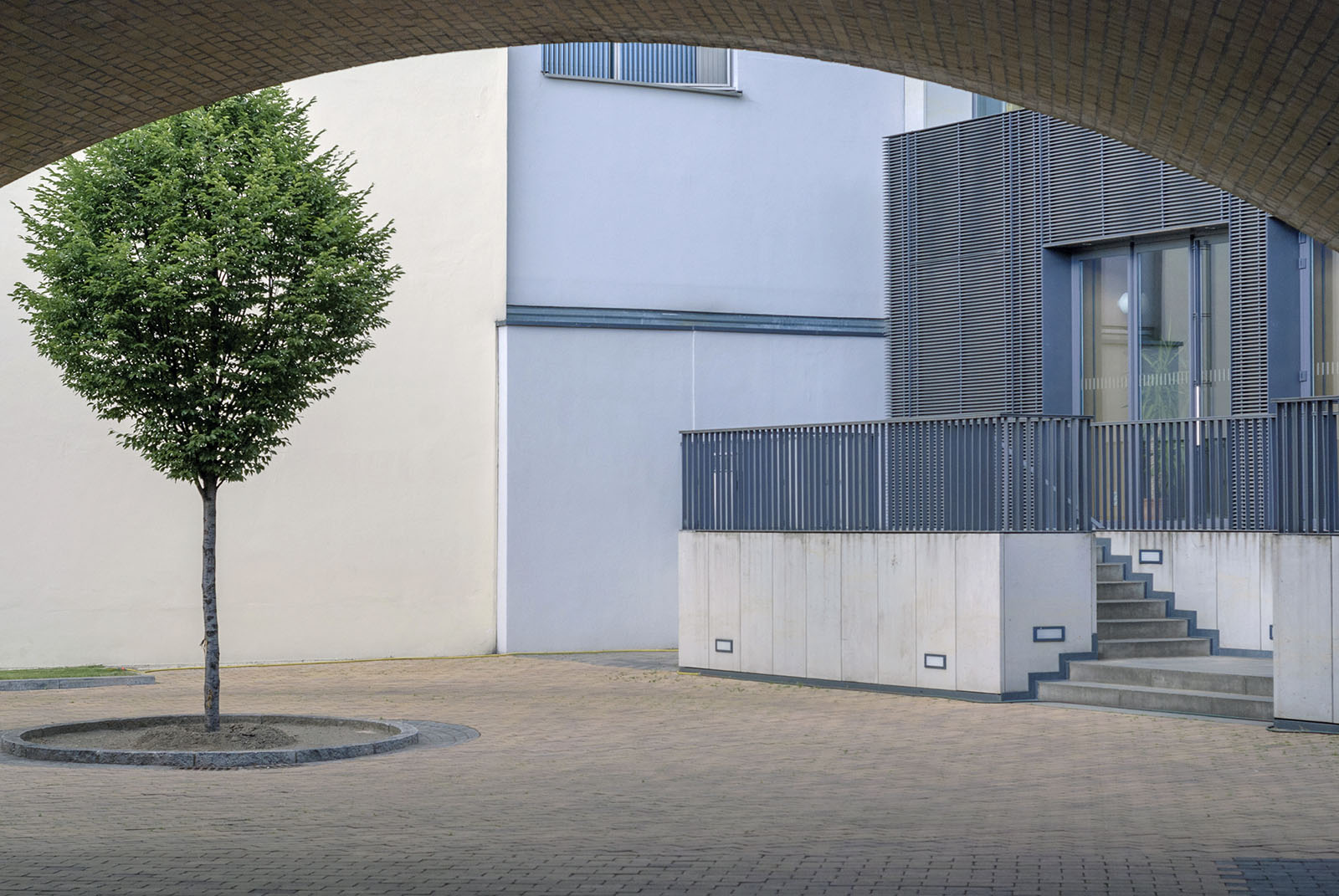
Lotti Nass (German, b. 1950) 'Hof mit Baum' (Courtyard with Tree) 2010


Lotti Nass (German, b. 1950)
Hof mit Baum (Courtyard with Tree)
2010
© Lotti Nass


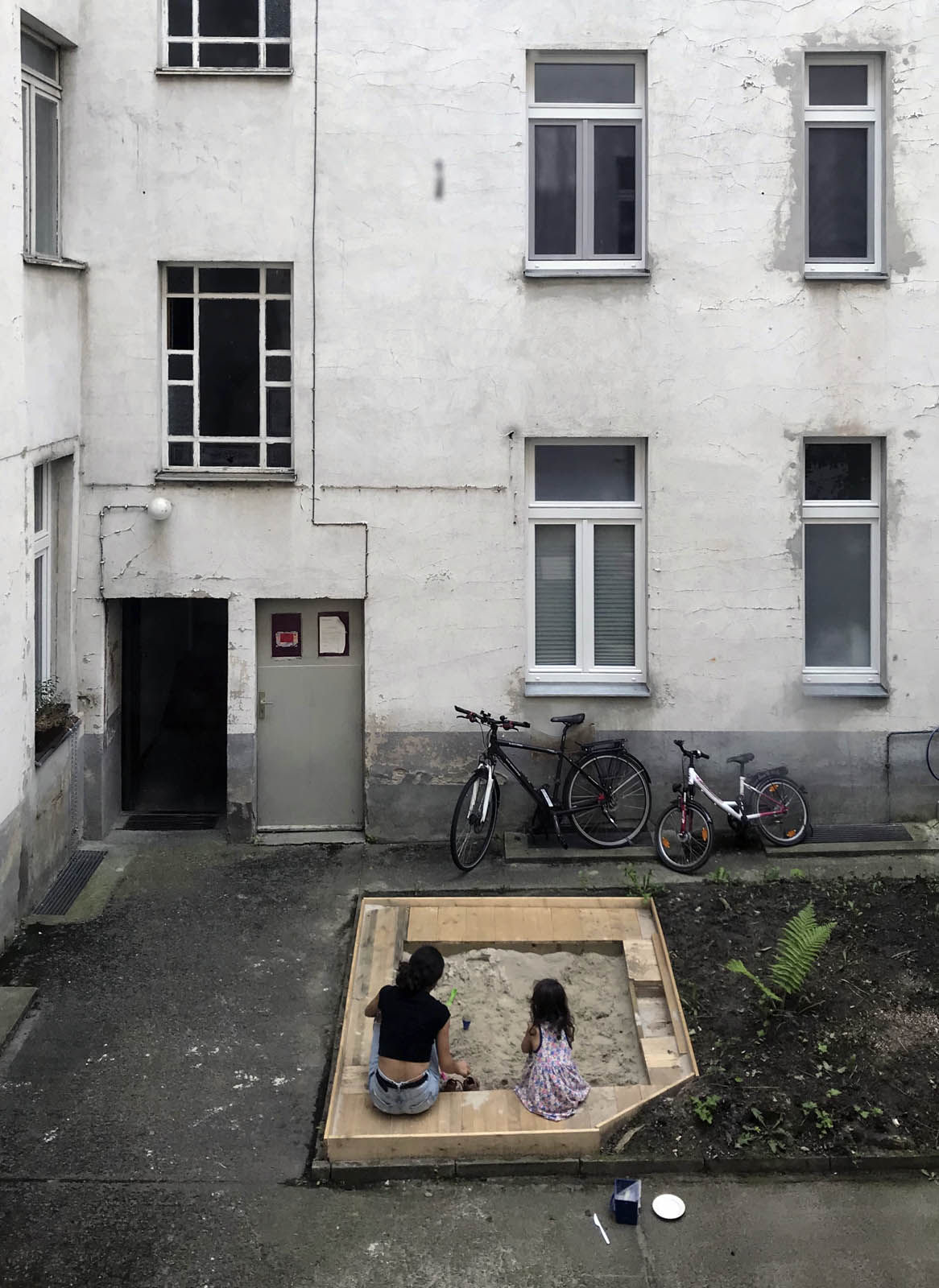
Andreas Metz. 'In der Sandkiste' (In the Sandbox) 2020


Andreas Metz
In der Sandkiste (In the Sandbox)
2020


Birgit Hantke. 'Waldstraße, Moabit' 2021


Birgit Hantke (German)
Waldstraße, Moabit
2021
© Birgit Hantke


Andrea Steiner. 'Doch die Toscana?' (But Tuscany?) 2025


Andrea Steiner
Doch die Toscana? (But Tuscany?)
2025
© Andrea Steiner


Duygu Örs and Sinthujan Varatharajah. 'Untitled' 2025


Duygu Örs and Sinthujan Varatharajah
Untitled
2025


Museum Ephraim-Palais
Poststraße 16
10178 Berlin

Opening hours:
Tue – Sun 10am – 6pm (also on public holidays)
Mon closed

Museum Ephraim-Palais website
LIKE ART BLART ON FACEBOOK

Back to top

Exhibition: ‘A World Apart: Photographing Change in London’s East End 1970-76’ at Four Corners, London

Exhibition dates: 24th October – 6th December, 2025


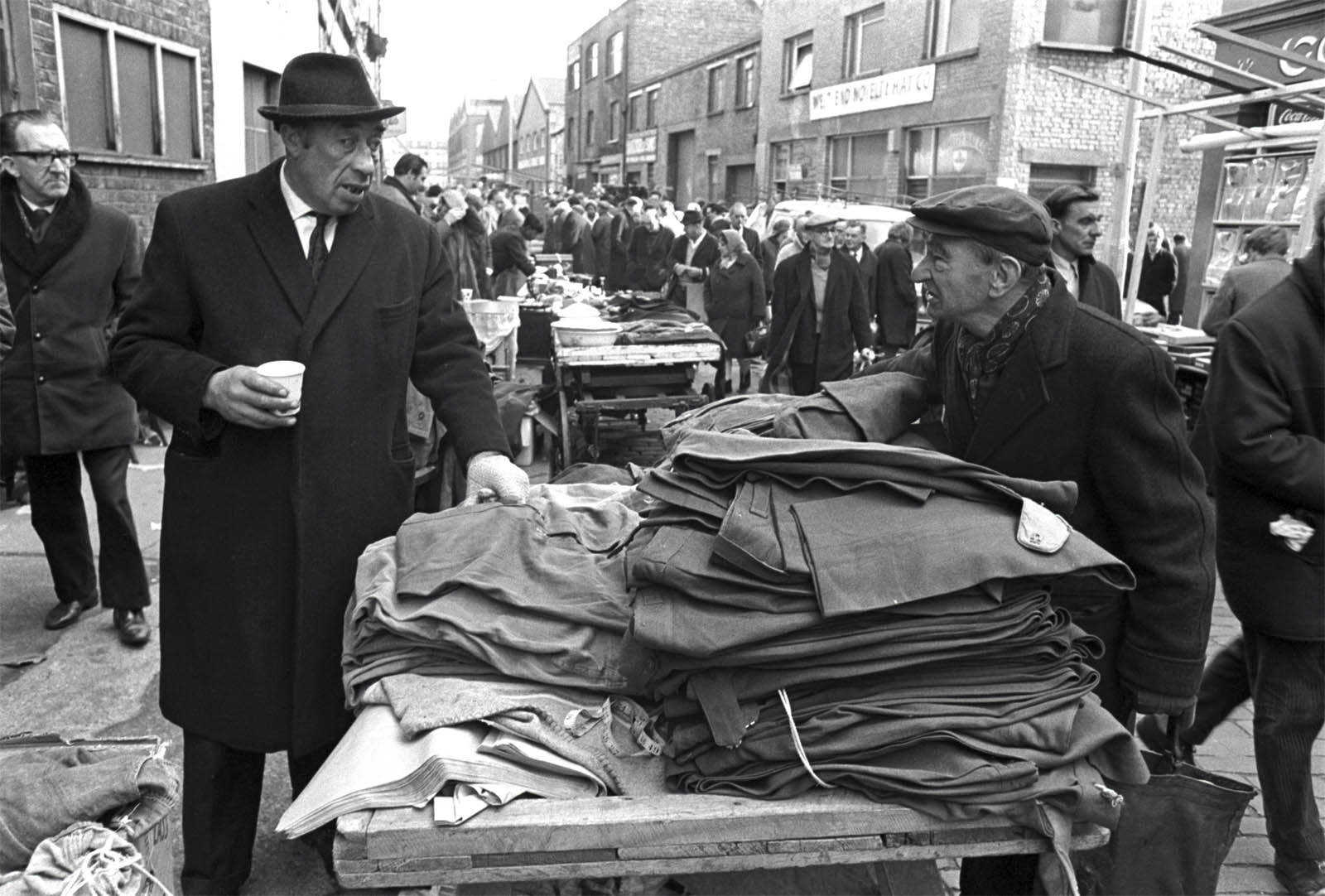
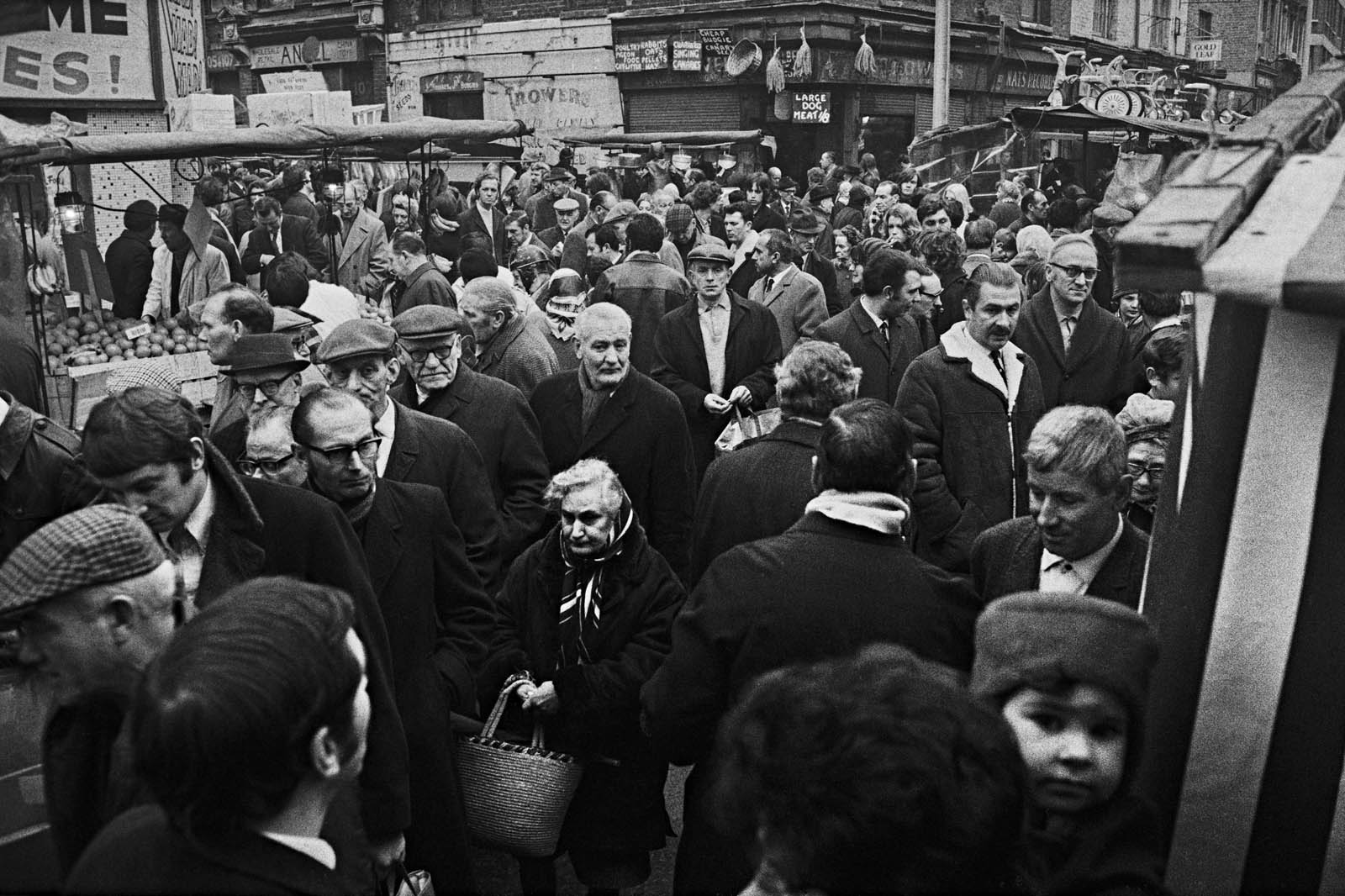
Val Perrin (English) 'Brick Lane market' 1970 or 1972 from the exhibition 'A World Apart: Photographing change in London's East End 1970-76' at Four Corners, Oct - Dec, 2025


Val Perrin (English)
Brick Lane market
1970 or 1972
Gelatin silver print
© Val Perrin


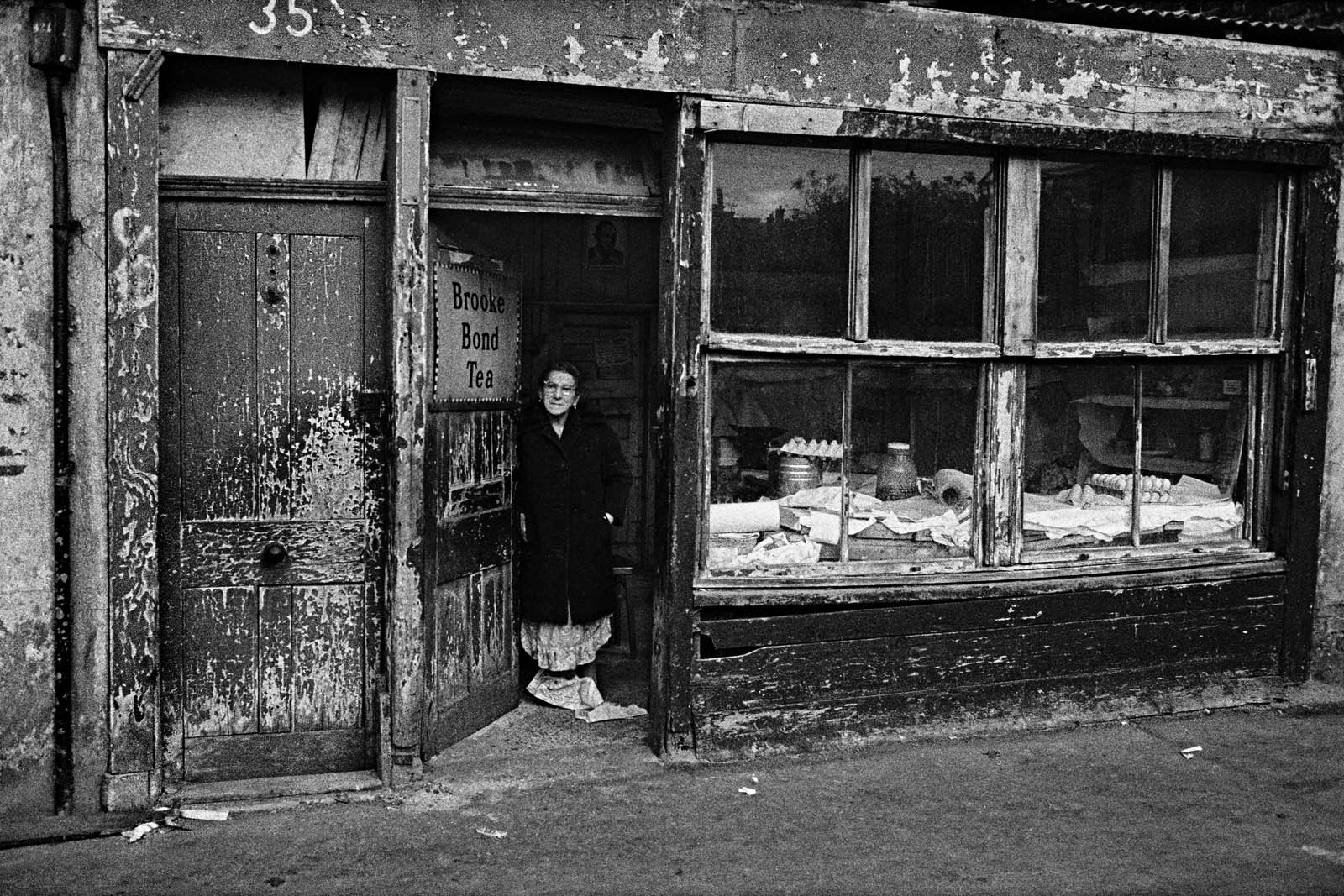
The heroes of this posting (I don’t know about the exhibition for I haven’t seen it!) are the photographs of Ron McCormick (English, b. 1947) which are deeply rooted in the traditions of photography and the community from which they emanate.

They picture an era of change in the East End of London in the 1970s with all the working class grittiness that area was renowned for. I remember going to Brick Lane market in the mid-1970s and it was a rough area. At that time, the East Enders seemed to be a throw back to a vanishing race born out of the Second World War: flat hats, heavy overcoats and a toughness to just carry on regardless. But things were changing.

“As the docks closed, and wholesale slum clearance replaced old neighbourhoods, many communities were being transformed beyond recognition… Yet a different East End was also coming into being, as new migrant communities created a space for themselves,” one that has become equally as British as previous white iterations. The narrow definition of an “East Ender” was gradually replaced with something more multicultural.

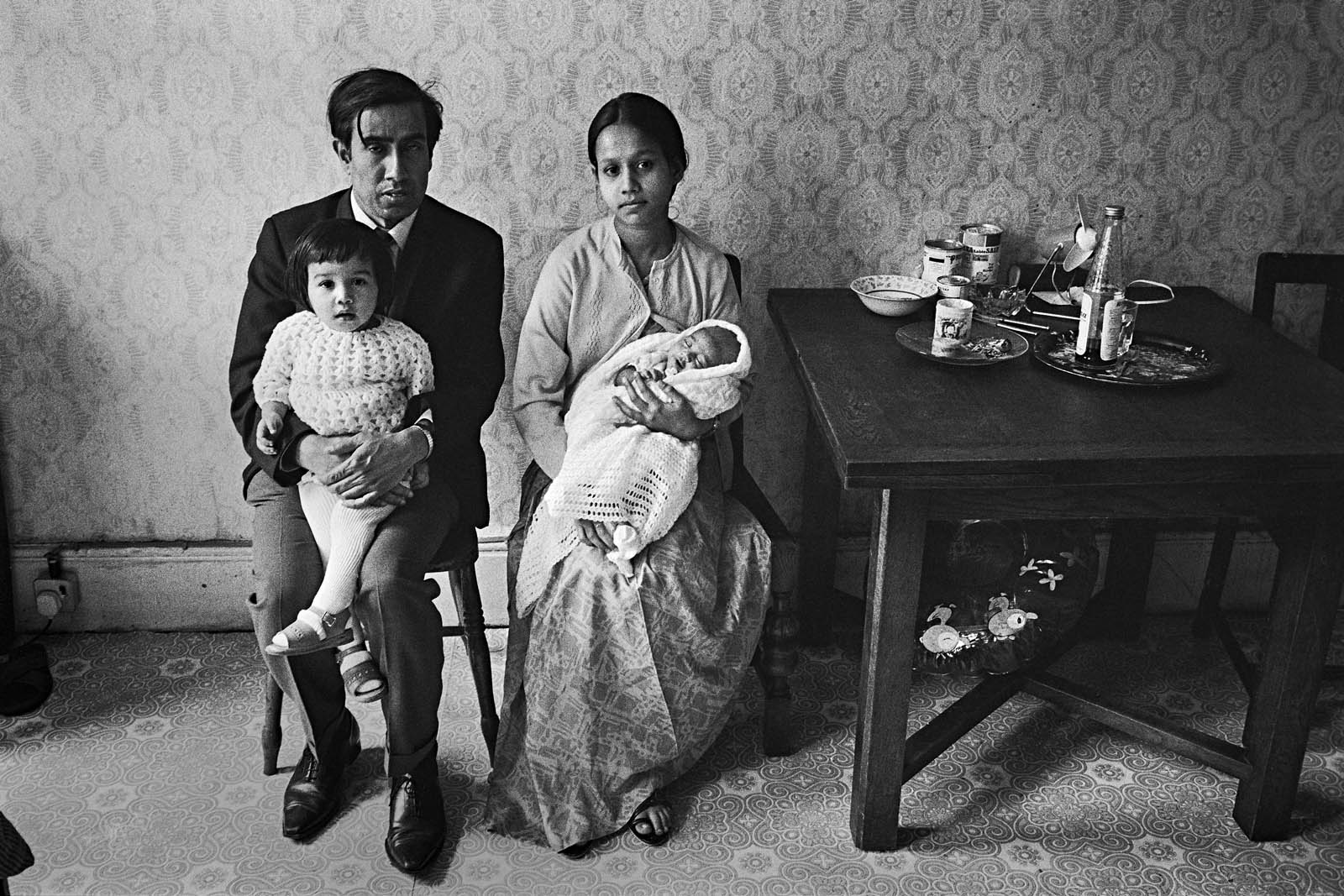
McCormick’s photographs picture such a transformation: Jewish, White, Muslim, Indian, Black, etc., all mixing together in a potpourri of ethnicities, “a vibrant cultural landscape with a variety of traditions, languages, and backgrounds existing together,” while his photographs are rooted in strong social documentary traditions.

In his work I can feel (the critical observation) the influence of Lewis Hine and Walker Evans, more recently that of Lisette Model and the interior photographs of Diane Arbus, Roman Vishniac’s photographs of Jewish life in Eastern Europe between the two World Wars, possibly even the contemporaneous portraits by Milton Rogovin.

Undoubtedly this blending of influences in his photographs ultimately reveals McCormick’s insightful eye and generous spirit: his love for the people he is photographing and his embeddedness in local social networks, deeply influenced by the social and cultural environment from which they emerge – a community in a time of rapid transition and social change.

Dr Marcus Bunyan


Many thankx to Four Corners for allowing me to publish the photographs in the posting. Please click on the photographs for a larger version of the image.


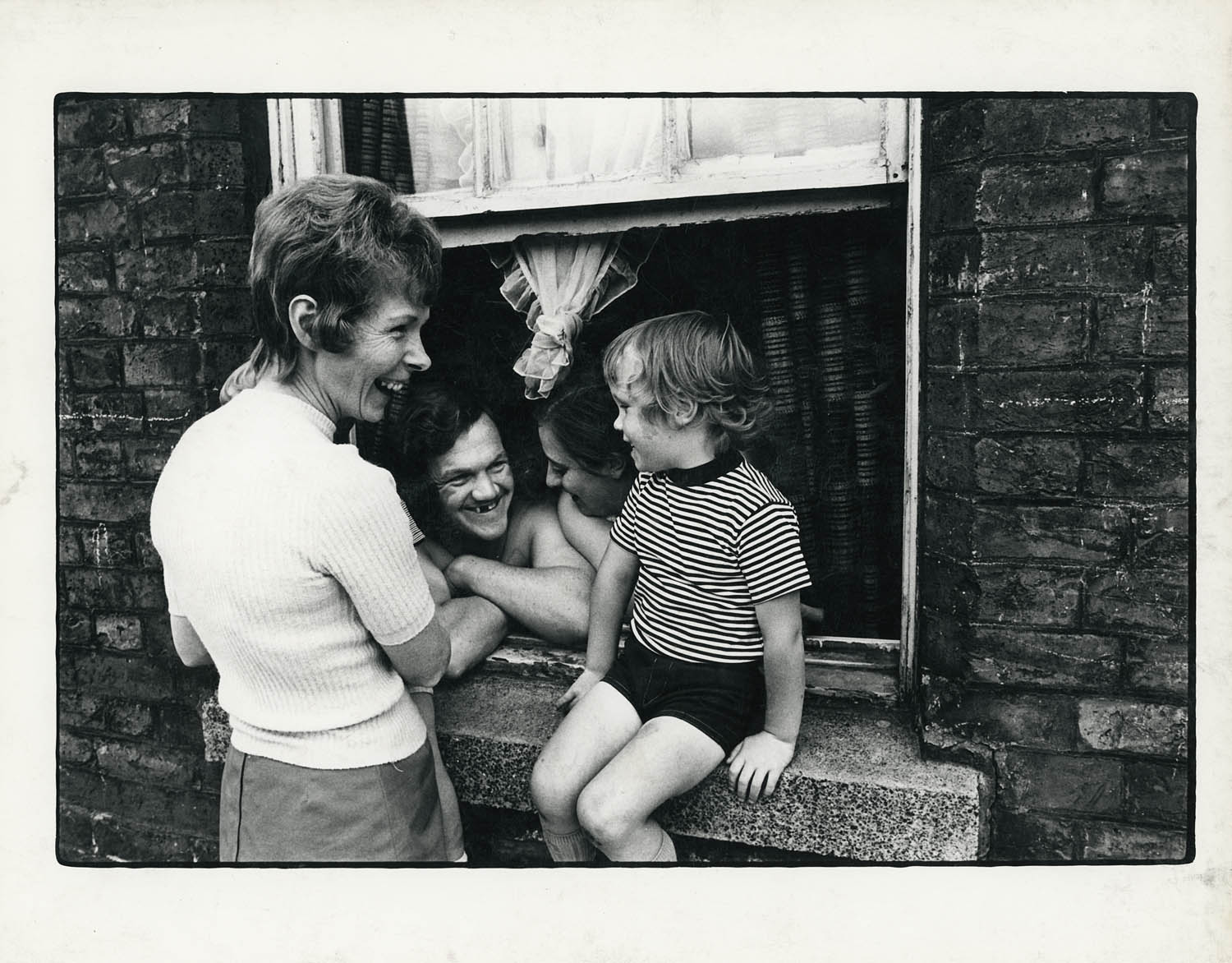
Paul Trevor (English, b. 1947) 'Wapping family at window' 1973 from the exhibition 'A World Apart: Photographing change in London's East End 1970-76' at Four Corners, Oct - Dec, 2025


Paul Trevor (English, b. 1947)
Wapping family at window
1973
Gelatin silver print
© Paul Trevor


Paul Trevor (English, b. 1947) 'Mr and Mrs Kelleher in members pub' 1973


Paul Trevor (English, b. 1947)
Mr and Mrs Kelleher in members pub
1973
Gelatin silver print
© Paul Trevor


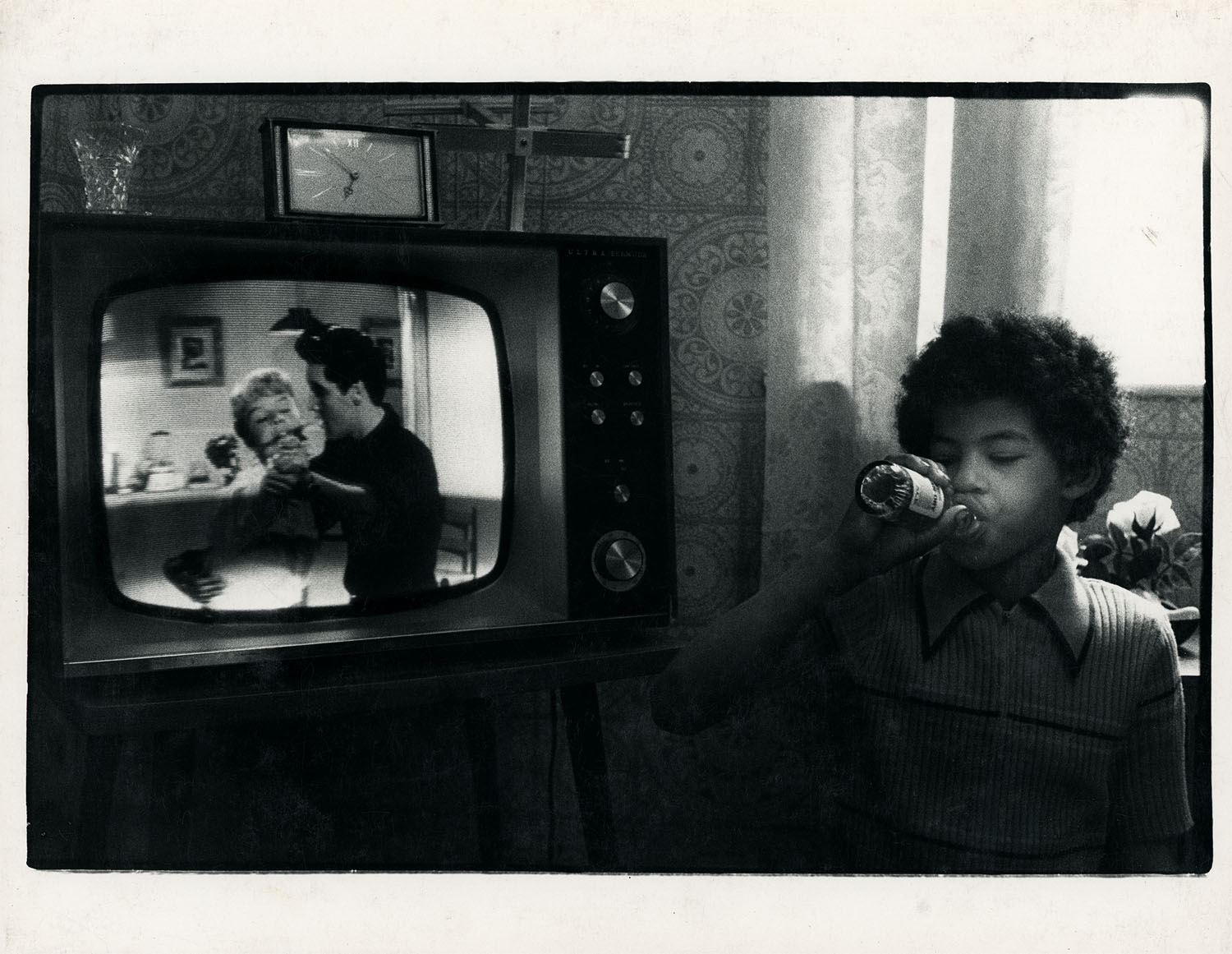
Nicholas Battye (British, 1950-2004) / Exit Photography. 'Floyd Wilson' 1973


Nicholas Battye (British, 1950-2004) / Exit Photography
Floyd Wilson
1973
Gelatin silver print
© Nicholas Battye/Exit Photography


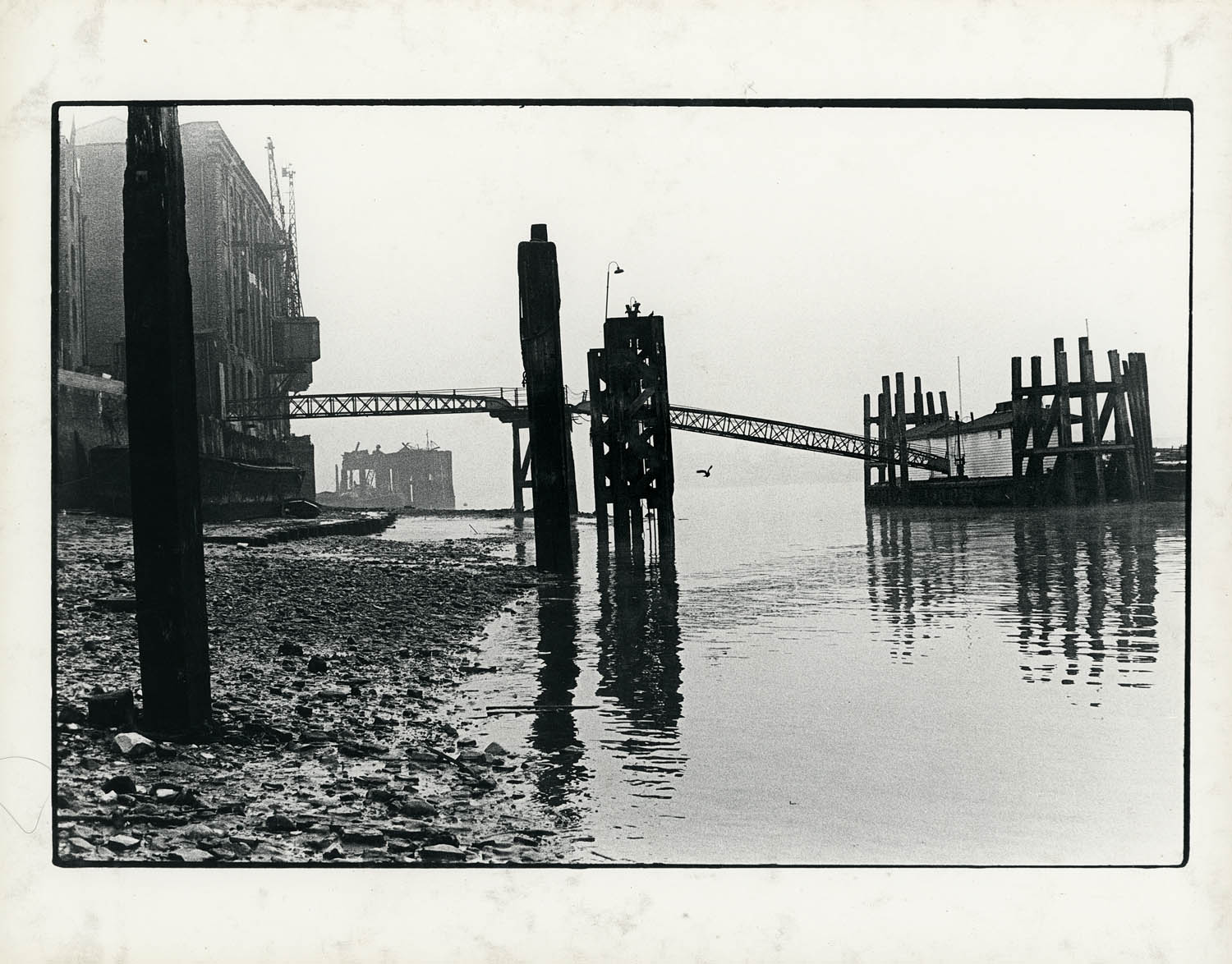
Exit Photography. 'Wapping pier' 1973


Exit Photography
Wapping pier
1973
Gelatin silver print
© Exit Photography


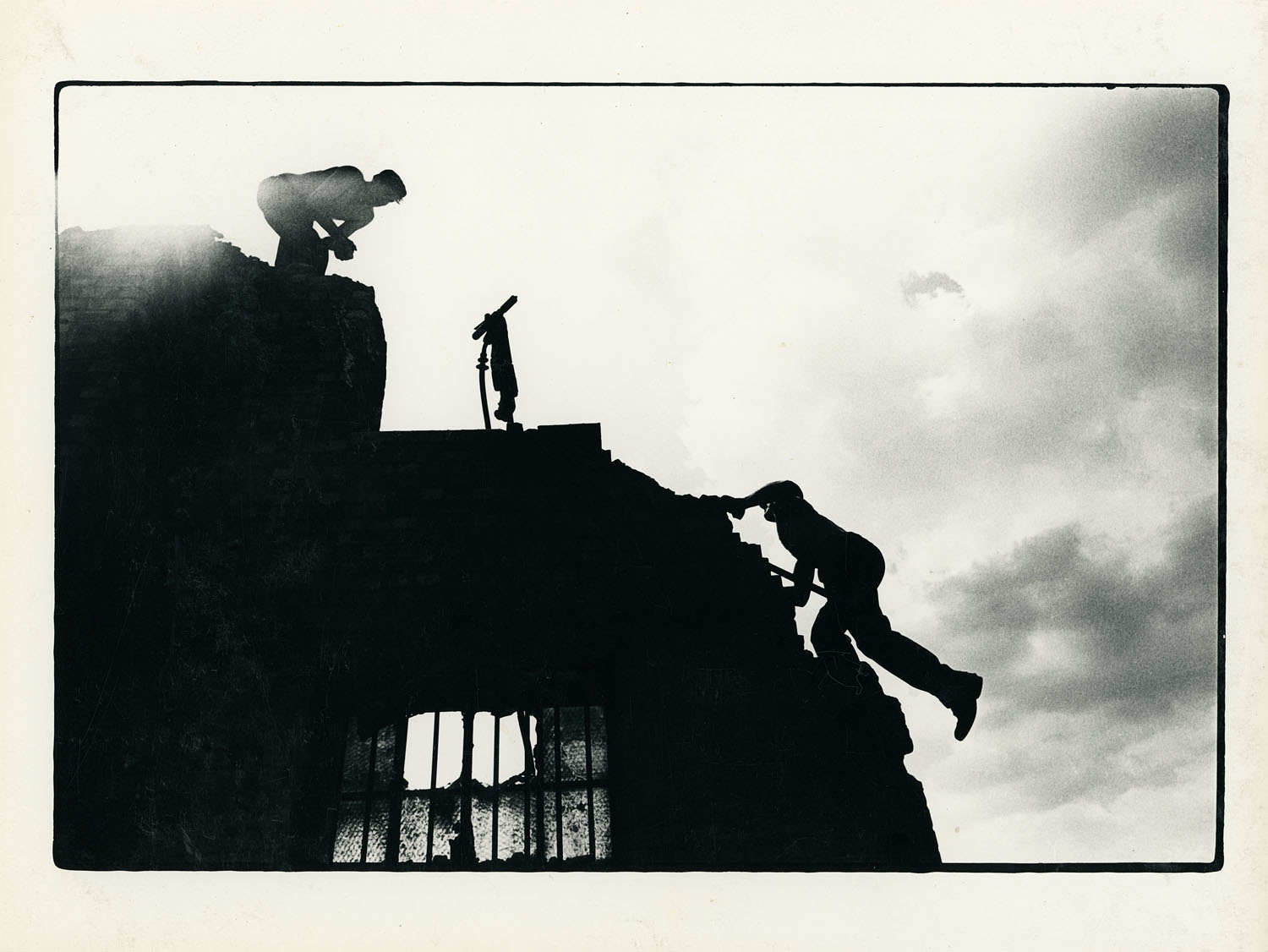
Exit Photography. 'Demolition at Colonial Wharf' 1973


Exit Photography
Demolition at Colonial Wharf
1973
Gelatin silver print
© Exit Photography


Four Corners’ autumn exhibition captures a unique moment of change in London’s East End.

As the docks closed, and wholesale slum clearance replaced old neighbourhoods, many communities were being transformed beyond recognition. Yet a different East End was also coming into being, as new migrant communities created a space for themselves.

­­A new generation of photographers were drawn to document ordinary people’s lives and give visibility to working-class experiences. They showed their photographs in everyday spaces where local people could view images of themselves and their own communities.

The exhibition features remarkable photographs by Ron McCormick and the Exit Photography collective of Nicholas Battye, Diane Bush, Alex Slotzkin, and Paul Trevor, alongside work by Ian Berry, John Donat, David Hoffman, Jessie Ann Matthews, Dennis Morris, Val Perrin, and Ray Rising.

With many thanks to Tower Hamlets Local History Library and Archives, Hackney Museum, the Royal Institute of British Architects, and Spectrum Photographic.

Text from the Four Corners website


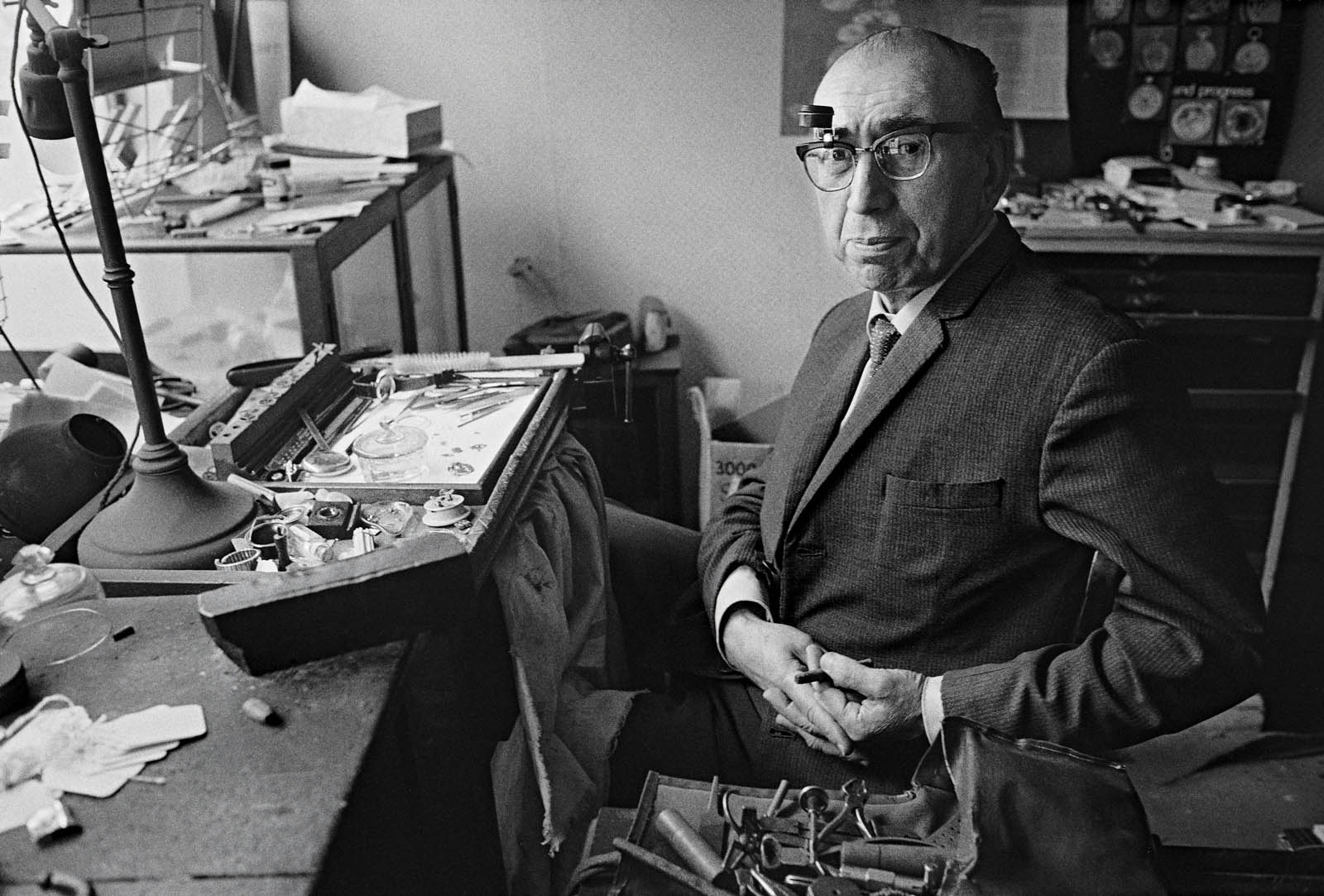
Ron McCormick (English, b. 1947) 'Watch repairer, Black Lion Yard, Whitechapel' 1973 from the exhibition 'A World Apart: Photographing change in London's East End 1970-76' at Four Corners, Oct - Dec, 2025


Ron McCormick (English, b. 1947)
Watch repairer, Black Lion Yard, Whitechapel
1973
Gelatin silver print
© Ron McCormick


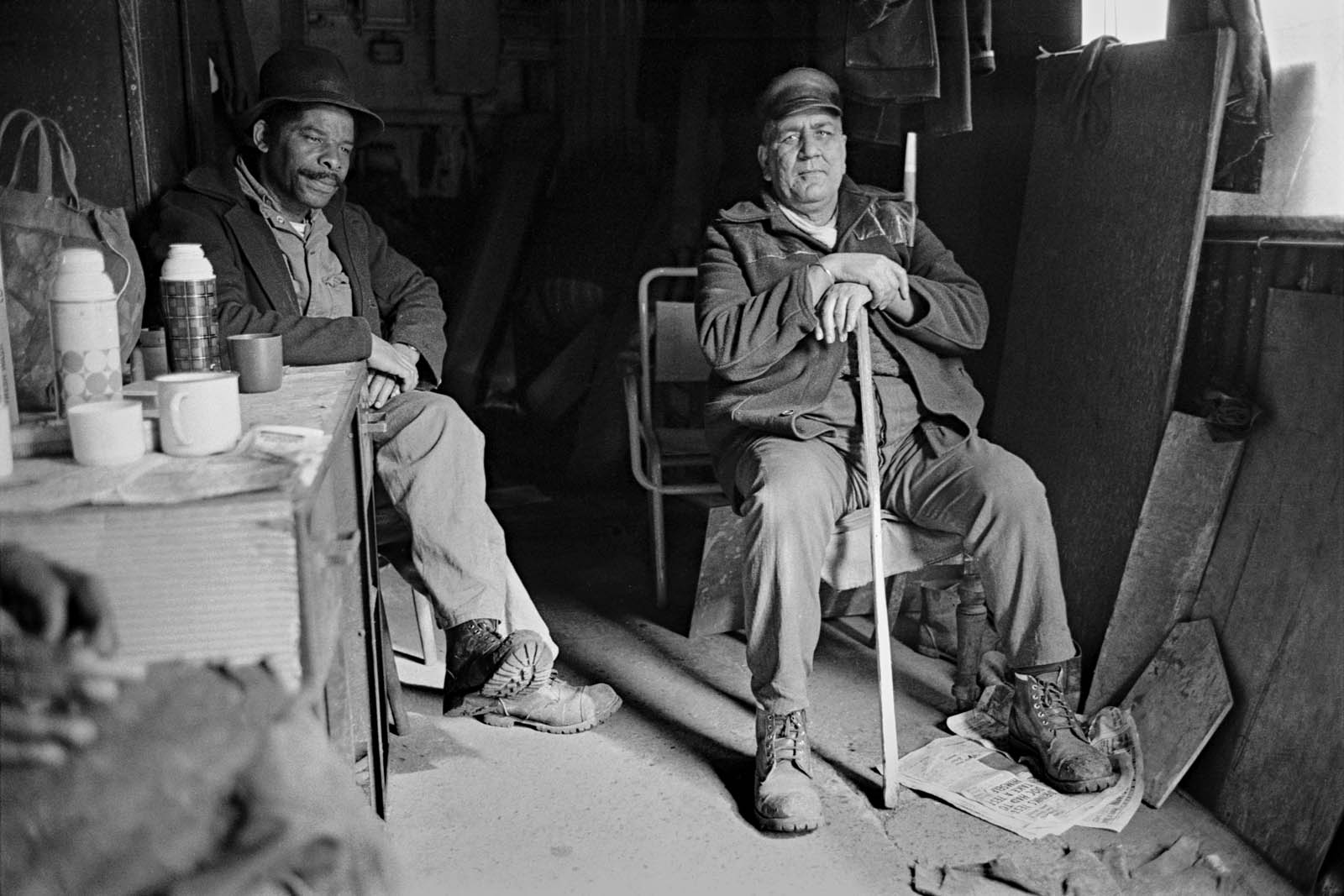
Ron McCormick (English, b. 1947) 'Tea break, P & L Engineering, Heneage Street, East London' 1973


Ron McCormick (English, b. 1947)
Tea break, P & L Engineering, Heneage Street, East London
1973
Gelatin silver print
© Ron McCormick


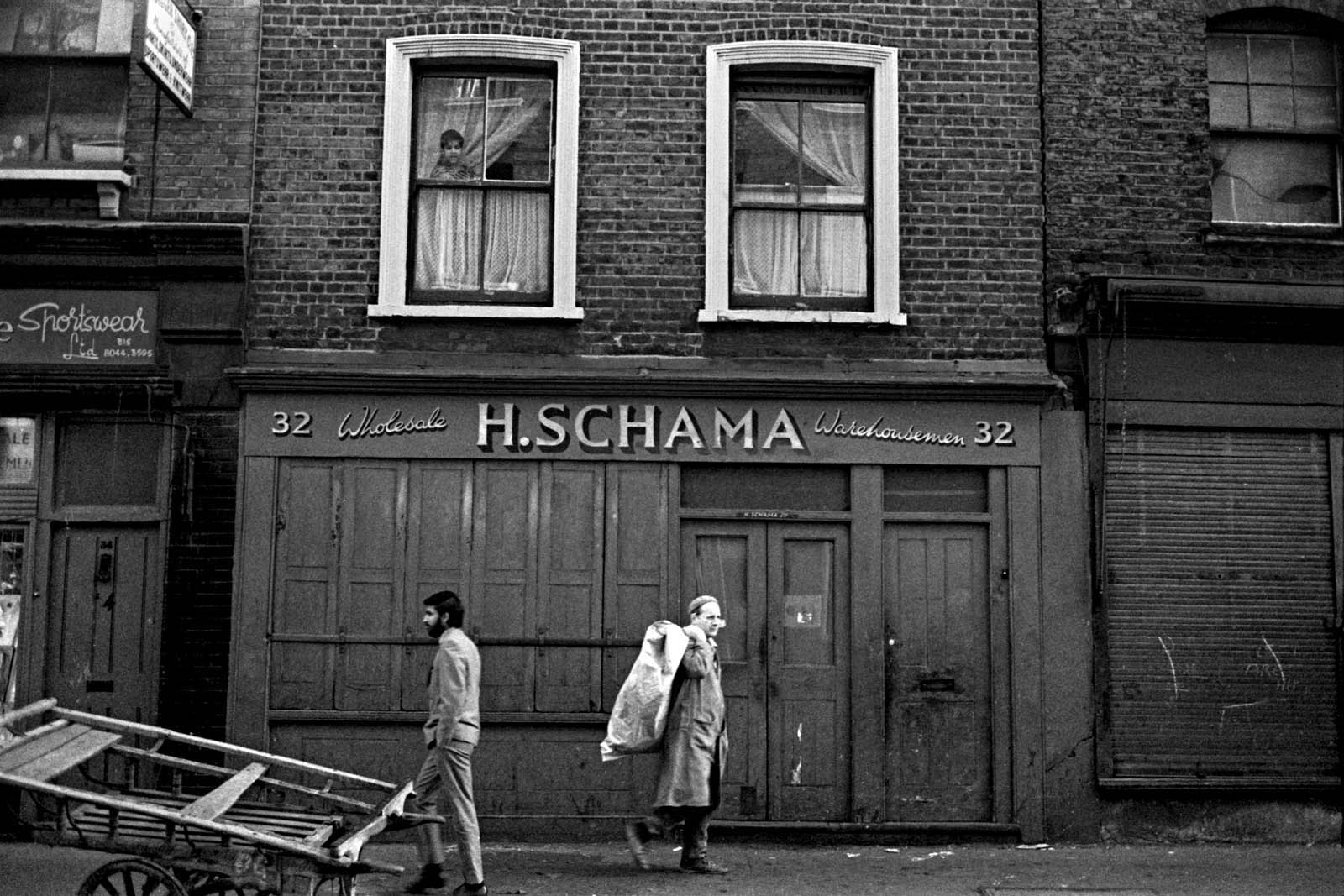
Ron McCormick (English, b. 1947) 'Street scene Spitalfields' 1971


Ron McCormick (English, b. 1947)
Street scene Spitalfields
1971
Gelatin silver print
© Ron McCormick


Ron McCormick (English, b. 1947) 'Schmaltz herring shop, 35 Old Montague Street' 1971


Ron McCormick (English, b. 1947)
Schmaltz herring shop, 35 Old Montague Street
1971
Gelatin silver print
© Ron McCormick


Ron McCormick (English, b. 1947) 'Mr and Mrs Ali, Brick Lane' 1973


Ron McCormick (English, b. 1947)
Mr and Mrs Ali, Brick Lane
1973
Gelatin silver print
© Ron McCormick


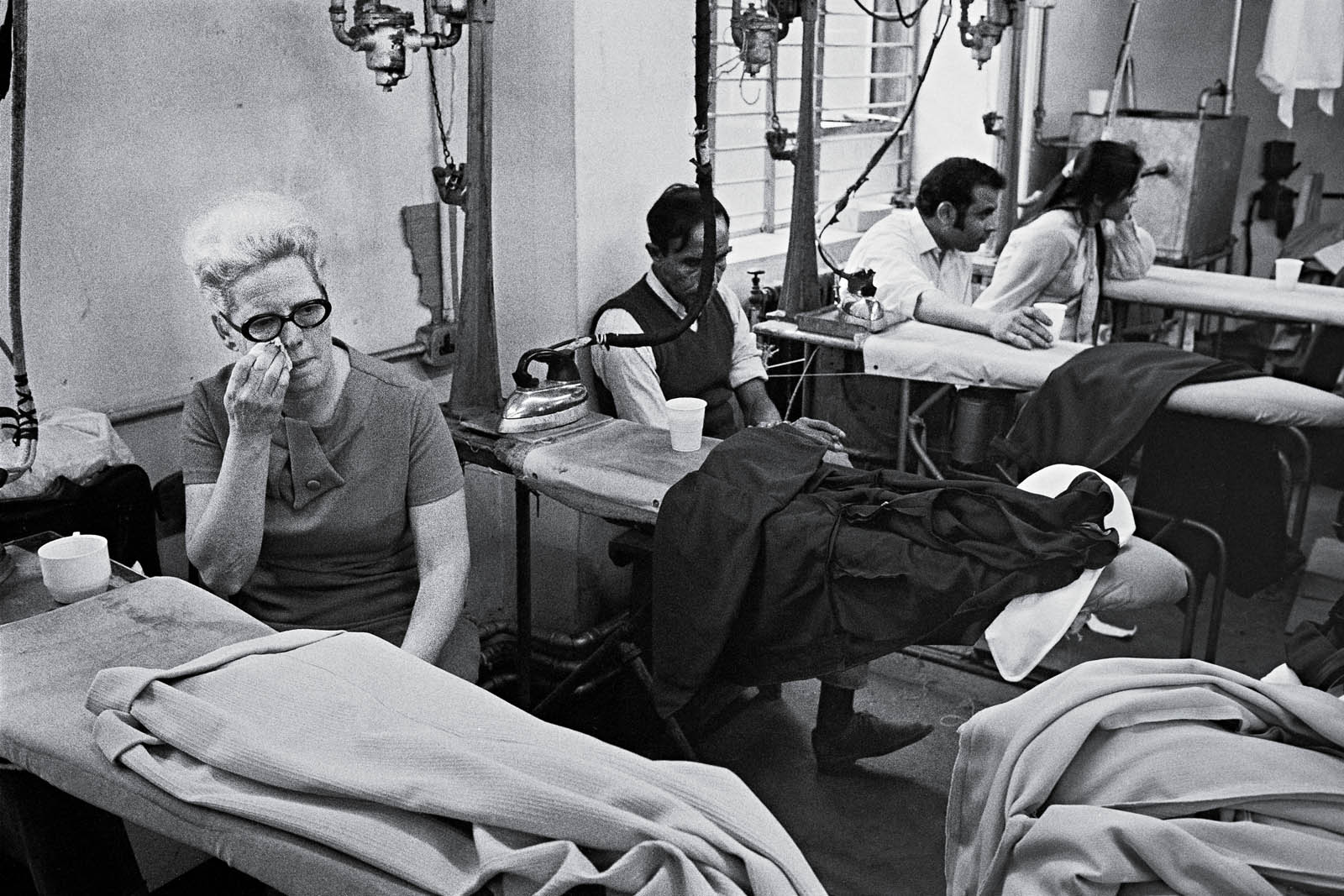
Ron McCormick (English, b. 1947) 'Clothing sweatshop in Whitechapel' 1973


Ron McCormick (English, b. 1947)
Clothing sweatshop in Whitechapel
1973
Gelatin silver print
© Ron McCormick


Ron McCormick (English, b. 1947) 'Brick Lane Sunday market' 1971


Ron McCormick (English, b. 1947)
Brick Lane Sunday market
1971
Gelatin silver print
© Ron McCormick


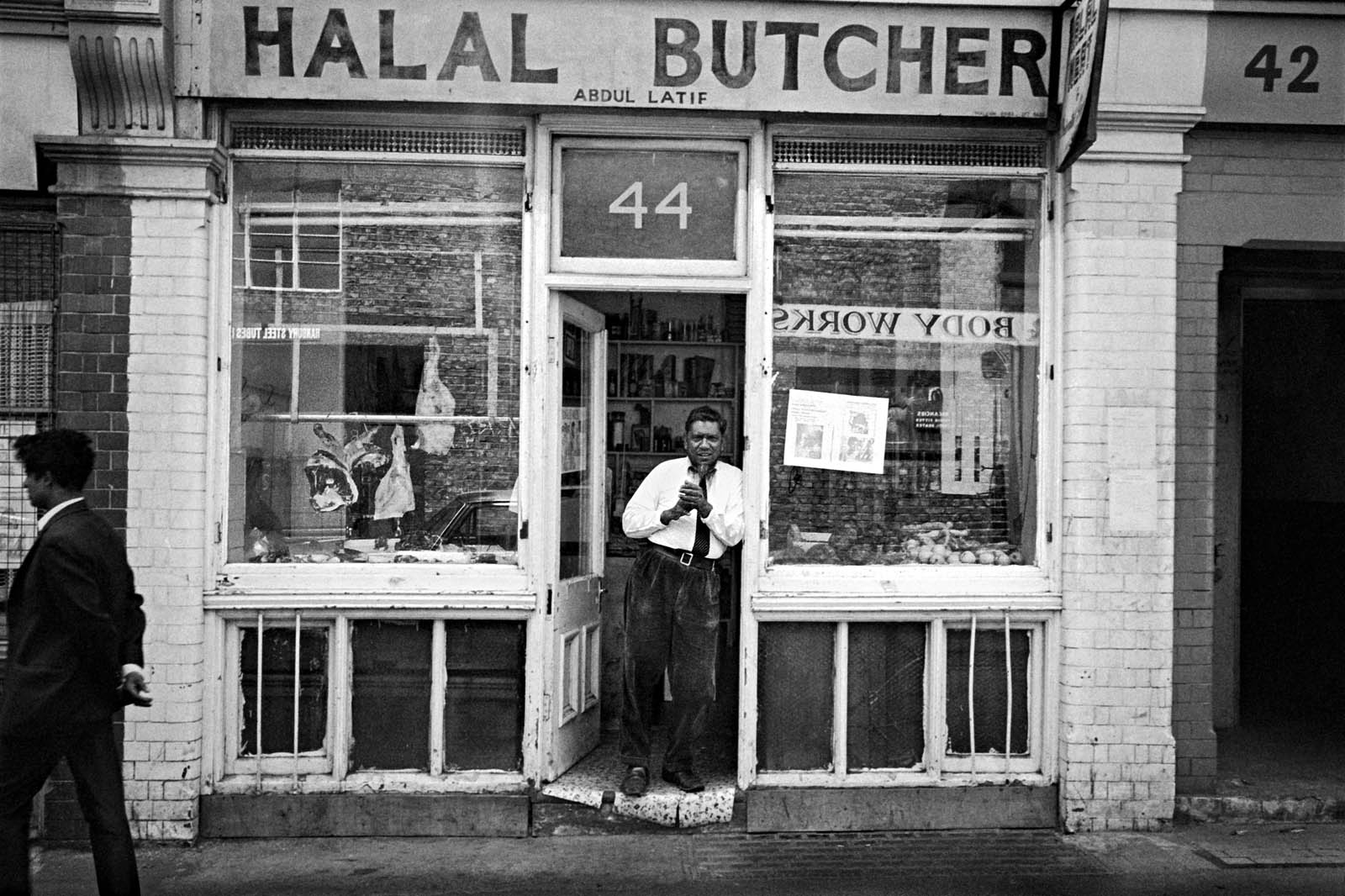
Ron McCormick (English, b. 1947) 'Abdul Latif, Halal butcher, 44 Brick Lane' 1973


Ron McCormick (English, b. 1947)
Abdul Latif, Halal butcher, 44 Brick Lane
1973
Gelatin silver print
© Ron McCormick


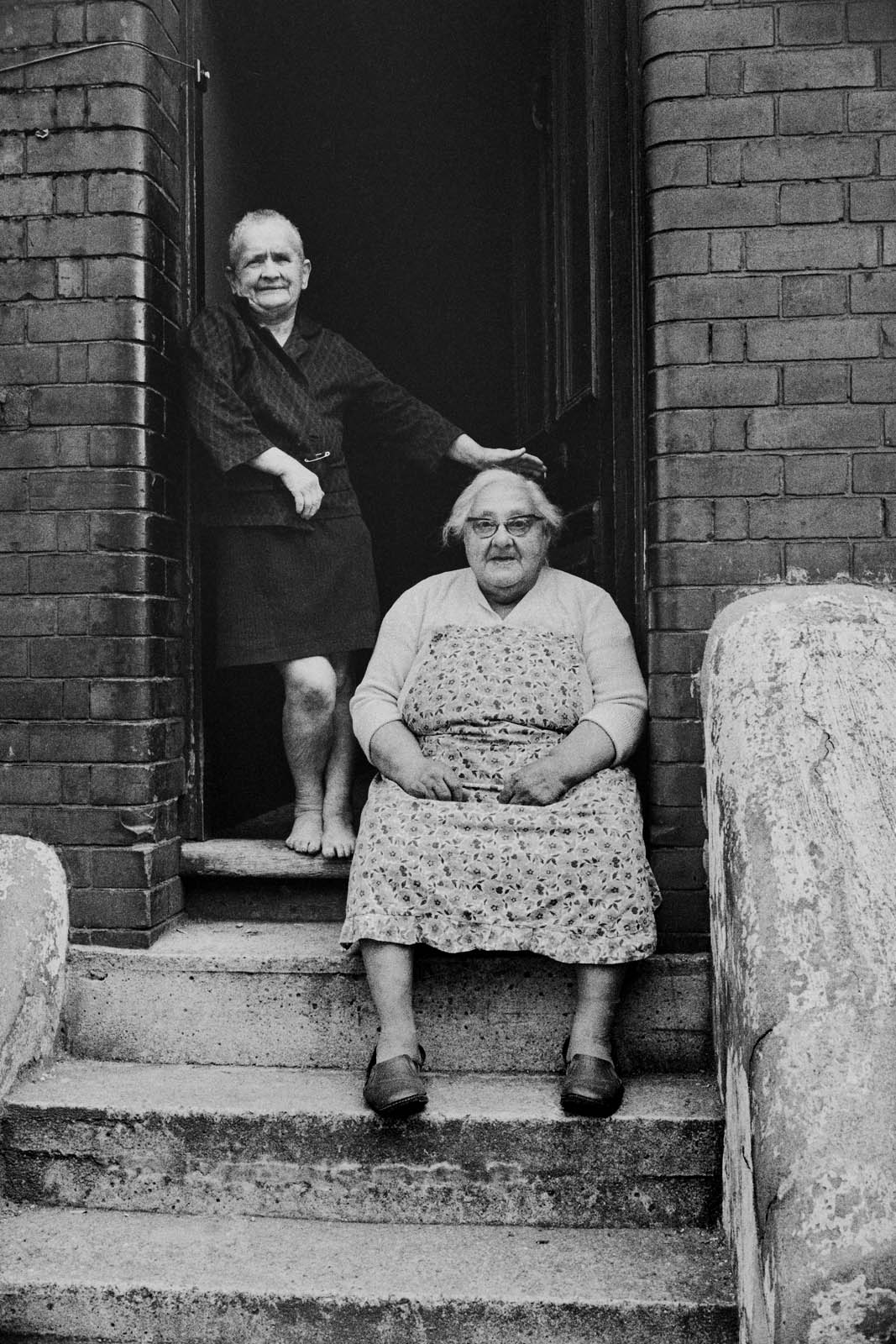
Ron McCormick (English, b. 1947) 'Mother and daughter, Fieldgate Street, Whitechapel' 1971


Ron McCormick (English, b. 1947)
Mother and daughter, Fieldgate Street, Whitechapel
1971
Gelatin silver print
© Ron McCormick


Ron McCormick (English, b. 1947) 'Lady in Sunday best Brick Lane market' 1970


Ron McCormick (English, b. 1947)
Lady in Sunday best Brick Lane market
1970
Gelatin silver print
© Ron McCormick


Lisette Model (American, born Austria 1901-1983) 'Lower East Side' c. 1942


Lisette Model (American, born Austria 1901-1983)
Lower East Side
c. 1942
Gelatin silver print


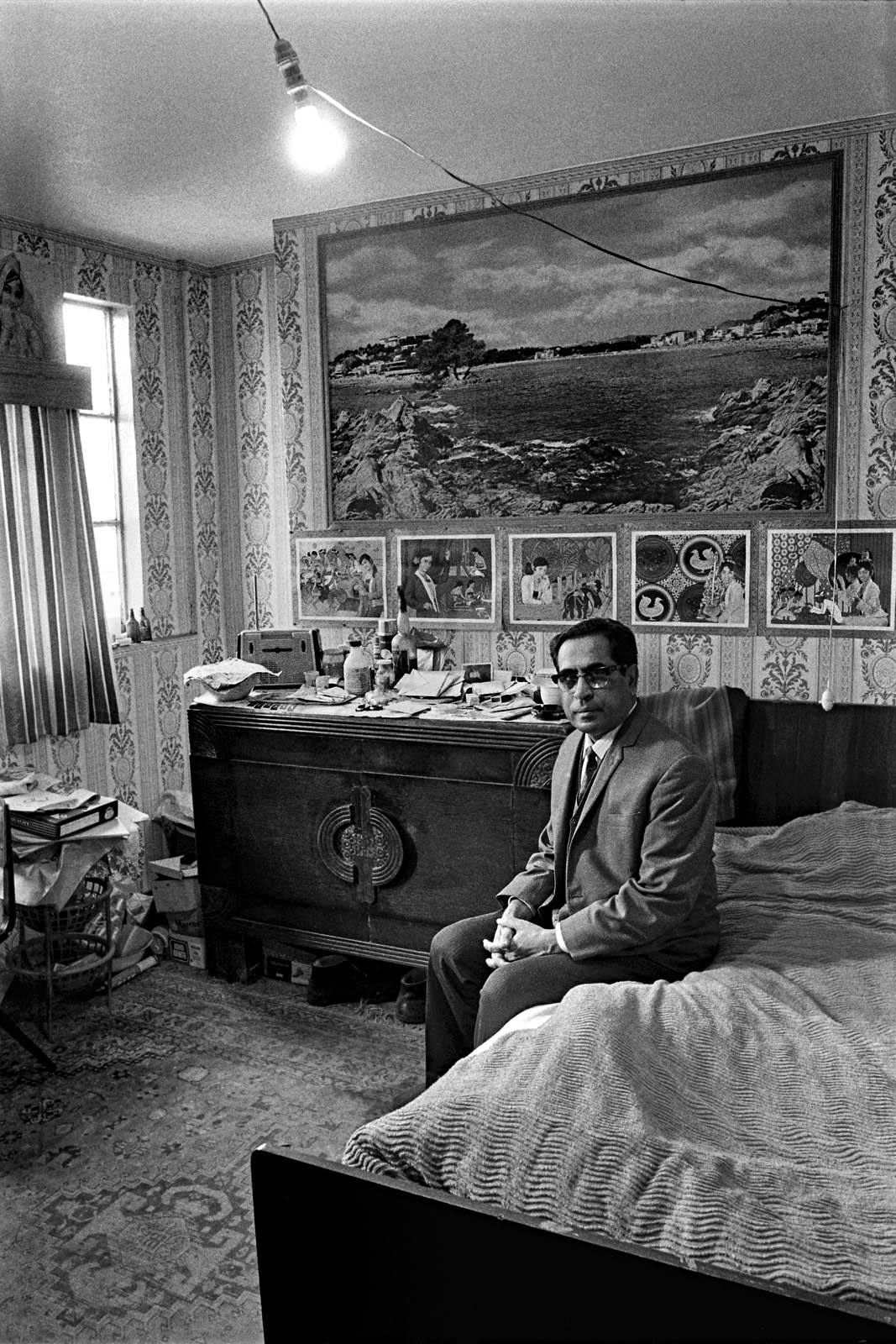
Ron McCormick (English, b. 1947) 'Mohamhed Truffant in his bedsit, Hanbury Street, Spitalfields' 1973


Ron McCormick (English, b. 1947)
Mohamhed Truffant in his bedsit, Hanbury Street, Spitalfields
1973
Gelatin silver print
© Ron McCormick


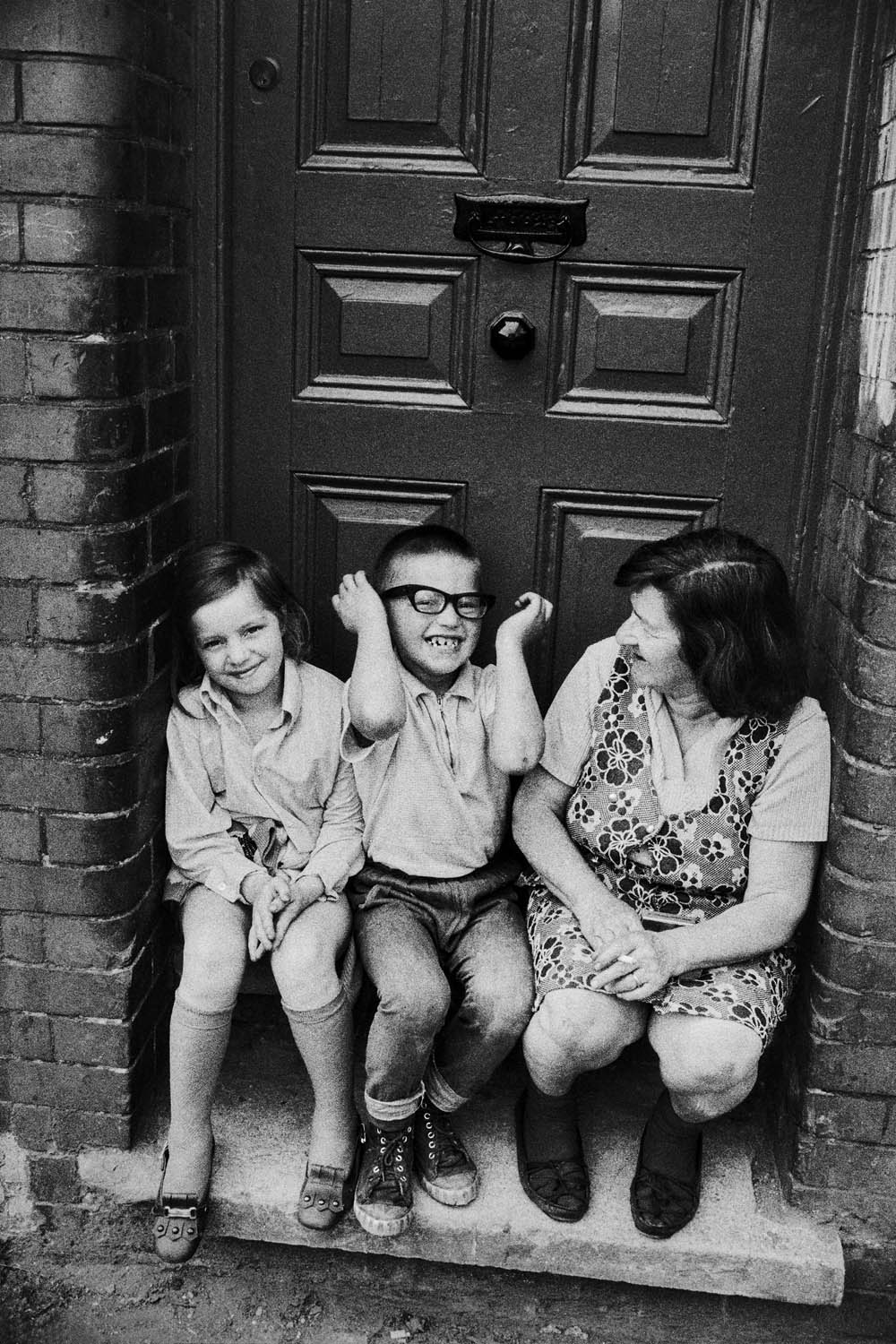
Ron McCormick (English, b. 1947) 'Family group, Settle Street, Whitechapel' 1971


Ron McCormick (English, b. 1947)
Family group, Settle Street, Whitechapel
1971
Gelatin silver print
© Ron McCormick


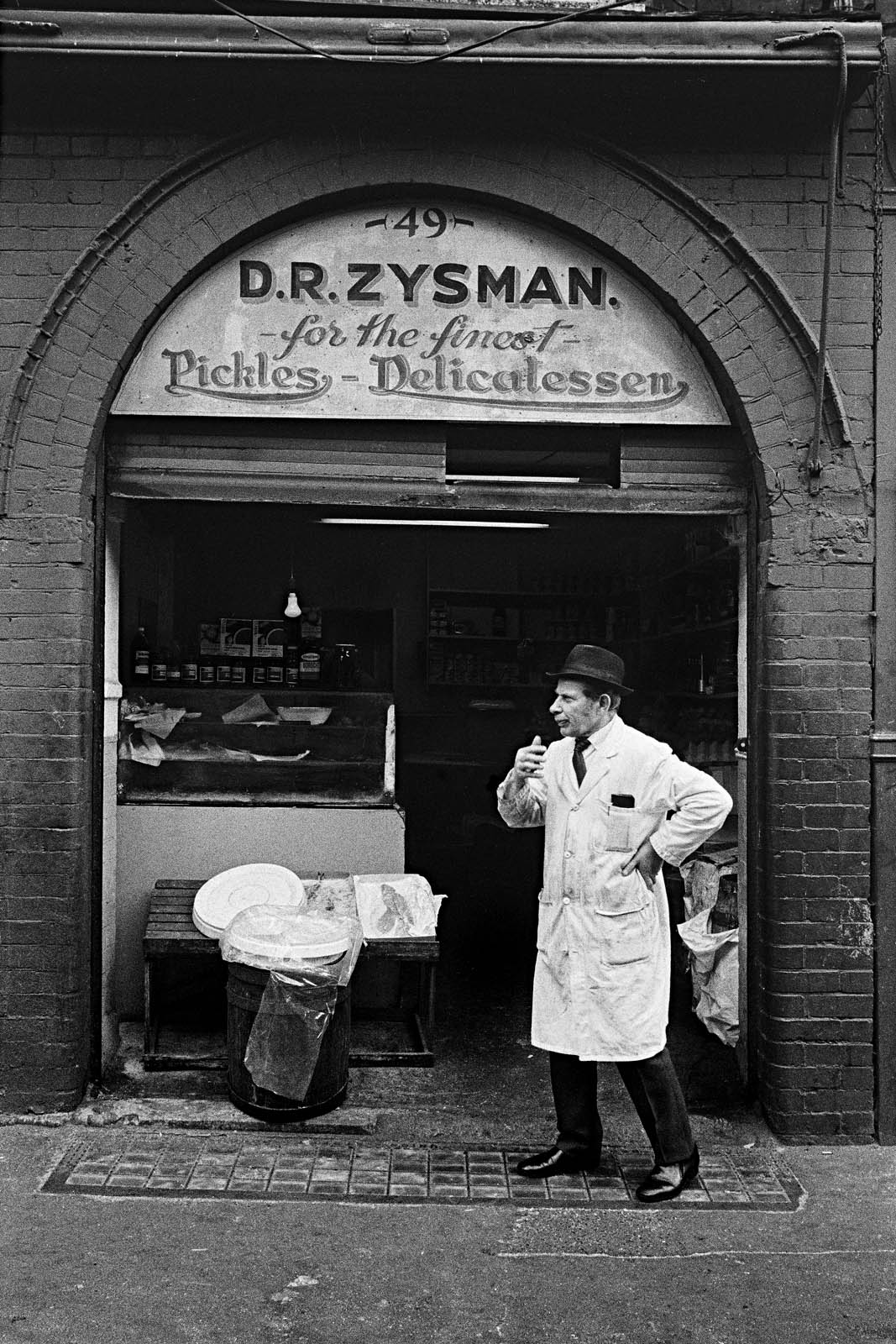
Ron McCormick (English, b. 1947) 'Zysman's delicatessan and pickle shop, 49 Hessel Street' 1973


Ron McCormick (English, b. 1947)
Zysman’s delicatessan and pickle shop, 49 Hessel Street
1973
Gelatin silver print
© Ron McCormick


Brought together for the first time, these rarely seen photographs document a now-disappeared world. Bengali migrants live side-by-side with elderly Jewish shopkeepers and artisans, dockers socialise in Wapping’s clubs and pubs, neighbours and children celebrate at a raucous, multicultural Stepney festival. 

But the images reveal streetscapes and communities in upheaval. Desolation hangs over the soon-to-be demolished streets, dock cranes stand lifeless over empty quays awaiting speculative redevelopment. Amid this apparent wasteland a different East End was coming into being. New migrant communities were creating a space for themselves as economic decline displaced earlier neighbourhoods. 

A young generation of photographers were drawn to record ordinary people’s lives at this moment of rapid transition and to advocate for social change. Their exhibitions at the Half Moon Gallery attracted people to view images of themselves and their neighbours. At a time when photography was largely unrecognised by the art world, these photographers mounted ‘guerrilla’ exhibitions in launderettes, on estate walls, and even on portable sandwich boards. They were part of a flourishing community arts scene that gave a voice to local people, including at pioneering shows at the Whitechapel Art Gallery. 

A World Apart features photographs by Ron McCormick and Exit Photograph – Nicholas Battye, Diane Bush, Alex Slotzkin, and Paul Trevor – alongside work by Ian Berry, John Donat, David Hoffman, Jessie Ann Matthews, Dennis Morris, Val Perrin, and Ray Rising. 

These remarkable photographs celebrate the people of the East End, an area whose identity has been defined by centuries of migration. In an age of increasing social division and intolerance, its strong community history is ever more important today. 

A World Apart is made possible through a National Lottery Heritage Fund project, which is helping build Four Corners’ archive collection and opening up its history to new audiences. The exhibition celebrates the early history of the Half Moon Gallery, Britain’s second independent photography gallery, as part of Four Corners 50th anniversary programme in 2025. 

Photographers 

Ron McCormick is a self-taught photographer who has exhibited and published for fifty years. His early photographs of Whitechapel were first shown alongside the poetry of east London schoolchildren in the controversial book Stepney Words produced by school teacher Chris Searle. He taught at the renowned School of Documentary Photography in Newport, where he ran the NEWPORT SURVEY, an annual record of the community life. A dynamic contributor to the revitalisation of British photography of the 1970s and 1980s, he was the second director the Half Moon Gallery, and the founding director of Side Gallery, Newcastle on Tyne. He runs Communimedia, a community design and production enterprise in South Wales. He has exhibited widely at the Institute of Contemporary Art, Whitechapel Art Gallery, Serpentine Gallery, Photographers Gallery, Barbican, MIT Cambridge USA; La Photo Galeria, Madrid, among others. 

Exit was a collective of four photographers, Nicholas Battye, Diane Bush, Alex Slotzkin, and Paul Trevor. Their first project, Down Wapping, focused on Wapping’s working class community that was threatened by the closure of the docks and imminent redevelopment. It was shown at the E1 Festival in Stepney in 1973, and at the Photographers Gallery later that year. A booklet of the photographs was designed by Exit and published by the East End Docklands Action Group in 1974. After some changes, Paul Trevor, Nicholas Battye and Chris Steele-Perkins went on to create Survival Programmes from 1974-79, a significant study of social and economic poverty in Britain’s inner-cities. A with. Side Gallery in Newcastle toured the exhibition around the country, and a book of the work was published by Open University Press in 1982. Find out more 

Ian Berry is a Magnum photojournalist who worked for Drum magazine in South Africa, where he was the only photographer to document the Sharpeville massacre in 1960. In 1972 he was commissioned by the Whitechapel Art Gallery to photograph the changing local community, creating work which contributed to his book The English (1978). He has worked internationally, covering the invasion of Czechoslovakia, the Irish Troubles, famine in Ethiopia, and conflicts in Israel, Vietnam, and the Democratic Republic of Congo. His work is represented in Black and Whites: L’Afrique du Sud (1988) and Living Apart (1996). His project Water focused on the disaster of climate change, and was published by GOST in 2023. 

John Donat (1933-2004) was one of Britain’s foremost architectural photographers of his generation. After studying architecture, he took up photography full-time. His early images can be seen in Crete 1960 (Crete University Press, 1999). Donat captured the built environment with a social documentary, almost photojournalistic approach. He was commissioned by the Whitechapel Art Gallery to capture change taking place in the area for the exhibition This is Whitechapel in 1972, although the focus of the show became the work of another important photographer, Ian Berry. 

David Hoffman is a documentary photographer of protest and social issues. Living in a squat in Fieldgate Mansions, east London in the 1970s, he recorded homelessness, anti-racism and protest. In particular, he documented homeless people at St Botolph’s refuge in Aldgate. He has covered many of the key moments in contemporary British protest – from Brixton in 1981 and Broadwater Farm in 1985, to the poll tax riots and the Occupy movement. Recent books are A Place to Live, Endurance and Joy in Whitechapel, published by Spitalfields Life Books and accompanied by a exhibition at The Museum of the Home in 2024; and Protest!, published by Image and Reality, 2025.

Jessie Ann Matthew was born in 1952 and educated at the Central School of Art and Design, London. She worked as a portrait photographer for the Scottish National Portrait Gallery, including The Seven Poets (1981) with paintings by Alexander Moffat. She participated in Men Photographed by Women at Half Moon Gallery in 1975, and Gaining Momentum: 8 women photograph women, a Half Moon touring show in 1981. More recently, Matthew has been making with texiles, in particular wall-hangings and paintings. 

British-Jamaican photographer Dennis Morris is world-renowned for his images of music icons such as Bob Marley and Marianne Faithfull. Growing up in Dalston, east London, he started his career aged just eleven. His early documentary photographs include powerful work such as Growing Up Black, Southall and This Happy Breed, images that show everyday life and Black British culture which capturing the pride and resilience of London’s communities. While still a teenager, he showed his early work, Dalston Photographs at the Half Moon Gallery in 1973.

Ray Rising is an ex-docker and self-taught photographer, whose exhibition Redundant River was shown at the Half Moon Gallery in 1973. He went on to be a reportage photographer for Report Digital, covering issues such as the 1984 miners’ strike, the death of Colin Roach in police custody in 1983, anti-racist protests, CND campaigns, among others. 

Press release from Four Corners


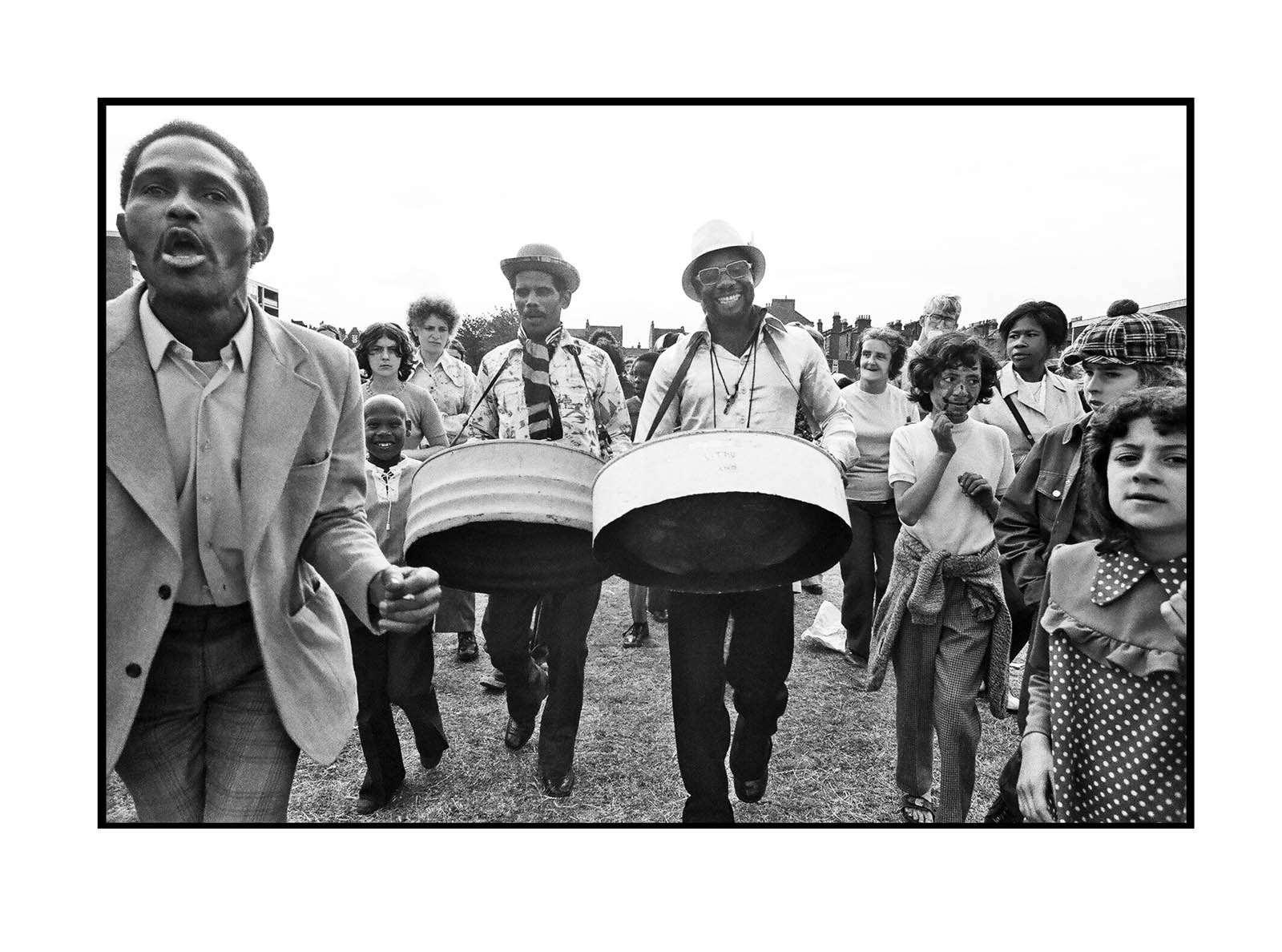
Diane Bush (British born America, b. 1947) 'E1 Festival steel band performers' Early 1970s


Diane Bush (British born America, b. 1947)
E1 Festival steel band performers
Early 1970s
Gelatin silver print
© Diane Bush


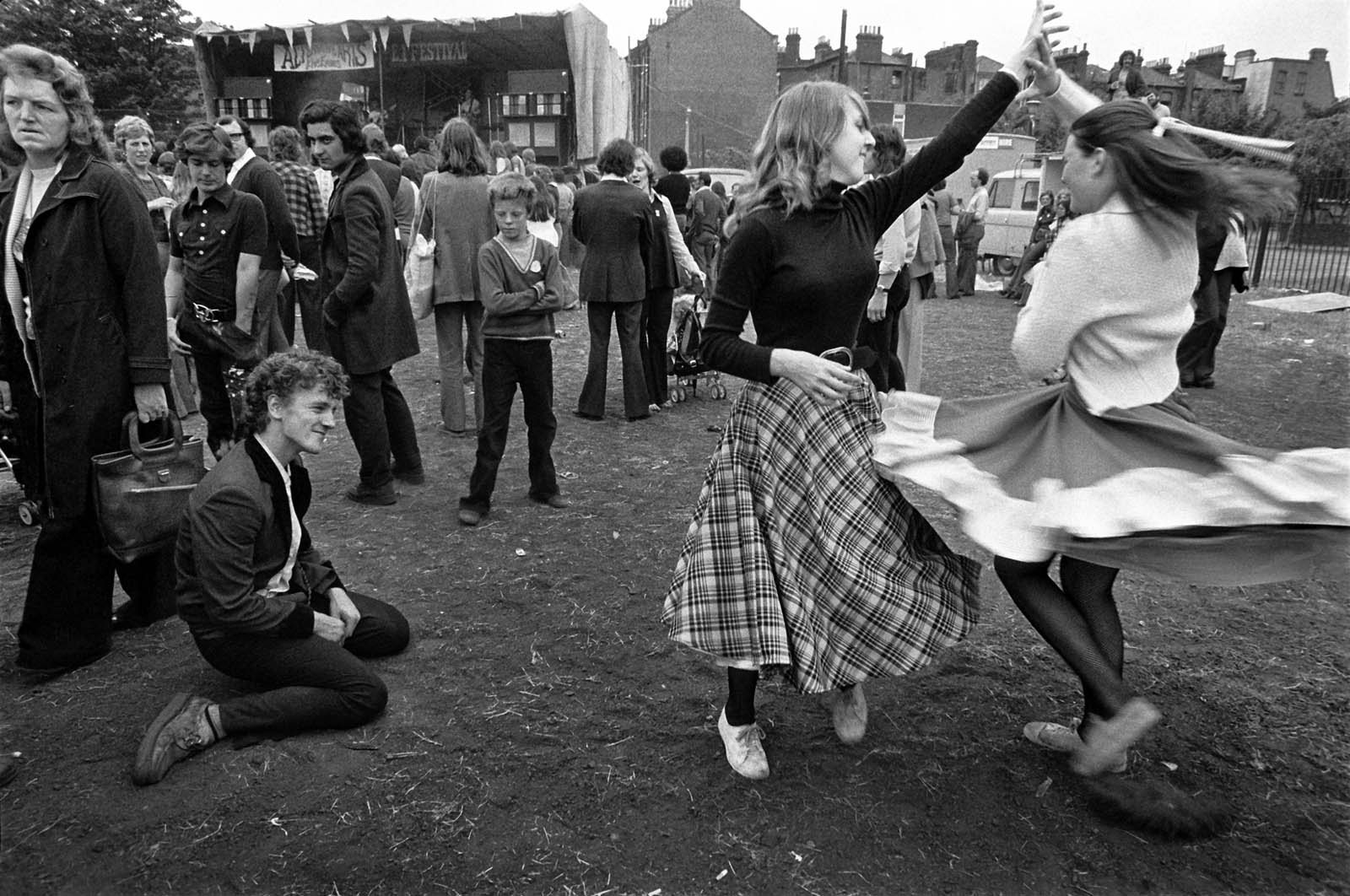
David Hoffman (British, b. 1946) 'Dancing at E1 Festival' 1975


David Hoffman (British, b. 1946)
Dancing at E1 Festival
1975
Gelatin silver print
© David Hoffman


David Hoffman (British, b. 1946) 'One of the last remaining shops in Hessel Street, Whitechapel' c. 1972


David Hoffman (British, b. 1946)
One of the last remaining shops in Hessel Street, Whitechapel
c. 1972
Gelatin silver print
© David Hoffman


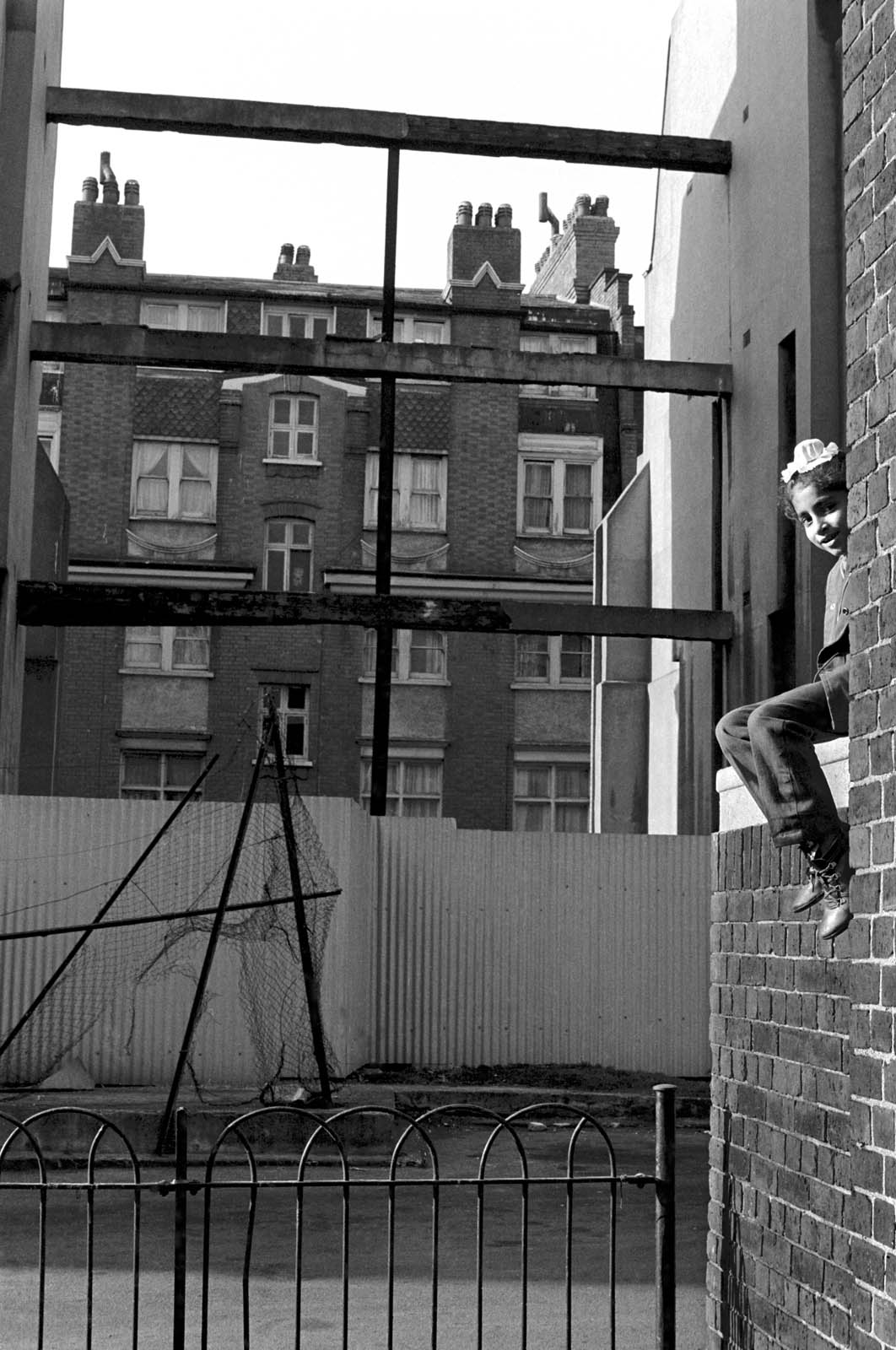
David Hoffman (British, b. 1946) 'Child playing in tenement block, Whitechapel or Wapping' 1972


David Hoffman (British, b. 1946)
Child playing in tenement block, Whitechapel or Wapping
1972
Gelatin silver print
© David Hoffman


Four Corners
121 Roman Road, Bethnal Green
London E2 0QN
Phone: 020 8981 6111

Opening hours:
Wednesday – Saturday 11am – 6pm

Four Corners website

LIKE ART BLART ON FACEBOOK

Back to top

Exhibition: ‘Hidden Connections’ at the Van Abbemuseum, Eindhoven, Holland

Exhibition dates: 27th April, 2025 – 1st June, 2026

Curators: Reggie Baay and Bibi de Vrie


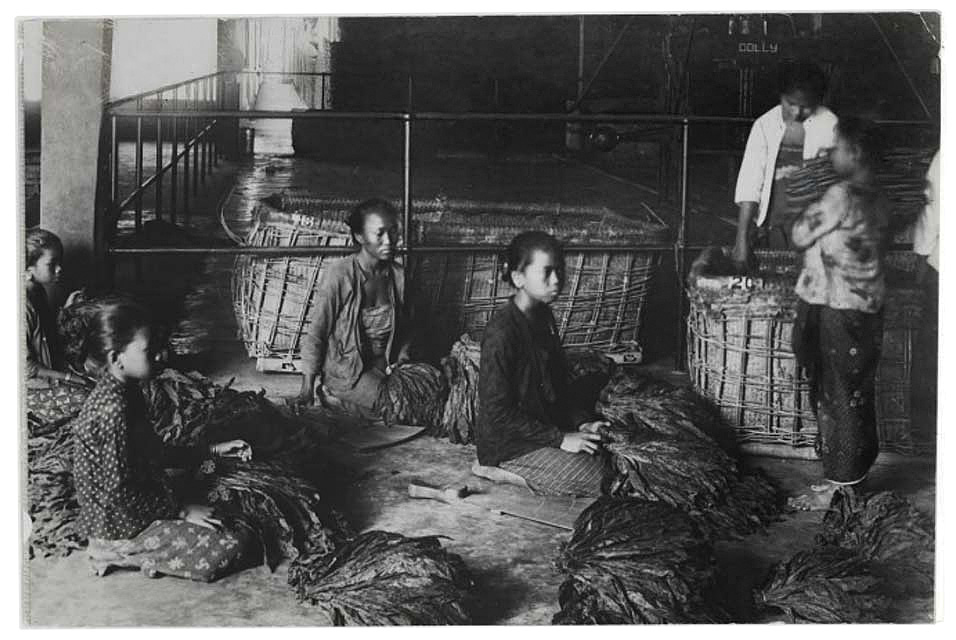
Unknown photographer. 'Women sort tobacco leaves by length in a shed at the Tegalsirondo (also Tegalgondo) enterprise near Oengaran south of Semarang' c. 1910 from the exhibition 'Hidden Connections' at the Van Abbemuseum, Eindhoven, Holland, April 2024 - June 2026


Unknown photographer
Women sort tobacco leaves by length in a shed at the Tegalsirondo (also Tegalgondo) enterprise near Oengaran south of Semarang
c. 1910
University Libraries Le


Hidden histories

Exposed (in photographs, in texts)

The effects of colonialism are immediate (slavery, subjugation, exploitation, prison, murder) and pernicious, ongoing in so many obvious, subtle and insidious ways.

“… we must be ever vigilant in understanding the networks of power, dispossession and enslavement that patriarchal societies use to marginalise the poor, the weak, the different for their gain.”1

Dr Marcus Bunyan

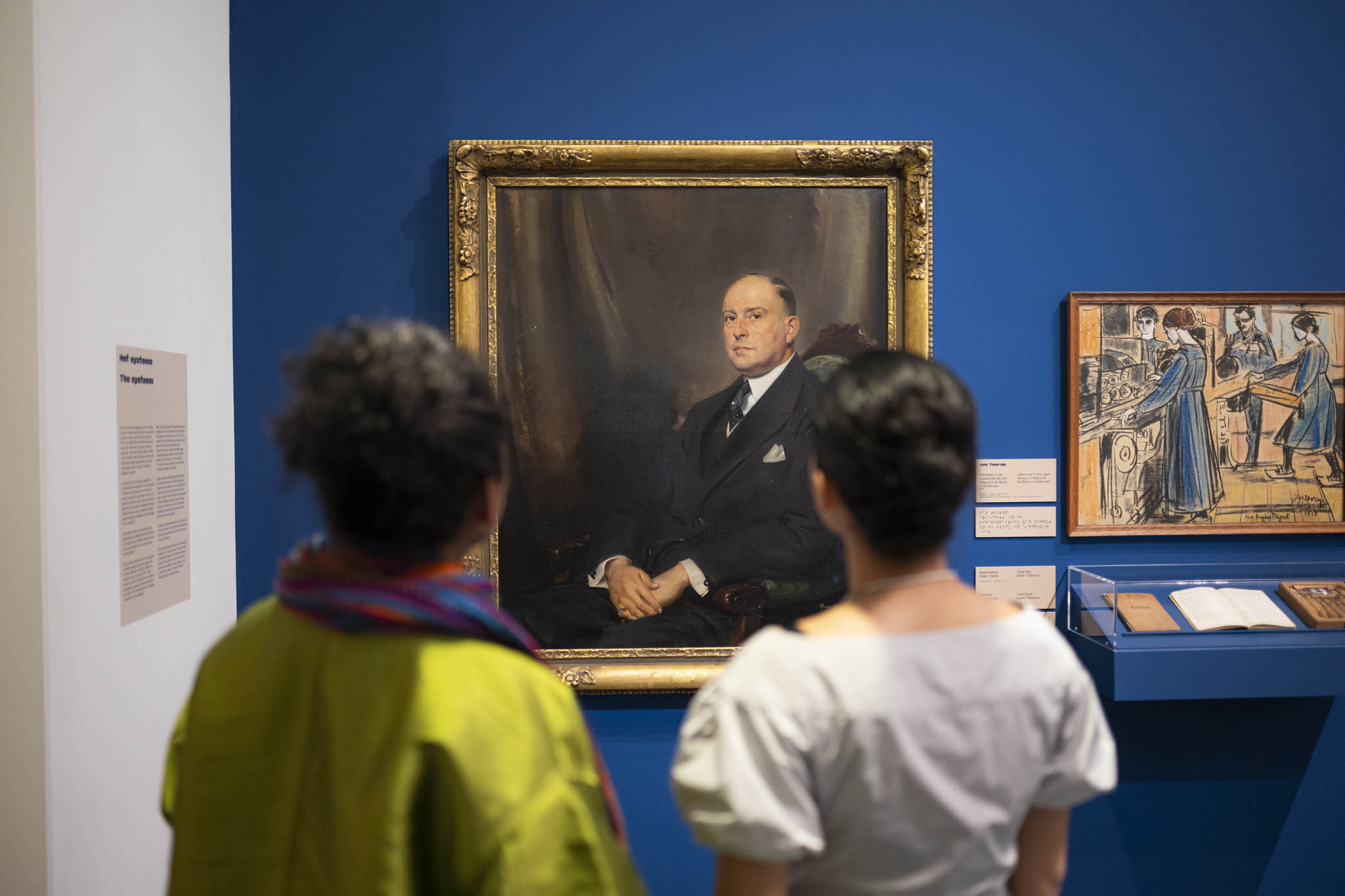
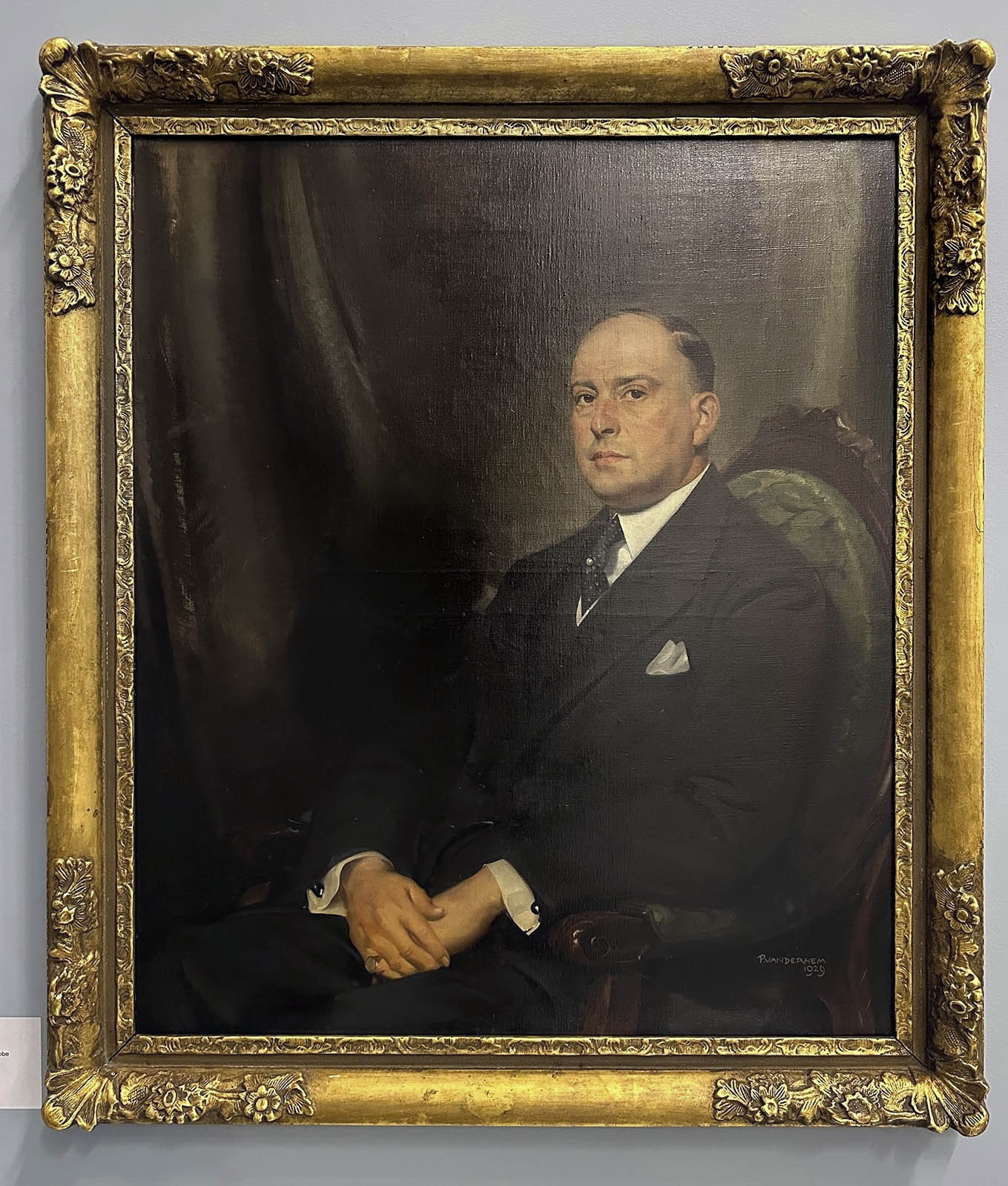
PS. I so dislike Piet van der Hem’s painting of Henri Van Abbe – the self importance of the man, dressed to the nine, staring out at the viewer in all his entitlement, hands clasped over his masculine power even as it radiates through every pore of the painting – the epitome of white hegemonic power. And the museum is named after him …


Sejarah Tersembunyi

Terungkap (dalam foto, dalam teks)

Dampak kolonialisme bersifat langsung (perbudakan, penaklukan, eksploitasi, penjara, pembunuhan) dan merusak, berkelanjutan dalam begitu banyak cara yang nyata, halus, dan licik.

“… kita harus selalu waspada dalam memahami jaringan kekuasaan, perampasan, dan perbudakan yang digunakan masyarakat patriarki untuk meminggirkan kaum miskin, yang lemah, yang berbeda demi keuntungan mereka.”1

Dr. Marcus Bunyan

PS. Saya sangat tidak menyukai lukisan Henri Van Abbe karya Piet van der Hem – sosok pria yang sangat penting, berpakaian rapi, menatap penonton dengan segala keistimewaannya, tangan tergenggam di atas kekuatan maskulinnya, bahkan saat kekuatan itu terpancar melalui setiap pori lukisan – lambang kekuatan hegemoni kulit putih. Dan museum ini dinamai menurut namanya …


1/ Marcus Bunyan. “Hermann Kummler (1863-1949) (compiler) ‘Ethnographic portraits of Indigenous women of Pernambuco and Bahia’ 1861-1862,” on Art Blart, 1st August, 2018


Many thankx to the Van Abbemuseum for allowing me to publish the photographs in the posting. Please click on the photographs for a larger version of the image.


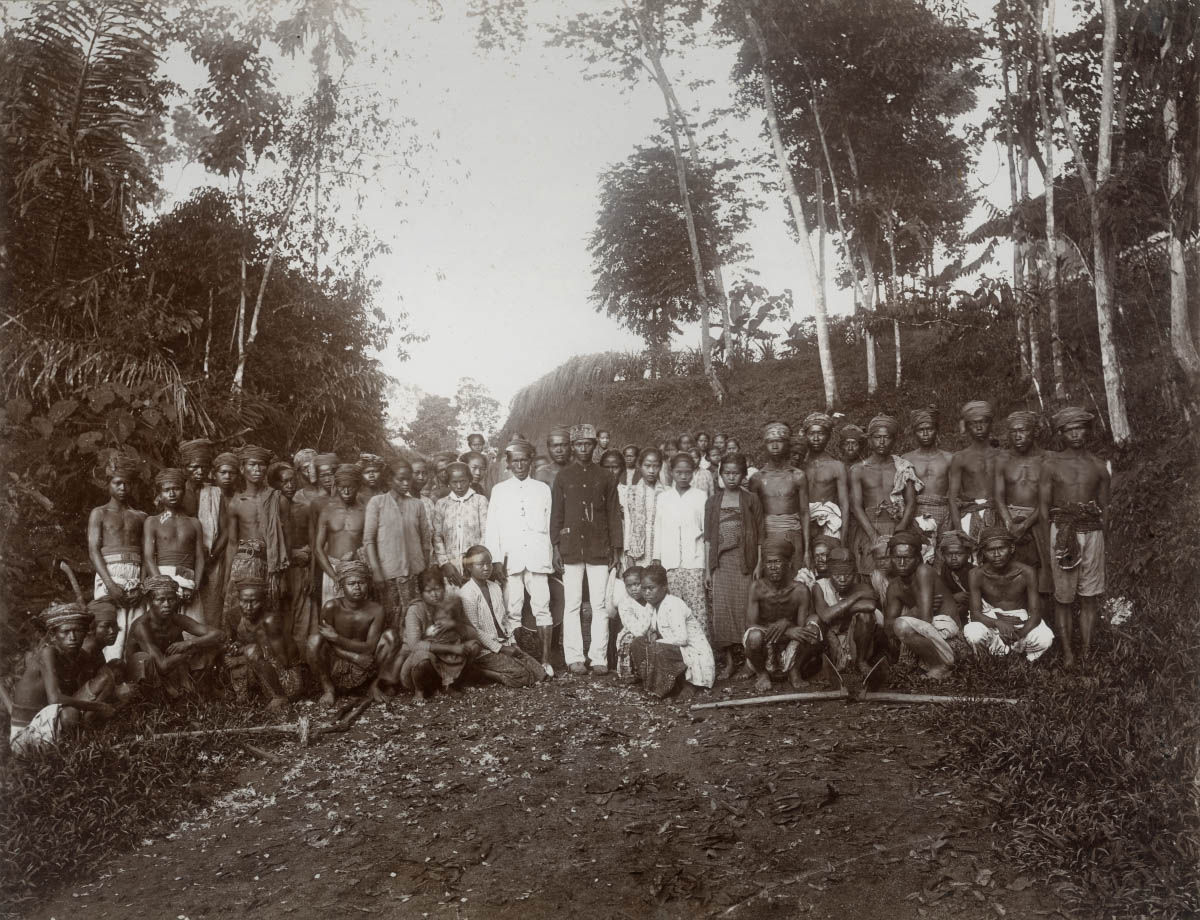
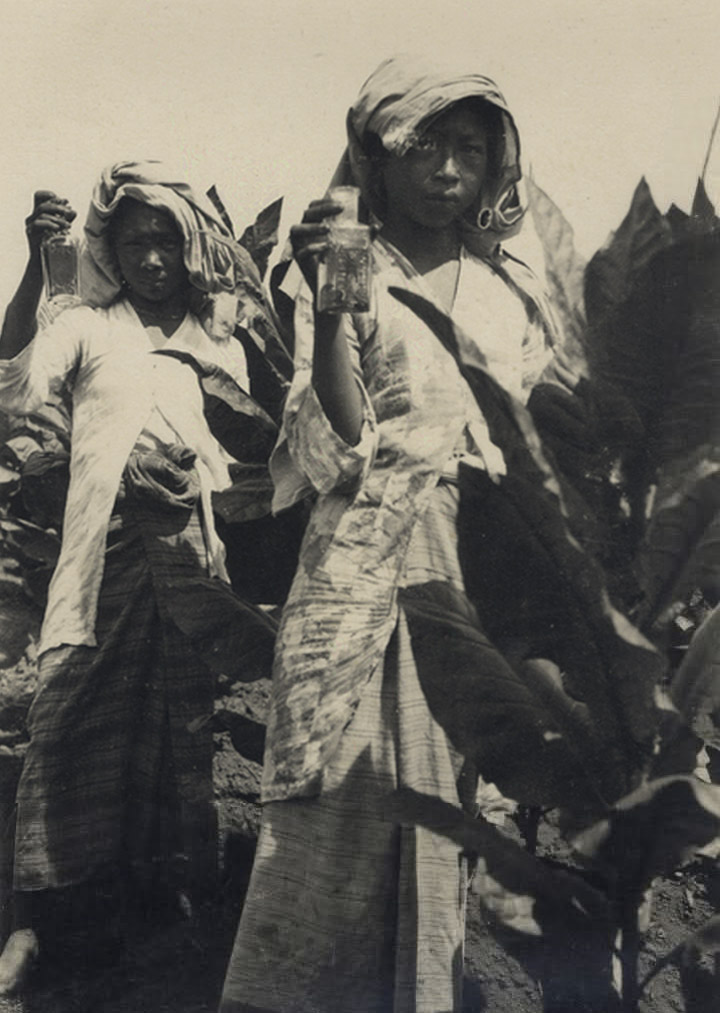
“The horrific history of contract labour in Deli in Sumatra, which forced people to work for western entrepreneurs, seems to have been covered up. Stories of resistance were often not written down but passed on orally instead. This deliberate oppression and denial of the plantation workers and their experiences is still palpable to this very day.”

“Sejarah mengerikan buruh kontrak di Deli, Sumatra, yang memaksa orang bekerja untuk pengusaha Barat, tampaknya telah ditutup-tutupi. Kisah-kisah perlawanan seringkali tidak tertulis, melainkan diwariskan secara lisan. Penindasan dan penyangkalan yang disengaja terhadap para pekerja perkebunan dan pengalaman mereka masih terasa hingga saat ini.”


Press release from the Van Abbemuseum


Unknown photographer. 'Workers on a plantation in Deli (now Medan)' c. 1900 from the exhibition 'Hidden Connections' at the Van Abbemuseum, Eindhoven, Holland, April 2024 - June 2026


Unknown photographer
Workers on a plantation in Deli (now Medan)
c. 1900
Photo: Stafhell-Kleingrothe


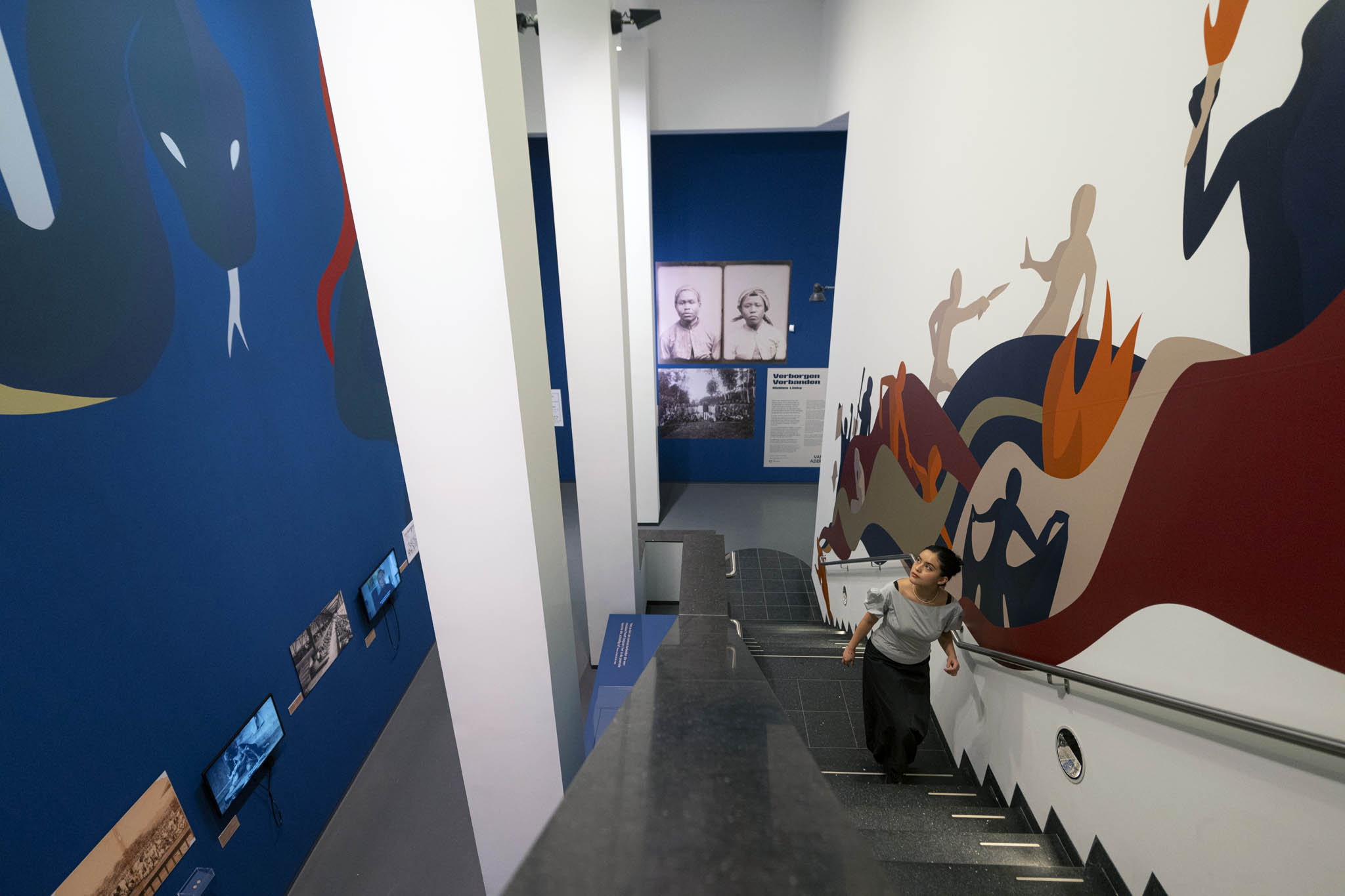
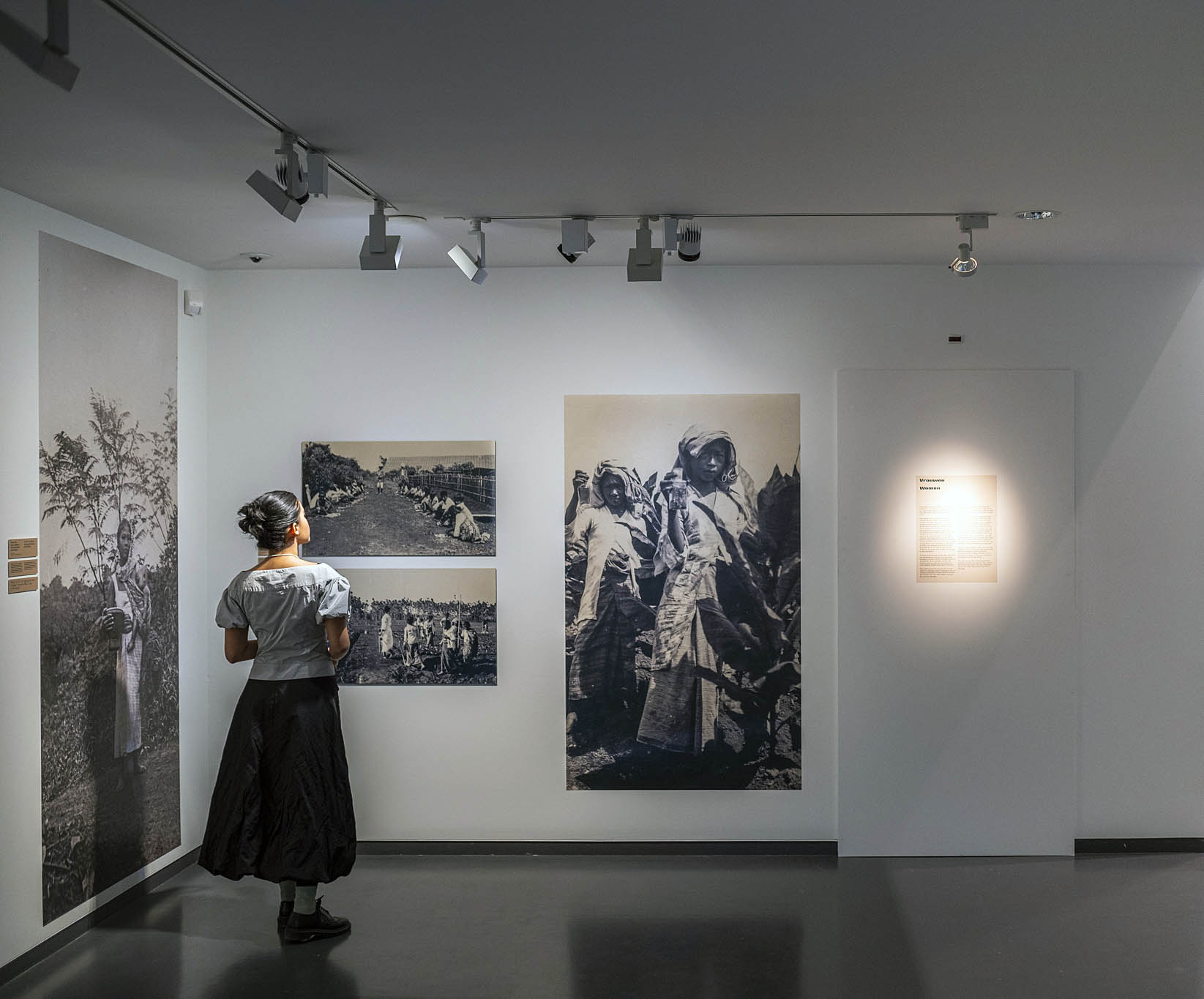
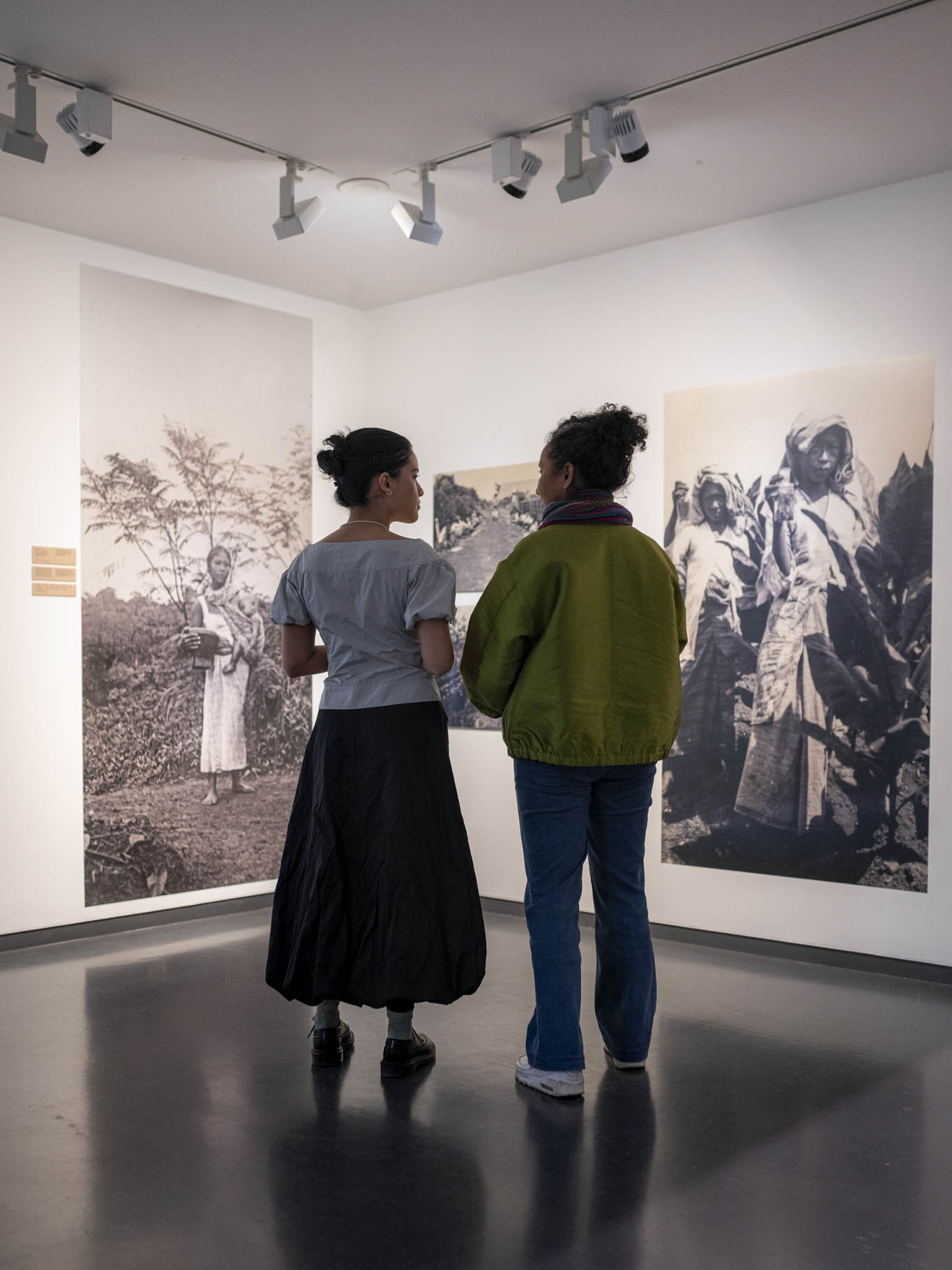
Installation view of the exhibition 'Hidden Connections' at the Van Abbemuseum, Eindhoven, Holland


Installation views of the exhibition Hidden Connections at the Van Abbemuseum, Eindhoven, Holland


Piet van der Hem (Dutch, 1885-1961) 'Henri Van Abbe' 1929


Piet van der Hem (Dutch, 1885-1961)
Henri Van Abbe
1929
Oil on canvas


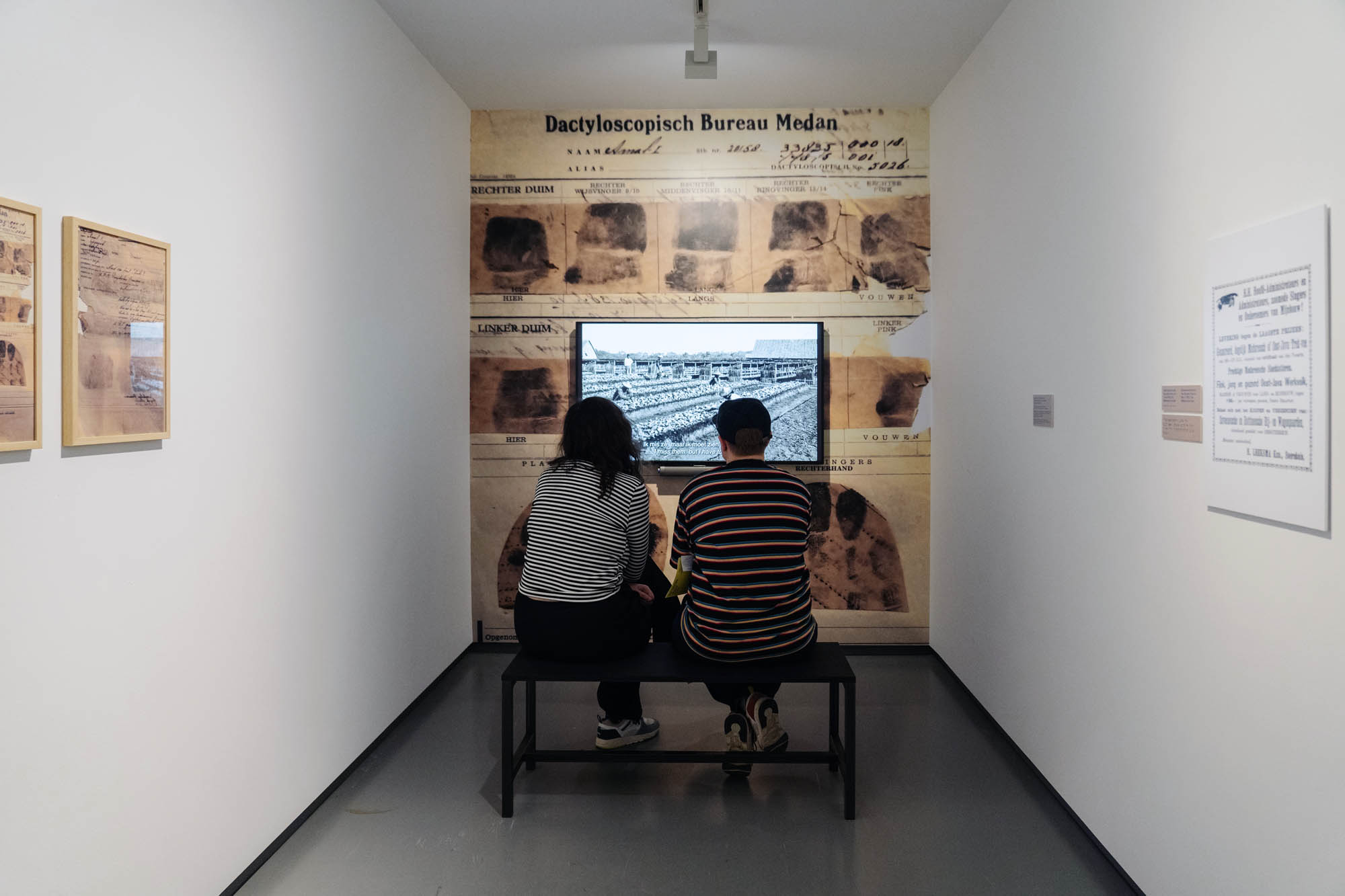
Why do we know so little about what happened on the plantations in the former Dutch East Indies? The horrific history of contract labour in Deli in Sumatra, which forced people to work for western entrepreneurs, seems to have been covered up. Stories of resistance were often not written down but passed on orally instead. This deliberate oppression and denial of the plantation workers and their experiences is still palpable to this very day. In its multi­-year Hidden Connections research project, the Van Abbemuseum discovers the role it played in the Netherlands’ colonial past. The museum is presenting its research results in an exhibition and podcast and on a heritage platform.

Founder Henri van Abbe

The Van Abbemuseum was named after Henri van Abbe (1880­-1940), the founder of the Karel 1 ­cigar factories, once the second biggest employer in Eindhoven and the surrounding area. The tobacco for Karel 1 cigars was sourced largely from plantations in the Dutch East Indies. Even though Van Abbe was not based in the Dutch East Indies, the tobacco he bought from Deli, on the island of Sumatra, had a big impact on the region and its inhabitants. In 1933, Van Abbe founded a museum for contemporary art, funded partly with money he had made from tobacco. Besides a building, Van Abbe donated 26 paintings from his personal collection, including works by Isaac Israëls, Carel Willink and Jan Sluijters.

Ongoing research

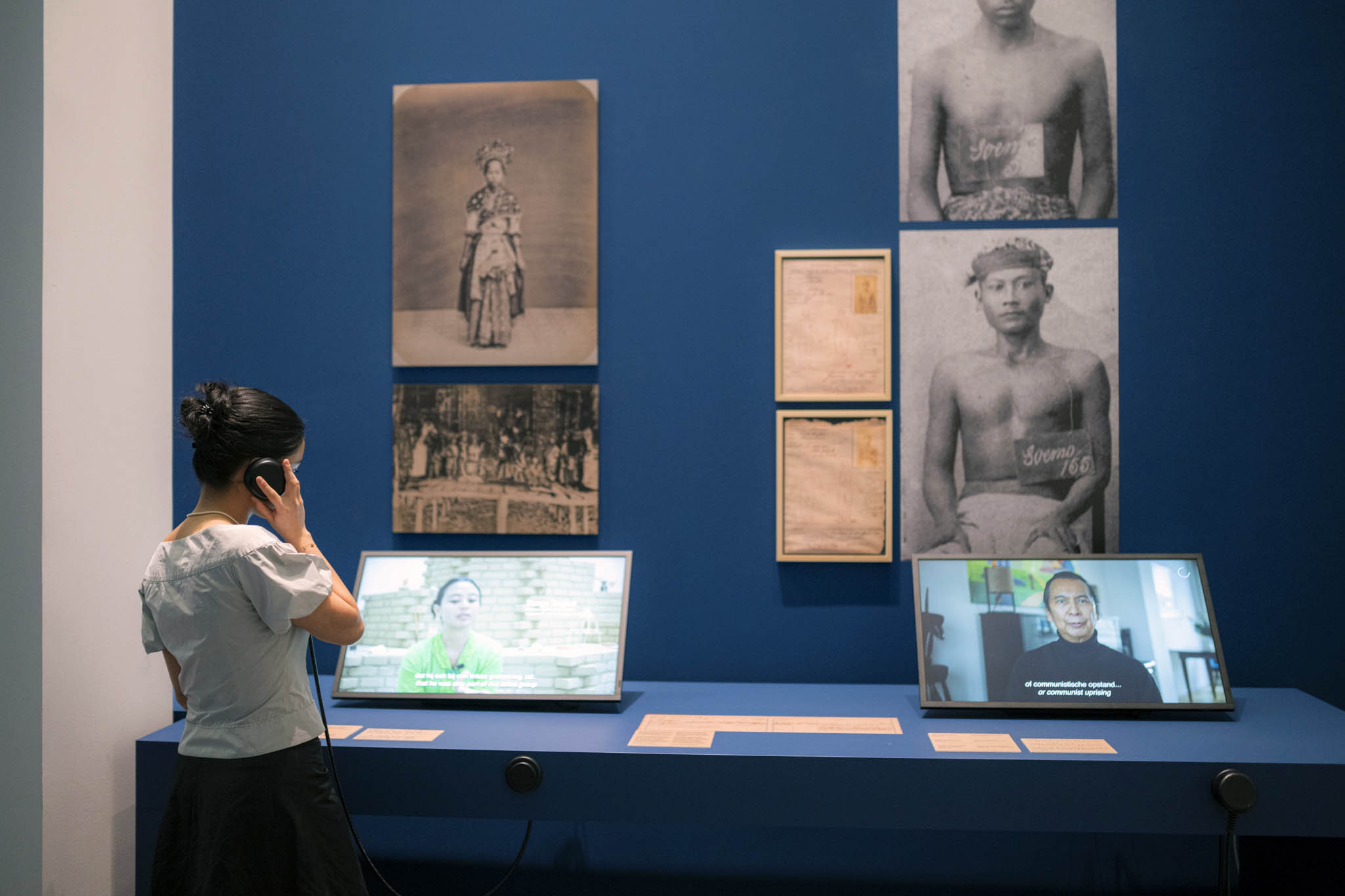
Over the last 10 years, the Van Abbemuseum has become increasingly aware of its roots in the tobacco industry. The donation of the Van Abbe family archive to the museum in 2018 was the starting point for ongoing research into its past. The initial results have been presented in the museum since autumn 2021. This presentation has been expanded to include new work inspired by this research. Why have events on the plantations in Sumatra been kept hidden? And why don’t we know anything about the different forms of resistance to it? Author and historian Reggie Baay has searched Dutch archives for forgotten stories about this period. At the same time, artists and researchers Ferial Affif and Dwihandono Ahmad spoke to descendants of contract workers on the plantations in Deli. Isabelle Britto also did research to find out how much Henri van Abbe could have known about the conditions there.

Hidden stories of resistance

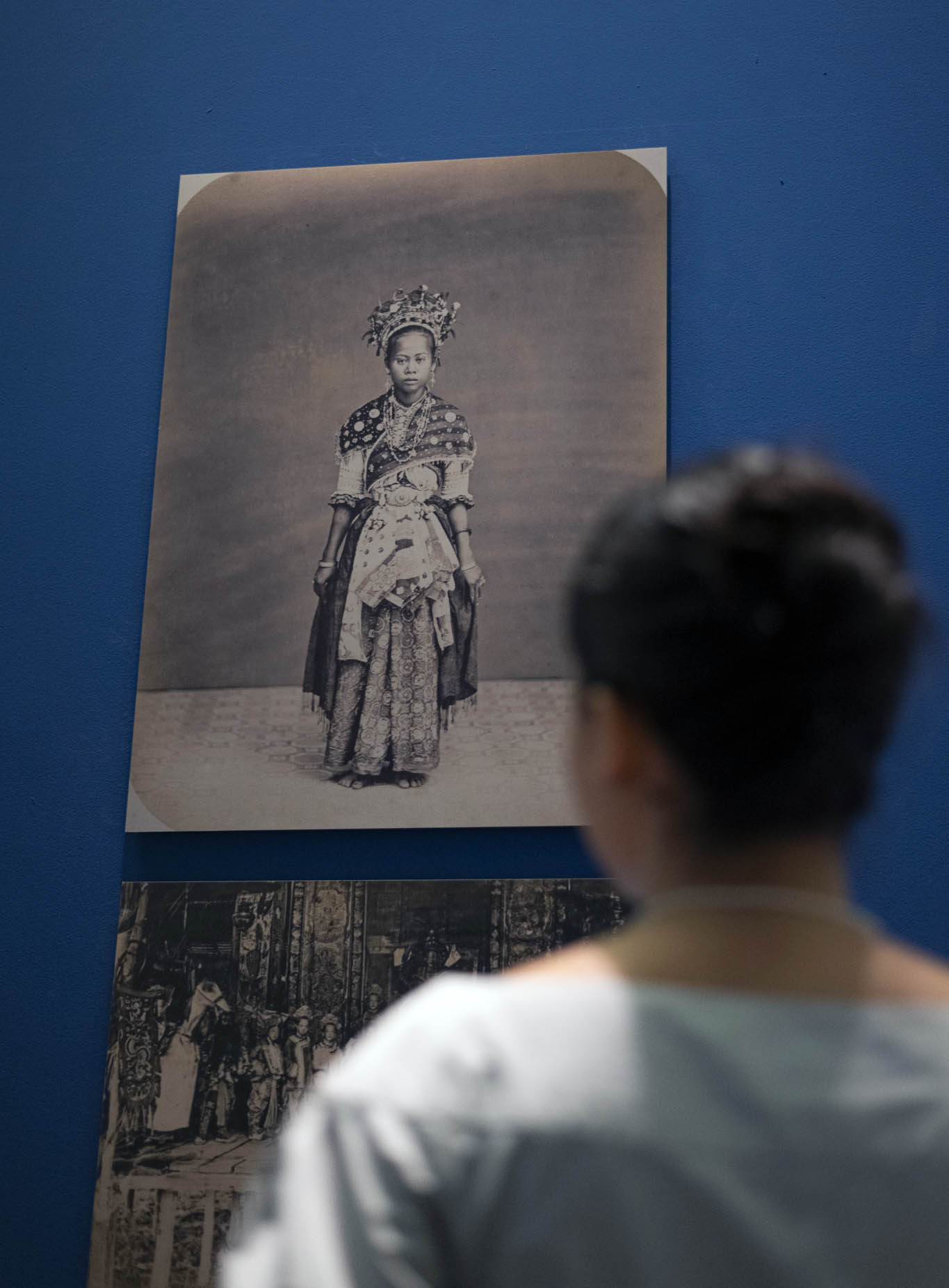
Curators Reggie Baay and Bibi de Vries present the results of the research above in the exhibition Hidden Connections. Archive material, audio and video interviews and illustrations in the exhibition all focus on the perspective of the plantation workers in Deli and their working and living conditions. Graphic designer Gayle Tjong­ Kim­Sang took inspiration for her huge wall drawings from the inventive ways contract workers chose to express their anger, sadness and warnings. Plantation owners were not always aware of resistance, but if contract workers were caught, they were thrown into prison, abused or even murdered. One form of resistance was the story ‘De Slang van Sumatra’ (which translates as ‘the snake of Sumatra’). This parable warned workers about a man­eating snake on the neighbouring island. After eating its prey, it excreted gold for the Dutch. Another example of resistance was improvisation during theatre and wayang performances. Workers used this opportunity to criticise the western enterprises and sometimes tell (satirical) stories about the plantation owners.

Addition to the Delinking and Relinking collection presentation

The exhibition Hidden Connections is located in the basement of the collection building at the Van Abbemuseum. The long­term Delinking and Relinking collection presentation (2021­-2026) can currently be seen on the three floors above; it allows visitors to experience art by smelling, hearing, feeling and seeing it. Hidden Connections, as the literal and figurative foundation for the multi­-sensory Delinking and Relinking collection presentation, enlighten visitors on the origins of this long­standing display and offer a new perspective on the circumstances in which it was created. This new chapter provides a more complete historiography that includes the contemporary significance of the museum’s colonial past.

Collective memory

The Van Abbemuseum places great importance on the permanent preservation and communication of the stories from its Hidden Connections research. They are part of our cultural heritage and must be findable by and accessible to everyone. With this in mind, the museum is working with Erfgoed Brabant, the province’s knowledge and expertise centre, and is integrating its ongoing research into the platform Koloniale Historie Brabant (a platform on Brabant’s colonial history). The museum also launched a podcast with Reggie Baay and Aldus’ producties. In it, Baay explores why it is we know so little about this colonial past via a search in which he attempts to uncover his own Indonesian family history.

Press release from the Van Abbemuseum


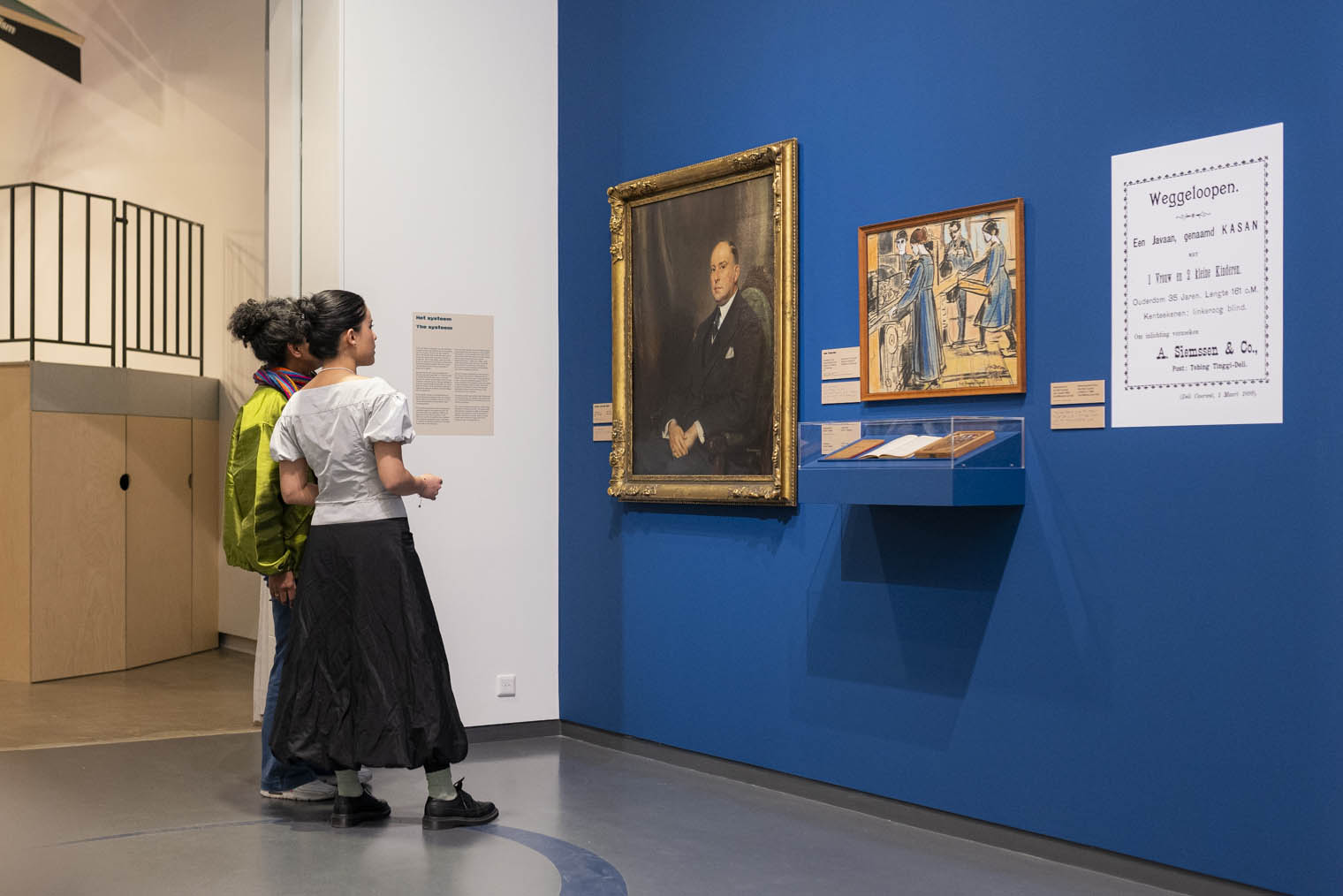
Installation view of the exhibition 'Hidden Connections' at the Van Abbemuseum, Eindhoven, Holland


Installation views of the exhibition Hidden Connections at the Van Abbemuseum, Eindhoven, Holland


Unknown photographer. 'Coolies on a tobacco plantation of the Deli Maatschappij in Deli Shelfmark KITLV Deli Serdang' 1920-1922 from the exhibition 'Hidden Connections' at the Van Abbemuseum, Eindhoven, Holland, April 2024 - June 2026


Unknown photographer
Coolies on a tobacco plantation of the Deli Maatschappij in Deli Shelfmark KITLV Deli Serdang
1920-1922


Installation view of the exhibition 'Hidden Connections' at the Van Abbemuseum, Eindhoven, Holland. Photo: Almicheal Fraay
Installation view of the exhibition 'Hidden Connections' at the Van Abbemuseum, Eindhoven, Holland


Installation views of the exhibition Hidden Connections at the Van Abbemuseum, Eindhoven, Holland


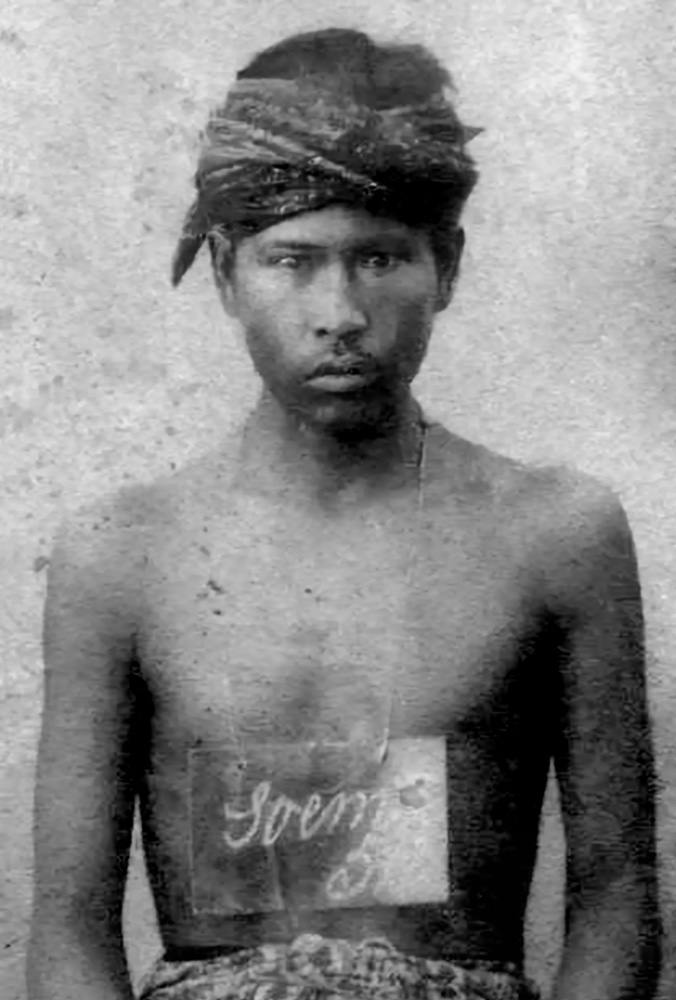
'Identification card Soemo' 1907


Identification card Soemo
1907
Loan from the National Archives of Suriname


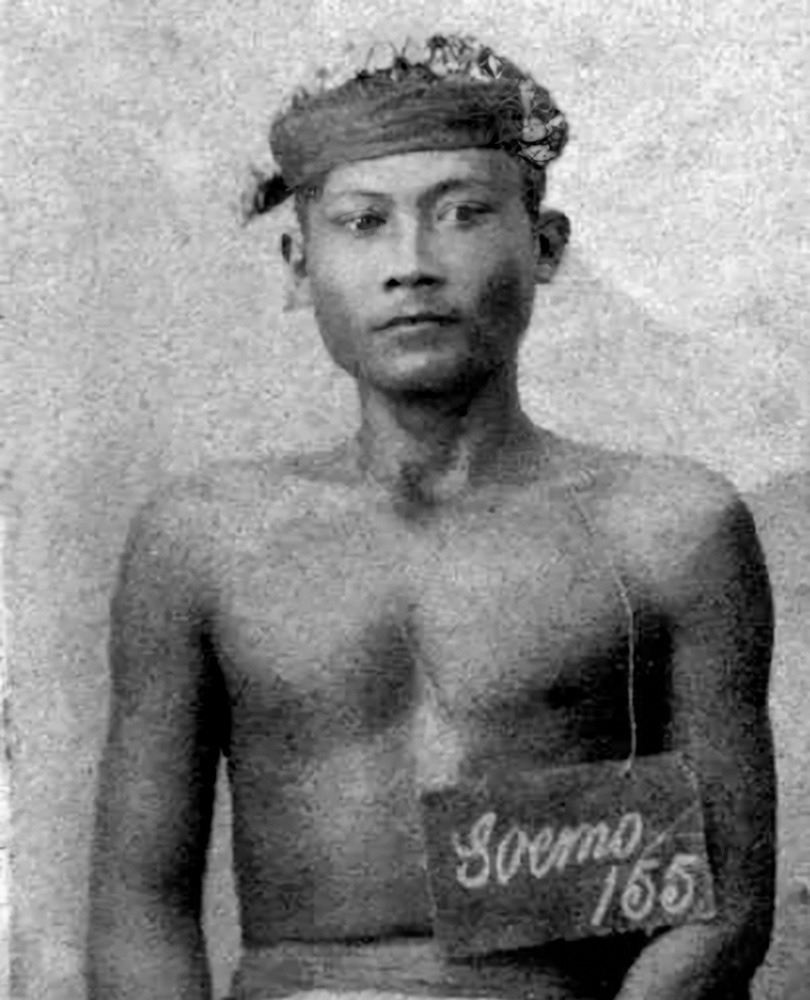
Identification card Soemo
1908
Loan from the National Archives of Suriname


Johan Braakensiek (Dutch, 1848-1940) "The coolie ordinances" in
'De [Groene] Amsterdammer', Date 23 November 1902


Johan Braakensiek (Dutch, 1848-1940)
“The coolie ordinances”
De [Groene] Amsterdammer, Date 23 November 1902


The Coolie Ordinances

From Koi. (To former Minister Cramer): What do you think about that?
Cremer: Yes, we Deli Men [Deli on the island of Sumatra] … prefer to keep quiet about that.

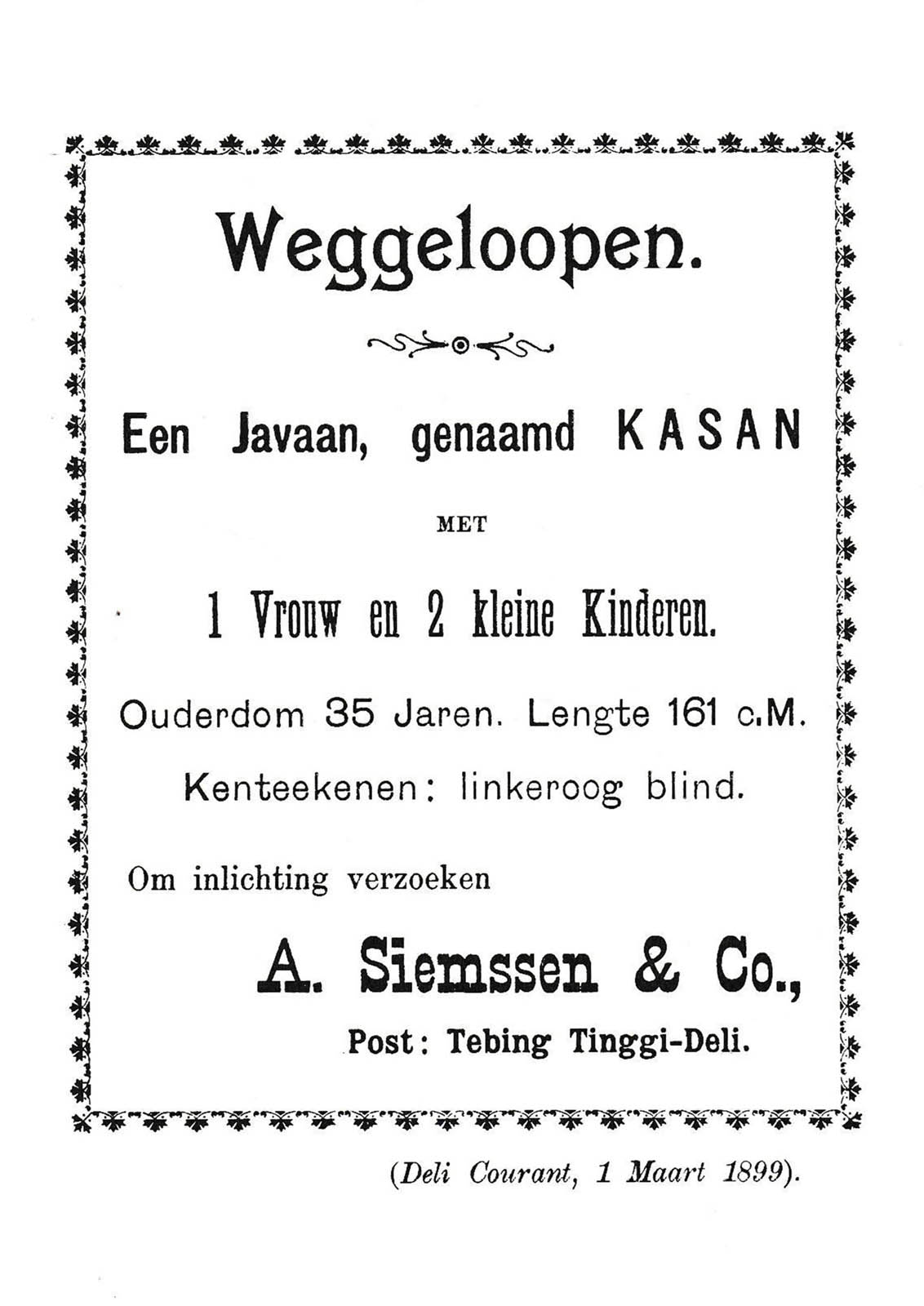
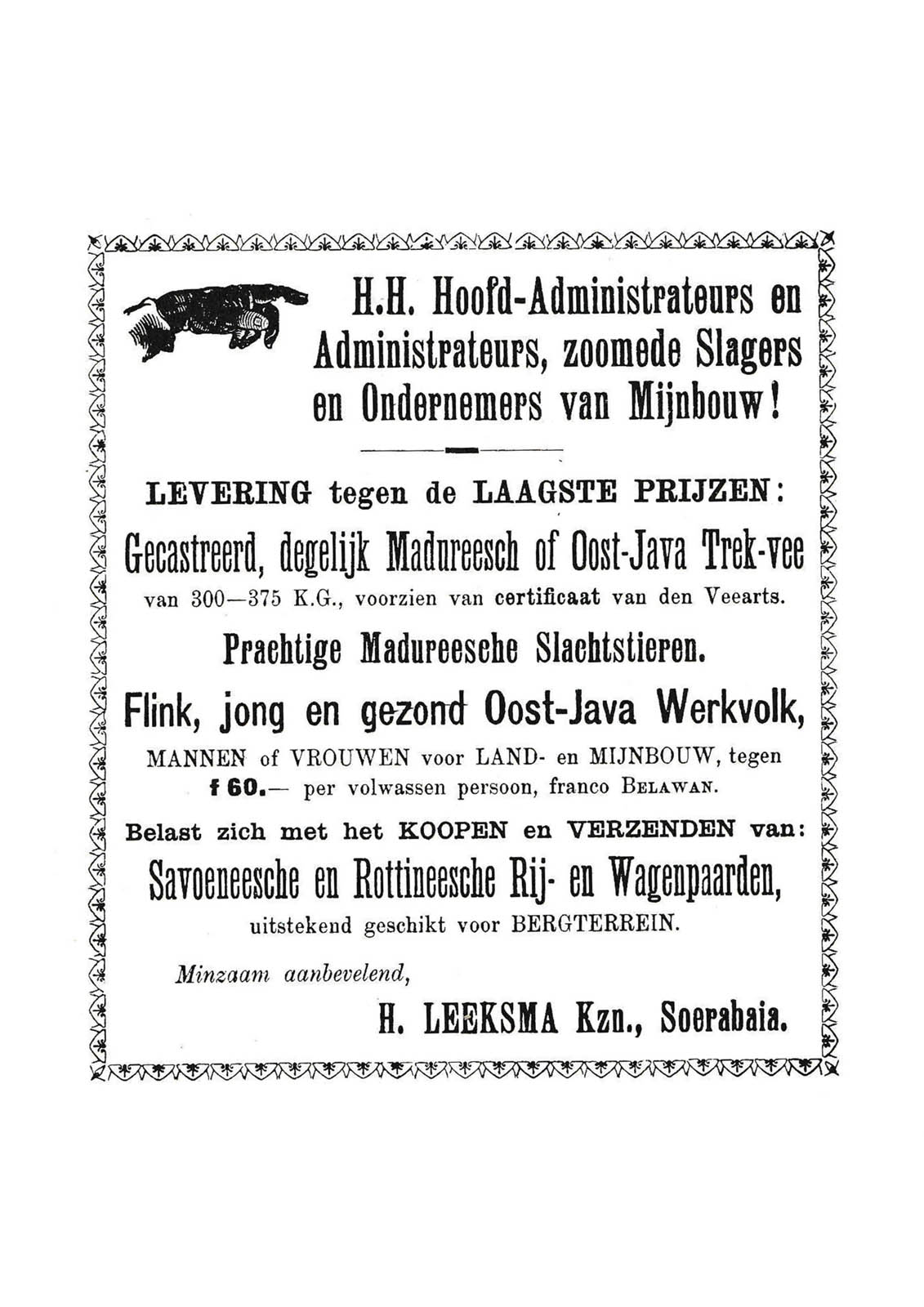
Advertisement from Deli-Courant and the Sumatrapost:

“Emigration, sales and commission office. Telegram address: Esas, Surabaya. Supply: Strong, young, and healthy workers, including Madurese, Javanese, and Sudanese, as well as Chinese, for agricultural and mining companies. Risk of desertion on board at our expense. – We have had the most success with our coolie projects and are willing to send copies of satisfaction reports for review. Also supply: Chinese and Javanese artisans. We undertake to fulfil all possible orders, including for beautiful Madura and Balinese slaughter and draught cattle, at competitive prices.”


Dari Koi. (Kepada mantan Menteri Cramer): Apa pendapat Anda tentang itu?
Cremer: Ya, kami, Deli Men [Deli di Pulau Sumatra] … lebih suka diam tentang itu.

Iklan dari Deli-Courant dan Sumatrapost:

“Kantor emigrasi, penjualan, dan komisi. Alamat Telegram: Esas, Surabaya. Pasokan: Pekerja yang kuat, muda, dan sehat, termasuk orang Madura, Jawa, dan Sudan, serta Tionghoa, untuk perusahaan pertanian dan pertambangan. Risiko desersi di kapal ditanggung oleh kami. – Kami telah meraih kesuksesan terbesar dengan proyek kuli kami dan bersedia mengirimkan salinan laporan kepuasan untuk ditinjau. Juga pasokan: pengrajin Tionghoa dan Jawa. Kami berkomitmen untuk memenuhi semua pesanan yang memungkinkan, termasuk sapi potong dan sapi penarik Madura dan Bali yang indah, dengan harga yang kompetitif.”


Unknown maker. 'Advertisement from the Deli Courant of March 1, 1899'


Unknown maker
Advertisement from the Deli Courant of March 1, 1899
from De Millionenen uit Deli (Private collection), 1902


“Runaway
A Javanese, named Kasan
with
1 wife and 2 small children
Age 35 years, height 161 cm
Signs: left eye blind
Request information
A. Siemssen & Co.,
Post: Tebing Tinggi-Deli”

“Pelarian
Seorang Jawa, bernama Kasan
dengan
1 istri dan 2 anak kecil
Usia 35 tahun, tinggi badan 161 cm
Tanda-tanda: buta mata kiri
Minta informasi
A. Siemssen & Co.,
Pos: Tebing Tinggi-Deli”


Unknown maker. 'Advertisement from the Sumatra-Post of May 7, 1902'


Unknown maker
Advertisement from the Sumatra-Post of May 7, 1902
from De Millionenen uit Deli(Private collection), 1902


H.H. Chief-Administrators and Administrators, also Butchers and Mining Entrepreneurs!
Delivery at the lowest prices:
Castrated, solid Madurese or East Java draught cattle
From 300-375 kg, with veterinary certificate
Beautiful Madurese slaughter bulls
Strong, young, and healthy East Java work force,
Men or women for agriculture and mining, for
60 guilders per adult, free of charge Belawan.
In charge of purchasing and selling:
Savonian and Rottinean riding and carriage horses,
Excellently suited for mountain terrain.
Highly recommended,
H. Leeksma Kzn., Surabaya.”

Yang Mulia Kepala Administrator dan Administrator, juga Tukang Jagal dan Pengusaha Pertambangan!
Pengiriman dengan harga terendah:
Sapi penarik Madura atau Jawa Timur yang dikebiri dan sehat
Berat 300-375 kg, dengan sertifikat dokter hewan
Sapi potong Madura yang cantik
Tenaga kerja Jawa Timur yang kuat, muda, dan sehat,
Pria atau wanita untuk pertanian dan pertambangan, dengan harga
60 gulden per orang dewasa, gratis untuk Belawan.
Bertanggung jawab atas pembelian dan penjualan:
Kuda tunggang dan kereta Savonian dan Rottinean,
Sangat cocok untuk medan pegunungan.
Sangat direkomendasikan,
H. Leeksma Kzn., Surabaya.”


Van Abbemuseum
Stratumsedijk 2 Eindhoven
+31 40 238 10 00

Opening hours:
Tuesday – Sunday from 11am – 5pm

Van Abbemuseum website

LIKE ART BLART ON FACEBOOK

Back to top