Exhibition: ‘The Real Thing: Unpackaging Product Photography’ at the Metropolitan Museum of Art, New York

Exhibition dates: 11th March – 4th August 2024

Curator: Virgina McBride, Research Associate in the Department of Photographs at The Met


Anton Bruehl (American born Australia, 1900-1982) 'Four Roses Whiskey: Worth Reaching For' 1949


Anton Bruehl (American born Australia, 1900-1982)
Four Roses Whiskey: Worth Reaching For
1949
Laminated photomechanical printer’s proof
26.1 x 27.4cm (10 1/4 x 10 13/16 in.)
The Metropolitan Museum of Art, New York
Ford Motor Company Collection, Gift of Ford Motor Company and John C. Waddell, 1987
© Estate of Anton Bruehl


Meticulously staged by the pioneering colour photographer Anton Bruehl, this work was part of a series showing the whiskey in many exciting scenarios: the glass appeared to travel by train and cruise liner, as well as hot air balloon. Bruehl’s pictures ran as ads in LIFE and Newsweek, conjuring worldly associations for his client, the Kentucky distiller Four Roses.

Against all odds, these eye-catching scenes were not darkroom fabrications – Bruehl arranged them by hand, with the help of miniaturists, set dressers, and a celebrity florist.

Testing appetites for novelty, illusion, and abundance against the limits of good taste, he wagered that this crisp construction would quench your thirst, then melt into hot air.

Text from the Metropolitan Museum of Art Instagram page

Anton Bruehl was born in 1900 of German émigré parents in the small town of Hawker, Australia. By 1919, when he moved to the United States to work as an electrical engineer, he was a skilled amateur photographer. A show of student work from the Clarence H. White School of Photography at the Art Center, New York, in 1923 convinced Bruehl to quit his engineering job to become a photographer. White taught Bruehl privately for six months and then asked him to teach at his school, including its summer sessions in Maine. White’s sudden death, in 1925, prompted Bruehl to open a studio, at first partnering with photographer Ralph Steiner and then with his older brother, Martin Bruehl; it was immediately successful. Specializing in elaborately designed and lit tableaux, Bruehl won top advertising awards throughout the late 1920s and early 1930s. A favourite of Condé Nast Publications, he developed the Bruehl-Bourges colour process with colour specialist Fernand Bourges, which gave Condé Nast a monopoly on colour magazine reproduction from 1932 to 1935.

Text from the MoMA Object: Photo website


What a thoughtful, stimulating and well presented exhibition which contains some absolutely beautiful product photographs. These photographs awaken in the consumer a desire to possess the object of the camera’s attention, the aesthetisication of the object as a form of “readymade” available for immediate consumption.

It’s such a pity that for some of sections – such as “The Array”, “The Montage”, and “The Ideal user” – I only have one or two media image to illustrate the theme.

I have included in the posting a wonderful photograph from my own collection – a postcard with a real photograph on the front by an unknown photographer, showing a proprietor standing by the front door of his shop advertising the wares for “Howard, Watchmaker & Jeweller”, no date – probably British from 1890s-1910s due to his attire, the typeface on the front of the shop, and how “jewellery” is spelt. In the window there is an effusive display of clocks, watches, rings and Prince Albert watch chains.

My favourite photographs in the posting are the portrait of The Silver Merchants (c. 1850, below); the photograph of a tombstone from the Vermont Marble Tombstone Catalogue (1880s, below); the hand-coloured photograph by the Schadde Brothers of High Grade Jelly Eggs, from a Brandle & Smith Co. Catalogue (c. 1915, below); and the sublime Edward G. Budd Manufacturing Co. photograph Automotive Component (February 22, 1927, below)

Through these product photographs we begin to understand how, “The conventions of the past inform these norms and explain the advertisements that we see in our daily lives.” And how we have lost that spark of creativity, use of colour and form and appreciation of beauty in product photography that was the essence of what has gone before.

For those that are interested, I have included some expressive quotations on the complexity of the relationship between the construction of the self, commodities and consumer culture at the bottom of the posting.

Dr Marcus Bunyan


Many thankx to the Metropolitan Museum of Art for allowing me to publish the photographs in the posting. Please click on the photographs for a larger version of the image.


“Consumer capitalism, with its efforts to standardise consumption and to shape tastes through advertising, plays a basic role in furthering narcissism. The idea of generating an educated and discerning public has long since succumbed to the pervasiveness of consumerism, which is a ‘society dominated by appearances’. Consumption addresses the alienated qualities of modern social life and claims to be their solution: it promises the very things the narcissist desires – attractiveness, beauty and personal popularity – through the consumption of the ‘right’ kinds of goods and services. Hence all of us, in modern social conditions, live as though surrounded by mirrors; in these we search for the appearance of an unblemished, socially valued self.”


Anthony Giddens. Modernity and Self-Identity: Self and Society in the Late Modern Age. California: Stanford University Press, 1991, p. 172.


Unknown photographer (British?) 'Howard – Watchmaker and Jeweller' 1890s-1910s?

Unknown photographer (British?) 'Howard – Watchmaker and Jeweller' 1890s-1910s? (verso)


Unknown photographer (Brtish?)
Howard – Watchmaker and Jeweller (front and verso)
1890s-1910s?
Silver gelatin photograph on postcard
Collection of Marcus Bunyan

This photograph is not in the exhibition


“”Product photography is, now, completely inescapable – it follows you around and stalks you on social media – and that condition is very interesting,” said [curator] McBride. The conventions of the past inform these norms and explain the advertisements that we see in our daily lives…

When I visited the exhibition, I was lucky enough to meet Drew, an advertisement photographer who spoke to me about her impressions of The Real Thing: Unpackaging Product Photography. “As someone who works in advertising photography, I find it quite interesting how I think we’ve lost some of the creativity that I see here in this imagery, as far back as the 1920s. It makes me wonder about how I could implement or think about new ways of composition or exploring basic objects in a more exciting way. I’m curious about how these objects were received as advertisements back then. Now, I think we see them more as fine art, so it is interesting to think about what our advertising images could look like twenty years from now.” Drew was strong in her belief that much of the beauty and wonder of advertisement photography has been lost over the decades.

In the 1920s, rising industrial output and consumer demand led executives to seek ways to make their products stand out in a crowded market. Applied psychology shifted managers’ focus to the consumer’s mind, emphasizing the need to persuade consumers that they could find individuality and personal meaning in standardized goods. Consumers “believe what the camera tells them because they know that nothing tells the truth so well.” …

The Real Thing: Unpackaging Product Photography exposes the truth in an entirely new way. It exposes the secrets of photography and how the truth shifted through years of capitalism and consumerism, demanding different sales strategies from producers… [By the 1950s] As the American capitalist market demanded printed ads and mass consumption increased, photographers lost their creative control, with advertisement directors taking up the mantle. There is a straightforward appeal and very little left to the imagination.”


Ayana Chari. “A Review of the Met Museum’s ‘The Real Thing: Unpackaging Product Photography’,” on The Science Survey website July 10, 2024 [Online] Cited 26/07/2024


The photographs in this exhibition do not depict rare or special things. They show toothpaste, tombstones, and hats. But these familiar trappings of everyday life will be, at times, unrecognisable – so altered by the camera as to constitute something entirely new. Enticing consumers with increasingly experimental approaches to the still life genre, the photographs featured transform everyday objects into covetable commodities. The camera abstracts them from functional use, at times distorting them through dizzying perspectives and modulations of scale. Spanning the first century of photographic advertising, the exhibition will illustrate how commercial camerawork contributed to the visual language of modernism, suggesting new links between the promotional strategies of vernacular studios and the tactics of the interwar avant-garde. Corporate commissions by celebrated innovators, including Paul Outerbridge, August Sander, and Piet Zwart, will appear alongside obscure catalogues and trade publications, united by a common cause: to snatch the ordinary out of context, and sell it back at full price.

The exhibition is made possible by The Robert Mapplethorpe Foundation, Inc.

Text from the Metropolitan Museum of Art website


Installation view of the exhibition 'The Real Thing: Unpackaging Product Photography' at the Metropolitan Museum of Art, New York 

Installation view of the exhibition 'The Real Thing: Unpackaging Product Photography' at the Metropolitan Museum of Art, New York showing at right, introductory wall text to the exhibition (below) and F. D. Hampson's Panama Hats, from a Sloan-Force Co. Catalogue c. 1916 (below)


Installation views of the exhibition The Real Thing: Unpackaging Product Photography at the Metropolitan Museum of Art, New York showing at right in the bottom image, introductory wall text to the exhibition (below) and F. D. Hampson’s Panama Hats, from a Sloan-Force Co. Catalogue (c. 1916, below)


Introduction to the exhibition

The photographs in this exhibition do not depict rare or special things. They show toothpaste, tombstones, and hats. But here these familiar trappings of everyday life are, at times, unrecognisable – so altered by the camera as to constitute something entirely new. The Real Thing charts these tactics across the first century of photographic advertising.

If functional objects can be difficult to see, the camera is uniquely equipped to bring them into focus. Excised from mundane contexts and ushered into the studio, they assume new allure, independent of their value or means of production. For early retailers and ad agencies, photography bolstered consumer confidence; the medium offered unprecedented realism, and better still, an aura of truth. Beginning in the late 1850s, new demand for manufactured goods subsidised commercial photography, and the industry grew quickly, spurred by evolving technologies of image reproduction. In the decades that followed, photographers’ increasingly experimental still lives adapted modernism for the mass market.

In the spirit of early photo manuals and how-to guides, the exhibition unfolds thematically, exploring a range of approaches to what is today termed product photography. Pictures from across the commercial section – made in storerooms, corporate studios, and avant-garde ateliers – entice buyers and invent needs, transforming everyday objects into covetable commodities. Works by celebrated innovators appear here alongside obscure catalogues and trade publications, united by a common cause to snatch the ordinary out of context and sell it back at full price.

Wall text from the exhibition


Installation view of the exhibition 'The Real Thing: Unpackaging Product Photography' at the Metropolitan Museum of Art, New York 


Installation views of the exhibition The Real Thing: Unpackaging Product Photography at the Metropolitan Museum of Art, New York showing at right, Irving Penn’s Theatre Accident, New York (1947)


The Inventory

Installation view of the exhibition 'The Real Thing: Unpackaging Product Photography' at the Metropolitan Museum of Art, New York showing the section 'The Inventory' including at second left, 'Fashions 1837-1887, by William Charles Brown' (1888); and at third right, 'Vermont Marble Tombstone Catalogue' (1880s)


Installation view of the exhibition The Real Thing: Unpackaging Product Photography at the Metropolitan Museum of Art, New York showing the section The Inventory including at second left, Fashions 1837-1887, by William Charles Brown (1888, below); and at third right, Vermont Marble Tombstone Catalogue (1880s, below)


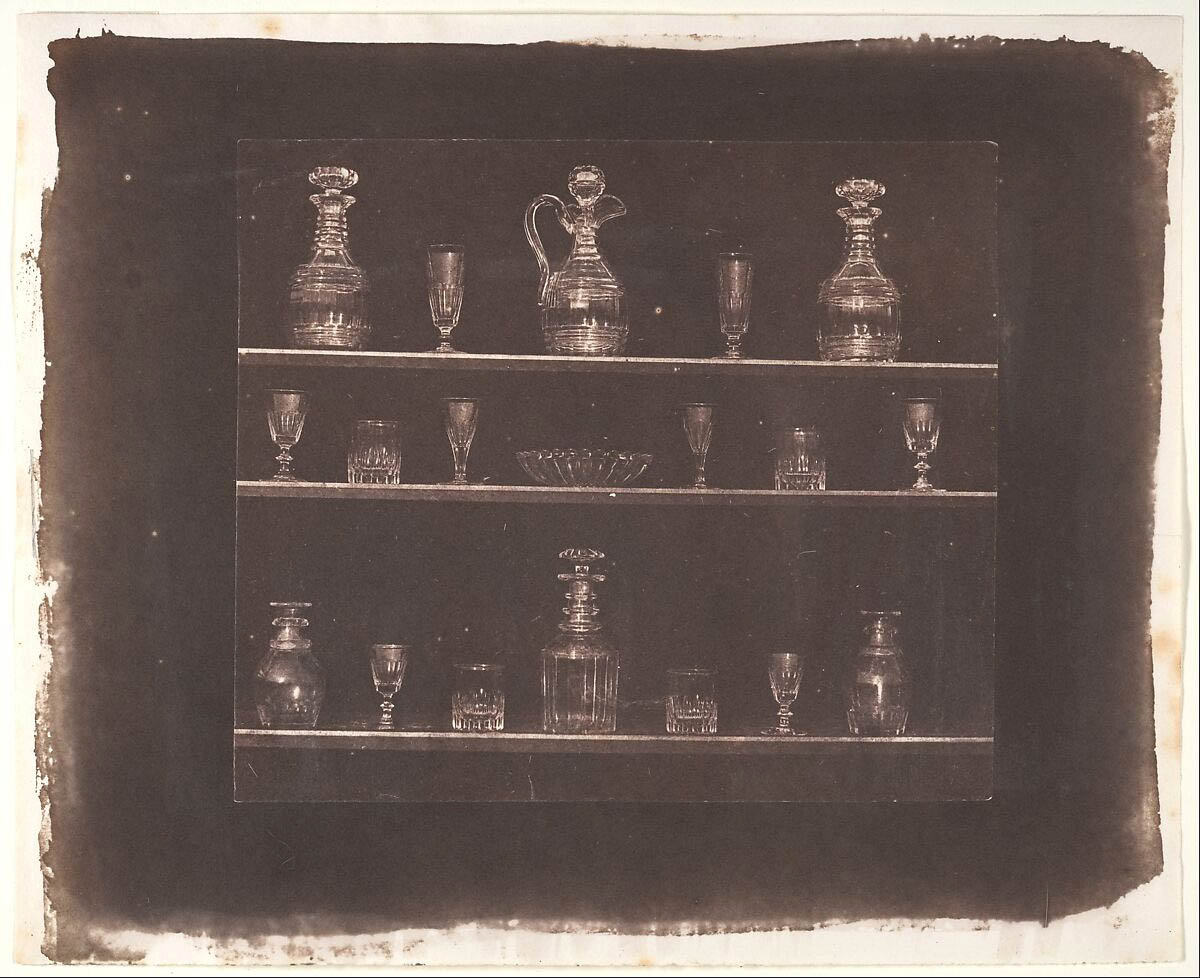
William Henry Fox Talbot (English, 1800-1877) 'Articles of Glass' before June 1844


William Henry Fox Talbot (English, 1800-1877)
Articles of Glass
before June 1844
Salted paper print from paper negative
Image: 13.2 x 15.1 cm. (5 3/16 x 5 15/16 in.)
Frame: 14 3/4 x 14 3/4 in.
Metropolitan Museum of Art
Purchase, The Horace W. Goldsmith Foundation Gift, through Joyce and Robert Menschel, and Harrison D. Horblit Gift, 1988
Public domain


Talbot’s negative-positive photographic process, first made public in 1839, would change the dissemination of knowledge as had no other invention since movable type. To demonstrate the paper photograph’s potential for widespread distribution – its chief advantage over the contemporaneous French daguerreotype – Talbot produced The Pencil of Nature, the first commercially published book illustrated with photographs. With extraordinary prescience, Talbot’s images and brief texts proposed a wide array of applications for the medium, including portraiture, reproduction of paintings, sculptures, and manuscripts, travel views, visual inventories, scientific records, and essays in art.

This photograph and the plate preceding it, “Articles of China,” were offered as examples of photography’s usefulness as a tool for creating visual inventories of unprecedented accuracy. Talbot wrote: “The articles presented on this plate are numerous: but, however numerous the objects – however complicated the arrangement – the Camera depicts them all at once.”

Text from the Metropolitan Museum of Art website


Unknown photographer (American) Case manufactured by Hiram Studley (American, active 1840s) 'The Silver Merchants' c. 1850


Unknown photographer (American)
Case manufactured by Hiram Studley (American, active 1840s)
The Silver Merchants
c. 1850
Daguerreotype
Image: 2 3/16 × 2 3/4 in. (5.5 × 7cm)
Case: 3 1/8 × 3 11/16 × 9/16 in. (8 × 9.3 × 1.5cm)
Approx. 6 1/2 x 3 1/2 in. open
The Metropolitan Museum of Art
Purchase, Joyce F. Menschel Gift, 2017
Public domain


The first product photographs doubled as portraits. Posing with their wares, peddlers demonstrated a standard of work and an assurance of quality. The daguerreotype, a direct-positive image on silver-plated copper, offered all manner of workers an increasingly affordable likeness. Here, silver dealers make the most of the medium, modelling careful attention to their inventory. They examine pocket watches, pendants, and fobs splayed in a sales case. Plying their trade before the camera, they mirror the work of the era’s newest silver merchants: photographers themselves.

Text from the Metropolitan Museum of Art website


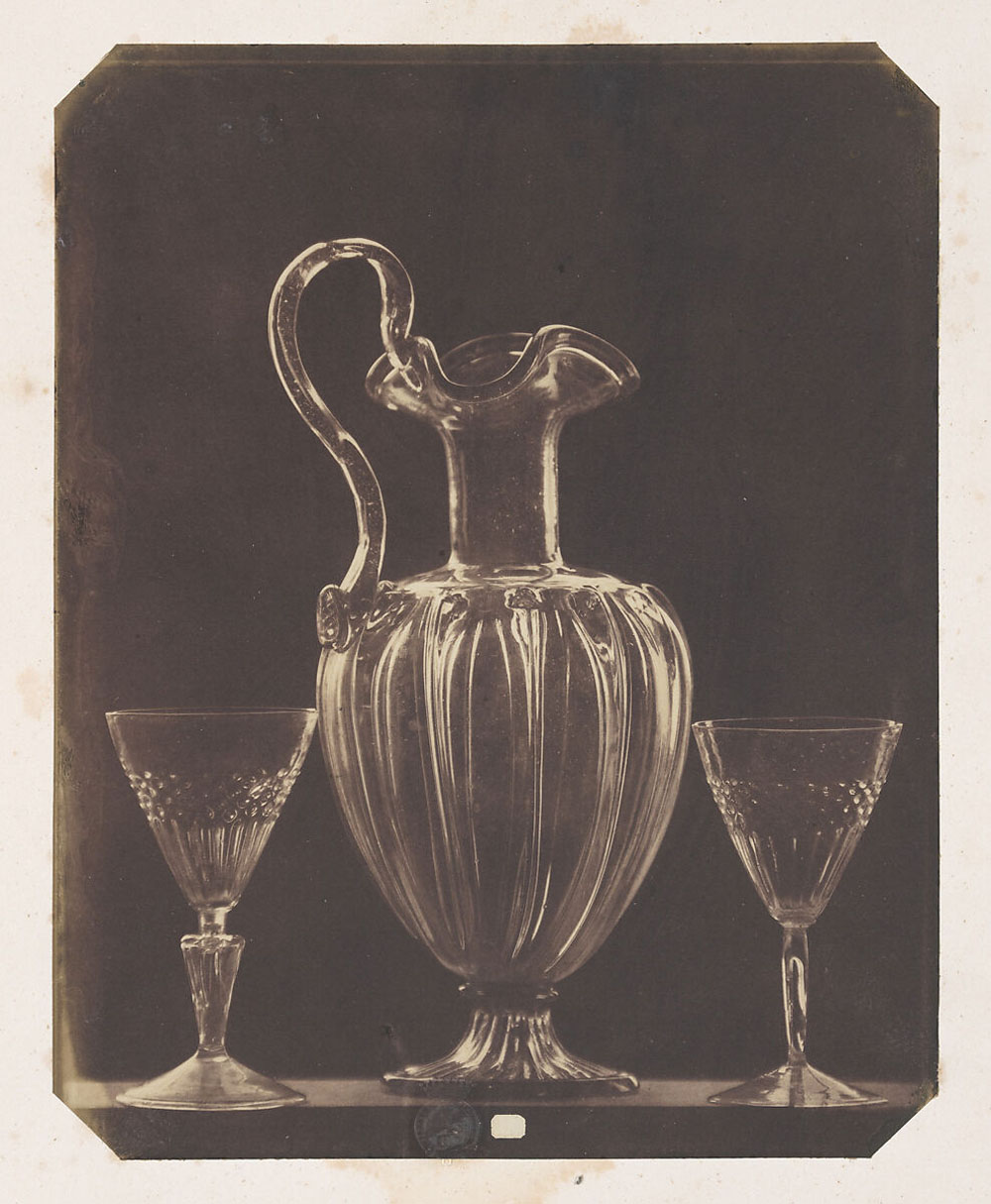
Ludwig Belitski (German, 1830-1902) 'Pitcher and Two Glasses, Venetian, 15th Century' 1854


Ludwig Belitski (German, 1830-1902)
Pitcher and Two Glasses, Venetian, 15th Century
1854
Salted paper print from glass negative
8 3/4 × 6 15/16 in. (22.2 × 17.7cm)
The Metropolitan Museum of Art
The Horace W. Goldsmith Foundation Fund, through Joyce and Robert Menschel, 2016
Public domain


Charles Nègre (French, 1820-1880) '[Plaster Casts of Bishops' Miters, South Porch, Chartres]' c. 1855


Charles Nègre (French, 1820-1880)
[Plaster Casts of Bishops’ Miters, South Porch, Chartres]
c. 1855
Salted paper print from paper negative
Image: 22 x 32.5cm (8 11/16 x 12 13/16 in.)
Frame: 18 1/2 x 22 1/2 in.
Metropolitan Museum of Art
Gilman Collection, Purchase, The Howard Gilman Foundation Gift, 2002
Public domain


When early photographers turned to the material world of things, it was often to document property or record cultural heritage. Their efforts reveal the camera’s remarkable capacity to abstract and transform the objects before its lens. In 1855, Charles Nègre accepted a commission to make architectural studies of Chartres Cathedral as part of a larger initiative to preserve and promote French patrimony. A complement to his sweeping views of sculpted facades, this still life monumentalises the site’s smaller details. It shows plaster replicas of ecclesiastical headgear, taken from the cathedral exterior. These are simulacra of simulacra, yet Nègre recasts them anew, registering their textured surfaces in a splendid study of shadow and mass.

Text from the Metropolitan Museum of Art website
 

Unknown maker (American) 'Man Demonstrating Patent Model for Sash Window' Late 1850s-1860s


Unknown maker (American)
Man Demonstrating Patent Model for Sash Window
Late 1850s-1860s
Tintype with applied colour
4.8 x 3.6cm (1 7/8 x 1 7/16 in.)
Metropolitan Museum of Art
Bequest of Herbert Mitchell, 2008
Public domain


Pine & Bell (photographic studio) (American, active 1860s, Troy, New York) William H. Bell (American born England, Liverpool 1831-1910 Philadelphia, Pennsylvania) George W. Pine (American, active 1860s, Troy, New York) '[Display of Hats and Accessories of 1868]' 1868


Pine & Bell (photographic studio) (American, active 1860s, Troy, New York)
William H. Bell (American born England, Liverpool 1831-1910 Philadelphia, Pennsylvania)
George W. Pine (American, active 1860s, Troy, New York)
[Display of Hats and Accessories of 1868]
1868
Albumen silver print from glass negative
Image: 3 9/16 × 2 1/8 in. (9 × 5.4 cm)
Mount: 3 11/16 in. × 2 3/8 in. (9.3 × 6 cm)
The Metropolitan Museum of Art
William L. Schaeffer Collection, Promised Gift of Jennifer and Philip Maritz, in celebration of the Museum’s 150th Anniversary


Unknown photographer. '[E. Adkins Gun Merchant]' c. 1874


Unknown photographer
[E. Adkins Gun Merchant]
c. 1874
Ambrotype
6.3 x 7.5cm (2 1/2 x 2 15/16 in.) visible
The Metropolitan Museum of Art
Gift of Charles Wilkinson, 1965
Public domain


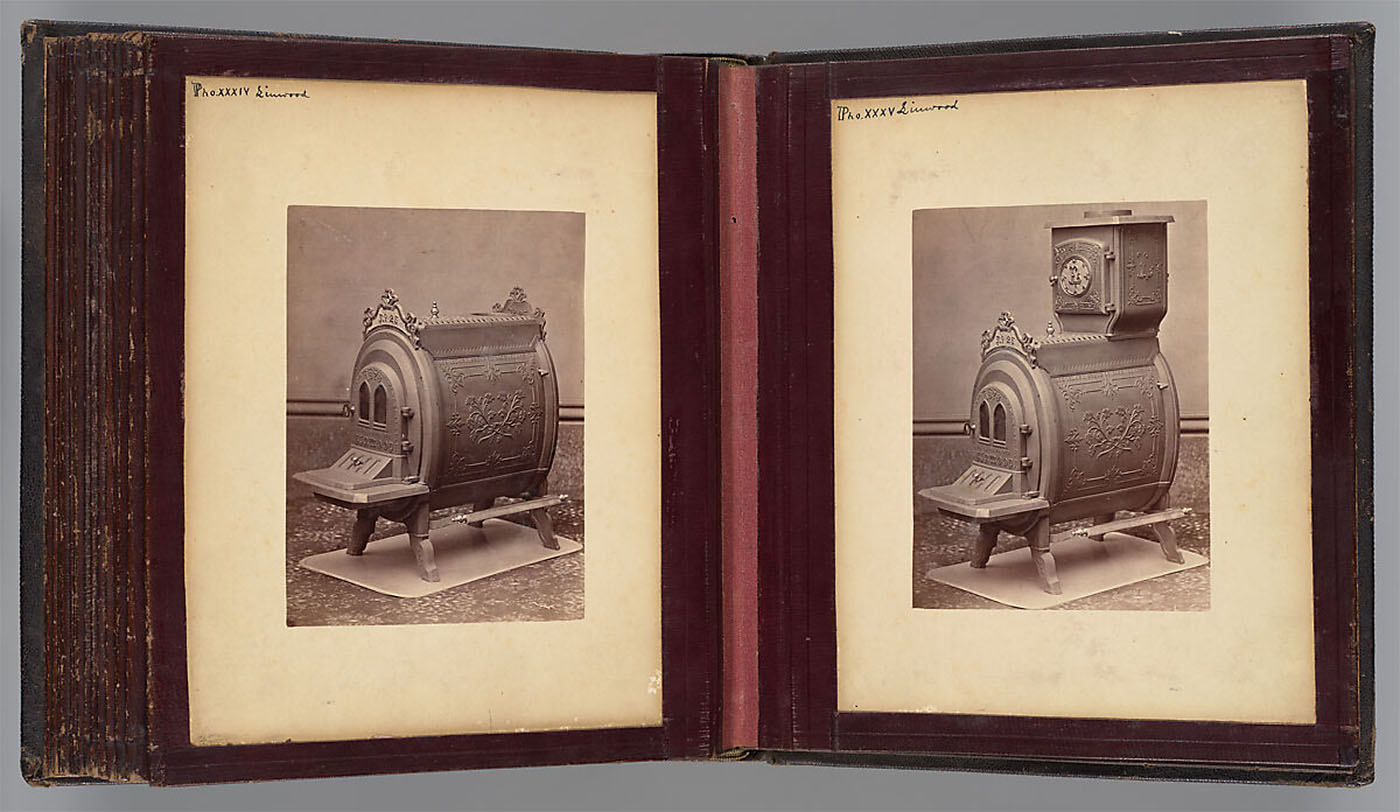
Unknown maker (American) 'Rock Island Stove Company Catalogue' 1878-1883


Unknown maker (American)
Rock Island Stove Company Catalogue
1878-1883
Albumen silver prints
The Metropolitan Museum of Art
Joyce F. Menschel Photography Library Fund, 2003
Public domain


Unknown maker (British) 'Fashions 1837-1887 by William Charles Brown (British, active late 19th century)' 1888


Unknown maker (British)
Fashions 1837-1887 by William Charles Brown (British, active late 19th century)
1888
Woodburytypes
22.5 x 17cm (8 7/8 x 6 11/16 in.)
Approx. 9 x 14 in. open
The Metropolitan Museum of Art
Joyce F. Menschel Photography Library Fund, 2011


In the back of this catalogue from Queen Victoria’s milliner, a disclaimer confirms that no British songbirds were sacrificed for its production. Nevertheless, a flock of hats in fine feather fills this page spread, flaunting designs fit for the royal family. The deluxe volume is illustrated with woodburytypes, an early photomechanical process with a rich tonal range to register varied velvets, silks, straws, and plumes. Hatstands and supports have been edited out of these images to suspend the specimens midair. Surreal to modern eyes, the effect accentuates the hats’ commodity status and implies inventory soaring out of stock.

Text from the Metropolitan Museum of Art website


Frank M. Sutcliffe (British, 1853-1941) '[Display of Whitby Seascape Photographs]' c. 1888


Frank M. Sutcliffe (British, 1853-1941)
[Display of Whitby Seascape Photographs]
c. 1888
Albumen silver print
Image: 4 1/4 × 5 1/2 in. (10.8 × 14 cm)
Sheet: 6 15/16 × 9 1/2 in. (17.7 × 24.1 cm)
Frame: 11 x 14 in.
Metropolitan Museum of Art
Purchase, Anonymous Gift, 2023
Public domain


“Choose one subject, anything will do,” Frank Sutcliffe advised aspiring photographers. If his career-spanning preoccupation with the British seaside town of Whitby seemed myopic to some peers, it allowed him to cultivate a distinctive brand. This typology of seascapes testifies to his years of work along the town harbour, where he weathered storms and punishing wind in pursuit of the perfect view. Pinned up for purchase at an exhibition, his photographs here become products. This rudimentary style of display seems to have served him well; at one such showcase, he counted the Prince of Wales among his customers.

Text from the Metropolitan Museum of Art website


Unknown (American) '[Vermont Marble Tombstone Catalogue]' 1880s


Unknown (American)
[Vermont Marble Tombstone Catalogue]
1880s
Albumen silver prints
Approx. 17 1/4 x 4 in. open
The Metropolitan Museum of Art
Jefferson R. Burdick Bequest, 1972
Public domain


“When you are met with a flood of tears, the best thing to do is politely say that you will call again,” advised one traveling salesman in the tombstone trade. For Cyrus Creigh, a thirty-something Virginian who sold stones from this annotated catalogue, such considerations were part of the job. In each new town, he might solicit names of bereaved families from undertakers and local cemetery staff. Slipped from a suit pocket and proffered door-to-door, his book of bluntly descriptive photographs sold surviving relatives a modicum of consolation. The stones, posed in a corporate studio and silhouetted in darkness, assume a solemn universality, as if any of their blank faces might soon bear a familiar name.

Text from the Metropolitan Museum of Art website


Schadde Brothers (American, active Minneapolis, 1890s-1910s) Alvin J. Schadde (American, 1872-1937) Herman T. Schadde (American, 1874-1937) '[High Grade Jelly Eggs, from a Brandle & Smith Co. Catalogue]' c. 1915


Schadde Brothers (American, active Minneapolis, 1890s-1910s)
Alvin J. Schadde (American, 1872-1937)
Herman T. Schadde (American, 1874-1937)
[High Grade Jelly Eggs, from a Brandle & Smith Co. Catalogue]
c. 1915
Gelatin silver print with applied colour
Image: 8 1/4 × 9 3/4 in. (21 × 24.8cm)
Frame: 18 x 20 in.
Metropolitan Museum of Art
Twentieth-Century Photography Fund, 2013


Schadde Brothers (American, active Minneapolis, 1890s-1910s) Alvin J. Schadde (American, 1872-1937) Herman T. Schadde (American, 1874-1937) '[Satinettes, Filled Confections and Ye Old Style Stick Candy, from a Brandle & Smith Co. Catalogue]' c. 1915


Schadde Brothers (American, active Minneapolis, 1890s-1910s)
Alvin J. Schadde (American, 1872-1937)
Herman T. Schadde (American, 1874-1937)
[Satinettes, Filled Confections and Ye Old Style Stick Candy, from a Brandle & Smith Co. Catalogue]
c. 1915
Gelatin silver print with applied colour
Image: 8 1/2 × 10 5/8 in. (21.6 × 27cm)
Frame: 18 x 20 in.
Metropolitan Museum of Art
Twentieth-Century Photography Fund, 2013


This trade catalogue tricks the eye to tempt the tongue. An artisan has coloured its black-and-white prints, illustrating each sugar stripe and speckled bean. Philadelphia confectioner Brandle & Smith understood that their candy was its own best advertisement, and at one point even induced a museum to accession it for display. Wider distribution was achieved by the salesmen who carried catalogues across the country, taking bulk orders from local shops. Here, the limitations of hand-colouring work to their advantage. Because sweets in jars proved too tricky to tint, the satinettes and candy sticks seem to burst into brilliant colour as they spill from their packaging, satiating the viewer and assisting the sale.

Text from the Metropolitan Museum of Art website
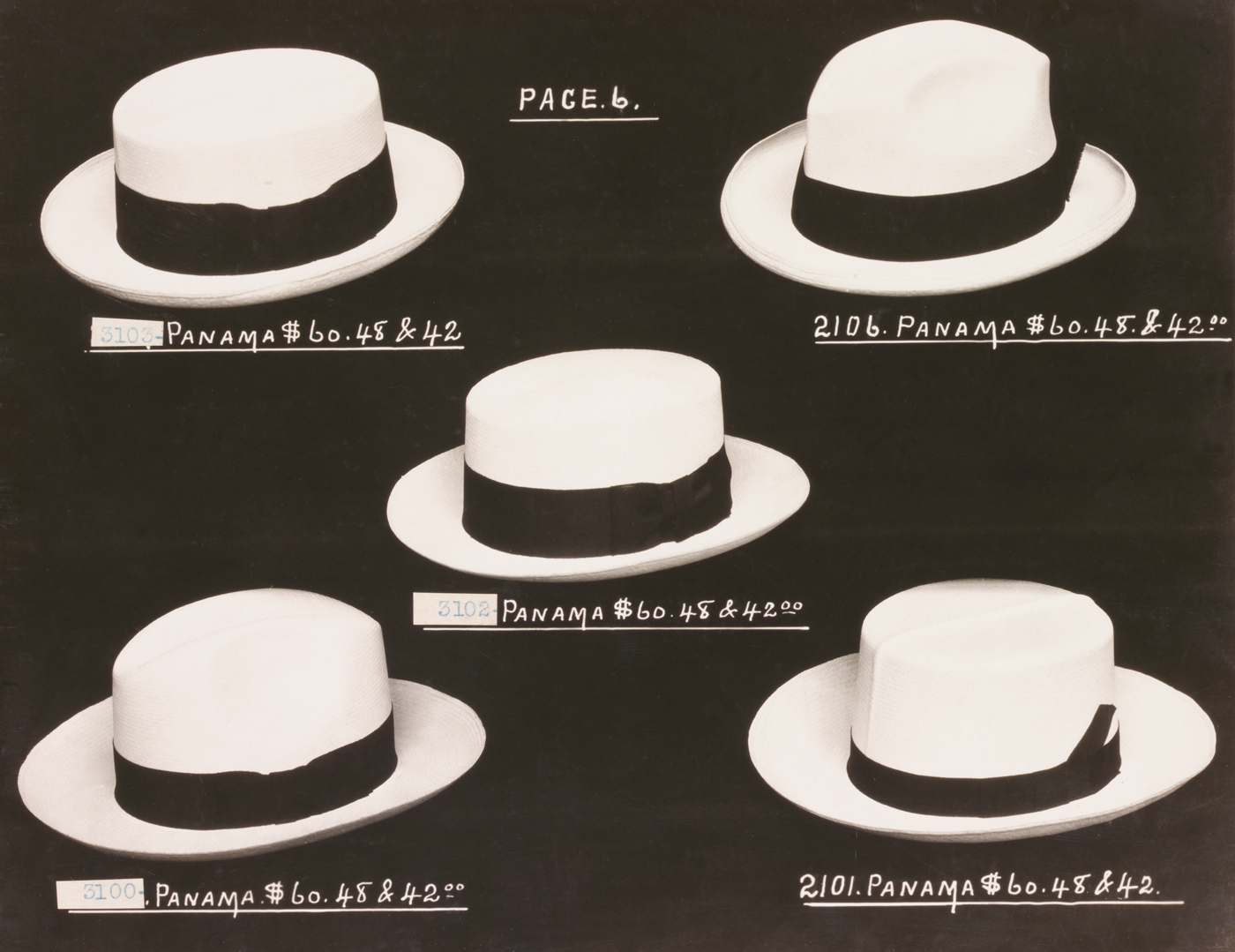
 

F. D. Hampson (American, 1871-1947) 'Panama Hats, from a Sloan-Force Co. Catalogue' c. 1916


F. D. Hampson (American, 1871-1947)
Panama Hats, from a Sloan-Force Co. Catalogue
c. 1916
Gelatin silver print
Image: 18.5 x 23.4 cm (7 5/16 x 9 3/16 in. )
Frame: 16 x 20 in.
Metropolitan Museum of Art
Purchase, The Horace W. Goldsmith Foundation Gift, through Joyce and Robert Menschel, 2001


Like satellites, these straw hats hover in a void. Their absence of context invites imaginative projection: how easy to envision this or that model touching down on one’s head. Popularised by association with the new Panama Canal, the hats were photographed for a St. Louis sales catalogue. Their spare, surreal configuration anticipates an avant-garde approach; in the coming years, disembodied hats would pop up in works by Max Ernst and Hans Richter, evoking the callous consumer – a bourgeois icon ripe for critique. Here, such premonitions of modernism serve practical ends. Suspended together, their varied brims and bands elicit comparison, demanding scrutiny. In an era of exponentially increasing consumer choice, such photographic displays could make anyone into a connoisseur.

Text from the Metropolitan Museum of Art website


Ralph Bartholomew Jr. (American, 1907-1985) '[Soap Packaging]' 1936


Ralph Bartholomew Jr. (American, 1907-1985)
[Soap Packaging]
1936
Carbro print
32.8 x 25.7cm (12 15/16 x 10 1/8 in.)
The Metropolitan Museum of Art
Ford Motor Company Collection, Gift of Ford Motor Company and John C. Waddell, 1987
© Estate of Ralph Bartholomew, Courtesy Keith de Lellis Gallery, NY


If mouthwatering soap seems a contradiction in terms, commercial photographer Ralph Bartholomew Jr. confounds the senses with eye candy to rival the confections nearby. Photographed two decades later, this work did not depend on paint for its delectable palette. It is an example of the early carbro process – a complex tricolor printing technique that gained popularity in the 1930s, as art directors courted Depression-era audiences. Brilliant colour is essential here, in a photograph likely commissioned to sell not the soap but its packaging. Marketed to producers in an array of trade publications (including Modern Packaging, and the industry-specific standby Soap), fine paper wrappers were a booming industry unto themselves. Here, Bartholomew parades his bedecked bars across a page of newsprint showing stock prices to suggest that in this market, even cleanliness was a commodity.

Bartholomew was a successful commercial photographer best known for his innovative use of stop-action and multiple exposure techniques in advertising and editorial work. He made this photograph while he was a student at the Clarence H. White School of Photography.

Text from the Metropolitan Museum of Art website


The Array

Margaret Bourke-White (American, 1904-1971) 'RCA Speakers' 1933


Margaret Bourke-White (American, 1904-1971)
RCA Speakers
1933
Gelatin silver print
Image: 33.3 x 23.3 cm (13 1/8 x 9 3/16 in.)
Frame: 22 1/2 x 18 1/2 in.
The Metropolitan Museum of Art
Warner Communications Inc. Purchase Fund, 1976


In a single voice, the assembled speakers broadcast the scope and influence of American radio. Commissioned by audio manufacturer RCA Victor, this photograph is one component of a monumental photomural for the NBC rotunda at Rockefeller Center. Amplified to a height of ten feet, this and other views of radio technology comprised a work of corporate propaganda to rival those public projects Margaret Bourke-White had recently seen on tours of the Soviet Union. She completed the mural at breakneck speed, often working through the night to photograph equipment at regional stations (lest she risk electrocution during daytime transmission hours). Seeking a visual analogue to audio, she captured the speakers in staccato sequence, their scalloped shapes reverberating beyond the frame.

Text from the Metropolitan Museum of Art website


On March 11, 2024, The Metropolitan Museum of Art opened The Real Thing: Unpackaging Product Photography, an exhibition exploring how commercial camerawork contributed to the visual language of modernism. The photographs featured depict the familiar trappings of everyday life – from toothpaste to tombstones to hats – but at times these subjects will be unrecognisable, so altered by the camera as to constitute an entirely new view.

Spanning the first century of photographic advertising, The Real Thing unites more than 60 works from across the commercial sector. In these photographs, artists – some famous, some forgotten – transform common objects into covetable commodities. Corporate commissions by celebrated innovators, such as Paul Outerbridge, August Sander, and Piet Zwart, appear alongside obscure catalogues and trade publications. Bringing these photographs together, the exhibition reveals links between the promotional strategies of vernacular studios and the radical tactics of the interwar avant-garde.

“This dynamic exhibition looks anew at the commercial history of photographs in the Museum’s collection,” said Max Hollein, The Met’s Marina Kellen French Director and Chief Executive Officer. “By embracing this discerning lens, we gain a renewed appreciation of the intricacies and aesthetics of our everyday surroundings.”

“Not many of the photographers in this exhibition would have identified as fine artists, but their inventive commercial work harnesses the artistic potential of the camera to persuade and enchant,” added the show’s curator, Virginia McBride, Research Associate in the Department of Photographs. “Now that photography’s place in museums no longer needs defending, The Real Thing considers how working photographers, in corporate studios and industrial storerooms, advanced modern art’s visual revolution.”

The first advertising photographs were published in albums and used to peddle products door to door. For early retailers and ad agencies, photography offered unprecedented realism and, better still, an aura of truth; the medium’s perceived objectivity bolstered consumer confidence. Beginning in the late 1850s, new demand for manufactured goods subsidised commercial photography, spurred by evolving technologies of image reproduction. In the decades that followed, increasingly inventive approaches to the still life, from dizzying perspectives to extreme modulations of scale, adapted modernism for the mass market. Historically framed as avant-garde experimentation, this work is rarely acknowledged in its original context of commercial enterprise. This exhibition resituates such innovation within the realm of advertising and investigate its unlikely origins.

Drawn entirely from The Met collection and featuring many photographs from The Ford Motor Company Collection of modernist European and American photography, the exhibition brings together a wide range of photographic media. Included are proof prints, tear sheets, and sample books used by travelling merchants, along with photomontages and rare examples of early colour printing. Such masterworks as André Kertész’s elegant study of a fork and Grete Stern and Ellen Auerbach’s surrealist-inflected advertisements for hair dye and gloves are presented together with the projects of overlooked studios and anonymous makers. Debuting dozens of objects from the Department of Photographs that have never before been shown, and introducing timely new acquisitions, the exhibition considers photography in an expanded field of commercial practice.

The Real Thing: Unpackaging Product Photography is organised by Virgina McBride, Research Associate in the Department of Photographs at The Met.

Press release from the Metropolitan Museum of Art


Grit Kallin-Fischer (German, 1897-1973) 'KPM Ceramics' 1930


Grit Kallin-Fischer (German, 1897-1973)
KPM Ceramics
1930
Gelatin silver print
6 5/8 × 4 3/16 in. (16.8 × 10.7cm)
The Metropolitan Museum of Art
Funds from various donors, 2023


The Isolated Object
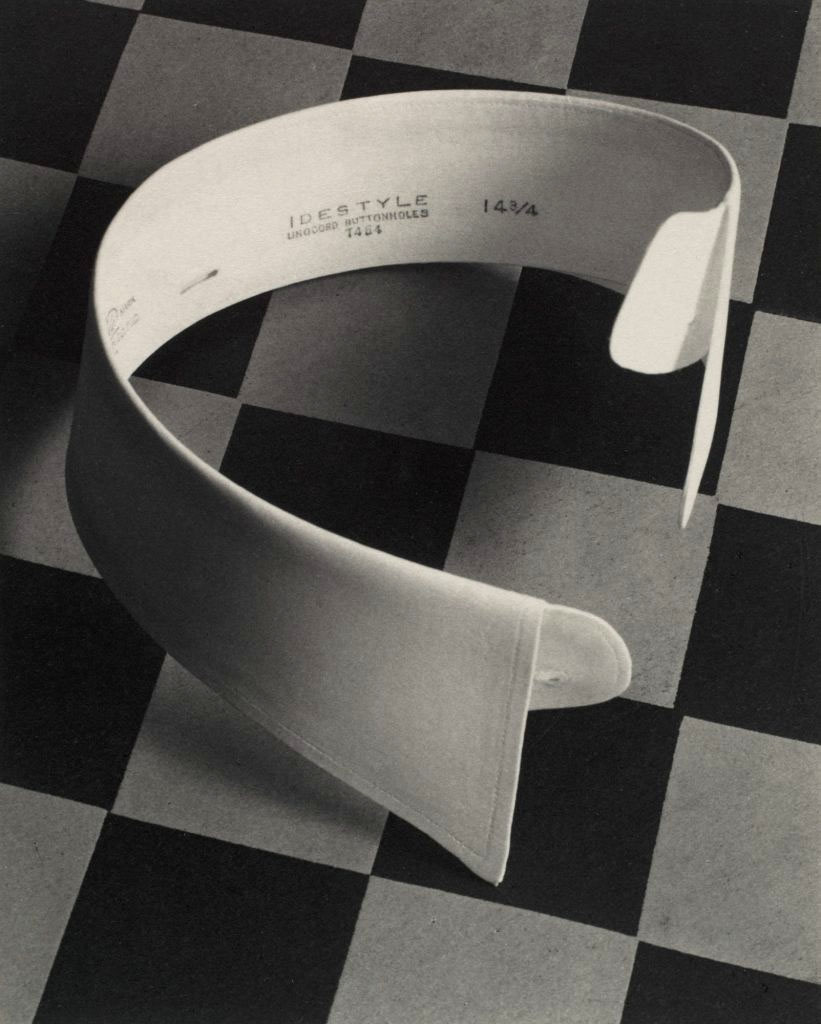
Paul Outerbridge Jr. (American, 1896-1959) 'Ide Collar' 1922


Paul Outerbridge Jr. (American, 1896-1959)
Ide Collar
1922
Platinum print
Image: 11.8 x 9.3 cm (4 5/8 x 3 11/16 in.)
Frame: approx. 14 x 17 in.
The Metropolitan Museum of Art
Ford Motor Company Collection, Gift of Ford Motor Company and John C. Waddell, 1987


“I have attempted to interpret the beauty of the simplest and humblest of objects,” Paul Outerbridge Jr. wrote in 1922. Inspired by his teacher Clarence H. White’s artistic vision for applied photography, Outerbridge regarded the aperture as a kind of canvas in which to arrange compositions with absolute balance. In this, his first commercial assignment, he achieved such equilibrium by custom-cutting a grid of linoleum squares to the scale of his subject. When published as an ad in Vanity Fair, the photograph was ensnared in a scrollwork frame. Such a Victorian flourish seems incongruous today, but at the time, a picture as stark as this seemed to need dressing up. Nevertheless, Marcel Duchamp was said to have clipped the ad and pinned it to his studio wall, apprehending the mass-market collar’s readymade style.

Text from the Metropolitan Museum of Art website
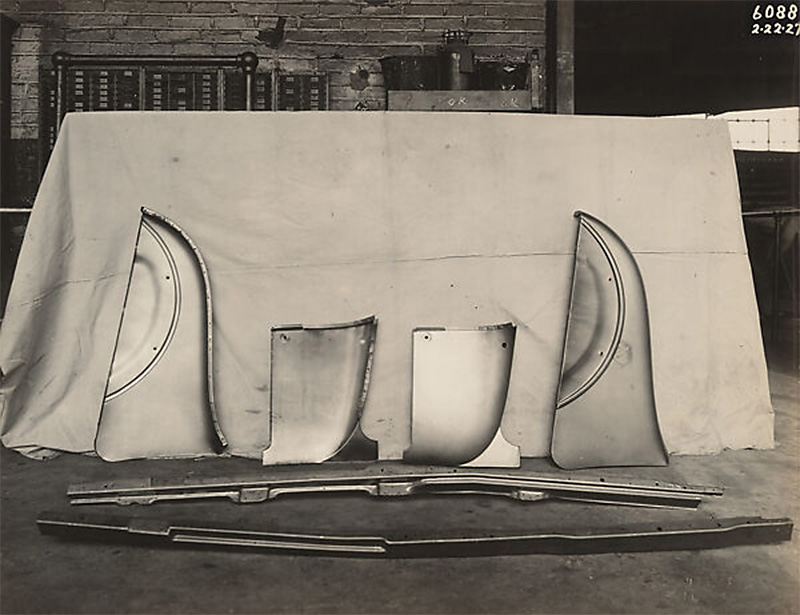
 

Edward G. Budd Manufacturing Co. (American) 'Automotive Component' February 22, 1927


Edward G. Budd Manufacturing Co. (American)
Automotive Component
February 22, 1927
Gelatin silver print
7 1/2 × 9 1/2 in. (19 × 24.1 cm)
The Metropolitan Museum of Art
Purchase, David Hunter McAlpin Fund, by exchange, 2024
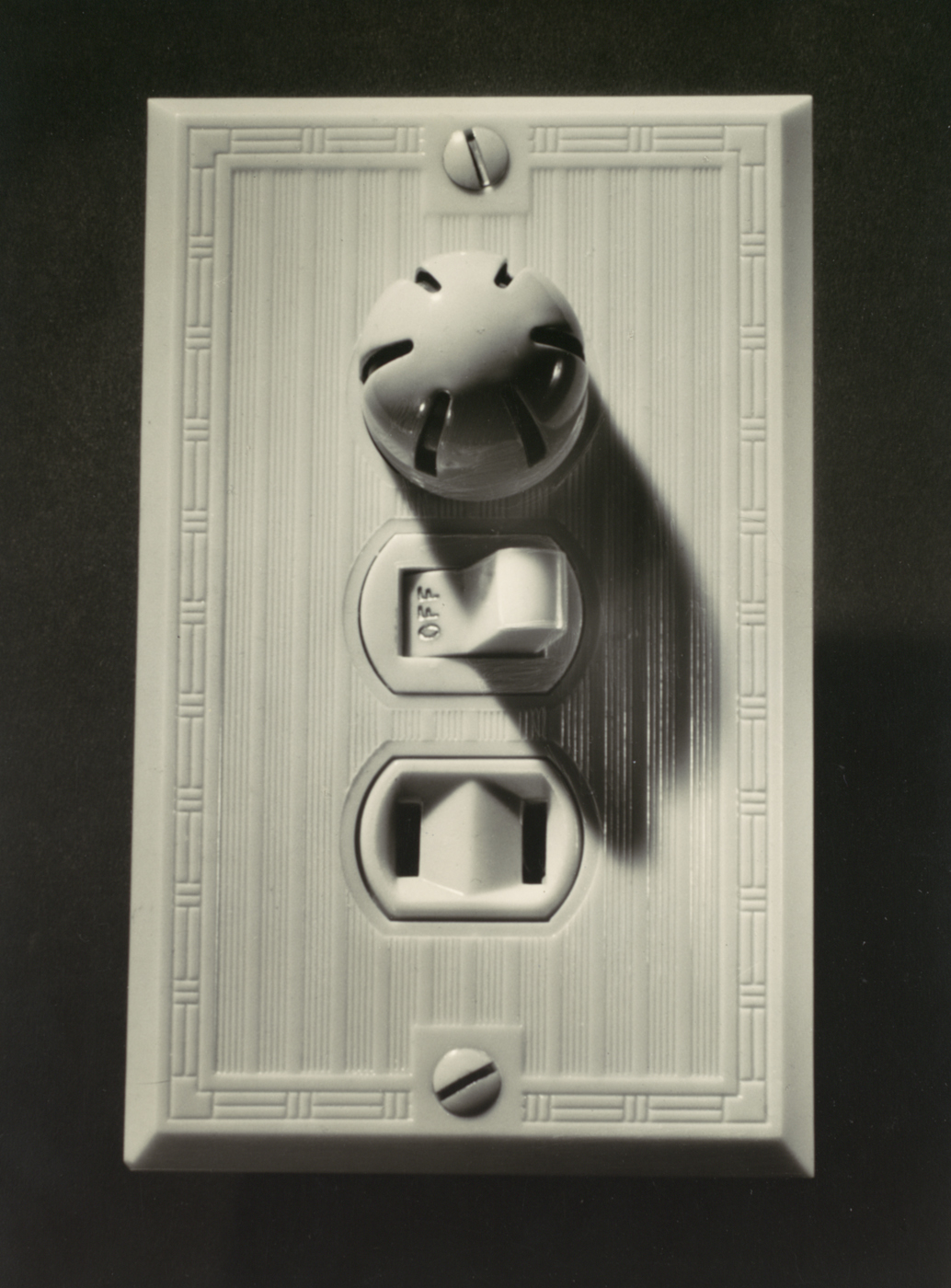
 

Fay Sturtevant Lincoln (American, 1894-1975) 'Pass & Seymour Switch Plate' c. 1949


Fay Sturtevant Lincoln (American, 1894-1975)
Pass & Seymour Switch Plate
c. 1949
Gelatin silver print
Image: 23.8 x 17.9 cm (9 3/8 x 7 1/16 in.)
Frame: approx. 20 x 16 in.
The Metropolitan Museum of Art
Ford Motor Company Collection, Gift of Ford Motor Company and John C. Waddell, 1987


Please resist the urge to flip this light switch. Photographed at close range, the switch plate is so crisply articulated that it tempts touch. Fay Sturtevant Lincoln captures the sculptural quality of this mundane fixture, revealing a keen eye for the texture and detail of domestic life. Now coveted for their retro cachet, molded Bakelite furnishings like this one were ubiquitous in the late 1940s. Though Lincoln was better known for views of glamorous art deco interiors, his attention to the vernacular architecture of homes and offices offers an intimate view of everyday design.

Text from the Metropolitan Museum of Art website


Murray Duitz (American, 1917-2010) 'A.S. Beck "Executive" Shoe' 1957


Murray Duitz (American, 1917-2010)
A.S. Beck “Executive” Shoe
1957
Gelatin silver print
Image: 12 1/2 x 9 1/2 in. (31.8 x 22.9cm)
Frame: 20 x 16 in.
The Metropolitan Museum of Art
Gift of the artist, 1975
© Estate of Murray Duitz


The Unfamiliar Thing
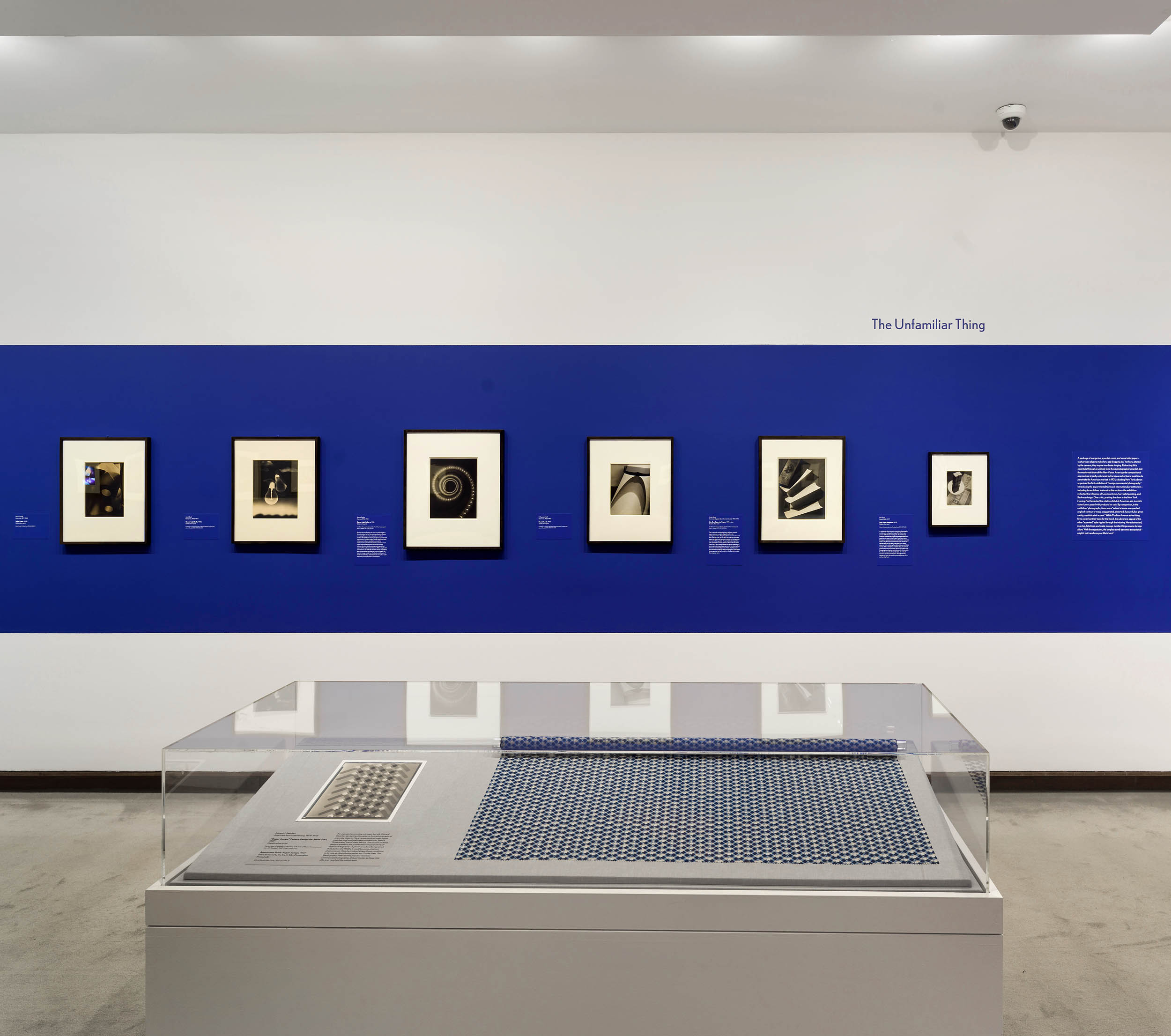
Installation view of the exhibition 'The Real Thing: Unpackaging Product Photography' at the Metropolitan Museum of Art, New York showing the section 'The Unfamiliar Thing' including at third left, August Sander's 'Osram Light Bulbs' (c. 1930); and at third right, H. Raymond Ball's 'Pocket Comb' (1930s)


Installation view of the exhibition ‘The Real Thing: Unpackaging Product Photography’ at the Metropolitan Museum of Art, New York showing the section The Unfamiliar Thing including at third left, August Sander’s Osram Light Bulbs (c. 1930, below); and at third right, H. Raymond Ball’s Pocket Comb (1930s, below)


Edward J. Steichen (American born Luxembourg, Bivange 1879 - 1973 West Redding, Connecticut) '["Sugar Lumps" Pattern Design for Stehli Silks]' 1927


Edward J. Steichen (American born Luxembourg, Bivange 1879 – 1973 West Redding, Connecticut)
[“Sugar Lumps” Pattern Design for Stehli Silks]
1927
Gelatin silver print
25.3 x 20.3cm (9 15/16 x 8 in.)
The Metropolitan Museum of Art
Ford Motor Company Collection, Gift of Ford Motor Company and John C. Waddell, 1987
© 2024 Artists Rights Society (ARS), New York


For a project promoting not sugar but silk, Edward Steichen devised textile patterns from photographs of everyday objects. His arrangements of sugar cubes, matches, and mothballs were printed onto Stehli’s “Americana” line of dress fabrics. The success of these designs speaks to the proliferation and popularity of object photography – a genre so culturally ingrained that, by the late 1920s, it could become a fashion phenomenon. Steichen helped shape these conditions in his influential role as chief photographer for Condé Nast. The Stehli project reflected his populist vision for commercial photography, at least insofar as these chic silks ever reached the mainstream.

Text from the Metropolitan Museum of Art website


August Sander (German, 1876-1964) '[Osram Light Bulbs]' c. 1930


August Sander (German, 1876-1964)
[Osram Light Bulbs]
c. 1930
Gelatin silver print
Image: 29.5 x 22.9 cm (11 5/8 x 9 in.)
Frame: 22 1/2 x 18 1/2 in.
The Metropolitan Museum of Art
Ford Motor Company Collection, Gift of Ford Motor Company and John C. Waddell, 1987
© 2024 Artists Rights Society (ARS), New York


Photography itself makes the case for artificial light in this commission for the German manufacturer Osram. Leveraging the camera’s codependence on their products, the lightbulb company sought out experimental practitioners, including August Sander, to promote the transformative potential of illumination. Sander is best known as the great portraitist of German society between the wars, but the commercial projects that supported his studio remain obscure. With a simple shift in perspective, he radically reorients viewer and subject, abstracting a spiral staircase into a swirl of pearls. His hypnotic image reveals how the shock and pleasure of modernist aesthetics – of looking for its own sake – could seamlessly convey the joys of consumption.

Text from the Metropolitan Museum of Art website
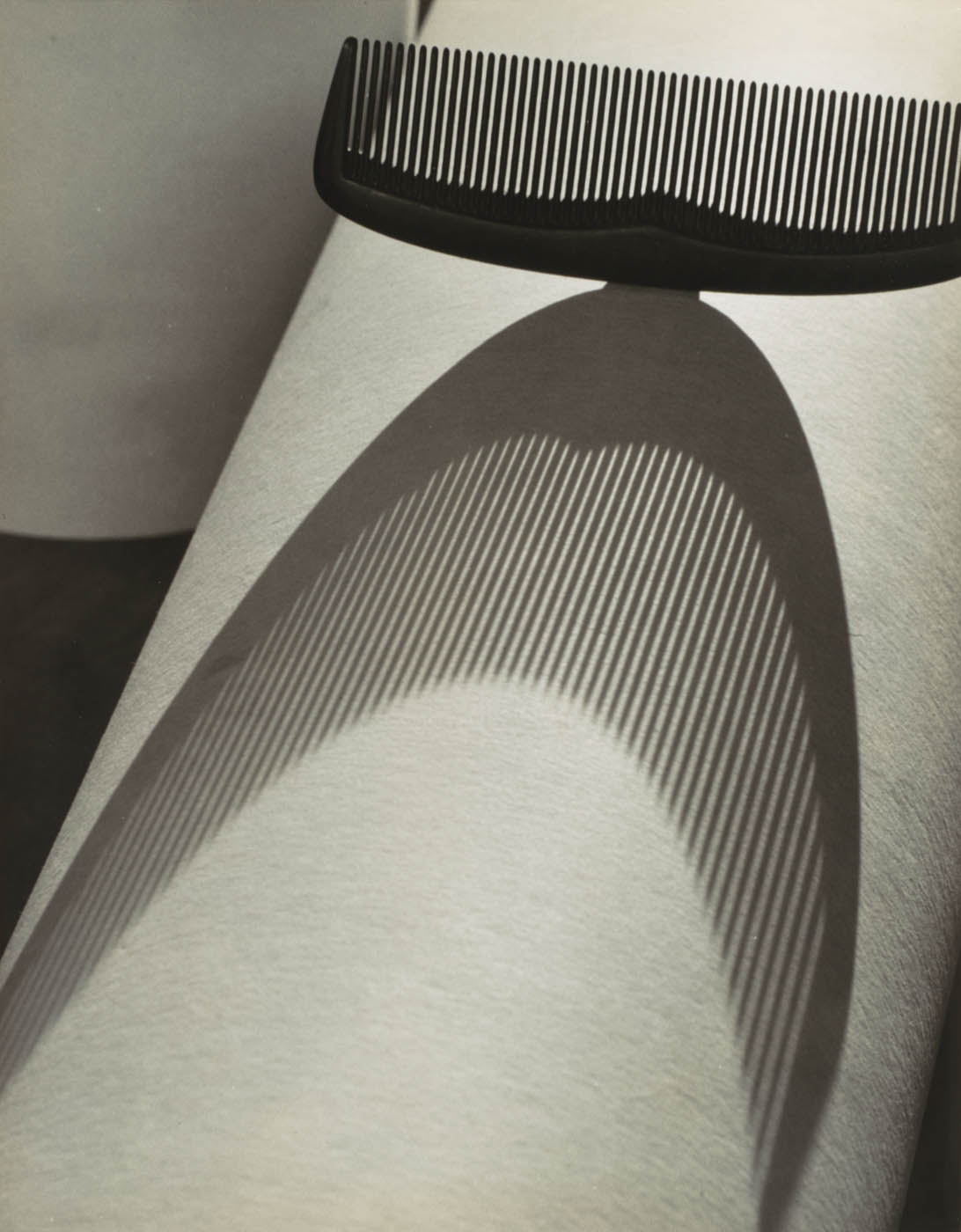
 

H. Raymond Ball (American, 1903-1983) 'Pocket Comb' 1930s


H. Raymond Ball (American, 1903-1983)
Pocket Comb
1930s
Gelatin silver print
Image: 25.2 x 19.8 cm (9 15/16 x 7 13/16 in.)
Frame: 20 x 16 in.
The Metropolitan Museum of Art
Ford Motor Company Collection, Gift of Ford Motor Company and John C. Waddell, 1987


The Montage

César Domela (Dutch, 1900-1992) '[Ruthsspiecher Tanks]' 1928


César Domela (Dutch, 1900-1992)
[Ruthsspiecher Tanks]
1928
Gelatin silver print
Image: 19.3 x 16.6 cm (7 5/8 x 6 9/16 in.)
Frame: 17 x 14 in.
The Metropolitan Museum of Art
Ford Motor Company Collection, Gift of Ford Motor Company and John C. Waddell, 1987
© 2024 Artists Rights Society (ARS), New York


Unknown (American) '[Montage for Packard Super Eight]' c. 1940


Unknown (American)
[Montage for Packard Super Eight]
c. 1940
Gelatin silver print
Image: 22.9 x 18.6 cm (9 x 7 5/16 in.)
Frame: 17 x 14 in.
The Metropolitan Museum of Art
Ford Motor Company Collection, Gift of Ford Motor Company and John C. Waddell, 1987


The Tableau

Installation view of the exhibition 'The Real Thing: Unpackaging Product Photography' at the Metropolitan Museum of Art, New York showing photographs from the section 'The Tableau' including at left, André Kertész's 'Fork' (1928); and at second and third right, ringl + pit's 'Dents' (c. 1934) and 'Komol' (1931)


Installation view of the exhibition The Real Thing: Unpackaging Product Photography at the Metropolitan Museum of Art, New York showing photographs from the section The Tableau including at left, André Kertész’s Fork (1928, below); and at second and third right, ringl + pit’s Dents (c. 1934) and Komol (1931, below)
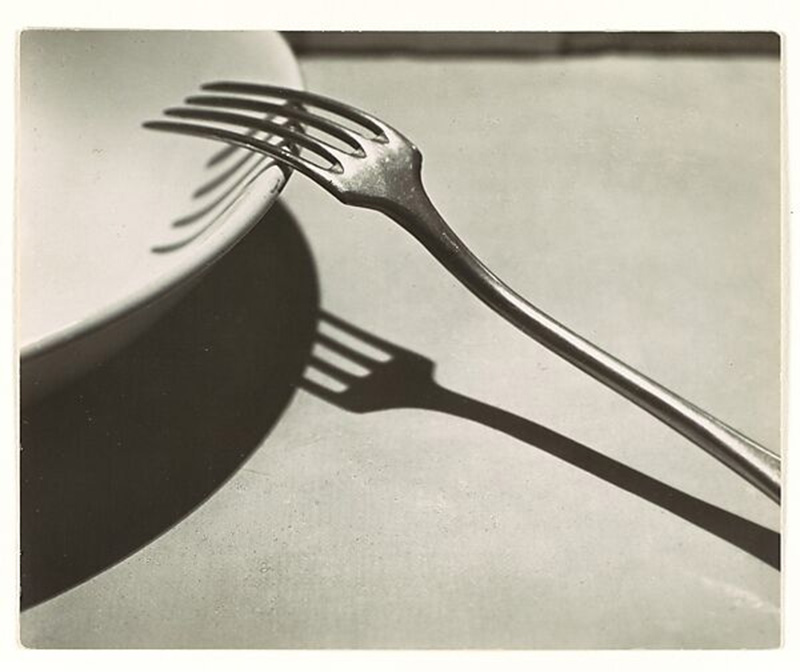
 

André Kertész (American born Hungary, 1894-1985) 'Fork' 1928


André Kertész (American born Hungary, 1894-1985)
Fork
1928
Gelatin silver print
7.5 x 9.2cm (2 15/16 x 3 5/8 in.)
The Metropolitan Museum of Art
Ford Motor Company Collection, Gift of Ford Motor Company and John C. Waddell, 1987
© The Estate of André Kertész / Higher Pictures


As a dinner party wound down in his friend Fernand Léger’s Paris studio, André Kertész found an unlikely tableau left on the table. In this chance encounter between fork and plate, he locates an incidental elegance. The photograph was never intended as an ad – Kertész instead chose it to represent his work in a series of European photography shows. On the exhibition circuit, it came to exemplify a strain of New Vision photography characterised by its clear-eyed reassessment of ordinary things. Only after this did Kertész grant permission for its use in a German silverware campaign. In the ad layout, the photograph was credited and uncropped – atypically presented as a true work of art. The truth of the ad was another question: despite its German rebranding, this fork remained a French department-store product.

Text from the Metropolitan Museum of Art website
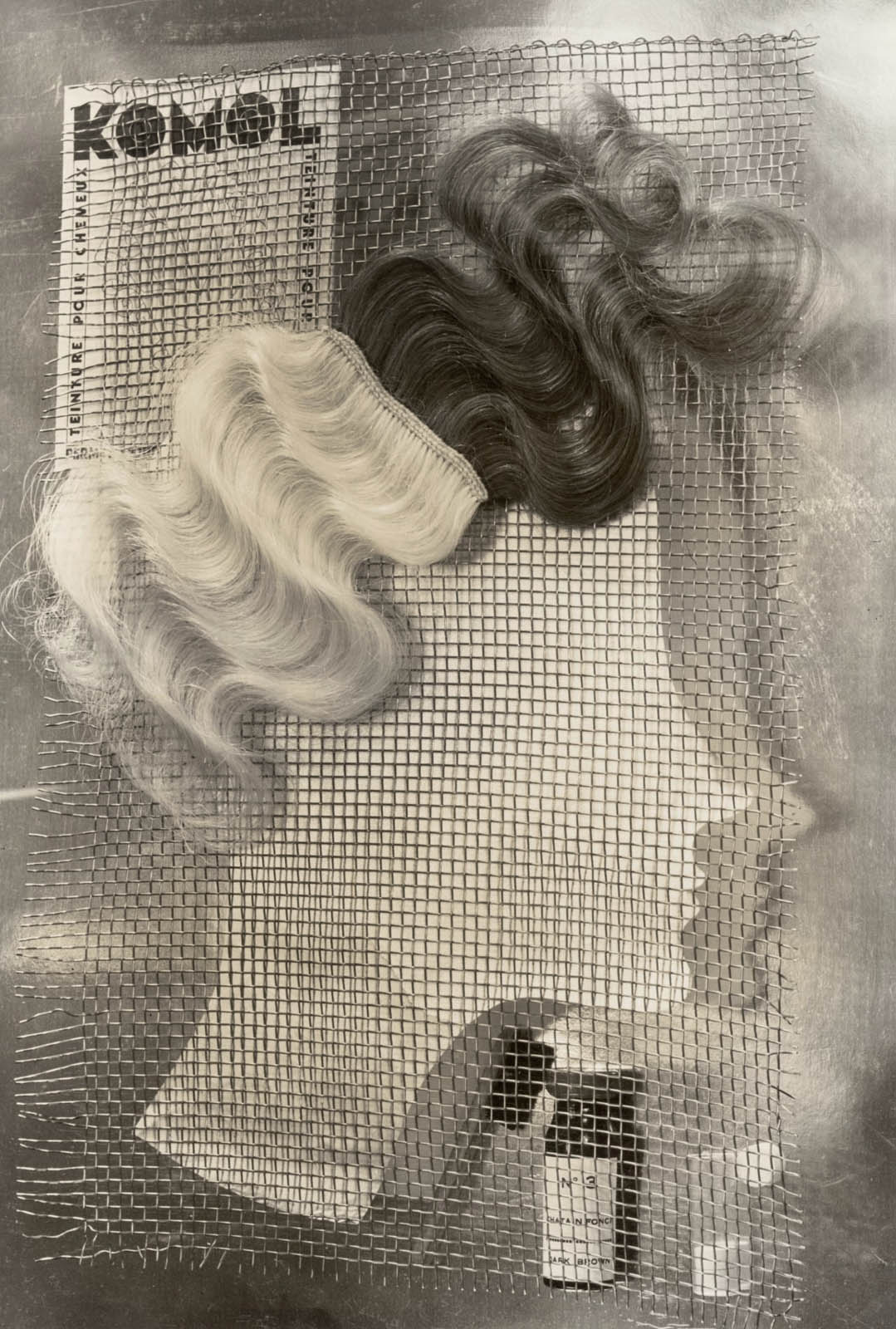
 

ringl+pit (German active 1930-1933) Grete Stern (German, 1904-1999) Ellen Auerbach (German 1906-2004) 'Komol' 1931


ringl + pit (German active 1930-1933)
Grete Stern (German, 1904-1999)
Ellen Auerbach (German 1906-2004)
Komol
1931
Gelatin silver print
Image: 35.9 x 24.4 cm (14 1/8 x 9 5/8 in.)
Frame: 20 x 15 5/8
The Metropolitan Museum of Art
Ford Motor Company Collection, Gift of Ford Motor Company and John C. Waddell, 1987
© ringl+pit, Courtesy Robert Mann Gallery
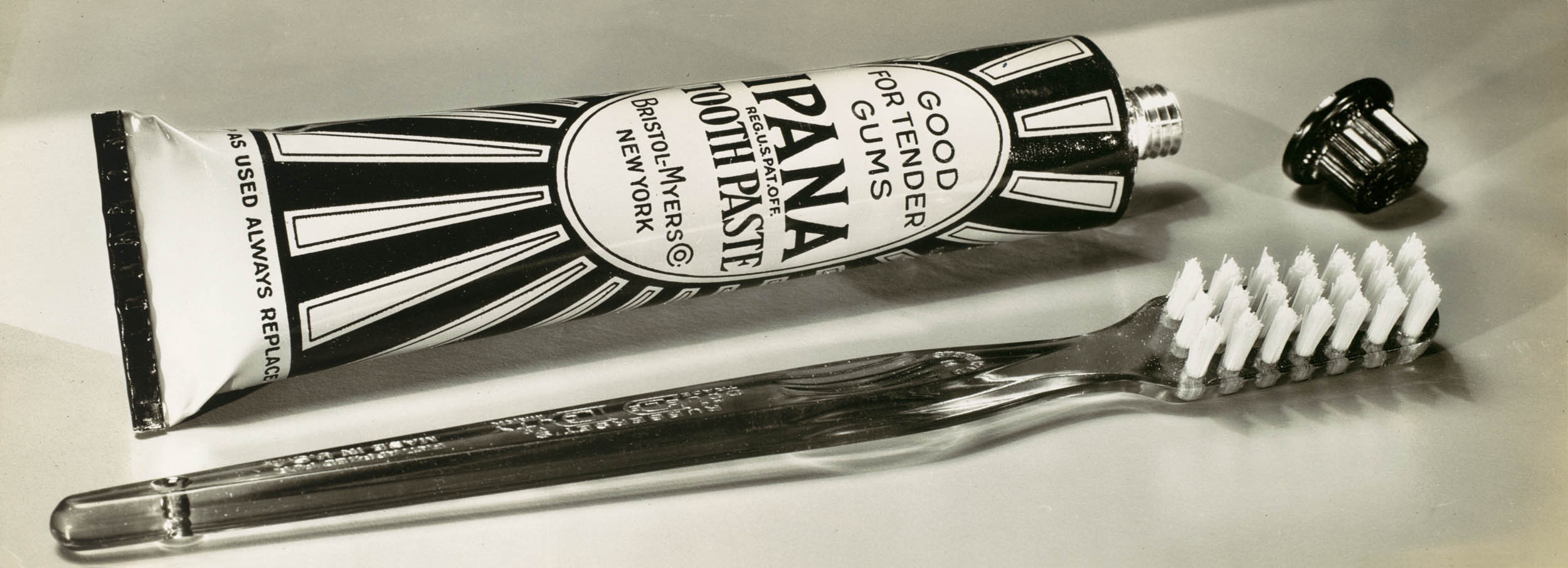
 

Grancel Fitz (American, 1894-1963) 'Ipana Toothpaste' c. 1937


Grancel Fitz (American, 1894-1963)
Ipana Toothpaste
c. 1937
Gelatin silver print
Image: 12.9 x 32.5cm (5 1/16 x 12 13/16 in.)
Frame: approx. 12 x 20 in.
The Metropolitan Museum of Art
Ford Motor Company Collection, Gift of Ford Motor Company and John C. Waddell, 1987


The Ideal User
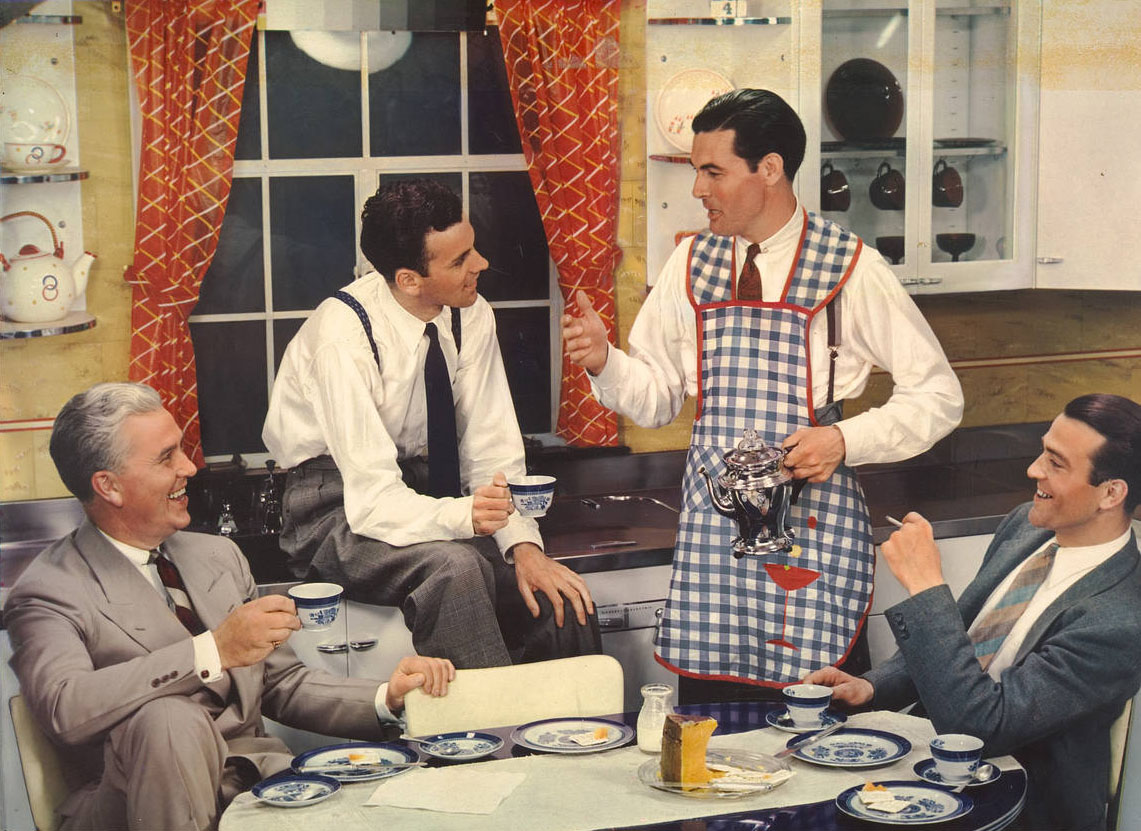
Paul Outerbridge Jr. (American, 1896-1959) 'The Coffee Drinkers' 1940


Paul Outerbridge Jr. (American, 1896-1959)
The Coffee Drinkers
1940
Carbro print
Image (overall): 27 x 38 cm (10 5/8 x 14 15/16 in.)
Mount: 40.7 x 50.7cm (16 x 19 15/16in.)
Frame: 18 1/2 x 22 1/2 in.
The Metropolitan Museum of Art
Ford Motor Company Collection, Gift of Ford Motor Company and John C. Waddell, 1987


With a background in staging and an unwavering belief in the power of images to inspire a better life, Paul Outerbridge Jr. was well suited to the directorial tasks of advertising photography. For A&P Grocery’s Eight O’Clock Coffee, he orchestrated this scene in the display kitchen of a department store, painstakingly diagramming the setup in advance.

“How’d you learn to make such swell coffee, Dick?” the copy teased, when the ad ran in LIFE magazine. Such work exceeds the sum of its parts, selling more than just a jolt of caffeine. The after-dinner air of repose courts camp, conjuring an intimate blend of leisure and power. With it, Outerbridge offers the consumer the chance to be a man among men, all for the price of a can of coffee.

Text from the Metropolitan Museum of Art website


Some expressive quotations about the construction of the self, commodities and consumer culture


“Although the value of commodities is materially embodied in them, it is not visible in the objects themselves as a physical property. The illusion that value resides in objects rather than in the social relations between individuals and objects Marx calls commodity fetishism. When the commodity is fetishized, the labour that has gone into its production is rendered invisible.”

Rosemary Hennessey. “Queer Visibility in Commodity Culture,” Chapter 6 in Nicholson, Linda and Seidman, Steven (eds.,). Social Postmodernism – Beyond Identity Politics. Cambridge: Cambridge University Press, 1995, pp. 161-162.


“When the commodity is dealt with merely as a matter of signification, meaning, or identities, only one of the elements of its production – the process of image making it relies on – is made visible. The exploitation of human labour on which the commodities appearance as an object depends remains out of sight.”

Rosemary Hennessey. “Queer Visibility in Commodity Culture,” Chapter 6 in Nicholson, Linda and Seidman, Steven (eds.,). Social Postmodernism – Beyond Identity Politics. Cambridge: Cambridge University Press, 1995, p. 162.


“The processes of capitalist relationships reproduce themselves in the consciousness of man and, in turn, reproduce a society that reflects an image of man as the seller and buyer of work, talent, aspiration and fantasies.”

Frankl, G. The Failure of the Sexual Revolution. Hove: Kahn and Averill, 1974, p. 26 quoted in Evans, David. Sexual Citizenship, The Material Construction of Sexualities. London: Routledge, 1993, p. 47.


“What was achieved was unprecedented scientific and technical progress and, eventually, the subordination of all other values to those of a world market which treats everything, including people and their labour and their lives and their deaths, as a commodity.”

John Berger and Jean Mohr. Another Way of Telling. New York: Pantheon Books, 1982, p. 99.


“Consumption produces production … because a product becomes a real product only by being consumed. For example, a garment becomes a real garment only in the act of being worn; a house were no one lives is in fact not a real house; thus the product, unlike a mere natural object, proves itself to be, becomes, a product only through consumption. Only by decomposing the product does consumption give the product the finishing touch.”

Karl Marx and Frederick Engels. On Literature and Art. New York: International General, 1973, p. 91 quoted in Wolff, Janet. The Social Production of Art. Basingstoke: Macmillan, 1993, p. 95.


“… the propaganda of consumption turns alienation itself into a commodity. It addresses itself to the spiritual desolation of modern life and proposes consumption as the cure. It not only promises to palliate all the old unhappiness to which flesh is heir; it creates or exacerbates new forms of unhappiness – personal insecurity, status anxiety …”

Christopher Lasch. The Culture of Narcissism. New York: W.W.Norton and Company, 1978, p.73.


“Consumer culture is notoriously awash with signs, images, publicity. Most obviously, it involves an aestheticization of commodities and their environment …

Firstly, problems of status and identity … promote a new flexibility in the relations between consumption, communication and meaning. It is not so much that goods and acts of consumption become more important in signalling status (they were always crucial) but that both the structure of status and the structure of meaning become unstable, flexible, and highly negotiable. Appearance becomes a privileged site of strategic action in unprecedented ways.

Secondly, the nature of market exchange seems intrinsically bound up with aestheticization. As indicated above, commodities circulate through impersonal and anonymous networks: the split between producer and consumer extends beyond simple commissioning (where a personal relationship still exists) to the production for an anonymous general public … Haug (1986) theorizes this in the notion of ‘commodity aesthetics’: the producer must create an image of use value in which potential buyers can recognize themselves. All aspects of the product’s meaning and all channels through which its meaning can be constructed and represented become subject to intense and radical calculation.

This gives rise to some of the central issues of sociological debate on consumer culture. On the one hand, the eminently modern notion of the social subject as a self-creating, self-defining individual is bound up with self-creation through consumption: it is partly through the use of goods and services that we formulate ourselves as social identities and display these identities. This renders consumption as the privileged site of autonomy, meaning, subjectivity, privacy and freedom. On the other hand, all these meanings around social identity and consumption become objects of strategic action by dominating institutions. The sense of autonomy and identity in consumption is placed constantly under threat.”

Don Slater. Consumer Culture and Modernity. London: Polity Press, 1997, p. 31.


The Metropolitan Museum of Art
1000 Fifth Avenue at 82nd Street
New York, New York 10028-0198
Phone: 212-535-7710

Opening hours:
Thursday – Tuesday 10am – 5pm
Closed Wednesday

The Metropolitan Museum of Art website

LIKE ART BLART ON FACEBOOK

Back to top

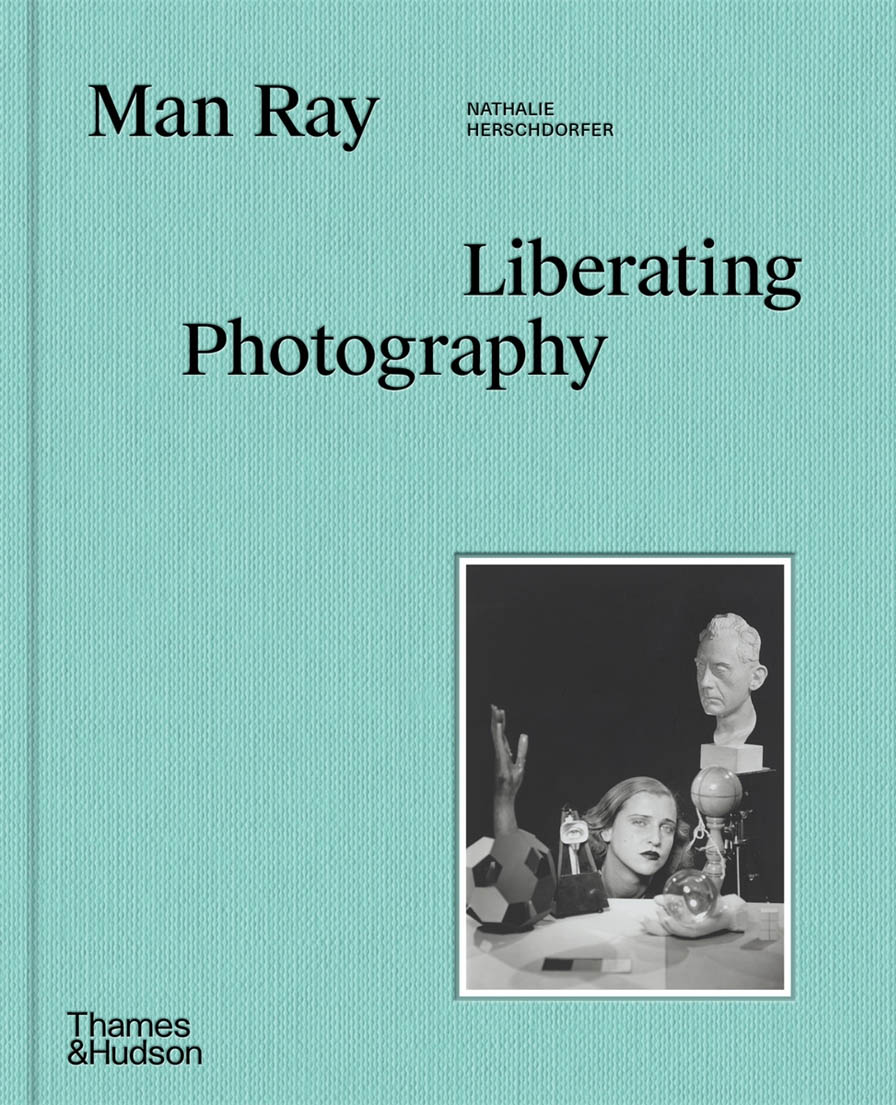
Exhibition: ‘Man Ray. Liberating Photography’ at the Photo Elysee, Lausanne

Exhibition dates: 29th March – 4th August 2024


Man Ray (American, 1890-1976) 'Dora Maar' 1936


Man Ray (American, 1890-1976)
Dora Maar
1936
Gelatin silver print
© Man Ray 2015 Trust / 2024, ProLitteris, Zurich. All rights reserved
Without permission from ProLitteris, the reproduction or any use of the individual and private consultation are prohibited


Henriette Theodora Markovitch (22 November 1907 – 16 July 1997), known as Dora Maar, was a French photographer, painter, and poet. Maar is very well known for her role as Picasso’s lover, subject, and muse. He abused her. Maar photographed the successive stages of the creation of Guernica. It is the gelatin silver works of the surrealist period that remain the most sought after by admirers: Portrait of Ubu (1936), 29 rue d’Astorg, black and white, collages, photomontages or superimpositions.


Man Ray is hailed as one of the greatest photographers of the 20th century, but I admit I have no real liking for most of his work.

I remember seeing the first large-scale exhibition of Man Ray’s photography to have been presented in Australia at the National Gallery of Victoria in 2004. In text about the exhibition the NGV states, “Man Ray produced some of the most iconic photographs of the 20th century: eloquent portraits, dreamy solarised nudes, divine fashion photography and enigmatic images that continue to delight and astonish… A superb technician and a highly inventive artist, Man Ray always denied that he had any ability with the camera or in the darkroom. However, as the exhibition reveals, this is clearly not the case. The exhibition emphasises Man Ray’s techniques of framing, cropping, solarising and use of the photogram to present a new ‘surreal’ way of seeing, which continues to fascinate audiences today.”1

I came away from that exhibition thinking what a great technician Man Ray was, almost like a photographic scientist, an alchemist from another world conjuring small, intense images of clinical focus, but where was the emotional power of the images, where was their … what am I trying to enunciate … where was their vibrational energy. They were ice cold.2

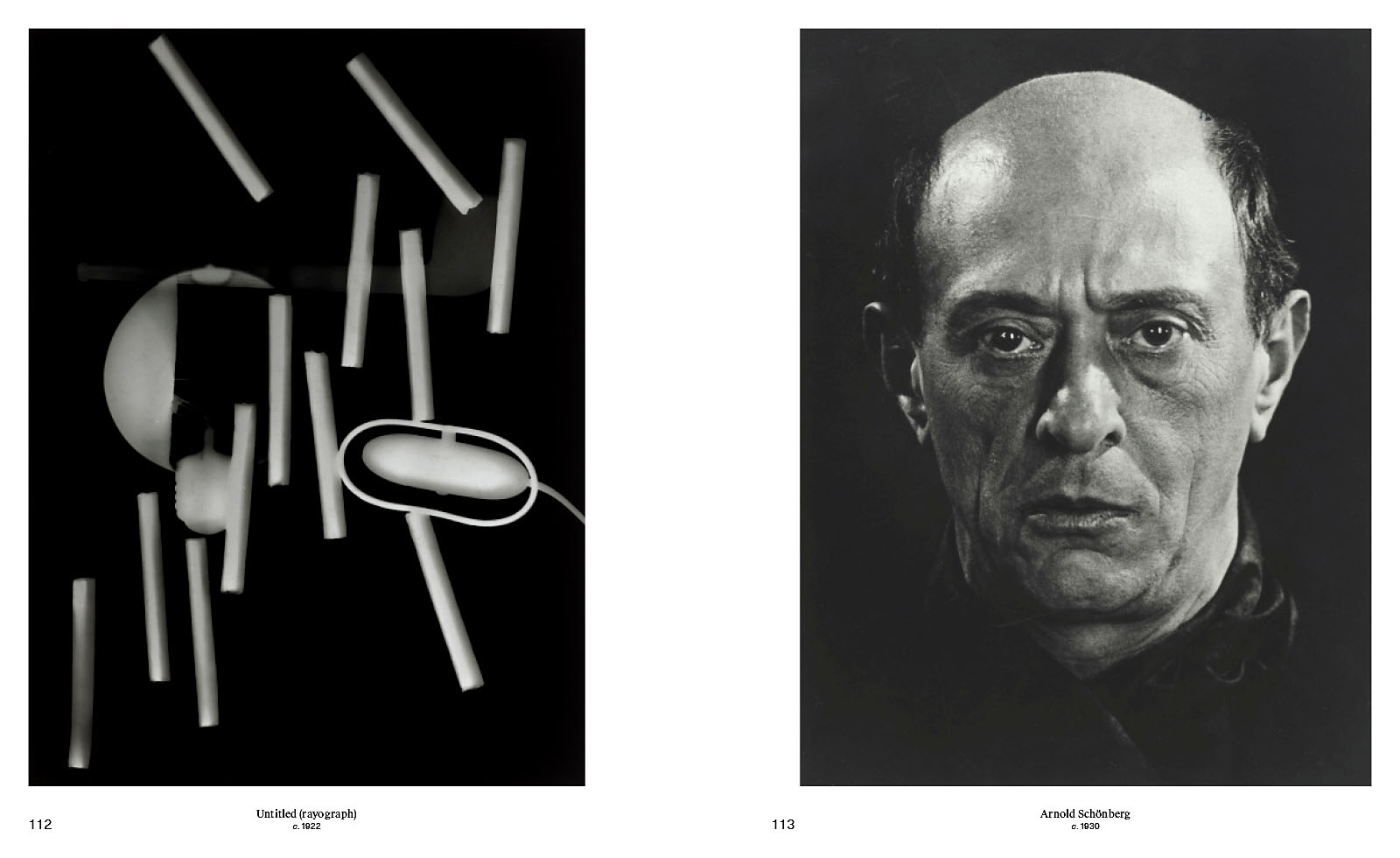
I feel that Man Ray’s greatest artistic expression, his greatest music, were his photograms, “which he coined “rayographs” after himself. He explained that working with light in the darkroom allowed him to free himself from painting.” (Press release) As Man Ray himself said of his rayographs, “Like the undisturbed ashes of an object consumed by flames these images are oxidised residues fixed by light and chemical elements of an experience, an adventure, not an experiment. They are the result of curiosity, inspiration, and these words do not pretend to convey any information.”3

“What the rayographs do not deny, however, is the subjectivity of the artist, his skill at placing the objects on the photographic paper, expressed in their dream-like nature, both a subjective ephemerality (because they could only be produced once) and an ephemeral subjectivity (because they were expressions of Man Ray’s fantasies, and therefore had little substance). Through an alchemical process the latent images emerge from the photographic paper, representations of Man Ray’s fantasies as embodied in the ‘presence’ of the objects themselves, in the surface of the paper.”4

(See a section of my paper “The Delicious Fields: Exploring Man Ray’s Rayographs in a Digital Future” (2004) below in the posting).


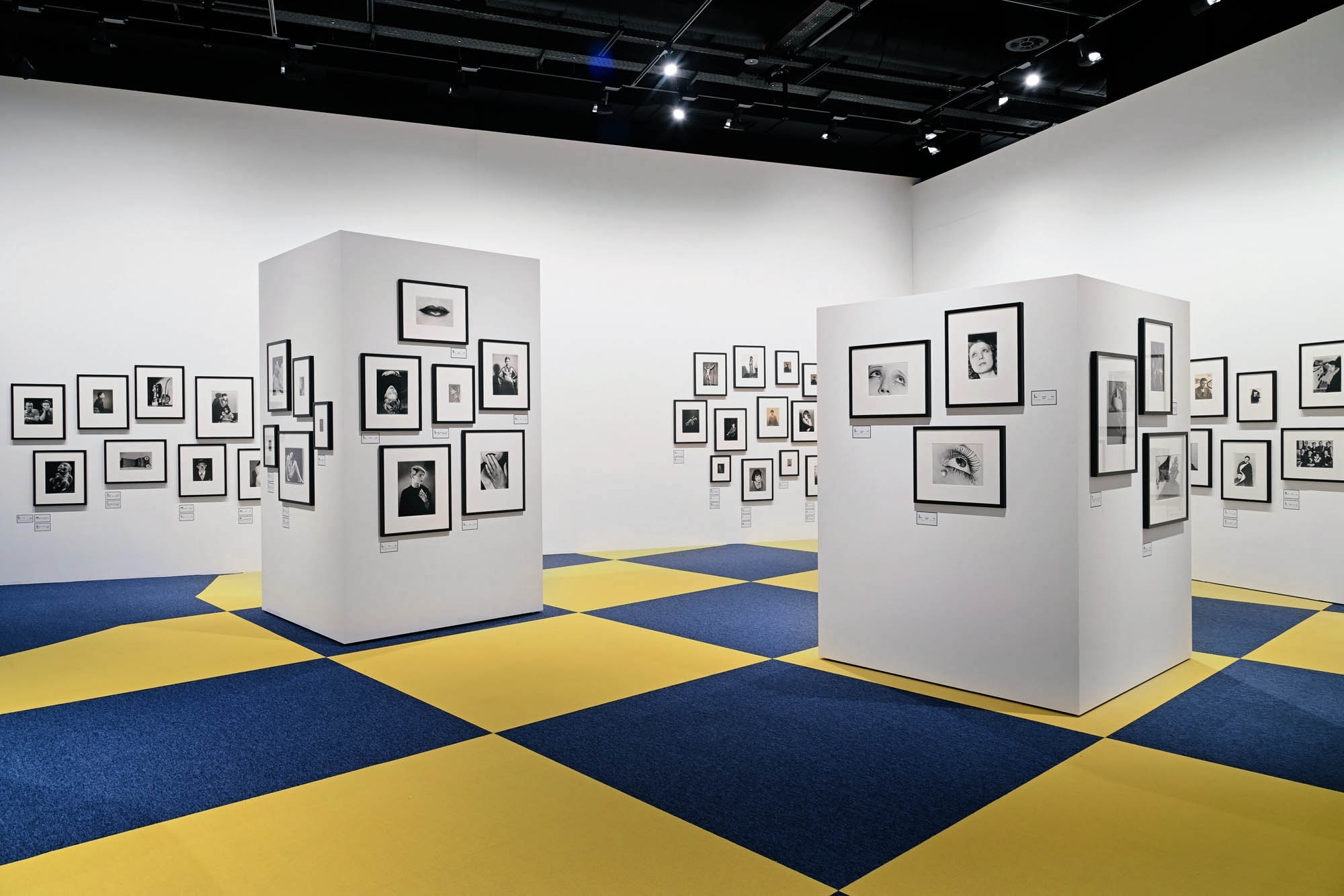
On a final note, while it is fantastic to see such a large group of Man Ray’s photographs together in one space I am amazed, flabbergasted even, at the blue and yellow colour scheme on the floor of the gallery. What were they thinking? How can you appreciate black and white images, which are never actually black and white but always have subtle colours of either brown and blue, warm and cool, which need to be appreciated in a neutral colour space … when throughout the gallery your eye is constantly overwhelmed (by reflection from the gallery lights or subconsciously, even) by a sea of blue and yellow tiles. It makes no sense aesthetically, empirically or emotionally.

Dr Marcus Bunyan


1/ Anonymous. “Man Ray,” on the National Gallery of Victoria website Nd [Online] Cited 18/07/2024

2/ This coldness can be seen in the photographs from the book at the bottom of the posting, where borders frame faces and are inverted, where objects in rayographs are paired opposite objective portraits, surface representations a human visage.

3/ Man Ray quoted in Janus (trans. Murtha Baca). Man Ray: The Photographic Image (London: Gordon Fraser, 1980), 213 quoted in Marcus Bunyan. “The Delicious Fields: Exploring Man Ray’s Rayographs in a Digital Future,” published in The University of Queensland Vanguard Magazine: ‘Man Ray: Life, Work and Themes’, 2004, Triad series #2, pp. 40-46. ISBN 0-9756043-0-9

4/ Bunyan, op cit.,


Many thankx to the Photo Elysee for allowing me to publish the photographs in the posting. Please click on the photographs for a larger version of the image.


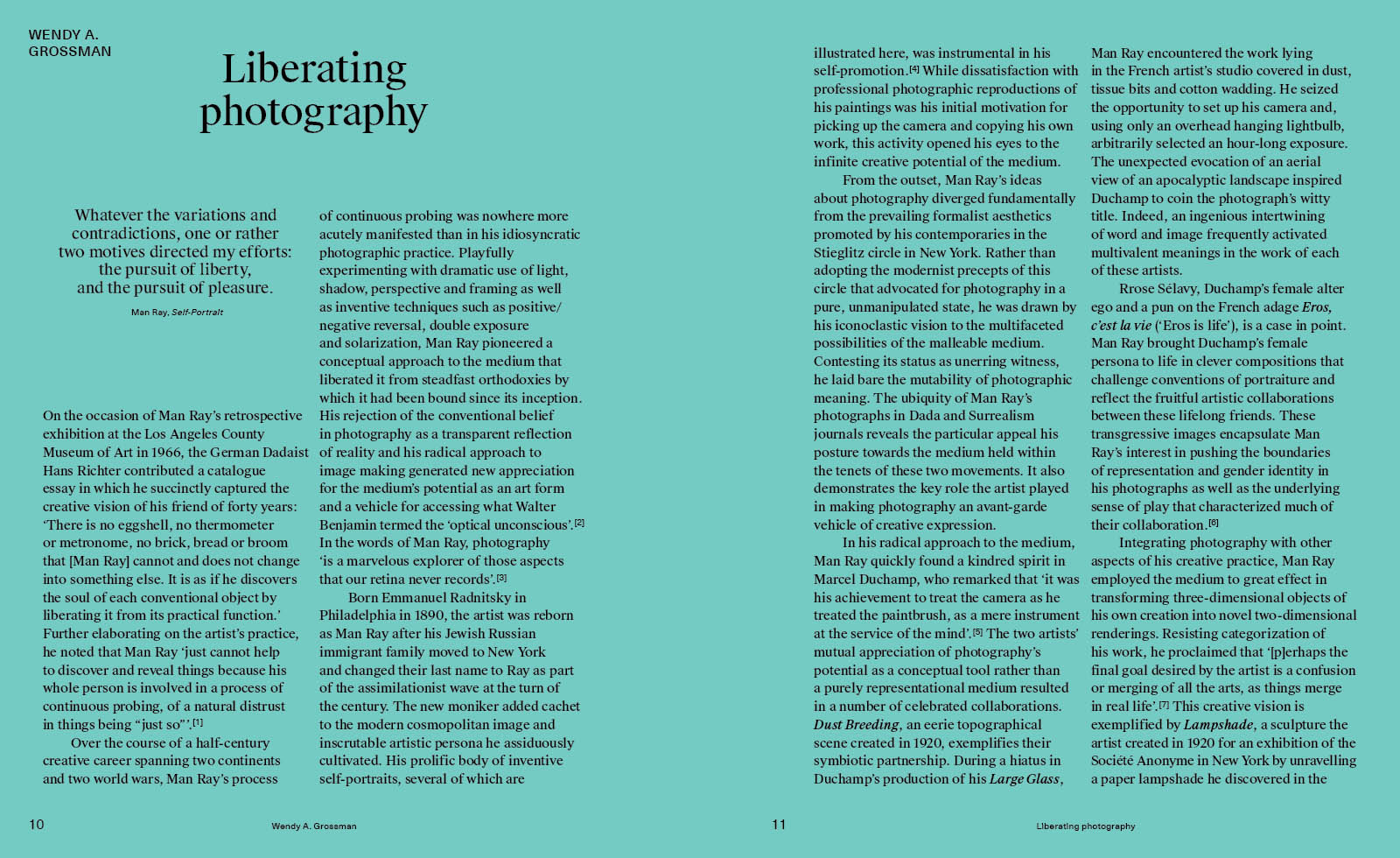
“There is no eggshell, no thermometer or metronome, no brick, bread or broom that [Man Ray] cannot and does not change into something else. It is as if he discovers the soul of each conventional object by liberating it from its practical function…. [Man Ray] just cannot help to discover and reveal things because his whole person is involved in a process of continuous probing, of a natural distrust in things being “just so”.”


Hans Richter 1966


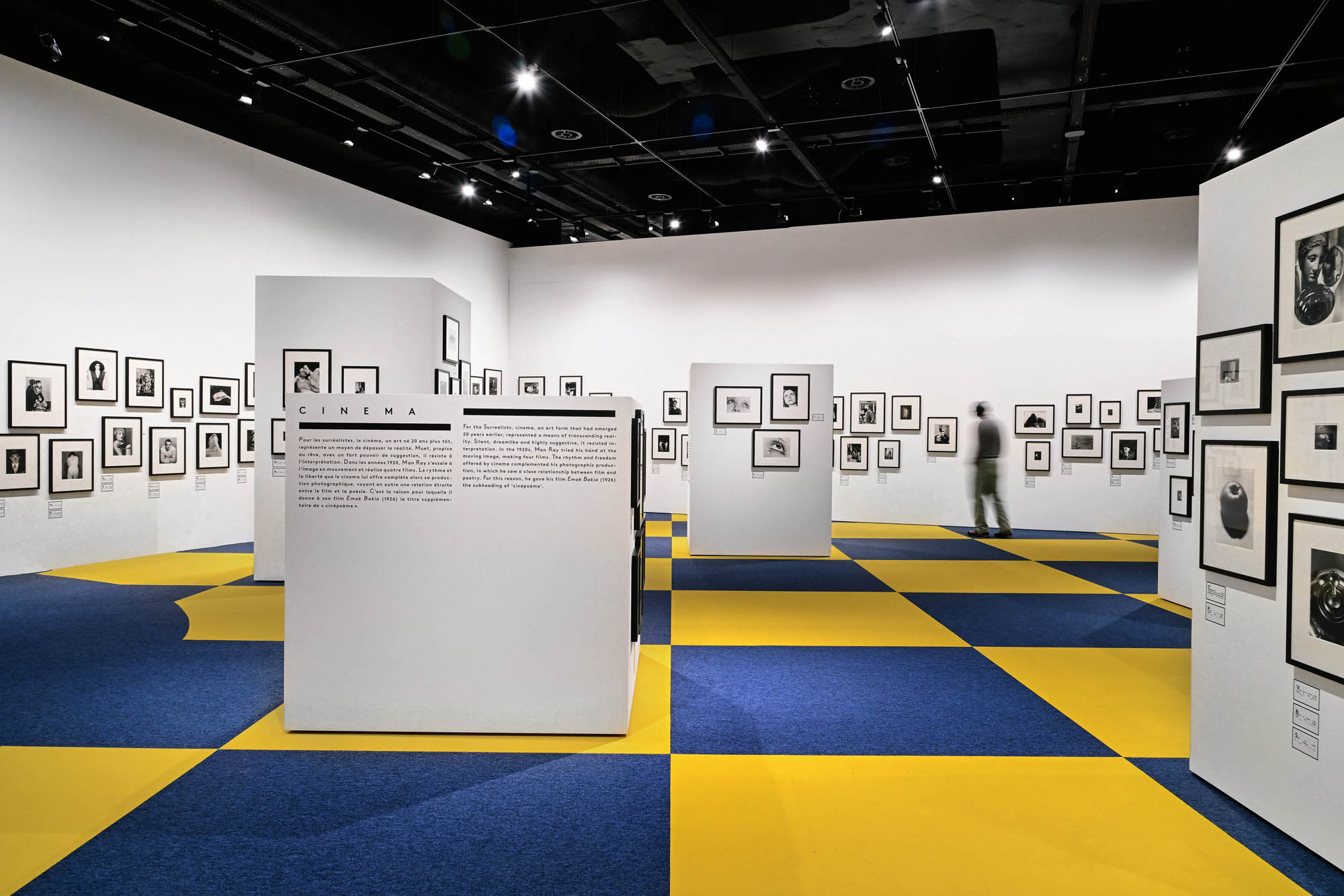
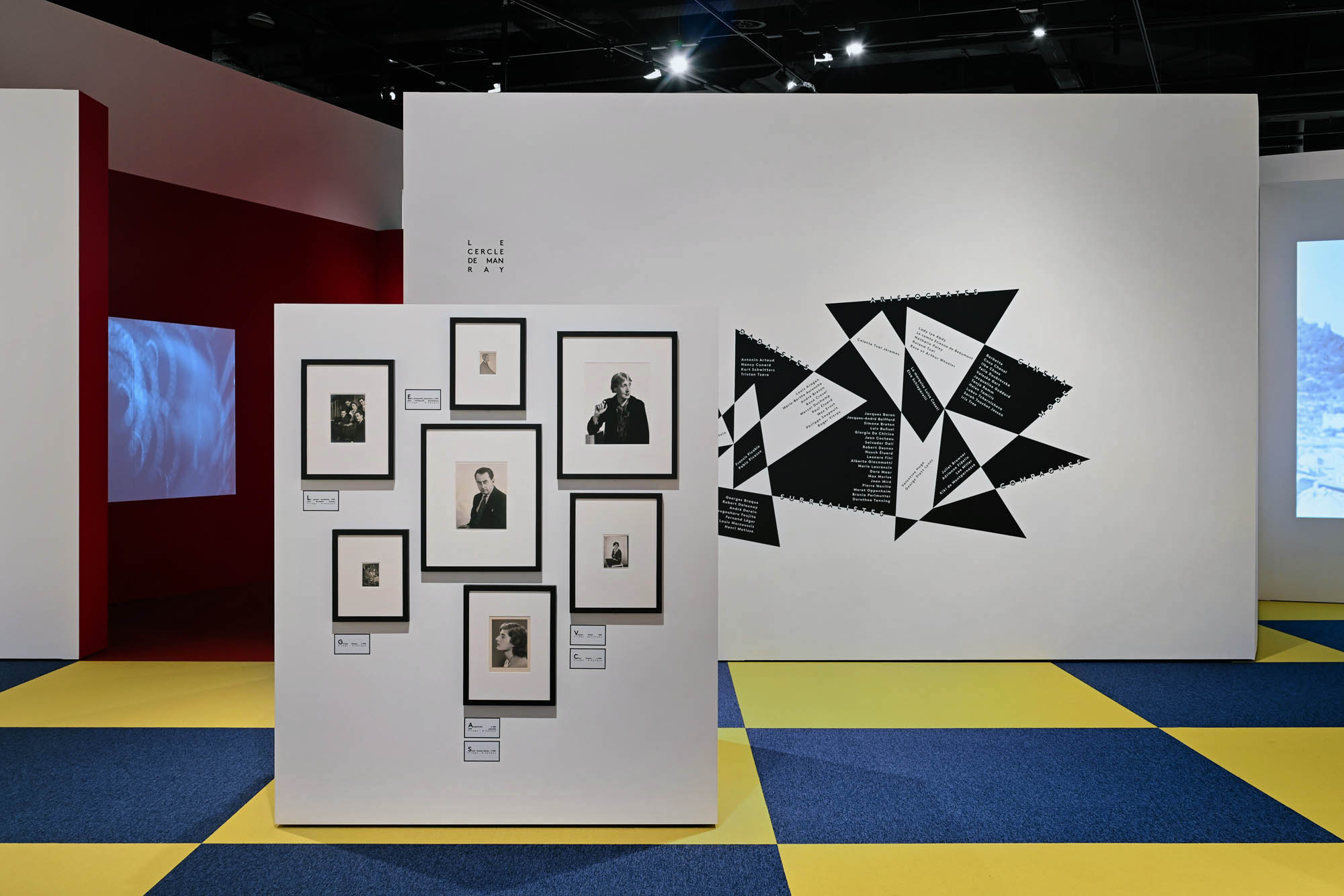
Installation view of the exhibition 'Man Ray. Liberating Photography' at the Photo Elysee, Lausanne

Installation view of the exhibition 'Man Ray. Liberating Photography' at the Photo Elysee, LausanneInstallation view of the exhibition 'Man Ray. Liberating Photography' at the Photo Elysee, LausanneInstallation view of the exhibition 'Man Ray. Liberating Photography' at the Photo Elysee, LausanneInstallation view of the exhibition 'Man Ray. Liberating Photography' at the Photo Elysee, LausanneInstallation view of the exhibition 'Man Ray. Liberating Photography' at the Photo Elysee, LausanneInstallation view of the exhibition 'Man Ray. Liberating Photography' at the Photo Elysee, Lausanne showing at right, Man Ray's 'Nude, Kiki de Montparnasse' 1927; 'Artichokes in Bloom' 1934; and 'Still life Plaster Venus with Fruit' c. 1936


Installation views of the exhibition Man Ray. Liberating Photography at the Photo Elysee, Lausanne, showing in the bottom image at right, Man Ray’s Nude, Kiki de Montparnasse 1927; Artichokes in Bloom 1934; and Still life Plaster Venus with Fruit c. 1936
© Khashayar Javanmardi and Photo Elyse Plateforme


“To be totally liberated from painting and its aesthetic implications” was the first avowed aim of Man Ray (United States, 1890-1976), who began his career as a painter. Photography was one of the major breakthroughs of modern art and led to a rethinking of notions of representation. In the 1920s and 30s, the photographic medium came to the forefront of the avant-garde movement, and Man Ray soon made a name for himself with his virtuosity. As a studio portraitist and fashion photographer, but also as an experimental artist who explored the potential of photography with the people around him, Man Ray was a multi-faceted figure. Considered one of the 20th century’s major artists, close to Dada and then Surrealism, he photographed Paris’ artistic milieu between the wars.

Exhibition

Curated from a private collection, the exhibition explores the artist’s extensive social contacts while presenting some of his most iconic works. In addition to providing a dazzling who’s who of the Parisian avant-garde, the works also highlight the innovations in photography made by Man Ray in Paris in the 1920s and 30s.

Artist

He took his first photographs in New York in the 1910s, but it was in Paris that his career took off. Even before opening his studio in Montparnasse in 1922, Man Ray worked for a year in his hotel room. The photographer’s reputation grew, and before long, the artist’s studio was flourishing. Fashion photographs alternated with portraits of the artistic figures of the day who had made Paris’ notoriety: Marcel Duchamp, whom he met in New York in 1915 and who introduced him to the Parisian artistic elite, as well as Robert Delaunay, Georges Braque, Alberto Giacometti and Pablo Picasso, among others, who posed for the photographer. His portraits also included Ballets Russes dancers and guests at the Count de Beaumont’s ball.

As soon as he arrived in Paris in the summer of 1921, Man Ray immediately became part of the Parisian intelligentsia of the Roaring Twenties. He met Jean Cocteau, who was himself a fixture of the Parisian art scene, André Breton, Francis Picabia, Joan Miró, Salvador Dalí, Henri Matisse and Max Ernst. He also met Gertrude Stein, Virginia Woolf, Igor Stravinsky, Ernest Hemingway, Arnold Schoenberg and James Joyce, whom he photographed for the Anglo-American bookshop Shakespeare and Company. But Man Ray was not merely content to have celebrities pose in his studio or to explore the female nude genre by working with those he considered his muses, such as Lee Miller, Kiki de Montparnasse, Meret Oppenheim and Adrienne Fidelin.

Creative Process

Man Ray also experimented in the darkroom, transforming the photographic medium into a powerful tool of artistic expression, even going so far as to do away with the camera when, in 1921-1922, he began creating photograms, which he coined “rayographs” after himself. He explained that working with light in the darkroom allowed him to free himself from painting, so convinced was he of the visual power of his experiments. Also in the 1920s, he experimented with the moving image and produced four films. The rhythm and freedom offered by the cinema complemented his photographic work, in which he saw a close relationship between film and poetry. This is why he gave his film Emak Bakia (1926) the subheading of “cinépoème”. Without ever abandoning portraiture, he experimented with other techniques in the 1930s: solarisation, overprinting and other distortions.

From the outset, photography has been more than a simple process of reproduction. For him, images were not taken fleetingly, but meticulously realised indoors. Unlike Henri Cartier-Bresson who opted for the spontaneous gesture and saw the street as a privileged playground, Man Ray composed and staged his photographs. The studio provided him with a space in which to explore his imagination. Some of the themes dear to the Surrealists can be found in his work: femininity, sexuality, strangeness, the boundary between dream and reality. His nude studies were part of his artistic research, which he developed in close collaboration with his companions who were part of the Parisian art scene. Kiki de Montparnasse – the woman with the f-holes of a violin on her back – whose real name was Alice Prin, was a dancer, singer, actress and painter who posed for artists such as Chaïm Soutine and Kees van Dongen. Lee Miller, a fellow New Yorker like him, had begun a modelling career in the United States but wanted to move to the other side of the camera. She met the photographer in Paris in 1929 when she was 22-years old, and became active in the Surrealist movement. More than a muse, she became his collaborator, learning photography at his side. Together, they discovered the technique of solarisation. Another artist with whom Man Ray had a professional and romantic relationship was the Swiss artist Meret Oppenheim, who was close to the Surrealist scene before pursuing an independent career as an artist.

Man Ray loved the freedom his photographic creations afforded him, and portraits and fashion photography enabled him to earn a living. It was in his studio that he embarked on a series of visual experiments. His portraits, which are relatively classical in style, testify not only to his commercial success, but also to his great sociability. Artists from Montparnasse, Surrealists, fashion and nightlife celebrities, patrons of the arts, Americans in Paris – the entire artistic elite – passed through his studio, as was the case with Nadar in the 19th century. Almost 50 years after Man Ray’s death, his photographs continue to fascinate us. His impact on the history of the medium is undeniable, and he served as an inspiration to photographers of the caliber of Berenice Abbott, Bill Brandt and Lee Miller. Man Ray remains one of the most famous photographers of the 20th century. He never stopped creating, without prejudice or constraint.

Press release from the Photo Elysee


Man Ray (American, 1890-1976) 'Noire et blanche' 1926


Man Ray (American, 1890-1976)
Black and White
1926
Gelatin silver print
© Man Ray 2015 Trust / 2024, ProLitteris, Zurich. All rights reserved
Without permission from ProLitteris, the reproduction or any use of the individual and private consultation are prohibited


Man Ray (American, 1890-1976) 'Larmes' (Tears) 1930


Man Ray (American, 1890-1976)
Larmes (Tears)
1930
Gelatin silver print
© Man Ray 2015 Trust / 2024, ProLitteris, Zurich. All rights reserved
Without permission from ProLitteris, the reproduction or any use of the individual and private consultation are prohibited


Man Ray (American, 1890-1976) 'Head, New York' 1920


Man Ray (American, 1890-1976)
Head, New York
1920
Gelatin silver print
© Man Ray 2015 Trust / 2024, ProLitteris, Zurich. All rights reserved
Without permission from ProLitteris, the reproduction or any use of the individual and private consultation are prohibited


Man Ray (American, 1890-1976) 'Alice Prin, known as Kiki de Montparnasse' Around 1925


Man Ray (American, 1890-1976)
Alice Prin, known as Kiki de Montparnasse
Around 1925
Gelatin silver print
© Man Ray 2015 Trust / 2024, ProLitteris, Zurich. All rights reserved
Without permission from ProLitteris, the reproduction or any use of the individual and private consultation are prohibited


Man Ray (American, 1890-1976) 'Nancy Cunard' c. 1925


Man Ray (American, 1890-1976)
Nancy Cunard
c. 1925
Gelatin silver print
© Man Ray 2015 Trust / 2024, ProLitteris, Zurich. All rights reserved
Without permission from ProLitteris, the reproduction or any use of the individual and private consultation are prohibited


Man Ray (American, 1890-1976) 'Jacqueline Goddard' c. 1932


Man Ray (American, 1890-1976)
Jacqueline Goddard
c. 1932
Solarised gelatin silver print
© Man Ray 2015 Trust / 2024, ProLitteris, Zurich. All rights reserved
Without permission from ProLitteris, the reproduction or any use of the individual and private consultation are prohibited


Man Ray (American, 1890-1976) 'Paul Eluard and André Breton' 1939


Man Ray (American, 1890-1976)
Paul Eluard and André Breton
1939
Gelatin silver print
© Man Ray 2015 Trust / 2024, ProLitteris, Zurich. All rights reserved
Without permission from ProLitteris, the reproduction or any use of the individual and private consultation are prohibited


Few names in the history of photography are as illustrious at that of Man Ray, born Emmanuel Radnitzsky (1890-1976) in the United States. Studio portraitist, fashion photographer and experimental artist, he explored the many potentialities of photography at a time when the medium was asserting itself as the very expression of modernity. Mingling with the Paris art scene of the early 20th century, and a close friend of Marcel Duchamp and André Breton, he was one of the few photographers to be mentioned among the Dada artists and Surrealists.

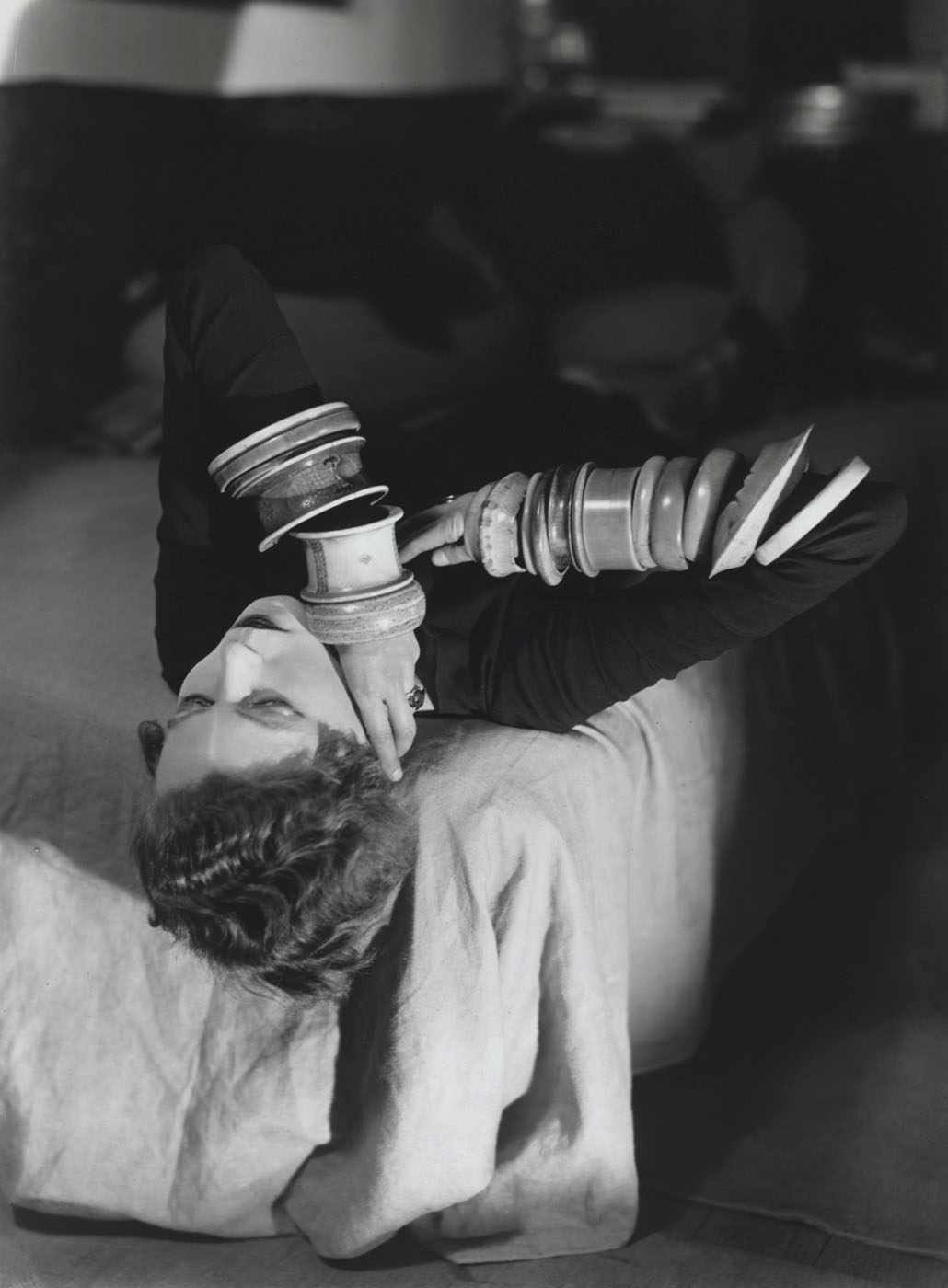
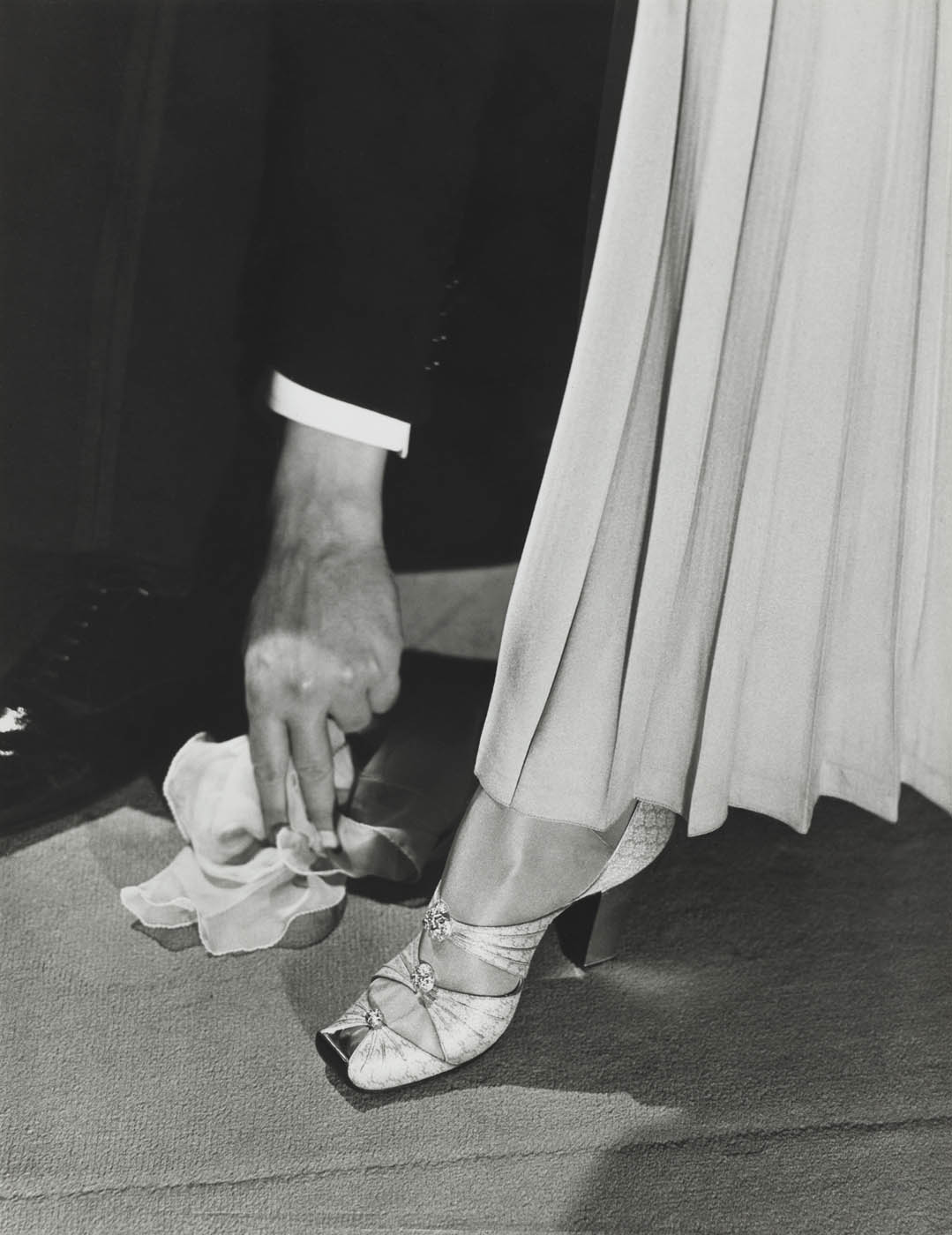
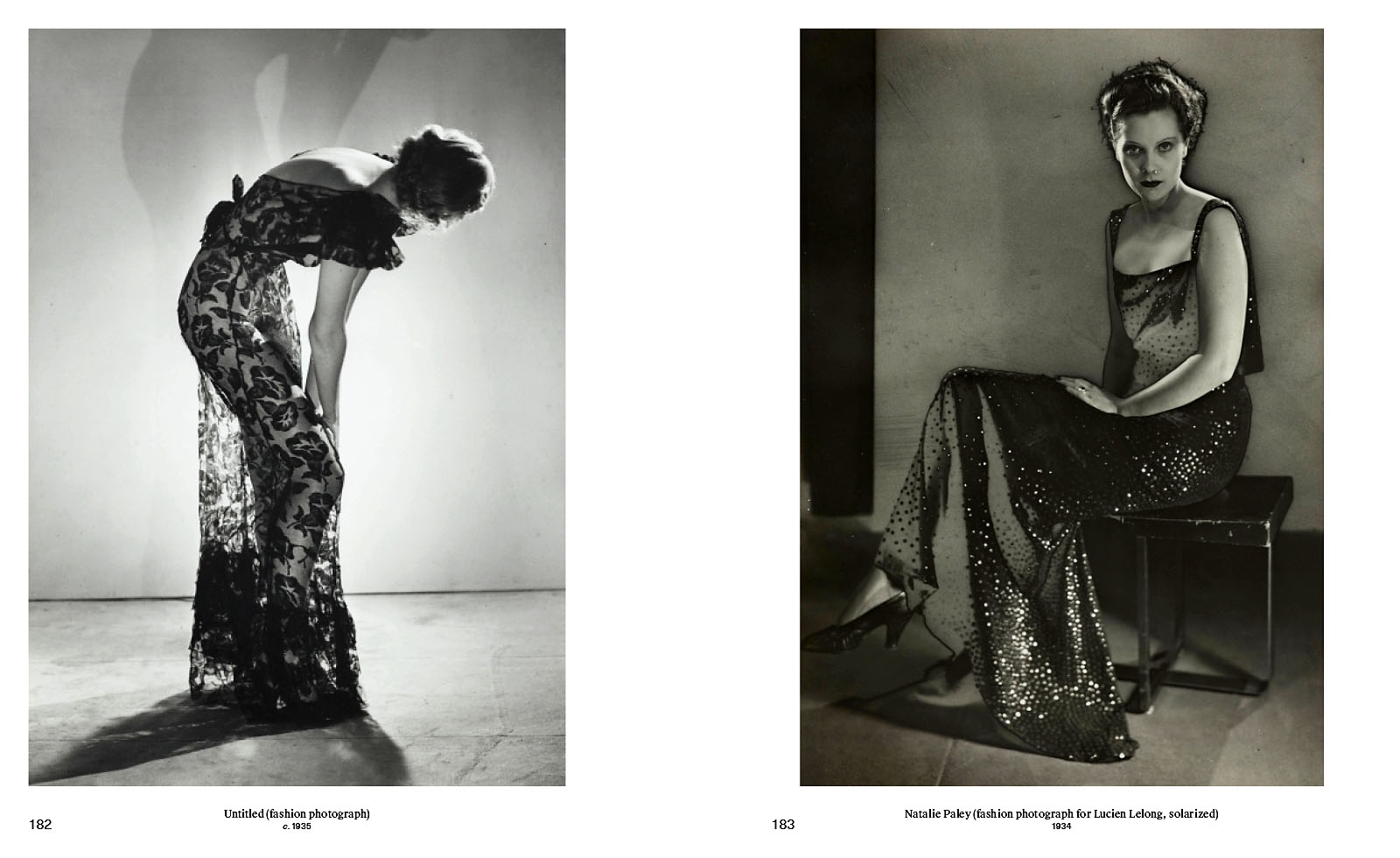
When Man Ray decided to become a professional photographer, it was primarily because he saw it as a way to earn a living. His studio rapidly became a gathering place for the entire Parisian art scene of its day: Henri Matisse, Pablo Picasso, Robert Delaunay, Alberto Giacometti, Salvador Dalí and Max Ernst, among others. His work includes portraits of the artists, writers and intellectuals in his circle, including Coco Chanel, Paul Éluard, James Joyce, Elsa Schiaparelli, Igor Stravinsky and Virginia Woolf. Not just content to have celebrities pose in his studio, he tried his hand at staging and photographing his female models – Lee Miller, Kiki de Montparnasse and Meret Oppenheim – in a variety of different settings. Following his encounter with the famous fashion designer Paul Poiret, Man Ray also worked as a fashion photographer for French and American Vogue, as well as for Harper’s Bazaar.

Man Ray, whose career spanned more than 60 years, saw the medium as a creative tool that would allow him to go beyond the representation of reality. While always exploring abstraction, he also made relatively traditional portraits of the artists who surrounded him – a circle to which he was introduced by Marcel Duchamp just after he arrived in Paris. He is the creator of Violon d’Ingres [Ingres’s Violin] – the iconic photograph taken in 1924 that can be found in every art history book published in the 20th century. Man Ray remains an important name in the worlds of art, fashion and pop culture, with so many artists referring to the photographs of this iconic figure of modern art.

Curated from a private collection, the exhibition explores the artist’s extensive social contacts while presenting some of his most iconic works.

1. PROOF AND PRINT, A QUESTION OF VOCABULARY

The question of Man Ray’s prints has remained a source of fascination throughout the history of photography. His work went through a series of successive generations of prints over the course of the 20th century, starting with prints made shortly after the photograph was taken: contact prints and more refined prints that highlight his artistic choices. From the 1950s onwards, Man Ray reinterpreted certain photographs to produce new prints, sometimes changing the framing. He also enlisted the services of various photographic laboratories such as Picto, and, in particular, the renowned printer Pierre Gassman, whose lab produced many posthumous prints.

The prolific nature of Man Ray’s work is reflected by some 12,000 negatives from his studio archive that were added to the collections of the Centre Pompidou in Paris. The experimental and pioneering nature of Man Ray’s work raises a number of particular questions, especially in relation to the photograms that he produced and reproduced, contradicting their primary characteristics as unique works. All these elements make it more difficult to determine the artist’s intention as well as the aesthetic and historical value of his works, compared to other, more linear authors. The way we refer to Man Ray’s photographs is therefore important, and the notions of proof, print and original are paramount.

Proof

A term from the world of printmaking and sculpture, it was adopted at the birth of photography by François Arago in his 1839 lecture. It designates the object obtained from a matrix, in photography, from a negative.

Original proof

Any copy made under the control of the artist or the holders of his or her moral rights and whose history can be traced. In the absence of this relationship, the object is considered a reproduction and not an original work.

Contact print

A print obtained by placing the negative directly on photosensitive paper. It is generally for the photographer’s use only and is used as a reference for an archiving system and as a tool to read newly printed photographs for the first time. A distinction must be made between contact prints, which are the same size as the negative and on which Man Ray generally cropped his photographs, and contact sheets, which allow the viewer to see the entire photographic film.

Vintage print

A print made during the period when the photograph was taken, and whose formal characteristics (format, tonality, contrast, inscriptions) reflect the artist’s intention. Sometimes, authors – as in the case of Man Ray – revisit their archives and produce new prints from an old negative, years after it was produced. This is known as a late print, or even a posthumous print when made by the artist’s beneficiaries after his or her death. All the posthumous prints in this exhibition are by Pierre Gassman.

Countertype

Countertype is obtained by re-photographing a photographic image. Man Ray often countertyped his original photograms for distribution and even sale.

2. STUDIO

‘To be totally liberated from painting and its aesthetic implications’ was the first avowed aim of Man Ray, who began his career as a painter.

Photography was one of the major breakthroughs of modern art and led to a rethinking of representation. In the 1920s and 30s, the photographic medium came to the forefront of the avant-garde movement, and Man Ray soon made a name for himself with his virtuosity. His photographs were not taken fleetingly, but rather meticulously produced in the studio. Unlike some photographers who see the street as a privileged playground, Man Ray composed and staged his photographs. The studio provided him with a space in which to explore his imagination.

3. ELITE

From the moment he arrived in Paris in the summer of 1921, Man Ray was part of the Parisian intelligentsia of the Roaring Twenties. Even before opening his studio in Montparnasse in 1922, he worked from his hotel room. His reputation as a photographer grew rapidly. He photographed Marcel Duchamp, whom he had met in New York in 1915, and who introduced him to the Parisian artistic elite and to many other painters such as Robert Delaunay, Georges Braque, Alberto Giacometti and Pablo Picasso. He met Jean Cocteau, who was himself a fixture of the Parisian art scene, as well as André Breton, Francis Picabia, Joan Miró, Salvador Dalí, Henri Matisse and Max Ernst, plus many intellectual figures of his day, including Gertrude Stein, Virginia Woolf, Igor Stravinsky, Ernest Hemingway, Arnold Schönberg and James Joyce.

4. MUSES

Through photography, a medium with multiple possibilities, the Surrealists sought not to reproduce reality, but to sublimate it. Love, as seen primarily by men, was an example of this idea of transformation. An essential notion for Luis Buñuel and Paul Éluard, love was a means of escaping reality and evoking the extraordinary. Femininity, sexuality and the fine line between dream and reality were dominant themes in Man Ray’s work when he was exploring the female nude, having those he considered to be his muses pose for his camera. He photographed Lee Miller, a fellow New Yorker who had begun a career as a model but wanted to move to the other side of the camera; Alice Prin, known as Kiki de Montparnasse, the woman with the fholes of a violin on her back, dancer, singer, actress and painter; and the Swiss artist Meret Oppenheim, who was close to the Surrealist scene before pursuing an independent career as an artist, and with whom he also had a professional and romantic relationship. In the late 1930s, Man Ray had his partner, Adrienne Fidelin, known as Ady, a dancer from Guadeloupe, pose for him.

5. EXPERIMENTATIONS

Man Ray also experimented in the darkroom, transforming the photographic medium into a powerful tool of artistic expression, even going so far as to do away with the camera when, in 1921-1922, he began creating photograms, which he coined ‘rayographs’ after himself. He described this darkroom work as a way of freeing himself from painting, so convinced was he of the visual power of his experiments. By placing objects directly onto photosensitive paper, he could play with shadows and light, fascinated by the abstractions created by this technique and that produced a unique work of art. He experimented with other techniques in the 1930s: solarisation, double exposures and different forms of distortion.

6. CINEMA

For the Surrealists, cinema, an art form that had emerged 20 years earlier, represented a means of transcending reality. Silent, dreamlike and highly suggestive, it resisted interpretation. In the 1920s, Man Ray tried his hand at the moving image, making four films. The rhythm and freedom offered by cinema complemented his photographic production, in which he saw a close relationship between film and poetry. For this reason, he gave his film Emak Bakia (1926) the subheading of ‘cinépoème’.

Texts: Nathalie Herschdorfer, Sarah Bourget and Wendy A. Grossman
English translation: Gail Wagman
Proofreading: Hannah Pröbsting

Exhibition texts from the Photo Elysee


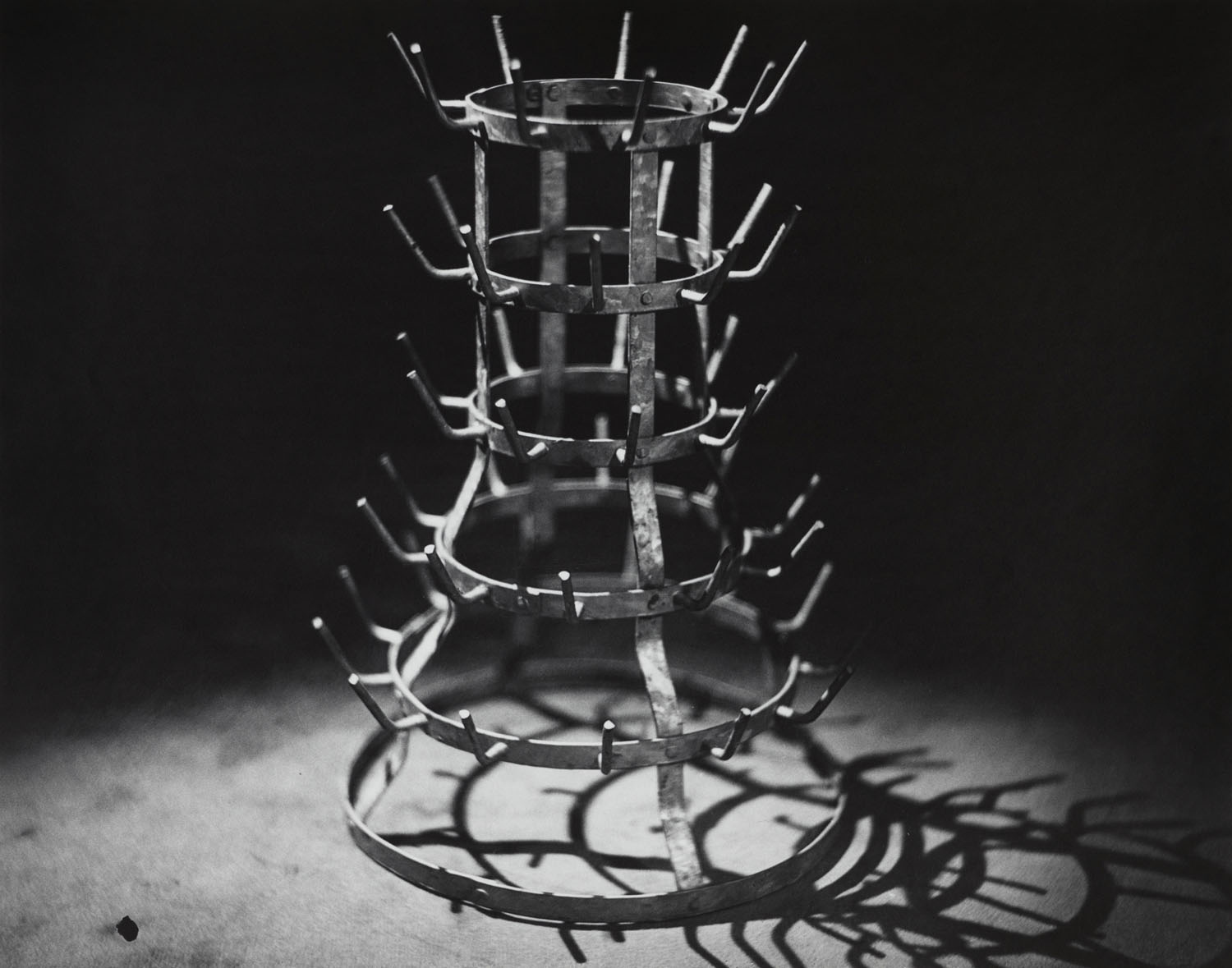
Man Ray (American, 1890-1976) 'Bottle-holder by Marcel Duchamp' c. 1920


Man Ray (American, 1890-1976)
Bottle-holder by Marcel Duchamp
c. 1920
Gelatin silver print
© Man Ray 2015 Trust / 2024, ProLitteris, Zurich. All rights reserved
Without permission from ProLitteris, the reproduction or any use of the individual and private consultation are prohibited


Man Ray (American, 1890-1976) 'Flowers' 1925


Man Ray (American, 1890-1976)
Flowers
1925
Gelatin silver print
© Man Ray 2015 Trust / 2024, ProLitteris, Zurich. All rights reserved
Without permission from ProLitteris, the reproduction or any use of the individual and private consultation are prohibited


In my early paper titled “The Delicious Fields: Exploring Man Ray’s ‘Rayographs’ in a Digital Future” published in The University of Queensland Vanguard magazine special edition ‘Man Ray: Life, Work & Themes’ (2004) I wrote:

The rayographs

After his arrival in Paris Man Ray started experimenting in his darkroom and discovered the technique for his rayographs by accident. With the help of his friend the Surrealist poet Tristan Tzara, he published a portfolio of twelve rayographs in 1922 called ‘Les champs délicieux’ (The delicious fields). “This title is a reference to ‘Les champs magnétiques’, a collection of writings by André Breton and Philippe Soupault composed from purportedly random thought fragments recorded by the two authors.”1 The rayographs are visual representations of random thought fragments, “photographic equivalents for the Surrealist sensibility that glorified randomness and disjunction.”2 Man Ray, “denied the camera its simplest joy: the ability to capture everything, all the distant details, all the ephemeral lights and shadows of the world”3 but, paradoxically, the rayographs are the most ephemeral of creatures, only being able to be created once, the result not being known until after the photographic paper has been developed. In fact, for Man Ray to create his portfolio ‘Les champs délicieux’ (The delicious fields), he had to rephotograph the rayographs in order to make multiple copies.4

Man Ray “insisted in nearly every interview that the rayograph was not a photogram in the traditional sense. He did something that a photogram didn’t; he introduced depth into the images,”5 which denied the images their photographic objectivity by depicting an internal landscape rather than an external one.6 What the rayographs do not deny, however, is the subjectivity of the artist, his skill at placing the objects on the photographic paper, expressed in their dream-like nature, both a subjective ephemerality (because they could only be produced once) and an ephemeral subjectivity (because they were expressions of Man Ray’s fantasies, and therefore had little substance). Through an alchemical process the latent images emerge from the photographic paper, representations of Man Ray’s fantasies as embodied in the ‘presence’ of the objects themselves, in the surface of the paper. …

Finally, within their depth of field the rayographs can be seen as both dangerous and delicious, for somehow they are both beautiful and unsettling at one and the same time. As Surrealism revels in randomness and chance these images enact the titles of other Man Ray photographs: ‘Danger-Dancer’, ‘Anxiety’, ‘Dust Raising’, ‘Distorted House’. The rayographs revel in chance and risk; Man Ray brings his fantasies to the surface, an interior landscape represented externally that can be (re)produced only once – those dangerous delicious fields.7

Marcus Bunyan. “The Delicious Fields: Exploring Man Ray’s Rayographs in a Digital Future,” in The University of Queensland Vanguard Magazine: ‘Man Ray: Life, Work and Themes’, 2004, Triad series #2, pp. 40-46. ISBN 0-9756043-0-9


Footnotes

1/ Greenberg, Mark (ed.,). In Focus: Man Ray: Photographs from the J. Paul Getty Museum. Los Angeles: The J. Paul Getty Museum, 1998, p. 28 quoted in Bunyan, op cit.,

2/ Perl, Jed (ed.,). Man Ray: Aperture Masters of Photography. New York: Aperture, 1997, pp. 11-12 quoted in Bunyan, op cit.,

3/ Ibid., pp. 5-6 quoted in Bunyan, op cit.,

4/ Greenberg, Mark (ed.,). In Focus: Man Ray: Photographs from the J. Paul Getty Museum. Los Angeles: The J. Paul Getty Museum, 1998, p. 28 quoted in Bunyan, op cit.,

5/ Ibid., p. 112 quoted in Bunyan, op cit.,

6/ Ibid., p. 28 quoted in Bunyan, op cit.,

7/ Marcus Bunyan. “The Delicious Fields: Exploring Man Ray’s Rayographs in a Digital Future,” in The University of Queensland Vanguard Magazine: ‘Man Ray: Life, Work and Themes’, 2004, Triad series #2, pp. 40-46. ISBN 0-9756043-0-9


Man Ray (American, 1890-1976) 'Fashion photograph' c. 1935


Man Ray (American, 1890-1976)
Fashion photograph
c. 1935
Gelatin silver print
© Man Ray 2015 Trust / 2024, ProLitteris, Zurich. All rights reserved
Without permission from ProLitteris, the reproduction or any use of the individual and private consultation are prohibited


'Man Ray. Liberating Photography' book cover


Man Ray. Liberating Photography book cover


Man Ray. Liberating Photography

Nathalie Herschdorfer, Wendy Grossman

Published in connection with an exhibition opening at Photo Elysée in spring 2024, this book presents more than one hundred and fifty of Man Ray’s portraits, primarily from the 1920s and ’30s.

Man Ray (1890-1976) was a man both of and ahead of his time. With his conceptual approach and innovative techniques, he liberated photography from previous constraints and opened the floodgates to new ways of thinking about the medium.

A close friend of Marcel Duchamp and André Breton, he was one of the few photographers to be mentioned among the Dada artists and surrealists. He also worked as a fashion photographer, first for Vogue and later for Harper’s Bazaar and Vanity Fair. Renowned as the creator of Ingres’s Violin – a photograph from 1924 that broke records when it was sold for $12.4 million in 2022 – Man Ray remains an influential figure in the worlds of art, fashion, and pop culture, with many other artists referencing his work.

Published in connection with an exhibition at Photo Elysée and in the centennial year of the publication of André Breton’s Surrealist Manifesto, Man Ray presents more than one hundred and fifty of Man Ray’s portraits, primarily from the 1920s and ’30s. It includes portraits of the leading lights of the Paris art scene, among them Marcel Duchamp, Robert Delaunay, Georges Braque, Alberto Giacometti, and Pablo Picasso, as well as a selection of his fashion work. As an innovator of photographic techniques and compositional form, Man Ray found the studio portrait – be it of the artists and writers with whom he had longstanding friendships or of the objects and sculptures he collected – to be the playground in which he could express the visual wit and experimentation for which he is renowned.

Format: Hardcover
Pages: 224
Artwork: 153 black-and-white illustrations
Size: 7.75 in x 9.5 in
Forthcoming: September 10th, 2024
ISBN-10: 0500028117
ISBN-13: 9780500028117

Buy the book now


'Man Ray. Liberating Photography'

'Man Ray. Liberating Photography'

'Man Ray. Liberating Photography'

'Man Ray. Liberating Photography'

'Man Ray. Liberating Photography'

'Man Ray. Liberating Photography'

'Man Ray. Liberating Photography'

'Man Ray. Liberating Photography'


Man Ray. Liberating Photography book pages


Photo Elysee
Place de la Gare 17
CH-1003 Lausanne
+41 21 318 44 00

Opening hours:
Monday : 10am – 6pm
Tuesday : closed (MCBA open)
Wednesday : 10am – 6pm
Thursday : 10am – 8pm
Friday : 10am – 6pm
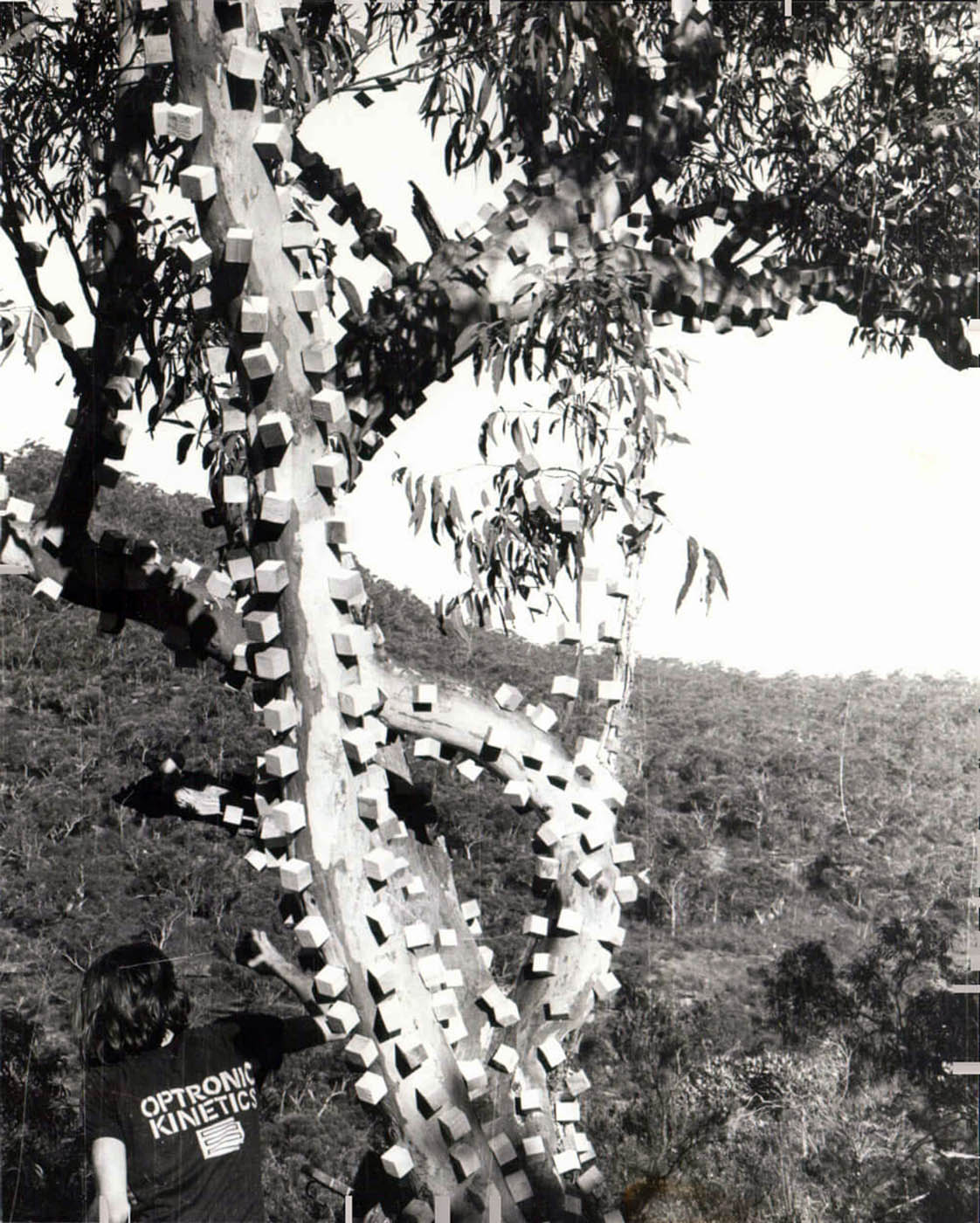
Saturday : 10am – 6pm
Sunday : 10am – 6pm

Photo Elysee website

LIKE ART BLART ON FACEBOOK

Back to top

Exhibition: ‘Photography and the Performative’ at the Chau Chak Wing Museum at The University of Sydney

Exhibition dates: 29th April 2023 – 4th August 2024

Curator: Katrina Liberiou


Installation view of the exhibition Photography and the Performative at the Chau Chak Wing Museum at The University of Sydney showing at left, photographs by Michael Riley including at second left bottom, 'Moree women' (1991)


Installation view of the exhibition Photography and the Performative at the Chau Chak Wing Museum at The University of Sydney showing at left, photographs by Michael Riley including at second left bottom, Moree women (1991, below)


It’s great to see another Australian museum taking up the mantle of staging challenging photography exhibitions after the ball has been so gloriously dropped by both national and state galleries in recent years.

Of course, photography and performance have been associated with each other since the birth of photography. The very act of posing for the camera is a performative act. Indeed, one of the earliest self-portraits in the history of photography, Hippolyte Bayard’s famous Le Noyé [The Drowned Man] (1840) is a performance by the artist protesting against the lack of recognition for him as one of the inventors of photography. His humorous, yet biting text read:

“The corpse of the gentleman you see here…. is that of Monsieur Bayard, inventor of the process that you have just seen…. As far as I know this ingenious and indefatigable experimenter has been occupied for about three years with perfecting his discovery…. The Government, who gave much to Monsieur Daguerre, has said it can do nothing for Monsieur Bayard, and the poor wretch has drowned himself. Oh! The precariousness of human affairs!” (Text from the J. Paul Getty Museum website)


With interesting sections such as ‘Photography as witness’, ‘Performative document’ and ‘Performing spaces’ – any one of which could have provided the basis of a large exhibition in their own right – the only problem with this exhibition is that it’s too small, particularly in the limited number of works that illuminate each section. For example, having a small body of early Bill Henson Untitled crowd photographs (1980/82), a small body of Mark Ellen Mark’s photographs of Ward 81 (1979), and one Araya Rasdjarmrearnsook photograph to illustrate the section ‘Photography as witness’ is barely adequate to begin a conversation on the subject.

Even as the exhibition tries to cover too much ground with too little resources one must congratulate the museum for even attempting such an insightful examination of how photography records performative actions in fields such as visual, architectural, spatial, gestural and gendered. The problem is that it needed to be either a/ focused on one section, or b/ much larger with more resources in order to encompass the breadth of the subject being investigated.

Having said that, I wish other galleries around Australia had such get up and go, such inquisitiveness vis a vis the history of photography and its place and influence in the modern world. I’ve not heard of any recent photographic exhibitions in Australia which attempt such a complex visual and intellectual investigation into one subject, which says a lot about the state of photographic exhibitions in Australia.

I have added hopefully interesting referenced texts to provide information on some of the art works and artists in the posting.

The exhibition is held at the same time as the exhibition The Staged Photograph at Chau Chak Wing Museum at The University of Sydney (finishes 4th August 2024). A posting on this exhibition to follow soon.

Dr Marcus Bunyan


Many thankx to the Chau Chak Wing Museum for allowing me to publish the photographs in the posting. Please click on the photographs for a larger version of the image.


An exhibition exploring the intersection between photography and performance.

This exhibition examines recent ideas and theories that frame performance as a phenomenon that is everywhere. Performative actions may include the manifestation of ideas, whether literal, oral, spoken, or written. Such forms can be visual, architectural, spatial, gestural and gendered. This exhibition looks at how these different modes may be ‘recorded’ via the medium of photography.

Since the 1960s, photography and performance have experienced a shared history. Artists have embraced the possibilities of this time-based medium by deploying a documentary mode – capturing the fleeting, the happening, the ephemeral. The camera becomes an extension of the artist’s body, documenting their actions and interventions.

Text from the Chau Chak Wing Museum website


Installation view of the exhibition Photography and the Performative at the Chau Chak Wing Museum at The University of Sydney showing at front, Polaroids from Imants Tillers' 'If I close my eyes' (2021)


Installation view of the exhibition Photography and the Performative at the Chau Chak Wing Museum at The University of Sydney showing at front, Polaroids from Imants Tillers’ If I close my eyes (2021)


Installation view of the exhibition Photography and the Performative at the Chau Chak Wing Museum at The University of Sydney showing at left photographs from Bill Henson's 'Untitled 1980/82' (1980/82); at centre, photographs from Mary Ellen Mark's 'Ward 81' (1979); and at right, Araya Rasdjarmrearnsook's 'Village and Elsewhere: Artemisia Gentileschi's Judith Beheading Holofernes Jeff Koons's Untitled and Thai Villagers' (2011)


Installation view of the exhibition Photography and the Performative at the Chau Chak Wing Museum at The University of Sydney showing at left photographs from Bill Henson’s Untitled 1980/82 (1980/82, below); at centre, photographs from Mary Ellen Mark’s Ward 81 (1979, below); and at right, Araya Rasdjarmrearnsook’s Village and Elsewhere: Artemisia Gentileschi’s Judith Beheading Holofernes, Jeff Koons’s Untitled, and Thai Villagers (2011, below)


Installation view of the exhibition Photography and the Performative at the Chau Chak Wing Museum at The University of Sydney showing at back left, photographs from Bill Henson's 'Untitled 1980/82' (1980/82); at back centre, photographs from Mary Ellen Mark's 'Ward 81' (1979); at back right, Araya Rasdjarmrearnsook's 'Village and Elsewhere: Artemisia Gentileschi's Judith Beheading Holofernes Jeff Koons's Untitled and Thai Villagers' (2011); and at front, Polaroids from Imants Tillers' 'If I close my eyes' (2021)


Installation view of the exhibition Photography and the Performative at the Chau Chak Wing Museum at The University of Sydney showing at back left, photographs from Bill Henson’s Untitled 1980/82 (1980/82, below); at back centre, photographs from Mary Ellen Mark’s Ward 81 (1979, below); at back right, Araya Rasdjarmrearnsook’s Village and Elsewhere: Artemisia Gentileschi’s Judith Beheading Holofernes, Jeff Koons’s Untitled, and Thai Villagers (2011, below); and at front, Polaroids from Imants Tillers’ If I close my eyes (2021)


Installation view of the exhibition Photography and the Performative at the Chau Chak Wing Museum at The University of Sydney showing at back centre, photographs from Mary Ellen Mark's 'Ward 81' (1979); and at front, Polaroids from Imants Tillers' 'If I close my eyes' (2021)


Installation view of the exhibition Photography and the Performative at the Chau Chak Wing Museum at The University of Sydney showing at back centre, photographs from Mary Ellen Mark’s Ward 81 (1979, below); and at front, Polaroids from Imants Tillers’ If I close my eyes (2021)


Installation view of the exhibition Photography and the Performative at the Chau Chak Wing Museum at The University of Sydney showing at left, Hiroshi Sugimoto's 'State Theatre, Sydney' (1997); at second left, Hiroshi Sugimoto's 'Seagram Building – Ludwig Mies Van Der Rohe' (1997); at third left, Olive Cotton's 'Clarence Street, Sydney' (c. 1942); at third right, Christo and Jeanne-Claude’s 'Packed public building, project for Sydney' (1969); and at right, Grant Mudford's 'From Ocean boulevard, Long Beach' (1979-1980)


Installation view of the exhibition Photography and the Performative at the Chau Chak Wing Museum at The University of Sydney showing at left, Hiroshi Sugimoto’s State Theatre, Sydney (1997, below); at second left, Hiroshi Sugimoto’s Seagram Building – Ludwig Mies Van Der Rohe (1997, below); at third left, Olive Cotton’s Clarence Street, Sydney (c. 1942, below); at third right, Christo and Jeanne-Claude’s Packed public building, project for Sydney (1969, below); and at right, Grant Mudford’s From Ocean boulevard, Long Beach (1979-1980, below)


Installation view of the exhibition Photography and the Performative at the Chau Chak Wing Museum at The University of Sydney showing at left, Krzysztof Wodiczko's 'Eye to Eye' (c. 1973); at fourth left, Guilio Paolini's 'Incipit' (1975); at fourth right, Hiroshi Sugimoto's 'State Theatre, Sydney' (1997); at third right, Hiroshi Sugimoto's Seagram 'Building – Ludwig Mies Van Der Rohe' (1997); at second right, Olive Cotton's 'Clarence Street, Sydney' (c. 1942); and at right, Christo and Jeanne-Claude's 'Packed public building, project for Sydney' (1969)


Installation view of the exhibition Photography and the Performative at the Chau Chak Wing Museum at The University of Sydney showing at left, Krzysztof Wodiczko’s Eye to Eye (c. 1973, below); at fourth left, Guilio Paolini’s Incipit (1975, below); at fourth right, Hiroshi Sugimoto’s State Theatre, Sydney (1997, below); at third right, Hiroshi Sugimoto’s Seagram Building – Ludwig Mies Van Der Rohe (1997, below); at second right, Olive Cotton’s Clarence Street, Sydney (c. 1942, below); and at right, Christo and Jeanne-Claude’s Packed public building, project for Sydney (1969, below)


How photography captures performance

Some of photography’s best-known luminaries feature in a new Chau Chak Wing Museum exhibition examining the interaction between photography and performance.

From Olive Cotton’s Clarence Street, Sydney (c. 1942) to Imants Tillers’ If I Close My Eyes (2021), the images in Photography and the Performative capture performers, performance spaces and audiences over an 80-year period. The punk aesthetic of 1980s New York, Hollywood B-grade movies and generational discrimination faced by Aboriginal communities are among the diverse phenomena examined in this exhibition. Cindy Sherman, Hiroshi Sugimoto, Bill Henson, Barber Kruger and Araya Rasdjarmrearnsook are among the featured artists.

“Performance as a concept is everywhere,” said Chau Chak Wing curator Katrina Liberiou. “This exhibition conveys performative elements from the widest imaginable range of settings including streets, studios, villages, institutions and performance spaces.”

“Since the 1960s, photography and performance have experienced a shared history. The camera became an extension of the artist’s body, documenting their actions and interventions.”

Rather than record performances, works in Photography and the Performative look at the supporting roles of space, the human body and ideas in performance. International works include disturbing images from the hospital where Milos Forman’s One Flew Over the Cuckoo’s Nest was filmed. Mary Ellen Mark spent 36 days living at the Oregon State Hospital to document the lives of women incarcerated there, a year after she worked as the Oscar-winning film’s set photographer.

Closer to home, Christo’s Packed public building, project for Sydney (1969) imagines wrapping Sydney’s Australia Square, then a new skyscraper designed by architect Harry Seidler. This work was a precursor to the artists’ epic Wrapped Coast, created with support from Harry and Penelope Seidler. Hiroshi Sugimoto’s long exposures of the State Theatre and Seagram Building, also in Sydney, play homage to mid-twentieth century modernism. Imants Tillers If I close my eyes (2021, on display until August 2023) is a grid of Polaroid photographs interspersing portraits of Tillers’ friends, family and fellow artists with images of Sydney’s harbour. The latter depict the same view, from Tillers’ home in Mosman, captured over a three-year period.

The photographs in Photography and the Performative range from vintage black and white prints to alternative processes (including solarisation and photograms) to early colour photography and digital prints. All featured works have been selected from the University of Sydney Art Collection.

Photography and the Perfomative is one of two photographic exhibitions currently on show at the Chau Chak Wing Museum. The second, The Staged Photograph, presents a range of staged images taken in Australia between the mid-19th and early 20th centuries.

Anonymous. “From Henson to Christo,” on The University of Sydney website 24 April 2023 [Online] 12/06/2024


Olive Cotton (Australian, 1911-2003) 'Clarence Street, Sydney' c. 1942


Olive Cotton (Australian, 1911-2003)
Clarence Street, Sydney
c. 1942
Gelatin silver print
Chau Chak Wing Museum


Christo Vladimirov Javacheff (American born Bulgaria, 1935-2020) and Jeanne-Claude Denat de Guillebon (American born Bulgaria, 1935-2009) 'Packed public building, project for Sydney' 1969


Christo Vladimirov Javacheff (American born Bulgaria, 1935-2020) and Jeanne-Claude Denat de Guillebon (American born Bulgaria, 1935-2009)
Packed public building, project for Sydney
1969
Synthetic polymer paint, cotton fabric, cotton thread, pencil, coloured pencil, pressure-sensitive tape on photographs, synthetic polymer weave and staples on cardboard
72.0 x 76.9cm
Donated by Chandler Coventry, 1972
J W Power collection, Chau Chak Wing Museum


Optronic Kinetics (active c. 1970-72) 'Cubed Tree' 1971


Optronic Kinetics (active c. 1970-72)
Cubed Tree
1971
Black and white photograph
61 x 42cm
Donated by the artist 1973
J W Power collection, Chau Chak Wing Museum


Optronic Kinetics (active c. 1970-72) 'Feathered Office' c. 1973


Optronic Kinetics (active c. 1970-72)
Feathered Office
c. 1973
Black and white photograph
61 x 42cm
Donated by the artist 1973
J W Power collection, Chau Chak Wing Museum


Optronic Kinetics

Optronic Kinetics was an art collective that emerged from the University of Sydney’s infamous Tin Sheds Art Workshop in the early 1970s. At this time, the Tin Sheds was a hotbed for radical thought, student activism and a celebrated ‘alternate art space’, where ideas about conceptual and post-object art were explored and put into practice. From the late 1960s to the early 1980s, the Tin Sheds gave rise to some of Australia’s most progressive and political creative practitioners.

Renowned sculptor and artist Bert Flugelman (1923-2013) was the Tin Sheds’ coordinator from 1968 to 1973, and under his guidance encouraged students from across the University’s disciplines to explore the Art Workshop’s offerings. Combined with the enthusiasm of artist, critic and theorist Donald Brook (1927-2018), a University of Sydney academic at the time, a small cohort of medical and engineering students began to investigate and experiment with electronics and movement. Initially the students had wanted to create ‘very conservative paintings’, so in response Flugelman gave them an introduction to sculpture and convinced them to push the boundaries of their own studies and skills. Flugelman and Brook believed that you did not need to master a creative discipline in order to understand it, but you had to be familiar with its ideas and processes. It was this guiding principle that brought Optronic Kinetics into being.

Spurred by the desire to amalgamate science and technology with art, the collective’s founding members included Fine Arts student Julie Ewington, now a recognised writer and curator, and electrical engineering students David Smith and Jim McDonnell. Together with Flugelman they created conceptually ambitious and humorous works such as Cubed treeFeathered office and Flashing boob. Other works such as Electronic colour organ and Reflector employed cutting edge technological innovations and theories to bridge the perceived divide between art and science.

Madeline Reece. “Optronic Kinetics,” on the Take 5 Flinders University Museum of Art website 2020 [Online] Cited 21/06/2024 © Flinders University Museum of Art


Cecile Abish (American, b. 1930) 'Mail-Art: Field Coil' c. 1973 (detail)


Cecile Abish (American, b. 1930)
Mail-Art: Field Coil (detail)
c. 1973
Black and white photographs (template and typed documentation not exhibited)
25.5 x 20.4cm
Donated by the artist 1973
J W Power collection, Chau Chak Wing Museum


Cecile Abish (born 1930) is an American artist known primarily for her works in sculpture and photography.

“Field Coil was specifically made for the lower level space at 112, with its unobstructed linear run and uncluttered cement floor. The work consisted of 104 separate coiled kraft paper units that were placed one next to the other. Each section before being rolled measures 36 × 46″, the slits were 36″ long, cut at 1″ intervals and parallel to the 46″ length. The 104 separate units lost their intrinsic apartness as the coils were placed one next to the other, leaving only the uppermost part of each unit exposed to form an extended field. The dimensions of the entire work were 7″ high x 3′ wide x 49′ long.”

Excerpted from Brentano, R., & Savitt, M. (1981). 112 Workshop, 112 Greene Street: History, artists & artworks. New York: New York University Press cited on the White Columns website Nd [Online] Cited 21/06/2024


Petr Stembera (Czech, b. 1945) 'Mail-Art: (rolling a sleeve; 8 parts)' c. 1973 (detail)


Petr Stembera (Czech, b. 1945)
Mail-Art: (rolling a sleeve; 8 parts) (detail)
c. 1973
Black and white photographs
24.0 x 17.8 cm
Donated by the artist 1973
J W Power collection, Chau Chak Wing Museum


His [Stembera’s] Daily Activities, a series of performances for a camera from the early 1970s, dealing with routine actions, such as rolling up sleeves, typewriting, tying shoelaces, or fastening buttons are mainly found in collections outside Czechoslovakia and, thus, virtually absent from Czech collections, as the artist stopped displaying his photographic works after he turned to live performance in 1974. …

[Petr] Rezek wrote about photographic documentation as a basis for communication. Speaking about the Czech context and leaving aside the different financial and technical possibilities, Štembera’s use of photographic documentation was not especially innovative. Photography served for many as an easily reproducible medium, as the lingua franca of performance art. Its importance was rooted in its utility rather than its aesthetics. However, the specific form of the use of this almost universally understood language depended on many factors. If we look more closely at its uses and direct our focus towards the various dialects, idiolects, and sociolects it encompasses, we can also learn more about the nature of the art it transmitted.

The fact that the Daily Activities series was crucial for Štembera at the time is confirmed, for example, by a reproduction of a photograph showing him buttoning his shirt, which was used on the poster for his solo exhibition in Antwerp organized by D’Hondt in 1974. Such low-quality reproductions, which appeared in non-profit publications in the West as well as in unofficial and semi-official publications in the East were one of the typical outputs of these exchanges. In addition to gelatin silver prints, photomechanical reproductions played a crucial role in facilitating international transfers. Besides the posters and invitation cards, the reproductions in exhibition catalogues and in foreign magazines were seminal in distributing the original art piece to a wide audience. Through the catalogs, some of the exhibited works reached a secondary audience but also returned to the archives of the authors and to libraries, where they continue to serve as a source of information to this day.

Hanna Buddeus. “Photography: The Lingua Franca of Performance Art?” on the Art Margins website 14th March 2024 [Online] Cited 21/06/2024


Krzysztof Wodiczko (Polish, b. 1943) 'Eye to Eye' c. 1973


Krzysztof Wodiczko (Polish, b. 1943)
Eye to Eye
c. 1973
Gelatin silver photograph
47.6 x 59cm
Donated by the artist 1973
J W Power collection, Chau Chak Wing Museum


Giulio Paolini (Italian, b. 1940) 'Incipit' 1975


Giulio Paolini (Italian, b. 1940)
Incipit
1975
Torn photograph, canvas, wood, in Perspex frame
91.0 x 61.5cm
Purchased with funds from the J W Power Bequest 1976
J W Power collection


Mary Ellen Mark (American, 1940-2015) 'Untitled' 1976-1978


Mary Ellen Mark (American, 1940-2015)
Untitled
1976-1978
From the series Ward 81, Oregon State Hospital, Salem, Oregon
Silver gelatin photograph
20.3 x 30.5cm
Purchased with funds from the JW Power Bequest 1978
JW Power Collection, Chau Chak Wing Museum


In 1975, photographer Mary Ellen Mark was assigned by The Pennsylvania Gazette to produce a story on the making of Milos Forman’s film of Ken Kesey’s 1962 novel One Flew Over the Cuckoo’s Nest, shot on location at the Oregon State Hospital, a mental institution. While on set, Mark met the women of Ward 81, the only locked hospital security ward for women in the state: The inmates were considered dangerous to themselves or to others. In February of 1976, just before the ward closed (it ceased to exist in November of 1977, when it became the female section of a coeducational treatment ward), Mark and Karen Folger Jacobs, a writer and social scientist, were given permission to make a more extended stay, living on the ward in order to photograph and interview the women. They spent 36 days on Ward 81, photographing and documenting. Jacobs recalls their slow, inevitable assimilation: “We felt the degeneration of our own bodies and the erosion of our self-confidence. We were horrified at the thought of what we might become after a year or two of confinement and therapy on Ward 81.”

Text from the Google Books website


Mary Ellen Mark (American, 1940-2015) 'Untitled' 1976-1978


Mary Ellen Mark (American, 1940-2015)
Untitled
1976-1978
From the series Ward 81, Oregon State Hospital, Salem, Oregon
Silver gelatin photograph
20.3 x 30.5cm
Purchased with funds from the JW Power Bequest 1978
JW Power Collection, Chau Chak Wing Museum


Grant Mudford (Australian, b. 1944) 'From Ocean boulevard, Long Beach' 1979-1980


Grant Mudford (Australian, b. 1944)
From Ocean boulevard, Long Beach
1979-1980
Black and white photograph on paper
60.3 x 50.3cm
Purchased with funds from the J W Power Bequest 1980
J W Power collection, Chau Chak Wing Museum


Bill Henson (Australian, b. 1955) 'Untitled 1980/82' 1980-1982


Bill Henson (Australian, b. 1955)
Untitled 1980/82
1980-1982
Gelatin silver photograph
43.1 x 39cm
Donated by University of Sydney Union 2019
University Art Collection, Chau Chak Wing Museum


“A selection of photographs from the Crowd Series (1980-1982) by Bill Henson. Snapped in secret these black and white journalistic surveillance photographs (‘taken’ in an around Flinders Street railway station in Melbourne) have a brooding intensity and melancholic beauty. Henson uses a flattened perspective that is opposed to the principles of linear perspective in these photographs. Known as The Art of Describing6 and much used in Dutch still life painting of the 17th century to give equal weight to objects within the image plane, here Henson uses the technique to emphasise the mass and jostle of the crowd with their “waiting, solemn and compliant” people.

“When exhibiting the full series, Henson arranges the works into small groupings that create an overall effect of aberrant movement and fragmentation. From within these bustling clusters of images, individual faces emerge like spectres of humanity that will once again dissolve into the crowd … all apparently adrift in the flow of urban life. The people in these images have an anonymity that allows them to represent universal human experiences of alienation, mortality and fatigue.”7

Marcus Bunyan. “Un/aware and in re/pose: the self, the subject and the city,” review of the exhibition ‘In camera and in public’ at the Centre for Contemporary Photography, Melbourne on the Art Blart website October 16, 2011 [Online] Cited 12/06/2024

6/ See Alpers, Svetlana. The Art of Describing: Dutch Art in the Seventeenth Century. University Of Chicago Press, 1984

7/ Anon. BILL HENSON: early work from the MGA collection. Education Resource. A Monash Gallery of Art Travelling Exhibition [Online] Cited 14/10/2011. No longer available online


Todd Watts (American, b. 1949) 'On the 21st century' 1982


Todd Watts (American, b. 1949)
On the 21st century
1982
Silver gelatin photograph
49.0 x 59.2cm
Purchased with funds from the JW Power Bequest 1986
JW Power Collection, Chau Chak Wing Museum


Hiroshi Sugimoto (Japanese, b. 1948) 'State Theatre, Sydney' 1997


Hiroshi Sugimoto (Japanese, b. 1948)
State Theatre, Sydney
1997
Silver gelatin photograph
42.3 x 54.6cm
Purchased with funds from the Dr M J Morrissey Bequest Fund in memory of Professor A L Sadler 2017
University Art Collection, Chau Chak Wing Museum


I loved Sugimoto’s time lapse movie screens, where the exact length of a movie was captured by the open lens of the camera, the substance of time and space evidenced by a seemingly empty screen. There was something wonderfully poetic and transformational about that gesture, about the notion of compressing the narrative, reality and action of a movie into a single frame of light: “the ‘annihilation of time and space’ as a particular moment in a dynamic cycle of rupture and recuperation enables a deliberate focus on the process of transition.”1 The process of transition in the flow of space and time.

Marcus Bunyan on the exhibition “Hiroshi Sugimoto: Past Tense” at the J. Paul Getty Museum, Getty Center, Los Angeles on the Art Blart website June 3, 2014 [Online] Cited 21/06/2024


Hiroshi Sugimoto (Japanese, b. 1948) 'Seagram Building – Ludwig Mies Van Der Rohe' 1997


Hiroshi Sugimoto (Japanese, b. 1948)
Seagram Building – Ludwig Mies Van Der Rohe
1997
Silver gelatin photograph
University Art Collection, Chau Chak Wing Museum


Michael Riley (Australian / Wiradjuri/Kamilaroi, 1960-2004) 'Moree women' 1991


Michael Riley (Australian / Wiradjuri/Kamilaroi, 1960-2004)
Moree women
1991
Gelatin silver print
40.0 x 56.5cm
Donated by University of Sydney Union, 2019
University Art Collection, Chau Chak Wing Museum


Anne Ferran (Australian, b. 1949) 'Untitled (Bodice)' 1998


Anne Ferran (Australian, b. 1949)
Untitled (Bodice)
1998
Gelatin silver photogram
82.0 x 93.5cm
Donated by University of Sydney Union 2019
University Art Collection, Chau Chak Wing Museum


In 1998 Australian artist Anne Ferran was offered an artist-in-resident’s position at an historic homestead not far from Sydney that had been occupied by successive generations of the same family since 1813. Ferran spent six months systematically making contact prints using the dresses, bodices, skirts, petticoats, and collars still contained in the house. Hovering in a surrounding darkness, softly radiating an inner light, the ghostly traces of these translucent garments now act as residual filaments for a century of absorbed sunshine. Many of them have been patched over the years and their signs of wear and repair are made clear. This allows us to witness a history of the use of each piece of clothing, seeing inside them to those small and skilful acts of home economy – the labour of women – usually kept hidden from a public gaze.

Wall text from the exhibition “Emanations: The Art of the Cameraless Photograph” at the Govett-Brewster Art Gallery / Len Lye Centre, New Plymouth, New Zealand on the Art Blart website July 31, 2016 [Online] Cited 21/06/2024


Cindy Sherman (American, b. 1954) 'Untitled #131' 1983


Cindy Sherman (American, b. 1954)
Untitled #131
1983
C-type photograph
139.9 x 100cm
University Art Collection, Chau Chak Wing Museum
Purchased with funds from the J W Power Bequest 1984
JW Power Collection, Chau Chak Wing Museum


The Twilight Girls (active 1997 - present) 'The Power and the Glory i' 2004 (detail)


The Twilight Girls (Helen Hyatt-Johnston and Jane Polkinghorne) (active 1997 – present)
The Power and the Glory i (detail)
2004
Colour photographic print
75.9 x 50.5cm
Donated by University of Sydney Union 2019
University Art Collection, Chau Chak Wing Museum


Hyatt-Johnston and Polkinghorne’s work is a hilarious celebration of the endless potential to personalise Hollywood fantasy so as to enjoy the vicarious glamour and tack without foreclosing either individual expression or the subversion of mainstream codes. The artists confuse genres and disciplines, feminist aspirations and sacred cows, in a mad comic brew that speaks more of the pleasure of play and friendship than of the construction of sexed identities. And this is the point, to evade the strictures of accepted feminist strategies by putting inclusive play back on the map.

Jacqueline Millner. “Twilight Girls: Helen Hyatt-Johnston and Jane Polkinghorne,” on the Contemporary Art and Feminism website October 22, 2013 [Online] Cited 21/06/2024 © Jacqueline Millner, 2002


Polit-Sheer-Form Office (PSFO) (active 2005-2009) 'Mr Zhang' 2008


Polit-Sheer-Form Office (PSFO) (active 2005-2009)
Mr Zhang
2008
C-type print
170.4 x 135.5cm
Donated by Gene and Brian Sherman through the Australian Government’s Cultural Gifts Program 2021
University Art Collection, Chau Chak Wing Museum


Polit-Sheer-Form-Office (PSFO) is a China-based art group established in 2005 by artists Hong Hao, Xiao Yu, Song Dong, Liu Jianhua and curator / critic Leng Lin. Born in the mid-1960s, as children they all experienced the late Cultural Revolution, a period of Communist ideological orthodoxy that powerfully affected the preceding generation.

Drawing on this personal history, PSFO’s artistic practice strives to create a collective way of life while removing the political content historically associated with it. In its activities and artworks, PSFO attempts to create a framework – albeit tongue-in-cheek – for collective life in today’s consumer-oriented China. Within this framework, individuals may find the ties that bind them to others. At the same time, “sheer form” without content allows room for the individual to grow. By eating, drinking and playing together, the PSFO members revive a collective way of life associated with the Communist era of their youth, reawakening a long-lost state of being, by which they contend with contemporary China’s ideology of consumerism. But this is not nostalgia for one of the most controversial periods of Chinese history. The very emptiness of the political rhetoric of their childhood is what inspires the group’s name. Instead of political content, we have sheer, unadulterated political form – hence “Polit-Sheer-Form-Office.” The fact that the group calls itself an “Office” is another ironic reference to officialdom. …

Mr. Zheng is a digital amalgam of the faces of the five PSFO members in the form of a generic identification photo. This artwork straightforwardly embodies the union of the group’s five members, each sacrificing his individuality to become this new single entity. As a nod to the so-called “leader portraits” of Chairman Mao that were hung over buildings in China during the Socialist era… This virtual leader combines the characteristics of all five members, and is therefore not a portrait of authoritarianism, but of collectivism.

In American culture, individualism is a core value, yet a new understanding of the need for the collective has emerged. Similarly, while collectivism has been a core Chinese value, there has been increasing interest in individual pursuits. Is doing a good deed human nature’s need or a need for ideology? What is the real content and meaning of collectivism?

Ruijin Shen, curator, Guangdong Times Museum. “Polit-Sheer-Form-Office (PSFO) Polit-Sheer-Form!,” on the Queens Museum website 2014 [Online] Cited 07/07/2024


Araya Rasdjarmrearnsook (Thailand, b. 1957) 'The Two Planets: Van Gogh's The Midday Sleep 1889/90, and the Thai Villagers' 2008


Araya Rasdjarmrearnsook (Thailand, b. 1957)
The Two Planets: Van Gogh’s The Midday Sleep 1889/90, and the Thai Villagers
2008
Digital print
75.7 x 75.7cm
Purchased with funds from the Dr M J Morrissey Bequest Fund in memory of Professor A L Sadler 2014
University Art Collection, Chau Chak Wing Museum


Araya explores the relational potential of the tableau most fully in two video installation series: The Two Planets (2008) and Village and Elsewhere (2011), both of which are composed of short audiovisual vignettes that are usually exhibited as multichannel video and photographic installations. The individual works in each series are almost identical in terms of visual composition. Araya re-situates one or two large-scale, ostentatiously gold-framed reproductions of famous western paintings in outdoor or neighborhood spaces in the rural outskirts of the northern Thai city of Chiang Mai. The video camera frames these reproductions and their visually associative physical surroundings in a straight-on shot. On-screen, the framed reproductions are frontally displayed in the background. In the foreground, small groups of people are visible from the back, and their murmurings, chatter, gossip, speculations, and digressions as they look at the reproductions audible. …

In each of these audiovisual vignettes, the duration of the scene displayed approximates the duration of spectatorship by a figural group whose faces we do not see. The visualization of the group signifies “Thai Villagers,” or “Thai Farmers,” transfiguring people who, in everyday life, live in the same suburb as the artist. In each tableau, the group is sitting on the ground, their backs to us, facing the framed reproduction. The shortest of these videos are nearly ten minutes, and the longer ones about twenty-five. Someone comments on a detail that strikes them about the picture in the frame. Another person observes something about this face or that body, this plant, that tool, this hat, or that dish. The group amuses itself, speculating wildly on the backstory in the displayed scene. Sometimes they prod one another to dart up to the framed picture and point out a small detail – or to caress the image of a face, the skin, a body part. With the van Gogh reproduction, the group contemplates the placement of the sickle, the number of wheels on the wooden cart, the total number of oxen legs visible, and the casting of the sunlight on the haystack, all in order to decipher winning lottery numbers. Their conversation flows easily, often straying from the framed reproduction to random neighborhood gossip. Each video is unscripted and staged as a one-take piece using a static shot. The editing is minimal, involving discreet jump cuts to crop out of parts of the conversation without changing the visual composition, giving the impression that the vignettes are displaying spectatorial experiences in real time.

May Adadol Ingawanij. “Araya Rasdjarmrearnsook’s Relational Tableaux,” on the MoMA Post website August 9, 2023 [Online] Cited 21/06/2024


Araya Rasdjarmrearnsook (Thailand, b. 1957) 'Village and Elsewhere: Artemisia Gentileschi's Judith Beheading Holofernes, Jeff Koons's Untitled, and Thai Villagers' 2008


Araya Rasdjarmrearnsook (Thailand, b. 1957)
Village and Elsewhere: Artemisia Gentileschi’s Judith Beheading, Holofernes Jeff Koons’s Untitled, and Thai Villagers
2008
Purchased with funds from the Dr M J Morrissey Bequest Fund in memory of Professor A L Sadler 2014
University Art Collection, Chau Chak Wing Museum


The tableau display of the gold-framed reproductions references and aggrandizes museum conventions of hanging and presenting artworks on walls, an exhibition apparatus that lays claim to addressing everyone. Yet the spectators in The Two Planets and Village and Elsewhere exceed the boundary of that universalizing assertion with their actualization of what, following Elaine Castillo, we might call the spectatorship of the unintended.14 At the same time, their encounters with the reproductions take place in spaces that do not cohere with the museological value of suspending the time and space of daily life. The “Thai Villagers” and “Thai Farmers” in Araya’s tableaux are shown engaging with framed reproductions of art in neighborhood spaces – the local field, temple, and bamboo forest. The spectatorship of the unintended that they enact is a kind of unruly hosting, an extending of hospitality to the foreign, an unpredictable engagement with mobile artifacts from distant lands, cultures, and times.

May Adadol Ingawanij. “Araya Rasdjarmrearnsook’s Relational Tableaux,” on the MoMA Post website August 9, 2023 [Online] Cited 21/06/2024


Chau Chak Wing Museum – The University of Sydney
Level 1, University Place, Camperdown, NSW 2006
Phone: 02 9351 2812

Opening hours:
Monday to Friday (until 9pm Thursdays) 9am – 5pm
Saturday and Sunday 12 – 4pm
Closed public holidays

Chau Chak Wing Museum website

LIKE ART BLART ON FACEBOOK

Back to top

Exhibition: ‘Arresting Beauty: Julia Margaret Cameron’ at the Milwaukee Art Museum

Exhibition dates: 3rd May – 28th July, 2024


Julia Margaret Cameron (British born India, 1815-1879) 'Annie' 1864


Julia Margaret Cameron (British born India, 1815-1879)
Annie
1864
Albumen print
25.5cm x 21.3cm
© The Royal Photographic Society Collection at the V&A, acquired with the generous assistance of the National Lottery Heritage Fund and Art Fund


Julia Margaret Cameron made this portrait of Annie Philpot, the daughter of a family staying on the Isle of Wight, within a month of receiving her first camera. She inscribed some prints of it ‘My first success’. She later recounted, ‘I was in a transport of delight. I ran all over the house to search for gifts for the child. I felt as if she entirely had made the picture.’

Text from the V&A website


“Nothing is scared but beauty.”1


Since the establishment of Art Blart in November 2008, Julia Margaret Cameron appears in a select and esteemed group of photographic artists who each have over 6 postings in the archive: Eugène Atget, William Eggleston, Walker Evans, Robert Frank, Dorothea Lange, Robert Mapplethorpe, László Moholy-Nagy and August Sander.

I am always ecstatic when I see Cameron’s work. Nobody has ever taken portraits like JMC before or since.

As I have written on JMC in earlier exhibitions:

“When you think about it, here is one the world’s top ten photographers of all time – a woman, taking photographs within the first twenty five years of the birth of commercial photography, using rudimentary technology and chemicals – whose photographs are still up there with the greatest ever taken. Still recognisable as her own and no one else’s after all these years. That is a staggering achievement – and tells you something about the talent, tenacity and perspicacity of the women… that she possessed and illuminated such a penetrating discernment – a clarity of vision and intellect which provides a deep understanding and insight into the human condition.”2

“As with any genius (a person who possesses exceptional intellectual or creative power) who goes against the grain, full recognition did not come until later. But when it does arrive, it is undeniable. As soon as you see a JMC photograph… you know it is by her, it could be by no one else. Her “signature” – closely framed portraits and illustrative allegories based on religious and literary works; far-away looks, soft focus and lighting, low depth of field; strong men (“great thro’ genius”) and beautiful, sensual, heroic women (“great thro’ love”) – is her genius.

There is something so magical about how JMC can frame a face, emerging from darkness, side profile, filling the frame, top lit. Soft out of focus hair with one point of focus in the image. Beautiful light. Just the most sensitive capturing of a human being, I don’t know what it is… a glimpse into another world, a ghostly world of the spirit, the soul of the living seen before they are dead.

Love and emotion. Beauty, beautiful, beatified.”3

Dr Marcus Bunyan


1/ “The line runs from Winckelmann’s Thoughts on the Imitation of Greek Works of Art in Painting and Sculpture, first published in 1755, to the end of the 19th century and beyond; see Walter Pater’s “Winckelmann,” written in 1867 and published in The Renaissance.
Margaret Walters. “The Classical Nude,” in Margaret Walters. The Nude Male: A New Perspective. New York & London: Paddington Press, 1978, p. 34. Footnote 2.

2/ Marcus Bunyan on the exhibition Julia Margaret Cameron: from the Victoria and Albert Museum, London at the Art Gallery of New South Wales (AGNSW), Sydney on Art Blart 24th October 2015

3/ Marcus Bunyan on the exhibition Victorian Giants: The Birth of Art Photography at the National Portrait Gallery, London on Art Blart 13th May 2018

Julia Margaret Cameron exhibitions on Art Blart

~ Exhibition: ‘Francesca Woodman and Julia Margaret Cameron: Portraits to Dream In’ at the National Portrait Gallery, London, March – June 2024
~ Exhibition: ‘Victorian Giants: The Birth of Art Photography’ at the National Portrait Gallery, London Part 1, March – May 2018
~ Exhibition: ‘Julia Margaret Cameron’ at the Victoria and Albert Museum, London, November 2015 – February 2016
~ Exhibition: ‘Julia Margaret Cameron: from the Victoria and Albert Museum, London’ at the Art Gallery of New South Wales (AGNSW), Sydney Part 2, August – October 2015
~ Exhibition: ‘Julia Margaret Cameron: from the Victoria and Albert Museum, London’ at the Art Gallery of New South Wales (AGNSW), Sydney Part 1, August – October 2015
~ Exhibition: ‘Julia Margaret Cameron’ at The Metropolitan Museum of Art, New York, August 2013 – January 2014


Many thankx to the Milwaukee Art Museum for allowing me to publish the photographs in the posting. Please click on the photographs for a larger version of the image.


“I longed to arrest all beauty that came before me, and at length the longing has been satisfied.”


Julia Margaret Cameron


One of the most influential photographers in the medium’s history, Julia Margaret Cameron made portraits of transcendent beauty in close-up, soft-focus photographs. Arresting Beauty: Julia Margaret Cameron – a major traveling exhibition the Milwaukee Art Museum partnered with the Victoria and Albert Museum, London, to bring to the Midwest – highlights the renowned photographer’s pioneering style.

Cameron (English b. India, 1815-1879) received her first camera at the age of 48, making her career even more impressive for its brevity. Her portraits depict family and friends; contemporary scientists, scholars, and artists; and scenes staging allegorical, biblical, historical, and literary stories. For over a decade, she produced thousands of photographs and built a career, selling and exhibiting her work internationally. Her distinct style set her apart, and her legacy positions her as an artist who broke ground for future photographers.

The Museum’s unique presentation of this celebratory exhibition features more than 90 objects and includes works of art from its collection to provide historical context for the art that influenced, and was influenced by, Cameron.

A V&A Exhibition – Touring the World

Text from the Milwaukee Art Museum website


Julia Margaret Cameron (British born India, 1815-1879) 'A Sibyl after the manner of Michelangelo' 1864


Julia Margaret Cameron (British born India, 1815-1879)
A Sibyl after the manner of Michelangelo
1864
Albumen print
28.5cm x 22.5cm
© The Royal Photographic Society Collection at the V&A, acquired with the generous assistance of the National Lottery Heritage Fund and Art Fund


Just as she modelled her Madonna photographs on Renaissance art, Julia Margaret Cameron looked to painting and sculpture as inspiration for her allegorical and narrative subjects. Some works are photographic interpretations of specific paintings by artists such as Raphael and Michelangelo. Others aspired more generally to create ‘Pictorial Effect’.

This depiction of a sibyl, a prophetess from classical mythology, is based on Michelangelo’s fresco of the Erythraean Sibyl on the ceiling of the Sistine Chapel in Rome (1508-1510). The model’s braided hair, bare arms and profile pose with a large book are all copied from Michelangelo’s version. Cameron’s good friend and neighbour Tennyson had prints of the Sistine Chapel frescoes decorating his home.

Cameron’s friend and mentor, the painter G.F. Watts, wrote to Cameron, ‘Please do not send me valuable mounted copies … send me any … defective unmounted impressions, I shall be able to judge just as well & shall be just as much charmed with success & shall not feel that I am taking money from you.’ This photograph is one of approximately 67 in the V&A’s collection that was recently discovered to have belonged to him. Many are unique, which suggests that Cameron was not fully satisfied with them. Some may seem ‘defective’ but others are enhanced by their flaws. All of them contribute to our understanding of Cameron’s working process and the photographs that did meet her standards.

Text from the V&A website


Julia Margaret Cameron (British born India, 1815-1879) 'The Whisper of the Muse' 1865


Julia Margaret Cameron (British born India, 1815-1879)
The Whisper of the Muse
1865
Albumen print
25.5cm x 21.3cm
© The Royal Photographic Society Collection at the V&A, acquired with the generous assistance of the National Lottery Heritage Fund and Art Fund


Julia Margaret Cameron looked to painting and sculpture as inspiration for her allegorical and narrative subjects. Some works are photographic interpretations of specific paintings by artists such as Raphael and Michelangelo. Others aspired more generally to create ‘Pictorial Effect’.

Cameron’s harshest critics attacked her for using the supposedly truthful medium of photography to depict imaginary subject matter. Some suggested that at best her photographs could serve as studies for painters. The South Kensington Museum mainly acquired ‘Madonnas’ and ‘Fancy Subjects’, and exhibited them as pictures in their own right.

Cameron considered her close friend, the painter and sculptor G. F. Watts, to be her chief artistic advisor. She wrote of this period, ‘Mr. Watts gave me such encouragement that I felt as if I had wings to fly with.’ Here she transforms him into a musician, perhaps to symbolise the arts in general, rather than showing him specifically as a painter. Kate Keown, the girl on the right, whispers inspiration.

Text from the V&A website


Julia Margaret Cameron (British born India, 1815-1879) 'La Madonna Aspettante' 1865


Julia Margaret Cameron (British born India, 1815-1879)
La Madonna Aspettante
1865
Albumen print from wet collodion negative
25.5 x 21.3cm
© The Royal Photographic Society Collection at the V&A, acquired with the generous assistance of the National Lottery Heritage Fund and Art Fund


Many of the photographs purchased by the South Kensington Museum (now the Victoria and Albert Museum) from Julia Margaret Cameron were ‘Madonna Groups’ depicting the Virgin Mary and the infant Christ. Her housemaid Mary Hillier posed as the Virgin Mary so often she became known locally as ‘Mary Madonna’.

Like many of her contemporaries, Cameron was a devout Christian. As a mother of six, the motif of the Madonna and child held particular significance for her. In aspiring to make ‘High Art’, Cameron aimed to make photographs that could be uplifting and morally instructive.

Text from the V&A website


Julia Margaret Cameron (British, 1815-1879) 'My grand child aged 2 years & three months' 1865


Julia Margaret Cameron (British, 1815-1879)
My grand child aged 2 years & three months
1865
Albumen print from wet collodion negative
25.5 x 21.3cm
© The Royal Photographic Society Collection at the V&A, acquired with the generous assistance of the National Lottery Heritage Fund and Art Fund


Julia Margaret Cameron’s earliest photographic subjects were family and friends, many of whom were eminent literary figures. These early portraits reveal how she experimented with dramatic lighting and close-up compositions, features that would become her signature style.

Cameron made numerous studies of her grandson, both as himself and in the guise of the Christ child. He features in eight of the photographs the South Kensington Museum acquired in 1865.

Text from the V&A website


Julia Margaret Cameron (British, 1815-1879) 'The Mountain Nymph, Sweet Liberty' June 1866


Julia Margaret Cameron (British born India, 1815-1879)
The Mountain Nymph Sweet Liberty
1866
Albumen print
25.5cm x 21.3cm
© The Royal Photographic Society Collection at the V&A, acquired with the generous assistance of the National Lottery Heritage Fund and Art Fund


Julia Margaret Cameron (British born India, 1815-1879) 'Christabel' 1866


Julia Margaret Cameron (British born India, 1815-1879)
Christabel
1866
Albumen print from wet collodion negative
25.5 x 21.3cm
© The Royal Photographic Society Collection at the V&A, acquired with the generous assistance of the National Lottery Heritage Fund and Art Fund


In the poem by Samuel Taylor Coleridge, Christabel is a virtuous maiden who is put under a spell by an evil sorceress. Cameron wrote of photographs such as this, ‘When coming to something which, to my eye, was very beautiful, I stopped there instead of screwing on the lens to the more definite focus which all other photographers insist upon’.

Text from the V&A website


Julia Margaret Cameron (British born India, 1815-1879) 'Beatrice' March 1866


Julia Margaret Cameron (British born India, 1815-1879)
Beatrice
March 1866
Albumen print from wet collodion negative
35.3 x 28.1cm
© The Royal Photographic Society Collection at the V&A, acquired with the generous assistance of the National Lottery Heritage Fund and Art Fund


In late 1865, Julia Margaret Cameron began using a larger camera. It held a 15 x 12 inch glass negative, rather than the 12 x 10 inch negative of her first camera. Early the next year she wrote to Henry Cole with great enthusiasm – but little modesty – about the new turn she had taken in her work.

Cameron initiated a series of large-scale, closeup heads that fulfilled her photographic vision. She saw them as a rejection of ‘mere conventional topographic photography – map-making and skeleton rendering of feature and form’ in favour of a less precise but more emotionally penetrating form of portraiture. Cameron also continued to make narrative and allegorical tableaux, which were larger and bolder than her previous efforts.

Cameron based the model’s pose, drapery and sad expression on a painting attributed to Guido Reni that was famous at the time. The subject is the 16th-century Italian noblewoman Beatrice Cenci, executed for arranging the murder of her abusive father. One review admired Cameron’s soft rendering of ‘the pensive sweetness of the expression of the original picture’ while another mocked her for claiming to have photographed a historical figure ‘from the life’.

Text from the V&A website


Julia Margaret Cameron (British born India, 1815-1879) 'Call I Follow, I Follow, Let Me Die' 1867


Julia Margaret Cameron (British born India, 1815-1879)
Call I Follow, I Follow, Let Me Die
1867
Carbon print
35.1cm x 26.7cm
© The Royal Photographic Society Collection at the V&A, acquired with the generous assistance of the National Lottery Heritage Fund and Art Fund


In late 1865, Julia Margaret Cameron began using a larger camera. It held a 15 x 12 inch glass negative, rather than the 12 x 10 inch negative of her first camera. Early the next year she wrote to Henry Cole with great enthusiasm – but little modesty – about the new turn she had taken in her work.

Cameron initiated a series of large-scale, closeup heads that fulfilled her photographic vision. She saw them as a rejection of ‘mere conventional topographic photography – map-making and skeleton rendering of feature and form’ in favour of a less precise but more emotionally penetrating form of portraiture. Cameron also continued to make narrative and allegorical tableaux, which were larger and bolder than her previous efforts.

In this image, Cameron concentrates upon the head of her maid Mary Hillier by using a darkened background and draping her in simple dark cloth. The lack of surrounding detail or context obscures references to narrative, identity or historical context. The flowing hair, lightly parted lips and exposed neck suggest sensuality. The title, taken from a line in the poem ‘Lancelot and Elaine’ from Alfred Tennyson’s ‘Idylls of the King’, transforms the subject into a tragic heroine.

Text from the V&A website


Julia Margaret Cameron (British born India, 1815-1879) 'Sir John Herschel' 1867


Julia Margaret Cameron (British born India, 1815-1879)
Sir John Herschel
1867
Albumen print
25.5cm x 21.3cm
© The Royal Photographic Society Collection at the V&A, acquired with the generous assistance of the National Lottery Heritage Fund and Art Fund


When Julia Margaret Cameron photographed her intellectual heroes, such as Tennyson, her aim was to record ‘the greatness of the inner as well as the features of the outer man’. Another motive was to earn money from prints, since her family’s finances were precarious. Within her first year as a photographer she began exhibiting and selling through the London gallery Colnaghi’s. She used autographs to increase the value of some portraits.

In March 1868 Cameron used two rooms at the South Kensington Museum as a portrait studio. Her letter of thanks makes clear her commercial aspirations, mentioning photographs she had sold and asking for help securing more sitters, including, she wrote hopefully, any ‘Royal sitters you may obtain for me’.

Sir John Herschel was an eminent scientist who made important contributions to astronomy and photography. Cameron wrote of this sitting, ‘When I have such men before my camera my whole soul has endeavoured to do its duty towards them in recording faithfully the greatness of the inner as well as the features of the outer man. The photograph thus taken has been almost the embodiment of a prayer.’

Text from the V&A website


Milwaukee Art Museum Presents Major Exhibition of Renowned Photographer Julia Margaret Cameron’s Pioneering Portraits

The only Midwestern presentation of the internationally touring exhibition Arresting Beauty: Julia Margaret Cameron showcases the 19th-century artist’s explorations of transcendent beauty through portraiture.

The Milwaukee Art Museum partners with the Victoria and Albert Museum, London, to present Arresting Beauty: Julia Margaret Cameron, an exhibition illuminating the transcendent beauty of the renowned photographer’s pioneering style. Featuring more than 90 works, including photographs, paintings, and archival objects, the exhibition will be on view May 3 – July 28, 2024, in the Museum’s Herzfeld Center for Photography and Media Arts.

“We are honoured to bring this significant selection of Julia Margaret Cameron’s photographs from the V&A’s collection to the Milwaukee Art Museum,” said Marcelle Polednik, PhD, Donna and Donald Baumgartner Director. “As the only Midwest venue for Arresting Beauty, our visitors will have a unique opportunity to view these rare and groundbreaking prints that will likely not be brought back together again in our generation.”

Julia Margaret Cameron (English born India, 1815-1879) is distinguished as one of the most innovative and influential photographers in the medium’s history. In 1863, at 48 years old, she received her first camera as a gift from one of her children. Cameron refined her artistic practice, creating a distinct style that set her apart from other photographers: close-up, soft-focus portraits often with scratches and smudges she thought enhanced the images’ beauty. Though her style was criticised and considered aesthetically radical for her time, Cameron’s legacy positions her as an artist who broke ground for future photographers. For over a decade, she made photographs from her home in Freshwater on the Isle of Wight and her studio at the South Kensington Museum (now the V&A) in London. She is best known for sensitive, spiritual portraits of her contemporaries and scenes staging allegorical, biblical, historical, and literary stories. Sitters for Cameron’s photographs include Charles Darwin and Alfred Tennyson, as well as her family members, friends, neighbours, and domestic workers.

“Julia Margaret Cameron found beauty in the everyday – both in the people around her and in the photographic ‘mistakes’ she made,” said Kristen Gaylord, Herzfeld Curator of Photography and Media Arts at the Milwaukee Art Museum. “Her artistic pursuit of such beauty left an enduring impact on the field, and I’m thrilled we can bring this major internationally touring exhibition to our community.”

Arresting Beauty travels from Jeu de Paume, Paris, to the Milwaukee Art Museum and comprises three sections: Cameron’s early photography experiments, her portraits of her contemporaries, and her allegorical compositions and artistic tableaux.

Exhibition highlights include:

~ Annie, 1864, a portrait of Cameron’s neighbour, deemed by the artist as her “first success”;
~ The Whisper of the Muse, 1865, an early allegorical photograph featuring artist George Watts as a musician with two local girls as muses;
~ John Frederick William Herschel, 1867, a striking portrait of the prominent scientist and photographic inventor who was a friend of Cameron’s;
~ The Rosebud Garden of Girls, 1868, a composition featuring five women surrounded by flowers, its title inspired by a line from one of Alfred Tennyson’s poems.

Accompanying Cameron’s prints are archival treasures, such as rarely exhibited, handwritten pages from her influential memoir Annals of My Glass House; her camera lens; and a photograph of Cameron taken by her son, Henry Herschel Hay Cameron. To provide historical context for the art that influenced, and was influenced by, Cameron, the Milwaukee Art Museum will present pieces from its collection alongside those from the V&A, including its own photograph by Julia Margaret Cameron, three paintings from its European collection, and three prints never before exhibited.

Arresting Beauty: Julia Margaret Cameron was organised by Lisa Springer, Curator of Photography Touring Exhibitions, and Marta Weiss, Senior Curator of Photography, Victoria and Albert Museum, London. The Milwaukee Art Museum presentation was organised by Kristen Gaylord, Herzfeld Curator of Photography and Media Arts.

Press release from the Milwaukee Art Museum


Julia Margaret Cameron (British born India, 1815-1879) 'The Rosebud Garden of Girls' 1868


Julia Margaret Cameron (British born India, 1815-1879)
The Rosebud Garden of Girls
1868
Albumen print
25.5cm x 21.3cm
© The Royal Photographic Society Collection at the V&A, acquired with the generous assistance of the National Lottery Heritage Fund and Art Fund


Julia Margaret Cameron (British born India, 1815-1879) 'Charles Darwin' 1868 (photographed), 1875 (printed)


Julia Margaret Cameron (British born India, 1815-1879)
Charles Darwin
1868 (photographed), 1875 (printed)
Albumen print from wet collodion negative
25.5 x 21.3cm
© The Royal Photographic Society Collection at the V&A, acquired with the generous assistance of the National Lottery Heritage Fund and Art Fund


When Julia Margaret Cameron photographed her intellectual heroes such as Alfred Tennyson, Sir John Herschel and Henry Taylor, her aim was to record ‘the greatness of the inner as well as the features of the outer man.’ Another motive was to earn money from prints of the photographs, since her family’s finances were precarious. Within her first year as a photographer she began exhibiting and selling through the London gallery Colnaghi’s. She used autographs to increase the value of some portraits.

The naturalist Charles Darwin and his family rented a cottage on the Isle of Wight from the Camerons in the summer of 1868. By 27 July, Colnaghi’s was advertising, ‘We are glad to observe her gallery of great men enriched by a very fine portrait of Charles Darwin’. Due to the sitter’s celebrity, Cameron later had this portrait reprinted as a more stable carbon print.

Text from the V&A website


Julia Margaret Cameron (British born India, 1815-1879) 'Charles Hay Cameron' May 1868


Julia Margaret Cameron (British born India, 1815-1879)
Charles Hay Cameron
May 1868
Albumen print from wet collodion negative
25.5 x 21.3cm
© The Royal Photographic Society Collection at the V&A, acquired with the generous assistance of the National Lottery Heritage Fund and Art Fund


Her husband, Charles Hay Cameron, a retired reformer of Indian law and education, frequently posed for Cameron. Cameron’s husband, Charles, was two decades older than Julia.

Text from the V&A website


Julia Margaret Cameron (British born India, 1815-1879) 'I Wait' 1872


Julia Margaret Cameron (British born India, 1815-1879)
I Wait
1872
Albumen print
25.5cm x 21.3cm
© The Royal Photographic Society Collection at the V&A, acquired with the generous assistance of the National Lottery Heritage Fund and Art Fund


Julia Margaret Cameron (British born India, 1815-1879) 'St. Agnes' 1872


Julia Margaret Cameron (British born India, 1815-1879)
St. Agnes
1872
Albumen print
© The Royal Photographic Society Collection at the V&A, acquired with the generous assistance of the National Lottery Heritage Fund and Art Fund


Julia Margaret Cameron (British born India, 1815-1879) 'Mary Hillier' 1873


Julia Margaret Cameron (British born India, 1815-1879)
Mary Hillier
1873
Albumen print
25.5cm x 21.3cm
© The Royal Photographic Society Collection at the V&A, acquired with the generous assistance of the National Lottery Heritage Fund and Art Fund


In this image, Cameron concentrates upon the head of her maid Mary Hillier by using a darkened background and draping her in simple dark cloth. The lack of surrounding detail or context obscures references to narrative, identity or historical context. The flowing hair, lightly parted lips and exposed neck suggest sensuality.

Text from the V&A website


Julia Margaret Cameron (British born India, 1815-1879) 'A Group of Kalutara Peasants' 1878


Julia Margaret Cameron (British born India, 1815-1879)
A Group of Kalutara Peasants
1878
Albumen print
25.5cm x 21.3cm
© The Royal Photographic Society Collection at the V&A, acquired with the generous assistance of the National Lottery Heritage Fund and Art Fund


Milwaukee Art Museum
700 N Art Museum Dr, Milwaukee,
WI 53202, United States

Opening hours:
Monday – Tuesday: Closed
Wednesday: 10am – 5pm
Thursday: 10am – 8pm
Friday – Sunday: 10am – 5pm

Milwaukee Art Museum website

LIKE ART BLART ON FACEBOOK

Back to top