
Exhibition dates: 12th September, 2022 – 1st January, 2023

Installation view of Wolfgang Tillmans: To look without fear, on view at The Museum of Modern Art, New York from September 12, 2022 – January 1, 2023 Photo: Emile Askey
There are so many exhibitions that finish before mid-January 2023 that I am going to post at odd times over the festive season and New Year so that I can fit them all in.
Another exhibition by this superb artist, this time his first museum survey in New York. ‘The decisive logic of his practice is a visual democracy, best summarised by his phrase “If one thing matters, everything matters.”‘
This relationship to the world, of living and loving in the world, of being an aware social and political artist, reminds me of a wonderful quote by that magical Irish poet Thomas Heaney:
“The watergaw, the faint rainbow glimmering in chittering light, provides a sort of epiphany, and MacDiarmid connects the shimmer and weakness and possible revelation in the light behind the drizzle with the indecipherable look he received from his father on his deathbed … Each expression, each cadence, each rhyme is as surely and reliably in place as a stone on a hillside.” ~ Seamus Heaney1
Each of Tillmans’ individual images offer the possibility of an epiphany … collectively, they propose a sure and reliable nonhierarchical nexus of relationships that is revelatory.
Dr Marcus Bunyan
1/ Heaney, Seamus. The Redress of Poetry. London: Faber and Faber, 1995, pp. 107-108.
Many thankx to the Museum of Modern Art for allowing me to publish the photographs in the posting. Please click on the photographs for a larger version of the image.
Download the Wolfgang Tillmans exhibition brochure (2.4Mb pdf)

Installation view of Wolfgang Tillmans: To look without fear, on view at The Museum of Modern Art, New York from September 12, 2022 – January 1, 2023 shwoing at left, Tillmans Victoria Park (2007, below)
Photo: Emile Askey
The Museum of Modern Art will present Wolfgang Tillmans: To look without fear, the artist’s first museum survey in New York, from September 12, 2022 through January 1, 2023, in the Steven and Alexandra Cohen Center for Special Exhibitions. Unique groupings of approximately 350 of Tillmans’s photographs, videos, and multimedia installations will be displayed according to a loose chronology throughout the Museum’s sixth floor. Informed by new scholarship and eight years of dialogue with the artist, the exhibition will highlight how Tillmans’s profoundly inventive, philosophical, and creative approach is both informed by and designed to highlight the social and political causes for which he has been an advocate throughout his career.
From the outset of his career, Wolfgang Tillmans (b. 1968, Germany) has revolutionised the prevailing conventions of photographic presentation, making connections between his pictures in response to a given context and activating the space of the exhibition by hanging photographs in a corner, above a doorframe, on a free-standing column, or next to a fire extinguisher. In developing his own language for these overall installations, Tillmans’s practice verges into a sculptural dimension. The decisive logic of his practice is a visual democracy, best summarised by his phrase “If one thing matters, everything matters.”

Wolfgang Tillmans (German, b. 1968)
Victoria Park
2007
Image courtesy of the artist, David Zwirner, New York / Hong Kong, Galerie Buchholz, Berlin / Cologne, Maureen Paley, London

Installation view of Wolfgang Tillmans: To look without fear, on view at The Museum of Modern Art, New York from September 12, 2022 – January 1, 2023 showing at top left, Tillmans Lacanau (self) (1986, below)
Photo: Emile Askey
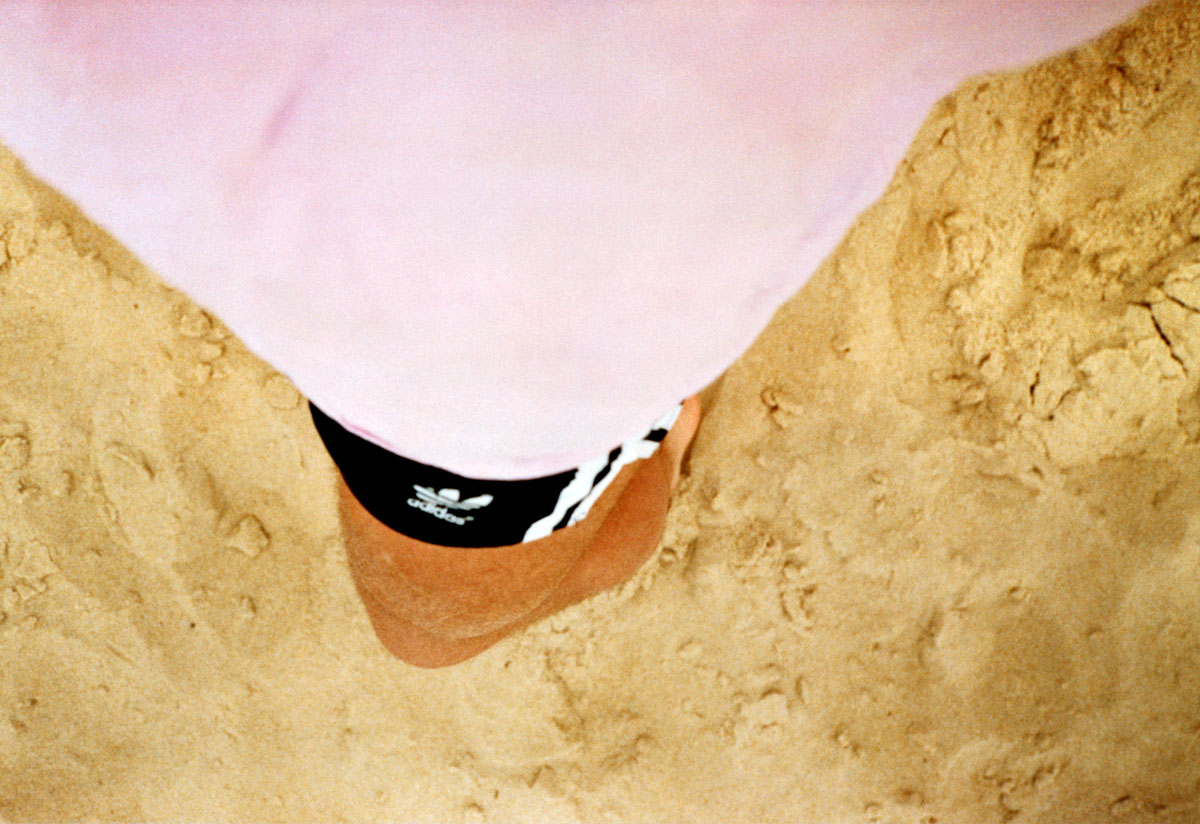
Wolfgang Tillmans (German, b. 1968)
Lacanau (self)
1986
Image courtesy of the artist, David Zwirner, New York / Hong Kong, Galerie Buchholz, Berlin / Cologne, Maureen Paley, London


Installation views of Wolfgang Tillmans: To look without fear, on view at The Museum of Modern Art, New York from September 12, 2022 – January 1, 2023 showing in the bottom image at right, Smokin’ Jo (1995, below)
Photo: Emile Askey
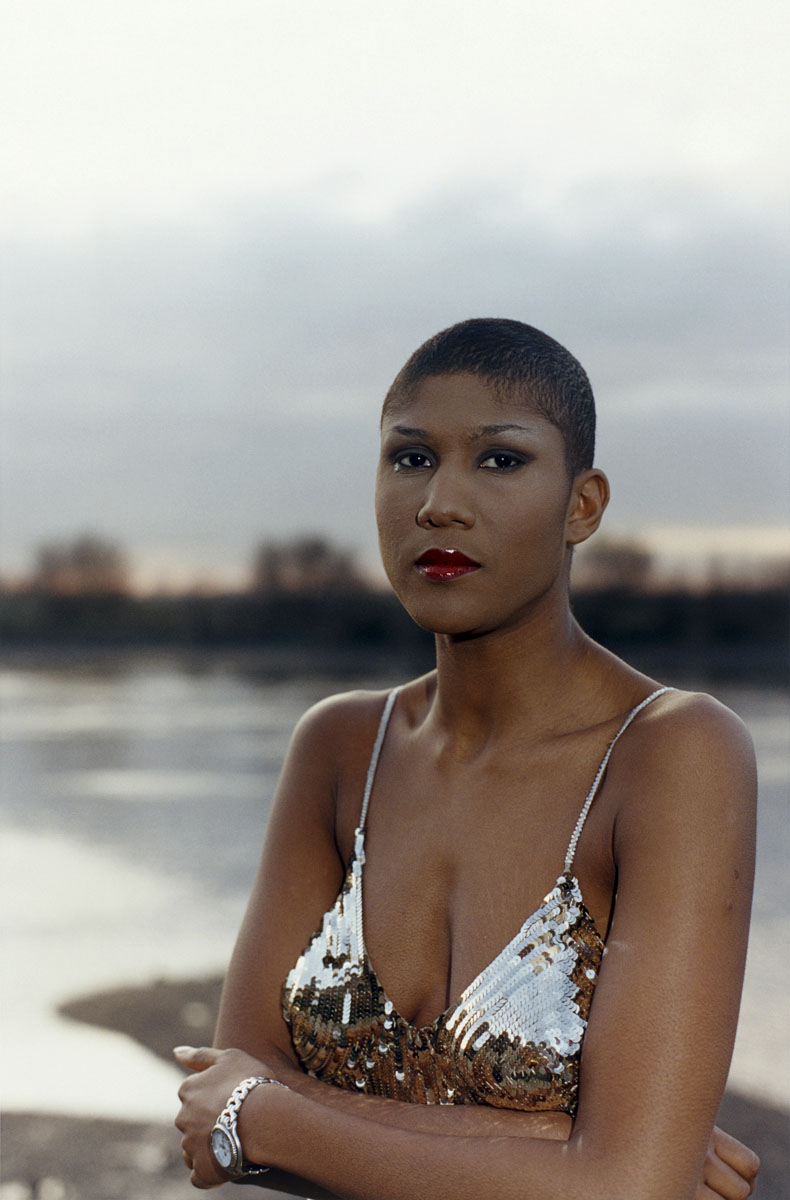
Wolfgang Tillmans (German, b. 1968)
Smokin’ Jo
1995
Image courtesy of the artist, David Zwirner, New York / Hong Kong, Galerie Buchholz, Berlin / Cologne, Maureen Paley, London

Wolfgang Tillmans (German, b. 1968)
Arkadia I
1996


Installation views of Wolfgang Tillmans: To look without fear, on view at The Museum of Modern Art, New York from September 12, 2022 – January 1, 2023 showing at top right in the top image, Arkadia I (1996, above); and at right in the bottom image, Tillmans work Concorde Grid (1997), a series of 56 colour photographs of equal dimensions
Photos: Emile Askey
A series of fifty-six colour photographs of equal dimensions arranged in a grid four rows high and fourteen columns wide. The series was created in an edition of ten plus one artist’s proof. Tate’s copy is number four. The photographs were taken as part of a commission for the Chisenhale Gallery, London on the occasion of I Didn’t Inhale, Tillmans’ solo exhibition there in 1997. An artist’s book consisting of sixty-two Concorde images was produced to accompany the exhibition. It was published by Walther König, Cologne. Fifty-four of the images in the photographic edition are reproduced in the book. The photographs were taken at a number of sites in and around London, including close to the perimeter fence at Heathrow airport. Several photographs of the airplane landing and taking off from the airport were taken looking through the security fence, which is included in the image as a blurred outline. In another sequence, the jet is viewed taking off dramatically over an expanse of brilliant green grass, suggesting that the artist may have pushed his camera lens between the gaps in the fence so as not to include it in the frame. Further photographs were taken from such vantage points as suburban railway tracks, roads close to the airport, a yard containing parked trucks and an open common. The airplane is depicted in varying scales viewed from a wide variety of angles. At times it resembles a bird, at others (when it flies directly above the camera at close range) an air-borne sting-ray. In several images it is barely visible in the haze of distance and the afterburn of its engines. Tillmans’ project has the flavour of a birdwatcher’s obsessive tracking and recording. He has written:
“Concorde is perhaps the last example of a techno-utopian invention from the sixties still to be operating and fully functioning today. Its futuristic shape, speed and ear-numbing thunder grabs people’s imagination today as much as it did when it first took off in 1969. It’s an environmental nightmare conceived in 1962 when technology and progress was the answer to everything and the sky was no longer a limit … For the chosen few, flying Concorde is apparently a glamorous but cramped and slightly boring routine whilst to watch it in the air, landing or taking-off is a strange and free spectacle, a super modern anachronism and an image of the desire to overcome time and distance through technology.”
(Quoted on the inner sleeve of Concorde)
Elizabeth Manchester. “Concorde Grid,” on the Tate website January 2003 [Online] Cited November 2022


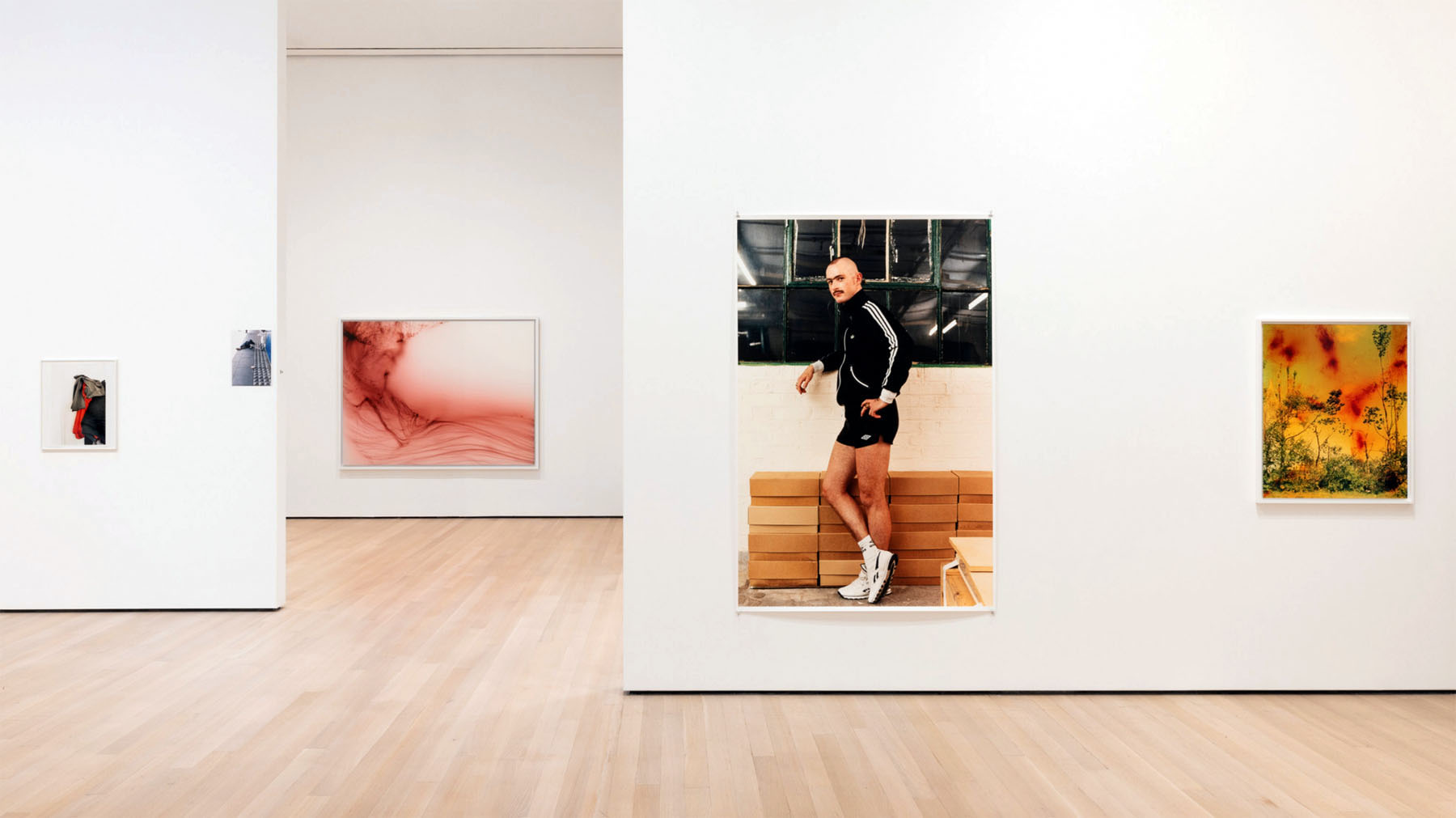
Installation views of Wolfgang Tillmans: To look without fear, on view at The Museum of Modern Art, New York from September 12, 2022 – January 1, 2023 showing in the top image at left Tillmans work Aufsicht (yellow) (1999, below); and at right in the bottom image, Icestorm (2001, below)
Photos: Emile Askey
![Wolfgang Tillmans (German, b. 1968) 'Aufsicht (yellow)' (View from Above [yellow]) 1999](https://artblart.com/wp-content/uploads/2022/11/tillmans-aufsicht-yellow.jpg "Wolfgang Tillmans (German, b. 1968) 'Aufsicht (yellow)' (View from Above [yellow]) 1999")
Wolfgang Tillmans (German, b. 1968)
Aufsicht (yellow) (View from Above [yellow])
1999
Image courtesy of the artist, David Zwirner, New York/Hong Kong, Galerie Buchholz, Berlin/Cologne, Maureen Paley, London

Wolfgang Tillmans (German, b. 1968)
Icestorm
2001
Image courtesy of the artist, David Zwirner, New York / Hong Kong, Galerie Buchholz, Berlin / Cologne, Maureen Paley, London
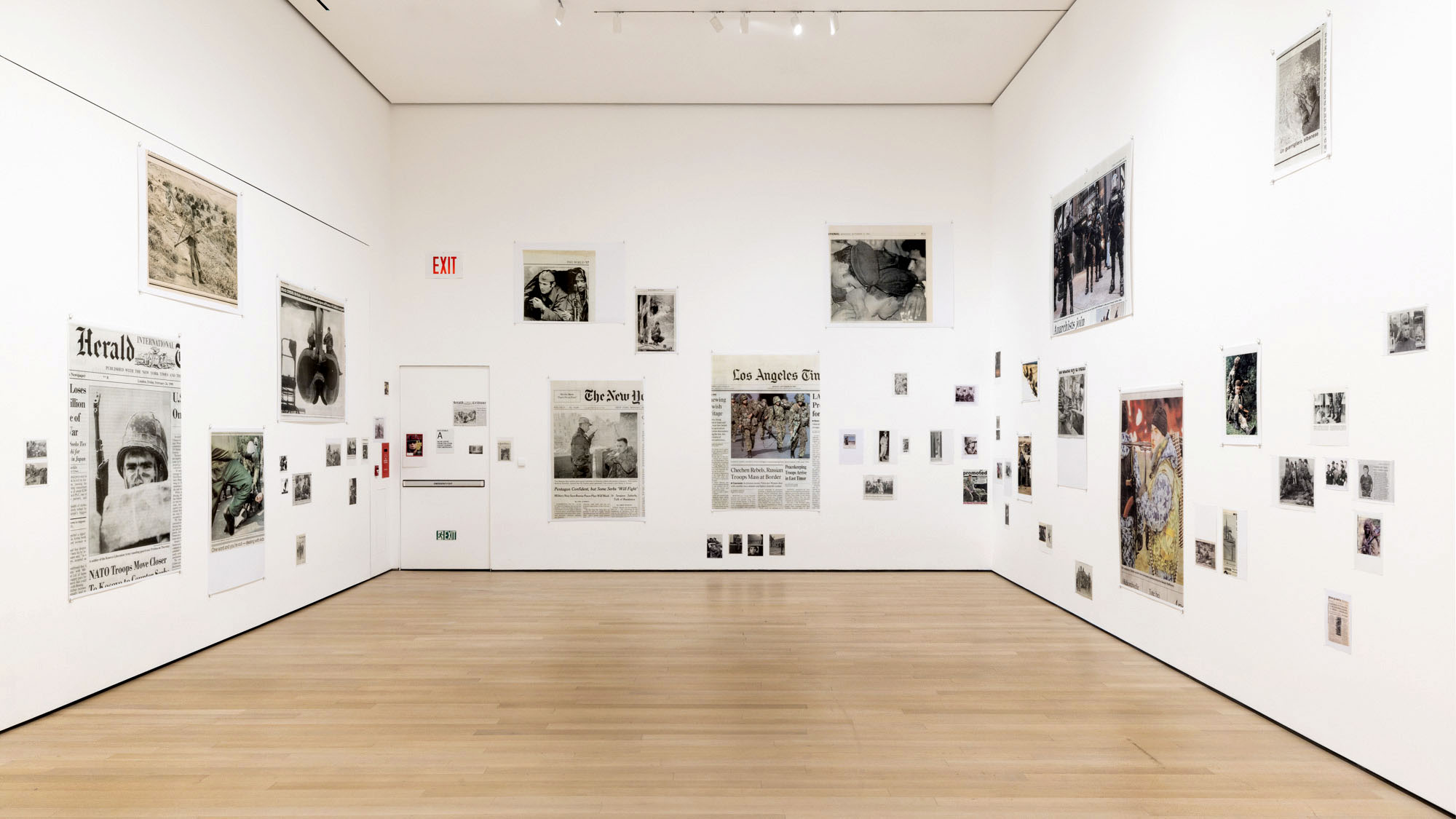

Installation views of Wolfgang Tillmans: To look without fear, on view at The Museum of Modern Art, New York from September 12, 2022 – January 1, 2023
Photos: Emile Askey
“The viewer… should enter my work through their own eyes, and their own lives,” the photographer Wolfgang Tillmans has said. An incisive observer and a creator of dazzling pictures, Tillmans has experimented for over three decades with what it means to engage the world through photography. Presenting the full breadth and depth of the artist’s career, Wolfgang Tillmans: To look without fear invites us to experience the artist’s vision of what it feels like to live today.
From ecstatic images of nightlife to abstract images made without a camera, sensitive portraits to architectural slide projections, documents of social movements to windowsill still lifes, astronomical phenomena to intimate nudes, Tillmans has explored seemingly every imaginable genre of photography, continually experimenting with how to make new pictures. He considers the role of the artist to be that of “an amplifier” of social and political causes, and his approach is animated by a concern with the possibilities of forging connections and the idea of togetherness.
Tillmans has rejected the prevailing conventions of photographic presentation, continuously developing connections between his pictures and the social space of the exhibition. In his installations, unframed prints are taped to the walls or clipped and hung from pins, and framed photographs appear alongside magazine pages. Constellations of images are grouped on walls and tabletops as photocopies, colour or black-and-white photographs, and video projections, exemplifying the artist’s idea of visual democracy in action. “I see my installations as a reflection of the way I see, the way I perceive or want to perceive my environment,” Tillmans has said. “They’re also always a world that I want to live in.”
Following its presentation at MoMA, the exhibition will travel to the Art Gallery of Ontario and the San Francisco Museum of Modern Art.
Organised by Roxana Marcoci, The David Dechman Senior Curator, with Caitlin Ryan, Curatorial Assistant, and Phil Taylor, former Curatorial Assistant, Department of Photography.
Text from the MoMA website


Installation views of Wolfgang Tillmans: To look without fear, on view at The Museum of Modern Art, New York from September 12, 2022 – January 1, 2023 showing at third left in the second image, Venus, transit (2004, below); and at right in the bottom image, Tillmans Freischwimmer 230 (Free Swimmer 230) (2012, below)
Photos: Emile Askey

Installation view of Wolfgang Tillmans: To look without fear, on view at The Museum of Modern Art, New York from September 12, 2022 – January 1, 2023 showing at left, Freischwimmer 230 (Free Swimmer 230) (2012, below)
Photo: Emile Askey

Wolfgang Tillmans (German, b. 1968)
Venus transit
2004
Image courtesy of the artist, David Zwirner, New York / Hong Kong, Galerie Buchholz, Berlin / Cologne, Maureen Paley, London

Wolfgang Tillmans (German, b. 1968)
Freischwimmer 230 (Free Swimmer 230)
2012
Image courtesy of the artist, David Zwirner, New York / Hong Kong, Galerie Buchholz, Berlin / Cologne, Maureen Paley, London
The Museum of Modern Art will present Wolfgang Tillmans: To look without fear, the artist’s first museum survey in New York, from September 12, 2022, through January 1, 2023, in the Steven and Alexandra Cohen Center for Special Exhibitions. Unique groupings of approximately 350 of Tillmans’s photographs, videos, and multimedia installations will be displayed according to a loose chronology throughout the Museum’s entire sixth floor. Shaped by new scholarship and eight years of dialogue with the artist, the exhibition will highlight how Tillmans’s profoundly inventive, philosophical, and creative approach is both informed by and designed to highlight the poetic possibilities and social and political causes for which he has been an advocate throughout his career. Wolfgang Tillmans: To look without fear is organised by Roxana Marcoci, The David Dechman Senior Curator of Photography, with Caitlin Ryan, Curatorial Assistant, and Phil Taylor, former Curatorial Assistant, Department of Photography.
Wolfgang Tillmans (b. 1968, Germany) has explored seemingly every genre of photography imaginable, continually experimenting with how to make pictures meaningful. Since the beginning of his career, Tillmans has revolutionised the prevailing conventions of photographic presentation, making connections between his pictures in response to a given context and activating the space of the exhibition. Spanning the artist’s production from the 1980s to the present, this survey will present iconic photographs alongside his rarely seen significant bodies of work, foregrounding the ways in which Tillmans’s concern with social themes, lived experiences, and the idea of togetherness are inextricable from this ongoing investigation of the medium.
“Social themes form a rich vein throughout his practice,” said Roxana Marcoci. “They motivate Tillmans’s exploration of the questions of how to see and how to communicate seeing.” His approach to art making emphasises the ideas of human connections, with his work reflecting a deep care for his subjects. Tillmans has pictured survival and loss amid the AIDS crisis, mined the media’s aestheticisation of military forces, given voice to LGBTQ+ communities around the world, and tracked the diffusion of globalism. To look without fear will present several different bodies of work and will reflect Tillmans’s distinct strategies of display. In his installations, unframed prints are taped to the walls or hung with clips, and framed photographs appear alongside magazine pages. Constellations of images – colour and black-and-white photographs and photocopies – grouped on walls and tabletops alongside video projections and sonic installations exemplify the artist’s idea of visual democracy in action. “I see my installations as a reflection of the way I see, the way I perceive or want to perceive my environment,” Tillmans has said.
The works that will be installed at the entrance to the exhibition exemplify Tillmans’s engagement with new forms of technology, which is traceable to his childhood passion for astronomy. It was through his early trials with the telescope, and later with the photocopier and video camera, that he ultimately arrived at his photographic practice. Victoria Park (2007), depicting two friends lounging in a park in East London, reflects his long-standing engagement with the laser photocopier, which he first happened upon as a teenager in a local print shop in 1986. Often enlarging images up to 400 percent, Tillmans aspired to expand the limits of photographic materials and techniques, an ambition that aligned with his near-contemporaneous experiments with electronic music. In the 2017 video untitled (leg), a single bare leg rotates slowly in rhythm, recalling 19th-century pre-cinematic motion studies, while its vertical aspect ratio evokes a 21st century-format: the smartphone screen.
In the exhibition’s first gallery, Tillmans’s early photocopies will be installed alongside images that brought him to prominence as a chronicler of youth subculture and nightlife, including Lutz & Alex sitting in the tree (1992) and Chemistry Squares (1992), which were both published in the British alternative magazine i-D in the early 1990s. The persistent presence of magazines in his exhibitions is indicative of how Tillmans harnesses the capacity of his pictures to amplify ideas when they are distributed across media platforms.
The second gallery will include early photographs that foreground Tillmans’s abiding interest in music and performance. His portrait, made for Interview magazine in 1995, of the legendary DJ Joanne Joseph – better known by her stage name, Smokin’ Jo – will be installed near wall of speakers (1992), made on a trip to Kingston, Jamaica, where Tillmans photographed the local ragga music scene. This photograph captures an outdoor festival’s precariously stacked sound system, depicting the structure as both a sculptural object and a means of experimentation capable of producing thunderous bass sounds.
The following gallery will include works that speak to Tillmans’s subversion of traditional art-historical subjects and genres. In the photographs he calls Faltenwurf (German for “drapery”), clothes hang drying on radiators, are crumpled into balls, or lie in heaps, alluding to drawn and painted studies of fabric. Beginning in the late 1990s, Tillmans became increasingly invested in the possibilities afforded by darkroom abstraction, experimenting with new techniques, such as applying coloured tints and using flashlights to manipulate a negative while it developed. In his monumental I don’t want to get over you (2000), a title inspired by the lyrics of a song by the Magnetic Fields, gestural green streaks and dark, thread-like lines fuse with the image of a vast, barren-looking, otherworldly landscape.
Tillmans’s video work – an under-recognised facet of his practice – brings together movement, electronic music, ambient sound, technology, and quotidian imagery. The fourth gallery will feature two such video works. Lights (Body) (2000-2002) focuses on the flashing lights in a busy nightclub, revealing the specks of dust rising off the ravers’ clothes and skin, accompanied by the hypnotic dance beat of Air’s “Don’t Be Light (The Hacker Remix).” Peas (2003), a three-minute study of a pot of boiling peas in close-up, shot in Tillmans’s former East London studio, depicts the mutual rhythm of the vegetables over audible sounds from a Pentecostal church across the street.
A fifth gallery is dedicated to Soldiers: The Nineties (1999), an installation of enlarged newspaper photographs exploring the geopolitical implications of visual culture. Throughout the 1990s, as Cold War tensions eased, the front pages of newspapers often featured images of soldiers engaged in acts of leisure, such as smoking, casually sitting, or playing chess, as thousands of military personnel were deployed to conflict-ridden nations to participate in peacekeeping missions sponsored by the United Nations. Tillmans was intrigued by the erotic undertones of these photographs of anonymous, occasionally bare-chested servicemen, informed by his previous attention to the ways that queer and techno subcultures had adopted camouflage and utility wear.
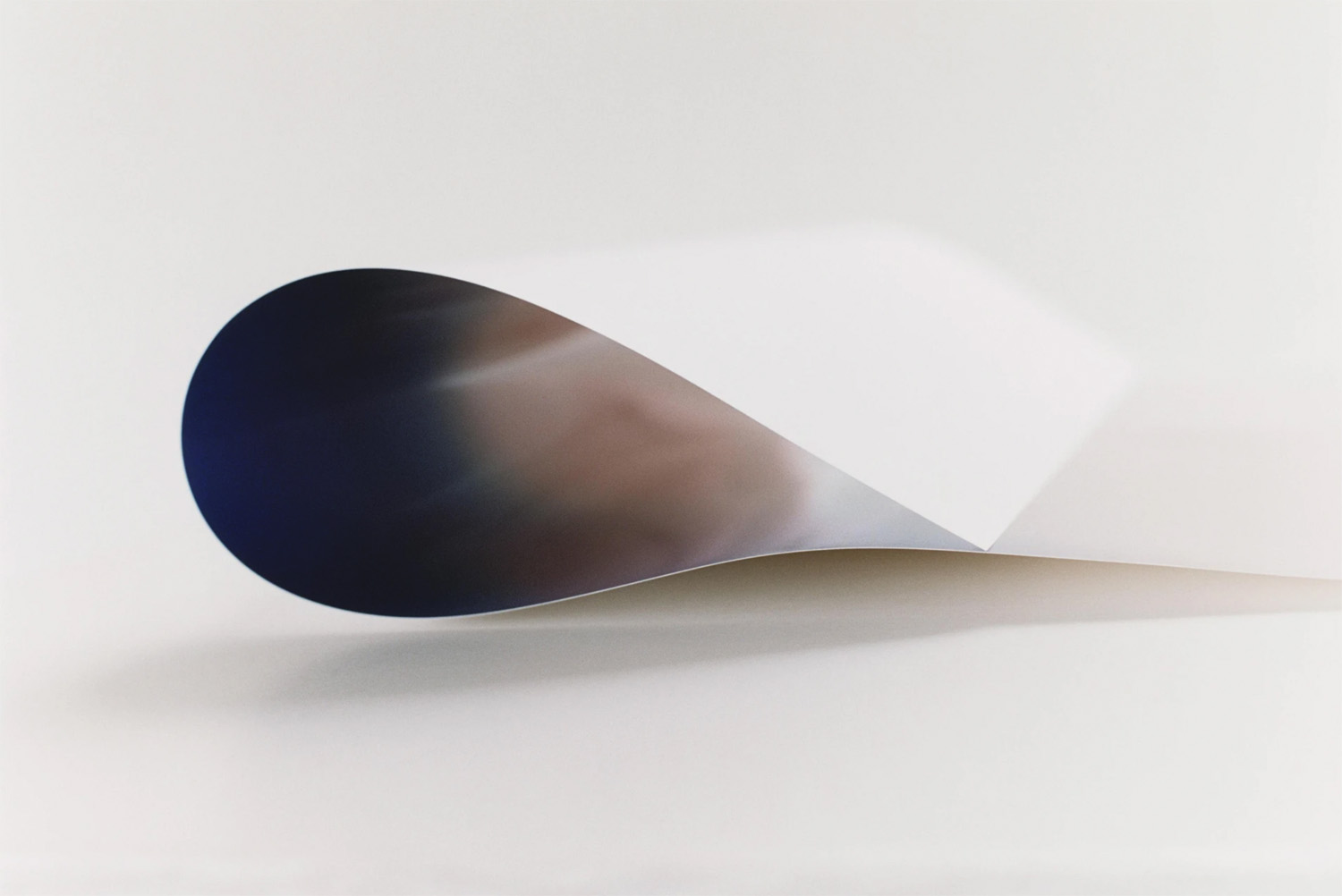
Gallery six will explore Tillmans’s work at the threshold of abstraction and representation, as well as his deep interest in the materiality of photographic paper. Tillmans first created a body of work called paper drops after he acquired an industrial-sized printer in 2001 and began experimenting with the optical effects of gravity, which allowed the paper to freely bend and curl. “For me, the photo has always been an object,” Tillmans has said. The manipulated colour fields of the Lighter (ongoing since 2005) works expand upon this dynamic. Made without a camera, the photographic paper is either folded in the darkroom or exposed to evoke the effects of folding, and then framed in plexiglass. The Silvers (ongoing since 1992) are also cameraless works made by feeding photographic paper through a developer that Tillmans has purposely not cleaned, allowing interferences of dirt and traces of silver salts be visible.
The centre space of the exhibition will include an iteration of Tillmans’s Truth Study Center, a type of structure first presented by Tillmans in 2005, in which unpretentious wooden tabletops serve as the display architecture for a mix of his own photographs, clippings, and printouts of newspaper and magazine articles. Tillmans introduced this tactic to question notions of absolutism – whether it be the Bush Administration’s claims of weapons of mass destruction to justify the war in Iraq, or religious dogma in any form – while also acknowledging the universal human desire to search for truth. Half of the tables in this room contain material from the early 2000s installations while the other half has been composed specifically for the MoMA exhibition using recent material.
Between 2008 and 2012, Tillmans embarked on a major new project that coincided with his adoption of the digital camera. Comprising portraiture, still life, landscape, street photography, and architectural studies, Neue Welt (“New World”) observes the flows of finance, commodities, and people around the world. Alongside these works, gallery seven will feature documents of social movements that bring to the fore the ethics of care at the heart of Tillmans’s practice. One such exemplary work is a 2014 photograph of dancing figures at one of St. Petersburg’s few gay clubs, the Blue Oyster Bar, taken a year after Vladimir Putin signed a bill outlawing the dissemination of “propaganda for non-traditional sexual relations.” Another notable example is Black Lives Matter protest, Union Square, b (2014), depicting an outstretched hand at a Black Lives Matter protest in the wake of widely publicised police killings of African Americans.
A highlight of To look without fear will be the first US museum presentation of an audiovisual listening room for Tillmans’s first full-length album, Moon in Earthlight (2021), a quintessential example of his unique style of “audio photography” As a musician and documentarian of music, Tillmans has long engaged with music, its cultural significance, and the shared experience of listening – from images of raves, clubs, and dance parties to videos of the artist himself dancing. Produced primarily during the pandemic, the 53-minute album incorporates spoken word, ambient field recordings, and pulsating electronic beats, emphasising the performative nature of music and its status as a preeminent force that brings people together.
This comprehensive exhibition will conclude with recent and never-before-seen portraits, landscape, and astrophotography, alongside older works. The platform just outside the sixth-floor exhibition space will feature Tillmans monumental collaboration with German sculptor Isa Genzken, Science Fiction / Hier und jetzt zufrieden sein (2001), a dizzying environment comprised of two irregularly gridded mirrored structures by Genzken and wake, the largest photograph Tillmans has ever made, depicting the aftermath of a party bidding farewell to his London studio. The installation’s title is partially drawn from the German phrase meaning “happy in the here and now,” evoking a contemplative mindfulness as visitors depart the exhibition.
Press release from MoMA

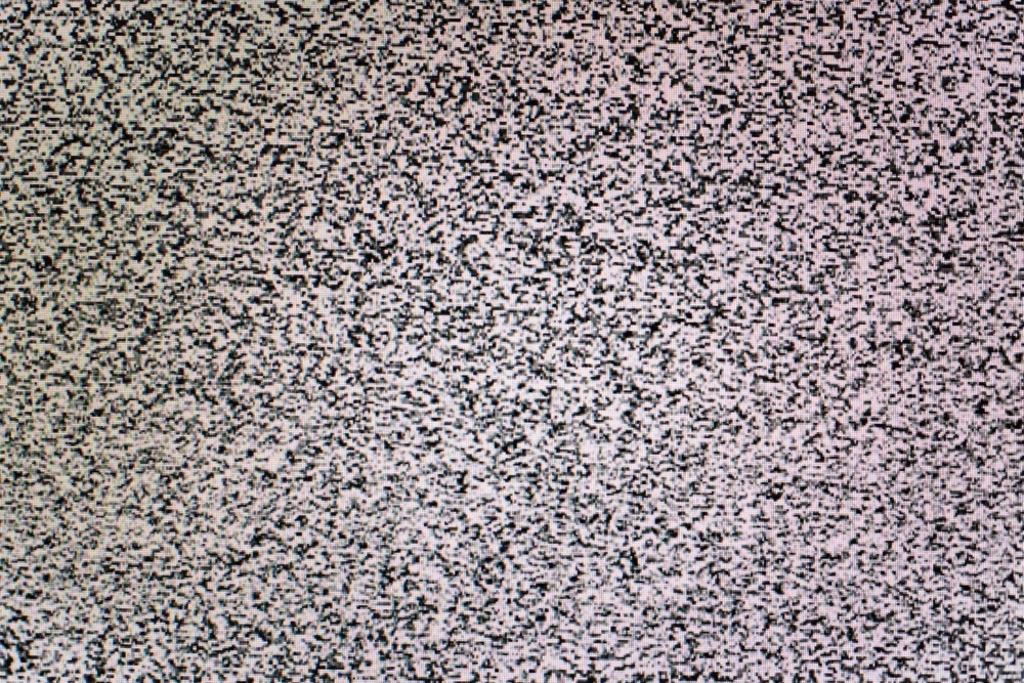
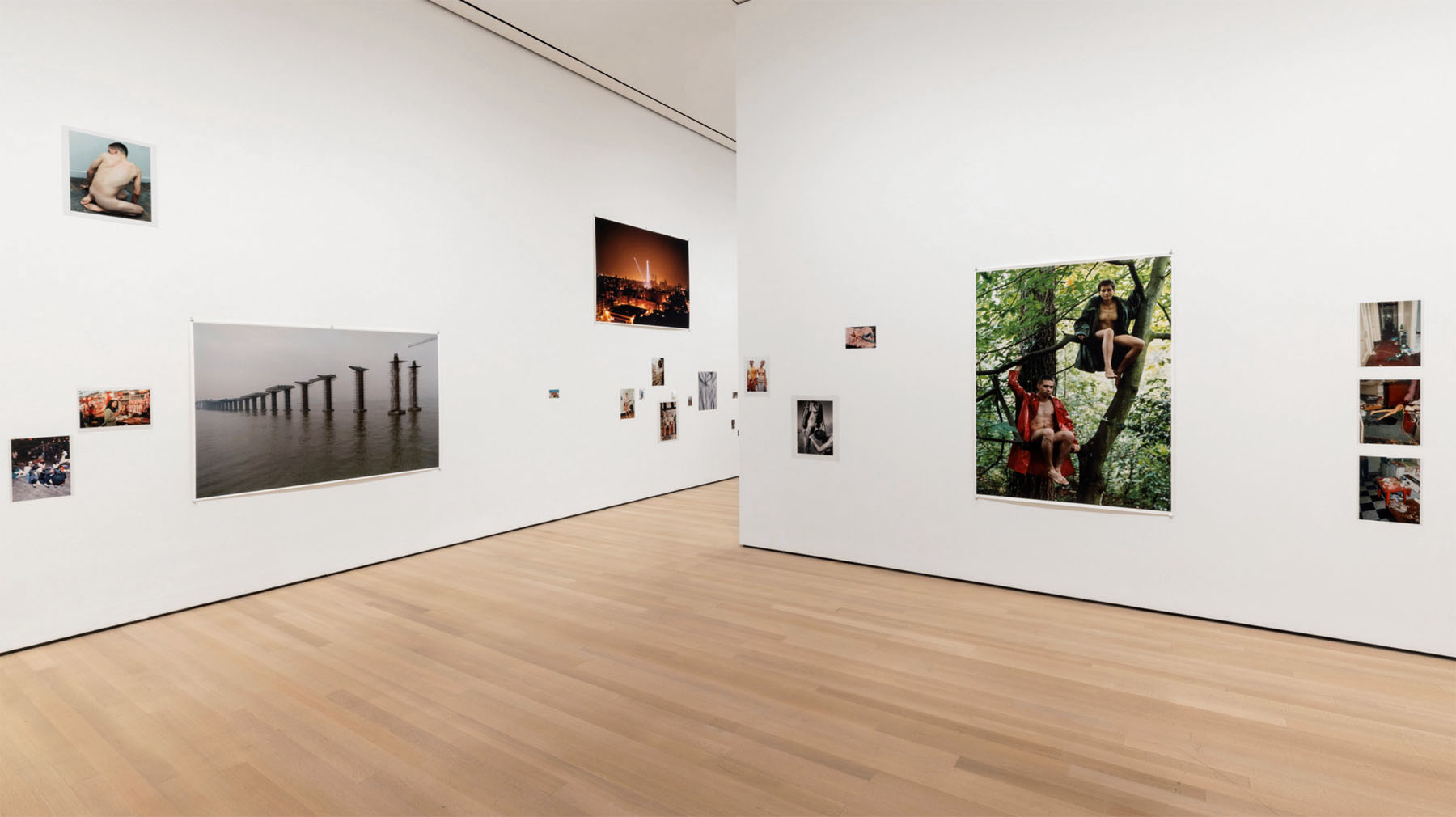
Installation view of Wolfgang Tillmans: To look without fear, on view at The Museum of Modern Art, New York from September 12, 2022 – January 1, 2023 showing at second right, The Spectrum Dagger (2016, below); and at right, Sendeschluss / End of Broadcast I (2014, below)
Photo: Emile Askey

Wolfgang Tillmans (German, b. 1968)
The Spectrum Dagger
2016
Wolfgang Tillmans (German, b. 1968)
Sendeschluss / End of Broadcast I
2014

Installation views of Wolfgang Tillmans: To look without fear, on view at The Museum of Modern Art, New York from September 12, 2022 – January 1, 2023 showing in the bottom image at second left, Tillmans Lutz & Alex sitting in the trees (1992, below)
Photos: Emile Askey

Wolfgang Tillmans (German, b. 1968)
Lutz & Alex sitting in the trees
1992
Image courtesy of the artist, David Zwirner, New York / Hong Kong, Galerie Buchholz, Berlin / Cologne, Maureen Paley, London
The Wandering Image
Roxana Marcoci
Sep 8, 2022
The potential of the “wandering image” – the migrant, incessantly decentralized image, which moves and performs across communication platforms – has been critical to Wolfgang Tillmans since the beginning of his artistic practice.1 The unfettered circulation of images plays an important role in his embrace of mobility, diversity, and the variety and mutability of sexual identity in the world. By transmitting, sharing, and setting images free, by multiplying their lives, he proposes a fully democratized experience of art.
Such a notion of photography’s potential role is not entirely new. As early as the mid-1930s, writer and politician André Malraux praised the medium’s capacity to encompass the globe (a forecast of the digital age). For Malraux, furthermore, photography offered a way to understand the human condition, enabled cross-cultural analysis, and democratized the experience of art by freeing original objects from their contexts and relocating them “closer” to the viewer. In his 1947 book Le musée imaginaire, he advocated for a pancultural “museum without walls,” postulating that art history has in fact become “the history of that which can be photographed.”2 His thesis, forward-thinking as it was, has been challenged recently by scholars who note that Malraux (a player in France’s political sphere in the 1950s and ’60s) indiscriminately brought together works of art from all periods and regions, ruthlessly deracinating them from their history and heritage and repurposing them in service to the ideological interests of colonialism.3
In his practice, Tillmans offers an alternative, even inverse proposition: he links the wandering image to a politics of equality and historical consciousness. The photograph’s reproducibility, its ubiquity across media, counters the aura attributed to the original – and to the ideals of uniqueness and specificity. Photography actualizes art’s potential itinerancy and multiplicity. Indeed, Tillmans’s work raises a number of questions: Might the mediated image at times be more impactful or enduring than a direct experience of the work? Might it be equally significant, even if different? How to see and how to communicate seeing are at the crux of photography’s capacity to articulate the world in relational terms – decentered, nonhierarchical, open to differences. Making connections between images seen for the first time or images looked at again in new configurations or across a spectrum of platforms as if for the first time – all this constitutes the evolving knowledge of the visible.
Tillmans has distributed his photographs and ideas across the pages of magazines and books, postcards and newspaper inserts, music videos and records, posters, billboards, nightclubs, architectural contexts, and the theatrical stage. “His various tactics of distribution,” critic Johanna Burton notes, “enable various permeations, recognizing that there are multiple kinds of cultural repositories, all with different logics and dimensions.”4 Yet each context also invests Tillmans’s peripatetic images with additional meanings. And – paradoxically, but perhaps inevitably – the artist brings light to these meanings through his attentive engagement with the singular image within each singular installation.
The most often used of his platforms is the gallery installation, but even in a familiar space such as this his unorthodox display strategies defamiliarize viewing habits. Sidestepping museological conventions of material, scale, and subject matter, he organizes his installations in relational montages inspired by the aesthetics of cinema and magazine layouts, eschewing a uniformly linear display logic. He activates the images’ latent effects through nonverbal yet resonant associations. Large inkjet prints, attached to the wall with binder clips, bowing slightly along the edges, are juxtaposed with postcard-sized images, photocopies, magazine pages, and glossy chromogenic prints fastened with Scotch Magic Tape. Tillmans organizes each part of the wall almost as though it were a page layout and makes full use of the architecture of the room, hanging photographs in a corner, above a doorframe in the vicinity of the exit sign, on a freestanding column, next to a fire extinguisher. There are also table-based configurations, and crumpled or folded monochrome pictures whose sculptural volumes are encased in acrylic frames. The decisive logic of his practice is the visual democracy he brings to each installation, best summarized by his phrase “If one thing matters, everything matters.”5
Entangled with humanist ideas, Tillmans’s value system revolves around some central questions: What can pictures make visible? What can one know at all? Who deserves attention? How can one connect with other people? How might we foster solidarity? In what do art’s political potential and its ethical worth reside? As he notes: “For me art was the area where I could oppose. Express difference.”6 This desire to observe the world with intention is matched by an empirical openness to nontraditional formats and alternative venues. Operating on the basic premise that all motifs and platforms are worth investigating, Tillmans subjects his own photographic vision to perpetual recontextualization.
This openness to a range of forms and spaces can be seen in his very earliest efforts. In February 1988 Tillmans had his first show, at Café Gnosa in Hamburg. There he presented Approaches (1987-1988), a group of photocopied triptychs made with a Canon laser photocopier, which he utilized like a stationary camera. His exercises with enlarging xerographic images up to 400 percent demonstrate his aspiration to expand the limits of materials and techniques used in making works, and are in a sense aligned with his near contemporaneous experiments with mechanically produced electronic music.
In September 1988 a second exhibition of Tillmans’s work took place, at the Fabrik Fotoforum in Hamburg, where he showed a new selection of Approaches: a sequence of progressive enlargements of vacation shots and newspaper images, together with photographs of video stills of closeup self-portraits he had made with a portable VHS camera. This body of work was featured again, later in the same year, at the Stadtteilbücherei RemscheidLennep.
Tillmans’s intensive observation and engagement with technology can be traced back to his childhood passion for astronomy. His earliest photographs (from 1978, when he was 10 years old) were of celestial bodies, captured by holding his father’s camera up to the eyepiece of his first telescope. Through these incipient trials with the telescope, and later the photocopier and video camera, he ultimately settled on photography. His route there took him through diverse modes of expression, from writing song lyrics to making clothes to painting and drawing to scientific studies and explorations.
In November 1992 Tillmans presented a large picture printed on fabric, Lutz & Alex sitting in the trees, at Maureen Paley’s Interim Art stand at the UnFair in Cologne, an event organized by young galleries in a disused factory an alternative to the city’s official art fair. In the same month, Lutz & Alex was published as part of an eight-page photo spread titled “like brother like sister” in i-D – a British magazine covering anti–high fashion, music, and youth culture – to which he had recently started contributing.7 Two months later, in early 1993, he had his first gallery exhibition, at Daniel Buchholz’s two spaces in Cologne. In the back of an antique bookshop run by Buchholz and his father, Tillmans mounted a completely nonhierarchical installation, interspersing handprinted chromogenic prints, magazine pages, and laser photocopies. Large-scale inkjet prints mounted on fabric were appended directly to the walls in Buchholz’s second space. In the bookshop itself he showed photocopies pegged on clotheslines among the antiquarian prints that were already hanging. The exhibition also included a display case holding four magazines from different countries, all featuring the same photograph by Tillmans, of two men kissing at a EuroPride rally in London, each printed with a slightly different tonality. In the shop window he stuck a grid of techno club pictures from 1991, made in Ghent, London, and Frankfurt, which had been published that year in i-D.
The wide ambit of Tillmans’s installations was thus established in his first exhibitions. As artist and curator Julie Ault observes: “Taken together the installations reflect the artist’s parallel tracks of interest in the singular self-sufficient image and in relationships between images and production types.”8 They also highlight Tillmans’s wide-eyed interest in image networks and the potentials of spatial dynamics. A pioneer of the photographic exhibition itself as spatial medium, he created the conditions with which to communicate his ideas about social and political realities while intensifying visitors’ viewing and sensory experiences.9
As we consider the many platforms, media, and display strategies Tillmans has engaged to articulate his work, the larger principles of his worldview become clear. His relationship to reality is, he points out, always “above all, more ethical than technical, or purely aesthetic.”10
Wolfgang Tillmans: To look without fear, organized by Roxana Marcoci, The David Dechman Senior Curator, with Caitlin Ryan, Curatorial Assistant, and Phil Taylor, former Curatorial Assistant, Department of Photography, is on view September 12, 2022 – January 1, 2023.
1/ The phrase “wandering image” is Tillmans’s own. See Wolfgang Tillmans, interview with Hans Ulrich Obrist, The Conversation Series, no. 6 (Cologne: Walther König, 2007), p. 76. See WT Reader, p. 138.
2/ André Malraux, Le musée imaginaire (1947); in English as Museum without Walls (London: Zwemmer, 1949). This was the first volume of a three-part compendium, La psychologie de l’art (The Psychology of Art), which Malraux subsequently expanded and reissued in a single book as Les voix du silence (The Voices of Silence, 1951).
3/ Scholar Hannah Feldman critiques Malraux’s “amnesiac aesthetics,” noting that his cultural policies before and during the time he served as France’s first Minister of Cultural Affairs (1959-1969), under President Charles de Gaulle, coincided with the country’s colonial wars first in Indochina and then in Algeria. See Feldman, From a Nation Torn: Decolonizing Art and Representation in France, 1945-1962 (Durham, NC: Duke University Press, 2014), p. 11.
4/ Johanna Burton, “Pictures in the Present Tense,” in Wolfgang Tillmans (London: Phaidon, exp. ed. 2014), p. 190. See also Mark Godfrey, “Worldview,” in Wolfgang Tillmans, ed. Chris Dercon and Helen Sainsbury with Wolfgang Tillmans (London: Tate Publishing, 2017).
5/ This was the title of Tillmans’s retrospective exhibition at Tate Britain (June 6 – September 4, 2003).
6/ Wolfgang Tillmans, interview with Shirley Read, “Oral History of British Photography,” British Library Sound & Moving Image Catalogue (Recording 4, May 4, 2015, 00:17:16, digital file name: 021AC0459X0220XX0004MO.mp3).
7/ Wolfgang Tillmans, “like brother like sister,” i-D, no. 110 (November 1992), pp. 80-87.
8/ Julie Ault, “The Subject Is Exhibition (2008): Installations as Possibility in the Practice of Wolfgang Tillmans,” in Wolfgang Tillmans: Lighter, ed. Daniel Birnbaum, Julie Ault, and Joachim Jäger (Ostfildern, Germany: Hatje Cantz, 2008), p. 15.
9/ In the 1920s and 1930s groundwork was laid for experimentation with spaces and media technologies in exhibition installations. Notable among these efforts: El Lissitzky’s psychoperceptual Demonstrationsräume (Demonstration Spaces), which marked the emergence of exhibition theory and the exhibition as a medium; Friedrich Kiesler’s exploratory Raumbühne (Space Stage, 1924), by which he proposed dispensing with the old proscenium frame of classical theaters and cinema houses and merging auditorium and stage into an interactive arena; Herbert Bayer’s 1935 spatial scheme for extending the viewing experience – a post-Bauhaus diagram consisting of rings of image panels installed at 360 degrees around the viewer to enhance sensorial agency; and László Moholy-Nagy and Lucia Moholy’s synthesis of typography, photography, sound recording, and film into a generative intermedia experience, in “ProduktionReproduktion,” De Stijl 5, no. 7 (July 1922), pp. 97-101.
10/ Wolfgang Tillmans, interview with Beatrix Ruf, “New World/Life Is Astronomical,” in Tillmans, Neue Welt (Cologne: Taschen, 2012), n.p. See WT Reader, p. 188.
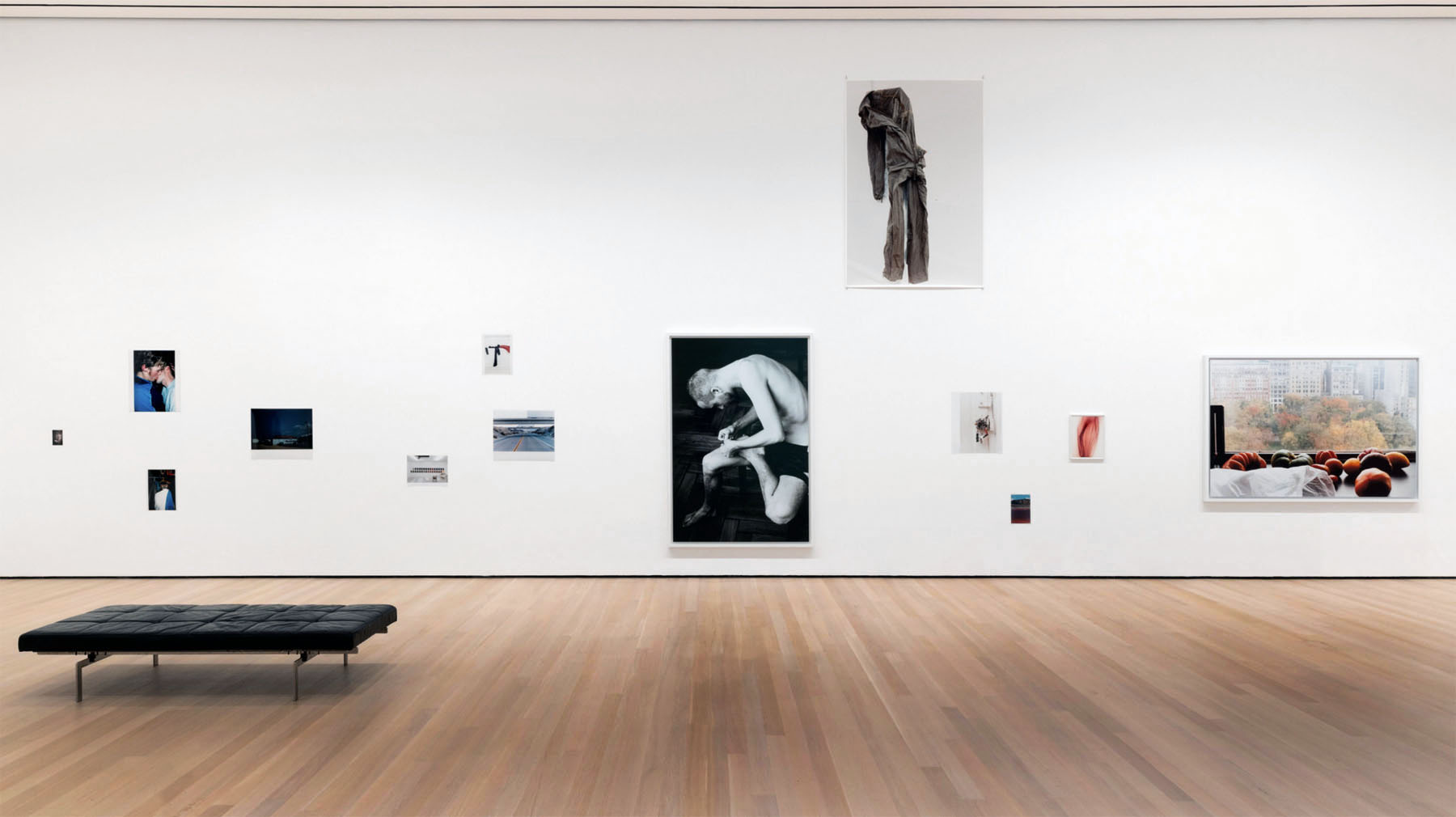
Installation view of Wolfgang Tillmans: To look without fear, on view at The Museum of Modern Art, New York from September 12, 2022 – January 1, 2023 showing at second left top, Tillmans The Cock (kiss) (2002, below); and at centre, Anders pulling splinter from his foot (2004, below)
Photo: Emile Askey

Wolfgang Tillmans (German, b. 1968)
The Cock (kiss)
2002
Image courtesy of the artist, David Zwirner, New York / Hong Kong, Galerie Buchholz, Berlin / Cologne, Maureen Paley, London

Wolfgang Tillmans (German, b. 1968)
Anders pulling splinter from his foot
2004

Installation view of Wolfgang Tillmans: To look without fear, on view at The Museum of Modern Art, New York from September 12, 2022 – January 1, 2023
Photo: Emile Askey


Installation views of Wolfgang Tillmans: To look without fear, on view at The Museum of Modern Art, New York from September 12, 2022 – January 1, 2023 showing in the top image at centre, The Blue Oyster Bar, Saint Petersburg (2014, below); in the bottom image at top right inner, NICE HERE but ever been to KRYGYZSTAN free Gender Expression WORLDWIDE (2006, below); and at right, The Spectrum Dagger (2016, above)
Photos: Emile Askey

Wolfgang Tillmans (German, b. 1968)
The Blue Oyster Bar, Saint Petersburg
2014
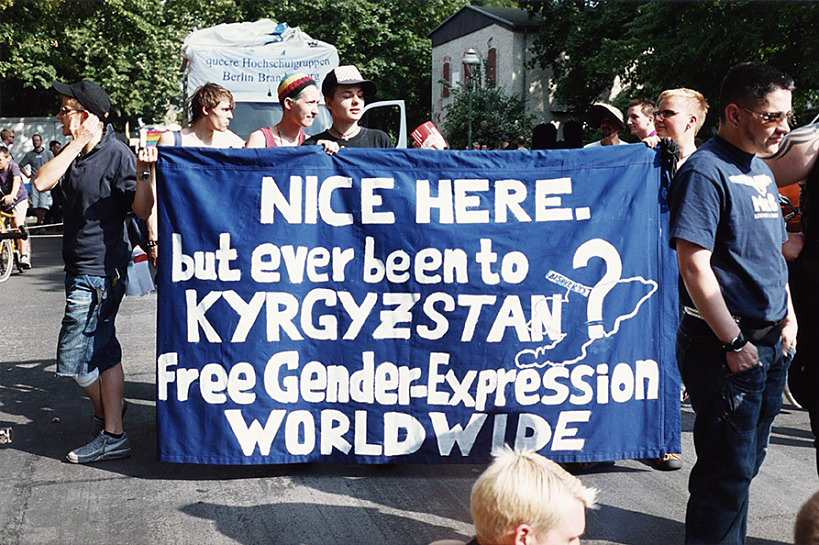
Wolfgang Tillmans (German, b. 1968)
NICE HERE but ever been to KRYGYZSTAN free Gender Expression WORLDWIDE
2006


Installation views of Wolfgang Tillmans: To look without fear, on view at The Museum of Modern Art, New York from September 12, 2022 – January 1, 2023 showing in the bottom image at third left, Tukan (2010, below); and at right, Headlight (f) (2012, below); and at right, Weed (2014, below)
Photos: Emile Askey

Wolfgang Tillmans (German, b. 1968)
Tukan (Toucan)
2010
Image courtesy of the artist, David Zwirner, New York / Hong Kong, Galerie Buchholz, Berlin / Cologne, Maureen Paley, London

Wolfgang Tillmans (German, b. 1968)
Headlight (f)
2012
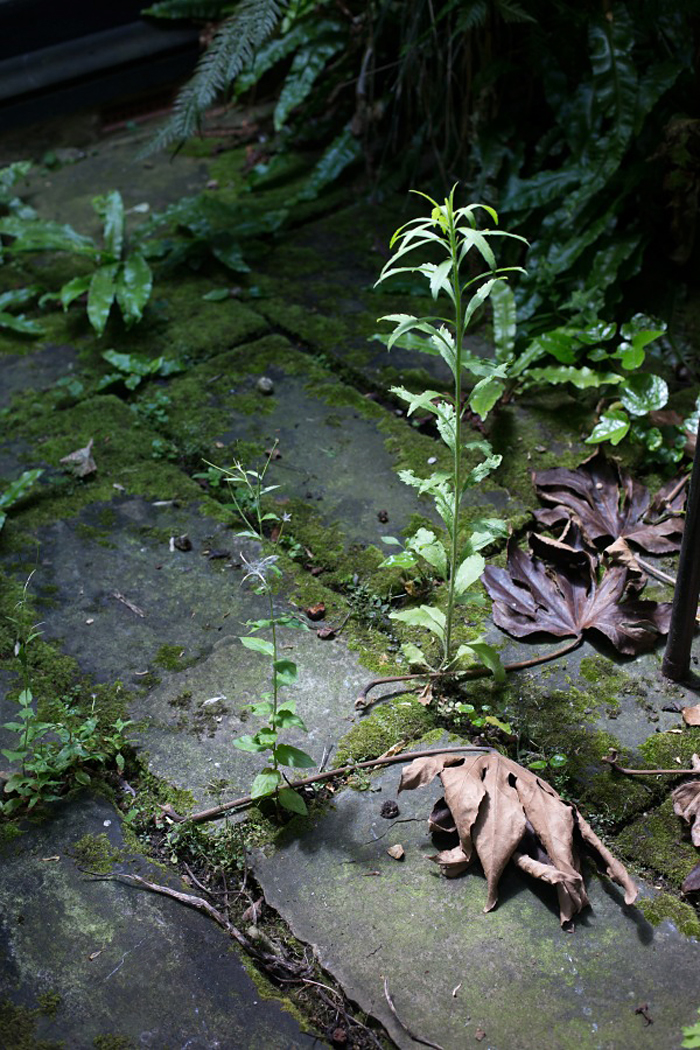
Wolfgang Tillmans (German, b. 1968)
Weed
2014
Wolfgang Tillmans: On the Limits of Seeing in a High-Definition World
Aimee Lin
Jan 11, 2022
Edited by Roxana Marcoci and Phil Taylor, the just-released Wolfgang Tillmans: A Reader (2021) is the first publication to present the artist’s contributions as a thinker and writer in a systematic manner, illuminating the breadth of his engagement with audiences across diverse platforms. The interview excerpt below is included in the reader.
Aimee Lin: In the catalogue [DZHK Book 2018] for your Hong Kong exhibition [at David Zwirner] you have reproduced an email conversation with a printing company you contacted in response to a spam email. How did that dialogue start?
Wolfgang Tillmans: It was just by chance. The email caught my eye because it was so unsophisticated and innocent. I thought that, rather than malicious phishers, these might be real people. So I wrote back, and their response was quite touching. They explained they were young and sending out random emails to find customers for their printing business. We think of it as spam, but it is no different from a leaflet through the letter-box. They really were trying to find clients, but I naturally assumed that it was some terrible virus or phishing scam.
Aimee Lin: Why did you want to include this in the catalogue? It’s a very beautiful story, very funny, even flirty.
Wolfgang Tillmans: I see this catalogue as an artist’s book. I like to explore different materialities in books, different ways of thinking. It’s not just a representation of images, it’s a book of poetry. When I was laying out the book, I thought of it as writing. I can’t tell you the story in words, but I feel it in the sequence of pictures. The book is about language, but not necessarily a verbal or literary language. Text is included in my recent pictures, including the works exhibited in this show. And I considered this exchange with the printer “Klaus” as a kind of concrete poetry.
Aimee Lin: The conversation reminded me of Manuel Puig’s 1976 novel Kiss of the Spider Woman. It’s about two inmates, a political prisoner and a thief, and in each chapter one of the guys tells the story of a film they’ve seen.
Wolfgang Tillmans: I never understood myself as speaking only through photography. I feel like I can say almost everything I want to with photography, and I still haven’t gotten tired of it, but on the other hand it is only one medium. More and more, I realize that language is something I care about and have developed as a medium in the shape of interviews and lectures. The lectures are like eighty-minute performances, with language, pictures, and silence. This performative element moved into video and finally back into music. Music is a lot about words being spoken and sung.
Aimee Lin: The exhibition at David Zwirner’s Hong Kong space will include images of Shenzhen, Macau, and Hong Kong, all of which are political and geographical borders inside China. I’m curious about why you chose to photograph those places.
Wolfgang Tillmans: The Macau picture is from 1993, which is the first time I was in Macau and the last time I was in Hong Kong, so there’s been twenty-five years between my two visits. Back then I wanted to see the border with China. I’m interested in understanding the difference across a border when the earth – the ground, the matter – is the same. I never took borders for granted, and I don’t necessarily want to tear them down, but I do want to understand them in their material reality. To feel them. Clothes also interest me, this thin layer of fabric that conceals plain human bodies that are pretty much the same. The putting on of clothes changes so much. A uniform creates authority and distance, which is in a way ridiculous, because it’s just a piece of fabric, it’s nothing. A pair of ripped jeans is seen by a parent as something that should be thrown away, and by a teenager as the most beloved piece of clothing.
Aimee Lin: Clothes are an artificial border against your natural body.
Wolfgang Tillmans: Yes. I acknowledge that there are borders between people, languages, and races. But I think that by looking at them, touching them, smelling them, feeling them, you can also see them for what they are. Strangely, that’s the visible medium of photography. It’s not a scientific way of looking deeper, but it does put me into situations where I can explore those limits, whether that’s being at a border or looking through an extremely large telescope. I spent a weekend in Chile at an observatory, looking at the border of the visible.
Aimee Lin: The far end of the universe.
Wolfgang Tillmans: Astronomy is located at the limit. Can I see something there? Is that a detail or is it just noise in the camera sensor? By going to the limits, to the borders, I find comfort in being in-between. I always felt held in-between the infinite smallness of subatomic space and the infinite largeness of the cosmos. It gives me comfort to feel infinity.
Aimee Lin: How does that experience, that feeling, relate to your high-resolution digital photographs, which are printed at a very large scale? Those images are so massive, contain so much detailed visual information, that they are overwhelming.
Wolfgang Tillmans: I wasn’t originally interested in super-sharp, large-format film, because I wanted my photographs to describe how it feels to look through my eyes. For that, 100 ASA [ISO] 35mm film is close enough to how I feel things look. But since 1995 I have also shown very large photographs, the largest of which is called wake (2001), recently shown at the Hamburger Bahnhof in Berlin. Those pictures were made with 35mm negatives, but in 2009 I started to work with a high-resolution digital camera. Suddenly I found myself with an instrument in my hand that was as powerful as a large-format camera. It took me three years to learn how to speak with this new language. By 2012, the whole world had become high-definition. Being able to zoom in on a huge print, and still see detail after detail, is how the world feels now, through my eyes. I’m grateful that I was able to make that development from film to high-resolution digital photography, because it opened up a new language in the history of art. One of the pictures, included in the Hong Kong exhibition, showing the texture of wood and an onion [Sections (2017)], is of such shocking clarity that you find yourself facing an idea of infinity. These pictures contain more information than you can ever remember. Only these large-format prints are able to display the full range of detail, color, and scale, and so digital has actually made the objects almost more unique. The object can only be experienced in the full depth of its presence and its material reality in that room at that time.
Aimee Lin: This material reality is only accessible through the picture. The eyes can’t process so much information in one go.
Wolfgang Tillmans: I find that miraculous. There’s something deeply philosophical in having to learn to let go of information. It’s an analogy for the information age, and the challenge of valuing things at the same time as being prepared to let them go. To understand everything as the same, and yet to decide that some things are more valuable than others. I choose to value certain things, and at the same time to understand that everything is materially equal, if we accept that things are infinite. That’s a strange opposition.
The full article was originally published as “Wolfgang Tillmans: On the Limits of Seeing in a High-Definition World,” by Aimee Lin. ArtReview Asia, Spring 2018, 64-65. Courtesy Aimee Lin and ArtReview Asia.

Installation views of Wolfgang Tillmans: To look without fear, on view at The Museum of Modern Art, New York from September 12, 2022 – January 1, 2023 showing at centre, Frank, in the shower (2015, below); and at second right, blue self–portrait shadow (2020, below)
Photos: Emile Askey

Wolfgang Tillmans (German, b. 1968)
Frank, in the shower
2015
Image courtesy of the artist, David Zwirner, New York / Hong Kong, Galerie Buchholz, Berlin / Cologne, Maureen Paley, London

Wolfgang Tillmans (German, b. 1968)
blue self–portrait shadow
2020
Image courtesy of the artist, David Zwirner, New York / Hong Kong, Galerie Buchholz, Berlin / Cologne, Maureen Paley, London


Installation views of Wolfgang Tillmans: To look without fear, on view at The Museum of Modern Art, New York from September 12, 2022 – January 1, 2023 showing at second right, blue self–portrait shadow (2020, above); and at right, Concrete Column III (2021, below)
Photos: Emile Askey

Wolfgang Tillmans (German, b. 1968)
Concrete Column III
2021
Image courtesy of the artist, David Zwirner, New York / Hong Kong, Galerie Buchholz, Berlin / Cologne, Maureen Paley, London
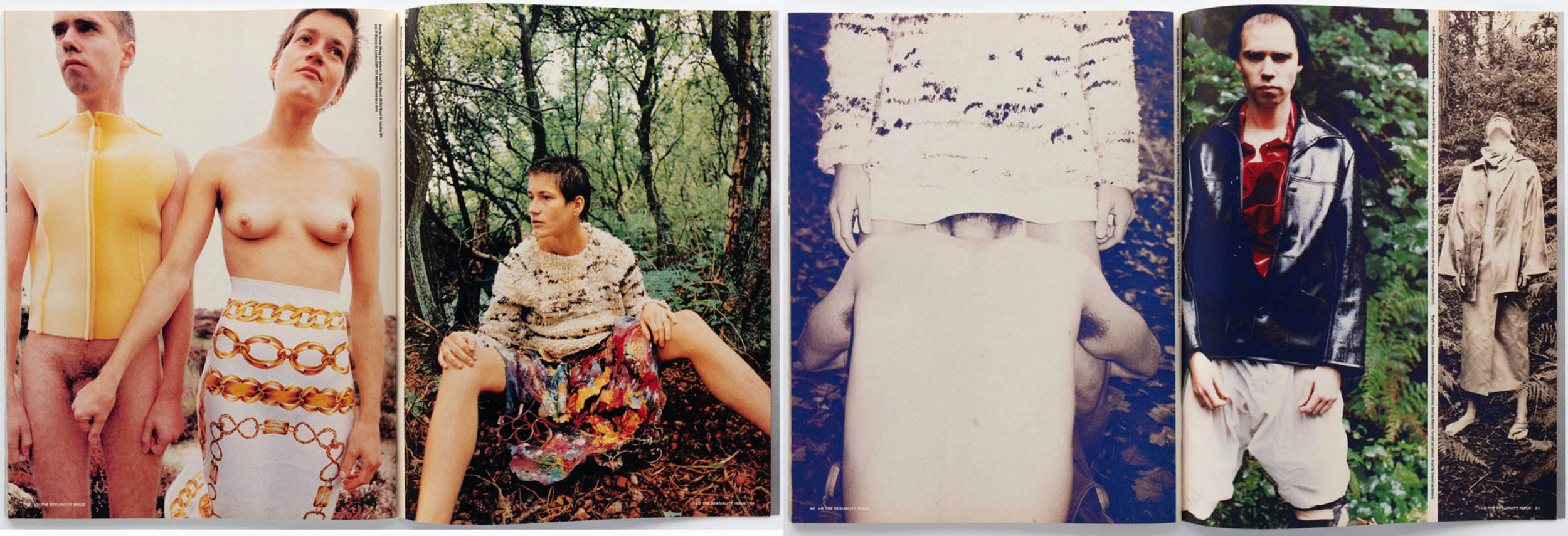

Page spreads from “like brother like sister”
i-D, no. 110 (November 1992)
layout designed by Tillmans

Wolfgang Tillmans (German, b. 1968)
still life, New York
2001
Image courtesy of the artist, David Zwirner, New York / Hong Kong, Galerie Buchholz, Berlin / Cologne, Maureen Paley, London

Wolfgang Tillmans (German, b. 1968)
wake
2001
Image courtesy of the artist, David Zwirner, New York / Hong Kong, Galerie Buchholz, Berlin / Cologne, Maureen Paley, London

Wolfgang Tillmans (German, b. 1968)
Installation view, Panorama Bar, Berghain, Berlin
2004
Image courtesy of the artist, David Zwirner, New York/Hong Kong, Galerie Buchholz, Berlin/Cologne, Maureen Paley, London
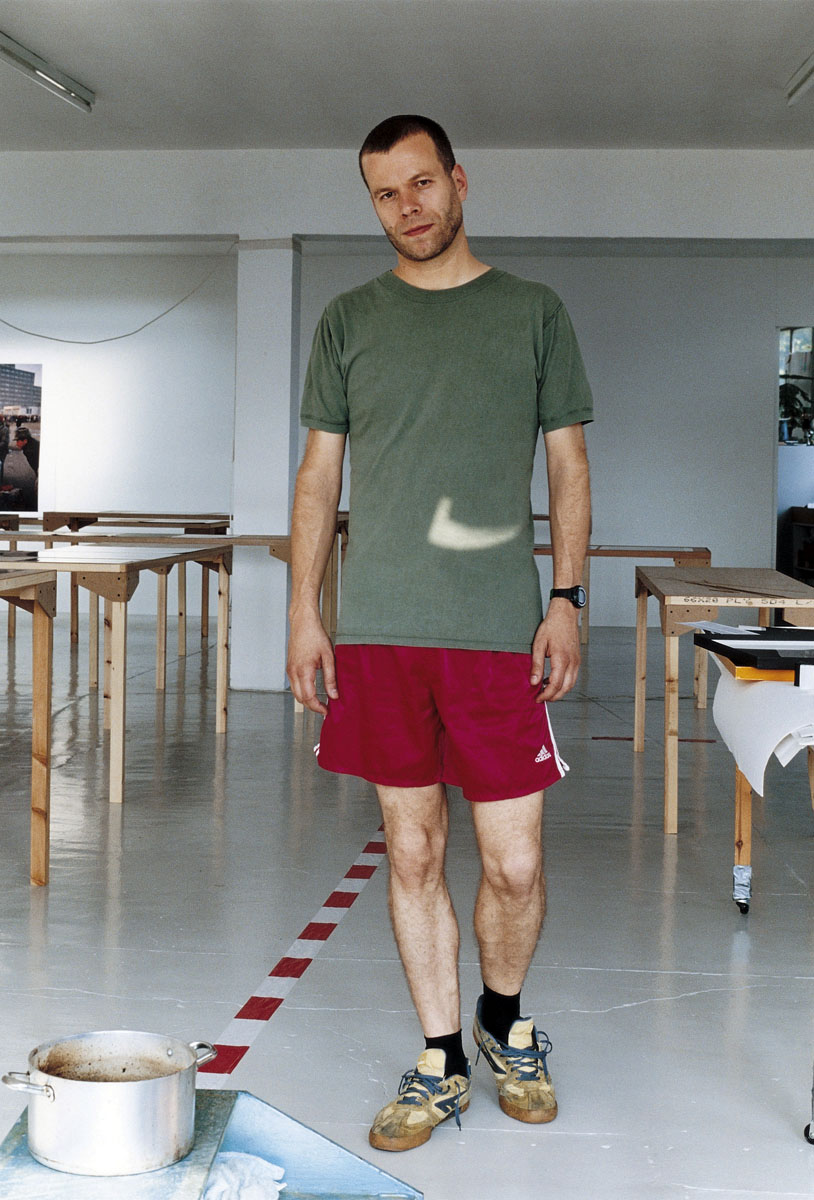
Wolfgang Tillmans (German, b. 1968)
August self portrait
2005
Image courtesy of the artist, David Zwirner, New York / Hong Kong, Galerie Buchholz, Berlin / Cologne, Maureen Paley, London
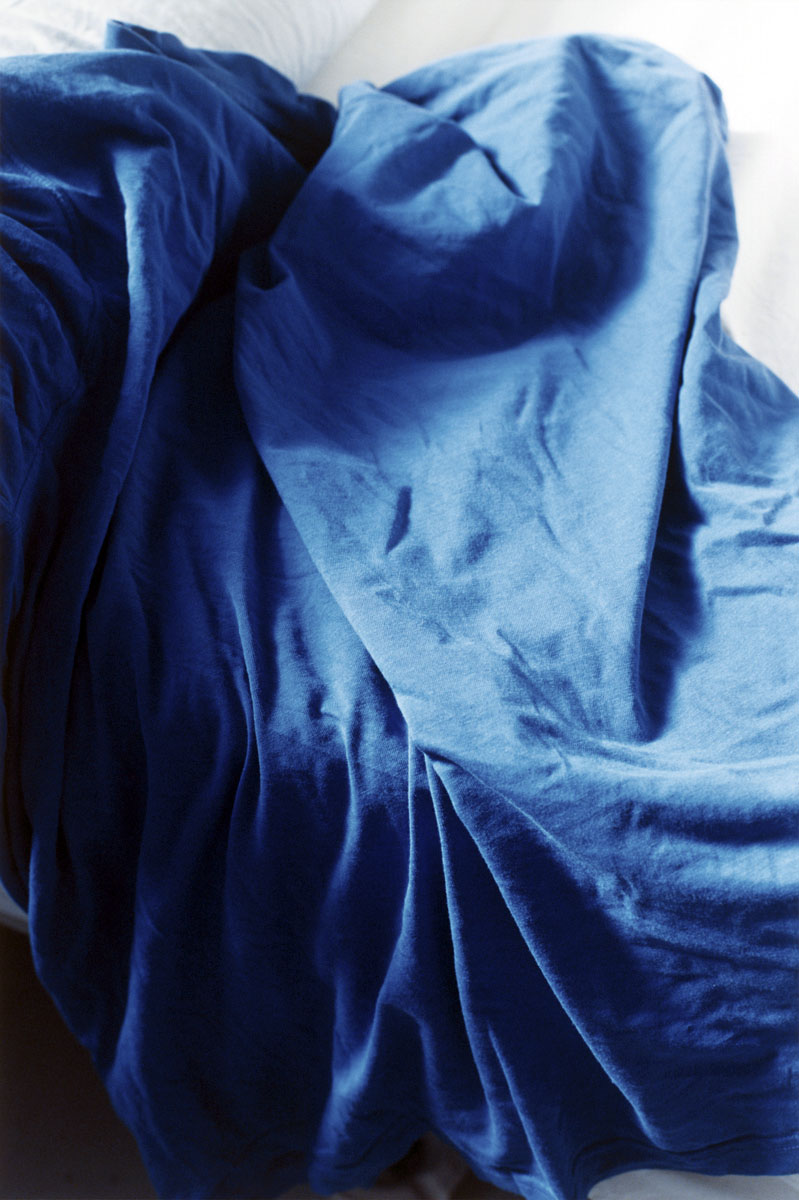
Wolfgang Tillmans (German, b. 1968)
Faltenwurf (skylight)
2009
Image courtesy of the artist, David Zwirner, New York / Hong Kong, Galerie Buchholz, Berlin / Cologne, Maureen Paley, London

Wolfgang Tillmans (German, b. 1968)
Lighter, white convex I
2009
Chromogenic print in acrylic hood
25 1/4 x 21 1/16 x 2 3/8″ (64.2 x 54.2 x 6cm)
Image courtesy of the artist, David Zwirner, New York / Hong Kong, Galerie Buchholz, Berlin / Cologne, Maureen Paley, London

Wolfgang Tillmans (German, b. 1968)
in flight astro ii
2010
© Wolfgang Tillmans, and courtesy the artist; David Zwirner, New York and Hong Kong; Galerie Buchholz, Berlin and Cologne; Maureen Paley, London

Wolfgang Tillmans (German, b. 1968)
sensor flaws and dead pixels, ESO
2012
© Wolfgang Tillmans, and courtesy the artist; David Zwirner, New York and Hong Kong; Galerie Buchholz, Berlin and Cologne; Maureen Paley, London

Wolfgang Tillmans (German, b. 1968)
Silver 152
2013
Chromogenic print
21 5/16 × 25 1/4″ (54.2 × 64.2cm)
Image courtesy of the artist, David Zwirner, New York / Hong Kong, Galerie Buchholz, Berlin / Cologne, Maureen Paley, London

Wolfgang Tillmans (German, b. 1968)
Playing cards, Hong Kong
2018
© Wolfgang Tillmans, and courtesy the artist; David Zwirner, New York and Hong Kong; Galerie Buchholz, Berlin and Cologne; Maureen Paley, London

Wolfgang Tillmans: Fragile
Installation view, Contemporary Art Gallery, Yaoundé, Cameroon, 2019
Image courtesy of the artist, David Zwirner, New York / Hong Kong, Galerie Buchholz, Berlin / Cologne, Maureen Paley, London

Wolfgang Tillmans (German, b. 1968)
Lüneburg (self)
2020
Image courtesy of the artist, David Zwirner, New York / Hong Kong, Galerie Buchholz, Berlin / Cologne, Maureen Paley, London
The Museum of Modern Art
11 West 53 Street
New York, NY 10019
Phone: (212) 708-9400
Opening hours:
10.30am – 5.30pm
Open seven days a week




 Art Blart _ art and cultural memory archive
You must be logged in to post a comment.