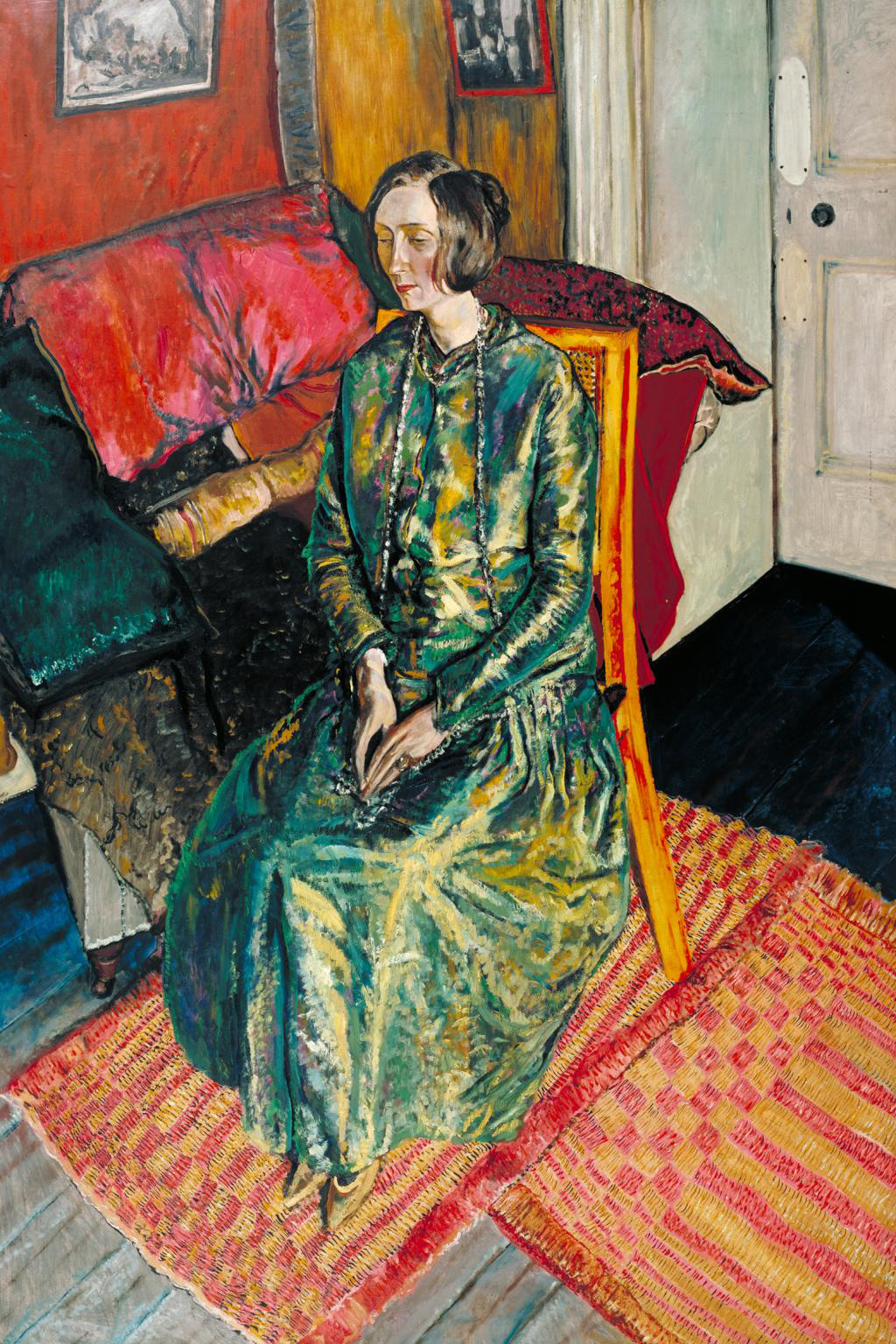
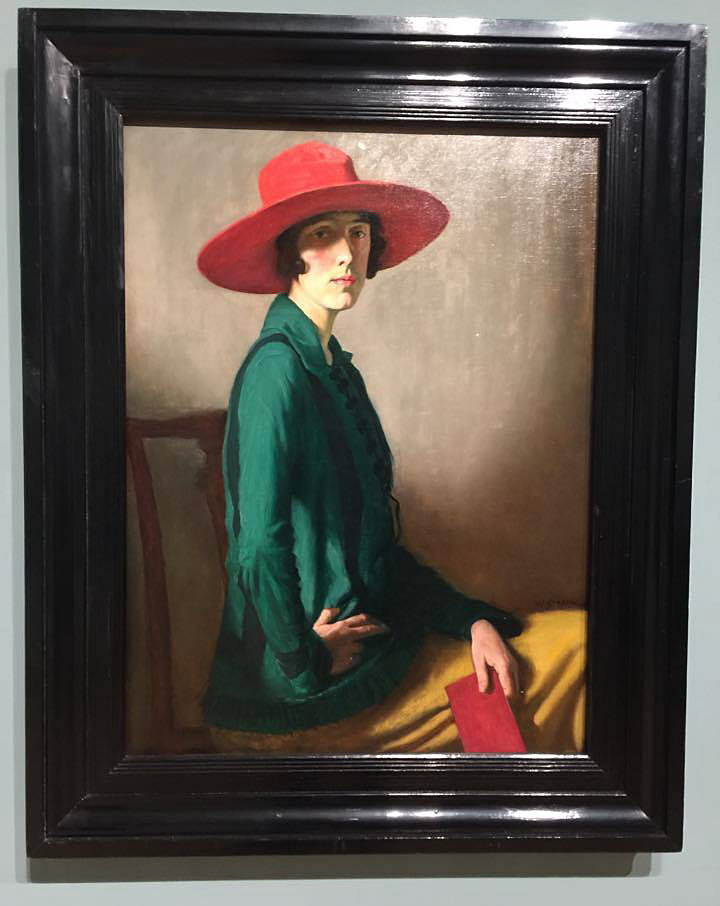
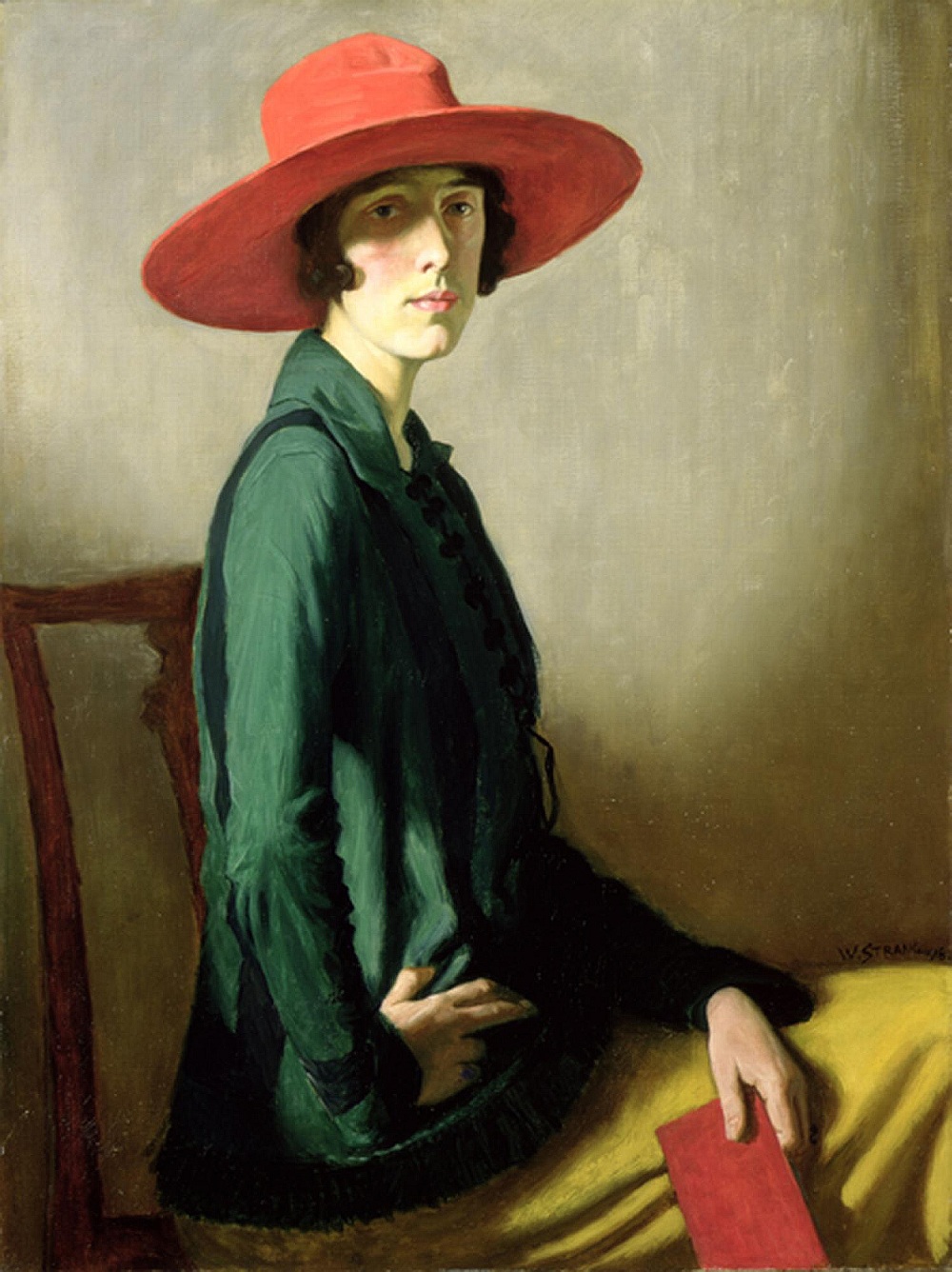
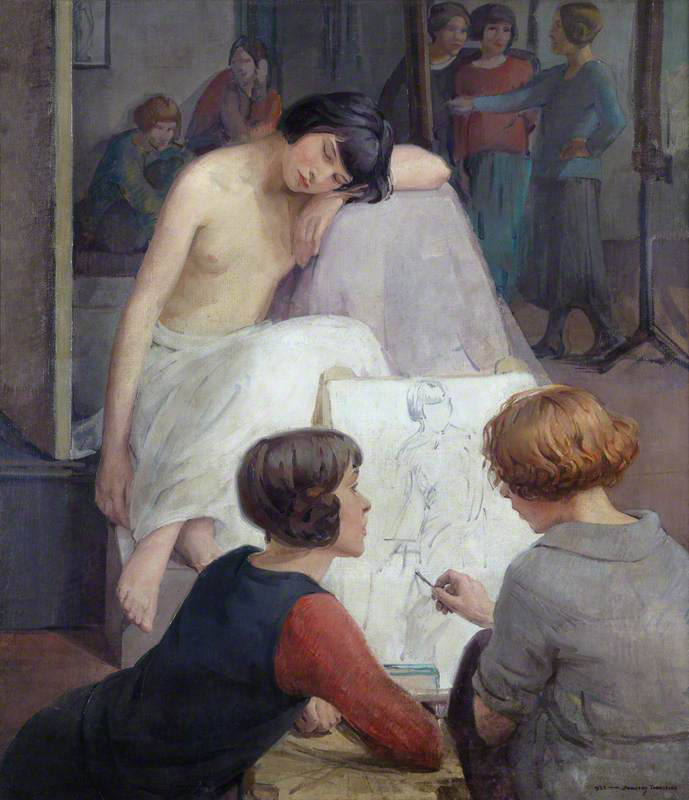
Exhibition: ‘Now You See Us: Women Artists in Britain 1520-1920’ at Tate Britain, London

Exhibition dates: 16th May – 13th October 2024

Curator: Tabitha Barber


Attributed to Levina Teerlinc (Flemish, 1510-1576) 'Portrait of a Lady holding a Monkey' 1560s


Attributed to Levina Teerlinc (Flemish, 1510-1576)
Portrait of a Lady holding a Monkey
1560s
Watercolour and bodycolour heightened with gold and silver
Image: 46 × 46 mm
Frame, circular: 62 × 62 mm
Victor Reynolds and Richard Chadwick


There have been some mixed reviews of this exhibition – “tremendous show… an archaeological dig into the nation’s cultural past” (Jonathan Jones in The Guardian); “niggardly photography section… Only rarely do women’s art and women’s history spark together in this show… For even the best of the artists here are occasionally represented by the least of their works, quite apart from the mystifying omissions.” (Laura Cumming in The Guardian).

Indeed, Laura Cumming poses an interesting question: “Here is a dilemma straight away: which should take precedence, the painting or the fact? Should the show present art on its own terms, or as instance, evidence, expression of social history? It is an extremely complex remit…”

Having not been to London to see the exhibition I can only make generalised comment, but in my opinion the presentation should be a combination of both – art and social history – recognising that one does not exist, emerge, without the other. Art does not live in a bubble isolated from society and society itself is influenced by new ideas, new concepts of art. It’s not the chicken and the egg, it’s the scramble to make sense of living in this world using art as an expression, a (real, surreal, revolutionary, dream, abstract etc…) vision of the world that surrounds us.

Just from compiling this posting I have been enlightened as to the lives of many artists that I had never heard of before. I have admired their work and learnt about their lives and the conditions under which they worked. The exhibition has brought into my consciousness (and the consciousness of others) artists that I would have never have known about. It tells their stories in however fragmented a way … but at least it tells them. And that is a very good thing.

My particular favourites in the posting are three portraits where the sitter stares directly at you: Joan Carlile’s perceptive Portrait of a Lady Wearing an Oyster Satin Dress (1650s, below) so captivating of gaze, so incisive in its simplicity; Maria Cosway’s beautifully rendered Self Portrait (Nd, below) such a luminous and engaging presence; and Gwen John’s powerful Self-Portrait (1902, below) vibrant of colour, full of self-assurance. Wonderful evocations of humanity.

Scottish artist Dame Ethel Walker observes,

“There is no such thing as a woman artist. There are only two kinds of artist – bad and good.”


And that is what his exhibition gives you the obligation to do: to educate yourself, to make yourself a little more informed, to use your brain, eyes, and heart …and make up your own mind about the merit of the work.

I for one are very grateful for that opportunity.

Dr Marcus Bunyan

PS. I have added relevant text from the large print guide and other bibliographic information from accredited sources to illuminate the works presented.


Many thankx to the Tate for allowing me to publish the art work and photographs in the posting. Please click on the photographs for a larger version of the image.


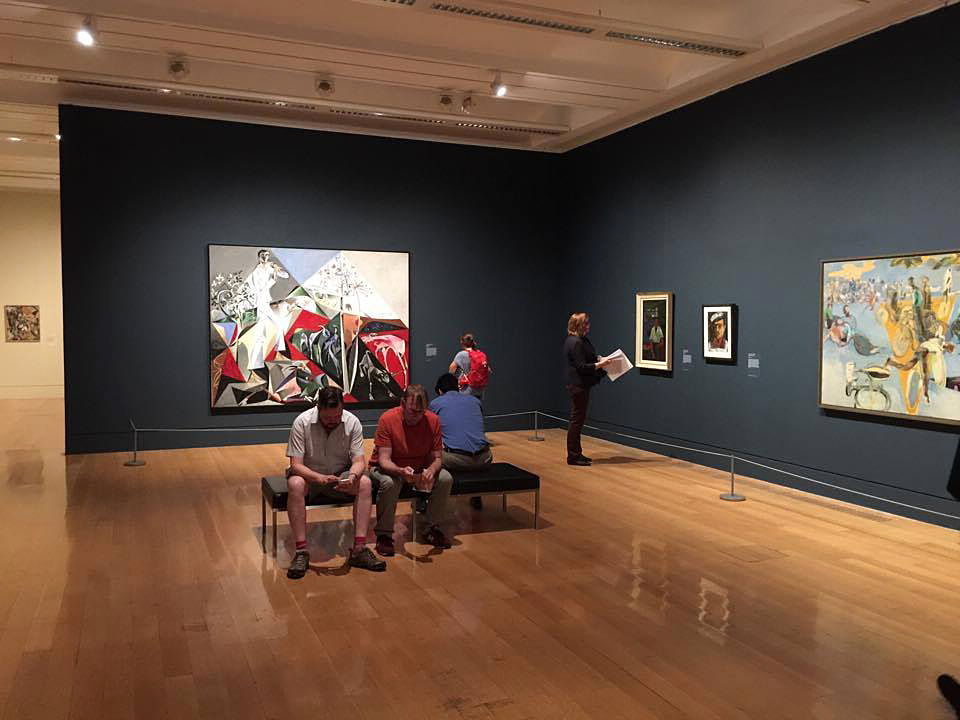
Installation view of the exhibition 'Now You See Us Women Artists in Britain 1520-1920' at Tate Britain showing at right, Lucy Kemp-Welch's 'Colt Hunting in the New Forest' 1897


Installation view of the exhibition Now You See Us Women Artists in Britain 1520-1920 at Tate Britain showing at right, Lucy Kemp-Welch’s Colt Hunting in the New Forest 1897


Spanning 400 years, this exhibition follows women on their journeys to becoming professional artists. From Tudor times to the First World War, artists such as Mary Beale, Angelica Kauffman, Elizabeth Butler and Laura Knight paved a new artistic path for generations of women. They challenged what it meant to be a working woman of the time by going against society’s expectations – having commercial careers as artists and taking part in public exhibitions.

Including over 150 works, the show dismantles stereotypes surrounding women artists in history, who were often thought of as amateurs. Determined to succeed and refusing to be boxed in, they daringly painted what were usually thought to be subjects for male artists: history pieces, battle scenes and the nude.

The exhibition sheds light on how these artists championed equal access to art training and academy membership, breaking boundaries and overcoming many obstacles to establish what it meant to be a woman in the art world.

Text from the Tate Britain website


Installation view of the exhibition 'Now You See Us Women Artists in Britain 1520-1920' at Tate Britain showing Artemisia Gentileschi's 'Self-Portrait as the Allegory of Painting (La Pittura)' c. 1638-1639


Installation view of the exhibition Now You See Us Women Artists in Britain 1520-1920 at Tate Britain showing Artemisia Gentileschi’s Self-Portrait as the Allegory of Painting (La Pittura) c. 1638-1639 (below)


Artemisia Gentileschi (Italian, 1593-1653) 'Self-Portrait as the Allegory of Painting (La Pittura)' c. 1638-1639 (installation view)


Artemisia Gentileschi (Italian, 1593-1653)
Self-Portrait as the Allegory of Painting (La Pittura)
c. 1638-1639
Oil on canvas
98.6 x 75.2cm (support, canvas/panel/stretcher external)
Royal Collection Trust
© His Majesty King Charles III 2024


Artemisia Gentileschi (Italian, 1593-1653) 'Self-Portrait as the Allegory of Painting (La Pittura)' c. 1638-1639


Artemisia Gentileschi (Italian, 1593-1653)
Self-Portrait as the Allegory of Painting (La Pittura)
c. 1638-1639
Oil on canvas
98.6 x 75.2cm (support, canvas/panel/stretcher external)
Royal Collection Trust
© His Majesty King Charles III 2024


Gentileschi claimed that ‘all the … Princes’ displayed her self-portrait in their galleries. In addition to this work, Charles I owned another self-portrait, which is now lost. Here, Gentileschi uses her own image to portray the allegorical figure of Pittura (also the Italian feminine noun for painting), who she depicts in a working apron before an easel absorbed in the act of creation.

Text from the exhibition large print guide


As a self-portrait the painting is particularly sophisticated and accomplished. The position in which Artemisia has portrayed herself would have been extremely difficult for the artist to capture, yet the work is economically painted, with very few pentiments. In order to view her own image she may have arranged two mirrors on either side of herself, facing each other. Depicting herself in the act of painting in this challenging pose, the angle and position of her head would have been the hardest to accurately render, requiring skilful visualisation.

Text from the Royal Collection Trust website


Installation view of the exhibition 'Now You See Us Women Artists in Britain 1520-1920' at Tate Britain showing Artemisia Gentileschi's 'Susanna and the Elders' c. 1638-1640


Installation view of the exhibition ‘Now You See Us Women Artists in Britain 1520-1920’ at Tate Britain showing Artemisia Gentileschi’s Susanna and the Elders c. 1638-1640 (below)
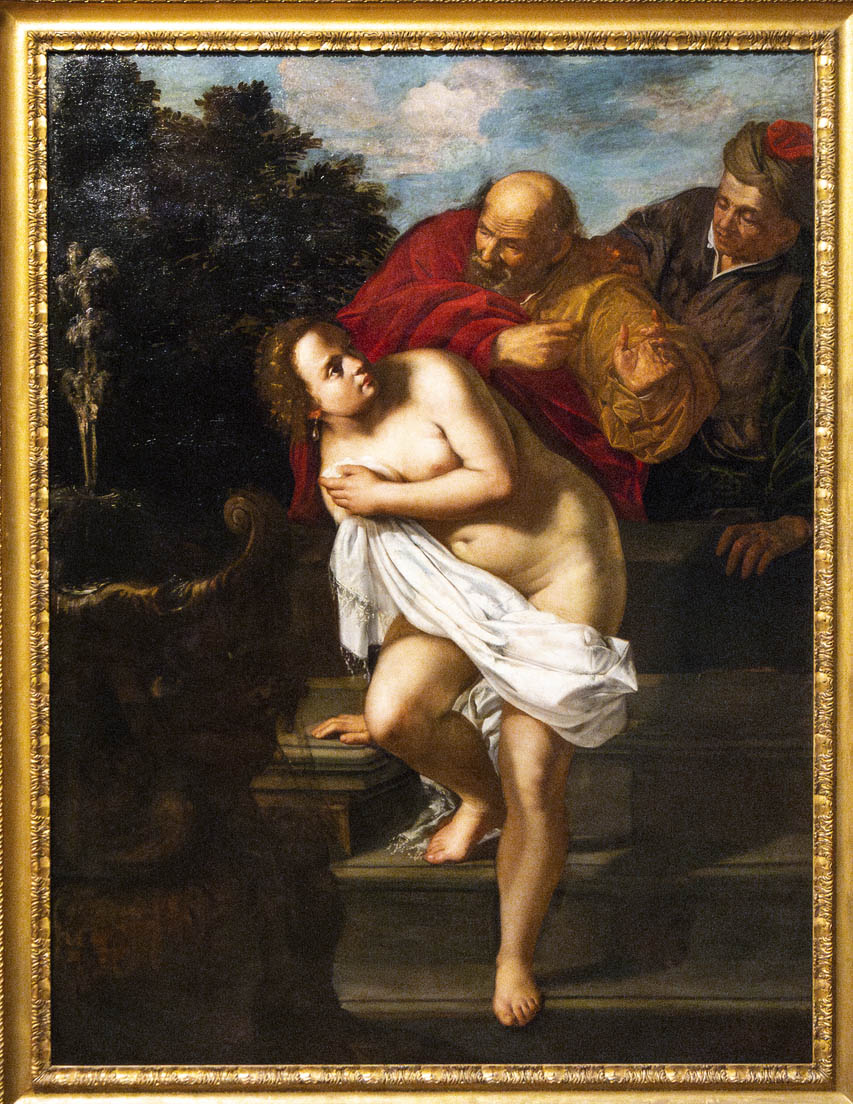
 

Artemisia Gentileschi (Italian, 1593-1653) 'Susanna and the Elders' c. 1638-1640 (installation view)


Artemisia Gentileschi (Italian, 1593-1653)
Susanna and the Elders
c. 1638-1640
Oil on canvas
189.0 x 143.2cm (support, canvas/panel/stretcher external)
Royal Collection Trust / © His Majesty King Charles III 2024


Artemisia Gentileschi (Italian, 1593-1653) 'Susanna and the Elders' c. 1638-1640


Artemisia Gentileschi (Italian, 1593-1653)
Susanna and the Elders
c. 1638-1640
Oil on canvas
189.0 x 143.2cm (support, canvas/panel/stretcher external)
Royal Collection Trust / © His Majesty King Charles III 2024


Likely commissioned by Queen Henrietta Maria, this work was displayed in her Withdrawing Chamber in Whitehall Palace. The subject is an Old Testament narrative on virtue and faith. Susanna, bathing in privacy, is spied on by two elders who attempt to sexually assault her. When she resists them, the men accuse her of adultery. Susanna is arrested and about to be put to death until the men are questioned, and her innocence is revealed. Here, Gentileschi depicts Susanna as vulnerable and fearful, shielding her nakedness. She returned to the subject throughout her career.

Text from the exhibition large print guide


This spring, Tate Britain will present Now You See Us: Women Artists in Britain 1520-1920. This ambitious group show will chart women’s road to being recognised as professional artists, a 400-year journey which paved the way for future generations and established what it meant to be a woman in the British art world. The exhibition covers the period in which women were visibly working as professional artists, but went against societal expectations to do so.

Featuring over 100 artists, the exhibition will celebrate well-known names such as Artemisia Gentileschi, Angelica Kauffman, Julia Margaret Cameron and Gwen John, alongside many others who are only now being rediscovered. Their careers were as varied as the works they produced: some prevailed over genres deemed suitable for women like watercolour landscapes and domestic scenes. Others dared to take on subjects dominated by men like battle scenes and the nude, or campaigned for equal access to training and membership of professional institutions. Tate Britain will showcase over 200 works, including oil painting, watercolour, pastel, sculpture, photography and ‘needlepainting’ to tell the story of these trailblazing artists.

Now You See Us will begin at the Tudor court with Levina Teerlinc, many of whose miniatures will be brought together for the first time in four decades, and Esther Inglis, whose manuscripts contain Britain’s earliest known self-portraits by a woman artist. The exhibition will then look to the 17th century. Focus will be given to one of art history’s most celebrated women artists, Artemisia Gentileschi, who created major works in London at the court of Charles I, including the recently rediscovered Susanna and the Elders 1638-40, on loan from the Royal Collection for the very first time. The exhibition will also look to women such as Mary Beale, Joan Carlile and Maria Verelst who broke new ground as professional portrait painters in oil.

In the 18th century, women artists took part in Britain’s first public art exhibitions, including overlooked figures such as Katherine Read and Mary Black; the sculptor Anne Seymour Damer; and Margaret Sarah Carpenter, a leading figure in her day but little heard of now. The show will look at Angelica Kauffman and Mary Moser, the only women included among the Founder Members of the Royal Academy of Arts; it took 160 years for membership to be granted to another woman. Women artists of this era are often dismissed as amateurs pursuing ‘feminine’ occupations like watercolour and flower painting, but many worked in these genres professionally: needlewoman Mary Linwood, whose gallery was a major tourist attraction; miniaturist Sarah Biffin, who painted with her mouth, having been born without arms and legs; and Augusta Withers, a botanical illustrator employed by the Horticultural Society.

The Victorian period saw a vast expansion in public exhibition venues. Now You See Us will showcase major works by critically appraised artists of this period, including Elizabeth Butler (née Thompson)‘s monumental The Roll Call 1874 (Butler’s work prompted critic John Ruskin to retract his statement that “no women could paint”), and nudes by Henrietta Rae and Annie Swynnerton, which sparked both debate and celebration. The exhibition will also look at women’s connection to activism, including Florence Claxton‘s satirical ‘Woman’s Work’: A Medley 1861 which will be on public display for the first time since it was painted; and an exploration of the life of Barbara Leigh Smith Bodichon, an early member of the Society of Female Artists who is credited with the campaign for women to be admitted to the Royal Academy Schools. On show will be the student work of women finally admitted to art schools, as well as their petitions for equal access to life drawing classes.

The exhibition will end in the early 20th century with women’s suffrage and the First World War. Women artists like Gwen John, Vanessa Bell and Helen Saunders played an important role in the emergence of modernism, abstraction and vorticism, but others, such as Anna Airy, who also worked as a war artist, continued to excel in conventional traditions. The final artists in the show, Laura Knight and Ethel Walker, offer powerful examples of ambitious, independent, confident professionals who achieved critical acclaim and – finally – membership of the Royal Academy.

Press release from Tate Britain
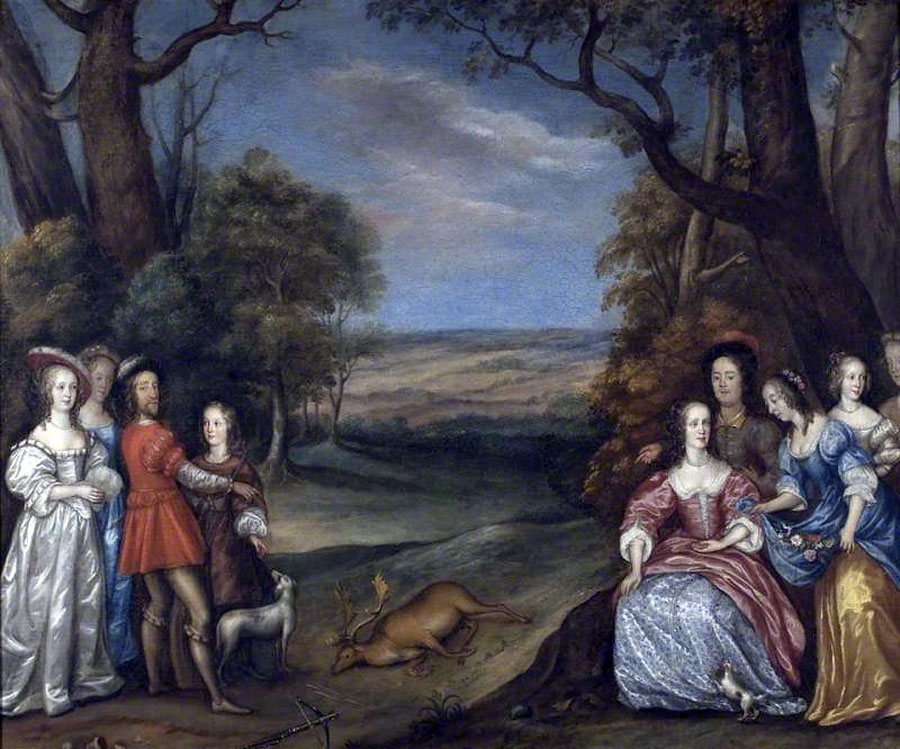
 

Joan Carlile (English, 1606-1679) 'The Carlile Family with Sir Justinian Isham in Richmond Park' 1650s


Joan Carlile (English, 1606-1679)
The Carlile Family with Sir Justinian Isham in Richmond Park
1650s
Oil on canvas
Lamport Hall
CC BY-NC-ND
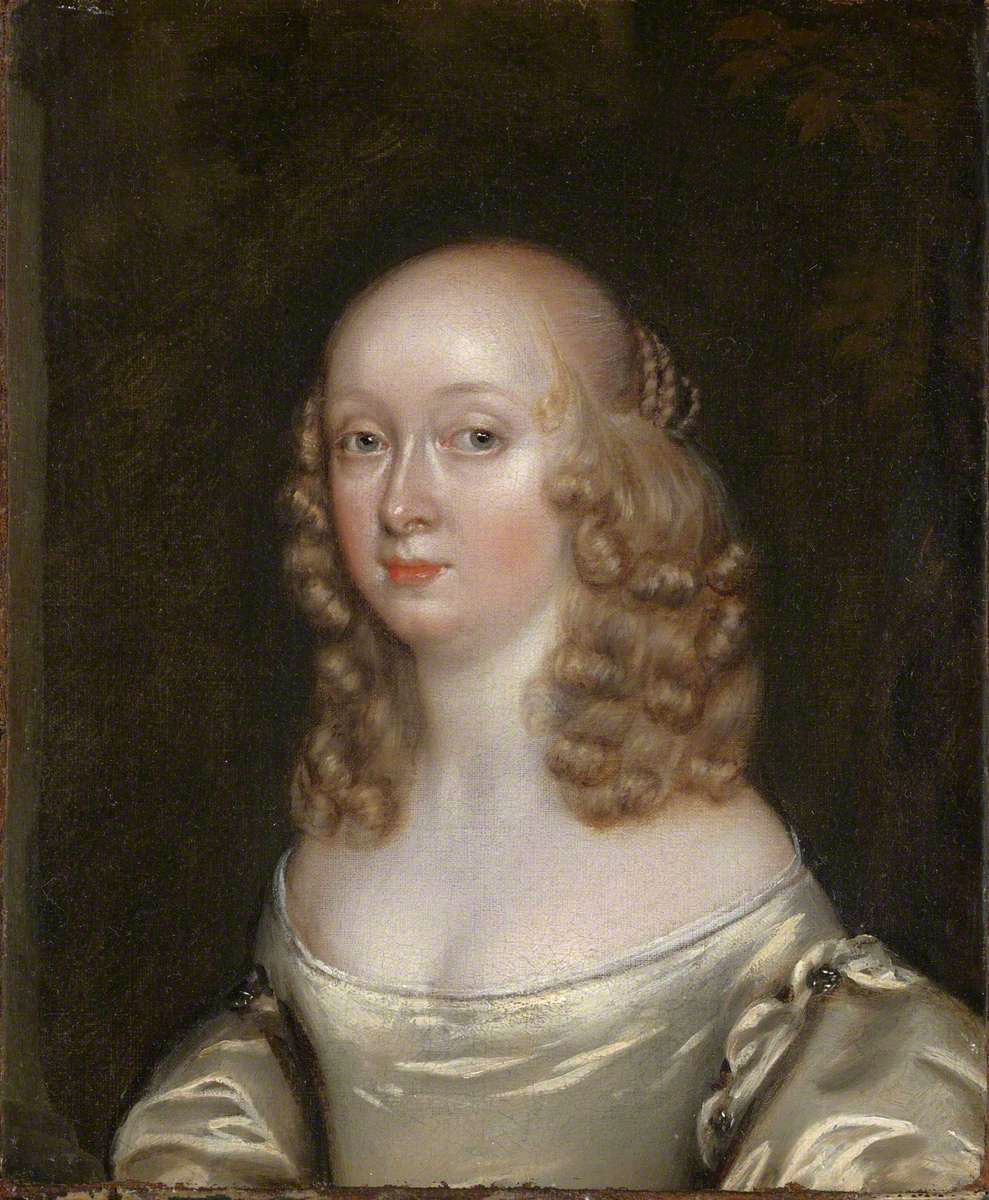
 

Joan Carlile (English, 1600-1679) 'Portrait of a Lady Wearing an Oyster Satin Dress' 1650s


Joan Carlile (English, 1600-1679)
Portrait of a Lady Wearing an Oyster Satin Dress
1650s
Oil on canvas
30.8 x 25.5cm
National Portrait Gallery, London
Government Art Collection
Purchased from Philip Mould Ltd, 2018


Joan Carlile or Carlell or Carliell (c. 1606-1679), was an English portrait painter. She was one of the first British women known to practise painting professionally. Before Carlile, known professional female painters working in Britain were born elsewhere in Europe, principally the Low Countries.


Installation view of the exhibition 'Now You See Us Women Artists in Britain 1520-1920' at Tate Britain showing at left, Joan Carlile's 'Portrait of an Unknown Lady known as Elizabeth Murray, Countess of Dysart and Duchess of Lauderdale' 1650s; and at right, 'Portrait of an Unknown Lady' 1650-1655


Installation view of the exhibition Now You See Us Women Artists in Britain 1520-1920 at Tate Britain showing at left, Joan Carlile’s Portrait of an Unknown Lady known as Elizabeth Murray, Countess of Dysart and Duchess of Lauderdale 1650s (below); and at right, Portrait of an Unknown Lady 1650-1655 (below)
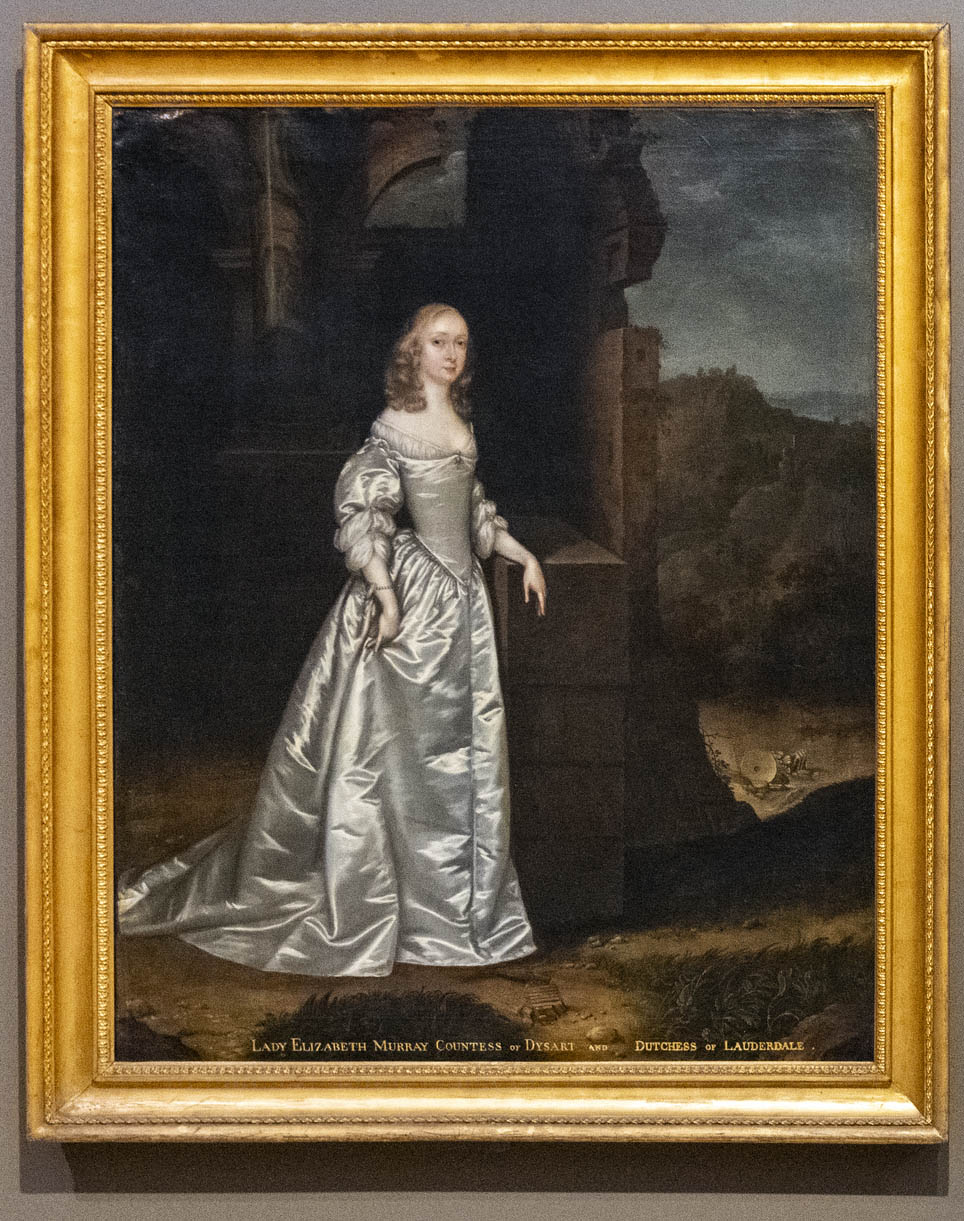
 

Joan Carlile (English, 1606-1679) 'Portrait of an Unknown Lady' 1650-1655 (installation view)


Joan Carlile (English, 1606-1679)
Portrait of an Unknown Lady (installation view)
1650-1655
Oil on canvas
Support: 1107 × 900 mm
Frame: 1205 × 1012 × 73 mm
Photo: Tate
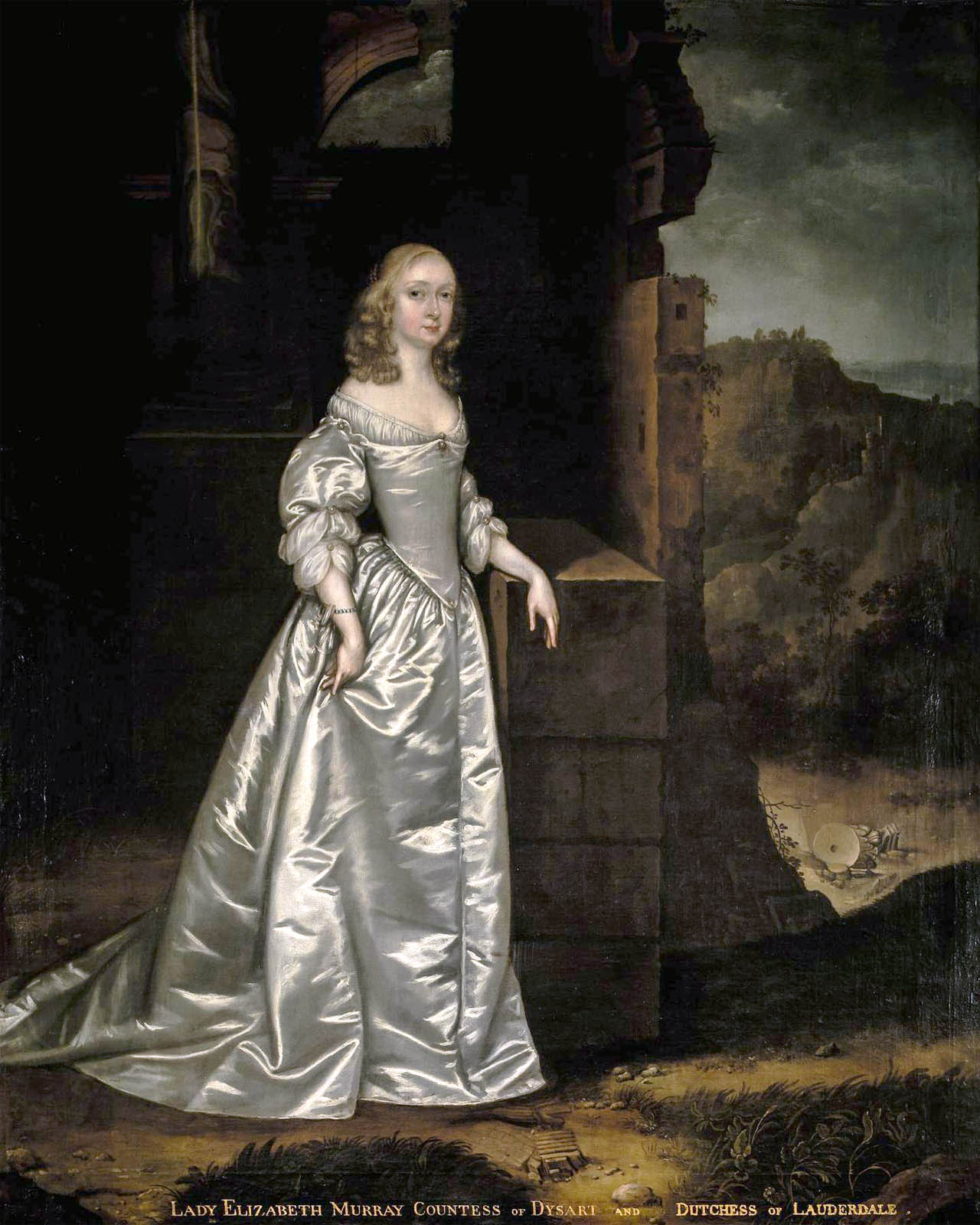
 

Joan Carlile (English, 1606-1679) 'Portrait of an Unknown Lady known as Elizabeth Murray, Countess of Dysart and Duchess of Lauderdale' 1650s


Joan Carlile (English, 1606-1679)
Portrait of an Unknown Lady known as Elizabeth Murray, Countess of Dysart and Duchess of Lauderdale
1650s
Oil on canvas
The Bute Collection at Mount Stuart


Here, Carlile uses the same white satin dress seen in a nearby painting. The pose, with the sitter elegantly gathering a handful of fabric, is taken from works by Charles I’s portrait painter, Flemish artist Anthony van Dyck (1599-1641). The sitter is sometimes identified as Elizabeth Murray, Countess of Dysart and Duchess of Lauderdale. She was Carlile’s near neighbour in Petersham, at Ham House. The broken columns in the background are often used to symbolise loss.

Text from the exhibition large print guide


Joan Carlile (English, 1606-1679) 'Portrait of an Unknown Lady' 1650-1655


Joan Carlile (English, 1606-1679)
Portrait of an Unknown Lady
1650-1655
Oil on canvas
Support: 1107 × 900 mm
Frame: 1205 × 1012 × 73 mm
Photo: Tate


Portraits by Joan Carlile are rare and this is one of only approximately ten that can be identified. Of these, two are in public collections (Ham House, Surrey, and National Portrait Gallery, London), while others are held in historic house collections and family trusts in the United Kingdom, for example Lamport Hall, Burghley House and Berkeley Castle. Carlile seems to have specialised in small-scale full length portraits of figures, usually female, set in large landscape or garden settings. The composition employed here, in which the figure holds the skirt of her dress with one hand and shawl with another, was most likely a template arrangement. It appears in two other portraits, one showing the figure facing the same way as here, the other in reverse, but with both figures wearing the same white satin dress. This repeated composition adds weight to the proposition that Carlile was a professional artist. The wife of Lodowick Carlile (or Carlell), a minor poet and dramatist who also held the office of Gentleman of the Bows to Charles I, Joan Carlile lived with her husband in Petersham, a suburb of London. However, in 1653 their neighbour, Brian Duppa, recorded that ‘the Mistress of the Family intends for London, where she meanes to make use of her skill to som more Advantage then hitherto she hath don’ (quoted in Toynbee and Isham 1954, p.275). In 1654 Carlile is recorded as living in London’s Covent Garden, then the heart of the artistic community (see Burnett 2004/2010, accessed 2 October 2015).

Text from the Tate website


Joan Carlile challenged societal expectations by becoming one of Britain’s first professional women artists in the 1600s, earning her living as an oil painter. Initially employed in King Charles I’s household, Carlile liked to paint in her spare time. With the outbreak of the Civil War, she began painting to support herself.

Carlile moved to Covent Garden in the 1650s – then the centre of the art world – and set up a successful commercial portrait business. Her template of carefully posed figures in silk gowns against landscape backgrounds, seen here in Portrait of an Unknown Lady (1650-5), proved extremely popular. Admired as a professional artist in her lifetime, only a small number of her portraits still exist, some which have never been seen in public.

Text from the Tate website


In her Portrait of an Unknown Lady (1650-1655) the astonishing nacreous lustre of the sitter’s white silk gown, shown full length, shines against the foil of the dull brown foliage behind her. At this point, the Civil War had ended but the restoration of the monarchy was still in the future, and Carlile’s painting, with its overt celebration of luxury and leisure (the spotless pale fabric speaks of both) seems provocative.

It is possible that Carlile taught Anne Killigrew (1660-1685), an accomplished painter and poet whose family encouraged her creative pursuits, although it’s not clear if she ever painted professionally. Only a handful of Killigrew’s works survive today, including Venus Attired by the Three Graces, which reveals her interest in mythological scenes.

Although she died of smallpox aged just 25, Killigrew stands alongside Beale and Carlile as one of Britain’s first female artists.

Alicia Foster. “Blazing a trail: Britain’s first women artists deserve to be better known,” on the Art UK website 13 May 2024 [Online] Cited 03/09/2024
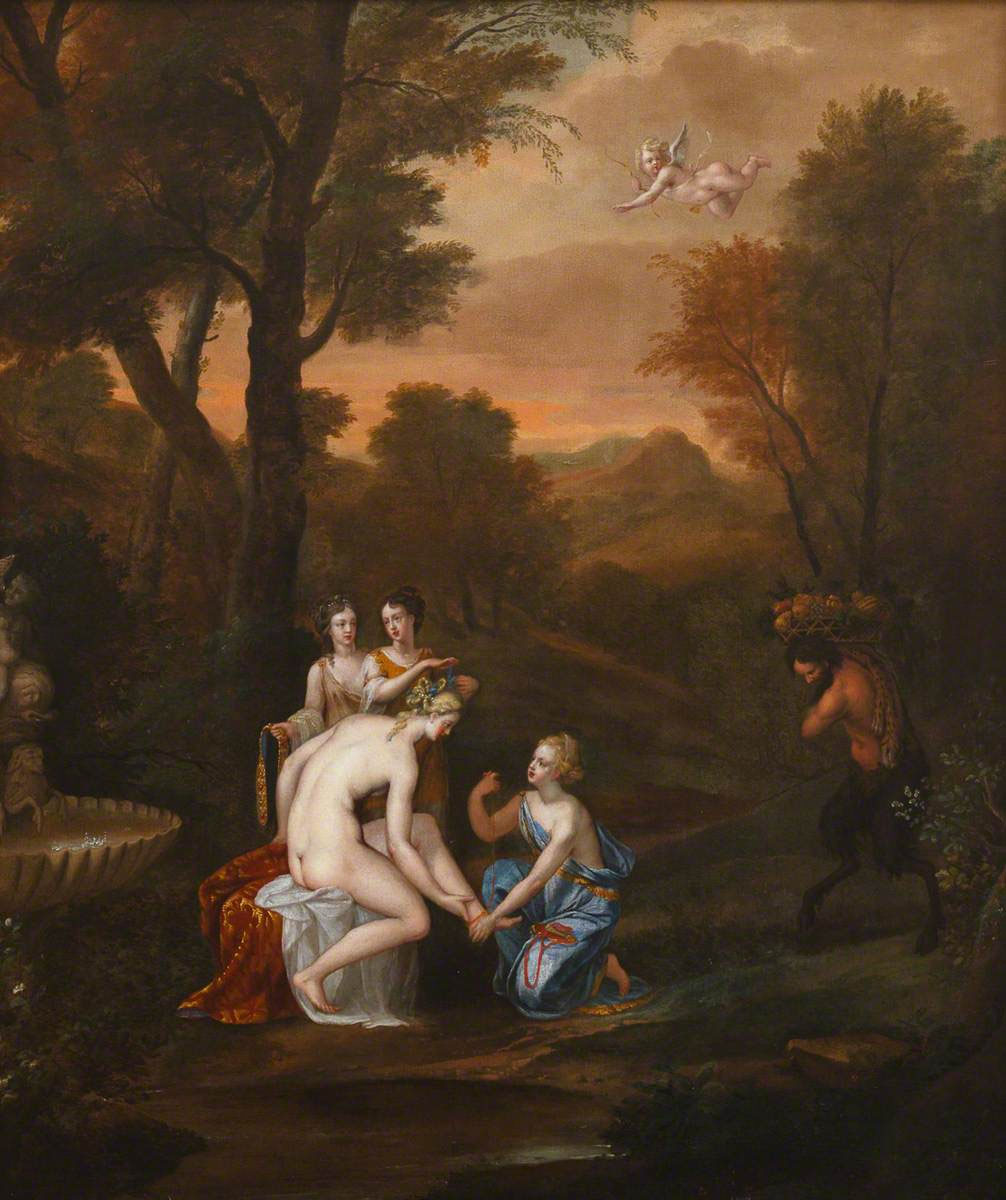
 

Anne Killigrew (English, 1660-1685) 'Venus Attired by the Three Graces' c. 1680


Anne Killigrew (English, 1660-1685)
Venus Attired by the Three Graces
c. 1680
Oil on canvas
Support: 1120 × 950 mm
Frame: 1282 × 1102 × 63 mm
Falmouth Art Gallery
Purchased with the assistance of the Victoria and Albert Museum Purchase Grant Fund, Heritage Lottery Fund, the Art Fund, the Beecroft Bequest, Falmouth Decorative and Fine Arts Society, the Estate of Barry Hughes in memory of Grace and Thomas Hughes and generous donations from local supporters
Public domain


Anne Killigrew has been described as the most celebrated female English prodigy of the Seventeeth Century. A poet and artist of great beauty and repute, Killigrew died of smallpox at the age of just 25. Anne’s exceptional qualities as an artist and a poet were highly praised in her short lifetime. The poet John Dryden dedicated a poem to her in which he refers directly to this picture: ‘Where nymphs of brightest form appear, and shaggy satyrs standing near’ (from ‘To the Pious Memory of the Accomplished Young Lady Mrs Anne Killigrew Excellent In The Two Sister-Arts of Poesy And Painting: An Ode’). Anne Killigrew worked at the Royal Court of King James II as Lady-in-Waiting to the Queen. Anne’s grandfather, Sir William Killigrew, was the Governor of Pendennis Castle, and his son, Dr Henry Killigrew moved to London to work as chaplain to King Charles I. He later became master of the Savoy Hospital.

Text from the Falmouth Art Gallery website
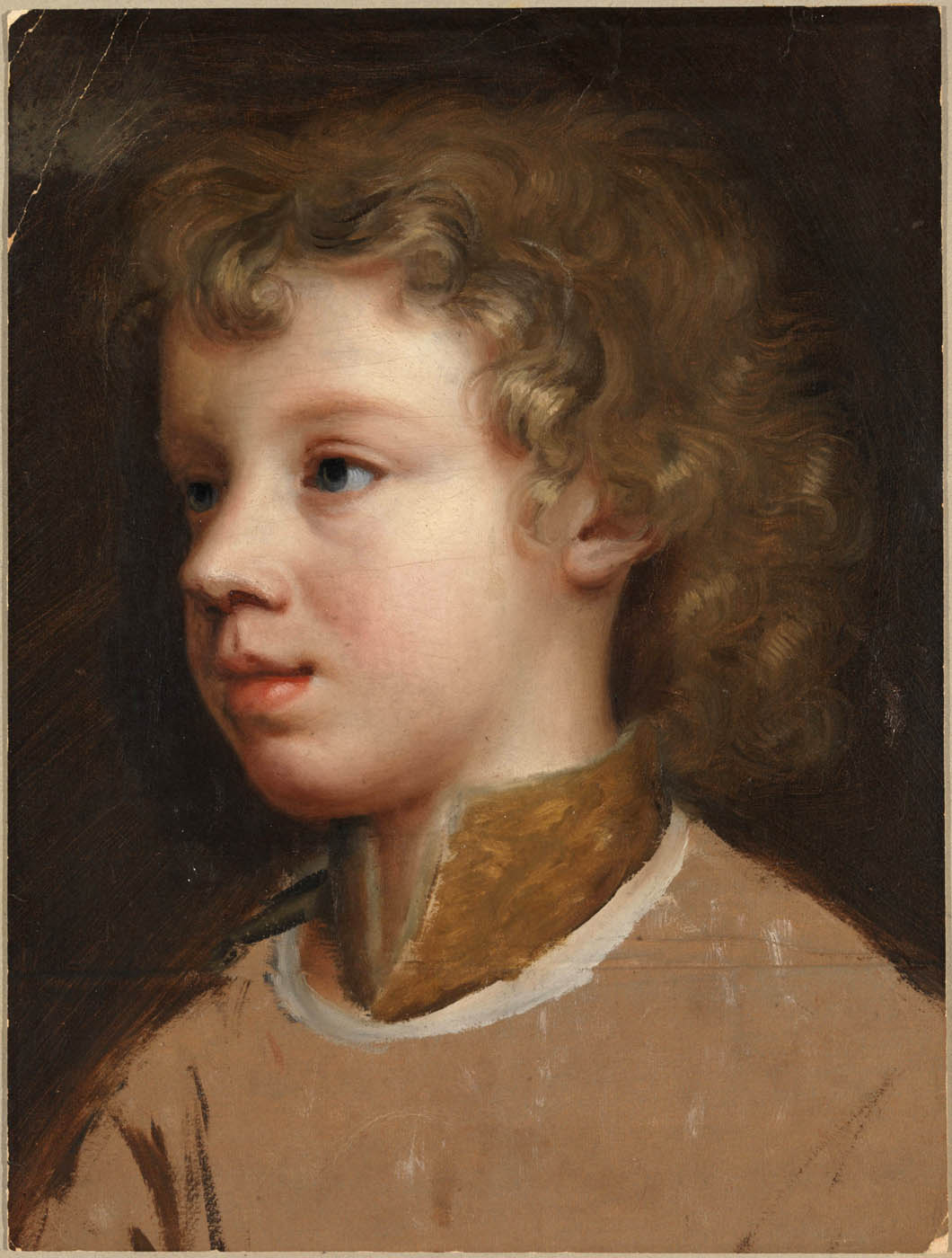
 

Mary Beale (English, 1633-1699) 'Sketch of the Artist's Son, Bartholomew Beale, Facing Left' c. 1660


Mary Beale (English, 1633-1699)
Sketch of the Artist’s Son, Bartholomew Beale, Facing Left
c. 1660
Oil on paper
Support: 325 × 245 mm
Frame: 421 × 340 × 32 mm
Tate
Purchased 2010
Photo: Tate


In the late 1650s and early 1660s Beale and her family were living on Hind Court, off Fleet Street in London. She painted privately and had a painting room in her home. Her husband had a civil service position as Deputy Clerk of the Patents. Portrait sittings of family and friends were often social occasions, with conversation and dinner afterwards. It is in this period that Beale produced small oil sketches on paper of family members, particularly her two young sons. Whether they relate to larger oil on canvas portraits is unclear.

This oil sketch of a young boy, shown in three-quarter profile, is of Mary Beale’s eldest son Bartholomew, baptised in 1656. His appearance, both in age and costume, is very similar to that in Mary Beale’s Self-portrait with her family (Geffrye Museum, London), painted c. 1659-60, before the birth of her youngest son Charles. It relates closely to another sketch of Bartholomew in oil on paper painted at the same time, Sketch of the Artist’s Son, Bartholomew Beale, in Profile c. 1660 (Tate T13245). Whether these sketches are connected to the production of the Geffrye Museum portrait, or were simply executed at around the same time, is not known. They are painted in oil on paper, which seems to have been a feature of Beale’s working method in the early 1660s but is not known in her later career, when she made preparatory sketches in chalk on paper or in oil on canvas (see, for example, Portrait of a Young Girl c. 1679-81, Tate T06612). When this sketch was made, the Beale family was living in Hind Court, off Fleet Street in London, where Mary Beale’s husband, Charles, was employed as Deputy Clerk of the Patents Office. It is difficult to determine whether Beale had much of a commercial portrait practice at this date, but documents certainly record the production of portraits of family and friends. In her ‘painting room’, Beale had ‘pencills [sic.], brushes, goose & swan fitches’, as well as ‘quantities of primed paper to paint on’ (George Vertue, transcription of Charles Beale’s 1661 notebook, now lost, quoted in Barber 1999, p. 16).

Text from the Tate website


Installation view of the exhibition 'Now You See Us Women Artists in Britain 1520-1920' at Tate Britain showing Mary Beale’s 'Anne Sotheby' (1676-1677)


Installation view of the exhibition Now You See Us Women Artists in Britain 1520-1920 at Tate Britain showing Mary Beale’s Anne Sotheby 1676-1677 


Mary Beale (English, 1633-1699) 'Anne Sotheby' 1676-1677


Mary Beale (English, 1633-1699)
Anne Sotheby
1676-1677
Oil on canvas
Tate
Purchased with funds provided by the Nicholas Themans Trust 2024


Beale’s husband kept a daily record of her activities in the studio. Two of his over 30 notebooks and a few partial transcripts are still known. They record Beale’s sitters, her painting stages, her painting materials and her prices. For her commissioned works, she borrowed poses from the portraits of the court artist Peter Lely (1618-1680). Anne Sotheby’s pose is taken from his portrait of Lady Essex Finch. Beale charged £10 for paintings of this size. Her sons acted as studio assistants; her youngest, Charles, was paid to paint the drapery in this portrait.

Text from the exhibition large print guide


Mary Beale (née Cradock) (1633-1699) was an English portrait painter. She was part of a small band of female professional artists working in London. Beale became the main financial provider for her family through her professional work – a career she maintained from 1670/71 to the 1690s. Beale was also a writer, whose prose Discourse on Friendship of 1666 presents a scholarly, uniquely female take on the subject. Her 1663 manuscript Observations, on the materials and techniques employed “in her painting of Apricots”, though not printed, is the earliest known instructional text in English written by a female painter. Praised first as a “virtuous” practitioner in “Oyl Colours” by Sir William Sanderson in his 1658 book Graphice: Or The use of the Pen and Pensil; In the Excellent Art of PAINTING, Beale’s work was later commended by court painter Sir Peter Lely and, soon after her death, by the author of “An Essay towards an English-School”, his account of the most noteworthy artists of her generation.

Text from the Wikipedia website
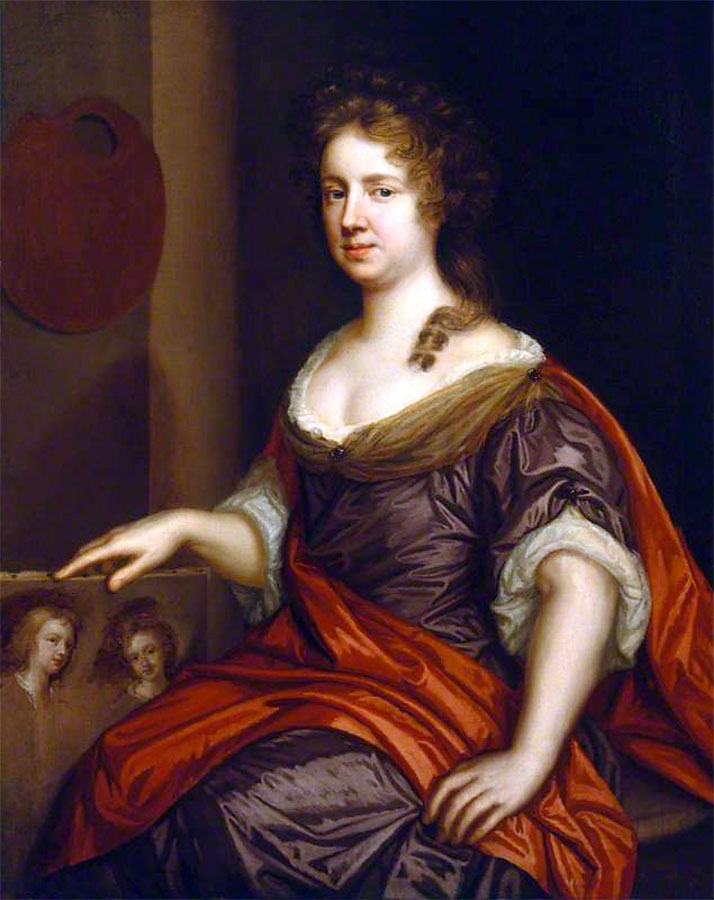
 

Mary Beale (English, 1633-1699) 'Mary Beale' c. 1666


Mary Beale (English, 1633-1699)
Mary Beale
c. 1666
Oil on canvas
109.2 x 87.6cm
National Portrait Gallery, London
Purchased, 1912
CC BY-NC-ND


Beale is shown holding an unframed canvas on which are sketch portraits of her two sons, Bartholomew (1656-1709) and Charles (1660-1714?)


Mary Beale (English, 1633-1699) 'Self Portrait' c. 1675


Mary Beale (English, 1633-1699)
Self Portrait
c. 1675
Oil on sacking
89 x 73cm
West Suffolk Heritage Service
Purchased
CC BY-NC-ND


The early English portrait painter Mary Beale (1622/1623-1699) had a father who was an amateur artist, miniature painter and a collector of paintings (her family owned work by Peter Paul Rubens and Anthony van Dyck) and her husband, Charles, was also an amateur painter and ran her studio in London’s fashionable Pall Mall.

Unusually, in her case, her talent was matched by her spouse’s high regard of it, and she was allowed to supersede him and establish a professional career. She took on female apprentices, though no records of their subsequent careers survive.

Alicia Foster. “Blazing a trail: Britain’s first women artists deserve to be better known,” on the Art UK website 13 May 2024 [Online] Cited 03/09/2024


Exhibition guide

Now You See Us: Women Artists in Britain 1520-1920 celebrates over 100 women who forged public careers as artists. The exhibition begins with the earliest recorded women artists working in Britain. It ends with women’s place in society fundamentally changed by the First World War and the first women gaining the right to vote. Across these 400 years, women were a constant presence in the art world. Now You See Us explores these artists’ careers and asks why so many have been erased from mainstream art histories.

Organised chronologically, the exhibition follows women who practised art as a livelihood rather than an accomplishment. The chosen works were often exhibited at public exhibitions, where these artists sold their art and made their reputations. Most of the women featured belonged to a social class that gave them the time and opportunity to develop their talents. Many were the daughters, sisters or wives of artists. Yet even these women were regarded differently. Now You See Us charts their fight to be accepted as professional artists on equal terms with men.

Many of the exhibited works reflect prejudiced notions of the most appropriate art forms and subjects for women. Others challenge the commonly held belief that women were best suited to ‘imitation’, proving they have always been capable of creative invention. From painting epic battle scenes to campaigning for access to art academies, these women defied society’s limited expectations of them and forged their own paths. Yet so many of their careers have been forgotten and artworks lost. Drawing on the artists’ own writings, art criticism, and new and established research, this exhibition attempts to restore these women to their rightful place in art history. Now You See Us aims to ensure these artists are not only seen but remembered.

Women at the Tudor Courts

There are significant gaps in our knowledge of women’s artistic lives in the sixteenth century. As is the case for many artists in this exhibition, their lives are poorly documented and often hidden behind those of their husbands and fathers. The problems this presents are evident in this room.

Susanna Horenbout (1503-1554) and Levina Teerlinc (c. 1510s-1576) are among the earliest women in Britain to be named as artists. Their reputations are clearly recorded. In 1521, Horenbout’s skill was admired by the German painter and printmaker Albrecht Dürer (1471-1528), and in 1567, both artists were praised by the Italian historian Lodovico Guicciardini (1521-1589). Yet no works by Horenbout have been identified, and those attributed to Teerlinc are not certain.

Horenbout and Teerlinc were both daughters of Flemish manuscript illuminators and were likely trained in their family workshops. Both arrived in England to work at the court of Henry VIII. But as women, they were not employed as artists. While Horenbout’s brother Lucas Horenbout (1490-1544) was Henry VIII’s painter, she served Anne of Cleves as one of her Gentlewomen of the Privy Chamber. Teerlinc served Elizabeth I likewise. This does not mean that they did not paint – at court, their artistic talents would have been a distinguishing skill – but, as is a common feature of this exhibition, written histories have failed to record their activities.

Working in a different context – as a scribe and calligrapher – the works of Esther Inglis (1571-1624) can be identified. Inglis authored more than 60 manuscript books and included her name and self-portrait in many. Raised in Scotland, she may have learnt the art of calligraphy from her mother, Marie Presot (active 1569-1574).

Artemisia Gentileschi

Italian artist Artemisia Gentileschi arrived in London in c. 1638-9 by invitation of Charles I. Like other European rulers, Charles I employed artists of international reputation to signal the cultural sophistication of his court. Gentileschi had prestigious patrons across Europe, including the Grand Duke of Tuscany and Philip IV of Spain. She was the first woman to be a member of the Academy of the Arts of Drawing in Florence, and in Rome, her house had been ‘full of cardinals and princes’. Gentileschi’s fame as an artist was augmented by her status as a woman.

In London, Gentileschi worked for Charles I and Queen Henrietta Maria. Records suggest she produced seven works for the royal collection. These included self-portraits and large history paintings, with subject matter drawn from classical history, mythology, and the Bible. Only the two displayed here are still known. Gentileschi often placed women at the centre of her works, depicting narratives that celebrate their strength and virtue. Susanna and the Elders is an example of the kind of work for which Gentileschi was celebrated.

Gentileschi achieved in her lifetime what many women who came after her had to fight to attain: she was a professional artist who ran her own studio, was a member of an art academy, worked from life models and was ranked as a serious artist alongside men. Despite this, Gentileschi’s status has fluctuated over time, and the artist has faded in and out of art history.

Early accounts of Gentileschi’s work focus on her personal life as much as her painting. Like many of the women artists who came after her, the details of her biography continue to dictate interpretations of her work.

The First Professionals

In 1658, historian William Sanderson (c. 1586-1676) published Graphice. The use of the pen and pensil. Or, The most excellent art of painting. The publication lists contemporary artists practising in England. He includes four women working in oil paint: ‘Mrs Carlile’ (Joan Carlile), ‘Mrs Beale’ (Mary Beale), ‘Mrs Brooman’ (probably Sarah Broman) and ‘Mrs Weimes’ (Anne Wemyss). Carlile and Beale are believed to be two of the earliest British women to have worked as professional artists. Very little is known about Broman or Wemyss beyond snatches of information in archives.

This short list highlights how unusual it was for British women to pursue art as a profession in the seventeenth century. Women had little agency over their own lives and were subject first to their fathers and then their husbands. Limited to the domestic sphere, they were not expected to conduct public lives. Many women painted privately with no thought of turning it into a career. While young men began as apprentices or assistants in the studios of professionals, this route was not open to most women.

In the seventeenth century women writers, poets, playwrights and artists began to give voice to those questioning their secondary status and petitioning for women’s rights. They argued that it was lack of education, not ‘weak minds’ that limited their opportunities. This fight for equality and access to education runs throughout the exhibition.

The First Exhibitors

The first public art exhibition in Britain took place in London in 1760, and art shows soon became an important part of the city’s social calendar. Founded in 1768, the Royal Academy quickly emerged as a driving force in cultural life, with its Summer Exhibition attracting tens of thousands of visitors every year. Other venues, including the Society of Artists and the British Institution also hosted exhibitions.

Women artists played an active part in this competitive world. An estimated 900 women exhibited their work between 1760 and 1830. Angelica Kauffman and Mary Moser were both founding members of the Royal Academy (although, as women, they weren’t awarded full membership and were excluded from the Academy’s council meetings and governance). Despite this precedent, it would take more than 150 years for the next woman to be elected to membership.

Kauffman is one of the few women artists of the eighteenth century whose profile has been sustained. Many others made names for themselves, but their careers are not well documented. Even Moser is less well known, perhaps because she painted flowers while Kauffman pursued the ‘high genre’ of history painting, depicting historical, mythological and biblical narratives.

Art critics of the time often criticised women for their ‘weak’ figurative work, yet they were denied access to life-drawing classes. Women artists also had to battle social expectations. Publishing a private or studio address in an exhibition catalogue was a signal of commercial practice, but painting for money was considered improper. Women artists of higher social rank were listed as ‘honorary’ exhibitors; some exhibited simply as ‘a Lady’, and after marriage, many switched their status from ‘commercial’ to ‘amateur’.

‘Just What Ladies Do For Amusement’

In 1770, the Royal Academy banned ‘Needle-work, artificial Flowers, cut Paper, Shell-work, or any such baubles’ from its exhibitions. They also banned works that were copies. Other categories of art that the Academy considered ‘lower’, such as miniature painting, pastel and watercolour were also treated dismissively. Joshua Reynolds (1723-1792), the Academy’s President, said that working in pastel was unworthy of real artists and was ‘just what ladies do when they paint for their own amusement’.

These ‘lower arts’ were ones that women practised the most. Small in scale and considered less technically challenging than oil painting, they demanded less equipment and could be pursued at home. They were taught to middle and upper-class girls and were the realm of women who pursued art as amateur accomplishment.

Despite this, these art forms offered opportunities for women to earn a living. Many turned miniature painting, needlework and pastel into lucrative professional careers, supplementing their income through tutoring. Their patrons were often women, and some boasted large, fashionable clienteles and even galleries which became tourist attractions.

Founded in 1754, the Society for the Encouragement of Arts, Manufactures and Commerce (the Society of Arts) offered cash prizes and medals in many categories, including the ‘polite arts’. Awards were given for patterns for embroidery, copies of prints, drawings of statues and of ‘beasts, birds, fruit or flowers’, as well as landscapes. Some prizes were specifically intended for young women. The Society was a stepping stone to a career and many of the artists in this exhibition won medals. Yet most of the women recorded as submitting work for competition can no longer be identified beyond their names.

Flowers

In the eighteenth and nineteenth centuries, painting flowers was considered a suitably delicate pursuit for women. Imitating nature (rather than demonstrating creative or imaginative flair) was thought to be an appropriate outlet for women’s artistic skills. Flowers were also at the heart of respectable hobbies like embroidery, botany and gardening. In the 1850s, the women’s periodical the Ladies’ Treasury called flower painting ‘a ladylike and truly feminine accomplishment’. When Mary Moser exhibited Cymon and Iphigenia (based on a poem by John Dryden, 1631-1700) at the Royal Academy in 1789, a reviewer urged her to stick to flowers. She painted flowers ‘transcendently’, he noted, and should do ‘nothing else’.

Many women were employed as professional illustrators, recording plant species for horticulturists and botanical publishers. Some conducted hybrid careers, working as illustrators and drawing tutors while exhibiting flower paintings for a wider market. In the Victorian era, critics applauded several women artists as leaders of the genre. Yet the idea that flower painting, especially in watercolour, was an exclusively amateur pastime has damaged the legacies of many accomplished artists who successfully worked within this genre.

Victorian Spectacle

Grand exhibitions were a defining part of the Victorian art world. The Royal Academy, the leading art institution since 1768, was still Britain’s most prestigious exhibition venue, but was later criticised for its traditional conservatism. New venues, such as London’s Grosvenor Gallery, which opened in 1877, became rival spaces, and exhibitions in Liverpool and Manchester offered fresh opportunities for exhibiting artists. The Victorian era was also the age of World Fairs. Major exhibitions were held in London and Paris, and in 1893, the World’s Exposition in Chicago was visited by over 25 million people.

This room explores the successes of women artists on this public stage. Many of the works on display were shown in these exhibitions. They won international medals, praise from art critics and public recognition. Yet women tackling ‘male’ subjects, such as battle scenes, caused surprise. Opinion was also divided on women painting the nude: some thought it immoral, others brave.

Exhibitions gave women a public platform to build substantial reputations, and some became popular names. Despite this, membership of the Royal Academy, which was a mark of professional recognition, remained out of reach. As a result, women had no automatic exhibiting rights and were reliant on committees of men selecting their works for exhibition. Without institutional support, they had to navigate the commercial art market on their own.

Women artists’ campaigns for access to the Academy joined calls for greater equality in society. From the 1850s, women petitioned for equal rights to education and work, as well as women’s suffrage. These causes are reflected in the works in this room.

Watercolour

Watercolour was considered one of the ‘polite arts’ best suited to women. However, there were few opportunities to practice professionally. The principal watercolour societies – the Old (founded in 1804) and the rival New (founded in 1807 and reconstituted in 1831) – restricted the membership of women. Membership of the Old was limited to six women (in practice, usually four), while the New admitted around ten.

In both societies, women were confined to the category of ‘Lady Members’ until the end of the nineteenth century. They had no say in governance and were denied access to the financial premiums awarded to full members. Since the annual exhibitions of both societies were closed to non-members, most women had limited opportunities to exhibit their work.

Against these odds, many women water colourists achieved significant commercial and critical success. They enjoyed solo shows and developed commercial relationships with dealers, taking control of their careers.

In 1857, a group of women founded the Society of Female Artists (later, the Society of Lady Artists in c. 1869, then the Society of Women Artists in 1899) to promote the work of women artists in Britain.

Photography

The announcement of photography in 1839 marked a major shift in the art world. In its first decades, photography was a laborious practice that required an understanding of chemistry and optics, as well as expensive equipment. It needed more money, specialist instruction and time than most other art forms. For women who had access to these privileges, the medium provided new opportunities.

From its foundation in 1853, the Photographic Society of London welcomed women members. However, they rarely attended meetings, which were scheduled in the evenings when women required a chaperone to leave the house. The atmosphere of the meetings was described as a ‘men’s club’ and it wasn’t until 1898 that the Society belatedly banned smoking ‘in respect of ladies’ attendance’. Meetings often included papers on new techniques and equipment, providing significant benefits to those who were able to join.

Women participated in London’s first public photographic exhibitions at the Royal Society of Arts in 1852-3 and at the Photographic Society in 1854. The Amateur Photographic Association, established in 1861, also welcomed women from its outset. In the 1890s and early 1900s, London’s Photographic Salon became a key venue. Founded by the Linked Ring Brotherhood, who promoted photography as a fine art, Salon exhibitors included women from across Europe and the US. A photograph of British photographer Carine Cadby in silhouette, examining one of her glass plate negatives, featured on the cover of the 1896 Salon catalogue. Despite this, women were not elected as members of the Linked Ring until 1900. By 1909, they numbered just 8 among 63 men.

Art School

Women were excluded from enrolment at the Royal Academy Schools, Britain’s principal art academy, until 1860. Laura Herford (1831-1870) was the first woman admitted. She had submitted her work for consideration using only her initials and was assumed to be a man. Once women gained entry, they were determined to achieve equal access to training.

Women were barred from the Academy’s life-drawing classes until 1893. Their exclusion from this vital component of art education was justified on many grounds. Chiefly, it was to ‘protect’ women’s supposed modesty, but also because they were considered amateurs who lacked the intellectual capacity to practice art at the highest level. Women students marshalled critical support for their cause and submitted petitions. Life drawing was considered essential to the training of men pursuing careers as artists. Why, they argued, was it not also essential for women?

The Female School of Art, founded in 1842, provided another route into art education. Like several regional schools, such as that in Manchester, it encouraged women into vocational careers in design. Women also had access to private academies, including Sass’s and Leigh’s (later Heatherleys) in London, which prepared students for admission to the Royal Academy Schools. And some women artists, such as Louise Jopling, established their own art school.

In 1871, the founding of the Slade School of Fine Art at University College London signalled a fundamental change of attitudes. From the outset, the Slade offered women an education on equal terms with men. Studying from life models was a central focus of teaching and by the turn of the century, women students outnumbered men by three to one. Access to life drawing had been regarded as the last barrier to equal opportunity. Now they could study from life, some critics argued it was up to women to prove they could be successful artists.

Being Modern

The first two decades of the twentieth century saw rapid change for women, with their rights, roles and opportunities evolving at an unprecedented pace. The First World War signalled a decisive change for women’s place in society and in 1918, after decades of campaigning, some women finally gained the right to vote.

At the same time, the art world was also changing. New art groups and exhibiting societies rejected tradition and promoted modernist aesthetics. Instead of figurative realism, they privileged form, colour and experimentation. Many saw modernism as an opportunity for greater artistic freedom. However, despite growing liberalism in art and society, women artists still faced challenges. The New English Art Club became a rival exhibiting venue to the Royal Academy but was slow to admit women. The Camden Town Group labelled itself ‘progressive’ but openly excluded women.

While modernism is often presented as the dominant movement of the early twentieth century, it doesn’t account for all artistic production of the period. Membership of the Royal Academy, an exhibiting venue many now regarded as too traditional, remained a symbolic goal for many women. When Annie Swynnerton was elected an Associate Member in 1922, Laura Knight said she had broken down the ‘barriers of prejudice’. In 1936, Knight was elected a Royal Academician, becoming the first woman to achieve full membership since the eighteenth century.

The artworks in the final room of the exhibition explore this complex period. Their variety reveals women forging their own paths and pursuing professional careers with purpose and confidence. While many chose not to challenge traditional artistic values, they pushed the boundaries of what was expected of them, paving the way for generations of women artists who came after them.

Text from the Tate exhibition guide
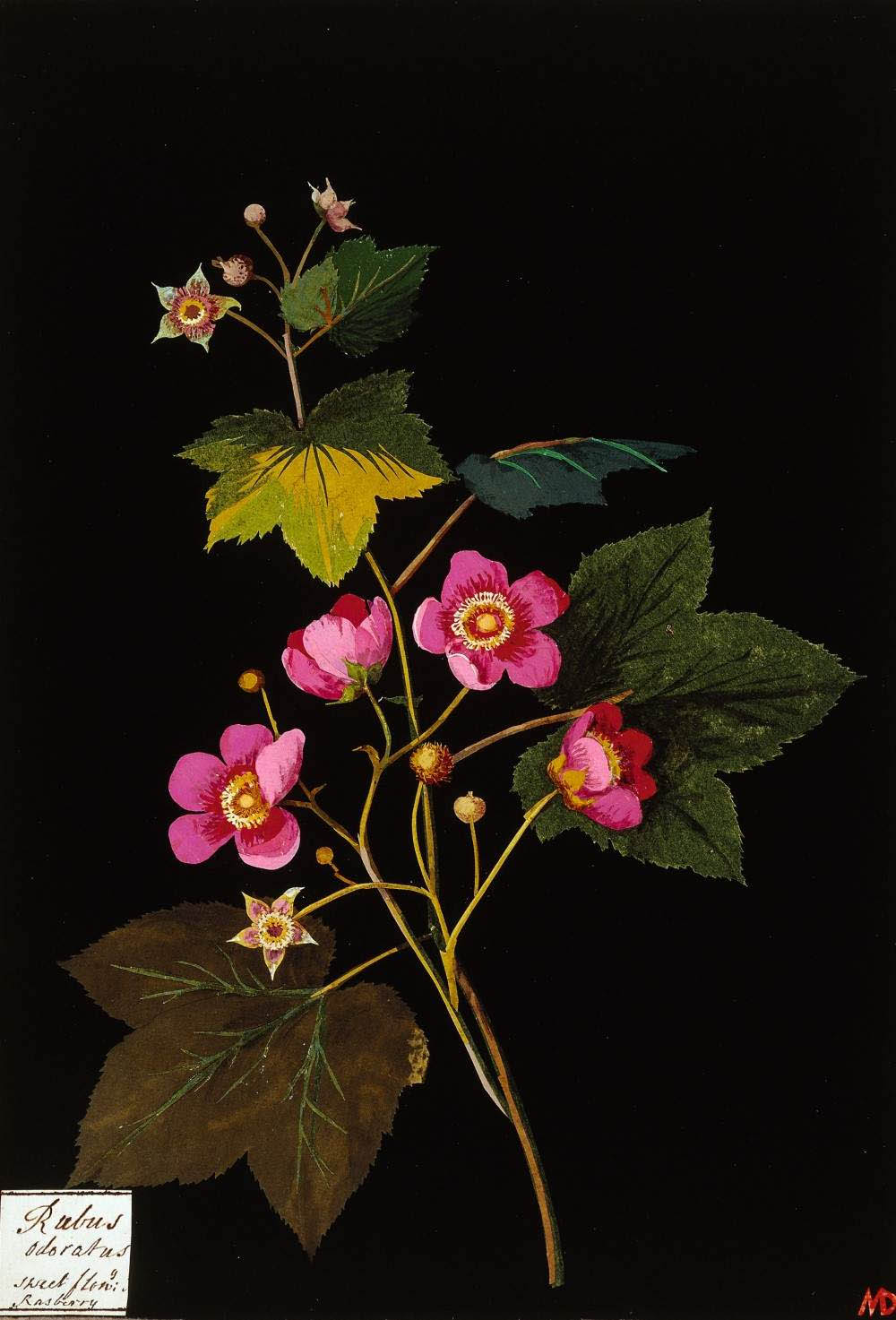
 

Mary Delany (English, 1700-1788) 'Rubus Odoratus' 1772-1782


Mary Delany (English, 1700-1788)
Rubus Odoratus
1772-1782
The British Museum
Bequeathed by Augusta Hall, Baroness Llanover in 1897


Delany was not a professional artist. However, she pursued art with a seriousness of purpose, working in a range of artistic and decorative mediums. She was in her early seventies when she turned to botanical collage, which stemmed from the Dutch art known as knipkunst or schaarkunst. Over the course of a decade, Delany created nearly one thousand botanically accurate collages of plants made from intricately cut pieces of coloured paper. In this collage, Delany shows a flowering raspberry, which was introduced to Britain from North America in 1770.

Text from the exhibition large print guide
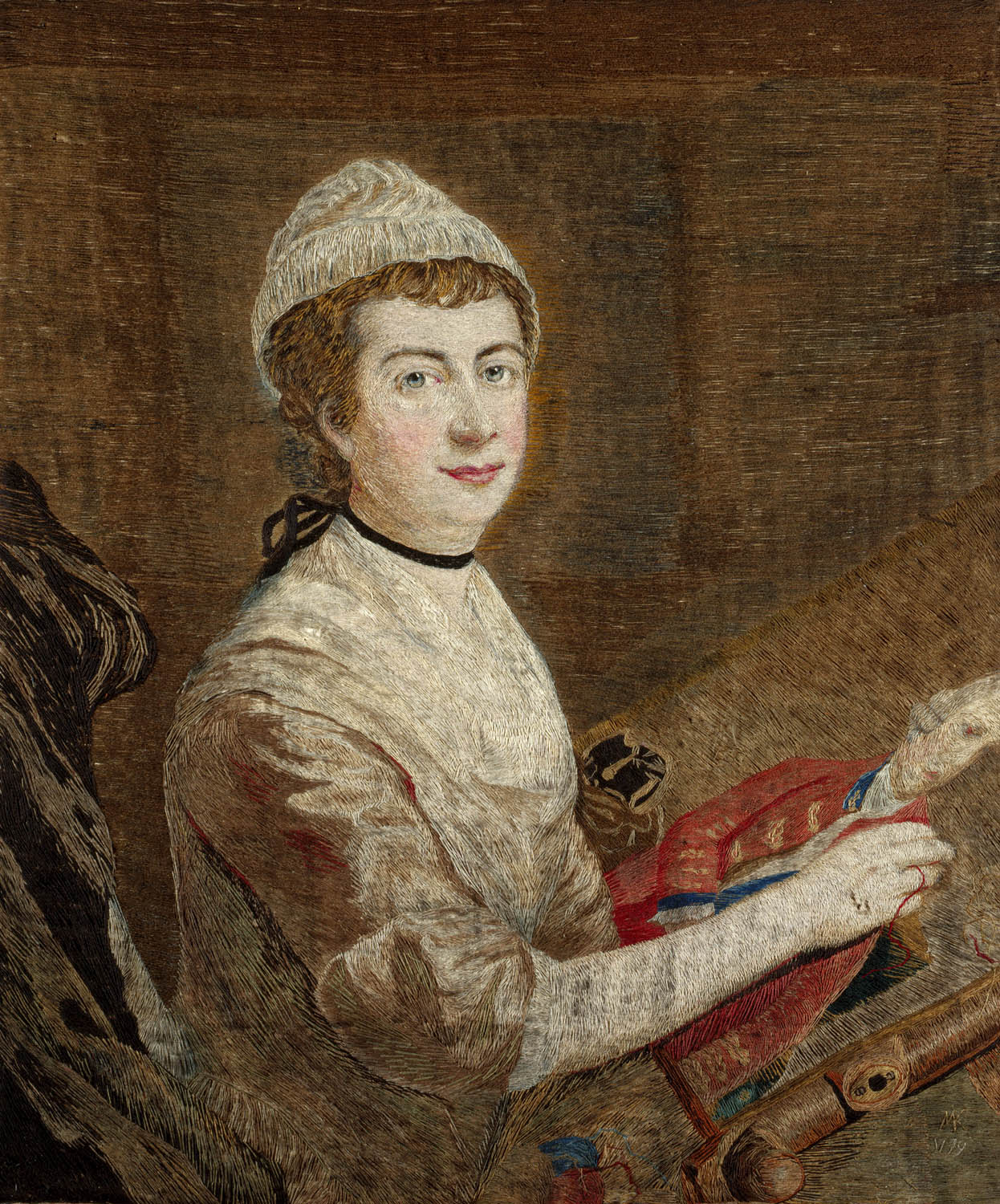
 

Mary Knowles (English, 1733-1807) 'Needlework Picture' 1779


Mary Knowles (English, 1733-1807)
Needlework Picture
1779
Silk (textile), wool, giltwood, glass (material) embroidered, dyeing
89.2 x 84.5cm (frame, external)
Royal Collection Trust / © His Majesty King Charles III 2024


Mary Morris Knowles, born of a Quaker family in Rugeley, Staffordshire, was celebrated as much for her intellect, religious conviction and unusual powers of conversation as for her skill with the needle. A friend of the poetess Anna Seward (‘The Swan of Lichfield’) and of Dr Johnson, she is now regarded as an important early protagonist of the feminist viewpoint in English cultural life. Her support for the abolition of slavery, her investigation into mystical science and her knowledge of garden design, in addition to her accomplishment as a needlewoman, suggest the breadth of her interests. In 1771 she was introduced by her fellow Quaker Benjamin West to Queen Charlotte, who remained on terms of friendship with her over the next thirty years and whose interest in female accomplishments, notably needlework, was well known. Mrs Knowles’s visits to Buckingham House included an occasion in 1778 on which she presented her 5-year-old son George to the King and Queen.

Following the first visit in 1771, the Queen commissioned Mrs Knowles to make a copy of Zoffany’s portrait of George III in needlework or ‘needle painting’ as it was also known. This technique ‘so highly finished, that it has all the softness and Effect of painting’ was achieved with a combination of irregular satin-stitch and long-and-short stitch, worked on hand-woven tammy in an arbitrary pattern and at speed, using fine wool dyed in a wide range of colours under her own supervision. Eight years later Mrs Knowles embroidered the self portrait showing her at work on the Zoffany which, like the earlier piece, she signed with initials and dated. This appears always to have been in the Royal Collection and was presumably also commissioned by Queen Charlotte.

Text from the Royal Collection Trust website
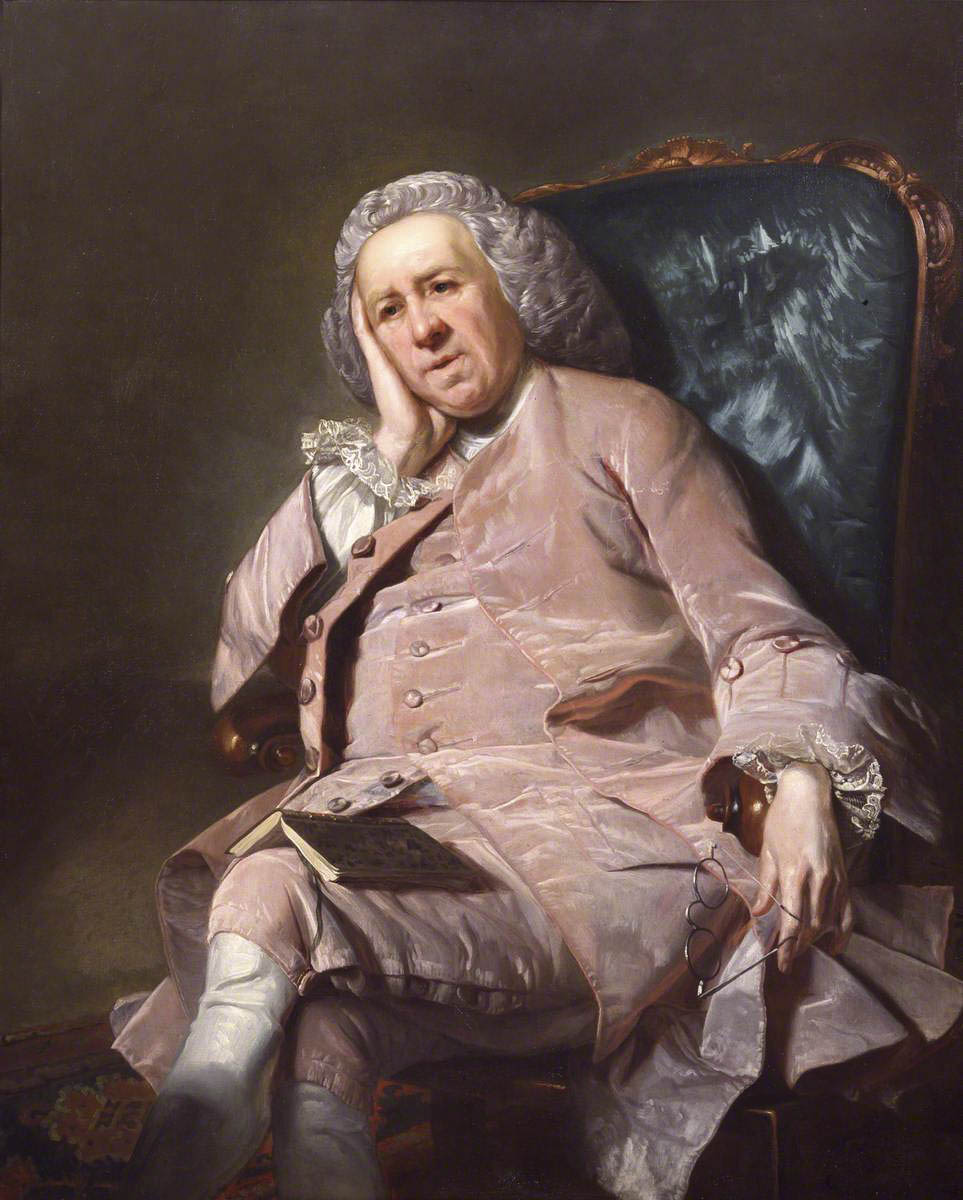
 

Mary Black (English, c. 1737-1814) 'Messenger Monsey (1693-1788)' 1764


Mary Black (English, c. 1737-1814)
Messenger Monsey (1693-1788)
1764
Oil on canvas
127 x 101.6cm
Gift from Frederick Walford, 1877
Royal College of Physicians, London
CC BY-NC-ND


This portrait of the physician Messenger Monsey (1694-1788) is Black’s only known oil painting. Black likely hoped it was a step towards establishing herself as a professional artist, but the issue of payment caused friction. Black hope to charge her client £25, half the amount charged by leading portraitist Joshua Reynolds, but after Monsey’s complaint offered to drop it to a quarter. Monsey considered Black’s expectation of a fee improper. He claimed it would damage her reputation if word got out, and even referred to her as a ‘slut’ in a letter to his cousin.

Wall text from the exhibition


Little is known of the father-and-daughter artists Thomas and Mary Black. Thomas was mainly employed painting draperies for more successful painters, and Mary usually painted copies of old masters. In a letter from Monsey to Mary Black, the doctor wrote: ‘I was bedevilled to let you make your first attempt upon my gracefull person… drawn like a Hog in armour’.

Text from the Art UK website


Black was clearly unfazed by awkward sitters. She built a flourishing artistic practice, painting and teaching the aristocracy, earning enough to live independently (she never married) and keep servants and a horse and carriage at her London home. She died there in old age just as the nineteenth century began.

Alicia Foster. “Blazing a trail: Britain’s first women artists deserve to be better known,” on the Art UK website 13 May 2024 [Online] Cited 03/09/2024


Mary Moser RA (English, 1744-1819) 'Standing Female Nude' Nd


Mary Moser RA (English, 1744-1819)
Standing Female Nude
Nd
Black and white chalk on grey-green paper
49 x W 30.2cm
The Fitzwilliam Museum, Cambridge


As women were excluded from life drawing classes, many took their own steps to improve their anatomical knowledge. They sketched from casts and statues and copied from other artists’ drawings and anatomy books. These rare works show that some artists found ways around these restrictions, although little is known about how Moser and Stone accessed life models.

Text from the exhibition large print guide


Mary Moser RA (English, 1744-1819) 'Flowers in a vase, which stands on a ledge' 1765


Mary Moser RA (English, 1744-1819)
Flowers in a vase, which stands on a ledge
1765
Watercolour and bodycolour on paper
The Syndics of the Fitzwilliam Museum, University of Cambridge


From the same series as the work nearby, this watercolour represents Sagittarius. The vase is filled with a cascade of late flowering plants: asters, chrysanthemums and rare pale nerines, captured in the cold light of winter. In addition to her professional profile as a Royal Academician, Moser acted as a royal tutor. She was part of Queen Charlotte’s circle and taught the princesses botany, embroidery and flower painting. She worked alongside other artists, including Meen and Delany, whose work is also displayed in this room.

Text from the exhibition large print guide


Admired for her striking paintings of flowers, Mary Moser was recognised for her talent from a very young age. She trained with her father, an acclaimed artist and goldsmith, winning her first medal for flower drawing at 14. At just 24, she became one of only two female founders of the Royal Academy, alongside Angelica Kauffman.

Moser painted portraits and historical scenes, but her skilled floral still life works, like Flowers in a vase, which stands on a ledge (1765), were praised by critics. Though still life was traditionally seen as a ‘lesser subject’, her floral works were so widely appreciated she received royal commissions, including one from Queen Charlotte. Despite recognition and the exhibition of many paintings, few of Moser’s works survive today.

Text from the Tate website
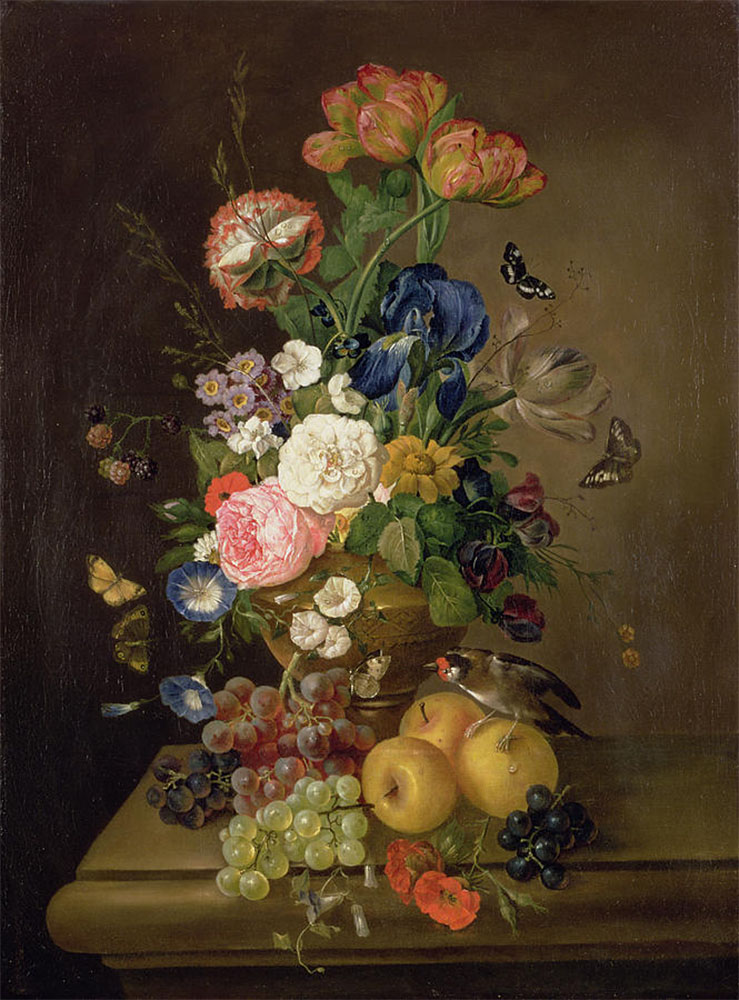
 

Mary Moser RA (English, 1744-1819) 'Vase of Flowers' Between 1758 and 1819


Mary Moser RA (English, 1744-1819)
Vase of Flowers
Between 1758 and 1819
Oil on canvas
72.1 x W 53.6cm
The Fitzwilliam Museum
Gift from Major the Hon. Henry Rogers Broughton, 1966


The exquisite attention to detail in her painting, with its beads of dew and butterflies on the wing, was perhaps nurtured by seeing her father’s work; as a goldsmith and medallion maker, this was also his talent. But the gorgeous sensuality – seen also in her approach to the nude figure – was entirely her own. She married, aged 53, but also had an affair with the estranged husband of another artist: Maria Hadfield Cosway (1759-1839).

Alicia Foster. “Blazing a trail: Britain’s first women artists deserve to be better known,” on the Art UK website 13 May 2024 [Online] Cited 03/09/2024


Installation view of the exhibition 'Now You See Us Women Artists in Britain 1520-1920' at Tate Britain showing Angelica Kauffman's 'Colouring' 1778-1780


Installation view of the exhibition Now You See Us Women Artists in Britain 1520-1920 at Tate Britain showing Angelica Kauffman’s Colouring 1778-1780 (below)
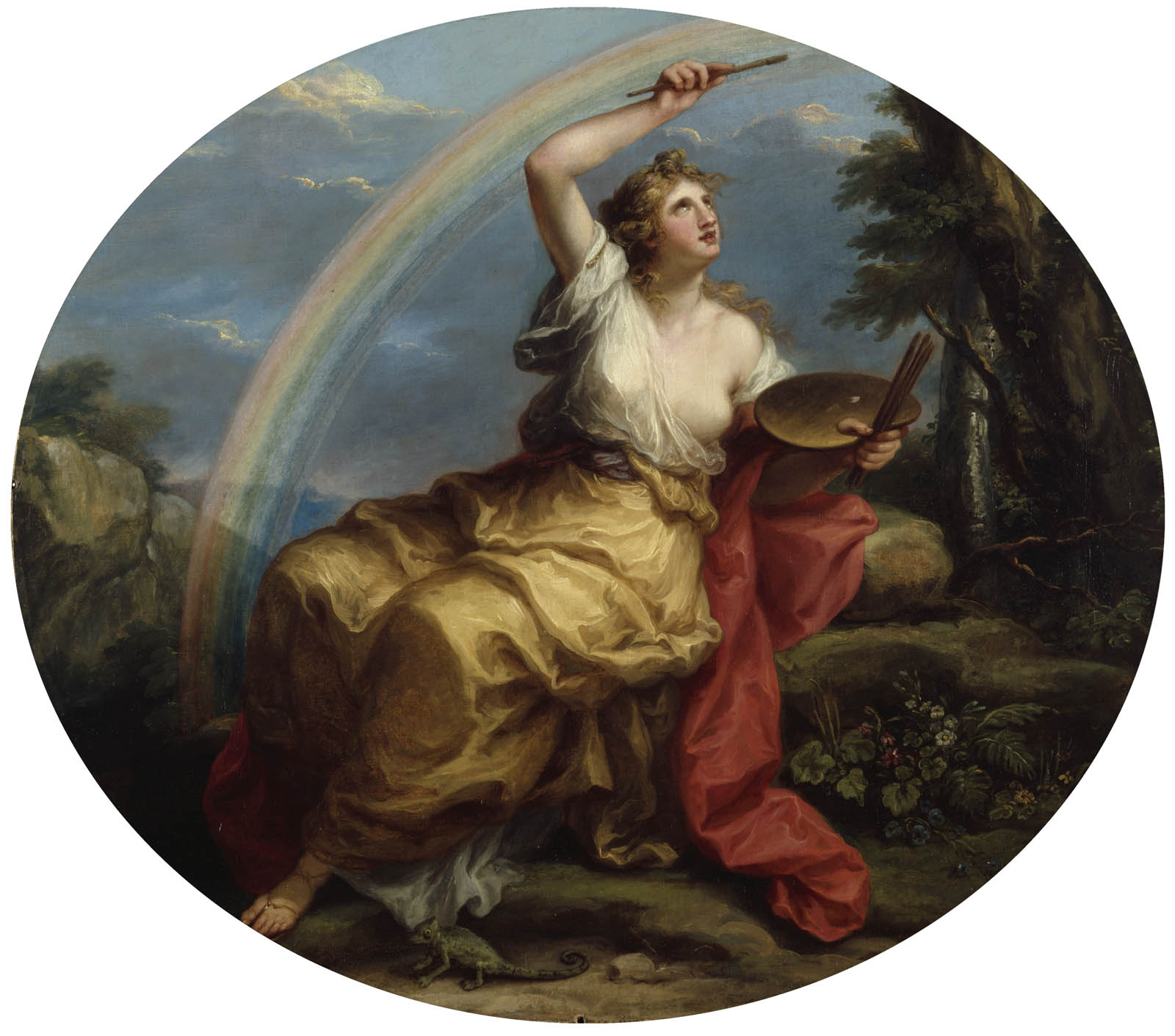
 

Angelica Kauffman RA (Swiss, 1741-1807) 'Colouring' 1778-1780


Angelica Kauffman RA (Swiss, 1741-1807)
Colouring
1778-1780
Oil on canvas
1260 x 1485 x 25 mm
© Royal Academy of Arts, London
Photo: John Hammond


This painting is part of a set of the four [titled ‘Elements of Art’] commissioned from Kauffman by the Royal Academy to decorate the ceiling of the Royal Academy’s new Council Room in Somerset House which opened in 1780. …

Kauffman represented each of her four Elements of Art as women. Female personifications of abstract concepts and values were commonplace in European art but depicting all four as women was unusual. Design (or Disegno), in particular, was known as ‘the father of all the arts’ and was traditionally depicted as a man, often in contrast to Colour or Painting personified as a woman (see Baumgartel). In Design and Colouring, the women are physically engaged in the act of creating whereas in Composition and Invention they are shown in contemplation. In Invention the figure looks to the sky for inspiration and in Composition she is deep in thought with her head resting on her hand in the traditional gesture of melancholy or reverie.

Text from the Royal Academy website


Installation view of the exhibition 'Now You See Us Women Artists in Britain 1520-1920' at Tate Britain showing at centre, Maria Cosway's 'Georgiana as Cynthia from Spenser's 'Faerie Queene'' 1781-1882; and at right, Cosway's 'A Persian Lady Worshipping the Rising Sun' 1784


Installation view of the exhibition Now You See Us Women Artists in Britain 1520-1920 at Tate Britain showing at centre, Maria Cosway’s Georgiana as Cynthia from Spenser’s ‘Faerie Queene’ 1781-1782 (below); and at right, Cosway’s A Persian Lady Worshipping the Rising Sun 1784 (below)
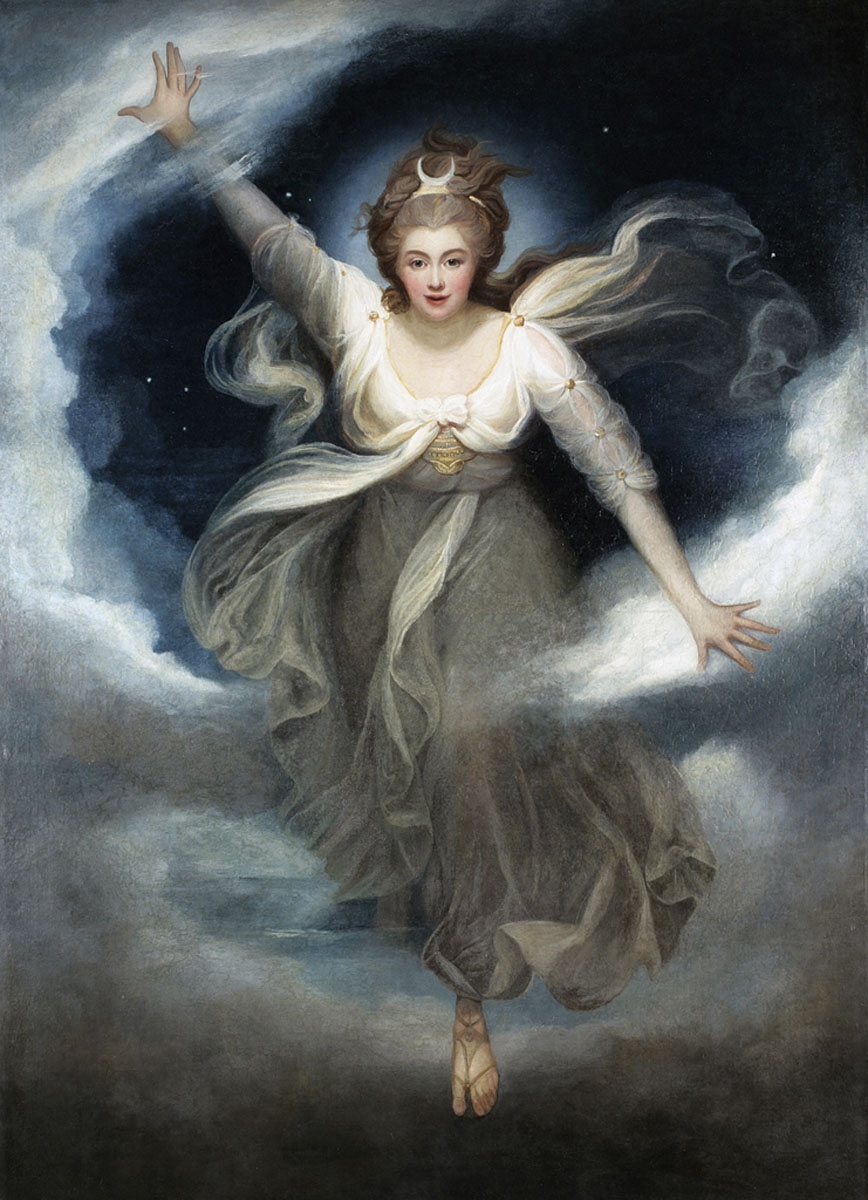
 

Maria Cosway (Italian-English 1760-1838) 'Georgiana as Cynthia from Spenser's 'Faerie Queene'' 1781-1782


Maria Cosway (Italian-English 1760-1838)
Georgiana as Cynthia from Spenser’s ‘Faerie Queene’
1781-1782
Oil on canvas
Chatsworth House
Reproduced by permission of Chatsworth Settlement Trustees / Bridgeman Images
Public domain
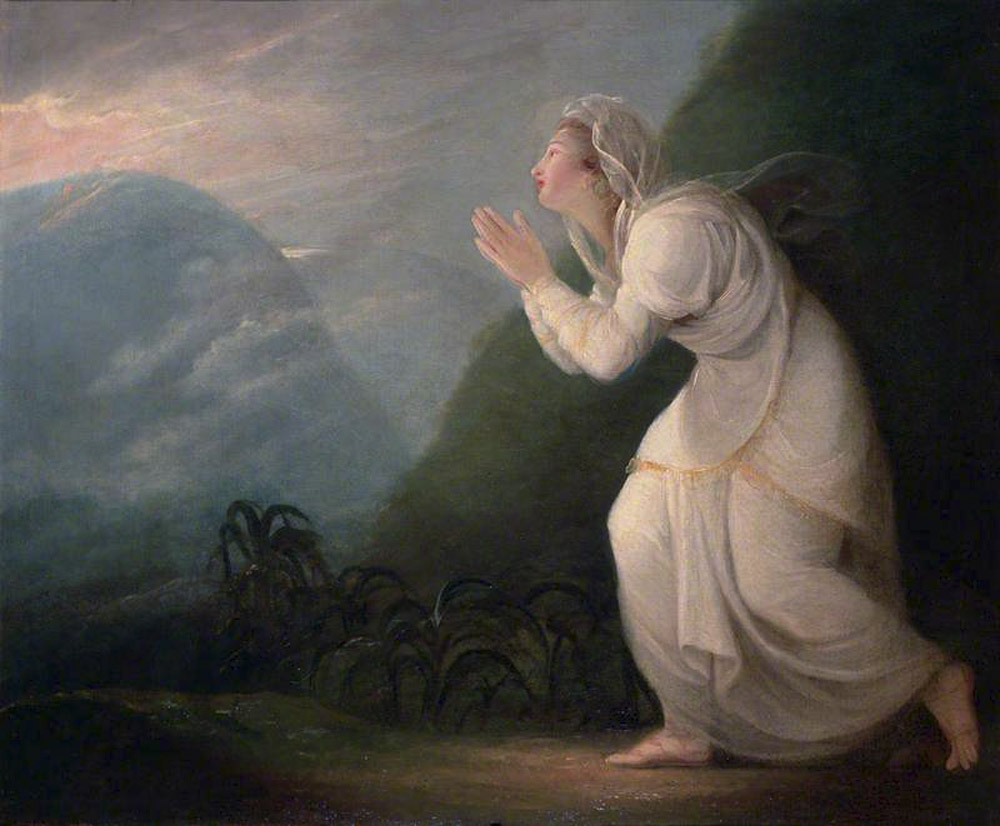
 

Maria Cosway (Italian-English 1760-1838) 'A Persian Lady Worshipping the Rising Sun' 1784


Maria Cosway (Italian-English 1760-1838)
A Persian Lady Worshipping the Rising Sun
1784
Oil on canvas
61 x 73.7cm
Sir John Soane’s Museum
Gift from the artist, 1822
By courtesy of the Trustees of Sir John Soane’s Museum, London
CC BY-NC-ND


As well as portraits, Cosway exhibited history paintings. This work was shown at the Royal Academy in 1784. Although only a few of Cosway’s history pictures can be located now, paintings such as this one were well known through reproductions made by leading engravers and print publishers. Cosway’s success was hindered by her husband, who did not like her to paint professionally. She reflected later that had he permitted it, she would have ‘made a better painter, but left to myself by degrees, instead of improving, I lost what I brought from Italy of my early studies.’

Text from the exhibition large print guide
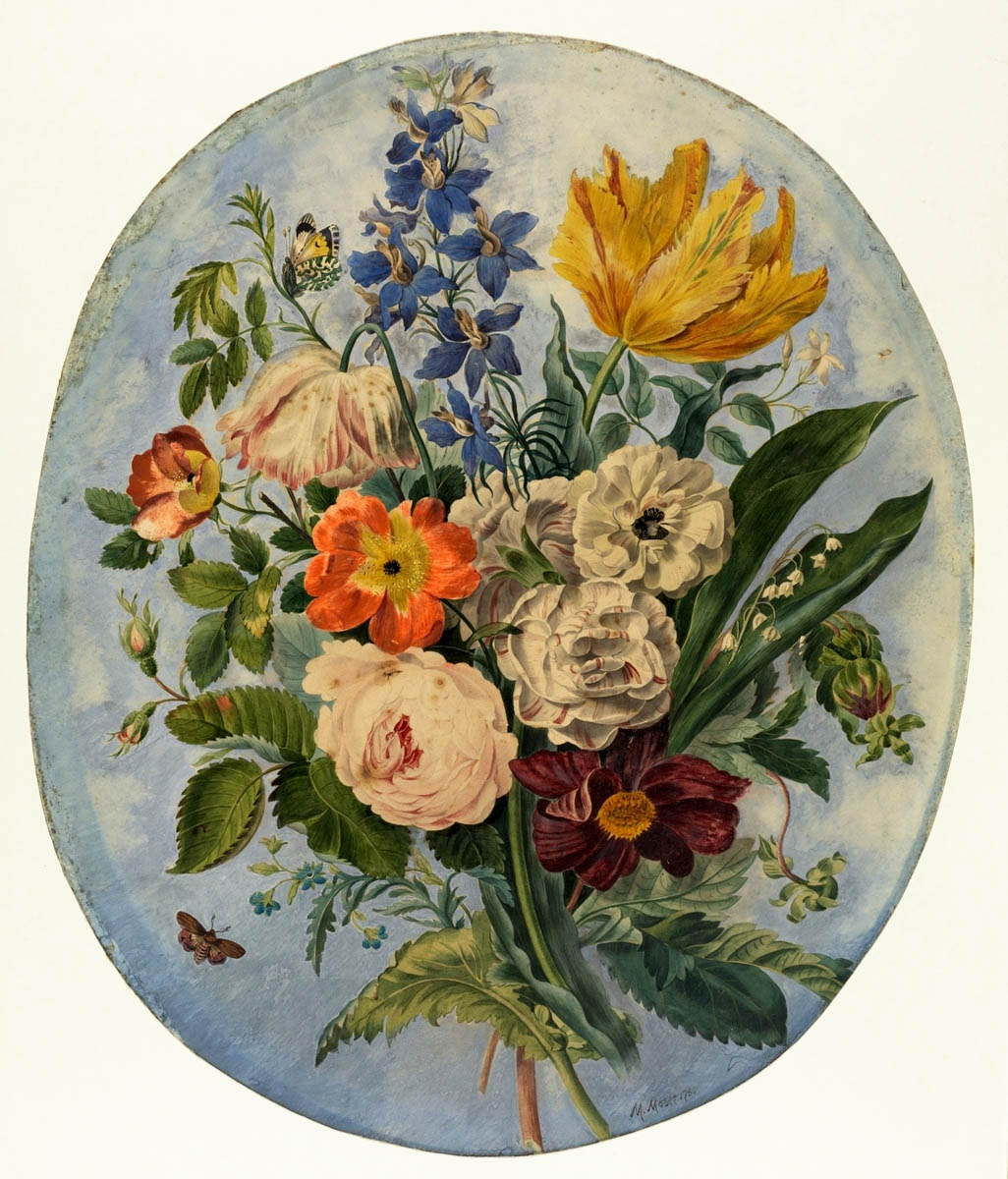
 

Maria Cosway (Italian-English 1760-1838) 'Bouquet of Flowers' 1780


Maria Cosway (Italian-English 1760-1838)
Bouquet of Flowers
1780
Watercolour on paper
The Courtauld, London (Samuel Courtauld Trust)
Bequeathed by Sir Robert Clermont Witt, 1952
CC BY-NC-ND
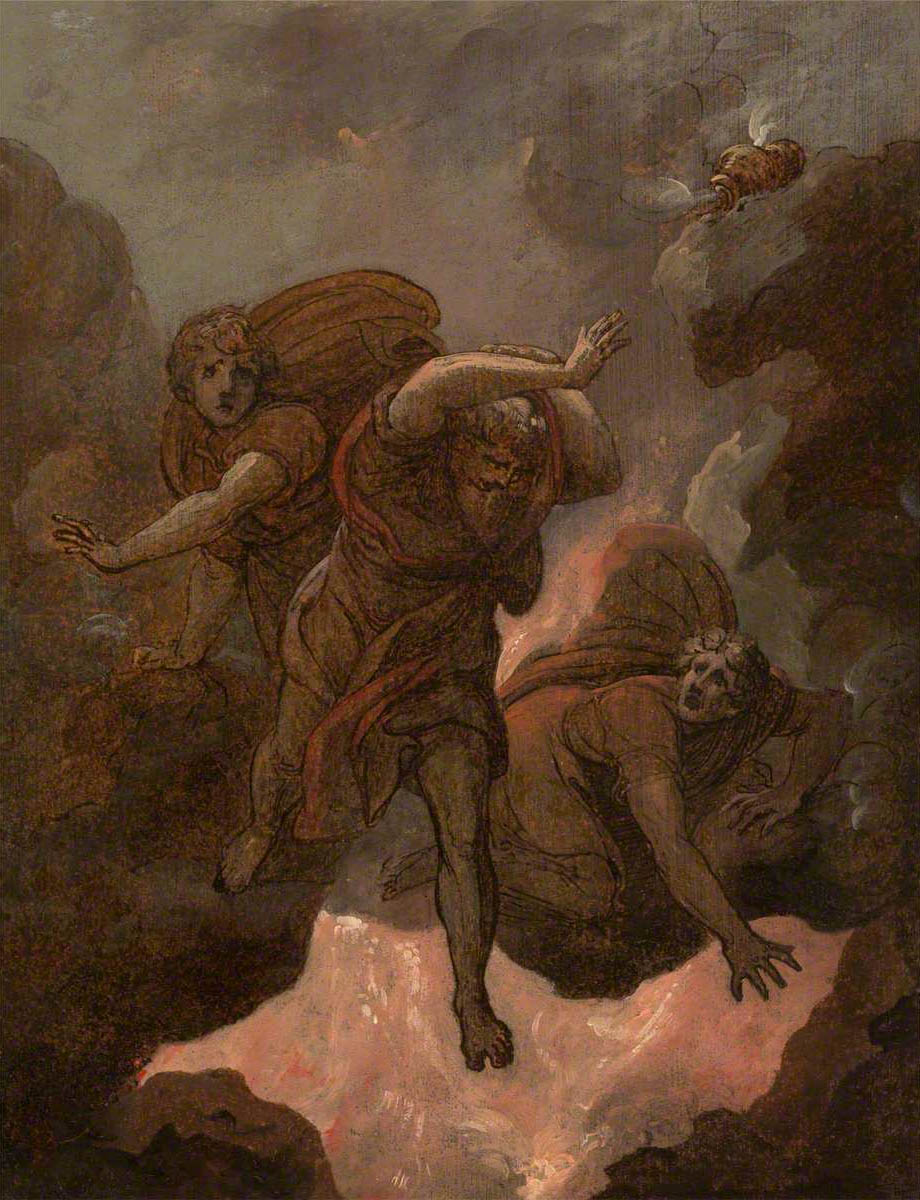
 

Maria Cosway (Italian-English 1760-1838) 'The Judgement of Korah, Dathan and Abiram' c. 1801


Maria Cosway (Italian-English 1760-1838)
The Judgement of Korah, Dathan and Abiram
c. 1801
Pen, ink and oil on canvas
37.5 x 29.2cm
Yale Center for British Art
Paul Mellon Collection
CC BY-NC-ND
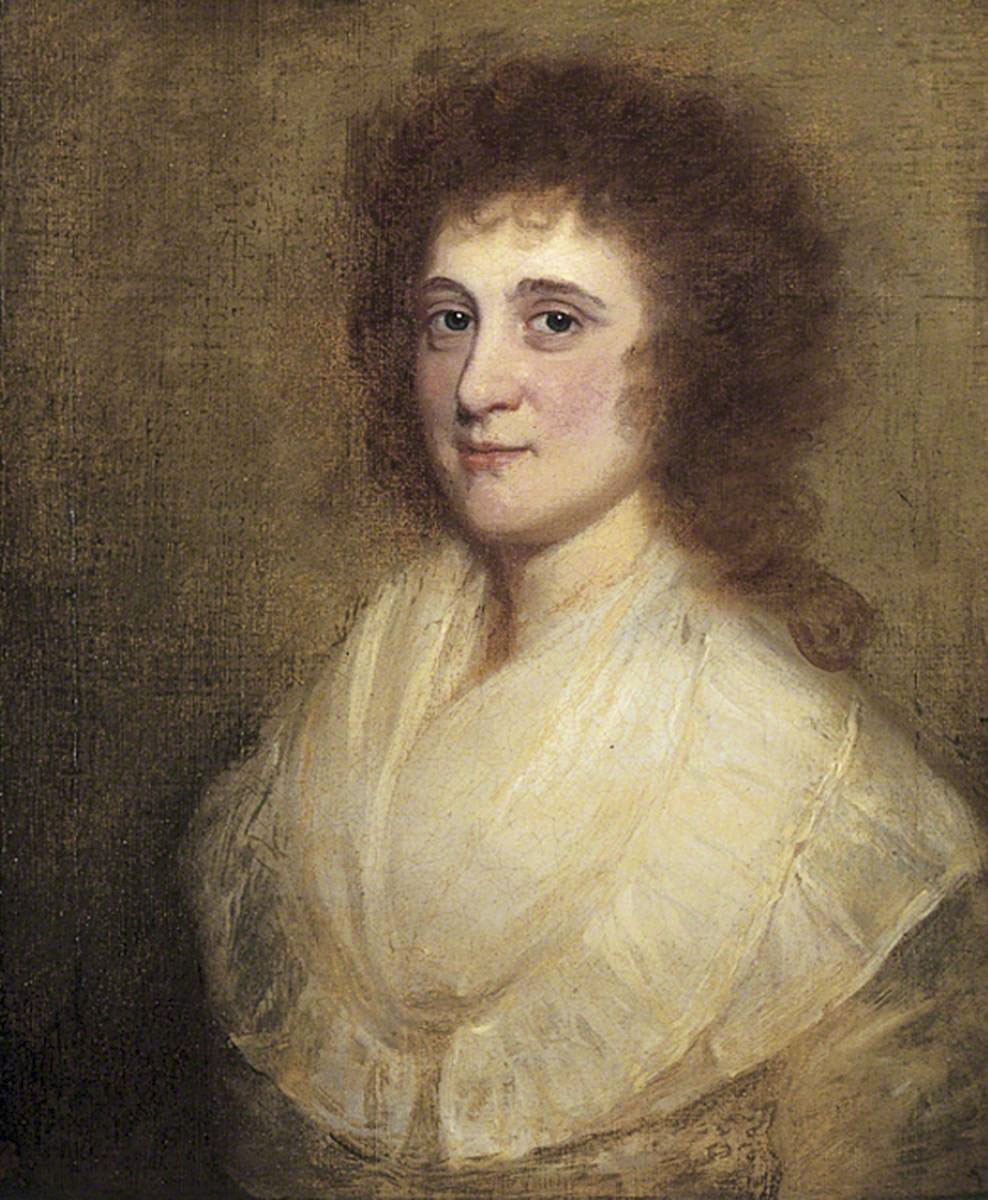
 

Maria Cosway (1759-1838) (after) 'Self Portrait' Nd


Maria Cosway (1759-1838) (after)
Self Portrait
Nd
Oil on canvas
61 x W 50.8cm
Temple Newsam House, Leeds Museums and Galleries
Bequeathed by Sam Wilson, 1925
CC BY-NC-ND
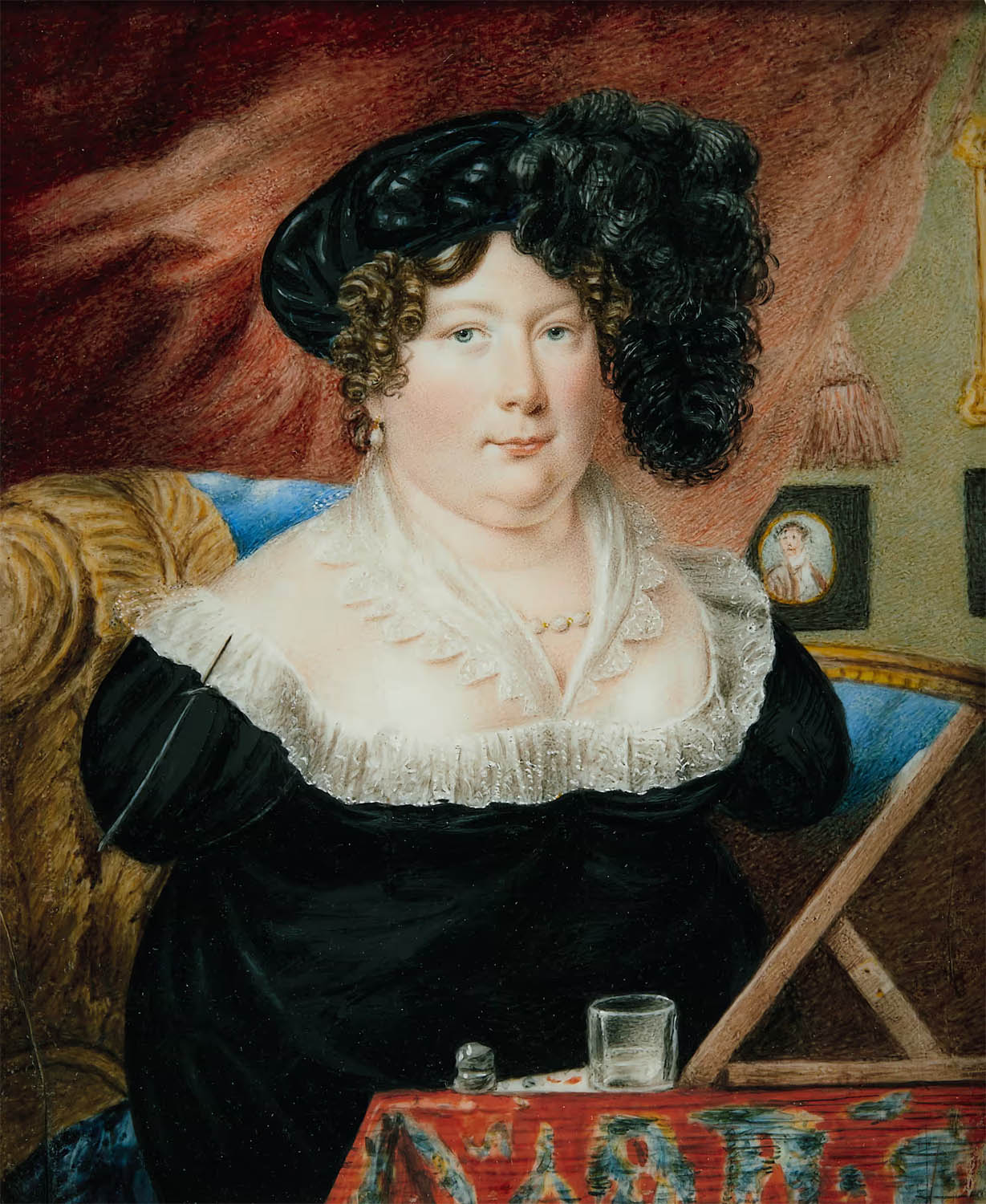
 

Sarah Biffin (English, 1784-1850) 'Self-portrait' c. 1821


Sarah Biffin (English, 1784-1850)
Self-portrait
c. 1821
Watercolour and bodycolour on ivory
Private collection


Biffin, whose baptism record notes that she was born ‘without arms or legs’, taught herself to sew, write and paint using her mouth and shoulder. She wrote that, as a child, ‘I was continually practising every invention; till at length I could, with my mouth – thread a needle – tie a knot – do fancy work – cut out and make my own dresses’.

Text from the exhibition large print guide
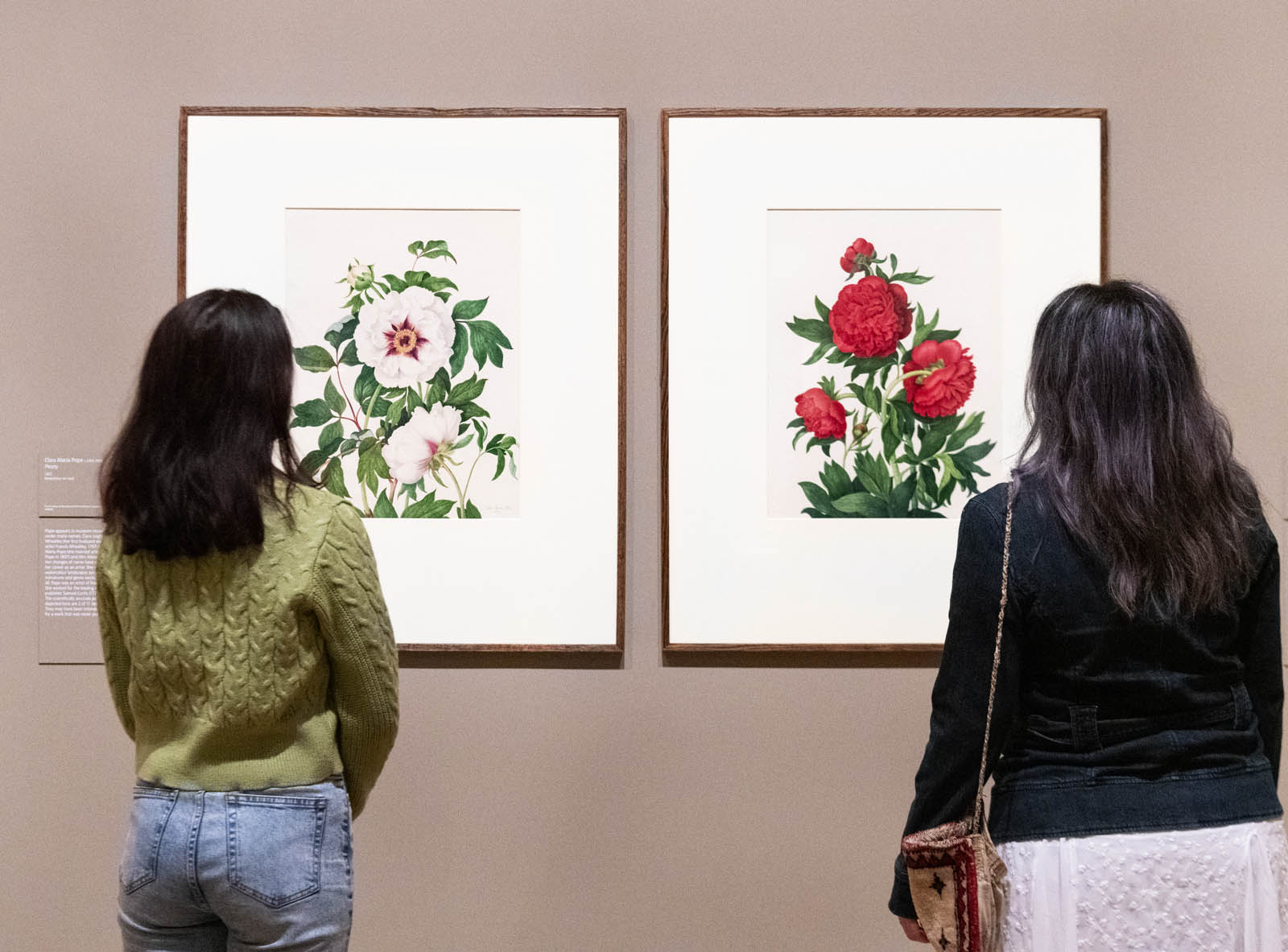
 

Installation view of the exhibition 'Now You See Us Women Artists in Britain 1520-1920' at Tate Britain showing at left, Clara Maria Pope's 'Peony' 1822; and at right, Pope's 'Peony' 1821


Installation view of the exhibition Now You See Us Women Artists in Britain 1520-1920 at Tate Britain showing at left, Clara Maria Pope’s Peony 1822 (below); and at right, Pope’s Peony 1821 (below)
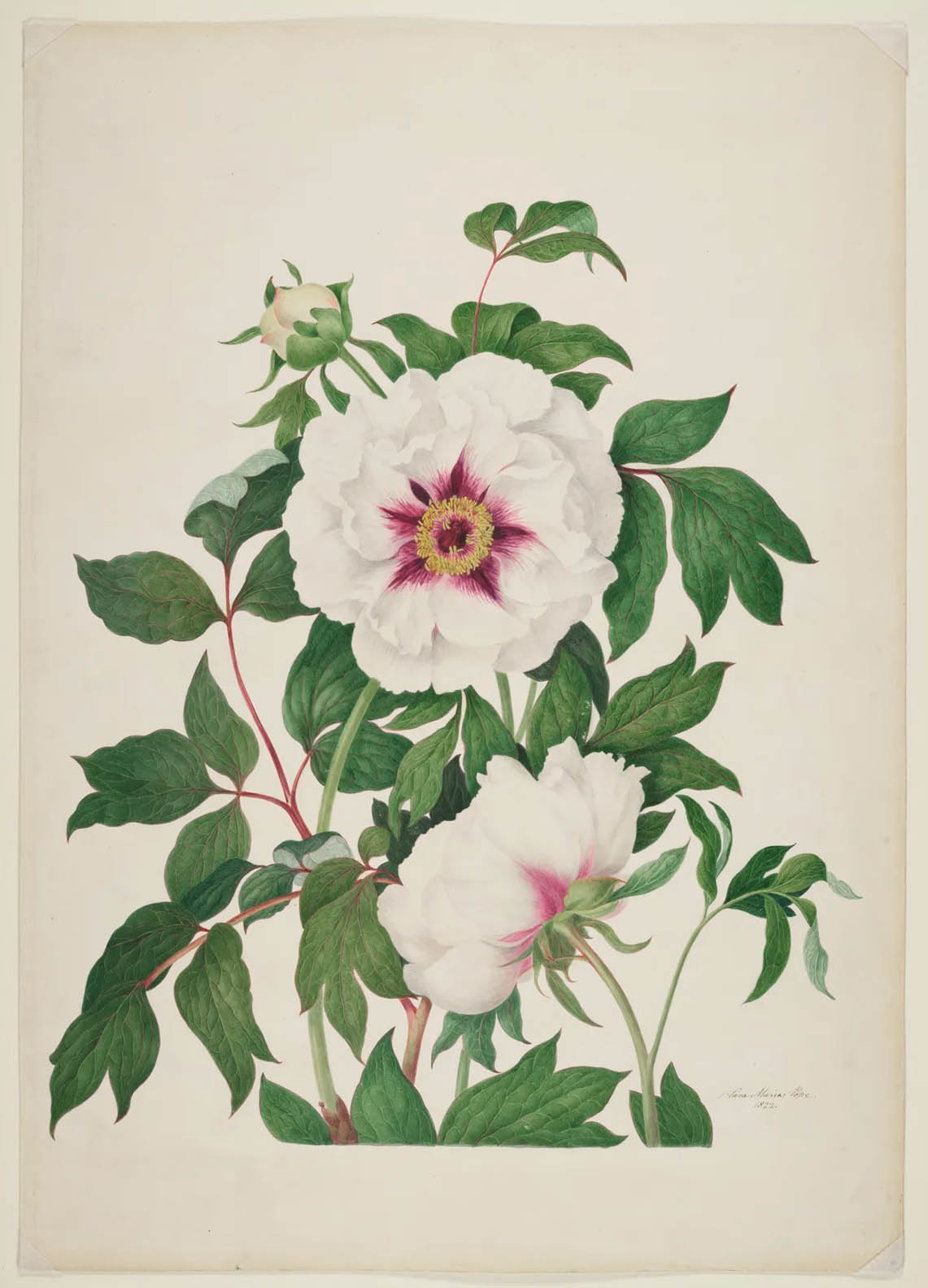
 

Clara Maria Pope (British, 1767-1831) 'Peony' 1822


Clara Maria Pope (British, 1767-1831)
Peony
1822
Bodycolour on card
The Trustees of the Natural History Museum, London
Courtesy the Natural History Museum
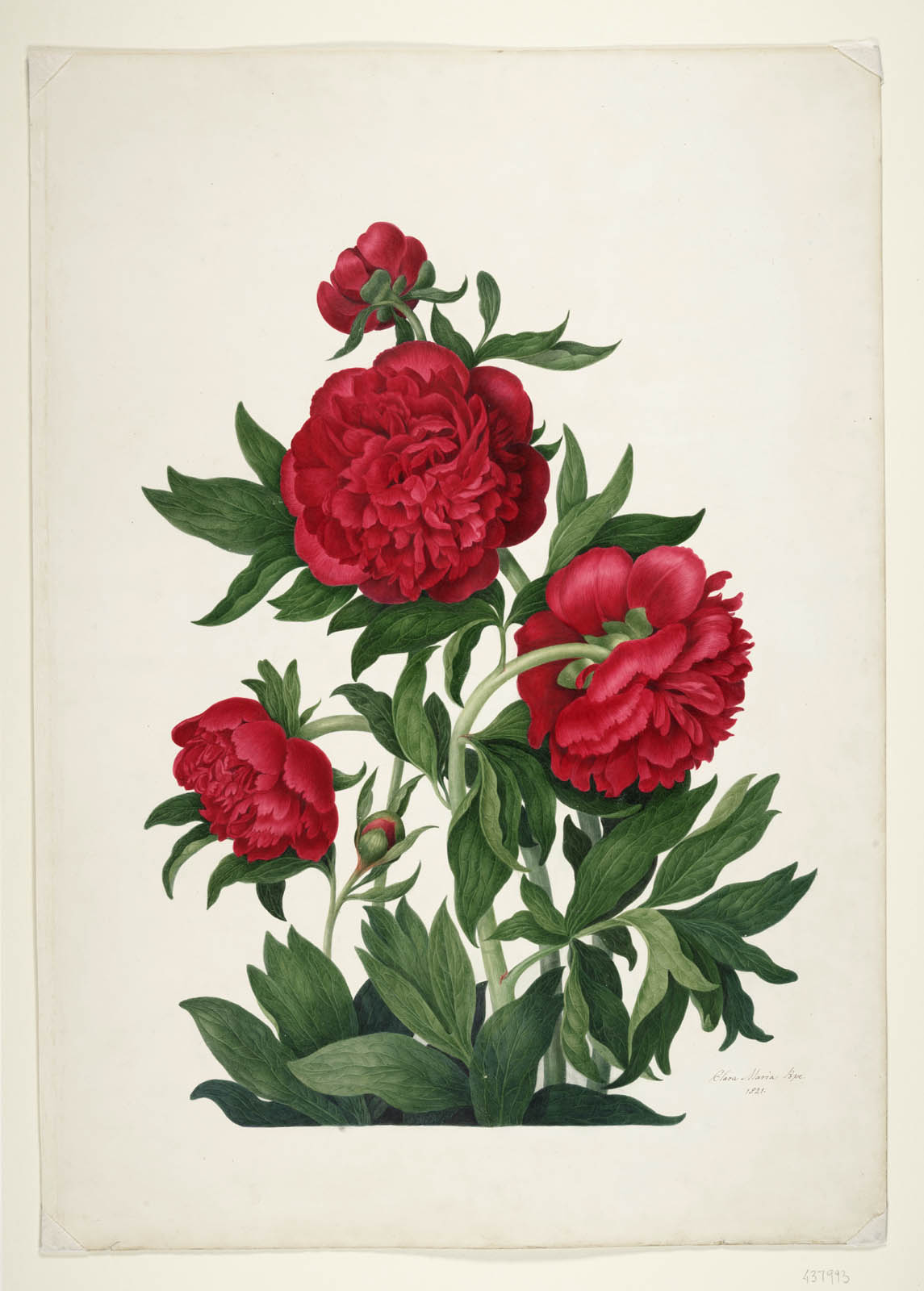
 

Clara Maria Pope (British, 1767-1831) 'Peony' 1821


Clara Maria Pope (British, 1767-1831)
Peony
1821
Bodycolour on card
The Trustees of the Natural History Museum, London
Courtesy the Natural History Museum


Pope appears in museum records under many names: Clara Leigh, Clara Wheatley (her first husband was the artist Francis Wheatley, 1747-1801), Clara Maria Pope (she married actor Alexander Pope in 1807) and Mrs Alexander Pope. Her changes of name have obscured her career as an artist. She exhibited watercolour landscapes and portraits, miniatures and genre works, but above all, Pope was an artist of flowers. She worked for the leading botanical publisher Samuel Curtis (1779-1860). The scientifically accurate peonies depicted here are 2 of 11 designs. They may have been intended as plates for a work that was never published.

Text from the exhibition large print guide
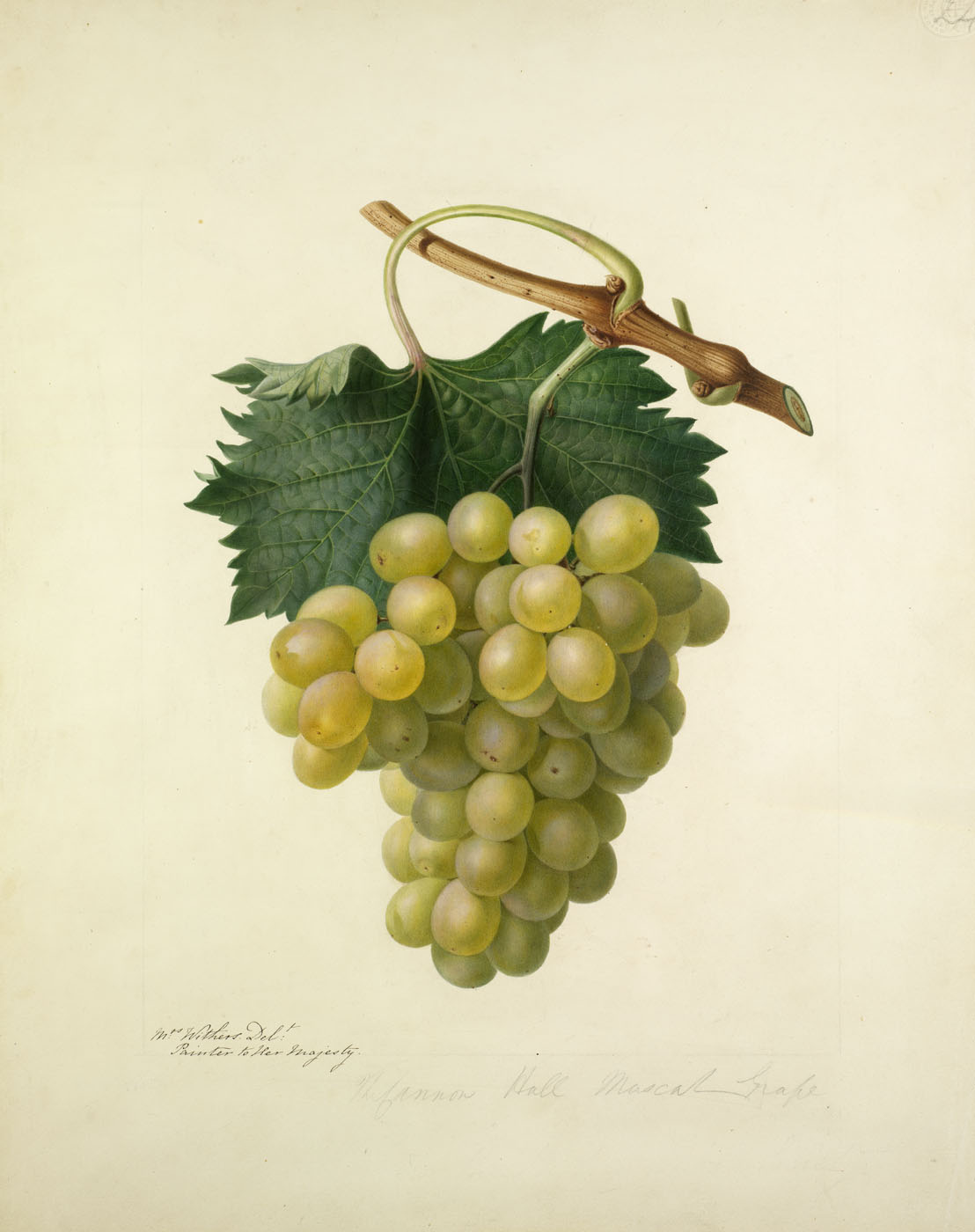
 

Augusta Innes Withers (English, 1792-1877) 'The Canon Hall Muscat Grape' c. 1825


Augusta Innes Withers (English, 1792-1877)
The Canon Hall Muscat Grape
c. 1825
Watercolour on paper
444 × 352 mm
RHS Lindley Collections
Courtesy the Royal Horticultural Society, Lindley Library


Withers was employed by the Horticultural Society to make official ‘portraits’ of varieties of fruit growing in their orchards. The quality of Withers’s work meant her high fees were not questioned. Here, she paints sunlight glowing through grapes and the translucency of the skin of gooseberries in great detail. Withers drew and handcoloured engraved illustrations in the Horticultural Society’s Transactions and made illustrations of fruit for John Lindley’s Pomological Magazine in 1828 (Lindley was Secretary of the Society). Withers was also regarded as one of the best teachers of botanical illustration.

Text from the exhibition large print guide
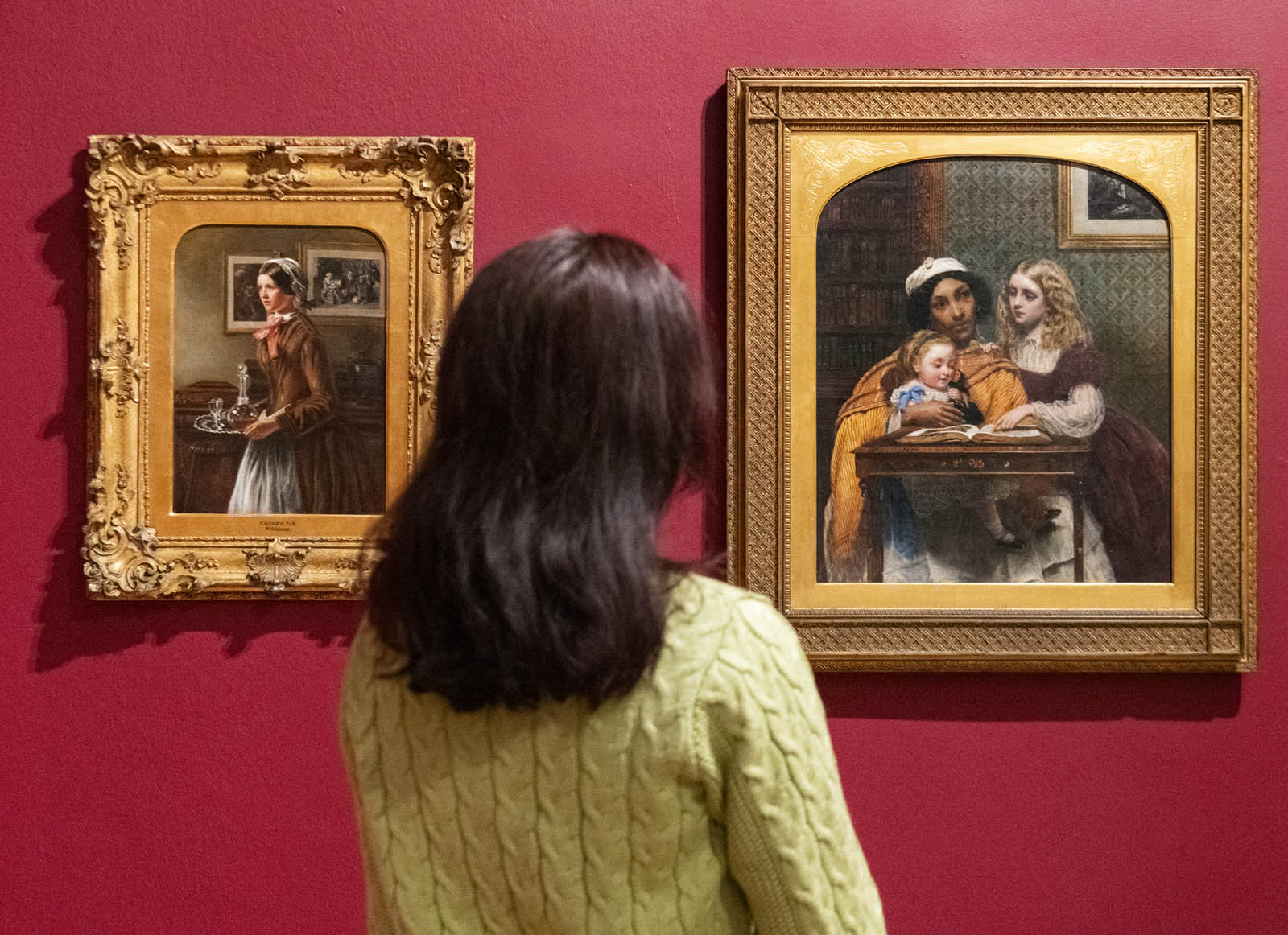
 

Installation view of the exhibition 'Now You See Us Women Artists in Britain 1520-1920' at Tate Britain showing at left, Rebecca Solomon's 'Sherry, Sir?' c. 1858-1862; and at right, Solomon's 'A Young Teacher' 1861


Installation view of the exhibition Now You See Us Women Artists in Britain 1520-1920 at Tate Britain showing at left, Rebecca Solomon’s Sherry, Sir?
c. 1858-1862 (below); and at right, Solomon’s A Young Teacher 1861 (below)
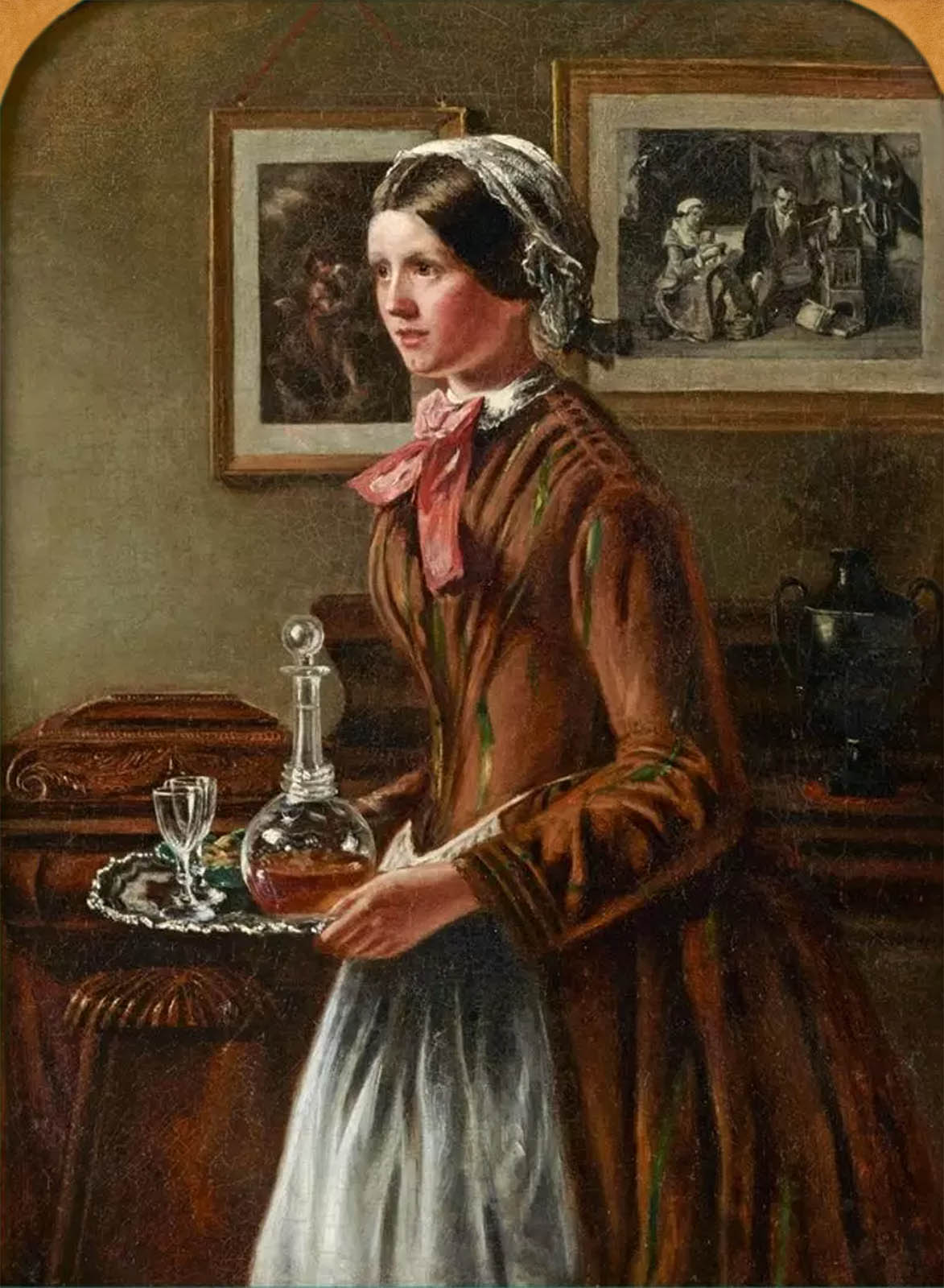
 

Rebecca Solomon (English, 1832-1886) 'Sherry, Sir?' c. 1858-1862


Rebecca Solomon (English, 1832-1886)
Sherry, Sir?
c. 1858-1862
Oil on canvas
Private collection


Solomon often painted scenes of domestic life and interiors, which were considered more suitable subjects for women artists than history painting. Solomon’s domestic scenes include subtle commentary on social hierarchies. Sherry, Sir? depicts a maid with a silver tray. It reprises a well-known painting of the same title, painted by William Powell Frith (1819-1909) in 1851, but unlike Frith’s painting, Solomon draws attention to domestic labour and the hierarchies of a middle-class home. Solomon was the sister of artists Abraham Solomon (1823-1862) and Simeon Solomon (1840-1905).

Text from the exhibition large print guide


Rebecca Solomon (London 26 September 1832 – 20 November 1886 London) was a 19th-century English Pre-Raphaelite draftsman, illustrator, engraver, and painter of social injustices. She is the second of three children who all became artists, in a prominent Jewish family. …

Solomon’s artistic style was typical of popular 19th-century painting at the time and falls under the category of genre painting. She used her visual images to critique ethnic, gender and class prejudice in Victorian England. When Solomon started painting genre scenes, her work demonstrated an observant eye for class, ethnic and gender discrimination. Solomon’s paintings reflect a combination of interest in the theatre and commitment to social consciousness that is not exist in other artist’s painting in the nineteenth century.

Text from the Wikipedia website


Solomon painted in a more equivocal manner… She [the subject of the painting] is equally attractive and demure, but, by being painted from the side and against the background of a middle-class interior, the viewer is invited to reflect on her social status.

This is framed in a genre painting and by no means a piece with pretensions to social realism, but Solomon seems to be underlining the definite restrictions on this young woman’s position in society.

The pictures hanging behind her may contribute to that interpretation of the artist. They are not yet identified, but it seems that on the left we are shown an allegorical subject later than Gainsborough or Reynolds, depicting a young peasant boy or young peasant girl holding a dog in a landscape. On the right, a more specific engraving of a genre painting from Solomon’s own time showing what appears to be an itinerant family of street vendors. By placing his servant girl between these two paintings, Solomon seems to be asking us to compare.

José Luis Jiménez García. “La otra versión de la ‘Sherry Girl’,” on the Diario de Jerez website 07 June 2023 [Online] Cited 28/08/2024 Translated from the Spanish by Google Translate
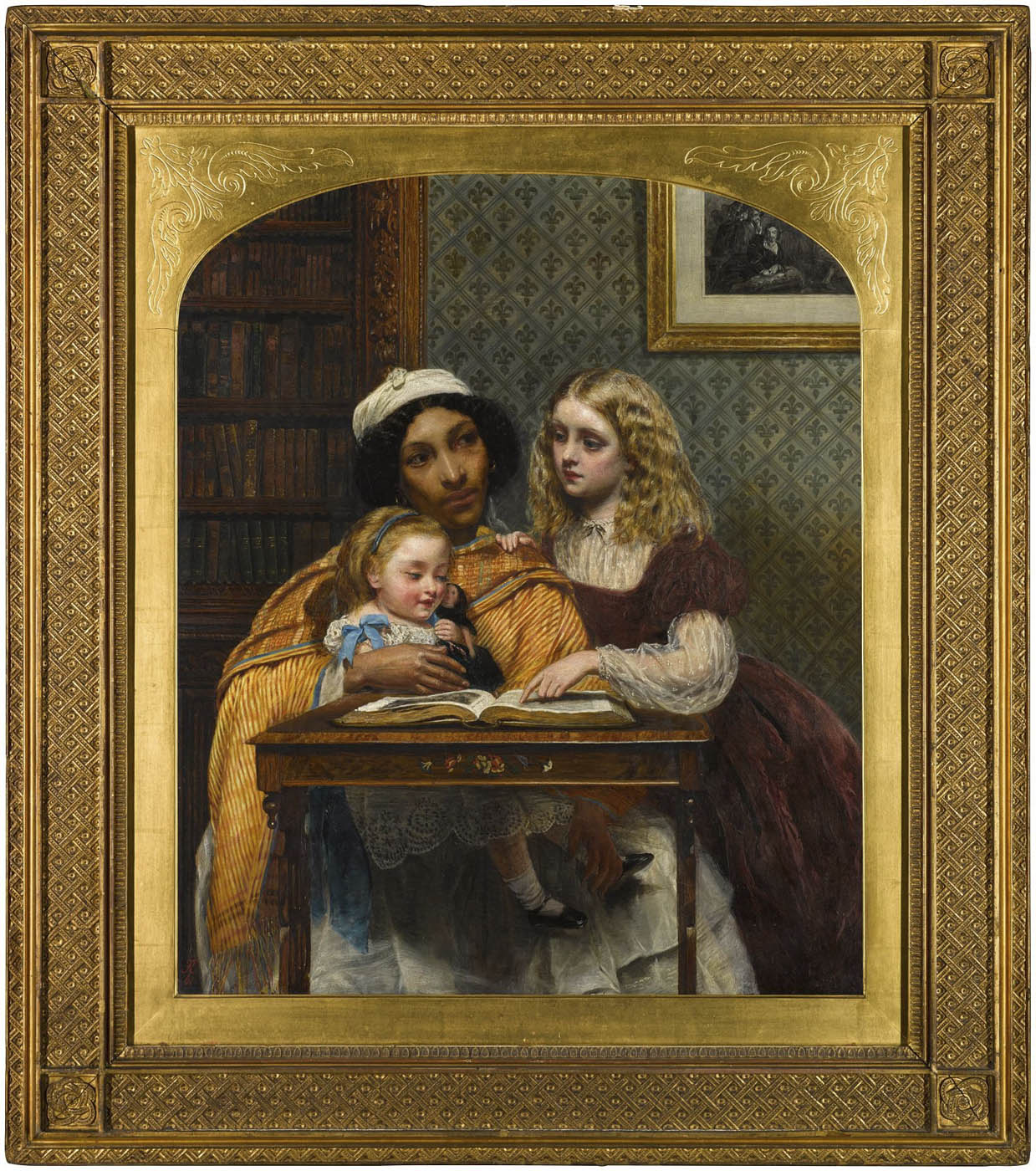
 

Rebecca Solomon (English, 1832-1886) 'A Young Teacher' 1861


Rebecca Solomon (English, 1832-1886)
A Young Teacher
1861
Oil on canvas
61 by 51cm
Tate and the Museum of the Home


Rebecca Solomon’s painting is a complex reflection on gender, race, religion and education in mid-nineteenth century London. As with many of her works, it considers women who worked in better-off households as professional carers. In A Young Teacher, Solomon modifies a traditional domestic scene between mother and child, with the surrounding books stressing the theme of learning. The woman at the centre of the image was modelled by Jamaican-born Fanny Eaton, who became a prominent muse for many Victorian artists and featured in some of the most iconic paintings of the Pre-Raphaelite period. …

Believed to be the first Jewish woman to become a professional artist in England, Rebecca Solomon’s work shone a light on inequality and prejudice at a time when these subjects were far from mainstream. She was active in social reform movements, including as part of a group of 38 artists who petitioned the Royal Academy of Arts to open its schools to women.

Text from the Tate website
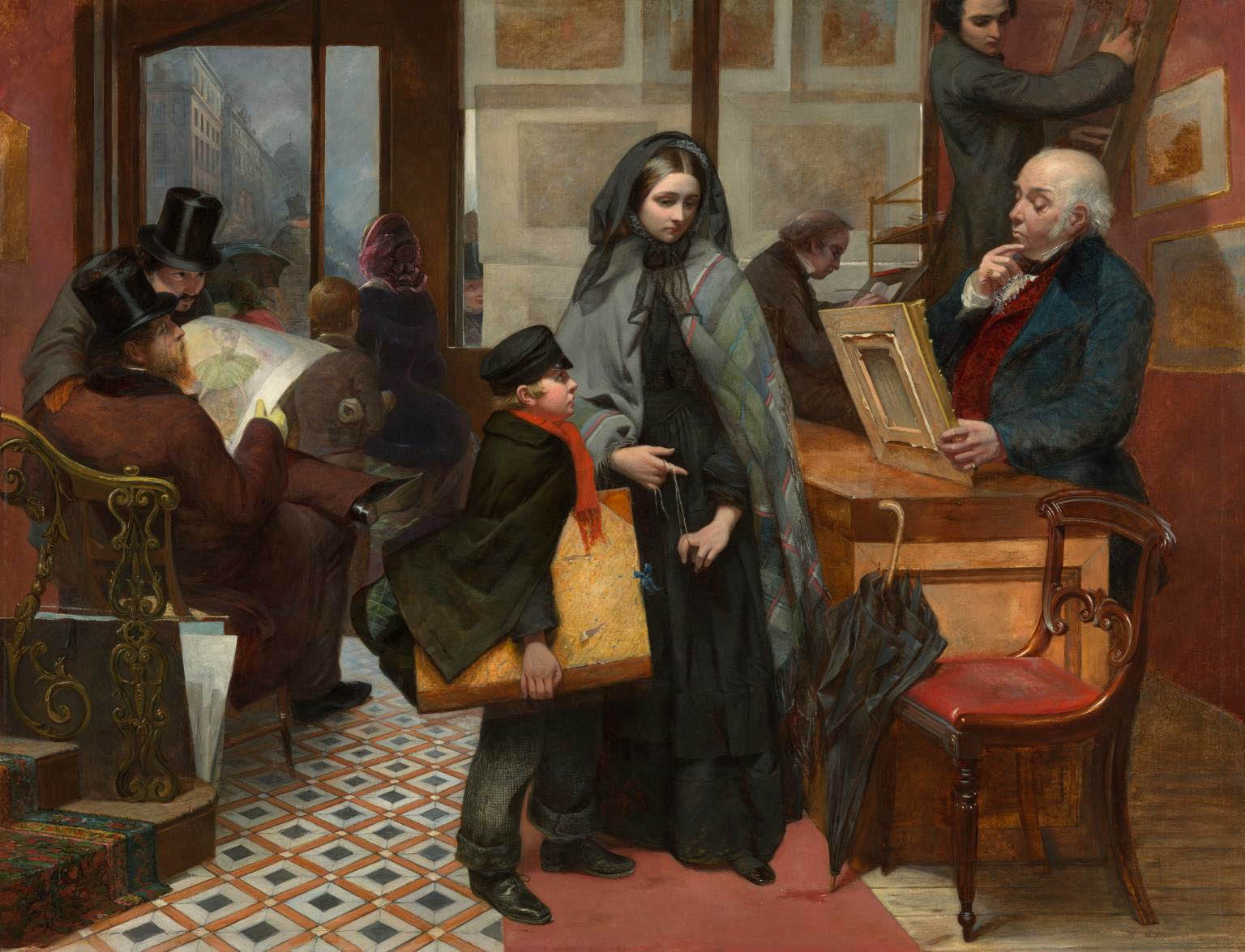
 

Emily Osborn (English, 1828-1925) 'Nameless and Friendless. "The rich man's wealth is his strong city: the destruction of the poor is their poverty (Proverbs: 10:15)' 1857


Emily Osborn (English, 1828-1925)
Nameless and Friendless.
“The rich man’s wealth is his strong city: the destruction of the poor is their poverty” (Proverbs: 10:15)
1857
Oil on canvas
Support: 825 × 1038 mm
Frame: 1042 × 1258 × 75 mm
Tate
Purchased with assistance from Tate Members, the Millwood Legacy and a private donor 2009
Creative Commons CC BY-NC-ND 4.0 DEED


Osborn exhibited widely and was supported by wealthy patrons. She was also part of the ‘rights of woman’ debate, campaigning for more public roles for women. Nameless and Friendless, exhibited at the Royal Academy in 1857, dramatises the difficulties faced by women artists. Osborn shows a young woman offering a painting to a sceptical dealer. With no reputation (‘Nameless’) and no connections (‘Friendless’), she has little chance of a sale. Behind her, two leering men emphasise the impression of her isolation and vulnerability.

Text from the exhibition large print guide


Installation view of the exhibition 'Now You See Us Women Artists in Britain 1520-1920' at Tate Britain showing Emily Mary Osborn's 'Barbara Bodichon (1827-1891)' Nd (below)


Installation view of the exhibition Now You See Us Women Artists in Britain 1520-1920 at Tate Britain showing Emily Mary Osborn’s Barbara Bodichon (1827-1891) Nd (below)
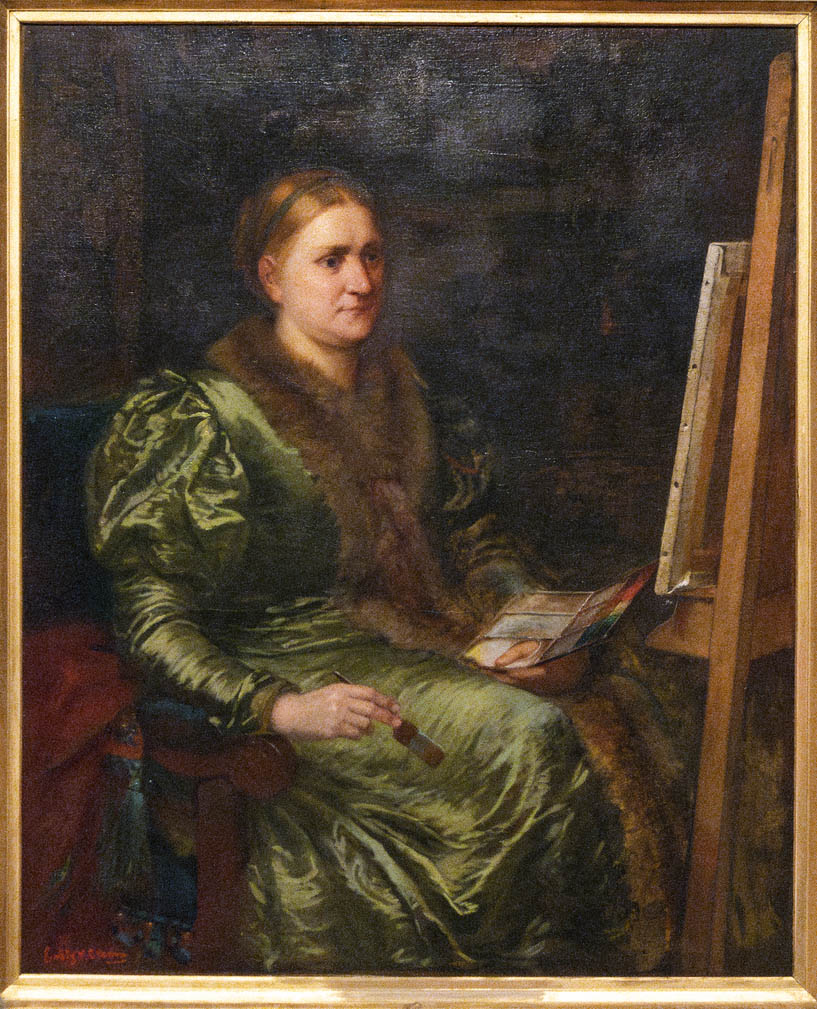
 

Emily Mary Osborn (1828-1925) 'Barbara Bodichon (1827-1891)' Nd (installation view)


Emily Mary Osborn (1828-1925)
Barbara Bodichon (1827-1891) (installation view)
Nd
Oil on canvas
120 x 97cm
Girton College, University of Cambridge


Martha Darley Mutrie (British, 1824-1885) 'Wild Flowers at the Corner of a Cornfield' 1855-1860


Martha Darley Mutrie (British, 1824-1885)
Wild Flowers at the Corner of a Cornfield
1855-1860
Oil on canvas
Support: 821 × 632 mm
Frame: 958 × 781 × 65 mm
Photo: Tate (Seraphina Neville)


Martha Darley Mutrie is considered one of the leading painters of flowers active in Britain in the nineteenth century. She was born in Ardwick, near Manchester. She trained together with her sister, the painter Annie Feray Mutrie (1826-1893), under George Wallis (1811-1891) at the Manchester School of Design from 1844 to 1846, and also undertook private lessons with him. The sisters began exhibiting at the Royal Manchester Institution from 1845 and at the Royal Academy, London, showing there consistently from the early 1850s. Their work was regularly well received by the critics. Mutrie and her sister moved to London in 1854, where they painted flowers in interior settings, carefully arranged, and also outdoors in mock natural settings.

Despite the prominence of women artists painting still lifes and flowers, the men practitioners of the genre, such as George Lance (1802-1864) and William Henry ‘Birds Nest’ Hunt (1790-1864), received greater critical and institutional attention. Martha and Annie Mutrie achieved success that was otherwise rare for women working as artists at the time.

The art critic John Ruskin admired both artists’ work and wrote about one of Annie’s pictures in his review of the 1855 Royal Academy exhibition. In his review Ruskin suggested that she abandon artificial compositions and paint instead ‘some banks of flowers in wild country, just as they grow’ (John Ruskin, Notes on Some of the Principal Pictures Exhibited at the Royal Academy, London, 1855). This painting might be seen as a response to Ruskin’s insight and the advances in science that in the 1850s brought a new focus to the study of nature, with arguments over beauty and truth.

Text from the Tate website
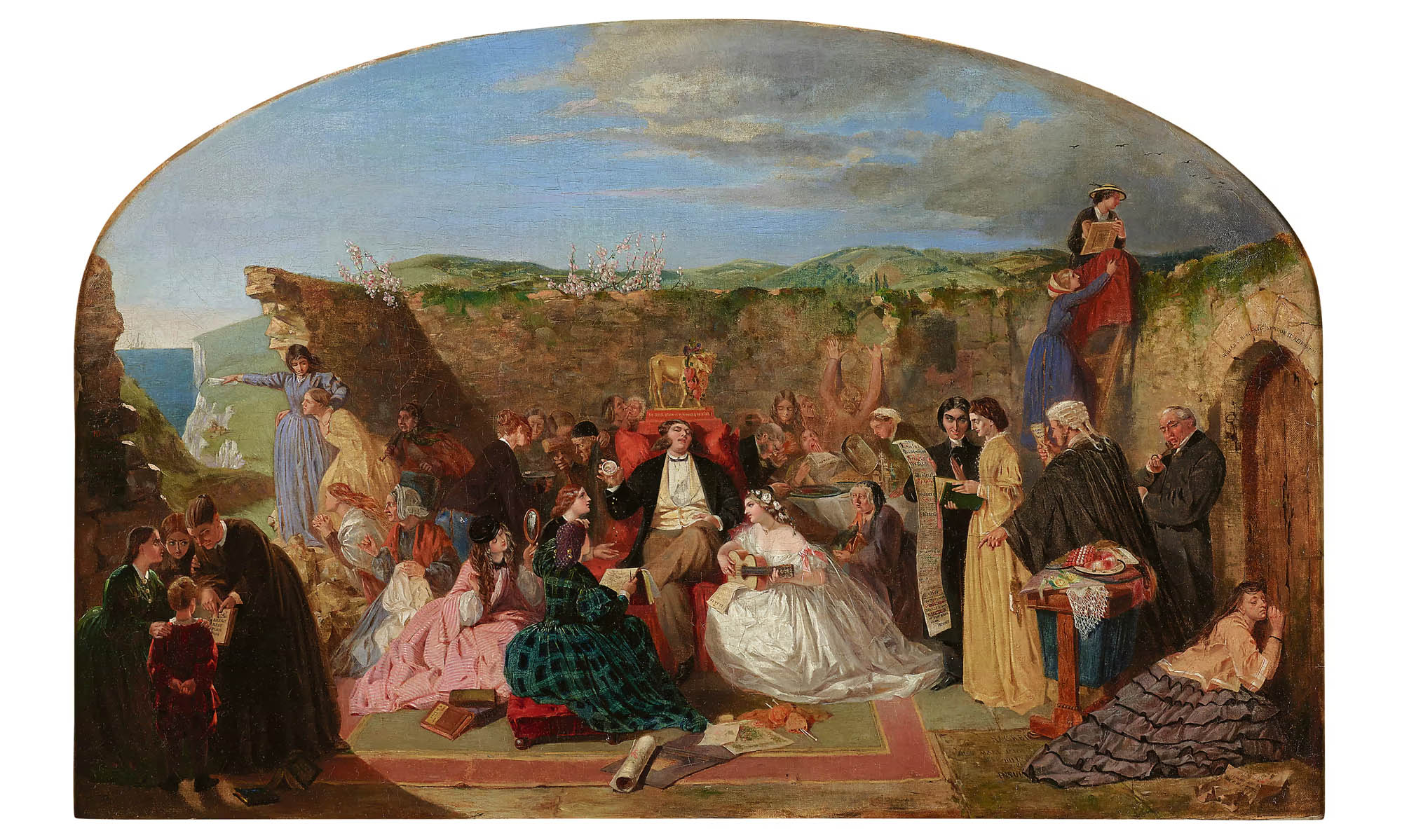
 

Florence Claxton (British, 1838-1920) ''Woman's Work': A Medley' 1861


Florence Claxton (British, 1838-1920)
‘Woman’s Work’: A Medley
1861
Oil on canvas
Martin Beisly Fine Art, London


In the 1850s, Claxton became part of the UK’s first organised movement for women’s rights. Woman’s Work satirises women’s opportunities for professional employment. At its centre a group of women fawn at the feet of a man seated below a statue of the Golden Calf – a false idol. Confined by
a surrounding wall, doors to professions such as medicine are shut to the women. Only the artist Rosa Bonheur has managed to scale the wall’s heights. The painting was exhibited at London’s National Institution for Fine Arts in 1861 and received mixed reviews. Some praised its comic strength but others described it as ‘vulgar’.

Text from the exhibition large print guide
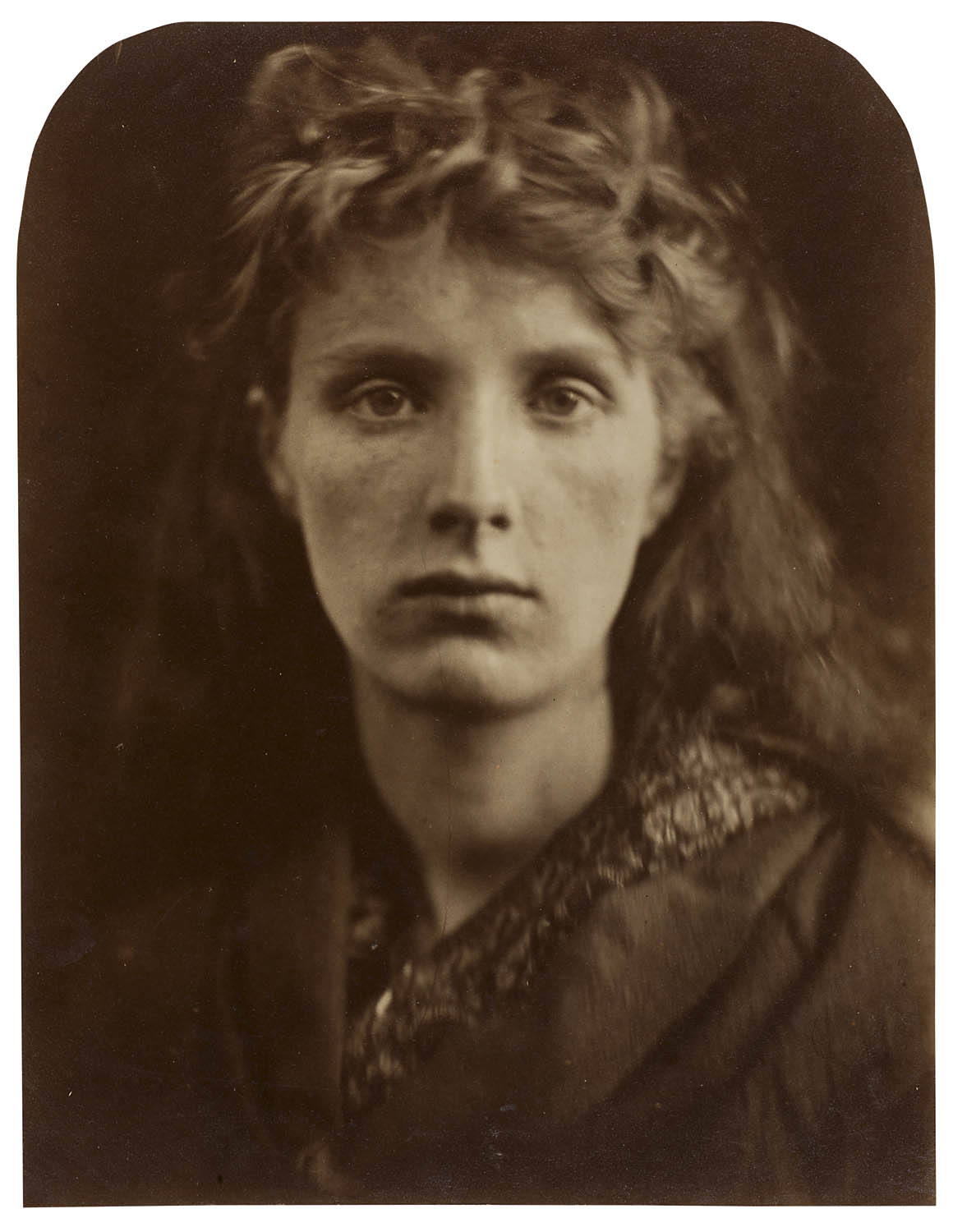
 

Julia Margaret Cameron (British born India, 1815-1879) 'Mountain Nymph, Sweet Liberty' 1865


Julia Margaret Cameron (British born India, 1815-1879)
Mountain Nymph, Sweet Liberty
1865
Albumen print
Wilson Centre of Photography


Annie Keene (1842/3-1901) was an artist’s model at the Royal Academy Schools. Cameron showed Keene’s portrait at the 1866 Hampshire and Isle of Wight Loan Exhibition, and it was for sale at her 1868 exhibition at London’s German Gallery. In this photograph, Cameron’s shallow depth-of-field gives a bold effect. Her friend, the scientist and photographic innovator John Herschel (1792-1871), praised the portrait as ‘a most astonishing piece of high relief – She is absolutely alive and thrusting out her head from the paper into the air’.

Text from the exhibition large print guide
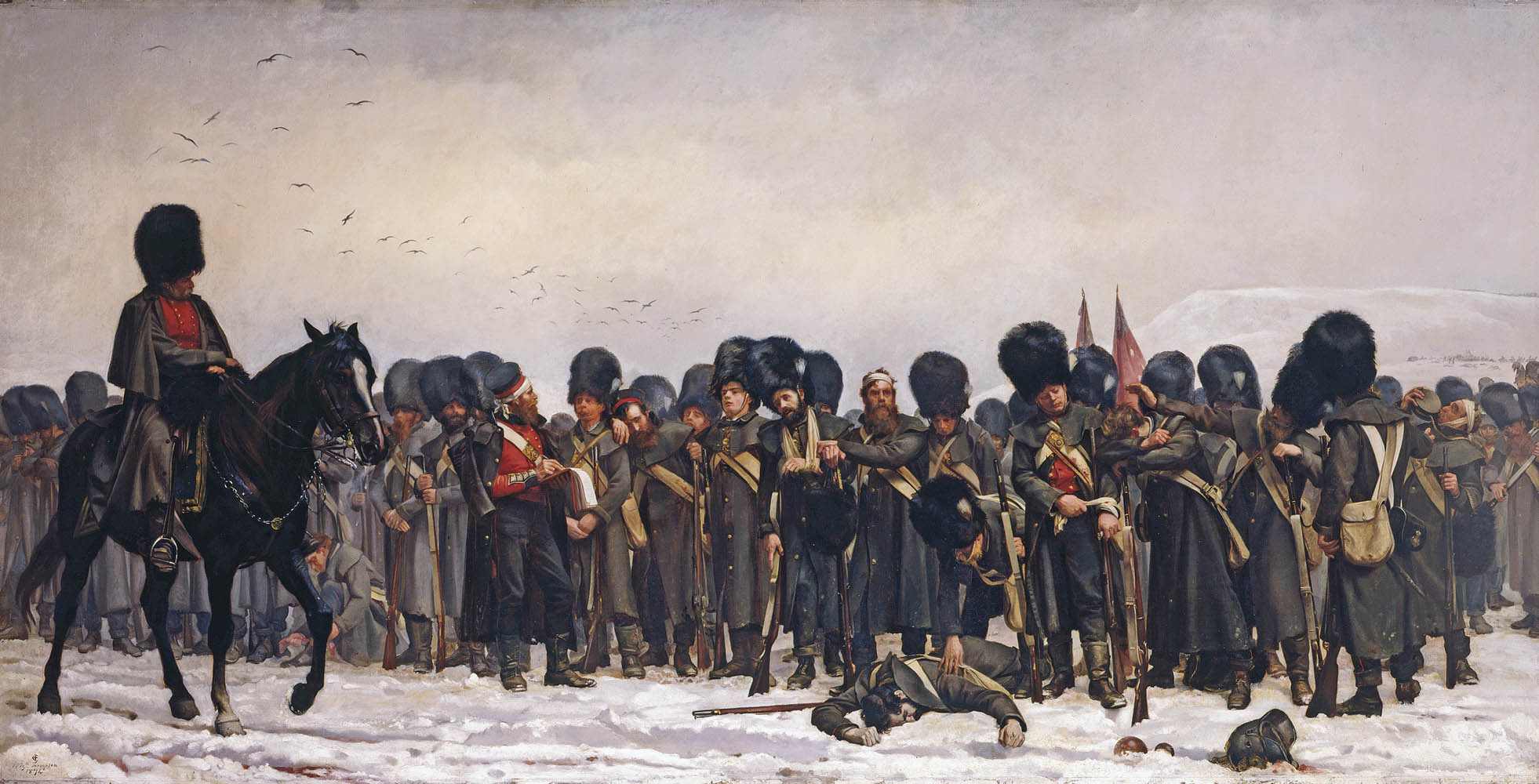
 

Elizabeth Butler (British, 1846-1933) 'The Roll Call' 1874


Elizabeth Butler (British, 1846-1933)
The Roll Call
1874
Oil on canvas
93.3 x 183.5cm (support, canvas/panel/stretcher external)
Royal Collection Trust
© Royal Collection Trust / His Majesty King Charles III 2024


Butler specialised in battle paintings, challenging society’s expectations of women artists. The exhibition of The Roll Call at the Royal Academy in 1874 was one of the greatest art sensations of the nineteenth century. It was praised by Academicians and hung ‘on the line’ (the most prestigious, eye-level position). The painting proved so popular with the public that a policeman had to be stationed nearby to protect the adjacent paintings. Queen Victoria summoned the work to Buckingham Palace for a private viewing, and the copyright sold for the enormous sum of £1,200.

Text from the exhibition large print guide


The Roll Call captured the imagination of the country when exhibited at the Royal Academy in 1874, turning the artist into a national celebrity. So popular was the painting that a policeman had to be stationed before it to hold back the crowds and it went on to tour the country in triumph. The painting’s focus on the endurance and bravery of ordinary soldiers without reference to the commanders of the army accorded with the mood of the times and the increasing awareness of the need for social and military reforms.

Though the public had been exposed to other images of the Crimean War, primarily prints, photographs and newspaper illustrations, never before had the plight of ordinary soldiers been portrayed with such realism. Butler researched her subject by studying A. W. Kinglake’s seminal history of the Crimean War, as well as by consulting veterans of the Crimea, several of whom served as models for the painting. She also painstakingly sought out uniforms and equipment from the Crimean period in order to be correct in the smallest military details. The sombre mood and simple yet dramatic composition Butler achieved in The Roll Call vividly epitomised the grimness not only of the Crimean War but of all wars.

Text from the Royal Collection Trust website


Installation view of the exhibition 'Now You See Us Women Artists in Britain 1520-1920' at Tate Britain showing at left, Louise Jopling's 'Through the Looking-Glass' 1875; and at right, Jopling's 'A Modern Cinderella' 1875


Installation view of the exhibition Now You See Us Women Artists in Britain 1520-1920 at Tate Britain showing at left, Louise Jopling’s Through the Looking-Glass 1875 (below); and at right, Jopling’s A Modern Cinderella 1875 (below)


Louise Jopling (English, 1843-1933) 'Through the Looking-Glass' 1875


Louise Jopling (English, 1843-1933)
Through the Looking-Glass
1875
Oil paint on canvas
Support: 539 × 437 mm
Tate
Purchased with funds provided by the Nicholas Themans Trust and Tate Patrons 2024
Photo: Tate (Sonal Bakrania)


This is a self-portrait Jopling made while pregnant with her son, Lindsay, in 1875.

Jopling was one of the most successful and best-known women artists of the late nineteenth century. She exhibited regularly and, from the 1880s, ran her own art school for women. Jopling hosted receptions and established connections with many artists and art dealers. She carefully planned the exhibition of her work by choosing venues appropriate to each painting’s scale and ambition. Jopling sent this self-portrait to the Society of Lady Artists in 1875. In the same year, A Modern Cinderella, hanging nearby, was shown at the Royal Academy. Both works were purchased by the dealer Agnew: this work for £26, but Cinderella for £262.

Text from the exhibition large print guide


Tabitha Barber, curator of the exhibition, said: “What’s happened to Jopling’s legacy is the story of what’s happened to most women artists … They have been regarded, studied and judged differently.”

Jopling, who in 1901 became one of the first women admitted to the Royal Society of British Artists, was a celebrated artist in her day, Barber said. Her patrons included the de Rothschild family, and the Grosvenor Gallery founders Sir Coutts and Lady Lindsay. “At a time when women weren’t allowed to be members of the Royal Academy, her works were exhibited there almost every year and spoken about in the press. She was reviewed by male art critics, and reviewed well.”

Jopling’s paintings were also commercially successful, selling for some of the highest prices that British female artists could command – albeit far less than their male contemporaries.

“She is among a handful of female artists who were society figures and household names – and it just seems so astonishing that they’re so little known now,” said Barber.

Donna Ferguson. “Tate Britain acquires first painting by pioneering English female artist overlooked for a century,” on The Guardian website 12 May 2024 [Online] Cited 02/09/2024


Louise Jopling (English, 1843-1933) 'A Modern Cinderella' 1875 (installation view)


Louise Jopling (English, 1843-1933)
A Modern Cinderella
1875
Oil on canvas
Support: 910 × 700 mm
Private collection


Louise Jopling (English, 1843-1933) 'A Modern Cinderella' 1875


Louise Jopling (English, 1843-1933)
A Modern Cinderella
1875
Oil on canvas
Support: 910 × 700 mm
Private collection


A Modern Cinderella shows a model removing her fine clothes at the end of a painting session. A glimpse of Jopling’s easel can be seen in the mirror’s reflection. In 1875, Jopling exhibited this work at the Royal Academy. There, the model’s naked shoulder was cause for criticism. Although one reviewer thought it was ‘quite harmless’, a picture dealer’s wife reportedly said that ‘she could never hang such a thing in her house’. Jopling also showed the painting at the 1878 Exposition Universelle in Paris, where she had also trained.

Text from the exhibition large print guide


If this is, indeed, a self-portrait, Jopling has painted herself as somewhere in the liminal space between the social groups she simultaneously belonged to and was excluded from. Despite Jopling’s notoriety and prominence among high-class Pre-Raphaelite artist circles, she experienced a high degree of discrimination. In 1883, she was commissioned to paint a portrait for 150 guineas but lost her employment in favour of Sir John Everett Millais, who requested 1000 guineas for the same project (Clement). In the traditional circles of high society, Jopling was looked down upon for pursuing a career in the fine arts, which was inherently a masculine task. The woman in the image is either taking the dress off or putting it on, but either way, has turned her back to her easel, which could be interpreted as forfeiting a part of her true identity to fit either end of the accepted spectrum of femininity. The underclothing she portrays herself in fit the Pre-Raphaelite aesthetic style of dress, which fit natural waists and emphasised a woman’s beauty through medieval and Greek-inspired silhouettes (Shrimpton, Jayne. Victorian Fashion. Shire Publications, 2016). The inclusion of this white aesthetic dress, as well as the scandalous drop of the strap is a signal of societal rebellion against traditional beauty norms. The woman in the image could also be read as shedding the skin of the two dresses before her to reveal her true, natural, artistic self below.

Emily Goldstein. “‘A modern Cinderella, 1875. Oil on Canvas’ by Louise Jopling,” on the COVE Studio website 23/10/2020 [Online] Cited 02/09/2024


Marianne Stokes (Austrian, 1855-1927) 'The Passing Train' 1890


Marianne Stokes (Austrian, 1855-1927)
The Passing Train
1890
Oil on canvas
Support: 600 × 760 mm
Frame: 885 × 955 mm
Private collection


Marianne Stokes (née Preindlsberger; 1855-1927) was an Austrian painter. She settled in England after her marriage to Adrian Scott Stokes (1854-1935), the landscape painter, whom she had met in Pont-Aven. Stokes was considered one of the leading women artists in Victorian England.


Annie Louisa Swynnerton ARA (British, 1844-1933) 'Mater Triumphalis' 1892


Annie Louisa Swynnerton ARA (British, 1844-1933)
Mater Triumphalis
1892
Paris, musée d’Orsay
Donated by Edmund Davis, 1915


Swynnerton campaigned for women’s suffrage, access to professional training, and equal opportunities. She rebelled against the belief that ‘women could not paint’. Exhibited at the New Gallery in 1892, Mater Triumphalis was regarded as a bold work. It brought Swynnerton international recognition, winning a medal at the 1893 World Exposition in Chicago. Despite this, Swynnerton received mixed reviews from British critics. They were impressed by the artist’s skill and the painting’s ‘quivering life’ but found the ‘frank realism’ of the woman’s naked body disconcerting.

Text from the exhibition large print guide
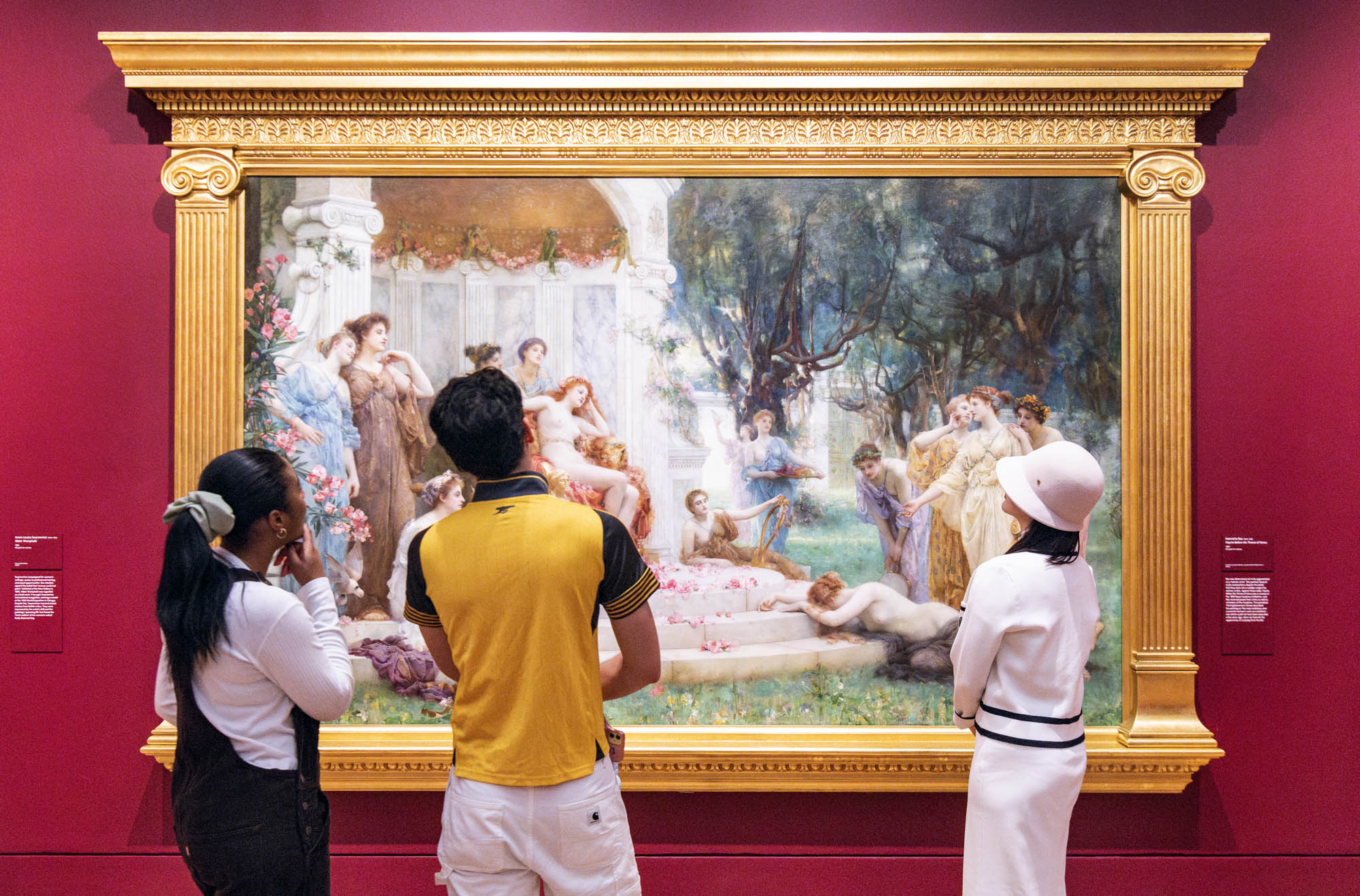
 

Installation view of the exhibition 'Now You See Us Women Artists in Britain 1520-1920' at Tate Britain showing Henrietta Rae's 'Psyche before the throne of Venus' 1894


Installation view of the exhibition Now You See Us Women Artists in Britain 1520-1920 at Tate Britain showing Henrietta Rae’s Psyche before the throne of Venus 1894 (below)
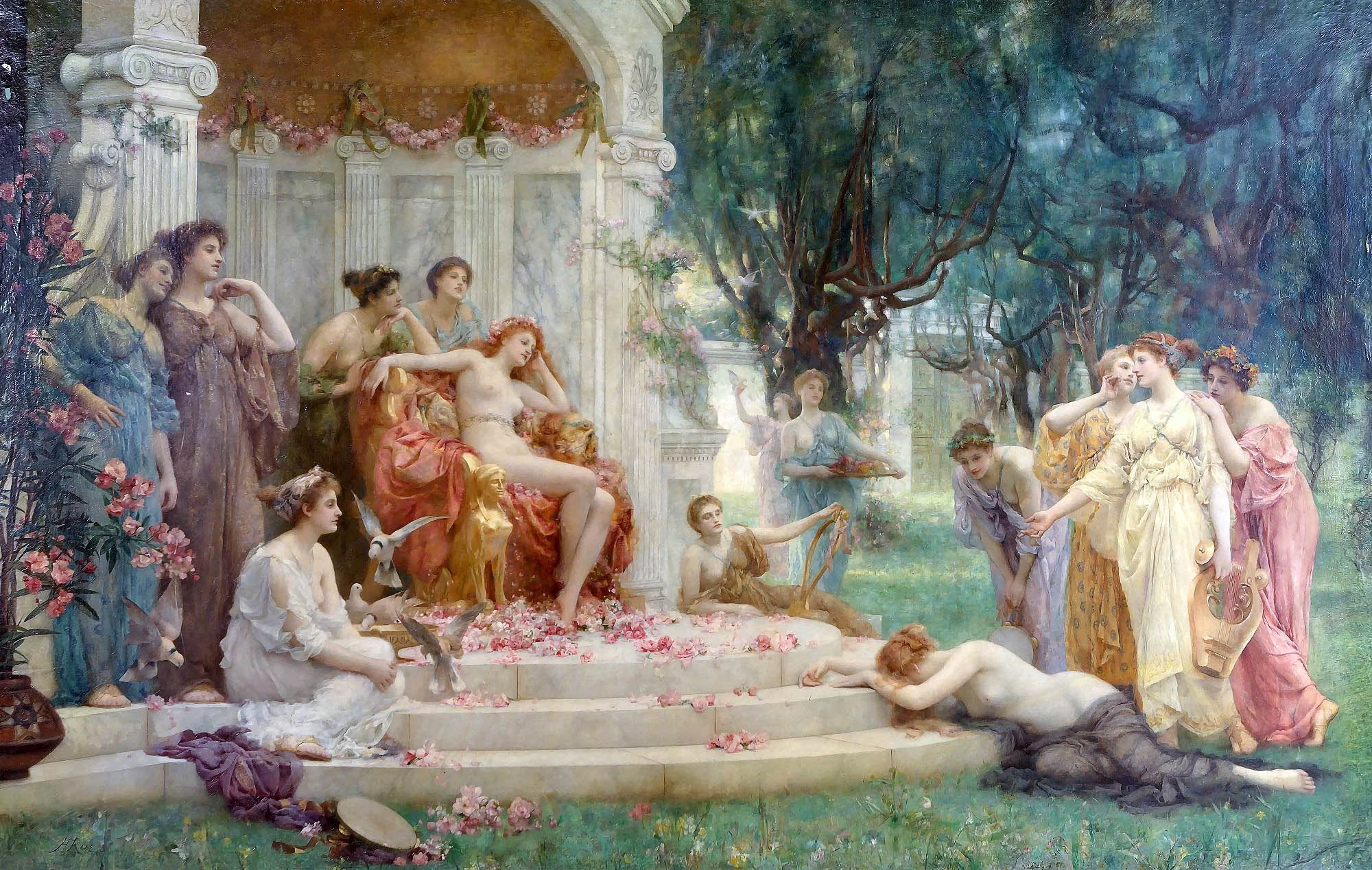
 

Henrietta Rae (British, 1859-1928) 'Psyche before the throne of Venus' 1894


Henrietta Rae (British, 1859-1928)
Psyche before the throne of Venus
1894
Oil paint on canvas
Support: 1941 × 3058 × 31 mm
Frame: 2525 × 3826 × 270 mm
Lent from a private collection, courtesy of Martin Beisly Fine Art


Rae was determined not to be pigeonholed as a ‘woman artist’. She painted classical nude compositions despite the belief that they were not a suitable subject for women artists. Against these odds, Psyche Before the Throne of Venus was a success at the 1894 Royal Academy Exhibition, and Rae received praise from critics as well as members of the Academy. The periodical The Englishwoman’s Review described the painting as ‘the most ambitious and successful woman’s work yet exhibited – one which could not have been executed a few years ago, when we had not the opportunity of studying from the life’.

Text from the exhibition large print guide


Installation view of the exhibition 'Now You See Us Women Artists in Britain 1520-1920' at Tate Britain showing Lucy Kemp-Welch's 'Colt Hunting in the New Forest' 1897


Installation view of the exhibition Now You See Us Women Artists in Britain 1520-1920 at Tate Britain showing Lucy Kemp-Welch’s Colt Hunting in the New Forest 1897


One of the most important pieces of art ever inspired by the New Forest was a painting by Lucy Kemp-Welch (1869-1958), entitled ‘Colt Hunting in the New Forest’. This painting was exhibited at the Royal Academy in 1897, when she was only 26 years old. It was an impressive canvas measuring 1537 x 3060 mm (approximately 5ft x 10ft) and was described as depicting ‘a wide glade in the forest, along which race a number of colts unwilling to relinquish their liberty and to fall into the hands of the four mounted lads who try to catch them’.[1] Lucy Kemp-Welch was born in Bournemouth, in 1869, and spent much of her time wandering in the New Forest, where she ‘personally studied the wild ponies in this pleasant part of England’.[2] Her love of horses and wild ponies remained with her all her life. In order to capture the energy and excitement of the pony drifts for ‘Colt Hunting’ she actually had the full-sized canvas transported to the Forest, where she sketched from life, as the commoners galloped their ponies past her. When the painting was exhibited at the Royal Academy it caused a sensation and was promptly purchased for £525.00.[3] The buyers were trustees of the Chantrey Bequest, who administered a large sum of money left in the will of Sir F. L. Chantrey to obtain works of art by British artists, in order to create a national collection. It was only the third time, since its creation in 1875, that the Chantrey Bequest had purchased artwork by a woman. Lucy Kemp-Welch became a celebrity overnight.[4]

In the same year that Lucy Kemp-Welch exhibited ‘Colt Hunting in the New Forest’, the Tate Galley was built and her painting was transferred to this new, public collection. However, ‘Colt Hunting’ was immediately archived and has never been publicly exhibited. Indeed, there are rumours that the Tate Gallery loaned the painting to the Royal Academy during the Blitz ‘in the hope that the Luftwaffe’s friendly bombs might rid them of this monstrous woman’s work for good’.[5] It is difficult to conceive of the prejudice against women in the late Victorian period and early 20th century, particularly women such as Lucy Kemp-Welch, who stepped out of the roles proscribed to them by a patriarchal society.[6] Her sympathies for the suffragette movement certainly didn’t endear her to the male-establishment figures that controlled the art world. She nevertheless continued to paint and made a successful, and award winning (Paris Salon) career as an artist.

newforestcommoner. “Lucy Kemp-Welch: Colt Hunting in the New Forest,” on the New Forest Commoner website November 27, 2016 [Online] Cited 28/08/2024
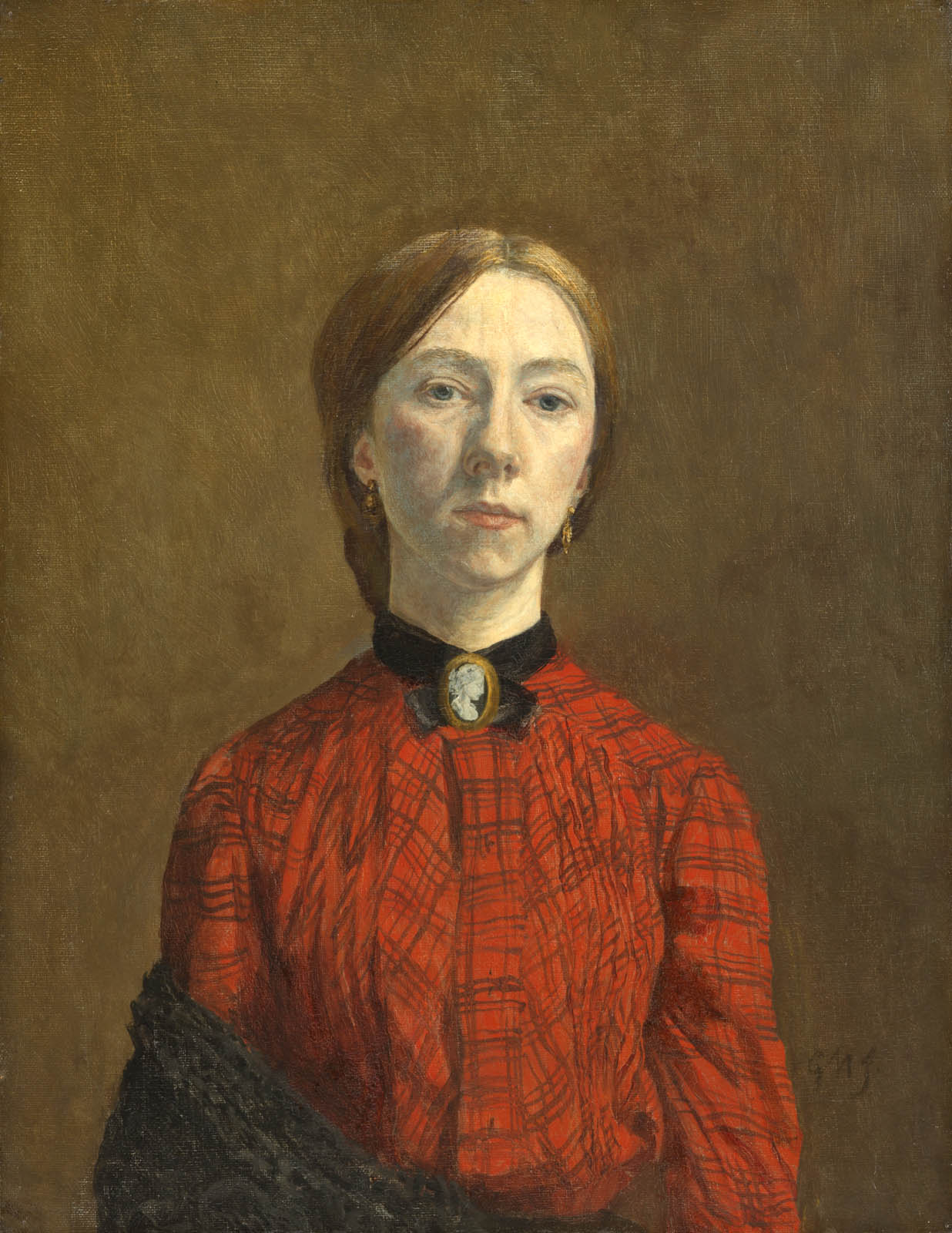
 

Gwen John (Welsh, 1876-1939) 'Self-Portrait' 1902


Gwen John (Welsh, 1876-1939)
Self-Portrait
1902
Oil on canvas
Tate
Purchased 1942
Photo: Tate (Mark Heathcote and Samuel Cole)


John exhibited this self-portrait at the New English Art Club (NEAC) in 1900. It was her debut as an exhibitor. The NEAC had been founded as a forward-thinking artists’ group, created out of dissatisfaction with the art establishment, exemplified by the conservative Royal Academy. Tutors from the Slade, where John had trained, were on the NEAC committee. Despite its progressive stance, in 1900 John was one of only 16 women exhibitors among 75 men. John’s choice to show a self-portrait was perhaps a deliberate assertion of her presence.

Text from the exhibition large print guide


Here is a dilemma straight away: which should take precedence, the painting or the fact? Should the show present art on its own terms, or as instance, evidence, expression of social history? It is an extremely complex remit…

[Laura] Knight is strongly represented with a sequence of cliff-edge paintings; but what about her near-namesake, Winifred Knights? The Deluge is a shattering masterpiece of British modernism, painted in 1920 and thus eligible, yet not here. And why are the ethereal and supremely original blue cyanotypes of Anna Atkins (1799-1871) missing from the niggardly photography section, along with Christina Broom (1862-1939), pioneering photojournalist, whose stirring portraits of suffragettes would have been so apt?

The show is thick with flowers, descending from Delany right down to Helen Allingham’s twee cottage gardens, all ready for their postcard reproductions. And if Allingham, then why not the visionary genius of Beatrix Potter? Weak pre-Raphaelite schlock fills the largest gallery, along with Victorian pieties such as Emily Osborn’s distressed gentlewoman, eyes downcast, awaiting the verdict of a dealer on her latest canvas, while two male artists leer in the background. Nameless and Friendless is terminally mawkish.

Only rarely do women’s art and women’s history spark together in this show. You see it in Ethel Wright’s fabulous 1912 portrait of the suffragette Una Dugdale Duval, in an arsenical green dress beneath a wallpaper of ludicrous fighting cocks, where Wright’s modern bravado exactly meets that of her sitter. And you see it in Gwen John’s immortal 1902 self-portrait, small and distanced, light catching her eyelashes in an atmosphere of hushed stillness, so direct and yet so self-contained: the momentous assertion of reticence.

That epochal image appears on the exhibition posters, perhaps promising too much. For even the best of the artists here are occasionally represented by the least of their works, quite apart from the mystifying omissions. The theme of Now You See Us is undoubtedly riveting. The captions (and the excellent catalogue) are superbly written. But art is trumped by social history too often in this show, words overshadowing images.

Laura Cumming. “Now You See Us: Women Artists in Britain 1520-1920 review – revelations and mystifying omissions,” on The Guardian website 19 May 2024 [Online] Cited 02/09/2024


Gwen John (Welsh, 1876-1939) 'Chloë Boughton-Leigh (1868-1947)' 1904-1908


Gwen John (Welsh, 1876-1939)
Chloë Boughton-Leigh (1868-1947)
1904-1908
Oil on canvas
58.4 x 38.1cm
Tate
Purchased 1925


Gwendolen Mary John (22 June 1876 – 18 September 1939) was a Welsh artist who worked in France for most of her career. Her paintings, mainly portraits of anonymous female sitters, are rendered in a range of closely related tones. Although in her lifetime, John’s work was overshadowed by that of her brother Augustus and her mentor and lover Auguste Rodin, awareness and esteem for John’s artistic contributions has grown considerably since her death.

Gwen John trained at the Slade School of Art in London, where her brother Augustus was also a student. She settled in Paris in 1904, working as a model, becoming Rodin’s mistress and immersing herself in the artistic world of the metropolis. She lived in France for the rest of her life, exhibiting on both sides of the Channel. The portrait shown here is of a Paris friend, Chloë Boughton-Leigh. The subdued colouring, short foreground and self-absorption of the sitter create a deeply intense atmosphere. John showed it in London, at the New English Art Club.

Text from the WikiArt website


Minna Keene (née Bergmann, Canadian born Germany, 1861-1943) 'Decorative Study No. 1, Pomegranates' c. 1906


Minna Keene (née Bergmann, Canadian born Germany, 1861-1943)
Decorative Study No. 1, Pomegranates
c. 1906
Carbon print


The subject of this photograph is believed to be of Violet Keene, Minna Keene’s daughter.
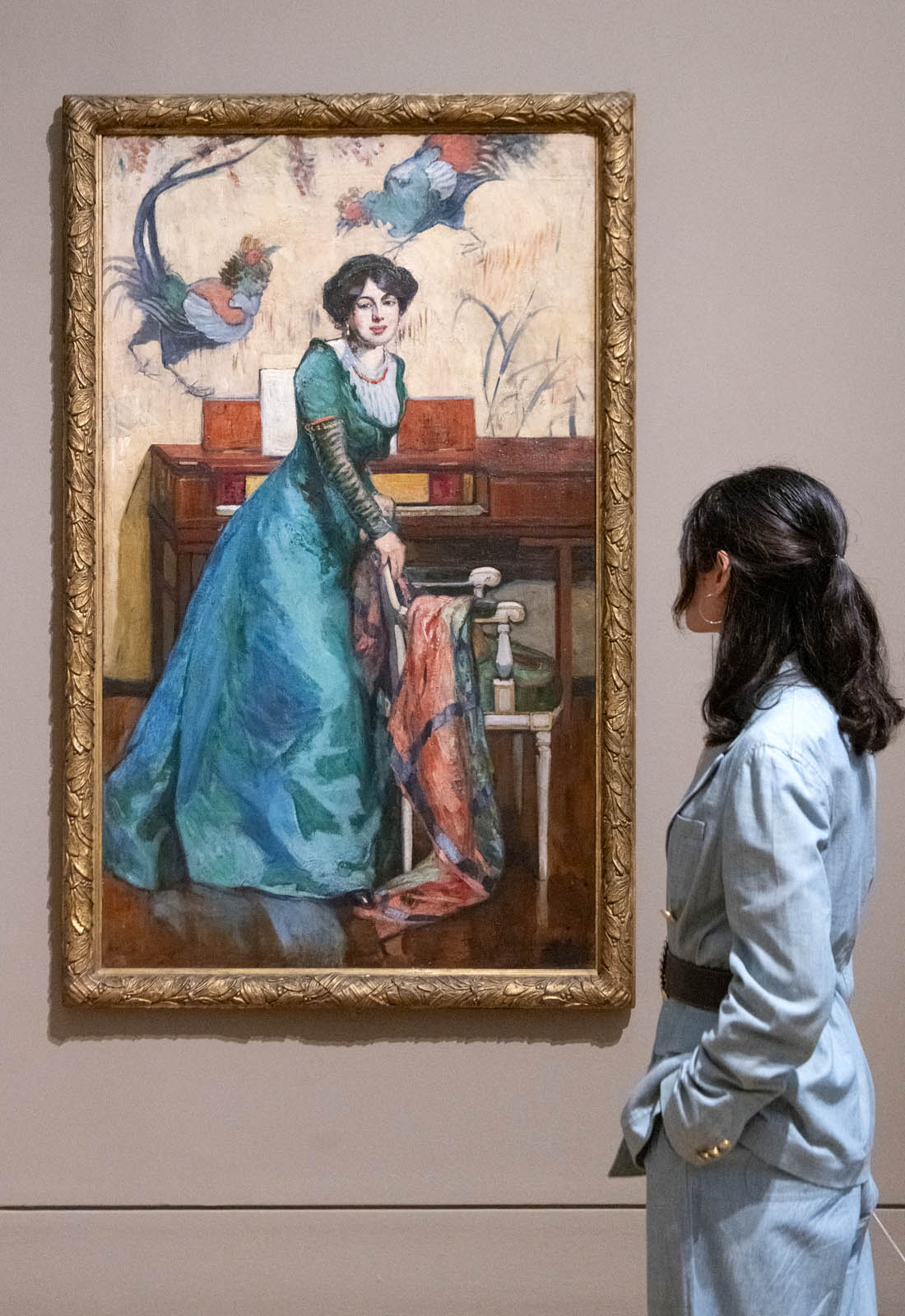
 

Installation view of the exhibition 'Now You See Us Women Artists in Britain 1520-1920' at Tate Britain showing Ethel Wright's 'The Music Room, Portrait of Una Dugdale' 1912


Installation view of the exhibition Now You See Us Women Artists in Britain 1520-1920 at Tate Britain showing Ethel Wright’s The Music Room, Portrait of Una Dugdale 1912 (below)


Ethel Wright (British, 1866-1939) 'The Music Room, Portrait of Una Dugdale' 1912 (installation view)


Ethel Wright (British, 1866-1939)
The Music Room, Portrait of Una Dugdale (installation view)
1912
Oil on canvas
Private collection


This portrait of suffragette and women’s rights activist Una Dugdale Duval (1879-1975) was exhibited at the Stafford Gallery in October 1912. Its flat areas of colour and bold outlines represent a stylistic shift for Wright, who had exhibited at the Royal Academy since the 1880s. Wright shows Duval as cultured and sophisticated, dressed in green, a suffrage colour. Wright made the work the same year Duval made national news for her refusal to promise to obey her husband during their marriage vows. In 1913, Duval published a pamphlet, Love and Honour but Not Obey.

Text from the exhibition large print guide
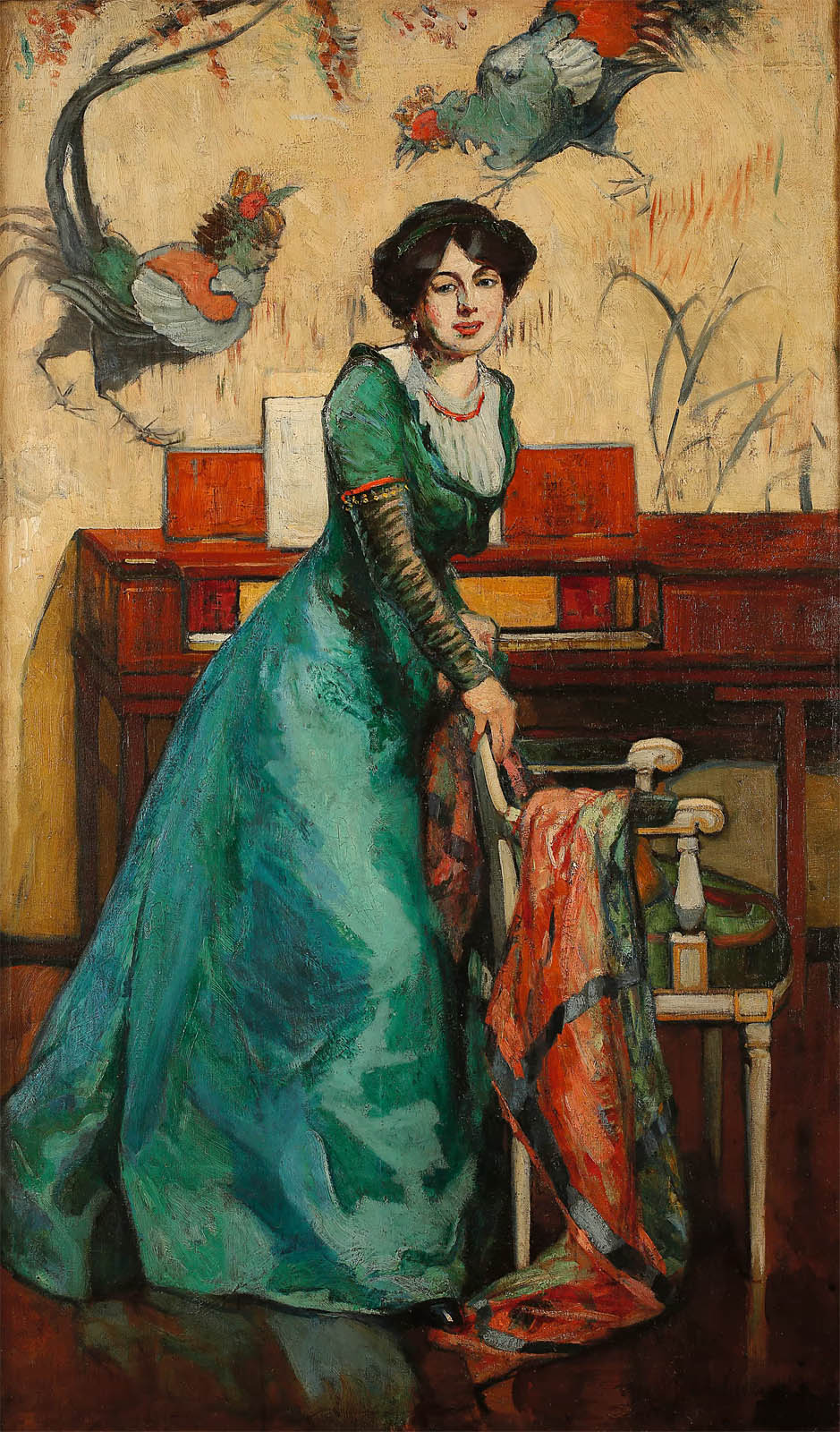
 

Ethel Wright (British, 1866-1939) 'The Music Room, Portrait of Una Dugdale' 1912


Ethel Wright (British, 1866-1939)
The Music Room, Portrait of Una Dugdale
1912
Oil on canvas
Private collection


Vanessa Bell (English, 1879-1961) 'Still Life on Corner of a Mantelpiece' 1914


Vanessa Bell (English, 1879-1961)
Still Life on Corner of a Mantelpiece
1914
Oil on canvas
Support: 559 × 457 mm
Frame: 614 × 512 × 49 mm
Tate
Purchased 1969
© Estate of Vanessa Bell


In 1913, Bell left the Friday Club for the short-lived exhibiting society, the Grafton Group. It included artists who were experimenting with post-impressionism. She was also a founding member of the Omega Workshops. Based in Bloomsbury’s Fitzroy Square, the Workshops aimed to remove the false divisions between fine and decorative arts. The mantelpiece in this painting was in Bell’s house at 46 Gordon Square in London. The objects on it include handmade paper flowers from the Omega Workshops. Bell’s use of an unconventional low viewpoint, fractured, abstracted forms and bright colours show her exploring different techniques associated with twentieth-century art movements.

Text from the exhibition large print guide


Dame Laura Knight DBE RA RWS (English, 1877-1970) 'A Dark Pool' 1917


Dame Laura Knight DBE RA RWS (English, 1877-1970)
A Dark Pool
1917
Oil on canvas
460 × 458 mm
Tyne & Wear Archives & Museums, Laing Art Gallery, Newcastle upon Tyne
© Estate of Dame Laura Knight. All rights reserved 2024 / Bridgeman Images
Image credit: Laing Art Gallery


Anna Airy (English, 1882-1964) 'Shop for Machining 15-inch Shells: Singer Manufacturing Company, Clydebank, Glasgow' 1918


Anna Airy (English, 1882-1964)
Shop for Machining 15-inch Shells: Singer Manufacturing Company, Clydebank, Glasgow
1918
Oil on canvas
Support: Height 1828 mm., Width 2133 mm
© Imperial War Museum


In 1918, Airy received a commission from the Imperial War Museum, thereby becoming Britain’s first official woman war artist. Her 1.7 by 1.8-metre canvases depict munitions production and war-related heavy industry. She later recalled the hot and dangerous conditions in which she worked. A former Slade student, Airy enjoyed a high public profile, won through exhibition and good reviews at the Royal Academy. In 1915, an art critic hailed her as ‘the most accomplished artist of her sex’. Airy was aware, however, of the prejudice women artists still faced. Galleries and buyers, she said, felt ‘safer with a man’.

Text from the exhibition large print guide
 

Anna Airy (English, 1882-1964) 'Study for 'The L Press: Forging the Jacket of an 18-inch Gun, Armstrong-Whitworth Works, Openshaw'' 1918


Anna Airy (English, 1882-1964)
Study for ‘The L Press: Forging the Jacket of an 18-inch Gun, Armstrong-Whitworth Works, Openshaw’
1918
Oil on canvas
Private collection
 

Olive Edis (British, 1876-1955) 'War' 1919


Olive Edis (British, 1876-1955)
War
1919
Carbon print on paper
Wilson Centre for Photography


Edis was Britain’s first woman war photographer. She was commissioned by the Imperial War Museum to photograph the activities of servicewomen on duty in France and Flanders. This bleak, blasted landscape captures the impact of the First World War.

Text from the exhibition large print guide


Installation view of the exhibition 'Now You See Us Women Artists in Britain 1520-1920' at Tate Britain


Installation view of the exhibition Now You See Us Women Artists in Britain 1520-1920 at Tate Britain showing Dame Ethel Walker’s Decoration The Excursion of Nausicaa 1920 (below)
 

Dame Ethel Walker DBE ARA (Scottish, 1861-1951) 'Decoration: The Excursion of Nausicaa' 1920


Dame Ethel Walker DBE ARA (Scottish, 1861-1951)
Decoration: The Excursion of Nausicaa
1920
Oil on canvas
1835 × 3670 mm
Tate
Purchased 1924
Photo: Tate


Writing to J. B. Manson (Monday, 2 June, no year given, but almost certainly 1924), the artist described her work thus:’… Nausicaa early one lovely summer’s morning goes to her father and mother – the King and Queen – to ask permission to have a waggon and mules given to her to take her and her attendants and to fill it with the clothes of the palace that require washing, also with dainties and wine and good food for a forthcoming picnic – and go down to the river adjoining the sea to wash them – which he gives her. On arriving at the river they unharness the mules and are unpacking or unloading the waggons of the clothes and the food for the picnic, and are beginning to wash them in the river. A little wood divides the sea from the river where the goat girl – kneeling by the tree near her goats – hears the strange voices that are sounding in her usually silent little wood. To show it is the sea a girl, nude, has stepped up on to the bank after bathing….’ The story is based on Book VI of the Odyssey: ‘… they spread/The raiment orderly along the beach/Where dashing tides …/… leaving the garments, stretch’d/ In noon-day fervour of the sun, to dry.’

Text from the Tate website


In her lifetime Scottish artist Ethel Walker was celebrated for her trailblazing paintings of the female form. A teacher before she painted fulltime, she developed her own unique style – large, mural-like paintings, which she called her ‘decorations.’ Walker often painted male and female nudes confidently placing female sensuality at the centre of her work, as seen in Decoration: The Excursion of Nausicaa (1920). Its dream-like vision of a feminist utopia was ahead of its time.

Working steadily for decades, she achieved many professional milestones, exhibiting around the world and representing Britain at the Venice Biennale four times. In 1943, Walker was made a Dame of the British Empire, and after her death The Times called her ‘the most important woman artist of her time.’ Despite this, it is only now that her artistic legacy is finally being recognised.

Text from the Tate website


‘There is no such thing as a woman artist. There are only two kinds of artist – bad and good.’

– Ethel Walker


Tate Britain
Millbank, London SW1P 4RG
United Kingdom
Phone: +44 20 7887 8888

Opening hours:
10.00am – 18.00pm daily

Tate Britain website

LIKE ART BLART ON FACEBOOK

Back to top

Review: ‘Queer British Art 1861-1967’ at Tate Britain, London

Exhibition dates: 5th April – 1st October, 2017

Curators: Clare Barlow, Assistant Curator, Tate Britain with Amy Concannon, Assistant Curator, Tate Britain


Queer British Art book cover


Queer British Art 1861-1967 book cover


Very Pauline

Queer British Art 1861-1967 at Tate Britain examines the “historical reality of same-sex relationships and non-normative sexual identities” from 1861, the year for the end of the death penalty for sodomy in Great Britain, through to 1967 which is when sex between consenting adults in private, obviously male homosexuality is partially decriminalised in England and Wales. The timescale of the exhibition encompasses the beginning of a more considered understanding of gender and sexual identity through to the beginnings of a limited freedom: from repression to liberation.

For a man who came out in London in 1975, only 8 short years after the decriminalisation of homosexuality, this exhibition should have been more engaging than it was. While there were some outstanding art works and artefacts presented in the eight rooms of the exhibition, chronologically laid out in the posting below – such as the prison door from Oscar Wilde’s cell at Reading Gaol, Joe Orton and Kenneth Halliwell’s book covers, the paintings of Henry Scott Tuke and the photography of Angus McBean – there was little of the passion of being gay in evidence in much of the objects, or how they were presented. It all seemed so very academic, and not in a good way. Other than some stunning erotic drawings by Aubrey Beardsley, Duncan Grant and Keith Vaughan (see below) there was little to suggest that being gay had anything to do with sex, the exhibition living up to that very British of axiom’s, “No sex please, we’re British!” The curators may have thought that sex would be a distraction, for it was all ‘very Pauline’.

The exhibition is full of innuendo, supposition, obfuscation, abstinence, hints, traces, clouded desires and supposed longings – in both the art work and the wall texts which accompanied the work. Of course, this is how artists had to hide their sexuality, same-sex desires and relationships during much of this period for fear of ostracisation from society and possible prosecution, but the presentation came across as little more than “au fait”, so much matter of fact. The exhibition was not helped by illuminating texts such as this: “The exact nature of Thomas and Philpot’s relationship is unknown. Many of Philpot’s depictions of Thomas carry a homoerotic charge and some are exoticising. What Thomas felt about his years with Philpot from 1929 to the artist’s death in 1937 is unknown.” Ugh!

You might as well have said nothing, and let the art work speak for itself.

Other commentaries could have done with a more insightful enunciation of the circumstances of the particular artist, in addition to text on the specific art work. A perceptive anointing of their life would have added invaluably to the frisson of the exhibition. For example, I wanted to know why the painter Christopher Wood died at the young age of 29 as well as the specifics of his painting Nude Boy in a Bedroom (1930, below). According to Wikipedia, Wood – bisexual, addicted to opium and painting frenetically in preparation for his Wertheim exhibition in London – became psychotic and jumped under a train at Salisbury railway station. These are the things that you need to know if you are to fully appreciate the gravitas of a life and a person’s relationship to their art, don’t you think?

Further, no pictures were allowed in the gallery spaces. Whereas I could take photographs of the Rachel Whiteread exhibition at the same venue to my heart’s content (even after being confronted by a guard who said I couldn’t, who was then corrected by a colleague with no apology for his attitude to me), I had to play a Machiavellian game of cunning hide and seek with guards and attendants to get the installation photographs of this exhibition. Why was this so? It almost seemed to be a case of the gallery being ashamed of the art they were exhibiting, as though the attitudes of the past towards art that explores same-sex relationships was being replicated by the duplicity of the gallery itself: the art could be seen but not heard, hidden away in the bowls of an academic institution. I also noted that one of 19 collages that Kenneth Halliwell exhibited at the Anno Domino gallery in 1967 (see below) was purchased by the Tate in 2016. Considering “the exhibition was a failure and Halliwell’s professional frustration contributed to the breakdown of his relationship with Orton,” eventuating the murder of the playwright and his own suicide… for some of those very same works to now reside at the Tate is the ultimate irony. I doubt Halliwell would have been laughing in his grave.

The stand out works in this exhibition were by Duncan Grant and Keith Vaughan. Their work explores the strength and beauty of the male form with a vitality of purpose and harmony of composition that was succinct and illuminating for this viewer. Grant’s Bathing (1911, below) ascribes anthropomorphic qualities to distorted figures whose elongated arms, distended chests and exposed buttocks would have been shocking to the people of Belle Epoque Britain. His erotic drawings (below) were the most beautiful, sensitive and sensual art works in the whole exhibition. Vaughan’s simplification of the figuration of the male form into abstract shapes, whilst still retaining the enigma of sensuality, narrative and context, are the triumph of this inverts painting. Their patterning and displacement of time and space onto an intimate other – a copious, coital realm of existence full of feeling, information and matter – were a revelation to me.

While the exhibition enunciates a remarkable range of identities and stories, from the playful to the political and from the erotic to the domestic, it was a deflating experience. I came away thankful that I had seen the work, that the artist’s had been able to express themselves however surreptitiously, but angry that so much of the world still sees LGBTQI people as second class citizens whose art work has to be examined through the prism of sexuality, rather than on the quality of the work itself.

Dr Marcus Bunyan

PS. How you can classify Claude Cahun as a British artist I will never know: she lived on the Channel Islands for a few years, but she was the very epitome of a French artist!


Many thankx to Tate Britain for allowing me to publish the art work in the posting. All installation images are © Dr Marcus Bunyan. Please click on the photographs for a larger version of the image.


“Much more fucking and they’ll be screaming hysterics in next to no time.”


Joe Orton


“For me, to use the word ‘queer’ is a liberation; it was a word that frightened me, but no longer.”


Derek Jarman


“It’s really interesting as to whether or not we should be concerned with the sexuality of an artist when we consider the merits of his artwork, because really what he does behind closed doors – or she does – has nothing to do, or shouldn’t have anything to do with the impact of the artwork as we see it. But what is important is the artist can use that material of their personal life and create a work that is almost a personal diary but visually.”


Estelle Lovatt


Featuring works from 1861-1967 relating to lesbian, gay, bisexual, trans and queer (LGBTQ) identities, the show marks the 50th anniversary of the partial decriminalisation of male homosexuality in England. Queer British Art explores how artists expressed themselves in a time when established assumptions about gender and sexuality were being questioned and transformed.

Deeply personal and intimate works are presented alongside pieces aimed at a wider public, which helped to forge a sense of community when modern terminology of ‘lesbian’, ‘gay’, ‘bisexual’ and ‘trans’ were unrecognised. Together, they reveal a remarkable range of identities and stories, from the playful to the political and from the erotic to the domestic. With paintings, drawings, personal photographs and film from artists such as John Singer Sargent, Dora Carrington, Duncan Grant and David Hockney the diversity of queer British art is celebrated as never before.

Text from the Tate Britain website


100 years of gay art history, from repression to liberation

On the 50th anniversary of the partial decriminalisation of homosexuality in England and Wales, the Tate Britain gallery is launching a major exhibition exploring Queer British Art. The new exhibition showcases 100 years of art and artists from the repression of the Victorian era through to the love and lust of 1960s Soho.


Room 1: Coded Desires

In spite of the Victorian era’s prudish reputation, there are many possible traces of transgressive desire in its art – in Frederic Leighton’s sensuous male nudes, for instance, or Evelyn De Morgan’s depictions of Jane Hales. Simeon Solomon attracted sustained criticisms of ‘unwholesomeness’ or ‘effeminacy’ – terms which suggest disapproval of alternative forms of masculinity as much as same sex desire. Yet other works which might look queer to us passed without comment.

The death penalty for sodomy was abolished in 1861 but it was still punishable with imprisonment. Sex between women was not illegal and society sometimes tolerated such relationships. Yet for most people, there seems to have been little sense that certain sexual practices or forms of gender expression reflected a core aspect of the self. Instead, this was a world of fluid possibilities.

These ambiguities offered scope for artists to produce work that was open to homoerotic interpretation. Queer subcultures developed: new scholarship on same-sex desire in Renaissance Italy and ancient Greece allowed artists to use these civilisations as reference points, while the beautiful youths in Wilhelm von Gloeden’s photographs attracted communities of collectors. As long as there was no public suggestion that artists had acted on their desires, there was much that could be explored and expressed.


Installation view of Room 1 of the exhibition 'Queer British Art' at Tate Britain with Frederic Leighton's 'The Sluggard' (1885, bronze) in the middle of the room

Installation view of Room 1 of the exhibition 'Queer British Art' at Tate Britain with Frederic Leighton's 'The Sluggard' (1885, bronze) in the middle of the room


Installation views of Room 1 of the exhibition Queer British Art at Tate Britain with Frederic Leighton’s The Sluggard (1885, bronze) in the middle of the room
Photos: © Dr Marcus Bunyan


Simeon Solomon (British, 1840-1905) 'Sappho and Erinna in a Garden at Mytilene' 1864 from the exhibition 'Queer British Art 1861-1967' at Tate Britain, London, April - October, 2017


Simeon Solomon (British, 1840-1905)
Sappho and Erinna in a Garden at Mytilene
1864
Watercolour on paper
330 x 381mm
Tate. Purchased 1980


Sappho and Erinna in a Garden at Mytilene is a touching image of female love. The piece is inspired by fragmented poems written by a woman named Sappho in the 4th century BC, in which she pleads that Aphrodite help her in her same-sex relationship. The term ‘lesbian’ derives directly from this poet, as her homeland was the Greek Island of Lesbos. Sappho’s story points to a longer history of same-sex desire. It’s perhaps for this reason that Simeon Solomon, a man who was attracted to men in defiance of the law, painted her. While a depiction of two men kissing would have been completely taboo, this is a passionate depiction of same-sex desire.

Solomon’s own sexual preferences eventually lead to his incarceration. When he was released from prison he was rejected by many of his acquaintances, struggled to find work and soon became homeless; a painful reminder of our repressive past.

Text from the Tate website

This strikingly frank image shows the ancient Greek poet Sappho in a passionate embrace with her fellow poet Erinna. Sappho is associated with the Island of Lesbos and her story gives us the word ‘lesbian’. There was a surge of interest in Sappho’s achievements and desires from the 1840s onwards. Solomon may be responding to his friend Algernon Charles Swinburne’s poem Anactoria which includes Erinna amongst Sappho’s lovers. While female same-sex desire was considered more acceptable than its male equivalent, Solomon’s depiction of Sappho’s fervent kiss and Erinna’s swooning response is unusually explicit and the image was not publicly exhibited.

Wall text from the exhibition


Simeon Solomon (British, 1840-1905) 'The Bride, Bridegroom and Sad Love' 1865 from the exhibition 'Queer British Art 1861-1967' at Tate Britain, London, April - October, 2017


Simeon Solomon (British, 1840-1905)
The Bride, Bridegroom and Sad Love
1865
Ink on paper
Victoria and Albert Museum


This work was inspired by a passage from the Gospel of St John which tells how ‘the friend of the bridegroom… rejoices greatly at the bridegroom’s voice’. In Solomon’s drawing, the friend of the bridegroom has the wings of love but his downcast expression identifies him as ‘sad love’, forever excluded. The positioning of his and the bridegroom’s hands hints at the reason for his grief, implying that that they are former sexual partners. He is forced to look on as his lover enters a heterosexual marriage: a fate shared by many men in same-sex relationships in this period.

Wall text from the exhibition


Simeon Solomon (British, 1840-1905) 'Bacchus' 1867


Simeon Solomon (British, 1840-1905)
Bacchus
1867
Oil paint on paper on canvas
Lent by Birmingham Museums Trust on behalf of Birmingham City Council


The classical god of wine, Bacchus also embodies sexual ambiguity and gender fluidity. While grapes and vine leaves identify the god in Solomon’s painting, Bacchus’s full lips, luxuriant hair and enigmatic gaze hint at his elusive sexuality. When it was exhibited at the Royal Academy in 1867, the critic of The Art Journal thought the figure looked effeminate, commenting ‘Bacchus is a sentimentalist of rather weak constitution; he drinks mead, possibly sugar and water, certainly not wine’. Solomon’s friend, critic Walter Pater wrote a favourable essay about the painting and poet Algernon Charles Swinburne said he found in Solomon and Bacchus alike, ‘the stamp of sorrow; of perplexities unsolved and desires unsatisfied’.

Wall text from the exhibition


Simeon Solomon (British, 1840-1905) 'The Moon and Sleep' 1894


Simeon Solomon (British, 1840-1905)
The Moon and Sleep
1894
Oil paint on canvas
Tate. Presented by Miss Margery Abrahams in memory of Dr Bertram L. Abrahams and Jane Abrahams 1973


Made a few years after Solomon’s arrest and social ostracisation, this painting depicts the love of the moon goddess Selene for Endymion, who, in one version of the myth, is given eternal youth and eternal sleep by Zeus. While it ostensibly depicts a heterosexual pairing, the striking similarity of the profiles of the figures in Solomon’s painting gives them both an air of androgyny. This painting was given to Tate by a descendent of Rachel Simmons, Solomon’s first cousin, who helped to support him after his fall from public favour by regularly buying his works for small sums of money.

Wall text from the exhibition


Photographer unknown. 'John Addington Symonds' (installation view) c. 1850s


Photographer unknown
John Addington Symonds (installation view)
c. 1850s
Photograph, tinted collodion on paper
Photo: © Dr Marcus Bunyan


John Addington Symonds was a writer, critic and an early campaigner for greater tolerance of same-sex desire. This photograph probably dates from Symonds’s time at Oxford University (1858-1863). His studies informed his later essay, A Problem in Greek Ethics 1873, one of the earliest attempts at a history of male same-sex desire. Symonds frankly discussed his desires in his diaries and unpublished writings, which he believed would be ‘useful to society’. However, when his friend Edmund Gosse inherited Symonds’s papers in 1926, he burned them all apart from Symonds’s autobiography. This destruction nauseated Symonds’s granddaughter Janet Vaughan. It was not until 1984 that Symonds’s autobiography was finally published.

Wall text from the exhibition


Sidney Harold Meteyard (English, 1868-1947) 'Hope Comforting Love in Bondage' Exhibited 1901


Sidney Harold Meteyard (English, 1868-1947)
Hope Comforting Love in Bondage
Exhibited 1901
Oil paint on canvas
Lent by Birmingham Museums Trust on behalf of Birmingham City Council


Hope is depicted as a respectably fully-clothed matron, whereas Love’s only costume is his elaborate cloth bindings and the rose briars that are delicately threaded through the feathers of his wings. The flowers and thorns of the roses hint at pleasures and pains combined. Love’s pensive expression and androgynous beauty is reminiscent of the work of Simeon Solomon and, while Hope stretches out her hand to comfort him, his gaze is fixed elsewhere, leaving the object of his affections undefined.

Wall text from the exhibition


Installation view of Frederic Leighton's 'Daedalus and Icarus' 1896 from the exhibition 'Queer British Art' at Tate Britain


Installation view of Frederic Leighton’s Daedalus and Icarus 1896 from the exhibition Queer British Art at Tate Britain
Photo: © Dr Marcus Bunyan


Frederic Leighton (British, 1830-1896) 'Daedalus and Icarus' Exhibited 1869


Frederic Leighton (British, 1830-1896)
Daedalus and Icarus
Exhibited 1869
Oil paint on canvas
Private collection


In a story from the Roman poet Ovid’s Metamorphoses, Daedalus made wings for his son Icarus to escape from Rhodes. Icarus’s golden beauty is here contrasted with his weather-beaten father. When the work was exhibited at the Royal Academy Summer Exhibition in 1869, The Times anxiously remarked that Icarus had the air of ‘a maiden rather than a youth’ and exhibited ‘the soft rounded contour of a feminine breast’. This response may reflect increasing concern amongst educated circles about the pairings of older men and adolescent youths in books such as Plato’s Symposium, as new scholarship explored the eroticism of the original texts.

Wall text from the exhibition


Installation view of Henry Scott Tuke's 'A Bathing Group' 1914 from the exhibition 'Queer British Art' at Tate Britain


Installation view of Henry Scott Tuke’s A Bathing Group 1914 from the exhibition Queer British Art at Tate Britain
Photo: © Dr Marcus Bunyan


Henry Scott Tuke (English, 1858-1929) 'A Bathing Group' 1914


Henry Scott Tuke (English, 1858-1929)
A Bathing Group
1914
Oil paint on canvas
Lent by the Royal Academy of Arts, London


While Henry Scott Tuke used the professional model Nicola Lucciani for this painting, it is similar to his images of Cornish youths in its frank appreciation of the male nude. Lucciani’s torso is illuminated by a shaft of sunlight and he looks towards the second figure, who crouches as if in awe of his godlike beauty. Tuke presented the painting to the Royal Academy on his election as a member. Tuke used professional models when he first moved to Cornwall, but he soon befriended some of the local fishermen and swimmers in Falmouth who modelled for him in many paintings.

Wall text from the exhibition


Henry Scott Tuke (English, 1858-1929) 'The Critics' 1927


Henry Scott Tuke (English, 1858-1929)
The Critics
1927
Oil paint on board
Courtesy of Leamington Spa Art Gallery & Museum (Warwick District Council)


Made just two years before Tuke’s death, The Critics is one of a number of works by Henry Scott Tuke depicting young men bathing off the Cornish coast. There has been much speculation about his relationships with his Cornish models although nothing has been substantiated. It is, however, not difficult to find a homoerotic undercurrent in this painting, as the two men on the shore appraise the swimming technique – and possibly the physique – of the youth in the water. Writer John Addington Symonds was a frequent visitor and he encouraged Tuke in his painting of male nudes in a natural outdoor setting.

Wall text from the exhibition


Room 2: Public Indecency

This room looks at ways in which sexuality and gender identity did – and did not – go public, from the 1880s to the 1920s. Public debate over sexuality and gender identity was stirred up by scandals, campaigns and scientific studies. The trials of Oscar Wilde in 1895 for gross indecency and Radclyffe Hall’s novel The Well of Loneliness in 1928 for supposed obscenity put a spotlight on same-sex desire. In the field of science, the project of classifying sexual practices and forms of gender presentation into distinct identities, which had been begun by German psychiatrists such as Richard von Krafft-Ebing, reached Britain through the work of Havelock Ellis who co-authored his book Sexual Inversion 1896 with John Addington Symonds. However, change was slow, and many people remained unaware of new terminologies and approaches to the self that this new science offered.


Installation view of Henry Bishop's 'Henry Havelock Ellis' from the exhibition 'Queer British Art' at Tate Britain


Installation view of Henry Bishop’s Henry Havelock Ellis from the exhibition Queer British Art at Tate Britain
Photo: © Dr Marcus Bunyan


Henry Bishop (British, 1868-1939) 'Henry Havelock Ellis' 1890s


Henry Bishop (British, 1868-1939)
Henry Havelock Ellis
1890s
Oil paint on canvas
National Portrait Gallery, London. Bequeathed by François Lafitte, 2003


The sexologist Henry Havelock Ellis’s great work Sexual Inversion, co-authored with John Addington Symonds, defined queer sexualities in Britain for a generation. Published in English in 1897, it drew on the experiences of people such as Edward Carpenter (whose portrait hangs nearby). It was effectively banned in Britain after the prosecution of a bookseller, George Bedborough. This informal portrait was probably made around the time of Bedborough’s trial. It depicts Ellis sitting in a deckchair in Henry Bishop’s studio in St Ives. There is some evidence Bishop was attracted to men and Ellis’s non-judgemental attitudes may have encouraged Bishop to make his acquaintance. He became a lifelong friend.

Wall text from the exhibition


Edmund Dulac (British born France, 1882-1953) 'Charles Ricketts and Charles Shannon as Medieval Saints' 1920


Edmund Dulac (British born France, 1882-1953)
Charles Ricketts and Charles Shannon as Medieval Saints
1920
Tempera on linen over board
The Syndics of the Fitzwilliam Museum, University of Cambridge


Oscar Wilde described the home of the artist and designer Charles Ricketts and his lifelong partner the painter Charles Shannon as ‘the one house in London where you will never be bored’. Here, the couple are playfully depicted by their friend Edmund Dulac in the robes of Dominican friars. These robes possibly hint at the permanence of their bond: monastic vows were, after all, intended to mark entry for life into an all-male community. The peacock feather in Rickett’s hand signals their devotion to aestheticism, an art movement dedicated to beauty and ‘art for art’s sake’. By the 1920s, this was an emblem of a previous era.

Wall text from the exhibition


Charles Buchel (British, 1872-1950) 'Radclyffe Hall' 1918 (installation view)


Charles Buchel (British, 1872-1950)
Radclyffe Hall (installation view)
1918
Oil paint on canvas
National Portrait Gallery, London. Bequeathed by Una Elena Vincenzo (née Taylor), Lady Troubridge, 1963
Photo: © Dr Marcus Bunyan


Born ‘Marguerite’ Radclyffe Hall and known as ‘John’ to close friends, Radclyffe Hall was a key figure in provoking debate on female same-sex desire. This portrait was made ten years before Hall found fame as the author of The Well of Loneliness 1928. Despite the pleas of literary figures, including Virginia Woolf, this novel was effectively banned on the grounds of obscenity for its frank depiction of female same-sex desire. It was semi-autobiographical and was influenced by Havelock Ellis’s Sexual Inversion. Hall’s sober jacket, skirt, cravat and monocle in this image reflected contemporary female fashions for a more masculine style of dress. After the trial, Hall’s clothes and cropped hair became associated with lesbianism and this portrait has become a queer icon. It was given to the National Portrait Gallery by Hall’s lover, Una Troubridge.

Wall text from the exhibition


Installation view of Room 2 of the exhibition 'Queer British Art' at Tate Britain with Oscar Wilde's Prison Door c. 1883

Installation view of Room 2 of the exhibition 'Queer British Art' at Tate Britain with Oscar Wilde's Prison Door c. 1883


Installation views of Room 2 of the exhibition Queer British Art at Tate Britain with Oscar Wilde’s Prison Door c. 1883
Photos: © Dr Marcus Bunyan


This is the door of Oscar Wilde’s prison cell at Reading Gaol. Wilde spent three months of his incarceration writing a tortured letter to his lover Lord Alfred Douglas. This was later published as De Profundis (‘from the depths’). Wilde was not allowed to send the letter, although the manuscript was given back to him when he left prison. He told his friend Robert Ross, ‘I know that on the day of my release I will merely be moving from one prison into another, and there are times when the whole world seems to be no larger than my cell, and as full of terror for me’.

Wall text from the exhibition


Robert Goodloe Harper Pennington (American, 1854-1920) 'Oscar Wilde' c. 1881 (installation view)


Robert Goodloe Harper Pennington (American, 1854-1920)
Oscar Wilde (installation view)
c. 1881
William Andrews Clark Memorial Library, Los Angeles, California
Photo: © Dr Marcus Bunyan


The American artist Harper Pennington gave this portrait to Wilde and his wife Constance as a wedding present in 1884. It captures Wilde as a young man aged 27, on the cusp of success and it hung in Wilde’s home in Tite Street, Chelsea, London. While awaiting trial, Wilde was declared bankrupt and all his possessions, including this portrait, were sold at public auction to pay his debts. Few objects from his extensive collection have been traced. This painting was bought by Wilde’s friend Ada Leverson and it was kept in storage. Wilde told a friend that Ada’s husband ‘could not have it in his drawing-room as it was obviously, on account of its subject, demoralising to young men, and possibly to young women of advanced views’.

Wall text from the exhibition


Aubrey Beardsley (English, 1872-1898) 'Enter Herodias' 1893


Aubrey Beardsley (English, 1872-1898)
Enter Herodias from ‘Salome’ by Oscar Wilde
1890s
Photo-process print on paper
Victoria and Albert Museum


Here Herodias, Salome’s mother makes a dramatic entrance, bare-breasted and positioned at the centre of the composition. The grotesque figure on the left plucks at her cloak, his robe barely concealing his giant phallus, while the slender page appears notably unmoved. They seem to epitomise two forms of masculinity: the grotesquely heterosexual and the elegantly ambiguous. Oscar Wilde is satirised as the showman-like jester in the foreground.

Wall text from the exhibition


Cecil Beaton (British, 1904-1980) 'Cecil Beaton and his Friends' 1927


Cecil Beaton (British, 1904-1980)
Cecil Beaton and his Friends
1927
Photograph, bromide print on paper
National Portrait Gallery, London. Accepted in lieu of tax by H.M. Government and allocated to the Gallery, 1991


This photograph was taken at Wilsford Manor in Wiltshire, Stephen Tennant’s childhood home. The party depicted here includes Tennant, artist Rex Whistler, society hostess Zita Jungman and Beaton himself, although their elaborate fancy dress and make-up makes it hard to tell them apart. The poet Siegfried Sassoon, Tennant’s lover at this time, wrote in his diary, ‘It was very amusing, and they were painted up to the eyes, but I didn’t quite like it’.

Wall text from the exhibition


Room 3: Theatrical Types

The use of ‘theatrical’ as a euphemism for queer hints at the rich culture on the late nineteenth and early twentieth century stage. The extent to which audiences were aware of this varied. Music hall male and female ‘impersonation acts’ were wildly popular but were mostly seen as innocent ‘family fun’. In the formal theatre, plays for public production had to be passed by the Lord Chamberlain’s office. While some directors found ways to avoid censorship, there were few positive and explicit depictions of queer lives and experience. Many celebrities who were in same-sex relationships understandably tried to keep their lives from public view, although their desires were often open secrets. Nevertheless, whether as the subject of a moralistic ‘problem’ play or an innuendo in a saucy song, queer perspectives could find public expression on the stage.


Installation view of Room 3 of the exhibition 'Queer British Art' at Tate Britain


Installation view of Room 3 of the exhibition Queer British Art at Tate Britain
Photo: © Dr Marcus Bunyan


Unknown photographer, published by The Philco Publishing Company. 'Hetty King (Winifred Ems)' 1910s


Unknown photographer, published by The Philco Publishing Company
Hetty King (Winifred Ems)
1910s
National Portrait Gallery


Angus McBean (Welsh, 1904-1990)

Angus McBean’s career was forged in the theatre. Success came in 1936 with his photographs of Max Beerbohm’s The Happy Hypocrite 1896, starring Ivor Novello. In a break with convention, McBean’s close-up images were well lit with studio lights and staged as intimate tableaux. Inspired by the International Surrealist exhibitions of 1936 and 1937, he began to make playful ‘surrealised portraits’, which were initially published in The Sketch. These used complex props and staging to create fantastical scenes and to give the illusion of distorted scale.

The images here all depict sitters who were in same-sex relationships. McBean’s own relationships with men led to a police raid on his house and his arrest in 1942 for criminal acts of homosexuality. He was convicted and sentenced to four years in jail but was released in 1944 and quickly reestablished his reputation as a photographer.


Angus McBean (Welsh, 1904-1990) 'Sir Robert Murray Helpmann' 1950


Angus McBean (Welsh, 1904-1990)
Sir Robert Murray Helpmann
1950
Photograph, bromide print on paper
© Estate of Angus McBean / National Portrait Gallery, London


McBean’s portrait of Robert Helpmann, published in The Tatler and Bystander on 28 April 1948, shows him in the role of Hamlet, which he was then playing at Stratford-upon-Avon. The production was designed to be Victorian gothic: an Elsinore of guttering candles and chiaroscuro lighting effects. There is perhaps some suggestion of this in the heavy shadows of McBean’s photograph, while Helpmann’s dramatic make-up emphasises his melancholic expression. The backdrop was created from a blown-up photograph of text from the First Folio of the play. In defiance of the law, Helpmann lived comparatively openly with his partner, the theatre director Michael Benthall. Their relationship lasted from 1938 until Benthall’s death, in 1974.

Wall text from the exhibition


Angus McBean (Welsh, 1904-1990) 'Danny La Rue' 1968


Angus McBean (Welsh, 1904-1990)
Danny La Rue
1968
Photograph, bromide print on paper
National Portrait Gallery, London


Born Danny Carroll, Danny La Rue was one of the greatest stars in female impersonation. La Rue first performed while in the navy during the Second World War and later toured with all male revues such as Forces in Petticoats before becoming a cabaret star. La Rue’s glamorous appearance on stage, captured here, was undercut by the gruff ‘wotcher mates’, with which he opened his set. La Rue preferred the term ‘comic in a frock’ to ‘female impersonator’ and described his act as ‘playing a woman knowing that everyone knows it’s a fella’.

Wall text from the exhibition


Glyn Warren Philpot (British, 1884-1937) 'Glen Byam Shaw as 'Laertes'' 1934-1935


Glyn Warren Philpot (British, 1884-1937)
Glen Byam Shaw as ‘Laertes’
1934-1935
Oil paint on canvas
Kindly lent by the sitter’s grandson, Charles Hart


The actor Glen Byam Shaw is depicted here as Laertes in John Gielgud’s 1934 critically acclaimed production of Hamlet in a costume designed by Motley: Elizabeth Montgomery, Margaret Percy and Sophie Harris. Glyn Philpot cut down the original three-quarter length portrait after it was exhibited at the Royal Academy in 1935. This reduction puts even greater focus on Byam Shaw’s face and heavy stage make-up. While the image is typical of productions of the period, the medium of the portrait removes it from its original theatrical context. Coupled with Byam Shaw’s arch expression, the overriding impression is one of high camp. Byam Shaw had almost certainly been the lover of the poet Siegfried Sassoon (1886-1967) and may have met Philpot through Sassoon.

Wall text from the exhibition


Francis Goodman (English, 1913-1989) 'Oliver Messel' 1945


Francis Goodman (English, 1913-1989)
Oliver Messel
1945
Photograph, silver gelatin print on paper
National Portrait Gallery, London
Bequeathed by the estate of Francis Goodman, 1989


Francis Goodman’s carefully posed photograph depicts Oliver Messel, the foremost British stage designer from the 1920s to the 1950s, surrounded by eclectic props. The producer Charles Cochran recalled how Messel ‘would pull something new out of his pocket – usually something used for domestic work – which he proposed to employ to give the illusion of some other fabric’. Messel was attracted to men and his fascination with dandyish excess, pastiche and artifice has been interpreted as a queer aesthetic.

Wall text from the exhibition


Paul Tanqueray (English, 1905-1991) 'Douglas Byng' 1934


Paul Tanqueray (English, 1905-1991)
Douglas Byng
1934
Photograph, bromide print on paper
National Portrait Gallery. Given by Paul Tanqueray, 1974


Gay performer Douglas Byng gained the title ‘The Highest Priest of Camp’ with songs such as ‘Doris the Goddess of Wind’, ‘I’m a Mummy (An Old Egyptian Queen)’ and ‘Cabaret Boys’, which he performed with Lance Lester. Coward described him as ‘The most refined vulgarity in London, mais quel artiste!’ Byng’s costume in Paul Tanqueray’s photograph was probably the one he wore for his song ‘Wintertime’.

Wall text from the exhibition


Room 4: Bloomsbury and Beyond

The Bloomsbury Group of artists and writers famously ‘lived in squares and loved in triangles’. Dora Carrington had relationships with men and women but loved and was loved by Lytton Strachey, who was attracted to men. Duncan Grant and Vanessa Bell lived together in Charleston Farmhouse in East Sussex. A chosen few of Duncan Grant’s male lovers made visits but Paul Roche was forced to camp on the South Downs as he did not meet with Bell’s approval. Bell’s husband Clive lived apart from her but they remained happily married. While sexual intimacy was valued by the Group, it was not the most important bond tying the members together. Their network was a profoundly queer experiment in modern living founded on radical honesty and mutual support.

Bloomsbury’s matter-of-fact acceptance of same-sex desire was unusual but not unique. The objects in this room show a variety of different perspectives, from the quiet homeliness of Ethel Sands’s Tea with Sickert, to Gluck’s defiant self-portrait. Together, they reveal a generation of artists and sitters exploring, confronting and coming to terms with themselves and their desires.


Installation view of Room 4 of the exhibition 'Queer British Art' at Tate Britain featuring Ethel Walker's 'Decoration: The Excursion of Nausicaa' 1920


Installation view of Room 4 of the exhibition Queer British Art at Tate Britain featuring Ethel Walker’s Decoration: The Excursion of Nausicaa 1920
Photo: © Dr Marcus Bunyan


Ethel Walker (Scottish, 1861-1951) 'Decoration: The Excursion of Nausicaa' 1920


Ethel Walker (Scottish, 1861-1951)
Decoration: The Excursion of Nausicaa
1920
Oil paint on canvas


The composition of this painting reveals Ethel Walker’s fascination with Greco-Roman friezes, as well as the artistic possibilities of the female nude. The painting is inspired by Book IV of Homer’s Odyssey, in which the princess Nausicaa bathes with her maidens. In 1900, Walker became the first woman member of the New English Arts Club, whose select committee reacted to this painting with ‘spontaneous and enthusiastic applause’. There has been some speculation about the nature of Walker’s relationship with painter Clara Christian, with whom she lived and worked in the 1880s, although little evidence survives. This image offers a utopian vision of an all-female community.

Wall text from the exhibition


Installation view of Room 4 of the exhibition 'Queer British Art' at Tate Britain featuring Duncan Grant's 'Bathing' 1911

Installation view of Room 4 of the exhibition 'Queer British Art' at Tate Britain featuring at left, Duncan Grant's 'Bathing' 1911


Installation views of Room 4 of the exhibition Queer British Art at Tate Britain featuring Duncan Grant’s Bathing 1911 (at left in the bottom image)
Photos: © Dr Marcus Bunyan


Duncan Grant (British, 1885-1978) 'Bathing' 1911


Duncan Grant (British, 1885-1978)
Bathing
1911
Oil paint on canvas
2286 x 3061mm
© Tate. Purchased 1931


Bathing was conceived as part of a decorative scheme for the dining room at Borough Polytechnic, and it was Duncan Grant’s first painting to receive widespread public attention. Grant’s design takes inspiration from summers spent around the Serpentine in Hyde Park, which was one of a number of sites associated with London’s queer culture. The painting celebrates the strength and beauty of the male form, and its homoerotic implications were not lost on Grant’s contemporaries: the National Review described the dining room as a ‘nightmare’ which would have a ‘degenerative’ effect on the polytechnic’s working-class students.

Wall text from the exhibition


Duncan Grant (British, 1885-1978) 'Bathers by the Pond' 1920-1921 (installation view)


Duncan Grant (British, 1885-1978)
Bathers by the Pond (installation view)
1920-1921
Oil paint on canvas
Pallant House Gallery, Chichester (Hussey Bequest, Chichester District Council 1985)
Photo: © Dr Marcus Bunyan


This painting shows a scene filled with homoerotic possibilities. The setting is possibly Charleston Farmhouse in East Sussex, where Duncan Grant lived with Vanessa Bell, her children and his lover David (Bunny) Garnett. Grant’s use of dots of colour shows the influences of the pointillist technique pioneered by Georges Seurat. The nude figure in the foreground basks in the sun while the seated figures behind him exchange appreciative glances. Swimming ponds often served as cruising grounds and it is perhaps unsurprising that this work was not exhibited in Grant’s lifetime.

Wall text from the exhibition


Duncan Grant (British, 1885-1978) 'Paul Roche Reclining' c. 1946 (installation view)


Duncan Grant (British, 1885-1978)
Paul Roche Reclining (installation view)
c. 1946
Oil paint on canvas
The Charleston Trust
Photo: © Dr Marcus Bunyan


This painting depicts Duncan Grant’s close friend and possible lover Paul Roche, lying as if asleep. He is depicted against a patterned background reminiscent of colours and fabrics produced by the Omega Workshop, the design collective founded in 1913 by Roger Fry. These soft textures contrast with Roche’s bare torso, which is further emphasised by his briefs, socks and open shirt. Grant and Roche met by chance in July 1946: after making eye contact crossing the road at Piccadilly Circus, the two struck up a conversation. Their friendship lasted until Grant’s death in 1978.

Wall text from the exhibition


Duncan Grant (British, 1885-1978)

Duncan Grant produced erotic works on paper prolifically throughout his life. These objects were created in private and for personal consumption only. Racially diverse figures are presented in various states of sexual play, and Grant’s range of representation moves from explicit passion to tender post-coital repose. Overlapping bodies are depicted in impossible contortions, and the works reveal Grant’s fascination with the artistic possibilities of the male form as well as the importance of harmonious composition. The objects also demonstrate a characteristically witty approach to sexuality, with some copulating figures playfully masquerading as ballet dancers and wrestlers. As his daughter Angelica Garnett recalled, one of Grant’s favourite maxims was to ‘never be ashamed’, and his private erotica offers an unapologetic celebration of gay male sex and love.


Installation view of erotic drawing by Duncan Grant

Installation view of erotic drawing by Duncan Grant


Installation views of erotic drawings by Duncan Grant
Photos: © Dr Marcus Bunyan


Installation view of Ethel Sands' 'Tea with Sickert' c. 1911-1912 from Room 4 of the exhibition Queer 'British Art' at Tate Britain


Installation view of Ethel Sands’ Tea with Sickert c. 1911-1912 from Room 4 of the exhibition Queer British Art at Tate Britain
Photo: © Dr Marcus Bunyan


Ethel Sands (English born America, 1873-1962) 'Tea with Sickert' c. 1911-1912


Ethel Sands (English born America, 1873-1962)
Tea with Sickert
c. 1911-1912
Oil paint on canvas
Tate. Bequeathed by Colonel Christopher Sands 2000, accessioned 2001


The scene of this painting is the sitting room Nan Hudson and Sands’s home. Although it features two figures – the artist Walter Sickert and Hudson – the table is set for afternoon tea for three. The composition of the painting is arranged as if the artist was standing behind Nan, and this perspective highlights their position as a couple. In 1912, the work was exhibited as part of Sands and Hudson’s joint exhibition at the Carfax Gallery and it drew mixed reactions: Westminster Gazette called it ‘a daring picture’ but ‘a somewhat overwhelming indulgence in pure orange vermilion’.

Wall text from the exhibition


Clare Atwood (British, 1866-1962) 'John Gielgud's Room' 1933


Clare Atwood (British, 1866-1962)
John Gielgud’s Room
1933
Oil paint on canvas
Tate. Presented by Mrs E.L. Shute 1937


This picture was painted in Sir John Gielgud’s flat at the time he was playing Richard II in Gordon Daviot’s Richard of Bordeaux at the New Theatre. Rather than emphasising his life in the public eye, this work draws attention to Gieglud’s domestic life. In this way, Clare ‘Tony’ Atwood gently subverts traditional associations of the feminine with private space. Atwood lived in a menage a trois with Gielgud’s second-cousin, Edith (Edy) Craig and the feminist playwright Christopher St John, who had previously lived together as an openly lesbian couple. St John later stated that ‘the bond between Edy and me was strengthened not weakened by Tony’s association with us’.

Wall text from the exhibition


Installation view of Gluck's 'Self-Portrait' 1942 from Room 4 of the exhibition 'Queer British Art' at Tate Britain


Installation view of Gluck’s Self-Portrait 1942 from Room 4 of the exhibition Queer British Art at Tate Britain
Photo: © Dr Marcus Bunyan


Gluck (Hannah Gluckstein) (British, 1895-1978) 'Self-Portrait' 1942


Gluck (Hannah Gluckstein) (British, 1895-1978)
Self-Portrait
1942
Oil paint on canvas
National Portrait Gallery, London
Given by the sitter and artist, ‘Gluck’ (Hannah Gluckstein), 1973


Gluck locks gazes with the viewer in this unflinching self-portrait. Born Hannah Gluckstein, Gluck requested that the name Gluck be reproduced with ‘no prefix, suffix or quotes’. Gluck exhibited to great acclaim at the ‘The Gluck Room’ of The Fine Art Society, where visitors included Queen Mary. This painting was painted in 1942, in a difficult period in Gluck’s relationship with Nesta Obermer, Gluck’s ‘darling wife’. Obermer was frequently away, sometimes with her husband Seymour Obermer. In 1944, their relationship broke down and Gluck went to live with Edith Shackleton Herald. Their relationship lasted until Gluck’s death.

Wall text from the exhibition


Gluck (Hannah Gluckstein) (British, 1895-1978) 'Lilac and Guelder Rose' 1932-1937


Gluck (Hannah Gluckstein) (British, 1895-1978)
Lilac and Guelder Rose
1932-1937
Oil paint on canvas
Manchester Art Gallery


This was one of a number of flower paintings that Gluck made during and immediately after her relationship with society florist and author Constance Spry, who she met in 1932. Spry was a leading figure in cultivating a fashion for white flowers, and often used Gluck’s paintings to illustrate her articles. Many of Spry’s customers also commissioned flower paintings from Gluck. When Lilac and Guelder Rose was exhibited at Gluck’s 1937 exhibition at the Fine Art Society, it was much admired by Lord Villiers, who remarked ‘It’s gorgeous, I feel I could bury my face in it’.

Wall text from the exhibition


Glyn Warren Philpot (British, 1884-1937) 'Henry Thomas' 1934-1935 (installation view)


Glyn Warren Philpot (British, 1884-1937)
Henry Thomas (installation view)
1934-1935
Oil paint on canvas
Pallant House Gallery, Chichester (Bequeathed by Mrs Rosemary Newgas, the neice of the artist 2004)
Photo: © Dr Marcus Bunyan


Henry Thomas was Glyn Philpot’s servant and one of his favourite models. The high-cheekboned angularity of Thomas’s face is echoed in the diagonal lines of the abstracted background, perhaps an allusion to the batik fabric behind. The exact nature of Thomas and Philpot’s relationship is unknown. Many of Philpot’s depictions of Thomas carry a homoerotic charge and some are exoticising. What Thomas felt about his years with Philpot from 1929 to the artist’s death in 1937 is unknown. The words he wrote on Philpot’s funeral wreath, ‘For memory to my dear master as well as my father and brother to me’, hints at the imbalance between them, while also suggesting many complex layers of relationship.

Wall text from the exhibition


Edward Wolfe (British, 1897-1982) 'Portrait of Pat Nelson' 1930s (installation view)


Edward Wolfe (British, 1897-1982)
Portrait of Pat Nelson (installation view)
1930s
Oil paint on canvas
James O’Connor
Photo: © Dr Marcus Bunyan


Patrick Nelson emigrated from Jamaica to North Wales in 1937, before settling in London to study law the following year. While living in Bloomsbury, Nelson worked as an artists’ model and soon became acquainted with Edward Wolfe. Nelson would also meet other prominent gay artists at this time, including his sometime boyfriend and lifelong friend Duncan Grant. Wolfe’s depiction of Nelson against the rich green background is exoticising and his pose invites the viewer to admire his body. Such objectification was typical of many depictions of black men from this time and reflects an uneven power dynamic, although Nelson’s friendship with members of the Bloomsbury group adds a level of complexity to the relationship between artist and sitter.

Wall text from the exhibition


Glyn Warren Philpot (British, 1884-1937) 'Man with a Gun' 1933 (installation view)


Glyn Warren Philpot (British, 1884-1937)
Man with a Gun (installation view)
1933
Oil paint on canvas
The Ashmolean Museum, Oxford. Bequeathed by Jeffrey Daniels, 1986
Photo: © Dr Marcus Bunyan


Glyn Philpot developed a strong reputation as a society portraitist until the 1930s, at which point he began to explore modernist forms, as well as express his sexuality more openly. This work depicts Philpot’s friend Jan Erland, who was the subject of a series of paintings by Philpot on the theme of sports and leisure. Erland is depicted cradling a gun which, he recalled, had been specifically borrowed for the occasion. Erland’s firm grip on the gun’s phallic barrel seems suggestive. Writing to his sister Daisy, Philpot described ‘every moment with this dear Jan’ as filled with ‘inspiration and beauty’.

Wall text from the exhibition


Glyn Warren Philpot (British, 1884-1937) 'Man with a Gun' 1933


Glyn Warren Philpot (British, 1884-1937)
Man with a Gun
1933
Oil paint on canvas
The Ashmolean Museum, Oxford. Bequeathed by Jeffrey Daniels, 1986


Tate Britain today opens the first exhibition dedicated to queer British art. Unveiling material that relates to lesbian, gay, bisexual, trans and queer (LGBTQ+) identities, the show marks the 50th anniversary of the partial decriminalisation of male homosexuality in England and Wales. It presents work from the abolition of the death penalty for sodomy in 1861 to the passing of the Sexual Offences Act in 1967 – a time of seismic shifts in gender and sexuality that found expression in the arts as artists and viewers explored their desires, experiences and sense of self.

Spanning the playful to the political, the explicit to the domestic, Queer British Art 1861-1967 showcases the rich diversity of queer visual art and its role in society. Themes explored in the exhibition include coded desires amongst the Pre-Raphaelites, representations of and by women who defied convention (including Virginia Woolf), and love and lust in sixties Soho. It features works by major artists such as Francis Bacon, Keith Vaughan, Evelyn de Morgan, Gluck, Glyn Philpot, Claude Cahun and Cecil Beaton alongside queer ephemera, personal photographs, film and magazines.

Work from 1861 to 1967 by artists with diverse sexualities and gender identities is showcased, ranging from covert images of same-sex desire such as Simeon Solomon’s Sappho and Erinna in a Garden at Mytilene 1864 through to the open appreciation of queer culture in David Hockney’s Going to be a Queen for Tonight 1960. A highlight of the exhibition is a section focusing on the Bloomsbury set and their contemporaries – an artistic group famous for their bohemian attitude towards sexuality. The room includes intimate paintings of lovers, scenes of the homes artists shared with their partners and large commissions by artists such as Duncan Grant and Ethel Walker.

Many of the works on display were produced in a time when the terms ‘lesbian’, ‘gay’, ‘bisexual’ and ‘trans’ had little public recognition. The exhibition illustrates the ways in which sexuality became publicly defined through the work of sexologists such as Henry Havelock Ellis and campaigners such as Edward Carpenter. It also looks at the high profile trials of Oscar Wilde and Radclyffe Hall. Objects on display include the door from Wilde’s prison cell, Charles Buchel’s portrait of Radclyffe Hall and erotic drawings by Aubrey Beardsley.

In contrast to the bleak outlook from the courtroom prior to 1967, queer culture was embraced by the British public in the form of theatre. From music hall acts to costume design, the theatre provided a forum in which sexuality and gender expression could be openly explored. Striking examples on display include photographs of performers such as Beatrix Lehmann, Berto Pasuka and Robert Helpmann by Angus McBean, who was jailed for his sexuality in 1942, alongside stage designs by Oliver Messel and Edward Burra. Theatrical cards of music hall performers such as Vesta Tilley (whose act as ‘Burlington Bertie’ had a large lesbian following) are featured, as well as a pink wig worn in Jimmy Slater’s act ‘A Perfect Lady’ from the 1920s.

Queer British Art 1861-1967 shows how artists and audiences challenged the established views of sexuality and gender identity between two legal landmarks. Some of the works in the show were intensely personal while others spoke to a wider public, helping to forge a sense of community. Alongside the exhibition is a room showing six films co-commissioned by Tate and Channel 4 Random Acts. Created in response to Queer British Art 1861-1967 and featuring figures in the LGBTQ+ community, including Sir Ian McKellen and Shon Faye, they present personal stories prompted by the themes in the show, and invite visitors to relate their own experiences.

Queer British Art 1861-1967 is curated by Clare Barlow, Assistant Curator, Tate Britain with Amy Concannon, Assistant Curator, Tate Britain. The exhibition is accompanied by a fully illustrated catalogue from Tate Publishing and a programme of talks and events in the gallery.

Press release from Tate Britain


Why is the word ‘queer’ used in the exhibition title?

Queer has a mixed history – from the 19th century onwards it has been used both as a term of abuse and as a term by LGBT people to refer to themselves. Our inspiration for using it came from Derek Jarman who said that it used to frighten him but now ‘for me to use the word queer is a liberation’. More recently, of course, it has become reclaimed as a fluid term for people of different sexualities and gender identities. Historians of sexuality have also argued that it is preferable to other terms for sexualities in the past as these often don’t map onto modern sexual identities. In addition to carrying out audience research, we took advice from Stonewall and other LGBT charities and held focus groups with LGBT people. The advice from all of these sources was overwhelmingly that we should use it. While we tried other titles, no other option captured the full diversity of sexualities and gender identities that are represented in the show.

Text provided by Clare Barlow, curator of Queer British Art.


Installation view of Alvaro Guevara's 'Dame Edith Sitwell' 1916 from Room 5 of the exhibition 'Queer British Art' at Tate Britain


Installation view of Alvaro Guevara’s Dame Edith Sitwell 1916 from Room 5 of the exhibition Queer British Art at Tate Britain
Photo: © Dr Marcus Bunyan


Alvaro Guevara (Chilean, 1894-1951) 'Dame Edith Sitwell' 1916


Alvaro Guevara (Chilean, 1894-1951)
Dame Edith Sitwell
1916
Oil paint on canvas
Tate. Presented by Lord Duveen, Walter Taylor and George Eumorfopoulos through the Art Fund 1920


The poet Edith Sitwell does not seem to have had sexual relationships but was viciously satirised by the artist and writer Wyndham Lewis as a lesbian. Sitwell described the life of the artist as ‘very Pauline’, referring to the letters of St Paul, which may suggest she thought sex would be a distraction. She was close friends with Alvaro Guevara, the artist of this portrait, who had relationships with men and women. Diana Holman Hunt in her 1974 biography of Guevara suggested that Sitwell and Guevara shared a love that was ‘not physical but certainly romantic and spiritual.’ The bright colours reflect the designs of Roger Fry and Vanessa Bell’s Omega Workshops and Sitwell is sitting on a dining chair designed by Fry.

Wall text from the exhibition


Room 5: Defying Conventions

This room shows how artists and writers in the late nineteenth and early twentieth century challenged gender norms. Some, such as Laura Knight, laid claim to traditionally masculine sources of artistic authority by depicting themselves in the act of painting nude female models. Others, such as Vita Sackville-West, had open marriages and same-sex relationships, or, like Claude Cahun, questioned the very concept of gender binaries. This was a period of radical social change. Women took on new roles during the First and Second World Wars, and gained the vote in 1918. Sackville-West worked with the Land Girls. Cahun resisted the Nazis on Jersey and was sentenced to death, imprisoned for a year and only freed by the end of the war. New fashions developed. For women, wearing trousers in public became stylishly avant-garde. Expectations were changing. Public discussion about female same-sex desire offered ways of viewing the self, but it also brought problems. Lives that had previously passed without comment might now be labelled transgressive. But for some, this was a time of liberating possibilities.


Installation view of Room 5 of the exhibition 'Queer British Art' at Tate Britain featuring at left, Laura Knight's 'Self-portrait' 1913; second right, William Strang's 'Lady with a Red Hat' 1918, and at right Alvaro Guevara's 'Dame Edith Sitwell' 1916


Installation view of Room 5 of the exhibition Queer British Art at Tate Britain featuring with at left, Laura Knight’s Self-portrait 1913; second right, William Strang’s Lady with a Red Hat 1918, and at right Alvaro Guevara’s Dame Edith Sitwell 1916
Photo: © Dr Marcus Bunyan


Installation view of William Strang's 'Lady with a Red Hat' 1918 from Room 5 of the exhibition 'Queer British Art' at Tate Britain


Installation view of William Strang’s Lady with a Red Hat 1918 from Room 5 of the exhibition Queer British Art at Tate Britain
Photo: © Dr Marcus Bunyan


William Strang (Scottish, 1859-1921) 'Lady with a Red Hat' 1918


William Strang (Scottish, 1859-1921)
Lady with a Red Hat
1918
Oil paint on canvas
Lent by Glasgow Life (Glasgow Museums) on behalf of Glasgow City Council
Purchased 1919


This portrait is of writer Vita Sackville-West. According to her son, Nigel Nicolson, she attended sittings with her lover Violet Trefusis. Sackville-West adopted a male persona, ‘Julian’, at some points in this relationship, allowing her and Trefusis to pose as a married couple so they could stay together at a boarding-house. Her fashionable dress in this image, however, gives no sign of such androgynous role-playing. The book in Sackville-West’s hand may refer to her book Poems of East and West 1917. At the time this was painted she was writing Challenge, a novel about her relationship with Trefusis, but this was not published until 1974.

Wall text from the exhibition


Laura Knight (English, 1877-1970) 'Self-portrait' 1913


Laura Knight (English, 1877-1970)
Self-portrait
1913
Oil paint on canvas
National Portrait Gallery, London


When this painting was exhibited at the Grosvenor Gallery in 1913, the reviewer Claude Phillips wrote ‘it repels, not by any special inconvenience – for it is harmless enough and with an element of sensuous attraction – but by dullness and something dangerously close to vulgarity’. His strong reaction hints at anxieties over women painting the female nude, which subverted the hierarchy of male artist and female model. When Laura Knight was at art school women were not been allowed to attend life classes. Her sensuous depiction of herself painting Ella Naper, a friend, lays claim to a professional artistic identity. In 1936, Knight was the first woman to become an Academician since its foundation.

Wall text from the exhibition


Dorothy Johnstone (Scottish, 1892-1980) 'Rest Time in the Life Class' 1923


Dorothy Johnstone (Scottish, 1892-1980)
Rest Time in the Life Class
1923
Oil paint on canvas
City Art Centre, City of Edinburgh Museums and Galleries


This image depicts the life-class Johnstone taught for women at Edinburgh College of Art, which Johnstone presents as a space of friendship and collaboration. In the foreground, one woman comments on another’s drawing while in the background, Johnstone depicts herself gesturing towards the canvas. Johnstone had an intense relationship with Cecile Walton and Walton’s husband Eric Robertson, who were also part of the Edinburgh Group of artists. She later married fellow artist David Macbeth Sutherland.

Wall text from the exhibition


Claude Cahun (French, 1894-1954) 'Untitled' 1936

Claude Cahun (French, 1894-1954) 'Untitled' 1936


Claude Cahun (French, 1894-1954)
Untitled
1936
2 photographs, gelatin silver print on paper


These images (to the left and right of I Extend My Arms), from a larger group of photographs, hint at different narrative possibilities for the sexless manikin. In one, the doll seems to take on a feminine air, posed as if delighting in the long hair that trails round its body. The other is less overtly gendered, wearing a hat made from an upright feather and holding aloft a tiny plant. The porcelain dolls’ heads outside the jar in one image are reminiscent of the masks that repeated occur in Cahun’s work and these images seem to hint at the themes of role-playing that Cahun explored in earlier self-portraits.

Wall text from the exhibition


Room 6: Arcadia and Soho

London was a magnet for queer artists. In the 1950s and 1960s, Soho was the epicentre of queer culture, described by Francis Bacon as ‘the sexual gymnasium of the city’. Many of the artists shown in this room were friends, often living in London, sometimes sharing studios. Several were encouraged by the patron and collector Peter Watson, founder of the influential literary magazine Horizon and co-founder of the Institute of Contemporary Arts. Their work was often inspired by travel: to the Mediterranean, to costal Brittany, or to the seedy American bars that inspired works such as Edward Burra’s Izzy Orts.

John Craxton, John Minton and Keith Vaughan have been described as ‘neo-romantics’. Craxton, however, preferred the term ‘Arcadian’, referencing a classical utopian vision of a harmonious wilderness, populated by innocent shepherds. Yet, while it is idealised, depictions of Arcadia still sometimes include references to death and its peace can be disrupted by undercurrents of desire.


Installation view of Christopher Wood's 'Nude Boy in a Bedroom' 1930 from Room 6 of the exhibition 'Queer British Art' at Tate Britain


Installation view of Christopher Wood’s Nude Boy in a Bedroom 1930 from Room 6 of the exhibition Queer British Art at Tate Britain
Photo: © Dr Marcus Bunyan


Christopher Wood (English, 1901-1930) 'Nude Boy in a Bedroom' 1930


Christopher Wood (English, 1901-1930)
Nude Boy in a Bedroom
1930
Oil paint on hardboard laid on plywood
Scottish National Gallery of Modern Art, Edinburgh


Christopher Wood’s Nude Boy in a Bedroom depicts the artist’s friend and sometime lover Francis Rose, in a hotel room in Brittany where they stayed with a group of friends in 1930. The group was later joined by Wood’s mistress, Frosca Munster. According to Rose, the work ‘is a nude painting of me washing at a basin’ in which Wood ‘scattered playing cards on the bed’. The cards are tarot cards and the top card shows the Page of Cups reversed, symbolising anxiety about a deception that will be soon discovered, or referring to someone incapable of making commitments. Wood may have included these cards as an oblique reference to his ongoing relationships with his male lover and female mistress.

Wall text from the exhibition


Edward Burra (English, 1905-1976) 'Soldiers at Rye' 1941


Edward Burra (English, 1905-1976)
Soldiers at Rye
1941
Tate
© Tate. Presented by Studio 1942


Edward Burra based Soldiers at Rye on sketches of troops around his home town of Rye between September and October 1940. His macabre sensibility was informed by his experiences in the Spanish Civil War. In the final stages of painting, he added red and yellow Venetian carnival masks, giving the figures the air of predatory birds – a regular symbol in Burra’s work from the 1930s. Seen from behind, the soldiers’ close-fitting uniforms and bulbous physiques led one critic to comment that they had the ‘bulging husky leathery shape’ of ‘military ruffians’. There is an ominous atmosphere to the painting, conveying a dangerous homoeroticism.

Wall text from the exhibition


John Craxton (English, 1922-2009) 'Head of a Cretan Sailor' 1946


John Craxton (English, 1922-2009)
Head of a Cretan Sailor
1946
Oil paint on board
On loan from the London Borough of Camden Art Collection
© Estate of John Craxton. All rights reserved, DACS 2016
Photo credit: London Borough of Camden


The sitter in this portrait was on national service in the Greek Navy when he first met John Craxton in a taverna in Poros. He caught Craxton’s eye with his performance of the Greek dance the zeibékiko, with ‘splendidly controlled steps, clicking his thumbs and forefingers and circling round and round in his white uniform like a seagull’. Craxton followed him to Crete in 1947, where the sailor was now working as a butcher in Herákleion. The island was a revelation and Craxton returned often, eventually partly settling there in 1960.

Wall text from the exhibition


Installation views of Room 6 of the exhibition 'Queer British Art' at Tate Britain

Installation views of Room 6 of the exhibition 'Queer British Art' at Tate Britain

Installation view of Room 6 of the exhibition 'Queer British Art' at Tate Britain with Robert Medley's 'Summer Eclogue No. 1: Cyclists' 1950 at left, Keith Vaughan's 'Kouros' 1960 second left, Keith Vaughan's 'Three Figures' 1960-1961 second right, and his 'Bather: August 4th 1961' 1961 at right


Installation views of Room 6 of the exhibition Queer British Art at Tate Britain with Robert Medley’s Summer Eclogue No. 1: Cyclists 1950 at left in the bottom image, Keith Vaughan’s Kouros 1960 second left, Keith Vaughan’s Three Figures 1960-1961 second right, and his Bather: August 4th 1961 1961 at right
Photos: © Dr Marcus Bunyan


Robert Medley (English, 1905-1994) 'Summer Eclogue No. 1: Cyclists' 1950


Robert Medley (English, 1905-1994)
Summer Eclogue No. 1: Cyclists
1950
Oil paint on canvas
Tate. Purchased 1992


Exhibited at the Hanover Gallery in February 1950, Robert Medley’s painting of racing cyclists on a summer’s evening in a Gravesend public park underscores his attraction to cross-class sociability. The river esplanade offers a permissible space for observing the muscular bodies and taut limbs of the youths and their admirers. The title refers to Virgil’s Eclogues, in which pastoral tranquillity is disrupted by erotic forces and revolutionary change. Medley wrote in his autobiography that the eclogue theme provided for ‘a more contemporary subject matter’. One of the cyclists was modelled on fellow artist Keith Vaughan’s lover, Ramsay McClure.

Wall text from the exhibition


Installation view of Keith Vaughan's 'Kouros' 1960 from Room 6 of the exhibition 'Queer British Art' at Tate Britain


Installation view of Keith Vaughan’s Kouros 1960 from Room 6 of the exhibition Queer British Art at Tate Britain
Photo: © Dr Marcus Bunyan


Keith Vaughan (British, 1912-1977) 'Kouros' 1960


Keith Vaughan (British, 1912-1977)
Kouros
1960
Oil paint on canvas
Private collection


In a diary entry for 1956, Keith Vaughan wrote of ‘A silver bromide image of Johnny standing naked in my studio, aloof, slightly tense, withdrawn like a Greek Kouros, gazing apprehensively at himself in the mirror, lithe, beautiful… it lies tormenting me on my table’. This was a photograph of Vaughan’s lover Johnny Walsh who is also represented in this painting. A ‘Kouros’ was a free-standing ancient Greek sculpture of a male youth and the image may also have been inspired by a visit Vaughan made to Greece in 1960.

Wall text from the exhibition


Keith Vaughan (British, 1912-1977) 'Three Figures' 1960-1961 (installation view)


Keith Vaughan (British, 1912-1977)
Three Figures (installation view)
1960-1961
Oil paint on board
Photo: © Dr Marcus Bunyan


Three Figures is typical of Keith Vaughan’s approach to group figure painting. The subjects are depicted in indeterminate locations and the lack of details a makes it to impossible to identify them or guess at their social class or profession. The close proximity of the figures in this image and the contrast between the nudity of the man with his back towards us and the other two men might suggest that this is an erotic encounter. Yet the composition remains intentionally enigmatic.

Wall text from the exhibition


Keith Vaughan (British, 1912-1977) 'Bather: August 4th 1961' 1961


Keith Vaughan (British, 1912-1977)
Bather: August 4th 1961
1961
Oil paint on canvas
Tate. Purchased 1962


Keith Vaughan wrote in his journal, ‘The continual use of the male figure…retains always the stain of a homosexual conception… “K.V. paints nude young men”. Perfectly true, but I feel I must hide my head in shame. Inescapable, I suppose – social guilt of the invert’. He wrestled with the competing impulses of figuration and abstraction in his work, describing how: ‘I wanted to go beyond the specific, identifiable image – yet I did not want to do an “abstract” painting. Bather: August 4th 1961 was the first break through. Every attempt up to then had finally resolved itself into another figure painting or an “abstract”.’

Wall text from the exhibition


Keith Vaughan (British, 1912-1977)

In contrast over his concerns whether his desires would be shown in his paintings, Keith Vaughan’s private drawings are explicitly erotic. Across them he depicts a range of different encounters, from sadomasochistic fantasies through to moments of tender intimacy. This is perhaps a hint of these fluctuating desires in his descriptions of relationship with his lover Jonny Walsh, of which Vaughan said, ‘I can move from tenderness to sadism in the same harmonic key’.


Keith Vaughan (British, 1912-1977) 'Drawing of two men kissing' 1958-1973


Keith Vaughan (British, 1912-1977)
Drawing of two men kissing
1958-1973
Tate Archive © DACS, The Estate of Keith Vaughan


Room 7: Public / Private Lives

This room explores the contradictions of queer life in the 1950s and 1960s. Before the partial decriminalisation of sex between men in 1967, the boundaries between public and private were acutely important to couples in same-sex relationships. Joe Orton and Kenneth Halliwell had separate beds in their tiny flat to maintain the pretence that they weren’t a couple. Such caution was justified. Peter Wildeblood, Lord Montagu of Beaulieu and Michael Pitt-Rivers were sent to jail in a case that became a rallying point for calls to change the law, which was increasingly attacked as a ‘blackmailer’s charter’. Lesbianism was not illegal, but women faced prejudice. Avant-garde photographer Barbara Ker-Seymer was thrown out of her room after she left a copy of Radclyffe Hall’s banned book The Well of Loneliness out in plain sight.

Yet despite the threat of exposure, couples lived happily together, community flourished, and a few even became queer celebrities.


Stephen Tennant (British, 1906-1986) 'Lascar, a story of the Maritime Boulevard' Nd


Stephen Tennant (British, 1906-1986)
Lascar, a story of the Maritime Boulevard
Nd
Ink, watercolour and collage on paper
The Viktor Wynd Museum of Curiosities, Fine Art & Natural History, London


In this illustration for Stephen Tennant’s novel Lascar a riotous collage of burly sailors, bright flowers, letters and visiting cards seem to burst forth from the page. Some of Tennant’s initial sketches of sailors were made on visits to the Old Port of Marseilles in the 1930s, but he constantly reworked the illustrations and text, never completing it. In the last two decades of his life, visitors to Wilsford Manor in Wiltshire where Tennant lived in virtual seclusion, found pages of the novel strewn across the decaying interiors.

Wall text from the exhibition


Because We’re Queers

Between 1959 and 1962, couple Joe Orton and Kenneth Halliwell borrowed and stole books from libraries around Islington. They cut out some of the illustrations, which they used to paper the walls of their flat and to create new collaged covers for the books. They then returned the volumes to the shelves of the libraries and waited to watch reactions.

The covers they created are full of jokes and references to queer culture. The addition of wrestling men turns Queen’s Favourite into an innuendo. Acting family the Lunts become kitsch glass figurines, while The Secret of Chimneys is depicted as a pair of giant cats. Others were more explicit: The World of Paul Slickey gains not only a phallic budgerigar but also a cut out shape of an erect penis. The plays of Emlyn Williams are retitled Knickers must fall and Fucked by Monty.

Orton and Halliwell were eventually caught and jailed for six months for ‘malicious damage’, which Orton claimed was ‘because we’re queers’. Prison destroyed Halliwell. While Orton became a successful playwright, Halliwell became an alcoholic. In 1967, he killed Orton and took his own life. Yet while their lives ended in tragedy, the book covers give insight into a playful and subversive relationship.


Joe Orton (British, 1933-1967) and Kenneth Halliwell (British, 1951-1967)‎ 'The Secret Chimneys by Agatha Christie'


Joe Orton (British, 1933-1967) and Kenneth Halliwell (British, 1951-1967)‎
The Secret Chimneys by Agatha Christie
Islington Local History Centre


Joe Orton (British, 1933-1967) and Kenneth Halliwell (British, 1951-1967)‎ 'Queen's Favourite'


Joe Orton (British, 1933-1967) and Kenneth Halliwell (British, 1951-1967)‎
Queen’s Favourite
Islington Local History Centre


Interior of the flat at 25 Noel Rd showing the extent of the collages


Interior of the flat at 25 Noel Rd showing the extent of the collages
Image courtesy of Islington Council


Kenneth Halliwell (British, 1951-1967)‎ 'Untitled' 1967 (installation view)


Kenneth Halliwell (British, 1951-1967)‎
Untitled (installation view)
1967
Printed papers on hardboard
Tate. Purchased 2016
Photo: © Dr Marcus Bunyan


This is one of 19 collages that Halliwell exhibited at the Anno Domino gallery in 1967. Unlike the earlier book-covers, these were made by Halliwell alone, yet they are similarly kaleidoscopic in their use of images. An archeological artefact here sits alongside fashion photography, sea-shells, insects and words from newspapers and magazines. Some of these juxtapositions are playful: ‘Eye’ appears where an eye would be. Others are more obscure and the phrases ‘Blackmail’ and ‘dirty word’ perhaps hint at oppression. The exhibition was a failure and Halliwell’s professional frustration contributed to the breakdown of his relationship with Orton, who was now established as a playwright.

Wall text from the exhibition


George Elam. 'Joe Orton in Islington, London' 1967


George Elam
Joe Orton in Islington, London
1967
George Elam/Daily Mail/REX


Angus McBean (Welsh, 1904-1990) 'Quentin Crisp' 1941


Angus McBean (Welsh, 1904-1990)
Quentin Crisp
1941
Photograph, bromide print on paper
National Portrait Gallery, London


Angus McBean met the writer and raconteur Quentin Crisp while walking in the blackout in 1941 and the two became lovers. McBean later said of Crisp, ‘He was really one of the most beautiful people I have ever photographed. It was a completely androgynous beauty and under different circumstances it would have been difficult to know what sex he was’. This ambiguity is captured in McBean’s photograph, which is posed to emphasise Crisp’s long lashes, glossy lips and elaborate ring, the position of which is suggestive of an earring. Crisp’s refusal to conform to traditional masculine appearance was courageous and unswerving.

Wall text from the exhibition


John Deakin (English, 1912-1972) 'Colin' c. 1950s (installation view)


John Deakin (English, 1912-1972)
Colin (installation view)
c. 1950s
Photograph, gelatin silver print on paper
John Deakin Archive / James Moores Collection
Photo: © Dr Marcus Bunyan


We don’t know anything about the sitter in this portrait. Deakin’s friend Bruce Bernard, who catalogued John Deakin’s negatives, likely gave it the label ‘Colin’, perhaps from memory, perhaps from an original sleeve note by Deakin. It is therefore not clear whether it depicts a drag performance or whether the glamorous outfit reflects the sitter’s true identity. It is, however, shot in a domestic setting rather than on the stage, leaving open the possibility that it depicts the sitter’s lived experience.

Wall text from the exhibition


John Deakin (English, 1912-1972)

John Deakin seems almost to embody queer Soho of the 1950s. A close friend and drinking companion of Francis Bacon, his portrait photographs include many artists, actors, poets and celebrities. His style was often startlingly unflattering, capturing his sitters as they truly were. He said of his work, ‘Being fatally drawn to the human race, what I want to do when I take a photograph is make a revelation about it. So my sitters turn into my victims’. Deakin admitted to a drink problem which led to a chequered career and was twice sacked from Vogue. After his death, many of his photographic negatives were found in a box under his bed and were saved by his friend, writer and picture editor Bruce Bernard.


John Deakin (Englsih, 1912-1972) 'The Two Roberts Asleep - Colquhoun and MacBryde' c. 1953


John Deakin (Englsih, 1912-1972)
The Two Roberts Asleep – Colquhoun and MacBryde
c. 1953
Photograph, gelatin silver print on paper
John Deakin Archive / James Moores Collection


Robert Colquhoun and Robert MacBryde are here shown asleep on each other shoulders in a moment of tender intimacy. They had met on their first day at Glasgow School of Art and became lovers and lifelong partners. This photograph was probably taken at Tilty Mill, the home of the writer Elizabeth Smart, who invited Colquhoun and MacBryde to live with her and her partner the poet George Barker, when they’d been evicted from their studio in London. They spent the next four years there, combining painting with helping to raise Smart and Barker’s four children. The edges of the image show evidence of fire damage from some forgotten occasion.

Wall text from the exhibition


Barbara Ker-Seymer (British, 1905-1993)

Barbara Ker-Seymer was a photographer active in the interwar years. After studying at the Chelsea School of Art, she worked for the society portrait photographer Olivia Wyndham. When Wyndham moved to New York to be with her lover, the African-American actress Edna Lloyd-Thomas, Ker-Seymer was left in charge of her studio. She established her own studio on New Bond Street in 1931, and began a successful career as a fashion photographer for Harper’s Bazaar. She pursued relationships with both men and women, and was associated with the queer subculture known as the Bright Young Things. After the Second World War, she ceased to work as a photographer, opening a laundrette in 1951. Her papers, in Tate Archive, are full of playful images of her friends.


Barbara Ker-Seymer (British, 1905-1993) 'Photograph album' Nd (installation view)


Barbara Ker-Seymer (British, 1905-1993)
Photograph album (installation view)
Nd
Tate Archive
Photo: © Dr Marcus Bunyan


This creatively arranged spread in one of Ker-Seymer’s photograph albums shows images of a number of her friends, including Marty Mann, an American who was for a time Ker-Seymer’s business partner and lover. Mann’s drinking was increasingly a problem and their relationship floundered. She later became an important advocate for the newly formed ‘Alcoholics Anonymous’.

Wall text from the exhibition


Room 8: Francis Bacon and David Hockney

The most fearless depictions of male same-sex desire in the years before 1967 are in the work of Francis Bacon and David Hockney. Bacon told how as a teenager his parents threw him out of their home for trying on his mother’s underwear. He gravitated to London, where he began his visceral exploration of the human figure. Hockney arrived in London in 1959 to study at the Royal College of Art. He was deeply impressed by Bacon’s 1960 exhibition at the Marlborough Gallery, commenting ‘you can smell the balls’, but his own style was more playful, experimenting with abstraction and graffiti.

Hockney and Bacon both drew heavily on the visual culture that surrounded them, from well-established artistic sources such as Eadweard Muybridge’s innovative photographs of wrestlers to cheap bodybuilding magazines. They were not alone in spotting the homoerotic potential of this material – artists such as Christopher Wood had already used the trope of wrestlers to hint at queer intimacy. Yet Hockney and Bacon went further, fearlessly stripping away ambiguities.

Their work was controversial. Bacon’s 1955 exhibition at the Institute of Contemporary Arts was investigated by the police for obscenity while Hockney once described his early paintings as ‘homosexual propaganda’. They both continued to push the boundaries of what could be depicted in art, breaking new ground.


Francis Bacon (British, 1909-1992) 'Two Figures in a Landscape' 1956 (installation view)


Francis Bacon (British, 1909-1992)
Two Figures in a Landscape (installation view)
1956
Oil paint on canvas
Lent by Birmingham Museums Trust on behalf of Birmingham City Council
Photo: © Dr Marcus Bunyan


Two Figures in a Landscape combines the homoerotic themes of the ‘crouching nude’ and ‘figures in the grass’ that Francis Bacon explored in multiple paintings throughout the 1950s. He was inspired by Eadweard Muybridge’s photographs of wrestlers and athletes, along with Michelangelo’s drawings and sculpture. Bacon adapted these to explore his homosexuality with varying degrees of ambiguity. He later explained ‘Michelangelo and Muybridge are mixed up in my mind together’ and ‘I manipulate the Muybridge bodies into the form of the bodies I have known’.

Wall text from the exhibition


Francis Bacon (British, 1909-1992) 'Seated Figure' 1961


Francis Bacon (British, 1909-1992)
Seated Figure
1961
Tate. Presented by J. Sainsbury Ltd 1961
© Estate of Francis Bacon


This image probably depicts Francis Bacon’s former lover Peter Lacy. Bacon was a masochist and Lacy once told him ‘you could live in a corner of my cottage on straw. You could sleep and shit there’. Lacy’s suit and the inclusion of domestic details such as the exotic rug and chair contrast with the tempestuous abstract backdrop, giving the image an air of suppressed violence. Bacon spoke of his treatment of sitters in his portraits as an ‘injury’ and once said ‘I hate a homely atmosphere… I want to isolate the image and take it away from the interior and the home’.

Wall text from the exhibition


Installation view of David Hockney's 'Life Painting for a Diploma' 1962 from Room 8 of the exhibition 'Queer British Art' at Tate Britain


Installation view of David Hockney’s Life Painting for a Diploma 1962 from Room 8 of the exhibition Queer British Art at Tate Britain
Photo: © Dr Marcus Bunyan


David Hockney (British, b. 1937) 'Life Painting for a Diploma' 1962


David Hockney (British, b. 1937)
Life Painting for a Diploma
1962
Oil paint, charcoal and collage on canvas
Yageo Foundation Collection, Taiwan


Life Painting for a Diploma formed part of David Hockney’s final submission at the Royal College of Art. The hanging skeleton displays Hockney’s skills as a draftsman but it is the well-toned bodybuilder who catches the viewer’s attention. Hockney’s gay American friend Mark Berger introduced him to ‘beefcake’ magazines such as Physique Pictorial. Here, the stereotypical model and inscription PHYSIQUE references this material. Hockney claimed he painted this image to satisfy the RCA’s requirement that students produce a number of life-drawings. The work’s title and its contrast between the arid skeleton and lively model (clearly not painted from life) subtly mocks his instructors.

Wall text from the exhibition


David Hockney (British, b. 1937) 'Going to be a Queen for Tonight' 1960


David Hockney (British, b. 1937)
Going to be a Queen for Tonight
1960
Oil paint on canvas
Royal College of Art


The words ‘queer’ and ‘queen’, both terms for gay men at this time, are scrawled across the surface of this image. Hockney was fascinated with the graffiti in the public toilets at Earls Court Underground station. Here, messages about opportunities for casual sex were mixed with other slogans. The title playfully hints at these possibilities – ‘queen’ but only for the night. It was one of a number of paintings made by Hockney at the Royal College Of Art which reference queer urban life. Hockney described his early works as ‘a kind of mixture of Alan Davie cum Jackson Pollock cum Roger Hilton’.

Wall text from the exhibition


Keith Vaughan (British, 1912-1977) 'Wrestlers' 1965 (installation view)


Keith Vaughan (British, 1912-1977)
Wrestlers (installation view)
1965
Watercolour and ink on paper
York Museums Trust (York Art Gallery)
Gifted through the Contemporary Art Society, as a bequest from Dr Ronald Lande, in memory of his life partner Walter Urech, 2012
Photo: © Dr Marcus Bunyan


Physique Photography In Britain

British Physique photography flourished after the Second World War. Body-building magazines such as Health and Strength or Man’s World could be purchased quite innocently in newsagents. For many gay men, however, these publications were an important first step towards finding a community.

Bodybuilding shots, wrestlers and ‘art studies’ offered a pretext for gay photographers such as Vince, Basil Clavery (alias ‘Royale’ and ‘Hussar’), Lon of London and John Barrington to produce homoerotic imagery. Their work often included references to classical civilisation, an established shorthand for queer culture. Some dropped the pretence of bodybuilding altogether and sold more explicit material directly to a burgeoning private market.

This was a risky business: selling or sending such images through the post could land both photographer and purchaser in jail. Yet for many gay men, the easy availability of physique imagery gave reassurance that they were not alone. Somebody out there understood and shared their desires.


Installation view of physique album pages from Room 8 of the exhibition 'Queer British Art' at Tate Britain

Installation view of physique album pages from Room 8 of the exhibition 'Queer British Art' at Tate Britain


Installation views of physique album pages from Room 8 of the exhibition Queer British Art at Tate Britain
Photo: © Dr Marcus Bunyan


Tate Britain
Millbank, London SW1P 4RG
United Kingdom
Phone: +44 20 7887 8888

Opening hours:
10.00am – 18.00pm daily

Tate Britain website

LIKE ART BLART ON FACEBOOK

Back to top