
Exhibition dates: 17th September 2011 – 10th June 2012
George Gustav Heye Center, New York

Photographer unknown
Albuquerque Indian School Boys with Flags
c. 1900
9 x 12cm
Courtesy of the National Archives and Records Center
Another glorious, eclectic posting with a couple of knockout photographs, including Sumner Matteson’s Simon Zuni (1900, below) and George Wharton James’s Selling goods along tracks (late 1880s to early 1900s, below). The latter is a masterpiece of early modernist photography. Observe the spatial construction of the picture: open and yet closed at the same time. What do I mean by this? The image allows the eye to wander, to meander if you like among the structures while always having an escape into the sky, into the distance of the partially blocked vanishing point. The objects flow across the image plane like music; at left the dark shape and its shadow falling on the railway tracks hold in that side of the image. If the shape wasn’t there your eye would fall out of that side of the photograph, it would not be enclosed. It is this enclosure which forces your gaze into the distance. An asymmetrical balance is achieved with the train car at right, this time with the added punctum of the limply hanging flag to hold the viewer’s attention.
Most stunning of all is the composition in the centre, with changes in scale, orientation and direction – frontal, angled, away – and the commensurate shadows thrown from a setting sun. Reinforcing this flow is the chiaroscuro of the people selling goods – the white of the dress and the dark of the shawl, with the wonderfully raised arm breaking up the vanishing point / vertical composition. The shape of the dog lopping away parallel to the train tracks would normally lead us to an empty vista, the vanishing point on the horizon line of the image. Partially it still does, but the photographers skill in orientating his camera, in previsualising this tableaux (which must have been seen in a split second) is that the box car denies the eye an easy exit point. A series of telegraph poles at left hint at further human encroachment into the landscape, while at right the eye can finally leave the ground an ascend into the sky and escape into the beyond.
This is quite the most exquisite photograph I have seen in a long time.
Dr Marcus Bunyan
Many thankx to the National Museum of the American Indian, New York for allowing me to publish the photographs in the posting. Please click on the photographs for a larger version of the image.

Charles Lummis (American, 1859-1928)
Cacique Bautista Chivira, with his wife and daughter Lupe Chivira and Rafaelita Chivira Charles
September 21, 1892
30.5 x 48cm
Courtesy of the Autry National Center/Southwest Museum, Los Angeles

Charles Lummis (American, 1859-1928)
Group portrait
c. 1890’s
15.425 x 24cm
Courtesy of the Autry National Center/Southwest Museum, Los Angeles
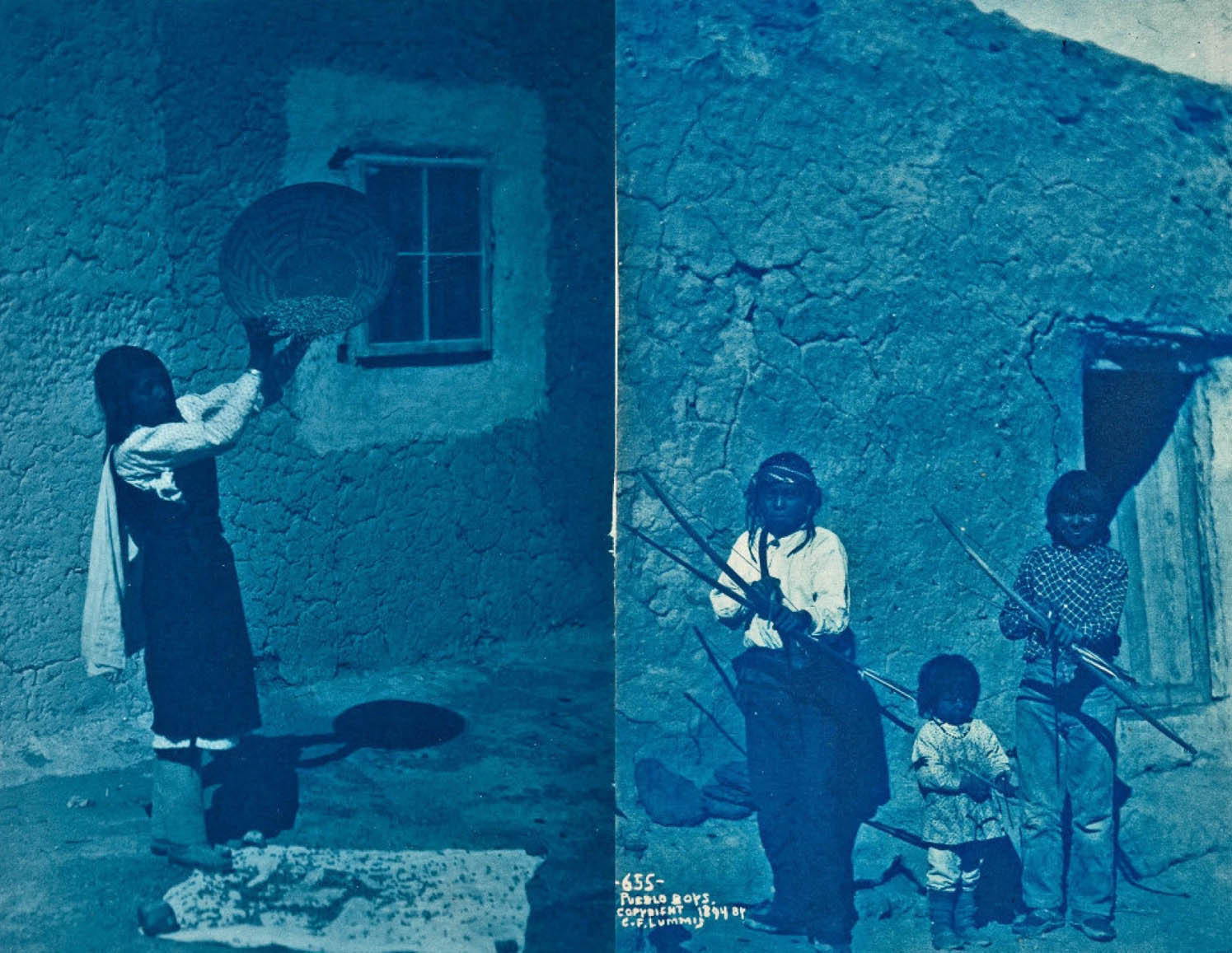
(Left)
Charles Lummis (American, 1859-1928)
Photograph of an Isleta girl winnowing beans, Isleta Pueblo, New Mexico
1890
Cyanotype
8 in x 5 in.
Courtesy of the Braun Research Library Collection, Autry Museum of the American West
(Right)
Charles Lummis (American, 1859-1928)
Photograph of three Isleta boys with bows and arrows, Isleta Pueblo, New Mexico
1894
Cyanotype
8 in x 5 in.
Courtesy of the Braun Research Library Collection, Autry Museum of the American West
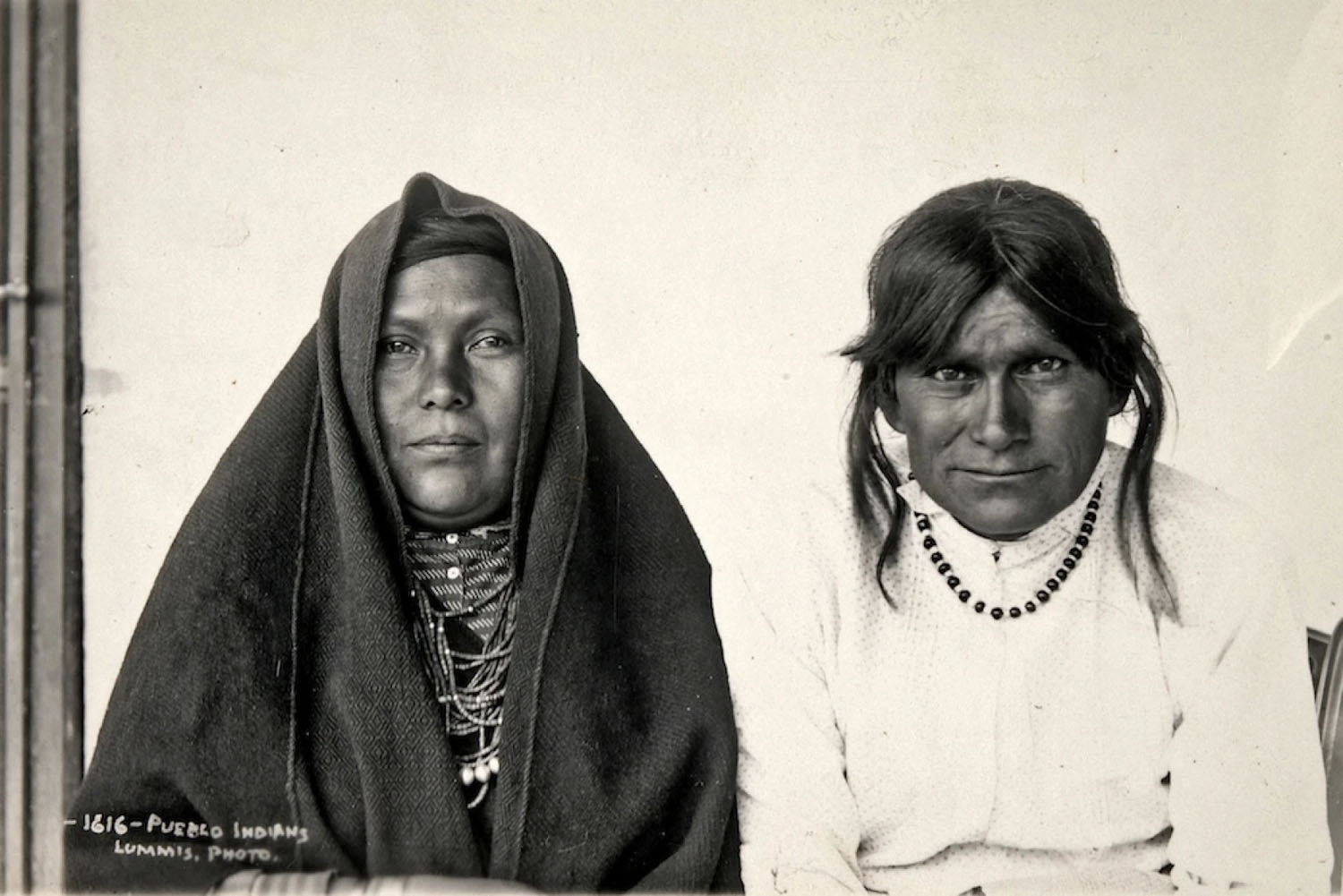
Charles Lummis (American, 1859-1928)
Photograph of a Pueblo couple (probably Isleta or Taos), New Mexico
April 27, 1896
5 in x 7 in.
Courtesy of the Braun Research Library Collection, Autry Museum of the American West

Charles Lummis (American, 1859-1928)
Photograph of spectators watching races, Isleta Pueblo, New Mexico
April 19, 1896
5 in x 7 in.
Courtesy of the Braun Research Library Collection, Autry Museum of the American West

Charles Lummis (American, 1859-1928)
Cyanotype photograph album: Bits of New Mexico and Arizona, Vol. 2
Nd
5.25″ x 9.25″
Courtesy of the Autry National Center/Southwest Museum, Los Angeles
The rapid changes forced on the Native American peoples of the American southwest are documented in Time Exposures: Picturing a History of Isleta Pueblo in the 19th Century. With more than 80 images and objects that detail life on the Isleta Pueblo Reservation after the arrival of the railroads in 1881, the exhibition opens Saturday, Sept. 17, at the Smithsonian’s National Museum of the American Indian in New York, the George Gustav Heye Center, and continues through Sunday, June 10, 2012.
In 1881, the railroad companies forcibly took land in the centre of Isleta Pueblo in the Rio Grande Valley and the rail lines built there brought scores of tourists. Prominent non-Native artists and photographers, such as Edward Curtis and Ben Wittick, traveled there to capture everyday Pueblo life. Organised by the people of Isleta Pueblo, Time Exposures portrays their lives before the arrival of tourists and other visitors, the changes imposed over the following decades and the ways in which the people of Isleta Pueblo worked to preserve their way of life.
Time Exposures is divided into three parts. In the first section, the cycle of the Isleta traditional year as it was observed in the mid-19th century is detailed. The second section describes the arrival of the Americans and the how this disrupted the Isleta way of living. In the third section, the exhibit examines the photos themselves as products of an outside culture. While exploring the underlying ideas and values of the photos, the exhibition questions their portrayal of Isleta people and ways. “In this exhibition, Native people respond to the stereotypical images of their lives that have been circulated by outsiders for centuries,” said Kevin Gover (Pawnee), director of the museum. “It is an opportunity for us all to learn the realities behind some of these popular and enduring photographs.”
“These photographs tell such an important story,” said John Haworth (Cherokee), director of the Heye Center. “The people of Isleta Pueblo fought to maintain their traditions despite radical and dramatic disruptions.”
Included in the exhibition are images by photographers Edward Curtis, A.C. Vroman, Karl Moon, John Hillers, Charles Lummis, Carlos Vierra, Sumner Matteson, Albert Sweeney, Josef Imhof and Ben Wittick. Time Exposures: Picturing a History of Isleta Pueblo in the 19th Century was organised by the people of the Pueblo of Isleta. A committee of Isleta Pueblo traditional leaders oversaw the development, writing and design of the exhibition. Time Exposures originally appeared at the Albuquerque Museum of Art and History in New Mexico.
Press release from the National Museum of the American Indian, New York website

George Wharton James (American, 1858-1923)
Selling goods along tracks
late 1880s to early 1900s
40 x 27cm
Courtesy of the Autry National Center/Southwest Museum, Los Angeles

Sumner Matteson (American, 1867-1920)
Simon Zuni
1900
46 x 33 cm
Photograph Courtesy of the Milwaukee Public Museum, Sumner W. Sumner Matteson Collection
In Time Exposures, we the people of Isleta Pueblo, a Native American community in New Mexico, tell our own story about this time and its lasting effects on our life today. Using a selection of over 300 historic photographs and an array of artefacts, the exhibit portrays our lives before the arrival of the Americans, the changes imposed over the following decades, and the ways in which our people worked to preserve our way of life. Through this process, the exhibit explains how we came to be who we are today.
The exhibit is divided into three parts. In the first section, we describe the cycle of our traditional year as it was observed in the mid-19th century. As a community, our lives were organised according to the seasons, farming, hunting and gathering practices and a regular sequence of ceremonies and rituals. Much has changed for us, but the cycles described here still define the contours of a parallel life we live today.
The second section of the exhibition describes the arrival of the Americans and the many ways in which this influx disrupted our way of living. The new authority took our lands and waters, prohibited hunts, and severely limited our access to plants and other resources. The exhibit shows how our people fought these changes and how we learned to become members of America on our own terms.
In the third section of the show, the exhibit examines the photographs themselves as products of white culture. The exhibit explores the underlying ideas and values of the photos, and asks what kind of record they truly represent of our people and our ways.
Text from the Time Exposures exhibition catalogue

Unknown photographer
Jose S. Abeita, bronco buster, in Magdalena
c. 1920
25 x 40cm
Courtesy of the Autry National Center/Southwest Museum, Los Angeles

Charles Lummis (American, 1859-1928)
Young Isleta Girl
Nd
Cabinet card
Courtesy of the Library of Congress
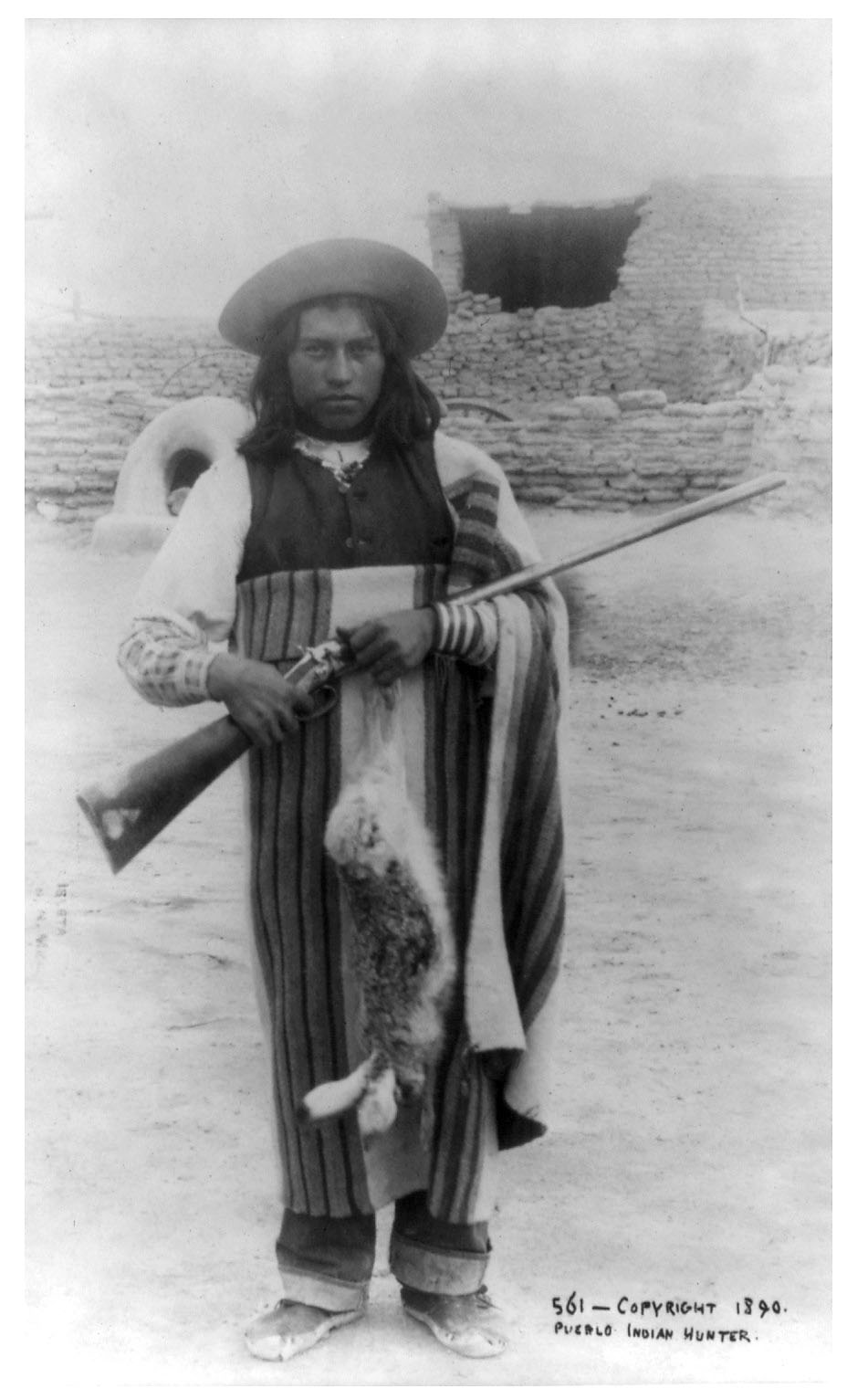
Charles Lummis (American, 1859-1928)
Isleta hunter, Juan Diego
1890
Courtesy of the Autry National Center/Southwest Museum, Los Angeles
Smithsonian National Museum of the American Indian
The George Gustav Heye Center
One Bowling Green, Battery Park, New York City
Phone: (212) 514-3700
Opening hours:
Every day from 10am – 5pm
Thursdays until 8pm
 Art Blart _ art and cultural memory archive
You must be logged in to post a comment.