Exhibition: ‘Haunted Screens: German Cinema in the 1920s’ at the Milwaukee Art Museum, Milwaukee

Exhibition dates: 21st October, 2016 – 22nd January, 2017

Curators: Margaret Andera, adjunct curator of contemporary art at the Milwaukee Art Museum, Milwaukee and Britt Salvesen, Los Angeles County Museum of Art’s curator of the department of prints and drawings and the department of photography


Unknown photographer(s). 'Set photograph from Fritz Lang's "The Nibelungen: The Death of Siegfried (Die Nibelungen: Siegfrieds Tod)"' 1923 from the exhibition Exhibition: 'Haunted Screens: German Cinema in the 1920s' at the Milwaukee Art Museum, Milwaukee, Oct 2016 - Jan 2017


Unknown photographer(s)
Set photograph from Fritz Lang’s “The Nibelungen: The Death of Siegfried (Die Nibelungen: Siegfrieds Tod)”
1923
Gelatin silver print
BiFi, Collection of La Cinémathèque française, Paris
Photo Collection of La Cinémathèque française, Paris


The interwar years of the European avant-garde are some of the most creative years in the history of the human race.

Whether because of political and social instability – the aftershocks of the First World War, the hardships, the looming fight between Communism and Fascism, the Great Depression – or the felt compression and compaction of time and space taking place all over Europe (as artists fled Russia, as artists fled Germany for anywhere but Germany, as though time was literally running out… as it indeed was), these years produced a frenzy of creativity in writing, film, design, architecture and all the arts.

The “avant-garde” produced new and experimental ideas and methods in art, music, and literature, the avant-garde literally being the “vanguard” of an army of change, producing for so very brief an instant, a bright flowering of camp, cabaret, and kitsch paralleled? intertwined with a highly charged emotionalism which, in German Expressionist film, “employed geometrically skewed set designs, dramatic lighting, off-kilter framing, strong shadows and distorted perspectives to express a sense of uneasiness and discomfort.”

Here we find the catalyst for subsequent film genres, most notably science fiction, horror and film noir. Here we find dark fantasies, desire, love and redemption. All to be swept away with the rushing rushing rushing tide of prejudice and persecution, of death and destruction that was to envelop the world during the Second World War.

The creative legacy of this period, however, is still powerful and unforgettable. I just have to look at the photographic stills of Metropolis to recognise what a visionary period it was, and how that film and others have stood the test of passing time (as the hands of the workers move the clock hands to their different positions in Metropolis). The feeling and aesthetic of the art remains as fresh as the day it was created.

Dr Marcus Bunyan


Many thankx to the Milwaukee Art Museum for allowing me to publish the photographs in the posting. Please click on the photographs for a larger version of the image.


Siegfried’s Dragon


Unknown photographer(s). 'Set photograph from Fritz Lang's "The Nibelungen: The Death of Siegfried (Die Nibelungen: Siegfrieds Tod)"' 1923 from the exhibition Exhibition: 'Haunted Screens: German Cinema in the 1920s' at the Milwaukee Art Museum, Milwaukee, Oct 2016 - Jan 2017


Unknown photographer(s)
Set photograph from Fritz Lang’s “The Nibelungen: The Death of Siegfried (Die Nibelungen: Siegfrieds Tod)”
1923
Gelatin silver print
BiFi, Collection of La Cinémathèque française, Paris
Photo courtesy Collection of La Cinémathèque française, Paris


Unknown photographer(s). 'Set photograph from Fritz Lang's "The Nibelungen: The Death of Siegfried (Die Nibelungen: Siegfrieds Tod)"' 1923


Unknown photographer(s)
Set photograph from Fritz Lang’s “The Nibelungen: The Death of Siegfried (Die Nibelungen: Siegfrieds Tod)”
1923
Gelatin silver print
BiFi, Collection of La Cinémathèque française, Paris
Photo Collection of La Cinémathèque française, Paris


Fritz Lang (Austrian, 1890-1976)

… In this first phase of his career, Lang alternated between films such as Der Müde Tod (“The Weary Death”) and popular thrillers such as Die Spinnen (“The Spiders”), combining popular genres with Expressionist techniques to create an unprecedented synthesis of popular entertainment with art cinema.

In 1920, he met his future wife, the writer and actress Thea von Harbou. She and Lang co-wrote all of his movies from 1921 through 1933, including Dr. Mabuse, der Spieler (Dr. Mabuse the Gambler; 1922), which ran for over four hours in two parts in the original version and was the first in the Dr. Mabuse trilogy, the five-hour Die Nibelungen (1924), the famous 1927 film Metropolis, the science fiction film Woman in the Moon (1929), and the 1931 classic, M, his first “talking” picture.

Considered by many film scholars to be his masterpiece, M is a disturbing story of a child murderer (Peter Lorre in his first starring role) who is hunted down and brought to rough justice by Berlin’s criminal underworld. M remains a powerful work; it was remade in 1951 by Joseph Losey, but this version had little impact on audiences, and has become harder to see than the original film. During the climactic final scene in M, Lang allegedly threw Peter Lorre down a flight of stairs in order to give more authenticity to Lorre’s battered look. Lang, who was known for being hard to work with, epitomised the stereotype of the tyrannical German film director, a type embodied also by Erich von Stroheim and Otto Preminger. His wearing a monocle added to the stereotype.

In the films of his German period, Lang produced a coherent oeuvre that established the characteristics later attributed to film noir, with its recurring themes of psychological conflict, paranoia, fate and moral ambiguity. At the end of 1932, Lang started filming The Testament of Dr. Mabuse. Adolf Hitler came to power in January 1933, and by March 30, the new regime banned it as an incitement to public disorder. Testament is sometimes deemed an anti-Nazi film as Lang had put phrases used by the Nazis into the mouth of the title character.

Lang was worried about the advent of the Nazi regime, partly because of his Jewish heritage, whereas his wife and screenwriter Thea von Harbou had started to sympathise with the Nazis in the early 1930s and joined the NSDAP in 1940. They soon divorced. Lang’s fears would be realised following his departure from Austria, as under the Nuremberg Laws he would be identified as a Jew even though his mother was a converted Roman Catholic, and he was raised as such.

Shortly afterwards, Lang left Germany. According to Lang, propaganda minister Joseph Goebbels called Lang to his offices to inform him that The Testament of Dr Mabuse was being banned but that he was nevertheless so impressed by Lang’s abilities as a filmmaker (especially Metropolis), he was offering Lang a position as the head of German film studio UFA. Lang had stated that it was during this meeting that he had decided to leave for Paris – but that the banks had closed by the time the meeting was over. Lang has stated that he fled that very evening. …

In Hollywood, Lang signed first with MGM Studios. His first American film was the crime drama Fury, which starred Spencer Tracy as a man who is wrongly accused of a crime and nearly killed when a lynch mob sets fire to the jail where he is awaiting trial. Lang became a naturalised citizen of the United States in 1939. He made twenty-three features in his 20-year American career, working in a variety of genres at every major studio in Hollywood, and occasionally producing his films as an independent. Lang’s American films were often compared unfavourably to his earlier works by contemporary critics, but the restrained Expressionism of these films is now seen as integral to the emergence and evolution of American genre cinema, film noir in particular. Lang’s film titled in 1945 as Scarlet Street is considered a central film in the genre.

One of his most famous films noir is the police drama The Big Heat (1953), noted for its uncompromising brutality, especially for a scene in which Lee Marvin throws scalding coffee on Gloria Grahame’s face. As Lang’s visual style simplified, in part due to the constraints of the Hollywood studio system, his worldview became increasingly pessimistic, culminating in the cold, geometric style of his last American films, While the City Sleeps (1956) and Beyond a Reasonable Doubt (1956).

Text from the Wikipedia website


Otto Hunte (German, 1881-1950) and Fritz Lang (German, 1890-1976) 'Set design drawing for "The Nibelungen: The Death of Siegfried (Die Nibelungen: Siegfrieds Tod)"' 1923


Otto Hunte (German, 1881-1950) and Fritz Lang (German, 1890-1976)
Set design drawing for “The Nibelungen: The Death of Siegfried (Die Nibelungen: Siegfrieds Tod)”
1923
BiFi, Collection of La Cinémathèque française, Paris
Photo Collection of La Cinémathèque française, Paris


Otto Hunte (German, 1881-1950) and Fritz Lang (German, 1890-1976) 'Set design drawing for "The Nibelungen: The Death of Siegfried (Die Nibelungen: Siegfrieds Tod)"' 1923


Otto Hunte (German, 1881-1950) and Fritz Lang (German, 1890-1976)
Set design drawing for “The Nibelungen: The Death of Siegfried (Die Nibelungen: Siegfrieds Tod)”
1923
BiFi, Collection of La Cinémathèque française, Paris
Photo Collection of La Cinémathèque française, Paris


Caspar David Friedrich (German, 1774-1840) 'Two Men Contemplating the Moon' c. 1825-1830


Caspar David Friedrich (German, 1774-1840)
Two Men Contemplating the Moon
c. 1825-1830
The Metropolitan Museum of Art, Wrightsman Fund, 2000
Photo: courtesy The Metropolitan Museum of Art
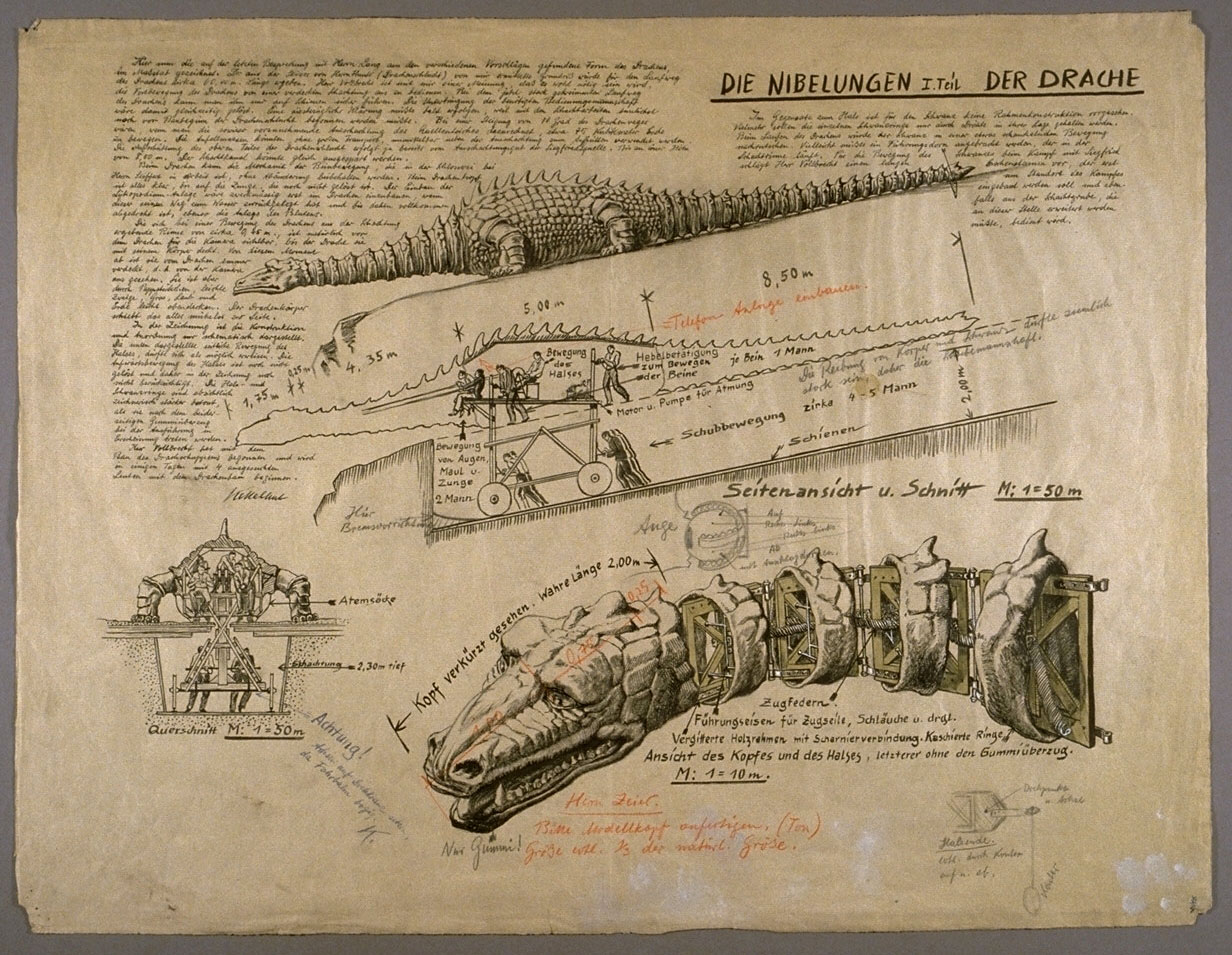
 

Erich Kettelhut (German, 1893-1979) and Fritz Lang (German, 1890-1976) 'Set design drawing for "The Nibelungen: The Death of Siegfried (Die Nibelungen: Siegfrieds Tod)"' 1923


Erich Kettelhut (German, 1893-1979) and Fritz Lang (German, 1890-1976)
Set design drawing for “The Nibelungen: The Death of Siegfried (Die Nibelungen: Siegfrieds Tod)”
1923
BiFi, Collection of La Cinémathèque française, Paris
Photo courtesy Collection of La Cinémathèque française, Paris


In the wake of WWI, while Hollywood and the rest of Western cinema were focused mostly on adventure, romance and comedy, German filmmakers explored the anxiety and emotional turbulence that dominated life in Germany. They took their inspiration from Expressionist art and employed geometrically skewed sets, dramatic lighting, off-kilter framing, strong shadows and distorted perspectives.

The impact of this aesthetic has lasted nearly a century, inspiring directors from Alfred Hitchcock to Tim Burton. Its influence is reflected to this day in the dark, brooding styles of film noir, the unsettling themes of horror, and the fantastic imagery of sci-fi. From Blade Runner to The Godfather, from Star Wars to The Hunger Games – our modern blockbusters owe much to these German masters and the visions they created.

Haunted Screens: German Cinema in the 1920s explores masterworks of German Expressionist cinema, from the stylized fantasy of The Cabinet of Dr. Caligari to the chilling murder mystery M. Featured are production design drawings, photographs, posters, documents, equipment and film clips from more than 20 films. The exhibition ends with a contemporary 3-channel projection work – Kino Ektoplamsa, 2012 – by filmmaker Guy Maddin, which was inspired by German Expressionist cinema.

Text from the Milwaukee Art Museum website


Designed by USC architecture professor Amy Murphy and architect Michael Maltzan, “Haunted Screens” has been grouped by theme: “Madness and Magic,” “Myths and Legends,” “Cities and Streets” and “Machines and Murderers.” The latter contains a subsection, “Stairs,” that includes drawings from films that feature stairs as both a visual and psychological theme. Two darkened tunnels will feature excerpts from the movies highlighted in the exhibit.

“The core of the show is the collection from La Cinémathèque française,” said Britt Salvesen, LACMA’s curator of both the department of prints and drawings and the department of photography.

The 140 drawings from the Cinémathèque were acquired by noted German film historian Lotte Eisner, who wrote the 1952 book “The Haunted Screen.”


Josef Fenneker (Germany, 1895-1956) 'Reissue of original poster for The Burning Soil (Der brennende acker)' c. 1922


Josef Fenneker (Germany, 1895-1956)
Reissue of original poster for The Burning Soil (Der brennende acker)
c. 1922
Director: Friedrich Wilhelm Murnau (German, 1888-1931)
Offset lithograph
Collection of La Cinémathèque française, Paris


Friedrich Wilhelm Murnau (German, 1888-1931)

Friedrich Wilhelm “F. W.” Murnau (born Friedrich Wilhelm Plumpe; December 28, 1888 – March 11, 1931) was a German film director. Murnau was greatly influenced by Schopenhauer, Nietzsche, Shakespeare and Ibsen plays he had seen at the age of 12, and became a friend of director Max Reinhardt. During World War I he served as a company commander at the eastern front and was in the German air force, surviving several crashes without any severe injuries.

One of Murnau’s acclaimed works is the 1922 film Nosferatu, an adaptation of Bram Stoker’s Dracula. Although not a commercial success due to copyright issues with Stoker’s novel, the film is considered a masterpiece of Expressionist film. He later directed the 1924 film The Last Laugh, as well as a 1926 interpretation of Goethe’s Faust. He later emigrated to Hollywood in 1926, where he joined the Fox Studio and made three films: Sunrise (1927), 4 Devils (1928) and City Girl (1930). The first of these three is widely regarded as one of the greatest films ever made.

In 1931 Murnau travelled to Bora Bora to make the film Tabu (1931) with documentary film pioneer Robert J. Flaherty, who left after artistic disputes with Murnau, who had to finish the movie on his own. A week prior to the opening of the film Tabu, Murnau died in a Santa Barbara hospital from injuries he had received in an automobile accident that occurred along the Pacific Coast Highway near Rincon Beach, southeast of Santa Barbara.

Of the 21 films Murnau directed, eight are considered to be completely lost. One reel of his feature Marizza, genannt die Schmuggler-Madonna survives. This leaves only 12 films surviving in their entirety.

Text from the Wikipedia website
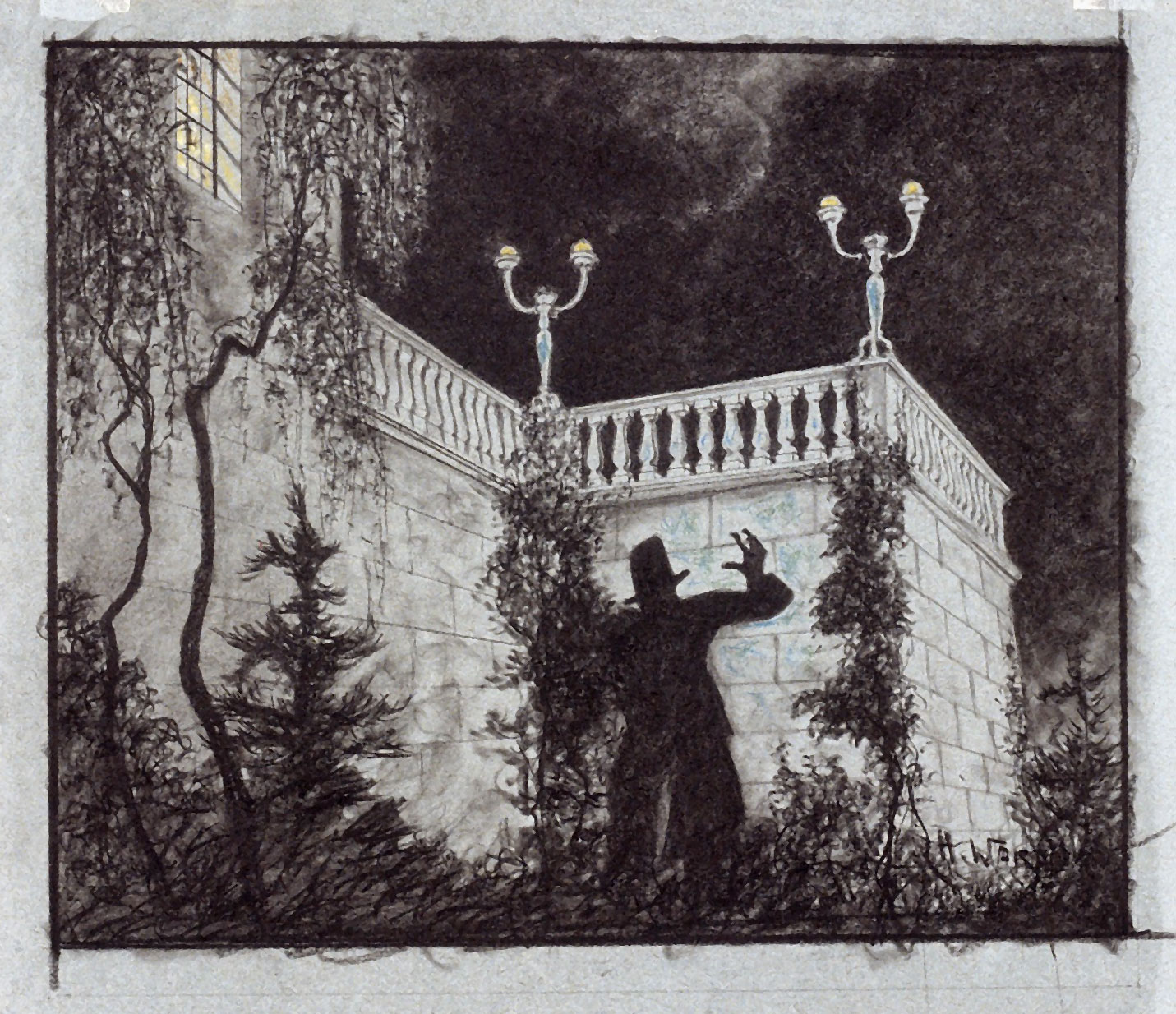
 

Hermann Warm (German, 1889-1976) and Henrik Galeen (Austrian, 1881-1949) 'Drawing for "Der Student von Prag" (The Student of Prague)' 1926

Hermann Warm (German, 1889-1976) and Henrik Galeen (Austrian, 1881-1949) 'Drawing for "Der Student von Prag" (The Student of Prague)' 1926


Hermann Warm (German, 1889-1976) and Henrik Galeen (Austrian, 1881-1949)
Drawing for “Der Student von Prag” (The Student of Prague)
1926
Pastel
Collection of La Cinémathèque française, Paris/LACMA
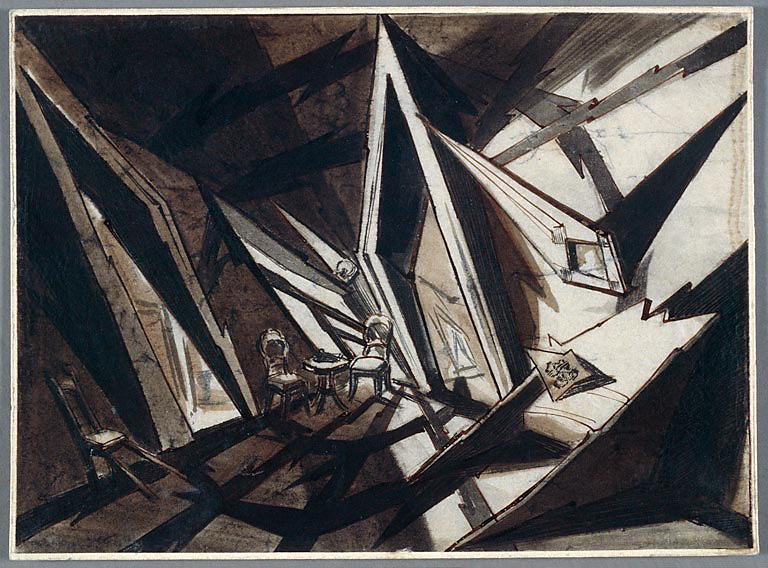
 

Andrei Andrejew (Russia, 1887-1966) 'Set design drawing for Crime and Punishment (Raskolnikow)' 1923


Andrei Andrejew (Russia, 1887-1966)
Set design drawing for Crime and Punishment (Raskolnikow)
1923
Director: Robert Wiene (Germany, 1873-1938)
Ink and ink wash
Collection of La Cinémathèque française, Paris


Raskolnikow is a 1923 German silent drama film directed by Robert Wiene. The film is based on the novel Crime and Punishment by Fyodor Dostoyevsky, whose protagonist is Rodion Raskolnikov. The film’s art direction is by André Andrejew. The film is characterised by Jason Buchanan of Allmovie as a German expressionist view of the story: a “nightmarish” avante-garde or experimental psychological drama.

Robert Wiene (German, 1873-1938)

Robert Wiene (German, 27 April 1873 – 17 July 1938) was a film director of the German silent cinema. He is particularly known for directing the German silent film The Cabinet of Dr. Caligari and a succession of other expressionist films. Wiene also directed a variety of other films of varying styles and genres. Following the Nazi rise to power in Germany, Wiene fled into exile.

Four months after the Nazis took power Wiene’s latest film, “Taifun,” was banned on May 3, 1933. A Hungarian film company had been inviting German directors to come to Budapest to make films in simultaneous German/Hungarian versions, and given his uncertain career prospects under the new German regime Wiene took up that offer in September to direct “One Night in Venice” (1934). Wiene went later to London, and finally to Paris where together with Jean Cocteau he tried to produce a sound remake of The Cabinet of Dr. Caligari. …

Wiene died in Paris ten days before the end of production of a spy film, Ultimatum, after having suffered from cancer. The film was finished by Wiene’s friend Robert Siodmak.

Text from the Wikipedia website


Otto Erdmann (German, 1834-1905) and Georg Wilhelm Pabst (Austrian, 1885-1967) 'Die Freudlose Gasse (The Joyless Street)' 1923


Otto Erdmann (German, 1834-1905) and Georg Wilhelm Pabst (Austrian, 1885-1967)
Die Freudlose Gasse (The Joyless Street)
1923
Gouache and watercolour
Photo courtesy Collection of La Cinémathèque française, Paris/LACMA


Otto Erdmann (German, 1834-1905) and Georg Wilhelm Pabst (Austrian, 1885-1967) 'Die Freudlose Gasse (The Joyless Street)' 1923


Otto Erdmann (German, 1834-1905) and Georg Wilhelm Pabst (Austrian, 1885-1967)
Die Freudlose Gasse (The Joyless Street)
1923
Director: Georg Wilhelm Pabst
Gouache and watercolor
Photo courtesy Collection of La Cinémathèque française, Paris/LACMA
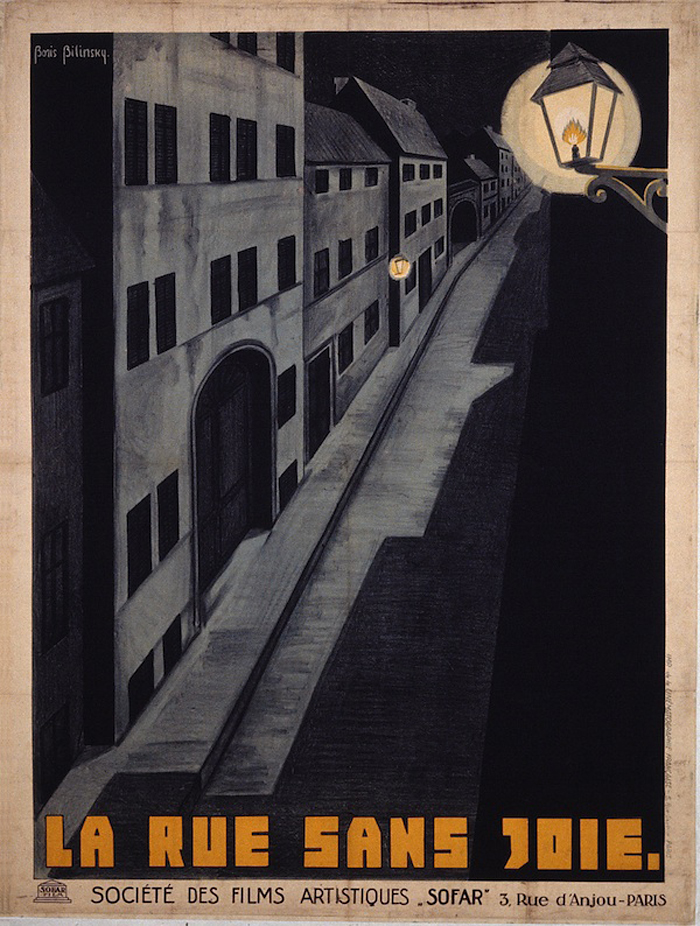
 

Boris Bilinsky (Russia, 1900-1948) 'Poster for The Joyless Street (Die freudlose Gasse)' c. 1925


Boris Bilinsky (Russia, 1900-1948)
Poster for The Joyless Street (Die freudlose Gasse)
c. 1925
Director: Georg Wilhelm Pabst (Austria, 1885-1967)
Lithograph
Collection of La Cinémathèque française, Paris
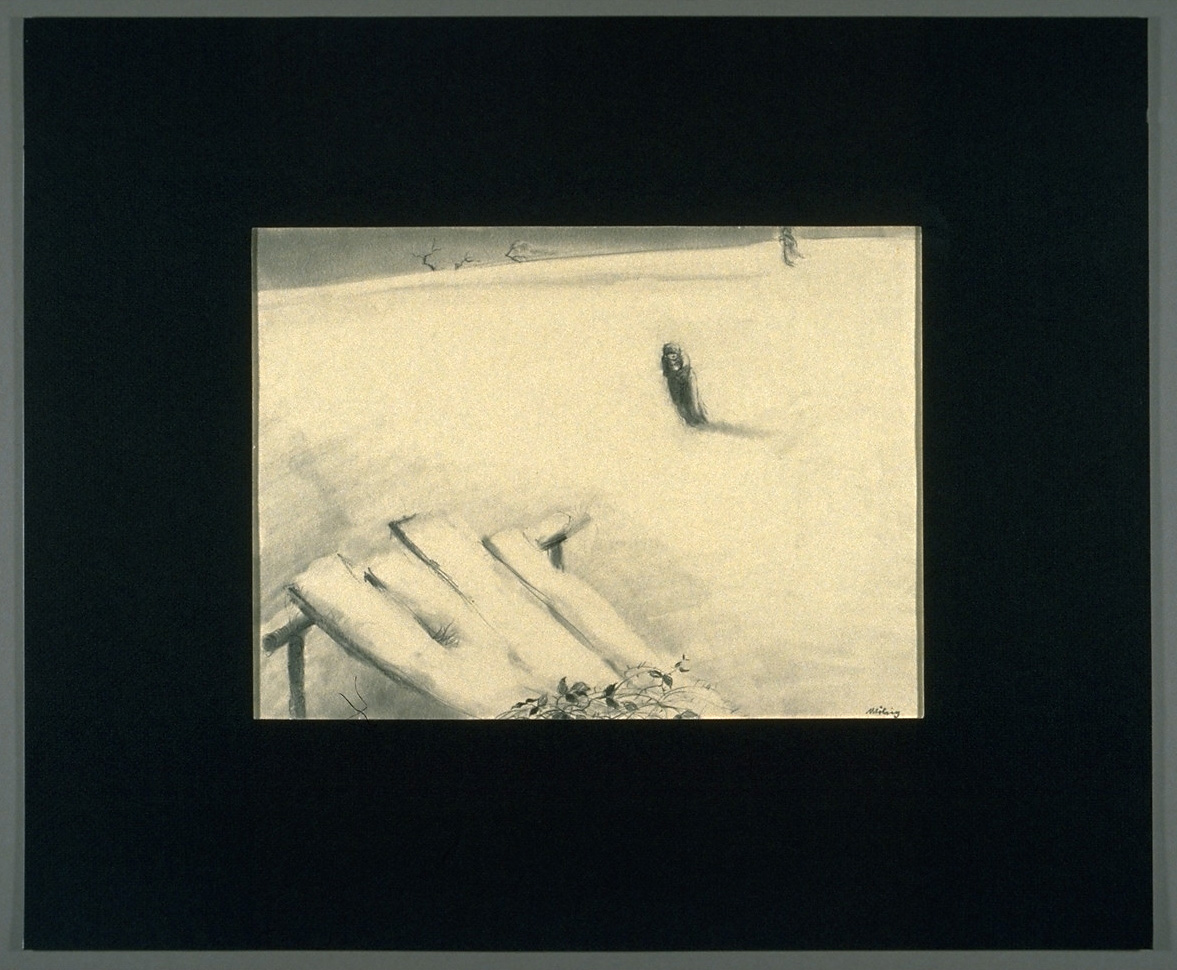
 

Walter Röhrig (German, 1892-1945) and Friedrich Wilhelm Murnau (German, 1888-1931) 'Faust' 1926


Walter Röhrig (German, 1892-1945) and Friedrich Wilhelm Murnau (German, 1888-1931)
Faust
1926
BiFi, Collection of La Cinémathèque française, Paris
© 2014 Artists Rights Society (ARS), New York
Photo courtesy Collection of La Cinémathèque française, Paris


Robert Herlth (German, 1893-1962) and Friedrich Wilhelm Murnau (German, 1888-1931) 'Faust' 1926


Robert Herlth (German, 1893-1962) and Friedrich Wilhelm Murnau (German, 1888-1931)
Faust
1926
Director: Friedrich Wilhelm Murnau
BiFi, Collection of La Cinémathèque française, Paris
Photo courtesy Collection of La Cinémathèque française, Paris


Robert Herlth (German, 1893-1962) and Friedrich Wilhelm Murnau (German, 1888-1931) 'Faust' 1926


Robert Herlth (German, 1893-1962) and Friedrich Wilhelm Murnau (German, 1888-1931)
Faust
1926
BiFi, Collection of La Cinémathèque française, Paris
Photo courtesy Collection of La Cinémathèque française, Paris


Robert Herlth (German, 1893-1962) and Friedrich Wilhelm Murnau (German, 1888-1931) 'Faust' 1926


Robert Herlth (German, 1893-1962) and Friedrich Wilhelm Murnau (German, 1888-1931)
Faust
1926
BiFi, Collection of La Cinémathèque française, Paris
Photo courtesy Collection of La Cinémathèque française, Paris


Robert Herlth (German, 1893-1962) and Friedrich Wilhelm Murnau (German, 1888-1931) 'Drawing for "Faust"' 1926


Robert Herlth (German, 1893-1962) and Friedrich Wilhelm Murnau (German, 1888-1931)
Drawing for “Faust”
1926
Collection of La Cinémathèque française, Paris


Unknown photographer. 'Set photograph from The Cabinet of Dr. Caligari (Das Kabinett des Dr. Caligari)' 1919


Unknown photographer
Set photograph from The Cabinet of Dr. Caligari (Das Kabinett des Dr. Caligari)
1919
Director: Robert Wiene (German, 1873-1938)
Los Angeles County Museum of Art, Robert Gore Rifkind Center for German Expressionist Studies


Hermann Warm (German, 1889-1976) 'Robert Wiene's "Das Kabinett des Dr Caligari"' 1919


Hermann Warm (German, 1889-1976)
Robert Wiene’s “Das Kabinett des Dr Caligari”
1919
Watercolour and ink
BiFi, Collection of La Cinémathèque française, Paris


'Set drawing for the"Das Kabinett des Dr Caligari" (The Cabinet of Dr Caligari)' 1920


Set drawing for the”Das Kabinett des Dr Caligari” (The Cabinet of Dr Caligari)
1920
Collection of La Cinémathèque française, Paris


Ernst Stern (Romanian-German, 1876-1954) 'Paul Leni's "Das Wachfigurenkabinett (Le cabinet des figures de cire)"' (Wax Works) 1924


Ernst Stern (Romanian-German, 1876-1954)
Paul Leni’s “Das Wachfigurenkabinett (Le cabinet des figures de cire)” (Wax Works)
1924
Director: Paul Leni
Watercolour and charcoal
Collection of La Cinémathèque française, Paris/LACMA


Ernst Stern (Romanian-German, 1876-1954) and Paul Leni (German, 1885-1929) '"Das Wachfigurenkabinett (Le cabinet des figures de cire)"' (Wax Works) 1924


Ernst Stern (Romanian-German, 1876-1954) and Paul Leni (German, 1885-1929)
“Das Wachfigurenkabinett (Le cabinet des figures de cire)” (Wax Works)
1924
Watercolour, gouache, and graphite
34.6 x 24.8cm
Collection of La Cinémathèque française, Paris/LACMA


Unknown photographer. 'Set photograph from "The Blue Angel" (Der blaue Engel)' 1930


Unknown photographer
Set photograph from “The Blue Angel” (Der blaue Engel)
1930
Director: Josef von Sternberg (Austria, 1894-1969)
Gelatin silver print
Collection of La Cinémathèque française, Paris
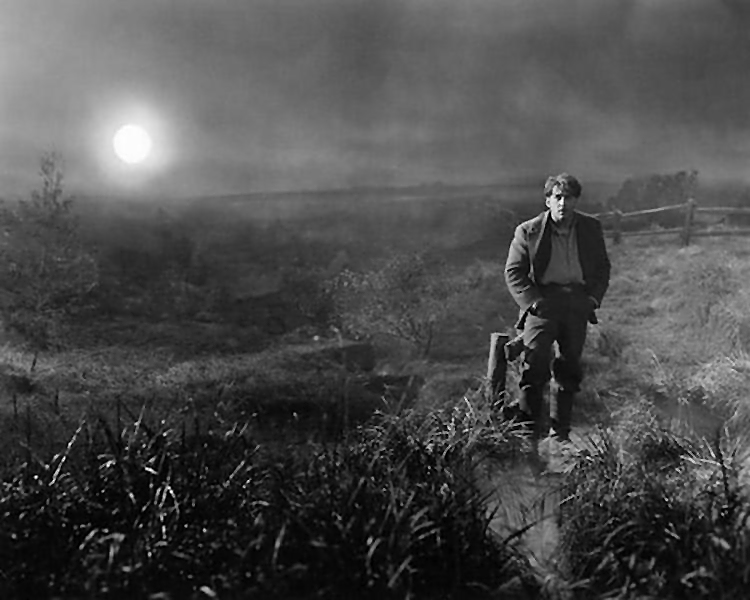
 

Karl Struss (American, 1886-1981) 'Set photograph from "Sunrise: A Song of Two Humans" (Sonnenaufgang: Ein Lied zweier Menschen)' (detail) 1927, printed 2014


Karl Struss (American, 1886-1981)
Set photograph from “Sunrise: A Song of Two Humans” (Sonnenaufgang: Ein Lied zweier Menschen) (detail)
1927, printed 2014
Directed by Friedrich Wilhelm Murnau
Courtesy of Academy of Motion Picture Arts and Sciences’ Margaret Herrick Library
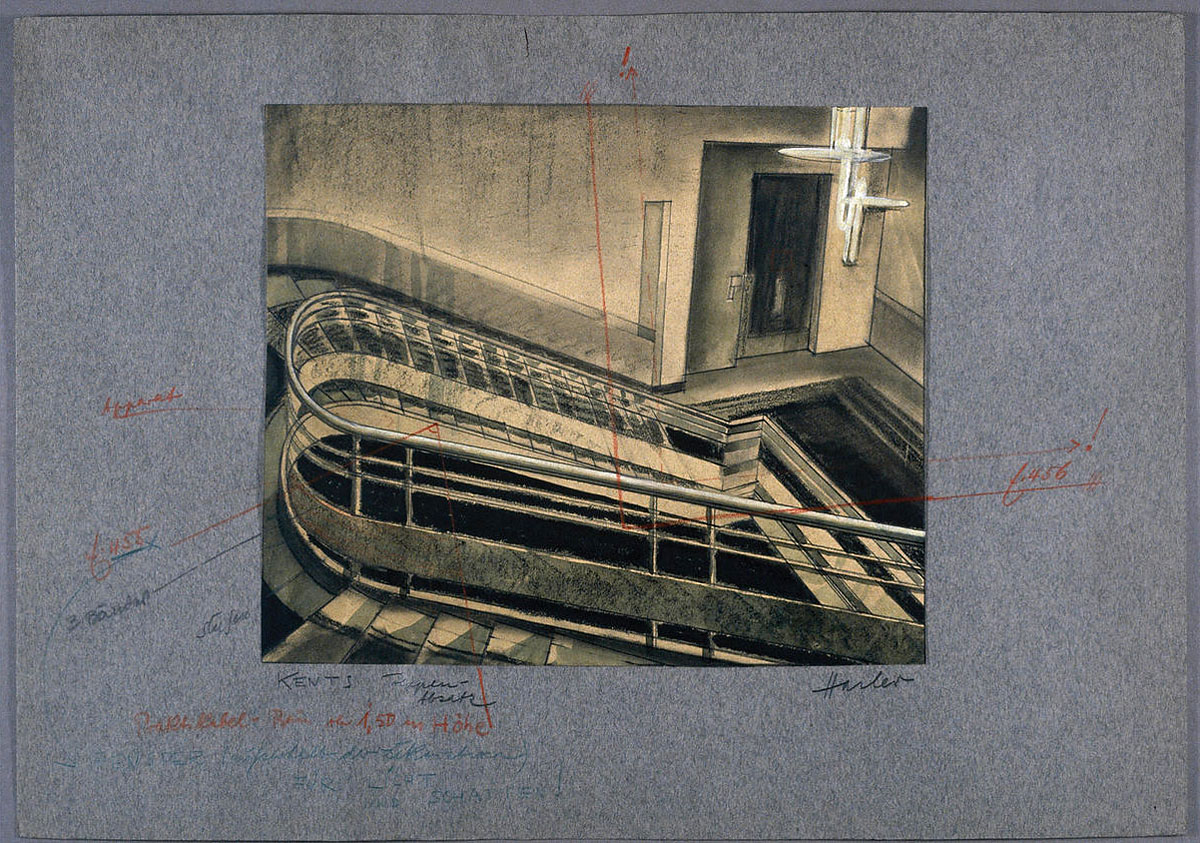
 

Emil Hasler (German, 1901-1986) 'Drawing for Fritz Lang's "Das Testament des Dr Mabuse"' 1932


Emil Hasler (German, 1901-1986)
Drawing for Fritz Lang’s “Das Testament des Dr Mabuse” (The Testament of Dr Mabuse)
1932
Pastel, graphite, and gouache
Collection of La Cinémathèque française, Paris/LACMA


Paul Scheurich (German, 1883-1945) 'Poster design for Fritz Lang's "Das Testament des Dr Mabuse"' 1932


Paul Scheurich (German, 1883-1945)
Poster design for Fritz Lang’s “Das Testament des Dr Mabuse” (The Testament of Dr Mabuse)
1932
Ink, gouache, and graphite
BiFi, Collection of La Cinémathèque française, Paris


Emil Hasler (German, 1901-1986) 'Drawing for Fritz Lang's "M," le Maudit' (Cursed) 1931


Emil Hasler (German, 1901-1986)
Drawing for Fritz Lang’s “M,” le Maudit (Cursed)
1931
Charcoal, gouache, and coloured pencil
Collection of La Cinémathèque française, Paris/LACMA
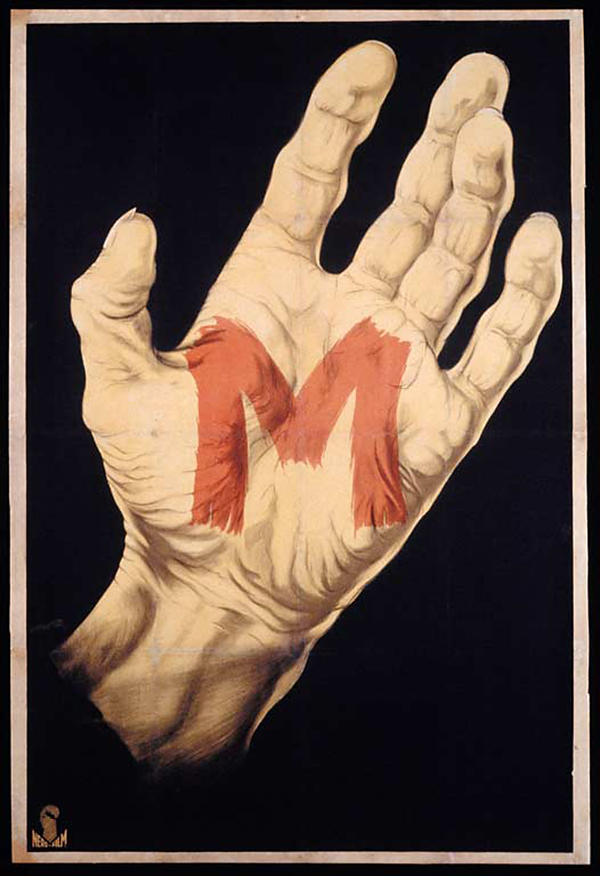
 

Unknown artist. 'Poster for "M"' 1931


Unknown artist
Poster for “M”
1931
Director: Fritz Lang (Austria, 1890-1976)
Collection of La Cinémathèque française
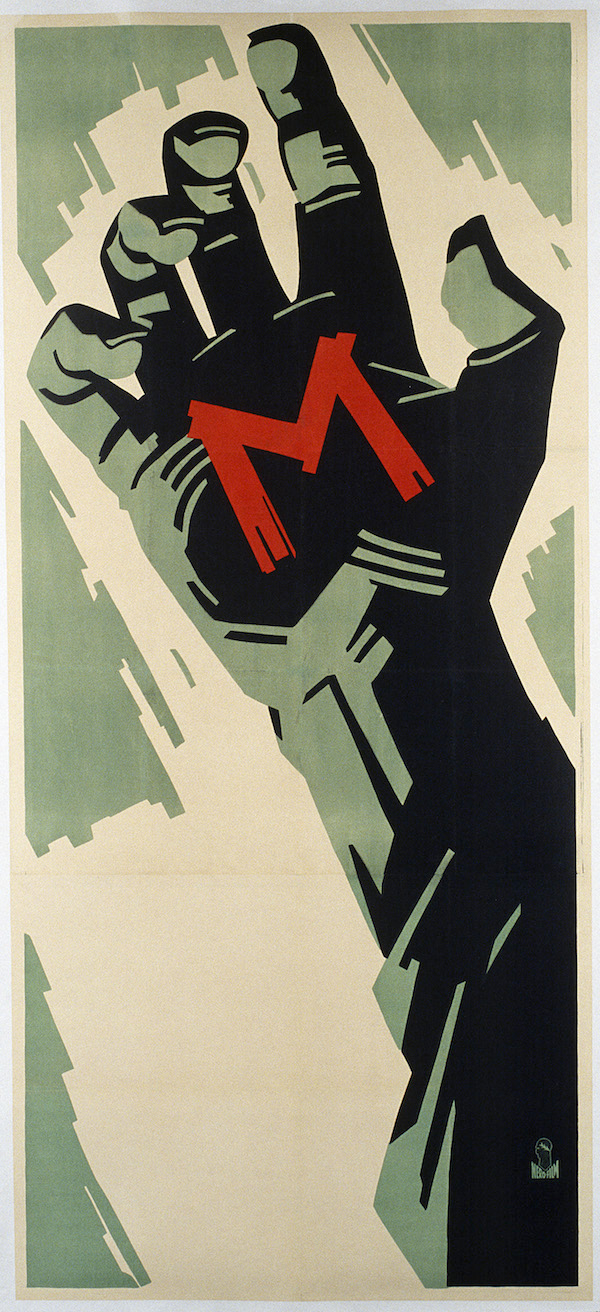
 

Unknown artist. 'Poster for "M"' 1933


Unknown artist
Poster for “M”
1933
Made for Paramount release in Los Angeles
Director: Fritz Lang (Austria, 1890-1976)
Courtesy of Academy of Motion Picture Arts and Sciences’ Margaret Herrick Library


The Milwaukee Art Museum is excited for visitors to experience its newest exhibition, Haunted Screens: German Cinema in the 1920s on view from Oct. 21 through Jan. 22. Organised by La Cinémathèque française, Paris, the exhibition examines the groundbreaking period in film history that occurred in Germany during the Weimar era after World War I, through more than 150 objects, including set design drawings, photographs, posters, documents, equipment, cameras and film clips from more than 20 films.

The Expressionist movement introduced a highly charged emotionalism to the artistic disciplines of painting, photography, theater, literature and architecture, as well as film, in the early part of the 20th century. German filmmakers employed geometrically skewed set designs, dramatic lighting, off-kilter framing, strong shadows and distorted perspectives to express a sense of uneasiness and discomfort. These films reflected the mood of Germany during this time, when Germans were reeling from the death and destruction of WWI and were enduring hyperinflation and other hardships.

“We’re thrilled to present Haunted Screens at the Milwaukee Art Museum this fall, and to offer our visitors a glimpse into a unique and revolutionary time in film and art history,” said Margaret Andera, the Museum’s adjunct curator of contemporary art. “This exhibition represents a tremendous period of creativity, and allows visitors a fascinating look at the nuanced aesthetics of German Expressionist cinema through a wealth of diverse objects.”

The exhibition is grouped into five sections by theme: Nature, Interiors, The Street, Staircases and The Expressionist Body. From the dark fantasy of The Cabinet of Dr. Caligari to the chilling murder mystery M, the exhibition explores masterworks of German Expressionist cinema in aesthetic, psychological and technical terms. More than 140 drawings are complemented by some 40 photographs, eight projected film clip sequences, numerous film posters, three cameras, one projector, and a resin-coated, life-size reproduction of the Maria robot from Metropolis.

German Expressionist cinema was the first self-conscious art cinema, influencing filmmakers throughout the world at the time and continuing to inspire artists today. It served as a catalyst for subsequent film genres, most notably science fiction and horror. The conflicting attitudes about technology and the future that are the cornerstones of science fiction, and the monsters and villains that form the basis of horror, appear often in Expressionist films. The influence of Expressionist cinema undoubtedly extends to the work of contemporary filmmakers, including Tim Burton, Martin Scorsese and Guy Maddin, whose 3-channel projection work, Kino Ektoplamsa, appears at the end of the exhibition.

The Museum is taking a unique approach to the exhibition’s installation design, one that mirrors the mood of the time and the objects on display. Walls intersecting at unexpected angles and even breaking through the exhibition space into Windhover Hall give visitors an engaging experience.

The Milwaukee Art Museum’s permanent collection includes extensive holdings in the German Expressionist area, including a significant collection of paintings from the period, as well as one of the most important collections of German Expressionist prints in the nation, the Marcia and Granvil Specks Collection. This collection includes more than 450 prints by German masters. Visitors are encouraged to stroll through the collection galleries after seeing Haunted Screens.”

Press release from the Milwaukee Art Museum


Metropolis (1927) full movie


Synopsis of Metropolis

Metropolis is ruled by the powerful industrialist Joh Fredersen. He looks out from his office in the Tower of Babel at a modern, highly technicised world. Together with the children of the workers, a young woman named Maria reaches the Eternal Gardens where the sons of the city’s elite amuse themselves and where she meets Freder, Joh Fredersen’s son. When the young man later goes on a search for the girl, he witnesses an explosion in a machine hall, where numerous workers lose their lives. He then realises that the luxury of the upper class is based on the exploitation of the proletariat. In the Catacombs under the Workers’ City Freder finally finds Maria, who gives the workers hope with her prophecies for a better future. His father also knows about Maria’s influence on the proletariat and fears for his power. In the house of the inventor Rotwang, Joh Fredersen learns about his experiments to create a cyborg based on the likeness of Hel, their mutual love and Freder’s mother. Fredersen orders Rotwang to give Maria’s face to the robot in order to send it to the underground city to deceive and stir up its inhabitants.

After the robot Maria has succeeded, a catastrophe ensues. The riotous workers destroy the Heart Machine and as a result the Workers’ City, where only the children have remained, is terribly flooded. The real Maria brings the children to safety along with Freder. When they learn about the disaster, the rebelling masses stop. Their rage is now aimed at the robot Maria, who is captured and burned at the stake. At the same time Rotwang, driven by madness, pursues the genuine Maria across the Cathedral’s rooftop, where he ultimately falls to his death. Freder and Maria find each other again. The son devotes himself to his father, mediating between him and the workers. As a consequence, Maria’s prophecy of reconciliation between the ruler and those who are mastered (head and hands) triumphs – through the help of the mediating heart.


Horst von Harbou (Germany, 1879-1953) 'Set photograph from "Metropolis"' 1927


Horst von Harbou (Germany, 1879-1953)
Set photograph from “Metropolis”
1927
Director: Fritz Lang (Austria, 1890-1976)
Gelatin silver print
Collection of La Cinémathèque française
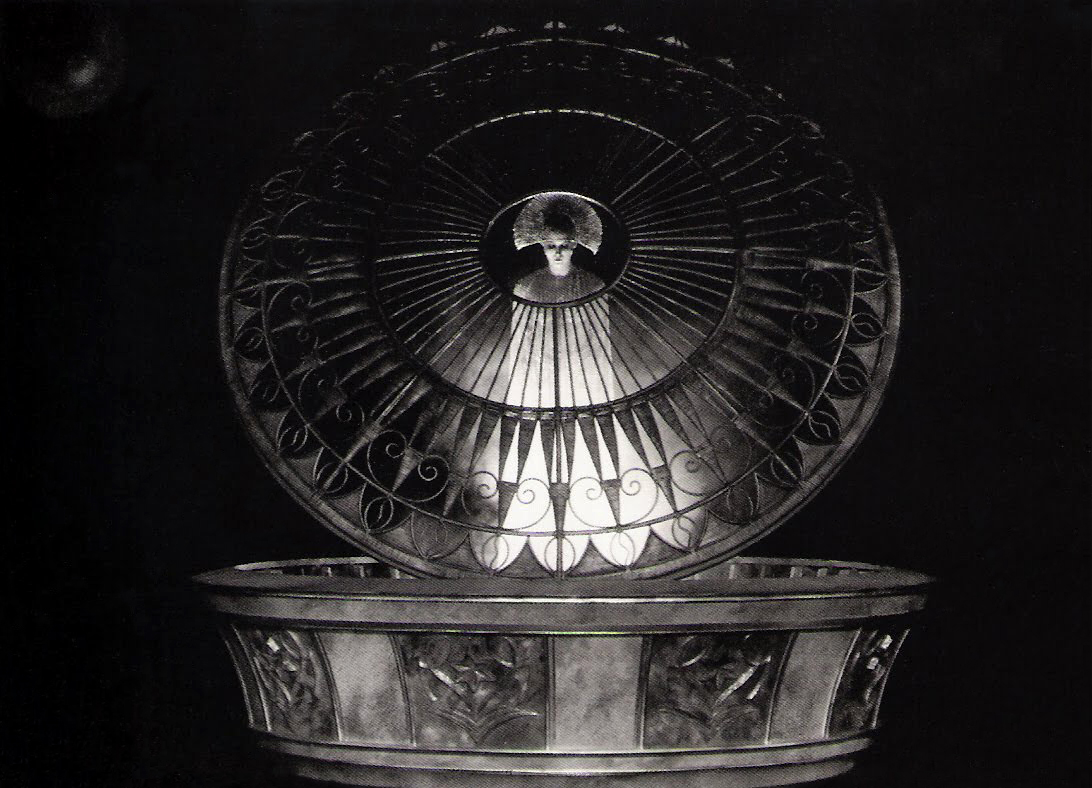
 

Horst von Harbou (Germany, 1879-1953) 'Set photograph from "Metropolis"' 1927


Horst von Harbou (Germany, 1879-1953)
Set photograph from “Metropolis”
1927
Director: Fritz Lang (Austria, 1890-1976)
Gelatin silver print
Collection of La Cinémathèque française
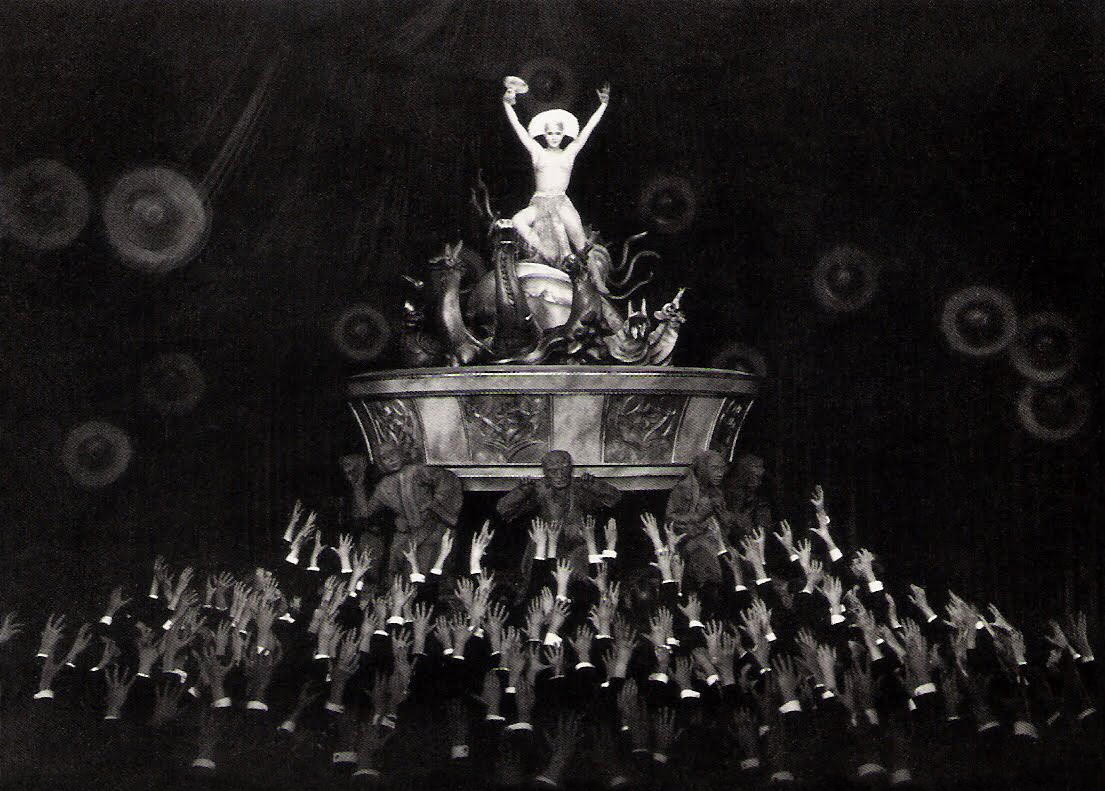
 

Horst von Harbou (Germany, 1879-1953) 'Set photograph from "Metropolis"' 1927


Horst von Harbou (Germany, 1879-1953)
Set photograph from “Metropolis”
1927
Director: Fritz Lang (Austria, 1890-1976)
Gelatin silver print
Collection of La Cinémathèque française
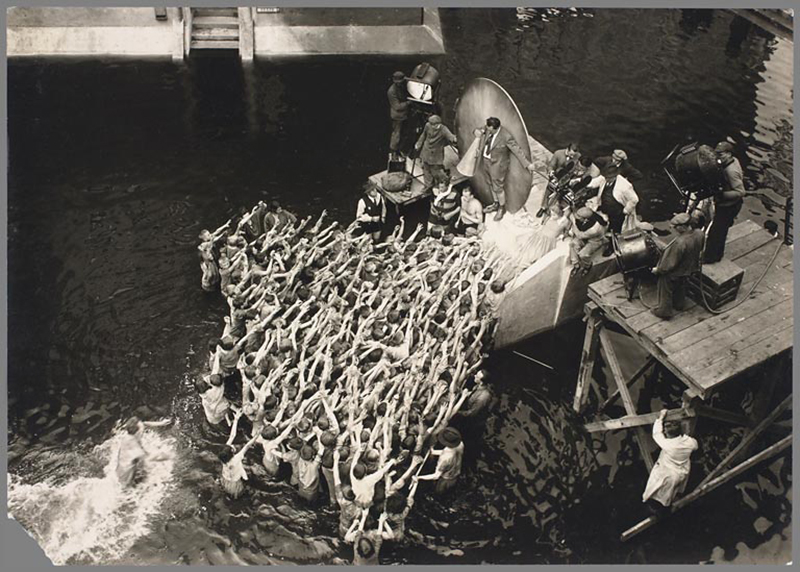
 

Horst von Harbou (Germany, 1879-1953) 'Set photograph from "Metropolis"' 1927


Horst von Harbou (Germany, 1879-1953)
Set photograph from “Metropolis”
1927
Director: Fritz Lang (Austria, 1890-1976)
Gelatin silver print
Collection of La Cinémathèque française

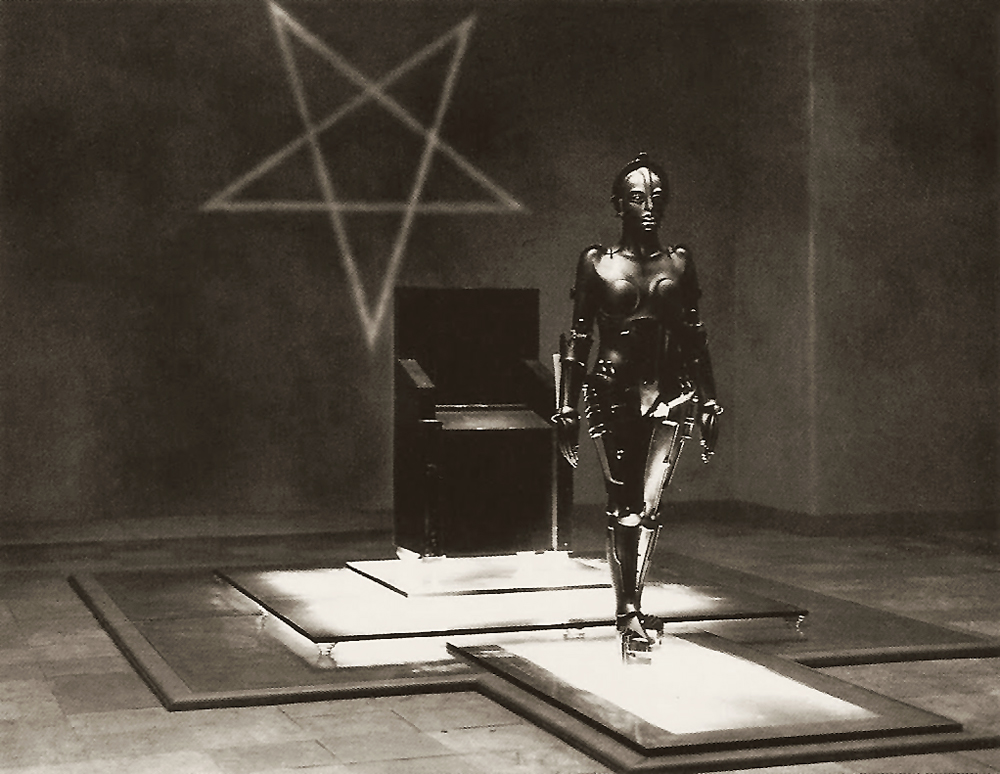
 

Horst von Harbou (Germany, 1879-1953) 'Set photograph from "Metropolis"' 1927

Horst von Harbou (Germany, 1879-1953) 'Set photograph from "Metropolis"' 1927


Horst von Harbou (Germany, 1879-1953)
Set photograph from “Metropolis”
1927
Director: Fritz Lang (Austria, 1890-1976)
Gelatin silver print
Collection of La Cinémathèque française


Horst von Harbou (Germany, 1879-1953) 'Set photograph from "Metropolis"' 1927


Horst von Harbou (Germany, 1879-1953)
Set photograph from “Metropolis”
1927
Director: Fritz Lang (Austria, 1890-1976)
Gelatin silver print
Collection of La Cinémathèque française


Horst von Harbou (Germany, 1879-1953) 'Set photograph from "Metropolis"' 1927


Horst von Harbou (Germany, 1879-1953)
Set photograph from “Metropolis”
1927
Director: Fritz Lang (Austria, 1890-1976)
Gelatin silver print
Collection of La Cinémathèque française


Fritz Lang’s Metropolis (1927) is a defining film of the silent era and science fiction genre. But the work of the film’s still photographer Horst von Harbou has remained obscure. Von Harbou, brother of Thea von Harbou, Lang’s then wife and co-screenwriter of Metropolis, photographed filmed scenes as well as off-camera action, and made an album of thirty-five photographs which he gave to the film’s young star Brigitte Helm. The book Metropolis is a careful reconstruction of this album, showing the photographs and some of their backsides which feature hand-written notes. Von Harbou’s photographs not only offer a rare insight into Lang’s film, but have been crucial in reconstructing missing scenes from it.

Horst von Harbou was born in 1879 in Hutta, Posen, and died in 1953 in Potsdam-Babelsberg. Very little is known about von Harbou, except for the films on which he worked as a still photographer: these include Mensch ohne Namen (1932), Starke Herzen im Sturm (1937) and Augen der Liebe (1951).

Text from the Steidl Books website


Horst von Harbou (Germany, 1879-1953) 'Set photograph from "Metropolis"' 1927 (detail)


Horst von Harbou (Germany, 1879-1953)
Set photograph from “Metropolis” (detail)
1927
Director: Fritz Lang (Austria, 1890-1976)
Gelatin silver print
Collection of La Cinémathèque française


Otto Hunte (German, 1881-1960) 'Set design drawing for "Metropolis"' 1923


Otto Hunte (German, 1881-1960)
Set design drawing for “Metropolis”
1923
Director: Fritz Lang
Collection of La Cinémathèque française, Paris


Otto Hunte (German, 1881-1960)

Otto Hunte (9 January 1881 – 28 December 1960) was a German production designer, art director and set decorator. Hunte is considered as one of the most important artists in the history of early German cinema, mainly for his set designs on the early silent movies of Fritz Lang. His early career was defined by a working relationship with fellow designers Karl Vollbrecht and Erich Kettelhut. Hunte’s architectural designs are found in many of the most important films of the period including Dr. Mabuse the Gambler, Die Nibelungen (1924), Metropolis (1927) and Der blaue Engel. Hunte subsequently worked as one of the leading set designers during the Nazi era. Post-Second World War he was employed by the East German studio DEFA.


Paramount. 'Trade advertisement for 'Metropolis'' 1927


Paramount
Trade advertisement for “Metropolis”
1927
Lithograph


Milwaukee Art Museum
700 N Art Museum Dr,
Milwaukee WI 53202

Opening hours:
Monday – Tuesday Closed
Wednesday 10am – 5pm
Thursday 10am – 8pm
Friday – Sunday 10am – 5pm

Milwaukee Art Museum website

LIKE ART BLART ON FACEBOOK

Back to top

Exhibition: ‘photobooks. Spain 1905-1977’ at the Museo Nacional Centro de Art Renia Sofia, Madrid

Exhibition dates: 27th May 2014 – 5th January 2015

Curatorship: Horacio Fernández

Artists: Francesc Català-Roca, Colita (Isabel Steva Hernández), Joan Colom, Salvador Costa, Ramón Masats, Xavier Miserachs, Francisco Ontañón, José Ortiz Echagüe Puertas, Leopoldo Pomés, Alfonso Sánchez Portela


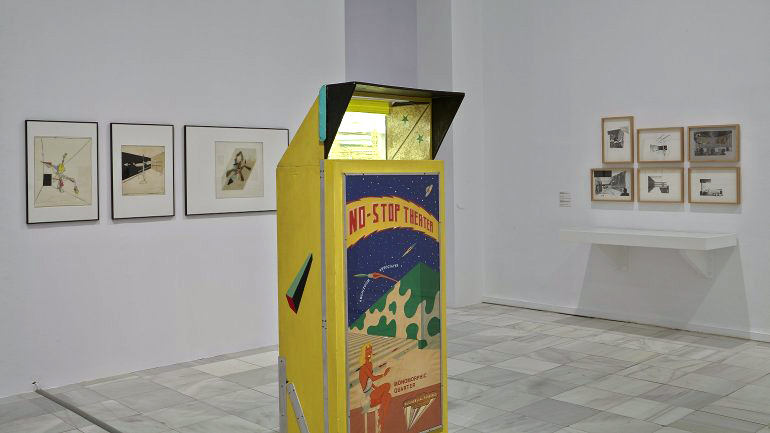
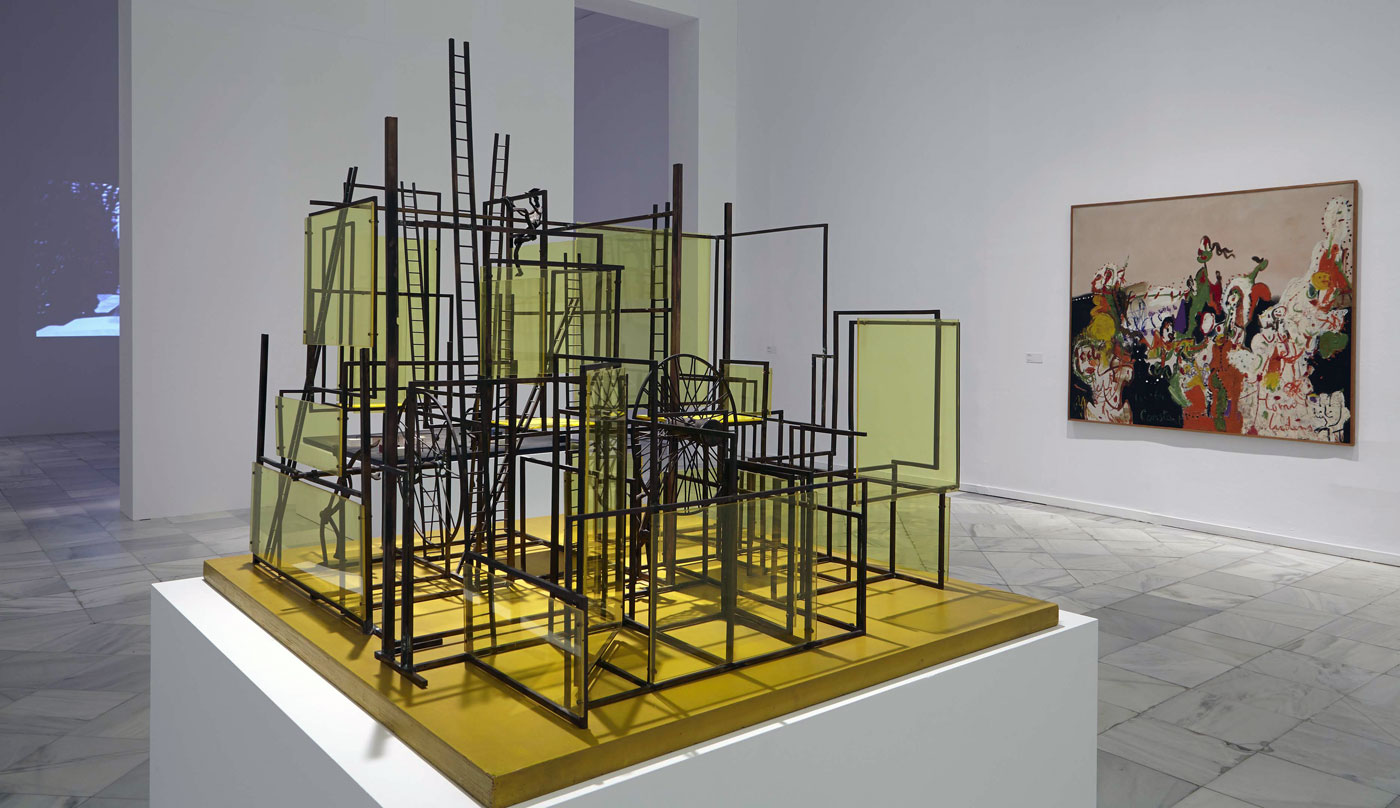
Installation photograph of the exhibition 'photobooks. Spain 1905-1977' at the Museo Nacional Centro de Art Renia Sofia


Installation photograph of the exhibition photobooks. Spain 1905-1977 at the Museo Nacional Centro de Art Renia Sofia


This is one of those eclectic exhibitions that this archive likes to promote. What a fascinating subject, something that I knew nothing about. The posting is especially for my colleague Professor Martinez Alfredo-Exposito, Head of the School of Languages and Linguistics at the University of Melbourne.

Dr Marcus Bunyan


Many thankx to the Museo Nacional Centro de Art Renia Sofia for allowing me to publish the photographs in the posting. Please click on the photographs for a larger version of the image.


Installation photograph of the exhibition 'photobooks. Spain 1905-1977' at the Museo Nacional Centro de Art Renia Sofia

Installation photograph of the exhibition 'photobooks. Spain 1905-1977' at the Museo Nacional Centro de Art Renia Sofia

Installation photographs of the exhibition 'photobooks. Spain 1905-1977' at the Museo Nacional Centro de Art Renia Sofia


Installation photographs of the exhibition photobooks. Spain 1905-1977 at the Museo Nacional Centro de Art Renia Sofia


Álvaro Bartolomé (poems) and Joaquín del Palacio (Spanish, 1905-1989) (photographer) 'Momentos' 1944 Madrid: edición del autor


Álvaro Bartolomé (poems) and Joaquín del Palacio (Spanish, 1905-1989) (photographer)
Momentos
1944
Madrid: edición del autor


Joaquín del Palacio (Kindel) was a Spanish photographer who was born in Madrid in 1905 and died in Madrid in 1989. He changed his name to Kindel to adapt to the foreign names that were starting to work in Spain and so look modern too: KIN came from Joaquín and DEL was for the beginning of his last name.

He did most of his work between 1940 and 1970. He started in 1939, taking pictures of devastated regions of Spain after the Spanish Civil War had finished. Those pictures were social and dramatic scenes according to that period of time.

Later, he began to travel around Spain working for the “Dirección General de Turismo” (General Tourism Office). He took pictures of people and landscapes of Spain in the 1950s. This was a kinder image of the reality.

He was a master of photography that was able to capture the correct natural light for each image.

Text from the Wikipedia website


Enrique Palazuelo. 'Sans Titre. Nuevas escenas matritenses' c. 1957 / posthumous print, 2013


Enrique Palazuelo
Sans Titre. Nuevas escenas matritenses
c. 1957 / posthumous print, 2013
Copia de exposición


Francesc Català-Roca (Valls, Tarragona, Spain, 1922 - Barcelona, Spain, 1998) 'Llegada a Barcelona' (Arriving at Barcelona) 1950 (circa) / posthumous print, 2003


Francesc Català-Roca (Valls, Tarragona, Spain, 1922 – Barcelona, Spain, 1998)
Llegada a Barcelona (Arriving at Barcelona)
1950 (circa) / posthumous print, 2003
Selenium-toned gelatin silver print on paper
34.8 x 47.5cm


Son of Pere Català i Pic, a pioneer of avant-garde photography in Catalonia, Francesc Català Roca is considered the master of Catalan documentary photography. Learning his trade within the family, he opened his own studio in 1947 and began making street photography for editorial assignments. Thereafter, he worked continuously producing photographs for publications such as Destino, Gaceta Ilustrada and La Vanguardia. This was to be accompanied by studio work, illustrating artists’ books in collaboration with renowned architects, sculptors and painters such as Josep M. Sert, Eduardo Chillida and Joan Miró, books about the history of Catalan art and documentary photography on the real Spain. As a neo-realist photographer, Català Roca’s took risks, looking for unusual and unconventional viewpoints, playing with the plastic strength of shadows and contrasts, and always focusing on the human element. His technical skill was matched by a great ability to relate to the people he portrayed. His photography acts as a witness to a time when the country had one foot in the hardest era of the Franco regime and the other in what is known as the period of ‘developmentalism’. Following his first solo exhibition in 1953 at Sala Caralt, Barcelona, Català Roca exhibited extensively in parallel with his activity as a book illustrator, publishing numerous titles. Retrospective exhibitions of his work include those held at the Fundació Joan Miró (2000), La Pedrera, Barcelona (2012) and the Círculo de Bellas Artes, Madrid (2013).

Text from the MACBA Museu d’Art Contemporani de Barcelona website


Francesc Català-Roca (Valls, Tarragona, Spain, 1922 - Barcelona, Spain, 1998) 'La Vía Layetana entre las calles Junqueras y Condal' (The Vía Layetana between Junqueras and Condal streets) 1950 / posthumous print, 2003


Francesc Català-Roca (Valls, Tarragona, Spain, 1922 – Barcelona, Spain, 1998)
La Vía Layetana entre las calles Junqueras y Condal (The Vía Layetana between Junqueras and Condal streets)
1950 / posthumous print, 2003
Selenium-toned gelatin silver print on paper
36.9 x 45.3cm


Francesc Català-Roca (Valls, Tarragona, Spain, 1922 - Barcelona, Spain, 1998) 'La Vía Layetana, Barcelona' (The Via Layetana, Barcelona) 1950 (circa) / posthumous print, 2003


Francesc Català-Roca (Valls, Tarragona, Spain, 1922 – Barcelona, Spain, 1998)
La Vía Layetana, Barcelona (The Via Layetana, Barcelona)
1950 (circa) / posthumous print, 2003
Selenium-toned gelatin silver print on paper


Francesc Català-Roca (Valls, Tarragona, Spain, 1922 - Barcelona, Spain, 1998) 'Monumento a Colón' (Columbus Monument) 1949 / posthumous print, 2003


Francesc Català-Roca (Valls, Tarragona, Spain, 1922 – Barcelona, Spain, 1998)
Monumento a Colón (Columbus Monument)
1949 / posthumous print, 2003
Selenium-toned gelatin silver print on paper
With frame: 114 x 88cm


Francesc Català-Roca. 'Calle Muntaner' (Muntaner Street) 1950 (circa) / Posthumous print, 2003


Francesc Català-Roca (Valls, Tarragona, Spain, 1922 – Barcelona, Spain, 1998)
Calle Muntaner (Muntaner Street)
1950 (circa) / Posthumous print, 2003
Selenium-toned gelatin silver print on paper
47.5 x 32.8cm


Francesc Català-Roca (Valls, Tarragona, Spain, 1922 - Barcelona, Spain, 1998) 'Las Ramblas con lluvia' (The Ramblas in the Rain) 1950 (circa) / posthumous print, 2003


Francesc Català-Roca (Valls, Tarragona, Spain, 1922 – Barcelona, Spain, 1998)
Las Ramblas con lluvia (The Ramblas in the Rain)
1950 (circa) / posthumous print, 2003
Selenium-toned gelatin silver print on paper
47.7 x 37.5cm


Francesc Català-Roca (Valls, Tarragona, Spain, 1922 - Barcelona, Spain, 1998) 'Vestíbulo de la tienda, Barcelona' (Shop Vestibule, Barcelona) 1950 (circa) / posthumous print, 2003


Francesc Català-Roca (Valls, Tarragona, Spain, 1922 – Barcelona, Spain, 1998)
Vestíbulo de la tienda, Barcelona (Shop Vestibule, Barcelona)
1950 (circa) / posthumous print, 2003


Francesc Català-Roca (Valls, Tarragona, Spain, 1922 - Barcelona, Spain, 1998) 'El hombre del saco' (The Bogeyman) 1950 (circa) / posthumous print, 2003


Francesc Català-Roca (Valls, Tarragona, Spain, 1922 – Barcelona, Spain, 1998)
El hombre del saco (The Bogeyman)
1950 (circa) / posthumous print, 2003
Selenium-toned gelatin silver print on paper
47.8 x 35.7cm


The Exhibition photobooks. Spain 1905-1977 presents a journey through the history of the photobook in Spain, setting off at the beginning of the 20th century and ending in the mid seventies, via a selection from the Museo Reina Sofía Collection, contextualised and accompanied by an assortment of complementary material.

For a long time the aesthetic consideration of photography has been limited to individual images that are able to work in a similar way to paintings or etchings, a blueprint developed by historians and museum curators alike to assemble a canon of ‘masterpieces’ for studios or exhibitions. Yet this model is not the only one, and many photographers cannot synthesise their work in a single image, devising it instead in a series. Both models give rise to two coherent histories of photography: one comprised of photos to hang on walls, with a limited number of copies and on sale at art galleries; the other in book form, possibly with a reissue, available in bookstores. By and large, photographers prefer the last option: “pictures on walls and photos in books” (Cartier-Bresson).

A photobook is a publication made up of photographs ordered as a set of images, with plots and complex meanings, and the medium used by some of the most pre-eminent photographers to produce their greatest work; a tried-and-tested model to present, communicate and read photos. Photobooks are becoming more widely recognised as the best medium for presenting series of photographs.

As far as Spain is concerned, the history of photo books is determined by the avatars of its own national history, for instance the Civil War and the transition to democracy, the focus of some of the finest work produced. In addition to propaganda, changes to the image and social role of peasants and, above all, women, are also prominent issues that are explored. The relationship between literature and photography is another characteristic of Spanish photobooks, which also include works in closer proximity to the international history of the format, such as publications on urban matters.

The study of photobooks is leading to a reinterpretation of the history of photography in diverse countries, as well as in Spain. Along with well-known photographers (the likes of José Ortiz Echagüe, Alfonso, Francesc Català-Roca, Ramón Masats, Xavier Miserachs, Francisco Ontañón and Colita), the exhibition features a considerable number of practically unknown frontline artists who in their day actually published first-rate photography collections, as is the case with photographers like Antonio Cánovas, the collective work of Misiones Pedagógicas (Teaching Missions), José Compte, Enrique Palazuelo, Luis Acosta Moro and Salvador Costa.

Curated by Horacio Fernández, the exhibition photobooks. Spain 1905-1977 is in collaboration with Acción Cultural Española (AC/E) to present part of the line of investigation and acquisition carried out by the Museo Reina Sofía concerning photobooks. The exhibition, which coincides with the PHE2014 festival, is concluded with the publication of a catalogue raisonné, jointly published by the Museo Reina Sofía, AC/E and RM.

Text from the Museo Reina Sofía website


Enrique Palazuelo (photographs) and Camilo José Cela (text) 'Nuevas escenas matritenses' Madrid, Alfaguara 1965-1966


Enrique Palazuelo (photographs) and Camilo José Cela (text)
Nuevas escenas matritenses
Madrid, Alfaguara
1965-1966


Colita (photographs) and Maria Aurèlia Capmany (text) 'Antifémina' (Antifemale) Madrid, Editorial Nacional 1977


Colita (Spanish, 1940-2023) (photographs) and Maria Aurèlia Capmany (Spanish, 1918-1991) (text)
Antifémina (Antifemale)
Madrid, Editorial Nacional
1977


Maria Aurelia Capmany i Farnés (3 August 1918, in Barcelona – 2 October 1991) was a Catalan novelist, playwright and essayist. She was also a prominent feminist cultural and anti-Franco activist.

Isabel Steva i Hernández (24 August 1940 – 31 December 2023), whose pseudonym was Colita, was a Spanish photographer. She trained with Xavier Miserachs i Ribalta, and began her professional career in 1961 as a laboratory technician and stylist for Miserachs.

Initially, she demonstrated great interest in dance photography – almost always flamenco music – and later she also specialised in portraits and journalistic photography. She had numerous exhibitions with photographs of Catalan artists and singers from the Nova Cançó era to the present. She published many books. …

Colita’s work in the press was published in magazines such as Siglo XX, Destino, Fotogramas, Interviú, Boccaccio, Primera Plana and Mundo Diario.

Throughout her career, Colita put on more than forty exhibitions and published some fifty books of photographs. Stylistically, she was closer to the ideas of the Barcelona School, although she was considered an all-purpose photographer. Her work is part of the collections of the Museu Nacional d’Art de Catalunya.

Text from the Wikipedia website


Colita (Isabel Steva Hernández) 'Novios gitanos. Barcelona' (Gypsy Couple. Barcelona) 1962 / later print, 2011


Colita (Isabel Steva Hernández) (Spanish, 1940-2023)
Novios gitanos. Barcelona (Gypsy Couple. Barcelona)
1962 / later print, 2011
Gold-toned chlorobromide print on paper
17.9 x 18cm


Joan Colom (Spanish, 1921-2017) 'Raval' 1958 (circa) / vintage print


Joan Colom (Spanish, 1921-2017)
Raval
1958 (circa) / vintage print
Gelatin silver print on paper
23.5 x 11cm


Joan Colom published his series on Barcelona’s Chinatown in the magazine AFAL (1962) with an autobiography: “Age: 40. Profession: Accountant. Hobbies: Apart from photography, obviously, none.” Of his method, Colom said: “I have decided to only work with subjects that I have predetermined.” Oriol Maspons adds the technical details: “Everything was taken using a Leica M2, shot from the hip without framing or focusing. A real photographer’s work. More than a year on the same subject.” The series had been exhibited with some success (and controversy) at the Sala Aixelá in Barcelona the previous year, under the title El carrer (The Street). In 1964 it was finally published by Lumen in one of the finest photo-books in their Palabra e Imagen collection, “Izas, rabizas y colipoterras”, designed by Oscar Tusquets and Cristian Cirici. Camilo José Cela contributed a text based around Colom’s (surreptitious but captionless) photos that was full of broad, cruel humour, pitilessly mocking the women, photographed by Colom and judged by Cela. Somewhat ahead of her time, one of the women actually sued the photographer, the only result of which was the photo-book’s withdrawal from bookshops, and Colom’s retirement from photography for years. From the 1980s onwards public obscurity became public recognition, which has continued to grow.

Horacio Fernández


Joan Colóm was born in Barcelona in 1921. Following his military service, he became accountant in a firm where he stayed until his retirement in 1986. At the age of 36 he developed a passion for photography, joined the Photographic Association of Catalonia where he learnt very fast the technical skills that helped him in his atypical career: “I discovered the Barrio Chino in 1958, I understood that it was my world. I was fascinated by its diversity and its social richness… I literally got sucked in by the human quality of these characters…”

Every week end, for more than two years, Joan Colóm explored the “Raval”* neighbourhood, the “bas-fonds” of Barcelona; by photographing without aiming the camera, he was concerned about staying discreet and breaking with the aesthetised tradition of his elders. He was very aware of what he was doing “images that touch me,” he was an impassioned witness of a social theatre. It is whilst printing that he exactly framed the image, with a constant search for truth.

Today, the “imaginaire” of urban life of the Barrio Chino is rooted in Colóm’s images… His work was praised early on by personalities such as Ramon Massats and Josep Maria Casademont who wrote in 1961: “with Joan Colóm, we are entering a new phase of our history of photography.” In these images the modernist avant garde of the fifties is interwined with the “dark” and pessimist tradition of Spain during the Franco era.

In 1964 part of his work on the Barrio Chino – the prostitutes – was published in a book that is now legendary “Izas, rabizas y colipoterras” published by Lumen in Barcelona with a text by Camilo José Cela, who received the Nobel prize for literature in 1989. The book was a great success but also the subject of a scandal: in this repressive era dominated by Franco’s regime, it was obvious that this zone of unrestrained freedom was not appreciated. In addition one of the women photographed wanted to sue Colóm, this event disgusted him and led him to give up the pursuit of his project: “these women had all my respect and there was nothing exotic about them, they were part of whole, that tried to present a neighbourhood with authenticity.”

His work has been compared to Walker Evans’s New York Subway project: the strait crude vision, the rejection of the Pictorialist aesthetic. This work for sure is close to a search for pure realist photography, comparable to Brassai in its content.

Joan Colóm returned to photography when he retired in 1986: every day he roamed the streets in pursuit of his motto: “Yo hago la calle”– “Je fais le trottoir”– a play on words that Henri Cartier-Bresson liked to use often also. Some memorable images by HCB of the Barrio Chino in the 30’s are present in everyone’s memory. Joan Colóm didn’t know these photographs when he began his project, different but animated with this same desire to show life as it is.

*The “Raval” is the real name for this district of Barcelona which is known today as the “Barrio Chino”.

Anonymous. “Joan Colóm: Les Gens du Raval,” on the Fondation Henri-Cartier Bresson website April 2006 [Online] Cited 01/06/2024


Joan Colom (Spanish, 1921-2017) 'No title' 1958 / vintage print


Joan Colom (Spanish, 1921-2017)
No Title
1958 / vintage print
From the series El carrer (The Street)
Gelatin silver print on paper
27 x 21cm


Joan Colom (Spanish, 1921-2017) 'No Title' 1958 / vintage print From the series 'El carrer' (The Street)


Joan Colom (Spanish, 1921-2017)
No Title
1958 / vintage print
From the series El carrer (The Street)
Gelatin silver print on paper
23.2 x 16.2cm


Joan Colom (Spanish, 1921-2017) 'No Title' 1958 / vintage print From the series 'El carrer' (The Street)


Joan Colom (Barcelona, Spain, 1921)
No Title
1958 / vintage print
From the series El carrer (The Street)
Gelatin silver print on paper
23.2 x 16.2cm


photobooks. Spain 1905-1977 is a history of Spanish photography through a selection of its best photobooks, many of them little known. The exhibition, organised by the Museo Nacional Centro de Arte Reina Sofía and Acción Cultural Española (AC/E), is the result of a line of acquisitions and research undertaken by the Museum’s Department of Collections with the collaboration of Horacio Fernández, curator of the exhibition.

This exhibition offers a new perspective on Spanish photography during its most important period through the work of photographers like Luis Acosta Moro, Alfonso, Jalón Ángel, Antonio Cánovas, Robert Capa, Francesc Català-Roca, Colita, Joan Colom, José Compte, Salvador Costa, Ramón Masats, Xavier Miserachs, Misiones Pedagógicas, Fernando Nuño, Francisco Ontañón, José Ortiz Echagüe, Joaquín del Palacio, Enrique Palazuelo and Leopoldo Pomés.

photobooks. Spain 1905-1977 shows works published in Spain between 1905 and 1977 – in different styles, in limited or mass editions, printed using refined techniques or on inexpensive paper, for all audiences or for minorities. They are about people, things, behaviours, and ideas. Photobooks were few and far between at the start of the twentieth century, increased in number during the war, and reached their height of development in the sixties. They subsequently grew scarce, only to make a triumphal comeback in the new century, represented in the Museum’s Library in the show Books that are Photos, Photos that are Books. Together they make up a specialised collection that is unique in its kind and embodies the Museo Reina Sofia’s commitment to all aspects of photographic images.

The works on display, most of which are little known, provide a fresh insight into Spanish photography. photobooks probes the broad and suggestive relationships between photography, publishing, design and literature, popular art and culture, history and politics, and public and private life. In the pages of these works is a plural history of the profound transformation of Spanish society. Thanks to the collective work of photographers, publishers, designers and writers, the themes presented in photobooks include the image of woman, seen from perspectives as different as the submission to patriarchal culture in the works of Cánovas and Compte and the militant feminism of Colita. Another major topic is the representation of the Spanish Civil War from both sides, with books like Madrid, which deals with the victims of the bombings during the siege of the capital, contrasting with Jalón Ángel’s portraits of soldiers on the side of the uprising. The war is followed by the sadness and harshness of the dictatorship, shown in photobooks by Joaquín del Palacio and Alfonso.

The relationship between photography and literature emerges throughout the exhibition, starting with the book by Cánovas mentioned above. From the period of the Civil War, special attention is merited by the photobooks of Antonio Machado, Miguel Hernández and Arturo Barea. In the sixties, the Lumen publishing house brought out the Palabra e Imagen (Word and Image) collection, designed by Oscar Tusquets, with extraordinary contributions by writers like Aldecoa, Cela, Delibes, Vargas Llosa and Caballero Bonald, and photographers like Masats, Maspons, Miserachs and Colita. One outstanding work in this section is Nuevas escenas matritenses (New Scenes of Madrid), with photos by Enrique Palazuelo.

Urban culture is also present in the photobooks of Alfonso, Català-Roca, Miserachs and Ontañón. Mention should be made too of the books on the end of the dictatorship by Nuño and the Diorama and Foto FAD teams, which show the gradual disappearance of the old identifying features of Spanish society under the influence of tourism and the global economy.

Apart from displaying some photographs autonomously, the show also features systems that allow visitors to view the plural content of each work exhibited, since it is in the work as a whole, as a coherent sequence of images, that the true entity of the photobook resides.

The first Spanish photobooks

“What a history painter would have painted I photographed,” wrote Antonio Cánovas of ¡Quién supiera escribir!… (If Only I Knew How to Write!…), his adaptation of a poem by Ramón de Campoamor about women’s dependence in a patriarchal world. Using actors and sets, Cánovas recreated a group of tableaux vivants or living pictures subtitled like films, which were as novel as photobooks in 1905. The photographic poem came out in two editions: one in postcards, which was a great commercial success; and a limited edition printed using the technique of the finest twentieth-century photobooks, photogravure.

José Ortiz Echagüe’s photobook Spanische Köpfe, later published as España, tipos y trajes (Spain: Types and Costumes), is the first instalment of an extensive photographic project to document folk culture by seeking out tradition. His aim was to preserve ways of life that were dying out; to show situations from the past: “In wandering through the little villages, I talk to the people, select models one by one, start the difficult task of dressing them in the typical garb.” The result was photographs that were chiefly aesthetic, close to the paintings of Sorolla or Zuloaga, but also political, as they visualised concepts (people, race, collective identity…) used by different ideologies.

With the Misiones Pedagógicas (Educational Missions), the Second Republic set out to bring urban life closer to the rural world through culture. The ‘missionaries’ were university students who took the theatre, music, art, and the cinema to villages. Some of them, such as José Val del Omar and Guillermo Fernández, photographed the audiences, capturing shots that are devoid of local character. Instead of seeking references to the past, they hint at a better future represented by the people’s curious gazes: the photographs chosen for the photobook Patronato de Misiones Pedagógicas (Educational Missions Trust) are intended to disseminate democratic values and confidence in progress.

Both sides of the Spanish Civil War

The Spanish Civil War was photogenic. Dozens of photographers engaged in documenting it. Media all over the world published images of the war, which were used by the both sides to convey their own virtues and the atrocities committed by their opponents.

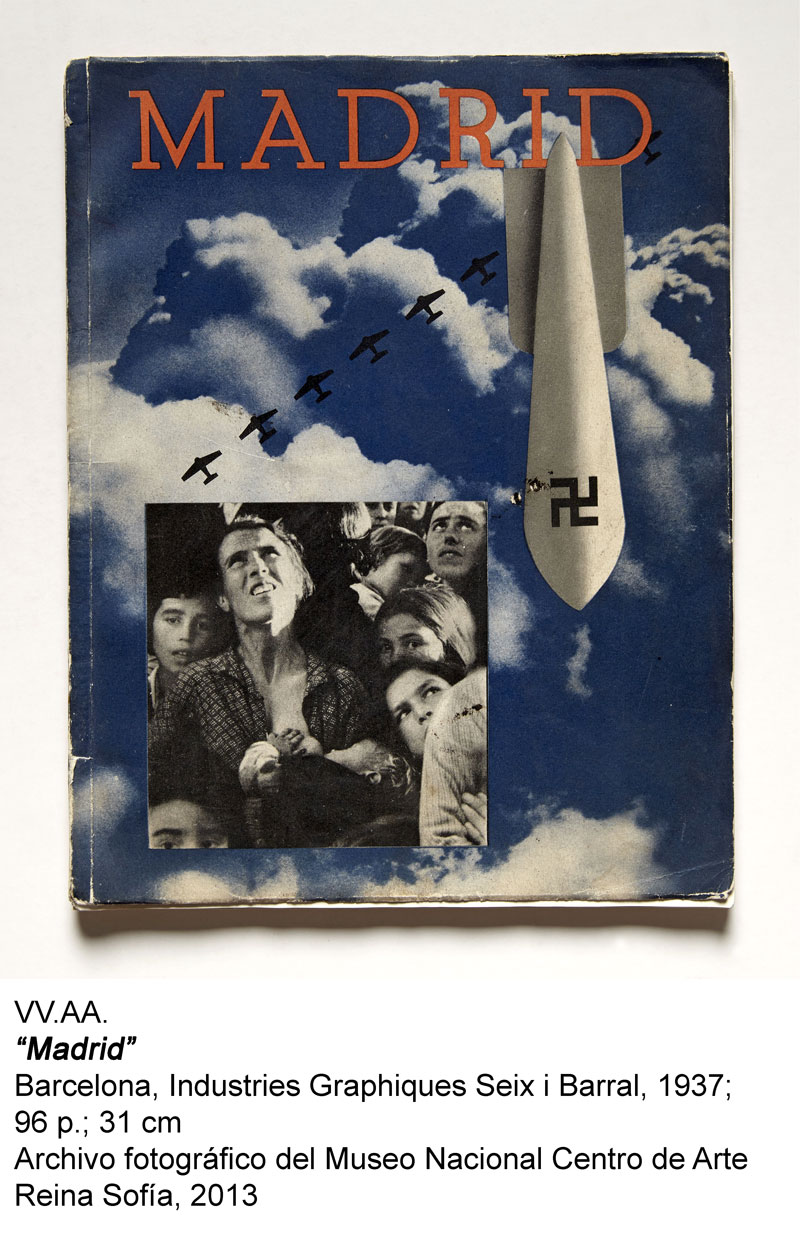
The collective photobook Madrid is a visual account of the consequences of a siege: destruction, homeless people, the exodus of refugees. The effects of the bombings on the civilian population are captured in montages and photographs by Luis Lladó, Robert Capa, Hans Namuth, Chim, and Margaret Michaelis, among others. The faces of the child victims should be stressed – some appalling forensic photographs that were widely used in Republican propaganda and have been mentioned by Arturo Barea, Virginia Woolf, and Susan Sontag, among other writers.

A type of cultural propaganda characteristic of the Republican side was the publication of books combining words and pictures. Several came out during the war, among them Madrid baluarte de nuestra guerra de independencia (Madrid Bulwark of Our War of Independence), with texts by Antonio Machado; Miguel Hernández’s book of poems Viento del pueblo (Winds of the People); and Arturo Barea’s collection of stories titled Valor y miedo (Courage and Fear). All three feature photographs whose authorship is not credited, though we now know that they were taken by photographers such as Walter Reuter or designers such as Mauricio Amster.

The cult of personality was a salient feature of the Nationalist side’s propaganda. In 1939 the rebel military were presented as serious and efficient technicians in Jalón Ángel’s Forjadores de imperio (Empire Builders), a triumphal parade by no means epically portrayed and much less generous with the defeated. This collection of portraits of the men who had won a war was published in a luxury version designed to hang in public offices and in a popular version in postcard form for mass distribution.

The conservative values of the new fascist regime were conveyed in photographs. In Mujeres de la Falange (Women of the Falange, a collection of photographs by José Compte published in luxury magazines and as humble postcards) woman as mother, subordinate to man and an outsider to society and employment, was a compulsory role model, the only exception being that dictated by war itself, which required her to perform “heavy work with feminine grace for when the men return…”

The postwar years

The hardship of the postwar years is conveyed in a few photobooks that managed to slip past the censors. Literature with photos continued to be published in books such as Momentos (Moments), whose poems would be less sad without the ruins, deserted villages, and bare trees found in the photographs of Joaquín del Palacio (Kindel). Rincones del Viejo Madrid (Corners of Old Madrid), a collection of night shots by Alfonso, is an expressionist photobook printed in the opaque tones of the finest photogravure work. Alfonso portrays the capital as yet another victim – a frozen and sinister backdrop as dead as its missing inhabitants.

The book of poems titled Les fenêtres (The Windows) features many closed windows that also resemble abstract paintings in Leopoldo Pomés’s photos, which bring to mind a confined, stifling place. But in spite of everything, life carries on, as shown by the photos in Barcelona, the city of Francesc Català-Roca, who believed that “what words describe photography places on view”: images found in the street, as alive as the people in the photos, in a pleasant urban photobook.

The 60’s: the golden decade of Spanish photography

Palabra e Imagen (Word and Image) was the creation of publisher Esther Tusquets and designer Oscar Tusquets. It was advertised by the Lumen publishing house as “a collection that is different from everything that has been done so far.” Its books “are not art books, they are not photography books, they are not literary works,” but “a new concept.” They all have a theme “and the writers, the photographer and those who plan and produce the book work on it as a team.” The aim was to present “an idea” using different means: “not just words but also the photography, the composition, the type of lettering, and the colour of the paper can be used to express it.”

Palabra e Imagen was Spain’s main contribution to the history of photobooks. For fifteen years it was a laboratory for experimenting with different ways of publishing a collective work produced by writers, designers, photographers, and editors that attached equal importance to visual and textual readings – word and image.

The photographs are by Jaime Buesa, F. Català-Roca, Colita, Joan Colom, Julio Cortázar, Dick Frisell, Antonio Gálvez, Paolo Gasparini, Sergio Larrain, César Malet, Ramón Masats, Oriol Maspons, Xavier Miserachs, Francisco Ontañón, and Julio Ubiña. Prominent among the graphic designers, in addition to the collection’s creator Oscar Tusquets, are Mariona Aguirre, José Bonet, Lluís Clotet, Toni Miserachs, and Enric Satué. Finally, the authors of the texts include writers such as Rafael Alberti, Ignacio Aldecoa, Carlos Barral, Juan Benet, José María Caballero Bonald, Alejo Carpentier, Cavafis, Camilo José Cela, Julio Cortázar, Miguel Delibes, Federico García Lorca, Alfonso Grosso, Ana María Matute, Pablo Neruda, Octavio Paz, Julián Ríos, and Mario Vargas Llosa.

Important photo-essays were published in the sixties, such as Los Sanfermines (The San Fermín Festivities) by Ramón Masats and Barcelona blanc i negre (Barcelona Black and White) by Xavier Miserachs, both of them masters of documentary photography. The first book was hailed as “the most personal photographic work that has been produced in Spain.” It is a “story told in pictures” that shows the expressive possibilities of the photobook and to what extent “a still photograph is not sufficient for a photographer who pursues a narration.” The second is a stroll through the streets of Barcelona in search of its inhabitants, and is more interested in life than in history. It is a “book to look at” that attempts a difficult combination of the subjective humanist photography of the previous decade and the new international urban photography based on the model established by William Klein, a “highly original way of hinting at cities” without succumbing to commonplaces or picturesqueness.

Also by Miserachs is Costa Brava Show, a photobook based on the mass phenomenon of tourism and featuring black-and-white photos on subjects such as young people enjoying themselves, sexual liberation, and the consequences of economic progress: chaotic town planning, corruption, and loss of authenticity. An equally critical intention underlies the photobook Vivir en Madrid (Living in Madrid), which is documentary in content and experimental in form – both the text and the pictures. Francisco Ontañón’s distant, stark photographs are kind to the common folk and critical of the privileged classes, but always humorous.

Nuevas escenas matritenses (New Scenes of Madrid) is a collection of 63 urban tales written by Camilo José Cela based on street photographs by Enrique Palazuelo that show an “incredible Madrid, where time stood still, oblivious and forgotten.” Published in several formats (from low to high culture: popular weekly and literary review; in normal and bibliophile editions), it tells stories invented from documentary photographs – a literary procedure that has been dubbed the ‘Celian picture-story.’ The photos make possible “hearing with new ears, seeing with different eyes what we believed to have been seen and heard forever.”

Luis Acosta Moro believed that the book of the future would be “a poem of short words and great pictures” of the kind embodied by his photobook Cabeza de muñeca (Doll’s Head), a symbolic work that alludes, among other themes, to the Civil War and the image of women. The publisher regarded it as a new type of book, a “film-novel-artistic essay.” The main subject is the model featured in all the pictures, sometimes dancing (or wrestling) with the photobook’s absolute author, who was responsible for everything: photographs, design, and text.

The 70’s: the last auteur photobooks

Los últimos días de Franco (The Last Days of Franco) is a photobook that is unique in both form and content: the funeral rites of the dictator. Live history is fleeting and the propaganda chiefs needed an official history capable of preserving “the living warmth of memories.” To achieve this, Fernando Nuño photographed videos. The result was a photobook consisting of television images that were second-hand but equally or more documentary than the original reports. “As they have been reproduced from video, [the photos] have the quality of a living document,” explains the book, a visual account that is completed with a second volume titled Los primeros días del Rey (The First Days of the King).

The second half of the seventies witnessed the transition to democracy, a highly politicised period in Spain. Two photobooks, Pintadas del referendum (Graffiti on the Referendum) and Pintades Pintadas (Graffiti), compile the propaganda of the day, in this case in the form of street graffiti – a subject also dealt with in French and Portuguese publications. The aim is to preserve the graffiti “as a necessary testament to and document of the vicissitudes of a people in pursuit of their future.” The authors are two short-lived groups of photographers, Equipo Diorama of Madrid and the Barcelona based Foto Fad.

The photobook Punk is pioneering in its portrayal of an international popular culture phenomenon. In Salvador Costa’s photographs taken from “close up and above the subject,” the scene is less important than the audience featured in the shots of ultramodern people, clothing, and rituals captured by the photographer, who was lucky enough to find a publisher capable of discovering more than just another short-lived fad in his photos.

Photographer Colita and writer Maria Aurèlia Capmany, collaborators on the Vindicación feminista magazine, are the authors of Antifémina (Antifemale), a photobook that set out to portray a type of woman “no one wants to look at” but who “is genuine and real, who is not twenty years old, who is not pretty.” To achieve this, Colita selected photos from her archives on themes such as old age, marriage, work, religion, prostitution, the body, marginalisation, advertising, fashion, and the practice of making flirtatious remarks at women. Antifémina is a visual and political essay, a manifesto in favour of women but against ‘femininity,’ which is always “related to the passive role of women.”

Catalogue

A catalogue on this exhibition has been published by the Museo Reina Sofía, Acción Cultural Española (AC/E) and RM. This books includes a text written by the curator and Javier Ortiz-Echagüe, photographies of all the artworks shown and complete and individual information about each photobook by different specialized authors (Horacio Fernández, Javier Ortiz-Echagüe, Concha Calvo, Rocío Robles, Mafalda Rodríguez, Angélica Soleiman and Laura Terré).

Press release from the Museo Nacional Centro de Art Renia Sofia website


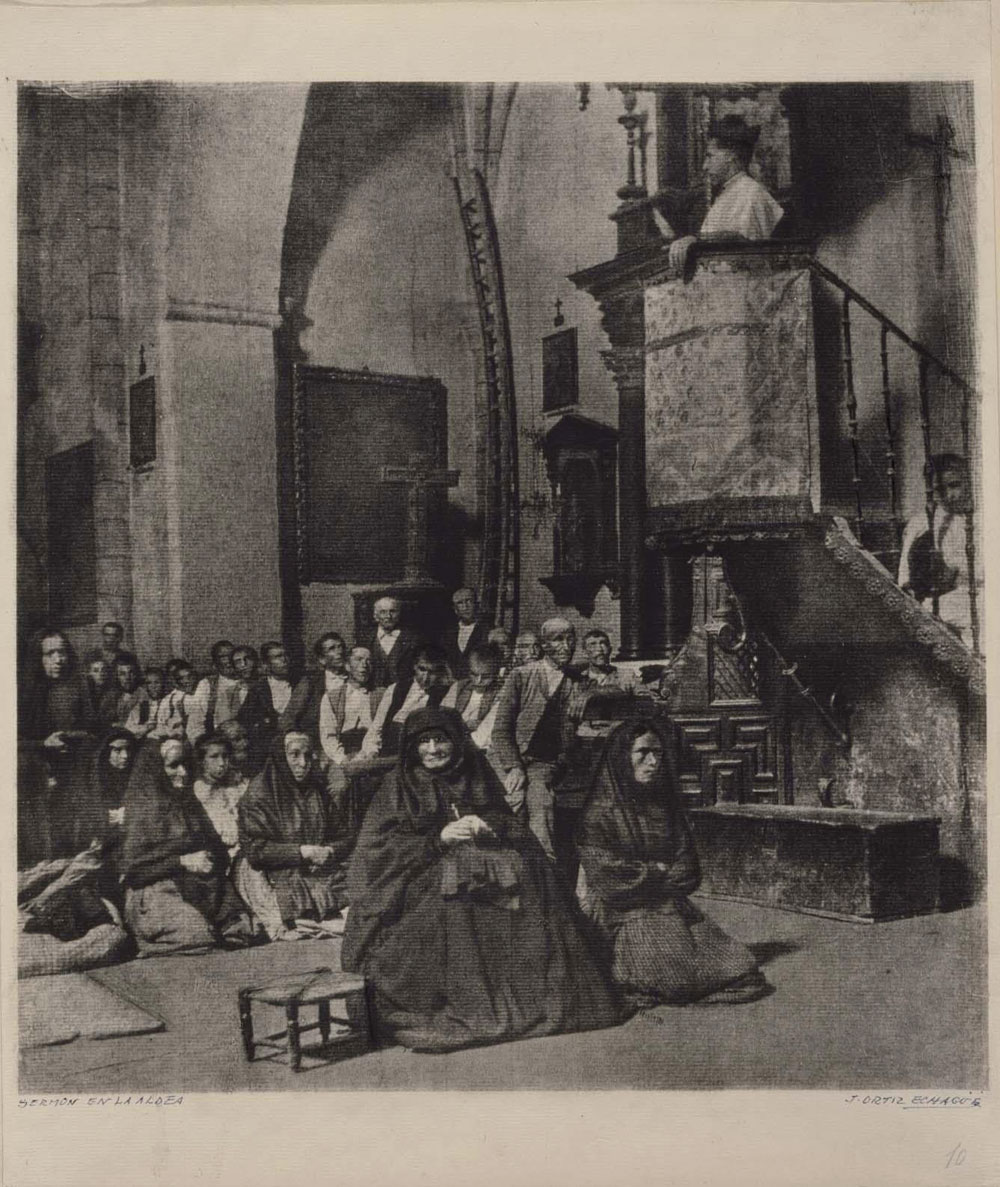
José Ortiz Echagüe Puertas (Guadalajara, Spain, 1886 - Madrid, Spain, 1980) 'Sermón en la aldea' (Village Sermon) 1903


José Ortiz Echagüe Puertas (Guadalajara, Spain, 1886 – Madrid, Spain, 1980)
Sermón en la aldea (Village Sermon)
1903
Carbondir on laid paper
40.5 x 38.7cm


One of José Ortiz Echagüe’s objectives is to achieve “the strange feeling of travelling to a different time.” He comes very close in one of his earliest photographs, Sermón en la aldea (Village Sermon), taken at the parish church of Viguera, a village in La Rioja, using a Photosphere 9 x 12 camera. With artistic photographs, what really matters is the quality of the copies, which in this case are numerous and have varying dates. Ortiz Echagüe made them himself in a laboratory using a personal variant on the technique known as direct carbon, developed under the name of “Carbondir”: a fine pigment print method which is complicated, slow and absolutely artisanal, that results in velvety blacks and clouds of pointillist faded half-colours. The specifics of the carbon direct method mean that Ortiz Echagüe’s prints approach the quality of chalcography, one of the aspirations of less imaginative artistic photography. However, these prints get further from photography the closer they get to engravings. As early as 1923 a review was criticising the disappearance of “what there originally may have been of photography” in his prints, and the artist’s excesses as he “scraped, eliminated, rubbed, smudged, lightened and darkened it.”

Horacio Fernández


José Ortiz-Echagüe (2 August 1886 in Guadalajara – 7 September 1980 in Madrid) was a Spanish entrepreneur, industrial and military engineer, pilot and photographer…

Photographic work

Ortiz-Echagüe believed strongly on the one hand that Spain must modernise itself in accordance with the spirit of the times – inter alia by founding industrial companies – but on the other hand was well aware that a broad modernisation could lead to disappearance of traditional clothing, a change in the villages and even a transformation of the landscape. He wanted at least to capture with his camera and hold this cultural heritage, before the change occurred.

Aesthetics

In the field of artistic photography, he is perhaps the most popular photographer in Spain and one of the most well known abroad. In 1935 the magazine ‘American Photography’ named him one of the top three photographers in the world, while some critics have also considered him to be one of the best Spanish photographers to date. This recognition becomes even more meritorious when it is considered that photography was a hobby to which he only devoted his spare time, especially during weekends and his various trips.

From an artistic point of view one might consider him as a representative of the generation of ’98 in photography, but he is also often included within the photographic movement of Pictorialism, being in fact the best known representative of the Spanish photographic Pictorialism, even though this late definition was never liked by Ortiz-Echagüe. His photographic work focuses on portraying the most defining characteristics of a people, their customs and their traditional costumes as well as locations. He managed to project through his pictures a personal expression which is closer to painting, often using effects during photo processing. Echagüe remained faithful throughout his life to the aesthetics and techniques of Pictorialism, including using gum bichromate and coal.

Working technique

Since 1898 when he got his first camera, he took thousands of photographs entirely in black-and-white. He exposed his negatives using a special technique similar to the carbon printing one (‘carbón fresson’) which was the mainstream practice during his youth. Soon its use would become outdated, however he followed that technique throughout his art, giving a special hue and a greater contrast result to his positives, which now makes his work easily recognisable.

Both paper-making as well as the procedure of obtaining photographs required a lot of patience, an extraordinary ability and a perfect management of that particular technique. Therefore, over the years and as photographic processes would become more simplified and automated, the few photographers still using this technique would tend to abandon it.

The sheet had a thin layer of gelatin onto which was added a black pigment and it was sensitised to light. The photographer obtained his copies under a process based on the principle that in the parts of the image receiving less light the gelatin would remain soft whereas in the parts of the image receiving more light the gelatin would become hardened. The treatment of the copy – bathing in water and sawdust – dissolved the unhardened gelatin together with the pigment onto it revealing a white zone underneath, while the hardened gelatin resisted the bathing process, trapping the pigment inside and subsequently producing black areas. In this way the image on paper was exposed. But furthermore this printed image with the paper still wet, could be retouched using brushes and cotton swabs or scrapers, giving a lot of freedom for creativity.

The ability to intervene in the outcome of a photograph, the greater richness of tones given from the pigment and its stability were the main reasons that Jose Ortiz-Echagüe used this technique. Nevertheless, this archaic method is not considered to be the strongest component in his images. Without an intriguing subject, a good composition, well directed lights on models and the correct layout of the scene, the procedure of coal placed directly to Fresson paper would give a vulgar result.

Text from the Wikipedia website


José Ortiz Echagüe Puertas (Guadalajara, Spain, 1886 - Madrid, Spain, 1980) 'Puertas Lagarteranas' (Women of Lagartera) 1920-1923 (circa)


José Ortiz Echagüe Puertas (Guadalajara, Spain, 1886 – Madrid, Spain, 1980)
Puertas Lagarteranas (Women of Lagartera)
1920-1923 (circa)
Carbondir on laid paper
49.8 x 33.1cm


In 1929 José Ortiz Echagüe’s first photo-book came out in Berlin, Spanische Köpfe (Spanish Heads), published in Madrid in 1930 as Tipos y Trajes de España (Characters and Costumes of Spain), a title which, by 1971, would reach twelve editions. The photos needed to be set up, as the author wrote in 1925: “As I walk around the little villages, I talk to the people, I choose the models and then, one by one, I start the job of dressing them in traditional costumes. Having overcome the models’ objections to dressing up in their ancestors’ clothes, I get them together in a setting that I have chosen beforehand, which might be a typical square, the little church or a nearby hillside, from which one can see the village with its majestic castle which is included to create a wonderful backdrop. The sun has just come out, or is about to go down: its rays light the characters perfectly.” Ortiz Echagüe’s references are paintings by Ignacio Zuloaga and Joaquín Sorolla, particularly the Visión de España (Vision of Spain) series from New York’s Hispanic Society of America. Sorolla’s aim was to observe “without symbolisms or literature, the psychology of every region.” Ortiz Echagüe, on the other hand, is content to “perpetuate in graphic documents unalterable by time’s passage, all that Spanish attire has been and continues to be.” Lagartera, a village in the province of Toledo famous for its crafts, was one of his favourite places for photography, particularly with its unusual festival clothing, which the philosopher José Ortega y Gasset does not believe to be native. In the prologue to Tipos y trajes, he writes: “Lagartera attire is common to almost all Europe: with slight differences, it can be found across the whole of the central and Northern part of the continent.”

Horacio Fernández


José Ortiz Echagüe Puertas (Guadalajara, Spain, 1886 - Madrid, Spain, 1980) 'Lagarteranas en misa' (Women of Lagartera at Mass) 1920-1923 (circa)


José Ortiz Echagüe Puertas (Guadalajara, Spain, 1886 – Madrid, Spain, 1980)
Lagarteranas en misa (Women of Lagartera at Mass)
1920-1923 (circa)
Carbondir on laid paper
46.9 x 33.4cm


Xavier Miserachs (Barcelona, Spain, 1937 - Badalona, Barcelona, Spain, 1998) 'No Title' 1964 (circa)


Xavier Miserachs (Barcelona, Spain, 1937 – Badalona, Barcelona, Spain, 1998)
No Title
1964 (circa) / vintage print
From the series Costa Brava Show
Gelatin silver print on paper
21.4 x 30.3cm


Costa Brava Show (1966) is a photo-book by the photographer Xavier Miserachs, also the author of Barcelona. Blanc i negre (1964), another urban photo-book that travels paths opened up by William Klein. Miserachs claims that in Costa Brava Show “the incorporation of Pop Art elements is obvious, because this is an aesthetic movement that absolutely fascinated me.” And it is true that the subject matter really could not be more perfect for Pop Art: firstly, there is what Manuel Vázquez Montalbán describes as “the paradise of leisure”, secondly “the party (that) is the most baroque display of that leisure time” and finally a “peculiar eroticism”, noted by Josep Pla, who wrote introduction and claims that the photographs are “the best ever taken of what is known as the Costa Brava.” Basically, this is mass tourism as experienced and presented by Miserachs with excellent humour in 155 colour and black and white photographs, covering all the clichés and presaging the globalisation awaiting us all.

Horacio Fernández


Xavier Miserachs (Barcelona, Spain, 1937 - Badalona, Barcelona, Spain, 1998) 'No Title' 1965 (circa)


Xavier Miserachs (Barcelona, Spain, 1937 – Badalona, Barcelona, Spain, 1998)
No Title
1965 (circa) / vintage print
From the series Costa Brava Show
Gelatin silver print on paper


Xavier Miserachs i Ribalta (July 12, 1937 – August 14, 1998) was a Spanish photographer. He studied medicine at the University of Barcelona, but left school to be a photographer. He exhibited his work in Barcelona from 1956. His work is reminiscent of neorealism and is representative of the years of Spanish economic recovery, 1950-1960. His photographs show him as a creator of a new image of the city and its people.

Miserachs was born in Barcelona on July 12, 1937, in the middle of the Spanish Civil War. He was the son of a hematologist and a librarian, Manuel Miserachs and Montserrat Ribalta. He discovered photography at the Technical Institute of Santa Eulàlia, in Barcelona, where he met Ramon Fabregat and his brother Antonio. He studied four courses of a career in medicine, but left shortly before the end to embark on a career as a professional photographer.

In 1952, he became a member of the Photographic Association of Catalonia (Agrupació Fotogràfica de Catalunya), where he became friends with Oriol Maspons. He first exhibited at the headquarters of the Photographic Association of Catalonia in 1957, along with Ricard Terré and Ramon Masats. In 1959 they presented work together again in the Sala Aixelà of Barcelona. He began his professional career in 1959, when Xavier Busquets commissioned him to guide Picasso in his drawings of the facade of the College of Architects of Catalonia.

In 1961, after returning from military service, Miserachs wanted independence, and set up his first studio in Casa David at Carrer Tuset in Barcelona. He began photographing on request and for book authors with his work appearing in books such as Barcelona Blanc i Negre (with 400 photographs recounting the war in Barcelona) and Costa Brava Show.

During the 1960s he also served as a news reporter for Spanish magazines. In 1968 he signed an exclusive contract with the Revista Triunfo. He also published several articles in La Vanguardia, Gaceta Ilustrada, Interviú, Bazaar and Magazin. He was thus able to witness such historic events as May 68, Swinging London and Prague Spring. Miserachs engaged mainly in editorial photography but also did work doing reports.

In January 1967 he co-founded the Escola Eina, where he was one of the first professors of photography. He occasionally frequented Boccaccio’s, then the meeting place par excellence of the gauche divine [a movement of left-wing intellectuals, professionals and artists that emerged in Barcelona during the sixties and early seventies]. In 1997 he published his memoir, contact sheets, which won a Gaziel prize.

Text from the Wikipedia website


Xavier Miserachs (Barcelona, Spain, 1937 - Badalona, Barcelona, Spain, 1998) 'No Title' 1964 (circa)


Xavier Miserachs (Barcelona, Spain, 1937 – Badalona, Barcelona, Spain, 1998)
No Title
1964 (circa) / vintage print
From the series Costa Brava Show
Gelatin silver print on paper
17.9 x 21.4cm


Francisco Ontañón (Barcelona, Spain, 1930 - Madrid, Spain, 2008) 'La actual M-30 (Madrid)' (The M-30 Ring Road Today [Madrid]) 1963 (May) / posthumous print, 2013


Francisco Ontañón (Barcelona, Spain, 1930 – Madrid, Spain, 2008)
La actual M-30 (Madrid) (The M-30 Ring Road Today [Madrid])
1963 (May) / posthumous print, 2013
From the series Vivir en Madrid (Living in Madrid)
Selenium-toned chlorobromide print on fibre-based paper
24.7 x 37.1cm


“It has been several years since I discovered photography; Today it is a physiological necessity for me. It was what I intended; It took me a lot to prove to myself that it was an open path, with an indefinite horizon; and without these conditions I would surely have abandoned […] with my work I have discovered everything that I imagined existed in the world; and little by little I have been penetrating into life and its things […] I think I am a little in the middle of it all as a simple spectator; As a photographer I am in a privileged place. […] In addition to all this, I am also one of those who think, with modesty, that I am contributing something to life and history. Having reached this conclusion, it should be added that it is also necessary to say something; that this testimony alone as such is not enough […] photography is also a utilitarian art.”

~ Francisco Ontañón, translated from the Spanish by Google Translate


Francisco Ontañón (Barcelona, Spain, 1930 - Madrid, Spain, 2008) 'Sans Titre (Madrid)' (No Title [Madrid]) 1963 (May) / posthumous print, 2013


Francisco Ontañón (Barcelona, Spain, 1930 – Madrid, Spain, 2008)
Sans Titre (Madrid) (No Title [Madrid])
1963 (May) / posthumous print, 2013
Selenium-toned chlorobromide print on fibre-based paper
25.6 x 38.4cm


Francisco Ontañón (Barcelona, Spain, 1930 - Madrid, Spain, 2008) 'Sans Titre (Madrid)' (No Title [Madrid]) 1964-65 / posthumous print, 2013


Francisco Ontañón (Barcelona, Spain, 1930 – Madrid, Spain, 2008)
Sans Titre (Madrid) (No Title [Madrid])
1964-65 / posthumous print, 2013
From the series Vivir en Madrid (Living in Madrid)
Selenium-toned chlorobromide print on fibre-based paper
25.4 x 38.2cm


Francisco Ontañón (Barcelona, Spain, 1930 - Madrid, Spain, 2008) 'Sans Titre (Madrid)' (No Title [Madrid]) 1964-65 / posthumous print, 2013


Francisco Ontañón (Barcelona, Spain, 1930 – Madrid, Spain, 2008)
Sans Titre (Madrid) (No Title [Madrid])
1964-65 / posthumous print, 2013
From the series Vivir en Madrid (Living in Madrid)
Selenium-toned chlorobromide print on fibre-based paper
25.7 x 38.4cm


Francisco Ontañón (Barcelona, Spain, 1930 - Madrid, Spain, 2008) 'Sans Titre (Madrid)' (No Title [Madrid]) 1964 / posthumous print, 2013


Francisco Ontañón (Barcelona, Spain, 1930 – Madrid, Spain, 2008)
Sans Titre (Madrid) (No Title [Madrid])
1964 / posthumous print, 2013
From the series Vivir en Madrid (Living in Madrid)
Selenium-toned chlorobromide print on fibre-based paper
25.6 x 38.5cm


Francisco Ontañón (Barcelona, Spain, 1930 - Madrid, Spain, 2008) '600 en Casa de Campo con familia (Madrid)' (Outing to Casa de Campo in the 600, with Family [Madrid]) 1963 (May) / posthumous print, 2013


Francisco Ontañón (Barcelona, Spain, 1930 – Madrid, Spain, 2008)
600 en Casa de Campo con familia (Madrid) (Outing to Casa de Campo in the 600, with Family [Madrid])
1964-65 / posthumous print, 2013
From the series Vivir en Madrid (Living in Madrid)
Selenium-toned chlorobromide print on fibre-based paper
25.5 x 37.7cm


Francisco Ontañón (Barcelona, Spain, 1930 - Madrid, Spain, 2008) 'Parque Sindical (Madrid)' (Parque Sindical Sports Area [Madrid]) 1964 / posthumous print, 2013


Francisco Ontañón (Barcelona, Spain, 1930 – Madrid, Spain, 2008)
Parque Sindical (Madrid) (Parque Sindical Sports Area [Madrid])
1964 / posthumous print, 2013
From the series Vivir en Madrid (Living in Madrid)
Selenium-toned chlorobromide print on fibre-based paper
25.5 x 38.1cm


Francisco Ontañón (Barcelona, Spain, 1930 - Madrid, Spain, 2008) 'Entierro (Madrid)' (Burial [Madrid]) 1967 / posthumous print, 2013


Francisco Ontañón (Barcelona, Spain, 1930 – Madrid, Spain, 2008)
Entierro (Madrid) (Burial [Madrid])
1967 / posthumous print, 2013
From the series Vivir en Madrid (Living in Madrid)
Selenium-toned chlorobromide print on fibre-based paper
25.5 x 38.1cm


VV.AA. 'Madrid'. Barcelona, Industries Graphiques Seix i Barral, 1937


VV.AA.
Madrid
Barcelona, Industries Graphiques Seix i Barral
1937


Ramón Masats Tartera (Spanish, 1931-2024) 'Neutral corner' (Esquina neutral) 1962 / vintage print


Ramón Masats Tartera (Spanish, 1931-2024)
Neutral corner / Esquina neutral
1962 / vintage print


“Ramón Masats’ work dovetails with the end of the autarchy of the Franco regime and new policy of openness, which the photographer captured with a dynamic, unflinching language.”

“Masats, a man of few words, phlegmatic and stubborn in his convictions, coherent in his eye-heart connection, created a photographic legacy that is essential to understanding the development of graphic reporting in Spain.”

~ Chema Conesa


Mario Vargas Llosa (Peruvian, b. 1936) (text), Xavier Miserachs (Spanish, 1937-1988) (photographs) 'Los cachorros' Barcelona: Lumen, colección Palabra e Imagen 1967


Mario Vargas Llosa (Peruvian, b. 1936) (text), Xavier Miserachs (Spanish, 1937-1988) (photographs)
Los cachorros
Barcelona: Lumen, colección Palabra e Imagen
1967


Xavier Miserachs (Barcelona, 1937-1998) was one of Catalonia’s leading photographers. His career began when he joined the Agrupació Fotogràfica de Catalunya as a teenager in 1952. It was there that he met Oriol Maspons and began what would become a lifelong friendship. In 1954, aged seventeen, he won the 1st Luis Navarro Trophy at the 2nd National Salon of Modern Photography organised by the Agrupació Fotogràfica de Catalunya. That same year, he began studying medicine, although he dropped out in the last year of his studies in order to concentrate fully on photography. The first of the two now-classic exhibitions with photographs by Xavier Miserachs, Ricard Terré and Ramón Masats was held in 1957 at the Agrupació Fotogràfica de Catalunya in Barcelona, at AFAL in Almeria, and at the Real Sociedad Fotográfica in Madrid. Two years later, in 1959, the second Terré-Miserachs-Masats show was held at Sala Aixelà in Barcelona.

From then on, Miserachs became one of the driving forces behind the renewal of documentary photography in Catalonia, which picked up the thread of a tradition that had been cut short by the Spanish Civil War. Miserachs published books that have, for decades, shaped the imaginary of Barcelona and the Costa Brava. Barcelona. Blanc i negre (Avmà, 1964), Costa Brava Show (Kairós, 1966) and Los cachorros (Lumen, 1967) are two key works from the photographic avant-garde of the time. Miserachs was strongly influenced by the work of the photographer William Klein and his books on cities, particularly the first one dealing with New York, which was published in 1955. The 1955 exhibition The Family of Man also left a deep impression on Miserachs and his contemporaries, and helped to shape the neutralist poetics that showed the working classes moving towards the new urban environment. From the late sixties onwards, Miserachs expanded his professional activities to include advertising, photojournalism and editorial photography. In 1966, be began travelling around the world as correspondent for La Actualidad Española, Gaceta Ilustrada, La Vanguardia, Interviú and Triunfo. In 1969 he co-founded Eina art school and became its first photography teacher, and in 1970 he began his occasional experiments with film: he was producer and director of photography for two underground films directed by Enrique Vila-Matas and Emma Cohen, and directed and produced the short film Amén, historieta muda. In the final years of his life, Miserachs became interested in writing as a way of leaving a written record of his way of conceiving photography, and he wrote books such as Fulls de contactes. Memòries (Edicions 62, 1998) and Criterio fotográfico (Omega, 1998). His photographs are part of some of the most important collections of the photography of the period, including Fotocolectania and MACBA.

Text from the MACBA Museu d’Art Contemporani de Barcelona website


Salvador Costa (Spanish, 1948-2008) and Jordi Valls (Spanish) 'Sans Titre' (from the series 'Punk') 1977


Salvador Costa (Spanish, 1948-2008) and Jordi Valls (Spanish)
Sans Titre (from the series Punk)
1977


Salvador Costa (Barcelona, 1948-2008), photographer and author of one of the seminal photo-books on the international punk phenomenon. In the spring of 1977, called by his cousin Jordi Valls, he was a direct witness to its emergence in London, attending in the span of just a few days numerous concerts held in the British capital in venues such as the Roxy, where he documented with his camera not only the performances of Cherry Vanilla, The Cortinas, Generation X, The Jam, Johnny Mopped, The Lurkers, Models, The Polices, XTC, and The Strangles, but also the audience who became the undisputed protagonists of his shots, including Johnny Rotten of the Sex Pistols as well just hanging out.

Back from his London foray, Costa presented the work to Juan José Fernández, who published it that same year under his label Producciones Editoriales label with the title Punk (below), the eighth publication of his Especial Star Books collection, in which there are only two dedicated to photography (the other, Disparos, bears witness to the hippie movement of the sixties).

Text from the Archivo Lafuente website


Salvador Costa (Spanish, 1948-2008) and Jordi Valls (Spanish) 'Punk' Barcelona: Producciones Editoriales, colección Especial Star Book 1977


Salvador Costa (Spanish, 1948-2008) and Jordi Valls (Spanish)
Punk
Barcelona: Producciones Editoriales, colección Especial Star Book
1977


Museo Nacional Centro de Art Renia Sofia
Calle Santa Isabel, 52
28012 Madrid

Opening hours:
Monday, Wednesday – Saturday 10.00am – 9.00pm
Sunday 10.00am – 2.30pm
Tuesday Closed, including holidays

Museo Nacional Centro de Art Renia Sofia website

LIKE ART BLART ON FACEBOOK

Back to top

Exhibition: ‘Playgrounds. Reinventing the square’ at the Museo Nacional Centro de Arte Reina Sofía, Madrid

Exhibition dates: 29th April – 22nd September 2014

Curatorship: Manuel J. Borja-Villel, Tamara Díaz y Teresa Velázquez

Artists: Vito Acconci, Efrén Álvarez , Erich Andrés, Karel Appel, Archigram, Archizoom, Ricardo Baroja, Bernardo Bertolucci, Lina Bo Bardi; André Vainer and Marcelo Ferraz. Photography: Paquito, André Breton, Hans Bruggeman, Caja Lúdica, Camping Producciones, Henri Cartier-Bresson, Tranquillo Casiraghi, Mariana Castillo Deball, Francesc Català-Roca, Mario Cattaneo, Agustí Centelles, Chto Delat?, Julieta Colomer, Joan Colom, Constant (Constant Nieuwenhuys), Waldemar Cordeiro, Corneille, Violette Cornelius, Margit Czenki, Guy Debord, Maya Deren, Disobedience Archive. Curator: Marco Scotini, Ed van der Elsken , James Ensor, El equipo de Mazzanti (Giancarlo Mazzanti, Carlos Medellín, Stanley Schultz, Juliana Zambrano, Eugenia Concha, Lucia Lanzoni and Mariana Bravo), Escuela de Valparaíso, Marcelo Expósito, Aldo van Eyck, Kattia García Fayat, Priscila Fernandes, Ángel Ferrant, José A. Figueroa, Robert Filliou, Peter Fischli, Peter Friedl, Alberto Giacometti, John Goldblatt, Francisco de Goya, GRAV (Groupe de Recherche d’Art Visuel), Grupo Contrafilé, Eric Hobsbawm, Lady Allen of Hurtwood, Internationale Situationniste, Cor Jaring, Kindel (Joaquín del Palacio), Henri Lefebvre, Fernand Léger, Helen Levitt, Liverani, L.S. Lowry, Maruja Mallo (Ana María Gómez González), Man Ray (Emmanuel Radnitzky), Melchor María Mercado, Boris Mikhailov, Masato Nakagawa, Beaumont Newhall, Palle Nielsen , Isamu Noguchi , Nils Norman, Nudo (Eduardo Marín and Vladimir Llaguno), Hélio Oiticica, OMA / Rem Koolhaas, Cas Oorthuys, Amédée Ozenfant, Martin Parr, Jan H Peeterse, Erik Petersen, Adrian Piper, Cedric Price, Ab Pruis, Edgar Reitz and Alexander Kluge, Oliver Ressler, Jorge Ribalta, Xavier Ribas, Marcos L. Rosa, Emilio Rosenstein (Emil Vedin), Roberto Rossellini, Otto Salemon, Louis Sciarli, Alison y Peter Smithson, Kenneth Snelson, José Solana (José Gutiérrez Solana), Carl Theodor Sørensen, Humphrey Spender, Christensen Tage, Túlio Tavares (comp.), Teatro Ojo, Robert Venturi, Denise Scott Brown and Steven Izenour, Jean Vigo, Nuria Vila, Dmitry Vilensky, Pedro Vizcaíno, Peter Watkins, Weegee (Arthur H. Fellig), David Weiss


Many thankx to the Museo Nacional Centro de Arte Reina Sofía for allowing me to publish the photographs in the posting. Please click on the photographs for a larger version of the image.


Installation view of the exhibition 'Playgrounds. Reinventing the square' at the Museo Nacional Centro de Arte Reina Sofía, Madrid

Installation view of the exhibition 'Playgrounds. Reinventing the square' at the Museo Nacional Centro de Arte Reina Sofía, Madrid

Installation view of the exhibition 'Playgrounds. Reinventing the square' at the Museo Nacional Centro de Arte Reina Sofía, Madrid

Installation view of the exhibition 'Playgrounds. Reinventing the square' at the Museo Nacional Centro de Arte Reina Sofía, Madrid

Installation view of the exhibition 'Playgrounds. Reinventing the square' at the Museo Nacional Centro de Arte Reina Sofía, Madrid

Installation view of the exhibition 'Playgrounds. Reinventing the square' at the Museo Nacional Centro de Arte Reina Sofía, Madrid

Installation view of the exhibition 'Playgrounds. Reinventing the square' at the Museo Nacional Centro de Arte Reina Sofía, Madrid

Installation view of the exhibition 'Playgrounds. Reinventing the square' at the Museo Nacional Centro de Arte Reina Sofía, Madrid


Installation views of the exhibition Playgrounds. Reinventing the square at the Museo Nacional Centro de Arte Reina Sofía, Madrid


Through a selection of works from different time periods and in different mediums (paintings, sculptures, installations, videos, photographs, archive devices…), this exhibition analyses the socialising, transgressive and political potential of play when it appears linked to public space. The premise of Playgrounds is twofold: on one side, the popular tradition of carnival shows how the possibility of using recreational logic to subvert, reinvent and transcend exists, if only temporarily. On the other side, there has been two fundamental constants in utopian imagery throughout history: the vindication of the need for free time (countering work time, productive time) and the acknowledged existence of a community of shared property, with a main sphere of materialisation in public space.

The historical-artistic approach to the political and collective dimension of spaces of play, on view in this exhibition, gets under way in the second half of the 19th century, a time that signals the start of the process of free time becoming consumption time; a process that threw the concept of public space into crisis as it started to be conceived not only as an element for exercising (political) control, but also one for financial gain. Thus, cities started to become the objects of rational and utilitarian planning, where the field of architecture was redefined, providing spaces for play with new values, built as one of the key points of the modern ideology of the public.

This ideology was reshaped in the early decades of the 20th century; for instance, during this time projects were implemented that allowed the recovery and increased value of land that had been completely torn apart by war, turning it into areas of play aimed at nurturing children’s independence. The significant turning point in this process of restructuring took place during the 1960s, when, as demonstrated by numerous artistic and activist experiences and practices in recent decades, the festive subversion and anti-authoritarian outbursts from carnivalesque logic started to be employed as political tools attempting to generate other ways of making and contemplating the city, as well as organising community life.

With some 300 works, the exhibition recounts a different history of art, from the end of the 19th century to the present day, whereby the artwork plays a part in redefining public space by exploring the city as a game board, questioning modern-day carnival, vindicating the right to laziness, reinventing the square as a place of revolt and discovering the possibilities of a new world through its waste. The exhibit takes the playground model as an ideological interrogation of an alienated and consumerist present.

Text from the Museo Nacional Centro de Arte Reina Sofía website


Frank Burke (Australian, 1920-1984) 'A kids scooter race at the Paddy's Markets in Sydney, 19 August 1956' 1956


Frank Burke (Australian, 1920-1984)
A kids scooter race at the Paddy’s Markets in Sydney, 19 August 1956
1956
Silver gelatin print


Helen Levitt (American, 1913-2009) 'Boy with Ribbon' 1940


Helen Levitt (American, 1913-2009)
Boy with Ribbon
1940
Silver gelatin print


Helen Levitt (American, 1913-2009) 'New York (Two girls with ribbon)' c. 1940


Helen Levitt (American, 1913-2009)
New York (Two girls with ribbon)
c. 1940


Agustí Centelles (Catalan, 1909-1985) 'Barcelona, España. Guardería infantil en Vía Layetana' [Babysitting in Layetana Road] 1936-1939


Agustí Centelles (Catalan, 1909-1985)
Barcelona, España. Guardería infantil en Vía Layetana [Babysitting in Layetana Road]
1936-1939
Silver gelatin print


Fernand Léger (French, 1881-1951) 'Les Loisirs - Hommage à Louis David' [Leisure - Homage to Louis David] 1948-1949


Fernand Léger (French, 1881-1951)
Les Loisirs – Hommage à Louis David [Leisure – Homage to Louis David]
1948-1949


Palle Nielsen (Danish, 1920-2000) 'A group of activists from different organisations in Denmark cleared a backyard in Stengade 52'


Palle Nielsen (Danish, 1920-2000)
A group of activists from different organisations in Denmark cleared a backyard in Stengade 52 in the area Nørrebro in Copenhagen the 31 of March 1968 and build a playground for the children instead. This was done to create attention of the lack of playgrounds as well as an overall redevelopment of the area
© VEGAP, Madrid, 2014
© PETERSEN ERIK / Polfoto


Louis Sciarli (French, b. 1925) 'Le Corbusier. Marseille: Unité d'habitation, École Maternelle' [Le Corbusier. Marseille: housing unit, Kindergarten] 1945/2014


Louis Sciarli (French, b. 1925)
Le Corbusier. Marseille: Unité d’habitation, École Maternelle [Le Corbusier. Marseille: housing unit, Kindergarten]
1945/2014


Maruja Mallo (Ana María Gómez González) (Viveiro, Lugo, Spain, 1902 - Madrid, Spain, 1995) 'The Fair' 1927


Maruja Mallo (Ana María Gómez González) (Viveiro, Lugo, Spain, 1902 – Madrid, Spain, 1995)
The Fair (La verbena)
1927 (September)
Oil on canvas
119 x 165cm


In 1928, at a one-woman exhibition put on by Ortega y Gasset in the rooms of the Revista de Occidente, Maruja Mallo showed the four oil paintings in the Madrid Fair series from which La verbena (The Fair), currently in the Museo Reina Sofía collection, is taken. In this colourful painting, an example of her personal world-view, the artist creates Baroque-filled scenes that are apparently without logic, where the motifs self-multiply into a whirlwind of lines and sensations. Imbued with a sharp critical sense, which is translated by the painter into subtle satire, the painting contains all the elements of the traditional popular Madrid fairs (the shooting gallery, the test-your-strength machine), alongside the principal characters and other, stranger kinds of characters like the one-eyed giant, the priest enjoying one of the sideshows or the man with deformed feet, begging with a guitar on his back. All this contributes to an undeniably Surrealist atmosphere.


Marcos L. Rosa. 'Revisitando los playgrounds de Aldo van Eyck' 1974/2011


Marcos L. Rosa
Revisitando los playgrounds de Aldo van Eyck
1974/2011


The exhibition addresses the socialising, transgressive and political potential of play in relation to public space. Ever since the popular tradition of the carnival, it has been recognised that it is possible, even if only temporarily, to subvert, reinvent and transcend an everyday life reduced to a mere exercise in survival. The recognition of the existence of communal goods and the need for free time, in direct contradistinction to working time, are two fundamental constants of the utopian imagination throughout history.The public space, as an ambience which synthesises the notion of communal goods, is materialised as part of the experience of citizen participation.

Adopting as its premise the notion of carnival pageantry as a practice that alters the established order, the exhibition Playgrounds. Reinventing the square will explore the collective dimension of play and the need for a “ground” of its own in order to engage in the construction of a new public arena. Playgrounds (curated by Manuel J. Borja-Villel, Tamara Díaz and Teresa Velázquez) takes a historical and artistic approach to the space reserved for play and its socialising, transgressive and political potential from the dawn of modernity to the present day. The show to be seen at the Museo Reina Sofía aims to explore the recreational, playful, festive side of life that puts the humdrum reality of the everyday on hold, subverting, reinventing and transcending it for one fleeting moment.

With approximately 300 works in several formats (painting, sculpture, facilities, video, photography, graphical arts, cinema and documents) of artists like James Ensor, Francisco of Goya, Henri Cartier-Bresson, Helen Levitt, Alberto Giacometti, Ángel Ferrant, Hélio Oiticica, Lina Bo Bardi, Fischli and Weiss, Vito Acconci, Priscila Fernandes, or Xabier Rivas, Playgrounds. Reinventing the square shows how the playful element, understood as creative strategy, coexists with questions related to the public sphere Departing from this idea, the exhibition explores the recognition of the time and the space of the game as areas of essay and learning.

The show adopts the model of the ‘playground’ as an ideological interrogation of an alienated and consumerist present. After the industrial revolution and the gradual implantation of labor systems based on the capitalist principle of minimum investment for maximum gain, there emerges an indissociable identification between producer and consumer, one of whose immediate consequences is the conversion of free time into consumption time. The alienation of labor dominates modes of life and gives rise to a crisis in public spaces, threatened in their turn by economic forces. Derived from a rational and utilitarian planning of the city, the public park is instituted as a surrogate collective paradise, leading from the mid-19th century to great urban facilities for mass consumption and entertainment. From architecture, within the Modern Movement and its derivates, comes the definition of the playground, endowed with new social, pedagogical and functional values while at the same time emerging as one of the key points of the modern ideology of the public.

The ideas of a “junk playground”, proposed by the Danish architect Carl Theodor Sørensen in 1935, and of an “adventure playground”, which was promoted in the United Kingdom by the landscape architect Lady Allen of Hurtwood and spread to several European cities after the Second World War, are means of retrieving and attaching significance to wastelands and bomb sites as play areas aimed at child autonomy. In the sixties, the child is vindicated as an autonomous political subject in a context dominated by the vindication of the right to the city, and coinciding with the high point of the revolt of the homo ludens (borrowing from the essay of the same name by Johan Huizinga) in the context of May ’68. As evidenced by the numerous processes of social activism in recent years, festive subversion and the anti-authoritarian overspilling of boundaries by the carnival become new ways of practising politics. The movements of 2011 in such scattered locations as Tahrir (Cairo), Sol (Madrid), Syntagma (Athens), and other squares, streets and neighbourhoods restored the public and democratic dimension of such spaces. This temporary occupation, articulated through virtual communications networks, implied a reappropriation of the political and experimentation with other forms of organisation and communal life.

The introduction to the exhibition will provide background on the carnivalesque concept of life, underscoring certain aspects related to the notion of free time in modern life. The show will also revisit the street as a place of play and self-realisation, through examples of adventure playgrounds as well as photographs and films that will give a historic panoramic since the 1930s from a documentary perspective. The nucleus of the exhibition is devoted to the model of the modern playground and its contradictions, with relevant materials accounting for the urban revolution of the 1960s, the consideration of the city as a relational and psychological construction and works that parallel aesthetic and political transformations.

The last section of the show will consist of a series of experiments based on anti-hegemonic exercises, such us the civil appropriation of the street for “playground” use and works that challenge passive recreation through the emancipative power of play, not to mention recent experiences that resume the collective reinvention of the square and have become essential in envisioning new ways of doing politics.

Press release from the Museo Nacional Centro de Arte Reina Sofía


Helen Levitt (American, 1913-2009) 'Untitled (Boy and gun)' 1940


Helen Levitt (American, 1913-2009)
Untitled (Boy and gun)
1940
Silver gelatin print


Helen Levitt (American, 1913-2009) 'Children playing with a picture frame, New York' (Niños jugando con un marco, Nueva York) c. 1940


Helen Levitt (American, 1913-2009)
Children playing with a picture frame, New York (Niños jugando con un marco, Nueva York)
c. 1940


Helen Levitt (American, 1913-2009) 'Fruit and candy' Nd


Helen Levitt (American, 1913-2009)
Fruit and candy
Nd


Francesc Català-Roca Valls (Tarragona, Spain, 1922 - Barcelona, Spain, 1998) 'Games in an Empty Lot' 1950 (circa) / Posthumous print, 2003


Francesc Català-Roca Valls (Tarragona, Spain, 1922 – Barcelona, Spain, 1998)
Games in an Empty Lot
1950 (circa) / Posthumous print, 2003
Selenium-toned gelatin silver print on paper


Joan Colom (Spanish, 1921-2017) 'No title' 1958-1961


Joan Colom (Spanish, 1921-2017)
No title
1958-1961 (circa) / Vintage print
From the series El carrer (The Street)
Gelatin silver print on paper


Joan Colom published his series on Barcelona’s Chinatown in the magazine AFAL (1962) with an autobiography: “Age: 40. Profession: Accountant. Hobbies: Apart from photography, obviously, none.” Of his method, Colom said: “I have decided to only work with subjects that I have predetermined.” Oriol Maspons adds the technical details: “Everything was taken using a Leica M2, shot from the hip without framing or focusing. A real photographer’s work. More than a year on the same subject.” The series had been exhibited with some success (and controversy) at the Sala Aixelá in Barcelona the previous year, under the title El carrer (The Street). In 1964 it was finally published by Lumen in one of the finest photo-books in their Palabra e Imagen collection, “Izas, rabizas y colipoterras”, designed by Oscar Tusquets and Cristian Cirici. Camilo José Cela contributed a text based around Colom’s (surreptitious but captionless) photos that was full of broad, cruel humour, pitilessly mocking the women, photographed by Colom and judged by Cela. Somewhat ahead of her time, one of the women actually sued the photographer, the only result of which was the photo-book’s withdrawal from bookshops, and Colom’s retirement from photography for years. From the 1980s onwards public obscurity became public recognition, which has continued to grow.


Museo Nacional Centro de Arte Reina Sofía
Sabatini building. Room A1
Calle Santa Isabel, 52
Madrid 28012 Spain
Phone: (+34) 91 7741000

Opening hours:
Monday – Saturday from 10.00am – 9.00pm
Sunday from 10.00am – 2.30pm

Museo Nacional Centro de Arte Reina Sofía website

LIKE ART BLART ON FACEBOOK

Back to top