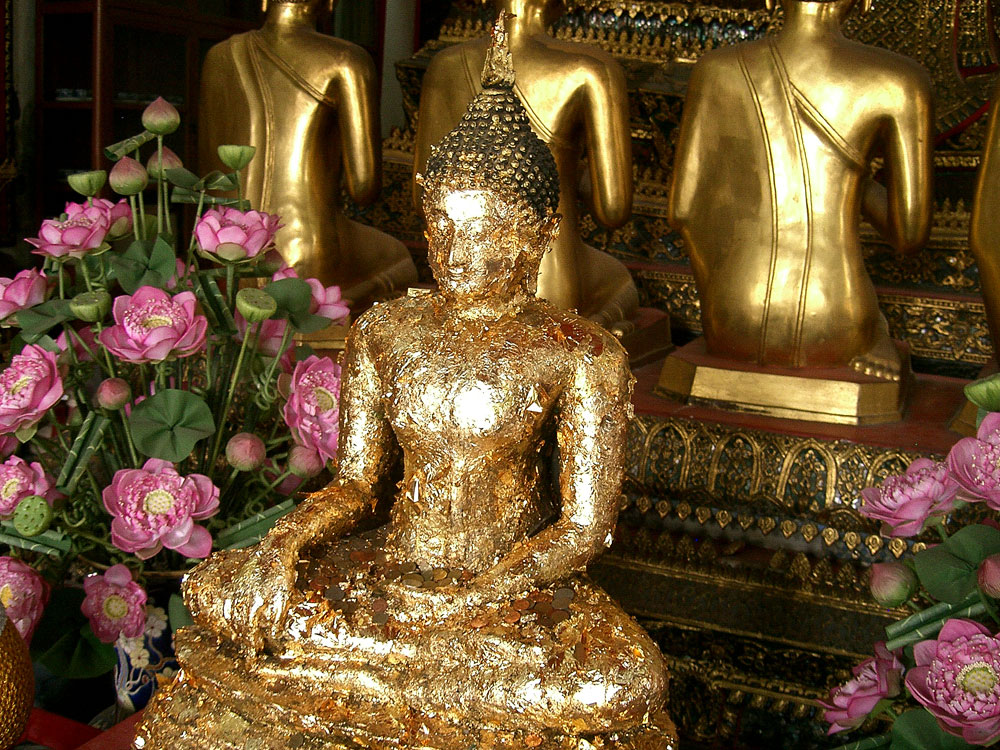
Marcus Bunyan (Australian, b. 1958) Lord Buddha at Wot Poh, Bangkok 2011
I love reading Judith Butler; she challenges you to think about the world in different ways, always intelligently and insightfully.
Marcus
“We can think about demarcating the human body through identifying its boundary, or in what form it is bound, but that is to miss the crucial fact that the body is, in certain ways and even inevitably, unbound – in its acting, its receptivity, in its speech, desire, and mobility. It is outside itself, in the world of others, in a space and time it does not control, and it not only exists in the vector of these relations, but as this very vector.11 In this sense, the body does not belong to itself.
The body, in my view, is where we encounter a range of perspectives that may or may not be our own. How I am encountered, and how I am sustained, depends fundamentally on the social and political networks in which this body lives, how I am regarded and treated, and how that regard and treatment facilitates this life or fails to make it liveable. So the norms of gender through which I come to understand myself or my survivability are not made by me alone. I am already in the hands of the other when I try to take stock of who I am. I am already up against a world I never chose when I exercise my agency. It follows, then, that certain kinds of bodies will appear more precariously than others, depending on which version of the body, or of morphology in general, support or underwrite the idea of the human life that is worth protecting, sheltering, living, mourning. These normative frameworks establish in advance what kind of life will be a life worth living, what life will be a life worth preserving, and what life will become worthy of being mourned. Such views of lives pervade and implicitly justify contemporary war. Lives are divided into those representing certain kinds of states and those representing threats to state-centered liberal democracy, so that war can then be righteously waged on behalf of some lives, while the destruction of other lives can be righteously defended.”
Butler, Judith. Frames of War: When is Life Grievable? London: Verso, 2010. pp. 52-53
Footnote 11. A given morphology takes shape through a specific temporal and spatial negotiation. It is a negotiation with time in the sense that the morphology of the body does not stay the same; it ages, it changes shape, it acquires and loses capacities. And it is a negotiation with space in the sense that no body exists without existing somewhere; the body is the condition of location, and every body requires an environment to live. It would be a mistake to say that the body exists in its environment, only because the formulation is not quite strong enough. If there is no body without environment, then we cannot think the ontology of the body without the body being somewhere, without some “thereness.” And here I am not trying to make an abstract point, but to consider the modes of materialization through which a body exists and by means of which that existence can be sustained and/or jeopardized.
Space [ ] the final frontier … where silence is golden !
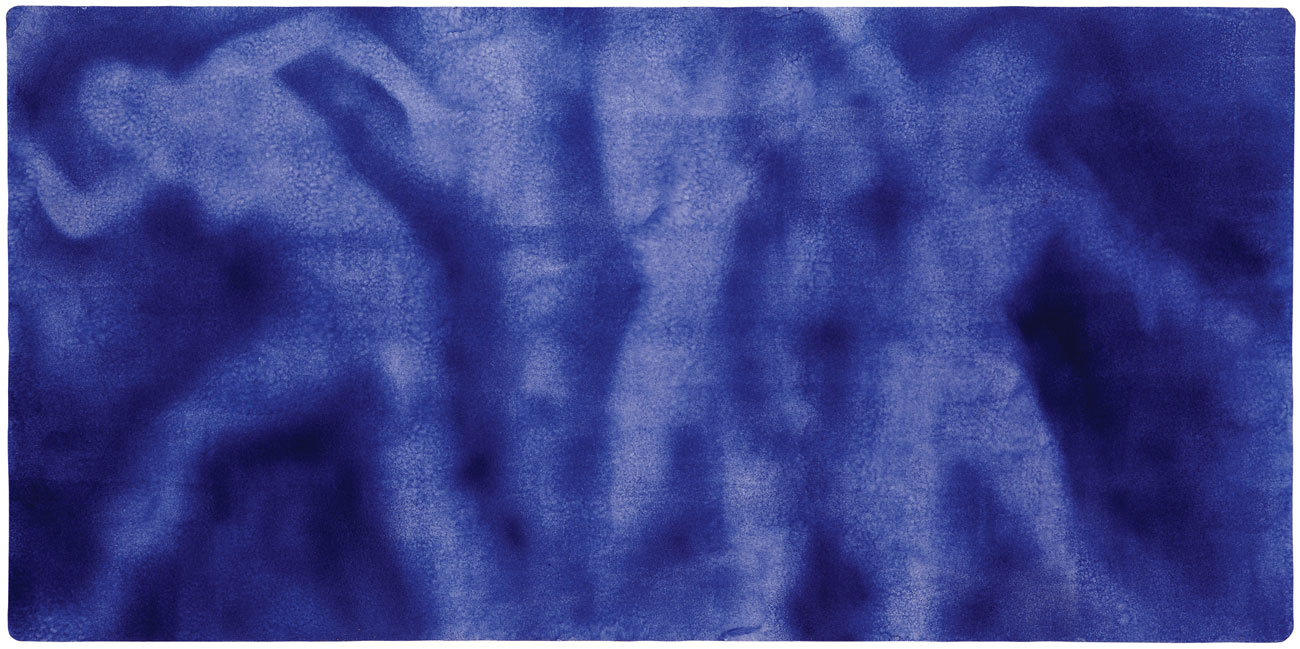
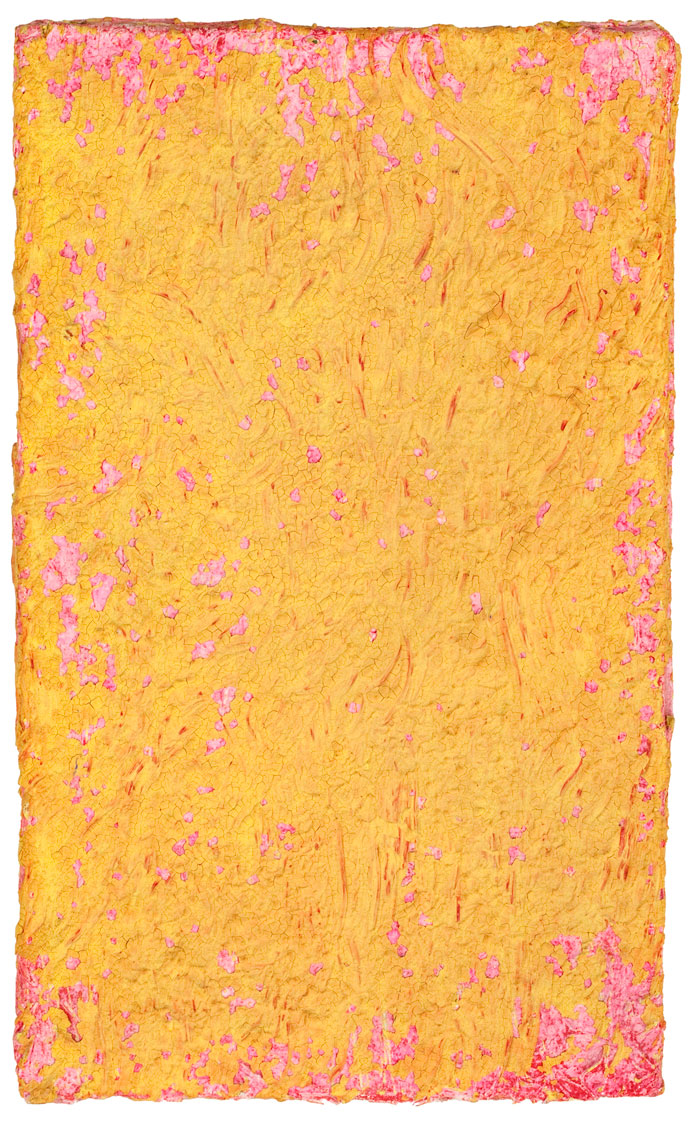
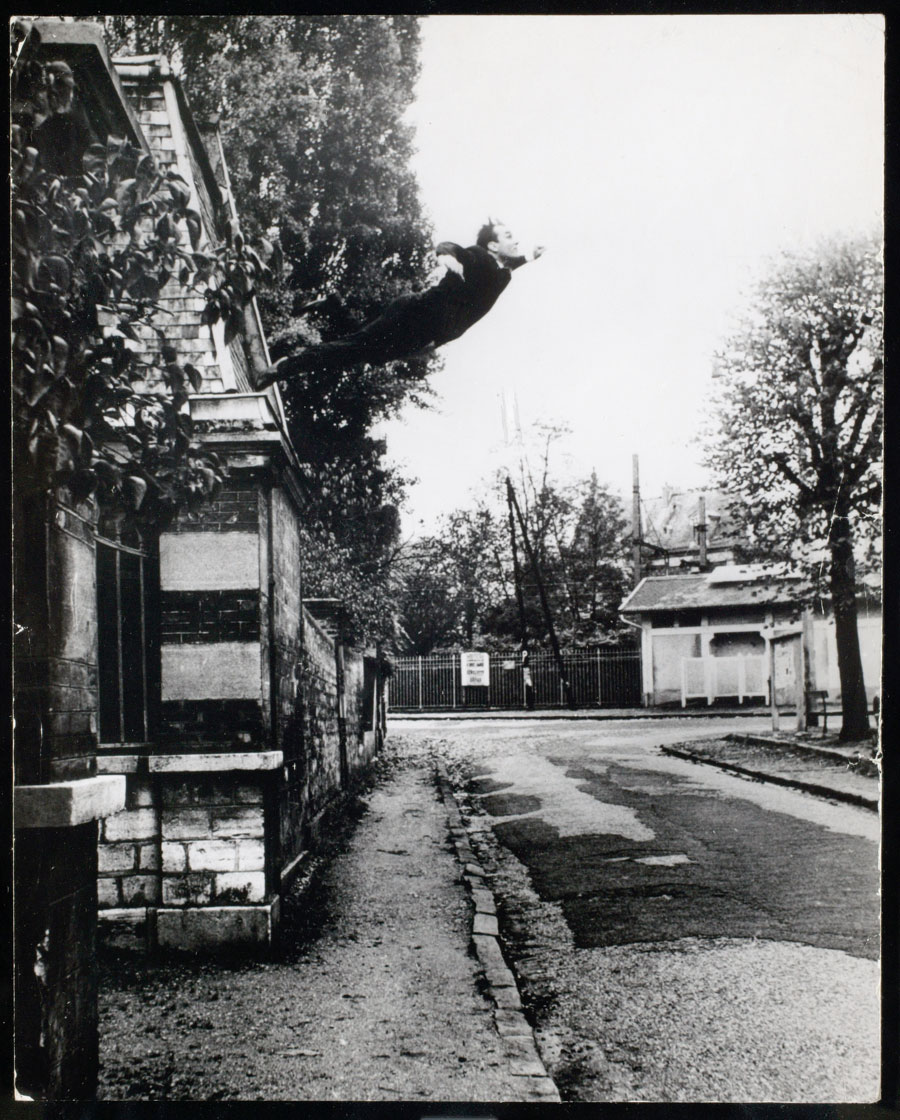
Many thankx to the Hirshhorn Museum and Sculpture Garden for allowing me to publish the photographs in the posting. Please click on the photographs for a larger version of the image. See all the Hirshhorn Flicker photosets of Yves Klein.
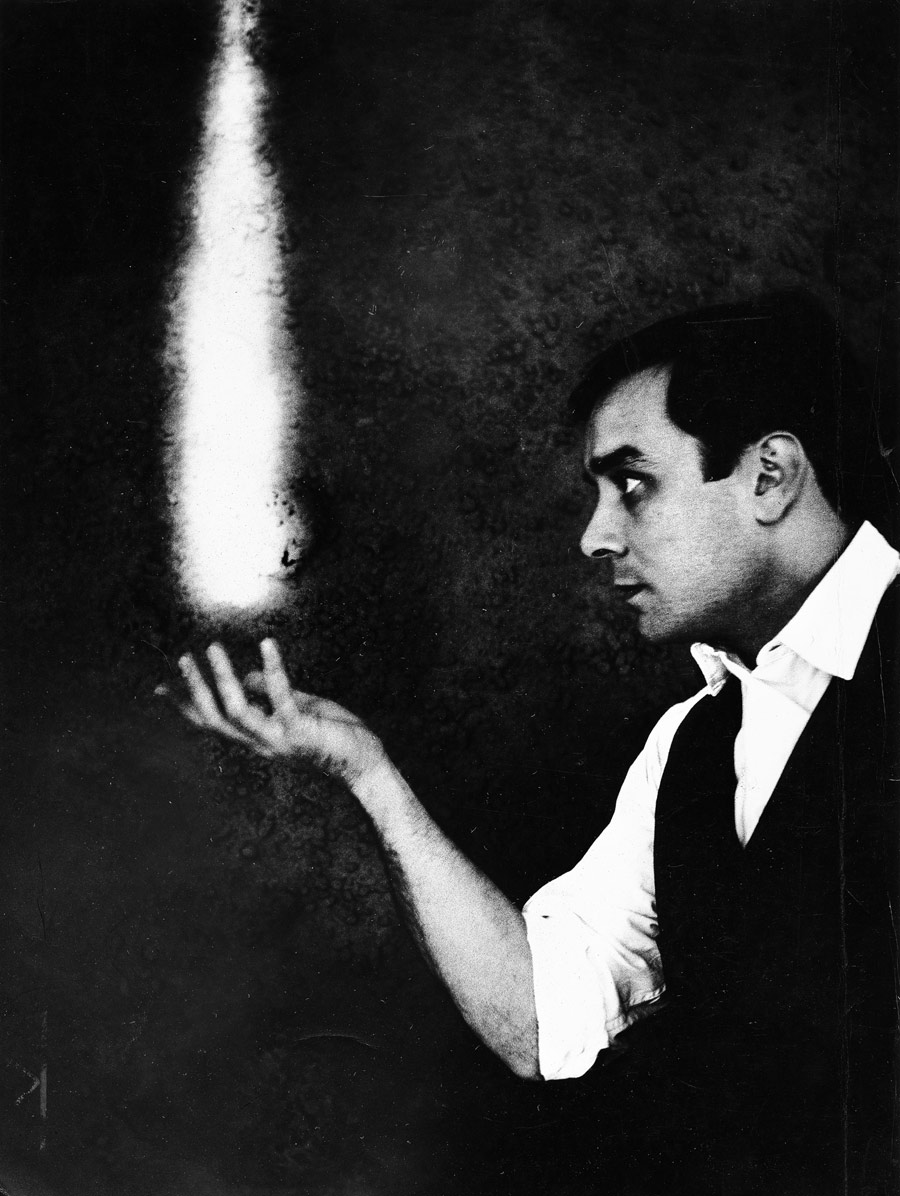
“I am the painter of space. I am not an abstract painter but, on the contrary, a figurative artist, and a realist. Let us be honest, to paint space, I must be in position. I must be in space.”
One of the 20th century’s most influential artists, Yves Klein (French, b. Nice, 1928; d. Paris, 1962), took the European art scene by storm in a prolific but brief career that lasted only from 1954 to 1962. Yves Klein: With the Void, Full Powers, on view at the Hirshhorn May 20 through Sept. 12, is the first major retrospective of the artist’s work in the United States since 1982. Co-curated by the Hirshhorn’s deputy director and chief curator Kerry Brougher and Dia Art Foundation director, former chief curator and deputy director at the Walker Art Center in Minneapolis, the exhibition is co-organised by the Hirshhorn and the Walker and developed in full collaboration with the Yves Klein Archives in Paris.
Presenting approximately 200 works, Yves Klein: With the Void, Full Powers explores the full range of the artist’s body of work and offers an essential overview and examination of a career that marked a key transition in 20th-century art. His work embodied an understanding of art beyond a western conception of modernity, beyond the object and beyond traditional notions of what art can be.
“Klein’s short but intense career is a pivotal moment in contemporary art history,” said Brougher. “His work questioned what art and even society could be in the future, and it provided new pathways leading to pop art, minimalism, conceptual art, installation and performance.”
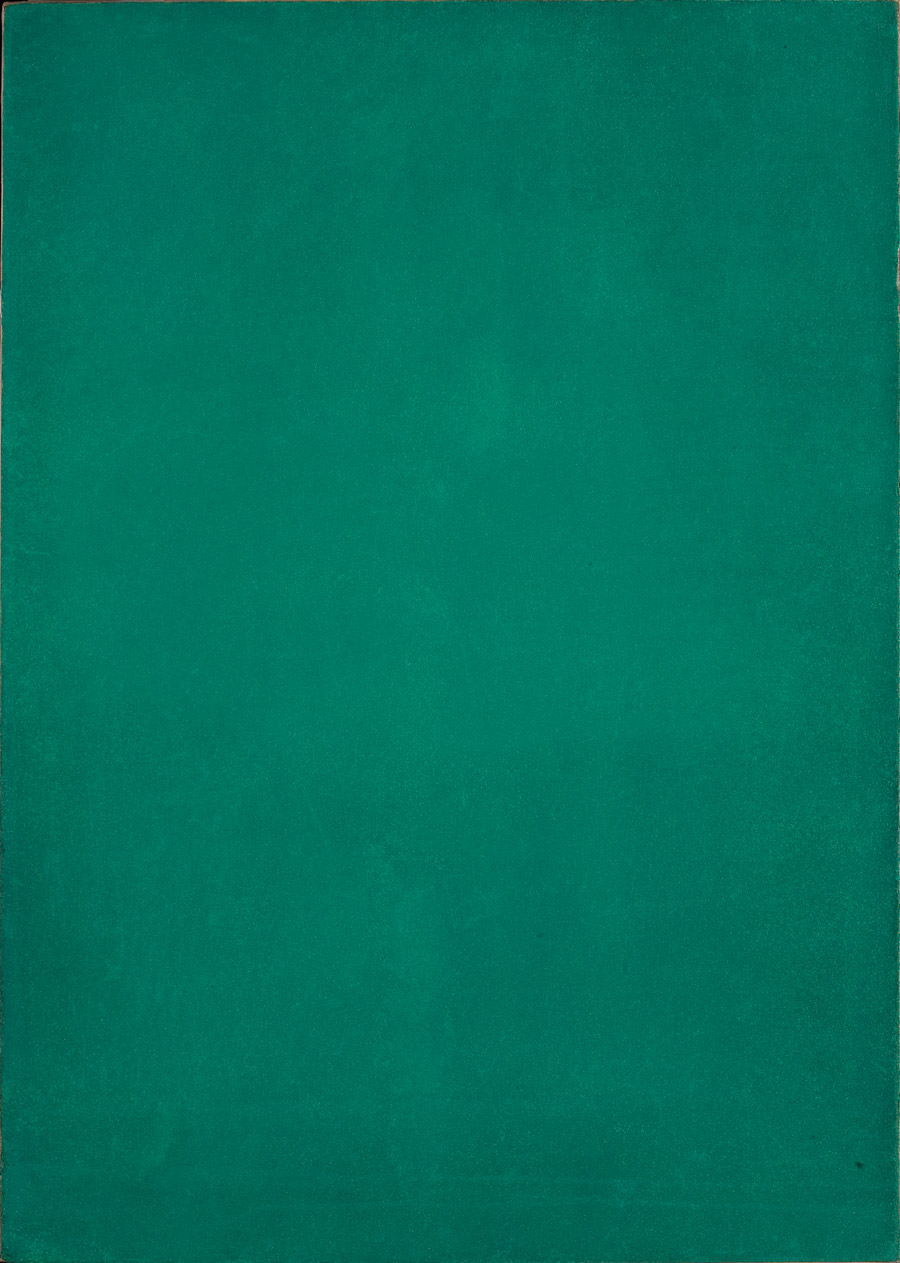
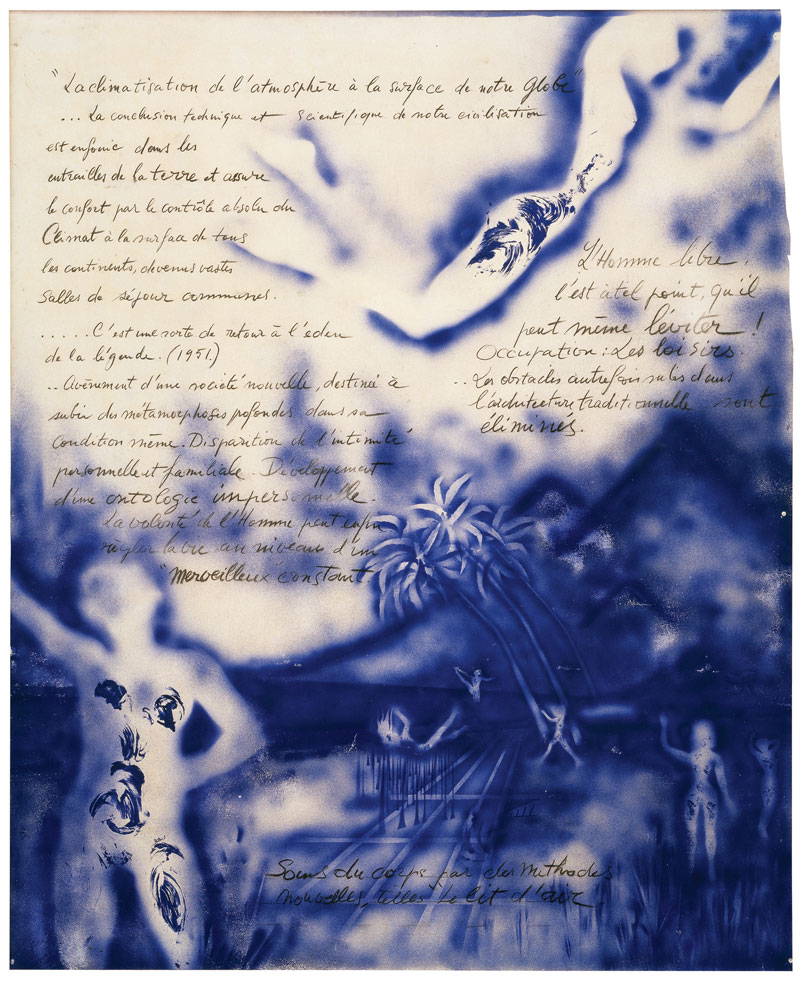
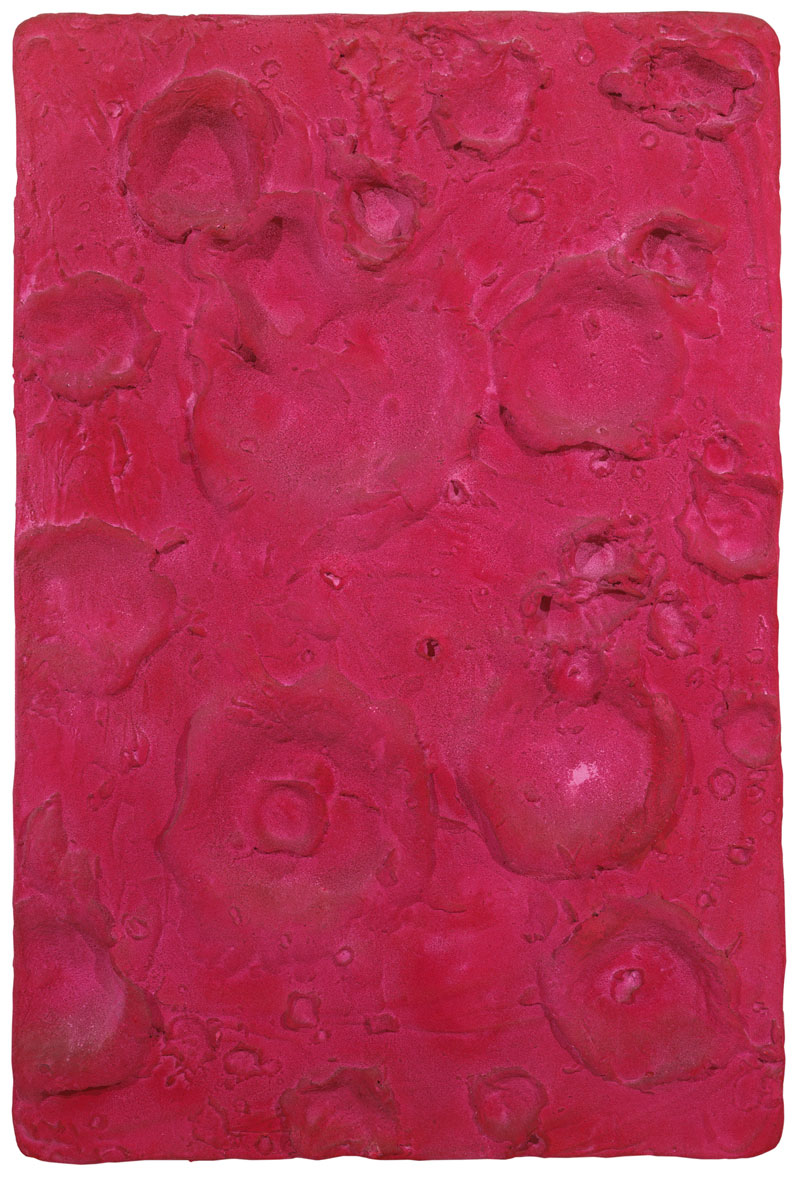
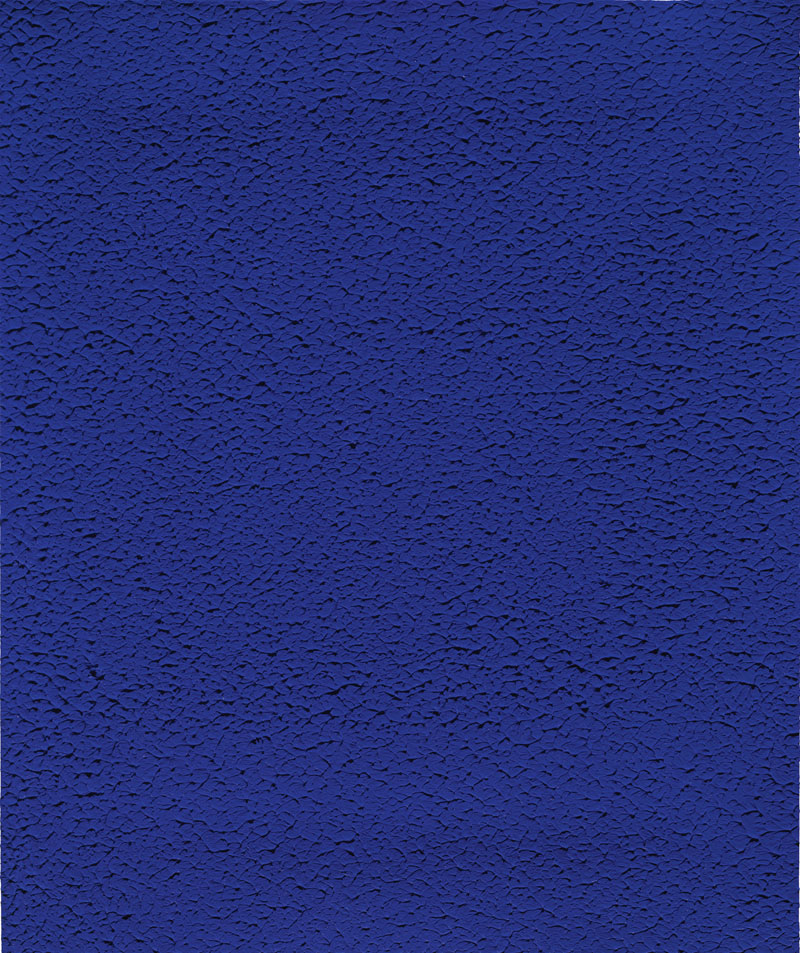
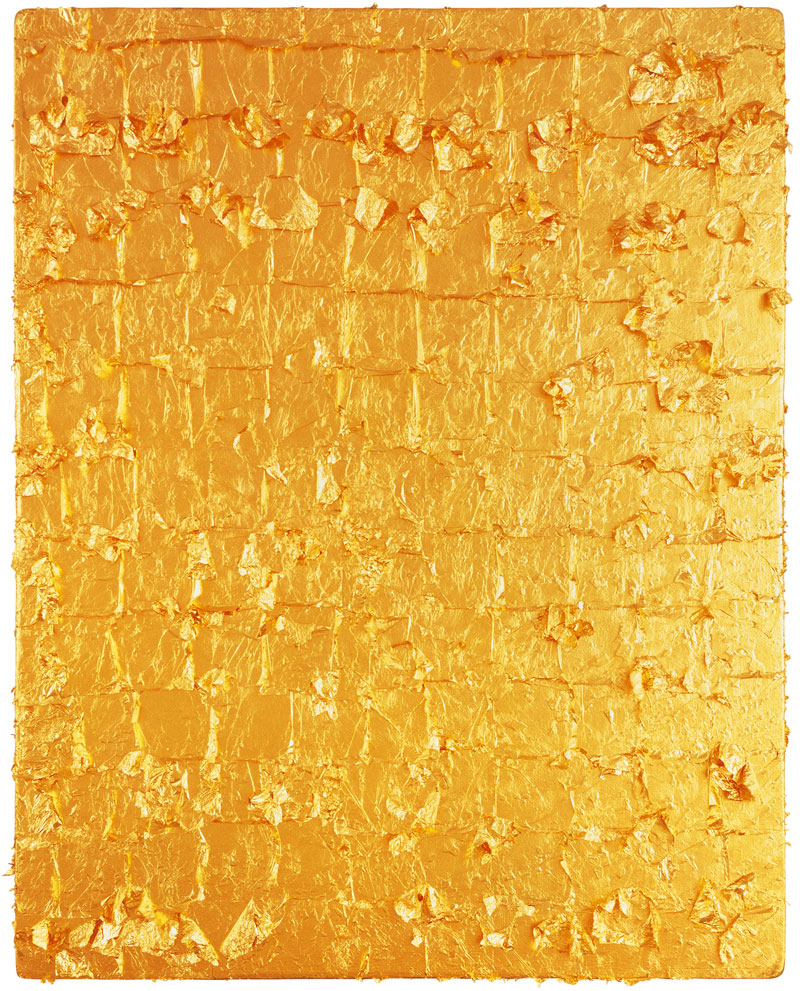
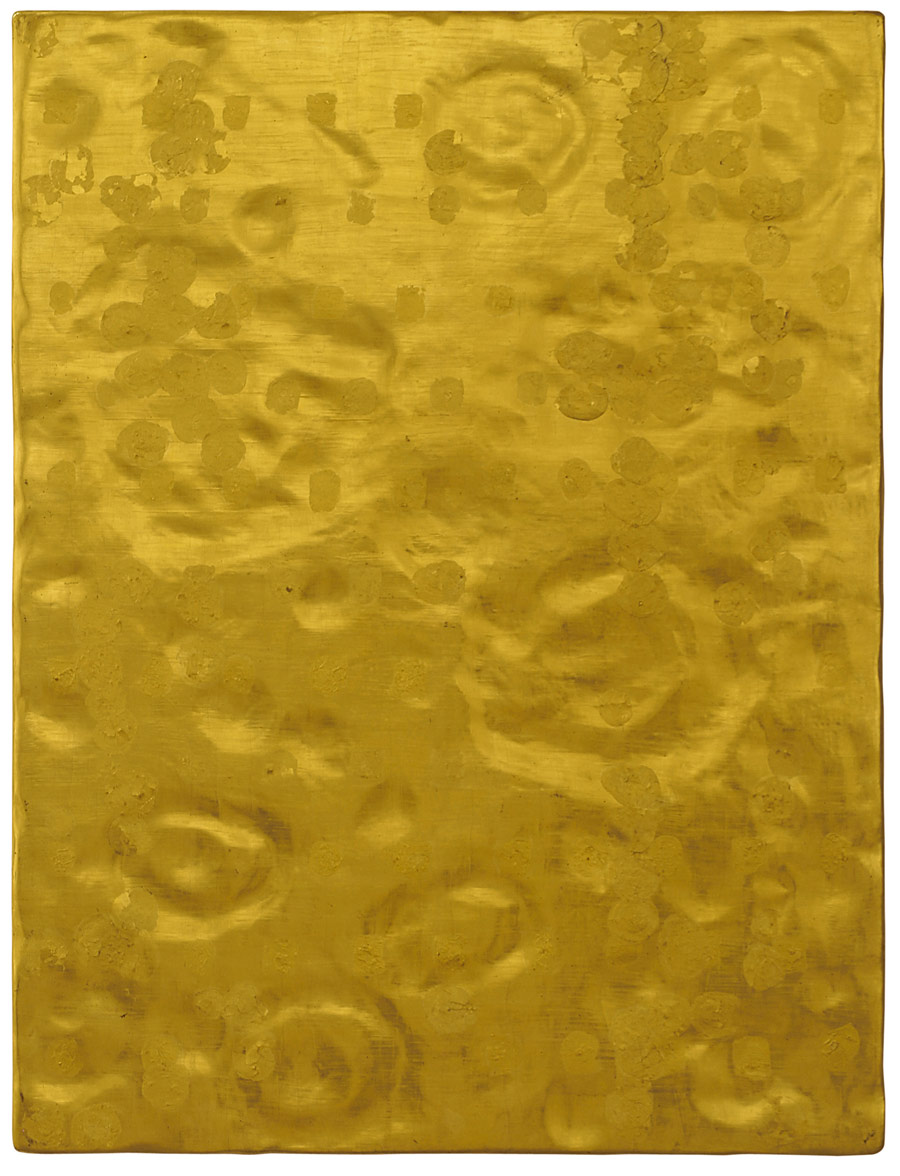
The exhibition features examples from all of Klein’s major series, from his iconic blue monochromes and Anthropometries to sponge reliefs, Fire Paintings, “air architecture” projects, Cosmogonies and planetary reliefs as well as many works that have rarely been on view. The installation provides insight into the artist’s process and conceptual endeavours through an array of ephemera, including sketches, photographs, letters and writings. Several films, including performances and documentaries, further demonstrate Klein’s creative practice.
“I would like that when people leave the exhibition they leap into a void, leaving behind traditional notions of art and representation, but even more importantly, questioning the notion of materiality and materialism in art as well as in their lives,” said Vergne. “Ultimately, Klein’s lesson is about a different way of being together.”
Numerous objects are on loan directly from the Yves Klein Archives, with additional loans from the Musée National d’Art Moderne, Centre Pompidou in Paris, Kunstmuseen Krefeld in Krefeld, Germany, The Menil Collection in Houston, the Museum of Contemporary Art in Tokyo, the San Francisco Museum of Modern Art and a host of international private collections, including a rare loan from the Monastery of Saint Rita in Cascia, Italy.
Klein was an innovator and visionary whose goal was no less than to radically reinvent what art could be in the postwar world. Through a diverse practice, which included painting, sculpture, performance, photography, music, architecture and writing as well as plans for projects in theatre, dance and cinema, he shifted the focus of art from the material to “immaterial sensibility”; he levitated art above the weariness induced by the Second World War, resurrecting its avant-garde tendencies, injecting a new sense of spirituality and opening doors for much that followed in the 1960s and beyond.
Self-identified as “the painter of space,” Klein sought to achieve immaterial sensibility through pure colour, primarily an ultramarine blue of his own invention – International Klein Blue. This exhibition begins by examining Klein’s early explorations of colour with works in pastels, watercolours and more than 15 coloured monochromes created during the mid-to-late 1950s. Several significant blue monochromes, dating from as early as 1955 up through 1961, are on view. Klein further pushed boundaries in his engagement with colour and form by using pure pigment in tandem with unconventional materials, such as natural sponges. The sponge, which Klein incorporated into his practice in the late 1950s, became a metaphor, as its porous surface completely absorbed his signature colour, giving a material presence to the immaterial.
Among Klein’s best-known works are the Anthropometries, begun in 1958. Under the artist’s direction, nude female models were smeared with International Klein Blue paint and used as “living brushes” to make body prints on prepared sheets of paper. Klein wanted to record the body’s physical energy, and the resulting images represent the model’s temporary physical presence. More than an expression of the inner psyche of the artist, these paintings offer one method of giving visual presence to a cosmic, spiritual body, which neither photography nor film can fully capture. Seven works from this series are on view, including People Begin to Fly (1961) from The Menil Collection and Untitled Anthropometry (1960) from the Hirshhorn’s collection, which features the bodies of Klein and his future wife Rotraut Uecker.
In the late 1950s, but most notably in 1961, Klein began to use fire, which he considered “the universal principle of expression,” as part of his creative process. His Fire Paintings, such as Untitled Fire Painting (1961), in which fire either replaced or was combined with paint, embody concepts of process, transformation, creation, destruction, dissolution and elemental cosmology that were so essential throughout his career. The final galleries of the exhibition include examples from Klein’s “air architecture” projects, including drawings, plans and models for architectural spaces, such as fountains and walls, constructed out of natural elements like air, water and fire – elements that were not traditionally associated with architecture.
Klein created what he considered his first artwork when he signed the blue sky above Nice in 1947, making his first attempt to capture the immaterial. In his celebrated 1958 exhibition Specialization of Sensibility in the Raw Material State of Stabilized Pictorial Sensibility, better known as The Void, at Galerie Iris Clert in Paris, Klein went further by emptying the gallery of all artworks and painting the walls white. Among those who attended the renowned exhibition was Albert Camus, who reacted with a notable entry into the visitors’ album: “with the void, full powers.” In his famous Leap into the Void (1960) image by Harry Shunk and Janos Kender, which was published Nov. 27, 1960, in the faux newspaper Dimanche, which he created for the second Avant-Garde Art Festival, Klein is actually depicted leaping into space himself; the accompanying text asserts: “… to paint space, I must be in position. I must be in space.”
Defying the common understanding and definitions of art – from his experiments with architecture made of air to his leap into the void – Klein aimed to rethink the world in spiritual and aesthetic terms. His philosophy was revolutionary and demonstrated his acute grasp of the contemporary moment, from the horror of the Second World War to the promise of space travel. This presentation of his full oeuvre is essential to discern the shift from modern to contemporary practice and to reveal the extent of the artist’s influence.
Press release from the Hirshhorn website [Online] Cited 04/09/2010 no longer available online
Hirshhorn Museum and Sculpture Garden The Hirshhorn is located on the National Mall at the corner of 7th Street and Independence Avenue SW, Washington, D.C.
Opening hours: Open daily except December 25 10am – 5.30pm
Exhibition dates: 15th August – 27th September, 2009
Commissioning Curator: Juliana Engberg Coordinating Curator: Charlotte Day
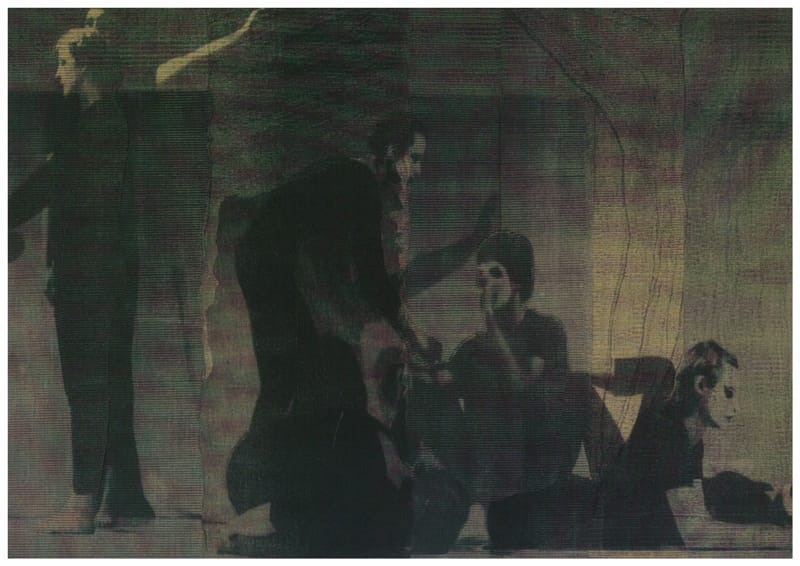
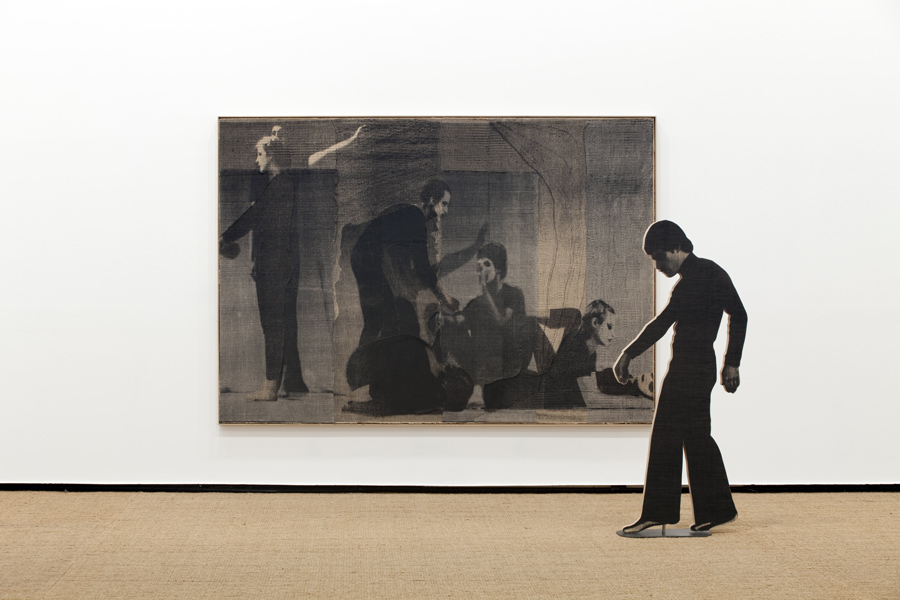
Installation view of Scenes by David Noonan at ACCA Photo: Marcus Bunyan
Thoughts
Limited colour palette of ochres, whites, browns and blacks.
Rough texture of floor covered in Jute under the feet.
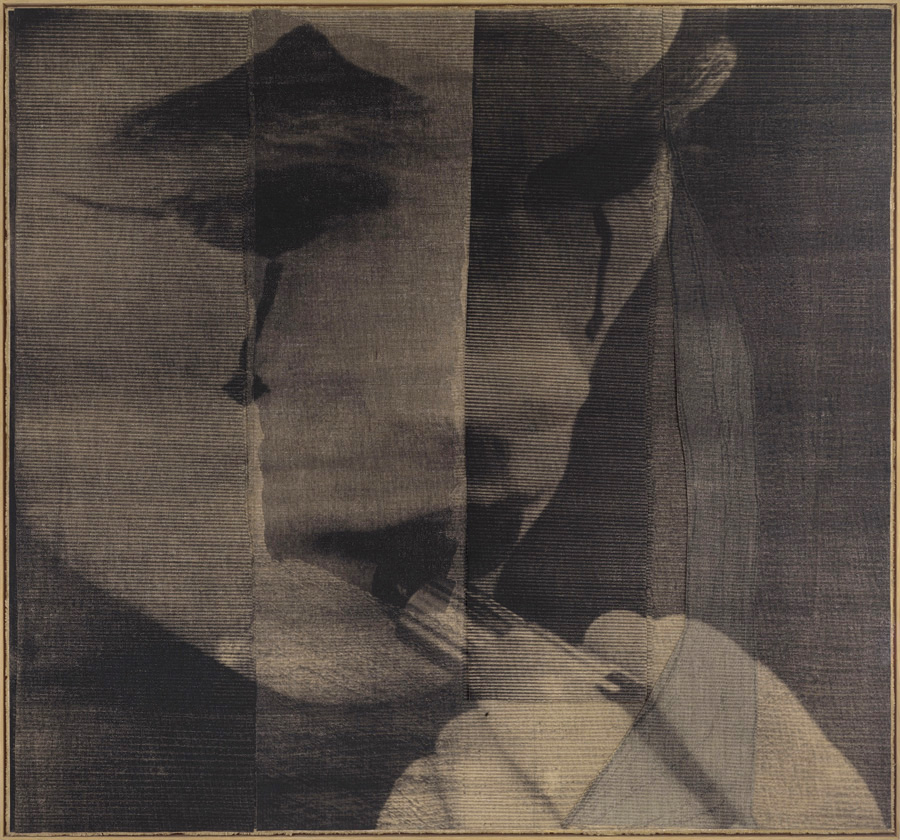
Layered, collaged print media figures roughly printed on canvas – elements of abstraction, elements of figuration.
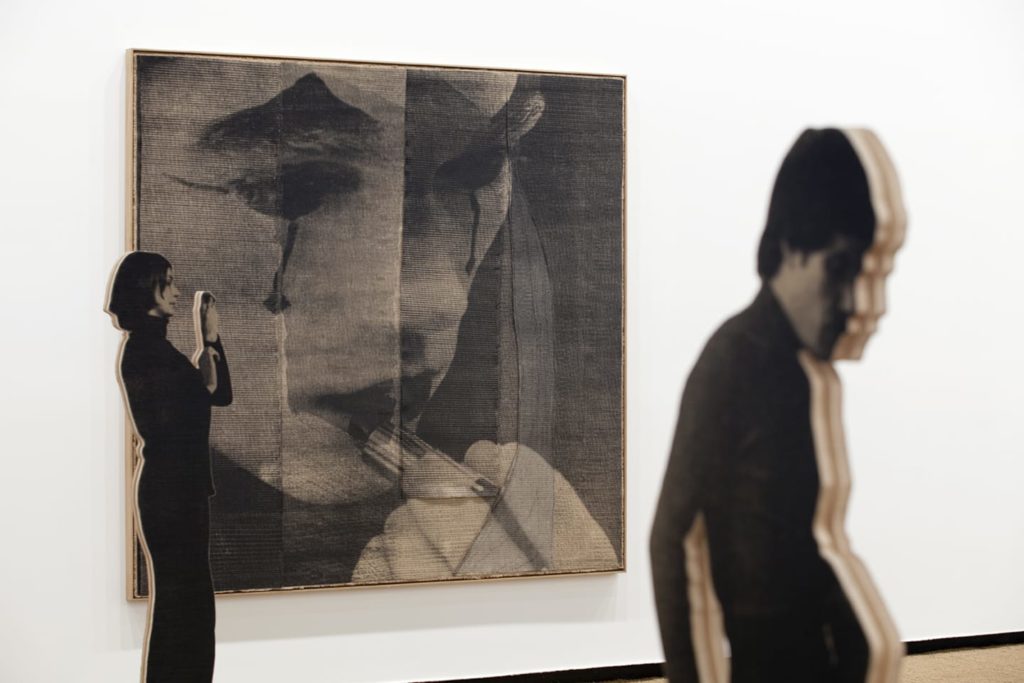
The ‘paintings’ are magnificent; stripped and striped collages. Faces missing, dark eyes. There is something almost Rembrandt-esque about the constructed images, their layering, like Rembrandt’s Night Watch (1642) – but then the performance element kicks in – the makeup, the lipstick, the tragic / comedic faces.
Mannequin, doll-like cut-out figures, flat but with some volume inhabiting the tableaux vivant.
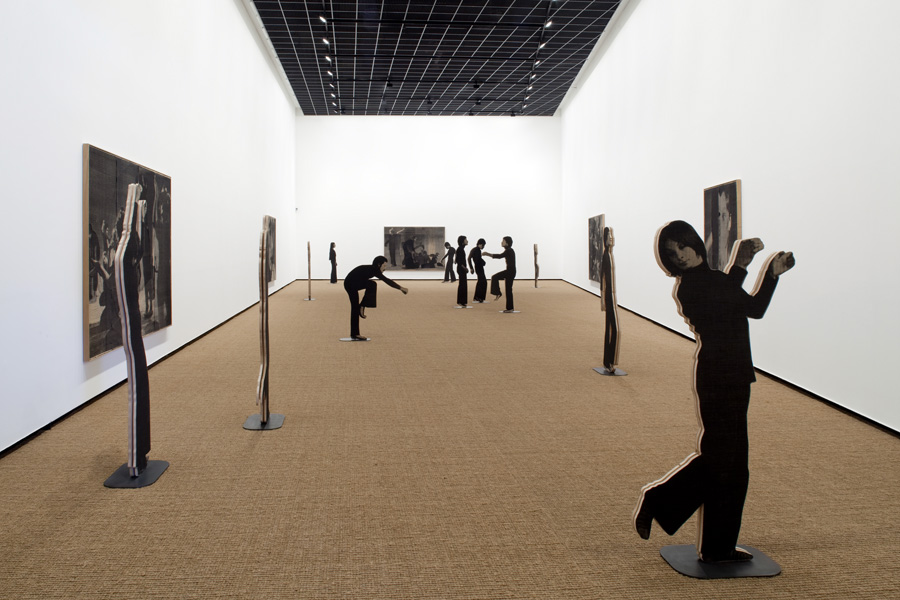
Twelve standing figures in different attitudes – a feeling of dancing figures frozen on stage, very Japanese Noh theater. Spatially the grouping and use of space within the gallery is excellent – like frozen mime.
The figures move in waves, rising and falling both in the standing figures and within the images on the wall.
Looking into the gallery is like looking through a picture window onto a stage set (see above image).
“The fracturing of identity, the distortion of the binaries of light and dark, absence/presence in spatio-temporal environments.
The performance as ritual challenging a regularized and constrained repetition of norms.” (Judith Butler).
Excellent, thought provoking exhibition.
Dr Marcus Bunyan
Many thankx to ACCA for allowing me to publish the photographs in the posting. Please click on the photographs for a larger version of the image.
Installation views of Scenes by David Noonan at ACCA Photos: Marcus Bunyan
Noonan often works with found photographic imagery taken from performance manuals, textile patterns and archive photographs to make densely layered montages. These works at once suggest specific moments in time and invoke disorientating a-temporal spaces in which myriad possible narratives emerge. The large-scale canvases framing this exhibition depict scenes of role-playing, gesturing characters, and masked figures set within stage-like spaces. Printed on coarsely woven jute, collaged fabric elements applied to the surface of the canvases further signal the cutting and splicing of images.
Noonan’s new suite of figurative sculptures, comprise life size wooden silhouettes faced with printed images of characters performing choreographed movements. While the figurative image suggests a body in space, the works’ two dimensional cut-out supports insist on an overriding flatness which lends them an architectural quality – as stand-ins for actual performers and as a means by which to physically navigate the exhibition space.
Press release from the Chisenhale Gallery website [Online] Cited 20/09/2009. No longer available online
For the Helen Macpherson Smith Commission, he will bring the characters depicted in his signature collage works off the wall and onto an imagined ‘stage’. Several life-size, wooden cut-out figures will inhabit the ACCA exhibition gallery, frozen in choreographed movements.
Noonan’s dancing figures will be framed by several large-scale canvas works, printed photographic and film imagery gleaned from performance manuals, textile patterns and interior books. Printed on coarse woven jute, he cuts, slices and montages images together constructing compositions that hover between two and three dimensionality, positive and negative space, past and present, stasis and action.
“‘Scenes’ recalls the experimental workshops and youth-focused exuberance of a more optimistic era, coinciding with the artists own childhood in the 1970s” says curator Charlotte Day. “With these new works, Noonan re-introduces the idea of ritual, of creating a temporal space beyond reason that is filled with both danger and hope.”
David Noonan (Australian, b. 1969) is the fifth recipient of the Helen Macpherson Smith Commission, one of the most significant and generous commissions in Australia. The partnership between ACCA and the Helen Macpherson Smith Trust offers Victorian artists the opportunity to create an ambitious new work of art, accompanied by an exhibition in ACCA’s exhibition hall.
Press release from the ACCA website [Online] Cited 20/09/2009. No longer available online
David Noonan returned to Melbourne with this significant project which extended his abiding interest in time and space. Using ACCA’s large room as a field of encounter, he created an ensemble of works in 2 and 3 dimensions that make purposeful use of the audience’s own navigation through the gallery. Visitors walking between David’s free-standing figures performed like time travellers in a landscape that had been paused. His enigmatic wall based works appeared to trap momentary scenes in a layered time warp.
This major commission allowed for an ambitious project by a Victorian artist who had reached a significant platform in their own practice. Elements of the commission were gifted to a Victorian regional gallery. In this case the recipient was Bendigo Art Gallery.
Text from the ACCA website [Online] Cited 24/04/2019
Installation views of Scenes by David Noonan at ACCA Photos: Marcus Bunyan
Australia Centre for Contemporary Art (ACCA) 111 Sturt Street, Southbank, Victoria 3006, Australia Phone: 03 9697 9999
Opening Hours: Tuesday to Friday 10am – 5pm Weekends & Public Holidays 11am – 5pm Open all public holidays except Christmas Day and Good Friday
Exhibition dates: 7th August – 27th September, 2009
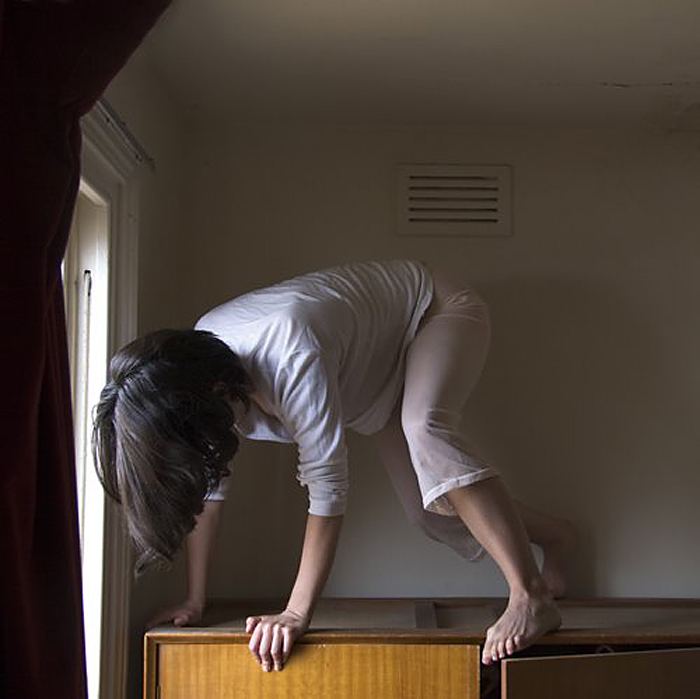
Clare Rae (Australian, b. 1981) Untitled 2009 From the series Climbing the Walls and Other Actions Pigment print on Museo Crane Silver Rag 50 x 50cm
“To withdraw into one’s corner is undoubtedly a meager expression. But despite its meagerness, it has numerous images, some, perhaps, of great antiquity, images that are psychologically primitive. At times, the simpler the image, the vaster the dreams.”
Gaston Bachelard.1
Usually I am not a great fan of ‘faceless’ photography as I call it but this series of work, Climbing the Walls and Other Actions (2009) by the artist Clare Rae is even better than the series by Tracey Moffatt in the previous review.
Exploring activities of the female body in closed domestic spaces these psychologically intense photographs push the physical boundaries of play through the navigation of space. As a child has little awareness about the inherent dangers of a seemingly benign environment so Rae’s self-portraits turn the lens on her conceptualisation of the inner child at play and the activating of the body in and through space. As the artist herself says, “the way children negotiate their surroundings and respond with an unharnessed spatial awareness, which I find really interesting when applied to the adult body.”2
Continuing the themes from the last review, that of spaces of intimacy and reverberation, these photographs offer us fragmentary dialectics that subvert the unity of the archetype, the unity of the body in space. Here the (in)action of the photographic freeze balances the tenuous positions of the body: a re-balancing of both interior and exterior space.
As Noel Arnaud writes, “Je suis l’espace ou je suis” (I am the space where I am). Further, Bachelard notes “… by changing space, by leaving the space of one’s usual sensibilities, one enters into communication with a space that is psychically innovating.”3
In these photographs action is opposed with stillness, danger opposed with suspension; the boundaries of space, both of the body and the environment, the interior and the exterior, memory and dream, are changed.
Space seems to open up and grow with these actions to become poetic space – and the simplicity of the images aids and abets the vastness of our dreams. This change of concrete space does not change our place, but our nature. Here the mapping of self in space, our existence, our exist-stance (to have being in a specified place whether material or spiritual), is challenged in the most beautiful way by these walls and actions, by these creatures, ambiguities, photographs.
Henri Lefebvre insightfully observes, “… each living body is space and has space: it produces itself in space and it also produces that space.”4
I am the (sublime) space where I am, that surrounds me with countless presences.
Dr Marcus Bunyan
1/ Bachelard, Gaston. The Poetics of Space. Boston: Beacon Press, 1969, p. 137
2/ Email from the artist 7th September, 2009
3/ Bachelard, Gaston. The Poetics of Space. Boston: Beacon Press, 1969, p. 206
4/ Lefebvre, Henri. The Production of Space. Oxford: Basil Blackwell, 1974, p. 170
All images by Clare Rae from the series Climbing the Walls and Other Actions 2009. Many thankx to Clare for allowing me to publish them.
Clare Rae (Australian, b. 1981) Untitled 2009 From the series Climbing the Walls and Other Actions Pigment print on Museo Crane Silver Rag 50 x 50cm
Clare Rae (Australian, b. 1981) Untitled 2009 From the series Climbing the Walls and Other Actions Pigment print on Museo Crane Silver Rag 50 x 50cm
Clare Rae (Australian, b. 1981) Untitled 2009 From the series Climbing the Walls and Other Actions Pigment print on Museo Crane Silver Rag 50 x 50cm
Climbing the Walls and Other Actions is primarily concerned with visually representing my experience of femininity, whilst also exploring aspects of representation that relate to feminism. The project considers the relationship between the body and space by including formal elements within each frame such as windows and corners. Through a sequence of precarious poses I explore my relationship with femininity, an approach born of frustration. I use the body to promote ideas of discomfort and awkwardness, resisting the passivity inherent in traditional representations of femininity. The images attempt to de-stabilise the figure, drawing tension from the potential dangers the body faces in these positions. Whilst the actions taking place are not in themselves particularly dangerous, the work demonstrates a gentle testing of physical boundaries and limitations via a child-like exploration of the physical environment.
Text from the Centre for Contemporary Photography website [Online] Cited 15/09/2009. No longer available online
Clare Rae (Australian, b. 1981) Untitled 2009 From the series Climbing the Walls and Other Actions Pigment print on Museo Crane Silver Rag 50 x 50cm
Clare Rae (Australian, b. 1981) Untitled 2009 From the series Climbing the Walls and Other Actions Pigment print on Museo Crane Silver Rag 50 x 50cm
Centre for Contemporary Photography Level 2, Perry St Building Collingwood Yards, Collingwood Victoria 3066






 Art Blart _ art and cultural memory archive
You must be logged in to post a comment.