
Exhibition dates: 14th March – 13th July, 2025
Curator: Gabriele Conrath-Scholl, Director of SK Stiftung Kultur
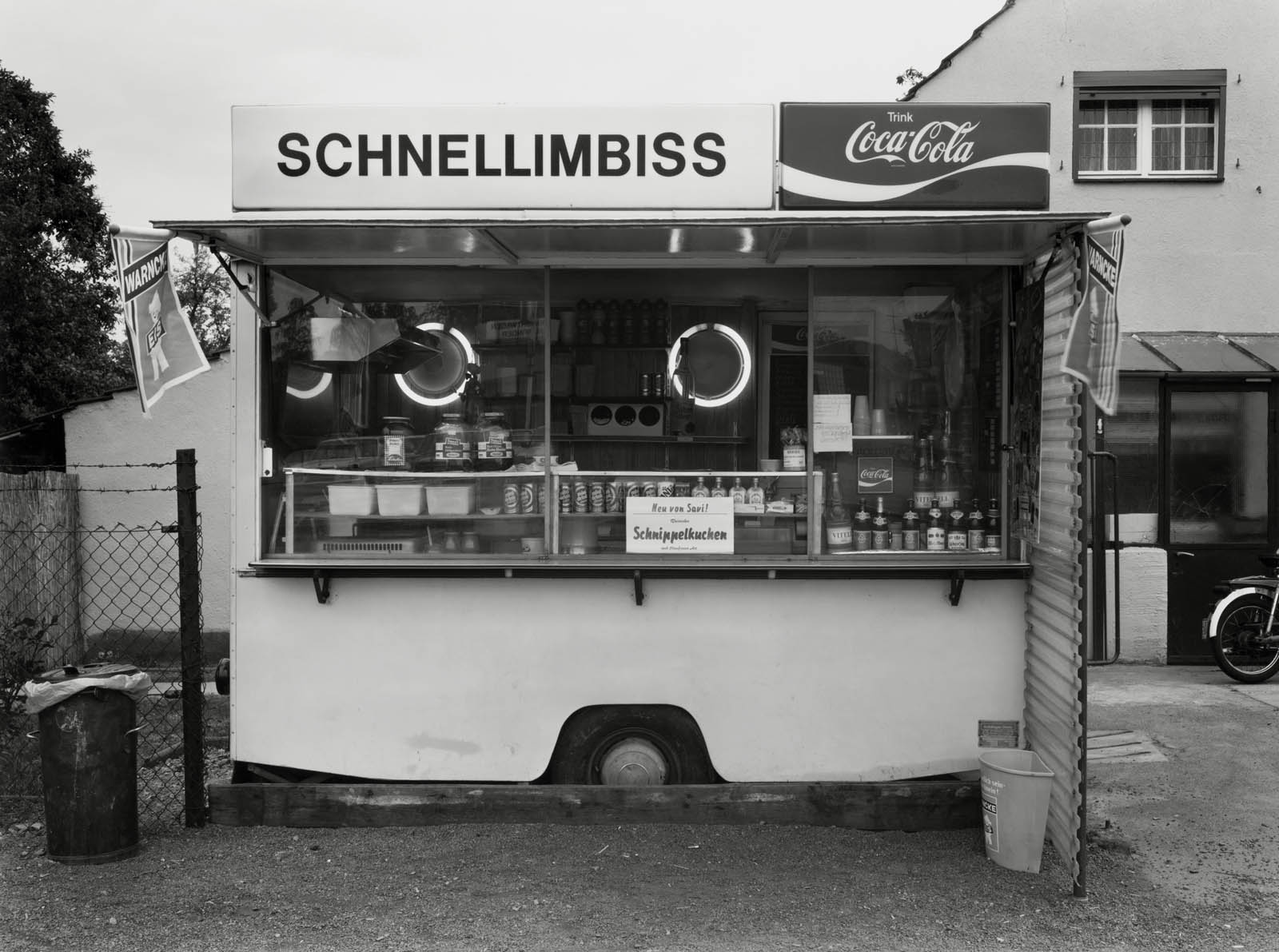
Tata Ronkholz (German, 1940-1997)
Imbissstube Düsseldorf-Rath, Linienstraße 141 (Snack bar Düsseldorf-Rath, Linienstraße 141)
1977
© VAN HAM Art Estate: Tata Ronkholz, 2025
The work of Tata Ronkholz belongs to the Düsseldorf School of Photography which refers to a group of photographers who studied at the Kunstakademie Düsseldorf in the mid 1970s with teachers Bernd and Hiller Becher – whose conceptual rationale for an objective excellence for art photography emerged from the German Neue Sachlichkeit (New Objectivity) modern realist movement of the 1920s.
“This [objective] conceptualisation opens up an expanded terrain of becoming for photography … The work of these artists is vital to an understanding of the place of photography within the observation, construction and taxonomy of contemporary culture and its pictorial representation.”1
Ronkholz’s photographs are images of infinite focus … where the attention of the photographer is tightly controlled as to the conceptualisation of the image and the constructed reality that is being re/presented.
Ronkholz was aware of the importance of these ephemeral structures, the importance of documenting them, these industrial gates, kiosks and small shops, which arise and then are gone. Here today, gone tomorrow (much like life itself). “These often small, sometimes freestanding structures, with their designs, surroundings, product offerings, and advertisements, serve as vivid testaments to everyday culture.”2
And testaments to the transitory nature of contemporary culture.
I love these photographs of everyday things for their clear seeing, their frontality, their directness, which allows the viewer to address a reality which might have passed them by as they walk the streets in a dream.
Look. Awake.
Dr Marcus Bunyan
1/ Marcus Bunyan commenting on the exhibition Photographs Become Pictures. The Becher Class at the Städel Museum, Frankfurt, April – August, 2017
2/ Text from the Die Photographische Sammlung/SK Stiftung Kultur, Cologne website
Many thankx to Die Photographische Sammlung/ SK Stiftung Kultur, Cologne for allowing me to publish the photographs in the posting. Please click on the photographs for a larger version of the image.
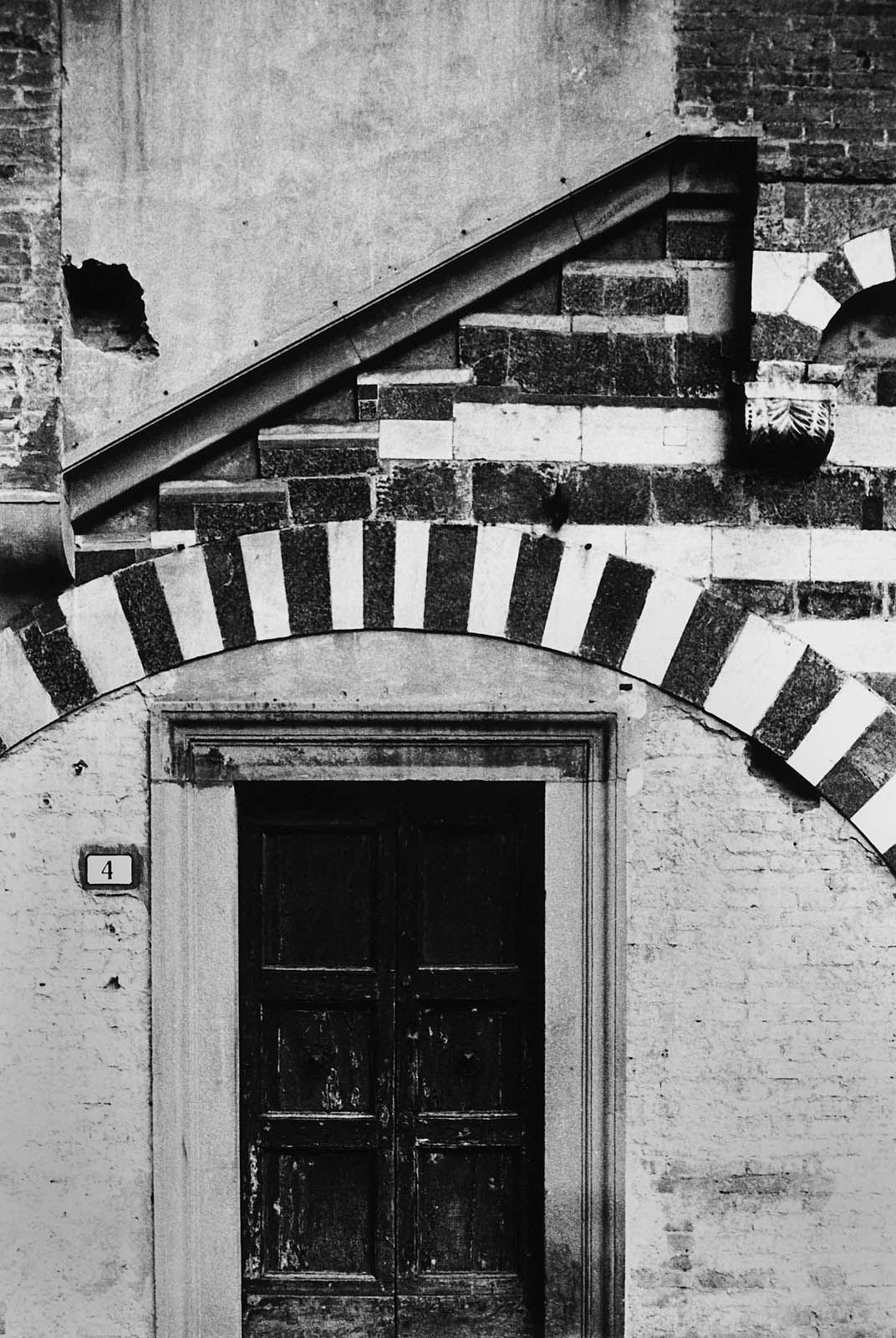
Tata Ronkholz (German, 1940-1997)
Palazzo dei Vescovi (Museo dell’Antico), Pistoia
1975
© VAN HAM Art Estate: Tata Ronkholz, 2025
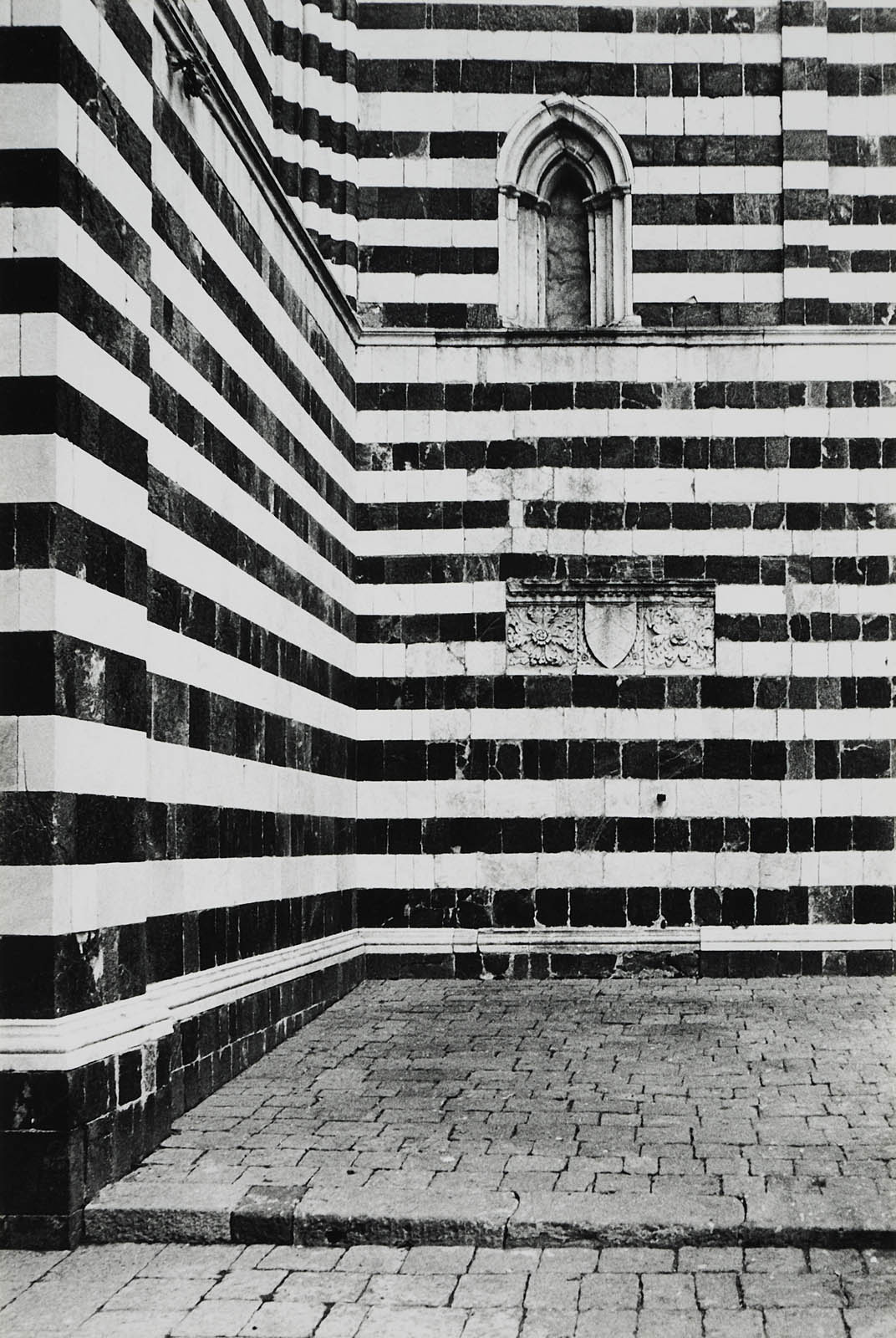
Tata Ronkholz (German, 1940-1997)
Santa Maria Assunta, Dom, Volterra
1975
© VAN HAM Art Estate: Tata Ronkholz, 2025
An exhibition by Die Photographische Sammlung/SK Stiftung Kultur in collaboration with the Stadtmuseum Düsseldorf and VAN HAM Art Estate
The artist and photographer Tata Ronkholz (1940-1997) will be honoured in the spring with her first major retrospective. She is one of the first members of the class taught by Bernd Becher at the Kunstakademie Düsseldorf. Due to her early death Ronkholz’s work has long been recognised only partly even though her oeuvre reflects a profound and continuous engagement with multiple themes. Ronkholz is best known for her series of kiosks and small shops in the Rhineland and Ruhr area, which she began in 1977. These often small, sometimes freestanding structures, with their designs, surroundings, product offerings, and advertisements, serve as vivid testaments to everyday culture. Additionally, she created a photographic series documenting various industrial gates. Together with her fellow student Thomas Struth, she documented Düsseldorf’s Rheinhafen district from 1979 to 1981 before its transformation into the so-called “Medienhafen”.
The exhibition will also feature surprising insights into Ronkholz’s early works as a freelance product designer and photographs of architectural forms taken in Italy. An accompanying catalog will be published.
Text from the Die Photographische Sammlung/SK Stiftung Kultur, Cologne website
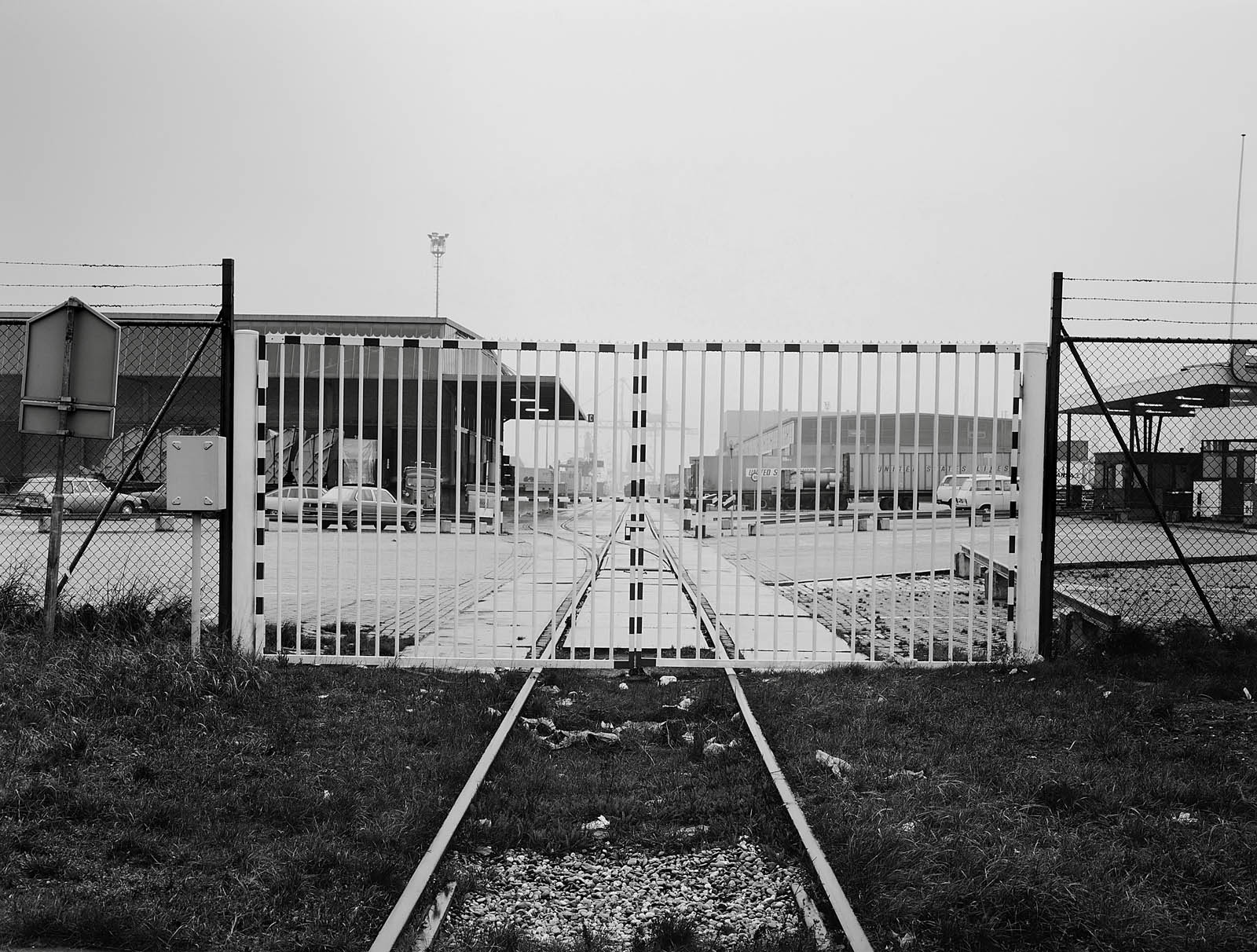
Tata Ronkholz (German, 1940-1997)
ECT. Rotterdam / Prinses Beatrixhaven, Reeweg
1977
© VAN HAM Art Estate: Tata Ronkholz, 2025
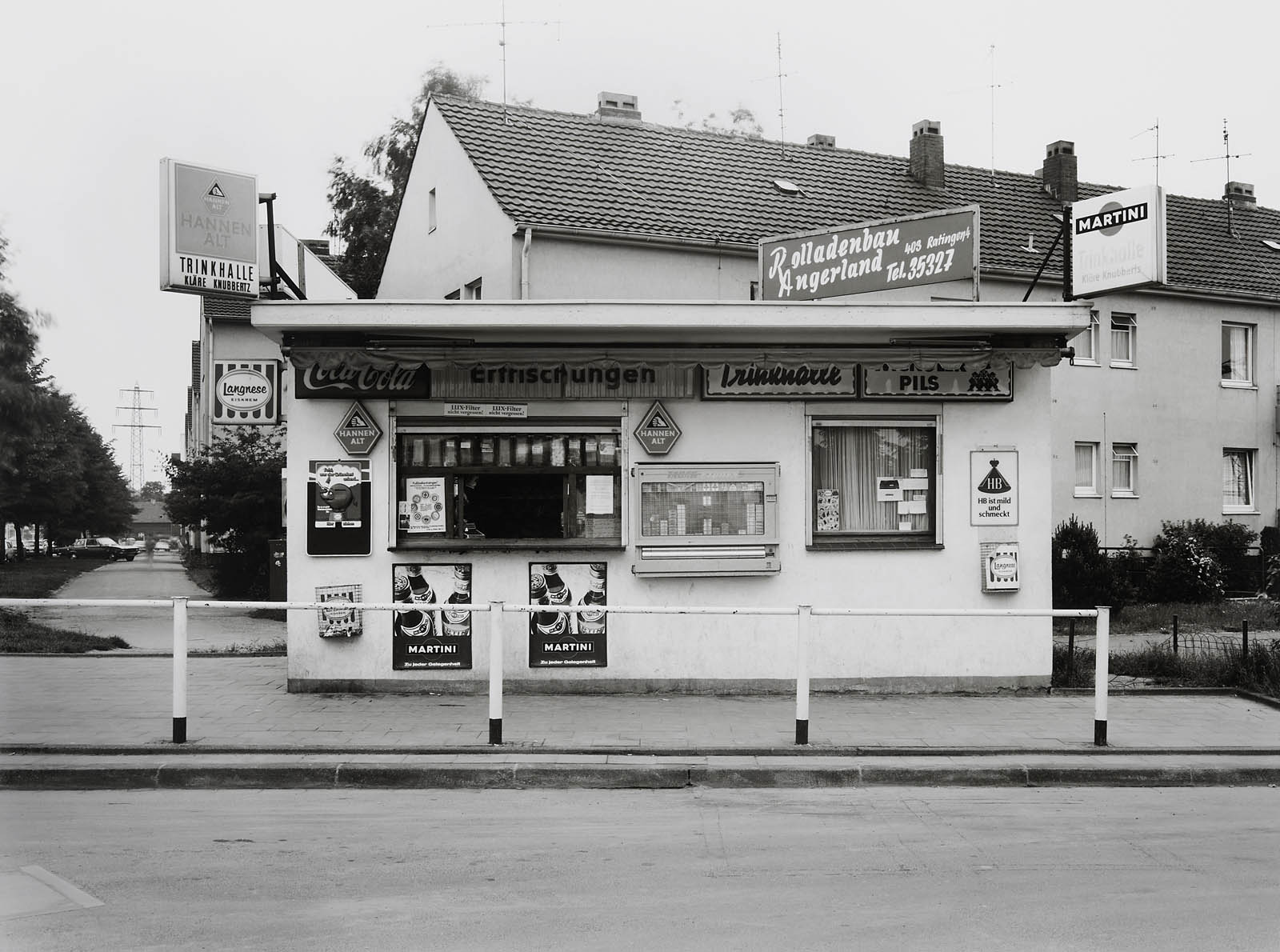
Tata Ronkholz (German, 1940-1997)
Trinkhalle, Ratingen, Volkardeyer Straße 25
1977
© VAN HAM Art Estate: Tata Ronkholz, 2025
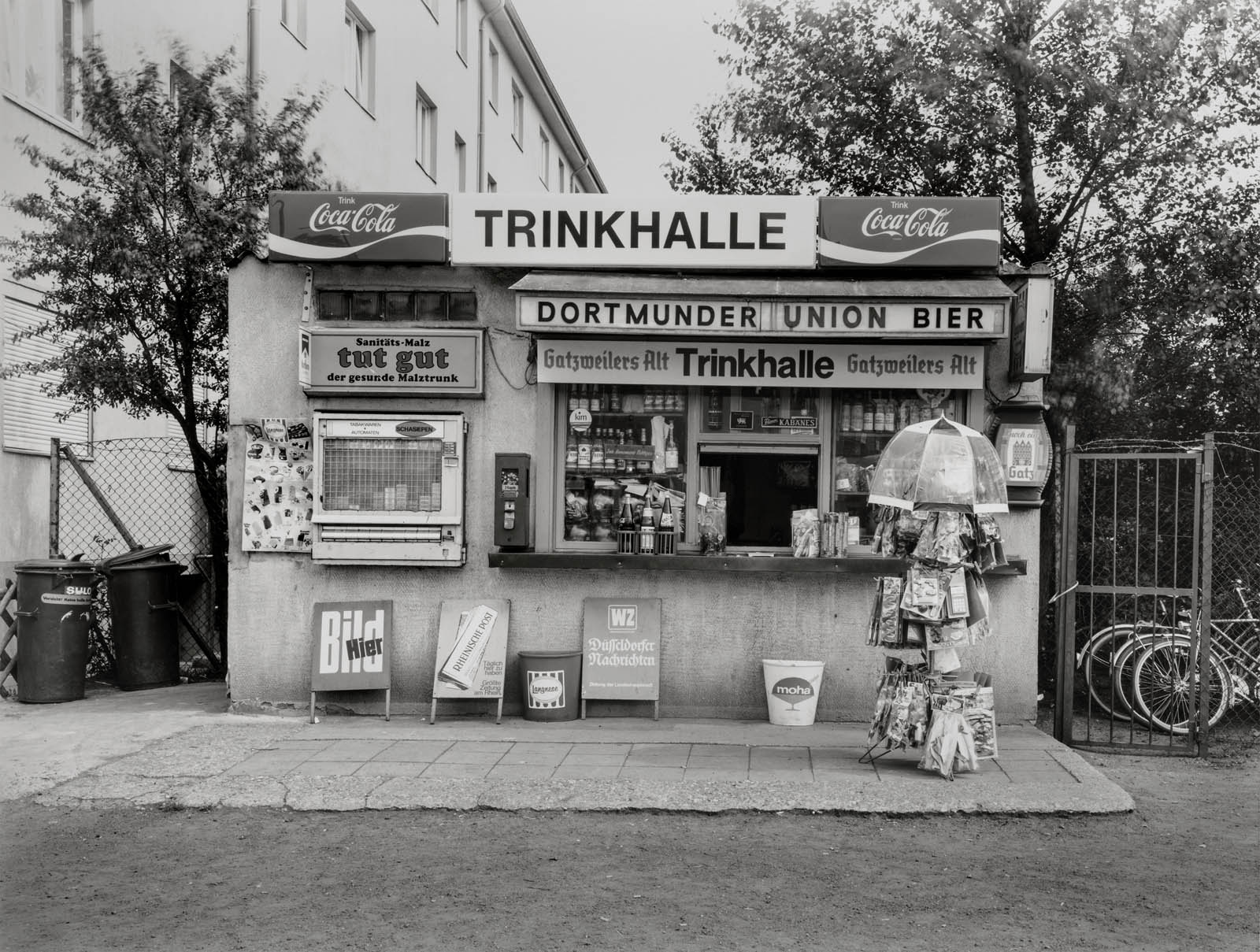
Tata Ronkholz (German, 1940-1997)
Trinkhalle, Düsseldorf, Sankt-Franziskus-Straße 107
1977
© VAN HAM Art Estate: Tata Ronkholz, 2025
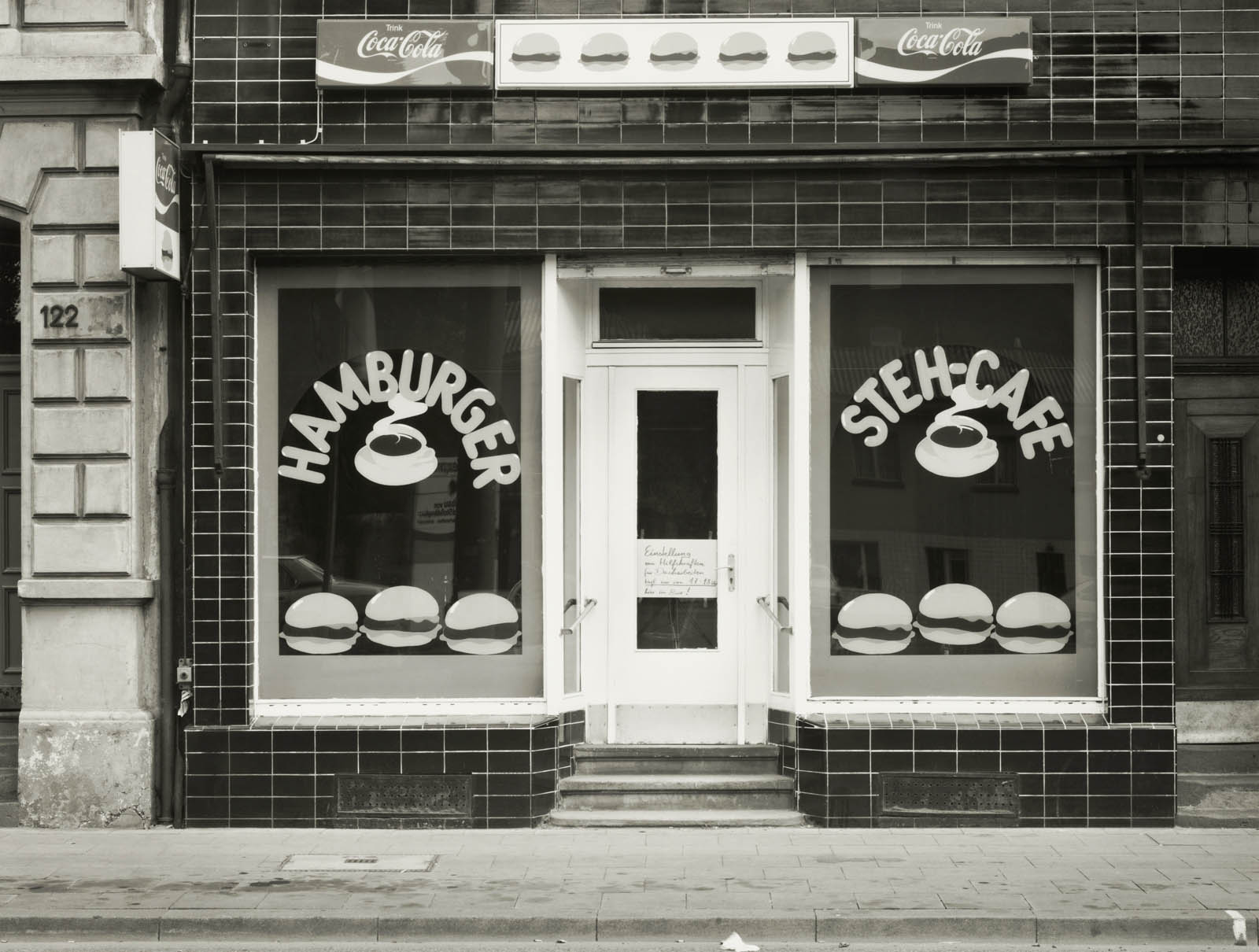
Tata Ronkholz (German, 1940-1997)
Imbissstube Köln-Mülheim, Berliner Straße 120 (Snack bar Cologne-Mülheim, Berliner Straße 120)
1979
© VAN HAM Art Estate: Tata Ronkholz, 2025
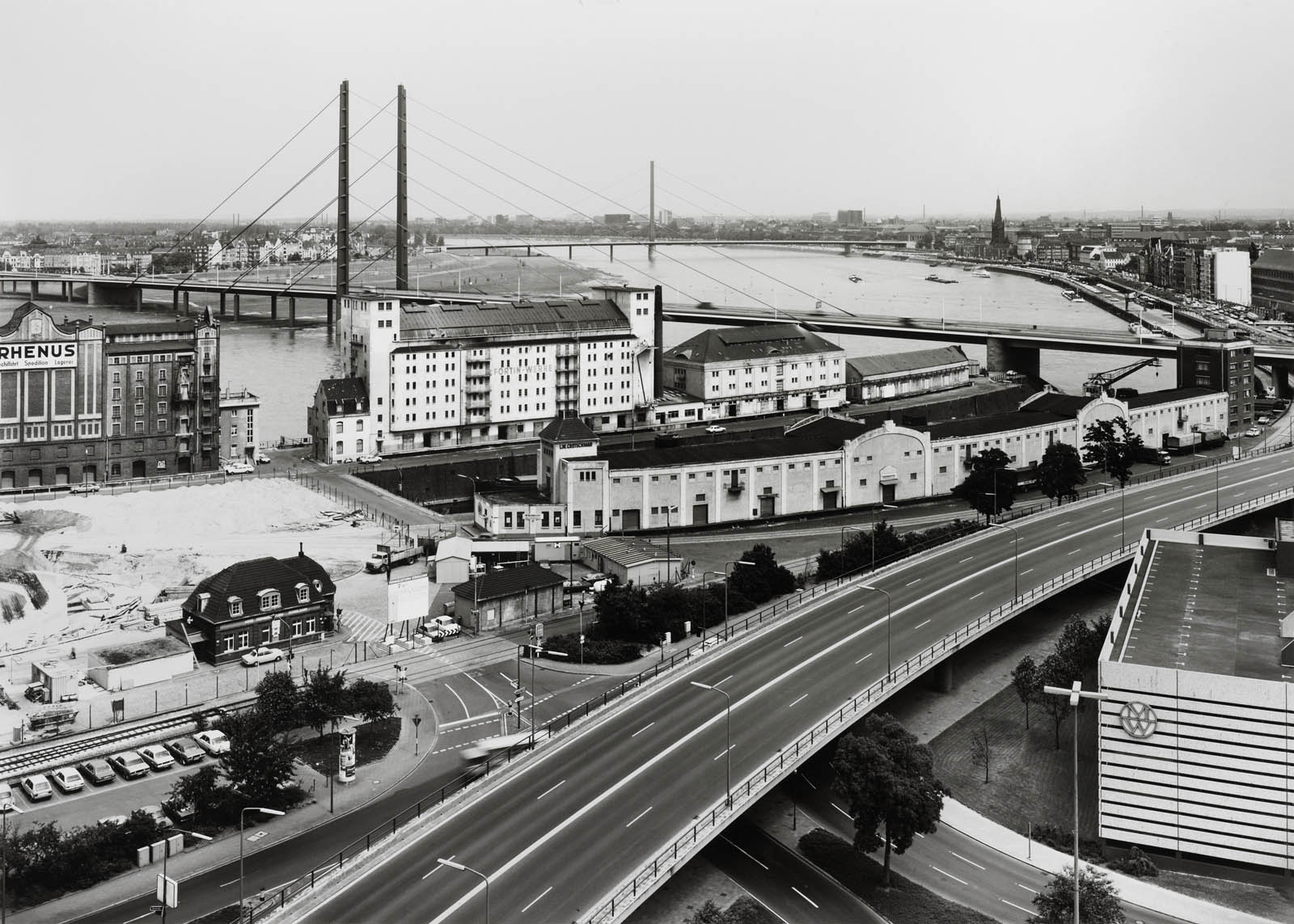
Thomas Struth (German, b. 1954)
Rheinhafen (Berger Hafen v. d. VHS), Düsseldorf
1979
From the series Rheinhafen Düsseldorf 1979-1981
© Thomas Struth
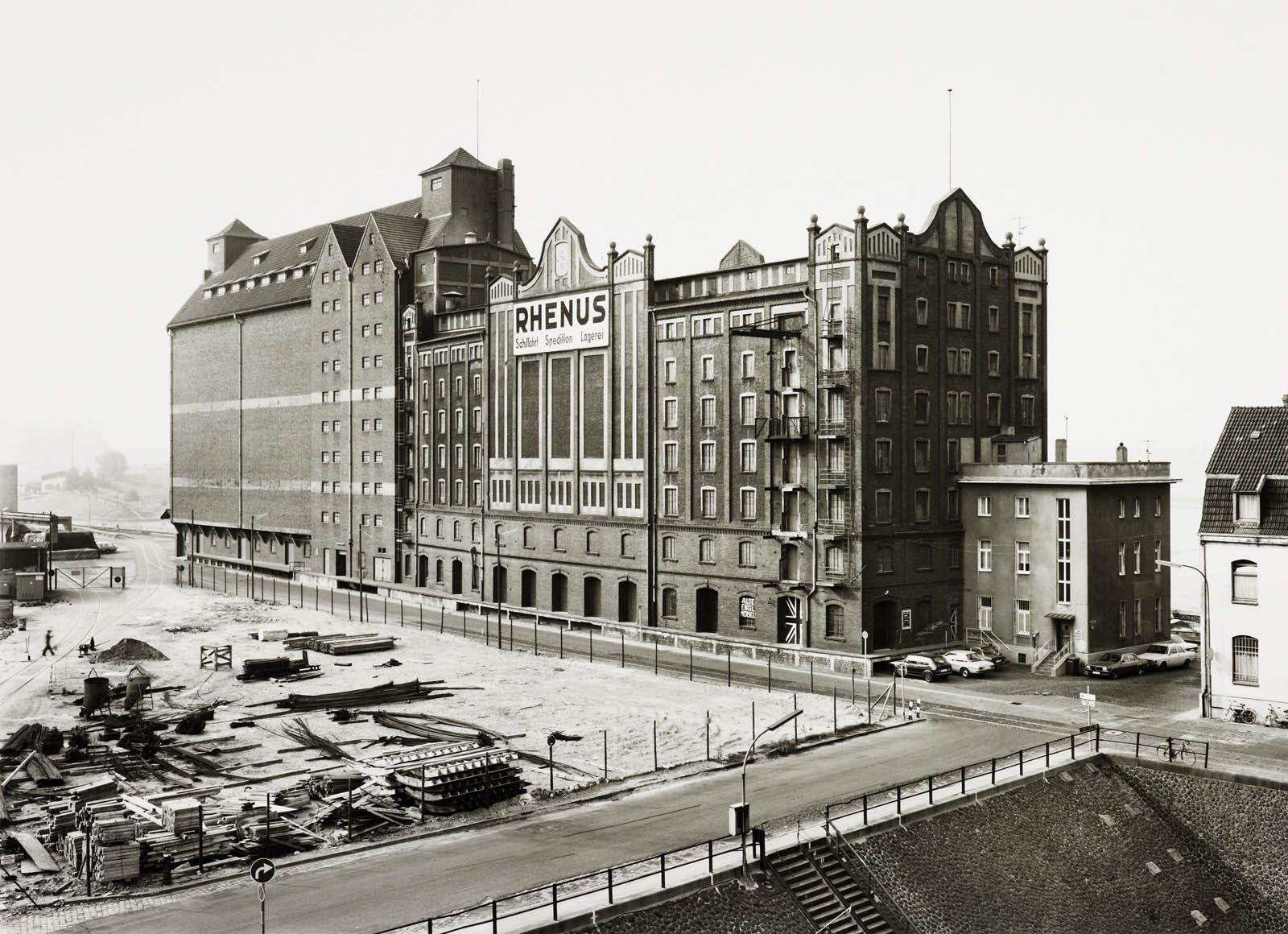
Thomas Struth (German, b. 1954)
Getreidespeicher, Rhenus seitlich (Grain silo, Rhenus side)
1979
From the series Rheinhafen Düsseldorf 1979-1981
© Thomas Struth
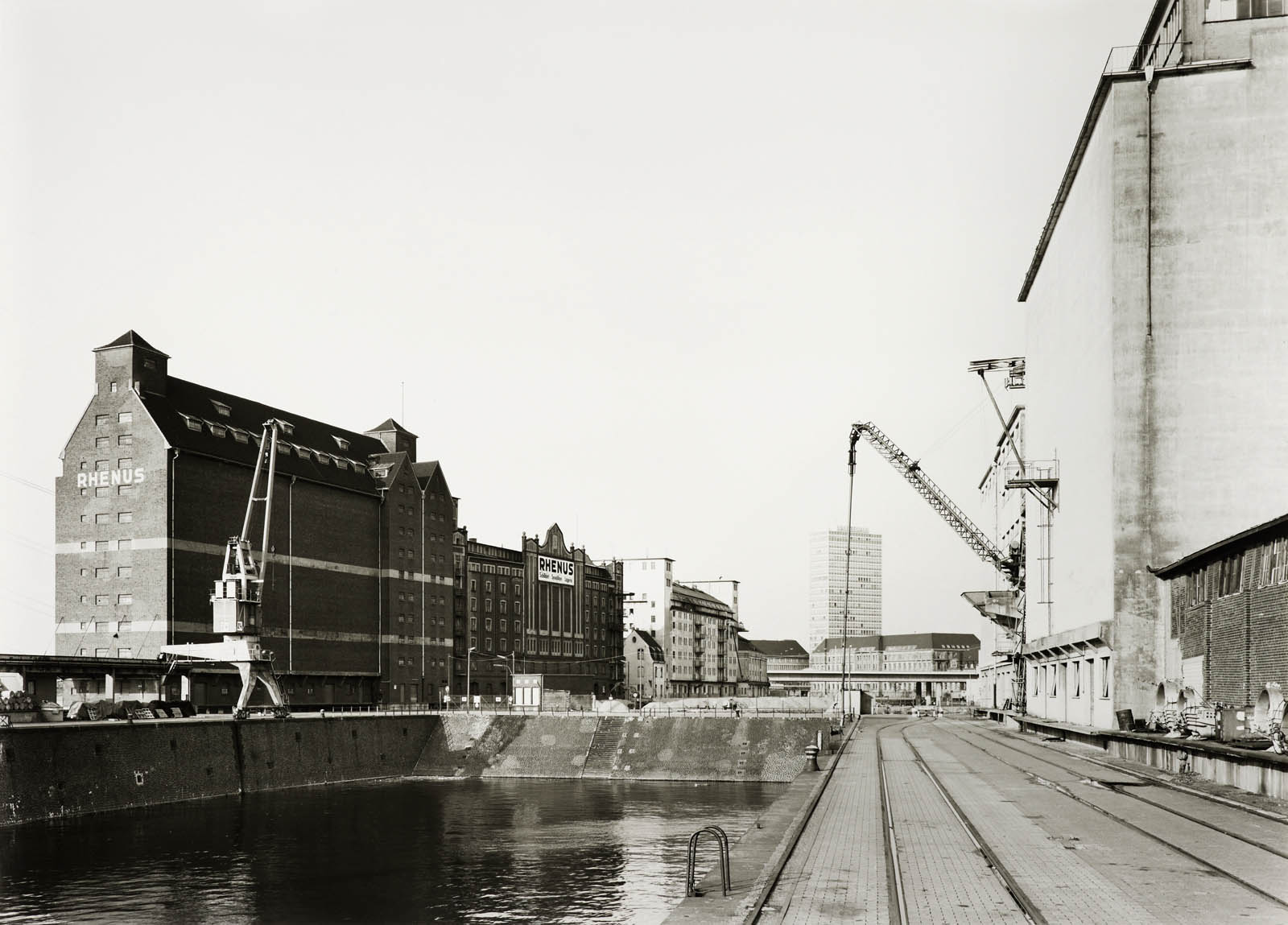
Thomas Struth (German, b. 1954)
Zollhafen (Customs port)
1979
From the series Rheinhafen Düsseldorf 1979-1981
© Thomas Struth
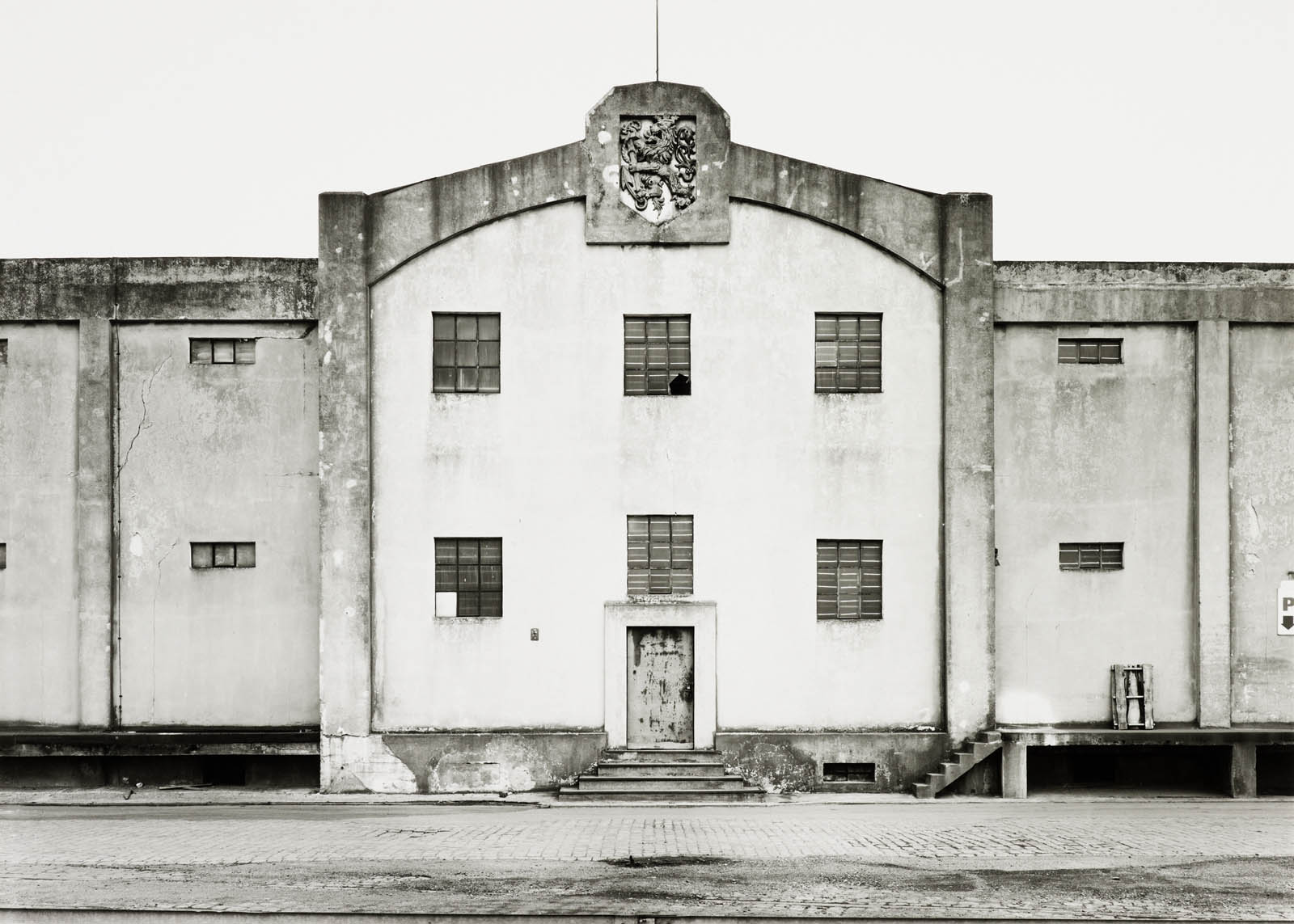
Tata Ronkholz (German, 1940-1997)
Lagerhalle mit Löwenwappen (Warehouse with lion crest)
1979
From the series Rheinhafen Düsseldorf 1979-1981
© VAN HAM Art Estate: Tata Ronkholz, 2025
This retrospective is the first comprehensive tribute to the versatile work of Tata Ronkholz (born 1940 in Krefeld; died 1997 in Hürth-Kendenich, née Maria Juliana Roswitha Tölle). The exhibition features works by the photographer, product designer, and interior architect who was one of the early students of the Becher class at the Kunstakademie Düsseldorf. Among her fellow students were renowned artists such as Candida Höfer, Axel Hütte, Thomas Ruff, Thomas Struth, and Petra Wunderlich. Ronkholz’s estate, acquired in 2011 by VAN HAM Art Estate in Cologne, forms the basis of the exhibition alongside the holdings of Stadtmuseum Düsseldorf. Significant contributions have also been made from the in-house collections of Die Photographische Sammlung/ SK Stiftung Kultur and from other lenders.
The retrospective finds its stylistically fitting context in the Photographic Collection, with the on-site Bernd and Hilla Becher Archive. Ronkholz’s works follow in the tradition of objective, documentary photography – a tradition decisively shaped by the Bechers. Her work is characterised by clear compositions, a serial approach, and a documentary focus on architectural structures and everyday architectures. Using her large-format camera, she produced sharply defined and realistic photographs in which the subject matter, rather than the photographer’s personal signature, takes center stage. Her work is predominantly in black and white, although color images also appear, demonstrating her ambition to engage with the emerging artistic colour photography in Germany during the 1970s and 80s.
Tata Ronkholz became known for her appealing series of kiosks and small shops that capture typical moments of urban everyday culture. These were photographed between 1977 and 1985, particularly in neighborhoods of Cologne and Düsseldorf, in the Ruhr area, as well as in Leverkusen and Krefeld. For example, the kiosk in Cologne-Nippes – with its ice cream and newspaper advertisements and vending machines for chewing gum and cigarettes – is captured in a straightforward, unadorned manner that is as amusing and engaging as the boutique in Cologne-Mülheim on Berliner Straße 120, where, according to the store sign, alongside clothing, “Third World records” were also offered. Many details in the images evoke personal memories – perhaps a shopping trip to a Turkish grocery store or an ice cream sundae at Eiscafé Fortuna. The photographs illustrate the transformation of product offerings, decoration, and advertising in urban spaces. The depicted details remind viewers of their own surroundings and provide insight into the shopping habits of past decades.
In this way, the subjects in Tata Ronkholz’s work indirectly testify to social, cultural, and economic change while also revealing how the personal tastes of shop owners influenced the design of these small retail outlets. Viewed in this light, her images offer a vivid basis for a sociological examination of our own species, addressing fundamental societal questions: What needs did we have and do we have? What did we need and do we need to live? How do we shape our surroundings? What role do images play?
Another significant series is dedicated to industrial gates, photographed between 1977 and 1985. The simple black-and-white images of these gates, with their grids and frameworks, offer glimpses into the interiors of industrial areas, their graphic structure appearing almost abstract. In the photographs, the gates function as interfaces between private and public space, between interior and exterior, and between activity and calm. Their aesthetic, reminiscent of abstract artworks, imbues the everyday with a new significance.
A particularly impressive documentary series is the body of work on the Düsseldorf Rhine Harbor, which Ronkholz began in 1979 together with her then fellow student Thomas Struth. The project originated from the planned redevelopment of the historic harbor area – a site that, in its original form, was considered an industrial area of significant urban historical and architectural importance. Struth observed the initial changes from his studio and convinced Tata Ronkholz to join the project. Together, they set out to document the harbor in its entirety, capturing its historic buildings, technical installations, and operational structures. They recorded façades, interiors, silos, warehouses, crane structures, and harbor basins in carefully composed images, before these elements partially disappeared or were fundamentally altered during the restructuring. The photographs strikingly showcase the industrial architecture of the 19th and 20th centuries while simultaneously highlighting the transformation from a center of commerce and production to today’s media harbor. Overall, this critically composed documentation of the Düsseldorf Rhine Harbor stands as an exemplary case for the complex issues of urban redevelopment in other locations as well.
In addition, the exhibition presents works that highlight Ronkholz’s achievements as a product designer, including depictions of geometrically shaped furniture and lighting fixtures as well as designs for office and cafeteria furniture. Between 1961 and 1965, she studied at the Werkkunstschule Krefeld with a focus on furniture design and subsequently worked as a freelance designer until 1977. Her designs are characterised by clear forms and functional elegance, as exemplified by the “Spherical Light” developed in collaboration with Adolf Luther, featuring a convex glass element. Finally, the retrospective also presents early photographs of architectural forms created in 1975/76 in Italy and France. Even in these works, her strong affinity for the aspects of the designed world across various areas of life becomes apparent.
Accompanying the exhibition is the catalog Tata Ronkholz: Designed World. A Retrospective published by Schirmer / Mosel Verlag, featuring texts by renowned authors (ger/en). The exhibition is supported by the City of Düsseldorf and VAN HAM Cologne.
Press release from Die Photographische Sammlung/ SK Stiftung Kultur, Cologne
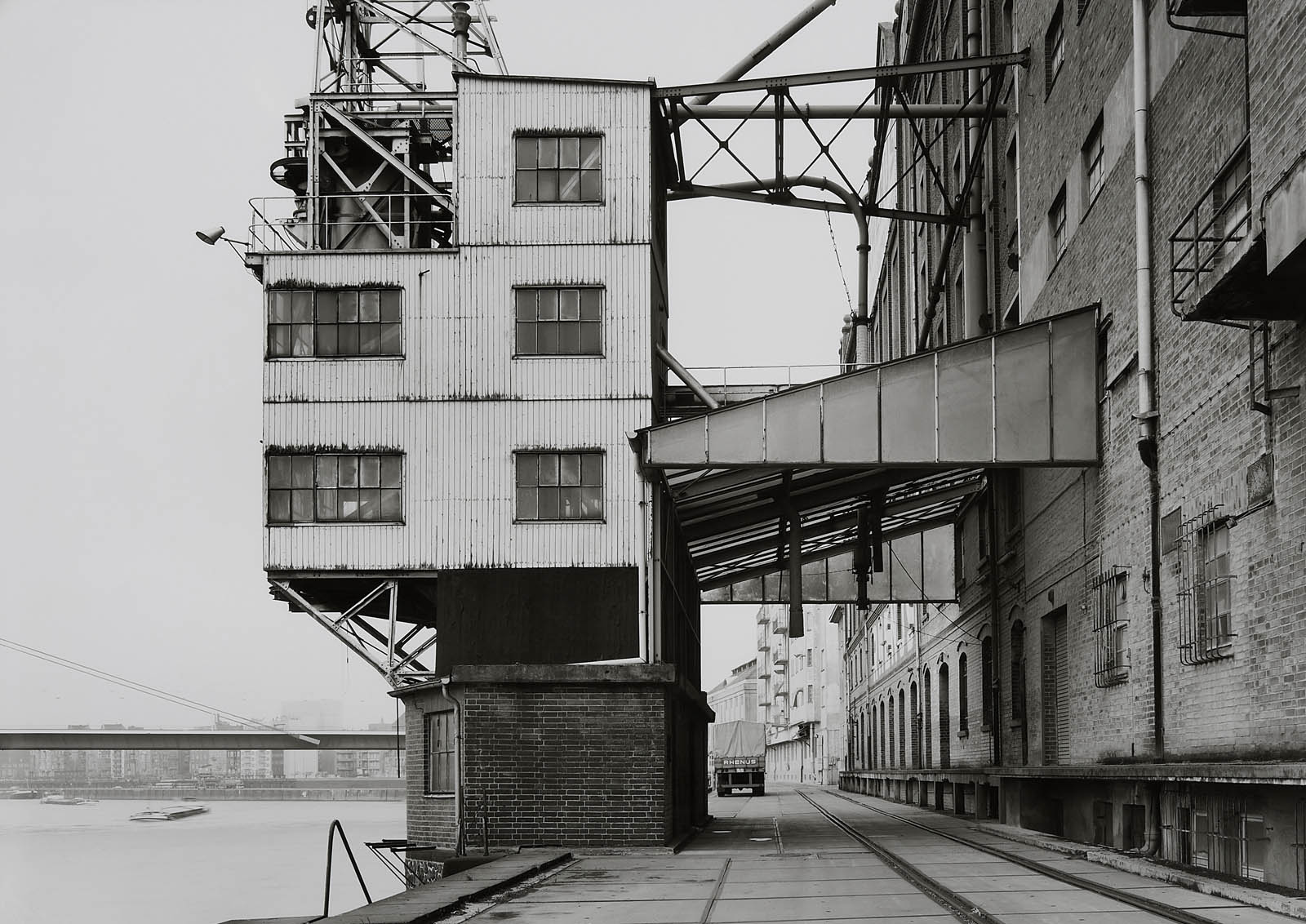
Tata Ronkholz (German, 1940-1997)
Rheinhafen Düsseldorf, Technik und Kräne (Rhine port Düsseldorf, technology and cranes)
Undated
From the series Rheinhafen Düsseldorf 1979-1981
© VAN HAM Art Estate: Tata Ronkholz, 2025
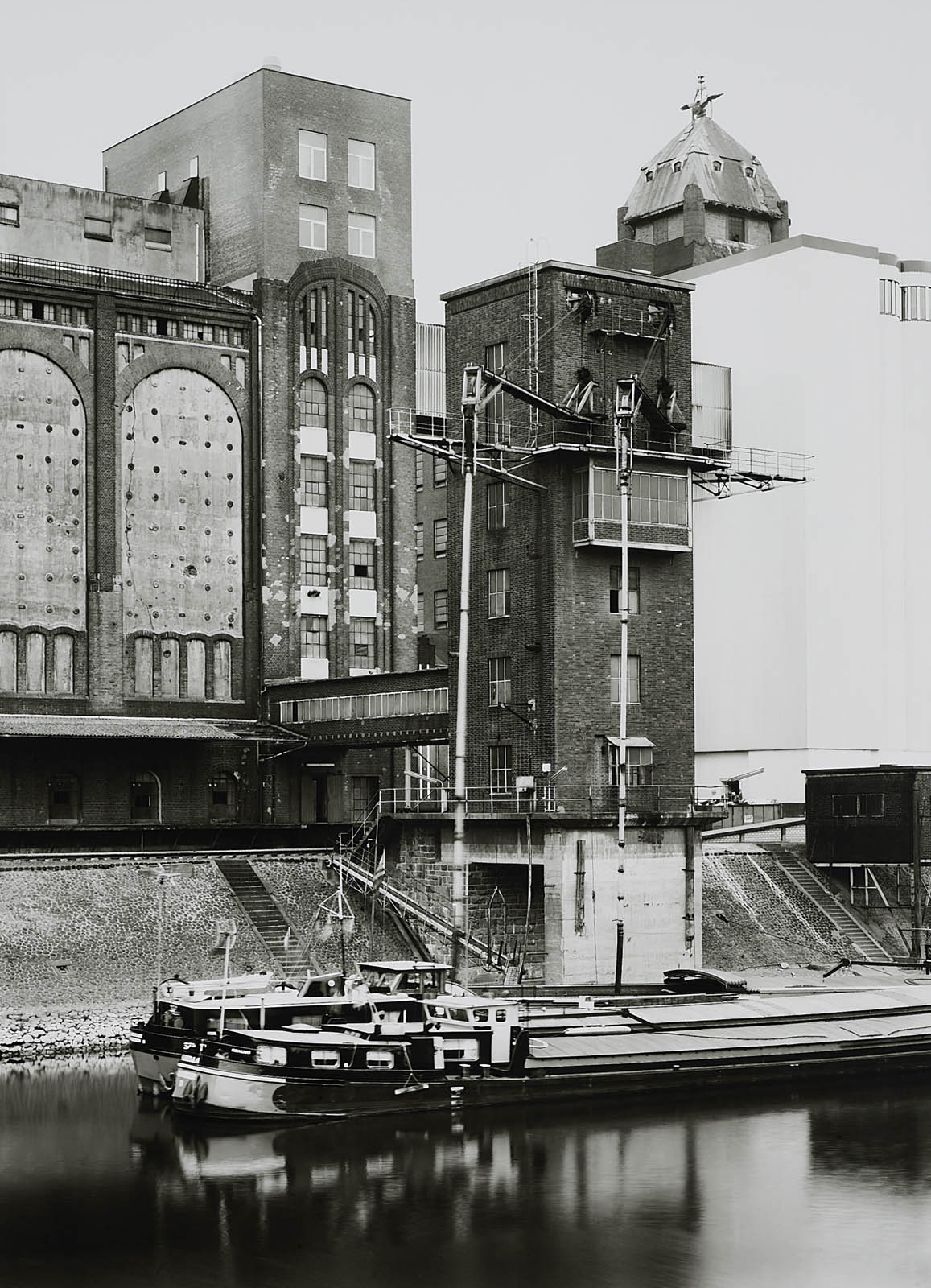
Tata Ronkholz (German, 1940-1997)
Rheinhafen Düsseldorf, Technik und Kräne (Rhine port Düsseldorf, technology and cranes)
Undated
From the series Rheinhafen Düsseldorf 1979-1981
© VAN HAM Art Estate: Tata Ronkholz, 2025
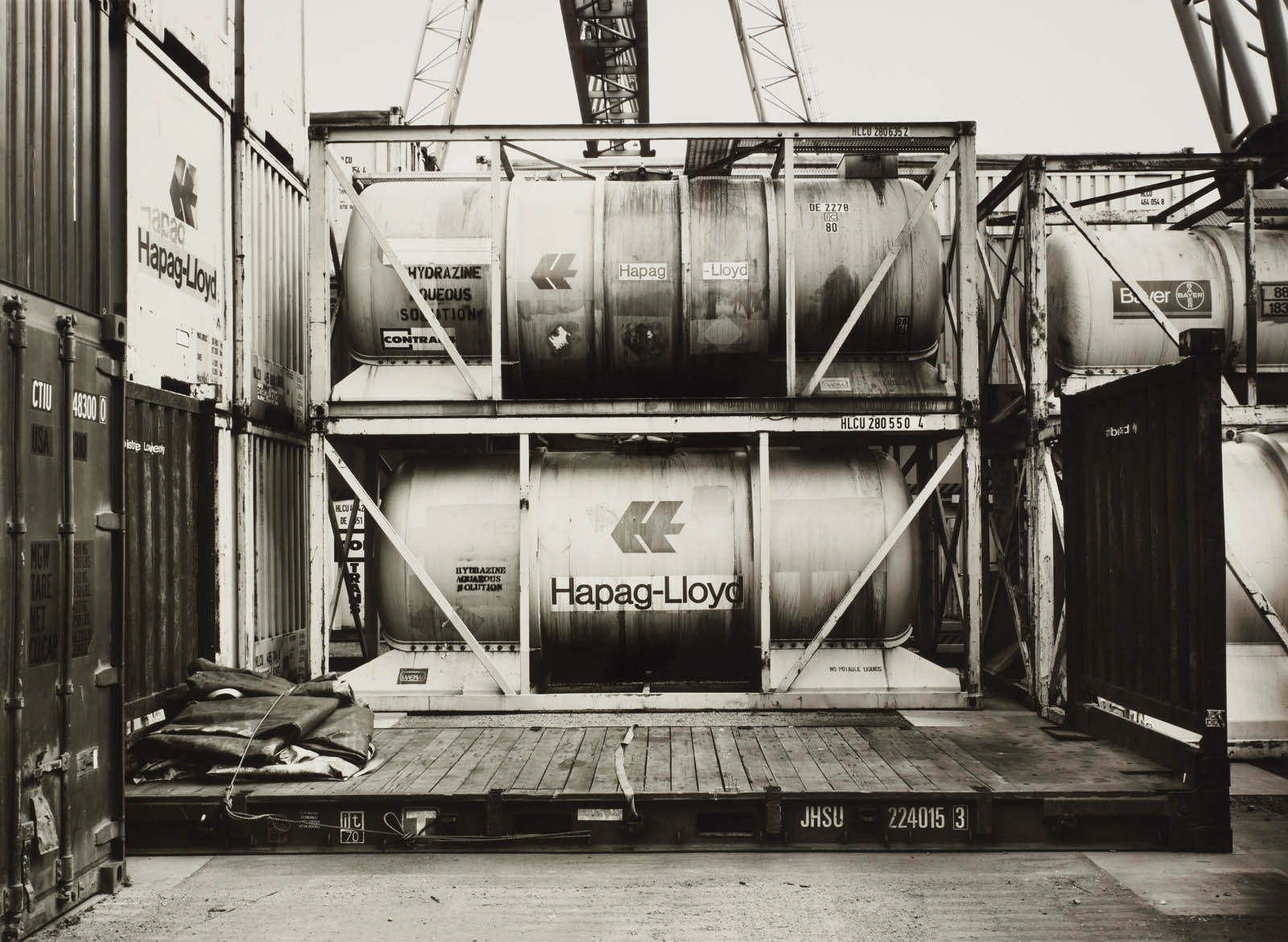
Tata Ronkholz (German, 1940-1997)
Im Düsseldorfer Hafen (In Düsseldorf harbour)
Around 1980
From the series Rheinhafen Düsseldorf 1979-1981
© VAN HAM Art Estate: Tata Ronkholz, 2025
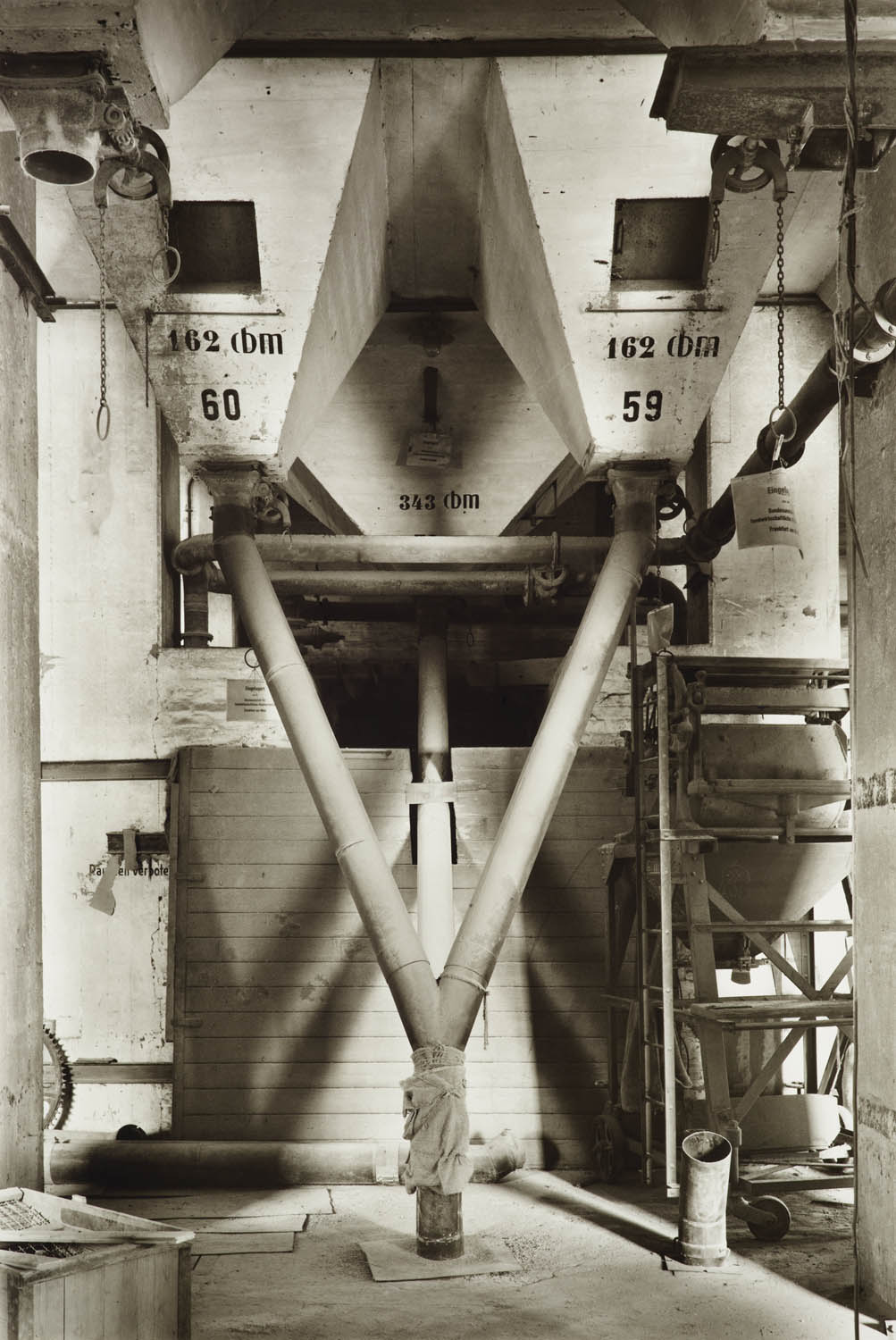
Tata Ronkholz (German, 1940-1997)
Im Düsseldorfer Hafen (In Düsseldorf harbour)
Around 1980
From the series Rheinhafen Düsseldorf 1979-1981
© VAN HAM Art Estate: Tata Ronkholz, 2025
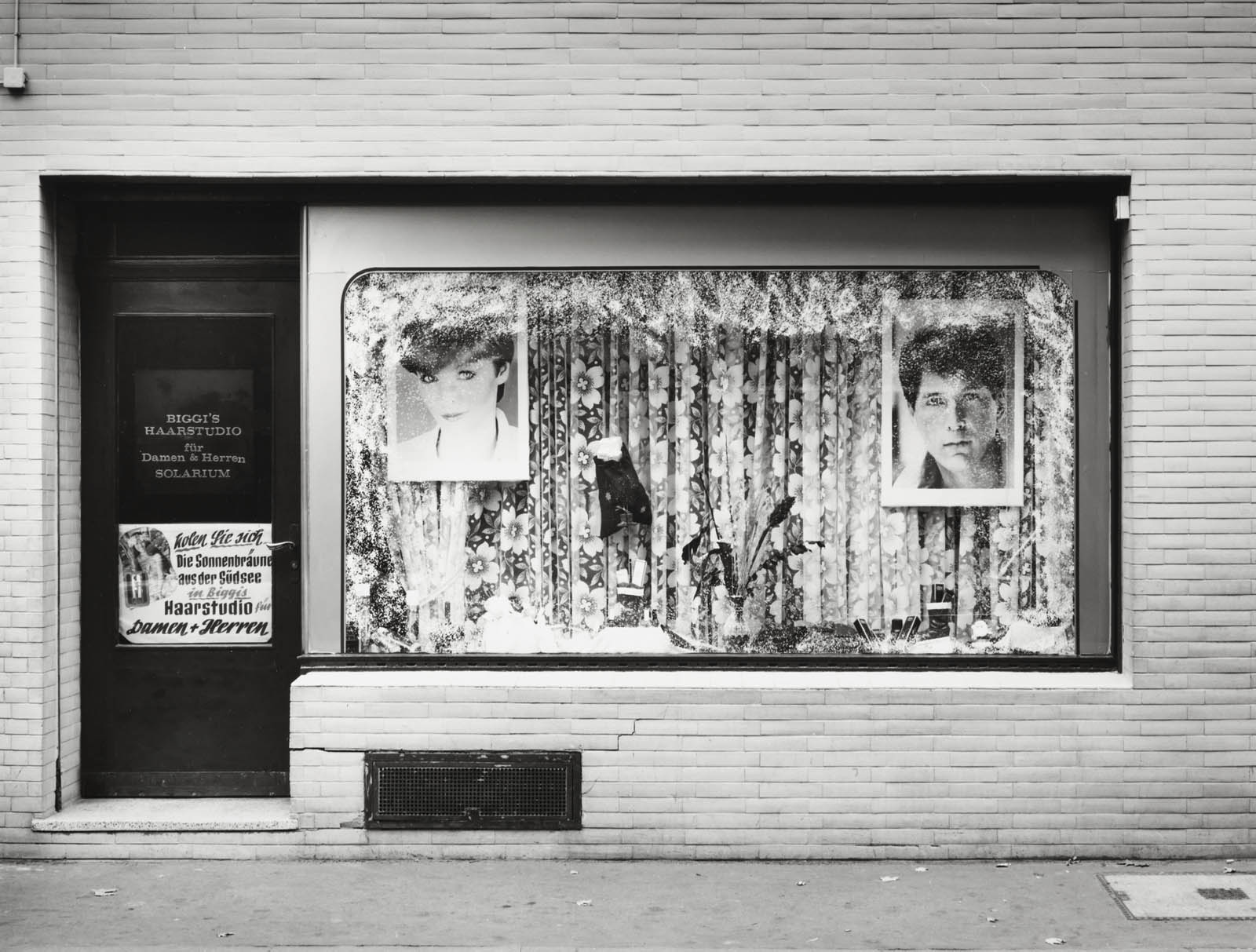
Tata Ronkholz (German, 1940-1997)
Friseur, Köln-Ehrenfeld, Philippstraße 30 (Barber, Köln-Ehrenfeld, Philippstraße 30)
1980
© VAN HAM Art Estate: Tata Ronkholz, 2025
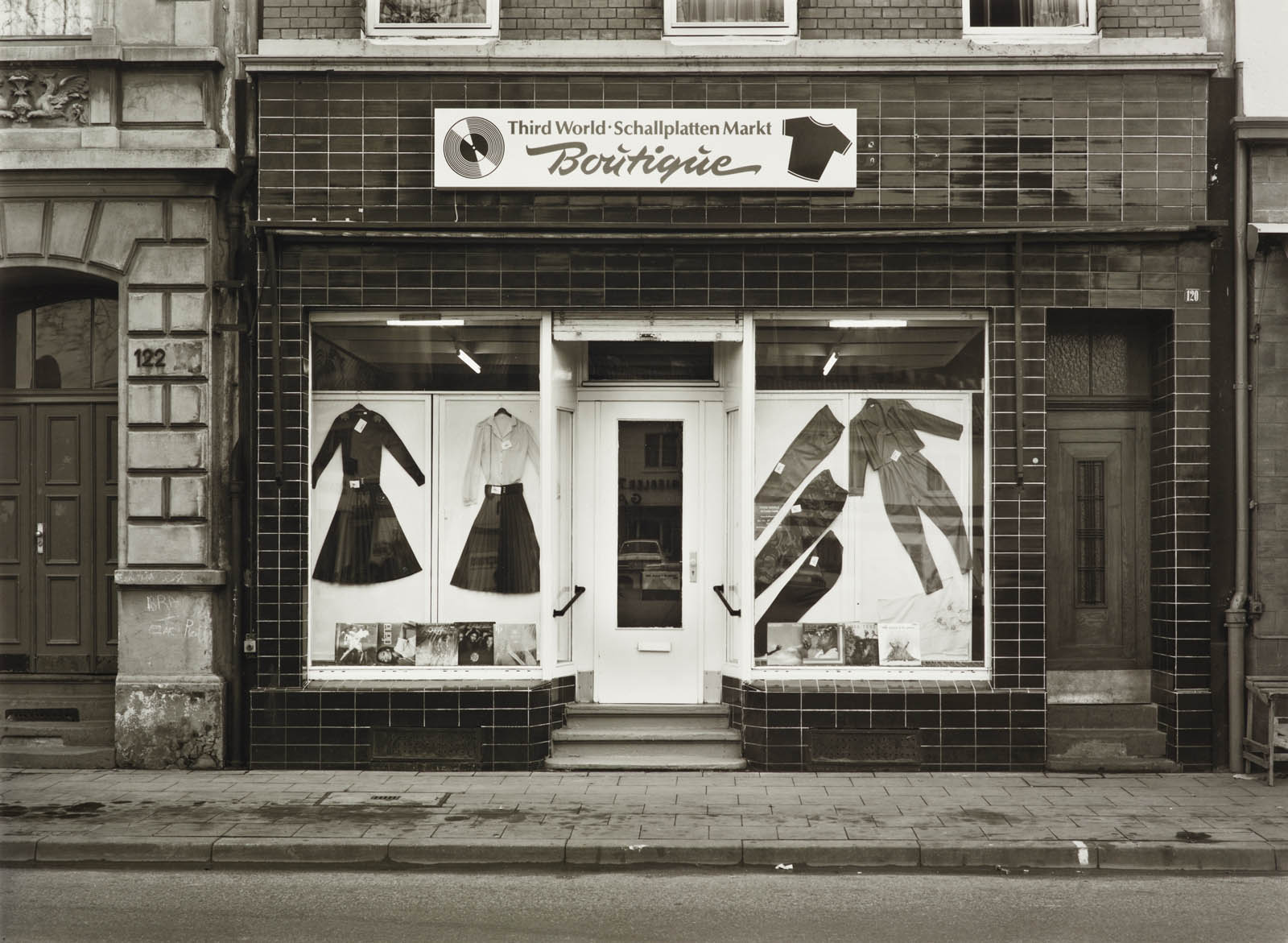
Tata Ronkholz (German, 1940-1997)
Boutique, Köln-Mülheim, Berliner Straße 120
1980
© VAN HAM Art Estate: Tata Ronkholz, 2025
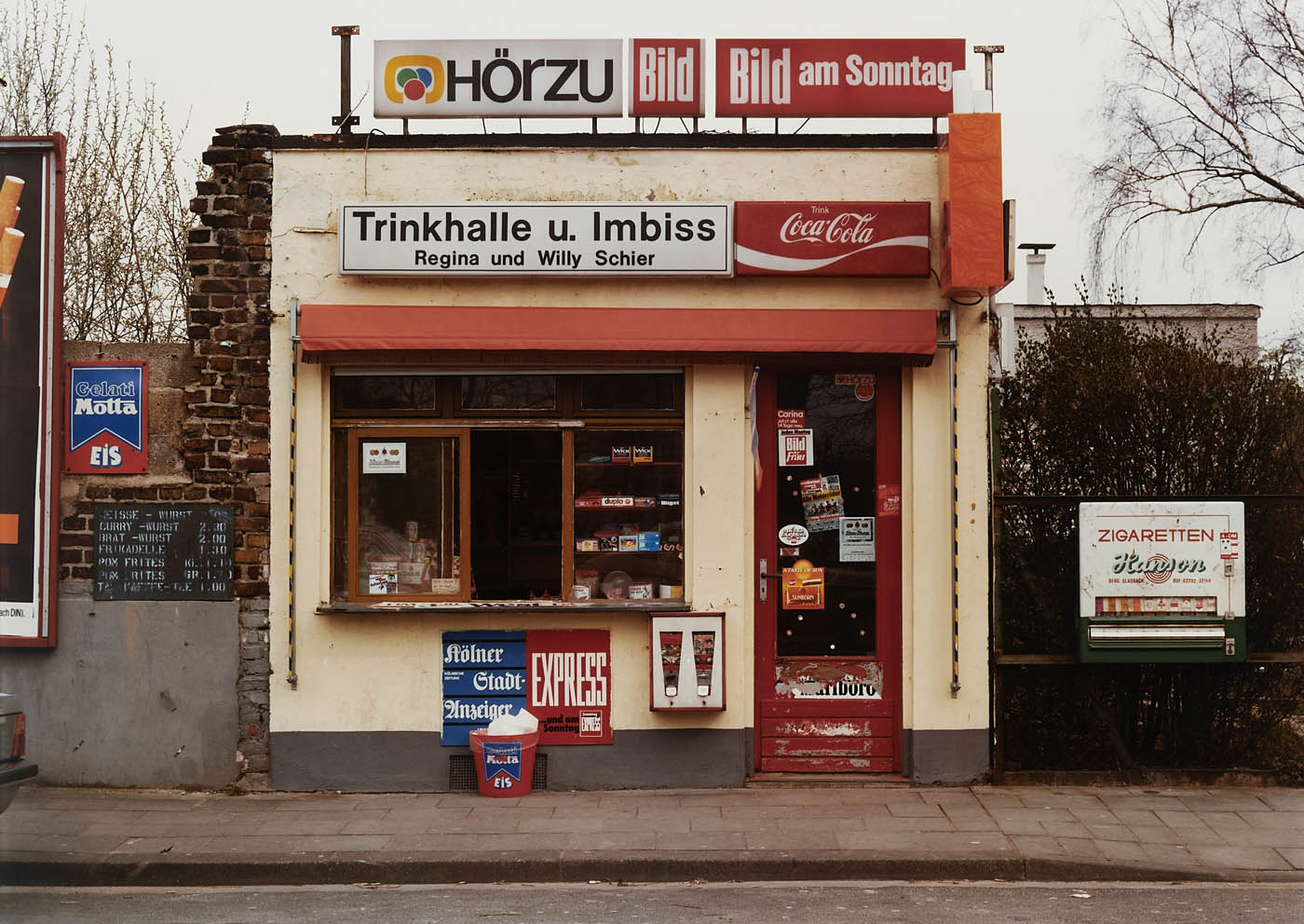
Tata Ronkholz (German, 1940-1997)
Trinkhalle, Köln-Nippes, Merheimer Straße 294
1983
© VAN HAM Art Estate: Tata Ronkholz, 2025
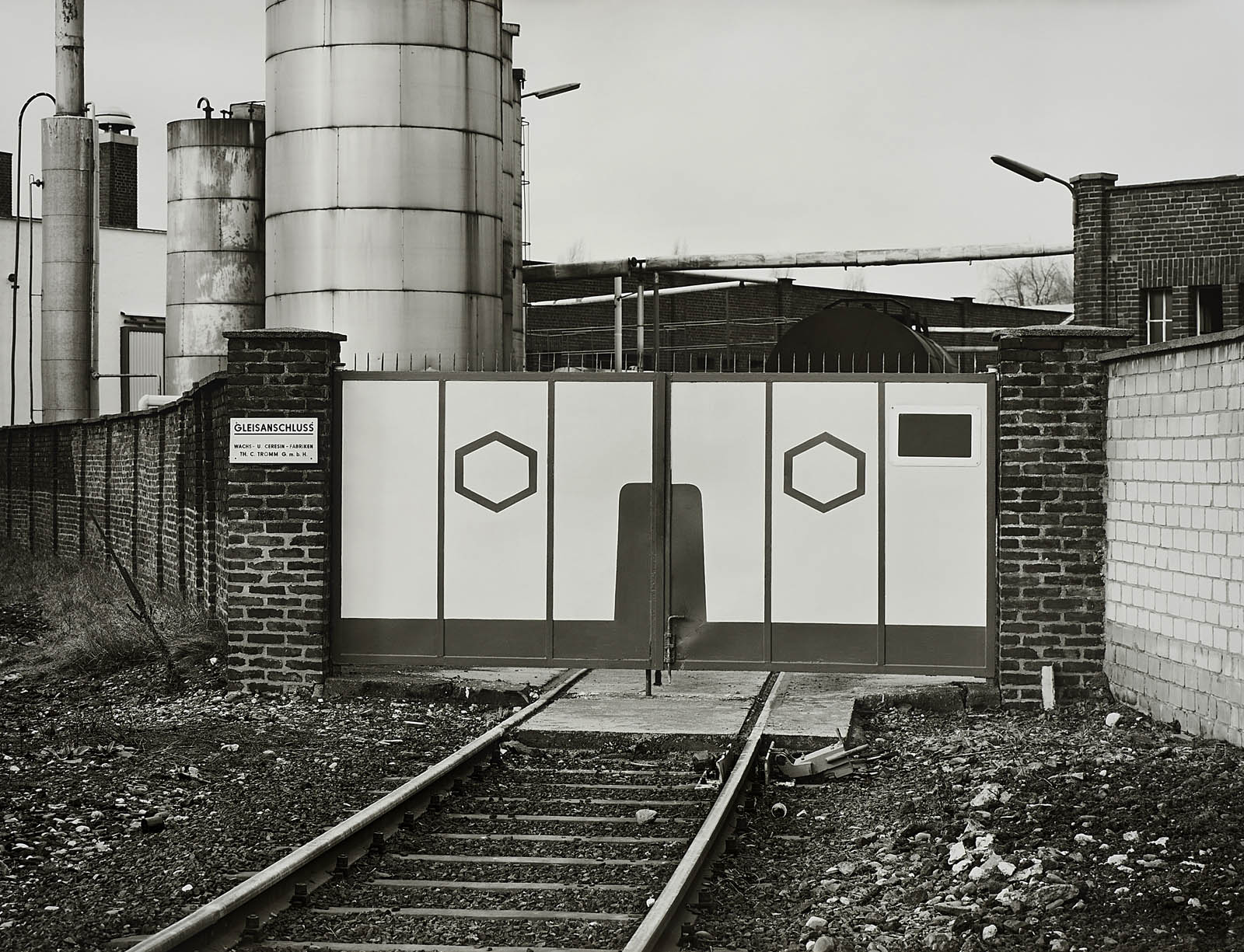
Tata Ronkholz (German, 1940-1997)
Firma Tromm, Tor Gleisanschluss, Köln-Niehl (Tromm Company, Gate Rail Connection, Cologne-Niehl)
1983
© VAN HAM Art Estate: Tata Ronkholz, 2025
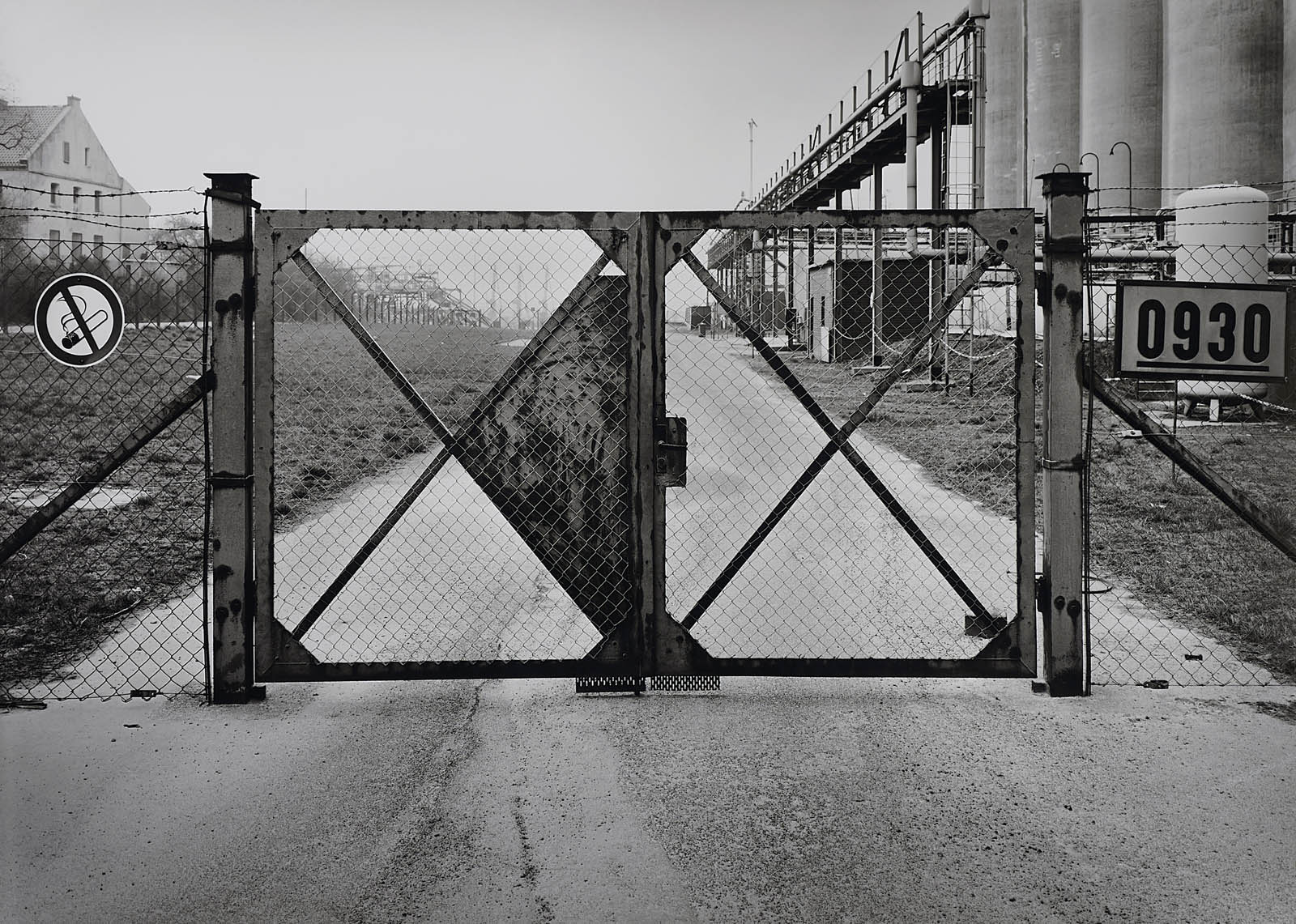
Tata Ronkholz (German, 1940-1997)
Firma ROW, Hafen, Tor Nr. 0930, Wesseling-Godorf
1984
© VAN HAM Art Estate: Tata Ronkholz, 2025
Die Photographische Sammlung/SK Stiftung Kultur
Im Mediapark 7, 50670 Köln
Phone: +49 221/888 95
Opening hours:
The ongoing exhibitions are open daily from 2pm to 7pm. With the exception of being closed on Wednesdays.









 Art Blart _ art and cultural memory archive
You must be logged in to post a comment.