Exhibition: ‘One Life: Frederick Douglass’ at the National Portrait Gallery, Washington

Exhibition dates: 16th June, 2023 – 21st April, 2024

Curator: John Stauffer, the Sumner R. and Marshall S. Kates Professor of English and of African and African American Studies, Harvard University
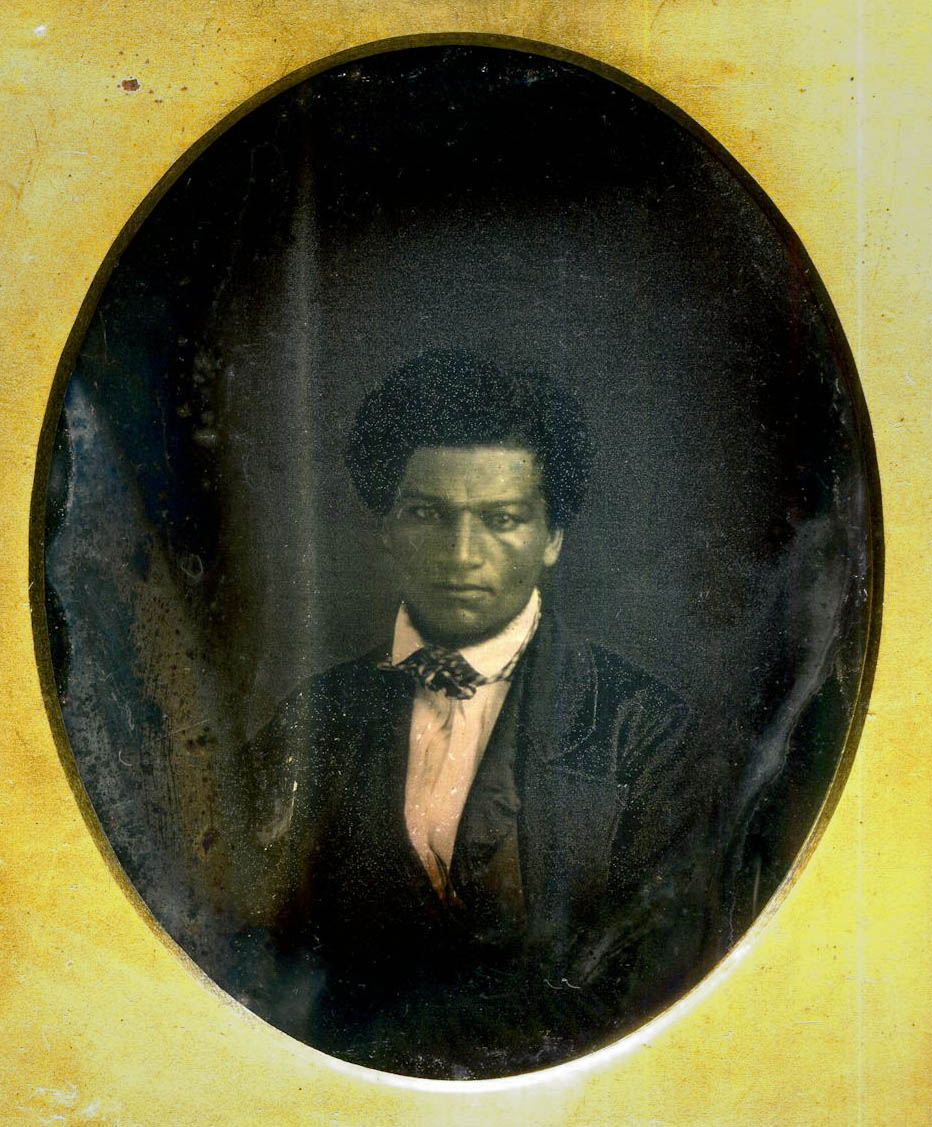
 

Unidentified photographer. 'Frederick Douglass' c. 1841


Unidentified photographer
Frederick Douglass
c. 1841
Sixth-plate daguerreotype
Collection of Gregory French


In this first known photographic image of Douglass, taken only one year after the first commercial daguerreotype studio opened in the United States, he appears somewhat dazed or “statue-like,” as he might have said. In 1841, the exposure time for a daguerreotype of this size could run up to fifteen seconds, depending on the time of day and the amount of available daylight in the daguerreotypist’s studio.

Text from the National Portrait Gallery website


I seem to be envisioning the nineteenth-century at the moment, which is a condition entirely more pleasurable than contemplating the dreadful state of the world at the moment with its environmental desecration, greed, killing of animal and human life and the unconscionable conduct of governments. Ego, greed, religion, power, masculinity, war, nationalism, possession. A toxic mix.

Here we have photographs of a majestic human being, a former slave, social reformer, abolitionist, orator, writer, and statesman – who fought for freedom, who fought against discrimination and racism. And still it goes on today…

“A new memorial to Emmett Till was dedicated on Saturday in Mississippi after previous historical markers were repeatedly vandalized. The new marker is bulletproof.

Till, 14, was kidnapped, beaten and killed in 1955, hours after he was accused of whistling at a white woman. His body was found in a river days later. An all-white jury in Mississippi acquitted two white men of murder charges…

This is the fourth historical marker at the site. The first was placed in 2008. Someone tossed it in the river. The second and third signs were shot at and left riddled with bullet holes. The new 500lb steel sign has a glass bulletproof front.”1

His mother, Mamie Till Mobley, held an open casket funeral in Chicago to let the world see how badly her son had been beaten and mutilated. “There was just no way I could describe what was in that box. No way. And I just wanted the world to see.”

At the end I’ll be glad when I have left this world because I am so disappointed with the human race. High hopes indeed.

Dr Marcus Bunyan


1/ Associated Press. “Emmett Till: new memorial to murdered teen is bulletproof,” on The Guardian website Sun 20 Oct 2019 [Online] 06/04/2024


Many thankx to the National Portrait Gallery for allowing me to publish the photographs in the posting. Please click on the photographs for  a larger version of the image.


The bullet-riddled historical sign for Emmett Till


The bullet-riddled historical sign for Emmett Till, the Chicago teenager whose 1955 slaying helped propel the civil rights movement

Used under fair use conditions for the purposes of education and research


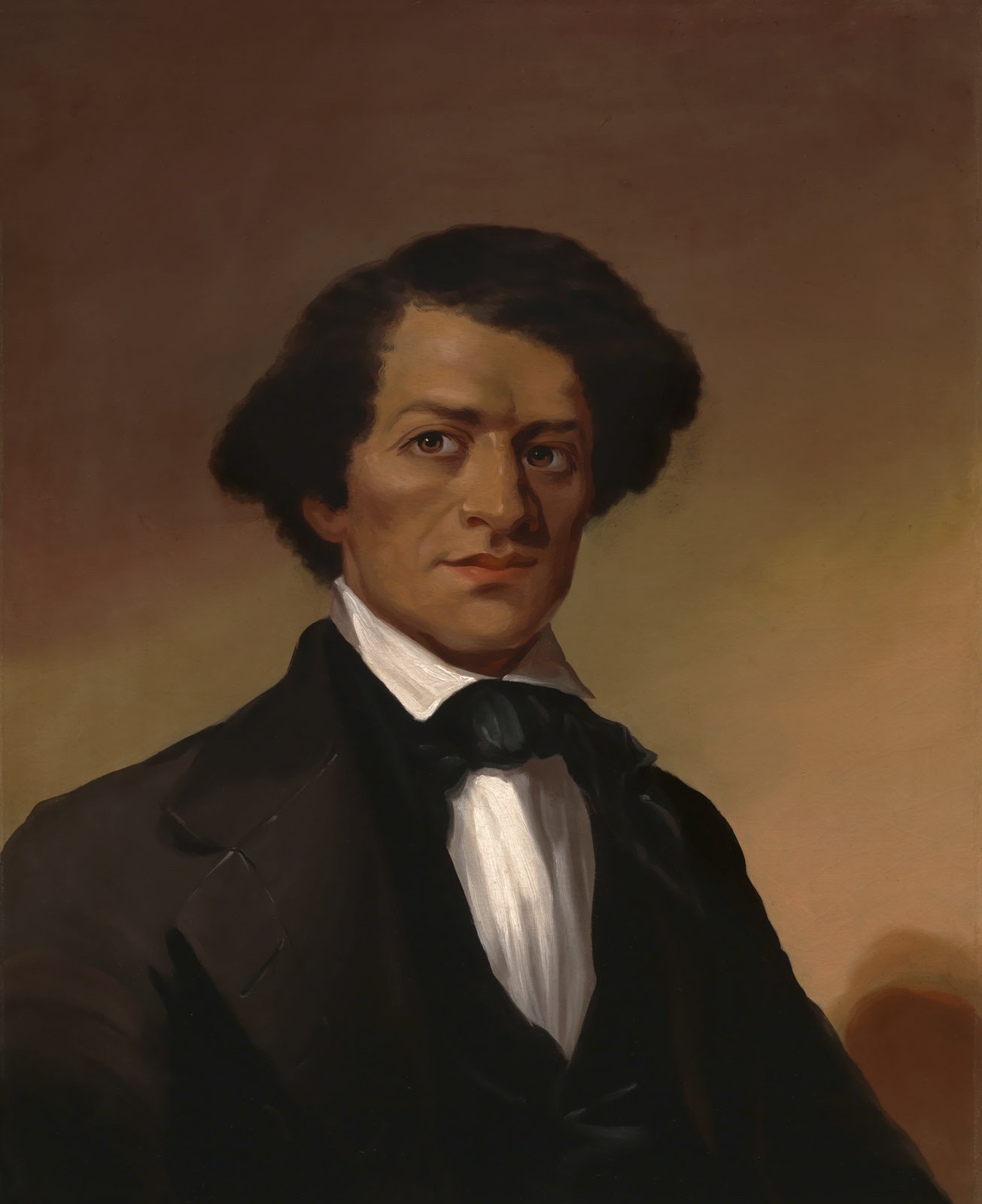
Unidentified artist (formerly attributed to Elisha Livermore Hammond) 'Frederick Douglass' c. 1845


Unidentified artist (formerly attributed to Elisha Livermore Hammond)
Frederick Douglass
c. 1845
Oil on canvas
National Portrait Gallery, Smithsonian Institution


Frederick Douglass became the most influential African American of the nineteenth century by turning his life into a testimony on the evils of slavery and the redemptive power of freedom. After he escaped from bondage in 1838, Douglass quickly emerged as an outspoken advocate for equality and abolition. Aware of the power of telling one’s own story, he frequently spoke about his life, published three genre-defining autobiographies, and founded the influential newspaper, The North Star, in 1847. Douglass also posed for countless photographs, which he considered less susceptible to artists’ racial prejudices.

This painting was likely based on the engraved frontispiece of Douglass’s first autobiography, Narrative of the Life of Frederick Douglass (1845), a gripping account of his struggle for freedom. In My Bondage and My Freedom (1855), Douglass went on to address the psychology of slavery and the racism that continued to define the lives of the newly free.

Text from the National Portrait Gallery website


Southworth & Hawes (active 1843–1862) 'Frederick Douglass' c. 1845


Southworth & Hawes (active 1843–1862)
Frederick Douglass
c. 1845
Whole-plate daguerreotype
Onondaga Historical Association Museum, Syracuse, NY


Douglass likely sat for this daguerreotype in the Boston studio of Southworth & Hawes before he left for England in August 1845. The Twelfth National Anti-Slavery Bazaar, held at Faneuil Hall in December 1845, offered for sale “an excellent Daguerreotype of Frederick Douglass,” according to The Liberator (January 23, 1846). The daguerreotype was “the gift of Mr. Southworth” and “elicited much attention.” John Chester Buttre created an engraving from the daguerreotype, which appeared in Autographs for Freedom (1854), a gift book edited by Douglass’s friend Julia Griffiths to raise money for his North Star newspaper.

Text from the National Portrait Gallery website


Southworth & Hawes (active 1843–1862) 'Frederick Douglass' c. 1845 (detail)


Southworth & Hawes (active 1843–1862)
Frederick Douglass (detail)
c. 1845
Whole-plate daguerreotype
Onondaga Historical Association Museum, Syracuse, NY


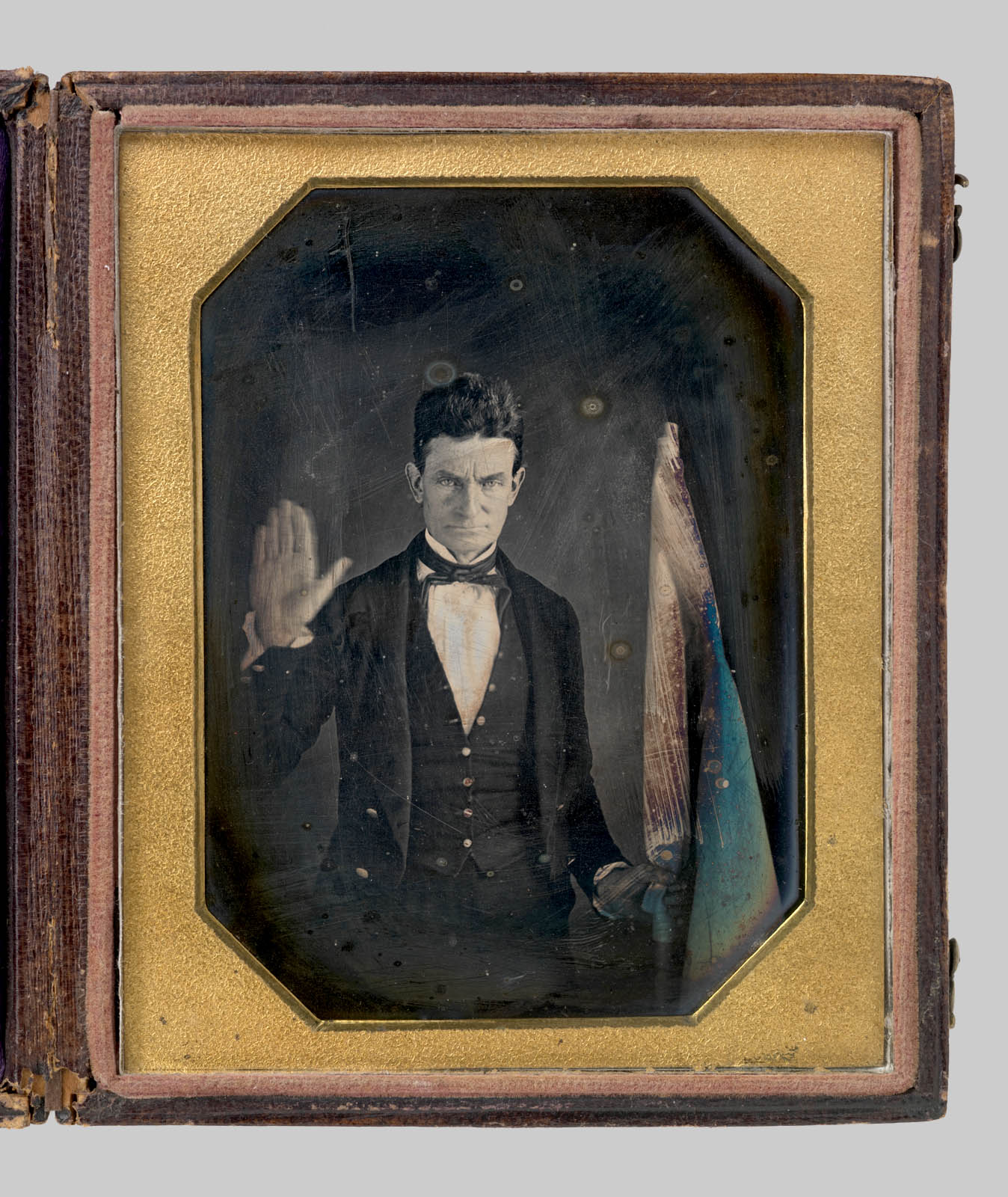
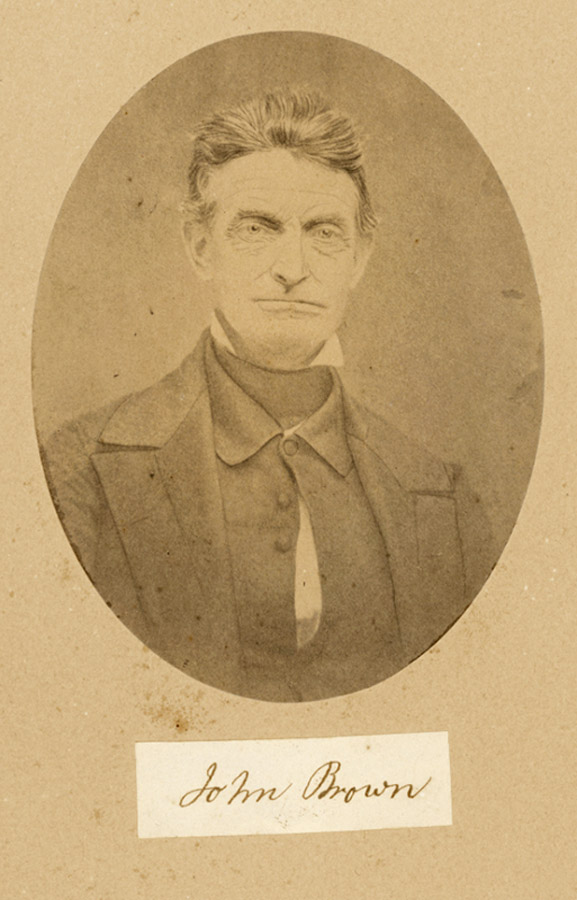
Augustus Washington (American, c. 1820–1875) 'John Brown 1800-1859' c. 1846-1847


Augustus Washington (American, c. 1820–1875)
John Brown 1800-1859
c. 1846-1847
Quarter-plate daguerreotype
National Portrait Gallery, Smithsonian Institution; purchased with major acquisition funds and with funds donated by Betty Adler Schermer in honor of her great grandfather, August M. Bondi


One of the nation’s first African American daguerreotypists, Augustus Washington was also a prominent abolitionist in Hartford, Connecticut, when he made this portrait of the militant abolitionist John Brown. At the time, Brown was working to establish a “Subterranean Pass Way,” a network of armed men in the Alleghenies for conducting fugitives to freedom in Canada.

In Washington’s daguerreotype, Brown apparently holds the Pass Way flag and pledges allegiance to his scheme, which never materialised. In 1853, Washington and his family emigrated to Liberia, the former West African colony founded by the American Colonization Society, which gained independence in 1847.

Text from the National Portrait Gallery website


Frederick Douglass (1818-1895), the preeminent African American voice of the nineteenth century, is remembered as one of the nation’s greatest orators, writers, and picture makers. Born on the Eastern Shore of Maryland in 1818, Frederick Augustus Washington Bailey was the son of Harriet Bailey, an enslaved woman, and an unknown white father. He escaped bondage in 1838 and changed his surname to Douglass.

Over six decades, Douglass published three autobiographies, hundreds of essays, and a novella; delivered thousands of speeches; and edited the longest-running Black newspaper in the nineteenth century, The North Star (later Frederick Douglass’ Paper and Douglass’ Monthly). During the Civil War, he befriended and advised President Abraham Lincoln and met every subsequent president through Grover Cleveland. He was also the first African American to receive a federal appointment requiring Senate approval (U.S. Marshal of the District of Columbia).

Douglass became the most photographed American of the nineteenth century and remains a public face of the nation. As an art critic, he wrote extensively on portrait photography and understood its power. He explained how this “true art” (as opposed to pernicious caricatures) captured the essential humanity of each subject. True art was an engine of social change, he argued, and true artists were activists: “They see what ought to be by the reflection of what is, and endeavour to remove the contradiction.”

Curatorial Statement

Organised into seven sections, this exhibition highlights the long arc and significance of Frederick Douglass’s life: from slave and fugitive to internationally acclaimed abolitionist, women’s rights activist, and statesman after the Civil War. We come to recognise his influences in the Civil War and postwar eras; and the significance of his afterlife, in which his portraits and writings continue to inspire people to seek “all rights for all,” one of his mottos. The range of objects shown here reflects Douglass’s openness to new forms of media and technology to advance the cause of human rights.

John Stauffer, the Sumner R. and Marshall S. Kates Professor of English and of African and African American Studies, Harvard University

Text from the National Portrait Gallery website


Douglass’ ascension into the most preeminent African American voice in the 1800s and one of the handful of most influential and famous Americans in the nation’s history owes itself equally to his merits and good fortune.

“Douglass had an extraordinary work ethic, he was immensely curious and dedicated,” Stauffer explained. “And physically strong and tall – over six feet, a half-foot taller than the average man – which helped him survive slavery.”

Size does matter. George Washington and Abraham Lincoln were also comparative giants for their day. American presidents, on average, stand a great deal taller, literally, than the average citizen.

Douglass’ physical size and strength allowed him to outlast a sadistic “slave breaker,” Edward Covey, in a protracted fight as a teen. After suffering numerous whippings, Douglass stood up to the man. As long as he lived, he referred to the fight as the turning point in his life as a slave.

“He was also lucky to have been born and raised in the upper South and not sold into the Deep South or murdered for his rebelliousness as a slave and his constant battles against slavery and racism as a free man,” Stouffer added. “Had he been born in the Deep South, where most enslaved people lived, his chances of escaping to free soil would have been almost nil.”

Douglass’ circumstances were hardly favourable, but he did win something of a genetic and geographic lottery at birth.

He also caught a rare break, learning to read and write as a young boy, skills most slaveowners prohibited.

“In Baltimore, Douglass asked his mistress, Sophia Auld, to teach him to read, which she did, having never overseen an enslaved person before,” Stouffer said. “Her husband, Hugh Auld, found out and told her in front of Douglass, ‘if you learn him to read, he’ll want to know how to write; and this accomplished, he’ll be running away from himself.’ Hearing this, Douglass ‘understood the direct pathway to freedom,’ as he said.”

Chadd Scott. “Art, Activism And Frederick Douglass At National Portrait Gallery,” on the Forbes website Aug 22, 2023 [Online] Cited 21/04/2024


Unidentified photographer. 'Frederick Douglass' c. 1850 (after c. 1847 daguerreotype)


Unidentified photographer
Frederick Douglass
c. 1850 (after c. 1847 daguerreotype)
Sixth-plate daguerreotype
National Portrait Gallery, Smithsonian Institution


When sitting for a photograph, Douglass would pose as an artist or performer, forming part of a pas de trois with the photographer and the camera. He always dressed up and, as the activist Elizabeth Cady Stanton noted, often appeared “majestic in his wrath.”

Before the mid-1860s, Douglass typically stared into the camera lens with a dramatic look. He wanted the focus on himself. Here, he fills the frame, appearing as an accomplished, dignified activist, and projecting a visual voice of democracy. Through his images, voice, and writings, Douglass sought to “out-citizen” whites, many of whom questioned African American rights.

In the years following his escape from bondage in 1838, Frederick Douglass emerged as a powerful and persuasive spokesman for the cause of abolition. Douglass’s effectiveness as an antislavery advocate was due in large measure to his firsthand experience with the evils of slavery and his extraordinary skill as an orator whose “electrifying eloquence” astonished and enthralled his audiences. Convinced that a peaceful end to slavery was impossible, Douglass embraced the Civil War as a fight for emancipation and called for the enlistment of black troops. Throughout the decades that followed, he remained a tireless champion for civil rights.

In 1845, when the publication of his Narrative of the Life of Frederick Douglass revealed biographical details that could have led to his capture as a fugitive from slavery, Douglass left the United States for an extended stay in Great Britain. He was warmly welcomed by British abolitionists, who raised the funds to purchase his freedom, thereby enabling Douglass to return to the United States in 1847 as a free man. In this daguerreotype, believed to date from the time of his return, Douglass confronts the camera with an intensity that became the hallmark of his photographic portraits.

Text from the National Portrait Gallery website


Ezra Greenleaf Weld (American, 1801-1874) 'Fugitive Slave Law Convention, Cazenovia, New York' 1850


Ezra Greenleaf Weld (American, 1801-1874)
Fugitive Slave Law Convention, Cazenovia, New York
1850
Half-plate copy daguerreotype
Collection of Mr. and Mrs. Set Charles Momjian


On August 21, 1850, two days after the Senate passed the Fugitive Slave Act [Passed on September 18, 1850 by Congress, The Fugitive Slave Act of 1850 was part of the Compromise of 1850. The act required that slaves be returned to their owners, even if they were in a free state. The act also made the federal government responsible for finding, returning, and trying escaped slaves], about two thousand abolitionists convened near Gerrit Smith’s home. Douglass presided as president. Participants approved Smith’s “Letter to the American Slaves,” urging captives to avenge their enslavers. “You are prisoners of war in an enemy’s country,” Smith declared.

Here, Douglass sits at the edge of the table next to Theodosia Gilbert, the fiancée of William Chaplin, who was in prison for aiding fugitives. Behind Douglass stands Gerrit Smith [see photo below], in mid-speech, gesticulating. On either side of Smith, in checkered shawls and day bonnets, are Mary and Emily Edmonson, whose freedom had been orchestrated by Chaplin.

Text from the National Portrait Gallery website


Ezra Greenleaf Weld, known simply as “Greenleaf,” operated a daguerreotype studio in Cazenovia, New York, during a time of intense social and political turmoil. He opened his first studio in his home in 1845, when America began to witness the volatile events that led to the Civil War. At that time, instruction manuals on the daguerreotype process were widely available, and most small towns had at least one studio. In an 1850 advertisement in his local newspaper, Greenleaf offered “Miniatures executed in the finest style, and put in Rings, Pins, Lockets and cases, of great variety size and price.”

Greenleaf seems to have been very successful with his daguerreotype business. By 1851 he had leased new quarters on the top floor of a building, where he placed a skylight to receive northern light for his studio sessions. During the Civil War years, he made numerous pictures in and around Cazenovia.

Text from the J. Paul Getty Museum website


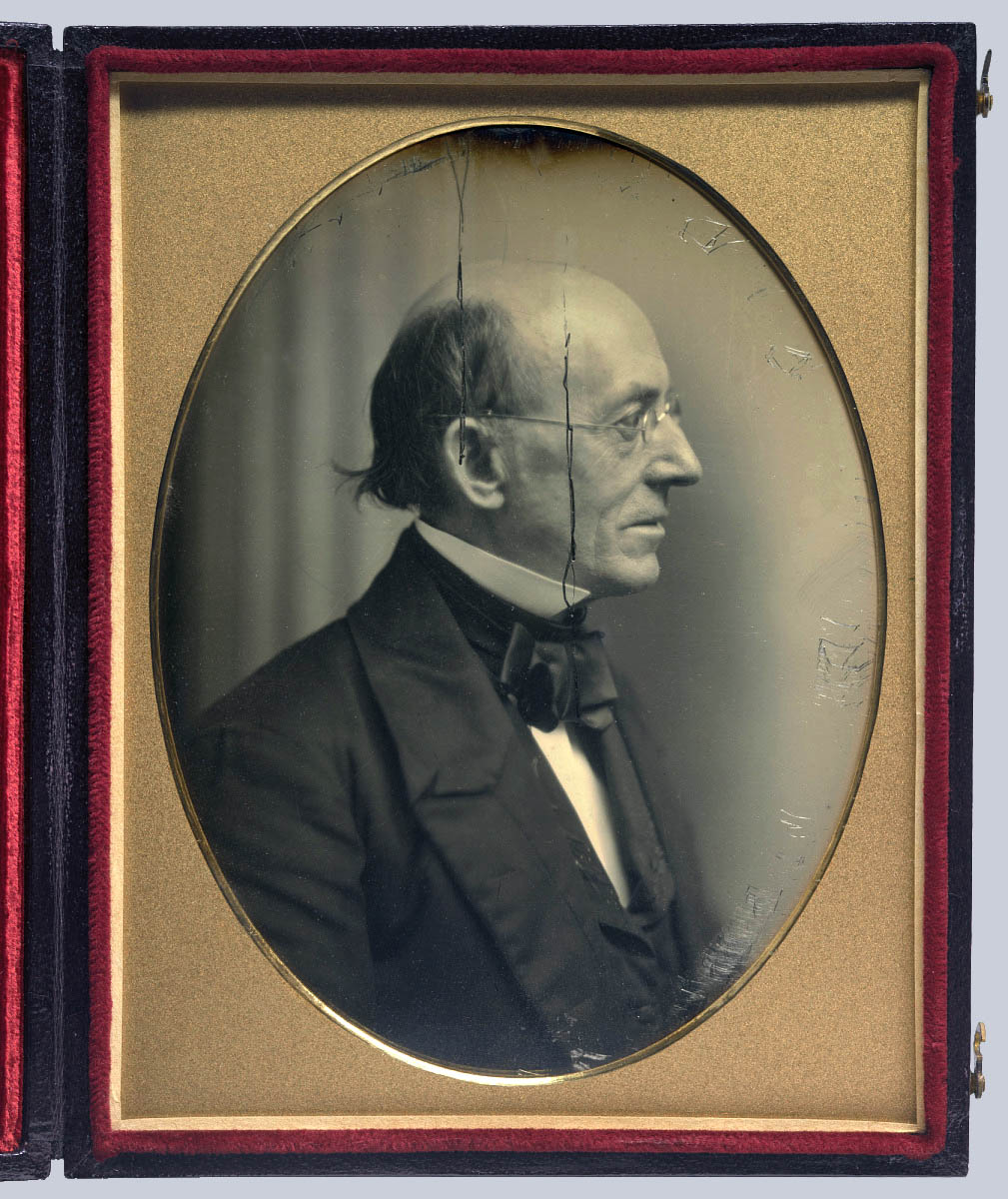
Southworth & Hawes (active 1843–1862) 'William Lloyd Garrison 1805-1879' c. 1851


Southworth & Hawes (active 1843–1862)
William Lloyd Garrison 1805-1879
c. 1851
Half-plate daguerreotype
National Portrait Gallery, Smithsonian Institution


After escaping enslavement, Douglass subscribed to William Lloyd Garrison’s newspaper, The Liberator, and read it as devoutly as his bible. “The paper became my meat and drink,” he recalled.

Garrison promoted Douglass’s 1845 autobiography, which made him famous and prompted him to flee to the British Isles to avoid capture and re-enslavement. British friends then purchased his freedom, and he returned to the United States in 1847, a free man. Wanting to launch his own paper, Douglass soon moved his family to Rochester, New York, a railroad and antislavery hub that lacked an abolitionist paper. The move ruptured his friendship with Garrison until after the Civil War.

Text from the National Portrait Gallery website


The Smithsonian’s National Portrait Gallery will present One Life: Frederick Douglass, an exhibition exploring the life and legacy of one of the 19th century’s most influential writers, speakers and intellectuals. Douglass was a radical activist who devoted his life to abolitionism and rights for all. This exhibition shows the intimate relationship between art and protest through prints, photographs and ephemera. One Life: Frederick Douglass is guest curated by John Stauffer, the Sumner R. and Marshall S. Kates Professor of English and African and African American Studies at Harvard University, and consulting curator Ann Shumard, the National Portrait Gallery’s senior curator of photographs.

“Frederick Douglass was the preeminent African American voice of the 19th century and among the nation’s greatest orators, writers and picture-makers,” Stauffer said. “Born into slavery, he became a leading abolitionist, civil rights activist and the most photographed American of the 19th-century, a public face of the nation. This comprehensive exhibition includes objects from all phases of his life as a way to highlight the power of his remarkable impact. It explores his friendship with President Abraham Lincoln, for example, as well as his enduring influence on artists and activists in the 20th and 21st centuries.”

Douglass was born on the Eastern shore of Maryland in 1818. Having escaped slavery in 1838, he traveled to New York, where he married Anna Murray. After the couple moved to Massachusetts, he began attending abolitionist meetings. Douglass went on to publish three autobiographies and a novella, deliver thousands of speeches and edit the longest continually running Black newspaper of the 19th century, The North Star (later Frederick Douglass’ Paper and Douglass’ Monthly). As a political insider and policy influencer during the Civil War, he befriended and advised President Abraham Lincoln. Douglass changed traditional rules of representation by explaining how “true art” could be an engine of social change.

The exhibition will showcase over 35 objects, including the ledger documenting Douglass’ birth in February 1818; a pamphlet of his “What to the Slave Is the Fourth of July?” oration; two of his three autobiographies – My Bondage and My Freedom and Narrative of the Life of Frederick Douglass, an American Slave, Written by Himself; a letter from Douglass to Lincoln; portraits of activists in Douglass’ circle, such as Harriet Tubman and Sojourner Truth; portraits by the prominent Black photographers Augustus Washington and Cornelius Marion Battey; and portraits of the Black leaders Ida B. Wells-Barnett, Booker T. Washington, W.E.B. Du Bois and Langston Hughes, all of whom carried on his legacy.

Press release from the National Portrait Gallery


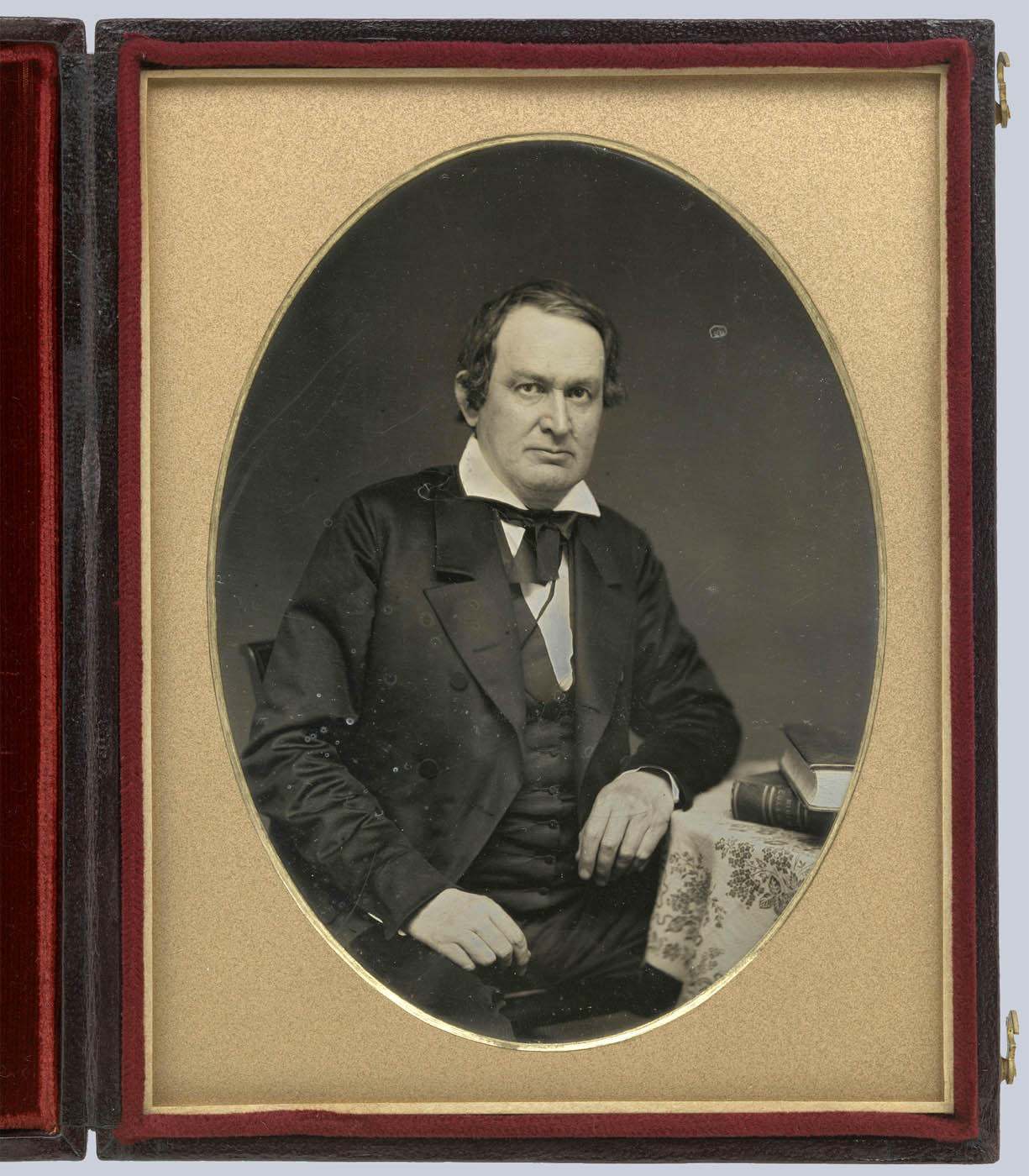
Ezra Greenleaf Weld (American, 1801-1874) 'Gerrit Smith 1797-1874' c. 1854


Ezra Greenleaf Weld (American, 1801-1874)
Gerrit Smith 1797-1874
c. 1854
Two-thirds daguerreotype
National Portrait Gallery, Smithsonian Institution; gift of an anonymous donor 

Gerrit Smith, the upstate New York abolitionist and philanthropist, was a close friend of Douglass from the late 1840s to the Civil War. In 1846, Smith gave away 120,000 acres of land in the Adirondacks, known as “Timbuctoo,” to three thousand Black residents of New York State. Smith welcomed Douglass to New York with a deed for forty acres and provided crucial financial support to his newspaper. “You not only keep life in my paper but keep spirit in me,” Douglass wrote. Smith helped convert Douglass into a political abolitionist, one who interpreted the Constitution as an antislavery document.

Text from the National Portrait Gallery website


Unidentified photographer. 'John Brown 1800-1859' c. 1857 (after c. 1855 daguerreotype)


Unidentified photographer
John Brown 1800-1859
c. 1857 (after c. 1855 daguerreotype)
Salted paper print
National Portrait Gallery, Smithsonian Institution


Douglass described John Brown as someone who, “though a white gentleman, is in sympathy a black man, and as deeply interested in our cause, as though his own soul had been pierced with the iron of slavery.” They became friends, and in 1859, Brown urged Douglass to join him in raiding the federal arsenal at Harpers Ferry. Douglass, however, refused and told Brown he thought he was entering a “steel trap.” Brown and sixteen others were killed, either during the raid or after they were found guilty of treason. Douglass later credited Brown with starting the war that ended slavery.

Text from the National Portrait Gallery website


Frederick Douglass believed that Brown’s “zeal in the cause of my race was far greater than mine – it was as the burning sun to my taper light – mine was bounded by time, his stretched away to the boundless shores of eternity. I could live for the slave, but he could die for him.”

Douglass, Frederick (1881). John Brown. An Address at the Fourteenth Anniversary of Storer College, May 30, 1881. Dover, New Hampshire: Dover, N. H., Morning Star job printing house. p. 9. Retrieved March 9, 2022


Unidentified photographer. 'Frederick Douglass' c. 1860


Unidentified photographer
Frederick Douglass
c. 1860
Salted paper print
Image: 6 × 4.5cm (2 3/8 × 1 3/4″)
Sheet: 10.1 × 7.9cm (4 × 3 1/8″)
Mount: 17 × 13.6cm (6 11/16 × 5 3/8″)
Mat: 45.7 × 35.6cm (18 × 14″)
National Portrait Gallery, Smithsonian Institution


Douglass’s visual persona continually evolved, which undermined one of the key intellectual foundations of chattel slavery and racism that cast the self as fixed, unable to rise. Perhaps the most noticeable markers of Douglass’s continual evolution are his hairstyle and facial hair. In this salted paper print, he experiments with a mid-scalp part, unique among the 168 separate photographs. Five years later, in a carte de visite, he sports a ponytail, also distinct from his typical hairstyle.

Text from the National Portrait Gallery website


Douglass’ words were powerful; his image, arguably, more so.

“Douglass, along with most Americans, believed that photography was a ‘truthful’ representation and the great democratic art,” Stouffer explained. “He also recognised that the sitter had agency in the outcome of a photographic portrait. He understood his role as an artist or performer, part of a pas de trois with the photographer and the camera. He always dressed up. His photographic portraits, along with those of numerous other African Americans, starkly contrasted the racist caricatures of Blacks created by whites.”

A long American tradition of white artists caricaturing African Americans in prints and paintings influenced public perception. White painters in the antebellum era almost always cast the devil as a Black man. Monkeys and happy slaves were other tropes.

Douglass, meanwhile, always presented himself, in dress, pose, and expression, as a dignified and respectable citizen.

“Photography was a truth-telling medium he emphasised. It bore witness to African Americans, and all humans, essential humanity, and it countered the racist caricatures by whites drawing freehand,” Stouffer said. “Douglass argued that photography inspired people to eradicate the sins of their society. It led them to activism. It stemmed from the power of imagination, which allowed people to appreciate photographs as accurate representations of some greater reality. It encouraged them to realise their ideals in an imperfect world.”

As Douglass put it: “Poets, prophets, and reformers are all picture-makers – and this ability is the secret of their power and of their achievements. They see what ought to be in the reflection of what is, and endeavour to remove the contradiction.”

This is a key message of the exhibition.

“Poets, prophets, and reformers were artists and activists. Activism inspired art and vice versa. Poets, prophets, and reformers saw their community or nation as it was – with all its gross inequalities, injustices, and prejudices – and they contrasted it with what ought to be. The contradiction inspired them to remove structural inequalities, injustices, and prejudices,” Stouffer explained. “Douglass and most other abolitionists, along with many antislavery advocates, considered themselves poets, prophets, and reformers. As a group, they sat for their photographic portraits with greater frequency, distributed them more effectively, and were more taken with photography, than other groups.”

Douglass went so far as to say that “the moral and social influence of pictures” was more important than “the making of its laws.”

Chadd Scott. “Art, Activism And Frederick Douglass At National Portrait Gallery,” on the Forbes website Aug 22, 2023 [Online] Cited 21/04/2024


Johnson, Williams &. Co. (active 1860s and 1870s) 'James McCune Smith 1813-1865' c. 1860


Johnson, Williams &. Co. (active 1860s and 1870s)
James McCune Smith 1813-1865
c. 1860
Albumen silver print
Schomburg Center for Research in Black Culture, Photographs and Prints Division; The New York Public Library, Astor, Lenox and Tilden Foundations


James McCune Smith (April 18, 1813 – November 17, 1865) was an American physician, apothecary, abolitionist and author. He was the first African American to earn a medical degree. His M.D. was awarded by the University of Glasgow in Glasgow, Scotland. After his return to the United States, he also became the first African American to run a pharmacy in the nation.

In addition to practicing as a physician for nearly 20 years at the Colored Orphan Asylum in Manhattan, Smith was a public intellectual: he contributed articles to medical journals, participated in learned societies, and wrote numerous essays and articles drawing from his medical and statistical training. He used his training in medicine and statistics to refute common misconceptions about race, intelligence, medicine, and society in general. He was invited as a founding member of the New York Statistics Society in 1852, which promoted a then new science. Later he was elected as a member in 1854 of the recently founded American Geographic Society. He was never admitted to the American Medical Association or local medical associations,[1] very likely as a result of the systemic racism that Smith confronted throughout his medical career.

He has been most well known for his leadership as an abolitionist: a member of the American Anti-Slavery Society, with Frederick Douglass he helped start the National Council of Colored People in 1853, the first permanent national organisation for blacks. Douglass called Smith “the single most important influence on his life.” Smith was one of the Committee of Thirteen, who organised in 1850 in Manhattan to resist the newly passed Fugitive Slave Law by aiding refugee slaves through the Underground Railroad. Other leading abolitionist activists were among his friends and colleagues. From the 1840s, Smith lectured on race and abolitionism and wrote numerous articles to refute racist ideas about black capacities.

Both Smith and his wife were of mixed African and European descent. As he became economically successful, Smith built a house in a mostly white neighbourhood; in the 1860 census he and his family were classified as white, along with their neighbours. (In the census of 1850, while living in a predominately African-American neighbourhood, they had been classified as mulatto.) Smith served for nearly 20 years as the physician at the Colored Orphan Asylum in New York. After it was burned down in July 1863 by a mob in draft riots in Manhattan, in which nearly 100 blacks were killed, Smith moved his family and practice to Brooklyn for their safety. Many other blacks left Manhattan for Brooklyn at the same time. The parents stressed education for their children. In the 1870 census, his widow and children continued to be classified as white.

Text from the Wikipedia website


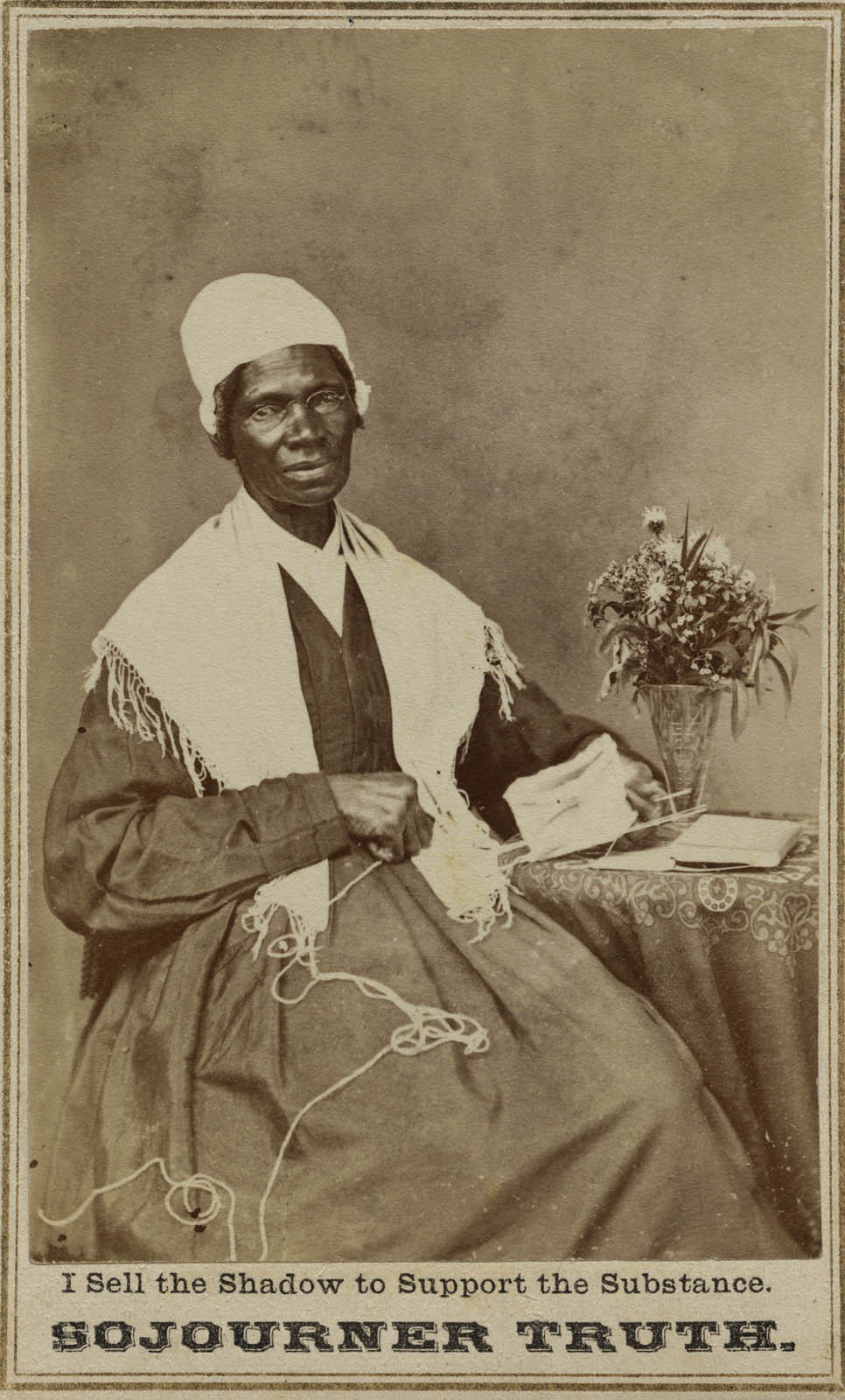
Unidentified photographer. 'Sojourner Truth c. 1797-1883' 1864


Unidentified photographer
Sojourner Truth c. 1797-1883
1864
Albumen silver print
Image/Sheet: 8.7 × 5.6cm (3 7/16 × 2 3/16″)
National Portrait Gallery, Smithsonian Institution


Sojourner Truth was possibly more famous for her carte-de-visite photographs than for her actual presence at abolition meetings. Her carefully chosen images made her a familiar figure to millions of viewers. They depicted a respectable matron. Truth’s famous maxim that she included with her portrait, “I sell the shadow to support the substance,” links her image (shadow) to her actual self (substance) and to the growing demand for photographs during the war years.

Truth’s image becomes an extension of herself and her nation. The yarn forms the contours of the eastern United States, with Florida’s panhandle and Texas clearly visible. As a representative American woman, Truth’s piety, simplicity, and abolitionism were shaping the United States.

Text from the National Portrait Gallery website


L. Schamer (active c. 1870) Louis Prang Lithography Co. (active 1856-1899) 'Representative Women' 1870


L. Schamer (active c. 1870)
Louis Prang Lithography Co. (active 1856-1899)
Representative Women
1870
Lithograph
National Portrait Gallery, Smithsonian Institution


This portrait unites seven leading female suffragists. Clockwise from the top are portraits of Lucretia Mott, Elizabeth Cady Stanton, Mary Livermore, Lydia Maria Child, Susan B. Anthony, and Sara Jane Lippincott, who surround Anna Dickinson, the most popular woman on the lecture circuit; in a sense, Douglass’s counterpart. The visual power of the image stems from its ability to reveal both the cohesiveness of the movement and the strong personalities within it.

Douglass knew these women and, as a leading male advocate for women’s rights, often collaborated with them and attended their conventions. But when Congress passed the Fifteenth Amendment in 1869, granting suffrage to Black men but not to women, their cohesion crumbled. Anthony and Stanton argued that white women should have suffrage before Black men. Douglass supported the amendment but continued to advocate for women’s suffrage.

Between 1860 and 1880, it became common for American reformers to gather on stages – then called lyceums – to promote abolition, temperance, education reform, and women’s rights. Lyceum associations allowed suffragists to speak. In their lectures, suffragists addressed men and women of diverse backgrounds – across state, racial, and economic divides – and reached wider audiences than through women’s organisations alone.

Representative Women is a combinative portrait that brings together seven women who were active on the lecture circuit. The visual power of the image stems from its ability to reveal both the cohesiveness of the movement and the strong individual personalities within it. Clockwise from the top are portraits of Lucretia Coffin Mott, Elizabeth Cady Stanton, Mary Livermore, Lydia Maria Francis Child, Susan B. Anthony, and Sara Jane Lippincott, who surround the central figure of Anna Elizabeth Dickinson. At the time, Dickinson was more popular than Mark Twain and held the distinction of being the highest paid woman on the lecture circuit.

Text from the National Portrait Gallery website


NOT IN THE EXHIBITION BUT IN THE NATIONAL PORTRAIT GALLERY COLLECTION


Unidentified photographer. 'Frederick Douglass' 1856


Unidentified photographer
Frederick Douglass
1856
Quarter-plate ambrotype
Image/Sight: 8.8 × 6.7cm (3 7/16 × 2 5/8″)
Mat (brass): 10.8 × 8.3cm (4 1/4 × 3 1/4″)
Case open: 12 × 19.2 × 1.3cm (4 3/4 × 7 9/16 × 1/2″)
Case closed: 12 × 9.5 × 1.9cm (4 3/4 × 3 3/4 × 3/4″)
National Portrait Gallery, Smithsonian Institution; acquired through the generosity of an anonymous donor


In the years following his escape from bondage in 1838, Frederick Douglass emerged as a powerful and persuasive spokesman for the cause of abolition. His effectiveness as an antislavery advocate was due in large measure to his firsthand experience with the evils of slavery and his extraordinary skill as an orator. His “glowing logic, biting irony, melting appeals, and electrifying eloquence” astonished and enthralled his audiences. As this ambrotype suggests, Douglass’s power was also rooted in the sheer impressiveness of his bearing, which abolitionist and activist Elizabeth Cady Stanton likened to that of “an African prince, majestic in his wrath.”

Text from the National Portrait Gallery website


George Francis Schreiber (American, 1803-1892) 'Frederick Douglass' 1870


George Francis Schreiber (American, 1803-1892)
Frederick Douglass
1870
Albumen silver print
Image/Sheet: 9.4 x 5.9cm (3 11/16 x 2 5/16″)
National Portrait Gallery, Smithsonian Institution; gift of Donald R. Simon


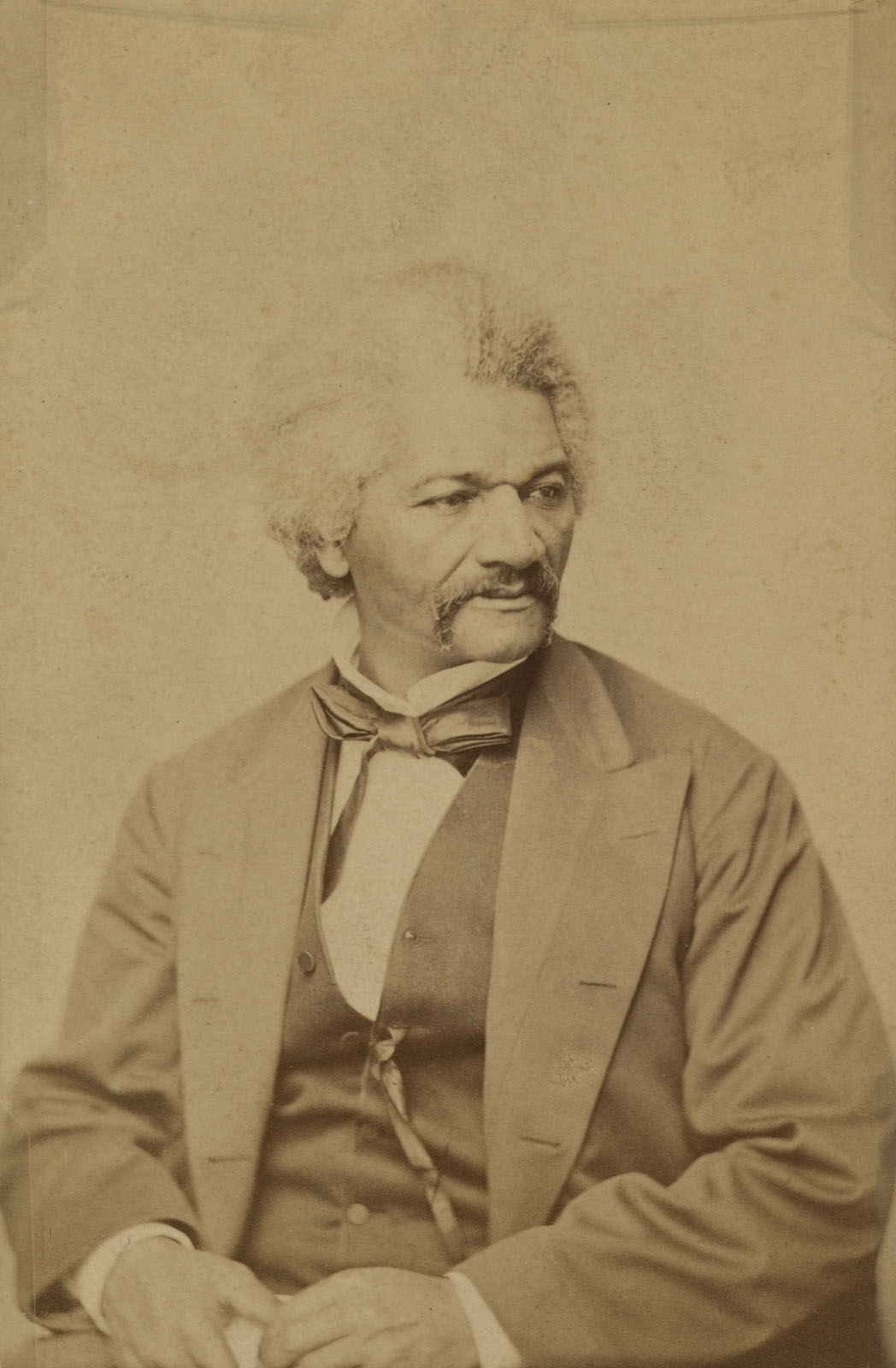
George Kendall Warren (American, 1834-1884) 'Frederick Douglass' 1876


George Kendall Warren (American, 1834-1884)
Frederick Douglass
1876
Albumen silver print
Image/Sheet: 9.7 × 5.7cm (3 13/16 × 2 1/4″)
National Portrait Gallery, Smithsonian Institution


Smithsonian National Portrait Gallery
8th and F Sts NW
Washington, DC 20001

Opening hours:
11.30am – 7.00pm daily

Smithsonian National Portrait Gallery website

LIKE ART BLART ON FACEBOOK

Back to top

Exhibition: ‘Daguerreotypes: Five Decades of Collecting’ at the Smithsonian National Portrait Gallery, Washington, DC

Exhibition dates: 15th June, 2018 – 2nd June, 2019

 Curator: Ann Shumard, Senior Curator of Photographs at the Smithsonian National Portrait Gallery, Washington, DC


Bishop & Gray Studio (American, active c. 1843) 'Dr. Rufus Priest' c. 1843 from the exhibition 'Daguerreotypes: Five Decades of Collecting' at the Smithsonian National Portrait Gallery, Washington, DC, June 2018 - June 2019


Bishop & Gray Studio (American, active c. 1843)
Dr. Rufus Priest
c. 1843
Sixth-plate daguerreotype
8.3cm x 7cm (3 1/4″ x 2 3/4″)
National Portrait Gallery, Smithsonian Institution; gift of David Becker


What strong faces these people have, especially in the three-quarter or slightly oblique profile view with the subject not staring at the camera.

There is something incredibly powerful about these one off, cased mausoleum portraits that today’s throwaway representations struggle to match. As Montgomery P. Simons opines, “The delicacy, durability and wonderful minutiae of the daguerreotype has never been approached by any of the improved pictures recently introduced.” The contemporary Philadelphia daguerreotypist Marcus Aurelius Root paid them this praise: “Their style, indeed, is peculiar to themselves; presenting beautiful effects of light and shade, and giving depth and roundness together with a wonderful softness or mellowness. These traits have achieved for them a high reputation with all true artists and connoisseurs.” Indeed, their jewel-like aura seems to emanate from within.

I have added bibliographic details about the sitters and the photographers where possible to the posting, as well as artwork – paintings, illustrations, writing, postcards and drawings – and enlarged details of the daguerreotypes. Pictured are the great and good of the land. Surgeon, cardinal, poet, artist, actress, entrepreneur, president, social reformer, general, commodore, nurse and advocate for the mentally ill with minimal acknowledgement of Native American people (Seneca Chief Governor Blacksnake). This “man of rare intellectual and moral power” died on a reservation in December 1859.

Dr Marcus Bunyan


Many thankx to the Smithsonian National Portrait Gallery for allowing me to publish the photographs in the posting. Please click on the photographs for a larger version of the image.


Marcus Aurelius Root (American, 1808-1888) 'Thomas Buchanan Read' (March 12, 1822-May 11, 1872) c. 1850 from the exhibition 'Daguerreotypes: Five Decades of Collecting' at the Smithsonian National Portrait Gallery, Washington, DC, June 2018 - June 2019


Marcus Aurelius Root (American, 1808-1888)
Thomas Buchanan Read (March 12, 1822 – May 11, 1872)
c. 1850
Half-plate daguerreotype
National Portrait Gallery, Smithsonian Institution; gift of Miss Eunice Chambers


Thomas Buchanan Read (American, 1822-1872)

Thomas Buchanan Read (March 12, 1822 – May 11, 1872), was an American poet and portrait painter. Read was born in Corner Ketch, a hamlet close to Downingtown, in Chester County, Pennsylvania on March 12, 1822.

Beside painting, Read wrote a prose romance, The Pilgrims of the Great St. Bernard, and several books of poetry, including The New Pastoral, The House by the Sea, Sylvia, and A Summer Story. Some of the shorter pieces included in these, e.g., Sheridan’s Ride, Drifting, The Angler, The Oath, and The Closing Scene, have great merit. Read was briefly associated with the Pre-Raphaelite Brotherhood. His greatest artistic popularity took place in Florence. Among portraits he painted were Abraham Lincoln, Henry Wadsworth Longfellow, Alfred Tennyson, Elizabeth Barrett Browning, Robert Browning and William Henry Harrison. Read died from injuries sustained in a carriage accident, which weakened him and led him to contract pneumonia while on shipboard returning to America.

Text from the Wikipedia website

Marcus Aurelius Root (American, 1808-1888)

Marcus Aurelius Root (1808-1888) was a writing teacher and photographer. He was born in Granville, Ohio and died in Philadelphia, Pennsylvania.

On 20 June 1846, he bought John Jabez Edwin Mayall’s Chestnut Street photography studio that was in the same building as Root’s residence in Philadelphia, Pennsylvania. Root had success as a daguerreotypist working with his brother, Samuel Root. The Root Brothers had a gallery in New York City from 1849 to 1857. Marcus Aurelius Root authored an important book on photography entitled The Camera and the Pencil.


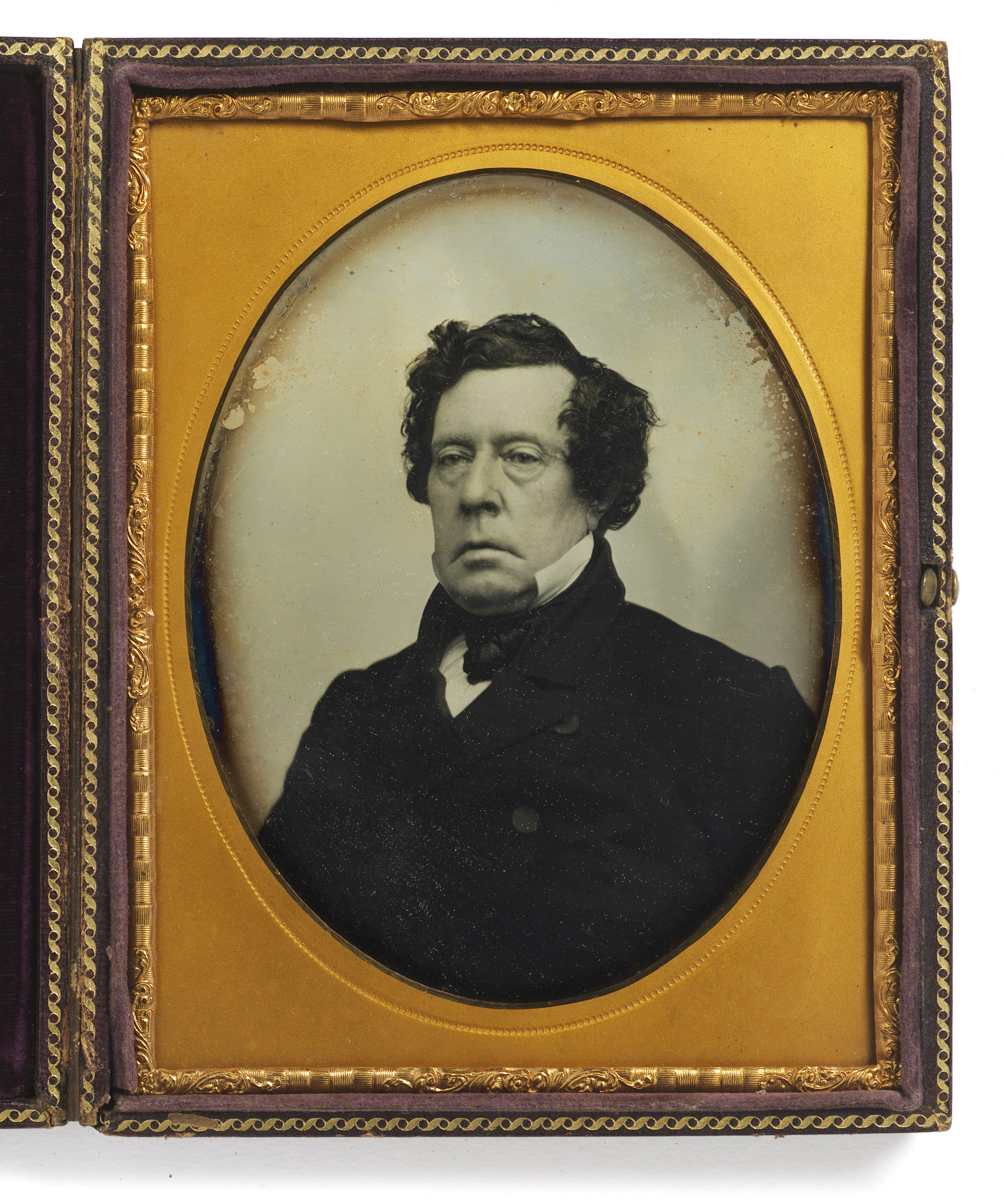
Beckers and Piard (American) 'Matthew Calbraith Perry' (April 10, 1794-March 4, 1858) c. 1855


Beckers and Piard (American)
Alexander Beckers (American born Germany, 1815-1905, active 1842-1869)
Victor Piard (American born France, 1825-1901)
Matthew Calbraith Perry (April 10, 1794 – March 4, 1858)
c. 1855
Half-plate daguerreotype
National Portrait Gallery, Smithsonian Institution


Alexander Beckers (American born German, 1815-1905)

Alexander Beckers first saw a daguerreotype in Philadelphia, and subsequently went to work there for photographer Frederick David Langenheim in 1843. The following year he moved to New York, where he is credited with the first whole-plate daguerreotypes made in that city. Within months Beckers opened the Langenheim & Beckers studio in New York, which became Beckers & Piard in 1849. In 1857 he patented a revolving stereograph viewer and shortly thereafter sold his daguerreotype business in order to concentrate his attention on the manufacture of stereograph viewers.

Anonymous text. “Alexander Beckers,” on the J. Paul Getty Museum website [Online] Cited 15/03/2022

Matthew Calbraith Perry (American, 1794-1858)

Matthew Calbraith Perry (April 10, 1794 – March 4, 1858) was a Commodore of the United States Navy who commanded ships in several wars, including the War of 1812 and the Mexican-American War (1846-1848). He played a leading role in the opening of Japan to the West with the Convention of Kanagawa in 1854.

Perry was interested in the education of naval officers, and assisted in the development of an apprentice system that helped establish the curriculum at the United States Naval Academy. With the advent of the steam engine, he became a leading advocate of modernising the U.S. Navy and came to be considered “The Father of the Steam Navy” in the United States.

Text from the Wikipedia website


[Several] daguerreotypes of Matthew Calbraith Perry (1794-1858) [were] made in New York City, in the months following Commodore Perry’s triumphant return from Japan in January of 1855. The seminal achievement of his long naval career, Perry’s shrewd and persistent negotiations with Japan opened that isolated nation to the West for the first time in its history.

[These] portraits can be dated to 1855-1856, based on the date of Perry’s return to the United States and the years the Beckers & Piard studio operated at 264 Broadway. A variant, more conventional, portrait from this same sitting, previously unattributed, exists in three identical half-plates, one in the National Portrait Gallery (above), one in the New-York Historical Society, and one sold at Swann Galleries, New York, in 1988 (Sale 1468, Lot 186). In addition, there is a half-plate profile study of Perry in the U. S. Naval Academy Museum in Annapolis, also made by Beckers & Piard, that was the model for a commemorative medal struck in Perry’s honour in 1856; and a half-plate seated portrait of Perry in his full uniform and regalia, also owned by the New-York Historical Society.

The portraits can be dated to 1855 or 1856 based upon Perry’s arrival in New York, from Japan, in 1855, and by the address of the daguerreotypists stamped on the portrait’s mat. Alexander Beckers and Victor Piard were active at 264 Broadway, the address on the mat, from 1853 to 1856. At some point in 1856, the studio moved across the street to 261 Broadway. This portrait would, therefore, have to have been made in 1855 or 1856.

Anonymous text. “Catalogue note,” on the Sotheby’s website 2012 [Online] Cited 28/11/2018.


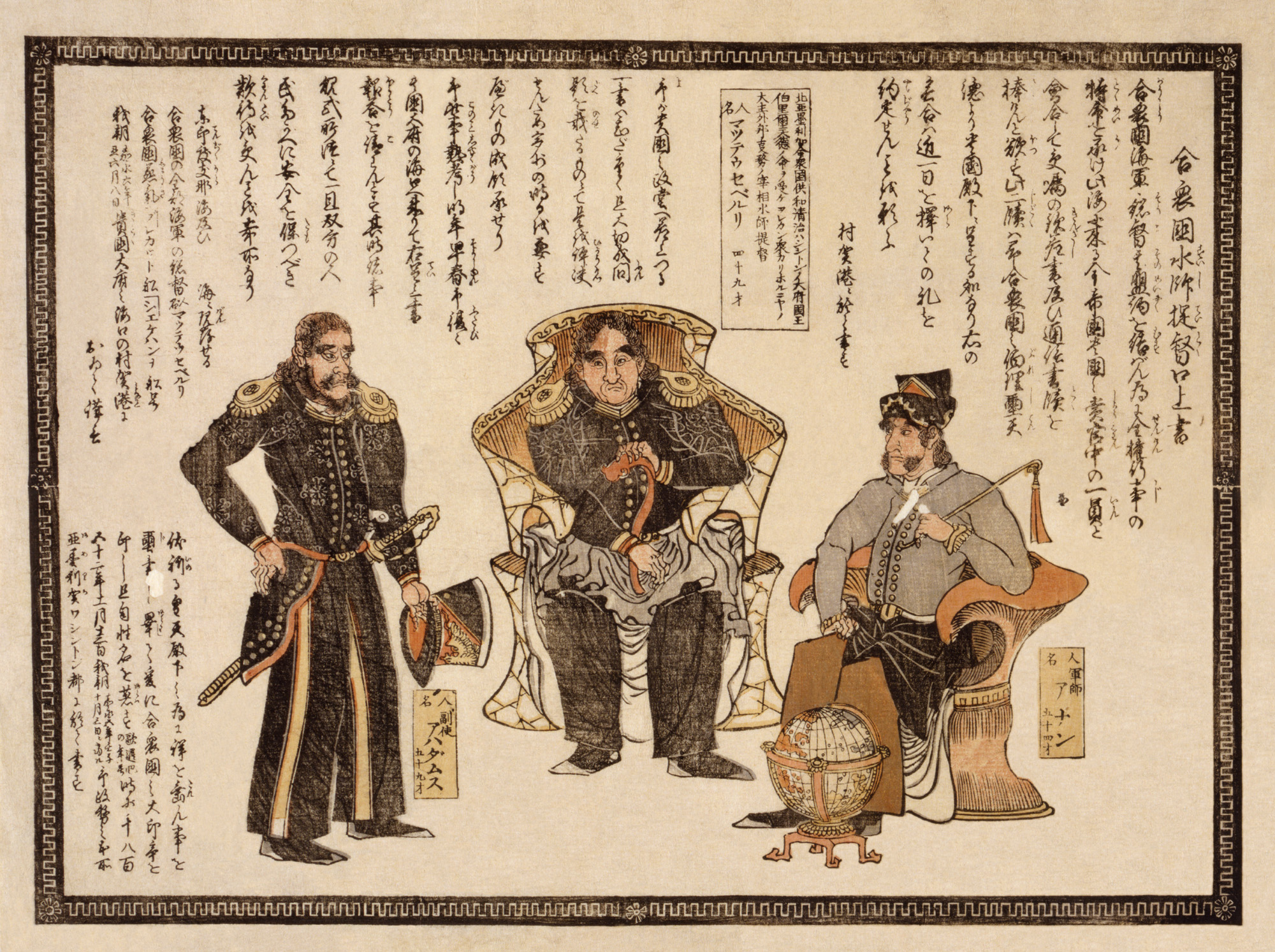
Unknown artist (Japanese) 'Gasshukoku suishi teitoku kōjōgaki (Oral statement by the American Navy admiral)' c. 1854


Unknown artist (Japanese)
Gasshukoku suishi teitoku kōjōgaki (Oral statement by the American Navy admiral)
c. 1854
Library of Congress
Public domain


A Japanese print showing three men, believed to be Commander Anan, age 54; Perry, age 49; and Captain Henry Adams, age 59, who opened up Japan to the west. The text being read may be President Fillmore’s letter to Emperor of Japan. This is a somewhat extensive restoration, meant to keep focus on the artwork, instead of the damage.


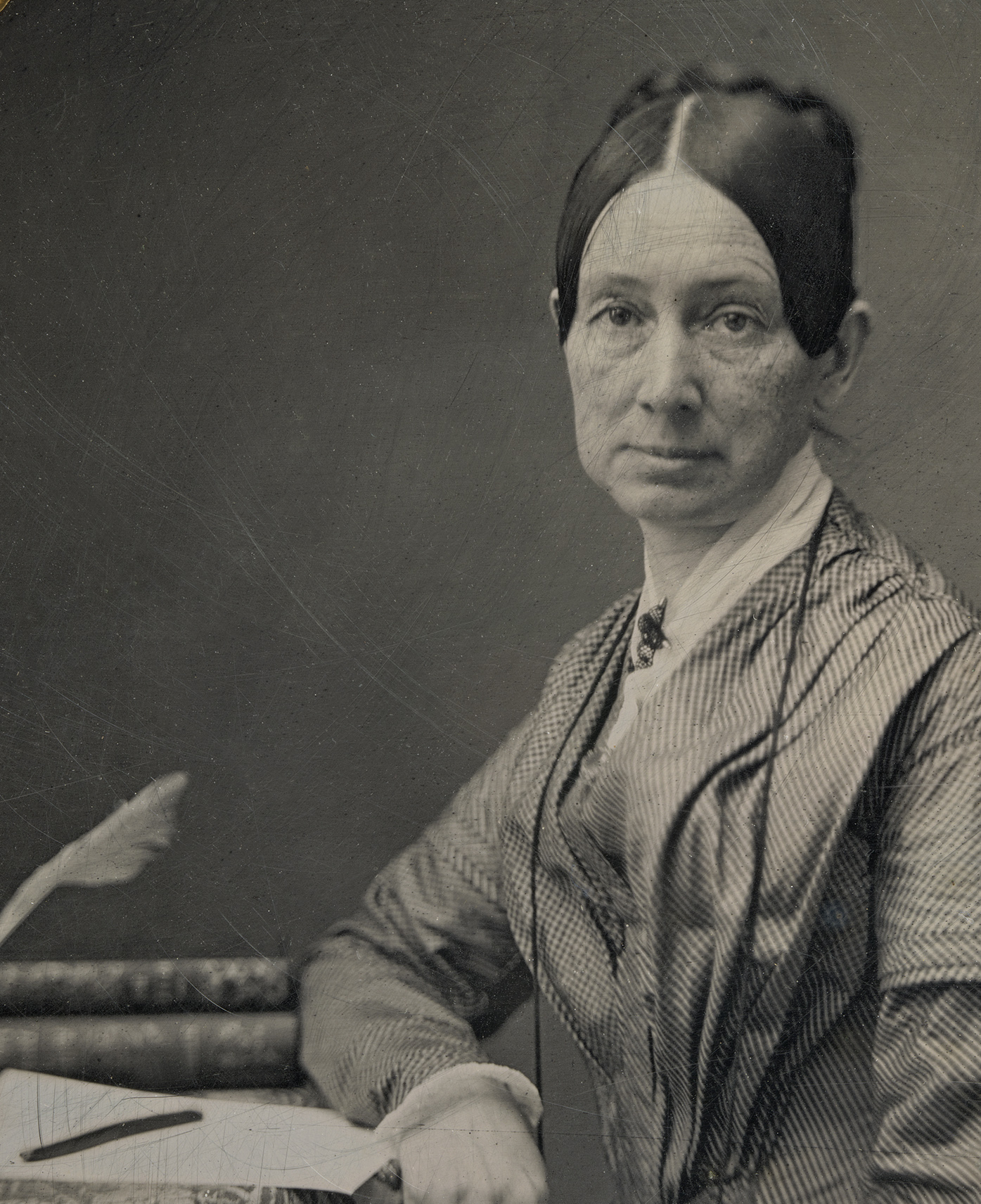
Unidentified artist (American) 'Dorothea Lynde Dix' c. 1849


Unidentified artist (American)
Dorothea Lynde Dix
c. 1849
Half-plate daguerreotype
National Portrait Gallery, Smithsonian Institution


Dorothea Lynde Dix (American, 1802-1887)

Dorothea Lynde Dix (April 4, 1802 – July 17, 1887) was an American advocate on behalf of the indigent mentally ill who, through a vigorous and sustained program of lobbying state legislatures and the United States Congress, created the first generation of American mental asylums. During the Civil War, she served as a Superintendent of Army Nurses. (Wikipedia)

What a human being… read her full Wikipedia entry. A champion of the poor and mentally ill, Dix and her nurses cared for the wounded from both sides of the American Civil War.


Unidentified artist (American) 'Dorothea Lynde Dix' c. 1849 (detail)


Unidentified artist (American)
Dorothea Lynde Dix (detail)
c. 1849
Half-plate daguerreotype
National Portrait Gallery, Smithsonian Institution


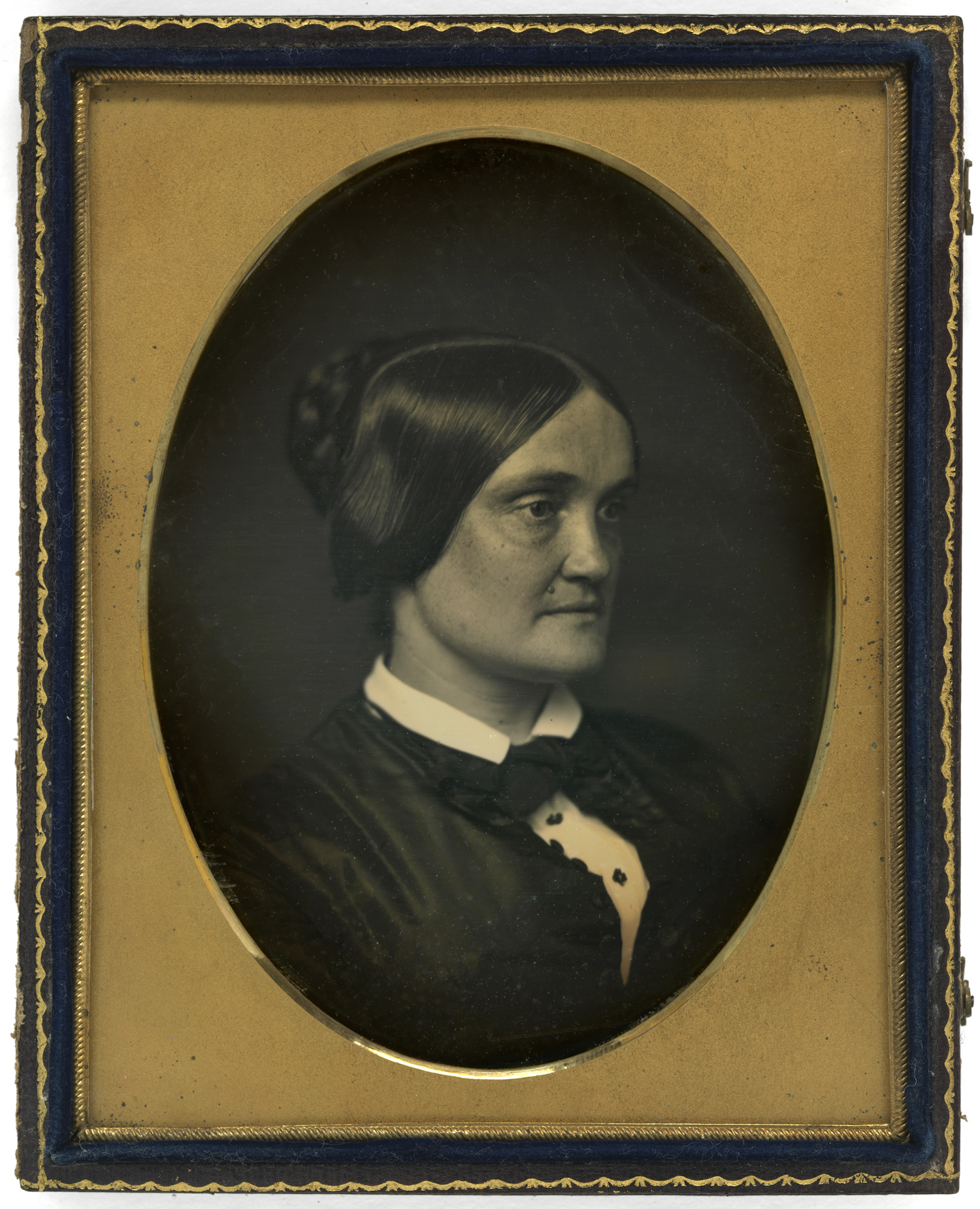
Unidentified artist (American) 'Charlotte Cushman' c. 1850


Unidentified artist (American)
Charlotte Cushman
c. 1850
Half-plate daguerreotype
National Portrait Gallery, Smithsonian Institution


Charlotte Saunders Cushman (July 23, 1816 – February 18, 1876) was an American stage actress. Her voice was noted for its full contralto register, and she was able to play both male and female parts. She lived intermittently in Rome, in an expatriate colony of prominent artists and sculptors, some of whom became part of her tempestuous private life.


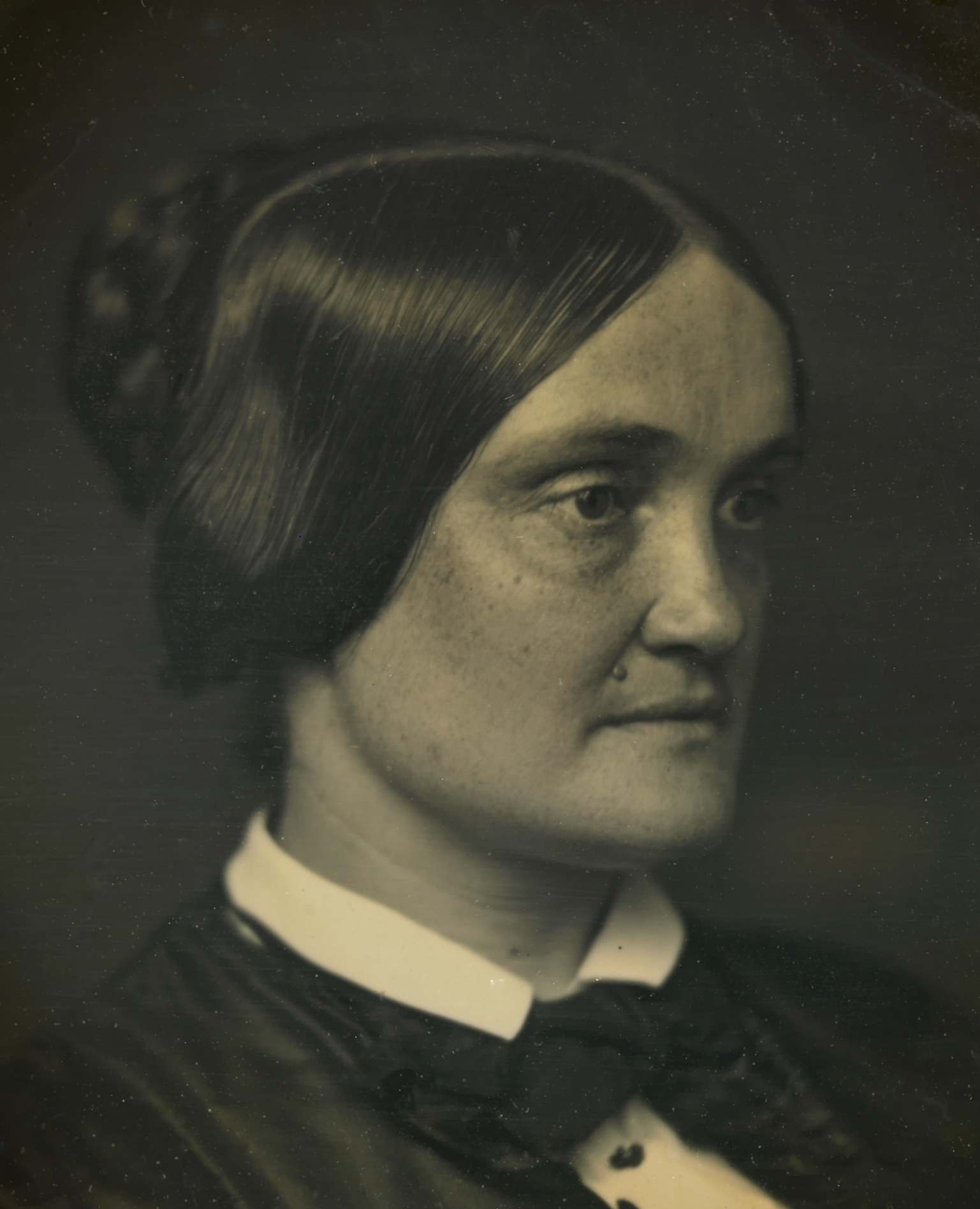
Unidentified artist (American) 'Charlotte Cushman' c. 1850 (detail)


Unidentified artist (American)
Charlotte Cushman (detail)
c. 1850
Half-plate daguerreotype
National Portrait Gallery, Smithsonian Institution


Mathew Brady (1822-1896) 'Charlotte Saunders Cushman' between 1855 and 1865


Mathew Brady (American, 1822-1896)
Charlotte Saunders Cushman
between 1855 and 1865
Wet collodion glass negative
Library of Congress Prints and Photographs Division. Brady-Handy Photograph Collection
Public domain


Library of Congress description: “Charlotte Cushman as Meg Merriles”


Henry B. Hull (American, active c. 1855) 'Stonewall Jackson' (Thomas Jonathan Jackson, 21 Jan 1824-10 May 1863) 1855


Henry B. Hull (American, active c. 1855)
Stonewall Jackson (Thomas Jonathan Jackson, 21 Jan 1824 – 10 May 1863)
1855
Sixth-plate daguerreotype
Image: 8.4 x 7.2cm (3 5/16 x 2 13/16″)
Case Open: 9.4 x 16.5 x 1.1cm (3 11/16 x 6 1/2 x 7/16″)
National Portrait Gallery, Smithsonian Institution


Born Clarksburg, West Virginia

When future Confederate general Stonewall Jackson sat for this likeness in 1855, his emergence as one of the South’s most brilliant military tacticians lay six years away. A West Point graduate, Jackson had served with distinction in the Mexican American War, earning more citations for valour than any other American officer. He joined Virginia Military Institute as a professor of artillery tactics and natural philosophy in 1851, and later commanded the corps of VMI cadets that guarded the gallows at John Brown’s execution. Jackson had this daguerreotype made as a memento for his aunt and uncle while visiting them in the summer of 1855.

Text from the Smithsonian National Portrait Gallery website


Unidentified artist (American) 'Robert Dale Owen' c. 1847


Unidentified artist (American)
Robert Dale Owen
c. 1847
Sixth-plate daguerreotype
National Portrait Gallery, Smithsonian Institution; gift of Andrew Oliver


Robert Owen Dale (American, 1801-1877)

Robert Dale Owen (November 7, 1801 – June 24, 1877) was a Scottish-born social reformer who immigrated to the United States in 1825, became a U.S. citizen, and was active in Indiana politics as member of the Democratic Party in the Indiana House of Representatives (1835-1839 and 1851-1853) and represented Indiana in the U.S. House of Representatives (1843-1847). As a member of Congress, Owen successfully pushed through the bill that established Smithsonian Institution and served on the Institution’s first Board of Regents. Owen also served as a delegate to the Indiana Constitutional Convention in 1850 and was appointed as U.S. chargé d’affaires (1853-1858) to Naples.

Owen was a knowledgeable exponent of the socialist doctrines of his father, Robert Owen, and managed the day-to-day operation of New Harmony, Indiana, the socialistic utopian community he helped establish with his father in 1825. Throughout his adult life, Robert Dale Owen wrote and published numerous pamphlets, speeches, books, and articles that described his personal and political views, including his belief in spiritualism. Owen co-edited the New-Harmony Gazette with Frances Wright in the late 1820s in Indiana and the Free Enquirer in the 1830s in New York City. Owen was an advocate of married women’s property and divorce rights, secured inclusion of an article in the Indiana Constitution of 1851 that provided tax-supported funding for a uniform system of free public schools, and established the position of Indiana Superintendent of Public Instruction. Owen is also noted for a series of open letters he wrote in 1862 that favoured the abolition of slavery and supported general emancipation, as well as a suggestion that the federal government should provide assistance to freedmen.

Text from the Wikipedia website


Unidentified artist (American) 'Robert Dale Owen' c. 1847 (detail)


Unidentified artist (American)
Robert Dale Owen (detail)
c. 1847
Sixth-plate daguerreotype
National Portrait Gallery, Smithsonian Institution; gift of Andrew Oliver


Southworth & Hawes (American, active 1843-1862) 'Franklin Pierce' (23 Nov 1804-8 Oct 1869) c. 1852


Southworth & Hawes (American, active 1843-1862)
Albert Sands Southworth (12 Mar 1811 – 3 Mar 1894)
Josiah Johnson Hawes (20 Feb 1808 – 7 Aug 1901)
Franklin Pierce (23 Nov 1804 – 8 Oct 1869)
c. 1852
Quarter-plate daguerreotype
Image: 8.8 x 6.8cm (3 7/16 x 2 11/16″)
Case Closed: 11.9 x 9.4cm (4 11/16 x 3 11/16″)
Case Open: 11.9 x 18.7 x 1.2cm (4 11/16 x 7 3/8 x 1/2″)
National Portrait Gallery, Smithsonian Institution


Franklin Pierce (American, 1804-1869)

Franklin Pierce (November 23, 1804 – October 8, 1869) was the 14th President of the United States (1853-1857), a northern Democrat who saw the abolitionist movement as a fundamental threat to the unity of the nation. He alienated anti-slavery groups by championing and signing the Kansas-Nebraska Act and enforcing the Fugitive Slave Act; yet he failed to stem conflict between North and South, setting the stage for Southern secession and the American Civil War.

Pierce was born in New Hampshire, and served in the U.S. House of Representatives and the Senate until he resigned from the Senate in 1842. His private law practice in New Hampshire was a success, and he was appointed U.S. Attorney for his state in 1845. He took part in the Mexican-American War as a brigadier general in the Army. He was seen by Democrats as a compromise candidate uniting northern and southern interests and was nominated as the party’s candidate for president on the 49th ballot at the 1852 Democratic National Convention. He and running mate William R. King easily defeated the Whig Party ticket of Winfield Scott and William A. Graham in the 1852 presidential election.

Text from the Wikipedia website


Southworth & Hawes (American, active 1843-1862)

Southworth & Hawes was an early photographic firm in Boston, 1843-1863. Its partners, Albert Sands Southworth (1811-1894) and Josiah Johnson Hawes (1808-1901), have been hailed as the first great American masters of photography, whose work elevated photographic portraits to the level of fine art. Their images are prominent in every major book and collection of early American photography.

Southworth & Hawes worked almost exclusively in the daguerreotype process. Working in the 8 1/2 x 6 1/2 inch whole plate format, their images are brilliant, mirror-like, and finely detailed. Writing in the Photographic and Fine Art Journal, August 1855, the contemporary Philadelphia daguerreotypist Marcus Aurelius Root paid them this praise: “Their style, indeed, is peculiar to themselves; presenting beautiful effects of light and shade, and giving depth and roundness together with a wonderful softness or mellowness. These traits have achieved for them a high reputation with all true artists and connoisseurs.” He further noted that the firm had devoted their time chiefly to daguerreotypes, with little attention to photography on paper. …

During their 20 years of collaboration, Southworth & Hawes catered to Boston society and the famous. Their advertisements drew a distinction between the appropriate styles for personal versus public portraiture. “A likeness for an intimate acquaintance or one’s own family should be marked by that amiability and cheerfulness, so appropriate to the social circle and the home fireside. Those for the public, of official dignitaries and celebrated characters admit of more firmness, sternness and soberness.” Among their sitters were Louisa May Alcott, Lyman Beecher, Benjamin Butler, William Ellery Channing, Rufus Choate, Cassius Marcellus Clay, Charlotte Cushman, Richard Henry Dana, Jr., Dorothea Dix, Ralph Waldo Emerson, Edward Everett, William Lloyd Garrison, Grace Greenwood, Oliver Wendell Holmes, Sam Houston, Thomas Starr King, Louis Kossuth, Jenny Lind, Henry Wadsworth Longfellow, Horace Mann, Donald McKay, Lola Montez, George Peabody, William H. Prescott, Lemuel Shaw, Harriet Beecher Stowe, Charles Sumner, Daniel Webster, John Greenleaf Whittier, and Robert C. Winthrop.

Text from the Wikipedia website


Unidentified artist (American) 'Brady's New Daguerreotype Saloon, New York Jun 11, 1853'


Unidentified artist (American)
Brady’s New Daguerreotype Saloon, New York
Jun 11, 1853
Wood engraving on paper
36.6 × 24cm (14 7/16 × 9 7/16″)
National Portrait Gallery, Smithsonian Institution


During the 1850s, Manhattan continued to extend north, and Mathew Brady followed suit with the opening of a new gallery, elegantly furnished, at number 359 Broadway. On June 11, 1853, the New York newspaper Illustrated News published a view of the interior of the gallery with the following comment: “The reception room is furnished with richness and artistic taste. Adorning its walls an extensive collection of daguerreotypes of remarkable figures, excellently executed, which is well worth a visit by anyone who wishes to contemplate American and European celebrities. Residents and foreigners alike will enjoy observing the great progress of the art exhibited here, and we convey to Mr. Brady our cordial wishes for success in his new venture.”

Text from the Smithsonian National Portrait Gallery website


Mathew B. Brady (American, 1823? - 15 Jan 1896) 'Thomas Cole' (1 Feb 1801 - 11 Feb 1848) c. 1845


Mathew B. Brady (American, 1823? – 15 Jan 1896)
Thomas Cole (1 Feb 1801 – 11 Feb 1848)
c. 1845
Half-plate daguerreotype on silver-coated copper plate
Plate: 13.7 x 10.2cm (5 3/8 x 4″)
Case Open: 15.8 × 24.4 × 1cm (6 1/4 × 9 5/8 × 3/8″)
Case Closed: 15.8 × 12.3 × 2.7cm (6 1/4 × 4 13/16 × 1 1/16″)
National Portrait Gallery, Smithsonian Institution; gift of Edith Cole Silberstein


Born Bolton-le-Moors, Lancashire, England

Artist Thomas Cole was a founding member of the Hudson River School of American painting, which sought to capture the sublime grandeur of the nation’s natural landscape. Believing that the best art also conveyed a moral lesson, Cole achieved his greatest fame with two series of allegorical paintings entitled The Course of Empire (1836) and The Voyage of Life (1841).

From the outset of his career, Mathew Brady courted major artists and welcomed the opportunity to daguerreotype them. This portrait is one of two known copies Brady made of his original daguerreotype of Cole, which is now in the collection of the Library of Congress.

Text from the Smithsonian National Portrait Gallery website


The Course of Empire is a series of five paintings created by Thomas Cole in the years 1833-1836. It is notable in part for reflecting popular American sentiments of the times, when many saw pastoralism as the ideal phase of human civilisation, fearing that empire would lead to gluttony and inevitable decay. The theme of cycles is one that Cole returned to frequently, such as in his The Voyage of Life series. The Course of Empire comprises the following works: The Course of Empire – The Savage State; The Arcadian or Pastoral State; The Consummation of Empire; Destruction; and Desolation. All the paintings are 39.5 inches by 63.5 inches (100cm by 161cm) except The Consummation of Empire which is 51″ by 76″ (130cm by 193cm).

The series of paintings depicts the growth and fall of an imaginary city, situated on the lower end of a river valley, near its meeting with a bay of the sea. The valley is distinctly identifiable in each of the paintings, in part because of an unusual landmark: a large boulder is situated atop a crag overlooking the valley. Some critics believe this is meant to contrast the immutability of the earth with the transience of man.

Text from the Wikipedia website


Thomas Cole (American, 1801-1848) 'The Savage State' 1834


Thomas Cole (American, 1801-1848)
The Savage State
1834
From The Course of Empire
Oil on canvas
Height: 39.5 in (100.3cm)
Width: 63.5 in (161.2cm)
New-York Historical Society


Thomas Cole (American, 1801-1848) 'The Consummation of Empire' 1836


Thomas Cole (American, 1801-1848)
The Consummation of Empire
1836
From The Course of the Empire
Oil on canvas
Height: 51 in (129.5cm)
Width: 76 in (193cm)
New-York Historical Society


The Voyage of Life is a series of paintings created by Thomas Cole in 1842, representing an allegory of the four stages of human life: childhood, youth, manhood, and old age. The paintings depict a voyager who travels in a boat on a river through the mid-19th-century American wilderness. In each painting the voyager rides the boat on the River of Life accompanied by a guardian angel. The landscape, each reflecting one of the four seasons of the year, plays a major role in conveying the story. With each instalment the boat’s direction of travel is reversed from the previous picture. In childhood, the infant glides from a dark cave into a rich, green landscape. As a youth, the boy takes control of the boat and aims for a shining castle in the sky. In manhood, the adult relies on prayer and religious faith to sustain him through rough waters and a threatening landscape. Finally, the man becomes old and the angel guides him to heaven across the waters of eternity.

Cole’s renowned four-part series traces the journey of an archetypal hero along the “River of Life.” Confidently assuming control of his destiny and oblivious to the dangers that await him, the voyager boldly strives to reach an aerial castle, emblematic of the daydreams of “Youth” and its aspirations for glory and fame. As the traveler approaches his goal, the ever more turbulent stream deviates from its course and relentlessly carries him toward the next picture in the series, where nature’s fury, evil demons, and self-doubt will threaten his very existence. Only prayer, Cole suggests, can save the voyager from a dark and tragic fate.

From the innocence of childhood, to the flush of youthful overconfidence, through the trials and tribulations of middle age, to the hero’s triumphant salvation, The Voyage of Life seems intrinsically linked to the Christian doctrine of death and resurrection. Cole’s intrepid voyager also may be read as a personification of America, itself at an adolescent stage of development. The artist may have been issuing a dire warning to those caught up in the feverish quest for Manifest Destiny: that unbridled westward expansion and industrialisation would have tragic consequences for both man and the land itself.

Text from the Wikipedia website


Thomas Cole (American, 1801-1848) 'The Voyage of Life: Youth' 1842


Thomas Cole (American, 1801-1848)
The Voyage of Life: Youth
1842
Oil on canvas
134 × 194cm (53 in × 76 in)
National Gallery of Art


Thomas Cole (American, 1801-1848) 'The Voyage of Life: Manhood' 1842


Thomas Cole (American, 1801-1848)
The Voyage of Life: Manhood
1842
Oil on canvas
132.8 × 198.1cm (52.3 in × 78.0 in)
National Gallery of Art


Unidentified artist (American) 'Julia Catherine Seymour Conkling' 1848


Unidentified artist (American)
Julia Catherine Seymour Conkling
1848
Sixth-plate daguerreotype
Plate: 8.2 x 6.8cm (3 1/4″ x 2 11/16″)
National Portrait Gallery, Smithsonian Institution


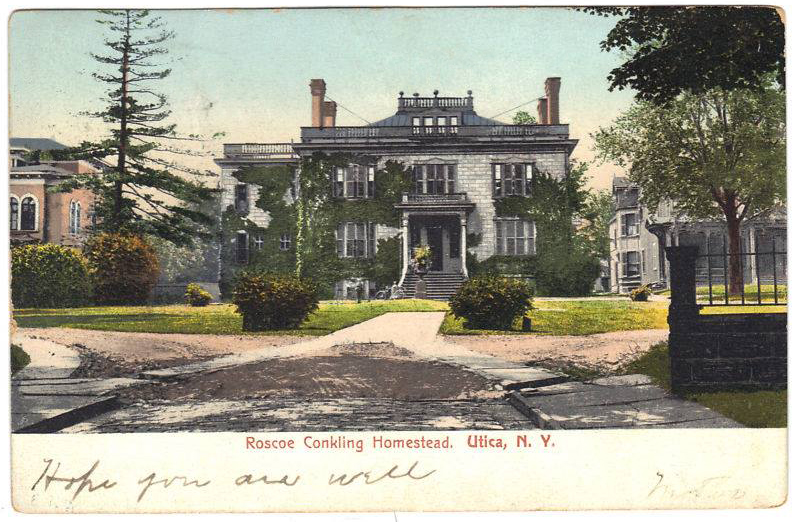
In addition to being the wife of Senator Roscoe Conkling, Julia Seymour was the sister of New York Governor and 1868 Democratic presidential nominee Horatio Seymour. In 1893 Julia Conkling founded the Oneida Chapter of the Daughters of the American Revolution, the fourth chapter formed after the 1890 founding of the national D.A.R.


A linen postcard of Conkling House, #3 Rutger Park, Rutger Street, Utica NY


A linen postcard of Conkling House, #3 Rutger Park, Rutger Street, Utica NY (The Landmarks Society of Greater Utica)


The first commercially viable form of photography, daguerreotypes brought portraiture within reach of average Americans in the mid-1800s. Today, they are an essential part of the museum’s collection. Daguerreotypes: Five Decades of Collecting celebrates the Portrait Gallery’s tradition of collecting with this intimate exhibition of 13 small-scale, one-of-a-kind portraits of early American influencers. The exhibition opens June 15 and will be on display on the museum’s first floor through June 2, 2019.

The presentation, organised by Ann Shumard, senior curator of photographs, celebrates the museum’s golden anniversary and highlights its extraordinary collection. With more than 23,000 objects, the Portrait Gallery holds some of the most important photographic portraits, including prized glass-plate negatives by Mathew Brady and the acclaimed 2017 acquisition of an 1843 daguerreotype likeness of President John Quincy Adams by artist Philip Haas, on permanent view in the museum’s America’s Presidents gallery.

The Portrait Gallery’s first photographic acquisition was a daguerreotype, which arrived as a gift in 1965 – three years before the museum opened its doors to the public. The image was a portrait by Marcus Aurelius Root of poet, painter and sculptor Thomas Buchanan Read, whose equestrian portrait of Union army general Philip Sheridan is on exhibit in the museum’s Civil War galleries.

When an Act of Congress established the National Portrait Gallery in 1962, the new museum was not initially authorised to collect photographs. An exception was made to accommodate gifts to its Support Collection. This enabled the Portrait Gallery to accept several significant daguerreotype portraits before 1976, when its charter was amended to allow for the acquisition of photographs. The museum’s collection now includes more than 150 daguerreotypes representing individuals as diverse in their achievements as showman P.T. Barnum, Seneca Nation leader Blacksnake, actress Charlotte Cushman, humanitarian Dorothea Dix, surgeon Thomas D. Mütter, U.S. Navy Commodore Matthew C. Perry and writer Henry David Thoreau.

“These daguerreotypes are remarkable artefacts from the dawn of American photography,” Shumard said. “Each is truly, as Oliver Wendell Holmes Sr. said, a ‘mirror with a memory.'”

A daguerreotype is a one-of-a-kind, direct-positive image produced on a sensitised plate of silver-clad copper. The process was introduced by French artist Louis-Jacques-Mandé Daguerre, but American practitioners were the ones who recognised the daguerreotype’s potential as a portrait medium. Through technical innovations, they transformed it from an experimental process into a commercially viable one within months of its introduction in August 1839. For nearly 20 years, the daguerreotype flourished in the United States as Americans flocked to studios in communities large and small to pose for their portraits.

Press release from the Smithsonian National Portrait Gallery


Alfred R. Waud (Alfred Rudolph) (American, 1828-1891) 'Kennesaw's Bombardment, 64' June 27, 1864


Alfred R. Waud (Alfred Rudolph) (American, 1828-1891)
Kennesaw’s Bombardment, 64
June 27, 1864
Drawing on light gray paper: pencil, Chinese white, and black ink wash
Digitised from original
Library of Congress
Public domain


Jeremiah Gurney (American, 1812-1895) 'Alfred R. Waud' c. 1852


Jeremiah Gurney (American, 17 October 1812 – 21 April 1895)
Alfred R. Waud
c. 1852
Half-plate daguerreotype
National Portrait Gallery, Smithsonian Institution


Alfred Rudolph Waud (wōd) (October 2, 1828 – April 6, 1891) was an American artist and illustrator, born in London, England. He is most notable for the sketches he made as an artist correspondent during the American Civil War.

 Jeremiah Gurney (American, 1812-1895)

Jeremiah Gurney (October 17, 1812 – April 21, 1895), was an American daguerreotype photographer operating in New York.

Gurney worked in the jewellery trade in Little Falls, New York, but soon moved his business to New York City and shortly after turned to photography, having been instructed and inspired by Samuel Morse. He was one of the pioneering practitioners of the daguerreotype process, opening the first American photo gallery at 189 Broadway in 1840, and charging $5 for a portrait.

He created remarkably detailed portraits, using to the full the remarkable tonal rendition of the process. He selected his clients from New York’s society elite, calling them “Distinguished Persons of the Age” and eschewing the political and entertainment figures favoured by his rival, Mathew Brady. The quality of Gurney’s portraits soon ensconced him as the finest daguerreotypist in Gotham.

Gurney’s photographic skills received numerous accolades, including a write-up in the Scientific American of 5 December 1846. The New York Illustrated News, in an 1853 article, wrote that his establishment at 349 Broadway “consisted of nine spacious rooms, devoted exclusively to this art.” In the 1840s Gurney showed his images at numerous exhibitions such as the American Institute Fair and later at the Crystal Palace in London, achieving international renown. His business flourished and in 1858 he built a three-story white marble studio at 707 Broadway to house his pictures, and it was the first building built for the sole purpose of photography in the United States.

Gurney played a leading role in the training of the first wave of pioneering photographers such as Mathew Brady, who made a name for himself as a civil war photographer. Brady had been employed as a journeyman making jewellery cases for E. Anthony & Co., and also made display cases for Gurney’s daguerreotypes. One of the things Gurney is best known for is having taken the only known photograph of Abraham Lincoln in death.

Text from the Wikipedia website


Jeremiah Gurney (American, 1812-1895) 'Alfred R. Waud' c. 1852 (detail)


Jeremiah Gurney (American, 17 October 1812 – 21 April 1895)
Alfred R. Waud (detail)
c. 1852
Half-plate daguerreotype
National Portrait Gallery, Smithsonian Institution


Leslie & Hooper (engravers) 'Gurney's Daguerreian Saloon at 349 Broadway, NYC' 12 November, 1853


Leslie & Hooper (engravers)
Gurney’s Daguerreian Saloon at 349 Broadway, NYC
12 November, 1853
From Frank Leslie’s Illustrated Newspaper
Public domain


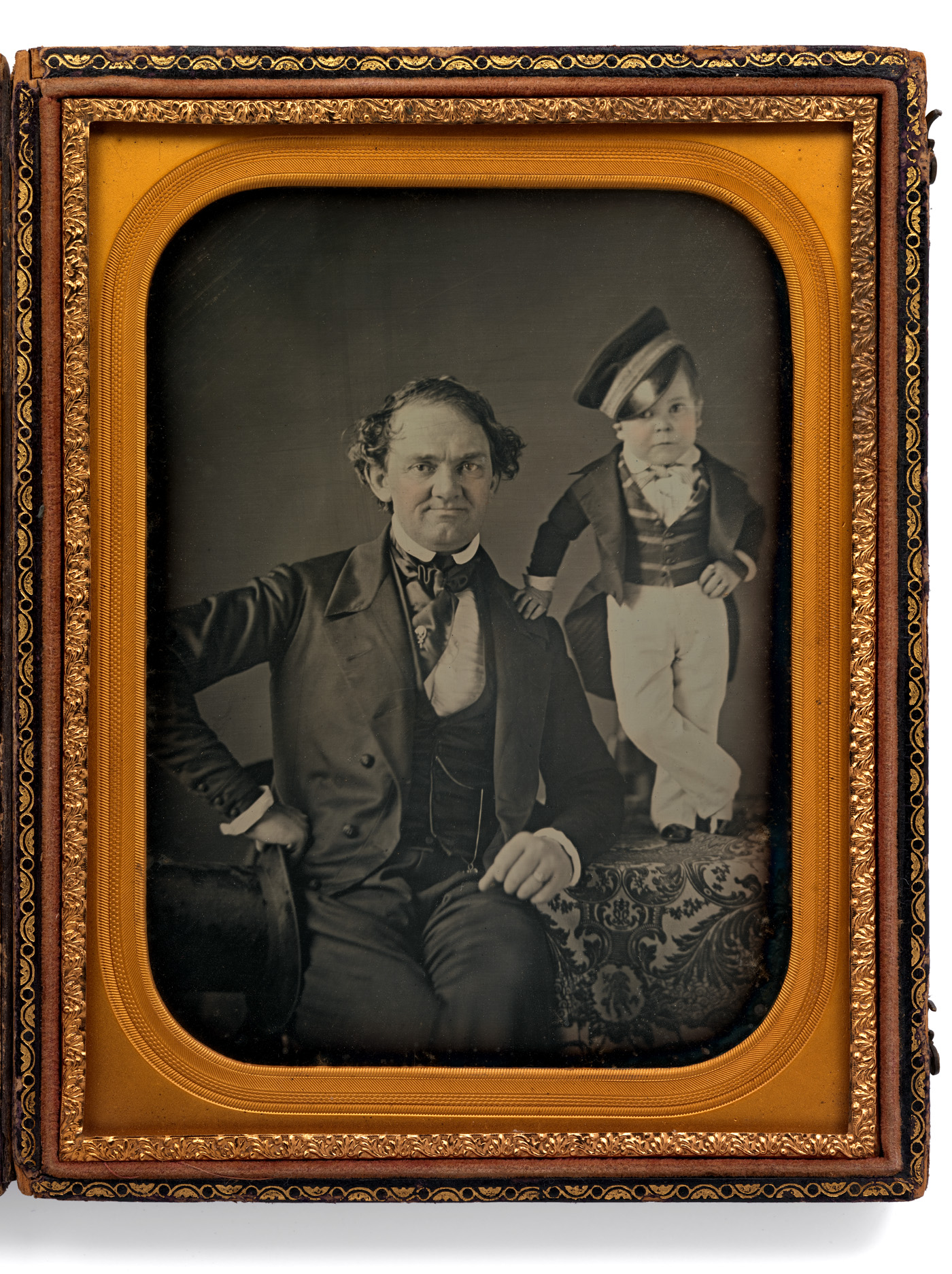
Samuel Root and Marcus Aurelius Root. 'P.T. Barnum and General Tom Thumb' c. 1850


Samuel Root and Marcus Aurelius Root (American)
Samuel Root (American, c. 1820-1889)
Marcus Aurelius Root 
(American, 1808-1888)
P.T. Barnum and General Tom Thumb
c. 1850
Half-plate daguerreotype
National Portrait Gallery, Smithsonian Institution


Samuel Root (American, c. 1820-1889)
Marcus Aurelius Root (American, 1808-1888)

Samuel Root, was born circa 1820. Marcus spent his childhood in Ohio and briefly attended Ohio University before contracting pleurisy forced him to drop out. After working briefly as a portrait artist, Marcus began teaching penmanship at the encouragement of painter Thomas Sully, and opened his own school in Philadelphia in 1835. During this period, he wrote several books on penmanship, including Philosophical Theory and Practice of Penmanship (1842).

Marcus Root‘s interest in daguerreian art began when Louis Daguerre’s process was introduced in Philadelphia in 1839. He studied under famed daguerreian Robert Cornelius. For him, daguerreotype was more than just a new art form; it was an expression of nationalist ideals. After opening a series of galleries in various locations, he returned to Philadelphia, where he was joined by his younger brother Samuel, to whom he taught the daguerreian art. Together, the siblings opened a gallery at 363 Broadway in New York City in 1849, which Samuel managed. Marcus eventually sold his interest in the gallery to Josiah W. Thompson so that he could concentrate on the Philadelphia gallery.

By the 1850s, Marcus Root had become one of America’s most respected daguerreians, and Samuel Root’s artistry was also receiving national attention. He completed the first daguerreotype of Swedish opera singer Jenny Lind and such prominent political officials as Henry Clay and George M. Dallas. When major daguerreotype dealer Edward Anthony held the first national photographic contest, Samuel Root received the second prize, a pair of goblets.

After selling the Philadelphia gallery in 1856, Marcus Root heavily invested in the Mount Vernon Hotel in Cape May, New Jersey. However, shortly thereafter, the uninsured structure was destroyed in a fire. His misfortunes continued when he was seriously injured in a train accident while preparing for a New York City gallery opening. His one leg was crushed, and despite undergoing a lengthy and arduous recovery, Marcus Root remained crippled for the rest of his life. Samuel Root was also enduring his share of hardship. His first wife died, leaving him with a young son. He married Harriet Furman in 1856, and the couple settled in Dubuque, Iowa, where Samuel opened a gallery at 166 Main Street. He became a respected member of the community, and published several photographic texts on Dubuque, including Views of Dubuque and Stereoscopic Views of Dubuque and Surrounding Scenery.

During his long recovery, Marcus Root worked on an exhaustive history of American photography, which was later published as The Camera and the Pencil; Or the Heliographic Art. He was well enough to exhibit his daguerreotype portraits of famous people at the 1876 Centennial Celebration, but a serious fall from a streetcar in 1885 ended his active life, which was spent in relative seclusion until his death on April 12, 1888 at the age of 79. Samuel Root was not one to let adversity get him down, and after a hailstorm destroyed his gallery’s skylight, he photographed and sold the four-inch hailstones. He sold his Dubuque gallery on May 27, 1887, and while on a visit to his sister-in-law in New York, Samuel Root died suddenly of a cerebral haemorrhage on March 11, 1889. The Root brothers were two of America’s earliest and most commercially successful photographic pioneers.

Anonymous text. “Marcus and Samuel Root,” on the Historic Camera website 07/11/2013 [Online] Cited 15/03/2022

 Charles Sherwood Stratton “General Tom Thumb” (American, 1838-1883)

Charles Sherwood Stratton (January 4, 1838 – July 15, 1883), better known by his stage name “General Tom Thumb”, was a dwarf who achieved great fame as a performer under circus pioneer P.T. Barnum. …

Phineas T. Barnum, a distant relative (half fifth cousin, twice removed), heard about Stratton and after contacting his parents, taught the boy how to sing, dance, mime, and impersonate famous people. Barnum also went into business with Stratton’s father, who died in 1855. Stratton made his first tour of America at the age of five, with routines that included impersonating characters such as Cupid and Napoleon Bonaparte as well as singing, dancing and comical banter with another performer who acted as a straight man. It was a huge success and the tour expanded.

A year later, Barnum took young Stratton on a tour of Europe, making him an international celebrity. Stratton appeared twice before Victoria of the United Kingdom of Great Britain and Ireland. He also met the three-year-old Prince of Wales, who would become King Edward VII. In 1845, he triumphed at the Théâtre du Vaudeville (France) in the play Le petit Poucet of Dumanoir and Clairville. The tour was a huge success, with crowds mobbing him wherever he went. After his three-year tour in Europe, Stratton began his rise to stardom in the United States. Stratton’s fame grew at an astonishing rate, and his popularity and celebrity surpassed that of any actor within his lifetime. …

Stratton’s first performances in New York marked a turning point in the history of freak show entertainment. Prior to Stratton’s debut, the presentation of ‘human curiosities’ for the purpose of entertainment was deemed dishonourable and seen as an unpleasing carnival attraction. However, after viewers were introduced to Stratton and performances, he was able to change the perception people held toward freak shows. Stratton’s lively and entertaining performances made these types of carnival shows one of the most favoured forms of theatrical entertainment in the United States.

Text from the Wikipedia website


Southworth & Hawes (American, active 1843-1862) 'Jonas Chickering' 1853


Southworth & Hawes (American, active 1843-1862)
Albert Sands Southworth (12 Mar 1811 – 3 Mar 1894)
Josiah Johnson Hawes (20 Feb 1808 – 7 Aug 1901)
Jonas Chickering (April 5, 1798 – December 8, 1853)
1853
Whole-plate daguerreotype
National Portrait Gallery, Smithsonian Institution


Jonas Chickering (April 5, 1798 – December 8, 1853) was a piano manufacturer in Boston, Massachusetts.


Southworth & Hawes (American, active 1843-1862) 'Gaetano Bedini' 1853


Southworth & Hawes (American, active 1843-1862)
Albert Sands Southworth
(12 Mar 1811 – 3 Mar 1894)
Josiah Johnson Hawes
(20 Feb 1808 – 7 Aug 1901)
Gaetano Bedini
1853
Whole-plate daguerreotype
National Portrait Gallery, Smithsonian Institution


Gaetano Bedini (Italian, 1806-1864)

Gaetano Bedini (15 May 1806 – 6 September 1864) was an Italian ecclesiastic, Cardinal and diplomat of the Catholic Church.

On 15 March 1852 he was named titular Archbishop of Thebes, and, three days after, Apostolic Nuncio in Brazil. Once he received the archiepiscopal order on 4 July 1852 from cardinal Luigi Lambruschini, he decided to leave for Brazil, but he could not enter the country because of a plague epidemic, so he went to the United States. He was the first Papal Nuncio in the United States.

He arrived in New York on 30 June 1853. He became the target of attacks by non-Catholics because of his role in overthrowing the Anti-Papal Roman Republic in 1849, and his visit triggered the Cincinnati Riot of 1853 in which several hundred men marched in protest against his visit.

While travelling, Bedini met the president of the United States, Franklin Pierce, to whom he delivered a letter from the Pope, and the American Secretary of State, William L. Marcy. He ordained some new bishops, amongst whom were James Roosevelt Bayley, archbishop of the Archdiocese of Newark, John Loughlin, bishop of the Diocese of Brooklyn, and Louis De Goesbriand, bishop of the Diocese of Burlington. After visiting New York, Pittsburgh, Louisville, Baltimore and Philadelphia, he returned to Rome from New Orleans in January 1854.

Text from the Wikipedia website


F. C. Flint (American) 'Blacksnake' c. 1850


F. C. Flint (American)
Seneca Chief Governor Blacksnake
c. 1850
Quarter-plate daguerreotype
National Portrait Gallery, Smithsonian Institution


Governor Blacksnake (Tah-won-ne-ahs, born c. 1737-1760 – died 1859)

Tah-won-ne-ahs or Thaonawyuthe “The Nephew” (born between 1737 and 1760, died 1859), known in English as either Governor Blacksnake or Chainbreaker, was a Seneca war chief and leader. Along with other Iroquois war chiefs (most notably Mohawk leader Joseph Brant), he led warriors to fight on the side of the British during the American Revolutionary War from 1777 to 1783. He was prominent for his role at the Battle of Oriskany, in which the Loyalist and allied forces ambushed a force of rebels (now called Patriots). After the war he supported his maternal uncle Handsome Lake, as a prominent religious leader. Governor Blacksnake allied with the United States in the War of 1812 and later encouraged some accommodation to European-American settlers, allowing missionaries and teachers on the Seneca reservation.

Importantly, he also led a successful postwar struggle in New York in the 1850s after white men illegally bought reservation land. He helped gain a New York State Appeals Court ruling in 1861 that restored the Oil Springs Reservation to the Seneca. …

Blacksnake died on the Allegany Reservation in Cattaraugus County, New York in late December 1859. He is remembered by the Seneca Nation as “a man of rare intellectual and moral power.”

Text from the Wikipedia website


Montgomery P. Simons (American, 1817-1877, active Philadelphia, Pennsylvania 1840s-1870s) Dr. 'Thomas Dent Mutter' 1846


Montgomery P. Simons (American, 1817-1877, active Philadelphia, Pennsylvania 1840s-1870s)
Dr. Thomas Dent Mutter (1811-1858)
1846
Half-plate daguerreotype
National Portrait Gallery, Smithsonian Institution; purchased through the Marc Pachter Acquisitions Fund, Jon and Lillian Lovelace; partial gift of Stanley B. Burns, MD and The Burns Archive


Thomas Dent Mutter (American, 1811-1858)

Born in Richmond Virginia in 1811, Thomas Dent Mutter lost his brother, mother, father, and guardian grandmother to illness by the time he was seven. As a sickly orphan, Mutter developed an interest in medicine, enrolling in the University of Pennsylvania medical school at age 17.

Then as now, Philadelphia was the leading city in the nation for medical education. Founded in 1765, Mutter’s alma mater was the first hospital and medical school in North America. Today, Penn is one of five med schools in the city educating nearly 20% of all doctors in America. Visitors to Philadelphia can still see the stately Pennsylvania Hospital building at 8th and Spruce streets.

After graduating from Penn, young Mutter followed the path of many American doctors of the time and continued his education among the surgeons of Paris, France. There he learnt the innovative techniques of les operations plastiques (plastic surgery): cosmetic procedures to repair skin and tissue damaged by burns, tumors, or congenital defects.

In Paris, Mutter obtained an item since seen by thousands of museum-goers: a wax head-cast of a “horned” lady, a young woman with a thick brown protrusion extending from her forehead to below her chin. It was the first of many wax models, skeletons, and preserved body parts he would collect over the next few decades.

On returning to Philadelphia, Mütter (as he now styled himself, adding an umlaut to appear more European) became a prominent plastic surgeon. He was soon named chair of surgery at Jefferson Medical College, the city’s second-oldest medical school (now Thomas Jefferson University). There, he used his growing collection of one-of-a-kind medical specimens as a teaching tool to demonstrate the varied maladies which could affect the human body. “He wanted a well-rounded collection,” says Robert Hicks, director of the Mütter Museum. “One that reflected what a physician might see in practice.”

At Jefferson, Mütter built a reputation as a flamboyant and popular lecturer, a precocious young doctor at the forefront of a wave of new surgical techniques. He was an early adopter of anaesthesia and sterilisation, developments which made operations significantly less painful and risky. Tickets to his public surgeries were a hot commodity, and aspiring students praised his teaching skills and the specimens from his growing collection, which he wove into his lectures “so as to impress yet not confuse,” as he wrote at the time.

The later years of Mütter’s life were plagued by illness, including painful attacks of gout – a swelling of the joints often caused by poor nutrition – which made it impossible for the doctor to perform surgeries. Seeing that his days were numbered, the physician sought a permanent home for his extensive holdings of pathological specimens, waxworks, and diagrams so that they would be useful to future generations of doctors.

Extract from Christopher Munden. “A Weird History: Dr. Thomas Dent Mütter and his peculiar museum,” on the Phindie website May 23, 2016 [Online] Cited 01 November 2018


Montgomery P. Simons (American, 1817-1877) 'Photography in a nut shell' 1858

Montgomery P. Simons (American, 1817-1877) 'Photography in a nut shell' 1858

Montgomery P. Simons (American, 1817-1877) 'Photography in a nut shell' 1858


Montgomery P. Simons (American, 1817-1877)
Photography in a nut shell; or, The experience of an artist in photography, on paper, glass and silver : with illustrations
1858
King & Baird, printer


Benjamin D. Maxham (American, 1821-1899, active 1848-1858) 'Henry David Thoreau' 1856

Benjamin D. Maxham (American, 1821-1899, active 1848-1858) 'Henry David Thoreau' (July 12, 1817-May 6, 1862) 1856


Benjamin D. Maxham (American, 1821-1899, active 1848-1858)
Henry David Thoreau (July 12, 1817 – May 6, 1862)
1856
Ninth-plate daguerreotype
Height: 63mm (2.48 in)
Width: 47mm (1.85 in)
National Portrait Gallery, Smithsonian Institution; gift of anonymous donor


Calvin R. Greene was a Thoreau “disciple” who lived in Rochester, Michigan, and who first began corresponding with Thoreau in January 1856. When Greene asked for a photographic image of the author, Thoreau initially replied: “You may rely on it that you have the best of me in my books, and that I am not worth seeing personally – the stuttering, blundering, clodhopper that I am.” Yet Greene repeated his request and sent money for the sitting. Thoreau must have kept this commitment to his fan in the back of his mind for the next several months. On June 18, 1856, during a trip to Worcester, Massachusetts, Henry Thoreau visited the Daguerrean Palace of Benjamin D. Maxham at 16 Huntington Street and had three daguerreotypes taken for fifty cents each. He gave two of the prints to his Worcester friends and hosts, H.G.O. Blake and Theophilius Brown. The third he sent to Calvin Greene in Michigan. “While in Worcester this week I obtained the accompanying daguerreotype – which my friends think is pretty good – though better looking than I,” Thoreau wrote.

Text from the Wikipedia website


Benjamin D. Maxham (American, 1821-1899, active 1848-1858) 'Henry David Thoreau' 1856 (detail)


Benjamin D. Maxham (American, 1821-1899, active 1848-1858)
Henry David Thoreau (July 12, 1817 – May 6, 1862) (detail, restored)
1856
Ninth-plate daguerreotype
National Portrait Gallery, Smithsonian Institution; gift of anonymous donor


Henry David Thoreau (American, 1817-1862)

Henry David Thoreau (July 12, 1817 – May 6, 1862) was an American essayist, poet, philosopher, abolitionist, naturalist, tax resister, development critic, surveyor, and historian. A leading transcendentalist, Thoreau is best known for his book Walden, a reflection upon simple living in natural surroundings, and his essay “Civil Disobedience” (originally published as “Resistance to Civil Government”), an argument for disobedience to an unjust state.

Thoreau’s books, articles, essays, journals, and poetry amount to more than 20 volumes. Among his lasting contributions are his writings on natural history and philosophy, in which he anticipated the methods and findings of ecology and environmental history, two sources of modern-day environmentalism. His literary style interweaves close observation of nature, personal experience, pointed rhetoric, symbolic meanings, and historical lore, while displaying a poetic sensibility, philosophical austerity, and Yankee attention to practical detail. He was also deeply interested in the idea of survival in the face of hostile elements, historical change, and natural decay; at the same time he advocated abandoning waste and illusion in order to discover life’s true essential needs.

He was a lifelong abolitionist, delivering lectures that attacked the Fugitive Slave Law while praising the writings of Wendell Phillips and defending the abolitionist John Brown. Thoreau’s philosophy of civil disobedience later influenced the political thoughts and actions of such notable figures as Leo Tolstoy, Mahatma Gandhi, and Martin Luther King Jr.

Thoreau is sometimes referred to as an anarchist. Though “Civil Disobedience” seems to call for improving rather than abolishing government – “I ask for, not at once no government, but at once a better government” – the direction of this improvement contrarily points toward anarchism: “‘That government is best which governs not at all;’ and when men are prepared for it, that will be the kind of government which they will have.”

Transcendentalism

A core belief of transcendentalism is in the inherent goodness of people and nature. Adherents believe that society and its institutions have corrupted the purity of the individual, and they have faith that people are at their best when truly “self-reliant” and independent.

Transcendentalism emphasises subjective intuition over objective empiricism. Adherents believe that individuals are capable of generating completely original insights with little attention and deference to past masters.

Text from the Wikipedia website


Unidentified artist (American) 'The Daguerreotypist' 1849


Unidentified artist (American)
The Daguerreotypist
1849
Wood engraving on paper
National Portrait Gallery, Smithsonian Institution


Smithsonian National Portrait Gallery
8th and F Sts NW
Washington, DC 20001

Opening hours:
11.30am – 7.00pm daily

Smithsonian National Portrait Gallery website

LIKE ART BLART ON FACEBOOK

Back to top