
Exhibition dates: 15th October – 12th December 2010
Taryn Simon (American, b. 1975)
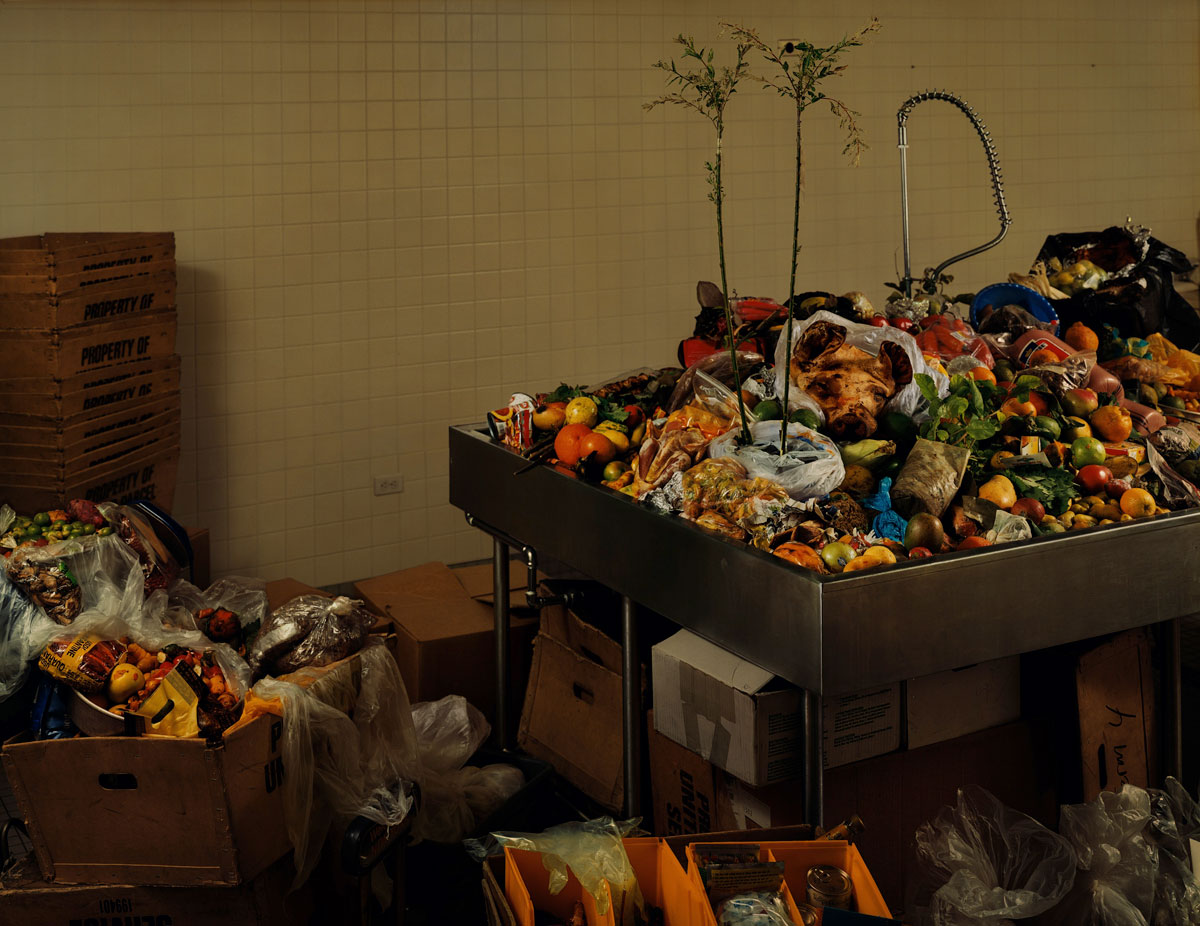
U.S. Customs and Border Protection, Contraband Room, John F. Kendedy International Airport, Queens, New York
2005/2007
Chromogenic colour print
37 1/4 x 44 1/2 inches framed (94.6 x 113cm)
© 2007 Taryn Simon
Courtesy Gagosian Gallery/Steidl
African cane rats infested with maggots, African yams (dioscorea), Andean potatoes, Bangladeshi cucurbit plants, bush meat, cherimoya fruit, curry leaves (murraya), dried orange peels, fresh eggs, giant African snail, impala skull cap, jackfruit seeds, June plum, kola nuts, mango, okra, passion fruit, pig nose, pig mouths, pork, raw poultry (chicken), South American pig head, South American tree tomatoes, South Asian lime infected with citrus canker, sugar cane (poaceae), uncooked meats, unidentified sub tropical plant in soil. All items in the photograph were seized from baggage of passengers arriving in the U.S. at JFK Terminal 4 from abroad over a 48-hour period. All seized items are identified, dissected, and then either ground up or incinerated. JFK processes more international passengers than any other airport in the Unites States.
Prohibited agricultural items can harbor foreign animal and plant pests and diseases that could damage U.S. crops, livestock, pets, the environment and the economy. Before entering the country, passengers are required to declare fruits, vegetables, plants, seeds, meats, birds, or animal products that they may be carrying. The CBP agriculture specialists determine if items meet U.S. entry requirements. The U.S. requires permits for animals and plants in order to safeguard against highly infectious diseases, such as foot-and-mouth disease and avian influenza.
This is an exhibition of large format colour photographs by Taryn Simon which features a body of work titled An American Index of the Hidden and Unfamiliar (2006). The work investigates the hidden spaces, places, artefacts and rituals of American cultural warfare (here I mean warfare in the sense of good vs bad, natural vs unnatural (or mutated), safety vs danger, death vs life for example). The photographs are very much like opening a ‘cabinet of curiosities’ where the photographer is attempting to challenge the categorical boundaries of environments and objects, things that are yet to be defined and fixed in place. Some of the photographs work very well in their attempts to categorise, to index; others are far less successful.
Dan Rule in The Age sees the photographs as “slick, high-definition visuals … photographs [that] defy their gritty, documentarian sensibilities. Capturing an ominous vision of Bush-era America, her expansive series … doesn’t merely unearth a sinister vantage of the nation’s underbelly, but renders it in shocking clarity and detail … it ‘s a fascinating and troubling portrait. However, it’s not so much the subject matter but the luminous, hyper-realistic orientation that gives these images such resonance.”1
I see things differently. Where Rule sees luminous photographs I see photographs that are very formal and dull, photographs that are rather lifeless and maudlin. Printed on grey pearlised paper (meaning that the base colour of the photographic paper is not white) and placed in pale grey frames, these A3 high definition, large depth of field photographs possess limited photographic insight into the condition of the spaces and objects being photographed. My friend rather cuttingly, but correctly, noted that they were very National Geographic drained of colour (note: the images in this online posting have far more life and colour than the actual prints!).
This is photography as documentation used to disseminate information, documentation that reinforces the indexical nature of photography (the link between referent and reality) as a form of ‘truth’ – hence the ‘Index’ in the title of the body of work, a taxonomic ordering of reality. Even then some of the photographs have to be validated by text for them to have any meaning. “The visual is processed aesthetically and then redefined by its text” trumpets the wall text. Yes sure, but here the photographs are formalistically visualised, some to very limited effect, and what the text is really doing is semiotically decoding an image that has little meaning (until we are told) through words, words that are about memory, reminders of what we call and know of a thing.
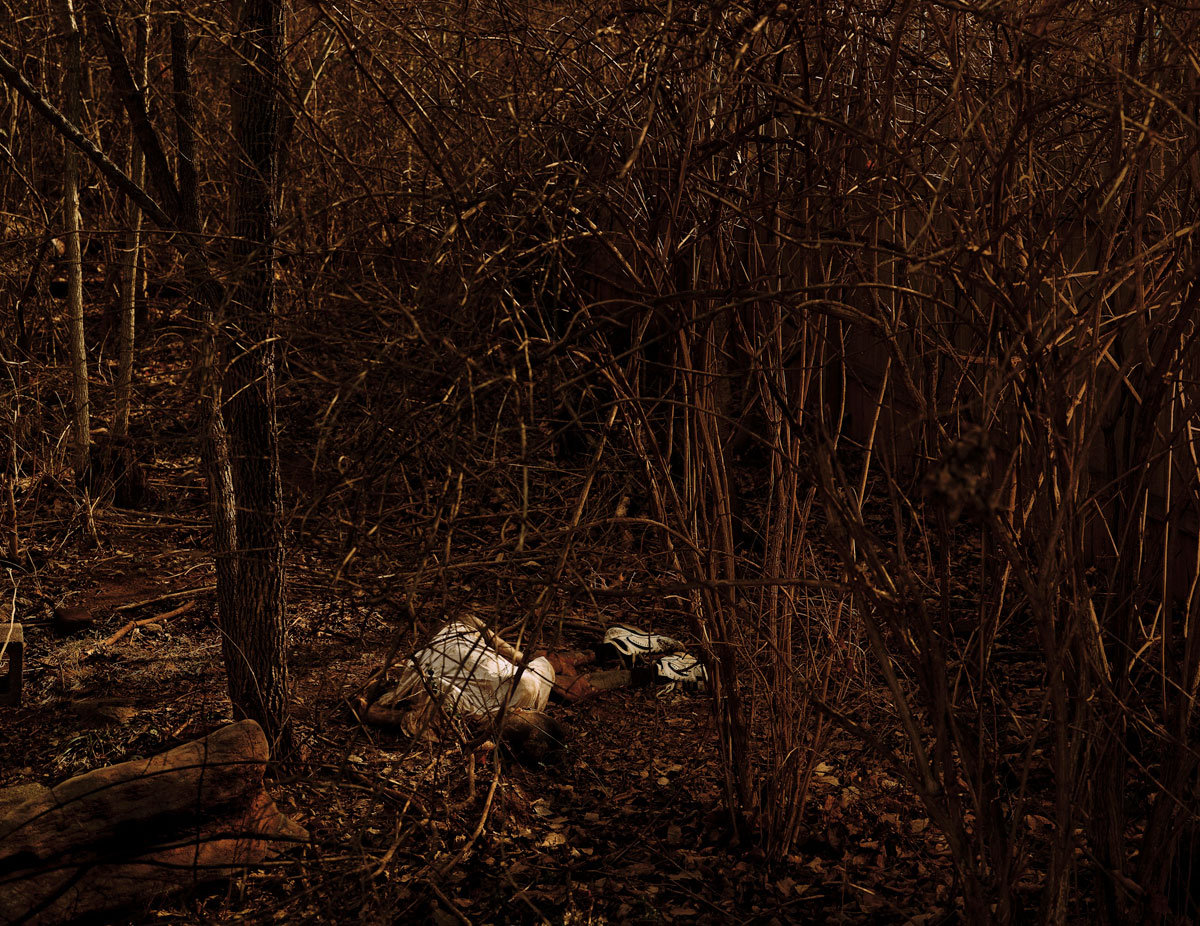
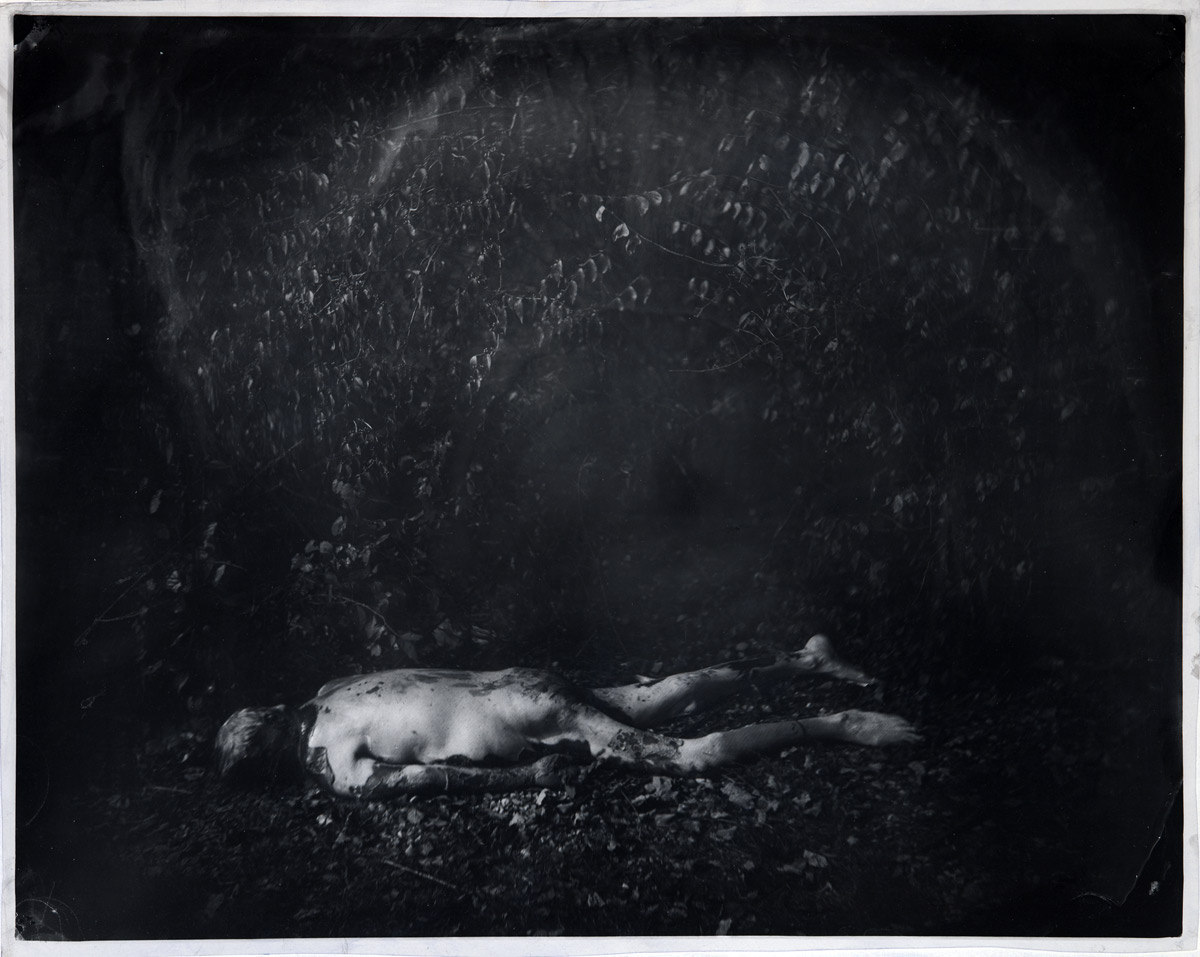
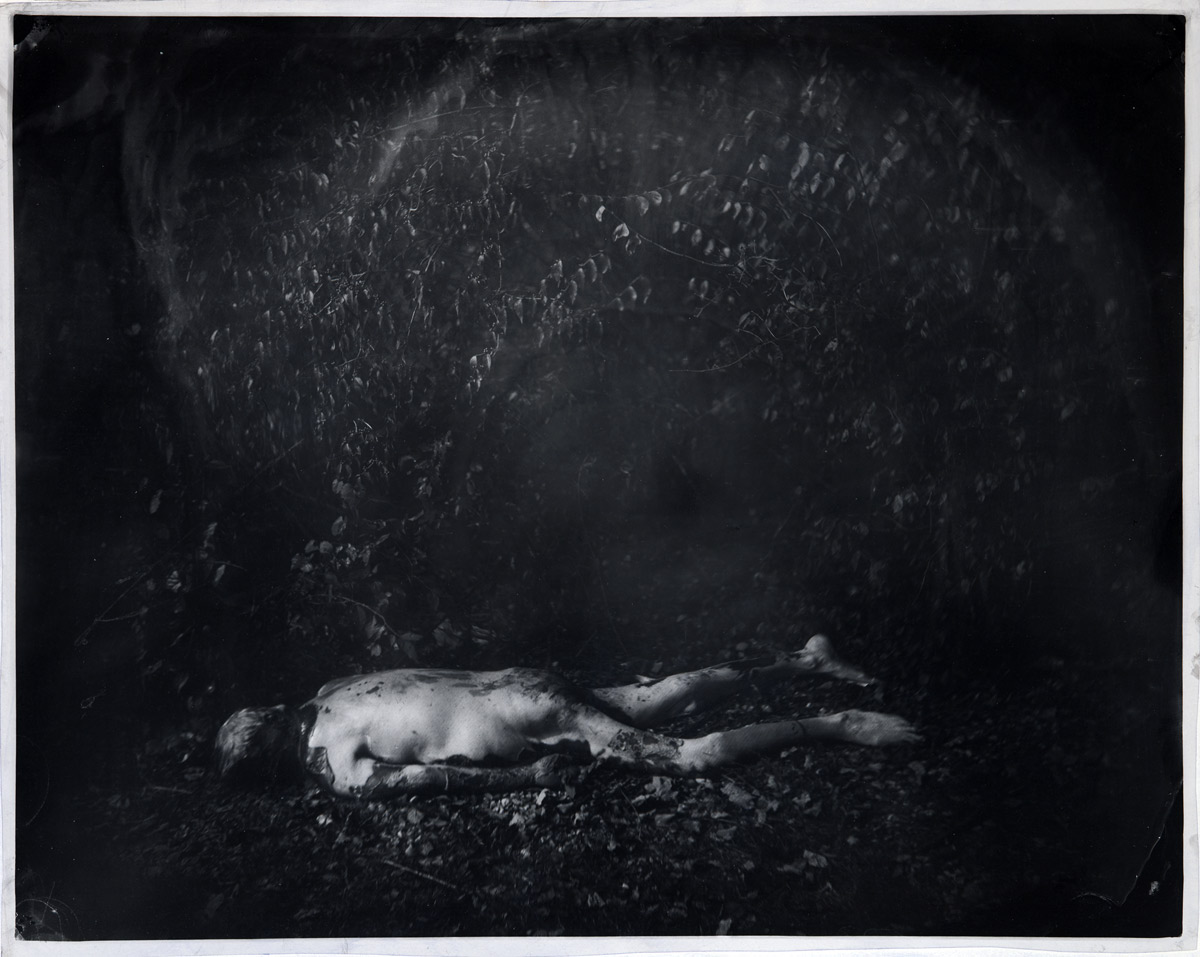
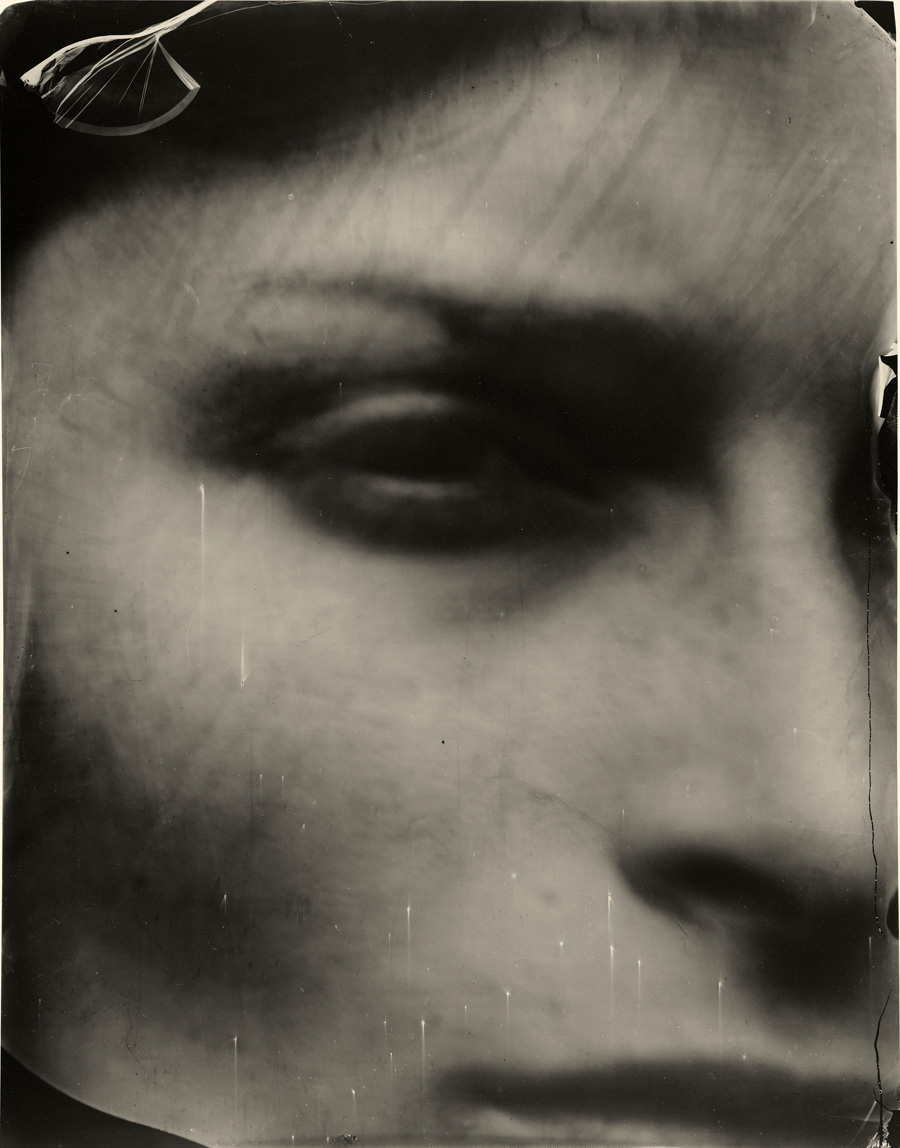
When the photograph tells us very little in the first place, when we do not have knowledge of a thing and cannot construct memories from the photograph but rely solely on words for meaning this can lead to photographs that are intrinsically and inherently poor. An example of a poor photograph in this series is the image of the captured Great white shark. Another example is the photograph of a decomposing body at the Forensic Anthropology Research Facility (see photograph above). Compare this to Sally Mann’s photograph of the same subject matter: the resonance of Mann’s photograph is powerful, confronting yet ambiguous with an amorphous aura surrounding the body, that of Simon’s almost as though the artist was afraid to really approach the subject; there seems to be an obsequiousness to the subject matter. Hidden is hidden and this photograph is definitely not “transforming the unknown into a seductive and intelligible form” (Wall text).
Simon’s photographs are not visual enigmas that approach Atget’s The Marvellous in the Everyday, where he experimented with “the variable play between nature and art through minute changes in the camera’s angle, or as functions of the effects of light and time of day.” Nor do they possess that quality that I noted in my review of the work of Carol Jerrems – spaces that make some room for you in front – some room that would allow you to look forward, and maybe even walk into that space. Despite their ‘hidden’ and ‘unfamiliar’ context these photographs are very dull spaces. Simon’s camera angles are by the book. So are most of the photographs. Of course, I understand the revealing of meaning in the photograph by the text and the surprise this entails but this simply does not dismiss the fact that some of these works are just poor. In fact I would say only about 50% of these photographs could stand alone without the validation of the text. Does this matter? Is this important? Yes I think it is, for some of these works are just deadpan photographs of entropic spaces that are only given meaning because the photographer says they are important things to photograph (see my paper Spaces That Matter: Awareness and Entropia in the Imaging of Place, 2002). Even with text some of the photographs still have no resonance.
When the photographs do work they are astounding. There is delicious irony in the depiction of a Recreational Basketball Court in Cheyenne Mountains Directorate, Chamber D, Colorado Springs, Colorado (2006) a dark, oppressive print of a nuclear bunker with basketball court or the incongruous nature of Death Row, Outdoor Recreational Facility “The Cage” (2006), a barred metal cage situated inside another building for the recreation of death row inmates. Shocking, disorientating. My personal favourite in this human built, human-less world of Simon’s was one of the simplest photographs in the exhibition, a photograph that cuts away the surroundings to picture a labelled flask sitting on a non-descript background. A concise visualisation of a labelled flask given extra meaning when you read the accompanying text: Live HIV, HIV Research Laboratory (2006). Pause for thought. The photographs when understood aesthetically are like snapshots of an alien culture, almost mundane but disturbing. I believe the best photographs in the series combine the presence of the space or object, an understanding of the condition of that space or object without having to read the text. The text then supplements the visual interpretation not overrides it.
Human beings are secretive, unstable, paranoid creatures that are exclusory and fearful of Others. Fear is palpable in these photographs. Here is evidence of the human need for control (through the surveillance of photography) over conduct – control of contamination, death, disease, threat and Other. We investigate and document something in order to control it, in order that science can control it (think Foucault’s disciplinary systems of the prison and the madhouse). These photographs excavate meaning by bringing the shadow into the light in order to index our existence, to make the hidden less frightening and more controllable.
Personally, I prefer my world to remain the mutation that is the catastrophe in the pattern / randomness dialectic. I like the chthonic darkness of difference and the rupture of pattern, the dislocation of identity and the challenge of mutation. Even though these photographs address the context of the hidden and unfamiliar there is nothing in the least unusual about them. Here is the paradox of these works: their (ab)normality vs their lack of humanity. The photographs in this exhibition all too easily confirm our prejudices and limit our understanding of difference through their need to document, label, order and exhibit the fear of (in)difference, all the better to control the mutations of disturbance.
Dr Marcus Bunyan
1/ Rule, Dan. “Taryn Simon: An American Index of the Hidden and Unfamiliar” in The Age newspaper A2. Melbourne: Saturday, October 23rd 2010
Many thankx to the Melbourne International Arts Festival, Institute of Modern Art and the Centre for Contemporary Photography for allowing me to publish the photographs in the posting. Please click on the photographs for a larger version of the image. All photographs © 2007 Taryn Simon. Courtesy Gagosian Gallery/Steidl.
Taryn Simon (American, b. 1975)
Forensic Anthropology Research Facility, Decomposing Corpse, University of Tennessee, Knoxville, Tennessee
2003/2007
Chromogenic colour print
37 1/4 x 44 1/2 inches framed (94.6 x 113cm)
© 2007 Taryn Simon
Courtesy Gagosian Gallery/Steidl
The decomposing body of a young boy is studied by researchers who have re-created a crime scene.
The Forensic Anthropology Research Facility, popularly known as The Body Farm, is the world’s chief research center for the study of corpse decomposition. Its six-acre plot hosts approximately 75 cadavers in various stage of decomposition. The farm uses physical anthropology (skeletal analysis of human remains) to help solve criminal cases, especially murder cases. Forensic anthropologists work to establish profiles for deceased persons. These profiles can include sex, age, ethnic ancestry, stature, time elapsed since death, and sometimes, the nature of trauma on the bones.
Sally Mann (American, b. 1951)
Untitled WR Pa 59
2001
From the series What Remains
© Sally Mann. Courtesy Gagosian Gallery
Taryn Simon (American, b. 1975)
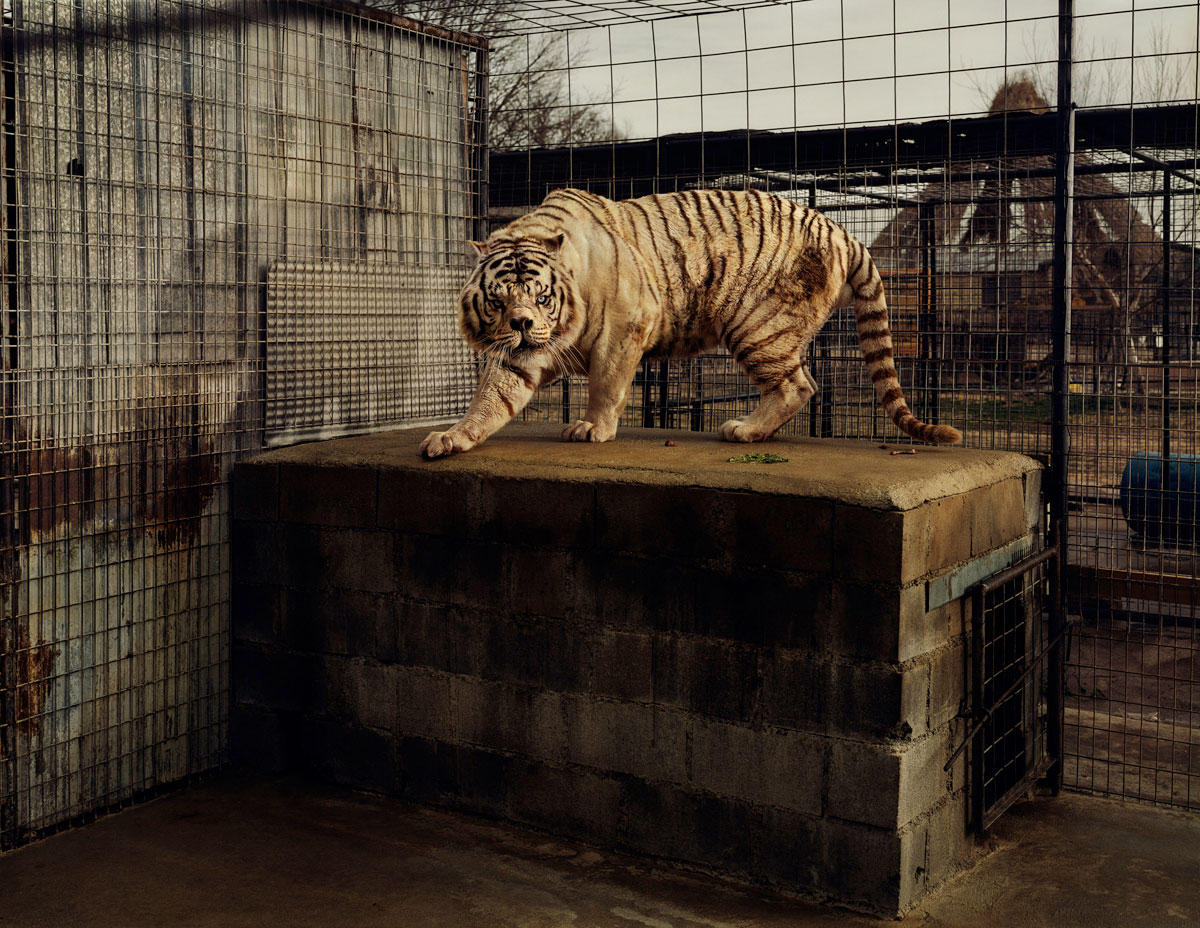
White Tiger (Kenny), Selective Inbreeding, Turpentine Creek Wildlife Refuge and Foundation, Eureka Springs, Arkansas
2006/2007
Chromogenic colour print
37 1/4 x 44 1/2 inches framed (94.6 x 113cm)
© 2007 Taryn Simon
Courtesy Gagosian Gallery/Steidl
In the United States, all living white tigers are the result of selective inbreeding to artificially create the genetic conditions that lead to white fur, ice-blue eyes and a pink nose. Kenny was born to a breeder in Bentonville, Arkansas, on February 3, 1999. As a result of inbreeding, Kenny is mentally retarded and has significant physical limitations. Due to this deep-set nose, he has difficulty breathing and closing his jaw, his teeth are severely malformed and he limps from abnormal bone structure in his forearms. The three other tigers in Kenny’s litter are not considered to be quality white tigers as they are yellow-coated, cross-eyed, and knock-kneed.
White tigers are extremely rare in their natural habitats in Asia. In the U.S., all living white tigers are the result of selective inbreeding in captivity to artificially create the genetic conditions that lead to white fur, ice-blue eyes and a pink nose. Currently, inbreeding such as father to daughter, brother to sister, mother to son has become commonplace. It produces a white cub less than 25% of the time, with only approximately 3% of those considered “quality.” The three other tigers in Kenny’s litter are not considered to be quality white tigers as they are yellow coated, cross-eyed, and knock-kneed.
Conservation experts challenge the perception that white tigers are a rare and endangered species. Instead, they state that zoos, breeders, and entertainment acts have over-bred white tigers for financial gain, citing instances where private breeders and zoos have sold “quality” white tigers for over $60,000. The grave health consequences of inbreeding and over-breeding have led to abortions, stillbirths and a high mortality rate among infants. The Species Survival Plan has condemned the practice. In recent years there has been a significant drop in their market value.
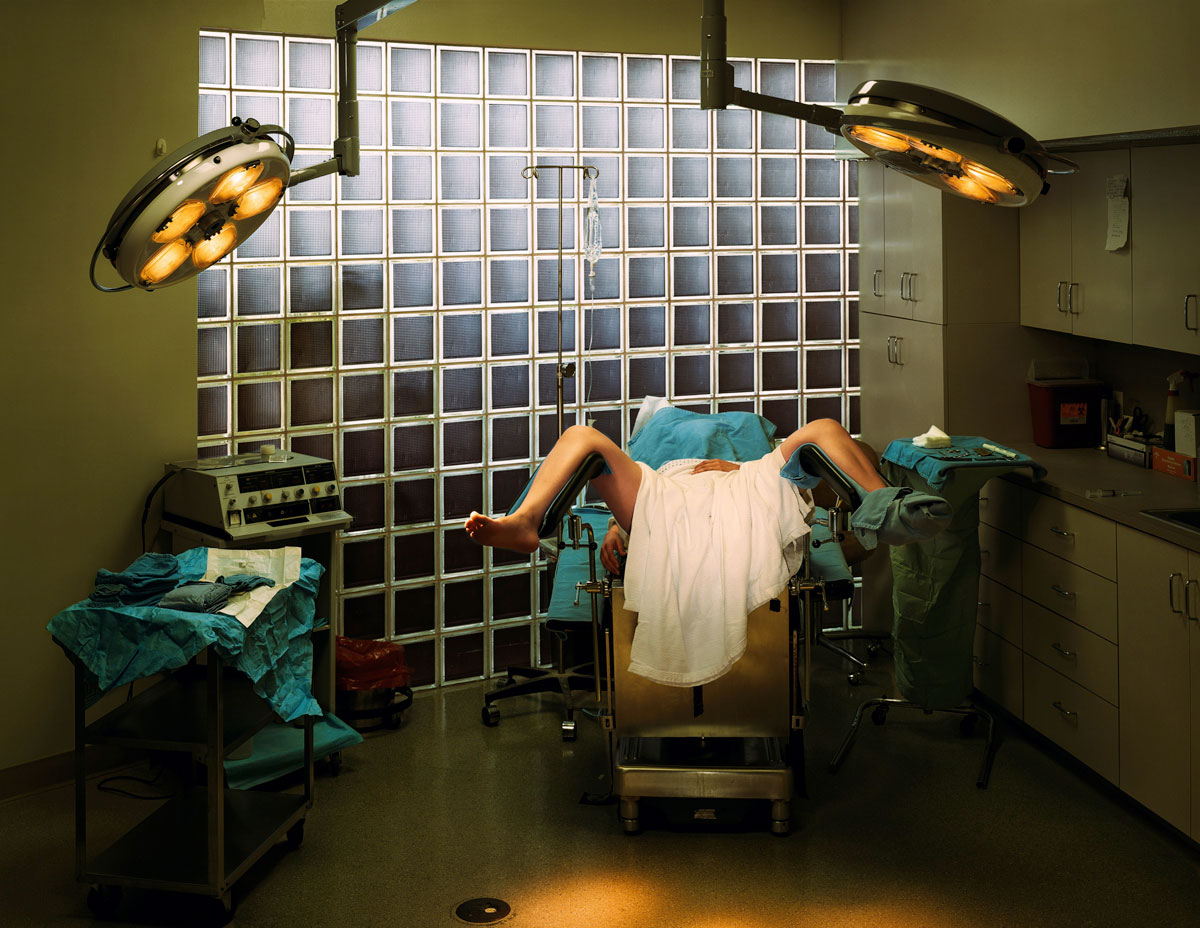
Taryn Simon (American, b. 1975)
Hymenoplasty, Cosmetic Surgery, P.A., Fort Lauderdale, Florida
2005/2007
Chromogenic colour print
37 1/4 x 44 1/2 inches framed (94.6 x 113cm)
© 2007 Taryn Simon
Courtesy Gagosian Gallery/Steidl
The patient in this photograph is 21 years old. She is of Palestinian descent and living in the United States. In order to adhere to cultural and familial expectations regarding her virginity and marriage, she underwent hymenoplasty. Without it she feared she would be rejected by her future husband and bring shame upon her family. She flew in secret to Florida where the operation was performed by Dr. Bernard Stern, a plastic surgeon she located on the internet. The purpose of hymenoplasty is to reconstruct a ruptured hymen, the membrane which partially covers the opening of the vagina. It is an outpatient procedure which takes approximately 30 minutes and can be done under local or intravenous anesthesia. Dr. Stern charges $3,500 for hymenoplasty. He also performs labiaplasty and vaginal rejuvenation.
The hymen has not been proven to serve any biological function. Some girls are born with an imperforate hymen. Rupture most often occurs during first intercourse, but some girls tear their hymen during sports activities or as a result of injuries. The majority of the time there is a correlation between an intact hymen and a woman’s virginity; many cultures view the tearing of the hymen as a critical symbol of that loss. While similar attempts to alter the hymen predate modern plastic surgery, hymenoplasty is now just one of several vaginal cosmetic surgeries that are growing in popularity worldwide. Dr. Stern charges $3,500 for hymenoplasty. He also performs labiaplasty and vaginal rejuvenation.
“Inspired by rumours of weapons of mass destruction and secret sites in Iraq, American photographic artist Taryn Simon focuses her lens on the hidden and inaccessible places in her own country.
An American Index of the Hidden and Unfamiliar (2006) takes the viewer behind closed doors to uncover some extraordinary things inside places usually hidden from the public’s view. Ranging across the realms of science, government, medicine, entertainment, nature, security, and religion, Simon’s photographic subjects include glowing radioactive capsules in an underwater nuclear-waste storage facility, a Braille edition of Playboy, a deathrow prisoners’ exercise yard, an inbred tiger, corpses rotting in a Forensic Research Facility, and a Scientology screening room.
Shot over four years, mostly with a large-format view camera, the images in this fascinating exhibition are in turn ethereal, foreboding, deadpan and cinematic. In examining what is integral to America’s foundation, mythology and daily functioning, the Index provides a surprising map of the American mindset and creates a vivid portrayal of the contemporary United States.
Inspired by rumours of WMDs and secret sites in Iraq, Taryn Simon decided to address secret sites in her own country, photographing hidden places and things within America’s borders. Ranging across the realms of science, government, medicine, entertainment, nature, security and religion, her subjects include glowing radioactive capsules, a braille edition of Playboy, a death-row prisoners’ exercise yard, an inbred tiger, a teenage corpse rotting in a forensic research facility, and a Scientology screening room. An American Index of the Hidden and Unfamiliar explores a dialectic of security and paranoia that is distinctly American. Offering a heart-of-darkness tour of Bush-period America, it also reflects on photography’s role in revealing and concealing.
In his foreword,1 Salman Rushdie writes ‘In a historical period in which so many people are making such great efforts to conceal the truth from the mass of the people, an artist like Taryn Simon is an invaluable counter-force. Democracy needs visibility, accountability, light. It is in the unseen darkness that unsavoury things huddle and grow. Somehow, Simon has persuaded a good few denizens of hidden worlds not to scurry for shelter when the light is switched on, as cockroaches do, and vampires, but to pose proudly for her invading lens, brandishing their tattoos and Confederate flags.
Simon’s is not the customary aesthetic of reportage – the shaky hand-held camera, the grainy monochrome film stock of the ‘real’. Her subjects… are suffused with light, captured with a bright, hyper-realist, high-definition clarity that gives a kind of star status to these hidden worlds, whose occupants might be thought to be the opposite of stars. In her vision of them, they are dark stars brought into the light. What is not known, rarely seen, possesses a form of occult glamour, and it is that black beauty which she so brightly, and brilliantly, reveals.’
1/ Salman Rushdie, ‘Foreword’ in Taryn Simon, An American Index of the Hidden and Unfamiliar, Steidl Gottingen, Germany, 2007, p. 7.
Text from the Melbourne International Art Festival and the Centre for Contemporary Photography websites
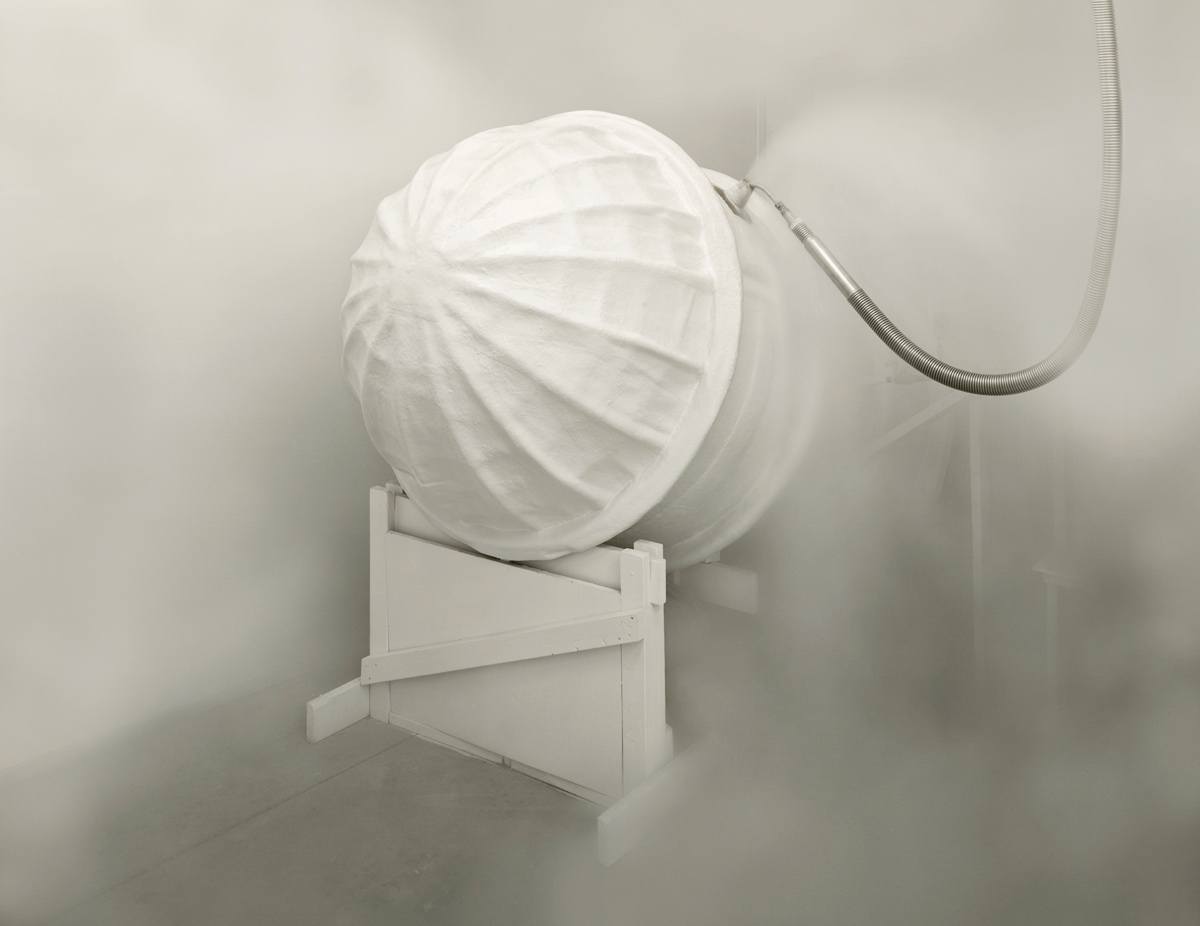
Taryn Simon (American, b. 1975)
Cryopreservation Unit, Cryonics Institute, Clinton Township, Michigan
2004/2007
Chromogenic colour print
37 1/4 x 44 1/2 inches framed (94.6 x 113cm)
© 2007 Taryn Simon
Courtesy Gagosian Gallery/Steidl
This cryopreservation unit holds the bodies of Rhea and Elaine Ettinger, the mother and fist wife of cryonics pioneer, Robert Ettinger. Robert, author of The Prospect of Immortality and Man into Superman is still alive. The Cryogenics Institute offers cryostasis (freezing) services for individuals and pets upon death. Cryostasis is practiced with the hope that lives will ultimately be extended through future developments in science, technology, and medicine. When, and if, these developments occur, Institute members hope to awake to an extended life in good health, free from disease or the ageing process. Cryostasis must begin immediately upon legal death. A person or pet is infused with ice-preventive substances and quickly cooled to a temperature where physical decay virtually stops.
At present, the Cryonics Institute cryopreserves 74 legally dead human patients and 44 legally dead pets. It charges $28,000 for the process if it is planned well in advance of legal death and $35,000 on shorter notice. The cost has not increased since 1976 when the Cryonics Institute was established. The Institute is licensed as a cemetery in the state of Michigan.
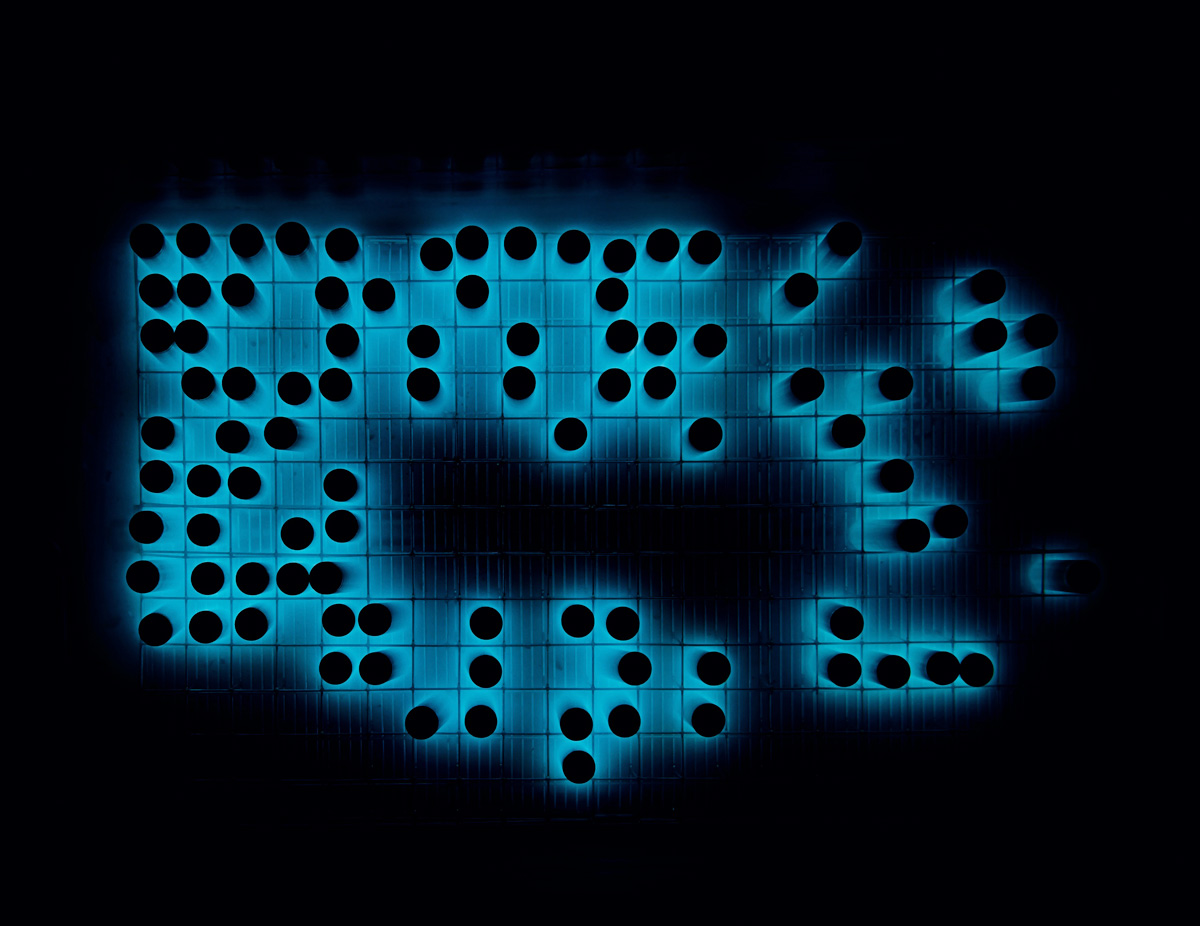
Taryn Simon (American, b. 1975)
Nuclear Waste Encapsulation and Storage Facility, Chernekov Radiation, Hanford Site, U.S. Department of Energy, Southeastern
Washington State
2005/2007
Chromogenic color print
37 1/4 x 44 1/2 inches framed (94.6 x 113cm)
© 2007 Taryn Simon
Courtesy Gagosian Gallery/Steidl
Submerged in a pool of water at Hanford Site are 1,936 stainless-steel nuclear-waste capsules containing cesium and strontium. Combined, they contain over 120 million curies of radioactivity. It is estimated to be the most curies under one roof in the United States. The blue glow is created by the Cherenkov Effect which describes the electromagnetic radiation emitted when a charged particle, giving off energy, moves faster than light through a transparent medium. The temperatures of the capsules are as high as 330 degrees Fahrenheit. The pool of water serves as a shield against radiation; a human standing one foot from an unshielded capsule would receive a lethal dose of radiation in less than 10 seconds. Hanford is among the most contaminated sites in the United States.
Hanford is a 586 square mile former plutonium production complex. It was built for the Manhattan Project, the U.S.-led World War II defense effort that developed the first nuclear weapons. Hanford plutonium was used in the atomic bomb dropped on Nagasaki in 1945. For decades afterwards Hanford manufactured nuclear materials for use in bombs. At Hanford there are more than 53 million gallons of radioactive and chemically hazardous liquid waste, 2,300 tons of spent nuclear fuel, nearly 18 metric tons of plutonium-bearing materials and about 80 square miles of contaminated groundwater. It is among the most contaminated sites in the United States.
Centre for Contemporary Photography
Level 2, Perry St Building
Collingwood Yards, Collingwood
Victoria 3066
Opening hours:
Wednesday – Saturday 11am – 5pm
 Art Blart _ art and cultural memory archive
You must be logged in to post a comment.